Are Ants Invading your Summertime Picnic? Not in Our Neck of the Woods
If sprinkles of pepper are the only black specks you care to find in your potato salad, and if the only thing you want in your pants is you, then having a swarm of ants visit your outdoor feast is out of the question. During our recent multi-day foray afield, ants were just a cupcake’s throw away, but none dared to scurry out from their hiding place to invade our spread. Fortunately for us, the local anteater was on duty, snatching them up whenever they came into sight—and sometimes before.
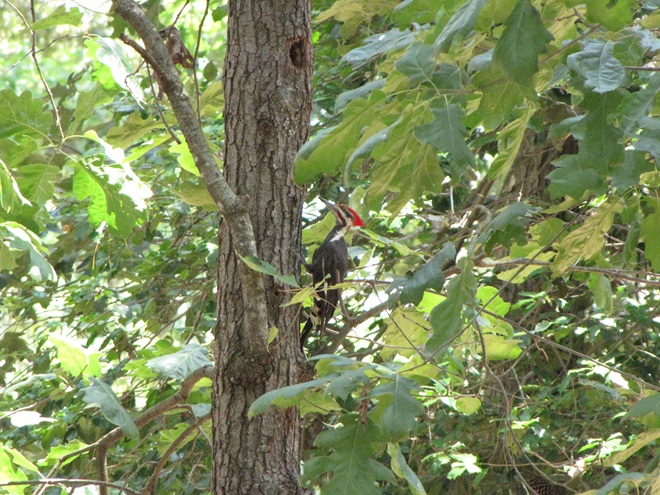
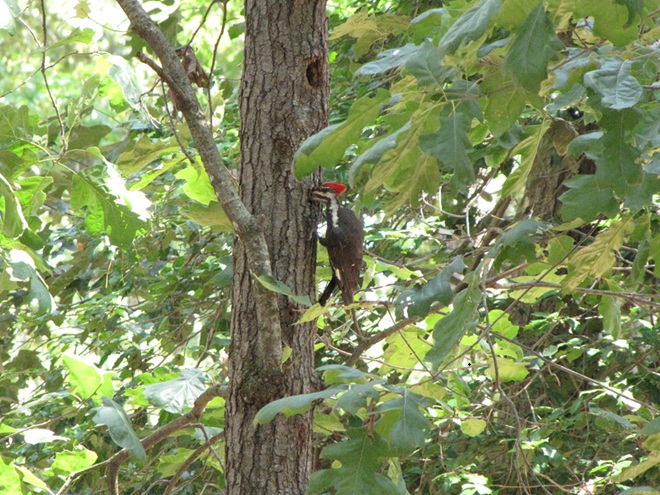
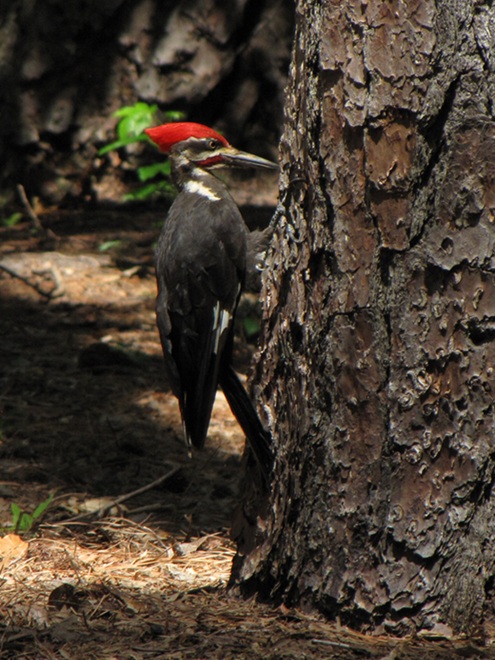
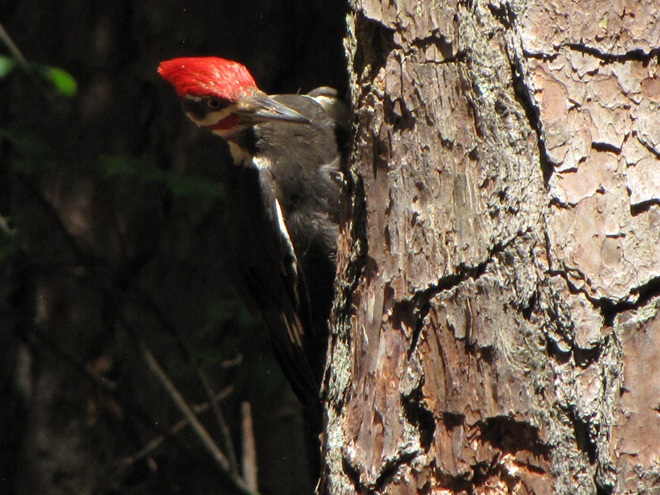
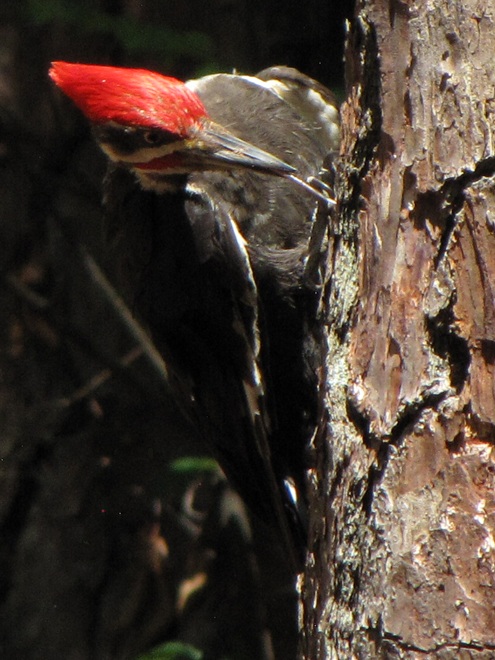
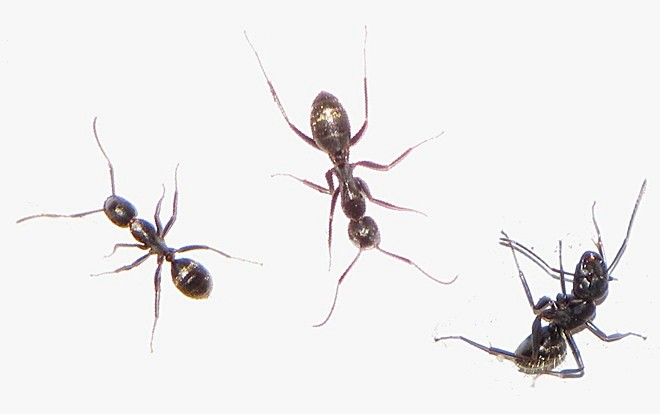
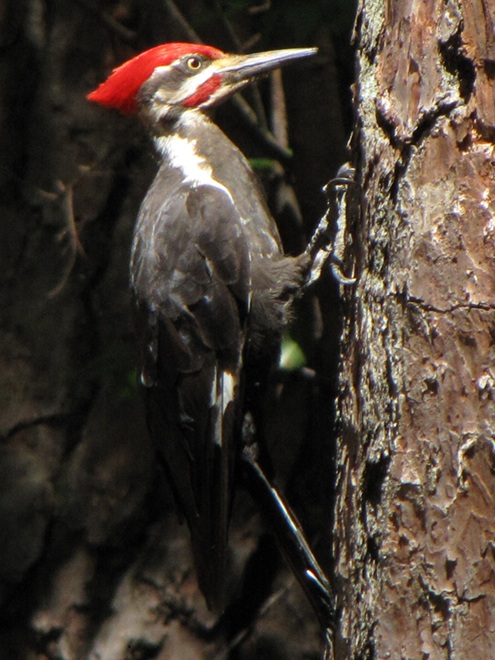
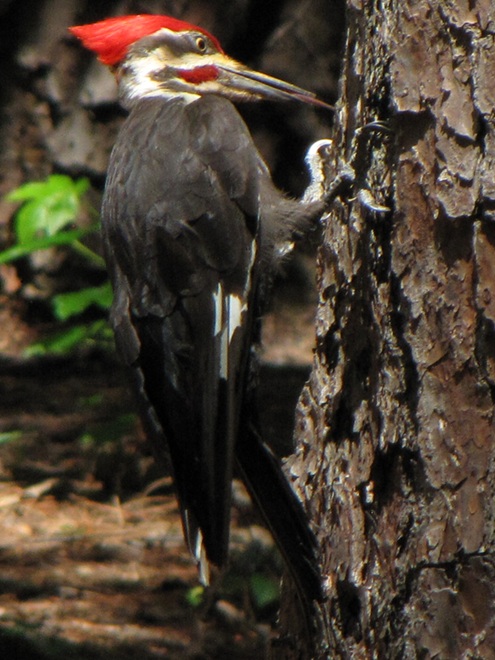
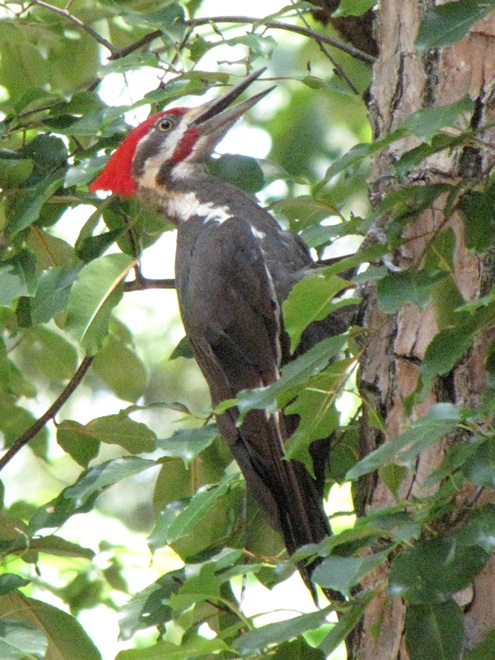
We’re all familiar with the Pileated Woodpecker, the prehistoric-looking, pterodactyl-like denizen of the forest whose appearance alone reminds us that birds are the surviving dinosaurs.And we’re all aware of the Pileated Woodpecker’s fine-tuned abilities to identify stressed, weakened, and dying trees where it not only chisels out cavities for roosting and nesting, but also finds much of its food.Pileated Woodpeckers don’t eat wood, but spend much of their time searching trees from top to bottom for infestations by the insects and insect larvae that are in the process of reducing the cellulosic fibers and other components of dead and dying trees into matter that will be recycled into growth medium and nutrients for surviving plants of the forest.That search may involve excavations deep into the rotting pulpwood. But many times, the target of the Pileated Woodpecker’s hunt is right among the bark……where the prey can be snatched up with its probing tongue.Carpenter ants (Camponotus species) don’t eat wood, but instead excavate extensive nests called galleries in damp and rotting timber. Considered both predators and scavengers, they get most of their nourishment by harvesting nectar from flowering plants, by extracting the gooey tissues and liquids from dead insects, by using their antennas to coax honeydew from the aphids they farm, and by carrying away sweet treats unwittingly provided by humans. The Pileated Woodpecker’s long anteater-like tongue is an adaptation for feeding on these ants and other creepy crawlies. Carpenter ants often make up a majority of a Pileated Woodpecker’s diet, particularly during the warmer months of the year. They are one of the first foods young woodpeckers can easily locate and consume on their own. During the colder months, when ants can be harder to find, Pileated Woodpeckers seek out overwintering beetle grubs and other larvae while also foraging for energy-replenishing berries including Poison Ivy, wild grape, and bittersweet.A Pileated Woodpecker alert for the movement of carpenter ants among the folds of bark on this pine tree.The ant-eating Pileated Woodpecker in action, keeping the little sugar junkies at bay so that the only thing covering the ground during your outdoor luncheon is a gaudy picnic blanket.Your local Pileated Woodpecker, he’s more than just a pretty face.