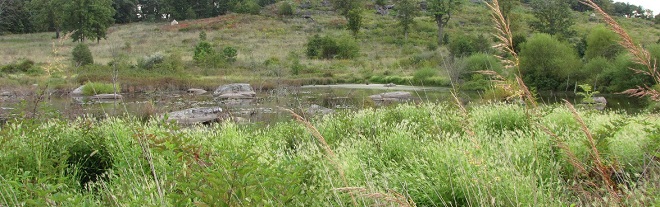
To pass the afternoon, we sat quietly along the edge of a pond, or more accurately a pool, created recently by North American Beavers (Castor canadensis). They first constructed their dam on this small stream about five years ago. Since then, a flourishing wetland has become established. Have a look.
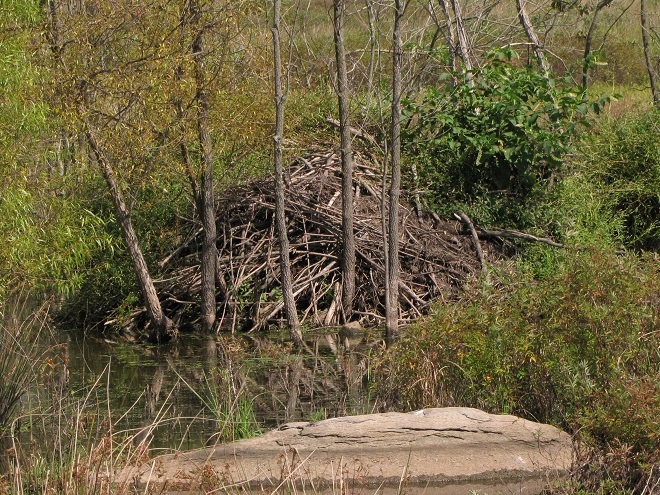
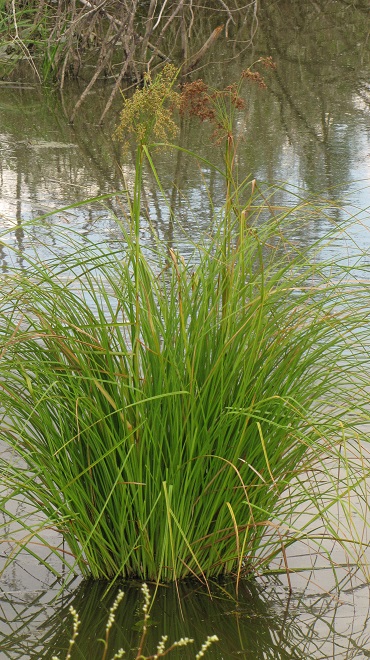
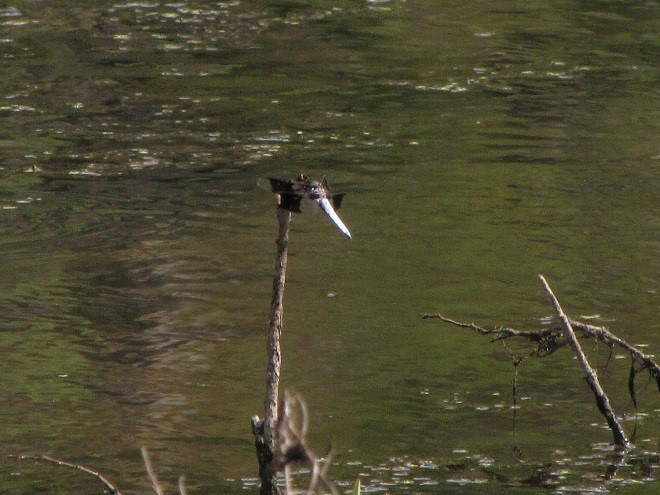
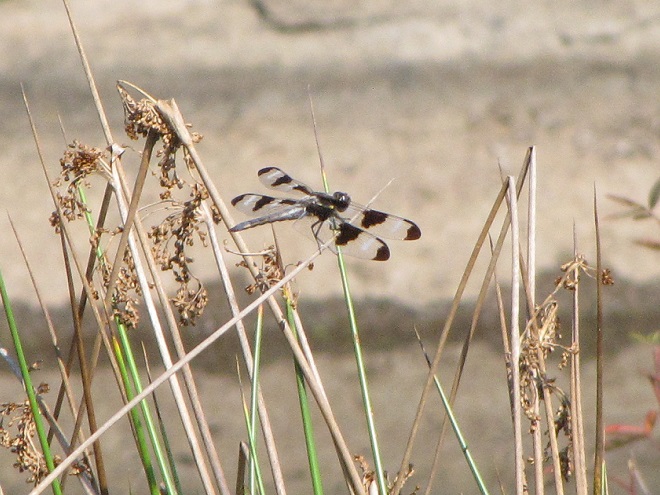
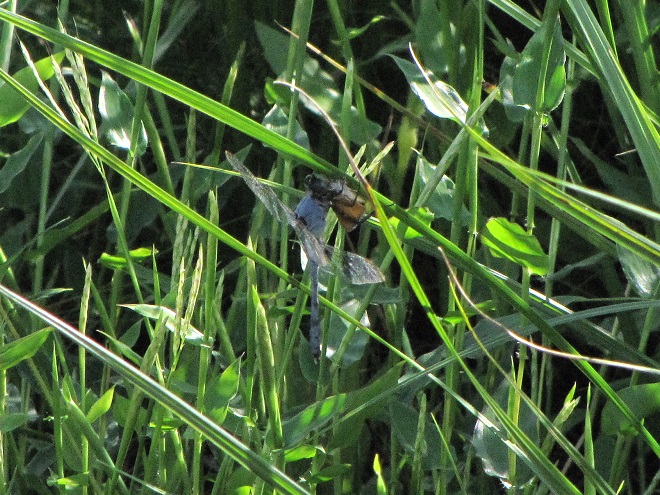
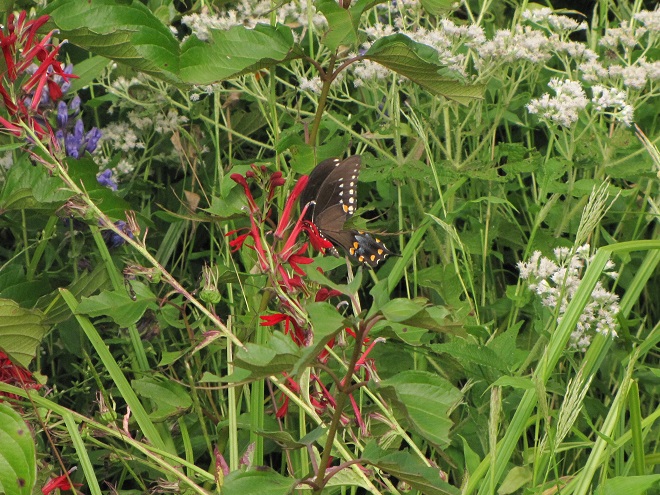
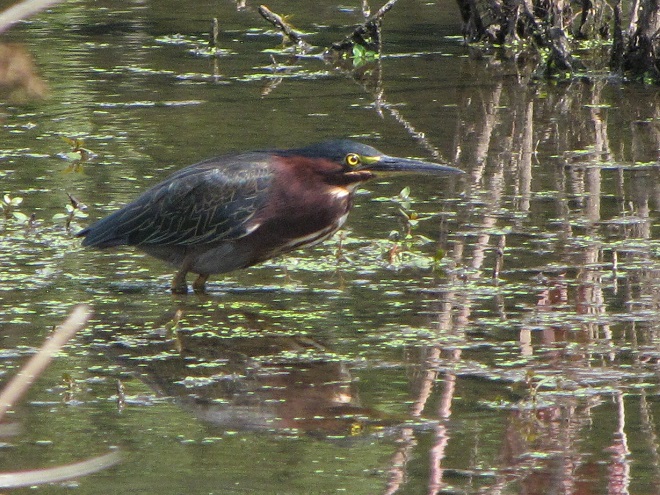
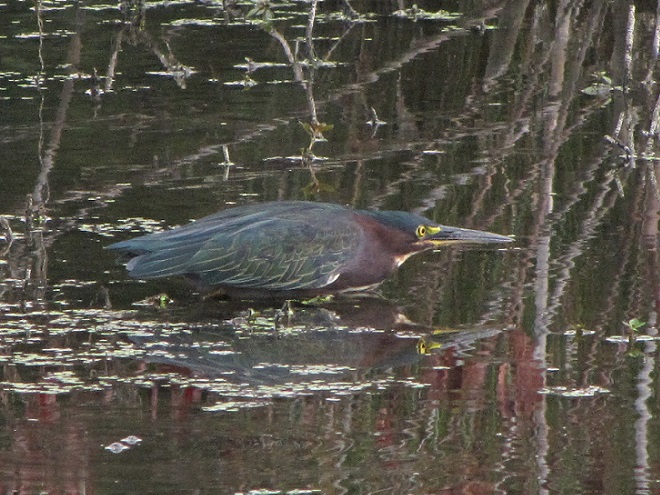
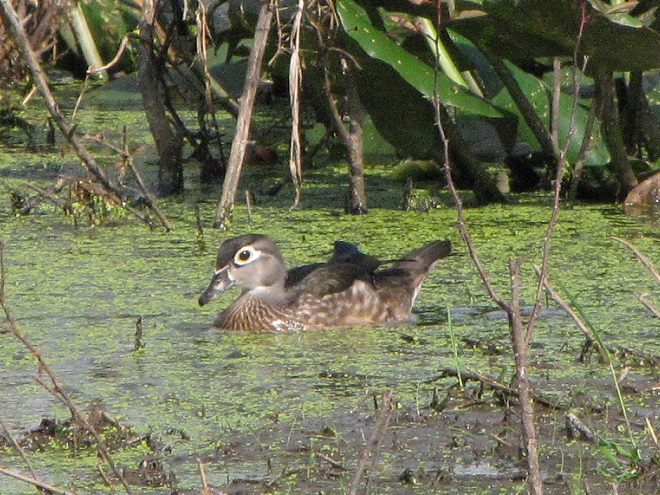
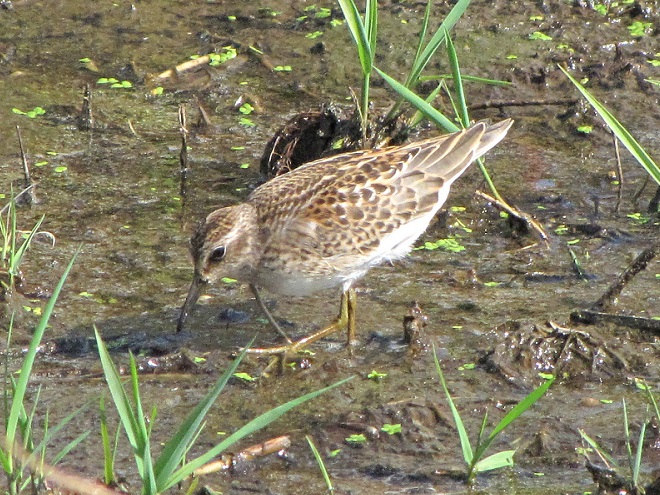
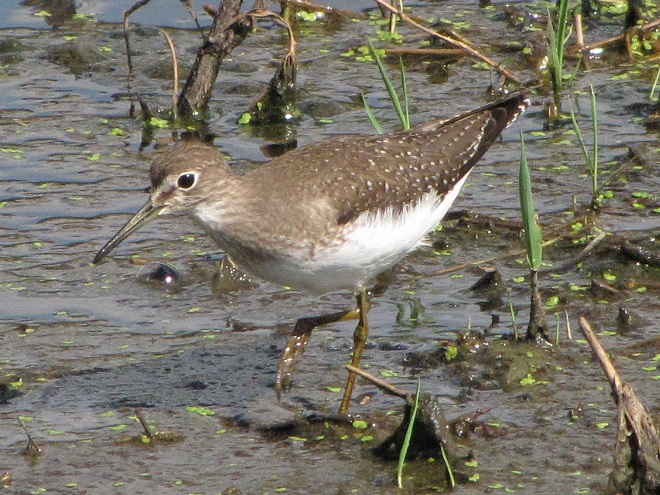
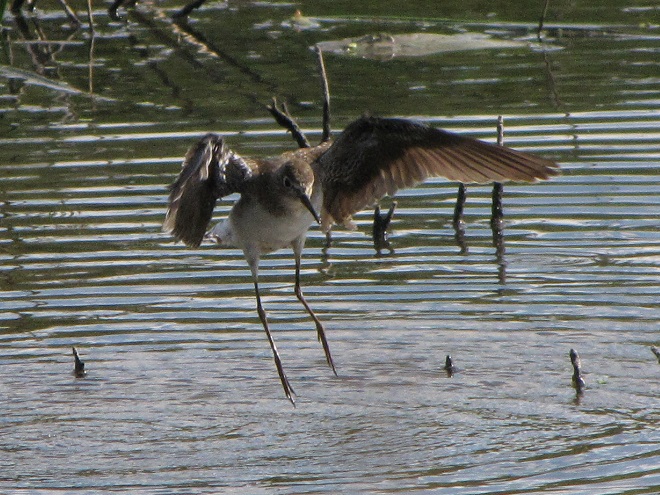
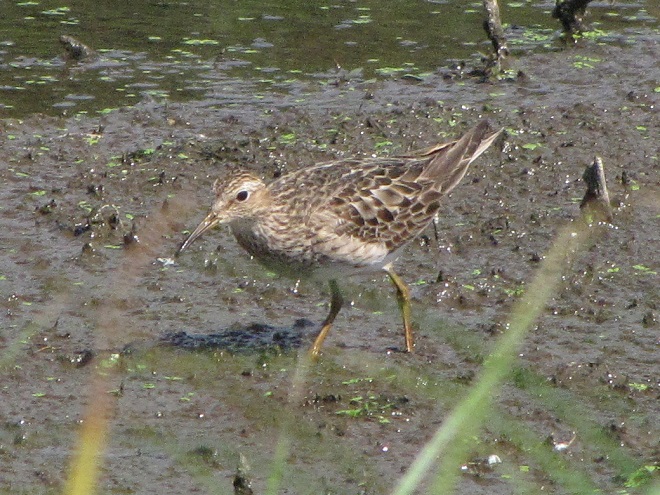
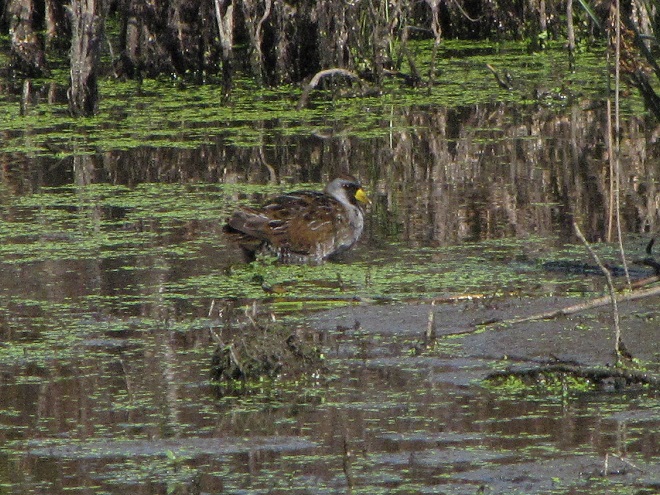
Vegetation surrounding the inundated floodplain helps sequester nutrients and sediments to purify the water while also providing excellent wildlife habitat.The beaver lodge was built among shrubs growing in shallow water in the middle of the pond.Woolgrass (Scirpus cyperinus) is a bulrush that thrives as an emergent and as a terrestrial plant in moist soils bordering the pond.A male Common Whitetail dragonfly keeping watch over his territory.A Twelve-spotted Skimmer perched on Soft Rush.A Blue Dasher dragonfly seizing a Fall Field Cricket (Gryllus pennsylvanicus).A Spicebush Swallowtail visiting a Cardinal Flower.A Green Heron looking for small fish, crayfish, frogs, and tadpoles.The Green Heron stalking potential prey.A Wood Duck feeding on the tiny floating plant known as Lesser Duckweed (Lemna minor).A Least Sandpiper poking at small invertebrates along the muddy edge of the beaver pool.A Solitary Sandpiper.A Solitary Sandpiper testing the waters for proper feeding depth.A Pectoral Sandpiper searches for its next morsel of sustenance.The Sora (Porzana carolina) is a seldom seen rail of marshlands including those created by North American Beavers. Common Cattails, sedges, and rushes provide these chicken-shaped wetland birds with nesting and loafing cover.
Isn’t that amazing? North American Beavers build and maintain what human engineers struggle to master—dams and pools that reduce pollution, allow fish passage, and support self-sustaining ecosystems. Want to clean up the streams and floodplains of your local watershed? Let the beavers do the job!