As they travel between coastal wintering ranges and breeding territories in Canada and Alaska, vast numbers of shorebirds pass through the lower Susquehanna region each spring and fall—though few stop here to rest, feed, and provide us with an opportunity to observe them. Prior to the construction of man-made dams and other alterations on our lotic (flowing) waterways including the river, shorebirds took advantage of lateral bars, stream deltas, and other alluvial deposits as places to loaf and re-energize. Before they were drained and filled, some of the valley’s wetlands probably included sparsely vegetated flats where shorebirds could drop in for a brief visit. Previous to their extirpation from our region, North American Beavers were the primary providers of quality habitat for shorebirds and other migrating waders on our lotic waters. Their widespread network of dams, pools, and marshes maximized floodplain function by keeping streams thoroughly connected to their wetlands, nurturing plant communities that not only provided food and shelter for the beavers and other wildlife, but provided superb buffering against erosion while protecting against sediment and nutrient imbalances in lower Susquehanna waterways.
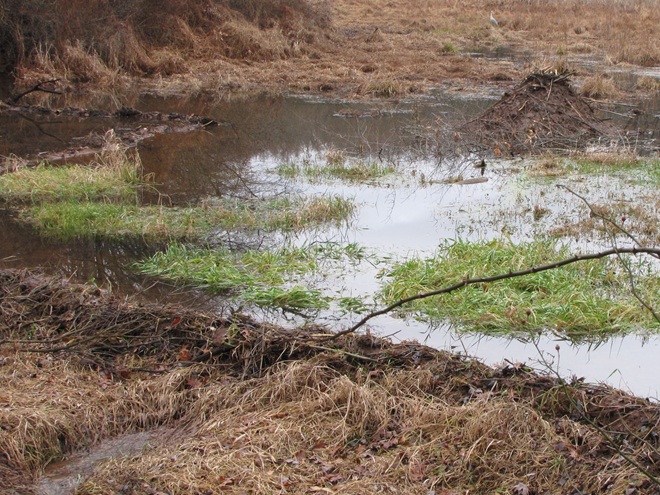
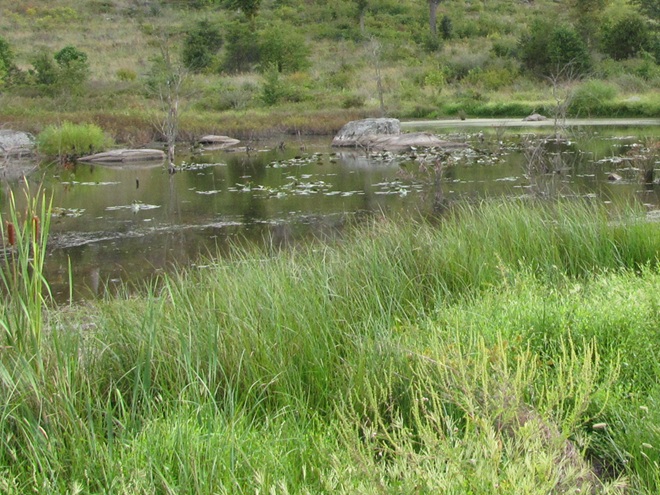
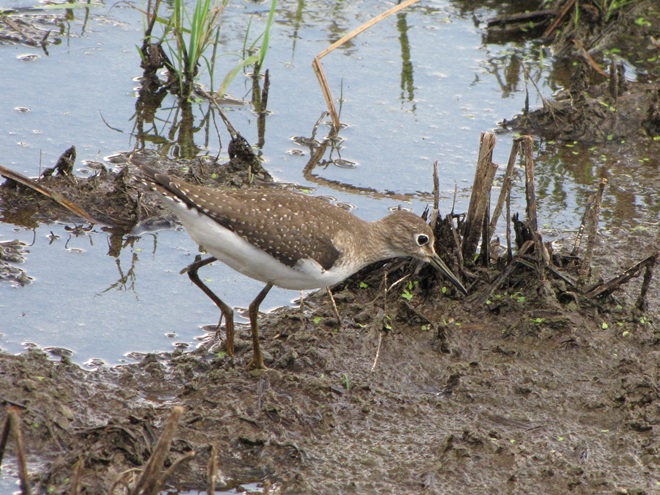
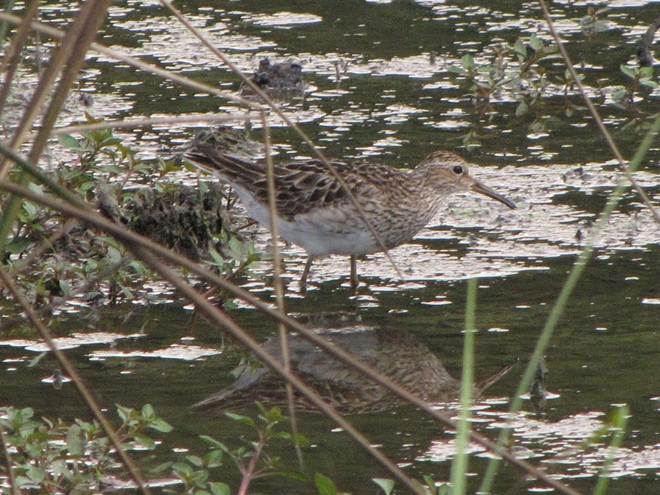
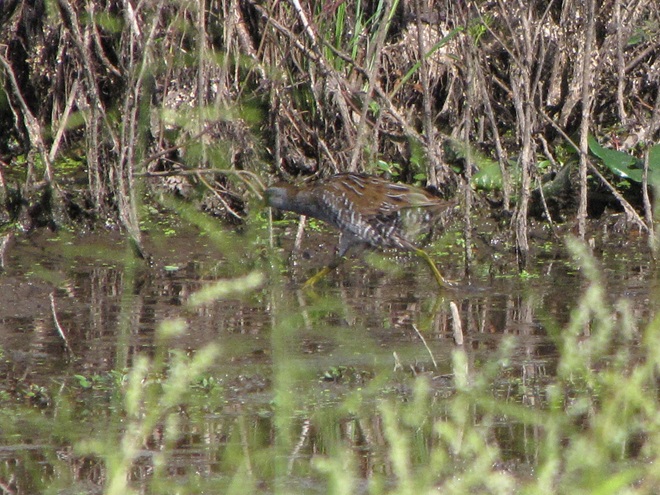
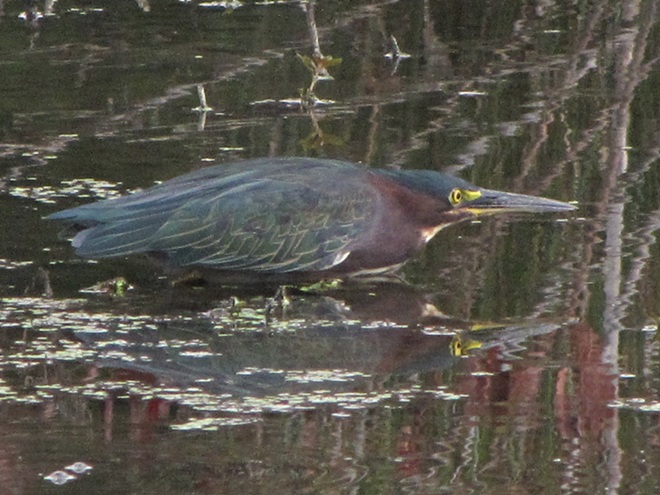
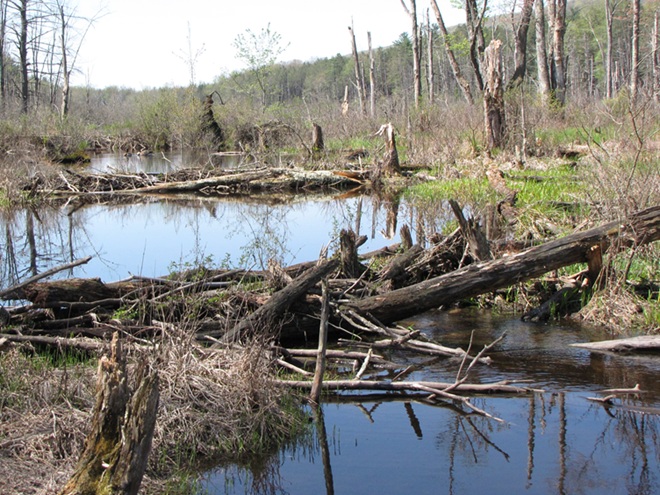
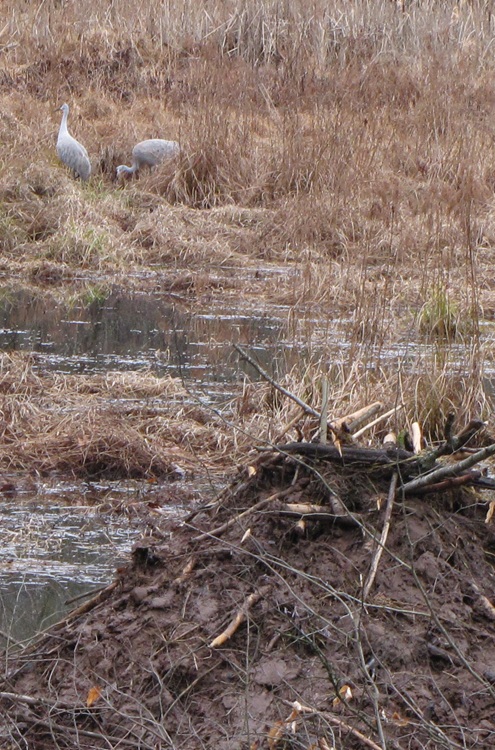
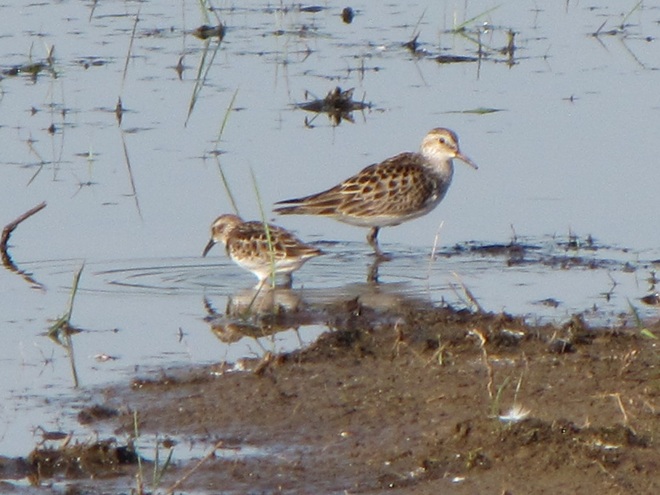
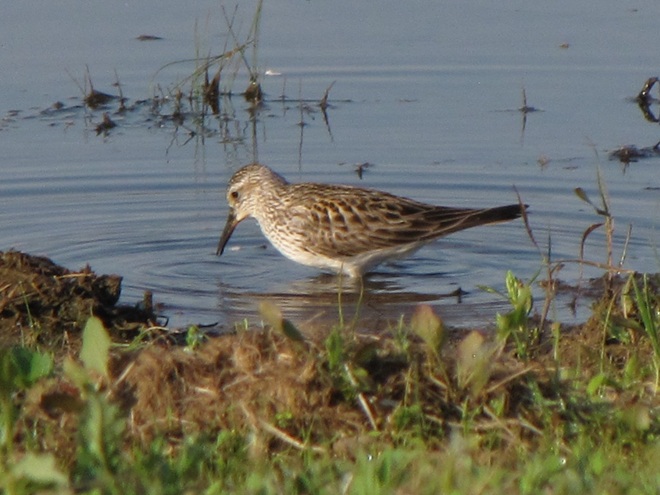
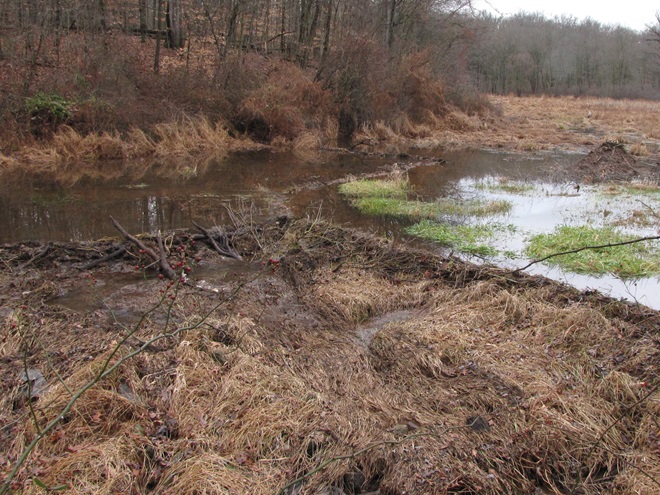
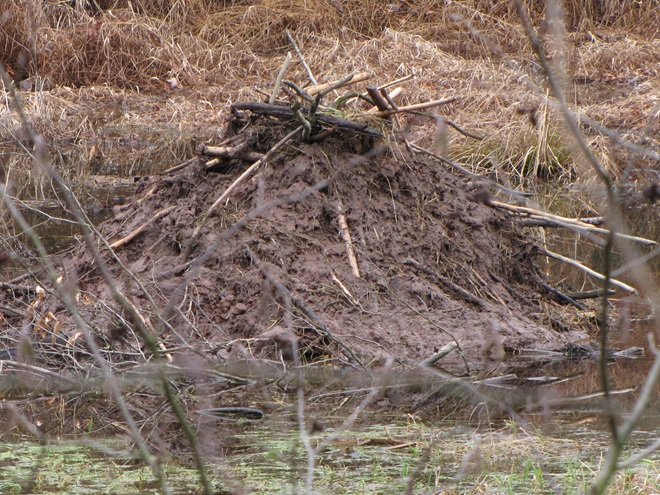
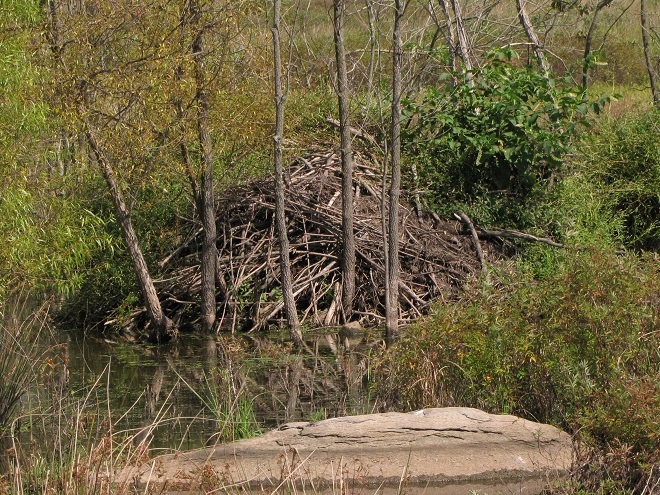
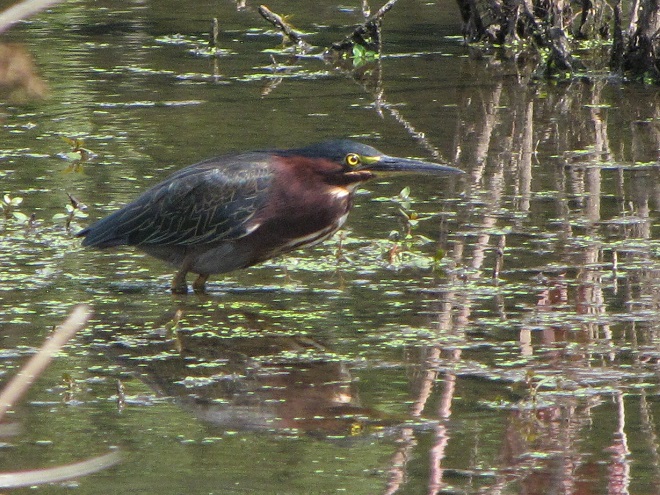
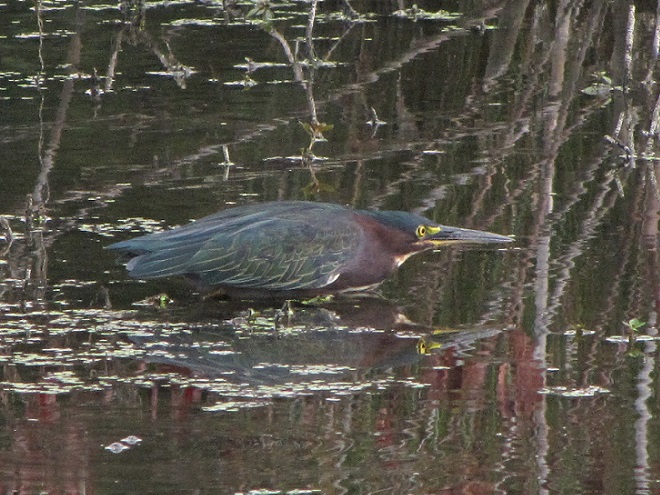
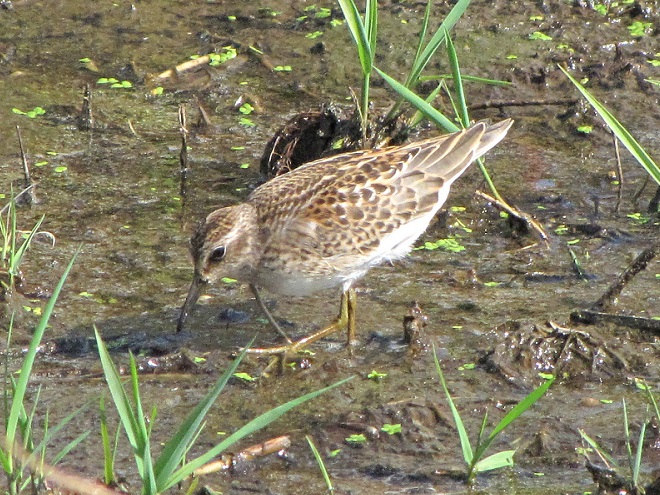
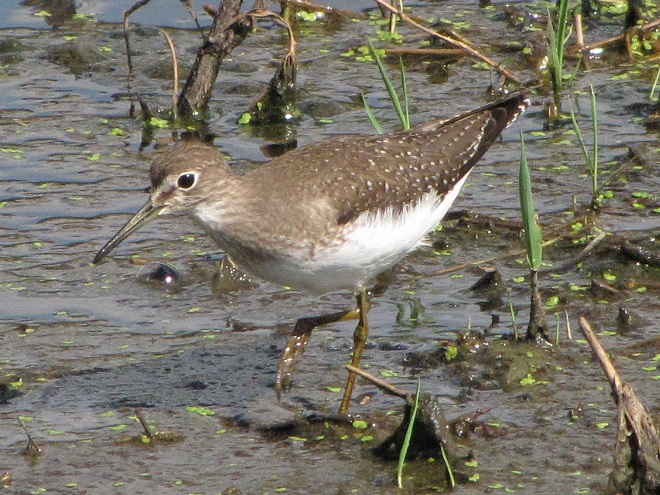
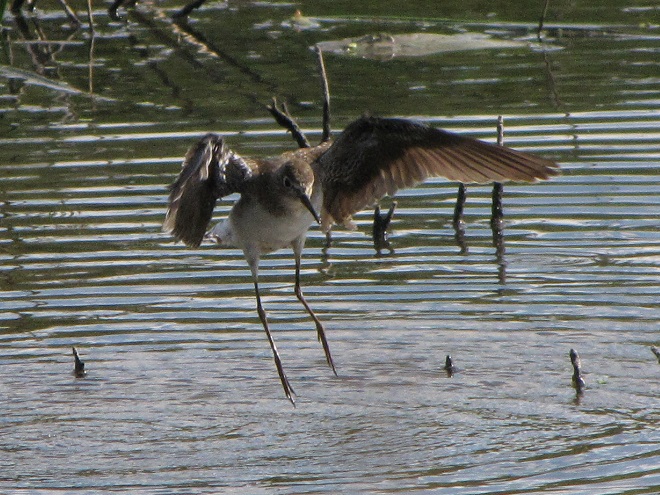
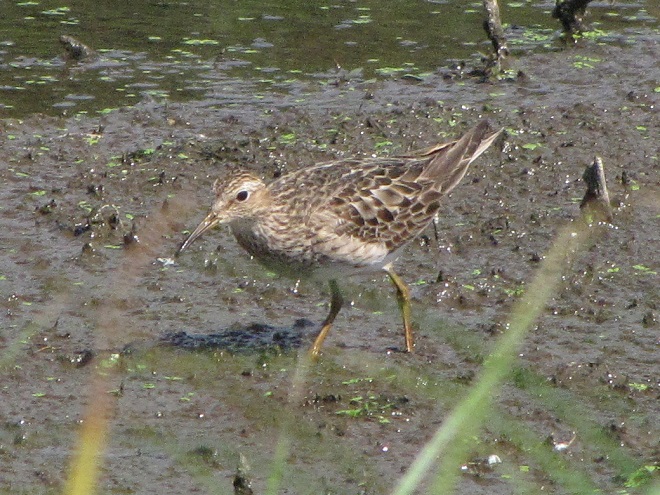
Beaver dams need not be large, particularly on low-gradient streams where a structure like this is sufficient to create a pool with depth adequate for building and maintaining a lodge and transporting leafy branches and other food items by water.A beaver lodge assembled in a pool with less than three feet of water, deep enough to provide the family with a measure of protection against terrestrial predators.Beaver pool ecosystems provide homes for hundreds of species of plants and animals, including migrating shorebirds and other waders.Mud flats in the margins between emergent shrubs and herbaceous plant growth attract migrating shorebirds like this Solitary Sandpiper to the abundance of invertebrate life. Seasonal movements of migrating shorebirds regularly coincide with the reductions of water levels in beaver pools which typically occur between May and September each year.During its southbound migration in September, a Least Sandpiper searches for arthropods and annelids as it visits a food-rich puddle along the periphery of a beaver pool.A Pectoral Sandpiper feeds in shallow water near a stand of Common Cattails in a beaver pool.During migration, rails including the Sora are attracted to dense emergent vegetation in beaver pools. Some will nest in these rodent-managed refugia.Green Herons visit beaver pools during migration and, due to the reliability of the food supply, will often nest in their vicinity.
So how did this happen? How did the North American Beaver become a keystone species—an animal upon which the majority of other life forms within its ecosystem are so reliant? Well, it’s largely due to the fact that our beavers aren’t particularly fond of a constant stream of noise. More specifically, they don’t like the sound of running water in places where they intend to build and maintain a lodge. And so, as they begin to place sticks, mud, limbs, stones, and other materials within a noisy riffle on a stream, they create a dam, and behind it a pool—a pool that is particularly advantageous for protecting their home and providing a means of conveyance for their construction materials and food supplies.
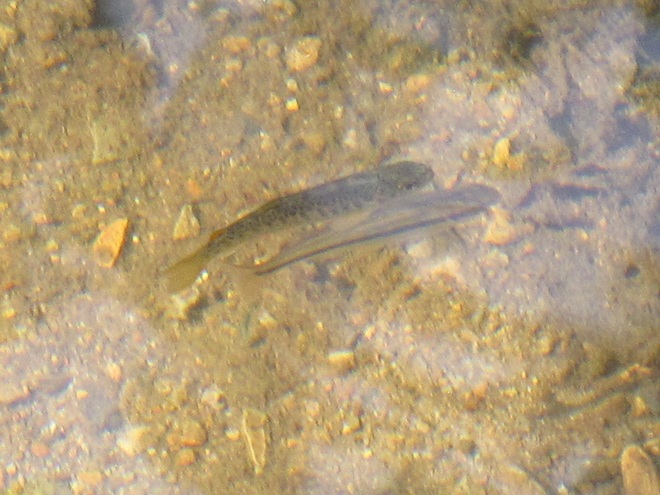
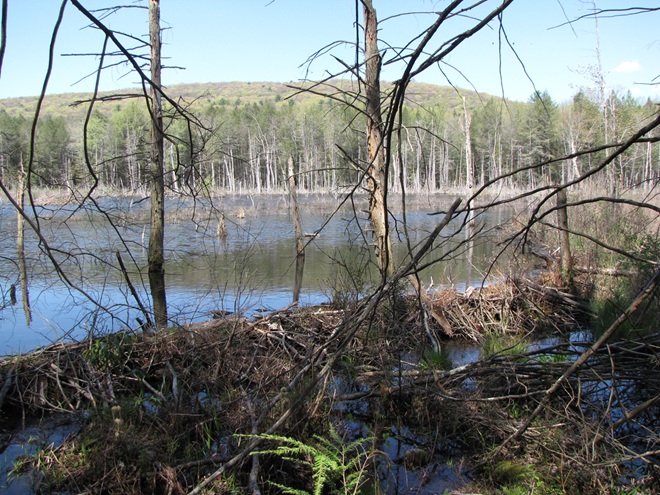
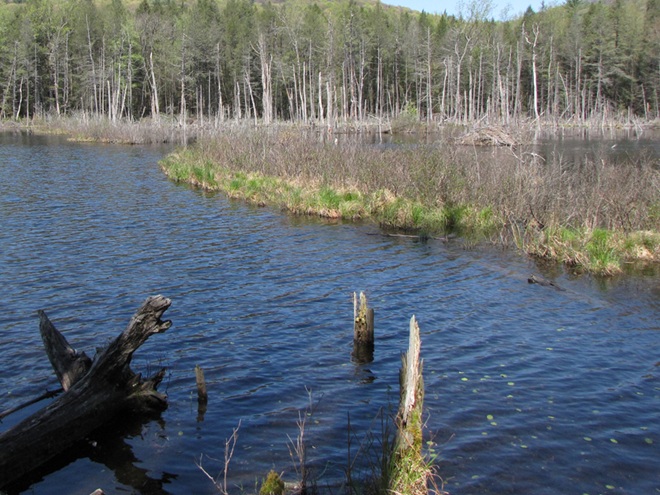
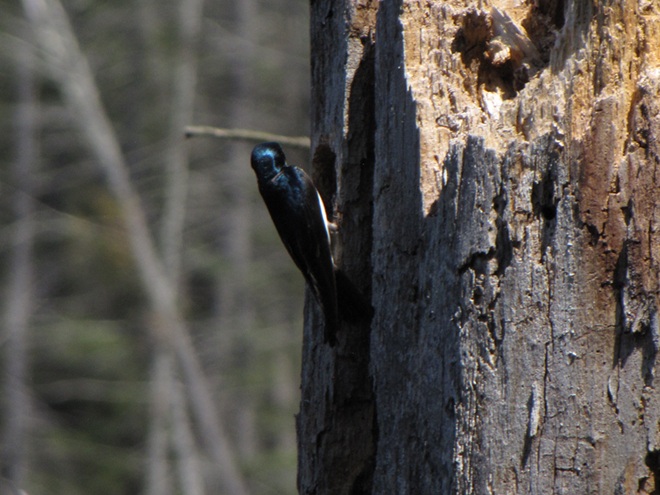
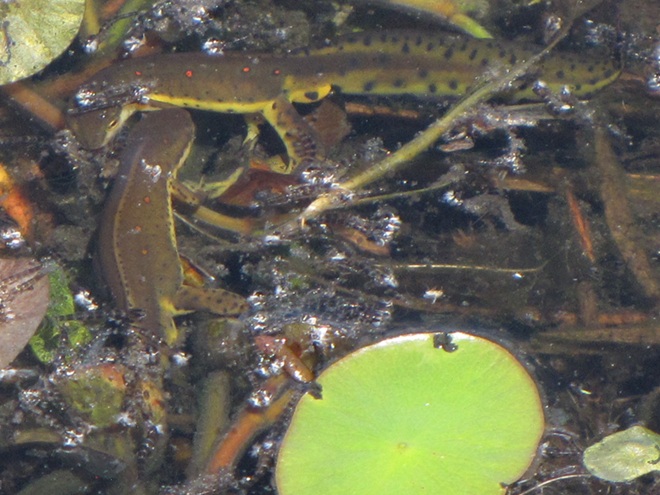
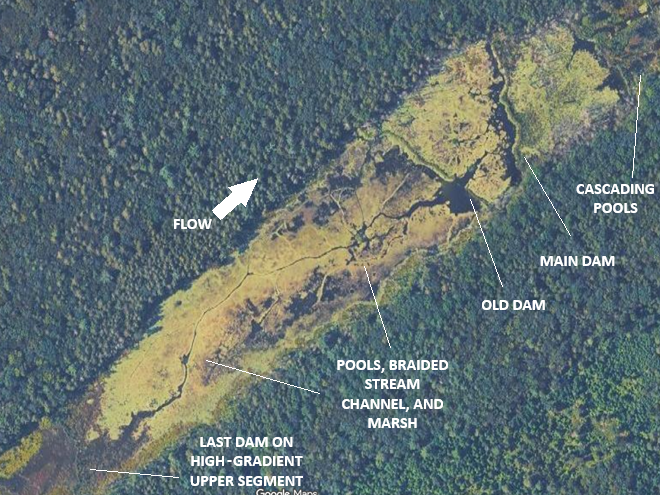
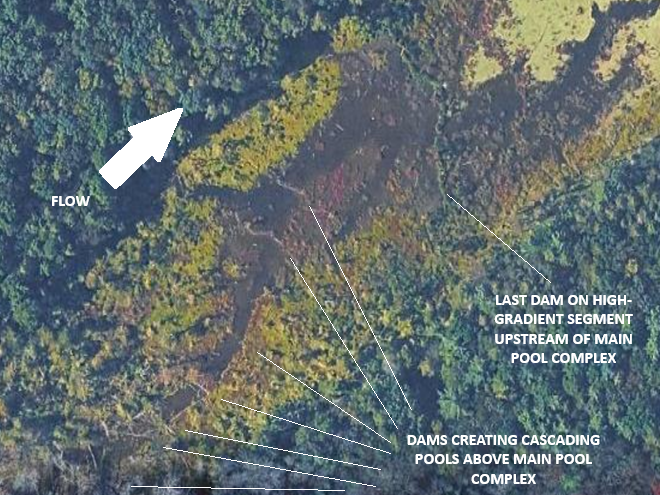
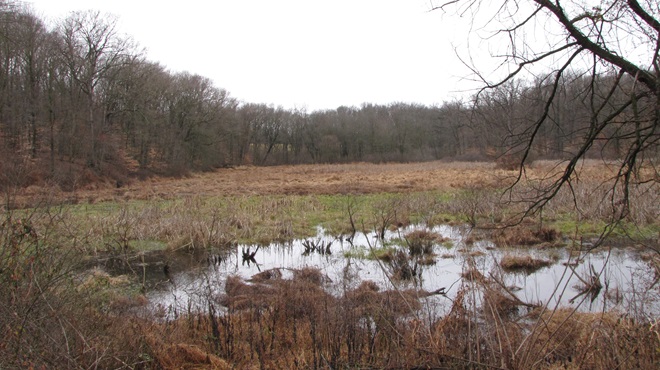
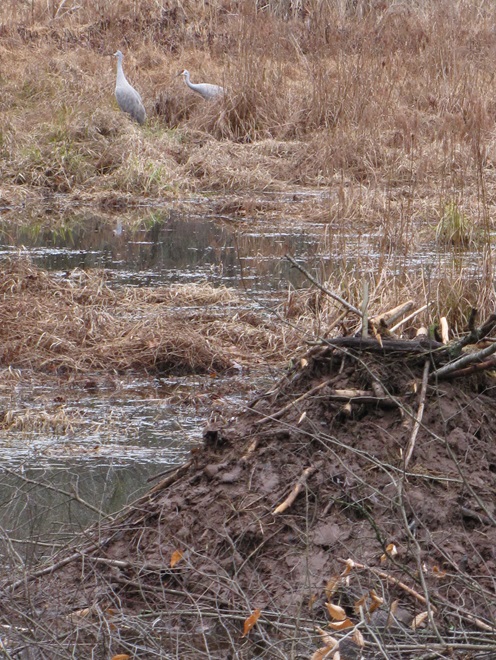
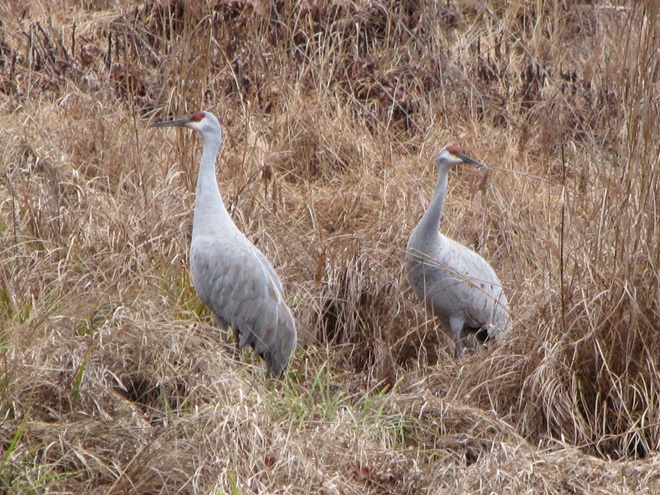
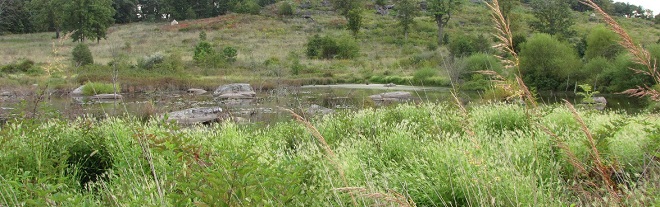
On a high-gradient segment of stream, beavers will create a cascading series of pools. Because water filters through a beaver dam instead of spilling over it, the work of these meticulous rodents soon silences the sounds of water changing altitude. No more sonorous riffle.Quiet please. High seasonal stream flow and damage from storms may create areas where water begins to erode the structure of the dam. Where this condition persists, an adult beaver will soon mend the breach, just to quiet things down. Why would beavers demand such a hush upon their domain? Well, they have poor eyesight, but their hearing is excellent, and they rely upon it to detect danger.The Louisiana Waterthrush (Parkesia motacilla), one of our earliest-arriving warblers, nests in forests along clear, high-gradient streams. In mid-April, we found this individual and three others squabbling over a breeding territory adjacent to the series of cascading beaver pools shown in the previous images.Native denizens of coldwater streams, neither the Brook Trout nor the Eastern Blacknose Dace has any difficulty finding its way through the voids in beaver dams to ascend and descend the sequence of pools.On a low-gradient segment of stream, a dam just over a foot in height may be sufficient to create a beaver pool of considerable size. Resembling the water-logged muskeg of the far north, well-established beaver pools form boggy habitats familiar to migrating shorebirds.Water levels in the pools usually drop along with the stream’s base flow as soon as the effects of the spring thaw and rain showers subside. Feeding areas in shallow water and on muddy ground are often revealed just in time for northbound shorebirds and other waders to stop by in late April and May. These conditions often persist through the growing season and the fall migration of these birds which begins as early as late June and sometimes extends into October.Where the pool inundates standing timber such as Red Maple and other species not used by beavers, the dead snags provide vital feeding areas for birds and other wildlife. Cavity nesters like this Tree Swallow seldom find suitable natural housing elsewhere.The mosaic of marshlands and braided stream channels within the beaver pool complex supports an abundance of aquatic life including these breeding Eastern Newts, seen here surrounded by the exuvia left behind following a massive hatch of alderflies (Sialinae). Alderflies are a stream inhabitant during their larval stage and are indicator of clean water conditions.A modern-day example of the way fully functional stream floodplains used to look in the Lower Susquehanna River Watershed. Though the pools may appear pond-like during the cooler and wetter months of the year, by summer the water levels behind the beaver dams recede as the base flow of the stream wanes. Now the true nature of the marsh, shallow pool, and braided stream complex is revealed. Unlike most man-made dams that set a fixed pool elevation regardless of flow by discharging water over the top of the structure or through a spillway or gate, beaver dams merely throttle the flow through their porous construction. Unless the beaver begins plugging small leaks as fast as the stream flow ebbs, the water level in the pools will drop. So they’re not left high and dry, lodges are located in the deepest pools, usually in close proximity to the dam and/or one of the stream courses. Though not inundated during the dry season, the soil in the pool complex is almost always damp and plants grow vigorously there, sequestering nutrients and retaining sediments in beneficial deposition patterns that actually inhibit erosion of the riparian landscape. These streams and floodplains retain their hyporheic zone and freely exchange water with the underlying water table and aquifer. It’s the ultimate floodplain management system, and the beavers don’t even know their doing all the work. (Google Maps base image)Where another high-gradient segment of stream enters the main pool complex, beavers have created an additional series of cascading pools. The impoundments created by these dams help diffuse stormwater energy and process more nutrients and sediments within the floodplain’s wetland vegetation system. (Google Maps base image)Beaver pools often refill as stream flows increase following autumn rains. The stockpiles of vegetative foods that grew within the beaver’s domain through the summer then become flooded and are a prime source of nutrition for not only the beavers, but waterfowl during both their autumn and spring migrations. Gleaning and probing Sandhill Cranes often find these habitats to their liking as well.
While North American Beavers have returned to the region, most live as “bank beavers”, residing in the river and larger creeks of the valley where they excavate shelters among the roots of Black Willows and other shoreline trees and shrubs. Floodplain encroachment, legacy sediment deposits, and just plain human intolerance have all conspired to prohibit North American Beavers from performing their magic on smaller local streams. For migrating shorebirds, this continued absence of beaver dam ecosystems has turned much of the lower Susquehanna valley into “flyover country”. Those travelers that do stop to rest and feed concentrate at the few favorable locations such as the lateral bars and the hydroelectric dam-created delta at the Conejohela Flats on the river in Lancaster County. But centralization has its drawbacks. Migrants spending time at concentration points may have a greater chance of contracting and spreading disease. Protracted heavy foraging can degrade these habitats. And over time, features such the lateral bars and delta deposits, including those on the Conejohela Flats, transition into other habitats—riparian forests. A more widespread selection of favorable stopover points for shorebirds, waders, waterfowl, and other migrants is certainly desirable.
IMITATION IS THE SINCEREST FORM OF FLATTERY
Until public sentiment sways in favor of the North American Beaver, wildlife managers are mimicking some of the attributes of their sound-inspired installations.
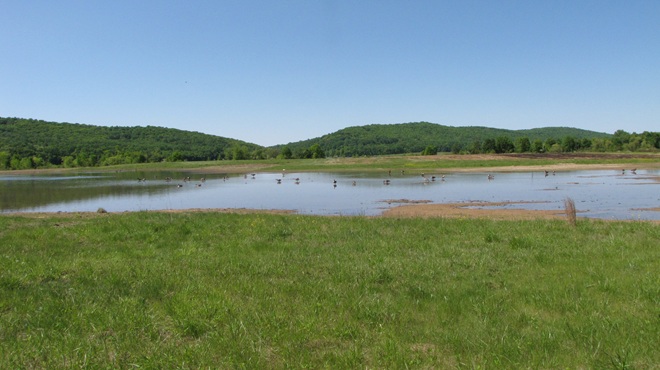
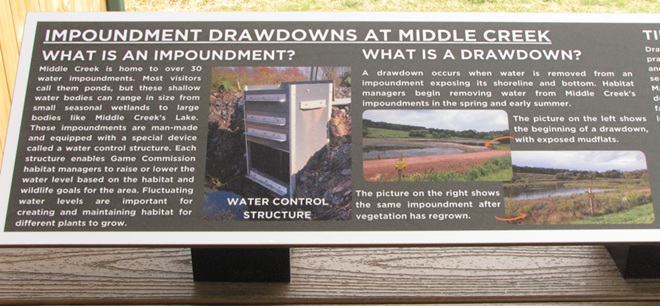
Created by excavating a depression in heavy clay soils, this new impoundment at the Pennsylvania Game Commission’s Middle Creek Wildlife Management Area collects water directly from rainfall and from surface runoff. Its depth at no point is greater than about two or three feet. During the driest times of the year, this space will be a mudflat, and a haven for migrating shorebirds.
Shallow-water conservation impoundments designed, constructed, and managed for migratory waterfowl and waders including shorebirds are not what we typically refer to as ponds—though they are lentic (still) waters. Similar shallow freshwater impoundments at our National Wildlife Refuges are referred to as pools by the United States Fish and Wildlife Service, but smaller versions like this example at Middle Creek very closely resemble the prairie potholes created by glacial scour in the north-central United States and adjacent portions of Canada. Many populations of migratory birds are familiar with pothole ecosystems and, like the beaver pools and marshes, have relied upon them as waypoints along their journeys for centuries.
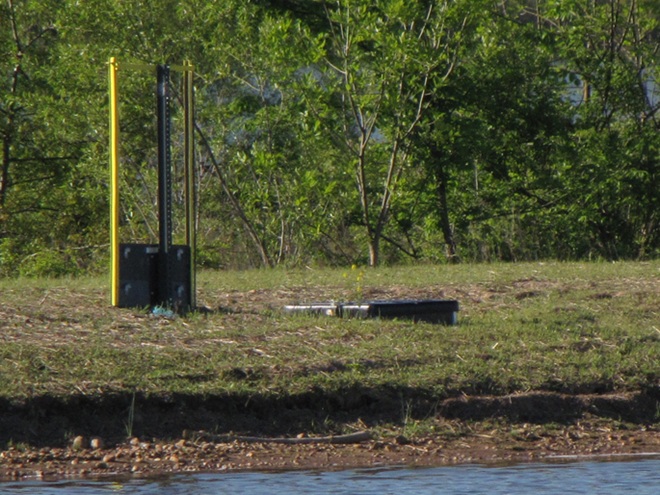
Impoundments most beneficial to migrating waterfowl and waders including shorebirds are shallow in depth. They lack the deeper waters of a pond or lake and thus have no limnetic (open water) or aphotic zones. Managed throughout as a littoral zone, impoundments grow plants in shallow water or on damp soil through the summer months to chew up nutrients accumulated in waste deposited by visiting birds. This vegetation is then flooded from late fall through early spring as forage habitat for migratory waterfowl. The timing of the fluctuations in water levels approximates those of the beaver pools and marshes on lotic (flowing) waters.A gate assembly is a water control structure installed to provide seasonal management of the water levels in a conservation impoundment. More than once, beavers have heard the sounds of tumbling waters inside these types of devices and tried to dam them up!
You’ve heard the line, “If you build it, they will come.” Well, it’s true. Here is a sample of the activity witnessed during the past two weeks at the new impoundment completed just several months ago at Middle Creek Wildlife Management Area along the tour route just beyond the “Stop 3” overlook.
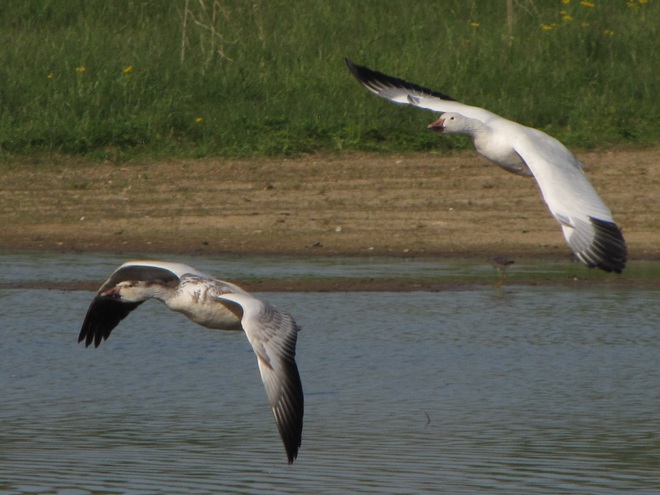
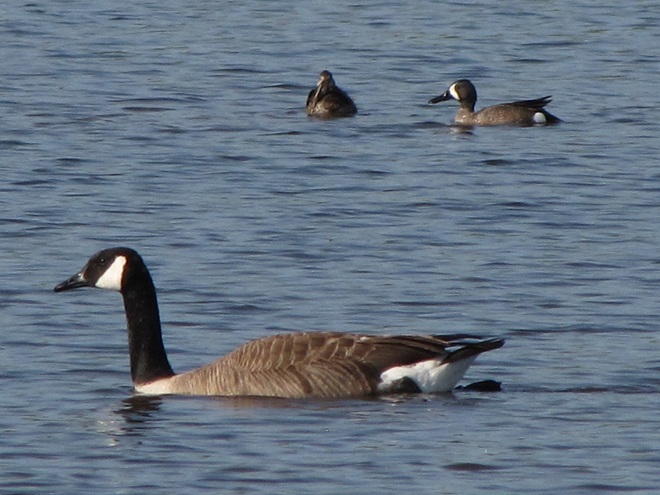
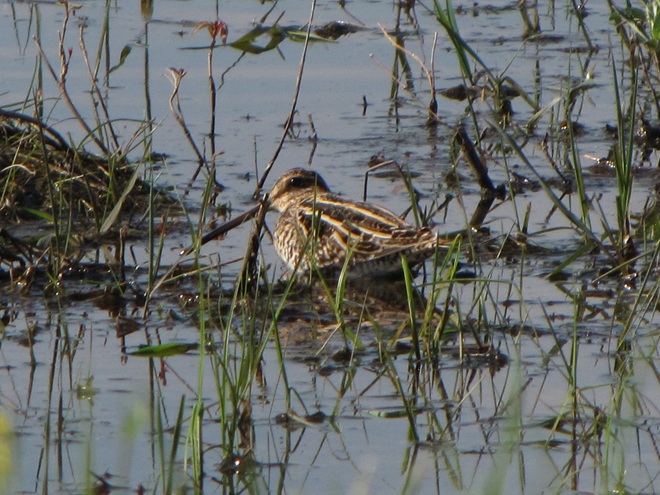
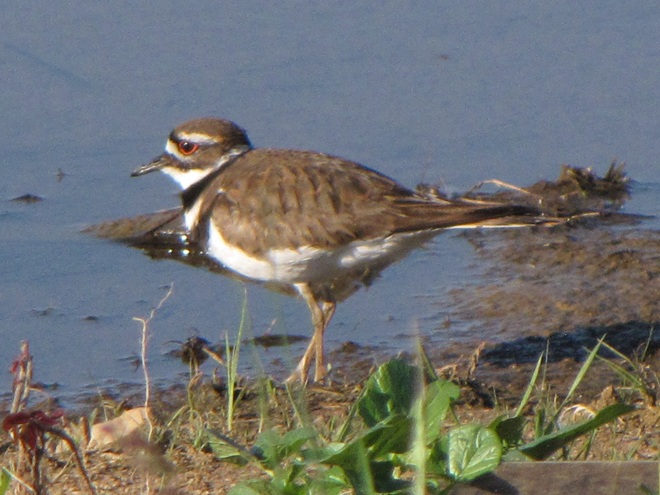
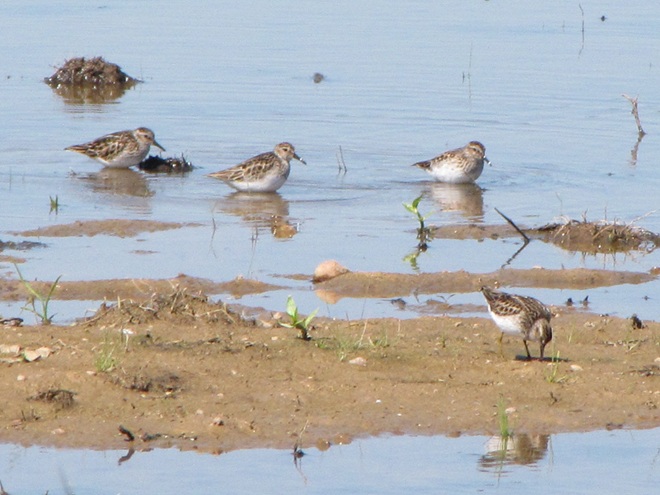
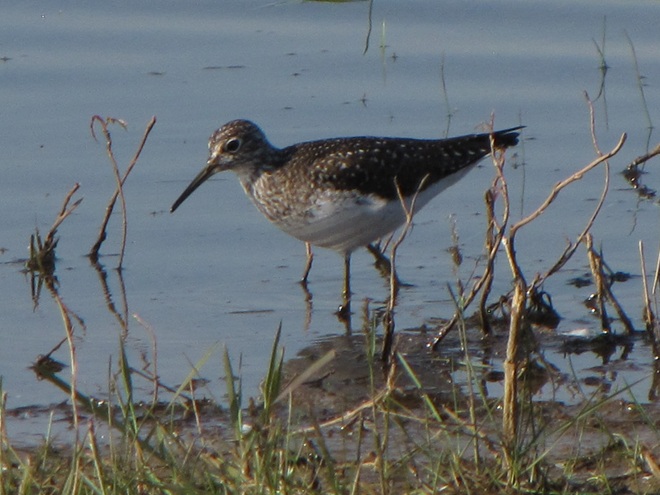
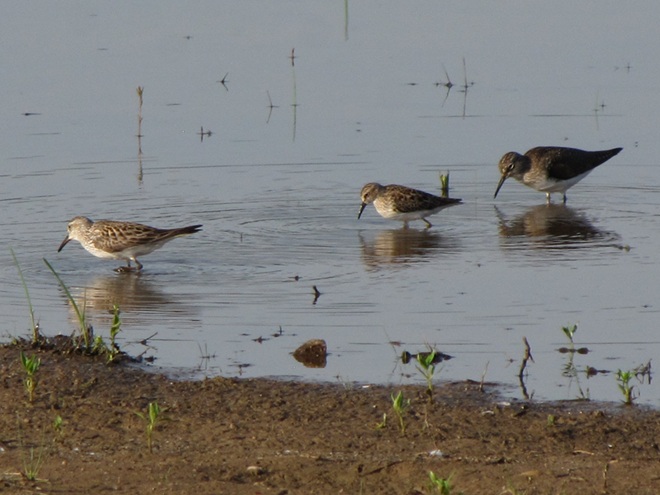
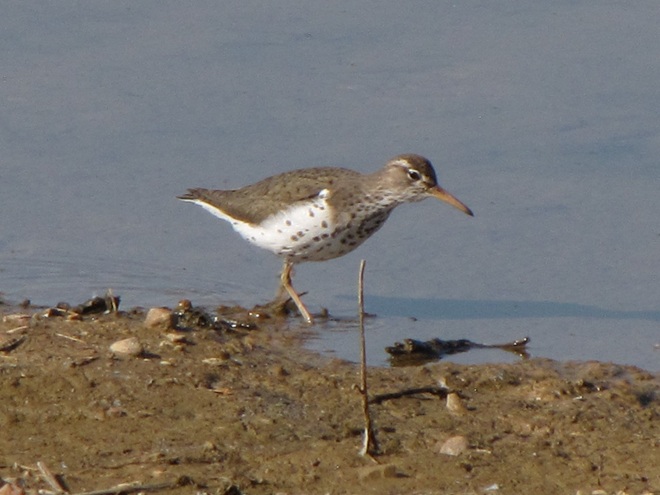
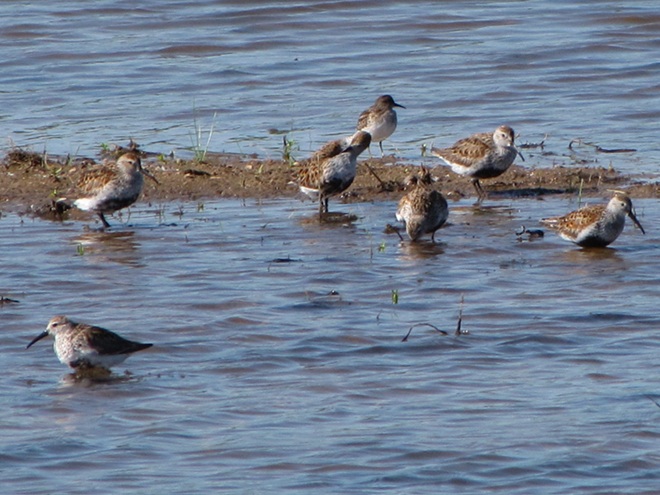
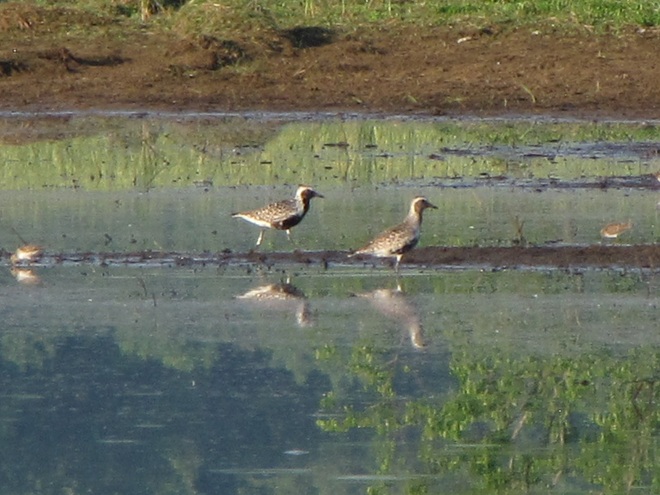
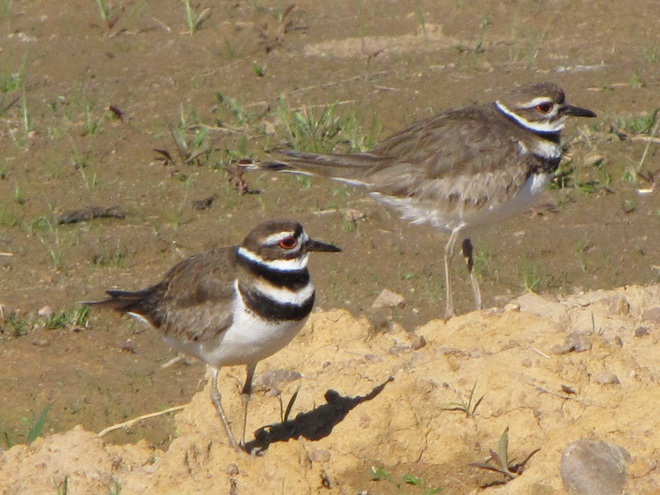
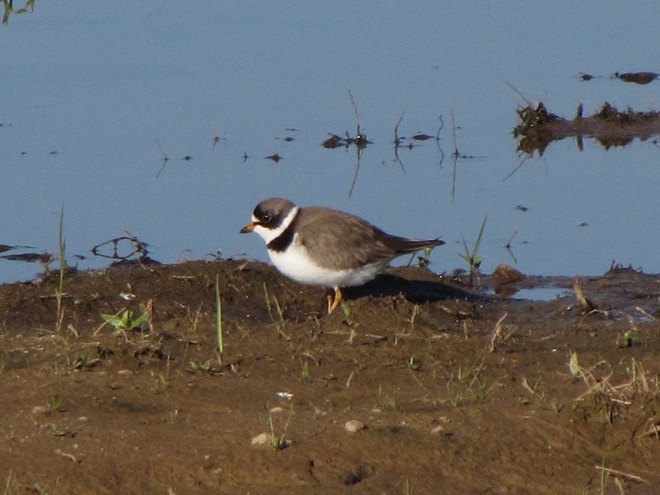
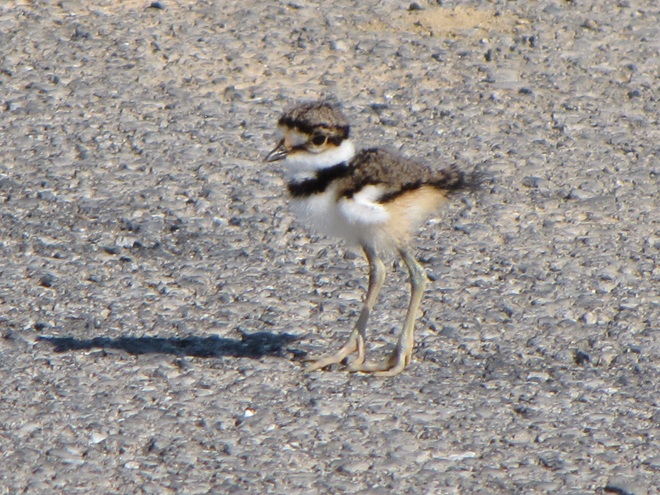
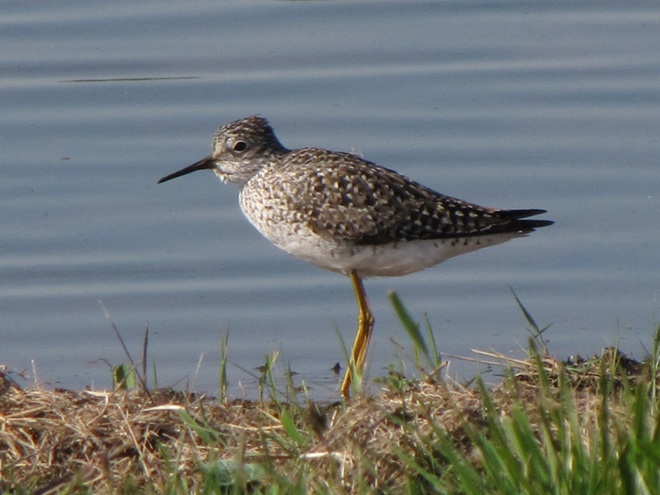
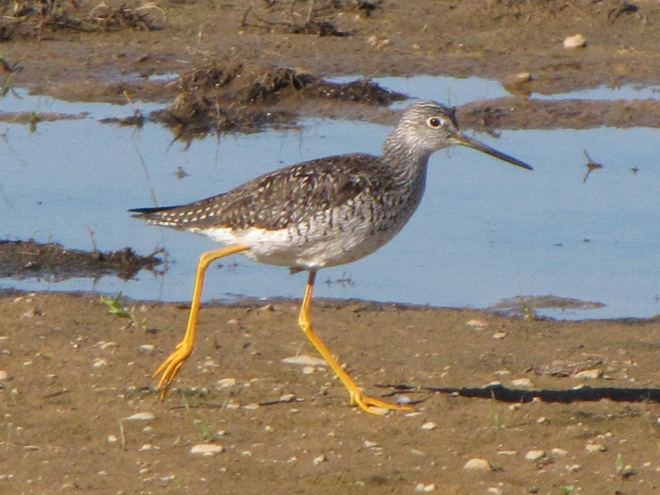
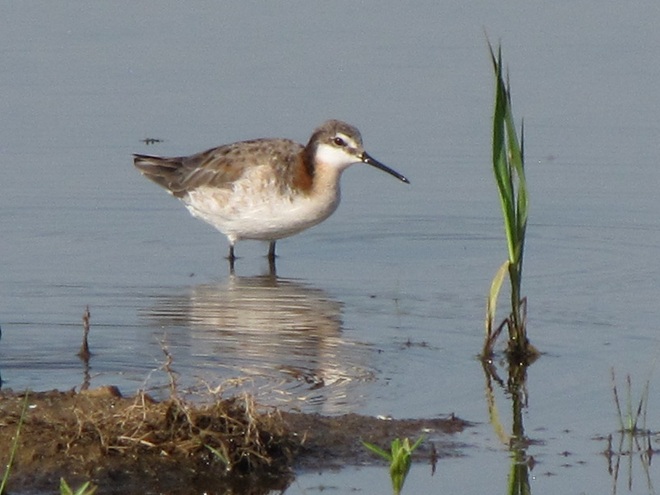
The ubiquitous Snow Geese were among the first migratory occupants of the new impoundment. A few are currently lingering in the vicinity.Ducks soon followed. These Blue-winged Teal were among the last to pass through earlier this month.Wilson’s Snipe were among the first species of migratory shorebirds to visit the new impoundment at Middle Creek……as were Killdeer, a species which nests nearby.Then, earlier this month, flocks of shorebirds including these Least Sandpipers were arriving to feed and rest.Least Sandpipers search for small invertebrates in shallow water and exposed soil.A Least Sandpiper (left) and a Semipalmated Sandpiper (right).Not all shorebirds seen by themselves are alone, and that includes the Solitary Sandpiper.Here’s a Solitary Sandpiper (right) feeding alongside a Least Sandpiper (center) and a White-rumped Sandpiper (left).A Least Sandpiper (left) and a White-rumped Sandpiper (right).Rare in our area during spring, the White-rumped Sandpiper (Calidris fuscicollis) flies north using the central flyway, then heads south along the Atlantic flyway in the fall, when it tends to be more regular here.Rocking and teetering along as it looks for food, the Spotted Sandpiper may be one of the easiest of shorebirds to identify.Chunky little Dunlin (Calidris alpina) with their conspicuously down-curved bills are another easy-to-identify species, particularly in the spring when their breeding (alternate) plumage includes a black belly.Black-bellied Plovers acquire a handsome set of plumage in the spring as well.Killdeer too are plovers and this pair appears to have taken up residence on barren ground along the periphery of the new impoundment.The Semipalmated Plover doesn’t have nearly the flair for ornament its close relatives the Killdeer do; these little shorebirds wear only one ring around their neck instead of two. Think this plover is cute?,……then check out this newly hatched Killdeer. It starts life with just one necklace too, but acquires a second as it grows. Look at those legs! (If you visit the new impoundment at Middle Creek, drive slowly and please watch where you’re going. Baby Killdeer and other young birds, as well as mammals and turtles, are commonly crossing the paved surfaces right now.)Speaking of legs, here’s one of dozens of Lesser Yellowlegs that visited the new impoundment during their recent northbound travels.Though less numerous than the smaller Lesser Yellowlegs, a Greater Yellowlegs seldom goes unnoticed when dropping by the man-made pothole habitat.Have trouble telling a Greater Yellowlegs like this one from a Lesser Yellowlegs? Look for the heavier, longer bill on the former, as well as dark barring along its flanks below the wings while the bird is in breeding (alternate) plumage during the spring migration.Everyone likes to see something unusual every now and then, and this impoundment delivers. Just yesterday, we photographed this migrating Wilson’s Phalarope (top center) among two Least Sandpipers (top left and right), a Lesser Yellowlegs (left and slightly forward of the phalarope), and a White-rumped Sandpiper (foreground).Renowned for spinning in circles as they feed in shallow water, Wilson’s Phalaropes (Phalaropus tricolor) passing through the lower Susquehanna basin are headed toward nesting areas in the prairie wetlands, including potholes, of the northern United States and adjacent sections of southern Canada.
Species of wildlife in addition to shorebirds and waterfowl have already found the new impoundment favorable…
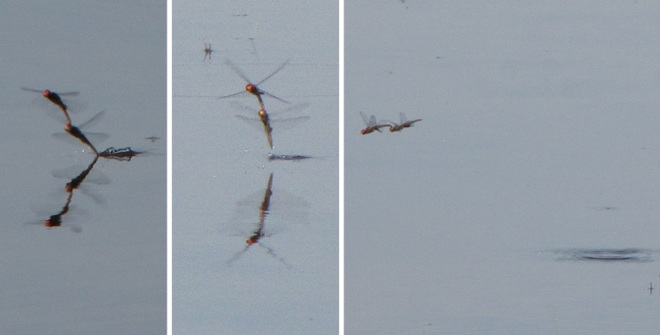
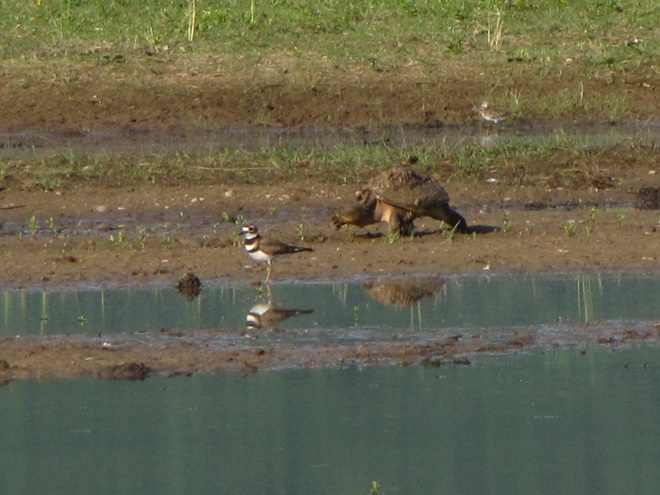
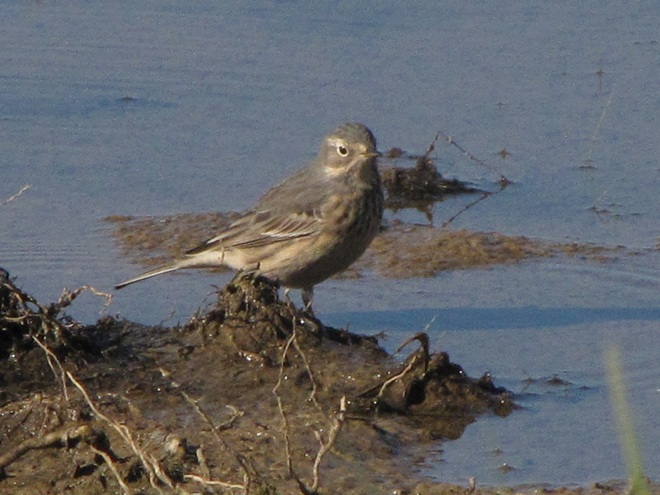
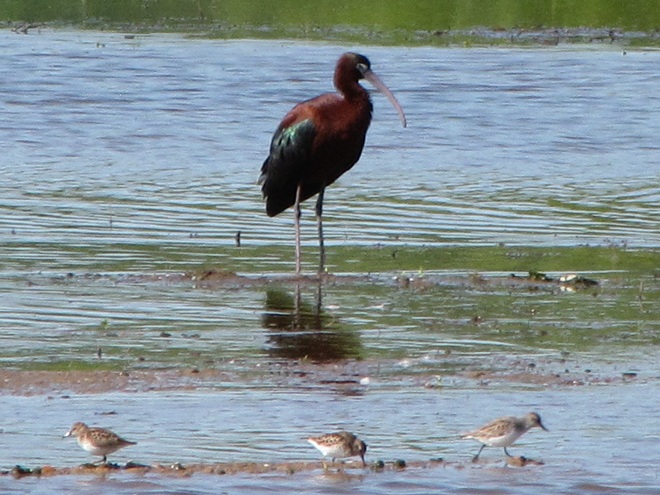
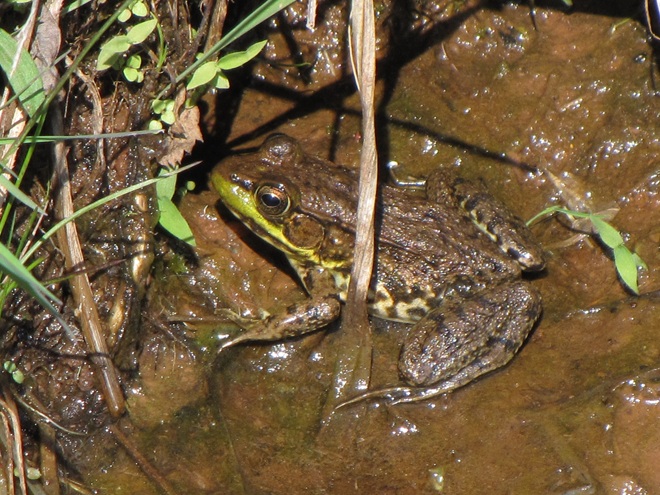
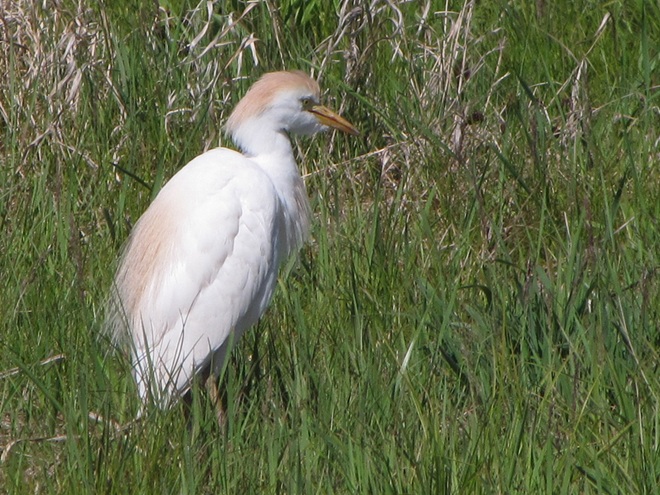
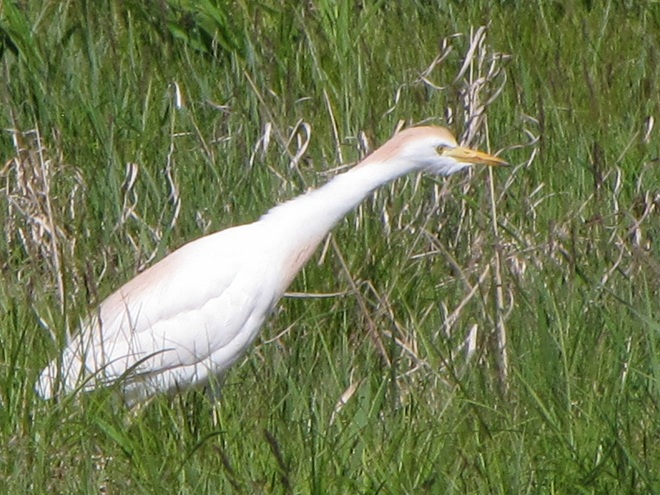
Pairs of breeding Spot-winged Gliders (Pantala hymenaea), seen here in tandem while ovipositing, were swarming the impoundment after arriving earlier this week. These dragonflies are ofttimes unpredictable nomads and are similar in appearance to the usually more numerous Wandering Gliders. To recolonize seasonal portions of their range, both are famous for hitching a ride en masse on storm systems. They share the behavior of finding ephemeral and new bodies of water favorable for egg laying due to their low density of aquatic predators.We watched this Snapping Turtle arrive to apparently find the newly created waters to its liking. Snapping Turtles are important consumers in a wetland ecosystem. Larger specimens may fill the role of an upper trophic level or apex predator, eliminating vulnerable mid-level consumers including other Snapping Turtles.Because it bounces its tail up and down like a Spotted Sandpiper, you may at first glance mistake an American Pipit for a shorebird. Long known as the Water Pipit, these songbirds have been visiting the impoundment while migrating north and stopping to feed in nearby croplands.Seen here with Least Sandpipers is a visiting Glossy Ibis.Sometimes twenty or more of these mostly coastal waders have made a pit stop at the “new Middle Creek pothole”, though none have thus far chosen to remain long. Apparently, food sources sufficient to sustain a bird of their size have yet to develop in its benthos.Western Cattle Egrets visiting Middle Creek this spring have been frequenting the new impoundment.With still little in the way of insects such as grasshoppers available in the surrounding landscape,……cattle egrets are looking to find prey like this Green Frog.Many have been observed hunting the adjacent grasslands..Where small mammals, mostly Meadow Voles, are being taken in abundance.
Managing saturation levels in shallow-water impoundments to resemble the seasonal variations in beaver pool and marsh systems can create lush growth and wildlife-rich environments. Take a look at some images from a project in a headwaters area of a tributary to Conewago Creek (west)…
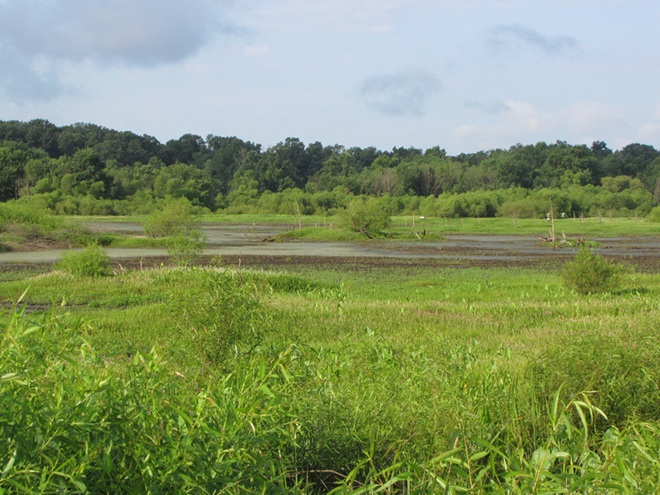
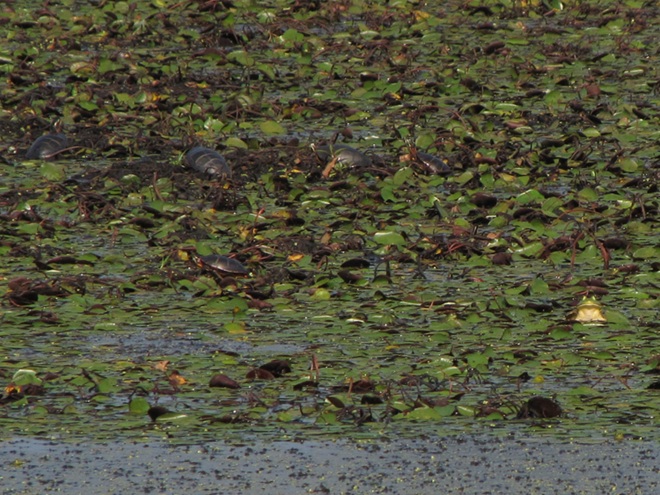
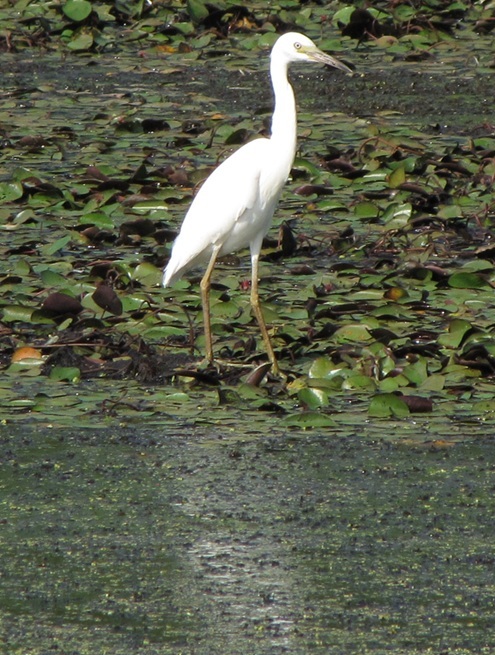
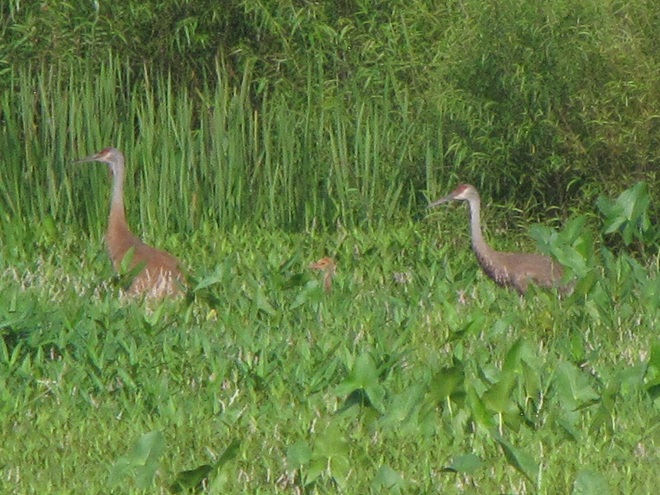
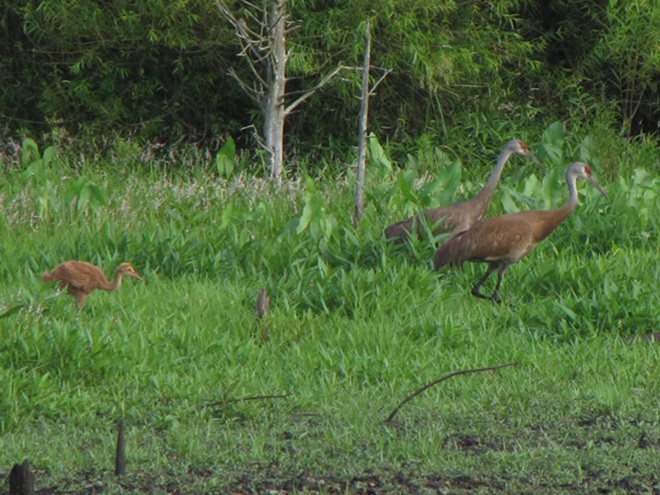
By late July, southbound shorebirds were already using these mudflats to feed and rest. Other sections of the impoundment were dense with emergent and aquatic plants, the latter kept hydrated in deeper pools of the project by the inflow from several captured springs that supplement direct rainfall and sheet runoff to supply its water. During a seasonal drawdown, the exposure of the impoundment’s soils to direct sunlight can provide a measure of disinfection to reduce the chances of disease transmission among its populations of visiting birds and other animals.In the deeper pools of the impoundment, water lilies and other aquatic plants grow in lush mats to provide cover and feeding areas for resident populations of breeding reptiles and amphibians.An abundance of foods are available for waders including this Green Heron……and this immature Little Blue Heron, a wanderer typical of more southern latitudes.While walking the road among tall grasses in the supporting landscape surrounding this impoundment, we were at first startled when these Sandhill Cranes strode by going the other direction. We quietly kept moving,……then spotted them again as we looked across the impoundment to realize they weren’t alone, but were escorting a colt.The hatching of this colt is testimony to the vital role wetland ecosystems play in the lives of hundreds of species. Whether they be beaver pools and marshes on lotic waters or man-made shallow lentic waters, each of these habitats is filling a void that left floodplains and other critical lowland biomes faltering. While they can’t replace the full-function floodplain management provided by an active beaver colony, shallow-water impoundments can provide relief for habitat-starved populations of the animals and plants that rely upon them. A constellation of these projects on lands public or private across the lower Susquehanna watershed could help provide refuge for many of our flora and fauna with the most desperately fragmented of ranges.
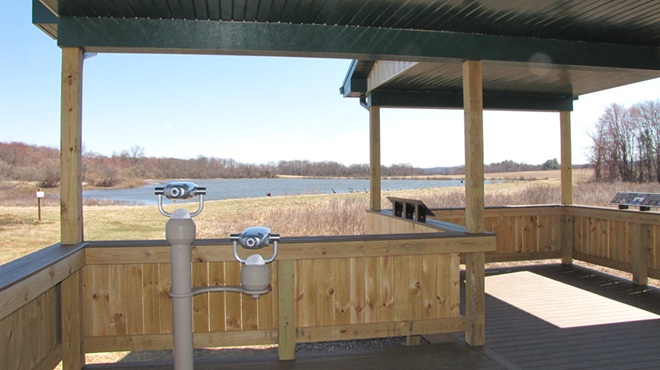
So that you can relax while observing the comings and goings at a pair of the lower Susquehanna valley’s man-made impoundments, the Pennsylvania Game Commission has erected two viewing pavilions for public use on its lands…
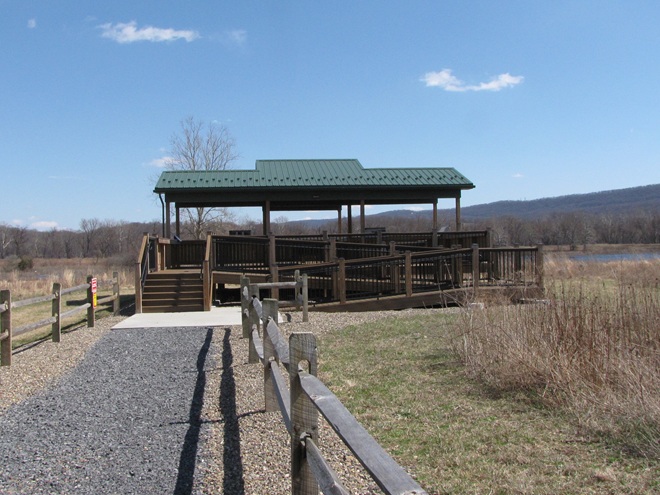
The Haldeman Island observation pavilion is located on State Game Lands 290 just upstream from the Juniata River’s mouth on the Susquehanna at Clark’s Ferry in Dauphin County.It overlooks not only the island’s man-made shallow-water impoundments and neighboring grasslands, but the hacking tower used in the 1970s to reintroduce Bald Eagles from Saskatchewan to the lower Susquehanna. Interpretive signs explain the conservation stories of habitats and the eagle reintroduction program.The observation pavilion at Middle Creek Wildlife Management Area is of similar construction to the one at Haldeman Island. It is accessed from the parking pull-off along the tour road at its intersection with Chapel Road, just before the right turn and incline that leads to the “Stop 3” grassland overlook.It too includes numerous interpretive signs to help visitors understand impoundment management.
During the next two weeks, the exodus of migrating shorebirds now staged and feeding upon Atlantic Horseshoe Crab eggs on Delaware Bay will commence. During the evening of their departure from the bay, many of these birds cross portions of the Lower Susquehanna River Watershed, particularly east of the river. Stormy weather and other climatic conditions may force some of them to seek a place to put down temporarily, so keeping a close eye on the new pothole-like impoundment at Middle Creek may be a prudent move. After that, waders known as “post-breeding wanderers” can show up at any time. Then, beginning as early as late June, shorebirds begin moving south on a migration that can provide us with viewing opportunities into September and beyond. See you out there!
Imagine a network of brooks and rivulets meandering through a mosaic of shrubby, sometimes boggy, marshland, purifying water and absorbing high volumes of flow during storm events. This was a typical low-gradient stream in the valleys of the Lower Susquehanna River Watershed in the days prior to the arrival of the waves of trans-Atlantic human migrants that started to inundate the area during the seventeenth century. Then, a frenzy of trapping, tree chopping, mill building, and stream channelization accompanied the east to west surge of settlement across the region. The first casualty: the indispensable lowlands manager, the North American Beaver (Castor canadensis).
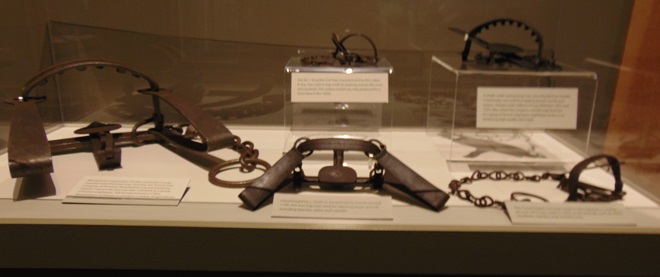
Nineteenth-century beaver traps on display in the collection of the State Museum of Pennsylvania in Harrisburg. Soon after their arrival, trans-Atlantic migrants (Europeans) established trade ties to the “trans-Beringia”/”Pacific-rim” migrants (“Indians”) already living in the lower Susquehanna valley and recruited them to cull the then-abundant North American Beavers. By the early 1700s, beaver populations (as well as numbers of other “game” animals) were seriously depleted, prompting the Conoy, the last of the Indian peoples to reside on the lower Susquehanna, to disperse to the north. The traps pictured here are samples of the types which were subsequently used by the European settlers to eventually extirpate the North American Beaver from the Lower Susquehanna River Watershed during the 1800s.
Without the widespread presence of beavers, stream ecology quickly collapsed. Pristine waterways were all at once gone, as were many of their floral and faunal inhabitants. It was a streams-to-sewers saga completed in just one generation. So, if we really want to restore our creeks and rivers, maybe we need to give the North American Beaver some space and respect. After all, we as a species have yet to build an environmentally friendly dam and have yet to fully restore a wetland to its natural state. The beaver is nature’s irreplaceable silt deposition engineer and could be called the 007 of wetland construction—doomed upon discovery, it must do its work without being noticed, but nobody does it better.
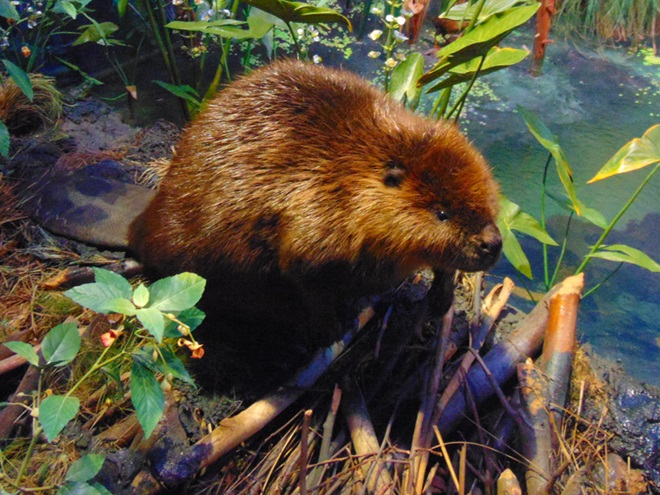
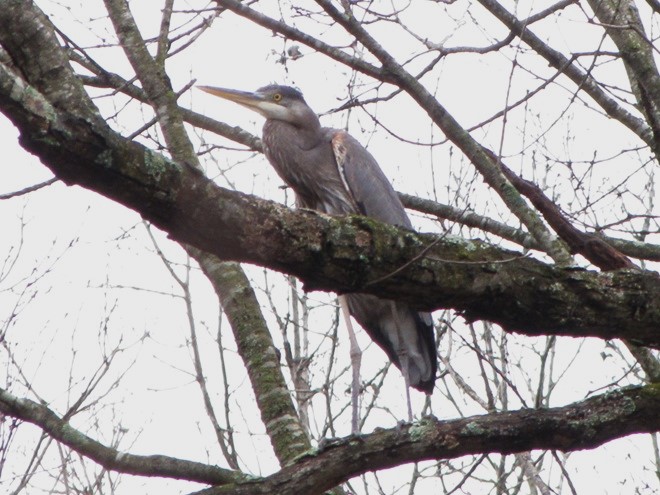
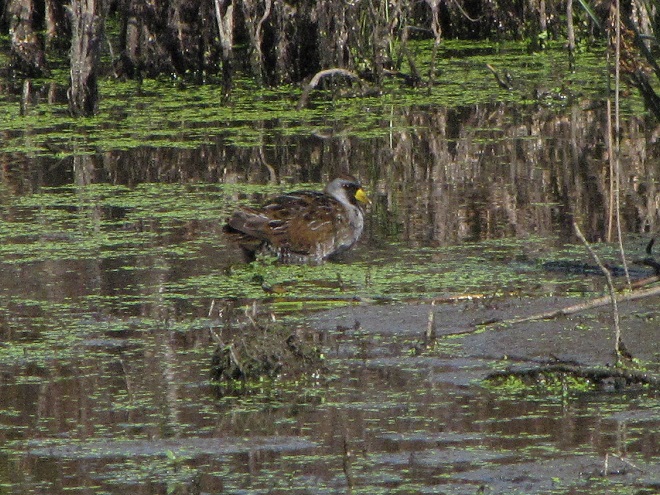
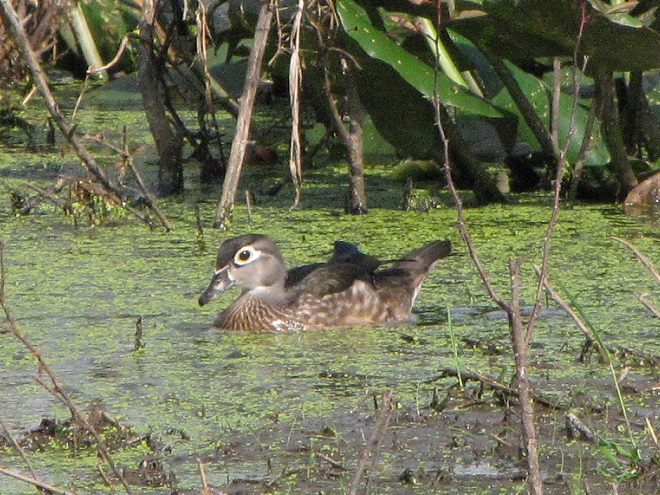
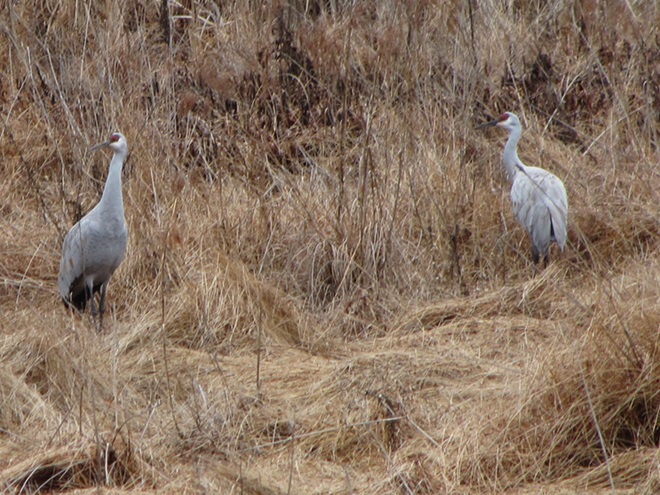
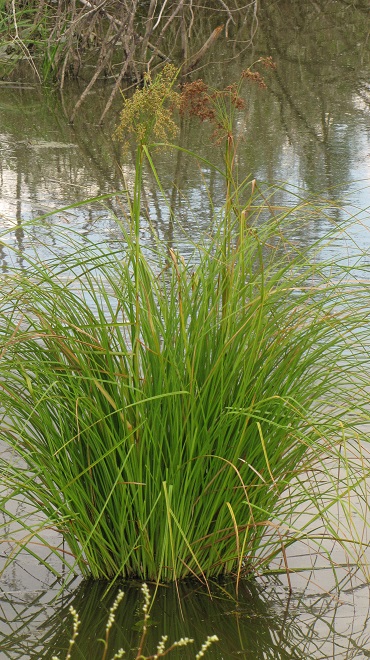
North American Beaver diorama on display in the State Museum of Pennsylvania in Harrisburg. Beavers were reintroduced to the Susquehanna watershed during the second half of the twentieth century.A beaver dam and pool on a small stream in the Lower Susquehanna River Watershed.Beaver dams not only create pools, they also maintain shallow water levels in adjacent areas of the floodplain creating highly-functional wetlands that grow the native plants used by the beaver for food. These ecosystems absorb nutrients and sediments. Prior to the arrival of humans, they created some of the only openings in the vast forests and maintained essential habitat for hundreds of species of plants as well as animals including fish, amphibians, reptiles, and birds. Without the beaver, many of these species could not, and in their absence did not, exist here.Their newly constructed lodge provides shelter from the elements and from predators for a family of North American Beavers.Floodplains managed by North American Beavers can provide opportunities for the recovery of the uncommon, rare, and extirpated species that once inhabited the network of streamside wetlands that stretched for hundreds of miles along the waterways of the Lower Susquehanna River Watershed.A wintering Great Blue Heron is attracted to a beaver pond by the abundance of fish in the rivulets that meander through its attached wetlands.Beaver pools and their attached wetlands provide nesting habitat for uncommon birds like this Sora rail.Lesser Duckweed grows in abundance in beaver ponds and Wood Ducks are particularly fond of it during their nesting cycle.Beaver dams maintain areas of wet soil along the margins of the pool where plants like Woolgrass sequester nutrients and contain runoff while providing habitat for animals ranging in size from tiny insects to these rare visitors, a pair of Sandhill Cranes (Antigone canadensis).Sandhill Cranes feeding among Woolgrass in a floodplain maintained by North American Beavers.
Few landowners are receptive to the arrival of North American Beavers as guests or neighbors. This is indeed unfortunate. Upon discovery, beavers, like wolves, coyotes, sharks, spiders, snakes, and so many other animals, evoke an irrational negative response from the majority of people. This too is quite unfortunate, and foolish.
North American Beavers spend their lives and construct their dams, pools, and lodges exclusively within floodplains—lands that are going to flood. Their existence should create no conflict with the day to day business of human beings. But humans can’t resist encroachment into beaver territory. Because they lack any basic understanding of floodplain function, people look at these indispensable lowlands as something that must be eliminated in the name of progress. They’ll fill them with soil, stone, rock, asphalt, concrete, and all kinds of debris. You name it, they’ll dump it. It’s an ill-fated effort to eliminate these vital areas and the high waters that occasionally inundate them. Having the audacity to believe that the threat of flooding has been mitigated, buildings and poorly engineered roads and bridges are constructed in these “reclaimed lands”. Much of the Lower Susquehanna River Watershed has now been subjected to over three hundred years-worth of these “improvements” within spaces that are and will remain—floodplains. Face it folks, they’re going to flood, no matter what we do to try to stop it. And as a matter of fact, the more junk we put into them, the more we displace flood waters into areas that otherwise would not have been impacted! It’s absolute madness.
By now we should know that floodplains are going to flood. And by now we should know that the impacts of flooding are costly where poor municipal planning and negligent civil engineering have been the norm for decades and decades. So aren’t we tired of hearing the endless squawking that goes on every time we get more than an inch of rain? Imagine the difference it would make if we backed out and turned over just one quarter or, better yet, one half of the mileage along streams in the Lower Susquehanna River Watershed to North American Beavers. No more mowing, plowing, grazing, dumping, paving, spraying, or building—just leave it to the beavers. Think of the improvements they would make to floodplain function, water quality, and much-needed wildlife habitat. Could you do it? Could you overcome the typical emotional response to beavers arriving on your property and instead of issuing a death warrant, welcome them as the talented engineers they are? I’ll bet you could.
To pass the afternoon, we sat quietly along the edge of a pond, or more accurately a pool, created recently by North American Beavers (Castor canadensis). They first constructed their dam on this small stream about five years ago. Since then, a flourishing wetland has become established. Have a look.
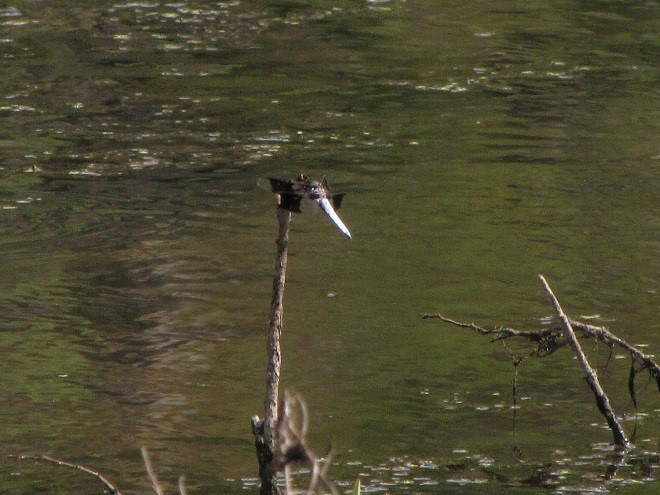
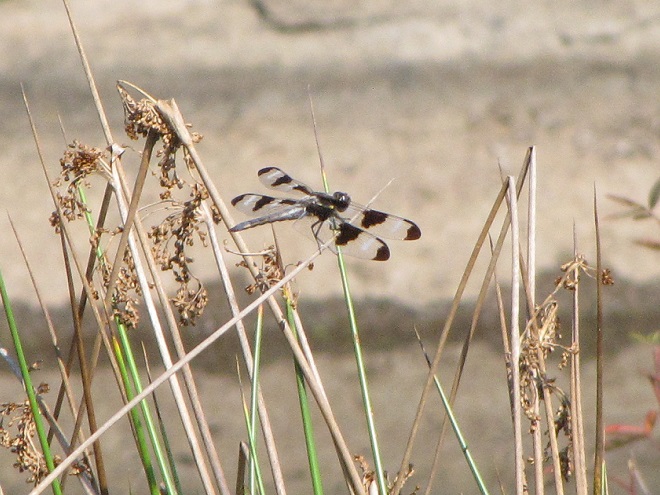
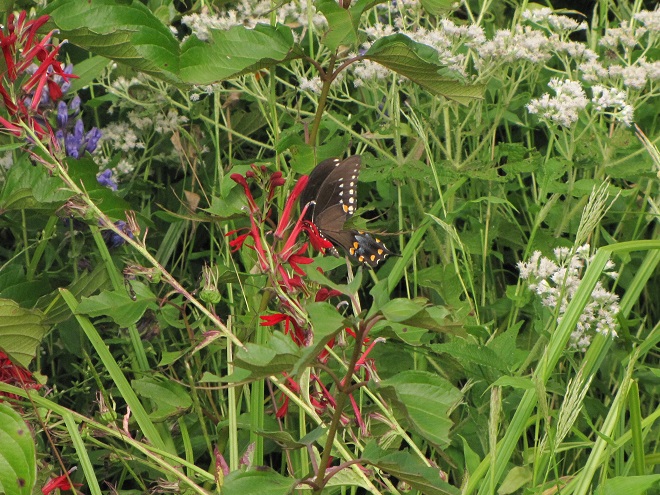
Vegetation surrounding the inundated floodplain helps sequester nutrients and sediments to purify the water while also providing excellent wildlife habitat.The beaver lodge was built among shrubs growing in shallow water in the middle of the pond.Woolgrass (Scirpus cyperinus) is a bulrush that thrives as an emergent and as a terrestrial plant in moist soils bordering the pond.A male Common Whitetail dragonfly keeping watch over his territory.A Twelve-spotted Skimmer perched on Soft Rush.A Blue Dasher dragonfly seizing a Fall Field Cricket (Gryllus pennsylvanicus).A Spicebush Swallowtail visiting a Cardinal Flower.A Green Heron looking for small fish, crayfish, frogs, and tadpoles.The Green Heron stalking potential prey.A Wood Duck feeding on the tiny floating plant known as Lesser Duckweed (Lemna minor).A Least Sandpiper poking at small invertebrates along the muddy edge of the beaver pool.A Solitary Sandpiper.A Solitary Sandpiper testing the waters for proper feeding depth.A Pectoral Sandpiper searches for its next morsel of sustenance.The Sora (Porzana carolina) is a seldom seen rail of marshlands including those created by North American Beavers. Common Cattails, sedges, and rushes provide these chicken-shaped wetland birds with nesting and loafing cover.
Isn’t that amazing? North American Beavers build and maintain what human engineers struggle to master—dams and pools that reduce pollution, allow fish passage, and support self-sustaining ecosystems. Want to clean up the streams and floodplains of your local watershed? Let the beavers do the job!