Maybe They’ll Stay, Maybe They Won’t

Here are a few more late-season migrants you might currently see passing through the lower Susquehanna valley.  Where adequate food and cover are available, some may remain into part or all of the winter…
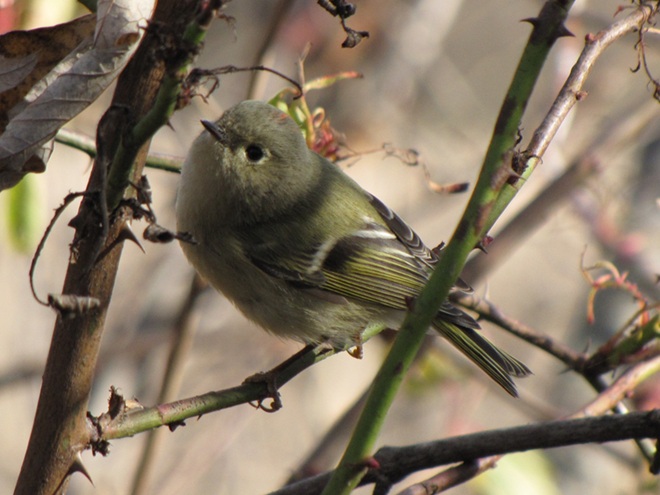
Ruby-crowned Kinglet
During the summer, Ruby-crowned Kinglets nest in northern coniferous forests.  Through the colder months, these petite songbirds can often subsist on tiny insects and other invertebrates found among the bark, limbs, and buds of leafless deciduous trees and shrubs.  In our region, look for wintering kinglets in woodlands that include at least a small percentage of evergreens to provide protection from frigid nighttime temperatures.
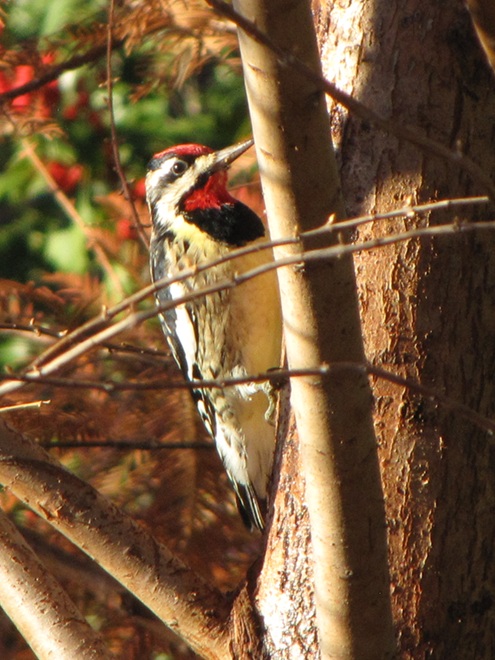
Yellow-bellied Sapsucker
The Yellow-bellied Sapsucker is our shiest of woodpeckers.  These migrants are still quite common among stands of deciduous and mixed woods, but local numbers will soon decrease as the majority of the population continues moving along to the forests of the southeastern United States for winter.
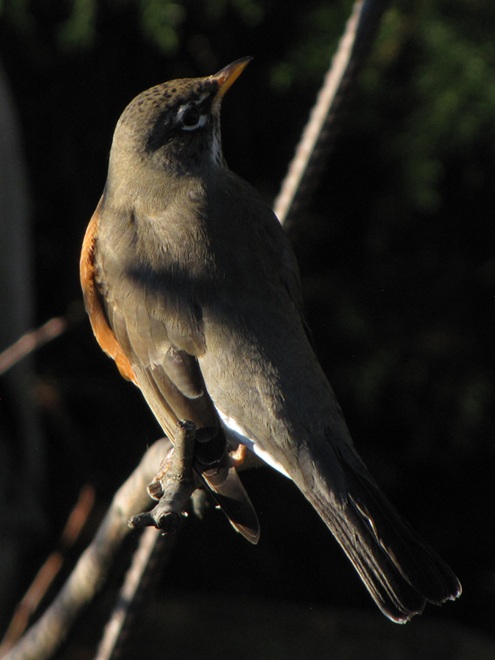
American Robin
Migrating American Robins are still transiting region, but an abundance of wild fruits can prompt hundreds to linger through winter.  Look for them near supplies of wild grape, Poison Ivy, dogwood, Virginia Creeper, hackberry, hawthorn, American Holly,…
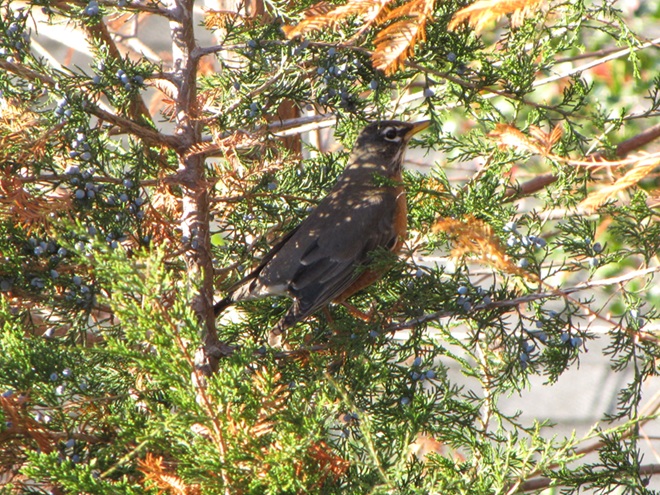
American Robin
…Eastern Red Cedar,…
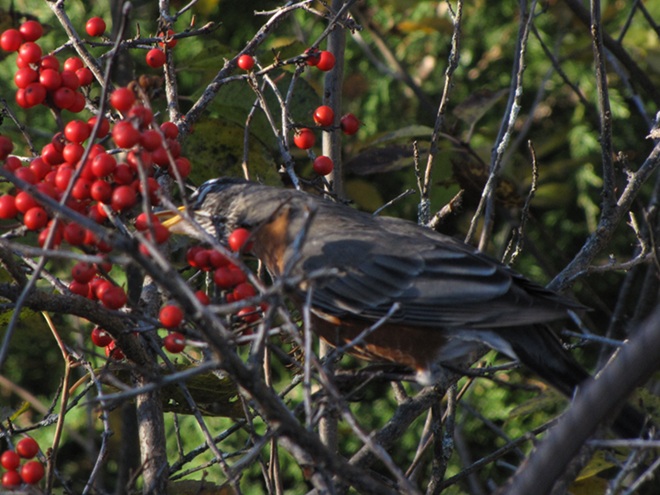
American Robin
…and Common Winterberry.
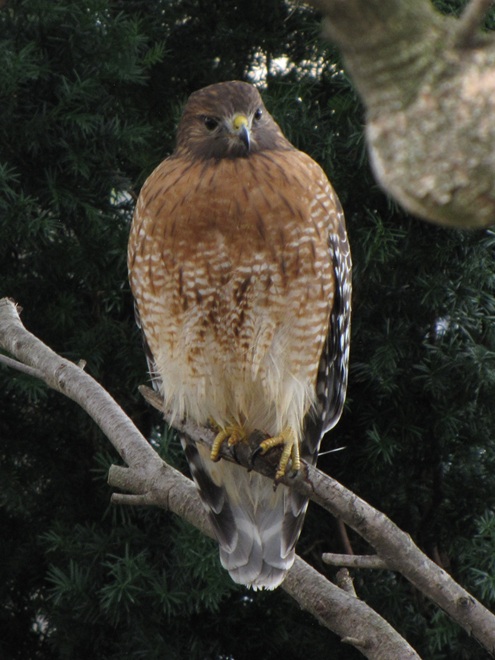
Red-shouldered Hawk
In case you were wondering…Yes, the adult Red-shouldered Hawk continues to visit the garden pond at susquehannawildlife.net headquarters.  Earlier today, we watched it plunge into the shallows after a Green Frog.  We’re enjoying the privilege of having it around, so we hope it decides to remain for as long as the food supply is accessible. 

They’re Here

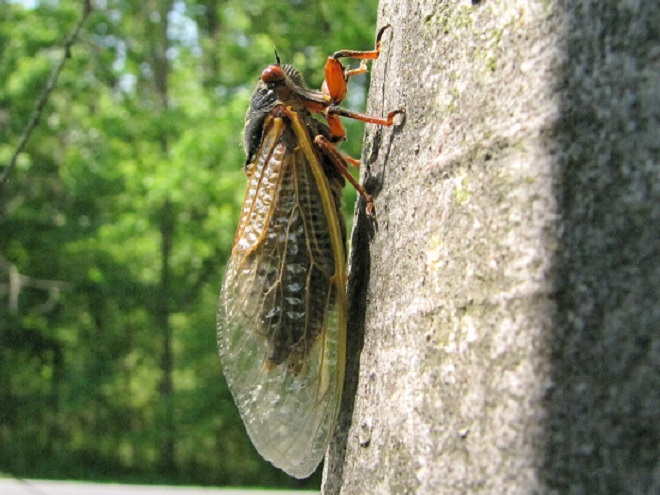
The Magi have arrived.   Emanating from the shadows of a nearby forest, you may hear the endless drone of what sounds like an extraterrestrial craft.  Then you get your first look at those beady red eyes set against a full suit of black armor—out of this world.  The Magicicada are here at last.
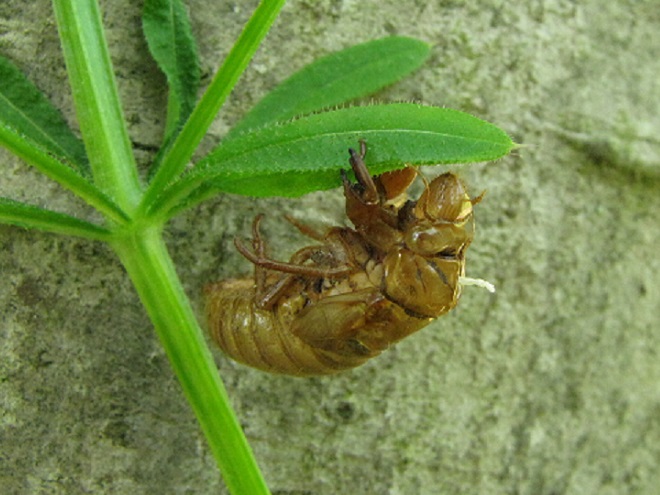
This exuvia, the leftover from a cicada’s final molt, tells us they are here.
A Brood X Periodical Cicada soon after emergence and final molt.
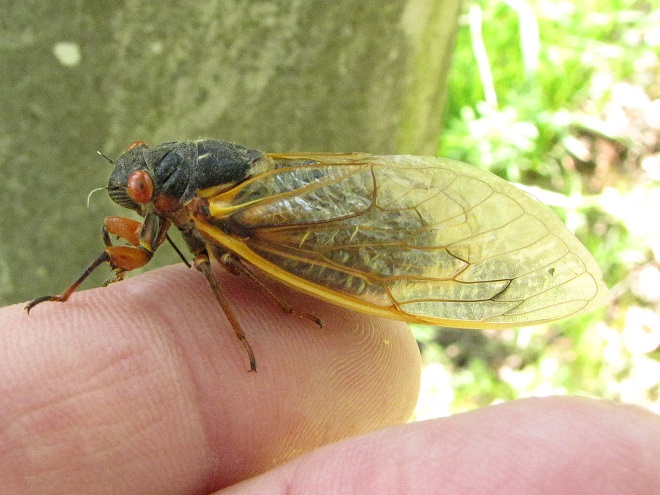
Not to worry, cicadas are harmless and docile when handled.  This is Magicicada septendecim, the largest and most common of our three species of Brood X seventeen-year cicadas.  They are currently emerging along south-facing borders of forests and wooded parks and lawns.
Magicicada septendecim can be recognized by the orange on the thorax behind each eye and in front of the wing insertions.  The smaller M. cassini and M. septendecula have no orange coloration between the eye and wing.
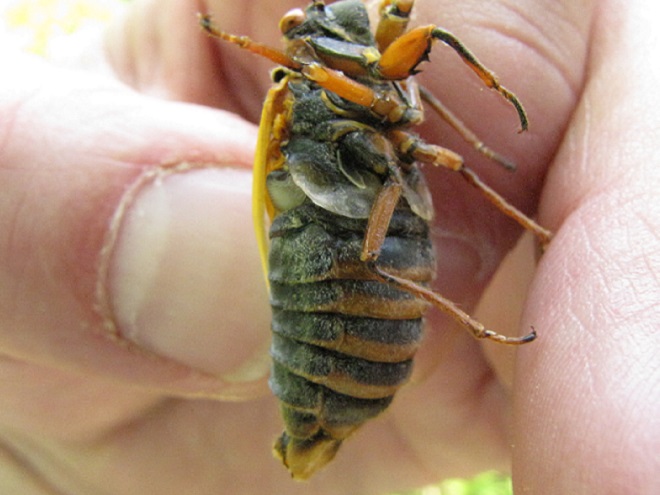
Magicicada septendecim (seen here) has broad orange stripes on the abdomen.  M. cassini has an all black abdomen and M. septendecula, the rarest species, has narrow well-defined orange stripes.

If you go out and about to observe periodical cicadas, keep an eye open for these species too…

Spotted Lanternflies, one of our most dreaded invasive species, have hatched.  These tiny nymphs about 5 millimetres in length were found feeding on a Virginia Creeper (Parthenocissus quinquefolia), a native vine in the grape family (Vitaceae).
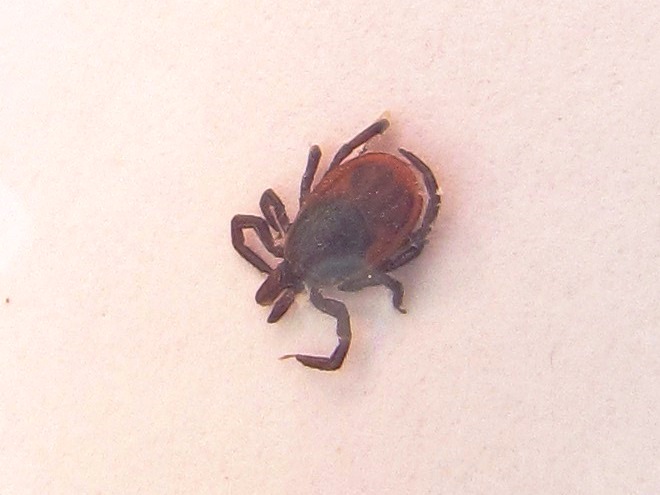
Deer Ticks, also known as Black-legged Ticks, are hanging around on vegetation of all kinds looking to hitch a ride on a suitable host.  Don’t let it be you.  This adult female, less than 5 millimetres in length, was washed loose during an after-hike shower.