Photo of the Day
LIFE IN THE LOWER SUSQUEHANNA RIVER WATERSHED
A Natural History of Conewago Falls—The Waters of Three Mile Island

As they travel between coastal wintering ranges and breeding territories in Canada and Alaska, vast numbers of shorebirds pass through the lower Susquehanna region each spring and fall—though few stop here to rest, feed, and provide us with an opportunity to observe them. Prior to the construction of man-made dams and other alterations on our lotic (flowing) waterways including the river, shorebirds took advantage of lateral bars, stream deltas, and other alluvial deposits as places to loaf and re-energize. Before they were drained and filled, some of the valley’s wetlands probably included sparsely vegetated flats where shorebirds could drop in for a brief visit. Previous to their extirpation from our region, North American Beavers were the primary providers of quality habitat for shorebirds and other migrating waders on our lotic waters. Their widespread network of dams, pools, and marshes maximized floodplain function by keeping streams thoroughly connected to their wetlands, nurturing plant communities that not only provided food and shelter for the beavers and other wildlife, but provided superb buffering against erosion while protecting against sediment and nutrient imbalances in lower Susquehanna waterways.
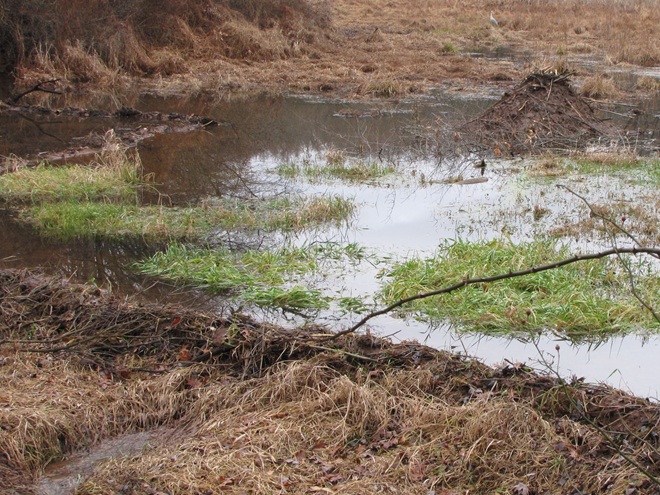

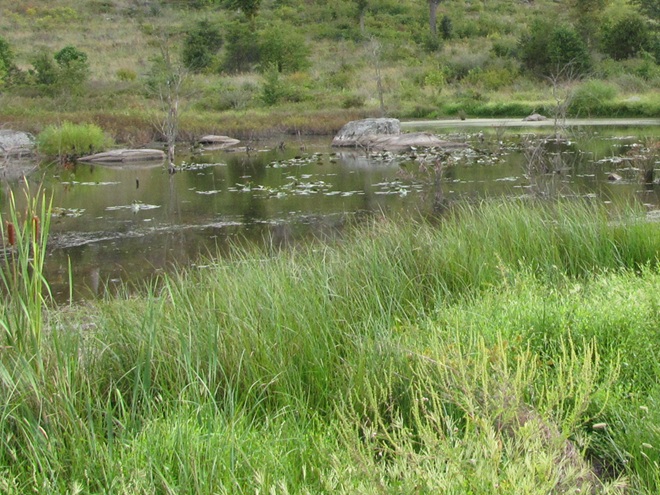
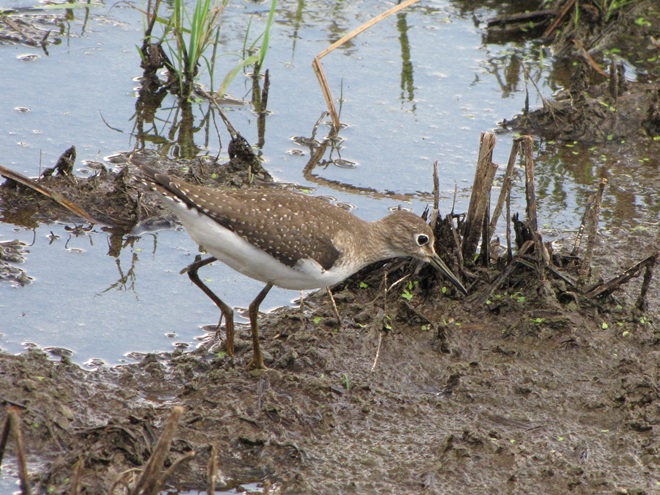

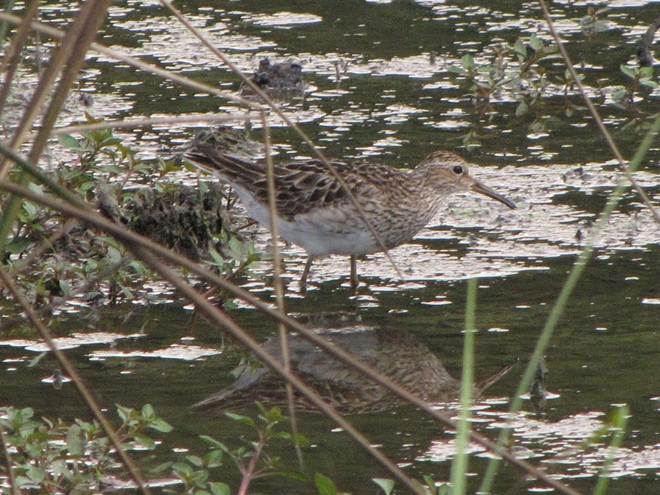
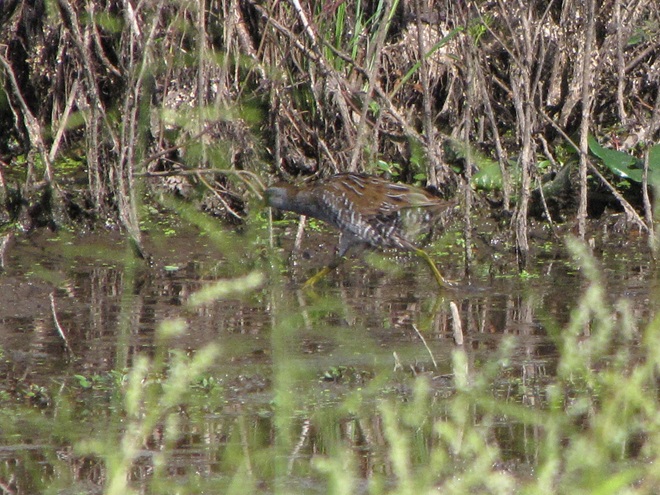
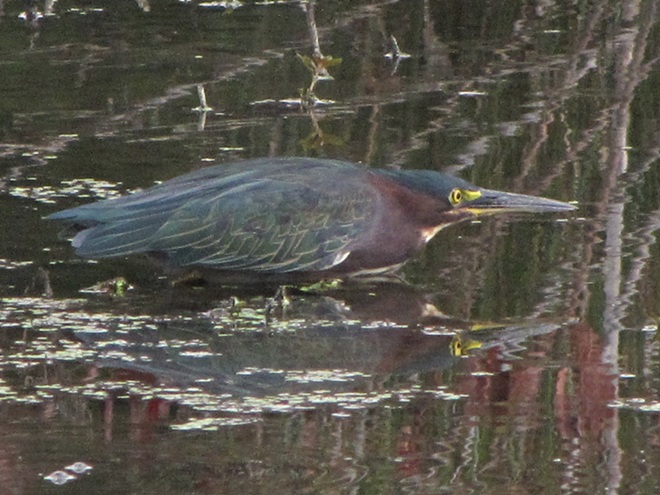
So how did this happen? How did the North American Beaver become a keystone species—an animal upon which the majority of other life forms within its ecosystem are so reliant? Well, it’s largely due to the fact that our beavers aren’t particularly fond of a constant stream of noise. More specifically, they don’t like the sound of running water in places where they intend to build and maintain a lodge. And so, as they begin to place sticks, mud, limbs, stones, and other materials within a noisy riffle on a stream, they create a dam, and behind it a pool—a pool that is particularly advantageous for protecting their home and providing a means of conveyance for their construction materials and food supplies.
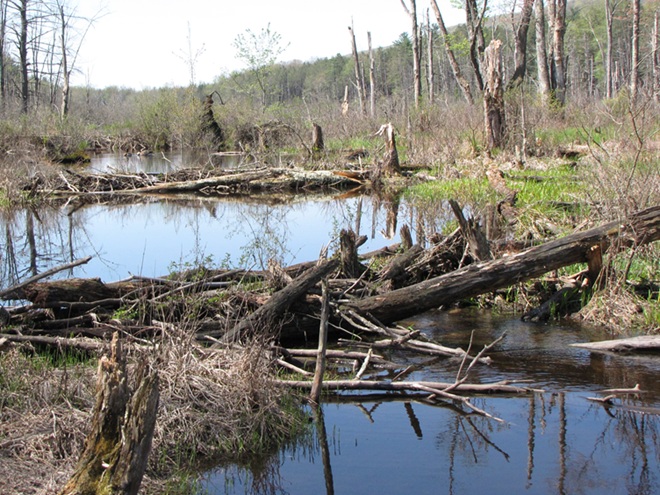


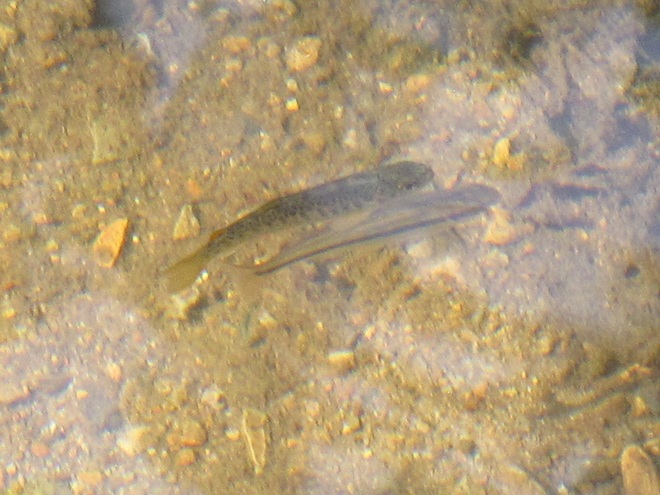
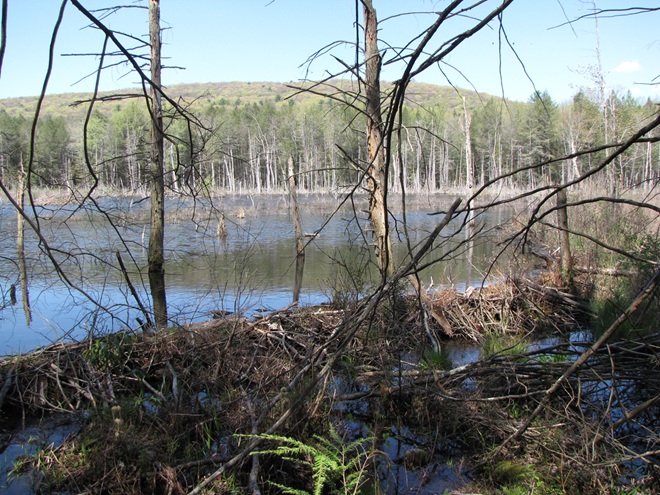
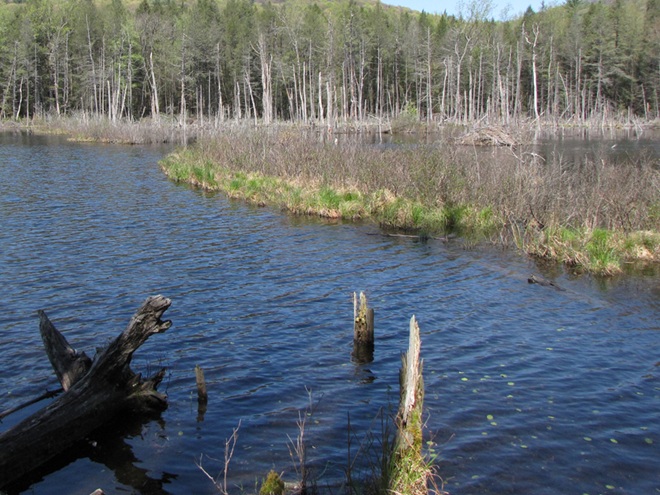
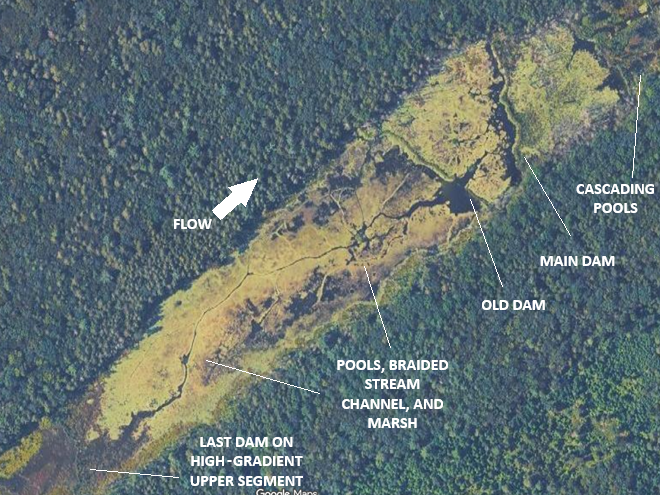
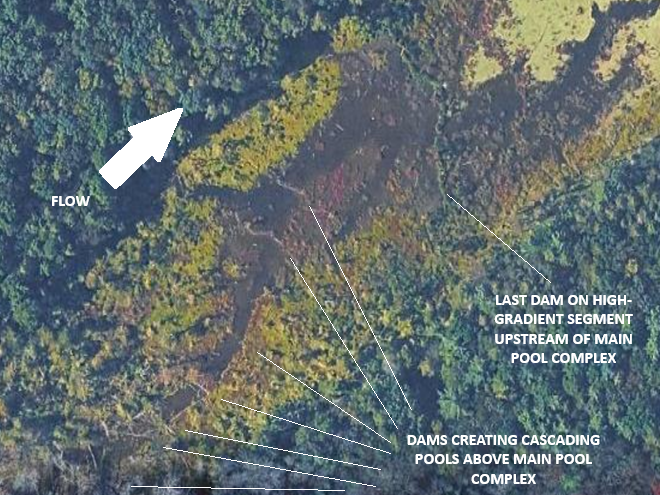
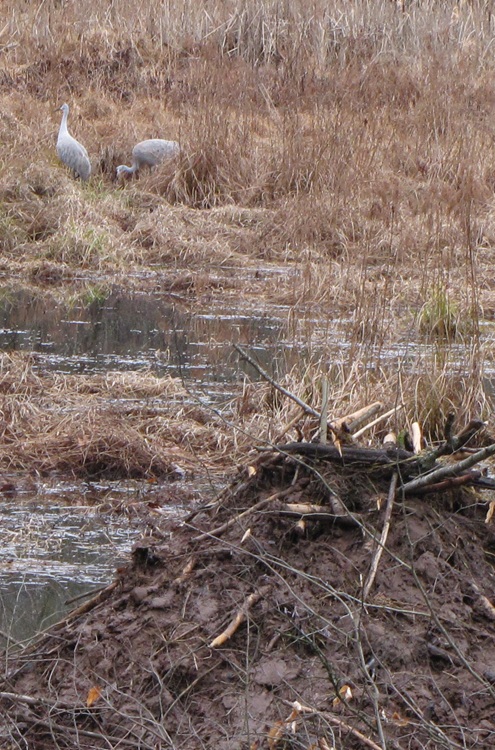
While North American Beavers have returned to the region, most live as “bank beavers”, residing in the river and larger creeks of the valley where they excavate shelters among the roots of Black Willows and other shoreline trees and shrubs. Floodplain encroachment, legacy sediment deposits, and just plain human intolerance have all conspired to prohibit North American Beavers from performing their magic on smaller local streams. For migrating shorebirds, this continued absence of beaver dam ecosystems has turned much of the lower Susquehanna valley into “flyover country”. Those travelers that do stop to rest and feed concentrate at the few favorable locations such as the lateral bars and the hydroelectric dam-created delta at the Conejohela Flats on the river in Lancaster County. But centralization has its drawbacks. Migrants spending time at concentration points may have a greater chance of contracting and spreading disease. Protracted heavy foraging can degrade these habitats. And over time, features such the lateral bars and delta deposits, including those on the Conejohela Flats, transition into other habitats—riparian forests. A more widespread selection of favorable stopover points for shorebirds, waders, waterfowl, and other migrants is certainly desirable.
IMITATION IS THE SINCEREST FORM OF FLATTERY
Until public sentiment sways in favor of the North American Beaver, wildlife managers are mimicking some of the attributes of their sound-inspired installations.
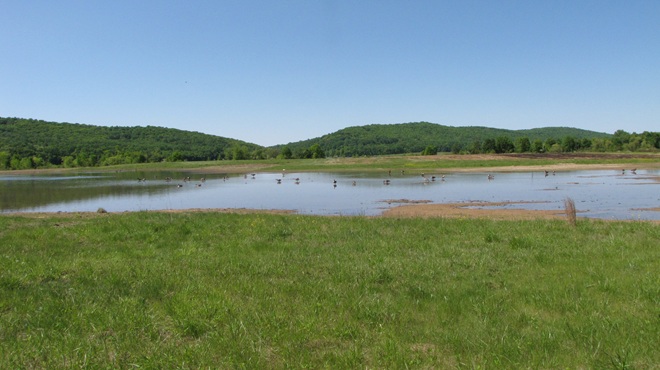
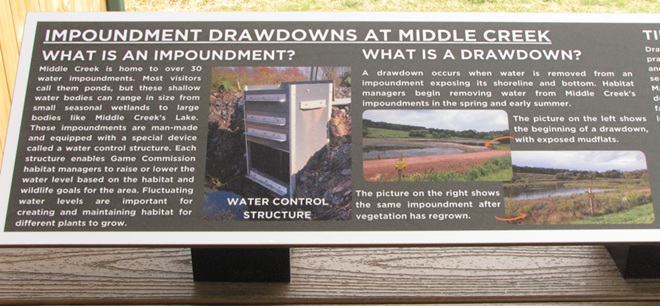
Shallow-water conservation impoundments designed, constructed, and managed for migratory waterfowl and waders including shorebirds are not what we typically refer to as ponds—though they are lentic (still) waters. Similar shallow freshwater impoundments at our National Wildlife Refuges are referred to as pools by the United States Fish and Wildlife Service, but smaller versions like this example at Middle Creek very closely resemble the prairie potholes created by glacial scour in the north-central United States and adjacent portions of Canada. Many populations of migratory birds are familiar with pothole ecosystems and, like the beaver pools and marshes, have relied upon them as waypoints along their journeys for centuries.

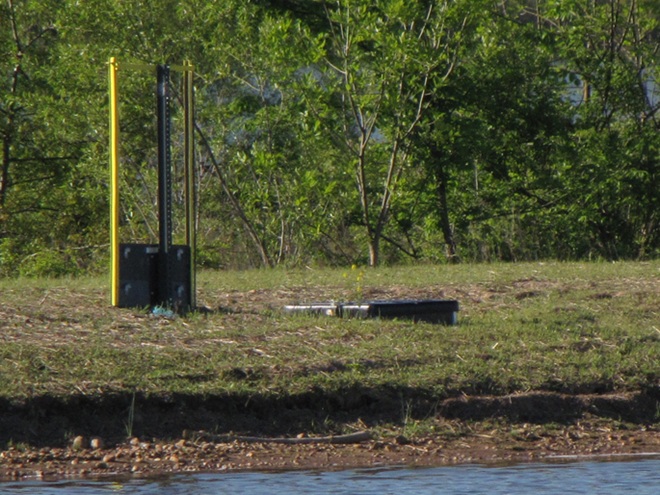
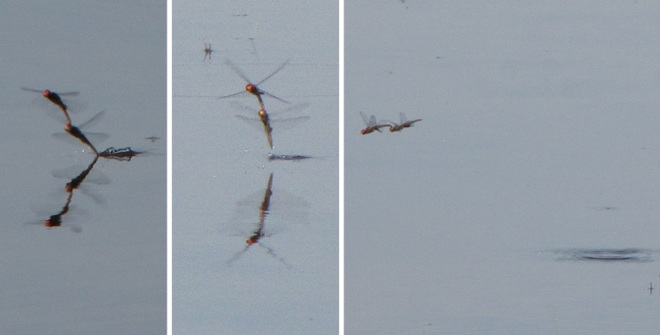
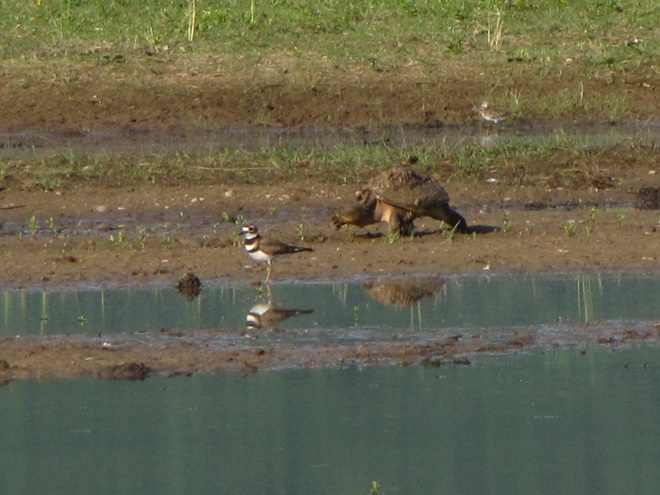
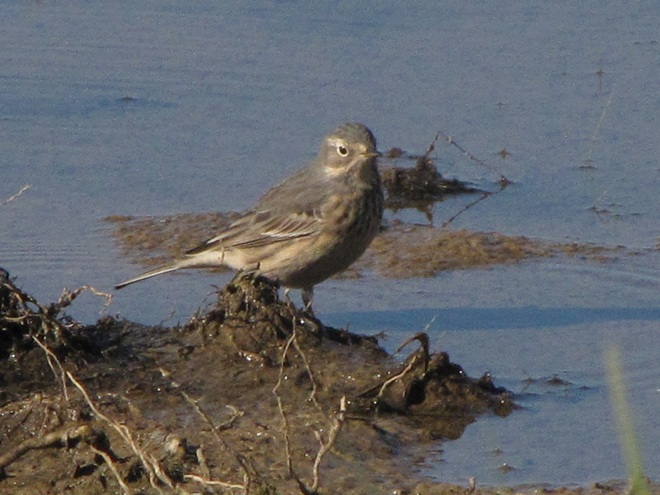
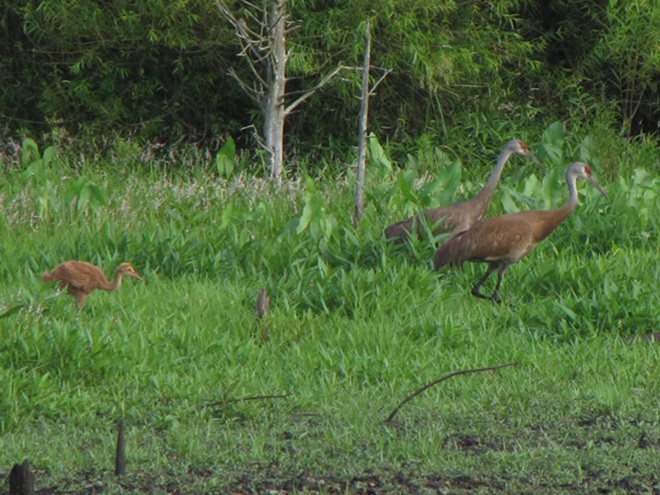
You’ve heard the line, “If you build it, they will come.” Well, it’s true. Here is a sample of the activity witnessed during the past two weeks at the new impoundment completed just several months ago at Middle Creek Wildlife Management Area along the tour route just beyond the “Stop 3” overlook.
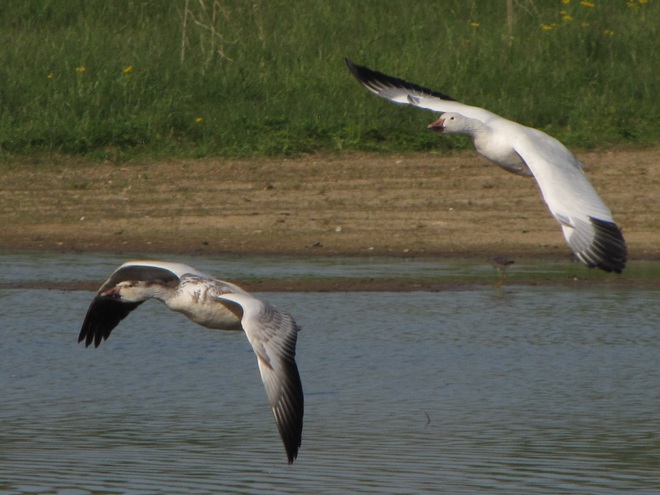
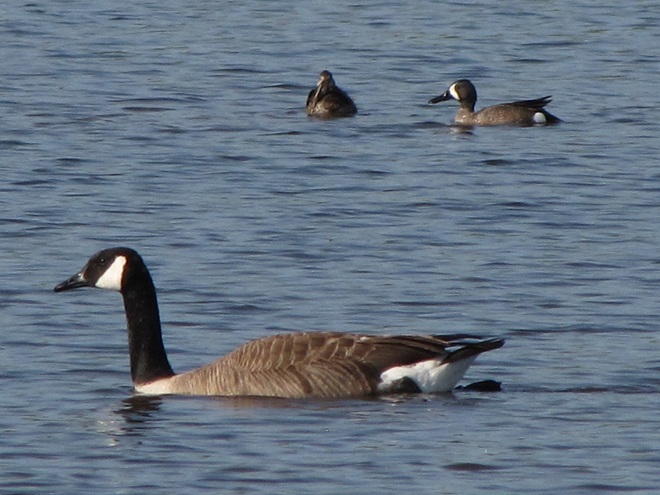
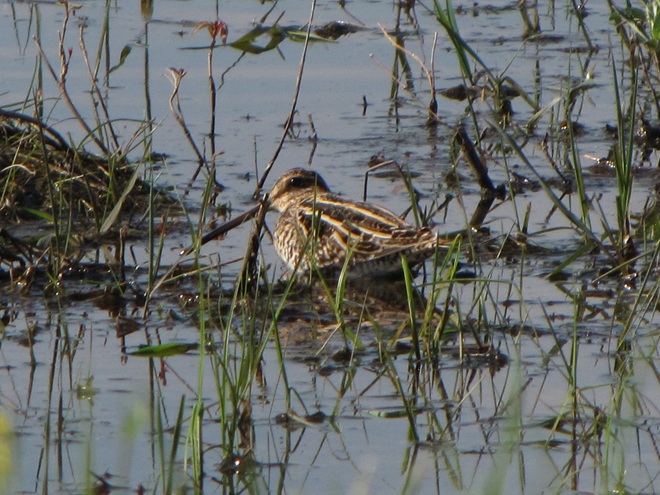
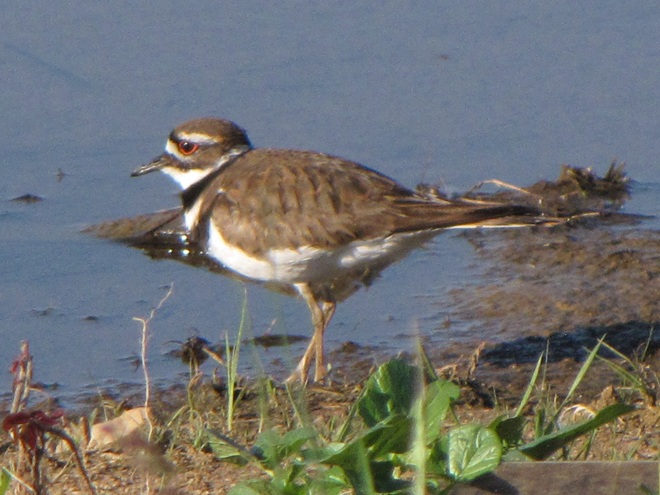

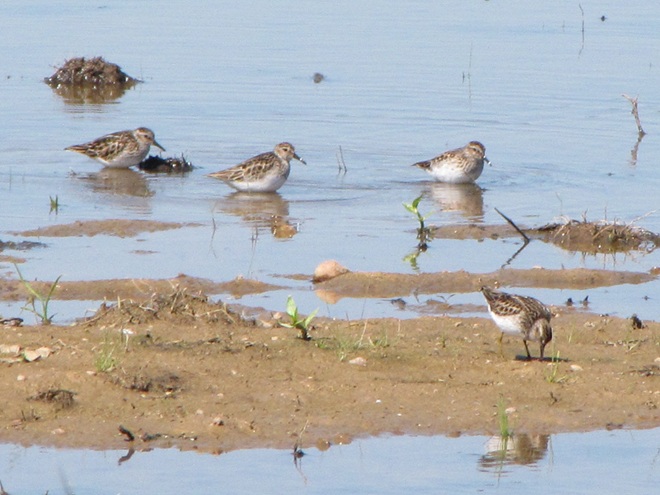

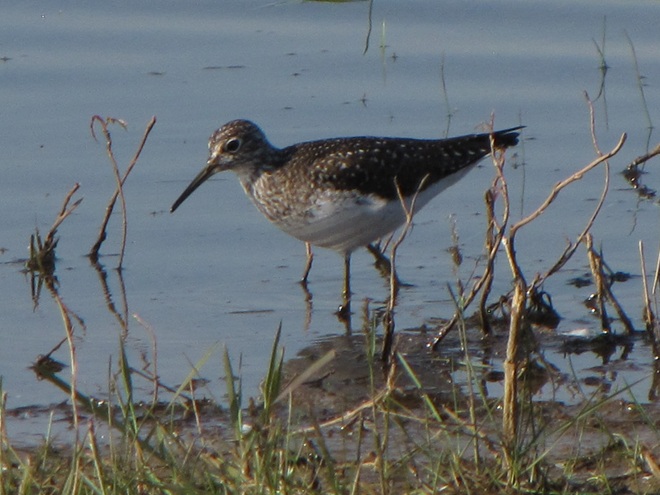
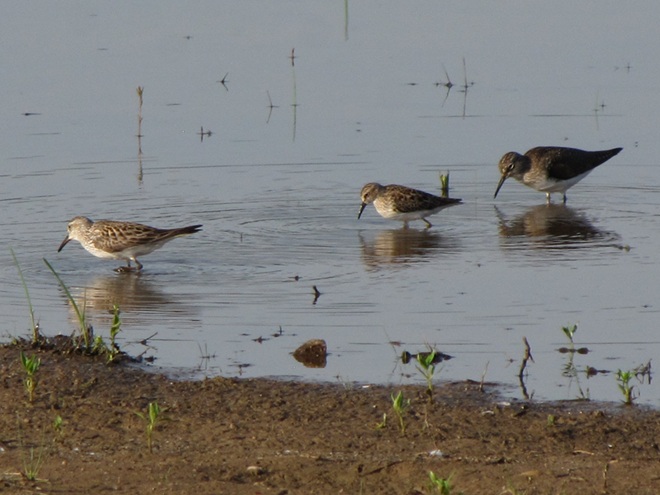
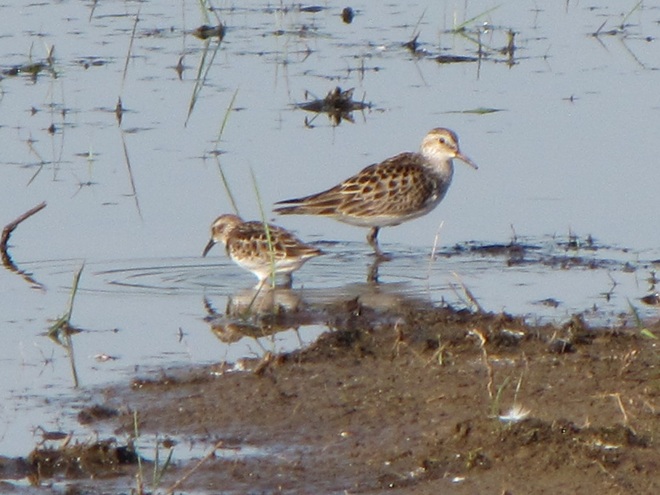
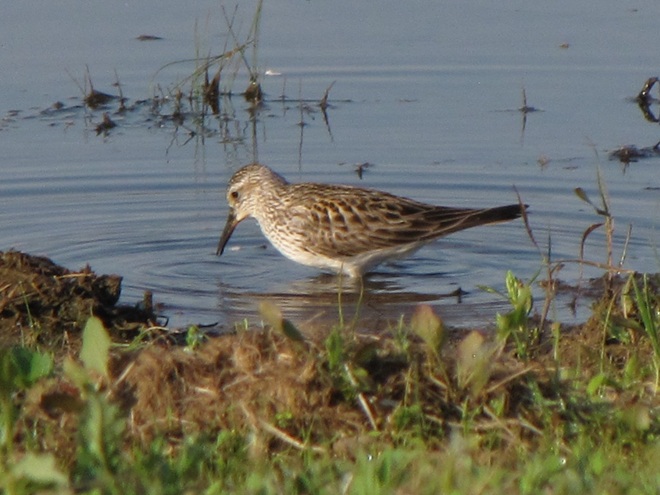
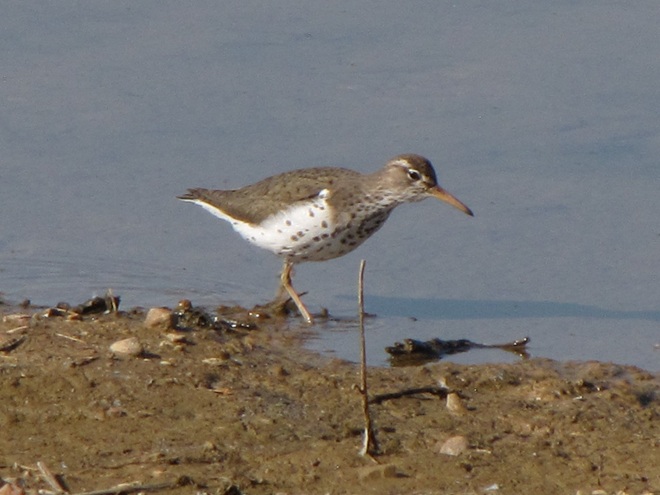
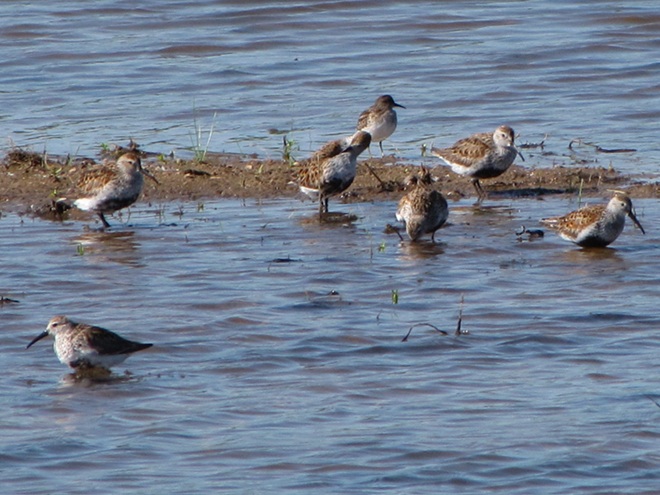
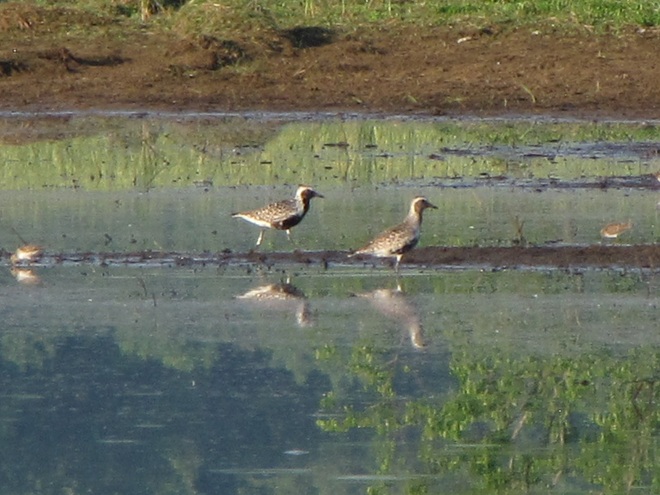
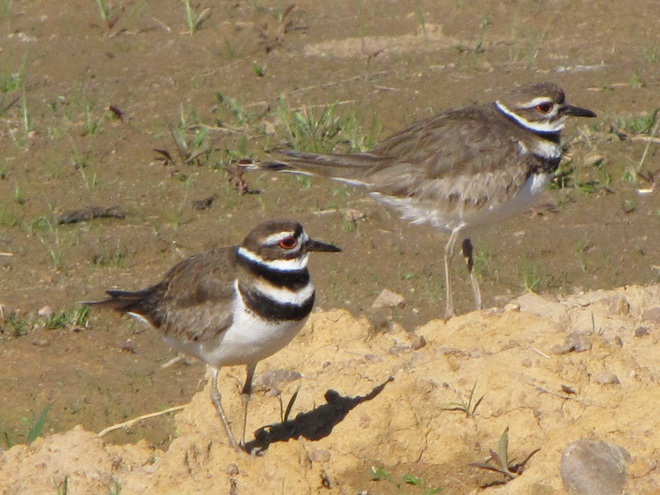
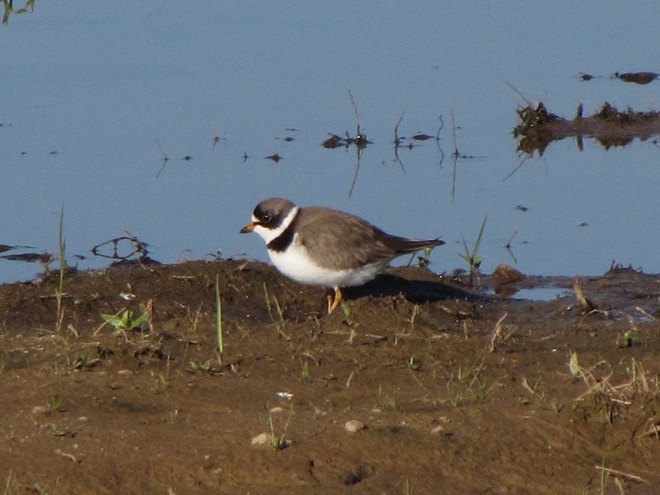
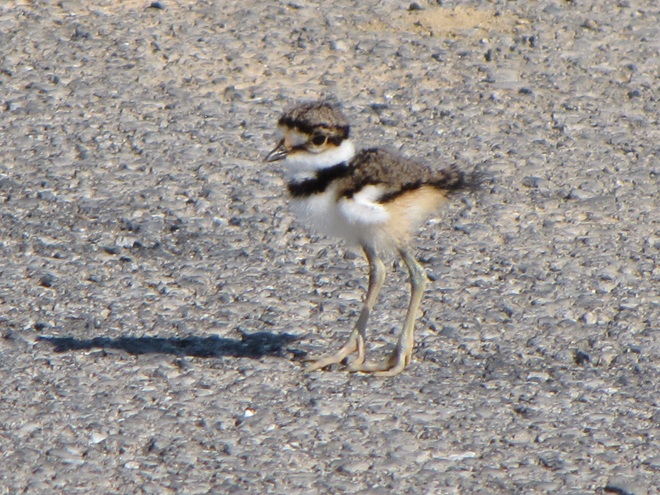
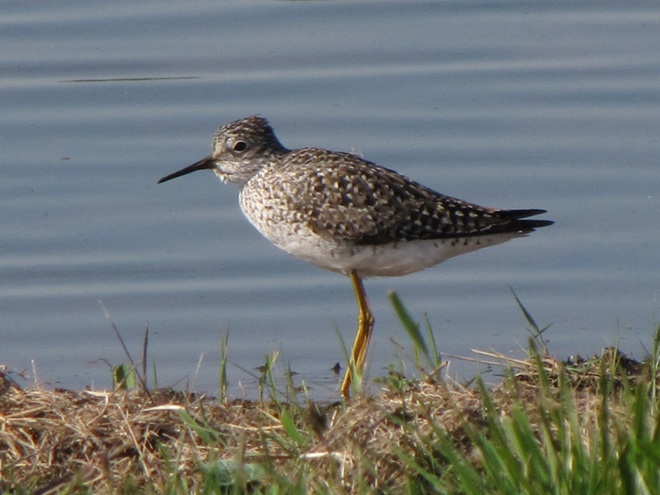
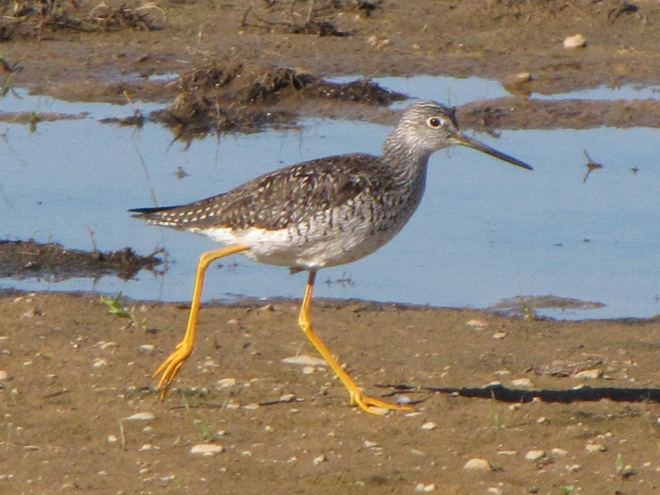


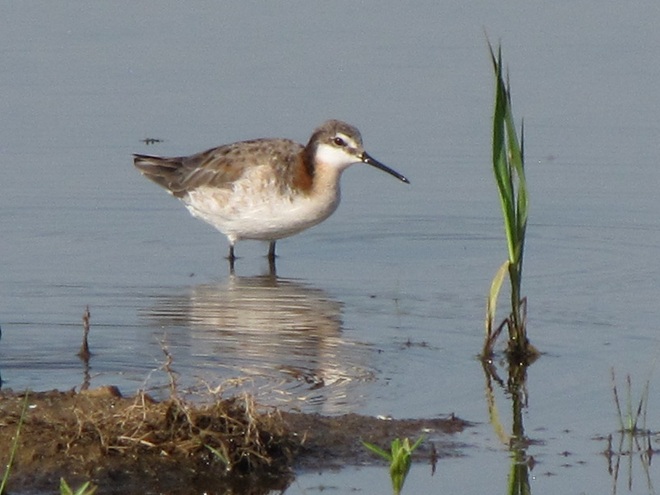
Species of wildlife in addition to shorebirds and waterfowl have already found the new impoundment favorable…
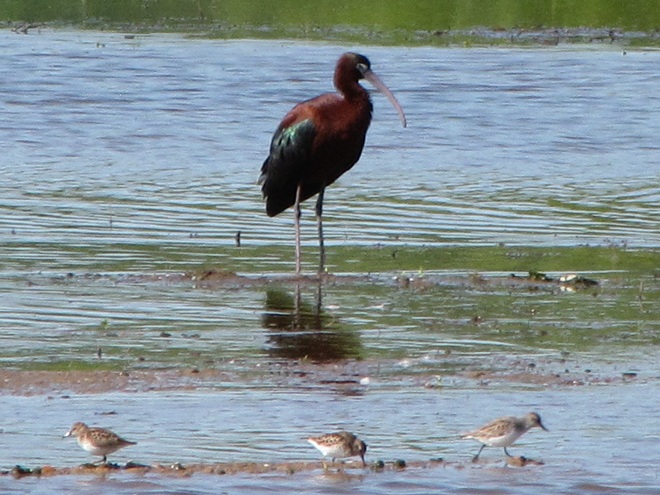


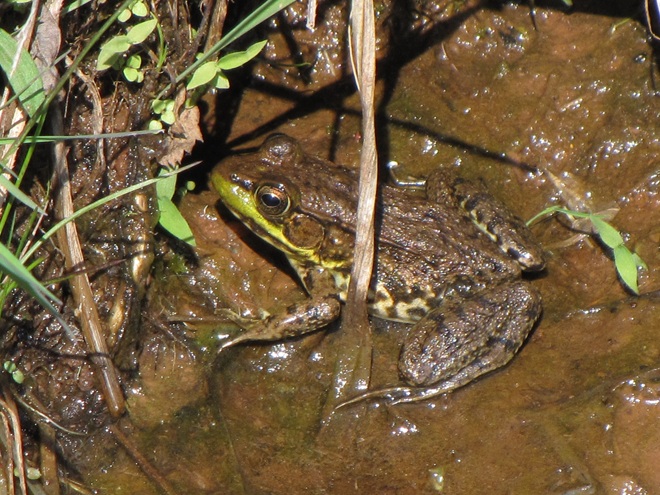
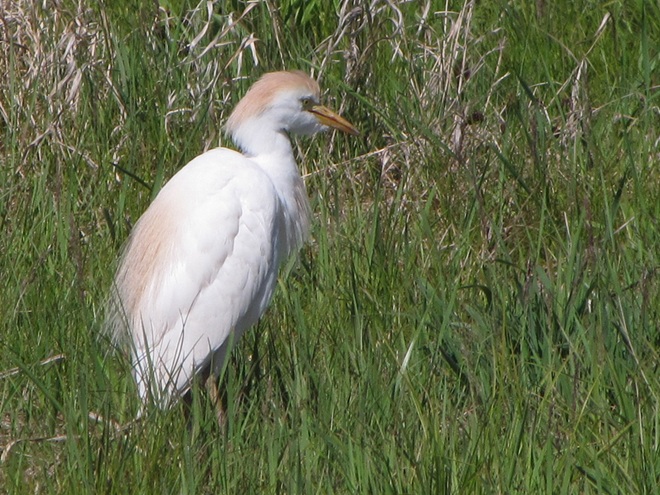
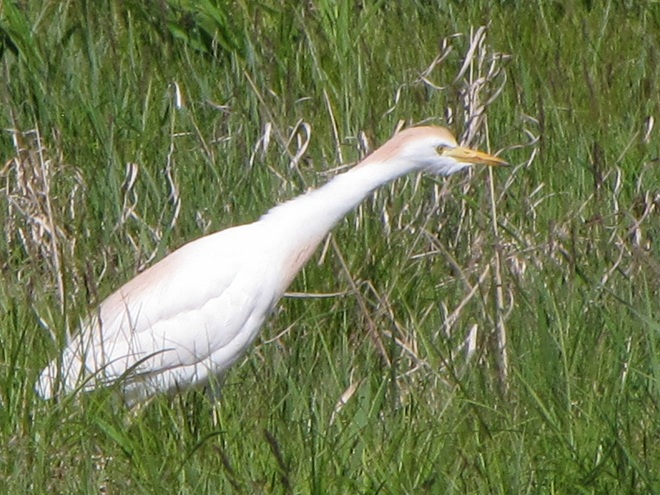
Managing saturation levels in shallow-water impoundments to resemble the seasonal variations in beaver pool and marsh systems can create lush growth and wildlife-rich environments. Take a look at some images from a project in a headwaters area of a tributary to Conewago Creek (west)…
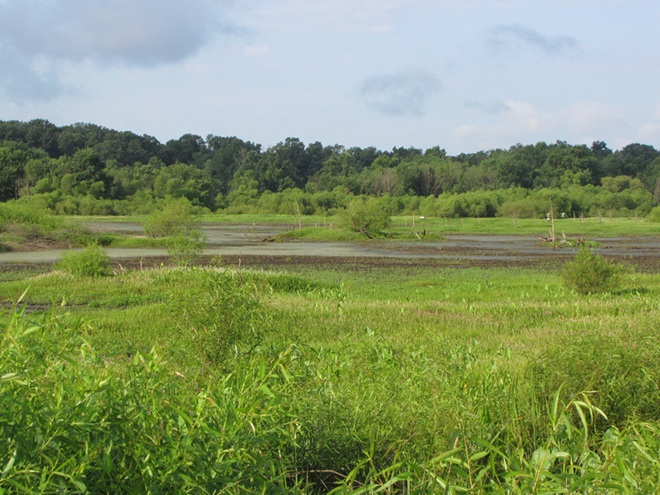
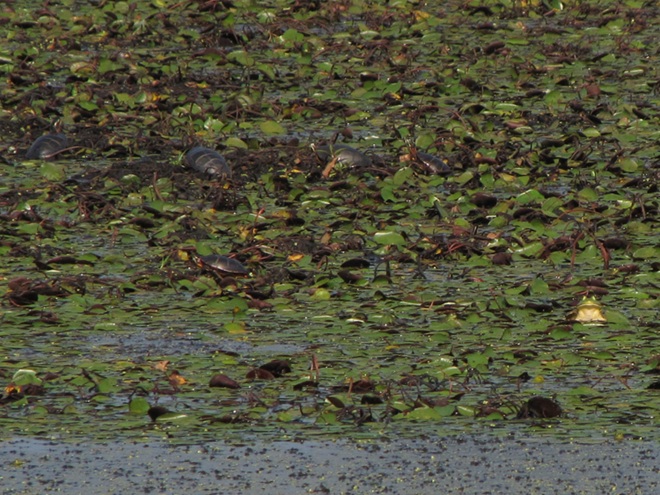

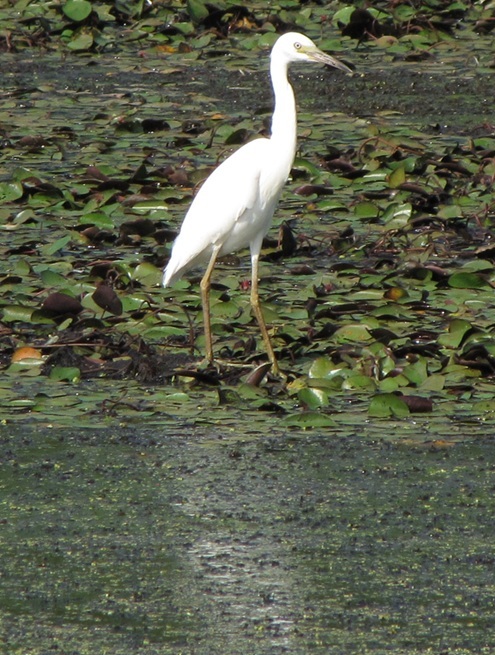

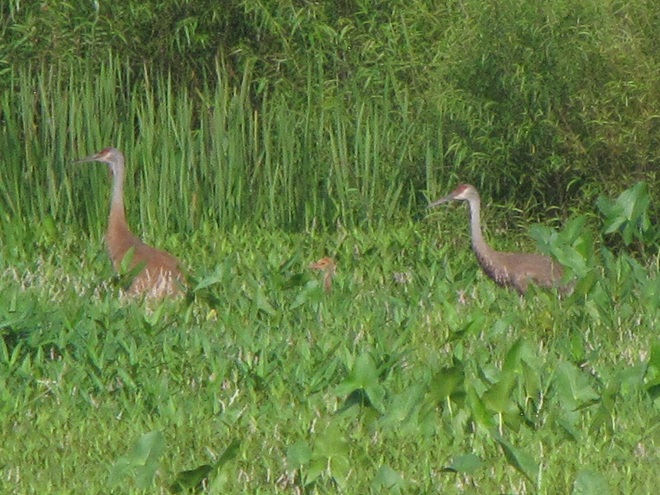
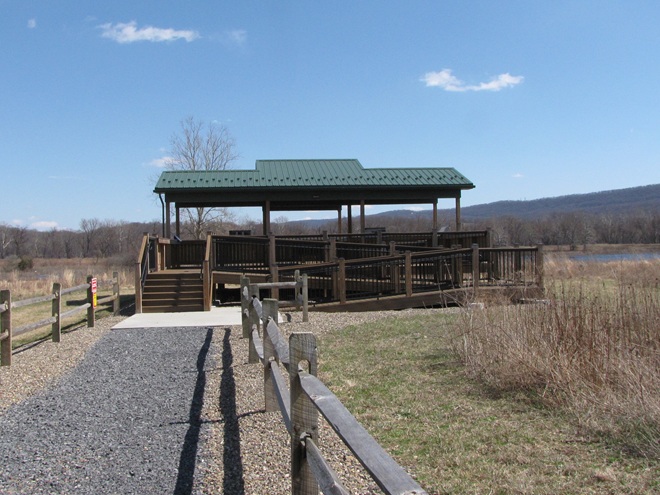
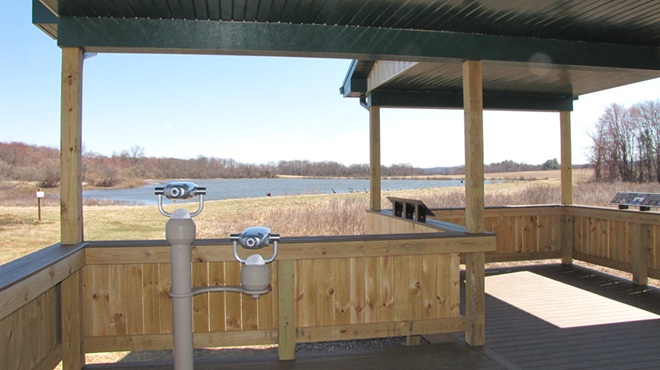
So that you can relax while observing the comings and goings at a pair of the lower Susquehanna valley’s man-made impoundments, the Pennsylvania Game Commission has erected two viewing pavilions for public use on its lands…

During the next two weeks, the exodus of migrating shorebirds now staged and feeding upon Atlantic Horseshoe Crab eggs on Delaware Bay will commence. During the evening of their departure from the bay, many of these birds cross portions of the Lower Susquehanna River Watershed, particularly east of the river. Stormy weather and other climatic conditions may force some of them to seek a place to put down temporarily, so keeping a close eye on the new pothole-like impoundment at Middle Creek may be a prudent move. After that, waders known as “post-breeding wanderers” can show up at any time. Then, beginning as early as late June, shorebirds begin moving south on a migration that can provide us with viewing opportunities into September and beyond. See you out there!
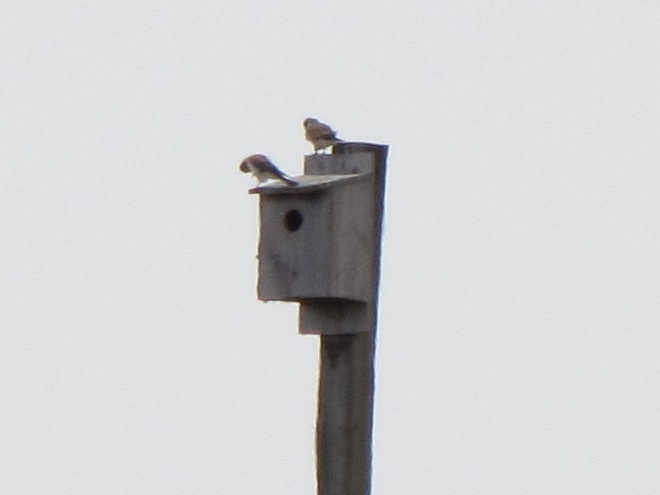
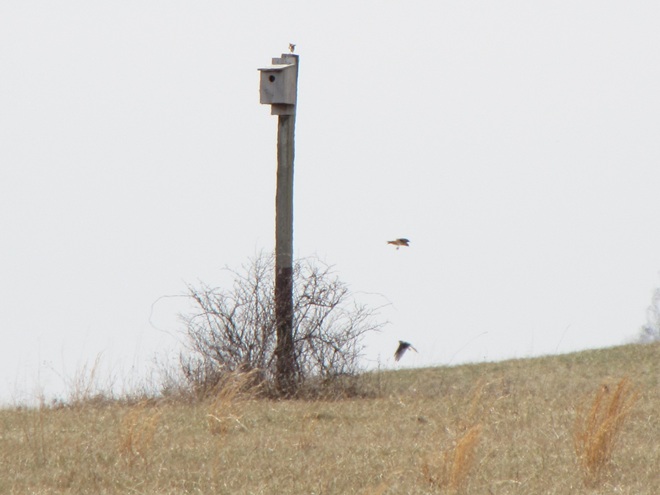
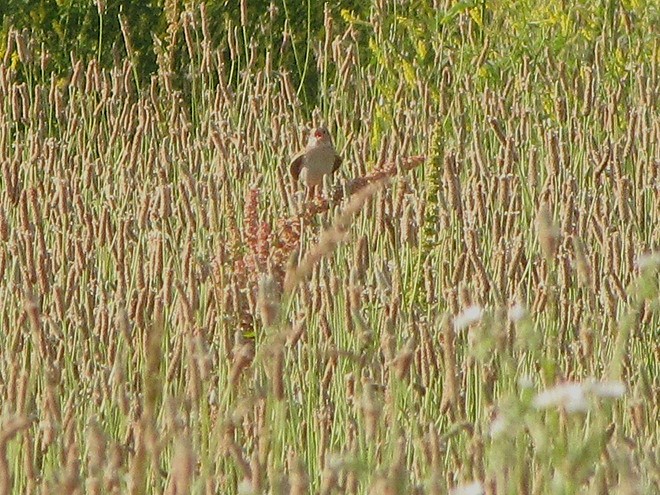
If you’ve visited Middle Creek Wildlife Management Area anytime during the past month, you may have noticed quite a bit of activity around the large pole-mounted nest boxes placed out in the open fields.
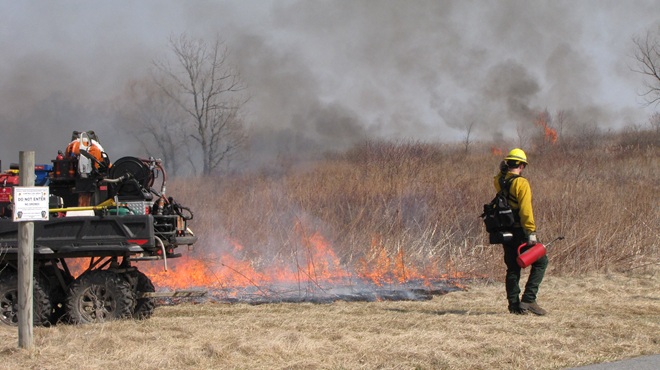
LEARN HOW LAND MANAGERS UTILIZE PRESCRIBED FIRE
This coming Saturday, April 18, 2026, beginning at 10 A.M. (rain date April 25), the Pennsylvania Game Commission is hosting a “Prescribed Fire Festival” at Middle Creek Wildlife Management Area. Be certain to come out to the visitor’s center at 100 Museum Road, Stevens, PA, for this event. Land managers will be there to answer questions and to explain the planning and preparations involved in overseeing a prescribed burn. There will be guided walks of habitats preserved using fire of varying intensities. You’ll see the equipment and protective clothing used by certified personnel to administer a live prescribed fire burn right before your eyes. Then you can have lunch—food trucks will be available on site.
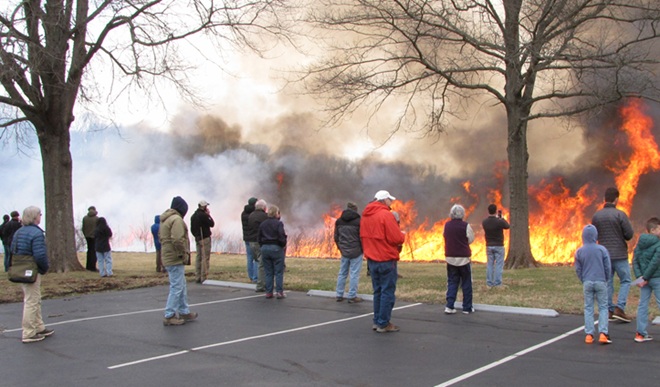
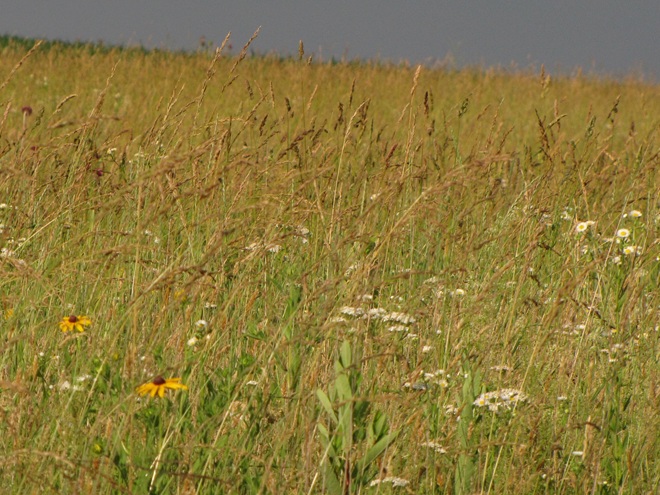
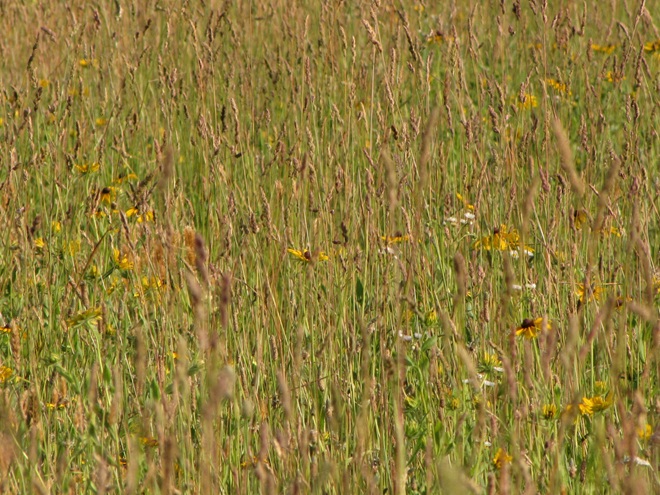
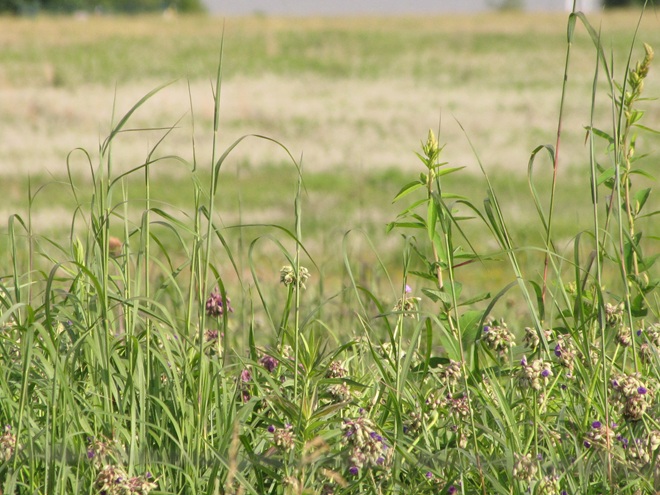
After the burn demonstration, why not go for a walk or drive around the refuge. You can take note of how grassland and early successional plant communities are responding to previous doses of prescribed fire…
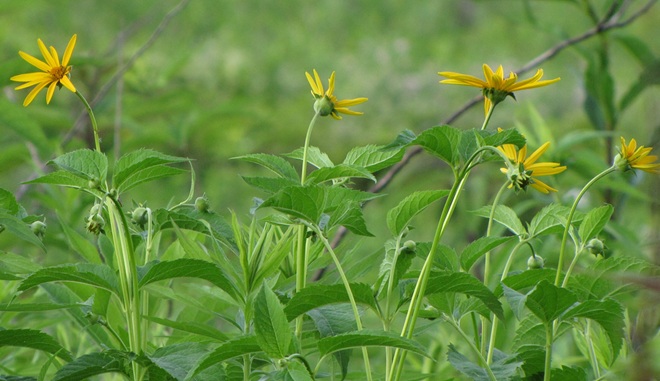
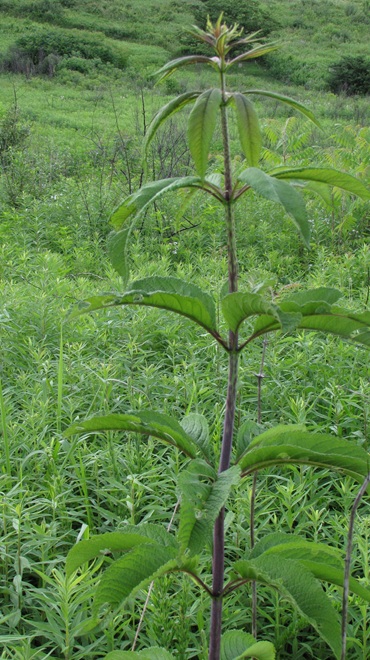
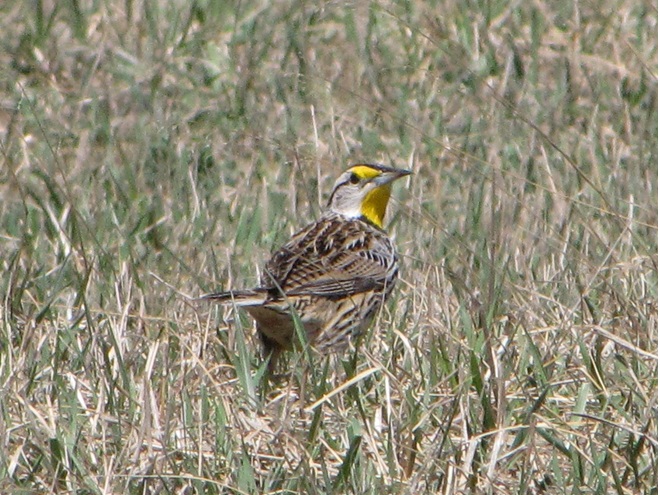
And how the grassland animals respond as well…
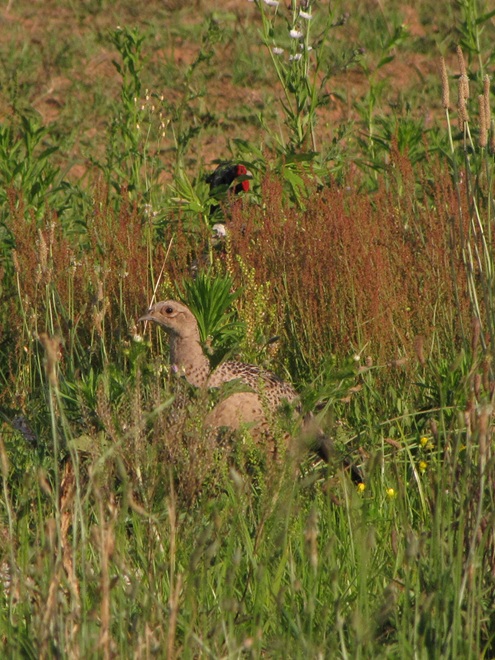
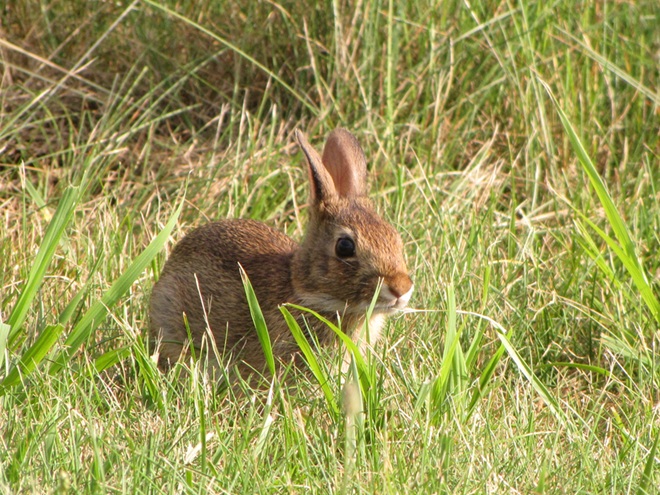
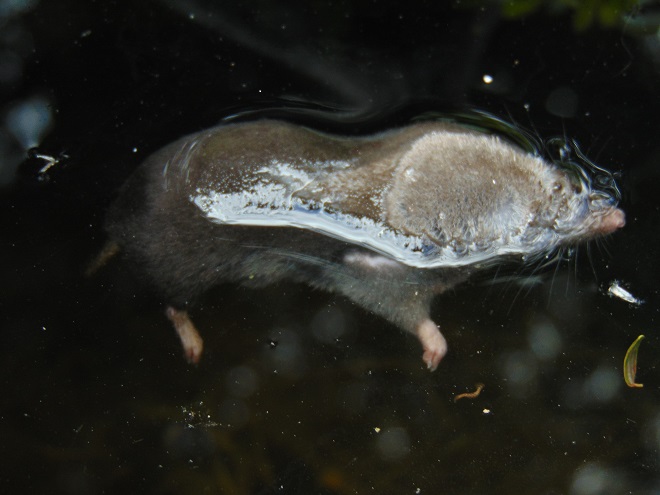

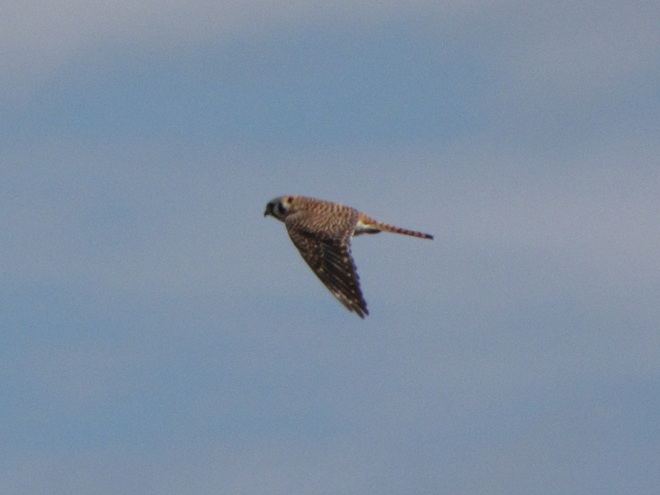
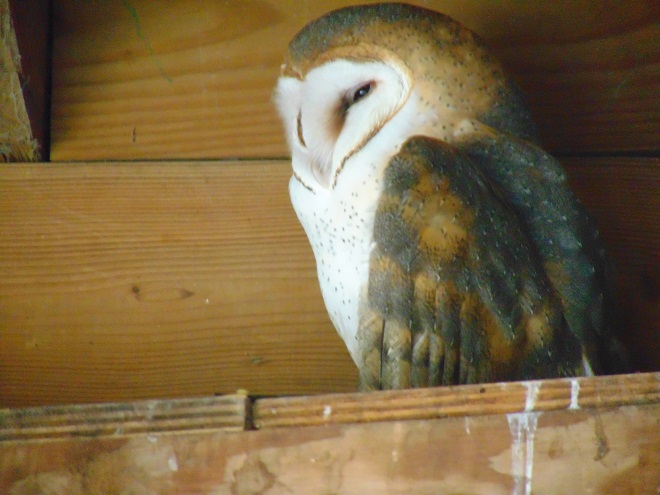
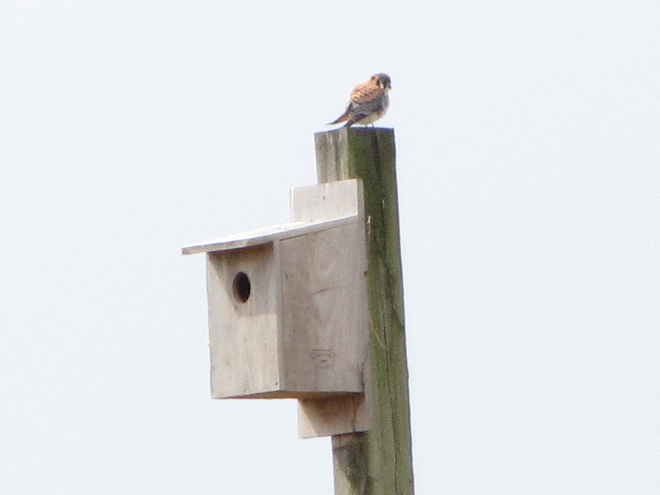
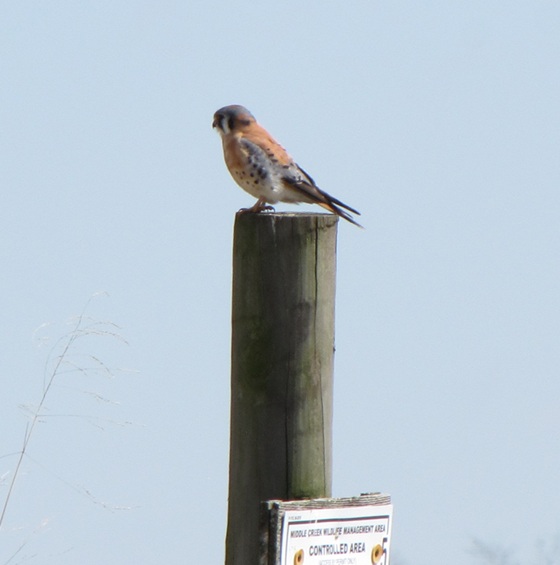
The fate of an avian predator such as a kestrel lies at the mercy of the fate of its quarry. Because, you see, the sun’s energy, after being converted to chemical energy by photosynthesizing plants, flows upward through the trophic levels of the food chain—herbivores (primary consumers) such as rodents and insects to carnivores (secondary and tertiary consumers) including kestrels. Grasslands, when abundant and diverse, are correspondingly abundant and diverse with small mammals and insects and will therefore support thriving populations of American Kestrels and other predators. These secondary and sometimes tertiary consumers fulfill a role in cultivating healthier populations of their prey—the primary and secondary consumers in the food web—as a balanced component of a flourishing grassland ecosystem. Sparse and fragmented grasslands, on the other hand, beget negligible small mammal and insect populations, are stricken with broken food webs, and champion few if any American Kestrels or other predators. If the land it occupies is neat, tidy, manicured, exploited, or sprayed sterile and dead, the energy flow cycle of the ecosystem is dead as well. There’s nothing animal introductions, reintroductions, rescues, culling, stocking, or harvesting can do about it, because in the end, it’s all about the habitat.
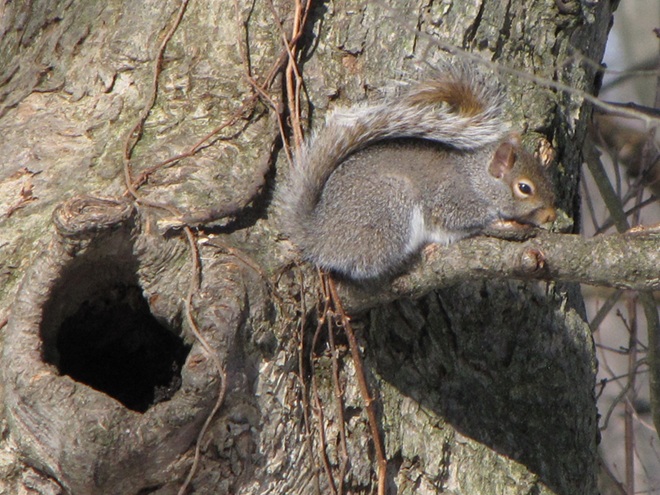
During winter’s harshest conditions, one must frequently marvel at the methods various forms of wildlife have to survive. Take a look at some of the animals we found using their life-sustaining adaptations to find food amidst the snow-covered landscape and bitter cold air.
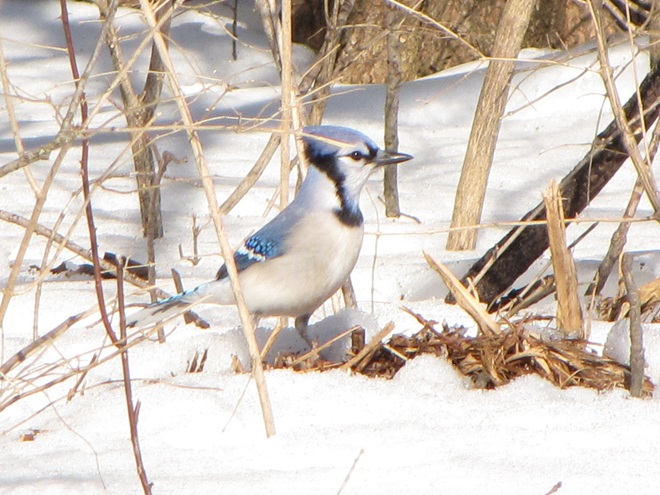
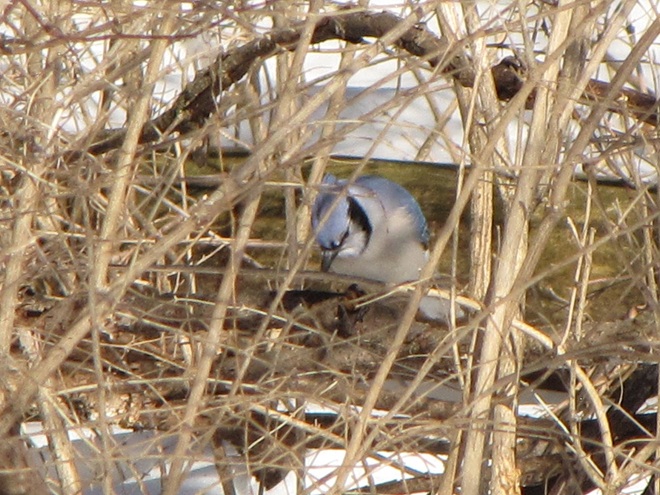
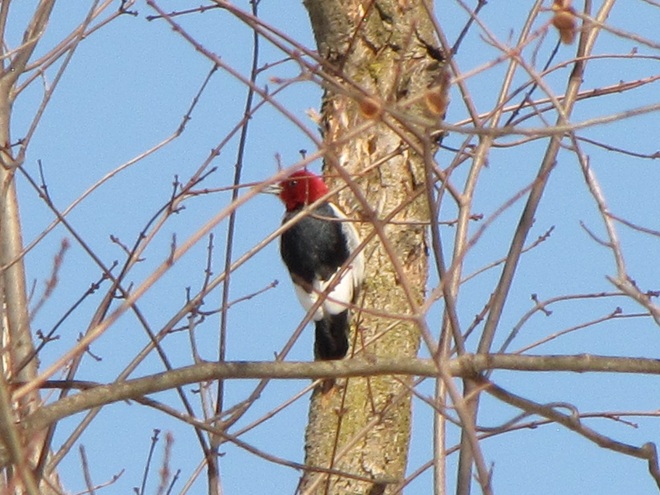
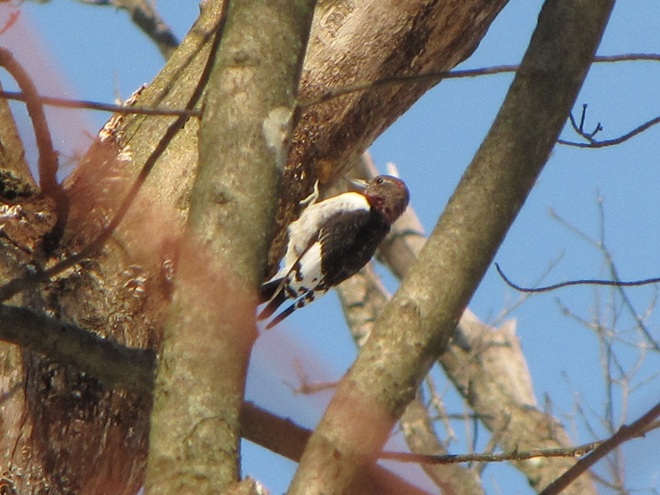
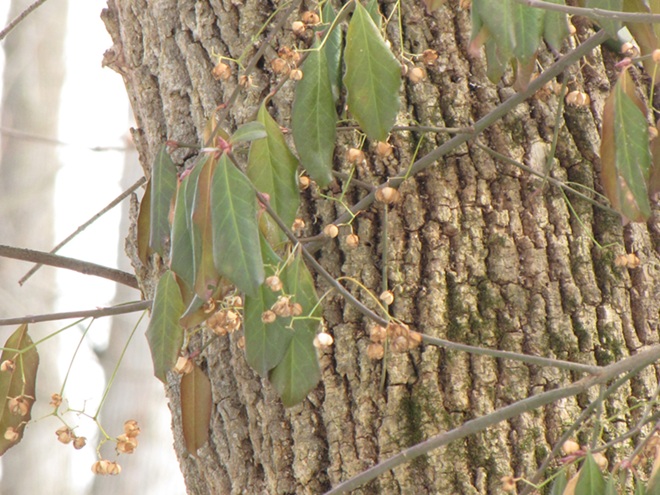
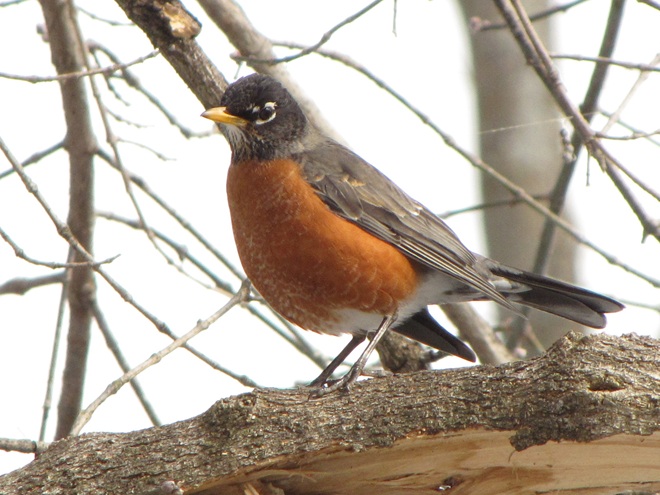
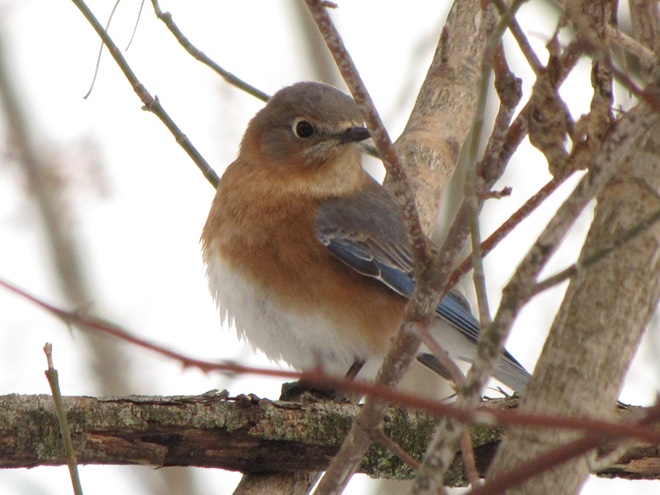
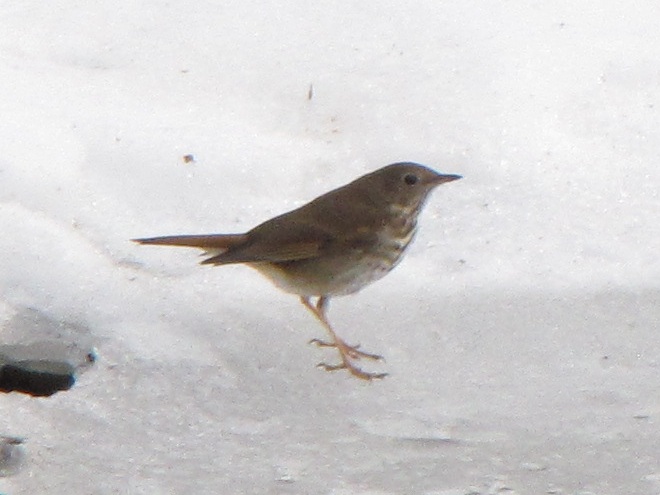
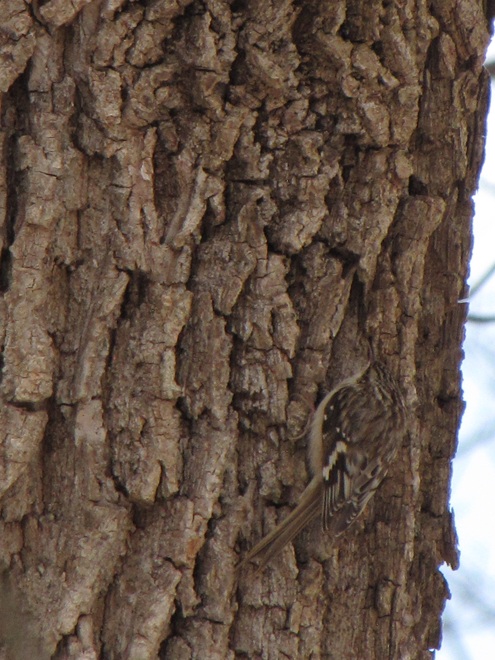
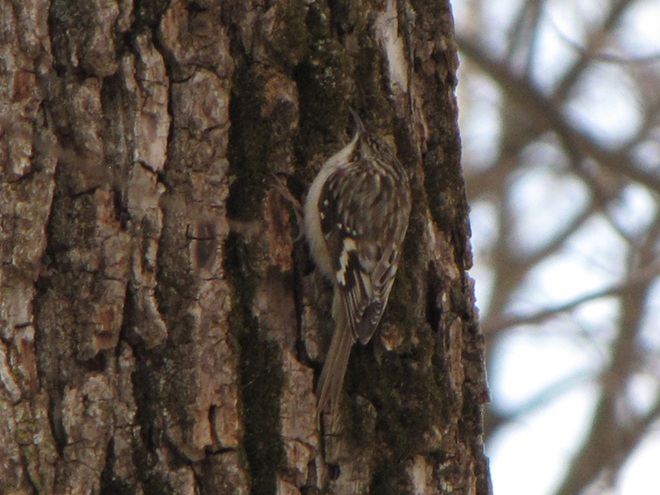
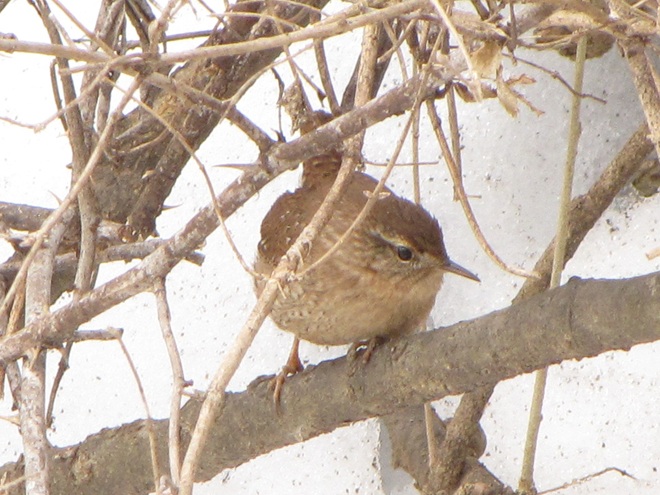
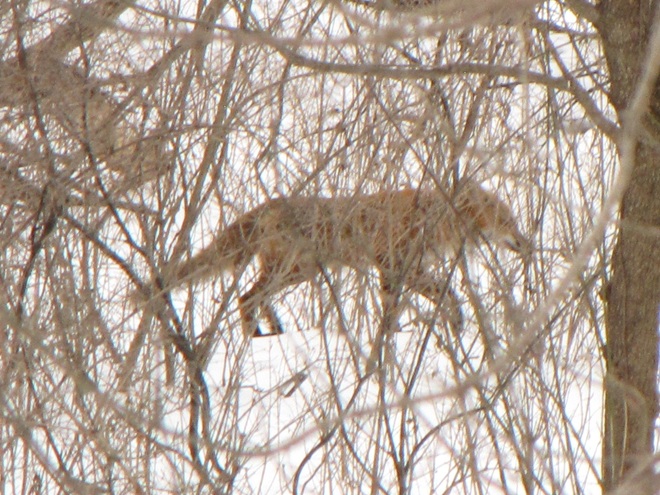
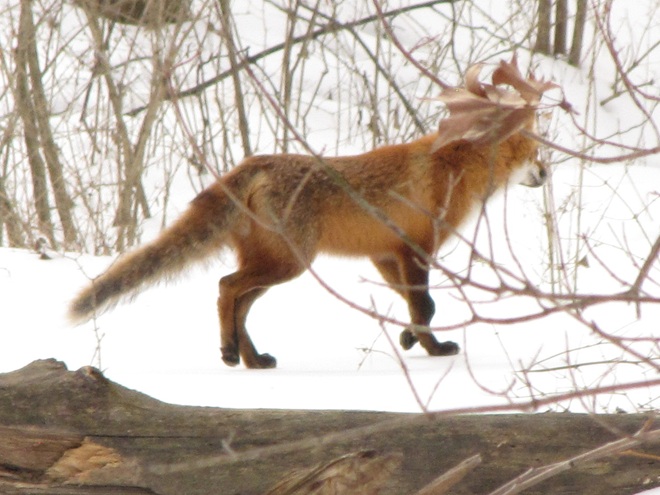
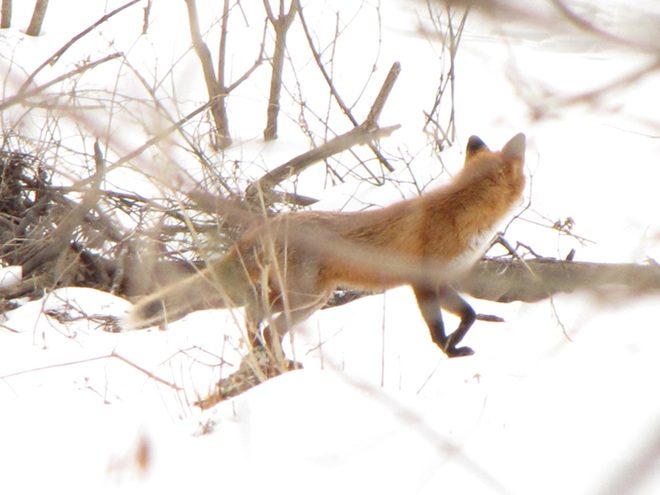
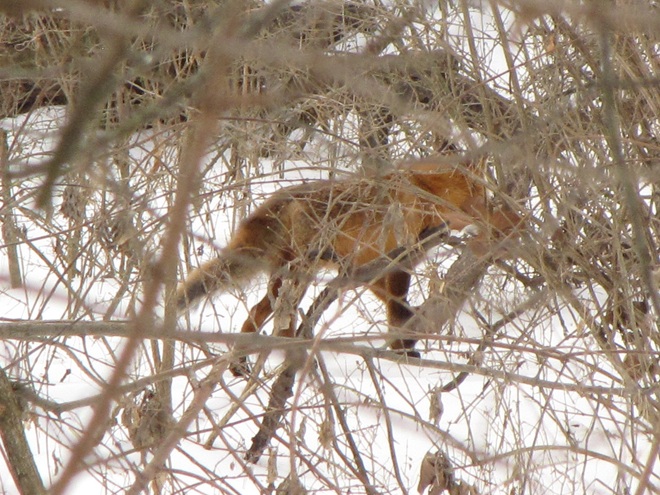
It looks like the worst of the cold may be behind us. With temperatures trending upwards during the coming days and weeks, some species of wildlife will soon find their search for food made a whole lot easier.
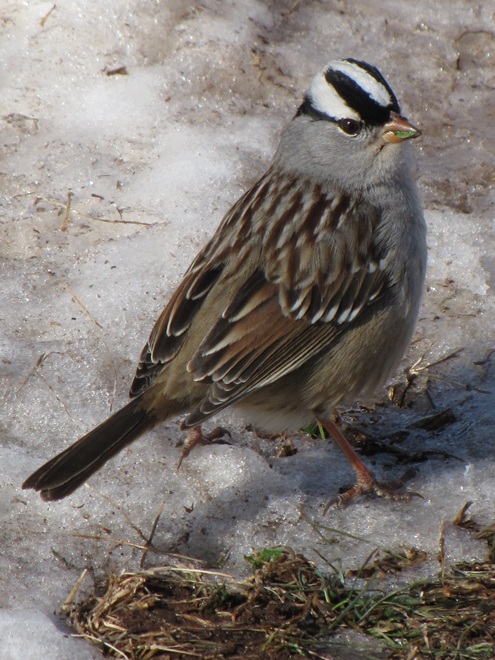
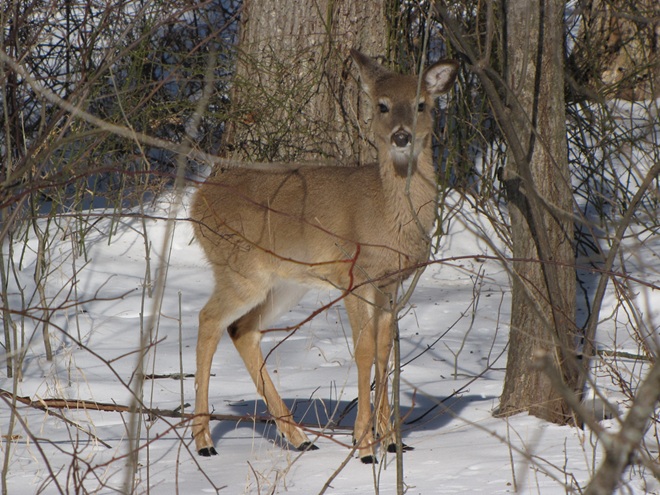
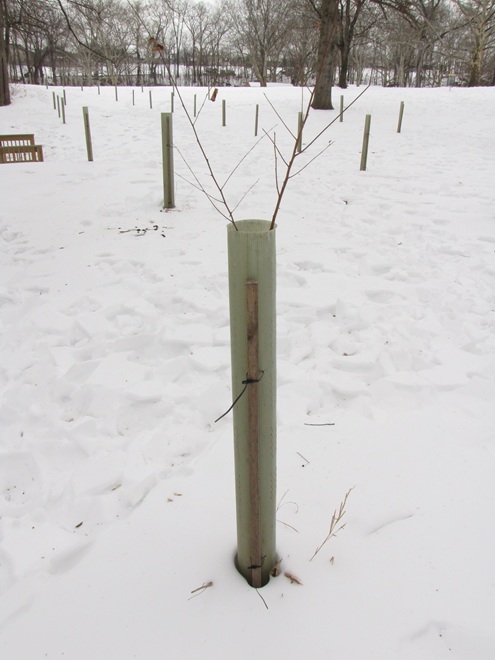
Here are a few more late-season migrants you might currently see passing through the lower Susquehanna valley. Where adequate food and cover are available, some may remain into part or all of the winter…
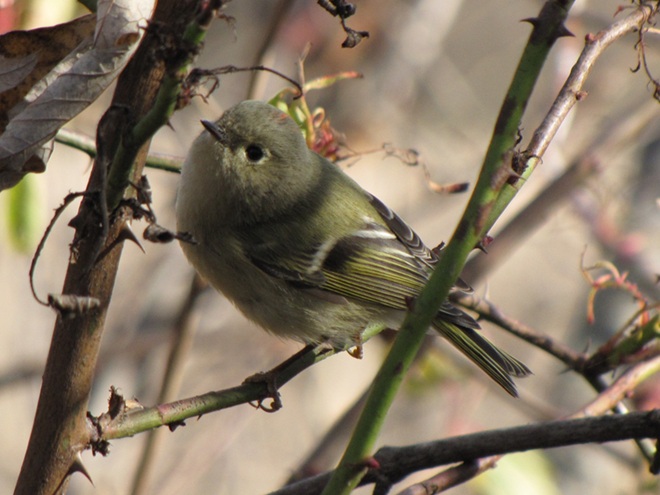
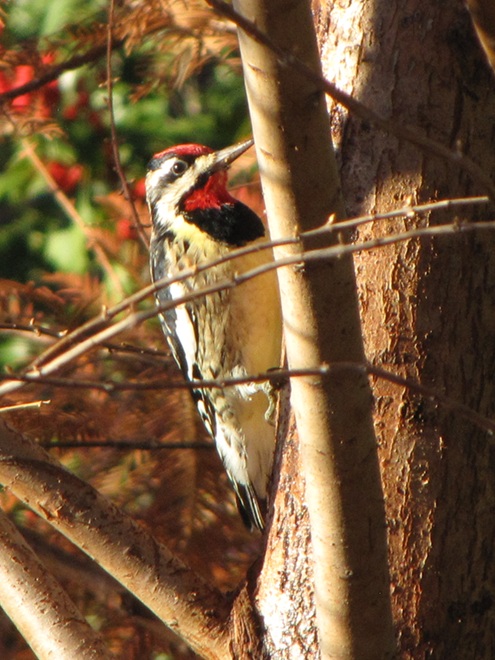
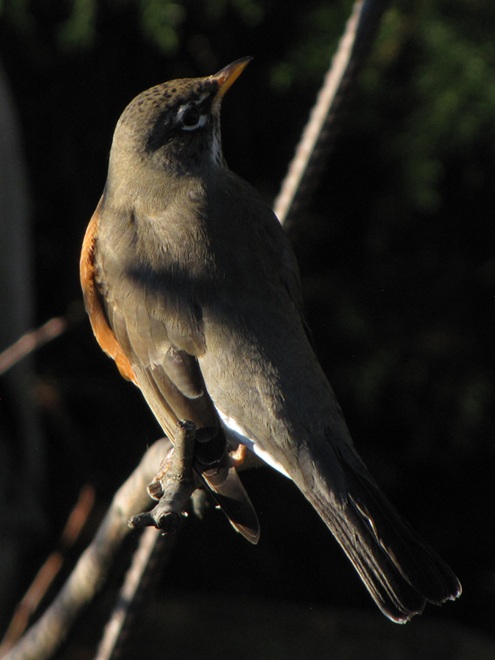
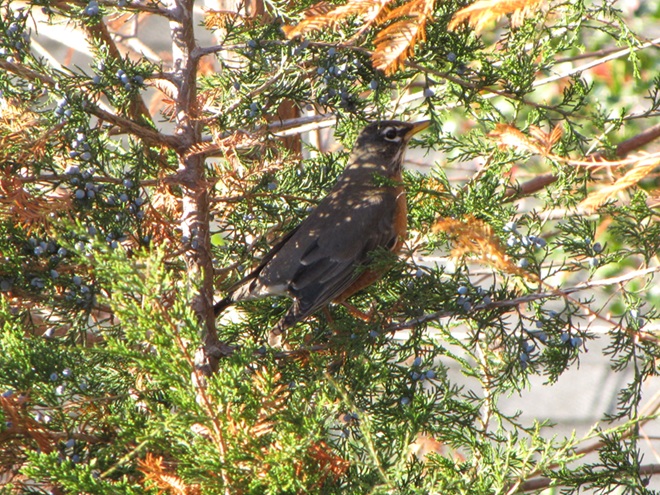
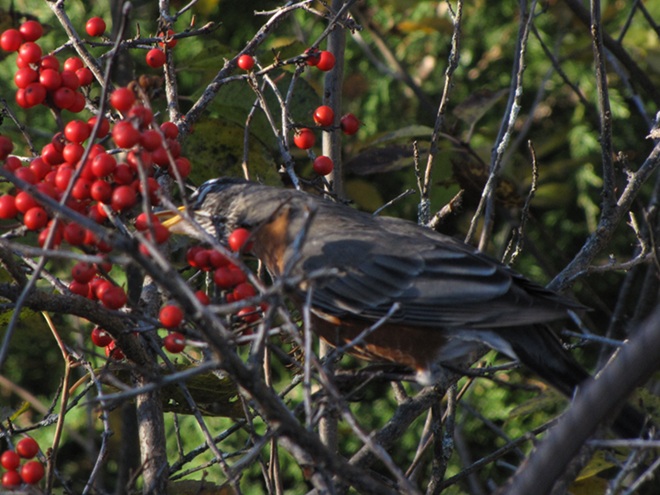
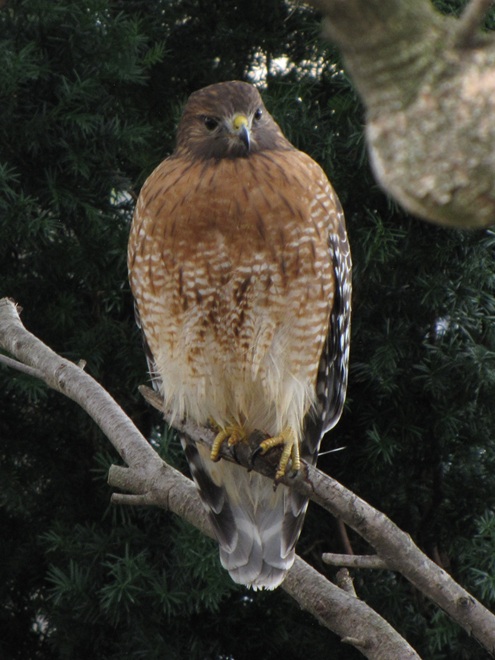
Having experienced our first frost throughout much of the lower Susquehanna valley last night, we can look forward to seeing some changes in animal behavior and distribution in the days and weeks to come. Here are a few examples…
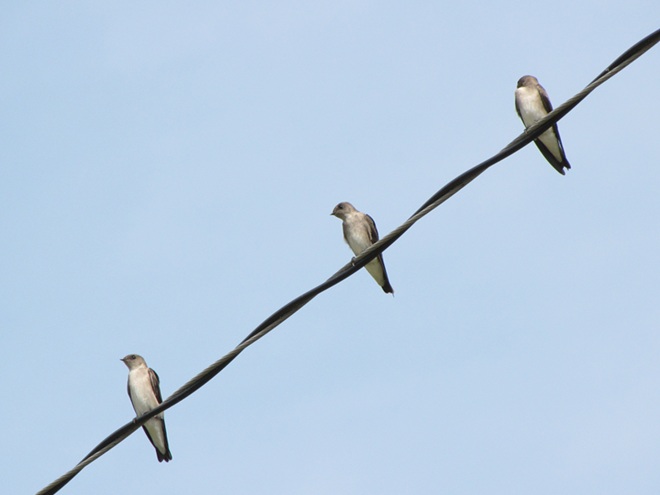
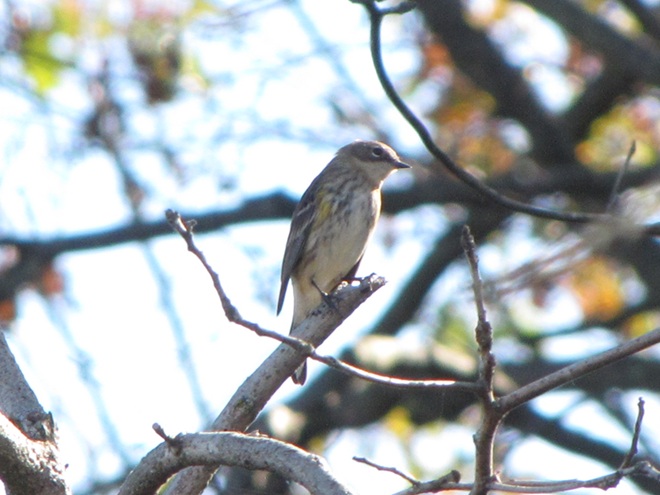
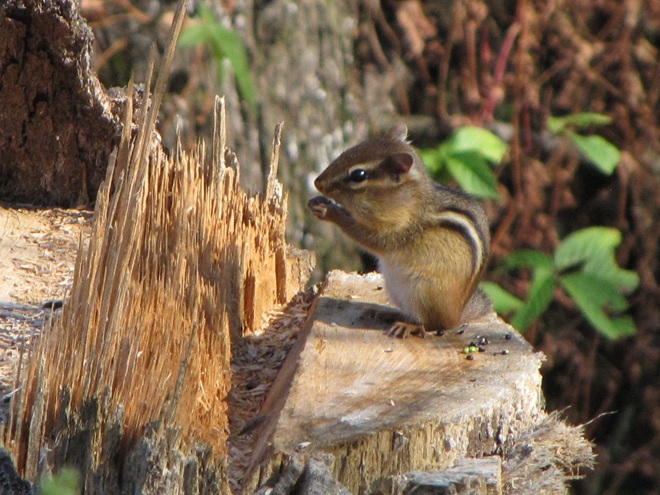
Crisp cool nights have the Neotropical birds that visit our northern latitudes to nest during the summer once again headed south for the winter.
Flying through the night and zipping through the forest edges at sunrise to feed are the many species of migrating vireos, warblers, and other songbirds.


As the nocturnal migrants fade into the foliage to rest for the day, the movement of diurnal migrants picks up the pace.


To find a hawk-counting station near you, check out our “Hawkwatcher’s Helper: Identifying Bald Eagles and other Diurnal Raptors” page by clicking the tab at the top of this page. And plan to spend some time on the lookout during your visit, you never know what you might see…

While the heat and humidity of early summer blankets the region, Brood XIV Periodical Cicadas are wrapping up their courtship and breeding cycle for 2025. We’ve spent the past week visiting additional sites in and near the Lower Susquehanna River Watershed where their emergence is evident.
We begin in York County just to the west of the river and Conewago Falls in mostly forested terrain located just southeast of Gifford Pinchot State Park. Within this area, often called the Conewago Hills, a very localized population of cicadas could be heard in the woodlands surrounding the scattered homes along Bull Road. Despite the dominant drone of an abundance of singing Pharaoh Periodical Cicadas, we were able to hear and record the courtship song of a small number of the rare Little Seventeen-year Cicadas. Their lawn sprinkler-like pulsating songs help mate-seeking males penetrate the otherwise overwhelming chorus of the Pharaoh cicadas in the area.

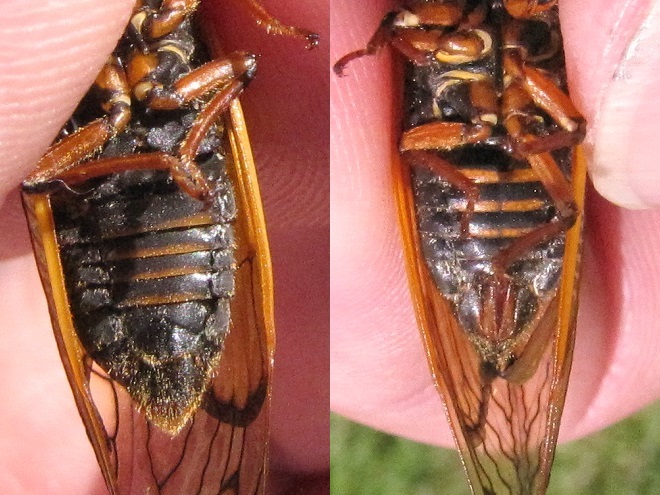
From the Conewago Hills we moved northwest into the section of southern Cumberland County known as South Mountain. Here, Pharaoh Periodical Cicadas were widespread in ridgetop forests along the Appalachian Trail, particularly in the area extending from Long Mountain in the east through Mount Holly to forests south of King’s Gap Environmental Education Center in the west.

While on South Mountain, we opted for a side trip into the neighboring Potomac watershed of Frederick County, Maryland, where these hills ascend to greater altitude and are known as the Blue Ridge Mountains, a name that sticks with them all the way through Shenandoah National Park, the Great Smoky Mountains, and to their southern terminus in northwestern Georgia. We found a fragmented emergence of Pharaoh Periodical Cicadas atop the Catoctin Mountain section of the Blue Ridge just above the remains of Catoctin Furnace, again on lands that had been timbered to make charcoal to fuel iron production prior to their protection as vast expanses of forest.


Back in Pennsylvania, we’re on our way to the watersheds of the northernmost tributaries of the lower Susquehanna’s largest tributary, the Juniata River. There, we found Brood XIV cicadas more widespread and in larger numbers than occurred at previous sites. Both Pharaoh and Cassin’s Periodical Cicadas were seen and heard along Jack’s Mountain and the Kishacoquillas Creek north of Lewistown/Burnham in Mifflin County. To the north of the Kishacoquillas Valley and Stone Mountain in northernmost Huntingdon County, the choruses of the two species were again widespread, particularly along the forest edges in Greenwood Furnace State Park, Rothrock State Forest, and adjacent areas of the Standing Stone Creek watershed.


Within the last 48 hours, we visited one last location in the Lower Susquehanna River Watershed where Brood XIV Periodical Cicadas have emerged during 2025. In the anthracite coal country of Northumberland County, a flight of Pharaoh Periodical Cicadas is nearing its end. We found them to be quite abundant in forested areas of Zerbe Run between Big and Little Mountains around Trevorton and on the wooded slopes of Mahanoy Mountain south of nearby Shamokin. Line Mountain south of Gowen City had a substantial emergence as well.


To chart our travels, we’ve put together this map plotting the occurrence of significant flights of Periodical Cicadas during the 2025 emergence. Unlike the more densely distributed Brood X cicadas of 2021, the range of Brood XIV insects is noticeably fragmented, even in areas that are forested. We found it interesting how frequently we found Brood XIV cicadas on lands used as sources of lumber to make charcoal for fueling nineteenth-century iron furnace operations.


Well, that’s a wrap. Please don’t forget to check out our new Cicadas page by clicking the “Cicadas” tab at the top of this page. Soon after the Periodical Cicadas are gone, the annual cicadas will be emerging and our page can help you identify the five species found regularly in the lower Susquehanna valley. ‘Til next time, keep buzzing!
Here are some sights and sounds from the ongoing emergence of Brood XIV Periodical Cicadas in the Lower Susquehanna River Watershed.
We begin in the easternmost spur of the lower basin where a sizeable emergence of cicadas can be seen and heard in the woodlands surrounding the headwaters of the Conestoga River in Berks County north of Morgantown. This flight extends east into Chester County and the French Creek drainage of the Schuylkill River watershed on State Game Lands 43 north of Elverson and consists of Pharaoh Periodical Cicadas (Magicicada septendecim), the most common species among 17-year broods.


From Route 82 north of Elverson to the west through the forested areas along Route 10 north of Morgantown and the Pennsylvania Turnpike, we found an abundance of Cassin’s Periodical Cicadas (Magicicada cassini) calling among the Pharaohs. This mix of Pharaoh and Cassin’s Periodical Cicadas extends west along the north side of the turnpike into Lancaster County and State Game Lands 52 on Black Creek north of Churchtown.


Further west in Cornwall, Lebanon County, a Brood XIV emergence can be found on similar forested terrain: the Triassic hills of the Newark Basin—rich in iron ore and renowned for furnace operations during the eighteenth and nineteenth centuries. Pharaoh Periodical Cicadas were the only species heard among this population that extends from Route 72 east through the woodlands along Route 322 into the northern edge of State Game Lands 156 in Lancaster County.
On the west side of the Susquehanna, yet another isolated population of Brood XIV Periodical Cicadas can be found in Perry County, just south of Duncannon on State Game Lands 170 on the slopes of “Cove Mountain”, the canoe-shaped convergence of the western termini of Peters and Second Mountains.
Pharaoh Periodical Cicadas dominated this Perry County chorus,…
…but we did detect at least one Cassin’s Cicada trying to find a mate.

Not to say they aren’t present, but we have yet to detect the rarest species, Magicicada septendecula, the “Little Seventeen-year Cicada”, among the various populations of Brood XIV Periodical Cicadas emerging in the lower Susquehanna valley. For the coming two weeks or so until this brood is gone for another 17 years, the search continues.
For more on both annual and periodical cicada species in the Lower Susquehanna River Watershed, be sure to click the “Cicadas” tab at the top of this page!


Renowned for its smooth, light-gray bark and its large size, the American Beech is one the most easily recognized trees found in climax forests throughout the lower Susquehanna valley. Preferring rich soils, this shade tolerant native produces an abundance of nutritious nuts for wildlife including deer, turkey, grouse, squirrels, woodpeckers, and a variety of songbirds.
If you’ve visited a stand of beech trees lately, you may have noticed that the canopy seems a little sparse in comparison to the foliage of the oaks, poplars, and other hardwood species in the vicinity.

A closer look reveals the cause. And yes, it’s big, big trouble.


While treatment for BLD is possible, it must be done early. Protecting an entire stand in a forest can be prohibitively expensive, but if you have a specimen tree or small grove you think you might like to save, click here for a Penn State Extension guide with more information.
Here’s a short preview of some of the finds you can expect during an outing in the Lower Susquehanna River Watershed’s forests this week…


Currently in the Lower Susquehanna River Watershed, you can find these five species of herbaceous plants in full bloom. As they grow, they and others like them help to purify waters within their respective ecosystems by taking up nutrients—namely, the nitrogen and phosphorus that can lead to detrimental algal blooms and eutrophication in ponds, lakes, streams, and rivers.


After repeatedly hearing the songs of these Neotropical migrants from among the foliage, we were finally able to get a look at them—but it required persistent effort.


Sometimes we have to count ourselves lucky if we see just one in five, ten, or even twenty of the birds we hear in the cover of the forest canopy or thicket. But that’s what makes this time of year so rewarding for the dedicated observer. The more time you spend out there, the more you’ll eventually discover. See you afield!


Here’s a look at six native shrubs and trees you can find blooming along forest edges in the lower Susquehanna valley right now.


Local old timers might remember hearing folklore that equates the northward advance of the blooming of the Flowering Dogwoods with the progress of the American Shad’s spring spawning run up the river. While this is hardly a scientific proclamation, it is likely predicated on what had been some rather consistent observation prior to the construction of the lower Susquehanna’s hydroelectric dams. In fact, we’ve found it to be a useful way to remind us that it’s time for a trip to the river shoreline below Conowingo Dam to witness signs of the spring fish migration each year. We’re headed that way now and will summarize our sightings for you in days to come.

Despite what seemed to be a chilly early spring, the bright green leaves that unfold to close the canopy of our deciduous forests were dense and casting shade by the last days of April. For northbound migrants, this fresh foliage provides the cover they need for foraging, resting, and, for those that will stick around to breed in the lower Susquehanna valley, nesting.
We recall many occasions when sparse foliage during the first days of May seemed to delay the big push of Neotropical species, but the seasonal arrival of these birds in 2025 is thus far mostly ahead of schedule. This absence of delay is due in part to the lushness of the oaks. Some stands have not only leafed out, but are finished flowering and have added up to 12 inches of new branch growth. We spent these early hours of May among the oaks. Here’s a look at the Neotropical migrants and other species we found…


The movements of our migratory birds typically continue through much of the month of May. And peak numbers of Neotropical species often occur sometime during the second week of the month. But with habitat at the ready, favorable flight conditions could facilitate quick arrival and/or passage of the bulk of the remaining migrants during the coming week. You may want to venture out sooner rather than later—but watch your step!


Here are five common forest flowers that the average visitor to these environs may easily overlook during an early April visit.


Be certain to get out and enjoy this year’s blooming seasons of our hundreds of varieties of flowering plants. But, particularly when it comes to native species,…

By late winter, sunshine and warming temperatures awaken the sleeping maples of the lower Susquehanna basin and the sap begins to flow. The new growing season is evident by the first days of spring when their swelling buds and flowers paint the drab gray canopy of deciduous woodlands with an overlying coat of red, orange, and maroon.


Our wildlife has been having a tough winter. The local species not only contend with cold and stormy weather, but they also need to find food and shelter in a landscape that we’ve rendered sterile of these essentials throughout much of the lower Susquehanna valley’s farmlands, suburbs, and cities.
Planting trees, shrubs, flowers, and grasses that benefit our animals can go a long way, often turning a ho-hum parcel of property into a privately owned oasis. Providing places for wildlife to feed, rest, and raise their young can help assure the survival of many of our indigenous species. With a little dedication, you can be liberated from the chore of manicuring a lawn and instead spend your time enjoying the birds, mammals, insects, and other creatures that will visit your custom-made habitat.

Fortunately for us, our local county conservation districts are again conducting springtime tree sales offering a variety of native and beneficial cultivated plants at discount prices. Listed here are links to information on how to pre-order your plants for pickup in April. Click away to check out the species each county is offering in 2025!
Cumberland County Conservation District Annual Tree Seedling Sale—
Orders due by: Friday, March 21, 2025
Pickup on: Thursday, April 24, 2025 or Friday, April 25, 2025

Dauphin County Conservation District Seedling Sale—
Orders due by: Monday, March 17, 2025
Pickup on: Thursday, April 24, 2025 or Friday, April 25, 2025

Franklin County Conservation District Tree Seedling Sale—
Orders due by: Wednesday, March 19, 2025
Pickup on: Thursday, April 24, 2025

Lancaster County Annual Tree Seedling Sale—
Orders due by: Friday, March 7, 2025
Pickup on: Friday, April 11, 2025

Lebanon County Conservation District Tree and Plant Sale—
Orders due by: Monday, March 3, 2025
Pickup on: Friday, April 18, 2025


York County Conservation District Seedling Sale—
Orders due by: March 15, 2025
Pickup on: Thursday, April 10, 2025


If you live in Adams County, Pennsylvania, you may be eligible to receive free trees and shrubs for your property from the Adams County Planting Partnership (Adams County Conservation District and the Watershed Alliance of Adams County). These trees are provided by the Chesapeake Bay Foundation’s Keystone 10-Million Trees Partnership which aims to close a seven-year project in 2025 by realizing the goal of planting 10 million trees to protect streams by stabilizing soils, taking up nutrients, reducing stormwater runoff, and providing shade. If you own property located outside of Adams County, but still within the Chesapeake Bay Watershed (which includes all of the Susquehanna, Juniata, and Potomac River drainages), you still may have an opportunity to get involved. Contact your local county conservation district office or watershed organization for information.


We hope you’re already shopping. Need help making your selections? Click on the “Trees, Shrubs, and Woody Vines” tab at the top of this page to check out Uncle Tyler Dyer’s leaf collection. He has most of the species labelled with their National Wetland Plant List Indicator Rating. You can consult these ratings to help find species suited to the soil moisture on your planting site(s). For example: if your site has sloped upland ground and/or the soils sometimes dry out in summer, select plants with a rating such as UPL or FACU. If your planting in soils that remain moist or wet, select plants with the OBL or FACW rating. Plants rated FAC are generally adaptable and can usually go either way, but may not thrive or survive under stressful conditions in extremely wet or dry soils.
NATIONAL WETLAND PLANT LIST INDICATOR RATING DEFINITIONS
Using these ratings, you might choose to plant Pin Oaks (FACW) and Swamp White Oaks (FACW) in your riparian buffer along a stream; Northern Red Oaks (FACU) and White Oaks (FACU) in the lawn or along the street, driveway, or parking area; and Chestnut Oaks (UPL) on your really dry hillside with shallow soil. Give it a try.

As the autumn bird migration draws to a close for 2024, we’re delighted to be finding five of our favorite visitors from the coniferous and mixed forests of Canada and the northernmost continental United States.


While right now is the best time to get out and look for these species from the northern forests, any or all of them could linger into the winter months, particularly where the food supply is sufficient and conifers and other evergreens provide cover from the blustery weather.
During the past week, Uncle Tyler Dyer has been out searching for autumn leaves to add to his collection. One of the species he had not encountered in previous outings was the American Elm (Ulmus americana), so he made a special trip to see a rare mammoth specimen in a small neighborhood park (Park Place) along Chestnut Street between 5th and Quince Streets in Lebanon, Pennsylvania.


There’s still time to get out and see autumn foliage. With warmer weather upon us—at least temporarily—it’s a good time to go for a stroll. Who knows, you might find some spectacular leaves like these collected by Uncle Ty earlier this week. All were found adorning native plants!


Clear, cool nights have provided ideal flight conditions for nocturnal Neotropical migrants and other southbound birds throughout the week. Fix yourself a drink and a little snack, then sit down and enjoy this set of photographs that includes just some of the species we found during sunrise feeding frenzies atop several of the Lower Susquehanna River Watershed’s ridges. Hurry up, because here they come…


The migration is by no means over; it has only just begun. So plan to visit a local hawkwatch or other suitable ridgetop in coming weeks. Arrive early (between 7 and 8 AM) to catch a glimpse of a nocturnal migrant fallout, then stay through the day to see the hundreds, maybe even thousands, of Broad-winged Hawks and other diurnal raptors that will pass by. It’s an experience you won’t forget.

Be certain to click the “Birds” tab at the top of this page for a photo guide to the species you’re likely to see passing south through the lower Susquehanna valley in coming months. And don’t forget to click the “Hawkwatcher’s Helper: Identifying Bald Eagles and other Diurnal Raptors” tab to find a hawk-counting station near you.

The Aphrodite Fritillary (Speyeria aphrodite), also known simply as the Aphrodite, is a brush-footed butterfly of deciduous, coniferous, and mixed forests. We found this female in a grassland margin between woodlots where prescribed fire was administered during the autumn of 2022 to reduce accumulations of natural fuels and an overabundance of invasive vegetation. A goal of the burn was to promote the growth of native species including the violets (Viola species) favored as larval host plants by this and other fritillaries.

By the time these adult butterflies make their reproductive flights in late summer, the violets that serve as larval host plants have gone dormant. To find patches of ground where the violets will come to life in spring, the female Aphrodite Fritillary has an ability to sense the presence of dormant roots, probably by smell. Upon finding an area where suitable violets will begin greening up next year, she’ll deposit her eggs. The eggs overwinter, then hatch to feed on the tender new violet leaves of spring.


It’s hard to believe, but for almost two months now, sandpipers, plovers, and terns have been filtering south through the Lower Susquehanna River Watershed on their way to the Atlantic coastline as they complete the first leg of their long autumn migration—a journey that will take some species all the way to the far reaches of the South American continent for winter.

As August draws to a close, these early birds are being joined by widespread nocturnal flights of Neotropical migrants—those species, primarily songbirds, on their way to wintering grounds which lie exclusively south of the continental United States.
To catch a glimpse of these night-flying avians, your best bet may be to position yourself on the crest of a ridge or along a linear break in the forest such as a utility right-of-way where waves of warblers, vireos, flycatchers, and other Neotropical passerines sometimes feed on invertebrates after making landfall at daybreak. Pick a place where the trees are bathed in the warm light of the rising sun and be there by 7 A.M. E.D.T. The activity can be tremendous, but it usually ends between 8 and 9.


Diurnal migrants, birds that make their movements during the daylight hours, are ramping up their flights now as well. Broad-winged Hawks, Bald Eagles, and falcons are currently being tallied at hawk-counting stations throughout the northeast. Many of those lookouts are seeing Ruby-throated Hummingbirds, swallows, and other daytime migrants too.


Autumn migration flights are an ever-changing process, with different species peaking at different times throughout the season. In these months just after the nesting season, each of these species is more numerous than at any other time of the year. And of course, the more often we as observers get out and have a look, the more of them we’ll see.
Be certain to click the “Birds” tab at the top of this page for a photo guide to the species you’re likely to see passing through the lower Susquehanna valley this fall. Nearly four months of autumn hawk migration flights lie ahead, so don’t forget to click the “Hawkwatcher’s Helper: Identifying Bald Eagles and other Diurnal Raptors” tab to find a hawk-counting station near you, then stop by for a visit or two. See you there!

Do you recall our “Photo of the Day” from seven months ago…
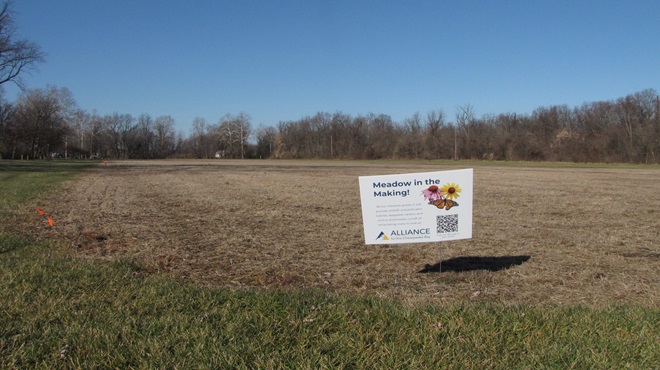
Well, here’s what that site looks like today…


And there are pollinating insects galore, most notably butterflies…


Why on earth would anyone waste their time, energy, and money mowing grass when they could have this? Won’t you please consider committing graminicide this fall? That’s right, kill that lawn—at least the majority of it. Then visit the Ernst Seed website, buy some “Native Northeast Wildlflower Mix” and/or other blends, and get your meadow planted in time for the 2025 growing season. Just think of all the new kinds of native plants and animals you’ll be seeing. It could change your life as well as theirs.

Resilient to the pressures of flooding, ice scour, drought, and oft times really poor water quality, Water Willow (Dianthera americana, formerly Justicia americana) is the most common herbaceous plant on the Susquehanna’s non-forested alluvial islands. Yet, few know this native wildflower by name or reputation.


The spring of 2024 has been very kind to our beds of Water Willow. Rainfall in the Susquehanna watershed has been frequent enough to maintain river levels just high enough to keep the roots of the plants wet. During the interludes in storm activity, dry spells have rolled back any threat of flooding on the river’s main stem, thus eliminating chances of submerging the plants in muddy water and preventing the sun from keeping them warm, happy, and flowering early. Thundershowers throughout the basin earlier this week have now raised the river a few inches to inundate the base of the plants and make mats of Water Willow favorable places for newly hatched fry and other young fish to take refuge while they grow. Here’s a look…


By now you’ve come to appreciate the importance of Water Willow to the sustainability of our populations of fish and other aquatic life. Like similar habitat features that reduce sediment runoff and nutrient pollution, undisturbed stands of terrestrial, emergent, and submerged native plant species are essential to the viability of our freshwater food webs.