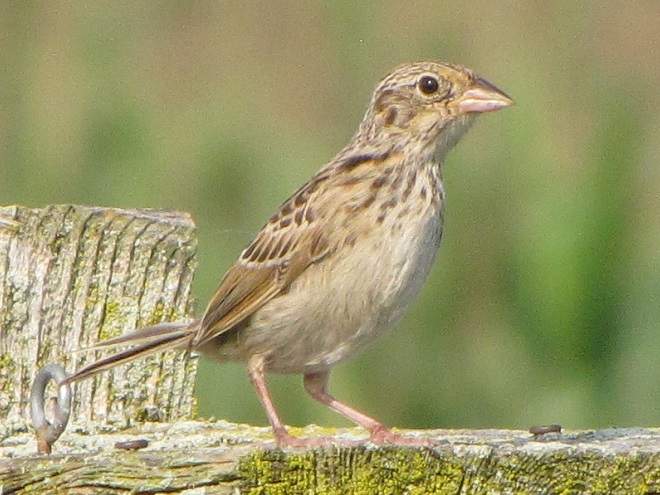
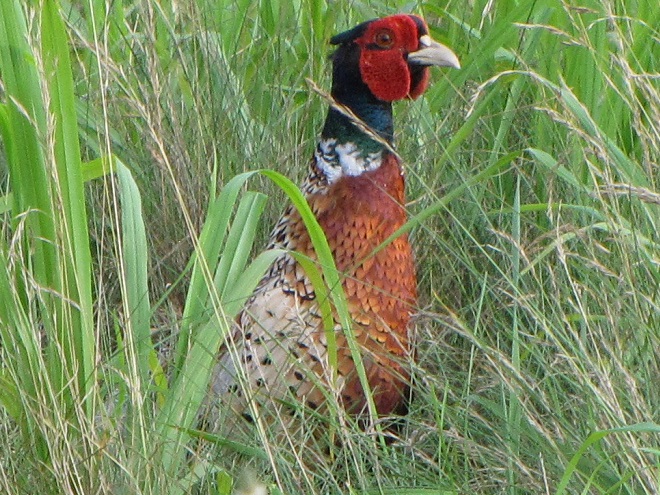
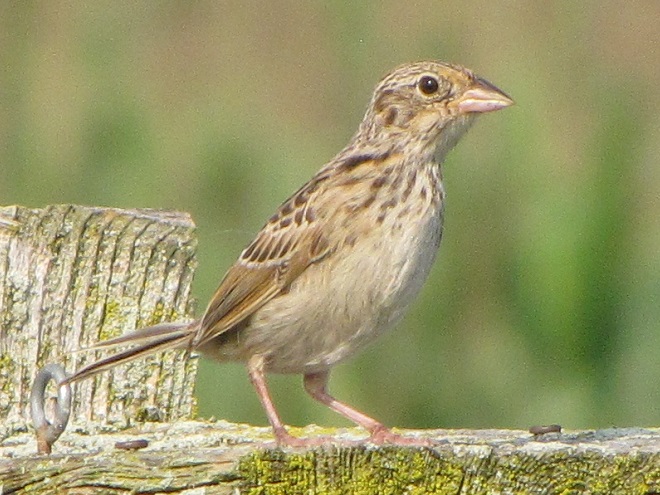
A nesting Grasshopper Sparrow surveys the warm-season grasslands at Middle Creek Wildlife Management Area. Minutes later, this evening’s thundershower sent everyone and everything seeking cover.
Homo sapiens owes much of its success as a species to an acquired knowledge of how to make, control, and utilize fire. Using fire to convert the energy stored in combustible materials into light and heat has enabled humankind to expand its range throughout the globe. Indeed, humans in their furless incomplete mammalian state may have never been able to expand their populations outside of tropical latitudes without mastery of fire. It is fire that has enabled man to exploit more of the earth’s resources than any other species. From cooking otherwise unpalatable foods to powering the modern industrial society, fire has set man apart from the rest of the natural world.
In our modern civilizations, we generally look at the unplanned outbreak of fire as a catastrophe requiring our immediate intercession. A building fire, for example, is extinguished as quickly as possible to save lives and property. And fires detected in fields, brush, and woodlands are promptly controlled to prevent their exponential growth. But has fire gone to our heads? Do we have an anthropocentric view of fire? Aren’t there naturally occurring fires that are essential to the health of some of the world’s ecosystems? And to our own safety? Indeed there are. And many species and the ecosystems they inhabit rely on the periodic occurrence of fire to maintain their health and vigor.
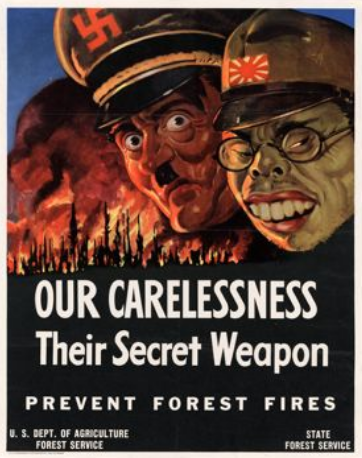
For the war effort- The campaign to reduce the frequency of forest fires got its start during World War II with distribution of this poster in 1942. The goal was to protect the nation’s timber resources from accidental or malicious loss due to fire caused by man-made ignition sources. The release of the Walt Disney film “Bambi” during the same year and the adoption of the Smokey the Bear mascot in 1944 softened the message’s delivery, but the public relations outreach continued to be a key element of a no-fire policy to save trees for lumber. Protection and management of healthy forest ecosystems in their entirety has only recently become a priority. (National Archives image)
Man has been availed of the direct benefits of fire for possibly 40,000 years or more. Here in the Lower Susquehanna River Watershed, the earliest humans arrived as early as 12,000 years ago—already possessing skills for using fire. Native plants and animals on the other hand, have been part of the ever-changing mix of ecosystems found here for a much longer period of time—millions to tens of millions of years. Many terrestrial native species are adapted to the periodic occurrence of fire. Some, in fact, require it. Most upland ecosystems need an occasional dose of fire, usually ignited by lightning (though volcanism and incoming cosmic projectiles are rare possibilities), to regenerate vegetation, release nutrients, and maintain certain non-climax habitat types.
But much of our region has been deprived of natural-type fires since the time of the clearcutting of the virgin forests during the eighteenth and nineteenth centuries. This absence of a natural fire cycle has contributed to degradation and/or elimination of many forest and non-forest habitats. Without fire, a dangerous stockpile of combustible debris has been collecting, season after season, in some areas for a hundred years or more. Lacking periodic fires or sufficient moisture to sustain prompt decomposition of dead material, wildlands can accumulate enough leaf litter, thatch, dry brush, tinder, and fallen wood to fuel monumentally large forest fires—fires similar to those recently engulfing some areas of the American west. So elimination of natural fire isn’t just a problem for native plants and animals, its a potential problem for humans as well.
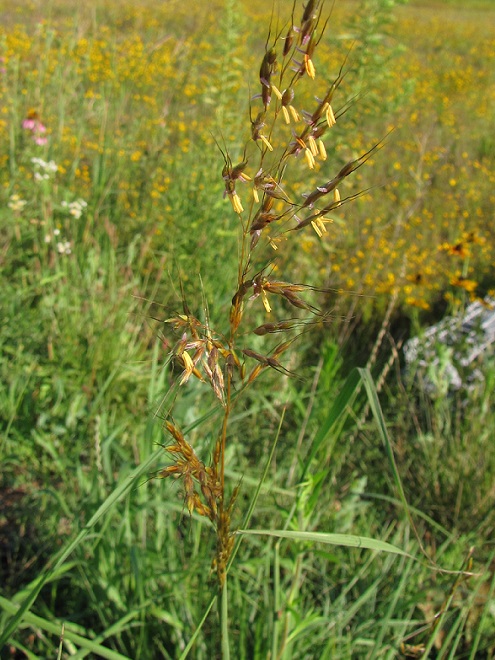
Indiangrass (seen here), Switchgrass, Big Bluestem, and Little Bluestem are native species requiring periodic forms of disturbance to eliminate competition by woody plants. These warm-season grasses develop roots that penetrate deep into the soil, sometimes to depths of six feet or more, allowing them to survive severe drought and flash fire events. In the tall grass prairies, these extensive root systems allow these grasses to return following heavy grazing by roaming herds of American Bison (Bison bison). Without these habitat disturbances, warm season grasslands succumb to succession in about seven years. With their periodic occurrence, the plants thrive and provide excellent wildlife habitat, erosion control, and grazing forage.
To address the habitat ailments caused by a lack of natural fires, federal, state, and local conservation agencies are adopting the practice of “prescribed fire” as a treatment to restore ecosystem health. A prescribed fire is a controlled burn specifically planned to correct one or more vegetative management problems on a given parcel of land. In the Lower Susquehanna River Watershed, prescribed fire is used to…
Eliminate dangerous accumulations of combustible fuels in woodlands.
Reduce accumulations of dead plant material that may harbor disease.
Provide top kill to promote oak regeneration.
Regenerate other targeted species of trees, wildflowers, grasses, and vegetation.
Kill non-native plants and promote growth of native plants.
Prevent succession.
Remove woody growth and thatch from grasslands.
Promote fire tolerant species of plants and animals.
Improve habitat for rare species (Regal Fritillary, etc.)
Recycle nutrients and minerals contained in dead plant material.
Let’s look at some examples of prescribed fire being implemented right here in our own neighborhood…
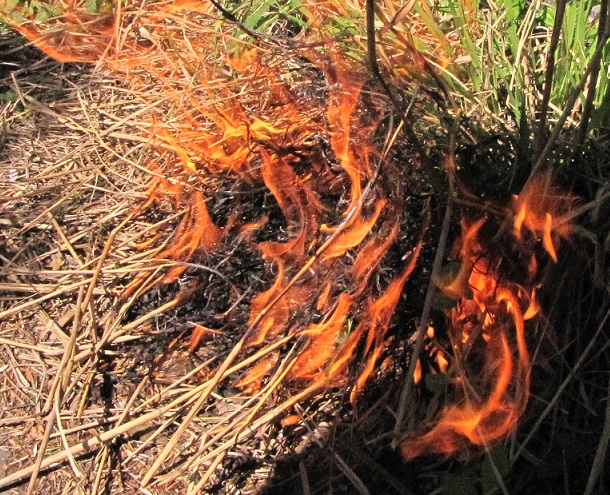
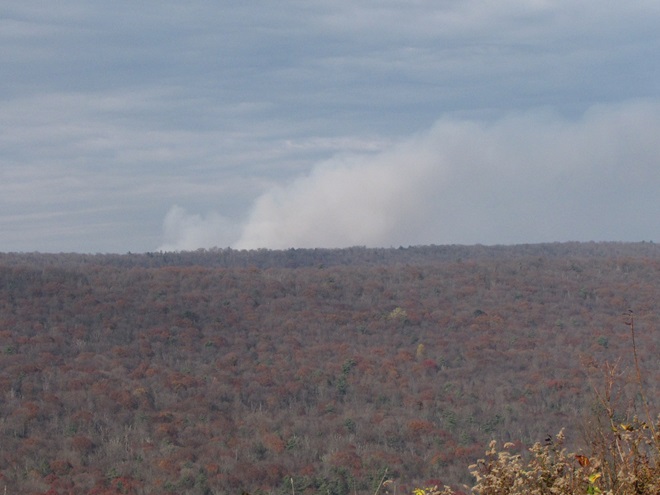
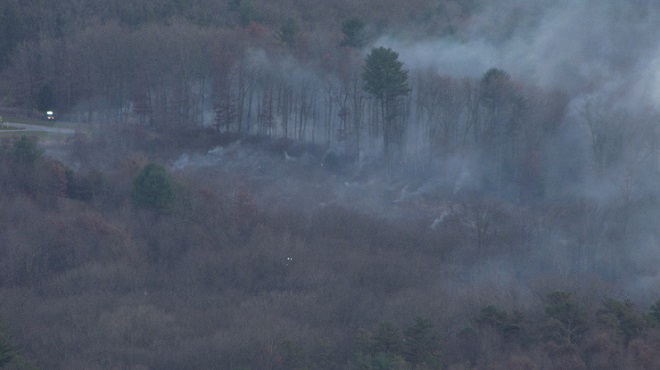
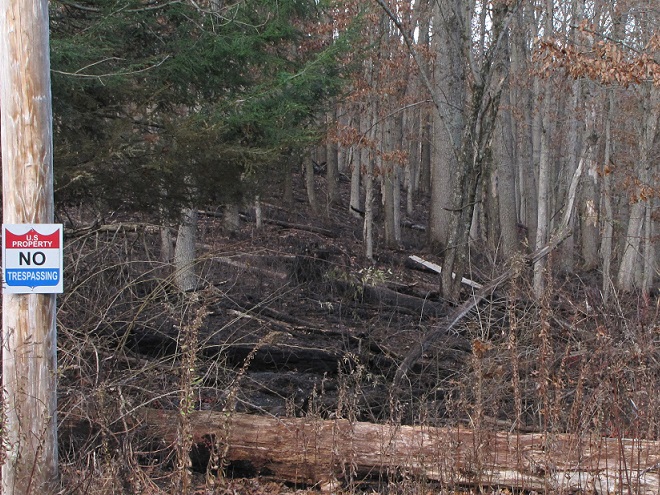
Prescribed fires are typically planned for the dormant season extending from late fall into early spring with burns best conducted on days when the relative humidity is low.Prescribed fire is used regularly at Fort Indiantown Gap Military Reservation in Lebanon County, Pennsylvania, to keep accumulations of woody and herbaceous fuels from accumulating on and around the training range areas where live ordinance and other sources of ignition could otherwise spark large, hard-to-control wildfires.Prescribed fires replace the periodic natural burns that would normally reduce the fuel load in forested areas. Where these fuels are allowed to accumulate, south-facing slopes are particularly susceptible to extreme fires due to their exposure to the drying effects of intense sunlight for much of the year. The majority of small oaks subjected to treatment by the prescribed fire shown here will have the chance to regenerate without immediate competition from other species including invasive plants. The larger trees are mostly unaffected by the quick exposure to the flames. Note too that these fires don’t completely burn everything on the forest floor, they burn that which is most combustible. There are still plenty of fallen logs for salamanders, skinks, and other animals to live beneath and within.
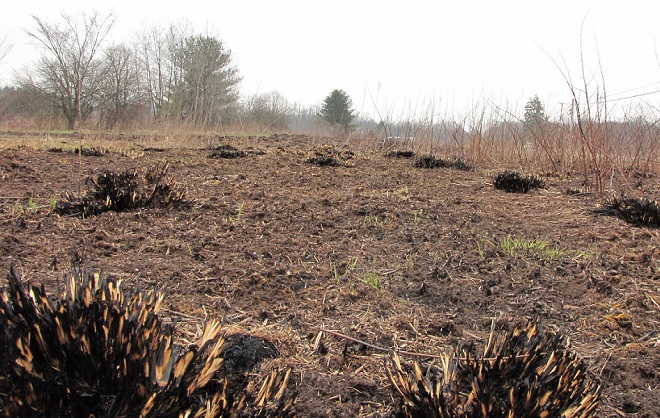
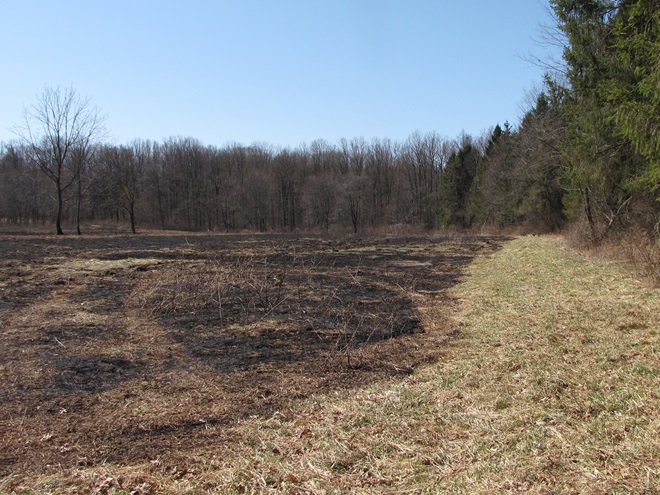
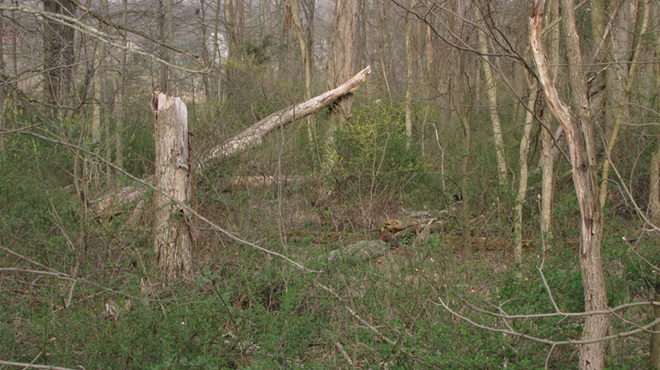
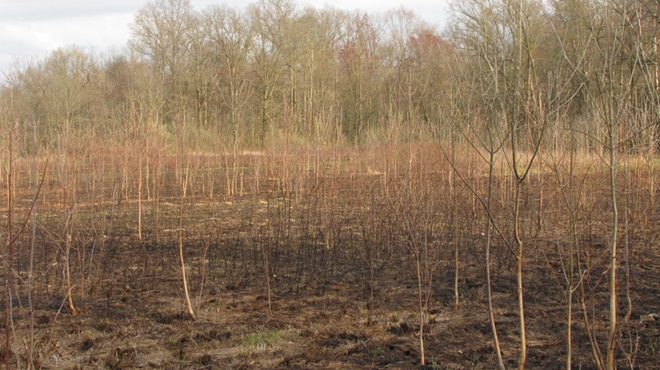
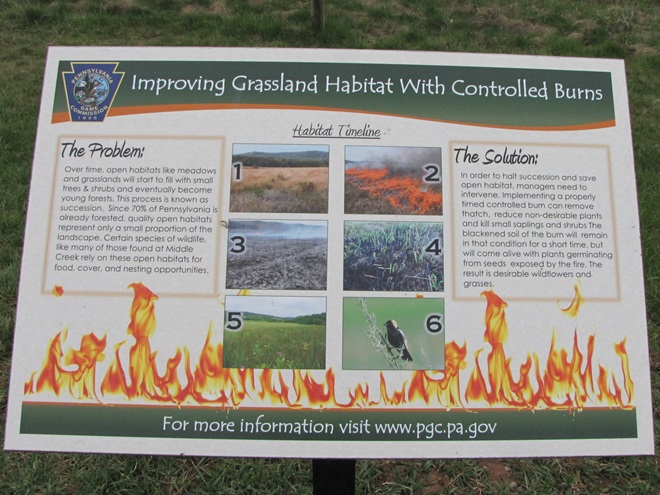
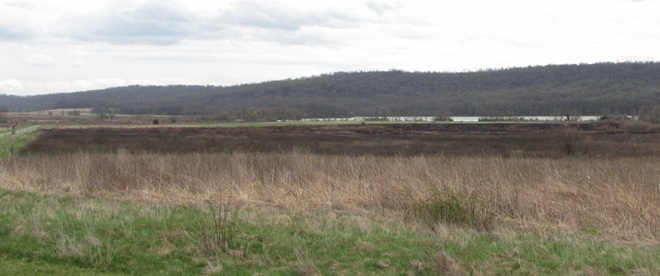
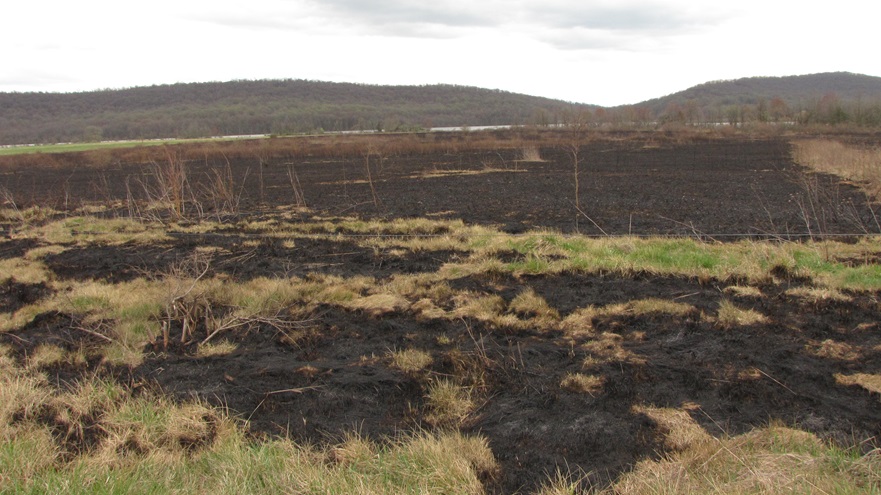
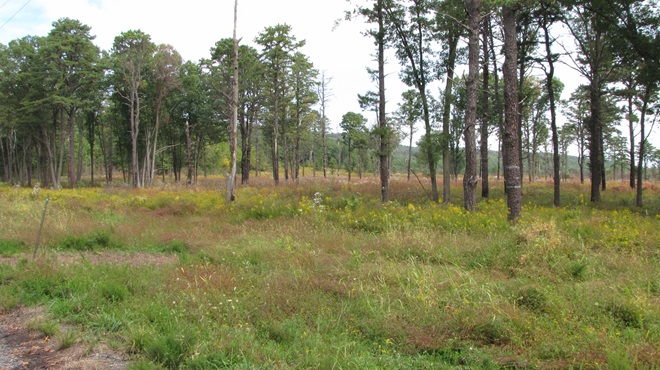
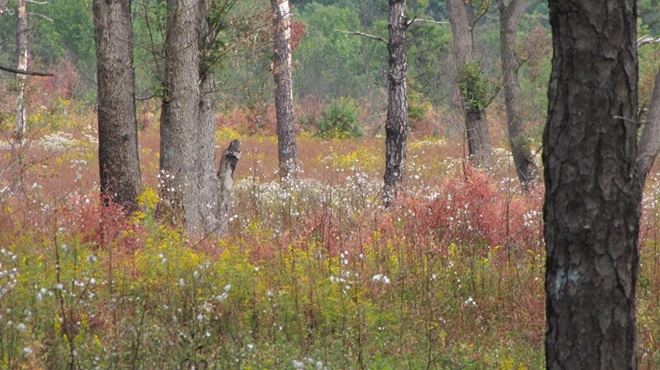
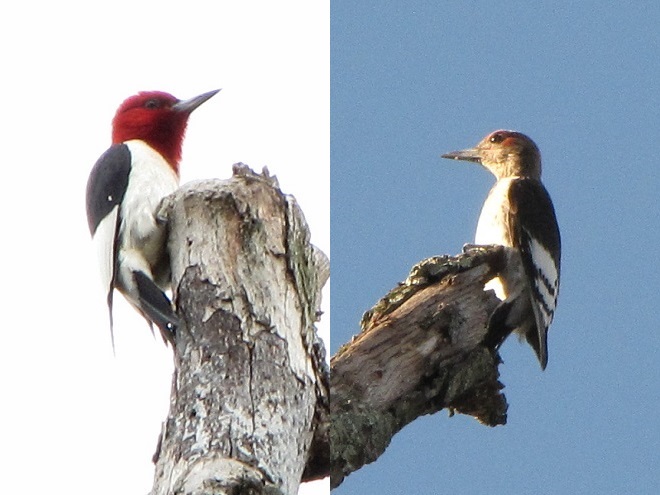
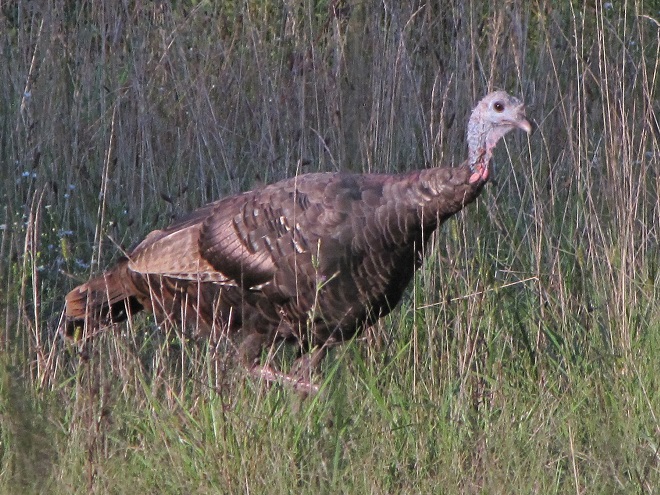
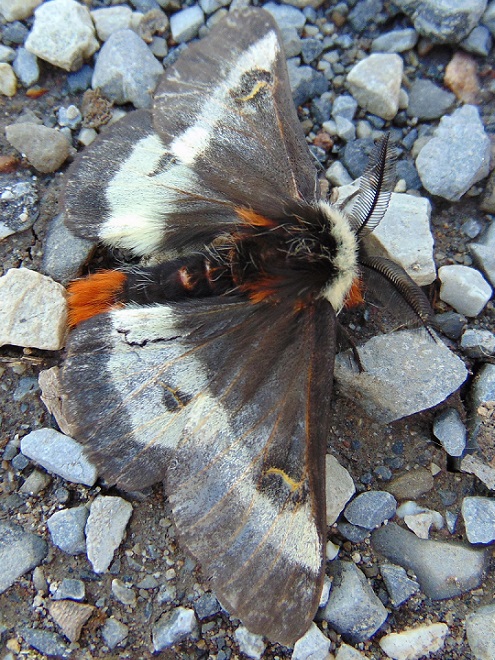
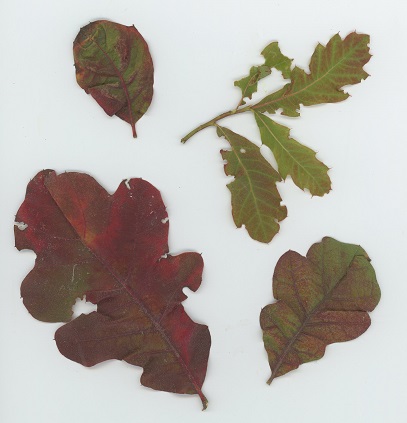
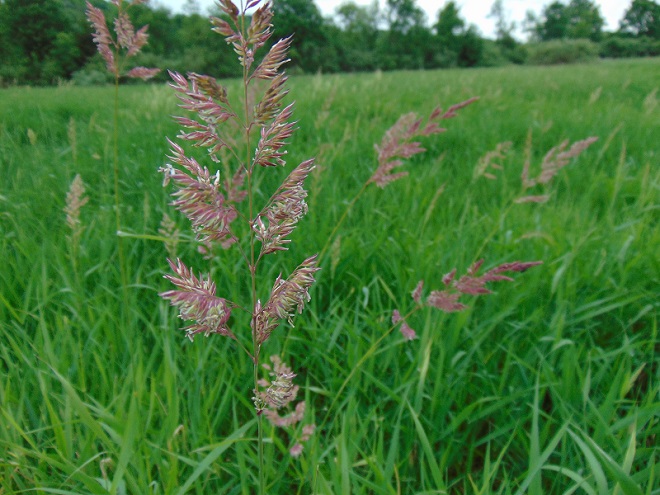
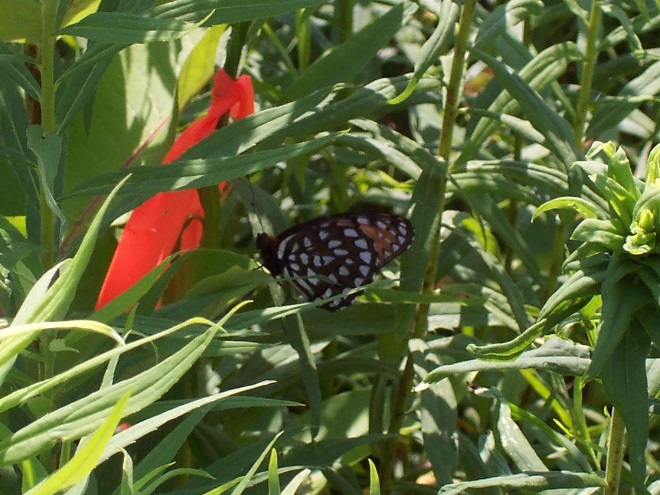
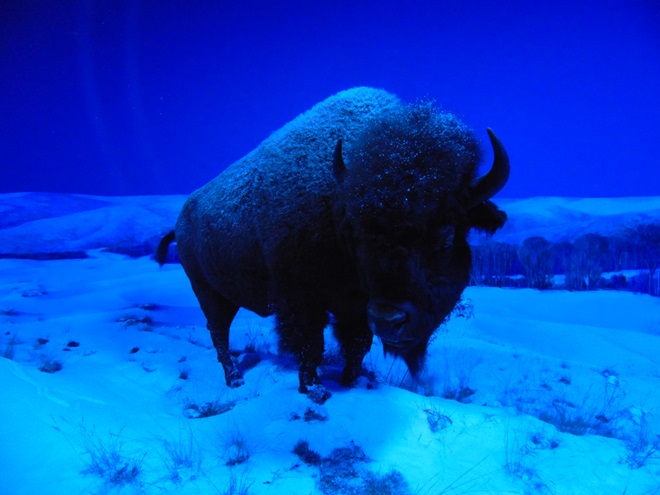
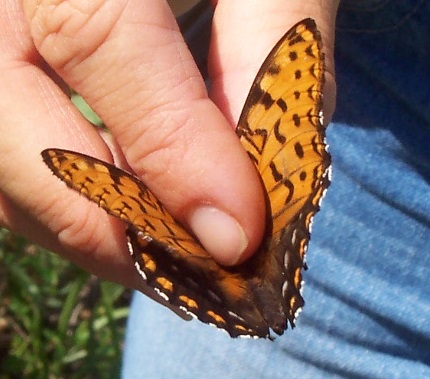
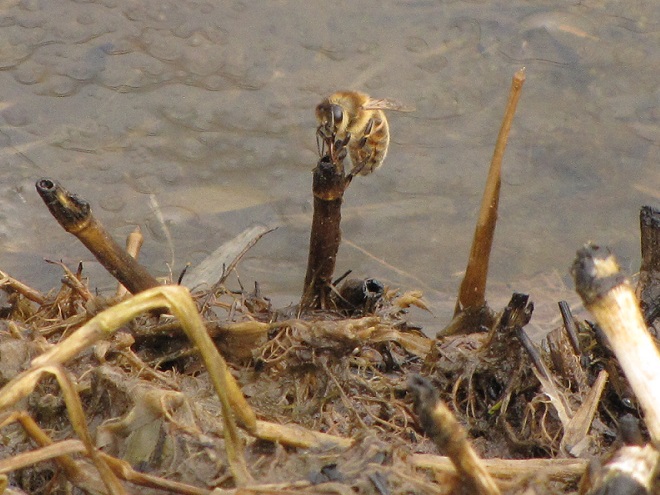
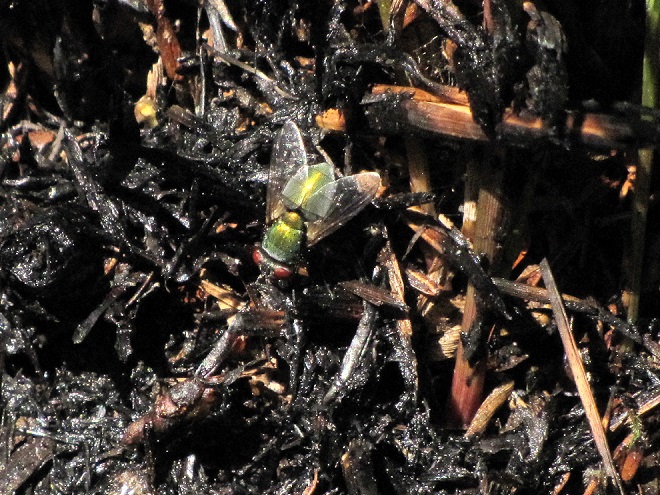
A prescribed fire in late winter prevents this grassland consisting of Big Bluestem and native wildflowers from being overtaken by woody growth and invasive species. Fires such as this that are intended to interrupt the process of succession are repeated at least every three to five years.In its wildlife food plots, prescribed fire is used by the Pennsylvania Game Commission to prevent succession and control invasive species such as Multiflora Rose, instead promoting the growth of native plants.An example of a woodlot understory choked with combustible fuels and dense tangles of invasive Multiflora Rose. A forester has the option of prescribing a dose of dormant-season fire for a site like this to reduce the fuel load, top kill non-native vegetation, and regenerate native plants.A dose of prescribed fire was administered on this grassland to kill the woody growth of small trees beginning to overtake the habitat by succession.The Pennsylvania Game Commission employs prescribed fire at Middle Creek Wildlife Management Area and on many of their other holdings to maintain grasslands.Prescribed fire is used to eliminate invasive species including Multiflora Rose from grasslands at Middle Creek W.M.A. Annual burns on the property are conducted in a mosaic pattern so that each individual area of the grassland is exposed to the effects of fire only once every two to five years. Without fire or some type of mechanical or chemical intervention, succession by woody trees and shrubs would take hold after about seven years.Prescribed fire is planned for a fraction of total grassland acreage at Middle Creek W.M.A. each year. Another section of the mosaic is targeted in the following year and yet another in the year that follows that. Because burns are conducted in the spring, grassland cover is available for wildlife throughout the winter. And because each year’s fire burns only a portion of the total grassland acreage, wildlife still has plenty of standing grass in which to take shelter during and after the prescribed fire.Prescribed fire at Middle Creek W.M.A. provides grassland habitat for dozens of species of birds and mammals including the not-so-common Grasshopper Sparrow……and stocked Ring-necked Pheasants that do nest and raise young there.On a few sites in the Lower Susquehanna River Watershed , prescribed fire is being used to establish and maintain savanna-like grasslands. This one, located on a dry, south-facing slope near numerous man-made sources of ignition, can easily be dosed with periodic prescribed burns to both prevent succession and reduce fuel accumulations that may lead to a devastating extreme fire.One year following a prescribed burn, this is the autumn appearance of a savanna-like habitat with fire-tolerant Pitch Pine (Pinus rigida), Bear Oak, warm-season grasses, and a variety of nectar-producing wildflowers for pollinators. These ecosystems are magnets for wildlife and may prove to be a manageable fit on sun-drenched sites adjacent to man-made land disturbances and their sources of ignition.Savanna-like grasslands with oaks and other scattered large trees, some of them dead, make attractive nesting habitat for the uncommon Red-headed Woodpecker.Prescribed fire can benefit hungry Wild Turkeys by maintaining savanna-like grasslands for an abundance of grasshoppers and other insects in summer and improving the success of mast-producing oaks for winter.In the Lower Susquehanna River Watershed, the caterpillar of the rare Eastern Buck Moth feeds on the foliage of the Bear Oak, also known as the Scrub Oak, a shrubby species that relies upon periodic fire to eliminate competition from larger trees in its early successional habitat.Leaves of the Bear Oak in fall. The Bear Oak regenerates readily from top kill caused by fire.Reed Canary Grass (Phalaris arundinacea) is a native cool-season grass with a colorful inflorescence in spring. But given the right situation, it can aggressively overtake other species to create a pure stand lacking biodiversity. It is one of the few native species which is sometimes labelled “invasive”.Prescribed fire can be used to reduce an overabundance of Reed Canary Grass and its thatch in wetlands. Periodic burning can help restore species diversity in these habitats for plants and animals including rare species such as the endangered Bog Turtle (Glyptemys muhlenbergii).On the range areas at Fort Indiantown Gap in Lebanon County, Pennsylvania, disturbances by armored vehicles mimic the effects of large mammals such as the American Bison which periodically trampled grasses to prevent succession and the establishment of woody plants on its prairie habitat. To supplement the activity of the heavy vehicles and to provide suitable habitat for the very rare Regal Fritillary (Speyeria idalia) butterflies found there, prescribed fire is periodically employed to maintain the grasslands on the range. These burns are planned to encourage the growth of “Fort Indiantown Gap Little Bluestem” grass as well as the violets used as host plants by the Regal Fritillary caterpillars. These fires also promote growth of a variety of native summer-blooming wildflowers to provide nectar for the adults butterflies.A last record of a wild American Bison killed in Pennsylvania was an animal taken in the Susquehanna watershed in Union County in 1801. The species is thereafter considered extirpated from the state. Since that time, natural disturbances needed to regenerate warm-season grasses have been limited primarily to fires and riverine ice scour. The waning occurrence of both has reduced the range of these grasses and their prairie-like ecosystems in the commonwealth. (Exhibit: State Museum of Pennsylvania, Harrisburg)A male Regal Fritillary on the range at Fort Indiantown Gap, where armored vehicles and prescribed fire provide suitable prairie-like habitat for this vulnerable species.Prescribed fires return the nutrients and minerals contained in dead plant material to the soil. Following these controlled burns, insects like this Honey Bee can often be seen collecting minerals from the ashes.A Greenbottle Fly gathering minerals from the ash following a prescribed burn.
In Pennsylvania, state law provides landowners and crews conducting prescribed fire burns with reduced legal liability when the latter meet certain educational, planning, and operational requirements. This law may help encourage more widespread application of prescribed fire in the state’s forests and other ecosystems where essential periodic fire has been absent for so very long. Currently in the Lower Susquehanna River Watershed, prescribed fire is most frequently being employed by state agencies on state lands—in particular, the Department of Conservation and Natural Resources on State Forests and the Pennsylvania Game Commission on State Game Lands. Prescribed fire is also part of the vegetation management plan at Fort Indiantown Gap Military Reservation and on the land holdings of the Hershey Trust. Visitors to the nearby Gettysburg National Military Park will also notice prescribed fire being used to maintain the grassland restorations there.
For crews administering prescribed fire burns, late March and early April are a busy time. The relative humidity is often at its lowest level of the year, so the probability of ignition of previous years’ growth is generally at its best. We visited with a crew administering a prescribed fire at Middle Creek Wildlife Management Area last week. Have a look…
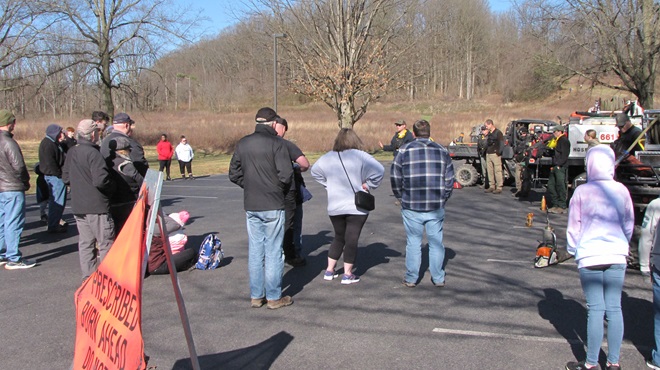
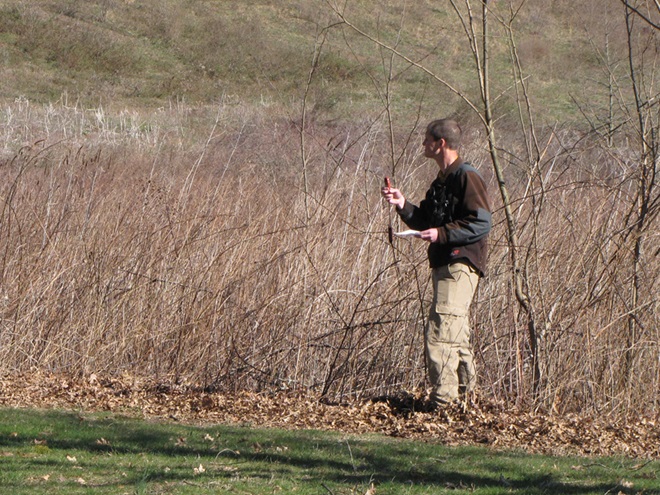
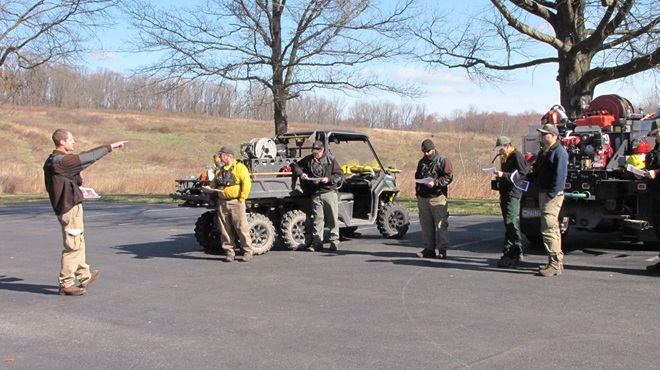
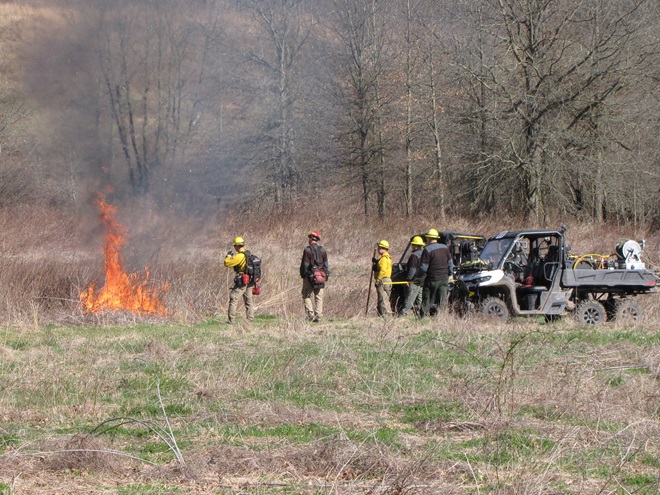
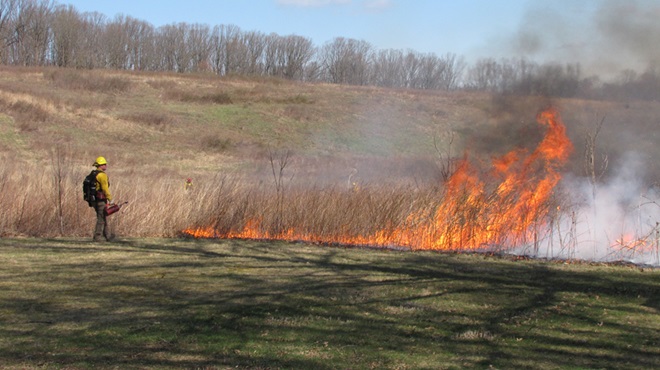
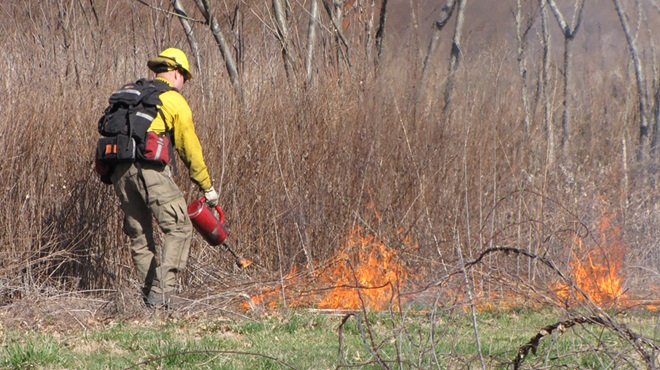
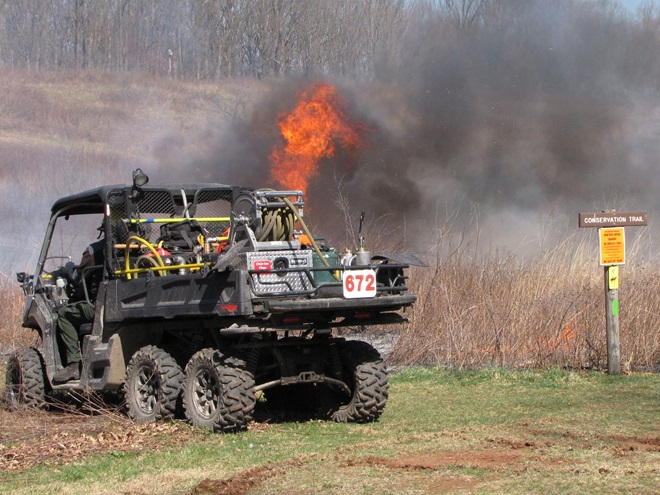
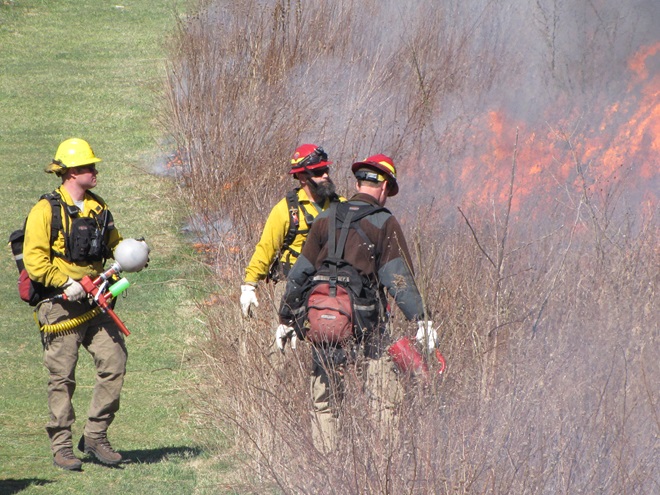
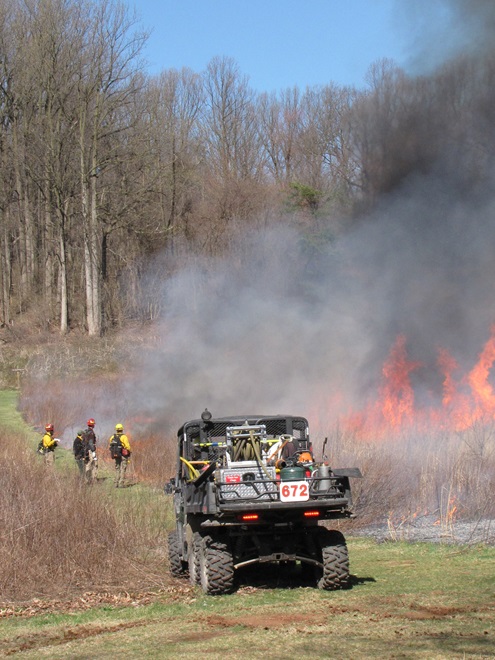
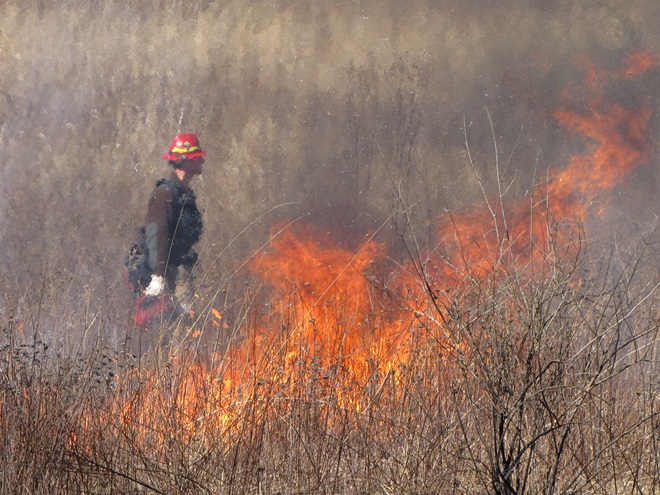
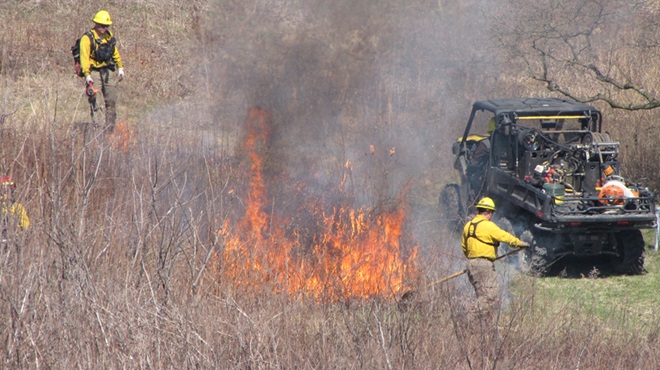
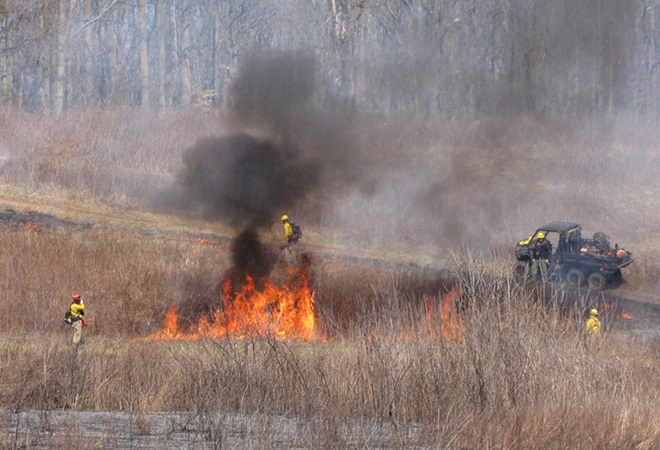
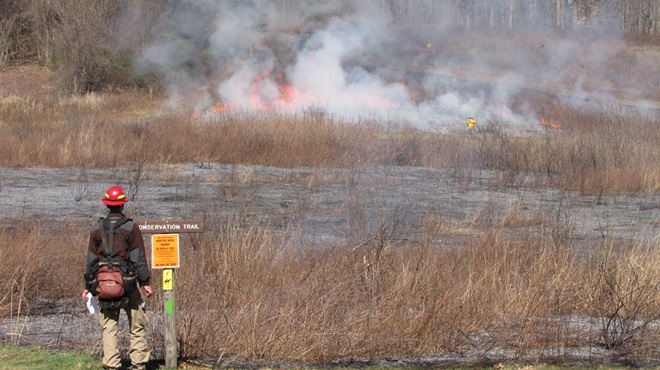
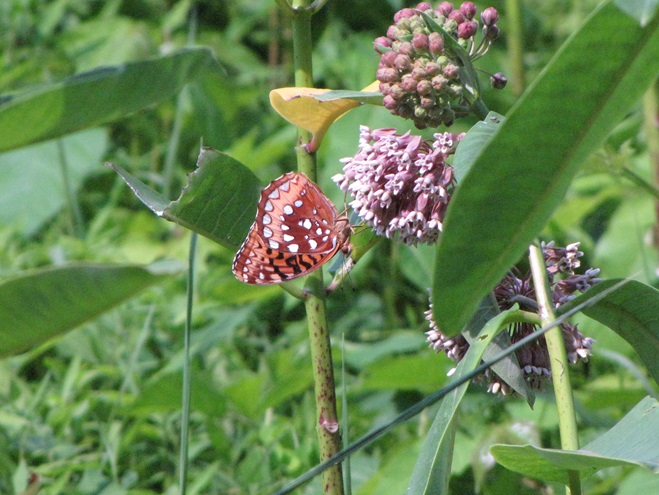
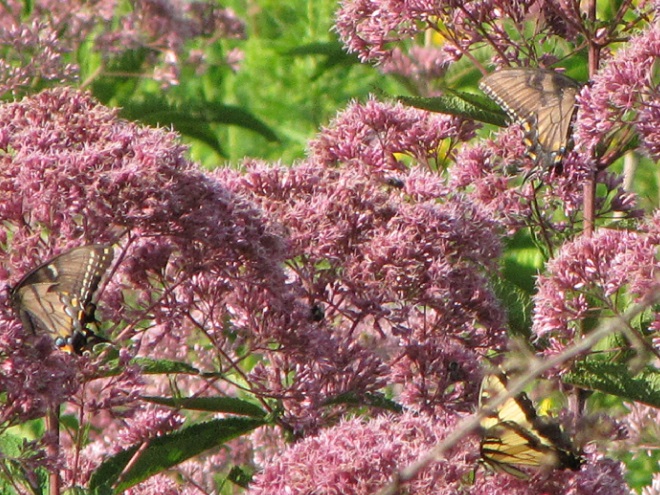
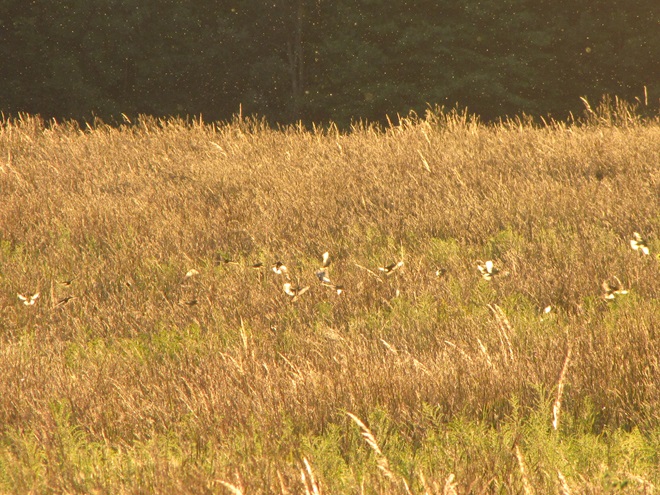
Members of a Pennsylvania Game Commission burn crew provide visitors to Middle Creek Wildlife Management Area with an overview of prescribed fire and the equipment and techniques they use to conduct a burn.Pennsylvania Game Commission Southeast Region Forester Andy Weaver will fulfill the role of Burn Boss for administering this day’s dose of fire. His responsibilities include assessing the weather before the burn and calculating a probability of ignition.The Burn Boss briefs personnel with information on site layout, water supply location(s), places of refuge, emergency procedures, the event’s goals and plan of action, crew assignments, and the results of the weather check: wind from the northwest at 5 miles per hour, temperature 48 degrees, and the relative humidity 63%. Today’s patient is a parcel of warm-season grasses receiving a dose of fire to eliminate invasive non-native plants, woody growth, and thatch. The probability of ignition is 20%, but improving by the minute.To begin the burn, a test fire is started in the downwind corner of the parcel, which also happens to be the bottom of the slope. Fuel ignition is good. The burn can proceed.Crews proceed uphill from the location of the test fire while igniting combustibles along both flanks of the area being treated.A drip torch is used to ignite the dried stems and leaves of warm-season grasses and wildflowers. Each member of the burn crew wears Nomex fire-resistant clothing and carries safety equipment including a two-way radio, a hydration pack, and a cocoon-like emergency fire shelter.An all-terrain vehicle equipped with various tools, a fire pump, hose, and a small water tank accompanies the crew on each flank of the fire.A mowed strip of cool-season grasses along the perimeter of the burn area is already green and functions as an ideal fire break. While the drip torch is perfect for lighting combustibles along the fire’s perimeter, the paintball gun-looking device is an effective tool used to lob incendiaries into the center areas of the burn zone for ignition.With green cool-season grasses already growing on the trails surrounding the burn zone, very little water was used to contain this prescribed fire. Where such convenient fire breaks don’t already exist, crews carry tools including chain saws, shovels, and leaf blowers to create their own. They also carry flame swatters, backpack water pumps, shovels, and other tools to extinguish fires if necessary. None of these items were needed to control this particular fire.This fast-burning fire provides enough heat to damage the cambium layer of the woody tree and shrub saplings in this parcel being maintained as a grassland/wildflower plot, thus the process of succession is forestalled. Burns conducted during previous years on this and adjacent fields have also controlled aggressive growth of invasive Multiflora Rose and Olives (Elaeagnus species).Crews proceed up the slope while maintaining the perimeter by igniting dry plant material along the flanks of the burn zone.Ignition complete, the crews monitor the fire.The Burn Boss surveys the final stages of a safe and successful prescribed fire. The fire has left behind a mosaic of burned and unburned areas, just as a naturally occurring event may have done. Wildlife dodging the flames may be taking refuge in the standing grasses, so there is no remedial attempt to go back and ignite these areas. They’ll be burned during prescribed fires in coming years.By June, this grassland will again be lush and green with warm-season grasses and blooming wildflowers like this Common Milkweed being visited by a Great Spangled Fritillary.And later in the summer, Eastern Tiger Swallowtails on Joe-pye Weed.Indiangrass in flower in mid-summer.Bobolinks glow in the late August sun while taking flight from a stand of warm-season grasses maintained using springtime prescribed fire. The small dots on the dark background at the top of the image are multitudes of flying insects, many of them pollinators. The vegetation is predominately Indiangrass, excellent winter cover for birds, mammals, and other wildlife.
Prescribed burns aren’t a cure-all for what ails a troubled forest or other ecosystem, but they can be an effective remedy for deficiencies caused by a lack of periodic episodes of naturally occurring fire. They are an important option for modern foresters, wildlife managers, and other conservationists.
Here in a series of photographs are just a handful of the reasons why the land stewards at Middle Creek Wildlife Management Area and other properties where conservation and propagation practices are employed delay the mowing of fields composed of cool-season grasses until after August 15 each year.
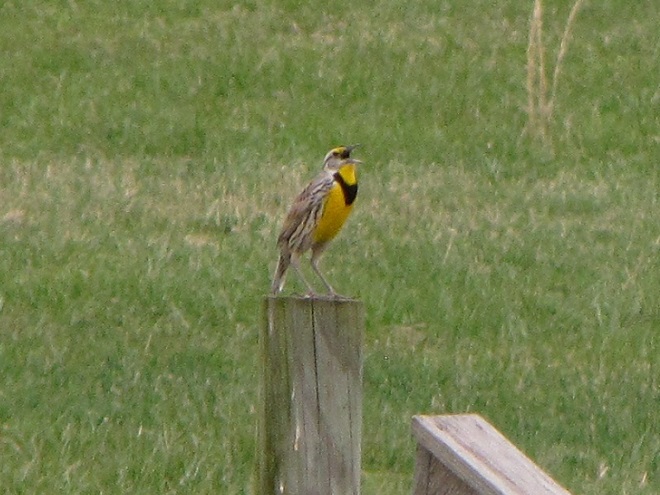
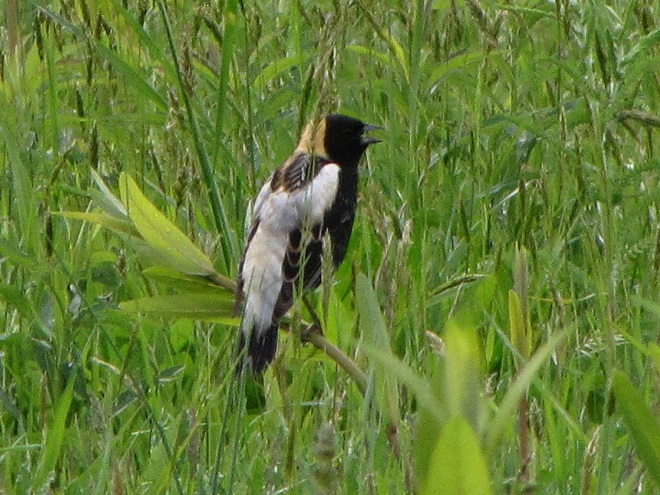
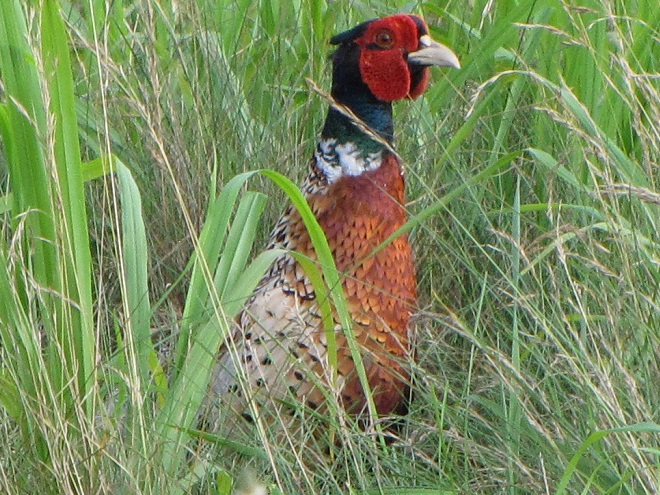
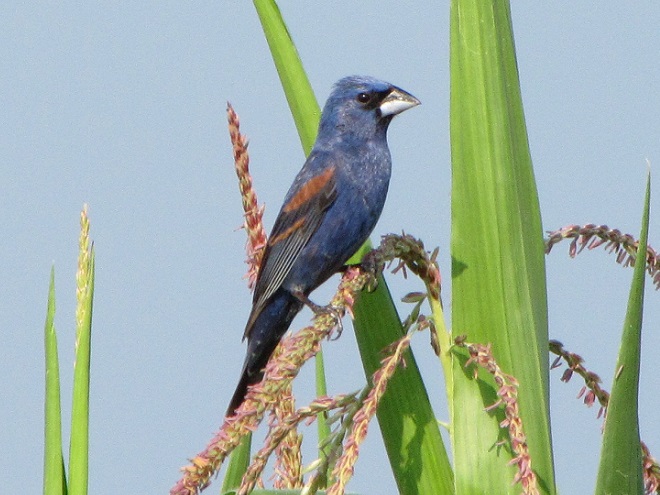
Eastern Meadowlarks, birds of large pastures, hay lots and other meadows of cool-season grasses, build their nests and raise their young on the ground. In the years since the early twentieth century, loss in the volume of acreage maintained in the lower Susquehanna Valley as grassland habitat types has dramatically reduced the prevalence and abundance of this and other birds with similar nesting requirements. During the most recent fifty years, early and frequent mowing and other practices introduced as part of agriculture’s Green Revolution have all but eliminated ground-nesting grassland species from the region.Like the meadowlarks, Grasshopper Sparrows (Ammodramus savannarum) nest on the ground in fields of cool-season grasses. Mowing prior to the time the young leave the nest and are able to fly away can obliterate a generation of grassland birds. Because their life span is short, widespread loss of an entire year of reproduction can quickly impact overall populations of native sparrows and other small birds. Delayed mowing can improve numbers of Grasshopper Sparrows as well as Savannah Sparrows, Vesper Sparrows (Pooecetes gramineus), and the very rare Henslow’s Sparrow (Centronyx henslowii).The Bobolink, like the meadowlark, is a member of the blackbird family (Icteridae). It too requires grasslands free of disturbances like mowing for the duration of the nesting season which, for this particular bird, lasts until mid-August in the lower Susquehanna region. In places lacking their specific habitat requirements, Bobolinks will seldom be detected except as flyovers during migration.Ring-necked Pheasants were introduced to the lower Susquehanna basin, and their populations were maintained thereafter, by stocking for the purpose of hunting. But throughout the middle twentieth century, there was a substantial population of ring-necks breeding in fields of cool-season grasses in farmlands throughout the region. High-intensity agriculture with frequent mowing eliminated not only nesting habitat in grasslands, but winter cover in areas of early successional growth. Populations of Ring-necked Pheasants, as well as native Northern Bobwhite, crumbled during the late 1970s and early 1980s due to these changes. For these resident birds that don’t migrate or routinely travel great distances to find new places to live and breed, widespread habitat loss can be particularly catastrophic. Not surprisingly, the Northern Bobwhite is no longer found in the Lower Susquehanna River Watershed and has been extirpated from all of Pennsylvania.At places like Middle Creek Wildlife Management Area where a mix of grasslands, early successional growth, and even some cropland are maintained, the Blue Grosbeak has extended its range well north of the Mason-Dixon and has become a regular nesting species during recent decades. Good habitat management does pay dividends.
Right now is a good time to visit Middle Creek Wildlife Management Area to see the effectiveness a delayed mowing schedule can have when applied to fields of cool-season grasses. If you slowly drive, walk, or bicycle the auto tour route on the north side of the lake, you’ll pass through vast areas maintained as cool-season and warm-season grasses and early successional growth—and you’ll have a chance to see these and other grassland birds raising their young. It’s like a trip back in time to see farmlands they way they were during the middle years of the twentieth century.