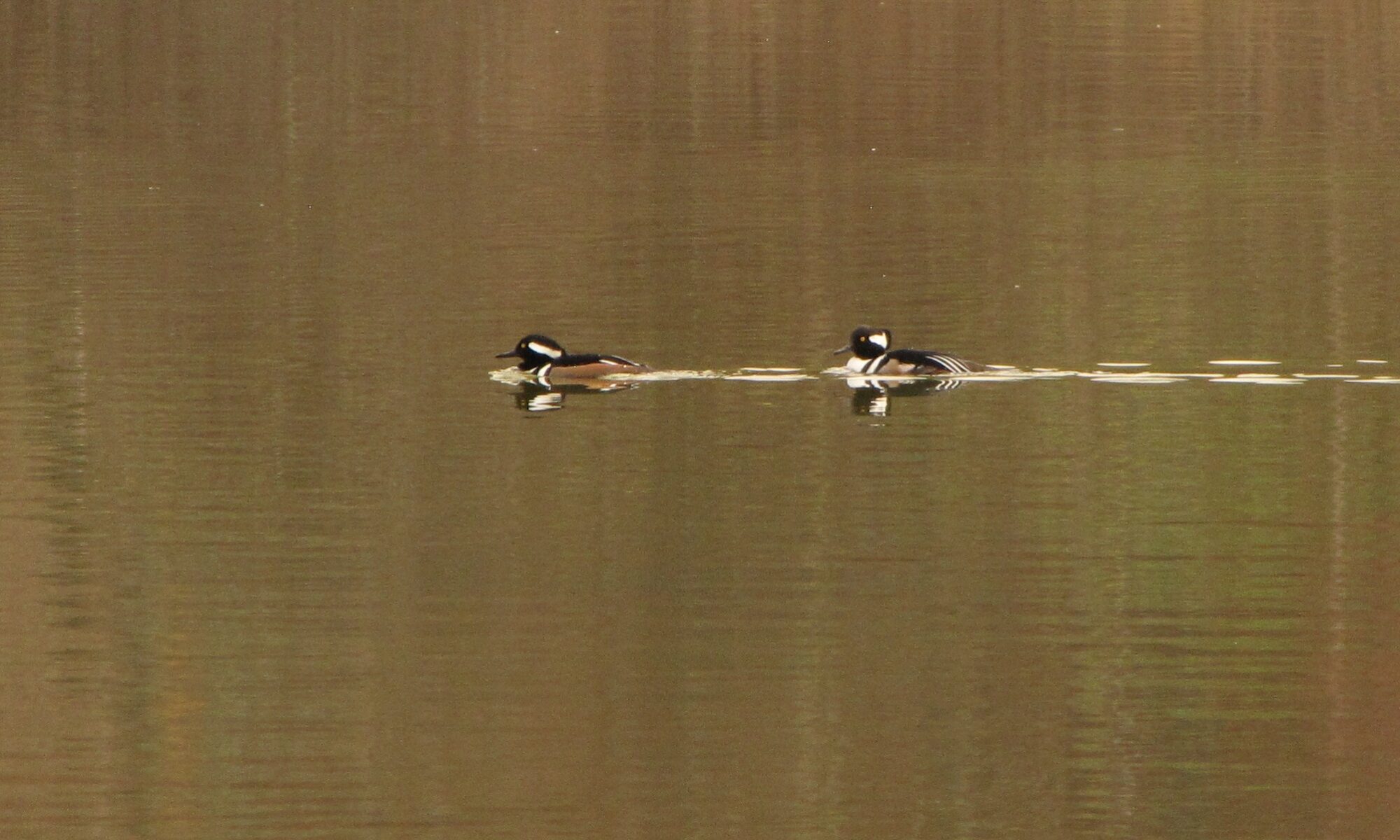
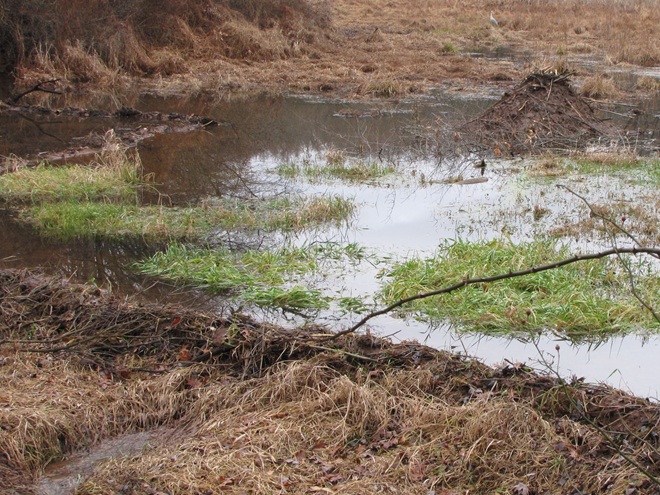
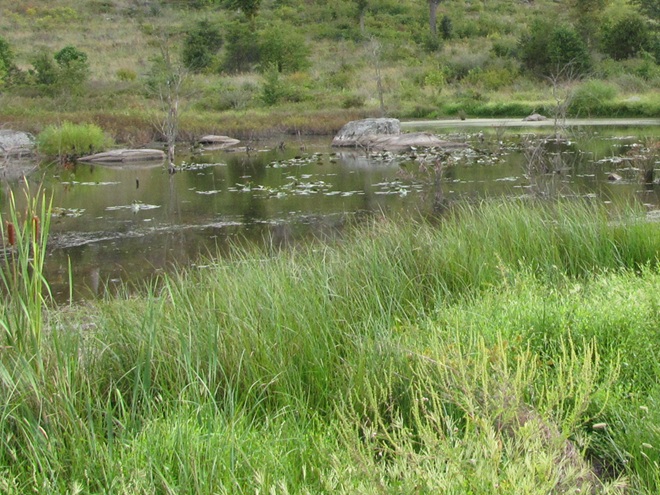
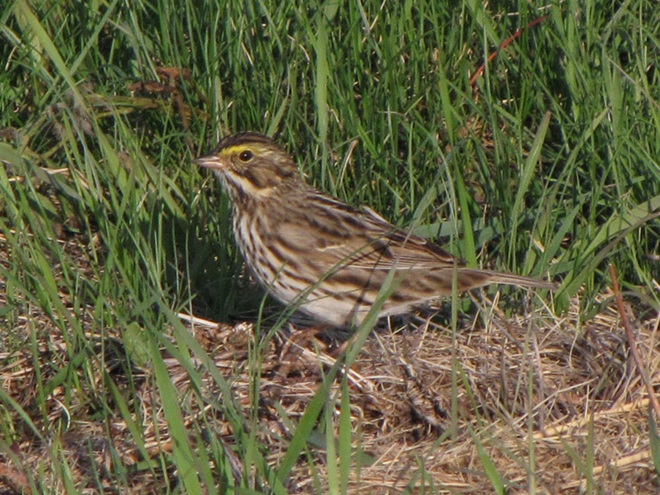
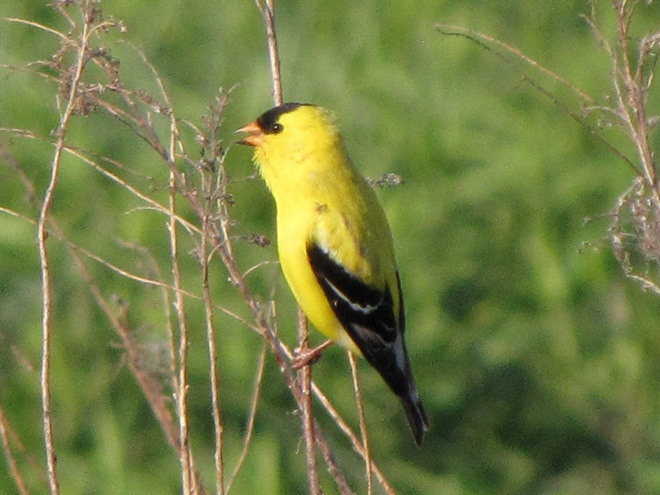
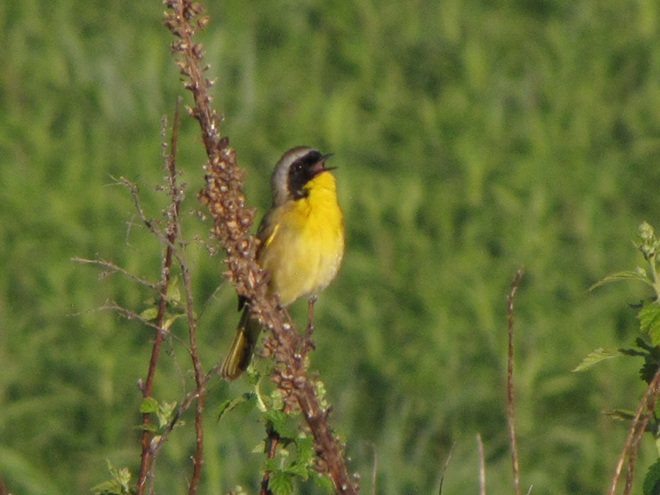
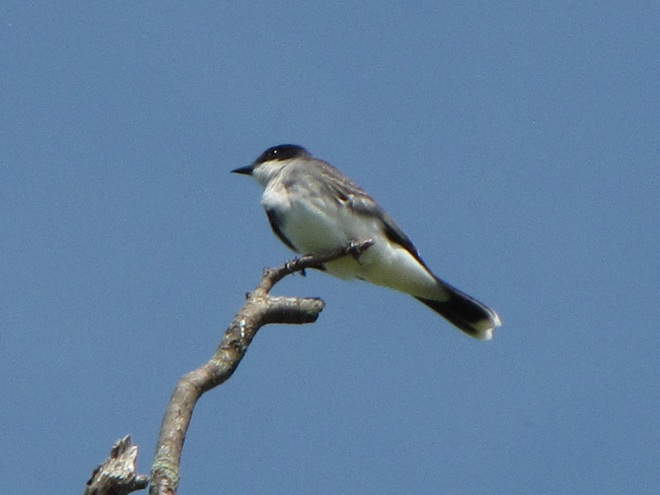
As they travel between coastal wintering ranges and breeding territories in Canada and Alaska, vast numbers of shorebirds pass through the lower Susquehanna region each spring and fall—though few stop here to rest, feed, and provide us with an opportunity to observe them. Prior to the construction of man-made dams and other alterations on our lotic (flowing) waterways including the river, shorebirds took advantage of lateral bars, stream deltas, and other alluvial deposits as places to loaf and re-energize. Before they were drained and filled, some of the valley’s wetlands probably included sparsely vegetated flats where shorebirds could drop in for a brief visit. Previous to their extirpation from our region, North American Beavers were the primary providers of quality habitat for shorebirds and other migrating waders on our lotic waters. Their widespread network of dams, pools, and marshes maximized floodplain function by keeping streams thoroughly connected to their wetlands, nurturing plant communities that not only provided food and shelter for the beavers and other wildlife, but provided superb buffering against erosion while protecting against sediment and nutrient imbalances in lower Susquehanna waterways.
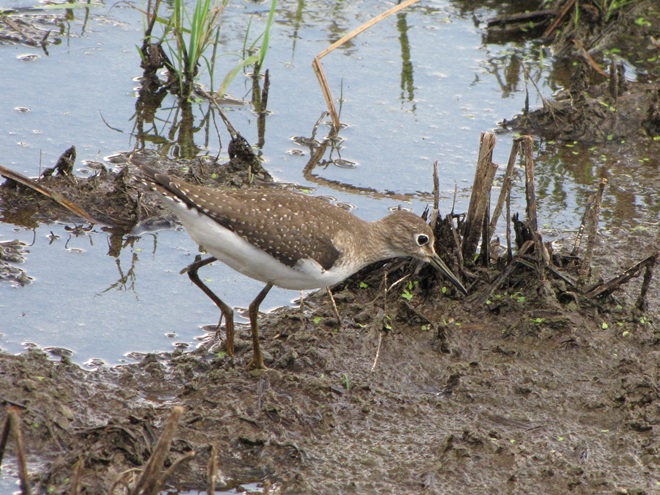
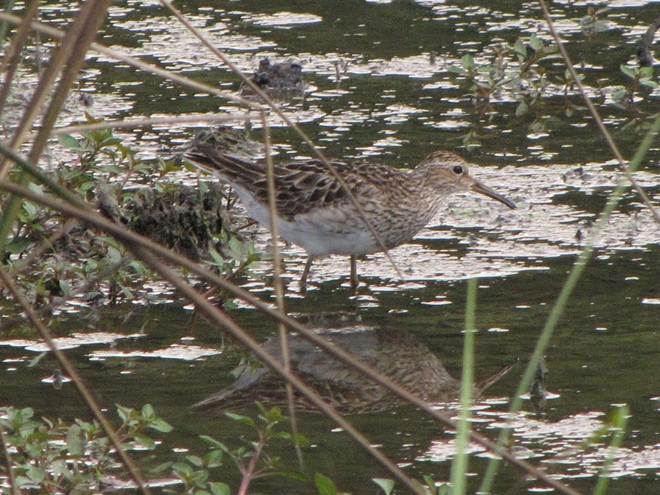
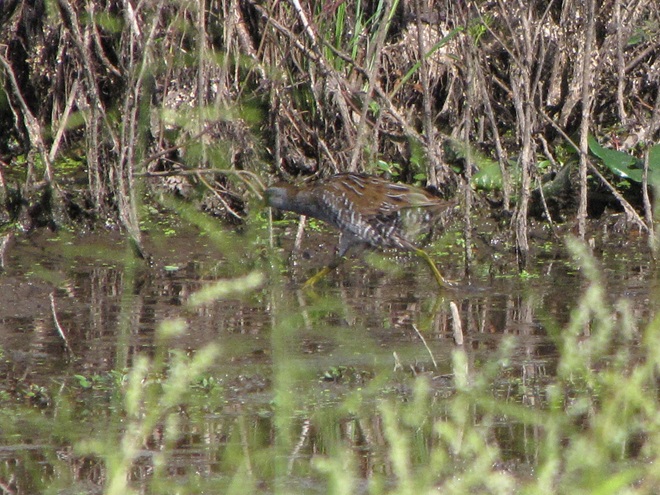
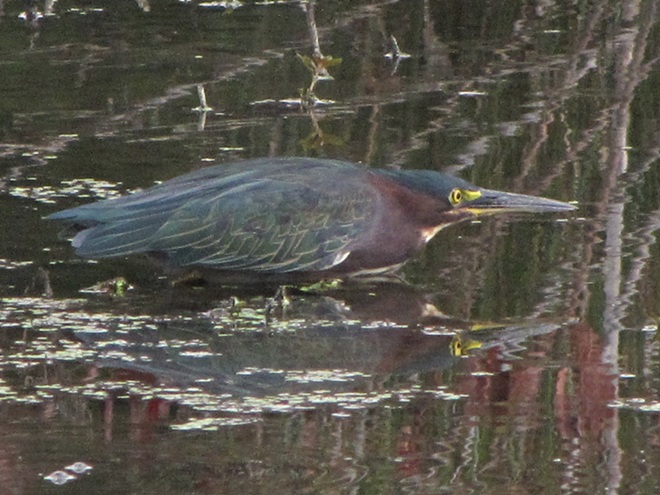
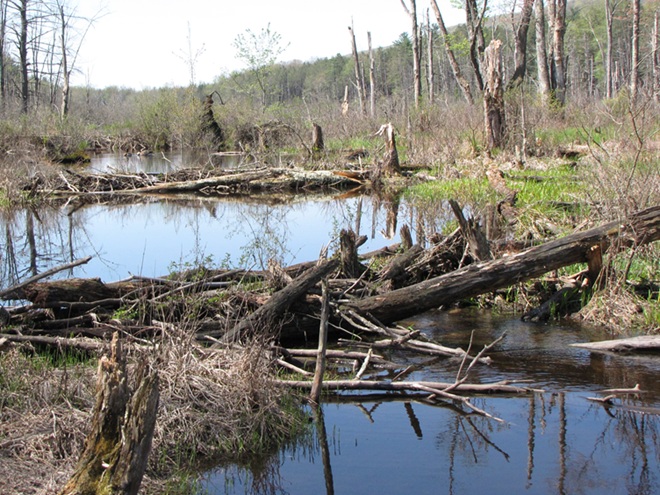
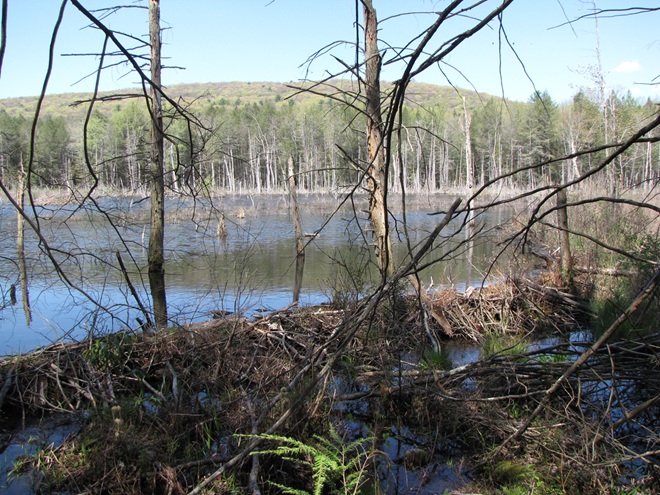
Beaver dams need not be large, particularly on low-gradient streams where a structure like this is sufficient to create a pool with depth adequate for building and maintaining a lodge and transporting leafy branches and other food items by water.A beaver lodge assembled in a pool with less than three feet of water, deep enough to provide the family with a measure of protection against terrestrial predators.Beaver pool ecosystems provide homes for hundreds of species of plants and animals, including migrating shorebirds and other waders.Mud flats in the margins between emergent shrubs and herbaceous plant growth attract migrating shorebirds like this Solitary Sandpiper to the abundance of invertebrate life. Seasonal movements of migrating shorebirds regularly coincide with the reductions of water levels in beaver pools which typically occur between May and September each year.During its southbound migration in September, a Least Sandpiper searches for arthropods and annelids as it visits a food-rich puddle along the periphery of a beaver pool.A Pectoral Sandpiper feeds in shallow water near a stand of Common Cattails in a beaver pool.During migration, rails including the Sora are attracted to dense emergent vegetation in beaver pools. Some will nest in these rodent-managed refugia.Green Herons visit beaver pools during migration and, due to the reliability of the food supply, will often nest in their vicinity.
So how did this happen? How did the North American Beaver become a keystone species—an animal upon which the majority of other life forms within its ecosystem are so reliant? Well, it’s largely due to the fact that our beavers aren’t particularly fond of a constant stream of noise. More specifically, they don’t like the sound of running water in places where they intend to build and maintain a lodge. And so, as they begin to place sticks, mud, limbs, stones, and other materials within a noisy riffle on a stream, they create a dam, and behind it a pool—a pool that is particularly advantageous for protecting their home and providing a means of conveyance for their construction materials and food supplies.
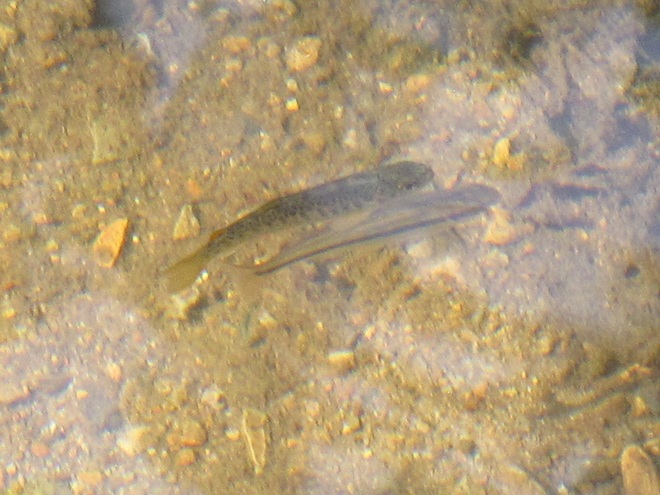
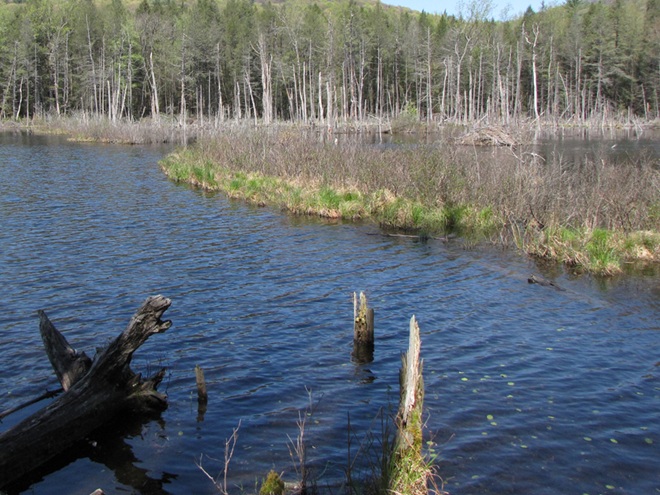
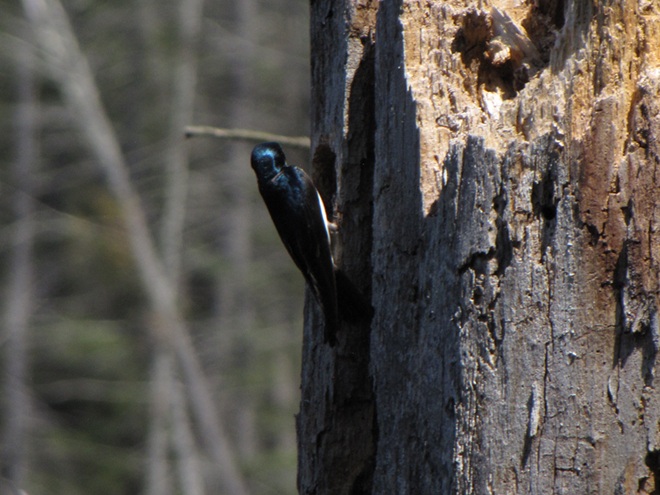
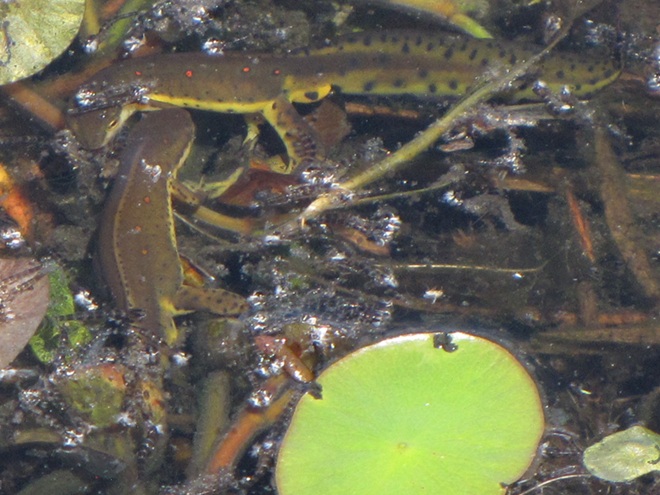
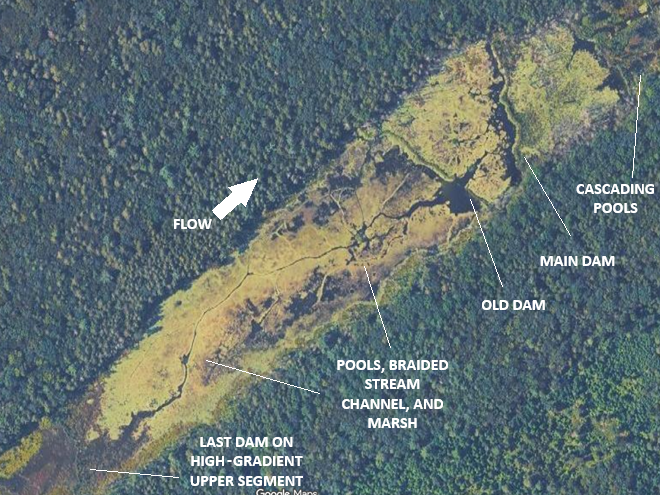
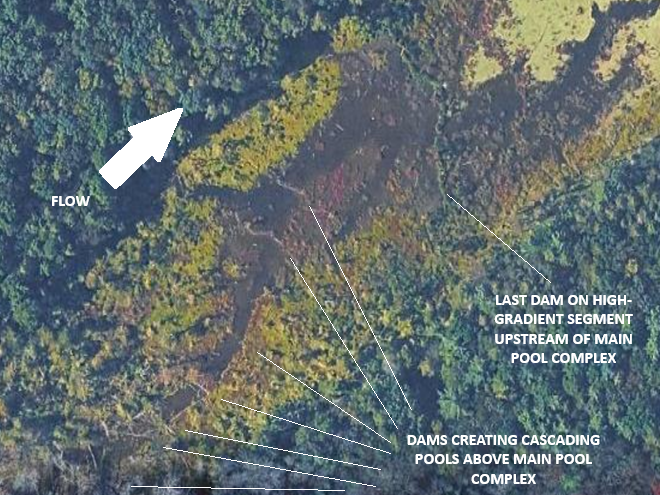
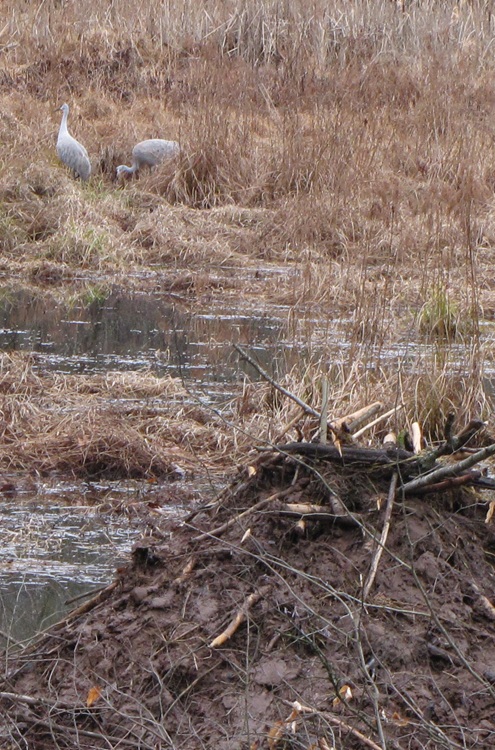
On a high-gradient segment of stream, beavers will create a cascading series of pools. Because water filters through a beaver dam instead of spilling over it, the work of these meticulous rodents soon silences the sounds of water changing altitude. No more sonorous riffle.Quiet please. High seasonal stream flow and damage from storms may create areas where water begins to erode the structure of the dam. Where this condition persists, an adult beaver will soon mend the breach, just to quiet things down. Why would beavers demand such a hush upon their domain? Well, they have poor eyesight, but their hearing is excellent, and they rely upon it to detect danger.The Louisiana Waterthrush (Parkesia motacilla), one of our earliest-arriving warblers, nests in forests along clear, high-gradient streams. In mid-April, we found this individual and three others squabbling over a breeding territory adjacent to the series of cascading beaver pools shown in the previous images.Native denizens of coldwater streams, neither the Brook Trout nor the Eastern Blacknose Dace has any difficulty finding its way through the voids in beaver dams to ascend and descend the sequence of pools.On a low-gradient segment of stream, a dam just over a foot in height may be sufficient to create a beaver pool of considerable size. Resembling the water-logged muskeg of the far north, well-established beaver pools form boggy habitats familiar to migrating shorebirds.Water levels in the pools usually drop along with the stream’s base flow as soon as the effects of the spring thaw and rain showers subside. Feeding areas in shallow water and on muddy ground are often revealed just in time for northbound shorebirds and other waders to stop by in late April and May. These conditions often persist through the growing season and the fall migration of these birds which begins as early as late June and sometimes extends into October.Where the pool inundates standing timber such as Red Maple and other species not used by beavers, the dead snags provide vital feeding areas for birds and other wildlife. Cavity nesters like this Tree Swallow seldom find suitable natural housing elsewhere.The mosaic of marshlands and braided stream channels within the beaver pool complex supports an abundance of aquatic life including these breeding Eastern Newts, seen here surrounded by the exuvia left behind following a massive hatch of alderflies (Sialinae). Alderflies are a stream inhabitant during their larval stage and are indicator of clean water conditions.A modern-day example of the way fully functional stream floodplains used to look in the Lower Susquehanna River Watershed. Though the pools may appear pond-like during the cooler and wetter months of the year, by summer the water levels behind the beaver dams recede as the base flow of the stream wanes. Now the true nature of the marsh, shallow pool, and braided stream complex is revealed. Unlike most man-made dams that set a fixed pool elevation regardless of flow by discharging water over the top of the structure or through a spillway or gate, beaver dams merely throttle the flow through their porous construction. Unless the beaver begins plugging small leaks as fast as the stream flow ebbs, the water level in the pools will drop. So they’re not left high and dry, lodges are located in the deepest pools, usually in close proximity to the dam and/or one of the stream courses. Though not inundated during the dry season, the soil in the pool complex is almost always damp and plants grow vigorously there, sequestering nutrients and retaining sediments in beneficial deposition patterns that actually inhibit erosion of the riparian landscape. These streams and floodplains retain their hyporheic zone and freely exchange water with the underlying water table and aquifer. It’s the ultimate floodplain management system, and the beavers don’t even know their doing all the work. (Google Maps base image)Where another high-gradient segment of stream enters the main pool complex, beavers have created an additional series of cascading pools. The impoundments created by these dams help diffuse stormwater energy and process more nutrients and sediments within the floodplain’s wetland vegetation system. (Google Maps base image)Beaver pools often refill as stream flows increase following autumn rains. The stockpiles of vegetative foods that grew within the beaver’s domain through the summer then become flooded and are a prime source of nutrition for not only the beavers, but waterfowl during both their autumn and spring migrations. Gleaning and probing Sandhill Cranes often find these habitats to their liking as well.
While North American Beavers have returned to the region, most live as “bank beavers”, residing in the river and larger creeks of the valley where they excavate shelters among the roots of Black Willows and other shoreline trees and shrubs. Floodplain encroachment, legacy sediment deposits, and just plain human intolerance have all conspired to prohibit North American Beavers from performing their magic on smaller local streams. For migrating shorebirds, this continued absence of beaver dam ecosystems has turned much of the lower Susquehanna valley into “flyover country”. Those travelers that do stop to rest and feed concentrate at the few favorable locations such as the lateral bars and the hydroelectric dam-created delta at the Conejohela Flats on the river in Lancaster County. But centralization has its drawbacks. Migrants spending time at concentration points may have a greater chance of contracting and spreading disease. Protracted heavy foraging can degrade these habitats. And over time, features such the lateral bars and delta deposits, including those on the Conejohela Flats, transition into other habitats—riparian forests. A more widespread selection of favorable stopover points for shorebirds, waders, waterfowl, and other migrants is certainly desirable.
IMITATION IS THE SINCEREST FORM OF FLATTERY
Until public sentiment sways in favor of the North American Beaver, wildlife managers are mimicking some of the attributes of their sound-inspired installations.
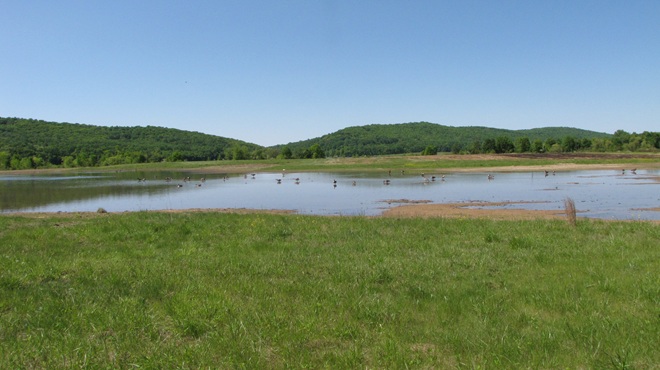
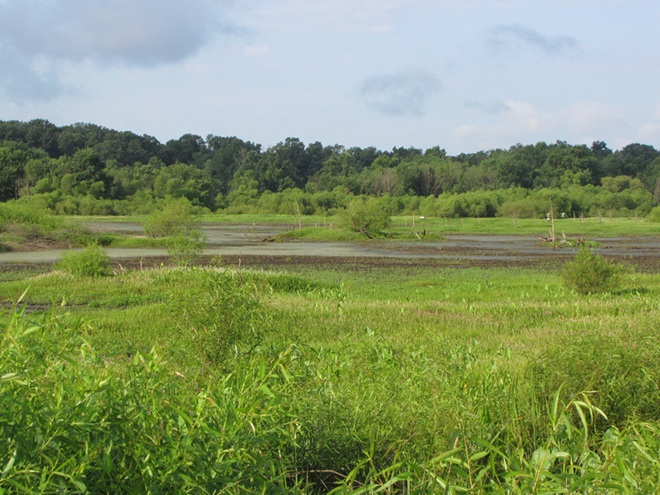
Created by excavating a depression in heavy clay soils, this new impoundment at the Pennsylvania Game Commission’s Middle Creek Wildlife Management Area collects water directly from rainfall and from surface runoff. Its depth at no point is greater than about two or three feet. During the driest times of the year, this space will be a mudflat, and a haven for migrating shorebirds.
Shallow-water conservation impoundments designed, constructed, and managed for migratory waterfowl and waders including shorebirds are not what we typically refer to as ponds—though they are lentic (still) waters. Similar shallow freshwater impoundments at our National Wildlife Refuges are referred to as pools by the United States Fish and Wildlife Service, but smaller versions like this example at Middle Creek very closely resemble the prairie potholes created by glacial scour in the north-central United States and adjacent portions of Canada. Many populations of migratory birds are familiar with pothole ecosystems and, like the beaver pools and marshes, have relied upon them as waypoints along their journeys for centuries.
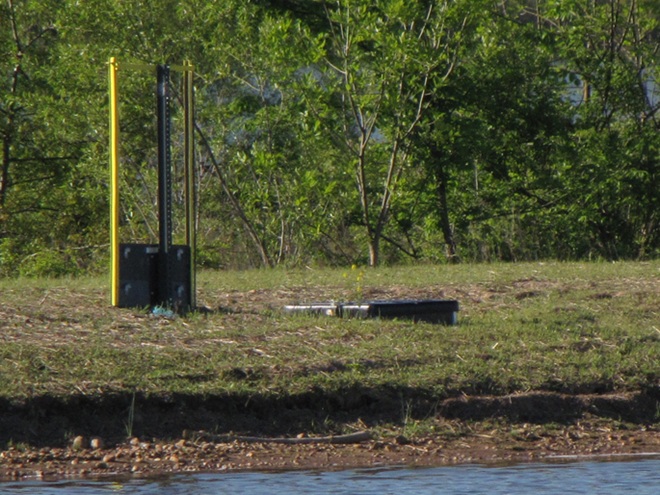
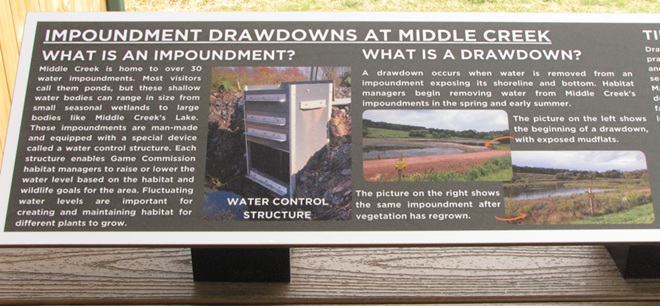
Impoundments most beneficial to migrating waterfowl and waders including shorebirds are shallow in depth. They lack the deeper waters of a pond or lake and thus have no limnetic (open water) or aphotic zones. Managed throughout as a littoral zone, impoundments grow plants in shallow water or on damp soil through the summer months to chew up nutrients accumulated in waste deposited by visiting birds. This vegetation is then flooded from late fall through early spring as forage habitat for migratory waterfowl. The timing of the fluctuations in water levels approximates those of the beaver pools and marshes on lotic (flowing) waters.A gate assembly is a water control structure installed to provide seasonal management of the water levels in a conservation impoundment. More than once, beavers have heard the sounds of tumbling waters inside these types of devices and tried to dam them up!
You’ve heard the line, “If you build it, they will come.” Well, it’s true. Here is a sample of the activity witnessed during the past two weeks at the new impoundment completed just several months ago at Middle Creek Wildlife Management Area along the tour route just beyond the “Stop 3” overlook.
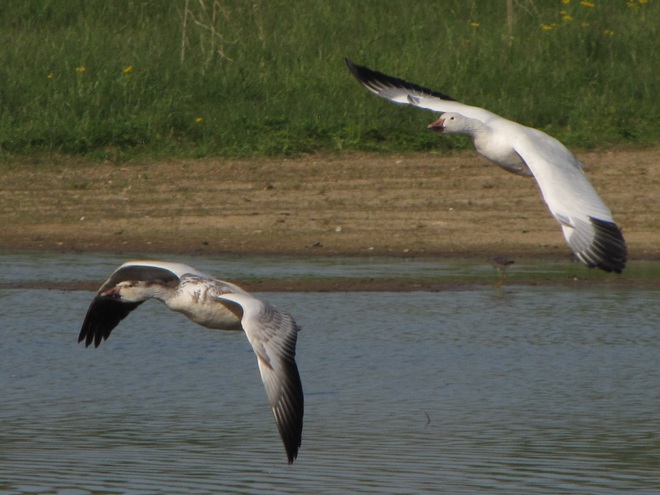
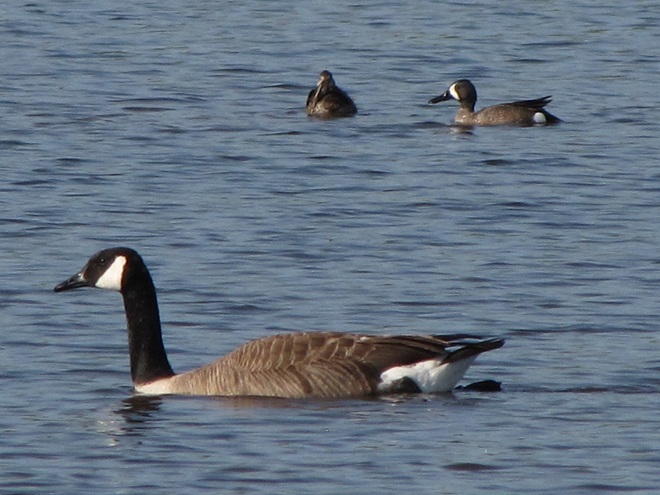
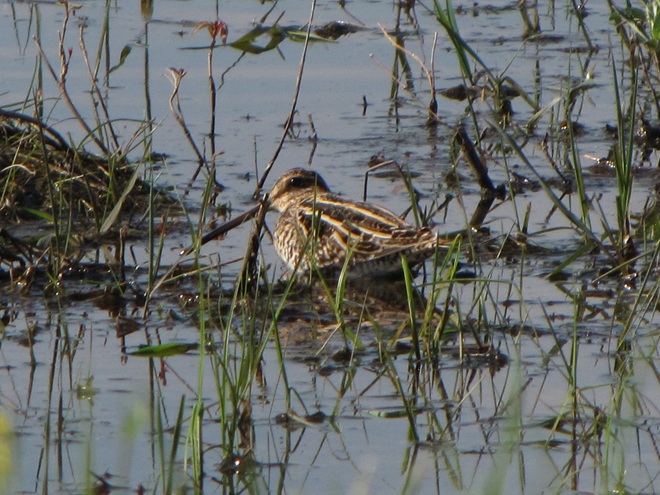
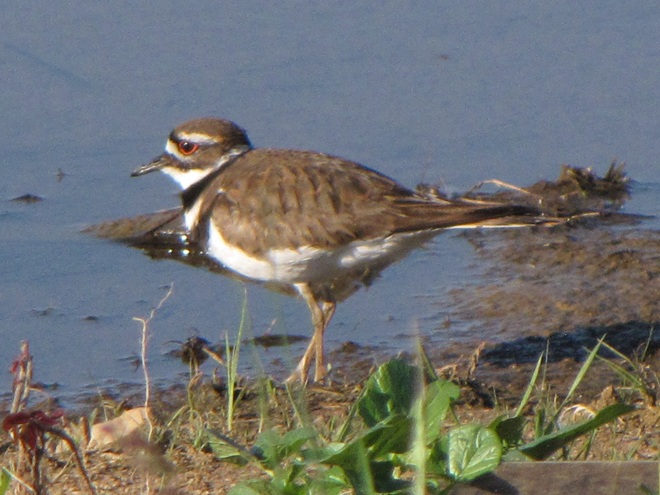
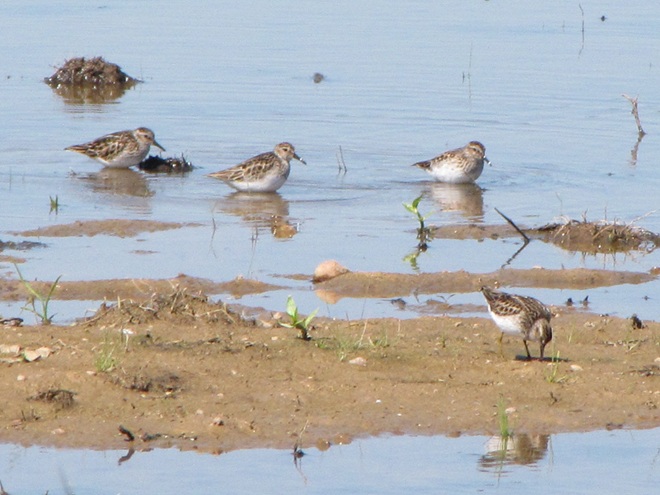
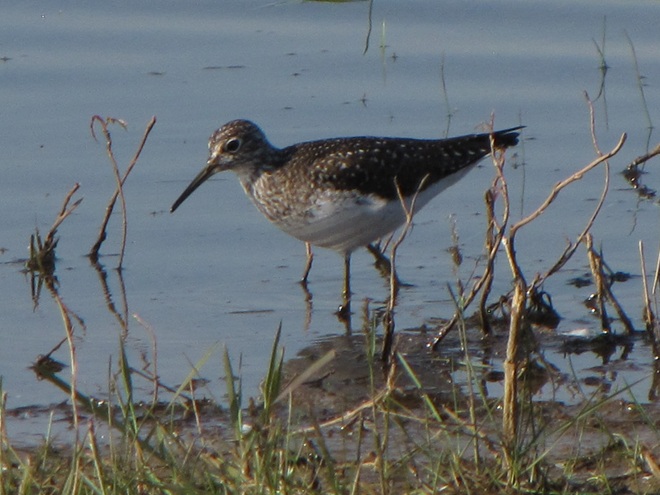
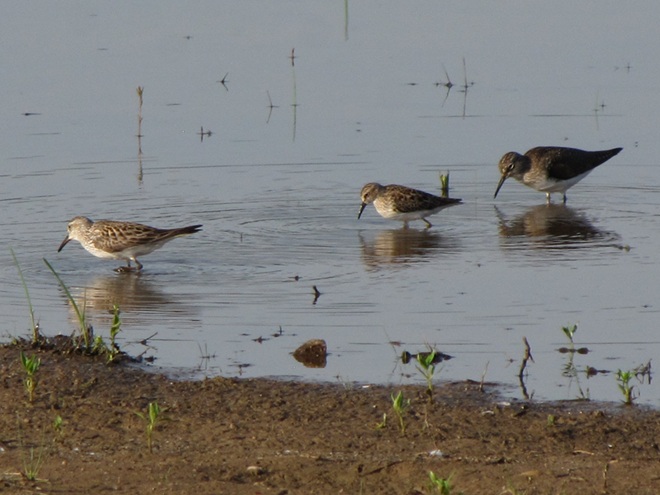
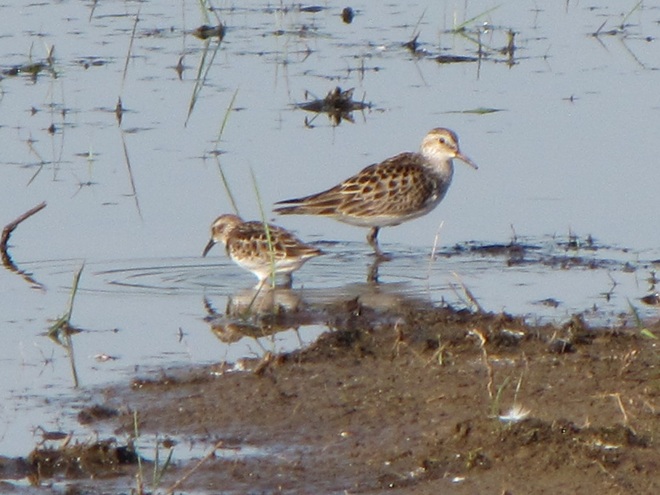
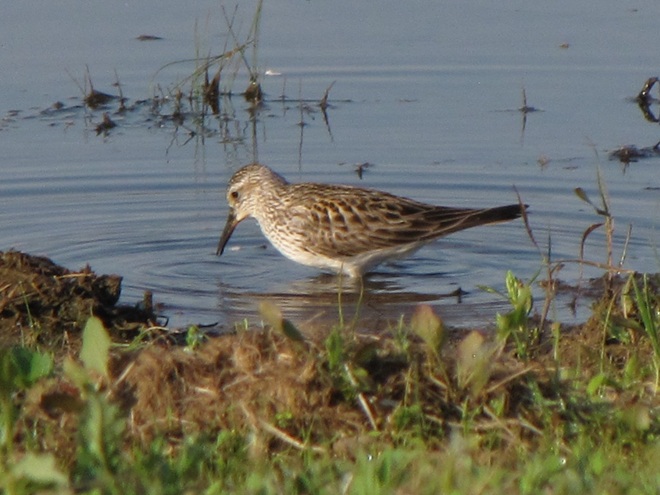
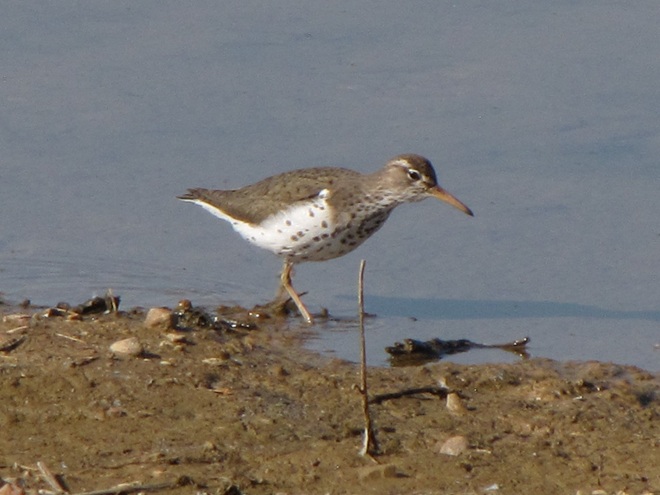
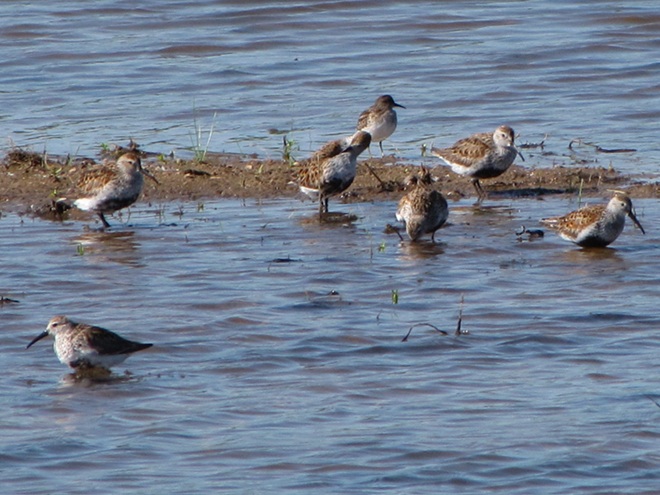
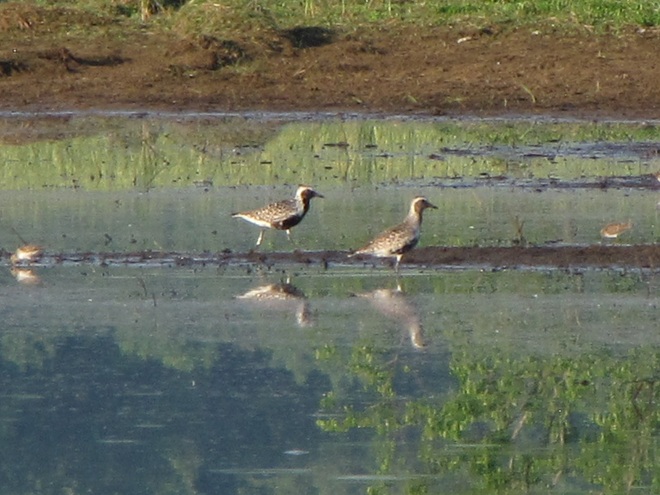
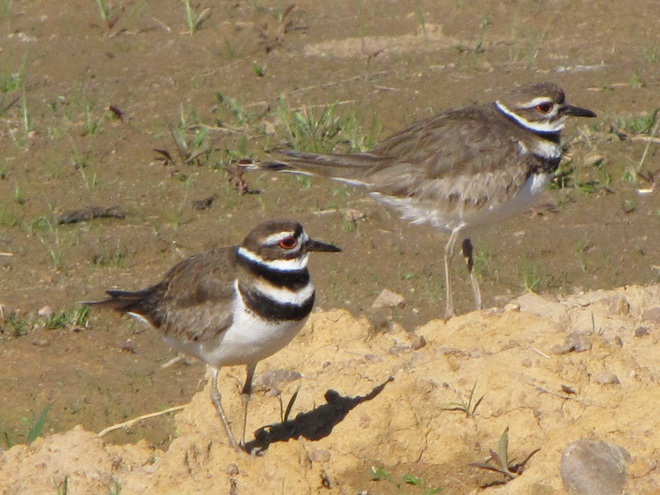
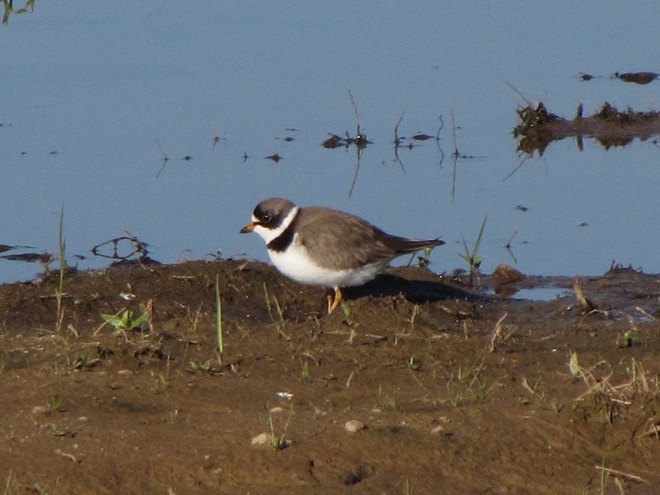
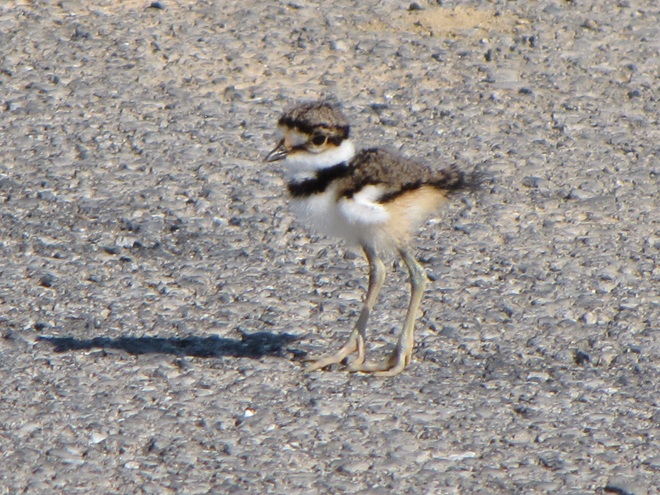
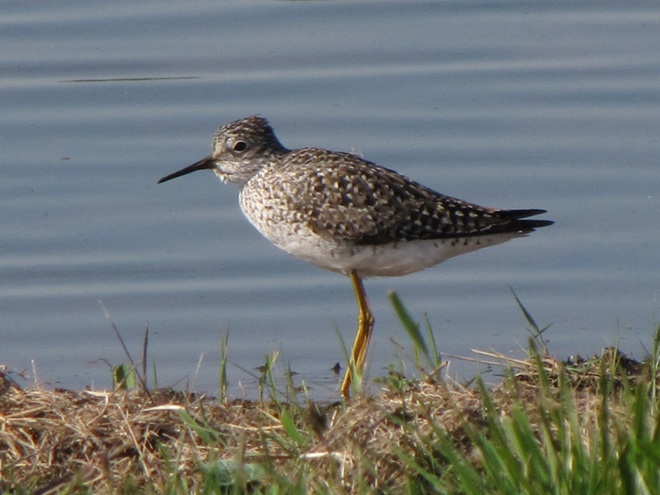
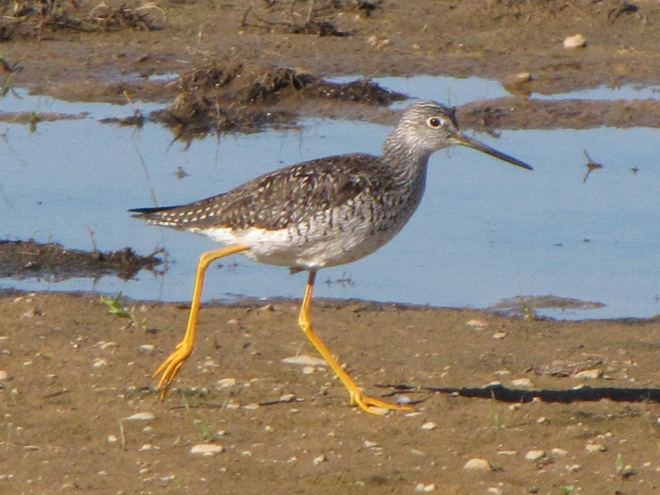
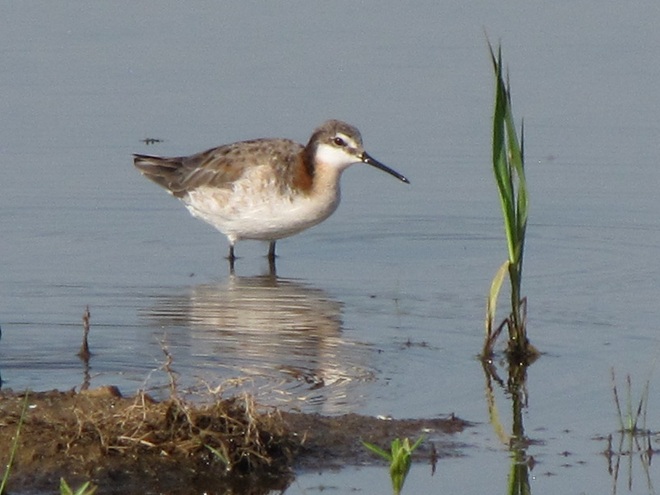
The ubiquitous Snow Geese were among the first migratory occupants of the new impoundment. A few are currently lingering in the vicinity.Ducks soon followed. These Blue-winged Teal were among the last to pass through earlier this month.Wilson’s Snipe were among the first species of migratory shorebirds to visit the new impoundment at Middle Creek……as were Killdeer, a species which nests nearby.Then, earlier this month, flocks of shorebirds including these Least Sandpipers were arriving to feed and rest.Least Sandpipers search for small invertebrates in shallow water and exposed soil.A Least Sandpiper (left) and a Semipalmated Sandpiper (right).Not all shorebirds seen by themselves are alone, and that includes the Solitary Sandpiper.Here’s a Solitary Sandpiper (right) feeding alongside a Least Sandpiper (center) and a White-rumped Sandpiper (left).A Least Sandpiper (left) and a White-rumped Sandpiper (right).Rare in our area during spring, the White-rumped Sandpiper (Calidris fuscicollis) flies north using the central flyway, then heads south along the Atlantic flyway in the fall, when it tends to be more regular here.Rocking and teetering along as it looks for food, the Spotted Sandpiper may be one of the easiest of shorebirds to identify.Chunky little Dunlin (Calidris alpina) with their conspicuously down-curved bills are another easy-to-identify species, particularly in the spring when their breeding (alternate) plumage includes a black belly.Black-bellied Plovers acquire a handsome set of plumage in the spring as well.Killdeer too are plovers and this pair appears to have taken up residence on barren ground along the periphery of the new impoundment.The Semipalmated Plover doesn’t have nearly the flair for ornament its close relatives the Killdeer do; these little shorebirds wear only one ring around their neck instead of two. Think this plover is cute?,……then check out this newly hatched Killdeer. It starts life with just one necklace too, but acquires a second as it grows. Look at those legs! (If you visit the new impoundment at Middle Creek, drive slowly and please watch where you’re going. Baby Killdeer and other young birds, as well as mammals and turtles, are commonly crossing the paved surfaces right now.)Speaking of legs, here’s one of dozens of Lesser Yellowlegs that visited the new impoundment during their recent northbound travels.Though less numerous than the smaller Lesser Yellowlegs, a Greater Yellowlegs seldom goes unnoticed when dropping by the man-made pothole habitat.Have trouble telling a Greater Yellowlegs like this one from a Lesser Yellowlegs? Look for the heavier, longer bill on the former, as well as dark barring along its flanks below the wings while the bird is in breeding (alternate) plumage during the spring migration.Everyone likes to see something unusual every now and then, and this impoundment delivers. Just yesterday, we photographed this migrating Wilson’s Phalarope (top center) among two Least Sandpipers (top left and right), a Lesser Yellowlegs (left and slightly forward of the phalarope), and a White-rumped Sandpiper (foreground).Renowned for spinning in circles as they feed in shallow water, Wilson’s Phalaropes (Phalaropus tricolor) passing through the lower Susquehanna basin are headed toward nesting areas in the prairie wetlands, including potholes, of the northern United States and adjacent sections of southern Canada.
Species of wildlife in addition to shorebirds and waterfowl have already found the new impoundment favorable…
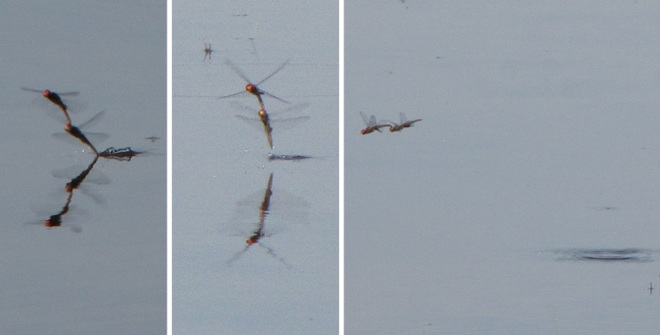
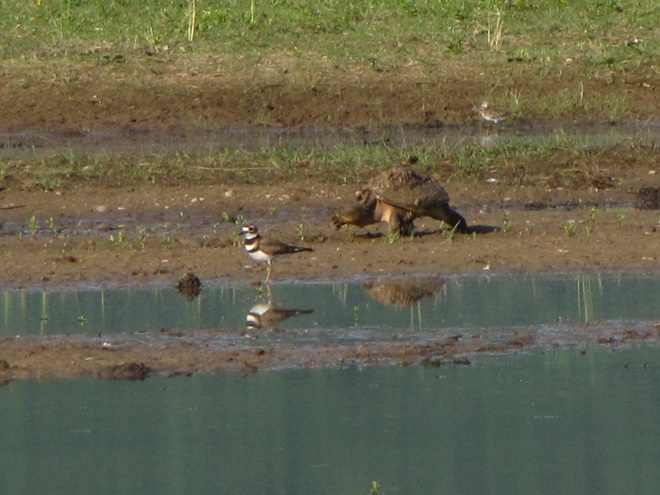
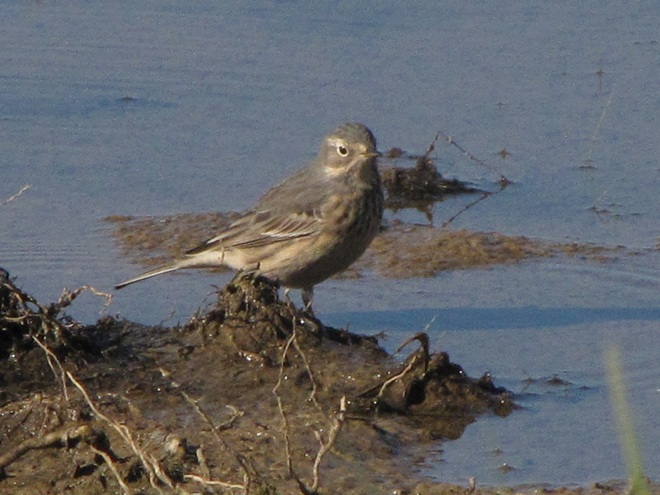
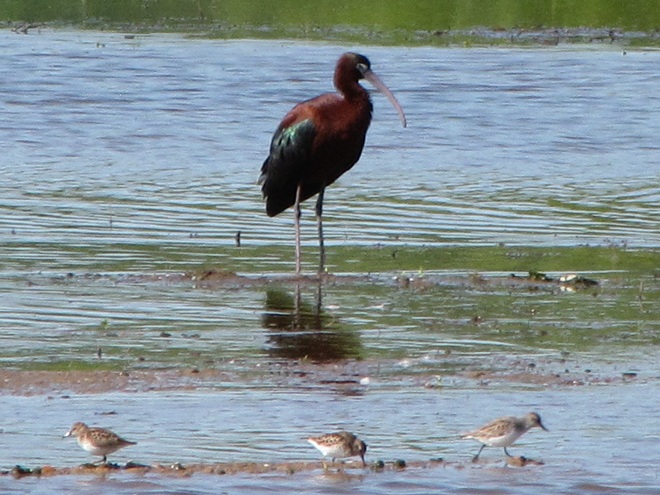
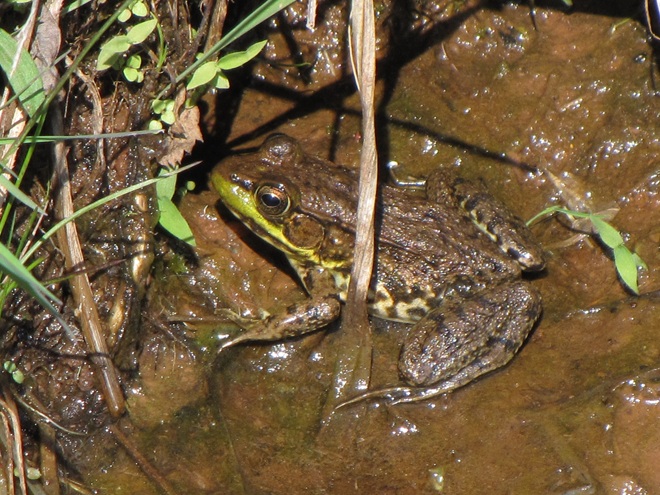
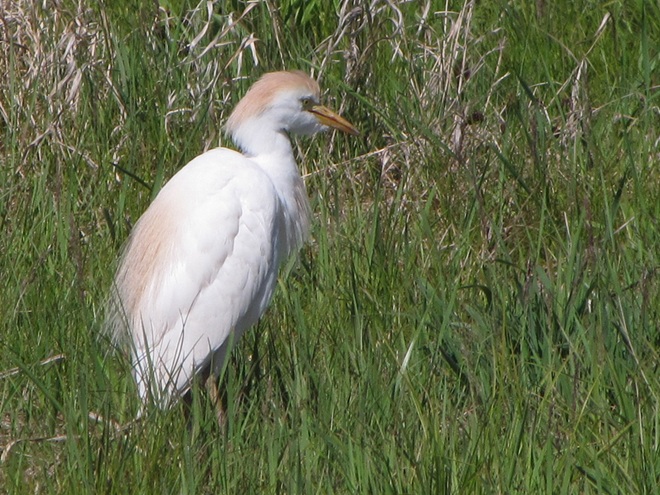
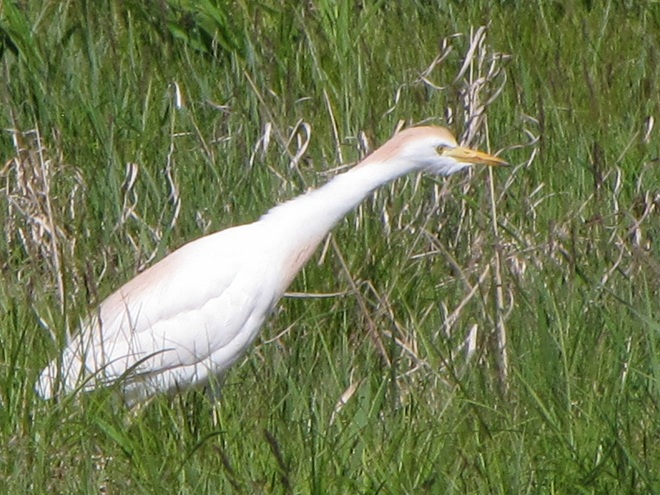
Pairs of breeding Spot-winged Gliders (Pantala hymenaea), seen here in tandem while ovipositing, were swarming the impoundment after arriving earlier this week. These dragonflies are ofttimes unpredictable nomads and are similar in appearance to the usually more numerous Wandering Gliders. To recolonize seasonal portions of their range, both are famous for hitching a ride en masse on storm systems. They share the behavior of finding ephemeral and new bodies of water favorable for egg laying due to their low density of aquatic predators.We watched this Snapping Turtle arrive to apparently find the newly created waters to its liking. Snapping Turtles are important consumers in a wetland ecosystem. Larger specimens may fill the role of an upper trophic level or apex predator, eliminating vulnerable mid-level consumers including other Snapping Turtles.Because it bounces its tail up and down like a Spotted Sandpiper, you may at first glance mistake an American Pipit for a shorebird. Long known as the Water Pipit, these songbirds have been visiting the impoundment while migrating north and stopping to feed in nearby croplands.Seen here with Least Sandpipers is a visiting Glossy Ibis.Sometimes twenty or more of these mostly coastal waders have made a pit stop at the “new Middle Creek pothole”, though none have thus far chosen to remain long. Apparently, food sources sufficient to sustain a bird of their size have yet to develop in its benthos.Western Cattle Egrets visiting Middle Creek this spring have been frequenting the new impoundment.With still little in the way of insects such as grasshoppers available in the surrounding landscape,……cattle egrets are looking to find prey like this Green Frog.Many have been observed hunting the adjacent grasslands..Where small mammals, mostly Meadow Voles, are being taken in abundance.
Managing saturation levels in shallow-water impoundments to resemble the seasonal variations in beaver pool and marsh systems can create lush growth and wildlife-rich environments. Take a look at some images from a project in a headwaters area of a tributary to Conewago Creek (west)…
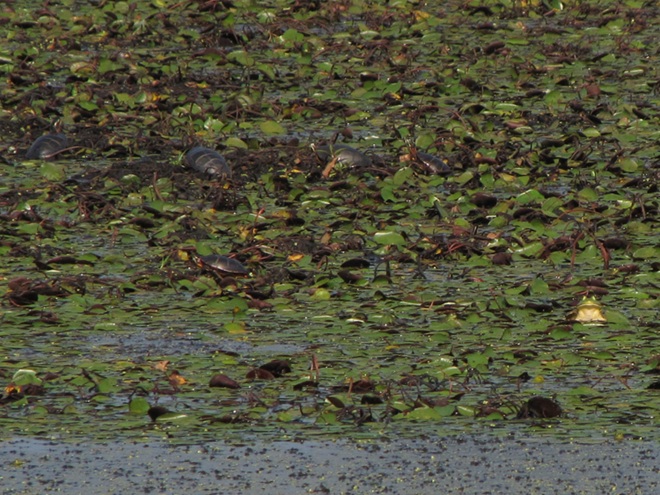
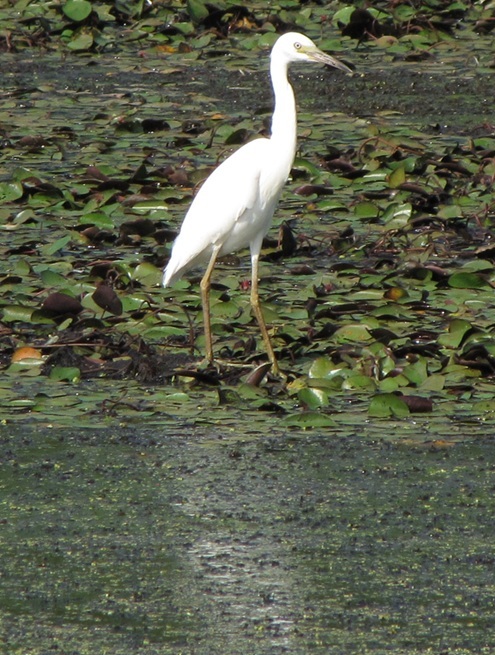
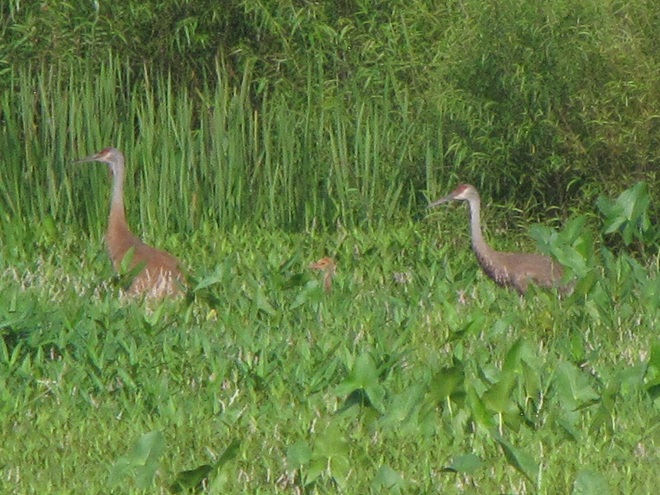
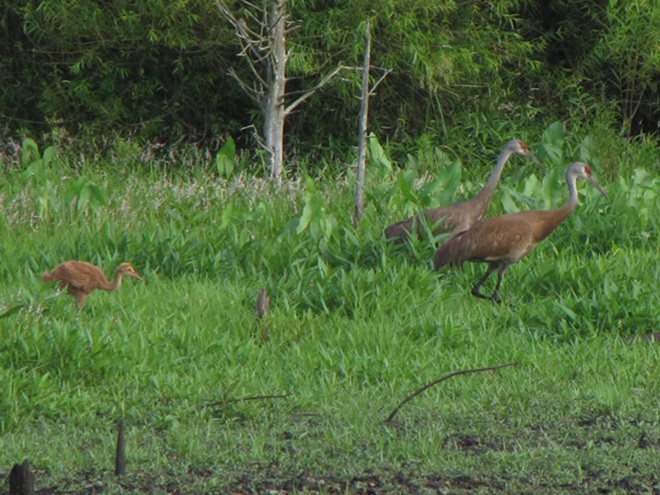
By late July, southbound shorebirds were already using these mudflats to feed and rest. Other sections of the impoundment were dense with emergent and aquatic plants, the latter kept hydrated in deeper pools of the project by the inflow from several captured springs that supplement direct rainfall and sheet runoff to supply its water. During a seasonal drawdown, the exposure of the impoundment’s soils to direct sunlight can provide a measure of disinfection to reduce the chances of disease transmission among its populations of visiting birds and other animals.In the deeper pools of the impoundment, water lilies and other aquatic plants grow in lush mats to provide cover and feeding areas for resident populations of breeding reptiles and amphibians.An abundance of foods are available for waders including this Green Heron……and this immature Little Blue Heron, a wanderer typical of more southern latitudes.While walking the road among tall grasses in the supporting landscape surrounding this impoundment, we were at first startled when these Sandhill Cranes strode by going the other direction. We quietly kept moving,……then spotted them again as we looked across the impoundment to realize they weren’t alone, but were escorting a colt.The hatching of this colt is testimony to the vital role wetland ecosystems play in the lives of hundreds of species. Whether they be beaver pools and marshes on lotic waters or man-made shallow lentic waters, each of these habitats is filling a void that left floodplains and other critical lowland biomes faltering. While they can’t replace the full-function floodplain management provided by an active beaver colony, shallow-water impoundments can provide relief for habitat-starved populations of the animals and plants that rely upon them. A constellation of these projects on lands public or private across the lower Susquehanna watershed could help provide refuge for many of our flora and fauna with the most desperately fragmented of ranges.
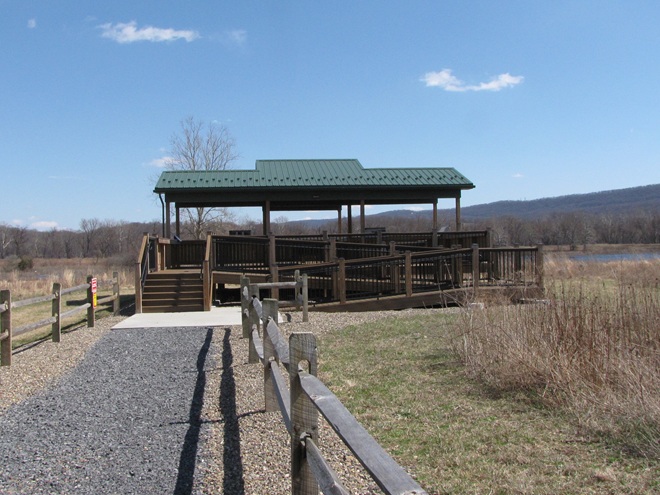
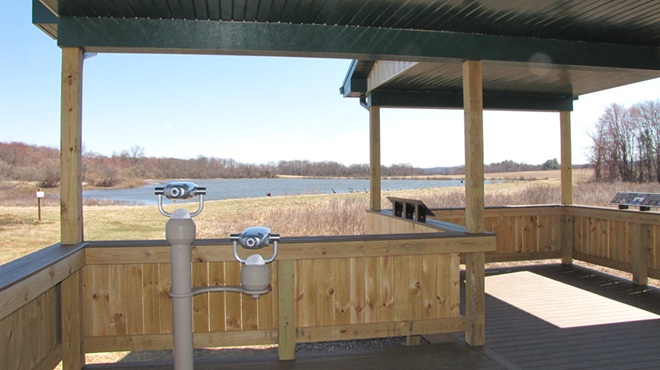
So that you can relax while observing the comings and goings at a pair of the lower Susquehanna valley’s man-made impoundments, the Pennsylvania Game Commission has erected two viewing pavilions for public use on its lands…
The Haldeman Island observation pavilion is located on State Game Lands 290 just upstream from the Juniata River’s mouth on the Susquehanna at Clark’s Ferry in Dauphin County.It overlooks not only the island’s man-made shallow-water impoundments and neighboring grasslands, but the hacking tower used in the 1970s to reintroduce Bald Eagles from Saskatchewan to the lower Susquehanna. Interpretive signs explain the conservation stories of habitats and the eagle reintroduction program.The observation pavilion at Middle Creek Wildlife Management Area is of similar construction to the one at Haldeman Island. It is accessed from the parking pull-off along the tour road at its intersection with Chapel Road, just before the right turn and incline that leads to the “Stop 3” grassland overlook.It too includes numerous interpretive signs to help visitors understand impoundment management.
During the next two weeks, the exodus of migrating shorebirds now staged and feeding upon Atlantic Horseshoe Crab eggs on Delaware Bay will commence. During the evening of their departure from the bay, many of these birds cross portions of the Lower Susquehanna River Watershed, particularly east of the river. Stormy weather and other climatic conditions may force some of them to seek a place to put down temporarily, so keeping a close eye on the new pothole-like impoundment at Middle Creek may be a prudent move. After that, waders known as “post-breeding wanderers” can show up at any time. Then, beginning as early as late June, shorebirds begin moving south on a migration that can provide us with viewing opportunities into September and beyond. See you out there!
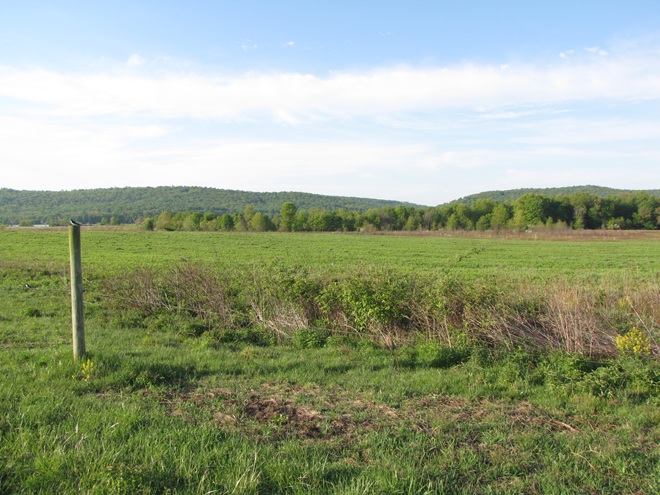
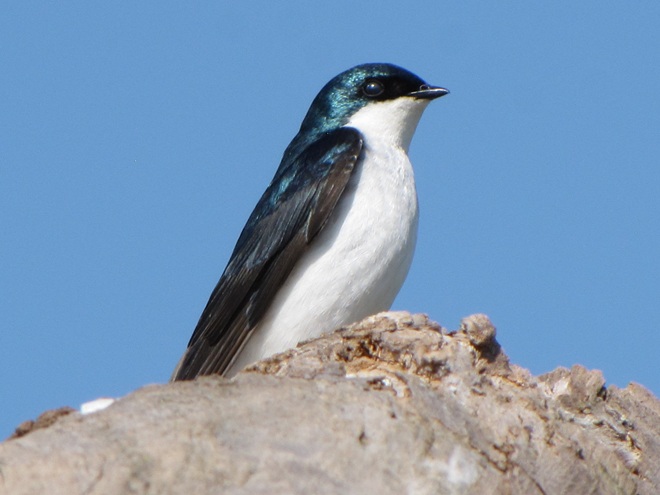
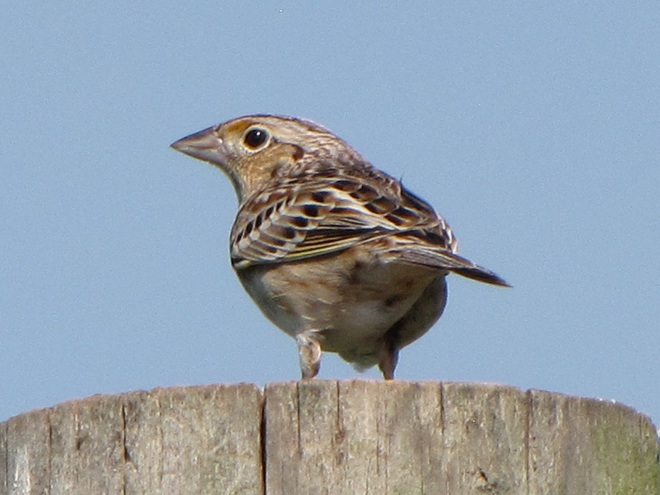
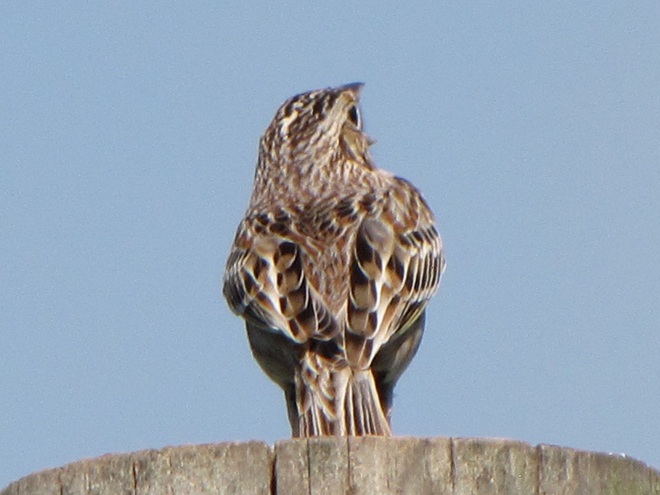
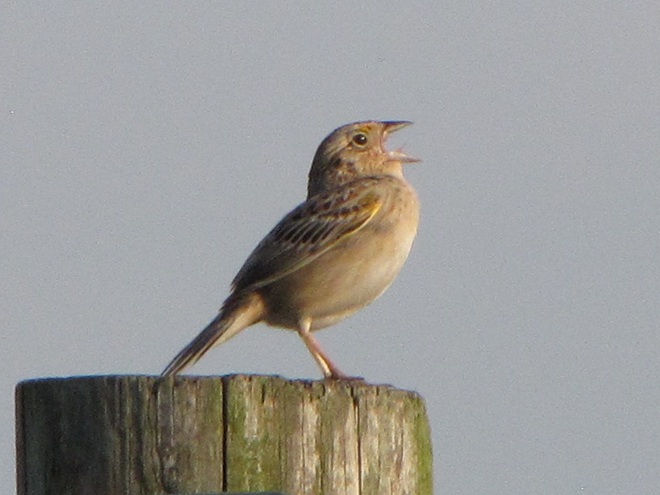
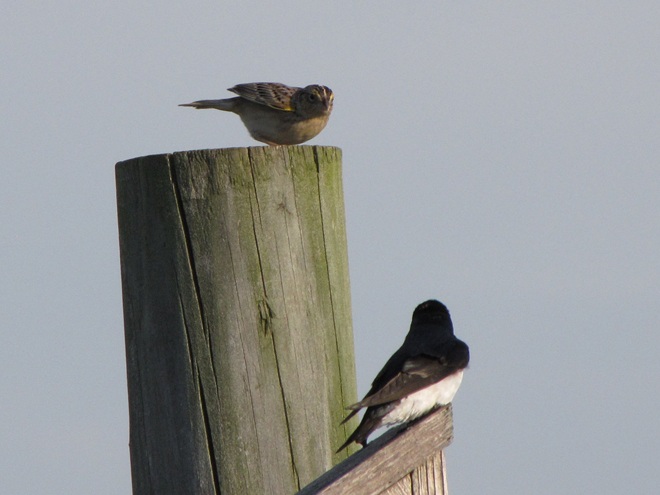
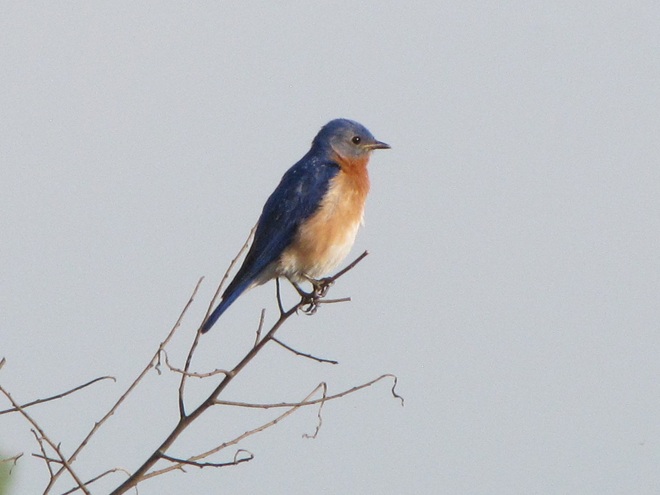
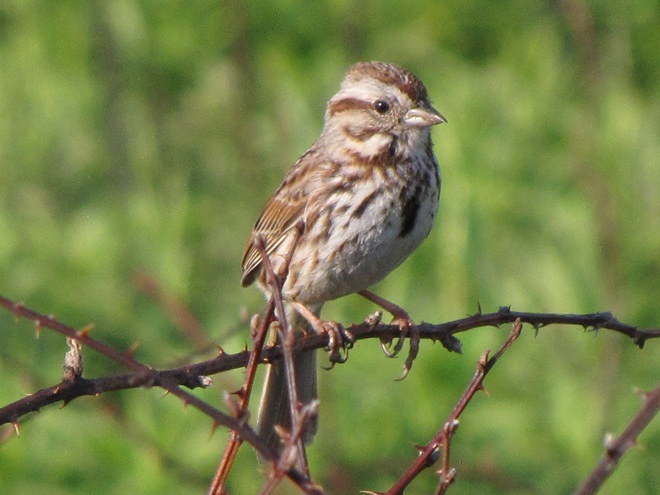
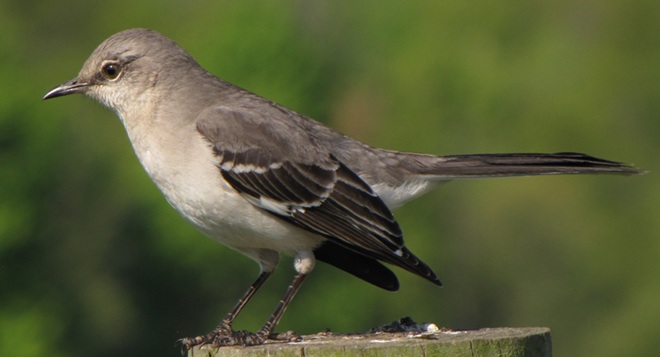
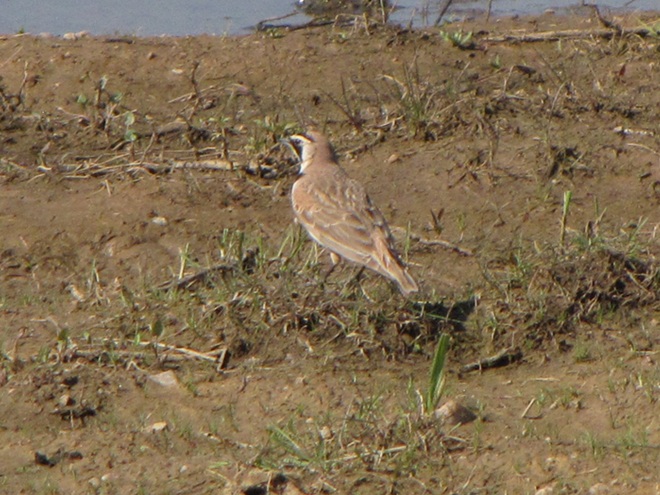
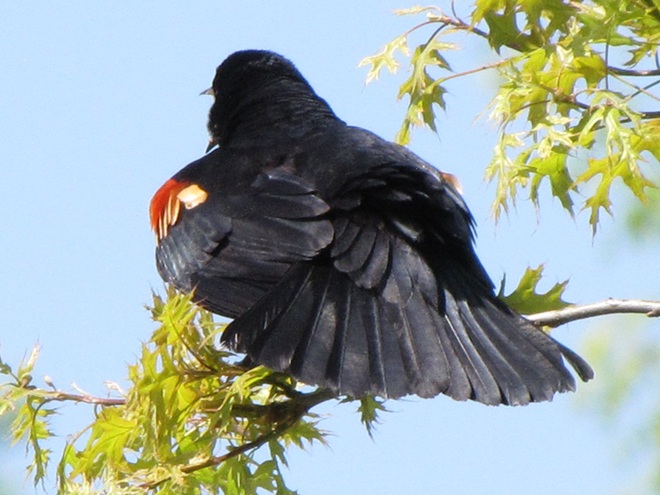
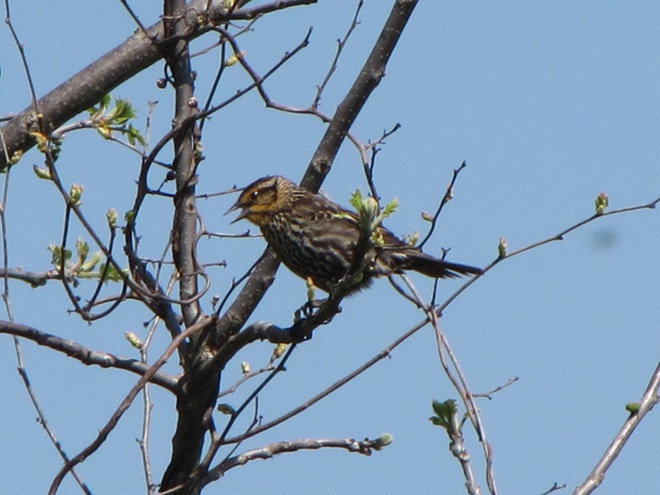
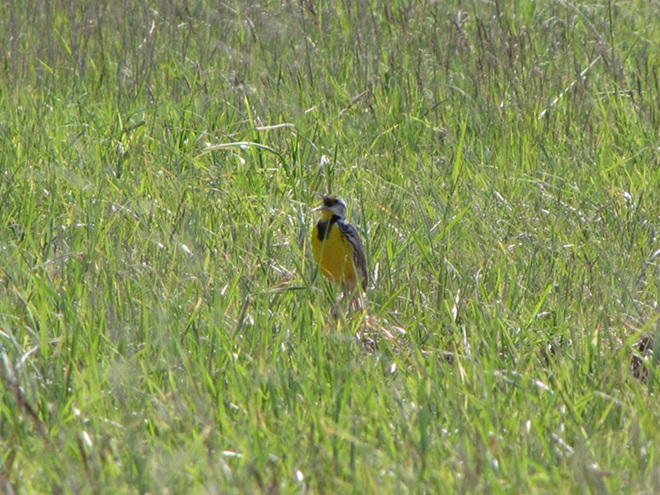
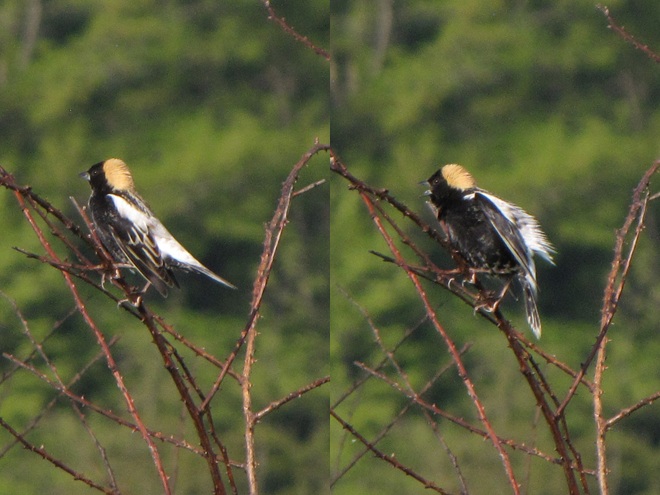
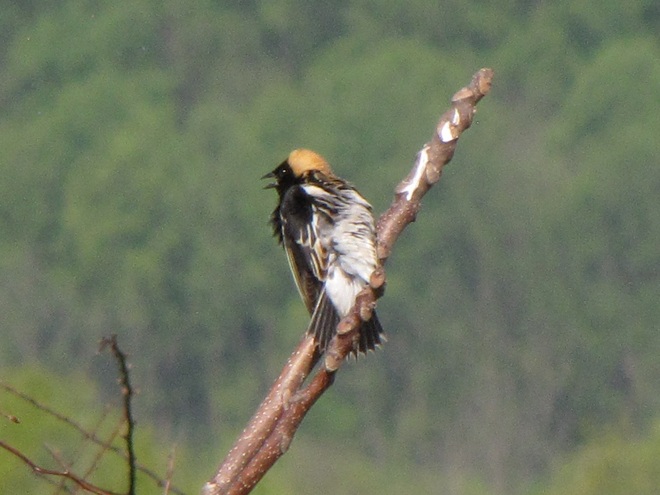
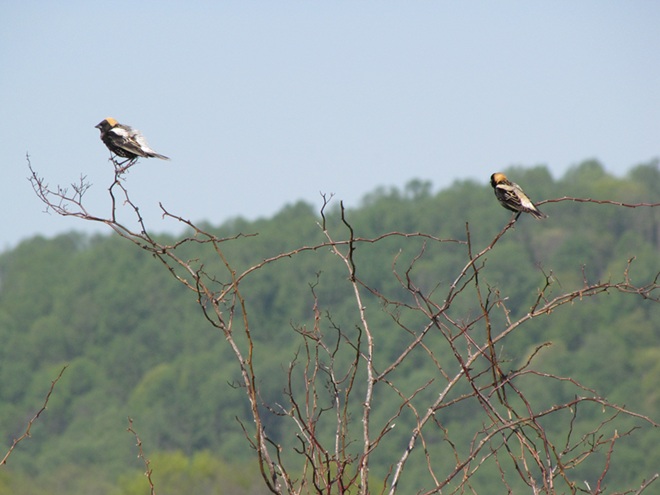
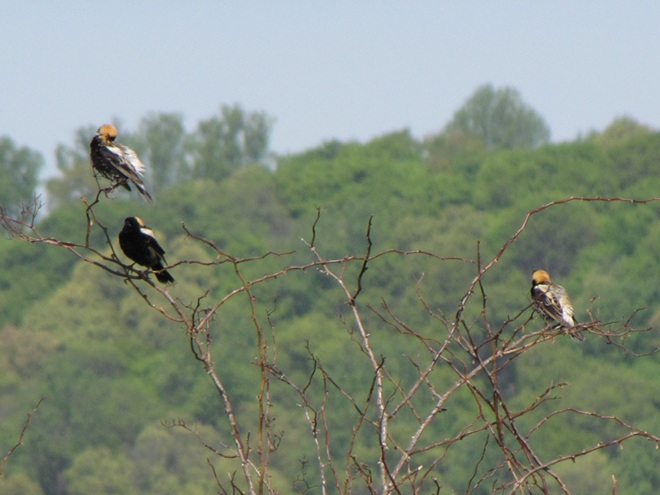
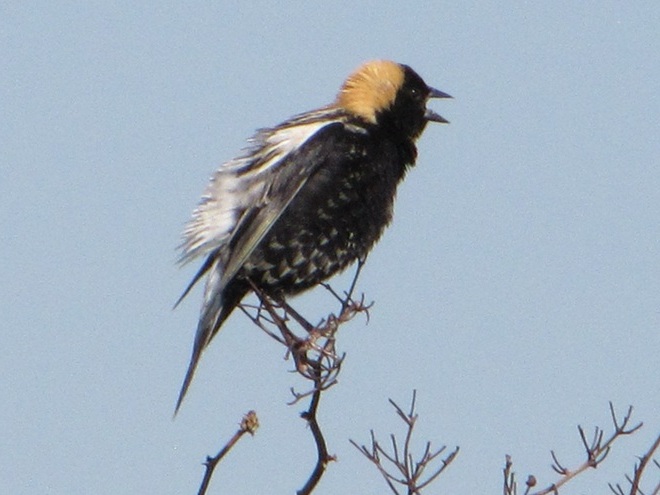
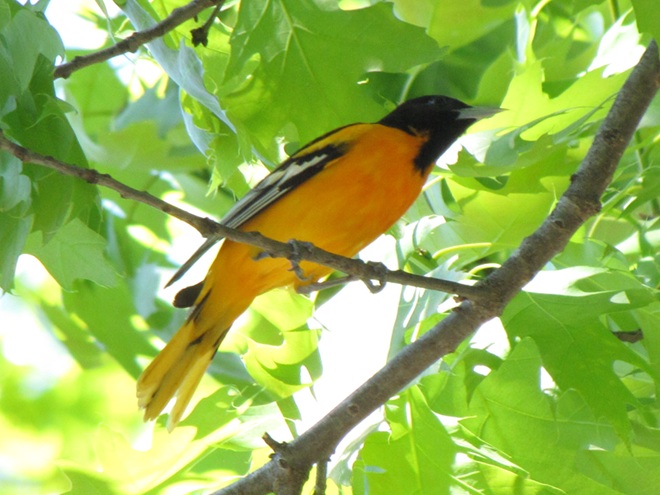
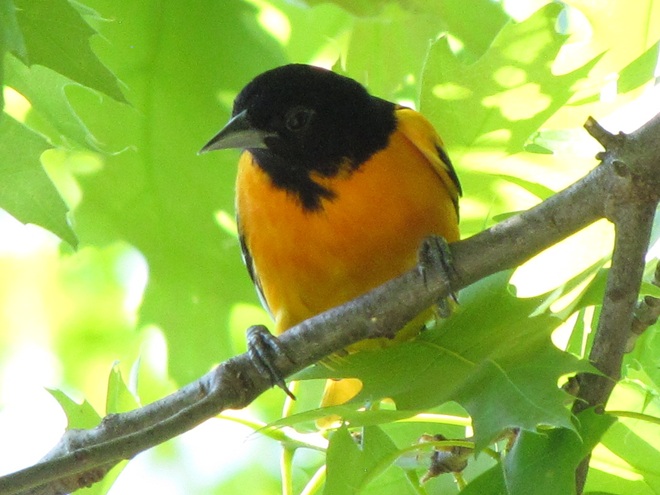
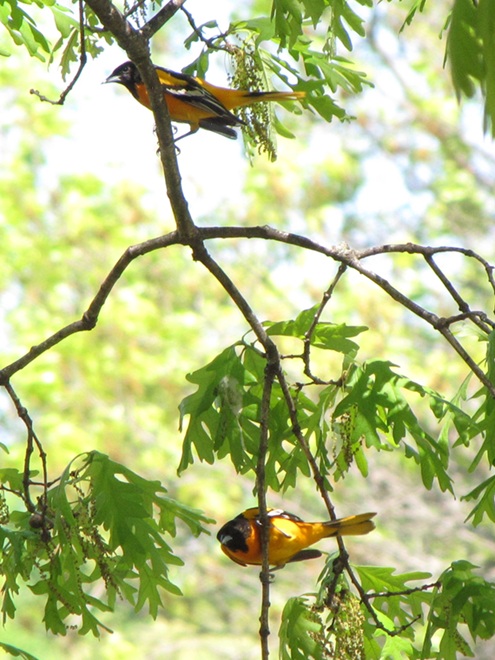
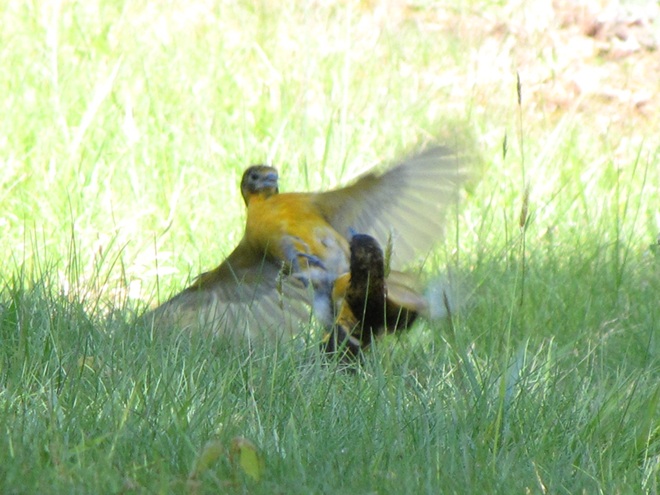
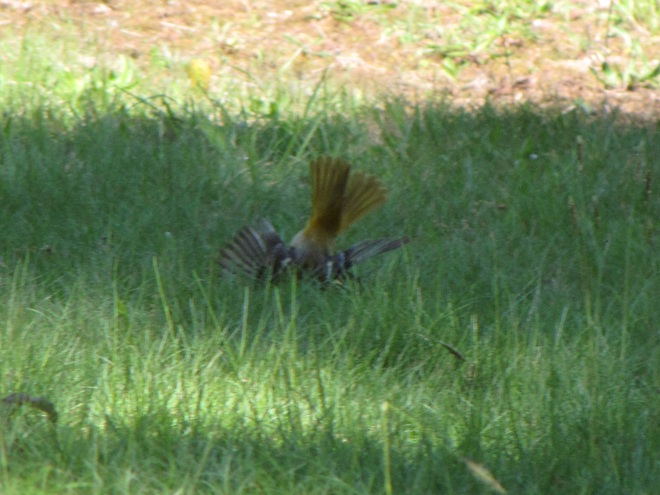
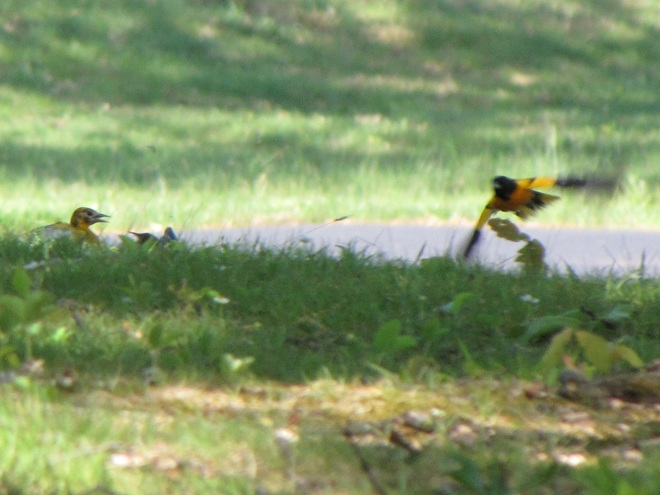
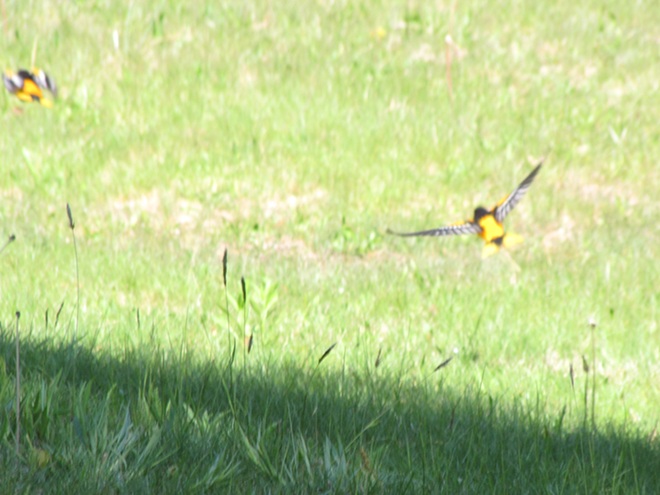
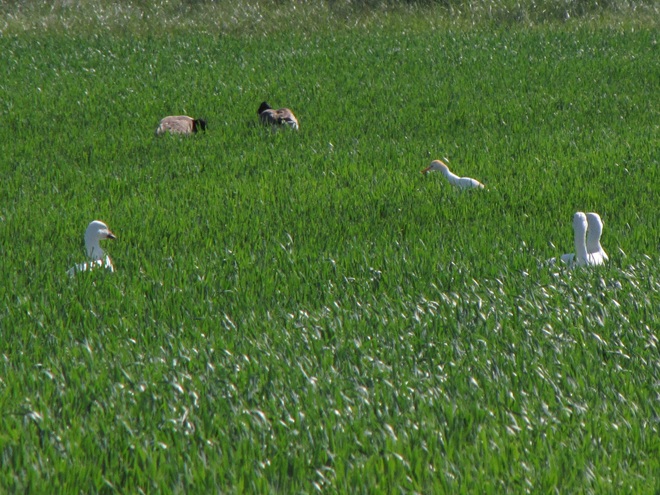
Photographing Neotropical migrants as they arrive to nest in our local forests can be frustrating under closed canopies and diffused light conditions. We instead decided to focus our efforts and lenses on the grassland species at Middle Creek Wildlife Management Area where, earlier this week, several prescribed fire burns were wrapping up the spring treatments for 2026.Managed warm-season grassland habitat at Middle Creek Wildlife Management Area.Already tending nests containing eggs and young, Tree Swallows are scattered around the refuge’s grasslands to welcome newly arriving migrants, and human visitors!Middle Creek is probably the best place in the lower Susquehanna valley to see ground-nesting Grasshopper Sparrows.To attract a mate and establish a defendable territory, the males are singing their buzzy, insect-like songs from atop roadside fence posts.The songs persist as the male moves from perch to perch around a potential breeding site.It’s a behavior that occasionally puts the newcomer Grasshopper Sparrow in conflict with a well-ensconced Tree Swallow guarding its nest box.Eastern Bluebirds squeeze in among the Tree Swallows to find a vacant nest box within which they can raise their young.Song Sparrows may be present year-round in grasslands with interspersed growth of early successional shrubs and briars, however the populations at a given location changes as birds migrate in and out of the area seasonally. Those individuals observed nesting here in the spring and summer are not usually the same birds seen during the late fall and winter.As a species, the Savannah Sparrow, like the Song Sparrow, may be represented in the grasslands throughout the year, though the individuals vary with the changing seasons. Unlike the Song Sparrow which nests in shrubs, the Savannah Sparrow nests on the ground among thick grasses.Still munching on the seeds of last year’s wildflowers, American Goldfinches are pairing up around the grasslands waiting for thistle down and other fibers to be available for nest construction. They will then build a small cup within the upper limbs of a small to medium-sized tree to shelter their eggs and nestlings.The Common Yellowthroat, one of our Neotropical warblers, will reproduce in grasslands with scattered early successional thorny shrubs to afford a safe place to construct a nest. The males sing almost incessantly from the time they arrive in late April and early May until sometime in July, or even later.Eastern Kingbirds are arriving from tropical wintering grounds to nest in grasslands and pastures throughout the lower Susquehanna region. They are a tyrant flycatcher that will ambush insects from a perch atop a tree, shrub, or tuft of tall grass.Northern Mockingbirds are considered a resident species, though there may be some southward movement during severe winters when foods such as berries become scarce. At Middle Creek, some of these evacuees have returned to nest along the interface zone between the grassland and early successional shrub habitats.Nesting Horned Larks apparently take advantage of the interface between the managed grasslands and nearly bare soils in spring-planted croplands at Middle Creek. They may be one of the few, possibly the only, species of bird life to take advantage of no-till farming for nesting on the ground.Red-winged Blackbirds not only construct nests in cattails and other marsh growth, but in dense grasses and shrubs in and near grasslands and pastures. The males are easily seen displaying their plumage as they sing from a small tree, shrub, or a cattail seed spike.Less frequently seen is the female Red-winged Blackbird. She spends the majority of her time in the nest, but will periodically come out to join the ruckus when an intruder is being scolded into leaving the premises.Another member of the blackbird family is the Eastern Meadowlark. It too is an energetic singer during the breeding season. Meadowlarks build their nests on the ground, often in pastures of cool-season grasses where harvests prior to August are fatal to eggs and young. Middle Creek’s managers delay harvests to allow the birds enough time to complete their reproduction cycle.Another blackbird is the Bobolink, an obligate grassland specialist and a Neotropical migrant. One of its few uses for trees and shrubs is as a place to burst into display and song, though it will also perform these rituals on the wing and among the grass.A male Bobolink singing and displaying from a perch.As the males arrive, competition for suitable nesting sites among the grasses becomes intense, even before a female is anywhere in sight.We saw as many as five males at a time clustered into this one tuft of thorny twigs to take turns chattering and showing their wares to one another.A territorial male Bobolink at Middle Creek Wildlife Management Area. Delayed mowing allows cool-season grasslands to provide nesting sites for this species too.Did you know the Baltimore Oriole is a blackbird? Well, it is.When surrounded by acres of grasslands for collecting insects, groves of mature shade trees including oaks, walnuts, sycamores, and elms provide excellent nesting sites for Baltimore Orioles.Competition for these ideal sites can get quite animated.Fights like this one between two second-year males can become vicious,……leaving combatants rolling on the ground in their fury,……at least until the more-experienced adult males who’ve been fighting over the place have had enough……and decide to send the clumsy, younger males packing.During our visit to the Middle Creek grasslands earlier this week, we were afforded an encounter with some unusual grassland birds, Western Cattle Egrets. To the delight of birders who never got to enjoy the abundance of this species on the lower Susquehanna during the 1970s and early 1980s, these birds have been a popular attraction as they’ve lingered around the refuge for a couple of weeks now.It’s an unusual experience, watching Western Cattle Egrets feeding in a field of cultivated cool-season grasses alongside Snow Geese, though they certainly aren’t looking for the same thing.
We’ll have more on the Western Cattle Egrets and other interesting migrants at Middle Creek in an upcoming post. Check back soon!
Grasshoppers are perhaps best known for the occasions throughout history when an enormous congregation of these insects—a “plague of locusts”—would assemble and rove a region to feed. These swarms, which sometimes covered tens of thousands of square miles or more, often decimated crops, darkened the sky, and, on occasion, resulted in catastrophic famine among human settlements in various parts of the world.
The largest “plague of locusts” in the United States occurred during the mid-1870s in the Great Plains. The Rocky Mountain Locust (Melanoplus spretus), a grasshopper of prairies in the American west, had a range that extended east into New England, possibly settling there on lands cleared for farming. Rocky Mountain Locusts, aside from their native habitat on grasslands, apparently thrived on fields planted with warm-season crops. Like most grasshoppers, they fed and developed most vigorously during periods of dry, hot weather. With plenty of vegetative matter to consume during periods of scorching temperatures, the stage was set for populations of these insects to explode in agricultural areas, then take wing in search of more forage. Plagues struck parts of northern New England as early as the mid-1700s and were numerous in various states in the Great Plains through the middle of the 1800s. The big ones hit between 1873 and 1877 when swarms numbering as many as trillions of grasshoppers did $200 million in crop damage and caused a famine so severe that many farmers abandoned the westward migration. To prevent recurrent outbreaks of locust plagues and famine, experts suggested planting more cool-season grains like winter wheat, a crop which could mature and be harvested before the grasshoppers had a chance to cause any significant damage. In the years that followed, and as prairies gave way to the expansive agricultural lands that presently cover most of the Rocky Mountain Locust’s former range, the grasshopper began to disappear. By the early years of the twentieth century, the species was extinct. No one was quite certain why, and the precise cause is still a topic of debate to this day. Conversion of nearly all of its native habitat to cropland and grazing acreage seems to be the most likely culprit.
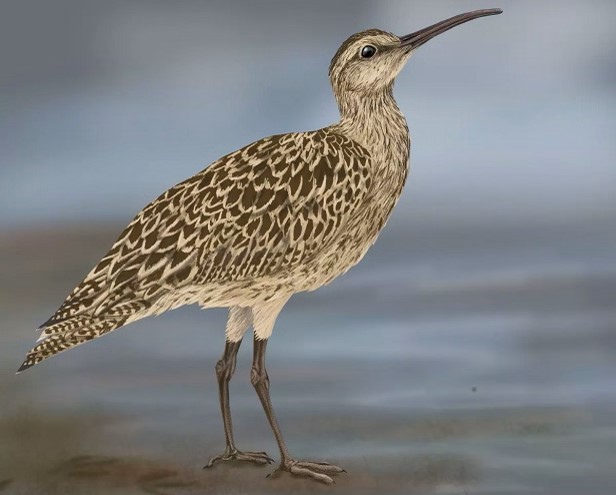
The critically endangered Eskimo Curlew (Numenius borealis), a species not photographed since 1962 and not confirmed since 1963, fed on Rocky Mountain Locusts during its spring migration through the Great Plains. Excessive hunting and conversion of grasslands to agriculture are believed responsible for the bird’s demise. (United States Fish and Wildlife Service image by Christina Nelson)
In the Mid-Atlantic States, the mosaic of the landscape—farmland interspersed with a mix of forest and disturbed urban/suburban lots—prevents grasshoppers from reaching the densities from which swarms arise. In the years since the implementation of “Green Revolution” farming practices, numbers of grasshoppers in our region have declined. Systemic insecticides including neonicotinoids keep grasshoppers and other insects from munching on warm-season crops like corn and soybeans. And herbicides including 2,4-D (2,4-Dichlorophenoxyacetic acid) have, in effect, become the equivalent of insecticides, eliminating broadleaf food plants from the pasturelands and hayfields where grasshoppers once fed and reproduced in abundance. As a result, few of the approximately three dozen species of grasshoppers with ranges that include the Lower Susquehanna River Watershed are common here. Those that still thrive are largely adapted to roadsides, waste ground, and small clearings where native and some non-native plants make up their diet.
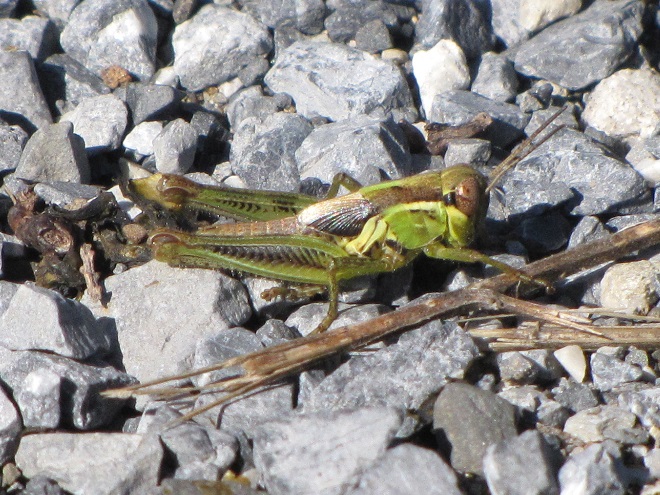
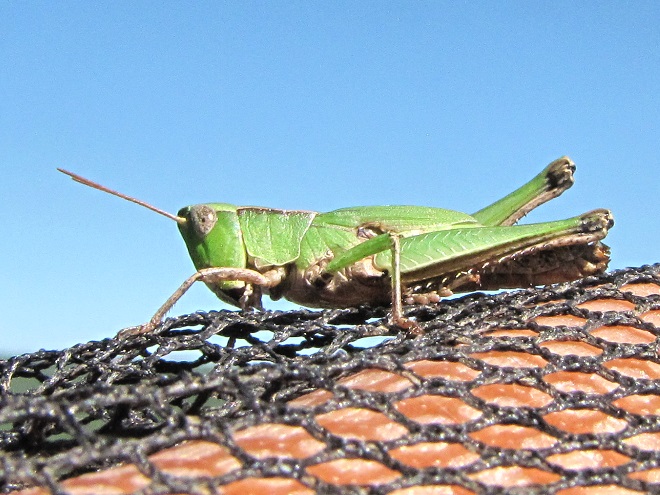
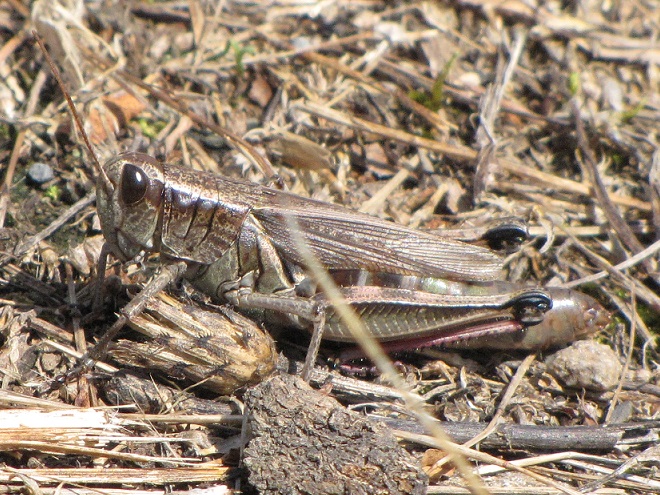
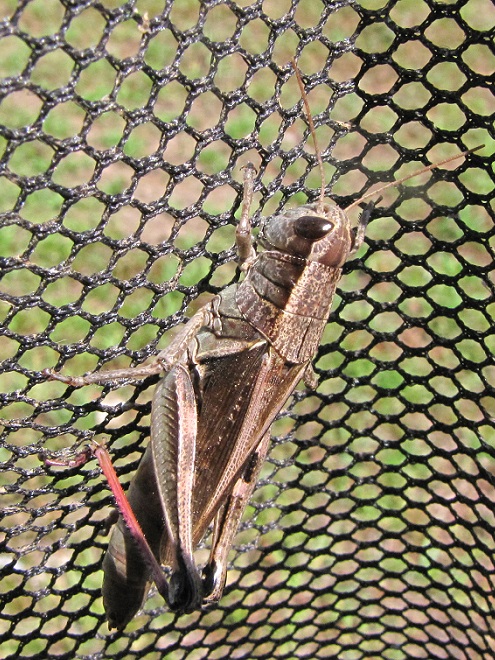
Here’s a look at four species of grasshoppers you’re likely to find in disturbed habitats throughout our region. Each remains common in relatively pesticide-free spaces with stands of dense grasses and broadleaf plants nearby.
CAROLINA GRASSHOPPER
Dissosteira carolina
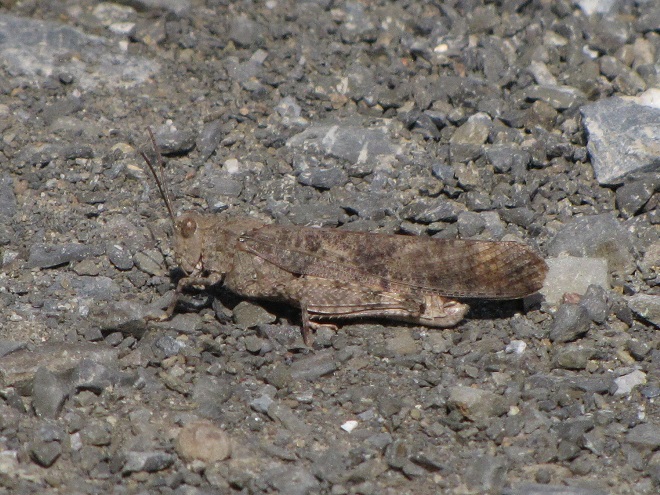
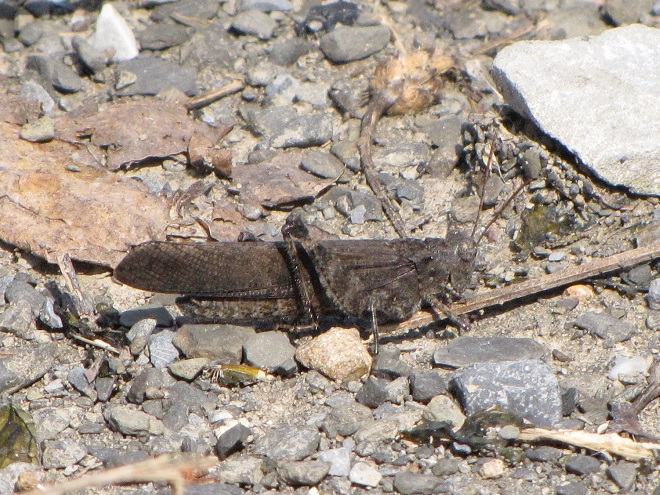
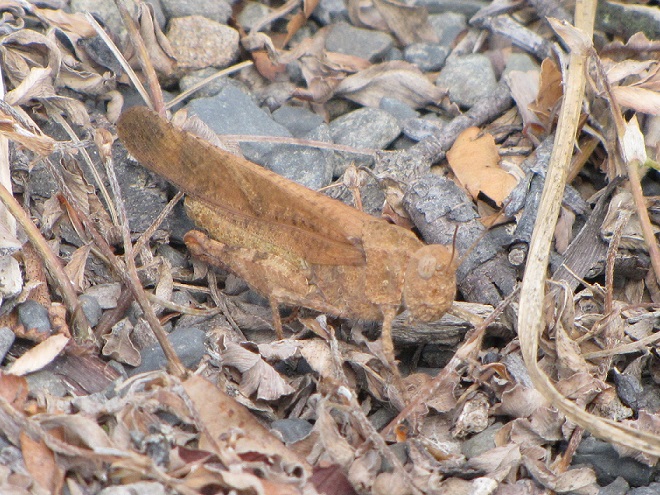
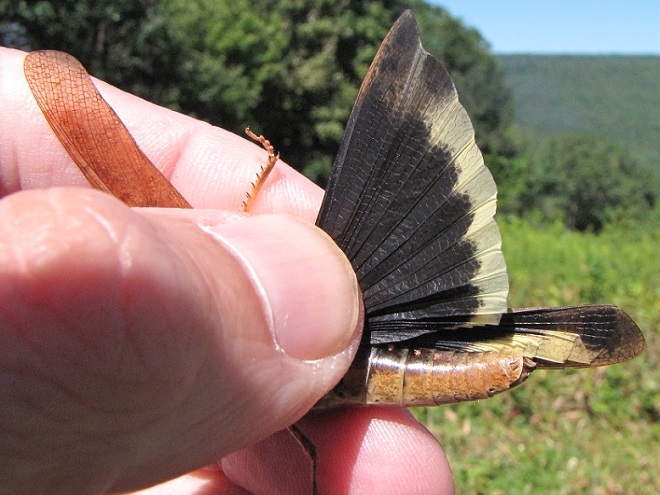
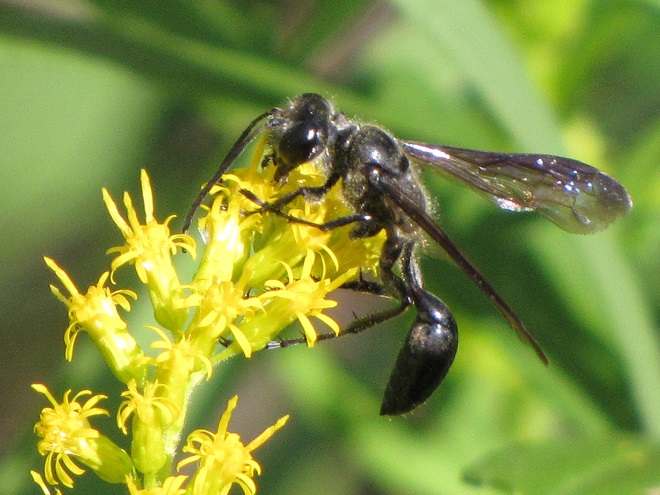
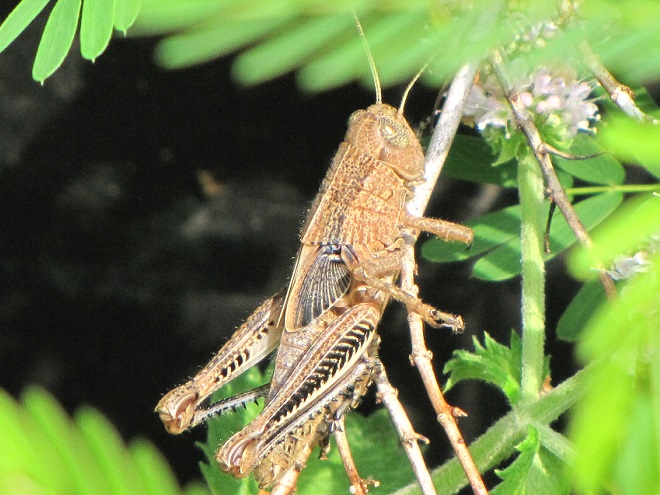
The Carolina Grasshopper, also known as the Carolina Locust or Quaker, is one of the band-winged grasshoppers. It is commonly found along roadsides and on other bare ground near stands of tall grass and broadleaf plants.The Carolina Grasshopper is variable in color, ranging from very dark brown……to a rich tan or khaki shade. These earth-tone colors provide the insect with effective camouflage while spending time on the ground.The Carolina Grasshopper is most readily detected and identified when it flies. The colors of the wings resemble those of the Mourning Cloak butterfly.Carolina Grasshoppers are among the preferred victims of Great Black Wasps (Sphex pensylvanicus). A female wasp stings the grasshopper to paralyze it, then drags it away to one of numerous cells in an underground burrow where she lays an egg on it. The body of the disabled grasshopper then provides nourishment for the larval wasp.
DIFFERENTIAL GRASSHOPPER
Melanoplus differentialis
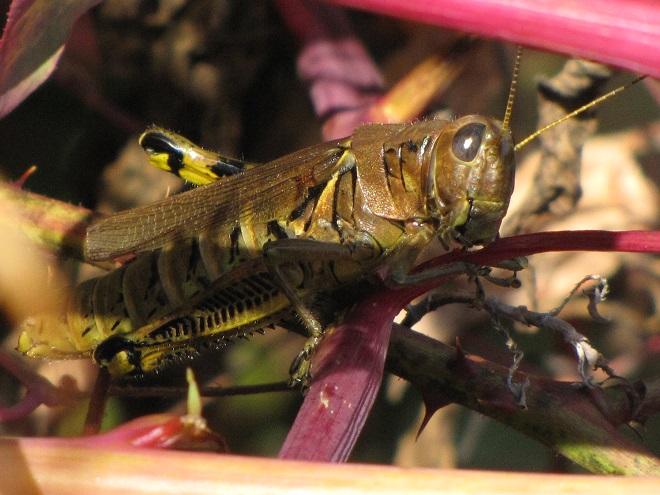
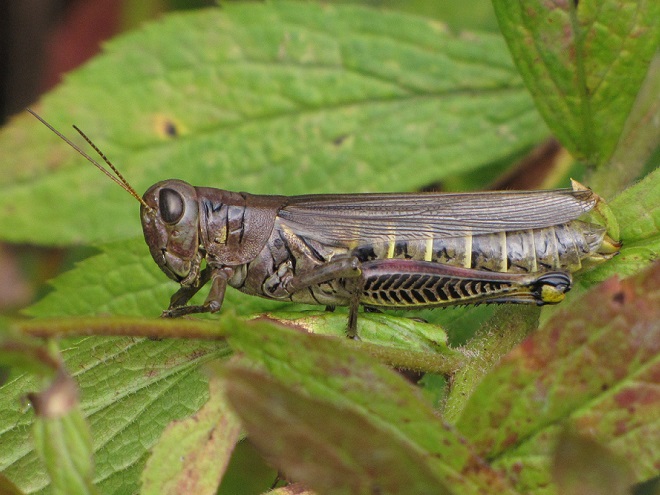
Differential Grasshopper nymph with small “fairy wings”.An adult female Differential Grasshopper with fully developed wings.An adult female Differential Grasshopper
TWO-STRIPED GRASSHOPPER
Melanoplus bivittatus
An early-stage Two-striped Grasshopper nymph.A Two-striped Grasshopper nymph in a later stage.An adult female Two-striped Grasshopper.An adult female Two-striped Grasshopper. Note the pale stripe originating at each eye and joining near the posterior end of the wings to form a V-shaped pattern.An adult female Two-striped Grasshopper.
RED-LEGGED GRASSHOPPER
Melanoplus femurrubrum
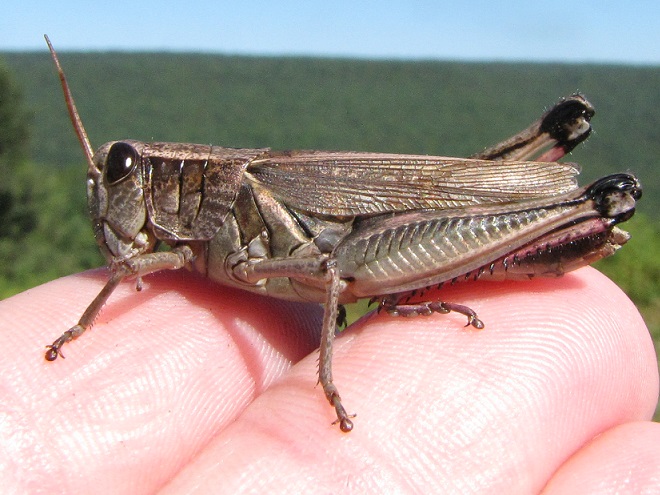
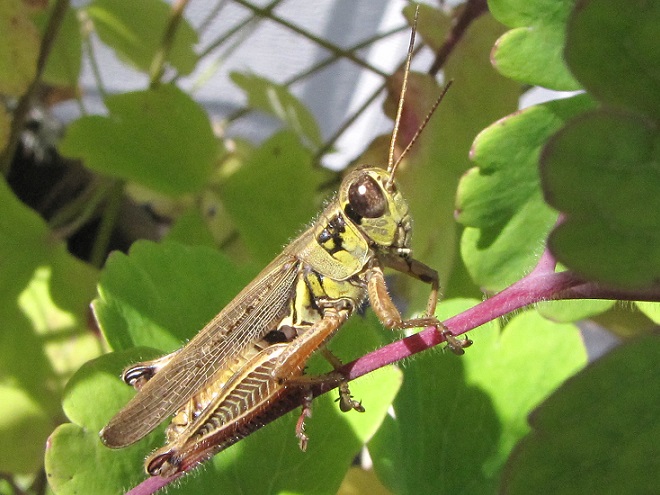
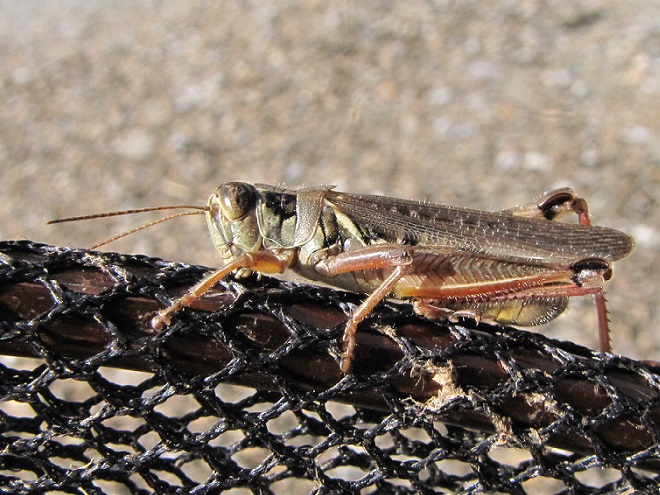
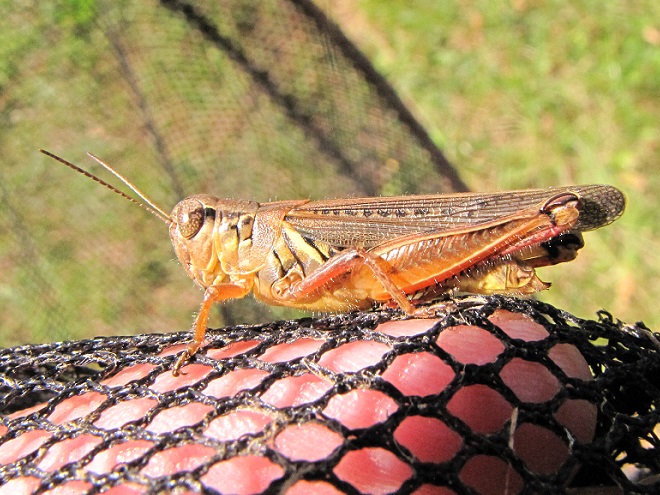
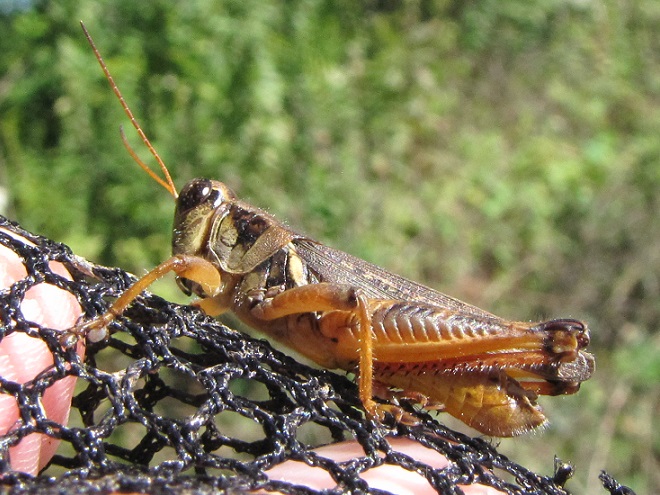
An adult male Red-legged Grasshopper hiding in dense urban vegetation.The Red-legged Grasshopper may currently be our most abundant and widespread species.An adult male Red-legged Grasshopper.An adult female Red-legged Grasshopper.
Protein-rich grasshoppers are an important late-summer, early-fall food source for birds. The absence of these insects has forced many species of breeding birds to abandon farmland or, in some cases, disappear altogether.
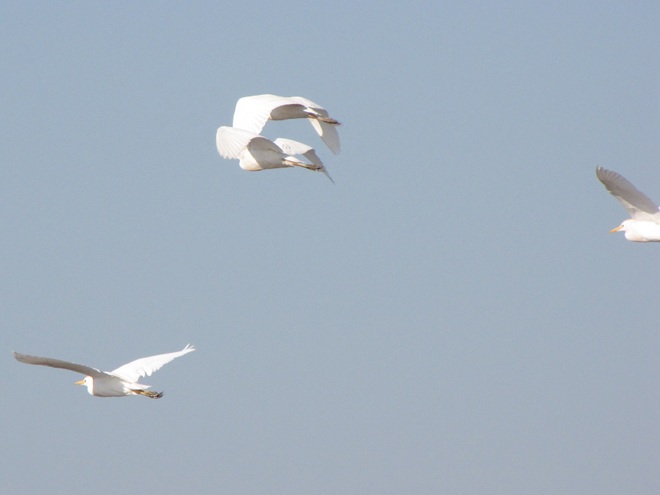
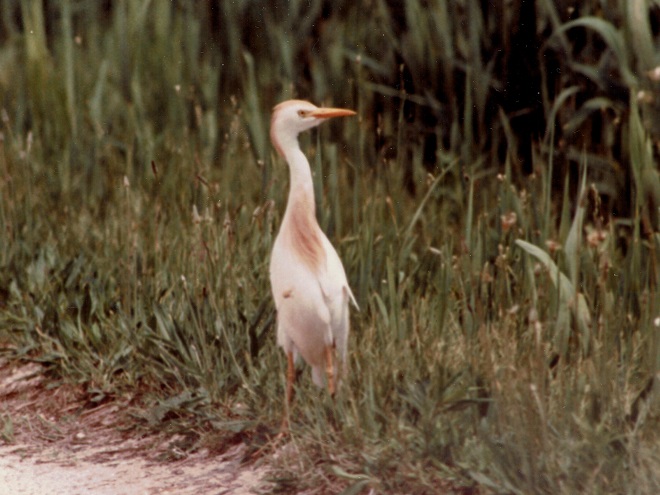
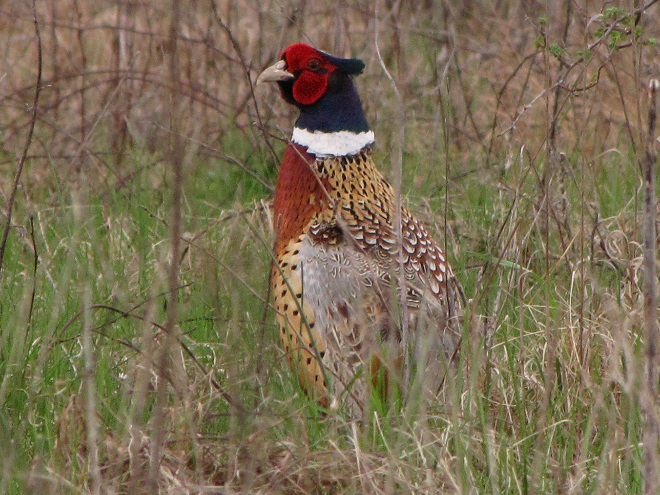
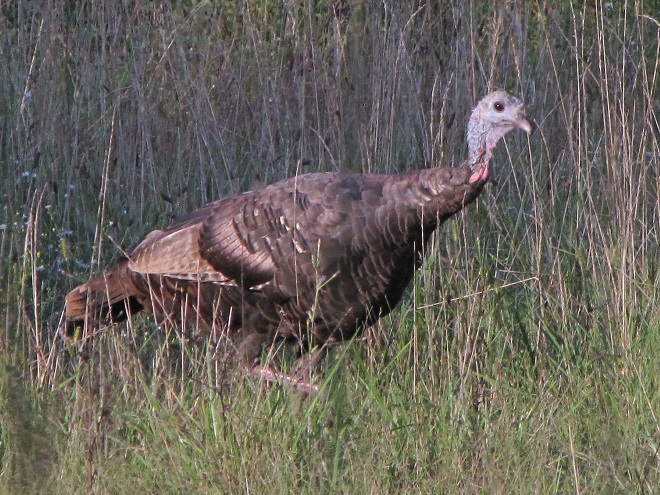
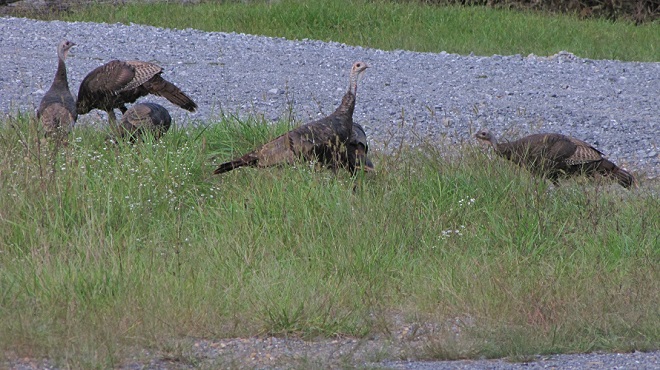
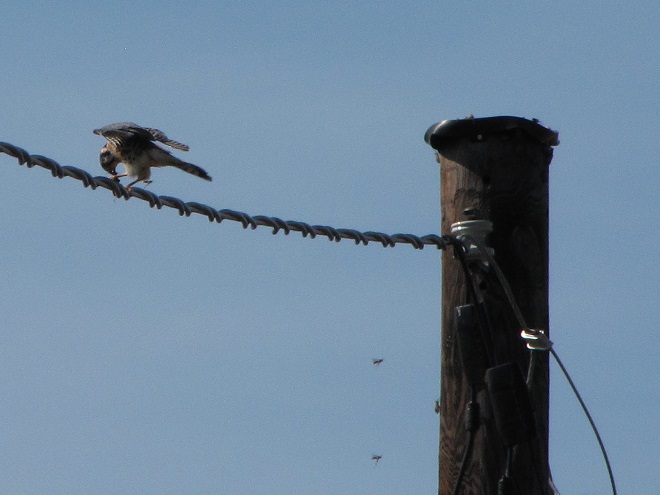
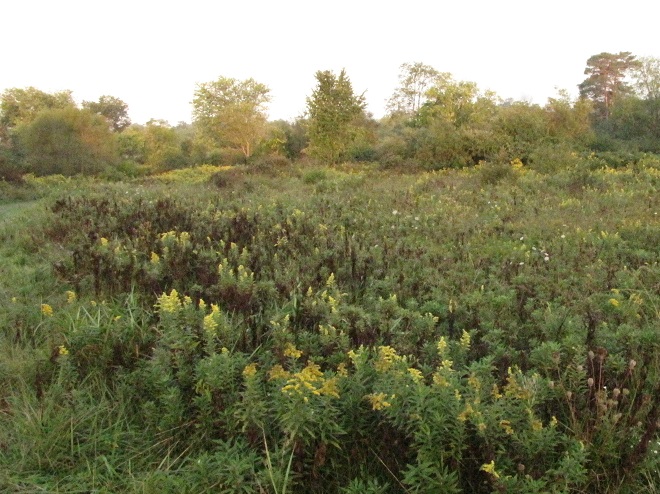
Beginning in the early 1930s, the Western Cattle Egret (Bubulcus ibis), a notoriously nomadic species, transited the Atlantic from Africa to colonize the Americas…and they did it without any direct assistance from humans. During the 1970s and early 1980s, a nesting population of Western Cattle Egrets on river islands adjacent to the Susquehanna’s Conejohela Flats off Washington Boro was the largest inland rookery in the northeastern United States. The Lancaster County Bird Club censused the birds each August and found peak numbers in 1981 (7,580). During their years of abundance, V-shaped flocks of cattle egrets from the rookery islands ventured into grazing lands throughout portions of Lancaster, York, Dauphin, and Lebanon Counties to hunt grasshoppers. These daily flights were a familiar summertime sight for nearly two decades. Then, in the early 1980s, reductions in pastureland acreage and plummeting grasshopper numbers quickly took their toll. By 1988, the rookery was abandoned. The cattle egrets had moved on. (Vintage 33 mm image)During the summer and early fall, juvenile and adult Ring-necked Pheasants feed heavily on grasshoppers. Earlier and more frequent mowing along with declining numbers of grasshoppers on farmlands due to an increase in pesticide use were factors contributing to the crash of the pheasant population in the early 1980s.To the delight of Wild Turkeys, each of the four species of grasshoppers shown above frequents clearings and roadsides adjacent to forest areas. While changes in grasshopper distribution have been detrimental to populations of birds like pheasants, they’ve created a feeding bonanza for turkeys.Wild Turkeys feeding on an abundance of grasshoppers along a forest road.An American Kestrel feeds on a grasshopper while ignoring the abundance of Spotted Lanternflies swarming the adjacent utility pole. In Susquehanna valley farmlands, grasshopper and kestrel numbers are down. Lanternflies, on the other hand, have got it made.Maintaining areas bordering roads, forests, wetlands, farmlands, and human development in a state of early succession can provide and ideal mix of mature grasses and broadleaf plants for grasshoppers, pollinators, birds, and other wildlife.