Eastern Chipmunks are familiar mammals of our deciduous forests and wooded neighborhoods. They are surprisingly solitary and territorial, defending their well-concealed underground excavations vigorously to protect them from would-be intruders—including other chipmunks. Their individual effort to stockpile a cache of seeds, nuts, and other non-perishable foods during the autumn will largely determine whether or not they survive winter’s worst.
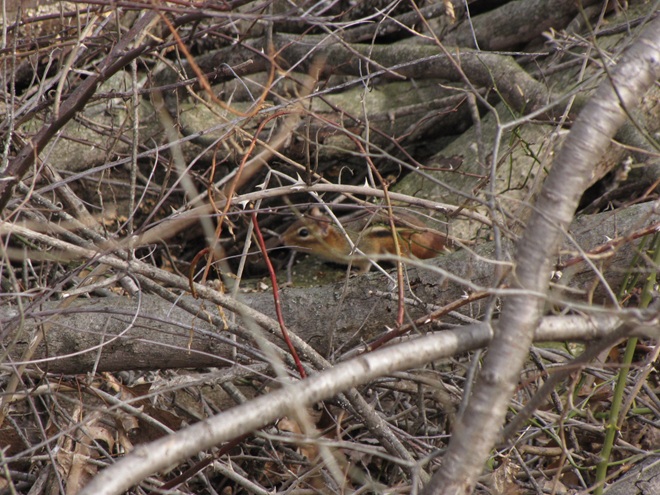
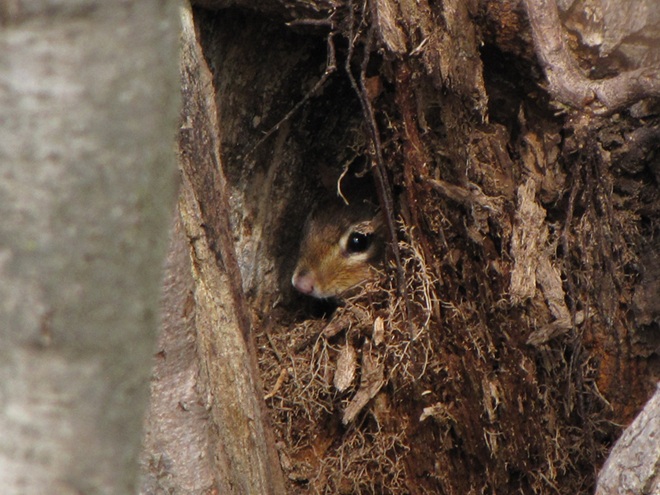
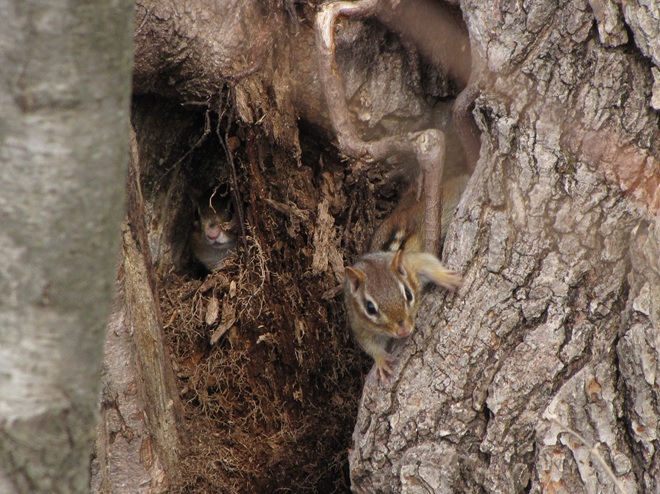
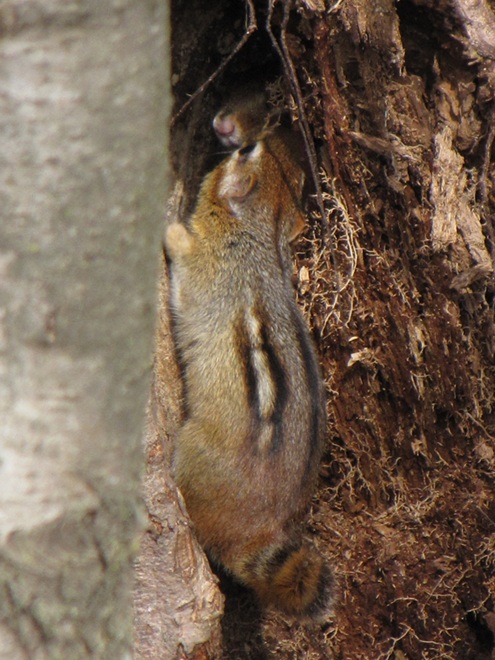
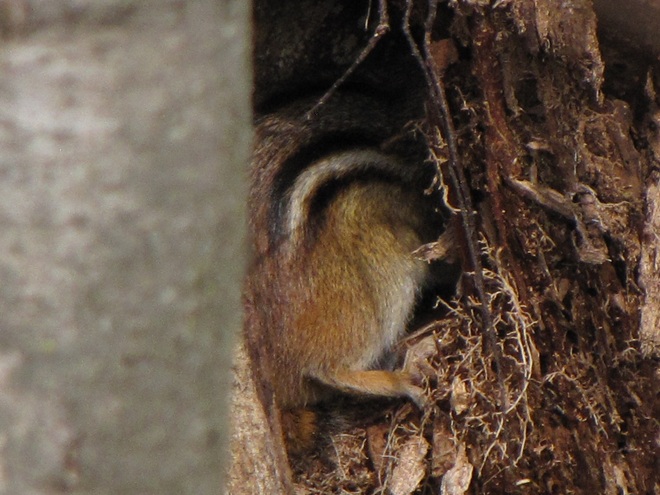
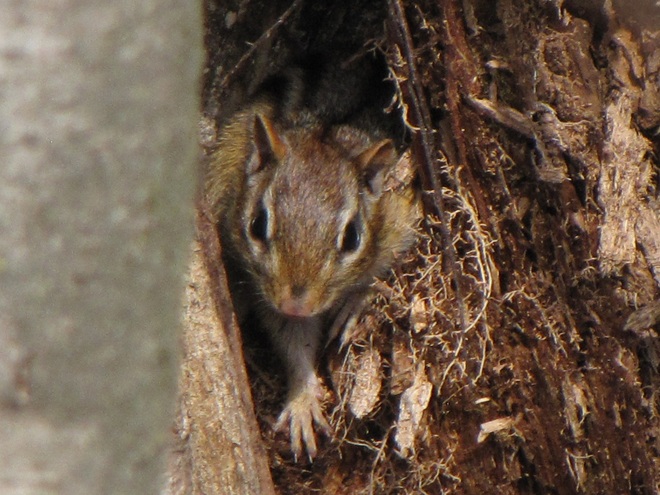
Everyone knows that Eastern Chipmunks spend much of the fall storing provisions for consumption as snacks during breaks in their winter slumbers, but did you realize that those chipmunks with the best inventory will have a pronounced advantage over less successful neighbors come late winter and spring?Upon exiting their subterranean shelters earlier this week, Eastern Chipmunks commenced the courting ritual which includes males like this one chasing other males away from both their dens……and prospective mates like this female trying to escape notice by hiding in a hollow stump.Being well-nourished throughout the winter has adequately prepared this male (right) for the strenuous activity of securing both his territory and his mate against other males.Once certain that their will be no interruptions, the male approaches the timid female. Finding him fit and acceptable,……she becomes receptive to his advances. A well-fed pair of chipmunks can complete courtship and mating within hours of emerging from their winter abodes.Following copulation, the male exits the female’s hideout. The two part ways and after about 31 days the female will give birth to up to six young. She will rely, at least in part, upon her inventory of stored food to get her through her pregnancy and the nursing of the offspring. The more success she had last fall while collecting edibles, the more success she’ll have getting an early start on the spring breeding season, a time of year when venturing out to forage can be marginally productive and especially risky for a small diurnal rodent. Later, while wild foods are plentiful during the summer, many Eastern Chipmunks will mate again and the female will raise a second litter. Then, as summer comes to an end, its time to start taking advantage of the abundance to replenish the winter pantry all over again.
Having experienced our first frost throughout much of the lower Susquehanna valley last night, we can look forward to seeing some changes in animal behavior and distribution in the days and weeks to come. Here are a few examples…
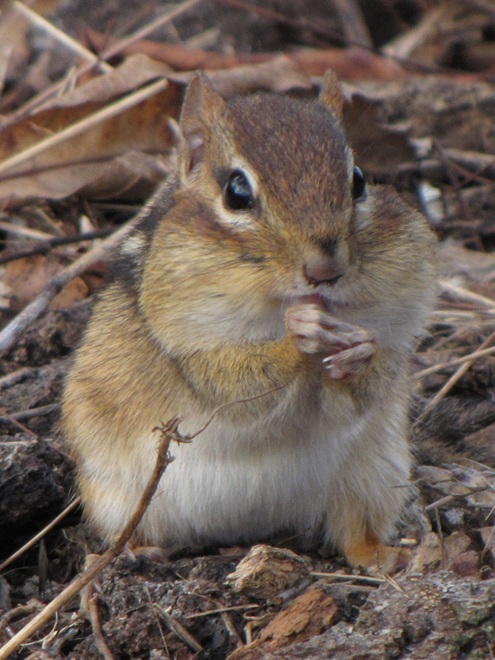
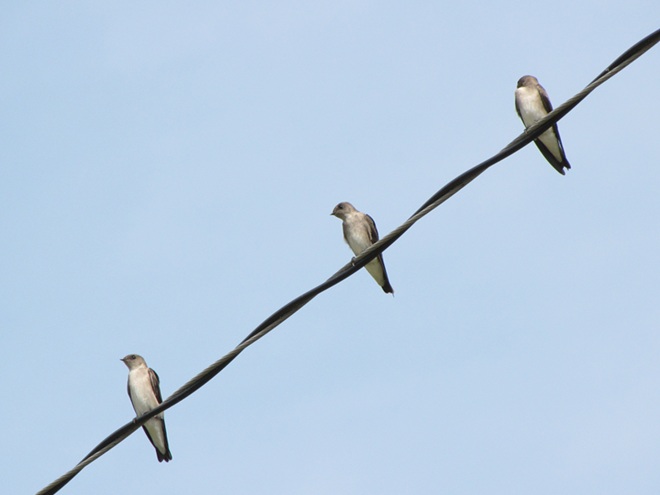
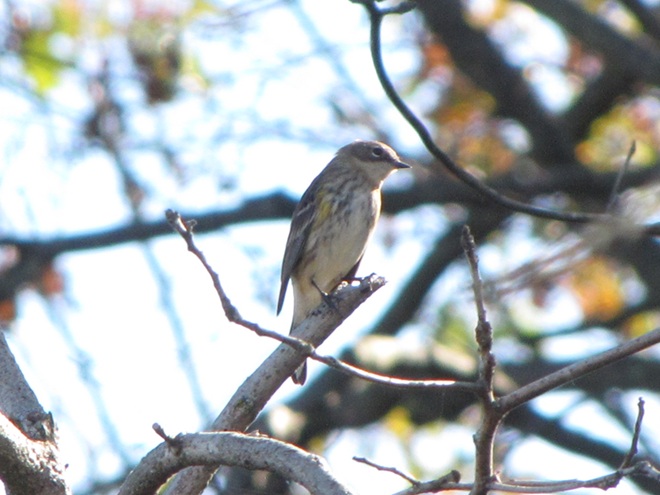
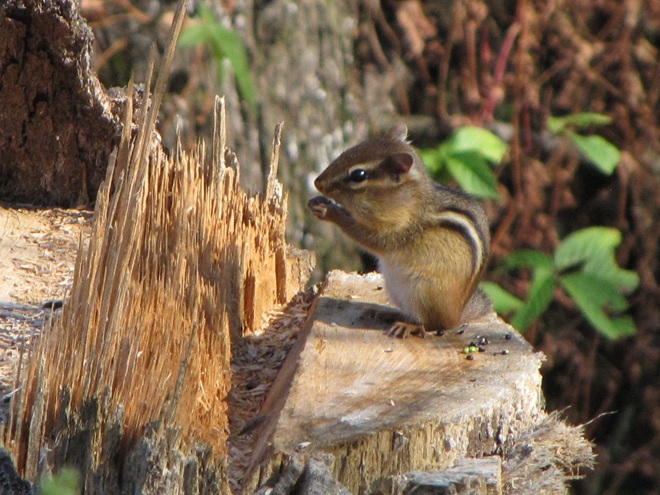
Unlike their close relatives the Tree Swallows, which include berries as well as invertebrates in their diet, Northern Rough-winged Swallows are strictly insectivores and will find it necessary to promptly move south to assure a frost-free environment where they can secure an adequate supply of food. Their one alternative: find a local sewage treatment plant where warm water attracts populations of flying insects through the remainder of autumn and maybe into winter.Warblers too are insect eaters. Look for most of our dozens of species to evacuate the area in coming days and leave behind only the Yellow-rumped Warbler, another bird with a fondness for berries during cold weather. Into the winter months, they remain in small numbers in habitats with an abundant supply of berries like Poison Ivy, holly, wild grape, bittersweet, and Eastern Red Cedar. For lingering Yellow-rumped Warblers, thickets of cedars and other evergreens provide essential protection from frigid nighttime winds.This Eastern Chipmunk will soon feel the pinch. Instead of eating the sweet, fruity portions of Mile-a-minute Weed berries, it’ll have to get serious about stocking its den with larger seeds, acorns, hickory nuts, and other foods to snack on through the winter. Better get busy, little friend!
There’s now a sense of urgency because for the Eastern Chipmunk, the opportunities to gather and store nuts, seeds, and acorns are slipping away. The time has arrived for retreat to its burrow where, because it stores no body fat for winter, this member of the squirrel family (Sciuridae) relies upon its cache of provisions for snacking between periods of extended slumber during the coldest months of the year.
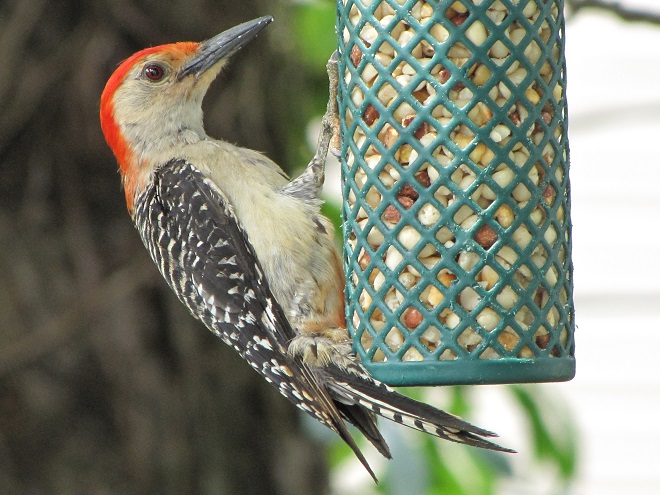
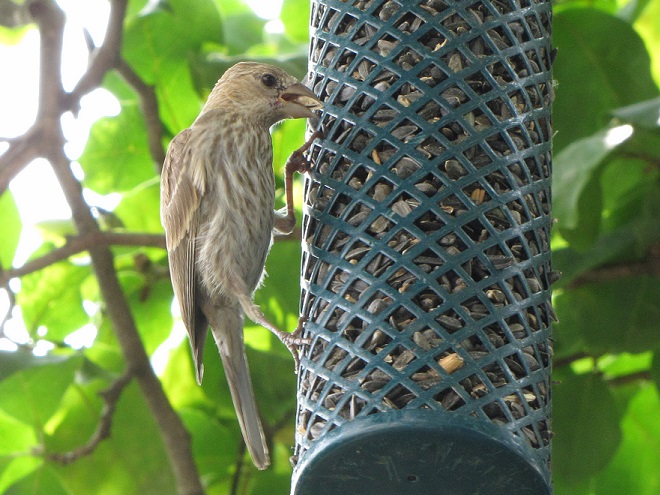
Don’t want to feed suet to the birds around your home during the blazing heat of summer? Well, you might be glad to know that peanuts offered in one of these expanded metal tube feeders make a great substitute. They provide a nutritious supplement to naturally occurring foods for nuthatches, chickadees, Tufted Titmice, Carolina Wrens, Blue Jays, finches, and woodpeckers including this Red-bellied Woodpecker. Secured to a vertical length of wire hung from a horizontal tree limb, these feeders have proven so puzzling to the squirrels at susquehannawildlife.net headquarters that they no longer make any effort to raid them. Though marketed primarily to dispense suet nuggets, powder-coated metal mesh feeders can be used for sunflower seeds too. This juvenile House Finch plucks the black oil variety from one of the tubes in our garden. Seeds that fall are quickly scarfed up by ground-feeding species including Northern Cardinals, Eastern Chipmunks (Tamias striatus), and frustrated squirrels. Fewer seeds are lost if the larger varieties of sunflower such as “grey stripe” are used.