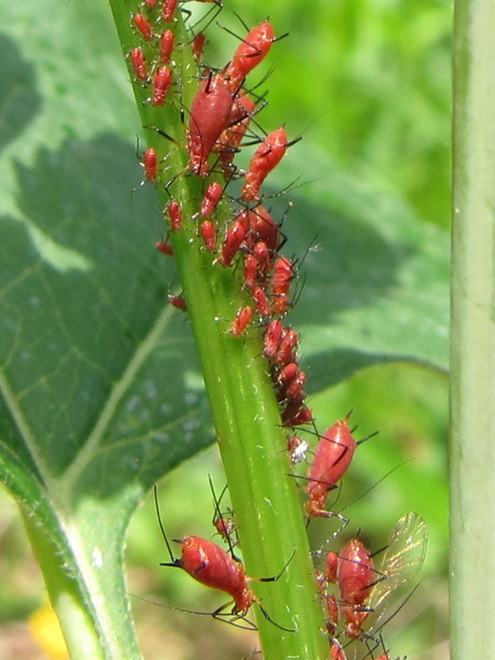
What happens when a single native plant species like this Oxeye (or False Sunflower) becomes exceptionally common in a forest margin? Well, that stand of Oxeye becomes vulnerable to a runaway infestation of sap-sucking insects like these colorful Dusky-tailed Sunflower Aphids (Uroleucon obscuricaudatum). Because each of our many native aphid species specialize to feed on only one species, genus, or family of plants, these localized aphid booms seldom threaten the overall population of the host. Aphids target soft new growth, so plants that escape infestation in the early part of the growing season have a chance to harden off and thereafter flower, seed, and mature unscathed by these little suckers. After all, if a specialized feeder like the Dusky-tailed Sunflower Aphid wiped out all of the sunflowers and false sunflowers in its range, Dusky-tailed Sunflower Aphids would cease to exist. Look at it this way, aphids do a little thinning to help promote plant diversity in their landscape.