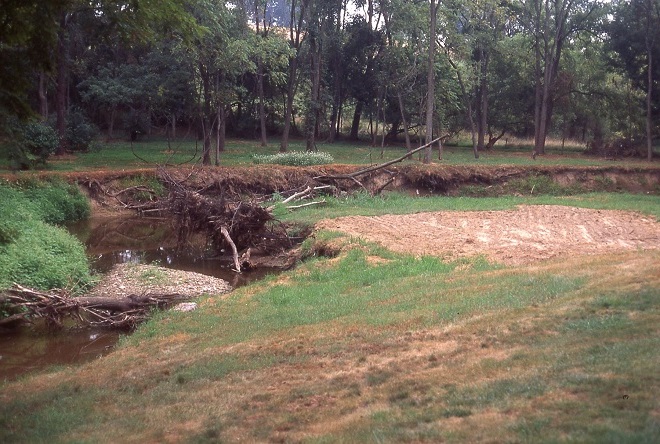
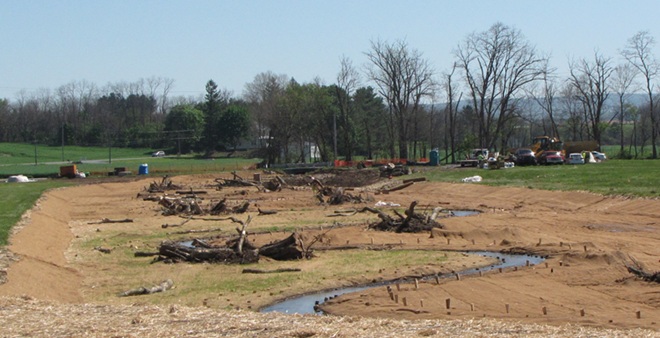
The majority of floodplains in the Lower Susquehanna River Watershed are, to put it mildly, dysfunctional. They are frequently disconnected from the lotic (flowing) streams and rivers that created them and are no longer capable of absorbing, purifying, and infiltrating high water during rain and snow-melt events. They are an ongoing source of nutrient and sediment pollution that impairs both our local waterways and Chesapeake Bay. For the plant and wildlife species that rely upon them for survival, their loss has been catastrophic.
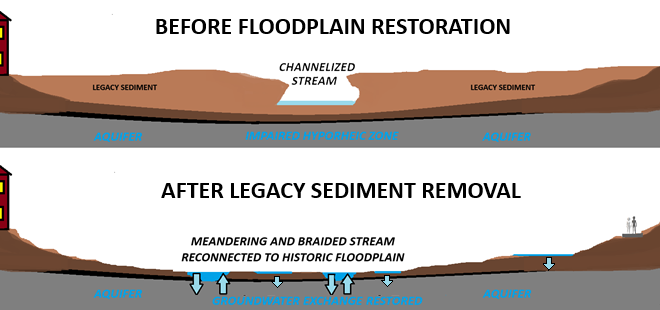
Mill dams once impounded nearly every mile of low-gradient streams in the lower Susquehanna region. During the century or more of their existence prior to the implementation of soil conservation practices during the 1930s, sediments consisting mostly of nutrient-loaded clay, silt, and sand eroded from sloped terrain in storm runoff and accumulated behind these dams, filling many to the brim with mud—six, eight, ten, sometimes twelve feet deep! As the dams fail or are removed, the stream is left channelized, incising a path through a floodplain choked with these “legacy sediments”.
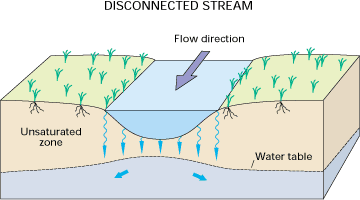
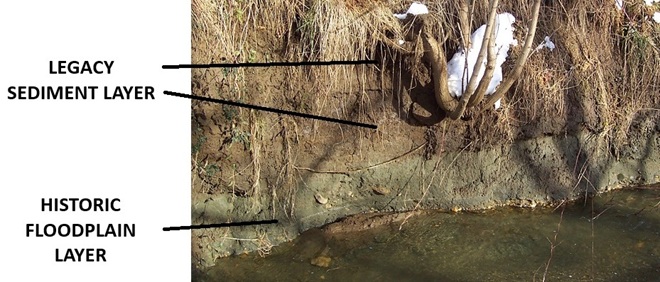
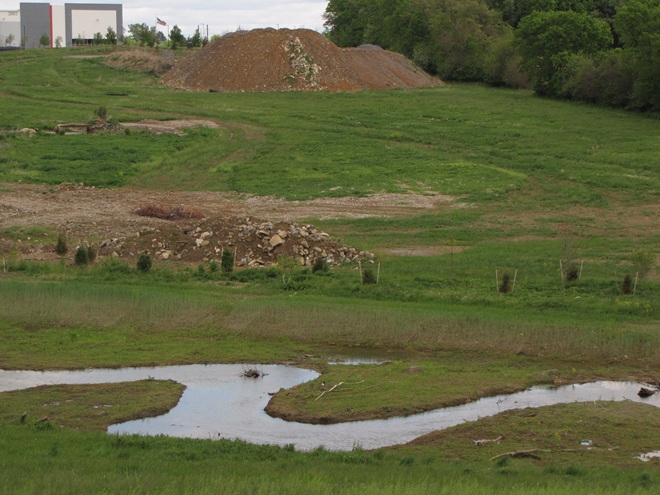
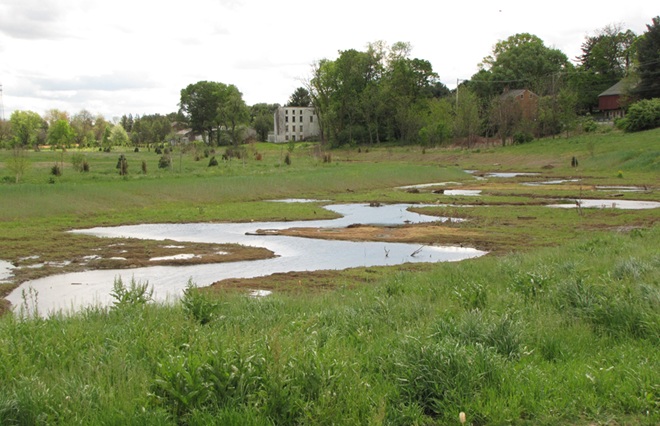
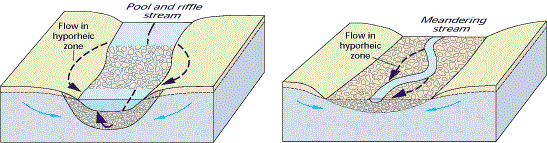
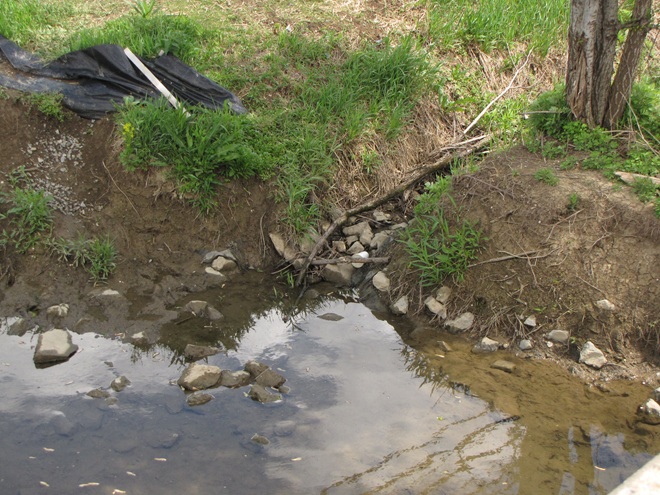
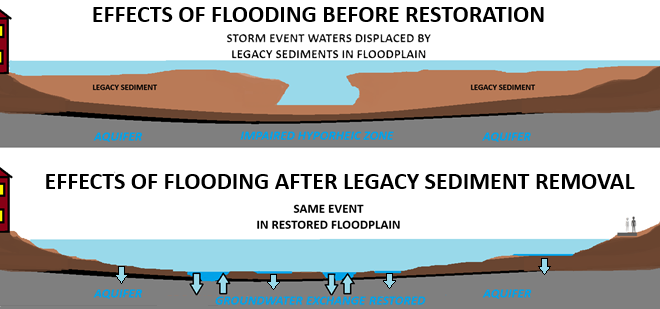
That’s it, a fresh layer of topsoil oughta do it- Landowners have become so accustomed to legacy sediment pollution and channelized creeks, they think it’s how a natural stream and floodplain ecosystem looks and operates. They’ll even replace washed away legacy sediment with dirt, rocks, cinder blocks, old sidewalks, and other construction debris to “shore things up”. It’s a delusional approach to managing a space that functions as a place to store, treat, and percolate precious water.Legacy sediments not only displace flood waters into historically unimpacted lands, they clog the hyporheic zone, the area below and alongside the flowing stream where water is exchanged with the aquifer. (United States Geological Survey image)Restoration of creeks and floodplains impacted by legacy sediment pollution includes the removal of the layer of nutrient-loaded sand, silt, and clay deposited atop the historic stratum of wetland and stream substrates. These lower layers are frequently gray in color and contain gravel from the former stream beds. Within the organic matter contained in this historic layer, seeds of native wetland plants have rested dormant for more than one hundred years. Some are still viable and will germinate upon liberation from the overlying legacy layer.Stockpiles of legacy sediments and larger fill items await transport to upland sites for reuse following removal from the impaired floodplain during a stream restoration project completed during the past year on Swarr Run, a tributary of Little Conestoga Creek in Lancaster County, Pennsylvania. This excavation, part of the project’s phase-two plan, was preceded in 2020 by similar construction completed as phase one on a segment located just upstream.Swarr Run has been returned to a meandering stream course in a floodplain cleared of nutrient-rich legacy sediments. How are legacy sediments repurposed? Those from previous projects in the lower Susquehanna valley have been used to create a community garden, as a top coating on athletic fields, as a safety backstop at a shooting range, and as topsoil on some of the croplands from whence they came all those years ago.Restoring pool and riffle or meandering stream flow regimes also restores water exchange in the adjoining hyporheic zones. (United States Geological Survey image)Removing legacy sediment accumulations from the floodplains of impaired streams allows re-establishment of historic flow regimes and reconnection of the waterway to the nutrient-sequestering functions of fluvial wetlands. In addition, flow into and from the water table is restored.Question: Do you know why nearby businesses have ATMs? Answer: Because there are no longer any banks on this segment of Swarr Run.
For a closer look at the Swarr Run renewal, including early map and aerial photograph views of the site, take a peek at this synopsis illustrating phase one of the project as presented to the North American Association of Wetland Managers by Justin Spangler of LandStudies, designers of the restoration. While perusing the material, be sure to review the significant reductions in nutrient and sediment loads discharged from these sites following the restoration work.
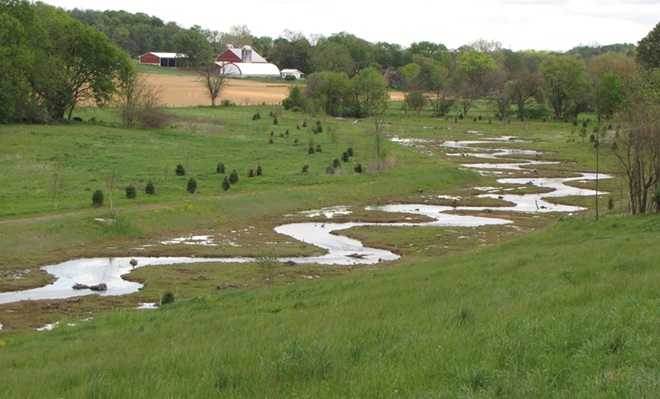
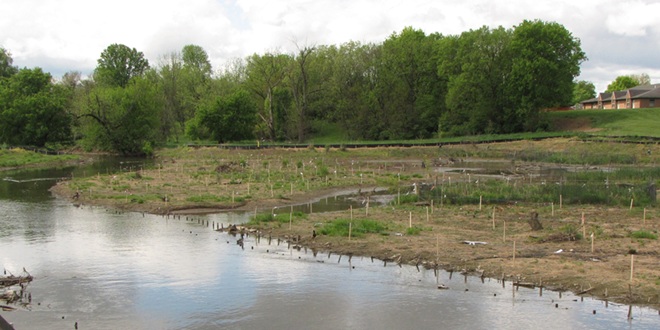
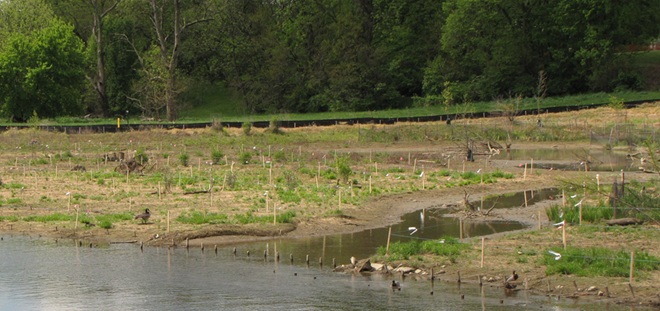
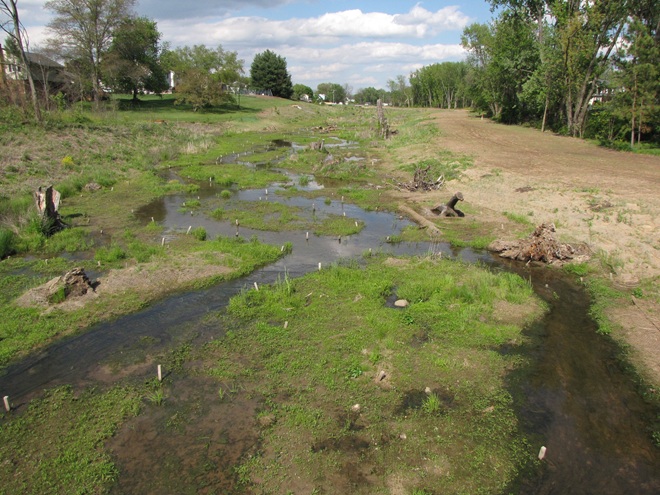
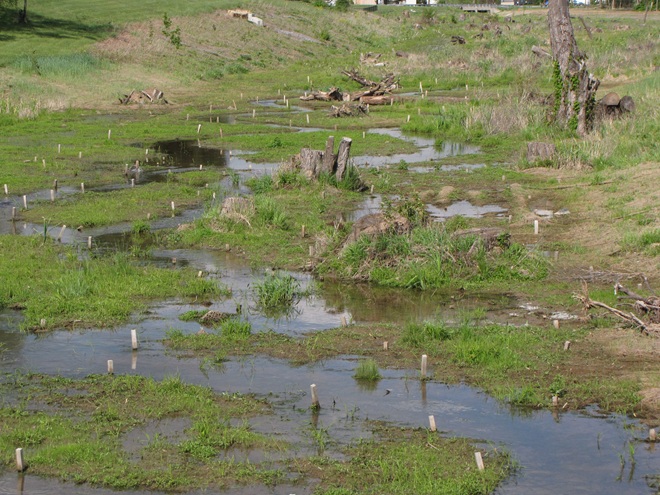
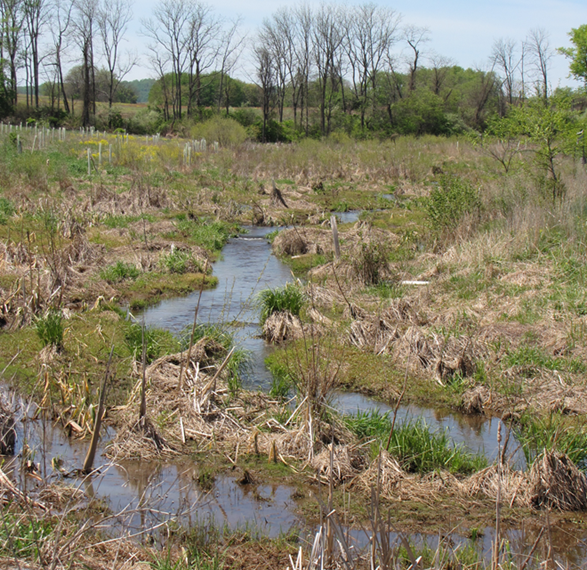
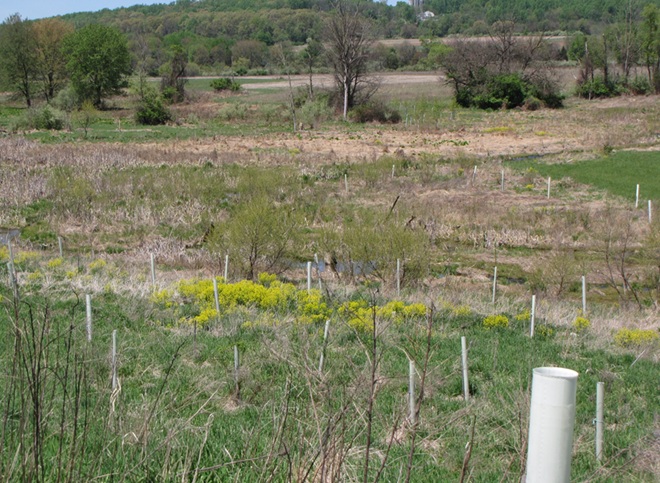
Floodplain restorations that include legacy sediment removal are often designed to reduce the impact of stormwater from sheet runoff, piped discharges, or conveyances such as eroded and excavated ditches like this one. Projects that restore floodplain functions including storing, filtering, and percolating runoff effectively can sometimes help municipalities and property owners meet regulatory stormwater requirements, including those under the Environmental Protection Agency’s MS4 (Municipal Separate Storm Sewer System) program.This floodplain restoration was completed during the past year along a segment of Little Conestoga Creek in Lancaster, Pennsylvania. Here the stream receives a heavy dose of stormwater runoff from shopping malls and other commercial properties with acres upon acres of paved parking space. Because they lack connection to any retention or detention systems, storm drains pipe runoff directly from the pavement into the creek from many of these properties.Legacy sediment removal eliminates the steep banks along the channelized creek. Braided stream courses were added to again connect the Little Conestoga to its historic floodplain and a complex of wetlands to help store, treat, and infiltrate stormwater.Removing legacy sediments brings an end to their practice of forcing detrimental high waters out to roam adjacent neighborhoods, putting floods back in the floodplain where they belong.Completed last year in conjunction with replacement of an aging sanitary sewer interceptor (buried to the right), this floodplain restoration removed legacy sediments and returned Conoy Creek in Lancaster County, Pennsylvania, to a natural, braided stream course.As part of the project, municipal storm drain discharges were withdrawn from the edge of the channelized stream to now flow runoff into the floodplain wetlands for storage, thermal moderation, nutrient sequestering, and infiltration. The braided stream design connects the waterway to these wetlands and helps restore the hyporheic functions between the Conoy and its underlying New Oxford Formation sandstone aquifer. This project helped the local municipality meet its MS4 (Municipal Separate Storm Sewer System) requirements.Following restoration, a braided stream design reconnects Cocalico Creek in Lancaster County, Pennsylvania, to its floodplain wetlands along this 3,867-foot segment near its headwaters. As part of the construction process, twenty-five acres of invasive growth was treated prior to the planting of 12.7 acres of native riparian buffer species. According to the Pennsylvania Department of Environmental Protection’s (DEP) project summary, annual pollutant load reductions resulting from this restoration are calculated to be 862,980 pounds of Total Suspended Sediments/year, 1,641 pounds of Total Nitrogen/year, and 426 pounds of Total Phosphorus/year.The stream and floodplain restoration on Cocalico Creek is beginning its fifth year since completion. It recreates marshlands that purify the stream’s waters while providing prime habitat for native plants and animals. See the LandStudies project summary here.Hammer time- Now under construction: after years of planning and preparations, a floodplain and stream restoration on Hammer Creek near Buffalo Springs in Lebanon County, Pennsylvania, returns this low-gradient segment to a meandering flow regime. Instead of a ditch between fields, it’ll once again be a creek connected to a nutrient-reducing wetland buffer.
Have an impaired stream and a floodplain full of legacy sediments on your land or in your neighborhood? Consider encouraging your municipality, volunteer watershed group, or county conservation district to investigate the possibilities of planning and installing one of these projects. They’re a great enhancement for recreational fisheries, a private refugium, or a community-owned passive park system. Funding assistance may be available, particularly when regulatory or conservation goals can be met by completing restoration.