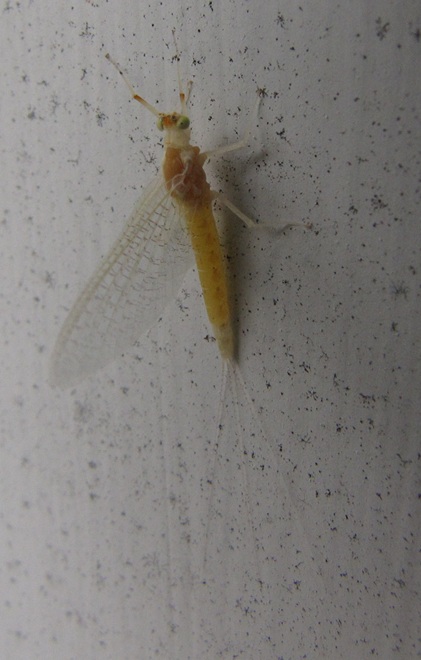
Balmy evenings and rising stream temperatures are yielding some sizeable flights of mayflies collectively known as sulfurs. These nuptial displays are most conspicuous as swarms attracted to bright lights near the waterways where the aquatic nymphs spent the past year or more before emerging to take wing for their brief period of adulthood. During the past two nights here at susquehannawildlife.net headquarters, we’ve noted what appear to be three different species of these tiny sulfurs gathering on the walls and doors below entry lamps. Each is referred to by anglers using the common name “Pale Evening Dun”.
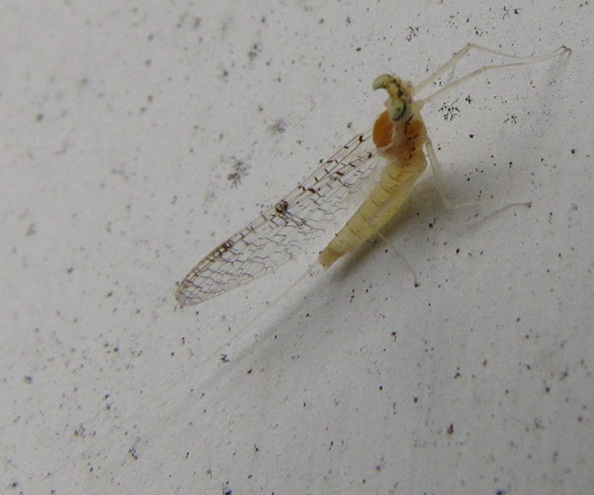
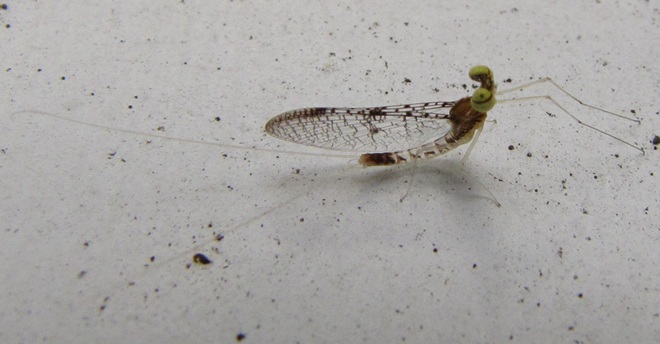
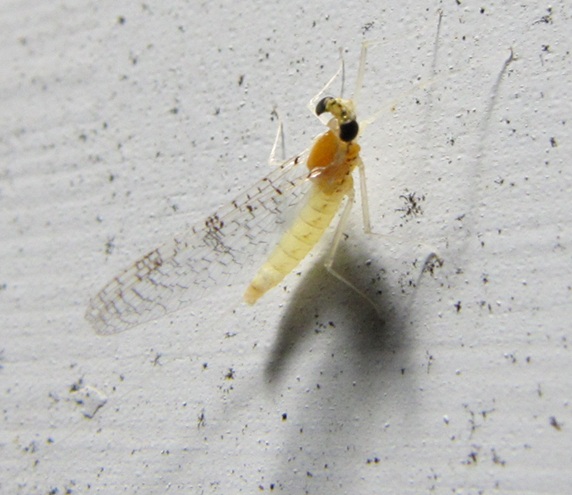
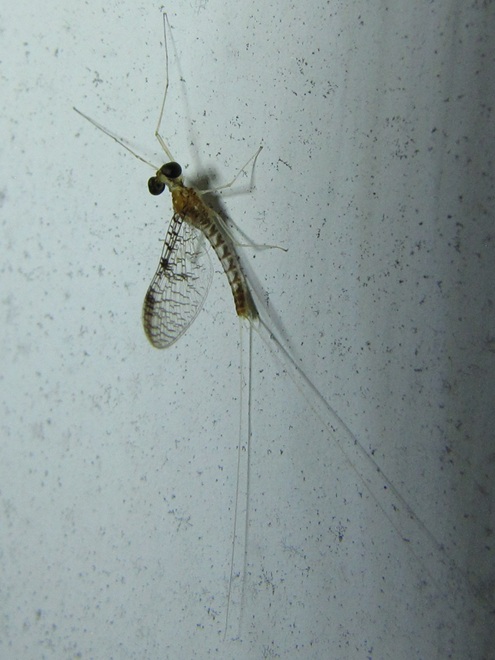
Flat-headed mayflies we believe to be Leucrocuta aphrodite, this one a subimago (sub-adult) yet to undergo its final molt, continue their emergence for a third week.Just one of many imago (adult) Leucrocuta aphrodite mayflies seen paying us a visit.Though similar in size to the prior specimens (about one half inch in length), this flat-headed mayfly subimago (sub-adult) may be a different species, possibly Leucrocuta minerva. We first noticed the arrival of these mayflies early last evening.A possible imago (adult) Leucrocuta minerva.Like the preceding mayflies, this sulfur is also referred to as the “Pale Evening Dun”, though you’ll notice it has three tails instead of two and is noticeably larger, approaching one inch in total length. Unlike the flat-headed mayflies (family Heptageniidae) which possess compressed bodies for clinging to rocks and other substrate in the riffles and pools of high-gradient streams, this spiny crawler mayfly (family Ephemerellidae) inhabits lower-gradient waters where it not only clings, but crawls and swims as a means of locomotion. The subimago (sub-adult) seen here is a member of the genus Ephemerella, probably the species E. dorothea. To many fly-tying anglers, it is also known as the “Pale Morning Dun”, the “Little Sulfur Mayfly”, or the “Summer Mayfly”.