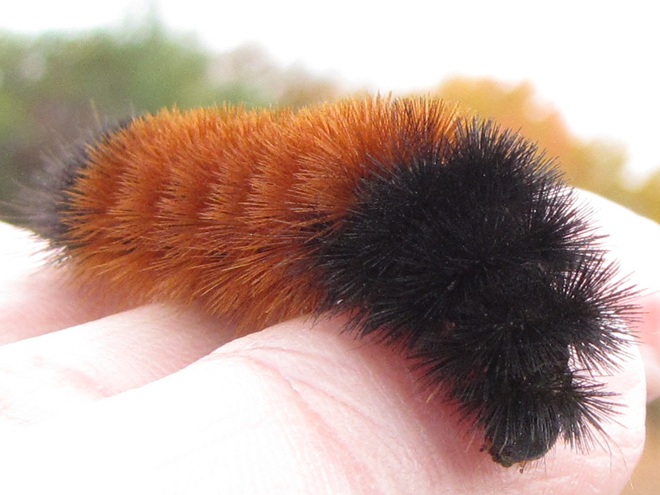
Known as the “woolly bear”, the larval stage of the Isabella Tiger Moth (Pyrrharctia isabella) is a familiar sight as it inches its way across Susquehanna valley roads and walkways throughout the autumn season. Folklore promotes the “woolly bear” caterpillar as a prognosticator of the winter weather to come. The typical method of reading a “woolly bear’s” forecast: the more extensive the rust-brown color, the milder the season ahead. Some true believers go as far as using the relative amount of black at each end of the larva to predict the severity of the early winter (head end) vs. late winter (posterior end), with lots of black indicating harsher conditions and minimal black signaling milder weather. Research has shown that the color patterns on “woolly bear” caterpillars are mostly random, with individuals in the same brood displaying a variety of the black to rust-brown color combinations, so even among siblings, there is no consensus on a winter forecast. Isabella Tiger Moths are quite successful largely due to the “woolly bear” caterpillars role as a generalist feeder, choosing from a diverse array of host plants for nourishment (sunflowers, asters, maple, birch, etc.). After nibbling throughout the late summer and fall, “woolly bears” become conspicuous as they seek a place of shelter for the winter. They don’t rely on a chancy forecast but instead try to find refuge against the worst the cold season might offer. As frigid conditions arrive, the “woolly bear’s” heart stops and its tissues freeze, protected by cryoprotectant proteins and compounds until its body functions resume following the spring thaw. Surviving caterpillars pupate and transform into flying adult Isabella Tiger Moths soon after. There are often two broods each year. WARNING: This specimen was being handled by a trained lunatic. DO NOT try this with a “woolly bear” or any other spiny caterpillar, lest you shall surely suffer the consequences.