Shocking News

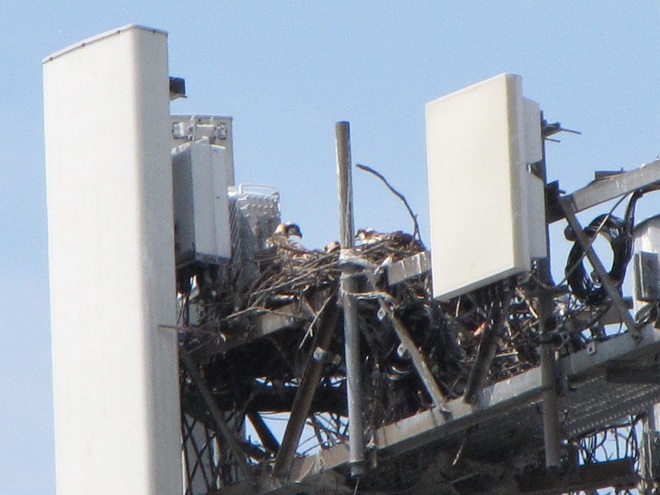
Juvenile Osprey in Nest
The cackle of Osprey nestlings emanating from atop this communications tower adjacent to Wildwood Lake in the Susquehanna River floodplain in Harrisburg, Pennsylvania, begins at sunrise and continues throughout the day.  These fast-growing raptors are begging for food.
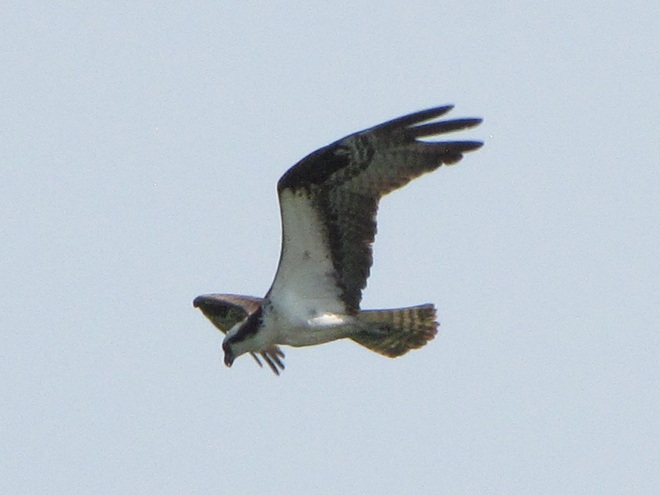
Osprey Searching for Fish
The adult birds respond by searching endlessly for enough fish to keep these hungry mouths full, though seldom silent.
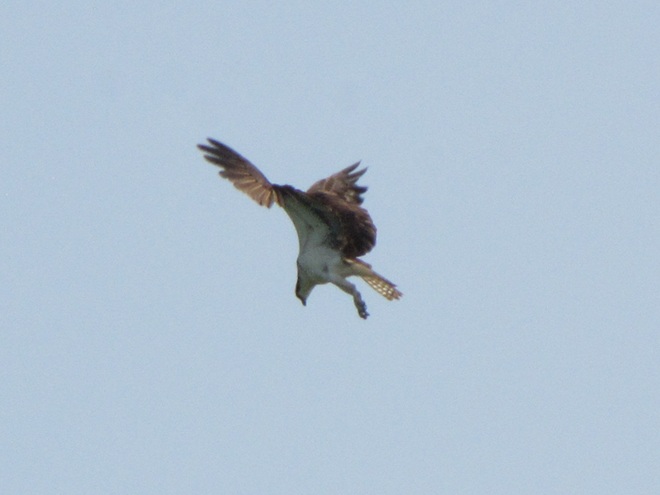
Osprey Hovering
Upon sighting a potential catch, the mature Osprey hovers before plunging talons and head first to seize its prey. The parents supplying their offspring in this particular nest were hauling in mostly non-native species, especially small Common Carp, fish that are easily located as they roam the shallows of the lake and nearby river.
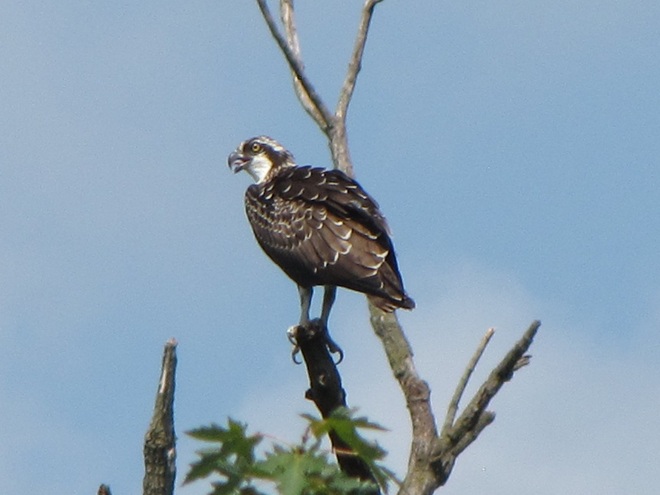
Juvenile Osprey
On recent afternoons, the oldest of the young has ventured off the nest into tree snags along the lakeshore where its cries for a meal in an attempt to intercept mom and pop before they have a chance to carry fish to its younger siblings in the nest.

Little do these raptors know that coming years may not prove so ideal for their reproduction here or elsewhere along this stretch of the Susquehanna.  Within recent weeks, Northern Snakeheads, the dastardly demons that are decimating fisheries in the lower-most reaches of the river and its tributaries in Maryland, were reported in the Paxton Creek watershed in Pennsylvania—both at Wildwood Lake in Harrisburg and upstream in the impoundment at Susquehanna Township’s Boyd Park.  The specimen at Boyd Park was caught by an angler on May 29th and destroyed.  Upon being notified, biologists from the Pennsylvania Fish and Boat Commission (PF&BC) electrofished the lake on June 2nd and found no further evidence of non-native Northern Snakeheads there.  Downstream at Wildwood Lake, county park staff reported sightings of a snakehead in the shallow waters of a flooded segment of the ruins of the Pennsylvania Canal on July 15th.  The electrofishing crew from the PF&BC surveyed the area on the 17th and found no snakeheads.  These reports follow an event in mid-October of 2023 when an angler caught a Northern Snakehead on the west side of the Susquehanna in an impoundment at Grantham Park on Trout Run, a tributary of the Yellow Breeches Creek.  The angler, unfamiliar with snakehead identification, released the fish.  After it was reported to PF&BC representatives, they and staff from Upper Allen Township, owners of the park, implemented “rapid response measures” to control the invasive pests.
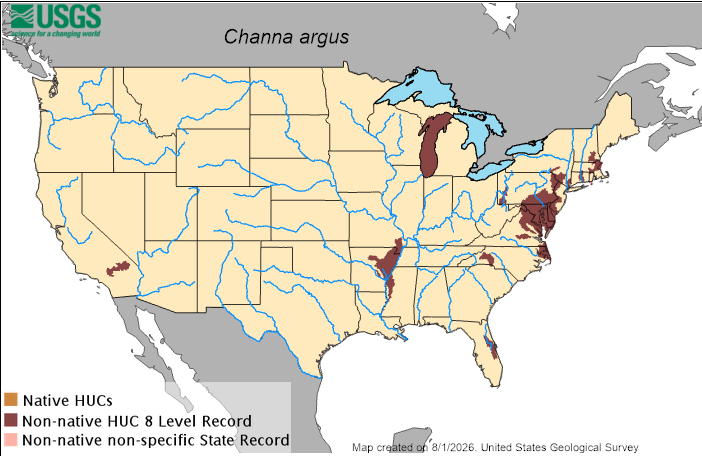
The latest map produced by the United States Geological Survey’s Nonindigenous Aquatic Species Program shows the range of the invasive, non-native Northern Snakehead.  That range now includes the Lower Susquehanna River Watershed in Pennsylvania.

This news doesn’t mean the gig is up.  Anglers should learn to identify Northern Snakeheads (see our “Fishes” page) and are required to dispatch them upon capture.  It remains illegal to transport or possess live snakeheads. It is also forbidden to release/stock snakeheads or any other fish into Commonwealth waters without permission from the PF&BC.

Angler with Northern Snakehead at Conowingo Dam
Northern Snakeheads were imported from Asia as a food fish and escaped makeshift aquaculture attempts to become apex predators in numerous North American waters.  They reproduce quickly as they expand their range and decimate both native and non-native fish populations.  They are easily angled and excellent eating, but cannot be transported or possessed alive, so kill ’em when you catch ’em.  Whether or not Osprey will be able to adapt to these altered fisheries remains to be seen.  The presence of snakeheads could rapidly eliminate infested waterways from the nesting ranges of these and other piscivorous birds.