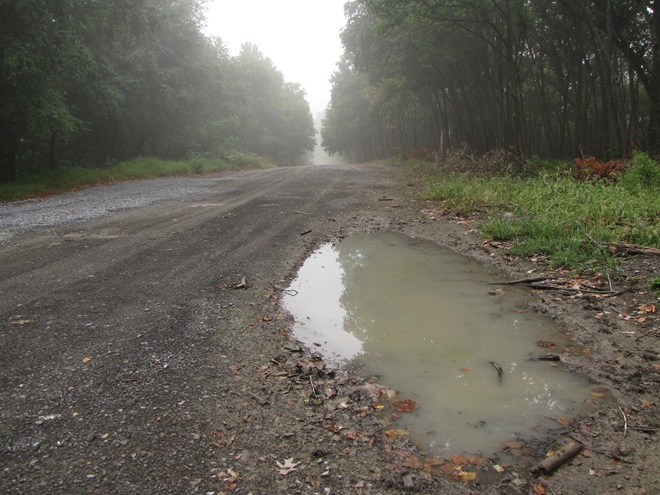
It looks irresistible—doesn’t it? To members of the gasoline and gunpowder gang and for exuberant youthful wannabes, this puddle alongside a forest road has “let’s go muddin'” written all over it. It’s an opportunity to rev ‘er up and slash on through to lay waste to those placid waters while draping the car, truck, cycle, or ATV with gobs of soggy slop. It’s an act of spectacular courage that afterward deserves a lap among one’s peers to display the cakes of dried muck worn as decorations of honor.
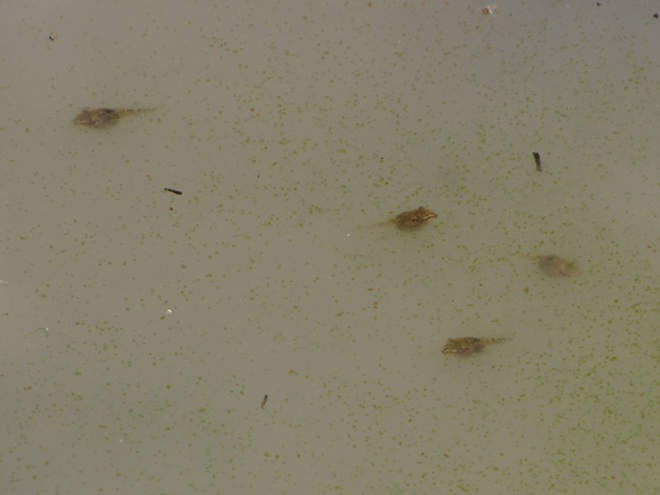
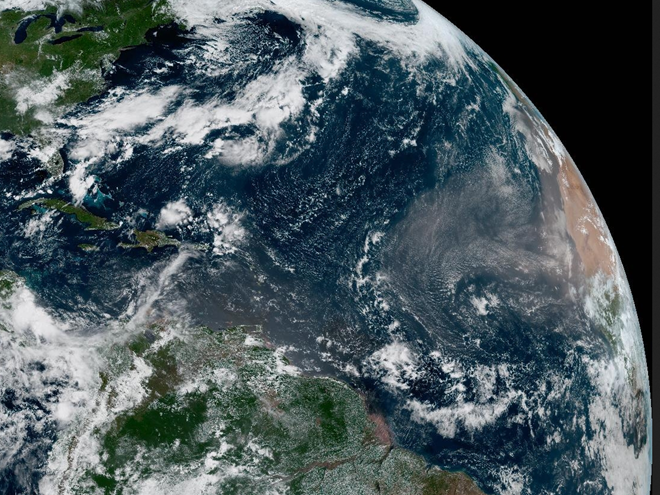
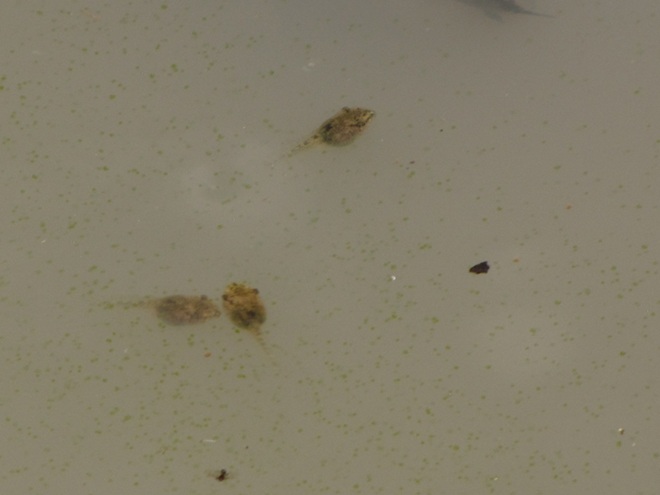
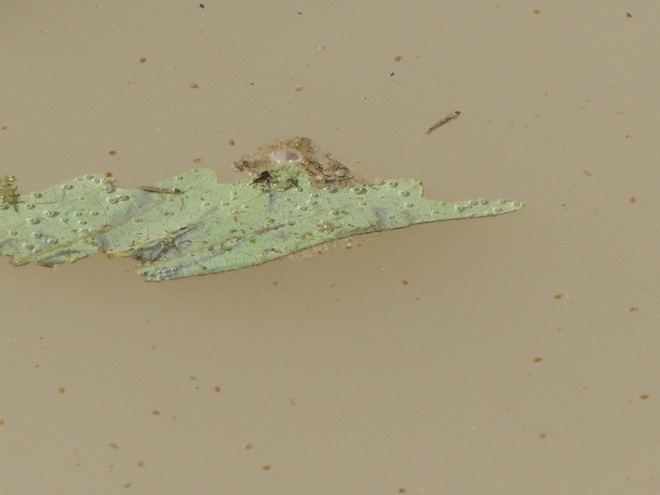
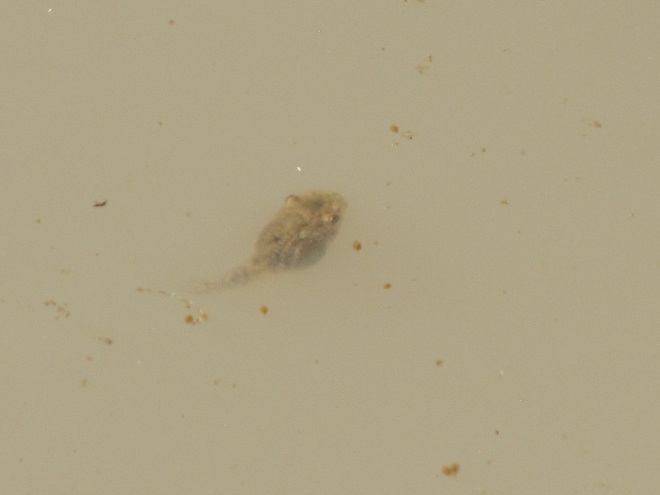
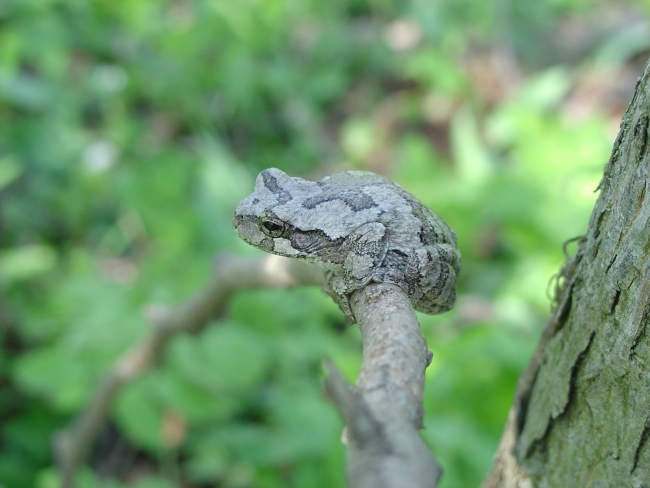
A pool of rainwater along a forest road isn’t a mud puddle until subjected to the hedonistic impulses of a dopamine-craving operator of a motor vehicle of other conveyance. In many areas, these puddles often provide the only remaining ephemeral waters available to reproducing amphibians and other forms of life. Their presence along linear roads may help prevent population fragmentation, facilitating genetic mixture to eliminate inbreeding among otherwise isolated colonies of toads, frogs, and salamanders.In this pool, we found about four dozen Gray Tree Frog (Dryophytes versicolor) tadpoles feeding on tiny green clusters of diatoms. Diatoms are microscopic phytoplankton that grow in almost any water that contains the silica necessary for the formation of their cell walls. During photosynthesis, diatoms generate as much as half the world’s supply of oxygen and fix enormous quantities of carbon dioxide. They may make up half the biomass of global oceans. As rain rehydrates dried up puddles along forest roads, diatoms are frequently the first sign of life to return.The dust clouds that blow from the African Sahara to fertilize the Amazon Basin and the waters of the Caribbean are largely the silicate-rich remains of long-dead diatoms. (NOAA/GOES-19 image)Live diatoms are an ideal starter food for small consumers like these Gray Tree Frog tadpoles.Tree frogs aren’t the only thing eating diatoms in the rain pool, Daphnia, seen here as rufous-brown specks, are a zooplankton often called “water fleas”. Their eggs are durable and can withstand periods when the puddle has no water. Another consumer of diatoms, and an ideal tadpole food, is mosquito larvae. They hatch within days of adults finding the pool and depositing eggs. Two worm-like Anopheles mosquito larvae are seen here, one in the water atop the upper middle portion of the leaf and the second floating to its upper right. In eastern North America, this genus of mosquitos includes the Anopheles quadrimaculatus complex, the Common Malaria Mosquitos from which the disease-causing Plasmodium parasites have been eradicated in our region.After starting life as primary consumers feeding upon diatoms, Gray Tree Frog tadpoles become secondary consumers, snapping up mosquito eggs and larvae as well as the plentiful Daphnia.A Gray Tree Frog tadpole feeding on Daphnia, a minute crustacean sometimes known as a “water flea”.The Gray Tree Frog tadpoles we found in this roadside pool will mature this fall to live an arboreal life among the trees of the forest. Next year, they may return to the same puddle ecosystems where they themselves were born to mate, lay eggs, and start a new generation. (United States Fish and Wildlife Service image by Sara Hollerich)
Knowing what you now know, how could you ever go crashing through a rain pool again? You wouldn’t want to leave your mother worrying that she raised an eternally adolescent jackass, would you? Or worse yet, a sociopath? After all, you’d never drive up on a sidewalk full of puppies, would you?