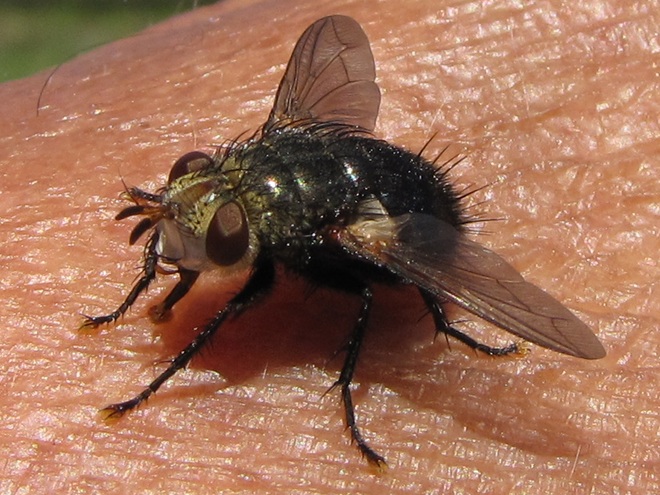
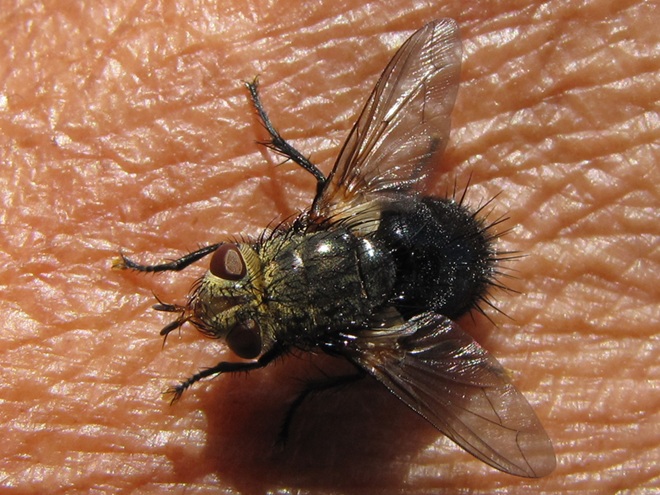
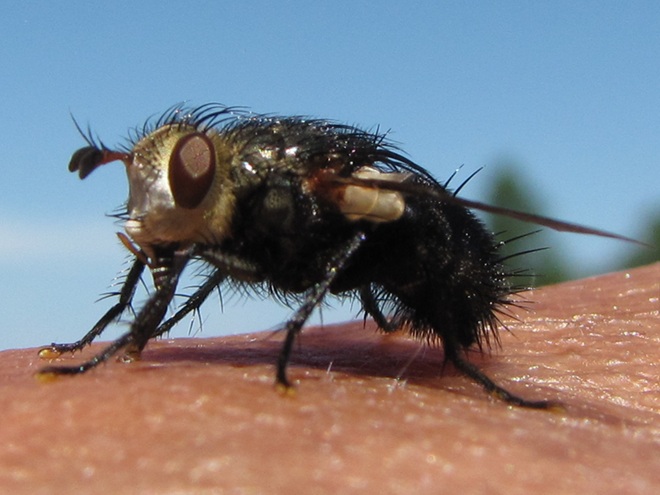
While finding a fly alighting upon a putrefying piece of meat wouldn’t seem all that unusual, you may be surprised to know that this fly has no real attraction to dead and decaying animals at all. This adult tachinid fly, probably Archytas apicifer, is a nectar-feeding pollinator of flowering plants. And this rotting chunk of carne is just the editor’s wrist from which it is lapping up some salt and other minerals.Archytas apicifer, commonly called the White-faced Tachinid Fly, is particularly fond of blooming asters. But, like other tachinids, its larvae are parasitoids, reaching maturity while feeding internally upon hosts that include a variety of larval insects, especially moth caterpillars, which they eventually kill. Archytas apicifer scatters its eggs among the plants its host species will feed upon. After hatching, each fly larva crawls to a strategic lookout and waits for an unsuspecting host to pass by. Given the opportunity, it burrows into the suitable caterpillar’s flesh where it will feed on its tissues until the host succumbs to the overwhelming demands of the fly larva’s growth. The fly pupates just outside the host’s lifeless body before maturing to take wing as a breeding adult.Also named the Hornworm Tachinid Fly, Archytas apicifer is an unsung hero around forest and farm. Known hosts for its parasitic larvae include a number of the larval moths we routinely regard as pests: corn earworm, tomato fruit worm, cutworms, tent caterpillars, and fall webworms. Want these beneficial flies around? Of course you do. But you’ve got to stop saturating the ground and plants with pesticides first. Then start growing massive stands of asters and other wildflowers instead of mowing them down before they have a chance to flower in the fall. That’s a start.