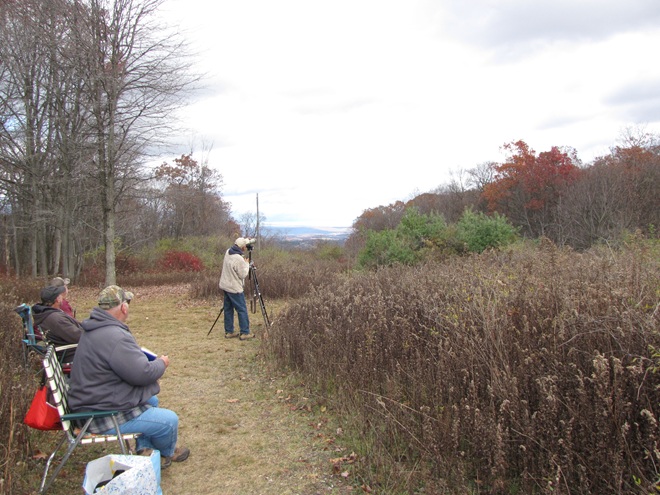
Join us while we pay a visit to the Route 183 Hawk Watch located on the west side of its eponymous roadway on Blue Mountain in Berks/Schuylkill Counties, Pennsylvania.
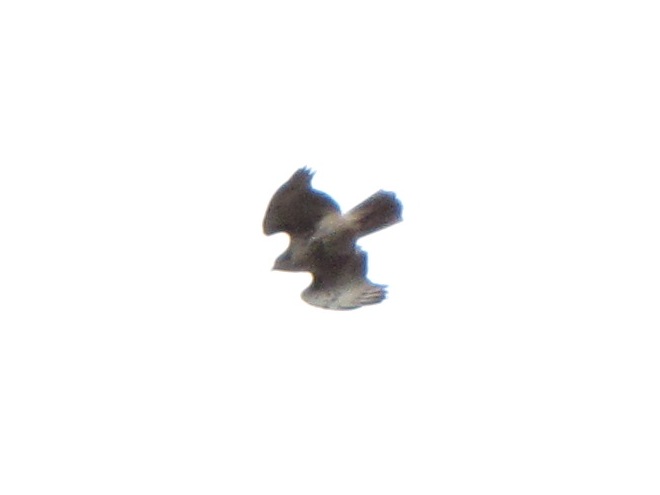
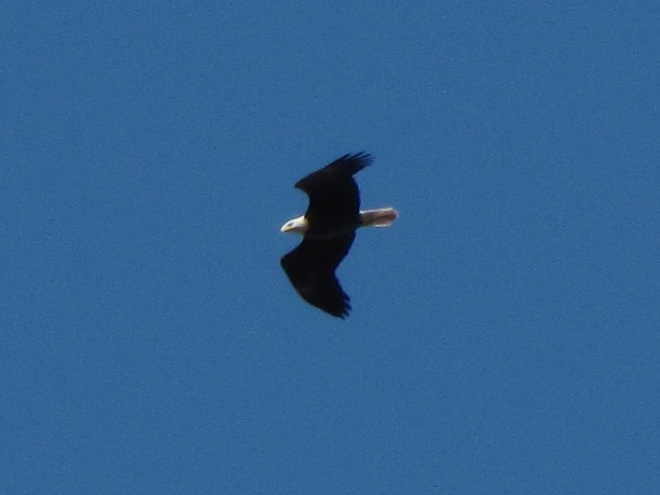
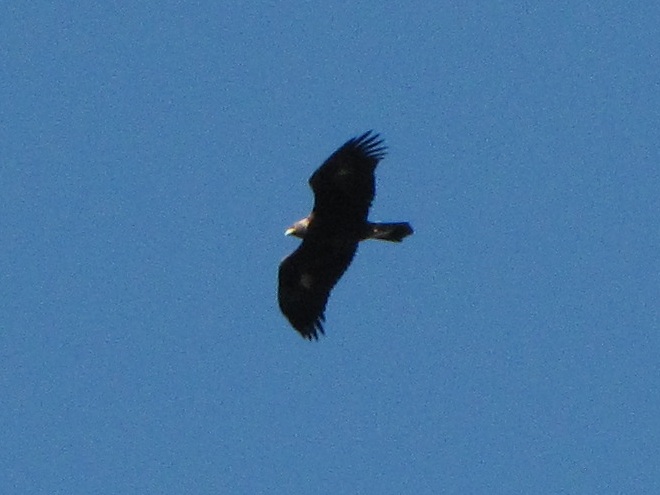
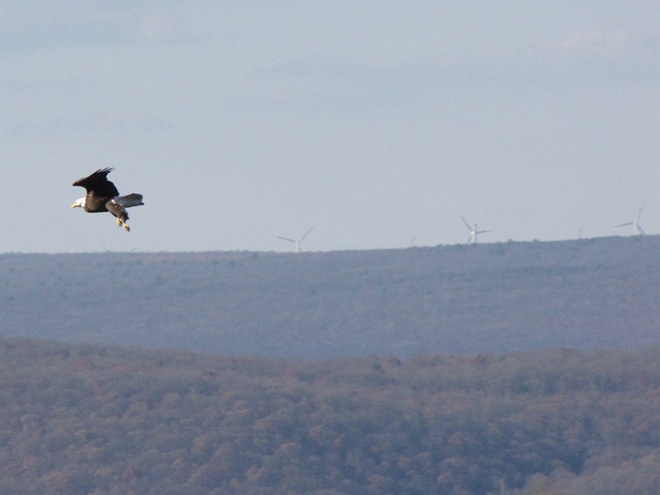
The Route 183 Hawk Watch is the easternmost diurnal raptor counting station in the Lower Susquehanna River Watershed. Counters and observers spend autumn days enumerating not only the hawks, eagles, and falcons that transit its lookout atop Blue Mountain, they eagerly census other migrating animals including songbirds, loons, ducks, geese, butterflies, and more. Regulars at this site are especially friendly and welcome visitors to join in the search for whatever may be passing through. You can even drop in while hiking the Appalachian National Scenic Trail, which happens to blaze its path just a few steps to the south of the viewing post.On a breezy afternoon earlier this week, the big birds of November were on the move. Red-tailed Hawks in particular kept the crew ever vigilant for another southbound raptor.During days with a stiff northwest wind, Bald Eagles in double digit numbers are a regular occurrence this year.The much-anticipated peak of the Golden Eagle migration is underway right now as well.
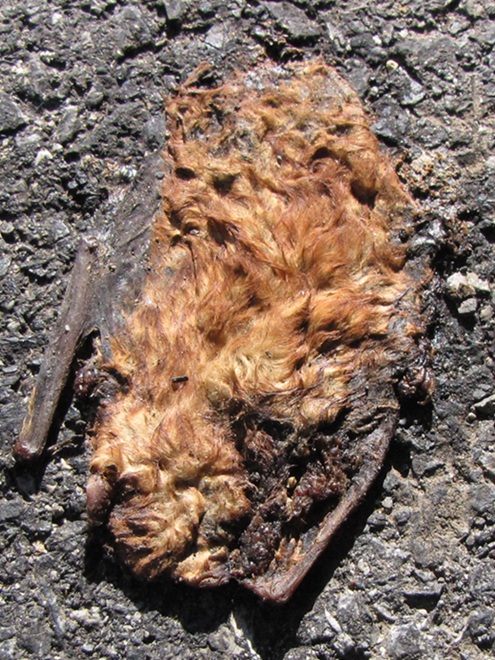
A MAMMAL WE WOULD HAVE RATHER SEEN FLYING PAST THE LOOKOUT
During their autumn migrations, Eastern Red Bats (Lasiurus borealis) were, until recent years, a fairly regular annual sighting at regional hawk watches. They are the most likely of our local species to be seen snagging moths and other flying insects during the afternoon, particularly late in the season when cold weather starts to hasten their need for energy. Though the Eastern Red Bat has been known to harbor the Pseudogymnoascus destructans fungus responsible for the deadly white-nose syndrome, it has not been found with the disease. Its solitary arboreal “tree bat” lifestyle has largely protected it from the precipitous declines being experienced by colonial species of bats that winter en masse in caves and frequently spend the summer in similar crowded situations within nurseries, perfect settings for the transmission of disease, particularly one caused by a fungus. The Eastern Red Bat’s moderate drop in numbers can instead be attributed to a variety of other factors. Habitat loss and collapsing populations of prey insects have had a significant impact. For this particular bat though, the probable cause of death was a result of the species’ habit of leisurely flying along forest edges in search of moths and similar fare; it was struck by a fast-moving motor vehicle along four-lane Route 183 where it crests Blue Mountain at the hawk watch. It’s certainly not the way we wanted to see an Eastern Red Bat.Eagles aren’t the only animals falling victim to wind turbines. Eastern Red Bats are second only to another migratory “tree bat”, the Hoary Bat (Lasiurus cinereus), in chiropteran fatalities documented at generating sites due to blade strikes and barotraumas (Kunz, et.al., 2007).
For more information on the Route 183 Hawk Watch and other raptor-counting stations in the lower Susquehanna region, visit our “Hawkwatchers Helper: Identifying Bald Eagles and other Diurnal Raptors” page by clicking the tab at the top of this page. If you do plan stop by at the Route 183 Hawk Watch, please drive, approach, park, and exit/enter your vehicle carefully. Despite the site being located at the peak of the mountain, the traffic along Route 183 is moving at merciless speeds.
SOURCES
Kunz, T.H., Arnett, E.B., Erickson, W.P., Hoar, A.R., Johnson, G.D., Larkin, R.P., Strickland, M.D., Thresher, R.W. and Tuttle, M.D. 2007. “Ecological Impacts of Wind Energy Development on Bats: Questions, Research Needs, and Hypotheses. Frontiers in Ecology and the Environment. 5: pp.315-324. https://doi.org/10.1890/1540-9295(2007)5[315:EIOWED]2.0.CO;2