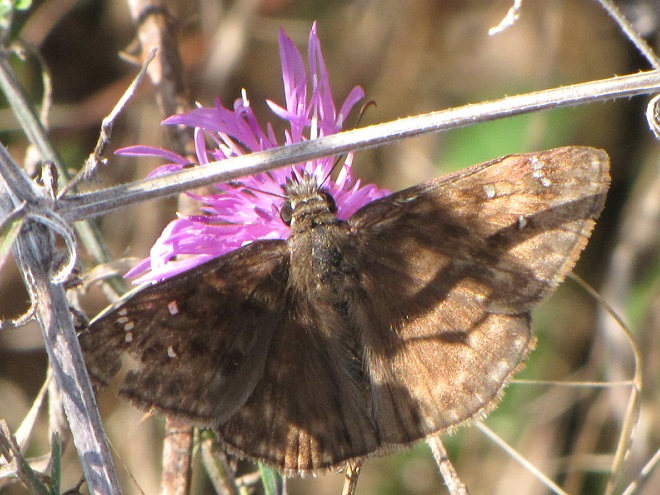
Photo of the Day

LIFE IN THE LOWER SUSQUEHANNA RIVER WATERSHED
A Natural History of Conewago Falls—The Waters of Three Mile Island
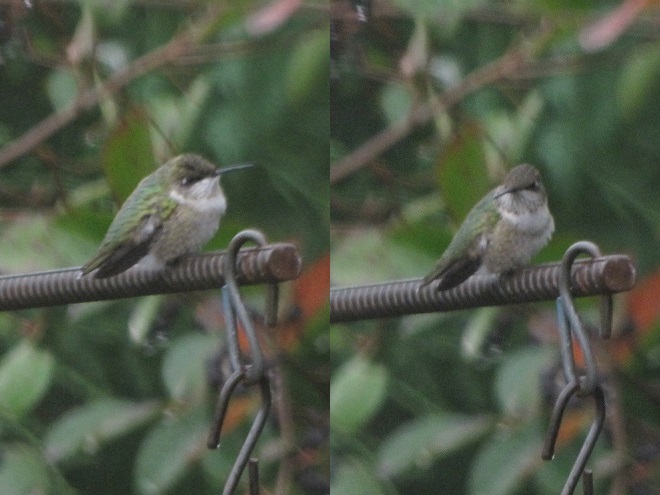
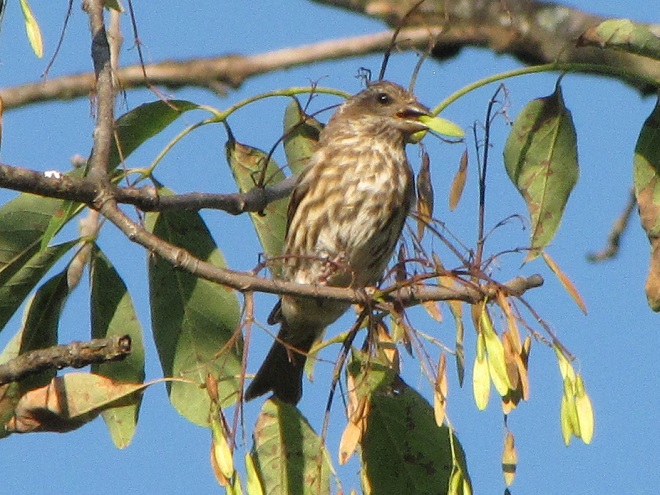
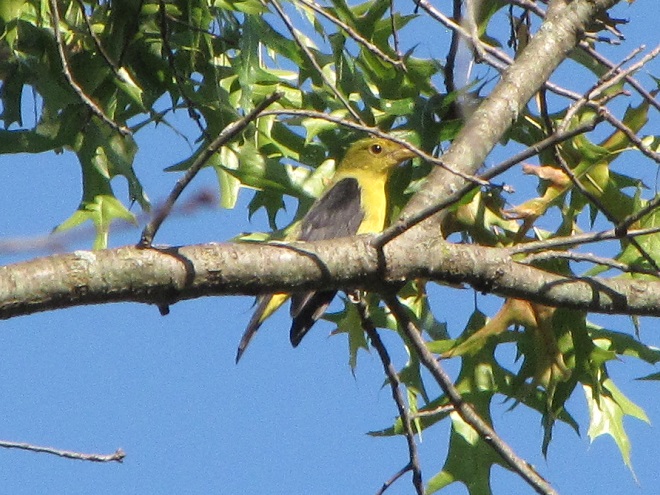

First there was the Nautilus. Then there was the Seaview. And who can forget the Yellow Submarine? Well, now there’s the S. S. Haldeman, and today we celebrated her shakedown cruise and maiden voyage. The Haldeman is powered by spent fuel that first saw light of day near Conewago Falls at a dismantled site that presently amounts to nothing more than an electrical substation. Though antique in appearance, the vessel discharges few emissions, provided there aren’t any burps or hiccups while underway. So, climb aboard as we take a cruise up the Susquehanna at periscope depth to have a quick look around!

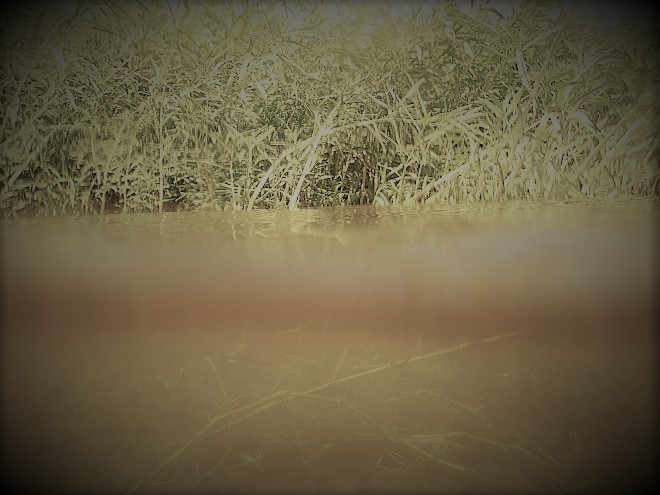

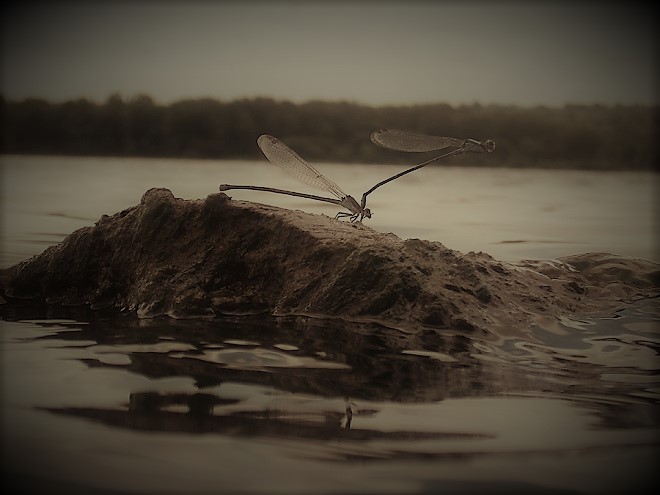
Watertight and working fine. Let’s flood the tanks and have a peek at the benthos. Dive, all dive!
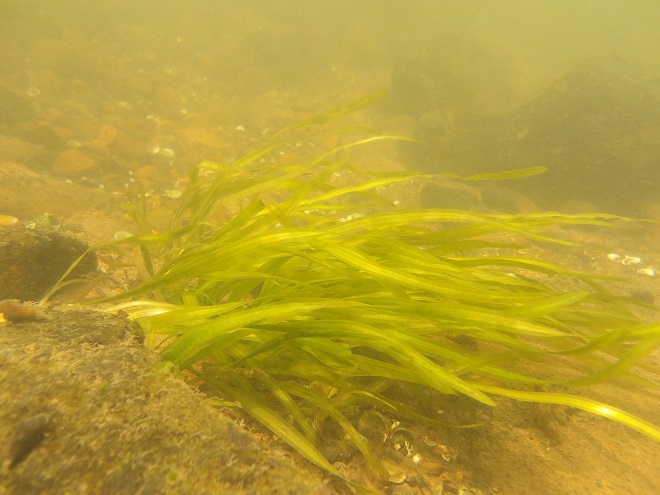


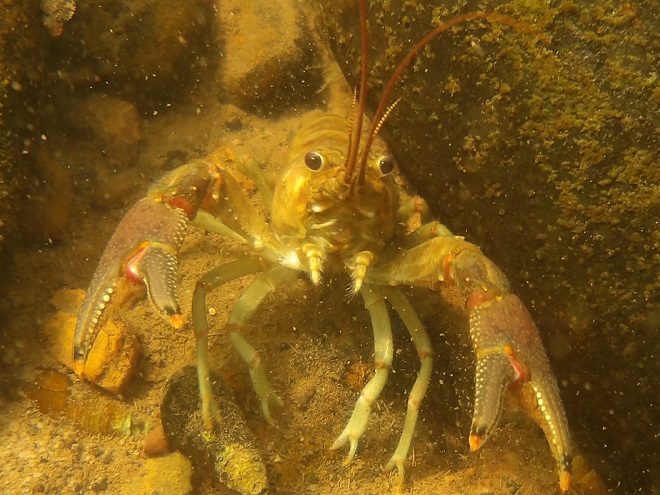
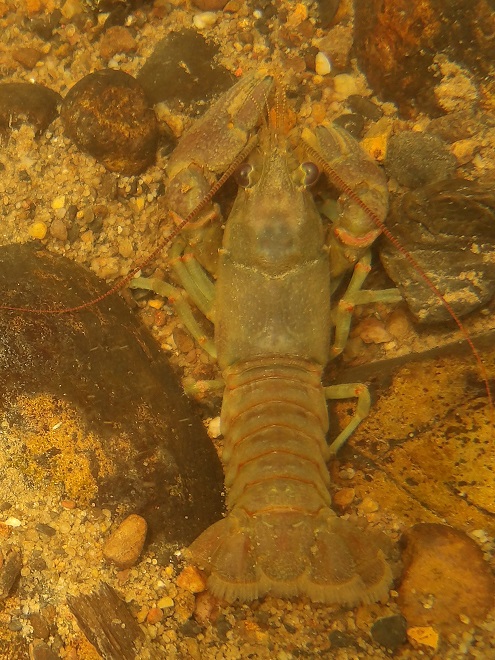
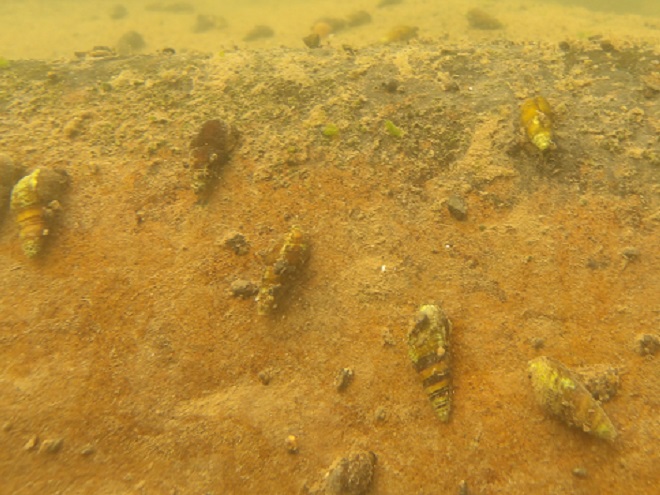
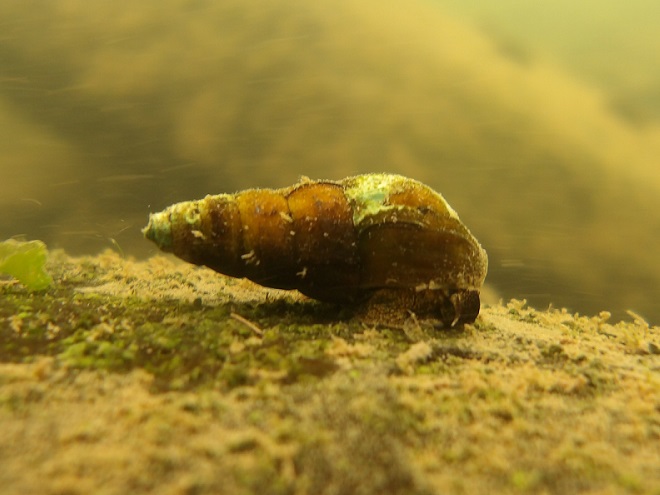
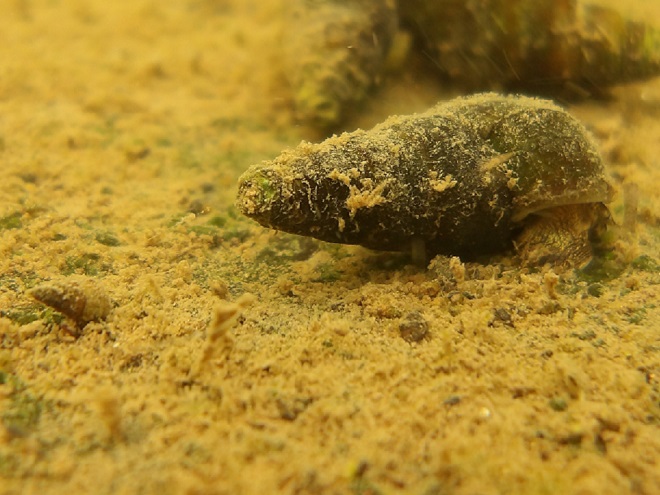
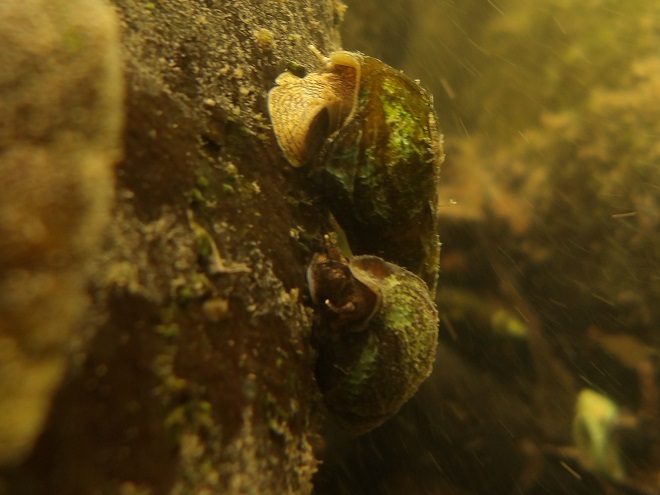
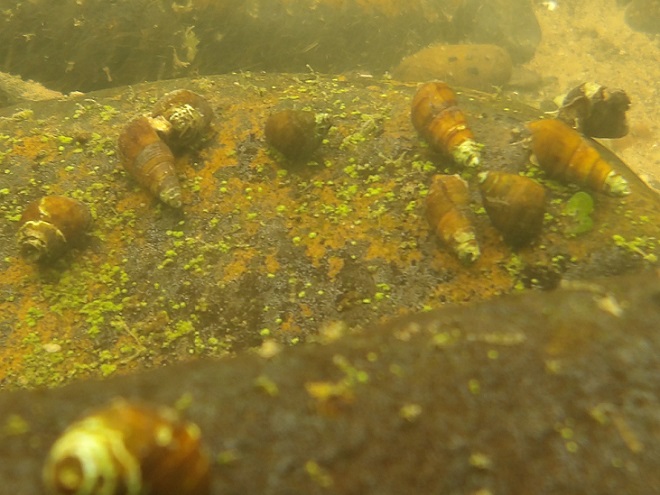
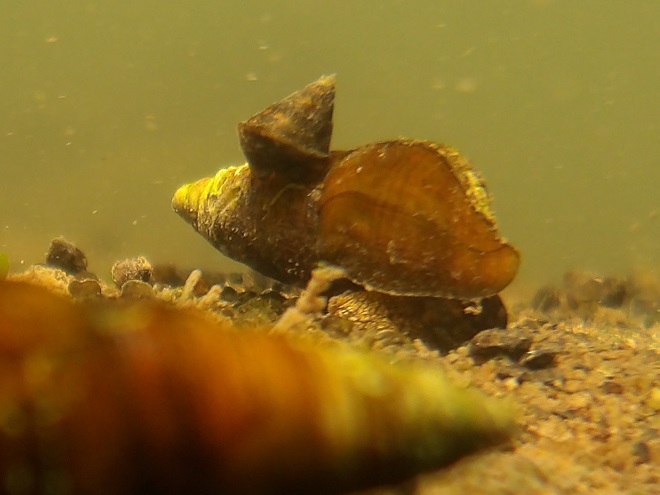
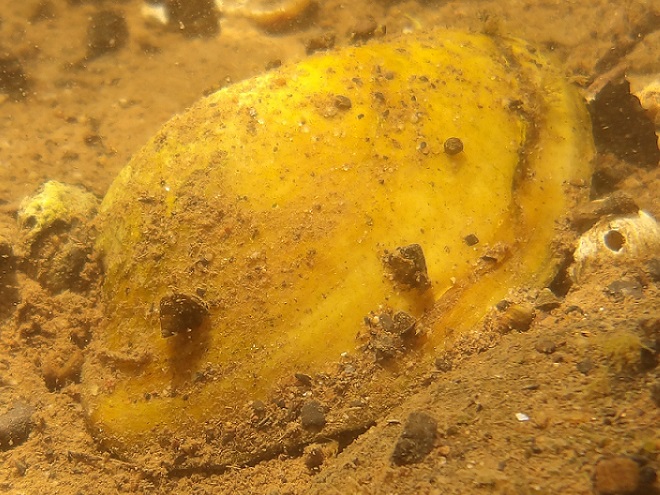
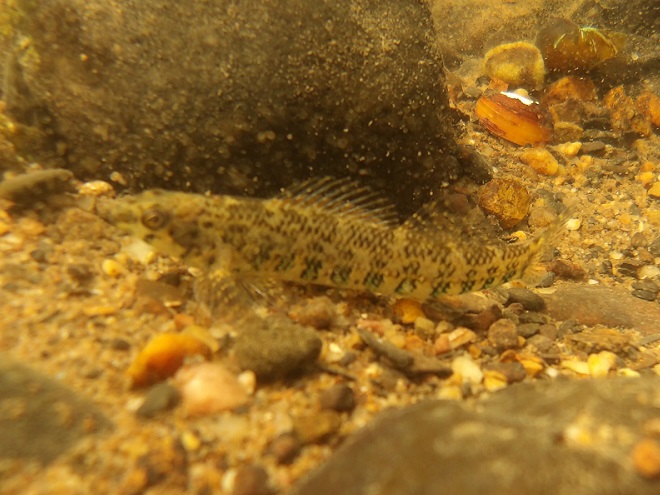
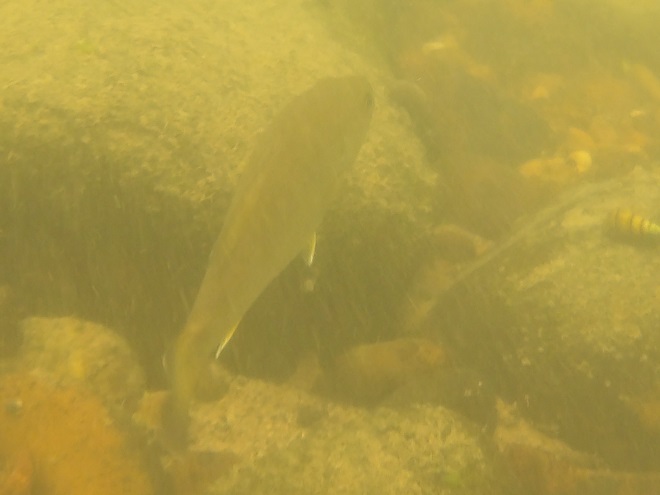
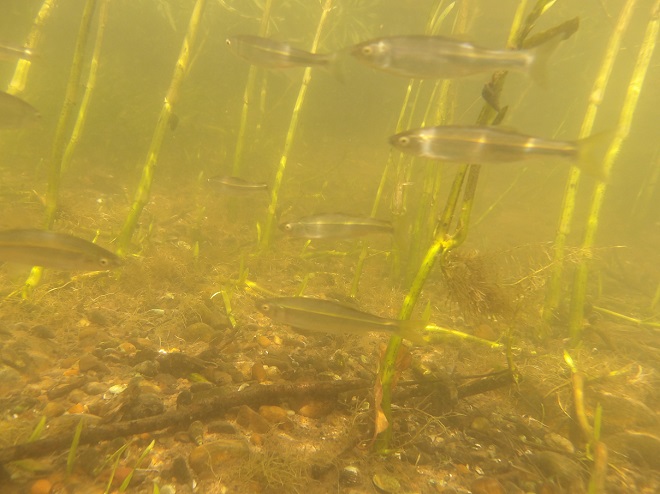
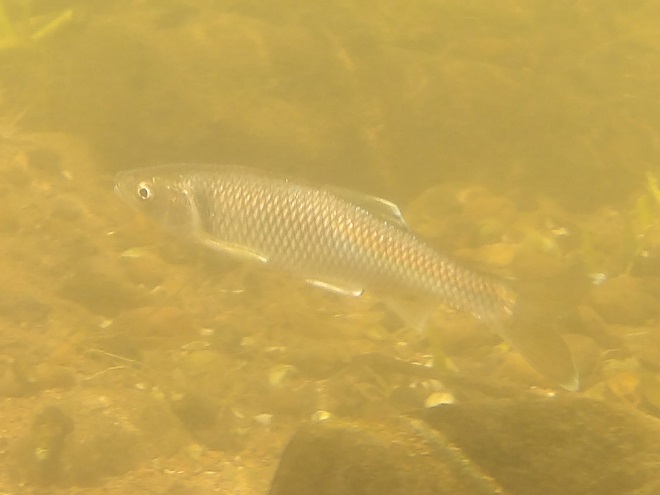
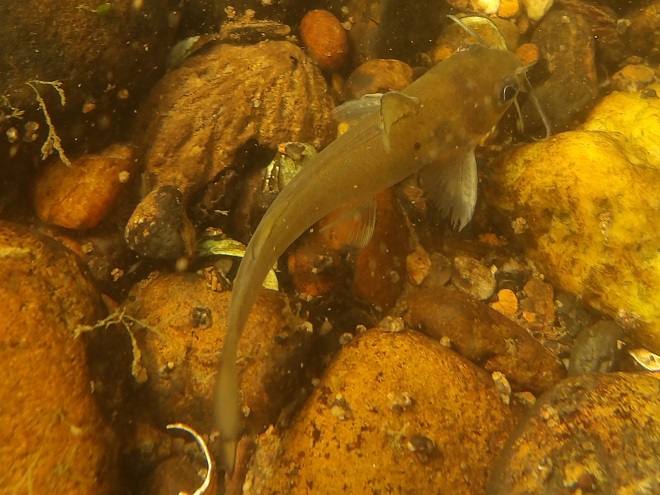
We’re finding that a sonar “pinger” isn’t very useful while running in shallow water. Instead, we should consider bringing along a set of Pings—for the more than a dozen golf balls seen on the river bottom. It appears they’ve been here for a while, having rolled in from the links upstream during the floods. Interestingly, several aquatic species were making use of them.

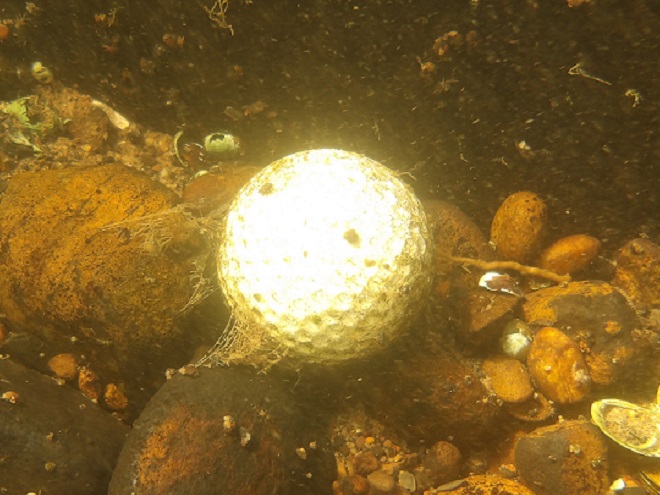
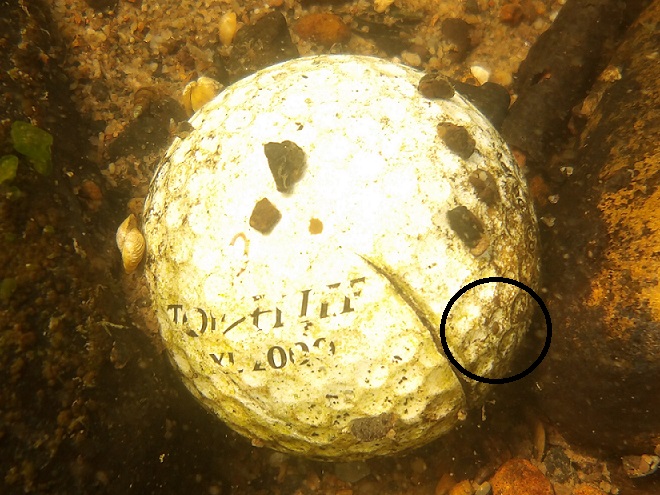

Well, it looks like the skipper’s tired and grumpy, so that’s all for now. Until next time, bon voyage!
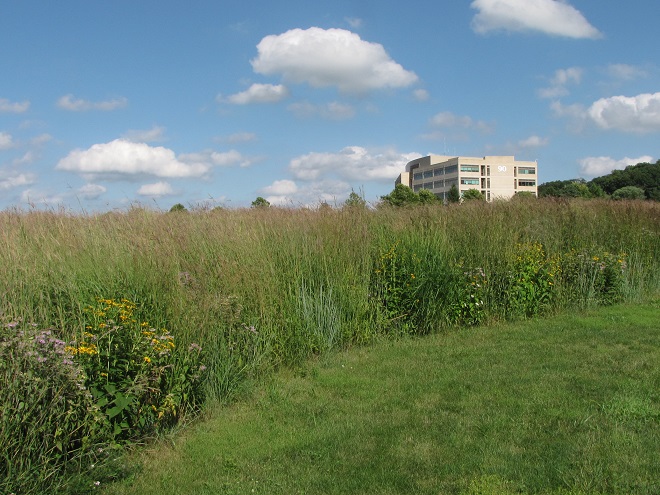
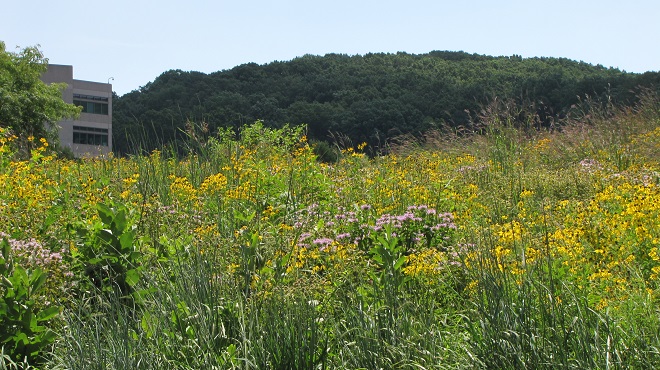
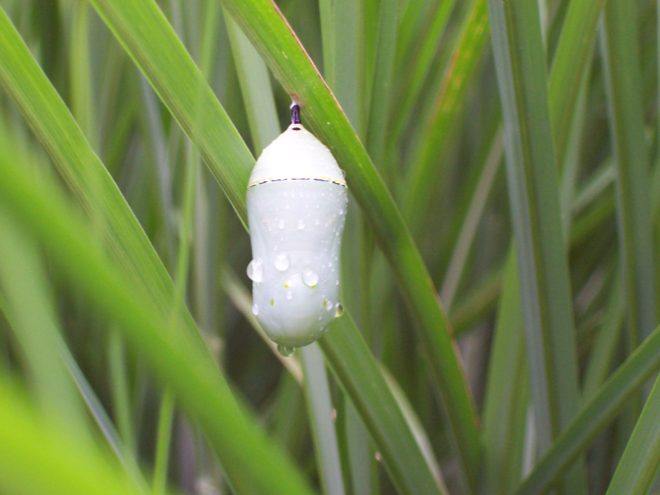
This month, the International Union for Conservation of Nature (I.U.C.N.) added the Migratory Monarch Butterfly (Danaus plexippus plexippus) to its “Red List of Threatened Species”, classifying it as endangered. Perhaps there is no better time than the present to have a look at the virtues of replacing areas of mowed and manicured grass with a wildflower garden or meadow that provides essential breeding and feeding habitat for Monarchs and hundreds of other species of animals.
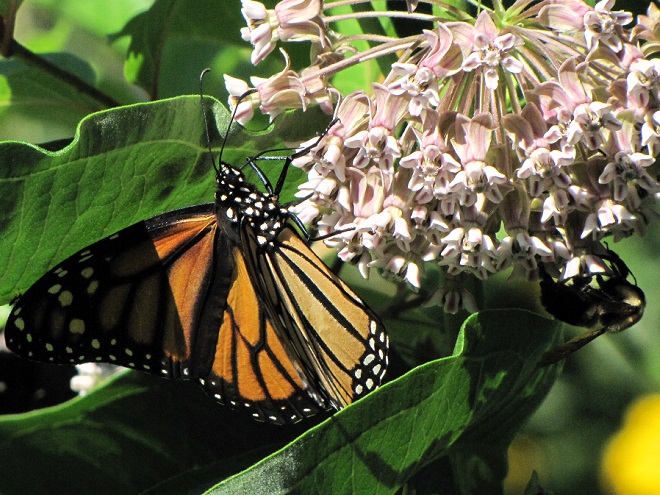
If you’re not quite sure about finally breaking the ties that bind you to the cult of lawn manicuring, then compare the attributes of a parcel maintained as mowed grass with those of a space planted as a wildflower garden or meadow. In our example we’ve mixed native warm season grasses with the wildflowers and thrown in a couple of Eastern Red Cedars to create a more authentic early successional habitat.
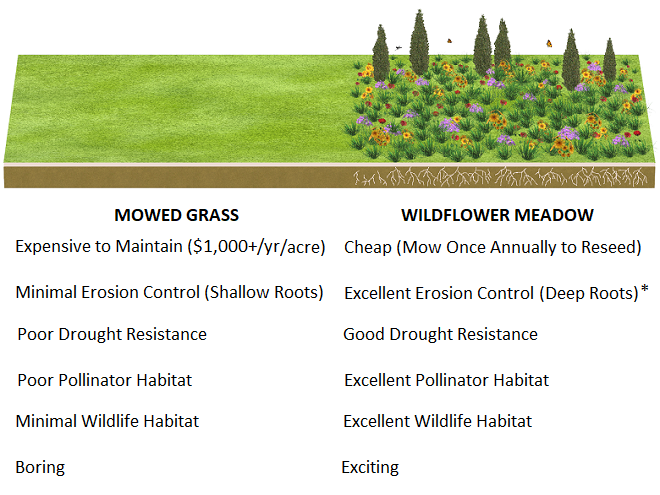
Still not ready to take the leap. Think about this: once established, the wildflower planting can be maintained without the use of herbicides or insecticides. There’ll be no pesticide residues leaching into the soil or running off during downpours. Yes friends, it doesn’t matter whether you’re using a private well or a community system, a wildflower meadow is an asset to your water supply. Not only is it free of man-made chemicals, but it also provides stormwater retention to recharge the aquifer by holding precipitation on site and guiding it into the ground. Mowed grass on the other hand, particularly when situated on steep slopes or when the ground is frozen or dry, does little to stop or slow the sheet runoff that floods and pollutes streams during heavy rains.
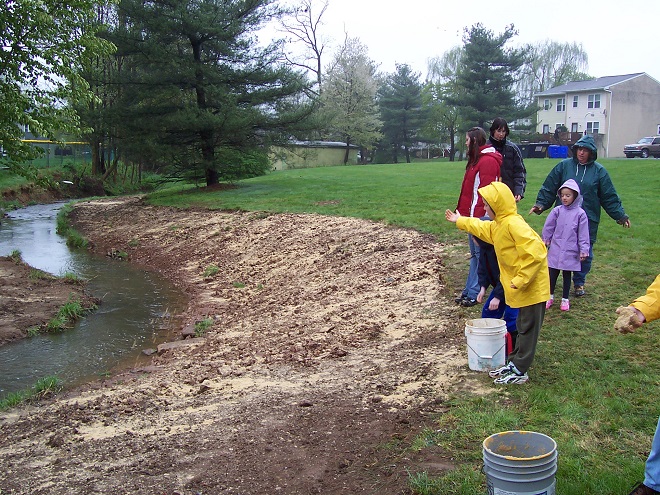
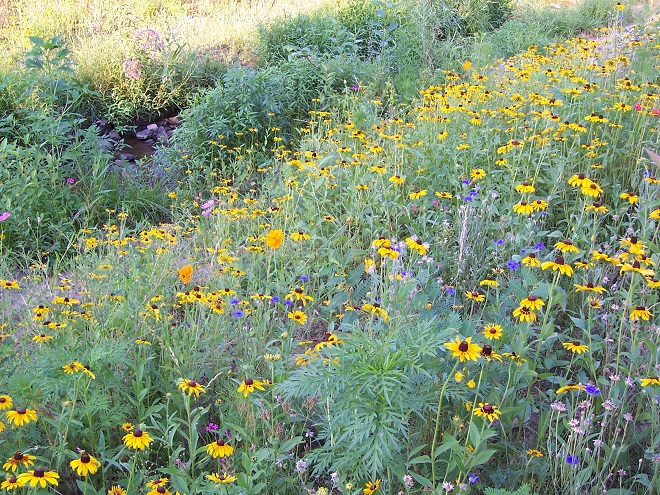
What if I told you that for less than fifty bucks, you could start a wildflower garden covering 1,000 square feet of space? That’s a nice plot 25′ x 40′ or a strip 10′ wide and 100′ long along a driveway, field margin, roadside, property line, swale, or stream. All you need to do is cast seed evenly across bare soil in a sunny location and you’ll soon have a spectacular wildflower garden. Here at the susquehannawildllife.net headquarters we don’t have that much space, so we just cast the seed along the margins of the driveway and around established trees and shrubs. Look what we get for pennies a plant…
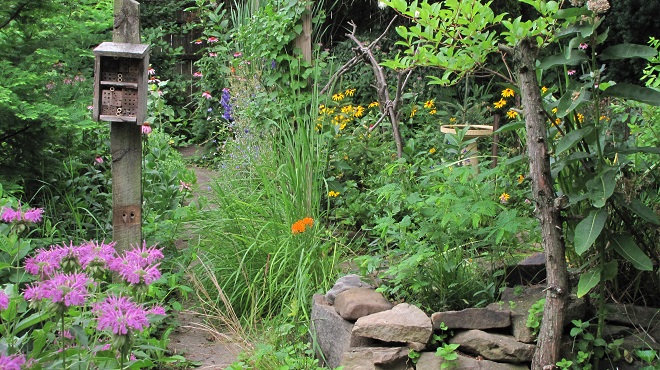
Here’s a closer look…
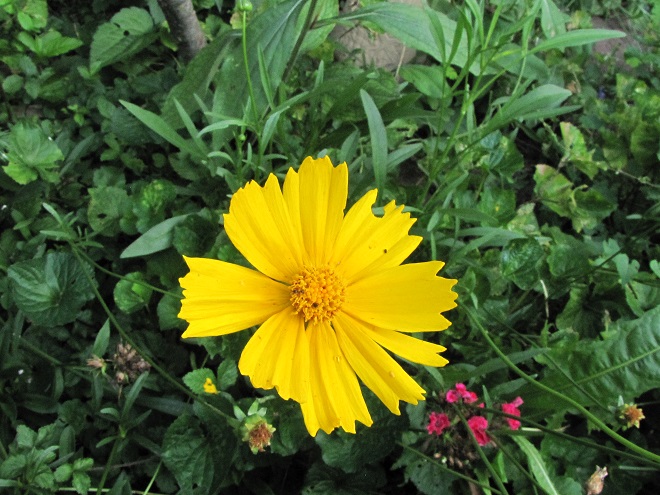
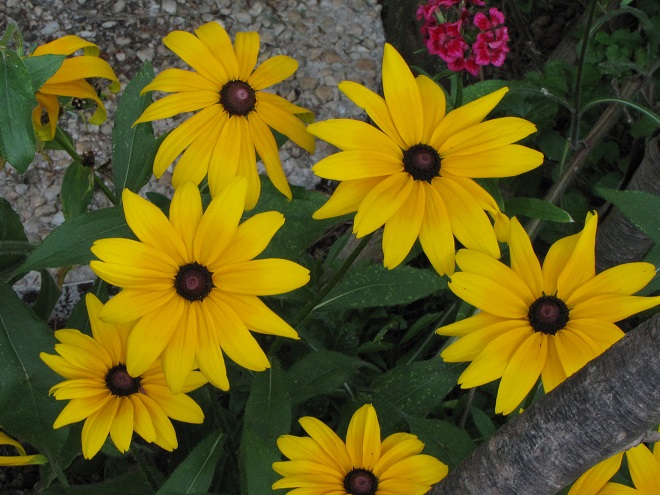
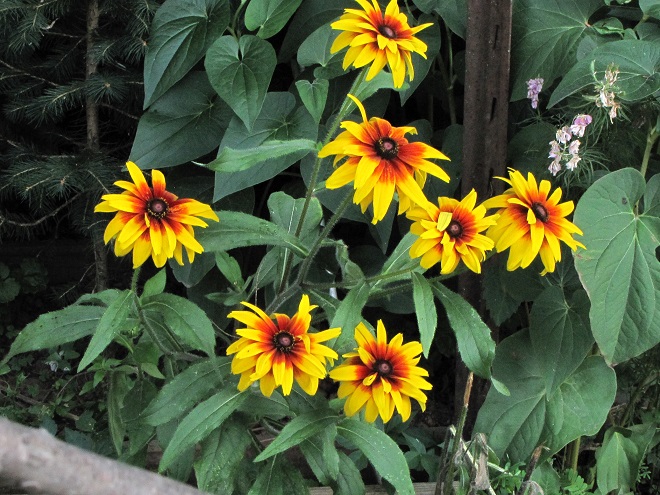
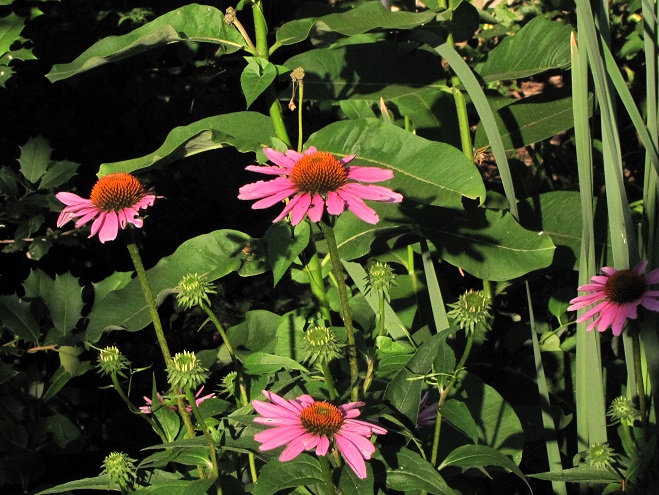
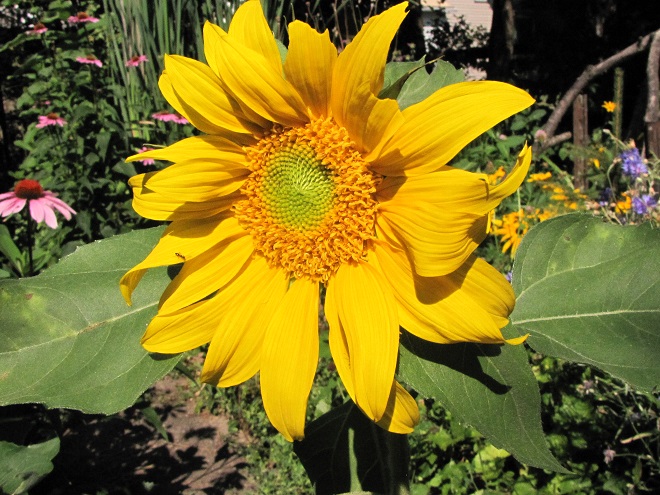
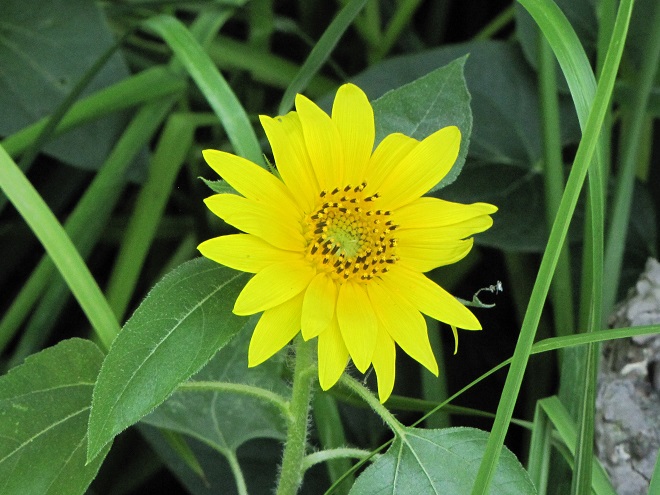
All this and best of all, we never need to mow.
Around the garden, we’ve used a northeast wildflower mix from American Meadows. It’s a blend of annuals and perennials that’s easy to grow. On their website, you’ll find seeds for individual species as well as mixes and instructions for planting and maintaining your wildflower garden. They even have a mix specifically formulated for hummingbirds and butterflies.
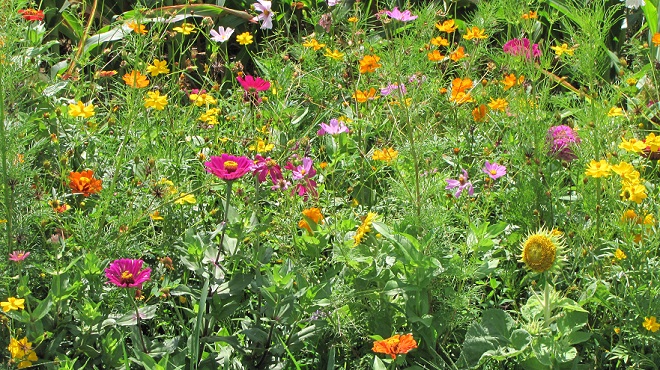
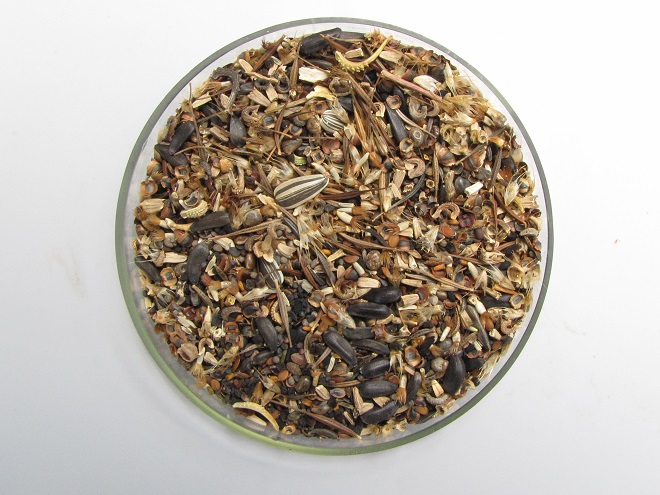
Nothing does more to promote the spread and abundance of non-native plants, including invasive species, than repetitive mowing. One of the big advantages of planting a wildflower garden or meadow is the opportunity to promote the growth of a community of diverse native plants on your property. A single mowing is done only during the dormant season to reseed annuals and to maintain the meadow in an early successional stage—preventing reversion to forest.
For wildflower mixes containing native species, including ecotypes from locations in and near the Lower Susquehanna River Watershed, nobody beats Ernst Conservation Seeds of Meadville, Pennsylvania. Their selection of grass and wildflower seed mixes could keep you planting new projects for a lifetime. They craft blends for specific regions, states, physiographic provinces, habitats, soils, and uses. Check out these examples of some of the scores of mixes offered at Ernst Conservation Seeds…
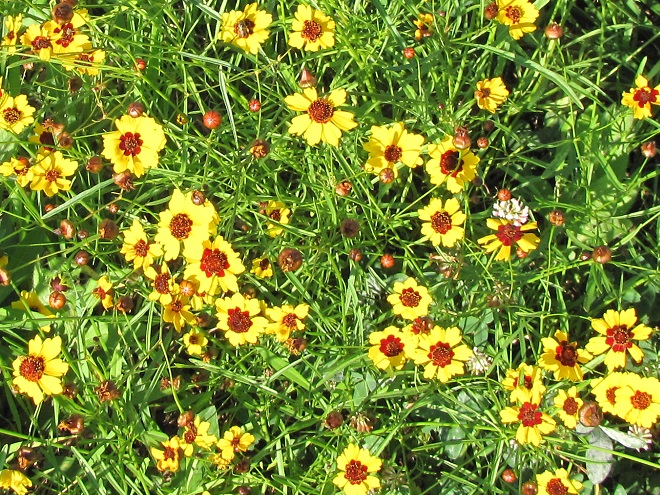
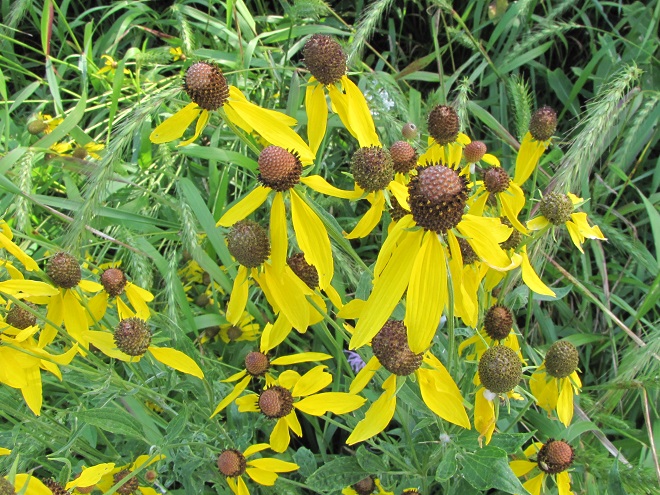
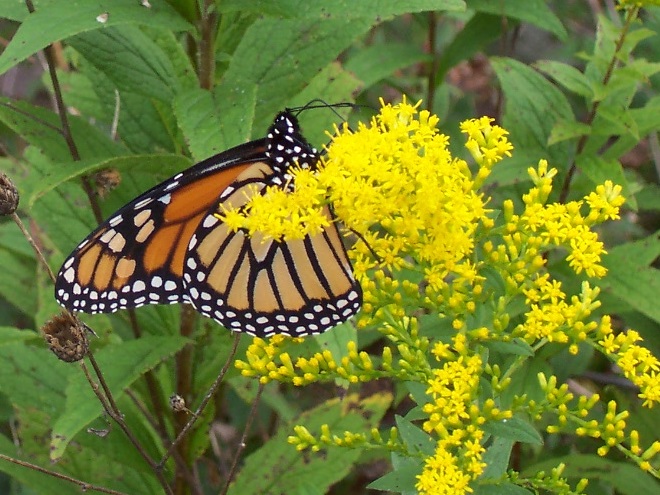
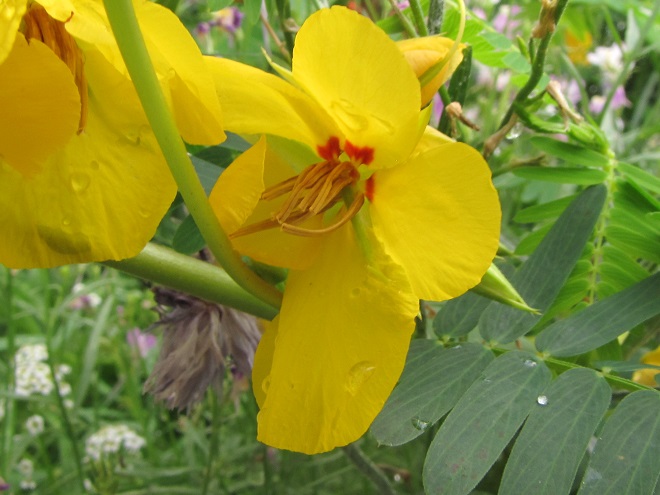
We’ve used their “Showy Northeast Native Wildflower and Grass Mix” on streambank renewal projects with great success. For Monarchs, we really recommend the “Butterfly and Hummingbird Garden Mix”. It includes many of the species pictured above plus “Fort Indiantown Gap” Little Bluestem, a warm-season grass native to Lebanon County, Pennsylvania, and milkweeds (Asclepias), which are not included in their northeast native wildflower blends. More than a dozen of the flowers and grasses currently included in this mix are derived from Pennsylvania ecotypes, so you can expect them to thrive in the Lower Susquehanna River Watershed.
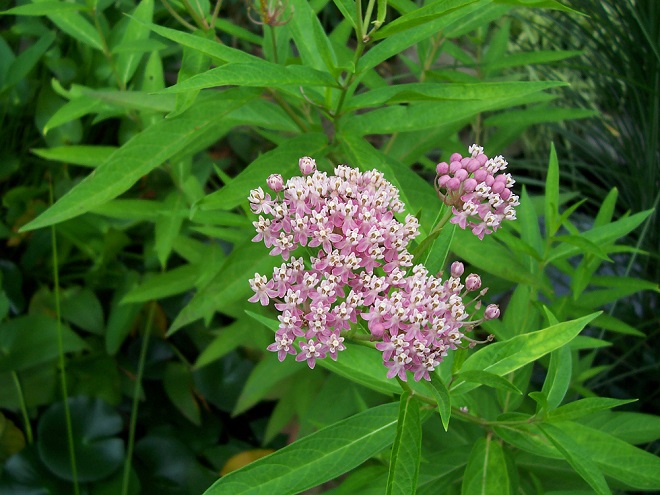
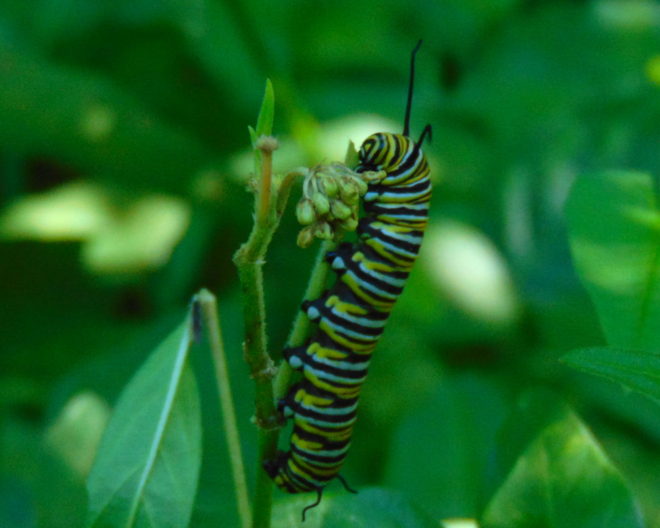
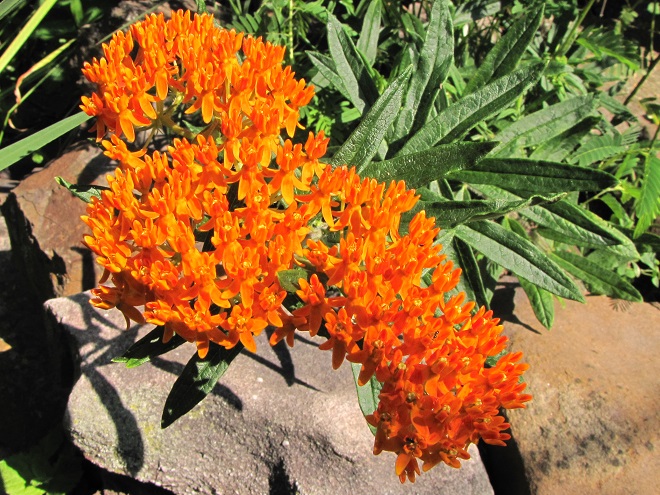
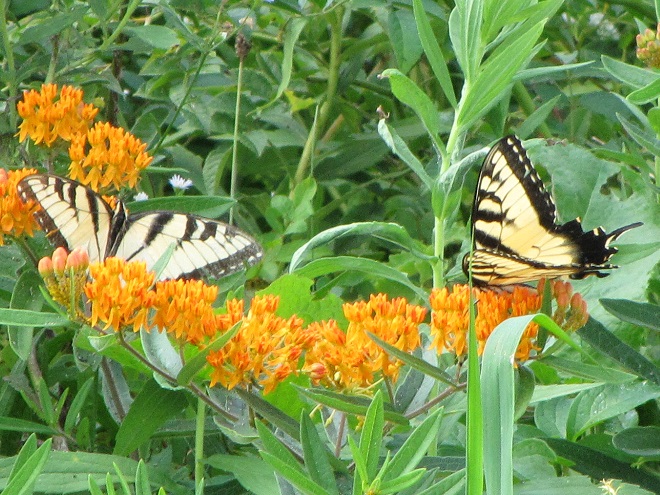
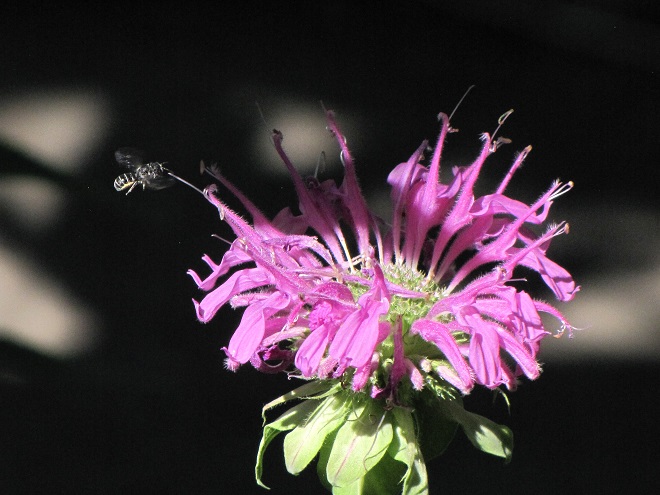
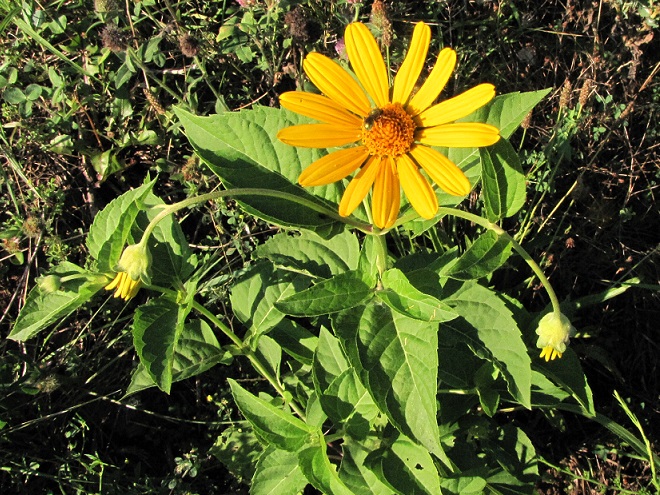
In addition to the milkweeds, you’ll find these attractive plants included in Ernst Conservation Seed’s “Butterfly and Hummingbird Garden Mix”, as well as in some of their other blends.
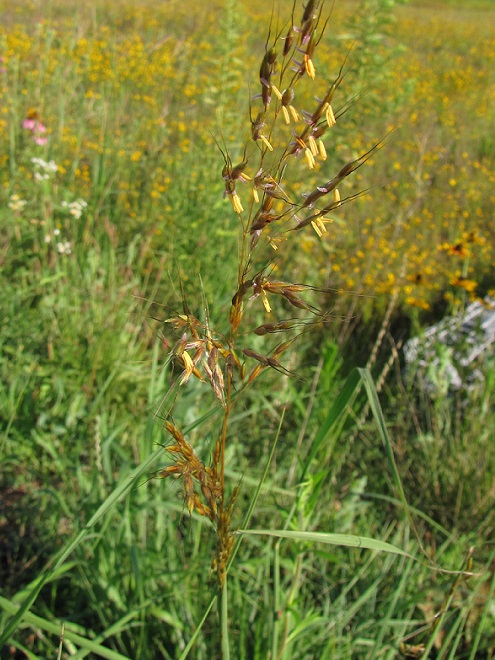
Why not give the Monarchs and other wildlife living around you a little help? Plant a wildflower garden or meadow. It’s so easy, a child can do it.
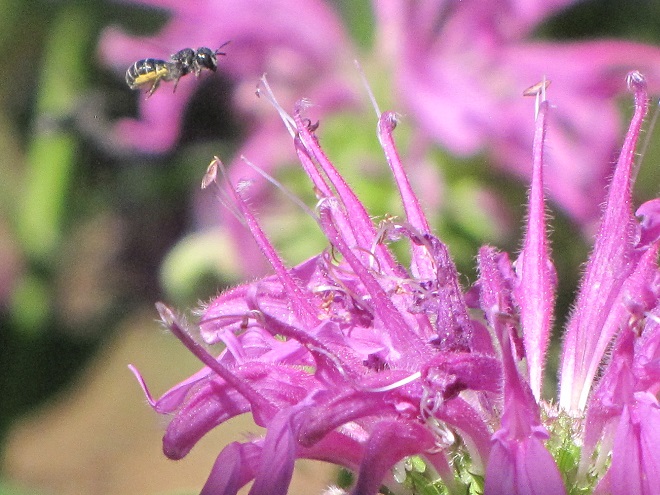
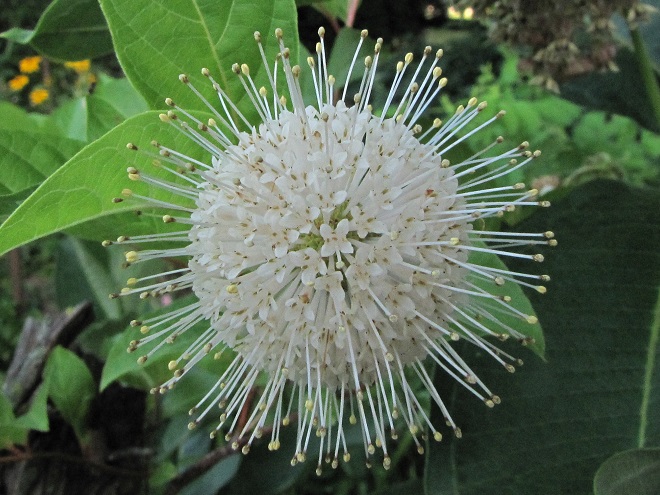
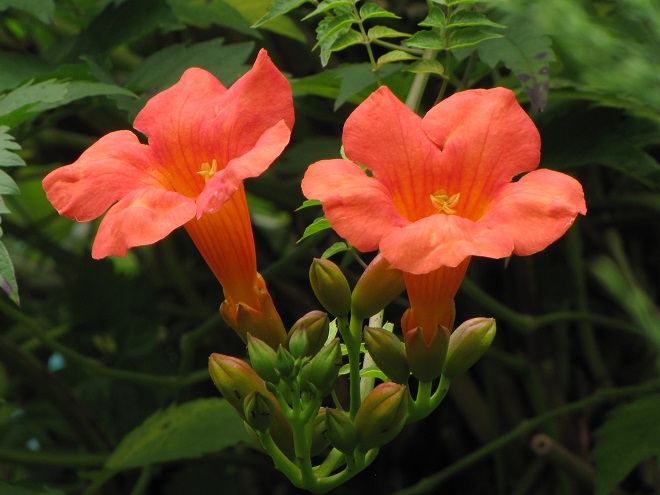
You’ve heard and read it before—native plants do the best job of providing sustenance for our indigenous wildlife. Let’s say you have a desire to attract hummingbirds to your property and you want to do it without putting up feeders. Well, you’ll need native plants that provide tubular flowers from which these hovering little birds can extract nectar. Place enough of them in conspicuous locations and you’ll eventually see hummingbirds visiting during the summer months. If you have a large trellis, pole, or fence, you might plant a Trumpet Vine, also known as Trumpet Creeper. They become adorned with an abundance of big red-orange tubular flowers that our Ruby-throated Hummingbirds just can’t resist. For consistently bringing hummingbirds to the garden, Trumpet Vine may be the best of the various plants native to the Mid-Atlantic States.
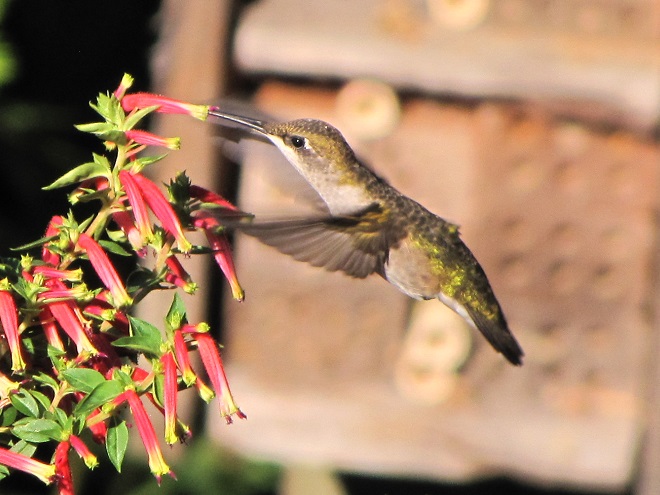
There is a plant, not particularly native to our area but native to the continent, that even in the presence of Trumpet Vine, Pickerelweed, Partridge Pea, and other reliable hummingbird lures will outperform them all. It’s called Mexican Cigar (Cuphea ignea) or Firecracker Plant. Its red and yellow tubular flowers look like a little cigar, often with a whitish ash at the tip. Its native range includes some of the Ruby-throated Hummingbird’s migration routes and wintering grounds in Mexico and the Caribbean Islands, where they certainly are familiar with it.
This morning in the susquehannawildlife.net headquarters garden, the Ruby-throated Hummingbird seen in the following set of images extracted nectar from the Mexican Cigar blossoms exclusively. It ignored the masses of showy Trumpet Vine blooms and other flowers nearby—as the hummers that stop by usually do when Cuphea is offered.
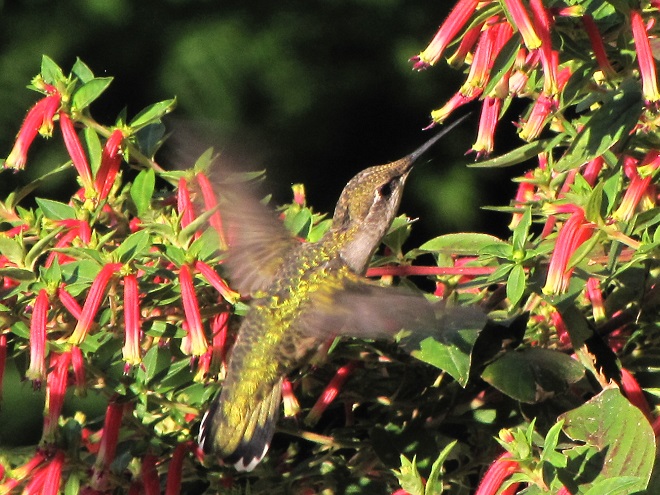
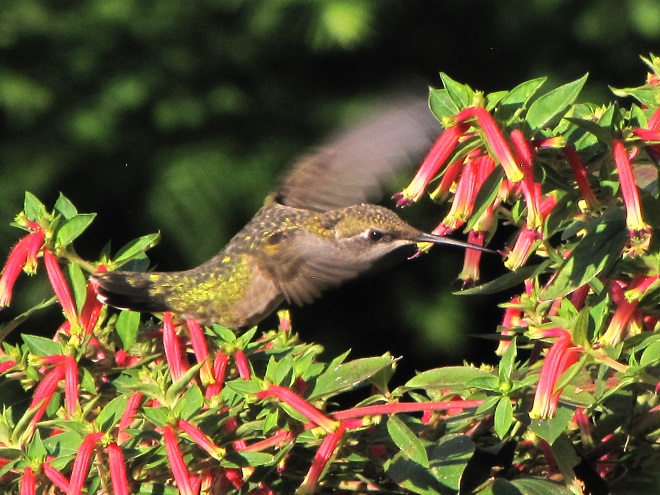
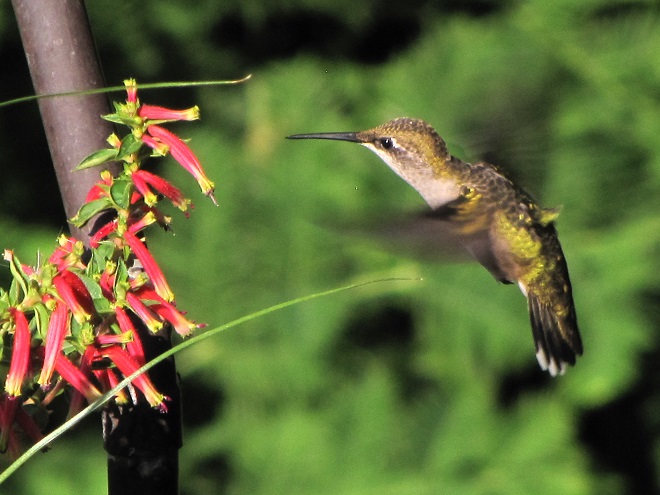
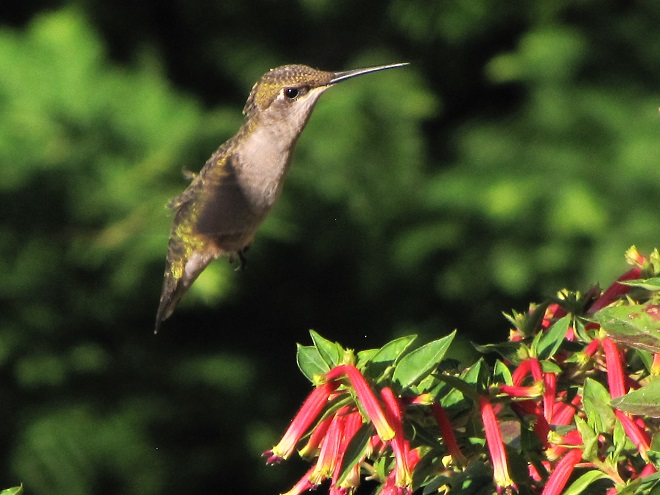
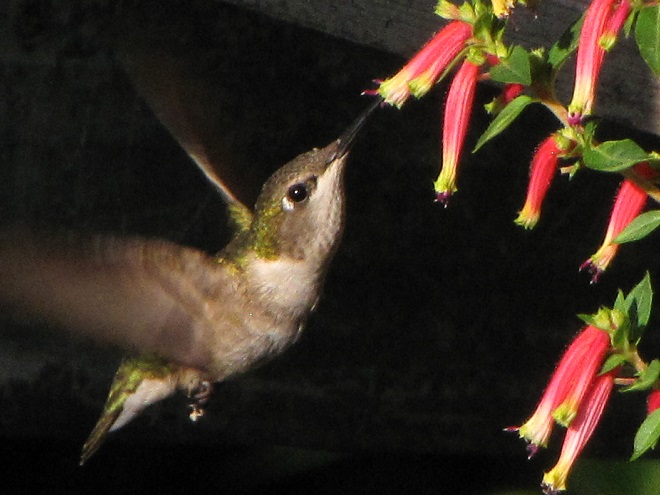 Some garden centers still have Mexican Cigar plants available. You can grow them in pots or baskets, then bring them inside before frost to treat them as a house plant through the winter. Give the plants a good trim sometime before placing them outside when the weather warms in May. You’ll soon have Ruby-throated Hummingbirds visiting again for the summer.
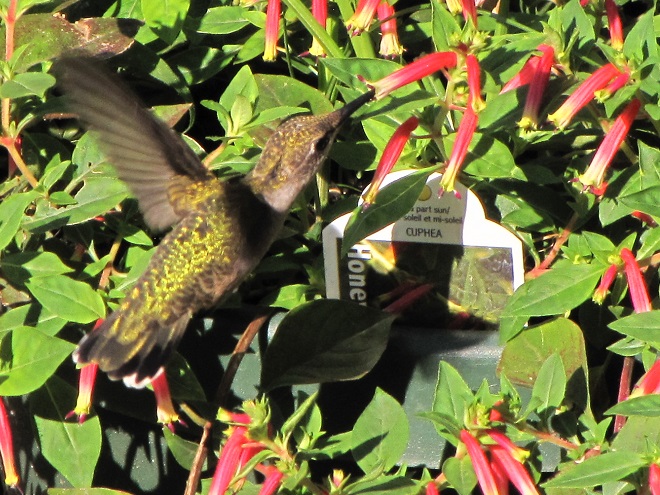
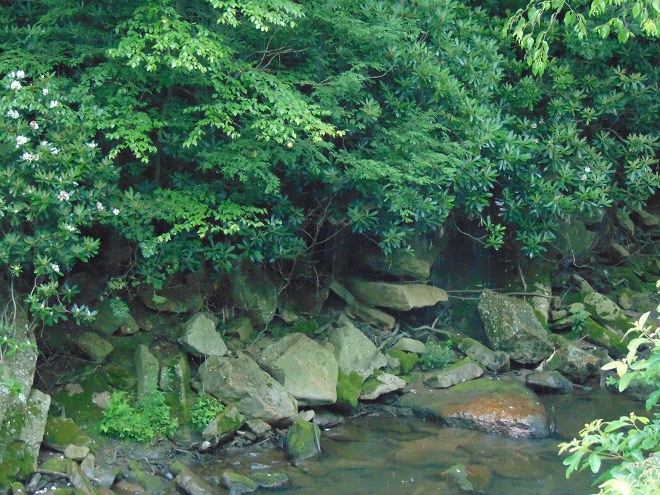
With the gasoline and gunpowder gang’s biggest holiday of the year now upon us, wouldn’t it be nice to get away from the noise and the enduring adolescence for just a little while to see something spectacular that isn’t exploding or on fire? Well, here’s a suggestion: head for the hills to check out the flowers of our native rhododendron, the Great Rhododendron (Rhododendron maximum), also known as Rosebay.
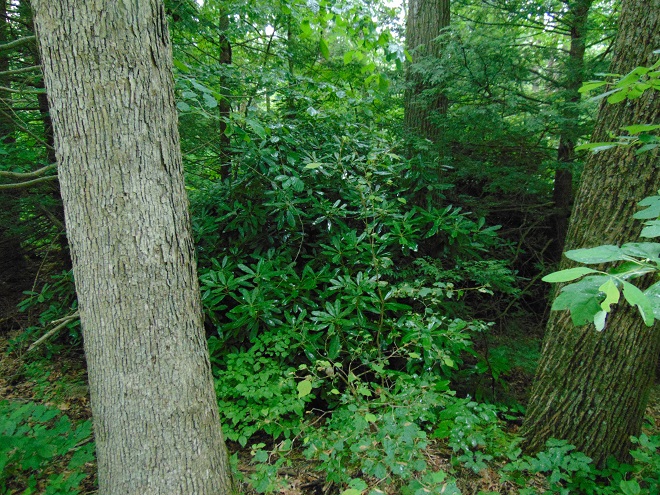
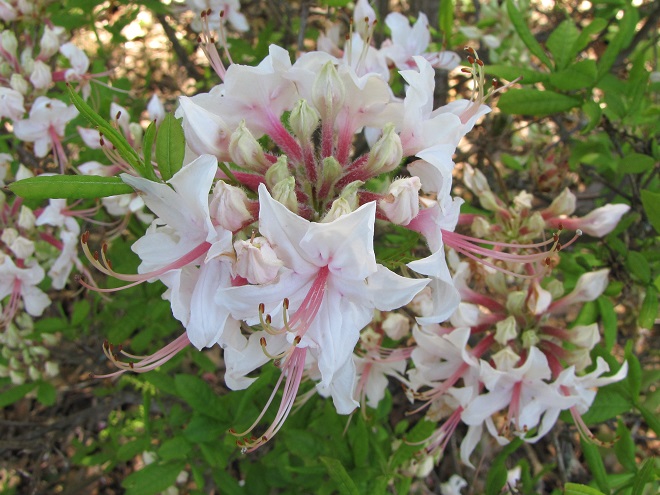
Thickets composed of our native heathers/heaths (Ericaceae) including Great Rhododendron, Mountain Laurel, and Pinxter Flower (Rhododendron periclymenoides), particularly when growing in association with Eastern Hemlock and/or Eastern White Pine, provide critical winter shelter for forest wildlife. The flowers of native heathers/heaths attract bees and other pollinating insects and those of the deciduous Pinxter Flower, which blooms in May, are a favorite of butterflies and Ruby-throated Hummingbirds.
Forests with understories that include Great Rhododendrons do not respond well to logging. Although many Great Rhododendrons regenerate after cutting, the loss of consistent moisture levels in the soil due to the absence of a forest canopy during the sunny summertime can, over time, decimate an entire population of plants. In addition, few rhododendrons are produced by seed, even under optimal conditions. Great Rhododendron seeds and seedlings are very sensitive to the physical composition of forest substrate and its moisture content during both germination and growth. A lack of humus, the damp organic matter in soil, nullifies the chances of successful recolonization of a rhododendron understory by seed. In locations where moisture levels are adequate for their survival and regeneration after logging, impenetrable Great Rhododendron thickets will sometimes come to dominate a site. These monocultures can, at least in the short term, cause problems for foresters by interrupting the cycle of succession and excluding the reestablishment of native trees. In the case of forests harboring stands of Great Rhododendron, it can take a long time for a balanced ecological state to return following a disturbance as significant as logging.
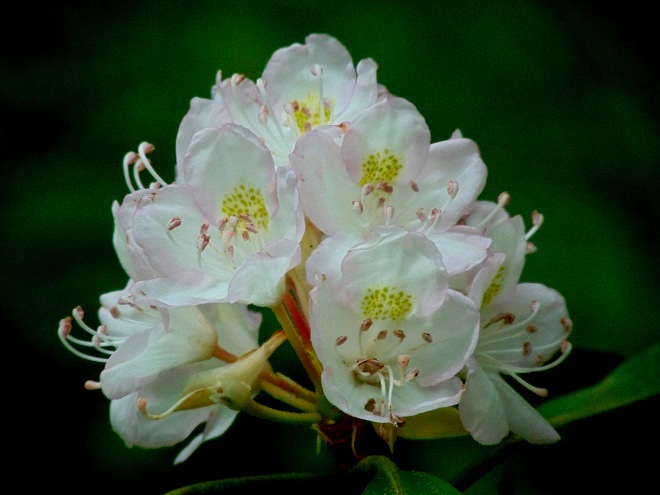
In the lower Susquehanna region, the Great Rhododendron blooms from late June through the middle of July, much later than the ornamental rhododendrons and azaleas found in our gardens. Set against a backdrop of deep green foliage, the enormous clusters of white flowers are hard to miss.
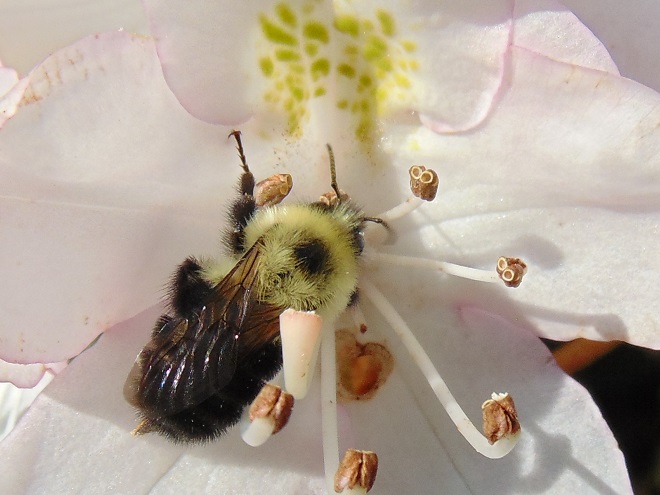
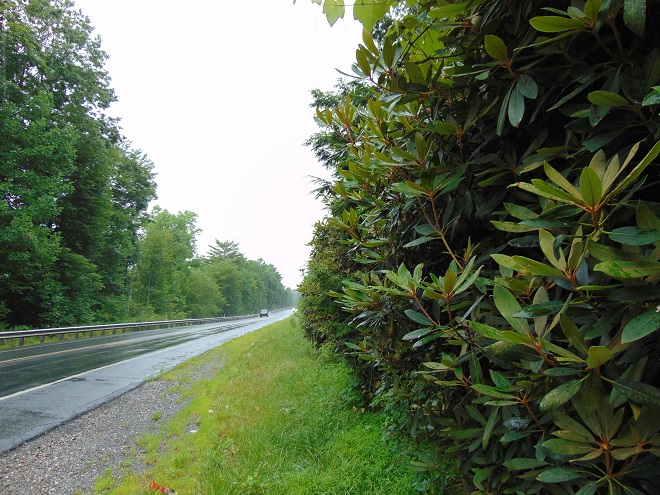
In the Lower Susquehanna River Watershed, there are but a few remaining stands of Great Rhododendron. One of the most extensive populations is in the Ridge and Valley Province on the north side of Second Mountain along Swatara Creek near Ravine (just off Interstate 81) in Schuylkill County, Pennsylvania. Smaller groves are found in the Piedmont Province in the resort town of Mount Gretna in Lebanon County and in stream ravines along the lower river gorge at the Lancaster Conservancy’s Ferncliff and Wissler’s Run Preserves. Go have a look. You’ll be glad you did.
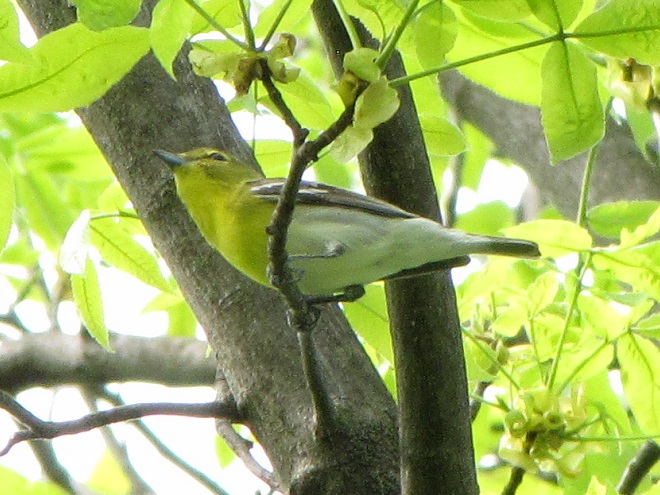
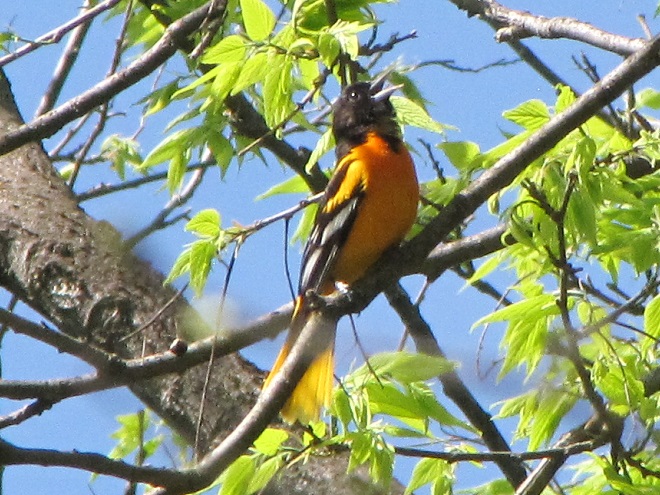
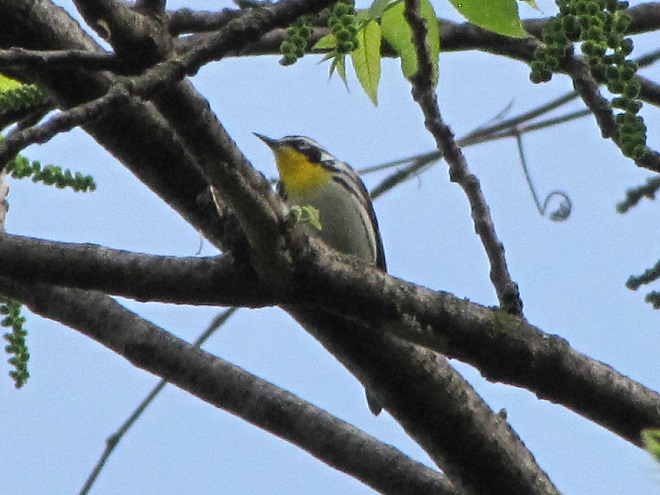
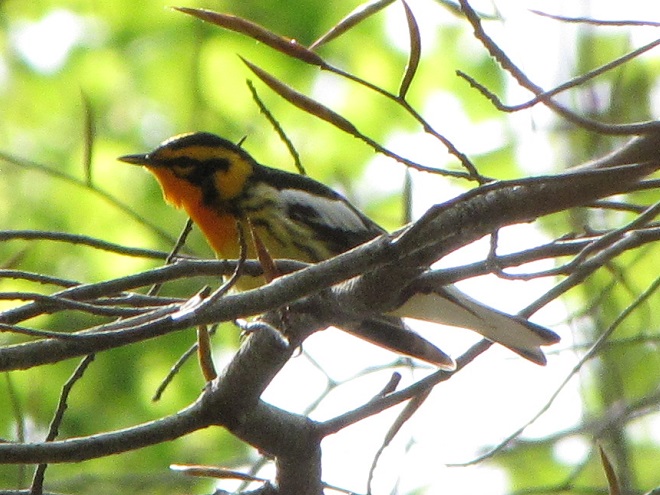
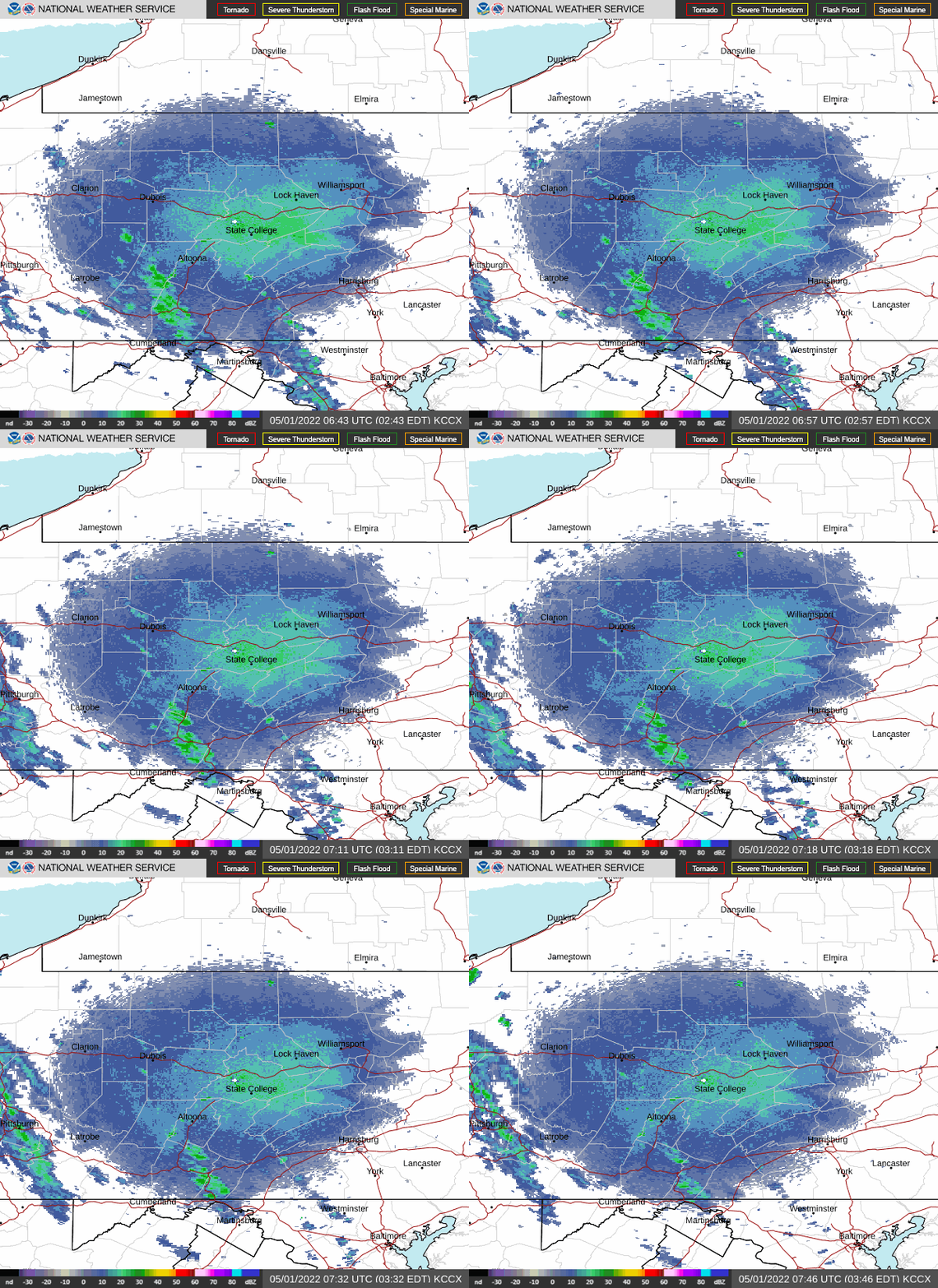
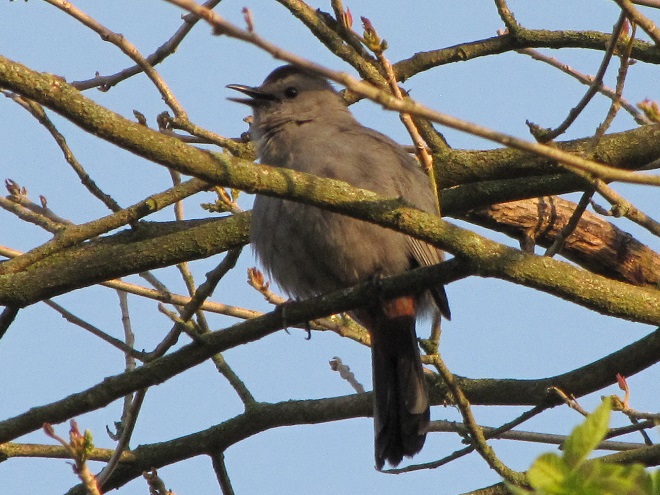
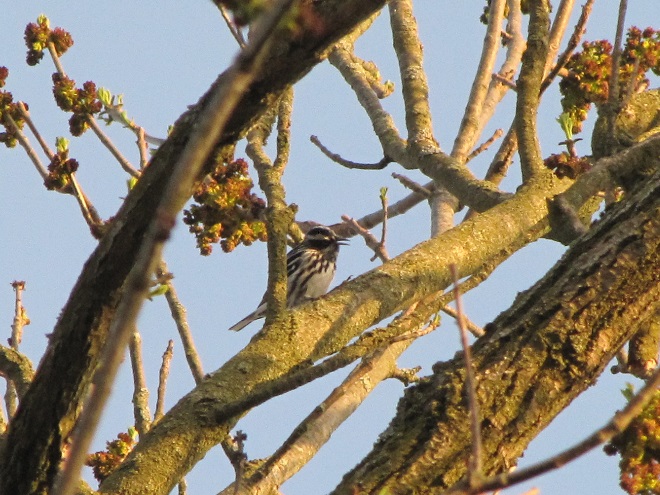
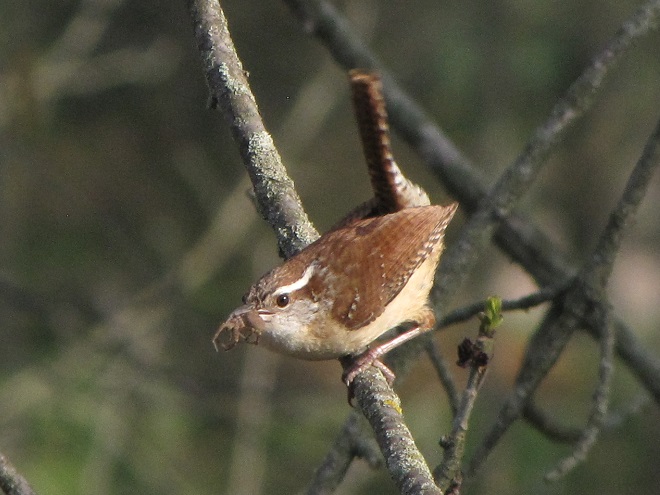
National Weather Service radar showed a sizeable nocturnal flight of migrating birds early this morning. Let’s go for a short stroll and see what’s around.
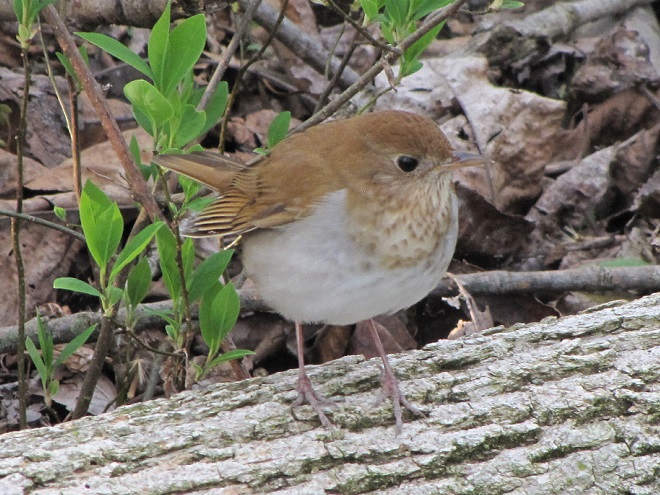
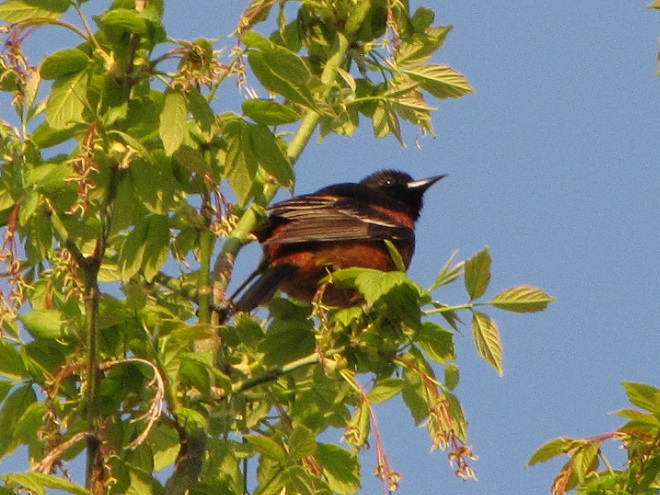
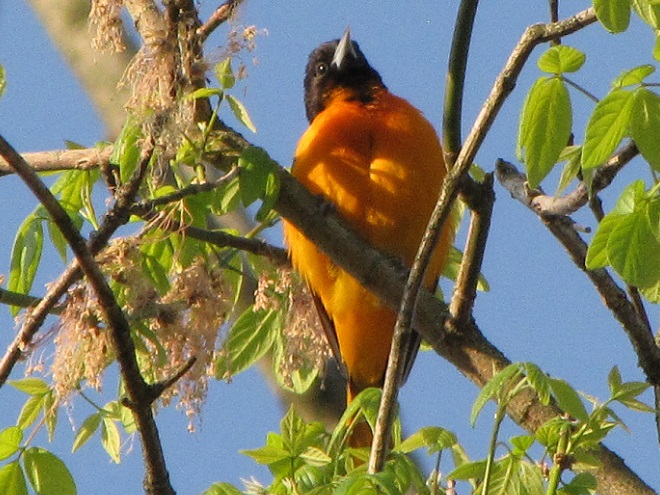
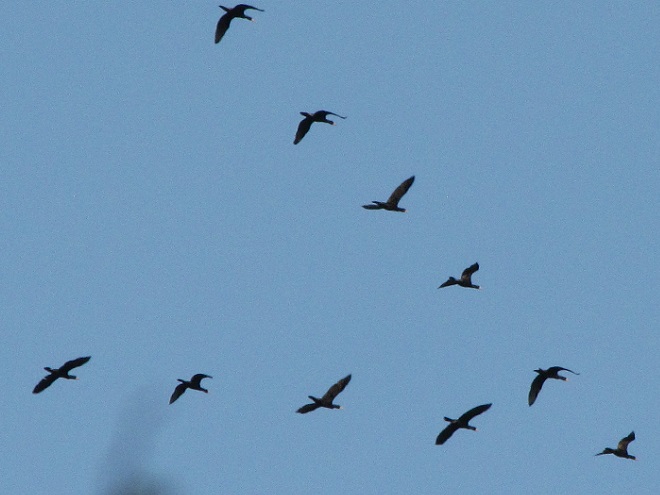
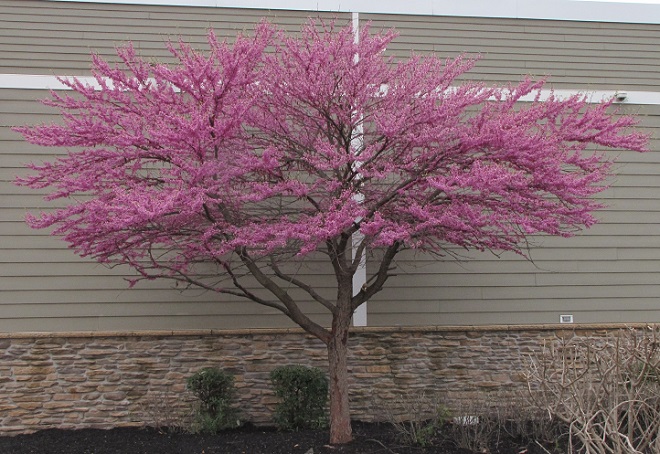
Rising prices, an exhausted workforce, political polarization, and pandemic fatigue—times are tough. Product shortages have the consumer culture in a near panic. Some say the future just isn’t what it used to be.
Well, Uncle Tyler Dyer reminds us that things could be worse. He shares with us this observation, “Man, as long as people are spending money poisoning the weeds on their lawns instead of eating them, things aren’t that bad.”
Uncle Ty is particularly fond of the Common Dandelion (Taraxacum officinale), “Check it out. Roasted dandelion roots can make a coffee substitute, the blossoms a wine, and the leaves used to create my favorites, nutrient-dense salads or green vegetable dishes.”
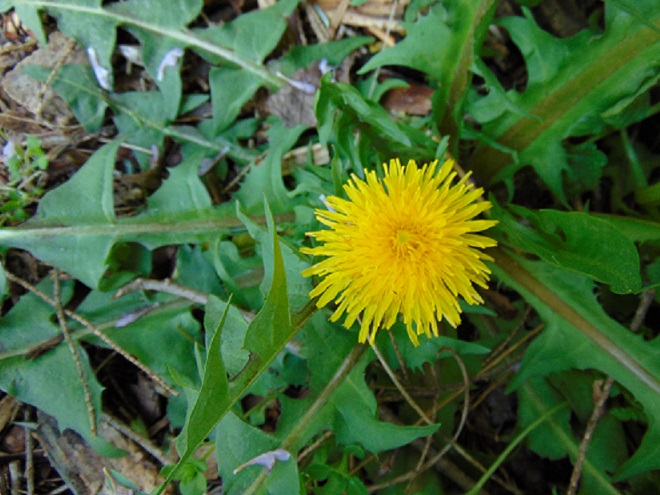

So have a homegrown salad and remember, maybe things aren’t that bad after all.

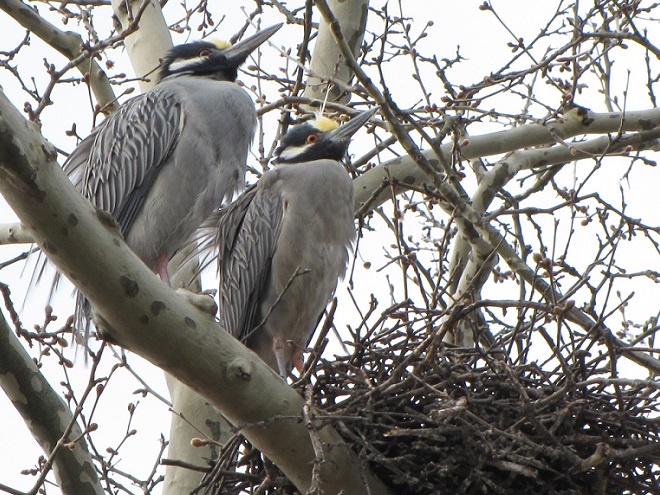
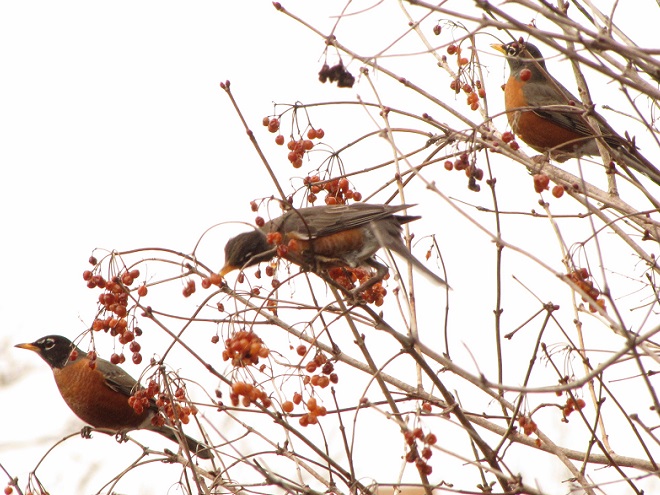
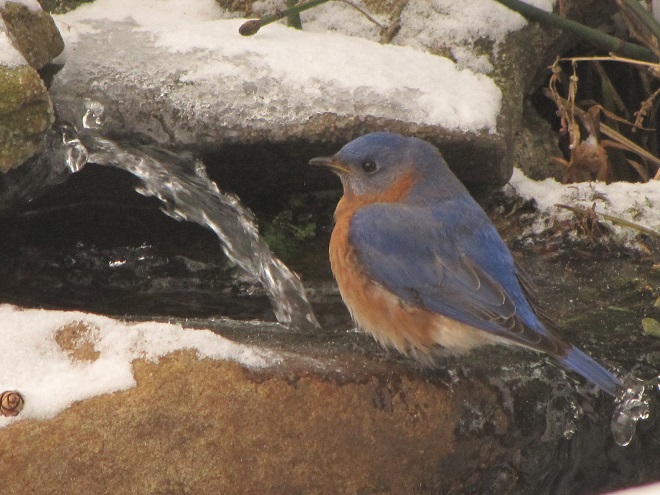
Despite being located in an urbanized downtown setting, blustery weather in recent days has inspired a wonderful variety of small birds to visit the garden here at the susquehannawildlife.net headquarters to feed and refresh. For those among you who may enjoy an opportunity to see an interesting variety of native birds living around your place, we’ve assembled a list of our five favorite foods for wild birds.
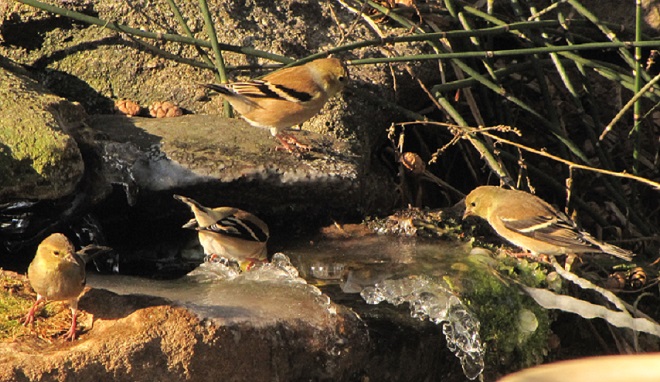
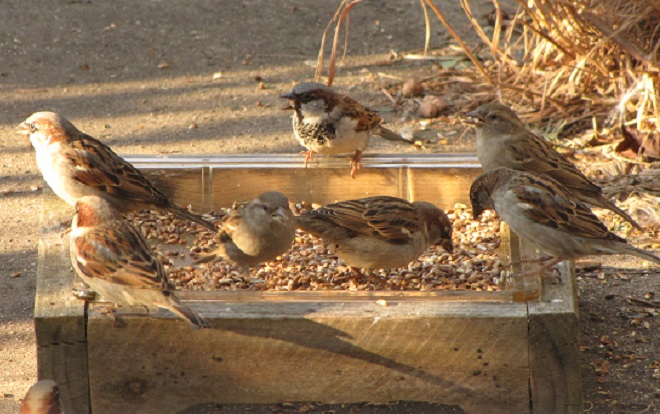
The selections on our list are foods that provide supplemental nutrition and/or energy for indigenous species, mostly songbirds, without sustaining your neighborhood’s non-native European Starlings and House Sparrows, mooching Eastern Gray Squirrels, or flock of ecologically destructive hand-fed waterfowl. We’ve included foods that aren’t necessarily the cheapest but are instead those that are the best value when offered properly.
Number 5
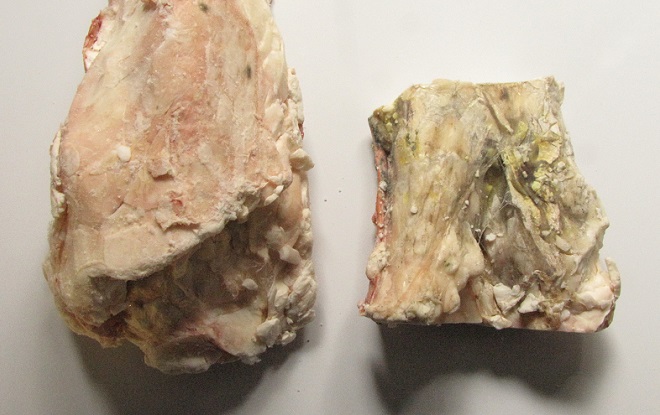
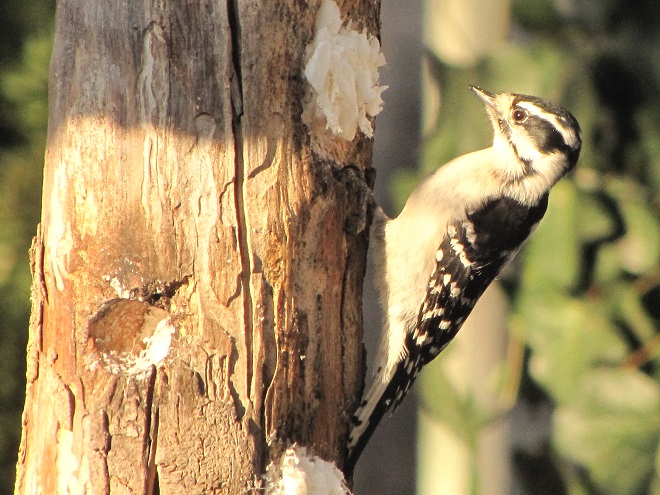
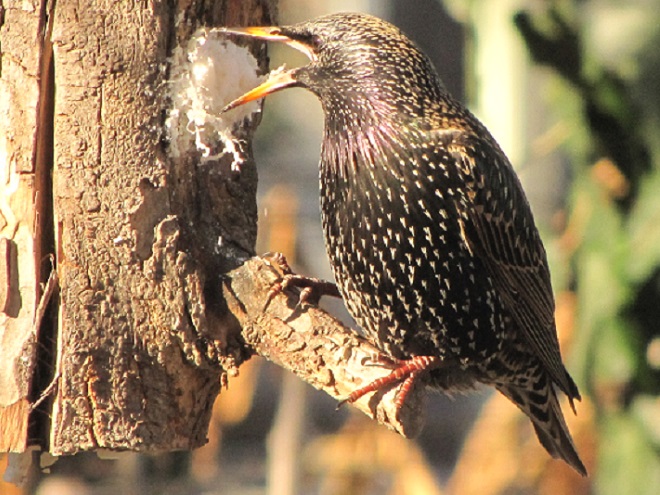
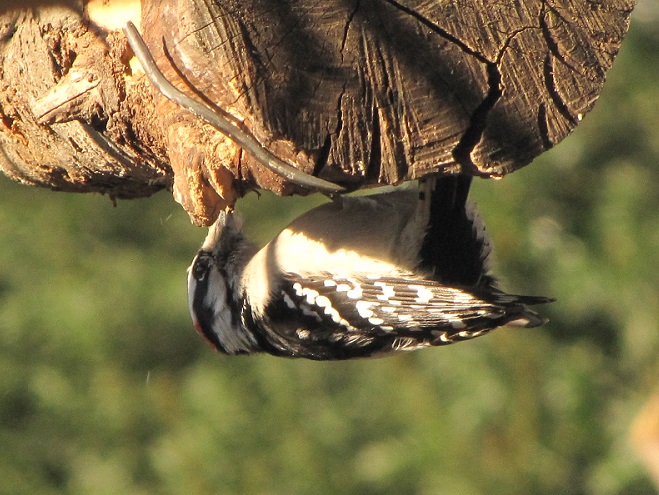
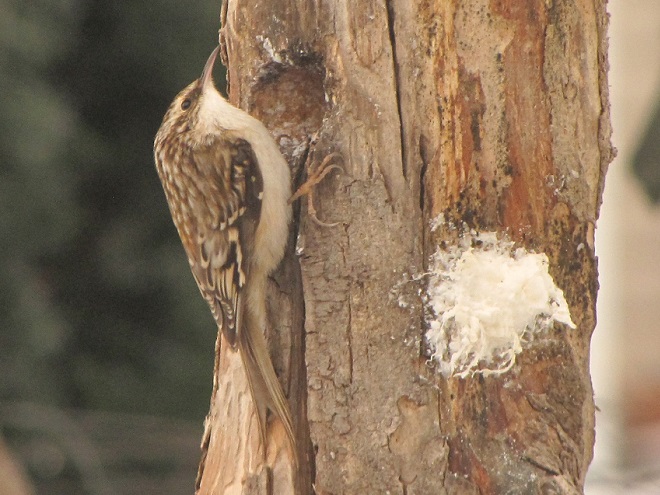
Raw Beef Suet
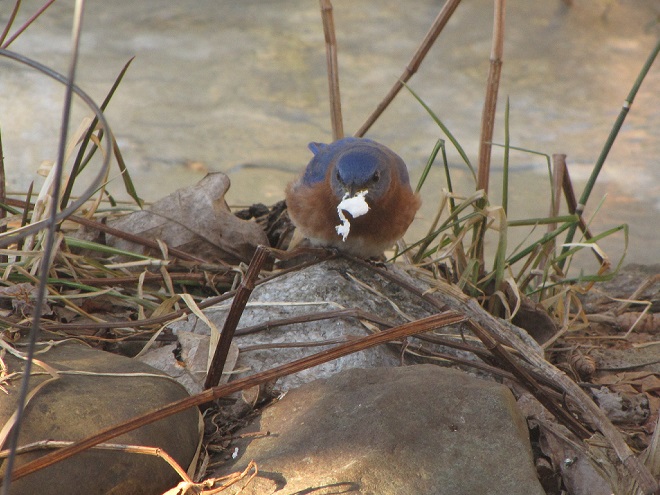
In addition to rendered beef suet, manufactured suet cakes usually contain seeds, cracked corn, peanuts, and other ingredients that attract European Starlings, House Sparrows, and squirrels to the feeder, often excluding woodpeckers and other native species from the fare. Instead, we provide raw beef suet.
Because it is unrendered and can turn rancid, raw beef suet is strictly a food to be offered in cold weather. It is a favorite of woodpeckers, nuthatches, and many other species. Ask for it at your local meat counter, where it is generally inexpensive.
Number 4
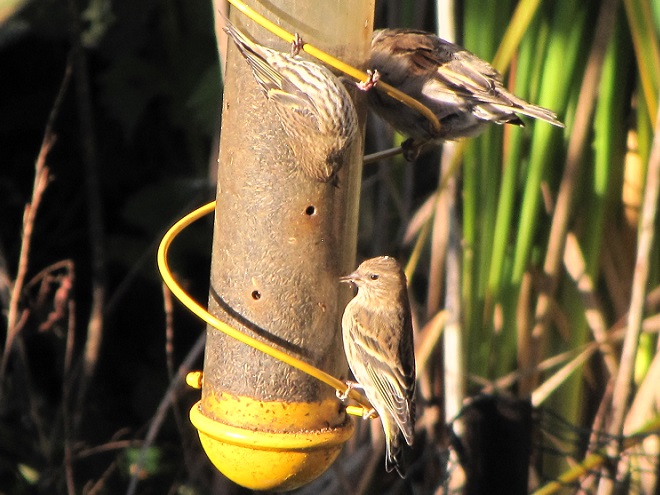
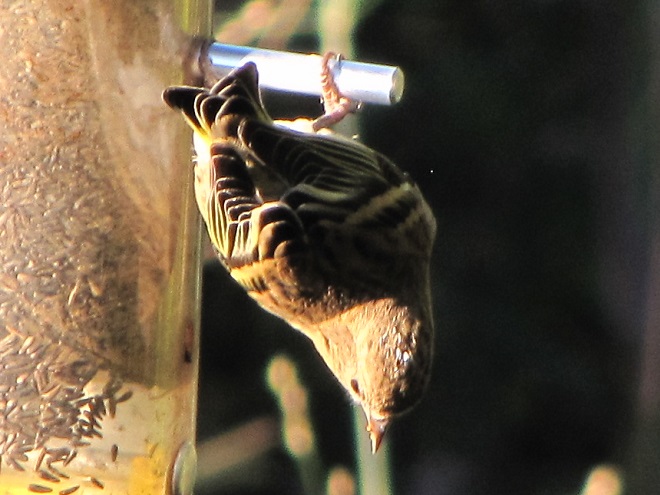
Niger (“Thistle”) Seed
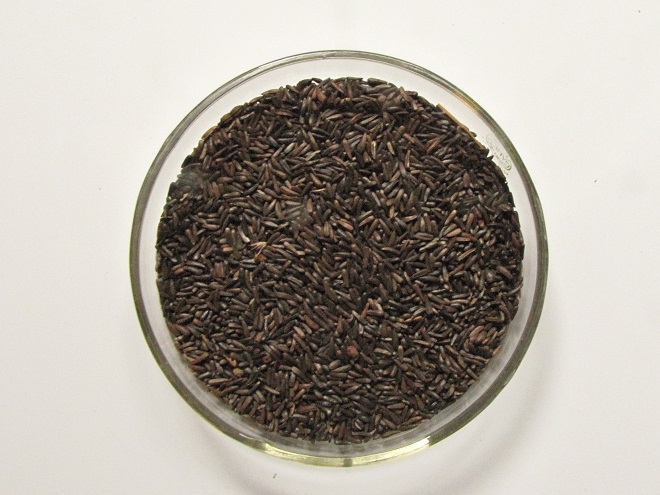
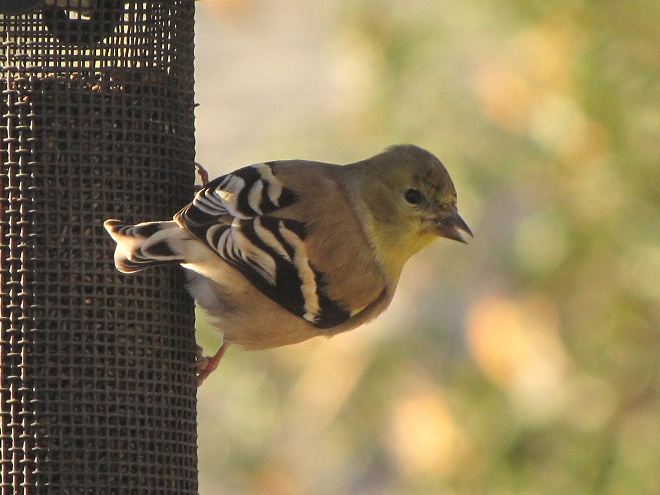
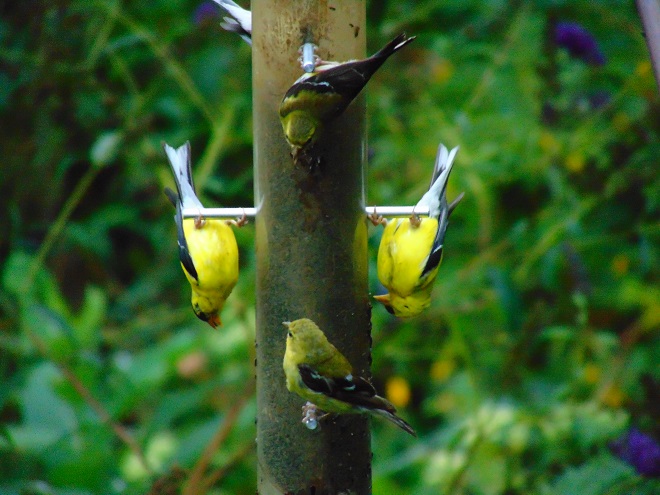
Niger seed, also known as nyjer or nyger, is derived from the sunflower-like plant Guizotia abyssinica, a native of Ethiopia. By the pound, niger seed is usually the most expensive of the bird seeds regularly sold in retail outlets. Nevertheless, it is a good value when offered in a tube or wire mesh feeder that prevents House Sparrows and other species from quickly “shoveling” it to the ground. European starlings and squirrels don’t bother with niger seed at all.
Niger seed must be kept dry. Mold will quickly make niger seed inedible if it gets wet, so avoid using “thistle socks” as feeders. A dome or other protective covering above a tube or wire mesh feeder reduces the frequency with which feeders must be cleaned and moist seed discarded. Remember, keep it fresh and keep it dry!
Number 3
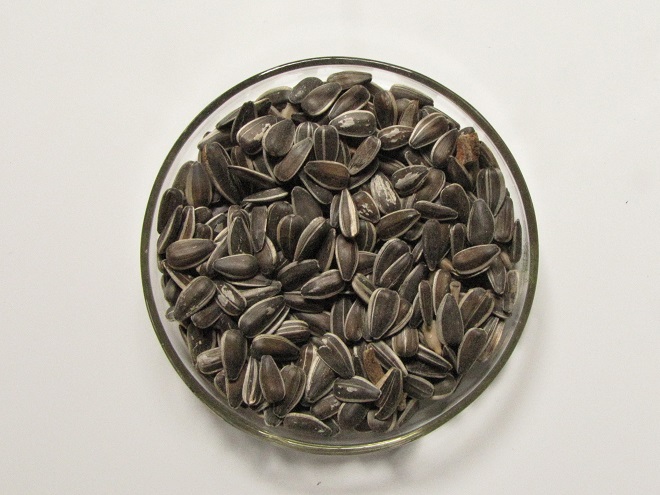
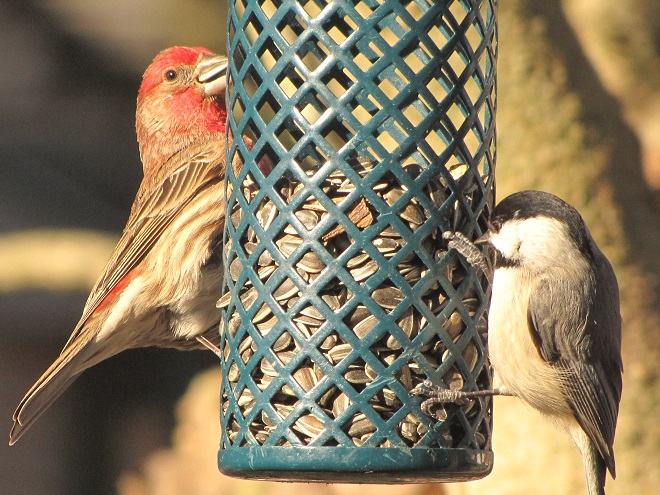
Striped Sunflower Seed
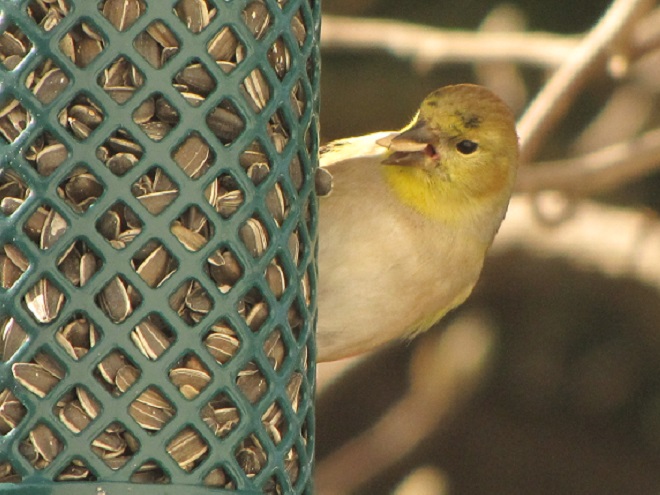
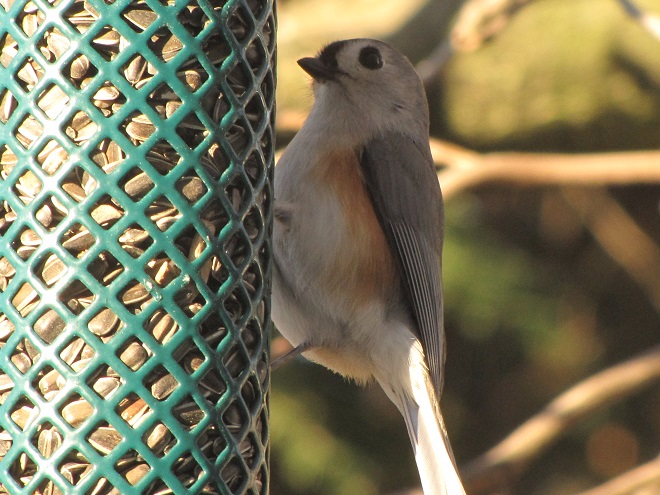
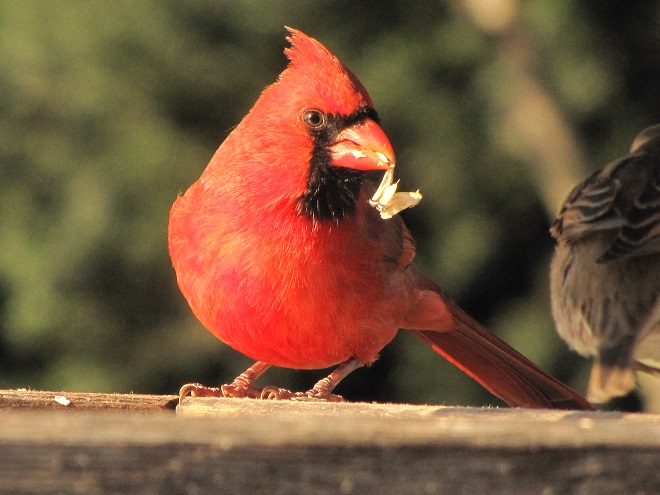
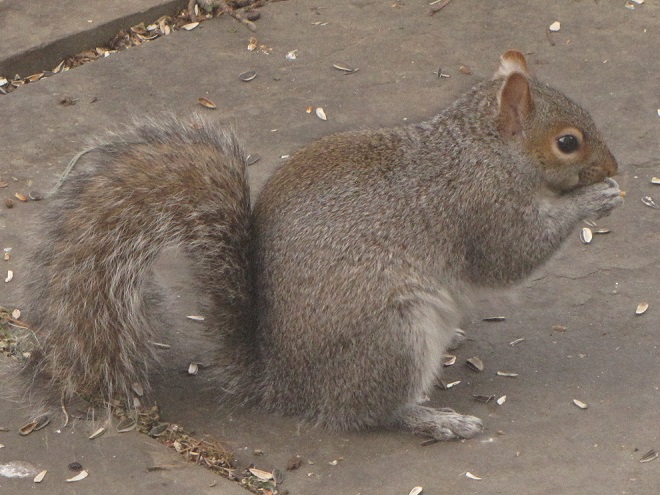
Striped sunflower seed, also known as grey-striped sunflower seed, is harvested from a cultivar of the Common Sunflower (Helianthus annuus), the same tall garden plant with a massive bloom that you grew as a kid. The Common Sunflower is indigenous to areas west of the Mississippi River and its seeds are readily eaten by many native species of birds including jays, finches, and grosbeaks. The husks are harder to crack than those of black oil sunflower seed, so House Sparrows consume less, particularly when it is offered in a feeder that prevents “shoveling”. For obvious reasons, a squirrel-proof or squirrel-resistant feeder should be used for striped sunflower seed.
Number 2
Mealworms
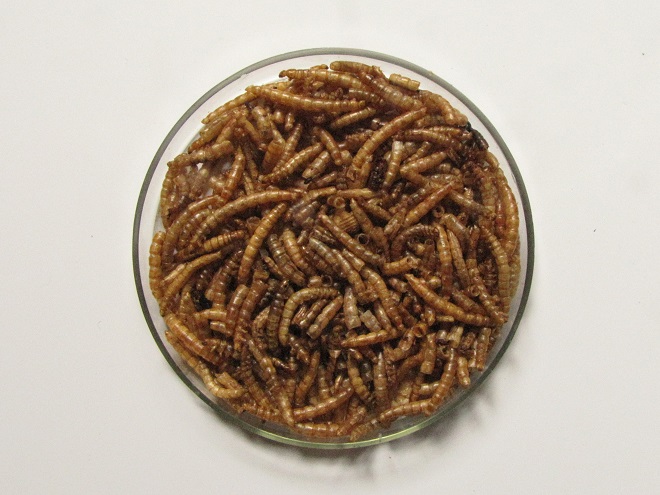
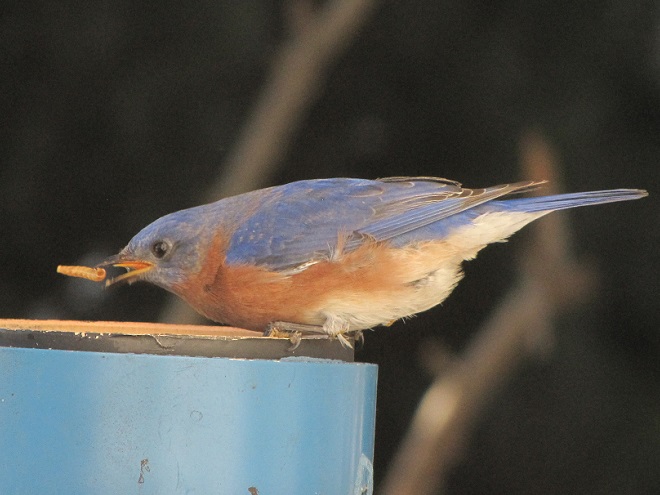
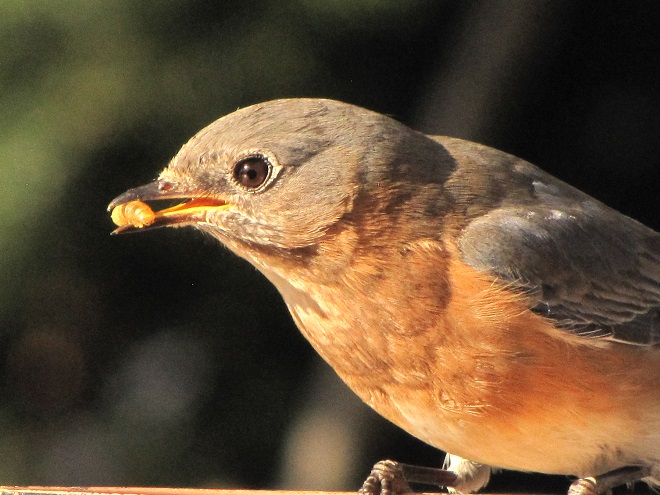
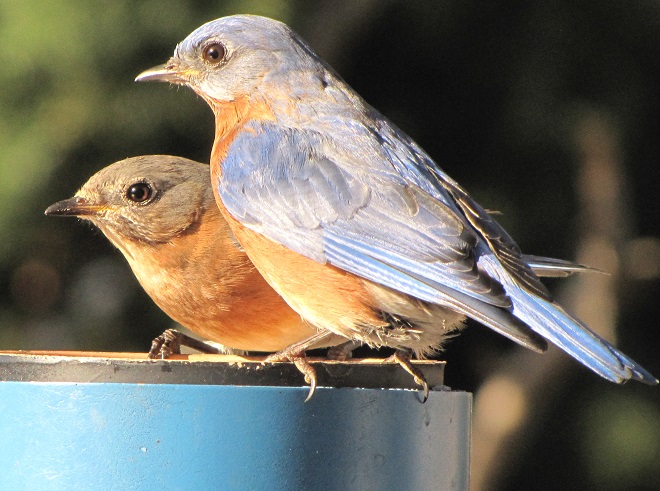
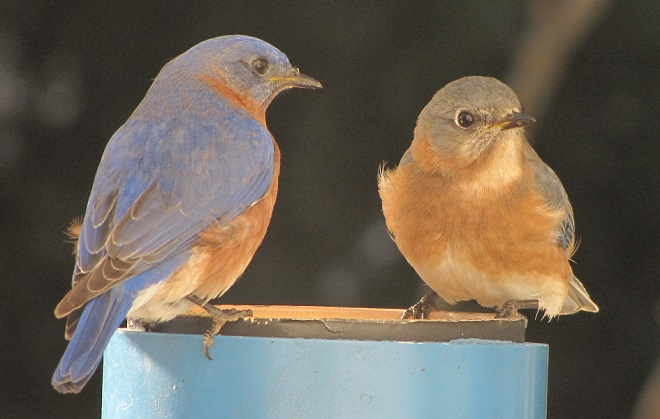
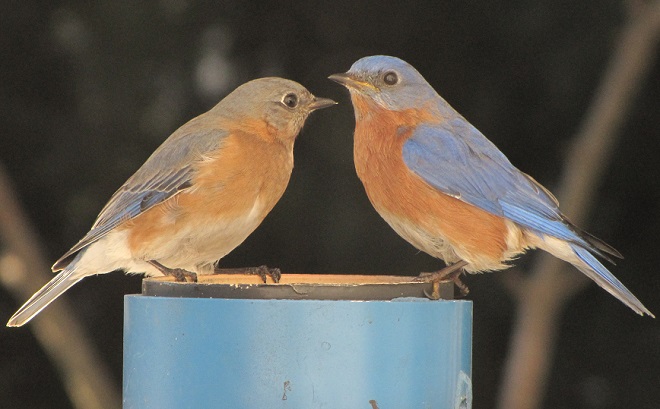
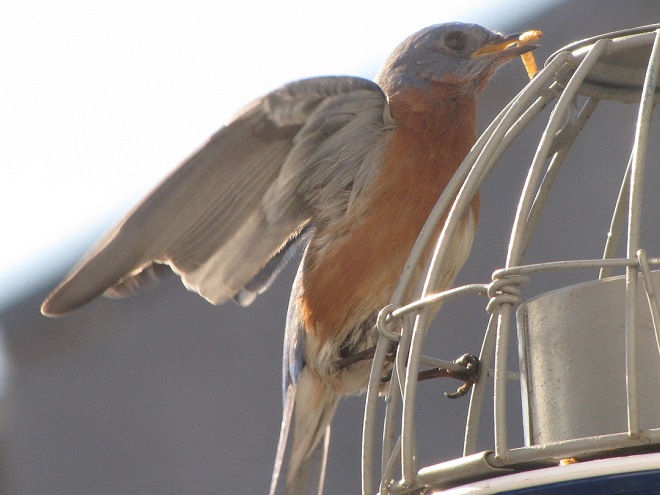
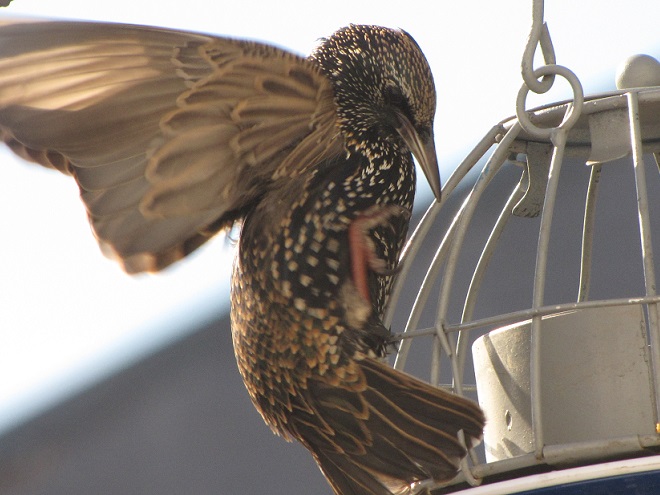
Mealworms are the commercially produced larvae of the beetle Tenebrio molitor. Dried or live mealworms are a marvelous supplement to the diets of numerous birds that might not otherwise visit your garden. Woodpeckers, titmice, wrens, mockingbirds, warblers, and bluebirds are among the species savoring protein-rich mealworms. The trick is to offer them without European Starlings noticing or having access to them because European Starlings you see, go crazy over a meal of mealworms.
Number 1
Food-producing Native Shrubs and Trees
The best value for feeding birds and other wildlife in your garden is to plant food-producing native plants, particularly shrubs and trees. After an initial investment, they can provide food, cover, and roosting sites year after year. In addition, you’ll have a more complete food chain on a property populated by native plants and all the associated life forms they support (insects, spiders, etc.).
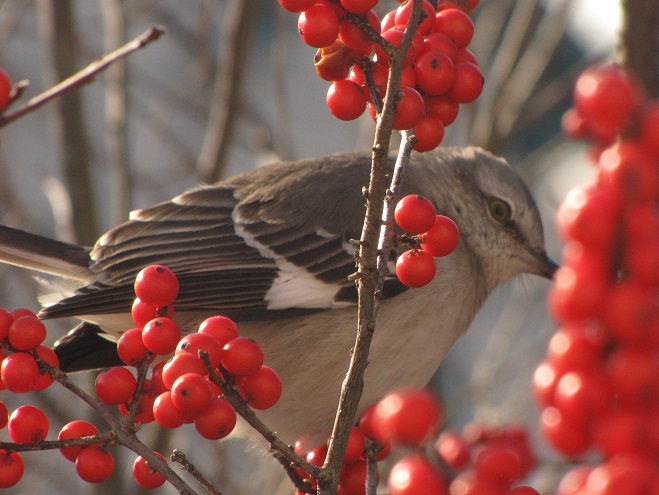
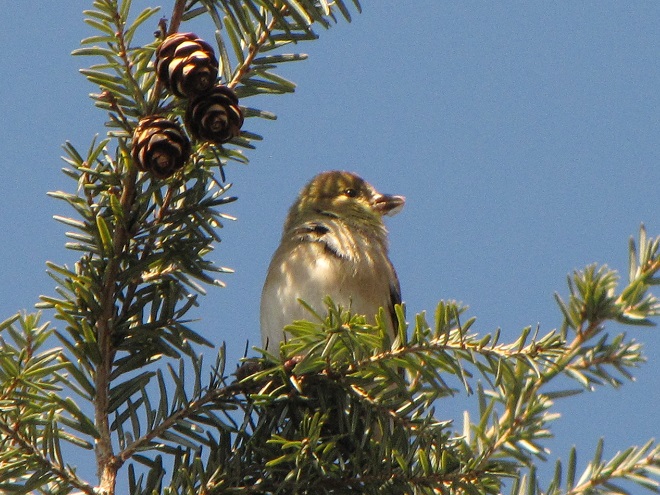
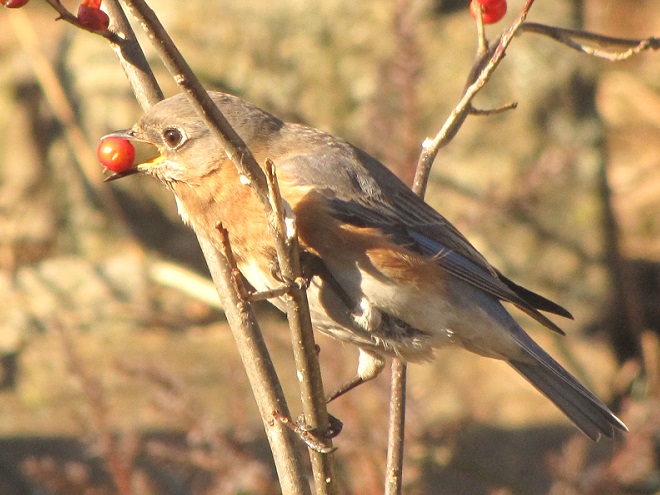
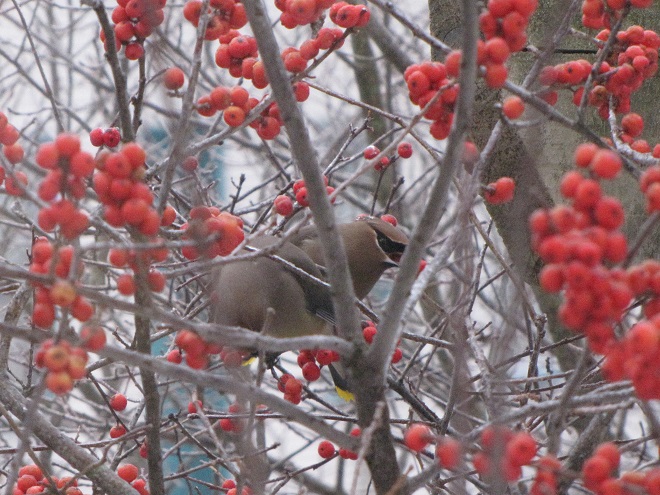
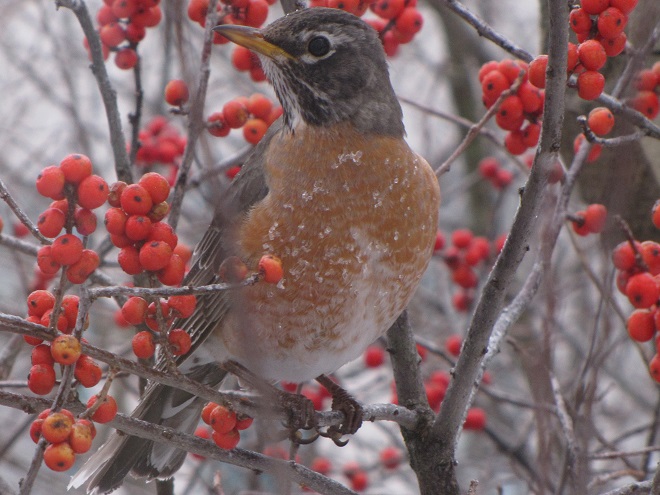
Your local County Conservation District is having its annual spring tree sale soon. They have a wide selection to choose from each year and the plants are inexpensive. They offer everything from evergreens and oaks to grasses and flowers. You can afford to scrap the lawn and revegetate your whole property at these prices—no kidding, we did it. You need to preorder for pickup in the spring. To order, check their websites now or give them a call. These food-producing native shrubs and trees are by far the best bird feeding value that you’re likely to find, so don’t let this year’s sales pass you by!
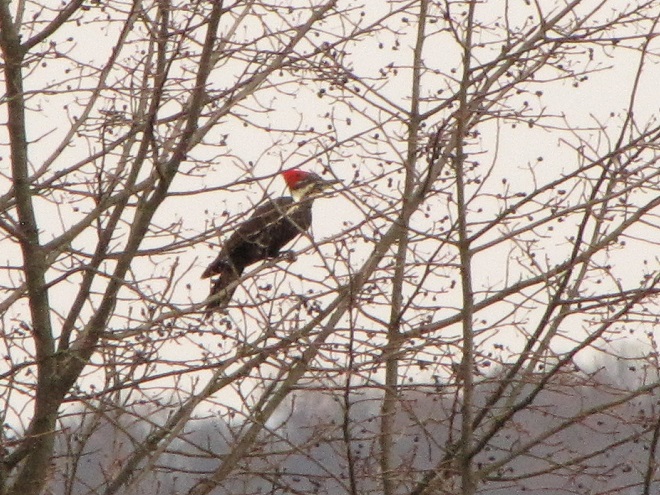
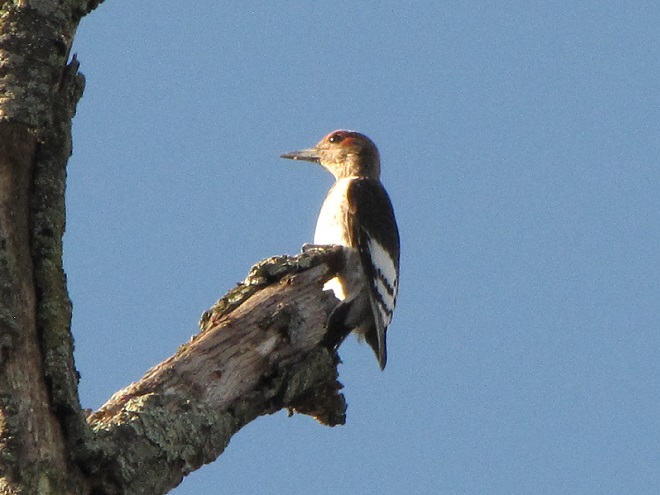
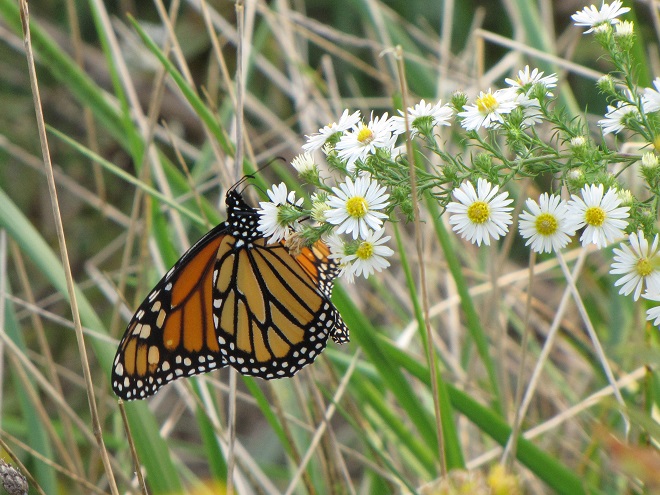
Mountain Laurel (Kalmia latifolia), designated as Pennsylvania’s state flower, is a native evergreen shrub of forests situated on dry rocky slopes with acidic soils. As the common name implies, we think of it mostly as a plant of the mountainous regions—those areas of the Susquehanna watershed north of Harrisburg. It is indeed symbolic of Appalachian forests. But Mountain Laurel can also be found to the south of the capital city in forested highlands of the Piedmont. There, currently, it happens to be in full bloom. Let’s put on a pair of sturdy shoes and take a walk in the Hellam Hills of eastern York County at Rocky Ridge County Park to have a look.
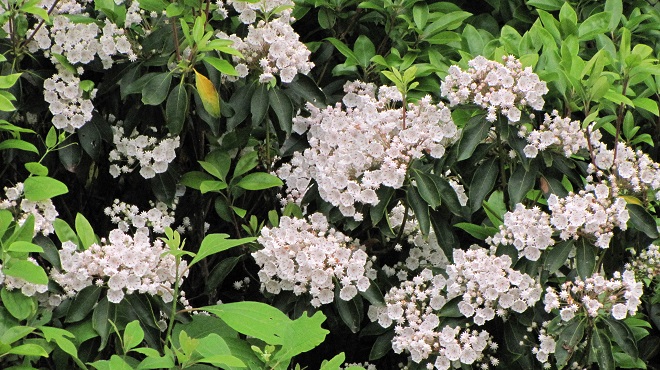
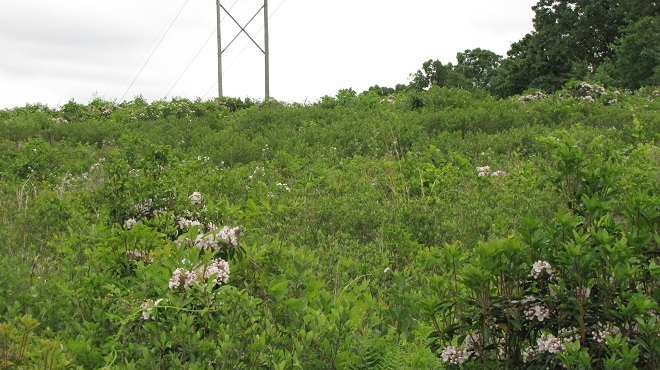
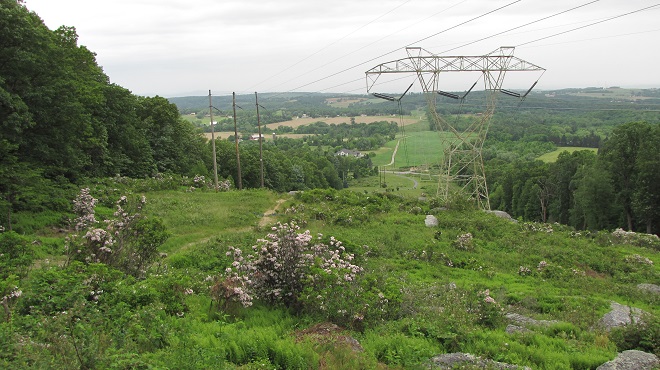

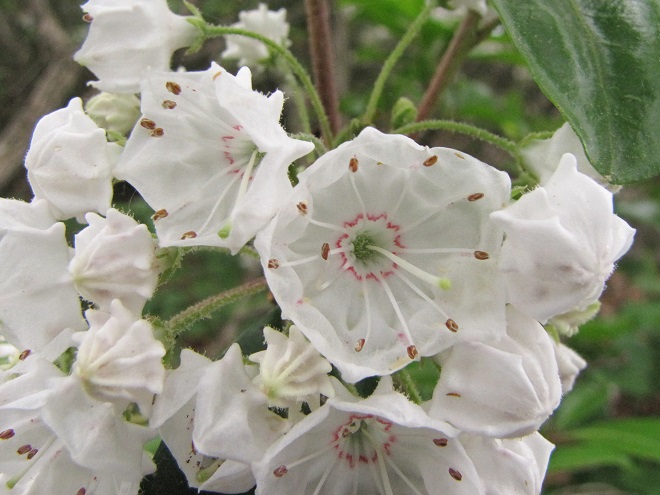
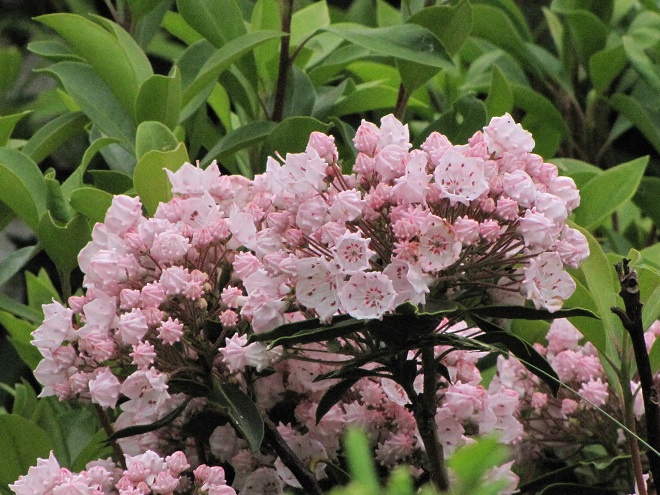
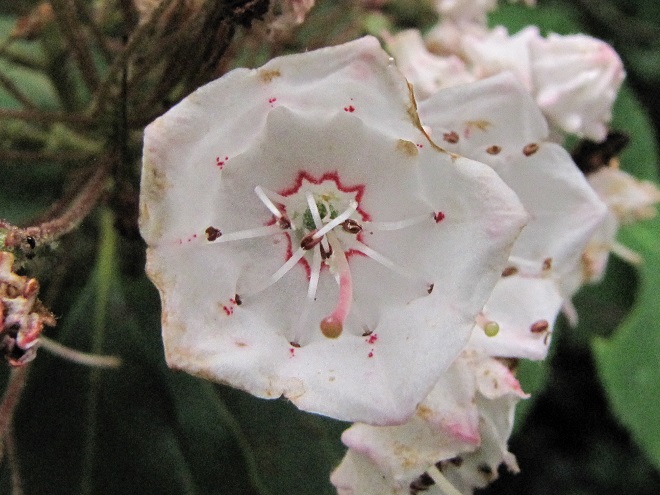
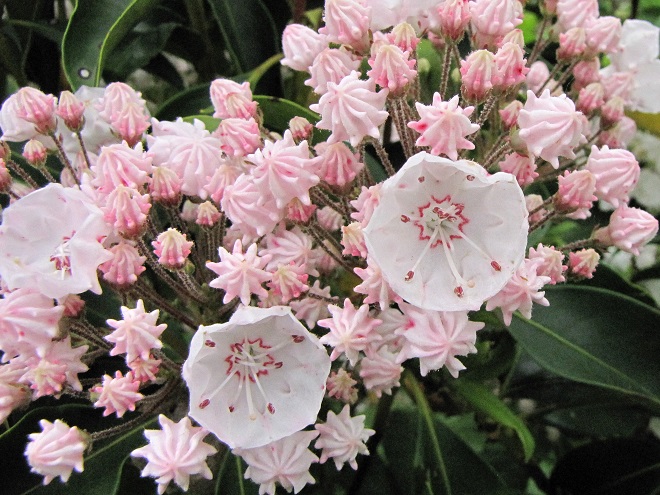
Rain or shine, do get out and have a look at the blooming Mountain Laurel.
The Magi have arrived. Emanating from the shadows of a nearby forest, you may hear the endless drone of what sounds like an extraterrestrial craft. Then you get your first look at those beady red eyes set against a full suit of black armor—out of this world. The Magicicada are here at last.
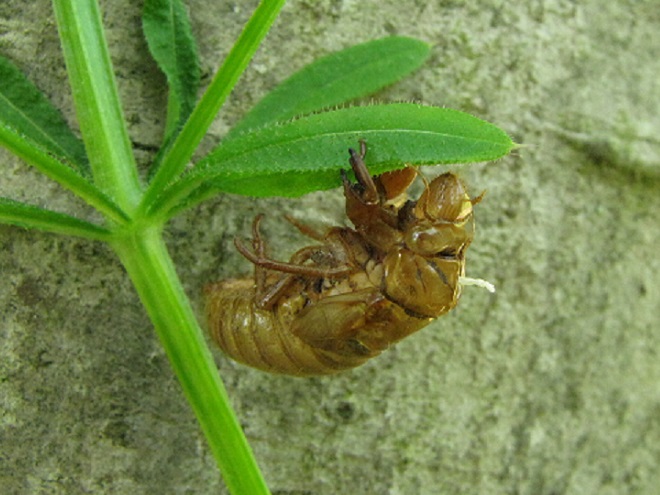
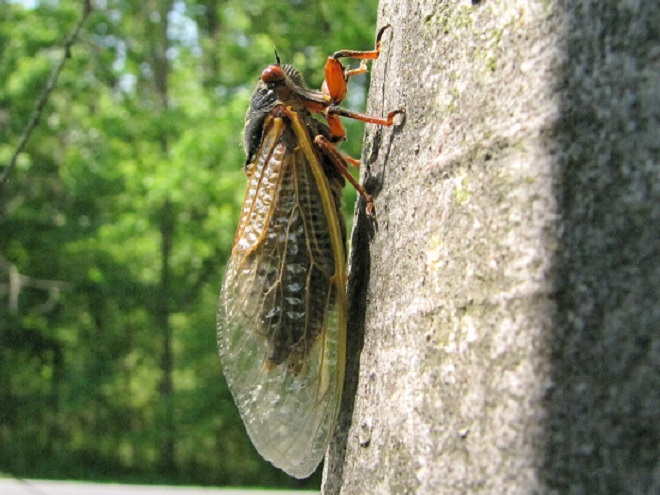
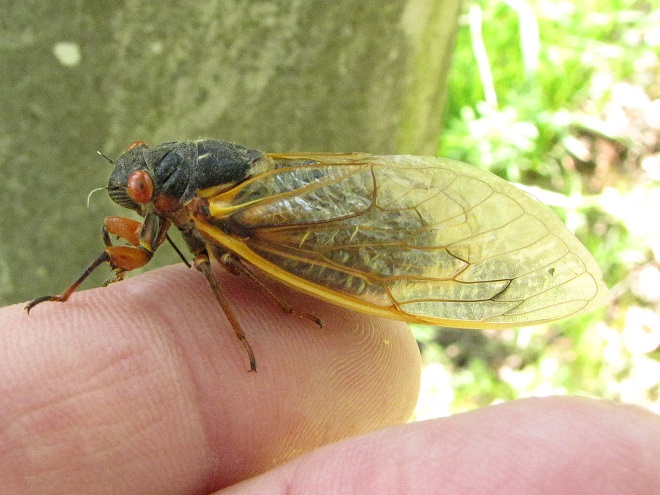

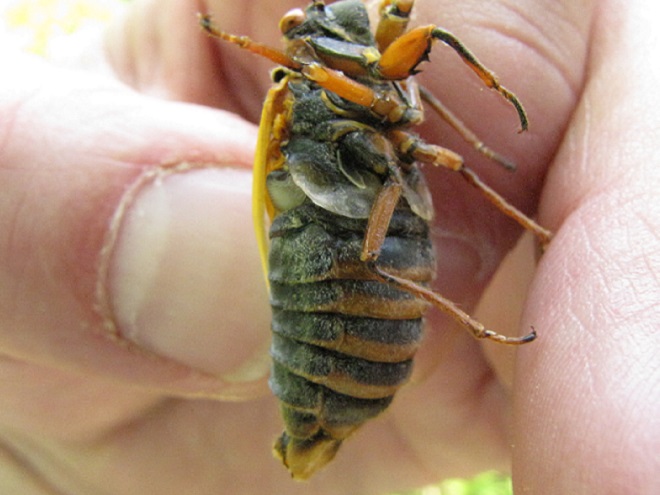
If you go out and about to observe periodical cicadas, keep an eye open for these species too…

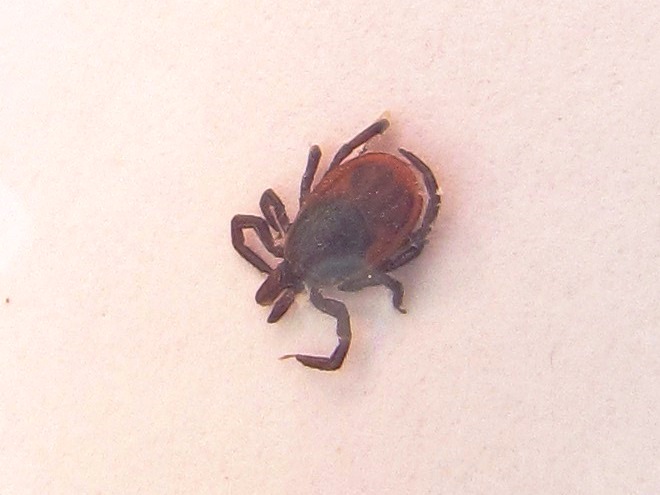
Let’s take a quiet stroll through the forest to have a look around. The spring awakening is underway and it’s a marvelous thing to behold. You may think it a bit odd, but during this walk we’re not going to spend all of our time gazing up into the trees. Instead, we’re going to investigate the happenings at ground level—life on the forest floor.
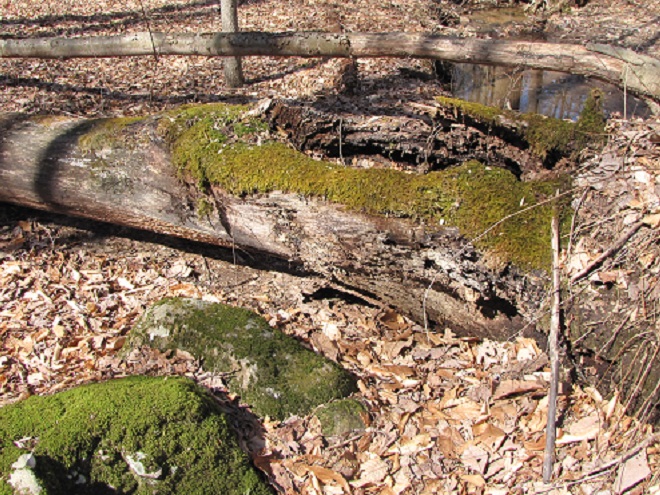
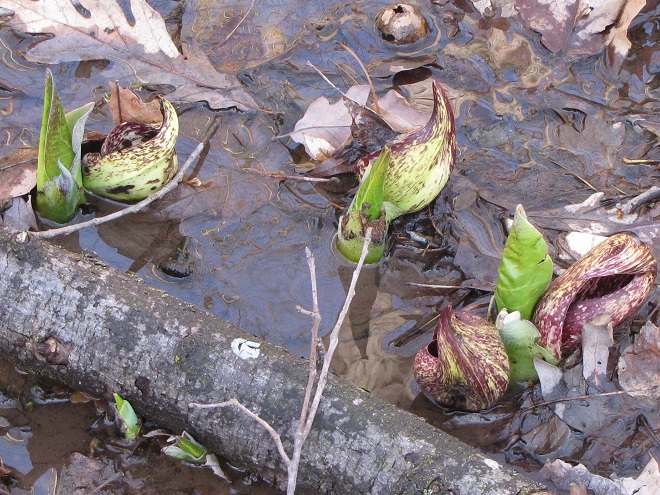
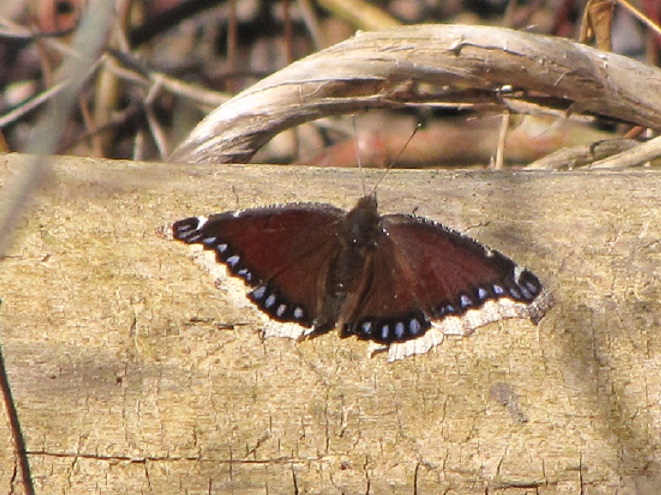
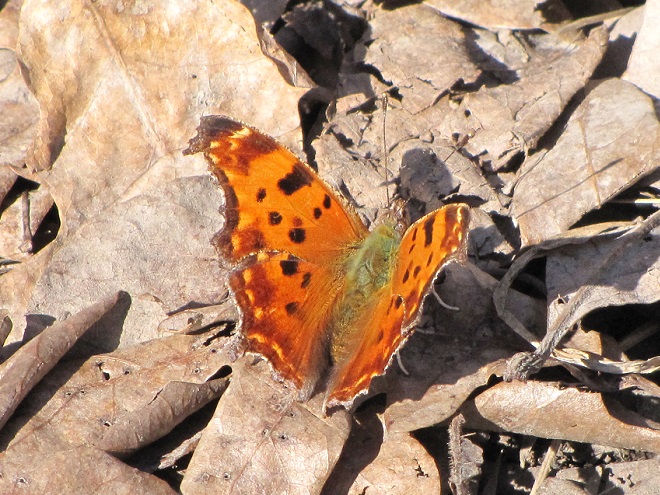


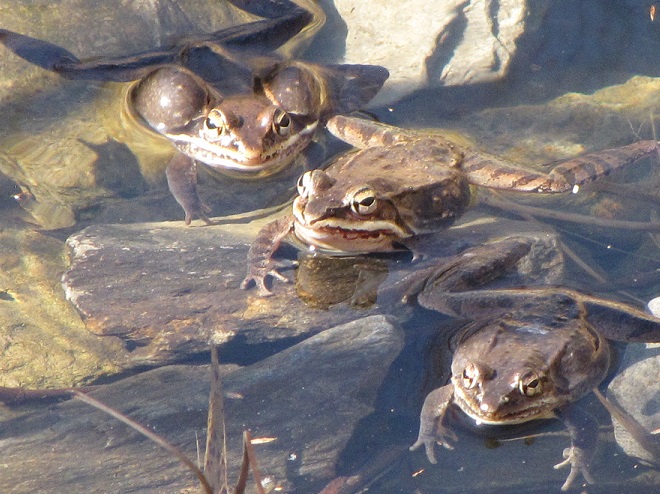
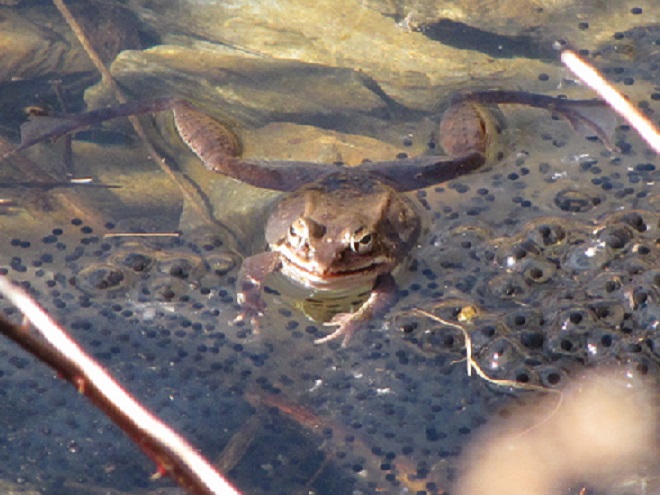
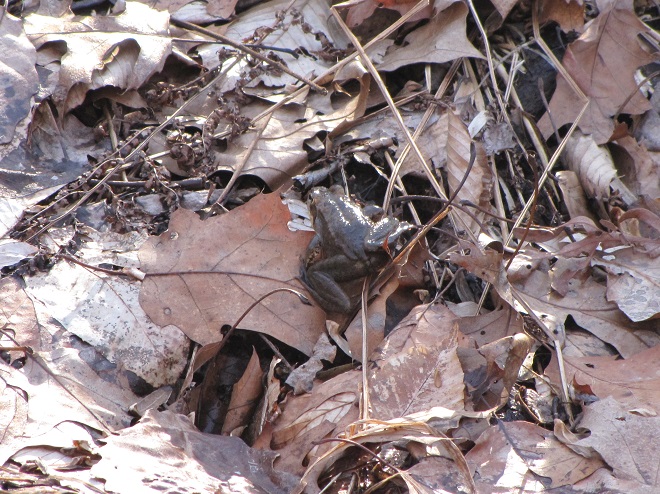
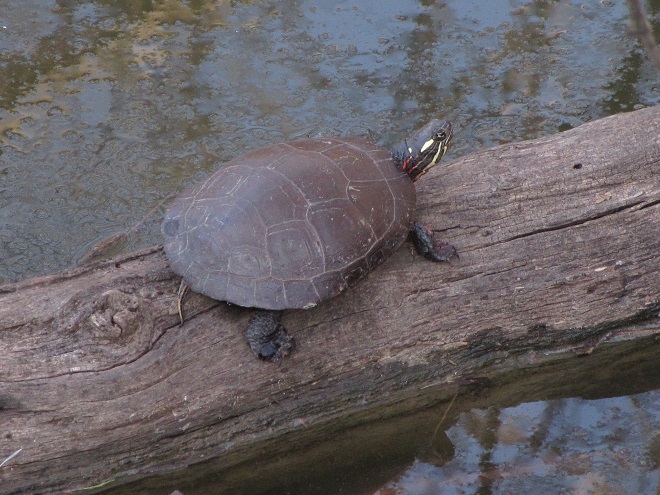

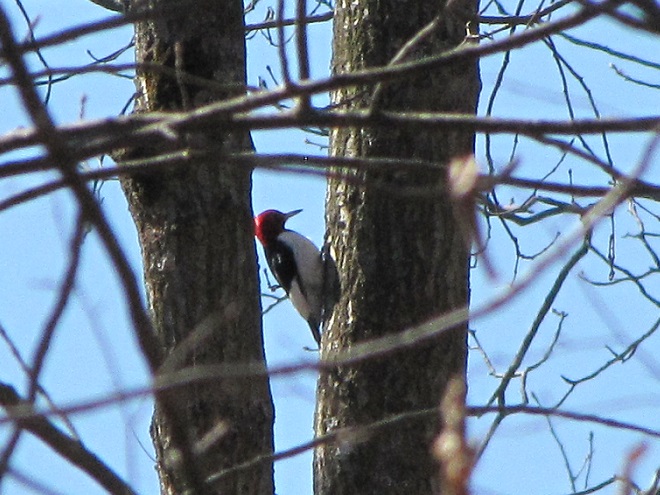
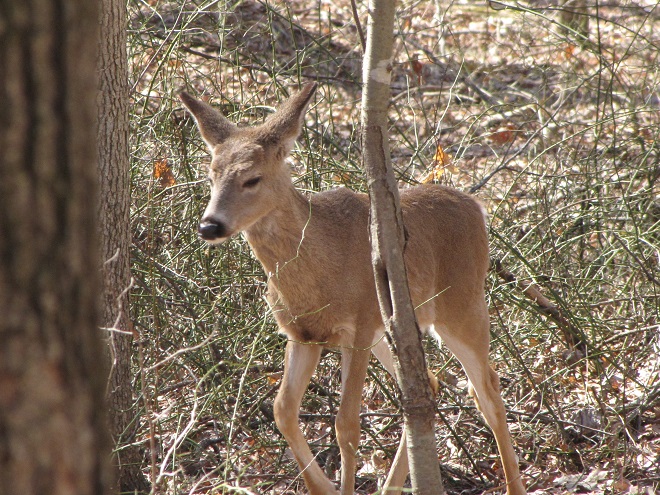
There certainly is more to a forest than the living trees. If you’re hiking through a grove of timber getting snared in a maze of prickly Multiflora Rose (Rosa multiflora) and seeing little else but maybe a wild ungulate or two, then you’re in a has-been forest. Logging, firewood collection, fragmentation, and other man-made disturbances inside and near forests take a collective toll on their composition, eventually turning them to mere woodlots. Go enjoy the forests of the lower Susquehanna valley while you still can. And remember to do it gently; we’re losing quality as well as quantity right now—so tread softly.
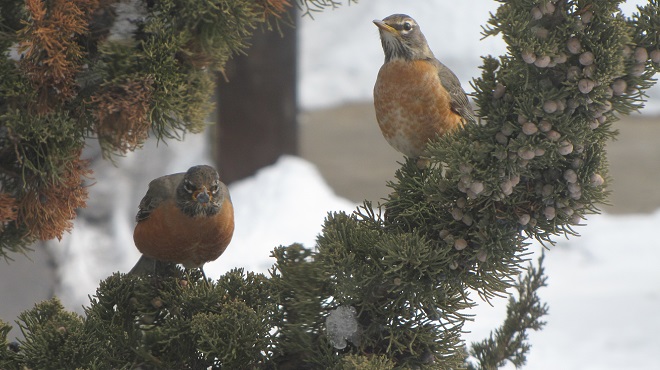
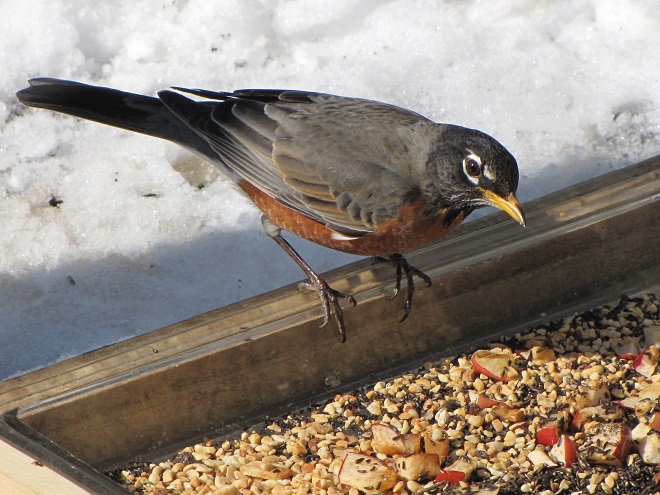
On a snowy winter day, it sure is nice to see some new visitors at a backyard feeding station. Here at the susquehannawildlife.net headquarters, American Robins have arrived to partake of the offerings.
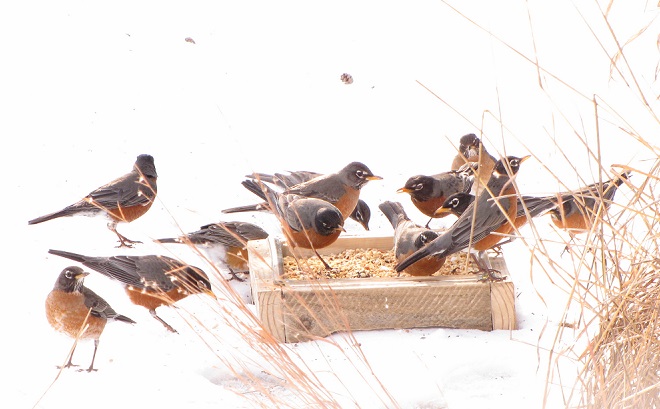
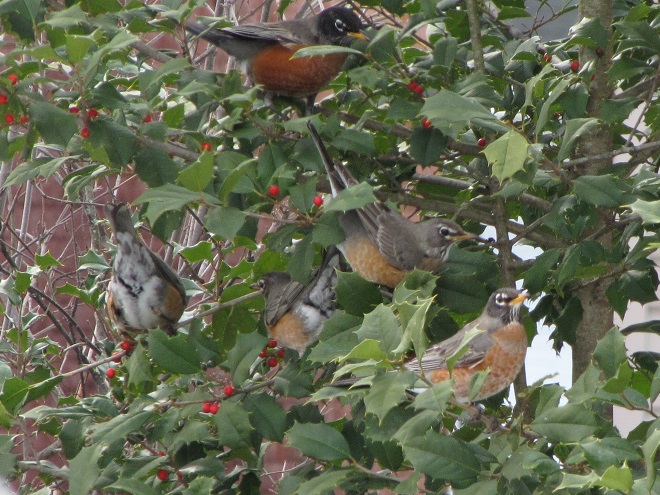
For this flock of robins, which numbered in excess of 150 individuals, the contents of this tray were a mere garnish to the meal that would sustain them through 72 hours of stormy weather. The main course was the supply of ripe berries on shrubs and trees in the headquarters garden.
Their first choice—the bright red fruits of the Common Winterberry.
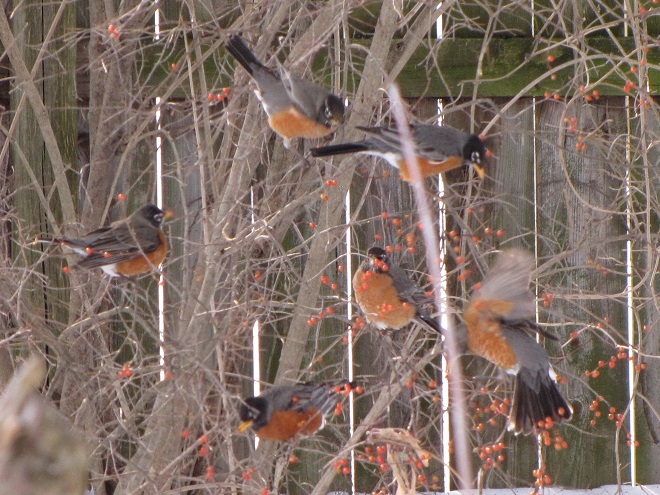
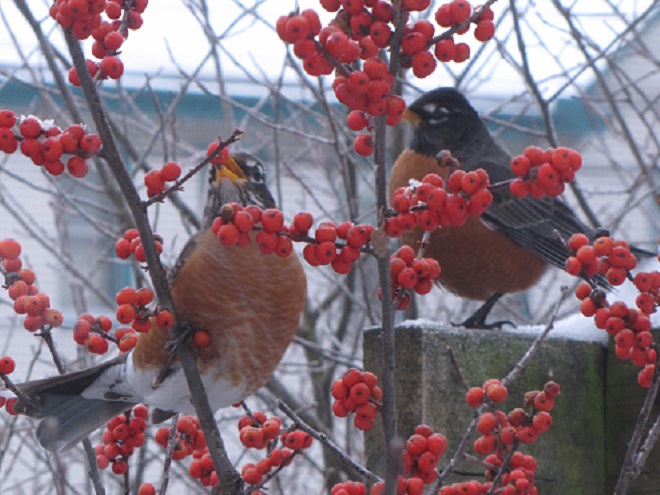
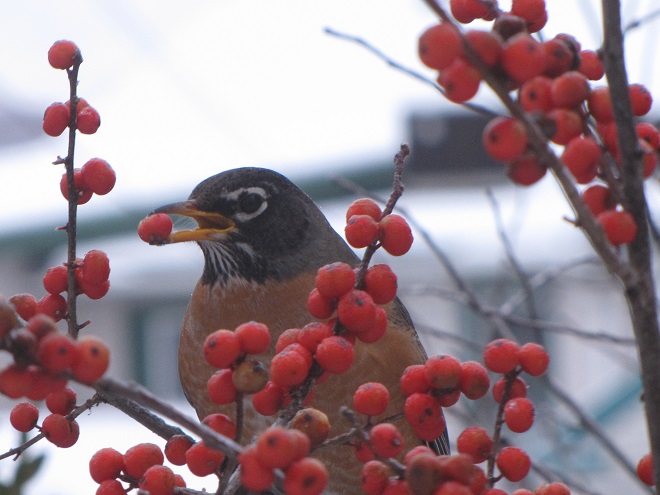

After cleaning off the winterberry shrubs, other fruits became part of the three-day-long feast.
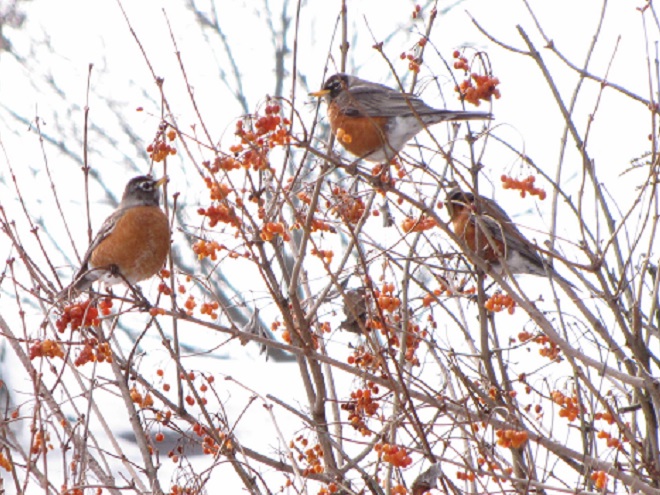
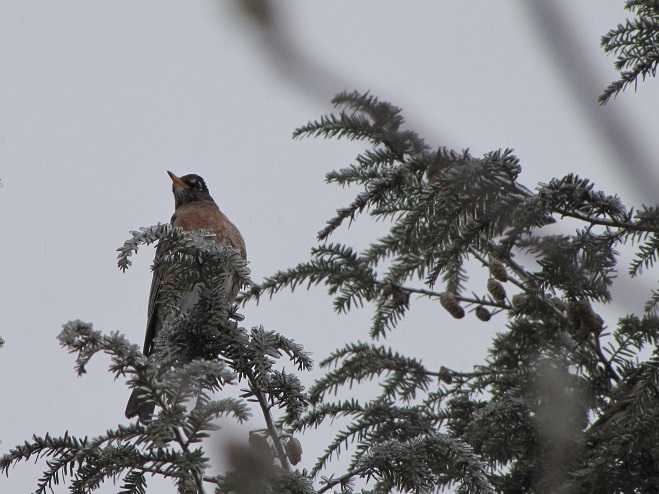
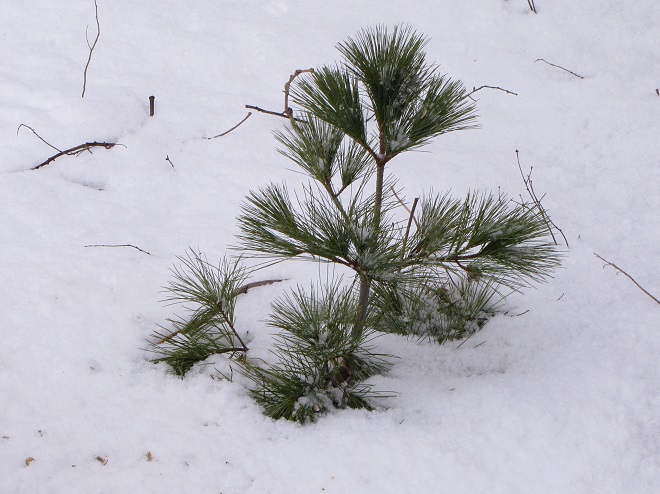
Wouldn’t it be great to see these colorful birds in your garden each winter? You can, you know. Won’t you consider adding plantings of native trees and shrubs to your property this spring? Here at the susquehannawildlife.com headquarters we mow no lawn; the lawn is gone. Mixing evergreens and fruit-producing shrubs with native warm-season grasses and flowering plants has created a wildlife oasis absent of that dirty habit of mowing and blowing.
You can find many of the plants seen here at your local garden center. Take a chunk out of your lawn by paying them a visit this spring.
Want a great deal? Many of the County Conservation District offices in the lower Susquehanna region are having their annual spring tree sales right now. Over the years, we obtained many of our evergreens and berry-producing shrubs from these sales for less than two dollars each. At that price you can blanket that stream bank or wet spot in the yard with winterberries and mow it no more! The deadlines for orders are quickly approaching, so act today—literally, act today. Visit your County Conservation District’s website for details including selections, prices, order deadlines, and pickup dates and locations.
County Conservation District Tree Sales
Consult each County Conservation District’s Tree Sale web page for ordering info, pickup locations, and changes to these dates and times.
Cumberland County Conservation District Tree Seedling Sale—deadline for prepaid orders Tuesday, March 30, 2021. Pickup 1 P.M. to 5 P.M., Thursday, April 22, 2021, and 8 A.M. to 2 P.M., Friday, April 23, 2021. https://www.ccpa.net/4636/Tree-Seedling-Sale
Lancaster County Conservation District Tree Sale—deadline for prepaid orders (hand-delivered to drop box) 5 P.M., Friday, March 5, 2021. Pickup 8 A.M. to 5 P.M., Thursday, April 15, 2021. https://www.lancasterconservation.org/tree-sale/
Lebanon County Conservation District Tree Sale—deadline for prepaid orders Thursday, March 11, 2021. Pickup 9 A.M. to 6 P.M., Friday, May 7, 2021. https://www.lccd.org/2021-tree-sale/
Perry County Conservation District Tree Sale—deadline for prepaid orders Wednesday, March 24, 2021. Pickup 10 A.M. to 6 P.M., Thursday, April 8, 2021. www.perrycd.org/Documents/2021 Tree Sale Flyer LEGAL SIZE.pdf
York County Conservation District Seedling Sale—deadline for prepaid orders Monday, March 15, 2021. Pickup 10 A.M. to 6 P.M., Thursday, April 15, 2021. https://www.yorkccd.org/events/2021-seedling-sale
Thoughts of October in the Lower Susquehanna River Watershed bring to mind scenes of brilliant fall foliage adorning wooded hillsides and stream courses, frosty mornings bringing an end to the growing season, and geese and other birds flying south for the winter.
The autumn migration of birds spans a period equaling nearly half the calendar year. Shorebirds and Neotropical perching birds begin moving through as early as late July, just as daylight hours begin decreasing during the weeks following their peak at summer solstice in late June. During the darkest days of the year, those surrounding winter solstice in late December, the last of the southbound migrants, including some hawks, eagles, waterfowl, and gulls, may still be on the move.
During October, there is a distinct change in the list of species an observer might find migrating through the lower Susquehanna valley. Reduced hours of daylight and plunges in temperatures—particularly frost and freeze events—impact the food sources available to birds. It is during October that we say goodbye to the Neotropical migrants and hello to those more hardy species that spend their winters in temperate climates like ours.
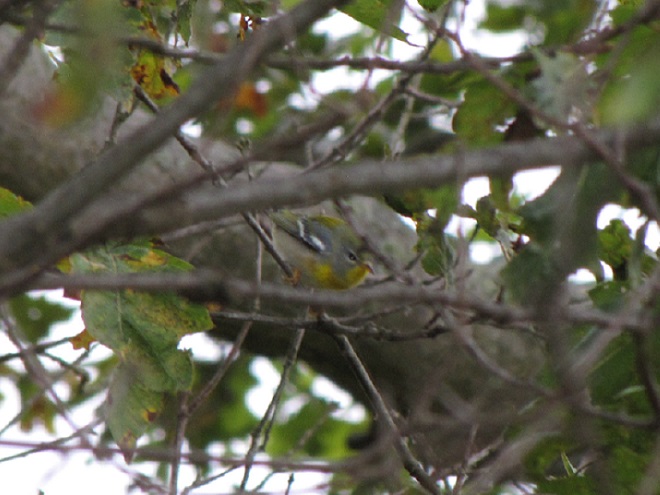
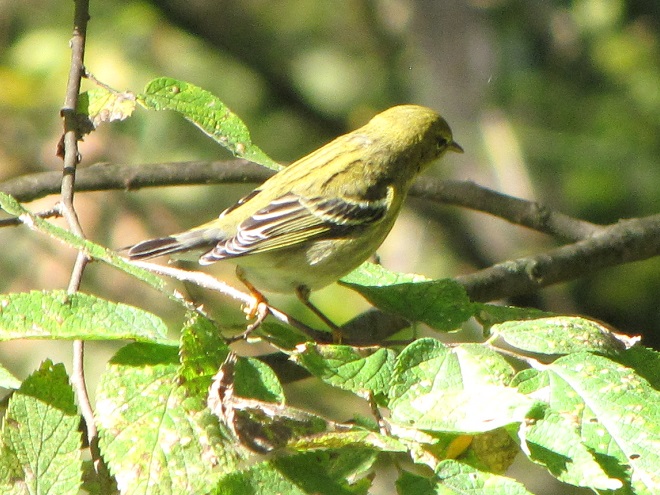
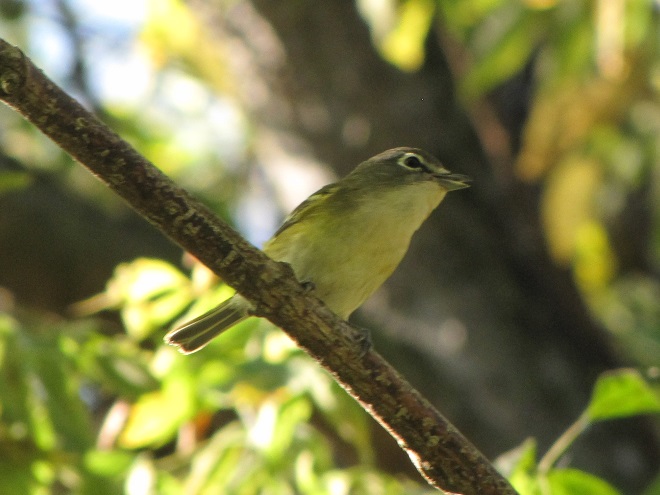
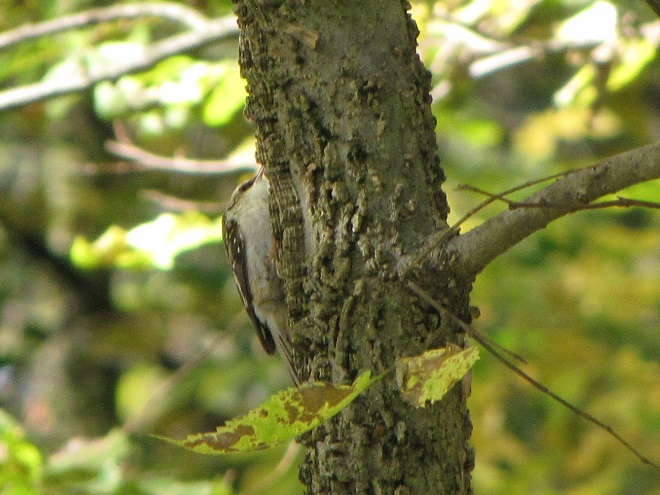
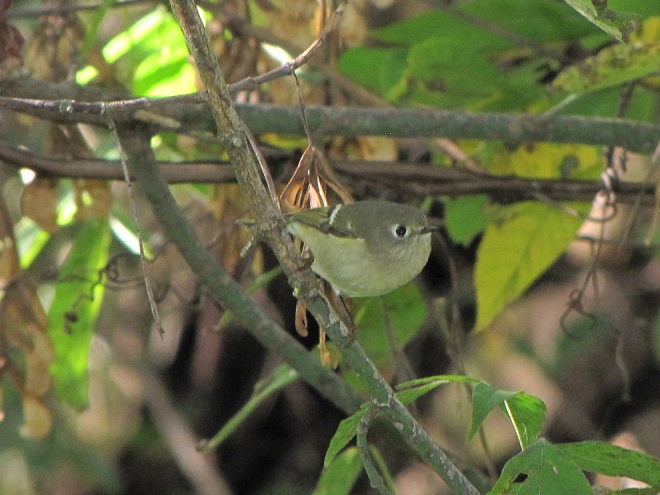

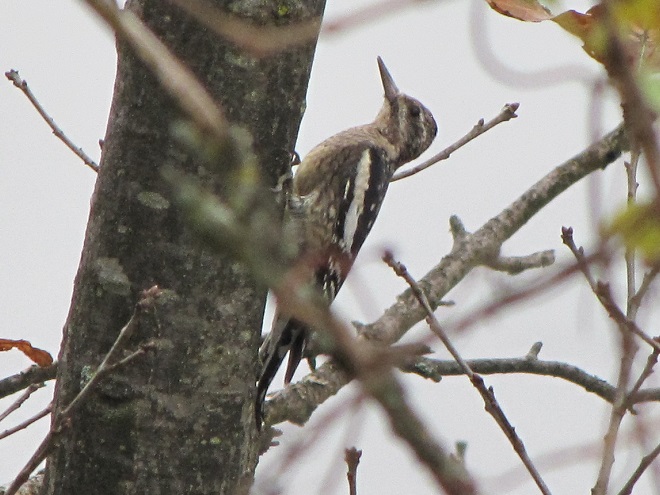
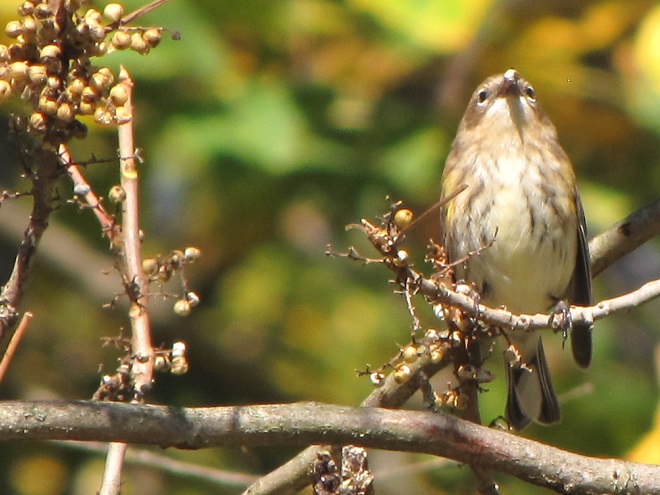
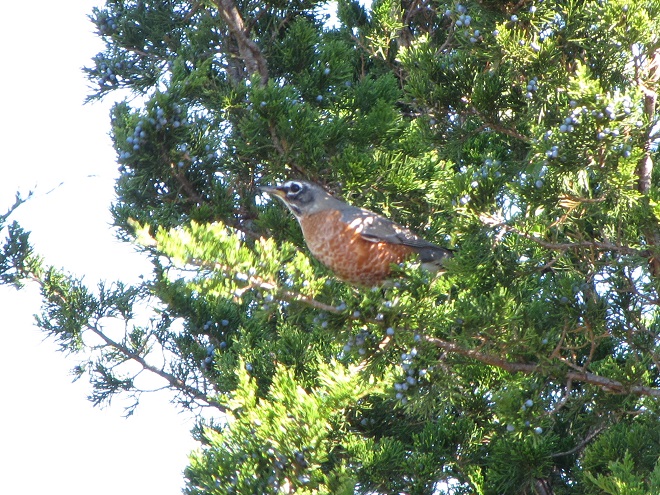
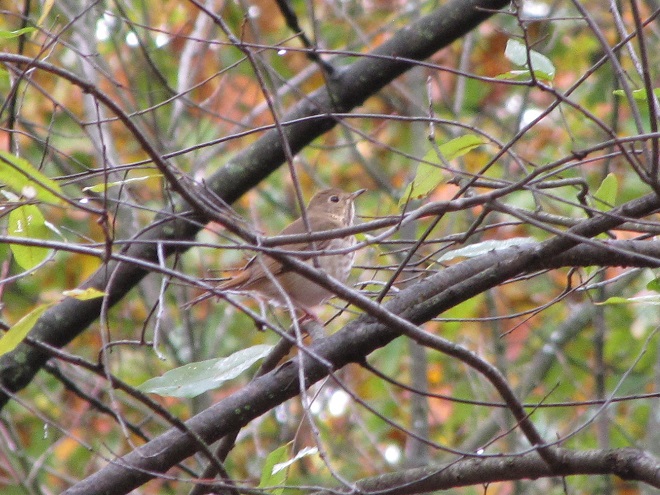
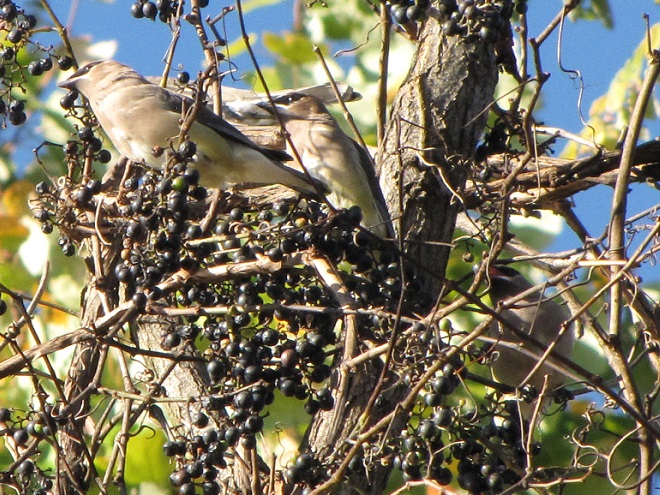
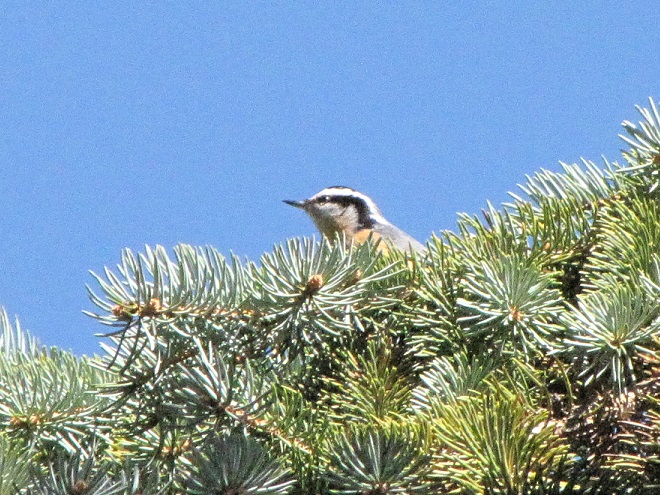
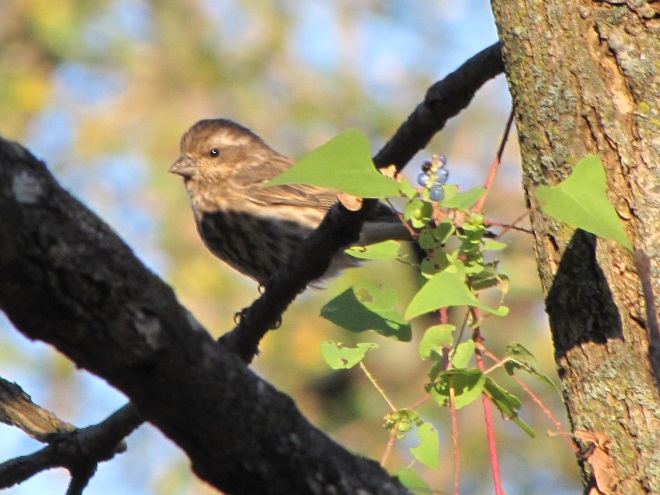
The need for food and cover is critical for the survival of wildlife during the colder months. If you are a property steward, think about providing places for wildlife in the landscape. Mow less. Plant trees, particularly evergreens. Thickets are good—plant or protect fruit-bearing vines and shrubs, and allow herbaceous native plants to flower and produce seed. And if you’re putting out provisions for songbirds, keep the feeders clean. Remember, even small yards and gardens can provide a life-saving oasis for migrating and wintering birds. With a larger parcel of land, you can do even more.
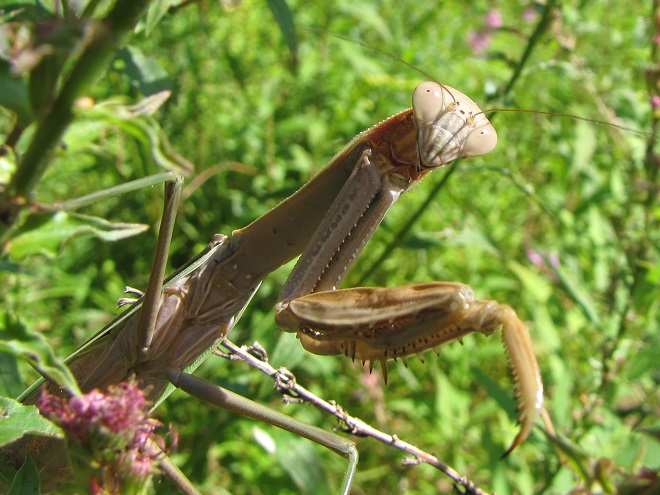
A special message from your local Chinese Mantis (Tenodera sinensis).
Hey you! Yes, you. I pray you’re paying attention to what’s flying around out there, otherwise it’ll all pass you by.
This summer’s hot humid breezes from the south have not only carried swarms of dragonflies into the lower Susquehanna valley, but butterflies too.
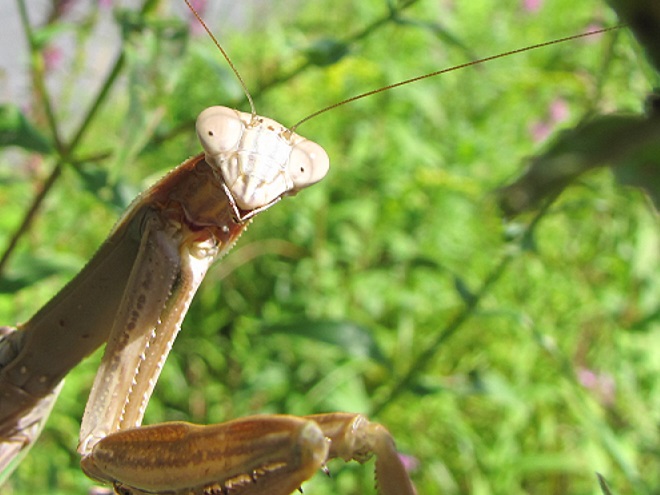
So check out these extravagant visitors from south of the Mason-Dixon Line—before my appetite gets the better of me.
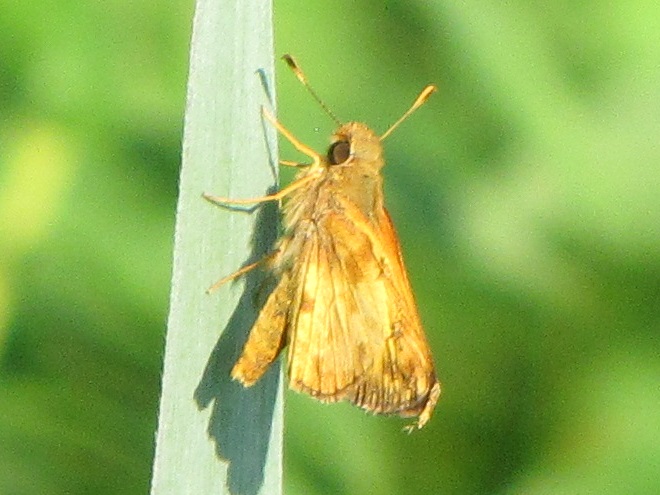
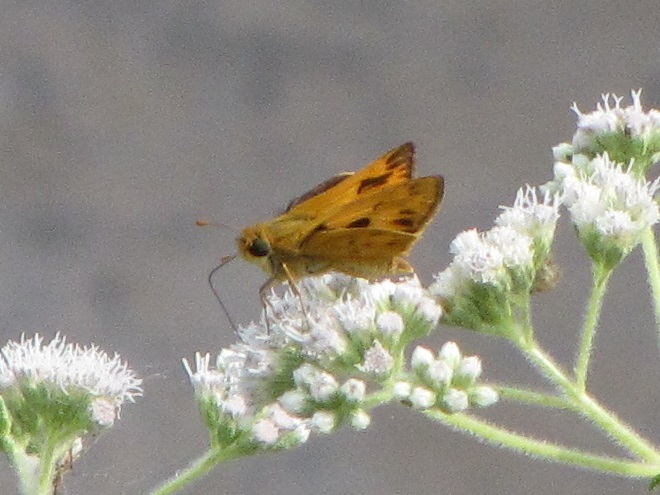
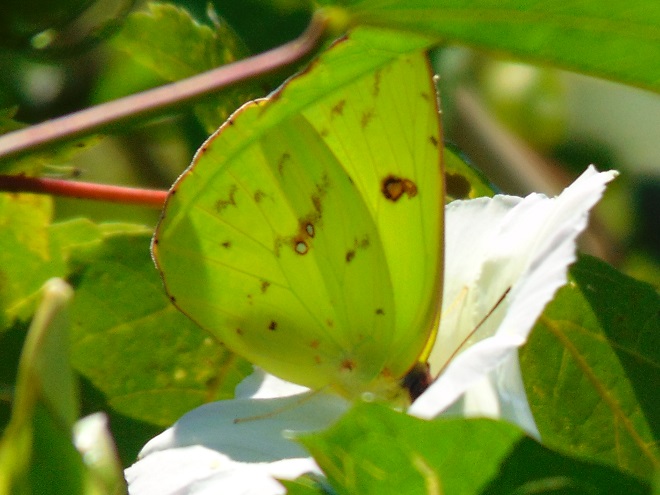
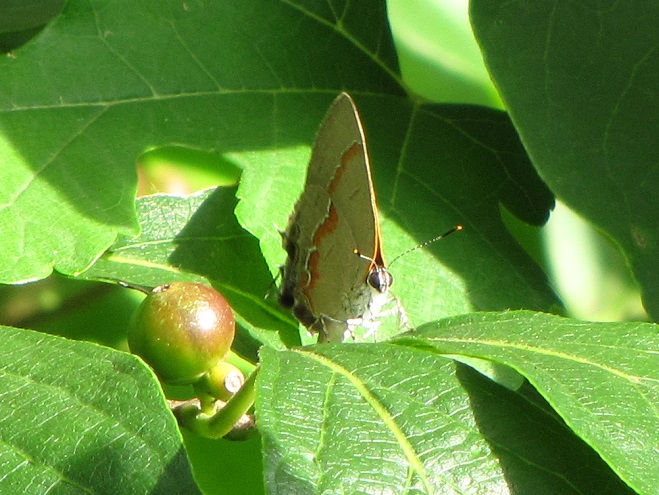
There you have it. Get out there and have a look around. These species won’t be active much longer. In just a matter of weeks, our migratory butterflies, including Monarchs, will be heading south and our visiting strays will either follow their lead or risk succumbing to frosty weather.
For more photographs of butterflies, be sure to click the “Butterflies” tab at the top of the page. We’re adding more as we get them.
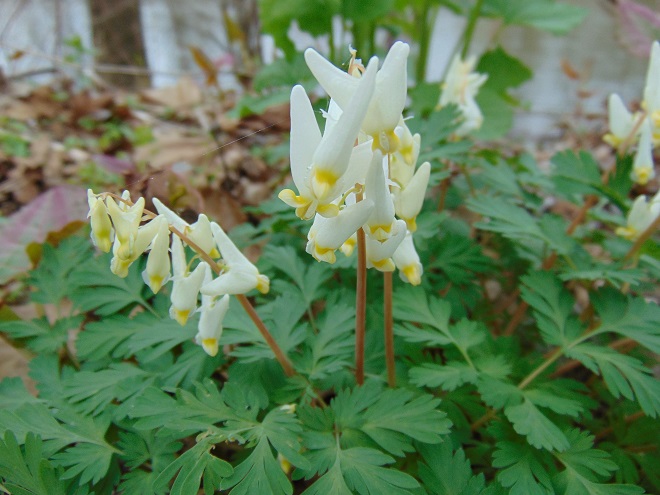
For those of you who dare to shed that filthy contaminated rag you’ve been told to breathe through so that you might instead get out and enjoy some clean air in a cherished place of solitude, here’s what’s around—go have a look.
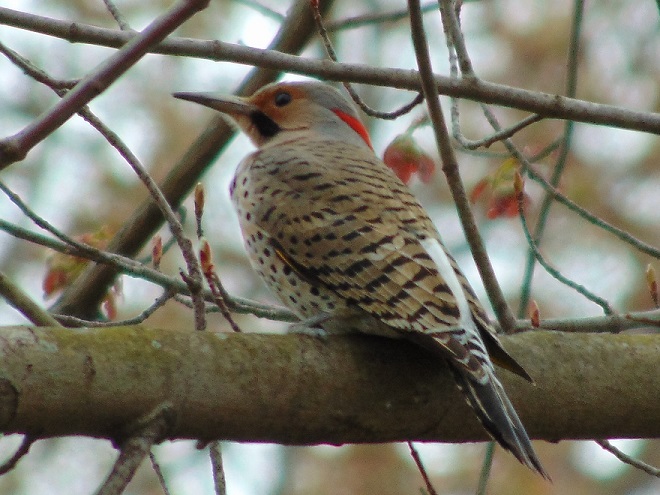
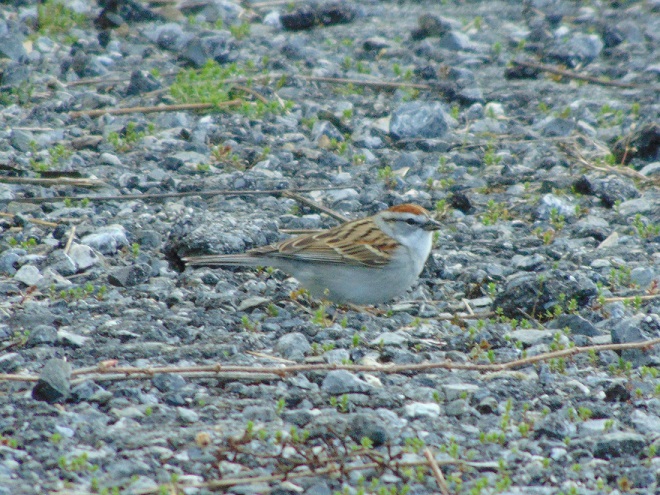
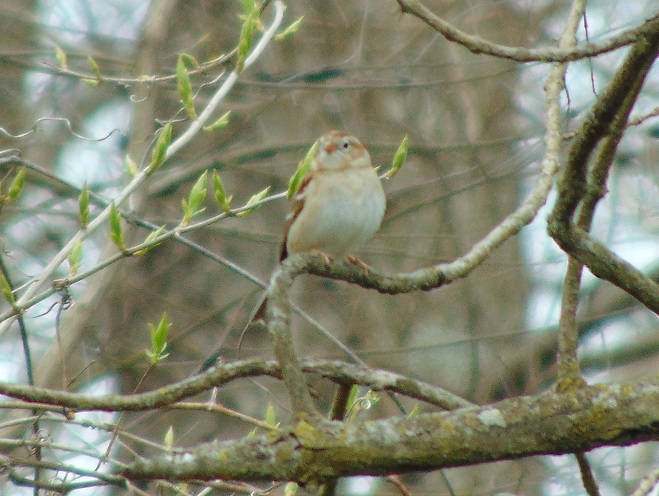
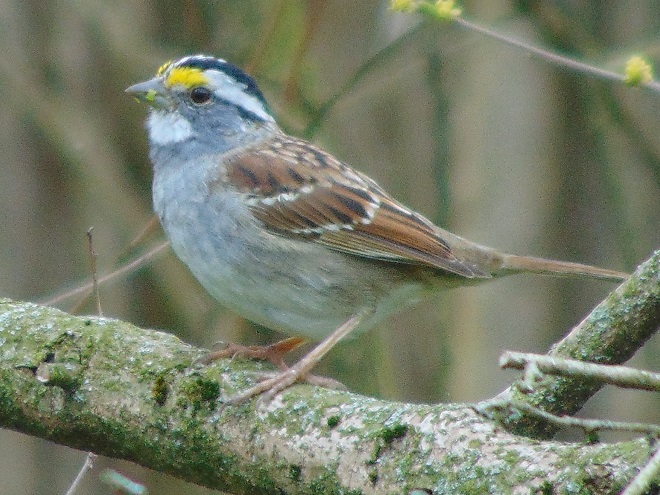

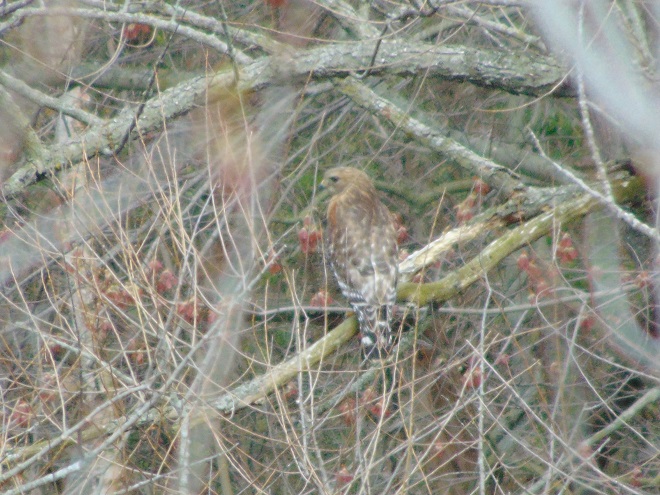
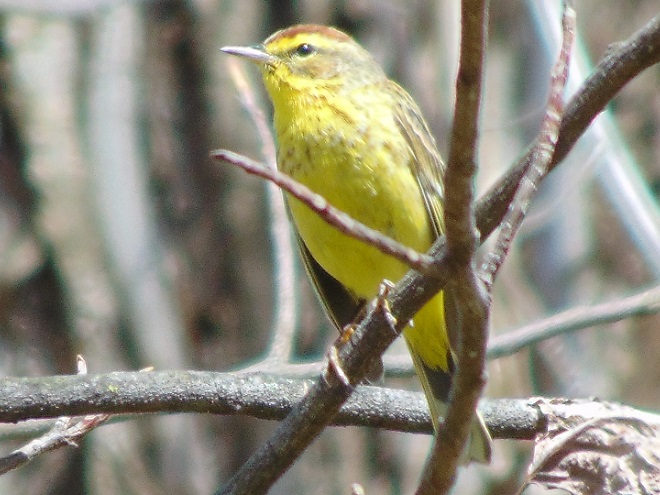
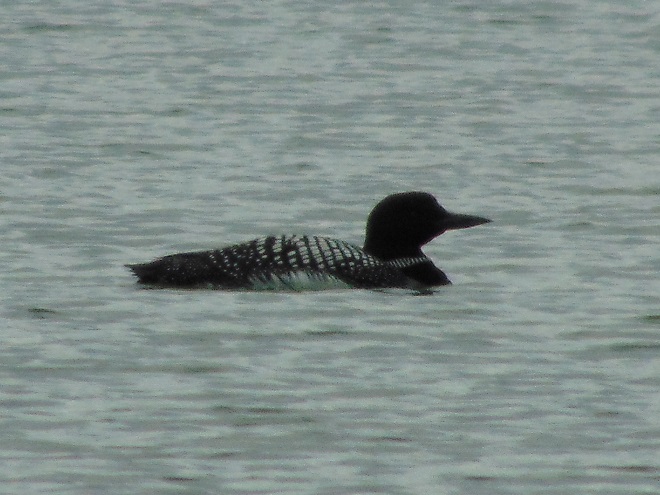
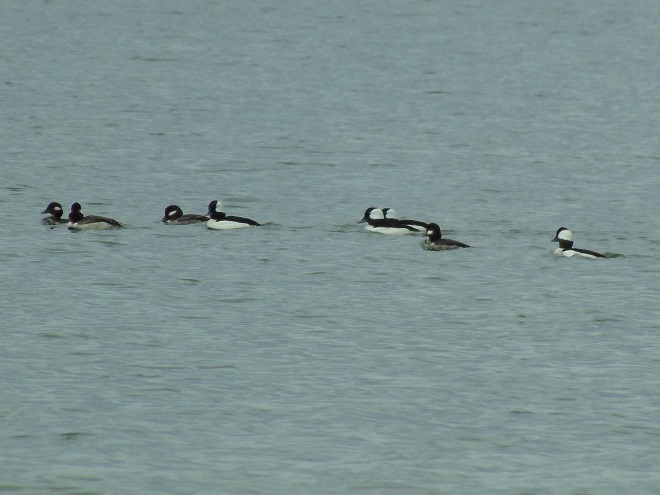
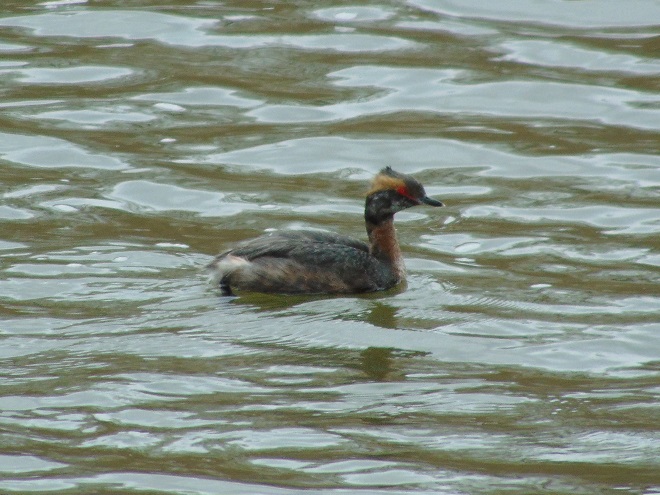
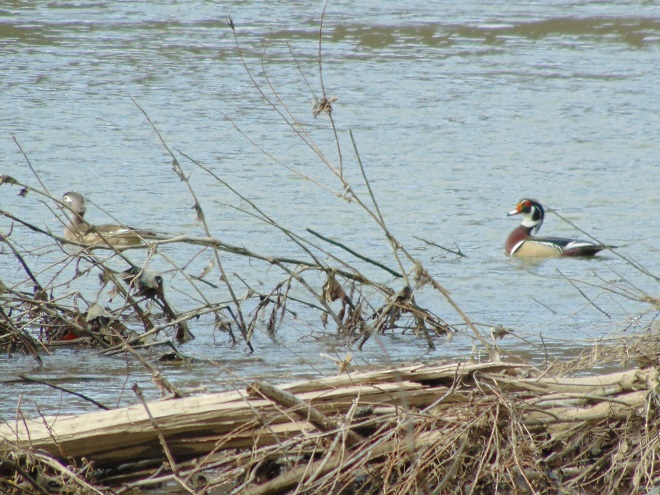
The springtime show on the water continues…
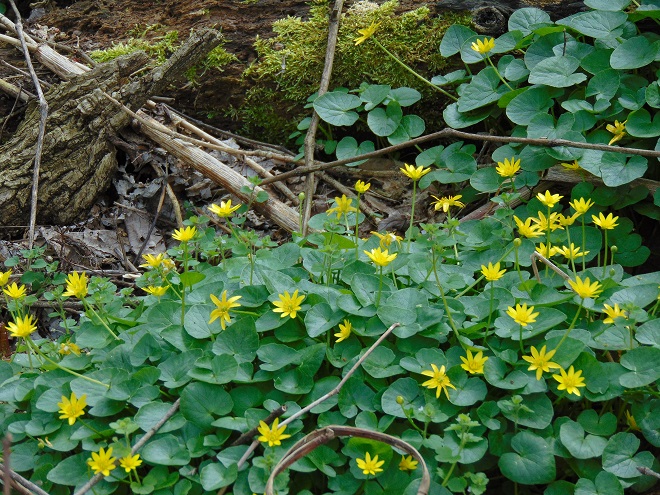
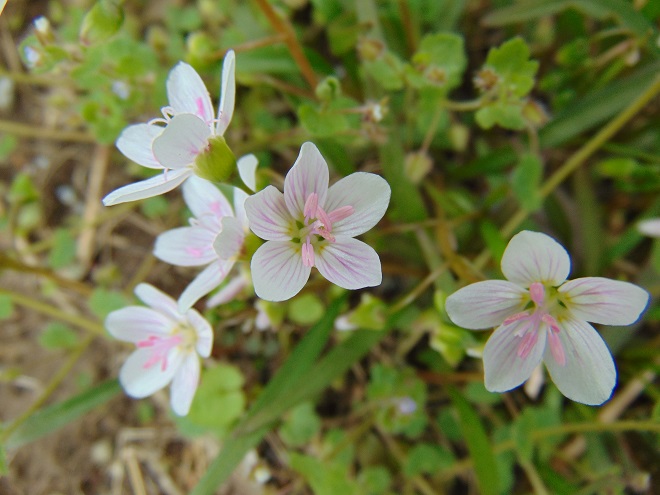
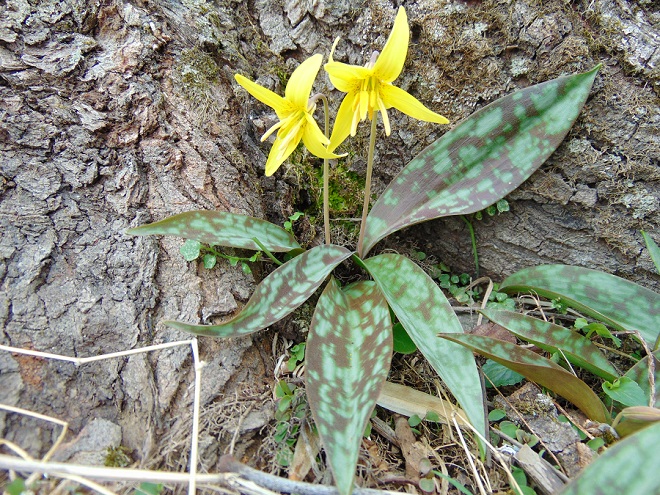
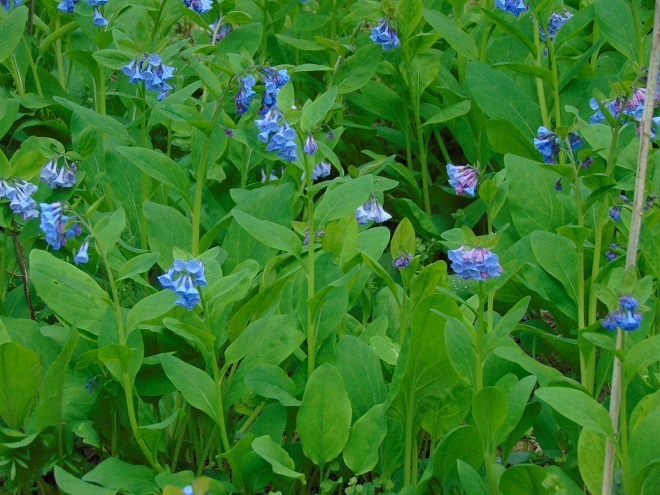
Hey, what are those showy flowers?
Wasn’t that refreshing? Now go take a walk.