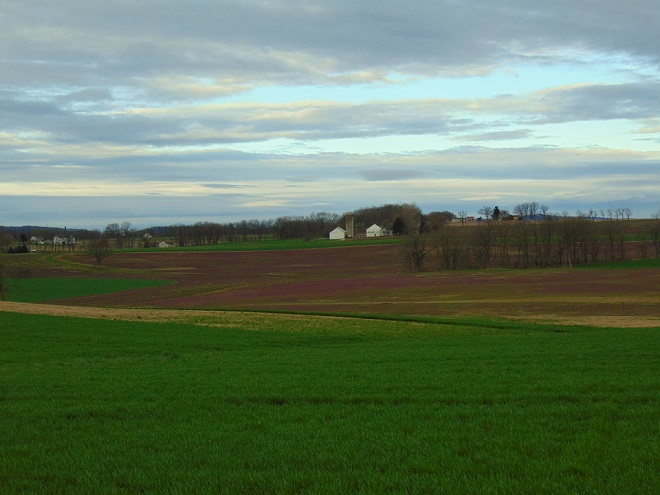
Have you noticed a purple haze across the fields right now? If so, you may have wondered, “What kind of flowers are they?”
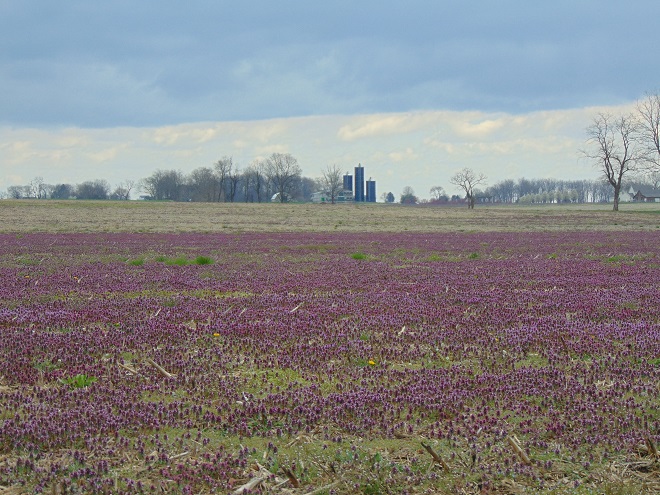
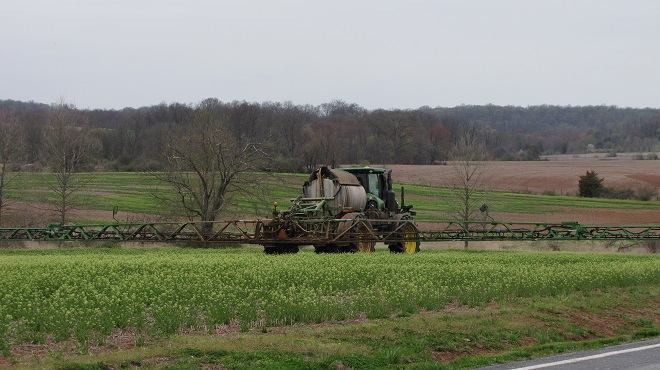
A purple haze of color stretches across fields not already green with cold-season crops like winter wheat.
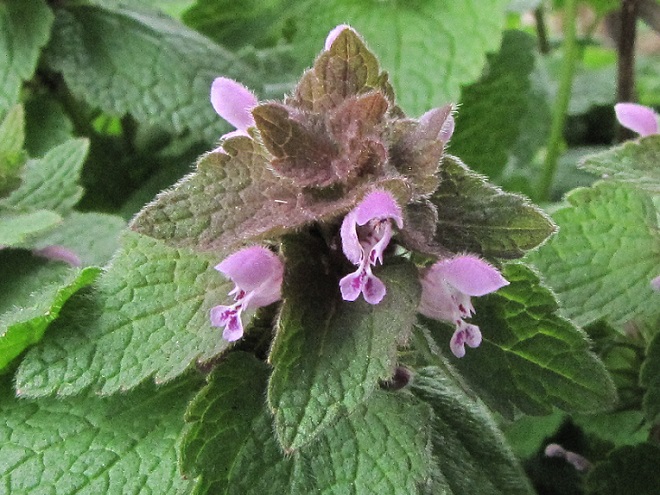
Say hello to Purple Dead Nettle (Lamium purpureum), a non-native invasive species that has increased its prevalence in recent years by finding an improved niche in no-till cropland. Purple Dead Nettle, also known as Red Dead Nettle, is native to Asia and Europe. It has been a familiar early spring “weed” in gardens, along roadsides, and in other disturbed ground for decades.
Purple Dead Nettle owes its new-found success to the timing of its compressed growing season. Its tiny seeds germinate during the fall and winter, after crops have been harvested and herbicide application has ended for the season. The plants flower early in the spring and are thus particularly attractive to Honey Bees and other pollinators looking for a source of energy-rich nectar as they ramp up activity after winter lock down. In many cases, Purple Dead Nettle has already completed its flowering cycle and produced seeds before there is any activity in the field to prepare for planting the summer crop. The seeds spend the warmer months in dormancy, avoiding the hazards of modern cultivation that expel most other species of native and non-native plants from the agricultural landscape.
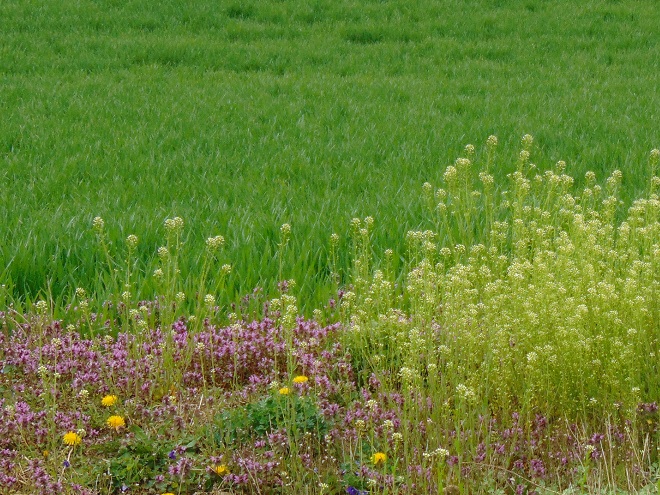
Flowering Purple Dead Nettle as a volunteer cover crop among last year’s corn stubble in a no-till field.Like the flowers of orchids, Purple Hedge Nettle blossoms are described as yoke shaped or bilateral (zygomorphic). Psychedelic experiences are produced only through observation, not by ingestion. A member of the mint family, its edible young leaves and tops have nutritional value, making a unique addition to salads and soups.We call them “weeds”, but what do we know? Purple Dead Nettle, Common Dandelion, and Shepherd’s Purse (Capsella bursa-pastoris), three edible non-native invasive species with similar life cycles seen here flowering along a rural road among fields where intensive farming is practiced. Shepard’s Purse, like many members of the mustard family, is already producing seeds at the bottom of the flower cluster by the time the uppermost buds open for business.In preparation for seeding of a warm-season crop, herbicide is applied on a no-till field to kill Shepherd’s Purse and other cool-season plants. To help prevent sediment and nutrient discharge from lands where high-intensity agriculture is practiced, no-till methods are used to reduce runoff from the areas of bare soil that would otherwise be created by traditional plowing.
While modern farming has eliminated a majority of native plant and animal species from agricultural lands of the lower Susquehanna valley, its crop management practices have simultaneously invited vigorous invasion by a select few non-native species. High-intensity farming devotes its acreage to providing food for a growing population of people—not to providing wildlife habitat. That’s why it’s so important to minimize our impact on non-farm lands throughout the remainder of the watershed. If we continue subdividing, paving, and mowing more and more space, we’ll eventually be living in a polluted semi-arid landscape populated by little else but non-native invasive plants and animals. We can certainly do better than that.
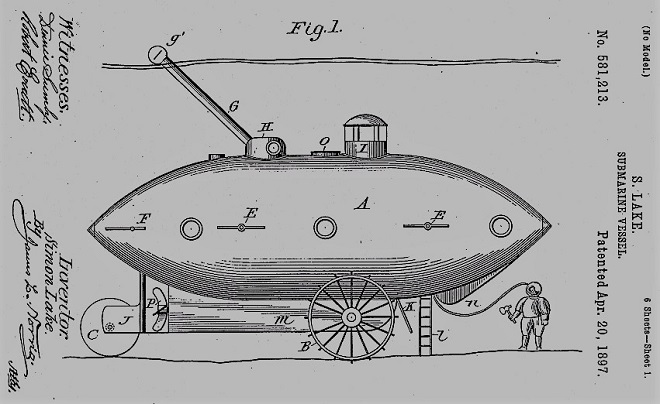
First there was the Nautilus. Then there was the Seaview. And who can forget the Yellow Submarine? Well, now there’s the S. S. Haldeman, and today we celebrated her shakedown cruise and maiden voyage. The Haldeman is powered by spent fuel that first saw light of day near Conewago Falls at a dismantled site that presently amounts to nothing more than an electrical substation. Though antique in appearance, the vessel discharges few emissions, provided there aren’t any burps or hiccups while underway. So, climb aboard as we take a cruise up the Susquehanna at periscope depth to have a quick look around!
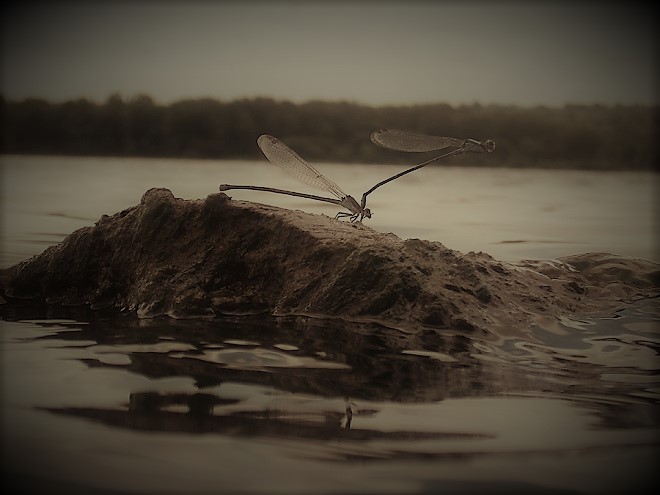
Brunner Island as seen from the east channel.Close-in approach to emergent Water Willow growing on an alluvial Island.The approach to York Haven Dam and Conewago Falls from the west channel.A pair of Powdered Dancers on a midriver log.
Watertight and working fine. Let’s flood the tanks and have a peek at the benthos. Dive, all dive!
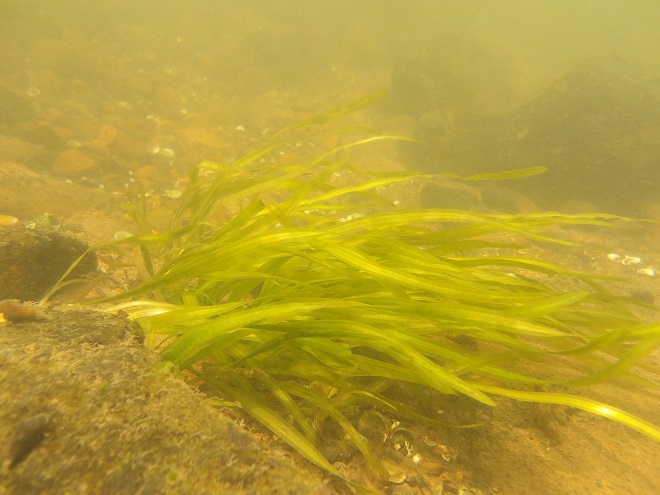
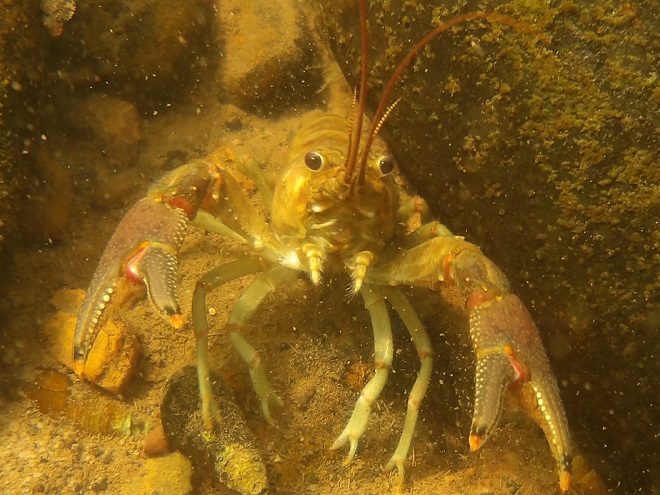
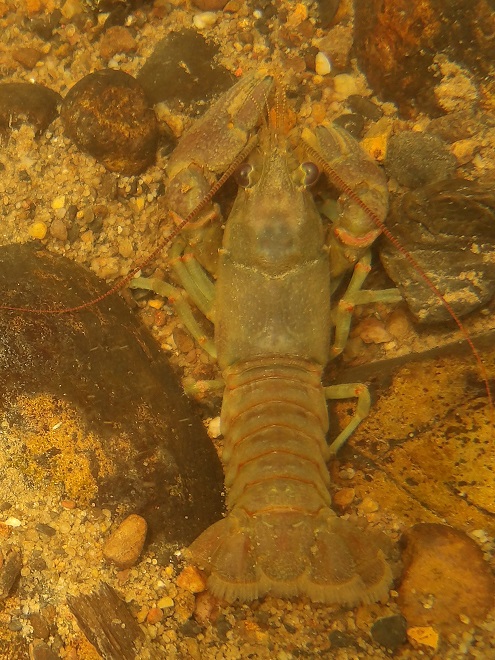
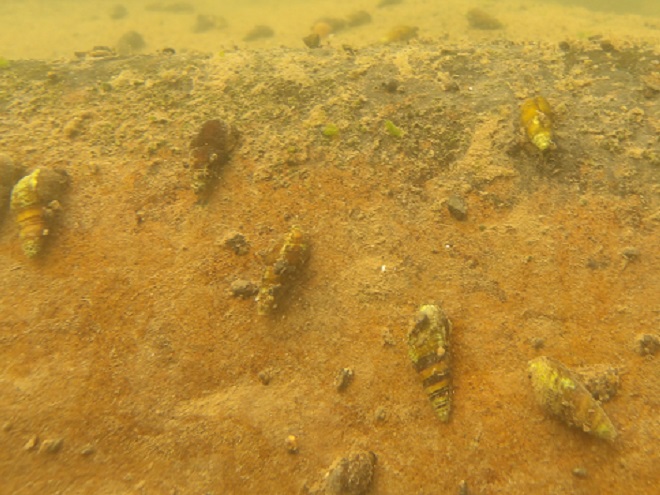
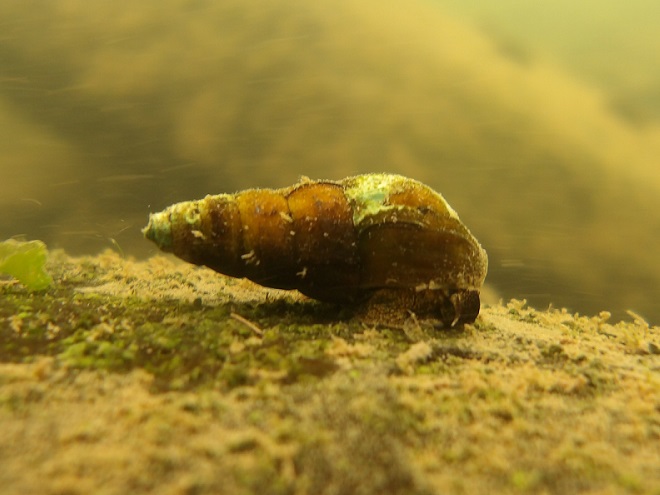
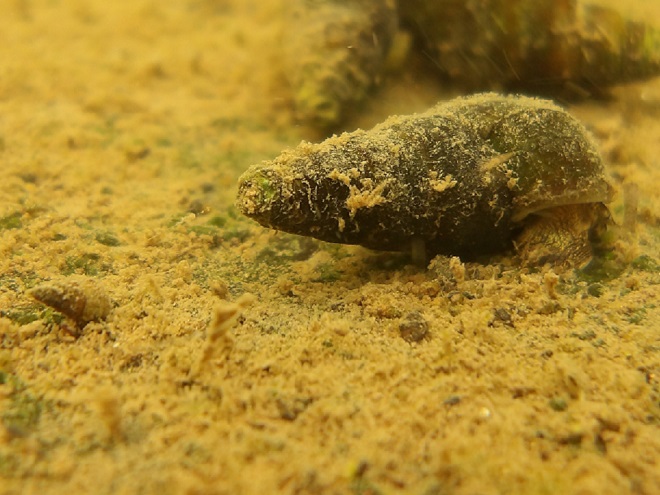
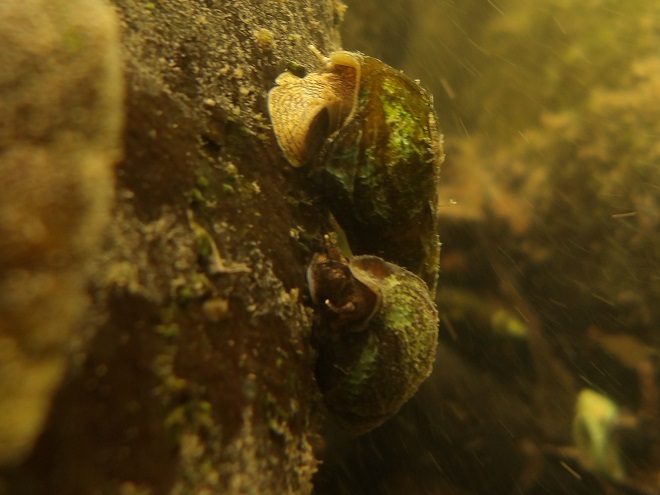
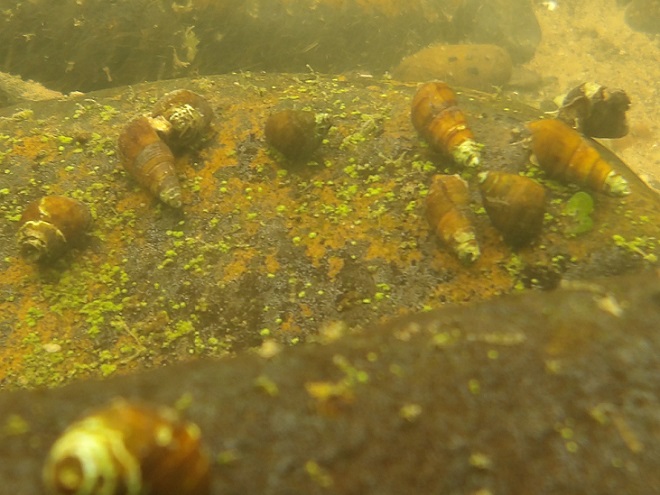
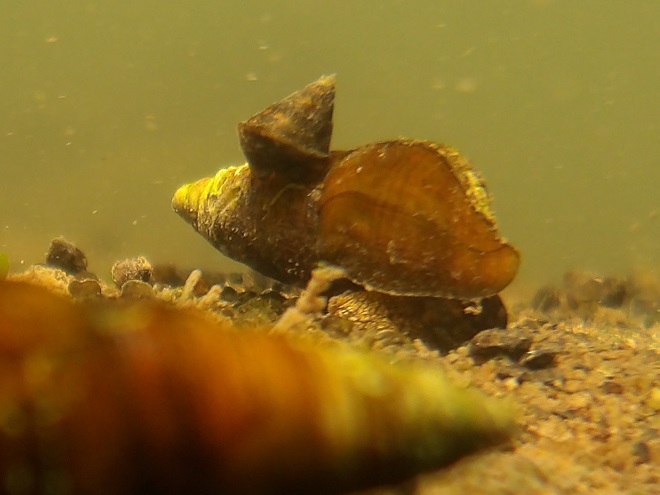
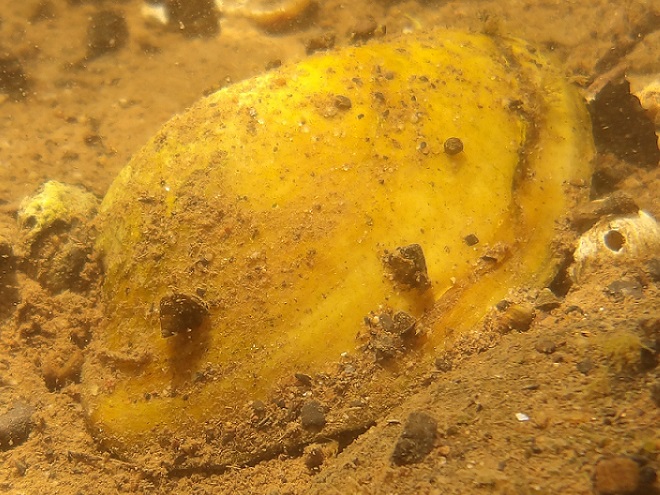
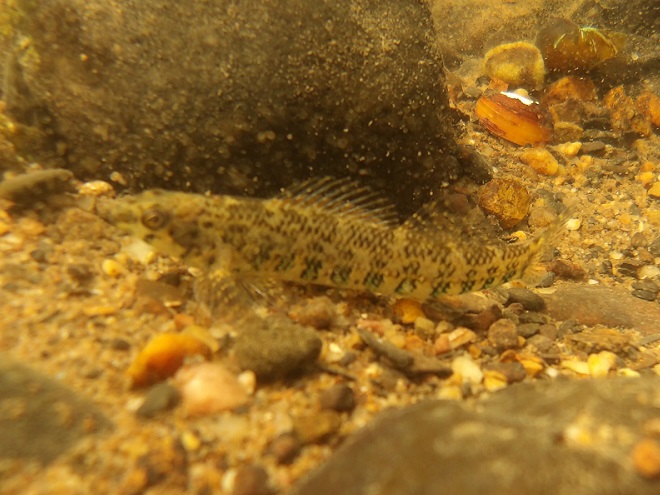
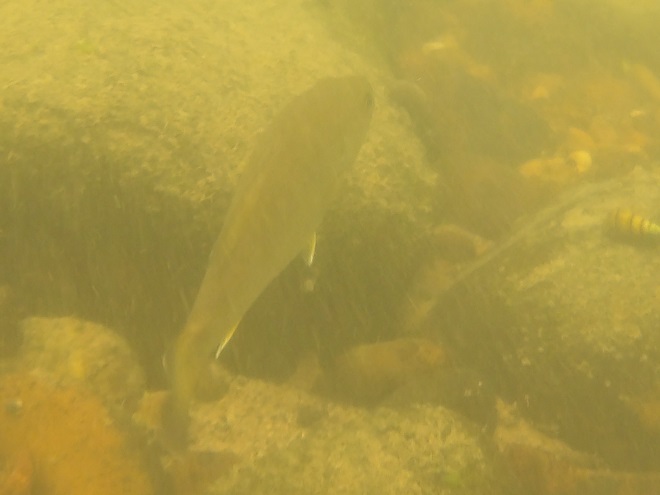
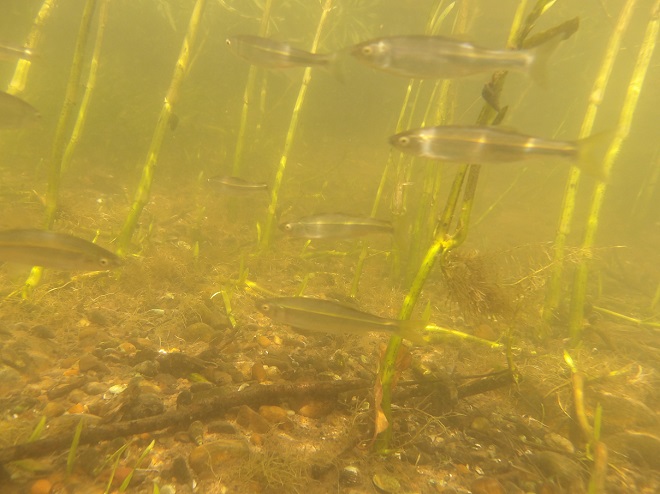
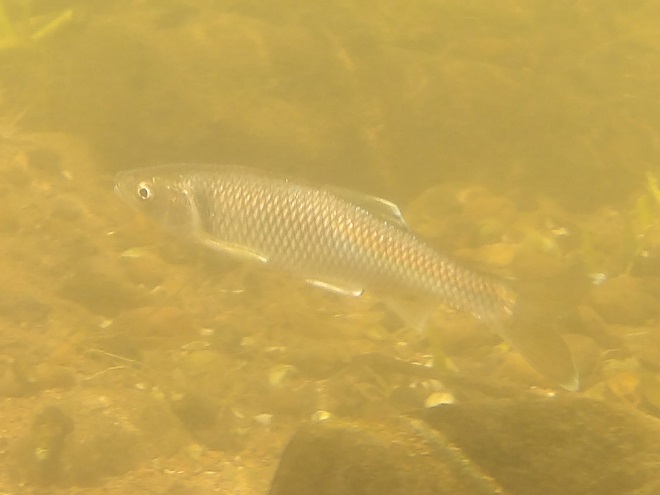
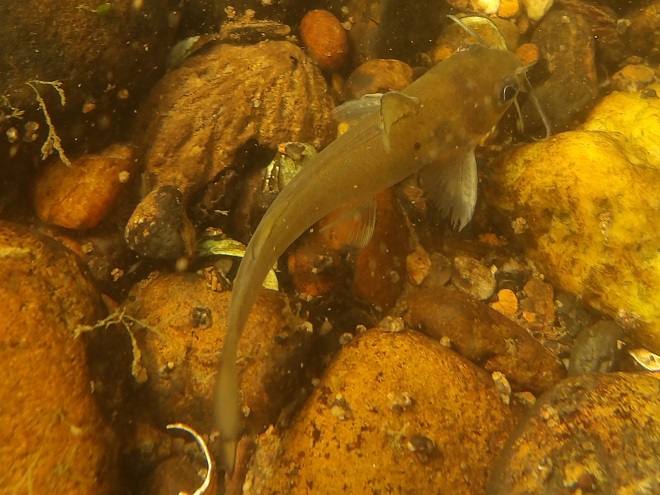
American Eelgrass, also known as Tapegrass, looks to be growing well in the channels. Historically, vast mats of this plant were the primary food source for the thousands of Canvasback ducks that once visited the lower Susquehanna each autumn.As is Water Stargrass (Heteranthera dubia). When mature, both of these native plants provide excellent cover for young fish. Note the abundance of shells from deceased Asiatic Clams (Corbicula fluminea) covering the substrate.A three-tailed mayfly (Ephemeroptera) nymph and a several exoskeletons cling to the downstream side of a rock.This hollowed-out stick may be a portable protective shelter belonging to a Comb-lipped Casemaker Caddisfly larva (Calamoceratidae). The larva itself appears to be extending from the end of the “case” in the upper right of the image. Heteroplectron americanum, a species known for such behavior, is a possibility. In the Susquehanna and its tributaries, the Rusty Crayfish (Faxonius rusticus) is an introduced invasive species. It has little difficulty displacing native species due to its size and aggressiveness.A Rusty Crayfish.Summers with conditions that promote eelgrass and stargrass growth tend to be big years for Virginian River Horn Snails (Elimia virginica). 2022 appears to be one of those years. They’re abundant and they’re everywhere on the rocks and gravel substrate in midriver. Feeding almost incessantly on algae and detritus, these snails are an essential component of the riverine ecosystem, breaking down organic matter for final decomposition by bacteria and fungi.Bits of debris suspended in the flowing water streak by this Virginian River Horn Snail. The spire-shaped shell is a streamlining adaptation for maneuvering and holding fast in the strong current.A young Virginian River Horn Snail following a mature adult. Note the green algae growing among the decaying plant and animal remains that blanket the river bottom.Two of a population that may presently include millions of Virginian River Horn Snails living downstream of Conewago Falls.Virginian River Horn Snails with Lesser Mystery Snails (Campeloma decisum), another native species commonly encountered at Conewago Falls and in surrounding waters.A River Snail (Leptoxis carinata), also known as a Crested Mudalia, hitching a ride on a Virginian River Horn Snail. The two species are frequently found together.A River Snail cleaning the shell of a native freshwater Unionidae mussel, Lampsilis cariosa, commonly called the Yellow Lampmussel or Carried Lampmussel. Because of their general decline in abundance and range, all Unionidae mussels are protected in Pennsylvania.The Banded Darter (Etheostoma zonale) is a member of the perch family (Percidae).A Smallmouth Bass in strong current.Along the edge of an alluvial island at midriver, Cyprinella (Spotfin or Satinfin) Shiners gather in the cover of an emergent stand of Water Willow. The closely related Spotfin Shiner (Cyprinella spiloptera) and Satinfin Shiner (Cyprinella analostanus) are nearly impossible to differentiate in the field.A breeding condition male Cyprinella (Spotfin or Satinfin) Shiner.A juvenile Channel Catfish.
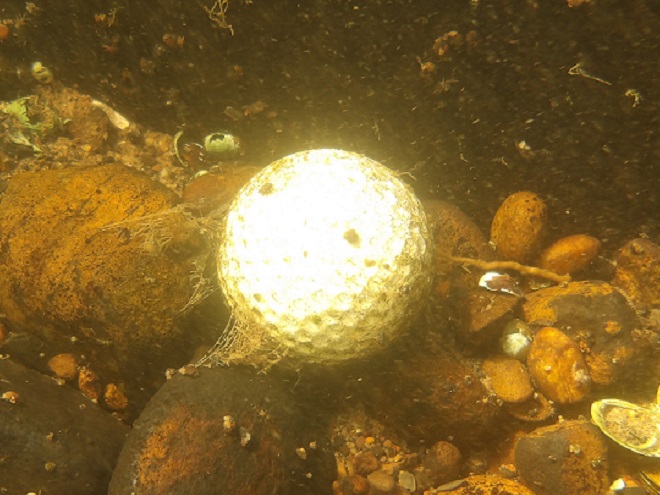
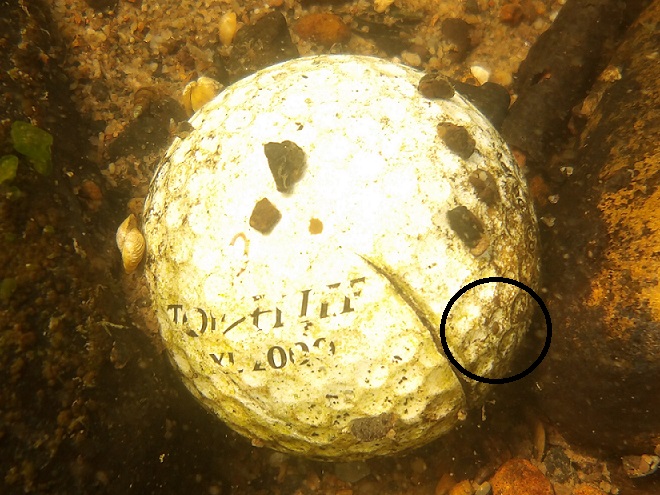
We’re finding that a sonar “pinger” isn’t very useful while running in shallow water. Instead, we should consider bringing along a set of Pings—for the more than a dozen golf balls seen on the river bottom. It appears they’ve been here for a while, having rolled in from the links upstream during the floods. Interestingly, several aquatic species were making use of them.
River Snail cleaning a golf ball.A golf ball used as an anchor point for silk cases woven by Net-spinning Caddisfly (Hydropsychidae) larvae to snare food from the water column.A Creeping Ancylid (Ferrissia species), a tiny gastropod also known as a Coolie Hat Snail, River Limpet, or Brook Freshwater Limpet, inhabits the dimple on a “Top Flight”.A closeup view of the Creeping Ancylid. The shell sits atop the snail’s body like a helmet.We now know why your golf balls always end up in the drink, it’s where they go to have their young.
Well, it looks like the skipper’s tired and grumpy, so that’s all for now. Until next time, bon voyage!
This month, the International Union for Conservation of Nature (I.U.C.N.) added the Migratory Monarch Butterfly (Danaus plexippus plexippus) to its “Red List of Threatened Species”, classifying it as endangered. Perhaps there is no better time than the present to have a look at the virtues of replacing areas of mowed and manicured grass with a wildflower garden or meadow that provides essential breeding and feeding habitat for Monarchs and hundreds of other species of animals.
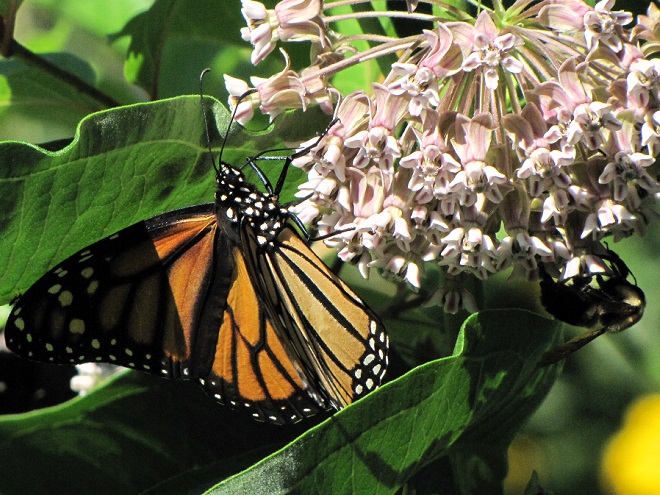
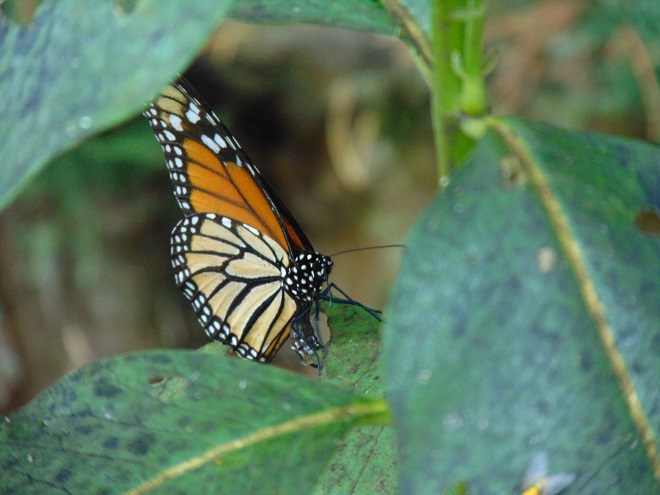
A recently arrived Monarch visits a cluster of fragrant Common Milkweed flowers in the garden at the susquehannawildlife.net headquarters. Milkweeds included among a wide variety of plants in a garden or meadow habitat can help local populations of Monarchs increase their numbers before the autumn flights to wintering grounds commence in the fall. Female Monarchs lay their eggs on milkweed leaves, then, after hatching, the larvae (caterpillars) feed on them before pupating.
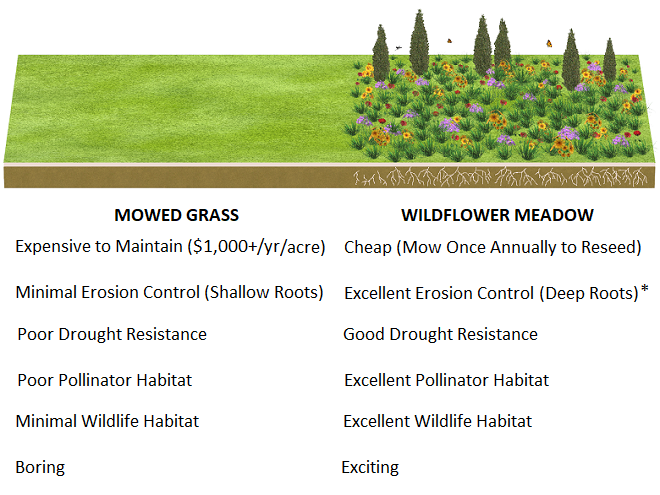
If you’re not quite sure about finally breaking the ties that bind you to the cult of lawn manicuring, then compare the attributes of a parcel maintained as mowed grass with those of a space planted as a wildflower garden or meadow. In our example we’ve mixed native warm season grasses with the wildflowers and thrown in a couple of Eastern Red Cedars to create a more authentic early successional habitat.
* Particularly when native warm-season grasses are included (root depth 6′-8′)
Still not ready to take the leap. Think about this: once established, the wildflower planting can be maintained without the use of herbicides or insecticides. There’ll be no pesticide residues leaching into the soil or running off during downpours. Yes friends, it doesn’t matter whether you’re using a private well or a community system, a wildflower meadow is an asset to your water supply. Not only is it free of man-made chemicals, but it also provides stormwater retention to recharge the aquifer by holding precipitation on site and guiding it into the ground. Mowed grass on the other hand, particularly when situated on steep slopes or when the ground is frozen or dry, does little to stop or slow the sheet runoff that floods and pollutes streams during heavy rains.
What if I told you that for less than fifty bucks, you could start a wildflower garden covering 1,000 square feet of space? That’s a nice plot 25′ x 40′ or a strip 10′ wide and 100′ long along a driveway, field margin, roadside, property line, swale, or stream. All you need to do is cast seed evenly across bare soil in a sunny location and you’ll soon have a spectacular wildflower garden. Here at the susquehannawildllife.net headquarters we don’t have that much space, so we just cast the seed along the margins of the driveway and around established trees and shrubs. Look what we get for pennies a plant…
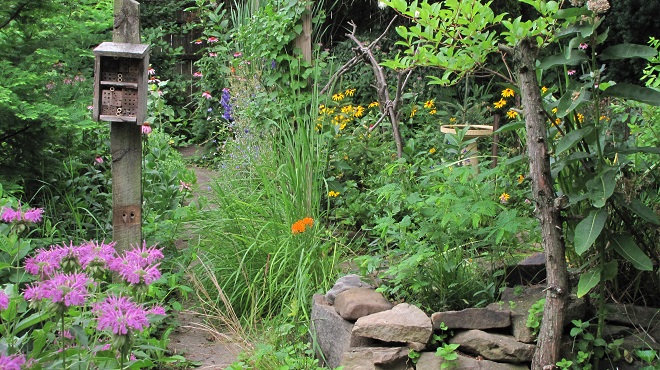
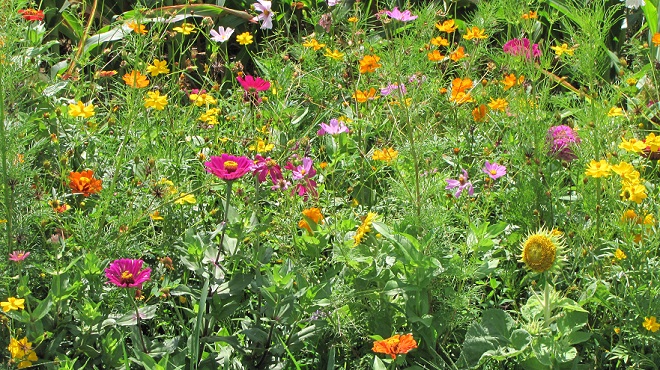
Some of the wildflowers and warm-season grasses grown from scattered seed in the susquehannawildlife.net headquarters garden.
Here’s a closer look…
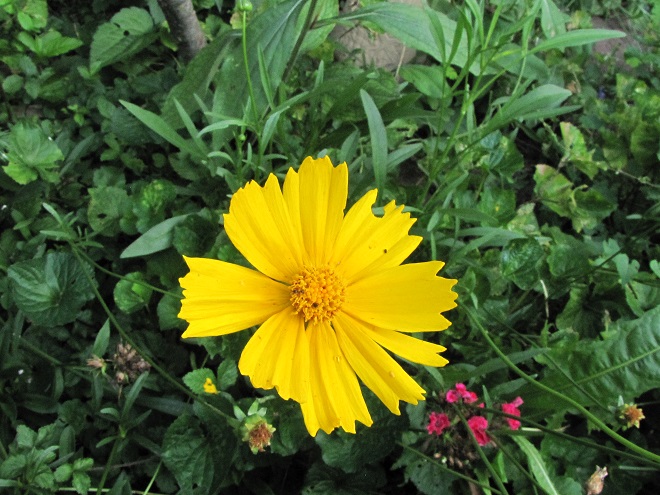
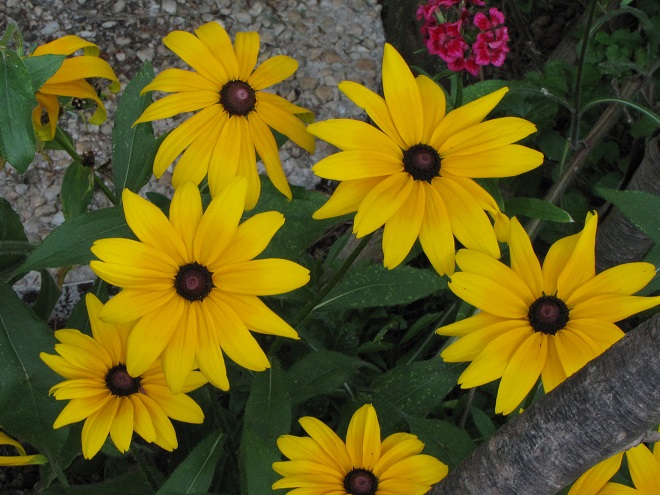
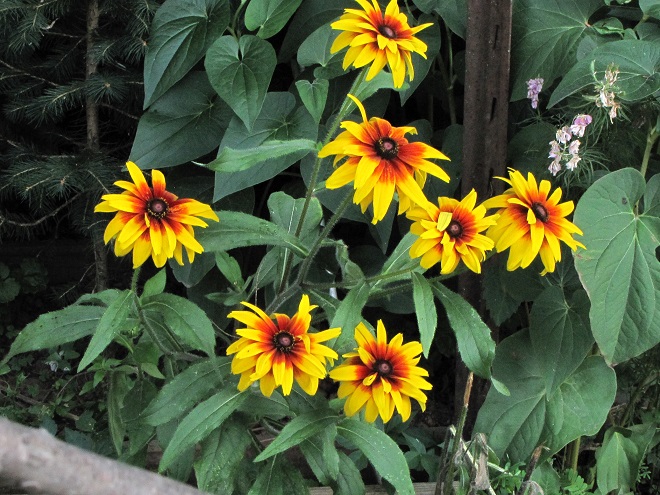
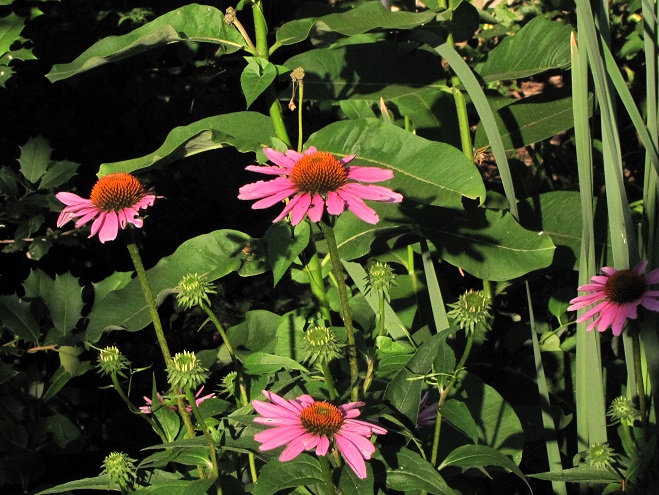
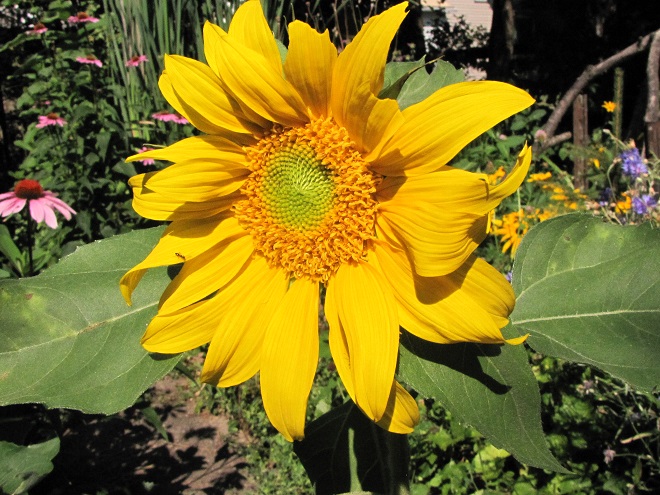
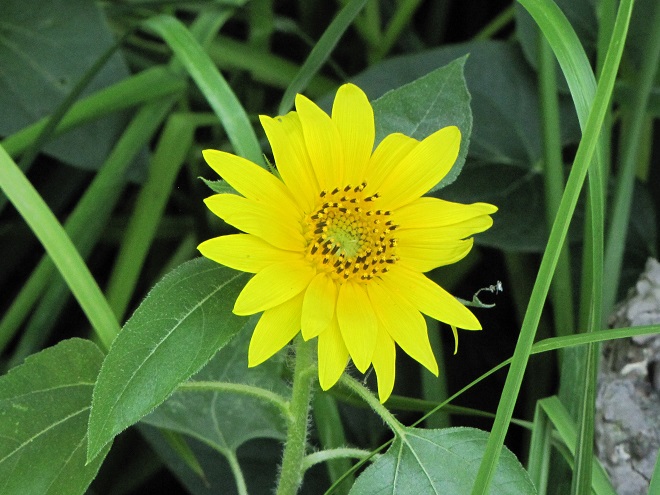
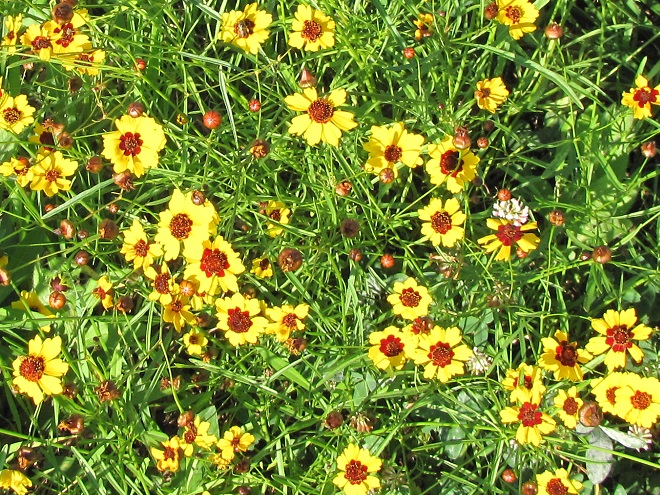
Lance-leaved Coreopsis (Coreopsis lanceolata), a perennial.Black-eyed Susan, a biennial or short-lived perennial.“Gloriosa Daisy”, a variety of Black-eyed Susan, a biennial or short-lived perennial.Purple Coneflower, an excellent perennial for pollinators. The ripe seeds provide food for American Goldfinches.A short variety of Common Sunflower, an annual and a source of free bird seed.Another short variety of Common Sunflower, an annual.
All this and best of all, we never need to mow.
Around the garden, we’ve used a northeast wildflower mix from American Meadows. It’s a blend of annuals and perennials that’s easy to grow. On their website, you’ll find seeds for individual species as well as mixes and instructions for planting and maintaining your wildflower garden. They even have a mix specifically formulated for hummingbirds and butterflies.
When planted in spring and early summer, annuals included in a wildflower mix will provide vibrant color during the first year. Many varieties will self-seed to supplement the display provided by biennials and perennials in subsequent years.A northeast wildflower mix from American Meadows. There are no fillers. One pound of pure live seed easily plants 1,000 square feet.
Nothing does more to promote the spread and abundance of non-native plants, including invasive species, than repetitive mowing. One of the big advantages of planting a wildflower garden or meadow is the opportunity to promote the growth of a community of diverse native plants on your property. A single mowing is done only during the dormant season to reseed annuals and to maintain the meadow in an early successional stage—preventing reversion to forest.
For wildflower mixes containing native species, including ecotypes from locations in and near the Lower Susquehanna River Watershed, nobody beats Ernst Conservation Seeds of Meadville, Pennsylvania. Their selection of grass and wildflower seed mixes could keep you planting new projects for a lifetime. They craft blends for specific regions, states, physiographic provinces, habitats, soils, and uses. Check out these examples of some of the scores of mixes offered at Ernst Conservation Seeds…
Pipeline Mixes
Pasture, Grazing, and Hay Mixes
Cover Crops
Pondside Mixes
Warm-season Grass Mixes
Retention Basin Mixes
Wildlife Mixes
Pollinator Mixes
Wetland Mixes
Floodplain and Riparian Buffer Mixes
Rain Garden Mixes
Steep Slope Mixes
Solar Farm Mixes
Strip Mine Reclamation Mixes
We’ve used their “Showy Northeast Native Wildflower and Grass Mix” on streambank renewal projects with great success. For Monarchs, we really recommend the “Butterfly and Hummingbird Garden Mix”. It includes many of the species pictured above plus “Fort Indiantown Gap” Little Bluestem, a warm-season grass native to Lebanon County, Pennsylvania, and milkweeds (Asclepias), which are not included in their northeast native wildflower blends. More than a dozen of the flowers and grasses currently included in this mix are derived from Pennsylvania ecotypes, so you can expect them to thrive in the Lower Susquehanna River Watershed.
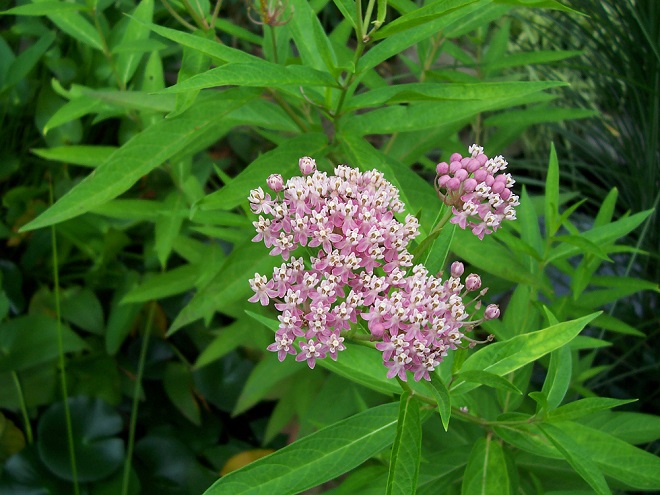
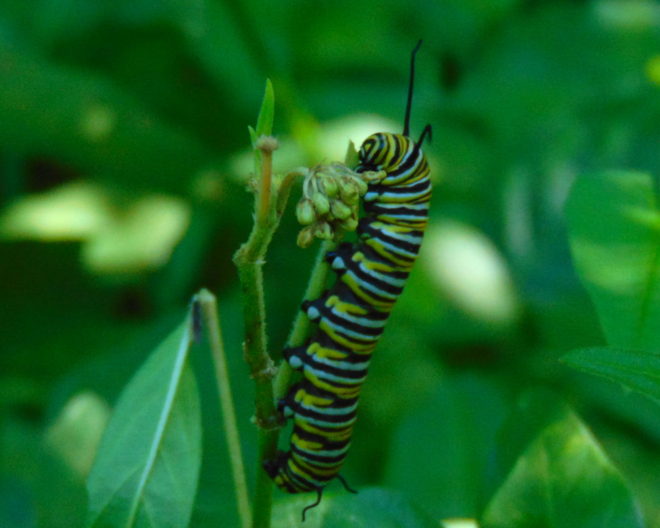
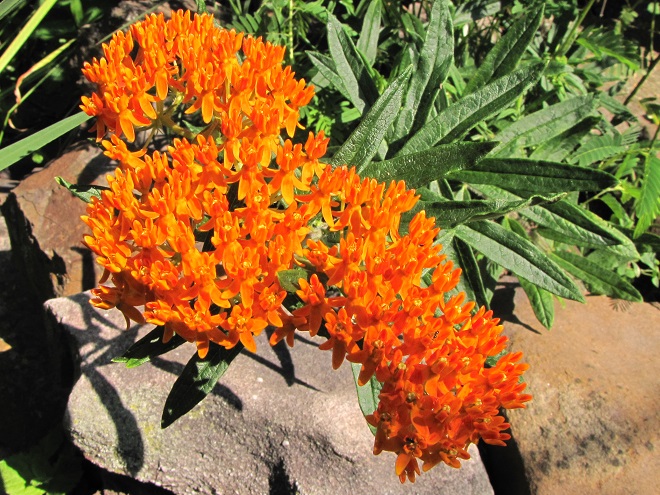
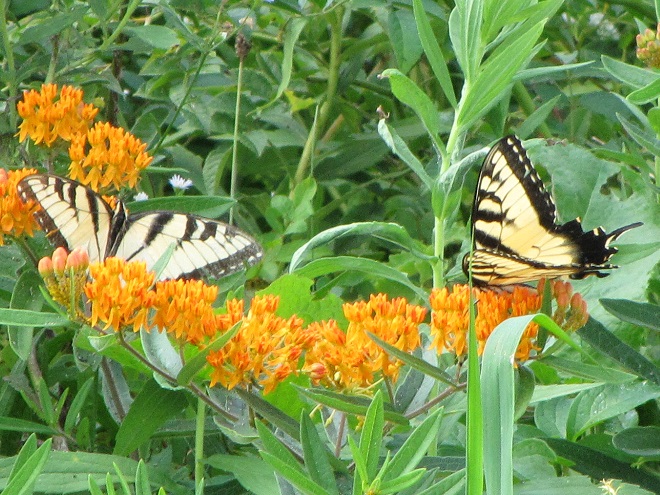
Swamp Milkweed, a perennial species, is included in the Ernst Seed “Butterfly and Hummingbird Garden Mix”. It is a favorite of female Monarchs seeking a location to deposit eggs.A Monarch larva (caterpillar) feeding on Swamp Milkweed.Butterfly Weed (Asclepias tuberosa) is included in the Ernst Seed “Butterfly and Hummingbird Garden Mix”. This perennial is also known as Butterfly Milkweed.Eastern Tiger Swallowtails are among the dozens of species of pollinators that will visit Butterfly Weed.
In addition to the milkweeds, you’ll find these attractive plants included in Ernst Conservation Seed’s “Butterfly and Hummingbird Garden Mix”, as well as in some of their other blends.
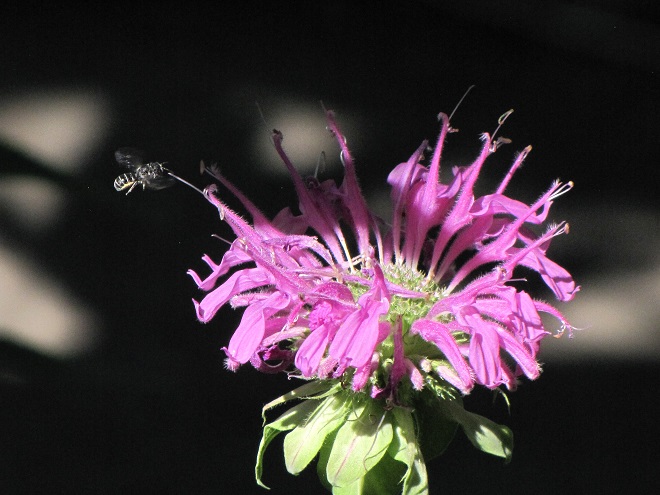
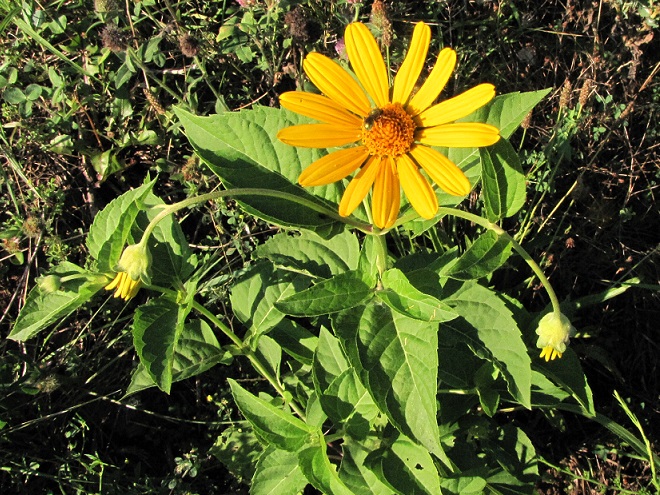
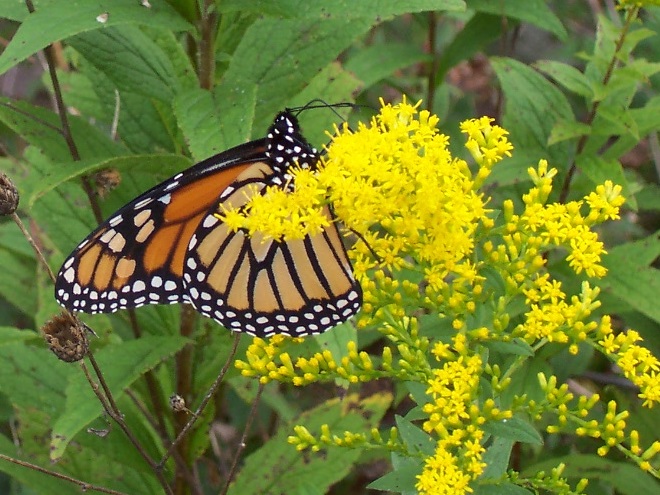
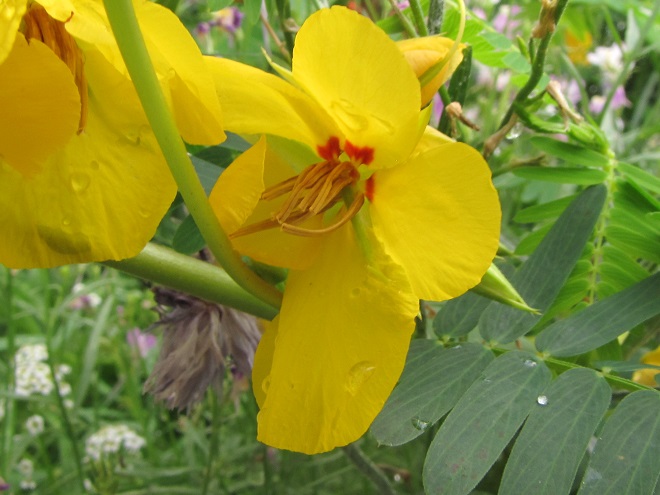
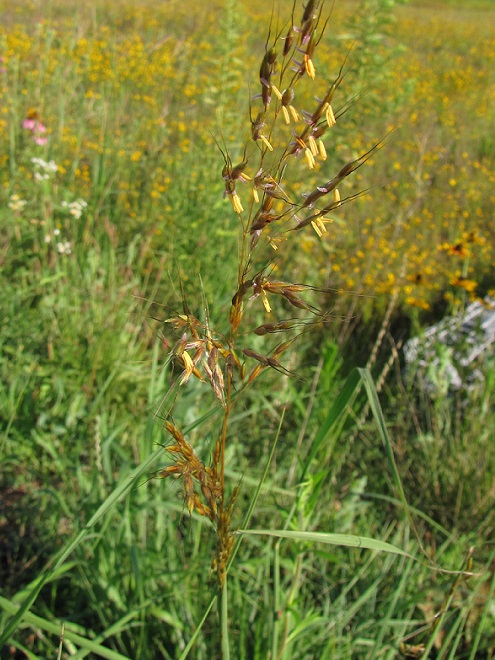
The perennial Wild Bergamot, also known as Bee Balm, is an excellent pollinator plant, and the tubular flowers are a favorite of hummingbirds.Oxeye is adorned with showy clusters of sunflower-like blooms in mid-summer. It is a perennial plant.Plains Coreopsis (Coreopsis tinctoria), also known as Plains Tickseed, is a versatile annual that can survive occasional flooding as well as drought.Gray-headed Coneflower (Ratibida pinnata), a tall perennial, is spectacular during its long flowering season.Goldenrods are a favorite nectar plant for migrating Monarchs in autumn. They seldom need to be sown into a wildflower garden; the seeds of local species usually arrive on the wind. They are included in the “Butterfly and Hummingbird Garden Mix” from Ernst Conservation Seeds in low dose, just in case the wind doesn’t bring anything your way.Is something missing from your seed mix? You can purchase individual species from the selections available at American Meadows and Ernst Conservation Seeds. Partridge Pea is a good native annual to add. It is a host plant for the Cloudless Sulphur butterfly and hummingbirds will often visit the flowers. It does really well in sandy soils.Indiangrass is a warm-season species that makes a great addition to any wildflower meadow mix. Its deep roots make it resistant to drought and ideal for preventing erosion.
Why not give the Monarchs and other wildlife living around you a little help? Plant a wildflower garden or meadow. It’s so easy, a child can do it.
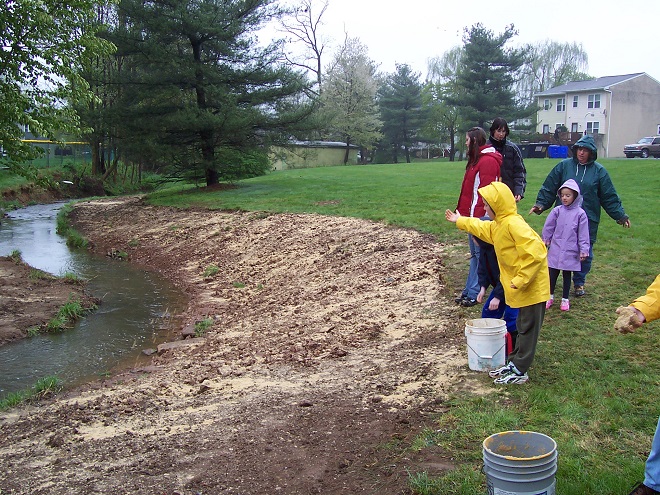
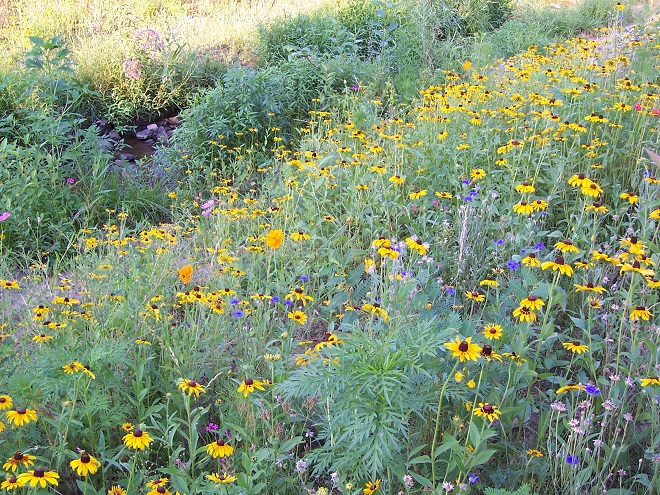
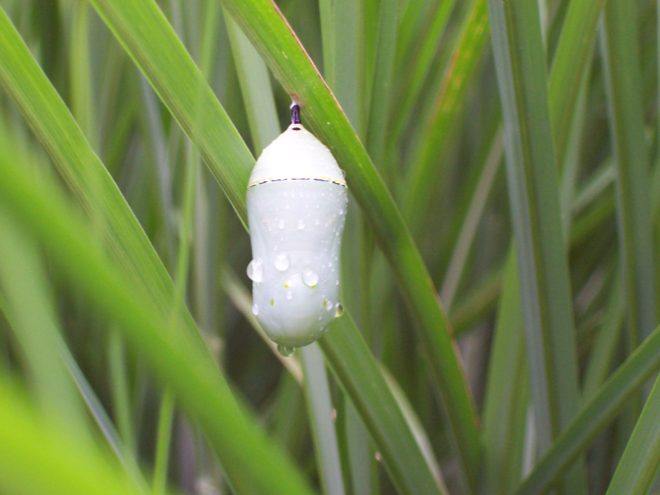
Volunteers sow a riparian buffer on a recontoured stream bank using wildflower and warm-season grass seed blended uniformly with sand. By casting the sand/seed mixture evenly over the planting site, participants can visually assure that seed has been distributed according to the space calculations.The same seeded site less than four months later.A Monarch pupa from which the adult butterfly will emerge.
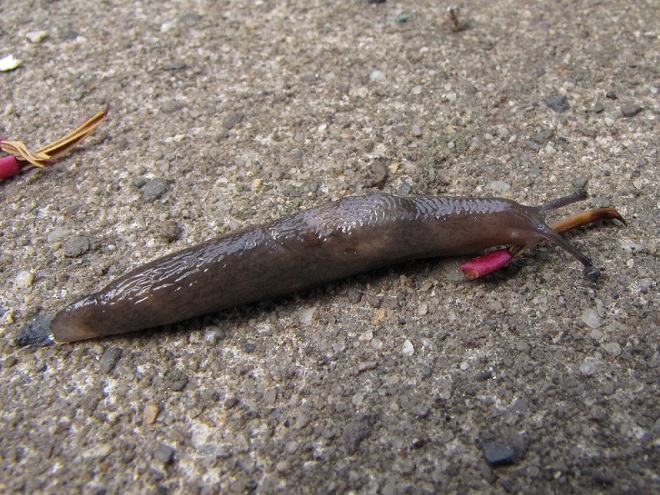
The Gray Garden Slug (Deroceras reticulatum) is an invasive inhabitant of places subjected to human disturbance, especially cultivated farmland and, as the common name suggests, gardens. They are most active at night, hiding beneath plant litter, trash, and rocks during the daytime. This inch-long specimen was photographed while out and about on a recent dreary and damp afternoon. Natural enemies of terrestrial slugs include birds, toads, frogs, snakes, and some beetles in the family Caribidae. In the field and vegetable patch, keeping leaf litter and other debris away from the base of young plants can reduce damage caused by these hungry mollusks.
Rising prices, an exhausted workforce, political polarization, and pandemic fatigue—times are tough. Product shortages have the consumer culture in a near panic. Some say the future just isn’t what it used to be.
Well, Uncle Tyler Dyer reminds us that things could be worse. He shares with us this observation, “Man, as long as people are spending money poisoning the weeds on their lawns instead of eating them, things aren’t that bad.”
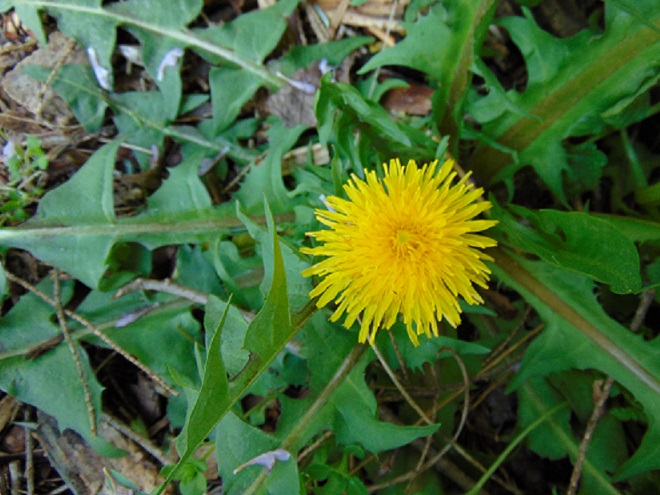
Uncle Ty is particularly fond of the Common Dandelion (Taraxacum officinale), “Check it out. Roasted dandelion roots can make a coffee substitute, the blossoms a wine, and the leaves used to create my favorites, nutrient-dense salads or green vegetable dishes.”
The Common Dandelion is despised by many as a “weed”. To others it is a beautiful flowering plant that happens to be quite edible. Native to Europe and Asia, North American varieties of Common Dandelion are an escape from cultivation, originally imported as a food crop. Uncle Ty’s great-grandparents never would have dreamed of killing them with herbicides instead of harvesting them.Uncle Ty Dyer’s lunch, fresh dandelion greens and hot bacon dressing.
So have a homegrown salad and remember, maybe things aren’t that bad after all.
Despite being located in an urbanized downtown setting, blustery weather in recent days has inspired a wonderful variety of small birds to visit the garden here at the susquehannawildlife.net headquarters to feed and refresh. For those among you who may enjoy an opportunity to see an interesting variety of native birds living around your place, we’ve assembled a list of our five favorite foods for wild birds.
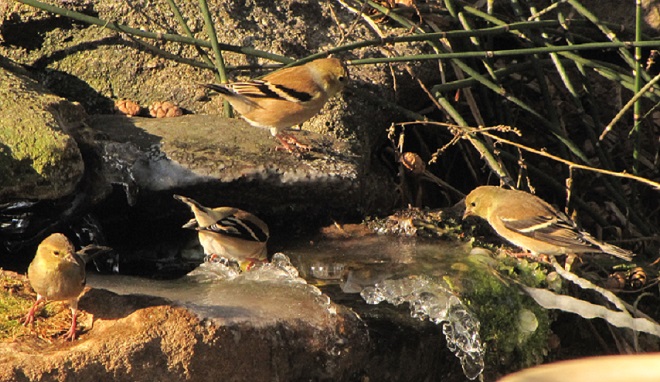
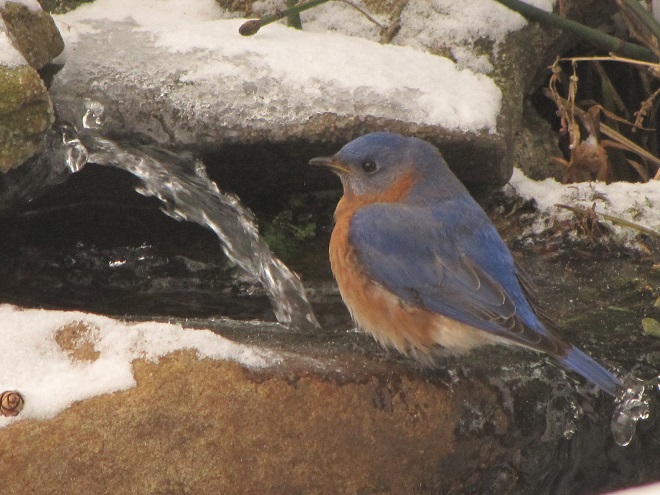
American Goldfinches in drab winter (basic) plumage visit the trickle of water entering the headquarters pond to bathe and drink. In addition to offering the foods animals need to survive, a source of clean water is an excellent way to attract wildlife to your property.
The selections on our list are foods that provide supplemental nutrition and/or energy for indigenous species, mostly songbirds, without sustaining your neighborhood’s non-native European Starlings and House Sparrows, mooching Eastern Gray Squirrels, or flock of ecologically destructive hand-fed waterfowl. We’ve included foods that aren’t necessarily the cheapest but are instead those that are the best value when offered properly.
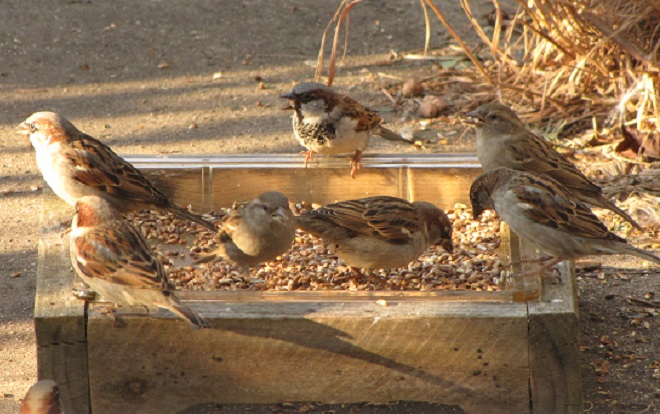
Bread, “bargain” seed mixes, and cracked corn can attract and sustain large numbers of House Sparrows and European Starlings. Both are non-native species that compete mercilessly with indigenous birds including bluebirds for food and nesting sites. Though found favorable for feeding Northern Cardinals without attracting squirrels, the expensive safflower seed seen here is another favorite of these aggressive House Sparrows. Ever wasteful, they “shovel” seed out of feeders while searching for the prime morsels from which they can easily remove the hulls. Trying not to feed them is an ongoing challenge, so we don’t offer these aforementioned foods to our avian guests.
Number 5
Raw Beef Suet
In addition to rendered beef suet, manufactured suet cakes usually contain seeds, cracked corn, peanuts, and other ingredients that attract European Starlings, House Sparrows, and squirrels to the feeder, often excluding woodpeckers and other native species from the fare. Instead, we provide raw beef suet.
Because it is unrendered and can turn rancid, raw beef suet is strictly a food to be offered in cold weather. It is a favorite of woodpeckers, nuthatches, and many other species. Ask for it at your local meat counter, where it is generally inexpensive.
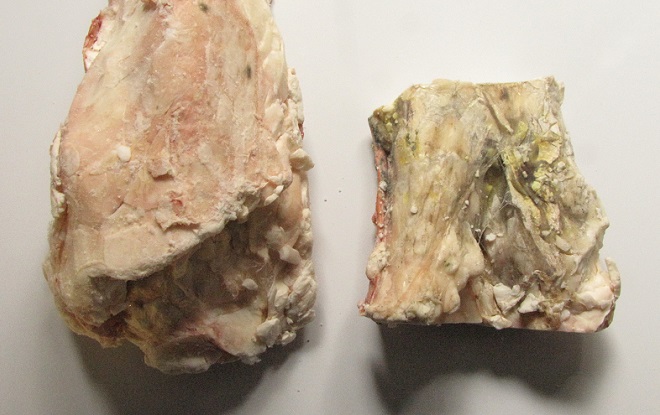
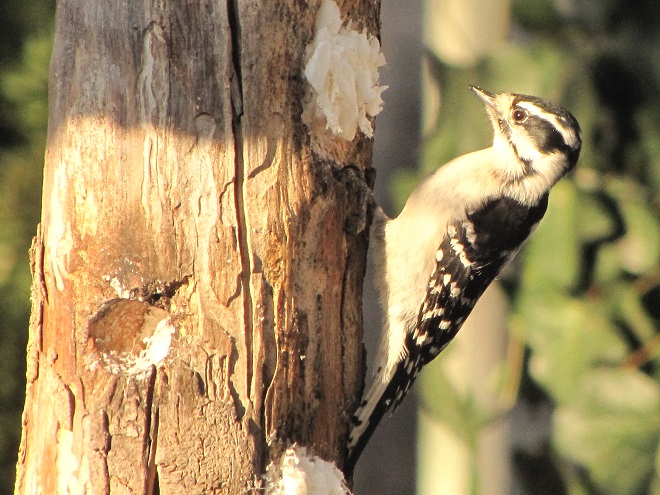
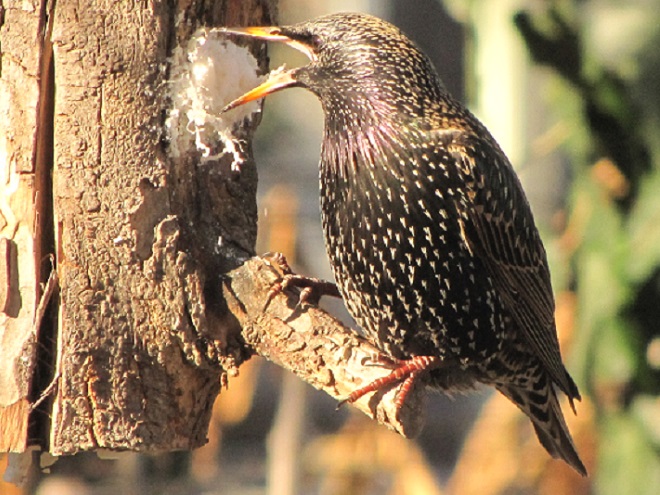
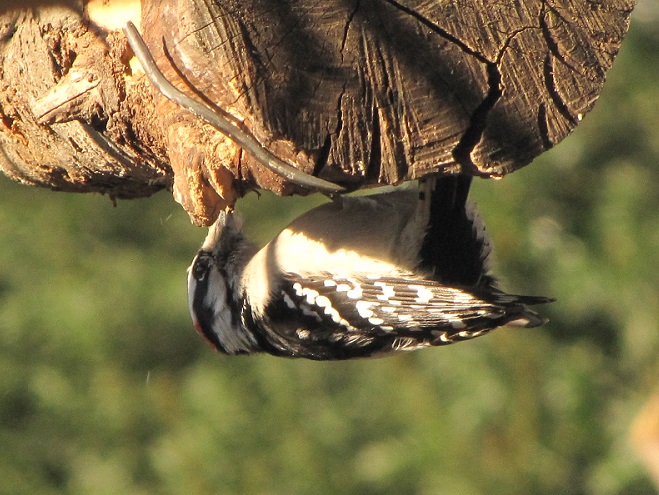
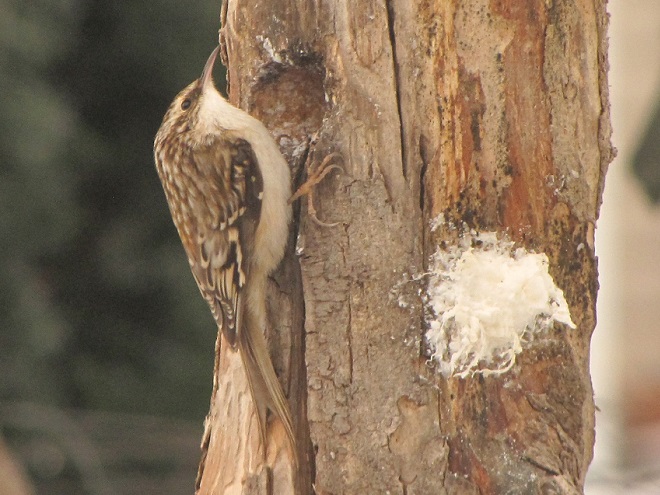
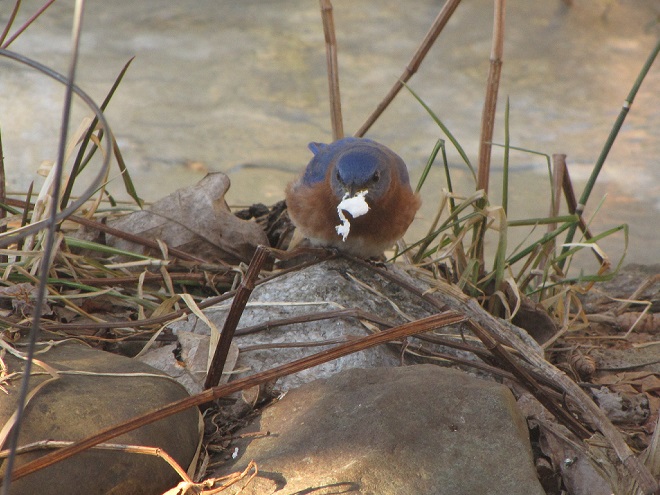
Raw beef suet is fat removed from areas surrounding the kidneys on a beef steer. To avoid spoiling, offer it only in the winter months, particularly if birds are slow to consume the amount placed for them. If temperatures are above freezing, it’s important to replace uneaten food frequently. The piece seen here on the left was stored in the freezer for almost a year while the rancid piece to the right was stored in a refrigerator at about 40 degrees Fahrenheit for just two months. You can render raw beef suet and make your own cakes by melting it down and pouring it into a form such as cupcake tin. But do it outdoors or you’ll be living alone for a while.A female Downy Woodpecker feeds on raw beef suet stuffed into holes drilled into a vertically hanging log. Because they can’t be cleaned, log feeders should be discarded after one season. Wire cage feeders though, can usually be scrubbed, disinfected, dried, and reused.Pesky European Starlings might visit a raw beef suet feeder but won’t usually linger unless other foods to their liking are available nearby.This male Downy Woodpecker has no trouble feeding on raw beef suet packed into holes drilled into the underside of this horizontally hanging log. Starlings don’t particularly care to feed this way.Unusual visitors like a Brown Creeper are more likely to stop by at a suet feeder when it isn’t crowded by raucous starlings, House Sparrows, and squirrels. This one surprised us just this morning.Below the feeders, scraps of suet that fall to the ground are readily picked up, usually by ground-feeding birds. In this instance, a male Eastern Bluebird saw a chunk break loose and pounced on it with haste.
Number 4
Niger (“Thistle”) Seed
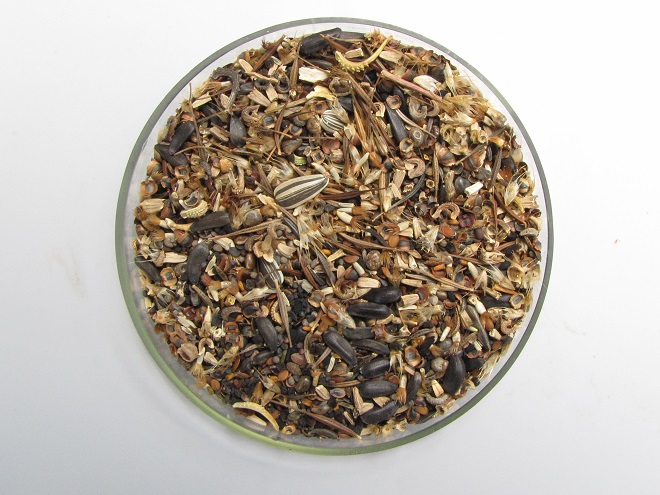
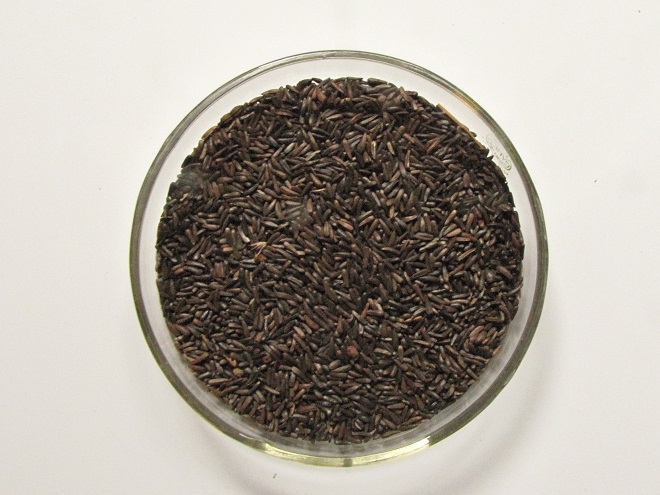
Niger seed, also known as nyjer or nyger, is derived from the sunflower-like plant Guizotia abyssinica, a native of Ethiopia. By the pound, niger seed is usually the most expensive of the bird seeds regularly sold in retail outlets. Nevertheless, it is a good value when offered in a tube or wire mesh feeder that prevents House Sparrows and other species from quickly “shoveling” it to the ground. European starlings and squirrels don’t bother with niger seed at all.
Niger seed must be kept dry. Mold will quickly make niger seed inedible if it gets wet, so avoid using “thistle socks” as feeders. A dome or other protective covering above a tube or wire mesh feeder reduces the frequency with which feeders must be cleaned and moist seed discarded. Remember, keep it fresh and keep it dry!
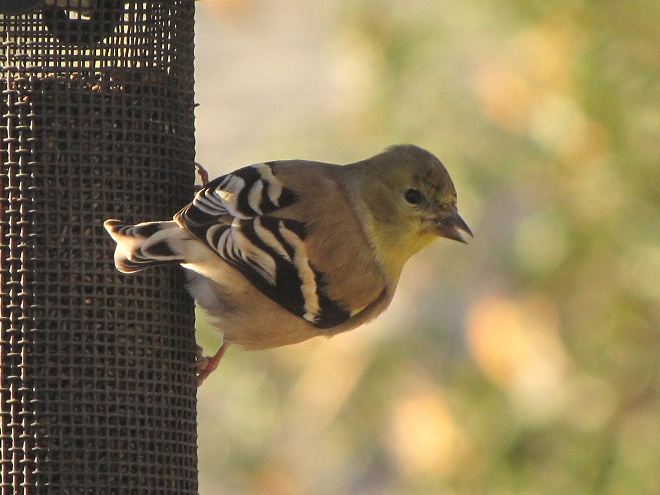
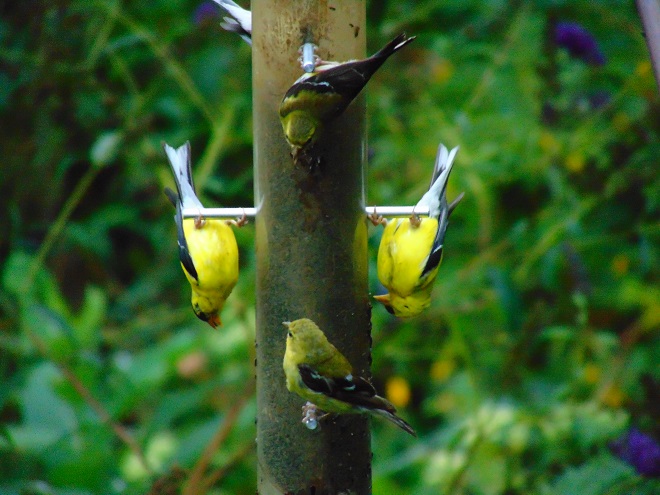
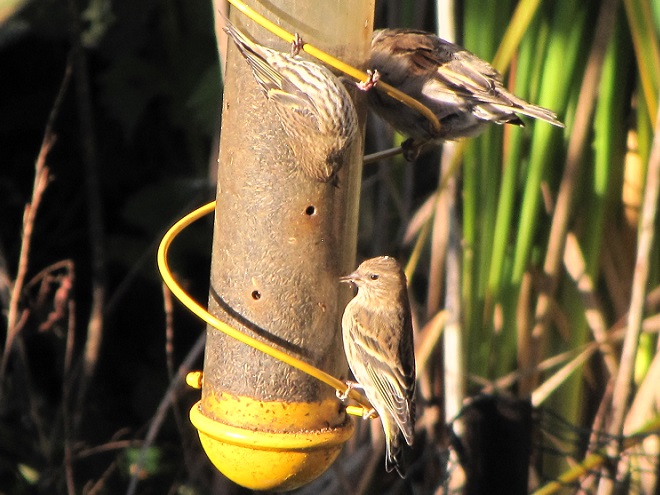
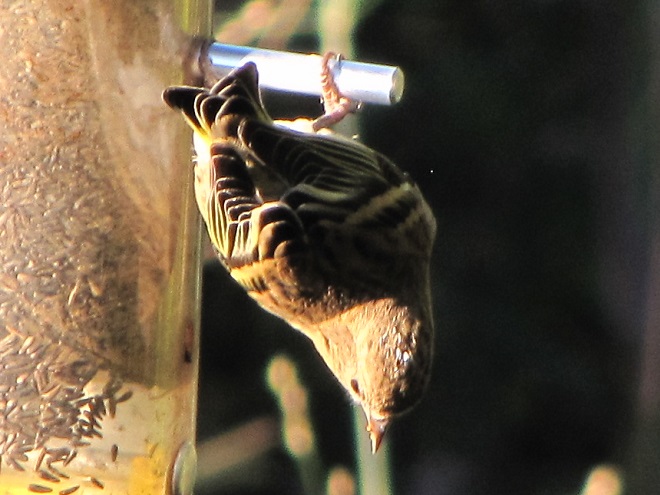
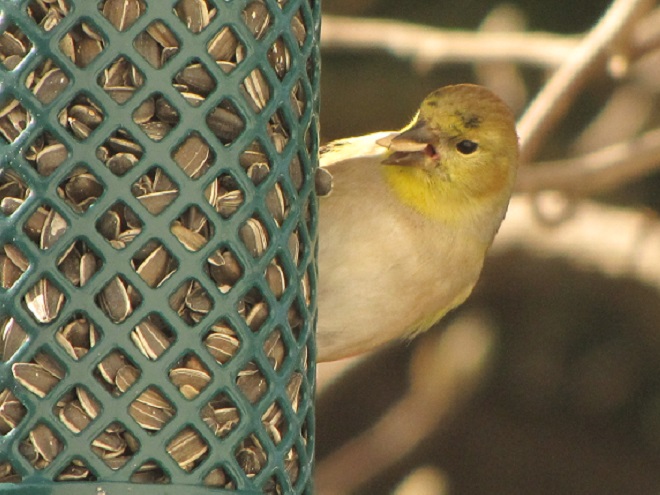
Niger (“thistle”) seed is very small, so it is offered in specialized feeders to prevent seed from spilling out of oversize holes as waste.An American Goldfinch in winter plumage feeding on niger seed from a wire mesh feeder. By April, goldfinches are molting into spectacular breeding feathers. Niger seed can be offered year-round to keep them visiting your garden while they are at maximum magnificence.American Goldfinches in August. This tube feeder is designed specifically for goldfinches, birds that have no difficulty hanging upside down to grab niger seed from small feeding ports.During invasion years, visiting Pine Siskins favor niger seed at feeding stations.Like goldfinches, Pine Siskins are quite comfortable feeding upside down on specialized tubes with perches positioned above the seed ports. Seeds dropped to the ground are readily picked up by ground-feeding birds including Mourning Doves and Dark-eyed Juncos. Periodically, uneaten niger seed should be swept up and discarded.
Number 3
Striped Sunflower Seed
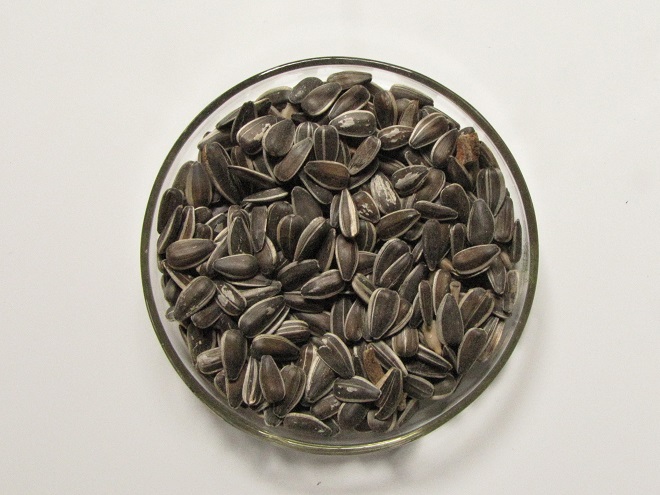
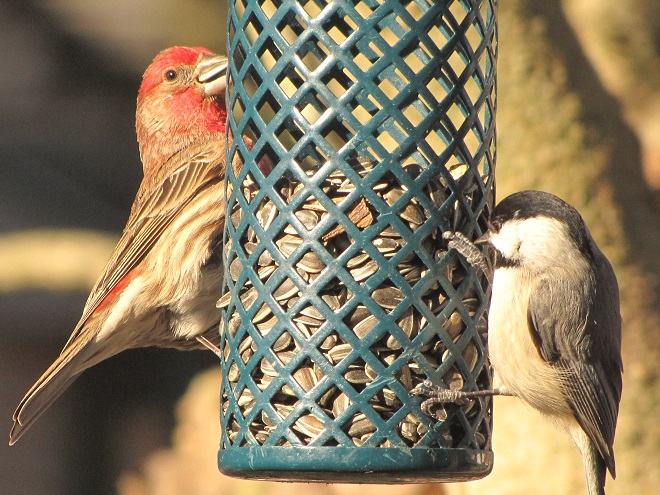
Striped sunflower seed, also known as grey-striped sunflower seed, is harvested from a cultivar of the Common Sunflower (Helianthus annuus), the same tall garden plant with a massive bloom that you grew as a kid. The Common Sunflower is indigenous to areas west of the Mississippi River and its seeds are readily eaten by many native species of birds including jays, finches, and grosbeaks. The husks are harder to crack than those of black oil sunflower seed, so House Sparrows consume less, particularly when it is offered in a feeder that prevents “shoveling”. For obvious reasons, a squirrel-proof or squirrel-resistant feeder should be used for striped sunflower seed.
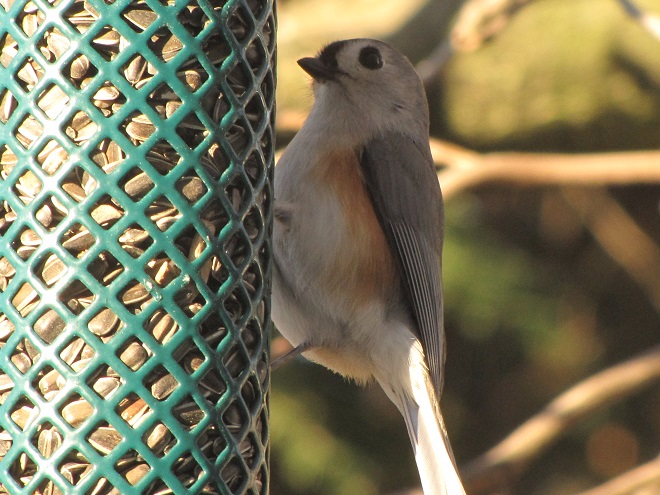
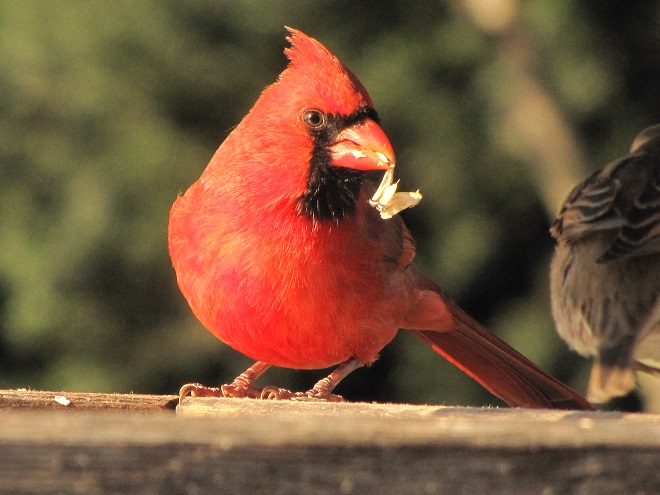
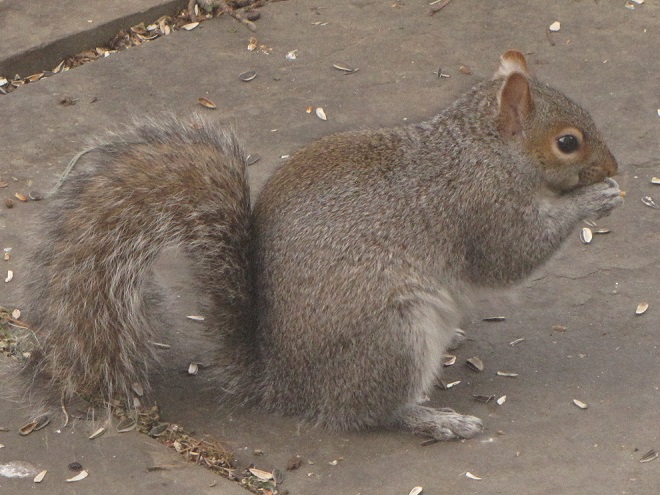
Striped sunflower seed.A male House Finch and a Carolina Chickadee pluck striped sunflower seeds from a squirrel-resistant powder-coated metal-mesh tube feeder.An American Goldfinch in winter plumage finds striped sunflower seeds irresistible, even with niger seed being offered in an adjacent feeder.A Tufted Titmouse visits a feeder stocked with striped sunflower seeds.Northern Cardinals readily feed on striped sunflower seeds, especially those that fall from our metal-mesh tube feeders.An Eastern Gray Squirrel (Sciurus carolinensis) has no choice but to be satisfied with striped sunflower seeds that spill from our wire-mesh tube feeders.
Number 2
Mealworms
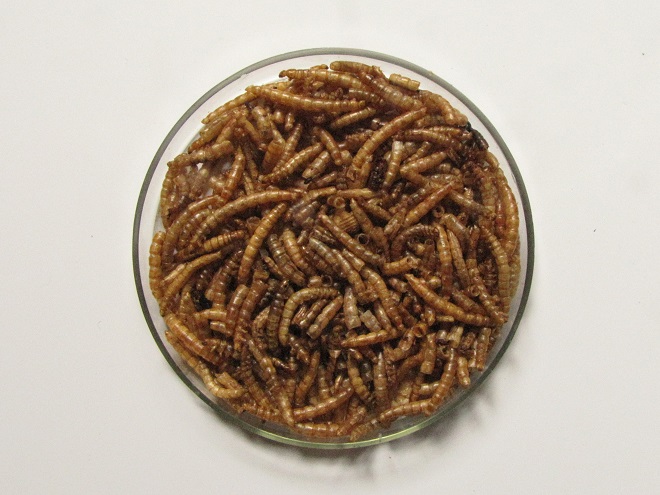
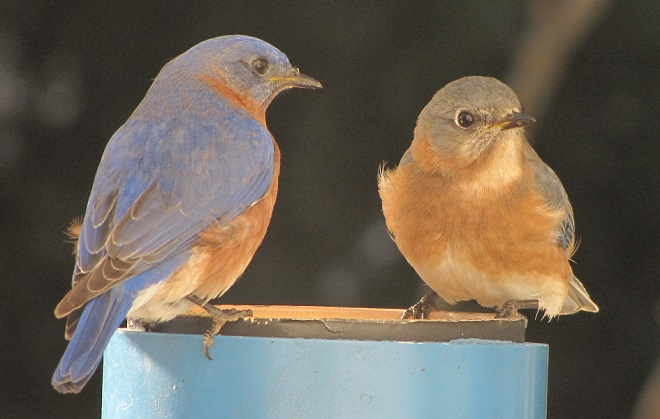
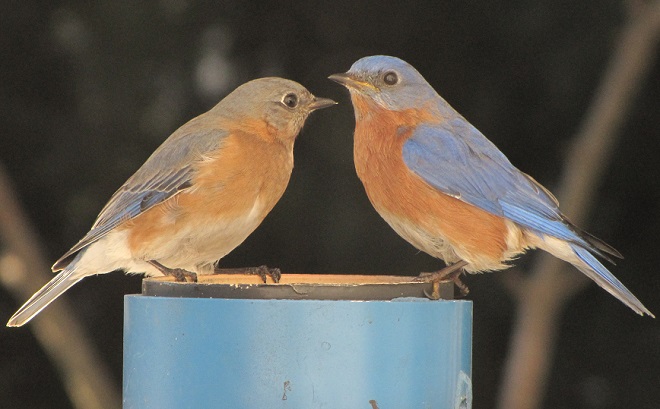
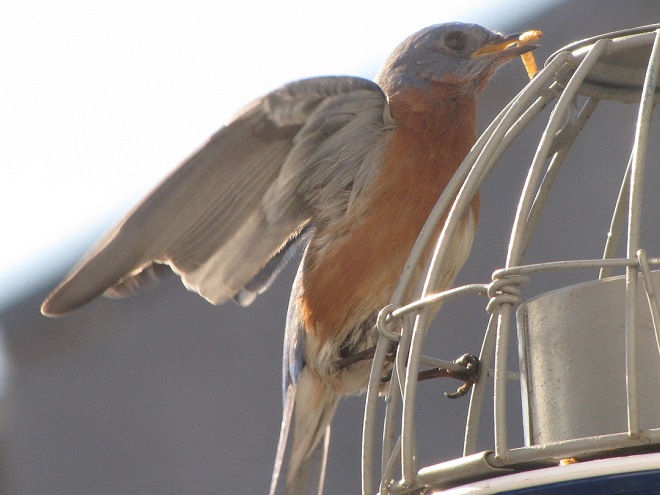
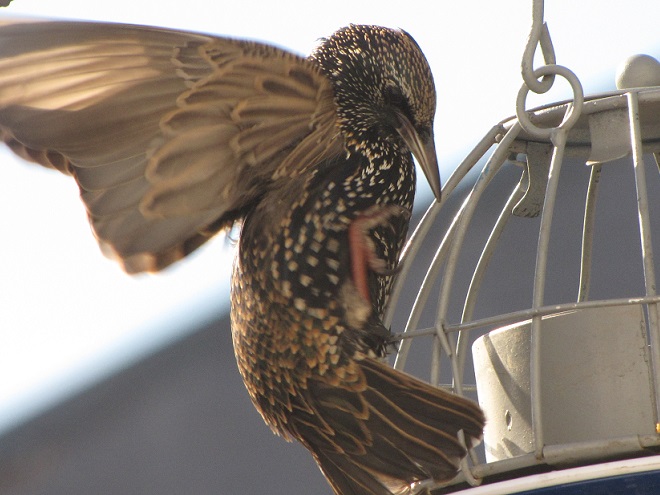
Mealworms are the commercially produced larvae of the beetle Tenebrio molitor. Dried or live mealworms are a marvelous supplement to the diets of numerous birds that might not otherwise visit your garden. Woodpeckers, titmice, wrens, mockingbirds, warblers, and bluebirds are among the species savoring protein-rich mealworms. The trick is to offer them without European Starlings noticing or having access to them because European Starlings you see, go crazy over a meal of mealworms.
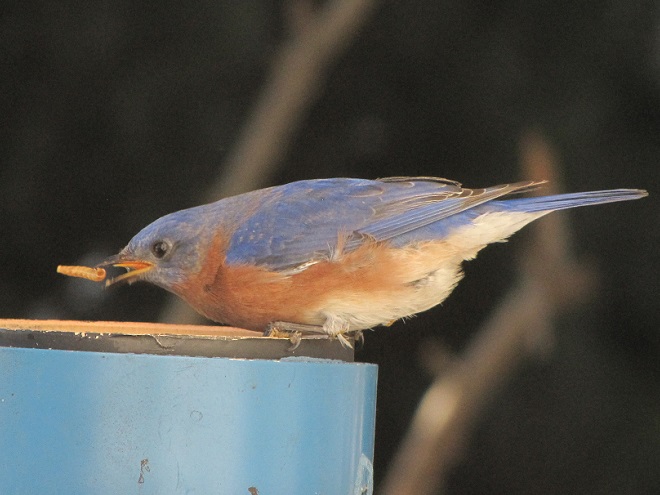
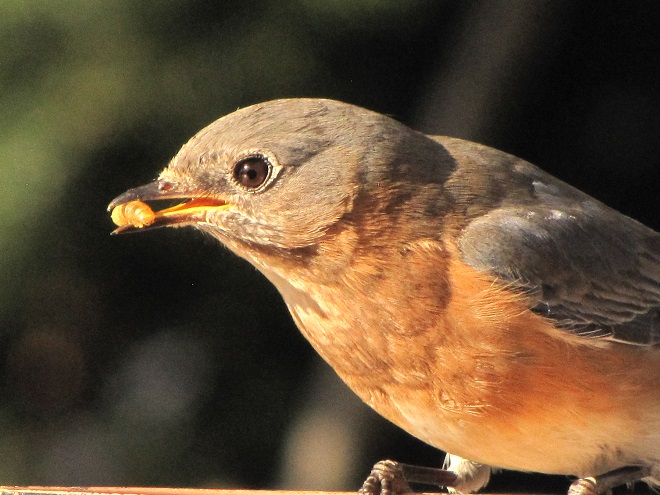
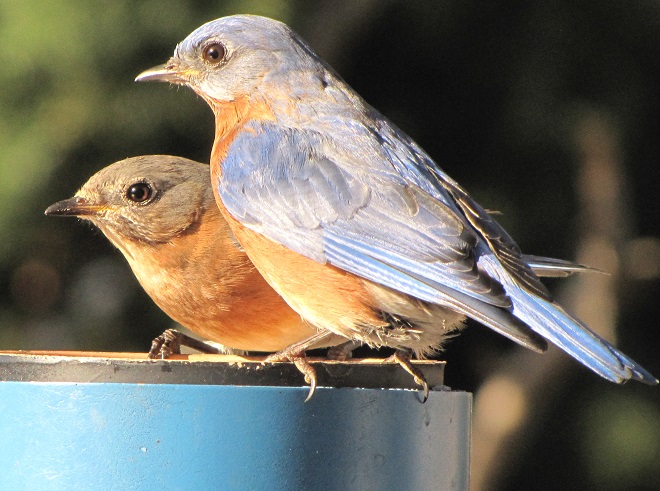
Dried mealworms can be offered in a cup or on a tray feeder. Live mealworms need to be contained in a steep-sided dish, so they don’t crawl away. Unless you’re really lucky, you’ll probably have to place your serving vessel of mealworms inside some type of enclosure to exclude European Starlings.A male Eastern Bluebird tossing and grabbing a dried mealworm.A female Eastern Bluebird with a dried mealworm.A pair of Eastern Bluebirds. The value of mealworms is self-evident: you get to have bluebirds around.
To foil European Starlings, we assembled this homemade mealworm feeder from miscellaneous parts. The bluebirds took right to it.It frustrates the starlings enough to discourage them from sticking around for long.If you’re offering dried mealworms, a source of clean water must be available nearby so that the bluebirds and other guests at your feeder don’t become dehydrated.
Number 1
Food-producing Native Shrubs and Trees
The best value for feeding birds and other wildlife in your garden is to plant food-producing native plants, particularly shrubs and trees. After an initial investment, they can provide food, cover, and roosting sites year after year. In addition, you’ll have a more complete food chain on a property populated by native plants and all the associated life forms they support (insects, spiders, etc.).
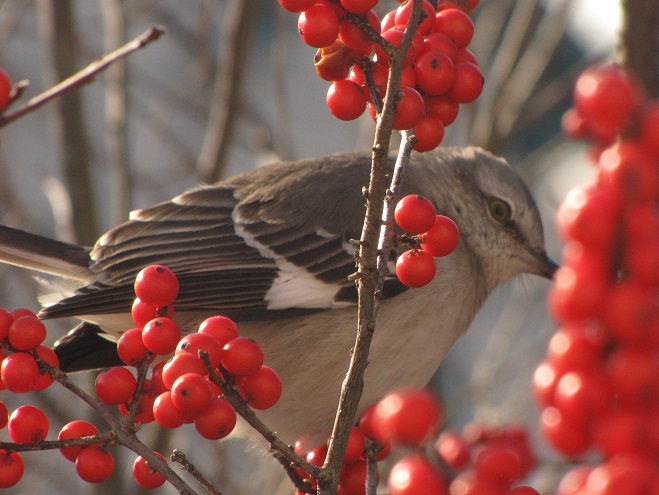
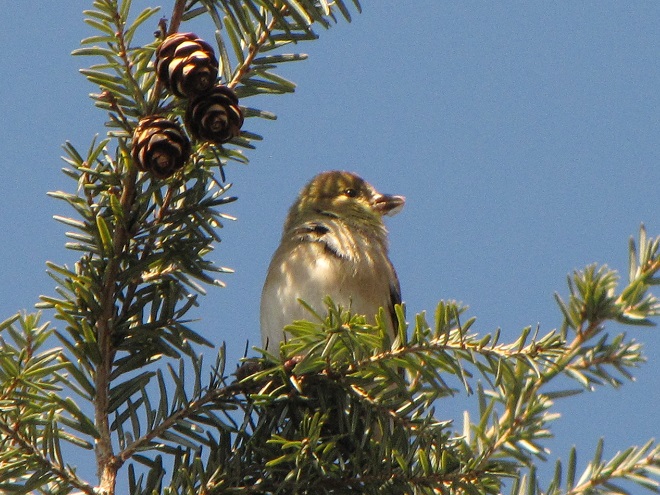
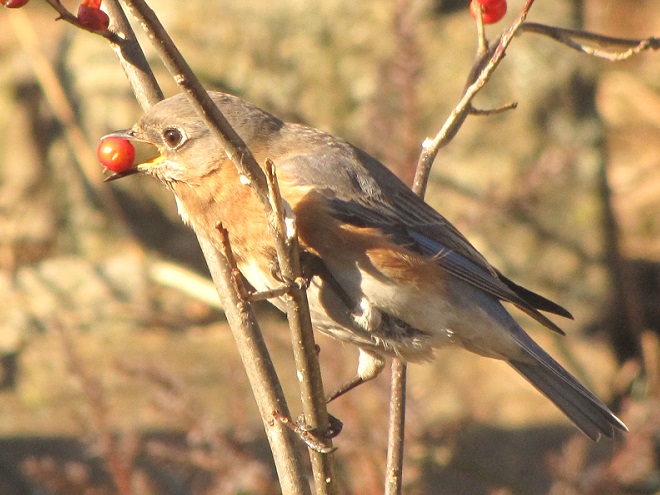
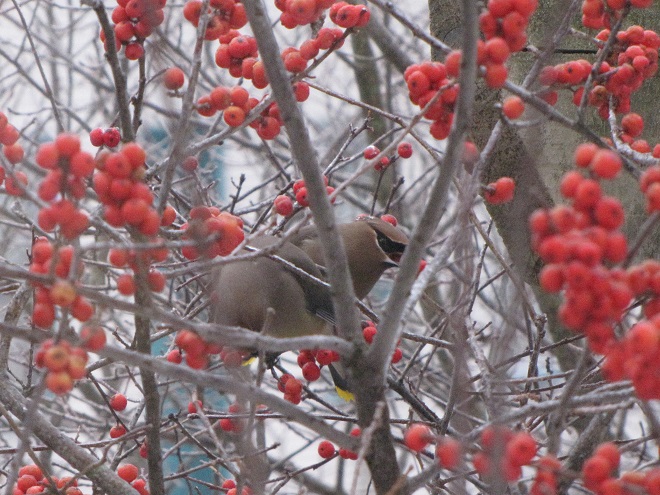
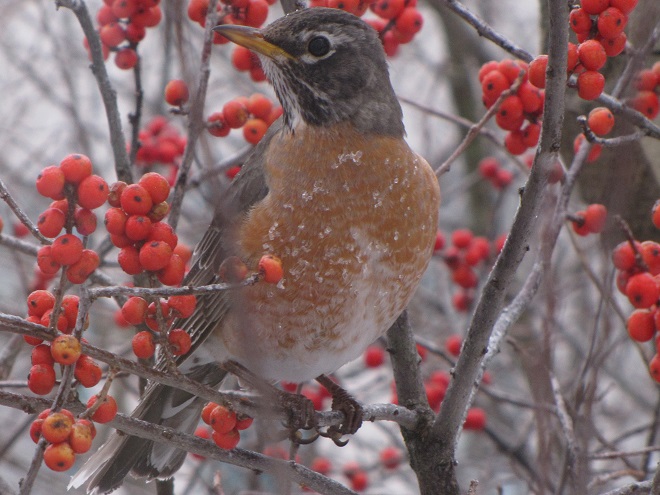
In your garden, a Northern Mockingbird may defend a food supply like these Common Winterberry fruits as its sole means of sustenance for an entire winter season. Having an abundance of plantings assures that in your cache there’s plenty to eat for this and other species.The American Goldfinches currently spending the winter at our headquarters are visiting the feeders for niger and striped sunflower seeds, but the bulk of their diet consists of tiny seeds from the cones on our Eastern Hemlock trees. At night, birds obtain shelter from the weather by roosting in this clump of evergreens.While the Eastern Bluebirds visiting the susquehannawildlife.net headquarters are fond of mealworms, the bulk of their diet here consists of these Common Winterberry fruits and the berries on our American Holly trees.Cedar Waxwings are readily attracted to red berries including Common Winterberry fruit.Migrating American Robins visit the headquarters garden in late winter each year to devour berries before continuing their journey to the north.
Your local County Conservation District is having its annual spring tree sale soon. They have a wide selection to choose from each year and the plants are inexpensive. They offer everything from evergreens and oaks to grasses and flowers. You can afford to scrap the lawn and revegetate your whole property at these prices—no kidding, we did it. You need to preorder for pickup in the spring. To order, check their websites now or give them a call. These food-producing native shrubs and trees are by far the best bird feeding value that you’re likely to find, so don’t let this year’s sales pass you by!
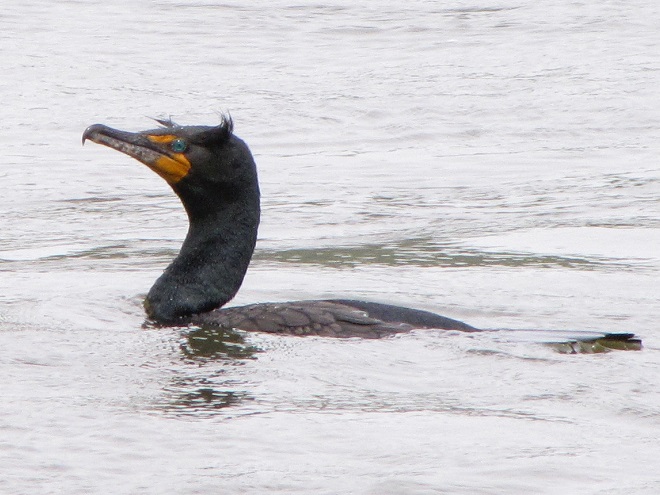
Meet the Double-crested Cormorant, a strangely handsome bird with a special talent for catching fish. You see, cormorants are superb swimmers when under water—using their webbed feet to propel and maneuver themselves with exceptional speed in pursuit of prey.
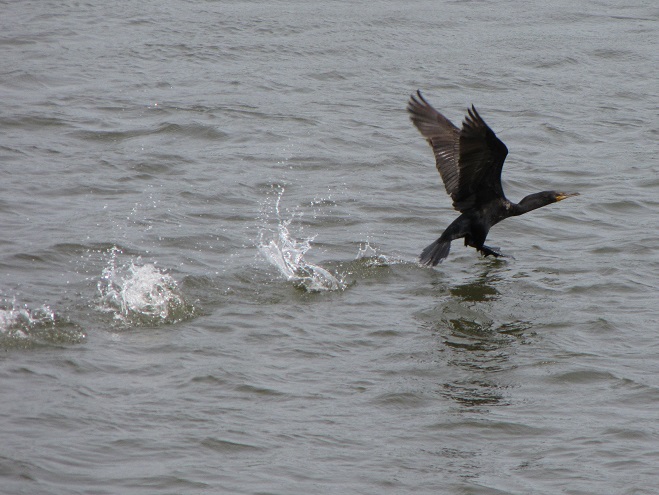
Like many species of birds that dive for their food, Double-crested Cormorants run across the surface of the water to gain speed for a takeoff. Smaller wings may make it more difficult to get airborne, but when folded, they provide improved streamlining for submerged swimming.
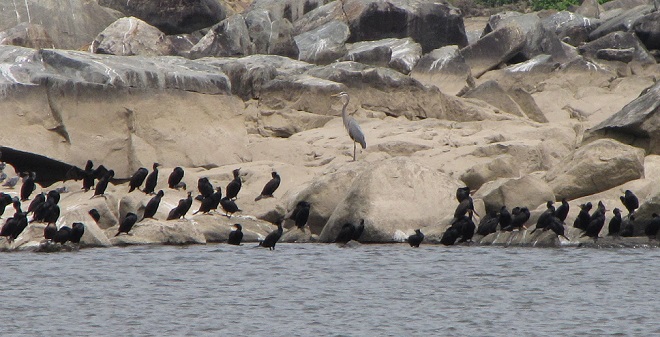
Double-crested Cormorants, hundreds of them, are presently gathered along with several other species of piscivorous (fish-eating) birds on the lower Susquehanna River below Conowingo Dam near Rising Sun, Maryland. Fish are coming up the river and these birds are taking advantage of their concentrations on the downstream side of the impoundment to provide food to fuel their migration or, in some cases, to feed their young.
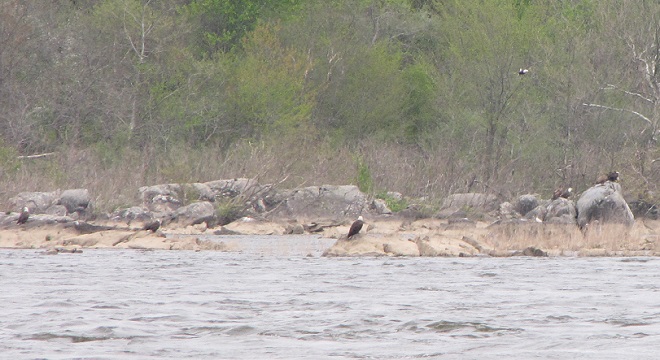
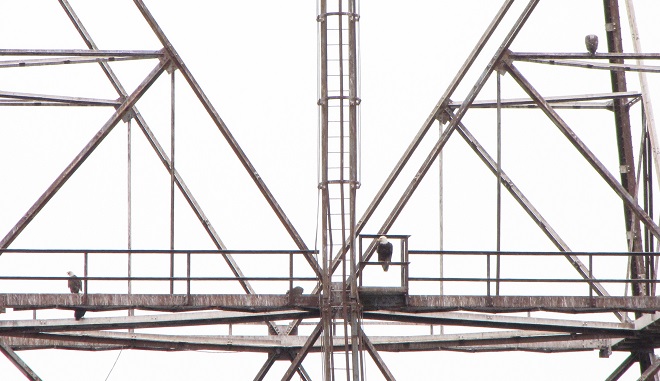
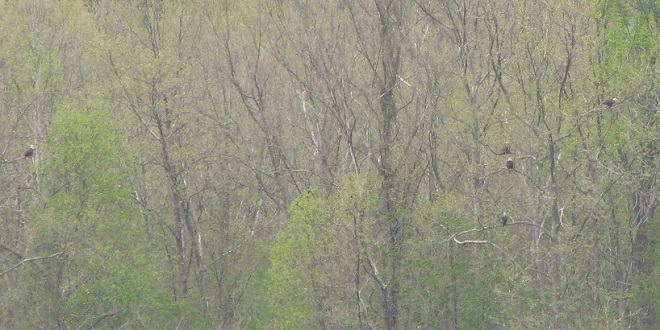
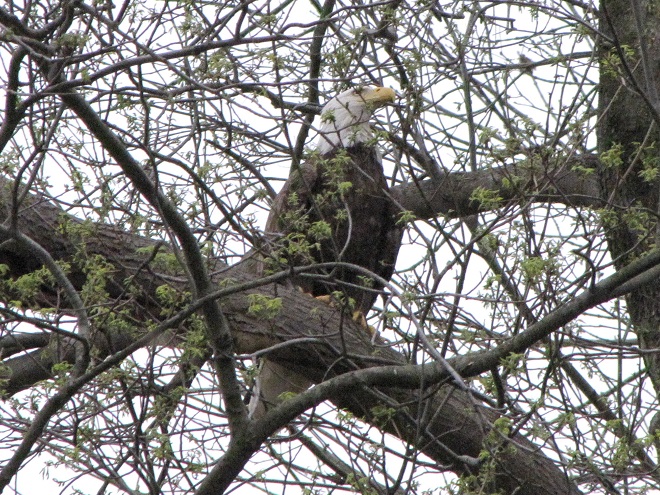
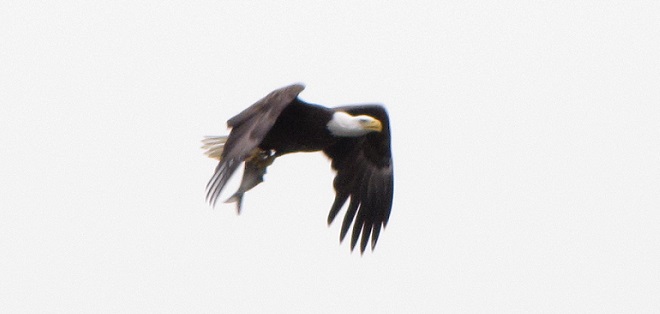
Double-crested Cormorants, mostly adult birds migrating toward breeding grounds to the north, are gathered on the rocks on the east side of the river channel below Conowingo Dam. A Great Blue Heron from a nearby rookery can be seen at the center of the image.Bald Eagles normally gather in large numbers at Conowingo Dam in the late fall and early winter. Presently there are more than 50 there, and the majority of them are breeding age adults. Presumably they are still on their way north to nest. Meanwhile, local pairs are already feeding young, so it seems these transient birds are running a bit late. Many of them can be seen on the rocks along the east side of the river channel,……on the powerline trestles on the island below the dam……in the trees along the east shore,……and in the trees surrounding Fisherman’s Park on the west shore.
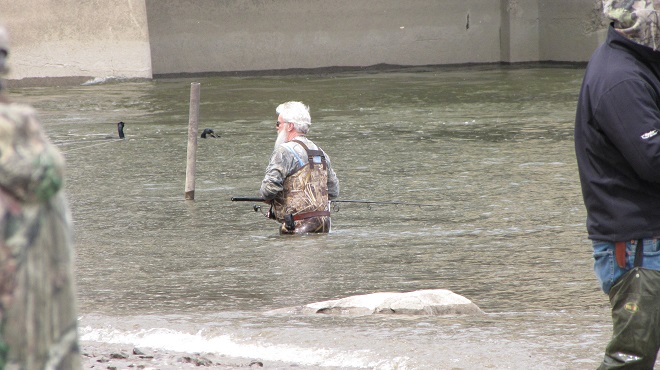
In addition to the birds, the movements of fish attract larger fish, and even larger fishermen.
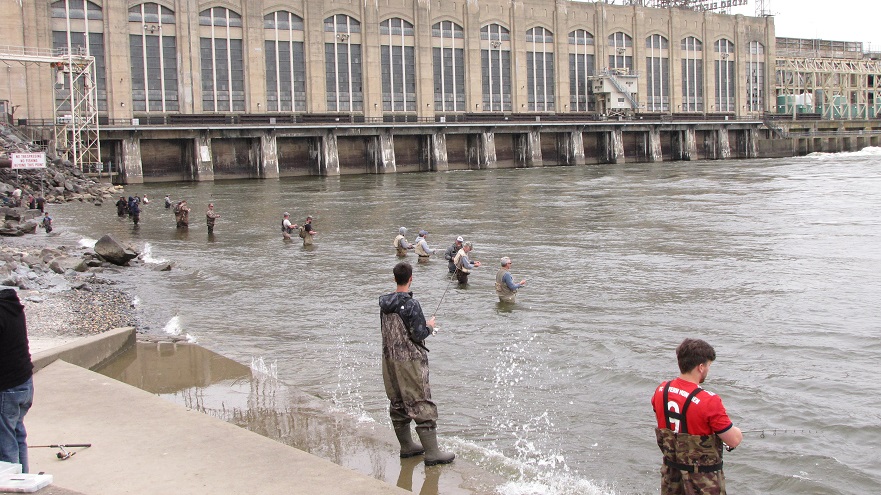
Anglers gather to fish the placid waters below the dam’s hydroelectric powerhouse . Only a few of the generating turbines are operating, so the flow through the dam is minimal.Some water is being released along the west shoreline to attract migratory river herring to the west fish lift for sorting and retention as breeding stock for a propagation program. The east lift, the passage that hoists American Shad (Alosa sapidissima) to a trough that allows them to swim over the top of the dam to waters upriver, will begin operating as soon as these larger migratory fish begin arriving.
The excitement starts when the sirens start to wail and the red lights begin flashing. Yes friends, it’s showtime.
Red lights and sirens are a warning that additional flow is about to be released from the dam. Boaters should anticipate rough water and persons in and along the river need to seek higher ground immediately.Gates are opened at mid-river to release a surge of water through the dam.The wake from the release quickly reaches the shoreline, raising the water level in moments.Experienced anglers know that the flow through the dam gets fish moving and can improve the catch significantly, especially in spring when many species are ascending the river.
Within minutes of the renewed flow, birds are catching fish.
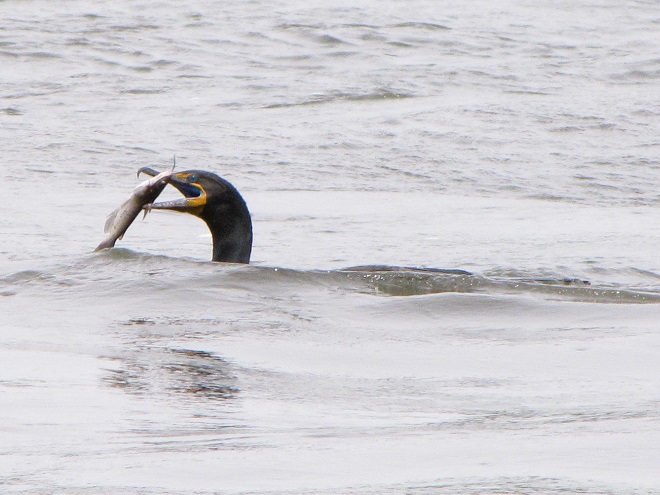
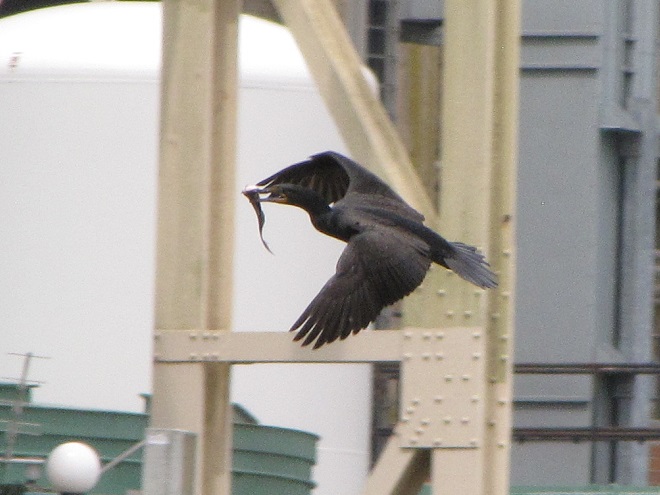
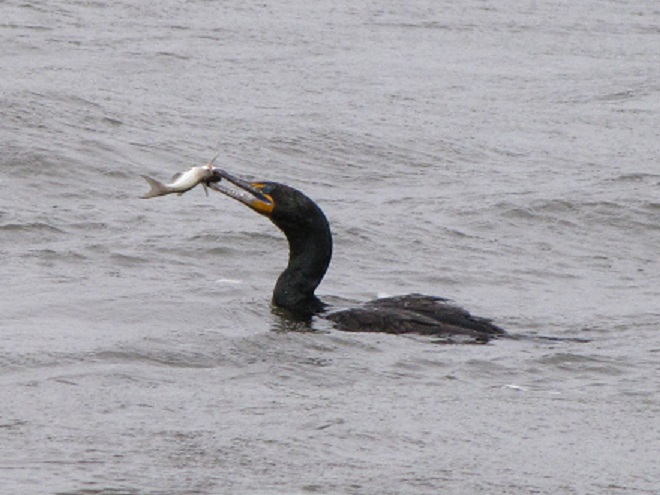
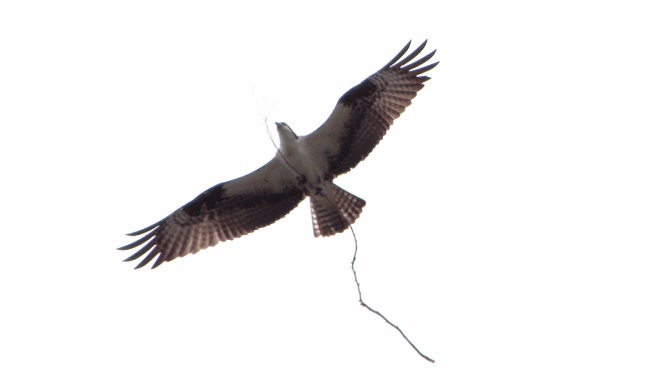
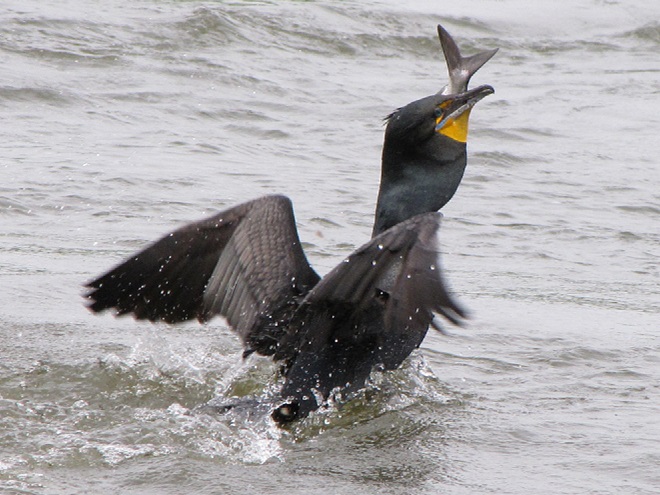
A Double-crested Cormorant with a young Channel Catfish (Ictalurus punctatus).A Double-crested Cormorant fleeing others trying to steal its Channel Catfish.Another Double-crested Cormorant eating a Channel Catfish. Did you realize that Channel Catfish were an introduced species in the Susquehanna River system?An Osprey with a stick, it’s too busy building a nest right now to fish.Great Blue Herons swallow their prey at the spot of capture, then fly back to the nest to regurgitate a sort of “minced congealed fish product” to their young.
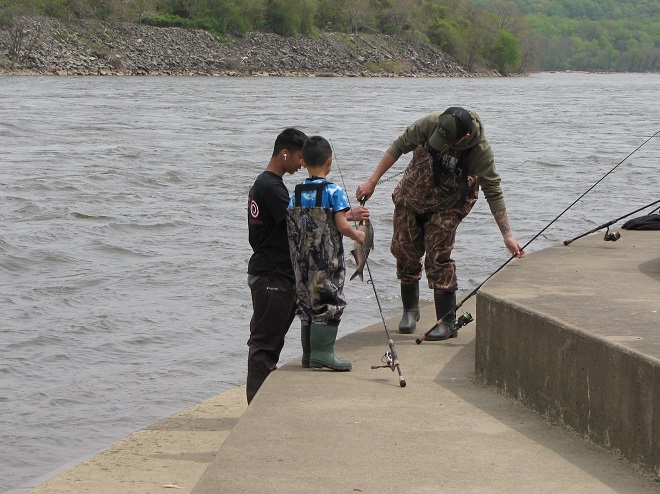
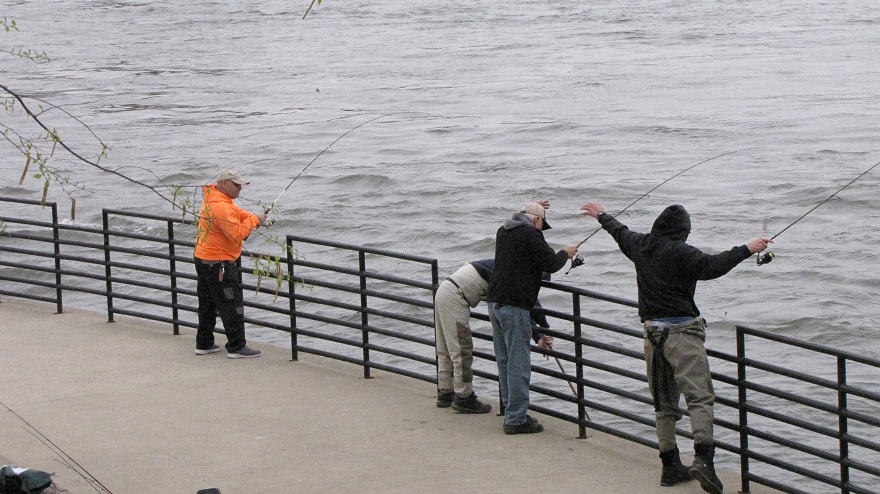
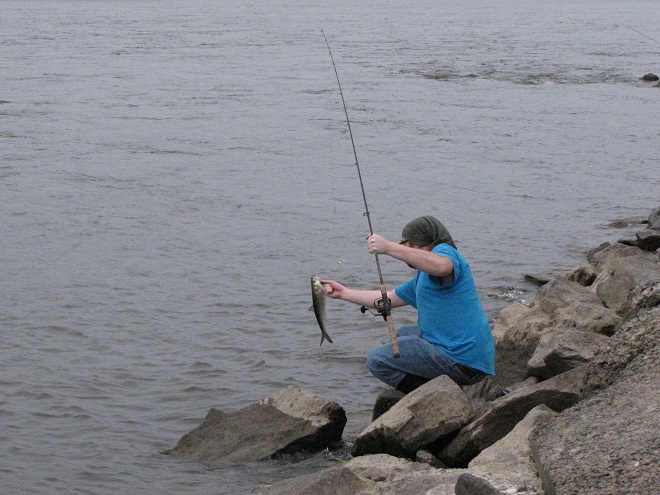
Then the anglers along the wave-washed shoreline began catching fish too.
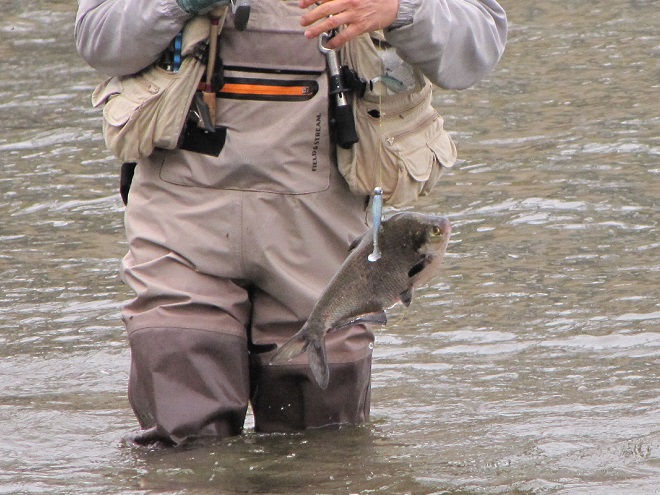
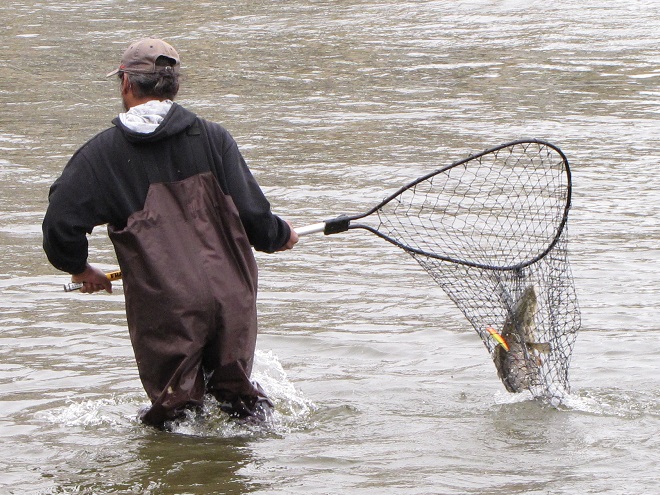
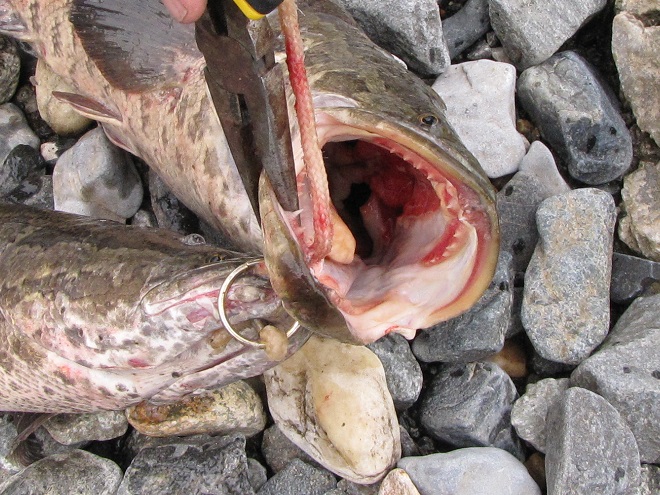
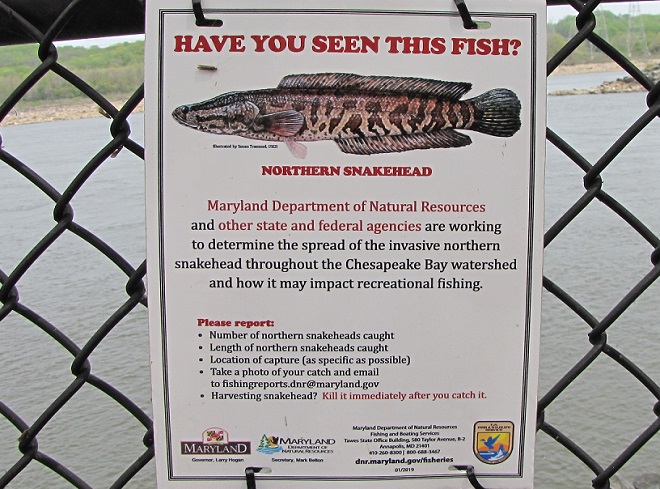
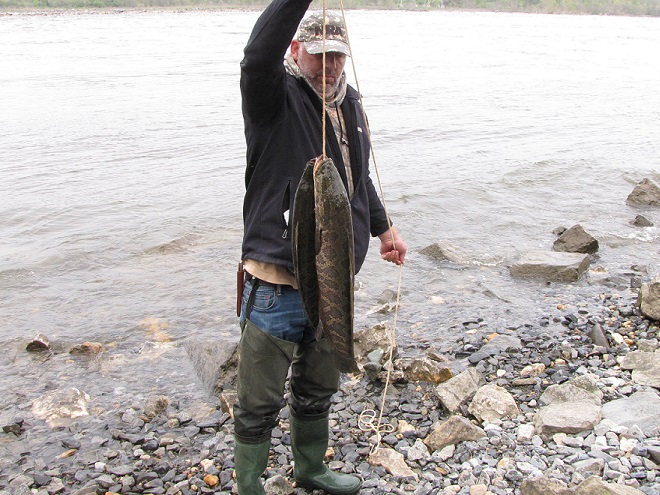
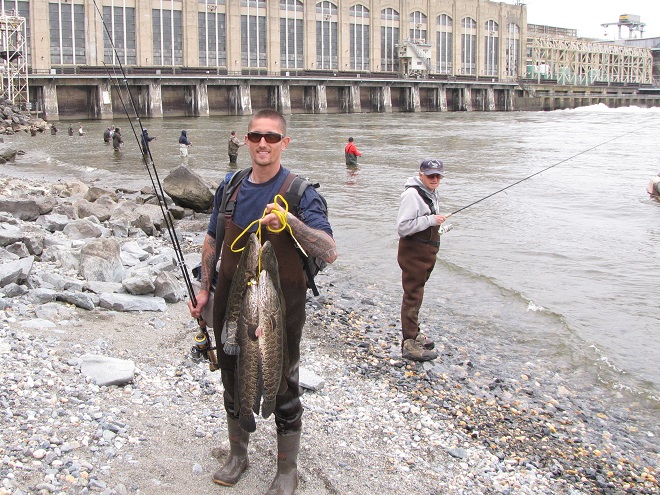
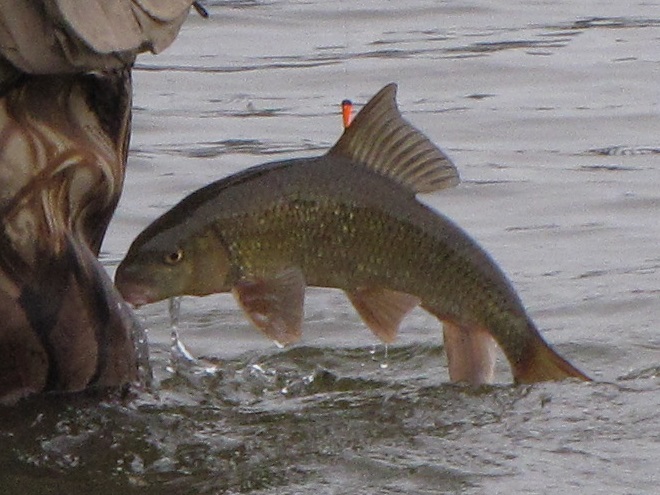
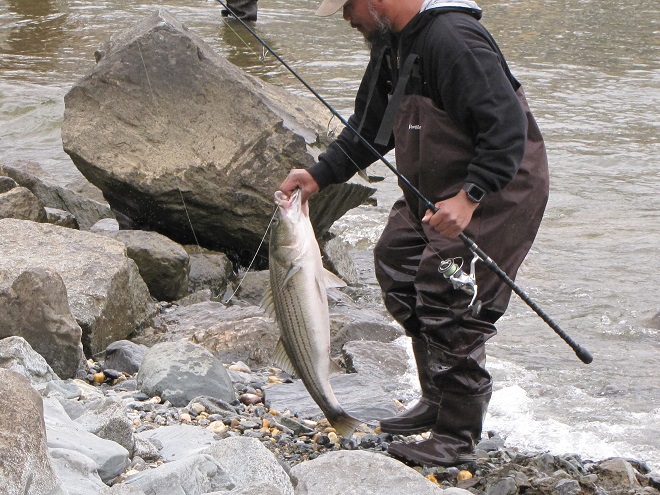
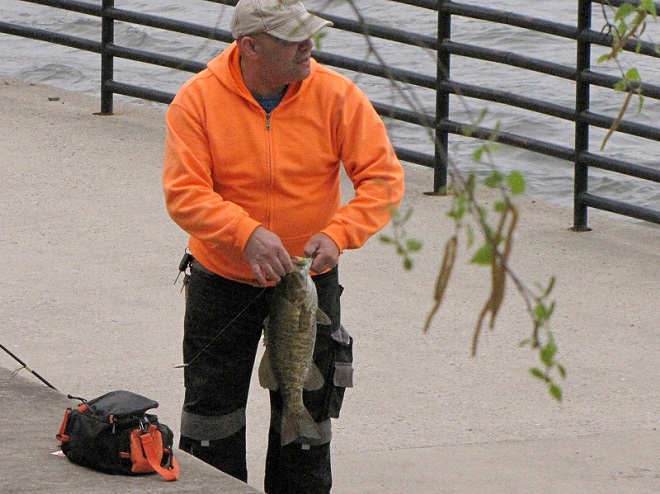
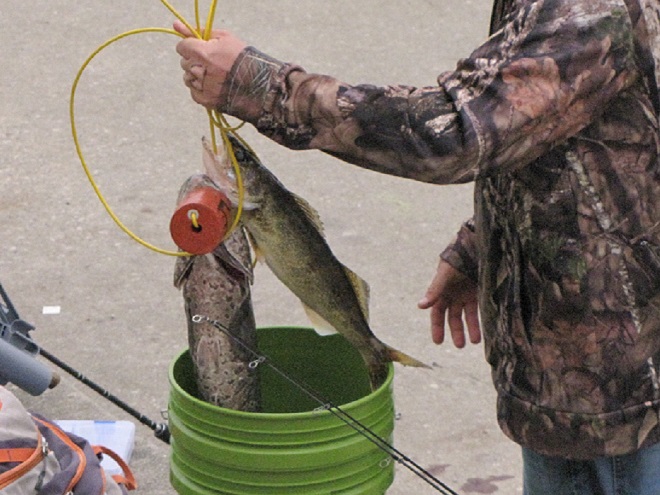
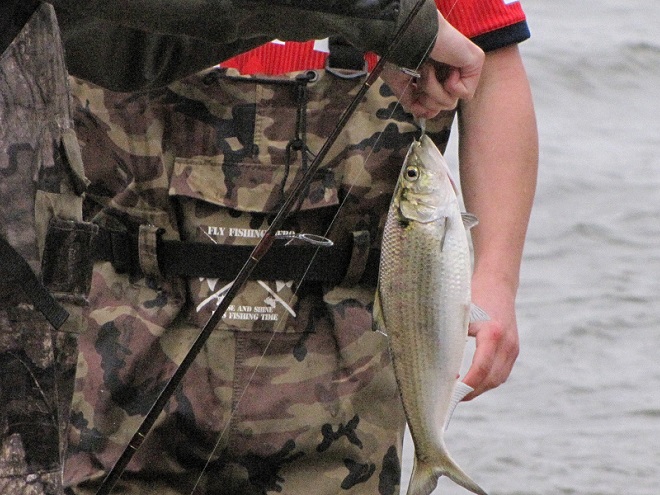
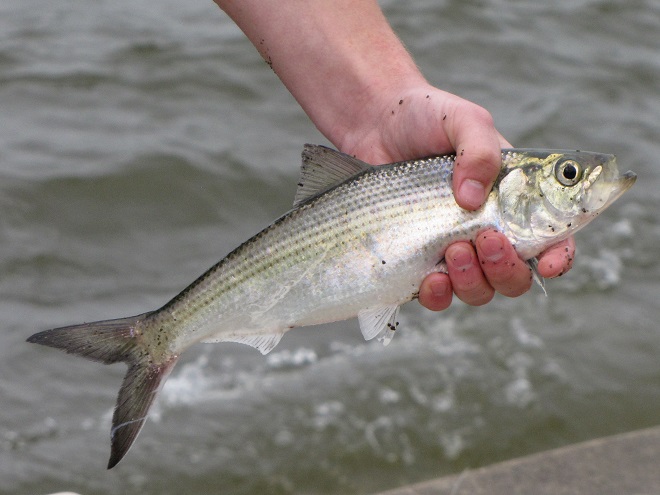
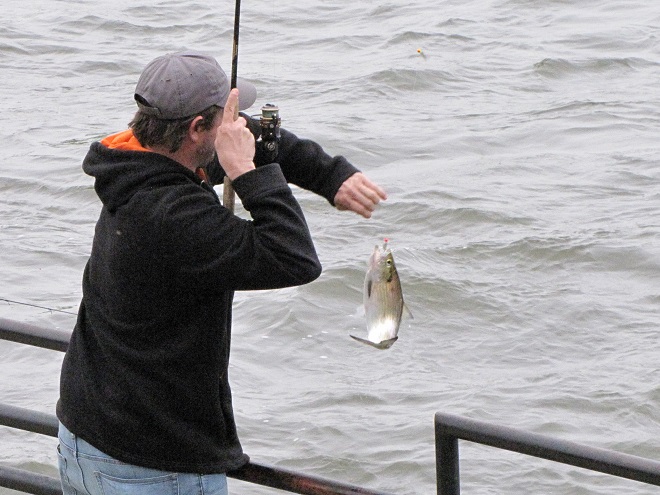
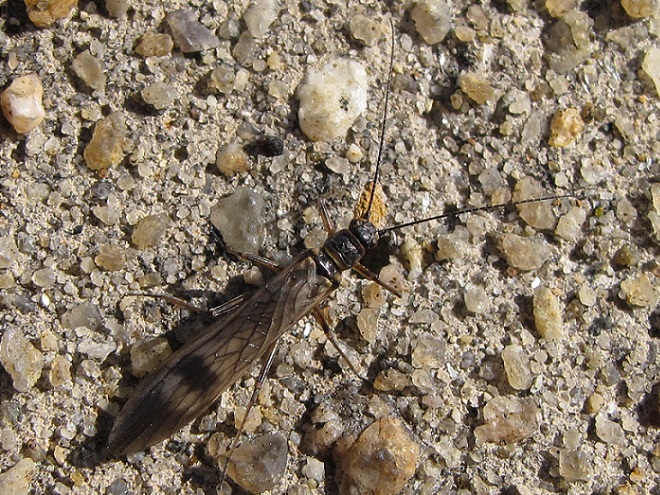
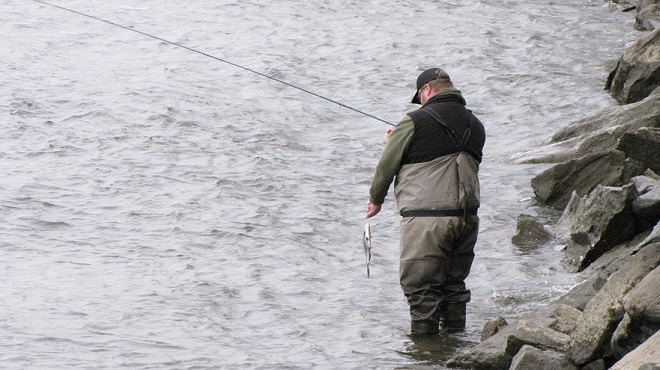
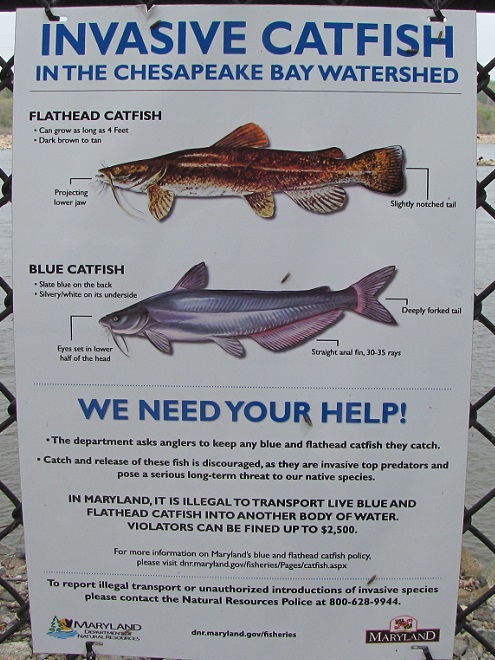
This young man led off a flurry of catches that would last for the remainder of the afternoon.Though Gizzard Shad are filter feeders that don’t readily take baits and lures, they are regularly foul-hooked and reeled in from the large schools that ascend the river in spring.Gizzard Shad are very abundant in the lower Susquehanna, providing year-round forage for many species of predatory animals including Bald Eagles.A Double-crested Cormorant swallowing a Gizzard Shad.This angler soon helped another fisherman by landing his large catch, a Northern Snakehead (Channa argus).The teeth of a Northern Snakehead are razor sharp. It is an aggressive non-native invasive species currently overtaking much of the Lower Susquehanna River Watershed. Anglers are encouraged to fish for them, catch them, keep them, and kill them at the site of capture. Never transport a live Northern Snakehead anywhere at any time. It is illegal in both Maryland and Pennsylvania to possess a live snakehead. Northern Snakehead advisory sign posted at Exelon Energy’s Conowingo Fishermen’s Park.A stringer of Northern Snakeheads. This species was imported from Asia as a food fish, so it has excellent culinary possibilities. It’s better suited for a broiler or frying pan than a river or stream.Another stringer of Northern Snakeheads. It’s pretty safe to say that they have quickly become one of the most abundant predatory fish in the river. Their impact on native species won’t be good, so catch and eat as many as you can. Remember, snakeheads swim better in butter and garlic than in waters with native fish.This foul-hooked Shorthead Redhorse (Moxostoma macrolepidotum), a native species of sucker, was promptly released.Striped Bass are anadromous fish that leave the sea in spring to spawn in fresh water. They ascend the Susquehanna in small numbers, relying upon the operation of the fish passages at the Conowingo, Holtwood, Safe Harbor, and York Haven Dams to continue their journey upstream. During spring spawning, Striped Bass in the Susquehanna River and on the Susquehanna Flats portion of the upper Chesapeake Bay are not in season and may not be targeted, even for catch-and-release. This accidental catch was immediately turned loose.After removal from the hook, this hefty Smallmouth Bass was returned to the river. Many anglers are surprised to learn that Smallmouth Bass are not native to the Susquehanna basin.This angler’s creel contains a Northern Snakehead (left) and a Walleye (right). Did you know that the Walleye (Sander vitreus) is an introduced species in the Susquehanna watershed?By late afternoon, anglers using shad darts began hooking into migrating Hickory Shad (Alosa mediocris), a catch-and-release species in Maryland.Hickory Shad are recognized by their lengthy lower jaw. They are anadromous herring that leave the sea to spawn in freshwater streams. Hickory Shad ascend the Susquehanna as far as Conowingo Dam each year, but shy away from the fish lifts. Downriver from the dam, they do ascend Deer Creek along the river’s west shore and Octoraro Creek on the east side. In Pennsylvania, the Hickory Shad is an endangered species.A Hickory Shad angled on a dual shad dart rig. During the spring spawning run, they feed mostly on small fish, and are the most likely of the Susquehanna’s herring to take the hook.Simultaneous hook-ups became common after fours hours worth of release water from the dam worked its way toward the mouth of the river and got the schools moving. Water temperatures in the mid-to-upper-fifties trigger the ascent of Hickory Shad. On the Susquehanna, those temperatures were slow to materialize in the spring of 2021, so the Hickory Shad migration is a bit late.Catch-and-release fishing for Hickory Shad appears to be in full swing not only at the dam, but along the downstream shoreline to at least the mouth of Deer Creek at Susquehanna State Park too.Many Hickory Shad could be seen feeding on some of the millions of caddisflies (Trichoptera) swarming on the river. These insects, along with earlier hatches of Winter Stoneflies (Taeniopterygidae), not only provide forage for many species of fish, but are a vital source of natural food for birds that migrate up the river in March and April each year. Swallows, Ring-billed Gulls, and Bonaparte’s Gulls are particularly fond of snatching them from the surface of the water.A Winter Stonefly (Taeniopterygidae) from an early-season hatch on the Susquehanna River at the Veteran’s Memorial Bridge at Columbia/Wrightsville, Pennsylvania. (March 3, 2021)Just below Conowingo Dam, a lone fly fisherman was doing a good job mimicking the late-April caddisfly hatch, successfully reeling in numerous surface-feeding Hickory Shad.You may have noticed the extraordinary number of introduced fish species listed in this account of a visit to Conowingo Dam. Sorry to say that there are two more: the Flathead Catfish (Pylodictis olivaris) and the Blue Catfish (Ictalurus furcatus). Like the Northern Snakehead, each has become a plentiful invasive species during recent years. Unlike the Northern Snakehead, these catfish are “native transplants”, species introduced from populations in the Mississippi River and Gulf Slope drainages of the United States. So if you visit the area, consider getting a fishing license and catching a few. Like the snakeheads, they too are quite palatable.
The arrival of migrating Hickory Shad heralds the start of a movement that will soon include White Perch, anadromous American Shad, and dozens of other fish species that swim upstream during the springtime. Do visit Fisherman’s Park at Conowingo Dam to see this spectacle before it’s gone. The fish and birds have no time to waste, they’ll soon be moving on.
To reach Exelon’s Conowingo Fisherman’s Park from Rising Sun, Maryland, follow U.S. Route 1 south across the Conowingo Dam, then turn left onto Shuresville Road, then make a sharp left onto Shureslanding Road. Drive down the hill to the parking area along the river. The park’s address is 2569 Shureslanding Road, Darlington, Maryland.
A water release schedule for the Conowingo Dam can be obtained by calling Exelon Energy’s Conowingo Generation Hotline at 888-457-4076. The recording is updated daily at 5 P.M. to provide information for the following day.
And remember, the park can get crowded during the weekends, so consider a weekday visit.
Let’s take a quiet stroll through the forest to have a look around. The spring awakening is underway and it’s a marvelous thing to behold. You may think it a bit odd, but during this walk we’re not going to spend all of our time gazing up into the trees. Instead, we’re going to investigate the happenings at ground level—life on the forest floor.
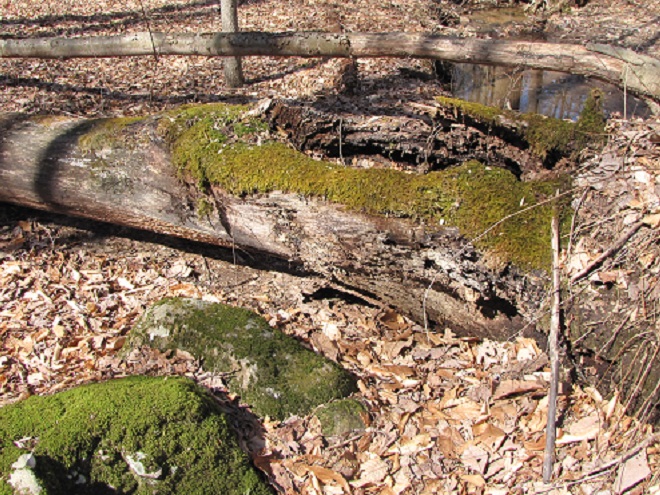
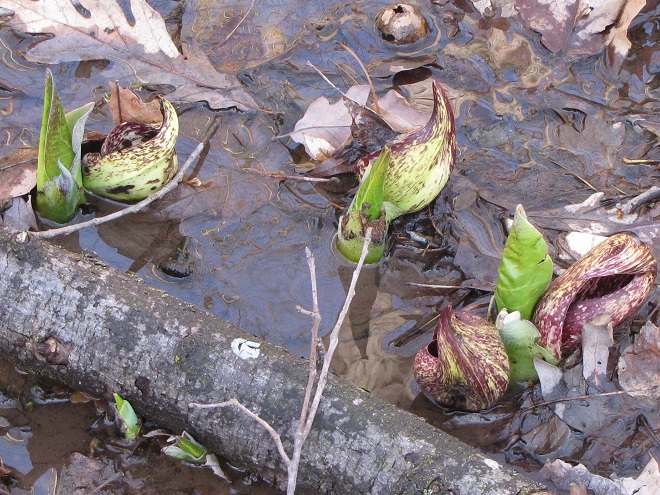
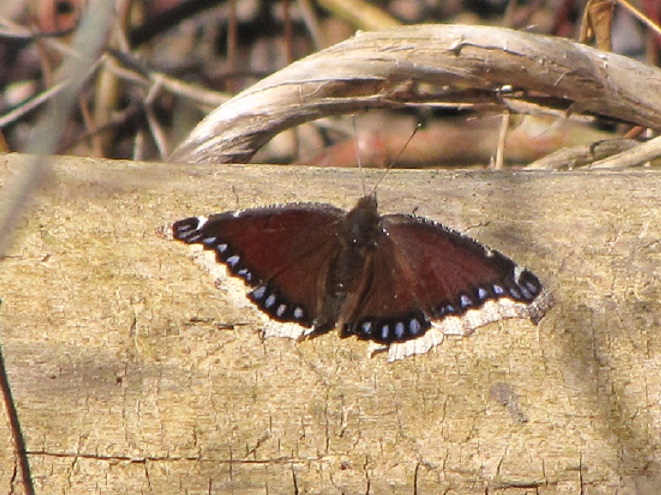
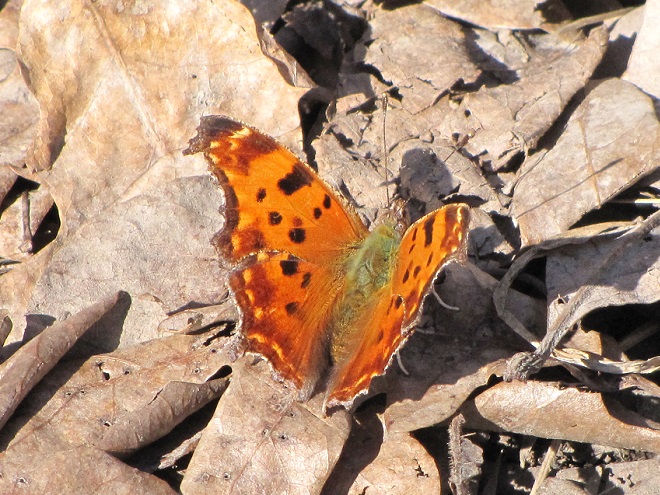
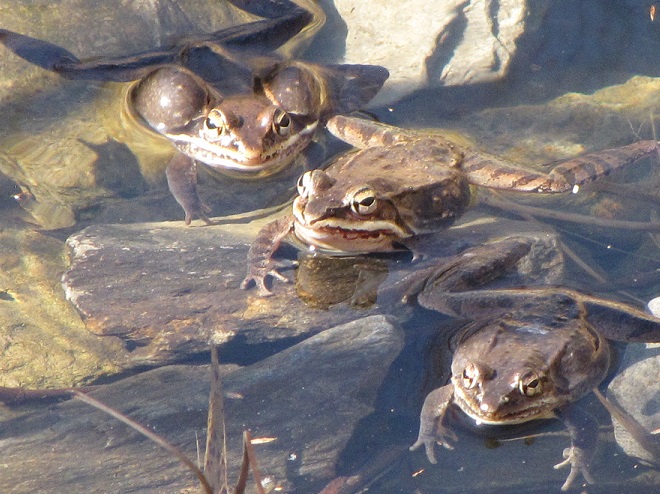
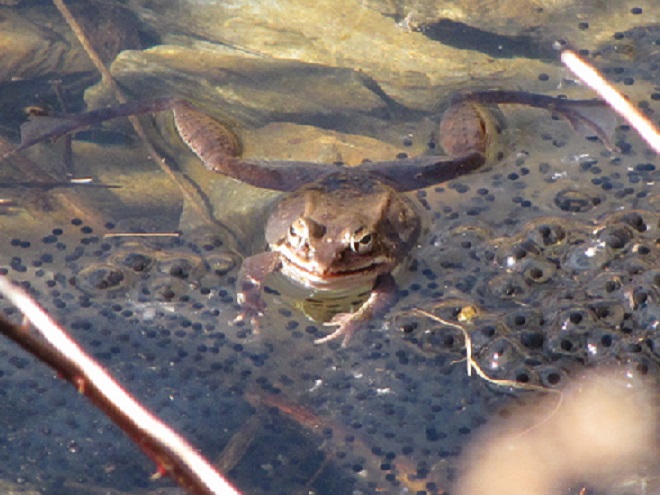
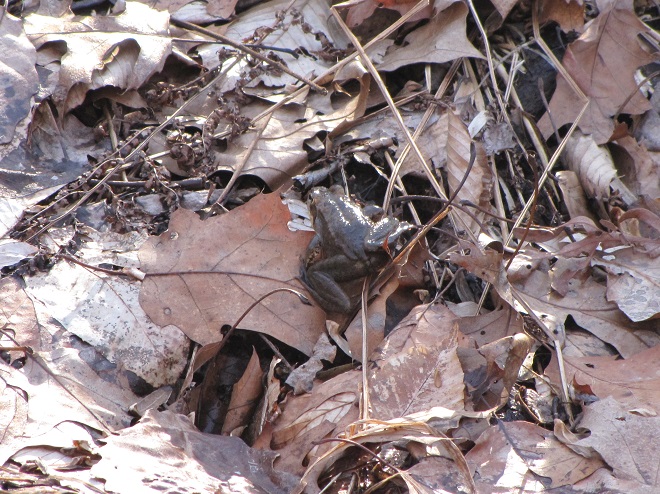
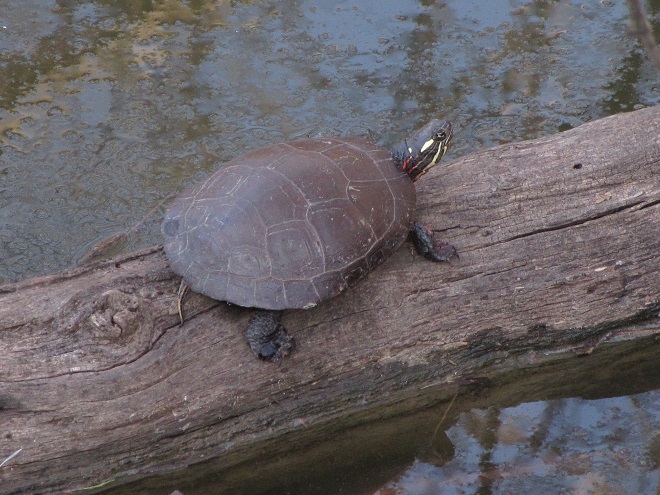
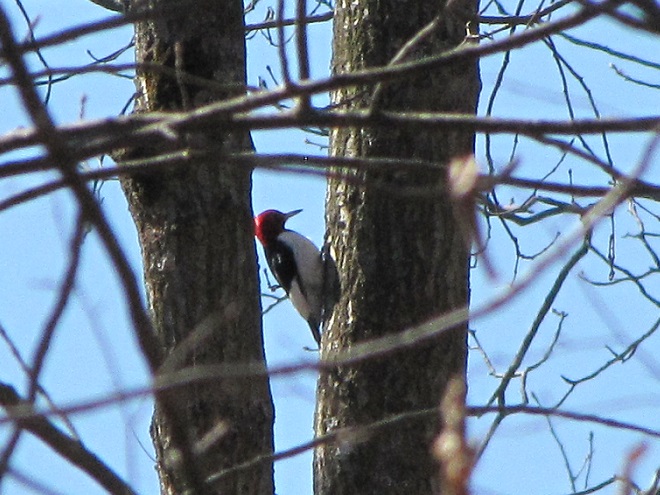
Rotting logs and leaf litter create the moisture retaining detritus in which mesic forest plants grow and thrive. Note the presence of mosses and a vernal pool in this damp section of forest.The earliest green leaves in the forest are often those of the Skunk Cabbage (Simplocarpus foetidus). This member of the arum family gets a head start by growing in the warm waters of a spring seep or in a stream-fed wetland. Like many native wildflowers of the forest, Skunk Cabbage takes advantage of early-springtime sun to flower and grow prior to the time in late April when deciduous trees grow foliage and cast shade beneath their canopy.Among the bark of dead and downed trees, the Mourning Cloak butterfly (Nymphalis antiopa) hibernates for the winter. It emerges to alight on sun-drenched surfaces in late winter and early spring.Another hibernating forest butterfly that emerges on sunny early-spring days is the Eastern Comma (Polygonia comma), also known as the Hop Merchant.In a small forest brook, a water strider (Gerridae) chases its shadow using the surface tension of the water to provide buoyancy. Forests are essential for the protection of headwaters areas where our streams get their start.Often flooded only in the springtime, fish-free pools of water known as vernal ponds are essential breeding habitat for many forest-dwelling amphibians. Unfortunately, these ephemeral wetland sites often fall prey to collecting, dumping, filling, and vandalism by motorized and non-motorized off-roaders, sometimes resulting in the elimination of the populations of frogs, toads, and salamanders that use them.Wood Frogs (Lithobates sylvaticus) emerge from hiding places among downed timber and leaf litter to journey to a nearby vernal pond where they begin calling still more Wood Frogs to the breeding site.Wood Frog eggs must hatch and tadpoles must transform into terrestrial frogs before the pond dries up in the summertime. It’s a risky means of reproduction, but it effectively evades the enormous appetites of fish.When the egg laying is complete, adult Wood Frogs return to the forest and are seldom seen during the rest of the year.In early spring, Painted Turtles emerge from hideouts in larger forest pools, particularly those in wooded swamps, to bask in sunny locations.Dead standing trees, often called snags, are essential habitats for many species of forest wildlife. There is an entire biological process, a micro-ecosystem, involved in the decay of a dead tree. It includes fungi, bacteria, and various invertebrate animals that reduce wood into the detritus that nourishes and hydrates new forest growth.Birds like this Red-headed Woodpecker feed on insects found in large snags and nest almost exclusively in them. Many species of wildlife rely on dead trees, both standing and fallen, during all or part of their lives.
There certainly is more to a forest than the living trees. If you’re hiking through a grove of timber getting snared in a maze of prickly Multiflora Rose (Rosa multiflora) and seeing little else but maybe a wild ungulate or two, then you’re in a has-been forest. Logging, firewood collection, fragmentation, and other man-made disturbances inside and near forests take a collective toll on their composition, eventually turning them to mere woodlots. Go enjoy the forests of the lower Susquehanna valley while you still can. And remember to do it gently; we’re losing quality as well as quantity right now—so tread softly.
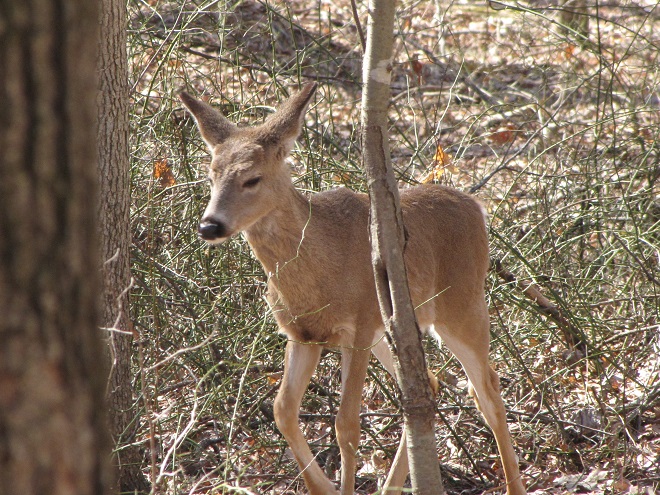
The White-tailed Deity in a woodlot infested by invasive tangles of Multiflora Rose.
With autumn coming to a close, let’s have a look at some of the fascinating insects (and a spider) that put on a show during some mild afternoons in the late months of 2019.
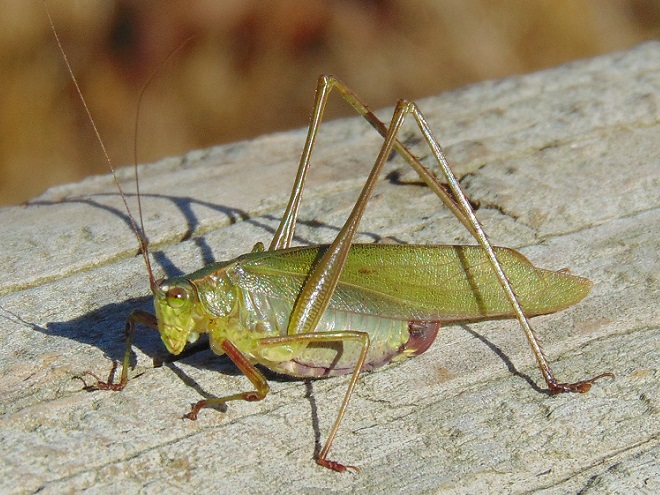
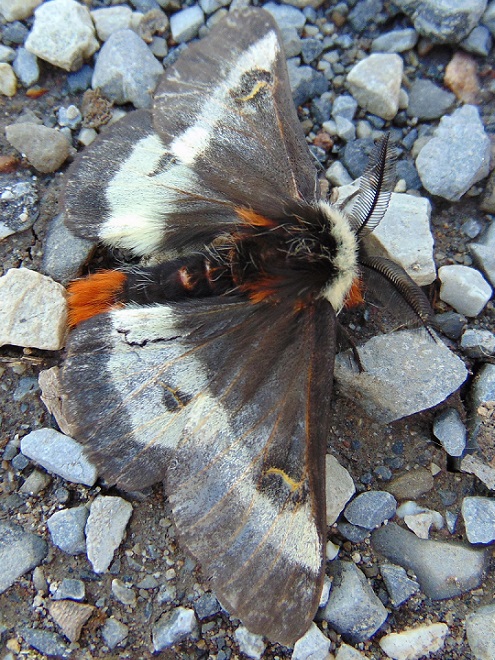
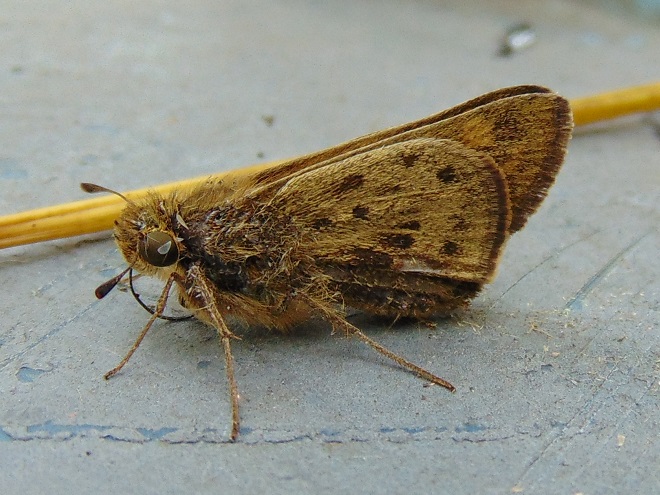
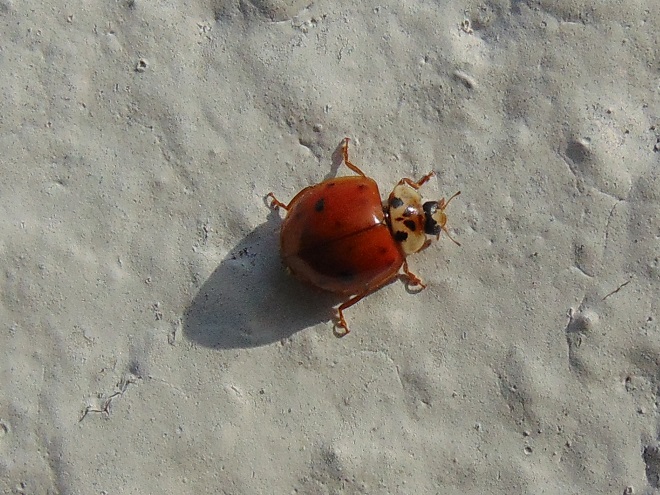
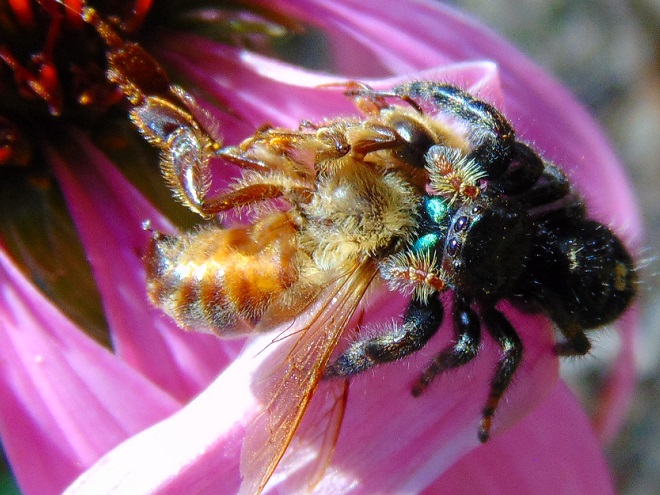
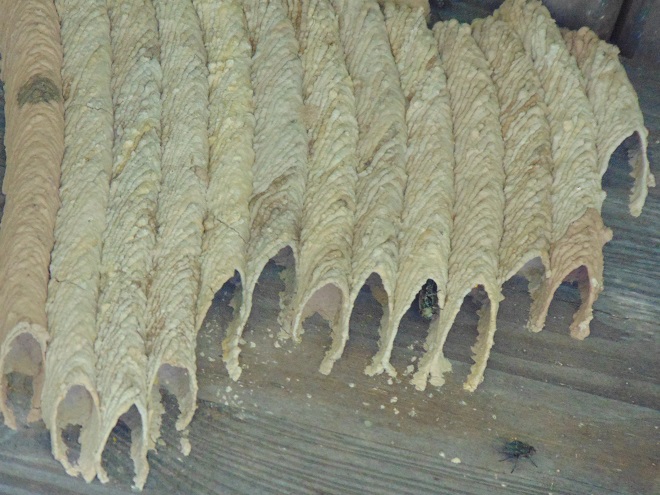
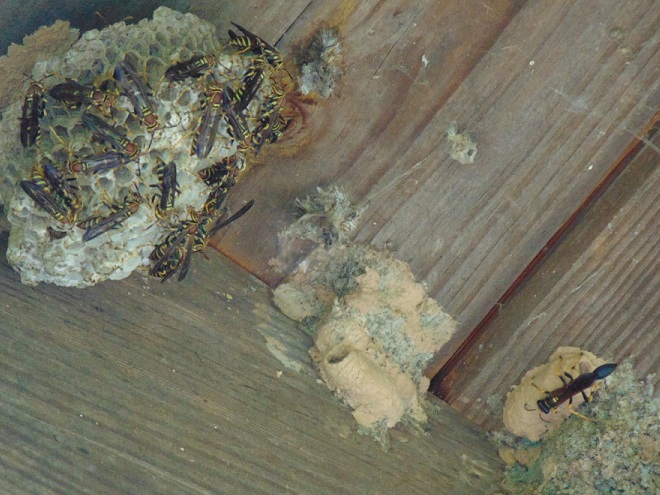
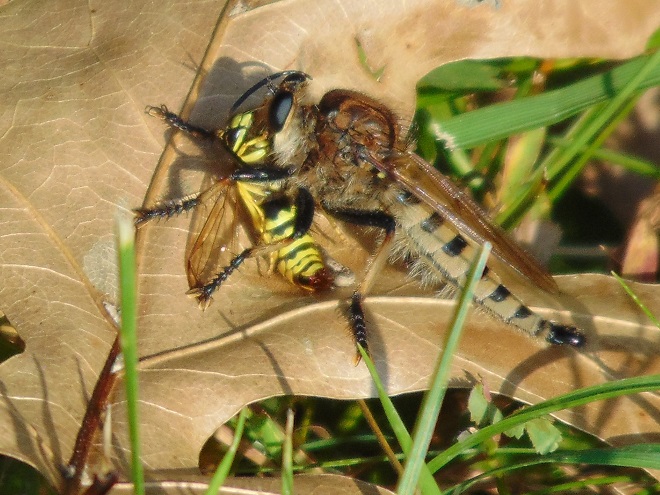
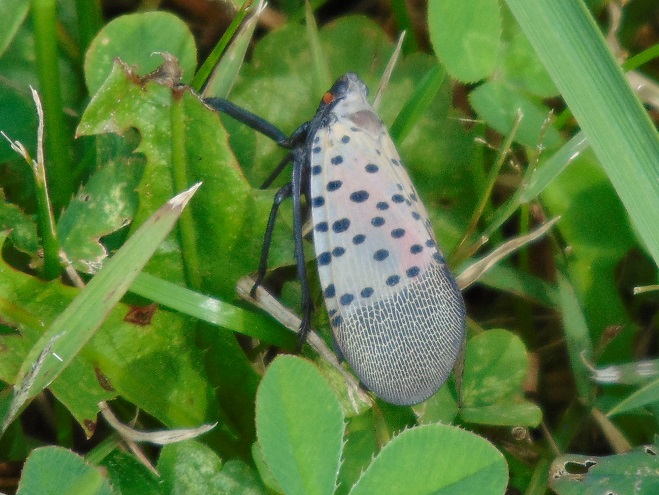
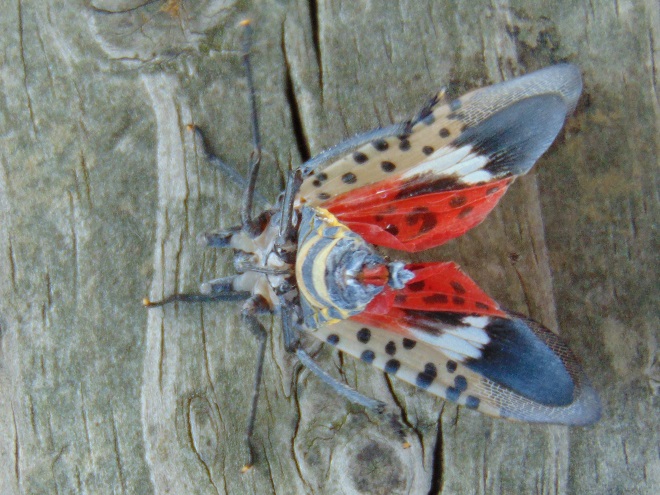
Bush Katydids (Scudderia species) are found in brushy habitats and along rural roadsides. Their green summer color fades to brown, maroon, and gold to match the autumn foliage where they hide. Bush katydids often remain active until a hard freeze finally does them in.The Eastern Buck Moth (Hemileuca maia) is fuzzy, appearing to wear a warm coat for its autumn expeditions. Adults emerge in October and may fly as late as December. Females deposit their eggs on the twigs of Bear Oak (Quercus ilicifolia), Blackjack Oak (Q. marilandica), or Chestnut Oak (Q. montana), trees that, in our region, seem most favorable for the moth’s use when growing on burned barrens and mountain slopes. The spiny caterpillars are known to feed only on the foliage of these few trees. In the lower Susquehanna valley, the Eastern Buck Moth is rare because its specialized habitat is in short supply, and it’s all Smokey The Bear’s fault.The Sachem (Atalopedes campestris) wanders north from the Atlantic Coastal Plain into the Susquehanna valley each summer. In some years they become the most numerous small orange butterfly of all, particularly around home gardens. The larvae will feed on Crabgrass (Digitaria species), but have not found success overwintering this far north. By November, adults begin to look pretty drab.From 1978 through 1982, the Asian Multicolored Lady Beetle (Harmonia axyridis) was introduced into the eastern states by the United States Department of Agriculture. It has become a nuisance in many areas where it swarms, sometimes bites, and often overwinters in large smelly masses within homes and other warm buildings. As you may have guessed, it’s possibly displacing some of the less aggressive native lady beetle species.On a chilly afternoon, a sun-warmed Bold Jumping Spider (Phidippus audax) pounced and dispatched this sluggish worker Honey Bee (Apis mellifera) that was trying to gather pollen from a late-season Purple Coneflower bloom. This spider is bold indeed.Under bridges, inside bird nest boxes, and sometimes beneath porches, the female Pipe Organ Mud Dauber (Trypoxylon politum), a predatory wasp, builds these elaborate nests composed of long rows (pipes) of nursery cells. Into each cell one or more paralyzed spiders is deposited along with one of the female’s eggs. When hatched, each larva will feed upon the paralyzed spider(s) inside its cell, then pupate. The pupae overwinter, then emerge from their cells as adults during the following spring. In the autumn, males often stand guard at an entrance to the nest to prevent parasitic species, including some flies (look at the fifth pipe from the right), from laying eggs on the pupae. These wasps are not aggressive toward humans.A Black-and-yellow Mud Dauber (Sceliphron caementarium) observes a neighboring nest of Common Paper Wasps (Polistes exclamans). The Common Paper Wasp, a species also known as the Guinea Paper Wasp, is a native of the southern United States. It is currently expanding its range into the lower Susquehanna valley from the Atlantic Coastal Plain. These two wasp species and the Pipe Organ Mud Dauber are known to regularly coexist. All three will take advantage of man-made structures for their nest sites. People using the picnic tables beneath this pavilion roof never noticed the hundreds of docile wasps above.Those moody Eastern Yellowjackets (Vespula maculifrons) can get very temperamental during warm autumn days. These wasps may appear to have no enemies, but away from areas impacted by man’s everyday activities, they do. The Robber Fly (Promachus species) hunts like a flycatcher or other woodland bird, waiting on a perch along the forest’s edge for prey to pass by, then ambushing it, yellowjackets included.The invasive Spotted Lanternfly, a native of eastern Asia, continues to spread destruction. It established itself throughout much of the east side of the lower Susquehanna River during the summer and fall of 2019. Their route of travel across the farmlands of the region intersects with plenty of vineyards to obliterate and few, if any, natural enemies. Expect them to begin colonizing the west shore en masse during 2020.In 2020, plan to roll a few Spotted Lanternflies over, enjoy the view, and wait for the crimson tide to pass. With any luck, they’ll peak in a year or two.
SOURCES
Eaton, Eric R., and Kenn Kaufman. 2007. Kaufman Field Guide to Insects of North America. Houghton Mifflin Company. New York, NY.
Within the last few years, the early-summer emergence of vast waves of mayflies has caused great consternation among residents of riverside towns and motorists who cross the bridges over the lower Susquehanna. Fishermen and others who frequent the river are familiar with the phenomenon. Mayflies rise from their benthic environs where they live for a year or more as an aquatic larval stage (nymph) to take flight as a short-lived adult (imago), having just one night to complete the business of mating before perishing by the following afternoon.
In 2015, an emergence on a massive scale prompted the temporary closure of the mile-long Columbia-Wrightsville bridge while a blizzard-like flight of huge mayflies reduced visibility and caused road conditions to deteriorate to the point of causing accidents. The slimy smelly bodies of dead mayflies, probably millions of them, were removed like snow from the normally busy Lincoln Highway. Since then, to prevent attraction of the breeding insects, lights on the bridge have been shut down from about mid-June through mid-July to cover the ten to fourteen day peak of the flight period of Hexagenia bilineata, sometimes known as the Great Brown Drake, the species that swarms the bridge.
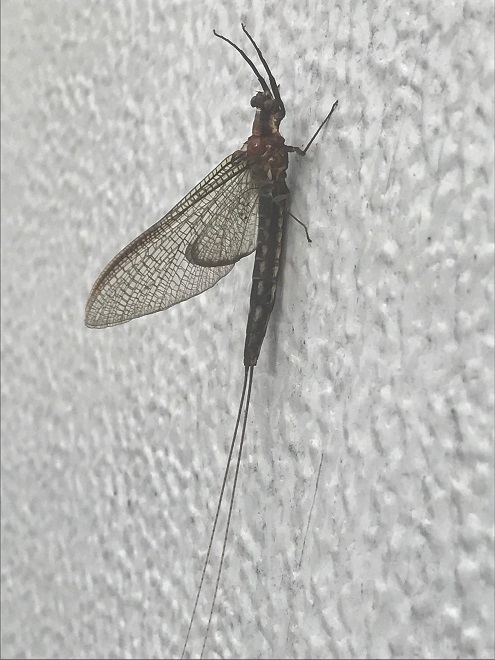
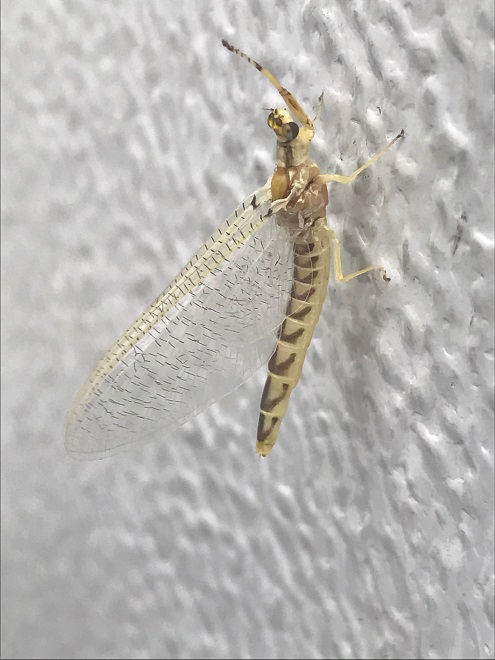
An adult (imago) male Great Brown Drake (Hexagenia bilineata) burrowing mayfly. Adult mayflies are also known as spinners.A sub-adult (based on the translucence of the wings) female burrowing mayfly (Hexagenia species). The sub-adult (subimago or dun) stage lasts less than a day. Normally within 18 hours of leaving the water and beginning flight, it will molt into an adult, ready to breed during its final night of life.
After so many years, why did the swarms of these mayflies suddenly produce the enormous concentrations seen on this particular bridge across the lower Susquehanna? Let’s have a look.
Following the 2015 flight, conservation organizations were quick to point out that the enormous numbers of mayflies were a positive thing—an indicator that the waters of the river were getting cleaner. Generally, assessments of aquatic invertebrate populations are considered to be among the more reliable gauges of stream health. But some caution is in order in this case.
Prior to the occurrence of large flights several years ago, Hexagenia bilineata was not well known among the species in the mayfly communities of the lower Susquehanna and its tributaries. The native range of the species includes the southeastern United States and the Mississippi River watershed. Along segments of the Mississippi, swarms such as occurred at Columbia-Wrightsville in 2015 are an annual event, sometimes showing up on local weather radar images. These flights have been determined to be heaviest along sections of the river with muddy bottoms—the favored habitat of the burrowing Hexagenia bilineata nymph. This preferred substrate can be found widely in the Susquehanna due to siltation, particularly behind dams, and is the exclusive bottom habitat in Lake Clarke just downstream of the Columbia-Wrightsville bridge.
Native mayflies in the Susquehanna and its tributaries generally favor clean water in cobble-bottomed streams. Hexagenia bilineata, on the other hand, appears to have colonized the river (presumably by air) and has found a niche in segments with accumulated silt, the benthic habitats too impaired to support the native taxa formerly found there. Large flights of burrowing mayflies do indicate that the substrate didn’t become severely polluted or eutrophic during the preceding year. And big flights tell us that the Susquehanna ecosystem is, at least in areas with silt bottoms, favorable for colonization by the Great Brown Drake. But large flights of Hexagenia bilineata mayflies don’t necessarily give us an indication of how well the Susquehanna ecosystem is supporting indigenous mayflies and other species of native aquatic life. Only sustained recoveries by populations of the actual native species can tell us that. So, it’s probably prudent to hold off on the celebrations. We’re a long way from cleaning up this river.
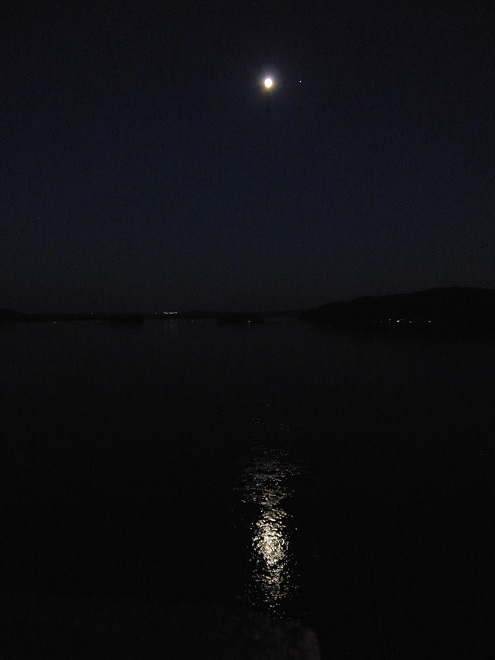
In the absence of man-made lighting, male Great Brown Drakes congregate over waterways lit often by moonlight alone. The males hover in position within a swarm, often downwind of an object in the water. As females begin flight and pass through the swarm, they are pursued by the males in the vicinity. The male response is apparently sight motivated—anything moving through their field of view in a straight line will trigger a pursuit. That’s why they’re so pesky, landing on your face whenever you approach them. Mating takes place as males rendezvous with airborne females. The female then drops to the water surface to deposit eggs and later die—if not eaten by a fish first. Males return to the swarm and may mate again and again. They die by the following afternoon. After hatching, the larvae (nymphs) burrow in the silt where they’ll grow for the coming year. Feathery gills allow them to absorb oxygen from water passing through the U-shaped refuge they’ve excavated.
Several factors increase the likelihood of large swarms of Great Brown Drakes at bridges. Location is, of course, a primary factor. Bridges spanning suitable habitat will, as a minimum, experience incidental occurrences of the flying forms of the mayflies that live in the waters below. Any extraordinarily large emergence will certainly envelop the bridge in mayflies. Lights, both fixed and those on motor vehicles, enhance the appearance of movement on a bridge deck, thus attracting hovering swarms of male Hexagenia bilineata and other species from a greater distance, leading to larger concentrations. Concrete walls along the road atop the bridge lure the males to try to hover in a position of refuge behind them, despite the vehicles that disturb the still air each time they pass. The walls also function as the ultimate visual attraction as headlamp beams and shadows cast by moving vehicles are projected onto them over the length of the bridge. Vast numbers of dead, dying, and maimed mayflies tend to accumulate along these walls for this reason.
The absence of illumination from fixed lighting on the deck of the bridge reduces the density of Great Brown Drake swarms. Some communities take mayfly countermeasures one step further. Along the Mississippi, some bridges are fitted with lights on the underside of the deck to attract the mayflies to the area directly over the water, concentrating the breeding mayflies and fishermen alike. The illumination below the bridge is intended to draw mayflies away from light created by headlamps on motor vehicles passing by on the otherwise dark deck above. Lights beneath the bridge also help prevent large numbers of mayflies from being drawn away from the water toward lights around businesses and homes in neighborhoods along the shoreline—where they can become a nuisance.
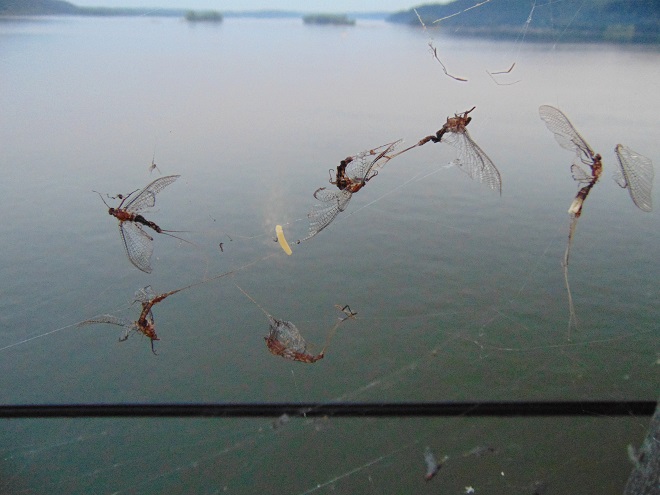
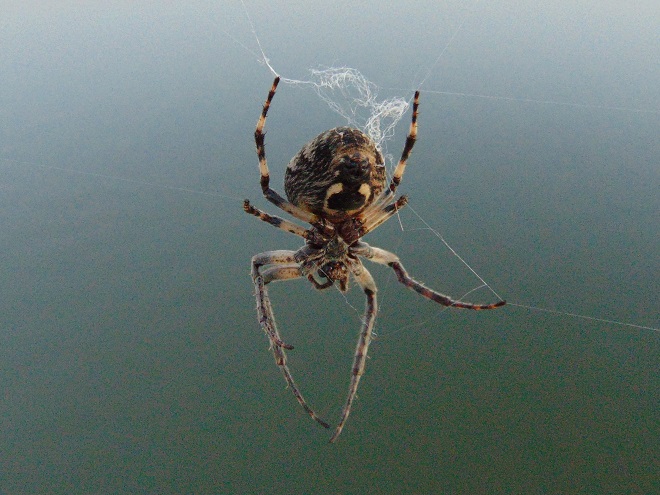
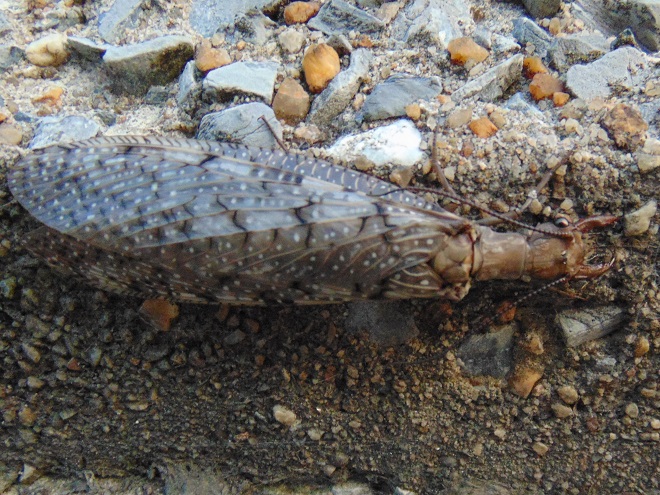
Lights out on the Columbia-Wrightsville bridge. Dousing the lights to eliminate fixed illumination on bridges is an effective method of reducing the density of Hexagenia bilineata swarms.With the bridge lights darkened, male Great Brown Drakes, their cellophane-like wings illuminated by headlamps to appear as white spots on the road, number in the hundreds instead of hundreds of thousands in swarms on the bridge near the east and west shorelines.Swarms of Great Brown Drake mayflies are still present at the Columbia-Wrightsville bridge, they’re just not concentrated there in enormous numbers. Evidence includes their bodies found in cobwebs along the entire length of the span.The aptly-named Bridge Orb Weaver (Larinioides sclopetarius) constructs webs along the entire length of the Columbia-Wrightsville bridge, and on many of the buildings at both ends. The abundance of victims tangled in silk must overwhelm their appetite, or maybe they actually consume only the smaller insects. They have their choice. Of the Bridge Orb Weaver, Uncle Ty Dyer says, “When you live along the river, it’s your friendly neighborhood spider, man.”The native Eastern Dobsonfly (Corydalus cornutus) is among the reliable indicators of stream quality in the Susquehanna at the Columbia-Wrightsville bridge. Winged adults, which live for about a week, are clumsy fliers attracted to lights. The aquatic larvae are known as hellgrammites, which require clean flowing water over rocky or pebbly substrate to thrive. Two adults were found on the bridge last evening. It would be encouraging to find more. Maybe we’ll stop back to have another look when the lights are back on.
SOURCES
Edsall, Thomas A. 2001. “Burrowing Mayflies (Hexagenia) as Indicators of Ecosystem Health.” Aquatic Ecosystem Health and Management. 43:283-292.
Fremling, Calvin R. 1960. Biology of a Large Mayfly, Hexagenia bilineata (Say), of the Upper Mississippi River. Research Bulletin 482. Agricultural and Home Economics Experiment Station, Iowa State University. Ames, Iowa.
McCafferty, W. P. 1994. “Distributional and Classificatory Supplement to the Burrowing Mayflies (Ephemeroptera: Ephimeroidea) of the United States.” Entomological News. 105:1-13.
Second Mountain Hawk Watch is located on a ridge top along the northern edge of the Fort Indiantown Gap Military Reservation and the southern edge of State Game Lands 211 in Lebanon County, Pennsylvania. The valley on the north side of the ridge, also known as St. Anthony’s Wilderness, is drained to the Susquehanna by Stony Creek. The valley to the south is drained toward the river by Indiantown Run, a tributary of Swatara Creek.
The hawk watch is able to operate at this prime location for observing the autumn migration of birds, butterflies, dragonflies, and bats through the courtesy of the Pennsylvania Game Commission and the Garrison Commander at Fort Indiantown Gap. The Second Mountain Hawk Watch Association is a non-profit organization that staffs the count site daily throughout the season and reports data to the North American Hawk Watch Association (posted daily at hawkcount.org).
Today, Second Mountain Hawk Watch was populated by observers who enjoyed today’s break in the rainy weather with a visit to the lookout to see what birds might be on the move. All were anxiously awaiting a big flight of Broad-winged Hawks, a forest-dwelling Neotropical species that often travels back to its wintering grounds in groups exceeding one hundred birds. Each autumn, many inland hawk watches in the northeast experience at least one day in mid-September with a Broad-winged Hawk count exceeding 1,000 birds. They are an early-season migrant and today’s southeast winds ahead of the remnants of Hurricane Florence (currently in the Carolinas) could push southwest-heading “Broad-wings” out of the Piedmont Province and into the Ridge and Valley Province for a pass by the Second Mountain lookout.
The flight turned out to be steady through the day with over three hundred Broad-winged Hawks sighted. The largest group consisted of several dozen birds. We would hope there are probably many more yet to come after the Florence rains pass through the northeast and out to sea by mid-week. Also seen today were Bald Eagles, Ospreys, American Kestrels, and a migrating Red-headed Woodpecker.
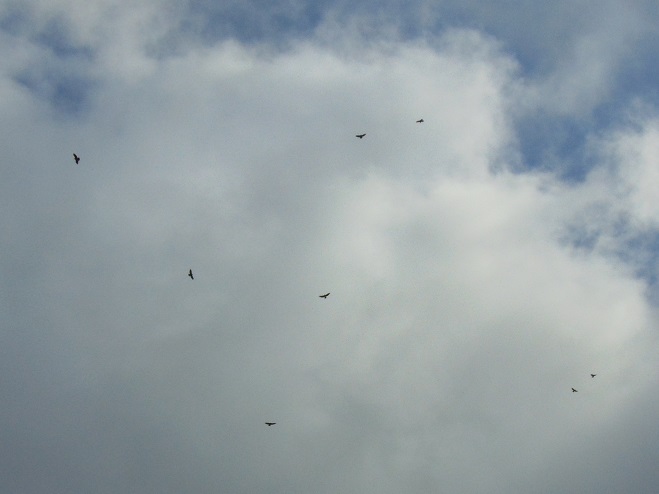
Migrating Broad-winged Hawks circle on a thermal updraft above Second Mountain Hawk Watch to gain altitude before gliding away to the southwest.
Migrating insects included Monarch butterflies, and the three commonest species of migratory dragonflies: Wandering Glider, Black Saddlebags, and Common Green Darner. The Common Green Darners swarmed the lookout by the dozens late in the afternoon and attracted a couple of American Kestrels, which had apparently set down from a day of migration. American Kestrels and Broad-winged Hawks feed upon dragonflies and often migrate in tandem with them for at least a portion of their journey.
Still later, as the last of the Broad-winged Hawks descended from great heights and began passing by just above the trees looking for a place to settle down, a most unwelcome visitor arrived at the lookout. It glided in from the St. Anthony’s Wilderness side of the ridge on showy crimson-red wings, then became nearly indiscernible from gray tree bark when it landed on a limb. It was the dreaded and potentially invasive Spotted Lanternfly (Lycorma delicatula). This large leafhopper is native to Asia and was first discovered in North America in the Oley Valley of eastern Berks County, Pennsylvania in 2014. The larval stage is exceptionally damaging to cultivated grape and orchard crops. It poses a threat to forest trees as well. Despite efforts to contain the species through quarantine and other methods, it’s obviously spreading quickly. Here on the Second Mountain lookout, we know that wind has a huge influence on the movement of birds and insects. The east and southeast winds we’ve experienced for nearly a week may be carrying Spotted Lanternflies well out of their most recent range and into the forests of the Ridge and Valley Province. We do know for certain that the Spotted Lanternfly has found its way into the Lower Susquehanna River Watershed.
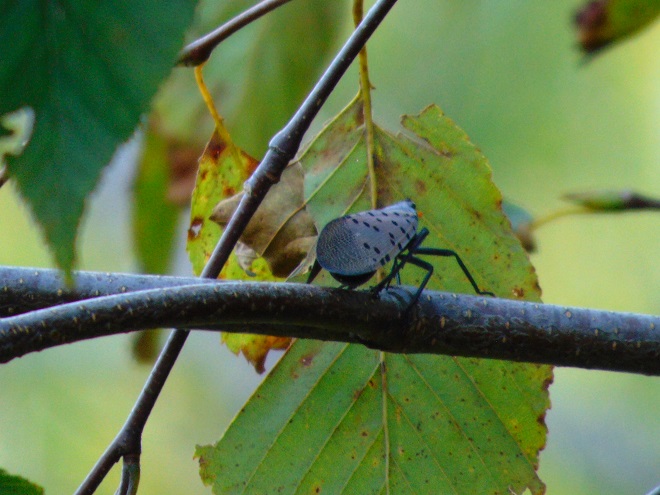
This adult Spotted Lanternfly landed in a birch tree behind the observers at the Second Mountain Hawk Watch late this afternoon. It was first recognized by its bright red wings as it glided from treetops on the north side of the lookout.
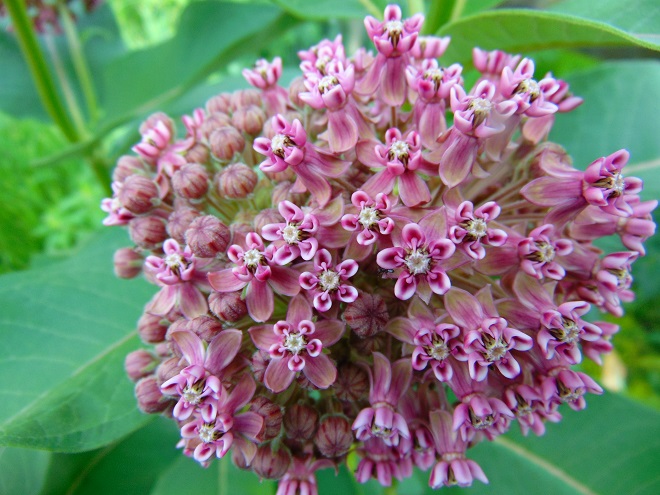
It’s sprayed with herbicides. It’s mowed and mangled. It’s ground to shreds with noisy weed-trimmers. It’s scorned and maligned. It’s been targeted for elimination by some governments because it’s undesirable and “noxious”. And it has that four letter word in its name which dooms the fate of any plant that possesses it. It’s the Common Milkweed, and it’s the center of activity in our garden at this time of year. Yep, we said milk-WEED.
Now, you need to understand that our garden is small—less than 2,500 square feet. There is no lawn, and there will be no lawn. We’ll have nothing to do with the lawn nonsense. Those of you who know us, know that the lawn, or anything that looks like lawn, are through.
Anyway, most of the plants in the garden are native species. There are trees, numerous shrubs, some water features with aquatic plants, and filling the sunny margins is a mix of native grassland plants including Common Milkweed. The unusually wet growing season in 2018 has been very kind to these plants. They are still very green and lush. And the animals that rely on them are having a banner year. Have a look…
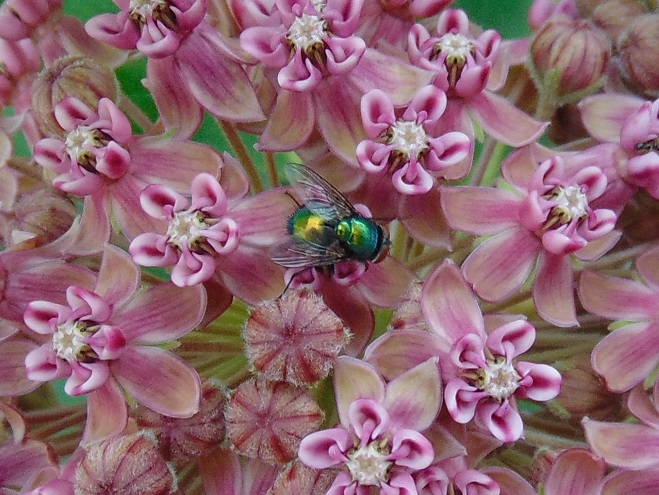
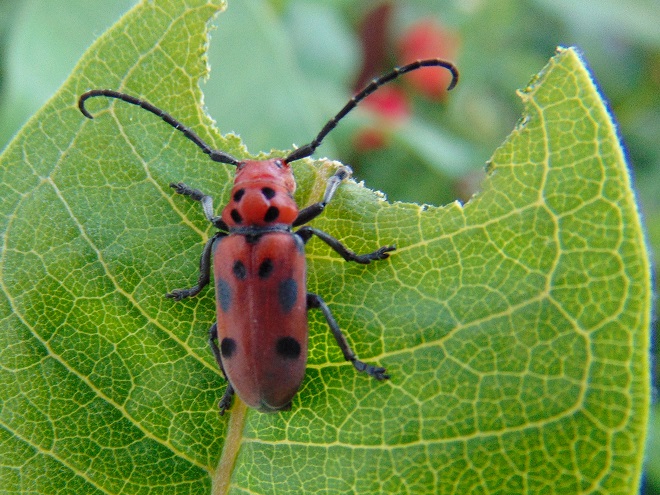
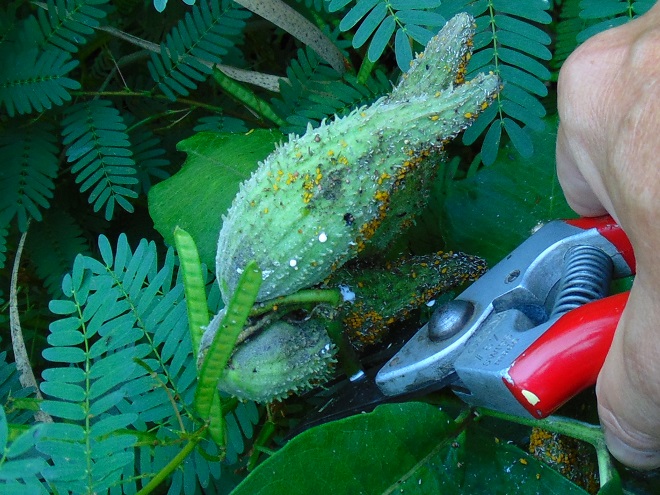
The flowers of the Common Milkweed were exceptionally fragrant this year. At their peak in early June, their hyacinth-or lilac-like aroma was so prevalent, it drifted into our building and overwhelmed the stink of the neighbor’s filthy dumpster that he had placed 12 feet away from our walls (100 feet from his).Common Milkweed attracts a pollinating Greenbottle Fly (Lucilia species). The dumpster attracts the invasive House Fly (Musca domestica), carrier of dysentery, typhoid, and other wonderful diseases. Are you following this? Remember as we proceed, milkweed is “noxious”.Busy Eastern Carpenter Bees (Xylocopa virginica) load up with pollen from the flowers of the Common Milkweed.A Red Milkweed Beetle (Tetraopes tetrophthalmus) munches on a tender fresh Common Milkweed leaf in mid-June.Following the pollination of the flowers, seed pods will begin to grow. We trim these off the plants. The removal of the extra weight allows most of the stems to remain erect through stormy weather. You’ll still get new plants from underground runners. As you may have guessed, we’re trying to keep these plants upright and strong to host Monarch butterfly larvae.
We’ve planted a variety of native grassland species to help support the milkweed structurally and to provide a more complete habitat for Monarch butterflies and other native insects. This year, these plants are exceptionally colorful for late-August due to the abundance of rain. The warm season grasses shown below are the four primary species found in the American tall-grass prairies and elsewhere.
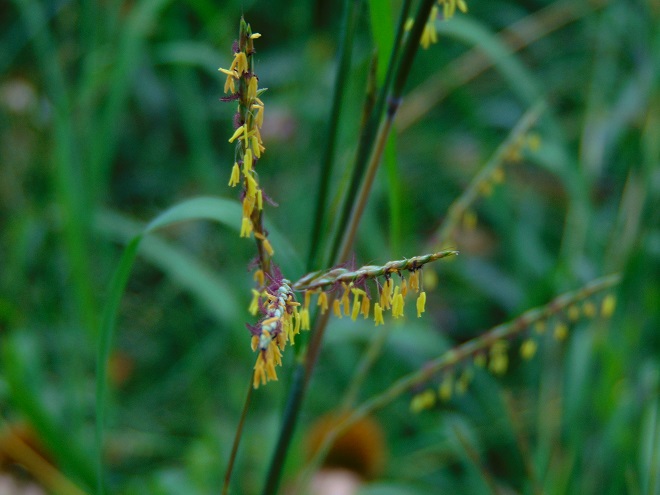
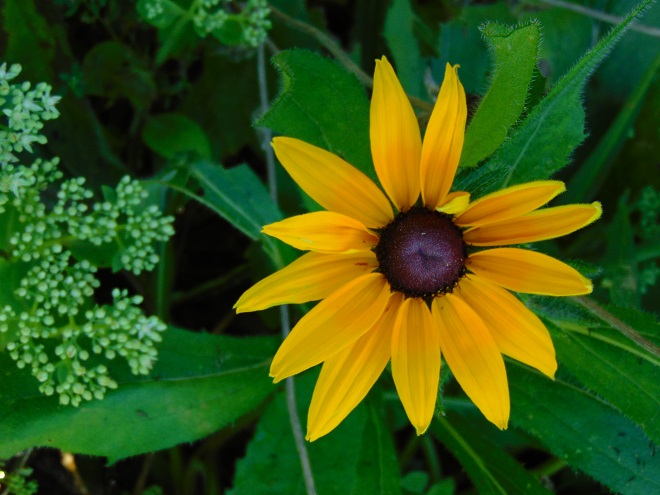
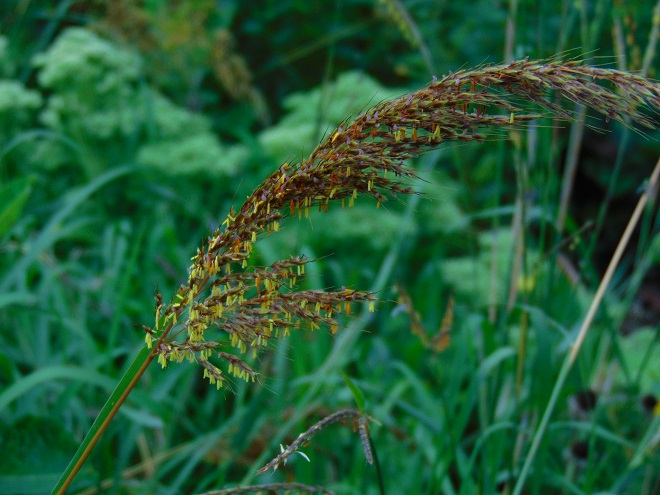
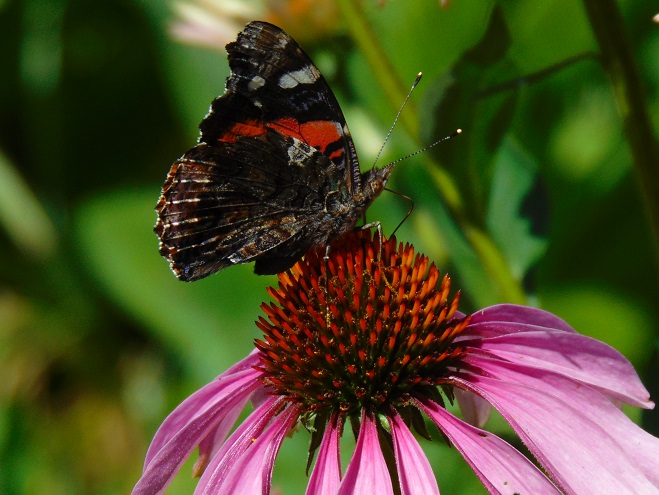
Big Bluestem, a native warm-season grass in flower.Little Bluestem (Schizachyrium scoparium “Fort Indiantown Gap”) in flower. This variety grows on the tank range at the military base where the armored vehicles and prescribed burns substitute for the herd animals and fires of the prairie to prevent succession and allow it to thrive.Partridge Pea can tolerate sandy soil and is a host plant for vagrant Cloudless Sulphur butterflies.Black-eyed Susan (Rudbeckia hirta) is a popular native grassland wildflower.Indiangrass (Sorghastrum nutans) in flower. This and the other native plants shown here are available as seed from Ernst Seed Company in Meadville (PA). They have an unbelievably large selection of indigenous species. You can plant a small plot or acres and acres using really good mixes blended for purposes ranging from reclaiming pipeline right-of-ways and strip mines to naturalizing backyard gardens.A Red Admiral (Vanessa atalanta) butterfly, a migratory species like the Monarch, on Purple Coneflower (Echinacea purpurea). Yes, it is that Echinacea, the same one used as a supplement and home remedy.
There was Monarch activity in the garden today like we’ve never seen before—and it revolved around milkweed and the companion plants.
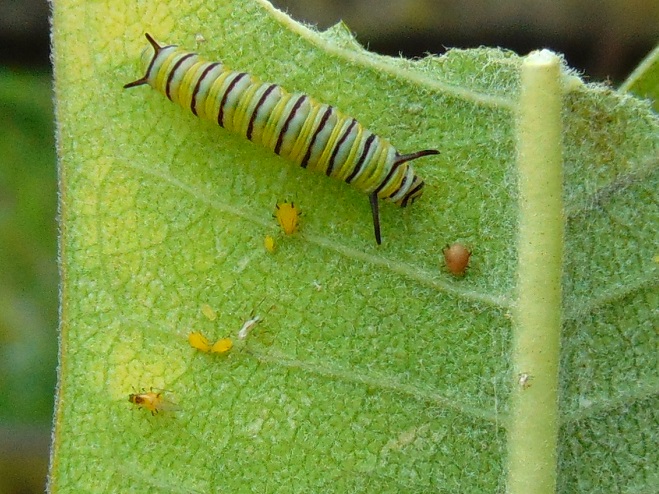
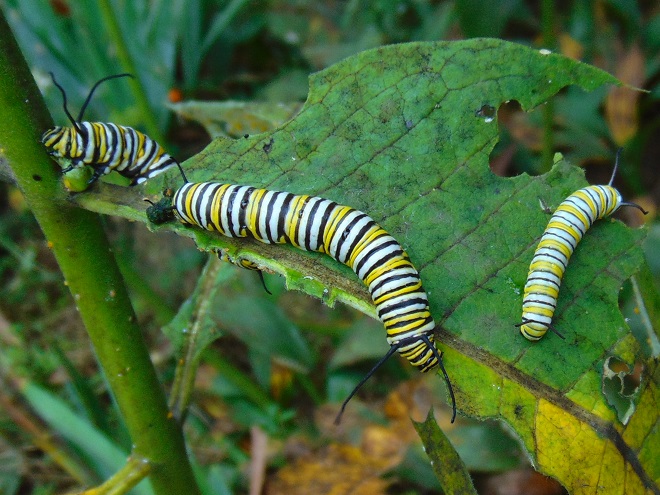
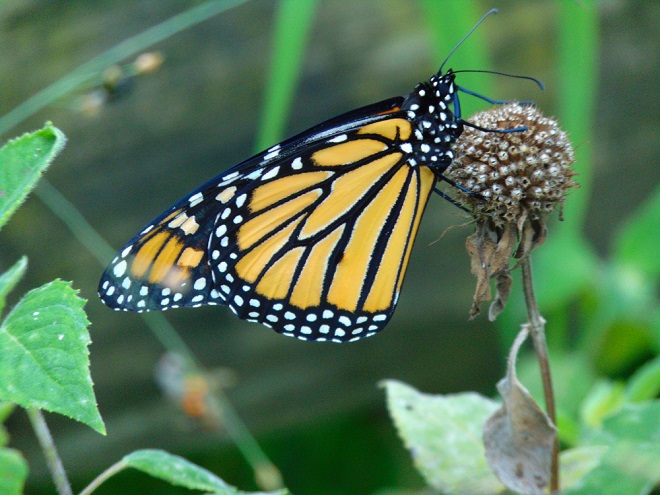
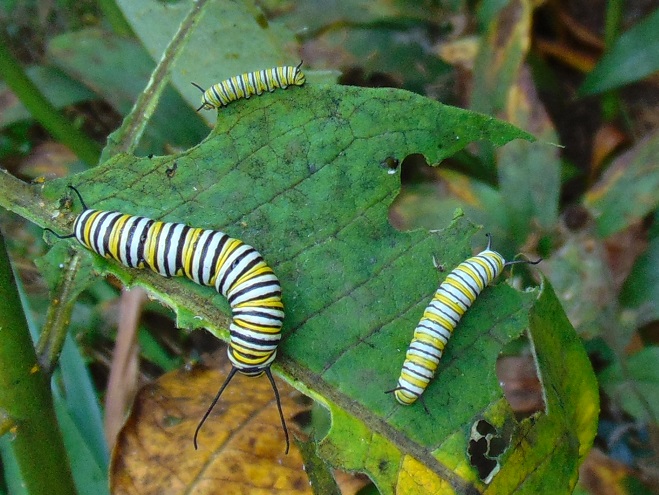
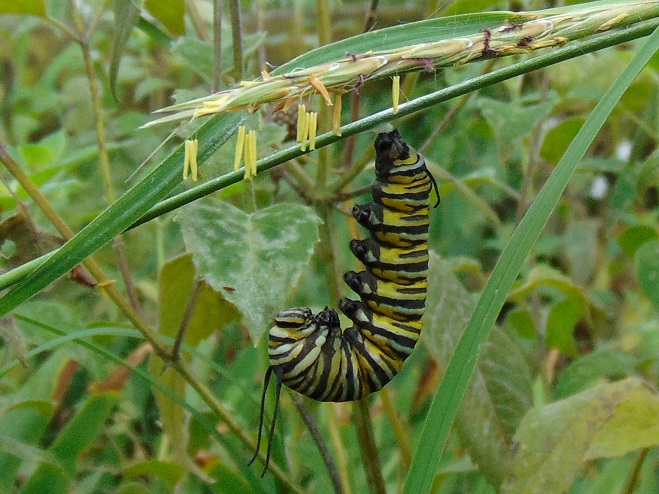
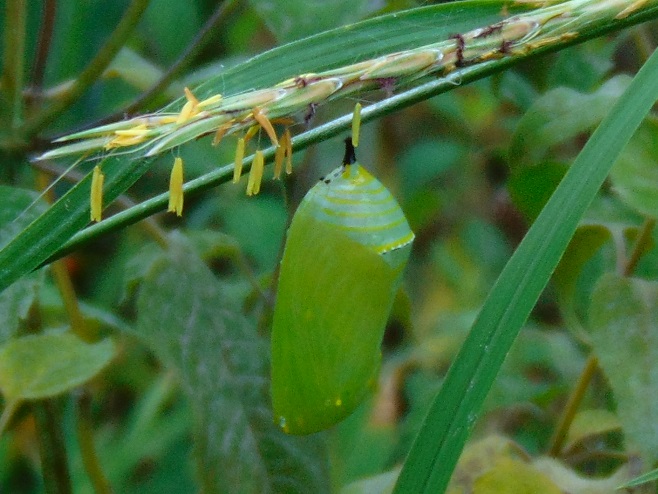
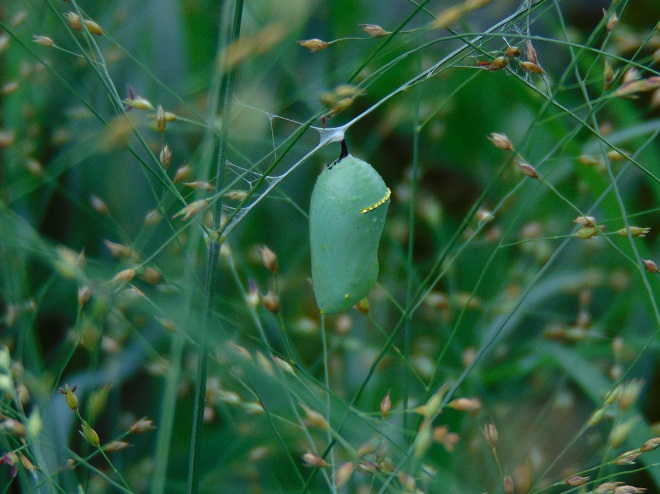
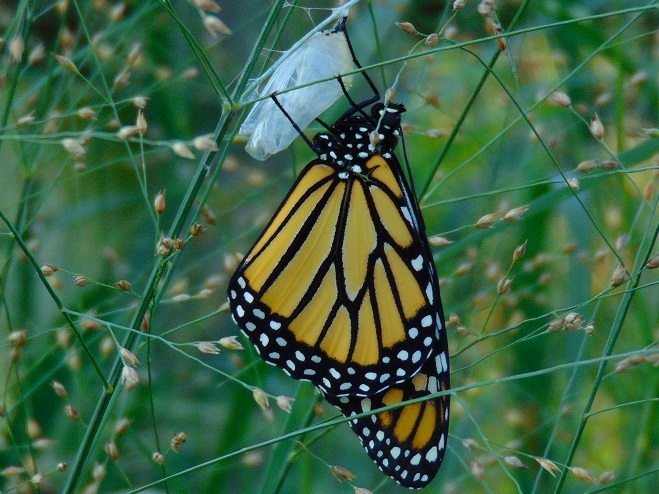
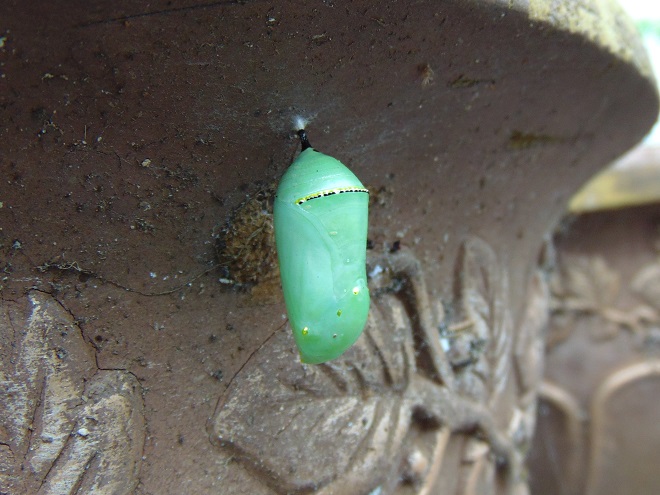
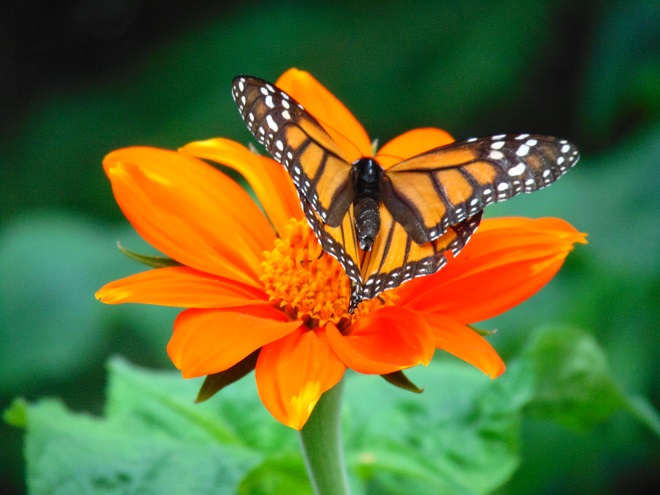
A female Monarch laying eggs on a Common Milkweed leaf.A third instar Monarch caterpillar with Oleander Aphids (Aphis nerii) on a Common Milkweed leaf. Both of these insect species absorb toxins from the milkweed which makes them distasteful to predators.Fifth instar (left and center) and fourth instar (right) monarch caterpillars devour a Common Milkweed leaf. There were over thirty of these caterpillars in just a ten by ten feet area this morning. We hope that if you’re keeping a habitat for Monarchs, you’re enjoying the same fortune right now!A slow-moving Monarch stopped for a break after making the circuit to deposit eggs on milkweed throughout the garden.Third instar (top), fourth instar (right), and fifth instar (left) Monarch caterpillars quickly consume the leaf of a Common Milkweed plant. Caterpillars emerging from eggs deposited today may not have sufficient late-season food to complete the larval segment of their life cycle. Need more milkweed!After benefiting from the nourishment of the Common Milkweed plant, a fifth instar Monarch caterpillar begins pupation on Big Bluestem grass.Two hours later, the chrysalis is complete.Another chrysalis, this one on flowering Switchgrass just two feet away from the previous one. An adult Monarch will emerge from this pupa to become part of what we hope will be the most populated southbound exodus for the species in over five years.There it is, soon ready to fly away. And all courtesy of the noxious milkweed.A chrysalis can often be found on man-made objects too. This one is on the rim of a flower pot.Ornamental flowers can attract adult Monarch butterflies seeking nectar. We’re now more careful to select seeds and plants that have not been treated with neonicotinoid insecticides. There’s growing concern over the impact these compounds may be having on pollinating species of animals. Oh…and we don’t mow, whack, cut, mutilate, or spray herbicides on our milkweed, but you probably figured that out already.
SOURCES
Eaton, Eric R., and Kenn Kaufman. 2007. Kaufman Field Guide to Insects of North America. Houghton Mifflin Company. New York.
There are two Conewago Creek systems in the Lower Susquehanna River Watershed. One drains the Gettysburg Basin west of the river, mostly in Adams and York Counties, then flows into the Susquehanna at the base of Conewago Falls. The other drains the Gettysburg Basin east of the river, flowing through Triassic redbeds of the Gettysburg Formation and York Haven Diabase before entering Conewago Falls near the south tip of Three Mile Island. Both Conewago Creeks flow through suburbia, farm, and forest. Both have their capacity to support aquatic life impaired and diminished by nutrient and sediment pollution.
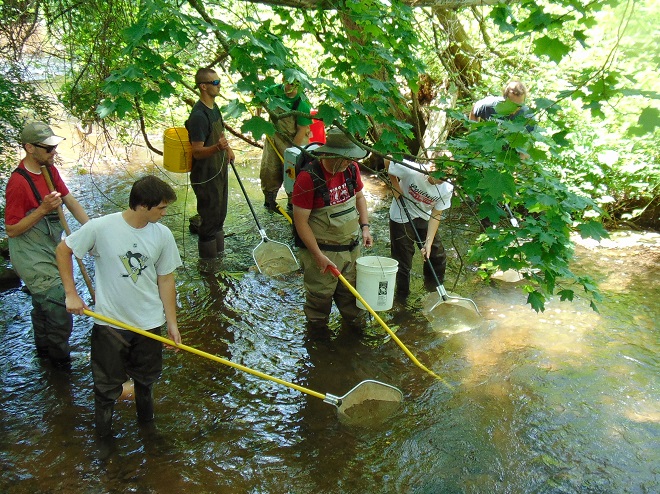
This week, some of the many partners engaged in a long-term collaboration to restore the east shore’s Conewago Creek met to have a look at one of the prime indicators of overall stream habitat health—the fishes. Kristen Kyler of the Lower Susquehanna Initiative organized the effort. Portable backpack-mounted electrofishing units and nets were used by crews to capture, identify, and count the native and non-native fishes at sampling locations which have remained constant since prior to the numerous stream improvement projects which began more than ten years ago. Some of the present-day sample sites were first used following Hurricane Agnes in 1972 by Stambaugh and Denoncourt and pre-date any implementation of sediment and nutrient mitigation practices like cover crops, no-till farming, field terracing, stormwater control, nutrient management, wetland restoration, streambank fencing, renewed forested stream buffers, or modernized wastewater treatment plants. By comparing more recent surveys with this baseline data, it may be possible to discern trends in fish populations resulting not only from conservation practices, but from many other variables which may impact the Conewago Creek Warmwater Stream ecosystem in Dauphin, Lancaster, and Lebanon Counties.
So here they are. Enjoy these shocking fish photos.
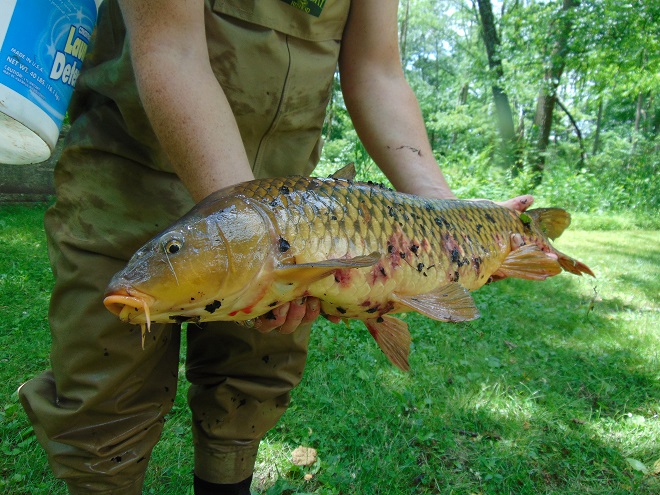
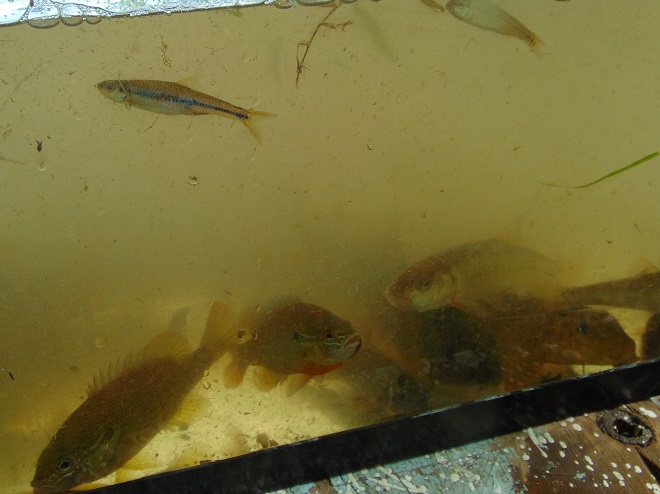
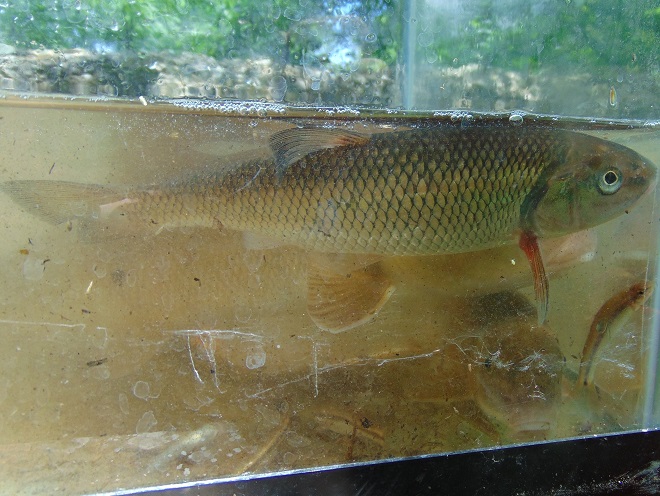
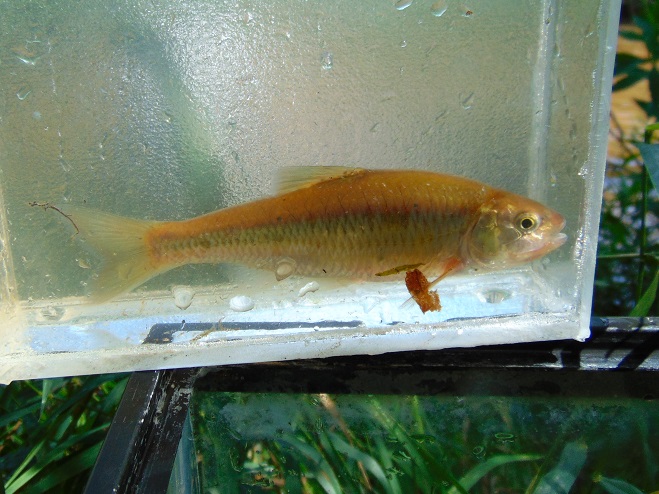
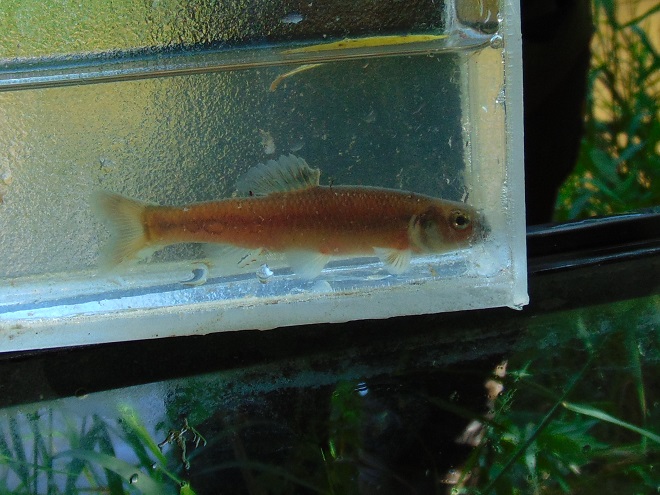
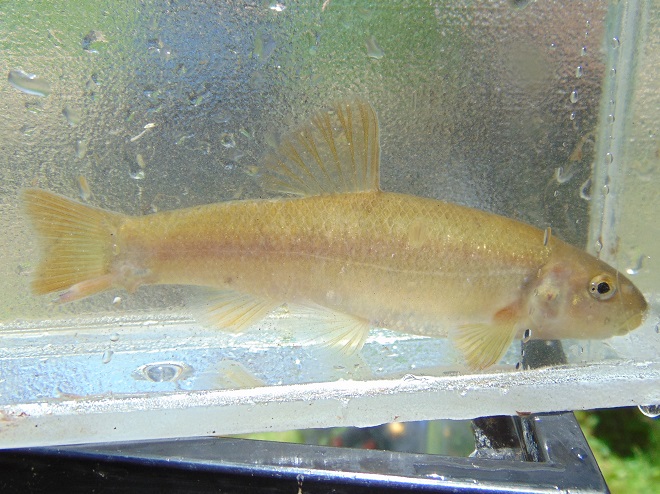
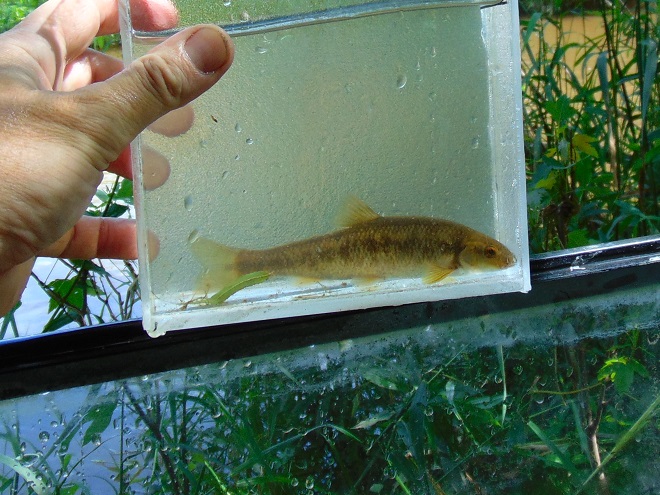
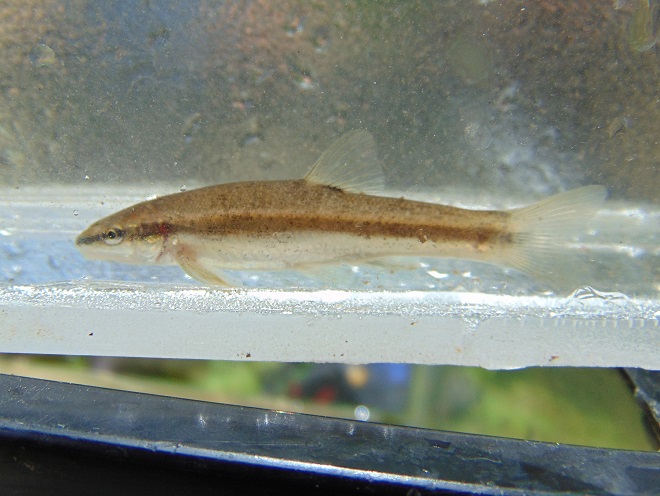
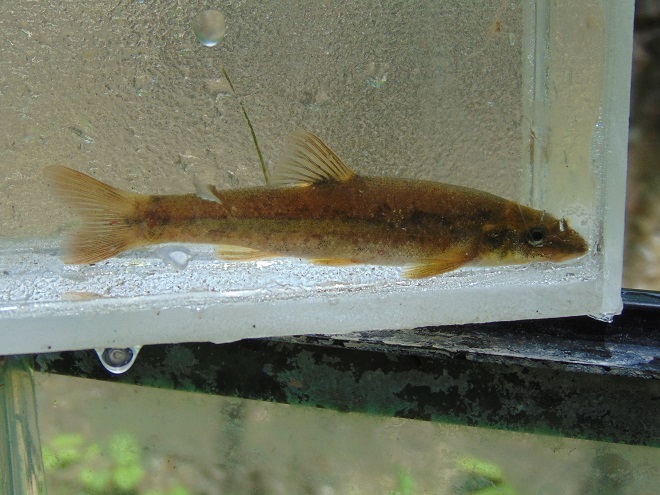
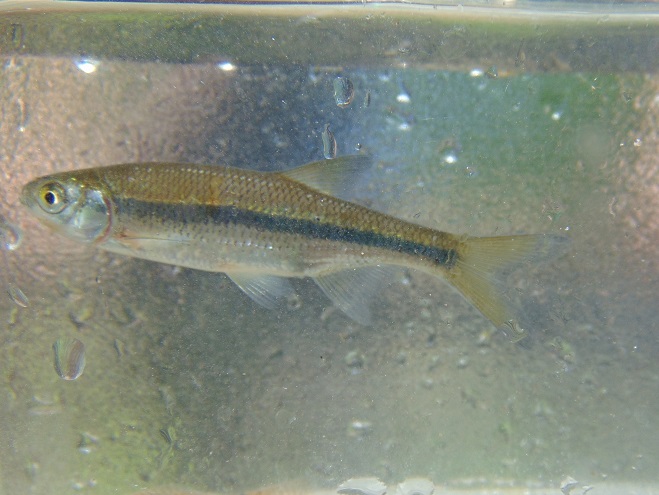
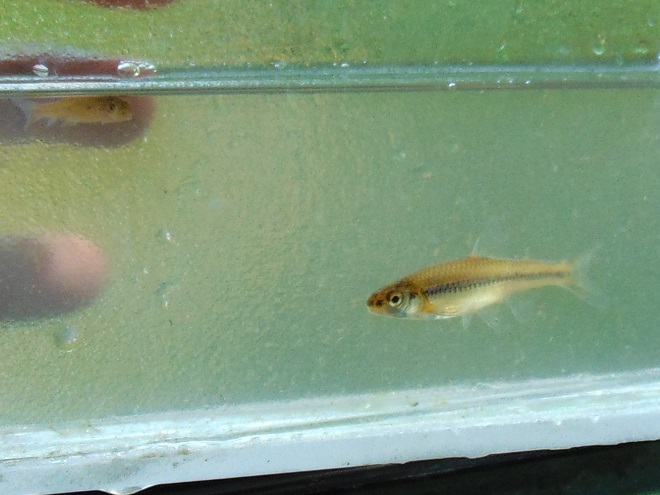
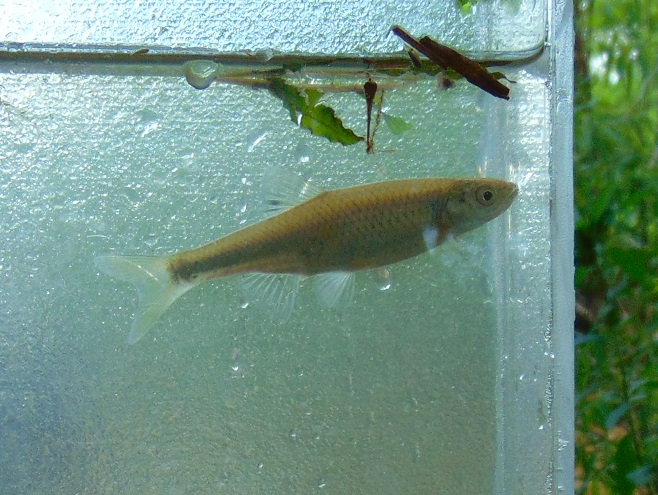
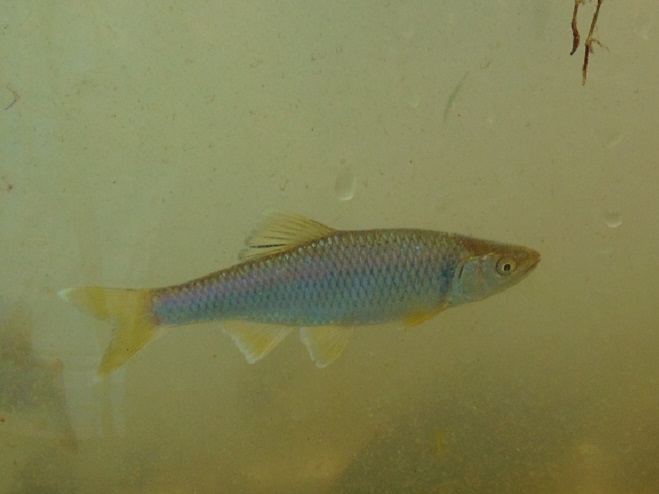
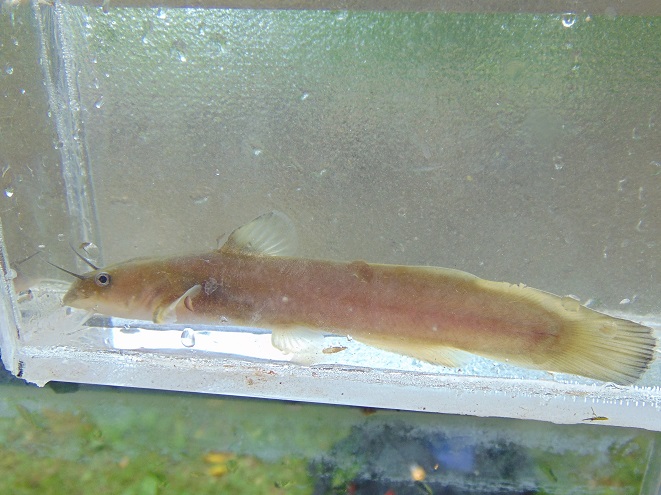
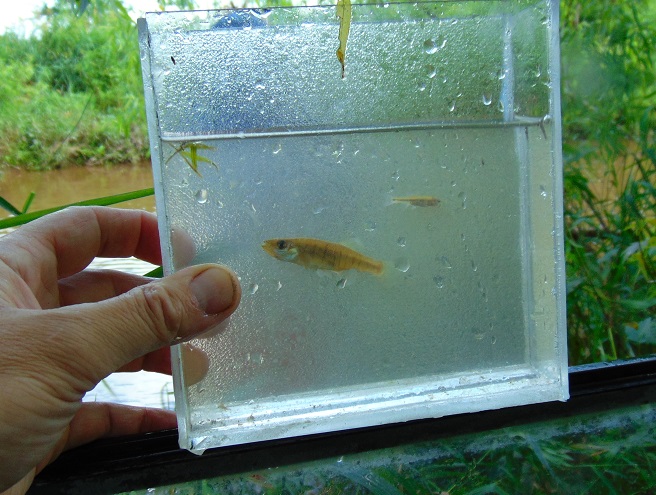
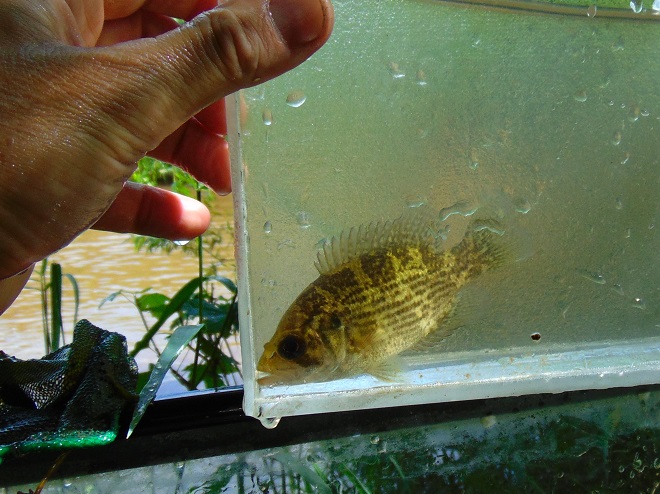
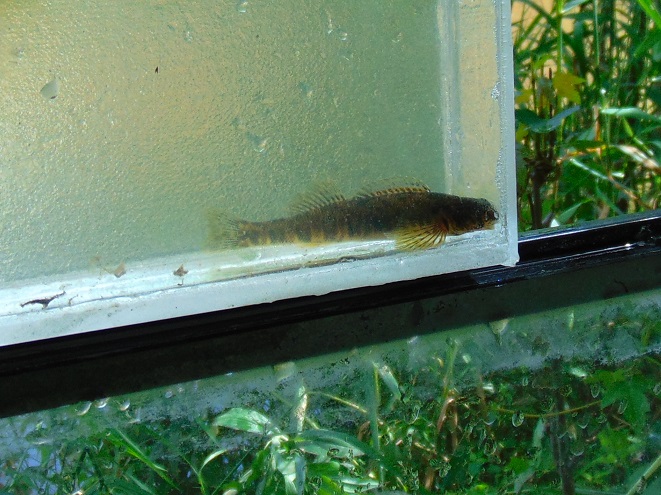
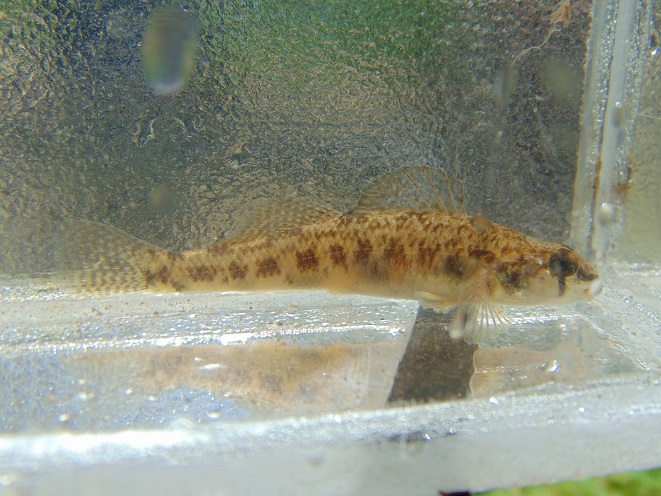
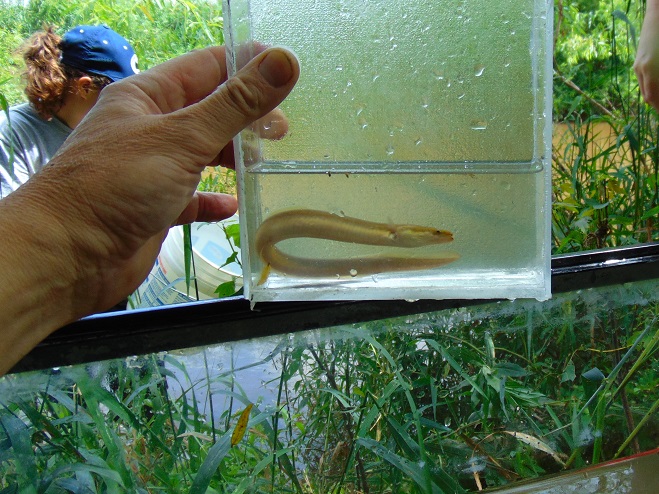
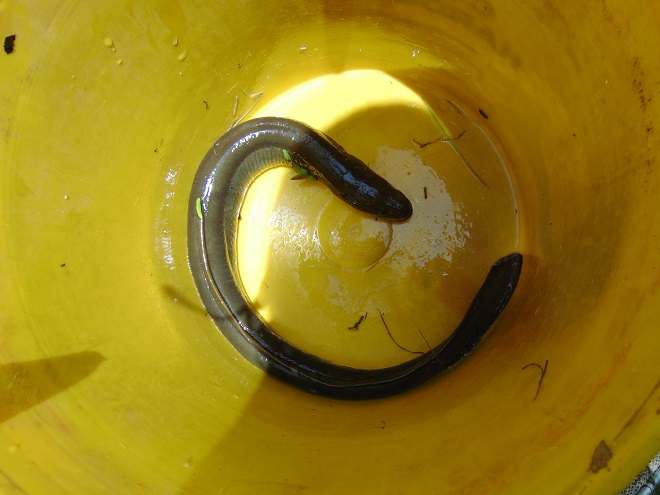
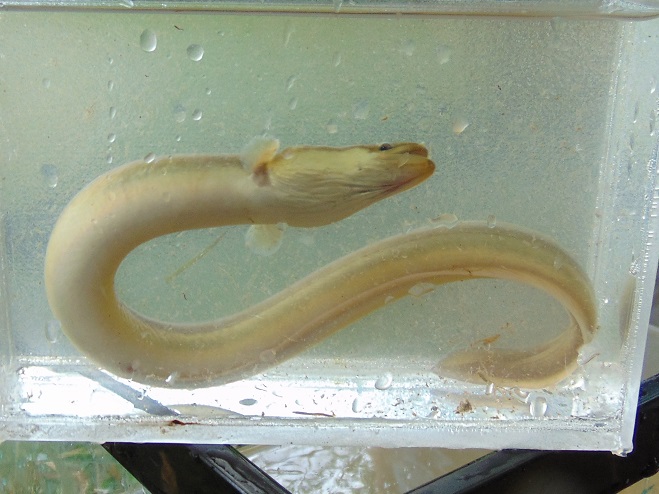
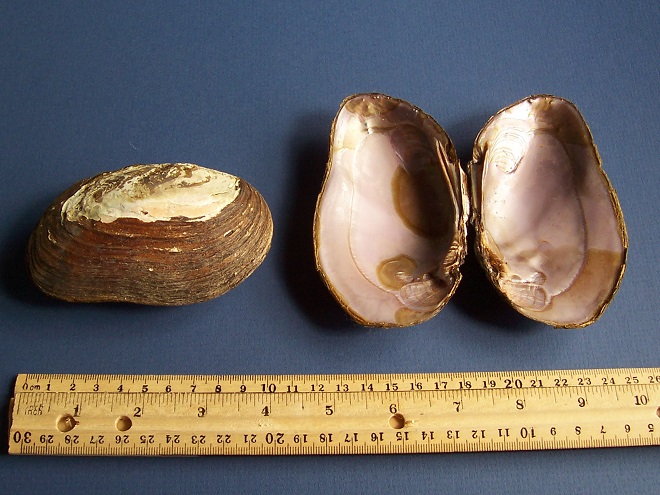
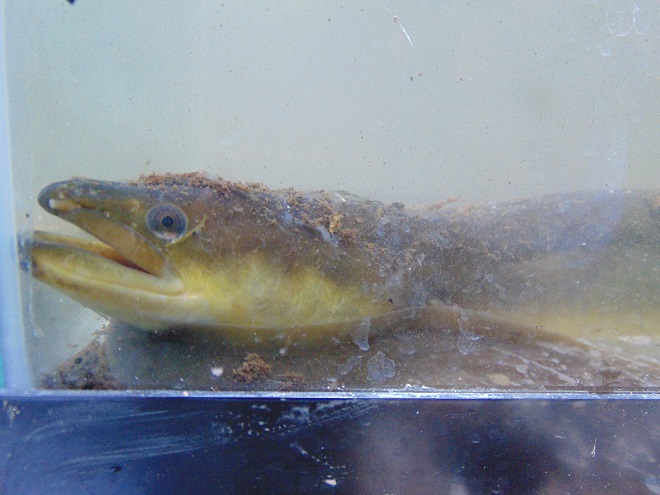
Matt Kofroth, Watershed Specialist with the Lancaster County Conservation District, operates the electrofishing wand in Conewago Creek while his team members prepare to net and collect momentarily-stunned fish. Three other electrofishing units operated by staff from the Susquehanna River Basin Commission and aided by teams of netters were in action at other sample locations along the Conewago on this day.Really big fish, such as this Common Carp (Cyprinus carpio), were identified, counted, and immediately returned to the water downstream of the advancing electrofishing team. Other fish, such as the Swallowtail Shiner, Redbreast Sunfish (Lepomis auritus), Fallfish, and suckers seen here, were placed in a sorting tank.Fallfish (Semotilus corporalis) are very active and require plenty of dissolved oxygen in the water to survive. Fallfish, Rainbow Trout (Oncorhynchus mykiss), and Smallmouth Bass (Micropterus dolomieu) were quickly identified and removed from the sorting tank for release back into the stream. Other larger, but less active fish, including suckers, quickly followed.Small fish like minnows were removed from the sorting tank for a closer look in a hand-held viewing tank. This Fathead Minnow (Pimephales promelas) was identified, added to the tally sheet, and released back into the Conewago. The Fathead Minnow is not native to the Susquehanna drainage. It is the minnow most frequently sold as bait by vendors.A breeding condition male Bluntnose Minnow (Pimephales notatus).The Cutlips Minnow (Exoglossum maxillingua) is a resident of clear rocky streams. Of the more than 30 species collected during the day, two native species which are classified as intolerant of persisting stream impairment were found: Cutlips Minnow and Swallowtail Shiner.The Central Stoneroller (Campostoma anomalum) is a benthic feeder in creeks over gravel and sand.The Eastern Blacknose Dace (Rhinichthys atratulus) is found in clear water over pebble and stone substrate.The Longnose Dace (Rhinichthys cataractae) is another species of pebbly rocky streams.A juvenile Golden Shiner (Notemigonus crysoleucas). Adults lack the side stripe and grow to the size of a sunfish.A Swallowtail Shiner (Notropis procne) and a very young White Sucker (Catostomus commersonii) in the upper left of the tank.A probable Spotfin Shiner (Cyprinella spiloptera).A breeding male Cyprinella shiner, probably a Spotfin Shiner. Show-off!The Margined Madtom (Noturus insignis) is a small native catfish of pebbly streams.The Banded Killifish (Fundulus diaphanus) is adept at feeding upon insects, including mosquitos.A young Rock Bass (Ambloplites rupestris). This species was introduced to the Susquehanna and its tributaries.The Greenside Darter (Etheostoma blennioides) is not native to the Susquehanna basin. The species colonized the Conewago Creek (east) from introduced local populations within the last five years.The Tessellated Darter (Etheostoma olmstedi) is a native inhabitant of the Susquehanna and its tributaries.The stars of the day were the American Eels (Anguilla rostrata).After collection, each eel was measured and weighed using a scale and dry bucket. This specimen checked in at 20 inches and one pound before being released.Prior to the construction of large dams, American Eels were plentiful in the Susquehanna and its tributaries, including the Conewago. They’ve since been rarities for more than half a century. Now they’re getting a lift.American Eels serve as an intermediate host for the microscopic parasitic glochidia (larvae) of the Eastern Elliptio (Elliptio complanata), a declining native freshwater mussel of the Lower Susquehanna River Watershed. While feeding on their host (usually in its gills), the glochidia cause little injury and soon drop off to continue growth, often having assured distribution of their species by accepting the free ride. Freshwater mussels are filter feeders and improve water quality. They grow slowly and can live for decades.American Eels are a catadromous species, starting life as tiny glass eels in the saltwater of the Atlantic Ocean, then migrating to tidal brackish marshes and streams (males) or freshwater streams (females) to mature. This 20-incher probably attempted to ascend the Susquehanna as an elver in 2016 or 2017. After hitching a ride with some friendly folks, she bypassed the three largest dams on the lower Susquehanna (Conowingo, Holtwood, and Safe Harbor) and arrived in the Conewago where she may remain and grow for ten years or more. To spawn, a perilous and terminally fatal journey to the Sargasso Sea awaits her. (You may better know the area of the Sargasso Sea as The Bermuda Triangle…a perilous place to travel indeed!)
SOURCES
Normandeau Associates, Inc. and Gomez and Sullivan. 2018. Muddy Run Pumped Storage Project Conowingo Eel Collection Facility FERC Project 2355. Prepared for Exelon.
Stambaugh, Jr., John W., and Robert P. Denoncourt. 1974. A Preliminary Report on the Conewago Creek Faunal Survey, Lancaster County, Pennsylvania. Proceedings of the Pennsylvania Academy of Sciences. 48: 55-60.
Temperatures plummeted to well below freezing during the past two nights, but there was little sign of it in Conewago Falls this morning. The fast current in the rapids and swirling waters in flooded Pothole Rocks did not freeze. Ice coated the standing water in potholes only in those rocks lacking a favorable orientation to the sun for collecting solar heat during the day to conduct into the water during the cold nights.
On the shoreline, the cold snap has left its mark. Ice covers the still waters of the wetlands. Frost on exposed vegetation lasted until nearly noontime in shady areas. Insect activity is now grounded and out of sight. The leaves of the trees tumble and fall to cover the evidence of a lively summer.
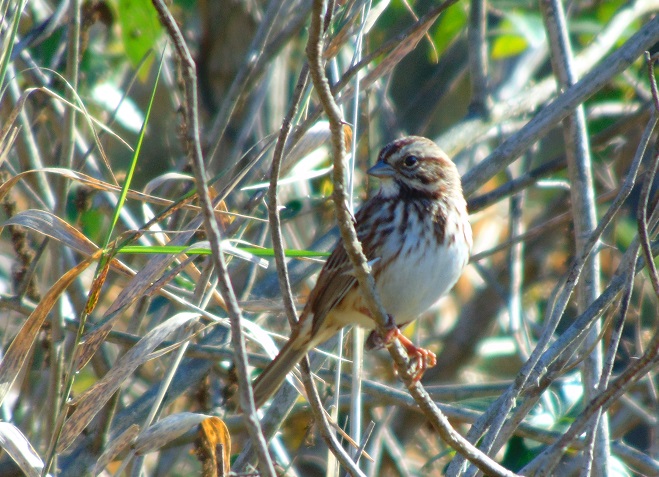
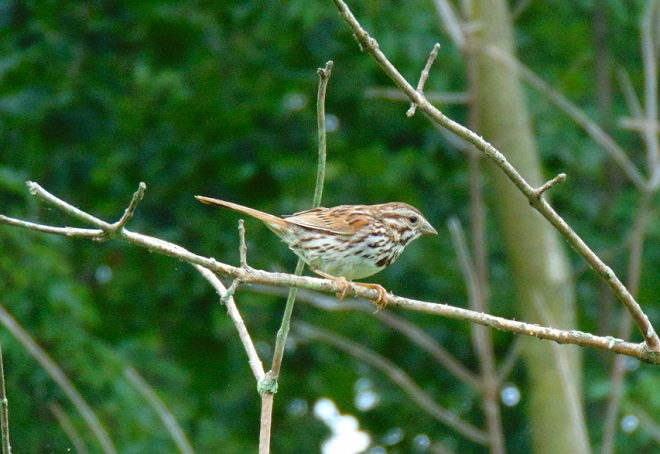
The nocturnal bird flight is narrowing down to just a few species. White-throated Sparrows, a Swamp Sparrow (Melospiza georgiana), and Song Sparrows are still on the move. Though their numbers are not included in the migration count, hundreds of the latter are along the shoreline and in edge habitat around the falls right now. Song Sparrows are present year-round, migrate at night, and are not seen far from cover in daylight, so migratory movements are difficult to detect. It is certain that many, if not all of the Song Sparrows here today have migrated and arrived here recently. The breeding population from spring and summer has probably moved further south. And many of the birds here now may remain for the winter. Defining the moment of this dynamic, yet discrete, population change and logging it in a count would certainly require different methods.
Song Sparrows are now abundant in the brushy edges of fields and woodlands. They may even break into song on sunny days.
Diurnal migration was foiled today by winds from southerly directions and moderating temperatures. The only highlight was an American Robin flight that extended into the morning for a couple of hours after daybreak and totaled over 800 birds. This flight was peppered with an occasional flock of blackbirds. Then too, there were the villains.
CLICK ON THE LOGO FOR TODAY’S MIGRATION COUNT TOTALS
They’re dastardly, devious, selfish, opportunistic, and abundant. Today, they were the most numerous diurnal migrant. Their numbers made this one of the biggest migration days of the season, but they are not recorded on the count sheet. It’s no landmark day. They excite no one. For the most part, they are not recognized as migrants because of their nearly complete occupation of North America south of the taiga. If people build on it or alter it, these birds will be there. They’re everywhere people are. If the rotten attributes of man were wrapped up into one bird, an “anthropoavian”, this would be it.
Meet the European Starling (Sturnus vulgaris). Introduced into North America in 1890, the species has spread across the entire continent. It nests in cavities in buildings and in trees. Starlings are aggressive, particularly when nesting, and have had detrimental impacts on the populations of native cavity nesting birds, particularly Red-headed Woodpeckers, Purple Martins (Progne subis), and Eastern Bluebirds. They commonly terrorize these and other native species to evict them from their nest sites. European Starlings are one of the earlier of the scores of introduced plants and animals we have come to call invasive species.
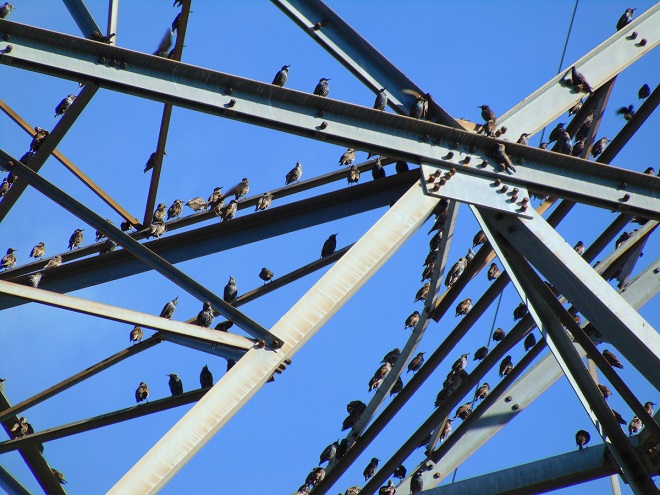
Noisy flocks of European Starlings are right at home on man-made structures in city and country.
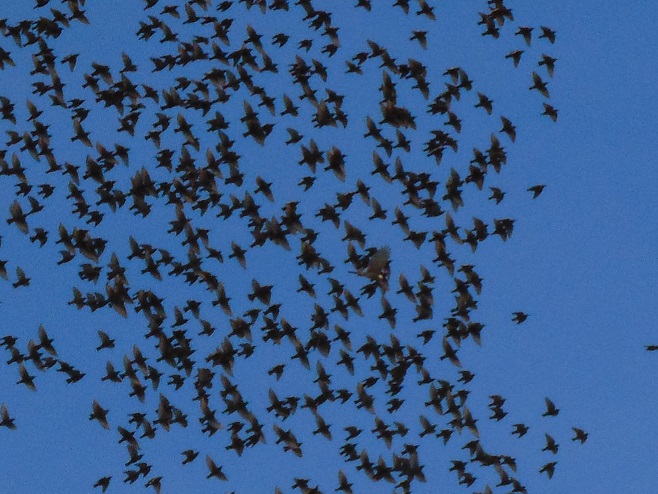
Today, thousands of European Starlings were on the move, working their way down the river shoreline and raiding berries from the vines and trees of the Riparian Woodlands. My estimate is between three and five thousand migrated through during the morning. But don’t worry, thousands more will be around for the winter.
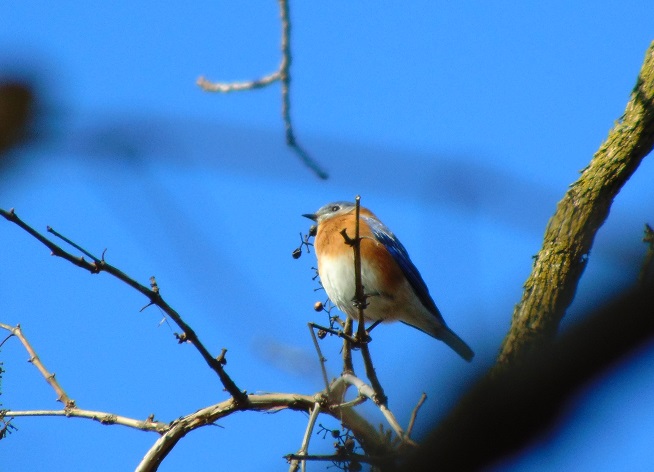
European Starlings mob a Sharp-shinned Hawk from above, a common behavior.An Eastern Bluebird feeds on the few berries left untouched by passing European Starlings.
They get a touch of it here, and a sparkle or two there. Maybe, for a couple of hours each day, the glorious life-giving glow of the sun finds an opening in the canopy to warm and nourish their leaves, then the rays of light creep away across the forest floor, and it’s shade for the remainder of the day.
The flowering plants which thrive in the understory of the Riparian Woodlands often escape much notice. They gather only a fraction of the daylight collected by species growing in full exposure to the sun. Yet, by season’s end, many produce showy flowers or nourishing fruits of great import to wildlife. While light may be sparingly rationed through the leaves of the tall trees overhead, moisture is nearly always assured in the damp soils of the riverside forest. For these plants, growth is slow, but continuous. And now, it’s show time.
So let’s take a late-summer stroll through the Riparian Woodlands of Conewago Falls, minus the face full of cobwebs, and have a look at some of the strikingly beautiful plants found living in the shadows.
Oxeye (Heliopsis helianthoides) is common on the interior and along the edges of Riparian Woodland. Specimens in deep shade flower less profusely and average less than half the height of the five feet tall inhabitants of edge environs.Pale Touch-Me-Not (Impatiens pallida) is one of two species of native Impatiens foundin the river floodplain. Both are known as Jewelweed. The stems and leaves of the indigenous Impatiens retain a great quantity of water, so life in filtered sunlight is essential to prevent desiccation. Contrary to popular folklore, extracts of Jewelweed plants are not effective treatments of Poison Ivy (Toxicodendron radicans) contact dermatitis.Spotted Touch-Me-Not (Impatiens capensis) is typically found in wetter soil than I. pallida. Both Jewelweeds develop popping capsules which help to distribute the seeds of these annual wildflowers. “Touch Me Not”, or you’ll be wearing tiny seeds.Green-headed Coneflower (Rudbeckia laciniata) grows to heights of eight feet in full sun, hence its alternate common name, Tall Coneflower. In deep shade, it may not exceed two feet in height. Floodplains are the prime domain of this perennial.Wingstem (Verbesina alternifolia) normally flowers no earlier than late August. The bases of the leaves are continued onto the stem of the plant to form wings which extend downward along its length. This wildflower tolerates shade, but flowers more profusely along the woodland edge.Great Lobelia (Lobelia siphilitica), or Great Blue Lobelia, is a magnificent wetland and moist woodland wildflower, usually attaining three feet in height and adorned with a plant-topping spike of blossoms. Invasive Japanese Stiltgrass (Microstegium vimineum) can be seen here competing with this plant, resulting in a shorter, less productive Lobelia. Stiltgrass was not found in the Susquehanna River floodplain at Conewago Falls until sometime after 1997. It has spread to all areas of woodland shade, its tiny seeds being blown and translocated along roads, mowed lots, trails, and streams to quickly colonize and overtake new ground.American Bladdernut (Staphylea trifolia), a shrub of shaded woods, develops inflated capsules which easily float away during high water to distribute the seeds contained inside.Buttonbush (Cephalanthus occidentalis) is a shrub of wet soils which produces a strange spherical flower, followed by this globular seed cluster.Common Pawpaw (Asimina triloba) is a colony-forming small tree which produces a fleshy fruit. It is the host plant for the caterpillars of the Zebra Swallowtail. The plant and the butterfly approach the northern limit of their geographic range at Conewago Falls.Common Spicebush (Lindera benzoin) is a widespread understory shrub in wet floodplain soils. It is the host plant for the caterpillars of the Spicebush Swallowtail (Papilio troilus).Sweet Autumn Virgin’s Bower (Clematis terniflora) is an escape from cultivation which has recently naturalized in the edge areas of the Conewago Falls Riparian Woodlands. This vine is very showy when flowering and producing seed, but can be detrimental to some of the understory shrubs upon which it tends to climb.
SOURCES
Long, David; Ballentine, Noel H.; and Marks, James G., Jr. 1997. Treatment of Poison Ivy/Oak Allergic Contact Dermatitis With an Extract of Jewelweed. American Journal of Contact Dermatitis. 8(3): pp. 150-153.
Newcomb, Lawrence. 1977. Newcomb’s Wildflower Guide. Little, Brown and Company. Boston, Massachusetts.
It’s tough being good-looking and liked by so many. You’ve got to watch out, because popularity makes you a target. Others get jealous and begin a crusade to have you neutralized and removed from the spotlight. They’ll start digging to find your little weaknesses and flaws, then they’ll exploit them to destroy your reputation. Next thing you know, people look at you as some kind of hideous scoundrel.
Today, bright afternoon sunshine and a profusion of blooming wildflowers coaxed butterflies into action. It was one of those days when you don’t know where to look first.
A Pearl Crescent (Phyciodes tharos) sipping nectar from Rough Boneset (Eupatorium pilosum) flowers. Asters (Aster) are the host plants for the larvae of this butterfly.A Common Buckeye (Junonia coenia) on Rough Boneset. Its caterpillars are known to feed on members of the Acanthus family, possibly including the Water Willow (Justicia americana) which is so abundant in Conewago Falls.Visitors from south of the Mason-Dixon Line arrived on the recent warm winds. Two Cloudless Sulphurs (Phoebis sennae) patrolled the Riverine Grasslands, especially near the stands of Partridge Pea, a possible host plant. One is seen here visiting a Halbred-leaved Rose Mallow blossom. These large yellow butterflies are always a standout.
Purple Loosestrife (Lythrum salicaria) has a bad reputation. Not native to the Americas, this prolific seed producer began spreading aggressively into many wetlands following its introduction. It crowds out native plant species and can have a detrimental impact on other aquatic life. Stands of loosestrife in slow-moving waters can alter flows, trap sediment, and adversely modify the morphology of waterways. Expensive removal and biological control are often needed to protect critical habitat.
The dastardly Purple Loosestrife may have only two positive attributes. First, it’s a beautiful plant. And second, it’s popular; butterflies and other pollinators find it to be irresistible and go wild over the nectar.
A Silver-spotted Skipper (Epargyreus clarus) feeding on Purple Loosestrife nectar. The host plants for this common butterfly’s caterpillars are a wide variety of Legumes.A Cabbage White (Pieris rapae), a butterfly introduced from Europe in the 1800s, feeds on introduced Purple Loosestrife.A Wild Indigo Duskywing (Erynnis baptisiae) feeding on Purple Loosestrife. This butterfly has expanded its population and range by using the introduced Crown Vetch as a host plant.
Don’t you just adore the wonderful butterflies. Everybody does. Just don’t tell anyone that they’re pollinating those dirty filthy no-good Purple Loosestrife plants.
SOURCES
Brock, Jim P., and Kenn Kaufman. 2003. Butterflies of North America. Houghton Mifflin Company. New York.
Newcomb, Lawrence. 1977. Newcomb’s Wildflower Guide. Little, Brown and Company. Boston, Massachusetts.
There’s something frightening going on down there. In the sand, beneath the plants on the shoreline, there’s a pile of soil next to a hole it’s been digging. Now, it’s dragging something toward the tunnel it made. What does it have? Is that alive?
We know how the system works, the food chain that is. The small stuff is eaten by the progressively bigger things, and there are fewer of the latter than there are of the former, thus the whole network keeps operating long-term. Some things chew plants, others devour animals whole or in part, and then there are those, like us, that do both. In the natural ecosystem, predators keep the numerous little critters from getting out of control and decimating certain other plant or animal populations and wrecking the whole business. When man brings an invasive and potentially destructive species to a new area, occasionally we’re fortunate enough to have a native species adapt and begin to keep the invader under control by eating it. It maintains the balance. It’s easy enough to understand.
Japanese Beetles (Popillia japonica) seen here on Halberd-leaved Rose Mallow. Without predation, exploding numbers of this invasive non-indigenous insect can defoliate and kill numerous species of plants in a given area.The Song Sparrow (Melospiza melodia) is a generalist feeder, eating seeds and invertebrates including Japanese Beetles. This species is the omnipresent year-round occupant of shoreline vegetation along the lower Susquehanna River.
Late summer days are marked by a change in the sounds coming from the forests surrounding the falls. For birds, breeding season is ending, so the males cease their chorus of songs and insects take over the musical duties. The buzzing calls of male “annual cicadas” (Neotibicen species) are the most familiar. The female “annual cicada” lays her eggs in the twigs of trees. After hatching, the nymphs drop to the ground and burrow into the soil to live and feed along tree roots for the next two to five years. A dry exoskeleton clinging to a tree trunk is evidence that a nymph has emerged from its subterranean haunts and flown away as an adult to breed and soon thereafter die. Flights of adult “annual cicadas” occur every year, but never come anywhere close to reaching the enormous numbers of “periodical cicadas” (Magicicada species). The three species of “periodical cicadas” synchronize their life cycles throughout their combined regional populations to create broods that emerge as spectacular flights once every 13 or 17 years.
An “annual cicada” also known as a “dog-day cicada”, clings to the stem of a Halberd-leaved Rose Mallow at Conewago Falls.
For the adult cicada, there is danger, and that danger resembles an enormous bee. It’s an Eastern Cicada Killer (Specius speciosus) wasp, and it will latch onto a cicada and begin stinging while both are in flight. The stings soon paralyze the screeching, panicked cicada. The Cicada Killer then begins the task of airlifting and/or dragging its victim to the lair it has prepared. The cicada is placed in one of more than a dozen cells in the tunnel complex where it will serve as food for the wasp’s larvae. The wasp lays an egg on the cicada, then leaves and pushes the hole closed. The egg hatches in a several days and the larval grub is on its own to feast upon the hapless cicada.
An Eastern Cicada Killer (Sphecius speciosus) along the river shoreline. Despite their intimidating appearance, they do not sting humans and can be quite docile when approached.
Other species in the Solitary Wasp family (Sphecidae) have similar life cycles using specific prey which they incapacitate to serve as sustenance for their larvae.
A Solitary Wasp, one of the Thread-waisted Wasps (Ammophila species), drags a paralyzed moth caterpillar to its breeding dungeon in the sandy soil at Conewago Falls. For the victim, there is no escape from the crypt.
The Solitary Wasps are an important control on the populations of their respective prey. Additionally, the wasp’s bizarre life cycle ensures a greater survival rate for its own offspring by providing sufficient food for each of its progeny before the egg beginning its life is ever put in place. It’s complete family planning.
The cicadas reproduce quickly and, as a species, seem to endure the assault by Cicada Killers, birds, and other predators. The periodical cicadas (Magicicada), with adult flights occurring as a massive swarm of an entire population every thirteen or seventeen years, survive as species by providing predators with so ample a supply of food that most of the adults go unmolested to complete reproduction. Stay tuned, 2021 is due to be the next periodical cicada year in the vicinity of Conewago Falls.
SOURCES
Eaton, Eric R., and Kenn Kaufman. 2007. Kaufman Field Guide to Insects of North America. Houghton Mifflin Company. New York.
She ate only toaster pastries…that’s it…nothing else. Every now and then, on special occasions, when a big dinner was served, she’d have a small helping of mashed potatoes, no gravy, just plain, thank you. She received all her nutrition from several meals a week of macaroni and cheese assembled from processed ingredients found in a cardboard box. It contains eight essential vitamins and minerals, don’t you know? You remember her, don’t you?
Adult female butterflies must lay their eggs where the hatched larvae will promptly find the precise food needed to fuel their growth. These caterpillars are fussy eaters, with some able to feed upon only one particular species or genus of plant to grow through the five stages, the instars, of larval life. The energy for their fifth molt into a pupa, known as a chrysalis, and metamorphosis into an adult butterfly requires mass consumption of the required plant matter. Their life cycle causes most butterflies to be very habitat specific. These splendid insects may visit the urban or suburban garden as adults to feed on nectar plants, however, successful reproduction relies upon environs which include suitable, thriving, pesticide-free host plants for the caterpillars. Their survival depends upon more than the vegetation surrounding the typical lawn will provide.
The Monarch (Danaus plexippus), a butterfly familiar in North America for its conspicuous autumn migrations to forests in Mexico, uses the milkweeds (Asclepias) almost exclusively as a host plant. Here at Conewago Falls, wetlands with Swamp Milkweed (Asclepias incarnata) and unsprayed clearings with Common Milkweed (A. syriaca) are essential to the successful reproduction of the species. Human disturbance, including liberal use of herbicides, and invasive plant species can diminish the biomass of the Monarch’s favored nourishment, thus reducing significantly the abundance of the migratory late-season generation.
Monarch caterpillar after a fourth molt. The fifth instar feeding on Swamp Milkweed.A fifth molt begets the Monarch pupa, the chrysalis, from which the showy adult butterfly will emerge.Adult Monarch feeding on Goldenrod (Solidago) nectar.
Butterflies are good indicators of the ecological health of a given environment. A diversity of butterfly species in a given area requires a wide array of mostly indigenous plants to provide food for reproduction. Let’s have a look at some of the species seen around Conewago Falls this week…
An adult Silvery Checkerspot (Chlosyne nycteis) visiting a nectar plant, Partridge Pea (Chamaecrista fasciculata). Wingstem (Verbesina alternifolia), a plant of the Riparian Woodlands, is among the probable hosts for the caterpillars.A Gray Hairstreak (Strymon melinus) visits Crown Vetch, a possible host plant. Other potential larval food in the area includes Partridge Pea, Halberd-leaved Rose Mallow (Hibiscus laevis) of the river shoreline, and Swamp Rose Mallow (Hibiscus moscheutos), a plant of wetlands.The Eastern Tailed Blue (Cupido comyntas) may use Partridge Pea , a native wildflower species, and the introduced Crown Vetch (Securigera/Coronilla varia) as host and nectar plants at Conewago Falls.The Least Skipper (Ancyloxypha numitor) is at home among tall grasses in woodland openings, at riverside, and in the scoured grassland habitat of the Pothole Rocks in the falls. Host plants available include Switchgrass (Panicum vigatum), Freshwater Cordgrass (Spartina pectinata), and Foxtails (Setaria).The Zabulon Skipper (Poanes zabulon) is an inhabitant of moist clearings where the caterpillars may feed upon Lovegrasses (Eragrostis) and Purpletop (Tridens flavus).The Eastern Tiger Swallowtail (Papilio glaucus), a female seen here gathering nectar from Joe-Pye Weed (Eutrochium), relies upon several forest trees as hosts. Black Cherry (Prunus serotina), Willow (Salix), Yellow Poplar (Liriodendron tulipifera), also known as Tuliptree, and Green Ash (Fraxinus pennsylvanica) are among the local species known to be used. The future of the latter food species at Conewago Falls is doubtful. Fortunately for the Eastern Tiger Swallowtail, the “generalist” feeding requirements of this butterfly’s larvae enable the species to survive the loss of a host plant.A female Eastern Tiger Swallowtail, black morph, gathering nectar from Joe-Pye Weed.The Zebra Swallowtail (Protographium marcellus), an adult seen here on Joe-Pye Weed, feeds exclusively upon Pawpaw (Asimina) trees as a caterpillar. This butterfly species may wander, but its breeding range is limited to the moist Riparian Woodlands where colonial groves of Pawpaw may be found. The Common Pawpaw (Asimina triloba), our native species in Pennsylvania, and the Zebra Swallowtail occur at the northern edge of their geographic ranges in the Lower Susquehanna River Watershed. Planting Pawpaw trees as an element of streamside reforestation projects certainly benefits this marvelous butterfly.
The spectacularly colorful butterflies are a real treat on a hot summer day. Their affinity for showy plants doubles the pleasure.
By the way, I’m certain by now you’ve recalled that fussy eater…and how beautiful she grew up to be.
SOURCES
Brock, Jim P., and Kaufman, Kenn. 2003. Butterflies of North America. Houghton Mifflin Company. New York, NY.
They can be a pesky nuisance. The annoying high-frequency buzzing is bad enough, but it’s the quiet ones that get you. While you were swatting at the noisy one, the silent gender sticks you and begins to feed. Maybe you know it, or maybe you don’t. She could make you itch and scratch. If she’s carrying a blood-borne pathogen, you could get sick and possibly die.
To humans, mosquitos are the most dangerous animal in the world (though not in the United States where man himself and the domestic dog are more of a threat). Globally, the Anopheles mosquitos that spread Malaria have been responsible for millions and millions of human deaths. Some areas of Africa are void of human habitation due to the prevalence of Malaria-spreading Anopheles mosquitos. In the northeastern United States, the Northern House Mosquito (Culex pipiens), as the carrier of West Nile Virus, is the species of greatest concern. Around human habitations, standing water in tires, gutters, and debris are favorite breeding areas. Dumping stagnant water helps prevent the rapid reproduction of this mosquito.
In recent years, the global distribution of these mosquito-borne illnesses has been one of man’s inadvertent accomplishments. An infected human is the source of pathogens which the feeding mosquito transmits to another unsuspecting victim. Infectious humans, traveling the globe, have spread some of these diseases to new areas or reintroduced them to sectors of the world where they were thought to have been eliminated. Additionally, where the specific mosquito carrier of a disease is absent, the mobility of man and his cargos has found a way to transport them there. Aedes aegypti, the “Yellow Fever Mosquito”, carrier of its namesake and the Zeka Virus, has found passage to much of the world including the southern United States. Unlike other species, Aedes aegypti dwells inside human habitations, thus transmitting disease rapidly from person to person. Another non-native species, the Asian Tiger Mosquito (Aedes albopictus), vector of Dengue Fever in the tropics, arrived in Houston in 1985 in shipments of used tires from Japan and in Los Angeles in 2001 in wet containers of “lucky bamboo” from Taiwan…some luck.
Asian Tiger Mosquito in action during the daylight hours, typical behavior of the genus. This species has been found in the area of Conewago Falls since at least 2013.
Poor mosquito, despite the death, suffering, and misery it has brought to Homo sapiens and other species around the planet, it will never be the most destructive animal on earth. You, my bloodthirsty friends, will place second at best. You see, mosquitos get no respect, even if they do create great wildlife sanctuaries by scaring people away.
The winner knows how to wipe out other species and environs not only to ensure its own survival, but, in many of its populations, to provide leisure, luxury, gluttony, and amusement. This species possesses the cognitive ability to think and reason. It can contemplate its own existence and the concepts of time. It is aware of its history, the present, and its future, though its optimism about the latter may be its greatest delusion. Despite possessing intellect and a capacity to empathize, it is devious, sinister, and selfish in its treatment of nearly every other living thing around it. Its numbers expand and its consumption increases. It travels the world carrying pest and disease to all its corners. It pollutes the water, land, and air. It has developed language, culture, and social hierarchies which create myths and superstitions to subdue the free will of its masses. Ignoring the gift of insight to evaluate the future, it continues to reproduce without regard for a means of sustenance. It is the ultimate organism, however, its numbers will overwhelm its resources. The crowning distinction will be the extinction.
Homo sapiens will be the first animal to cause a mass extinction of life on earth. The forces of nature and the cosmos need to wait their turn; man will take care of the species annihilation this time around. The plants, animals, and clean environment necessary for a prosperous healthy life will cease to exist. In the end, humans will degenerate, live in anguish, and leave no progeny. Fate will do to man what he has done to his co-inhabitants of the planet.
The Bald Eagle (Haliaeetus leucocephalus) is again a breeding species in the Susquehanna River watershed. It is generally believed that during the mid-twentieth century, Dichlorodiphenyltrichloroethane (DDT) pesticide residues accumulated in female top-of-the-food-chain birds including Bald Eagles. As a result, thinner egg shells were produced. These shells usually cracked during incubation, leading to failed reproduction in entire populations of birds, particularly those that fed upon fish or waterfowl. In much of the developed world, DDT was used liberally during the mid-twentieth century to combat Malaria by killing mosquitos. It was widely used throughout the United States as a general insecticide until it was banned here in 1972. (Editors Note: There is the possibility that polychlorinated biphenyls [P.C.B.s] and other industrial pollutants contributed to the reproductive failure of birds at the apex of aquatic food chains. Just prior to the recovery of these troubled species, passage of the Clean Water Act in 1972 initiated reductions in toxic discharges from point sources into streams, rivers, lakes, bays, and oceans. Production of P.C.B.s was banned in the United States in 1978. Today, P.C.B.s from former discharge and dumping sites continue to be found in water. Spills can still occur from sources including old electric transformers.)To substitute any other beast would be folly. Man, the human, Homo sapiens, the winner and champion, will repeatedly avail himself as the antagonist during our examination of the wonders of wildlife. He is the villain. The tragedy of his self-proclaimed dominion over the living things of the world will wash across these pages like muddy water topping a dam. There’s nothing I can do about it, aside from fabricating a bad novel with a fictional characterization of man. So let’s get on with it and take a look at “A Natural History of Conewago Falls”. Let’s discover the protagonist, the heroic underdog of our story, “Life in the Lower Susquehanna River Watershed.”
Over the top today.
SOURCES
Avery, Dennis T. 1995. Saving the Planet with Pesticides and Plastic: The Environmental Triumph of High-Yield Farming. Hudson Institute. Indianapolis, Indiana.
Eaton, Eric R., and Kenn Kaufman. 2007. Kaufman Field Guide to Insects of North America. Houghton Mifflin Co. New York.
Newman, L.H. 1965. Man and Insects. The Natural History Press. Garden City, New York.