Let’s take a quiet stroll through the forest to have a look around. The spring awakening is underway and it’s a marvelous thing to behold. You may think it a bit odd, but during this walk we’re not going to spend all of our time gazing up into the trees. Instead, we’re going to investigate the happenings at ground level—life on the forest floor.
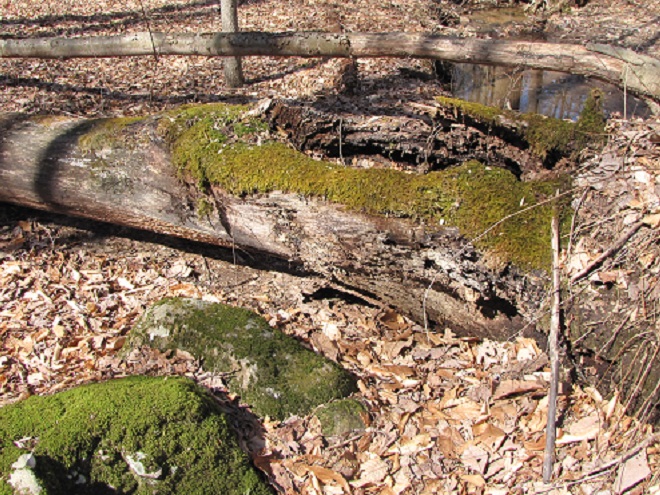
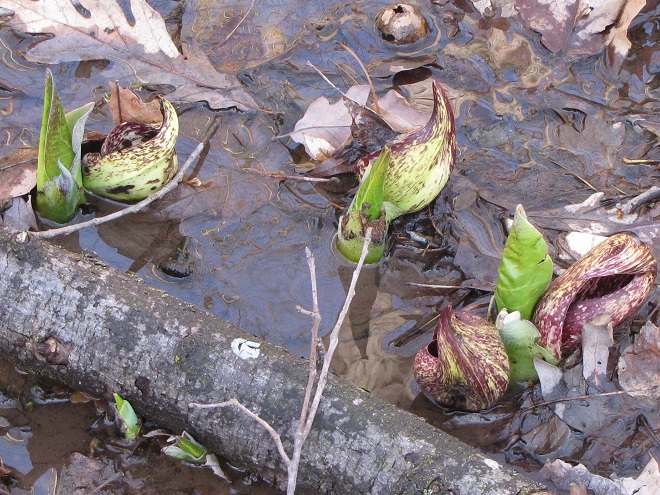
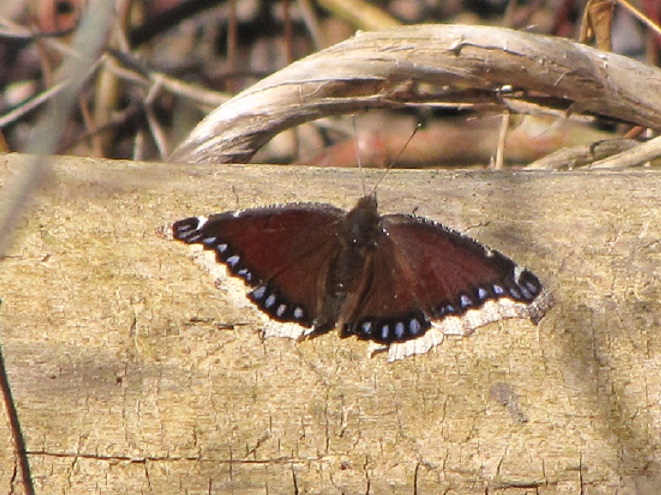
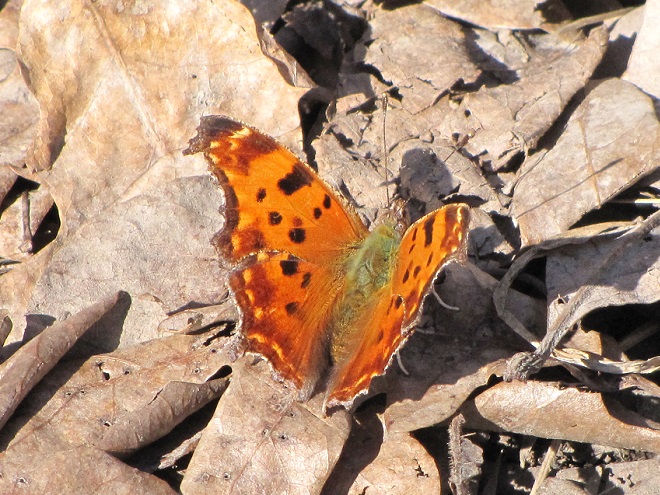
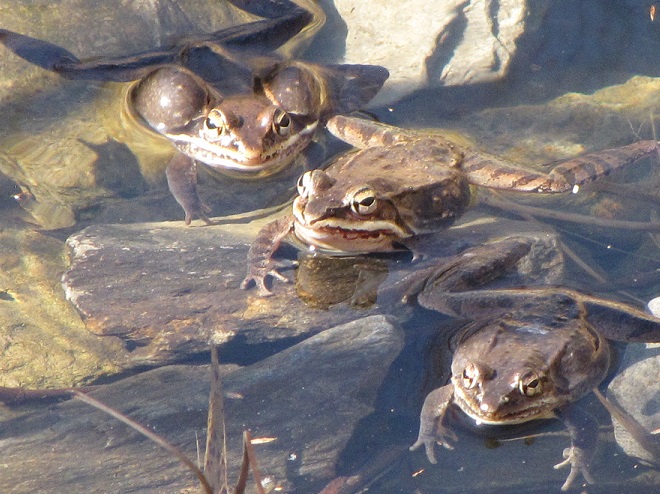
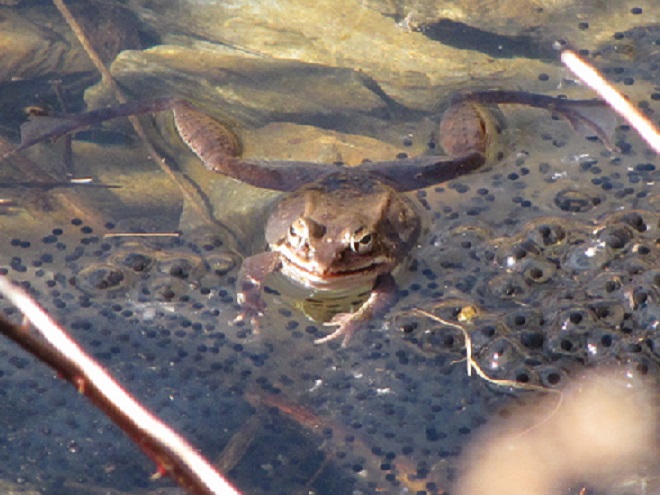
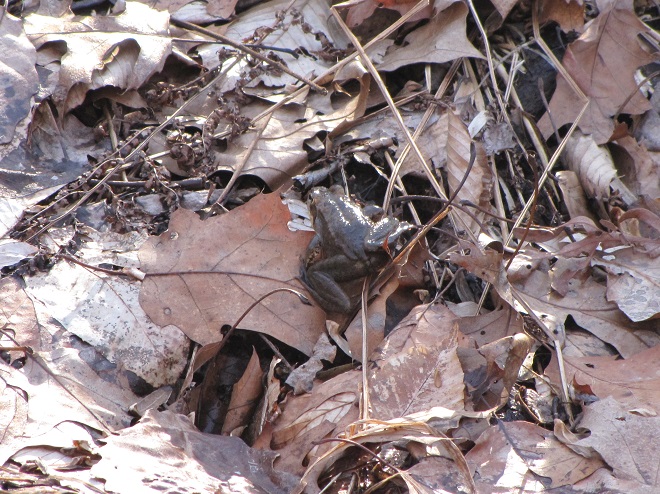
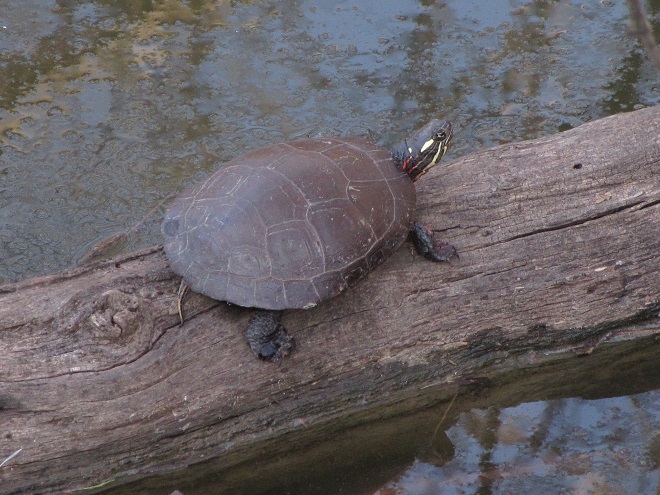
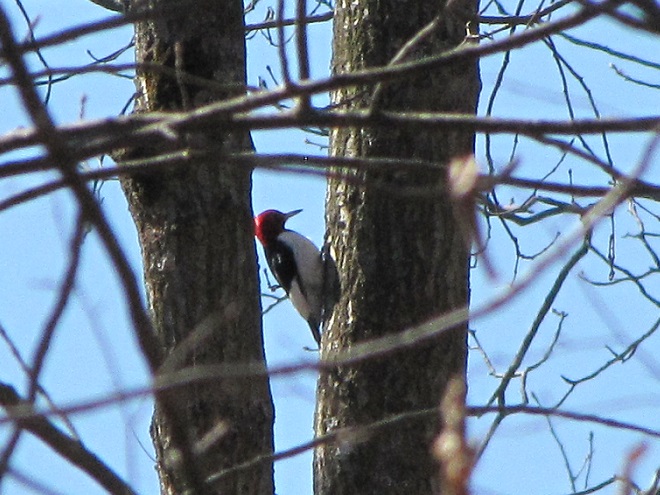
Rotting logs and leaf litter create the moisture retaining detritus in which mesic forest plants grow and thrive. Note the presence of mosses and a vernal pool in this damp section of forest.The earliest green leaves in the forest are often those of the Skunk Cabbage (Simplocarpus foetidus). This member of the arum family gets a head start by growing in the warm waters of a spring seep or in a stream-fed wetland. Like many native wildflowers of the forest, Skunk Cabbage takes advantage of early-springtime sun to flower and grow prior to the time in late April when deciduous trees grow foliage and cast shade beneath their canopy.Among the bark of dead and downed trees, the Mourning Cloak butterfly (Nymphalis antiopa) hibernates for the winter. It emerges to alight on sun-drenched surfaces in late winter and early spring.Another hibernating forest butterfly that emerges on sunny early-spring days is the Eastern Comma (Polygonia comma), also known as the Hop Merchant.In a small forest brook, a water strider (Gerridae) chases its shadow using the surface tension of the water to provide buoyancy. Forests are essential for the protection of headwaters areas where our streams get their start.Often flooded only in the springtime, fish-free pools of water known as vernal ponds are essential breeding habitat for many forest-dwelling amphibians. Unfortunately, these ephemeral wetland sites often fall prey to collecting, dumping, filling, and vandalism by motorized and non-motorized off-roaders, sometimes resulting in the elimination of the populations of frogs, toads, and salamanders that use them.Wood Frogs (Lithobates sylvaticus) emerge from hiding places among downed timber and leaf litter to journey to a nearby vernal pond where they begin calling still more Wood Frogs to the breeding site.Wood Frog eggs must hatch and tadpoles must transform into terrestrial frogs before the pond dries up in the summertime. It’s a risky means of reproduction, but it effectively evades the enormous appetites of fish.When the egg laying is complete, adult Wood Frogs return to the forest and are seldom seen during the rest of the year.In early spring, Painted Turtles emerge from hideouts in larger forest pools, particularly those in wooded swamps, to bask in sunny locations.Dead standing trees, often called snags, are essential habitats for many species of forest wildlife. There is an entire biological process, a micro-ecosystem, involved in the decay of a dead tree. It includes fungi, bacteria, and various invertebrate animals that reduce wood into the detritus that nourishes and hydrates new forest growth.Birds like this Red-headed Woodpecker feed on insects found in large snags and nest almost exclusively in them. Many species of wildlife rely on dead trees, both standing and fallen, during all or part of their lives.
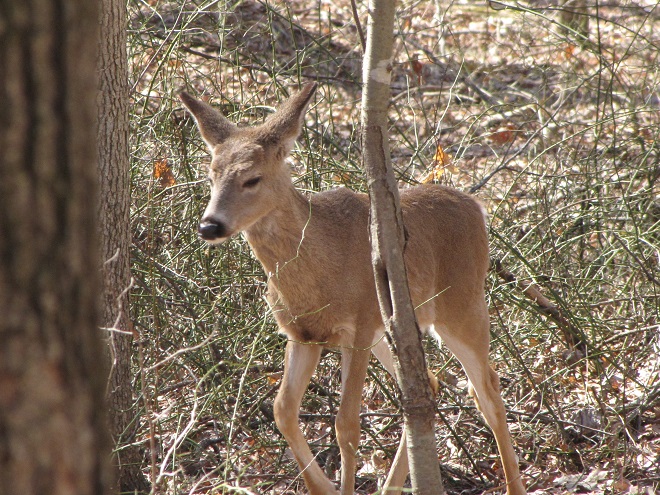
There certainly is more to a forest than the living trees. If you’re hiking through a grove of timber getting snared in a maze of prickly Multiflora Rose (Rosa multiflora) and seeing little else but maybe a wild ungulate or two, then you’re in a has-been forest. Logging, firewood collection, fragmentation, and other man-made disturbances inside and near forests take a collective toll on their composition, eventually turning them to mere woodlots. Go enjoy the forests of the lower Susquehanna valley while you still can. And remember to do it gently; we’re losing quality as well as quantity right now—so tread softly.
The White-tailed Deity in a woodlot infested by invasive tangles of Multiflora Rose.
With autumn coming to a close, let’s have a look at some of the fascinating insects (and a spider) that put on a show during some mild afternoons in the late months of 2019.
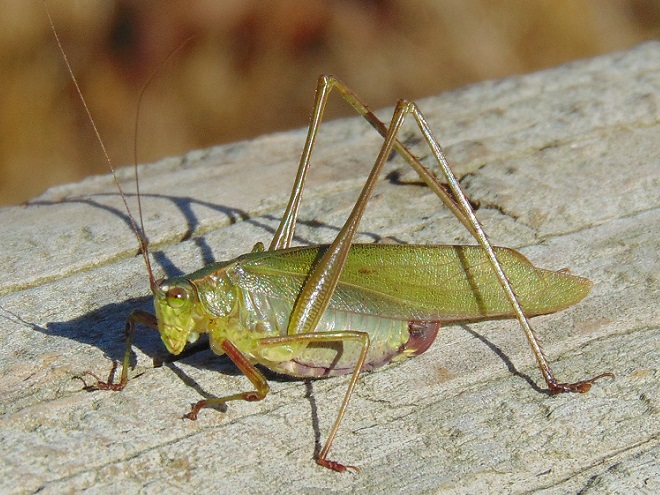
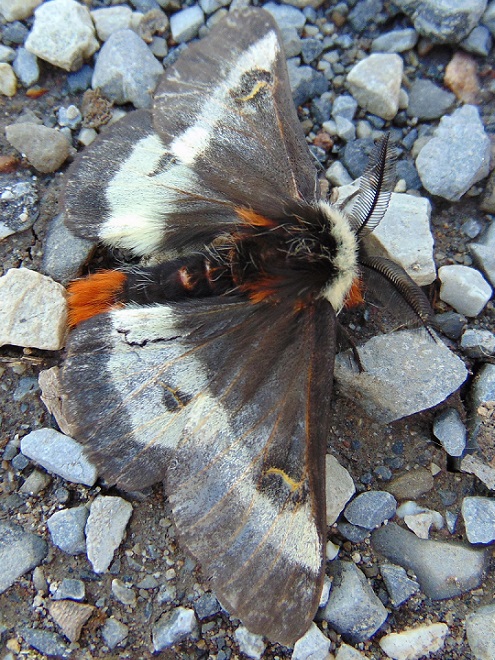
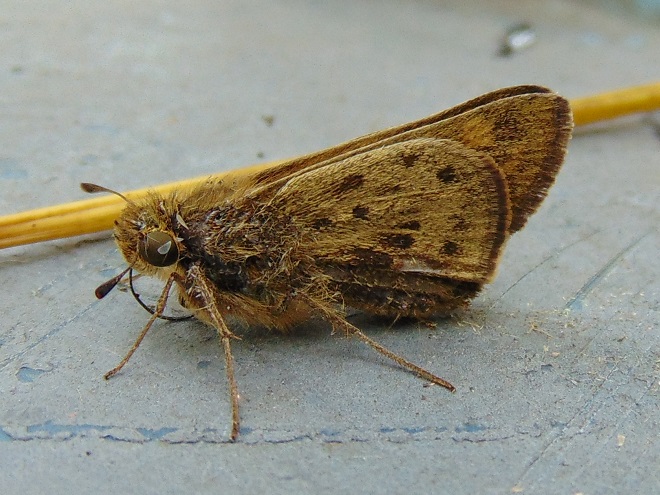
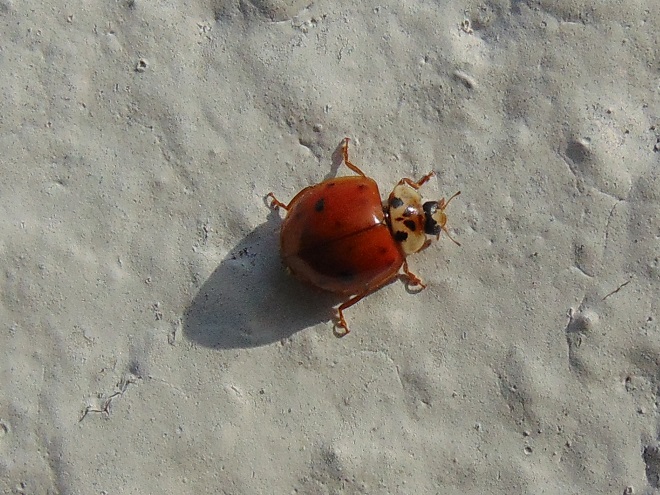
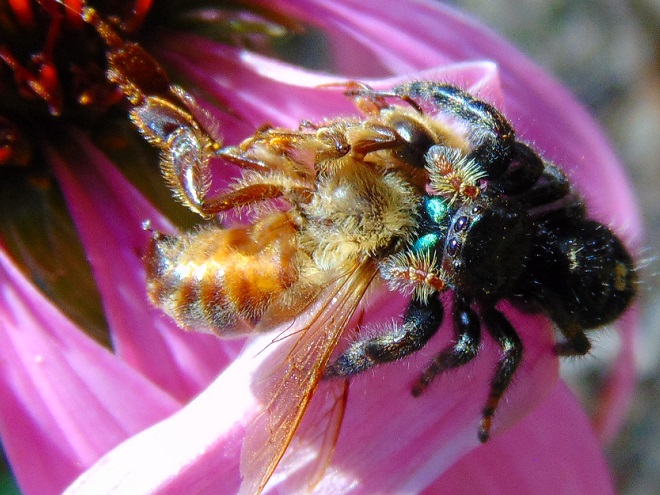
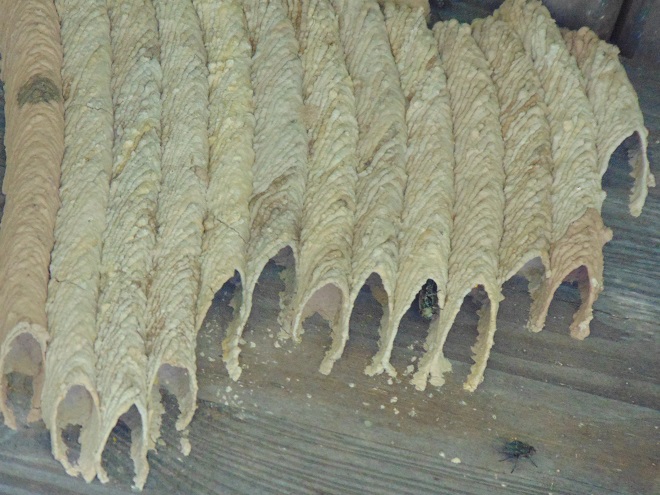
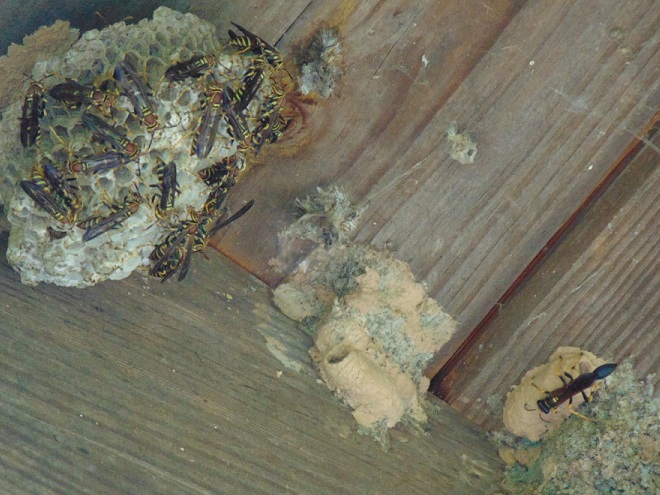
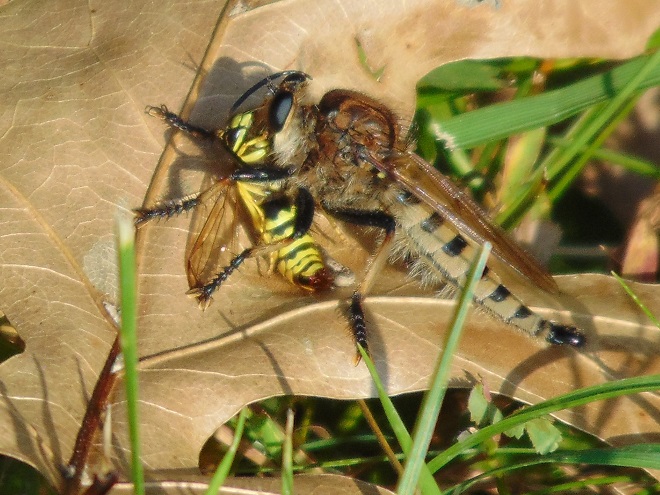
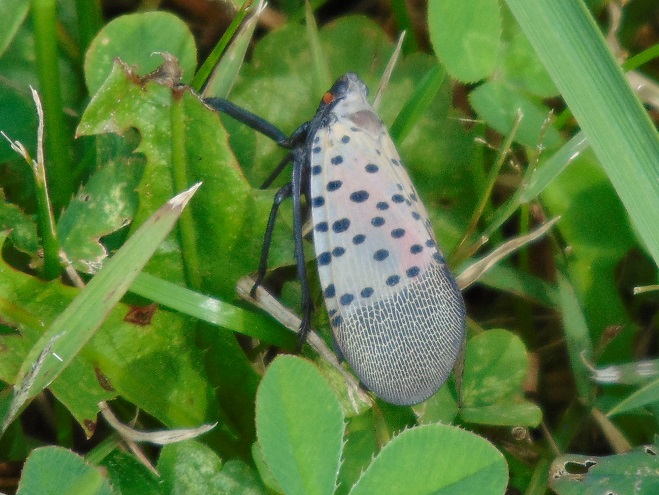
Bush Katydids (Scudderia species) are found in brushy habitats and along rural roadsides. Their green summer color fades to brown, maroon, and gold to match the autumn foliage where they hide. Bush katydids often remain active until a hard freeze finally does them in.The Eastern Buck Moth (Hemileuca maia) is fuzzy, appearing to wear a warm coat for its autumn expeditions. Adults emerge in October and may fly as late as December. Females deposit their eggs on the twigs of Bear Oak (Quercus ilicifolia), Blackjack Oak (Q. marilandica), or Chestnut Oak (Q. montana), trees that, in our region, seem most favorable for the moth’s use when growing on burned barrens and mountain slopes. The spiny caterpillars are known to feed only on the foliage of these few trees. In the lower Susquehanna valley, the Eastern Buck Moth is rare because its specialized habitat is in short supply, and it’s all Smokey The Bear’s fault.The Sachem (Atalopedes campestris) wanders north from the Atlantic Coastal Plain into the Susquehanna valley each summer. In some years they become the most numerous small orange butterfly of all, particularly around home gardens. The larvae will feed on Crabgrass (Digitaria species), but have not found success overwintering this far north. By November, adults begin to look pretty drab.From 1978 through 1982, the Asian Multicolored Lady Beetle (Harmonia axyridis) was introduced into the eastern states by the United States Department of Agriculture. It has become a nuisance in many areas where it swarms, sometimes bites, and often overwinters in large smelly masses within homes and other warm buildings. As you may have guessed, it’s possibly displacing some of the less aggressive native lady beetle species.On a chilly afternoon, a sun-warmed Bold Jumping Spider (Phidippus audax) pounced and dispatched this sluggish worker Honey Bee (Apis mellifera) that was trying to gather pollen from a late-season Purple Coneflower bloom. This spider is bold indeed.Under bridges, inside bird nest boxes, and sometimes beneath porches, the female Pipe Organ Mud Dauber (Trypoxylon politum), a predatory wasp, builds these elaborate nests composed of long rows (pipes) of nursery cells. Into each cell one or more paralyzed spiders is deposited along with one of the female’s eggs. When hatched, each larva will feed upon the paralyzed spider(s) inside its cell, then pupate. The pupae overwinter, then emerge from their cells as adults during the following spring. In the autumn, males often stand guard at an entrance to the nest to prevent parasitic species, including some flies (look at the fifth pipe from the right), from laying eggs on the pupae. These wasps are not aggressive toward humans.A Black-and-yellow Mud Dauber (Sceliphron caementarium) observes a neighboring nest of Common Paper Wasps (Polistes exclamans). The Common Paper Wasp, a species also known as the Guinea Paper Wasp, is a native of the southern United States. It is currently expanding its range into the lower Susquehanna valley from the Atlantic Coastal Plain. These two wasp species and the Pipe Organ Mud Dauber are known to regularly coexist. All three will take advantage of man-made structures for their nest sites. People using the picnic tables beneath this pavilion roof never noticed the hundreds of docile wasps above.Those moody Eastern Yellowjackets (Vespula maculifrons) can get very temperamental during warm autumn days. These wasps may appear to have no enemies, but away from areas impacted by man’s everyday activities, they do. The Robber Fly (Promachus species) hunts like a flycatcher or other woodland bird, waiting on a perch along the forest’s edge for prey to pass by, then ambushing it, yellowjackets included.The invasive Spotted Lanternfly, a native of eastern Asia, continues to spread destruction. It established itself throughout much of the east side of the lower Susquehanna River during the summer and fall of 2019. Their route of travel across the farmlands of the region intersects with plenty of vineyards to obliterate and few, if any, natural enemies. Expect them to begin colonizing the west shore en masse during 2020.In 2020, plan to roll a few Spotted Lanternflies over, enjoy the view, and wait for the crimson tide to pass. With any luck, they’ll peak in a year or two.
SOURCES
Eaton, Eric R., and Kenn Kaufman. 2007. Kaufman Field Guide to Insects of North America. Houghton Mifflin Company. New York, NY.
Second Mountain Hawk Watch is located on a ridge top along the northern edge of the Fort Indiantown Gap Military Reservation and the southern edge of State Game Lands 211 in Lebanon County, Pennsylvania. The valley on the north side of the ridge, also known as St. Anthony’s Wilderness, is drained to the Susquehanna by Stony Creek. The valley to the south is drained toward the river by Indiantown Run, a tributary of Swatara Creek.
The hawk watch is able to operate at this prime location for observing the autumn migration of birds, butterflies, dragonflies, and bats through the courtesy of the Pennsylvania Game Commission and the Garrison Commander at Fort Indiantown Gap. The Second Mountain Hawk Watch Association is a non-profit organization that staffs the count site daily throughout the season and reports data to the North American Hawk Watch Association (posted daily at hawkcount.org).
Today, Second Mountain Hawk Watch was populated by observers who enjoyed today’s break in the rainy weather with a visit to the lookout to see what birds might be on the move. All were anxiously awaiting a big flight of Broad-winged Hawks, a forest-dwelling Neotropical species that often travels back to its wintering grounds in groups exceeding one hundred birds. Each autumn, many inland hawk watches in the northeast experience at least one day in mid-September with a Broad-winged Hawk count exceeding 1,000 birds. They are an early-season migrant and today’s southeast winds ahead of the remnants of Hurricane Florence (currently in the Carolinas) could push southwest-heading “Broad-wings” out of the Piedmont Province and into the Ridge and Valley Province for a pass by the Second Mountain lookout.
The flight turned out to be steady through the day with over three hundred Broad-winged Hawks sighted. The largest group consisted of several dozen birds. We would hope there are probably many more yet to come after the Florence rains pass through the northeast and out to sea by mid-week. Also seen today were Bald Eagles, Ospreys, American Kestrels, and a migrating Red-headed Woodpecker.
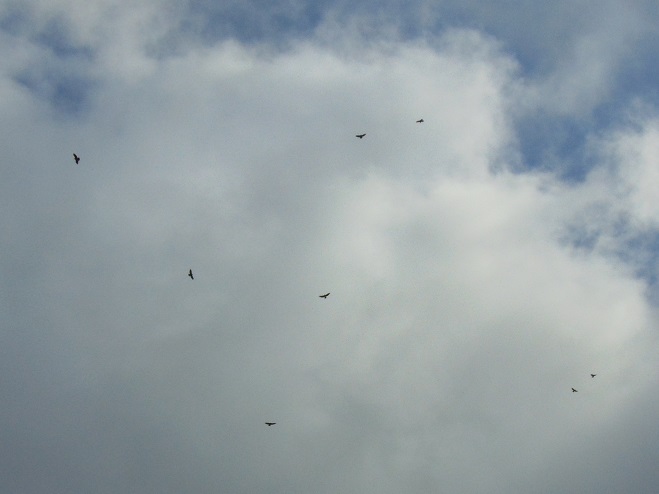
Migrating Broad-winged Hawks circle on a thermal updraft above Second Mountain Hawk Watch to gain altitude before gliding away to the southwest.
Migrating insects included Monarch butterflies, and the three commonest species of migratory dragonflies: Wandering Glider, Black Saddlebags, and Common Green Darner. The Common Green Darners swarmed the lookout by the dozens late in the afternoon and attracted a couple of American Kestrels, which had apparently set down from a day of migration. American Kestrels and Broad-winged Hawks feed upon dragonflies and often migrate in tandem with them for at least a portion of their journey.
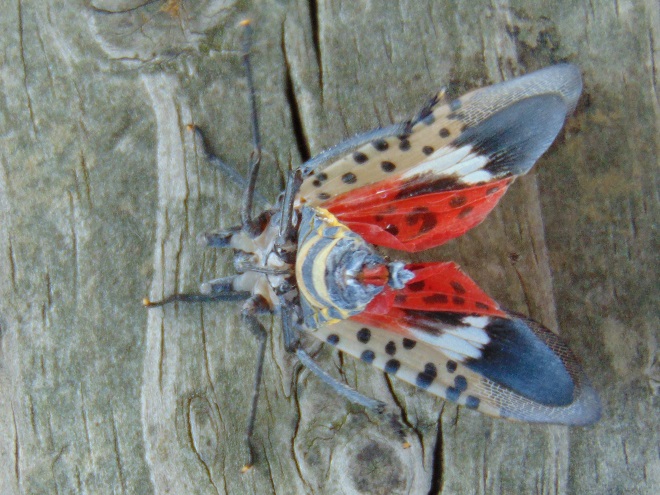
Still later, as the last of the Broad-winged Hawks descended from great heights and began passing by just above the trees looking for a place to settle down, a most unwelcome visitor arrived at the lookout. It glided in from the St. Anthony’s Wilderness side of the ridge on showy crimson-red wings, then became nearly indiscernible from gray tree bark when it landed on a limb. It was the dreaded and potentially invasive Spotted Lanternfly (Lycorma delicatula). This large leafhopper is native to Asia and was first discovered in North America in the Oley Valley of eastern Berks County, Pennsylvania in 2014. The larval stage is exceptionally damaging to cultivated grape and orchard crops. It poses a threat to forest trees as well. Despite efforts to contain the species through quarantine and other methods, it’s obviously spreading quickly. Here on the Second Mountain lookout, we know that wind has a huge influence on the movement of birds and insects. The east and southeast winds we’ve experienced for nearly a week may be carrying Spotted Lanternflies well out of their most recent range and into the forests of the Ridge and Valley Province. We do know for certain that the Spotted Lanternfly has found its way into the Lower Susquehanna River Watershed.
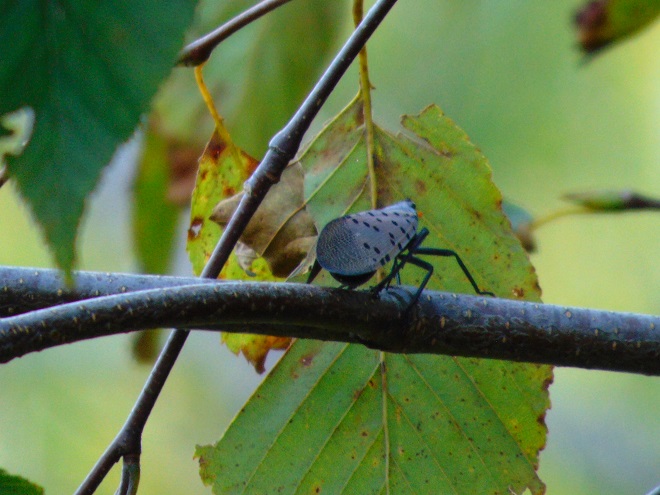
This adult Spotted Lanternfly landed in a birch tree behind the observers at the Second Mountain Hawk Watch late this afternoon. It was first recognized by its bright red wings as it glided from treetops on the north side of the lookout.
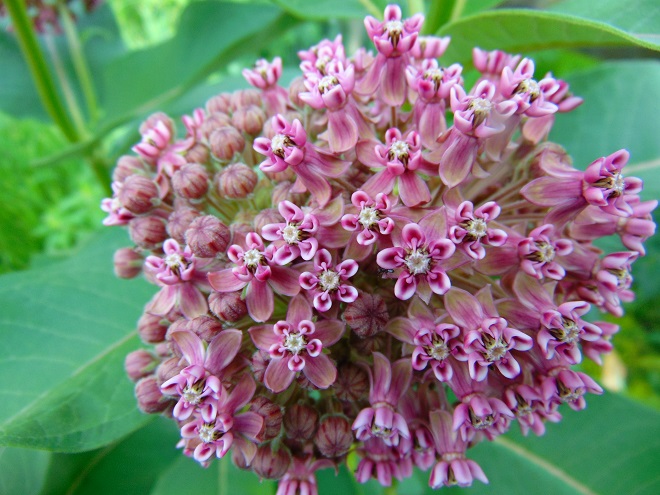
It’s sprayed with herbicides. It’s mowed and mangled. It’s ground to shreds with noisy weed-trimmers. It’s scorned and maligned. It’s been targeted for elimination by some governments because it’s undesirable and “noxious”. And it has that four letter word in its name which dooms the fate of any plant that possesses it. It’s the Common Milkweed, and it’s the center of activity in our garden at this time of year. Yep, we said milk-WEED.
Now, you need to understand that our garden is small—less than 2,500 square feet. There is no lawn, and there will be no lawn. We’ll have nothing to do with the lawn nonsense. Those of you who know us, know that the lawn, or anything that looks like lawn, are through.
Anyway, most of the plants in the garden are native species. There are trees, numerous shrubs, some water features with aquatic plants, and filling the sunny margins is a mix of native grassland plants including Common Milkweed. The unusually wet growing season in 2018 has been very kind to these plants. They are still very green and lush. And the animals that rely on them are having a banner year. Have a look…
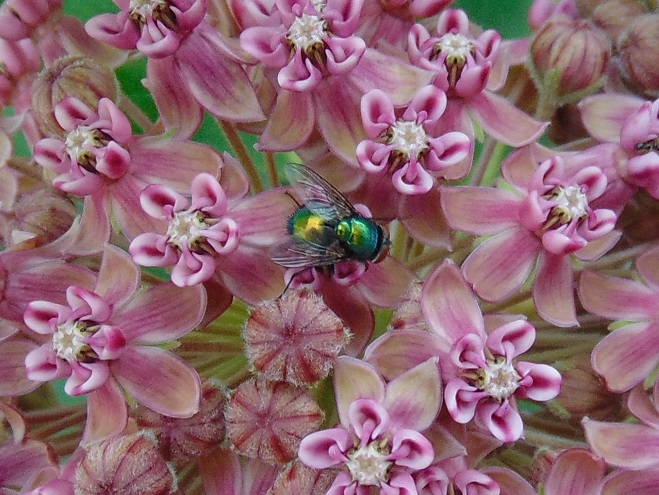
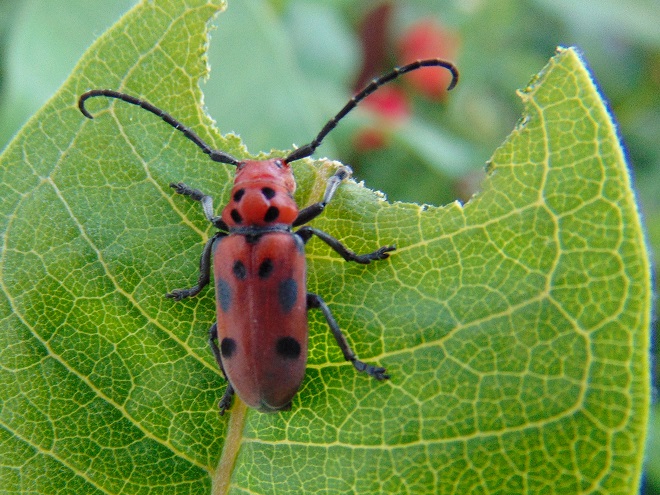
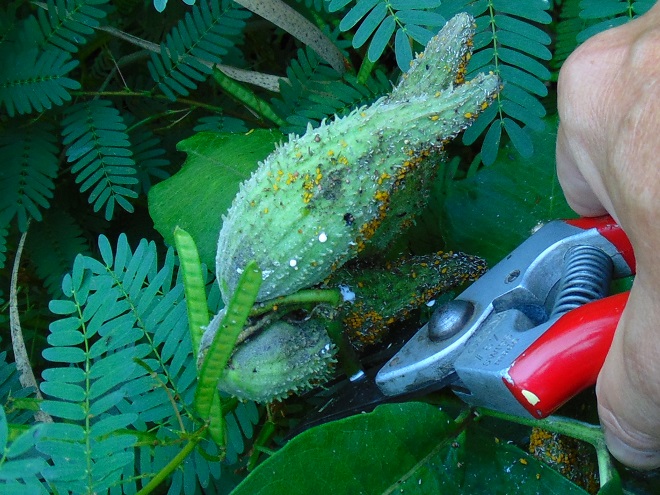
The flowers of the Common Milkweed were exceptionally fragrant this year. At their peak in early June, their hyacinth-or lilac-like aroma was so prevalent, it drifted into our building and overwhelmed the stink of the neighbor’s filthy dumpster that he had placed 12 feet away from our walls (100 feet from his).Common Milkweed attracts a pollinating Greenbottle Fly (Lucilia species). The dumpster attracts the invasive House Fly (Musca domestica), carrier of dysentery, typhoid, and other wonderful diseases. Are you following this? Remember as we proceed, milkweed is “noxious”.Busy Eastern Carpenter Bees (Xylocopa virginica) load up with pollen from the flowers of the Common Milkweed.A Red Milkweed Beetle (Tetraopes tetrophthalmus) munches on a tender fresh Common Milkweed leaf in mid-June.Following the pollination of the flowers, seed pods will begin to grow. We trim these off the plants. The removal of the extra weight allows most of the stems to remain erect through stormy weather. You’ll still get new plants from underground runners. As you may have guessed, we’re trying to keep these plants upright and strong to host Monarch butterfly larvae.
We’ve planted a variety of native grassland species to help support the milkweed structurally and to provide a more complete habitat for Monarch butterflies and other native insects. This year, these plants are exceptionally colorful for late-August due to the abundance of rain. The warm season grasses shown below are the four primary species found in the American tall-grass prairies and elsewhere.
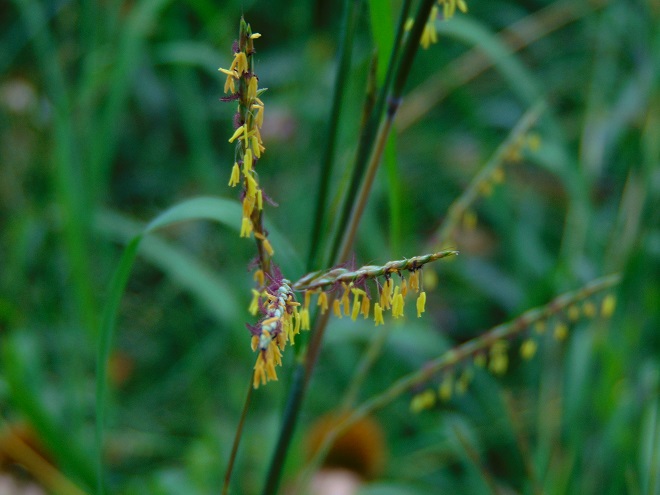
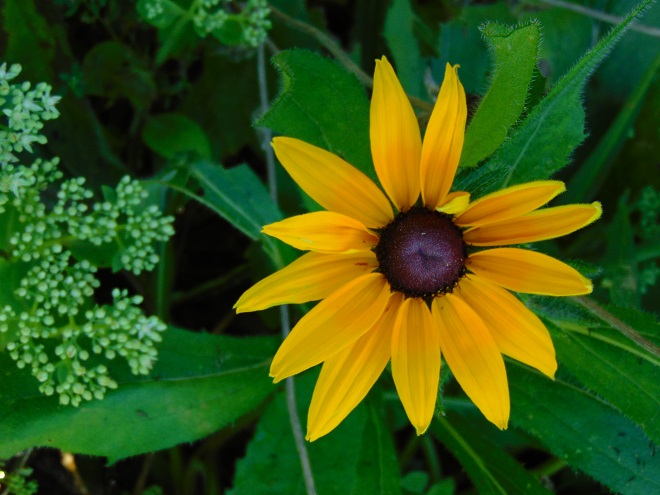
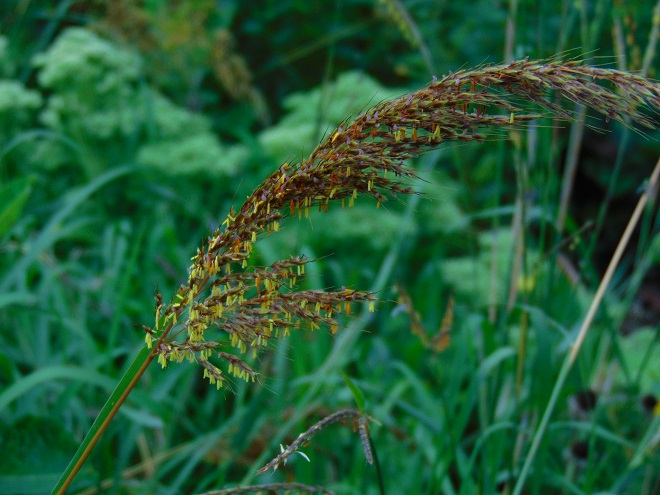
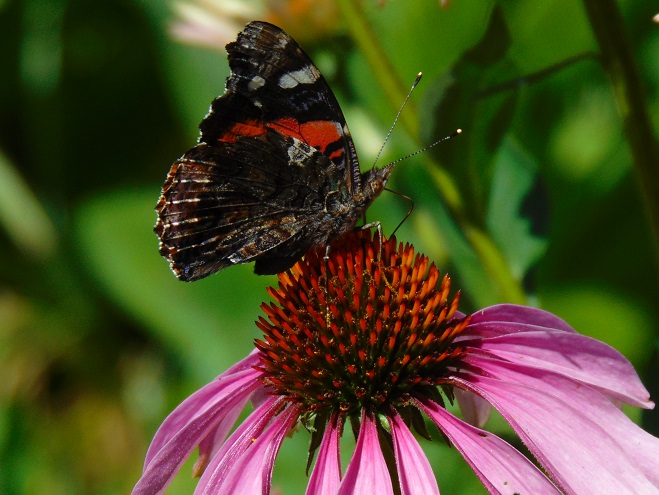
Big Bluestem, a native warm-season grass in flower.Little Bluestem (Schizachyrium scoparium “Fort Indiantown Gap”) in flower. This variety grows on the tank range at the military base where the armored vehicles and prescribed burns substitute for the herd animals and fires of the prairie to prevent succession and allow it to thrive.Partridge Pea can tolerate sandy soil and is a host plant for vagrant Cloudless Sulphur butterflies.Black-eyed Susan (Rudbeckia hirta) is a popular native grassland wildflower.Indiangrass (Sorghastrum nutans) in flower. This and the other native plants shown here are available as seed from Ernst Seed Company in Meadville (PA). They have an unbelievably large selection of indigenous species. You can plant a small plot or acres and acres using really good mixes blended for purposes ranging from reclaiming pipeline right-of-ways and strip mines to naturalizing backyard gardens.A Red Admiral (Vanessa atalanta) butterfly, a migratory species like the Monarch, on Purple Coneflower (Echinacea purpurea). Yes, it is that Echinacea, the same one used as a supplement and home remedy.
There was Monarch activity in the garden today like we’ve never seen before—and it revolved around milkweed and the companion plants.
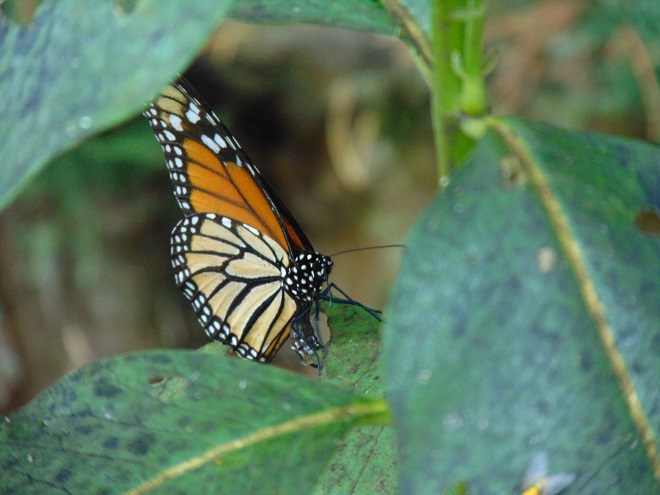
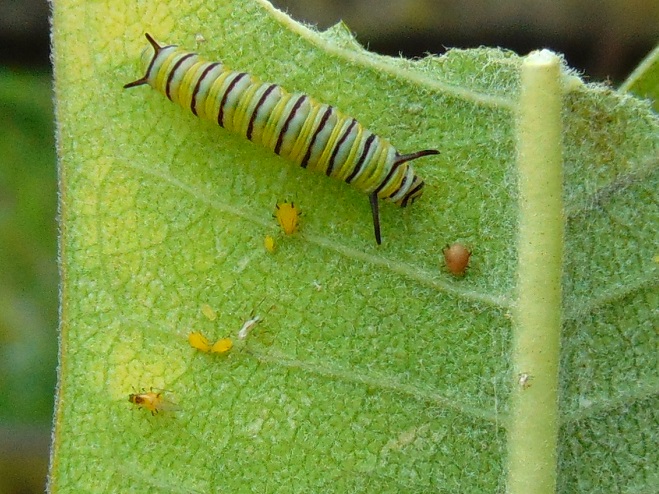
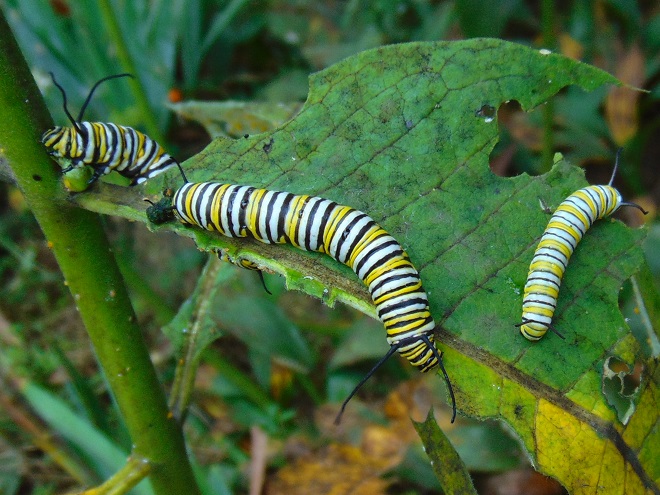
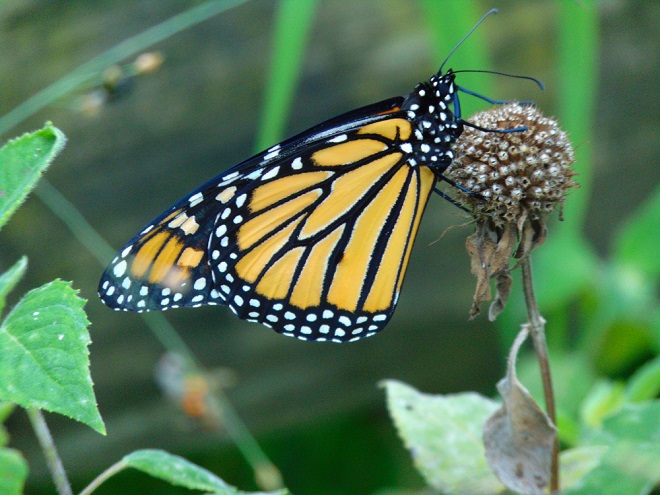
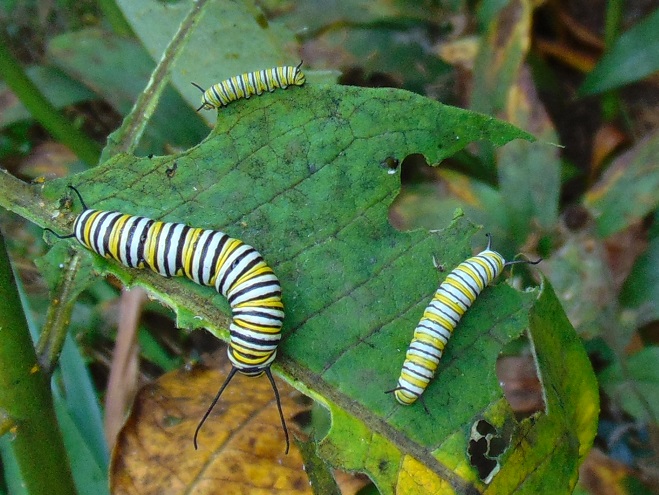
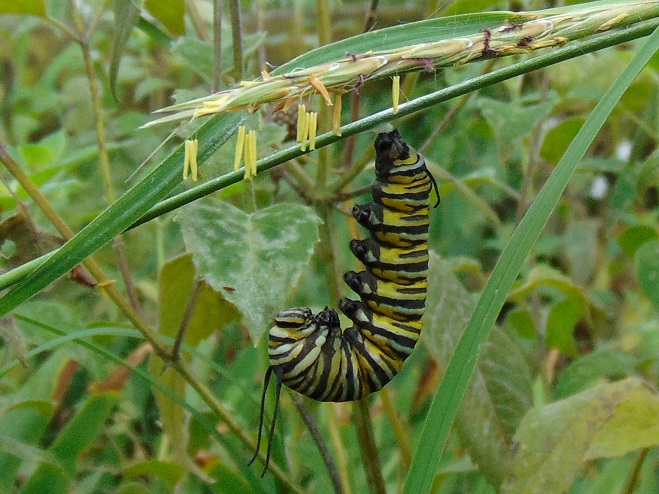
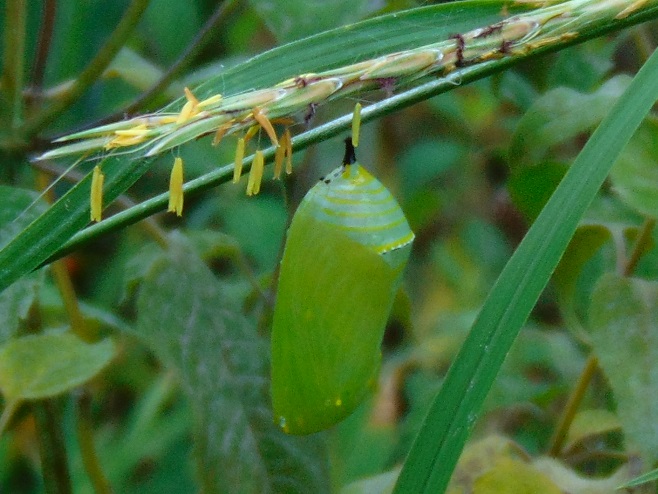
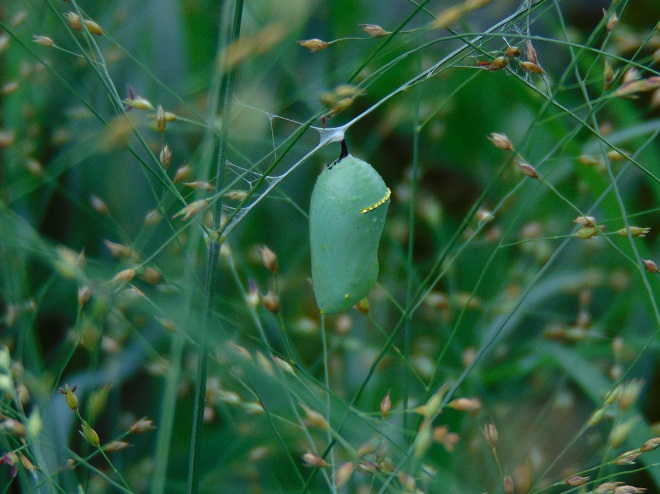
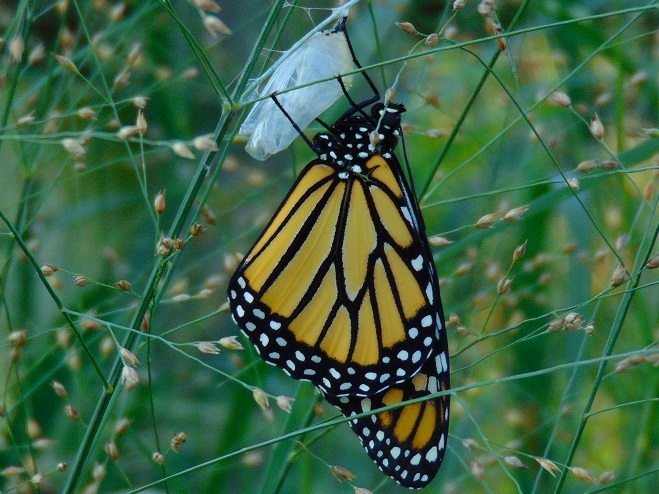
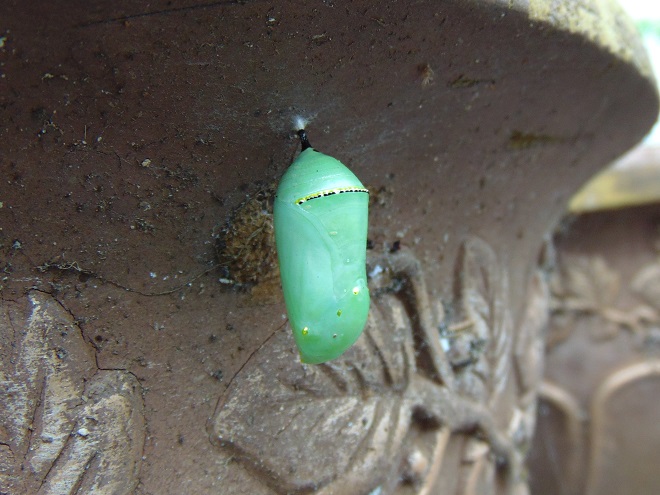
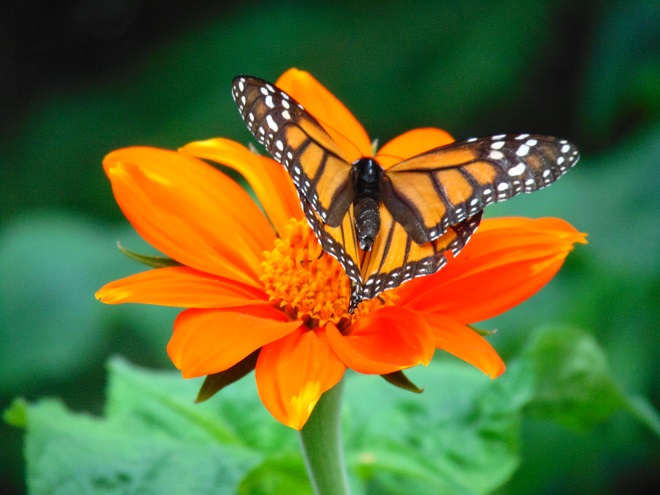
A female Monarch laying eggs on a Common Milkweed leaf.A third instar Monarch caterpillar with Oleander Aphids (Aphis nerii) on a Common Milkweed leaf. Both of these insect species absorb toxins from the milkweed which makes them distasteful to predators.Fifth instar (left and center) and fourth instar (right) monarch caterpillars devour a Common Milkweed leaf. There were over thirty of these caterpillars in just a ten by ten feet area this morning. We hope that if you’re keeping a habitat for Monarchs, you’re enjoying the same fortune right now!A slow-moving Monarch stopped for a break after making the circuit to deposit eggs on milkweed throughout the garden.Third instar (top), fourth instar (right), and fifth instar (left) Monarch caterpillars quickly consume the leaf of a Common Milkweed plant. Caterpillars emerging from eggs deposited today may not have sufficient late-season food to complete the larval segment of their life cycle. Need more milkweed!After benefiting from the nourishment of the Common Milkweed plant, a fifth instar Monarch caterpillar begins pupation on Big Bluestem grass.Two hours later, the chrysalis is complete.Another chrysalis, this one on flowering Switchgrass just two feet away from the previous one. An adult Monarch will emerge from this pupa to become part of what we hope will be the most populated southbound exodus for the species in over five years.There it is, soon ready to fly away. And all courtesy of the noxious milkweed.A chrysalis can often be found on man-made objects too. This one is on the rim of a flower pot.Ornamental flowers can attract adult Monarch butterflies seeking nectar. We’re now more careful to select seeds and plants that have not been treated with neonicotinoid insecticides. There’s growing concern over the impact these compounds may be having on pollinating species of animals. Oh…and we don’t mow, whack, cut, mutilate, or spray herbicides on our milkweed, but you probably figured that out already.
SOURCES
Eaton, Eric R., and Kenn Kaufman. 2007. Kaufman Field Guide to Insects of North America. Houghton Mifflin Company. New York.
There’s something frightening going on down there. In the sand, beneath the plants on the shoreline, there’s a pile of soil next to a hole it’s been digging. Now, it’s dragging something toward the tunnel it made. What does it have? Is that alive?
We know how the system works, the food chain that is. The small stuff is eaten by the progressively bigger things, and there are fewer of the latter than there are of the former, thus the whole network keeps operating long-term. Some things chew plants, others devour animals whole or in part, and then there are those, like us, that do both. In the natural ecosystem, predators keep the numerous little critters from getting out of control and decimating certain other plant or animal populations and wrecking the whole business. When man brings an invasive and potentially destructive species to a new area, occasionally we’re fortunate enough to have a native species adapt and begin to keep the invader under control by eating it. It maintains the balance. It’s easy enough to understand.
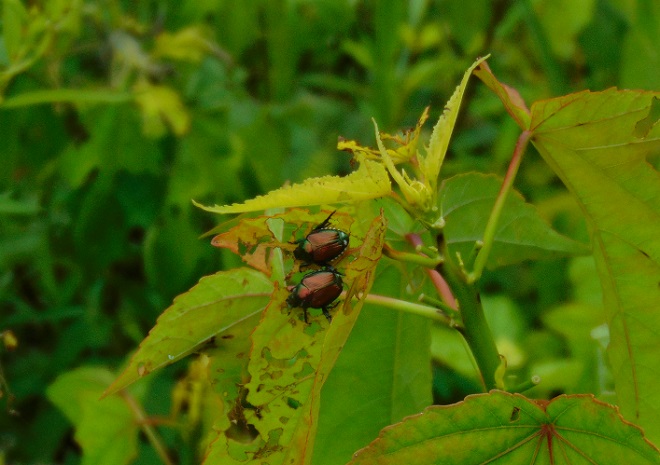
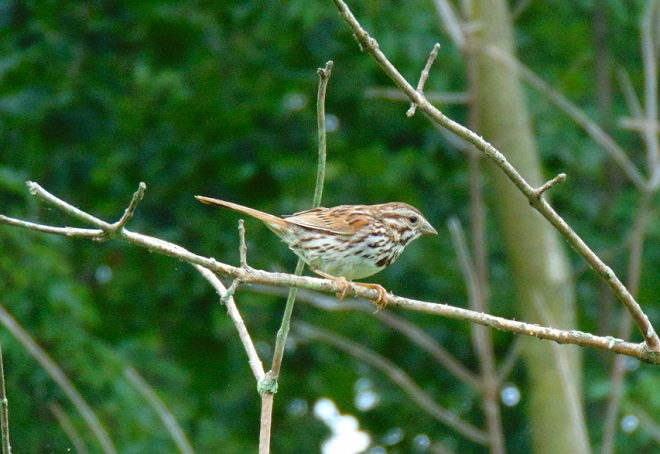
Japanese Beetles (Popillia japonica) seen here on Halberd-leaved Rose Mallow. Without predation, exploding numbers of this invasive non-indigenous insect can defoliate and kill numerous species of plants in a given area.The Song Sparrow (Melospiza melodia) is a generalist feeder, eating seeds and invertebrates including Japanese Beetles. This species is the omnipresent year-round occupant of shoreline vegetation along the lower Susquehanna River.
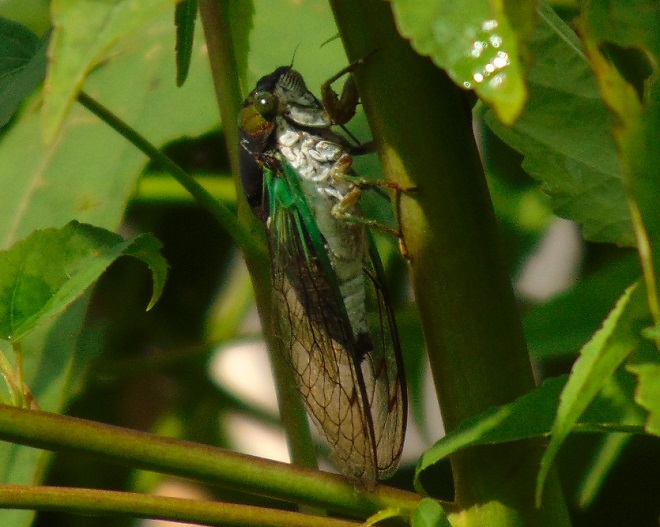
Late summer days are marked by a change in the sounds coming from the forests surrounding the falls. For birds, breeding season is ending, so the males cease their chorus of songs and insects take over the musical duties. The buzzing calls of male “annual cicadas” (Neotibicen species) are the most familiar. The female “annual cicada” lays her eggs in the twigs of trees. After hatching, the nymphs drop to the ground and burrow into the soil to live and feed along tree roots for the next two to five years. A dry exoskeleton clinging to a tree trunk is evidence that a nymph has emerged from its subterranean haunts and flown away as an adult to breed and soon thereafter die. Flights of adult “annual cicadas” occur every year, but never come anywhere close to reaching the enormous numbers of “periodical cicadas” (Magicicada species). The three species of “periodical cicadas” synchronize their life cycles throughout their combined regional populations to create broods that emerge as spectacular flights once every 13 or 17 years.
An “annual cicada” also known as a “dog-day cicada”, clings to the stem of a Halberd-leaved Rose Mallow at Conewago Falls.
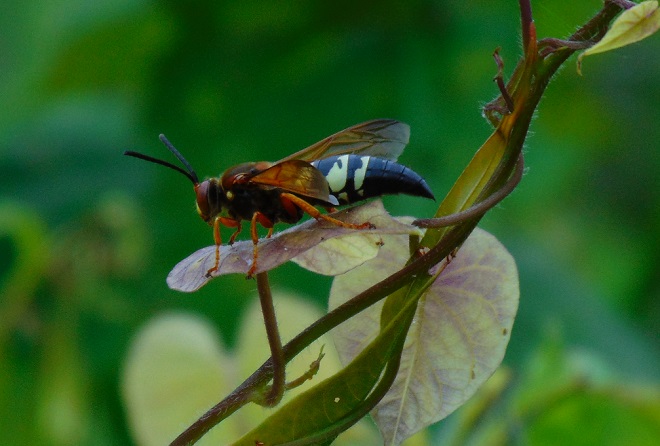
For the adult cicada, there is danger, and that danger resembles an enormous bee. It’s an Eastern Cicada Killer (Specius speciosus) wasp, and it will latch onto a cicada and begin stinging while both are in flight. The stings soon paralyze the screeching, panicked cicada. The Cicada Killer then begins the task of airlifting and/or dragging its victim to the lair it has prepared. The cicada is placed in one of more than a dozen cells in the tunnel complex where it will serve as food for the wasp’s larvae. The wasp lays an egg on the cicada, then leaves and pushes the hole closed. The egg hatches in a several days and the larval grub is on its own to feast upon the hapless cicada.
An Eastern Cicada Killer (Sphecius speciosus) along the river shoreline. Despite their intimidating appearance, they do not sting humans and can be quite docile when approached.
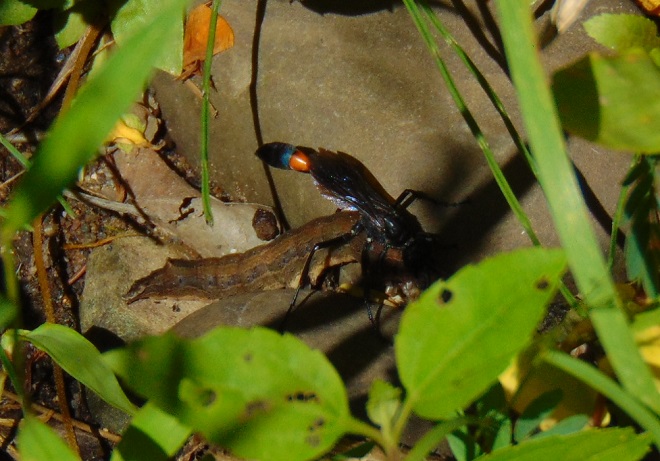
Other species in the Solitary Wasp family (Sphecidae) have similar life cycles using specific prey which they incapacitate to serve as sustenance for their larvae.
A Solitary Wasp, one of the Thread-waisted Wasps (Ammophila species), drags a paralyzed moth caterpillar to its breeding dungeon in the sandy soil at Conewago Falls. For the victim, there is no escape from the crypt.
The Solitary Wasps are an important control on the populations of their respective prey. Additionally, the wasp’s bizarre life cycle ensures a greater survival rate for its own offspring by providing sufficient food for each of its progeny before the egg beginning its life is ever put in place. It’s complete family planning.
The cicadas reproduce quickly and, as a species, seem to endure the assault by Cicada Killers, birds, and other predators. The periodical cicadas (Magicicada), with adult flights occurring as a massive swarm of an entire population every thirteen or seventeen years, survive as species by providing predators with so ample a supply of food that most of the adults go unmolested to complete reproduction. Stay tuned, 2021 is due to be the next periodical cicada year in the vicinity of Conewago Falls.
SOURCES
Eaton, Eric R., and Kenn Kaufman. 2007. Kaufman Field Guide to Insects of North America. Houghton Mifflin Company. New York.