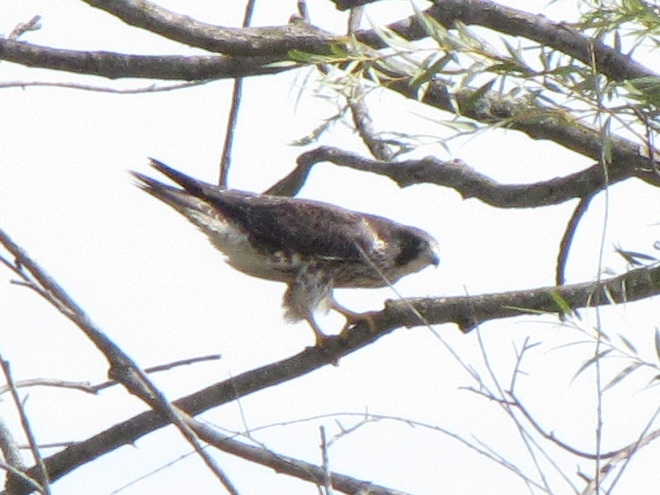
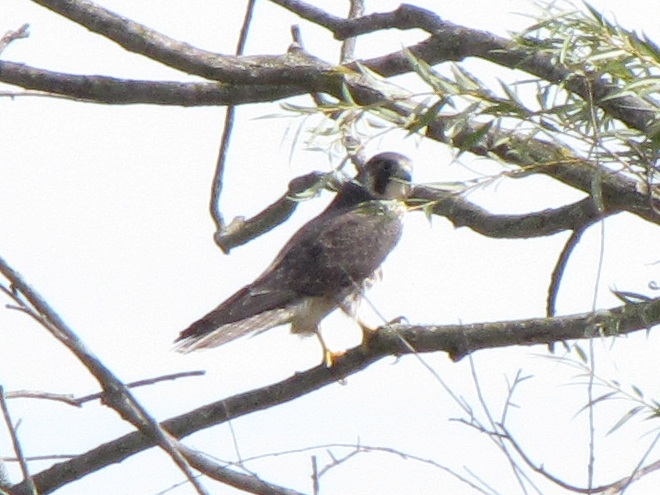
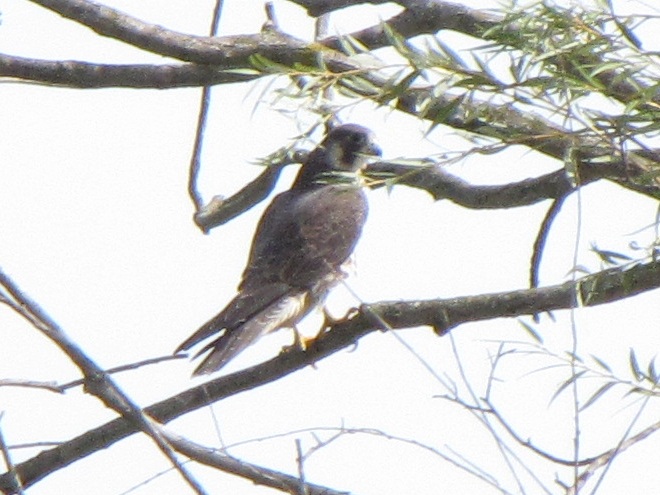
Averaging noticeably paler than the mixed lineage birds introduced to replace our resident “Eastern Peregrines”, a population that was extirpated here by egg collecting, shooting, and the effects of DDT, “Tundra Peregrines” engage in the longest migrations of any North American raptor. Currently passing through the lower Susquehanna valley after nesting in the arctic, “Tundra Peregrines” will spend the winter in a range that extends from Mexico to southern Brazil and Argentina, some birds traveling 15,000 miles annually to complete the round-trip journey.Because they spent most of the year in environments minimally impacted by people and DDT, “Tundra Peregrines” survived the nineteenth and twentieth centuries and continued migrating down the Atlantic seaboard from late September to mid-October each year as the only Peregrine remaining on the continent east of the Rockies.Migration of the “Tundra Peregrine” subspecies is heaviest along the Atlantic with numbers at hawk-counting stations becoming progressively smaller as one moves inland and away from the coastal plain. Many of these strong fliers pass south at sea, well beyond sight contact with land. For more on the story of our local Peregrines, see our “Hawkwatchers Helper: Identifying Bald Eagles and other Diurnal Raptors” page by clicking the tab at the top of this page.