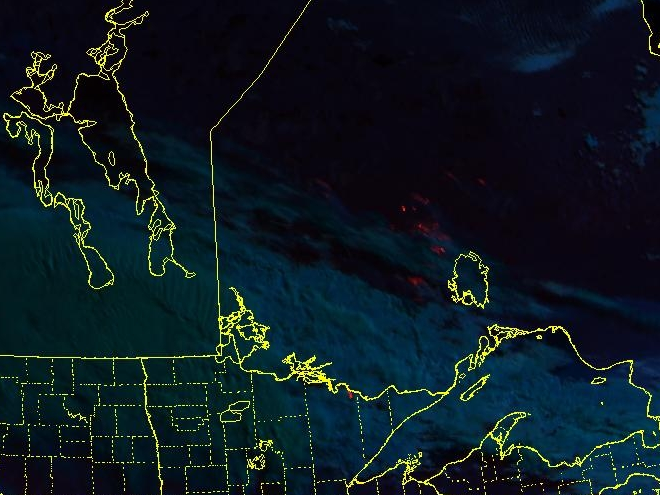
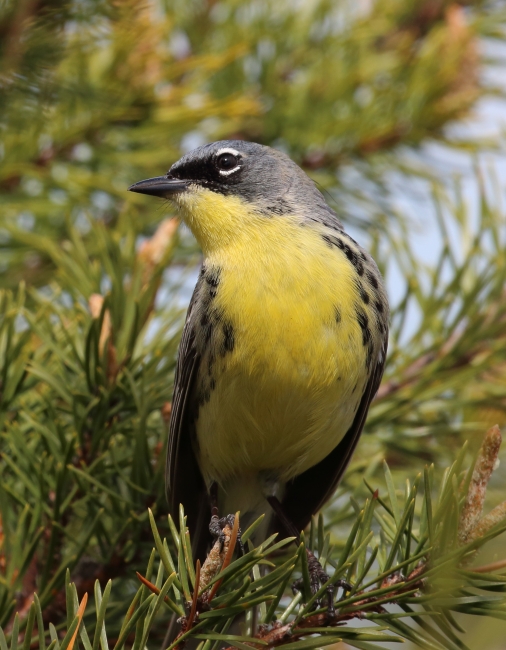
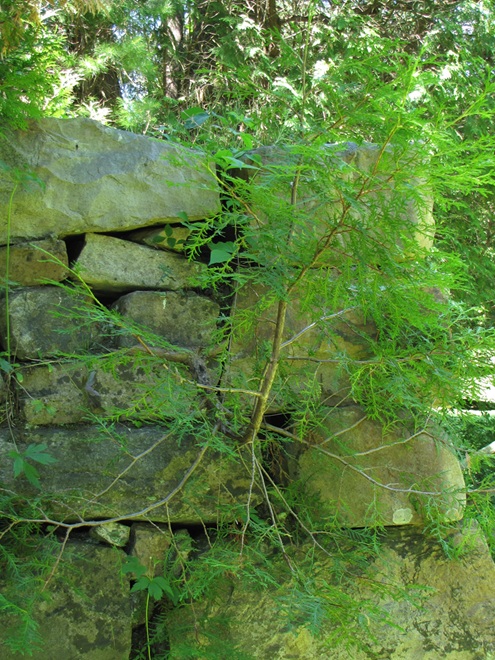
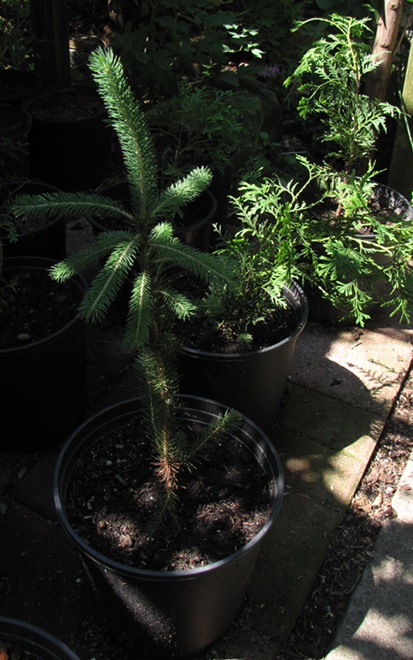
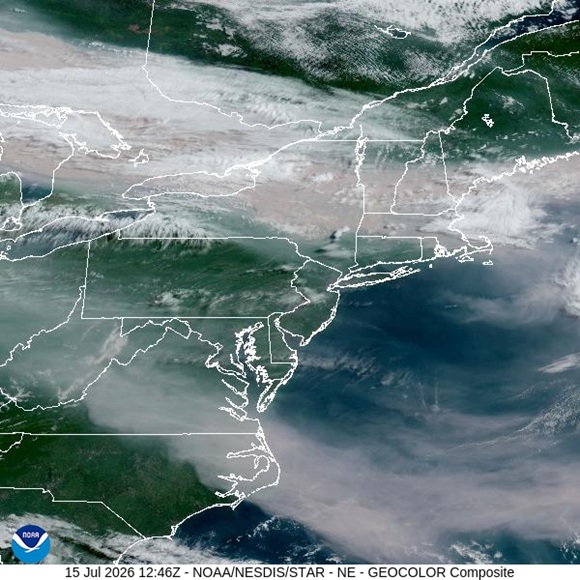
This fire temperature enhancement of this morning’s National Oceanic and Atmospheric Administration satellite image of remote areas in western Ontario shows numerous large wildfires (indicated in red) burning north of Lake Superior. Ablaze is an area of taiga, the boreal conifer and mixed forests that cover much of interior Canada. The trees that grow in these wilderness areas are adapted to the large fires that regularly incinerate vast swaths of timber. Two of the conifers, Black Spruce (Picea mariana) and Jack Pine (Pinus banksiana), require fire for regeneration and are often among the deciduous White Birch (Betula paptrifera) and Quaking Aspen (Populus tremuloides) that first recolonize burned acreage. As succession proceeds, these pioneer species are followed by growth of Balsam Fir (Abies balsamea) and Northern White Cedar (Thuja occidentalis), both of which succeed Tamarack (Larix laricina) and Black Spruce in the sphagnum bogs there. (Cooperative Institute for Research in the Atmosphere/National Oceanic and Atmospheric Administration image)Just to the south of the area currently being impacted by wildfire, the Kirtland’s Warbler (Setophaga kirtlandii) nests only in young stands of Jack Pine in Michigan, Wisconsin, and Ontario. During much of the twentieth century, this Neotropical migrant was in endanger of extinction, taking refuge during the breeding season in several areas of Michigan where large fires had cleared away climax forest and Jack Pines were allowed to regenerate. Prescribed fire and block timber harvesting techniques now manage some lands specifically for Kirtland’s Warbler habitat. The species was delisted from endangered status in 2019. (United States Fish and Wildlife Service image by Vince Cavalieri)The Northern White Cedar is most familiar to residents of the lower Susquehanna valley as the arborvitae, an evergreen landscape tree that includes numerous cultivars and hybrids derived from the wild taiga conifer. In suburbia, this tree is abused, planted in rows to create a fast-growing but short-lived windbreak or privacy screen. How about mixing it up a little bit by adding some variety to those hedgerows? Then, think about using these beautiful trees where they’ll thrive. Northern White Cedar grows like a bonsai artist’s dream among boulders, an inspiration for mimicking their appearance in miniature, and will sometimes naturalize in this rocky terrain under mesic (moist) conditions. Northern White Cedar is a bog species in its native range to our north, so you can give strong consideration to planting scattered specimens in the wet soils of your rain garden, riparian buffer, or other soggy spot. Scatter some around, put a few in clumps, and enjoy the pizazz they can add to a dreary winter day!A look at Northern White Cedars in the susquehannawildlife.net headquarters tree nursery and, in the foreground, a White Spruce (Picea glauca), another common conifer of the boreal forests. In our area, a miniature cultivar of P. glauca known as “Dwarf Alberta Spruce” is routinely planted as a landscape specimen. On occasion, these compact plants will revert to their “wild” form and grow full-size branches to begin looking more like their ancestral parents.The visible satellite image from just before 9 AM shows haze from the Ontario fires streaming into the northeastern United States and the Susquehanna basin. The dense, river-like band of brown smoke seen barreling through New York and New England will shift south into our region during the remainder of the day, so slow down and take it easy. How long will these fires burn? Due to the zero-fire forest management strategies of the twentieth century, some areas of taiga haven’t experienced a burn for over 100 years. The highly combustible fuel load of dry logs, limbs, and needles accumulates in these parcels with each passing year, adding to the threat of a greater frequency of explosive, far-ranging, catastrophic infernos. To reduce the proliferation of fuels and to get the boreal forests back on the every-decade-or-so natural fire regime that keeps these biomes healthy and thriving, blazes in remote wildlands that haven’t been subjected to regeneration by fire for many decades are primarily contained to protect people, infrastructure, and unique native assets, but are mostly allowed to burn. (Cooperative Institute for Research in the Atmosphere/National Oceanic and Atmospheric Administration image)