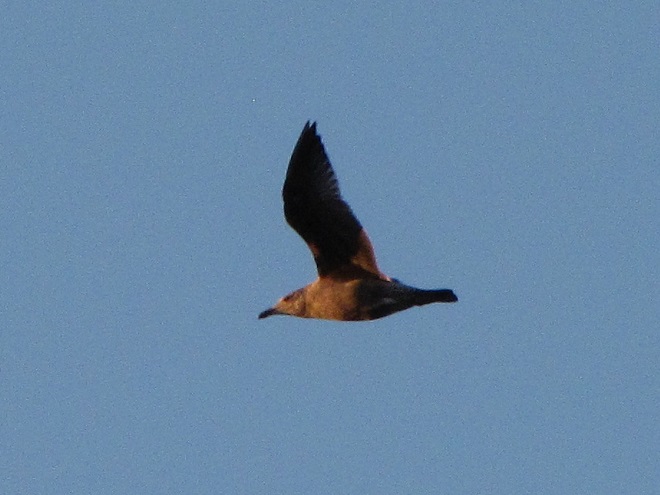
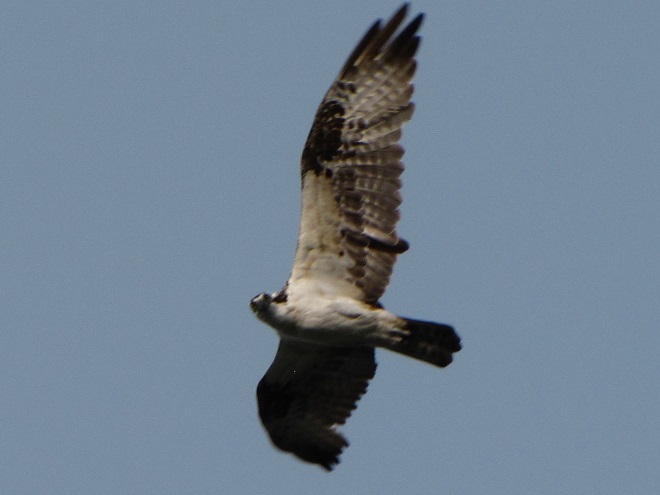
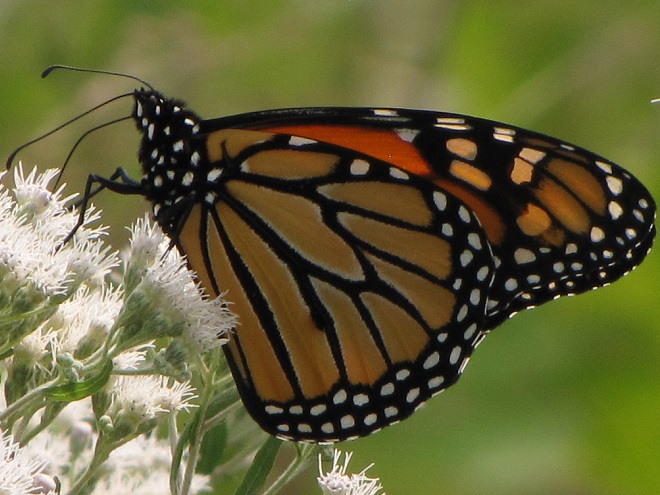
Slow Down When There’s Snow on the Ground

It’s just common sense to take it easy and drive carefully when snow covers streets and highways.  Everyone knows that.  But did you know that slowing down when the landscape is blanketed in white can save lives even after the roadways have been cleared?

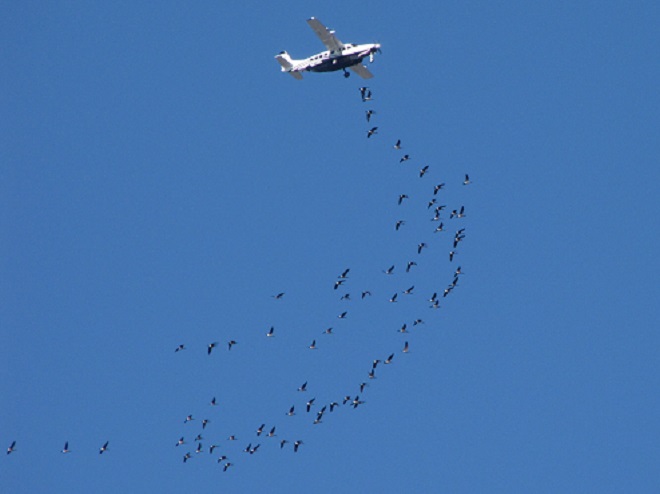
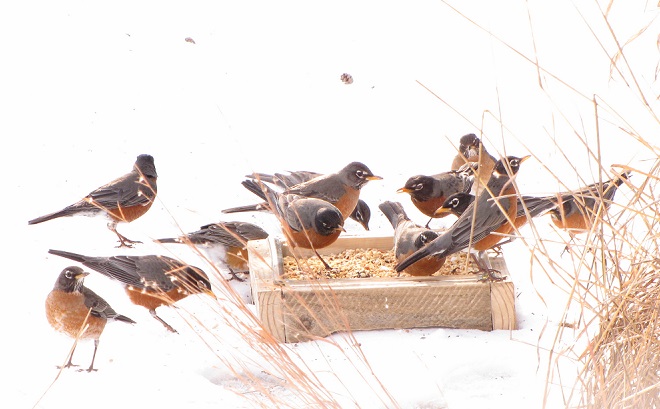
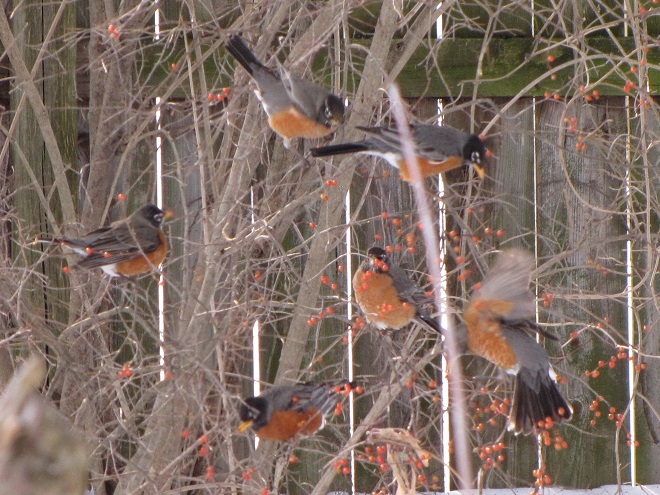
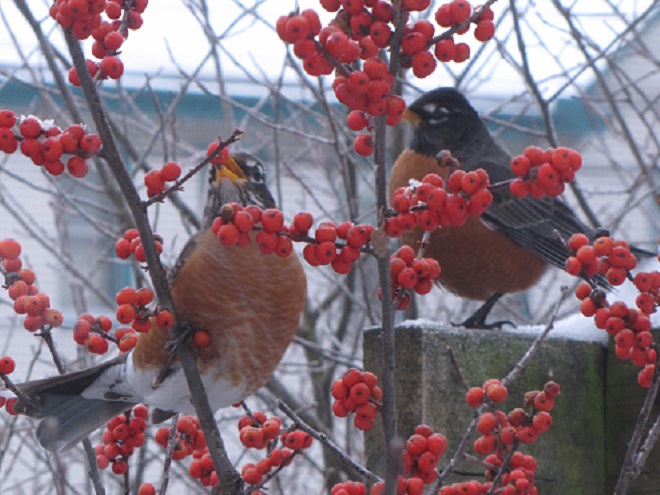
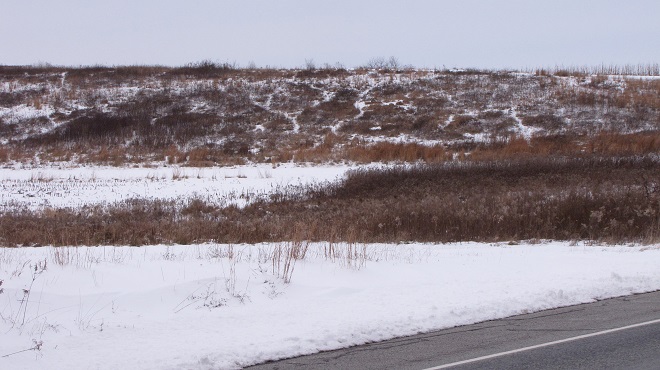
Following significant snowfalls such as the one earlier this week, birds and other wildlife are attracted to bare ground along the edges of plowed pavement.  They are often so preoccupied with the search for food that they ignore approaching cars and trucks until it is too late.

Take a look at the species found today along a one mile stretch of plowed rural roadway in the lower Susquehanna valley.
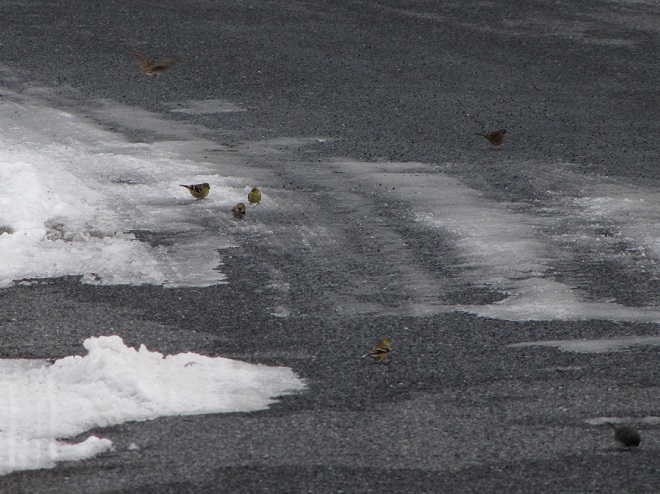
Following snow storms, birds that normally feed among leaf litter on the forest floor or in thickets and fields are attracted to plowed roads.  During their urgent search for food, many are struck and killed by motor vehicles.
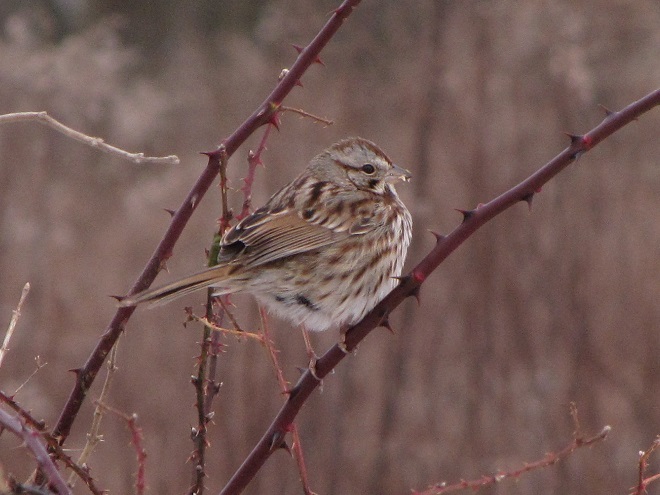
White-throated Sparrows commonly congregate along roads passing through woodlands and thickets.
A juvenile White-crowned Sparrow looks for food among leaves along the edge of snow-free pavement.
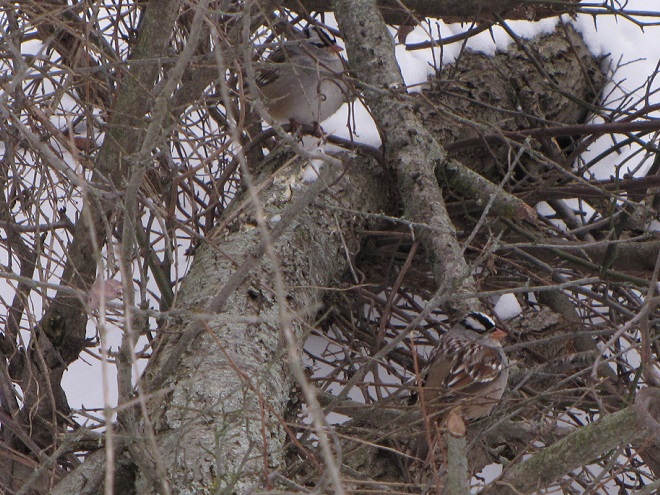
Adult White-crowned Sparrows take cover in roadside shrubs until traffic passes.  Within moments they’ll return to a patch of bare ground along the road’s narrow shoulder.
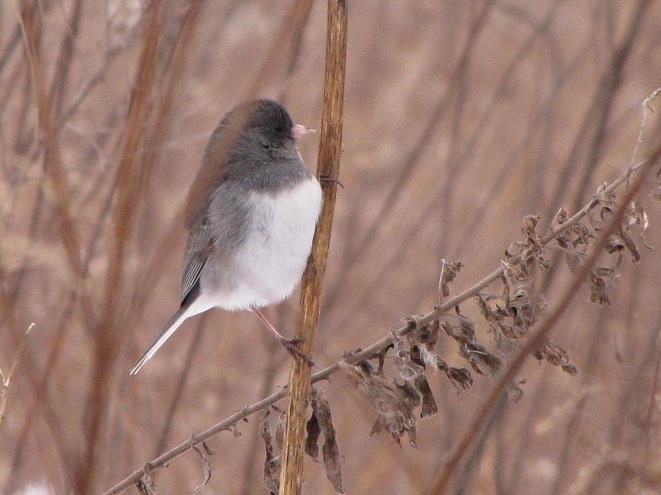
Dark-eyed Juncos are commonly encountered along roads through snow-covered weedy fields and suburbia.
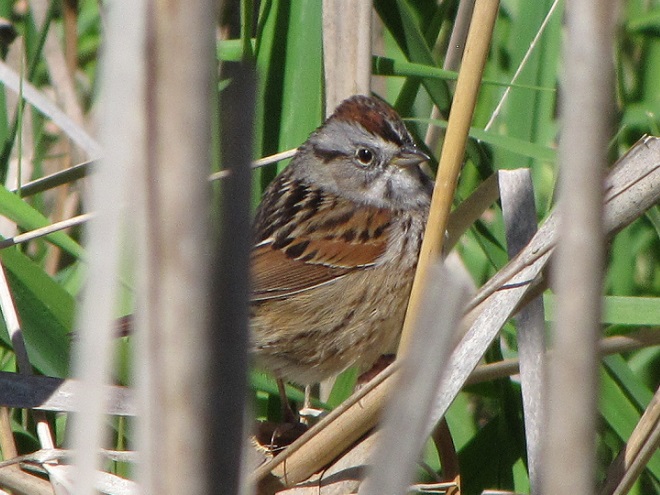
Song Sparrows gather along roads traversing brushy areas.
Juvenile White-crowned Sparrows and, to the upper right, an American Tree Sparrow (Spizella arborea) take refuge in a small roadside sapling after fleeing a passing automobile.
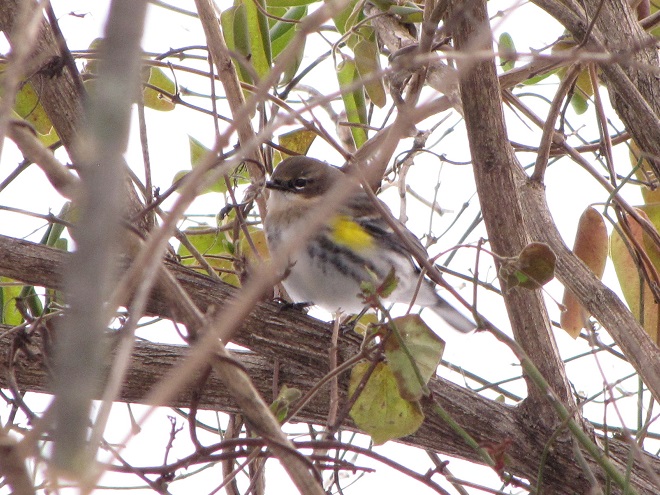
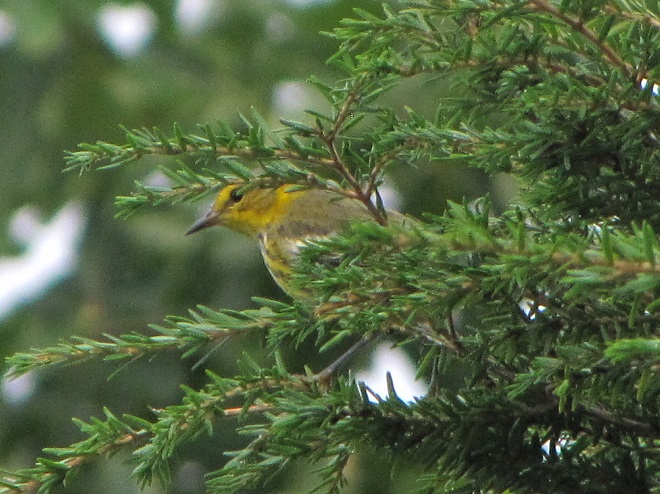
This Yellow-rumped Warbler was attracted to berry-laden shrubs and vines in a road cut with a southern exposure and patches of bare ground.
Following a snowfall, Eastern Bluebirds are regularly seen feeding along the edges of rural roads.
Horned Larks gather along the snow-free margins of roads through tundra-like farmland.

For many species of wildlife in the Lower Susquehanna River Watershed, the fragmented and impaired state of habitat already challenges their chances of surviving the winter.  Snow cover can isolate them from their limited food supplies and force them to roadsides and other dangerous locations to forage.  Mauling them with motor vehicles just adds to the escalating tragedy, so do wildlife and yourself a favor—please slow down.

Even in areas with  ideal habitat, snow cover will cause birds and other wildlife to explore bare ground along highways while seeking food.
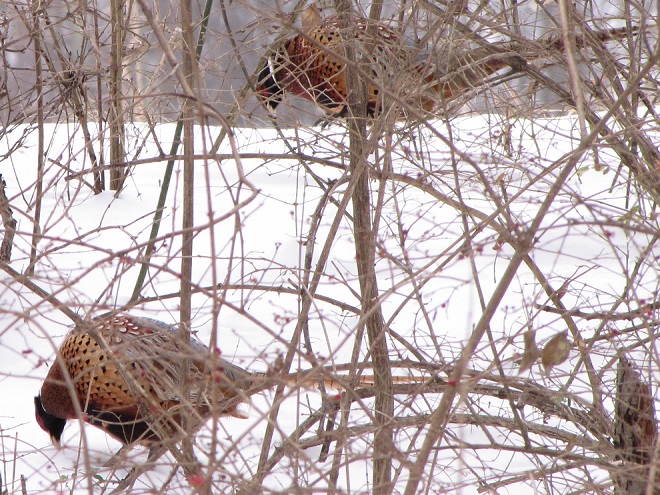
Ring-necked Pheasants frequently become traffic casualties.  These birds feeding at roadside due to the snow cover are in increased peril.

City Life: Gulls, Dabbling Ducks, and More

So you aren’t particularly interested in a stroll through the Pennsylvania woods during the gasoline and gunpowder gang’s second-biggest holiday of the year—the annual sacrifice-of-the-White-tailed-Deity ritual.  I get it.  Two weeks and nothing to do.  Well, why not try a hike through the city instead?  I’m not kidding.  You might be surprised at what you see.  Here are some photographs taken today during several strolls in Harrisburg, Pennsylvania.

First stop was City Island in the Susquehanna River—accessible from downtown Harrisburg or the river’s west shore by way of the Market Street Bridge.

From the middle of the Susquehanna River, City Island offers a spectacular view of the downtown Harrisburg skyline.  In summer, it’s the capital city’s playground.  During the colder months, it’s a great place to take a quiet walk and find unusual birds.
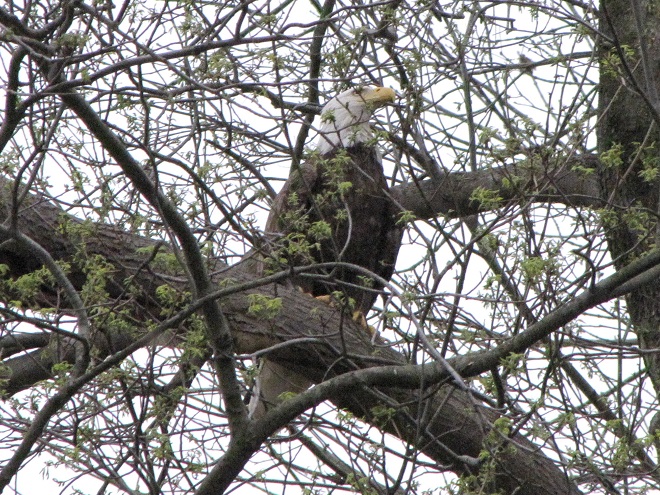
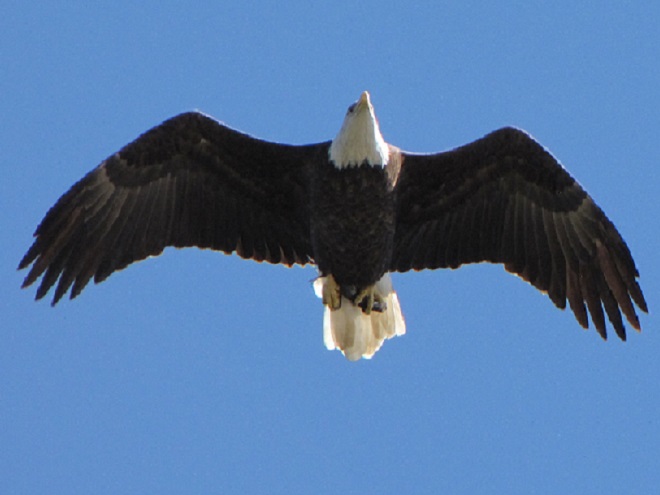
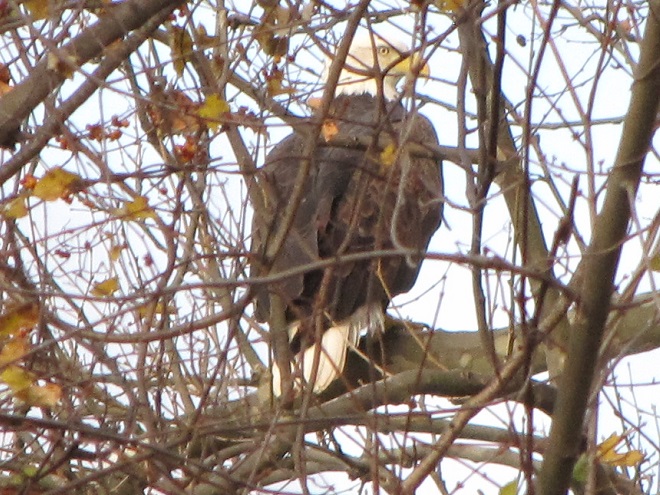
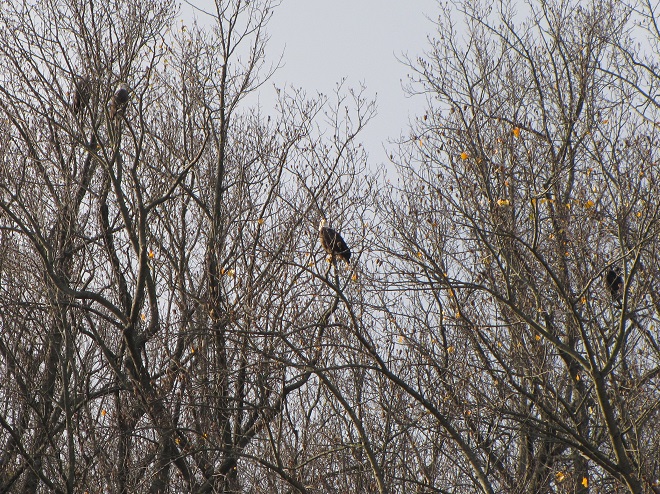
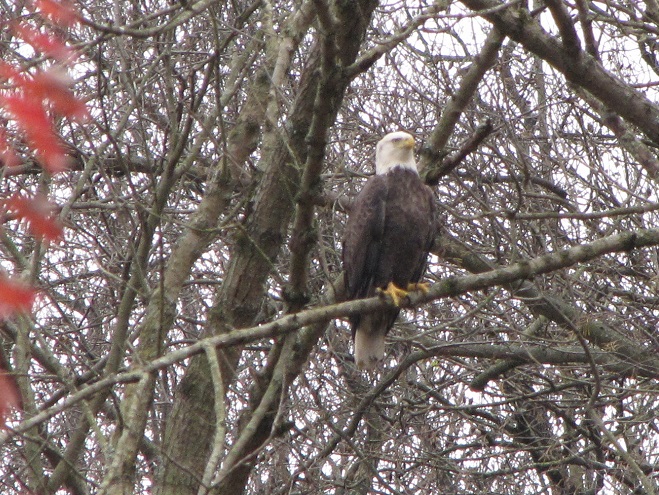
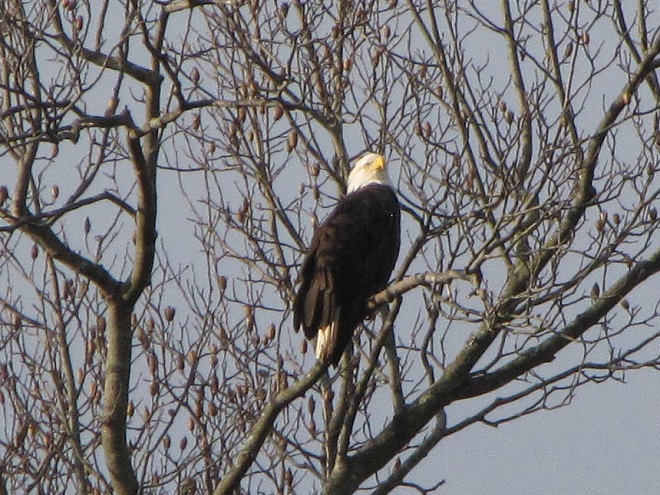
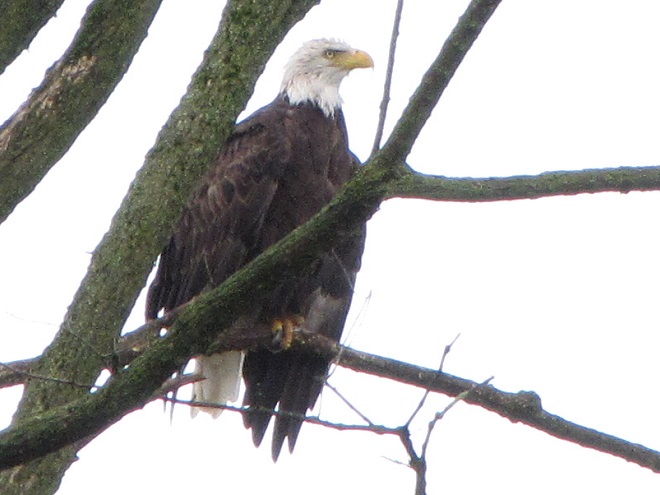
This Bald Eagle was in mature trees along the river shoreline near the Harrisburg Senator’s baseball stadium.
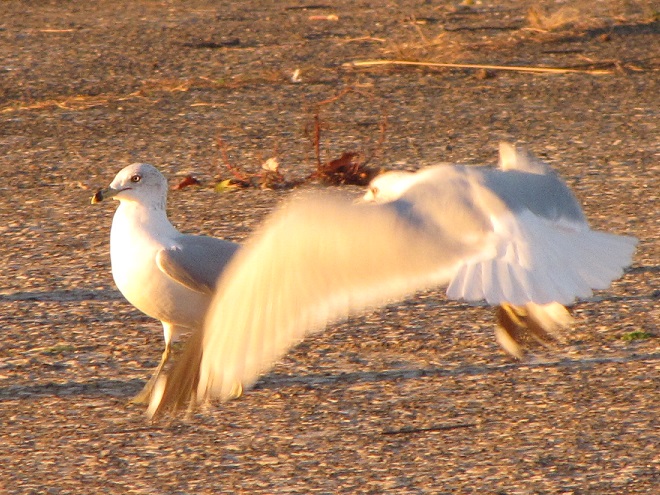
Ring-billed Gulls gather on the “cement beach” at the north end of City Island.
One of a dozen or so American Herring Gulls seen from the island’s north end. This particular bird is a juvenile.
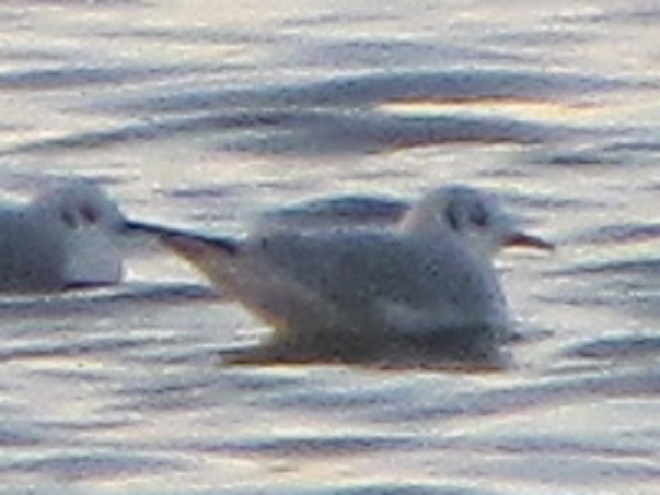
A Ring-billed Gull and some petite Bonaparte’s Gulls.  Really good birders will tell you to always check through flocks of these smaller gulls carefully.  It turns out they’re onto something.  Look closely at the gull to the right.
A bright red bill and more of a crescent shape to the black spot behind the eye, that’s an adult Black-headed Gull (Chroicocephalus ridibundus) in winter plumage, a rare bird on the Susquehanna.  Black-headed Gulls have colonized North America from Europe, breeding in Iceland, southernmost Greenland, and rarely Newfoundland.

Okay, City Island was worth the effort.  Next stop is Wildwood Park, located along Industrial Road just north of the Pennsylvania Farm Show complex and the Harrisburg Area Community College (HACC) campus.  There are six miles of trails surrounding mile-long Wildwood Lake within this marvelous Dauphin County Parks Department property.

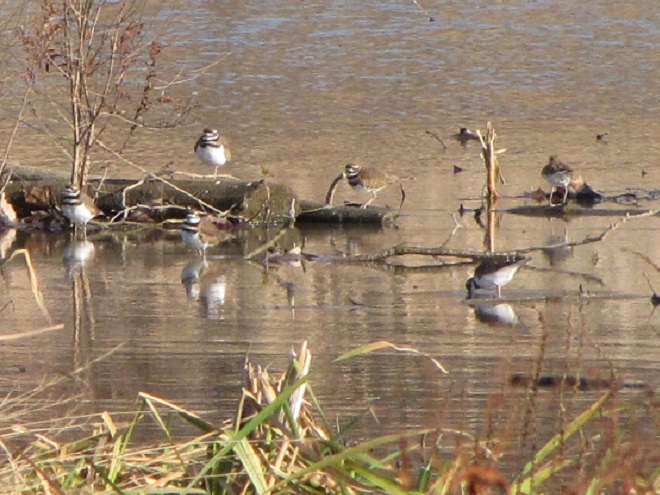
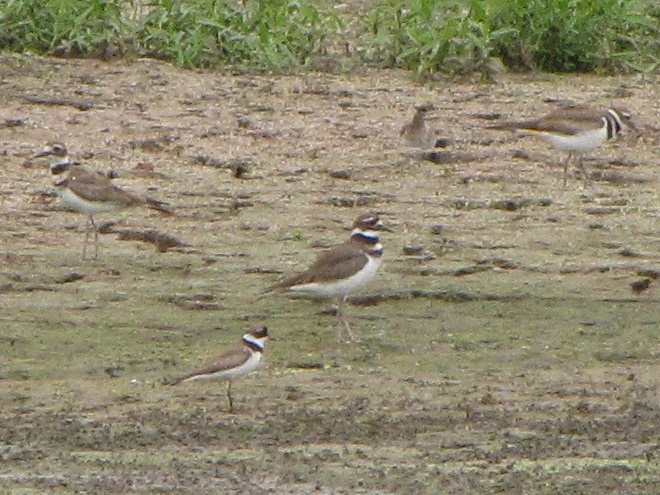
A flock of Killdeer at the south end of Wildwood Lake.  From November through February, a walk along the south and west sides of the impoundment can be a photographer’s dream. The light is suitable in the morning, then just keeps getting better as the day wears on.
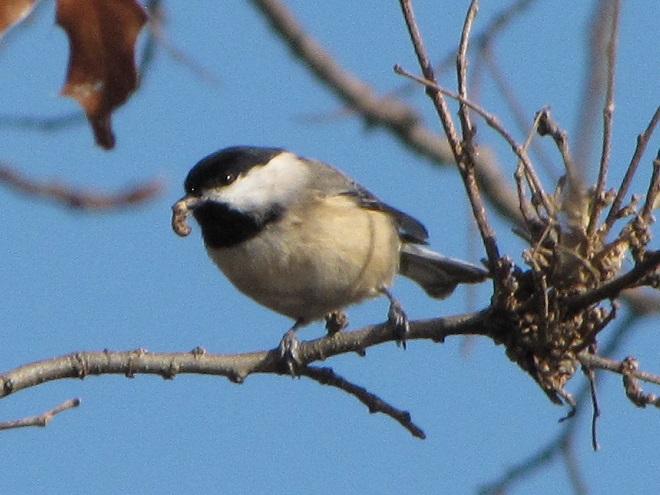
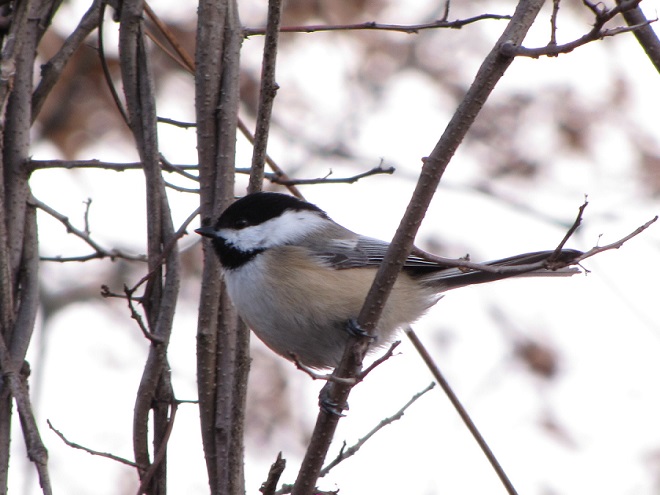
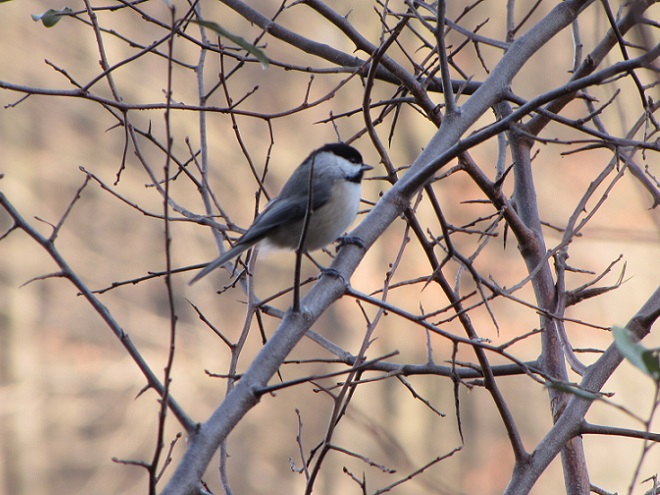
Is this probable Carolina/Black-capped Chickadee hybrid a resident at Wildwood or just a visitor from a few miles to the north?  Currently, pure Black-capped Chickadees (Poecile atricapillus) nest in the mountains well to the north of Harrisburg, and pure Carolina Chickadees nest south of the city.  Harrisburg possibly remains within the intergrade/hybrid zone, an area where the ranges of the two species overlap, but probably not for long.  During recent decades, this zone has been creeping north, at times by as much as a half mile or more each year.  So if the capital city isn’t Carolina Chickadee territory yet, it soon will be.
Another chickadee likely to be a hybrid, this one with some white in the greater wing coverts like a Black-capped, but with a call even more rapid than that of the typical Carolina, the species known for uttering the faster “chick-a-dee-dee-dee”.  It sounded wired, like it had visited a Starbucks all morning.
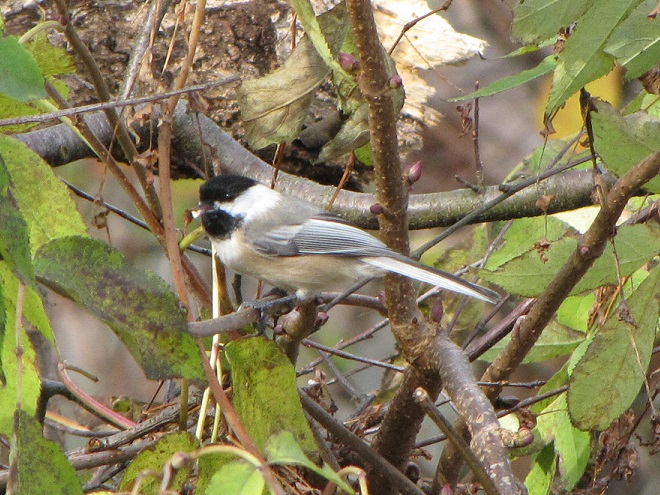
In the lower Susquehanna valley, Carolina Chickadees have already replaced hybrids and pure Black-capped Chickadees as nesting birds in the Piedmont hills south of Harrisburg and the Great Valley.  This Carolina Chickadee was photographed recently in the Furnace Hills at Middle Creek Wildlife Management Area in northern Lancaster County.  The transition there was probably complete by the end of the twentieth century.  Note the characteristic overall grayish appearance of the wings and the neat lower border of the black bib on this bird,
For comparison, a bird presumed to be a pure Black-capped Chickadee photographed earlier this month in Lebanon County, Pennsylvania.  This fall, “Black-caps”, like many other northern perching birds, are moving south to invade the lower elevations and milder climes of the Piedmont and Atlantic Coastal Plain Provinces.  Note the extensive areas of white in the wings, the long tail, the buffy flanks, and the jagged edge of the black bib.
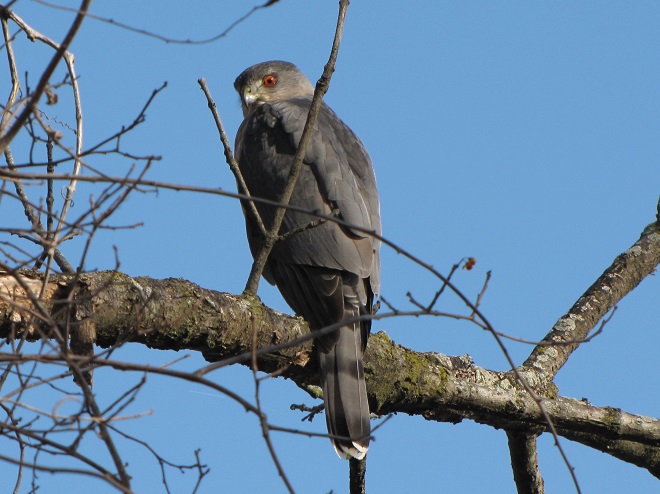
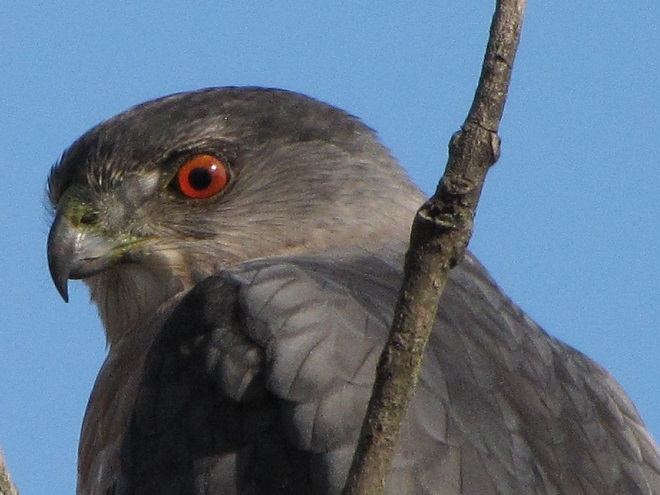
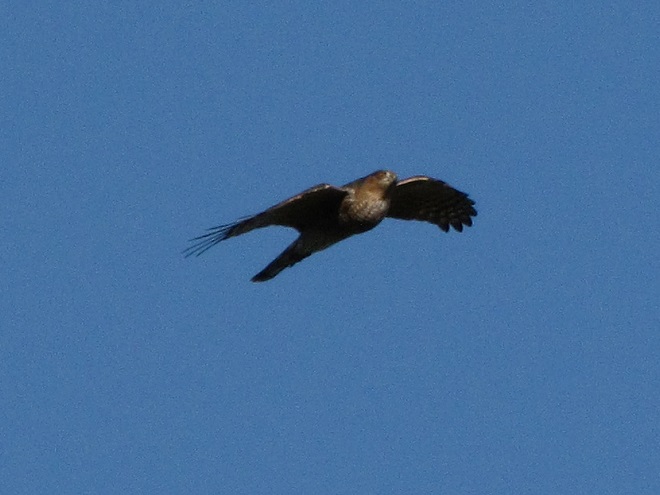
Along Wildwood Lake’s west shore, an adult male Sharp-shinned Hawk was soon attracted to the commotion created by bantering chickadees and other songbirds.
Yellow during the first year, the eyes of the Sharp-shinned Hawk get redder as the bird ages.
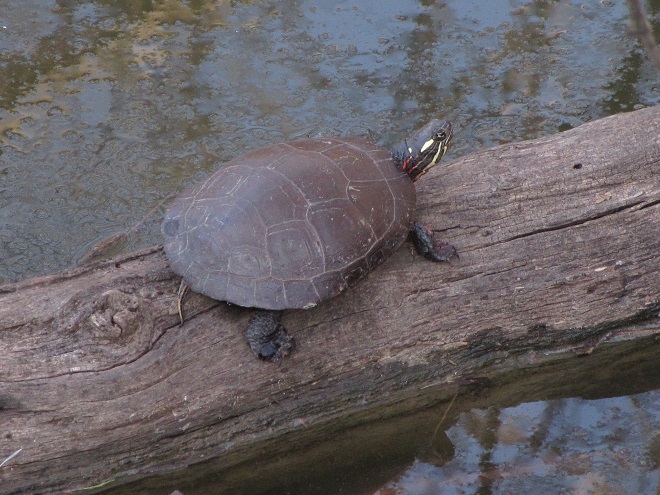
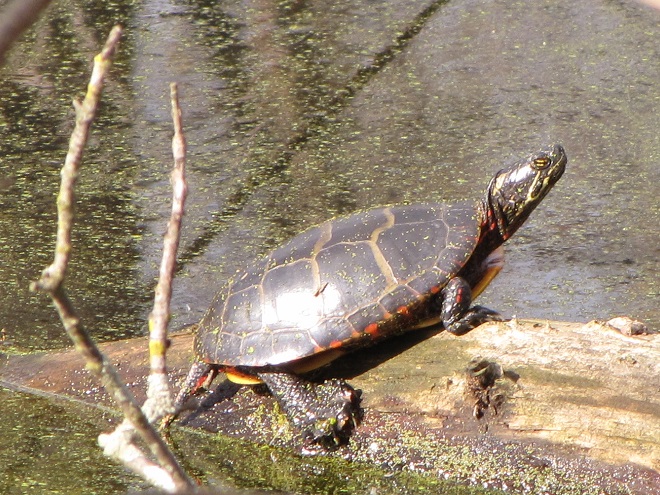
Also along the west border of Wildwood Lake, temperatures were warm enough to inspire Painted Turtles (Chrysemys picta) to seek a sun bath atop logs in the flooded portions of the abandoned Pennsylvania Canal.

And now, without further ado, it’s time for the waterfowl of Wildwood Lake—in order of their occurrence.

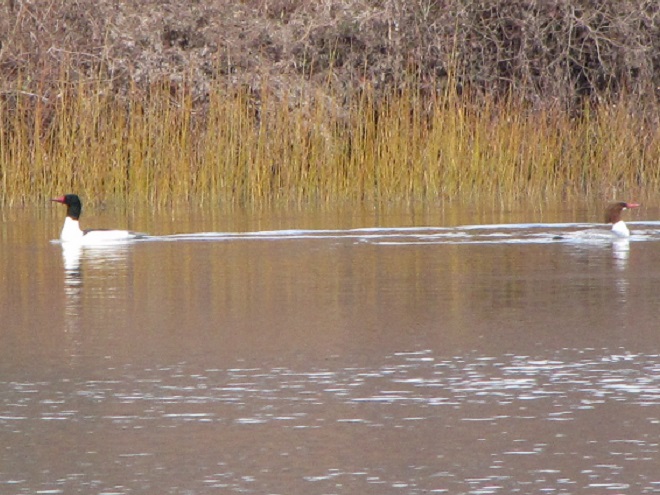
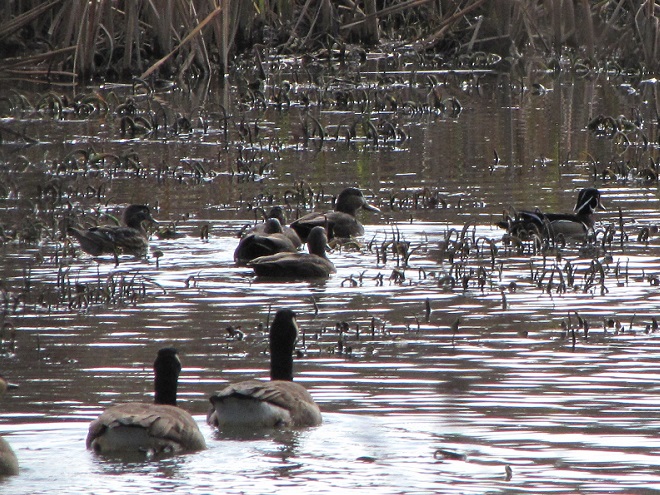
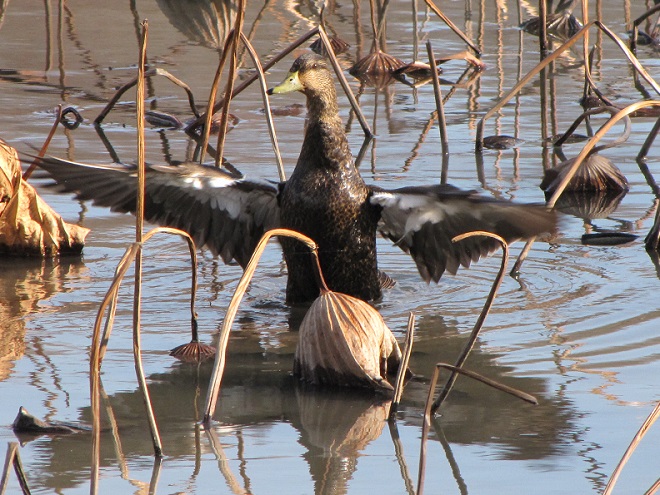
A pair of Wood Ducks (hen left, drake right) with American Black Ducks and Canada Geese.
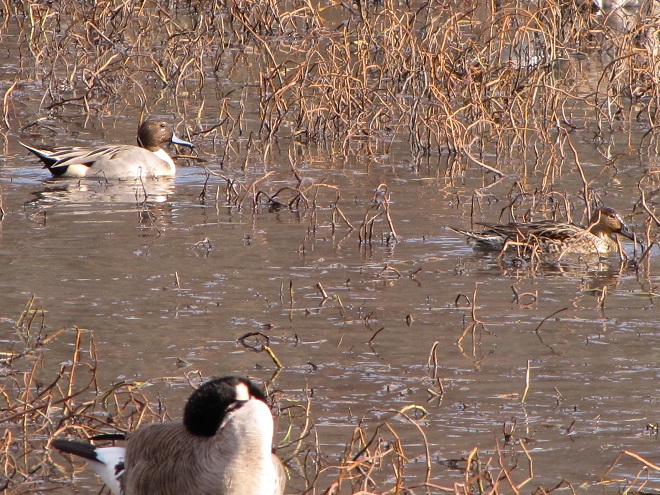
A pair of Northern Pintails.
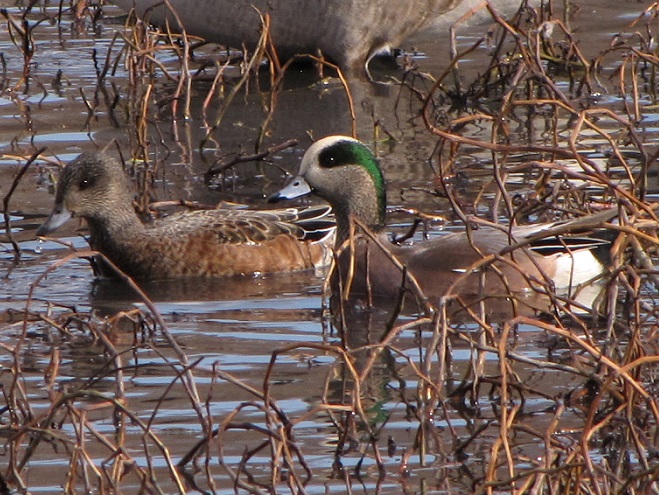
A pair of American Wigeons (Mareca americana).
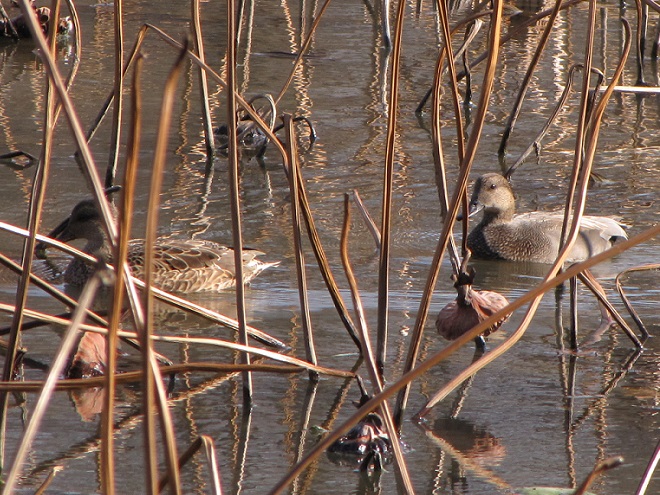
A hen (left) and drake (right) Gadwall.
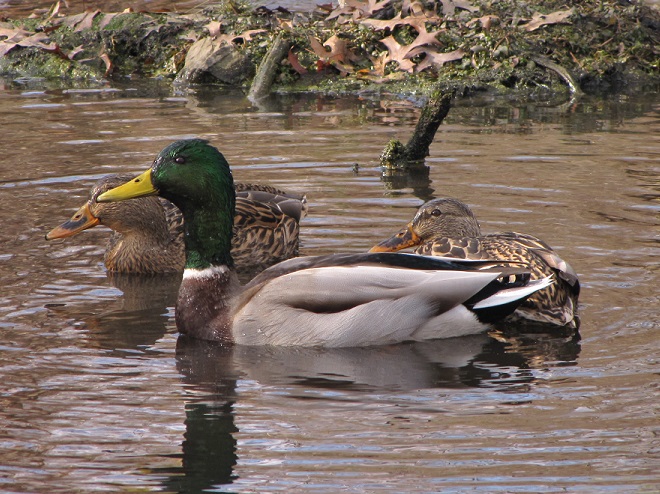
Mallards.
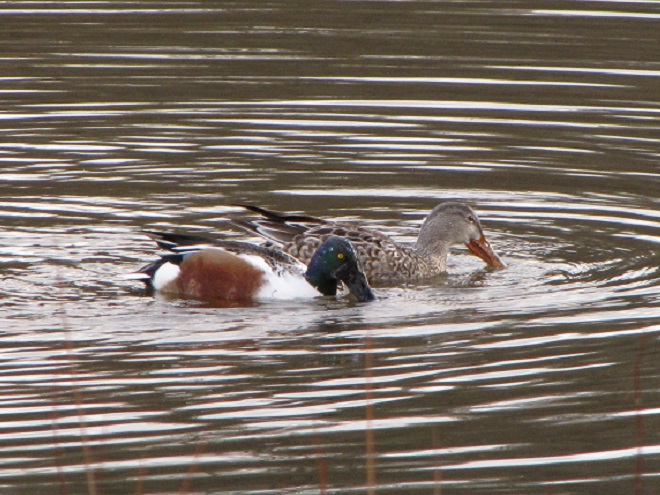
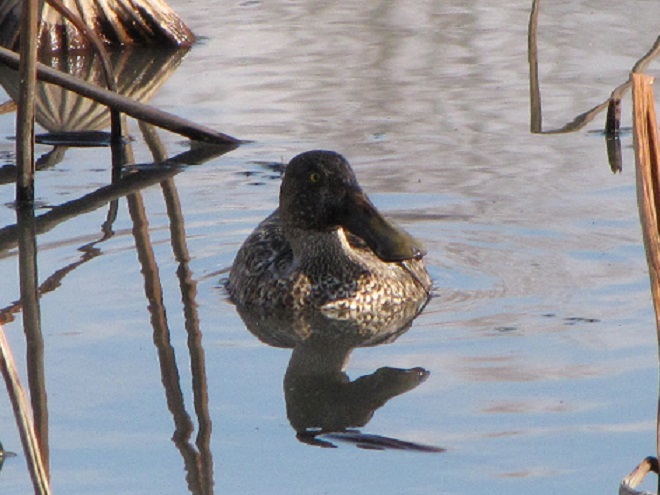
A female Northern Shoveler.
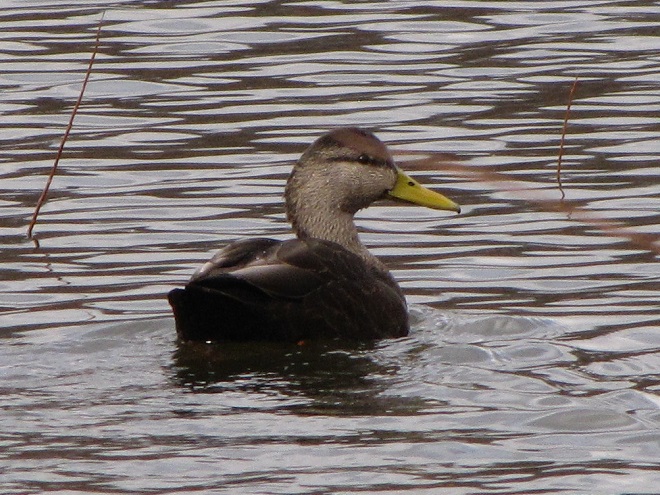
An American Black Duck.
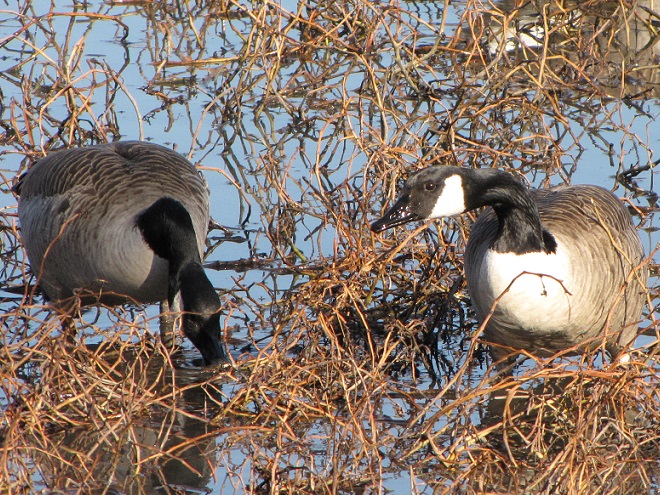
Canada Geese.
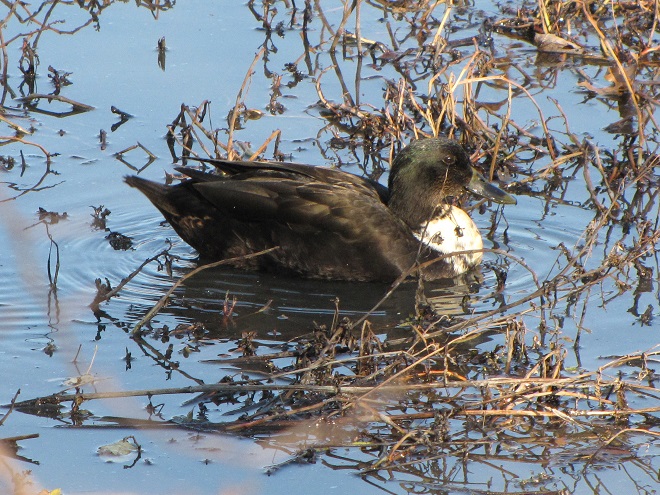
You just knew there had to be a booby prize, a “Blue Suede” (a.k.a. Blue Swede), a domestic variety of Mallard.
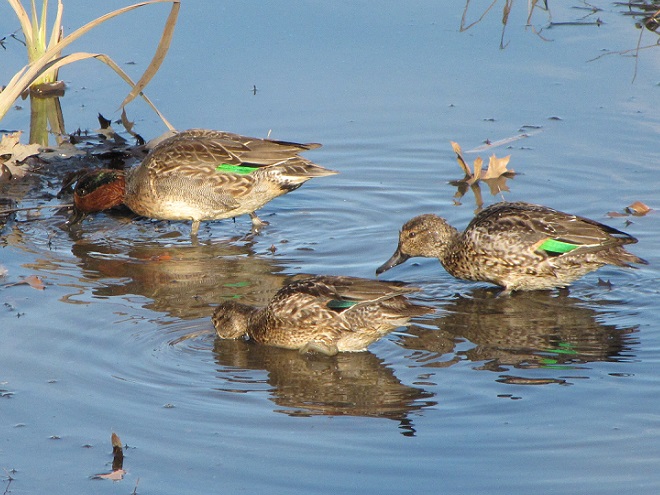
It’s a Green-winged Teal (Anas crecca) sampler.  Clockwise from left: a juvenile male, a female, and an adult male.
A drake and two hen Green-winged Teal.  Isn’t that great light by late afternoon?

See, you don’t have to cloak yourself in bright orange ceremonial garments just to go for a hike.  Go put on your walking shoes and a warm coat, grab your binoculars and/or camera, and have a look at wildlife in a city near you.  You never know what you might find.

SOURCES

Taylor, Scott A., Thomas A. White, Wesley M. Hochachka, Valentina Ferretti, Robert L. Curry, and Irby Lovette.  2014.  “Climate-Mediated Movement of an Avian Hybrid Zone”.  Current Biology.  24:6  pp.671-676.

Bald Eagles Arriving at Conowingo Dam

You need to see this to believe it—dozens, sometimes hundreds, of Bald Eagles doing their thing and you can stand or sit in just one place to take it all in.

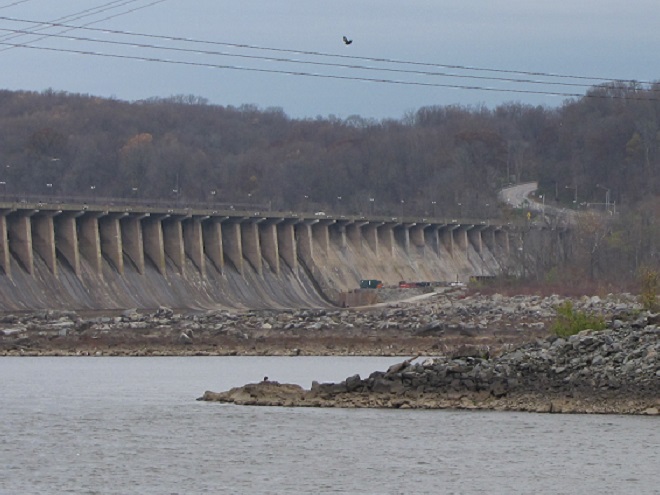
Conowingo Dam on the Susquehanna River near Darlington, Maryland, attracts piscivores galore.  Young Gizzard Shad (Dorosoma cepedianum) and other small fishes are temporarily stunned as they pass through the turbines and gated discharges at the hydroelectric facility’s power house.  Waiting for them in the rapids below are predatory fishes including Striped Bass (Morone saxatilis), White Perch (Morone americana), several species of catfishes, and more.  From above, fish-eating birds are on the alert for a disoriented turbine-traveler they can easily seize for a quick meal.

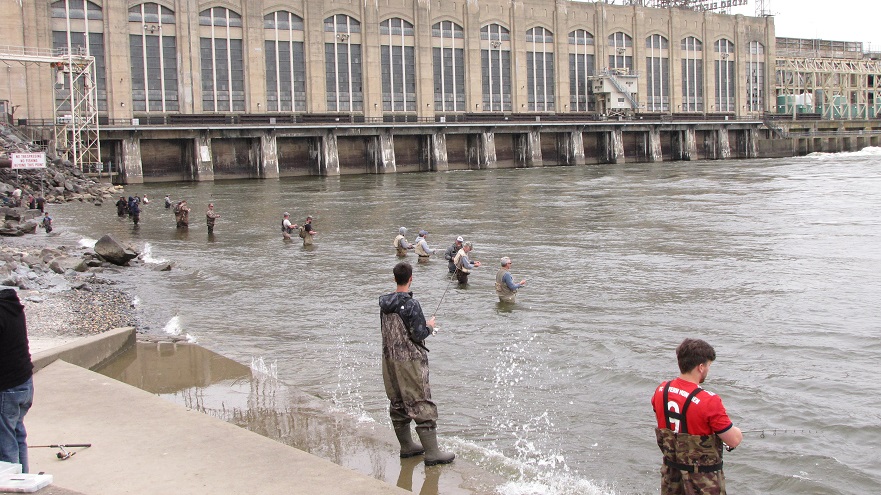
U.S. Route 1 crosses the Susquehanna River atop the Conowingo Dam.  Conowingo Fisherman’s Park, the observation site for the dam’s Bald Eagles and other birds, is located downstream of the turbine building along the river’s west (south) shore.  As the name implies, the park is a superb location for angling.
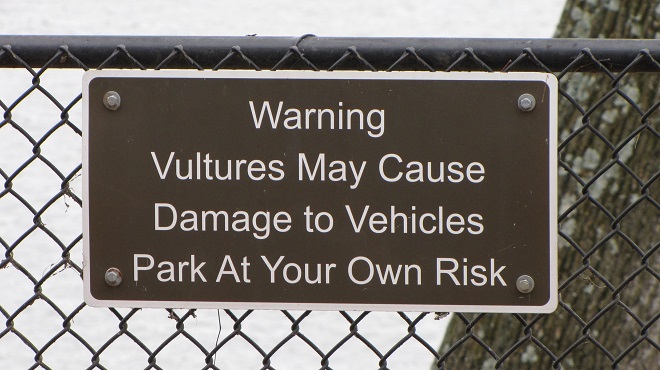
Heed this warning.  Close your windows and sunroof or the vultures will subject your vehicle’s contents to a thorough search for food.  Then they’ll deposit a little consolation prize on your paint.
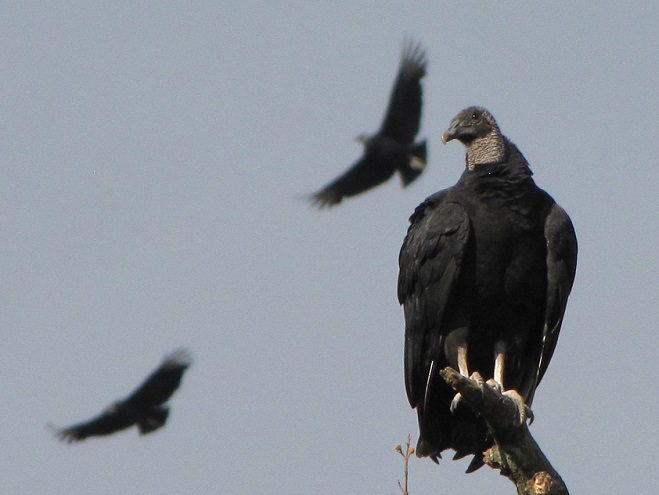
Scavenging Black Vultures congregate by the hundreds at Conowingo Dam to clean up the scraps left behind by people and predators.  They’ll greet you right in the parking lot.
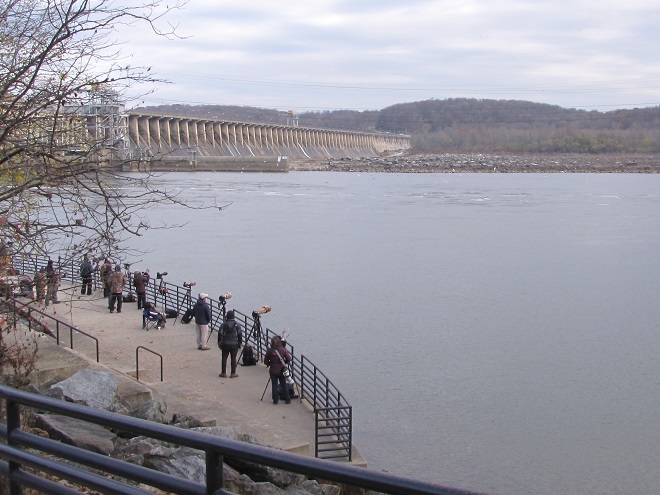
Photographers line up downstream of the turbine building for an opportunity to get the perfect shot of a Bald Eagle.
The operator of the Conowingo Hydroelectric Generating Station, Exelon Energy, provides clean comfortable facilities for fishing, sightseeing, and wildlife observation.
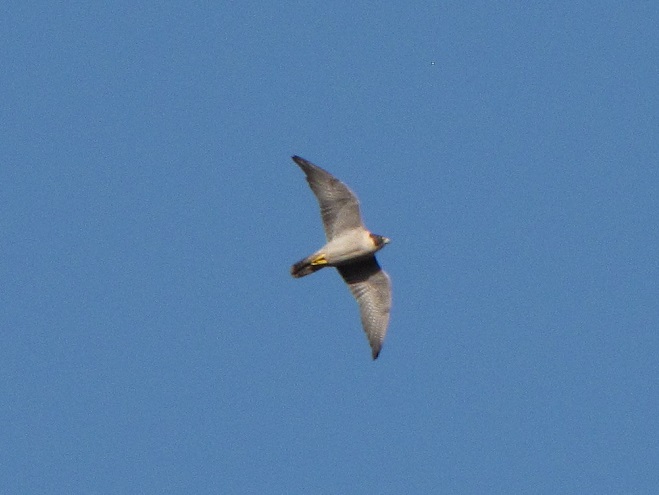
There’s almost always a Peregrine Falcon zooming around the dam to keep the pigeons on their toes.
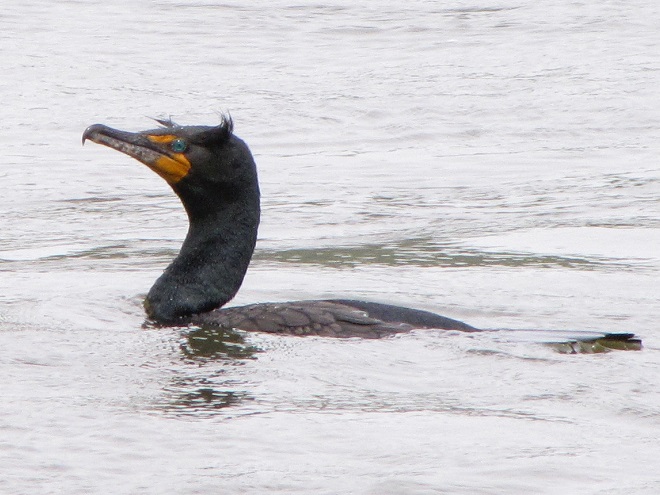
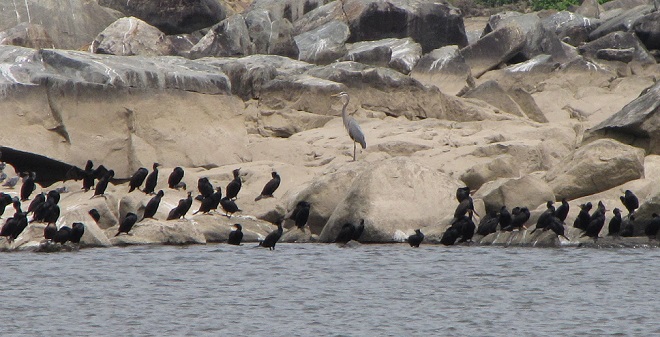
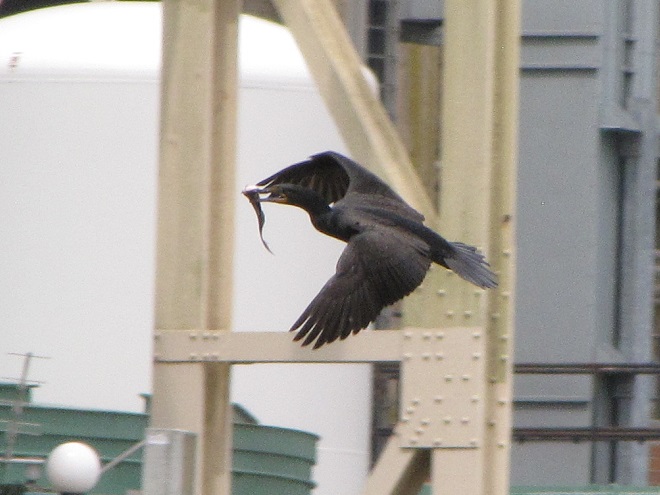
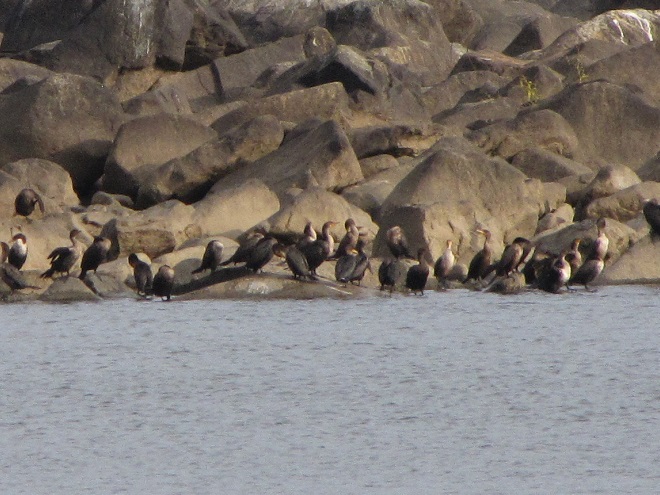
Double-crested Cormorants on the boulders that line the channel below the dam.  Hundreds are there right now.
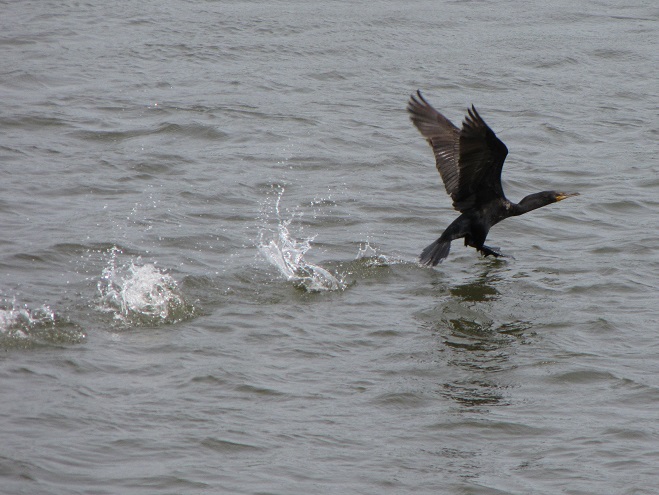
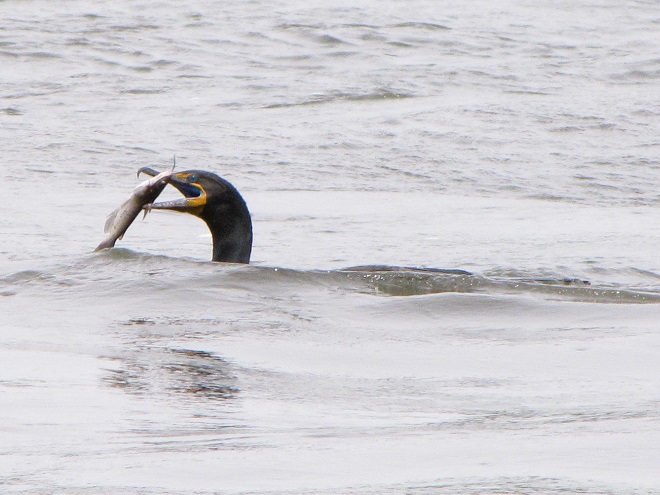
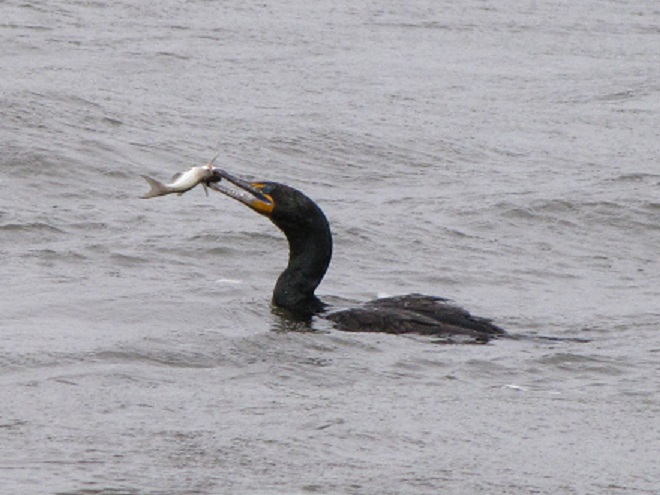
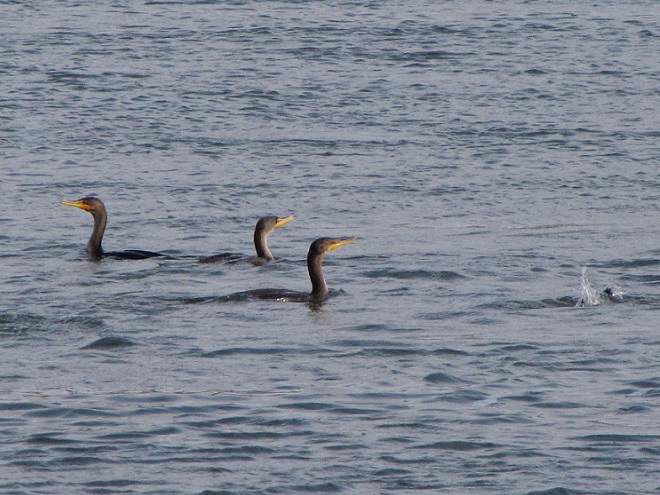
Double-crested Cormorants dive for fish near the power house discharge, which, while just one small generator is operating, seems nearly placid.  The feeding frenzy really gets going when Conowingo begins generating with multiple large turbines and these gently flowing waters become torrential rapids filled with disoriented fishes.
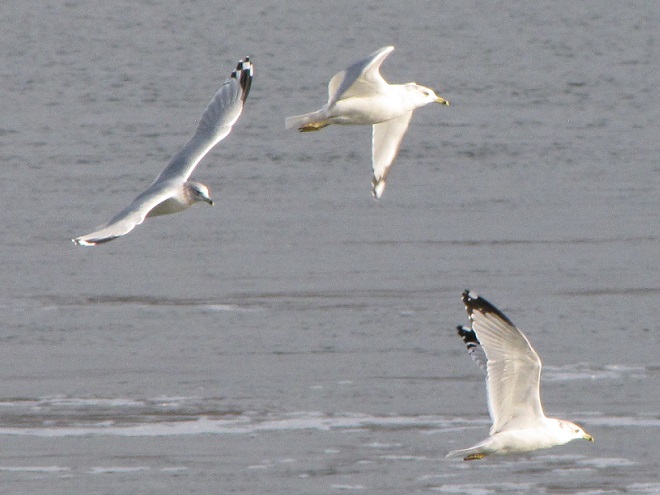
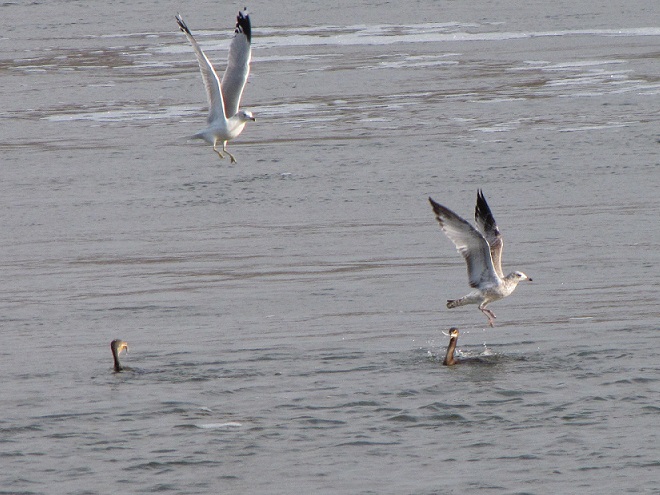
Ring-billed Gulls seek to snag a small fish from the water’s surface.
After successfully nabbing shad or perch, these Double-crested Cormorants need to swallow their catch fast or risk losing it.  Stealing food is a common means of survival for the gulls, eagles, and other birds found here.
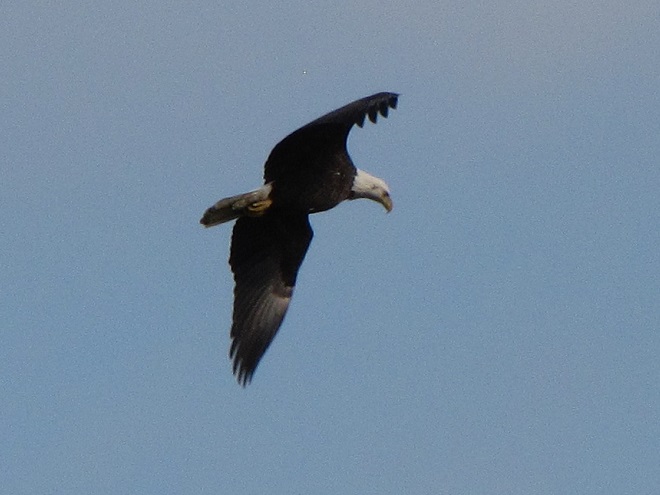
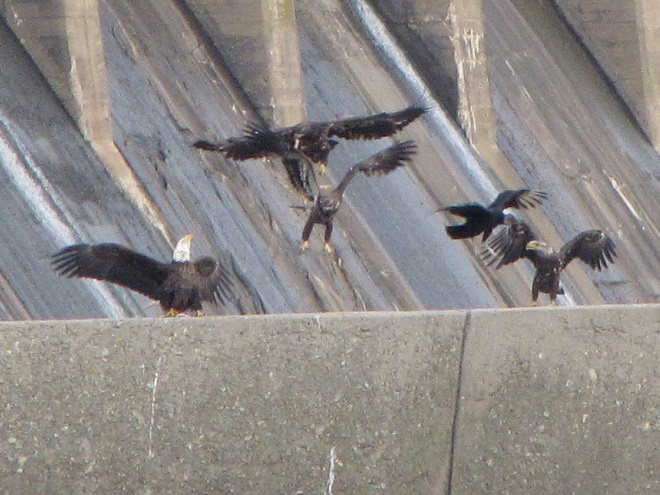
Where do migrating eagles go?  There are, right now, at least 50 Bald Eagles at Conowingo Dam, with more arriving daily.  Numbers are likely to peak during the coming weeks.
Eagles can be seen perched in the woods along both river shorelines, even in the trees adjacent to the Conowingo Fisherman’s Park car lot.  Others take stand-by positions on the boulders below the dam.
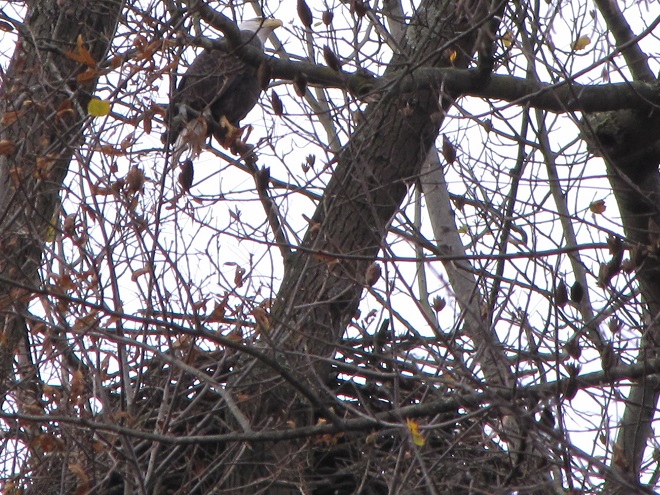
To remind visiting eagles that they are merely guests at Conowingo, a resident Bald Eagle maintains a presence at its nest on the wooded slope above Fisherman’s Park.  Along the lower Susquehanna, female Bald Eagles lay eggs and begin incubation in January.
When an eagle decides to venture out and attempt a dive at a fish, that’s when the photographers rush to their cameras for a chance at a perfect shot.
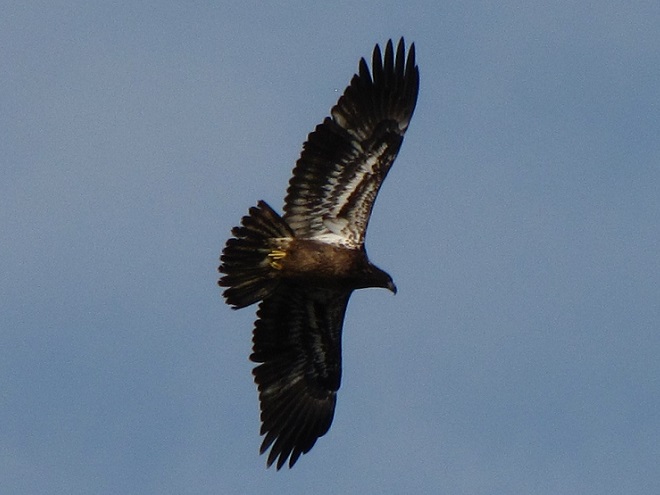
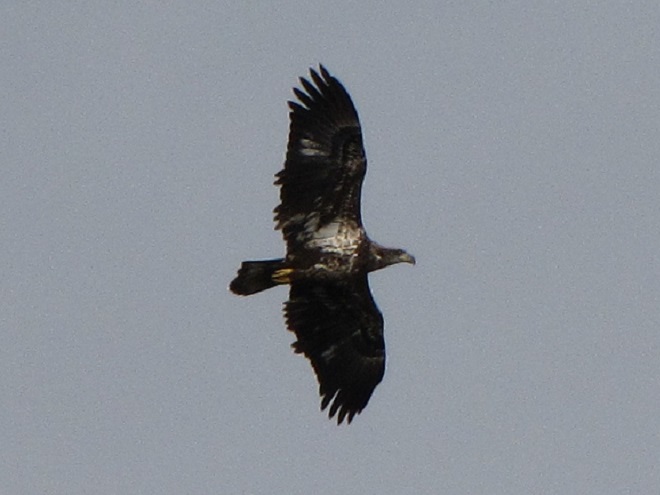
The extraordinary concentrations of Bald Eagles at Conowingo make it an excellent place to study the plumage differences between birds of various ages.
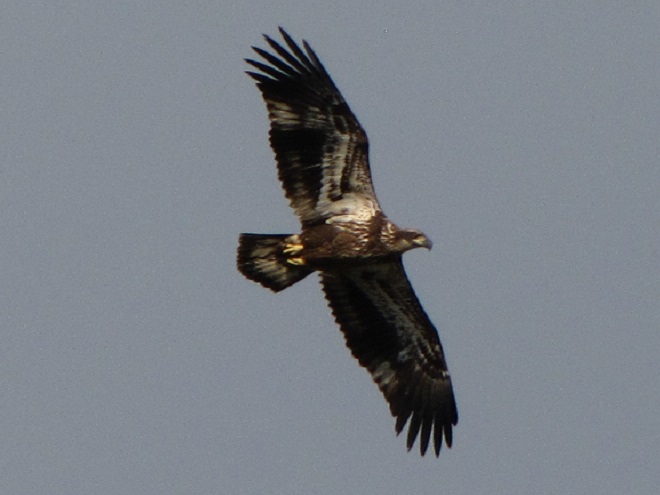
Here’s a first-year Bald Eagle, also known as a hatch-year or juvenile bird.
A second-year or Basic I immature Bald Eagle.  Note the long juvenile secondaries giving the wings a ragged-looking trailing edge.
A third-year or Basic II immature Bald Eagle.
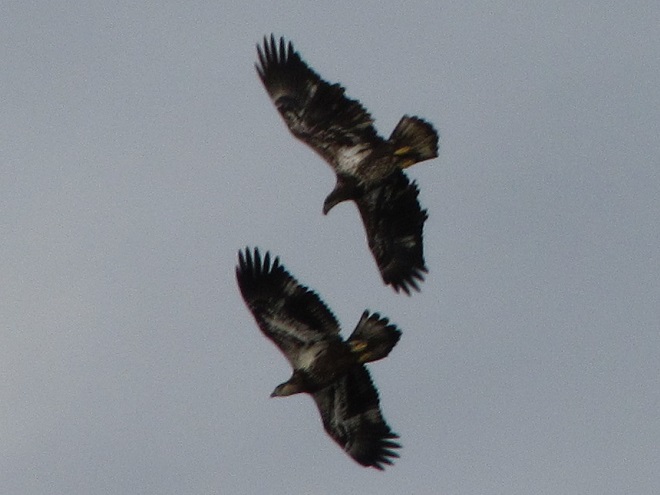
A second-year/Basic I immature Bald Eagle (top) and a third-year/Basic II immature Bald Eagle (bottom).
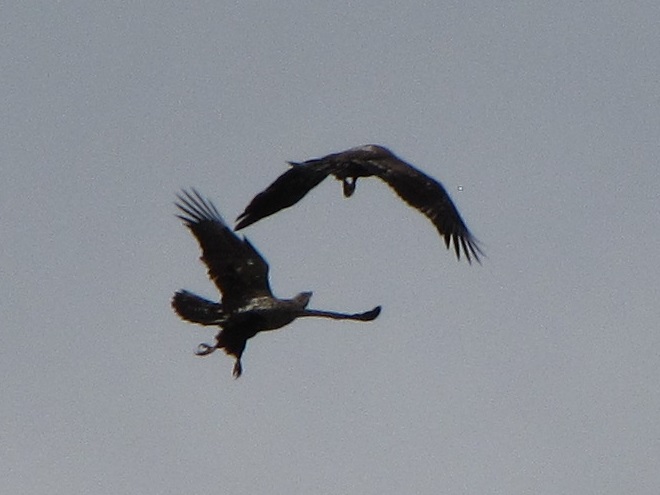
A second-year/Basic I immature Bald Eagle (bottom) and a third-year/Basic II immature Bald Eagle (top).  Note the white feathers on the backs of eagles in these age classes.
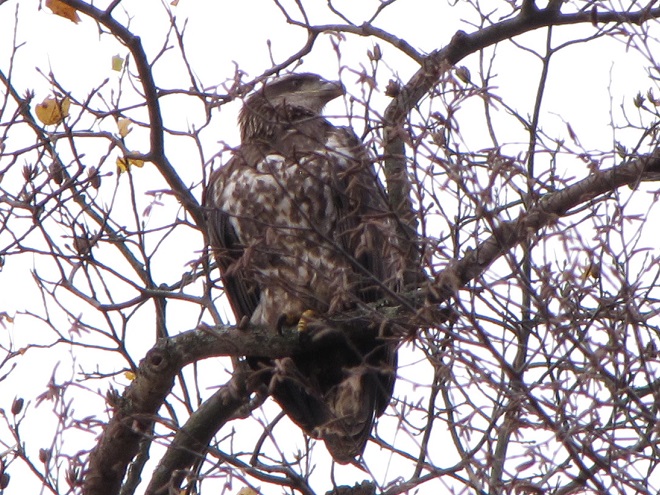
A third-year/Basic II immature Bald Eagle perched in a tree alongside the parking area.  Note the Osprey-like head plumage.
A sixth-year or older adult Bald Eagle in definitive plumage (left) and a fourth-year or Basic III immature Bald Eagle (right).
If you want to see the Bald Eagles at Conowingo Dam, don’t wait.  While many birds are usually present throughout the winter, the large concentrations may start dispersing as early as December when eagles begin wandering in search of other food sources, particularly if the river freezes.
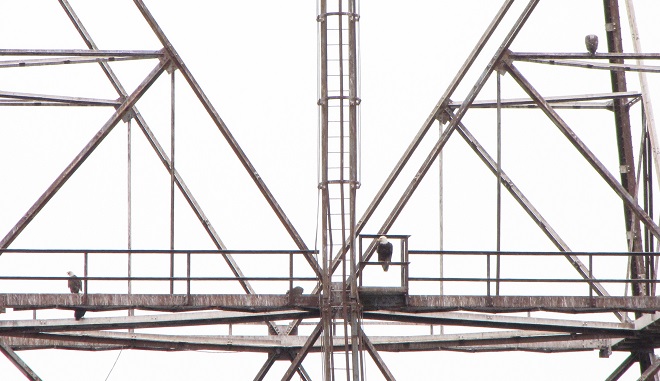
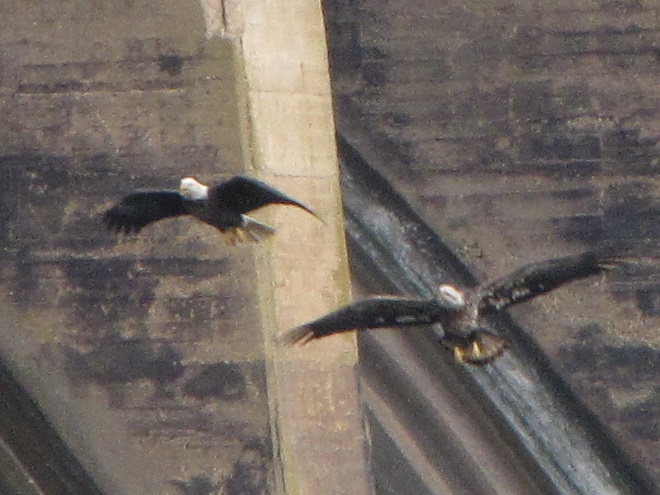
A pair of Bald Eagles is already working on a nest atop this powerline trestle downstream of Conowingo Dam.  By late December, most adult eagles will depart Conowingo to begin spending their days establishing and defending breeding territories elsewhere.  Any non-adult eagles still loitering around the dam will certainly begin receiving encouragement from the local nesting pair(s) to move along as well.

To reach Exelon’s Conowingo Fisherman’s Park from Rising Sun, Maryland, follow U.S. Route 1 south across the Conowingo Dam, then turn left onto Shuresville Road, then make a sharp left onto Shureslanding Road.  Drive down the hill to the parking area along the river.  The park’s address is 2569 Shureslanding Road, Darlington, Maryland.

As Bald Eagle numbers continue to increase, expect the parking lot to become full during weekends and over the Thanksgiving holiday.  To avoid the crowds, plan to visit during a weekday.

You can get the generating schedule for the Conowingo Dam by calling the Conowingo Generation Hotline at 888-457-4076.  The recording is updated daily at 5 P.M. to provide information for the following day.

Migrating Golden Eagles

Why would otherwise sensible people perch themselves atop a rocky outcrop on a Pennsylvania mountaintop for ten hours on a windy bone-numbing bitter cold and sometimes snowy November day?  To watch migrating raptors of course.

November is the time when big hawks and eagles migrate through and into the lower Susquehanna valley.  And big birds rely on big wind to create updrafts and an easy ride along the region’s many ridges.  The most observable flights often accompany the arrival of cold air surging across the Appalachian Mountains from the northwest.  These conditions can propel season-high numbers of several of the largest species of raptors past hawk-counting sites.

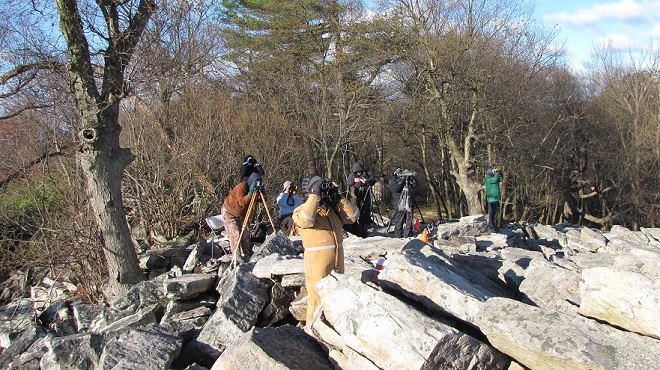
Observers brave howling winds on the Waggoner’s Gap lookout to census migrating late-season raptors.

Earlier this week, two windy days followed the passage of a cold front to usher-in spectacular hawk and eagle flights at the the Waggoner’s Gap Hawk Watch station on Blue Mountain north of Carlisle, Pennsylvania.  Steady 30 M.P.H. winds from the northwest on Monday, November 2, gusted to 50 M.P.H. at times.  Early that morning, two Rough-legged Hawks, rarities at eastern hawk watches, were seen.  They and two American Goshawks (Astur atricapillus) provided a preview of the memorable sightings to come.  Two dozen Golden Eagles migrated past the lookout that day.  Then on November 3, thirty Golden Eagles were tallied, despite west winds at speeds not exceeding half those of the day before.

Here are some of the late-season raptors seen by hardy observers at Waggoner’s Gap on Monday and Tuesday, November 2 & 3.

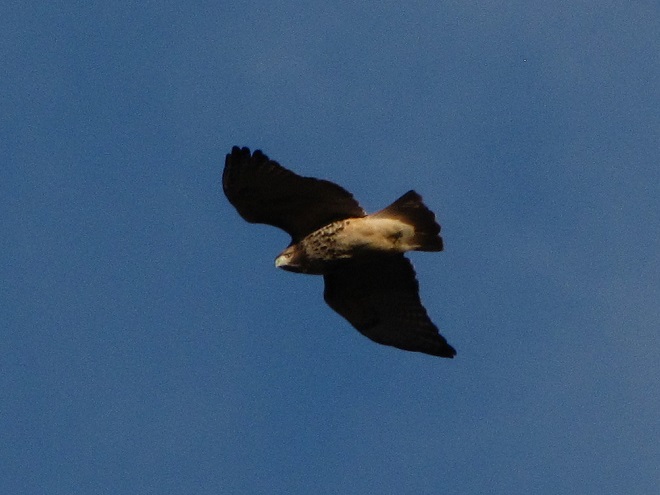
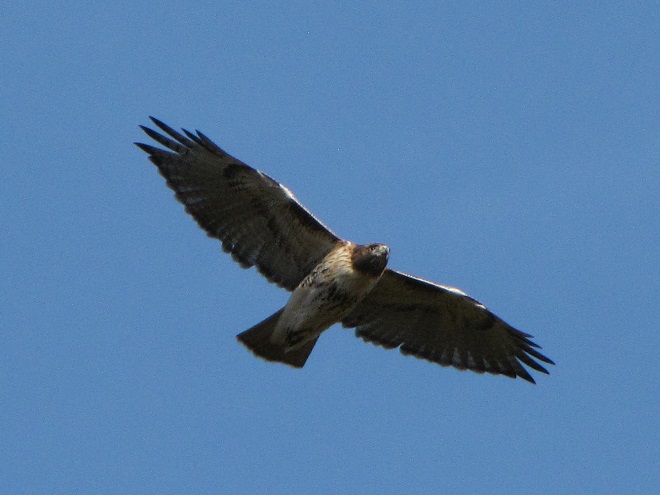
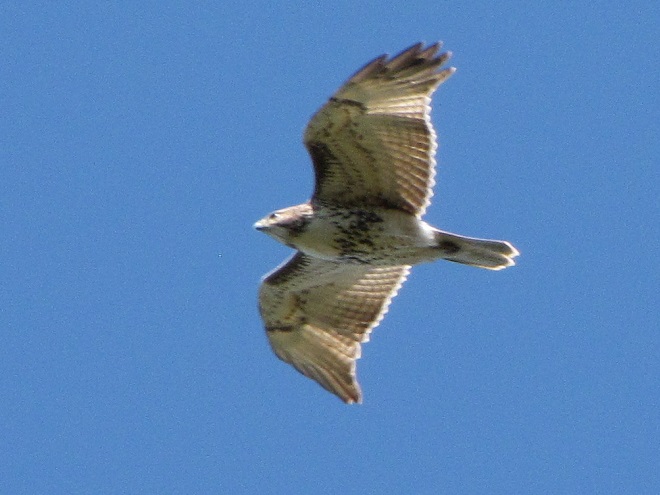
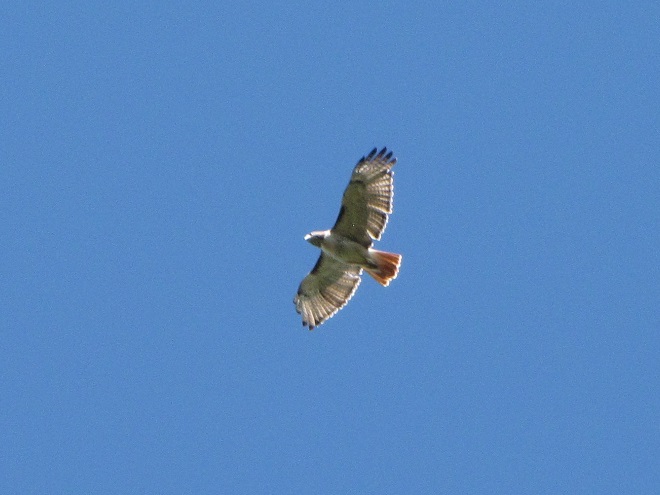
In November, Red-tailed Hawks are the most common migratory raptor counted at hawk watch stations in the Susquehanna region.
 A juvenile American Goshawk passes the Waggoner's Gap lookout.
An uncommon bird, a juvenile American Goshawk, passes the Waggoner’s Gap lookout.
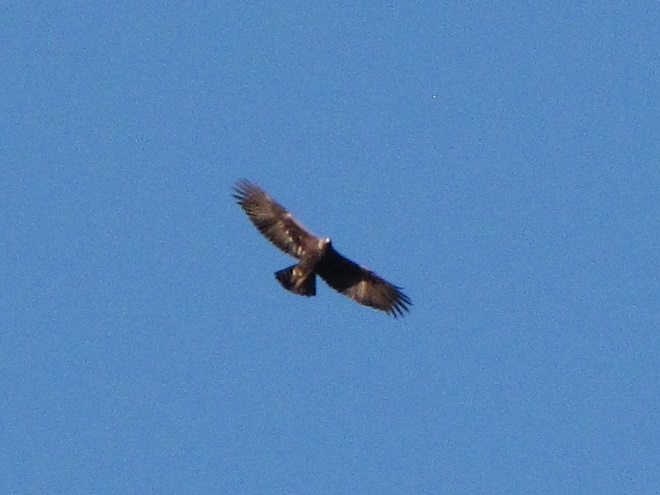
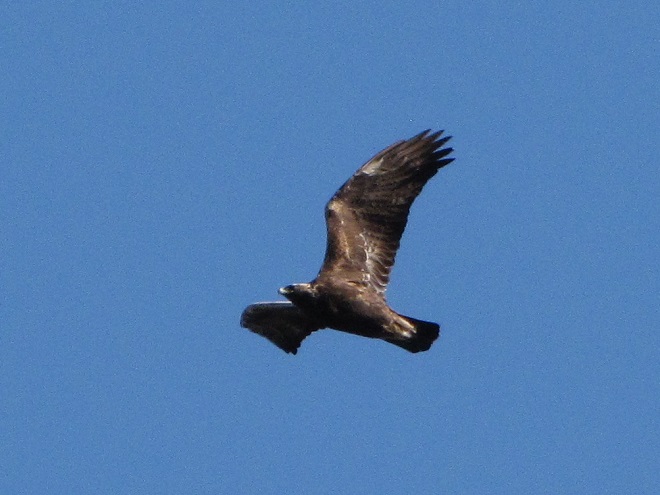
An adult Golden Eagle circles on an updraft along the north face of Blue Mountain to gain altitude before continuing on its journey.
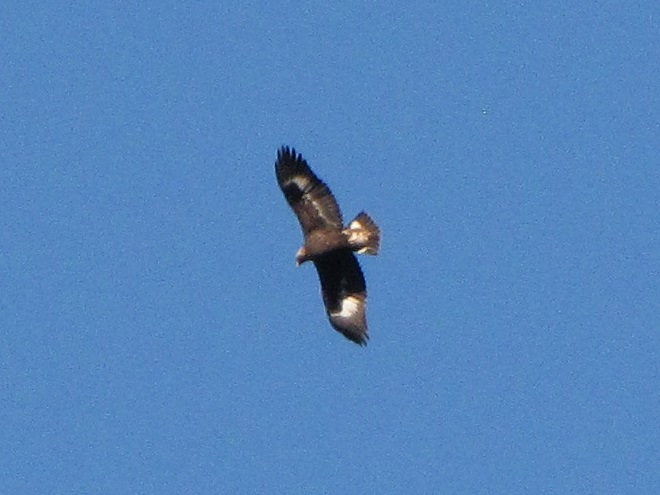
The plumage of juvenile and immature Golden Eagles often creates a sensation among crowds at a lookout.  Golden Eagles don’t attain a full set of adult feathers until their sixth year.  This individual is probably a juvenile, also known as a hatch-year or first-year bird.  At most, it could be in its second year.  Click the “Golden Eagle Aging Chart” tab on this page to learn more about these uncommon migrants and their molt sequences as they mature.
The gilded head feathers of a Golden Eagle glisten in the afternoon sun.
An adult Golden Eagle passing Waggoner’s Gap.  The population known as “Eastern Golden Eagles” winters in the Appalachian Mountains and, with increasing frequency, on the Piedmont and Atlantic Coastal Plain Provinces of the eastern United States, where it often subsists as a scavenger.
Another first-year (juvenile) or second-year Golden Eagle.
A local Red-tailed Hawk (top left) trying to bully a migrating Golden Eagle.  A dangerous business indeed.
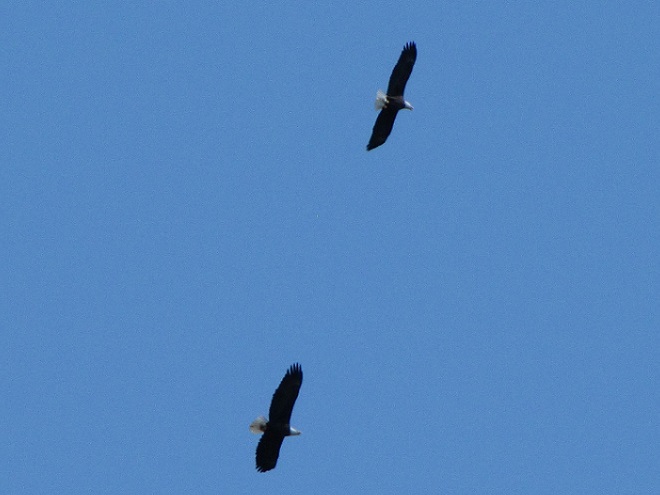
Through December, Bald Eagles, presently the more common of our eagle species, are regular migrants at Waggoner’s Gap and other Susquehanna valley hawk watch sites.
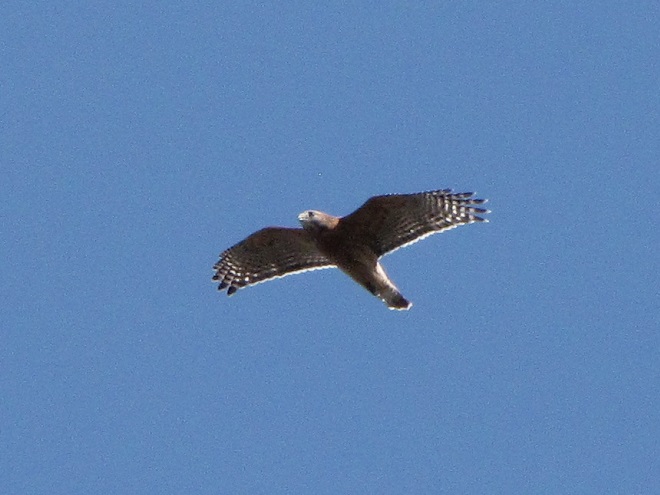
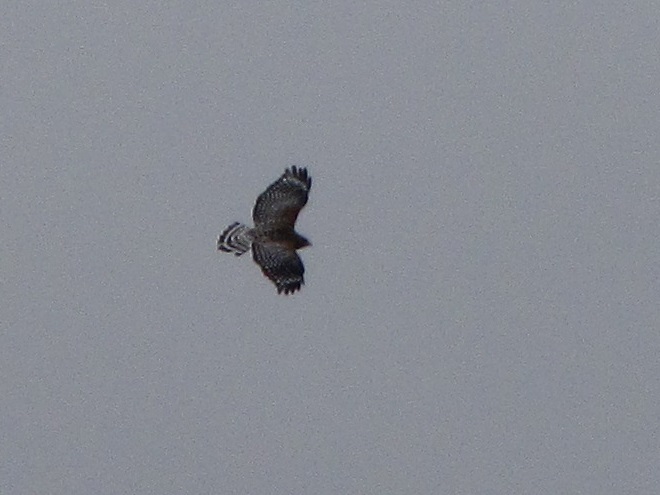
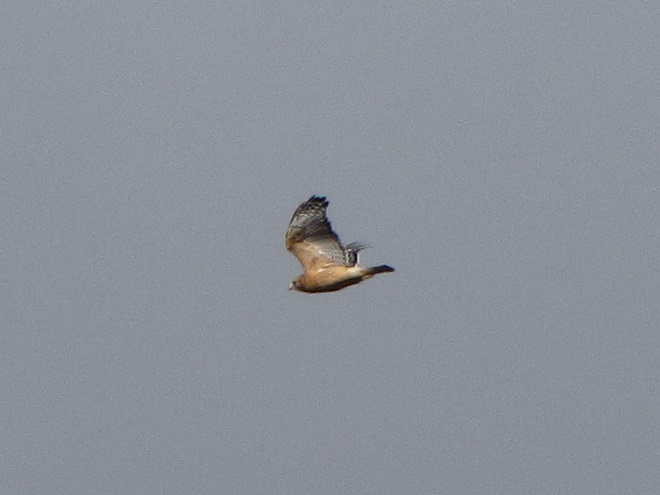
Red-shouldered Hawks are reliable early November migrants.
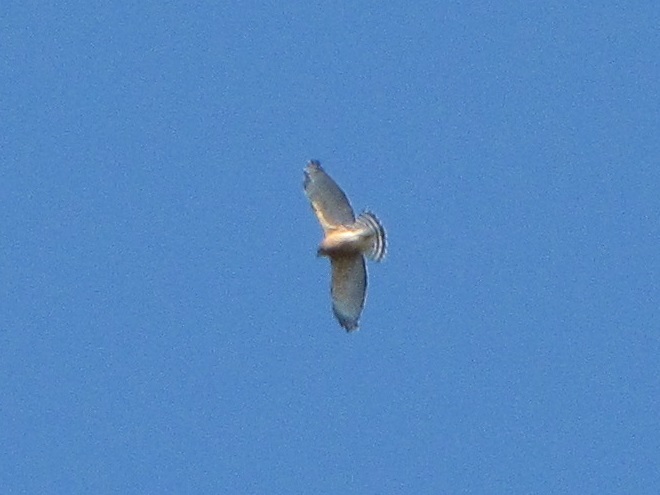
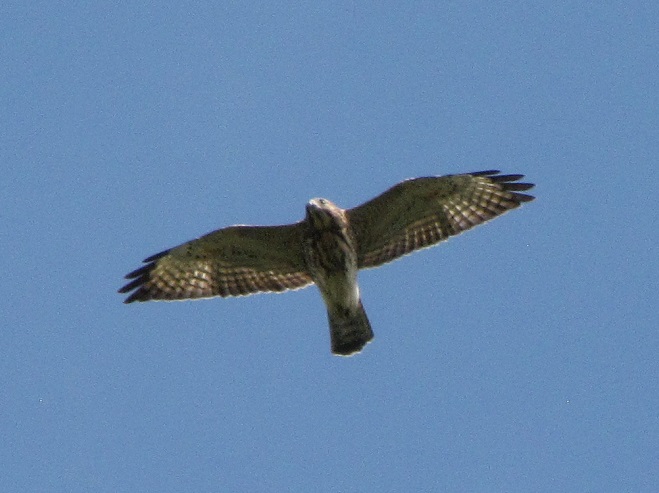
An adult Red-shouldered Hawk from above.
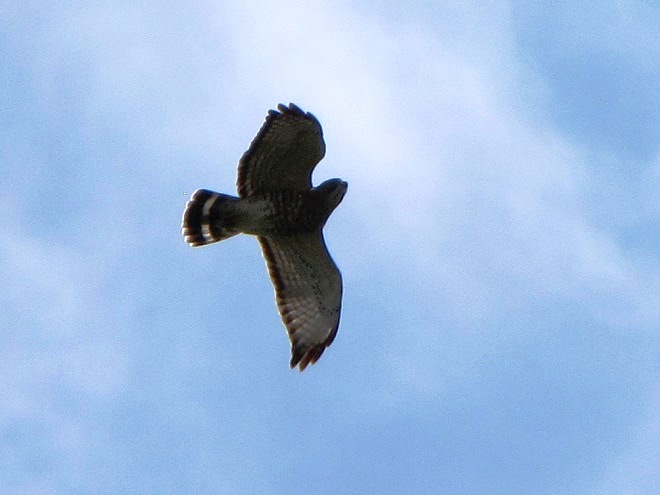
And an adult Red-shouldered Hawk from below.
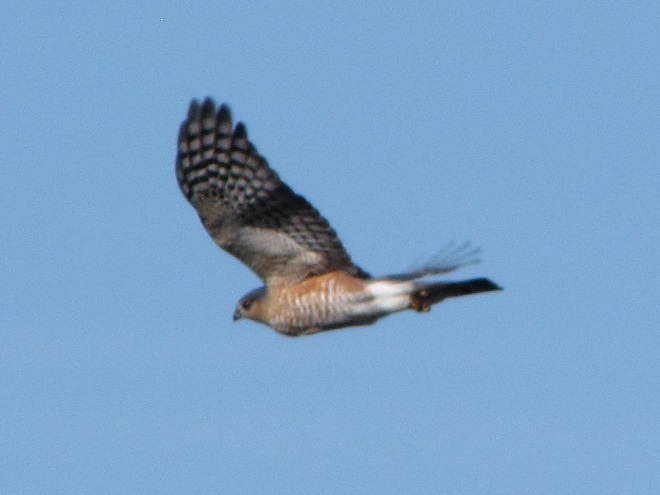
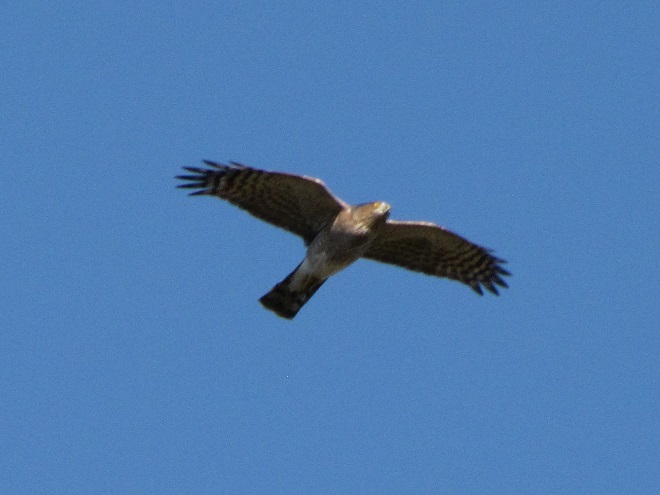
Though their numbers peak in early October, Sharp-shinned Hawks, particularly adults like this one, continue to be seen through early November.
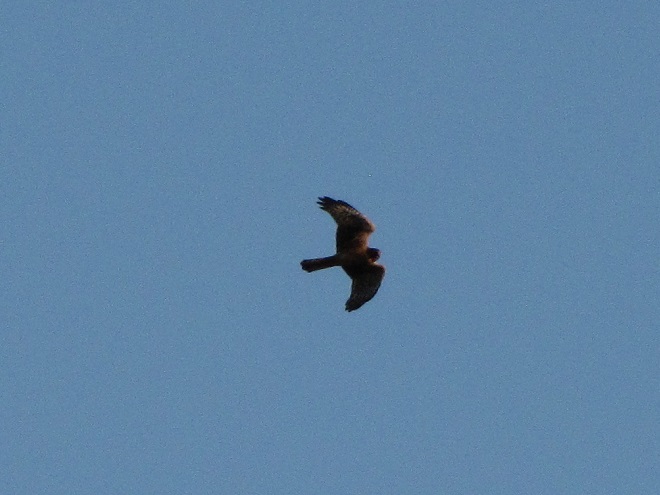
A Northern Harrier on the glide path overhead.
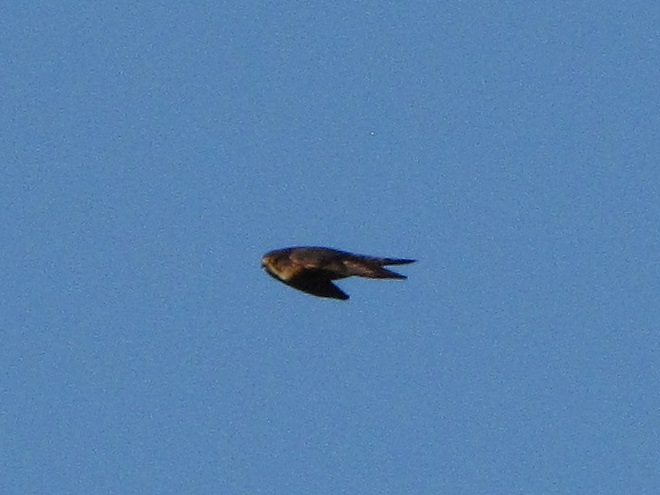
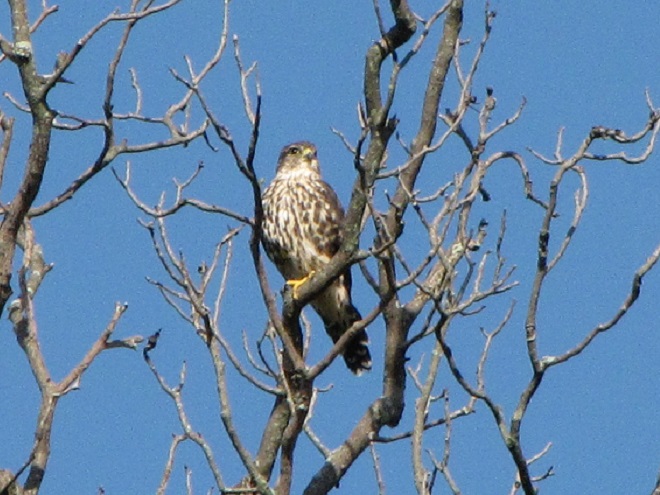
Merlins, like other falcons, are more apt to be seen in late September and October, but a few trickle through in November.

While visiting a hawk watch, one will certainly have the opportunity to see other birds too.

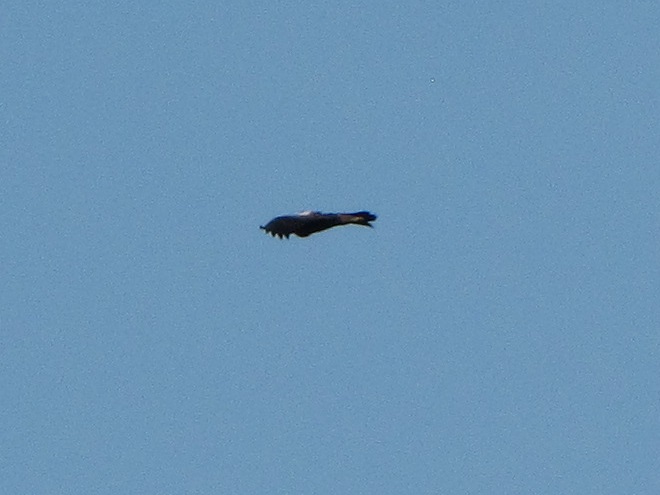
Common Ravens are fascinating birds and regular visitors to the airspace around hawk watches.  Most are residents, but there appears to be some seasonal movement, particularly among younger birds.
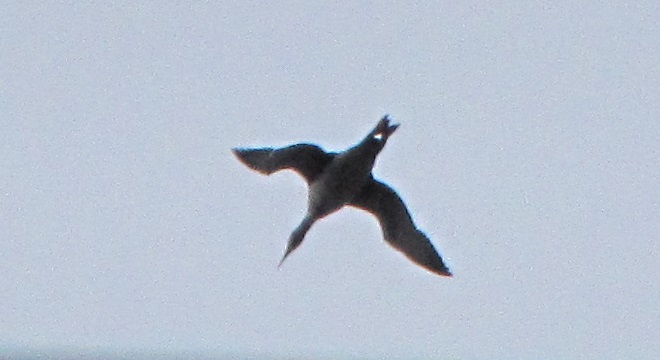
Most people think of Common Loons as birds of northern lakes.  But loons spend their winters in the ocean surf, and to get there they fly in loose flocks over the Lower Susquehanna River Watershed each spring and fall.  They are regularly seen by observers at hawk watches.
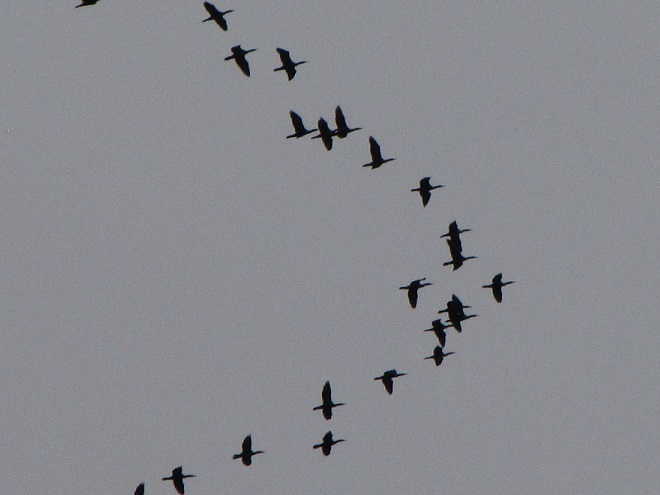
Like ducks, geese, and swans, migrating Double-crested Cormorants assemble into aerodynamic V-shaped flocks to conserve energy.
Pine Siskins continue their invasion from the north.  Dozens of small flocks numbering 10 to 20 birds each continue to be seen and/or heard daily at Waggoner’s Gap.  A flock of Evening Grosbeaks (Coccothraustes vesperitinus), another irruptive species of “winter finch”, was seen there on November 3.

As a finale of sorts, near the close of the day on November 3, two Golden Eagles sailed past the north side of the Waggoner’s Gap lookout, one possessing what appeared to be a tracking transmitter on its back.  An effort was commenced by the official count staff to report the sighting to the entity monitoring the bird—to track down the tracker, so to speak.

A Golden Eagle with a backpack transmitter passing Waggoner’s Gap Hawk Watch at 3:39 P.M. Eastern Standard Time on November 3, 2020.

To see the count reports from Waggoner’s Gap and other hawk watches throughout North America, be certain to visit hawkcount.org

October Transition

Thoughts of October in the Lower Susquehanna River Watershed bring to mind scenes of brilliant fall foliage adorning wooded hillsides and stream courses, frosty mornings bringing an end to the growing season, and geese and other birds flying south for the winter.

The autumn migration of birds spans a period equaling nearly half the calendar year.  Shorebirds and Neotropical perching birds begin moving through as early as late July, just as daylight hours begin decreasing during the weeks following their peak at summer solstice in late June.  During the darkest days of the year, those surrounding winter solstice in late December, the last of the southbound migrants, including some hawks, eagles, waterfowl, and gulls, may still be on the move.

The Rough-legged Hawk (Buteo lagopus), a rodent-eating raptor of tundra, grassland, and marsh, is rare as a migrant and winter resident in the lower Susquehanna valley.  It may arrive as late as January, if at all.

During October, there is a distinct change in the list of species an observer might find migrating through the lower Susquehanna valley.  Reduced hours of daylight and plunges in temperatures—particularly frost and freeze events—impact the food sources available to birds.  It is during October that we say goodbye to the Neotropical migrants and hello to those more hardy species that spend their winters in temperate climates like ours.

During several of the first days of October, two hundred Chimney Swifts remained in this roost until temperatures warmed from the low forties at daybreak to the upper fifties at mid-morning; then, at last, the flock ventured out in search of flying insects.  When a population of birds loses its food supply or is unable to access it, that population must relocate or perish.  Like other insectivorous birds, these swifts must move to warmer climes to be assured a sustained supply of the flying bugs they need to survive.  Due to their specialized food source, they can be considered “specialist” feeders in comparison to species with more varied diets, the “generalists”.  After returning to this chimney every evening for nearly two months, the swifts departed this roost on October 5 and did not return.
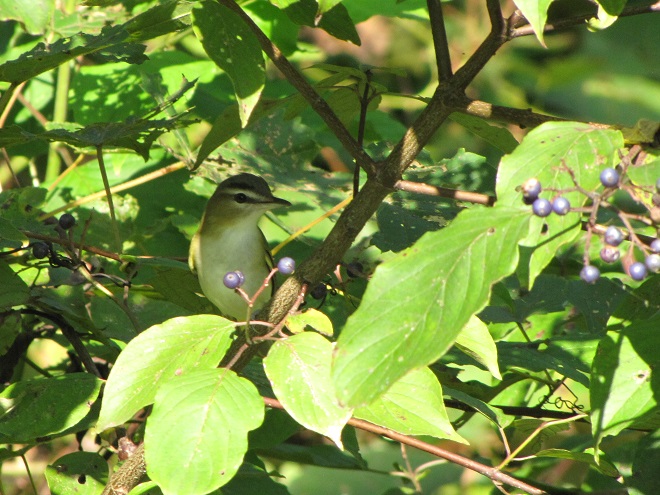
A Northern Parula lingers as an October migrant along the Susquehanna.  This and other specialist feeders that survive almost entirely on insects found in the forest canopy are largely south of the Susquehanna watershed by the second week of October.
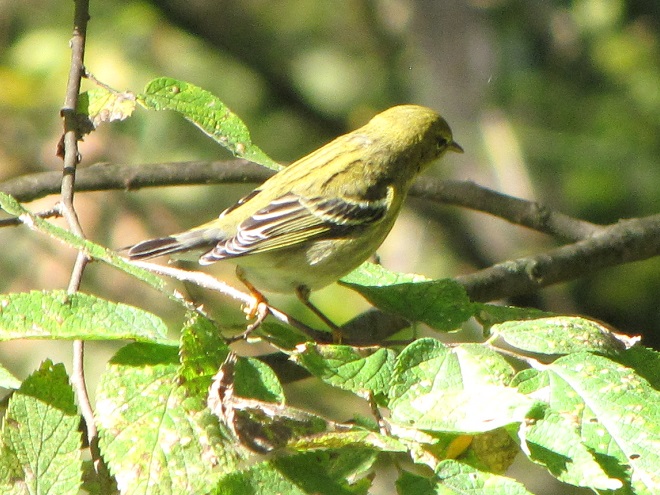
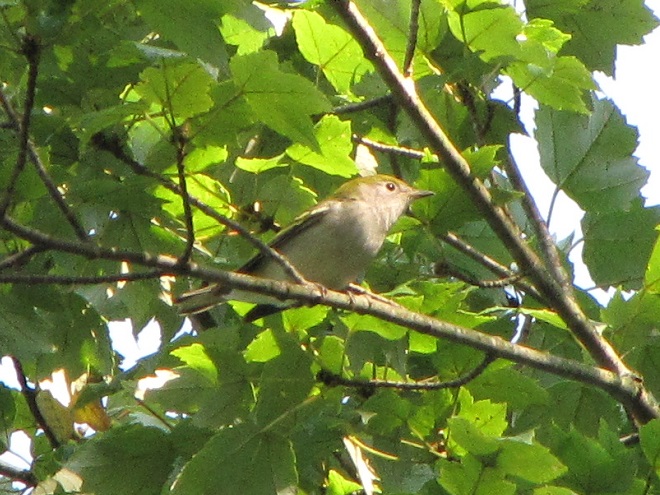
The Blackpoll Warbler is among the last of the insectivorous Neotropical warblers to pass through the riparian forests of the lower Susquehanna valley each fall.  Through at least mid-October, it is regularly seen searching for crawling insects and larvae among the foliage and bark of Northern Hackberry (Celtis occidentalis) trees near Conewago Falls.  Most other warblers, particularly those that feed largely upon flying insects, are, by then, already gone.
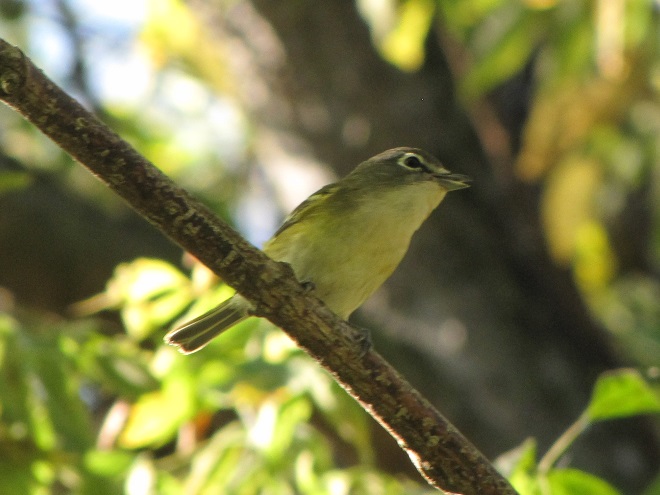
The Blue-headed Vireo, another insectivore, is the last of the vireo species to pass through the valley.  They linger only as long as there are leaves on the trees in which they feed.
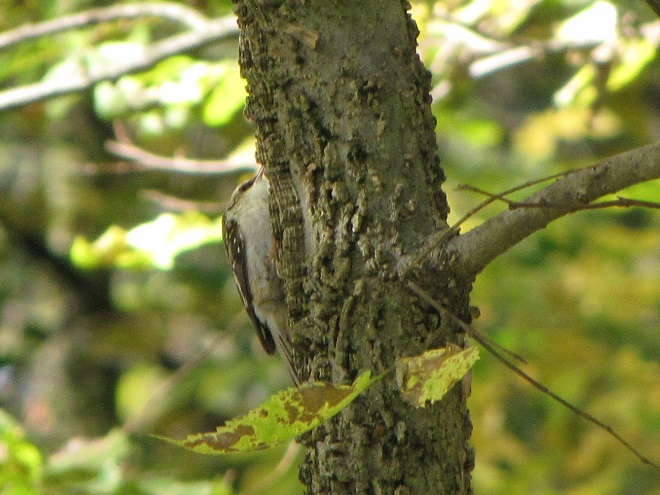
Brown Creepers begin arriving in early October.  They are specialist feeders, well-adapted to finding insect larvae and other invertebrates among the ridges and peeling bark of trees like this hackberry, even through the winter months.
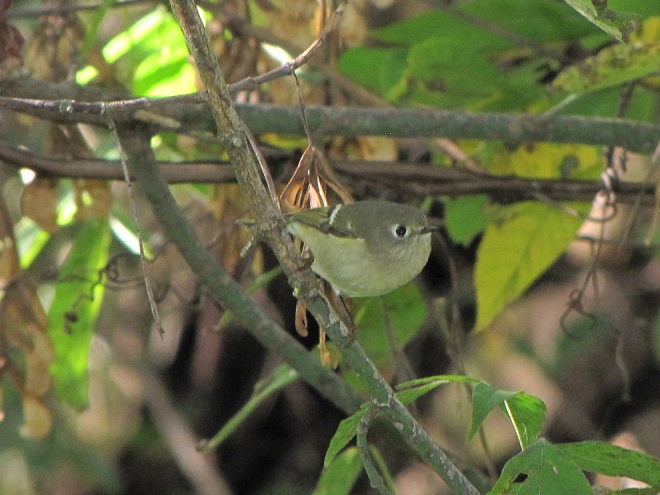
Ruby-crowned Kinglets can be abundant migrants in October.  They will often behave like cute little flycatchers, but quickly transition to picking insects and other invertebrates from foliage and bark as the weather turns frosty.  Some may spend the winter here, particularly in the vicinity of stands of pines, which provide cover and some thermal protection during storms and bitter cold.
Beginning in early October, Golden-crowned Kinglets can be seen searching the forest wood for tiny invertebrates.  They are the most commonly encountered kinglet in winter.
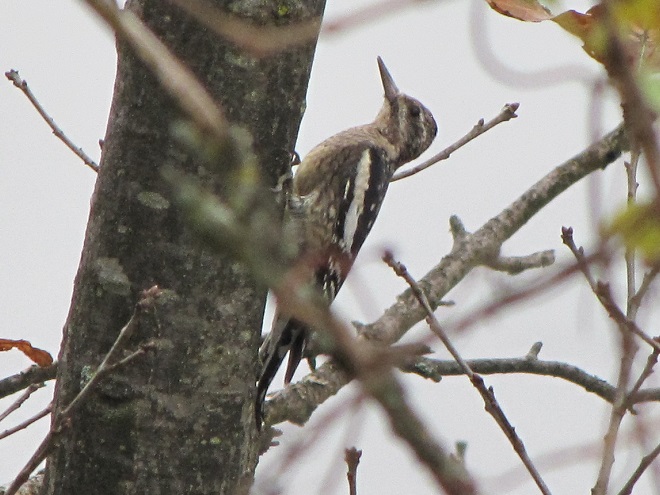
The Yellow-bellied Sapsucker, a woodpecker, is an October migrant that specializes in attracting small insects to tiny seeps of sap it creates by punching horizontal rows of shallow holes through the tree bark.  Some remain for winter.
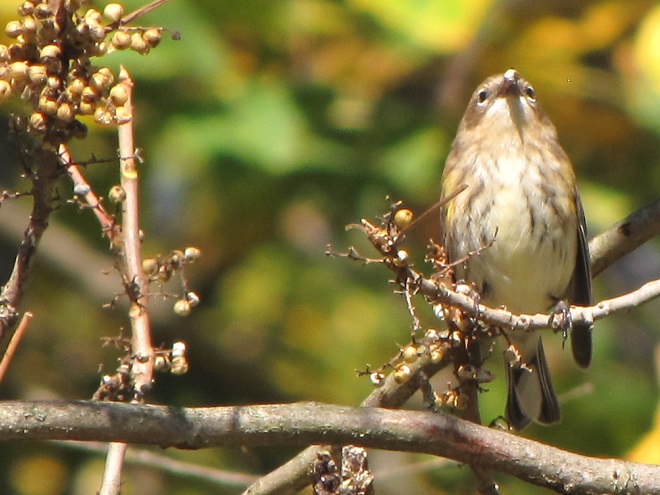
The Yellow-rumped Warbler arrives in force during October.  It is the most likely of the warblers to be found here in winter.  Yellow-rumped Warblers are generalists, feeding upon insects during the warmer months, but able to survive on berries and other foods in late fall and winter.  Wild foods like these Poison Ivy berries are crucial for the survival of this and many other generalists.
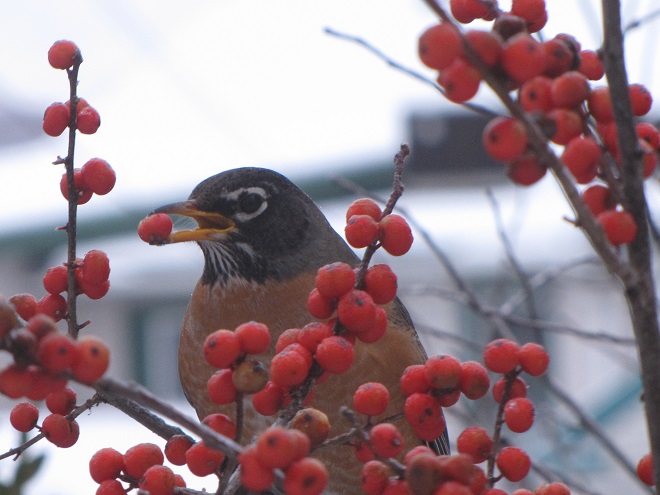
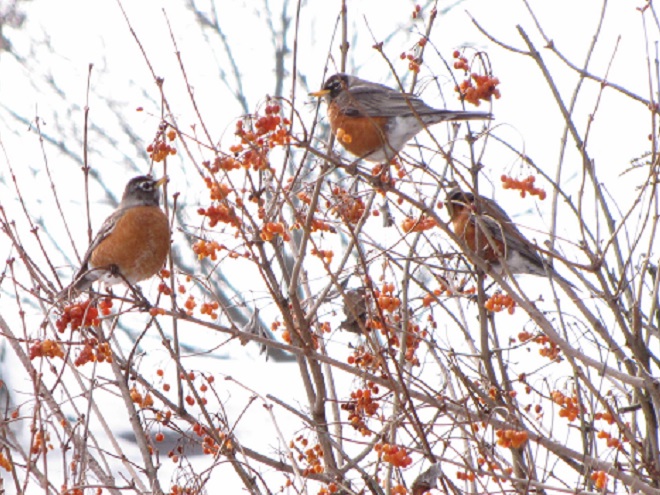
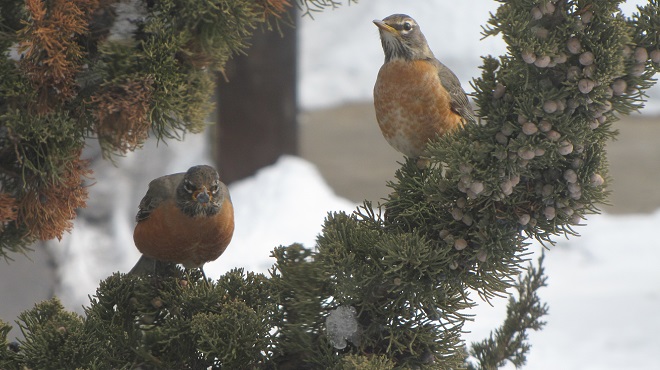
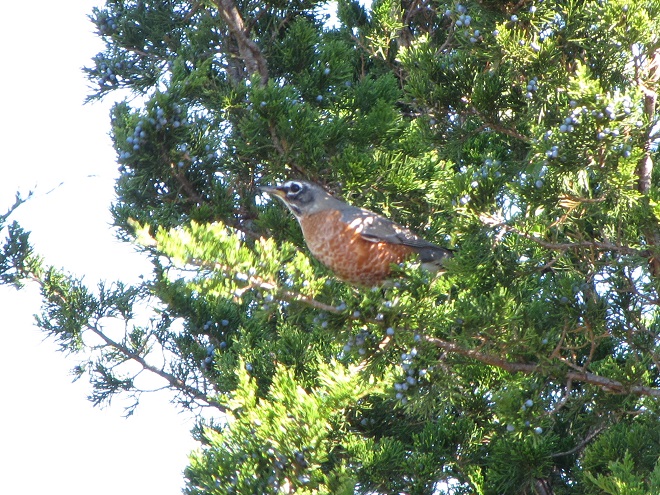
American Robins are most familiar as hunters of earthworms on the suburban lawn, but they are generalist feeders that rely upon fruits like these Eastern Red Cedar (Juniperus virginiana) berries during their southbound migration in late October and early November each year.  Robins remain for the winter in areas of the lower Susquehanna valley with ample berries for food and groves of mature pines for roosting.
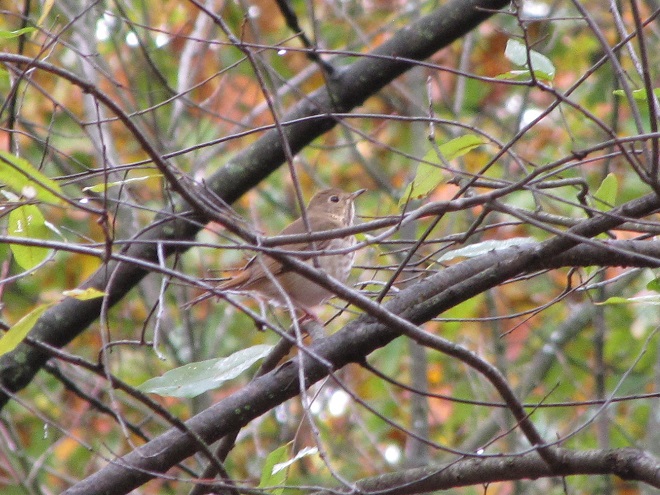
Like other brown woodland thrushes, the Hermit Thrush (Catharus guttatus) is commonly seen scratching through organic matter on the moist forest floor in search of invertebrates.  Unlike the other species, it is a cold-hardy generalist feeder, often seen eating berries during the southbound October migration.  Small numbers of Hermit Thrushes spend the winter in the lower Susquehanna valley, particularly in habitats with a mix of wild foods.
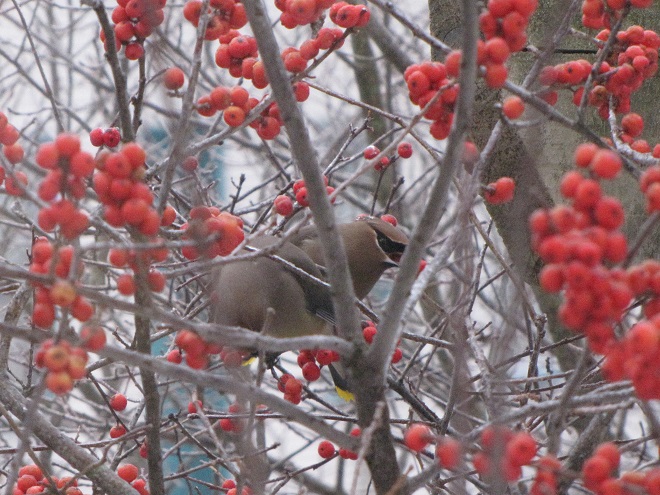
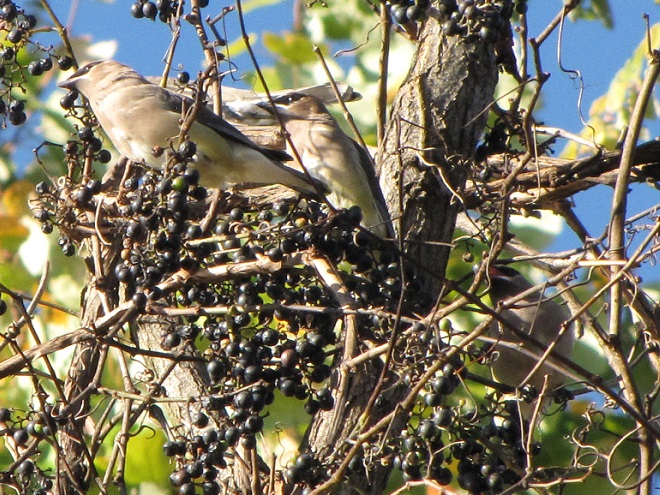
Due to their feeding behavior, Cedar Waxwings can easily be mistaken for flycatchers during the nesting season, but by October they’ve transitioned to voracious consumers of small wild fruits.  During the remainder of the year, flocks of waxwings wander widely in search of foods like this Fox Grape (Vitis labrusca).  An abundance of cedar, holly, Poison Ivy, hackberry, bittersweet , hawthorn, wild grape, and other berries is essential to their survival during the colder months.
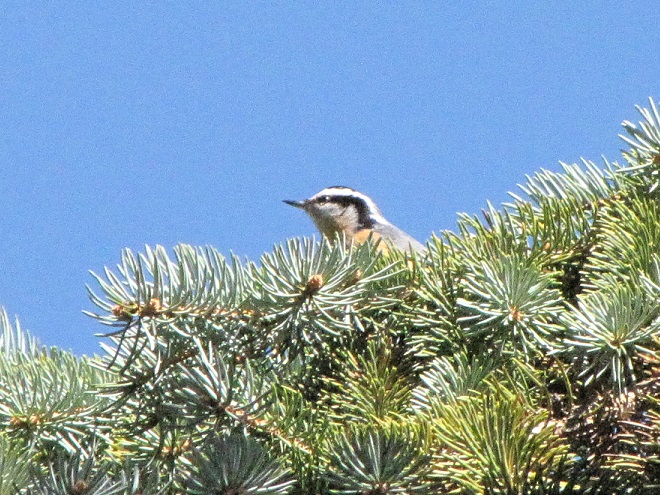
Red-breasted Nuthatches have moved south in large numbers during the fall of 2020.  They were particularly common in the lower Susquehanna region during  mid-October.  Red-breasted Nuthatches can feed on invertebrates during warm weather, but get forced south from Canada in droves when the cone crops on coniferous trees fail to provide an adequate supply of seeds for the colder fall and winter seasons.  In the absence of wild foods, these generalists will visit feeding stations stocked with suet and other provisions.
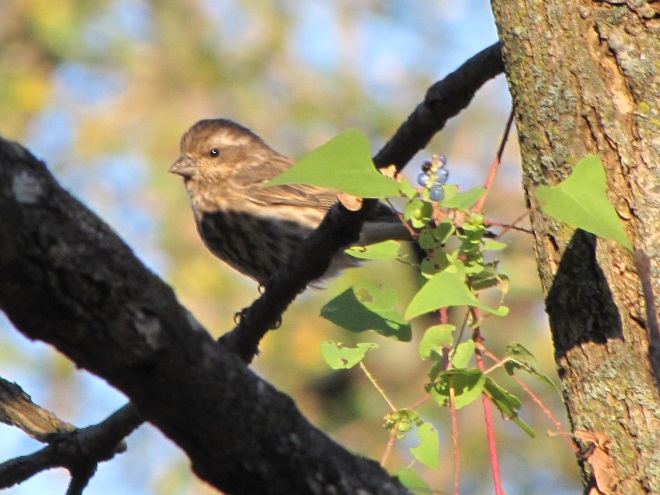
Purple Finches (Haemorhous purpureus) were unusually common as October migrants in 2020.  They are often considered seed eaters during cold weather, but will readily consume small fruits like these berries on an invasive Mile-a-minute Weed (Persicaria perfoliata) vine.  Purple Finches are quite fond of sunflower seeds at feeding stations, but often shy away if aggressive House Sparrows or House Finches are present.

The need for food and cover is critical for the survival of wildlife during the colder months.  If you are a property steward, think about providing places for wildlife in the landscape.  Mow less.  Plant trees, particularly evergreens.  Thickets are good—plant or protect fruit-bearing vines and shrubs, and allow herbaceous native plants to flower and produce seed.  And if you’re putting out provisions for songbirds, keep the feeders clean.  Remember, even small yards and gardens can provide a life-saving oasis for migrating and wintering birds.  With a larger parcel of land, you can do even more.

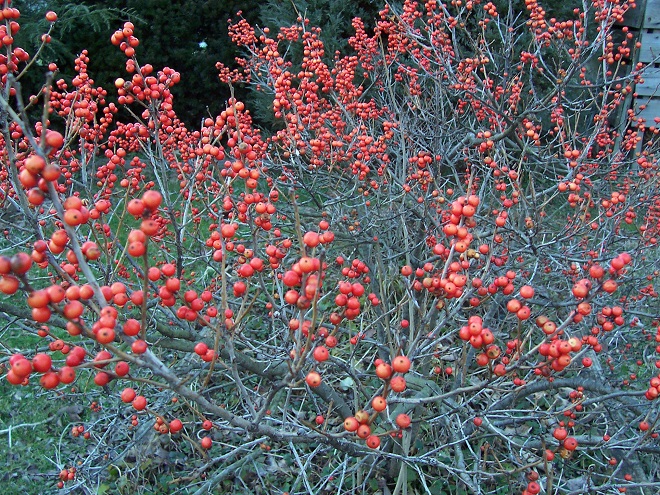
GOT BERRIES?  Common Winterbery (Ilex verticillata) is a native deciduous holly that looks its best in the winter, especially with snow on the ground.  It’s slow-growing, and never needs pruning.  Birds including bluebirds love the berries and you can plant it in wet ground, even along a stream, in a stormwater basin, or in a rain garden where your downspouts discharge.  Because it’s a holly, you’ll need to plant a male and a female to get the berries.  Full sun produces the best crop.  Fall is a great time to plant, and many garden centers that sell holiday greenery still have winterberry shrubs for sale in November and December.  Put a clump of these beauties in your landscape.  Gorgeous!

A Visit to Waggoner’s Gap

Nothing beats spending a day at a hawk watch lookout—except of course spending a day at a hawk watch lookout when the birds are parading through nonstop for hours on end.

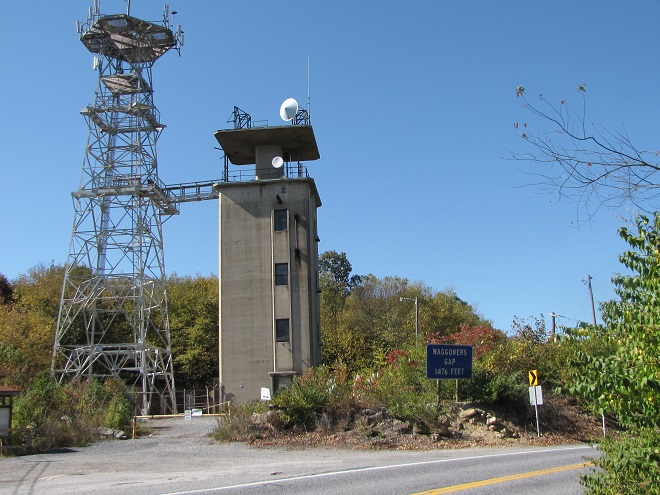
Check out Waggoner’s Gap, a hawk count site located on the border of Cumberland and Perry Counties atop Blue Mountain just north of Carlisle, Pennsylvania.  It is by far the Lower Susquehanna River Watershed’s best location for observing large numbers of migrating raptors during the October and November flights.

Waggoner’s Gap is located where Route 74 crosses Blue Mountain north of Carlisle.
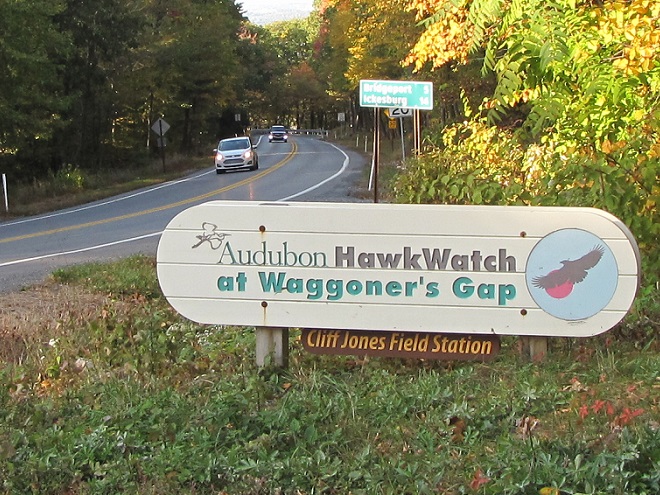
The entrance to a parking area for hawk watch visitors is designated by this sign located along Route 74 several hundred yards north of the summit of Blue Mountain.
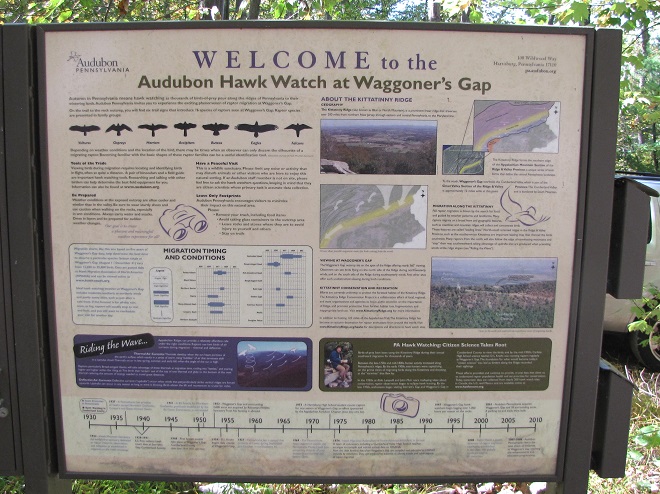
Since acquiring the site in 2000, Audubon Pennsylvania has added improvements to expand the function of Waggoner’s Gap Hawk Watch to include education for both formal students and the public at large.
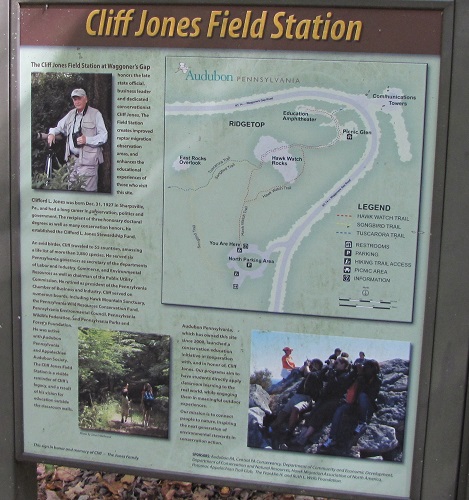
The site is named in honor of the late conservationist Clifford L. Jones, a business leader, a former Chairman of the Pennsylvania Public Utilities Commission, a cabinet secretary for six Pennsylvania governors (both major parties), a director on the boards of numerous conservation organizations, and an active birder.
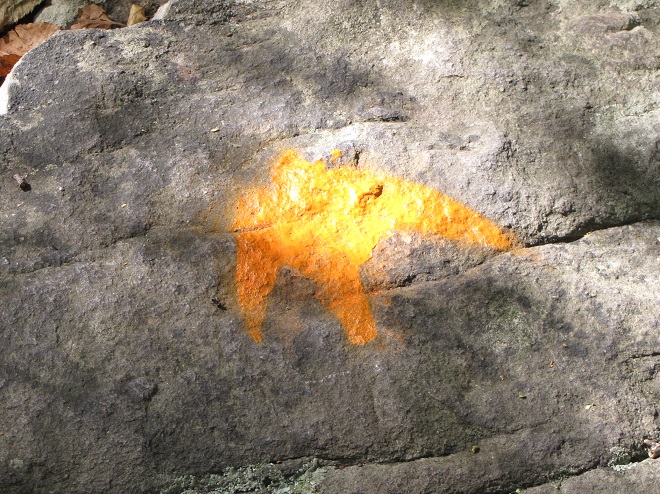
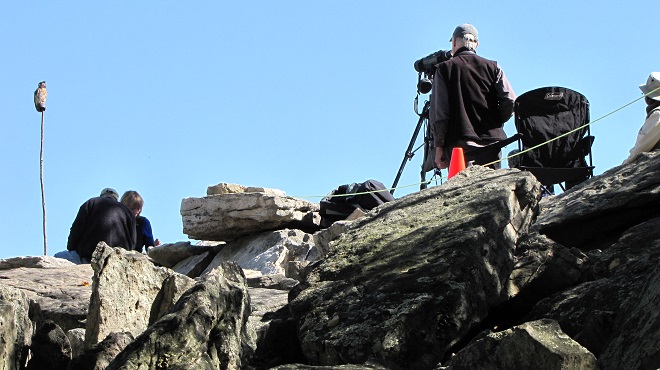
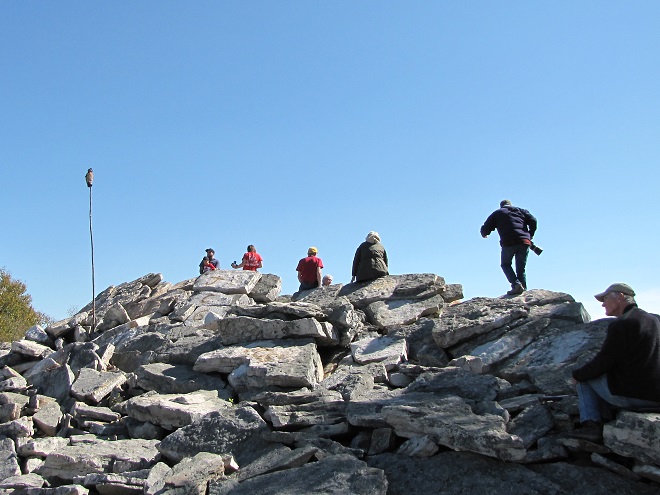
Orange falcon silhouettes function as blazes for the trails that lead from the parking area to the lookout.  The trail and the lookout consist entirely of boulders.  Some of these move when stepped upon.  Others may be slick.  Use caution at all times.
The lookout at Waggoner’s Gap is staffed by official counters from August through December each year.  They are tasked with enumerating every migratory raptor’s passage during that period.
Sure-footed observers climb into a comfortable position among the Tuscarora quartzite boulders and begin watching the flight.
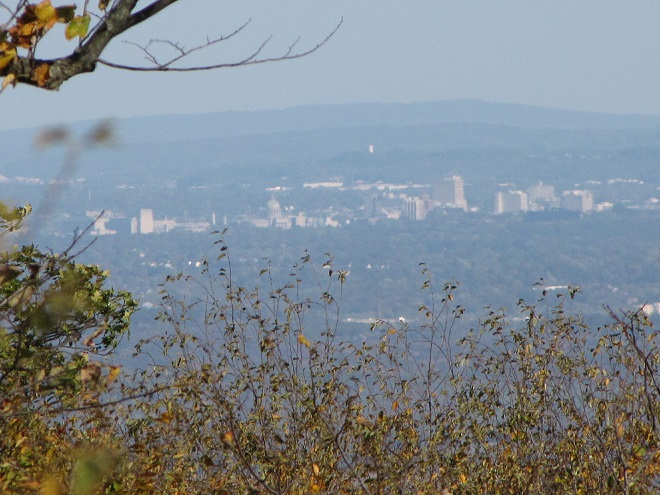
The view from the lookout is spectacular.  To the east, downtown Harrisburg can be seen in the distance.
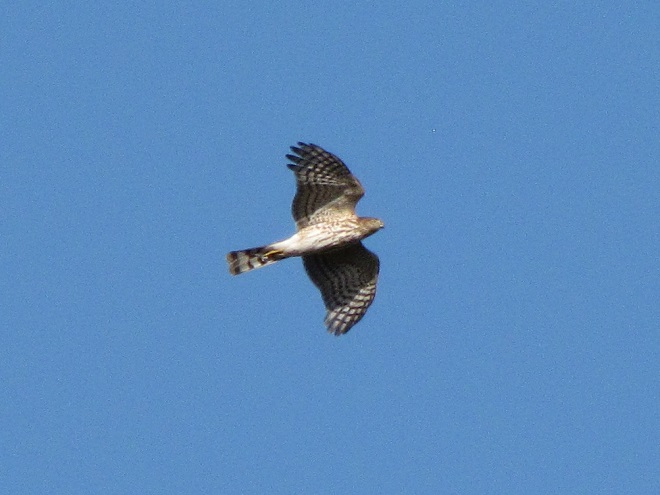
During a recent afternoon with breezes from the “southwesterlies”, a steady stream of  migrating Sharp-shinned Hawks, including this juvenile, passed by the lookout.
Sharp-shinned Hawks were ready subjects for photography as they sailed on updrafts along the south side of the ridge.
An adult Sharp-shinned Hawk.
A second-year Sharp-shinned Hawk.
A Sharp-shinned Hawk below eye level.  Over 400 Sharp-shinned Hawks migrated past Waggoner’s Gap Hawk Watch on this particular early October day.
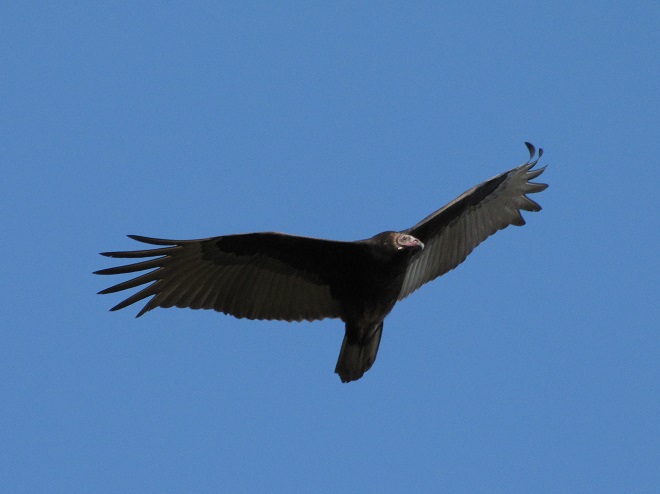
The local Turkey Vultures at Waggoner’s Gap seem ubiquitous at times.  They’re on the radio towers, they’re flying overhead, and a few are cruising the slopes below the crest.  But on the day of our recent visit, their numbers were eclipsed by the more than 300 “T.V.s” that migrated down the ridge.
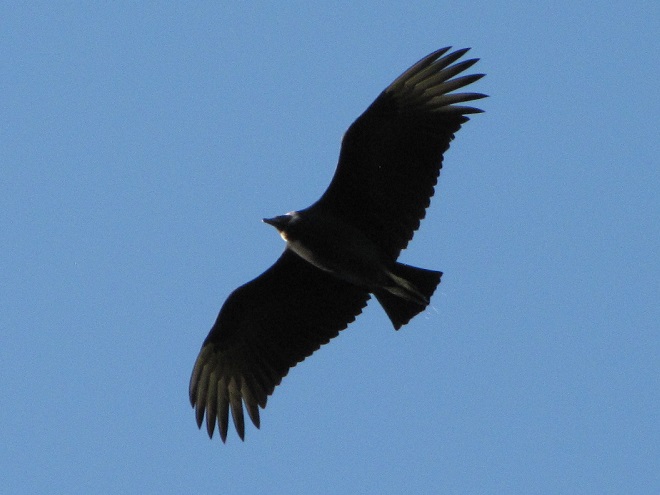
Black Vultures, both migrants and local birds, are seen from the lookout.
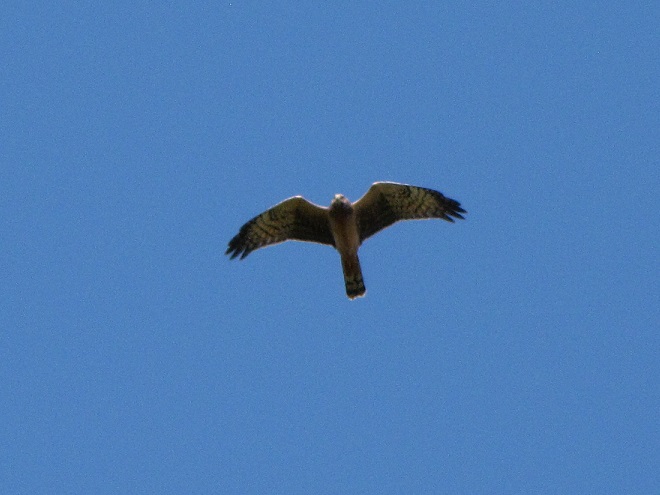
Northern Harriers are a hawk watch favorite.  Their long uptilted wings, long tail, and white rump make them easy to identify, even for beginners.  Their plummeting numbers make them a treasured sighting for everyone.
A Red-tailed Hawk on a close approach.
A distant Red-shouldered Hawk.  Numbers of these migrants peak later in the season.
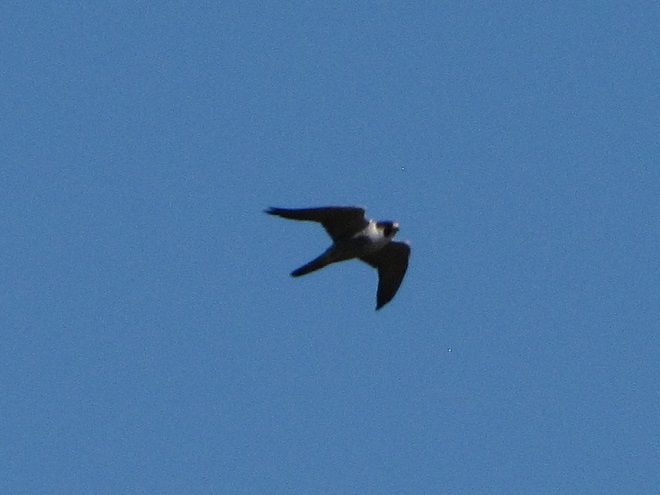
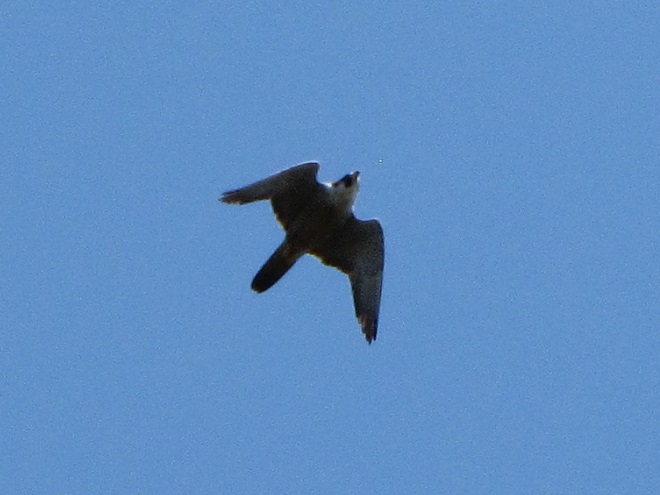
A Peregrine Falcon darts past the lookout.  Note the white forehead, throat, and breast.  This bird is probably a “Tundra Peregrine” (Falco peregrinus tundrius).  In the lower Susquehanna valley, this subspecies is strictly migratory, a transient in spring and fall.  “Tundra Peregrines” breed in the arctic and winter as far south as South America.
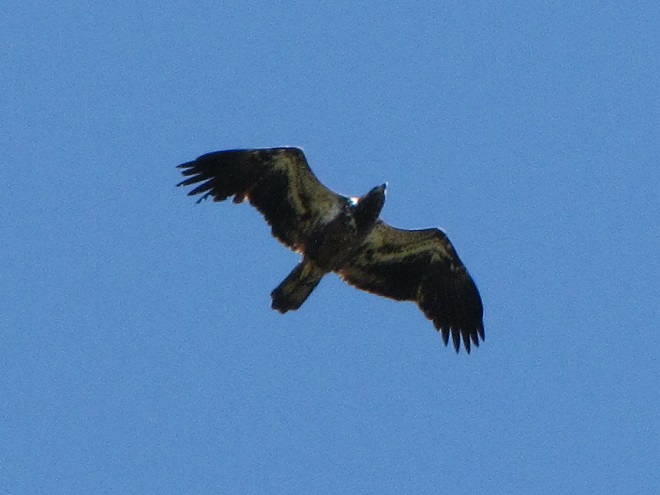
An immature Bald Eagle.  Waggoner’s Gap is a superb place for sighting eagles, especially on a breezy day.
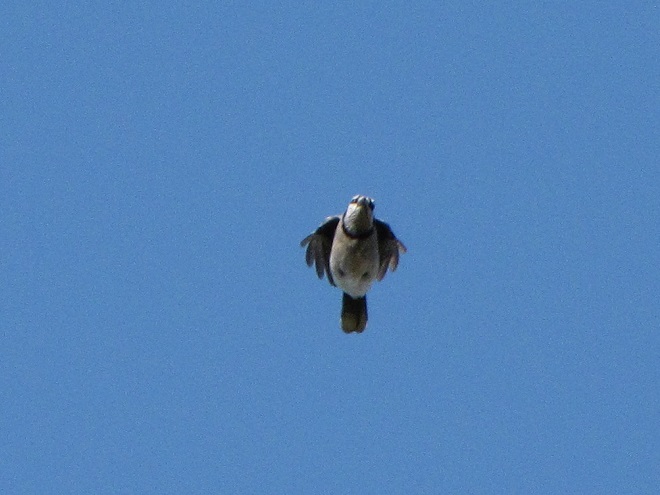
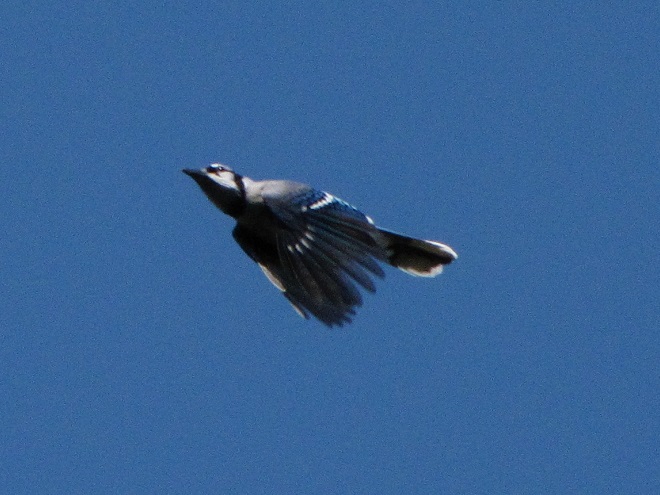
Hundreds of Blue Jays filtered through as their southbound exodus continues.  Other songbirds of interest included Blue-headed Vireos (Vireo solitarius), Winter Wrens, Red-breasted Nuthatches, Pine Siskins, and both Ruby-crowned and Golden-crowned Kinglets.

Waggoner’s Gap is a hardy birder’s paradise.  During the latter portion of the season, excellent flights often occur on days that follow the passage of a cold front and have strong northwest winds.  But be prepared, it can be brutal on those rocks during a gusty late-October or early-November day after the leaves fall—so dress appropriately.

To see the daily totals for the raptor count at Waggoner’s Gap Hawk Watch and other hawk watches in North America, and to learn more about each site, be sure to visit hawkcount.org

Pine Siskin Invasion

When wild food crops such as pine cones, acorns, berries, and other tree seeds fail in the forests of Canada, bird species which may have otherwise remained north of the eastern United States for winter pay us a visit.  There was a hint that such an event would occur this year when Red-breasted Nuthatches (Sitta canadensis) became widespread throughout the Mid-Atlantic States beginning in August.  Then there were big flights of Blue Jays in recent weeks, an indication that the oaks of the northern wood are producing a less than optimal mast crop.

Reports of Pine Siskins (Spinus pinus), songbirds very similar in shape and size to the familiar American Goldfinch, have been posted from hawk watch sites throughout the region for several weeks now.  During the last several days though, the numbers have increased to indicate that an invasion is underway.  Just yesterday, nearly two thousand were seen from the lookout in Cape May Point, New Jersey.  Just after sunrise this morning, between twenty and thirty Pine Siskins descended upon the hemlocks at the susquehannawildlife.net headquarters.  There, they began feeding on the abundant cone crop—then they quickly discovered the accommodations offered by the bird bath and feeders.

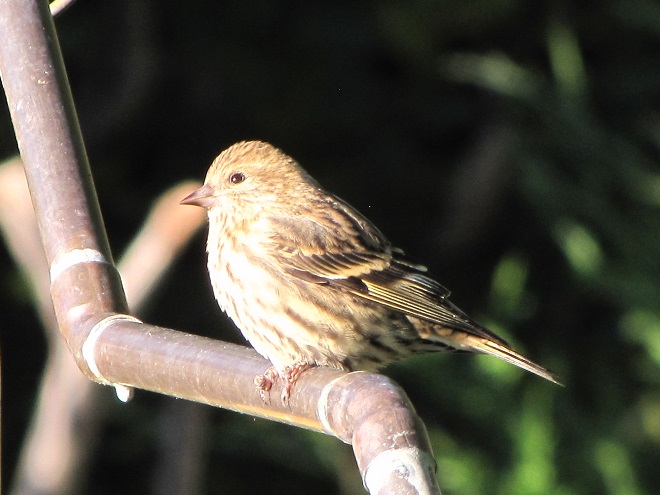
Pine Siskins visiting the susquehannawildlife.net bird bath just after this morning’s water change.  Note the dark streaky plumage, deeply notched tail, and the yellow in their wings.  This yellow appears as a bar when the wings are extended and is brightest on adult male birds.
The tiny bill of the Pine Siskin is adapted to extracting seeds from birch catkins and the cones of various evergreen trees.
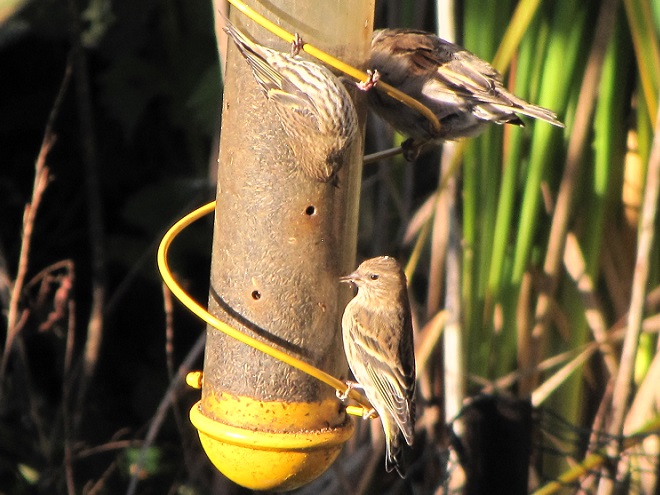
Like American Goldfinches, Pine Siskins are very fond of niger (thistle) seed offered in tube feeders.
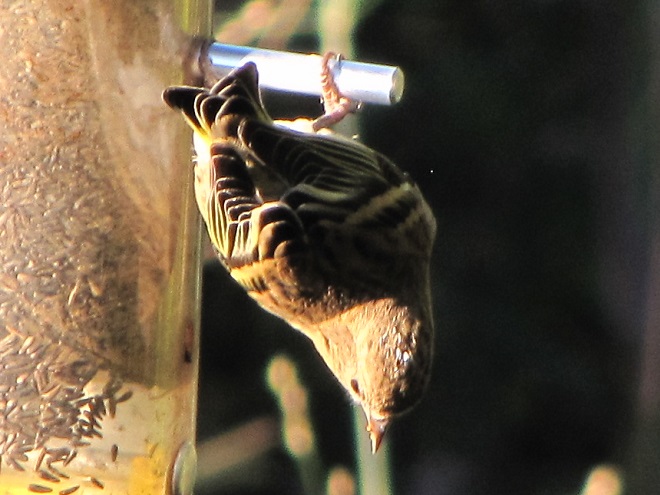
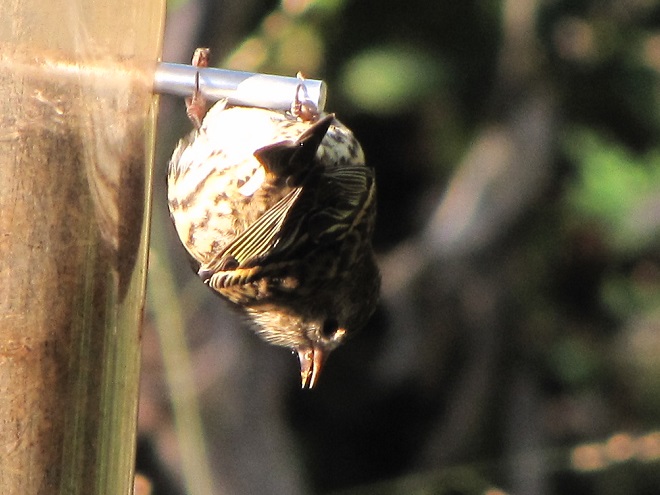
Like goldfinches, Pine Siskins are quite comfortable feeding upside down from feeders with perches positioned above the seed openings.  Note the yellow in the tail of this bird.
Flocks of Pine Siskins roam widely in search of food during invasion years.  Keeping your feeders clean and stocked with fresh seed will improve your chances of having them as visitors this winter.  And remember, if you’re feeding niger (thistle) seed, it’s very important to keep it dry.  Avoid using “sock feeders” and, after each storm, empty tube feeders for a cleaning and drying, discarding any clumps of wet seed.

A Visit to Rocky Ridge

Early October is prime time for hawk watching, particularly if you want to have the chance to see the maximum variety of migratory species.  In coming days, a few Broad-winged Hawks and Ospreys will still be trickling through while numbers of Sharp-shinned Hawks, Cooper’s Hawks, Northern Harriers, and falcons swell to reach their seasonal peak.  Numbers of migrating Red-tailed and Red-shouldered Hawks are increasing during this time and late-season specialties including Golden Eagles can certainly make a surprise early visit.

If you enjoy the outdoors and live in the southernmost portion of the lower Susquehanna valley, Rocky Ridge County Park in the Hellam Hills just northwest of York, Pennsylvania, is a must see.  The park consists of oak forest and is owned and managed by the York County Parks Department.  It features an official hawk watch site staffed by volunteers and park naturalists.  Have a look.

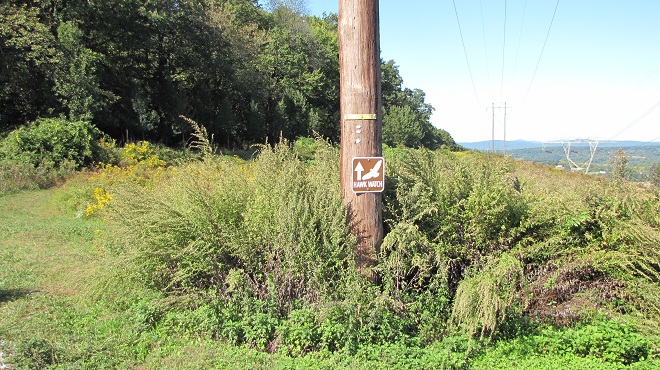
The hawk watch lookout is reached by following the well-marked trail at the north side of the large gravel parking area in the utility right-of-way at the end of the park entrance road (Deininger Road).
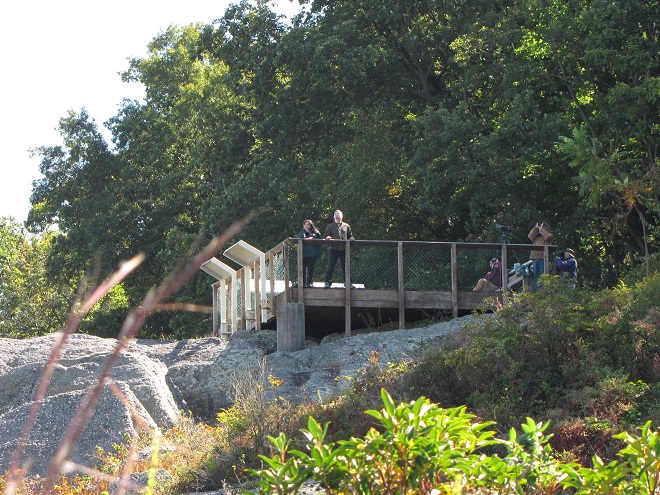
The Rocky Ridge Hawk Watch lookout includes outcrops of bedrock, a viewing deck, and grassy areas suitable for lawn chairs.
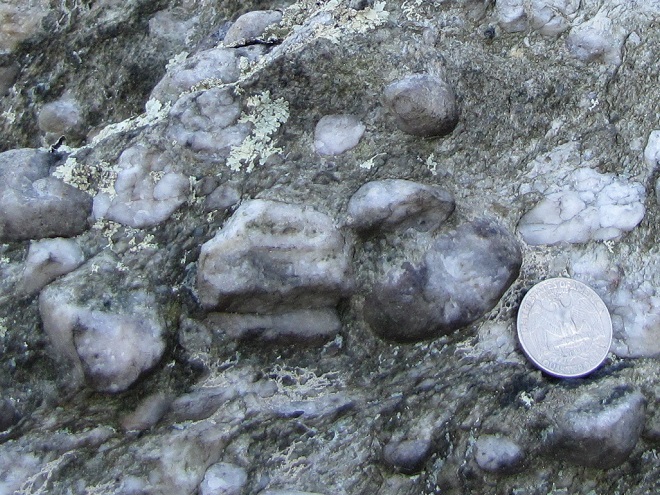
The bedrock at the lookout is an unusual quartz-cemented conglomerate that forms the Hellam Member at the base of the Cambrian Chickies Formation.
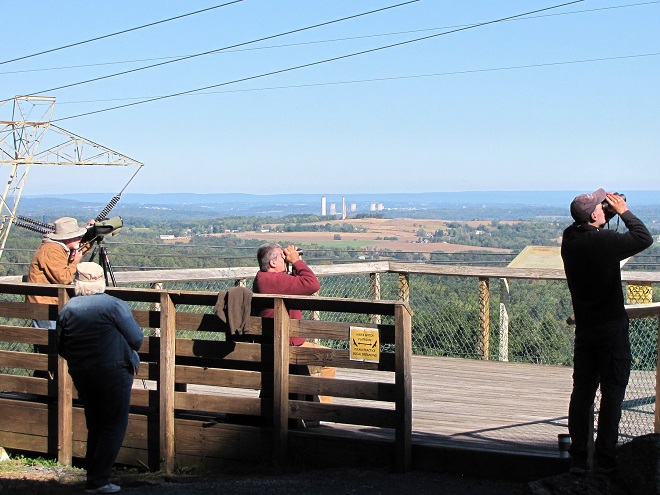
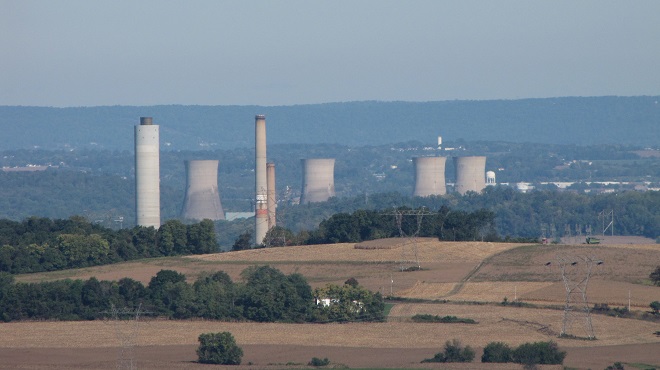
Experienced hawk watchers conduct an official count of raptors and other birds during the autumn migration in September and October each year.  Visitors are welcome.  The view is spectacular.  Check out the concrete columns glowing in the sun to the north of the lookout.
It’s the cooling towers at the Three Mile Island Nuclear Station and the smoke stacks at the Brunner Island Steam Generating Station.  Conewago Falls is located between the two.
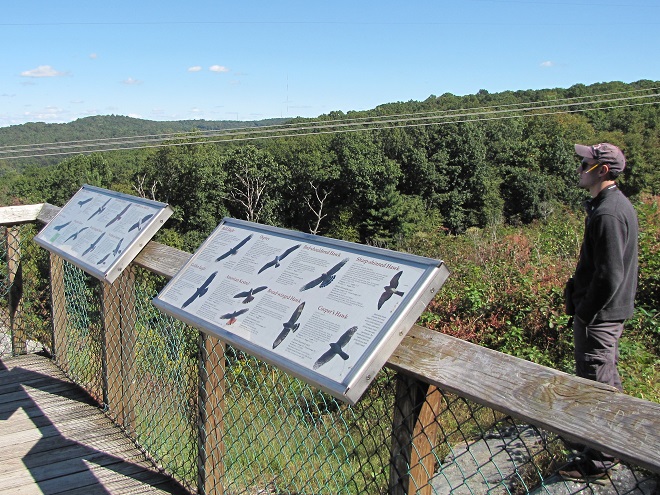
Interpretive signage on the hawk watch deck includes raptor identification charts.
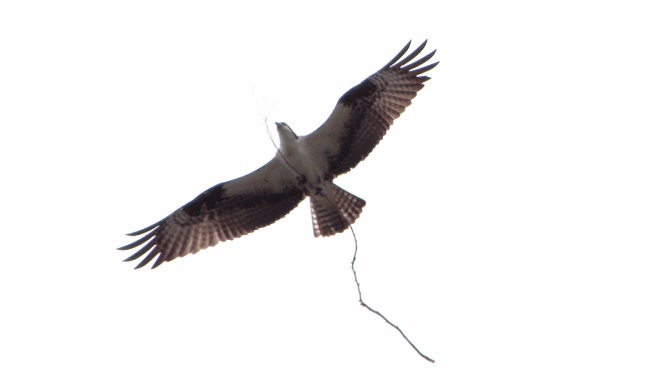
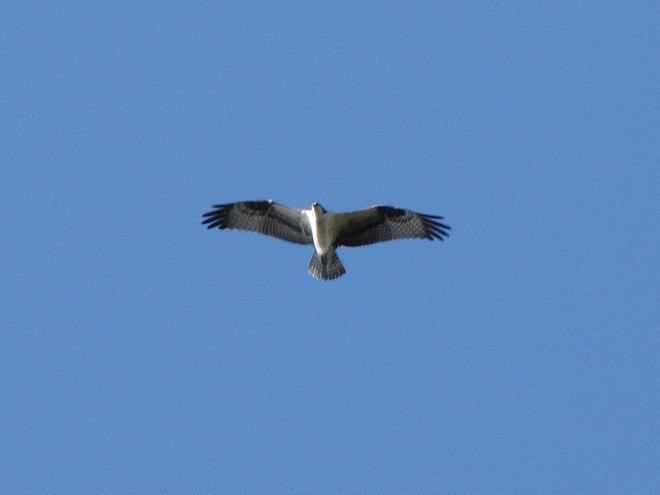
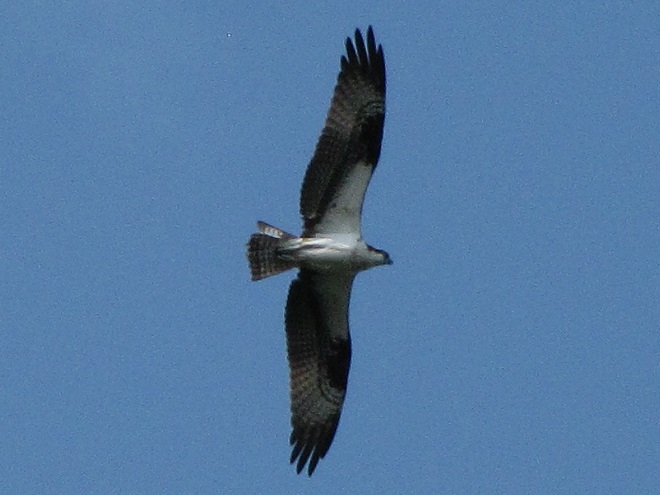
A migrating Osprey glides by the lookout.
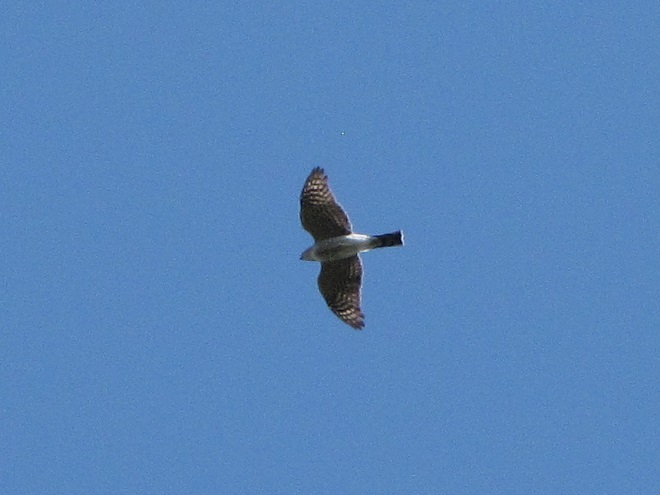
Throughout the month, migrating Sharp-shinned Hawks will be flying in a southwesterly direction along ridges in the region, particularly on breezy days.  They are the most numerous raptor at hawk watches in the lower Susquehanna valley during the first half of October.
A Peregrine Falcon quickly passes the Rocky Ridge lookout.  These strong fliers often ignore the benefits provided by thermals and updrafts along our ridges and instead take a direct north to south route during migration.
A juvenile Red-tailed Hawk soars by.
And a little while later, an adult Red-tailed Hawk follows.
Bald Eagles, including both migratory and resident birds, are seen regularly from the Rocky Ridge lookout.
Other diurnal (daytime) migrants are counted at Rocky Ridge and some of the other regional hawk watches.  Massive flights of Blue Jays have been working their way through the lower Susquehanna valley for more than a week now.  Local hawk watches are often logging hundreds in a single day.
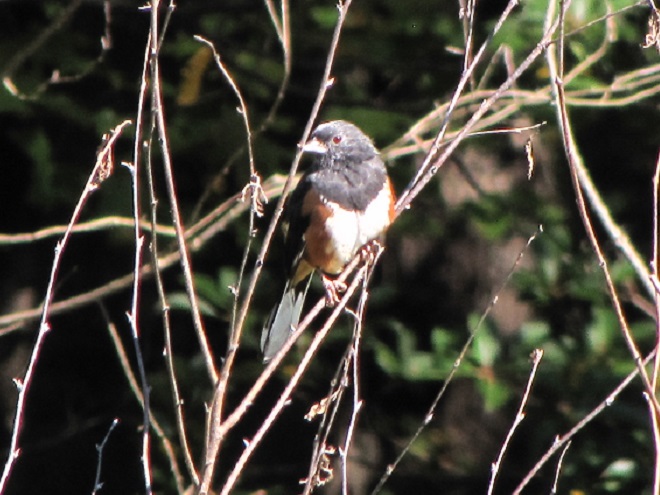
The utility right-of-way within which the Rocky Ridge Hawk Watch is located can be a great place to see nocturnal (nighttime) migrants while they rest and feed during the day.  Right now, Eastern Towhees are common there.
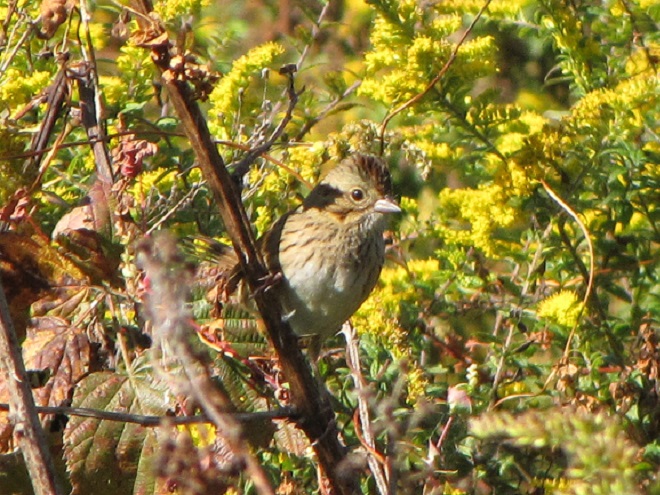
An uncommon sight, a shy Lincoln’s Sparrow (Melospiza lincolnii) in the utility right-of-way near the hawk watch lookout.  This and other nocturnal migrants will take full advantage of a clear moonlit night to continue their southbound journey.

If you’re a nature photographer, you might be interested to know that there are still hundreds of active butterflies in Rocky Ridge’s utility right-of-way.  Here are a few.

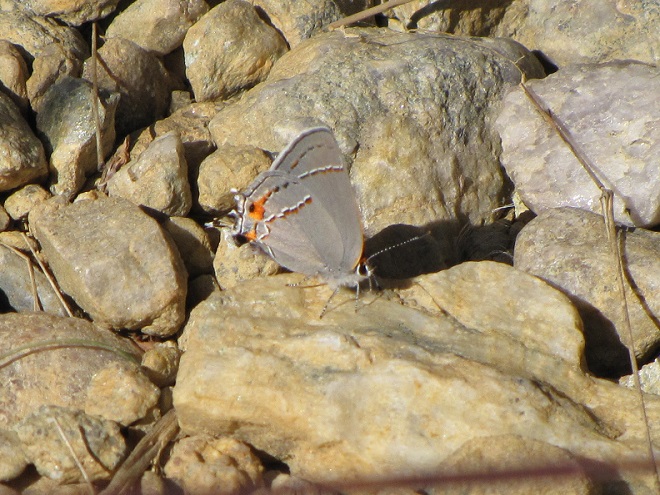
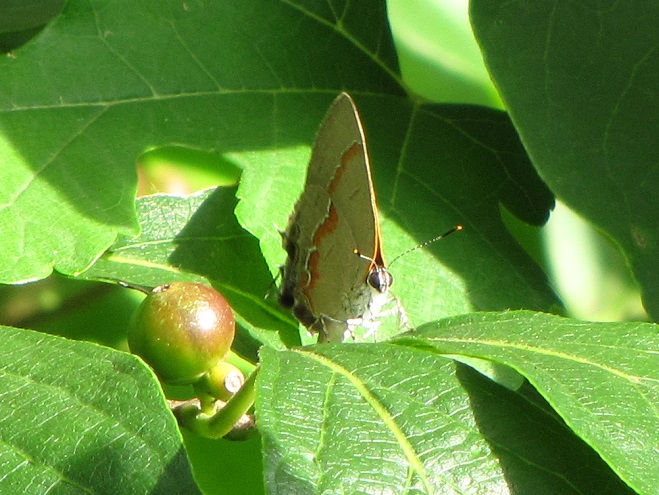
A Gray Hairstreak.
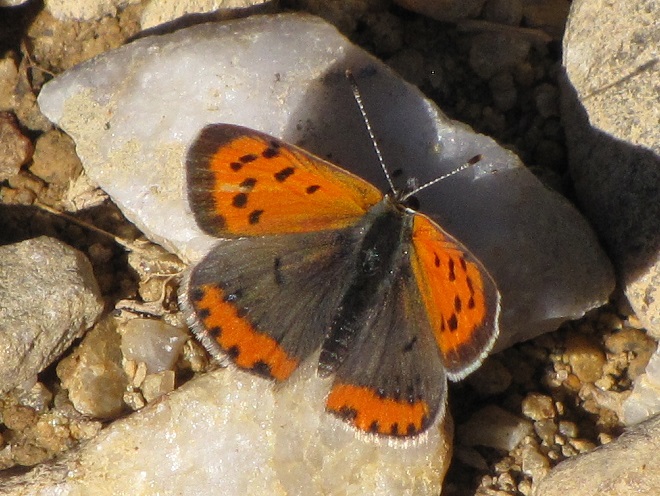
An American Copper (Lycaena phlaeas),

To see the daily totals for the raptor count at Rocky Ridge Hawk Watch and other hawk watches in North America, and to learn more about each site, be certain to visit hawkcount.org

Smoke from a Distant Fire

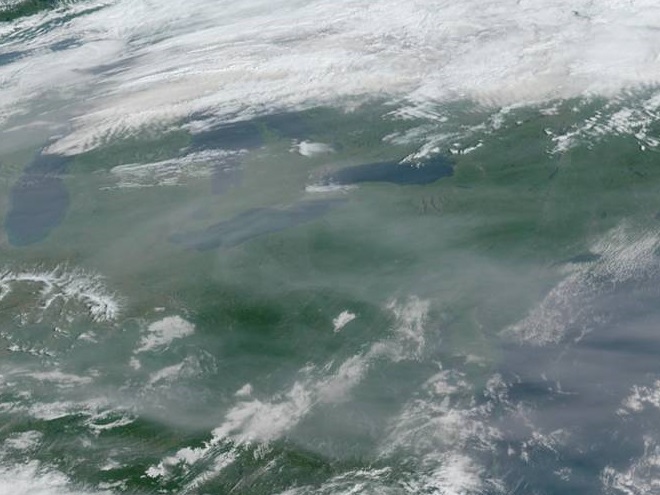
Have a look at these images of the smoke plume being generated by fires in forests and other wildlands in the western United States.

Smoke from enormous wildfires located primarily in California and Oregon obscures ground features across the Mid-Atlantic States this morning.  Lake Ontario and the Finger Lakes of New York are the most readily identifiable landmarks in the center of the image.  The Lower Susquehanna River Watershed is indiscernible beneath the dense blanket of haze.  (CIRA/NOAA image)
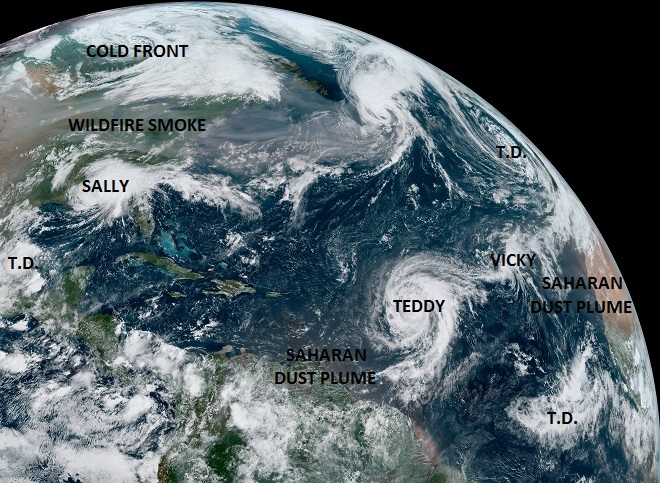
This morning’s satellite image of the United States and the North Atlantic looks like an illustration one might find in a meteorology textbook showing examples of a variety of extreme atmospheric phenomena.  There’s something going on everywhere.  (CIRA/NOAA image)
Here we’ve labeled the major stuff.  There are two hurricanes (Sally and Teddy), a tropical storm (Vicky), and three tropical depressions, each labeled “T.D.”.  A strong cold front in central Canada is making its way toward the eastern United States.  Dust from the Sahara continues to stream into the Americas and the gray-brown plume of smoke from wildfires in the Pacific Coast States stretches thousands of miles east into the North Atlantic.  (CIRA/NOAA base image)

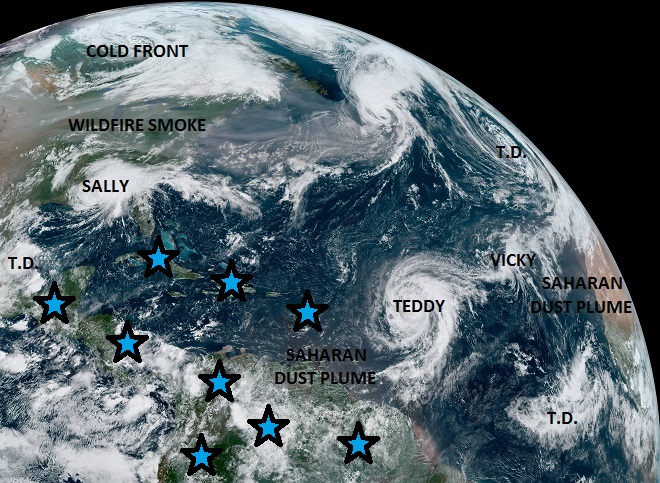
While viewing these amazing images, consider for a moment the plight of migrating birds.  Each one struggles to survive the energy-depleting effects of wind, distance, storm, cold, drought, dust, and sometimes even smoke as it strives to reach its breeding grounds each spring and its wintering grounds each fall.  Natural and man-made effects can cause migrating birds to become disoriented.  Songbirds are known to become lost at sea.  Others strike objects including buildings and radio towers, particularly when visibility is impaired.  The dangers seem endless.

Neotropical migrants must somehow navigate the maze of perils that lie between their breeding grounds in the north and their wintering habitats in tropical climates (designated here using blue stars).  (CIRA/NOAA base image)

For migrating birds, places of refuge where they can stop to feed and rest during their long journeys are essential to their survival.  For species attempting flights through conditions as extreme as those seen in these images, there is the potential for significant loss of life, particularly among the birds with less than optimal stores of energy.

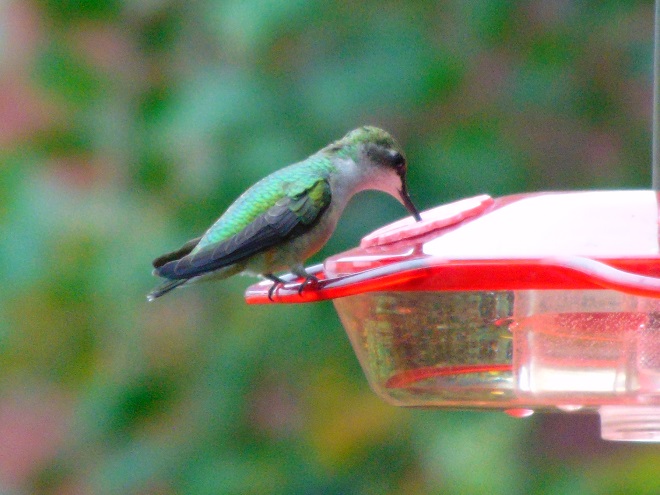
During their southbound autumn migration to tropical wintering grounds in Central America, some Ruby-throated Hummngbirds will attempt a non-stop flight across the Gulf of Mexico, a route requiring maximum stores of energy.  Keep those feeders clean and full of fresh provisions!

Fire and Ice at Conewago Falls

This morning, the Lower Susquehanna River Watershed experienced remotely the effects of fire and ice.

At daybreak, the cold air mass that brought the first freeze of the season to northernmost New England gave us a taste of the cold with temperatures below 50 degrees throughout.

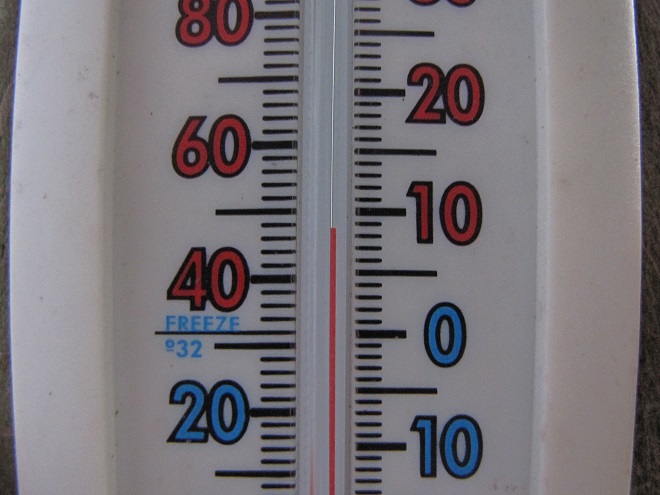
The air temperature at daybreak in the Gettysburg Basin east of Conewago Falls.

At sunrise, the cloudless sky had a peculiar overcast look with no warm glow on buildings, vegetation, and terrain.  Soon, the sun was well above the horizon, yet there was still a sort of darkness across the landscape.

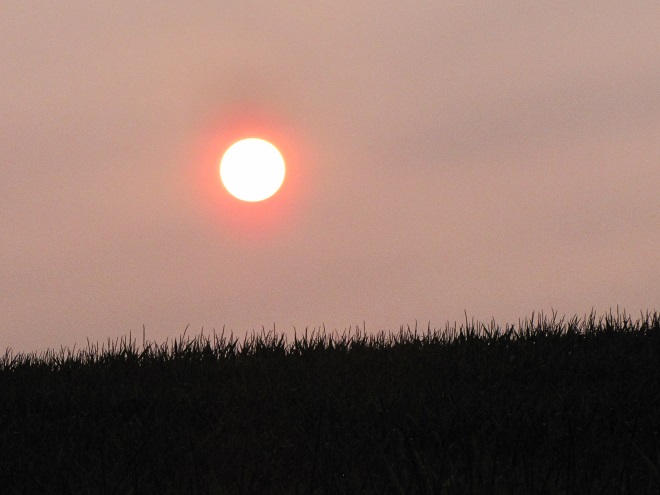
Smoke from massive wildland fires in the Pacific Coast States created a haze that persisted throughout the day in the Susquehanna valley.
Away from traffic and the odors of agriculture and urban life, the smell of wood smoke was easily detectable.  The haze from fires almost 3,000 miles away made it appear to be an overcast day at Conewago Falls.
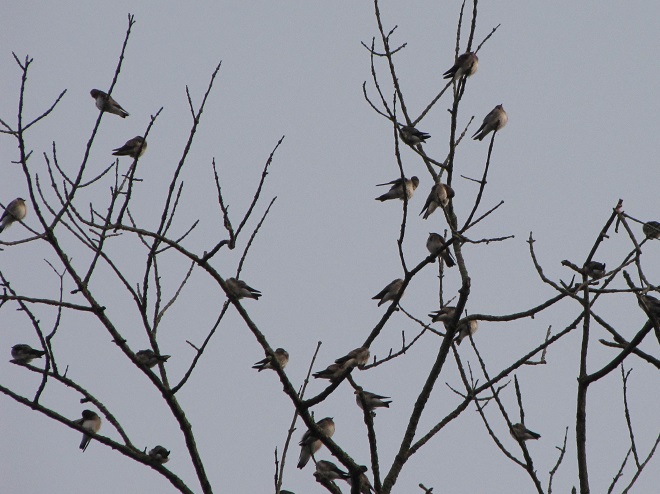
Due to the sudden cold, there were no insects flying above the Susquehanna during the first hour of daylight this morning, so swallows gathered in the trees to conserve energy until the hunt would be more productive.
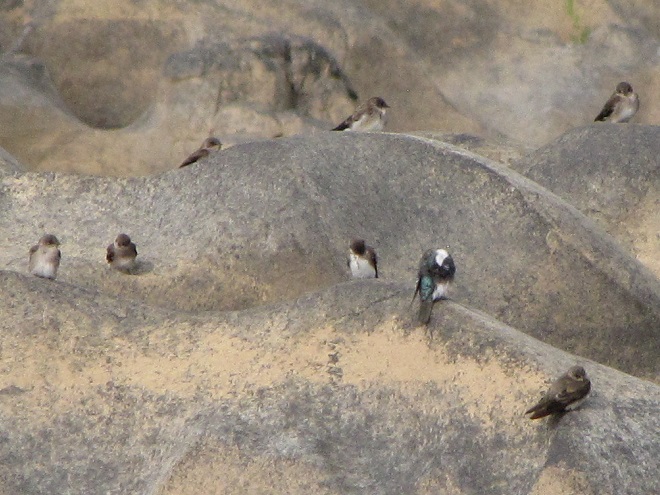
The diabase boulders at Conewago Falls retain heat and provide an even better refuge from the cold than a dead tree on a chilly morning.  Here, a juvenile and an adult Tree Swallow (center) are surrounded by Northern Rough-winged Swallows.  Hundreds of each of these migratory species were feeding at the falls today.
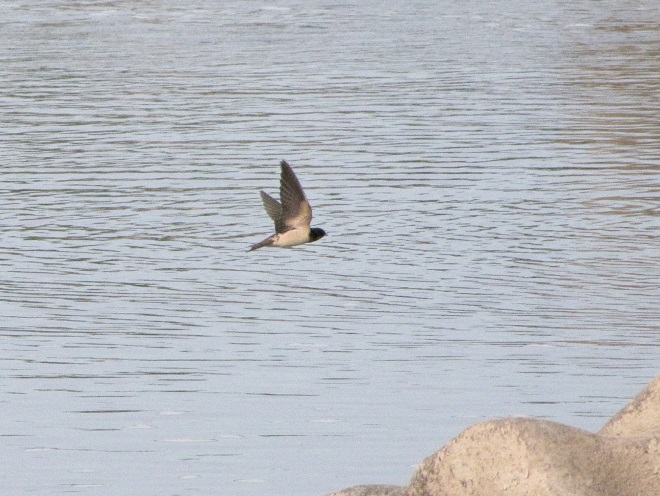
Two dozen or more Barn Swallows, including this juvenile, were seen among the swarming birds.
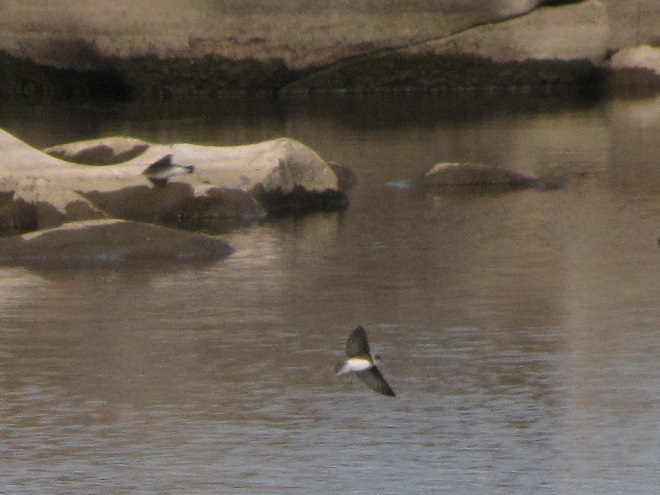
Several late Bank Swallows, including this one (bottom center), were among the flocks of migrants at Conewago Falls this morning.  One Cliff Swallow (Petrochelidon pyrrhonota) was seen as well.
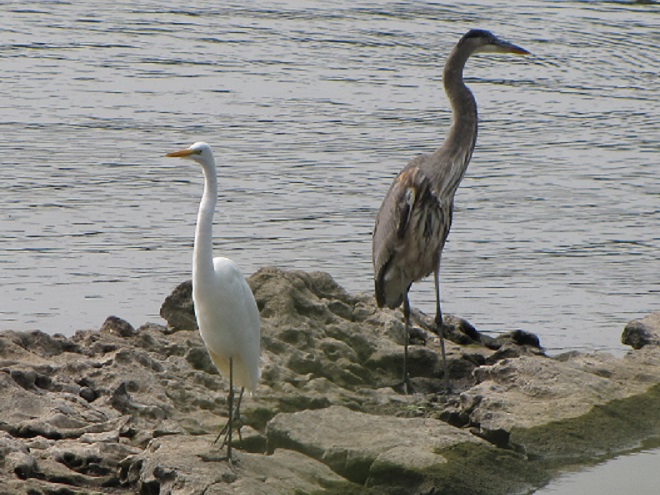
A Great Egret (Ardea alba) and a Great Blue Heron.
An Osprey searching the clear pools and rapids for a morning meal.
A juvenile Bald Eagle with the same goal in mind.
The same Bald Eagle keeping a close watch on the Osprey.  Bald Eagles frequently ambush Ospreys to steal their catch.  For a young eagle, acquiring the skill of fish theft may improve its chances of survival, at least until the Ospreys head south.

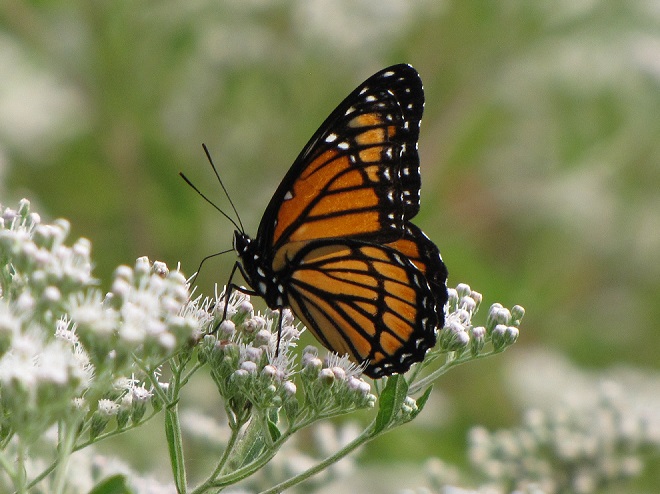
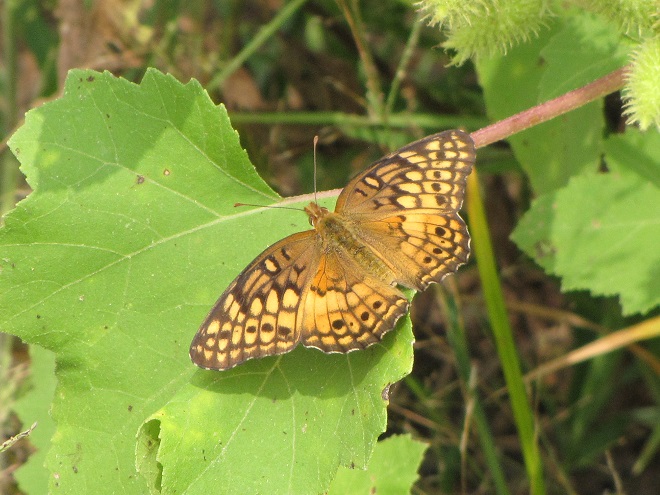
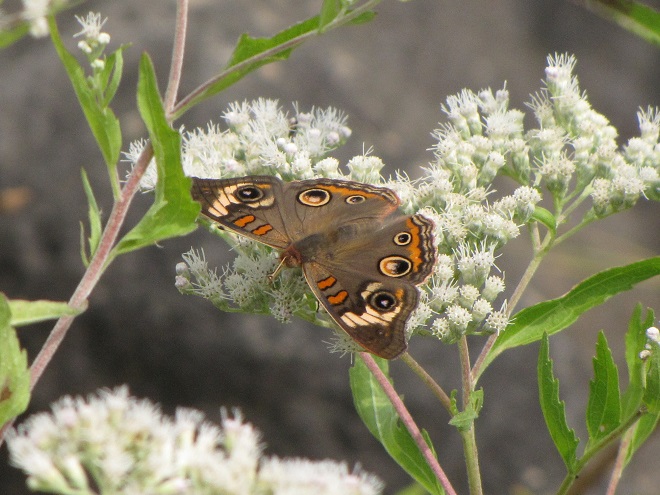
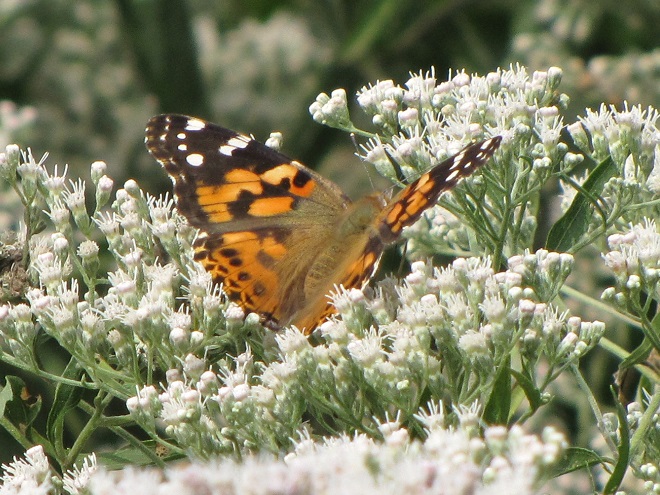
All that bright filtered sunlight was ideal for photographing butterflies along the Conewago Falls shoreline.  Have a look.

During the late morning, dozens of Monarch butterflies migrated past Conewago Falls.  This one paused to feed.
The Viceroy (Limenitis archippus) is a Monarch mimic.  Its appearance fools would-be predators into thinking it is a Monarch and possesses the same foul flavor as the milkweed-raised model.
This Variegated Fritillary (Euptoieta claudia) was among the late-season butterflies at Conewago Falls.
The Common Buckeye is presently just that, very common on flowers and moist sandy soil around the falls.
The Painted Lady is a regularly-occurring migratory species of butterfly.
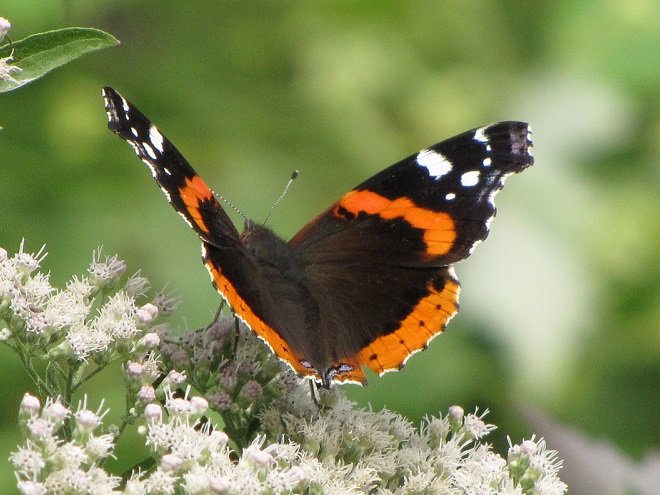
The Red Admiral is typically a common to abundant migrant.  So far in 2020, they are scarce in the lower Susquehanna valley. 

A Visit to Second Mountain

If it can fly, there’s a pretty good chance it was at Second Mountain today.

What follows is a photographic chronology of some of today’s sightings at Second Mountain Hawk Watch at Fort Indiantown Gap in Lebanon County, Pennsylvania.  We begin with some of the hundreds of migratory songbirds found at the base of the mountain along Cold Spring Road near Indiantown Run during the early morning, then we continue to the lookout for the balance of the day.

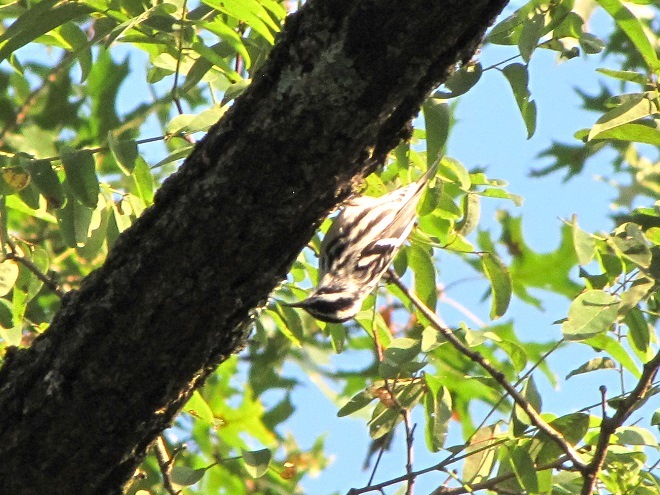
A Black-and-white Warbler (Mniotilta varia) searching the trunk of a tree for insects.
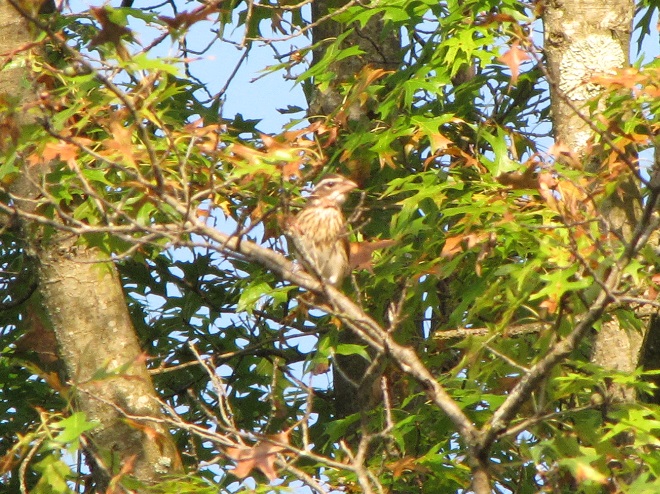
A Rose-breasted Grosbeak.
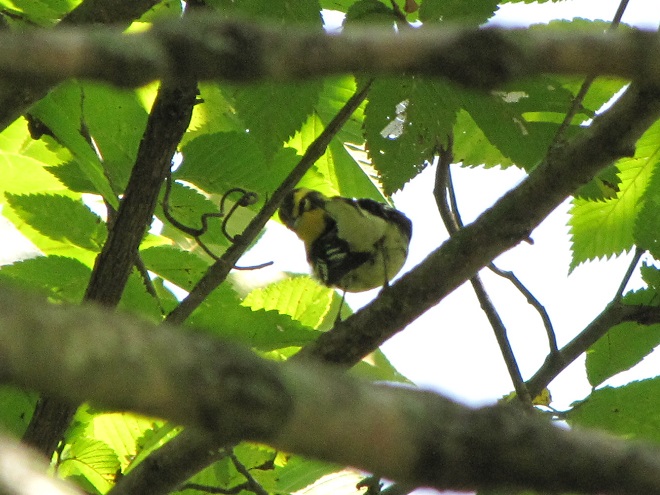
A Blackburnian Warbler high in the forest canopy.
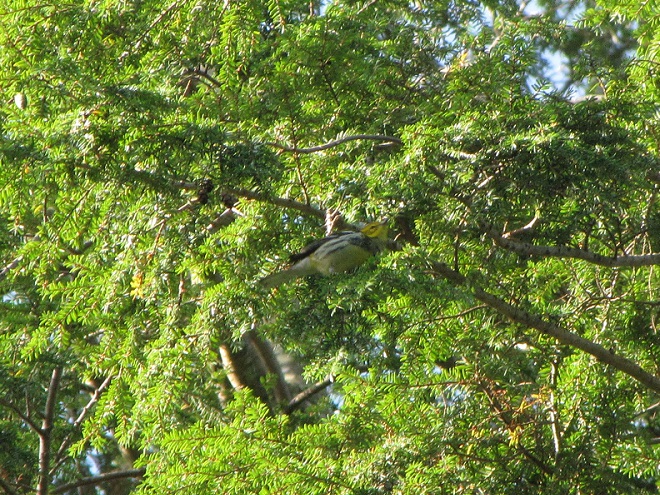
A Black-throated Green Warbler bouncing from branch to branch as it feeds.
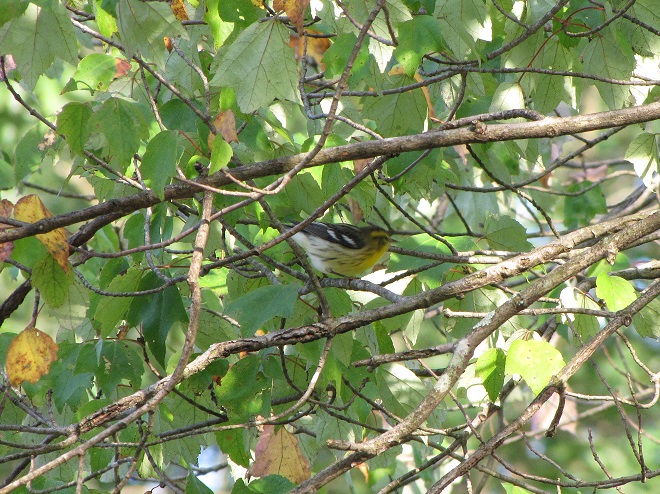
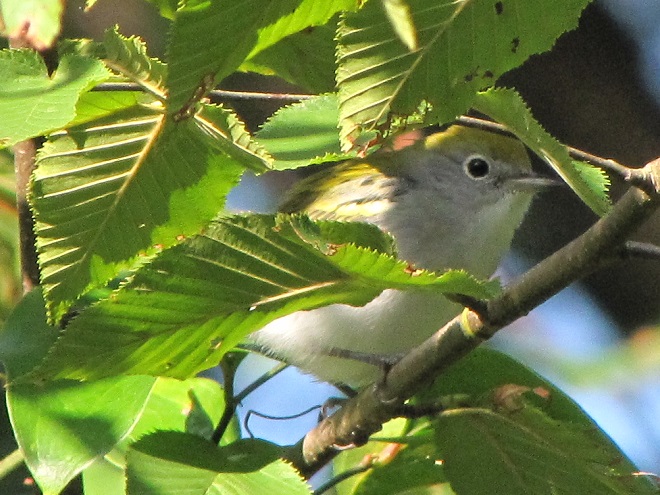
A Chestnut-sided Warbler lurks among the foliage.
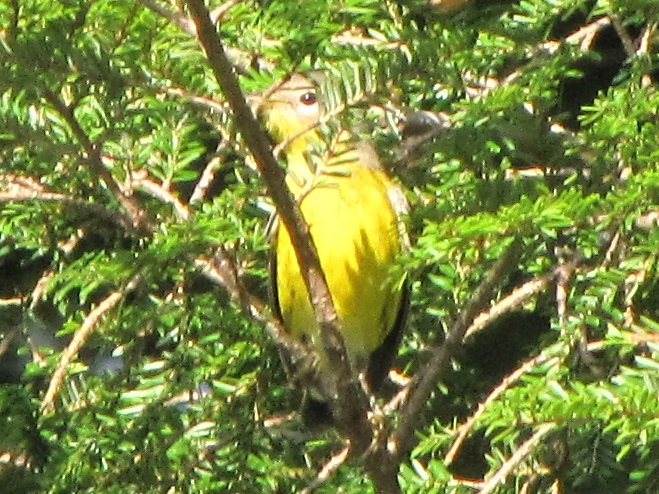
A Magnolia Warbler.
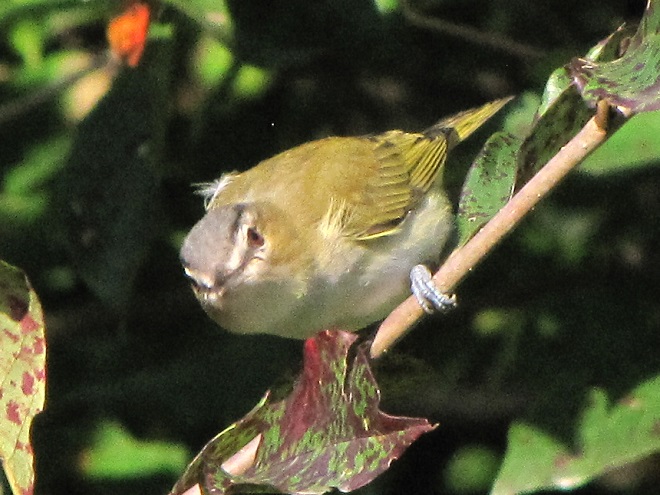
One of a hundred or more Red-eyed Vireos found swarming the treetops, and occasionally the understory, while engaging in a wild feeding frenzy.
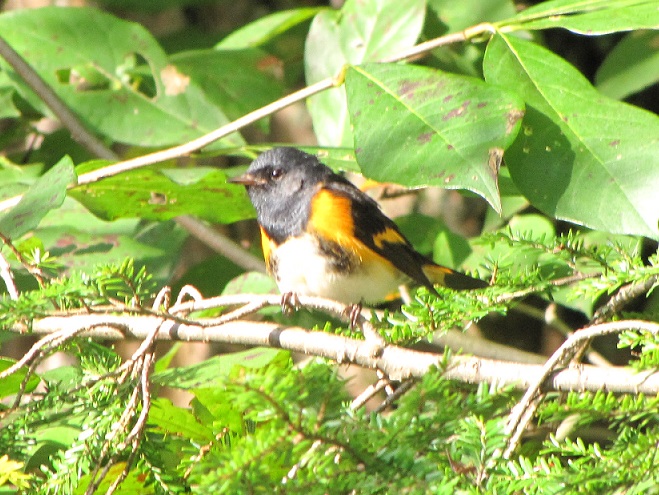
A male American Redstart.  Judging by that gray hood, it’s probably experiencing its second fall migration.
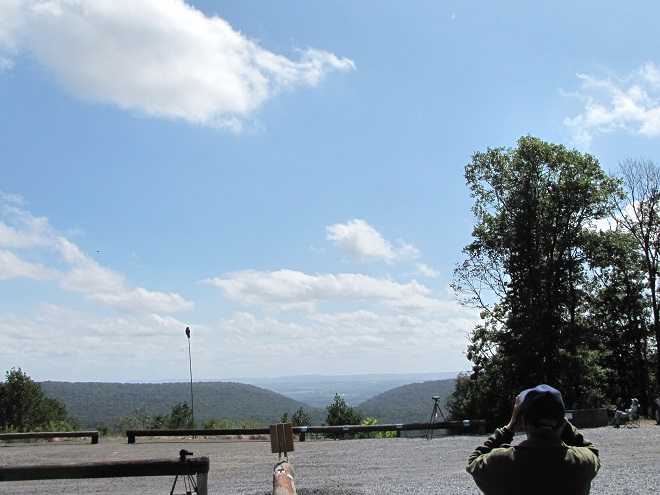
Eyes were skyward at the Second Mountain Hawk Watch lookout as Broad-winged Hawks began streaming through during the mid-morning.
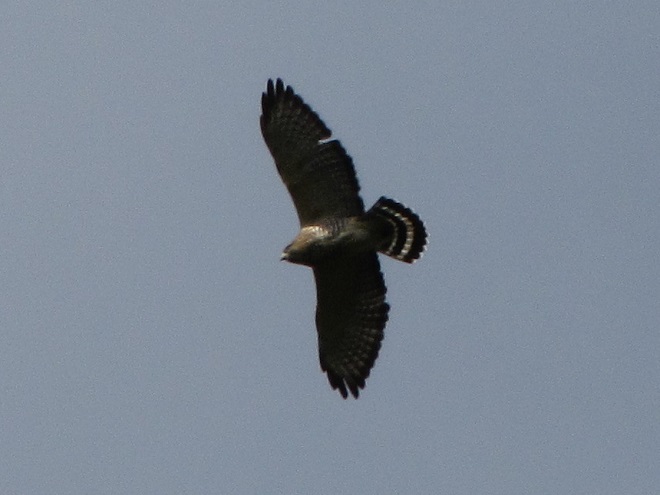
During the morning flight, Broad-winged Hawks including this adult floated by the lookout riding updrafts created by the south wind striking the face of the mountain ridge.
As the overcast became more scattered and more sunlight reached the ground, Broad-winged Hawks began riding thermal currents to gain altitude before gliding off to the southwest in continuance of their long trip to the tropics.  At times, birds would disappear into the base of the clouds before ending their climb and sailing away.
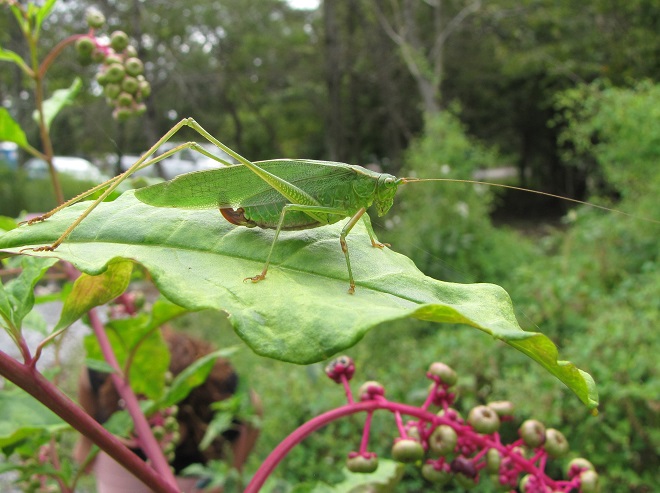
Broad-winged Hawks rely principally upon amphibians and large insects like this bush katydid (Scudderia species) for sustenance.  With freezing temperatures just around the corner, “broad-wings” must make their way to warmer climes early or risk starvation.
A Bald Eagle always gets observers looking.
A juvenile Broad-winged Hawk.
A juvenile Cooper’s Hawk.
A Broad-winged Hawk has a look around.
One never quite knows what one may see when having a look around.
A Cape May Warbler (Setophaga tigrina) in the lookout hemlock.
A Black Saddlebags, one of several migratory dragonflies seen today.
An Osprey glides through in the afternoon glare.
A speedy Merlin thrilled observers with a close approach.
One must remember that Fort Indiantown Gap is an active military installation, so from time to time training and drilling exercises may interrupt bird observation activities at the Second Mountain Hawk Watch.
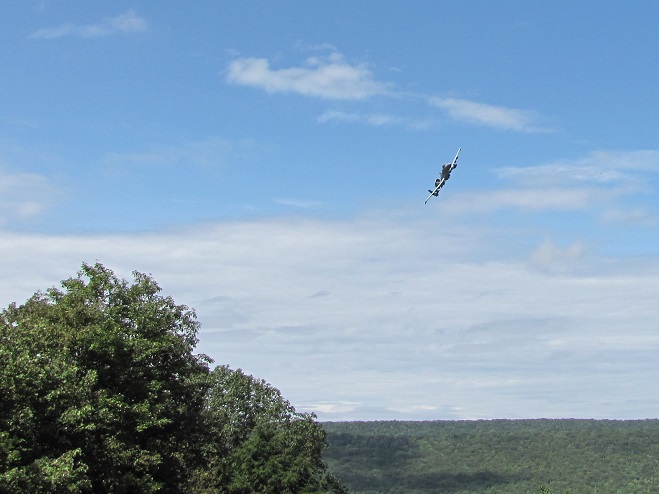
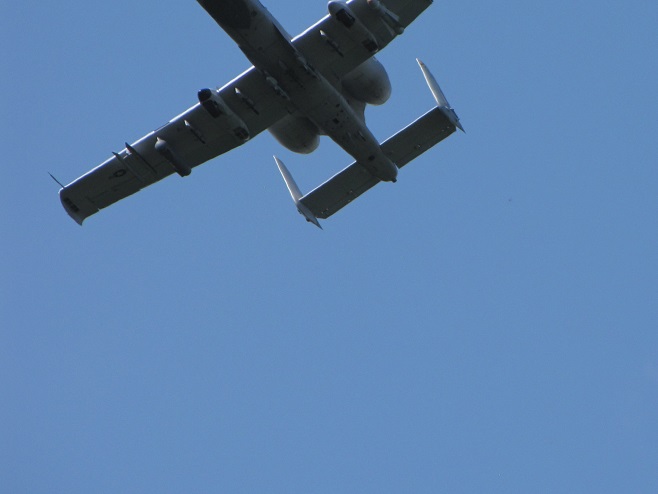
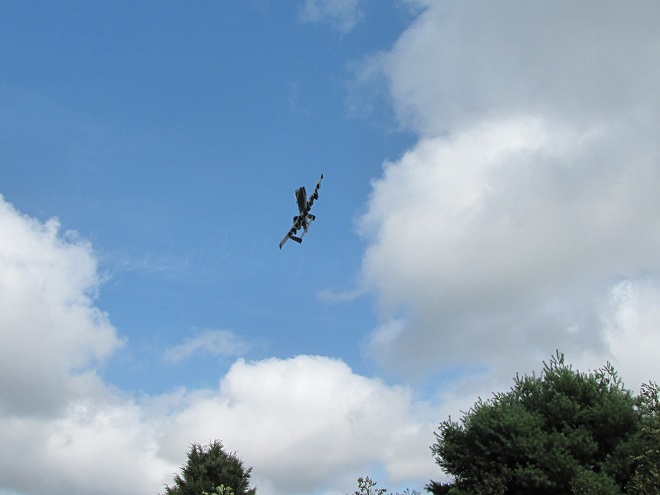
Today, speedy A-10 Warthog attack aircraft piloted by members of the Maryland Air National Guard based at Glenn Martin Field thrilled observers on the lookout with several close passes during their training runs.
And repeat.
Drill complete.

The total number of Broad-winged Hawks observed migrating past the Second Mountain lookout today was 619.  To see the daily raptor counts for Second Mountain and other hawk watches in North America, and to learn more about each site, be sure to visit hawkcount.org

Big Fallout

Okay, so it happened to be cloudy with drizzle at sunrise—not the best conditions for observing birds in the treetops.  But that inclement weather effectively grounded the overnight flight of migrating songbirds leading to a really big fallout in the lower Susquehanna valley this morning.

While straining one’s neck to gaze up into the forest canopy, hundreds of migrants including warblers, vireos, tanagers, thrushes, and flycatchers could be seen.  Identifying each was impossible.

Here are of few of this morning’s arrivals.  Manually setting the camera to a slower shutter speed compensated a little bit for the backlighting caused by cloudy conditions.

Pine Warbler (Setophaga pinus).
Bay-breasted Warbler.
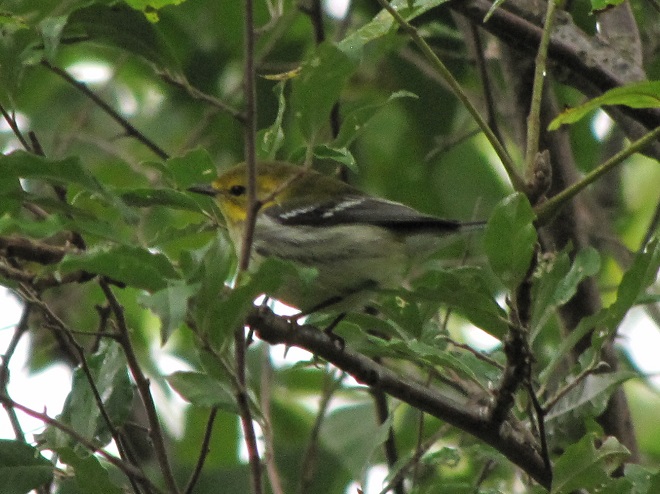
Black-throated Green Warbler.
Nashville Warbler (Leiothlypis ruficapilla).
Northern Parula (Setophaga americana).

Peak numbers of Broad-winged Hawks will pass through the area during the coming two weeks.  They most often migrate in groups, with sizes ranging from several individuals to hundreds or even thousands of birds.  Despite this being a less than ideal day for riding thermals and gliding off towards the southwest to continue their journey to the tropics, some “broad-wings” ventured aloft and were on their way soon after the drizzle subsided during mid-morning.

A Broad-winged Hawk lifts off from the cover of the forest where it spent the night.
The same Broad-winged Hawk (bottom) and an adult Bald Eagle gain altitude on a thermal updraft before the former glides away toward the southwest.

Big Flight Tonight

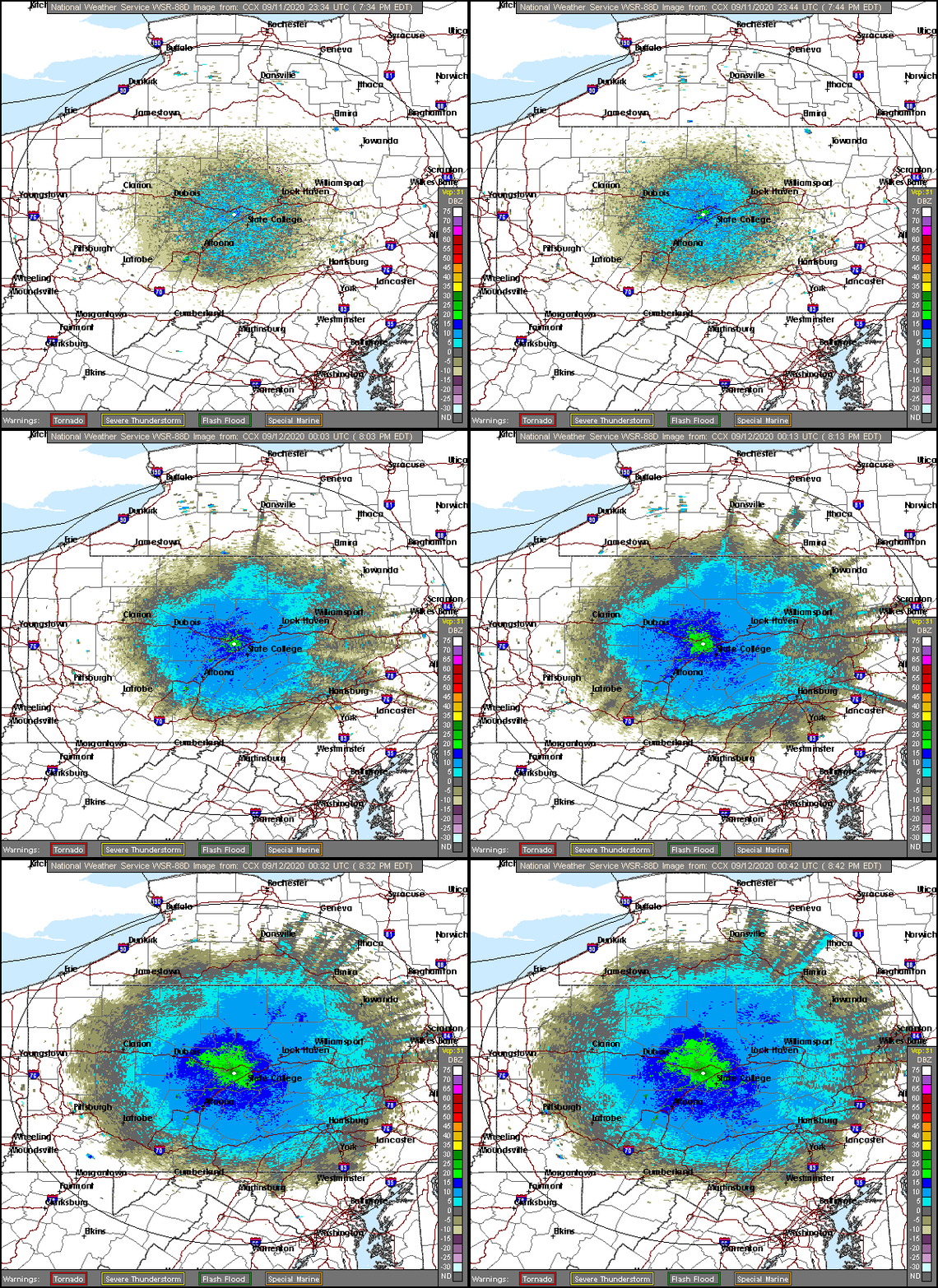
It looks like a really big flight of nocturnally migrating birds is underway tonight.  Returns from National Weather Service radar sites throughout the northeast are indicating liftoffs like this one around the station in State College, Pennsylvania.

(NOAA/National Weather Service image)

Conditions are ideal for a good fallout of Neotropical migrants at daybreak.  So get out there this weekend and see ’em before they’re gone.  Try thickets and forests where the rising sun provides good light for observing and warmth on the vegetation to get the bugs moving and birds feeding.

Happy Birding to all!

Bird Migration Highlights

The southbound bird migration of 2020 is well underway.  With passage of a cold front coming within the next 48 hours, the days ahead should provide an abundance of viewing opportunities.

Here are some of the species moving through the lower Susquehanna valley right now.

Blue-winged Teal are among the earliest of the waterfowl to begin southward migration.
Sandpipers and plovers have been on the move since July.  The bird in the foreground with these Killdeer is not one of their offspring, but rather a Semipalmated Plover (Charadrius semipalmatus), a regular late-summer migrant in the Lower Susquehanna River Watershed.
Hawk watch sites all over North America are counting birds right now.  The Osprey is an early-season delight as it glides past the lookouts.  Look for them moving down the Susquehanna as well.
Bald Eagles will be on the move through December.  To see these huge raptors in numbers, visit a hawk watch on a day following passage of a cold front when northwest winds are gusting.
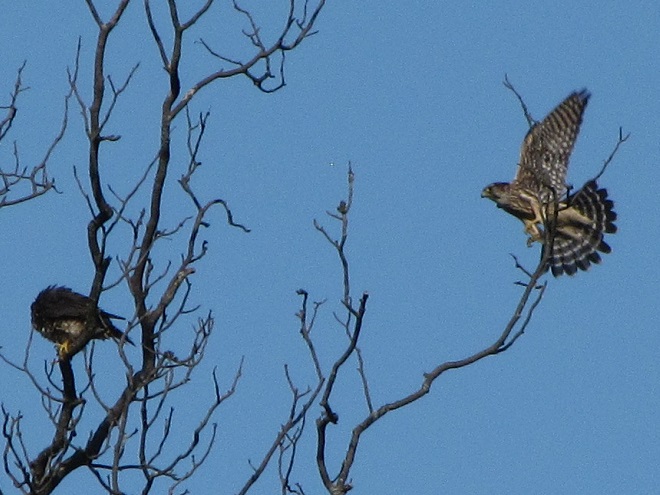
Merlins were seen during this past week in areas with good concentrations of dragonflies.  This particular one at Middle Creek Wildlife Management Area in Lancaster and Lebanon Counties…
…was soon visited by another.
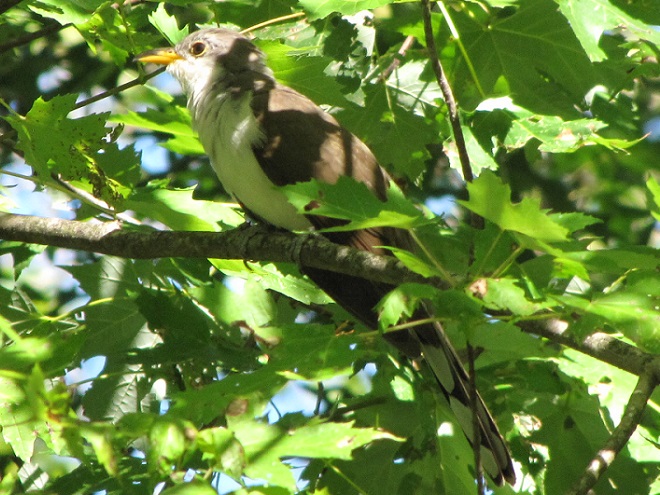
Check the forest canopy for Yellow-billed Cuckoos.  Some local birds are still on breeding territories while others from farther north are beginning to move through.
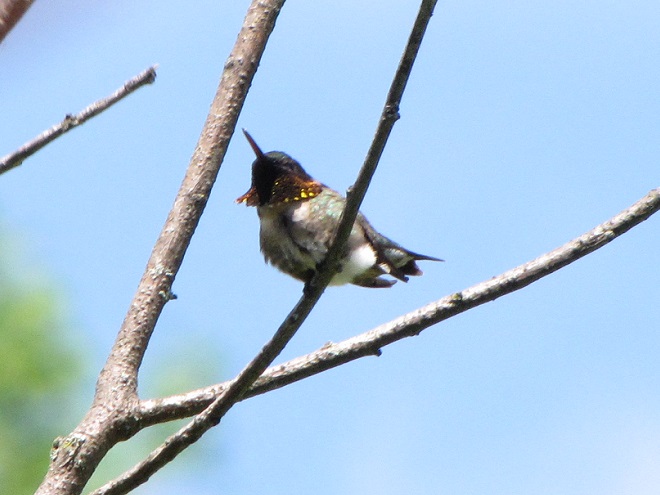
Ruby-throated Hummingbirds are darting through the lower Susquehanna valley on their way to the tropics.  This one has no trouble keeping pace with a passing Tree Swallow.
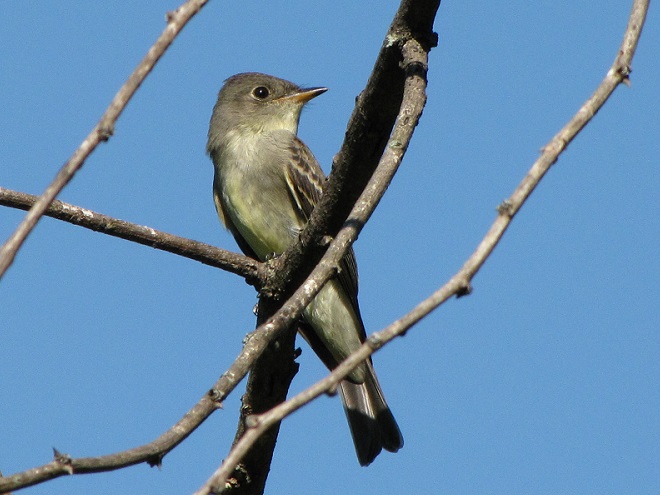
Nocturnal flights can bring new songbirds to good habitat each morning.  It’s the best time of year to see numbers of Empidonax flycatchers.  But, because they’re often silent during fall migration, it’s not the best time of year to easily identify them.  This one lacking a prominent eye ring is a Willow Flycatcher (Empidonax traillii).
During the past two weeks, Red-eyed Vireos have been numerous in many Susquehanna valley woodlands.  Many are migrants while others are breeding pairs tending late-season broods.
During mornings that follow heavy overnight flights, Blackburnian Warblers have been common among waves of feeding songbirds.
Chestnut-sided Warblers are regular among flocks of nocturnal migrants seen foraging among foliage at sunrise.
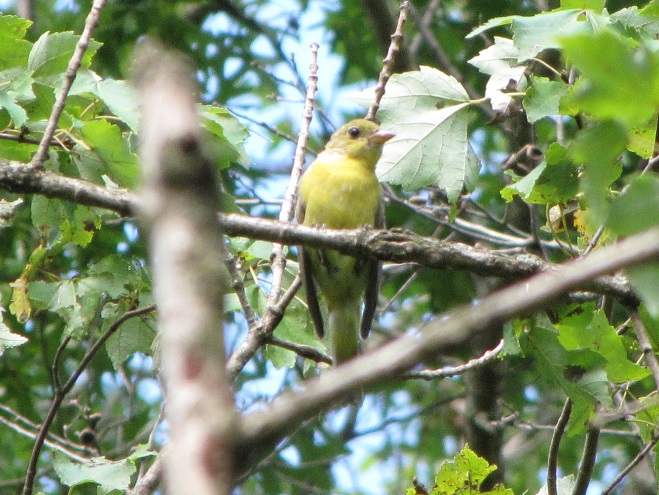
Scarlet Tanagers, minus the brilliant red breeding plumage of the males, are on their way back to the tropics for winter.
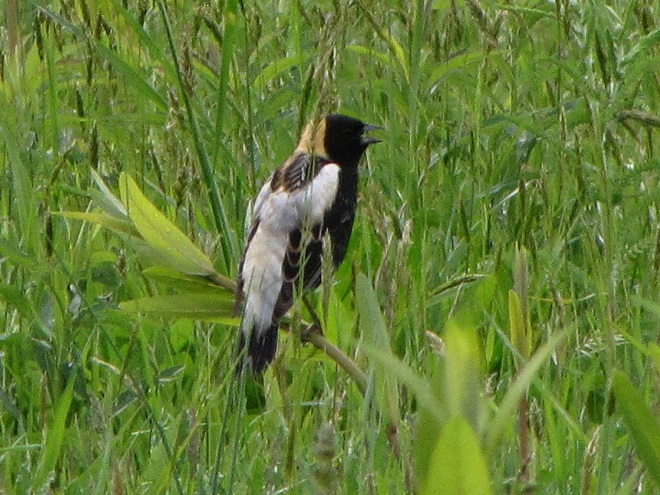
While passing overhead on their way south, Bobolinks can be seen or heard from almost anywhere in the lower Susquehanna valley.  Their movements peak in late August and early September.
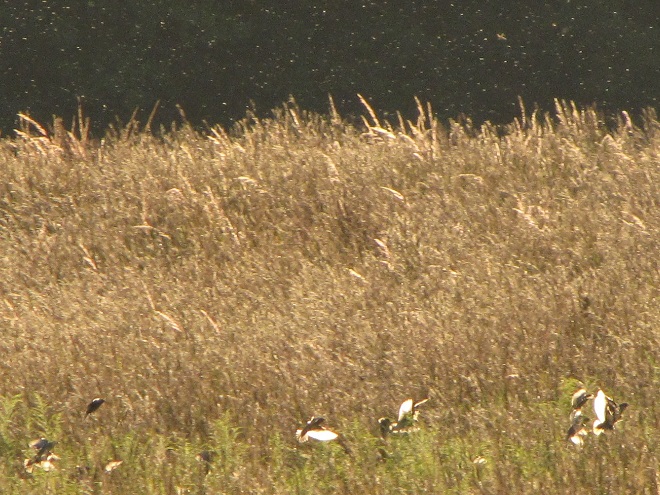
During recent evenings, Bobolinks have been gathering by the hundreds in fields of warm-season grasses at Middle Creek Wildlife Management Area.
If you go to see the Bobolinks there, visit Stop 3 on the tour route late in the afternoon and listen for their call.  You’ll soon notice their wings glistening in the light of the setting sun as they take short flights from point to point while they feed.  Note the abundance of flying insects above the Big Bluestem and Indiangrass in this image.  Grasslands like these are essential habitats for many of our least common resident and migratory birds.

Now Showing: Common Nighthawks

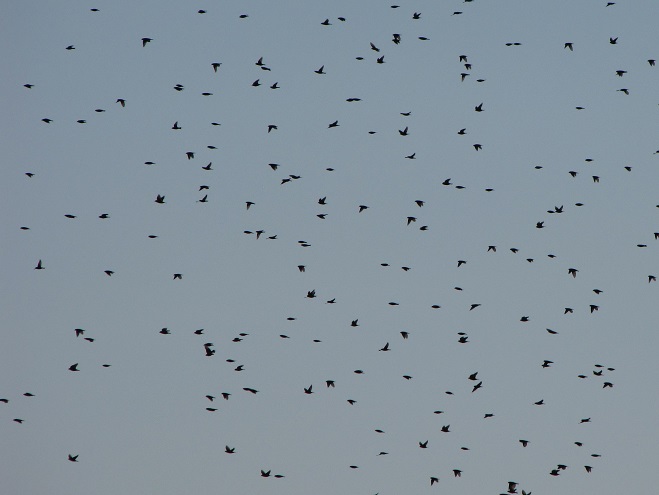
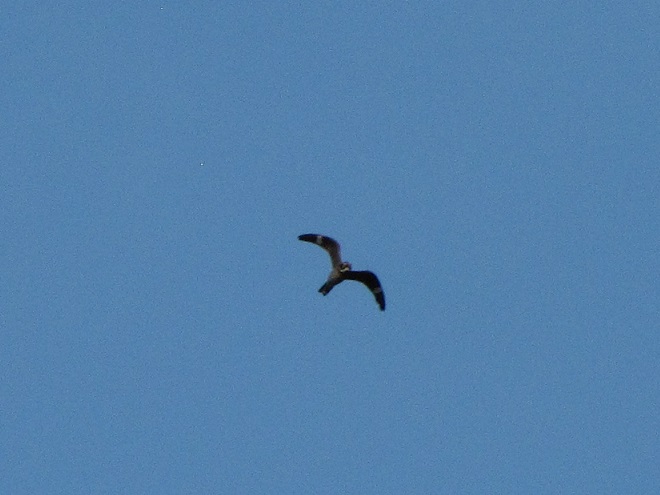
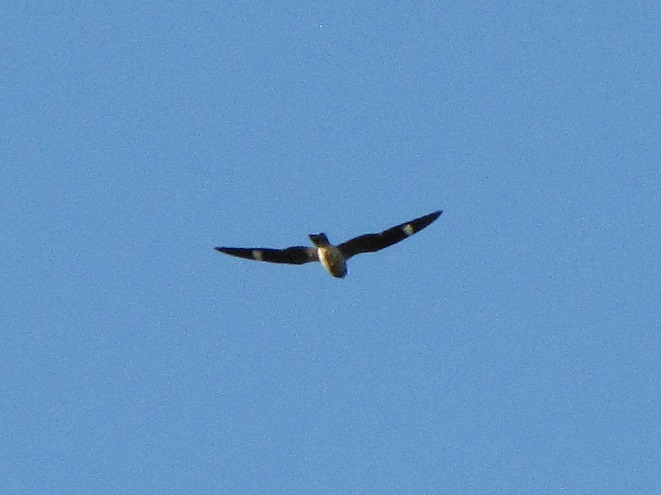
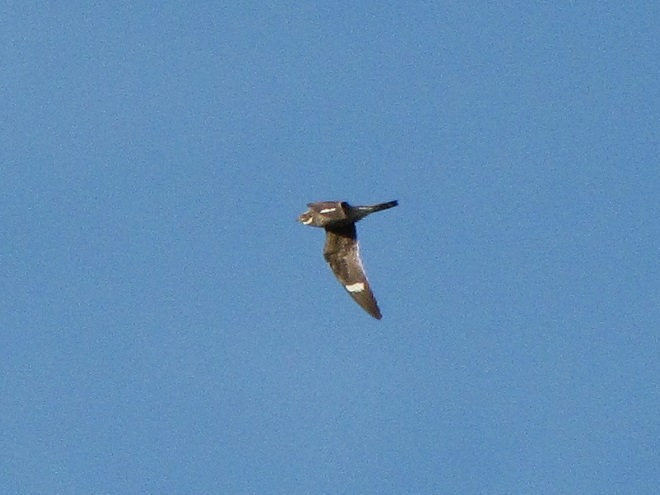
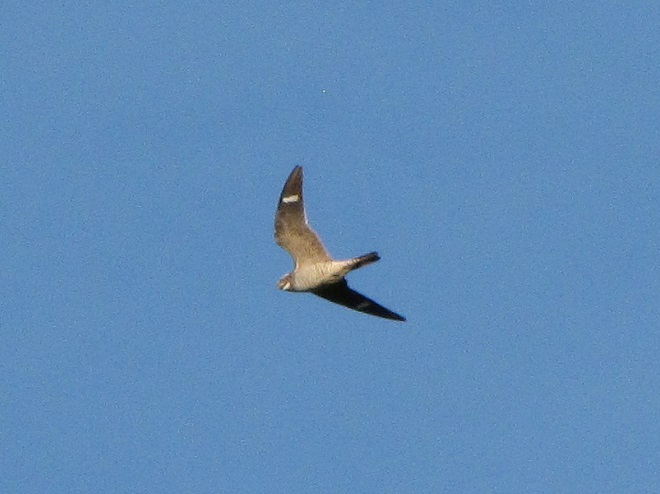
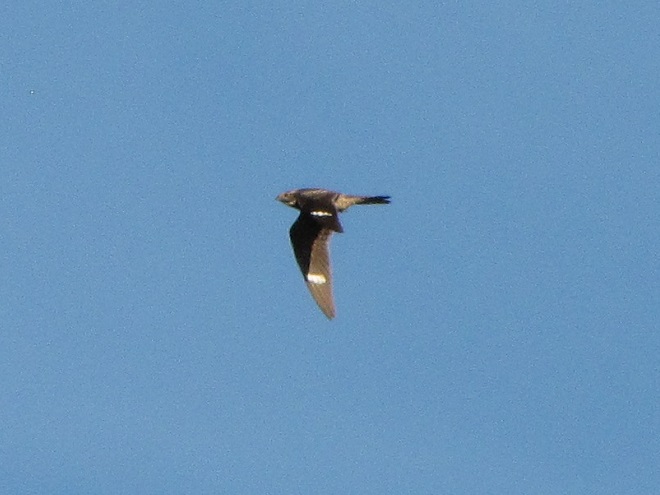
They fly about in near darkness, occasionally letting loose a buzzy call as they zigzag erratically in pursuit of fast-flying insects.  In the Lower Susquehanna River Watershed, they are most frequently seen during their northward spring migration—around Memorial Day—and again in late summer during their southbound journey—around Labor Day.  They spend their diurnal hours perched quietly on a tree limb, positioned lengthwise to avoid easy detection.  They are Common Nighthawks (Chordeiles minor), relatives of the Eastern Whip-poor-will (Antrostomus vociferus) and other nightjars.

Common Nighthawks begin their flights late in the afternoon, sometimes waiting until after sunset to begin foraging.
The Common Nighthawk is declining in numbers in eastern North America.  Before urbanization, this species relied upon pebble beds, grasslands, burned forest, and even cliff ledges for nest sites.  During the twentieth century, they adapted to sites on flat tin and gravel roofs atop multi-story buildings and became a common nesting species in cities and towns.  Through at least the late 1980s, Common Nighthawks were regular breeders in Harrisburg, Pennsylvania.  On warm summer nights, dozens could be seen feeding on the swarming Susquehanna mayflies attracted to the illuminated rotunda of the State Capitol Building.  Increased use of rubber instead of gravel-covered roofing and decreases in flying insect abundance may be among the dominant factors responsible for the sharp decline of the Common Nighthawk as a breeding species in the lower Susquehanna valley.
As they pass through in spring and late summer, Common Nighthawks can be seen feeding wherever flying insects are plentiful.  They are regular along the Susquehanna River where evening flights of multiple birds occur during the first week of September each year.
Look for migrating Common Nighthawks over woodlands and grasslands.  While you’re out, check the darkening sky over any of the valley’s cities or towns.  Bright lights illuminating early September football games and other sporting events attract insects… and nighthawks too!
You might see Common Nighthawks zipping around over fields used for high-intensity agricultural, usually a less-than-ideal habitat, as long as there is a source of flying insects such as a woodland, dairy farm, pastureland, fallow field, or forested streamside buffer nearby.
So look up.  Common Nighthawks will only be here a short while longer, then they’re off to the tropics for the winter.

Stray Butterflies

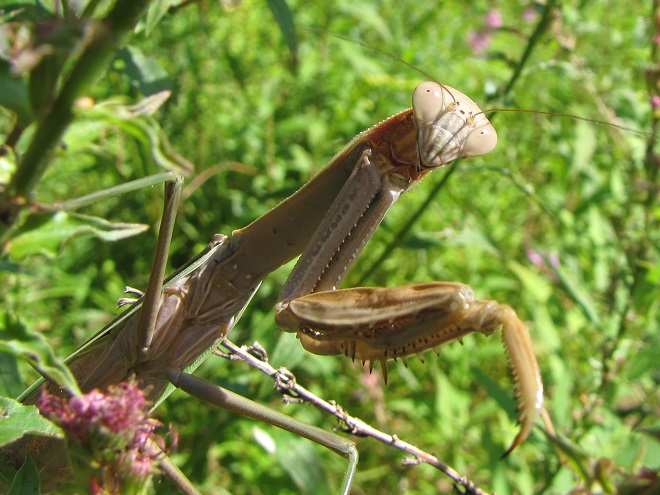
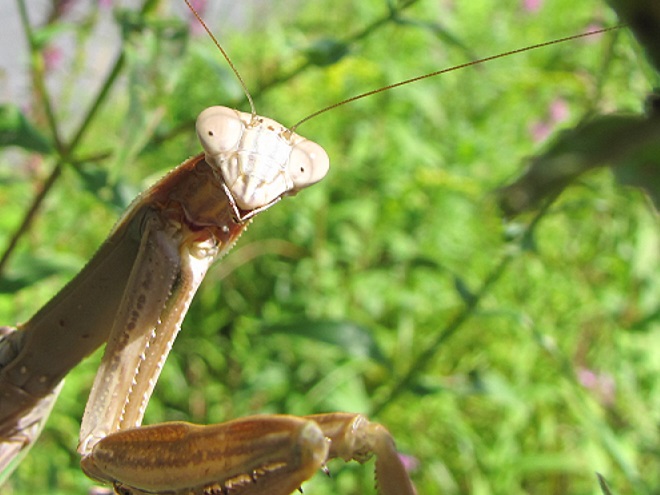
A special message from your local Chinese Mantis (Tenodera sinensis).

Hey you!  Yes, you.  I pray you’re paying attention to what’s flying around out there, otherwise it’ll all pass you by.

This summer’s hot humid breezes from the south have not only carried swarms of dragonflies into the lower Susquehanna valley, but butterflies too.

So check out these extravagant visitors from south of the Mason-Dixon Line—before my appetite gets the better of me.

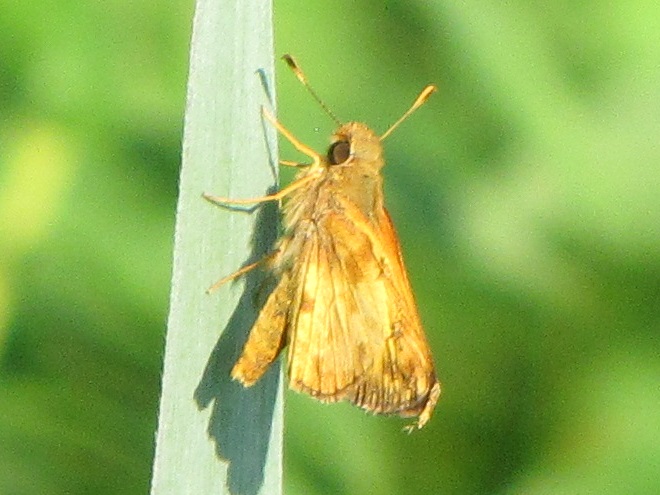
In some years, the Sachem, a vagrant from the south, can become the most frequently observed orange skipper in the Susquehanna valley, far outnumbering faltering populations of resident species around lawns, gardens, meadows, and roadsides.  2020 appears to be one of those years.
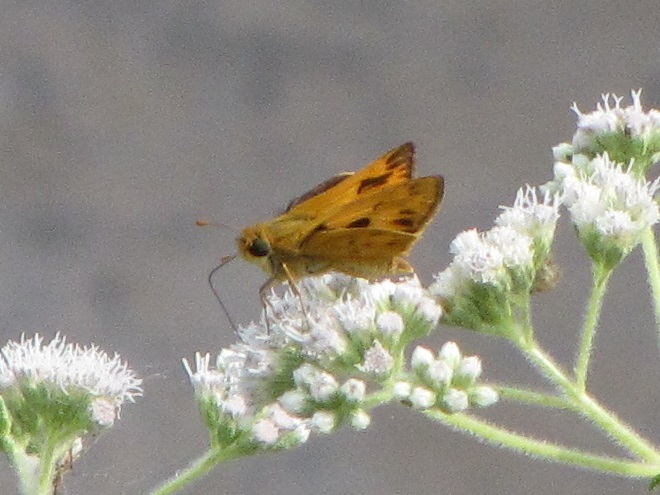
The Fiery Skipper (Hylephila phyleus) sometimes strays north along the lower Susquehanna River in late summer.  This one was photographed recently at Conewago Falls.
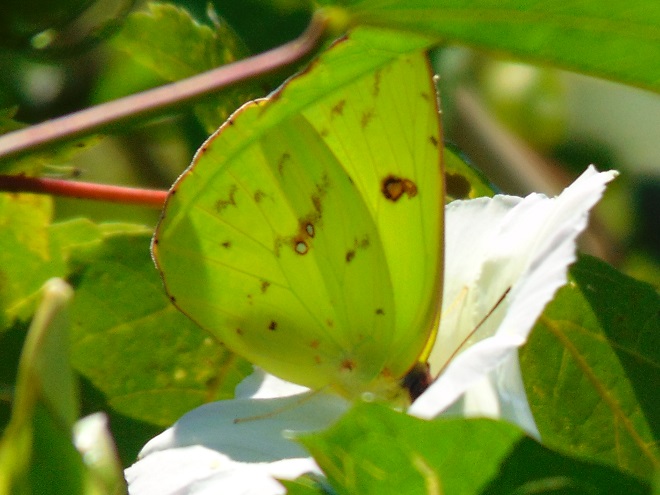
The Cloudless Sulphur is a large fast-flying brilliant yellow butterfly.  Here in the Susquehanna valley, it is usually seen singly, though colonizers will breed in patches of Partridge Pea, Wild Senna (Senna hebecarpa), and Maryland Senna (Senna marilandica).  Cloudless Sulphurs are really widespread this year.  In areas where intensive farming practices are in use, your chances of seeing one of these wandering around right now might be just as good as your chances of seeing one of the diminished flights of the resident Clouded Sulphurs (Colias philodice) and Orange Sulphurs (Colias eurytheme).
The Red-banded Hairstreak (Calycopis cecrops) is the least conspicuous of the stray butterflies shown here.  This beauty was photographed several days ago along the edge of an oak forest in northern Lancaster County, PA.

There you have it.  Get out there and have a look around.  These species won’t be active much longer.  In just a matter of weeks, our migratory butterflies, including Monarchs, will be heading south and our visiting strays will either follow their lead or risk succumbing to frosty weather.

For more photographs of butterflies, be sure to click the “Butterflies” tab at the top of the page.  We’re adding more as we get them.

Feeling a Little Rough Around the Edges Lately?

Have the affairs of life got you down?

Feel like you’re not your normal self?

Feel unable to be happy?

Feel alone in your nightmare?

Well, nothing improves one’s demeanor better than seeing someone whose lot is worse than their own.

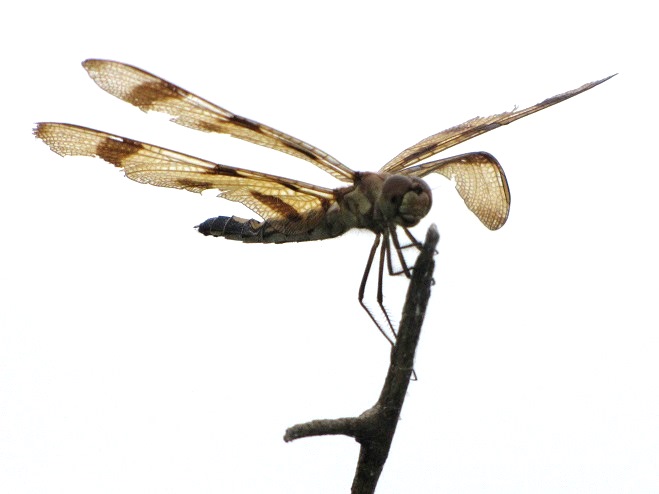
Have a look at this sad-looking Halloween Pennant.

All worn and torn—a shred of its former self.  Pitiful.  And Halloween is still two and a half months away.

Don’t you feel better now?

Look What the Wind Blew In

It’s been more than a week since Tropical Storm Isaias moved swiftly up the Atlantic seaboard leaving wind and flood damage in its wake.  Here in the Lower Susquehanna River Watershed, the brevity of its presence minimized the effects.

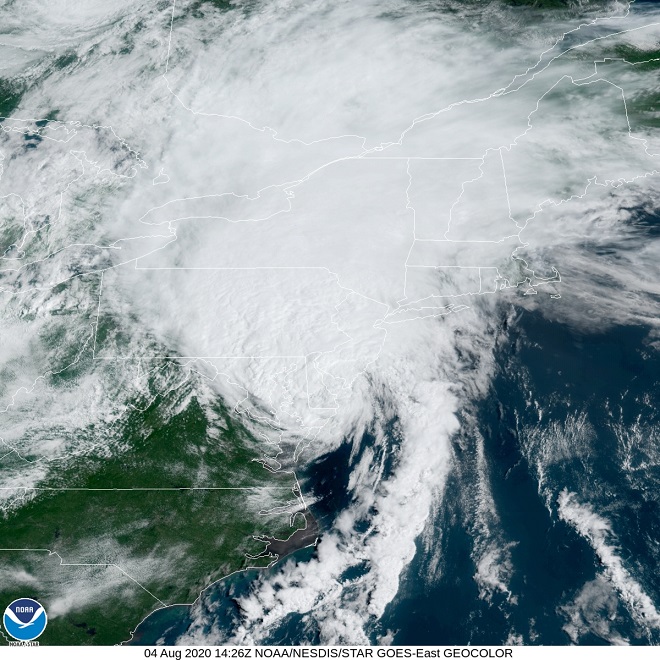
Tropical Storm Isaias moves north-northeast across the Delmarva Peninsula.

You may have noticed some summertime visitors flying about during these hot humid days that followed Isaias’ passing.  They’re the dragonflies.

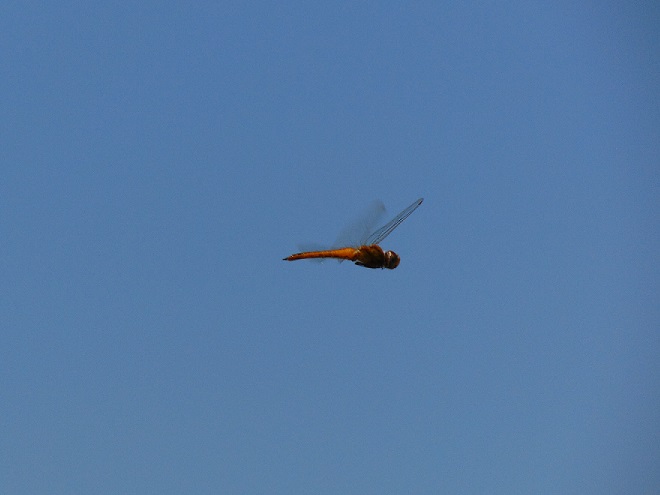
Our familiar friend the Wandering Glider is widespread throughout the valley right now—dropping eggs on shiny automobile hoods that look to them like a nice quiet puddle of water.

The Wandering Glider is a global traveler.  Here in the lower Susquehanna valley, it is currently abundant around still water and in large parking lots.

Each of the other common migratory species is here too.  Look for them patrolling the skies over large bodies of water and over adjacent fallow land and meadows where tiny flying insects abound.  Did these dragonflies arrive on the winds associated with the tropical storm, or did they move in with the waves of warm air that followed it?  Probably a little of both.

The Common Green Darner, a large dragonfly, can be the most abundant of the migratory species.  Watch for high-flying swarms in the coming weeks.
The Black Saddlebags is recognized in flight by the black base of each hindwing.  These patches give the appearance of a pair of saddlebags draped across the dragonfly’s thorax.
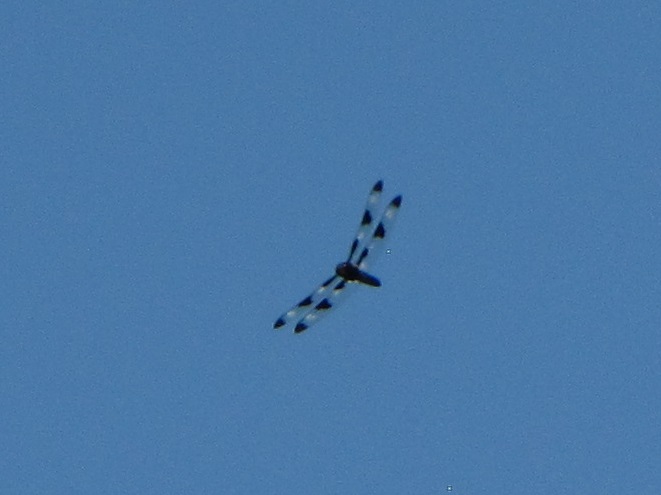
The Twelve-spotted Skimmer(Libellula pulchella) is a regular migrant.
The Prince Baskettail (Epitheca princeps) can occur among mixed groups of dragonflies.  Despite it rarely being mentioned as a migrant, its proclivity for non-stop day-long flight makes it a likely sighting among sizeable swarms.

Big swarms of dragonflies don’t go unnoticed by predators—particularly birds.  The southbound migration of kites, Broad-winged Hawks, American Kestrels, and Merlins often coincides with the swarming of migratory dragonflies in late summer.  Each of these raptors will grab and feed upon these insects while on the wing—so keep an eye on the sky.

This Peregrine Falcon found the congregations of hundreds of dragonflies worthy of a closer look…
…and an acrobatic fly-by to disrupt the swarms.  Fun, fun, fun, fun, fun.

Get Out of the Floodplain…And Get Your Stuff Out Too!

After threading its way through waves of Saharan dust plumes, Tropical Storm Isaias, or the remnants thereof, is making a run up the eastern seaboard toward the lower Susquehanna watershed.

Isaias formed just off the northernmost tip of the South American continent.  It drifted north in a narrow pocket between two waves of the Saharan dust plume and, on July 30, strengthened to tropical storm status while in the vicinity of Puerto Rico.  (CIRA/NOAA image)
In this image taken on Friday, note the position of the fast-moving dust plume that was to the southeast of Isaias just a day earlier.  With the storm now clear of the dry Saharan air, it strengthens to become Hurricane Isaias.  (CIRA/NOAA image)
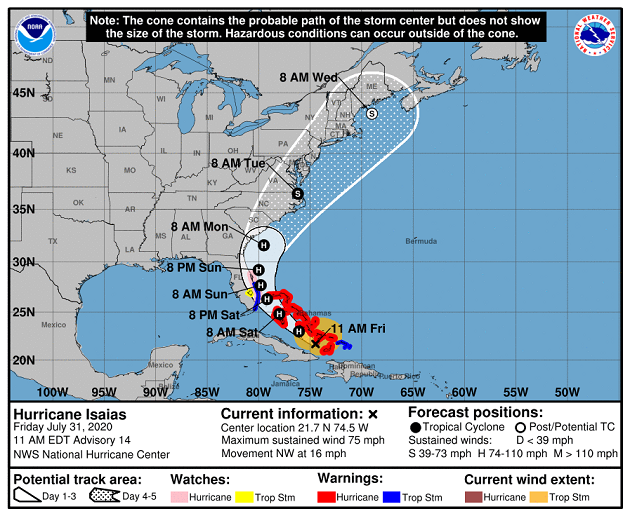
On Friday, the National Hurricane Center issues advisors expecting the strengthening Isaias to sweep the Atlantic coasts of Florida, Georgia, and South Carolina as a hurricane with winds of 74 miles per hour or greater.  (NOAA/National Hurricane Center image)
Then on Saturday, Isaias appears to be back in the dirt.  Did the counterclockwise rotation of the atmosphere around Isaias draw in Saharan dust and dry air to weaken the storm?  Whatever the cause, Isaias is downgraded to a strong tropical storm with maximum sustained winds of 70 miles per hour.  (CIRA/NOAA image)
The latest image of Tropical Storm Isaias.  (CIRA/NOAA image)
The latest forecast projects Isaias will briefly reach hurricane status later today before making landfall in South Carolina and again weakening.  (NOAA/National Hurricane Center image)
Tropical Storm Isaias is expected to bring heavy rain to the lower Susquehanna valley and the Cheapeake Bay region tomorrow (Tuesday).  (NOAA/National Hurricane Center image)

Heavy rain and flooding appears likely, particularly east of the Susquehanna.  Now might be a good time to clean up the trash and garbage that could clog nearby storm drains or otherwise find its way into your local waterway.  NOW is the time to get all your stuff out of the floodplain!  The car, the camper, the picnic table, the lawn furniture, the kid’s toys, the soda bottles, the gas cans, the lawn chemicals, the Styrofoam, and all that other junk you’ve piled up.  Get that stuff cleaned up and out of the floodway.  And of course, get you and your pets out of the there too!

Saharan Dust Cloud: A Tale of Two Tropical Storms

Have a look at the effect of the Saharan dust event of 2020 on tropical storm and hurricane development…

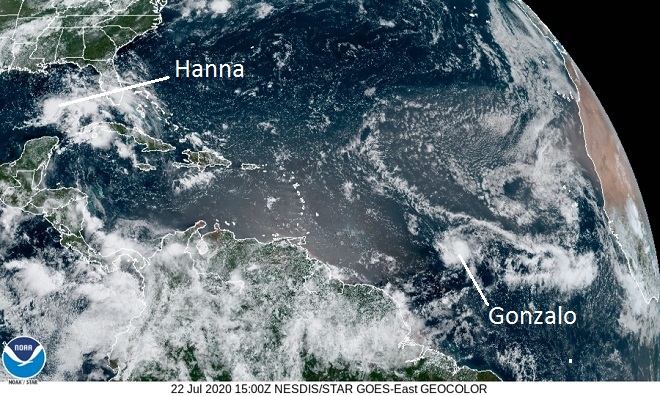
Wednesday-  Earlier in the week, Tropical Storm Gonzalo developed in the Atlantic Ocean along the south edge of a gap between two waves of Saharan dust.  Forecast models predicted Gonzalo would strengthen to a hurricane as it moved west into the Caribbean Sea in the coming days.  A tropical depression in the Gulf of Mexico was also being monitored.  Should it intensify, it would be named Tropical Storm Hanna.  (CIRA/NOAA image)
Thursday-  Tropical Storm Gonzalo continues its westward track.  Note the pinching of the two waves of Saharan dust around its north side.  In the gulf, soon-to-be Tropical Storm Hanna gathers strength over the warm water, free of the convective restrictions imposed by Saharan dust.  (CIRA/NOAA image)
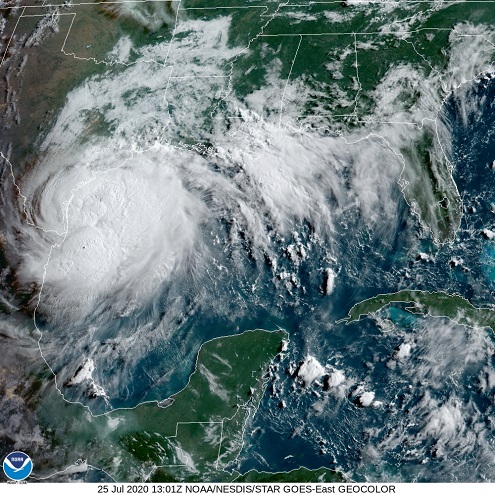
Friday-  Tropical Storm Gonzalo is caught in the pinch of Saharan dust, diminishing its potential for growth.  The system’s feeder bands are nearly gone.  The forecast is downgraded; Gonzalo is expected to remain a tropical storm during its passage through the Caribbean.  Looking more robust, Tropical Storm Hanna approaches the coasts of Texas and Louisiana.  (CIRA/NOAA image)
Saturday-  With upper-level convection subdued by an overcast of Saharan particulates and dry desert air, Tropical Storm Gonzalo is becoming less organized and is forecast to be downgraded to a tropical depression within 24 hours.  (CIRA/NOAA image)
Meanwhile, Tropical Storm Hanna has strengthen to Hurricane Hanna.  A humid atmosphere free of a dense plume of Saharan dust has allowed this storm to develop towering cloud convection, visible here just off the coast of Texas.  (CIRA/NOAA image)

Saharan Dust Cloud: Get Your Camera Ready

It appears that the Saharan dust cloud has at last wandered our way.  The plume is presently advancing across Texas and the Mississippi and Ohio River valleys.

The stream of Saharan dust making a right turn across the western coast of the Gulf of Mexico into Texas and the Mississippi valley.  The leading edge can be seen over Ohio approaching western Pennsylvania.  During its long journey, the dry air in the plume has become too diluted to have much impact on the formation of convective clouds.  (CIRA/NOAA image)
A dense segment of the plume can be seen pushing into clear air over Tennessee and the southern Appalachian Mountains.  (CIRA/NOAA image)

Be sure to get outside and have a look at the sunsets and sunrises in the coming days.  They just might be a photo-worthy spectacle!

Tropical Storm Fay

Tropical Storm Fay bringing rain and the possibility of flooding to the lower Susquehanna watershed.  As of 3:30 P.M. E.D.T., the northbound center of circulation was just off Atlantic City, New Jersey.  (CIRA/NOAA image)

Saharan Dust Cloud: Out of the Loop

Dust continues to be carried aloft on dry updrafts over the Sahara Desert.  The plume is presently stretching for thousands of miles due west across the tropical Atlantic into the Pacific, leaving the United States out of the loop—at least for now.

(CIRA/NOAA image)

With no dry air to spoil the fun, the warm waters of the Gulf Stream off the coast of North Carolina are spawning some convective clouds in a low pressure system that could become tropical within the next day or so.

Tropical or not, it looks like a rainy weekend along the Mid-Atlantic coast.  (CIRA/NOAA image)

Now that the heat and humidity is upon us, why not get out and take a look at the damselflies and dragonflies that inhabit the ponds, wetlands, and waterways of the lower Susquehanna watershed?  These flying insects thrive in sultry weather and some species will breed in a body of water as small as a garden pond—as long as it is free of large fish.  Check out some of the species found locally by clicking on the “Damselflies and Dragonflies” tab at the top of this page.  We’ll be adding more photos and species soon.

A Halloween Pennant.  Ooh, scary.

Saharan Dust: Atlantic to Pacific

The overcast of Saharan dust that was as close to the Susquehanna valley as the Appalachians of Virginia and West Virginia has, for now, dissipated.  This week, the plume of particulates followed a hairpin route originating with the Saharan updrafts, then flowing across the Atlantic and Caribbean only to make a 180-degree turn along the coastal areas of the Gulf of Mexico to return to the Atlantic via Florida, where it then drifted northeast—loosely following the path of the Gulf Stream.

The hairpin route of the Saharan dust cloud in the Atlantic.  (CIRA/NOAA image)
A 180-degree turn as the plume passes over the Yucatan Peninsula and shorelines along the Gulf of Mexico to cross Florida and reenter the Atlantic. (CIRA/NOAA image)

During the last several days, portions of the dust layer have been carried due west across Mexico into the Pacific.

Portions of the Saharan dust plume entering the Pacific Ocean off Mexico.  (CIRA/NOAA image)

For the Susquehanna region, a low pressure system is in place for Independence Day.  In the image below, the cloud of hazy humid air seen blanketing the northeast coast  consists of air pollution, pollen, mold spores,  “domestic particulates”, condensing water vapor—and little if any red-brown Saharan dust.  For the gasoline and gunpowder gang, it’ll be a sticky-hot summer weekend for the celebration of their favorite holiday.  Kaboom!

An opaque film of humid air over the Mid-Atlantic States and a diluted plume of Saharan dust drifting northeast after crossing Florida.  (CIRA/NOAA image)

Saharan Dust Plume Approaching the Mid-Atlantic States

The latest satellite image shows the Saharan dust cloud now covering much of the southern United States including most of West Virginia and the Appalachians of North Carolina and Virginia.  Due to the density of the particulate matter, air quality warnings have been issued by the National Weather Service for South Carolina, western North Carolina, and the Atlanta metro area.

As the plume of dust drifts east from the southern United States into the Atlantic…

(CIRA/NOAA image)

…yet more can be seen coming west from the African Sahara into the Caribbean Sea.  It ain’t over til’ it’s over.

(CIRA/NOAA image)

Saharan Dust Cloud Arrives on Gulf Coast

The Saharan dust cloud made its way across the Caribbean Sea and the Gulf of Mexico to reach the skies above the shores of the United States by mid-day yesterday.  There, as seen in the image below, the dusty air mass encountered a storm that caused heavy rains and flooding in Louisiana.

(CIRA/NOAA image)

By this morning, the leading edge of the dust cloud encircled the gulf coastline and had spread east across northern Florida into the Atlantic.  The latest satellite image (below) shows a dense dry core of the system covering the western Caribbean, the central gulf, and the Yucatan Peninsula.

(CIRA/NOAA image)

For the eastern Caribbean, there is a break in the action.  But a second wave is on the way.

(CIRA/NOAA image)

Start watching the skies.  Look for any increase in haze during the coming days.  Then too, it might be interesting to compare the sunsets for one evening to the next.  Over successive nights, take note of the stars and planets in the night sky.  If the Saharan dust reaches the lower Susquehanna region with sufficient density, you may find that only the brightest celestial objects are discernible.

Saharan Dust Cloud Update

(CIRA/NOAA image)

Dust carried aloft by hot dry air over the Sahara Desert continues to stream west into the Caribbean Sea.  In this image, a dense band of the airborne particles can be seen passing over the Dominican Republic, Puerto Rico, and the Leeward Islands.  North of these islands, note the development of puffy white clouds outside the border of the dust storm.  The Saharan air mass appears to be effectively limiting convective cloud development within much of its course.  No hurricanes for now.

What is the impact of the Saharan dust cloud on the affected islands?  In Puerto Rico, the National Weather Service is forecasting visibility of four to eight miles in widespread haze through at least the next twenty-four hours.  For the coming several days, the forecast daily high temperatures are expected to be in the low eighties—several degrees cooler than the normal high eighties and low nineties.

Stay tuned, we’ll keep an eye on the plume as it moves into the Gulf of Mexico.

Dirty Summer 2020?

Summer is nigh upon us.  With the solstice just hours away, it might be fun to have a look at a satellite view of the earth while the south pole lies plunged into days of endless night, and the north pole suffers none.

(CIRA/NOAA image)

In the image above, darkness can be seen engulfing the southern Atlantic Ocean and southernmost Chile.  The latter is the longitudinal equivalent of the lower Susquehanna valley.  Today, it experiences nightfall more than five hours earlier than we, heralding the first day of our summer, and of their winter.

Just to the north of the South American continent, note the enormous tan-colored cloud over the Atlantic.  What is that?  From whence doth that cloud come?

(CIRA/NOAA image)

Closer inspection reveals an enormous plume of dust rising from the Sahara Desert in Africa and drifting west approaching the Leeward Islands of the Caribbean.  (In the image above, Africa can be seen outlined in the darkness along the east horizon)  Look closely and you’ll notice that the dust is obscuring the white clouds below it, indicating that it has reached altitudes high in the atmosphere.  Particle fallout from Saharan dust clouds is known to fertilize tropical forests—including the Amazon (bottom center of image).  Because they are composed of wind blown particles and not water vapor, Saharan dust clouds carry aloft not only minerals and nutrients, but microscopic and macroscopic life too.

Is this particular Saharan dust cloud going to impact the Amazon?  What might the meteorological and biological effects of this cloud be if it continues into the Caribbean and even into the United States?  Might we be showered by little pieces of the Sahara this summer?  Will we see spectacular sunrises and sunsets?  Time will tell.

How Much Can a Bald Eagle Lift?

Here it is—just as it happened, recently in the lower Susquehanna valley.
A Bald Eagle in search of a meal.
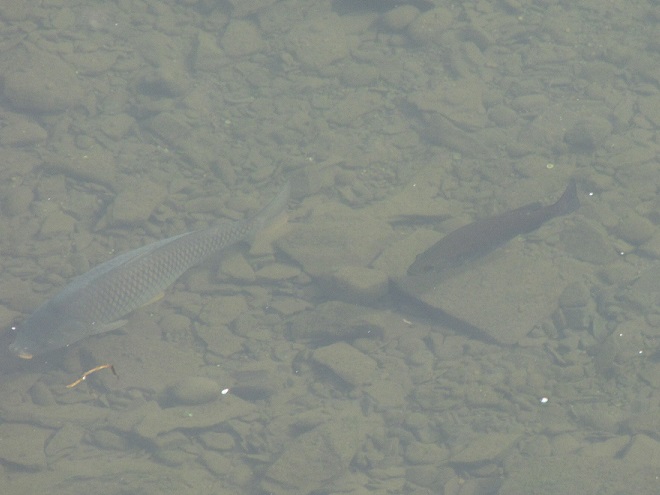
The eagle glides in and grabs an unsuspecting Common Carp, the bird’s momentum and a head wind helping it to raise the fish out of the water.  This particular carp appears to be eighteen to twenty-four inches in length.  In that range, it could weigh anywhere from four to ten pounds or more.
But as the eagle tries to flap its wings to carry the carp skyward, it loses lift, and the weight of the fish drags the raptor down.  A carp exceeding twenty inches in length usually weighs more than five pounds, approximately half the mass of a male (about 9 lbs.) or a female (about 12 lbs.) Bald Eagle.  From a dead stop, trying to extricate a submerged fish weighing half as much again as it does is an impossible task for this or any other Bald Eagle.
The eagle fights briefly to pull the carp from the water, then abandons the effort to instead release its talons from the fish to prevent its own demise by drowning.
Free of its hold on the carp, the eagle flaps its wings briskly to get up and out of the potentially deadly situation.
Success!
Both the eagle and, presumably, the carp survive the encounter.
The eagle finds a nearby tree limb where it takes a much-needed break from fishing.
Such an event may have been fatal to an inexperienced younger Bald Eagle.  Though not an adult, this bird is no spring chicken.  Its plumage, particularly its white head with a dark line through the eye (often called an “osprey face”), is indicative of a bird in its fourth year of life.  By this time next year, it should be sporting a full set of adult feathers.  In the meantime, it should stick to eating suckers; there are plenty of those to go around.
Common Carp are classified as a minnow (Cyprinidae).  They are indigenous to Europe and are raised as a food fish in many parts of the world.  In the Lower Susquehanna River Watershed, Common Carp are an introduced species with negative impacts on native fisheries.  Those exceeding twenty inches in length begin to gain girth and weight, sometimes reaching thirty pounds at thirty inches.

SOURCES

Sedaghat, Safoura, Seyed Abbas Hoseini, Mohammad Larijani, and Khadijeh Shamekhi Ranjbar.  2013.  “Age and Growth of Common Carp (Cyprinus carpio Linnaeus, 1758) in Southern Caspian Sea, Iran”.  World Journal of Fish and Marine Sciences.  5:1.  pp.71-73.

Big Flight Last Night

Birds on radar last evening.  A dense liftoff of nocturnal migrants is indicated at radar sites across the northeastern United States.  Rain showers can be seen in Virginia.  (NOAA/National Weather Service image)

Today’s arrivals—Neotropical migrants found in a streamside thicket in the Lower Susquehanna River Watershed this morning…

Red-eyed Vireos nest in forests throughout the lower Susquehanna valley.
The Northern Waterthrush is a regularly occurring migrant that can be found in vegetated wetlands and along the backwaters of streams and rivers.  Despite its drab appearance, it is classified as one of our Neotropical warbler species.
The adult male American Redstart is unlike any other eastern warbler.  It is easily recognized.  Along the lower Susquehanna, redstarts nest in the dense understory of damp forests.
The first-spring male American Redstart is similar to the female, but usually shows black markings beginning to develop on the breast and face.  It is an energetic singer.
In its strikingly colorful plumage, the Magnolia Warbler is a classic Neotropical bird.  Locally, it is a regular migrant.
The Wilson’s Warbler (Cardellina pusilla) forages in lowland thickets during its migratory stopovers.  Riparian buffers along streams can provide critical habitat for this and other transient species.
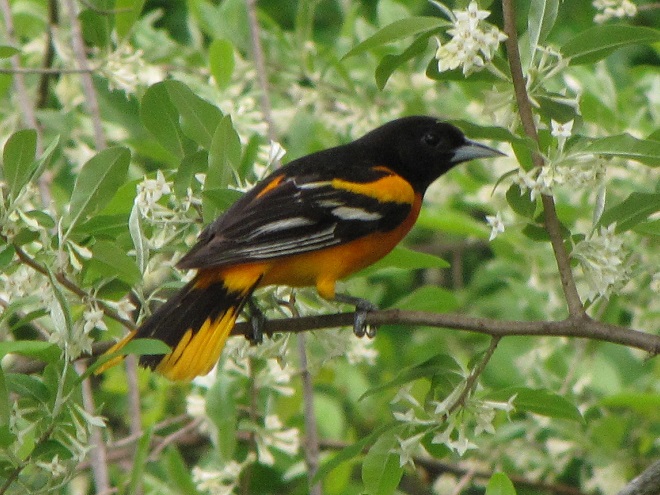
Baltimore Orioles continue to trickle in, creating squabbles when they enter nesting territories established by birds that arrived earlier in the month.

The Layover

After nearly a full week of record-breaking cold, including two nights with a widespread freeze, warm weather has returned.  Today, for the first time this year, the temperature was above eighty degrees Fahrenheit throughout the lower Susquehanna region.  Not only can the growing season now resume, but the northward movement of Neotropical birds can again take flight—much to our delight.

A rainy day on Friday, May 8, preceded the arrival of a cold arctic air mass in the eastern United States.  It initiated a sustained layover for many migrating birds.

Bobolinks (Dolichonyx oryzivorus) in flocks of as many as fifty birds gathered in weedy meadows and alfalfa fields for the week.
A Bobolink sheltering in a field of Sweet Vernal Grass (Anthoxanthum odoratum) during the rain on Friday, May 8th.
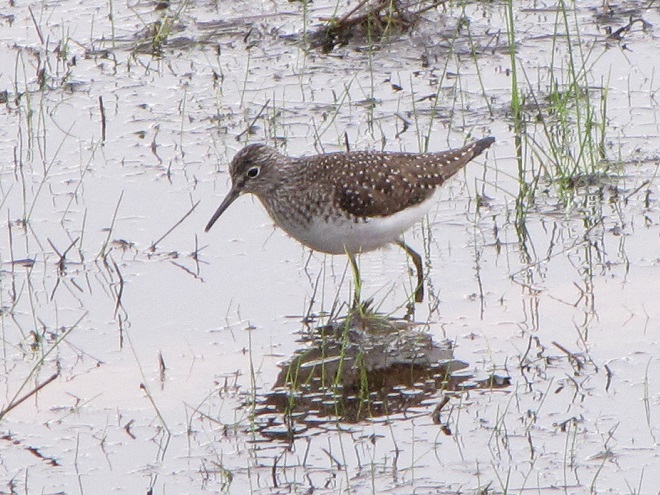
Two of seven Solitary Sandpipers (Tringa solitaria) in a wet field on Friday, May 8.  Not-so-solitary after all.
Grounded by inclement weather, Rose-breasted Grosbeaks (Pheucticus ludovicianus) made visits to suburban bird feeders in the lower Susquehanna valley.  (Charles A. Fox image)
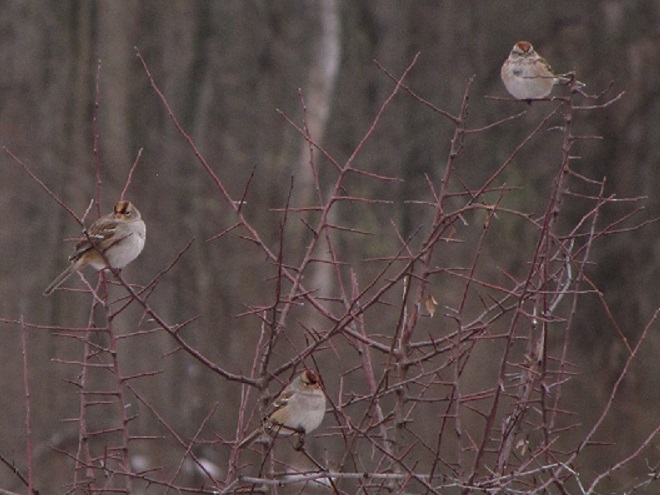
Freeze warnings were issued for five of the next six mornings.  The nocturnal flights of migrating birds, most of them consisting of Neotropical species by now, appeared to be impacted.  Even on clear moonlit nights, these birds wisely remained grounded.  Unlike the more hardy species that moved north during the preceding weeks, Neotropical birds rely heavily on insects as a food source.  For them, burning excessive energy by flying through cold air into areas that may be void of food upon arrival could be a death sentence.  So they wait.

A freeze warning was issued for Saturday morning, May 9, in the counties colored dark blue on the map.  (NOAA/National Weather Service image)
This radar image from 3:28 A.M. Saturday morning, May 9, indicates a minor movement of birds in the Great Plains, but there are no notable returns shown around weather radar sites in the freeze area, including the lower Susquehanna valley.  (NOAA/National Weather Service image)
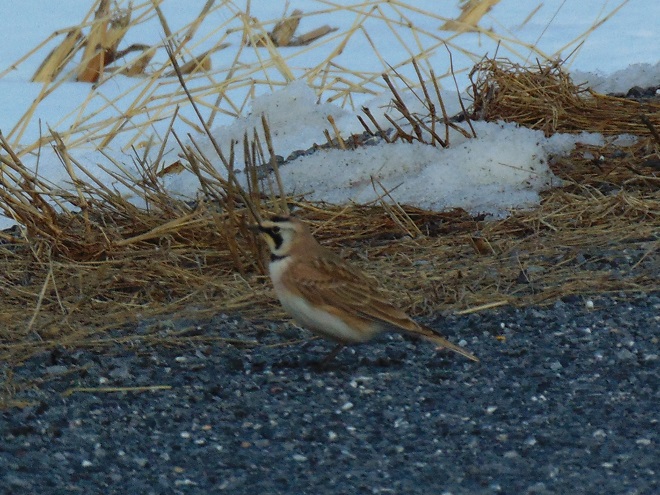
To avoid the cold wind on Saturday, May 9, this Veery was staying low to the ground within a thicket of shrubs in the forest.
This Black-throated Blue Warbler avoided the treetops and spent time in the woodland understory.  He sang not a note.  With birds conserving energy for the cold night(s) ahead, it was uncharacteristically quiet for the second Saturday in May.
A secretive Northern Waterthrush (Parkesia noveboracensis) remained in a wetland thicket.
A Scarlet Tanager (Piranga olivacea) tucks his bill beneath a wing and fluffs-up to fight off the cold during a brief May 9th snow flurry.
In open country, gusty winds kept Eastern Kingbirds, a species of flycatcher, near the ground in search of the insects they need to sustain them.
Horned Larks are one of the few birds that attempt to scratch out an existence in cultivated fields.  The application of herbicides and the use of systemic insecticides (including neonicotinoids) eliminates nearly all weed seeds and insects in land subjected to high-intensity farming.  For most birds, including Neotropical migrants, cropland in the lower Susquehanna valley has become a dead zone.  Birds and other animals might visit, but they really don’t “live” there anymore.
Unable to find flying insects over upland fields during the cold snap, swallows concentrated over bodies of water to feed.  Some Tree Swallows may have abandoned their nests to survive this week’s cold.  Fragmentation of habitats in the lower Susquehanna valley reduces the abundance and diversity of natural food sources for wildlife.  For birds like swallows, events like late-season freezes, heat waves, or droughts can easily disrupt their limited food supply and cause brood failure.
For this Barn Swallow, attempting to hunt insects above the warm pavement of a roadway had fatal consequences.
Another freeze warning was issued for Sunday morning, May 10, in the counties colored dark blue on this map.  (NOAA/National Weather Service image)
This radar image from 4:58 A.M. Sunday morning, May 10, again indicates the absence of a flight of migrating birds in the area subjected to freezing temperatures.  Unlike migrants earlier in the season, the Neotropical species that move north during the May exodus appear unwilling to resume their trek during freezing weather.  (NOAA/National Weather Service image)
On Sunday evening, May 10, a liftoff of nocturnal migrants is indicated around radar sites along the Atlantic Coastal Plain and, to a lesser degree, in central Pennsylvania.  The approaching rain and yet another cold front quickly grounded this flight.
After a one day respite, yet another freeze warning was issued for Tuesday morning, May 12.  (NOAA/National Weather Service image)
And again, no flight in the freeze area.  (NOAA/National Weather Service image)
The freeze warning for Wednesday morning, May 13.  (NOAA/National Weather Service image)
And the nocturnal flight: heavy in the Mississippi valley and minimal in the freeze area.  (NOAA/National Weather Service image)
The freeze on Thursday morning, May 14.  (NOAA/National Weather Service image)
At 3:08 A.M. on May 14th, a flight is indicated streaming north through central Texas and dispersing into the eastern half of the United States, but not progressing into New England.  (NOAA/National Weather Service image)
The flight at eight minutes after midnight this morning.  Note the stormy cold front diving southeast across the upper Mississippi valley.  As is often the case, the concentration of migrating birds is densest in the warm air ahead of the front.  (NOAA/National Weather Service image)

Today throughout the lower Susquehanna region, bird songs again fill the air and it seems to be mid-May as we remember it.  The flights have resumed.

Indigo Bunting numbers are increasing as breeding populations arrive and migrants continue through.  Look for them in thickets along utility and railroad right-of-ways.
Common Yellowthroats and other colorful warblers are among the May migrants currently resuming their northward flights.
The echoes of the songs of tropical birds are beginning to fill the forests of the lower Susquehanna watershed.  The flute-like harmonies of the Wood Thrush are among the most impressive.
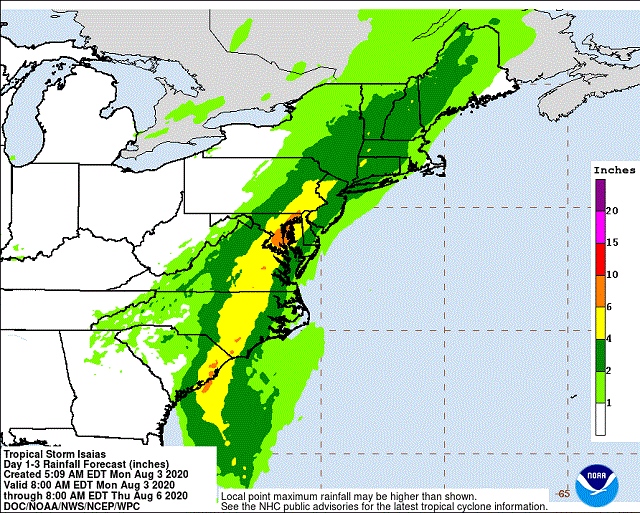
Ovenbirds are ground-nesting warblers with a surprisingly explosive song for their size.  Many arrived within the last two days to stake out a territory for breeding.  Listen for “teacher-teacher-teacher” emanating from a woodland near you.

Happy Mother’s Day

Some of the newest mothers in the lower Susquehanna valley—nurturing their young.

A hen Wood Duck keeping close watch on recently hatched ducklings.

A female Eastern Bluebird feeding hungry nestlings.
A hen Hooded Merganser giving diving lessons.

And a soon-to-be mother making the necessary preparations to bring a new generation into the world.

A female Baltimore Oriole begins construction of a hanging nest that will protect her eggs and young from some of the hazards of early life.

Have a Happy Mother’s Day!