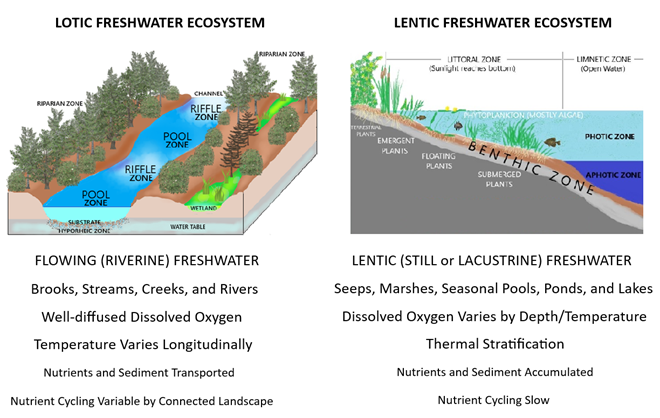
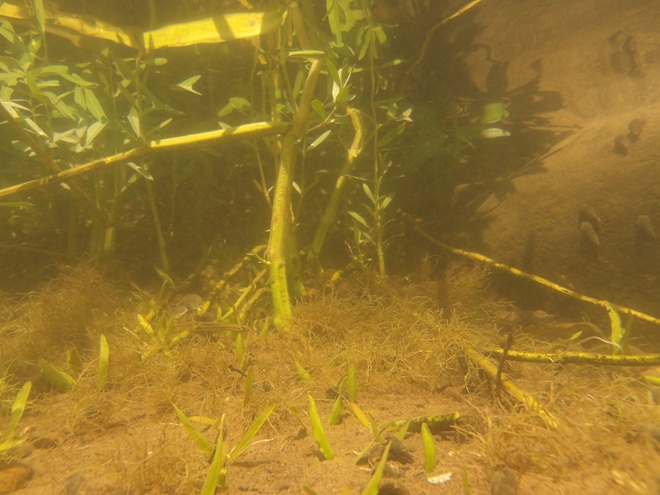
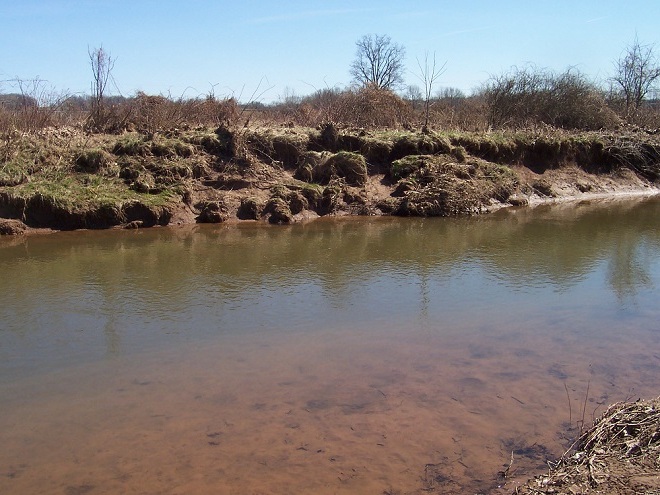
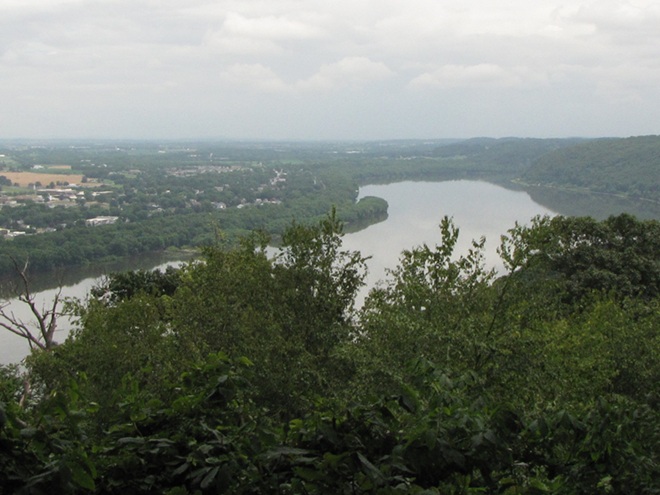
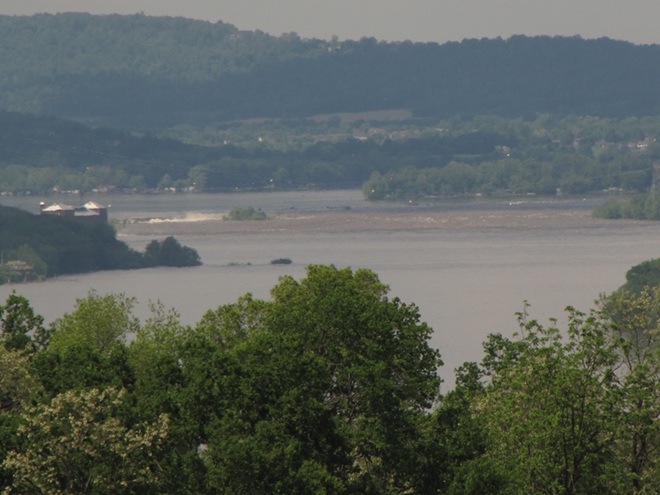
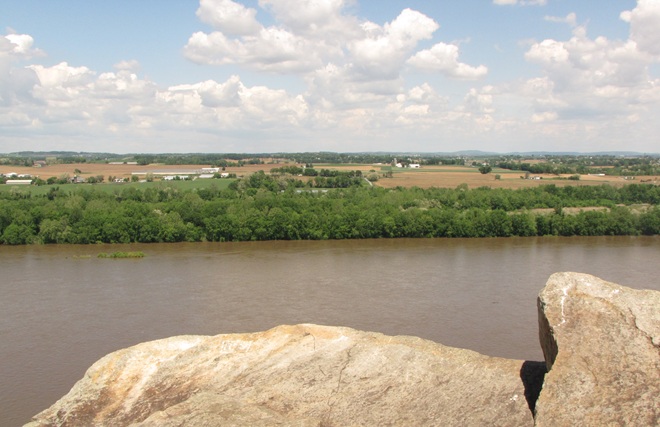
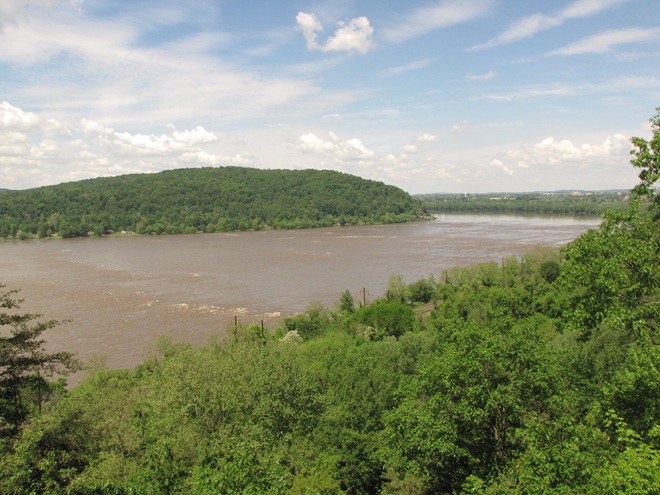
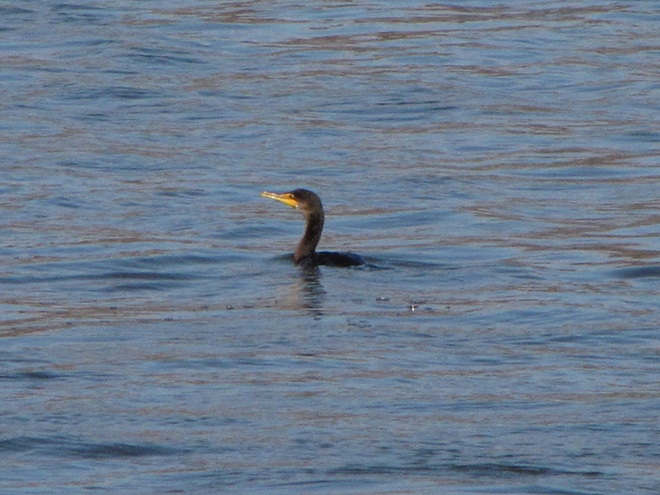
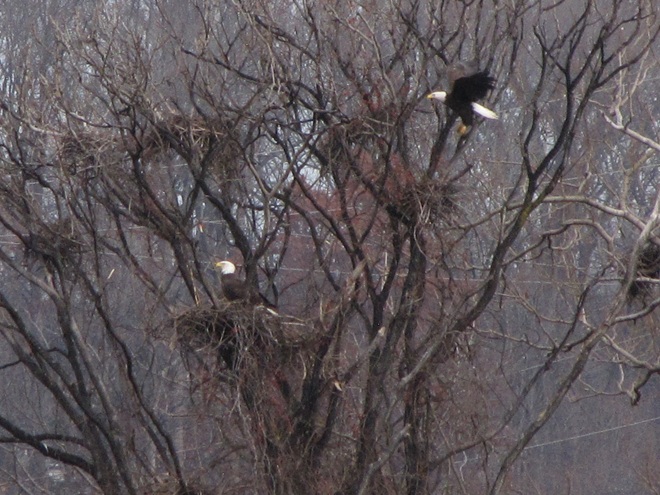
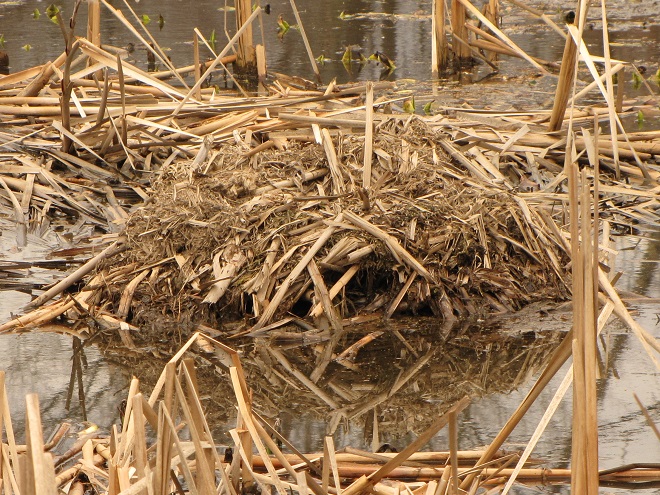
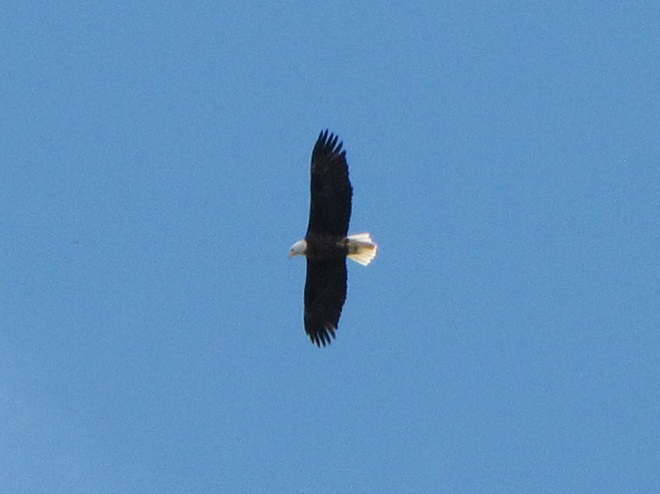
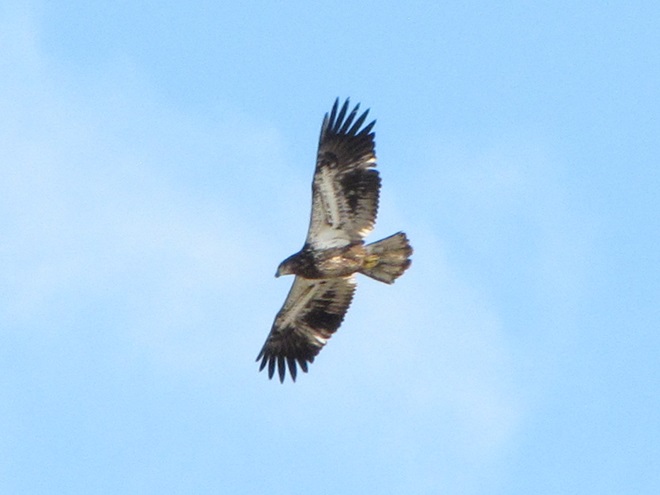
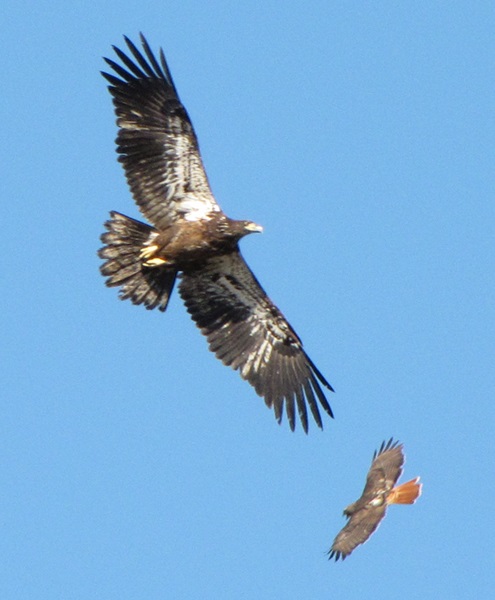
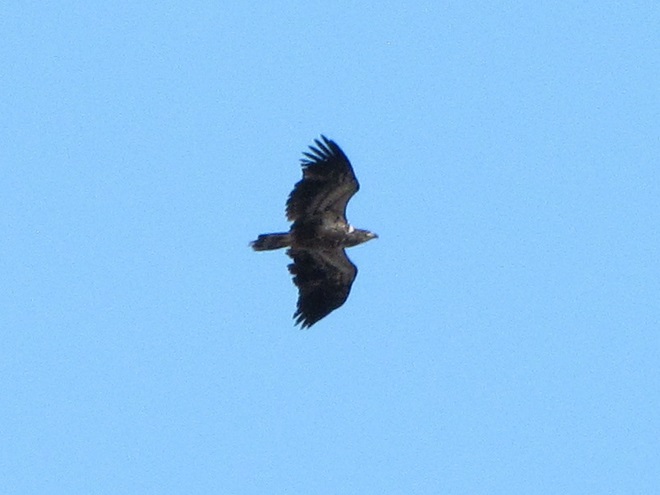
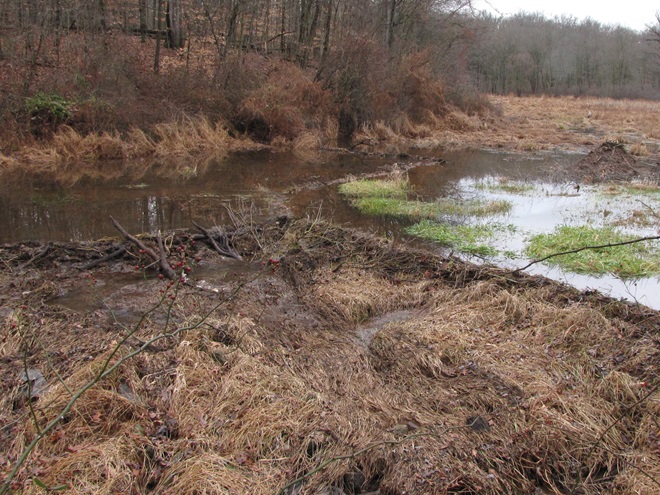
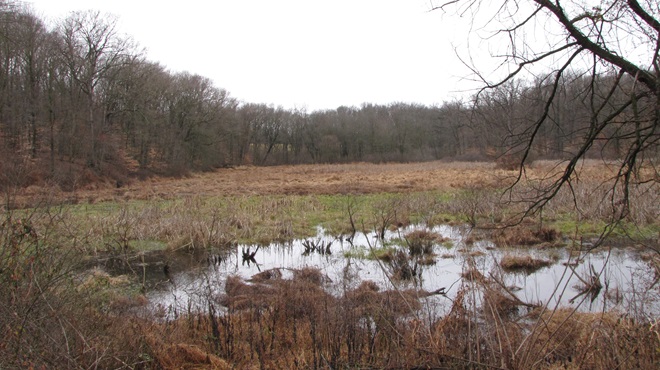
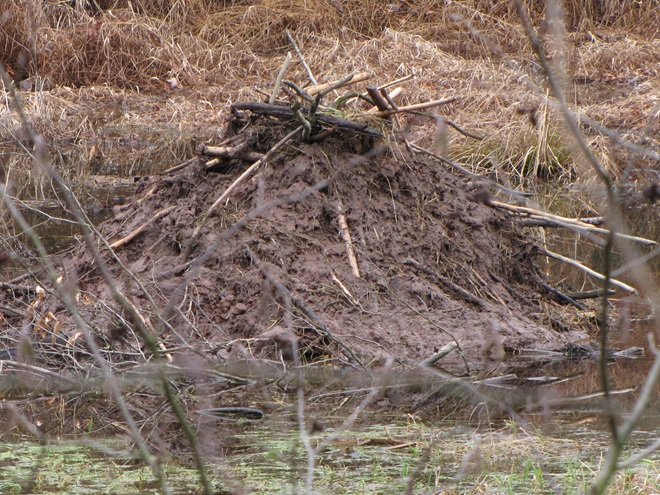
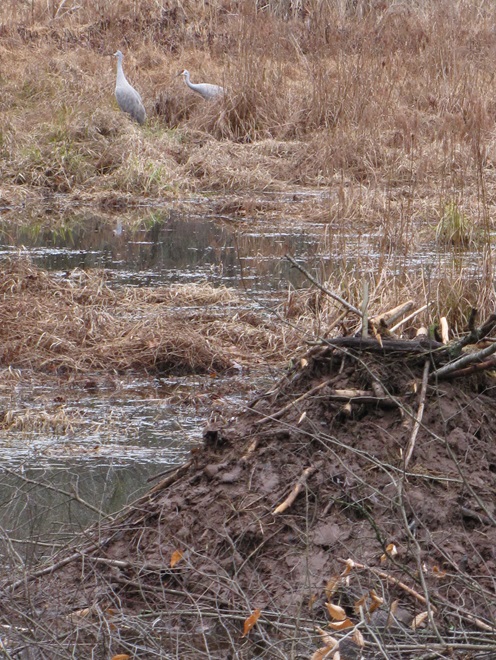
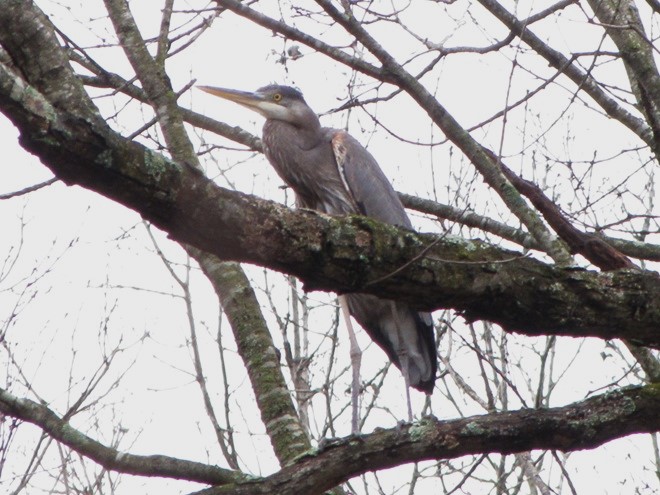
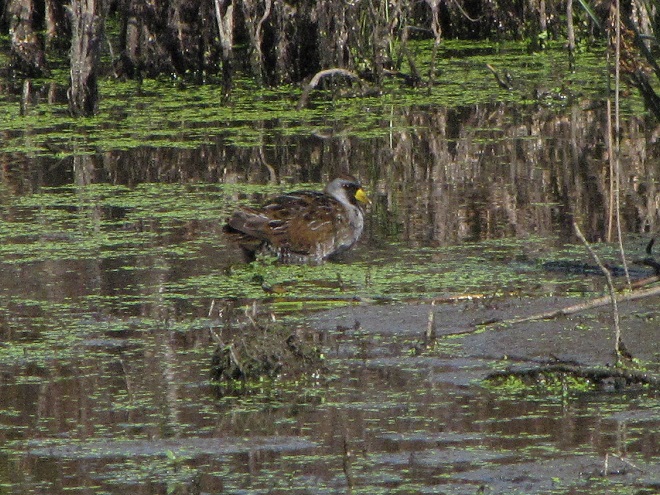
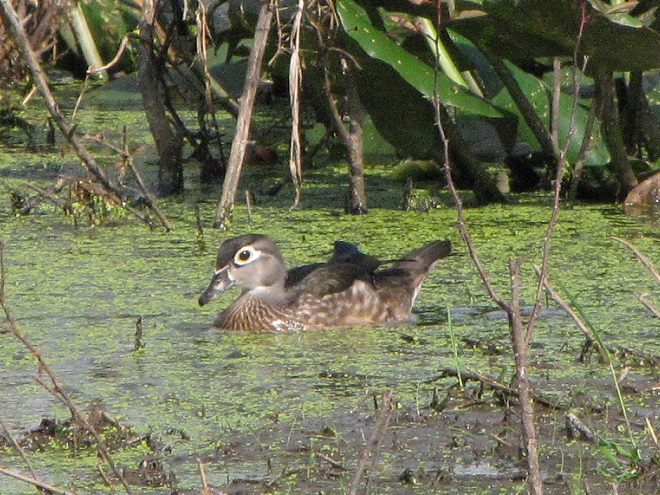
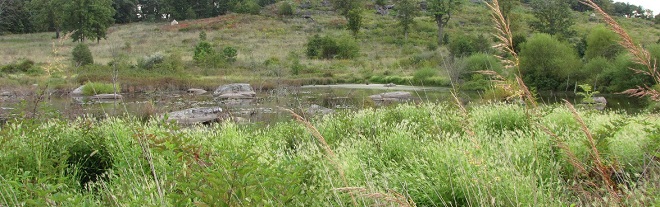
Some comparative attributes of unspoiled lotic vs. lentic freshwater ecosystems. Low-gradient (slow-moving) lotic waters often create, and remain connected to, accompanying riverine wetlands (a lentic freshwater ecosystem). These swamps, marshes, and ditches absorb, purify, and infiltrate flood waters while supporting a diverse number of plant and animal species.
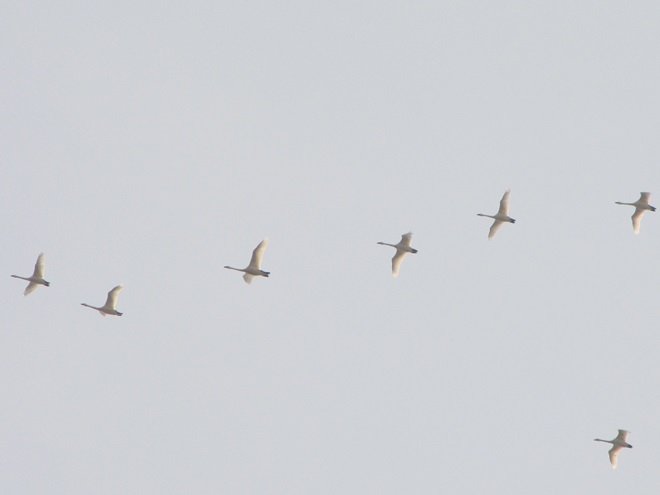
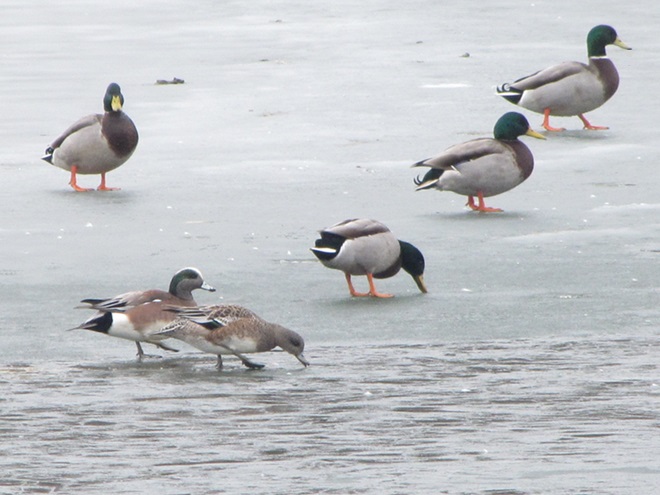
We frequently perceive all waterfowl migration to be synchronized with the conspicuous movements of familiar species like Snow Geese, Tundra Swans, and Canada Geese—big flights coming south in October and November, then a return to the north in late February and March. And we’re all quite aware of the occurrence of large gatherings of some of these migrants while they make stopovers on some of our largest lentic (still) waters—the man-made lakes and reservoirs created by damming local streams. But did you know that there are populations of colorful waterfowl with dynamic migrations that extend throughout the winter and early spring with movements that are often continuous. Under favorable conditions, these birds favor the lotic (flowing) waters of the river and its larger tributaries as they transit the lower Susquehanna valley. That’s because unpolluted lotic freshwater ecosystems support a greater diversity of plants and animals than lentic waters, and therefore offer more opportunities for hungry migrating waterfowl to find food. Let’s have a look at some of the species that visit the river during their seasonal journeys…
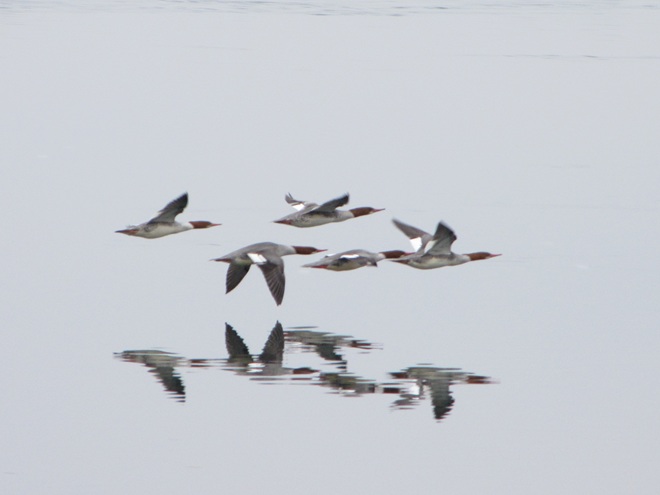
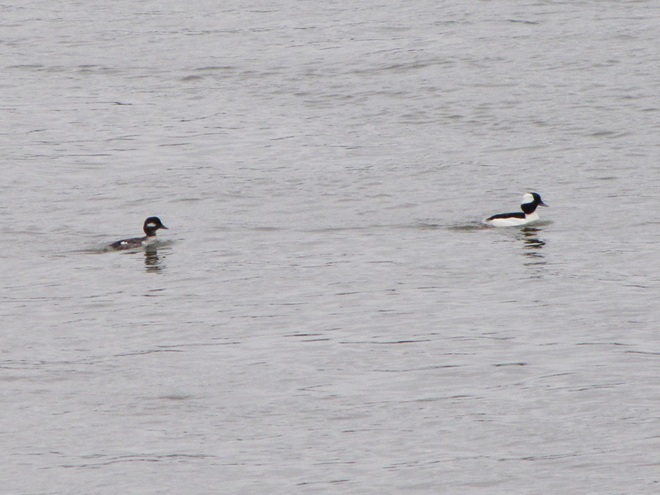
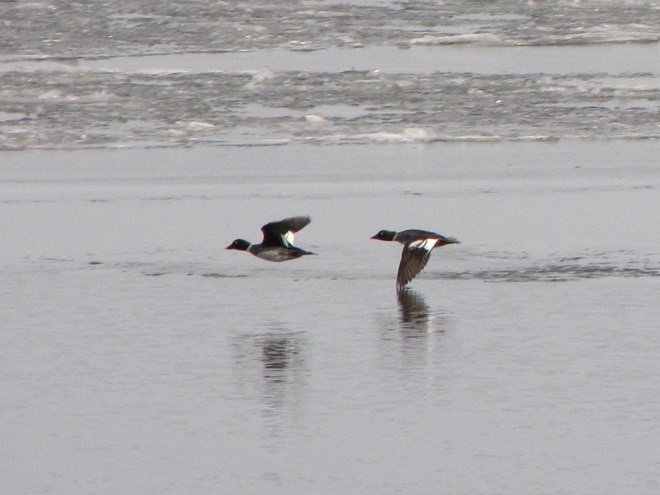
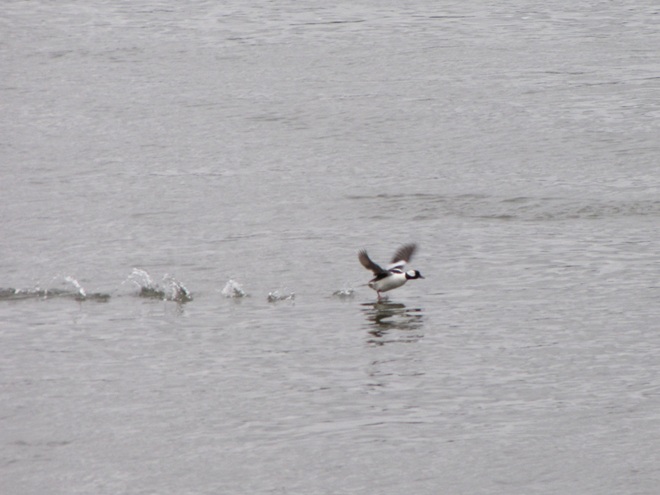
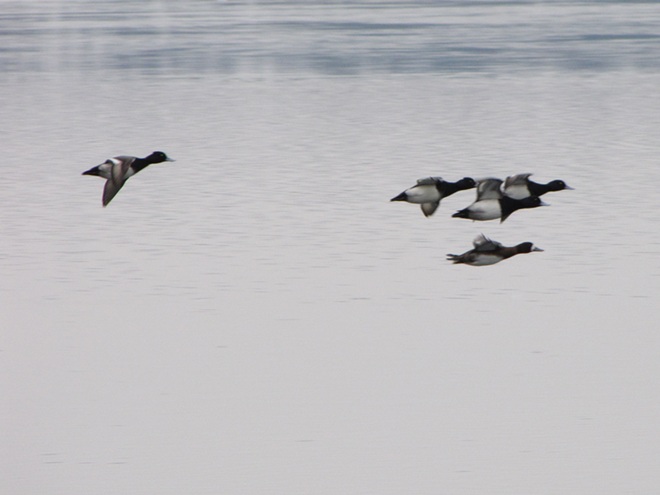
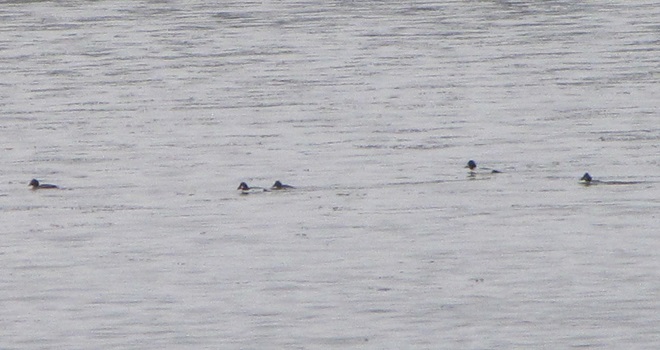
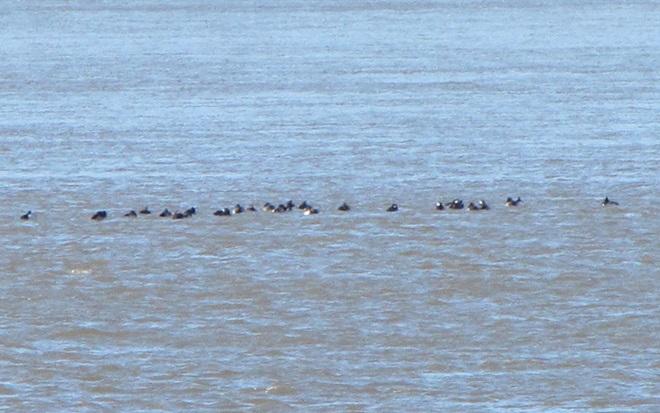
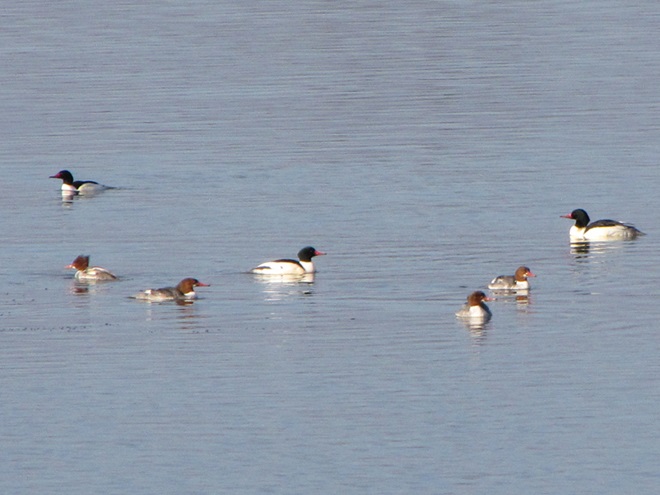
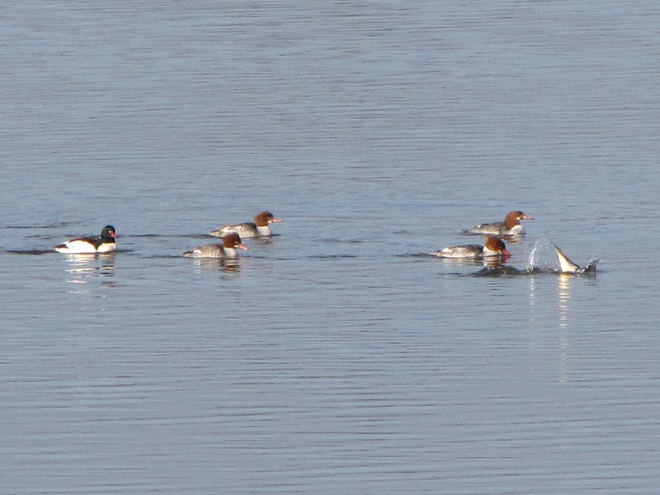
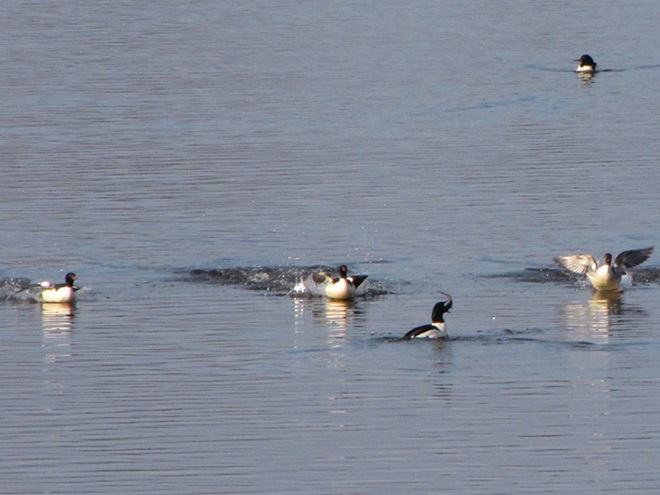
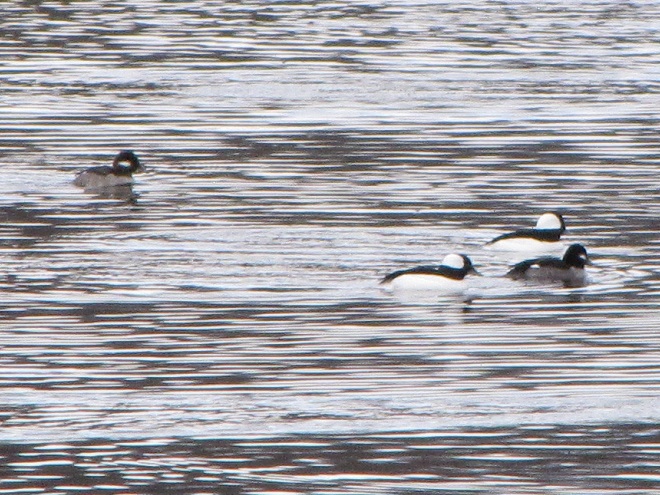
While the urge to head south in the autumn is largely stimulated by the shortening of the photoperiod, it is the presence of ice, particularly on glacial lakes throughout the lands to the north of the lower Susquehanna River basin, that pushes many diving ducks to finally make their way south toward the guarantee of open-water feeding areas along the coast. This movement may occur at anytime between November and late February or, as we have seen during some of the mild winters of recent decades, it may scarcely be noticed at all.Common Mergansers often lead they way when it comes to migratory diving ducks. They regularly move south in conspicuous numbers by late November and December and are regularly pushing north as soon as the ice begins to melt. During a typical year, it is not unusual for some populations of these large diving birds to remain north of us during the winter. Then, in the days after a sudden rush of frigid polar air, an appreciable increase in ice cover will force a mid-winter movement of birds down the Susquehanna.Temperatures in lotic fresh waters vary over the length of the stream or river. They are largely determined by the collective impact of the numerous sources of heat flux depicted in this graphic. (Environmental Protection Agency image)Buffleheads begin passing through the lower Susquehanna region in Novemeber on their way to coastal saltwater bays for the winter. Lingering populations feed by diving in the river’s pools and riffles for benthic invertebrates including snails and insect larvae. Lesser quantities of aquatic plant matter supplement their diet.Many Common Goldeneyes will remain on shallow, ice-free waters of the northern lakes and rivers sculpted by the most recent glacial event, but only until they are forced south into and through the lower Susquehanna valley by the encroachment of freezing conditions. On the river, they are among the dozen or so species of diving ducks we see visiting or passing through during the typical late fall and early river.
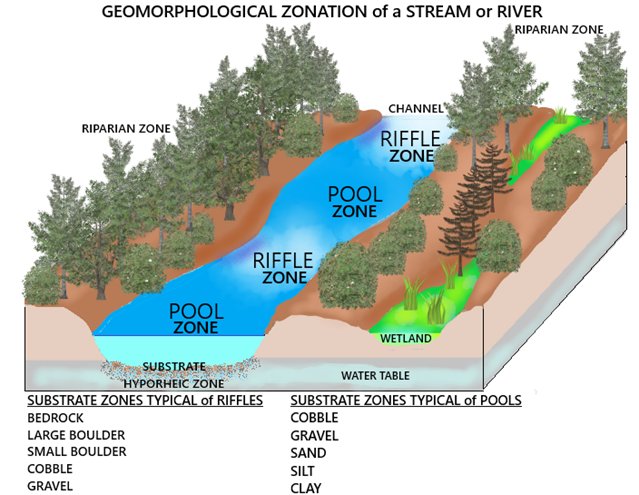
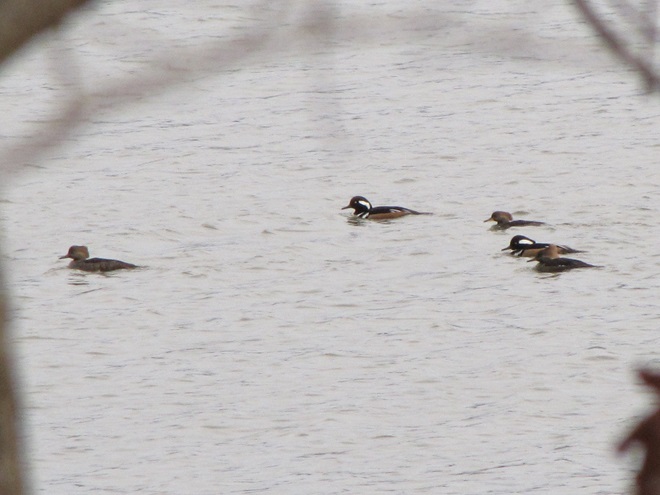
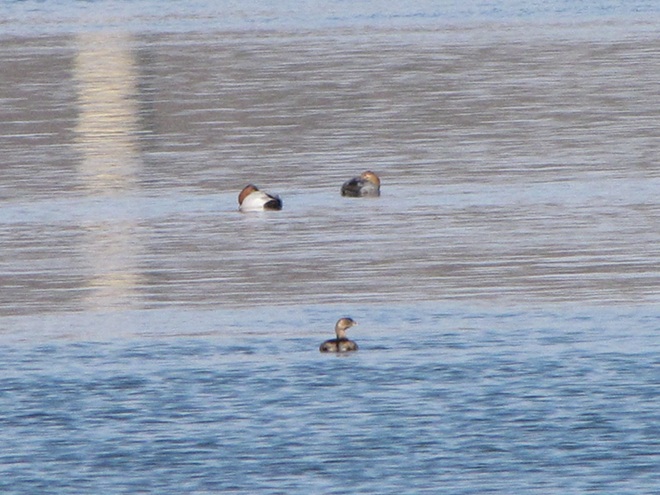
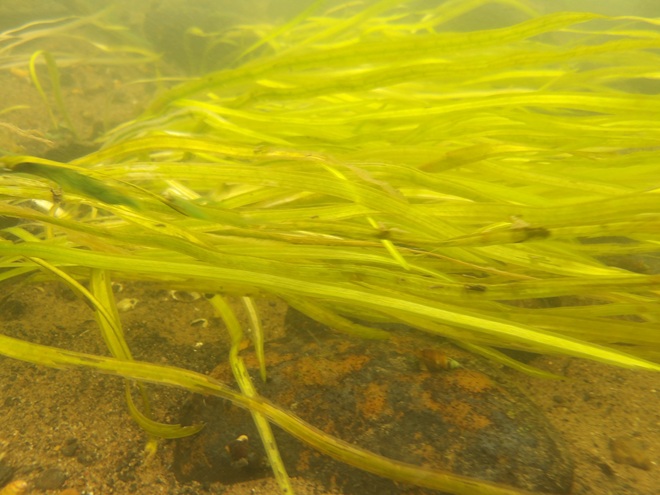
During their visits to the lotic (also known as riverine) fresh waters of the Susquehanna and its largest tributaries, benthic-feeding waterfowl make short dives to take advantage of the plants, small fish, invertebrates, and other food sources inhabiting the stream bottom in the riffles and pools of the free-flowing waterway. Substrates, listed here by size (in descending order), along with other parameters influenced by this zonation determine the variety and abundance of the forage available to migrating waterfowl and other consumers. Ice or high water and poor visibility due to flooding can render the riffles and pools of the channel unusable for feeding. The birds must then choose to either linger and rest without feeding or leave the lotic freshwater habitat to seek sustenance. During a flood, this may require relocation to a nearby lentic (still) body of fresh water such as a lake or reservoir. The presence of ice will almost invariably force the birds to fly on to the Atlantic Coastal Plain and the tidal waters of its bays and estuaries.Hooded Mergansers are one of the few species of diving ducks likely to utilize flooded shoreline timber and riverine (fluvial) wetlands as refuge from high water on Susquehanna.A Pied-billed Grebe and a pair of Canvasbacks on an ice-free stretch of the lower Susquehanna in mid-winter feed and loaf in a riffle-flanked pool where a large mat of American Eelgrass, a submerged aquatic plant also known as Tapegrass or Wild Celery, grows during the summer. The vast mosaic of riffles and pools in a river this size offers tremendous opportunities for a diverse array of aquatic species to find their niche wherein they can survive and flourish.The presence of ice forces Buffleheads and other diving ducks to gather in turbulent open water, often below a riffle or dam. Another alternative is to continue on toward the salty bays and estuaries of the coast. High water may push these birds into the shallows among the flooded woods to feed, but they seldom utilize heavily forested riparian wetlands as a refuge due to their need for a running start to get airborne.
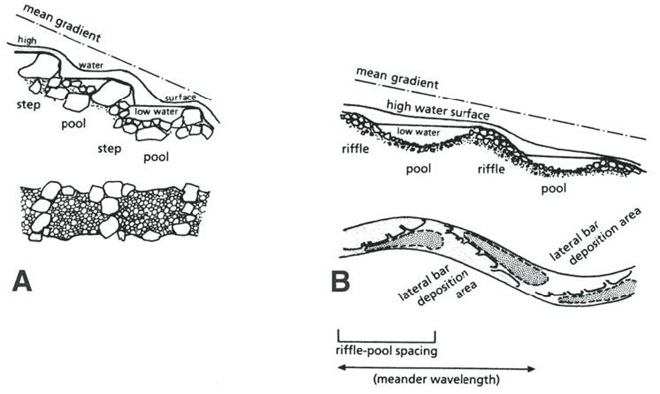
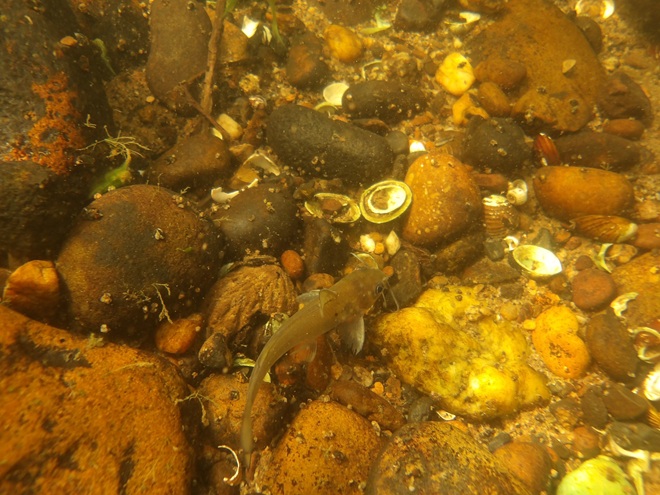
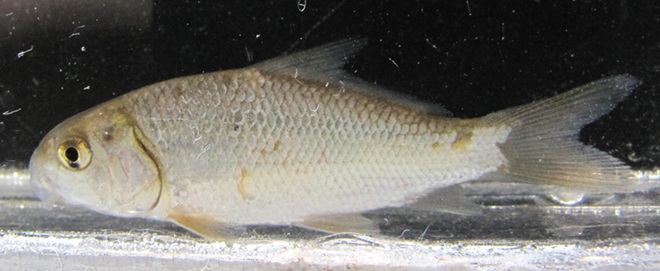
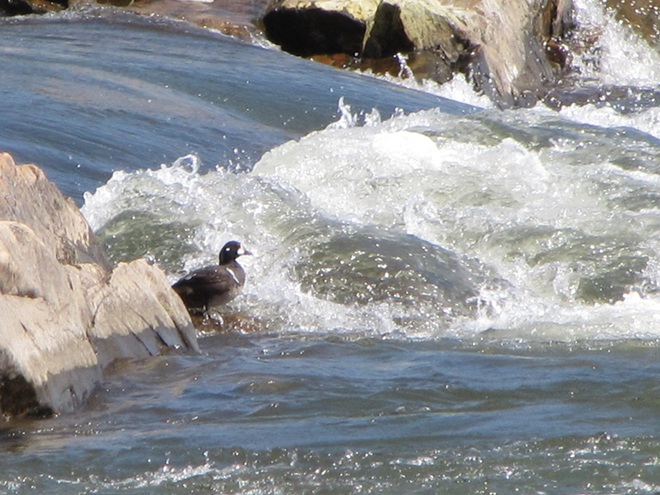
Riffle and Pool Characteristics of High Gradient (A) and Low Gradient (B) Streams. This graphic illustrates the change in deposition characteristics of a stream or river as its gradient decreases. A high-gradient stream (A) has a rapid velocity, often forms falls, and tends to carry away a high volume of all but the largest of particles of potential substrates as they erode from the surrounding landscape. On a low-gradient stream, the loss in water velocity reduces the water column’s ability to transport even the smallest of substrate particles. Deposition of this gravel, sand, silt, and clay forms lateral bars that over time create the familiar meandering path of a naturally flowing lowland stream. (National Park Service image)Benthic substrates in lotic freshwater pools and riffles support an abundance of life forms ranging from colorful diatoms on rocks and cobble, to invertebrates including snails and insect larvae, to fishes like this young Channel Catfish. Free of accumulations of sediment, this river bottom not only provides habitat for a healthy fishery, it facilitates the bidirectional exchange of water between the Susquehanna and its underlying aquifer.On the lower Susquehanna, populations of young Quillback suckers are found almost exclusively in clear, high-gradient pools.The Harlequin Duck winters along the rocky shores and man-made jetties of the Atlantic coast. In summer, they nest on fast-moving, headwater streams well to our north. Very rare on the Susquehanna, this is the first of two individuals found during March and April of 2025. It was observed feeding in the swift waters of the high-gradient riffles and pools where the river cuts through Blue Mountain north of Harrisburg. During previous weeks, Harlequin Ducks were being seen along the coast as far south as the mouth of the Chesapeake at Cape Charles, Virginia. It’s very possible that some of these birds traveled north through the bay area and up the Susquehanna on their way north.
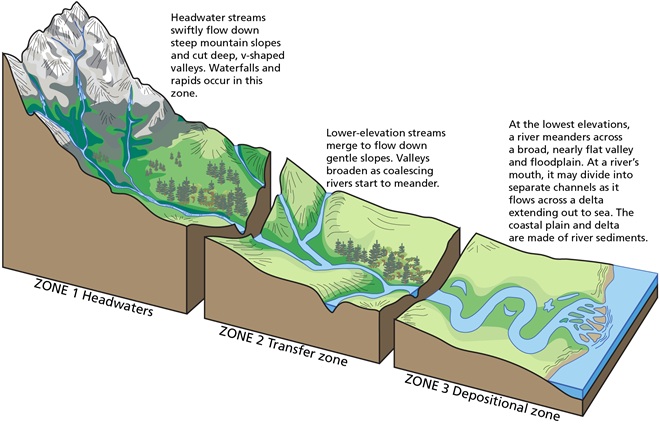
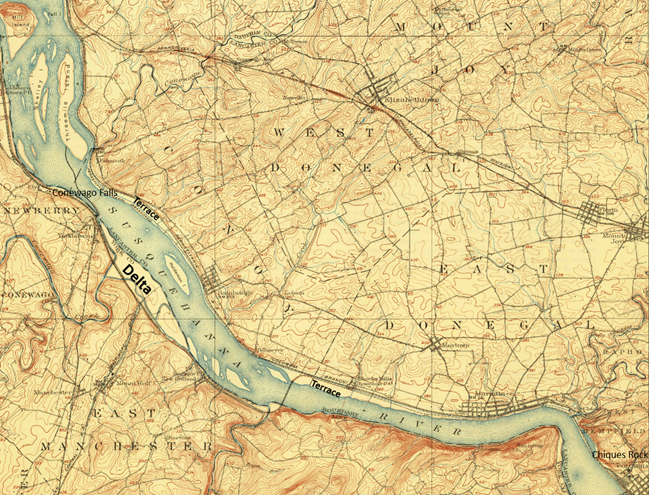
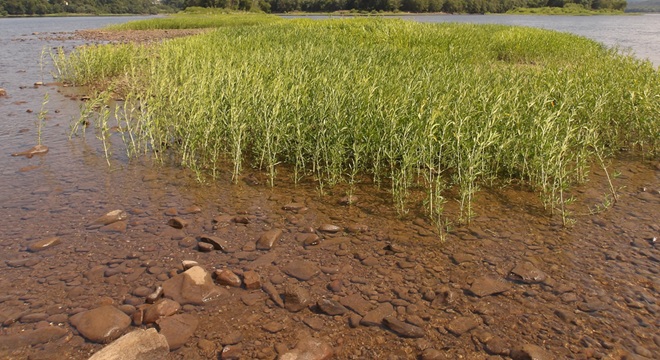
Fluvial Geomorphology of a Stream. Many of the Susquehanna’s tributaries pass through each of these three erosional zones. Along the way, they carry out the process of breaking down the mountains formed by the Allegheny orogeny, the collision of North America and Africa that created the supercontinent Pangea about 325 to 260 million years ago (during portions of both the Carboniferous and Permian periods). Today’s main stem of the lower Susquehanna passes through a transfer zone (Zone 2), carrying eroded materials to a depositional zone (Zone 3) located within the ancient Susquehanna canyon stretching from Havre de Grace, Maryland, to Norfolk Canyon on the edge of the continental shelf. Within this zone, more than a 10,000-year accumulation of post-glacial sediments lies submerged by the rising waters of the Atlantic Ocean and Chesapeake Bay. Although the present-day lower Susquehanna is largely a transfer zone, some deposition occurs along low-gradient segments of the river, particularly where its course parallels the watershed’s ridges both above and below the high-gradient rapids where its path has eroded passage through the highlands. (National Park Service image)Although the present-day lower Susquehanna is largely a transfer zone, some deposition occurs along low-gradient segments of the river, particularly where its course parallels the watershed’s ridges both above and below the high-gradient rapids where its path continues to erode passage through the bedrock. On this 1908 map of the Susquehanna at Conewago Falls, alluvial terraces of gravel, sand, silt, and clay can readily been seen as pale areas nearly lacking brown contour lines along the shorelines and islands of the river. Deposits within most of these terraces date back to the melt period following the most recent glacial event and beyond. The delta shown at the mouth of Conewago Creek (west) includes massive volumes of material deposited by both the creek and the river. This delta is currently known as Brunner Island, much of it developed as the site of a coal/gas-fired electric generating station. Terrace deposits along the Susquehanna’s shorelines created extensive perched marshes and swamps (wooded marshes) fed by rains, high river water, small streams, and springs, the latter often seeping from the base of the rocky escarpments carved by the ancient Susquehanna and defining the present-day inland border of the floodplain. We call these sites “Alluvial Terrace Wetlands”. Few of these critical components of river morphology survive. Those not drained for farmland were obliterated by urbanization and canal, railroad, and highway construction. (United States Geological Survey base image: Middletown, PA, quadrangle, 1908)Water Willow is a familiar emergent plant that colonizes lateral bars and other alluvial deposits in low-gradient segments of the Susquehanna.The fine roots of Water Willow collect sediment and absorb nutrients while creating dense cover for young fish and numerous species of invertebrates including the Virginian River Horn Snails seen here.
Prior to the nineteenth century, the low-gradient flow regime of the river both above and below the riffles at Chiques Rock (lower right on map) created prime wildlife habitat. The natural accumulations of nutrients and substrates carried into and through the lotic waterway’s pools and riffles were cycled into an ideal growing medium for extensive mats of American Eelgrass and other aquatic plants. This underwater forest hosted a seemingly endless abundance of invertebrates and fishes (both resident and migratory)—supporting a variety of consumer species including various populations of humans. But soon after the mass clearing of much of the watershed’s land for farming and lumber, the mill ponds created by dams constructed on streams to power saw and grain mills became brimful with sediments eroded from the unprotected ground. During storm events, torrents of these sediments then flowed full bore toward the Susquehanna, and began accumulating in the low-gradient segments of the river.
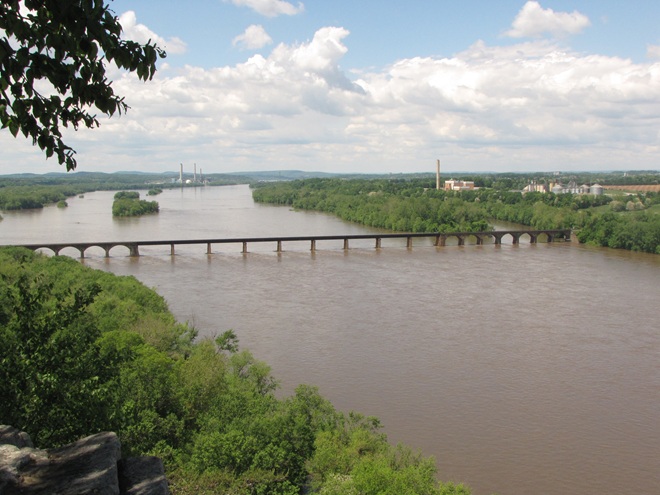
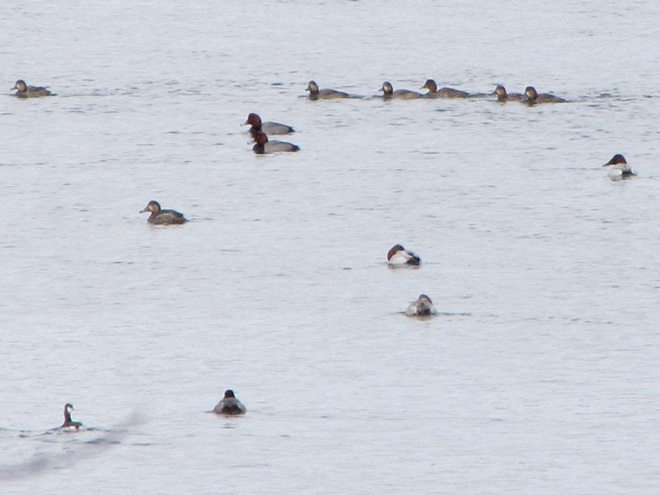
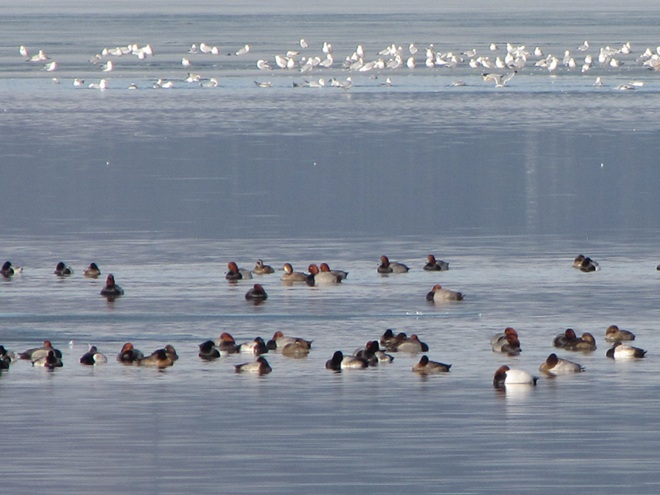
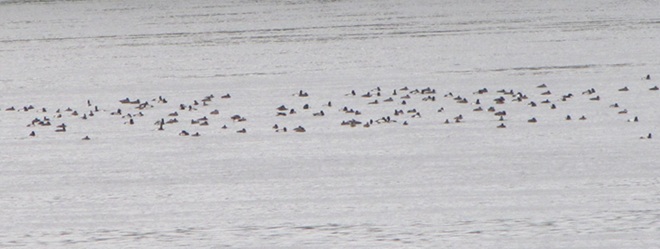
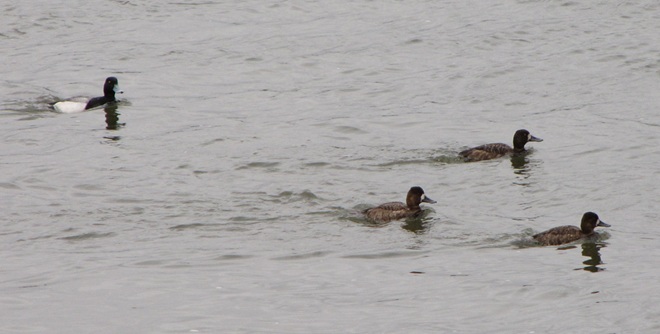
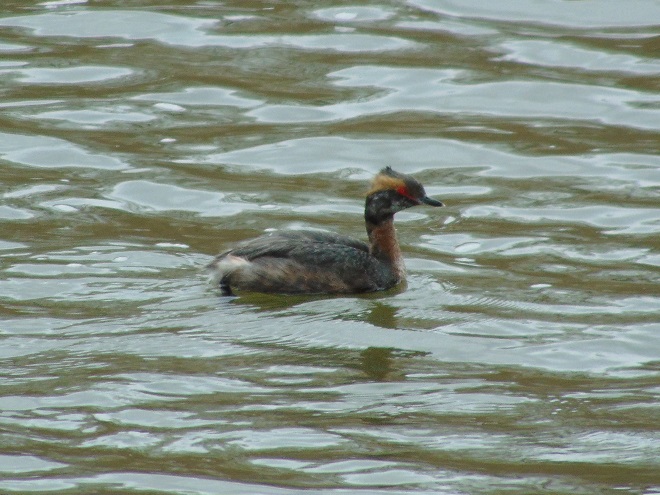
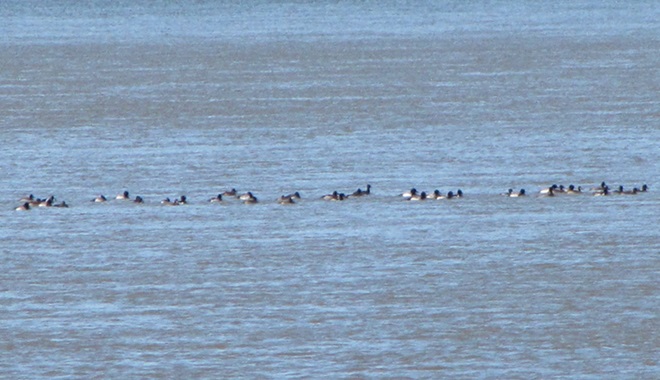
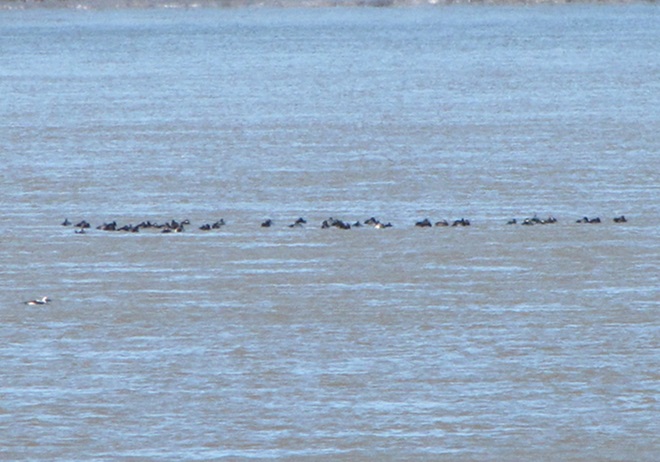
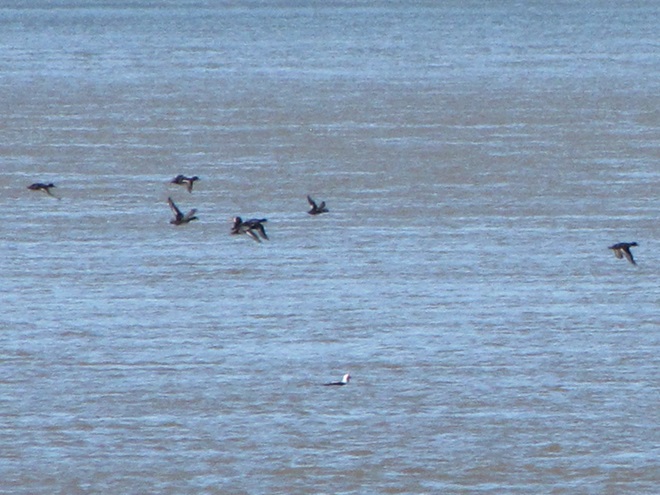
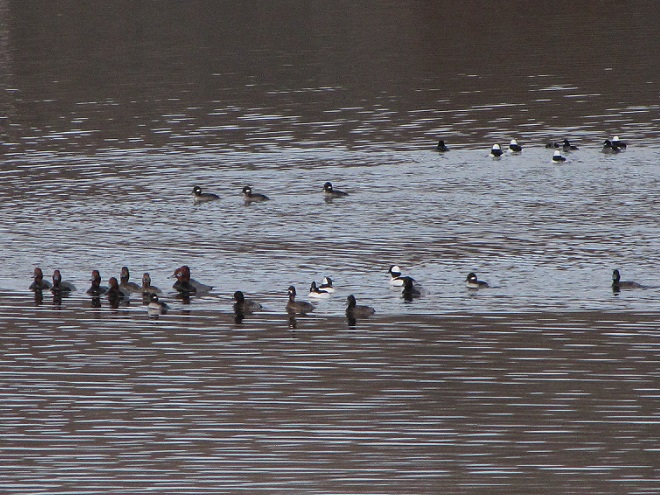
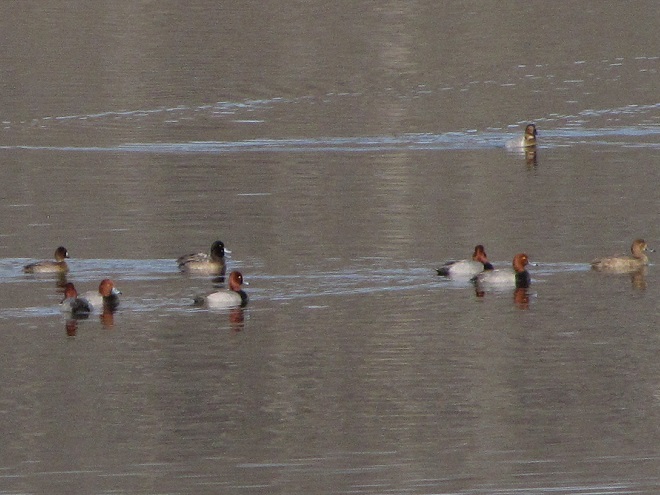
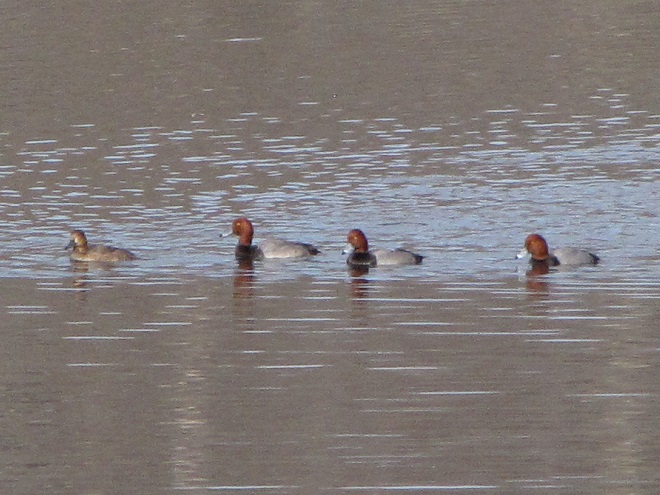
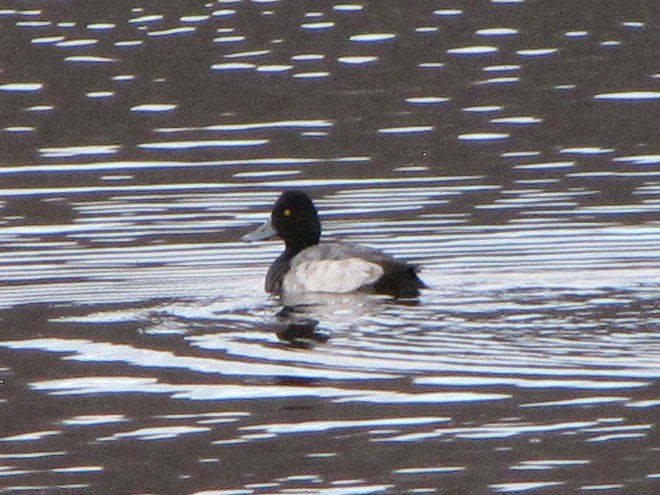
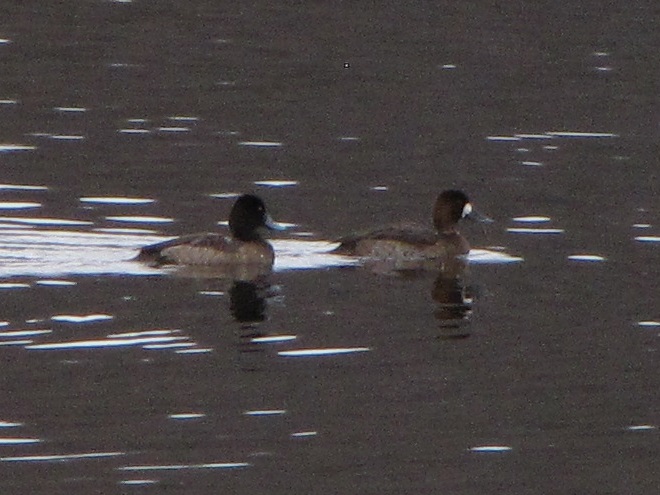
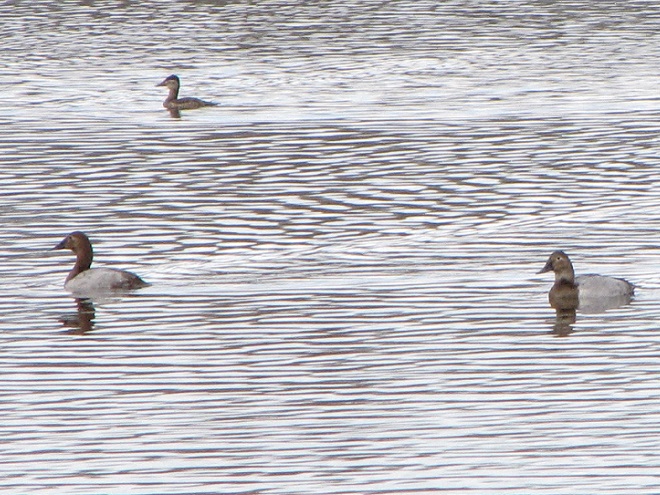
Sediments left behind after the removal of mill dams are known as legacy sediments. They disconnect the stream from its historic floodplain and riverine (fluvial) wetlands, thus intensifying the impact of high water in the surrounding landscape. As these nutrient-charged deposits wash away, they become a source of pollution in the waters of the Susquehanna and Chesapeake.A mat of American Eelgrass growing in the flowing waters of the Susquehanna below Conewago Falls. Eelgrass and other submerged aquatic plants provide essential habitat for a wide variety of small fish and invertebrates while also consuming nutrients deposited in the cobble, gravel, and sand substrate of the river’s pools. Excess quantities of smaller particles of silt and clay can clog the substrate and thus inhibit the hyporheic exchange of water between the stream channel and the underlying aquifer, often diminishing the biomass and diversity of organisms inhabiting this benthic habitat. Buried in these life-choking sediments, the river bottom becomes inhospitable to growth of submerged aquatics including eelgrass.This low-gradient stretch of the Susquehanna at Marietta flows parallel to the Chickies Quartzite “Hellam Hills” before making a sharp right turn to punch through the ridge as a series of rapids at Chiques Rock. Formerly a fully functional lotic ecosystem and a paradise for migrating waterfowl, this river segment is now impaired by accumulations of nutrient-laden sediments from agricultural and urban runoff.Nutrient and sediment-loaded flood waters roar across the diabase boulders at the York Haven Dam and Conewago Falls, a high-gradient segment of the Susquehanna.They continue past Brunner Island (left power plant stacks) and through Haldeman Riffles and the Shocks Mills Railroad Bridge……into the stretch of river known as the “Marietta broads” along the base of the Chickies Quartzite “Hellam Hills”. The low stream gradient here produces a slower current and increased deposition of sediments.As the flood surges through the riffle and pool complex at Chiques Rock, the high stream gradient maintains a velocity in the water column sufficient to keep additional sediments in suspension until they reach the low-gradient river segment just downstream at Washington Boro, site of a naturally occurring lateral bar area known as the Conejohela Flats. These bars now lie within the man-made depositional zone known as “Lake Clarke”. Created nearly a century ago by construction of the Safe Harbor Dam, this impoundment is accumulating astounding volumes of nutrient-loaded sediments that continue to encapsulate the flats within a stream-impairing delta.Anytime from November to April on the lower Susquehanna, a group of Redheads, Canvasbacks (3 birds to right of the middle of the picture), and a Horned Grebe (lower left) is a welcome sight in a riverine pool known to have a summertime growth of American Eelgrass. Noted Dr. Herbert Beck in 1924 when describing the Canvasback, “Like all ducks, …, it stops to feed within the county (Lancaster) less frequently than formerly, principally because the vast beds of wild celery which existed earlier on broads of the Susquehanna, as at Marietta and Washington Borough, have now been almost entirely wiped out by sedimentation of culm. Prior to 1875 the four or five square miles of quiet water off Marietta were often as abundantly spread with wild fowl as the Susquehanna Flats are now. Sometimes there were as many as 500,000 ducks of various kinds on the Marietta broad at one time.”Today, seeing just dozens of Aythya genus ducks (Redheads, Canvasbacks, scaup) on the lower Susquehanna is a notable event. If they happen to be forced down by inclement weather while migrating through, you might get lucky enough to see several hundred.While the recovery of eelgrass/wild celery beds on the Susquehanna is trivial in scale and offers little support for numbers of waterfowl to return to historic levels, restorations on the upper Chesapeake in the vicinity of the Susquehanna Flats between Havre de Grace and Aberdeen Proving Grounds may have helped refuel a gathering of mostly Aythya genus ducks during the final days of February. This mass of ducks, many of which were forced south from the frozen Great Lakes during the previous weeks (some by way of the ice-choked Susquehanna) were apparently making an abrupt turn to make their way back north. Their stay was brief, but estimates by local birders put their numbers as high as one half million. The vast majority of the concentration consisted of Aythya species: Redheads, Canvasbacks, Ring-necked Ducks, and both Lesser and Greater Scaup. It probably included a mix of birds including both northbound migrants from further down the coast and the aforementioned refugees that had just arrived to pay a quick visit while escaping the late-season ice before turning around.During the past two centuries, as food supplies in the Susquehanna grew increasingly compromised for benthic feeders like these Lesser Scaup and other diving ducks, a change in distribution was necessary for survival.As individual species, Lesser Scaup and other waterfowl that fail to adapt to natural or man-made changes in their habitats and food supplies may see their overall global numbers falter.
Despite being located in the transfer zone, the lower Susquehanna has become a significant depositional zone along much of its length, mostly courtesy of the placement of sediment-trapping man-made dams.
Following construction of the mill dams and ponds on nearly every mile of the lower Susquehanna’s low-gradient tributary streams, enterprising parties moved on to the river. The first significant spans were constructed using wide timber cribs filled with large rock. They were placed to create water deep enough to allow canal boats to cross the Susquehanna at both Clark’s Ferry at the mouth of the Juniata River in Dauphin County and at Columbia/Wrightsville. These dams also diverted water into the newly excavated canals—the Pennsylvania Eastern Division Canal (completed in 1833) which followed the river’s east shore from Clark’s Ferry to Columbia, and the Susquehanna and Tidewater Canal (completed in 1840) along the west shore from Wrightsville to Havre de Grace, Maryland. Placement of these sediment-trapping man-made dams began a process of converting vast mileage of the lower Susquehanna from a transfer zone into a deposition zone. In addition, layout of the canals and locks followed the contours along the base of the riverside ridges, seriously altering most of the alluvial terrace wetlands that the river had created as a feature of its floodplain during the post-glacial period.
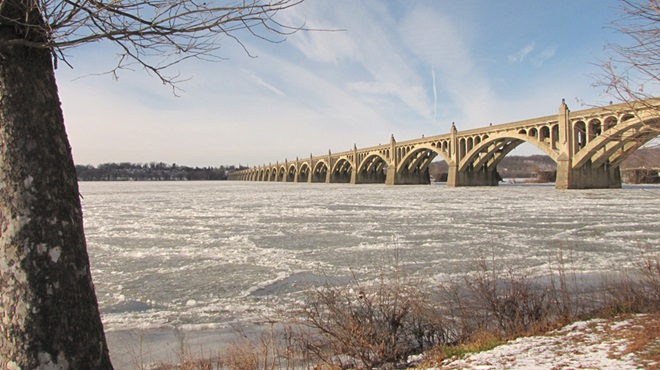
Construction of the canal dams was just the beginning. During the twentieth century, more massive dams would be added to the main stem of the river for hydroelectric energy production at York Haven, Safe Harbor, Holtwood, and Conowingo. Upon their completion, the days of unassisted anadromous fish migrations were over. On both the river and its tributaries, smaller dams including dangerous low-head dams maintain water levels for boating and recreation. They too create current-diminishing, pseudo-lentic waters that blanket the lotic riffle and pool substrates with polluted sediments.
MAN-MADE DAMS TURN LOTIC WATERS INTO UNFLUSHED TOILETS
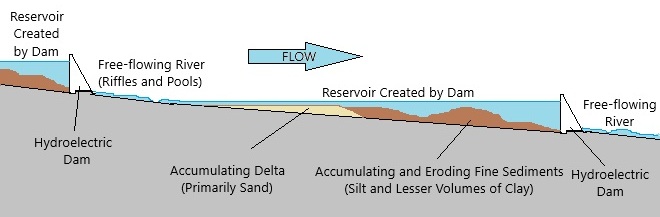
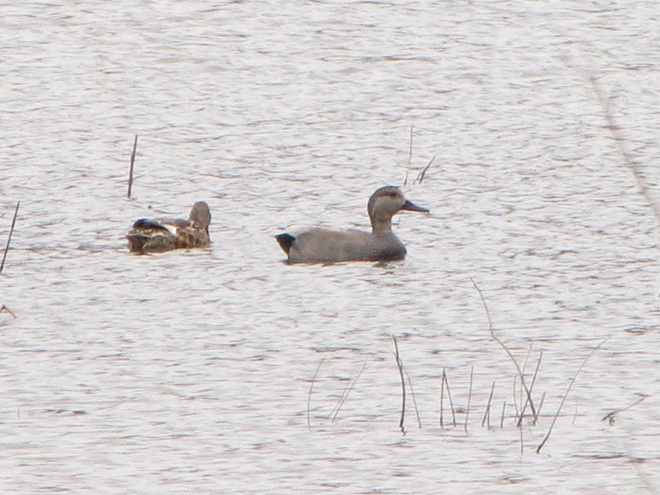
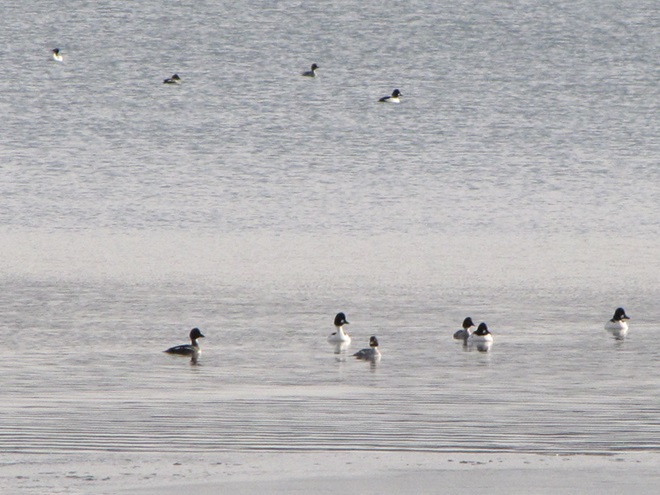
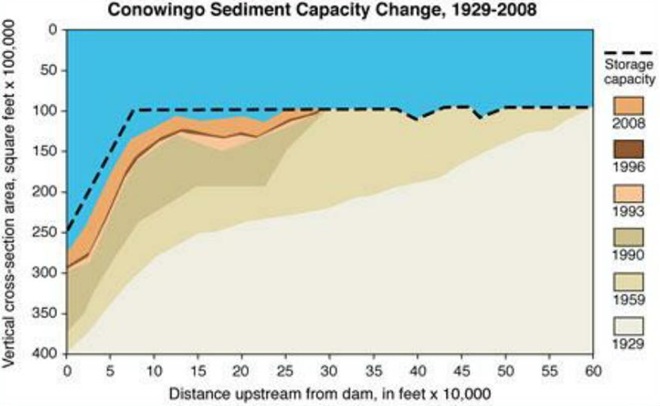
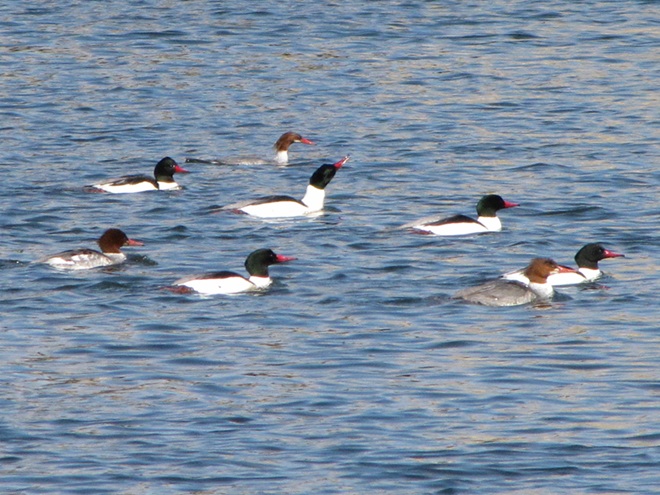
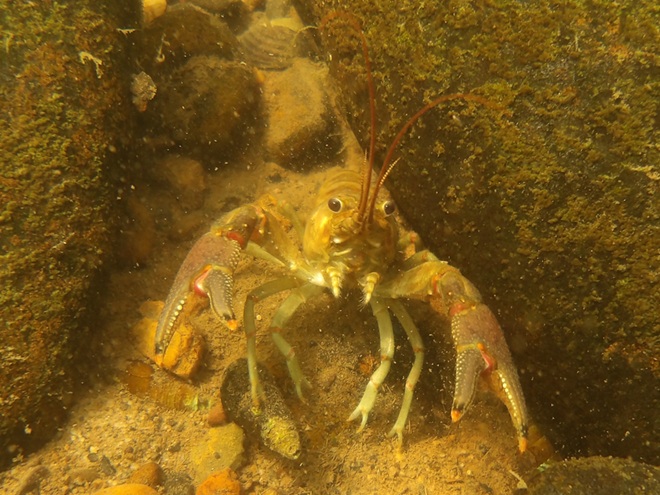
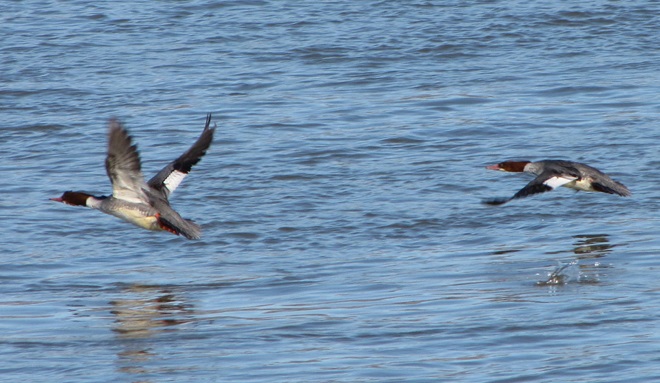
The construction of dams on the lower Susquehanna has converted vast mileage of the river from a lotic freshwater system into a series of man-made lentic freshwater lakes. These areas have lost their function as a lotic transfer zone and are now a sort of dysfunctional series of depositional zones collecting vast volumes of sediment containing nutrients and other pollutants. Within each impoundment, the reduced velocity of the river causes it to drop suspended sand first, then the finer particles of silt and clay closer to the dam. The flow regime of riffles and pools is lost and the hyporheic zone that exchanges water between the river and the underlying aquifer is clogged. These impaired segments of river become ripe for eutrophication: algal blooms followed by die offs that can lead to a fatal reduction of dissolved oxygen in the water column.Deposits of lateral bars of sediment in low-gradient segments of the Susquehanna can create shallow water feeding habitat for puddle/dabbling ducks like these Gadwall. Where sediment pollution is severe, benthic foods in these areas often consist mostly of invertebrates and plant matter deposited by the current, the buried substrates devoid of a functioning ecosystem and the waters subject to eutrophication.Common Goldeneyes on a patch of open water on an otherwise ice-covered “Lake Clarke”, the impoundment created by Safe Harbor Dam. While they may find this spot advantageous for loafing, the food supply over the sediment-buried substrate will be limited.By the end of the twentieth century, accumulations of polluted sediments behind lower Susquehanna dams were nearing capacity. There is no working plan to attenuate the massive release of these pollutants that may be triggered by a catastrophic flood. The effort to reduce nutrient and sediment runoff remains the focus so that new loading is kept to a minimum and won’t add to the capacity problems at the dams or continue downriver to the Chesapeake at full strength when the dams are full. Alleviating the sediment aggregation problem within the river’s impoundments is a tall order and a dilemma not easily solved. (United States Geological Survey image)Common Mergansers will feed where benthic substrate supports the small fish and invertebrates they prefer. They will, however, gather in extraordinary numbers on the “lakes” created by riverine dams. Though they can only feed on what floats in with the current, hundreds or sometimes thousands of Common Mergansers will concentrate on “Conowingo Pond” during the late fall or early winter. There, safety in numbers gives them some guarantee of protection against the multitudes of eagles that simultaneously frequent the vicinity. Another advantage of staging on “Conowingo Pond” is its close proximity to favorable feeding areas on upper Chesapeake Bay and stretches of the Susquehanna where lotic riffles and pools offer abundant opportunities below the river’s dams.Fortunately for everything else living in the benthos, Common Mergansers are big enough to devour invasive, non-native Rusty Crayfish when they find them in our lotic waterways.
TIME TO CLEAN UP OUR ACT
WHERE DOES YOUR STORMWATER GO?
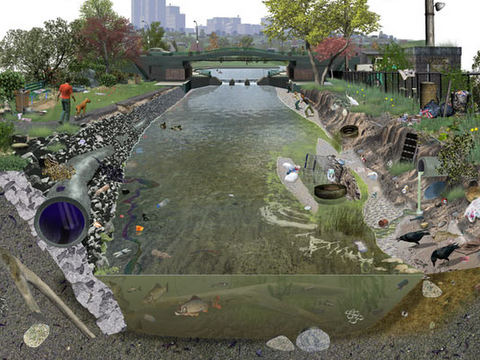
Channelized Urban/Suburban Streams Function as Sewers. They have no attached lowlands or floodplains to absorb, purify, and infiltrate runoff from rain events. Pollutants including litter, pet waste, lawn chemicals, tire-wear particles, hazardous fluids, and sometimes untreated human excrement flush unchecked from the municipal storm drainage system into the waterway. Thermal shock from summer downpours washing across sun-heated pavements can kill temperature sensitive fishes and other aquatic life. Nutrient and sediment loads from these impaired tributaries later accumulate downstream in low-gradient segments of the Susquehanna, turning the river into an open-air cesspool. Aggressively working to implement projects that eliminate these sources of pollution are the only effective way to keep the problem from getting worse. Making things better requires a lot more dedication and effort. (United States Geological Survey image by Frank Ippolito)
RIPARIAN BUFFERS MAKE A DIFFERENCE…WIDER IS BETTER
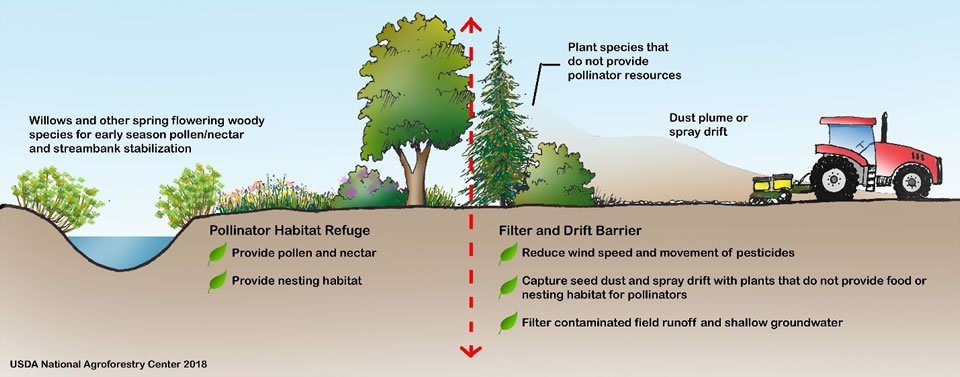
To sequester sediment and cycle nutrients (primarily nitrogen and phosphorus) contained in farm runoff, the U.S.D.A. recommends installing riparian buffers between streams and lands used for grazing and raising crops. To protect pollinating species including bees and butterflies from pesticide drift and eroding soils rich in fertilizers, they further recommend installing a stand of wind-pollinating plants such as conifers, oaks, and birches between the field and streamside plantings. These same conservation practices improve water quality and wildlife habitat on waterways located in residential and commercial areas as well. (United States Department of Agriculture image, click to enlarge)
FLOODPLAIN RESTORATION
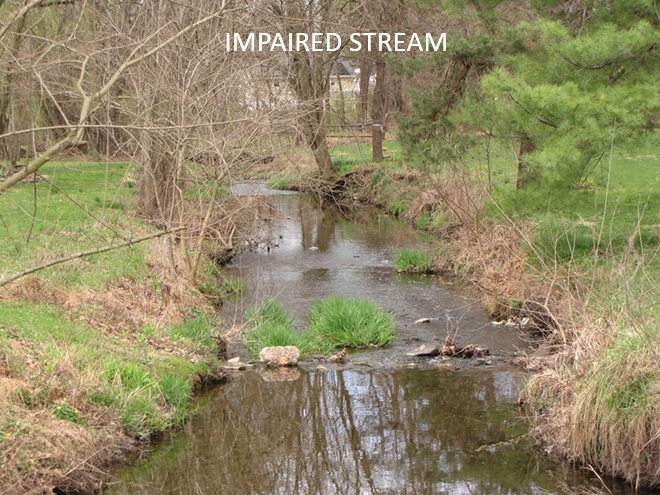
Regardless OF HOW LONG YOU’VE BEEN CONDITIONED TO THINK OTHERWISE, THIS IS A DYSFUNCTIONAL, POLLUTED CREEK—AND IT NEEDS HELP
A channelized low-gradient stream eroding a path through deposits of legacy sediments displaces flood waters into previously unaffected areas and provides a continuing source of nutrient and sediment pollution during storm events. These impaired waters have a diminished capacity for supporting aquatic life including fishes.
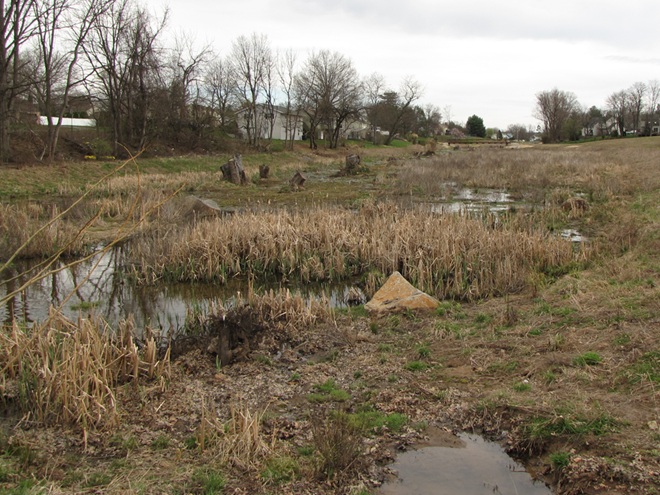
RESTORED TO ITS HISTORIC FUNCTIONS
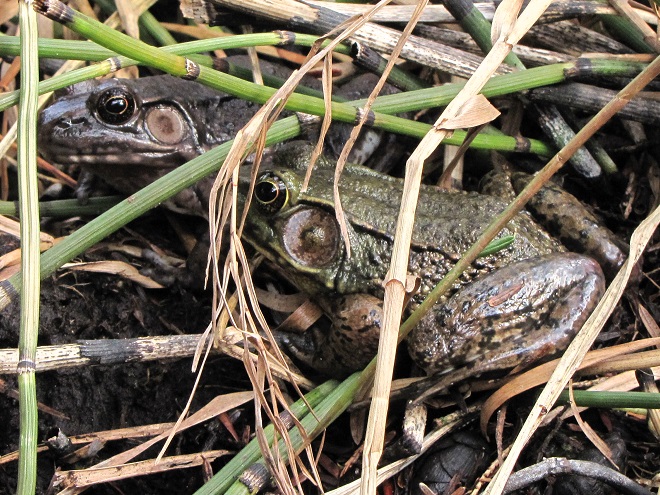
On an adjacent segment of the same creek, this legacy sediment removal project restored a braided meandering channel and connected it to its newly liberated, historic floodplain. In just their second year, the fluvial wetlands are effectively absorbing stormwater and sequestering nutrients as an attached component of the stream’s riffle and pool complex. During our visit earlier this week, we found American Toads, Northern Leopard Frogs (Lithobates pipiens), and Northern Spring Peepers breeding here. It’s just as Castor canadensis would have it!
“STOP HEMMING AND HAWING AROUND ALREADY”
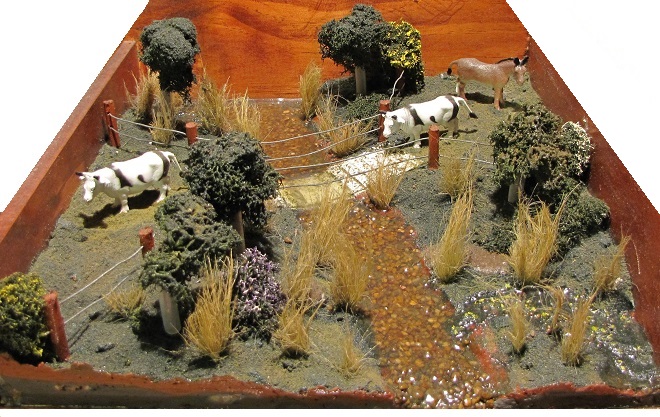
“HEY COWBOY, HOW ‘BOUT GETTIN’ THEM FILTHY LITTLE DOGIES OUTTA DAT CRICK?”
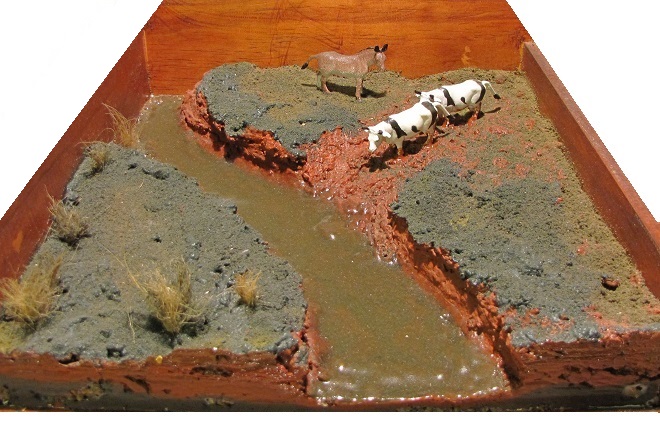
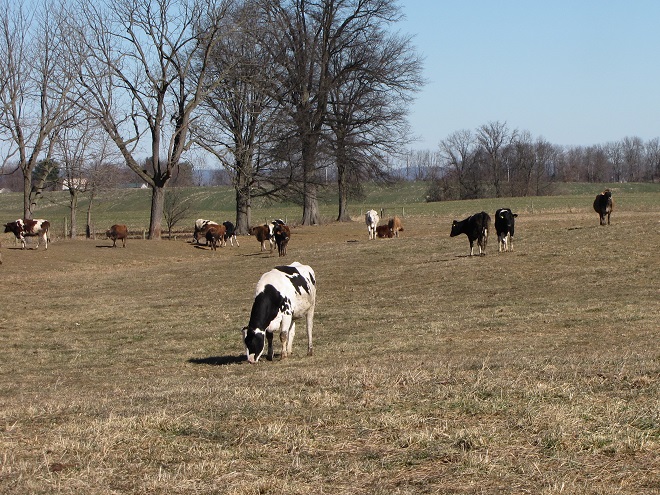
Here’s a polluted stream in a pasture with grazing livestock. The site is a former mill pond within which the creek eroded a channel following removal of the dam. The animals defecate and urinate where access to water is gained at a broken down embankment of the nutrient-loaded legacy sediments deposited in the pond more than a century ago. It’s a haphazard form of animal husbandry and a reminder that all it takes is just one stubborn jackass to foul up the whole waterway.
DIRECT SOURCES OF NITROGEN (AMMONIA) POLLUTION IN STREAMS
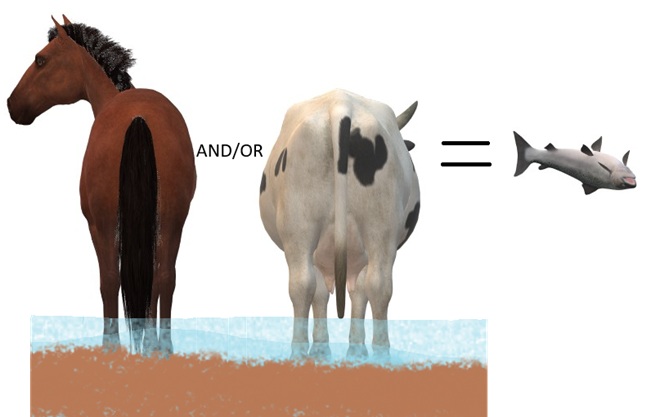
DID YOU KNOW that a dairy cow produces about 80 pounds of waste (excrement and urine) every day?
DID YOU KNOW that a horse produces about 50 pounds of waste (excrement and urine) every day?
DID YOU KNOW that a human produces about 3 to 4 pounds of waste (excrement and urine) every day? The exceptions, of course, are those who continue to insist that raising farm animals in and alongside a body of water is okey-doke—a harmless practice. These individuals tend to retain the former constituent of human waste and are thus full of it.
“ATTABOY TEX, THAT’S MORE LIKE IT!”
Now that’s better. Legacy sediments have been removed to reconnect the stream to its floodplain. A livestock crossing and exclusion fencing has been installed, and a nutrient-consuming riparian buffer has been planted. This creek segment’s pollution woes have been mitigated. Do you have a neighbor needing this type of remedial work on their farm? Have them call your local conservation district office for advice. Some programs include financial assistance covering the costs of installation as well as monetary incentives for helping to clean up the water.
AND FINALLY
WHEN IT COMES TO BUILDING DAMS ON LOTIC FRESH WATERS…
…LEAVE IT TO THE BEAVERS
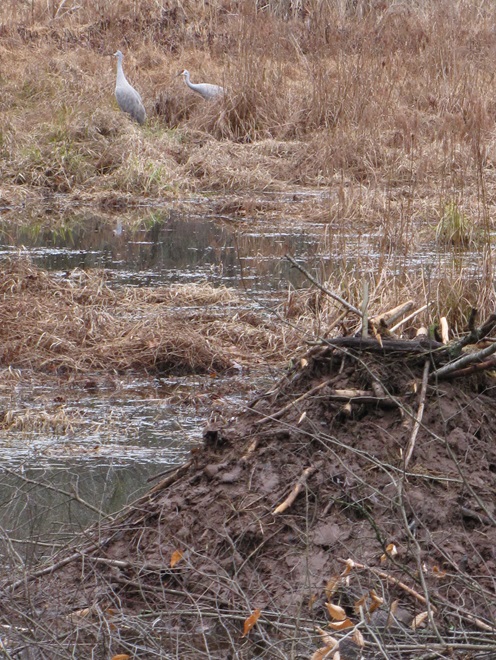
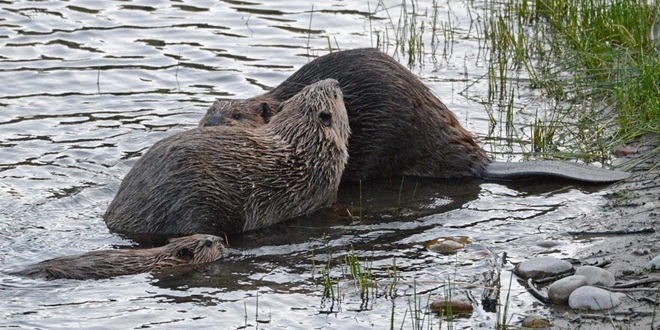
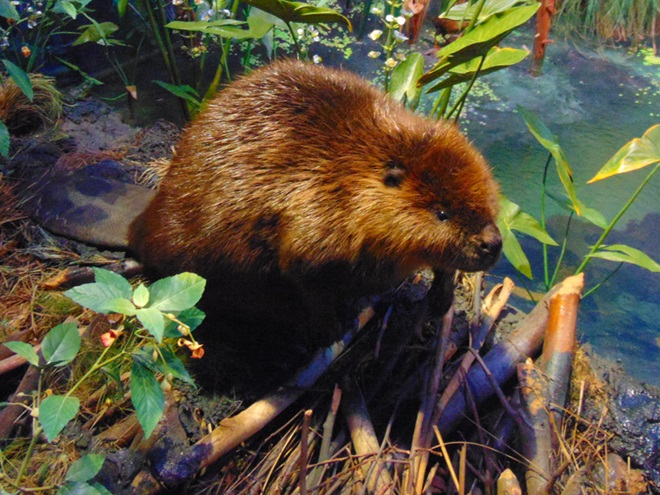
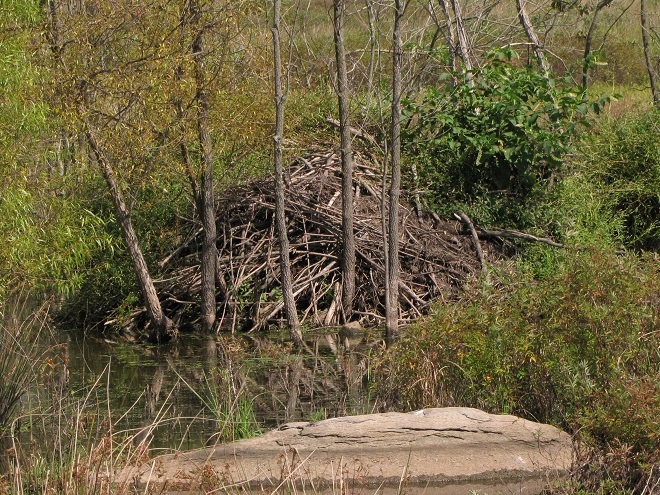
North American Beavers (Castor canadensis) create habitats that connect the riffle and pool regime of a low-gradient stream to a surrounding fluvial wetland that retains sediments, cycles nutrients, and provides essential habitat for hundreds of plant and animal species. Floodplains are for flooding. And if a beaver floods an area, you can be guaranteed that it was already part of a floodplain. You see, beavers don’t encroach upon humans, it’s humans doing the encroaching upon beavers. (National Park Service image)
MAD HATTERS
DID YOU KNOW that even before the landscape was cleared for farms and a supply of timber, and before mill dams on local creeks began accumulating soil runoff from the consequently barren hillsides, all the North American Beavers, the keystone species of lower Susquehanna stream ecology, were killed and sold to make hats? It’s no wonder things are fubar!
COMING SOON…
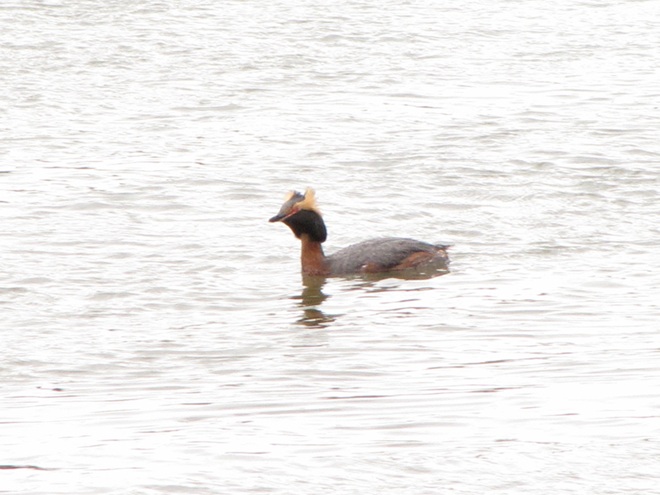
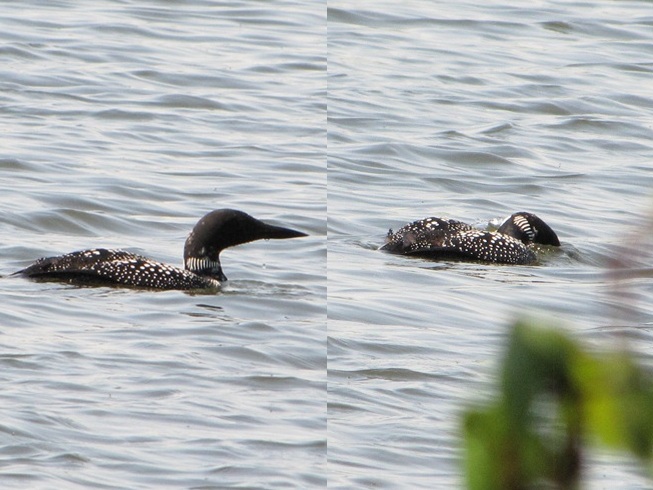
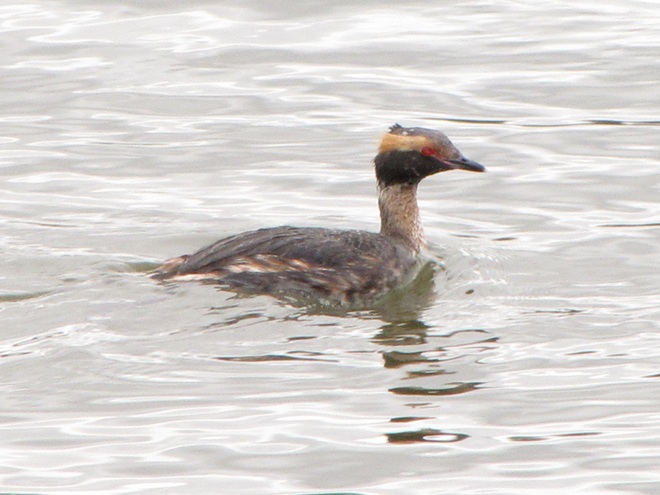
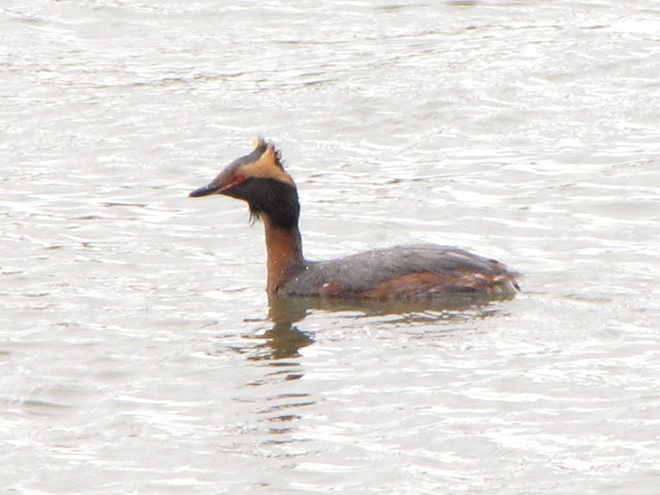
Horned Grebes are regular migrants and sometimes winter residents on ice-free stretches of the lower Susquehanna. They spend their time plying the benthic substrate of the river’s clear riffles and pools for a variety of invertebrates and small fish. Look for them moving north in coming days sporting this beautiful breeding plumage.April and early May are prime time for observing Common Loons on the Susquehanna as they undertake a journey from the Atlantic surf where they spent the winter to nesting sites on northern lakes. For this migrant in breeding plumage, clear water for sighting plenty of benthic life in the river’s riffles and pools assures a successful dive in search of energy-replenishing forage.
Our first big wave of northbound migrants has come and gone, but don’t despair; for spring is still a few days away, and we have yet to reach the end of the beginning …
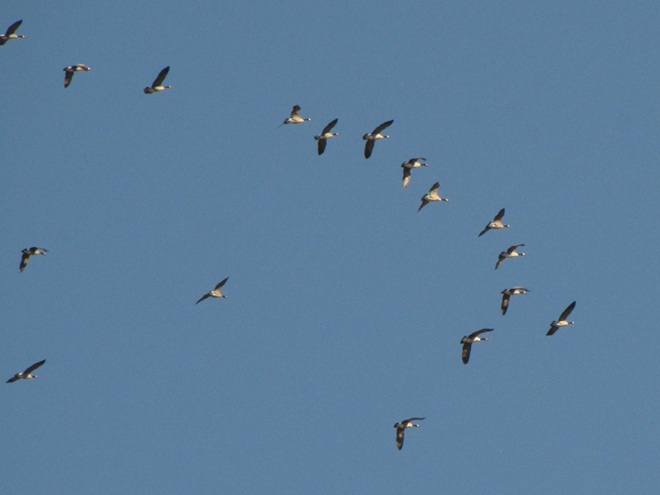
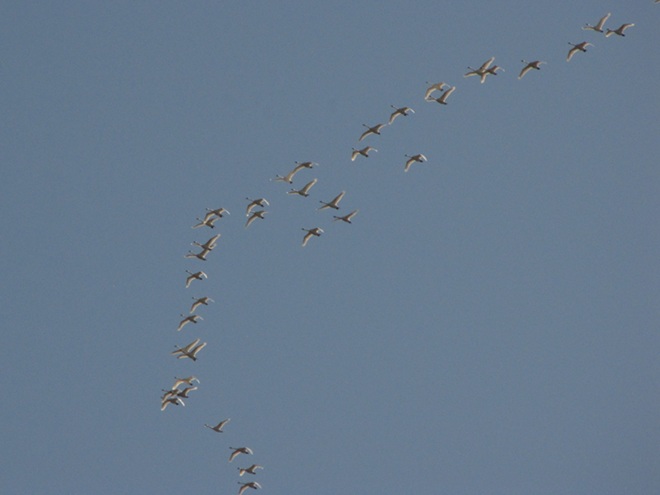
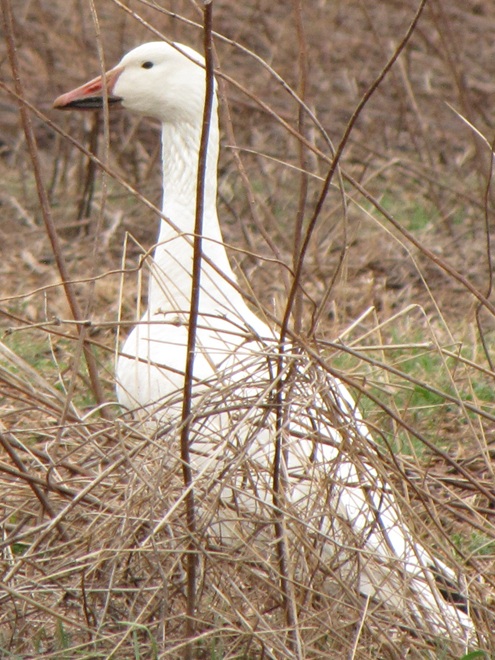
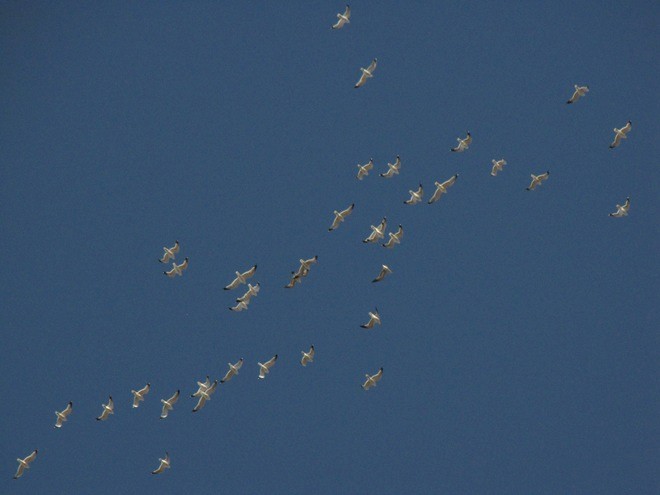
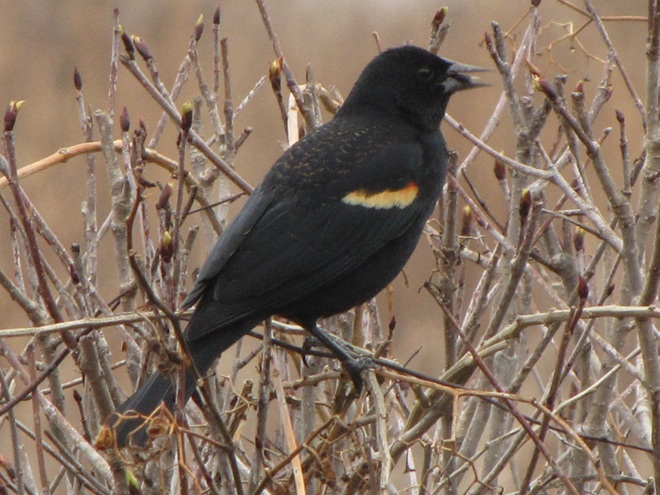
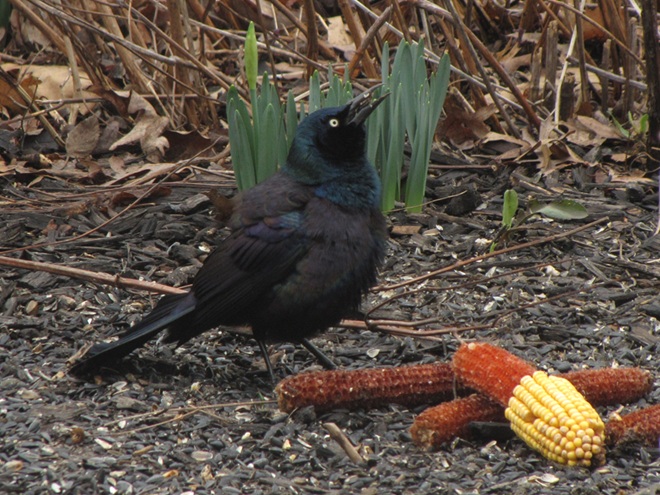
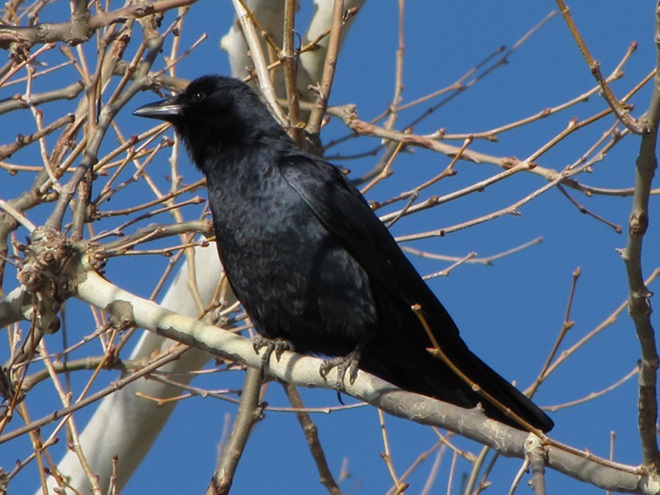
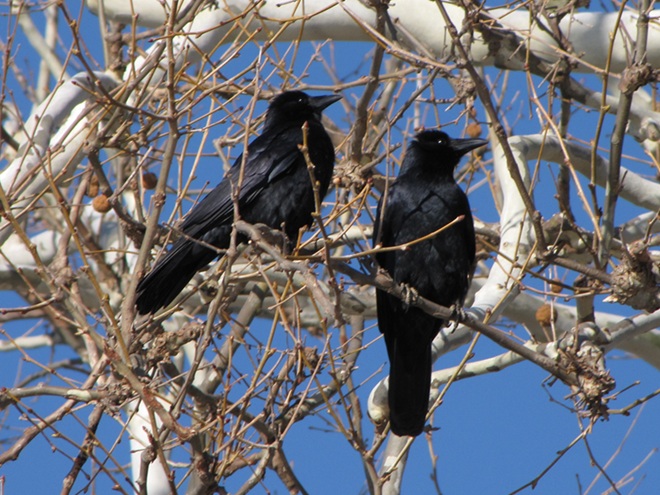
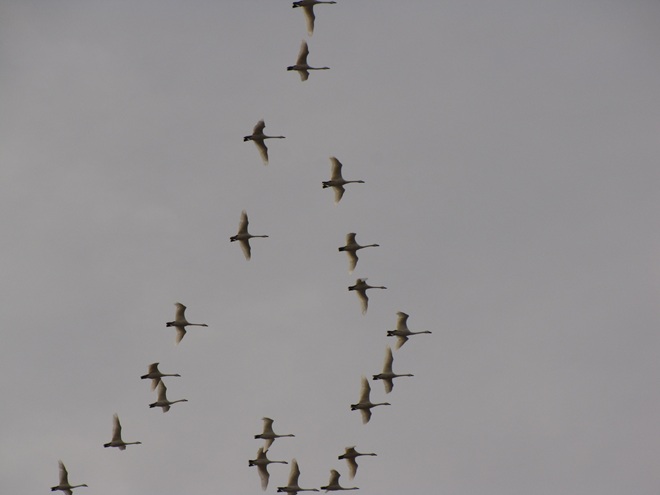
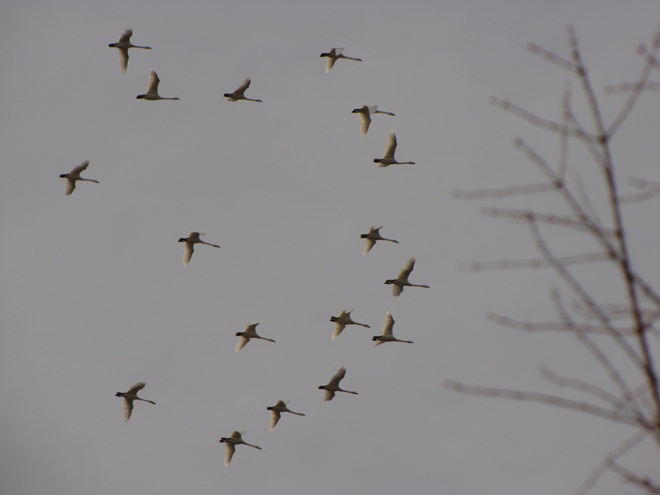
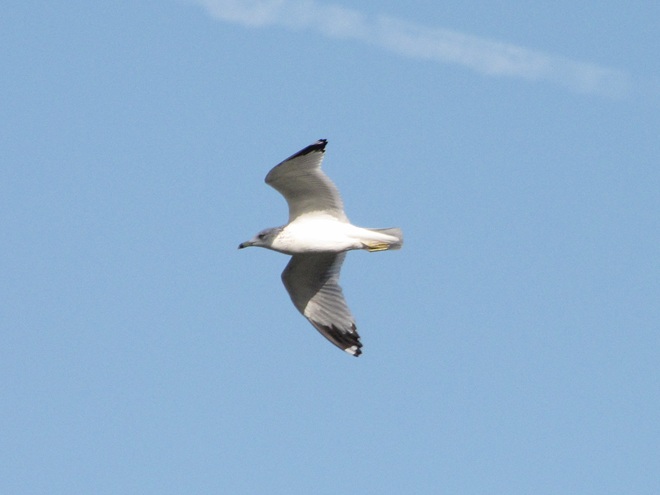
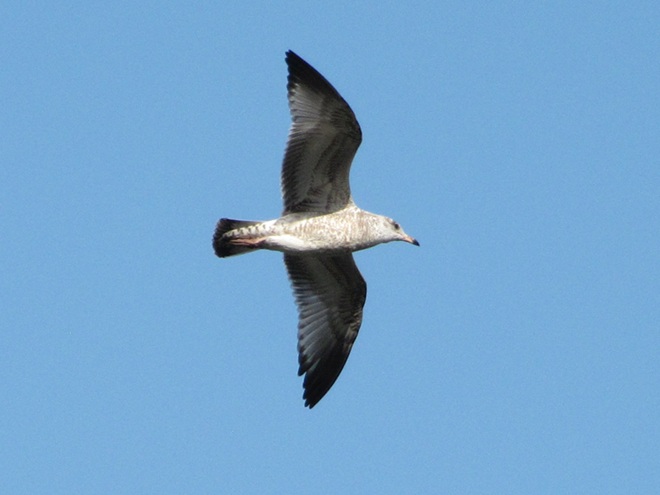
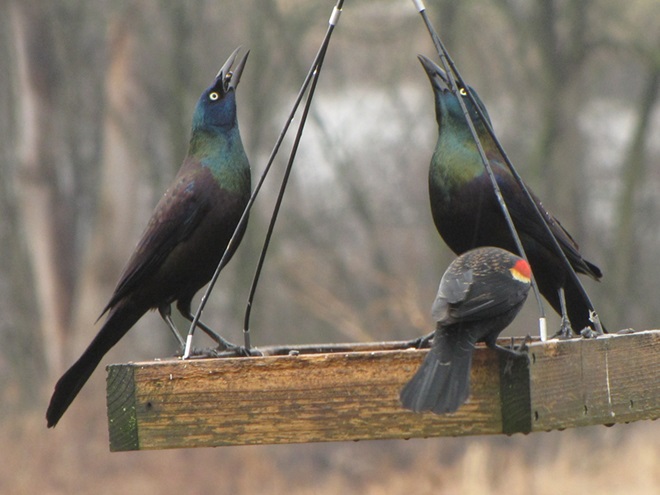
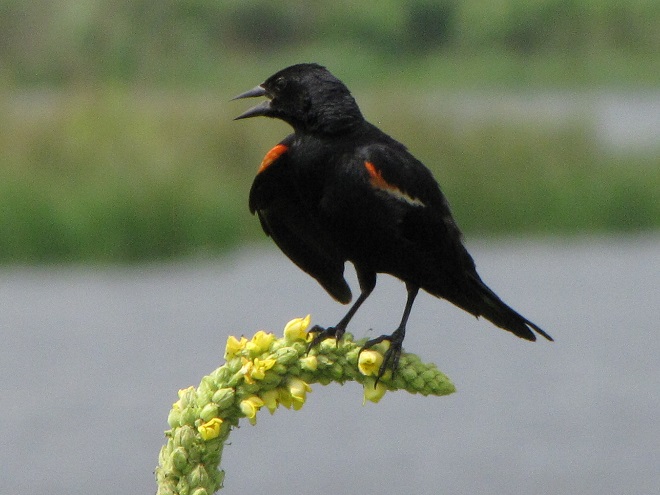
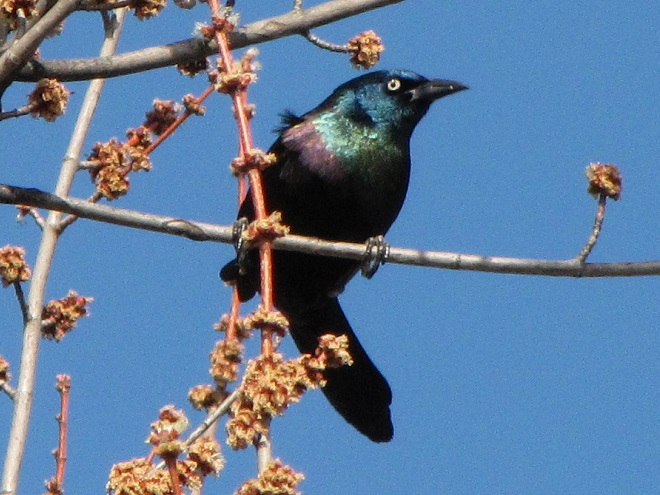
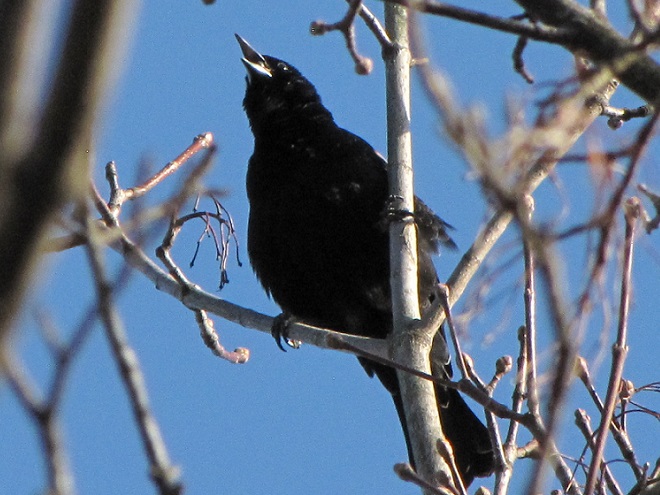
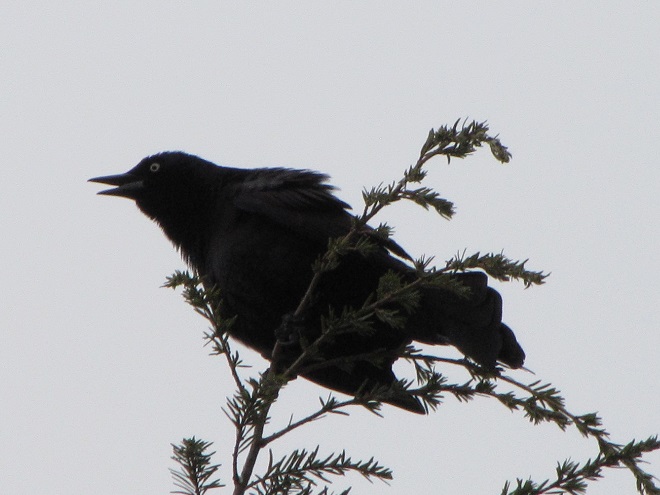
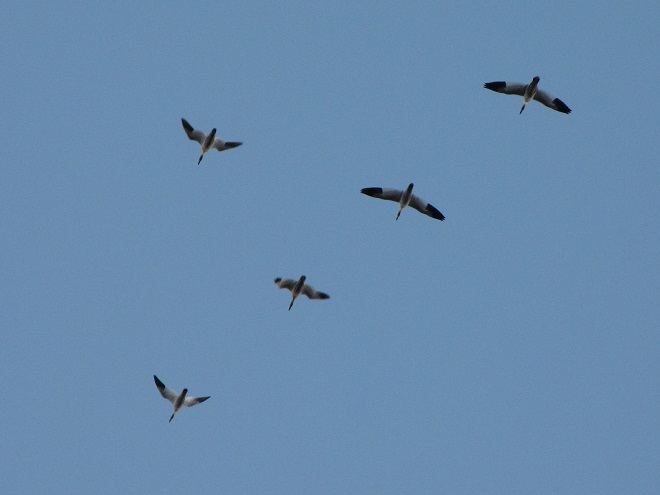
All but the last of the migratory Canada Geese have passed through the lower Susquehanna basin en route to their nesting grounds in the land for which they are named. Those that remain are mostly members of a resident population established here during the latter decades of the twentieth century.The majority of the northwest-flying Tundra Swans that wintered on the Atlantic Coastal Plain and will nest in Alaska and western Canada have now traversed our skies and are on their way through the Eastern Great Lakes region.Snow Geese too have departed. Only stragglers like this individual with a wounded wing linger.Still moving up the river corridor are thousands of Ring-billed Gulls. Their movements are prolonged, extending through much of the late winter and into early spring with primarily adult birds leading the way.The Red-winged Blackbird exodus continues as well with mostly male birds like this one venturing on ahead of the females to secure suitable breeding sites before the arrival of the competition.Male Common Grackles are coming north to lay claim to favorable nesting habitat too. In an effort to fend off rivals, a male will thrust back his head and ruffle his feathers to display the colorful sheen adorning his plumage.Recognized by their nasal two-syllable calls, Fish Crows have been filtering up the valleys of the river’s main stem and its tributaries for almost a month now. While the closely related American Crow is numerous throughout the winter in the lower Susquehanna watershed, most of our Fish Crows retreat to the Atlantic Coastal Plain during the colder months. The Fish Crows that return early stake claims on the best nest sites, often in lowland areas where they are sometimes in direct competition with a portion of the population of American Crows that commonly breeds here.
With the arrival of the spring equinox, longer periods of daylight will accompany the return of many more species. Be sure to get outside, then have a look around.
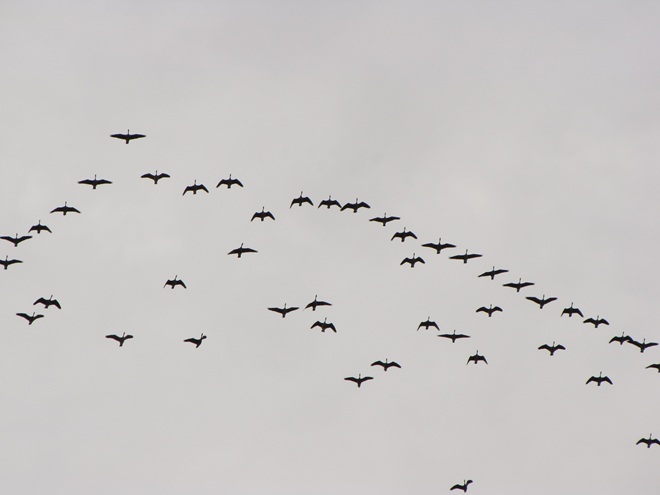
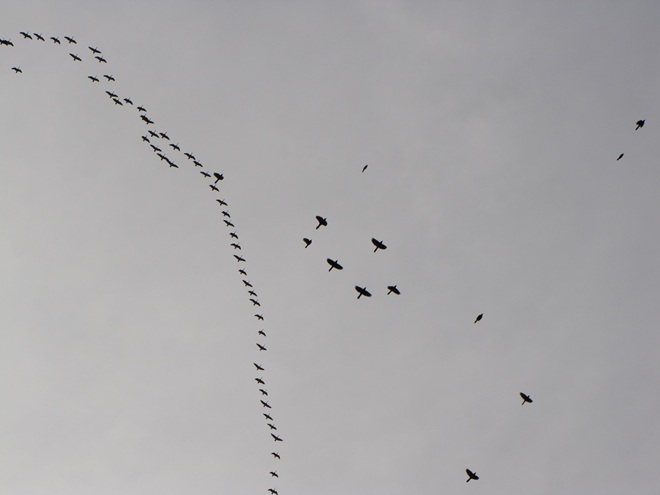
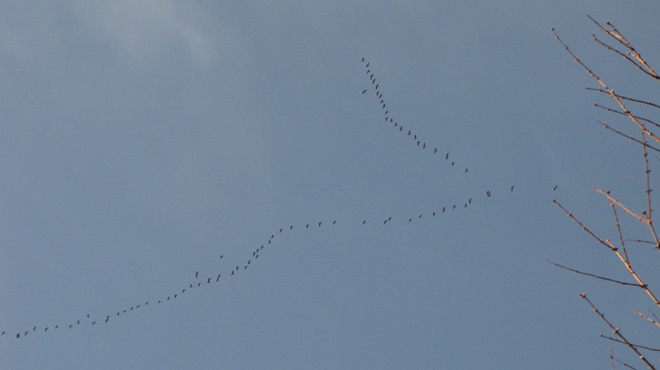
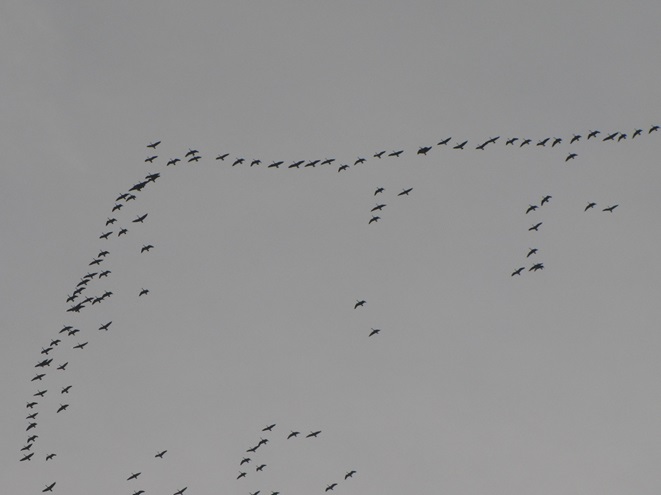
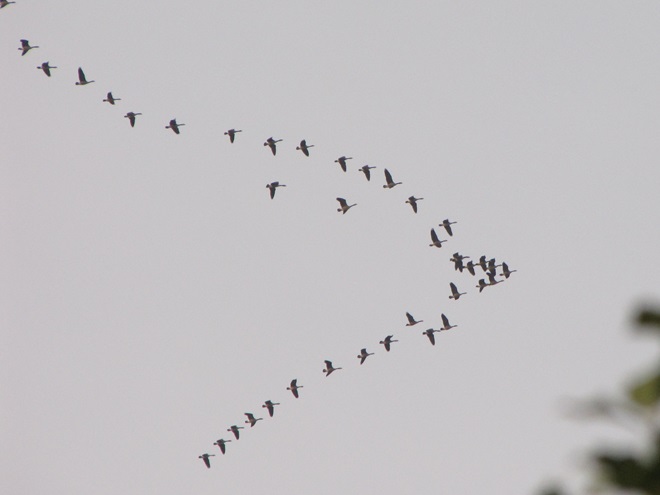
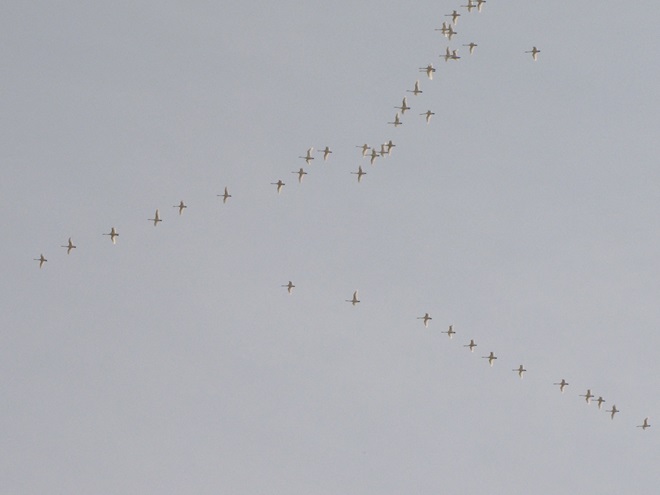
Step outside, take a listen, and look up. A substantial northward movement of early migrants is, at this writing, underway across the lower Susquehanna basin—primarily in the skies within five to maybe ten miles of the river corridor. Within the last hour, we witnessed a steady parade of geese, swans, and blackbirds in the skies above the headquarters garden. These are not birds that are staging or are in the midst of a stopover here during their journey north. They are instead flocks taking advantage of favorable conditions to make a big jump from Chesapeake Bay and adjacent areas of the Atlantic Coastal Plain into territory to our north and northwest that was just two weeks ago in the middle of a deep freeze. Compared to the slowpokes whose northbound movements are a bit more cautious, the shared determination of these birds to get to the nesting grounds first may be advantageous for their breeding success.
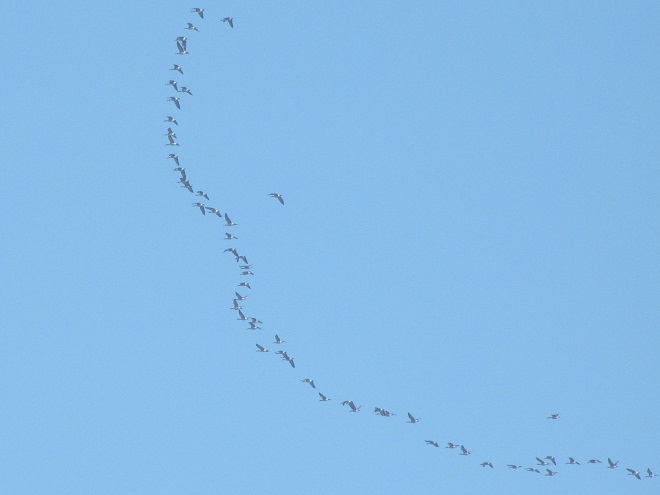
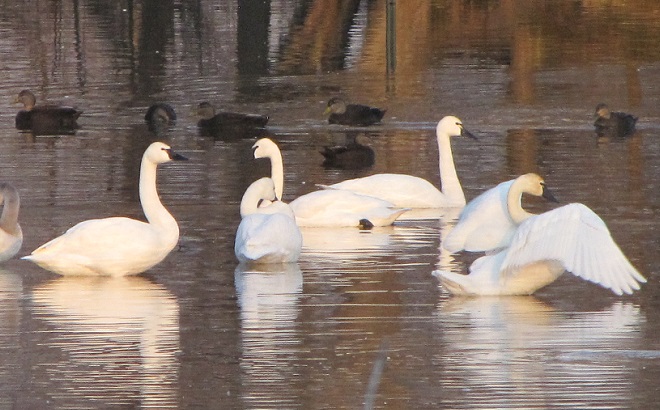
At least 2,000 migrating Canada Geese passed high above as we strained to see their silhouettes in the sun-drenched haze.Below them, flocks of hundreds of blackbirds including these Common Grackles and Red-winged Blackbirds filtered through.Perhaps most spectacular were the 1,000 or more Tundra Swans that passed by. Each year in late February or early March, we look forward to a day or more with a big push of these regal giants. But you need to get a good look fast……because they’re gone in just moments for another year.
Winds from the southwest are forecast for the coming couple of days, so the movements could continue. Head outside, enjoy the weather, and look up.
In case you haven’t already heard, the Snow Geese are at last filtering north from the Atlantic Coastal Plain to congregate at the Pennsylvania Game Commission’s Middle Creek Wildlife Management Area in Lancaster and Lebanon Counties.
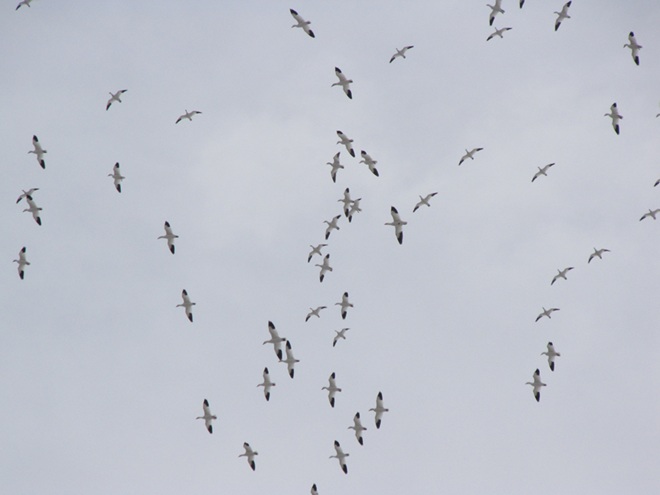
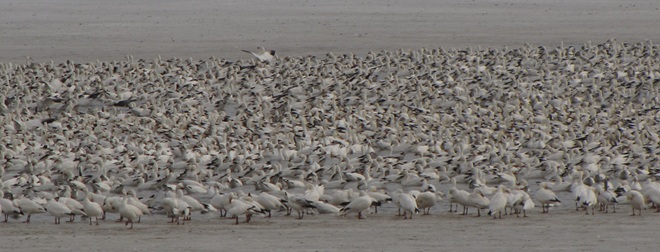
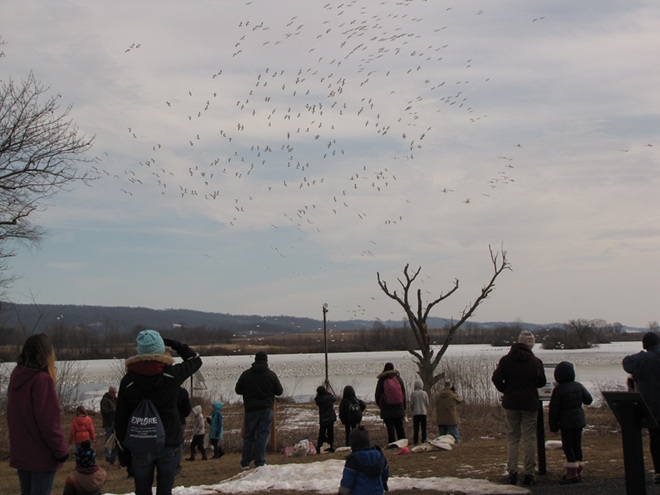
Compared to recent years, the 2026 spring waterfowl migration has been a bit behind schedule, owing primarily to persisting layers of ice and snow. As the cover melted from regional fields during the past week, Snow Geese were at last able to find sufficient acreage for grazing, and their numbers at Middle Creek increased rapidly.As many as 60,000 Snow Geese have been enumerated in recent days at the refuge.And more than 500 Tundra Swans are making a stopover.When not in the fields feeding, Snow Geese are concentrated around the small area of open water on the otherwise frozen lake, making them easily observed from the Willow Point viewing area. If you’re planning to visit and have a look, don’t wait. The urge to begin their 2,000-mile journey to breeding areas on the arctic tundra is strong, and as soon as conditions permit, they’ll be resuming their excursion. This could very well be an abbreviated stay.
For those of you who may be wondering if there are Snow Geese at Middle Creek Wildlife Management Area, the answer is yes—just one!
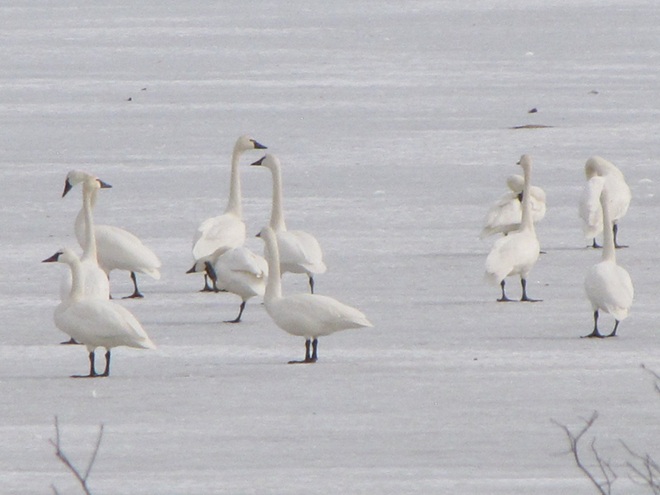
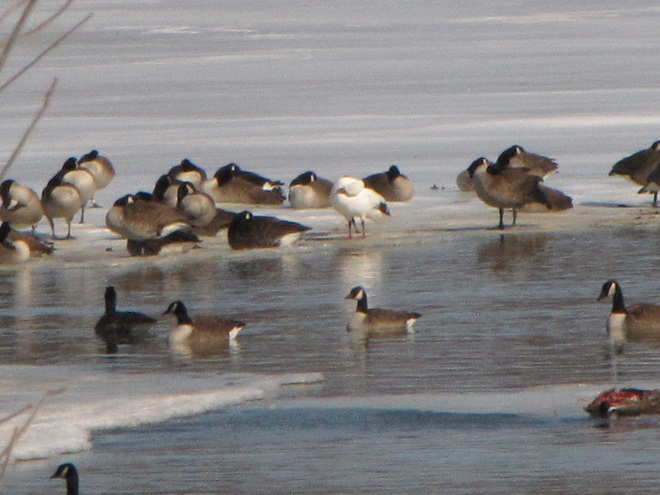
A lone Snow Goose was seen earlier today among about 100 Canada Geese, two dozen Tundra Swans, and a couple of American Black Ducks clustered around a small opening in the ice on the main impoundment at Middle Creek.
So where are the thousands of Snow Geese we’ve grown accustomed to seeing during recent decades as they gather at the refuge in February while preparing to fly north for the summer?
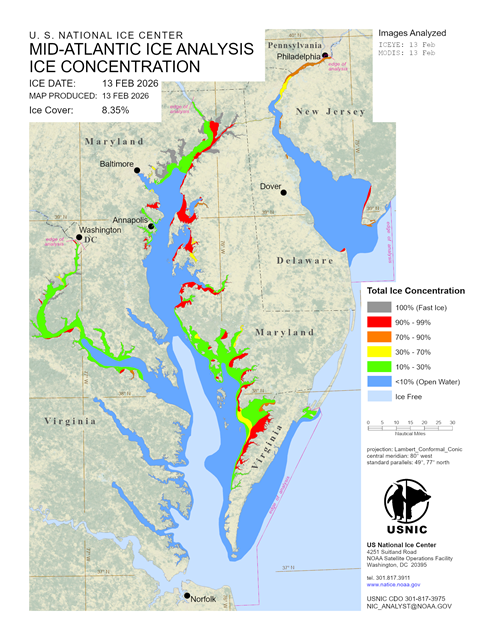
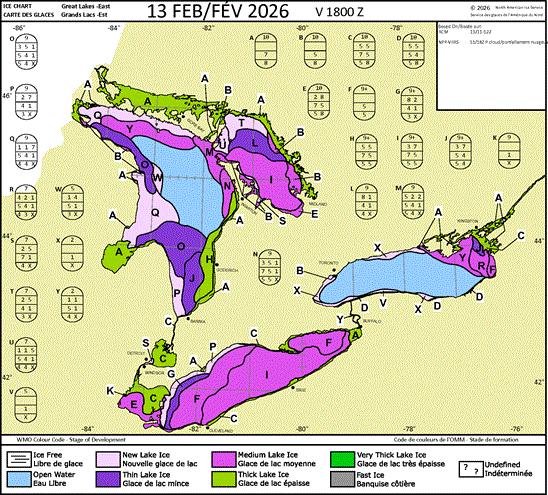
With much of the river and nearly all of the lower Susquehanna basin’s lakes and ponds frozen, Snow Geese and many other migratory waterfowl remain concentrated on the Atlantic Coastal Plain where salty tidewater provides ice-free conditions for feeding and loafing. In fact, some ducks, particularly diving species, may still be evacuating freshwater locations to our north such as the Eastern Great Lakes where, during the past week, even more surface area has succumbed to freezing. Look for migrants to begin pushing north in bigger numbers as soon as rising temperatures start to melt local ice. (NOAA/U.S. National Ice Center image)Freezing of the Great Lakes has not been this extensive since 2019. New lake ice (shown in pink) has completed coverage of Lake Erie (lower left), isolated open water from the shorelines of Lake Huron (upper left), and now covers a large portion of the nearshore waters of Lake Ontario (right). (NOAA/U.S. National Ice Center image)
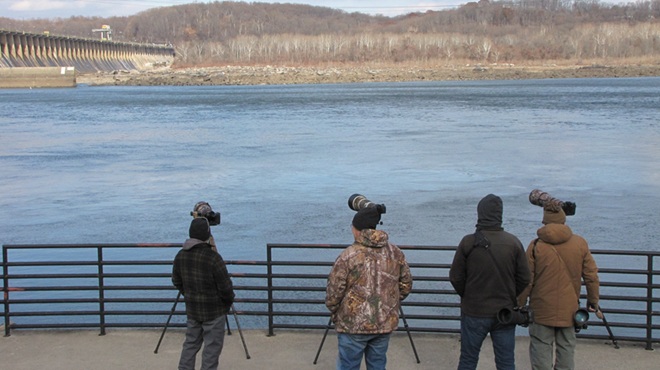
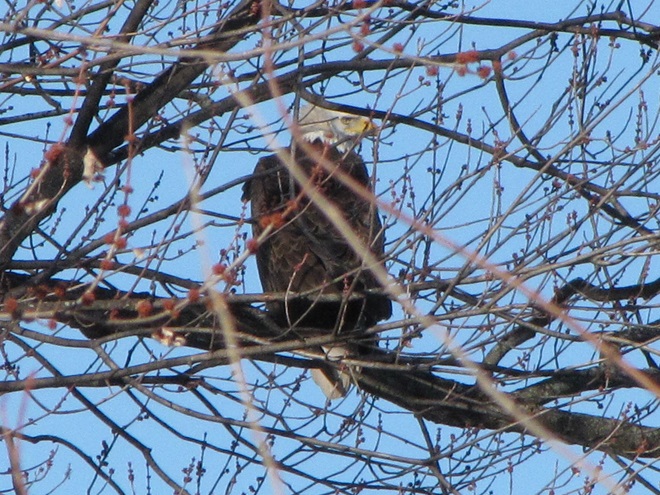
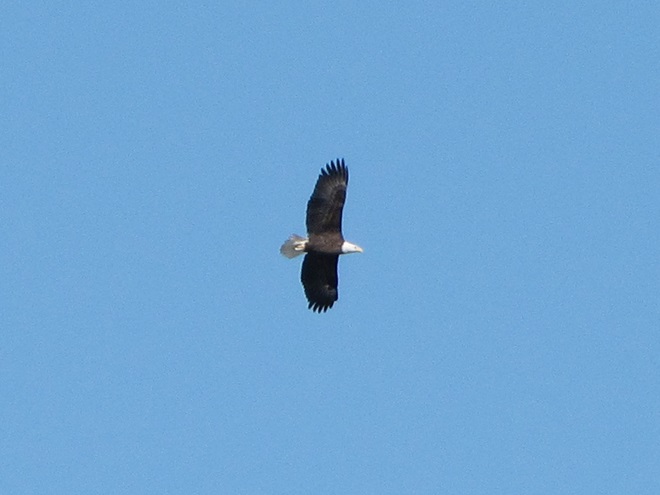
Wintering Bald Eagles are again congregating on the lower Susquehanna River, particularly in the area of Conowingo Dam near Rising Sun, Maryland. To catch a glimpse of the action earlier this week, we took a drive on U.S. Route 1 atop Conowingo’s impounding structure to reach Fisherman’s Park on the river’s west shore below the powerhouse.
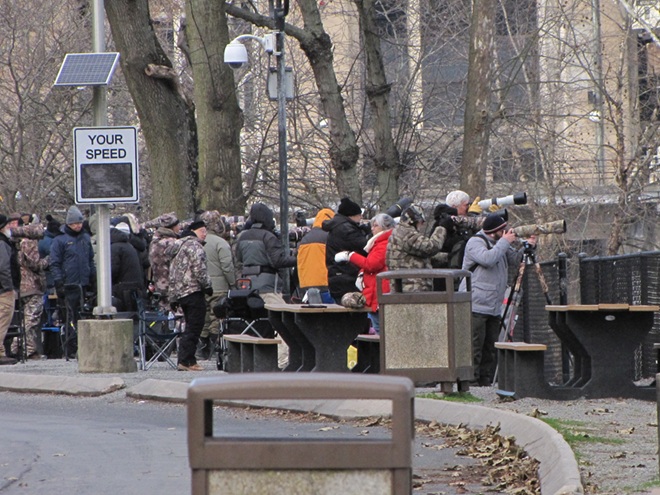
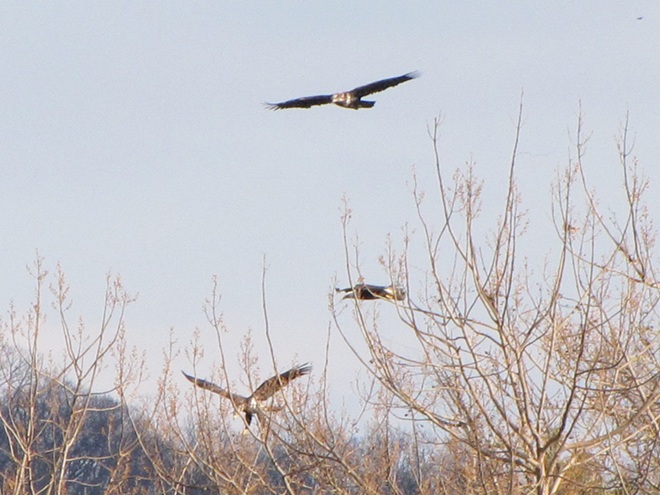
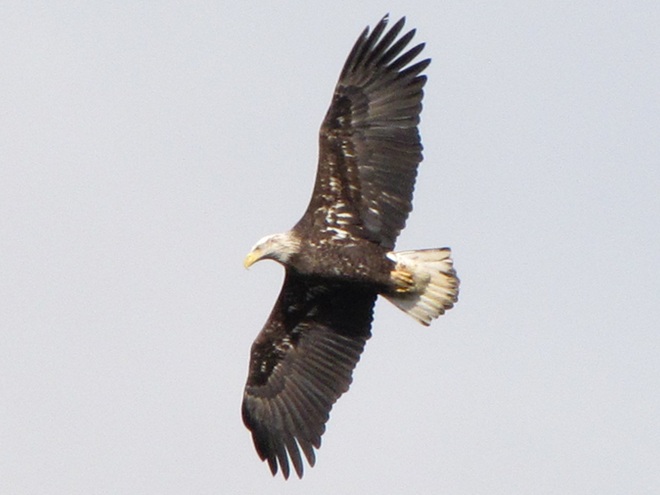
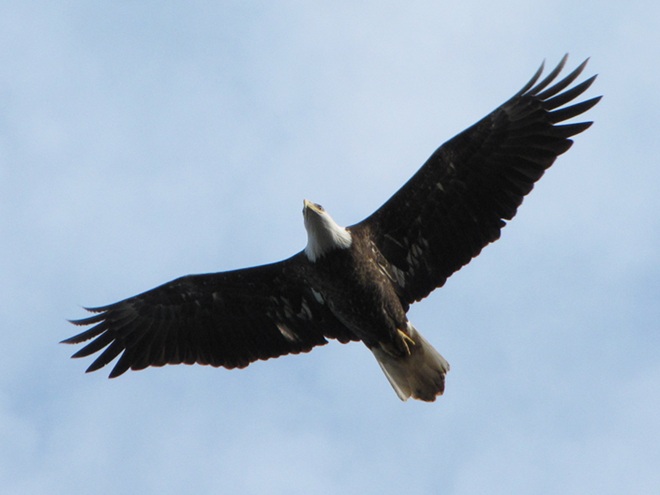
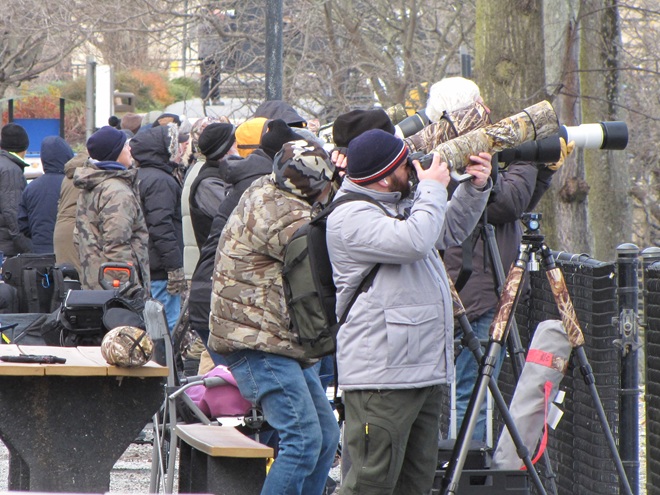
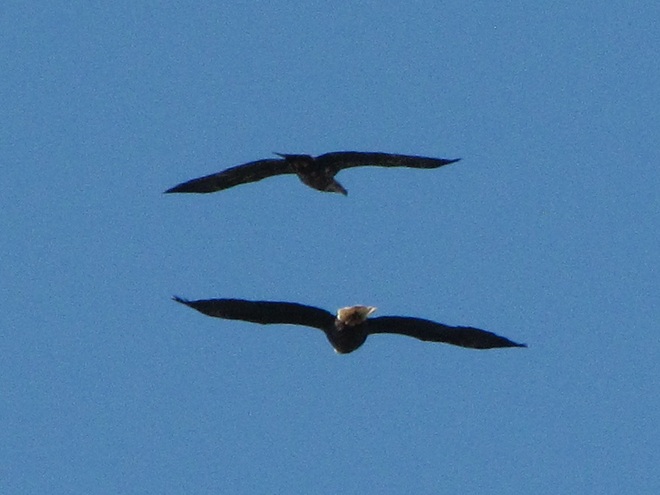
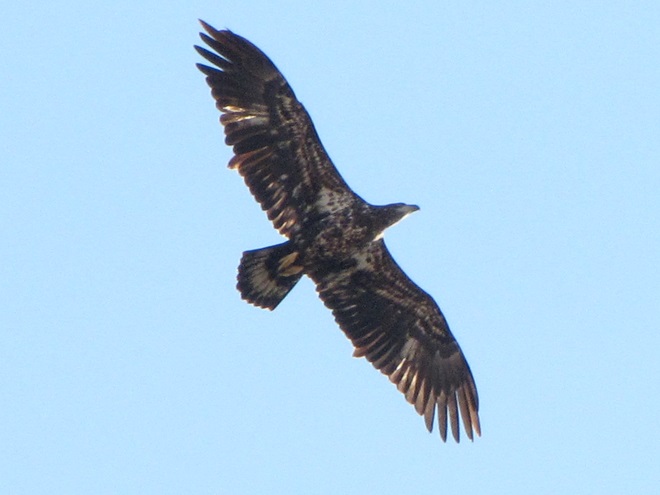
Scores of dedicated eagle watchers and photographers brave the raw weather to see and document the concentration of eagles that gather to feed and roost in the vicinity of Exelon Energy’s Fisherman’s Park.The panoramic view of the Susquehanna from Fisherman’s Park offers excellent opportunities to witness Bald Eagle activity.When you arrive, it’s not unusual to hear the sounds of squabbling eagles immediately upon exiting the shelter of your vehicle. During our visit, we sighted probably 60 to 80 individuals of various age classes among the rocks and trees along the river shorelines below the dam.Soon enough, we experienced a close fly-by from this second-year Bald Eagle.Another of the many second-year Bald Eagles seen on the Susquehanna at Conowingo Dam.We were a little bit concerned to see only one hatch-year (juvenile) Bald Eagle among the birds at Fisherman’s Park. Perhaps the aggressive behavior of the large number of older and more experienced eagles in the area has these first-year individuals shying away. We discerned no third-year birds either, though they may certainly have been present.A probable fourth-year Bald Eagle shows a white head with the remains of a dark line through the eye, a trait often more conspicuous in third-year birds often known as “osprey face” eagles.This probable fifth-year Bald Eagle has nearly lost the dark markings on the head and tail that differentiate immature birds from adults. A molt during the coming year will yield adult plumage and mark the completion of this bird’s sexual maturity.An adult Bald Eagle.Meanwhile, a little action gets the shutters clicking,……a fourth-year Bald Eagle (top) is drawing the ire of an adult bird,……necessitating a reprisal for the taunting behavior.
To the delight of photographers at Conowingo, some of the eagles can be seen grabbing fish, mostly Gizzard Shad, from the tailrace area of the river below the powerhouse. But Bald Eagles are opportunistic feeders, and their feeding habits are similar to those of numerous other birds found in the vicinity of the dam at this time of year—they’re scavengers. Here’s a glimpse of some of the other scavengers found in the midst of this Bald Eagle realm…
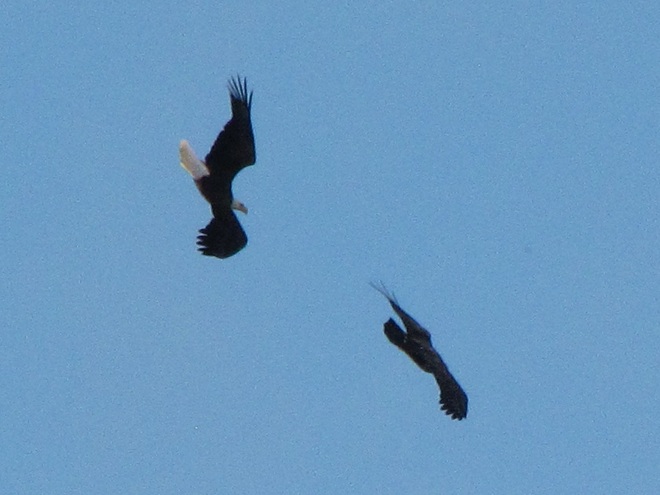
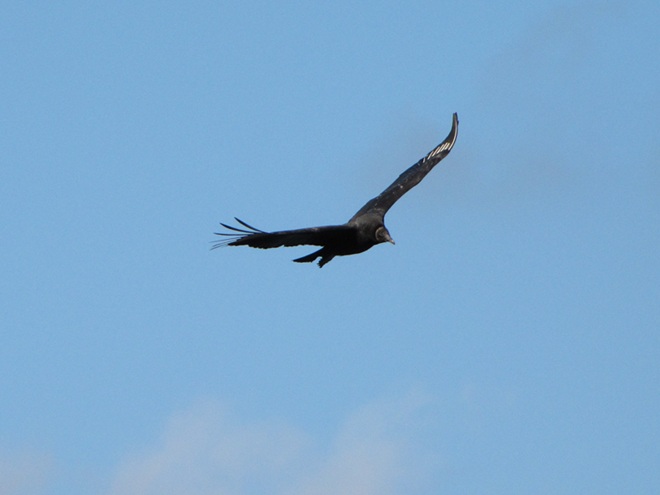
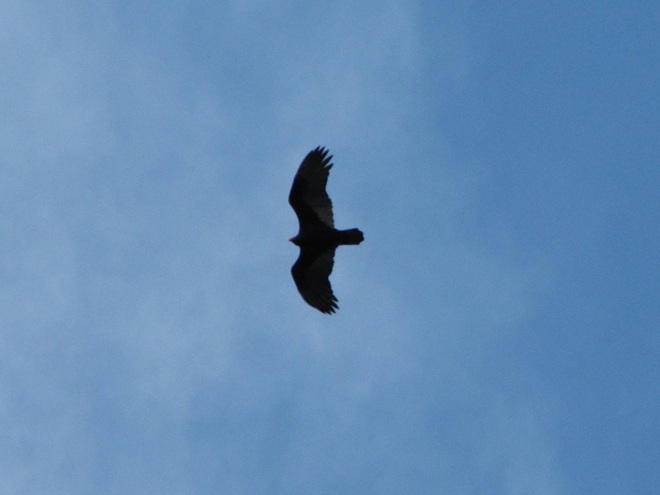
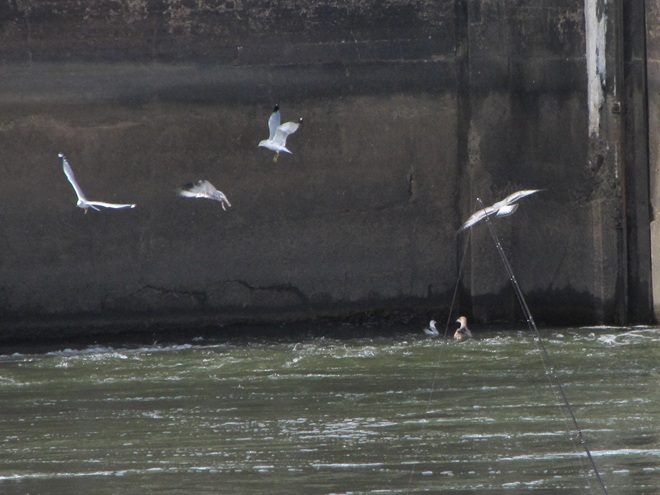
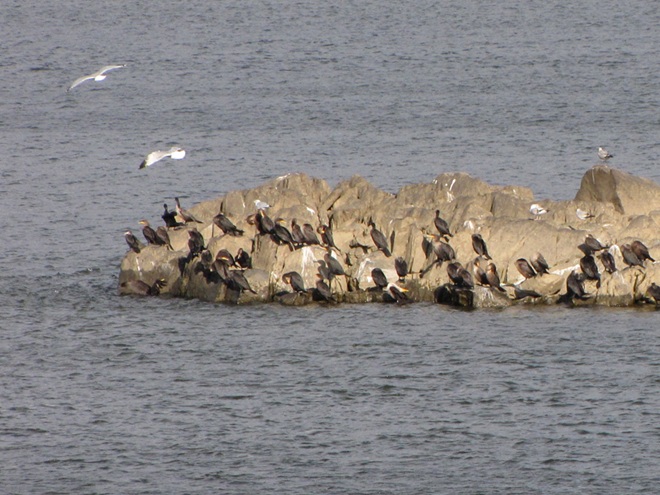
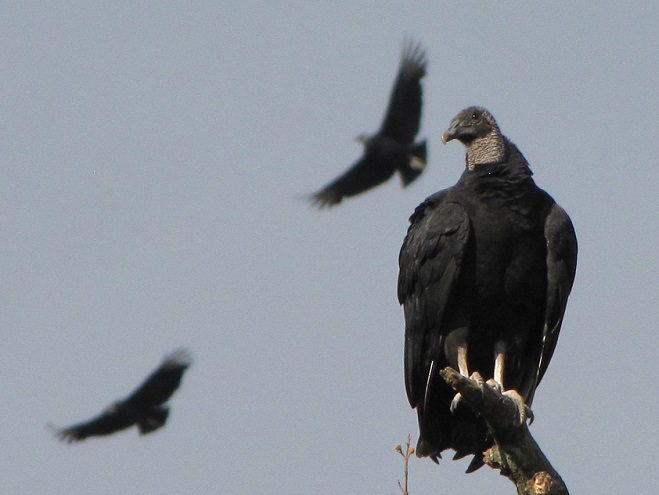
Fish Crows are recognized by their nasal call. They’ll eat almost anything they can find including garbage, fish remains, discarded bait, lunch scraps, road kill, and more.Visitors to Fisherman’s Park are warned to keep out of sight any food they may have stored in their cars. Black Vultures are known to peel rubber away from windows as they search for something to eat, a habit they possibly learned during productive forays to landfills where the edges of rubber coverings sometimes hide a freshly dumped buffet of potential sustenance.During our stop at Conowingo Dam earlier this week, we saw only one Turkey Vulture, though more are certainly in the vicinity feeding on road kill and other carrion.Like eagles, Ring-billed Gulls are opportunistic feeders, seen here looking for disoriented Gizzard Shad and other fish,……then quickly changing focus to check the humans along the shoreline for discarded bait or fumbled snack foods.Even young Ring-billed Gulls learn the value of watching people for activities that provide an opportunity to scavenge food.While Ring-billed Gulls and other scavengers aren’t particularly fussy about what they eat, Double-crested Cormorants are;……they’re targeting Gizzard Shad and other fish in the waters below the dam. Thus, we would categorize cormorants as predators, eating mollusks and other aquatic organisms as well.And while you’re on the lower Susquehanna, keep an eye on the sky. Common Mergansers winter on ice-free sections of the waterway and are now arriving in the vicinity of Conowingo and elsewhere.But if perhaps winter isn’t your thing, don’t despair. These Bald Eagles came upon last year’s Great Blue Heron rookery on the island below the dam and it seems to be giving them some ideas. If you think like an eagle, spring is just weeks away!
For many animals, an adequate shelter is paramount for their successful reproduction. Here’s a sample of some of the lower Susquehanna valley’s nest builders in action…
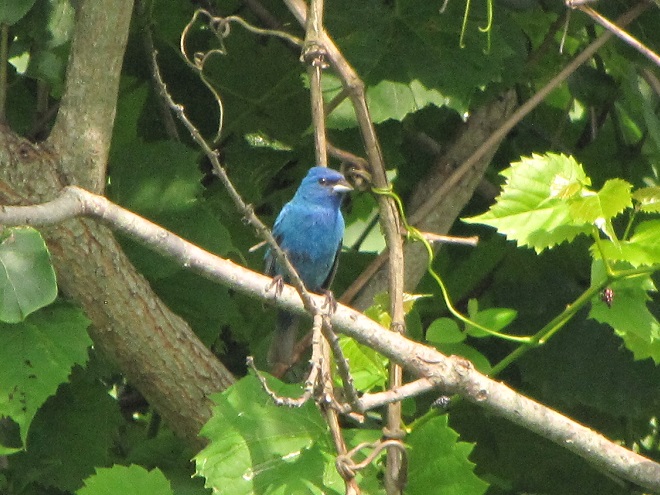
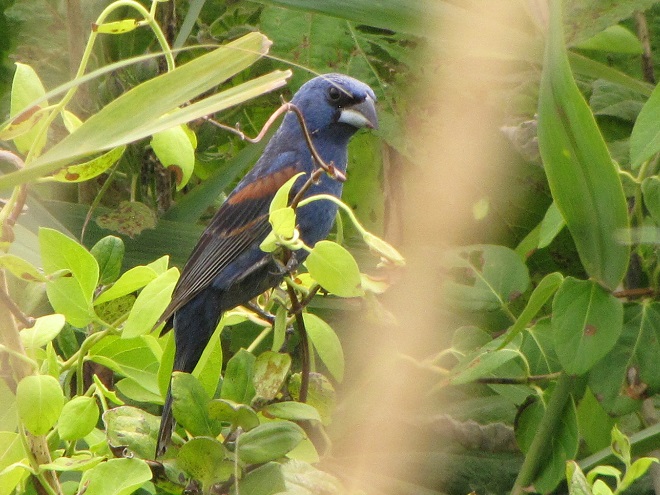
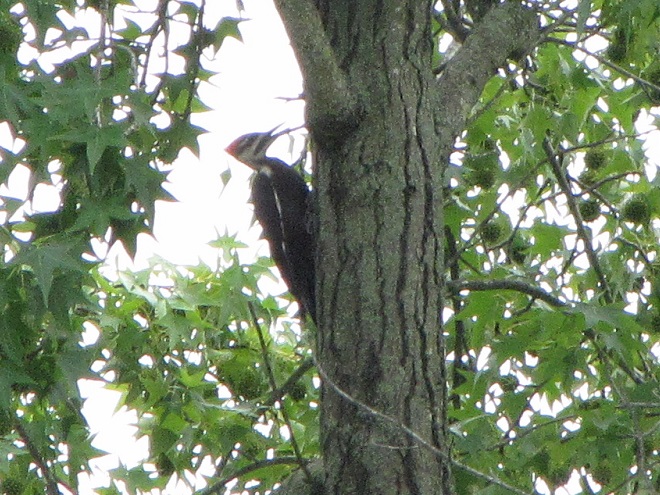
Many of our year-round resident bird species get a head start on the breeding season as cavity nesters. Some of these mated pairs use naturally occurring hollows, while still others take advantage of the voids left vacant by the more industrious previous occupants. Woodpeckers in particular are responsible for excavating many of the cavities that are later used as homes by a variety of birds and mammals to both rear their young and provide winter shelter. Pileated Woodpeckers, like other members of the family Picidae, have an almost mystic ability to locate diseased or insect-infested trees for selection as feeding and nesting sites. In this composite image, a pair is seen already working on a potential nursery during mid-January. After use by the woodpeckers, abandoned cavities of this size can become nesting sites for a variety of animals including bees, small owls, Great Crested Flycatchers, Wood Ducks, Hooded Mergansers, and squirrels.After use as a nesting site, a void excavated by Downy Woodpeckers can be occupied in subsequent years by chickadees, titmice, nuthatches, wrens, and other cavity-dwelling species.This Muskrat (Ondatra zibethicus) with a leafy twig in tow takes advantage of spring’s new growth to construct or repair its house,……a process that can be repeated or renewed as necessary throughout the year.A Muskrat house in March. In the absence of leafy twigs, dried cattail stems will suffice. As it ages and decays, the house’s organic matter generates heat and makes an ideal location for turtles to deposit and hatch their eggs.Soon after Neotropical migrants begin arriving in the forests of the lower Susquehanna watershed, they begin constructing their nests. The majority of these species build “outdoors”, not within the confines of a tree cavity. Here we see a Wood Thrush with its bill full of dried leaves and other materials……ready to line the cup of its nest in the fork of a small understory tree.Though it often arrives during early April after spending the winter in sub-tropical and even some temperate climes, the Blue-gray Gnatcatcher must wait to start construction of its nest until many of the Neotropical migrants arrive in early May.You see, the Blue-gray Gnatcatcher relies on plenty of web-spinning spider activity to supply the construction materials it needs.A Blue-gray Gnatcatcher pulling apart a spider’s web on a warm May morning.Back at the nest site……the sticky spider webs bind together lichens and small bits of bark……to form a perfect little cup for the nesting Blue-gray Gnatcatchers.Baltimore Orioles weave one the most unique nests of any species occurring in eastern North America.Unfortunately for them, man-made litter can often seem to be the ideal material for binding the nest together. In an area only sporadically visited by anglers, this oriole had no trouble finding lots of monofilament fishing line, trash that can fatally entangle both adult and young birds of any species. If you see any fishing line at all, please pick it up and dispose of it properly.Always keep an eye open for fishing line and get it before the birds do!Like many other avians, male Brown-headed Cowbirds are now relentlessly pursuing females of their kind.All his effort is expended in an attempt to impress her and thus have a chance to mate.This male can indeed put all his energy into the courtship ritual because Brown-headed Cowbirds toil not to build a nest. They instead locate and “parasitize” the nests of a variety of other songbirds. After mating, the female will lay an egg in a host’s abode, often selecting a slightly smaller species like a Yellow Warbler or native sparrow as a suitable victim. If undetected, the egg will be incubated by the host species. Upon hatching, the larger cowbird nestling will dominate the brood, often ejecting the host’s young and/or eggs from the nest. The host parents then concentrate all their efforts to feed and fledge only the young cowbird.Watching and waiting. The Indigo Bunting evades cowbird parasitism by first recognizing the invader’s egg. They then either add a new layer of nest lining over it or they abandon the nest completely and construct a new one. Some patient buntings may delay their breeding cycle until after cowbird courting behavior ceases in coming weeks.
In early April of each year, we like to take a dreary-day stroll along the Susquehanna in Harrisburg to see if any waterfowl or seabirds have dropped in for a layover before continuing their journey from wintering waters along the Atlantic seaboard to breeding areas well to our north and northwest. As showers started to subside this Saturday morning past, here are some of the travelers we had the chance to see…
Hundreds of scaup were feeding at mid-river. To remain in suitable foraging habitat, the group is seen here flying upstream to the area of the Governor’s Mansion where they would commence yet another drift downstream to Independence Island before again repositioning to a favorable spot.By far, the majority of the ducks in this flock were Lesser Scaup showing white inner margins of the secondary flight feathers and more grayish margins in the primaries. Several Greater Scaup, including the one denoted by the hairline in this image, could be detected by the presence of bright white margins not only in the secondary flight feathers, but extending through the primaries as well.A pair of Lesser Scaup feeding along the river shoreline at the Governor’s Mansion. Both scaup species spend the colder months in bays and coastal estuaries, but the Lesser Scaup is the most likely to be found venturing inland to fresh water in the southern United States during winter. The Lesser Scaup nests in the northwestern United States and in the southern half of Canada. The Greater Scaup is the more northerly nesting species, spending its summers at the northern edges of the border provinces and beyond.Common Loons spend the winter in Atlantic surf. April is the best time to see them on the lower Susquehanna River as they drop in to rest and reenergize during a break in their annual northbound trip to nesting sites on the lakes and ponds left behind by the retreat of Pleistocene glaciers.We saw dozens of Buffleheads during our morning hike, often segregated into paired couples like this one. Being cavity nesters, these migrating ducks are headed no further north than southern Canada, to lakes and ponds within forests, for the summer.Harlequin Ducks (Histrionicus histrionicus) spend the summer nesting on turbulent high-gradient streams in Canada and Greenland. They mostly winter along rocky coastlines as far south as New England, but have adapted to feeding along man-made rock jetties in coastal New York and New Jersey. This winter, they were seen along jetties and sea walls at least as far south as Cape Charles, Virginia, and the mouth of Chesapeake Bay. During the past month, at least two Harlequin Ducks, including this male seen in flight on Saturday, have appeared on the river in the Harrisburg area, possibly as strays from this year’s wintering population at the mouth of the bay. These ducks are very rare habitat specialists, possibly (according to Behrens and Cox, 2013) numbering less than 1,500 birds along the entire east coast.In spring, the Horned Grebe transitions from a drab gray-brown winter (basic) plumage into rather surprisingly colorful breeding (alternate) plumage.An adult Horned Grebe in breeding (alternate) plumage. Horned Grebes spend the winter on large rivers, bays, and ocean waters from Nova Scotia to Texas. They are presently on their way to breeding areas on ponds and lakes in Alaska and Canada west of Ontario.
If you want a chance to see these seldom-observed visitors to the lower Susquehanna at Pennsylvania’s capital city, try a morning walk along mid-town’s Riverfront Park from Maclay Street to Forster Street. Also, try a stroll on City Island, particularly to the beach at the north end where you have a view of the mid-river areas upstream. To have better afternoon light, try the river’s west shore along Front Street in Wormleysburg from the Market Street Bridge upstream to Conodoguinet Creek. Once there, be certain to check the river from the Pennsylvania Fish and Boat Commission’s West Fairview Access Area at the mouth of the creek. And don’t be afraid to visit on a gloomy day; you never know what you might find!
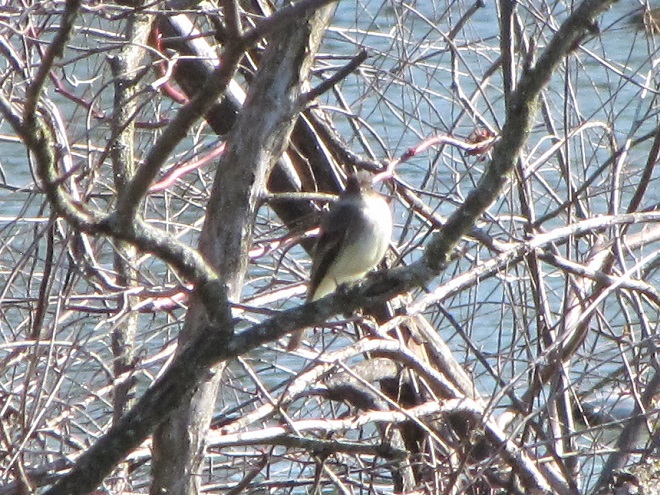
Don’t forget to check the trees along the river shoreline where early stonefly hatches can often attract hungry insectivores. We found this and six other Eastern Phoebes crowded into the trees at water’s edge just upriver from the Governor’s Mansion during Saturday’s migrant fallout.
SOURCES
Behrens, Ken, and Cameron Cox. 2013. Seawatching: Eastern Waterbirds in Flight. Houghton Mifflin Harcourt Publishing Company. New York, NY.
It appears that spring has at last arrived. It’s time to have a look around!
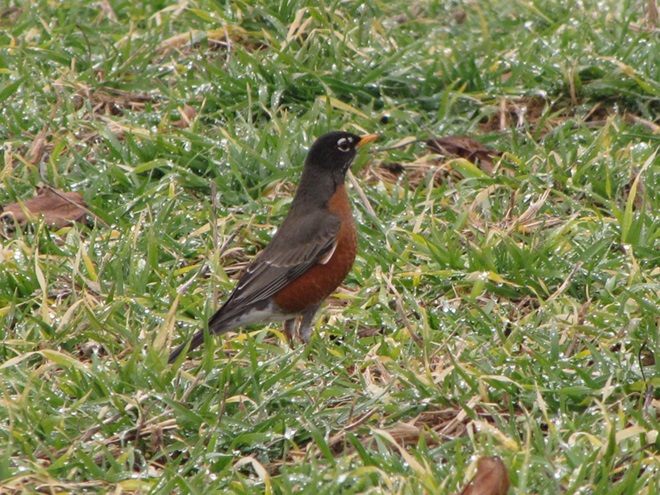
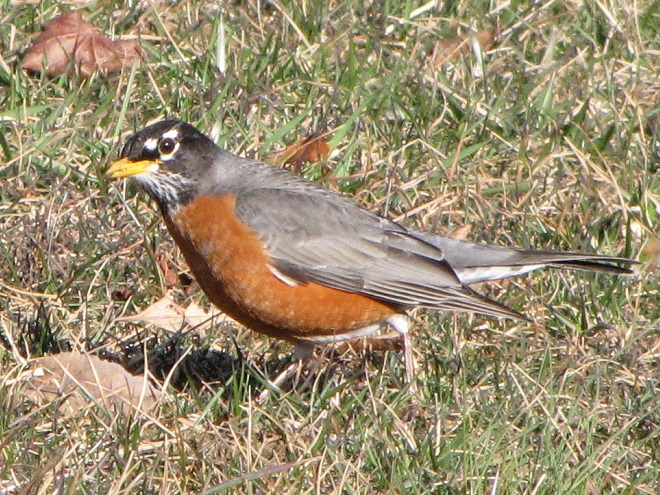
Diurnal flights of northbound blackbirds including Common Grackles have been overspreading the Lower Susquehanna River Watershed since late February.And thawed soils are providing opportunities for nocturnal migrants like American Robins to search for earthworms and other invertebrates during their daytime layovers.Now that there is open water between here and the Great Lakes, flocks of waterfowl like these migratory Canada Geese are flying day and night on an excursion that will ultimately take them to their nesting grounds in the wilderness areas of Canada and Alaska.
Of the bird species that pass southbound through the lower Susquehanna valley during autumn, we can generally observe many of the surviving individuals as they return north during the spring. But there are numerous exceptions. One of them is Golden Eagles.
While the strong northwest winds of late autumn create ideal lift for migrating Golden Eagles along our linear ridges, they also tend to enhance the birds’ tendencies to “ridge hop” their way south, thus pushing many of them southeast from the main corridor of the eastern population’s route through the central Appalachian Mountains. Here in the lower Susquehanna region, we observe these vagabonds at our numerous hawk watches which happen to be located along the outer periphery of the birds’ primary flight path. It appears that a greater percentage of these wayward eagles tend to be younger, less-experienced birds than those seen passing hawk-counting stations in the central Appalachians. Lucky for us, we get to see more of the showy juvenile and immature Golden Eagles—at least during the fall season.
In the spring, southerly breezes and the urge to “ridge hop” in a northerly direction tend to concentrate Canada-bound migrating Golden Eagles along the northernmost ridges in their Appalachian flyway. To see them, we took a short drive up the Juniata River valley to the 90,000 acres of Rothrock State Forest and Tussey Mountain Hawk Watch. During our visit there earlier this week, gusty winds from the southwest brought us an opportunity to see the elusive northbound flights of some of the members of eastern North America’s population of Golden Eagles.
Tussey Mountain Hawk Watch is located along State Route 26 atop Tussey Mountain, just south of State College, Pennsylvania. Visitors can find ample parking at the Jo Hays Vista along the west side of the road on the crest of the ridge .Looking north from Jo Hays Vista to State College and the main campus of Penn State University. Bald Eagle Mountain is in the background and behind it lies Allegheny Front and Plateau.From the Jo Hays Vista parking area, follow the Mid State Trail (orange blazes) south along the ridgetop for about a half mile to the Tussey Mountain Hawk Watch lookout.The lookout at Tussey Mountain Hawk Watch is located within a utility right-of-way with talus slopes flanking the ridgetop clearing.An interpretive sign shows a statistical graphic describing the seasonal abundance of Golden Eagle sightings at the site. The peak time: late February through early April.Tussey Mountain is the only hawk-watching station in the lower Susquehanna region staffed by an official counter to collect data during the spring migration season. You can view the daily counts at hawkcount.org. You can contribute to them by visiting the hawk watch to help scan the skies.By late morning, a small flight of Golden Eagles had commenced. Most of the birds seen at Tussey Mountain are adult or near-adult birds with dark wing linings and slightly paler flight feathers. It’s a two-toned appearance similar to that of a Turkey Vulture and there is little if any variation in the length of the flight feathers. These birds are three years of age or older, are or soon will be sexually mature, and often travel in pairs separated by a minute or two of flight time.This Golden Eagle caught our attention with its longer central tail feathers and some longer secondary feathers in the wings that create a wavy appearance. As they get older, immature eagles should become more skilled as fliers, so each new set of flight feathers is usually shorter than those they’re replacing. Based upon the characters contributing to its ragged appearance, this bird is probably in the early months of its fourth or fifth calendar year of life.Common Ravens are forever vigilant around our regional hawk watches. They can sometimes help us find otherwise hard-to-spot migratory raptors in the bright, sunny skies.Ravens really like to harass younger birds like this second or third-year Golden Eagle.Older, more stoic raptors like this adult Bald Eagle spend less time contending with the antics of the persistent ravens.One of the final sightings of the day was this magnificent Golden Eagle. Look closely and you can see evidence of some molt completed last year in the outer tail feathers and the innermost primaries in the wings. On top, there were tawny bars on the wing coverts. This bird is probably just beginning its third calendar year of life and will start replacing many more flight feathers later this spring.
For more information on the region’s hawk watches and the birds you’ll see there, be certain to click the “Hawkwatchers Helper: Identifying Bald Eagles and other Diurnal Raptors” tab at the top of this page. And for a more detailed look at how to determine the age of Golden Eagles, particularly during the autumn migration, click the “Golden Eagle Aging Chart” tab at the top of this page.
In addition to the Canada Geese and Snow Geese currently visiting Middle Creek Wildlife Management Area, three smaller geese of interest were seen there this afternoon.
The Big Geese- The three Snow Geese and some of the one thousand or more Canada Geese presently calling the lake at Middle Creek home. Again today, flocks of hundreds of Snow Geese circled the lake, but did not decide to stay.Small Goose #1- First reported several days ago, this Ross’s Goose continues to be seen in the company of Canada Geese.Small Goose #2- Just 100 feet to the right of the Ross’s Goose, we spotted this dark little Cackling Goose, another rarity. It is probably a Richardson’s Cackling Goose (Branta hutchinsii hutchinsii), a subspecies that nests in the arctic tundra of north-central Canada.Small Goose #3- And to its right was another Cackling Goose, this one a bit paler, particularly on the breast (hatch-year bird?). Note its small size and stubby bill compared to the nearby Canada Geese.The gray, scalloped appearance of the back and the paler breast is apparent on this second Cackling Goose.The Cackling Goose was only recently recognized as a species distinct from the Canada Goose (2004). The status and distribution of each goose’s various subspecies remains a topic of discussion and debate.Compare the bill size and shape, Canada Goose to the left and Cackling Goose to the right.A final look at one of two Cackling Goose seen today from Middle Creek Wildlife Management Area’s Willow Point.
There you have it, the three little geese—a Ross’s and two Cackling. They’re among North America’s smallest of the geese species and seldom are they seen so close together.
Our outing at Middle Creek Wildlife Management Area was today highlighted by teasing views of glistening white geese and swans—the tundra breeders that by February will create a sensation attracting thousands of birders, photographers, and other visitors to the refuge.
At noisy flock of at least five hundred high-flying Snow Geese arrived at Middle Creek just after noontime.A spiraling descent ensued.Snow Geese coming down while carefully examining the small patch of open water on Middle Creek’s main lake.Several of the “Blue Goose” color morphs were easily discernible among the hundreds of typical white birds.Streaming in on final approach to the lake……and making a low pass above thrilled spectators at the Willow Point overlook.Then, after gliding just a hundred feet above the Canada Geese, Tundra Swans, and other waterfowl gathered around the small pool of open water on the lake……the entire flock gained altitude and soon departed in the easterly direction from whence it came, not yet ready to settle in at Middle Creek for a respite before heading north later this winter.A short while later, some of the fifty or more Tundra Swans that have been visiting Middle Creek throughout the week started to stir,……taking a few laps around the center of the lake before again settling down along the edges of the ice.Two adult and two immature Tundra Swans as seen from Willow Point.Since the big flock of Snow Geese decided not to stay, the Ross’s Goose remains easy to locate among the hundreds of Canada Geese on the lake’s ice and on the mudflats on the north side of Willow Point.The Ross’s Goose in the company of a distant group of Canada Geese……and with an American Black Duck of similar size. Just today, several dozen observers had the opportunity to get a look at this rarity. With a little luck, it’ll stick around so others have a chance to see it too.
The Ross’s Goose (Anser rossii) is a rare but regular transient in the Lower Susquehanna River Watershed. This species nests in the arctic tundra of northernmost central Canada and winters in the valleys of California and in parts of Texas, Louisiana, and Arkansas, primarily near the northwestern rim of the Gulf of Mexico. A population also spends the colder months in western Texas, New Mexico, and an adjacent portion of north-central Mexico. The Ross’s Goose looks like a tiny version of a Snow Goose and is most often detected among flocks of these latter birds during their late winter visits to our area. Finding a single Ross’s Goose among thousands of Snow Geese can oft times be an insurmountable challenge, so it’s nice when one decides to drop by in a crowd within which it is much more discernible.
A couple of Snow Geese along with Canada Geese and other waterfowl seen this afternoon from the Willow Point overlook at Middle Creek Wildlife Management Area.A petite little Ross’s Goose seen late this afternoon among several hundred Canada Geese north of Willow Point.The Ross’s Goose was last seen walking across the ice to the distant northern shoreline of the lake where it and the Canada Geese were later flushed skyward by several Bald Eagles.
In case you were wondering—yes, despite the ice on Middle Creek’s lake, the Sandhill Cranes are still being seen in the vicinity of Willow Point.
Sandhill Cranes returning from a short foray into the grasslands north of the lake at Middle Creek Wildlife Management Area.On approach to the flats north of Willow Point.Coming in for a landing.Touchdown!
Here are 7 reasons why you, during the coming week or so, should consider spending some time at Willow Point overlooking the lake at the Pennsylvania Game Commission’s Middle Creek Wildlife Management Area.
REASON NUMBER ONE— Wildlife is at close quarters along the trail leading from the parking lot to Willow Point…
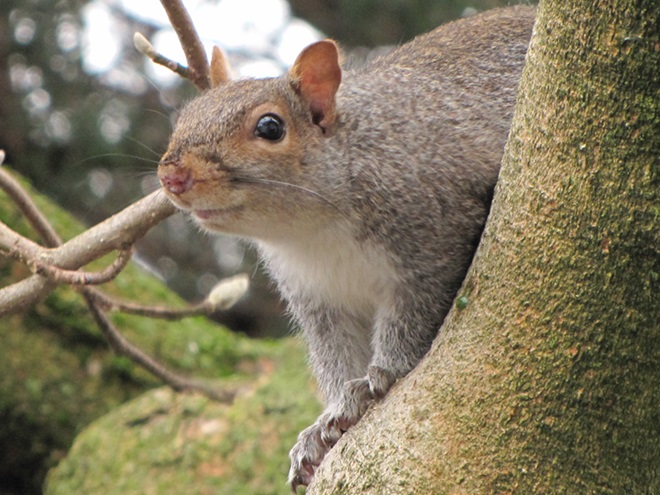
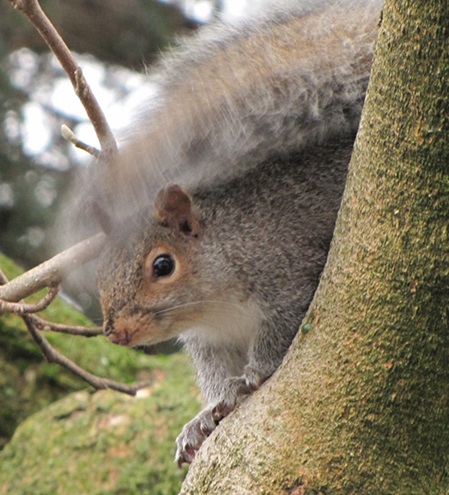
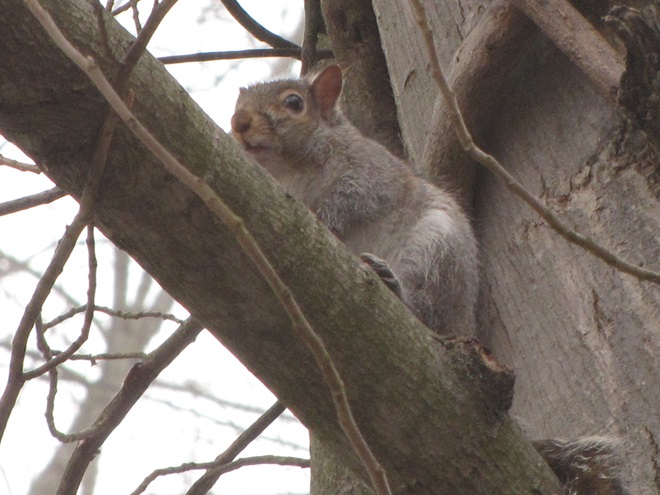
Eastern Gray Squirrels are common and easily seen along the edge of the woods.Eastern Bluebirds are investigating nest boxes and may presently be using them as communal roost sites during cold, windy nights.A Hermit Thrush was just one of the songbirds we found foraging along the edge of Willow Point Trail.Look carefully and you may see one or more species of woodpeckers in the mature trees. We found this Yellow-bellied Sapsucker in a maple near the trail’s terminus at the Willow Point viewing area.
REASON NUMBER TWO— A variety of waterfowl species are lingering on ice-free sections of the lake surrounding Willow Point…
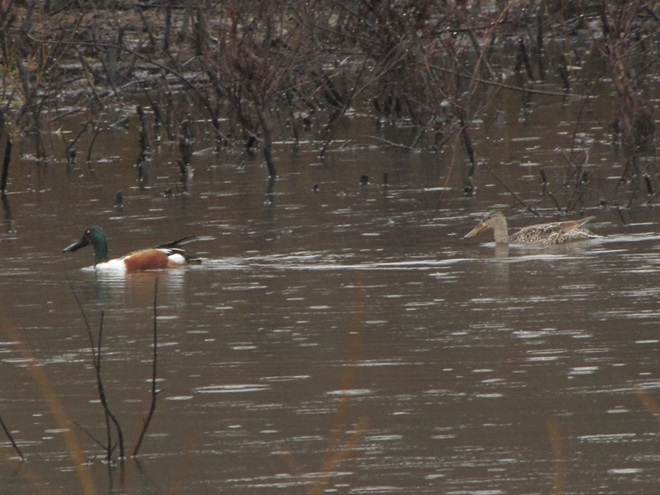
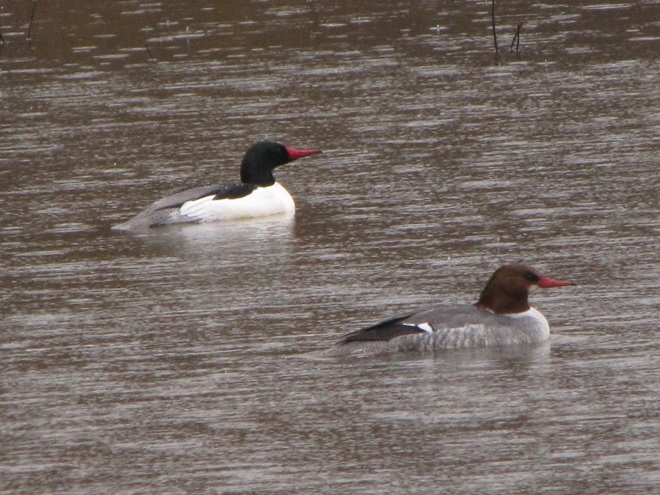
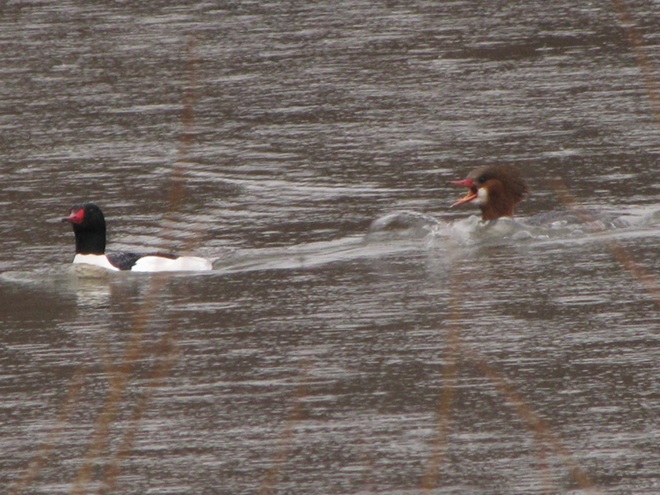
Noisy flocks of Tundra Swans and Canada Geese on open water at Willow Point.American Black Ducks on a fly by.Mallard drakes near the point.A small flock of Green-winged Teal feeding among the Mallards.A flock of Northern Shovelers has been frequenting the shallows along the south side of Willow Point for at least two weeks.Common Mergansers diving for benthic fare.
REASON NUMBER THREE— Bald Eagles are conspicuous, easily seen and heard…
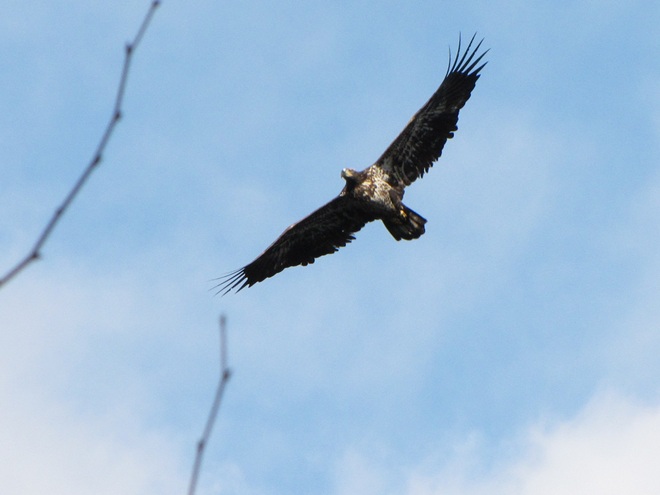
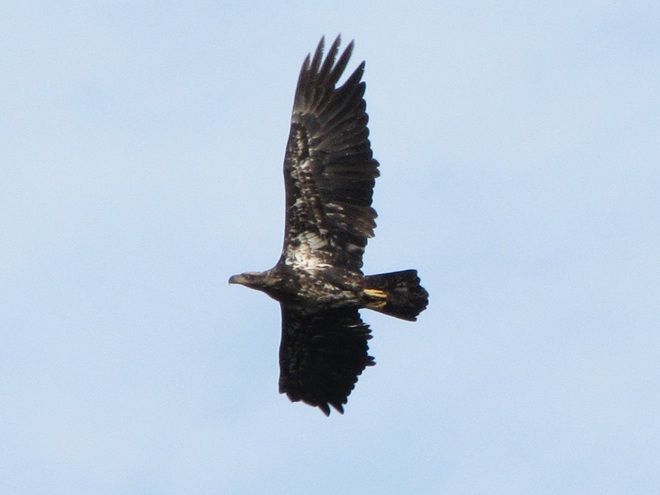
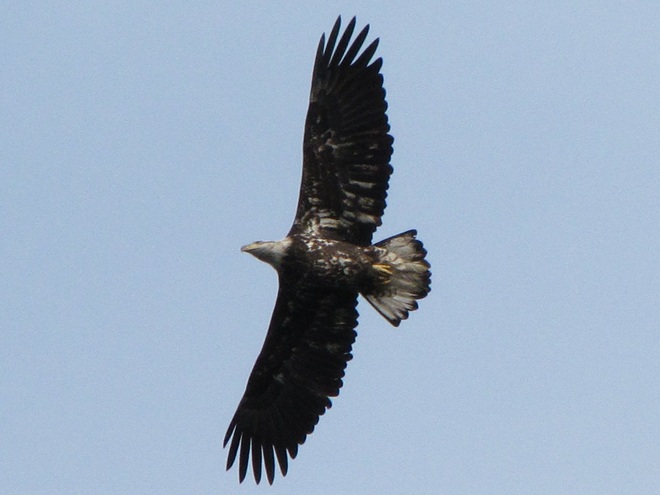
Bald Eagles on tree stumps in the lake.A hatch-year/juvenile Bald Eagle on a glide over Willow Point.
REASON NUMBER FOUR— Northern Harriers have been making close passes over Willow Point as they patrol Middle Creek’s grasslands while hunting voles…
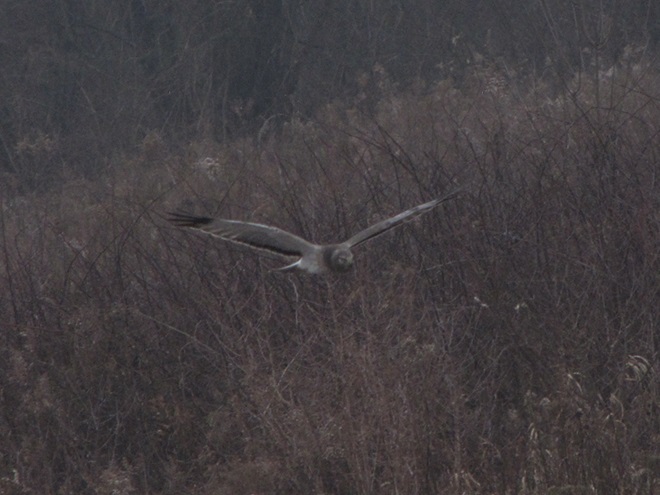
A female Northern Harrier over Willow Point.A hatch-year/juvenile Northern Harrier gazing over a field of goldenrod adjacent to Willow Point.Hatch-year/juvenile Northern Harrier patrolling a field of goldenrod and preparing to pounce.A Northern Harrier buoyantly flying past Willow Point just prior to sunset.
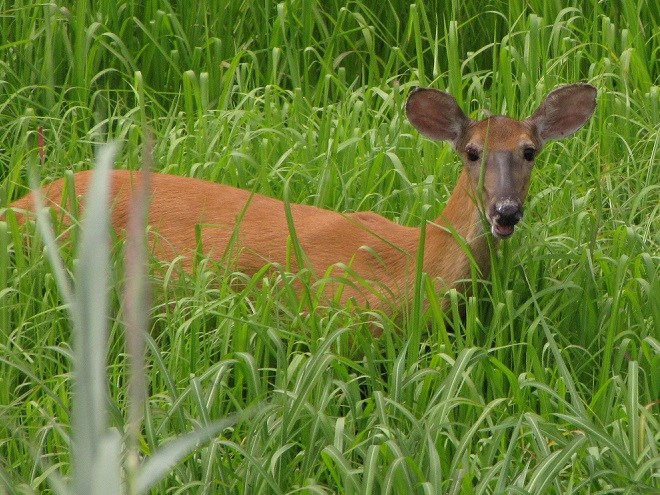
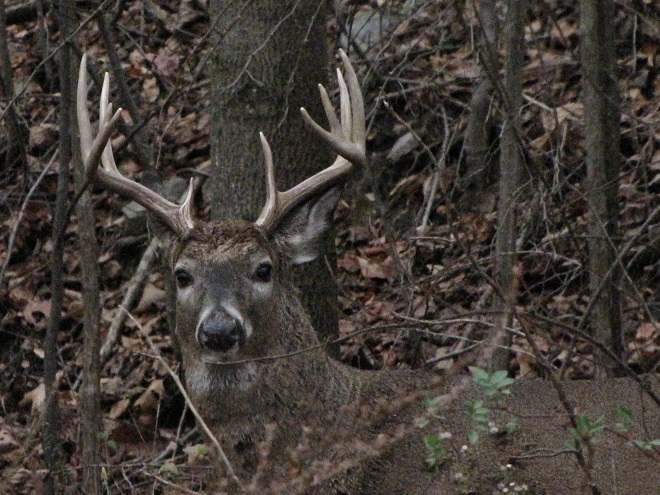
REASON NUMBER FIVE— The annual observance of the White-tailed Deity holidays may be drawing to a close for the gasoline and gunpowder gang, but for the supreme ungulates, the rituals that lead to consummation of their unions are still ongoing…
Mystical White-tailed Deities hiding in plain sight near Willow Point.Having so far survived the ceremonies of sacrifice practiced by worshipers clad in vibrant orange attire, these divine idols agree to a more civilized ritual, a gentlemanly duel.
…then it’s off to find the fair maidens.
REASON NUMBER SIX— Sandhill Cranes are still being seen from Willow Point…
Sandhill Cranes have been spending time on dry portions of the lake bed and in grasslands and croplands to the north.
These Sandhill Cranes could depart from Middle Creek’s refuge at any time, particularly if the deep freeze returns to make feeding more difficult. You’ll want to visit soon if you want to see them.
REASON NUMBER SEVEN— The crowds that will accompany the arrival of thousands of Snow Geese in early 2025 can make visiting Willow Point a stressful experience. Visit now to see these birds and mammals at Willow Point and you might just have the place all to yourself. Then you can spend your time looking through the flocks of waterfowl and other birds for unusual new arrivals instead of wading through a sea of humanity.
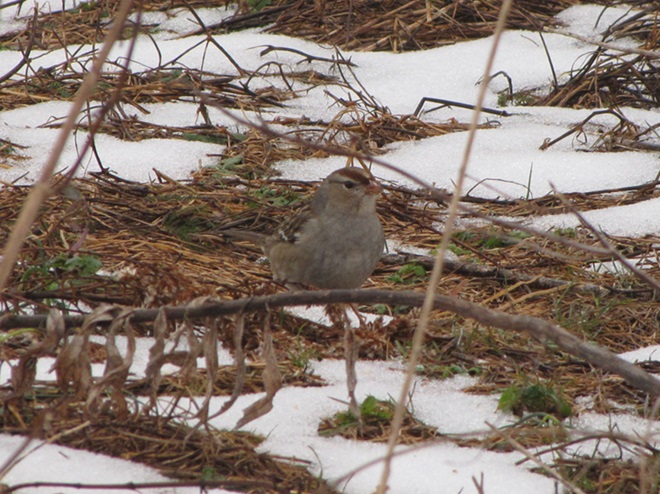
White-crowned Sparrows at Middle Creek Wildlife Management Area’s Willow Point.
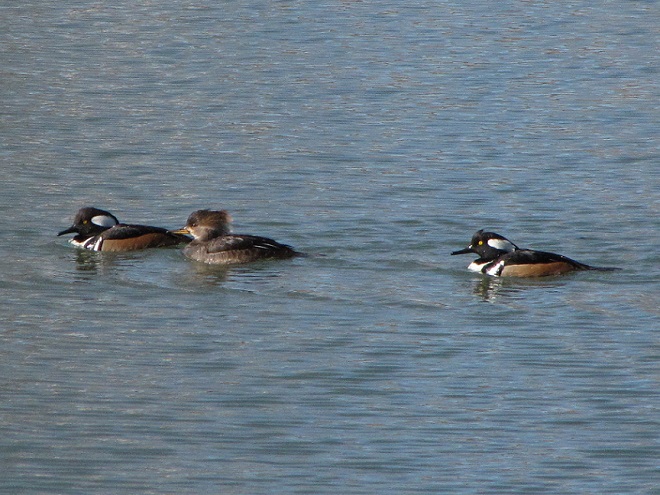
Freezing water to the north of the lower Susquehanna valley is currently pressuring migratory waterfowl including these Hooded Mergansers to come south. As local ponds and lakes also become coated with ice, open water on the river offers many benthic feeders their only opportunity to forage.
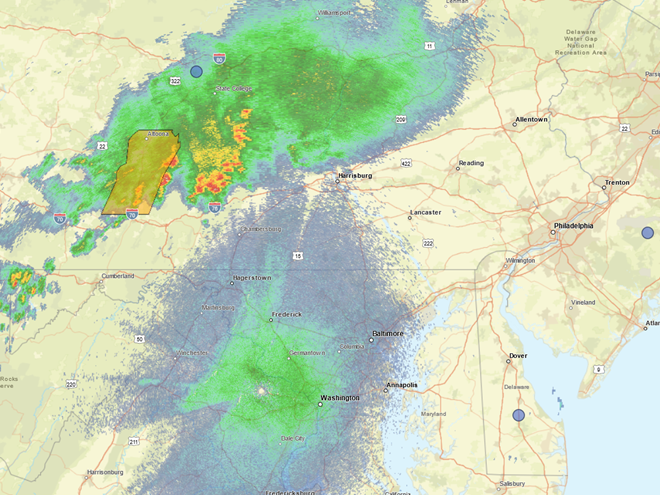
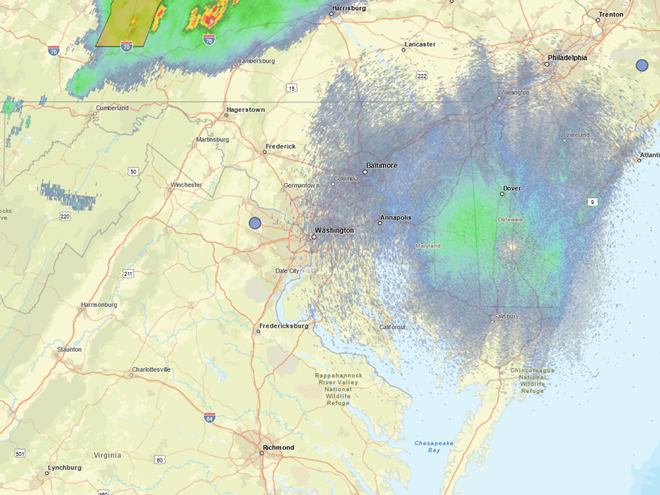
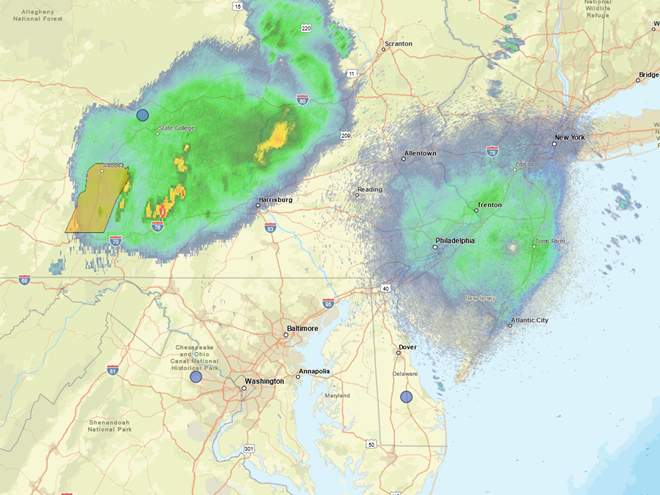
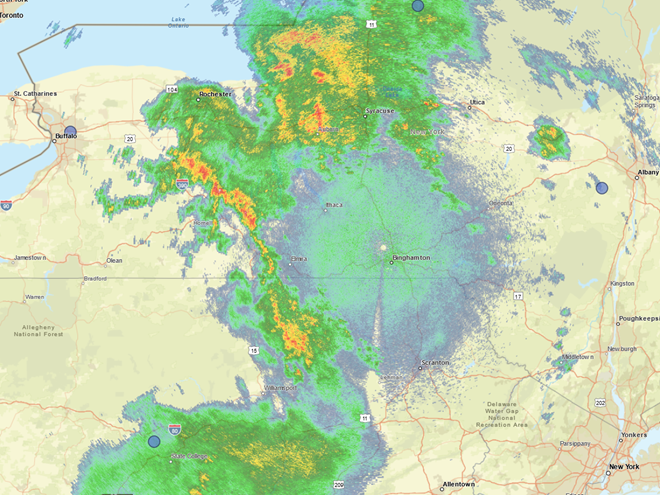
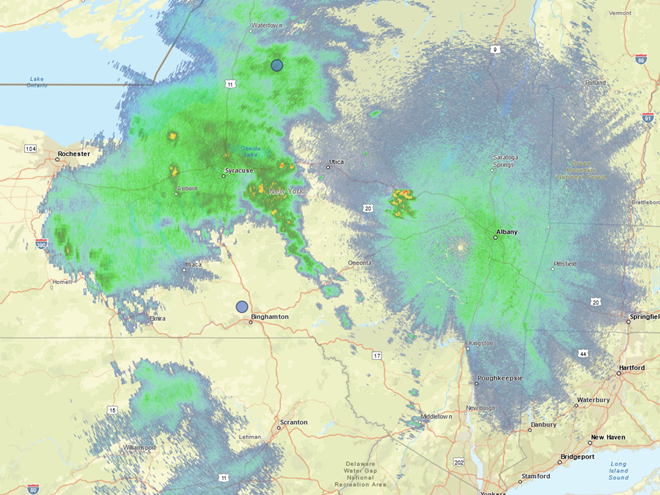
In recent days, the peak northbound push of migratory birds that includes the majority of our colorful Neotropical species has been slowed to a trickle by the presence of rain, fog, and low overcast throughout the Mid-Atlantic States. Following sunset last evening, the nocturnal flight resumed—only to be grounded this morning during the pre-dawn hours by the west-to-east passage of a fast-moving line of strong thundershowers. The NOAA/National Weather Service images that follow show the thunderstorms as well as returns created by thousands of migrating birds as they pass through the Doppler Radar coverage areas that surround the lower Susquehanna valley.
Sterling, Virginia, Doppler Radar west of Washington, D.C., at 4:00 A.M. E.D.T. indicates a dense flight of northbound migrating birds located just to the south of the approaching line of rain and thunderstorms over the State College, Pennsylvania, radar coverage area. (NOAA/National Weather Service image)More northbound birds are indicated at 4 A.M. by the radar station located at Dover, Delaware… (NOAA/National Weather Service image)…and by the Mount Holly, New Jersey, radar site. (NOAA/National Weather Service image)Many of the migrating birds shown here over the Binghamton, New York, radar station at 4 A.M. probably overflew the lower Susquehanna region earlier in the night. (NOAA/National Weather Service image)And these birds over Albany, New York’s, radar station at 4 A.M. are mostly migrants that passed north over New Jersey and easternmost Pennsylvania last evening and during the wee hours of this morning. (NOAA/National Weather Service image)
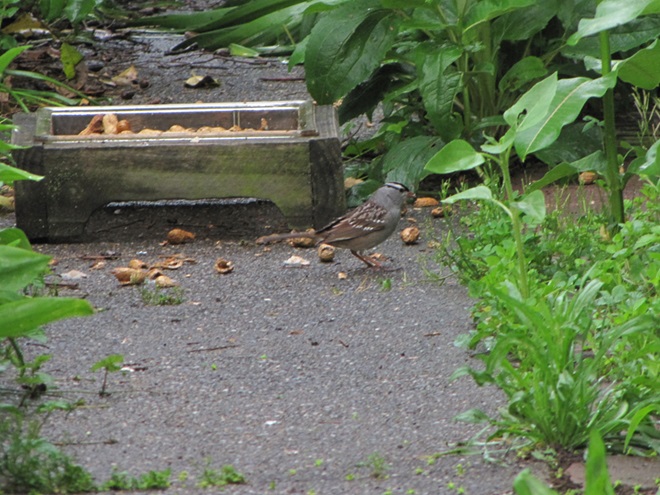
Just after 4 A.M., flashes of lightning in rapid succession repeatedly illuminated the sky over susquehannawildlife.net headquarters. Despite the rumbles of thunder and the din of noises typical for our urban setting, the call notes of nocturnal migrants could be heard as these birds descended in search of a suitable place to make landfall and seek shelter from the storm. At least one Wood Thrush and a Swainson’s Thrush (Catharus ustulatus) were in the mix of species passing overhead. A short time later at daybreak, a Great Crested Flycatcher was heard calling from a stand of nearby trees and a White-crowned Sparrow was seen in the garden searching for food. None of these aforementioned birds is regular here at our little oasis, so it appears that a significant and abrupt fallout has occurred.
A White-crowned Sparrow in the headquarters garden at daybreak. It’s the first visit by this species in a decade or more.
Looks like a good day to take the camera for a walk. Away we go!
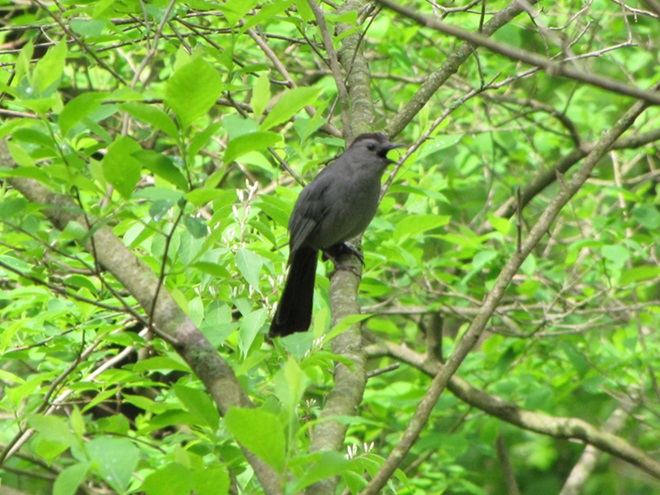
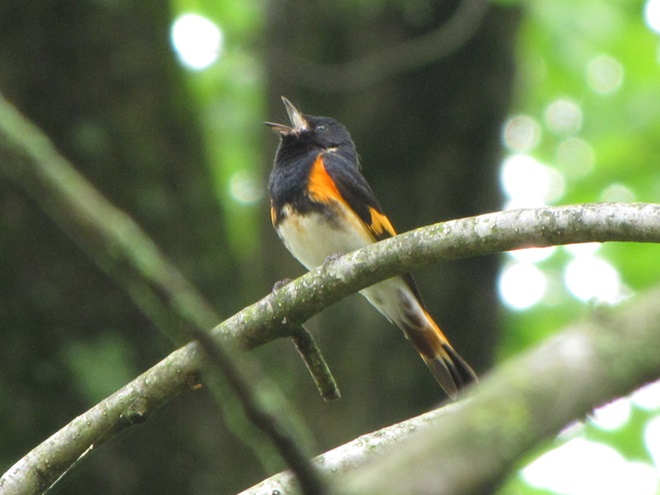
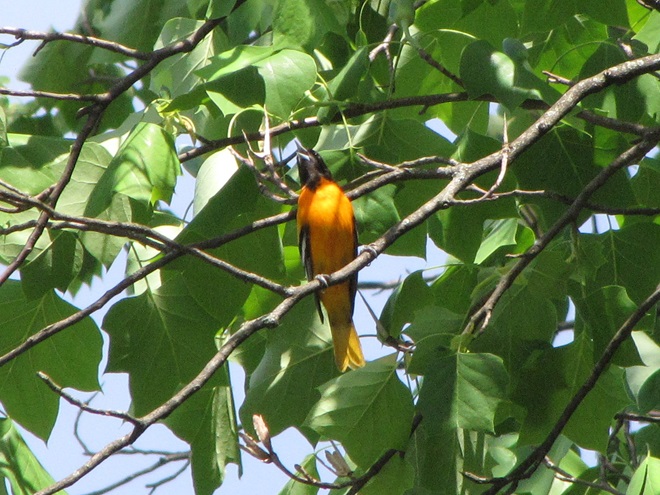
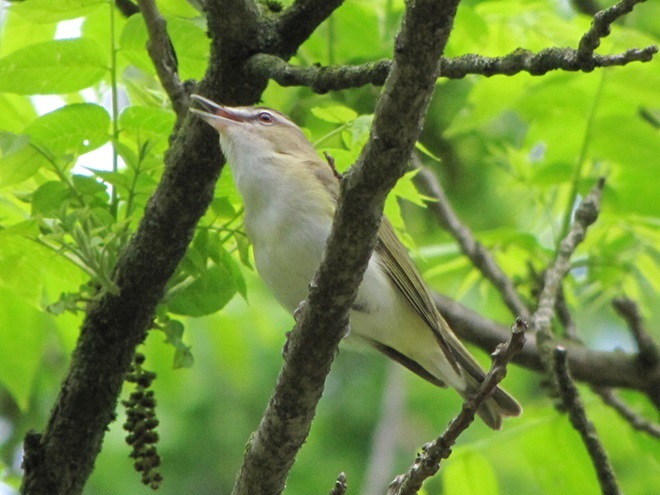
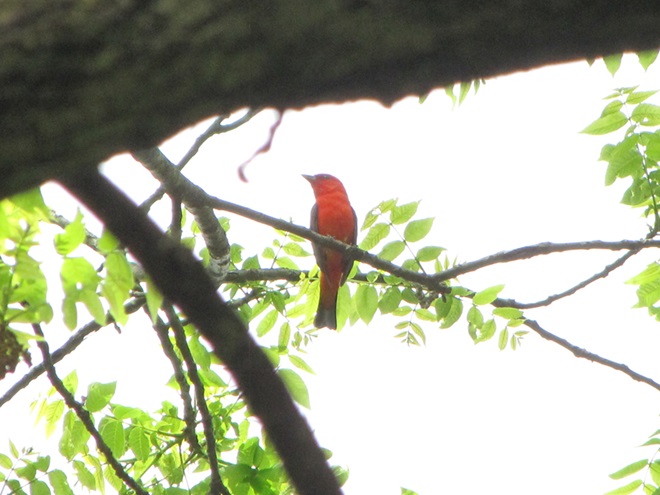
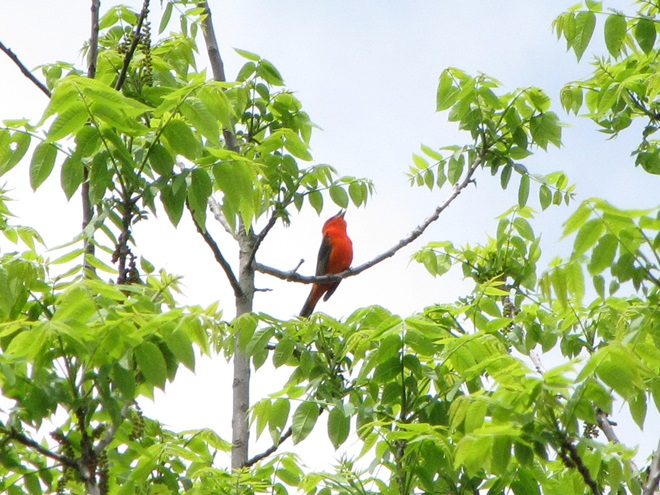
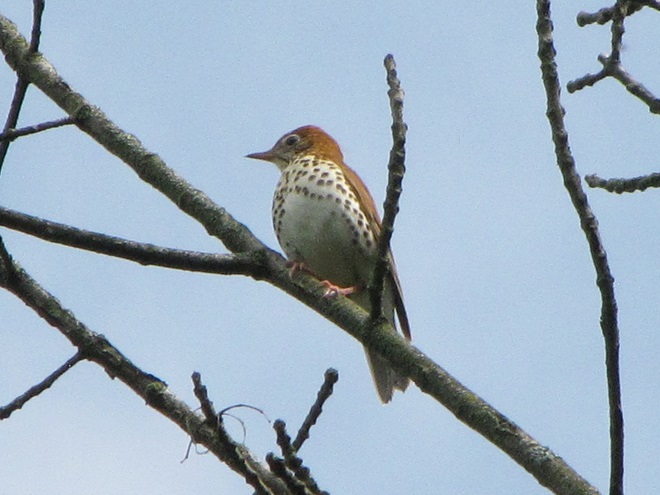
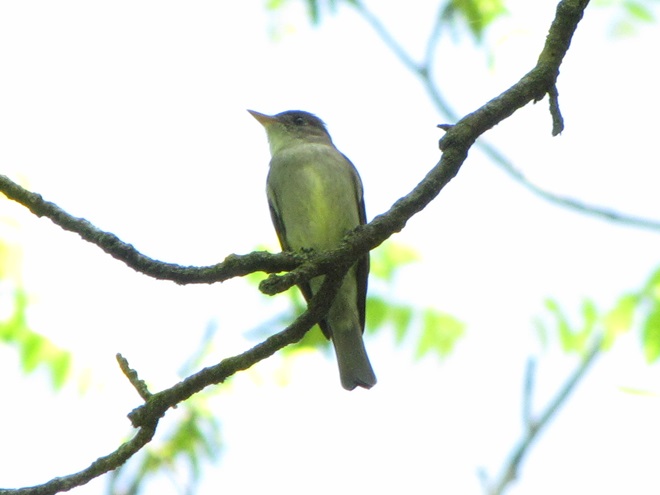
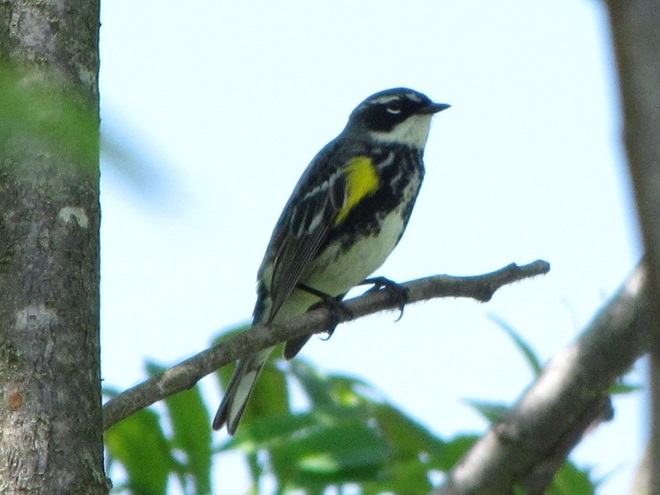
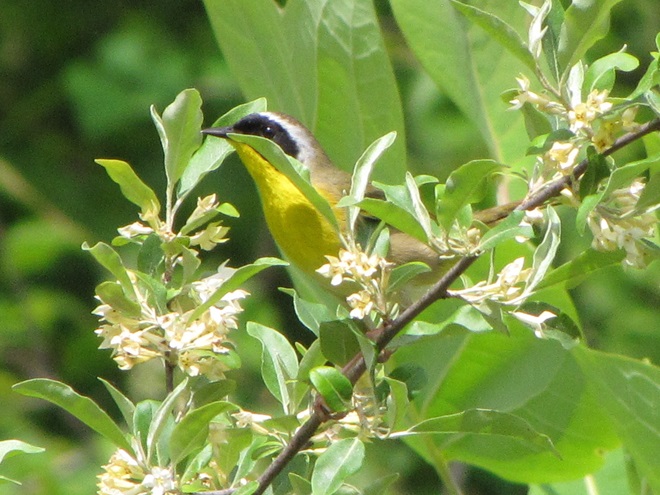
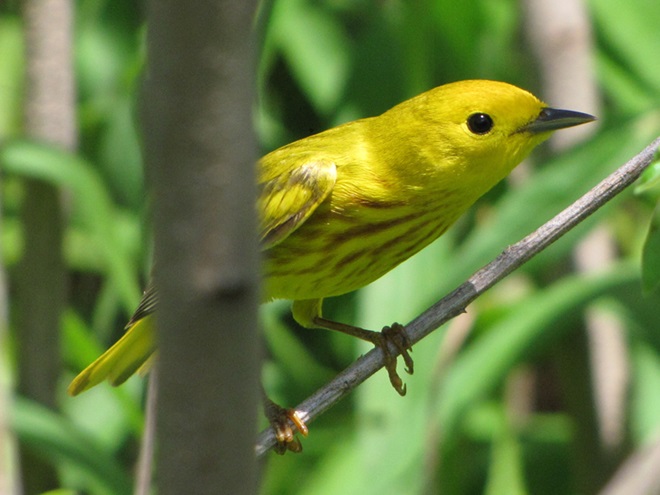
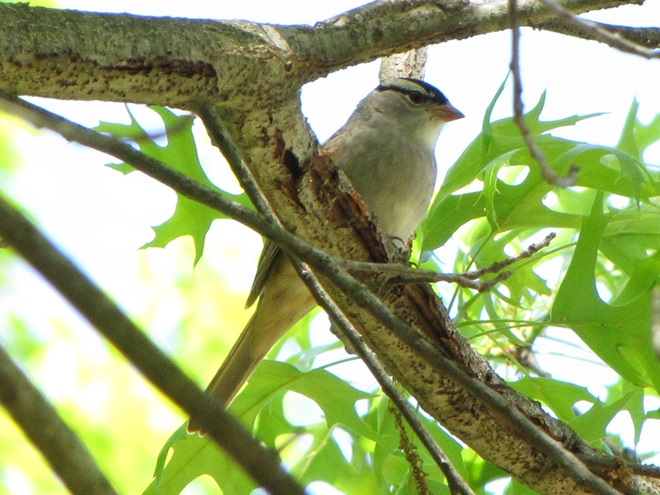
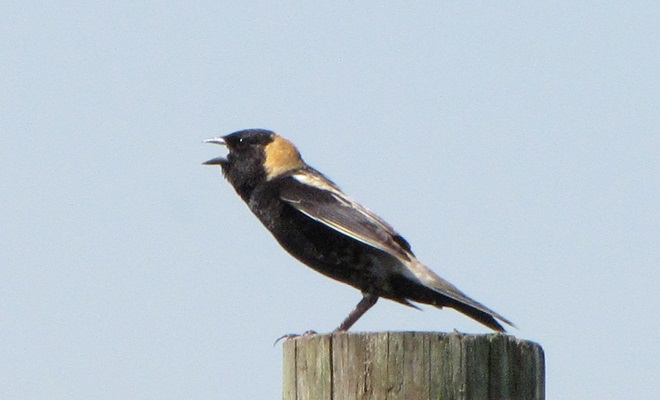
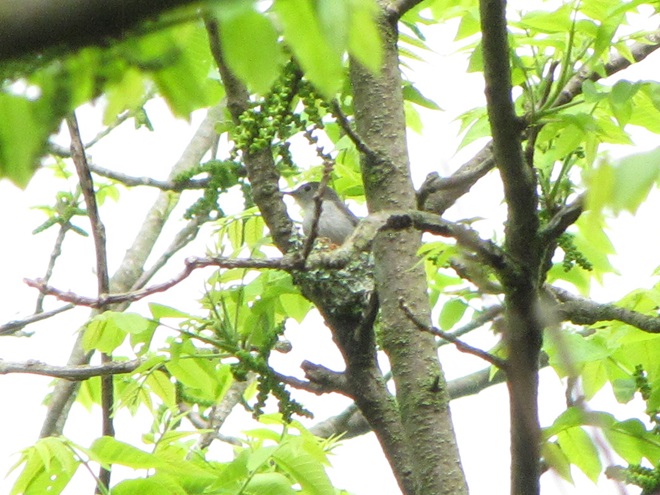
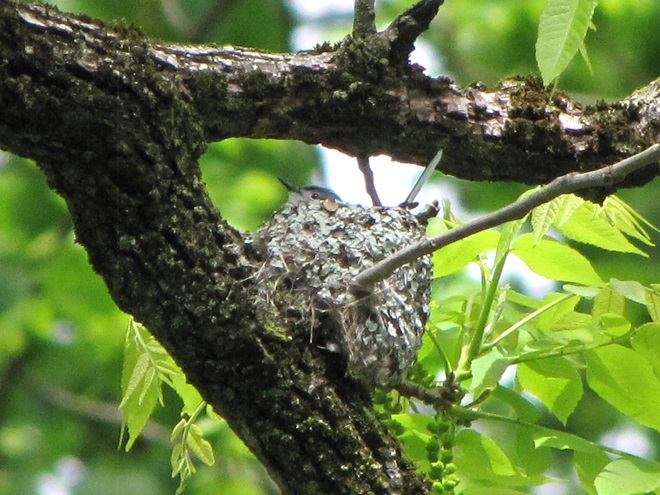
Along woodland edges, in thickets, and in gardens, Gray Catbirds were everywhere today. We heard and/or saw hundreds of them.During our travels, American Redstarts were the most frequently encountered warbler. Look for them in low-lying forested habitats.Many early-arriving Baltimore Orioles have already begun building nests. But widespread territorial fighting today may be an indication that some latecomer orioles became trespassers after dropping in on existing territories during the morning fallout.Red-eyed Vireos are difficult to see but easily heard in forested areas throughout the Lower Susquehanna River Watershed.If the oriole isn’t the showiest of the Neotropical migrants, then the Scarlet Tanager is certainly a contender…Listen for their burry, robin-like song in the treetops of mature upland forests.No woodland chorus is complete without the flute-like harmony of the Wood Thrush. Look and listen for them in rich forests with dense understory vegetation.The Eastern Wood-Pewee, another forest denizen, has an easy song to learn…a series of ascending “pee-a-wee” phrases interspersed with an occasional descending “pee-urr”. It was one of the few flycatchers we found today, but more are certainly on the way. Their numbers should peak in coming days.Yellow-rumped Warblers can be especially numerous during migration but tend to peak prior to the arrival of the bulk of the Neotropical species. This was the only “yellow-rump” we encountered today. The majority have already passed through on their way to breeding grounds to our north.If today you were to visit a streamside thicket or any type of early successional habitat, you would probably find this perky little warbler there, the Common Yellowthroat.The Yellow Warbler likes streamside thickets too. You can also find them along lakes, ponds, and wetlands, especially among shrubby willows and alders.While nowhere near the headquarters garden, we ran into another White-crowned Sparrow in less-than-ideal habitat. This one was in a row of trees in a paved parking lot.Not all songbirds migrate at night. The Bobolink is an example of a diurnal (day-flying) migrant. They’re currently arriving in hay fields that are spared the mower until after nesting season.While looking for Neotropical species and other late-season migrants, we also found numerous early arrivals that had already begun their breeding cycles. We discovered this Blue-gray Gnatcatcher on its nest in a Black Walnut tree……then, later in the day, we found this one in its nest, again in a Black Walnut tree. Note the freshly emerging set of leaves and flower clusters. With many tree species already adorned in a full set of foliage, open canopies in stands of walnuts we found growing in reforested areas seemed to be good places to see lots of migrants and other birds today. It’s hard to say whether birds were more numerous in these sections of woods or were just easier to observe among the sparse leaf cover. In either case, the nut-burying squirrels that planted these groves did us and the birds a favor.
There’s obviously more spring migration to come, so do make an effort to visit an array of habitats during the coming weeks to see and hear the wide variety of birds, including the spectacular Neotropical species, that visit the Lower Susquehanna River Watershed each May. You won’t regret it!
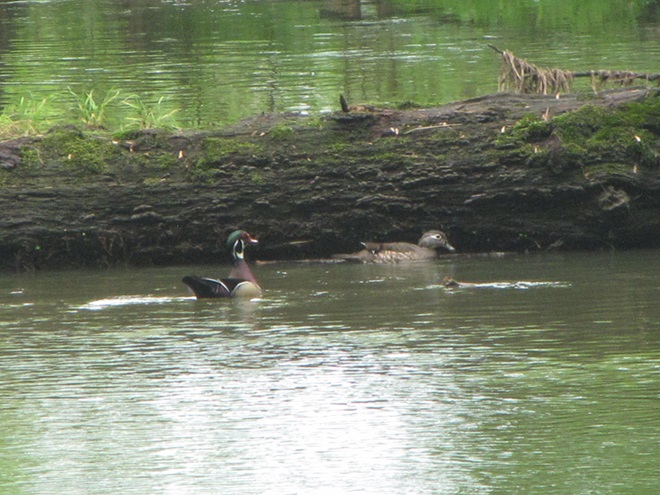
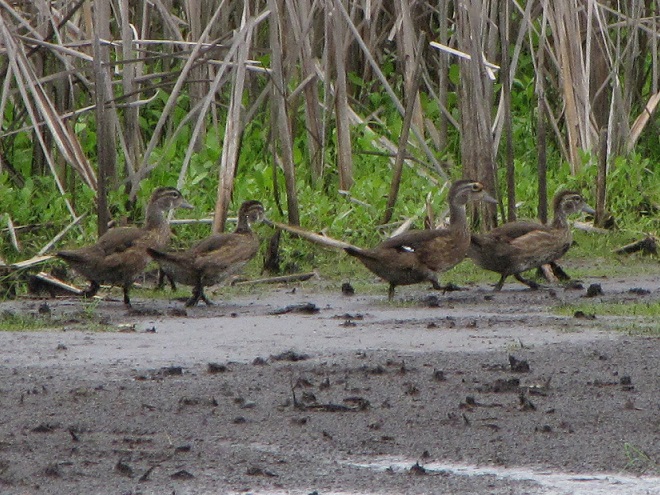
Wood Ducks arrived in February and March to breed in the lower Susquehanna valley. Soon after hatching in April or May, the young leave the nest cavity to travel under the watchful gaze of their ever-vigilant mother as they search for food along our local waterways. If you’re fortunate, you might catch a glimpse of a brood and hen while you’re out looking at the more than one hundred species of birds that occur in our region during the first half of May. Good luck!
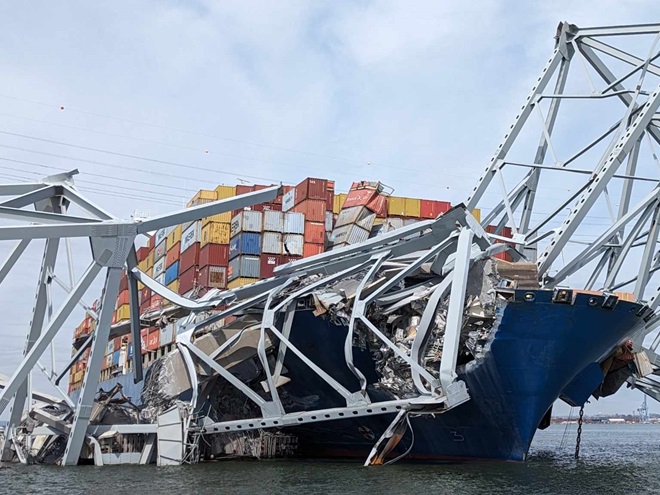
Tuesday’s collision of the container ship Dali into Baltimore’s Francis Scott Key Bridge and the nearly immediate collapse of the span into the chilly waters below reminds us just how unforgiving and deadly maritime accidents can be. Upon termination of rescue and recovery operations, salvage and cleanup will be prioritized as the next steps in the long-term process of reopening the navigable waters to ship traffic and construction of a new bridge. Part of the effort will include monitoring for leaks of fuels and other hazardous materials from the ship, its damaged cargo containers, and vehicles and equipment that were on the bridge when it failed.
Damage to the hull of the Dali and to the cargo containers on her deck could lead to leaks of hazardous liquids or other materials into Chesapeake Bay. (United States Army Corps of Engineers Baltimore image)
On the waters and shores of today’s Chesapeake, numerous county, state, and federal agencies, including the United States Coast Guard, monitor and inspect looking for conditions and situations that could lead to point-source or accidental discharges of petroleum products and other hazardous materials into the bay. Many are trained, equipped, and organized for emergency response to contain and mitigate spills upon detection. But this was not always the case.
Through much of the twentieth century, maritime spills of oil and other chemicals magnified the effects of routine discharges of hazardous materials and sanitary sewer effluent into the Chesapeake and its tributaries. The cumulative effect of these pollutants progressively impaired fisheries and bay ecosystems leading to noticeable declines in numbers of many aquatic species. Rather frequently, spills or discharges resulted in conspicuous fish and/or bird kills.
One of the worst spills occurred near the mouth of the Potomac River on February 2, 1976, when a barge carrying 250,000 gallons of number 6 oil sank in a storm and lost its cargo into the bay. During a month-long cleanup, the United States Coast Guard recovered approximately 167,000 gallons of the spilled oil, the remainder dispersed into the environment. A survey counted 8,469 “sea ducks” killed. Of the total number, the great majority were Horned Grebes (4,347 or 51.3%) and Long-tailed Ducks (2,959 or 34.9%). Other species included Surf Scoter (Melanitta perspicillata) (405 or 4.8%), Common Loon (195 or 2.3%), Bufflehead (166 or 2.0%), Ruddy Duck (107 or 1.3%), Common Goldeneye (78 or 0.9%), Tundra Swan (46 or 0.5%), Greater Scaup (19 or 0.2%), American Black Duck (12 or 0.2%), Common Merganser (11 or 0.1%), Canvasback (10 or 0.1%), Double-crested Cormorant (10 or 0.1%), Canada Goose (8 or 0.1%), White-winged Scoter (Melanitta deglandi) (7 or 0.1%), Redhead (5 or 0.1%), gull species (10 or 0.1%), miscellaneous ducks and herons (13 or 0.2%) and unidentified (61 or 0.7%). During the spring migration, a majority of these birds would have made their way north and passed through the lower Susquehanna valley. The accident certainly impacted the occurrence of the listed species during that spring in 1976, and possibly for a number of years after.
Of the 8,469 birds killed by the February 2, 1976, oil spill on the Chesapeake, 51.3% (4,347) were Horned Grebes. Many of them would have migrated north through the Lower Susquehanna River Watershed during the coming spring.
The Federal Water Pollution Control Act Amendments of 1972, commonly known as the Clean Water Act, put teeth into the original FWCPCA of 1948 and began reversing the accumulation of pollutants in the bay and other bodies of water around the nation. Additional amendments in 1977 and 1987 have strengthened protections and changed the culture of “dump-and-run” disposal and “dilution-is-the-solution” treatment of hazardous wastes. During the late nineteen-seventies and early nineteen-eighties, emergency response teams and agencies began organizing to control and mitigate spill events. The result has been a greater awareness and competency for handling accidental discharges of fuels and other chemicals into Chesapeake Bay and other waterways. These improvements can help minimize the environmental impact of the Dali’s collision with the Francis Scott Key Bridge in Baltimore.
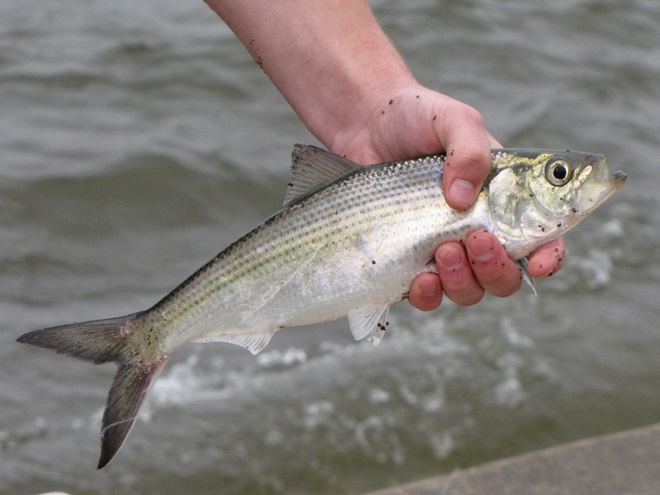
Oil spills and other pollution in the Chesapeake can impact populations of migratory fish including the anadromous Hickory Shad which are presently transiting the bay on their way to the waters of the Susquehanna below Conowingo Dam.
SOURCES
Roland, John V., Moore, Glenn E., and Bellanca, Michael A. 1977. “The Chesapeake Bay Oil Spill—February 2, 1976: A Case History”. International Oil Spill Conference Proceedings (1977). 1977 (1): 523-527.
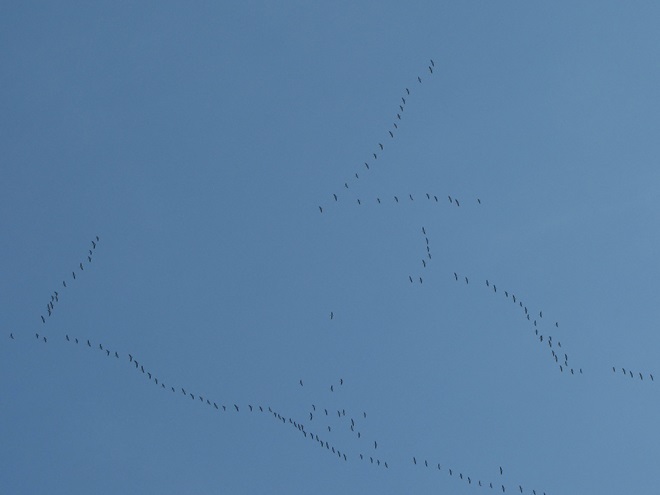
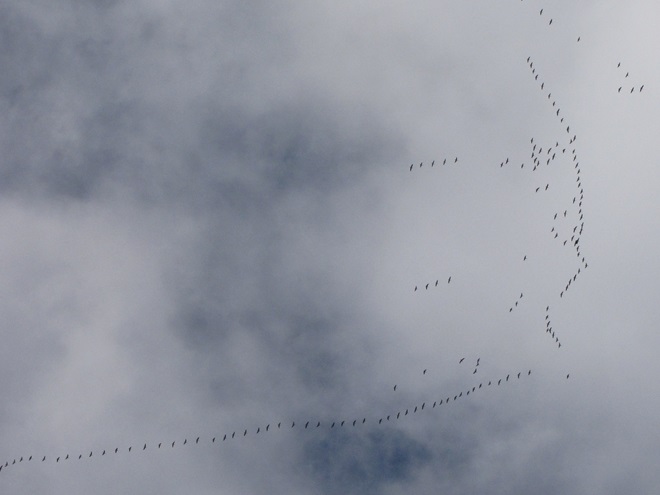
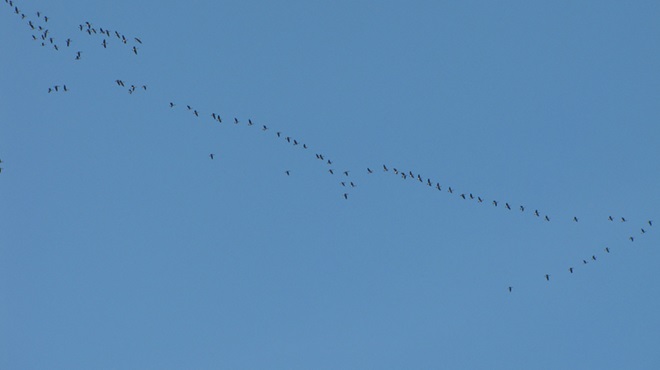
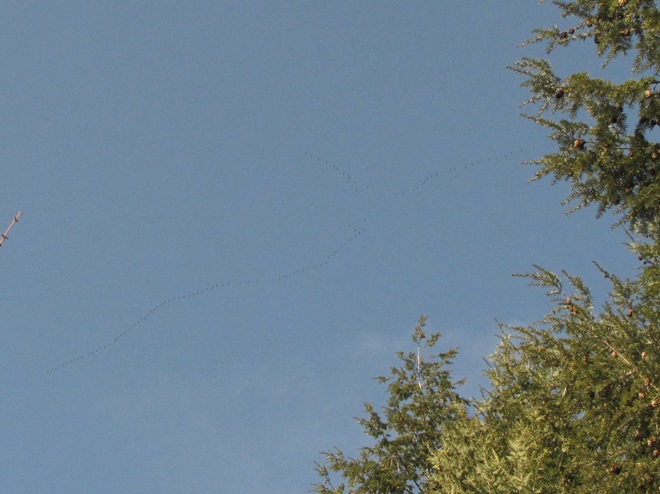
Yet another flight of waterfowl departing Chesapeake Bay for breeding grounds to our north passed over sections of the lower Susquehanna valley this morning. In the one hour between 10 A.M. and 11 A.M., at least six thousand honking Canada Geese passed through the small piece of sky visible from susquehannawildlife.net headquarters. At times, five or more flocks of about one hundred birds each were seen simultaneously.
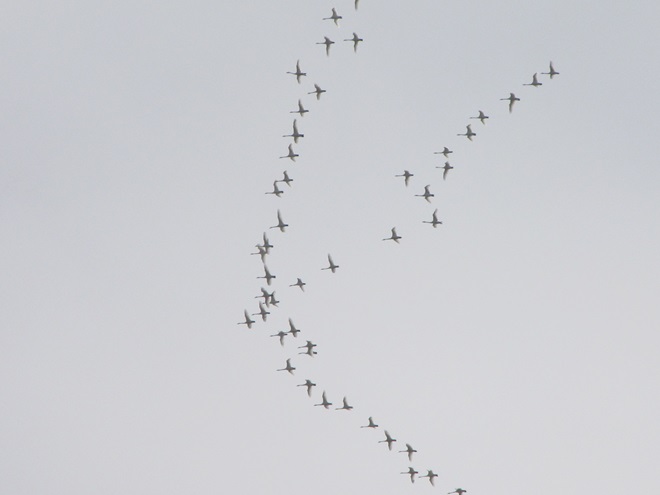
Northbound migratory Canada Geese pass over susquehannawildlife.net headquarters.While observing and photographing geese flying about two thousand feet above our heads, we noticed several barely visible flocks at much higher altitudes. Any such birds flying above this flock would go undetected in or above the cumulus clouds.More geese on the way through.In addition to the geese, a flock of 80 Tundra Swans was seen. Not bad.
To take advantage of this unusually mild late-winter day, observers arrived by the thousands to have a look at an even greater number of migratory birds gathered at the Pennsylvania Game Commission’s Middle Creek Wildlife Management Area. Here are some highlights…
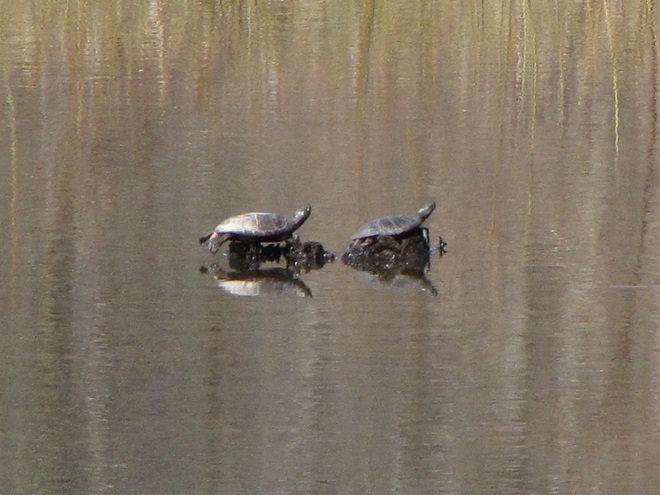
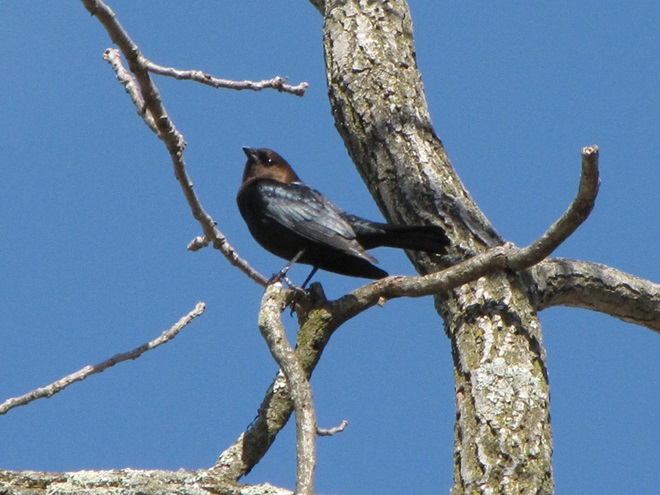
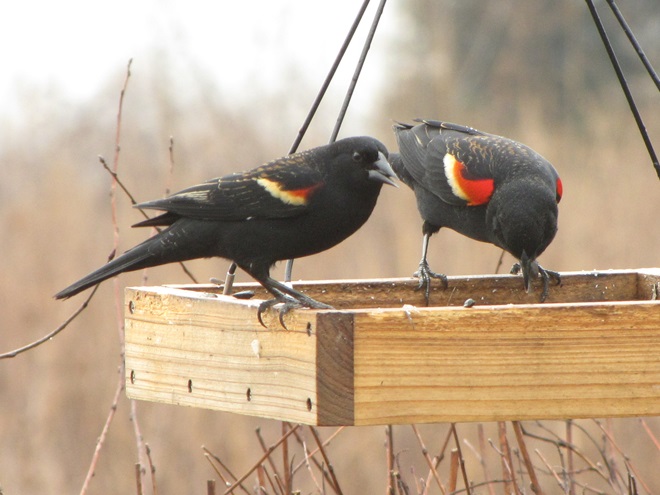
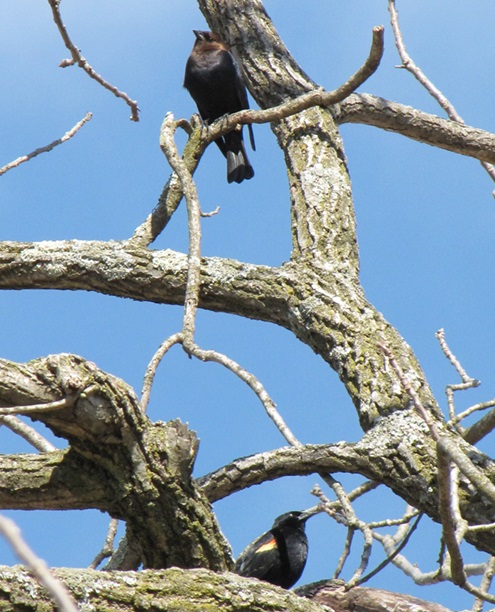
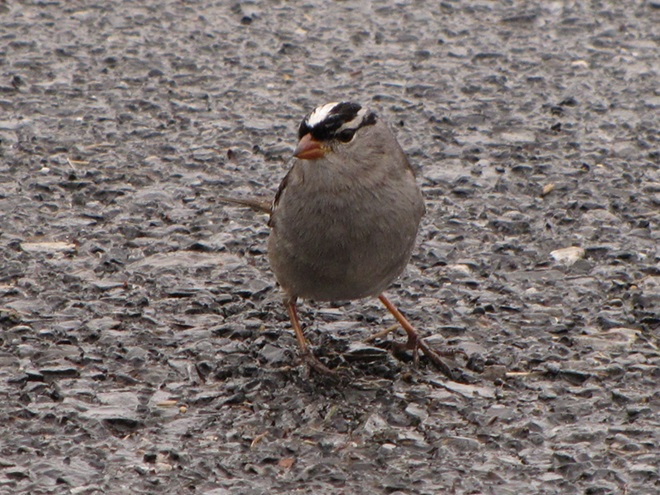
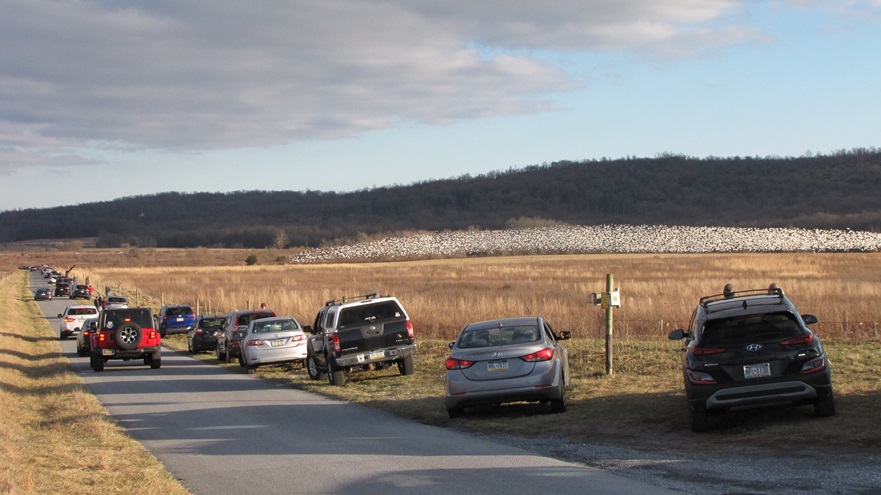
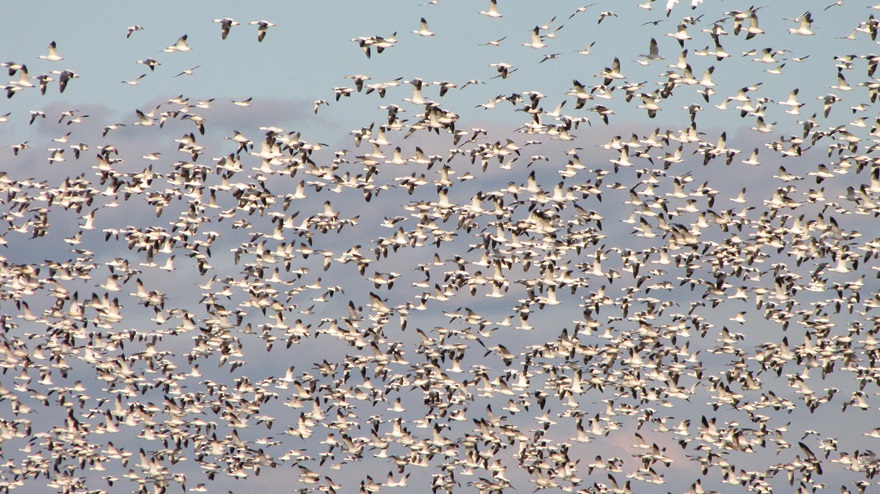
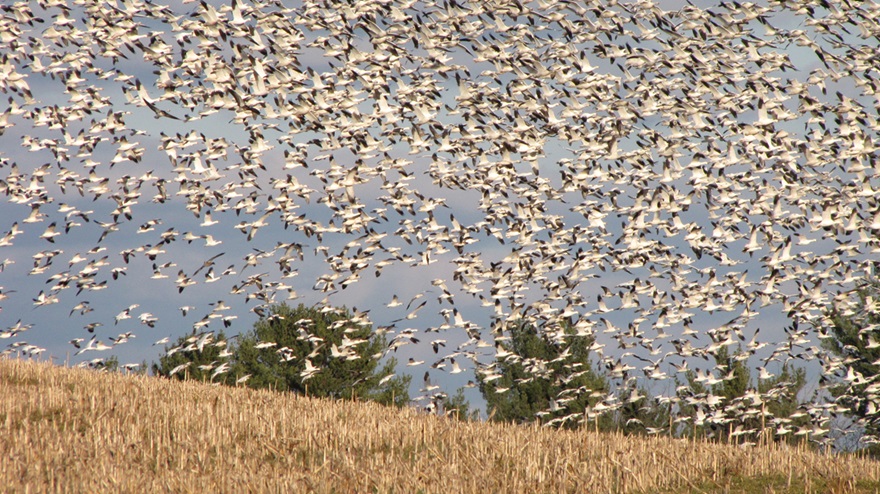
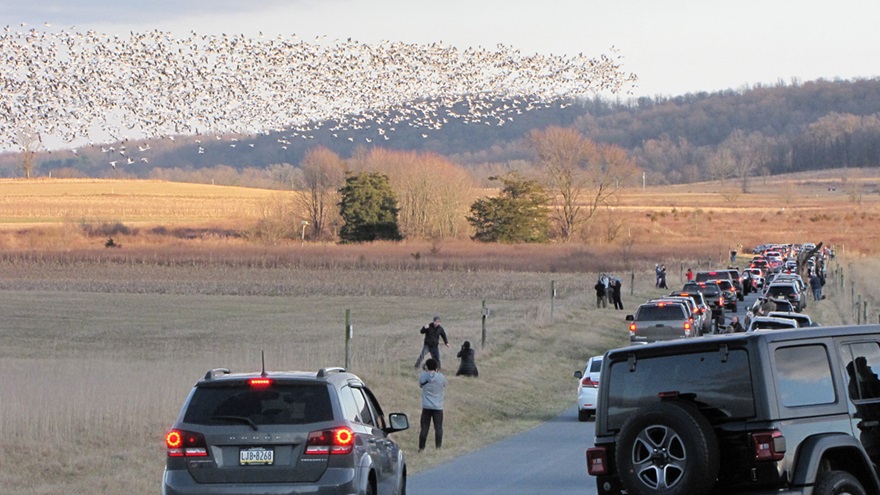
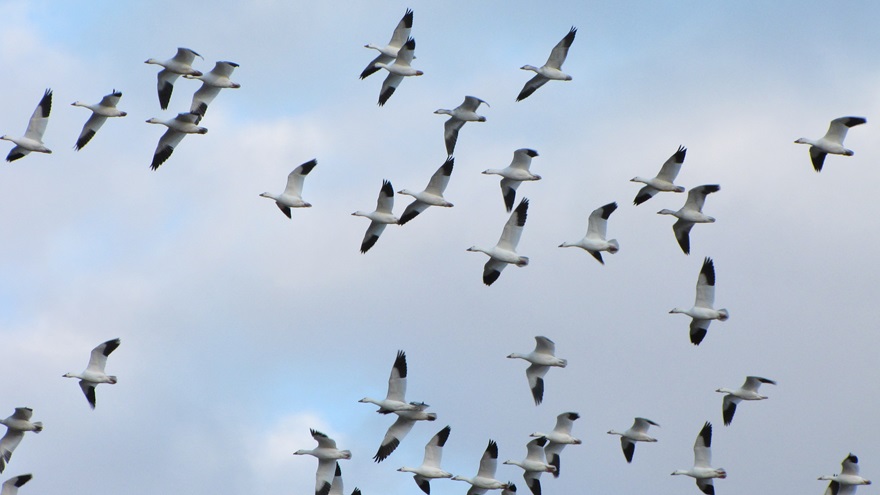
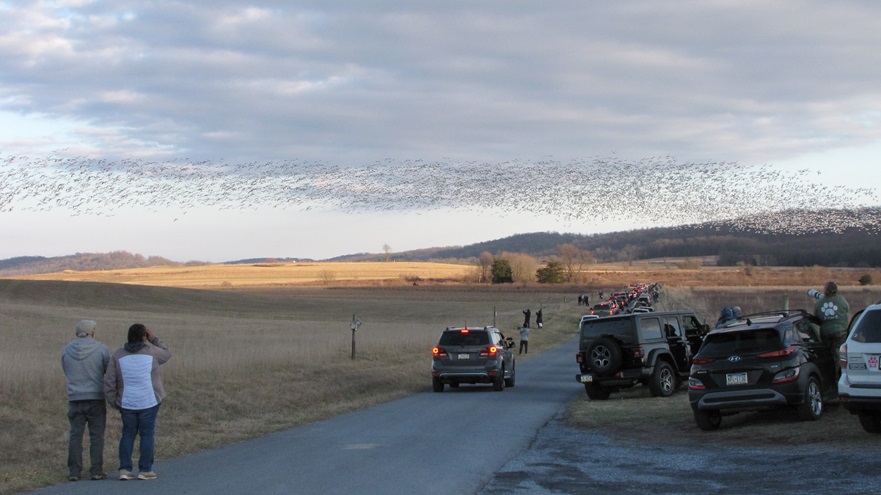
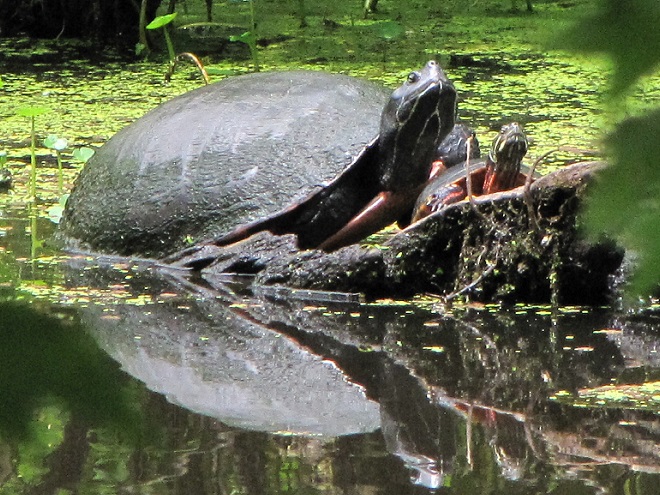
Multitudes of Sunday hikers enjoyed the warm afternoon on Middle Creek’s many trails.In one of Middle Creek’s numerous impoundments, newly emerged Painted Turtles bask in the sunshine.Native blackbirds, particularly males including this Brown-headed Cowbird, are arriving to stake out a claim on suitable breeding territory.Male Red-winged Blackbirds visit the feeding station at the Middle Creek W.M.A. Visitor’s Center.Brown-headed Cowbirds regularly maintain close association with Red-winged Blackbirds, a frequent victim of the former’s nest parasitism, the practice of laying and abandoning their eggs in a host species’ abode. By early May, adult “red-wings” can often be seen tending fledged cowbird young raised at the expense of their own progeny.Male Common Grackles display their colors in an attempt to establish dominance.Visitor’s to Middle Creek’s Willow Point Trail not only had a chance to see thousands of geese and other waterfowl, but they might also get a good look at some of the handsome White-crowned Sparrows that have been there during recent weeks.The first Tree Swallows of the season have arrived to stake a claim to nest boxes located throughout the refuge’s grasslands.Bare croplands and muddy shorelines around Middle Creek’s lakes and ponds are attracting migrating Killdeer. Some will stay to nest.Hundreds of Ring-billed Gulls arrived during the late afternoon to spend the night on the main lake.A Red-tailed Hawk was seen hunting mice and exhibiting territorial behavior. It is probably protecting a nest site somewhere on the refuge.Canada Geese could be seen coming and going, with migratory birds apparently supplementing the resident flock. This group flushed when a Bald Eagle passed close by.You could hold a Bald Eagle I.D. clinic at Middle Creek W.M.A. right now. Dozens of birds of varying age classes could be seen in the trees surrounding the main lake and the larger ponds. Currently, fifty or more could be present. At least one Golden Eagle has been seen as well.An adult Bald Eagle in definitive plumage investigating the inhabitants of the lake.This Bald Eagle in its second calendar year is not yet one year of age, but it has already begun replacing dark body feathers with a light plumage that will earn it the nickname “white belly” for this and its third year. It will start molting its long hatch-year (juvenile) flight feathers soon after its first birthday.Another second-year immature Bald Eagle, this one being scolded by the aforementioned territorial Red-tailed Hawk. Though showing some wear in the tail, this eagle still has a full set of lengthy hatch-year (juvenile) flight feathers and remains mostly dark below when compared to the bird of the same age class seen in the previous image. As in other birds, diet, genetics, stress, climatic conditions, and many other factors will frequently vary the timing of molt among individuals in a population of Bald Eagles.An immature Bald Eagle in its third calendar year still retaining numerous long juvenile wing and tail feathers. In coming months, as it reaches its second birthday, it will begin replacing the remaining older plumage with a set of new flight feathers.An immature Bald Eagle in its fourth calendar year approaches its third birthday with a rather conspicuous long juvenile feather remaining in each wing. These feathers will soon be replaced. In addition, the body plumage will darken, the head will begin to show more white, and the bill will become yellow. In about two more years, the bird will attain its familiar adult definitive plumage. Click the “Hawkwatcher’s Helper: Identifying Bald Eagles and other Diurnal Raptors” tab at the top of this page to learn more about determining the age of these and other birds of prey.Bald Eagles draw a crowd, but the real attraction at Middle Creek W.M.A. in late winter is Snow Geese,……thousands of them.Migratory Snow Geese, an annual spectacle at Middle Creek.Snow Geese and hundreds of delighted onlookers.
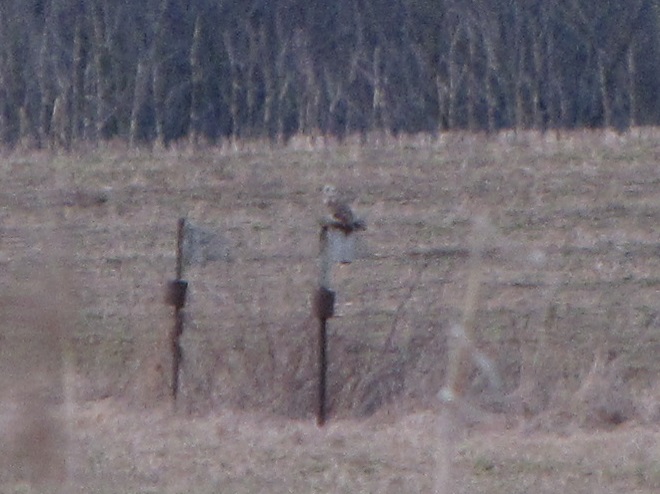
The late afternoon sky filled with Snow Geese.As daylight waned and the Snow Geese returned to the main lake for the night, more than one hundred lucky observers were treated to the rare sight of several Short-eared Owls (Asio flammeus) emerging to hunt the refuge’s managed grasslands for mice and voles. For many of these visitors, it was a memorable first-time experience.
Though soggy, windy, and rainy, it happened to be a delightfully mild day to search for migrating waterfowl in the Lower Susquehanna River Watershed. Here’s a look at what we found temporarily grounded by the poor flight conditions…
It’s prime time for northbound Northern Pintails.This raft of distant waterfowl appears to include mostly American Wigeons and Ring-necked Ducks.A much more cooperative drake Ring-necked Duck.A couple of American Black Ducks take a break during an afternoon shower.A pair of Northern Shovelers in the rain.And a pair of blissful Common Mergansers.Uh oh!…must be something he said.
With a southerly breeze and warm front rolling through the region, migratory Canada Geese and other waterfowl are taking advantage of the tail wind to depart Chesapeake Bay and stream through the lower Susquehanna valley to begin a trek that will ultimately take them to nesting grounds far to our north.
Noisy flocks of migratory Canada Geese were passing over the lower Susquehanna valley throughout the morning.There goes another flock,……and yet another.Dozens of flocks of as many as one hundred birds each passed over our temporary lookout at susquehannawildlife.net headquarters this morning. By 11 A.M. we saw and heard in excess of 3,000 birds.A single flock of northbound Tundra Swans included about one hundred birds.With the south wind increasing in intensity this afternoon, more geese, swans, and other waterfowl can be expected. Then, when the rains hit later this evening and overnight, there could be a significant fallout of grounded birds on local bodies of water including the river. Be certain to check it out!
As week-old snow and ice slowly disappears from the Lower Susquehanna River Watershed landscape, we ventured out to see what might be lurking in the dense clouds of fog that for more than two days now have accompanied a mid-winter warm spell.
After freezing to a slushy consistency earlier this week, the Susquehanna is already beginning to thaw. Below the York Haven Dam at Conewago Falls, the water is open and ice-free.On frozen man-made lakes and ponds, geese and ducks like these Mallards and American Wigeon are presently concentrated around small pockets of open water.During the past ten days, American Robin numbers have exploded throughout the lower Susquehanna valley. The majority of these birds may be a mix of both those coming south to escape the late onset of wintry conditions to our north and those inching north into our region as early spring migrants.The January thaw has melted the snow from lawns and fields to provide thousands of visiting robins with a chance to forage for earthworms.A visit by this young Cooper’s Hawk to the susquehannnawildlife.net headquarters garden sent songbirds scrambling……but did nothing to unnerve our resident Eastern Gray Squirrels,……which promptly went into tail-waving mode to advertise their presence.But earlier in the week, when heavy snow cover in the rural areas surrounding our urbanized neighborhood made it difficult for rodent-eating raptors to find food, we received brief visits from both a Red-tailed Hawk……and this young Red-shouldered Hawk, an uncommon bird of prey most often found in wet woods and other lowlands.To escape notice during visits by these larger raptors, our squirrels remained motionless and commenced performance of their best bump-on-a-log impressions.Unimpressed, each of our visiting buteos remained for just a few minutes before moving on in search of more favorable hunting grounds and prey.As snow melted and exposed bare ground in fields of early successional growth, we encountered……a flock of White-crowned Sparrows, most in first-winter plumage……and at least a dozen American Tree Sparrows. During the twentieth century, these handsome songbirds were regular winter visitors to the lower Susquehanna region. During recent decades, they’ve become increasingly more difficult to find. Currently, moderate numbers appear to be arriving to escape harsher weather to our north.What could be more appropriate on a foggy, gray evening than finding a “gray ghost” (adult male Northern Harrier) patrolling the fields in search of mice and voles.
If scenes of a January thaw begin to awaken your hopes and aspirations for all things spring, then you’ll appreciate this pair of closing photographs…
The maroon-red flower buds of Silver Maples are beginning to swell. And woodpeckers including Pileated Woodpeckers are beginning to drum, a timber-pounding behavior they use to establish breeding territories in habitats with suitable sites for cavity nesting.In wet soil surrounding spring seeps and streams, Skunk Cabbage is rising through the leaf litter to herald the coming of a new season. Spring must surely be just around the corner.
As anticipated, lakes and ponds throughout the lower Susquehanna basin are beginning to freeze. Fortunately for the waterfowl thereon, particularly diving ducks, the rain-swollen river is slowly receding and water clarity is improving to provide a suitable alternative to life on the man-made impoundments.
The Susquehanna, ice-free and receding from near flood stage levels last week, can presently provide suitable habitat for diving ducks and other wintering waterfowl.A feeding Common Merganser takes a breather between dives on the Susquehanna in Dauphin County, Pennsylvania.
The deep freeze is not only impacting ponds and lakes in the lower Susquehanna valley, but is evidently affecting the larger bodies of water to our north and northwest. During Tuesday’s snow event, thousands of diving ducks arrived on the main stem of the river—apparently forced down by the inclement weather while en route to the Atlantic Coast from the Great Lakes and its connected waterways, which are currently beginning to freeze.
Tuesday’s snowfall not only blanketed the landscape with a coating of white,……it prompted thousands of migrating “bay ducks” including Canvasbacks, Redheads, scaup, and other diving species to seek open water and make a forced landing.Scaup were by far the most numerous of the birds in the grounded flight. The majority appeared to be Lesser Scaup.Scaup in flight on the Susquehanna.A mixed raft of scaup and Buffleheads seen one day after a snowstorm-related fallout of late-season migrants. A single Long-tailed Duck, a species formerly known as Oldsquaw, can be seen to the lower left.Scaup and a Bufflehead (center) fly past a Long-tailed Duck. Because they winter primarily in coastal waters, both of the latter species are sometimes categorized as “sea ducks”.A small flock of Ruddy Ducks.While Common Mergansers on the Susquehanna are fish eaters (piscivores), other diving ducks observed during this fallout event are primarily benthic feeders, eating plant matter and invertebrate animals collected from the river bottom.A small flock of Common Goldeneyes. They, like the Long-tailed Duck and Bufflehead, are sometimes known as a species of “sea duck”.Another mixed raft of scaup and Buffleheads loafing on the Susquehanna.Large numbers of waterfowl attract the attention of the river’s ever-vigilant Bald Eagles.An adult Bald Eagle patrolling the area of a fallout in search of dead, sick, or injured ducks. In addition to the victims of naturally occurring ailments, eagles find birds and mammals wounded or killed by hunters to be particularly attractive sources of food. They can, therefore, quite easily ingest pieces of shot. Because eagles in the lower Susquehanna valley feed as frequently in upland habitats as they do in riverine environs, use of alternatives to toxic lead shot is prudent practice in all habitat types.A Bald Eagle in the first month of its fourth calendar year. Though not yet matured to breeding age, this bird is nevertheless smart enough to be on the lookout for vulnerable or deceased waterfowl during a post-storm fallout.A fallout of some migrating waterfowl seldom escapes notice by members of the gasoline and gunpowder gang……who find their very presence an irresistible temptation to arouse their adolescent urges……to get an adrenaline junkie’s fix.
With more snow on the way for tomorrow, you may be wondering if another fallout like this could be in the works. The only way to find out is to get out there and have a look. Good luck! And be good!
Heavy rains and snow melt have turned the main stem of the Susquehanna and its larger tributaries into a muddy torrent. For fish-eating (piscivorous) ducks, the poor visibility in fast-flowing turbid waters forces them to seek better places to dive for food. With man-made lakes and ponds throughout most of the region still ice-free, waterfowl are taking to these sources of open water until the rivers and streams recede and clear.
The Common Merganser is a species of diving duck with a primary winter range that, along the Atlantic Coast, reaches its southern extreme in the lower Susquehanna and Potomac watersheds. Recently, many have left the main stem of the muddy rivers to congregate on waters with better visibility at some of the area’s larger man-made lakes.Common Mergansers dive to locate and capture prey, primarily small fish. During this century, their numbers have declined along the southern edge of their winter range, possibly due to birds remaining to the north on open water, particularly on the Great Lakes. In the lower Susquehanna valley, some of these cavity-nesting ducks can now be found year-round in areas where heavy timber again provides breeding sites in riparian forests. After nesting, females lead their young to wander widely along our many miles of larger rivers and streams to feed.The behavior of these mergansers demonstrates the stiff competition for food that can result when predators are forced away from ideal habitat and become compressed into less favorable space. On the river, piscivores can feed on the widespread abundance of small fish including different species of minnows, shiners, darters, and more. In man-made lakes stocked for recreational anglers with sunfish, bass, and other predators (many of them non-native), small forage species are usually nonexistent. As a result, fish-eating birds can catch larger fish, but are successful far less often. Seen here are several mergansers resorting to intimidation in an effort to steal a young bass away from the male bird that just surfaced with it. While being charged by the aggressors, he must quickly swallow his oversize catch or risk losing it.
With a hard freeze on the way, the fight for life will get even more desperate in the coming weeks. Lakes will ice over and the struggle for food will intensify. Fortunately for mergansers and other piscivorous waterfowl, high water on the Susquehanna is expected to recede and clarify, allowing them to return to their traditional environs. Those with the most suitable skills and adaptations to survive until spring will have a chance to breed and pass their vigor on to a new generation of these amazing birds.
Imagine a network of brooks and rivulets meandering through a mosaic of shrubby, sometimes boggy, marshland, purifying water and absorbing high volumes of flow during storm events. This was a typical low-gradient stream in the valleys of the Lower Susquehanna River Watershed in the days prior to the arrival of the waves of trans-Atlantic human migrants that started to inundate the area during the seventeenth century. Then, a frenzy of trapping, tree chopping, mill building, and stream channelization accompanied the east to west surge of settlement across the region. The first casualty: the indispensable lowlands manager, the North American Beaver (Castor canadensis).
Nineteenth-century beaver traps on display in the collection of the State Museum of Pennsylvania in Harrisburg. Soon after their arrival, trans-Atlantic migrants (Europeans) established trade ties to the “trans-Beringia”/”Pacific-rim” migrants (“Indians”) already living in the lower Susquehanna valley and recruited them to cull the then-abundant North American Beavers. By the early 1700s, beaver populations (as well as numbers of other “game” animals) were seriously depleted, prompting the Conoy, the last of the Indian peoples to reside on the lower Susquehanna, to disperse to the north. The traps pictured here are samples of the types which were subsequently used by the European settlers to eventually extirpate the North American Beaver from the Lower Susquehanna River Watershed during the 1800s.
Without the widespread presence of beavers, stream ecology quickly collapsed. Pristine waterways were all at once gone, as were many of their floral and faunal inhabitants. It was a streams-to-sewers saga completed in just one generation. So, if we really want to restore our creeks and rivers, maybe we need to give the North American Beaver some space and respect. After all, we as a species have yet to build an environmentally friendly dam and have yet to fully restore a wetland to its natural state. The beaver is nature’s irreplaceable silt deposition engineer and could be called the 007 of wetland construction—doomed upon discovery, it must do its work without being noticed, but nobody does it better.
North American Beaver diorama on display in the State Museum of Pennsylvania in Harrisburg. Beavers were reintroduced to the Susquehanna watershed during the second half of the twentieth century.A beaver dam and pond on a small stream in the Lower Susquehanna River Watershed.Beaver dams not only create ponds, they also maintain shallow water levels in adjacent areas of the floodplain creating highly-functional wetlands that grow the native plants used by the beaver for food. These ecosystems absorb nutrients and sediments. Prior to the arrival of humans, they created some of the only openings in the vast forests and maintained essential habitat for hundreds of species of plants as well as animals including fish, amphibians, reptiles, and birds. Without the beaver, many of these species could not, and in their absence did not, exist here.Their newly constructed lodge provides shelter from the elements and from predators for a family of North American Beavers.Floodplains managed by North American Beavers can provide opportunities for the recovery of the uncommon, rare, and extirpated species that once inhabited the network of streamside wetlands that stretched for hundreds of miles along the waterways of the Lower Susquehanna River Watershed.A wintering Great Blue Heron is attracted to a beaver pond by the abundance of fish in the rivulets that meander through its attached wetlands.Beaver Ponds and their attached wetlands provide nesting habitat for uncommon birds like this Sora rail.Lesser Duckweed grows in abundance in beaver ponds and Wood Ducks are particularly fond of it during their nesting cycle.Beaver dams maintain areas of wet soil along the margins of the pond where plants like Woolgrass sequester nutrients and contain runoff while providing habitat for animals ranging in size from tiny insects to these rare visitors, a pair of Sandhill Cranes (Antigone canadensis).Sandhill Cranes feeding among Woolgrass in a floodplain maintained by North American Beavers.
Few landowners are receptive to the arrival of North American Beavers as guests or neighbors. This is indeed unfortunate. Upon discovery, beavers, like wolves, coyotes, sharks, spiders, snakes, and so many other animals, evoke an irrational negative response from the majority of people. This too is quite unfortunate, and foolish.
North American Beavers spend their lives and construct their dams, ponds, and lodges exclusively within floodplains—lands that are going to flood. Their existence should create no conflict with the day to day business of human beings. But humans can’t resist encroachment into beaver territory. Because they lack any basic understanding of floodplain function, people look at these indispensable lowlands as something that must be eliminated in the name of progress. They’ll fill them with soil, stone, rock, asphalt, concrete, and all kinds of debris. You name it, they’ll dump it. It’s an ill-fated effort to eliminate these vital areas and the high waters that occasionally inundate them. Having the audacity to believe that the threat of flooding has been mitigated, buildings and poorly engineered roads and bridges are constructed in these “reclaimed lands”. Much of the Lower Susquehanna River Watershed has now been subjected to over three hundred years-worth of these “improvements” within spaces that are and will remain—floodplains. Face it folks, they’re going to flood, no matter what we do to try to stop it. And as a matter of fact, the more junk we put into them, the more we displace flood waters into areas that otherwise would not have been impacted! It’s absolute madness.
By now we should know that floodplains are going to flood. And by now we should know that the impacts of flooding are costly where poor municipal planning and negligent civil engineering have been the norm for decades and decades. So aren’t we tired of hearing the endless squawking that goes on every time we get more than an inch of rain? Imagine the difference it would make if we backed out and turned over just one quarter or, better yet, one half of the mileage along streams in the Lower Susquehanna River Watershed to North American Beavers. No more mowing, plowing, grazing, dumping, paving, spraying, or building—just leave it to the beavers. Think of the improvements they would make to floodplain function, water quality, and much-needed wildlife habitat. Could you do it? Could you overcome the typical emotional response to beavers arriving on your property and instead of issuing a death warrant, welcome them as the talented engineers they are? I’ll bet you could.
To pass the afternoon, we sat quietly along the edge of a pond created recently by North American Beavers (Castor canadensis). They first constructed their dam on this small stream about five years ago. Since then, a flourishing wetland has become established. Have a look.
Vegetation surrounding the inundated floodplain helps sequester nutrients and sediments to purify the water while also providing excellent wildlife habitat.The beaver lodge was built among shrubs growing in shallow water in the middle of the pond.Woolgrass (Scirpus cyperinus) is a bulrush that thrives as an emergent and as a terrestrial plant in moist soils bordering the pond.A male Common Whitetail dragonfly keeping watch over his territory.A Twelve-spotted Skimmer perched on Soft Rush.A Blue Dasher dragonfly seizing a Fall Field Cricket (Gryllus pennsylvanicus).A Spicebush Swallowtail visiting a Cardinal Flower.A Green Heron looking for small fish, crayfish, frogs, and tadpoles.The Green Heron stalking potential prey.A Wood Duck feeding on the tiny floating plant known as Lesser Duckweed (Lemna minor).A Least Sandpiper poking at small invertebrates along the muddy edge of the beaver pond.A Solitary Sandpiper.A Solitary Sandpiper testing the waters for proper feeding depth.A Pectoral Sandpiper searches for its next morsel of sustenance.The Sora (Porzana carolina) is a seldom seen rail of marshlands including those created by North American Beavers. Common Cattails, sedges, and rushes provide these chicken-shaped wetland birds with nesting and loafing cover.
Isn’t that amazing? North American Beavers build and maintain what human engineers struggle to master—dams and ponds that reduce pollution, allow fish passage, and support self-sustaining ecosystems. Want to clean up the streams and floodplains of your local watershed? Let the beavers do the job!
Those mid-summer post-breeding wanders continue to delight birders throughout the Mid-Atlantic States. One colorful denizen of ponds and wetlands that has yet to put in an appearance in the Lower Susquehanna River Watershed this year is the Black-bellied Whistling Duck. You might remember this species from earlier posts describing the fortieth anniversary of your editor’s journey to the Lower Rio Grande Valley of Texas. Like many other birds, the Black-bellied Whistling Duck has been extending its range north from Texas, Florida, and other states along the Gulf Coastal Plain. Populations of these waterfowl are chiefly resident birds with some short-distance movement to find suitable habitat for feeding and nesting. They are not usually migratory, so summertime wandering may be the mechanism for their discovery of new habitats advantageous for nesting in areas north of their current home.
Presently, at least two dozen Black-bellied Whistling Ducks are being seen regularly at a stormwater retention pond in a housing subdivision along Amalfi Drive west of Smyrna, Delaware. This small population of avian tourists has spent at least two summers in the area. Just yesterday, Black-bellied Whistling Ducks were seen and photographed about ten miles to the east at Bombay Hook National Wildlife Refuge. Nine were counted there while 27 were being watched simultaneously at the Amalfi site. Earlier this week, a single Black-bellied Whistling Duck visited the John Heinz National Wildlife Refuge in Philadelphia, indicating that the influx of these vagrants has transited the entire Delmarva Peninsula and entered Pennsylvania. So while you’re out watching for those first southbound migrants of the year, be on the lookout for wayward wanderers too—wanderers like Black-bellied Whistling Ducks!
Black-bellied Whistling Ducks in a stormwater retention pond west of Smyrna, Delaware.Summertime exploration of new areas outside their resident turf may enable Black-bellied Whistling Ducks to find favorable habitats for extending their breeding range north.Black-bellied Whistling Ducks favor vegetated ponds, pools, and wetlands for feeding and nesting.Did you remember to go to the post office and buy a Federal Duck Stamp? Your purchase helps provide habitat for Black-bellied Whistling Ducks and so many other magnificent birds. And don’t forget, it’s your ticket for admission to our National Wildlife Refuges for an entire year!
Have you purchased your 2023-2024 Federal Duck Stamp? Nearly every penny of the 25 dollars you spend for a duck stamp goes toward habitat acquisition and improvements for waterfowl and the hundreds of other animal species that use wetlands for breeding, feeding, and as migration stopover points. Duck stamps aren’t just for hunters, purchasers get free admission to National Wildlife Refuges all over the United States. So do something good for conservation—stop by your local post office and get your Federal Duck Stamp.
Your Federal Duck Stamp is your admission ticket for entry into many of the country’s National Wildlife Refuges including Bombay Hook National Wildlife Refuge on Delaware Bay near Smyrna, Delaware.
Still not convinced that a Federal Duck Stamp is worth the money? Well then, follow along as we take a photo tour of Bombay Hook National Wildlife Refuge. Numbers of southbound shorebirds are on the rise in the refuge’s saltwater marshes and freshwater pools, so we timed a visit earlier this week to coincide with a late-morning high tide.
This pair of Northern Bobwhite, a species now extirpated from the Lower Susquehanna River Watershed and the rest of Pennsylvania, escorted us into the refuge. At Bombay Hook, they don’t waste your money mowing grass. Instead, a mosaic of warm-season grasses and early successional growth creates ideal habitat for Northern Bobwhite and other wildlife.Twice each day, high tide inundates mudflats in the saltwater tidal marshes at Bombay Hook prompting shorebirds to move into the four man-made freshwater pools. Birds there can often be observed at close range. The auto tour route through the refuge primarily follows a path atop the dikes that create these freshwater pools. Morning light is best when viewing birds on the freshwater side of the road, late-afternoon light is best for observing birds on the tidal saltwater side.A Great Blue Heron at high tide on the edge of a tidal creek that borders Bombay Hook’s tour route at Raymond Pool.Semipalmated Sandpipers stream into Raymond Pool to escape the rising tide in the salt marsh.More Semipalmated Sandpipers and a single Short-billed Dowitcher (Limnodromus griseus) arrive at Raymond Pool.Two more Short-billed Dowitchers on the way in.Recent rains have flooded some of the mudflats in Bombay Hook’s freshwater pools. During our visit, birds were often clustered in areas where bare ground was exposed or where water was shallow enough to feed. Here, Short-billed Dowitchers in the foreground wade in deeper water to probe the bottom while Semipalmated Sandpipers arrive to feed along the pool’s edge. Mallards, American Avocets, and egrets are gathered on the shore.More Short-billed Dowitchers arriving to feed in Raymond Pool.Hundreds of Semipalmated Sandpipers gathered in shallow water where mudflats are usually exposed during mid-summer in Raymond Pool.Hundreds of Semipalmated Sandpipers, several Short-billed Dowitchers, and some Forster’s Terns (Sterna forsteri) crowd onto a mud bar at Bear Swamp Pool.A zoomed-in view of the previous image showing a tightly packed crowd of Semipalmated Sandpipers, Forster’s Terns, and a Short-billed Dowitcher (upper left).Short-billed Dowitchers wading to feed in the unusually high waters of Raymond Pool.Short-billed Dowitchers, American Avocets, and a Snowy Egret in Raymond Pool. A single Stilt Sandpiper (Calidris himantopus) can been seen flying near the top of the flock of dowitchers just below the egret.Zoomed-in view of a Stilt Sandpiper (Calidris himantopus), the bird with white wing linings.American Avocets probe the muddy bottom of Raymond Pool.Among these Short-billed Dowitchers, the second bird from the bottom is a Dunlin. This sandpiper, still in breeding plumage, is a little bit early. Many migrating Dunlin linger at Bombay Hook into October and even November.This Least Sandpiper found a nice little feeding area all to itself at Bear Swamp Pool.Lesser Yellowlegs at Bear Swamp Pool.Lesser Yellowlegs at Bear Swamp PoolA Greater Yellowlegs at Bear Swamp Pool.A Caspian Tern patrolling Raymond Pool.The chattering notes of the Marsh Wren’s (Cistothorus palustris) song can be heard along the tour road wherever it borders tidal waters.This dome-shaped Marsh Wren nest is supported by the stems of Saltwater Cordgrass (Sporobolus alterniflorus), a plant also known as Smooth Cordgrass. High tide licks at the roots of the cordgrass supporting the temporary domicile.By far the most common dragonfly at Bombay Hook is the Seaside Dragonlet (Erythrodiplax berenice). It is our only dragonfly able to breed in saltwater. Seaside Dragonlets are in constant view along the impoundment dikes in the refuge.Red-winged Blackbirds are still nesting at Bombay Hook, probably tending a second brood.Look up! A migrating Bobolink passes over the dike at Shearness Pool.Non-native Mute Swans and resident-type Canada Geese in the rain-swollen Shearness Pool.A pair of Trumpeter Swans (Cygnus buccinator) as seen from the observation tower at Shearness Pool. Unlike gregarious Tundra and Mute Swans, pairs of Trumpeter Swans prefer to nest alone, one pair to a pond, lake, or sluggish stretch of river. The range of these enormous birds was restricted to western North America and their numbers were believed to be as low as 70 birds during the early twentieth century. An isolated population consisting of several thousand birds was discovered in a remote area of Alaska during the 1930s allowing conservation practices to protect and restore their numbers. Trumpeter Swans are slowly repopulating scattered east coast locations following recent re-introduction into suitable habitats in the Great Lakes region.A Great Egret prowling Shearness Pool.A Snowy Egret in Bear Swamp Pool.Wood Ducks in Bear Swamp Pool.A Bombay Hook N.W.R. specialty, a Black-necked Stilt and young at Bear Swamp Pool.
As the tide recedes, shorebirds leave the freshwater pools to begin feeding on the vast mudflats exposed within the saltwater marshes. Most birds are far from view, but that won’t stop a dedicated observer from finding other spectacular creatures on the bay side of the tour route road.
Bombay Hook National Wildlife Refuge protects a vast parcel of tidal salt marsh and an extensive network of tidal creeks. These areas are not only essential wildlife habitat, but are critical components for maintaining water quality in Delaware Bay and the Atlantic.The shells of expired Atlantic Horseshoe Crabs were formerly widespread and common among the naturally occurring flotsam along the high tide line on Delaware Bay. We found just this one during our visit to Bombay Hook. Man has certainly decimated populations of this ancient crustacean during recent decades.As the tide goes out, it’s a good time for a quick walk into the salt marsh on the boardwalk trail opposite Raymond Pool.Among the Saltmarsh Cordgrass along the trail and on the banks of the tidal creek there, a visitor will find thousands and thousands of Atlantic Marsh Fiddler Crabs (Minuca pugnax).Atlantic Marsh Fiddler Crabs and their extensive system of burrows help prevent the compaction of tidal soils and thus help maintain ideal conditions for the pure stands of Saltwater Cordgrass that trap sediments and sequester nutrients in coastal wetlands.A male Atlantic Marsh Fiddler Crab peers from its den.Herons and egrets including this Great Egret are quite fond of fiddler crabs. As the tide goes out, many will venture away from the freshwater pools into the salt marshes to find them.A Green Heron seen just before descending into the cordgrass to find fiddler crabs for dinner.A juvenile Clapper Rail (Rallus crepitans crepitans) emerges from the cover of the cordgrass along a tidal creek to search for a meal.Glossy Ibis leave their high-tide hiding place in Shearness Pool to head out into the tidal marshes for the afternoon.Great Black-backed Gulls, Herring Gulls, and possibly other species feed on the mudflats exposed by low tide in the marshes opposite Shearness Pool.An Osprey patrols the vast tidal areas opposite Shearness Pool.
No visit to Bombay Hook is complete without at least a quick loop through the upland habitats at the far end of the tour route.
Indigo Buntings nest in areas of successional growth and yes, that is a Spotted Lanternfly on the grape vine at the far right side of the image.Blue Grosbeaks (Passerina caerulea) are common nesting birds at Bombay Hook. This one was in shrubby growth along the dike at the north end of Shearness Pool.These two native vines are widespread at Bombay Hook and are an excellent source of food for birds. The orange flowers of the Trumpet Vine are a hummingbird favorite and the Poison Ivy provides berries for numerous species of wintering birds.The Pileated Woodpecker is one of the numerous birds that supplements its diet with Poison Ivy berries. The tree this individual is visiting is an American Sweetgum (Liquidambar styraciflua), a species native to the Atlantic Coastal Plain in Delaware. The seed balls are a favorite winter food of goldfinches and siskins.Finis Pool has no frontage on the tidal marsh but is still worth a visit. It lies along a spur road on the tour route and is located within a deciduous coastal plain forest. Check the waters there for basking turtles like this giant Northern Red-bellied Cooter (Pseudemys rubiventris) and much smaller Painted Turtle.The White-tailed Deity is common along the road to Finis Pool.Fowler’s Toads (Anaxyrus fowleri) breed in the vernal ponds found in the vicinity of Finis Pool and elsewhere throughout the refuge.The National Wildlife Refuge System not only protects animal species, it sustains rare and unusual plants as well. This beauty is a Turk’s Cap Lily (Lilium superbum), a native wildflower of wet woods and swamps.Just as quail led us into the refuge this morning, this Wild Turkey did us the courtesy of leading us to the way out in the afternoon.
We hope you’ve been convinced to visit Bombay Hook National Wildlife Refuge sometime soon. And we hope too that you’ll help fund additional conservation acquisitions and improvements by visiting your local post office and buying a Federal Duck Stamp.
Back in late May of 1983, four members of the Lancaster County Bird Club—Russ Markert, Harold Morrrin, Steve Santner, and your editor—embarked on an energetic trip to find, observe, and photograph birds in the Lower Rio Grande Valley of Texas. What follows is a daily account of that two-week-long expedition. Notes logged by Markert some four decades ago are quoted in italics. The images are scans of 35 mm color slide photographs taken along the way by your editor.
DAY FOUR—May 24, 1983
“AOK Campground—South of Kingsville, Texas”
“Arose at 6:30 A.M. to the tune of Common Nighthawks. After breakfast, we headed for Harlingen. While driving south we saw six pairs of Black-bellied Whistling Ducks. At Harlingen we phoned Father Tom, who is an expert birder for the area.”
As we drove south to Harlingen, much our 100-mile route was through the Laureles division of the King Ranch, the largest ranch in the United States. It covers over 800,000 acres and is larger than the state of Rhode Island. The road there was as straight as an arrow with wire fences on both sides and scrubland as far as the eye could see. Things really are bigger in Texas.
Once in Harlingen, we did two things no one needs to do anymore:
Find a coin-operated telephone to place a call to Father Tom.
Ask Father Tom for the latest tips on the locations of rare and/or target birds.
Today, nearly everyone traveling such distances to find birds is carrying a cellular phone and many can use theirs to access internet sites and databases such as eBird to get current sighting information. Back in 1983, Father Tom Pincelli was a dear friend to birders visiting the Lower Rio Grande Valley. Few places had a person who was willing to answer the phone and field inquiries regarding the latest whereabouts of this or that bird. To remain current, he also had to religiously (forgive me for the pun) collect sighting information from the observers with whom he had contact. For locations elsewhere across the country, a birder in 1983 was happy just to have a phone number for a hotline with a tape-recorded message listing the unusual sightings for its covered region. If you were lucky, the volunteer logging the sightings would be able to update the tape once a week. For those who dialed his number, Father Tom provided an exceptionally personal experience.
Since 1983, Father Tom Pincelli, also known as “Father Bird”, has tirelessly promoted birding and conservation throughout the Lower Rio Grande Valley. His efforts have included hosting a P.B.S. television program and writing columns for local newspapers. He has been instrumental in developing the annual Rio Grande Valley Birding Festival. The public sentiment he has generated for the birding paradise that is the Lower Rio Grande Valley has helped facilitate the acquisition and/or protection of many key parcels of land in the region.
“After receiving information on locations of Tropical Parula, Ferruginous Pygmy Owl, Hook-billed Kite, Brown Jay, and Clay-colored Robin, we went on to check out the Brownsville Airport where we will meet Harold and Steve Thursday noon.”
If we were going to see these five species in the American Birding Association listing area, then we would have to see them in the Lower Rio Grande Valley. All five were target birds for each of us, including Harold who had few other possibilities for new species on the trip. Father Tom provided us with tips for finding each.
I noticed as we began moving around Harlingen and Brownsville that Russ was swiftly getting his bearings—he had been here before and was starting to remember where things were. His ability to navigate his way around allowed us to keep moving and see a lot in a short time.
In Harlingen, we easily found Mourning Doves and the non-native Rock Pigeons, species we see regularly in Pennsylvania. We became more enthusiastic about doves and pigeons soon after when we saw the first of the several other species native to south Texas, the fragile little Inca Dove (Columbina inca), also known as the Mexican Dove.
“Next, to the Brownsville Dump to see the White-necked Ravens — Then to Mrs. Benn’s in Brownsville for the Buff-bellied Hummingbird. Both lifers for Larry.”
For birders wanting to see a White-necked Raven in the Lower Rio Grande Valley, the Brownsville Dump was the place to go. With very little effort—excluding a trip of nearly 2,000 miles to get there—we found them. Today, birders still go to the Brownsville Dump to find White-necked Ravens, though the dump is now called the Brownsville Landfill and the bird is known as the Chihuahuan Raven (Corvus cryptoleucus).
Mrs. Benn’s home was in a verdant residential neighborhood in Brownsville. She welcomed birders to come and see the Buff-bellied Hummingbirds that visited her feeder filled with sugar water. I don’t recall whether or not she kept a guest book for visitors to sign, but if she did, it would have included hundreds—maybe thousands—of names of people from all over North America who came to her garden to get a look at a Buff-bellied Hummingbird. After arriving, we waited a short time and sure enough, we watched a Buff-bellied Hummingbird (Amazilia yucatanensis) sipping Mrs. Benn’s home-brewed nectar from her glass feeder. This emerald hummingbird is primarily a Mexican species with a breeding range that extends north into the Lower Rio Grande Valley of Texas. When not breeding, a few will wander north and east along the Gulf Coastal Plain as far as Florida.
Other finds at Mrs Benn’s included White-winged Dove (Zenaida asiatica), Ash-throated Flycatcher (Myiarchus cinerascens), Brown-crested Flycatcher (Myiarchus tyrannulus), and Black-crested Titmouse (Baeolophus atricristatus), a species also known as Mexican Titmouse.
We identified this White-winged Dove at Mrs. Benn’s house in Brownsville.In Mrs. Benn’s lush subtropical garden beneath a canopy of tall trees we found this male Green Anole (Anolis carolinensis) displaying its red throat patch. (Vintage 35 mm image)
The Lower Rio Grande Valley from Rio Grande City east to the Gulf of Mexico is actually the river’s outflow delta. At least six historic channels have been delineated in Texas on the north side of the river’s present-day course. An equal number may exist south of the border in Mexico. Hundreds of oxbow lakes known as “resacas” mark the paths of the former channels through the delta. Many resacas are the centerpieces of parks, wildlife refuges, and housing developments. Still others are barely detectable after being buried in silt deposits left by the meandering river. Channelization, land disturbances related to agriculture, and a boom in urbanization throughout the valley have disconnected many of the most recently formed resacas from the river’s floodplain, preventing them from absorbing the impact of high-water events. These alterations to natural morphology can severely aggravate flooding and water pollution problems.
The Lower Rio Grande Valley is the site of a boom in urbanization. Undeveloped private holdings and government lands including numerous parks and refuges provide sanctuary for some of the valley’s unique wildlife. The parcels colored dark blue on the map are units of the Lower Rio Grande Valley National Wildlife Refuge. (United States Fish and Wildlife Service base image)
“On to Santa Ana National Wildlife Refuge. We walked to Pintail Lake and saw 6 Black-bellied Whistling Ducks and 2 Mississippi Kites and 1 Pied-billed Grebe. We drove the route thru the park with great results—Anhingas, Least Grebe, and more Black-bellied Whistling Ducks.
Santa Ana National Wildlife Refuge on the Rio Grande is not only a birder’s mecca, 300 species of butterflies have been identified there. That’s half the species known to occur in the United States! Its subtropical riparian forest and resaca lakes provide habitat for hundreds of migratory and resident bird species including many Central and South American species that reach the northern limit of their range in the Lower Rio Grande Valley. Two endangered cats occur in the park—the Ocelot (Leopardus pardalis) and the Jaguarundi (Herpailurus yagouaroundi).
In the Lower Rio Grande Valley, the secretive Ocelot, like the Jaguarundi, is at the northern limit of its eastern range. Time will tell how urban development including construction of the border wall will impact the distribution and survival of these and other terrestrial species there. (A modern digital image)Jaguarundi. (United States Fish and Wildlife Service image)
We saw no cats at Santa Ana, but did quite well with the birds. Our list included the species listed above plus Cattle Egret (Bubulcus ibis); Louisiana Heron, now known as Tricolored Heron (Egretta tricolor); Plain Chachalacas; Purple Gallinule; Common Gallinule (Gallinula galeata); American Coot; Killdeer; Greater Yellowlegs; the coastal Laughing Gull (Leucophaeus atricilla); and its close relative of the central flyway and continental interior, the Franklin’s Gull (Leucophaeus pipixcan). Others finds were White-winged Dove, Mourning Dove, Inca Dove, Yellow-billed Cuckoo, Golden-fronted Woodpecker, Ladder-backed Woodpecker (Dryobates scalaris), Brown-crested Flycatcher, Altamira Oriole, Great-tailed Grackle, and House Sparrow. A real standout was the colorful Green Jay (Cyanocorax luxosus), yet another tropical Central American species found north only as far as the Lower Rio Grande Valley.
During spring (April-May) and fall (August-September), Mississippi Kites migrate by the thousands through the skies of the Lower Rio Grande Valley. Both Santa Ana and nearby Bentsen-Rio Grande State Park have hosted formal hawk counts in recent years. (Vintage 35 mm image)A Black-necked Stilt at Santa Ana N.W.R. (Vintage 35 mm image)A Least Grebe (Tachybaptus dominicus) with young in a man-made canal that mimics flooded resaca habitat at Santa Ana National Wildlife Refuge. (Vintage 35 mm image)Black-bellied Whistling Ducks take off from a pond at Santa Ana National Wildlife Refuge. (Vintage 35 mm image)The spectacular colors of Altamira Orioles (Icterus gularis) dazzled us every time we saw them. This was my first, seen soon after arriving at Santa Ana N.W.R. where the checklist still had the species listed under its former name, Lichtenstein’s Oriole. The Altamira Oriole ranges north of Mexico only into the Lower Rio Grande Valley. (Vintage 35 mm image)
“We were unlucky not to find a campground at McAllen, so we went on to Bentsen State Park where we got a camp spot. After a sauerkraut supper, we birded till dark, then showered and wrote up the log. Very hot today.”
Bentsen-Rio Grande Valley State Park, like the Santa Ana National Wildlife Refuge, is located along the Rio Grande river and features dense subtropical riparian forest that grows in the naturally-deposited silt levees of the floodplain surrounding several lake-like oxbow resacas. Montezuma Bald Cypress (Taxodium mucronatum) is a native specialty found there but nowhere north of the Lower Rio Grande Valley. During our visit, we marveled at the epiphyte Spanish Moss (Tillandsia usneoides) adorning many of the more massive trees in the park. Willows lined much of the river shoreline.
Over time, flood control projects such as man-made dams, drainage ditches, and levees have impaired stormwater capture and aquifer recharge in the floodplain. These alterations to watershed hydrology have resulted in drier soils in many sections of the Lower Rio Grande Valley’s riparian forests. Where drier conditions persist, xeric (dry soil) scrubland plants are slowly overtaking the moisture-dependent species. As a result, the park’s woodlands are composed of trees with a variety of microclimatic requirements—Anaqua (Ehretia anacua), Cedar Elm (Ulmus crassifolia), Texas Ebony (Ebenopsis ebano), hackberry, mesquite, Mexican Ash (Fraxinus berlandieriana), retama, and tepeguaje are the principle species. The park’s subtropical Texas Wild Olive (Cordia boissieri) grows in the wild nowhere north of the Lower Rio Grande Valley.
While a majority of birders visiting Benten-Rio Grande State Park come to see the more tropical specialties of the riparian woods, searching the brushy habitat of the park’s scrubland can afford one the opportunity to see species typical of the southwestern United States and deserts of Mexico. This scrubland of the Lower Rio Grande Valley is part of the Tamaulipan Mezquital ecoregion, an area of xeric (dry soil) shrublands and deserts that extends northwest from the delta through most of south Texas and into the bordering provinces of northeastern Mexico.
Our campsite was located in prime birding habitat. We were a short walk away from one of the park’s flooded oxbow resacas and vegetation was thick along the roadsides. It was no surprise that the place abounded with birds. An evening stroll yielded Plain Chachalaca, White-winged Dove, Mourning Dove, White-fronted Dove, Golden-fronted Woodpecker, Brown-crested Flycatcher, Green Jay, Altamira Oriole, Great-tailed Grackle, and Bronzed Cowbird (Molothrus aeneus). At nightfall, we listened to the calls of an Eastern Screech Owl (Megascops asio), Common Nighthawks, and Common Pauraque (Nyctidromus albicollis), a nightjar of Central and South America that nests only as far north as the Lower Rio Grande Valley. The Common Pauraque is the tropical counterpart of the Eastern Whip-poor-will, a Neotropical migrant that nests in scattered forest locations throughout eastern North America.
The Plain Chachalaca (Ortalis vetula), a pheasant-like wildfowl of the dense riparian forest and scrubland at Bentsen-Rio Grande Valley State Park. (Vintage 35 mm image)Seldom did we see a Plain Chachalaca alone, there were always others nearby. (Vintage 35 mm image)Like the chachalacas, this White-fronted Dove was attracted to some birdseed scattered on a big log behind our campsite. This species is now known as White-tipped Dove (Leptotila verreauxi) and is at the northern tip of its range in the Lower Rio Grande Valley.
I would note that we saw no “snowbirds”—long-term vacationers from the northern states and Canada who fill the park through the cooler months of fall, winter, and spring. They were gone for the summer. But for a few other friendly folks, we had the entire campground to ourselves for the duration of our stay.
If you’re like us, you’re forgoing this year’s egg hunt due to the prices, and, well, because you’re a little bit too old for such a thing.
Instead, we took a closer look at some of our wildlife photographs from earlier in the week. We’ve learned from experience that we don’t always see the finer details through the viewfinder, so it often pays to give each shot a second glance on a full-size screen. Here are a few of our images that contained some hidden surprises.
We photographed these Blue-winged Teal and American Black Ducks as they were feeding in a meadow wetland…
..but upon closer inspection we located…
…a Common Green Darner patrolling for mosquitoes and other prey. The Common Green Darner is a migratory species of dragonfly. After mating, they deposit their eggs in wetland pools, ponds, and slow-moving streams.We photographed this Water Strider as it was “walking” across a pool in a small stream that meanders through a marshy meadow…
..but after zooming in a little closer we found…
…a mosquito coming to deposit its eggs had been seized as a mid-day meal. Look at how the legs of the Water Strider use the surface tension of the pool to allow it to “walk on water”, even while clutching and subduing its prey.We photographed these resident Canada Geese in a small plowed cornfield in an area managed mostly as a mix of cool-season and warm-season grassland…
..but then, following further examination, we discovered…
…a hen Ring-necked Pheasant on a nest.
THE BAD EGG
We photographed this small group of migrating Red-winged Blackbirds while it was feeding among corn stubble in a plowed field…
…but a careful search of the flock revealed…
…three female Brown-headed Cowbirds among them (the unstreaked brown birds, two to the far left and one among the “red-wings” to the right). Cowbirds practice nest parasitism as a means of putting their young up for adoption. Red-winged Blackbirds and numerous other species are the unknowing victims. The female cowbird discreetly deposits her egg(s) in the adopting party’s nest and abandons it. The cowbird egg and the hatchling that follows is cared for by the victim species, often at the expense of their own young.
Trying to get a favorable place to nest before others arrive, the “early birds” are presently racing north through the lower Susquehanna valley. Check out these sightings from earlier today…
A pair of Ring-necked Ducks.Hooded Mergansers, two males and a female.A pair of American Wigeons.A male Canvasback.During these chilly days of late winter, this hardy Eastern Phoebe finds sustenance by seizing flying insects along the water’s edge.Possibly our most familiar sign of spring, an American Robin in classic worm-hunting posture.An iridescent Common Grackle in a maple tree that is beginning to flower.A male Red-winged Blackbird singing from a perch near a small patch of cattails. During the spring migration, noisy flocks of males compete for a breeding territory at these sites. Each of the victors defends his spot and awaits the arrival of a female mate while the losers move on to vie for their own breeding location farther north.
Time to get outside and have a look. The spectacle of spring migration passes quickly. You don’t want to miss it!
Flies? Cabbage White butterflies? Can it really be a late-February day? It certainly is. Here are a few more signs of an early spring.
Green Frogs were out and about on this balmy February day trying to latch on to one of those flying insects. Their long winter’s nap lasted just over six weeks.Approximately two hundred Common Grackles passed by susquehannawildlife.net headquarters today. This one stopped to have a look around before continuing its northbound expedition.Difficult to spot, hundreds of high-flying Canada Geese were seen in the hazy sky above the headquarters garden during the late morning. These migrants are working their way north from Chesapeake Bay and won’t be seen again in our region until fall.
Looks like I’m gonna be in the doghouse again—this time by way of the hen house. But why should I care? Here we go.
A few weeks ago, back when eggs were still selling for less than five dollars a dozen, the Pennsylvania Department of Agriculture renewed calls for owners and caretakers of outdoor flocks of domestic poultry (backyard chickens) to keep their birds indoors to protect them from the spread of bird flu—specifically “Highly Pathogenic Avian Influenza” (H.P.A.I.). At least one story edited and broadcast by a Susquehanna valley news outlet gave the impression that “vultures and hawks” are responsible for the spread of avian flu in chickens. To see if recent history supports such a deduction, let’s have a look at the U.S.D.A.’s Animal and Plant Health Inspection Service’s 2022-2023 list of the detection of Highly Pathogenic Avian Influenza in birds affected in counties of the Lower Susquehanna River Watershed in Pennsylvania.
H.P.A.I. 2022 Confirmed Detections as of January 13, 2023
This listing includes date of detection, county of collection, type/species of bird, and number of birds affected. WOAH (World Organization for Animal Health) birds include backyard poultry, game birds raised for eventual release, domestic pet species, etc.
12/30/2022 Adams Black Vulture
12/15/2022 Lancaster Canada Goose
12/15/2022 Lebanon Black Vulture
12/15/2022 Adams Black Vulture (3)
11/8/2022 Cumberland Black Vulture (4)
11/4/2022 Dauphin WOAH Non-Poultry (130)
10/19/2022 Dauphin Captive Wild Rhea (4)
10/17/2022 Adams Commercial Turkey (15,100)
10/11/2022 Adams WOAH Poultry (2,800)
9/30/2022 Lancaster Mallard
9/30/2022 Lancaster Mallard
9/29/2022 Lancaster WOAH Non-Poultry (180)
9/29/2022 York Commercial Turkey (25,900)
8/24/2022 Dauphin Captive Wild Crane
7/15/2022 Lancaster Great Horned Owl
7/15/2022 York Bald Eagle
7/15/2022 Dauphin Bald Eagle
6/16/2022 Dauphin Black Vulture
6/16/2022 Dauphin Black Vulture (4)
5/31/2022 Lancaster Black Vulture (2)
5/31/2022 Lancaster Black Vulture
5/10/2022-Lncstr-Commercial Egg Layer (72,300)
4/29/2022-Lncstr-Commercial Duck (19,300)
4/27/2022-Lncstr-Commercial Broiler (18,100)
4/26/2022-Lncstr-Commercial Egg Layer (307,400)
4/22/2022-Lncstr-Commercial Broiler (50,300)
4/20/2022-Lncstr-Commercial Egg Layer (1,127,700)
4/20/2022-Lncstr-Commercial Egg Layer (879,400)
4/15/2022-Lncstr-Commercial Egg Layer (1,380,500)
In the Lower Susquehanna River Watershed, it’s pretty obvious that the outbreak of avian flu got its foothold inside some of the area’s big commercial poultry houses. Common sense tells us that hawks, vultures, and other birds didn’t migrate north into the Lower Susquehanna River Watershed carrying bird flu, then kick in the doors of the enclosed hen houses to infect the flocks of chickens therein. Anyone paying attention during these past three years knows that isolation and quarantine are practices more easily proposed than sustained. Human footprints are all over the introduction of this infection into these enormous flocks. Simply put, men don’t wipe their feet when no one is watching! The outbreak of bird flu in these large operations was brought under control quickly, but not until teams of state and federal experts arrived to assure proper sanitary and isolation practices were being implemented and used religiously to prevent contaminated equipment, clothing, vehicles, feed deliveries, and feet from transporting virus to unaffected facilities. Large poultry houses aren’t ideal enclosures with absolute capabilities for excluding or containing viruses and other pathogens. Exhaust systems often blow feathers and waste particulates into the air surrounding these sites and present the opportunity for flu to be transported by wind or service vehicles and other conveyances that pass through contaminated ground then move on to other sites—both commercial and non-commercial. Waste material and birds (both dead and alive) removed from commercial poultry buildings can spread contamination during transport and after deposition. The sheer volume of the potentially infected organic material involved in these large poultry operations makes absolute containment of an outbreak nearly impossible.
A farm with a biosecurity perimeter or control area. (United States Department of Agriculture Animal and Plant Inspection Service image)A U.S.D.A. Animal and Plant Inspection Service Veterinary Services employee decontaminates footwear at the entrance to a biosecurity zone. (United States Department of Agriculture Animal and Plant Inspection Service image)
Looking at the timeline created by the list of U.S.D.A. detections, the opportunity for bird flu to leave the commercial poultry loop probably happened when wild birds gained access to stored or disposed waste and dead animals from an infected commercial poultry operation. For decades now, many poultry operations have dumped dead birds outside their buildings where they are consumed by carrion-eating mammals, crows, vultures, Bald Eagles, and Red-tailed Hawks. For these species, discarded livestock is one of the few remaining food sources in portions of the Lower Susquehanna River Watershed where high-intensity farming has eliminated other forms of sustenance. They will travel many miles and gather in unnatural concentrations to feast on these handouts—creating ideal circumstances for the spread of disease.
The sequence of events indicated by the U.S.D.A. list would lead us to infer that vultures and Bald Eagles were quick to find and consume dead birds infected with H5N1—either wild species such as waterfowl or more likely domestic poultry from commercial operations or from infectious backyard flocks that went undetected. As the report shows, Black Vultures in particular seem to be susceptible to morbidity. Their frequent occurrence as victims highlights the need to dispose of potentially infectious poultry carcasses properly—allowing no access for hungry wildlife including scavengers.
Black Vultures and other scavengers including Bald Eagles are attracted to improperly discarded poultry carcasses and will often loiter in areas where dumping occurs.
The positive test on a Great Horned Owl is an interesting case. While the owl may have consumed an infected wild bird such as a crow, there is the possibility that it consumed or contacted a mammalian scavenger that was carrying the virus. Aside from rodents and other small mammals, Great Horned Owls also prey upon Striped Skunks with some regularity. Most of the dead poultry from flu-infected commercial flocks was buried onsite in rows of above-ground mounds. Skunks sniff the ground for subterranean fare, digging up invertebrates and other food. Buried chickens at a flu disposal site would constitute a feast for these opportunistic foragers. A skunk would have no trouble at all finding at least a few edible scraps at such a site. Then a Great Horned Owl could easily seize and feed upon such a flu virus-contaminated skunk.
Striped Skunks and many other mammals are readily attracted by improperly discarded poultry carcasses.
BACKYARD POULTRY
Before we proceed, the reader must understand the seldom-stated and never advertised mission of the Pennsylvania Department of Agriculture—to protect the state’s agriculture industry. That’s it; that’s the bottom line. Regulation and enforcement of matters under the purview of the agency have their roots in this goal. While they may also protect the public health, animal health, and other niceties, the underlying purpose of their existence in its current manifestation is to protect the agriculture industry(s) as a whole.
This is not a trait unique to the Pennsylvania Department of Agriculture. It is at the core of many other federal and state agencies as well. Following the publication of Upton Sinclair’s The Jungle in 1906, a novel decrying “wage slavery” in the meat packing industry, the federal government took action, not for the purpose of improving the working conditions for labor, but to address the unsanitary food-handling practices described in the book by creating an inspection program to restore consumer confidence in the commercially-processed meat supply so that the industry would not crumble.
Locally, few things make the dairy industry and the Pennsylvania Department of Agriculture more nervous than small producers selling “raw milk”. In the days before pasteurization and refrigeration, people were frequently sickened and some even died from drinking bacteria-contaminated “raw milk”. In Pennsylvania, the production and sale of dairy products including “raw milk” is closely regulated and requires a permit. Retention of a permit requires submitting to inspections and passing periodic herd and product testing. Despite the dangers, many consumers continue to buy “raw milk” from farms without permits. These sales are like a ticking time bomb. The bad publicity from an outbreak of food-borne illness traced back to a dairy product—even if it originated in an “outlaw” operation—could decimate sales throughout the industry. Because just one sloppy farm selling “raw milk” could instantly erode consumer confidence and cause an industry-wide collapse of the market resulting in a loss of millions of dollars in sales, it is a deeply concerning issue.
Enter the backyard chicken—a two-fold source of anxiety for the poultry industry and its regulators. Like unregulated meat and dairy products, eggs and meat from backyard poultry flocks are often marketed without being monitored for the pathogens responsible for the transmission of food-borne illness. From the viewpoint of the poultry industry, this situation poses a human health risk that in the event of an outbreak, could erode consumer confidence, not only in homegrown organic and free-range products, but in the commercial line of products as well. Consumers can be very reactive upon hearing news of an outbreak, recalling few details other than “the fowl is foul”— then refraining from buying poultry products. The second and currently most concerning source of trepidation among members of the poultry industry though is the threat of avian flu and other diseases being harbored in and transmitted via flocks of backyard birds.
The Green Revolution, the post-World War II initiative that integrated technology into agriculture to increase yields and assure an adequate food supply for the growing global population, brought changes to the way farmers raised poultry for market. Small-scale poultry husbandry slowly disappeared from many farms. Instead, commercial operations concentrated birds into progressively-larger indoor flocks to provide economy of scale. Over time, genetics and nutrition science have provided the American consumer with a line of readily available high-quality poultry products at an inexpensive price. Within these large-scale operations, poultry health is closely monitored. Though these enclosures may house hundreds of thousands of birds, the strategy during an outbreak of communicable disease is to contain an outbreak to the flock therein, writing it off so to speak to prevent the pathogens from finding their way into the remainder of the population in a geographic area, thus saving the industry at the expense of the contents of a single operation. Adherence to effective biosecurity practices can contain outbreaks in this way.
An offshoot of the Green Revolution, a large-scale poultry operation.Modern science has produced a genetic map of the domestic chicken (Gallus gallus domesticus) allowing faster development of varieties with improved disease resistance, productivity, and other traits. (United States Department of Agriculture image by Peggy Greb)A technician checks eggs produced by immunized birds for the presence of flu virus. A flu vaccine could provide an added layer of protection to biosecurity in the poultry industry. (United States Department of Agriculture image by Stephen Ausmus)
The renewed popularity of backyard poultry is a reversal of the decades-long trend towards reliance on ever-larger indoor operations for the production of birds and eggs. But backyard flocks may make less-than-ideal neighbors for commercial operations, particularly when birds are left to roam outdoors. Visitors to properties with roaming chickens, ducks, geese, and turkeys may pick up contamination on their shoes, clothing, tires, and equipment, then transmit the pathogenic material to flocks at other sites they visit without ever knowing it. Even the letter carrier can carry virus from a mud puddle on an infected farm to a grazing area on a previously unaffected one. Unlike commercial operations, hobby farms frequently buy, sell, and trade livestock and eggs without regard to disease transmission. The rate of infection in these operations is always something of a mystery. No state or county permits are required for keeping small numbers of poultry and outbreaks like avian flu are seldom reported by caretakers of flocks of home-raised birds, though their occurrence among them may be widespread. The potential for pathogens like avian flu virus circulating long-term among flocks of backyard poultry in close proximity to commercial houses is a real threat to the industry.
Live poultry and eggs are frequently sold to and traded among operators of backyard flocks without monitoring for disease. (United States Department of Agriculture image by Keith Weller.)
There are a variety of motivations for tending backyard poultry. While for some it is merely a form of pet keeping, others are more serious about the practice—raising and breeding exotic varieties for show and trade. Increasingly, backyard flocks are being established by people seeking to provide their own source of eggs or meat. For those with larger home operations, supplemental income is derived from selling their surplus poultry products. Many of these backyard enthusiasts are part of a movement founded on the belief that, in comparison to commercially reared birds, their poultry is raised under healthier and more humane conditions by roaming outdoors. Organic operators believe their eggs and meat are safer for consumption—produced without the use of chemicals. For the movement’s most dedicated “true believers”, the big poultry industry is the antagonist and homegrown fowl is the only hope. It’s similar to the perspective members of the “raw milk” movement have toward pasteurized milk. True believers are often willing to risk their health and well-being for the sake of the cause, so questioning the validity of their movement can render a skeptic persona non grata.
What’s in your eggs? (United States Department of Agriculture image by Peggy Greb)
For the consumer, the question arises, “Are eggs and poultry from the small-scale operations better?”
While many health-conscious animal-friendly consumers would agree to support the small producer from the local farm ahead of big business, the reality of supplying food for the masses requires the economy of scale. The billions of people in the world can’t be fed using small-scale and/or organic growing methods. The Green Revolution has provided record-high yields by incorporating herbicides, insecticides, plastic, and genetic modification into agriculture. To protect livestock and improve productivity, enormous indoor operations are increasingly common. Current economics tell the story—organic production can’t keep up with demand, that’s why the prices for items labelled organic are so much higher.
A commercial poultry operation (in this case turkeys) produces economical consumer products. (United States Department of Agriculture image by Scott Bauer)
To the consumer, buying poultry raised outdoors is an appealing option. Compared to livestock crowded into buildings, they feel good about choosing products from small operations where birds roam free and happy in the sunshine.
An outdoor flock of backyard chickens. (United States Department of Agriculture Animal and Plant Inspection Service image)
But is the quality really better? Some research indicates not. Salmonella outbreaks have been traced back to poultry meat sourced from small unregulated operations. Studies have found dioxins in eggs produced by hens left to forage outdoors. The common practice of burning trash can generate a quantity of ash sufficient to contaminate soils with dioxins, chemical compounds which persist in the environment and in the fatty tissue of animals for years. The presence of elevated levels of dioxins in eggs from outdoor grazing operations may pose a potential consumer confidence liability for the entire egg industry.
Birds raised or kept in an outdoor zoo or backyard poultry setting can be susceptible to viruses and other pathogens when wild birds including vultures and hawks become attracted to the captives’ food and water when it is placed in an accessible location. In addition, hunting and scavenging birds are opportunistic— attracted to potential food animals when they perceive vulnerability. Selective breeding under domestication has rendered food poultry fat, dumb, and too genetically impaired for survival in the wild. These weaknesses instantly arouse the curiosity of raptors and other predators whose function in the food web is to maintain a healthy population of animals at lower tiers of the food chain by selectively consuming the sickly and weak. In settings such as those created by high-intensity agriculture and urbanization, wild birds may find the potential food sources offered by outdoor zoos and backyard poultry irresistible. As a result they may perch, loaf, and linger around these locations—potentially exposing the captive birds to their droppings and transmission of bird flu and other diseases.
Variation produced under domestication has left poultry unfit for life among the perils found outdoors. (United States Department of Agriculture image)Millions of years of natural selection have made scavengers and predators ideally suited for the role of detecting and consuming dead, dying, and diseased wild animals, thus reducing accumulations of rotting carcasses and the spread of infectious pathogens among prey species. Their distribution and reproductive success is closely controlled by the availability of food. Humans need not disturb this balance or create unnatural congregations of these animals by providing supplemental foods such as dead poultry.
While outdoor poultry operations usually raise far fewer birds than their commercial counterparts, their animals are still kept in densities high enough to promote the rapid spread of microbiological diseases. Clusters of outdoor flocks can become a reservoir of pathogens with the capability of repeatedly circulating disease into populations of wild birds and even into commercial poultry operations—threatening the industry and food supply for millions of people. For this reason, state and federal agencies are encouraging operators to keep backyard poultry indoors—segregated from natural and anthropogenic disease vectors and conveyances that might otherwise visit and interact with the flock.
BACK TO THE FUTURE?—NOT LIKELY
The hobby farmer, the homesteader, the pet keeper, and the consumer seldom realize what the modern farmer is coming to know—domestic livestock must be segregated from the sources of contamination and disease that occur outdoors. Adherence to this simple concept helps assure improved health for the animals and a safer food supply for consumers. In the future, outdoor production of domestic animals, particularly those used as a food supply, is likely to be classified as an outdated and antiquated form of animal husbandry.
It’s as simple as ABC and 123.Cage-free chickens can be housed within the protective envelop of a building where they can be segregated from the microbes and pollutants found outdoors. The U.S.D.A. defines “free-range” poultry as birds with some access to an outdoor setting where the benefits of biosecurity and quarantine are, for all intents and purposes, nullified. (United States Department of Agriculture image by Stephen Ausmus)Pigs raised outdoors by homesteaders and hobby farmers pose the threat of spreading a number of diseases including Swine Fevers and Brucellosis into pork industry operations. Escaped individuals are often attracted to commercial hog houses where they can loiter outside and contaminate the ground surrounding entrance ways used by personnel tending the animals. Like other domestic animals, pigs should be contained inside buildings for biosecurity.Dairy cows and other cattle raised within well-designed indoor and semi-indoor settings are less prone to injury and consumption of contaminated foods and water.Domestic Cats (Felis catus), particularly when allowed to roam outdoors, can contract the parasite Toxoplasma gondii during interactions with mice. Humans, dogs, pigs, and other animals coming in contact with the Toxoplasma oocysts shed in feline feces can contract Toxoplasmosis, a disease with various physical and mental health symptoms. According to the Centers for Disease Control, there are approximately three million cases of Toxoplasmosis among humans in the United States annually.
THE THREAT FROM PRIONS
If there are three things the world learned from the SARS CoV-2 (Covid-19) epidemic, it’s that 1) eating or handling bush meat can bring unwanted surprises, 2) dense populations of very mobile humans are ideal mediums for uncontrolled transmission of disease, and 3) quarantine is easier said than done.
If you think viruses are bad, you don’t even want to know about prions. Prions are a prime example of why now is a good time to begin housing domestic animals, including pets, indoors to segregate them from wildlife. And prions are a good example of why we really ought to think twice about relying on wild animals as a source of food. Prions may make us completely rethink the way we interact with animals of any kind—but we had better do our thinking fast because prions turn the brains of their victims into Swiss cheese.
Stained slide of cow brain tissue affected by Bovine Spongiform Encephalopathy (BSE). The pale-colored air pockets are voids in the tissue caused by the disease. (United States Department of Agriculture image by the late Dr. Al Jenny)
Diseases caused by prions are rapidly progressing neurodegenerative disorders for which there is no cure. Prions are an abnormal isoform of a cellular glycoprotein. They are currently rare, but prions, because they are not living entities, possess the ability to begin accumulating in the environment. They not only remain in detritus left behind by the decaying carcasses of afflicted animals, but can also be shed in manure—entering soils and becoming more and more prevalent over time. Some are speculating that they could wind up being man’s downfall.
The Centers for Disease Control lists these human afflictions caused by prions…
Bovine Spongiform Encephalopathy (BSE), also known as Mad Cow Disease, is a neurodegenerative disorder fatal to cattle. It is caused by the same prion that, when consumed or otherwise contracted by humans, causes Creutzfekd-Jokob Disease (CJD).
Chronic Wasting Disease (CWD), a fatal disease caused by a prion, is currently spreading among populations of the White-tailed Deity in the mid-Atlantic region. Prions are understood to be folded proteins, not living things, thus they are not destroyed by cooking and other disinfection practices. If you are wondering whether various forms of these pathogens will begin accumulating in the environment and affecting more and more species with new and more frightening afflictions, well, time will tell. Meanwhile, we at susquehannawildlife.net are staying away from “game” and any other form of bush meat. Thanks, but no thanks!The future with a safe food supply will require domestic animals to be contained indoors while wildlife roams unmolested outdoors.
SOURCES
Schoeters, Greet, and Ron Hoogenboom. 2006. Contamination of Free-range Chicken Eggs with Dioxins and Dioxin-like Polychlorinated Biphenyls. Molecular Nutrition and Food Research. (10):908-14.
Szczepan, Mikolajczyk, Marek Pajurek, Malgorzata Warenik-Bany, and Sebastian Maszewski. 2021. Environmental Contamination of Free-range Hen with Dioxin. Journal of Veterinary Research. 65(2):225-229.
U.S.D.A. Animal and Plant Inspection Service. 2022 Confirmations of Highly Pathogenic Avian Influenza. aphis.usda.gov/aphis/ourfocus/animalhealth/animal-disease-information/avian/avian-influenza/hpai-2022/2022-hpai-commercial-backyard-flocks as accessed January 14, 2023.
U.S.D.A. Animal and Plant Inspection Service. 2022 Confirmations of Highly Pathogenic Avian Influenza. aphis.usda.gov/aphis/ourfocus/animalhealth/animal-disease-information/avian/avian-influenza/hpai-2022/2022-hpai-wild-birds as accessed January 14, 2023.
Following the deep freeze of a week ago, temperatures soaring into the fifties and sixties during recent days have brought to mind thoughts of spring. In the pond at susquehannawildlife.net headquarters, Green Frogs are again out and about.
A pair of Green Frogs seen today alongside the headquarters pond. A sign of spring?
But is this really an early spring? Migrating waterfowl indicate otherwise. Having been forced south from the Great Lakes during the bitter cold snap, a variety of our tardy web-footed friends belatedly arrived on the river and on the Susquehanna Flats of upper Chesapeake Bay about ten days ago. Now, rising water from snow melt and this week’s rains have forced many of these ducks onto local lakes and ponds where ice coverage has been all but eliminated by the mild weather. For the most part, these are lingering autumn migrants. Here’s a sample of some of the waterfowl seen during a tour of the area today…
Like other late-season migrants, Snow Geese take advantage of open water on area lakes until ice forces them south to the Atlantic Coastal Plain. In a little more than a month from now, they’ll begin working their way north again.Tundra Swans and American Black Ducks loafing on an ice-free lake.The non-native Mute Swan has become an invasive species. Because they are predominantly non-migratory, groups of Mute Swans congregating in valuable wetland habitat can decimate these aquatic ecosystems with their persistent year-round feeding. Their long necks help them consume enormous quantities of benthic foods that would otherwise be available to migratory diving ducks during their autumn and spring stopovers.Small flocks of Gadwalls will sometimes spend the winter on ice-free vegetated ponds in the lower Susquehanna region.A mixed flock of diving ducks on a small lake. Let’s take a closer look!Six Redheads, three Lesser Scaup (top row left), and a Canvasback (upper right).Redheads.Buffleheads.An adult male Lesser Scaup.A female (right) and a first-winter male (left) Lesser Scaup.Canvasbacks and a Ruddy Duck.
With the worst of winter’s fury still to come, it’s time to say farewell to most of these travelers for a little while. With a little luck, we’ll see them again in March or April.
Our official susquehannawildlife.net prognosticator climbed out of its winter hideout today to have a look around. Then, without hesitation, the forecast for 2023 was issued, “Winter Stinks!”