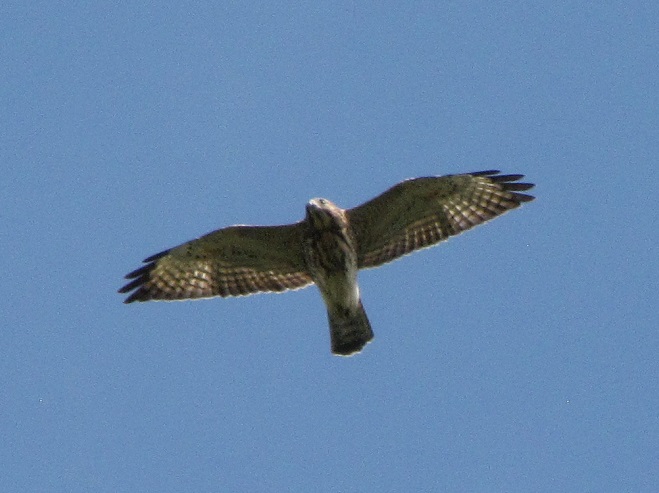
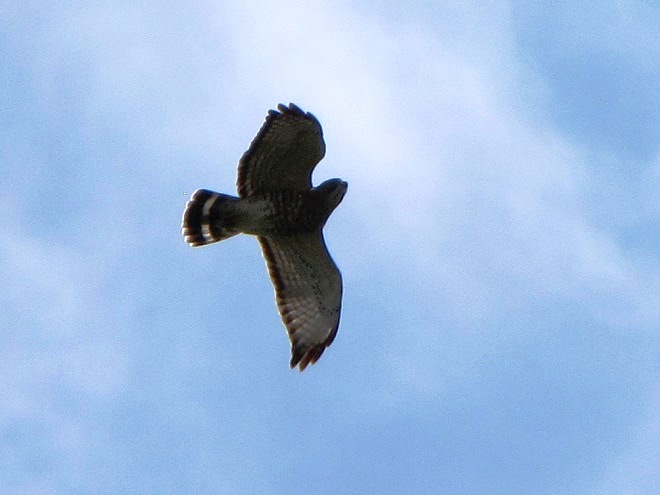
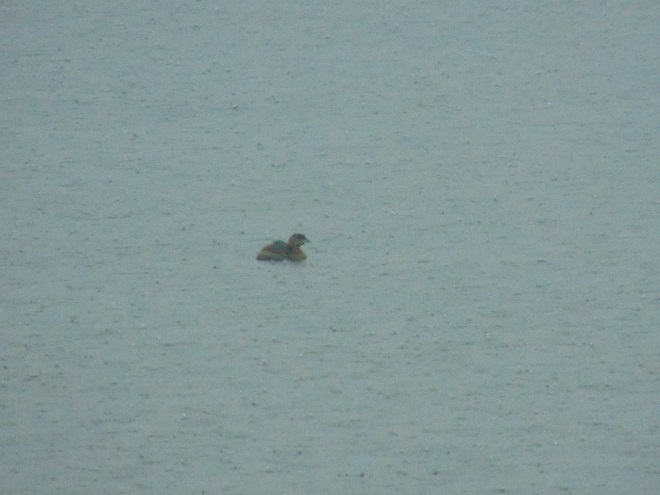
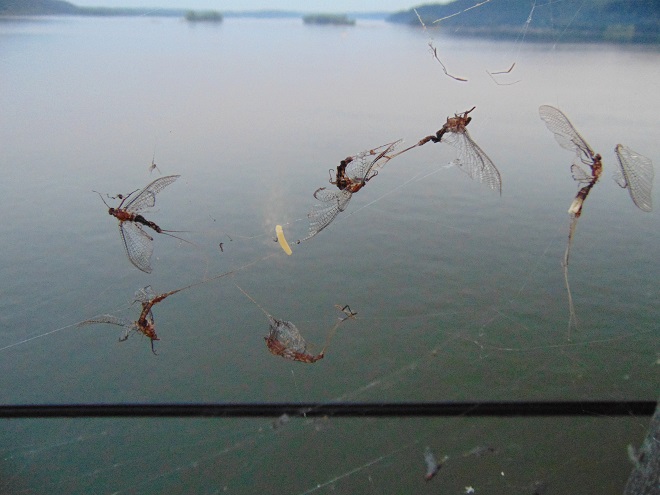
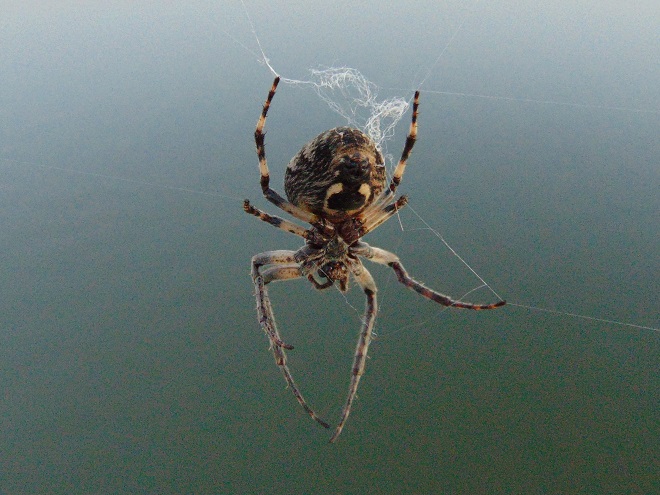
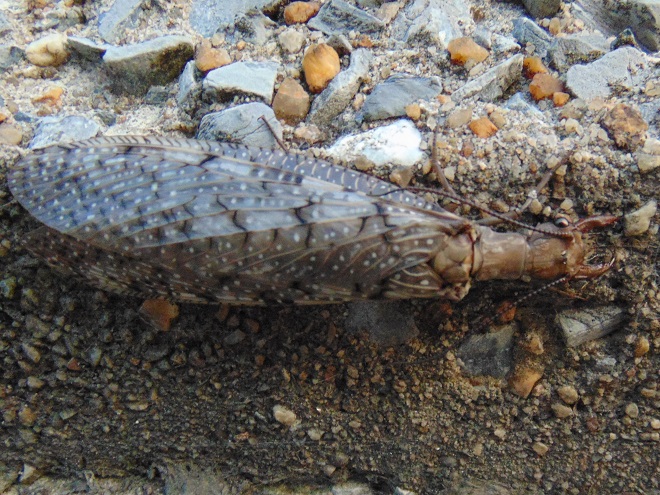
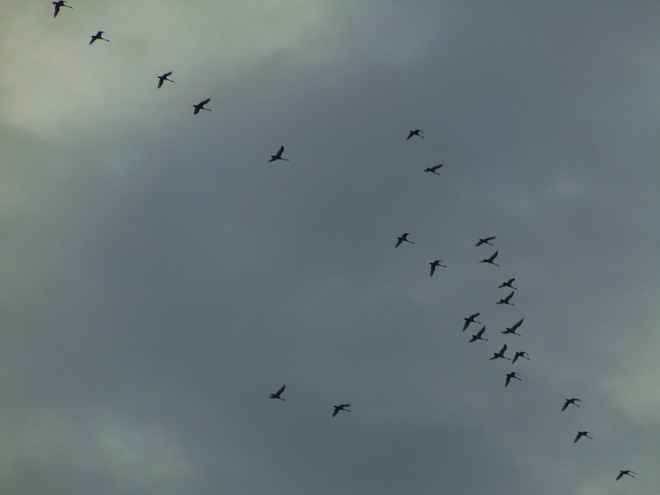
This morning, the Lower Susquehanna River Watershed experienced remotely the effects of fire and ice.
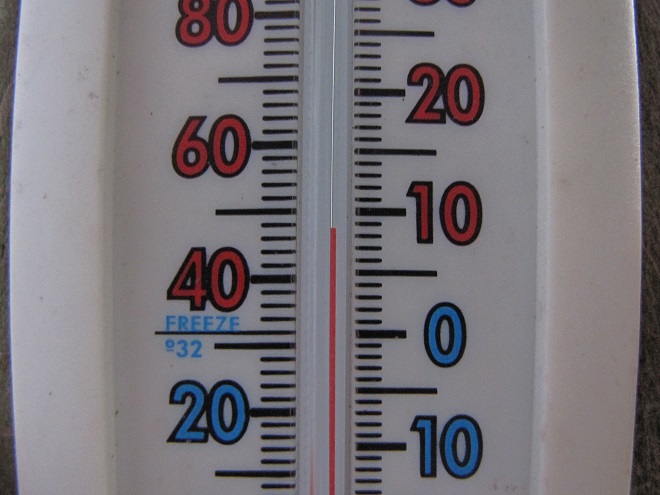
At daybreak, the cold air mass that brought the first freeze of the season to northernmost New England gave us a taste of the cold with temperatures below 50 degrees throughout.
The air temperature at daybreak in the Gettysburg Basin east of Conewago Falls.
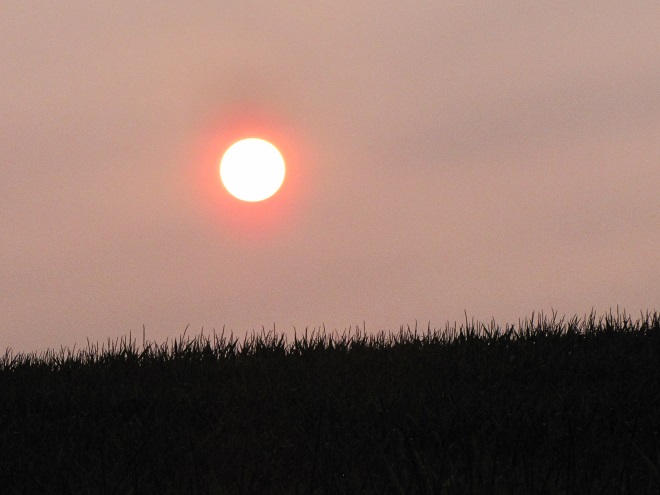
At sunrise, the cloudless sky had a peculiar overcast look with no warm glow on buildings, vegetation, and terrain. Soon, the sun was well above the horizon, yet there was still a sort of darkness across the landscape.
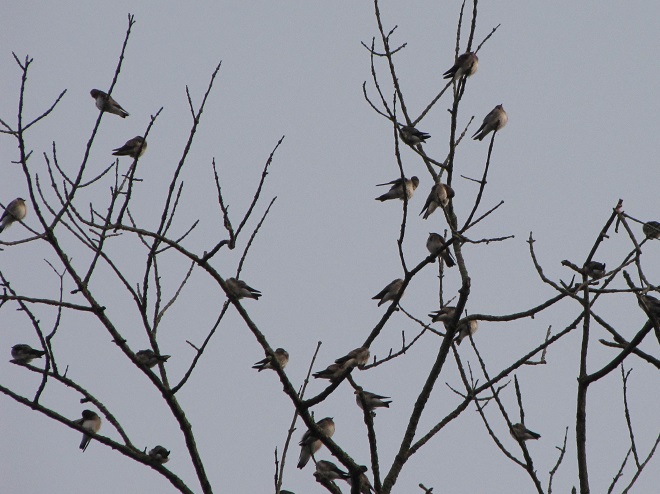
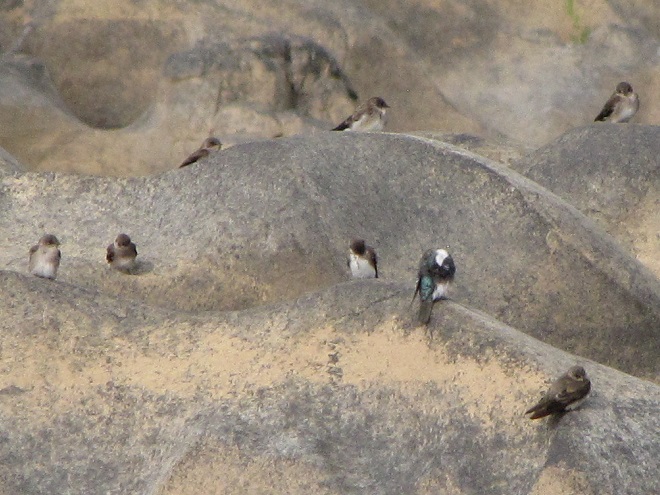
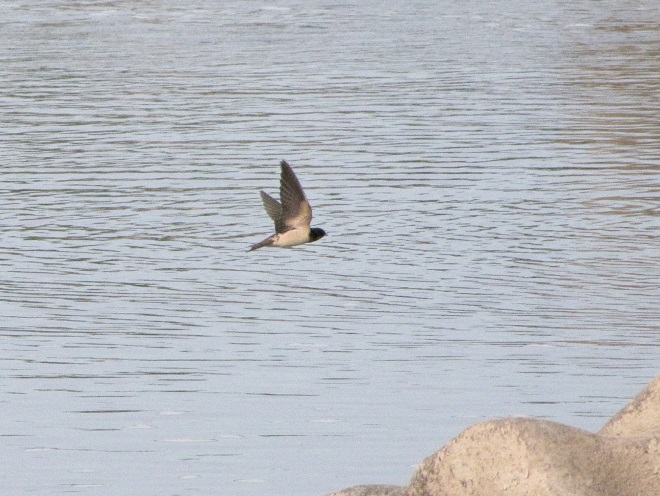
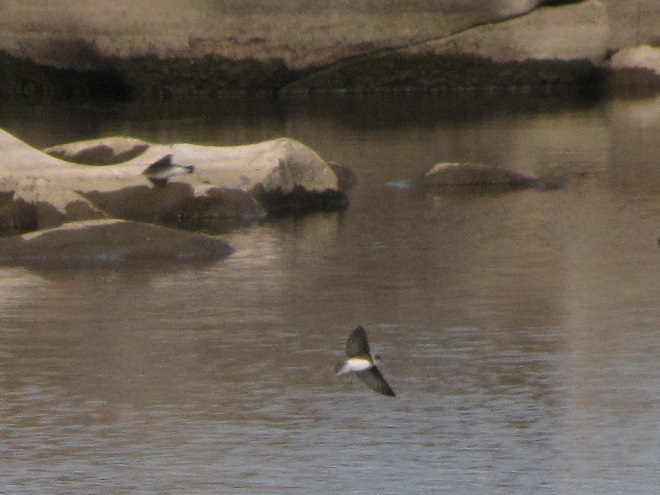
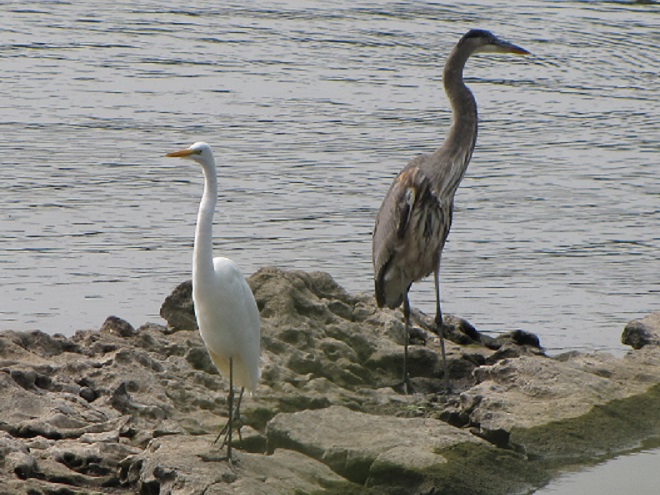
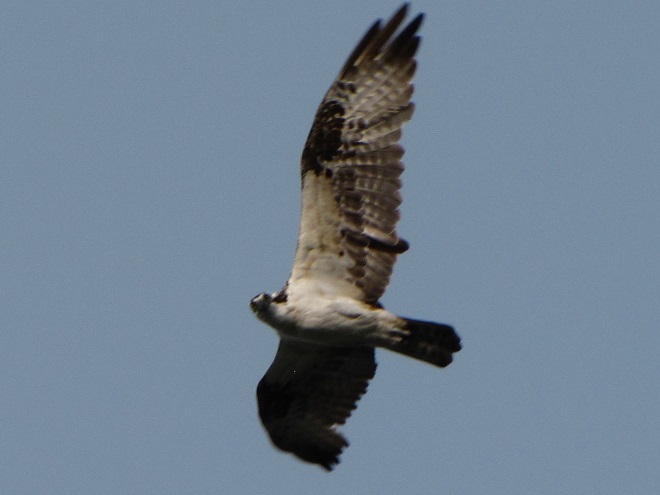
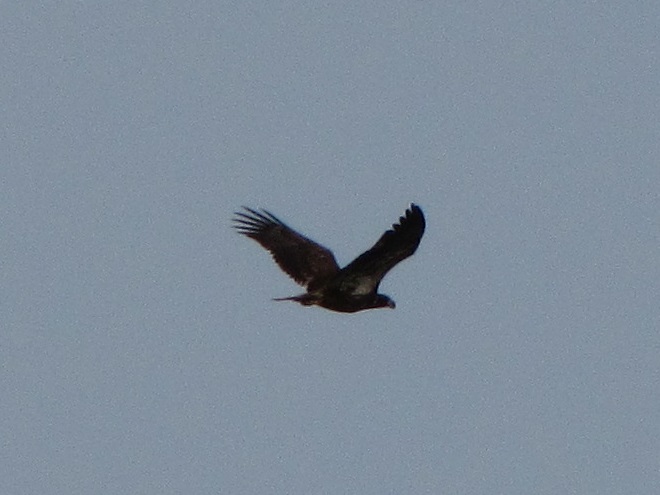
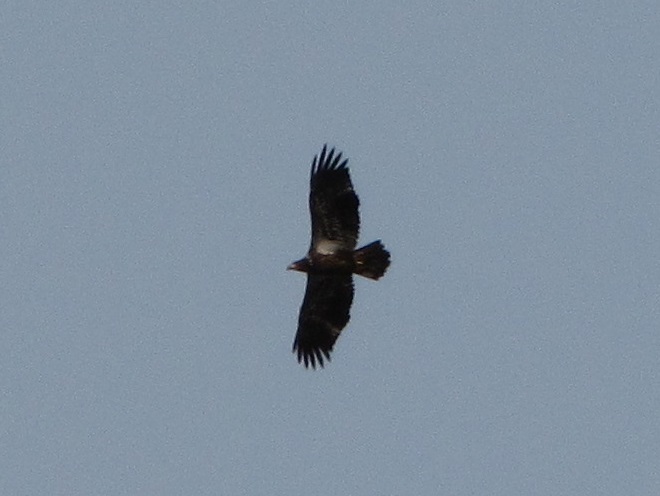
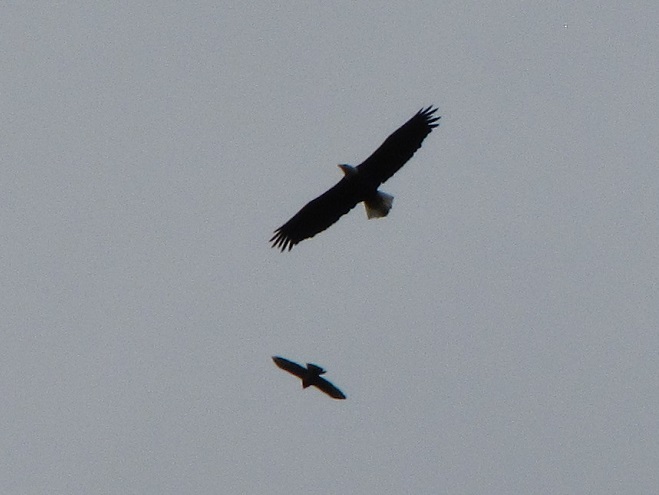
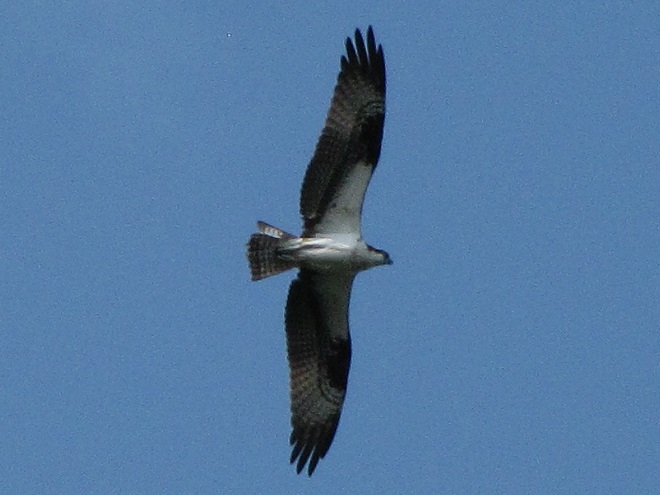
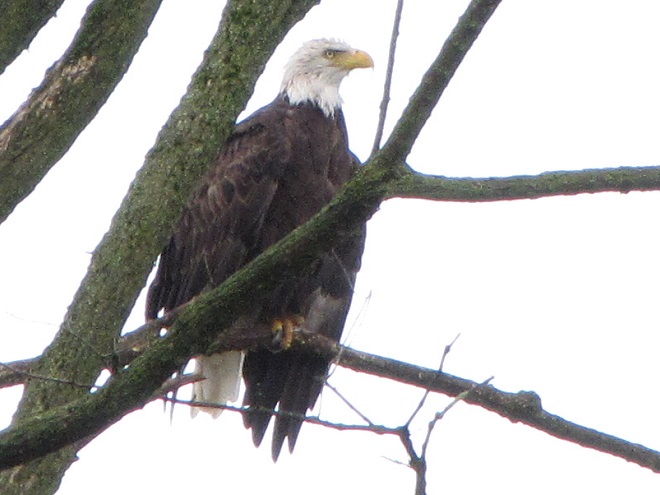
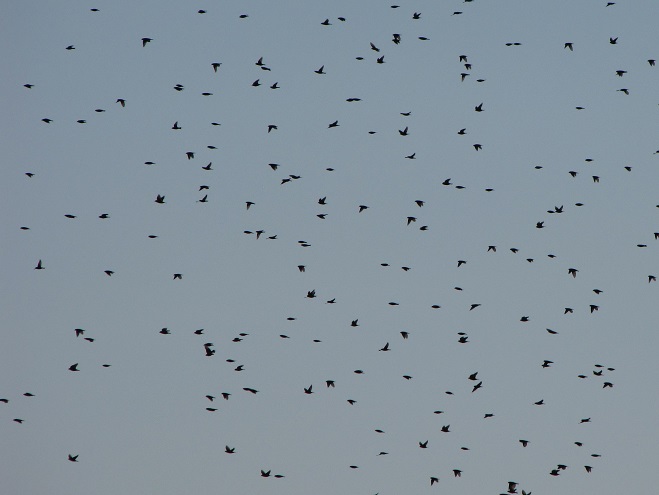
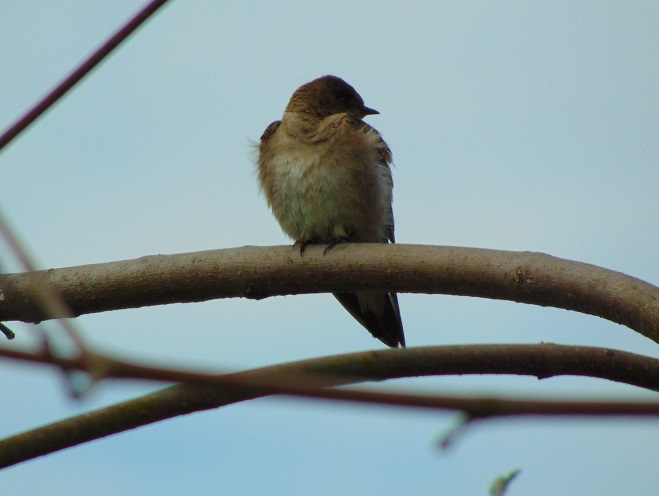
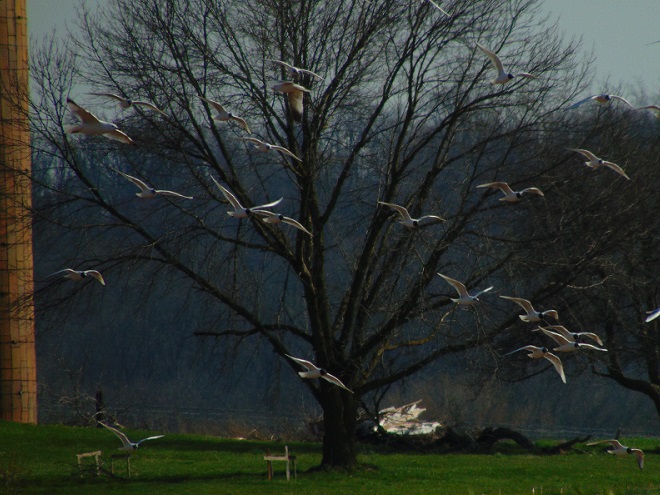
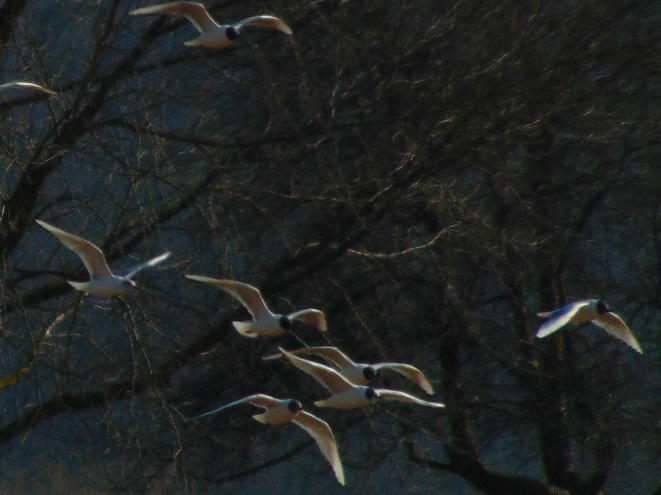
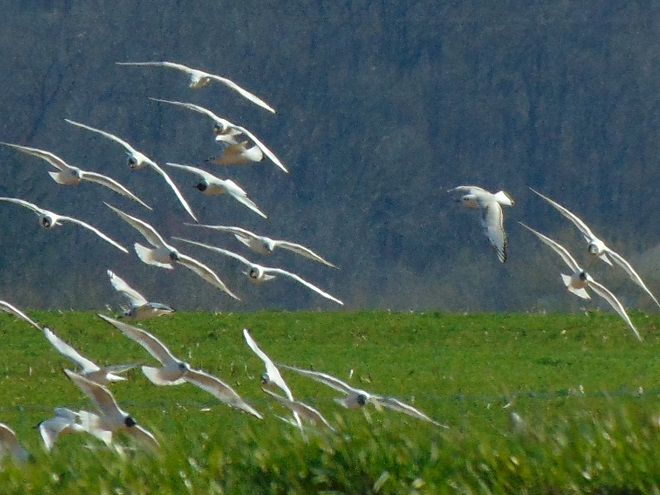
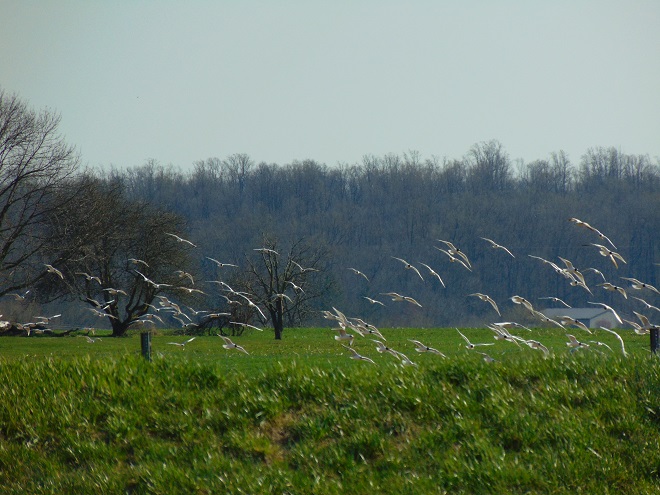
Smoke from massive wildland fires in the Pacific Coast States created a haze that persisted throughout the day in the Susquehanna valley.Away from traffic and the odors of agriculture and urban life, the smell of wood smoke was easily detectable. The haze from fires almost 3,000 miles away made it appear to be an overcast day at Conewago Falls.Due to the sudden cold, there were no insects flying above the Susquehanna during the first hour of daylight this morning, so swallows gathered in the trees to conserve energy until the hunt would be more productive.The diabase boulders at Conewago Falls retain heat and provide an even better refuge from the cold than a dead tree on a chilly morning. Here, a juvenile and an adult Tree Swallow (center) are surrounded by Northern Rough-winged Swallows. Hundreds of each of these migratory species were feeding at the falls today.Two dozen or more Barn Swallows, including this juvenile, were seen among the swarming birds.Several late Bank Swallows, including this one (bottom center), were among the flocks of migrants at Conewago Falls this morning. One Cliff Swallow (Petrochelidon pyrrhonota) was seen as well.A Great Egret (Ardea alba) and a Great Blue Heron.An Osprey searching the clear pools and rapids for a morning meal.A juvenile Bald Eagle with the same goal in mind.The same Bald Eagle keeping a close watch on the Osprey. Bald Eagles frequently ambush Ospreys to steal their catch. For a young eagle, acquiring the skill of fish theft may improve its chances of survival, at least until the Ospreys head south.
All that bright filtered sunlight was ideal for photographing butterflies along the Conewago Falls shoreline. Have a look.
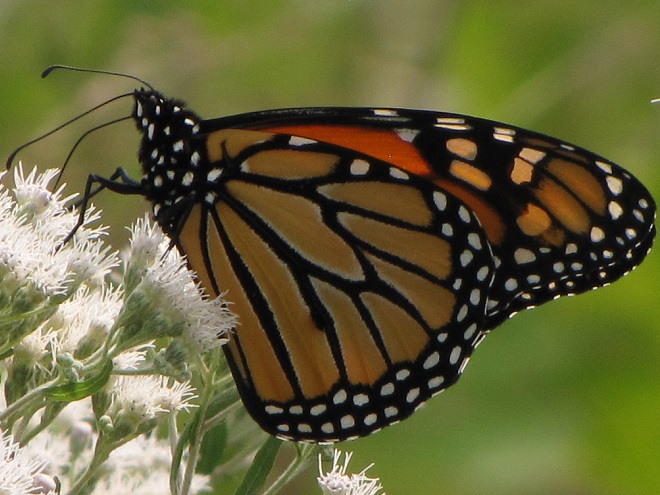
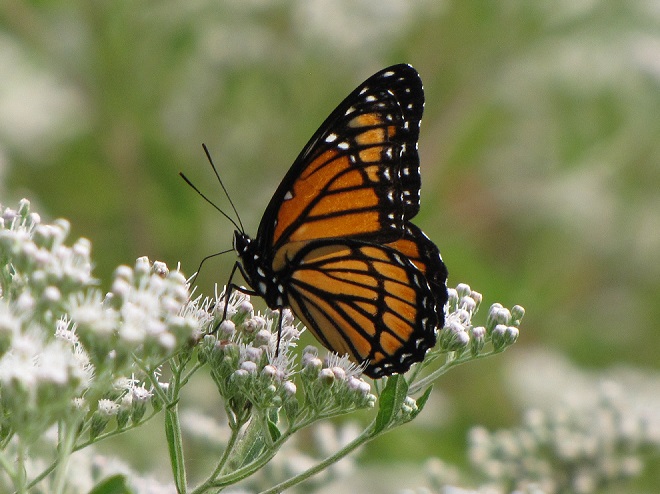
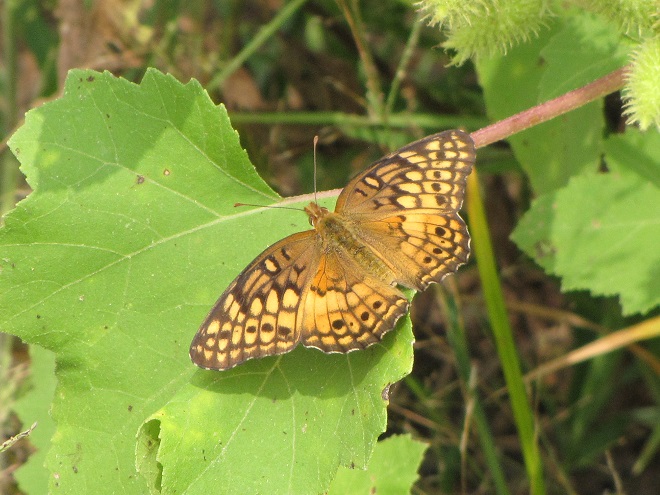
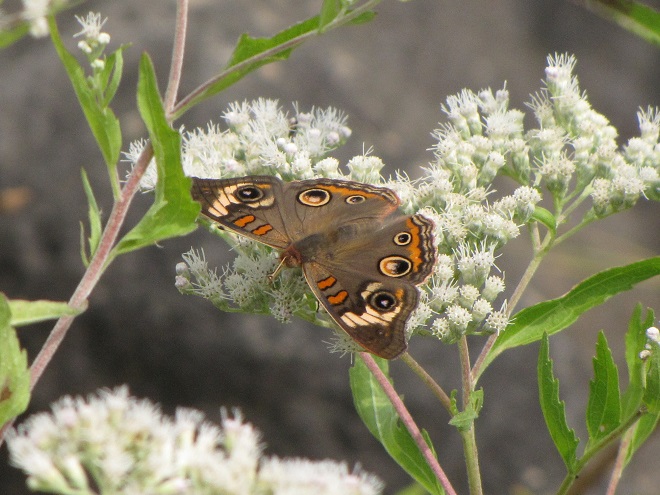
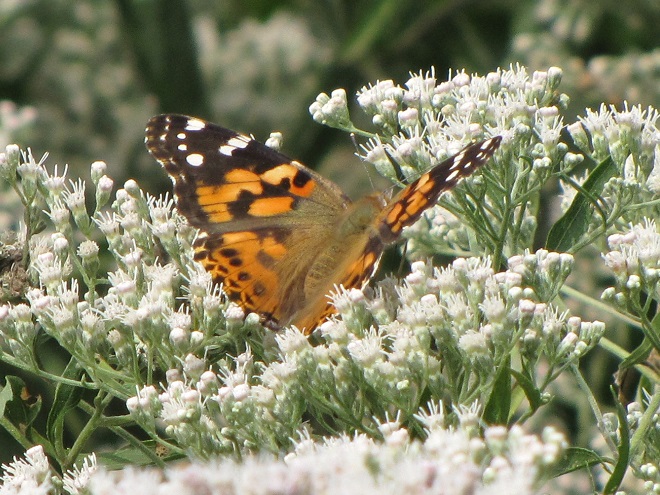
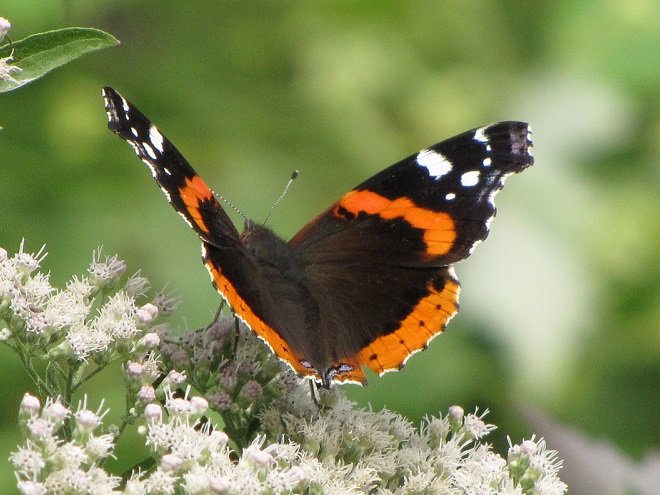
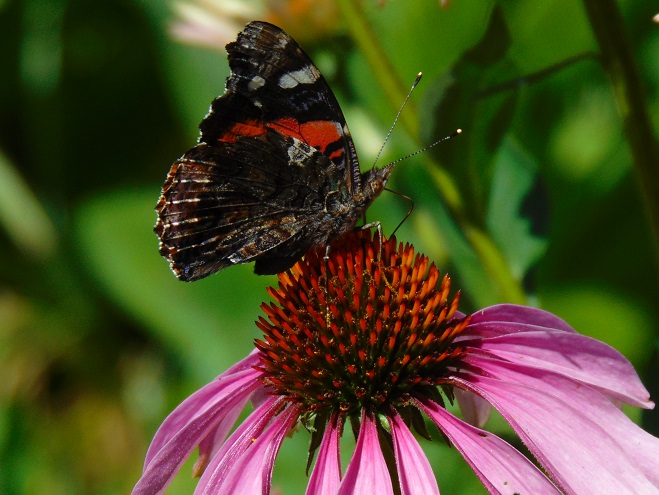
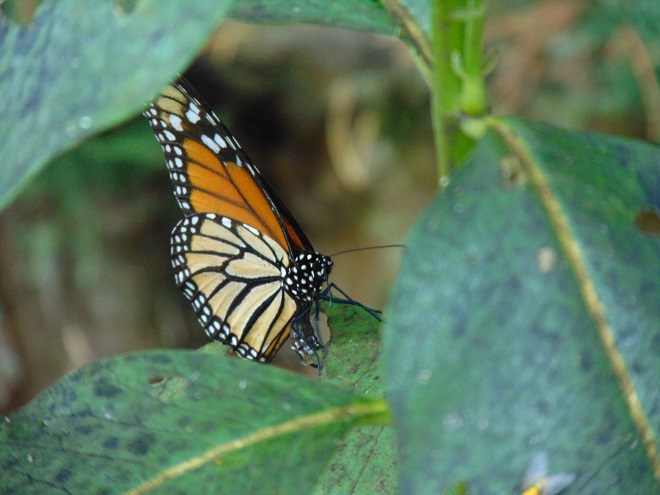
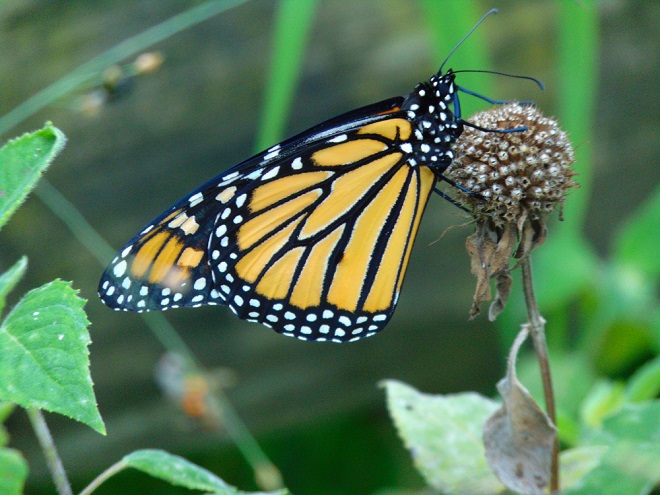
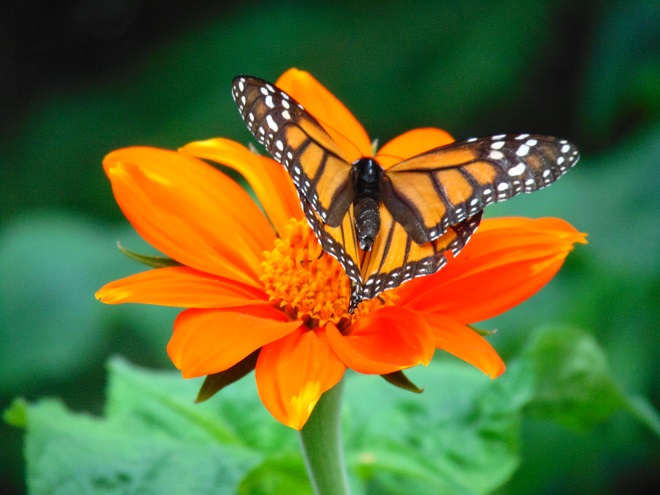
During the late morning, dozens of Monarch butterflies migrated past Conewago Falls. This one paused to feed.The Viceroy (Limenitis archippus) is a Monarch mimic. Its appearance fools would-be predators into thinking it is a Monarch and possesses the same foul flavor as the milkweed-raised model.This Variegated Fritillary (Euptoieta claudia) was among the late-season butterflies at Conewago Falls.The Common Buckeye is presently just that, very common on flowers and moist sandy soil around the falls.The Painted Lady is a regularly-occurring migratory species of butterfly.The Red Admiral is typically a common to abundant migrant. So far in 2020, they are scarce in the lower Susquehanna valley.
If it can fly, there’s a pretty good chance it was at Second Mountain today.
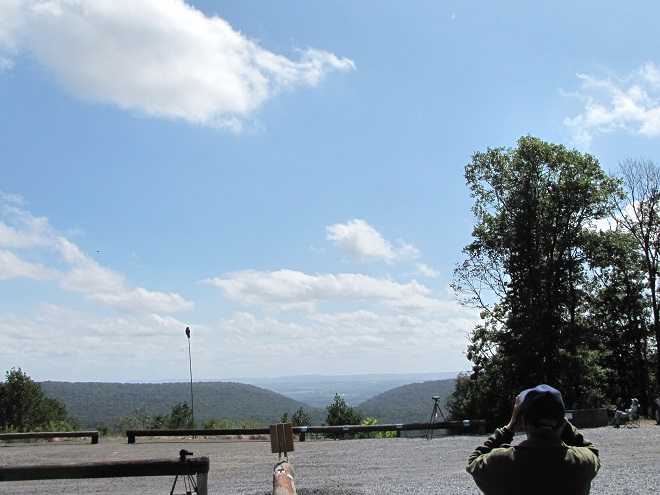
What follows is a photographic chronology of some of today’s sightings at Second Mountain Hawk Watch at Fort Indiantown Gap in Lebanon County, Pennsylvania. We begin with some of the hundreds of migratory songbirds found at the base of the mountain along Cold Spring Road near Indiantown Run during the early morning, then we continue to the lookout for the balance of the day.
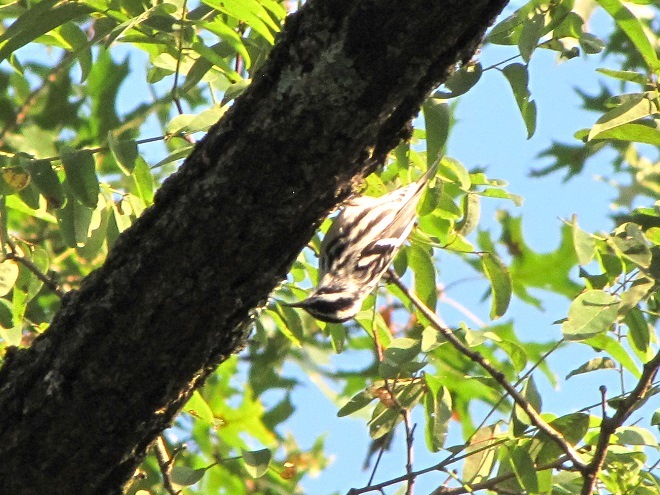
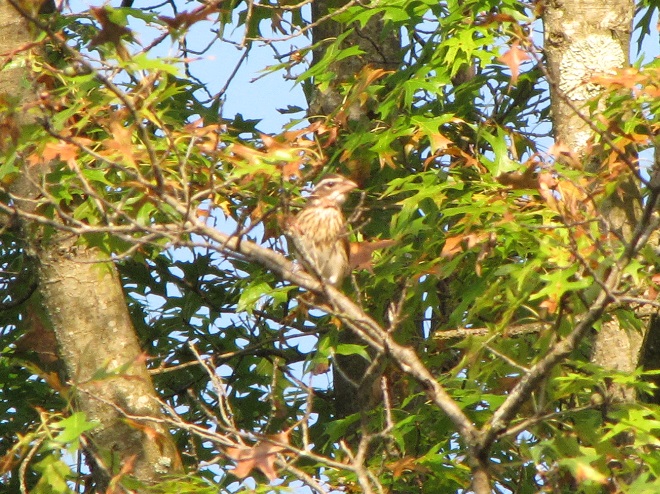
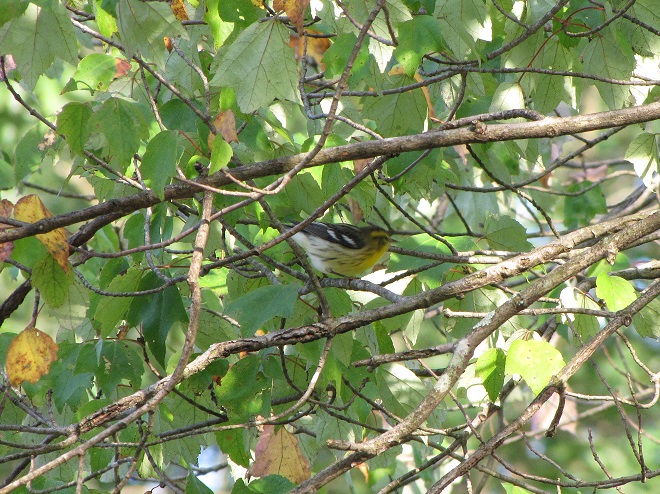
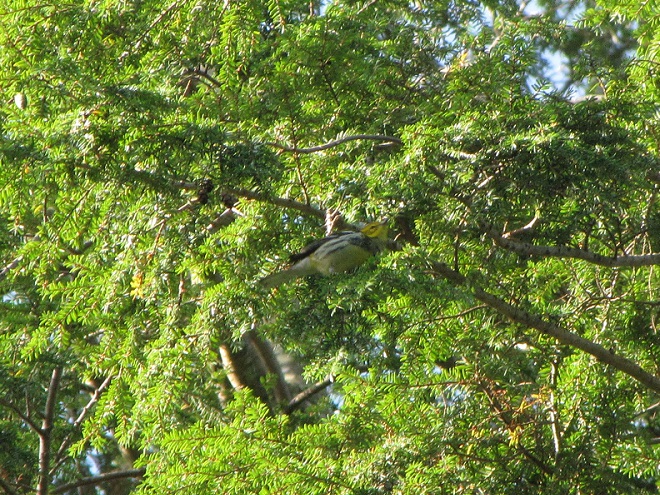
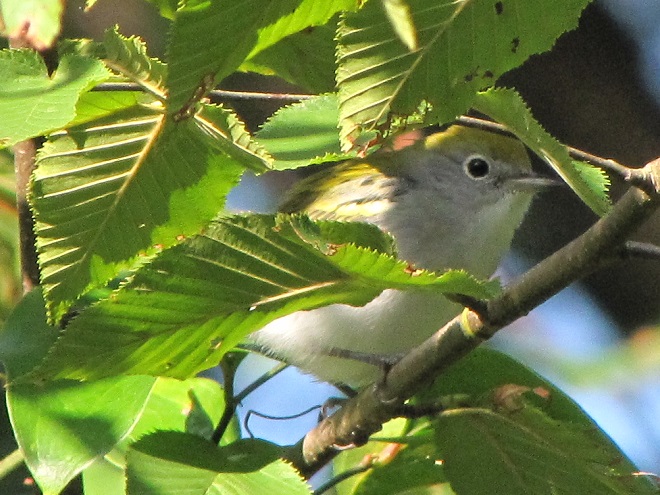
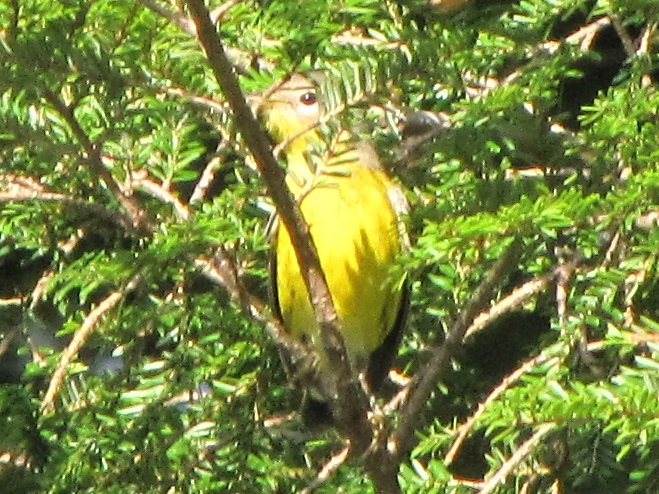
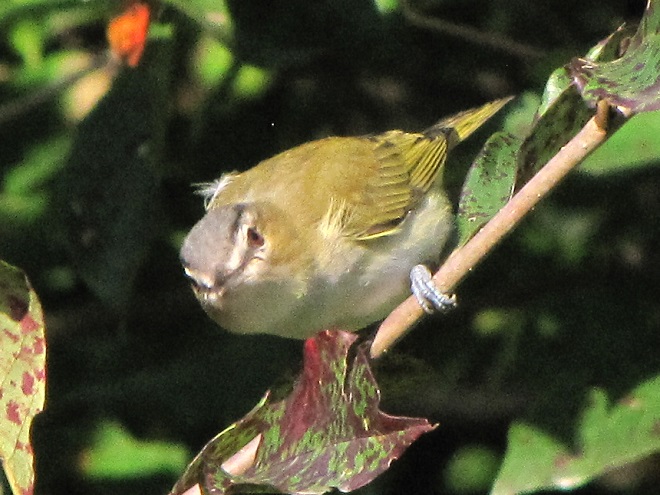
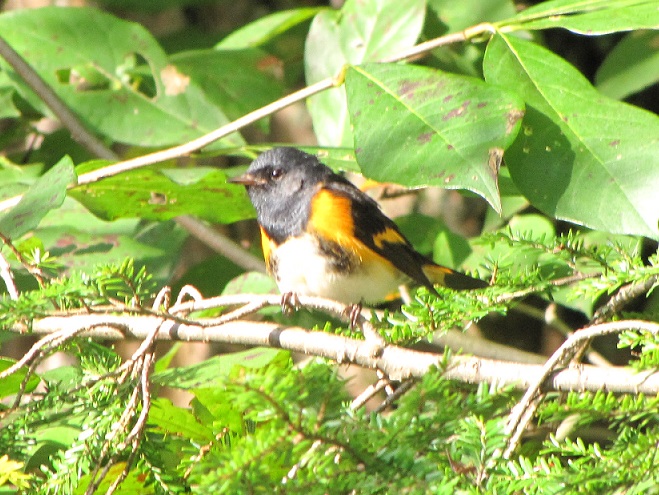
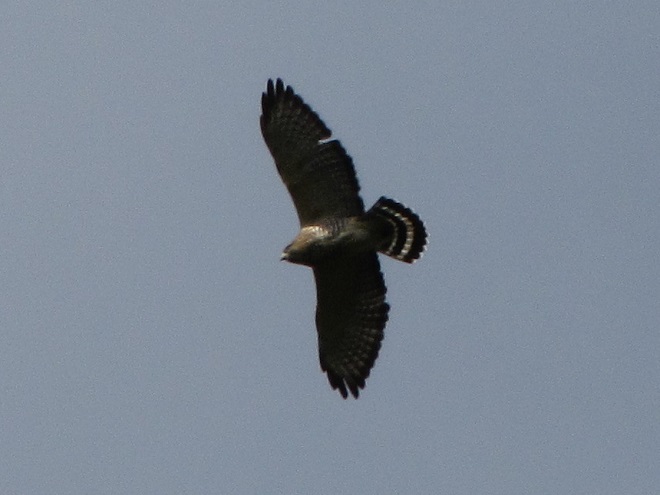
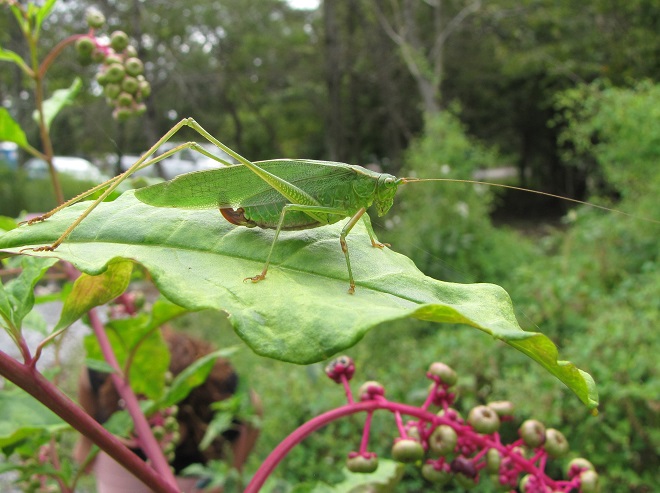
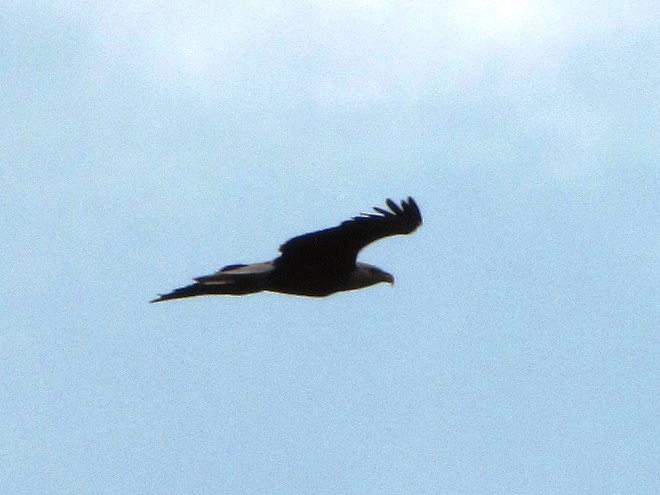
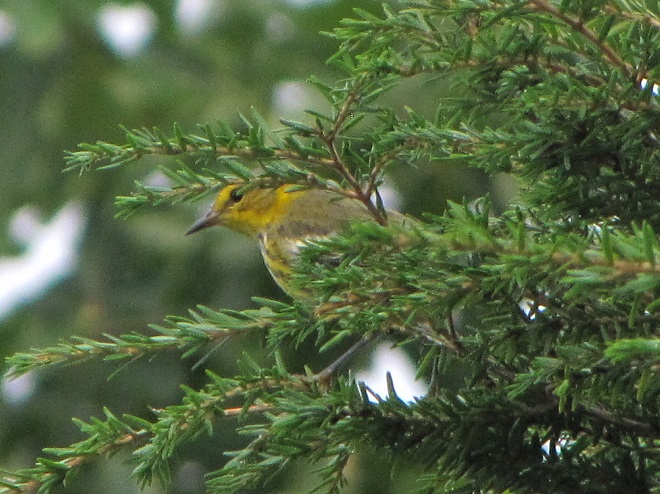
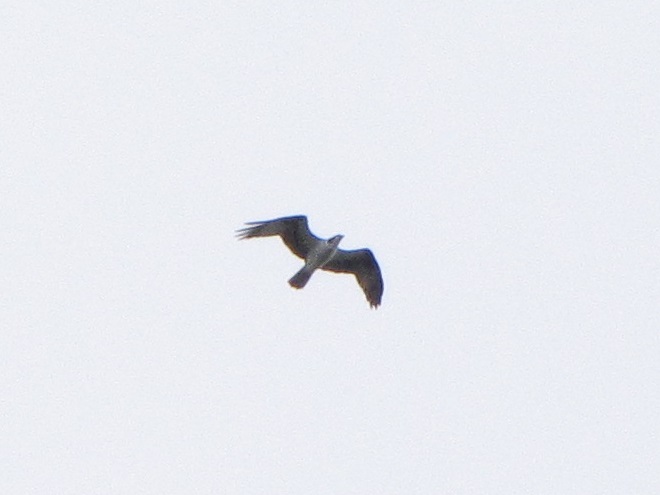
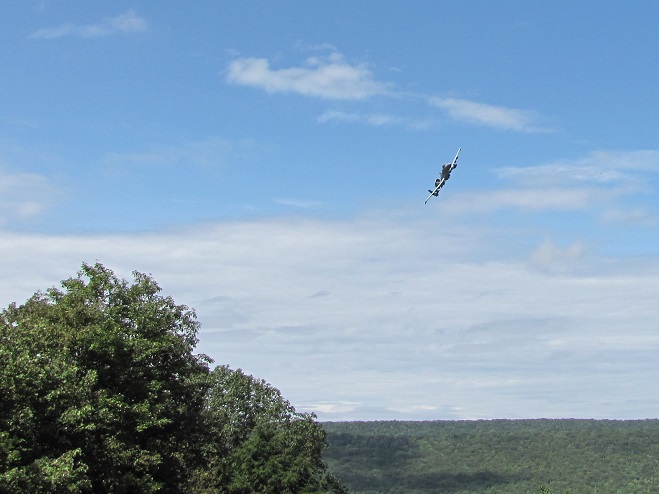
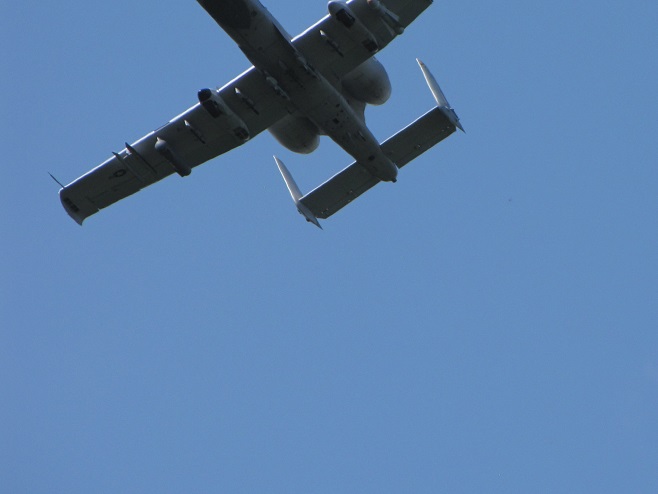
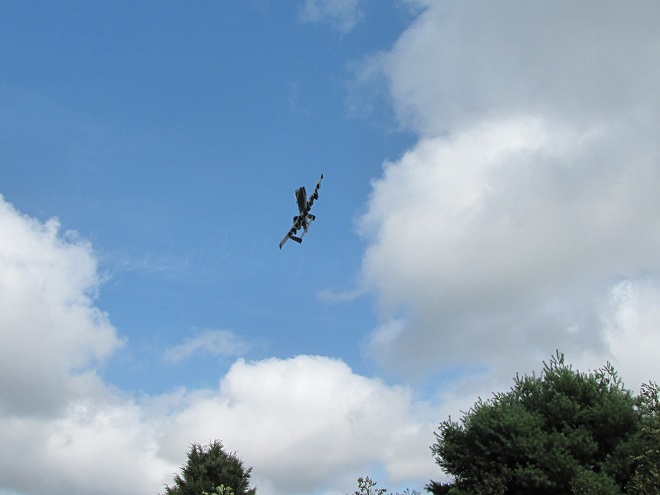
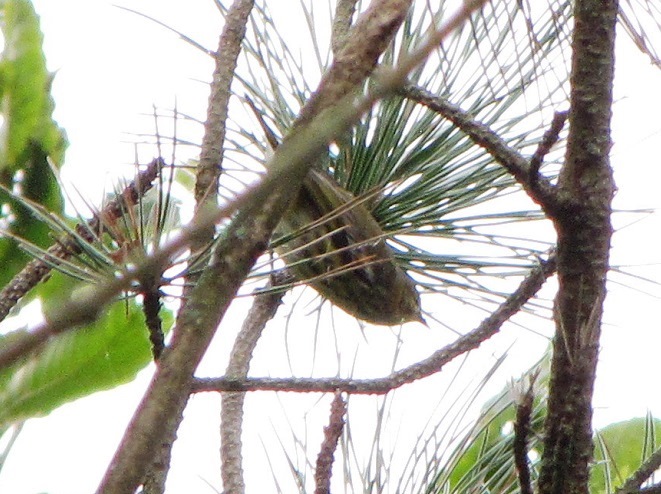
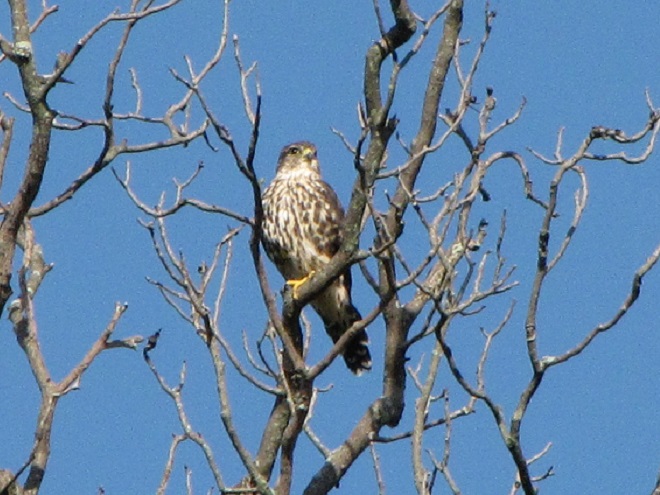
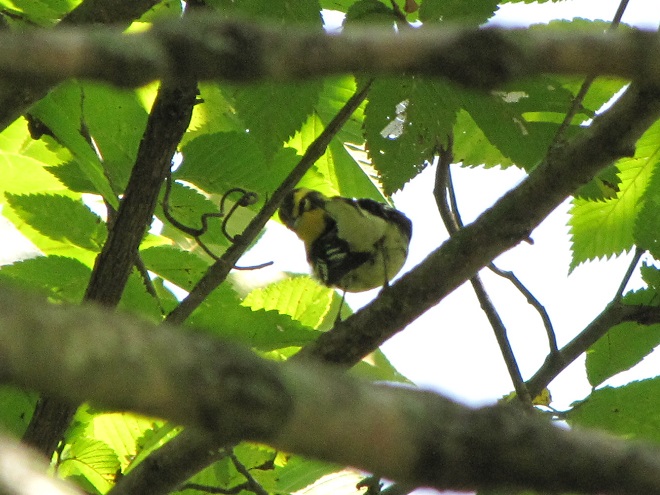
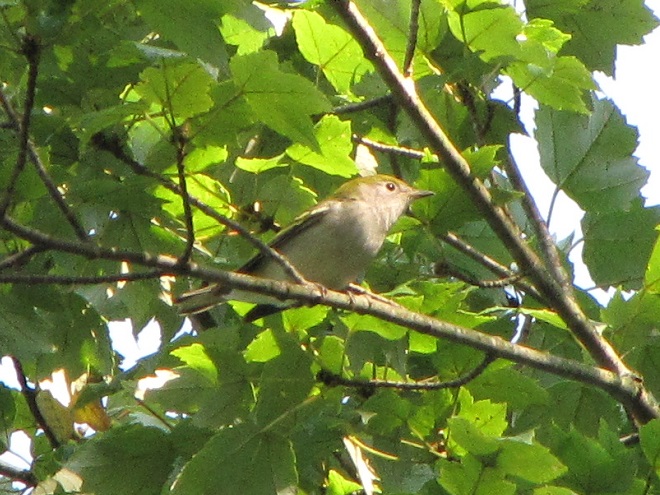
A Black-and-white Warbler (Mniotilta varia) searching the trunk of a tree for insects.A Rose-breasted Grosbeak.A Blackburnian Warbler high in the forest canopy.A Black-throated Green Warbler bouncing from branch to branch as it feeds.A Chestnut-sided Warbler lurks among the foliage.A Magnolia Warbler.One of a hundred or more Red-eyed Vireos found swarming the treetops, and occasionally the understory, while engaging in a wild feeding frenzy.A male American Redstart. Judging by that gray hood, it’s probably experiencing its second fall migration.Eyes were skyward at the Second Mountain Hawk Watch lookout as Broad-winged Hawks began streaming through during the mid-morning.During the morning flight, Broad-winged Hawks including this adult floated by the lookout riding updrafts created by the south wind striking the face of the mountain ridge.As the overcast became more scattered and more sunlight reached the ground, Broad-winged Hawks began riding thermal currents to gain altitude before gliding off to the southwest in continuance of their long trip to the tropics. At times, birds would disappear into the base of the clouds before ending their climb and sailing away.Broad-winged Hawks rely principally upon amphibians and large insects like this bush katydid (Scudderia species) for sustenance. With freezing temperatures just around the corner, “broad-wings” must make their way to warmer climes early or risk starvation.A Bald Eagle always gets observers looking.A juvenile Broad-winged Hawk.A juvenile Cooper’s Hawk.A Broad-winged Hawk has a look around.One never quite knows what one may see when having a look around.A Cape May Warbler (Setophaga tigrina) in the lookout hemlock.A Black Saddlebags, one of several migratory dragonflies seen today.An Osprey glides through in the afternoon glare.A speedy Merlin thrilled observers with a close approach.One must remember that Fort Indiantown Gap is an active military installation, so from time to time training and drilling exercises may interrupt bird observation activities at the Second Mountain Hawk Watch.Today, speedy A-10 Warthog attack aircraft piloted by members of the Maryland Air National Guard based at Glenn Martin Field thrilled observers on the lookout with several close passes during their training runs.And repeat.Drill complete.
The total number of Broad-winged Hawks observed migrating past the Second Mountain lookout today was 619. To see the daily raptor counts for Second Mountain and other hawk watches in North America, and to learn more about each site, be sure to visit hawkcount.org
Okay, so it happened to be cloudy with drizzle at sunrise—not the best conditions for observing birds in the treetops. But that inclement weather effectively grounded the overnight flight of migrating songbirds leading to a really big fallout in the lower Susquehanna valley this morning.
While straining one’s neck to gaze up into the forest canopy, hundreds of migrants including warblers, vireos, tanagers, thrushes, and flycatchers could be seen. Identifying each was impossible.
Here are of few of this morning’s arrivals. Manually setting the camera to a slower shutter speed compensated a little bit for the backlighting caused by cloudy conditions.
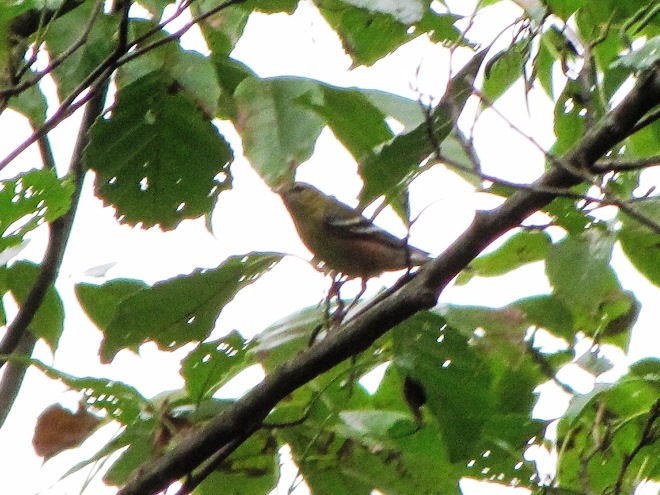
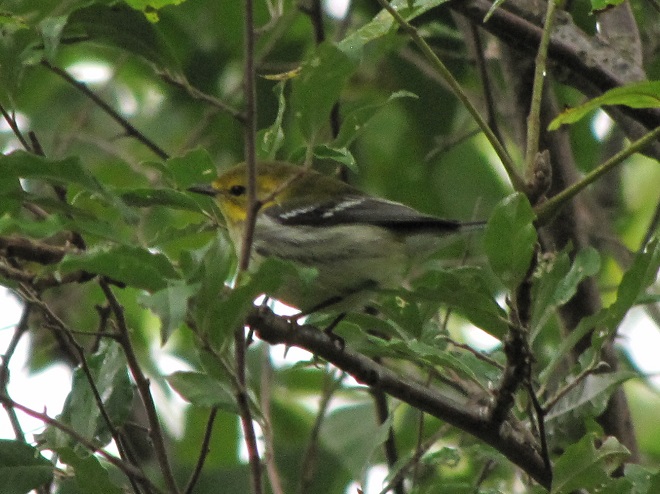
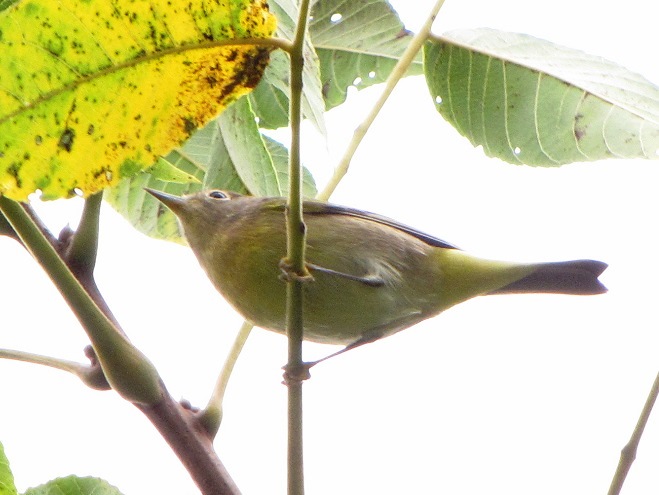
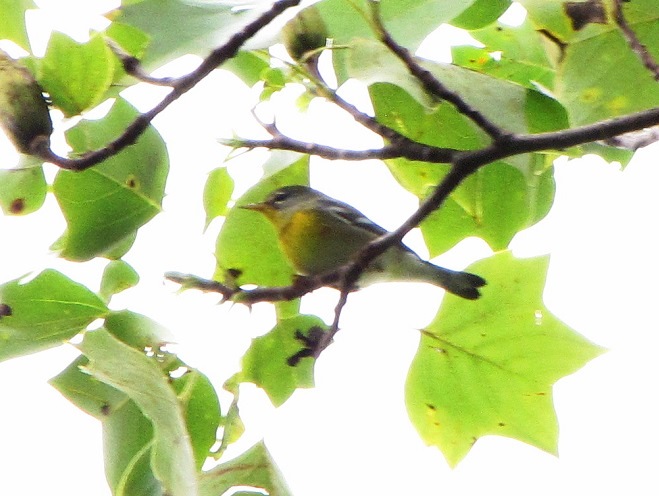
Pine Warbler (Setophaga pinus).Bay-breasted Warbler.Black-throated Green Warbler.Nashville Warbler (Leiothlypis ruficapilla).Northern Parula (Setophaga americana).
Peak numbers of Broad-winged Hawks will pass through the area during the coming two weeks. They most often migrate in groups, with sizes ranging from several individuals to hundreds or even thousands of birds. Despite this being a less than ideal day for riding thermals and gliding off towards the southwest to continue their journey to the tropics, some “broad-wings” ventured aloft and were on their way soon after the drizzle subsided during mid-morning.
A Broad-winged Hawk lifts off from the cover of the forest where it spent the night.The same Broad-winged Hawk (bottom) and an adult Bald Eagle gain altitude on a thermal updraft before the former glides away toward the southwest.
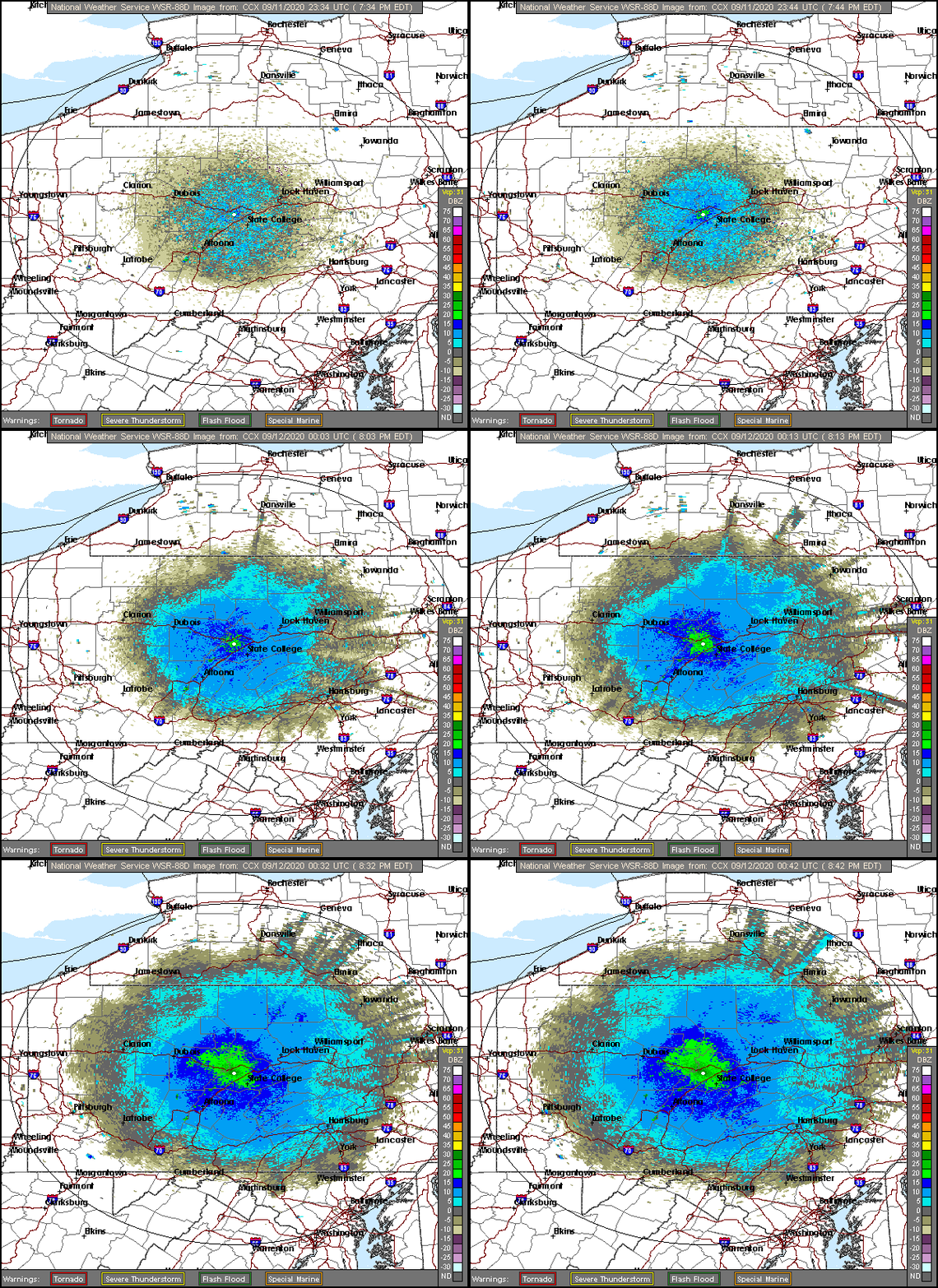
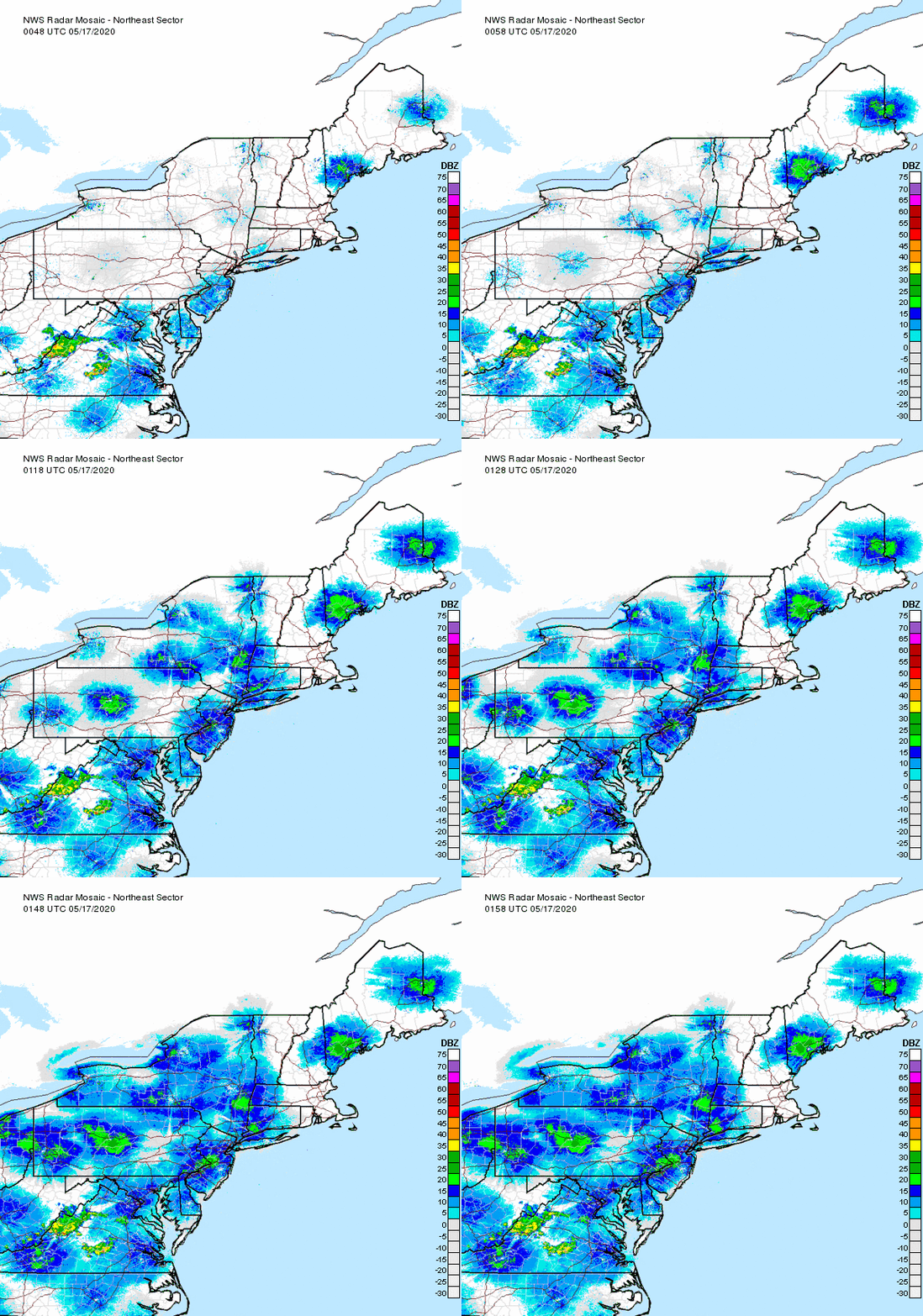
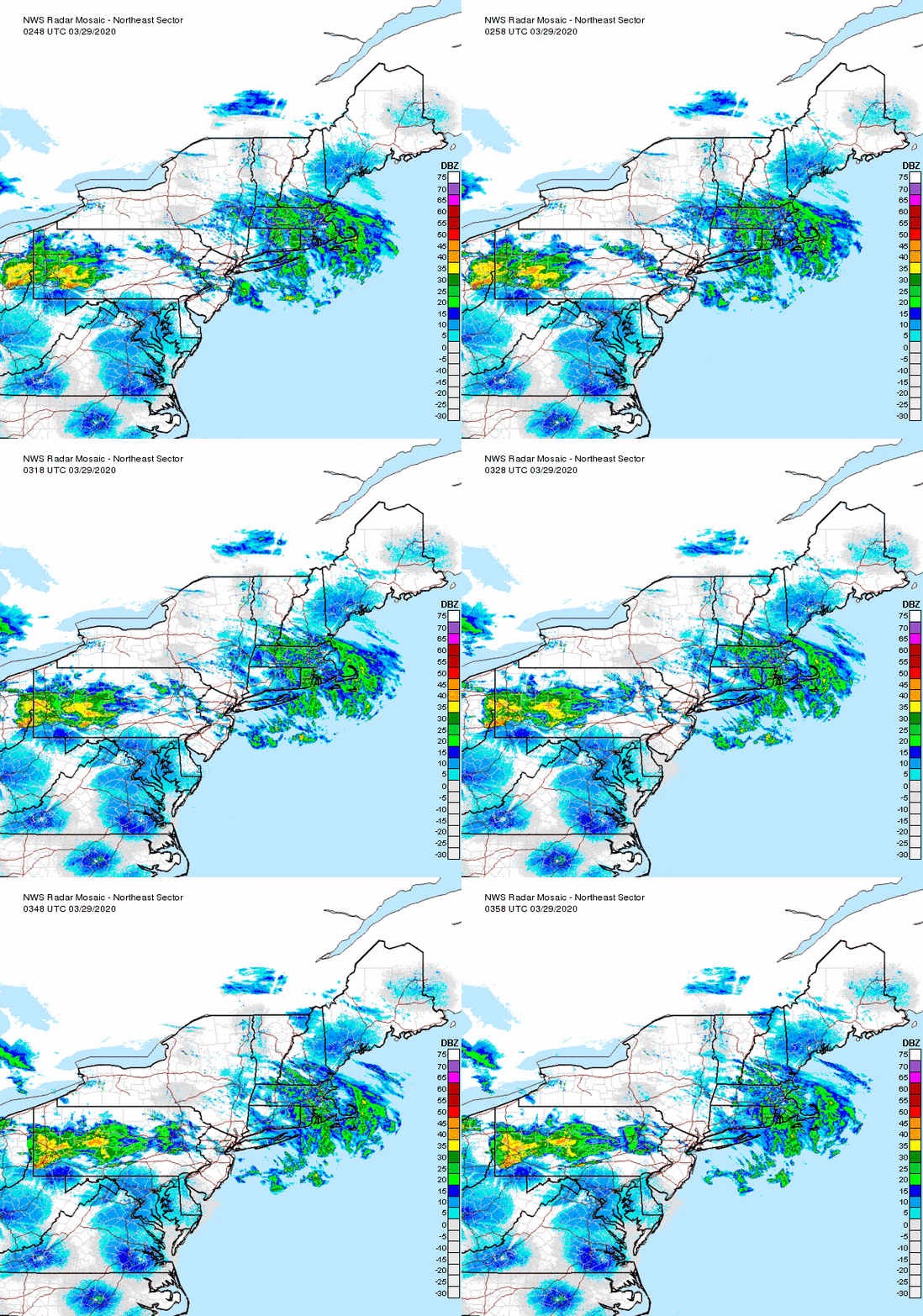
It looks like a really big flight of nocturnally migrating birds is underway tonight. Returns from National Weather Service radar sites throughout the northeast are indicating liftoffs like this one around the station in State College, Pennsylvania.
(NOAA/National Weather Service image)
Conditions are ideal for a good fallout of Neotropical migrants at daybreak. So get out there this weekend and see ’em before they’re gone. Try thickets and forests where the rising sun provides good light for observing and warmth on the vegetation to get the bugs moving and birds feeding.
The southbound bird migration of 2020 is well underway. With passage of a cold front coming within the next 48 hours, the days ahead should provide an abundance of viewing opportunities.
Here are some of the species moving through the lower Susquehanna valley right now.
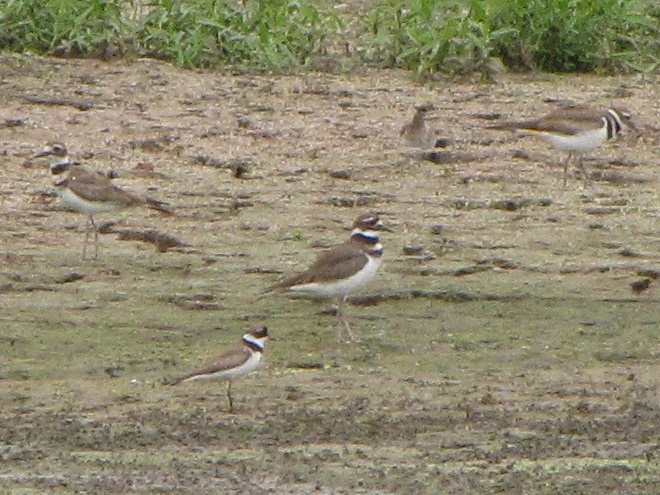
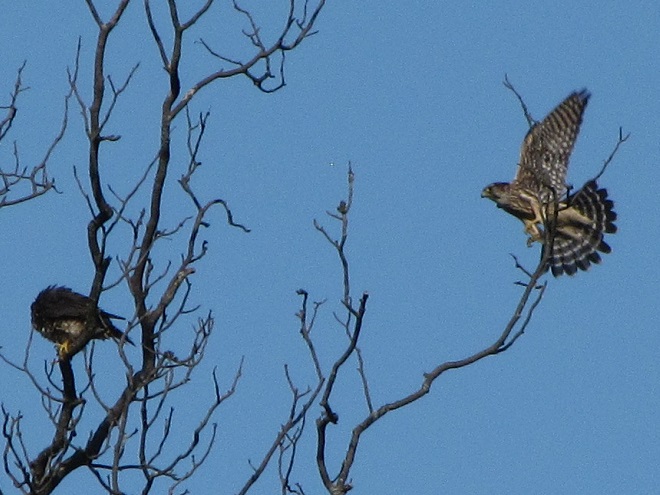
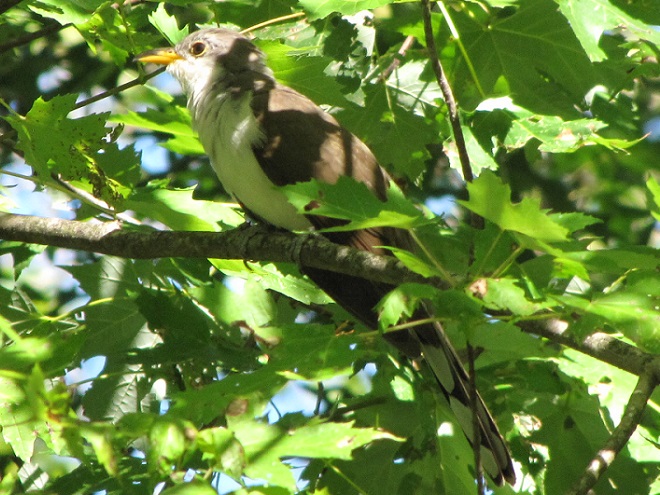
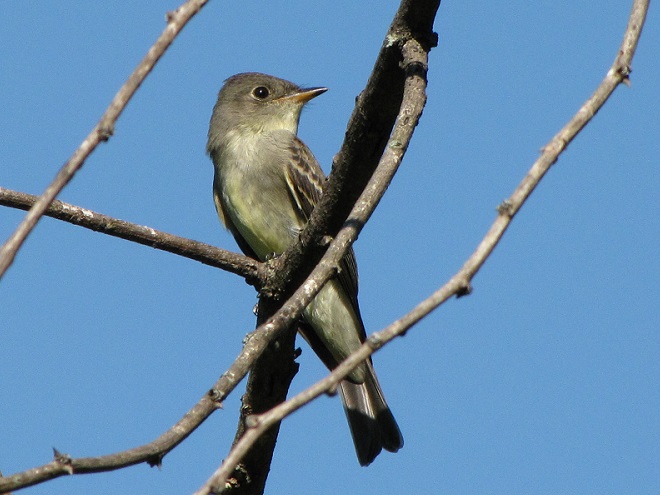
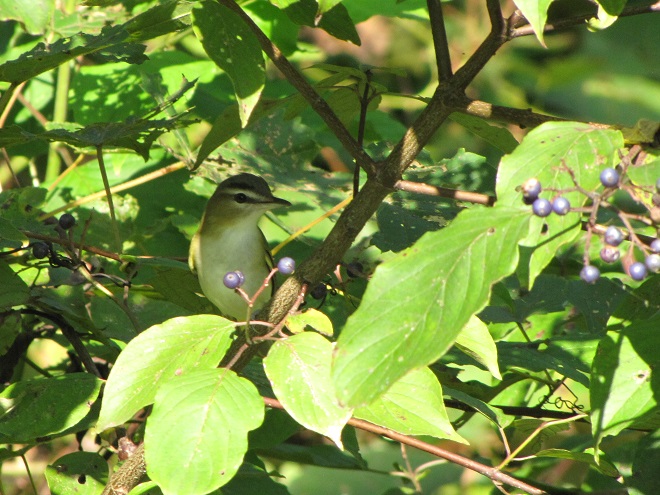
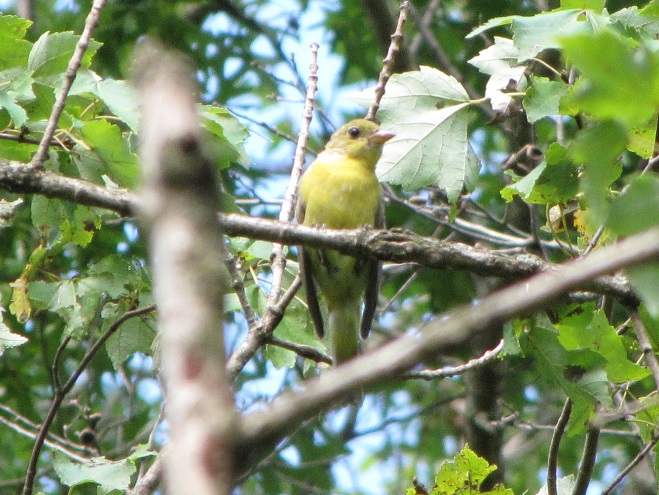
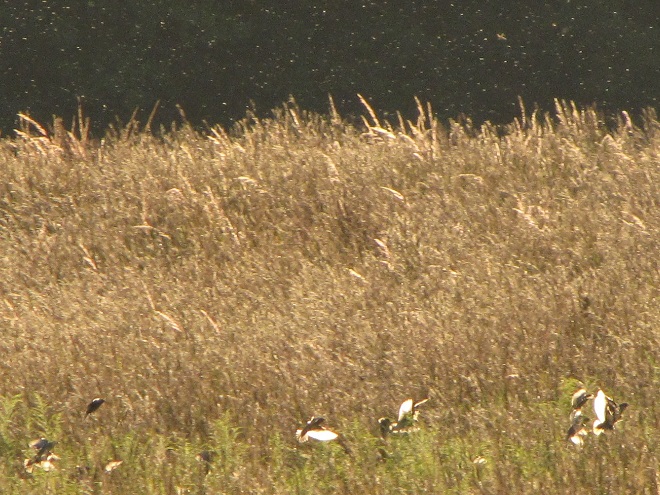
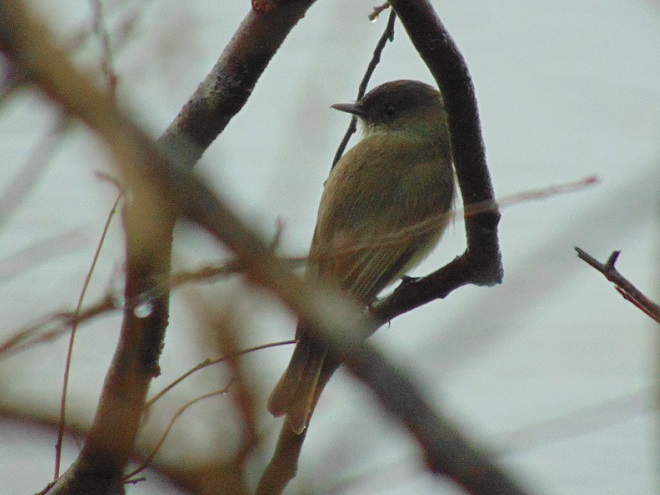
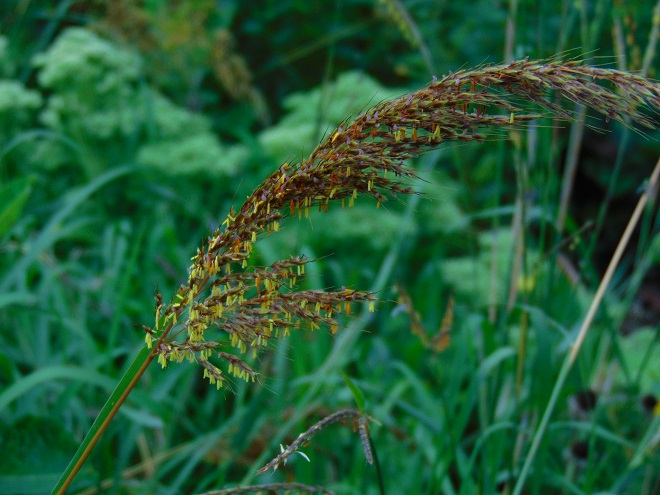
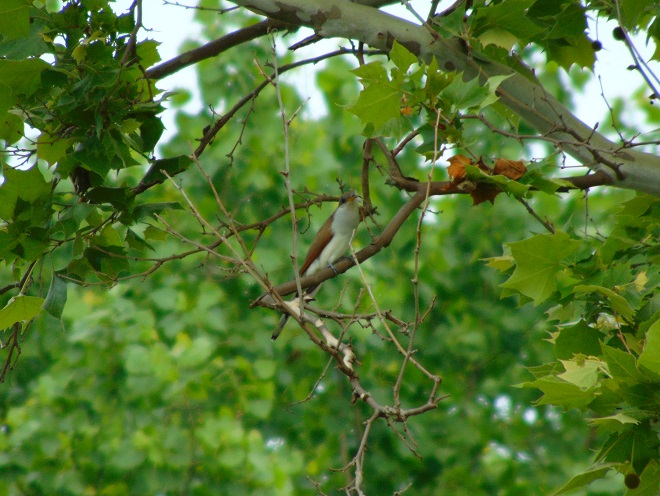
Blue-winged Teal are among the earliest of the waterfowl to begin southward migration.Sandpipers and plovers have been on the move since July. The bird in the foreground with these Killdeer is not one of their offspring, but rather a Semipalmated Plover (Charadrius semipalmatus), a regular late-summer migrant in the Lower Susquehanna River Watershed.Hawk watch sites all over North America are counting birds right now. The Osprey is an early-season delight as it glides past the lookouts. Look for them moving down the Susquehanna as well.Bald Eagles will be on the move through December. To see these huge raptors in numbers, visit a hawk watch on a day following passage of a cold front when northwest winds are gusting.Merlins were seen during this past week in areas with good concentrations of dragonflies. This particular one at Middle Creek Wildlife Management Area in Lancaster and Lebanon Counties……was soon visited by another.Check the forest canopy for Yellow-billed Cuckoos. Some local birds are still on breeding territories while others from farther north are beginning to move through.Ruby-throated Hummingbirds are darting through the lower Susquehanna valley on their way to the tropics. This one has no trouble keeping pace with a passing Tree Swallow.Nocturnal flights can bring new songbirds to good habitat each morning. It’s the best time of year to see numbers of Empidonax flycatchers. But, because they’re often silent during fall migration, it’s not the best time of year to easily identify them. This one lacking a prominent eye ring is a Willow Flycatcher (Empidonax traillii).During the past two weeks, Red-eyed Vireos have been numerous in many Susquehanna valley woodlands. Many are migrants while others are breeding pairs tending late-season broods.During mornings that follow heavy overnight flights, Blackburnian Warblers have been common among waves of feeding songbirds.Chestnut-sided Warblers are regular among flocks of nocturnal migrants seen foraging among foliage at sunrise.Scarlet Tanagers, minus the brilliant red breeding plumage of the males, are on their way back to the tropics for winter.While passing overhead on their way south, Bobolinks can be seen or heard from almost anywhere in the lower Susquehanna valley. Their movements peak in late August and early September.During recent evenings, Bobolinks have been gathering by the hundreds in fields of warm-season grasses at Middle Creek Wildlife Management Area.If you go to see the Bobolinks there, visit Stop 3 on the tour route late in the afternoon and listen for their call. You’ll soon notice their wings glistening in the light of the setting sun as they take short flights from point to point while they feed. Note the abundance of flying insects above the Big Bluestem and Indiangrass in this image. Grasslands like these are essential habitats for many of our least common resident and migratory birds.
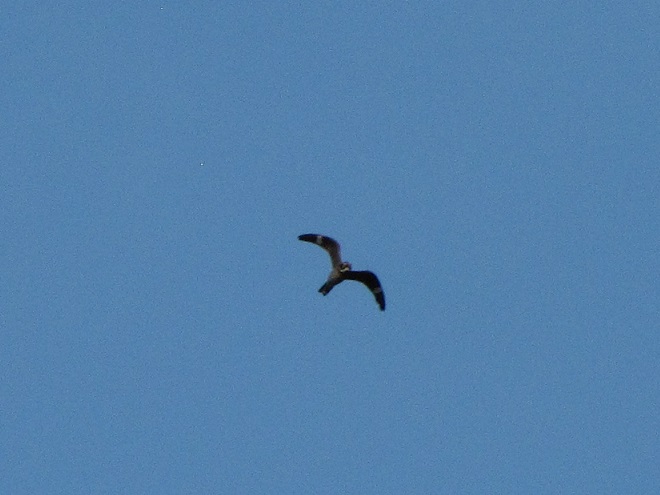
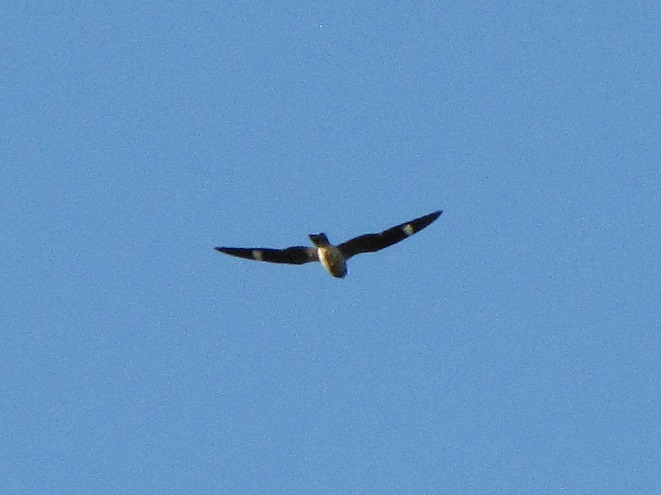
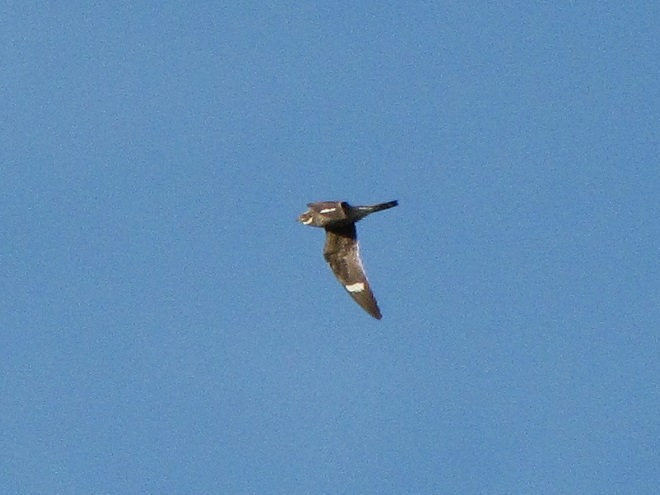
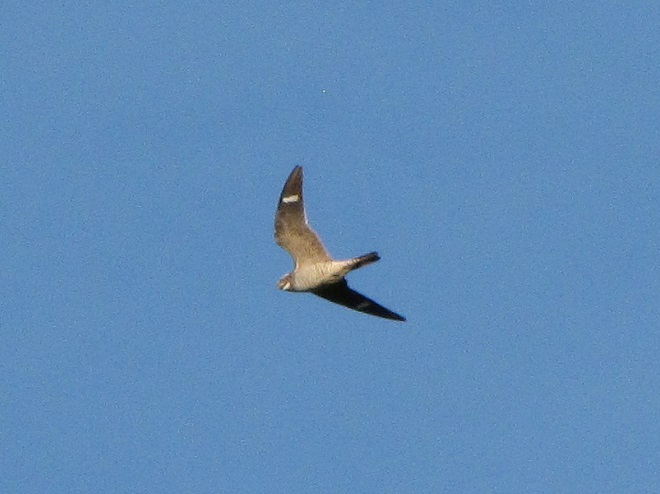
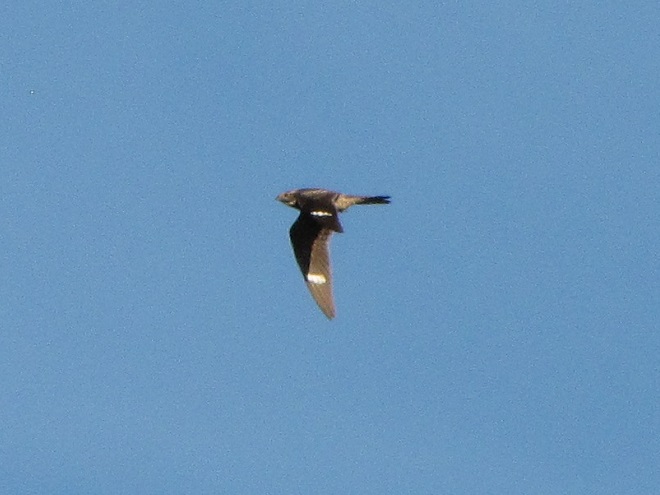
They fly about in near darkness, occasionally letting loose a buzzy call as they zigzag erratically in pursuit of fast-flying insects. In the Lower Susquehanna River Watershed, they are most frequently seen during their northward spring migration—around Memorial Day—and again in late summer during their southbound journey—around Labor Day. They spend their diurnal hours perched quietly on a tree limb, positioned lengthwise to avoid easy detection. They are Common Nighthawks (Chordeiles minor), relatives of the Eastern Whip-poor-will (Antrostomus vociferus) and other nightjars.
Common Nighthawks begin their flights late in the afternoon, sometimes waiting until after sunset to begin foraging.The Common Nighthawk is declining in numbers in eastern North America. Before urbanization, this species relied upon pebble beds, grasslands, burned forest, and even cliff ledges for nest sites. During the twentieth century, they adapted to sites on flat tin and gravel roofs atop multi-story buildings and became a common nesting species in cities and towns. Through at least the late 1980s, Common Nighthawks were regular breeders in Harrisburg, Pennsylvania. On warm summer nights, dozens could be seen feeding on the swarming Susquehanna mayflies attracted to the illuminated rotunda of the State Capitol Building. Increased use of rubber instead of gravel-covered roofing and decreases in flying insect abundance may be among the dominant factors responsible for the sharp decline of the Common Nighthawk as a breeding species in the lower Susquehanna valley.As they pass through in spring and late summer, Common Nighthawks can be seen feeding wherever flying insects are plentiful. They are regular along the Susquehanna River where evening flights of multiple birds occur during the first week of September each year.Look for migrating Common Nighthawks over woodlands and grasslands. While you’re out, check the darkening sky over any of the valley’s cities or towns. Bright lights illuminating early September football games and other sporting events attract insects… and nighthawks too!You might see Common Nighthawks zipping around over fields used for high-intensity agricultural, usually a less-than-ideal habitat, as long as there is a source of flying insects such as a woodland, dairy farm, pastureland, fallow field, or forested streamside buffer nearby.So look up. Common Nighthawks will only be here a short while longer, then they’re off to the tropics for the winter.
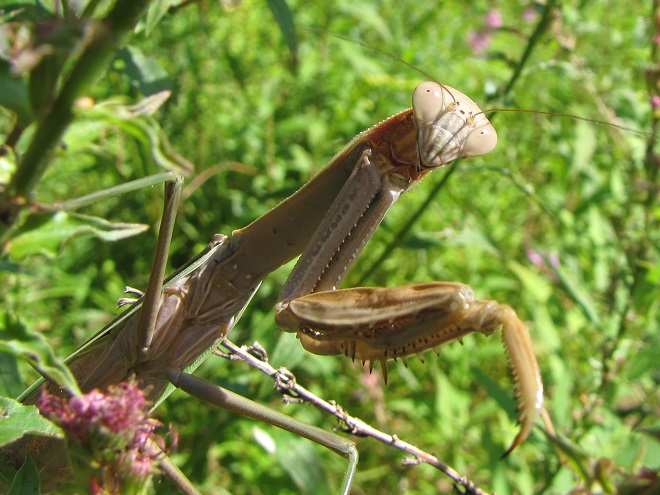
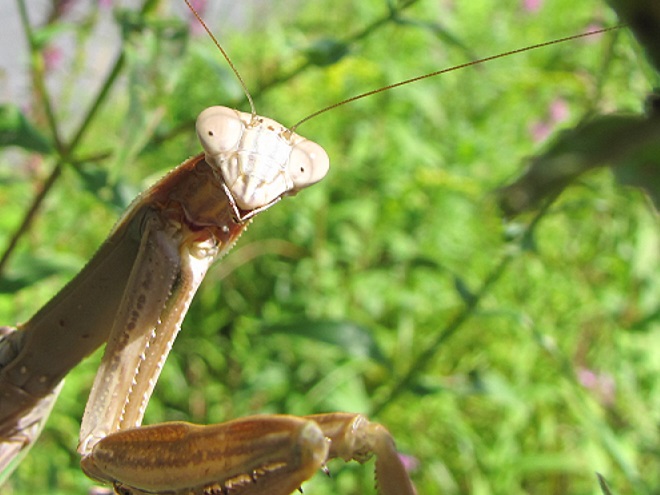
A special message from your local Chinese Mantis (Tenodera sinensis).
Hey you! Yes, you. I pray you’re paying attention to what’s flying around out there, otherwise it’ll all pass you by.
This summer’s hot humid breezes from the south have not only carried swarms of dragonflies into the lower Susquehanna valley, but butterflies too.
So check out these extravagant visitors from south of the Mason-Dixon Line—before my appetite gets the better of me.
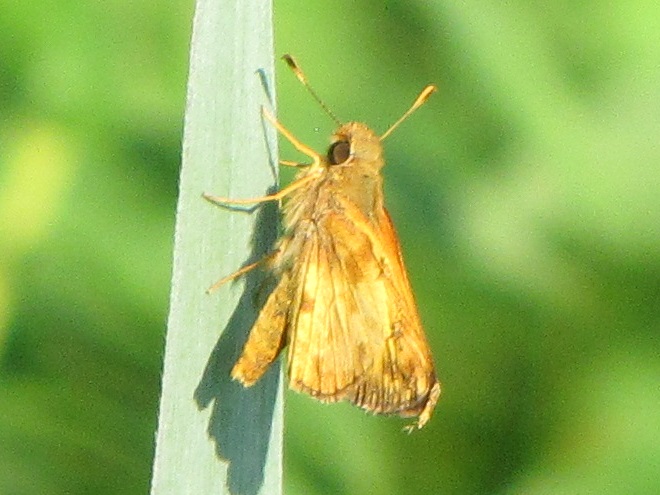
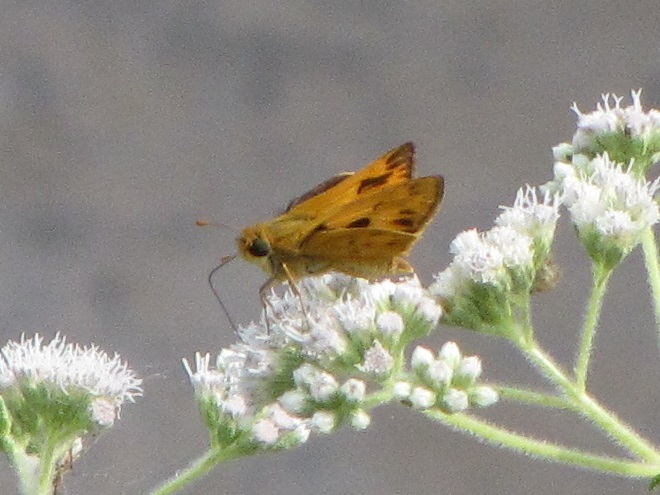
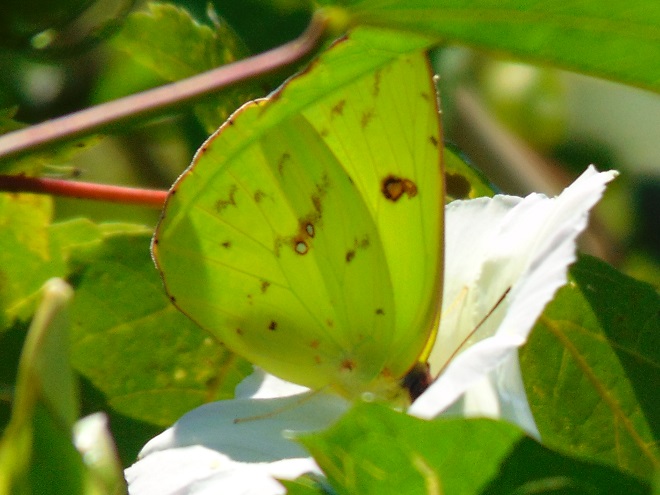
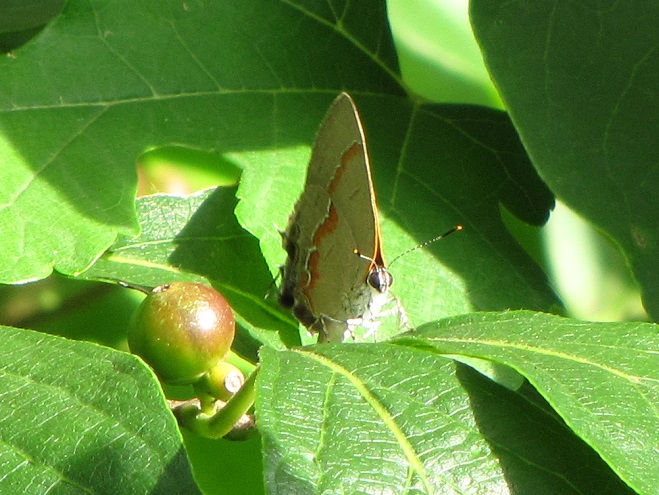
In some years, the Sachem, a vagrant from the south, can become the most frequently observed orange skipper in the Susquehanna valley, far outnumbering faltering populations of resident species around lawns, gardens, meadows, and roadsides. 2020 appears to be one of those years.The Fiery Skipper (Hylephila phyleus) sometimes strays north along the lower Susquehanna River in late summer. This one was photographed recently at Conewago Falls.The Cloudless Sulphur is a large fast-flying brilliant yellow butterfly. Here in the Susquehanna valley, it is usually seen singly, though colonizers will breed in patches of Partridge Pea, Wild Senna (Senna hebecarpa), and Maryland Senna (Senna marilandica). Cloudless Sulphurs are really widespread this year. In areas where intensive farming practices are in use, your chances of seeing one of these wandering around right now might be just as good as your chances of seeing one of the diminished flights of the resident Clouded Sulphurs (Colias philodice) and Orange Sulphurs (Colias eurytheme).The Red-banded Hairstreak (Calycopis cecrops) is the least conspicuous of the stray butterflies shown here. This beauty was photographed several days ago along the edge of an oak forest in northern Lancaster County, PA.
There you have it. Get out there and have a look around. These species won’t be active much longer. In just a matter of weeks, our migratory butterflies, including Monarchs, will be heading south and our visiting strays will either follow their lead or risk succumbing to frosty weather.
For more photographs of butterflies, be sure to click the “Butterflies” tab at the top of the page. We’re adding more as we get them.
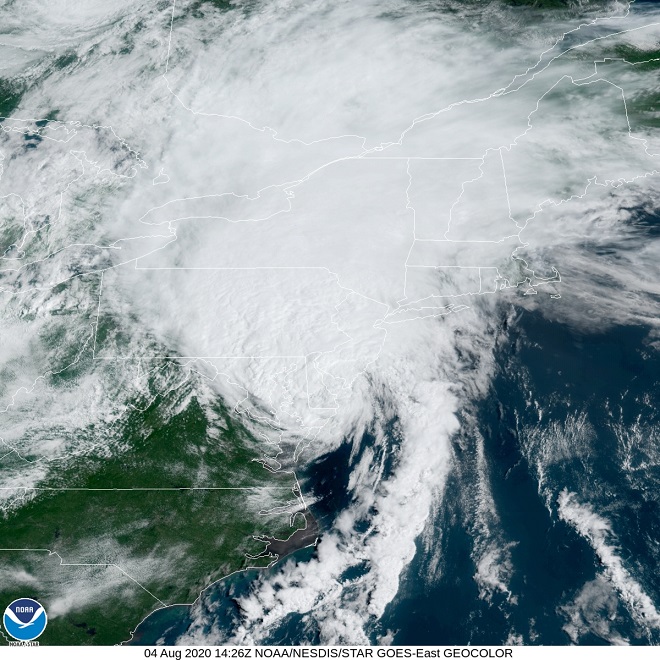
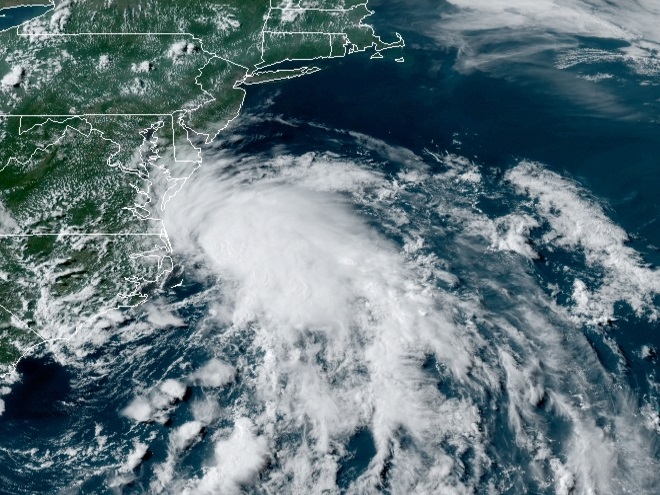
It’s been more than a week since Tropical Storm Isaias moved swiftly up the Atlantic seaboard leaving wind and flood damage in its wake. Here in the Lower Susquehanna River Watershed, the brevity of its presence minimized the effects.
Tropical Storm Isaias moves north-northeast across the Delmarva Peninsula.
You may have noticed some summertime visitors flying about during these hot humid days that followed Isaias’ passing. They’re the dragonflies.
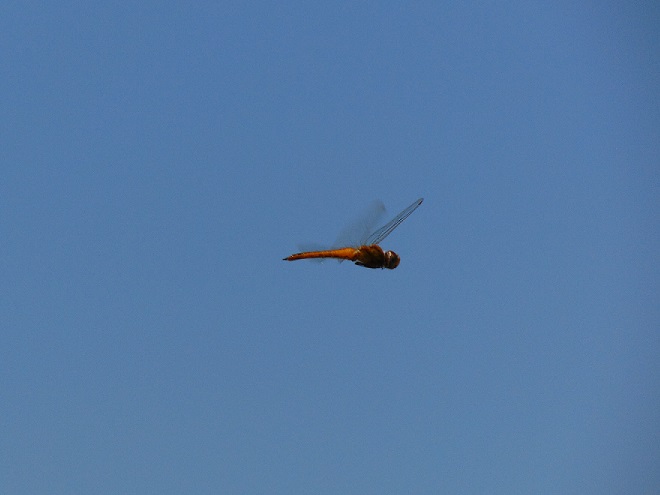
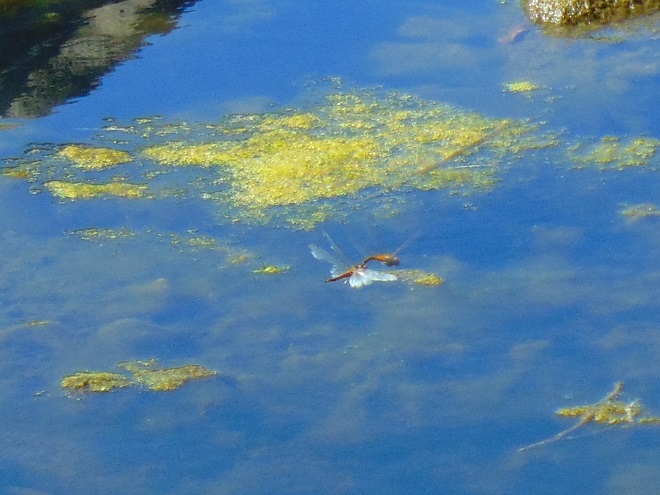
Our familiar friend the Wandering Glider is widespread throughout the valley right now—dropping eggs on shiny automobile hoods that look to them like a nice quiet puddle of water.
The Wandering Glider is a global traveler. Here in the lower Susquehanna valley, it is currently abundant around still water and in large parking lots.
Each of the other common migratory species is here too. Look for them patrolling the skies over large bodies of water and over adjacent fallow land and meadows where tiny flying insects abound. Did these dragonflies arrive on the winds associated with the tropical storm, or did they move in with the waves of warm air that followed it? Probably a little of both.
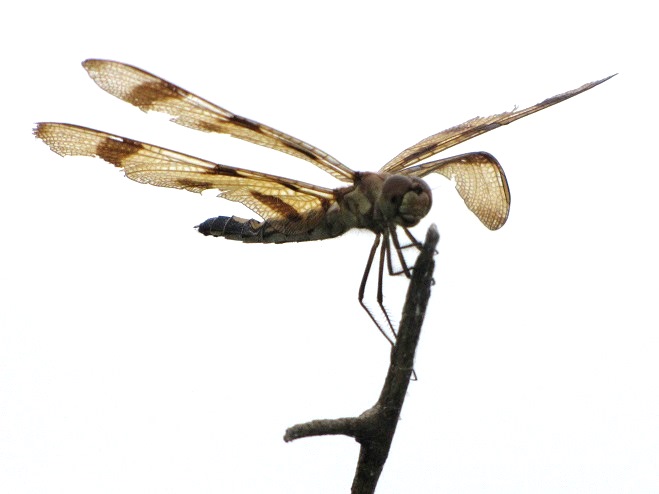
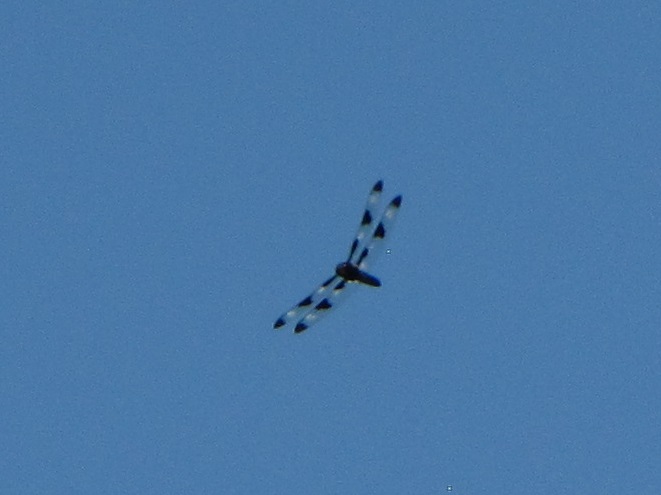
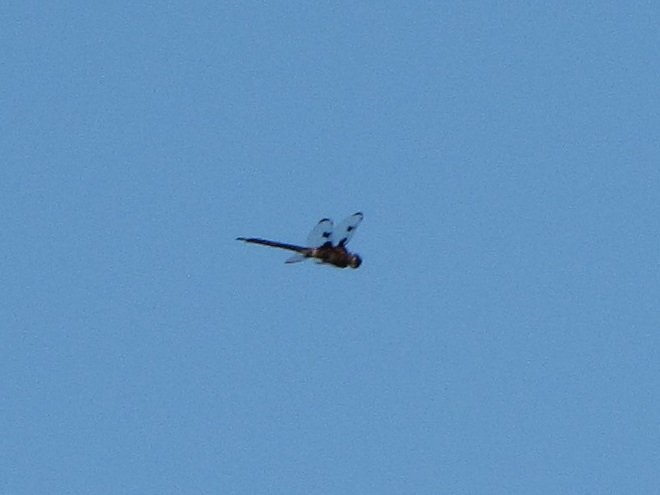
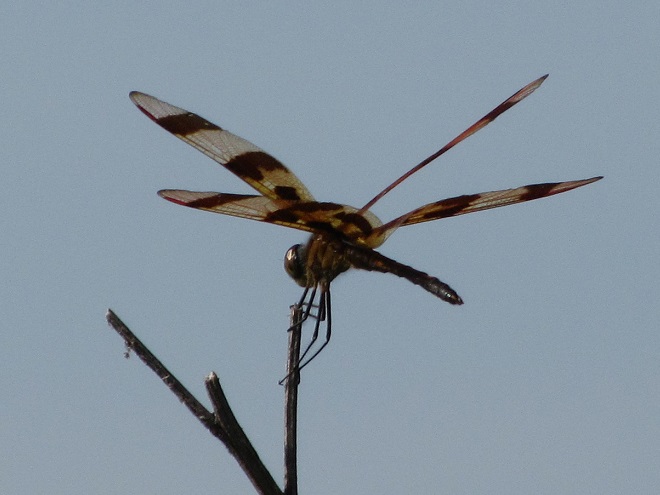
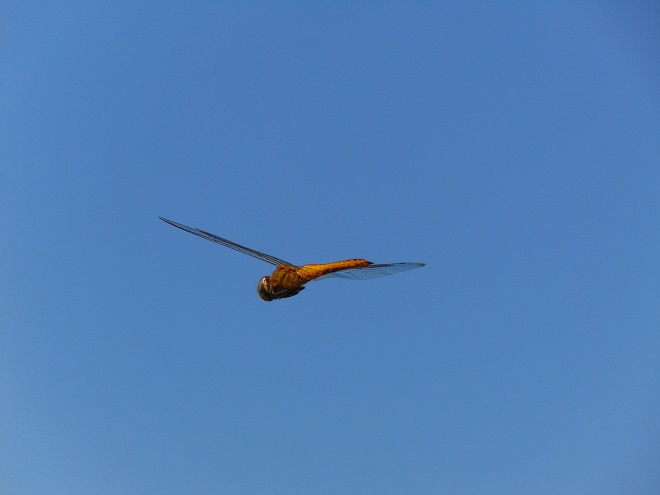
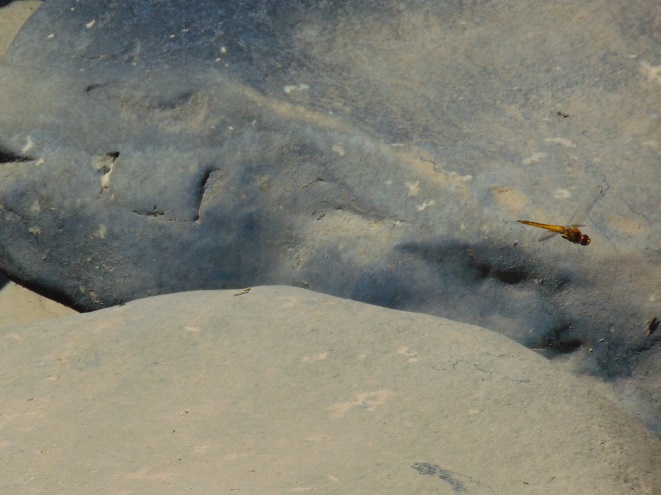
The Common Green Darner, a large dragonfly, can be the most abundant of the migratory species. Watch for high-flying swarms in the coming weeks.The Black Saddlebags is recognized in flight by the black base of each hindwing. These patches give the appearance of a pair of saddlebags draped across the dragonfly’s thorax.The Twelve-spotted Skimmer(Libellula pulchella) is a regular migrant.The Prince Baskettail (Epitheca princeps) can occur among mixed groups of dragonflies. Despite it rarely being mentioned as a migrant, its proclivity for non-stop day-long flight makes it a likely sighting among sizeable swarms.
Big swarms of dragonflies don’t go unnoticed by predators—particularly birds. The southbound migration of kites, Broad-winged Hawks, American Kestrels, and Merlins often coincides with the swarming of migratory dragonflies in late summer. Each of these raptors will grab and feed upon these insects while on the wing—so keep an eye on the sky.
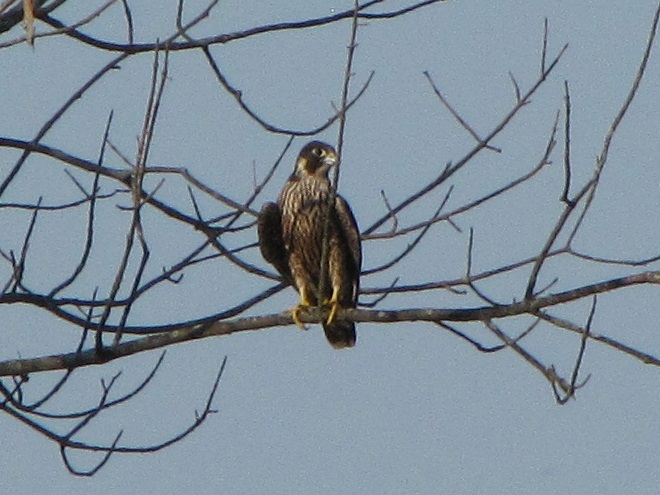
This Peregrine Falcon found the congregations of hundreds of dragonflies worthy of a closer look……and an acrobatic fly-by to disrupt the swarms. Fun, fun, fun, fun, fun.
Dust continues to be carried aloft on dry updrafts over the Sahara Desert. The plume is presently stretching for thousands of miles due west across the tropical Atlantic into the Pacific, leaving the United States out of the loop—at least for now.
(CIRA/NOAA image)
With no dry air to spoil the fun, the warm waters of the Gulf Stream off the coast of North Carolina are spawning some convective clouds in a low pressure system that could become tropical within the next day or so.
Tropical or not, it looks like a rainy weekend along the Mid-Atlantic coast. (CIRA/NOAA image)
Now that the heat and humidity is upon us, why not get out and take a look at the damselflies and dragonflies that inhabit the ponds, wetlands, and waterways of the lower Susquehanna watershed? These flying insects thrive in sultry weather and some species will breed in a body of water as small as a garden pond—as long as it is free of large fish. Check out some of the species found locally by clicking on the “Damselflies and Dragonflies” tab at the top of this page. We’ll be adding more photos and species soon.
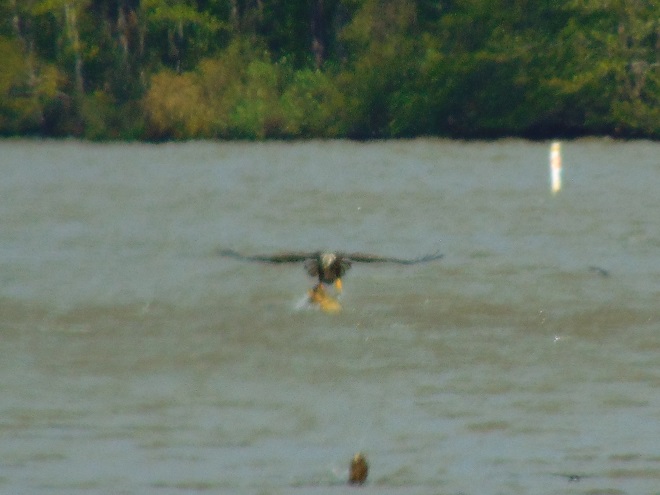
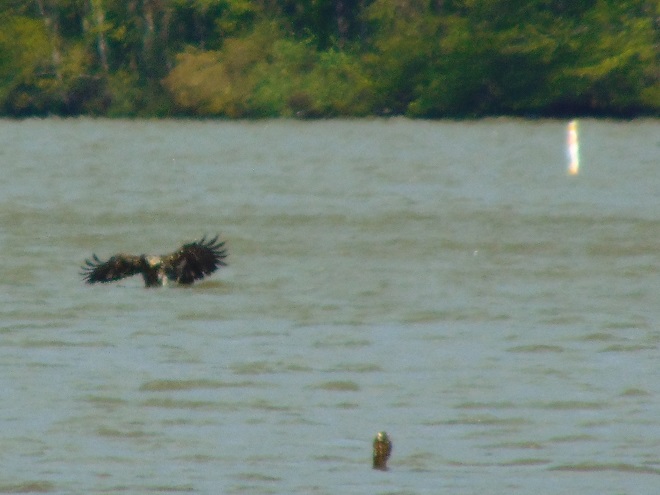
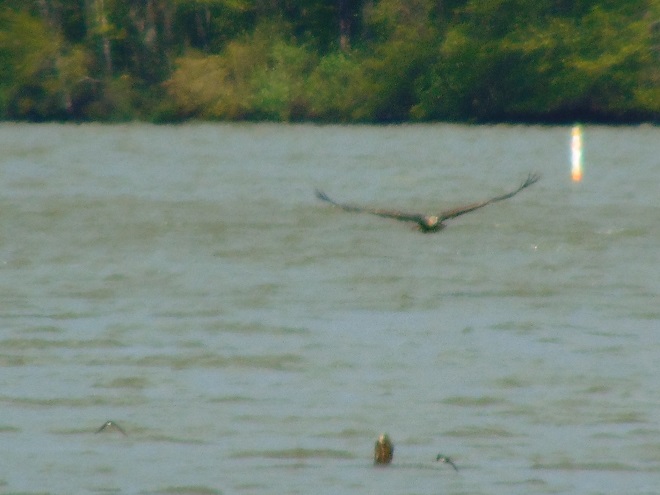
Here it is—just as it happened, recently in the lower Susquehanna valley.
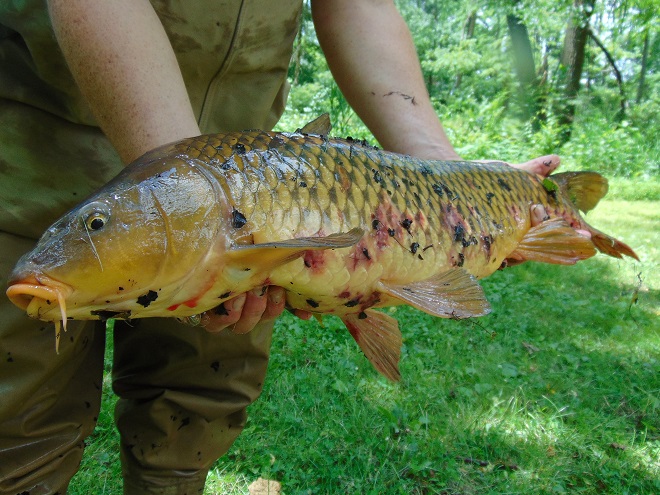
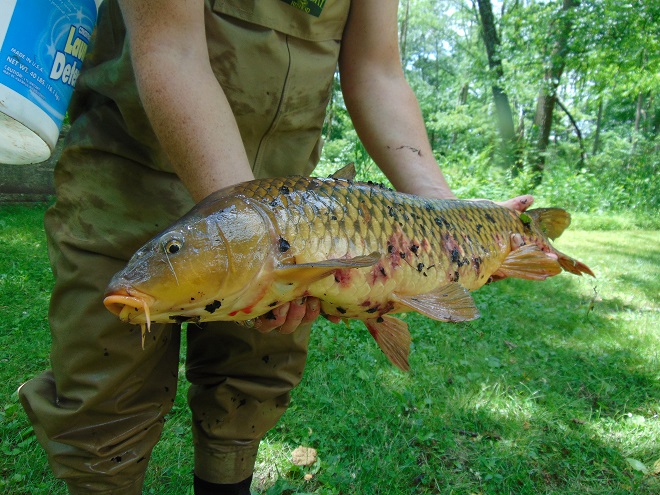
A Bald Eagle in search of a meal.The eagle glides in and grabs an unsuspecting Common Carp, the bird’s momentum and a head wind helping it to raise the fish out of the water. This particular carp appears to be eighteen to twenty-four inches in length. In that range, it could weigh anywhere from four to ten pounds or more.But as the eagle tries to flap its wings to carry the carp skyward, it loses lift, and the weight of the fish drags the raptor down. A carp exceeding twenty inches in length usually weighs more than five pounds, approximately half the mass of a male (about 9 lbs.) or a female (about 12 lbs.) Bald Eagle. From a dead stop, trying to extricate a submerged fish weighing half as much again as it does is an impossible task for this or any other Bald Eagle.The eagle fights briefly to pull the carp from the water, then abandons the effort to instead release its talons from the fish to prevent its own demise by drowning.Free of its hold on the carp, the eagle flaps its wings briskly to get up and out of the potentially deadly situation.Success!Both the eagle and, presumably, the carp survive the encounter.The eagle finds a nearby tree limb where it takes a much-needed break from fishing.Such an event may have been fatal to an inexperienced younger Bald Eagle. Though not an adult, this bird is no spring chicken. Its plumage, particularly its white head with a dark line through the eye (often called an “osprey face”), is indicative of a bird in its fourth year of life. By this time next year, it should be sporting a full set of adult feathers. In the meantime, it should stick to eating suckers; there are plenty of those to go around.Common Carp are classified as a minnow (Cyprinidae). They are indigenous to Europe and are raised as a food fish in many parts of the world. In the Lower Susquehanna River Watershed, Common Carp are an introduced species with negative impacts on native fisheries. Those exceeding twenty inches in length begin to gain girth and weight, sometimes reaching thirty pounds at thirty inches.
SOURCES
Sedaghat, Safoura, Seyed Abbas Hoseini, Mohammad Larijani, and Khadijeh Shamekhi Ranjbar. 2013. “Age and Growth of Common Carp (Cyprinus carpio Linnaeus, 1758) in Southern Caspian Sea, Iran”. World Journal of Fish and Marine Sciences. 5:1. pp.71-73.
Birds on radar last evening. A dense liftoff of nocturnal migrants is indicated at radar sites across the northeastern United States. Rain showers can be seen in Virginia. (NOAA/National Weather Service image)
Today’s arrivals—Neotropical migrants found in a streamside thicket in the Lower Susquehanna River Watershed this morning…
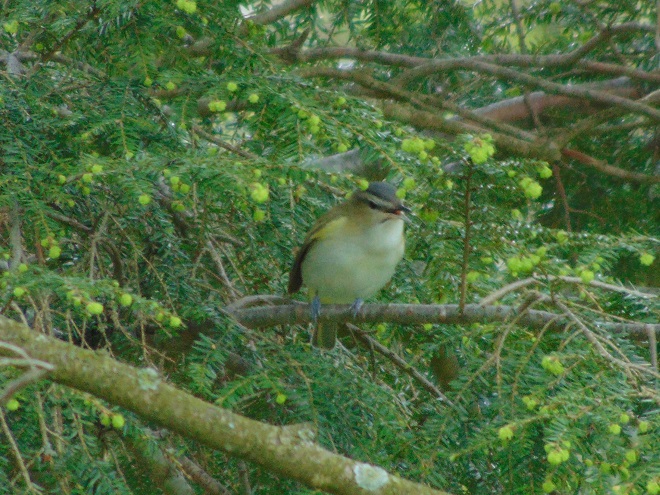
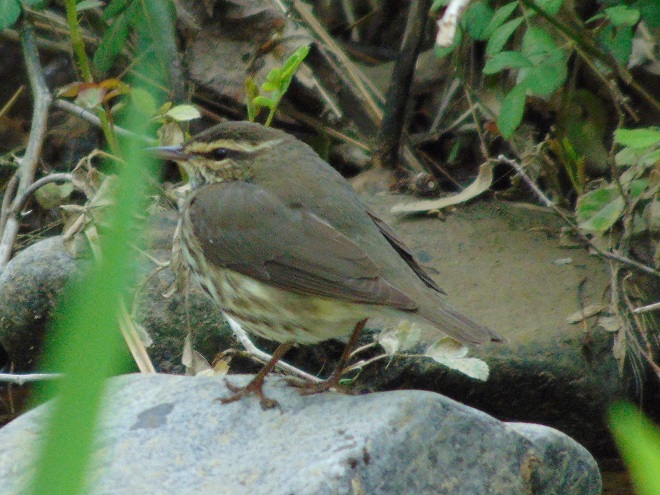
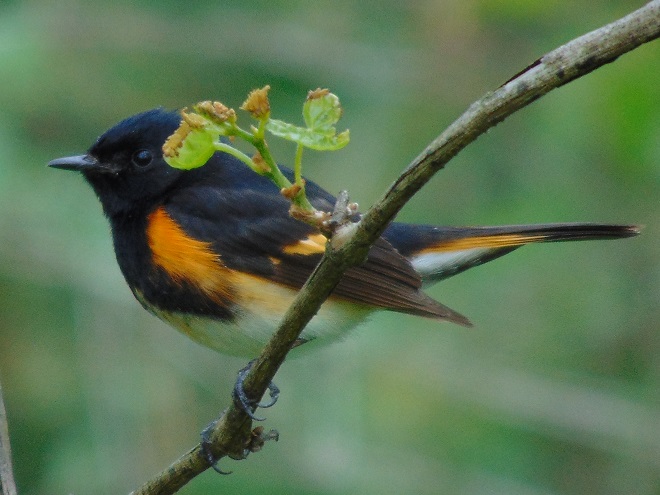
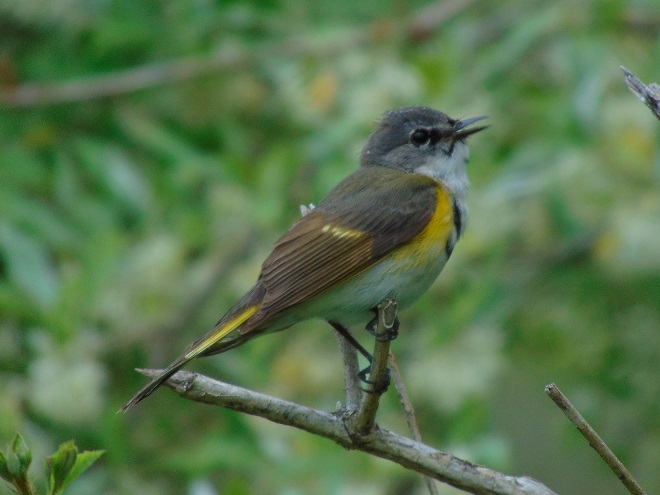
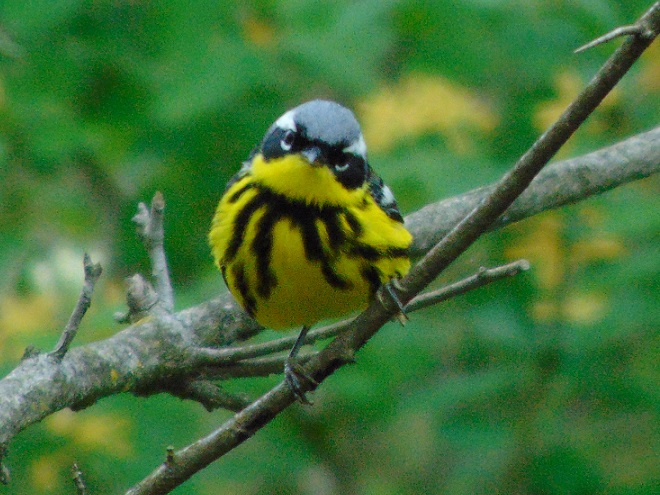
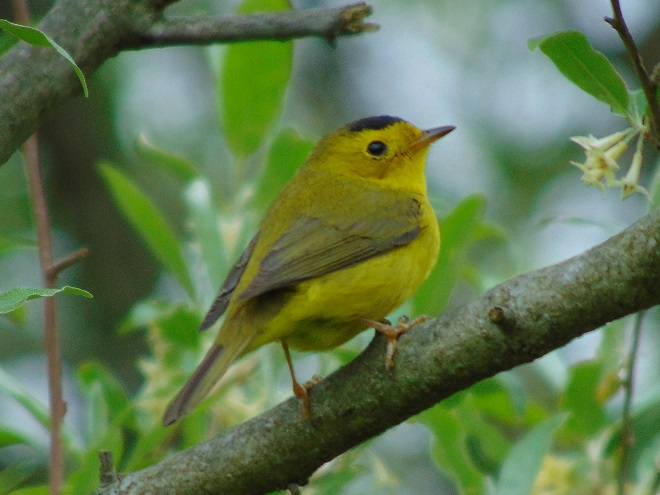
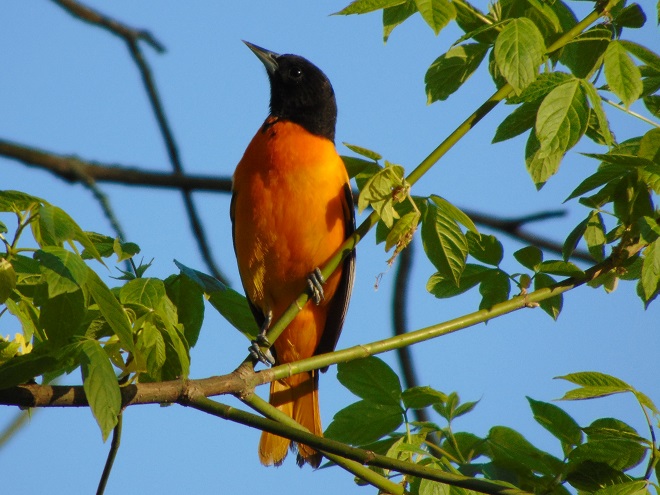
Red-eyed Vireos nest in forests throughout the lower Susquehanna valley.The Northern Waterthrush is a regularly occurring migrant that can be found in vegetated wetlands and along the backwaters of streams and rivers. Despite its drab appearance, it is classified as one of our Neotropical warbler species.The adult male American Redstart is unlike any other eastern warbler. It is easily recognized. Along the lower Susquehanna, redstarts nest in the dense understory of damp forests.The first-spring male American Redstart is similar to the female, but usually shows black markings beginning to develop on the breast and face. It is an energetic singer.In its strikingly colorful plumage, the Magnolia Warbler is a classic Neotropical bird. Locally, it is a regular migrant.The Wilson’s Warbler (Cardellina pusilla) forages in lowland thickets during its migratory stopovers. Riparian buffers along streams can provide critical habitat for this and other transient species.Baltimore Orioles continue to trickle in, creating squabbles when they enter nesting territories established by birds that arrived earlier in the month.
After nearly a full week of record-breaking cold, including two nights with a widespread freeze, warm weather has returned. Today, for the first time this year, the temperature was above eighty degrees Fahrenheit throughout the lower Susquehanna region. Not only can the growing season now resume, but the northward movement of Neotropical birds can again take flight—much to our delight.
A rainy day on Friday, May 8, preceded the arrival of a cold arctic air mass in the eastern United States. It initiated a sustained layover for many migrating birds.
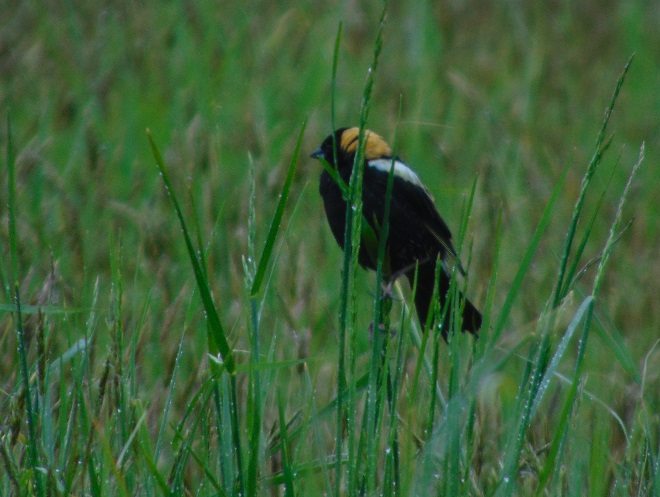
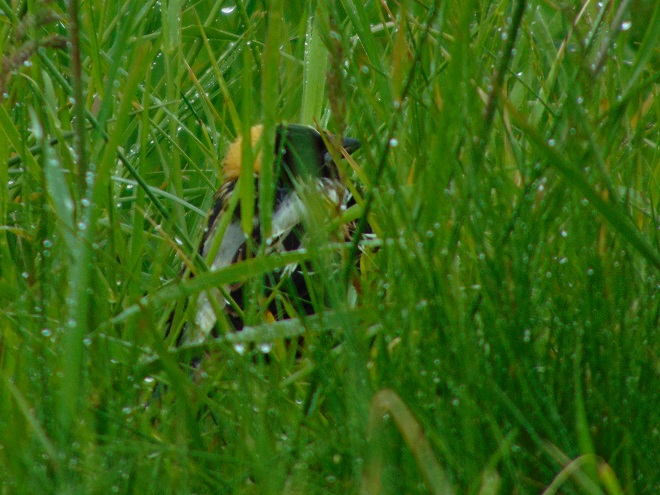
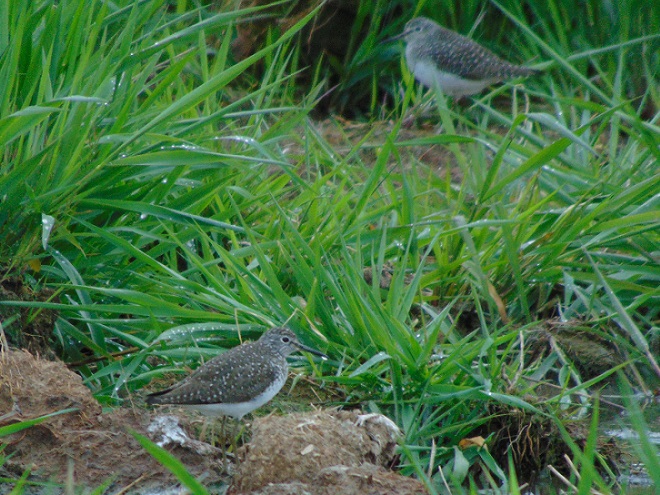
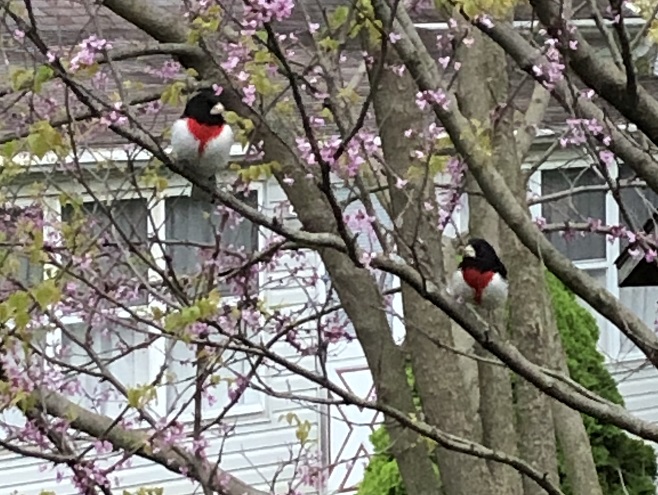
Bobolinks (Dolichonyx oryzivorus) in flocks of as many as fifty birds gathered in weedy meadows and alfalfa fields for the week.A Bobolink sheltering in a field of Sweet Vernal Grass (Anthoxanthum odoratum) during the rain on Friday, May 8th.Two of seven Solitary Sandpipers (Tringa solitaria) in a wet field on Friday, May 8. Not-so-solitary after all.Grounded by inclement weather, Rose-breasted Grosbeaks (Pheucticus ludovicianus) made visits to suburban bird feeders in the lower Susquehanna valley. (Charles A. Fox image)
Freeze warnings were issued for five of the next six mornings. The nocturnal flights of migrating birds, most of them consisting of Neotropical species by now, appeared to be impacted. Even on clear moonlit nights, these birds wisely remained grounded. Unlike the more hardy species that moved north during the preceding weeks, Neotropical birds rely heavily on insects as a food source. For them, burning excessive energy by flying through cold air into areas that may be void of food upon arrival could be a death sentence. So they wait.
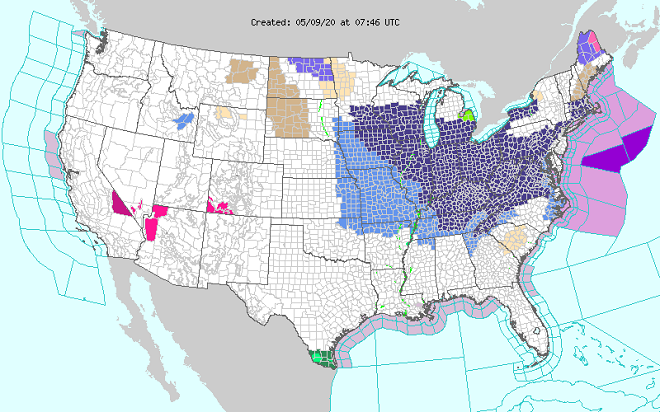
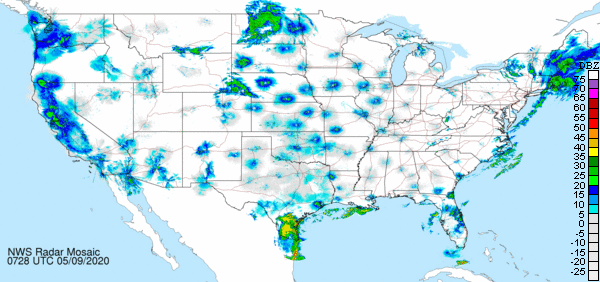
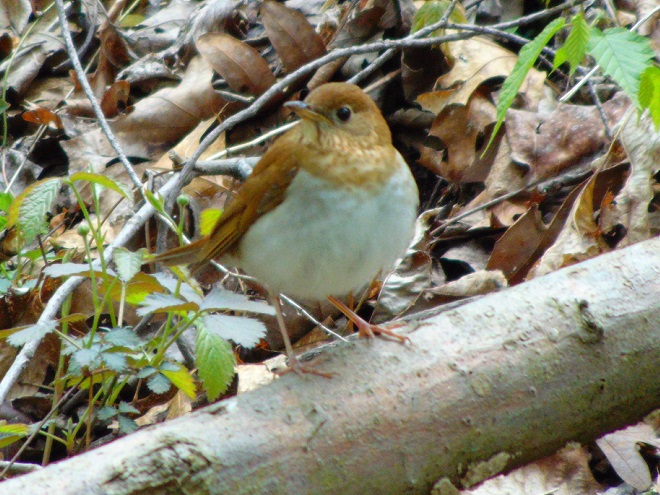
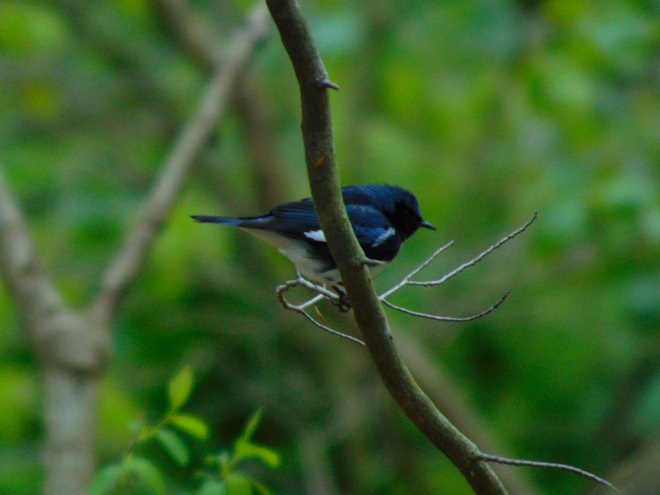
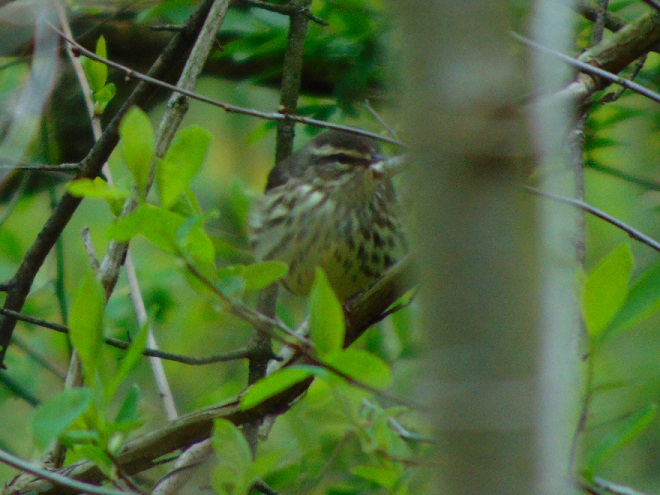
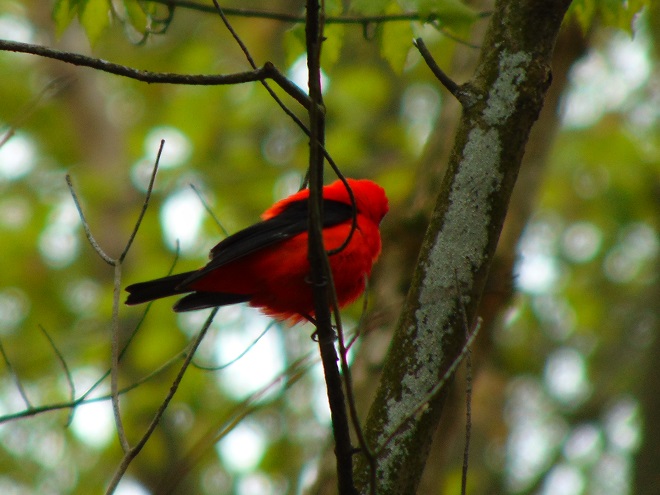
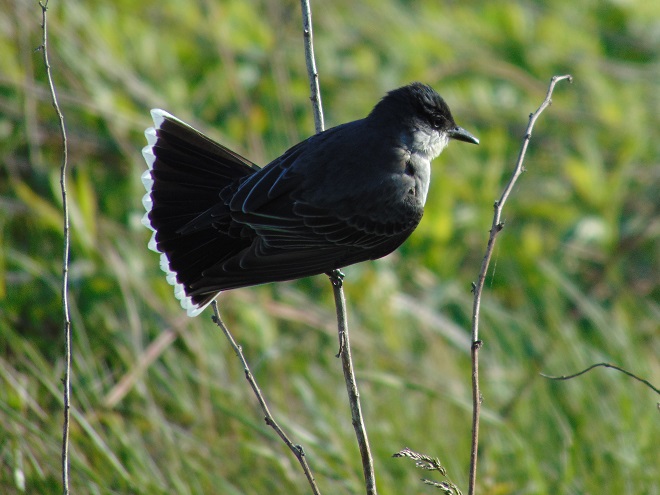
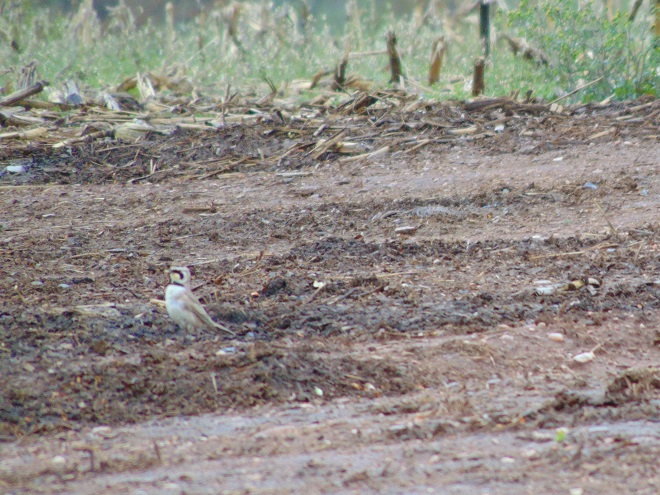
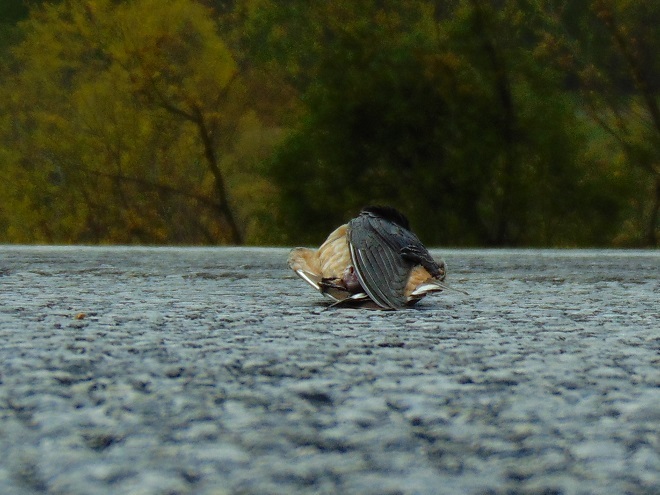
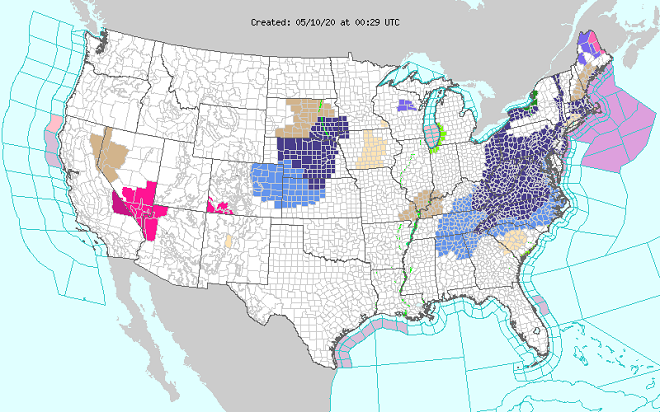
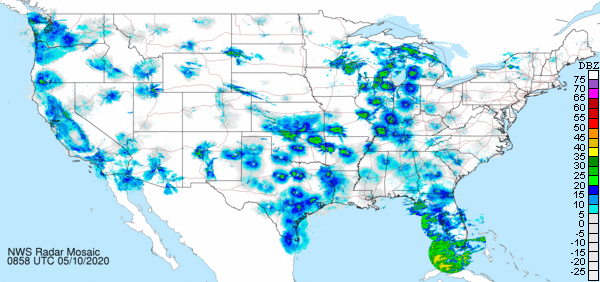
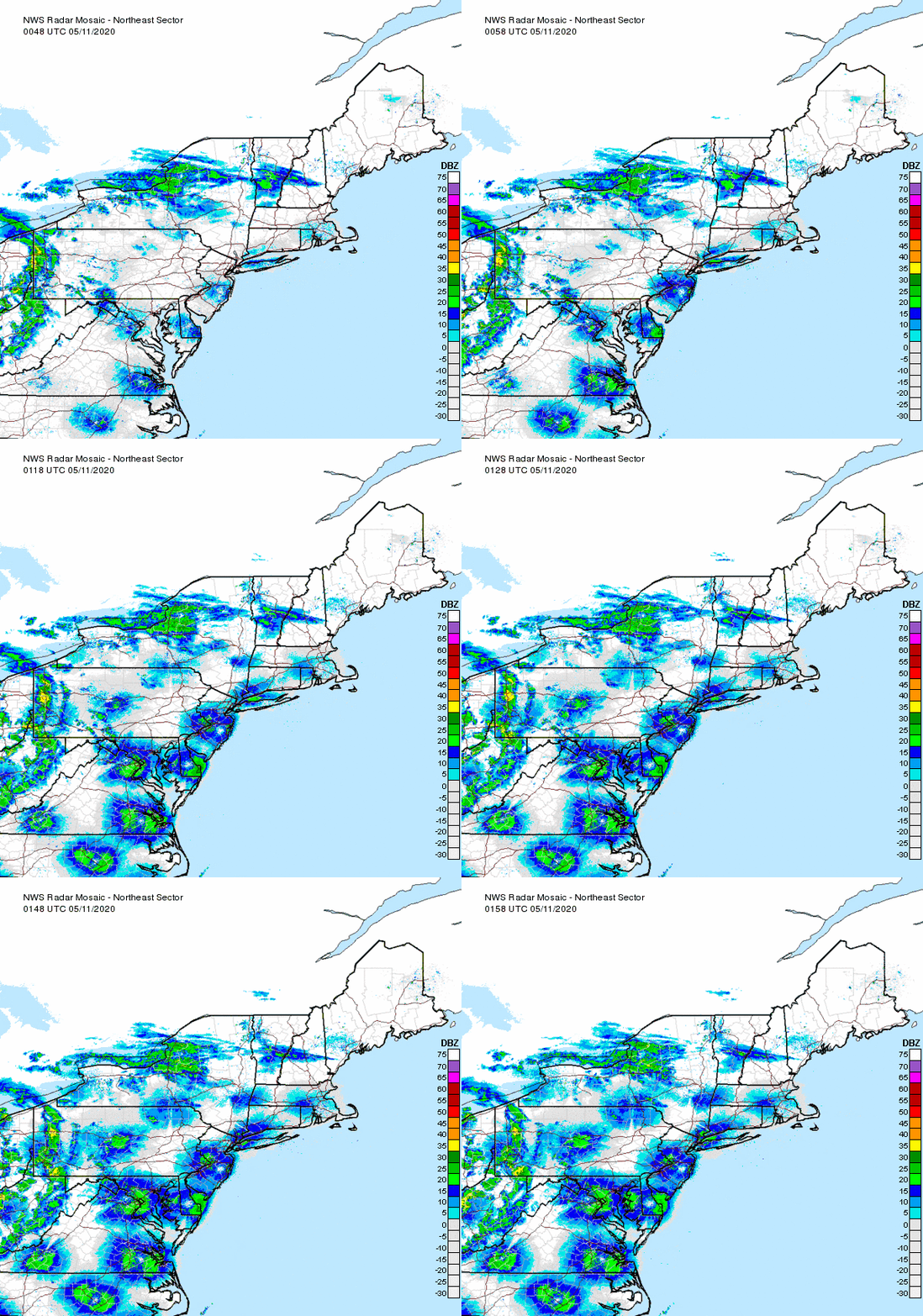
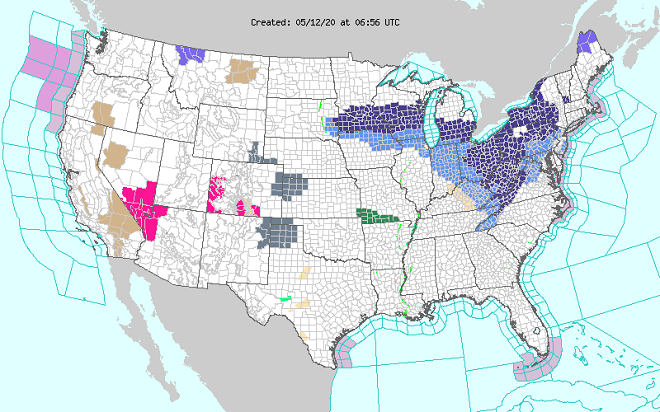
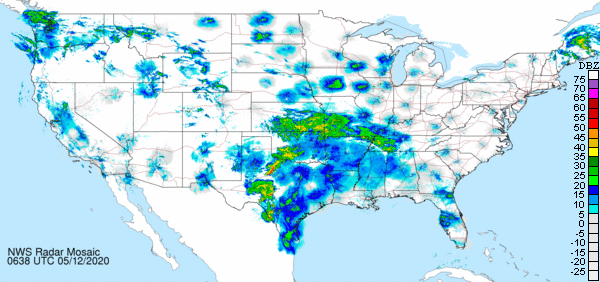
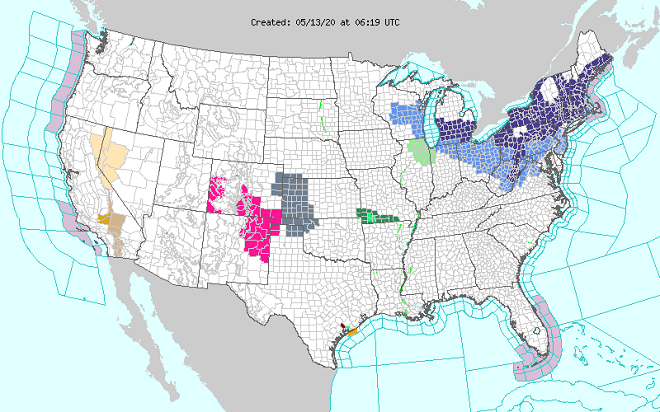
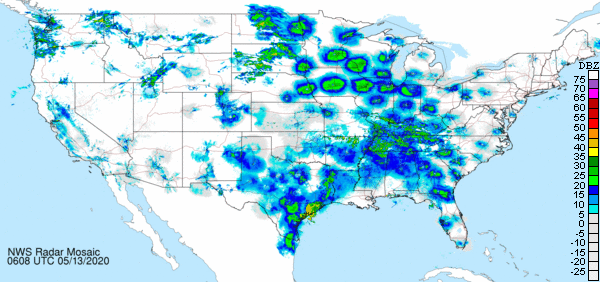
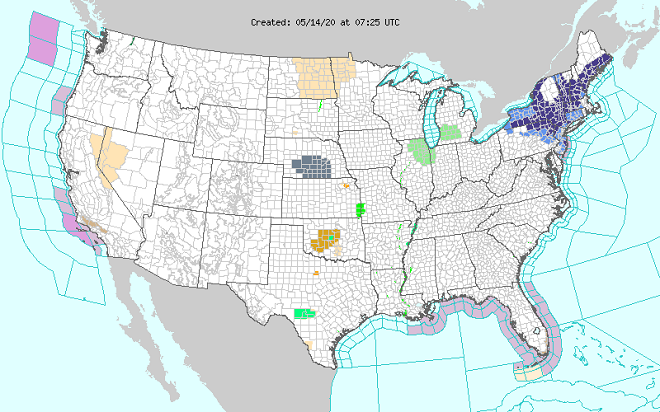
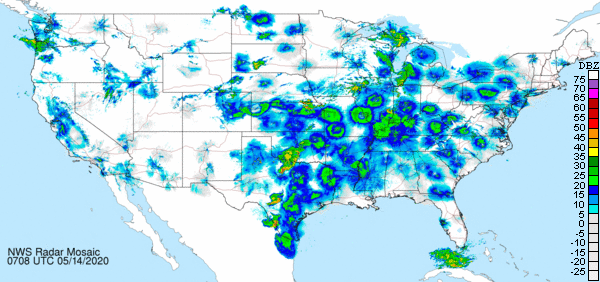
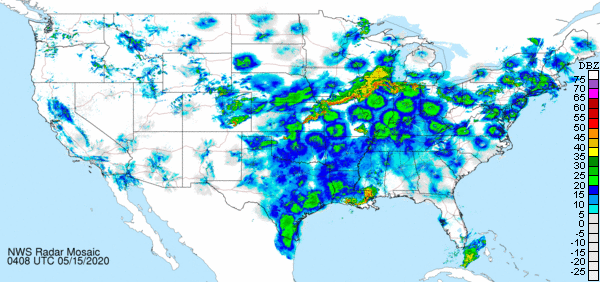
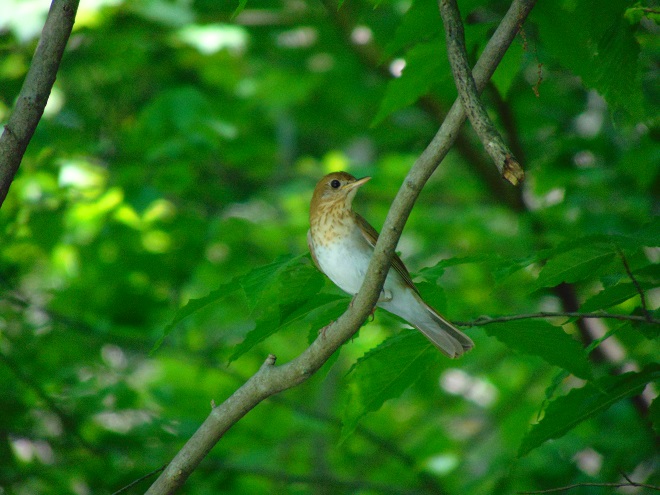
A freeze warning was issued for Saturday morning, May 9, in the counties colored dark blue on the map. (NOAA/National Weather Service image)This radar image from 3:28 A.M. Saturday morning, May 9, indicates a minor movement of birds in the Great Plains, but there are no notable returns shown around weather radar sites in the freeze area, including the lower Susquehanna valley. (NOAA/National Weather Service image)To avoid the cold wind on Saturday, May 9, this Veery was staying low to the ground within a thicket of shrubs in the forest.This Black-throated Blue Warbler avoided the treetops and spent time in the woodland understory. He sang not a note. With birds conserving energy for the cold night(s) ahead, it was uncharacteristically quiet for the second Saturday in May.A secretive Northern Waterthrush (Parkesia noveboracensis) remained in a wetland thicket.A Scarlet Tanager (Piranga olivacea) tucks his bill beneath a wing and fluffs-up to fight off the cold during a brief May 9th snow flurry.In open country, gusty winds kept Eastern Kingbirds, a species of flycatcher, near the ground in search of the insects they need to sustain them.Horned Larks are one of the few birds that attempt to scratch out an existence in cultivated fields. The application of herbicides and the use of systemic insecticides (including neonicotinoids) eliminates nearly all weed seeds and insects in land subjected to high-intensity farming. For most birds, including Neotropical migrants, cropland in the lower Susquehanna valley has become a dead zone. Birds and other animals might visit, but they really don’t “live” there anymore.Unable to find flying insects over upland fields during the cold snap, swallows concentrated over bodies of water to feed. Some Tree Swallows may have abandoned their nests to survive this week’s cold. Fragmentation of habitats in the lower Susquehanna valley reduces the abundance and diversity of natural food sources for wildlife. For birds like swallows, events like late-season freezes, heat waves, or droughts can easily disrupt their limited food supply and cause brood failure.For this Barn Swallow, attempting to hunt insects above the warm pavement of a roadway had fatal consequences.Another freeze warning was issued for Sunday morning, May 10, in the counties colored dark blue on this map. (NOAA/National Weather Service image)This radar image from 4:58 A.M. Sunday morning, May 10, again indicates the absence of a flight of migrating birds in the area subjected to freezing temperatures. Unlike migrants earlier in the season, the Neotropical species that move north during the May exodus appear unwilling to resume their trek during freezing weather. (NOAA/National Weather Service image)On Sunday evening, May 10, a liftoff of nocturnal migrants is indicated around radar sites along the Atlantic Coastal Plain and, to a lesser degree, in central Pennsylvania. The approaching rain and yet another cold front quickly grounded this flight.After a one day respite, yet another freeze warning was issued for Tuesday morning, May 12. (NOAA/National Weather Service image)And again, no flight in the freeze area. (NOAA/National Weather Service image)The freeze warning for Wednesday morning, May 13. (NOAA/National Weather Service image)And the nocturnal flight: heavy in the Mississippi valley and minimal in the freeze area. (NOAA/National Weather Service image)The freeze on Thursday morning, May 14. (NOAA/National Weather Service image)At 3:08 A.M. on May 14th, a flight is indicated streaming north through central Texas and dispersing into the eastern half of the United States, but not progressing into New England. (NOAA/National Weather Service image)The flight at eight minutes after midnight this morning. Note the stormy cold front diving southeast across the upper Mississippi valley. As is often the case, the concentration of migrating birds is densest in the warm air ahead of the front. (NOAA/National Weather Service image)
Today throughout the lower Susquehanna region, bird songs again fill the air and it seems to be mid-May as we remember it. The flights have resumed.
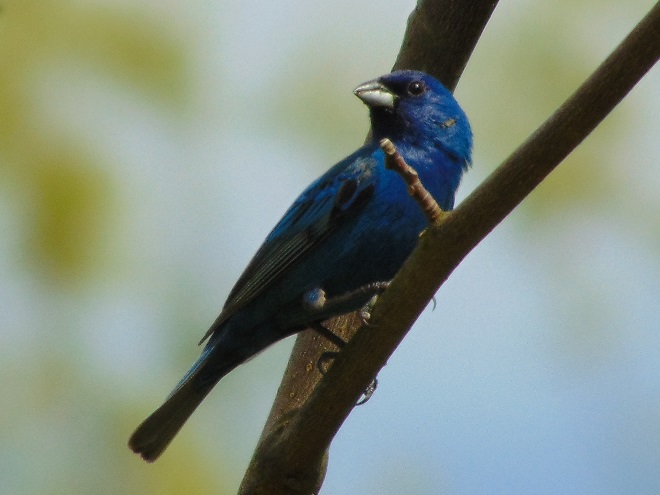
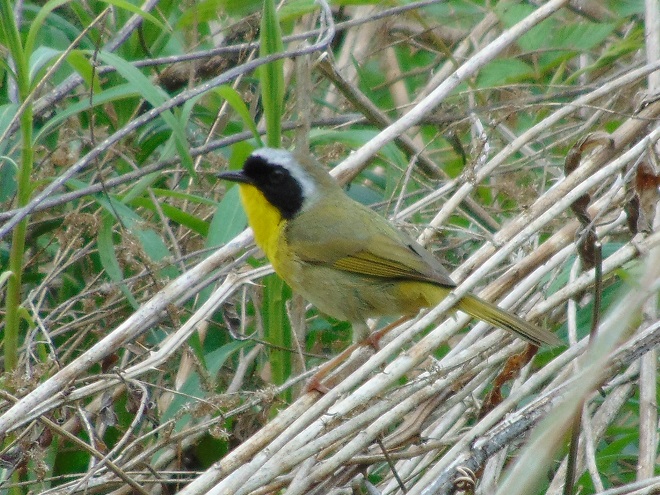
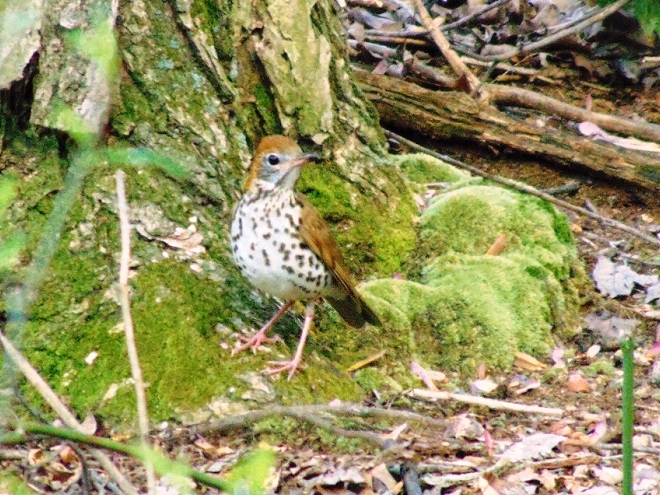
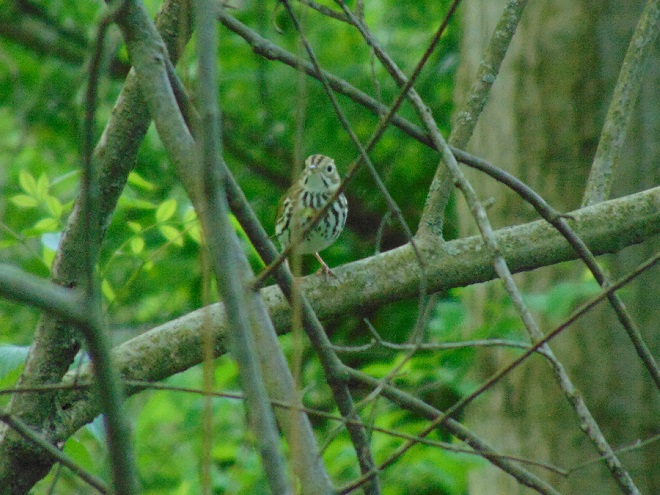
Indigo Bunting numbers are increasing as breeding populations arrive and migrants continue through. Look for them in thickets along utility and railroad right-of-ways.Common Yellowthroats and other colorful warblers are among the May migrants currently resuming their northward flights.The echoes of the songs of tropical birds are beginning to fill the forests of the lower Susquehanna watershed. The flute-like harmonies of the Wood Thrush are among the most impressive.Ovenbirds are ground-nesting warblers with a surprisingly explosive song for their size. Many arrived within the last two days to stake out a territory for breeding. Listen for “teacher-teacher-teacher” emanating from a woodland near you.
You need to get outside and go for a walk. You’ll be sorry if you don’t. It’s prime time to see wildlife in all its glory. The songs and colors of spring are upon us!
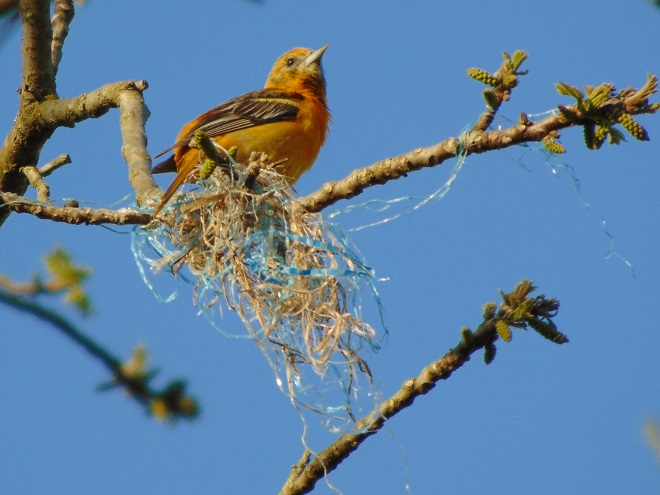
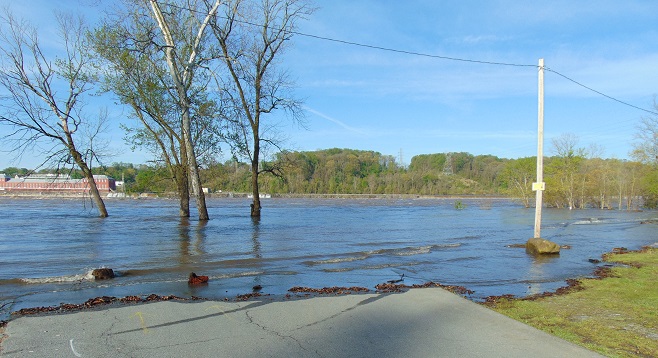
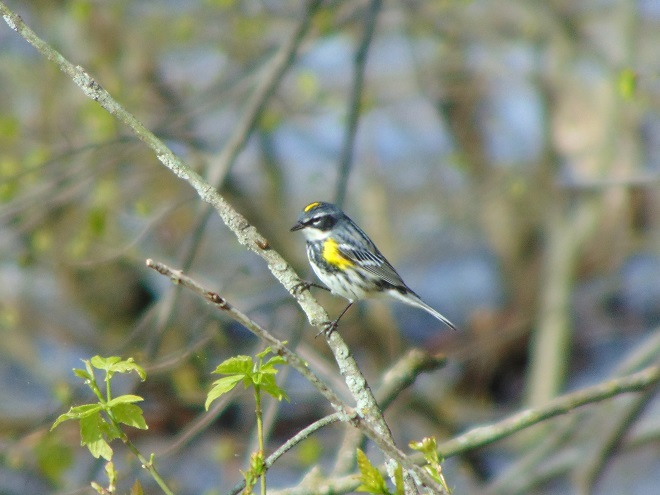
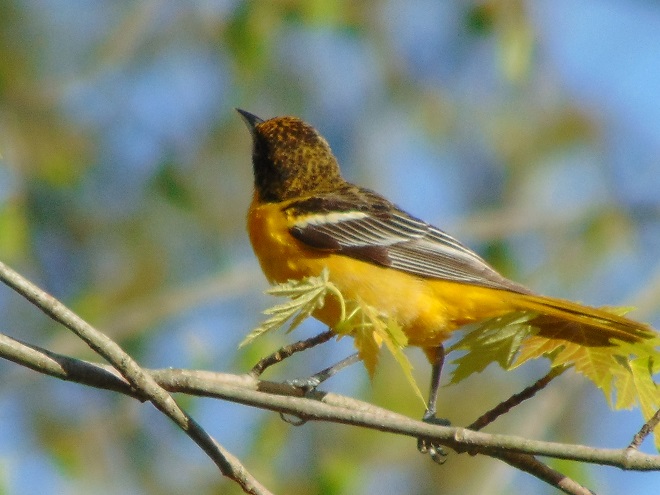
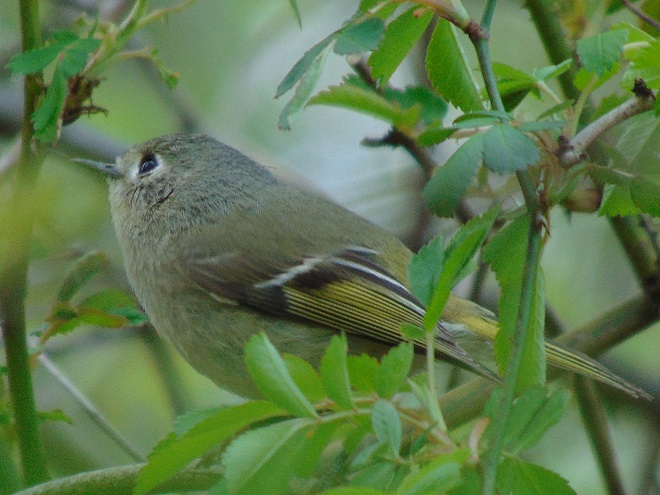
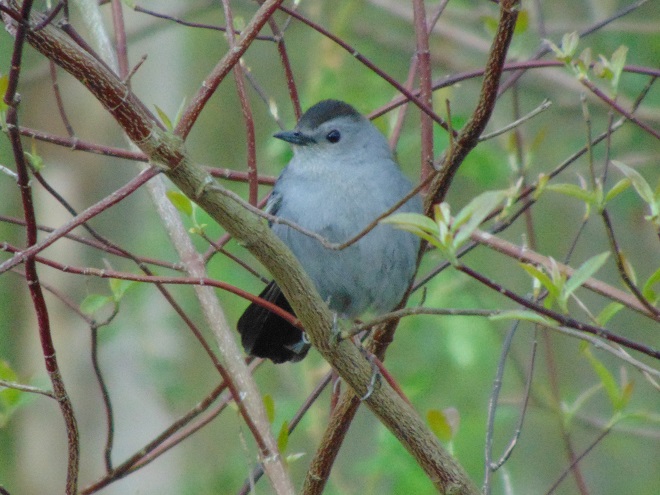
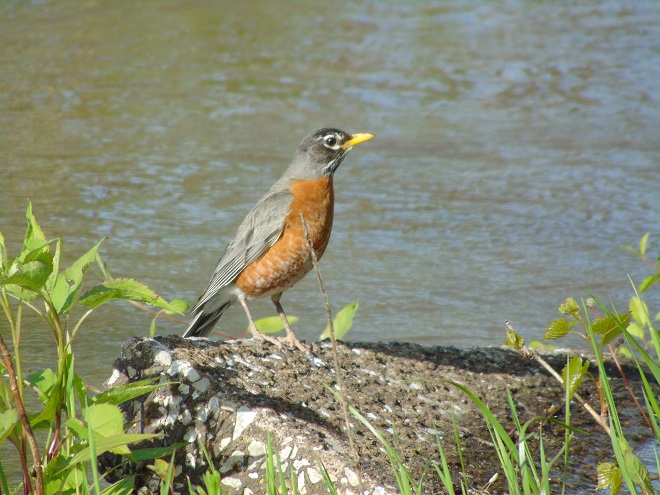
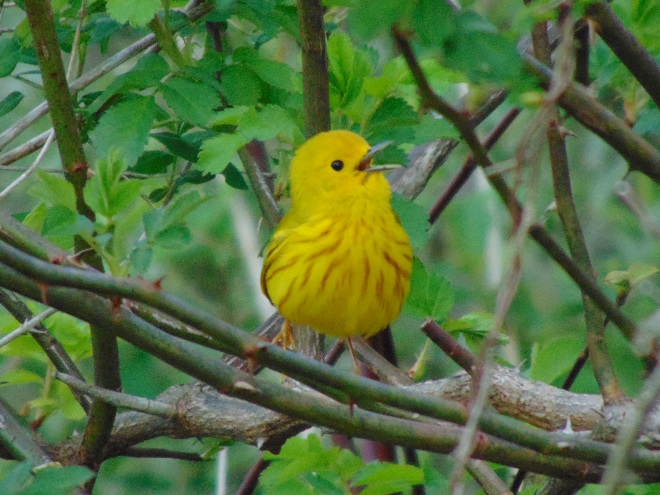
Flooding that resulted from mid-week rains is subsiding. The muddy torrents of Conewago Falls are seen here racing by the powerhouse at the York Haven Dam.Receding waters will soon leave the parking area at Falmouth and other access points along the river high and dry.Migrating Yellow-rumped Warblers are currently very common in the riparian woodlands near Conewago Falls. They and all the Neotropical warblers, thrushes, vireos, flycatchers are moving through the Susquehanna watershed right now.A Baltimore Oriole feeds in a riverside maple tree.Ruby-crowned Kinglets are migrating through the Susquehanna valley. These tiny birds may be encountered among the foliage of trees and shrubs as they feed upon insects .Gray Catbirds are arriving. Many will stay to nest in shrubby thickets and in suburban gardens.American Robins and other birds take advantage of rising flood waters to feed upon earthworms and other invertebrates that are forced to the soil’s surface along the inundated river shoreline.Spotted Sandpipers are a familiar sight as they feed along water’s edge.The Yellow Warbler (Setophaga petechia) is a Neotropical migrant that nests locally in wet shrubby thickets. Let your streamside vegetation grow and in a few years you just might have these “wild canaries” singing their chorus of “sweet-sweet-sweet-I’m-so-sweet” on your property.
If you’re not up to a walk and you just want to go for a slow drive, why not take a trip to Middle Creek Wildlife Management Area and visit the managed grasslands on the north side of the refuge. To those of us over fifty, it’s a reminder of how Susquehanna valley farmlands were before the advent of high-intensity agriculture. Take a look at the birds found there right now.
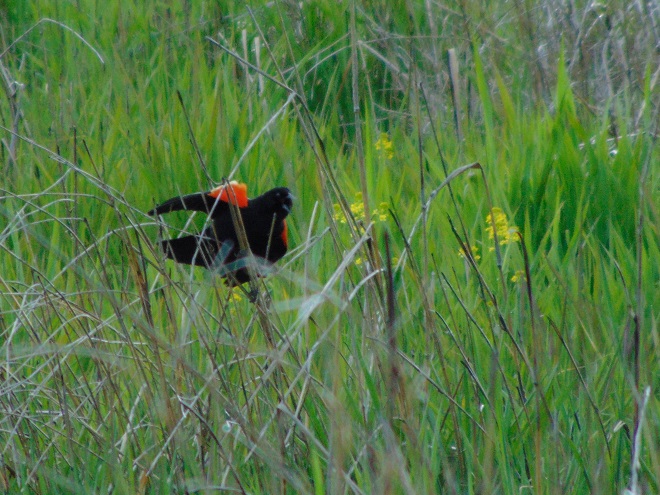
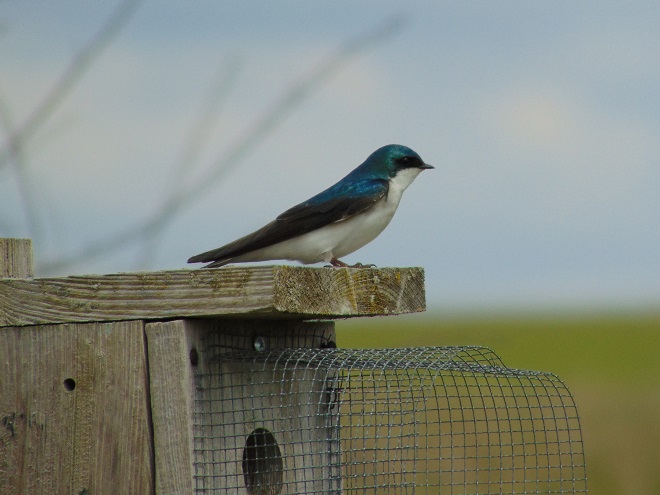
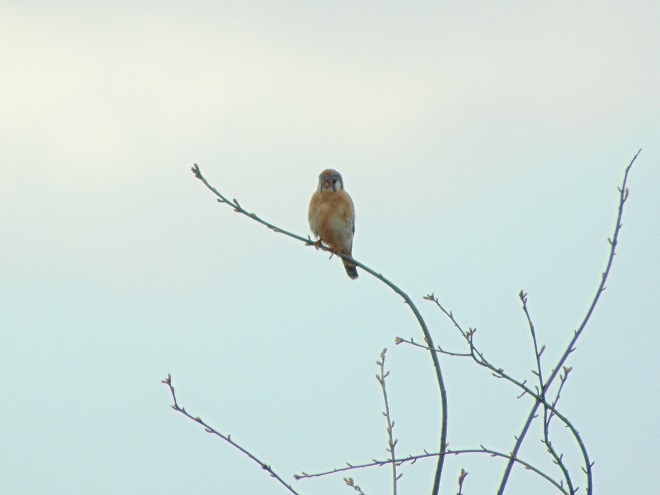
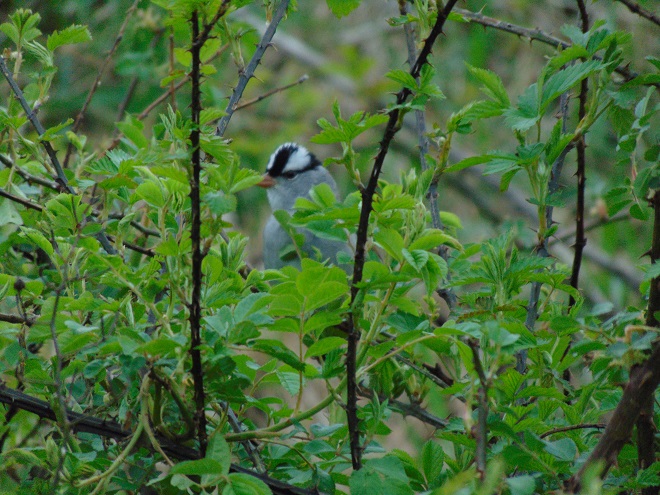
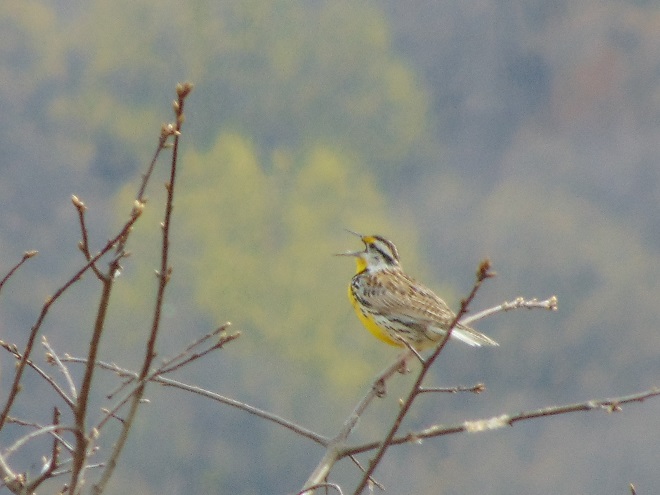
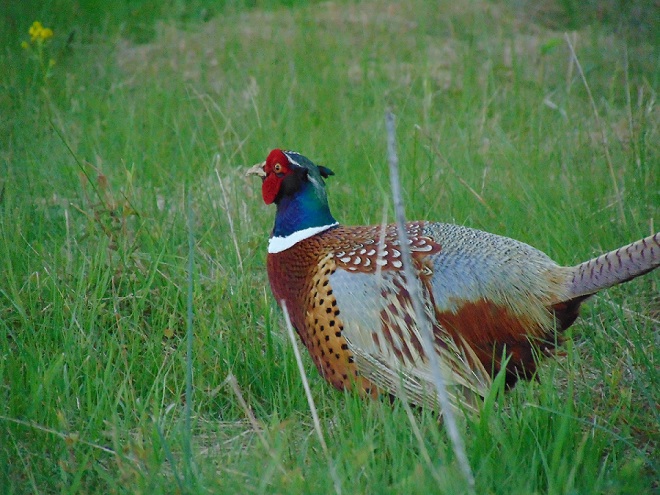
Red-winged Blackbirds commonly nest in cattail marshes, but are very fond of untreated hayfields, lightly-grazed pastures, and fallow ground too. These habitats are becoming increasingly rare in the lower Susquehanna region. Farmers have little choice, they either engage in intensive agriculture or go broke.Nest boxes are provided for Tree Swallows at the refuge.Numbers of American Kestrels have tumbled with the loss of grassy agricultural habitats that provide large insects and small rodents for them to feed upon.White-crowned Sparrows (Zonotrichia leucophrys) are a migrant and winter resident species that favors small clumps of shrubby cover in pastures and fallow land.When was the last time you saw an Eastern Meadowlark (Sturnella magna) singing “spring-of-the-year” in a pasture near your home?And yes, the grasslands at Middle Creek do support nesting Ring-necked Pheasants (Phasianus colcichus). If you stop for a while and listen, you’ll hear the calls of “kowk-kuk” and a whir of wings. Go check it out.
And remember, if you happen to own land and aren’t growing crops on it, put it to good use. Mow less, live more. Mow less, more lives.
And now, a few words from the old watersnake who happens to live down along the creek where last spring’s Earth Day events were held.
Northern Watersnake (Nerodia sipedon sipedon)
Hey! You! Yeah You! I heard that there won’t be an Earth Day celebration down here this week. What a ssshame!
Remember how much fun we had last year. All those kids ssscrambling down along the creek bank throwing ssstones and ssscreaming and yelling like they’re gonna sssack a city. I ssshould have had the sssense to ssslither away. But no, I just curled up and played it cool. But sssure enough, one of the little brats found me and bellowed out loud enough for the whole countryside to hear, “SSSNAAAAKE!”
Ah nuts. That’s all it took. Here they come. Poking me with a ssstick. Taunting and ssstabbing. Don’t you know that hurts? What did I ever do to you, you rotten little apes? I’m telling ya, I get no respect.
Think that’s bad? It got worse. Don’t you remember? After a dozen of the runny-nosed monsters had me sssurrounded, one of the brain-dead adults yelled, “…it might be poisonous!”
That’s all it took. The ssstones got hurled my way and the poking with a ssstick became beatings. Those rats tried to kill me! On Earth Day! I ssslid into deep water and barely escaped with my life.
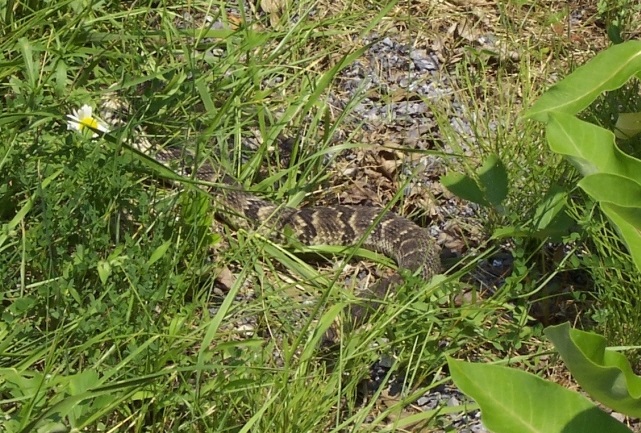
Now I want to tell you a few things—let’s get ’em ssstraight right now. I’m not, nor is any other watersnake in the SSSusquehanna valley, poisonous. Ssso don’t go villainizing me and those like me just because you have a monkey-like fear of us and need a sssocially acceptable reason to exercise your murderous instincts. Yeah, we know all about your manly tall tales of conquest that you ssshamelessly tell your friends and family after you kill a sssnake. Wanna be a hero? Then leave us alone! We and all of the native sssnakes of the SSSusquehanna valley, including the venomous copperheads and Timber Rattlesnakes, are minding our own business and just want to be left alone. Get it? Leave us alone! Don’t beat us with a ssshovel, mow over us, drive your car or truck over us, or ssshoot us. We have it bad enough as it is. You already buggered up most of our homes building your roads, houses, and lawns you know—so have a little respect. And one more thing, we don’t want be part of your pet menagerie. There’s no way we’ll “love you” or want anything to do with you, even if you do imprison us and make us sssubmissive to you for food, you sssick fascists. And that goes for you obsessive collector types too. We know you’re hoarding animals like us and calling your cruel little pet penitentiary a “rescue”. Yeah, we’re wise to that con too.
What’s left of a Timber Rattlesnake (Crotalus horidus) in a wild area of the Susquehanna valley. It made the fatal mistake of trying to cross the road when a simple-minded sociopath driving an oversize pickup truck was coming by. As you may have guessed, the conscientious driver braked and swerved to hit the snake.
Ssso we’ve heard you won’t be coming down to the creek to terrorize us this year. No Earth Day event, huh. Well good, because I can’t take another Earth Day. Let the sssquirrels and the birds plant the trees, they do a better job than you anyway. Ssstay at home where you belong—watching television or twit-facing your B.F.F. on that magic box you carry around. And if you absolutely feel the urge to be upset by a sssnake in your midst, go visit that neighbor with the “reptile rescue”, I’m sssure he has a cobra or some other non-native sssnake in his collection that really ought to give you worry—especially when it finally escapes that prison.
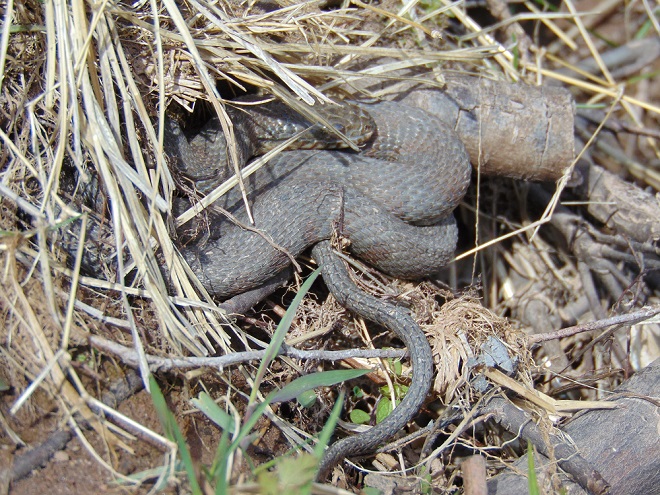
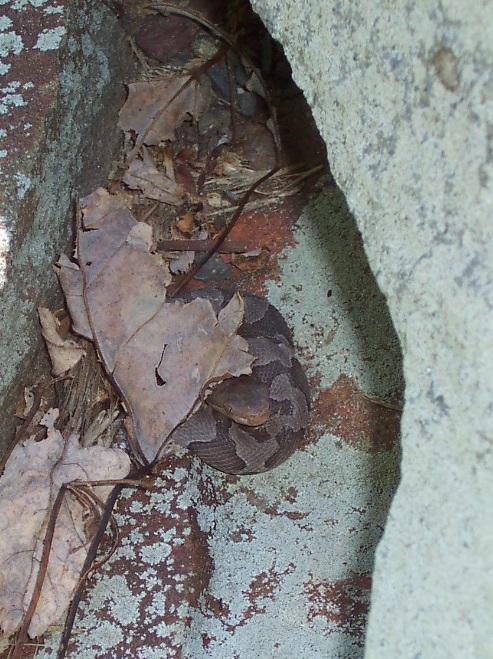
The snakes of the lower Susquehanna valley, including the Eastern Copperhead (Agkistrodon contortix), are very docile and just want to be left alone. That goes for the turtles and other wildlife too. How ’bout showing them all a little respect.
For those of you who dare to shed that filthy contaminated rag you’ve been told to breathe through so that you might instead get out and enjoy some clean air in a cherished place of solitude, here’s what’s around—go have a look.
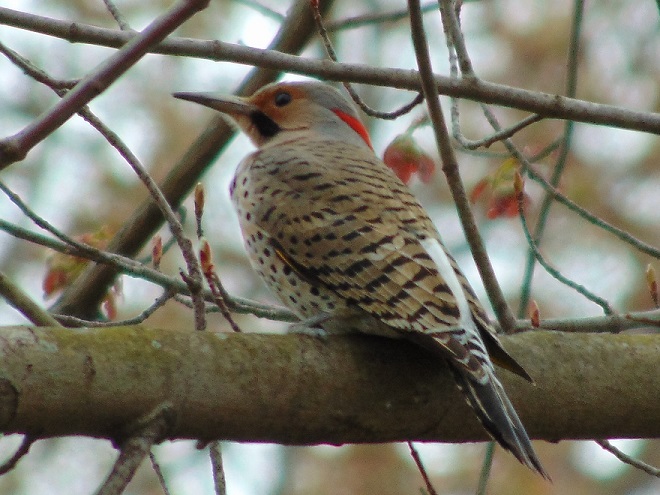
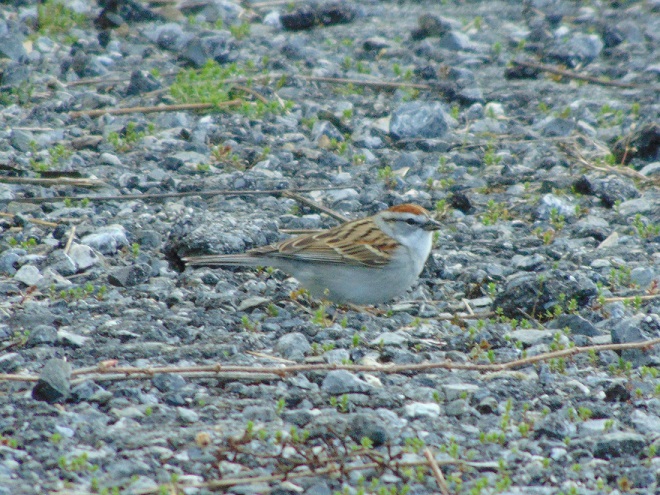
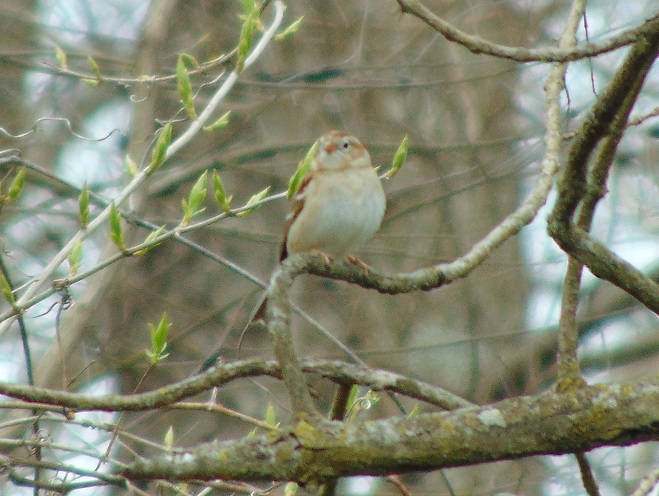
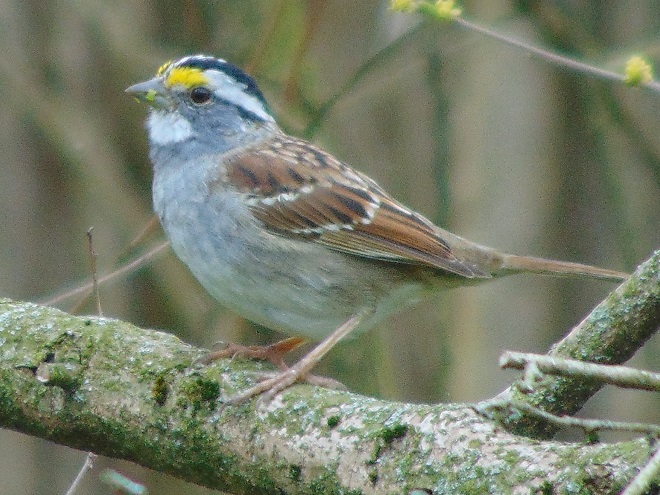
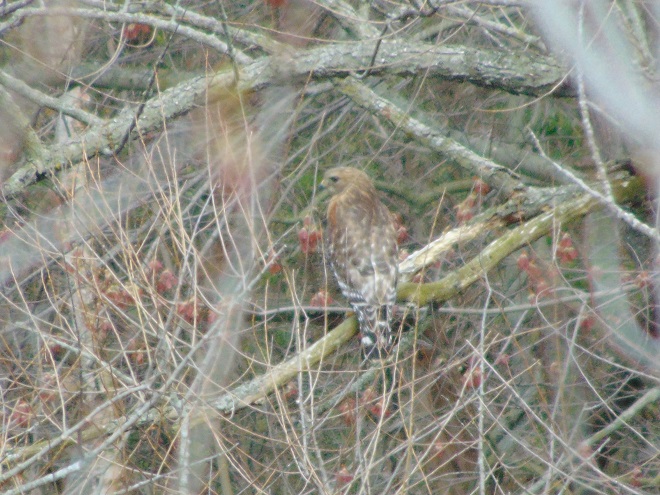
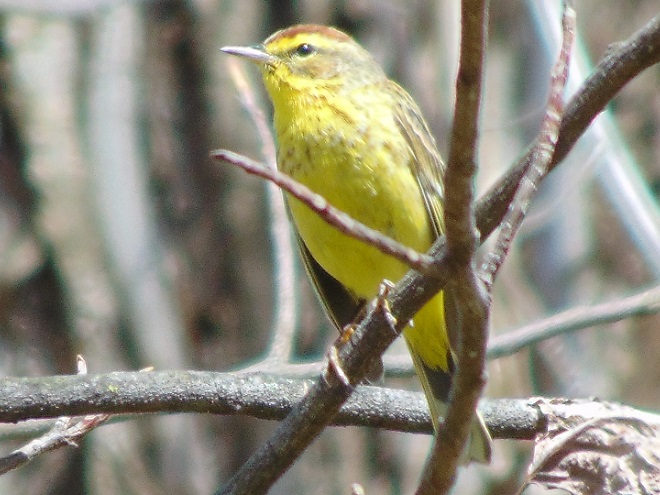
Northern Flickers have arrived. Look for them anywhere there are mature trees. Despite the fact that flickers are woodpeckers, they often feed on the ground. You’ll notice the white rump and yellow wing linings when they fly away.The tiny Chipping Sparrow frequently nests in small trees in suburban gardens. Lay off the lawn treatments to assure their success.Field Sparrows (Spizella fusilla) are a breeding species in abandoned fields where successional growth is underway.White-throated Sparrows spend the winter in the lower Susquehanna valley. Their numbers are increasing now as waves of migrants pass through on their way north.Northbound flocks of Rusty Blackbirds (Euphagus carolinus) are currently found feeding in forest swamps along the Susquehanna. Their noisy calls sound like a chorus of squeaking hinges.Migratory Red-shouldered Hawks are also making feeding stops at area wetlands.The Palm Warbler (Setophaga palmarum) is easily identified by its tail pumping behavior. Look for it in shrubs along the river shoreline or near lakes and streams. Palm Warblers are among the earliest of the warblers to move through in the spring.
The springtime show on the water continues…
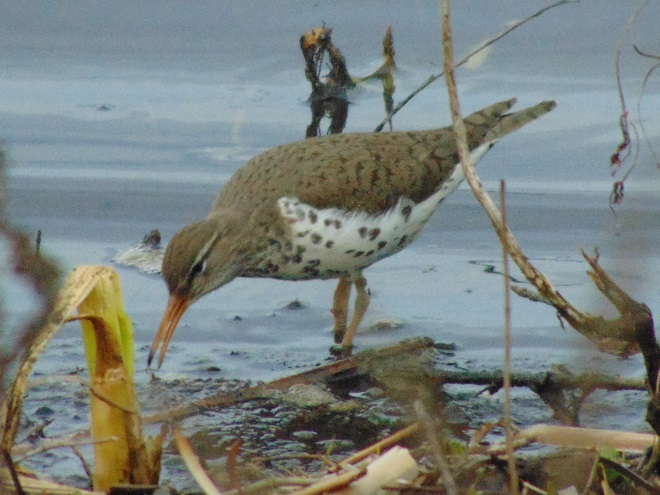
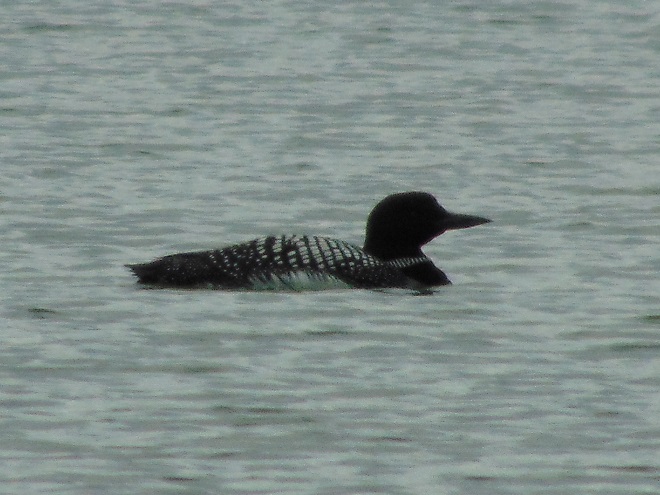
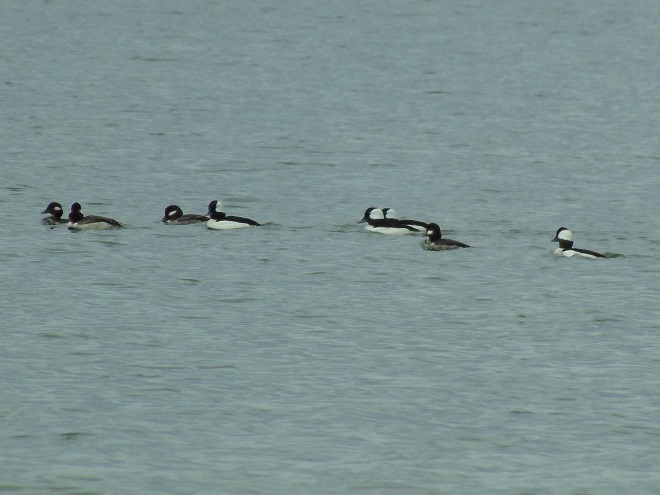
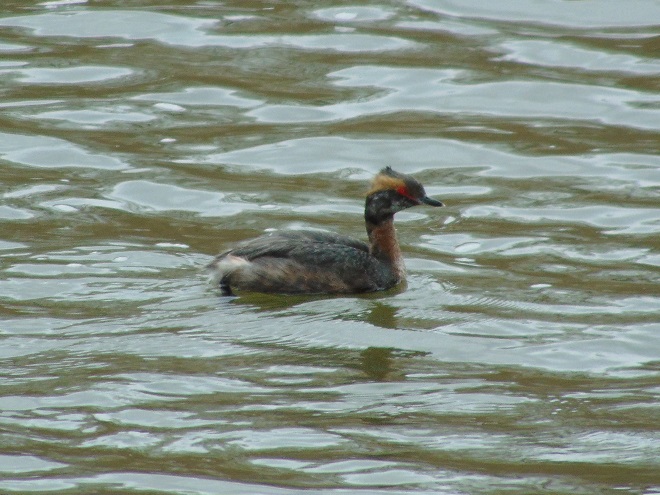
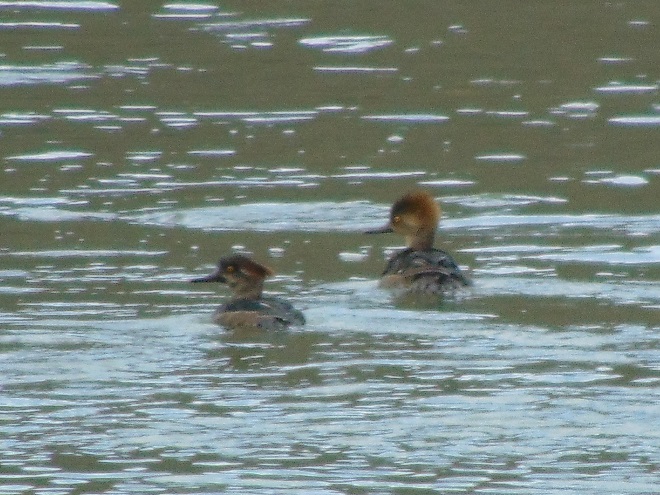
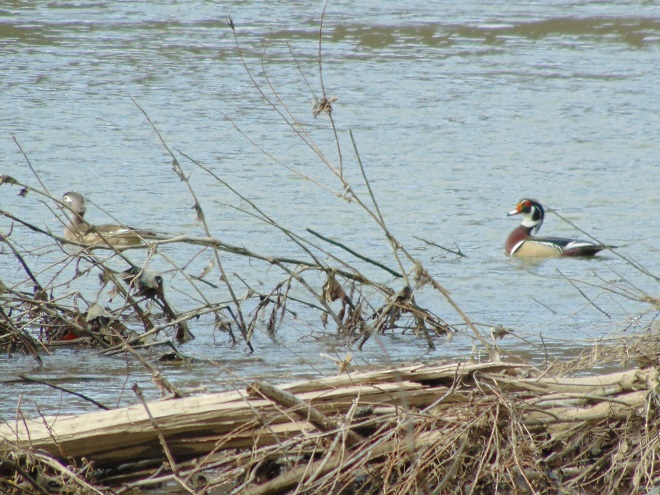
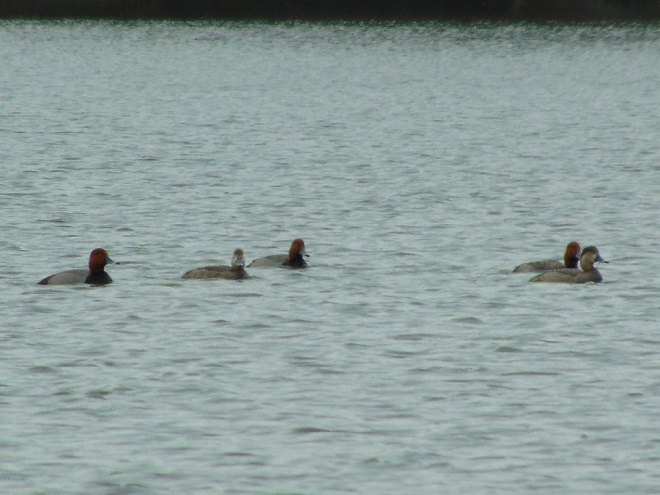
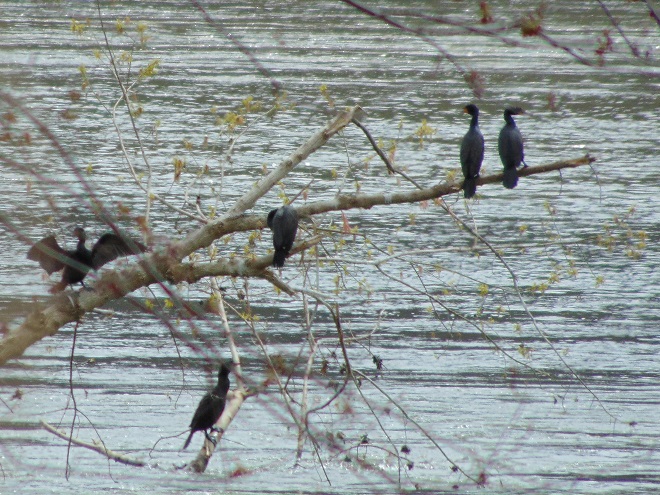
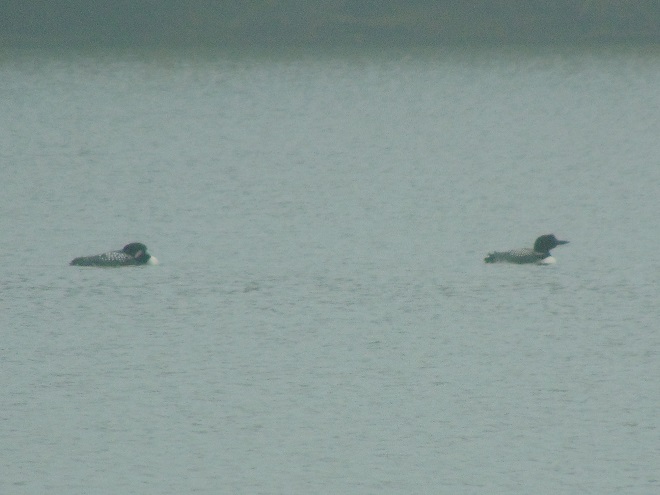
Common Loons will continue migrating through the area during the upcoming month.Buffleheads are still transiting the watershed.Horned Grebes are occurring on the river and on local lakes.Seeing these one-year-old male Hooded Mergansers, the bachelors, wandering around without any adult males or females is a good sign. The adults should have moved on to the breeding grounds and local pairs should be well into a nesting cycle by now. Hatching could occur any day.Like Hooded Mergansers, Wood Ducks are cavity nesters, but their egg laying, incubation, and hatching often occurs a month or more later than that of the hoodies. Judging by the attentiveness of the drake, this pair of woodies is probably in the egg-laying stage of its breeding cycle right now.Redheads (Aythya americana) are stopping for a rest on their way north.In spring, Double-crested Cormorants proceed up the river in goose-like flocks with adult birds like these leading the way.
Hey, what are those showy flowers?
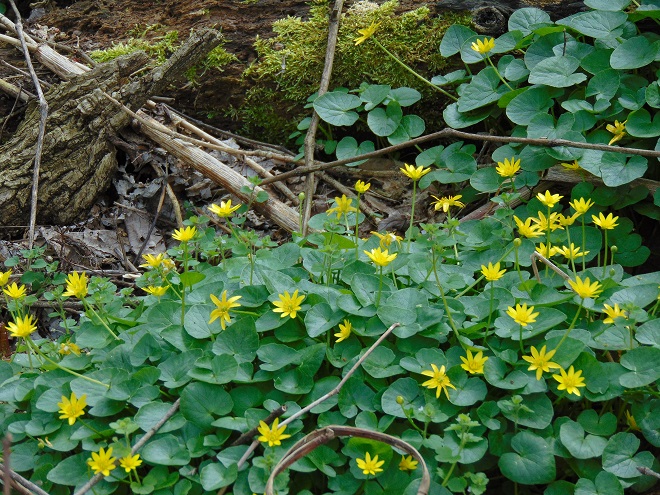
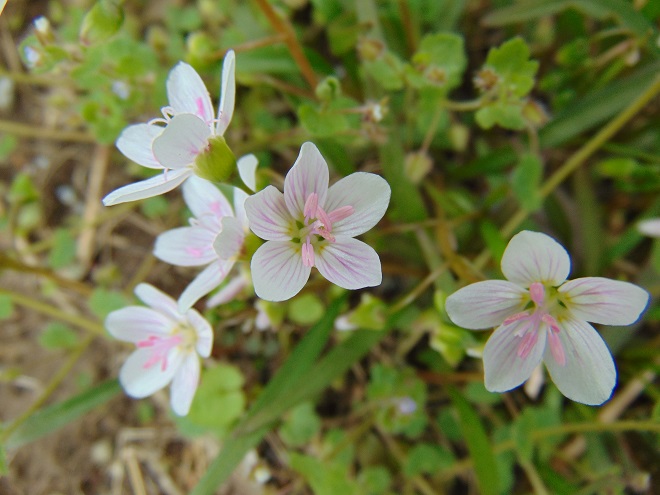
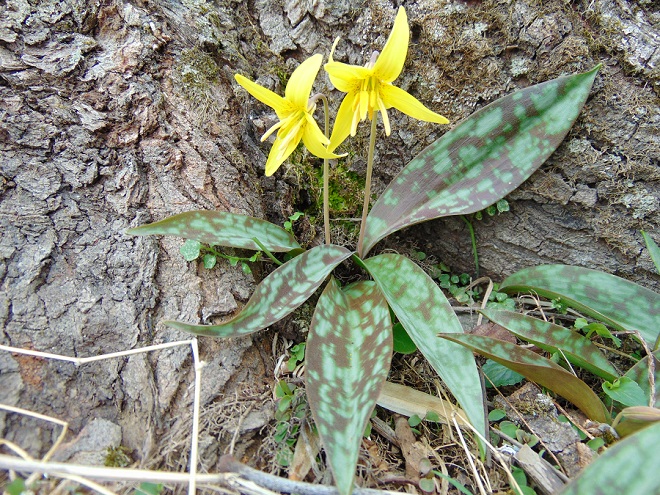
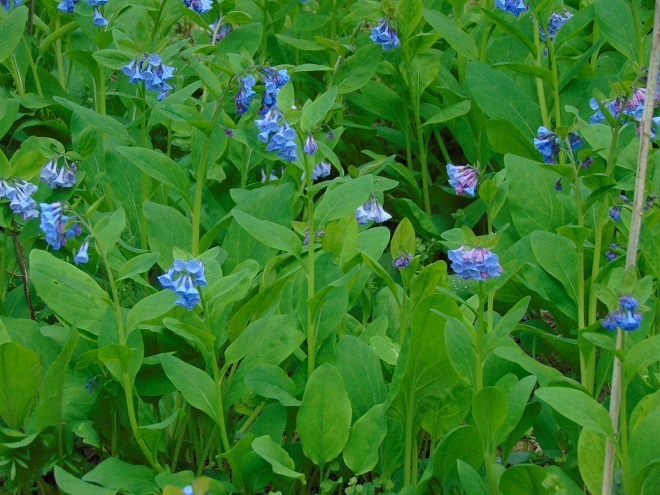
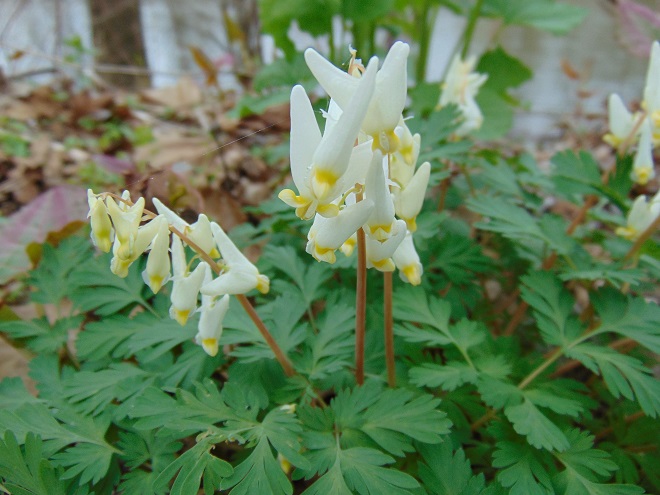
That’s Lesser Celandine (Ficaria verna). It’s often called Fig Buttercup. In early April it blankets stream banks throughout the lower Susquehanna region. If you don’t remember seeing it growing like that when you were younger, there’s a reason. Lesser Celandine is an escape from cultivation that has become invasive. While the appearance is tolerable; it’s the palatability that ruins everything. It’s poisonous if eaten by people or livestock.The Eastern Spring Beauty (Claytonia virginica) is a dainty native wildflower of riparian forests and other woodlands throughout the lower Susquehanna valley.The Trout Lily (Erythronium americanum) is beginning to bloom now. It’s a native of the region’s damp forests.Virginia Bluebells (Mertensia virginica) is not native to the Susquehanna watershed, but neither is it considered invasive. It creates colorful patches in riparian forests.Dutchman’s Breeches (Dicentra cucullaria) is a strikingly beautiful native wildflower that grows on undisturbed forested slopes throughout the Susquehanna valley.
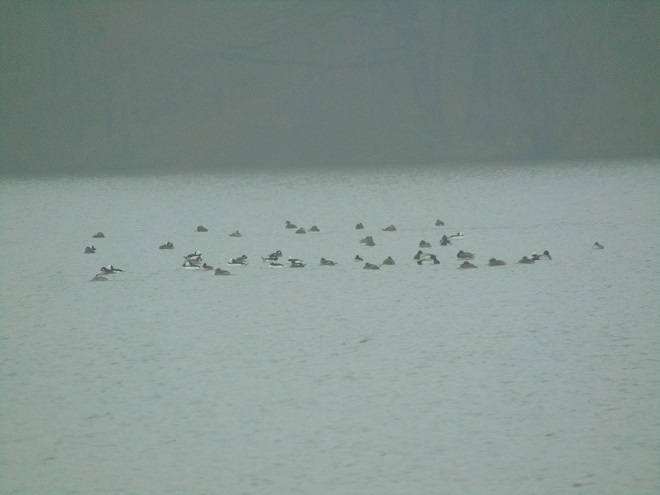
Fog and mist lingered throughout the day, as did the migratory water birds on the river and lakes in the lower Susquehanna valley. As a continuation of yesterday’s post on the fallout, here’s a photo tour of some of the sites where ducks, loons, grebes, and other birds have gathered.
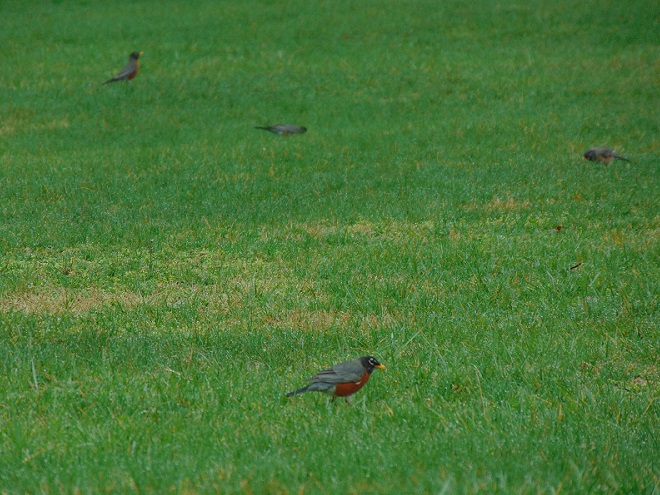
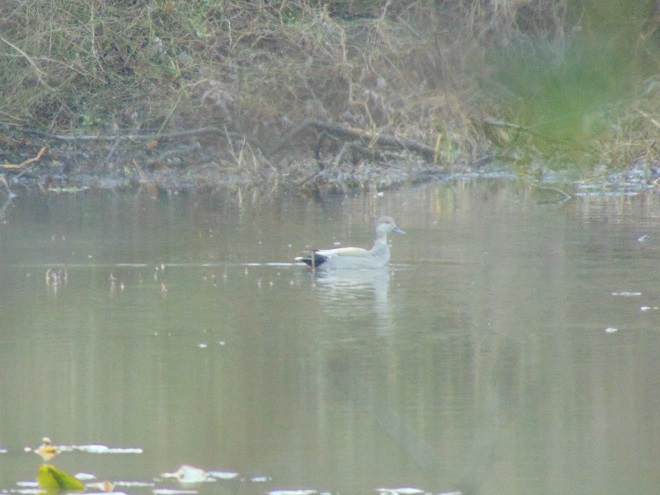
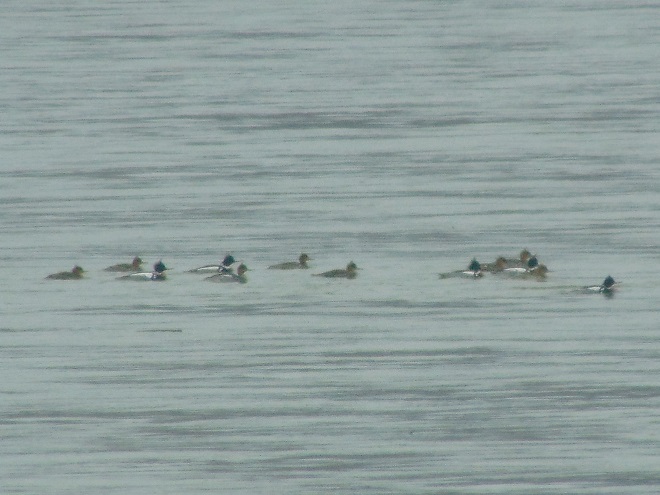
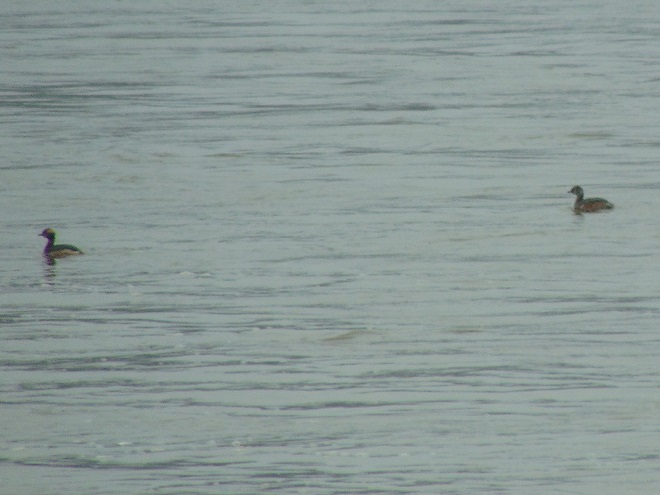
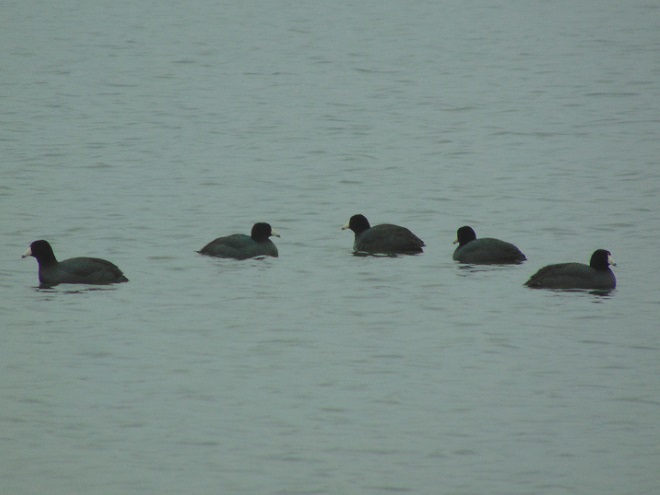
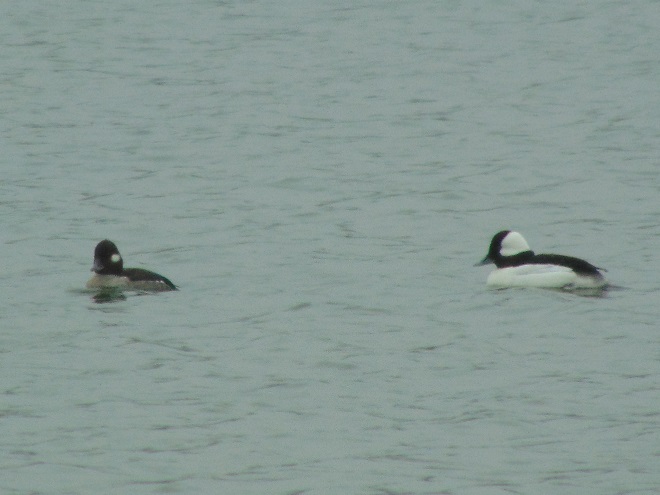
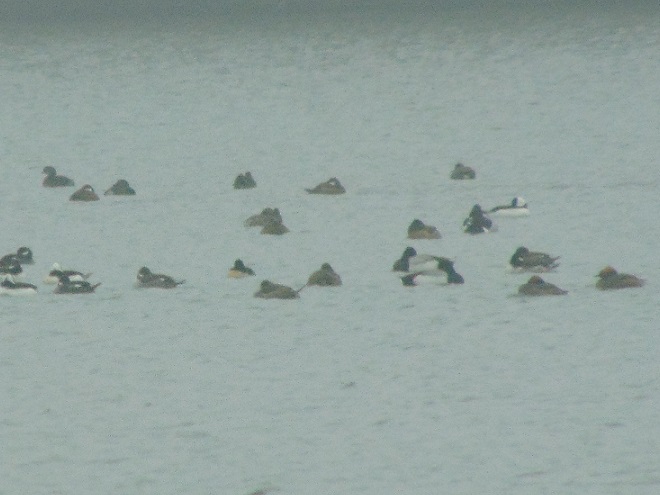
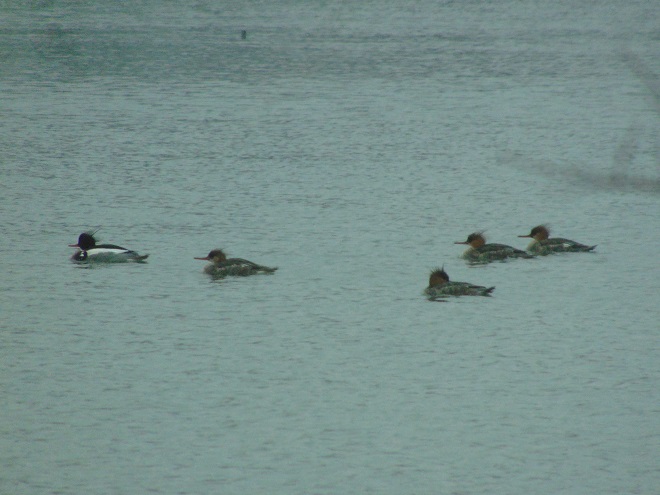
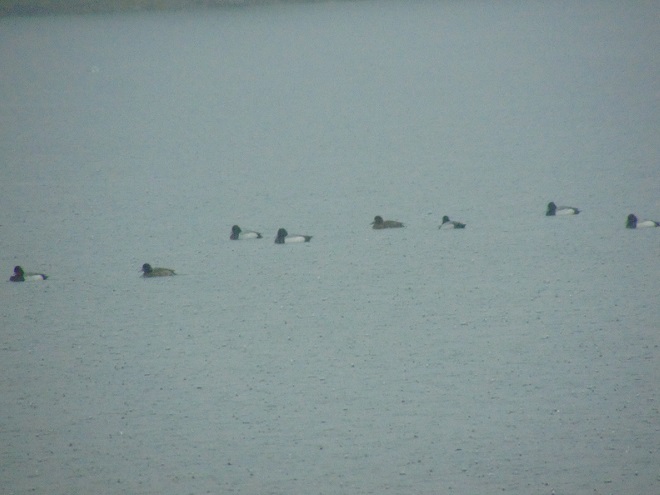
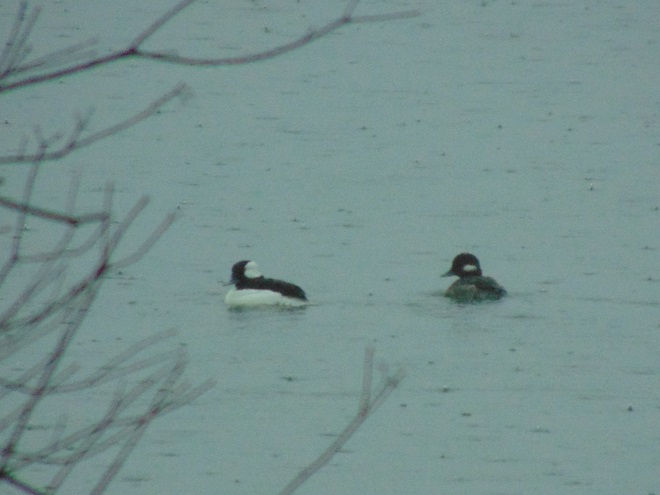
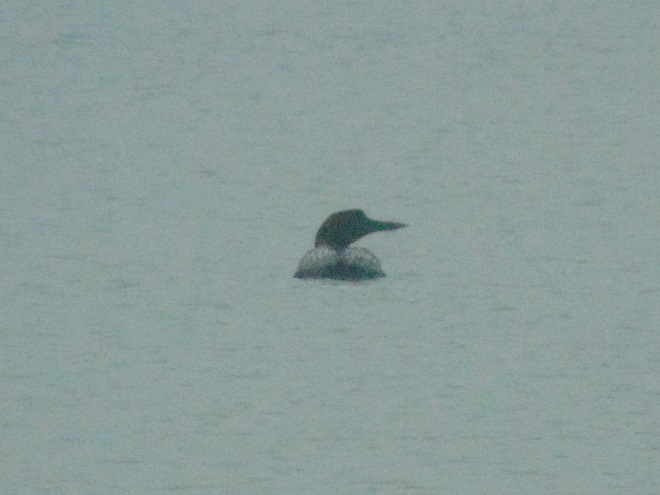
American Robins may have comprised a large portion of the northbound flight appearing on last evening’s radar images. Today, hundreds could be seen on soggy lawns where earthworms might be found near the surface. This flock was finding sustenance at Highspire’s Reservoir Park in Dauphin County.This drake Gadwall (Mareca strepera) and two hens had dropped in for a visit at the Highspire Reservoir Park.Hundreds of Buffleheads were on the fogged-in Susquehanna River at Harrisburg this afternoon. From Front Street and Maclay Street in front of the Pennsylvania Governor’s Mansion, they seemed to be everywhere in sight on the rain-swollen current. After passing downstream, flocks flew in a straight line formation just above the water’s surface as they made a short trip back up the river to then drift down through the channels once again.A portion of a raft consisting of about three dozen Red-breasted Mergansers floats by the Pennsylvania Governor’s Mansion. Several of the hundred or more Scaup on the river intermingled with these mergansers from time to time.A lone Long-tailed Duck (Clanqula hyemalis) near the aforementioned raft of mergansers. The Long-tailed Duck was formerly known as the Oldsquaw in North America. The common name used in Britain and Europe is now preferred.Two of at least a hundred Horned Grebes (Podiceps auritus) seen in the Susquehanna at Harrisburg this afternoon.American Coots (Fulica americana) at Memorial Lake State Park in Lebanon County.Buffleheads continue at Memorial Lake.One more Common Loon than yesterday at Memorial Lake.A mixed raft of diving ducks and grebes at Memorial Lake.A closeup of the same raft reveals Buffleheads, Scaup, Ring-necked Ducks, Ruddy Ducks (Oxyura jamaicensis), a Pied-billed Grebe, and Horned Grebes.
Local birders enjoy going to the Atlantic coast of New Jersey and Delmarva in the winter. The towns and beaches host far fewer people than birds, and many of the species seen are unlikely to be found anywhere else in the region. Unusual rarities add to the excitement.
The regular seaside attraction in winter is the variety of diving ducks and similar water birds that feed in the ocean surf and in the saltwater bays. Most of these birds breed in Canada and many stealthily cross over the landmass of the northeastern United States during their migrations. If an inland birder wants to see these coastal specialties, a trip to the shore in winter or a much longer journey to Canada in the summer is normally necessary—unless there is a fallout.
Migrating birds can show up in strange places when a storm interrupts their flight. Forest songbirds like thrushes and warblers frequently take temporary refuge in a wooded backyard or even in a city park when forced down by inclement weather. Loons have been found in shopping center parking lots after mistaking the wet asphalt for a lake. Fortunately though, loons, ducks, and other water birds usually find suitable ponds, lakes, and rivers as places of refuge when forced down. For inland birders, a fallout like this can provide an opportunity to observe these coastal species close to home.
Not so coincidentally, it has rained throughout much of today in the Lower Susquehanna River Watershed, apparently interrupting a large movement of migrating birds. There is, at the time of this writing, a significant fallout of coastal water birds here. Hundreds of diving ducks and other benthic feeders are on the Susquehanna River and on some of the clearer lakes and ponds in the region. They can be expected to remain until the storm passes and visibility improves—then they’ll promptly commence their exodus.
The following photographs were taken during today’s late afternoon thundershower at Memorial Lake State Park at Fort Indiantown Gap, Lebanon County.
A one-year-old male Hooded Merganser (Lophodytes cucullatus).Red-breasted Mergansers (Mergus serrator) are a familiar sight in saltwater bays, not so familiar on inland bodies of water.A small raft of Scaup (Aythya species).A pair of Buffleheads.A Common Loon that lands in a parking lot is unable to take flight again. It must be transported to a body of water large enough for it to run across the surface and get the speed it needs to take off and resume its flight. This Common Loon at Memorial Lake has selected an ideal fallout haven. It will have plenty of runway space when it decides to leave.A Pied-billed Grebe (Podilymbus podiceps) in a heavy downpour.
Migrating land birds have also been forced down by the persistent rains.
The tail-pumping Eastern Phoebe is a common sight around the lower Susquehanna valley right now. Many will stay to breed, often building their nests under a man-made bridge, porch. or other structure.
Why not get out and take a slow quiet walk on a rainy day. It may be the best time of all for viewing certain birds and other wildlife.
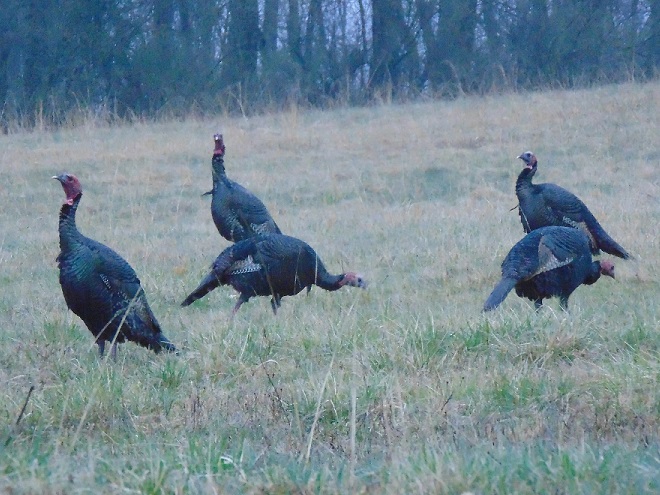
Wild Turkeys (Meleagris gallopovo) will often leave the cover of woodlands and forest to forage in the open during a rain shower.During the final hours of this evening, wind-assisted flights of northbound migrating birds are indicated as blue masses around radar sites south of the Mason-Dixon Line. These nocturnal flights may constitute yet another fallout in the area of the showers and storms shown passing west to east through Pennsylvania, adding to the existing concentration of grounded migrants in the lower Susquehanna valley. (NOAA/National Weather Service image)
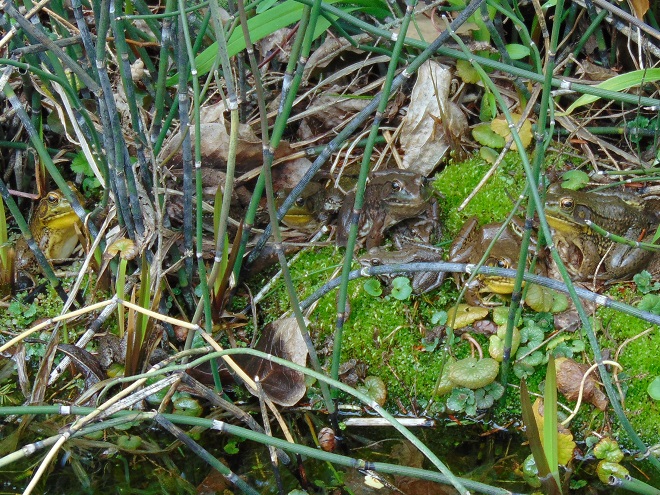
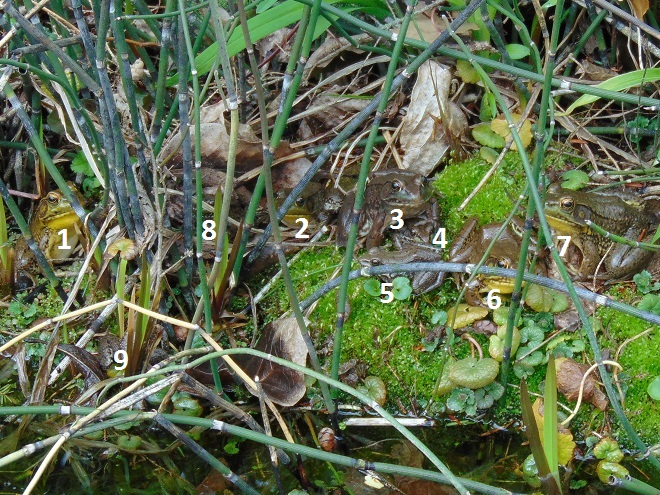
The mild winter has apparently minimized weather-related mortality for the local Green Frog population. With temperatures in the seventies throughout the lower Susquehanna valley for this first full day of spring, many recently emerged adults could be seen and, on occasion, heard. Yellow-throated males tested their mating calls—reminding the listener of the sound made by the plucking of a loose banjo string.
Here’s a gathering of Green Frogs seen this afternoon along the edge of a small pond. How many can you find in this photograph?
If you venture out, keep alert for the migrating birds of late winter and early spring.
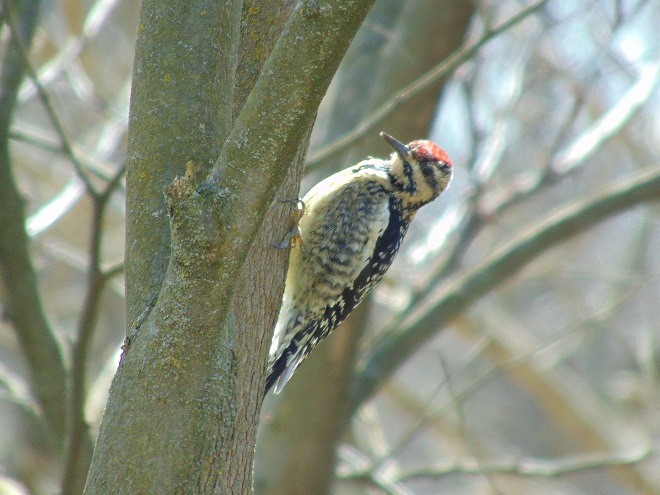
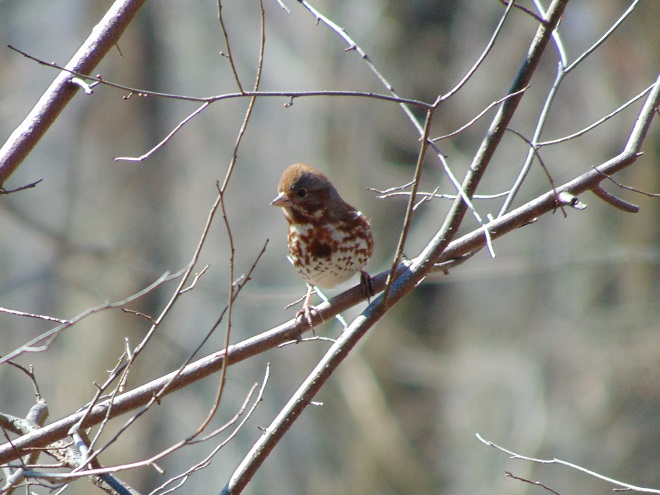
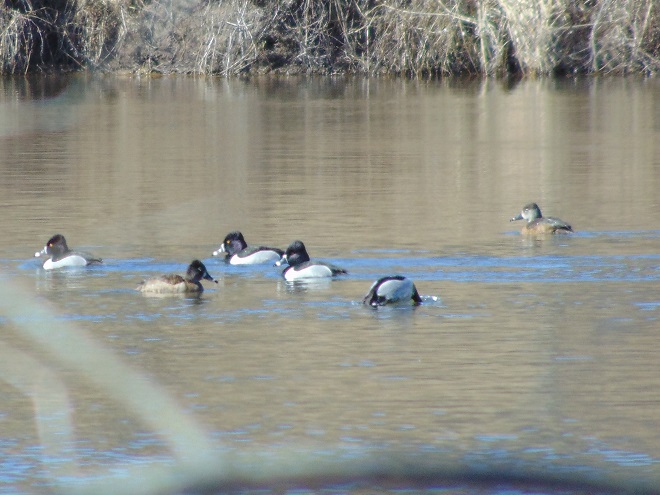
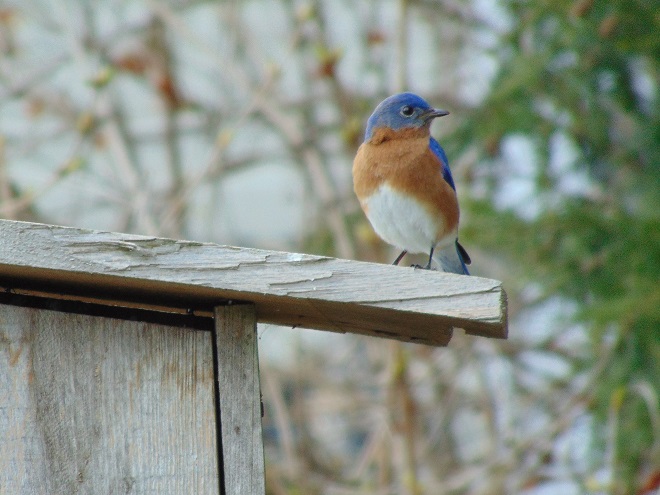
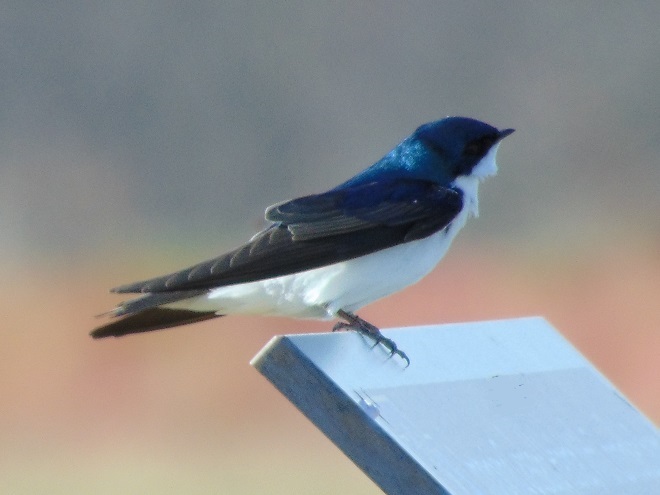
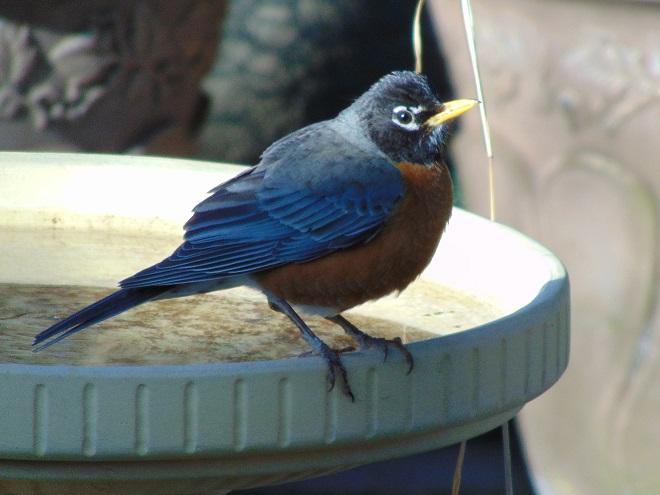
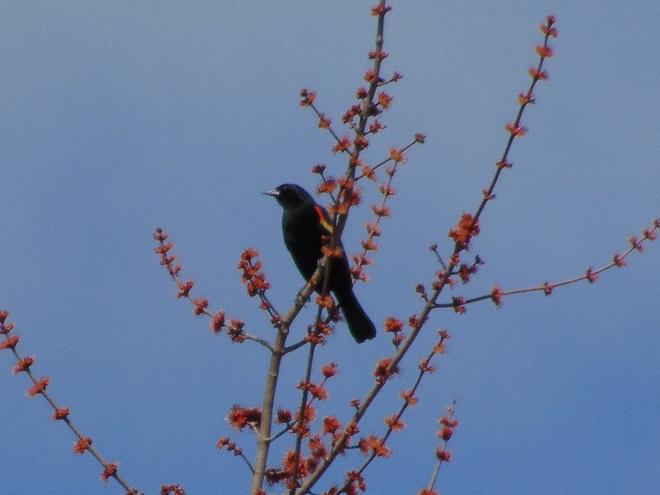
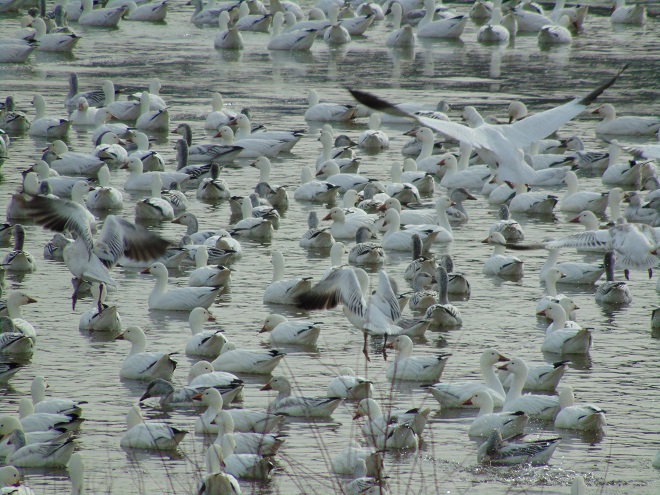
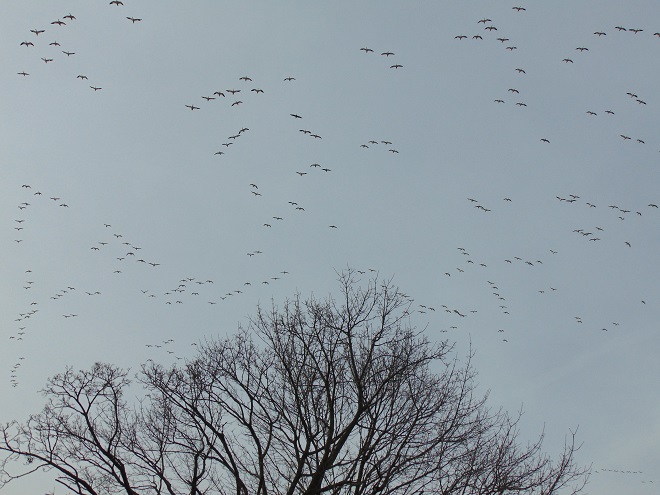
Yellow-bellied Sapsuckers are moving through on their way north. Look for them in mature trees in woodlands, suburbs, and city parks.The Fox Sparrow (Passerella iliaca), our largest sparrow, is a thrush-like denizen of shrubby forest understories and field edges. It is an early spring and late autumn transient in the lower Susquehanna valley.While stopping to rest and feed during their northbound spring journey, Ring-necked Ducks and other diving duck species visit wetlands and flooded timber along the Susquehanna River as well as clear ponds and lakes elsewhere in the watershed.Eastern Bluebirds are presently migrating through the area. Some will stay to breed where nest boxes or natural cavities are available in suitable habitat.Tree Swallows are now arriving. In open grasslands, pastures, and adjacent to almost any body of water, they will nest in boxes like those placed for bluebirds.Keep that bird bath clean and fill it with fresh water, the American Robin flights are peaking right now. Breeding males like this one are starting to sing and defend nesting territories.Red-winged Blackbirds, like other native blackbirds, are moving through in a fraction of the numbers that were seen in the lower Susquehanna valley during the latter decades of the twentieth century. They remain a common breeding species in pastures and cattail wetlands.And of course, keep an eye to the sky. There are still thousands of Snow Geese in the area.
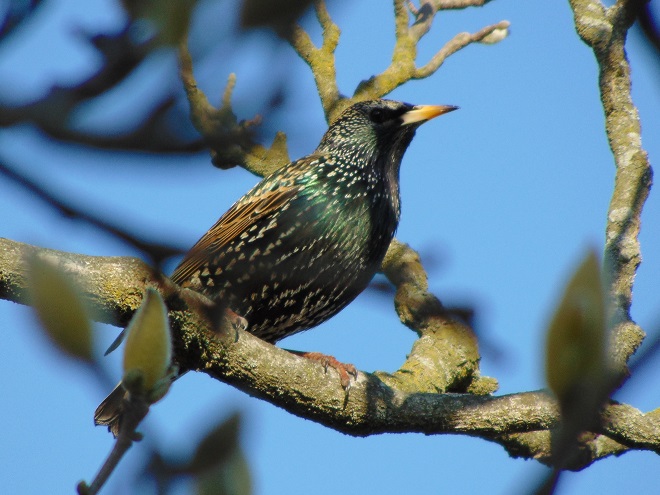
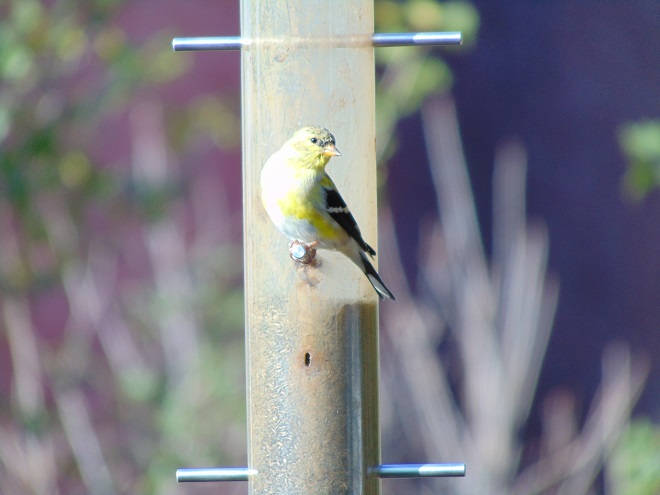
If you’re staying close to home, be sure to check out the changing appearance of the birds you see nearby. Some species are losing their drab winter basic plumage and attaining a more colorful summer breeding alternate plumage.
European Starlings are losing their spotted winter (basic) plumage and beginning to display a glossy multicolored set of breeding feathers.An American Goldfinch in transition from winter (basic) plumage to bright yellow, black, and white summer colors.
So just how many Green Frogs were there in that first photograph? Here’s the answer.
If you counted seven, you did really well. Numbers eight and nine are very difficult to discern.
Happy Spring. For the benefit of everyone’s health, let’s hope that it’s a hot and humid one!
According to the most recent Pennsylvania Game Commission estimate, there are presently more than 100,000 Snow Geese at the Middle Creek Wildlife Management Area (W.M.A.) in Lancaster and Lebanon Counties. It’s a spectacular sight.
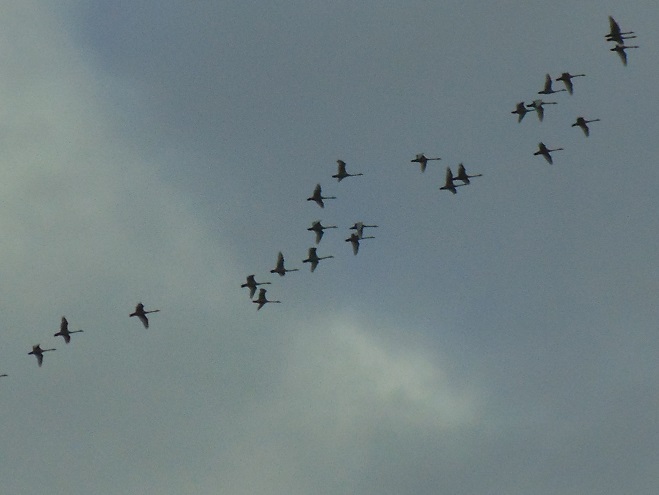
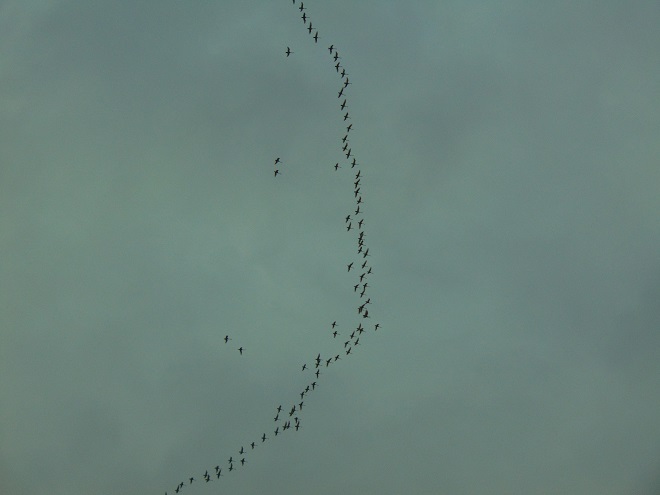
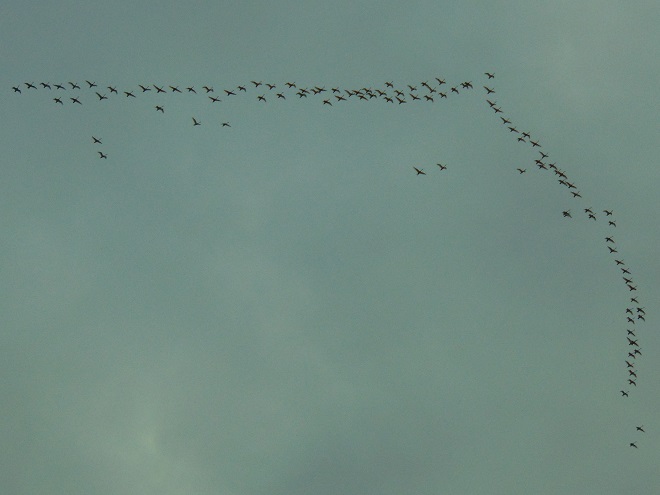
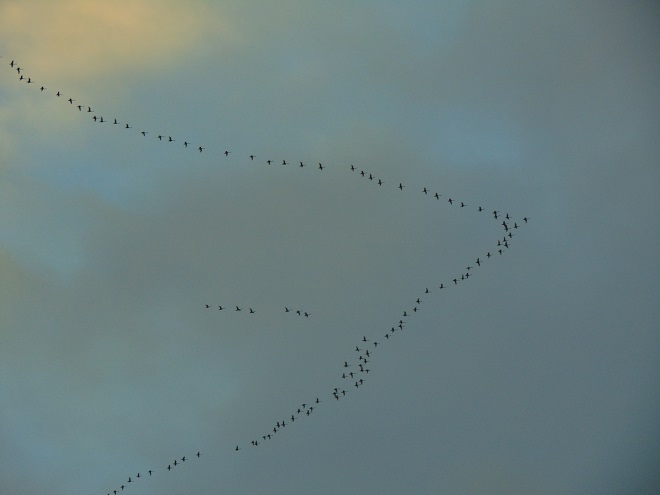
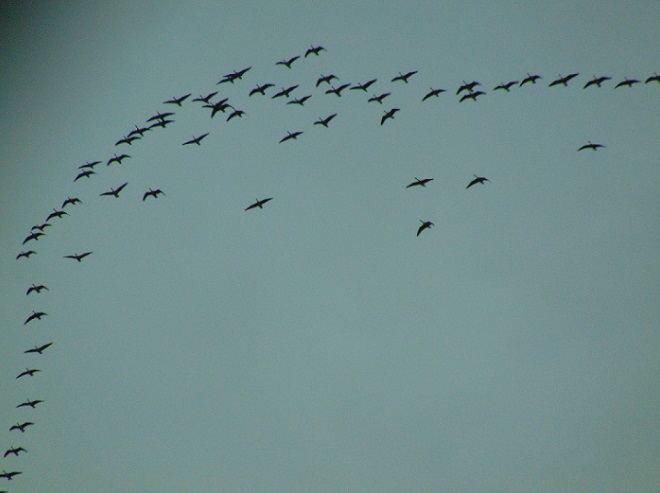
Noisy flights of Snow Geese, which can number from hundreds to thousands of birds, consist of strings of multiple V-shaped flocks. During late-February and early-March, they are a common sight as they make excursions from the lake at Middle Creek W.M.A. to feeding areas in the farmlands of the lower Susquehanna valley and back again.During the early 1990s, Snow Geese started moving away from compromised late-winter feeding areas in tidal marshes on the Atlantic Coastal Plain and began taking advantage of grazing and gleaning opportunities among grass crops (wheat, etc,), and more recently cover crops, in the almost predator-free high-intensity farming areas near the Middle Creek refuge.
If you go to see these and other birds at Middle Creek, it’s important to remember that you are visiting them in a “wildlife refuge” set aside for, believe it or not, wildlife. “Wildlife refuge”, many would be surprised to learn, is short for “terrestrial or aquatic habitat where wildlife can find refuge and protection from all the meddlesome and murderous things people do”.
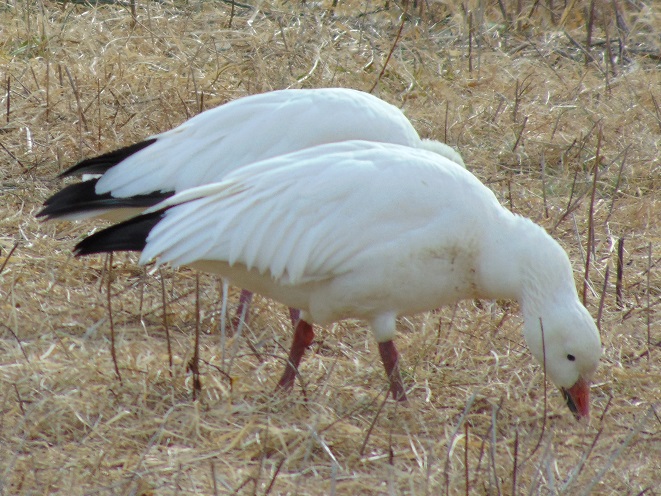
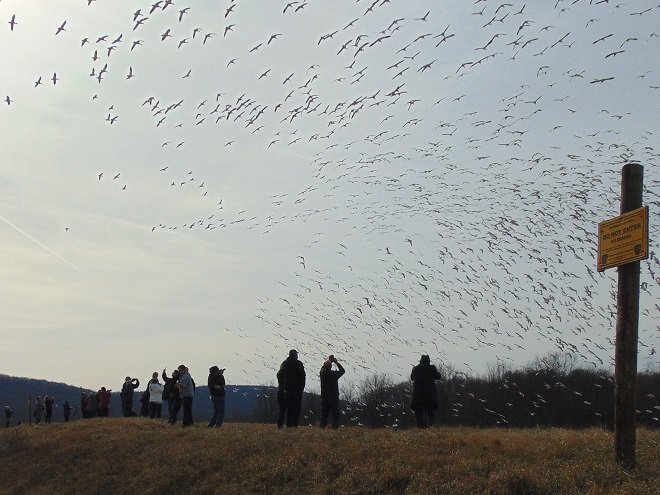
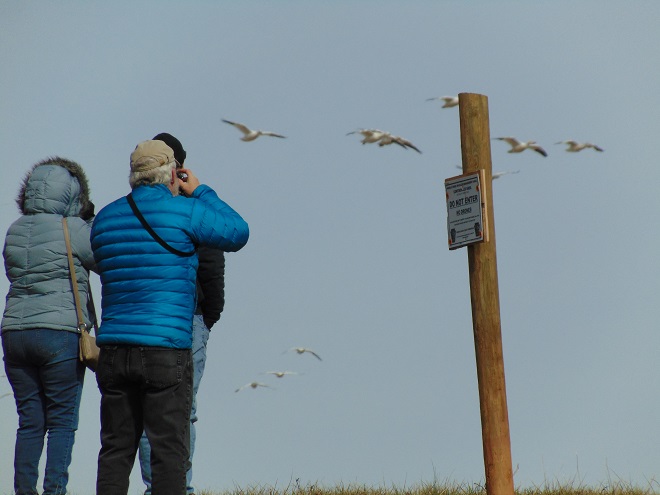
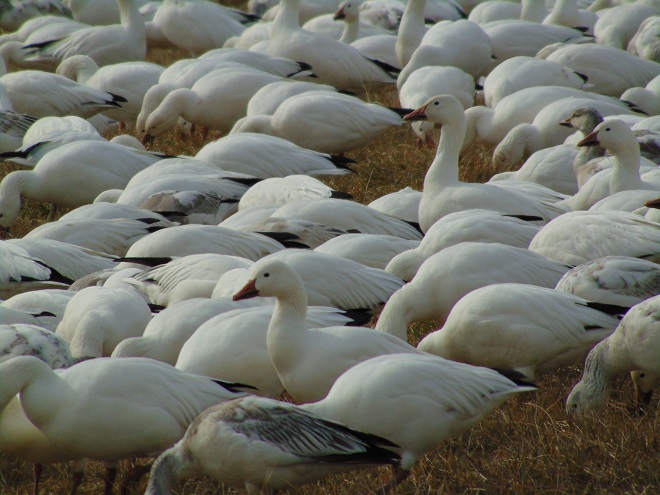
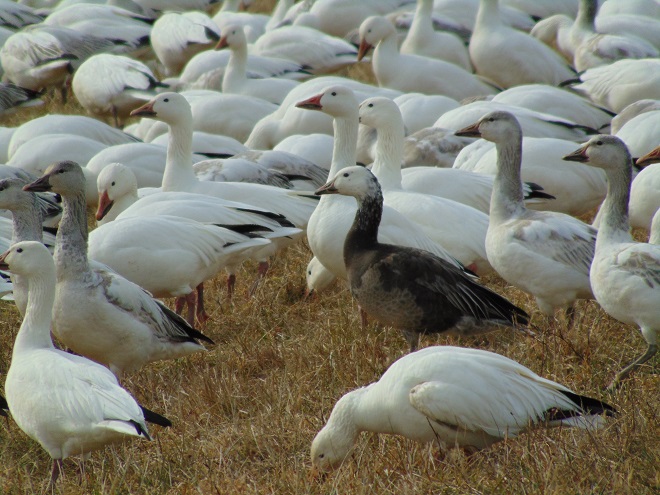
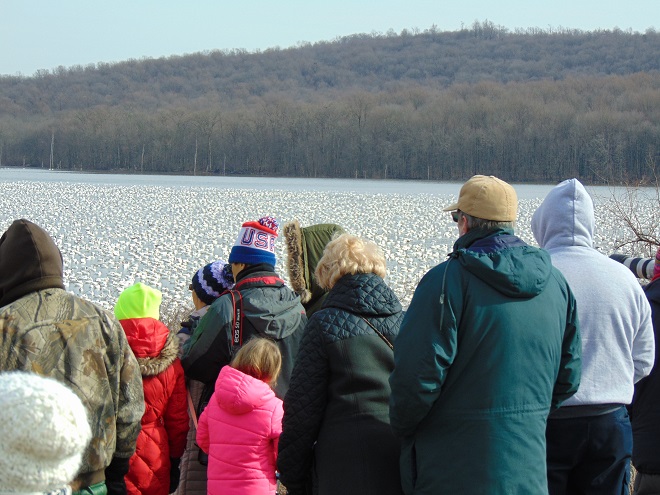
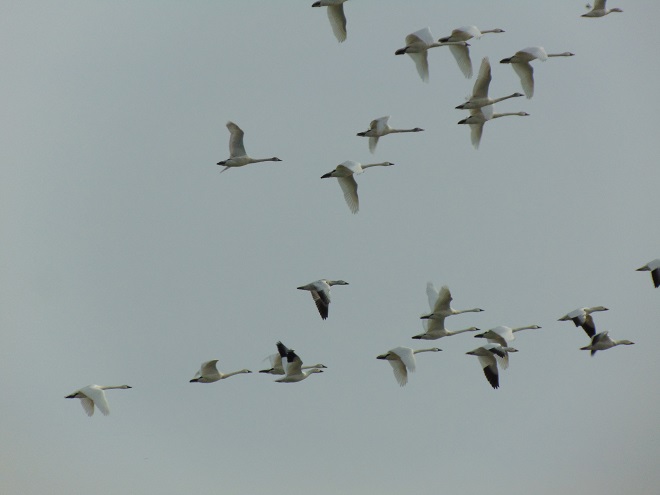
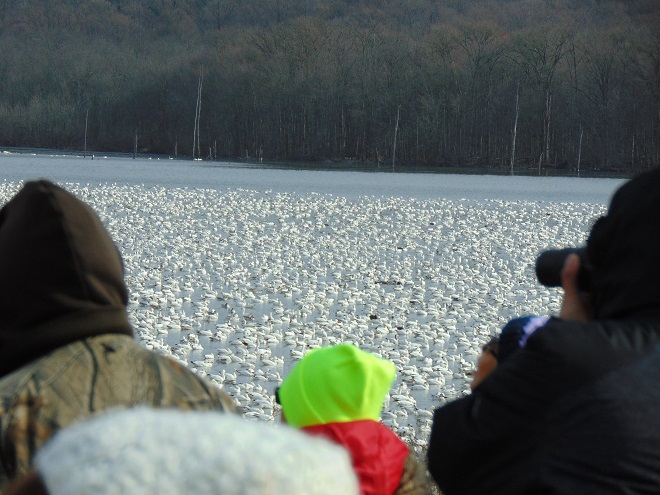
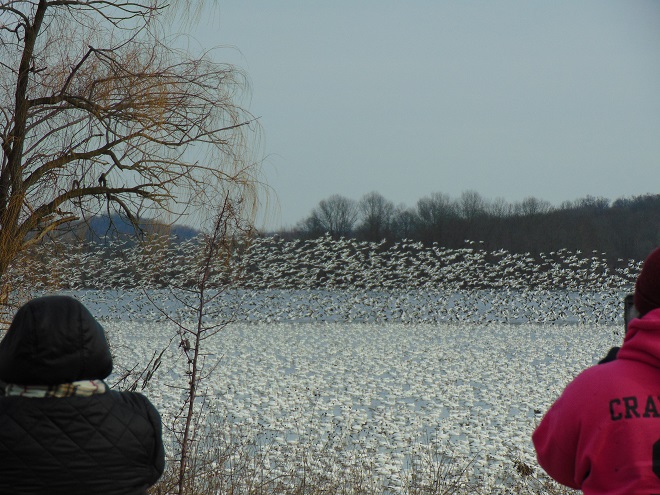
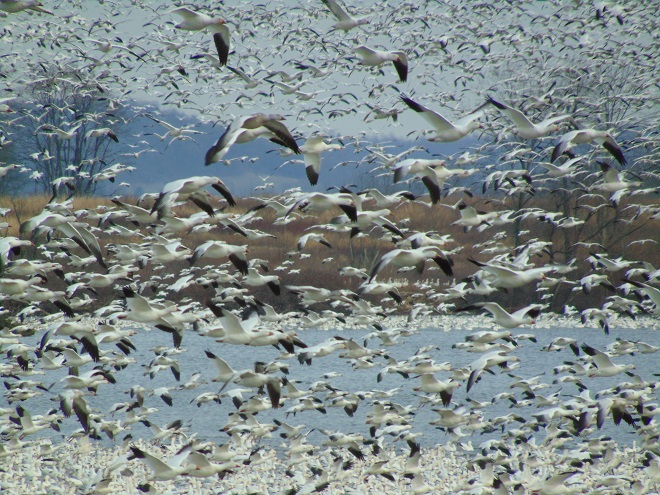
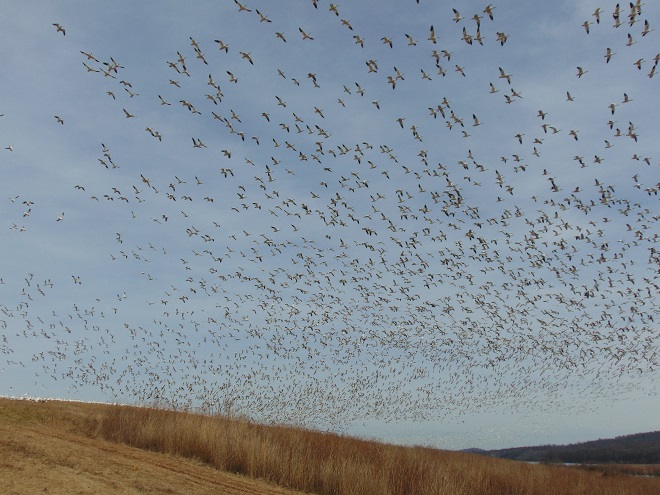
It’s not necessary to cross the well-marked boundaries of the refuge to get a better look at the geese, swans, and other wildlife at Middle Creek. Nor is it necessary to blow your motor vehicle’s horn, clap your hands, yell, or make other noises to scare the geese into flying so that you might get a good photograph. Such disturbances cause the birds to expend the energy they need to continue their journey north. They also cause the Pennsylvania Game Commission to spend funds on crowd control that might otherwise be spent on improvements to wildlife habitat.By embracing the virtue of patience, observers can get spectacular views and take great pictures from outside the refuge boundaries.Photographers who stand quietly and make no sudden movements will find that the foraging Snow Geese will often approach well within the range of most cameras. All of these pictures were taken with an inexpensive model purchased at a Walmart.Intermixed within the flocks, there are usually good numbers of gray-mottled hatch-year (juvenile) birds and often a few examples of the dark brown “Blue Goose”, a not-so-rare color morph of the Snow Goose.Observers viewing tens of thousands of Snow geese from the Willow Point observation area at Middle Creek W.M.A.There are approximately 1,500 Tundra Swans at Middle Creek W.M.A at the present time. Compare their pure white plumage and long necks with the black-tipped wings and short stocky necks of the Snow Geese accompanying them in this image.Clamoring geese let observers know that a massive lift-off may be in the making. Cameras are made ready.Away they go with a cackling roar!Sooner or latter, the geese will engulf the patient observer within one of their swirling swarms.Marvelous! Go check it out.
Nothing says Happy Valentine’s Day like a really bad poem, so here it is…
FOR THE LOVE OF DUCKS
I like to feed the duckies
Try it and you’ll see
Aren’t they really lucky?
Relying just on me
My neighbors are complainin’
I can hear them talk
The mallards eat their garden
Let surprises on their walk
Dung stains on the carpets
They tracked it in the house
It’s from those ducks and not the pets
Can’t blame it on the spouse
I like to feed the duckies
Try it and you’ll see
Aren’t they really lucky?
Relying just on me
Tamed with bread and crackers
I gave them as a treat
I soon found maimed dead quackers
Lying in the street
A driver who intended
To miss the hens and drakes
Had their car rear-ended
When they hit the brakes
I like to feed the duckies
Try it and you’ll see
Aren’t they really lucky?
Relying just on me
The flock is very wasteful
Each bird a pound a day
Web-foots in a cesspool
Pollute the waterway
There are some kids playing
In that filthy ditch
Soon they’ll be displaying
The rash of Swimmer’s Itch
I like to feed the duckies
Try it and you’ll see
Aren’t they really lucky?
Relying just on me
These ducks they do not migrate
They’re here day in, day out
Aquatic life they decimate
No plants, no fish, no trout
Hurry! Hurry! Heed my call
Before it starts to rain
Ten more ducklings took a fall
And are stranded in a drain
I like to feed the duckies
Try it and you’ll see
Aren’t they really lucky?
Relying just on me
Have you people lost your minds?
I see you by your fence
These ducks are cute and I am kind
It’s you who’ve lost your sense
Beggars from the handouts
My God what have I done?
Their senseless habits leave no doubt
Their instincts are all gone
I like to feed the duckies
Try it and you’ll see
Aren’t they really lucky?
Relying just on me
Now I know just what to do
Like one would teach a child
I’ll feed the ducks at the zoo
And let the rest live wild
So if you feed the duckies
Beware of the spell
Or you will do the same as me
Loving ducks to death as well
—Ducks Anonymous, LLC
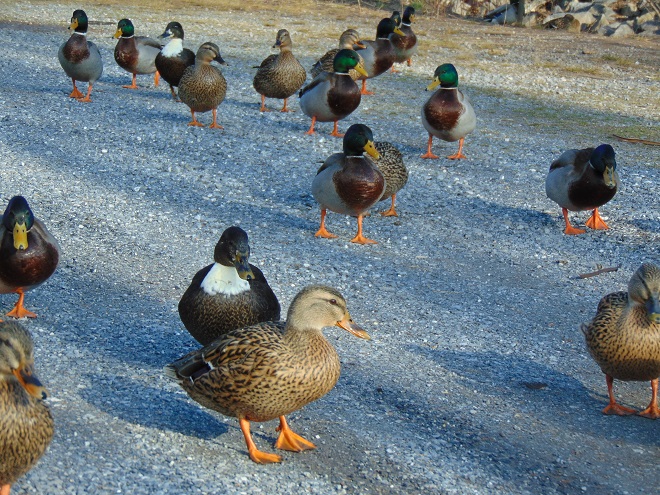
They’re cute, but if you really love waterfowl, then please refrain from feeding them. Hand-fed ducks soon lose their survival instincts. These clueless birds do dumb things like loiter in traffic and, perhaps worst of all, omit migration from their yearly life cycle. Daily plundering by year-round congregations of Canada Geese, Mute Swans, polygamous Mallards (seen here), and domestic waterfowl is decimating native plant and animal populations in waterways, wetlands, ponds, and lakes throughout the Lower Susquehanna River Watershed. For aquatic food chains and fisheries to recover, people must stop feeding (and releasing) these highly-impressionable birds.
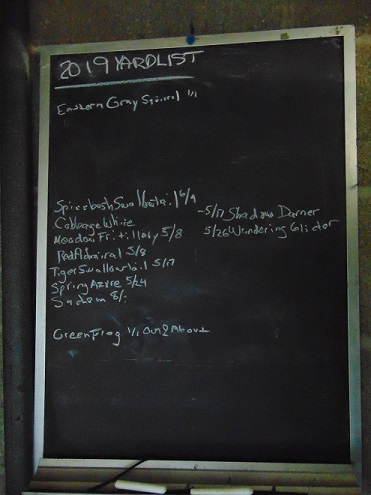
Inside the doorway that leads to your editor’s 3,500 square foot garden hangs a small chalkboard upon which he records the common names of the species of birds that are seen there—or from there—during the year. If he remembers to, he records the date when the species was first seen during that particular year. On New Year’s Day, the results from the freshly ended year are transcribed onto a sheet of notebook paper. On the reverse, the names of butterflies, mammals, and other animals that visited the garden are copied from a second chalkboard that hangs nearby. The piece of paper is then inserted into a folder to join those from previous New Year’s Days. The folder then gets placed back into the editor’s desk drawer beneath a circular saw blade and an old scratched up set of sunglasses—so that he knows exactly where to find it if he wishes to.
A quick glance at this year’s list calls to mind a few recollections.
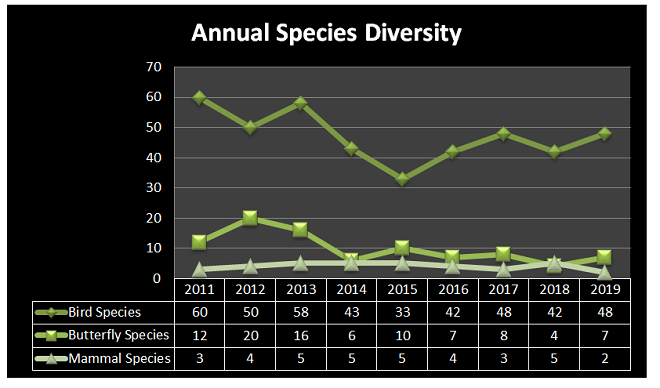
The 2019 bird list included 48 species, the 47 on the board plus Ruby-throated Hummingbird, which was logged on a slip of paper found tucked into the edge of the frame.
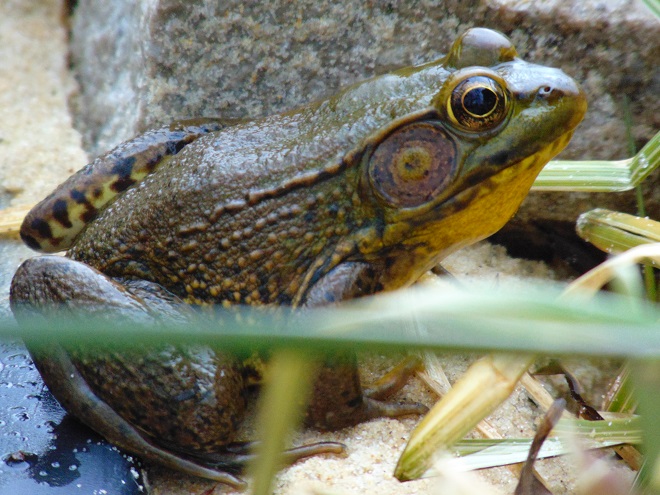
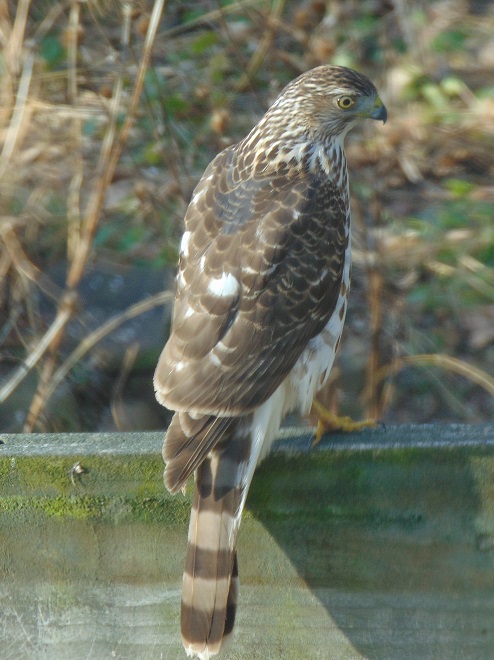
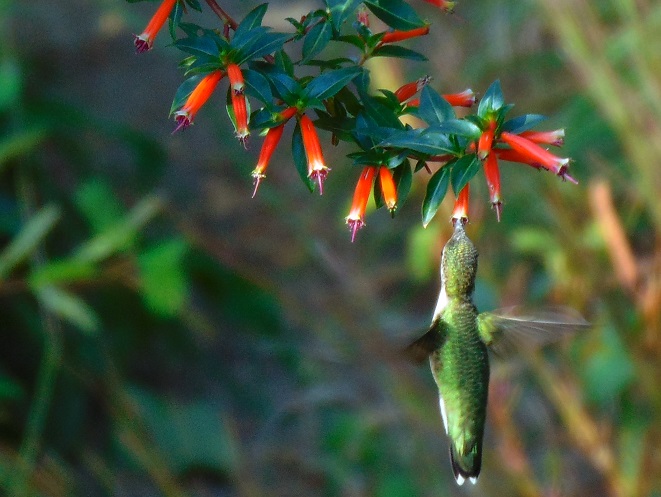
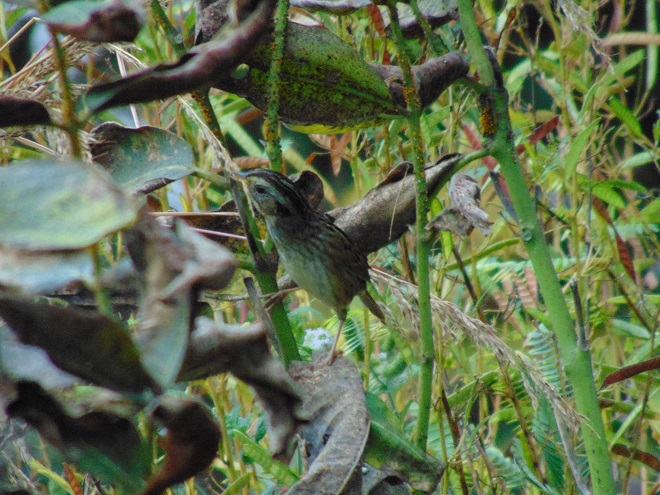
This Green Frog, photographed on New Year’s Day 2019, was “out and about” along the edge of the editor’s garden pond. Due to the recent mild weather, Green Frogs were active during the current New Year’s holiday as well.On a day with strong south winds in late February or during the first two weeks of March, there is often a conspicuous northbound spring flight of migrating waterfowl, gulls, and songbirds that crosses the lower Susquehanna valley as it departs Chesapeake Bay. These Tundra Swans were among the three thousand seen from the garden patio on March 13, 2019. A thousand migrating Canada Geese, 500 Red-winged Blackbirds, numerous Ring-billed Gulls, and some American Herring Gulls were seen during the same afternoon.This juvenile Cooper’s Hawk was photographed through the editor’s kitchen window. From its favorite perch on this arbor it would occasionally find success snagging a House Sparrow from the large local flock. It first visited the garden in November, the species being absent there since early spring. Unlike previous years, there was no evidence of a breeding pair in the vicinity during 2019.Plantings that provide food and cover for wildlife are essential to their survival. Native flowers including Trumpet Vine (Campsis radicans) and Partridge Pea provide nourishment for the Ruby-throated Hummingbirds that visit the editor’s garden, but they really love a basket or pot filled with Mexican Cigar (Cuphea ignea) too. The latter (seen here) can be grown as a houseplant and moved outdoors to a semi-shaded location in summer and early fall. But remember, it’s tropical, so you’ll need to bring it back inside when frost threatens.A Swamp Sparrow is an unusual visitor to a small property surrounded by paved parking lots and treeless lawns. Nevertheless, aquatic gardens and native plants helped to attract this nocturnal migrant, seen here eating seeds from Indiangrass. It arrived on September 30 and was gone on October 2.
Before putting the folder back into the drawer for another year, the editor decided to count up the species totals on each of the sheets and load them into the chart maker in the computer.
Despite the habitat improvements in the garden, the trend is apparent. Bird diversity has not cracked the 50 species mark in 6 years. Despite native host plants and nectar species in abundance, butterfly diversity has not exceeded 10 species in 6 years.
It appears that, at the very least, the garden habitat has been disconnected from the home ranges of many species by fragmentation. His little oasis is now isolated in a landscape that becomes increasingly hostile to native wildlife with each passing year. The paving of more parking areas, the elimination of trees, shrubs, and herbaceous growth from the large number of rental properties in the area, the alteration of the biology of the nearby stream by hand-fed domestic ducks, light pollution, and the outdoor use of pesticides have all contributed to the separation of the editor’s tiny sanctuary from the travel lanes and core habitats of many of the species that formerly visited, fed, or bred there. In 2019, migrants, particularly “fly-overs”, were nearly the only sightings aside from several woodpeckers, invasive House Sparrows (Passer domesticus), and hardy Mourning Doves. Even rascally European Starlings became sporadic in occurrence—imagine that! It was the most lackluster year in memory.
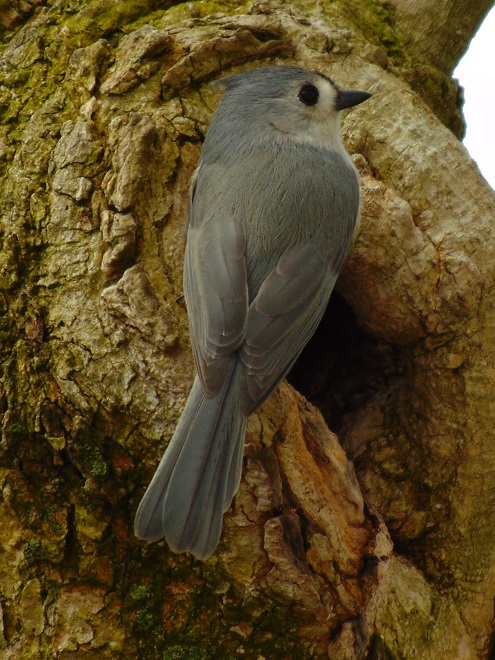
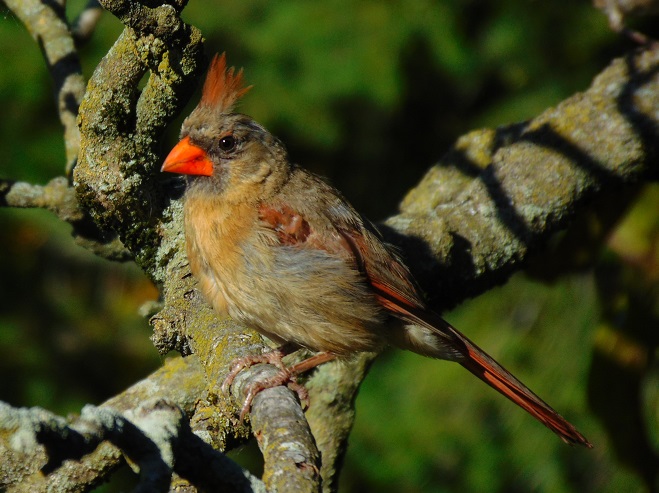
The Tufted Titmouse was a daily visitor to the garden through 2018. This one was photographed investigating holes in an old magnolia there during the spring of that year. There were no Tufted Titmouse sightings in the garden in 2019. This and other resident species, especially cavity nesters, appear to be experiencing at least a temporary decline.Breeding birds including Northern Cardinals may have had a difficult year. In the editor’s garden, a pair were still feeding and escorting one of their young in early October. The infestation of the editor’s town by domestic house and feral cats may have contributed to the failure of earlier broods, but a lack of food is also a likely factor.
If habitat fragmentation were the sole cause for the downward trend in numbers and species, it would be disappointing, but comprehensible. There would be no cause for greater alarm. It would be a matter of cause and effect. But the problem is more widespread.
Although the editor spent a great deal of time in the garden this year, he was also out and about, traveling hundreds of miles per week through lands on both the east and the west shores of the lower Susquehanna. And on each journey, the number of birds seen could be counted on fingers and toes. A decade earlier, there were thousands of birds in these same locations, particularly during the late summer.
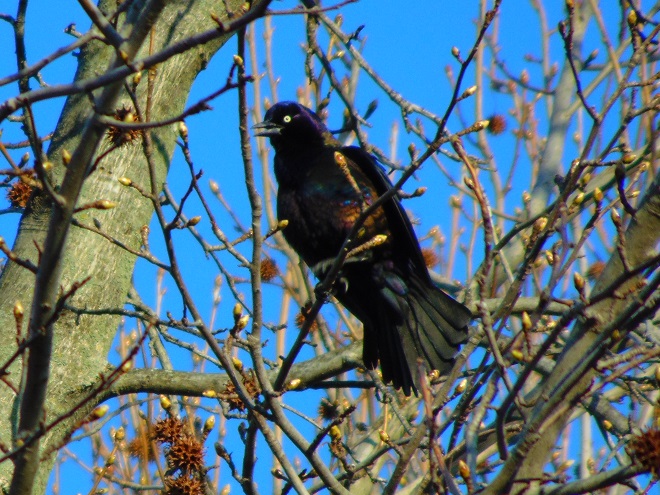
At about the time of summer solstice in June each year, Common Grackles begin congregating into roving summer flocks that will grow in size to assure their survival during the autumn migration, winter season, and return north in the spring. From his garden, the editor saw just one flock of less than a dozen birds during the summer of 2019. He saw none during his journeys through other areas of the Susquehanna valley. Flocks of one hundred birds or more did not materialize until the southbound movements of grackles passed through the region in October and November.
In the lower Susquehanna valley, something has drastically reduced the population of birds during breeding season, post-breeding dispersal, and the staging period preceding autumn migration. In much of the region, their late-spring through summer absence was, in 2019, conspicuous. What happened to the tens of thousands of swallows that used to gather on wires along rural roads in August and September before moving south? The groups of dozens of Eastern Kingbirds (Tyrannus tyrannus) that did their fly-catching from perches in willows alongside meadows and shorelines—where are they?
Several studies published during the autumn of 2019 have documented and/or predicted losses in bird populations in the eastern half of the United States and elsewhere. These studies looked at data samples collected during recent decades to either arrive at conclusions or project future trends. They cite climate change, the feline infestation, and habitat loss/degradation among the factors contributing to alterations in range, migration, and overall numbers.
There’s not much need for analysis to determine if bird numbers have plummeted in certain Lower Susquehanna Watershed habitats during the aforementioned seasons—the birds are gone. None of these studies documented or forecast such an abrupt decline. Is there a mysterious cause for the loss of the valley’s birds? Did they die off? Is there a disease or chemical killing them or inhibiting their reproduction? Is it global warming? Is it Three Mile Island? Is it plastic straws, wind turbines, or vehicle traffic?
The answer might not be so cryptic. It might be right before our eyes. And we’ll explore it during 2020.
A clean slate for 2020.
In the meantime, Uncle Ty and I going to the Pennsylvania Farm Show in Harrisburg. You should go too. They have lots of food there.
With autumn coming to a close, let’s have a look at some of the fascinating insects (and a spider) that put on a show during some mild afternoons in the late months of 2019.
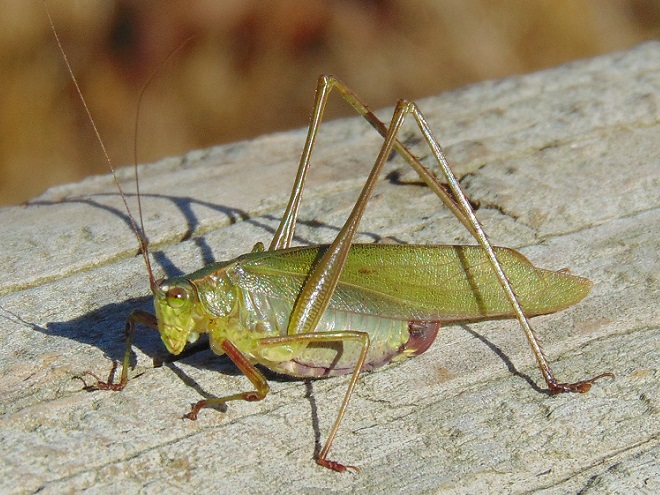
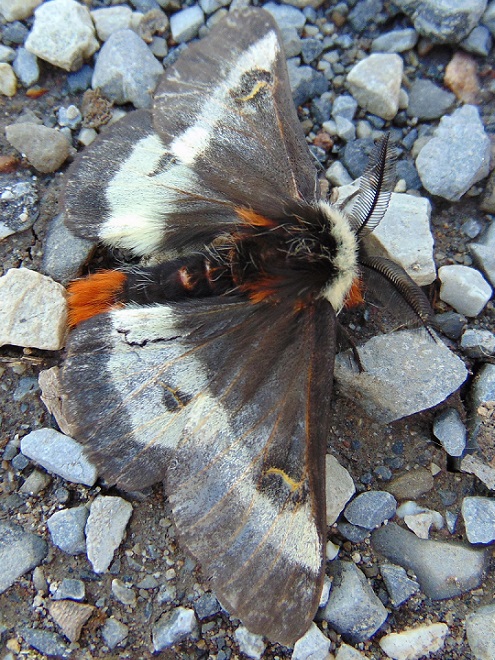
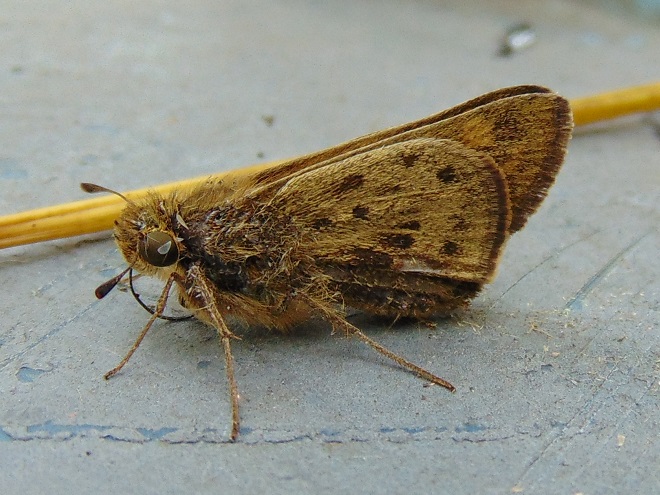
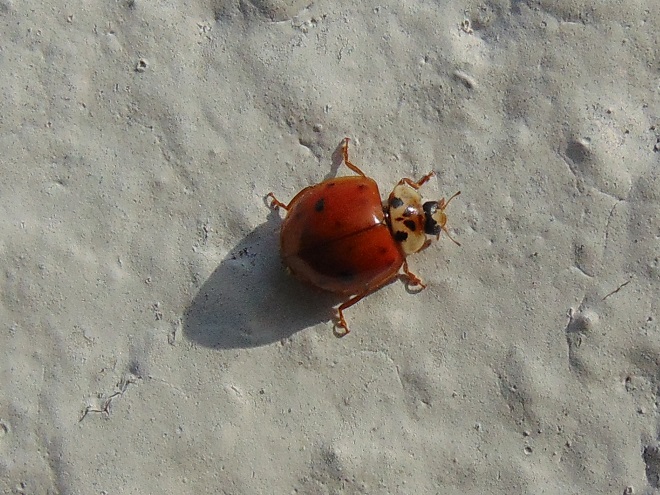
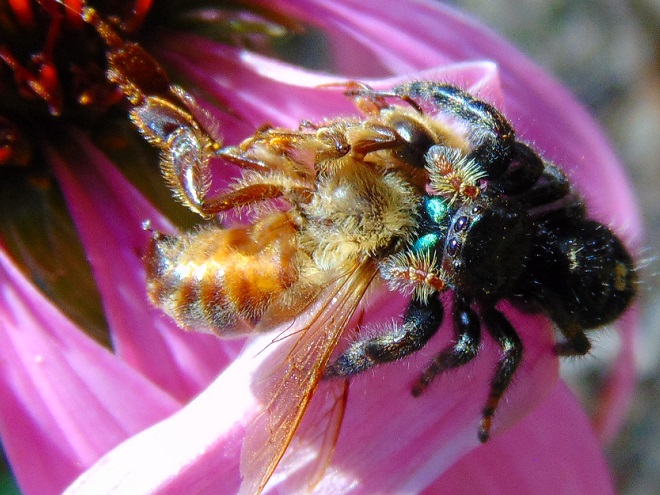
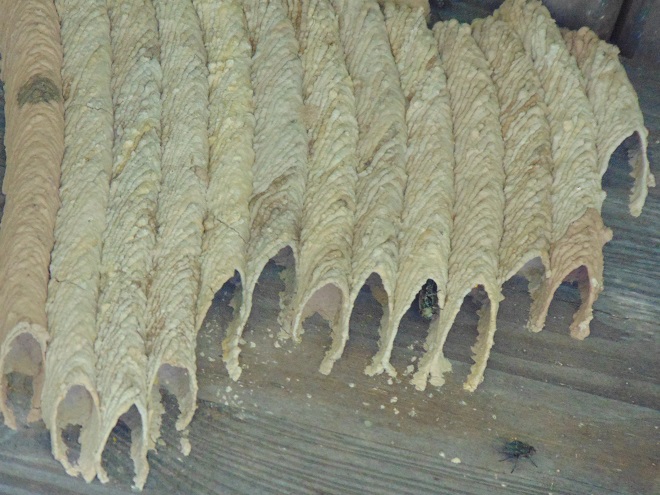
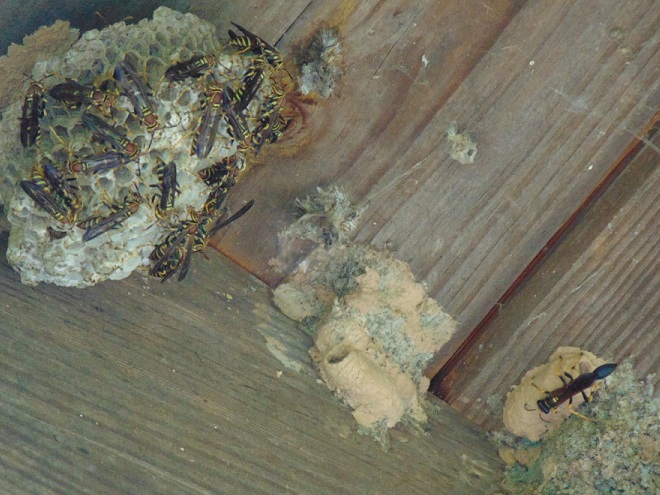
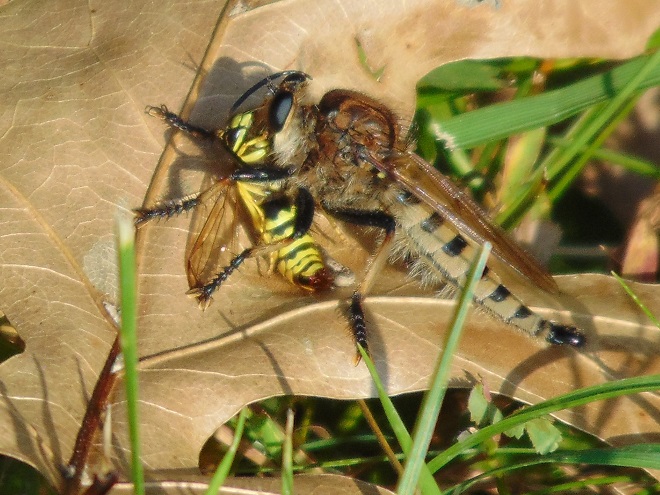
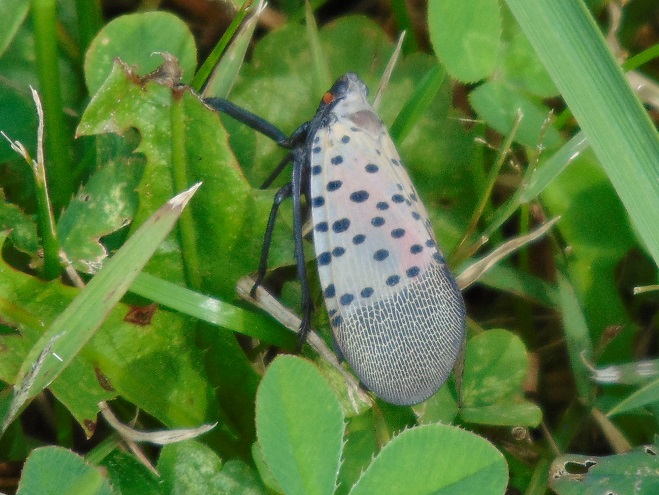
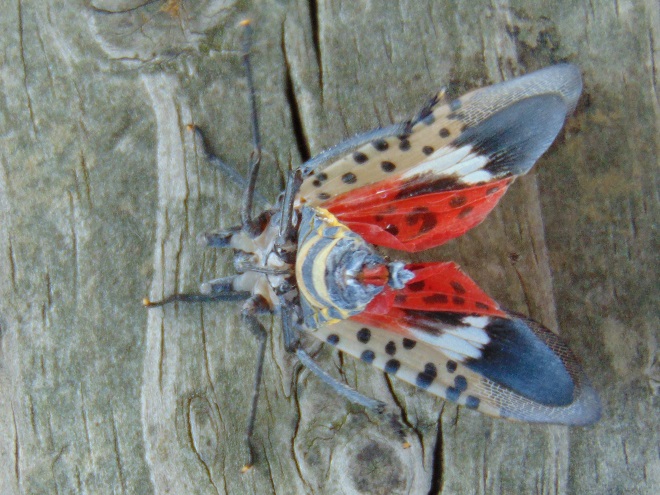
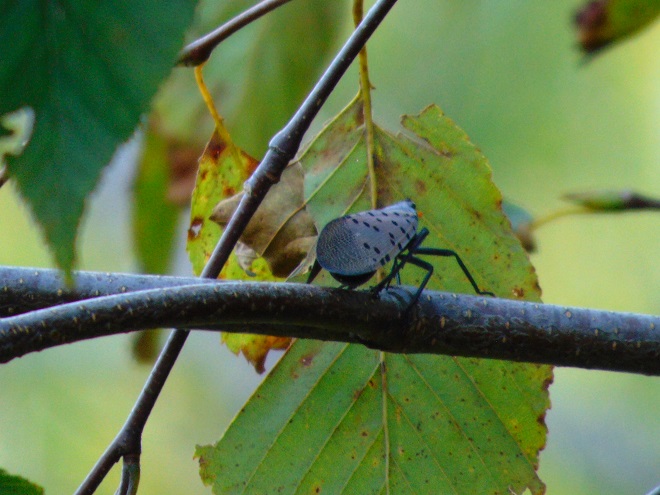
Bush Katydids (Scudderia species) are found in brushy habitats and along rural roadsides. Their green summer color fades to brown, maroon, and gold to match the autumn foliage where they hide. Bush katydids often remain active until a hard freeze finally does them in.The Eastern Buck Moth (Hemileuca maia) is fuzzy, appearing to wear a warm coat for its autumn expeditions. Adults emerge in October and may fly as late as December. Females deposit their eggs on the twigs of Bear Oak (Quercus ilicifolia), Blackjack Oak (Q. marilandica), or Chestnut Oak (Q. montana), trees that, in our region, seem most favorable for the moth’s use when growing on burned barrens and mountain slopes. The spiny caterpillars are known to feed only on the foliage of these few trees. In the lower Susquehanna valley, the Eastern Buck Moth is rare because its specialized habitat is in short supply, and it’s all Smokey The Bear’s fault.The Sachem (Atalopedes campestris) wanders north from the Atlantic Coastal Plain into the Susquehanna valley each summer. In some years they become the most numerous small orange butterfly of all, particularly around home gardens. The larvae will feed on Crabgrass (Digitaria species), but have not found success overwintering this far north. By November, adults begin to look pretty drab.From 1978 through 1982, the Asian Multicolored Lady Beetle (Harmonia axyridis) was introduced into the eastern states by the United States Department of Agriculture. It has become a nuisance in many areas where it swarms, sometimes bites, and often overwinters in large smelly masses within homes and other warm buildings. As you may have guessed, it’s possibly displacing some of the less aggressive native lady beetle species.On a chilly afternoon, a sun-warmed Bold Jumping Spider (Phidippus audax) pounced and dispatched this sluggish worker Honey Bee (Apis mellifera) that was trying to gather pollen from a late-season Purple Coneflower bloom. This spider is bold indeed.Under bridges, inside bird nest boxes, and sometimes beneath porches, the female Pipe Organ Mud Dauber (Trypoxylon politum), a predatory wasp, builds these elaborate nests composed of long rows (pipes) of nursery cells. Into each cell one or more paralyzed spiders is deposited along with one of the female’s eggs. When hatched, each larva will feed upon the paralyzed spider(s) inside its cell, then pupate. The pupae overwinter, then emerge from their cells as adults during the following spring. In the autumn, males often stand guard at an entrance to the nest to prevent parasitic species, including some flies (look at the fifth pipe from the right), from laying eggs on the pupae. These wasps are not aggressive toward humans.A Black-and-yellow Mud Dauber (Sceliphron caementarium) observes a neighboring nest of Common Paper Wasps (Polistes exclamans). The Common Paper Wasp, a species also known as the Guinea Paper Wasp, is a native of the southern United States. It is currently expanding its range into the lower Susquehanna valley from the Atlantic Coastal Plain. These two wasp species and the Pipe Organ Mud Dauber are known to regularly coexist. All three will take advantage of man-made structures for their nest sites. People using the picnic tables beneath this pavilion roof never noticed the hundreds of docile wasps above.Those moody Eastern Yellowjackets (Vespula maculifrons) can get very temperamental during warm autumn days. These wasps may appear to have no enemies, but away from areas impacted by man’s everyday activities, they do. The Robber Fly (Promachus species) hunts like a flycatcher or other woodland bird, waiting on a perch along the forest’s edge for prey to pass by, then ambushing it, yellowjackets included.The invasive Spotted Lanternfly, a native of eastern Asia, continues to spread destruction. It established itself throughout much of the east side of the lower Susquehanna River during the summer and fall of 2019. Their route of travel across the farmlands of the region intersects with plenty of vineyards to obliterate and few, if any, natural enemies. Expect them to begin colonizing the west shore en masse during 2020.In 2020, plan to roll a few Spotted Lanternflies over, enjoy the view, and wait for the crimson tide to pass. With any luck, they’ll peak in a year or two.
SOURCES
Eaton, Eric R., and Kenn Kaufman. 2007. Kaufman Field Guide to Insects of North America. Houghton Mifflin Company. New York, NY.
It’s that time of year when one may expect to find migratory Neotropical songbirds feeding among the foliage of trees and shrubs in the forests, woodlots, and thickets of the lower Susquehanna valley.
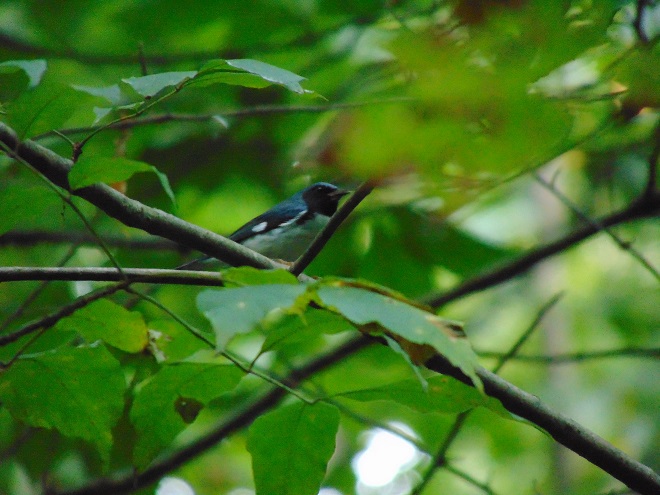
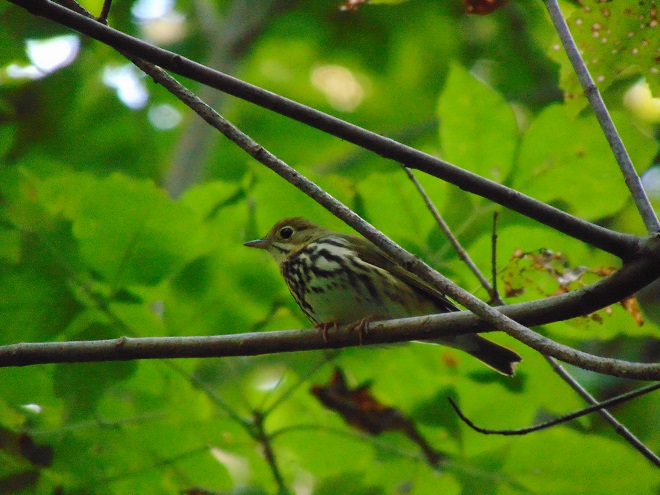
During a late afternoon stroll through a headwaters forest east of Conewago Falls outside Mount Gretna, I was pleased to finally come upon a noisy gathering of about two dozen birds. It had, previous to that, been a quiet two hours of walking, only the rumble of an approaching thunderstorm punctuated the silence. Among this little flock were some chickadees, robins, Gray Catbirds, an Eastern Towhee (Pipilo erythrophthalmus), and a Hairy Woodpecker (Dryobates villosus). Besides the catbirds, there were two other species of Neotropical migrants; both were warblers. No less than six Black-throated Blue Warblers (Setophaga caerulescens) were vying for positions in the trees from which they could investigate the stranger on the footpath below. And among the understory shrubs there were at least as many Ovenbirds (Seiurus aurocapilla) satisfying a similar curiosity.
The Black-throated Blue Warbler nests to the north of the lower Susquehanna valley, which it transits as a common spring and fall migrant. On their wintering grounds, they have a thing for warm weather and the better part of a P.B. & J. sandwich.Throughout the Susquehanna watershed, the Ovenbird is a common ground-nesting species in deciduous forests with moderately vegetated understories. The birds seen today may have been a family group that has not yet begun the journey south.
When they depart the Susquehanna valley, these two warbler species will be southbound for wintering ranges that include Florida, many of the Caribbean Islands, Central America, and, for the Ovenbirds, northern South America. Their flights occur at night. During the breeding season and while migrating, both feed primarily on insects and other arthropods . On the wintering grounds, they will consume some fruit. It is during their time in the tropics that the Black-throated Blue Warbler sometimes visits feeding stations that offer grape jelly, much to the delight of bird enthusiasts.
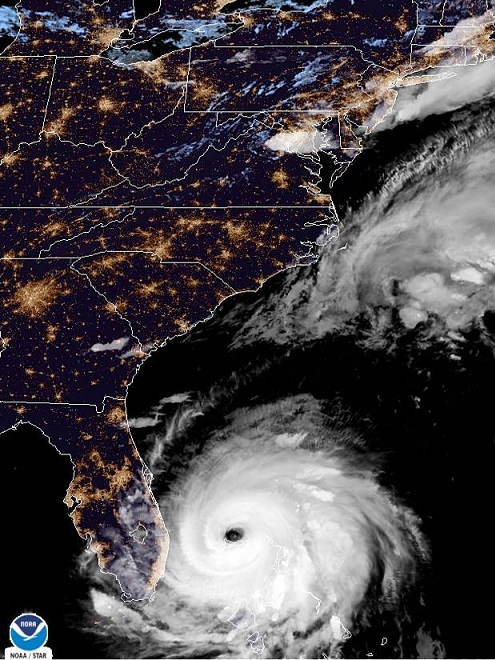
Black-throated Blue Warblers and Ovenbirds commonly winter on the Florida peninsula and in the Bahamas. With the major tropical cyclone Hurricane Dorian presently ripping through the region, these birds are better off taking their time getting there. There’s no need to hurry. The longer they and the other Neotropical migrants hang around, the more we get to enjoy them anyway. So get out there to see them before they go—and remember to look up.
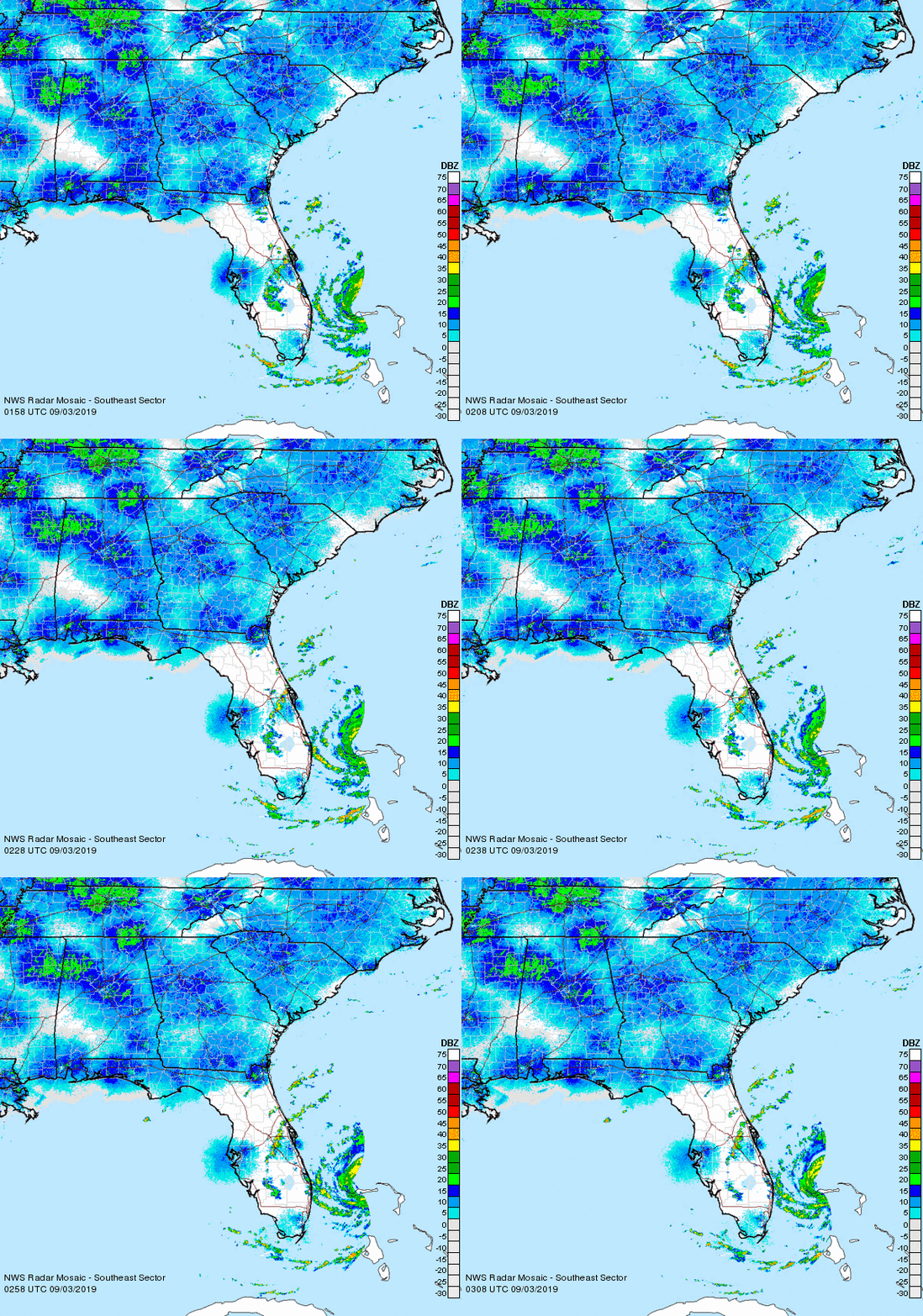
Category 4 Hurricane Dorian at 9:06 EDT on September 2, 2019. If you’re headed that direction, there’s no need to hurry. Note the cloud-free skies over much of the mainland. (NOAA National Environmental Satellite, Data, and Information Service image)A massive bird migration is indicated on Doppler radar in the clear skies over the eastern United States tonight (blue and green over most of the mainland). In this loop of composite radar images from the southeastern states, note the relative absence of a flight over the Florida peninsula where the outer precipitation bands of Hurricane Dorian can be seen. Note too that there appears to be a heavy concentration of birds flying in a southwest direction to cross the Gulf of Mexico, thus continuing their journey to Central or South America while avoiding the deadly hurricane and a much smaller tropical disturbance off the shores of Texas and Tamaulipas, Mexico. (NOAA/National Weather Service image)
Within the last few years, the early-summer emergence of vast waves of mayflies has caused great consternation among residents of riverside towns and motorists who cross the bridges over the lower Susquehanna. Fishermen and others who frequent the river are familiar with the phenomenon. Mayflies rise from their benthic environs where they live for a year or more as an aquatic larval stage (nymph) to take flight as a short-lived adult (imago), having just one night to complete the business of mating before perishing by the following afternoon.
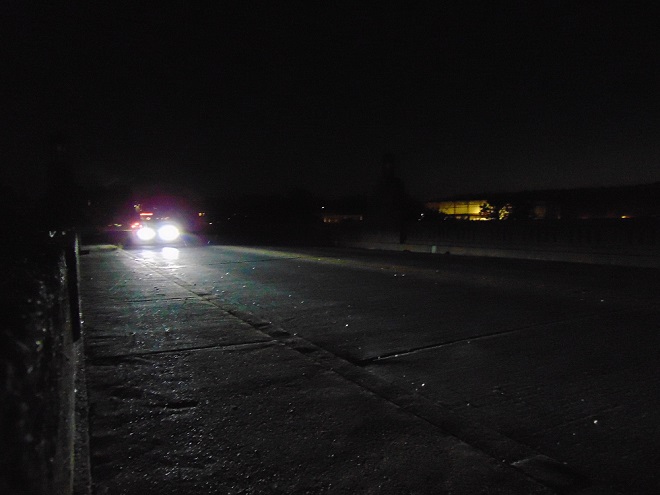
In 2015, an emergence on a massive scale prompted the temporary closure of the mile-long Columbia-Wrightsville bridge while a blizzard-like flight of huge mayflies reduced visibility and caused road conditions to deteriorate to the point of causing accidents. The slimy smelly bodies of dead mayflies, probably millions of them, were removed like snow from the normally busy Lincoln Highway. Since then, to prevent attraction of the breeding insects, lights on the bridge have been shut down from about mid-June through mid-July to cover the ten to fourteen day peak of the flight period of Hexagenia bilineata, sometimes known as the Great Brown Drake, the species that swarms the bridge.
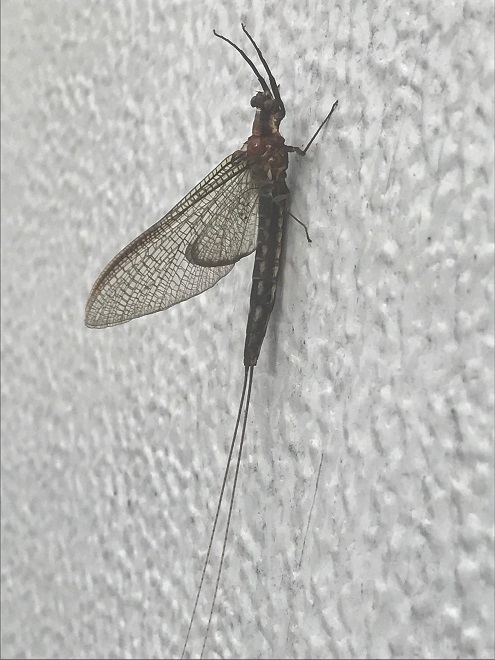
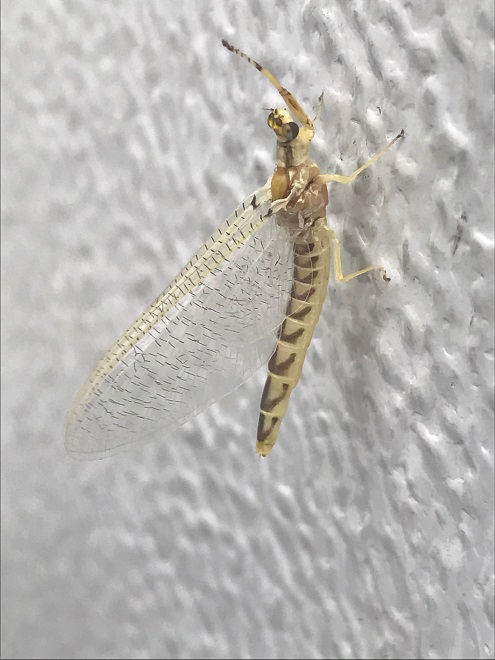
An adult (imago) male Great Brown Drake (Hexagenia bilineata) burrowing mayfly. Adult mayflies are also known as spinners.A sub-adult (based on the translucence of the wings) female burrowing mayfly (Hexagenia species). The sub-adult (subimago or dun) stage lasts less than a day. Normally within 18 hours of leaving the water and beginning flight, it will molt into an adult, ready to breed during its final night of life.
After so many years, why did the swarms of these mayflies suddenly produce the enormous concentrations seen on this particular bridge across the lower Susquehanna? Let’s have a look.
Following the 2015 flight, conservation organizations were quick to point out that the enormous numbers of mayflies were a positive thing—an indicator that the waters of the river were getting cleaner. Generally, assessments of aquatic invertebrate populations are considered to be among the more reliable gauges of stream health. But some caution is in order in this case.
Prior to the occurrence of large flights several years ago, Hexagenia bilineata was not well known among the species in the mayfly communities of the lower Susquehanna and its tributaries. The native range of the species includes the southeastern United States and the Mississippi River watershed. Along segments of the Mississippi, swarms such as occurred at Columbia-Wrightsville in 2015 are an annual event, sometimes showing up on local weather radar images. These flights have been determined to be heaviest along sections of the river with muddy bottoms—the favored habitat of the burrowing Hexagenia bilineata nymph. This preferred substrate can be found widely in the Susquehanna due to siltation, particularly behind dams, and is the exclusive bottom habitat in Lake Clarke just downstream of the Columbia-Wrightsville bridge.
Native mayflies in the Susquehanna and its tributaries generally favor clean water in cobble-bottomed streams. Hexagenia bilineata, on the other hand, appears to have colonized the river (presumably by air) and has found a niche in segments with accumulated silt, the benthic habitats too impaired to support the native taxa formerly found there. Large flights of burrowing mayflies do indicate that the substrate didn’t become severely polluted or eutrophic during the preceding year. And big flights tell us that the Susquehanna ecosystem is, at least in areas with silt bottoms, favorable for colonization by the Great Brown Drake. But large flights of Hexagenia bilineata mayflies don’t necessarily give us an indication of how well the Susquehanna ecosystem is supporting indigenous mayflies and other species of native aquatic life. Only sustained recoveries by populations of the actual native species can tell us that. So, it’s probably prudent to hold off on the celebrations. We’re a long way from cleaning up this river.
In the absence of man-made lighting, male Great Brown Drakes congregate over waterways lit often by moonlight alone. The males hover in position within a swarm, often downwind of an object in the water. As females begin flight and pass through the swarm, they are pursued by the males in the vicinity. The male response is apparently sight motivated—anything moving through their field of view in a straight line will trigger a pursuit. That’s why they’re so pesky, landing on your face whenever you approach them. Mating takes place as males rendezvous with airborne females. The female then drops to the water surface to deposit eggs and later die—if not eaten by a fish first. Males return to the swarm and may mate again and again. They die by the following afternoon. After hatching, the larvae (nymphs) burrow in the silt where they’ll grow for the coming year. Feathery gills allow them to absorb oxygen from water passing through the U-shaped refuge they’ve excavated.
Several factors increase the likelihood of large swarms of Great Brown Drakes at bridges. Location is, of course, a primary factor. Bridges spanning suitable habitat will, as a minimum, experience incidental occurrences of the flying forms of the mayflies that live in the waters below. Any extraordinarily large emergence will certainly envelop the bridge in mayflies. Lights, both fixed and those on motor vehicles, enhance the appearance of movement on a bridge deck, thus attracting hovering swarms of male Hexagenia bilineata and other species from a greater distance, leading to larger concentrations. Concrete walls along the road atop the bridge lure the males to try to hover in a position of refuge behind them, despite the vehicles that disturb the still air each time they pass. The walls also function as the ultimate visual attraction as headlamp beams and shadows cast by moving vehicles are projected onto them over the length of the bridge. Vast numbers of dead, dying, and maimed mayflies tend to accumulate along these walls for this reason.
The absence of illumination from fixed lighting on the deck of the bridge reduces the density of Great Brown Drake swarms. Some communities take mayfly countermeasures one step further. Along the Mississippi, some bridges are fitted with lights on the underside of the deck to attract the mayflies to the area directly over the water, concentrating the breeding mayflies and fishermen alike. The illumination below the bridge is intended to draw mayflies away from light created by headlamps on motor vehicles passing by on the otherwise dark deck above. Lights beneath the bridge also help prevent large numbers of mayflies from being drawn away from the water toward lights around businesses and homes in neighborhoods along the shoreline—where they can become a nuisance.
Lights out on the Columbia-Wrightsville bridge. Dousing the lights to eliminate fixed illumination on bridges is an effective method of reducing the density of Hexagenia bilineata swarms.With the bridge lights darkened, male Great Brown Drakes, their cellophane-like wings illuminated by headlamps to appear as white spots on the road, number in the hundreds instead of hundreds of thousands in swarms on the bridge near the east and west shorelines.Swarms of Great Brown Drake mayflies are still present at the Columbia-Wrightsville bridge, they’re just not concentrated there in enormous numbers. Evidence includes their bodies found in cobwebs along the entire length of the span.The aptly-named Bridge Orb Weaver (Larinioides sclopetarius) constructs webs along the entire length of the Columbia-Wrightsville bridge, and on many of the buildings at both ends. The abundance of victims tangled in silk must overwhelm their appetite, or maybe they actually consume only the smaller insects. They have their choice. Of the Bridge Orb Weaver, Uncle Ty Dyer says, “When you live along the river, it’s your friendly neighborhood spider, man.”The native Eastern Dobsonfly (Corydalus cornutus) is among the reliable indicators of stream quality in the Susquehanna at the Columbia-Wrightsville bridge. Winged adults, which live for about a week, are clumsy fliers attracted to lights. The aquatic larvae are known as hellgrammites, which require clean flowing water over rocky or pebbly substrate to thrive. Two adults were found on the bridge last evening. It would be encouraging to find more. Maybe we’ll stop back to have another look when the lights are back on.
SOURCES
Edsall, Thomas A. 2001. “Burrowing Mayflies (Hexagenia) as Indicators of Ecosystem Health.” Aquatic Ecosystem Health and Management. 43:283-292.
Fremling, Calvin R. 1960. Biology of a Large Mayfly, Hexagenia bilineata (Say), of the Upper Mississippi River. Research Bulletin 482. Agricultural and Home Economics Experiment Station, Iowa State University. Ames, Iowa.
McCafferty, W. P. 1994. “Distributional and Classificatory Supplement to the Burrowing Mayflies (Ephemeroptera: Ephimeroidea) of the United States.” Entomological News. 105:1-13.
There was a hint of what was to come. If you were out and about before dawn this morning, you may have been lucky enough to hear them passing by high overhead. It was 5:30 A.M. when I opened the door and was greeted by that distinctive nasal whistle. Stepping through the threshold and into the cold, I peered into the starry sky and saw them, their feathers glowing orange in the diffused light from the streets and parking lots below. Their size and snow-white plumage make Tundra Swans one of the few species of migrating birds you’ll ever get to visibly discern in a dark moonless nighttime sky.
The calm air at daybreak and through the morning transitioned to a steady breeze from the south in the afternoon. Could this be it? Would this be that one day in late February or the first half of March each year when waterfowl (and other birds too) seem to take advantage of the favorable wind to initiate an “exodus” and move in conspicuous numbers up the lower Susquehanna valley on their way to breeding grounds in the north? Well, indeed it would be. And with the wind speeding up the parade, an observer at a fixed point on the ground gets to see more birds fly by.
In the late afternoon, an observation location in the Gettysburg Basin about five miles east of Conewago Falls in Lancaster County seemed to be well-aligned with a northwesterly flight path for migrating Tundra Swans. At about 5:30 P.M., the clear sky began clouding over, possibly pushing high-flying birds more readily into view. During the next several hours, over three thousand Tundra Swans passed overhead, flocks continuing to pass for a short time after nightfall. There were more than one thousand Canada Geese, the most numerous species on similar days in previous years. Sometimes on such a day there are numerous ducks. Not today. The timing, location, and conditions put Tundra Swans in the spotlight for this year’s show.
Tundra Swans flying northwest, paralleling the Susquehanna five miles distant.Tundra Swans winter on the Atlantic Coastal Plain and often stage their northbound movements on the Piedmont along the lower Susquehanna River and at the nearby Middle Creek Wildlife Management Area. The birds seen this evening are possibly coming directly from the coast or Chesapeake Bay. With five hours of favorable wind helping them along, covering one hundred miles or more in an afternoon would be no problem.High-flying Tundra Swans on their way to breeding grounds on, you guessed it, the arctic tundra in Alaska and northwestern Canada.Tundra Swans in the largest flocks, sometimes consisting of more than 200 birds, were often detected by their vocalizations as they approached.Tundra Swan flights continued after sunset and nightfall.All of the high-flying migratory Canada Geese seen this evening were on a more northerly course than the northwest-bound swans. These geese probably spent the winter on the Atlantic Coastal Plain near Chesapeake Bay and are now en route to breeding grounds in, you guessed it again, Canada. They are not part of the resident Canada Goose population we see nesting throughout the lower Susquehanna valley.
Other migrants moving concurrently with the waterfowl included Ring-billed Gulls, American Herring Gulls (6+), American Robins (50+), Red-winged Blackbirds (500+), and Common Grackles (100+).
Though I’ve only seen such a spectacle only once during a season in recent years, there certainly could be another large flight of ducks, geese, or swans yet to come. The breeze is forecast to continue from southerly directions for at least another day. Keep you eyes skyward, no matter where you might happen to be in the lower Susquehanna valley. These or other migratory species may put on another show, a “big day”, just for you.
Second Mountain Hawk Watch is located on a ridge top along the northern edge of the Fort Indiantown Gap Military Reservation and the southern edge of State Game Lands 211 in Lebanon County, Pennsylvania. The valley on the north side of the ridge, also known as St. Anthony’s Wilderness, is drained to the Susquehanna by Stony Creek. The valley to the south is drained toward the river by Indiantown Run, a tributary of Swatara Creek.
The hawk watch is able to operate at this prime location for observing the autumn migration of birds, butterflies, dragonflies, and bats through the courtesy of the Pennsylvania Game Commission and the Garrison Commander at Fort Indiantown Gap. The Second Mountain Hawk Watch Association is a non-profit organization that staffs the count site daily throughout the season and reports data to the North American Hawk Watch Association (posted daily at hawkcount.org).
Today, Second Mountain Hawk Watch was populated by observers who enjoyed today’s break in the rainy weather with a visit to the lookout to see what birds might be on the move. All were anxiously awaiting a big flight of Broad-winged Hawks, a forest-dwelling Neotropical species that often travels back to its wintering grounds in groups exceeding one hundred birds. Each autumn, many inland hawk watches in the northeast experience at least one day in mid-September with a Broad-winged Hawk count exceeding 1,000 birds. They are an early-season migrant and today’s southeast winds ahead of the remnants of Hurricane Florence (currently in the Carolinas) could push southwest-heading “Broad-wings” out of the Piedmont Province and into the Ridge and Valley Province for a pass by the Second Mountain lookout.
The flight turned out to be steady through the day with over three hundred Broad-winged Hawks sighted. The largest group consisted of several dozen birds. We would hope there are probably many more yet to come after the Florence rains pass through the northeast and out to sea by mid-week. Also seen today were Bald Eagles, Ospreys, American Kestrels, and a migrating Red-headed Woodpecker.
Migrating Broad-winged Hawks circle on a thermal updraft above Second Mountain Hawk Watch to gain altitude before gliding away to the southwest.
Migrating insects included Monarch butterflies, and the three commonest species of migratory dragonflies: Wandering Glider, Black Saddlebags, and Common Green Darner. The Common Green Darners swarmed the lookout by the dozens late in the afternoon and attracted a couple of American Kestrels, which had apparently set down from a day of migration. American Kestrels and Broad-winged Hawks feed upon dragonflies and often migrate in tandem with them for at least a portion of their journey.
Still later, as the last of the Broad-winged Hawks descended from great heights and began passing by just above the trees looking for a place to settle down, a most unwelcome visitor arrived at the lookout. It glided in from the St. Anthony’s Wilderness side of the ridge on showy crimson-red wings, then became nearly indiscernible from gray tree bark when it landed on a limb. It was the dreaded and potentially invasive Spotted Lanternfly (Lycorma delicatula). This large leafhopper is native to Asia and was first discovered in North America in the Oley Valley of eastern Berks County, Pennsylvania in 2014. The larval stage is exceptionally damaging to cultivated grape and orchard crops. It poses a threat to forest trees as well. Despite efforts to contain the species through quarantine and other methods, it’s obviously spreading quickly. Here on the Second Mountain lookout, we know that wind has a huge influence on the movement of birds and insects. The east and southeast winds we’ve experienced for nearly a week may be carrying Spotted Lanternflies well out of their most recent range and into the forests of the Ridge and Valley Province. We do know for certain that the Spotted Lanternfly has found its way into the Lower Susquehanna River Watershed.
This adult Spotted Lanternfly landed in a birch tree behind the observers at the Second Mountain Hawk Watch late this afternoon. It was first recognized by its bright red wings as it glided from treetops on the north side of the lookout.
It’s sprayed with herbicides. It’s mowed and mangled. It’s ground to shreds with noisy weed-trimmers. It’s scorned and maligned. It’s been targeted for elimination by some governments because it’s undesirable and “noxious”. And it has that four letter word in its name which dooms the fate of any plant that possesses it. It’s the Common Milkweed, and it’s the center of activity in our garden at this time of year. Yep, we said milk-WEED.
Now, you need to understand that our garden is small—less than 2,500 square feet. There is no lawn, and there will be no lawn. We’ll have nothing to do with the lawn nonsense. Those of you who know us, know that the lawn, or anything that looks like lawn, are through.
Anyway, most of the plants in the garden are native species. There are trees, numerous shrubs, some water features with aquatic plants, and filling the sunny margins is a mix of native grassland plants including Common Milkweed. The unusually wet growing season in 2018 has been very kind to these plants. They are still very green and lush. And the animals that rely on them are having a banner year. Have a look…
The flowers of the Common Milkweed were exceptionally fragrant this year. At their peak in early June, their hyacinth-or lilac-like aroma was so prevalent, it drifted into our building and overwhelmed the stink of the neighbor’s filthy dumpster that he had placed 12 feet away from our walls (100 feet from his).Common Milkweed attracts a pollinating Greenbottle Fly (Lucilia species). The dumpster attracts the invasive House Fly (Musca domestica), carrier of dysentery, typhoid, and other wonderful diseases. Are you following this? Remember as we proceed, milkweed is “noxious”.Busy Eastern Carpenter Bees (Xylocopa virginica) load up with pollen from the flowers of the Common Milkweed.A Red Milkweed Beetle (Tetraopes tetrophthalmus) munches on a tender fresh Common Milkweed leaf in mid-June.Following the pollination of the flowers, seed pods will begin to grow. We trim these off the plants. The removal of the extra weight allows most of the stems to remain erect through stormy weather. You’ll still get new plants from underground runners. As you may have guessed, we’re trying to keep these plants upright and strong to host Monarch butterfly larvae.
We’ve planted a variety of native grassland species to help support the milkweed structurally and to provide a more complete habitat for Monarch butterflies and other native insects. This year, these plants are exceptionally colorful for late-August due to the abundance of rain. The warm season grasses shown below are the four primary species found in the American tall-grass prairies and elsewhere.
Big Bluestem, a native warm-season grass in flower.Little Bluestem (Schizachyrium scoparium “Fort Indiantown Gap”) in flower. This variety grows on the tank range at the military base where the armored vehicles and prescribed burns substitute for the herd animals and fires of the prairie to prevent succession and allow it to thrive.Partridge Pea can tolerate sandy soil and is a host plant for vagrant Cloudless Sulphur butterflies.Black-eyed Susan (Rudbeckia hirta) is a popular native grassland wildflower.Indiangrass (Sorghastrum nutans) in flower. This and the other native plants shown here are available as seed from Ernst Seed Company in Meadville (PA). They have an unbelievably large selection of indigenous species. You can plant a small plot or acres and acres using really good mixes blended for purposes ranging from reclaiming pipeline right-of-ways and strip mines to naturalizing backyard gardens.A Red Admiral (Vanessa atalanta) butterfly, a migratory species like the Monarch, on Purple Coneflower (Echinacea purpurea). Yes, it is that Echinacea, the same one used as a supplement and home remedy.
There was Monarch activity in the garden today like we’ve never seen before—and it revolved around milkweed and the companion plants.
A female Monarch laying eggs on a Common Milkweed leaf.A third instar Monarch caterpillar with Oleander Aphids (Aphis nerii) on a Common Milkweed leaf. Both of these insect species absorb toxins from the milkweed which makes them distasteful to predators.Fifth instar (left and center) and fourth instar (right) monarch caterpillars devour a Common Milkweed leaf. There were over thirty of these caterpillars in just a ten by ten feet area this morning. We hope that if you’re keeping a habitat for Monarchs, you’re enjoying the same fortune right now!A slow-moving Monarch stopped for a break after making the circuit to deposit eggs on milkweed throughout the garden.Third instar (top), fourth instar (right), and fifth instar (left) Monarch caterpillars quickly consume the leaf of a Common Milkweed plant. Caterpillars emerging from eggs deposited today may not have sufficient late-season food to complete the larval segment of their life cycle. Need more milkweed!After benefiting from the nourishment of the Common Milkweed plant, a fifth instar Monarch caterpillar begins pupation on Big Bluestem grass.Two hours later, the chrysalis is complete.Another chrysalis, this one on flowering Switchgrass just two feet away from the previous one. An adult Monarch will emerge from this pupa to become part of what we hope will be the most populated southbound exodus for the species in over five years.There it is, soon ready to fly away. And all courtesy of the noxious milkweed.A chrysalis can often be found on man-made objects too. This one is on the rim of a flower pot.Ornamental flowers can attract adult Monarch butterflies seeking nectar. We’re now more careful to select seeds and plants that have not been treated with neonicotinoid insecticides. There’s growing concern over the impact these compounds may be having on pollinating species of animals. Oh…and we don’t mow, whack, cut, mutilate, or spray herbicides on our milkweed, but you probably figured that out already.
SOURCES
Eaton, Eric R., and Kenn Kaufman. 2007. Kaufman Field Guide to Insects of North America. Houghton Mifflin Company. New York.
It’s been an atypical summer. The lower Susquehanna River valley has been in a cycle of heavy rains for over a month and stream flooding has been a recurring event. At Conewago Falls, the Pothole Rocks have been inundated for weeks. The location used as a lookout for the Autumn Migration Count last fall is at the moment submerged in ten feet of roaring water. Any attempt to tally the migrants which are passing thru in 2018 will thus be delayed indefinitely. Of greater import, the flooding at Conewago Falls is impacting many of the animals and plants there at a critical time in their annual life cycle. Having been displaced from its usual breeding sites on the river, one insect species in particular seems to be omnipresent in upland areas right now, and few people have ever heard of it.
So, you take a cruise in the motorcar to your favorite store and arrive at the sprawling parking lot. Not wishing to have your doors dented or paint chipped because you settled for a space tightly packed among other shopper’s conveyances, you park out there in the “boondocks”. You know the place, the lightly-used portion of the lot where sometimes brush grows from cracks in the asphalt and you must be on alert for impatient consumers who throttle-up to high speeds and dash diagonally across the carefully painted grids on the pavement to reach their favorite parking destination in the front row. Coming to a stop, you take the car out of gear, set the brake, disengage the safety belt, and gather your shopping list. You grasp the door handle and, not wanting to be flattened by one of the aforementioned motorists, you have a look around before exiting.
It was then that you saw the thing, hovering above your shiny bright hood. For a brief moment, it seemed to be peering right through the windshield at you with big reddish-brown eyes. In just a second or two, it turned its whole bronze body ninety degrees to the left and darted away on its cellophane wings. Maybe you didn’t really get a good look at it. It was so fast. But it certainly was odd. Oh well, time to walk inside a grab a few provisions. Away you go.
Upon completion of your shopping, you’re taking the long stroll back to your car and you notice more of these peculiar creatures. Two are coupled together and are hovering above someone’s automobile hood, then they drop down, and the lower of the two taps its abdomen on the paint. You ask yourself, “What are these bizarre things?”
Meet the Wandering Glider (Pantala flavescens), also known as the Globe Wanderer or Globe Skimmer, a wide-ranging dragonfly known to occur on every continent with the exception of Antarctica.
Wandering Gliders sometimes arrive in the lower Susquehanna River valley in large numbers after catching a ride on sustained winds from southerly directions and will often fly and migrate in storm systems. Conditions for such movements have been optimal in our region since mid-July. These dragonflies will often hover above motor vehicle hoods and, after mating, females will deposit eggs upon them, apparently mistaking their glossy surface for small pools of water.
Wandering Gliders travel the globe, and as such are accomplished fliers. Adults spend most of the day on the wing, feeding upon a variety of flying insects. Days ago, I watched several intercepting a swarm of flying ants. As fast as ants left the ground they were grabbed and devoured by the gliders. Wandering Gliders are adept at taking day-flying mosquitos, often zipping stealthily past a person’s head or shoulders to grab one of the little pests—the would-be skeeter victim usually unaware of the whole affair.
Due to their nomadic life history, Wandering Gliders are opportunists when breeding and will lay eggs in most any body of freshwater. Their larvae do not overwinter prior to maturity; adults can be expected in a little more than one to two months. Repetitive flooding in the Lower Susquehanna River Watershed this summer may be reducing the availability of the best local breeding sites for this species—riverine, stream, and floodplain pools of standing water with prey. This may explain why thousands of Wandering Gliders are patrolling parking lots, farmlands, and urban areas this summer. And it’s the likely reason for their use of puddles on asphalt pavement, on rubber roofs, and in fields as places to try to deposit eggs. Unfortunately, they may be as likely to succeed there as they are on your motor vehicle hood.
At this time a year ago, the airspace above the Diabase Pothole Rocks at Conewago Falls was jammed with territorial male Wandering Gliders. Each male hovered at various locations around his breeding territory consisting of pools and water-filled potholes. Intruders would quickly be dispatched from the area, then the male would resume his patrols from a set of repetitively-used hovering positions about six feet above the rocks. Mating and egg-laying continued into late September. The larvae, also called nymphs or naiads, were readily observed in many pools and potholes in early October and the emergence of juveniles was noted in mid-October. The absence of flooding, the mild autumn weather, and the moderation of water temperatures in the pools and potholes courtesy of the sun-drenched diabase boulders helped to extend the 2017 breeding season for Wandering Gliders in Conewago Falls. They aren’t likely to experience the same favor this year, but their great ability to travel and adapt should overcome this momentary misfortune.
A male Wandering Glider aggressively patrols his territory in the Diabase Pothole Rocks Microhabitat at Conewago Falls. August 20, 2017.A mating pair of Wandering Gliders continue flying non-stop above one of thousands of suitable breeding pools among the Diabase Pothole Rocks at Conewago Falls. September 23, 2017.A female (bottom)Wandering Glider has deposited eggs in a pool while flying in tandem with a male (top). They’ll do the same thing on your automobile hood! Conewago Falls Diabase Pothole Rocks Microhabitat. September 23, 2017.Wandering Glider larvae are at the top of the food chain in flooded potholes. As they grew, these dragonfly larvae decimated the mosquito larvae which were abundant there earlier in the summer. October 7, 2017.A juvenile male Wandering Glider emerges from the pool where it fed and grew as a larva. It remained at water’s edge on the surface of a sun-warmed diabase rock for several hours to dry its wings. It soon flew away to parts unknown, possibly traveling hundreds or thousands of miles. Look carefully at the wings for the beige dash marks on the forward edge near the terminal end. Females lack this marking. Conewago Falls Diabase Pothole Rocks Microhabitat. October 14, 2017.A Wandering Glider exuviae, the shed exoskeleton of a creature gone, but not forgotten. October 14, 2017.
There are two Conewago Creek systems in the Lower Susquehanna River Watershed. One drains the Gettysburg Basin west of the river, mostly in Adams and York Counties, then flows into the Susquehanna at the base of Conewago Falls. The other drains the Gettysburg Basin east of the river, flowing through Triassic redbeds of the Gettysburg Formation and York Haven Diabase before entering Conewago Falls near the south tip of Three Mile Island. Both Conewago Creeks flow through suburbia, farm, and forest. Both have their capacity to support aquatic life impaired and diminished by nutrient and sediment pollution.
This week, some of the many partners engaged in a long-term collaboration to restore the east shore’s Conewago Creek met to have a look at one of the prime indicators of overall stream habitat health—the fishes. Kristen Kyler of the Lower Susquehanna Initiative organized the effort. Portable backpack-mounted electrofishing units and nets were used by crews to capture, identify, and count the native and non-native fishes at sampling locations which have remained constant since prior to the numerous stream improvement projects which began more than ten years ago. Some of the present-day sample sites were first used following Hurricane Agnes in 1972 by Stambaugh and Denoncourt and pre-date any implementation of sediment and nutrient mitigation practices like cover crops, no-till farming, field terracing, stormwater control, nutrient management, wetland restoration, streambank fencing, renewed forested stream buffers, or modernized wastewater treatment plants. By comparing more recent surveys with this baseline data, it may be possible to discern trends in fish populations resulting not only from conservation practices, but from many other variables which may impact the Conewago Creek Warmwater Stream ecosystem in Dauphin, Lancaster, and Lebanon Counties.
So here they are. Enjoy these shocking fish photos.
Matt Kofroth, Watershed Specialist with the Lancaster County Conservation District, operates the electrofishing wand in Conewago Creek while his team members prepare to net and collect momentarily-stunned fish. Three other electrofishing units operated by staff from the Susquehanna River Basin Commission and aided by teams of netters were in action at other sample locations along the Conewago on this day.Really big fish, such as this Common Carp (Cyprinus carpio), were identified, counted, and immediately returned to the water downstream of the advancing electrofishing team. Other fish, such as the Swallowtail Shiner, Redbreast Sunfish (Lepomis auritus), Fallfish, and suckers seen here, were placed in a sorting tank.Fallfish (Semotilus corporalis) are very active and require plenty of dissolved oxygen in the water to survive. Fallfish, Rainbow Trout (Oncorhynchus mykiss), and Smallmouth Bass (Micropterus dolomieu) were quickly identified and removed from the sorting tank for release back into the stream. Other larger, but less active fish, including suckers, quickly followed.Small fish like minnows were removed from the sorting tank for a closer look in a hand-held viewing tank. This Fathead Minnow (Pimephales promelas) was identified, added to the tally sheet, and released back into the Conewago. The Fathead Minnow is not native to the Susquehanna drainage. It is the minnow most frequently sold as bait by vendors.A breeding condition male Bluntnose Minnow (Pimephales notatus).The Cutlips Minnow (Exoglossum maxillingua) is a resident of clear rocky streams. Of the more than 30 species collected during the day, two native species which are classified as intolerant of persisting stream impairment were found: Cutlips Minnow and Swallowtail Shiner.The Central Stoneroller (Campostoma anomalum) is a benthic feeder in creeks over gravel and sand.The Eastern Blacknose Dace (Rhinichthys atratulus) is found in clear water over pebble and stone substrate.The Longnose Dace (Rhinichthys cataractae) is another species of pebbly rocky streams.A juvenile Golden Shiner (Notemigonus crysoleucas). Adults lack the side stripe and grow to the size of a sunfish.A Swallowtail Shiner (Notropis procne) and a very young White Sucker (Catostomus commersonii) in the upper left of the tank.A probable Spotfin Shiner (Cyprinella spiloptera).A breeding male Cyprinella shiner, probably a Spotfin Shiner. Show-off!The Margined Madtom (Noturus insignis) is a small native catfish of pebbly streams.The Banded Killifish (Fundulus diaphanus) is adept at feeding upon insects, including mosquitos.A young Rock Bass (Ambloplites rupestris). This species was introduced to the Susquehanna and its tributaries.The Greenside Darter (Etheostoma blennioides) is not native to the Susquehanna basin. The species colonized the Conewago Creek (east) from introduced local populations within the last five years.The Tessellated Darter (Etheostoma olmstedi) is a native inhabitant of the Susquehanna and its tributaries.The stars of the day were the American Eels (Anguilla rostrata).After collection, each eel was measured and weighed using a scale and dry bucket. This specimen checked in at 20 inches and one pound before being released.Prior to the construction of large dams, American Eels were plentiful in the Susquehanna and its tributaries, including the Conewago. They’ve since been rarities for more than half a century. Now they’re getting a lift.American Eels serve as an intermediate host for the microscopic parasitic glochidia (larvae) of the Eastern Elliptio (Elliptio complanata), a declining native freshwater mussel of the Lower Susquehanna River Watershed. While feeding on their host (usually in its gills), the glochidia cause little injury and soon drop off to continue growth, often having assured distribution of their species by accepting the free ride. Freshwater mussels are filter feeders and improve water quality. They grow slowly and can live for decades.American Eels are a catadromous species, starting life as tiny glass eels in the saltwater of the Atlantic Ocean, then migrating to tidal brackish marshes and streams (males) or freshwater streams (females) to mature. This 20-incher probably attempted to ascend the Susquehanna as an elver in 2016 or 2017. After hitching a ride with some friendly folks, she bypassed the three largest dams on the lower Susquehanna (Conowingo, Holtwood, and Safe Harbor) and arrived in the Conewago where she may remain and grow for ten years or more. To spawn, a perilous and terminally fatal journey to the Sargasso Sea awaits her. (You may better know the area of the Sargasso Sea as The Bermuda Triangle…a perilous place to travel indeed!)
SOURCES
Normandeau Associates, Inc. and Gomez and Sullivan. 2018. Muddy Run Pumped Storage Project Conowingo Eel Collection Facility FERC Project 2355. Prepared for Exelon.
Stambaugh, Jr., John W., and Robert P. Denoncourt. 1974. A Preliminary Report on the Conewago Creek Faunal Survey, Lancaster County, Pennsylvania. Proceedings of the Pennsylvania Academy of Sciences. 48: 55-60.
One can get a stiff neck looking up at the flurry of bird activity in the treetops at this time of year. Many of the Neotropical migrants favor rich forests as daytime resting sites after flying through the night. For others, these forests are a destination where they will nest and raise their young.
The Veery (Catharus fuscescens) is a Neotropical thrush that breeds in extensive mature forest on the dampest slopes of the Diabase ridges in the Gettysburg Basin. Their rolling flute-like songs echo through the understory as newly arrived birds establish nesting territories.The whistled song of the Baltimore Oriole is often heard long before this colorful Neotropical is seen among the foliage of a treetop. Some dead branches allow us a glimpse of this curious beauty.The “Pee-a-wee……..Pee-urr” song of the Eastern Wood-Pewee (Contopus virens), a small flycatcher, is presently heard in the Riparian Woodlands at Conewago Falls. It breeds in forested tracts throughout the lower Susquehanna valley. The vocalizations often continue through the summer, ending only when the birds depart to return to the tropics for the winter.While constructing a nest beneath a tree canopy, an Eastern Wood-Pewee form-fits the cup where eggs will soon be laid.The Yellow-billed Cuckoo (Coccyzus americana) nests in the treetops of Riparian Woodlands along the Susquehanna and its tributaries. Most arrive during the second half of May for their summer stay. It is a renowned consumer of caterpillars.The Cedar Waxwing is a notorious wanderer. Though not a Neotropical migrant, it is a very late nester. Flocks may continue moving for another month before pairs settle on a place to raise young.Of the more than twenty species of warblers which regularly migrate through the lower Susquehanna Valley, the Common Yellowthroat (Geothlypis trichas) is among those which breeds here. It is particularly fond of streamside thickets.
For the birds that arrive earlier in spring than the Neotropical migrants, the breeding season is well underway. The wet weather may be impacting the success of the early nests.
Northern Rough-winged Swallows arrived back in April. At traditional nest sites, including the York Haven Dam and local creek bridges, small groups of adults were seen actively feeding and at times perching in dead treetops during recent days. There was an absence of visits to the actual nest cavities where they should be feeding and fledging young by now. It’s very possible that these nests failed due to the wet weather and flooding. Another nest attempt may follow if drier conditions allow stream levels to subside and there is an increase in the mass of flying insects available for the adults to feed to their young..A Carolina Chickadee, a resident species, is seen atop a hollow stump where it and a mate are constructing a new nest for a second brood. Did the first brood fail? Not sure.Common Mergansers are an uncommon but regular nesting species of waterfowl on the lower Susquehanna River. They nest in cavities, requiring very large trees to accommodate their needs. It was therefore encouraging to see this pair on a forested stream in northern Lancaster County during the weekend. However, a little while after this photograph was taken the pair flew away, indicating that they are not caring for young which by now should be out of the nest and on the move under the watchful care of the female.
So long for now, if you’ll excuse me please, I have a sore neck to tend to.
The warm weather late last week and the several inches of rain that followed have left the farm fields of the lower Susquehanna valley a soggy muddy mess…waterlogged. Runoff has made its way down the tributaries to raise the waters of the river and fill up its banks.
Migrating gulls find it difficult to locate food when the Susquehanna becomes a silty turbid torrent. It’s not at all unusual to find hundreds of them enjoying a feast of earthworms in the agricultural uplands when conditions such as these exist. As you may have guessed, the birds alluded to are the familiar Ring-billed Gulls, the same species seen mooching french fries and other snacks in fast-food restaurant parking lots. They are by far the most common inland gull in eastern North America.
A flock of gulls feeding in farmland in the Gettysburg Basin northeast of Conewago Falls. Gulls frequently feed in wet farm fields where earthworms are the prized meal.
Ring-billed Gulls are notorious for loafing and feeding in flocks which seldom include other species of gulls. They are frequently the smallest gull found in their inland habitats, so it is understandable that they may avoid the company of the larger and often more aggressive species.
However, today I was reminded that one must be ever vigilant and check for other species among those flocks presumed to consist solely of Ring-billed Gulls, particularly during times when the river is so inhospitable to passing migrants.
A few Ring-billed Gulls can be seen in this flock consisting almost entirely of noticeably smaller Bonaparte’s Gulls.Bonaparte’s Gulls are easily recognized by their small size, black heads, and flashy white primary feathers in the wings. They are the only small gull commonly found in the Mid-Atlantic states.Two Ring-billed Gulls (upper left and upper center) are outflanked by Bonaparte’s Gulls. Bonaparte’s Gulls spend the winter feeding in the surf along the Atlantic coast. As spring migrants they peak in April, closely following the Susquehanna River as they journey through the area. The adults will continue to the northwest, passing through the Great Lakes region to nesting areas in Canada.Adult Bonaparte’s Gulls in breeding (alternate) plumage have conspicuous black heads.Several first-year Bonaparte’s Gulls in basic plumage can found among the adults in this image. Most notable is the one to the right of center (flying left). Note its lack of flashy white in the primary feathers of the wings, a black tail bar, and the dark spot behind the eye instead of a black hood. The black spot behind the eye is characteristic of all Bonaparte’s Gulls in basic (non-breeding) plumage, including adults. Bonaparte’s Gulls mature in two years.Bonaparte’s Gulls invade the farmlands of the Gettysburg Basin. Despite their common name, they seem uninterested in french fries and similar cuisine.