Tropical Storm Ophelia has put the brakes on a bustling southbound exodus of the season’s final waves of Neotropical migrants. Winds from easterly directions have now beset the Mid-Atlantic States with gloomy skies, chilly temperatures, and periods of rain for an entire week. These conditions, which are less than favorable for undertaking flights of any significant distance, have compelled many birds to remain in place—grounded to conserve energy.
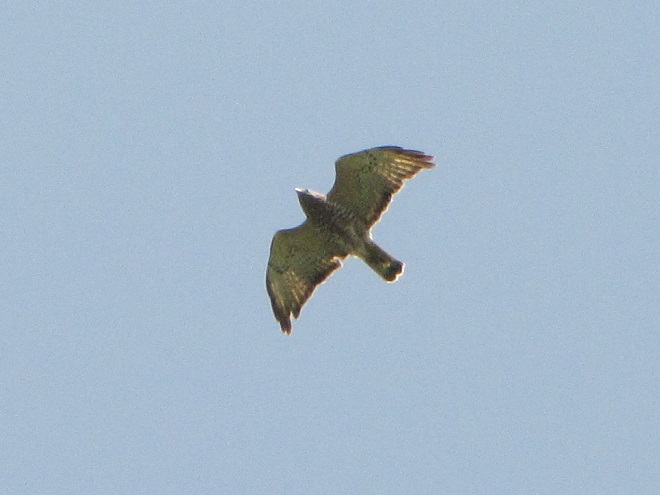
In the days prior to the arrival of Tropical Storm Ophelia, thousands of high-flying Broad-winged Hawks were being tallied as they passed hawk-counting stations throughout the region. As the last of this year’s migrants continue through, lack of clear skies, sunshine, and thermal updrafts has slowed the pace of their movements significantly.
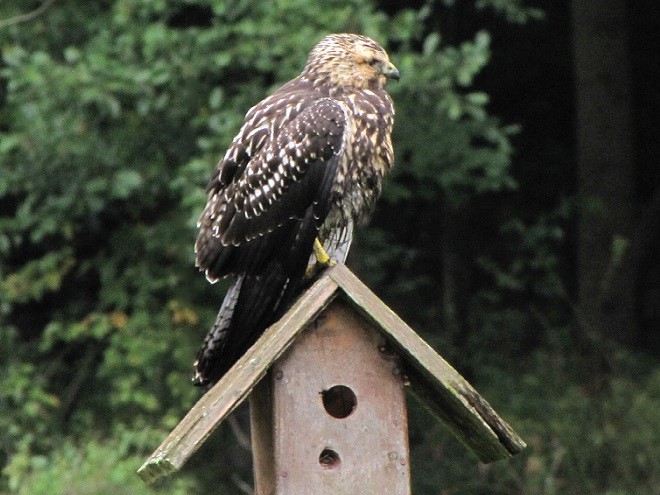
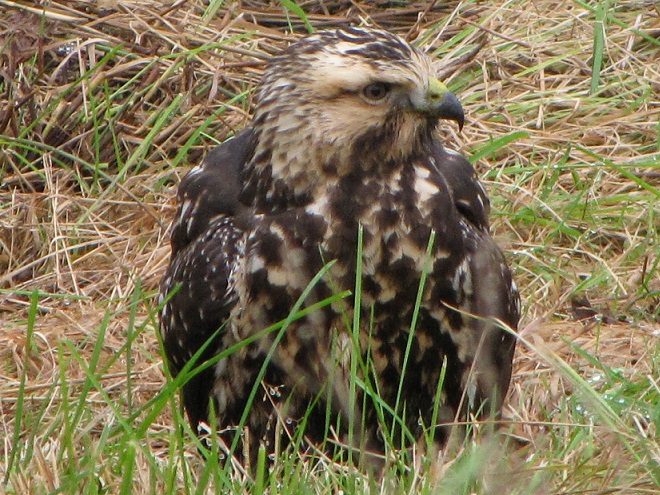
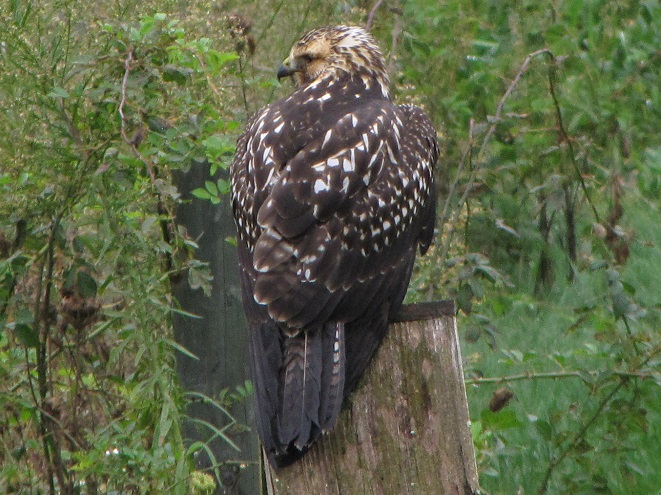
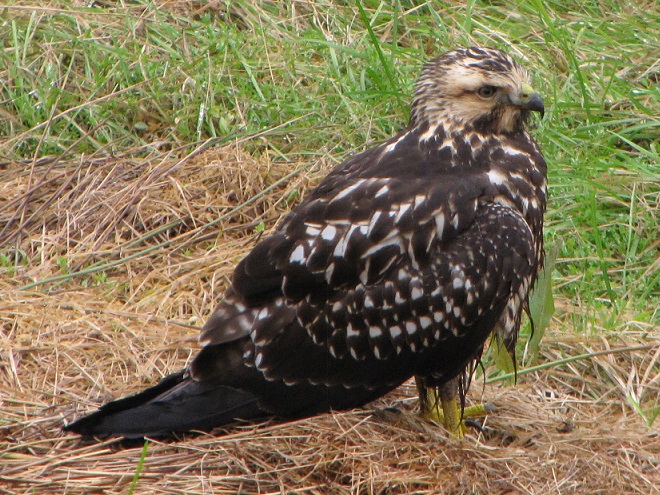
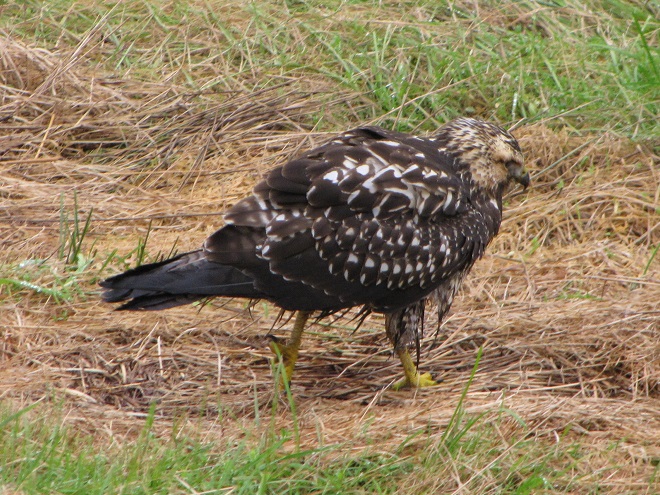
Of the birds on layover, perhaps the most interesting find has been a western raptor that occurs only on rare occasions among the groups of Broad-winged Hawks seen at hawk watches each fall—a Swainson’s Hawk. Discovered as Tropical Storm Ophelia approached on September 21st, this juvenile bird has found refuge in coal country on a small farm in a picturesque valley between converging ridges in southern Northumberland County, Pennsylvania. Swainson’s Hawks are a gregarious species, often spending time outside of the nesting season in the company of others of their kind. Like Broad-winged Hawks, they frequently assemble into large groups while migrating.
A juvenile Swainson’s Hawk in Northumberland County, Pennsylvania.
Swainson’s Hawks nest in the grasslands, prairies, and deserts of western North America. Their autumn migration to wintering grounds in Argentina covers a distance of up to 6,000 miles. Among raptors, such mileage is outdone only by the Tundra Peregrine Falcon.
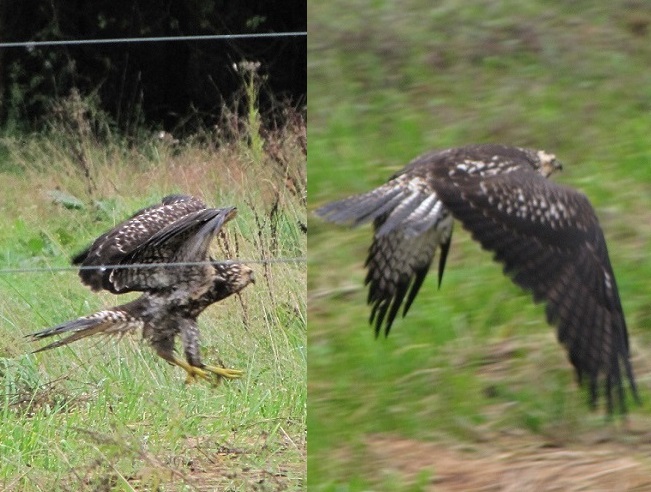
The Swainson’s Hawk spends up to four months each year covering a 12,000-mile round-trip migration route. The long primaries are an adaptation that give the wings additional lift, allowing them to use air currents including thermal updrafts to conserve energy while flying.
Swainson’s Hawks are renowned for spending time on the ground, intermittently running and hopping in pursuit of prey.
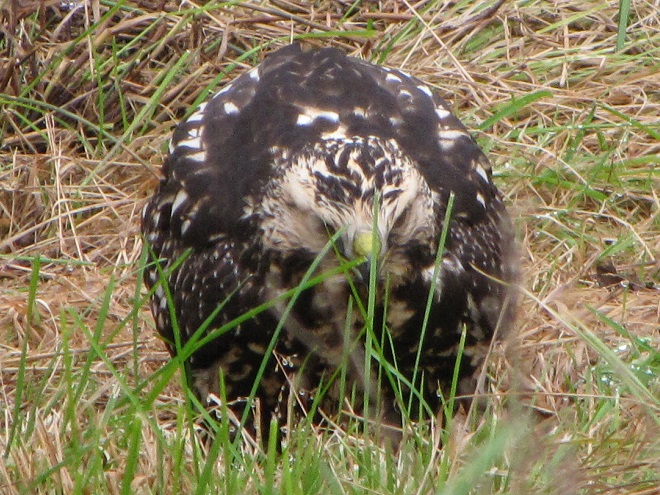
During the nesting cycle, Swainson’s Hawks consume primarily small vertebrates, mostly mice and other small rodents. But during the remainder of the year, they feed almost exclusively on grasshoppers. To provide enough energy to fuel their migrations, they must find and devour these insects by the hundreds. Not surprisingly, the Swainson’s Hawk is sometimes known as the Grasshopper Hawk or Locust Hawk, particularly in the areas of South America where they are common.
The juvenile Swainson’s Hawk visiting Northumberland County has been feeding on grasshoppers, katydids, and is seen here eating a cricket.
So just how far will our wayward Swainson’s Hawk have to travel to get back on track? Small numbers of Swainson’s Hawks pass the winter in southern Florida each year and still others are found in and near the scrublands of the Lower Rio Grande Valley in Texas and Mexico. But the vast majority of these birds make the trip all the way to the southern half of South America and the farmlands and savannas of Argentina—where our winter is their summer. The best bet for this bird would be to get hooked up with some of the season’s last Broad-winged Hawks when they start flying in coming days, then join them as they head toward Houston, Texas, to make the southward turn down the coast of the Gulf of Mexico into Central America and Amazonia. Then again, it may need to find its own way to warmer climes. Upon reaching at least the Gulf Coastal Plain, our visitor stands a much better chance of surviving the winter.
As long as it can still find grasshoppers to eat, our wayward bird in Northumberland County still has time before it needs to make its way south. As they pass through Texas, Mexico, Costa Rica, and Panama, Swainson’s Hawks are numerous among flocks of southbound Broad-winged Hawks. But while hawk watches in these areas are presently recording maximum annual counts of the latter, peak numbers of the former won’t occur until the final two or three weeks of October.
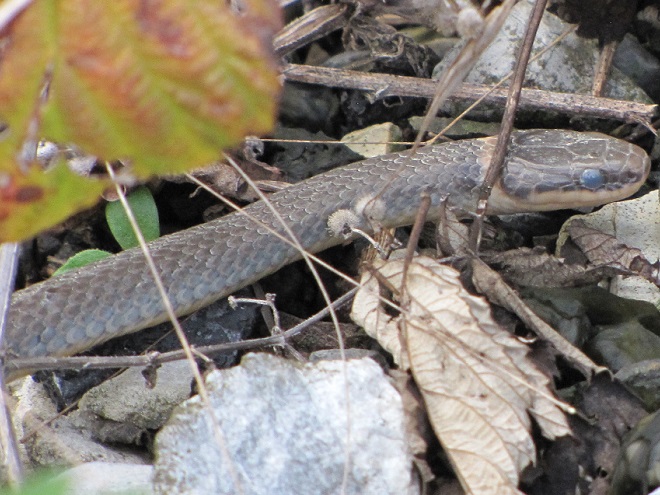
For this Northern Ring-necked Snake (Diadophis punctatus edwardsii), they’ll be no hunting crickets, grasshoppers, and creepy crawlies under rocks and leaves for a little while. It’s blind as a bat and finding its way by tongue and touch while beginning the process of shedding its skin so it can grow just a little bit bigger before heading underground for winter.
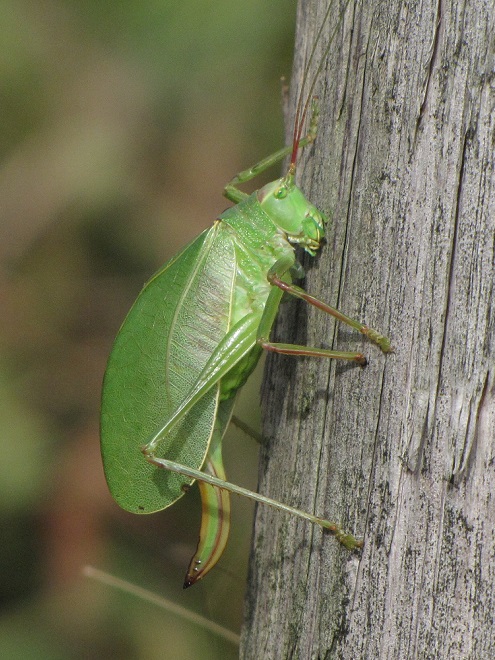
They look amazingly similar to the green leaves on a deciduous tree. During the late summer and autumn, they spend their time as adults in the cover of the forest canopy. They prefer to run and hop rather than fly. But despite their discretion, you’re not likely to miss the Common True Katydid (Pterophylla camellifolia).
The Common True Katydid, also known as the Northern True Katydid, has no trouble at all hiding among the leaves.
Take a listen and you may hear the male’s nocturnal calls filling the treetops of woodlands and shady neighborhoods throughout the lower Susquehanna valley right now. The loud, raspy “ka-ty-did, she-did, she-didn’t” is reliably answered by other nearby males as competition for willing females reaches a frenzy. In mature forests where populations are dense, this rowdy chorus can reach a remarkable volume.
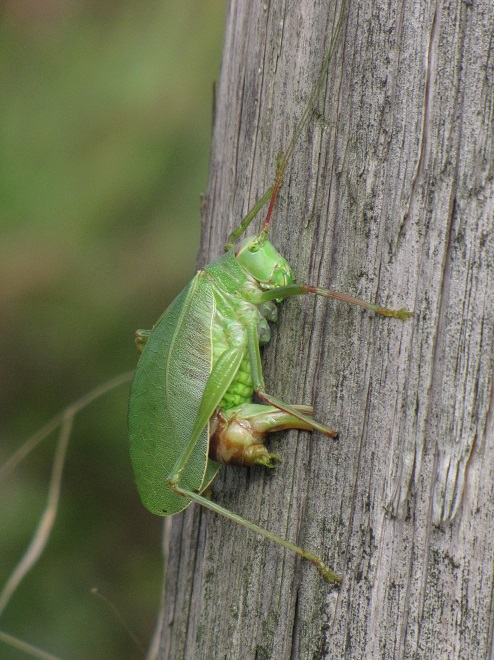
A mated female Common True Katydid inserts her ovipositor into a timber crevice to place her eggs in a protected location for winter.
The Common True Katydid’s song is like a soundtrack for the oft times melancholy mood of autumn. As the days shorten and a chill fills the air, the rate of the Common True Katydid’s call becomes slower and its tone deeper in response to the falling temperatures. Males continue forcing a sluggish call until freezing conditions finally bring about their demise. Another generation and another season gone.
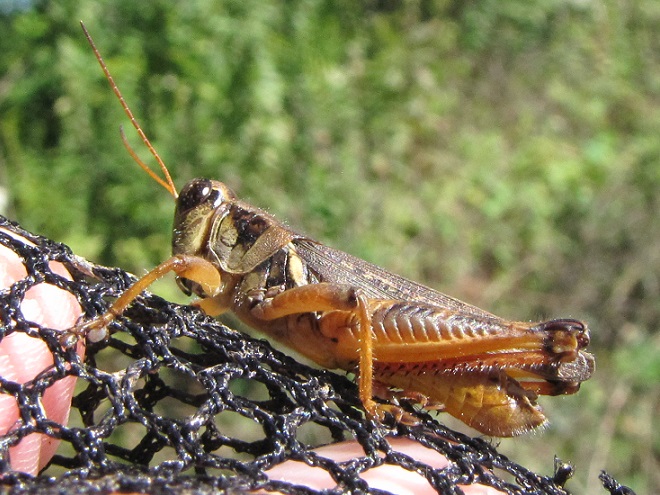
Grasshoppers are perhaps best known for the occasions throughout history when an enormous congregation of these insects—a “plague of locusts”—would assemble and rove a region to feed. These swarms, which sometimes covered tens of thousands of square miles or more, often decimated crops, darkened the sky, and, on occasion, resulted in catastrophic famine among human settlements in various parts of the world.
The largest “plague of locusts” in the United States occurred during the mid-1870s in the Great Plains. The Rocky Mountain Locust (Melanoplus spretus), a grasshopper of prairies in the American west, had a range that extended east into New England, possibly settling there on lands cleared for farming. Rocky Mountain Locusts, aside from their native habitat on grasslands, apparently thrived on fields planted with warm-season crops. Like most grasshoppers, they fed and developed most vigorously during periods of dry, hot weather. With plenty of vegetative matter to consume during periods of scorching temperatures, the stage was set for populations of these insects to explode in agricultural areas, then take wing in search of more forage. Plagues struck parts of northern New England as early as the mid-1700s and were numerous in various states in the Great Plains through the middle of the 1800s. The big ones hit between 1873 and 1877 when swarms numbering as many as trillions of grasshoppers did $200 million in crop damage and caused a famine so severe that many farmers abandoned the westward migration. To prevent recurrent outbreaks of locust plagues and famine, experts suggested planting more cool-season grains like winter wheat, a crop which could mature and be harvested before the grasshoppers had a chance to cause any significant damage. In the years that followed, and as prairies gave way to the expansive agricultural lands that presently cover most of the Rocky Mountain Locust’s former range, the grasshopper began to disappear. By the early years of the twentieth century, the species was extinct. No one was quite certain why, and the precise cause is still a topic of debate to this day. Conversion of nearly all of its native habitat to cropland and grazing acreage seems to be the most likely culprit.
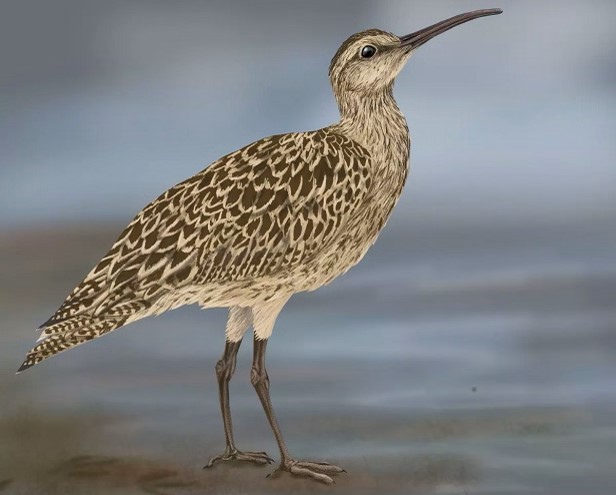
The critically endangered Eskimo Curlew (Numenius borealis), a species not photographed since 1962 and not confirmed since 1963, fed on Rocky Mountain Locusts during its spring migration through the Great Plains. Excessive hunting and conversion of grasslands to agriculture are believed responsible for the bird’s demise. (United States Fish and Wildlife Service image by Christina Nelson)
In the Mid-Atlantic States, the mosaic of the landscape—farmland interspersed with a mix of forest and disturbed urban/suburban lots—prevents grasshoppers from reaching the densities from which swarms arise. In the years since the implementation of “Green Revolution” farming practices, numbers of grasshoppers in our region have declined. Systemic insecticides including neonicotinoids keep grasshoppers and other insects from munching on warm-season crops like corn and soybeans. And herbicides including 2,4-D (2,4-Dichlorophenoxyacetic acid) have, in effect, become the equivalent of insecticides, eliminating broadleaf food plants from the pasturelands and hayfields where grasshoppers once fed and reproduced in abundance. As a result, few of the approximately three dozen species of grasshoppers with ranges that include the Lower Susquehanna River Watershed are common here. Those that still thrive are largely adapted to roadsides, waste ground, and small clearings where native and some non-native plants make up their diet.
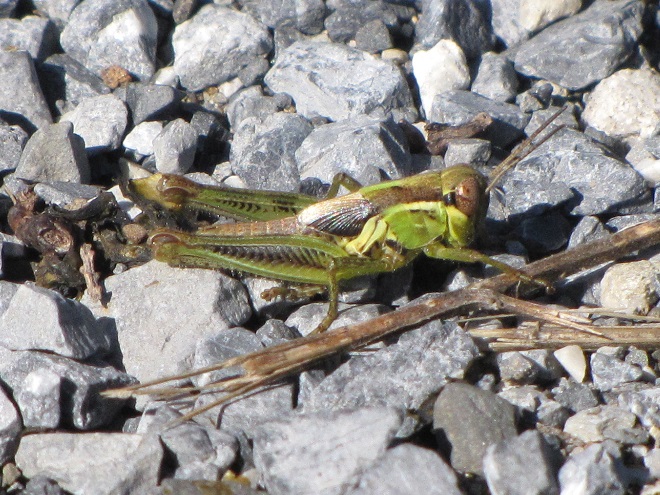
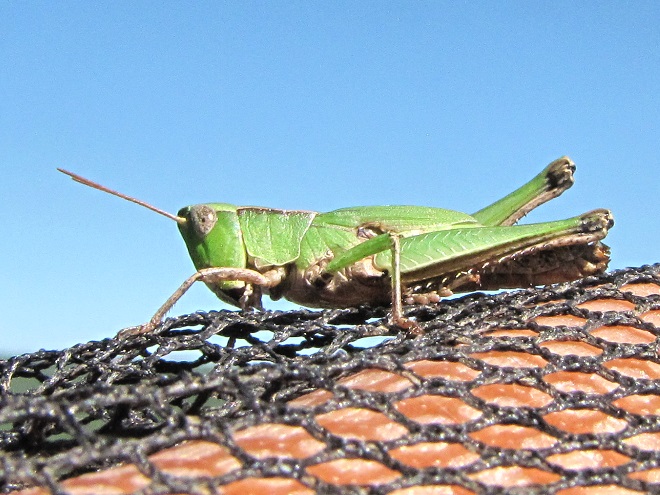
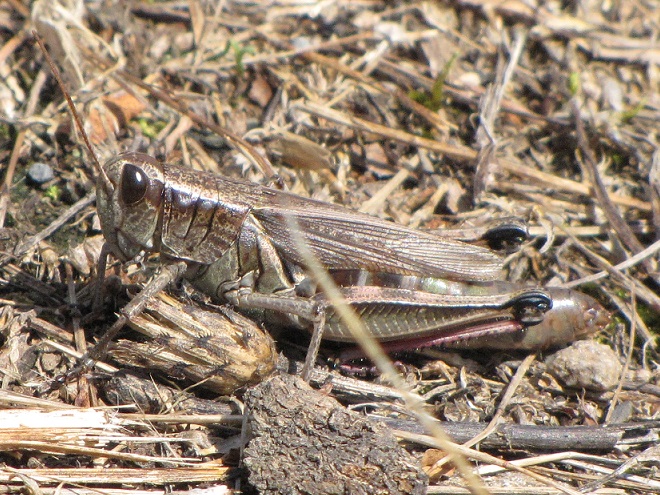
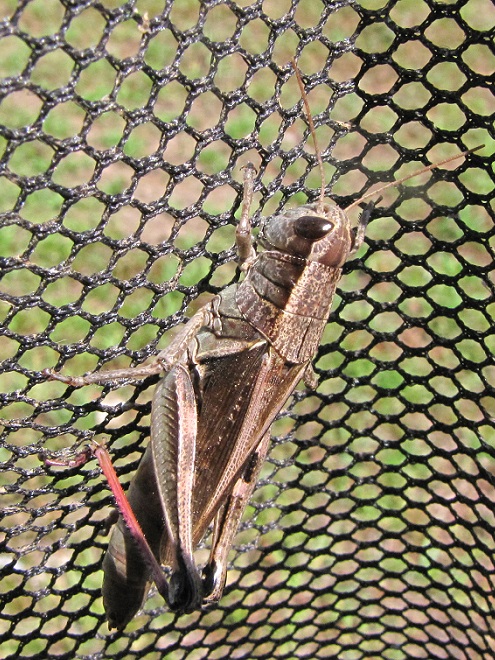
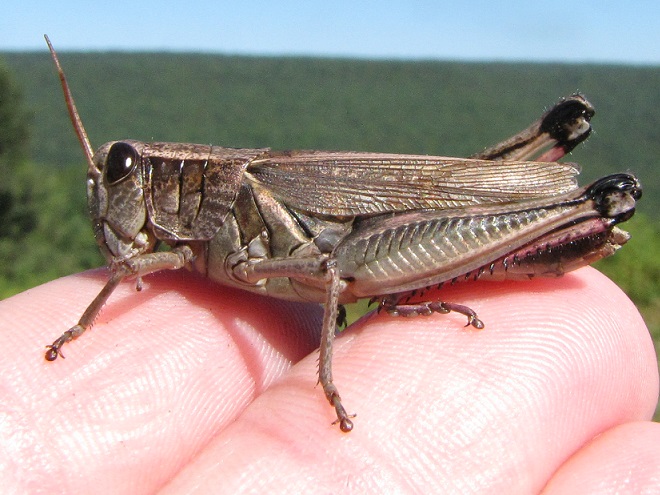
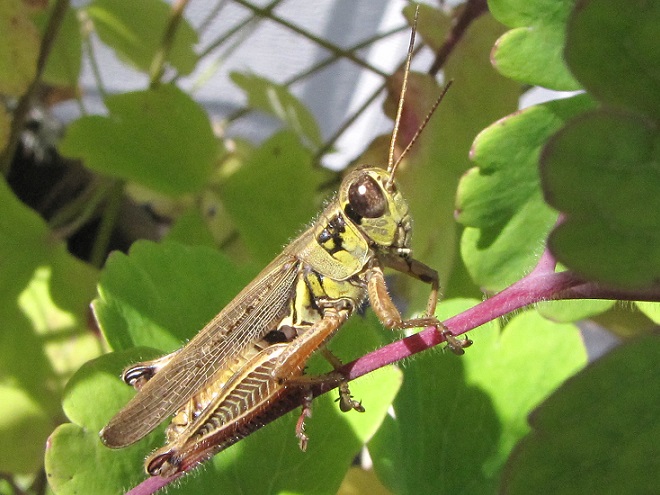
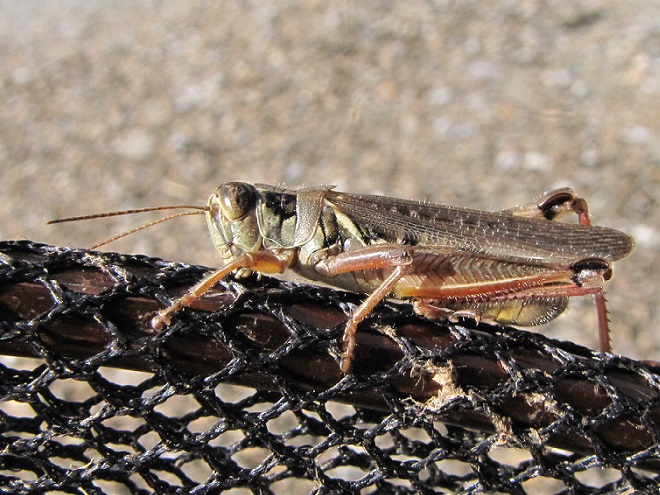
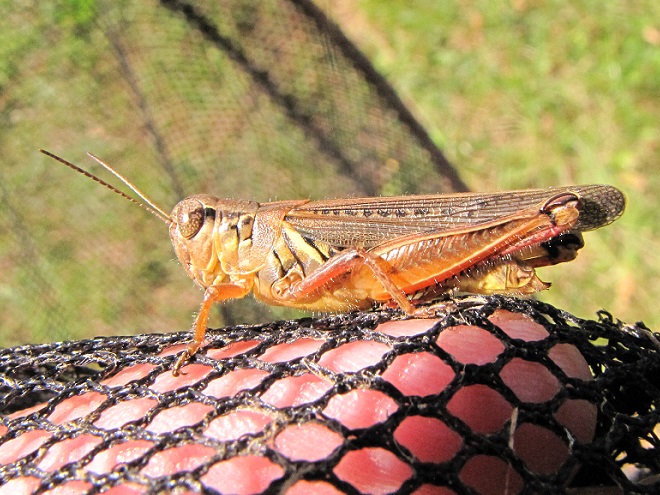
Here’s a look at four species of grasshoppers you’re likely to find in disturbed habitats throughout our region. Each remains common in relatively pesticide-free spaces with stands of dense grasses and broadleaf plants nearby.
CAROLINA GRASSHOPPER
Dissosteira carolina
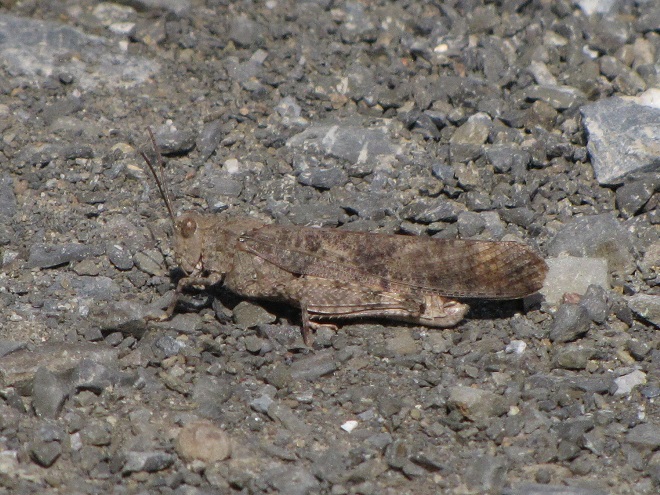
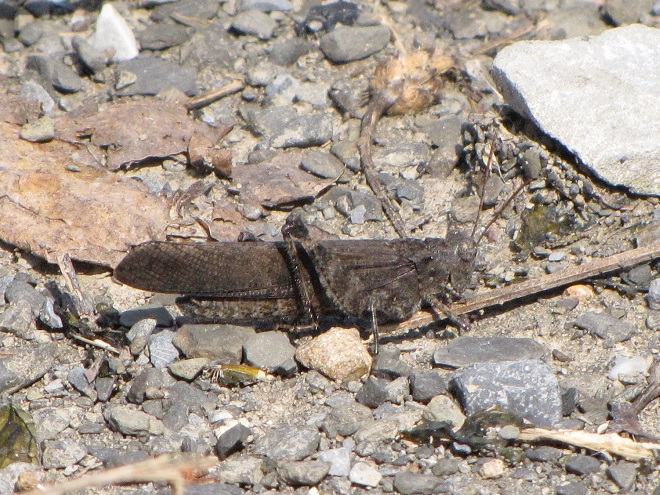
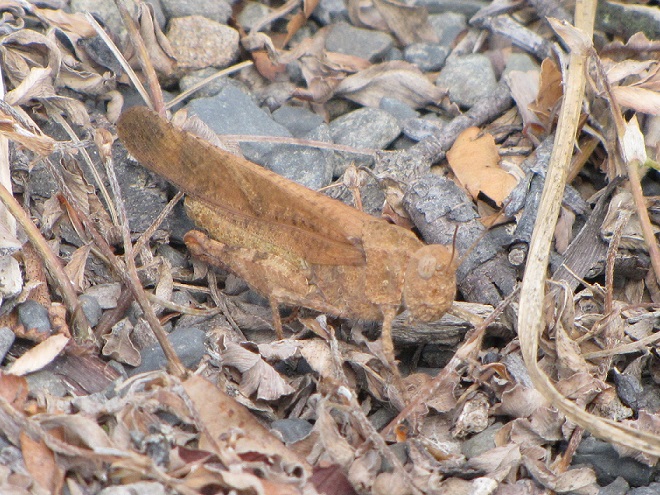
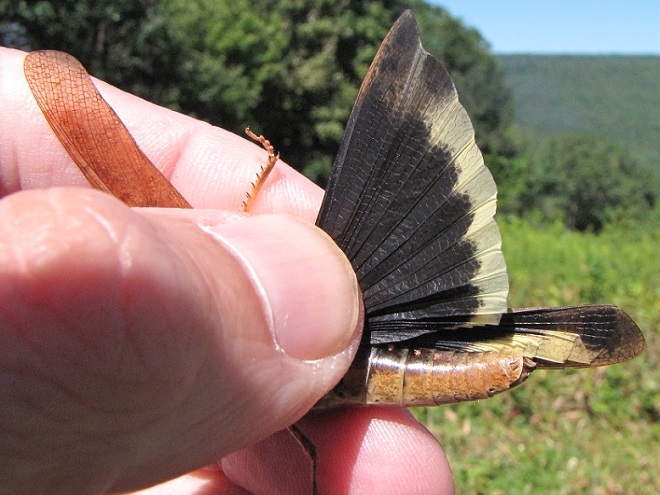
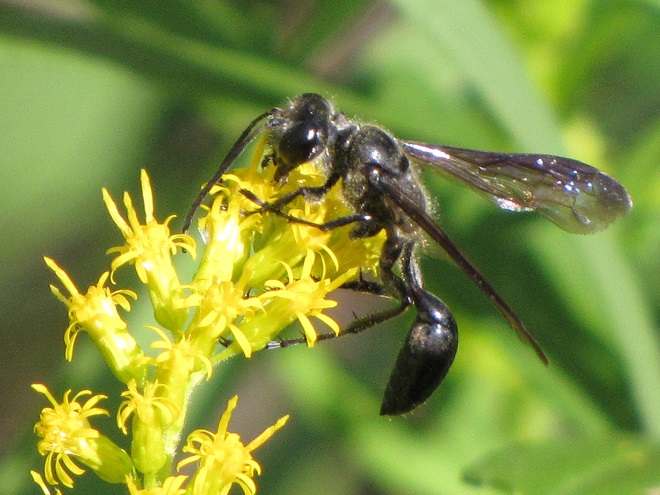
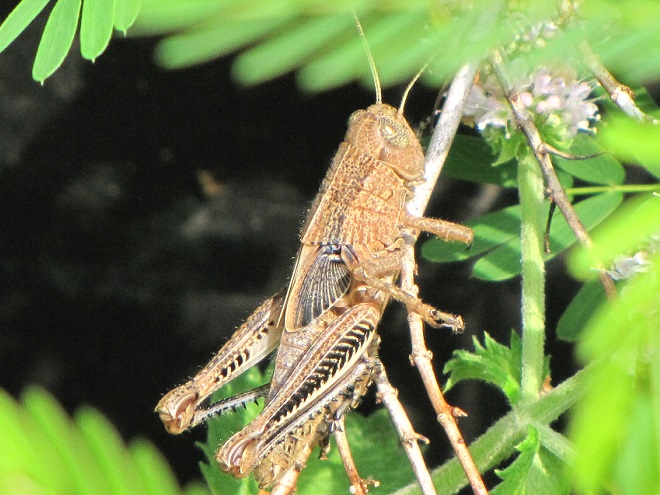
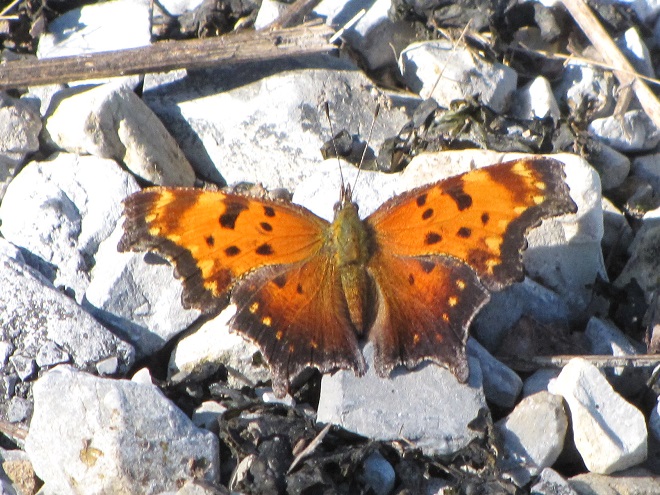
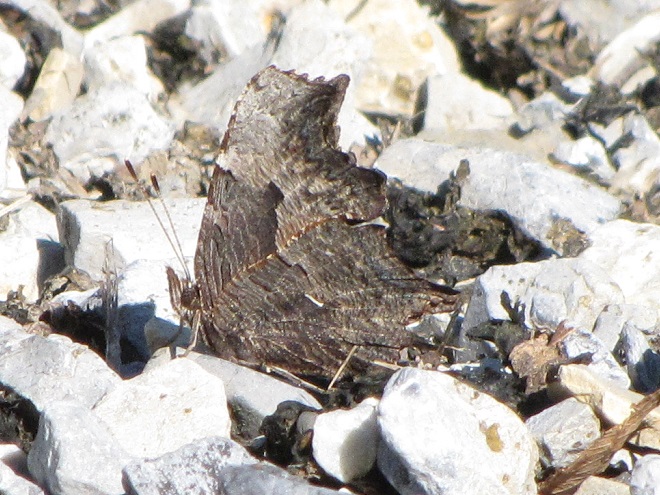
The Carolina Grasshopper, also known as the Carolina Locust or Quaker, is one of the band-winged grasshoppers. It is commonly found along roadsides and on other bare ground near stands of tall grass and broadleaf plants.The Carolina Grasshopper is variable in color, ranging from very dark brown……to a rich tan or khaki shade. These earth-tone colors provide the insect with effective camouflage while spending time on the ground.The Carolina Grasshopper is most readily detected and identified when it flies. The colors of the wings resemble those of the Mourning Cloak butterfly.Carolina Grasshoppers are among the preferred victims of Great Black Wasps (Sphex pensylvanicus). A female wasp stings the grasshopper to paralyze it, then drags it away to one of numerous cells in an underground burrow where she lays an egg on it. The body of the disabled grasshopper then provides nourishment for the larval wasp.
DIFFERENTIAL GRASSHOPPER
Melanoplus differentialis
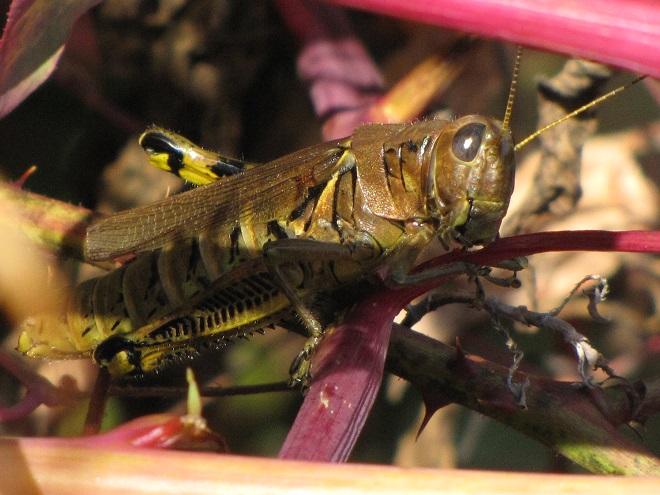
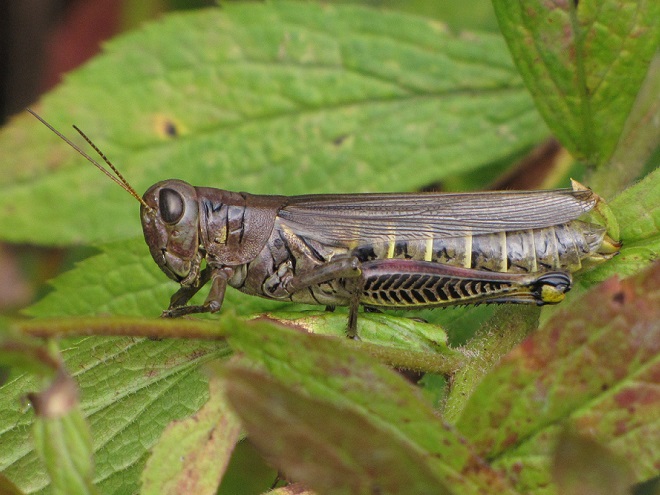
Differential Grasshopper nymph with small “fairy wings”.An adult female Differential Grasshopper with fully developed wings.An adult female Differential Grasshopper
TWO-STRIPED GRASSHOPPER
Melanoplus bivittatus
An early-stage Two-striped Grasshopper nymph.A Two-striped Grasshopper nymph in a later stage.An adult female Two-striped Grasshopper.An adult female Two-striped Grasshopper. Note the pale stripe originating at each eye and joining near the posterior end of the wings to form a V-shaped pattern.An adult female Two-striped Grasshopper.
RED-LEGGED GRASSHOPPER
Melanoplus femurrubrum
An adult male Red-legged Grasshopper hiding in dense urban vegetation.The Red-legged Grasshopper may currently be our most abundant and widespread species.An adult male Red-legged Grasshopper.An adult female Red-legged Grasshopper.
Protein-rich grasshoppers are an important late-summer, early-fall food source for birds. The absence of these insects has forced many species of breeding birds to abandon farmland or, in some cases, disappear altogether.
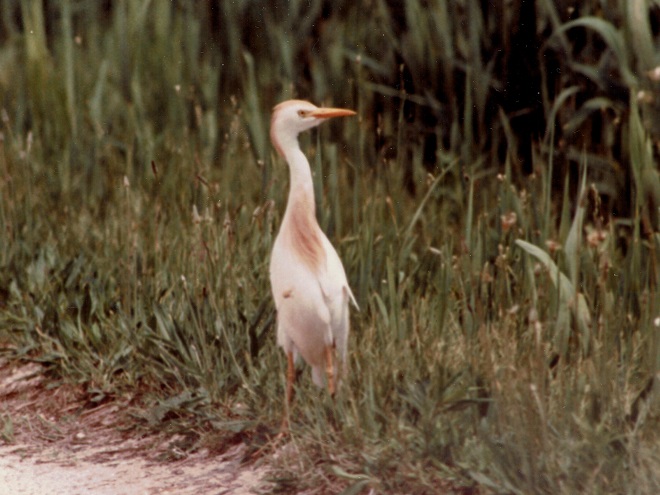
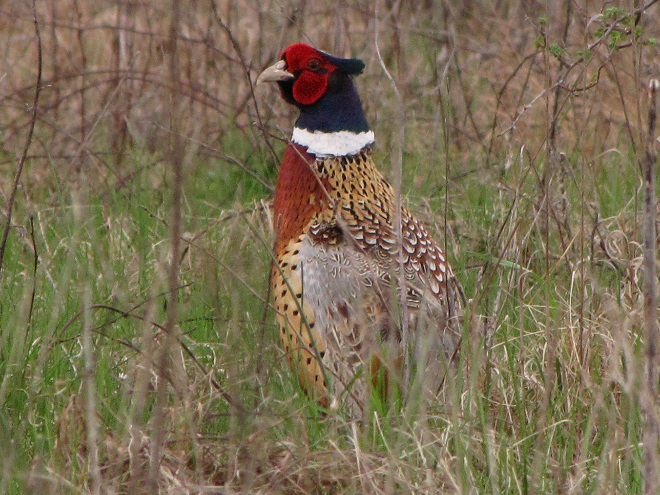
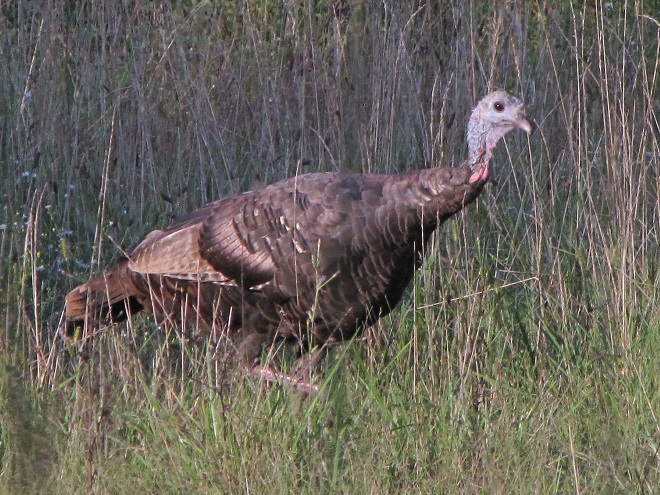
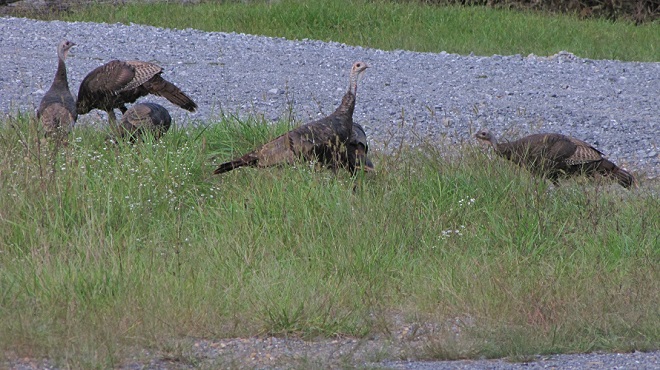
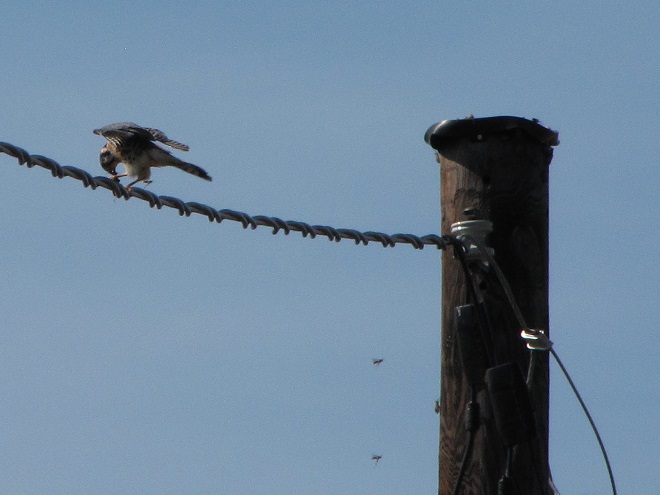
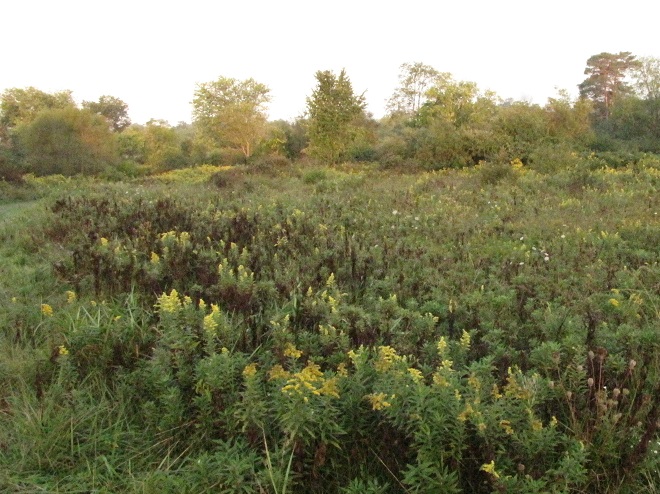
Beginning in the early 1930s, the Western Cattle Egret (Bubulcus ibis), a notoriously nomadic species, transited the Atlantic from Africa to colonize the Americas…and they did it without any direct assistance from humans. During the 1970s and early 1980s, a nesting population of Western Cattle Egrets on river islands adjacent to the Susquehanna’s Conejohela Flats off Washington Boro was the largest inland rookery in the northeastern United States. The Lancaster County Bird Club censused the birds each August and found peak numbers in 1981 (7,580). During their years of abundance, V-shaped flocks of cattle egrets from the rookery islands ventured into grazing lands throughout portions of Lancaster, York, Dauphin, and Lebanon Counties to hunt grasshoppers. These daily flights were a familiar summertime sight for nearly two decades. Then, in the early 1980s, reductions in pastureland acreage and plummeting grasshopper numbers quickly took their toll. By 1988, the rookery was abandoned. The cattle egrets had moved on. (Vintage 33 mm image)During the summer and early fall, juvenile and adult Ring-necked Pheasants feed heavily on grasshoppers. Earlier and more frequent mowing along with declining numbers of grasshoppers on farmlands due to an increase in pesticide use were factors contributing to the crash of the pheasant population in the early 1980s.To the delight of Wild Turkeys, each of the four species of grasshoppers shown above frequents clearings and roadsides adjacent to forest areas. While changes in grasshopper distribution have been detrimental to populations of birds like pheasants, they’ve created a feeding bonanza for turkeys.Wild Turkeys feeding on an abundance of grasshoppers along a forest road.An American Kestrel feeds on a grasshopper while ignoring the abundance of Spotted Lanternflies swarming the adjacent utility pole. In Susquehanna valley farmlands, grasshopper and kestrel numbers are down. Lanternflies, on the other hand, have got it made.Maintaining areas bordering roads, forests, wetlands, farmlands, and human development in a state of early succession can provide and ideal mix of mature grasses and broadleaf plants for grasshoppers, pollinators, birds, and other wildlife.
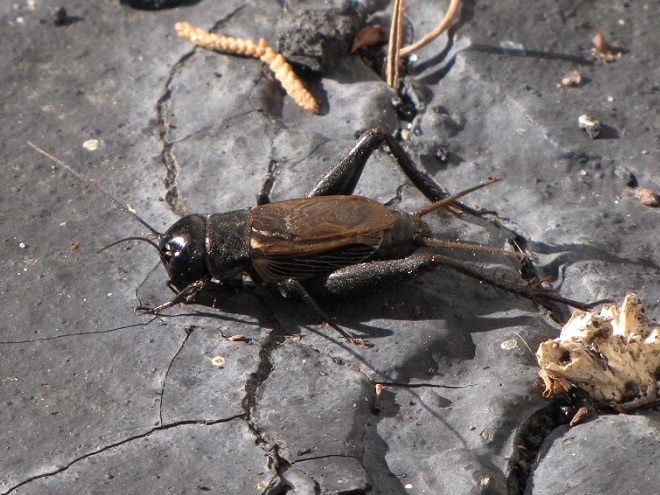
The calls of Fall Field Crickets, a series of chirps one might attempt to replicate by quickly strumming three to five teeth on a hair comb, are a familiar chorus during the late summer and autumn in the Lower Susquehanna River Watershed. The song’s speed changes with temperature, becoming noticeably slower as cold weather sets in. These crickets sing throughout the majority of the day and night, becoming quietest during the chilly hours of dawn. Adults hide in burrows and beneath logs, leaf litter, and other organic debris. Around human habitation, they seek shelter under hundreds of different objects, frequently finding their way into buildings where they do no real harm. Crickets are eaten by almost every predator that exceeds them in size and are especially important as a protein-rich food source for birds feeding their young and preparing for autumn migration. The Fall Field Cricket (Gryllus pennsylvanicus) is nearly identical in appearance to the less common Spring Field Cricket (Gryllus veletis), which calls during the spring and early summer in the Susquehanna valley. The primary difference between the two species? The former overwinter as eggs while the latter pass the colder months as nymphs.
The Gray Comma is a strikingly colorful late-summer butterfly of rich forests in the Lower Susquehanna River Watershed. It’s sure to catch your attention,……or is it?
Check out this and other local species by clicking the “Butterflies” tab at the top of this page.
During the past two weeks, over 150 American Flamingos (Phoenicopterus ruber) have been reported in the eastern half of the United States, well north of their usual range—northern South America; Cuba, the Bahamas, and other Caribbean Islands; and the Yucatan Peninsula of Mexico. They are also found on the Galapagos Islands. Prior to being extirpated by hunting during the early years of the twentieth century, American Flamingos nested in the Everglades of Florida as well.
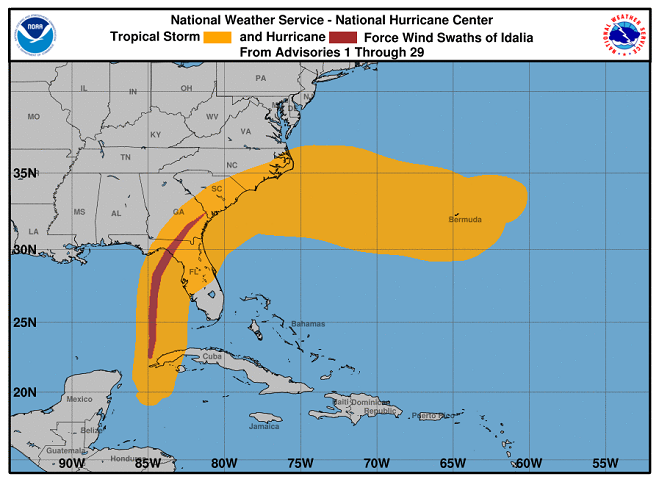
The recent influx of these tropical vagrants into the eastern states is attributed to Hurricane Idalia, a storm that formed in the midst of flamingo territory during the final week of August. Idalia got its start over tropical waters off Yucatan before progressing north through the Gulf of Mexico off Cuba to make landfall in the “Big Bend” area of Florida.
Track of Hurricane Idalia. (NOAA/National Weather Service/National Hurricane Center image)
Birds of warm water seas regularly become entangled within tropical storms and hurricanes. In most cases, it’s oceanic seabirds including petrels, shearwaters, terns, and gulls that seek refuge from turbulent conditions by remaining inside the storm’s eye or within the margins of the rotating bands. The duration of the experience and the fitness of each individual bird may determine just how many survive such an ordeal. As a storm makes landfall, the survivors put down on inland bodies of water, often in unexpected places hundreds of miles from the nearest coastline. Some may linger in these far-flung areas to feed and gain strength before finding their way down rivers back to sea.
For birds like American Flamingos, which don’t spend a large portion of their lives on the wing over vast oceanic waters, becoming entangled in a tropical weather system can easily be a life-ending event. American Flamingos, despite their size and lanky appearance, are quite agile fliers. When necessary, some populations travel significant distances in search of new food sources. Some closely related migratory species of flamingos have been recorded at altitudes exceeding 10,000 feet. But becoming trapped in a hurricane for an extended period of time could easily erode the endurance of even the strongest of fliers. And once out over open water, there’s nowhere for a flamingo to come down for a rest.
It appears probable that, during the final week of August, hundreds of American Flamingos did find themselves drawn away from their familiar tidal flats and salty lagoons to be swept into the spinning clouds and gusty downpours of Hurricane Idalia as it churned off the Yucatan coast. Despite the dangers, more than 150 of them completed a journey within its clutches to cross the Gulf of Mexico and land in the Eastern United States.
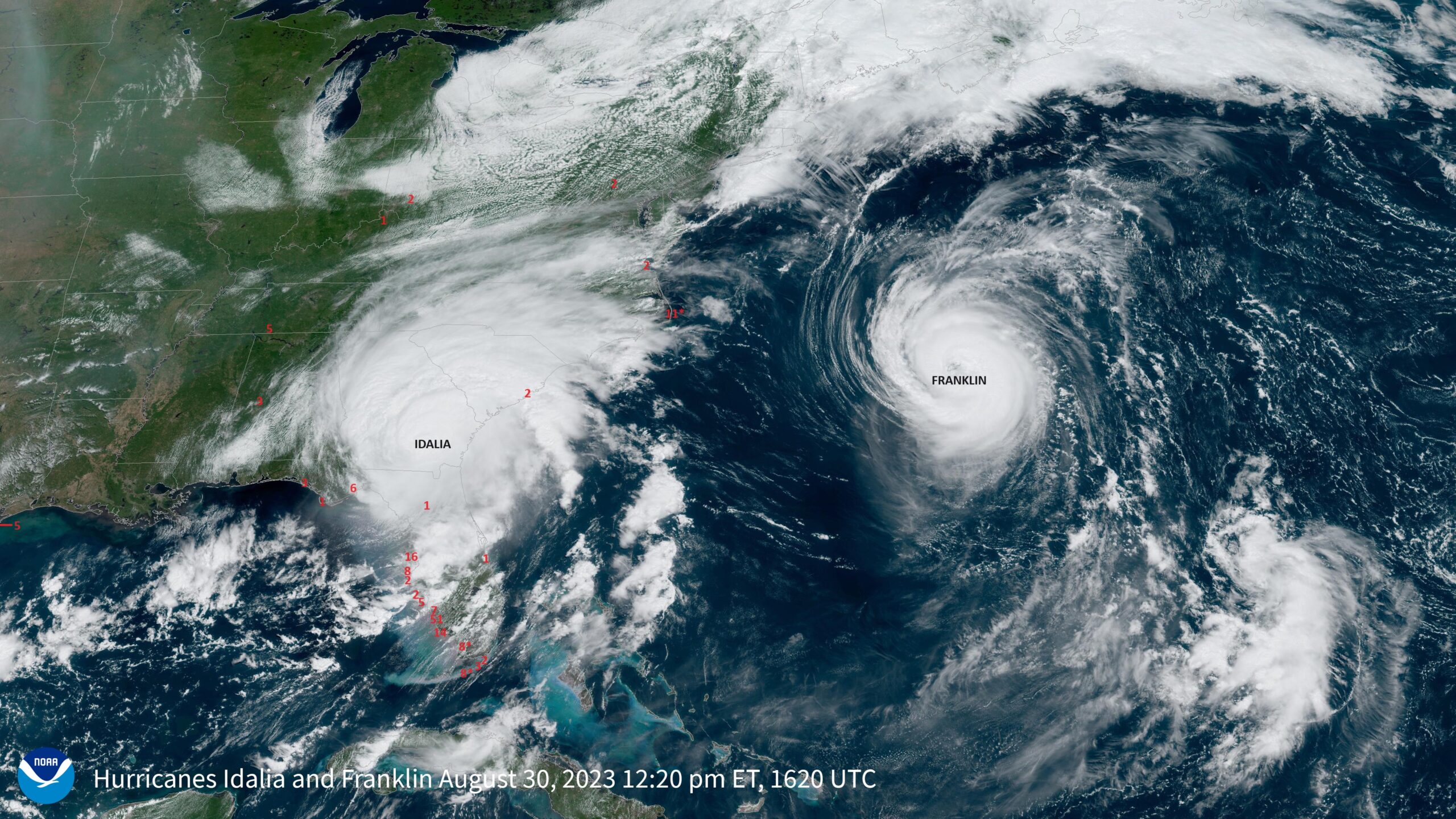
Amy Davis in a report for the American Birding Association compiled a list of American Flamingo sightings from the days following the landfall of Hurricane Idalia. We’ve plotted those sightings on a satellite image of the storm.
Locations of American Flamingo sightings in the days following landfall of Hurricane Idalia, August 30 through September 7, 2023. Numbers of birds in the plotted flock are indicated. Those flocks marked with an asterisk contained a bird ringed with a leg band marking it as a member of the Ria Largartos population in Yucatan. Click the image to enlarge. (NOAA/GOES-16 base image of Hurricane Idalia landfall)
The majority of the flamingos that survived this harrowing trip found a place to put down along the coast. But as the reader will notice, a significant number of the sightings were outside the path of the storm in areas not reached by even the outermost bands of clouds. Flamingos in Alabama, Tennessee, Kentucky/Indiana, Ohio, and Pennsylvania were found at inland bodies of water, most on the days immediately following the storm’s landfall. The lone exception, the Pennsylvania birds, were discovered a week after landfall (but may have been there days longer). How and why did these birds find their way so far inland at places so distant from the storm…and home? And how did they get there so quickly? The counterclockwise rotation of the hurricane wouldn’t slingshot them in that direction, would it?
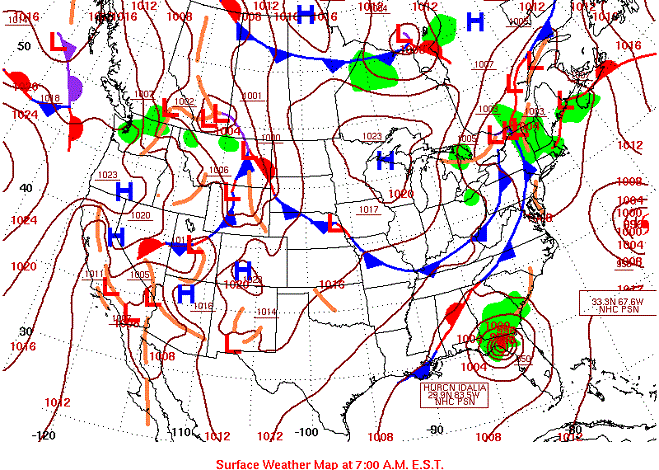
Let’s have a look at the surface map showing us the weather in the states outside the direct influence of Hurricane Idalia during the storm’s landfall on August 30, 2023…
Note the pair of cold fronts along the Appalachians by 7 A.M. E.S.T. (8 A.M. E.D.T.). In the hours following Idalia’s landfall, these fronts had begun slowly creeping through the areas where the inland flamingos were subsequently found. (NOAA/National Centers for Environmental Prediction-Weather Prediction Center image)
Now check out this satellite view of the storm during the hours following landfall…
The blue lines mark the approximate locations of the two cold fronts, the “spoilers” that helped steer Idalia out to sea. The pink arrows mark the “flamingo highway”, strong southwest to northeast winds blowing between the cold fronts along the inland edge of Idalia. (GOES-16 imagery from Cooperative Institute for Research in the Atmosphere at Colorado State and the National Oceanic and Atmospheric Administration)
Click the image above to play a GIF animation of GOES-16 satellite photos showing Idalia after landfall and the strong “flamingo highway” winds between the fronts. (It’s a big file, so give it a little time to load.) You’ll also note the ferocious lightning associated with both Huricane Idalia and Hurricane Franklin.
Did the inland flamingos catch a ride on these stiff “flamingo highway” winds? If not, they may have had a little help from a high pressure ridge that became established over the southern Appalachians as Idalia crept out to sea. The clockwise rotation of this ridge kept a similar flow over the “flamingo highway” for much of the four days that followed.
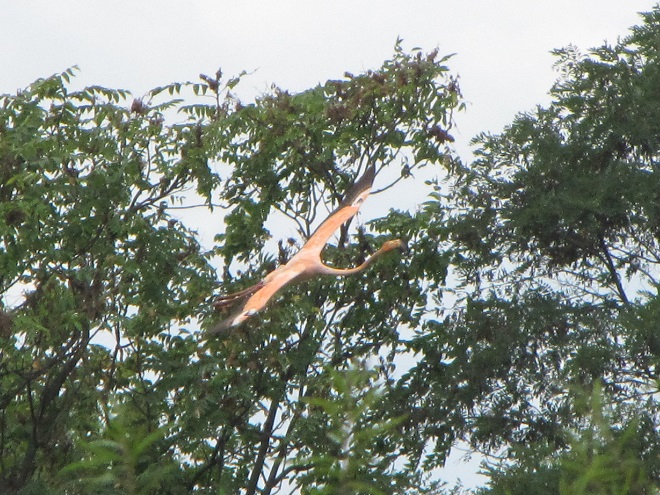
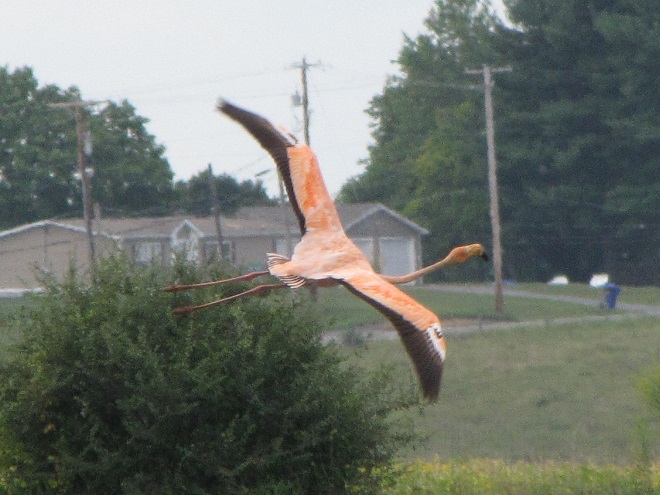
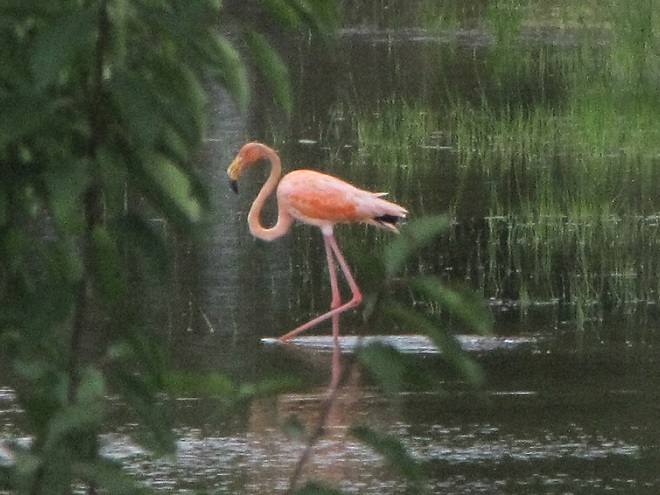
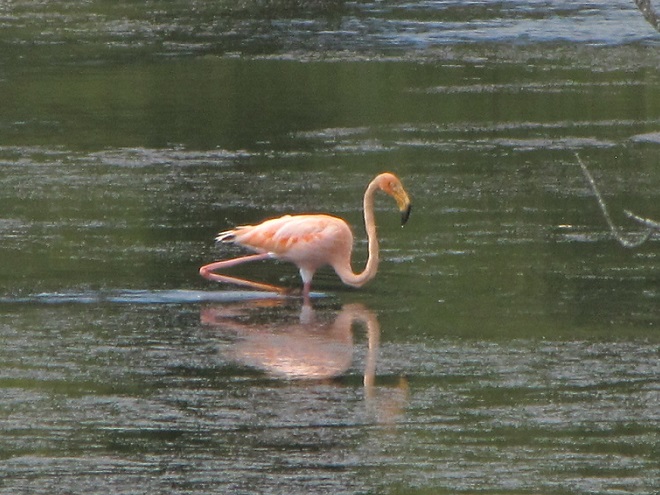
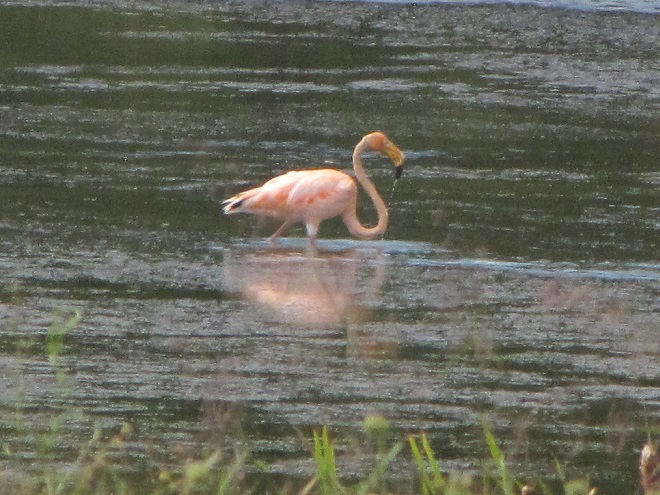
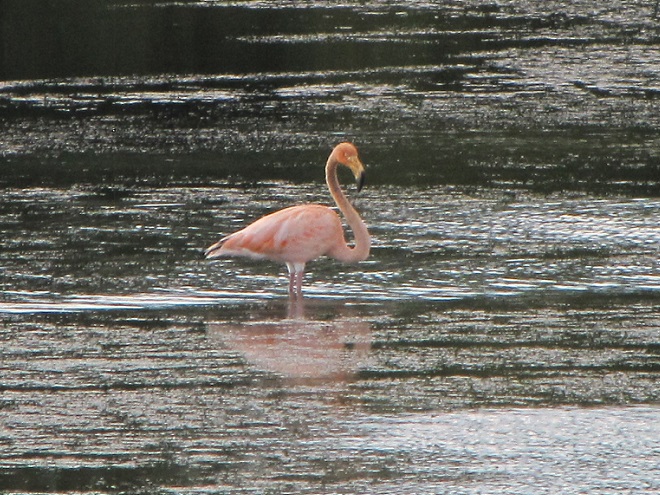
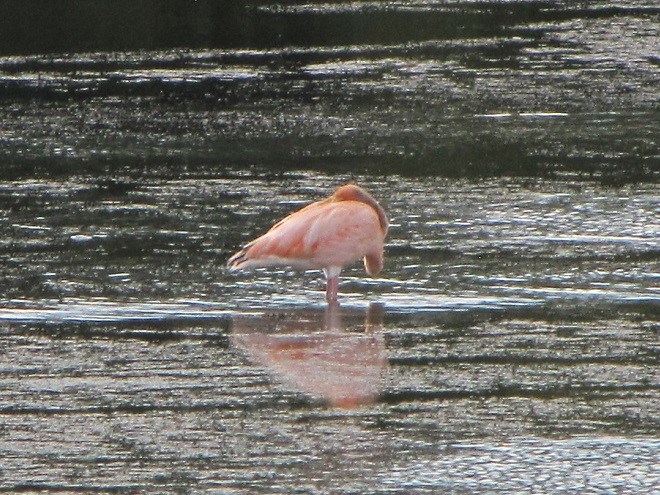
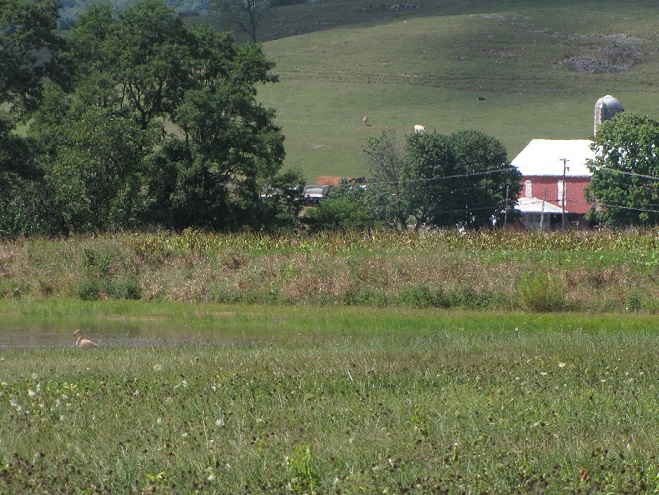
An American Flamingo circling to land in a farm pond near St. Thomas, Franklin County, Pennsylvania.Its a long way from Yucatan to central Pennsylvania. The survivors of the storm were largely at the mercy of the winds that carried them. The good news for this bird…not a single flight is feather missing.An American Flamingo at the foot of the Appalachians in Franklin County, Pennsylvania.An American Flamingo on a farm pond near St. Thomas, Franklin County, Pennsylvania. This bird is just one of at least 150 that arrived in the Eastern United States courtesy of Hurricane Idalia.In deep water, American Flamingos feed by shuffling their feet to stir up benthic invertebrates, plankton, algae, and plant matter. The flamingo that was accompanying this bird apparently shuffled its feet into a Snapping Turtle, which promptly latched onto its leg and injured tendons and other tissue. Following surgery earlier today, the bird remains in hospital.To retrieve their fare from the bottom, flamingos roll their bill upside down, then swish it back-and-forth.Finally, they raise their heads and upright their bills to expel water and debris while simultaneously filtering out the morsels of edibles for consumption.To conserve body heat while under the shade of clouds, this American Flamingo in Franklin County, Pennsylvania, would stop feeding,……then it would tuck its head between its wings. Flamingos will also retain heat by standing on one leg while raising the other into the insulating cover of their belly feathers.
For vagrant birds including those carried away to distant lands by hurricanes and other storms, the challenges of finding food and avoiding hazards including disease, unfamiliar predators, and extreme weather can be a matter of life and death. For American Flamingos now loafing and feeding in the Eastern United States outside Florida, the hardest part of their journey is yet to come. They need to find their way back south to suitable tropical habitat before cold weather sets in. The perils are many. Theirs is not an enviable predicament.
Sorry Pinky, but you can’t stay on the farm forever.
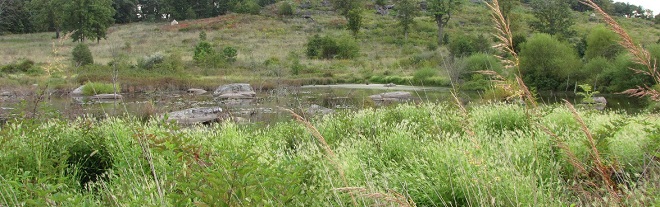
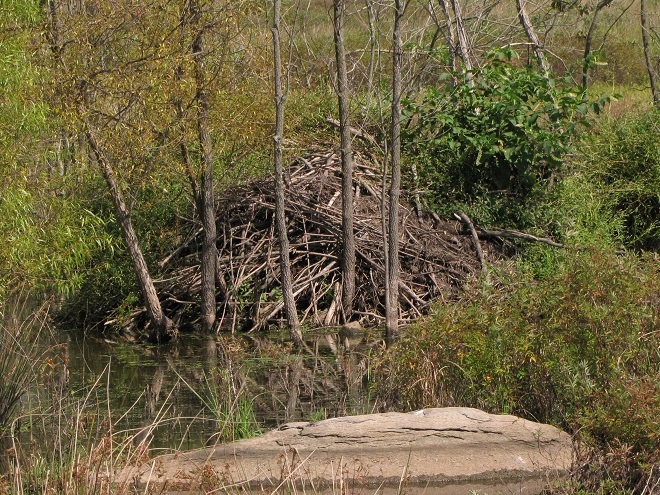
To pass the afternoon, we sat quietly along the edge of a pond, or more accurately a pool, created recently by North American Beavers (Castor canadensis). They first constructed their dam on this small stream about five years ago. Since then, a flourishing wetland has become established. Have a look.
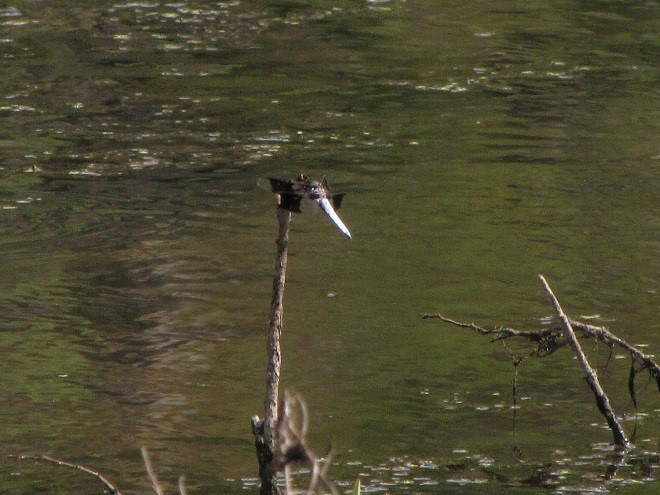
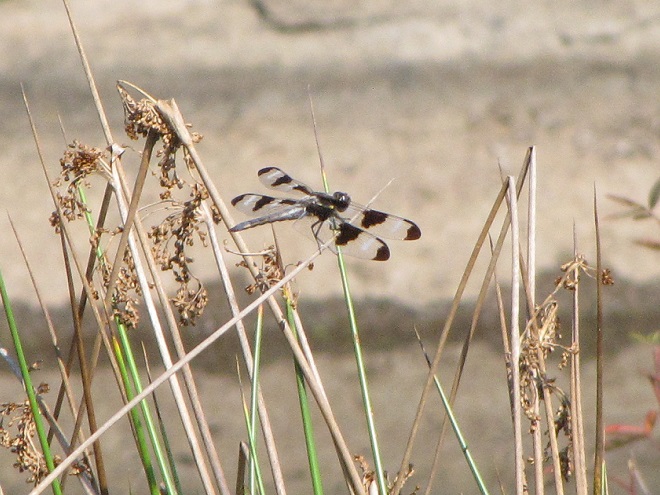
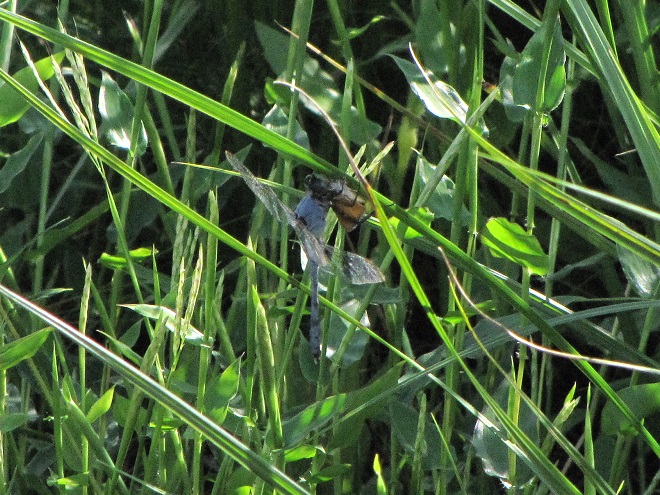
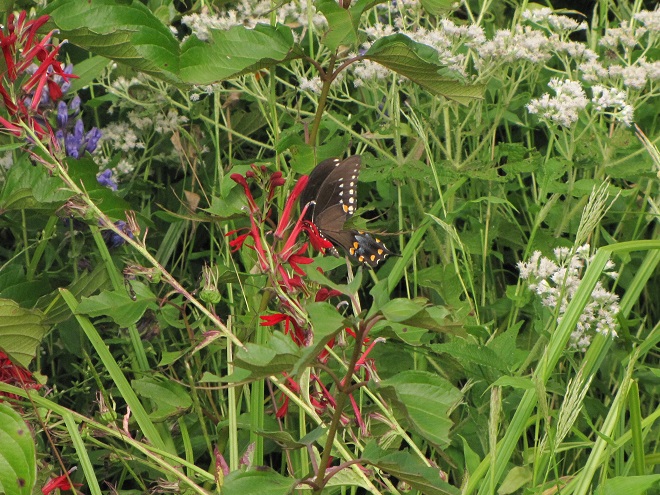
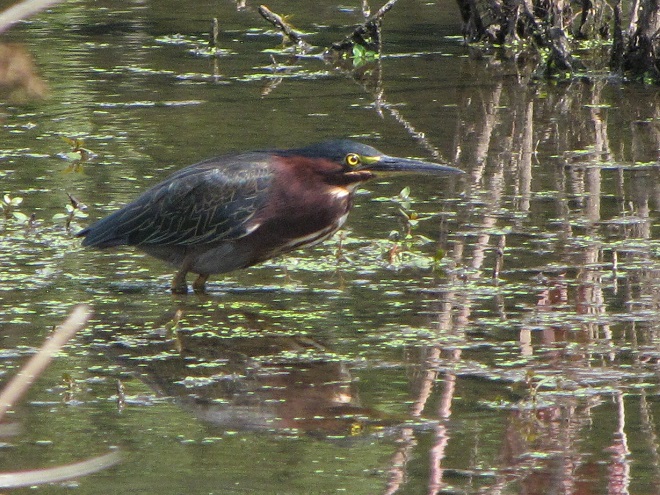
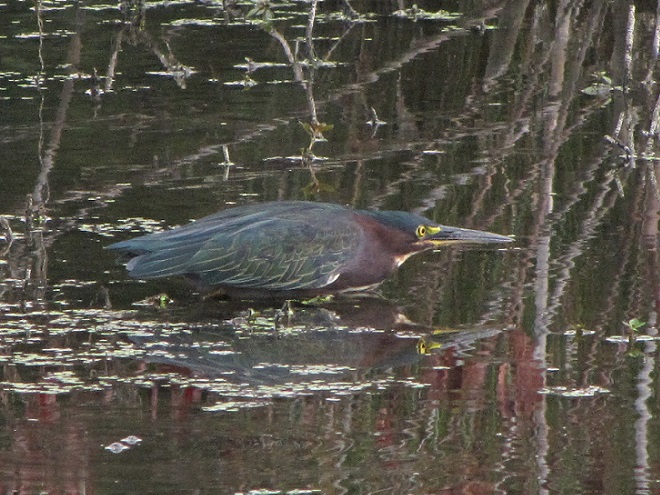
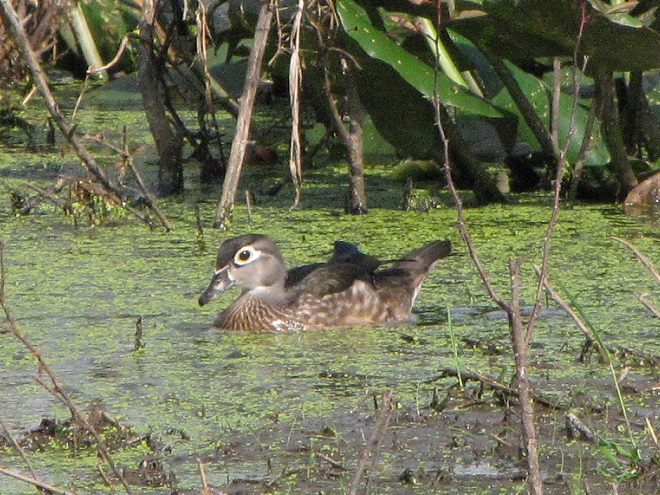
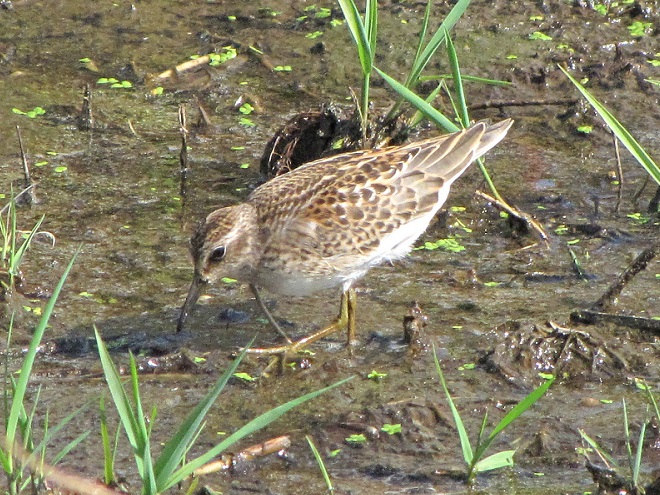
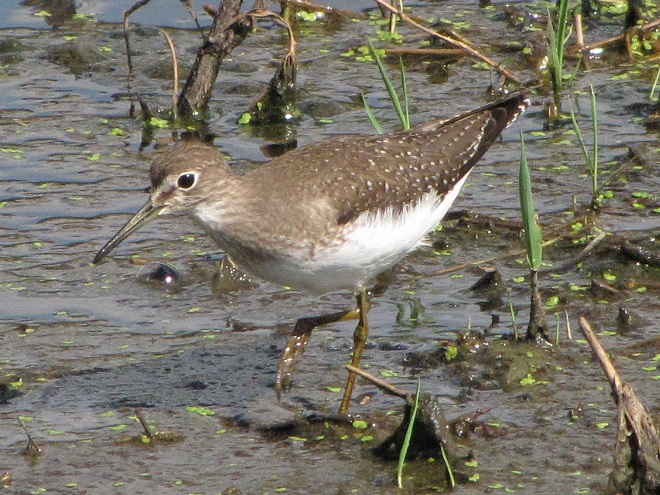
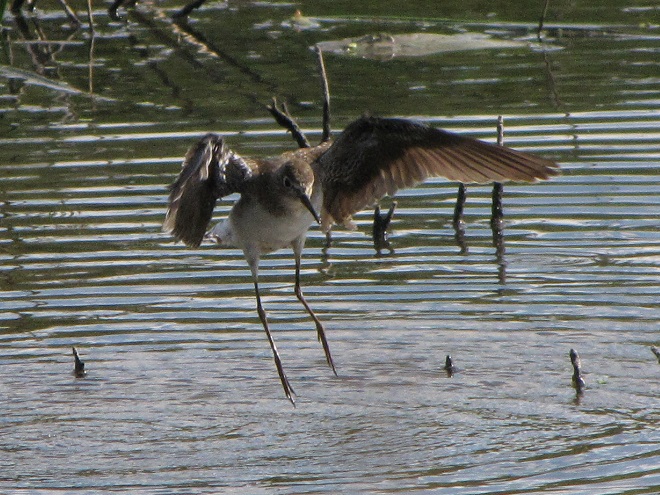
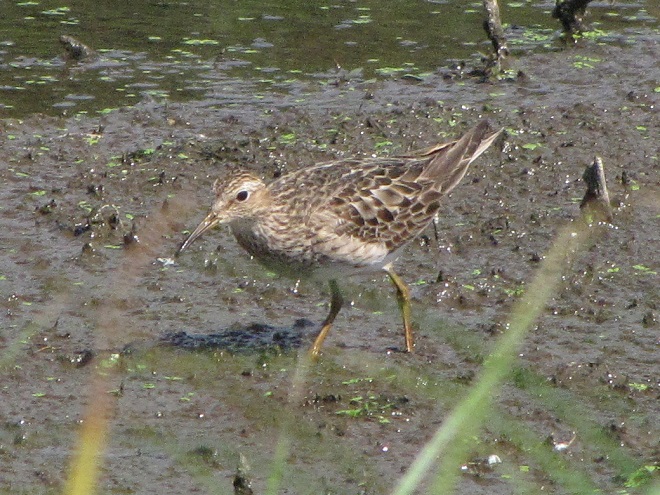
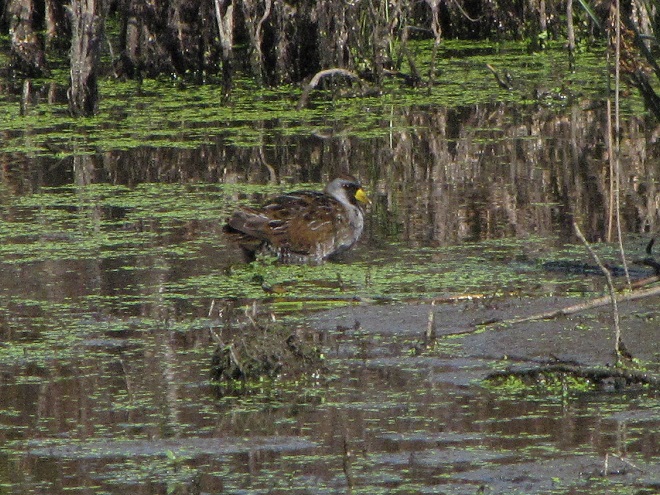
Vegetation surrounding the inundated floodplain helps sequester nutrients and sediments to purify the water while also providing excellent wildlife habitat.The beaver lodge was built among shrubs growing in shallow water in the middle of the pond.Woolgrass (Scirpus cyperinus) is a bulrush that thrives as an emergent and as a terrestrial plant in moist soils bordering the pond.A male Common Whitetail dragonfly keeping watch over his territory.A Twelve-spotted Skimmer perched on Soft Rush.A Blue Dasher dragonfly seizing a Fall Field Cricket (Gryllus pennsylvanicus).A Spicebush Swallowtail visiting a Cardinal Flower.A Green Heron looking for small fish, crayfish, frogs, and tadpoles.The Green Heron stalking potential prey.A Wood Duck feeding on the tiny floating plant known as Lesser Duckweed (Lemna minor).A Least Sandpiper poking at small invertebrates along the muddy edge of the beaver pool.A Solitary Sandpiper.A Solitary Sandpiper testing the waters for proper feeding depth.A Pectoral Sandpiper searches for its next morsel of sustenance.The Sora (Porzana carolina) is a seldom seen rail of marshlands including those created by North American Beavers. Common Cattails, sedges, and rushes provide these chicken-shaped wetland birds with nesting and loafing cover.
Isn’t that amazing? North American Beavers build and maintain what human engineers struggle to master—dams and pools that reduce pollution, allow fish passage, and support self-sustaining ecosystems. Want to clean up the streams and floodplains of your local watershed? Let the beavers do the job!
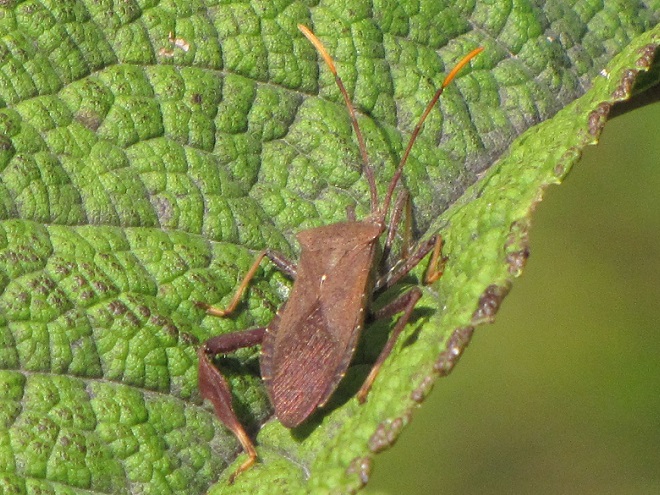
At first glance, this insect might be mistaken for a Brown Marmorated Stink Bug. It is, however, a native species, a Magnolia Leaf-footed Bug (Leptoglossus fulvicornis). Because it feeds almost exclusively on trees in the genus Magnolia, and because the three members of the genus native to the lower Susquehanna valley, Umbrella Magnolia (M. tripetala), Cucumber Tree (M. acuminata), and Sweetbay (M. virginiana), each have a very limited distribution here, this insect’s presence in the watershed is largely dependent on widespread introductions of ornamental magnolias and native transplants including Southern Magnolia (Magnolia grandiflora). Adult Magnolia Leaf-footed Bugs overwinter in leaf litter beneath the host trees. In spring, females lay their eggs in rows along the midrib of the leaves where they are often victims of parasitoid wasps including Gyron pennsylvanicum. The surviving nymphs and the adults feed on the tree’s leaves and fruits, causing little harm to its overall health.
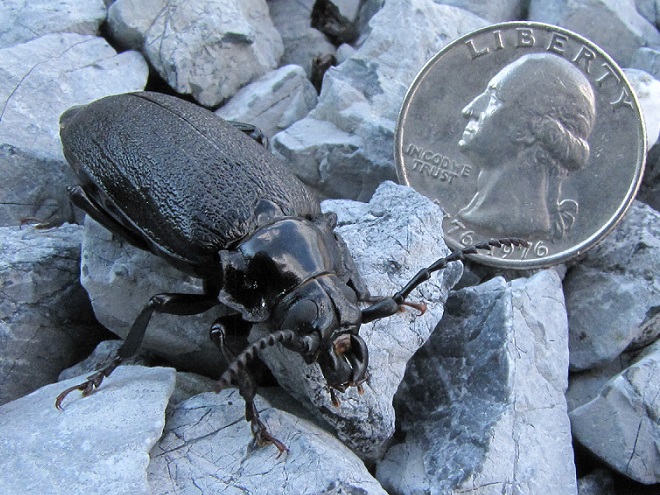
The Broad-necked Root Borer (Prionus laticollis) is one of the Lower Susquehanna River Watershed’s largest insects. Its larvae feed on woody roots for more than two years before pupating and thereafter emerging as adult beetles. The distribution of root borers is not totally random. They are often attracted to distressed trees and shrubs. This particular specimen was found along a forest road where herbicide application, soil dehydration, and a recent wildfire has weakened and killed numerous oaks, poplars, and maples. As they feed, root borer larvae will help begin the process of reducing the remains of these trees into soil nutrients that will benefit regeneration of forest plants at this site.
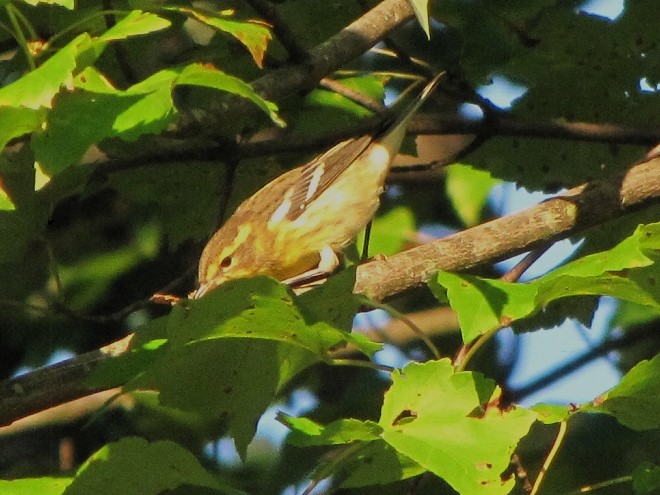
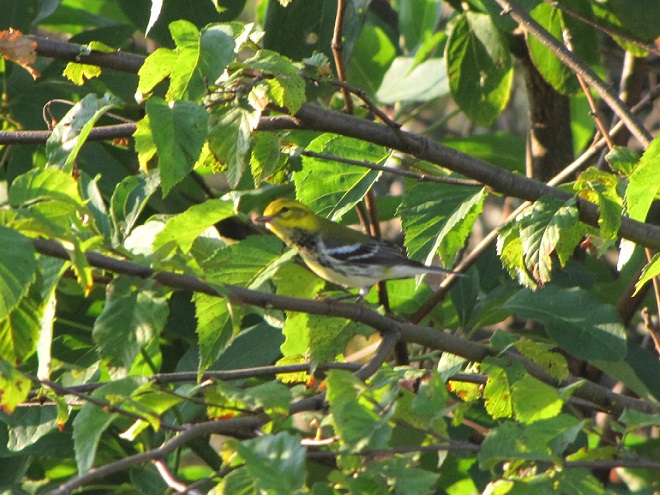
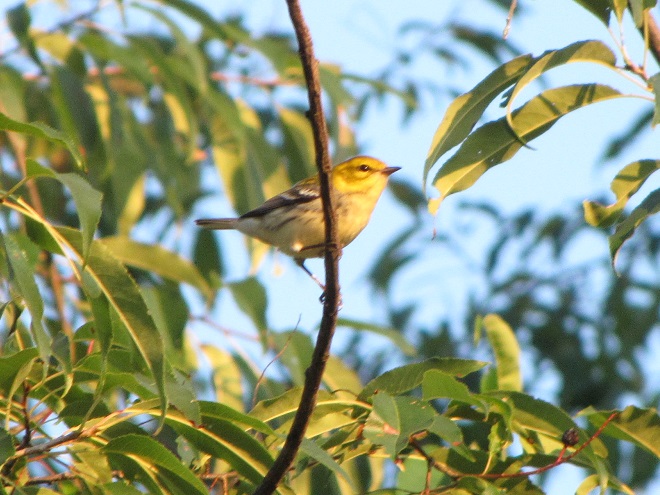
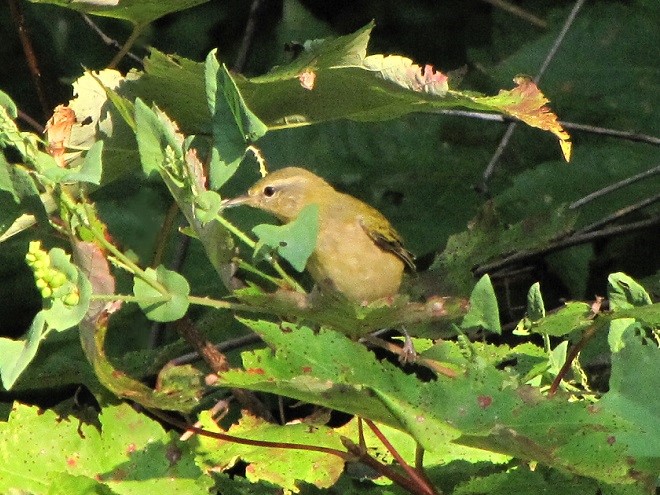
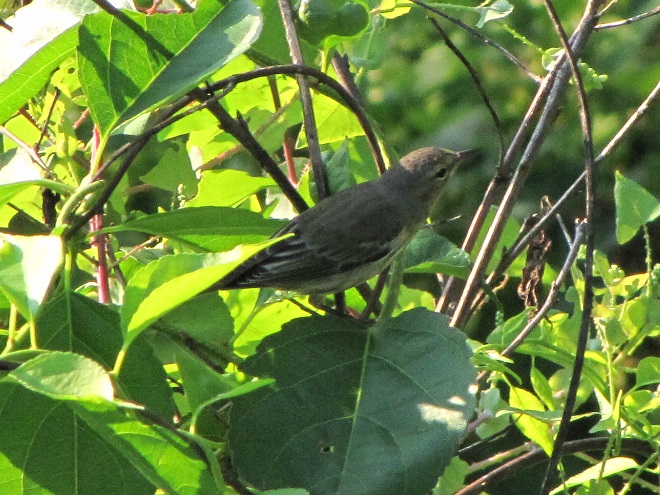
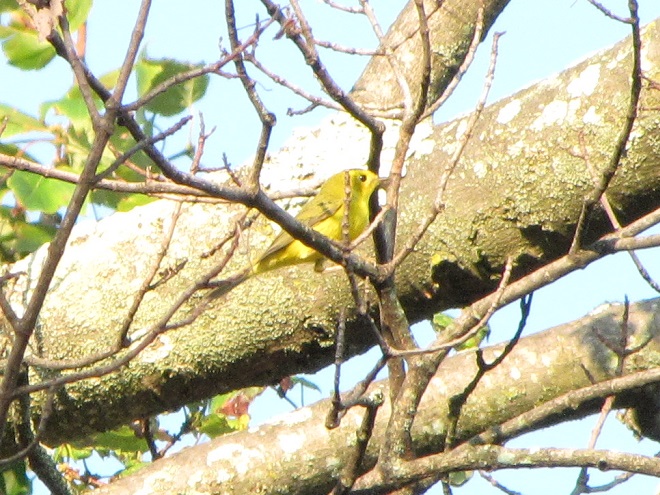
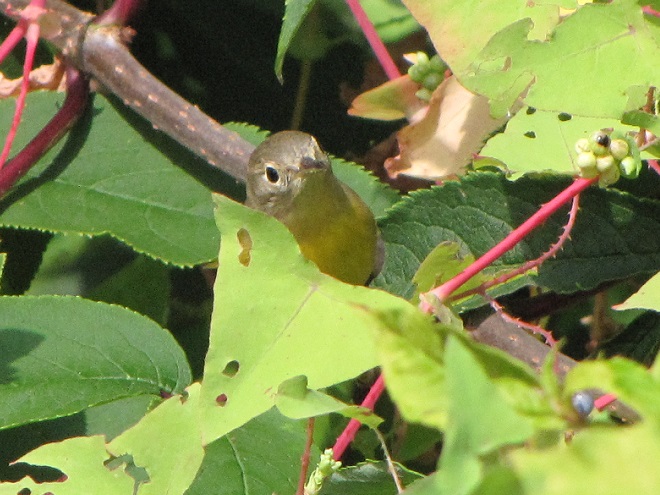
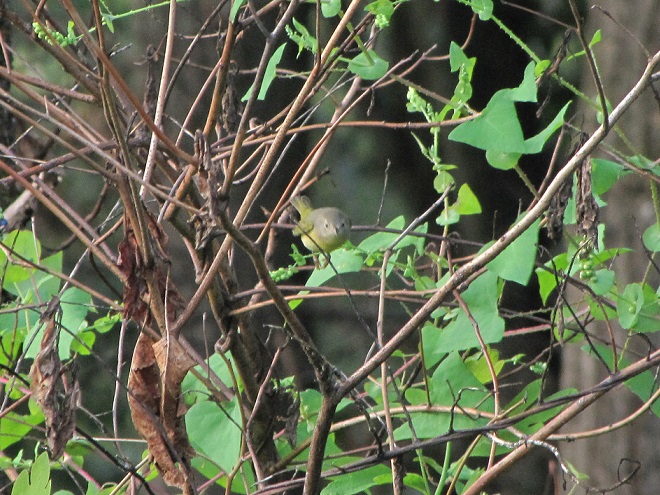
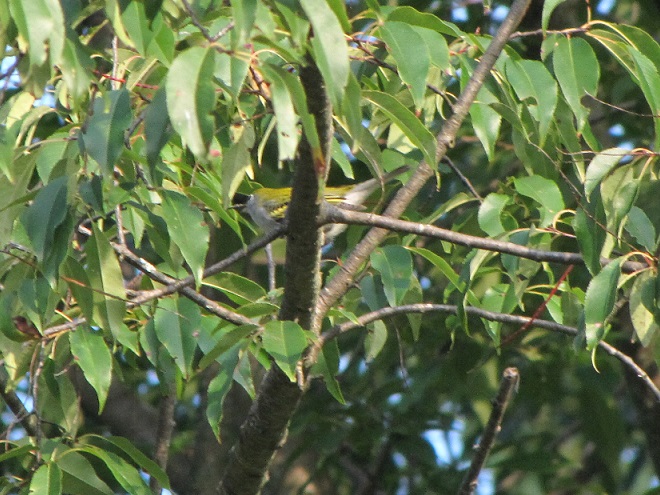
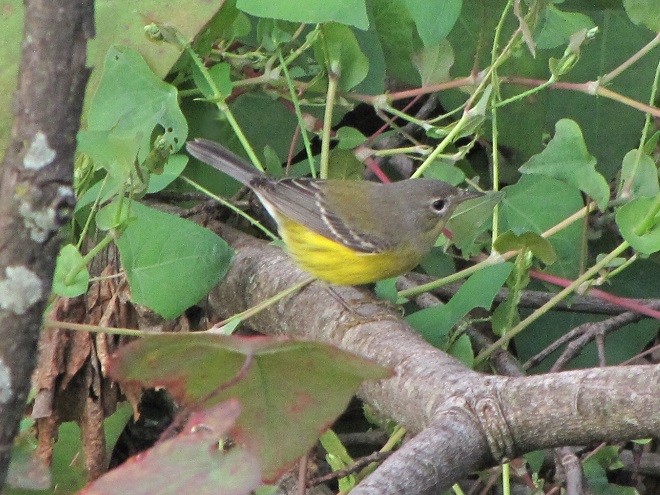
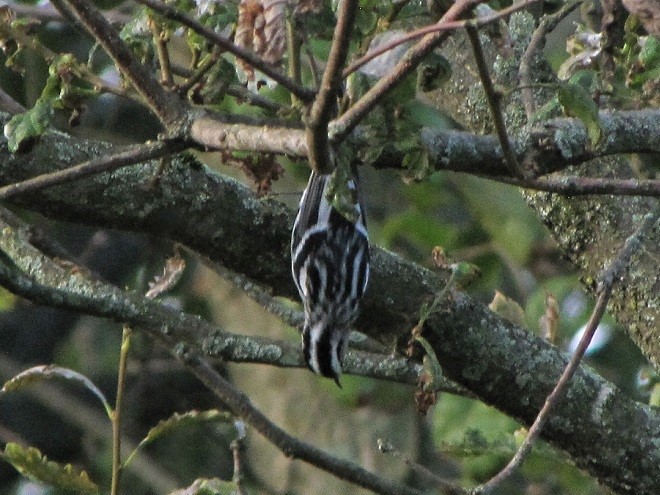
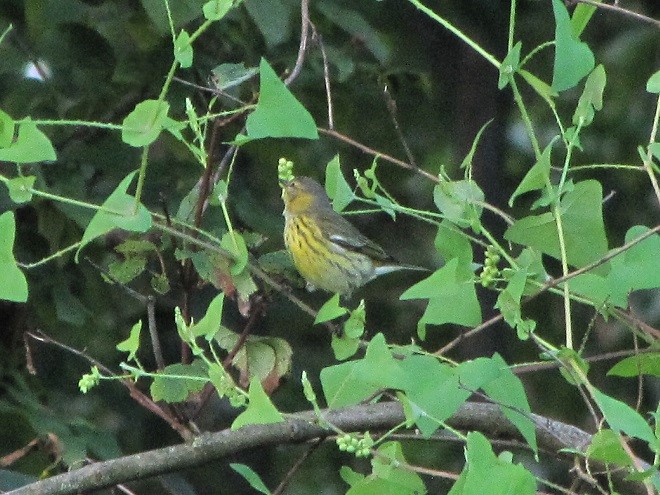
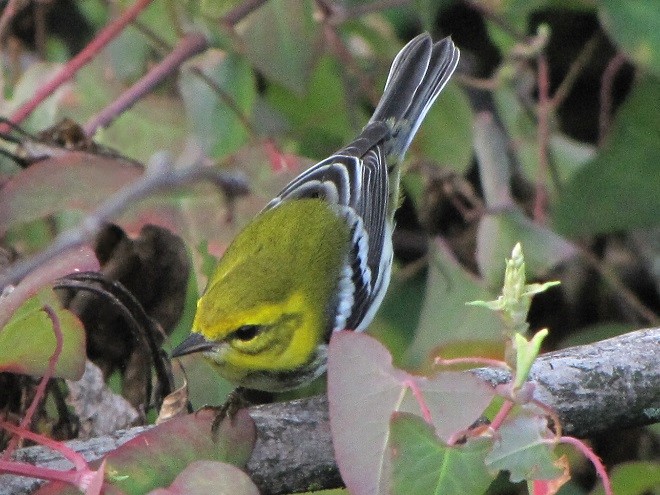
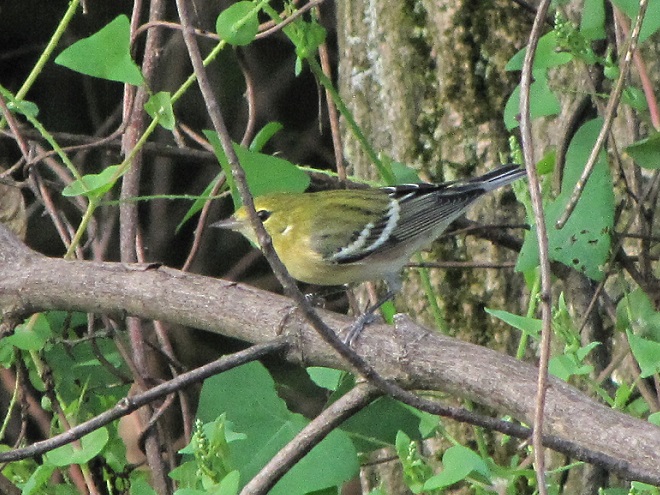
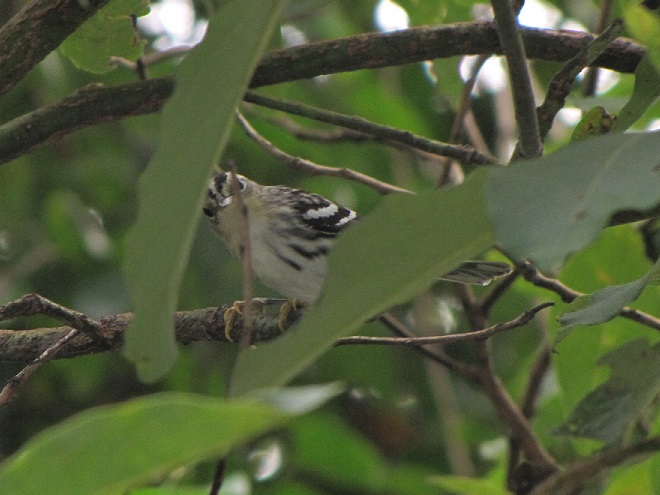
“Waves” of warblers and other Neotropical songbirds continue to roll along the ridgetops of southern Pennsylvania. The majority of these migrants are headed to wintering habitat in the tropics after departing breeding grounds in the forests of southern Canada. At Second Mountain Hawk Watch, today’s early morning flight kicked off at sunrise, then slowed considerably by 8:30 A.M. E.D.T. Once again, in excess of 400 warblers were found moving through the trees and working their way southwest along the spine of the ridge. Each of the 12 species seen yesterday were observed today as well. In addition, there was a Northern Parula and a Canada Warbler. Today’s flight was dominated by Bay-breasted, Blackburnian, Black-throated Green, and Tennessee Warblers.
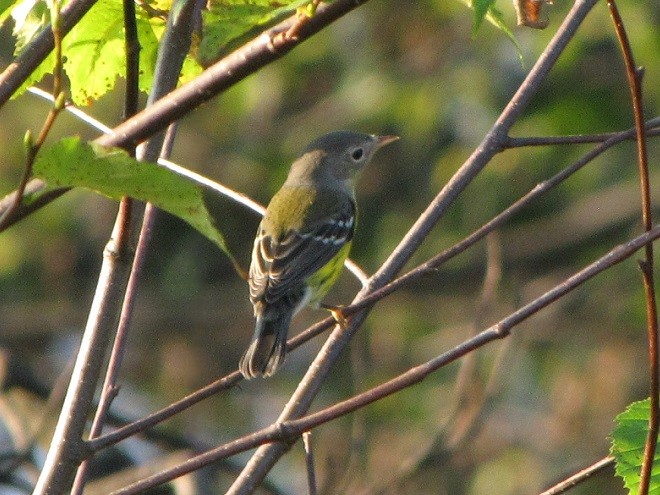
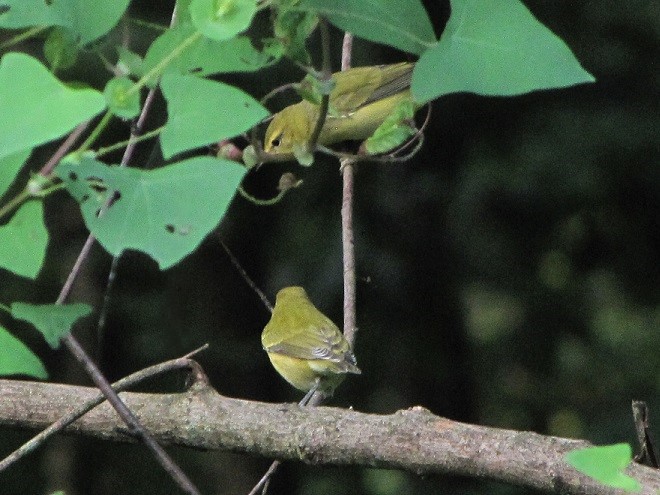
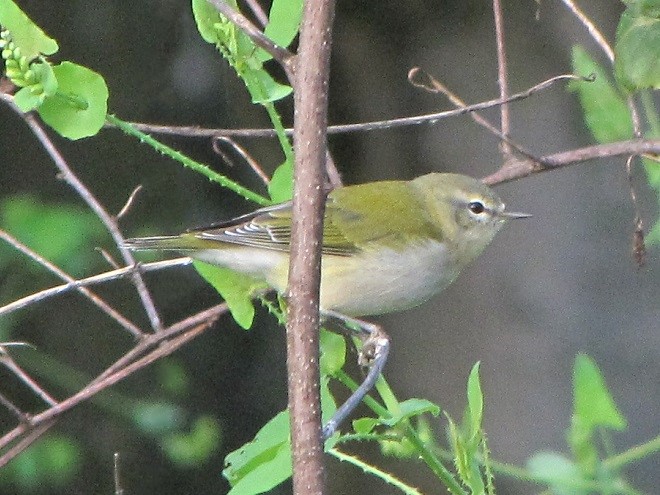
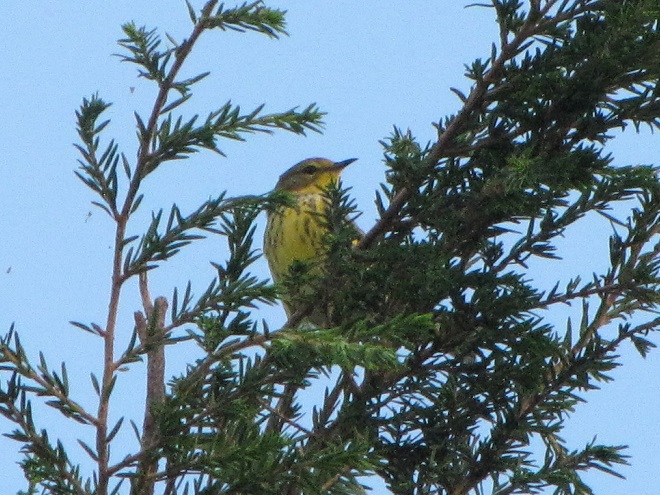
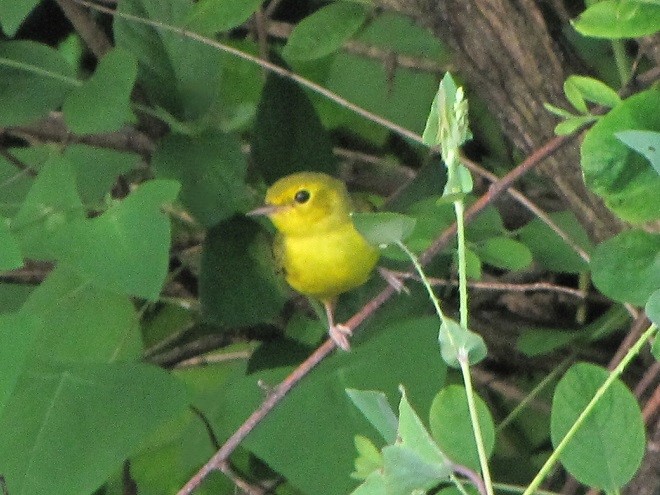
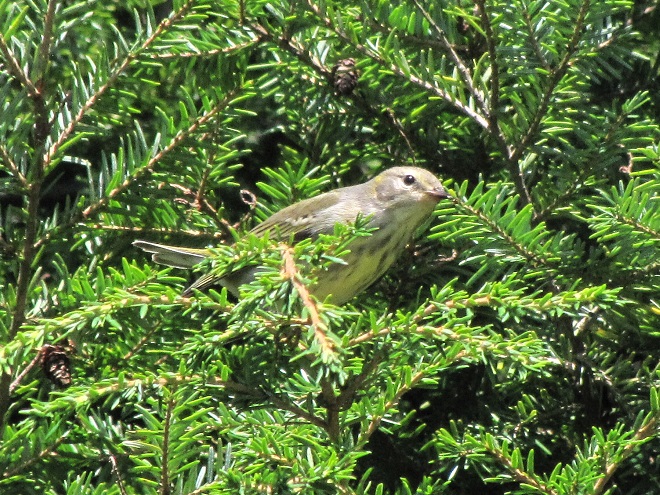
A Blackburnian Warbler at sunrise on Second Mountain.A hungry Blackburnian Warbler feeding on insects.Black-throated Green Warblers were a plentiful species among both yesterday’s and today’s waves of Neotropical migrants.A juvenile Black-throated Green Warbler.One of the scores of Tennessee Warblers seen on Second Mountain early this morning.Cape May Warblers were still common today, but not moving through in the numbers seen yesterday.A male Black-throated Blue Warbler.Compared to yesterday’s flight, lesser numbers of Magnolia Warblers were seen today.An adult male Wilson’s Warbler was a good find among the hundreds of birds swarming the ridgetop.This Nashville Warbler spent much of the day in the tangles of Mile-a-minute Weed surrounding the lookout.
Other interesting Neotropical migrants joined the “waves” of warblers…
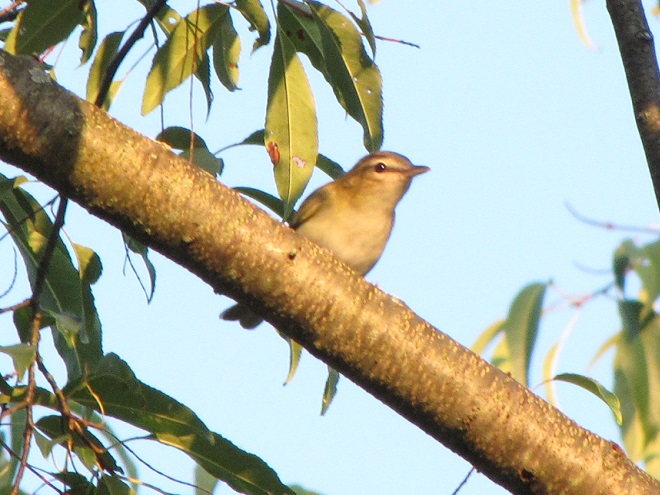
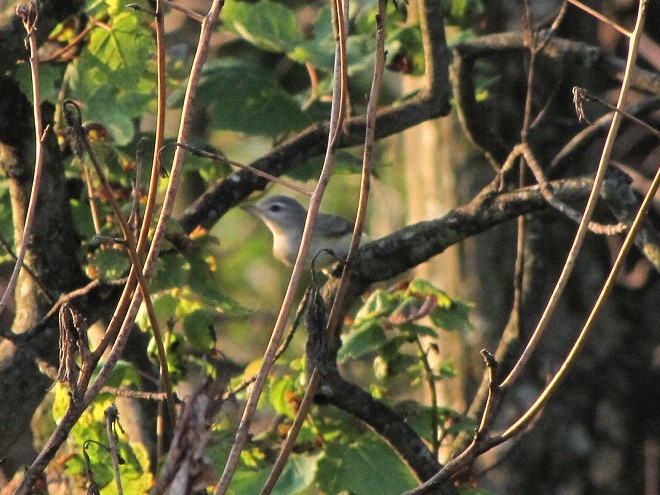
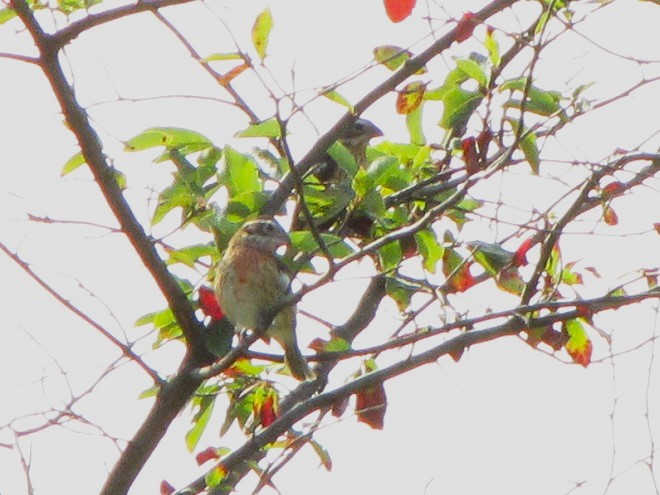
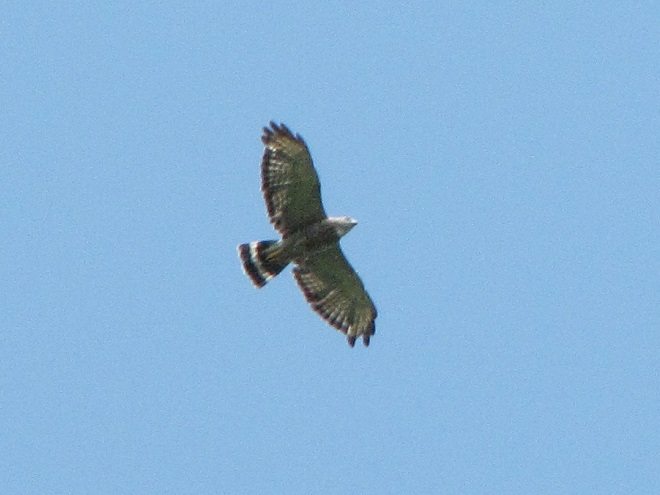
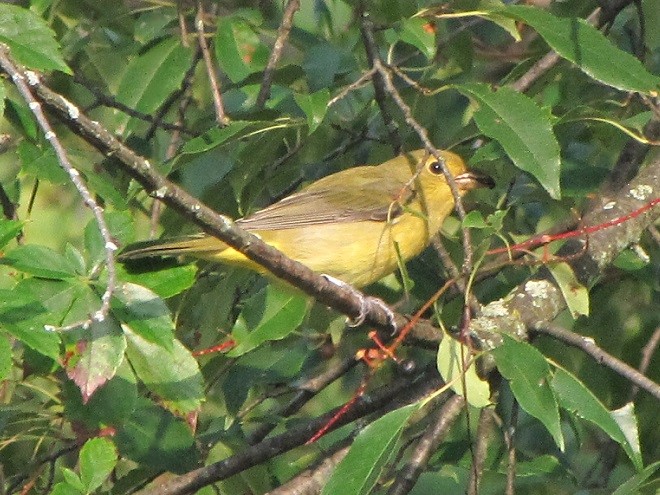
Red-eyed Vireo numbers were higher than yesterday.This Warbling Vireo was found peering from the cover of the shady forest.A minimum of six Rose-breasted Grosbeaks were identified including the juvenile male seen here in first-fall plumage. Other good sightings were Scarlet Tanagers, an adult male Baltimore Oriole, and a dozen or more Ruby-throated Hummingbirds.Three Least Flycatchers were heard calling and seen chasing one another through a stand of dead timber on the south slope below the lookout.After the warbler flight settled, the task of counting migrating raptors commenced. Five Broad-winged Hawks including this one were tallied as they glided away to the southwest for a winter vacation in the tropics of Central and South America.
During the recent couple of mornings, a tide of Neotropical migrants has been rolling along the crests of the Appalachian ridges and Piedmont highlands of southern Pennsylvania. In the first hours of daylight, “waves” of warblers, vireos, flycatchers, tanagers, and other birds are being observed flitting among the sun-drenched foliage as they feed in trees along the edges of ridgetop clearings. Big fallouts have been reported along Kittattiny Ridge/Blue Mountain at Hawk Mountain Sanctuary and at Waggoner’s Gap Hawk Watch. Birds are also being seen in the Furnace Hills of the Piedmont.
Here are some of the 300 to 400 warblers (a very conservative estimate) seen in a “wave” found working its way southwest through the forest clearing at the Second Mountain Hawk Watch in Lebanon County this morning. The feeding frenzy endured for two hours between 7 and 9 A.M. E.D.T.
Tennessee Warblers (Leiothlypis peregrina) were very common among the migrants seen this morning on Second Mountain.An adult male Tennessee Warbler.A Nashville Warbler.A Chestnut-sided Warbler.Cape May Warblers were another common species during the morning flight.Magnolia Warblers were frequently observed as well.A Black-and-white Warbler exhibiting its nuthatch-like feeding behavior.A Blackburnian Warbler.Black-throated Green Warblers were numerous.A Bay-breasted Warbler.This was the only Wilson’s Warbler discerned among the hundreds of warblers seen in a “wave” on Second Mountain this morning.
Not photographed but observed in the mix of species were several Black-throated Blue Warblers and American Redstarts.
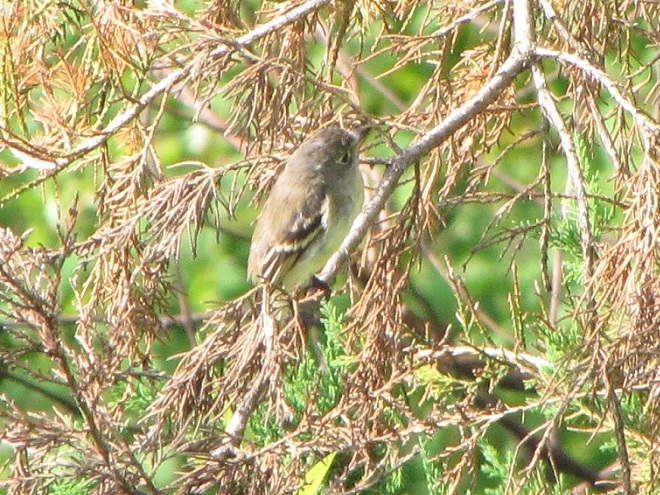
In addition to the warblers, other Neotropical migrants were on the move including two Common Nighthawks, a Broad-winged Hawk, a Least Flycatcher (Empidonax minimus), and…
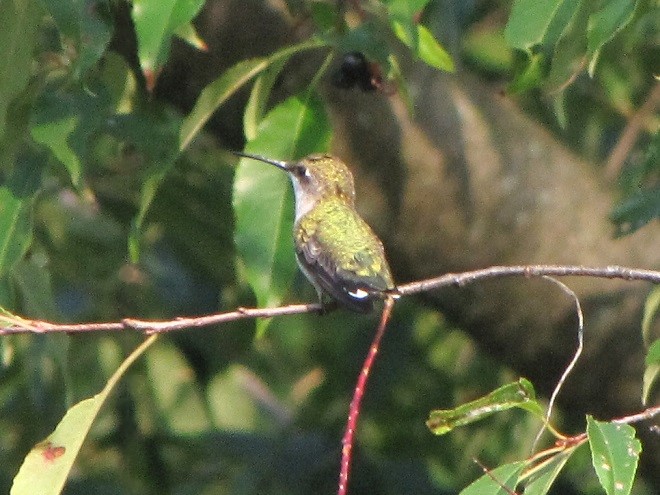
At least half a dozen Scarlet Tanagers were in the treetops.And no less than 23 Ruby-throated Hummingbirds were counted cruising southbound past the lookout at Second Mountain Hawk Watch today.
Then, there was a taste of things to come…
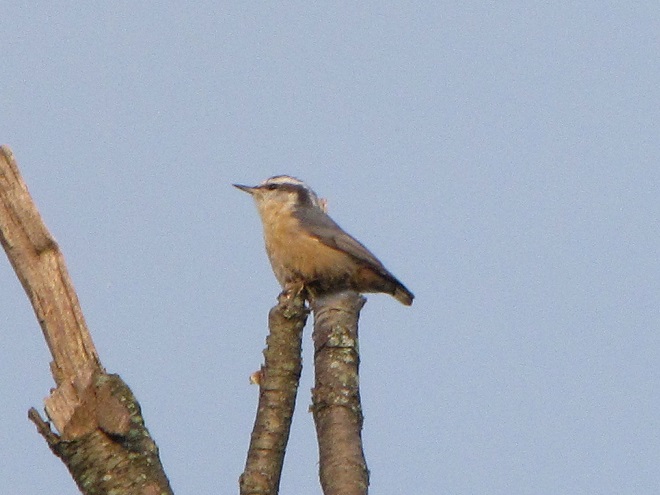
One of 3 Red-breasted Nuthatches filling the air on the mountaintop with calls reminiscent of a toy tin horn. Will this summer’s forest fires in Canada prompt a significant invasion of this and other birds including winter finches in coming months? Time will tell.
Seeing a “wave” flight is a matter of being in the right place at the right time. Visiting known locations for observing warbler fallouts such as hawk watches, ridgetop clearings, and peninsular shorelines can improve your chances of witnessing one of these memorable spectacles by overcoming the first variable. To overcome the second, be sure to visit early and often. See you on the lookout!
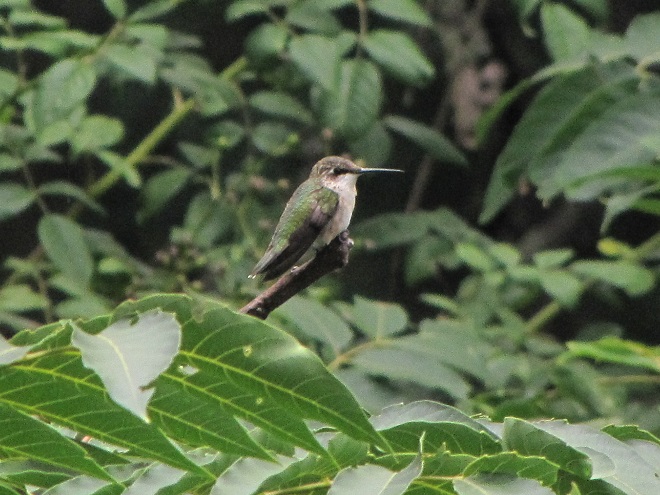
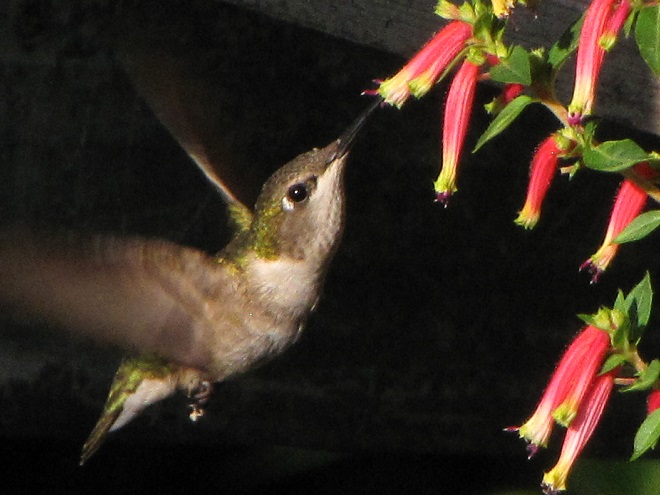
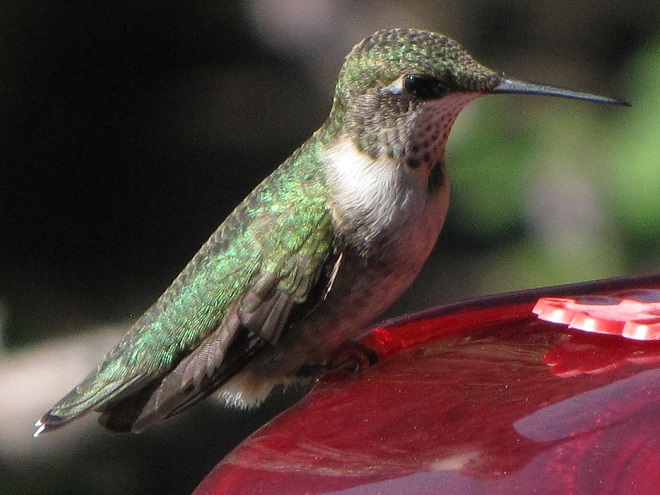
Ruby-throated Hummingbirds will be migrating south through the Lower Susquehanna River Watershed during the next few weeks.While on their journey, they refuel by frequently visiting nectar-producing native wildflowers as well as garden specimens like this Mexican Cigar.Hummingbirds supplement their diet by visiting feeders filled with a mixture of sugar and water. If you’re feeding hummingbirds, or thinking about feeding hummingbirds, be sure to review the helpful tips contained in our post from August 5, 2022, “Two Feeders Are Better Than One”. Their health and your peace of mind may depend on it.
As we enter September, autumn bird migration is well underway. Neotropical species including warblers, vireos, flycatchers, and nighthawks are already headed south. Meanwhile, the raptor migration is ramping up and hawk watch sites throughout the Mid-Atlantic States are now staffed and counting birds. In addition to the expected migrants, there have already been sightings of some unusual post-breeding wanderers. Yesterday, a Wood Stork (Mycteria americana) was seen passing Hawk Mountain Sanctuary and a Swallow-tailed Kite (Elanoides forficatus) that spent much of August in Juniata County was seen from Waggoner’s Gap Hawk Watch while it was hunting in a Perry County field six miles to the north of the lookout! Both of these rarities are vagrants from down Florida way.
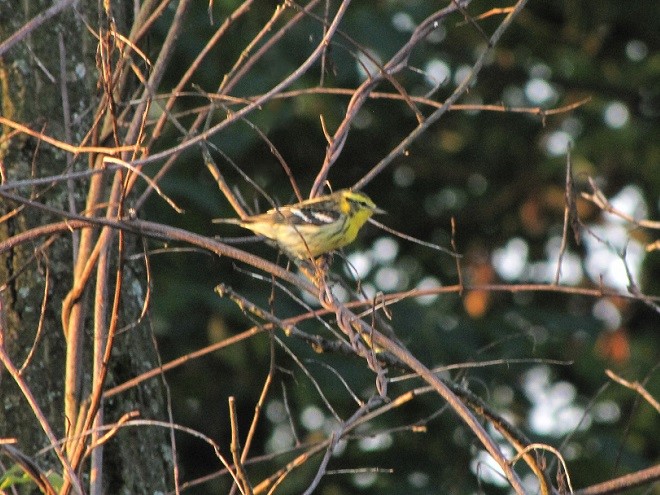
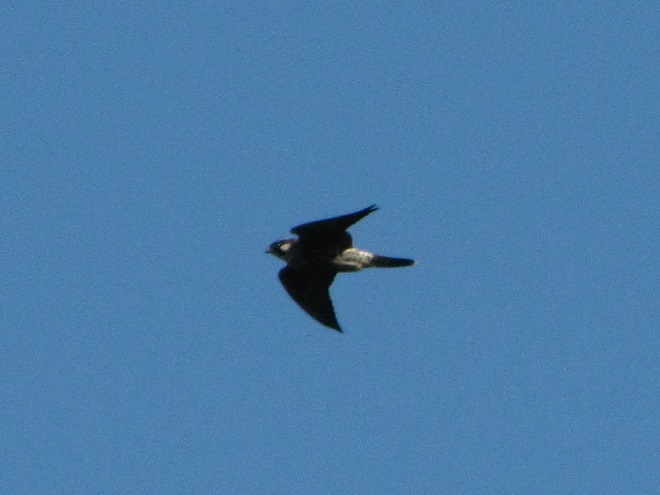
A Peregrine Falcon speeds past the lookout at Second Mountain Hawk Watch yesterday.Later this month, numbers of high-flying Broad-winged Hawks moving past counting stations will reach their peak. Most sites will experience one or more days with hundreds or perhaps thousands of these Neotropical migrants streaming by.This Black-and-white Warbler was found among a “wave” of migrating songbirds moving through some ridgetop trees.A juvenile Cape May Warbler peers from the cover of an Eastern Hemlock.
To plan a visit to a hawk watch near you, click on the “Hawkwatcher’s Helper: Identifying Bald Eagles and other Diurnal Raptors” tab at the top of this page to find a list and brief description of suggested sites throughout the Mid-Atlantic region. “Hawkwatcher’s Helper” also includes an extensive photo guide for identifying the raptors you’re likely to see.
And to identify those confusing fall warblers and other migrants, click the “Birds” tab at the top of this page and check out the photo guide contained therein. It includes nearly all of the species you’re likely to see in the lower Susquehanna valley.