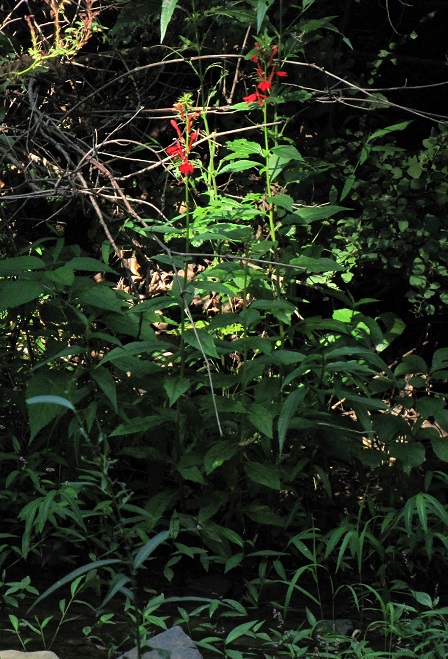
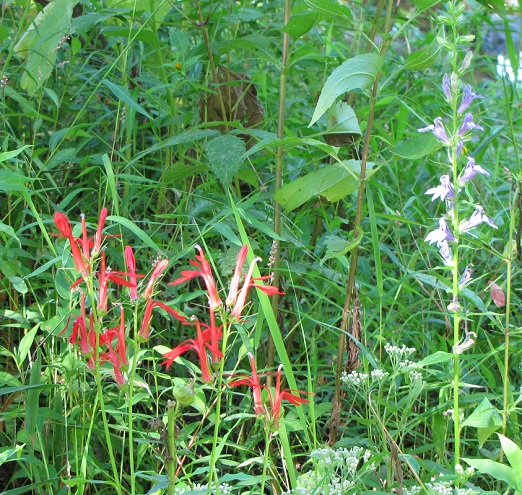
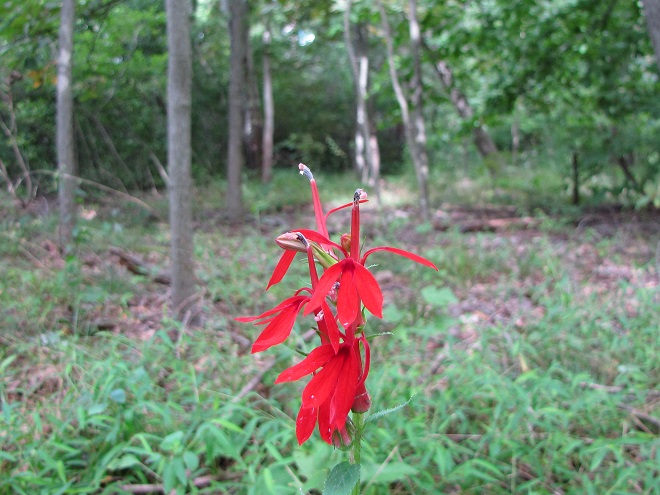
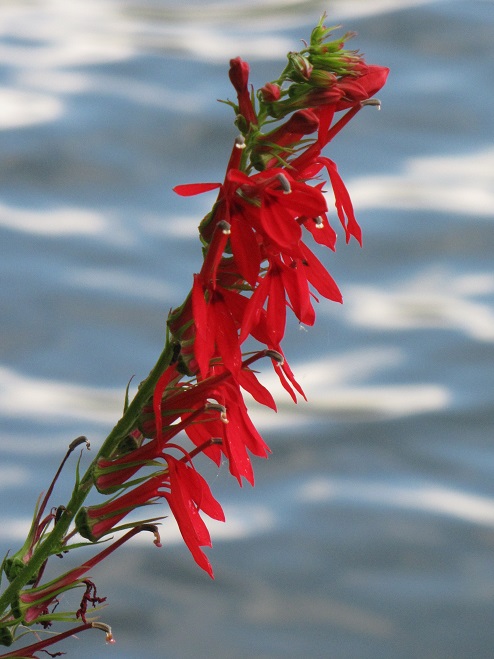
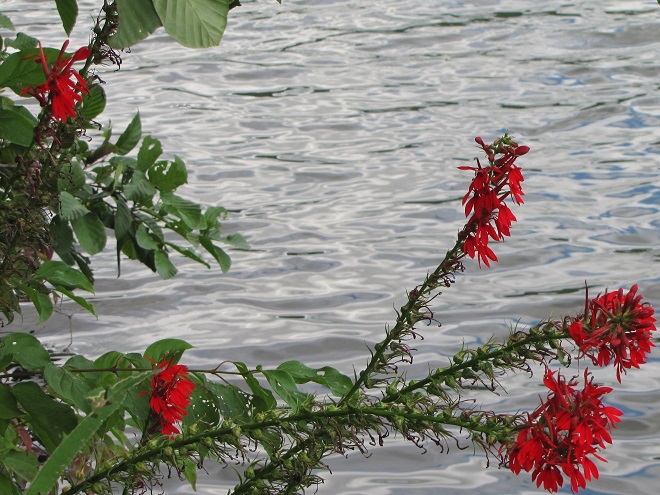
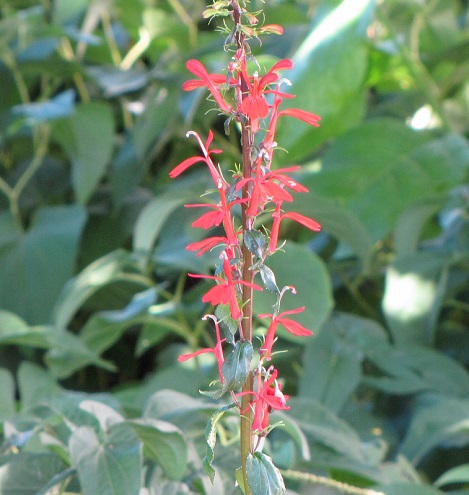
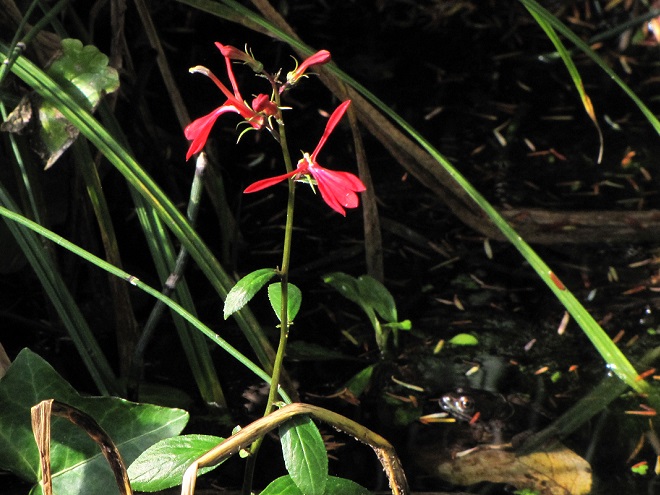
It may be one of the most treasured plants among native landscape gardeners. The Cardinal Flower (Lobelia cardinalis) blooms in August each year with a startling blaze of red color that, believe it or not, will sometimes be overlooked in the wild.
Cardinal Flower is most often found in wet soil along forested bodies of water. The blooms of this shade-loving species may go unnoticed until rays of sunshine penetrate the canopy to strike their brilliant red petals.
The Cardinal Flower grows in wetlands as well as in a variety of moist soils along streams, rivers, lakes, and ponds. Shady locations with short periods of bright sun each day seem to be favored for an abundance of color.
Cardinal Flower in bloom in a riparian forest along the Susquehanna. To its right is its close relative, Great Lobelia, a plant sometimes known as Great Blue Lobelia or Blue Cardinal Flower.Cardinal Flower in a wet bottomland woods.The Cardinal Flower can find favorable growing conditions along stream, river, and lake shores. Even though they are perennial plants, their presence along such waters often seems temporary. Changing conditions cause them to suddenly disappear from known locations, then sometimes reappear at the same place or elsewhere nearby. Some of this phenomenon may be due to the fact that stressed plants can fail to bloom, so they easily escape notice. When producing flowers during favorable years, the plants seem to mysteriously return.Cardinal Flowers along a wave-swept shoreline light up the greenery of erosion-controlling riparian vegetation with glowing red color.
The Cardinal Flower can be an ideal plant for attracting hummingbirds, bees, butterflies, and other late-summer pollinators. It grows well in damp ground, especially in rain gardens and along the edges streams, garden ponds, and stormwater retention pools. If you’re looking to add Cardinal Flower to your landscape, you need first to…
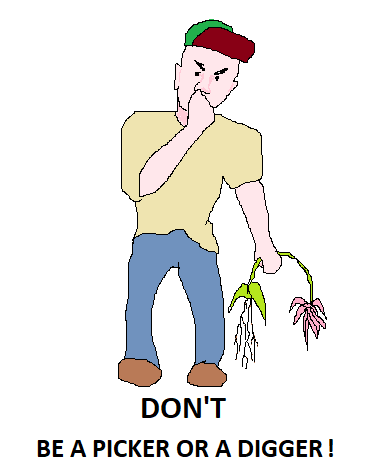
REMEMBER the CARDINAL RULE…
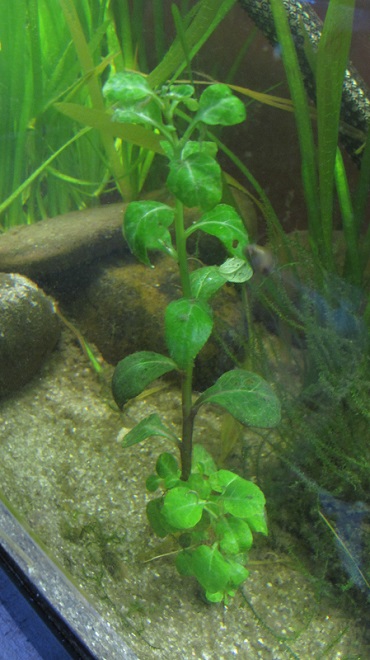
Cardinal Flower plants are available at many nurseries that carry native species of garden and/or pond plants. Numerous online suppliers offer seed for growing your own Cardinal Flowers. Some sell potted plants as well. A new option is to grow Cardinal Flowers from tissue cultures. Tissue-cultured plants are raised in laboratory media, so the pitfalls of disease and hitchhikers like invasive insects and snails are eliminated. These plants are available through the aquarium trade from most chain pet stores. Though meant to be planted as submerged aquatics in fish tank substrate, we’ve reared the tissue-cultured stock indoors as emergent plants in sandy soil and shallow water through the winter and early spring. When it warms up, we transplant them into the edges of the outdoor ponds to naturalize. As a habit, we always grow some Cardinal Flower plants in the fish tanks to take up the nitrates in the water and to provide a continuous supply of cuttings for starting more emergent stock for outdoor use.
A tissue-cultured Cardinal Flower rooted in sandy substrate and being grown as a submerged aquatic plant in a fish tank. Cuttings from this plant will be used to grow emergent specimens in shallow water for transplanting outdoors around the garden pond.A Cardinal Flower grown from an aquarium store tissue culture blooms in the pond at susquehannawildlife.net headquarters.Grown as an emergent, Cardinal Flower may bloom very late in the season. This tissue-cultured specimen in the headquarters pond was photographed in early November, 2022.
We’ve got the summertime blues for you, right here at susquehannawildlife.net…
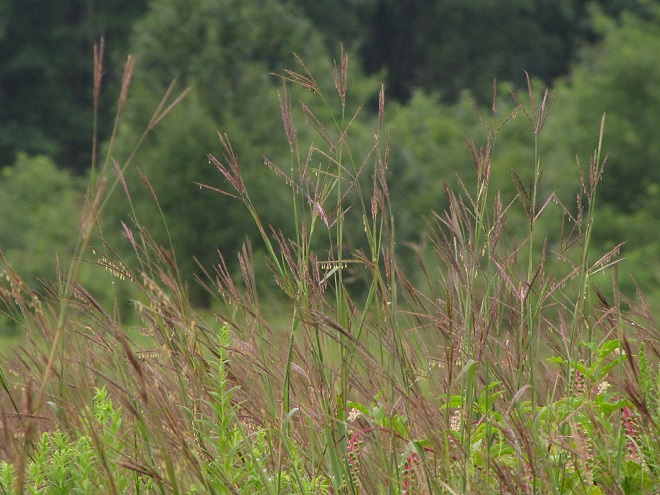
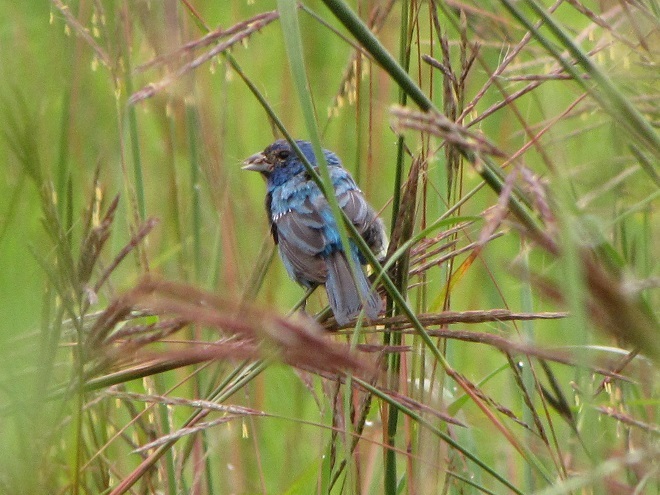
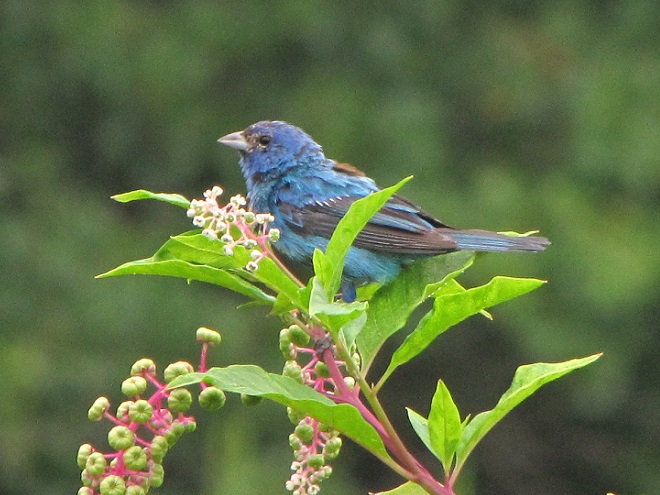
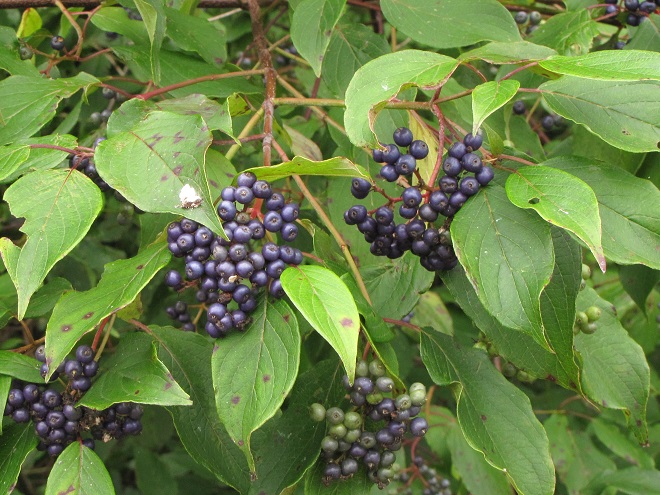
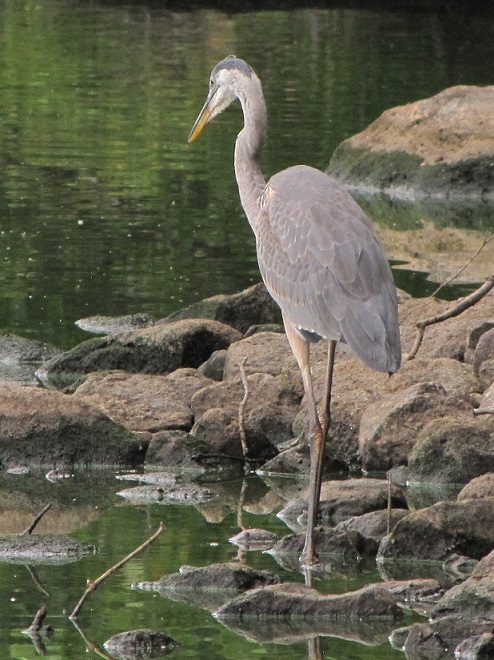
In warm-season grass meadows, Big Bluestem is now in flower. This and other species of native prairie grasses provide excellent habitat for birds, mammals, and insects including butterflies. To survive drought and fire, their roots run much deeper than cool season grasses, creeping down four to six feet or more. This adaptation allowed warm season grasses to recover from heavy grazing by large Pre-Anthropocene mammals. Today, it makes them ideal plants for soil stabilization.A male Indigo Bunting has already found ripe seeds among the heads of flowering Big Bluestem.Look closely and you’ll see our Indigo Bunting is beginning a pre-migration molt out of its bright-blue breeding (alternate) plumage and into a gray-brown winter (basic) plumage. The berries of the American Pokeweed upon which it is perched will soon ripen into a dark blue, almost black, color. Though toxic to humans, these fruits find favor with many species of birds and mammals.Another great wildlife food is Silky Dogwood (Cornus amomum), a deciduous shrub that sports blue-colored berries in summer and showy, bright-red twigs in winter. It grows well in wet ground along streams and ponds, as well as in rain gardens.A Great Blue Heron searches the shallows for small fish. This species is also a good mouser, at times seen hunting in grassy meadows. Right now is prime time to see it and a variety of other herons and egrets throughout the Lower Susquehanna River Watershed.
…so don’t let the summertime blues get you down. Grab a pair of binoculars and/or a camera and go for a stroll!
If you’re feeling the need to see summertime butterflies and their numbers just don’t seem to be what they used to be in your garden, then plan an afternoon visit to the Boyd Big Tree Preserve along Fishing Creek Valley Road (PA 443) just east of U.S. 22/322 and the Susquehanna River north of Harrisburg. The Pennsylvania Department of Conservation and Natural Resources manages the park’s 1,025 acres mostly as forested land with more than ten miles of trails. While located predominately on the north slope of Blue Mountain, a portion of the preserve straddles the crest of the ridge to include the upper reaches of the southern exposure.
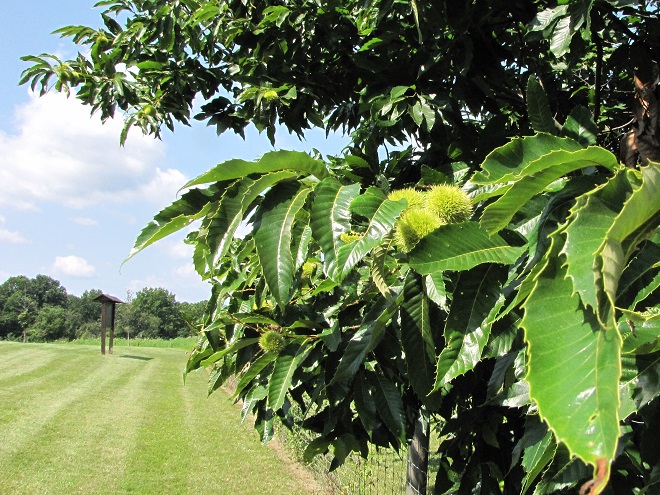
A grove of American Chestnuts (Castanea dentata) planted at Boyd Big Tree Preserve is part of a propagation program working to restore blight-resistant trees to Pennsylvania and other areas of their former range which included the Appalachians and the upper Ohio River watershed.
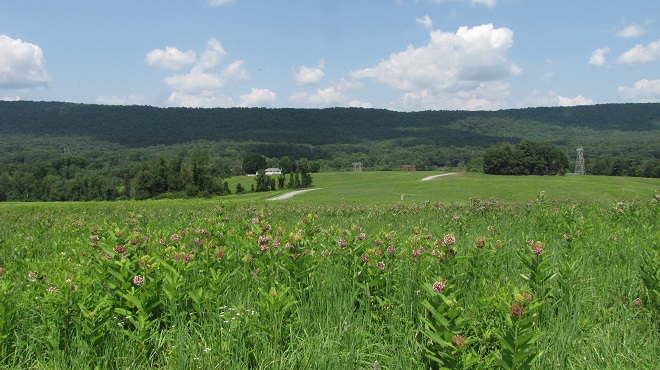
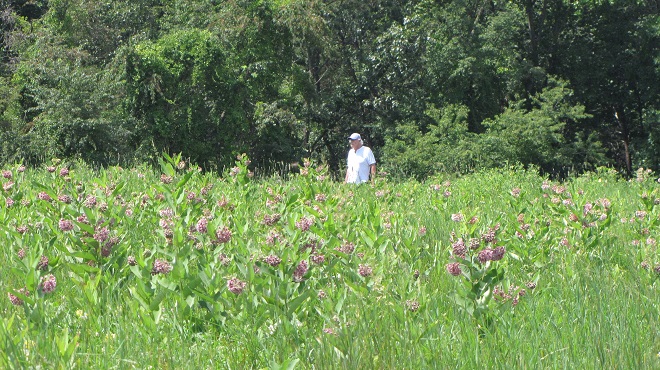
Fortunately, one need not take a strenuous hike up Blue Mountain to observe butterflies. Open space along the park’s quarter-mile-long entrance road is maintained as a rolling meadow of wildflowers and cool-season grasses that provide nectar for adult butterflies and host plants for their larvae.
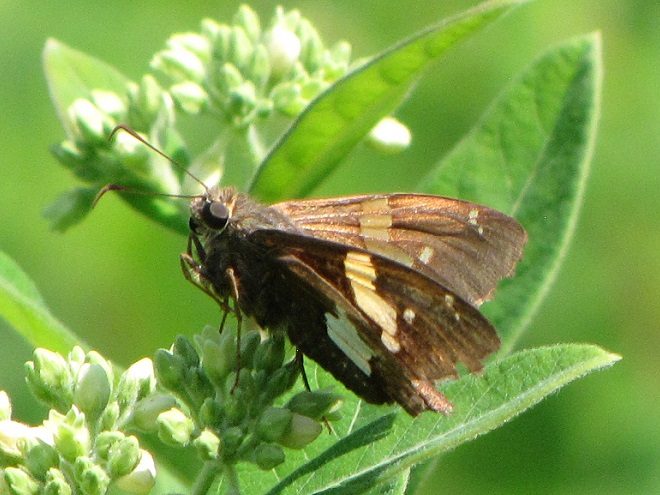
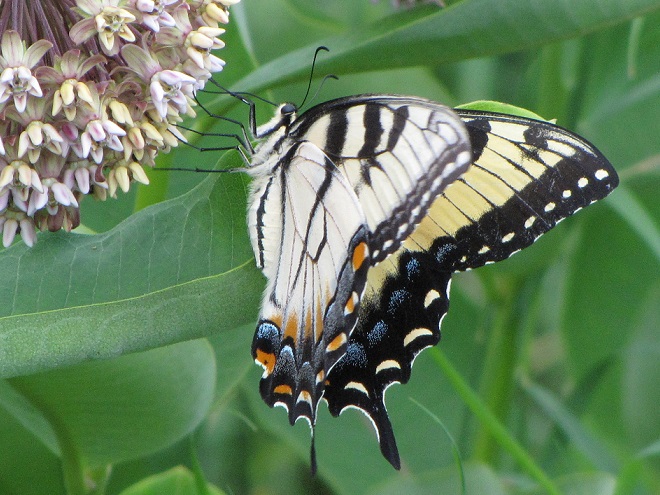
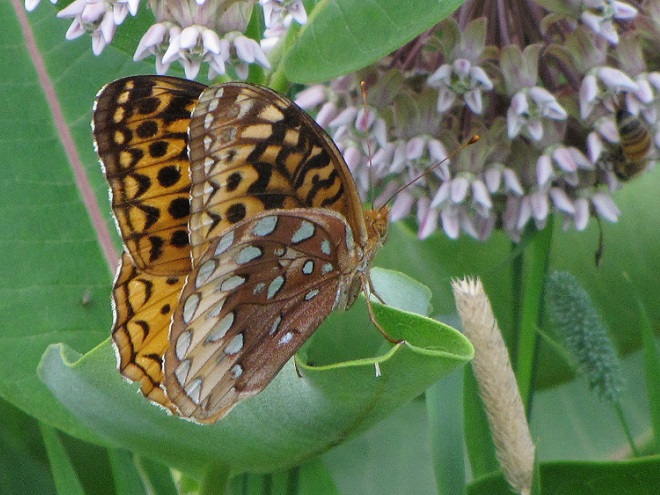
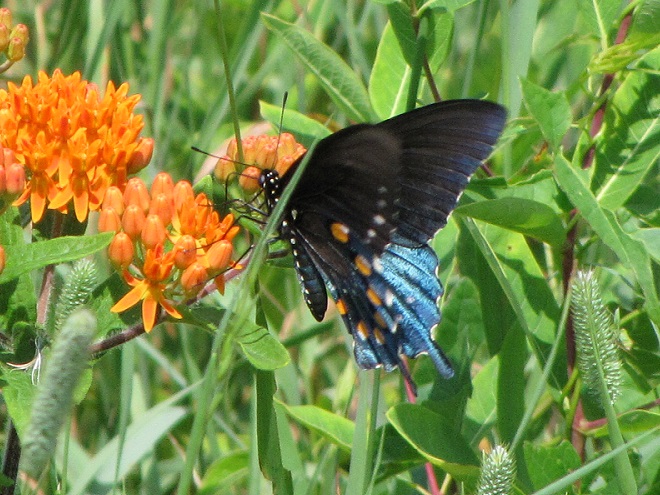
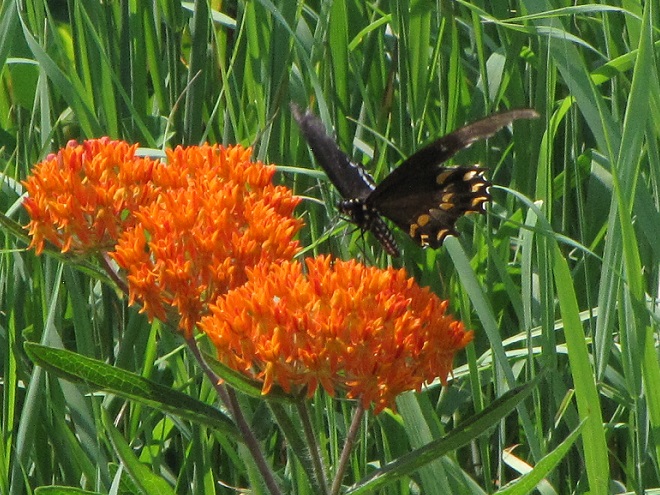
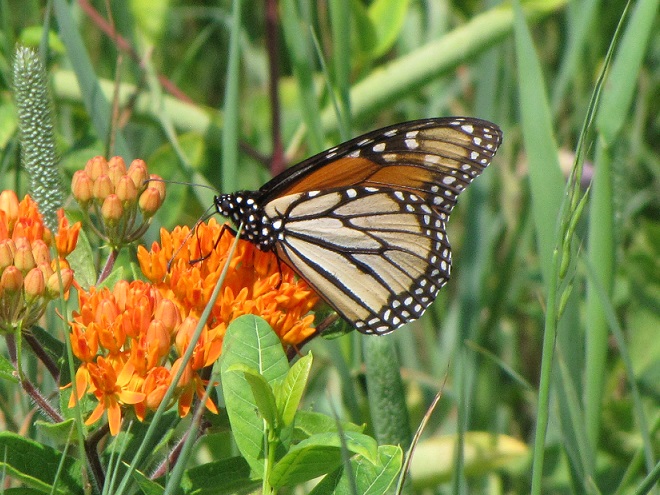
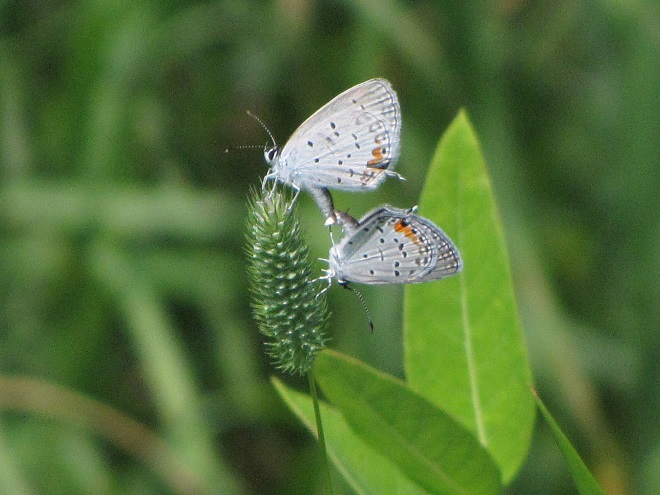
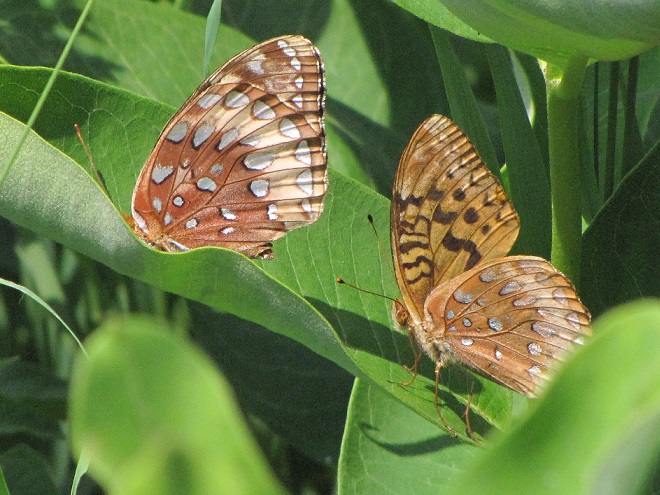
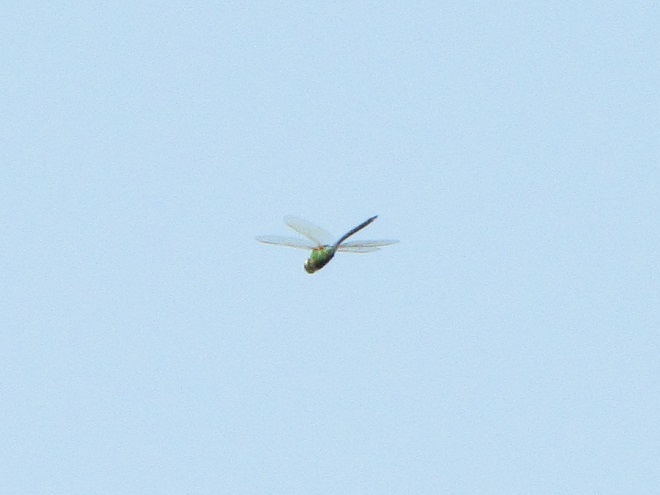
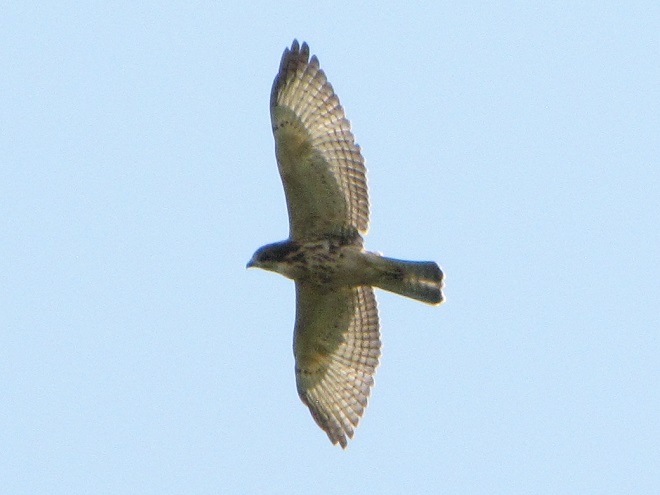
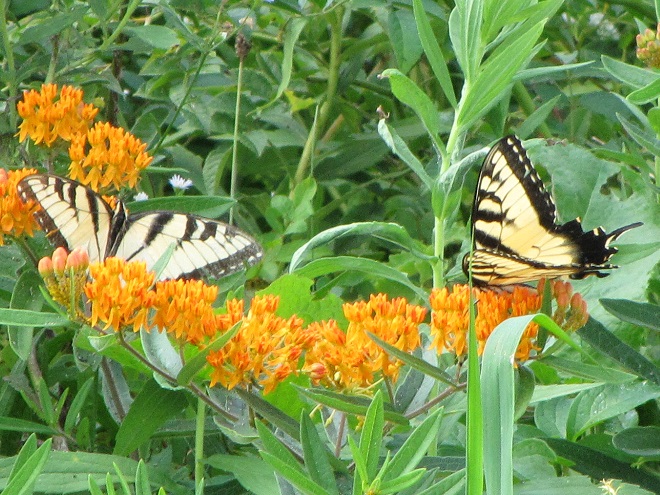
A view looking north at the butterfly meadow and entrance road at Boyd Big Tree Preserve Conservation Area. Second Mountain is in the background.Mowed paths follow the entrance road and a portion of the perimeter of the meadow allowing visitors a chance to wander among the waist-high growth to see butterflies, birds, and blooming plants at close range without trampling the vegetation or risking exposure to ticks.A Silver-spotted Skipper feeding on nectar from the flowers of Indian Hemp (Apocynum cannabinum). Like the milkweeds, Indian Hemp is a member of the dogbane family (Apocynaceae).An Eastern Tiger Swallowtail feeding on Common Milkweed.A Great Spangled Fritillary (Speyeria cybele) on Common Milkweed.A Black Swallowtail (Papilio polyxenes) feeding on Common Milkweed nectar.A Pipevine Swallowtail (Battus philenor) on Common Milkweed.Another Pipevine Swallowtail on Common Milkweed. Note the hook-shaped row of red-orange spots on the underside of the hindwing.A Pipevine Swallowtail visiting the brilliant blooms of Butterfly Weed, a favorite of a wide variety of pollinators.A Black Swallowtail with damaged wings alights atop a Butterfly Weed flower cluster. Note the pair of parallel rows of red-orange spot on the underside of the hindwing.A Monarch feeding on nectar from the flowers of Butterfly Weed.A mating pair of Eastern Tailed Blues on a Timothy (Phleum pratense) spike.A male Great Spangled Fritillary (right) pursuing a female.Butterflies aren’t the only colorful insects patrolling the meadows at Boyd Big Tree Preserve. Dragonflies including Common Green Darners are busily pursuing prey, particularly small flying insects like mosquitos, gnats, and flies.Dragonflies themselves can become prey and are much sought after by Broad-winged Hawks. This very vocal juvenile gave us several good looks as it ventured from the forest into the skies above the upper meadow during midday. It wasn’t yet a good enough flier to snag a dragonfly, but it will have plenty of opportunities for practice during its upcoming fall migration which, for these Neotropical raptors, will get underway later this month.
Do yourself a favor and take a trip to the Boyd Big Tree Preserve Conservation Area. Who knows? It might actually inspire you to convert that lawn or other mowed space into much-needed butterfly/pollinator habitat.
While you’re out, you can identify your sightings using our photographic guide—Butterflies of the Lower Susquehanna River Watershed—by clicking the “Butterflies” tab at the top this page. And while you’re at it, you can brush up on your hawk identification skills ahead of the upcoming migration by clicking the “Hawkwatcher’s Helper: Identifying Bald Eagles and other Diurnal Raptors” tab. Therein you’ll find a listing and descriptions of hawk watch locations in and around the lower Susquehanna region. Plan to visit one or more this autumn!
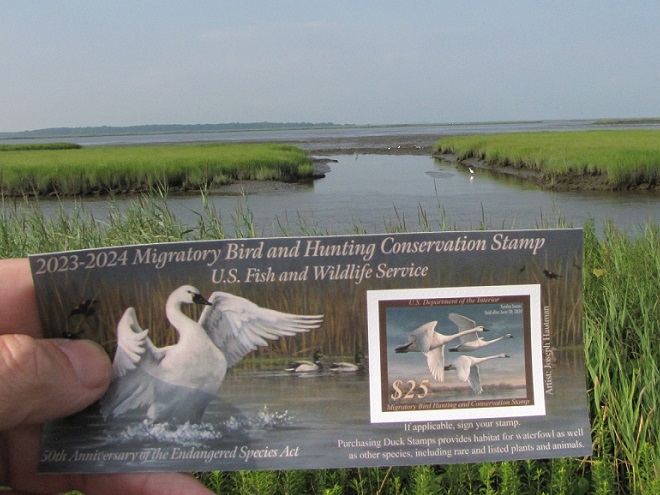
Have you purchased your 2023-2024 Federal Duck Stamp? Nearly every penny of the 25 dollars you spend for a duck stamp goes toward habitat acquisition and improvements for waterfowl and the hundreds of other animal species that use wetlands for breeding, feeding, and as migration stopover points. Duck stamps aren’t just for hunters, purchasers get free admission to National Wildlife Refuges all over the United States. So do something good for conservation—stop by your local post office and get your Federal Duck Stamp.
Your Federal Duck Stamp is your admission ticket for entry into many of the country’s National Wildlife Refuges including Bombay Hook National Wildlife Refuge on Delaware Bay near Smyrna, Delaware.
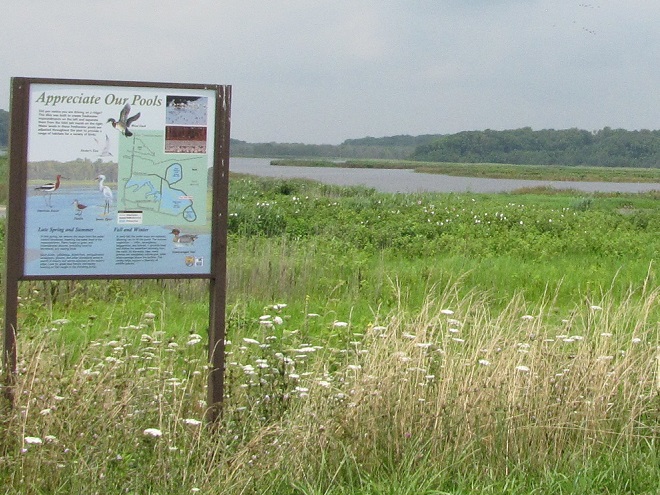
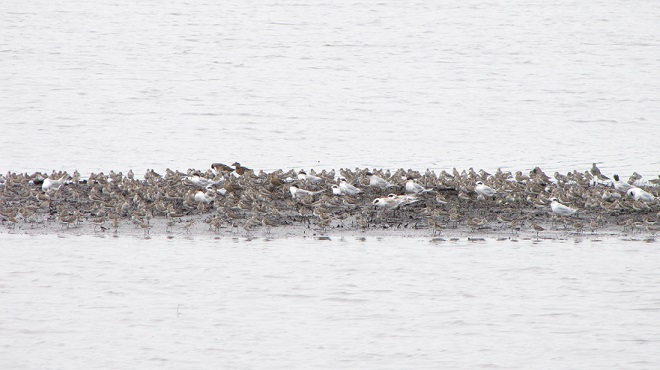
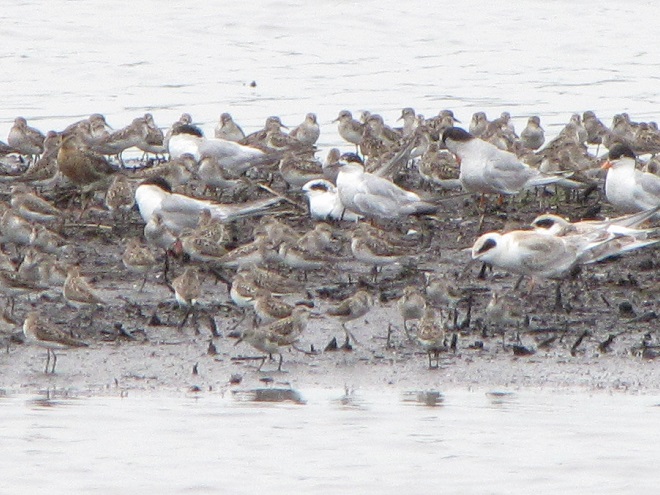
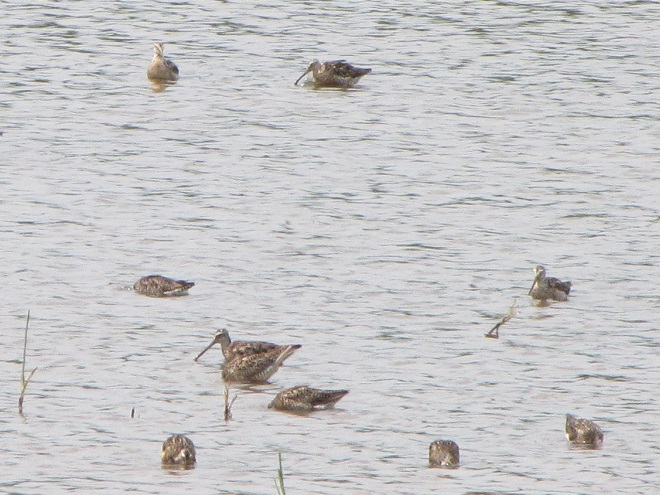
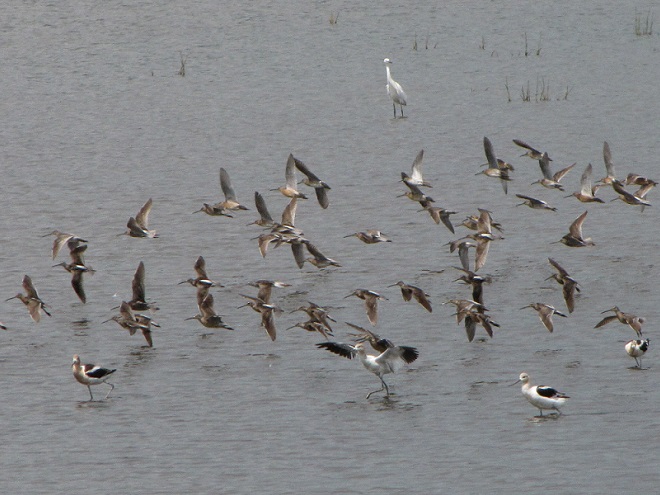
Still not convinced that a Federal Duck Stamp is worth the money? Well then, follow along as we take a photo tour of Bombay Hook National Wildlife Refuge. Numbers of southbound shorebirds are on the rise in the refuge’s saltwater marshes and freshwater pools, so we timed a visit earlier this week to coincide with a late-morning high tide.
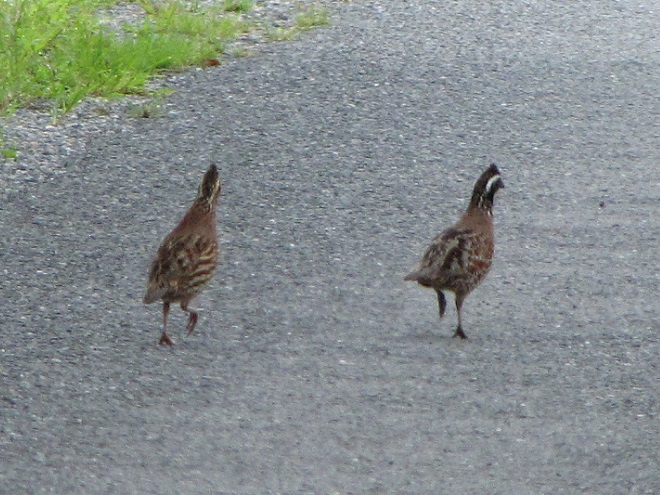
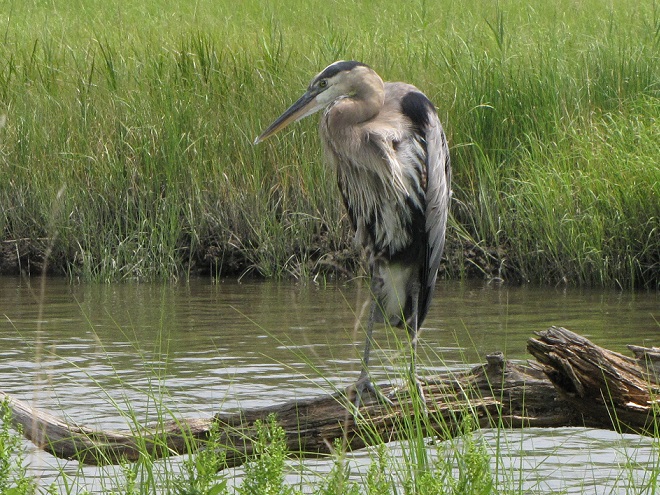
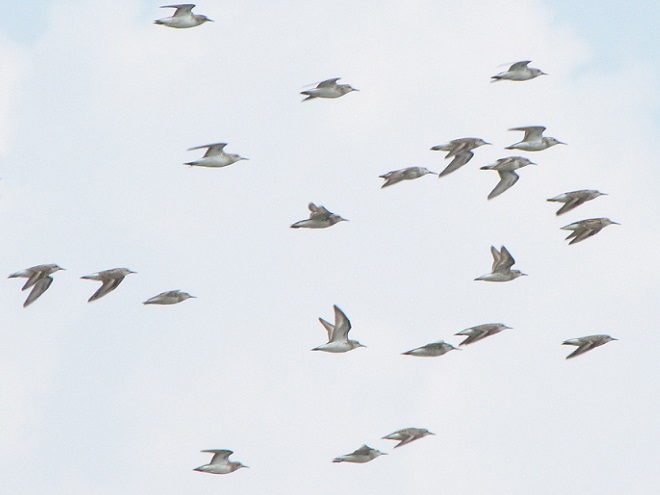
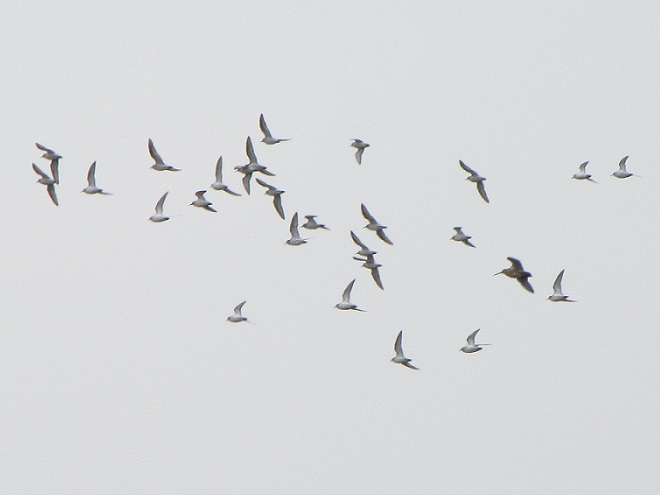
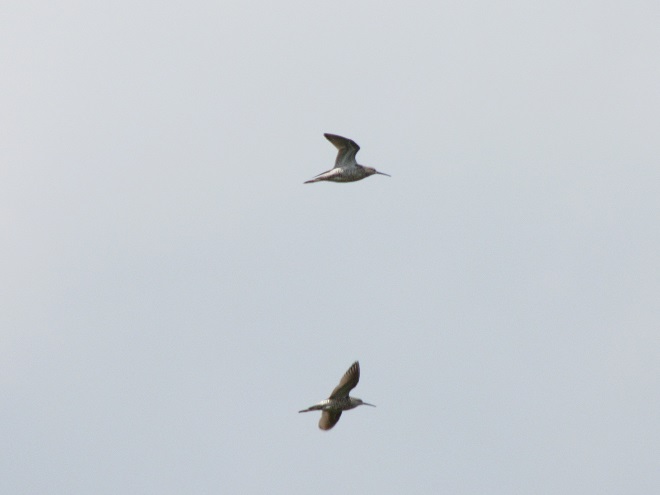
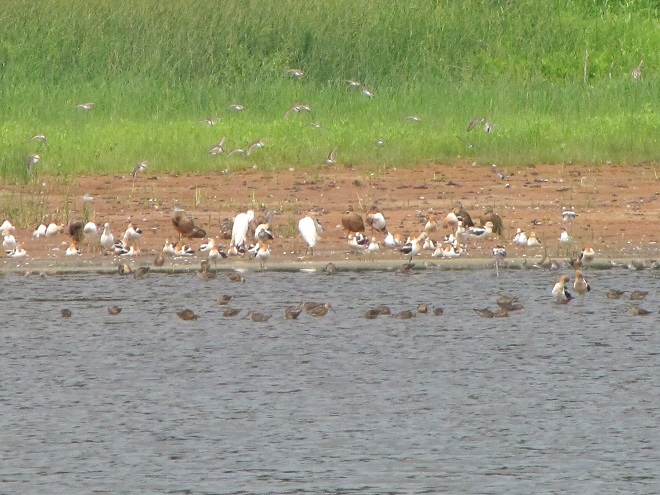
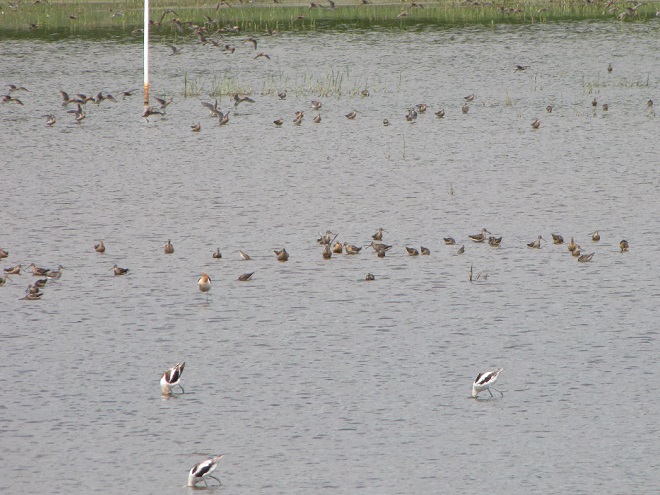
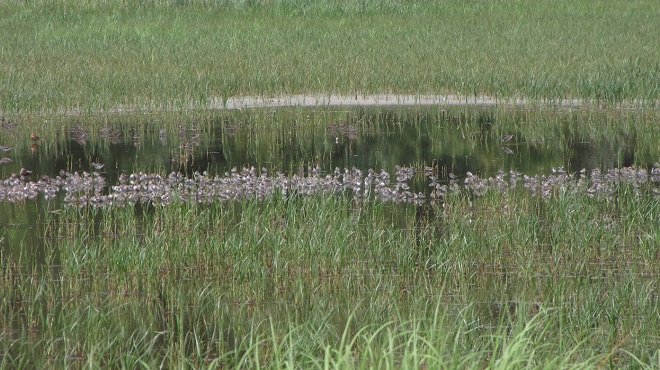
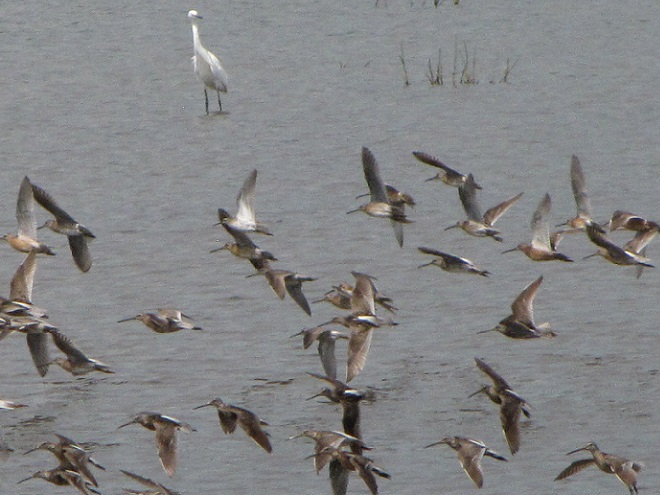
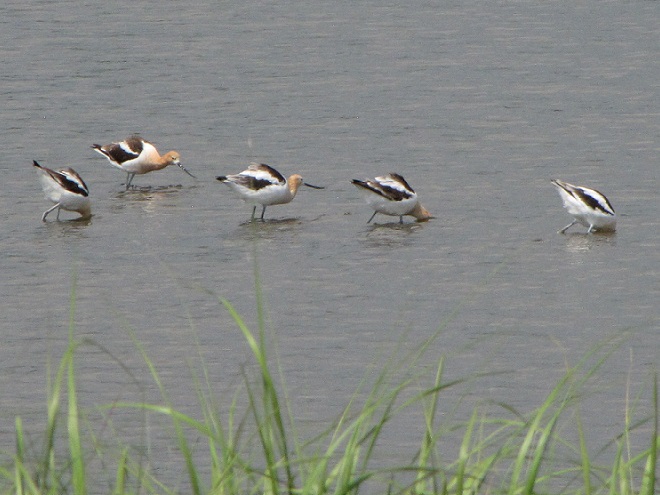
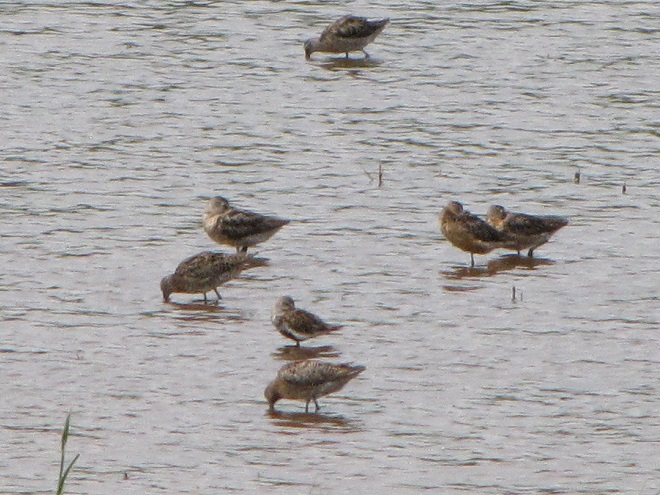
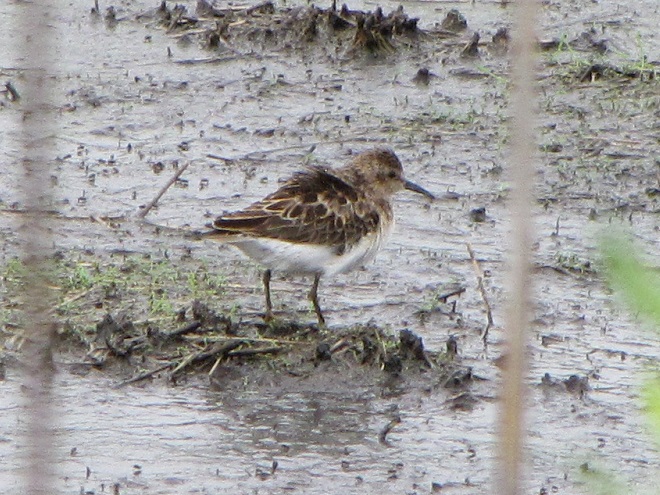
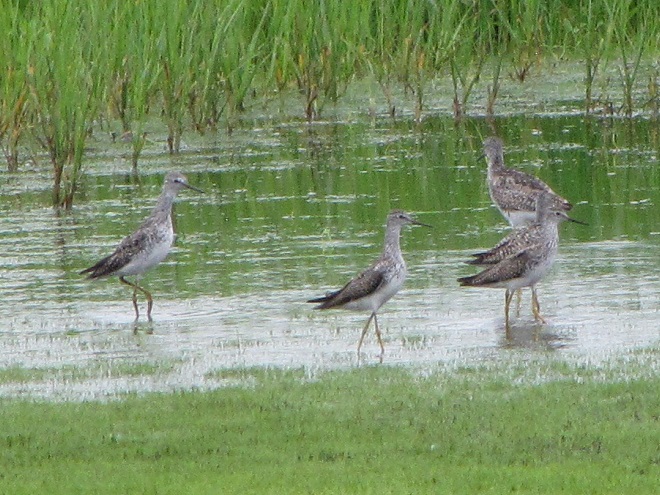
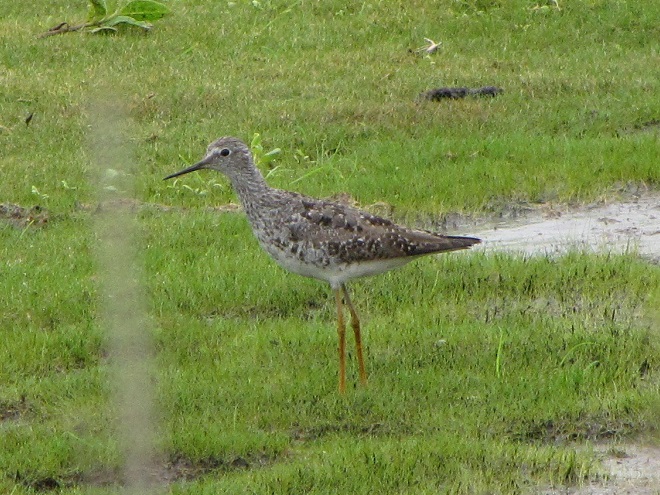
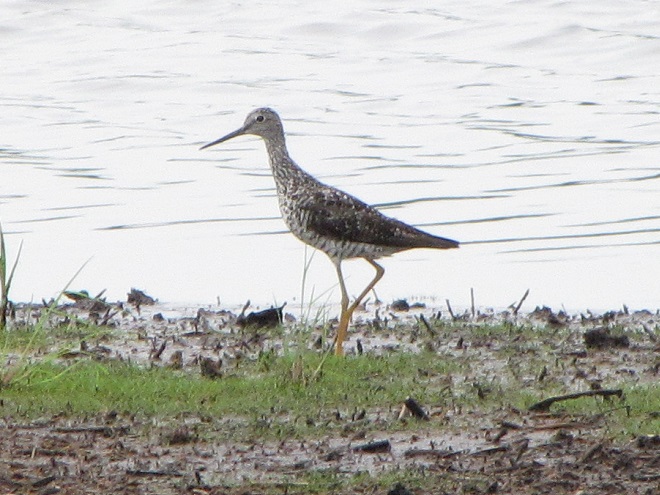
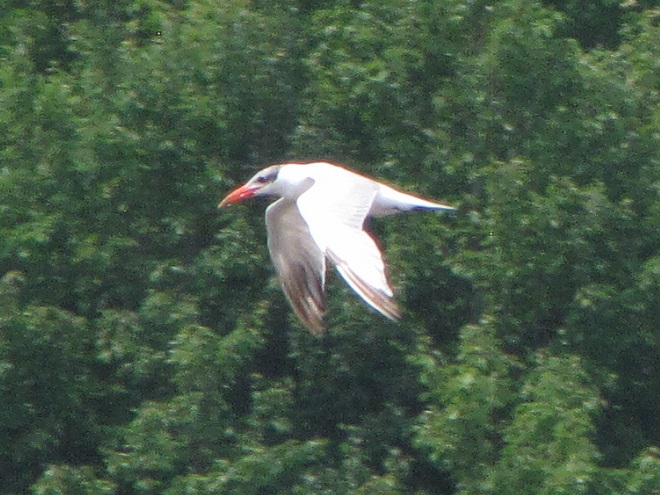
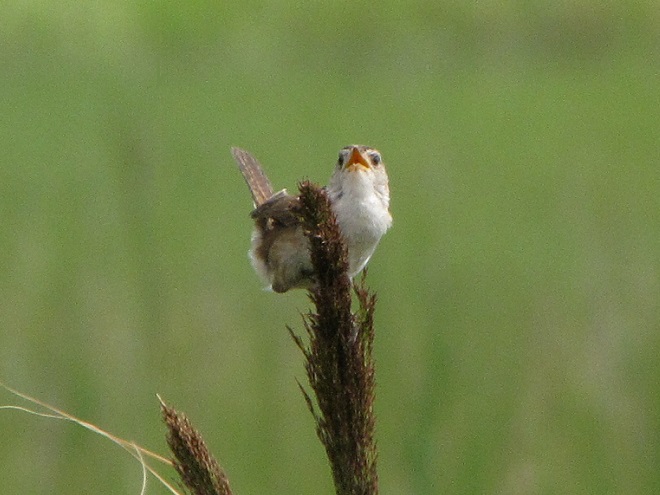
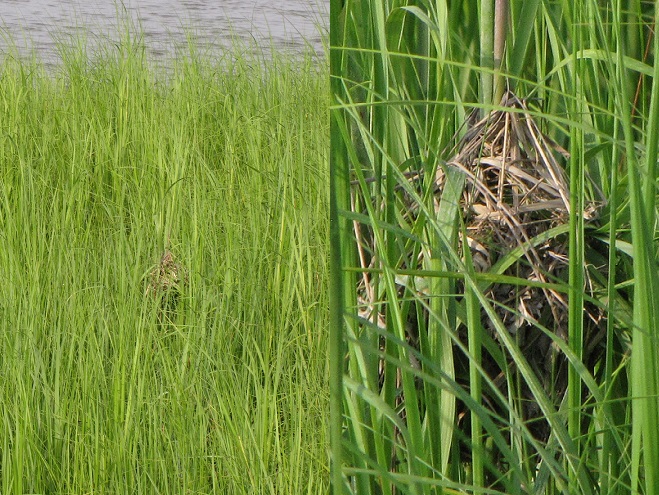
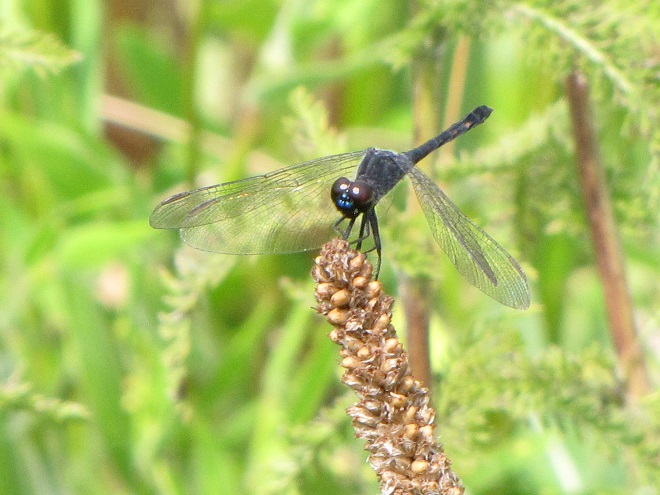
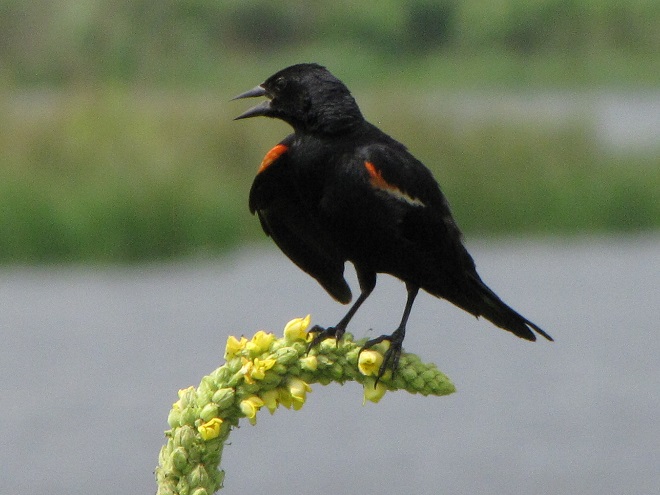
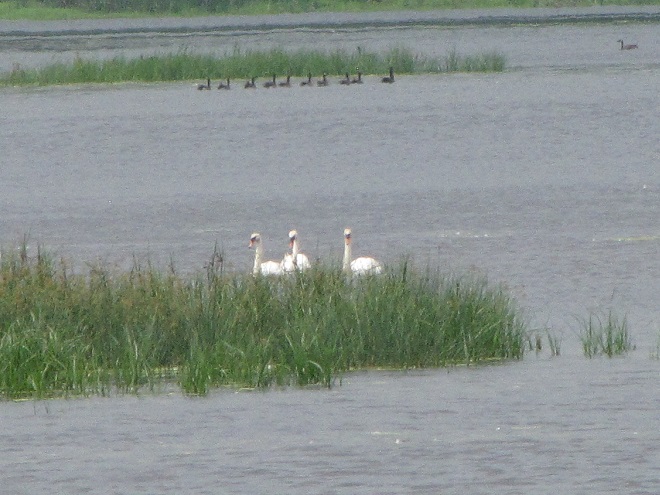
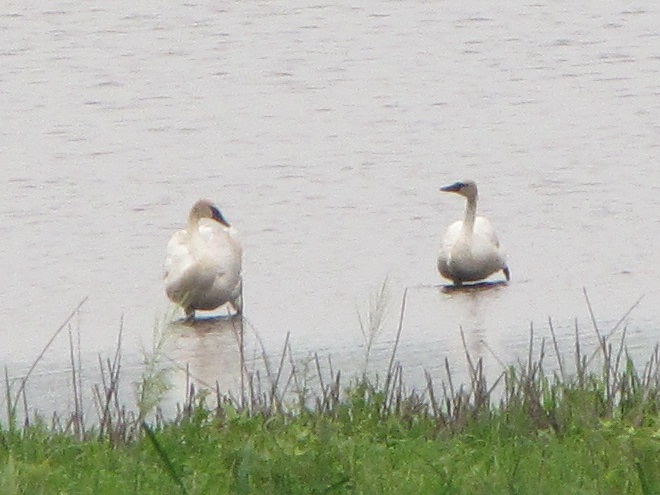
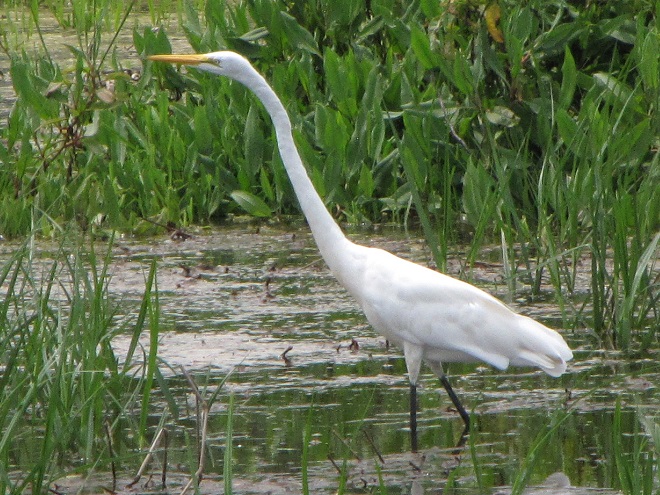
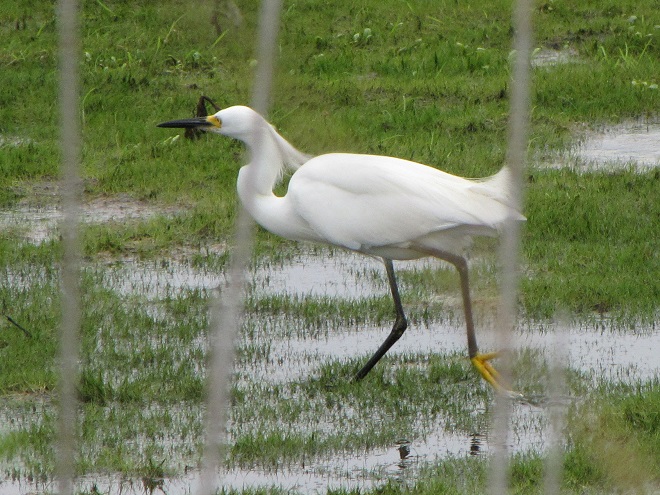
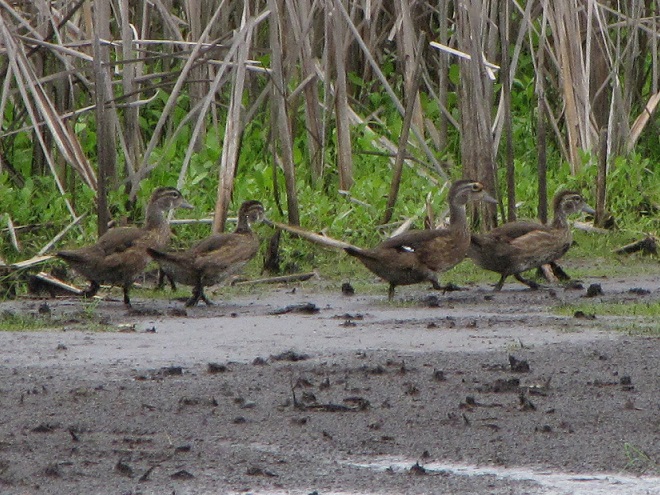
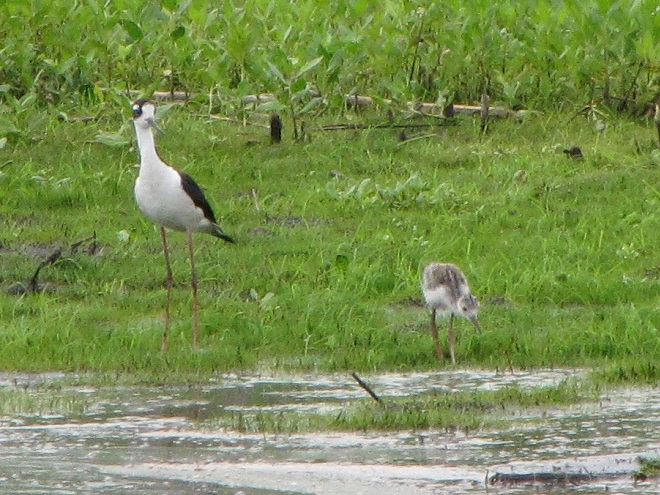
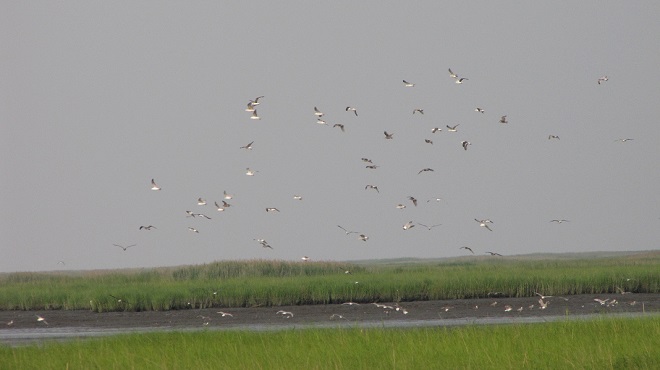
This pair of Northern Bobwhite, a species now extirpated from the Lower Susquehanna River Watershed and the rest of Pennsylvania, escorted us into the refuge. At Bombay Hook, they don’t waste your money mowing grass. Instead, a mosaic of warm-season grasses and early successional growth creates ideal habitat for Northern Bobwhite and other wildlife.Twice each day, high tide inundates mudflats in the saltwater tidal marshes at Bombay Hook prompting shorebirds to move into the four man-made freshwater pools. Birds there can often be observed at close range. The auto tour route through the refuge primarily follows a path atop the dikes that create these freshwater pools. Morning light is best when viewing birds on the freshwater side of the road, late-afternoon light is best for observing birds on the tidal saltwater side.A Great Blue Heron at high tide on the edge of a tidal creek that borders Bombay Hook’s tour route at Raymond Pool.Semipalmated Sandpipers stream into Raymond Pool to escape the rising tide in the salt marsh.More Semipalmated Sandpipers and a single Short-billed Dowitcher (Limnodromus griseus) arrive at Raymond Pool.Two more Short-billed Dowitchers on the way in.Recent rains have flooded some of the mudflats in Bombay Hook’s freshwater pools. During our visit, birds were often clustered in areas where bare ground was exposed or where water was shallow enough to feed. Here, Short-billed Dowitchers in the foreground wade in deeper water to probe the bottom while Semipalmated Sandpipers arrive to feed along the pool’s edge. Mallards, American Avocets, and egrets are gathered on the shore.More Short-billed Dowitchers arriving to feed in Raymond Pool.Hundreds of Semipalmated Sandpipers gathered in shallow water where mudflats are usually exposed during mid-summer in Raymond Pool.Hundreds of Semipalmated Sandpipers, several Short-billed Dowitchers, and some Forster’s Terns (Sterna forsteri) crowd onto a mud bar at Bear Swamp Pool.A zoomed-in view of the previous image showing a tightly packed crowd of Semipalmated Sandpipers, Forster’s Terns, and a Short-billed Dowitcher (upper left).Short-billed Dowitchers wading to feed in the unusually high waters of Raymond Pool.Short-billed Dowitchers, American Avocets, and a Snowy Egret in Raymond Pool. A single Stilt Sandpiper (Calidris himantopus) can been seen flying near the top of the flock of dowitchers just below the egret.Zoomed-in view of a Stilt Sandpiper (Calidris himantopus), the bird with white wing linings.American Avocets probe the muddy bottom of Raymond Pool.Among these Short-billed Dowitchers, the second bird from the bottom is a Dunlin. This sandpiper, still in breeding plumage, is a little bit early. Many migrating Dunlin linger at Bombay Hook into October and even November.This Least Sandpiper found a nice little feeding area all to itself at Bear Swamp Pool.Lesser Yellowlegs at Bear Swamp Pool.Lesser Yellowlegs at Bear Swamp PoolA Greater Yellowlegs at Bear Swamp Pool.A Caspian Tern patrolling Raymond Pool.The chattering notes of the Marsh Wren’s (Cistothorus palustris) song can be heard along the tour road wherever it borders tidal waters.This dome-shaped Marsh Wren nest is supported by the stems of Saltwater Cordgrass (Sporobolus alterniflorus), a plant also known as Smooth Cordgrass. High tide licks at the roots of the cordgrass supporting the temporary domicile.By far the most common dragonfly at Bombay Hook is the Seaside Dragonlet (Erythrodiplax berenice). It is our only dragonfly able to breed in saltwater. Seaside Dragonlets are in constant view along the impoundment dikes in the refuge.Red-winged Blackbirds are still nesting at Bombay Hook, probably tending a second brood.Look up! A migrating Bobolink passes over the dike at Shearness Pool.Non-native Mute Swans and resident-type Canada Geese in the rain-swollen Shearness Pool.A pair of Trumpeter Swans (Cygnus buccinator) as seen from the observation tower at Shearness Pool. Unlike gregarious Tundra and Mute Swans, pairs of Trumpeter Swans prefer to nest alone, one pair to a pond, lake, or sluggish stretch of river. The range of these enormous birds was restricted to western North America and their numbers were believed to be as low as 70 birds during the early twentieth century. An isolated population consisting of several thousand birds was discovered in a remote area of Alaska during the 1930s allowing conservation practices to protect and restore their numbers. Trumpeter Swans are slowly repopulating scattered east coast locations following recent re-introduction into suitable habitats in the Great Lakes region.A Great Egret prowling Shearness Pool.A Snowy Egret in Bear Swamp Pool.Wood Ducks in Bear Swamp Pool.A Bombay Hook N.W.R. specialty, a Black-necked Stilt and young at Bear Swamp Pool.
As the tide recedes, shorebirds leave the freshwater pools to begin feeding on the vast mudflats exposed within the saltwater marshes. Most birds are far from view, but that won’t stop a dedicated observer from finding other spectacular creatures on the bay side of the tour route road.
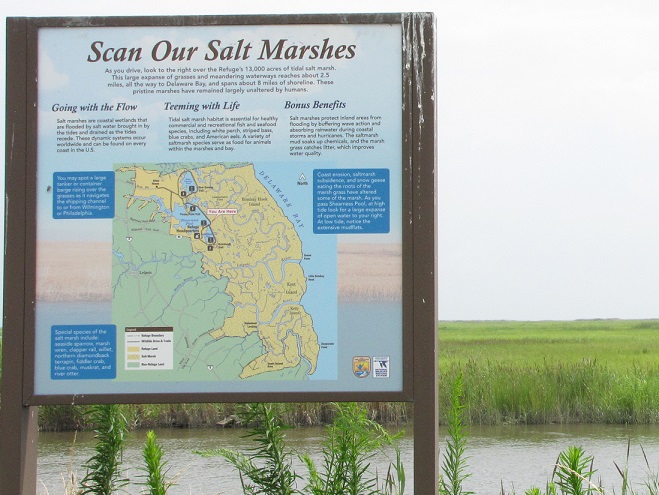
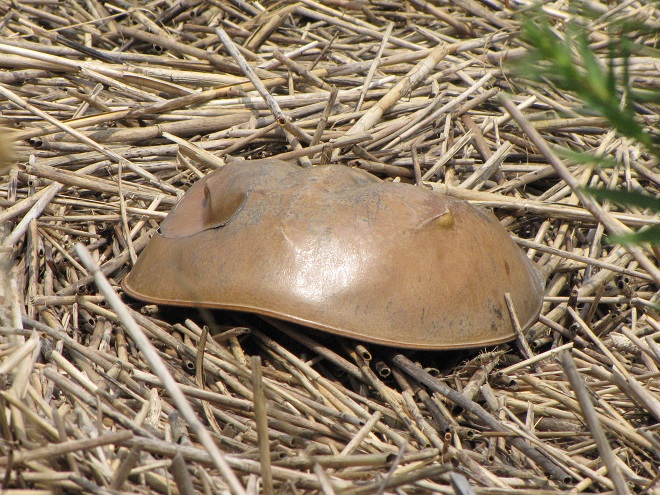
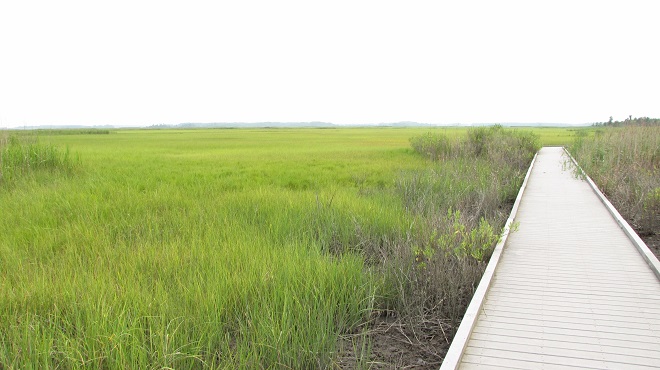
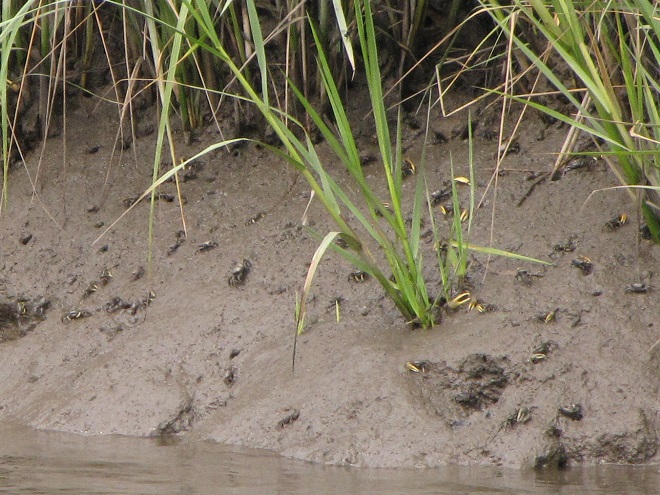
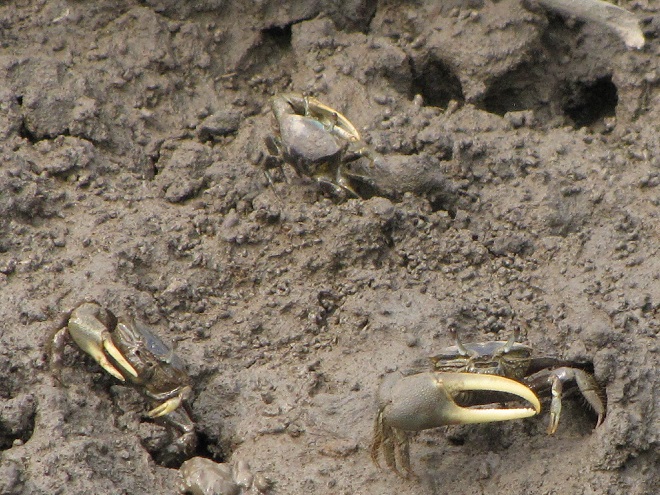
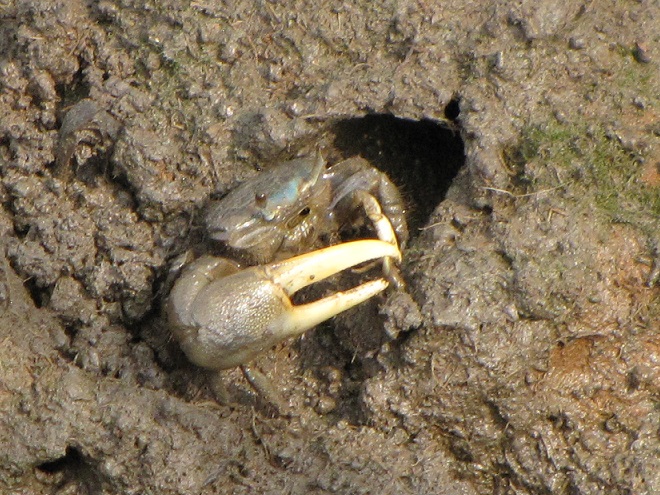
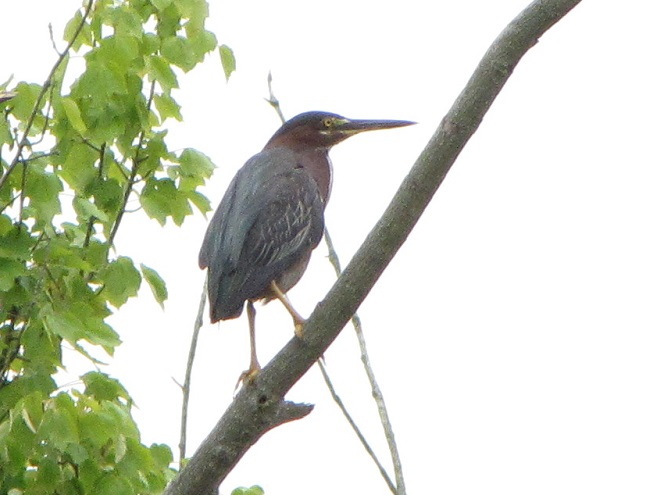
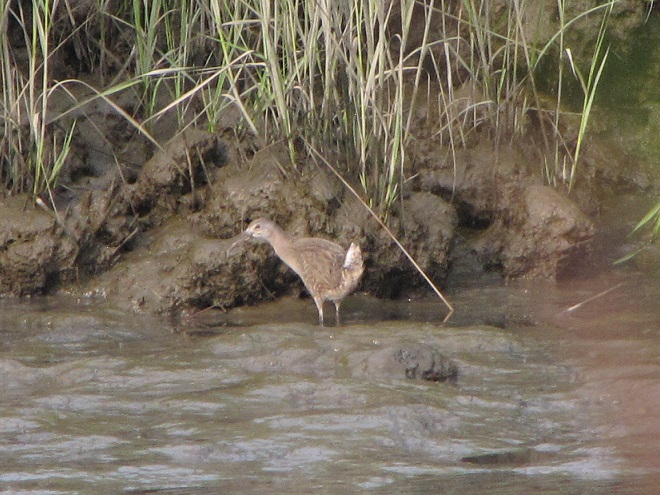
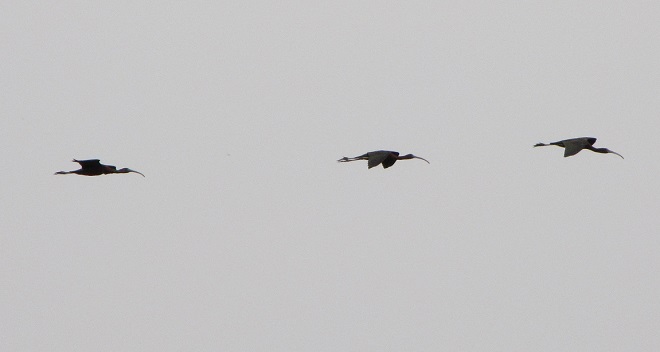
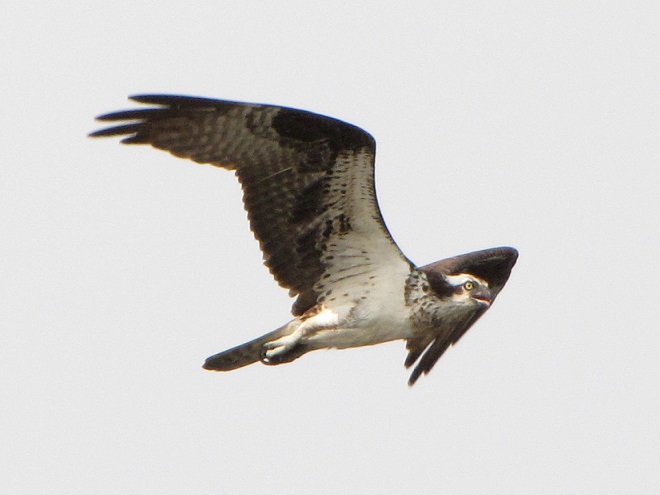
Bombay Hook National Wildlife Refuge protects a vast parcel of tidal salt marsh and an extensive network of tidal creeks. These areas are not only essential wildlife habitat, but are critical components for maintaining water quality in Delaware Bay and the Atlantic.The shells of expired Atlantic Horseshoe Crabs were formerly widespread and common among the naturally occurring flotsam along the high tide line on Delaware Bay. We found just this one during our visit to Bombay Hook. Man has certainly decimated populations of this ancient crustacean during recent decades.As the tide goes out, it’s a good time for a quick walk into the salt marsh on the boardwalk trail opposite Raymond Pool.Among the Saltmarsh Cordgrass along the trail and on the banks of the tidal creek there, a visitor will find thousands and thousands of Atlantic Marsh Fiddler Crabs (Minuca pugnax).Atlantic Marsh Fiddler Crabs and their extensive system of burrows help prevent the compaction of tidal soils and thus help maintain ideal conditions for the pure stands of Saltwater Cordgrass that trap sediments and sequester nutrients in coastal wetlands.A male Atlantic Marsh Fiddler Crab peers from its den.Herons and egrets including this Great Egret are quite fond of fiddler crabs. As the tide goes out, many will venture away from the freshwater pools into the salt marshes to find them.A Green Heron seen just before descending into the cordgrass to find fiddler crabs for dinner.A juvenile Clapper Rail (Rallus crepitans crepitans) emerges from the cover of the cordgrass along a tidal creek to search for a meal.Glossy Ibis leave their high-tide hiding place in Shearness Pool to head out into the tidal marshes for the afternoon.Great Black-backed Gulls, Herring Gulls, and possibly other species feed on the mudflats exposed by low tide in the marshes opposite Shearness Pool.An Osprey patrols the vast tidal areas opposite Shearness Pool.
No visit to Bombay Hook is complete without at least a quick loop through the upland habitats at the far end of the tour route.
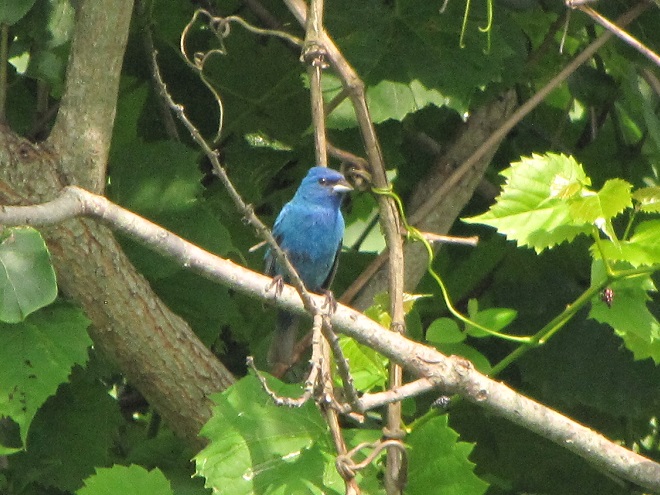
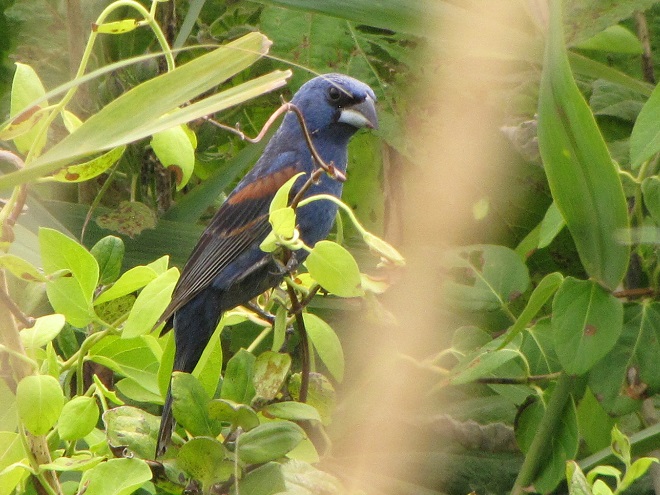
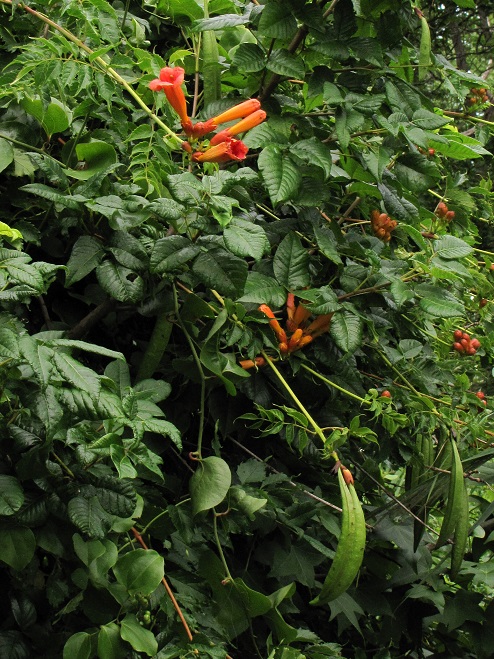
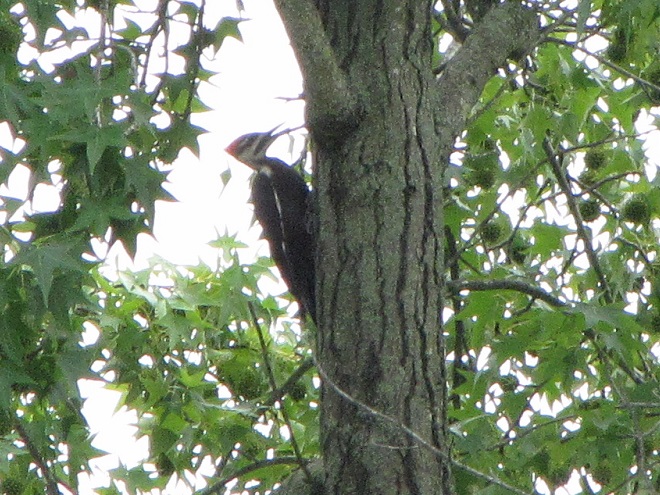
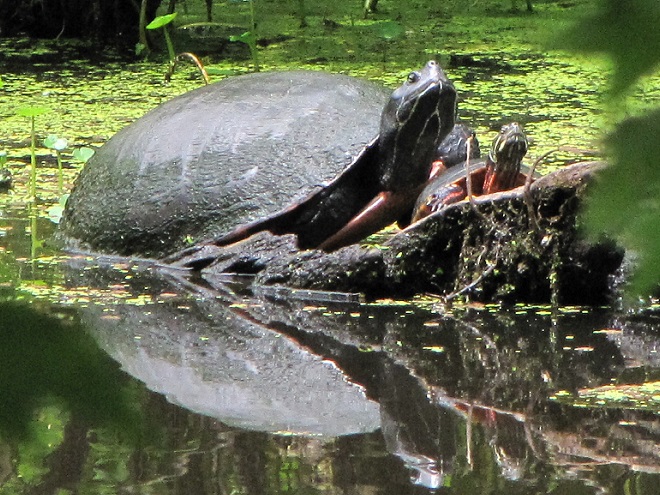
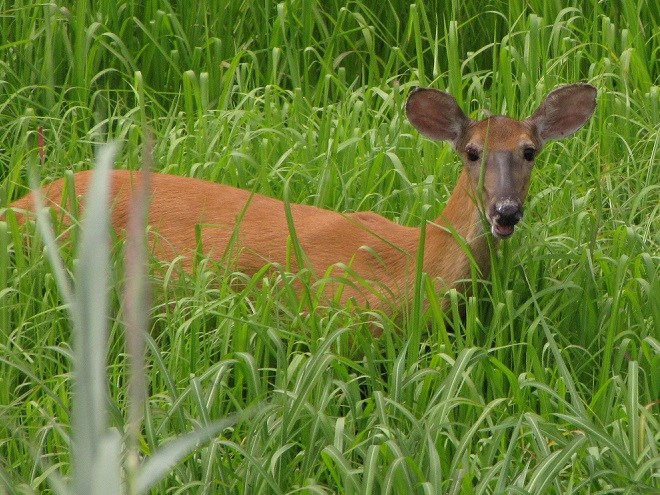
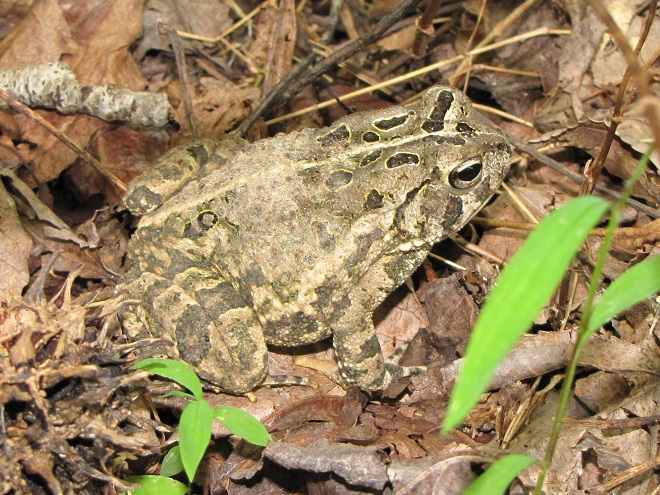
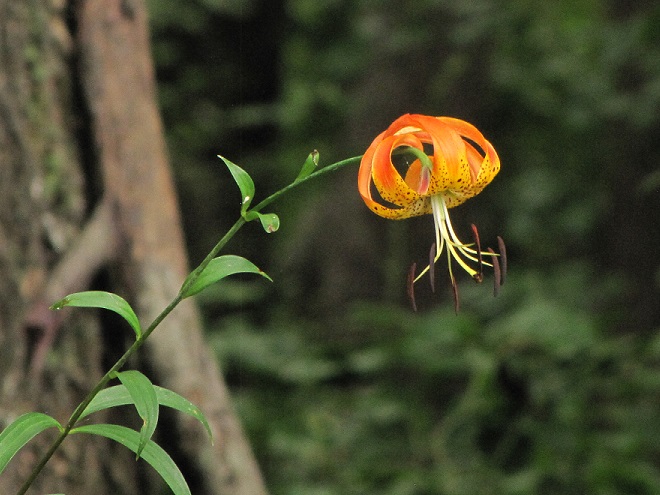
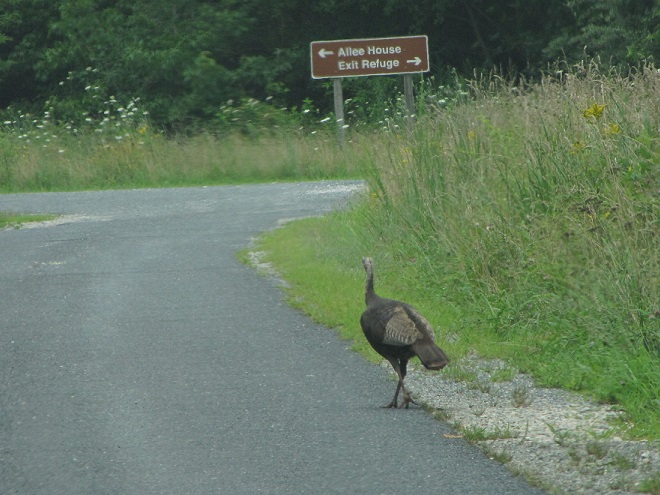
Indigo Buntings nest in areas of successional growth and yes, that is a Spotted Lanternfly on the grape vine at the far right side of the image.Blue Grosbeaks (Passerina caerulea) are common nesting birds at Bombay Hook. This one was in shrubby growth along the dike at the north end of Shearness Pool.These two native vines are widespread at Bombay Hook and are an excellent source of food for birds. The orange flowers of the Trumpet Vine are a hummingbird favorite and the Poison Ivy provides berries for numerous species of wintering birds.The Pileated Woodpecker is one of the numerous birds that supplements its diet with Poison Ivy berries. The tree this individual is visiting is an American Sweetgum (Liquidambar styraciflua), a species native to the Atlantic Coastal Plain in Delaware. The seed balls are a favorite winter food of goldfinches and siskins.Finis Pool has no frontage on the tidal marsh but is still worth a visit. It lies along a spur road on the tour route and is located within a deciduous coastal plain forest. Check the waters there for basking turtles like this giant Northern Red-bellied Cooter (Pseudemys rubiventris) and much smaller Painted Turtle.The White-tailed Deity is common along the road to Finis Pool.Fowler’s Toads (Anaxyrus fowleri) breed in the vernal ponds found in the vicinity of Finis Pool and elsewhere throughout the refuge.The National Wildlife Refuge System not only protects animal species, it sustains rare and unusual plants as well. This beauty is a Turk’s Cap Lily (Lilium superbum), a native wildflower of wet woods and swamps.Just as quail led us into the refuge this morning, this Wild Turkey did us the courtesy of leading us to the way out in the afternoon.
We hope you’ve been convinced to visit Bombay Hook National Wildlife Refuge sometime soon. And we hope too that you’ll help fund additional conservation acquisitions and improvements by visiting your local post office and buying a Federal Duck Stamp.
Here’s a look at some native plants you can grow in your garden to really help wildlife in late spring and early summer.
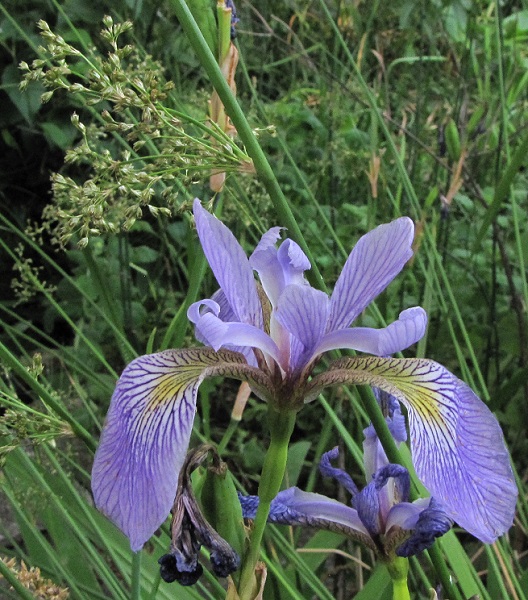
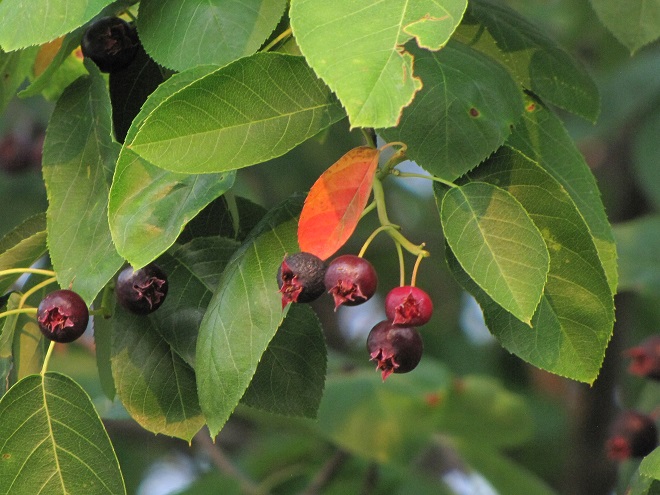
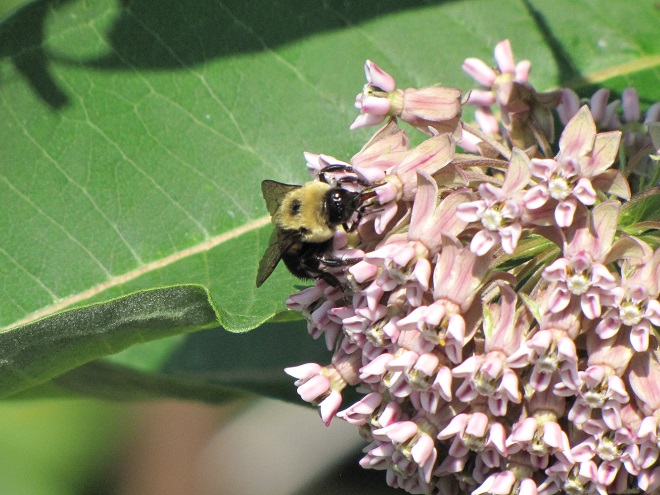
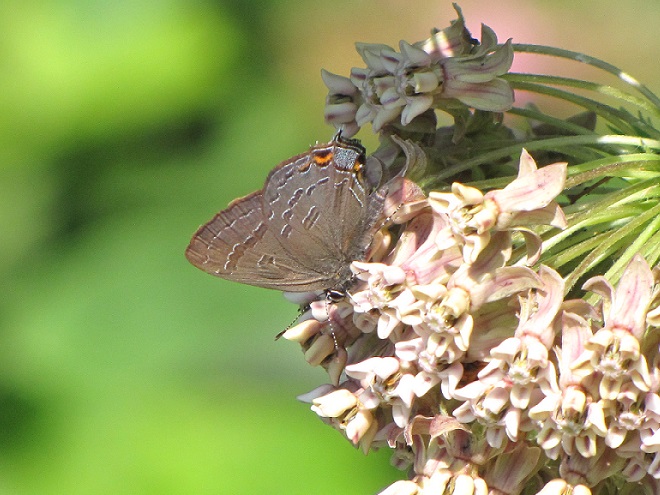
The showy bloom of a Larger Blue Flag (Iris versicolor) and the drooping inflorescence of Soft Rush (Juncus effusus). These plants favor moist soils in wetlands and damp meadows where they form essential cover and feeding areas for insects, amphibians, and marsh birds. Each is an excellent choice for helping to absorb nutrients in a rain garden or stream-side planting. They do well in wet soil or shallow water along the edges of garden ponds too.The fruits of Smooth Shadbush (Amelanchier laevis), also known as Allegheny Serviceberry, Smooth Serviceberry, or Smooth Juneberry, ripen in mid-June and are an irresistible treat for catbirds, robins, bluebirds, mockingbirds, and roving flocks of Cedar Waxwings.Also in mid-June, the fragrant blooms of Common Milkweed attract pollinators like Eastern Carpenter Bees,……Honey Bees,……and butterflies including the Banded Hairstreak (Satyrium calanus). In coming weeks, Monarch butterflies will find these Common Milkweed plants and begin laying their eggs on the leaves. You can lend them a hand by planting milkweed species (Asclepias) in your garden. Then watch the show as the eggs hatch and the caterpillars begin devouring the foliage. Soon, they’ll pupate and, if you’re lucky, you’ll be able to watch an adult Monarch emerge from a chrysalis!
Let’s have a look at some of the magnificent native wildflowers blooming on this Mother’s Day in forests and thickets throughout the Lower Susquehanna River Watershed.
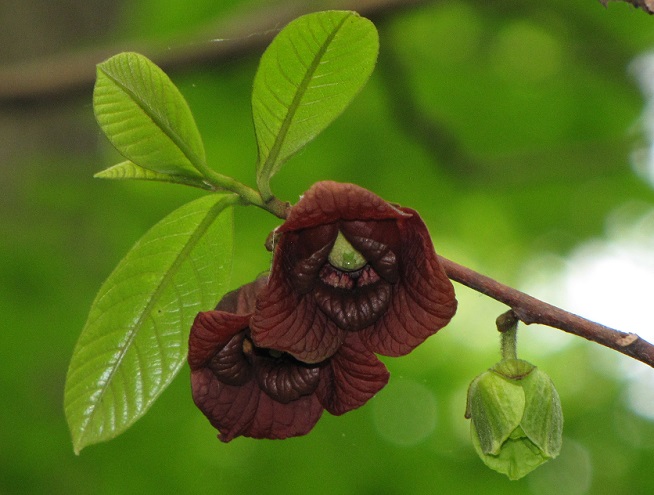
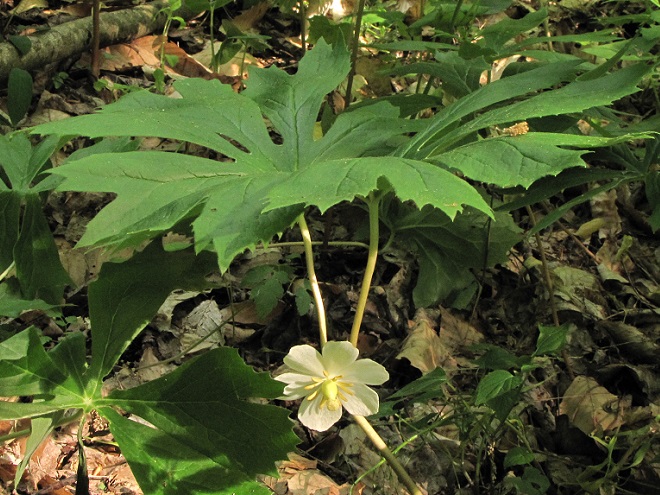
Rue Anemone (Thalictrum thalictroides) is a fragile little wildflower of open woods.The Blackhaw (Viburnum prunifolium) is a shrub of thickets and forest borders. The flower clusters mature into an abundance of berries relished by birds and other wildlife.A large Black Cherry tree adorned in white blossoms can be pleasing to the eye and very beneficial for pollinating insects.The Common Pawpaw is a small tree of damp well-drained soils. Where conditions are ideal, it may form clonal colonies in the forest understory. The deep maroon blooms mature into banana-like fruits, hence its alternate common name “Custard Apple”.The Mayapple or Mandrake (Podophyllum peltatum) commonly blankets the forest floor. It, like other ephemeral wildflowers, is vulnerable to invasions by non-native shrubs that leaf out earlier in spring than native species and rob them of sunlight during their already abbreviated growing season.
Aren’t they spectacular?
Why not take a stroll to have a look at these and other plants you can find growing along a nearby woodland trail? You could check out some place new and get a little exercise too!
If you go, please tread lightly, take your camera, mind your manners, and…
Here’s a quick look at just a few of the birds that have been moving northward in recent days…
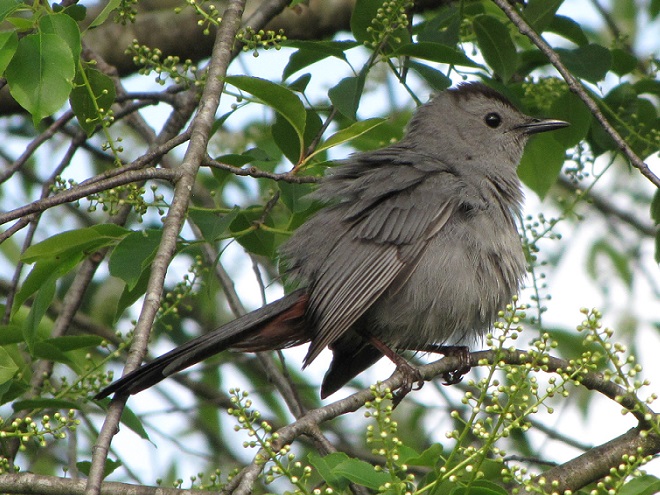
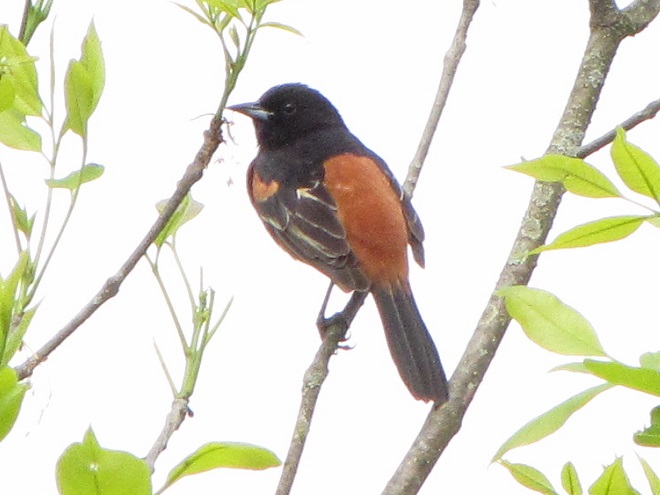
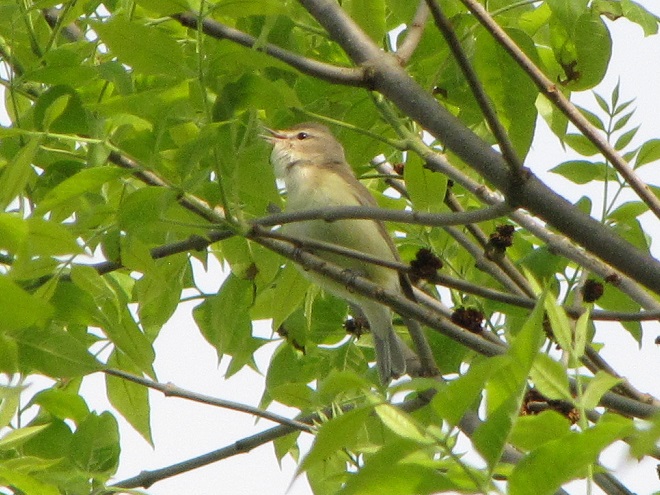
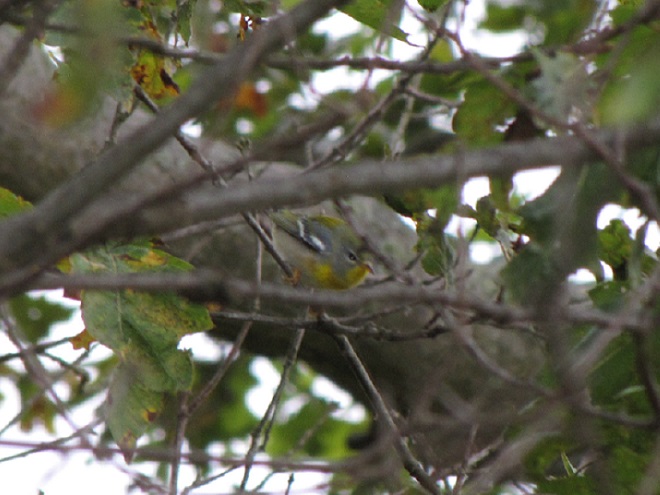
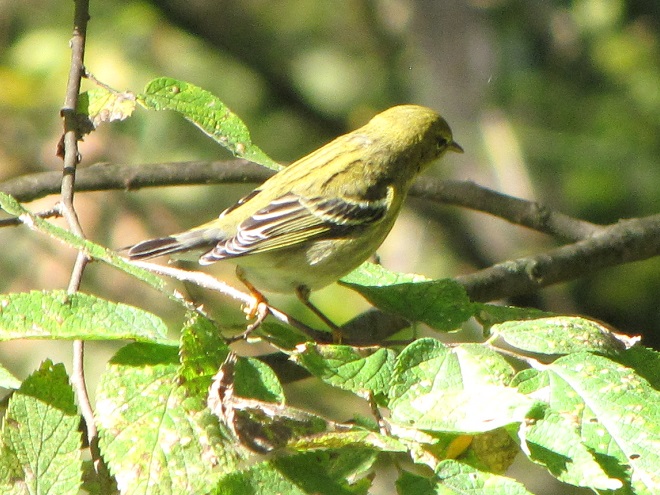
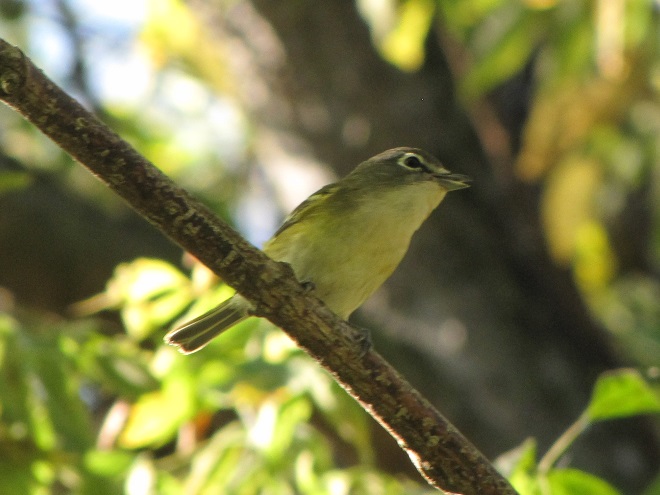
Find a thicket, a garden with plenty of shrubs, or a brushy woodland and you’ll find Gray Catbirds. Many will stay in the Lower Susquehanna River Watershed to nest.Orchard Orioles favor old meadows with large shade trees. Some remain to nest.The Common Yellowthroat is one of the more than two dozen species of warblers found regularly during spring migration. It nests locally in wet thickets.The Warbling Vireo can be found singing among the branches of large streamside trees like this Green Ash.Unlike the preceding species which do the majority of their migrating by night, Blue Jays move north by daylight. Keep an eye on the sky and you just might see a flock or two go by!
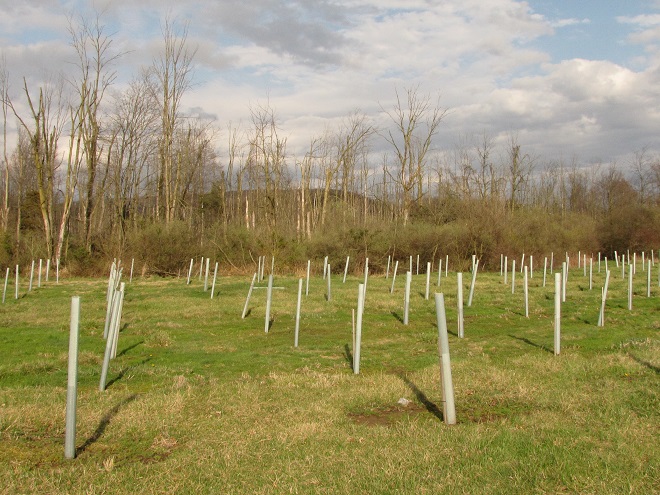
Visible in the background of this image, an infestation of invasive Emerald Ash Borer larvae has killed the trees in a woodlot comprised exclusively of Green Ash. Left standing, the dead snags provide excellent habitat for a number of animal species including cavity-nesting birds like woodpeckers, known consumers of these destructive larvae. To reforest the mowed field in the foreground, a variety of native deciduous trees have been planted. In areas where a diversity of trees are not present to furnish a source of seeds for natural succession, manually planting an array of seedlings provides some insurance against the risk of allowing establishment of a single pioneer species such as the vulnerable Green Ash. The white plastic tubes on the young trees offer protection from the ever-browsing White-tailed Deity.
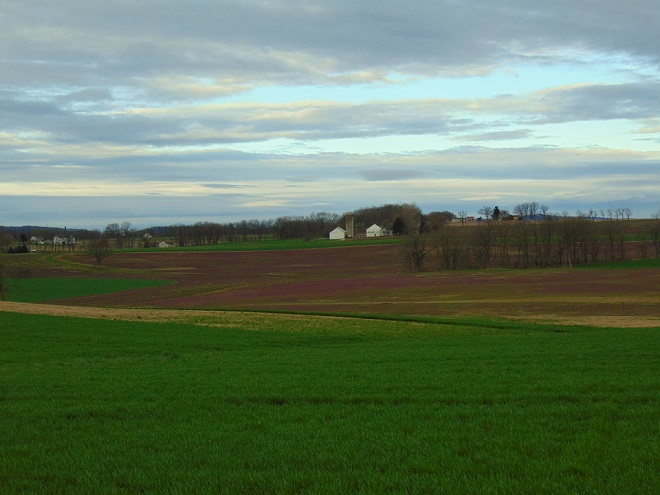
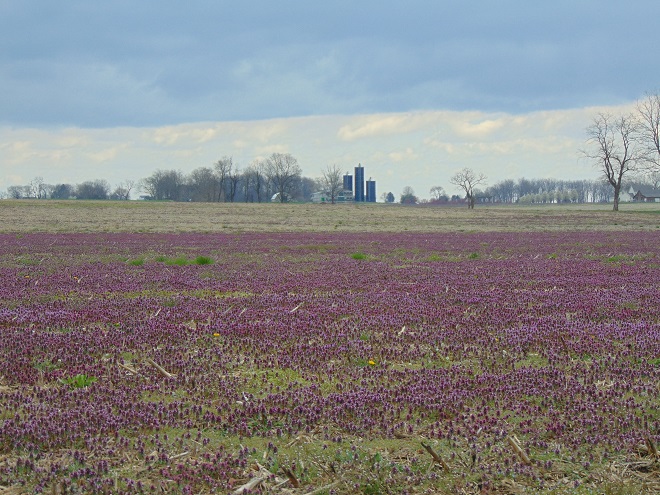
Have you noticed a purple haze across the fields right now? If so, you may have wondered, “What kind of flowers are they?”
A purple haze of color stretches across fields not already green with cold-season crops like winter wheat.
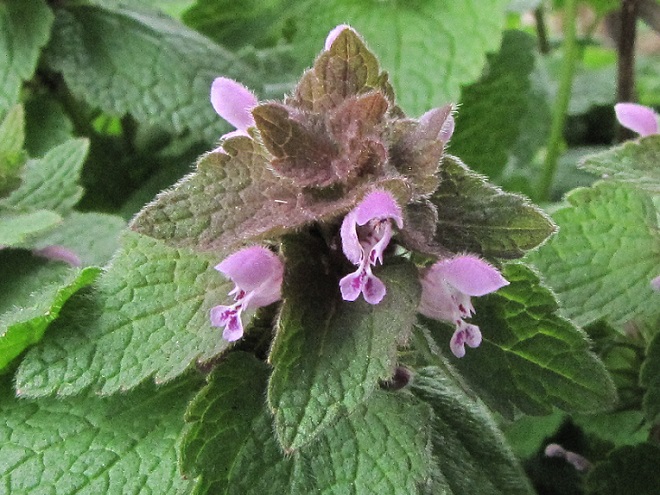
Say hello to Purple Dead Nettle (Lamium purpureum), a non-native invasive species that has increased its prevalence in recent years by finding an improved niche in no-till cropland. Purple Dead Nettle, also known as Red Dead Nettle, is native to Asia and Europe. It has been a familiar early spring “weed” in gardens, along roadsides, and in other disturbed ground for decades.
Purple Dead Nettle owes its new-found success to the timing of its compressed growing season. Its tiny seeds germinate during the fall and winter, after crops have been harvested and herbicide application has ended for the season. The plants flower early in the spring and are thus particularly attractive to Honey Bees and other pollinators looking for a source of energy-rich nectar as they ramp up activity after winter lock down. In many cases, Purple Dead Nettle has already completed its flowering cycle and produced seeds before there is any activity in the field to prepare for planting the summer crop. The seeds spend the warmer months in dormancy, avoiding the hazards of modern cultivation that expel most other species of native and non-native plants from the agricultural landscape.
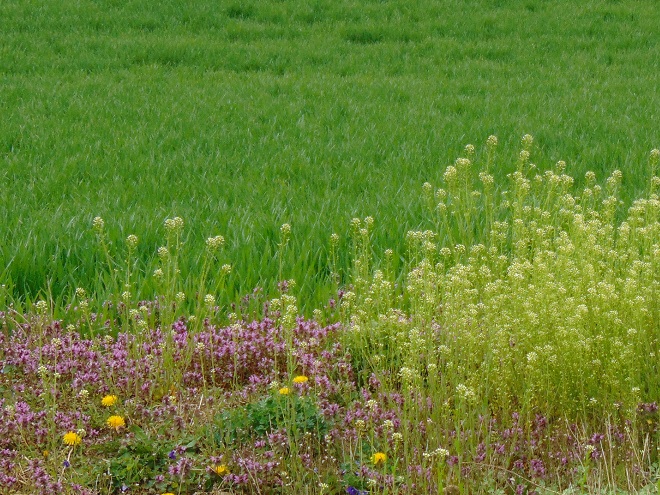
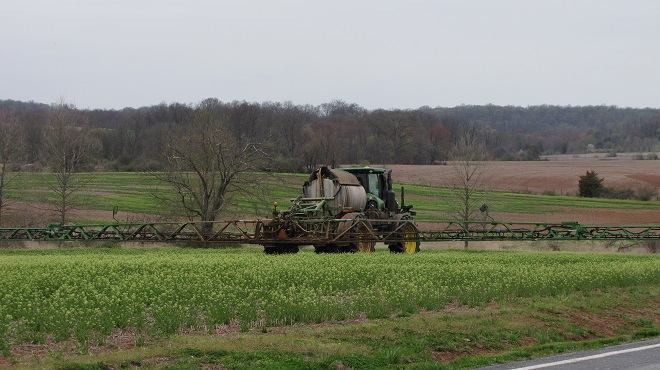
Flowering Purple Dead Nettle as a volunteer cover crop among last year’s corn stubble in a no-till field.Like the flowers of orchids, Purple Hedge Nettle blossoms are described as yoke shaped or bilateral (zygomorphic). Psychedelic experiences are produced only through observation, not by ingestion. A member of the mint family, its edible young leaves and tops have nutritional value, making a unique addition to salads and soups.We call them “weeds”, but what do we know? Purple Dead Nettle, Common Dandelion, and Shepherd’s Purse (Capsella bursa-pastoris), three edible non-native invasive species with similar life cycles seen here flowering along a rural road among fields where intensive farming is practiced. Shepard’s Purse, like many members of the mustard family, is already producing seeds at the bottom of the flower cluster by the time the uppermost buds open for business.In preparation for seeding of a warm-season crop, herbicide is applied on a no-till field to kill Shepherd’s Purse and other cool-season plants. To help prevent sediment and nutrient discharge from lands where high-intensity agriculture is practiced, no-till methods are used to reduce runoff from the areas of bare soil that would otherwise be created by traditional plowing.
While modern farming has eliminated a majority of native plant and animal species from agricultural lands of the lower Susquehanna valley, its crop management practices have simultaneously invited vigorous invasion by a select few non-native species. High-intensity farming devotes its acreage to providing food for a growing population of people—not to providing wildlife habitat. That’s why it’s so important to minimize our impact on non-farm lands throughout the remainder of the watershed. If we continue subdividing, paving, and mowing more and more space, we’ll eventually be living in a polluted semi-arid landscape populated by little else but non-native invasive plants and animals. We can certainly do better than that.
This linear grove of mature trees, many of them nearly one hundred years old, is a planting of native White Oaks (Quercus alba) and Swamp White Oaks (Quercus bicolor).
Imagine the benefit of trees like this along that section of stream you’re mowing or grazing right now. The Swamp White Oak in particular thrives in wet soils and is available now for just a couple of bucks per tree from several of the lower Susquehanna’s County Conservation District Tree Sales. These and other trees and shrubs planted along creeks and rivers to create a riparian buffer help reduce sediment and nutrient pollution. In addition, these vegetated borders protect against soil erosion, they provide shade to otherwise sun-scorched waters, and they provide essential wildlife habitat. What’s not to love?
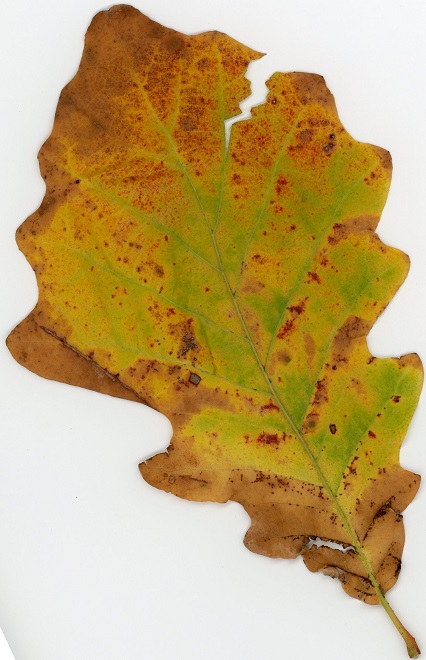
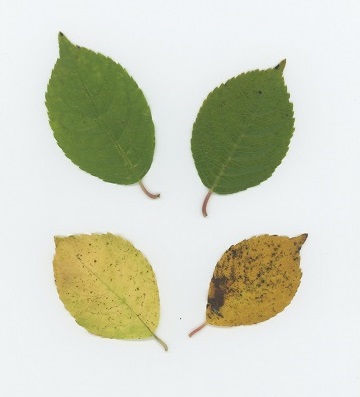
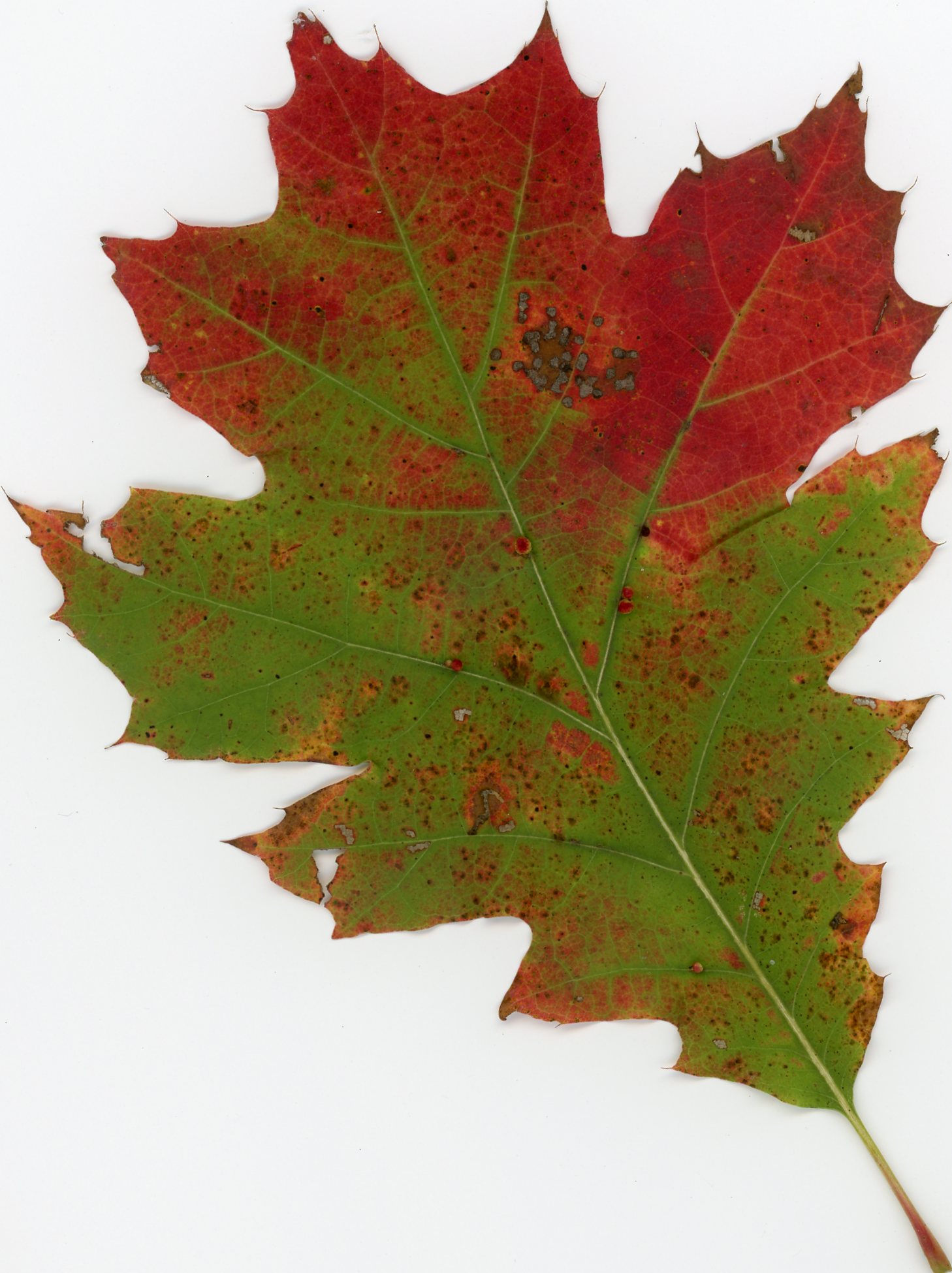
Autumn leaf of a Swamp White Oak
The following native species make great companions for Swamp White Oaks in a lowland setting and are available at bargain prices from one or more of the County Conservation District Tree Sales now underway…
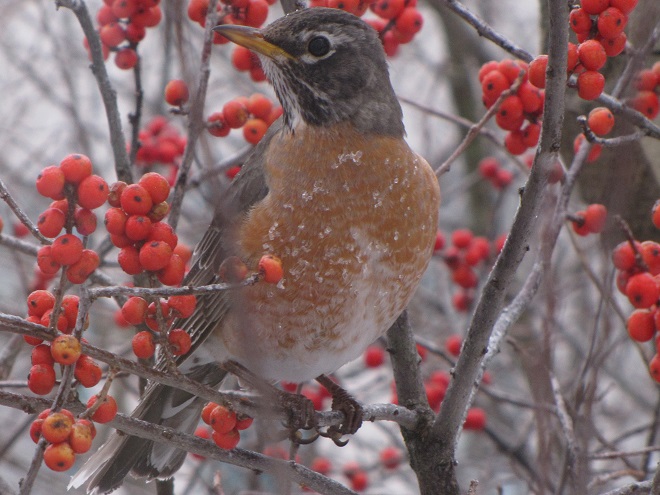
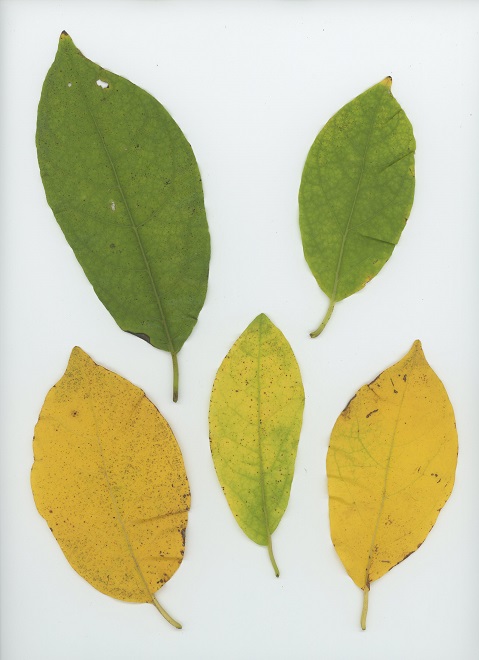
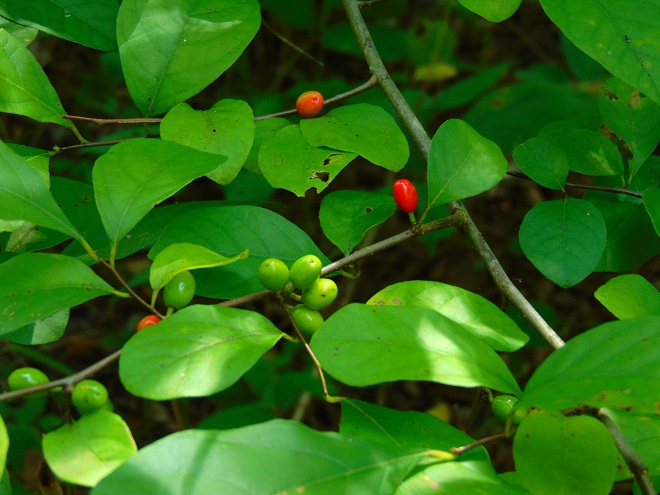
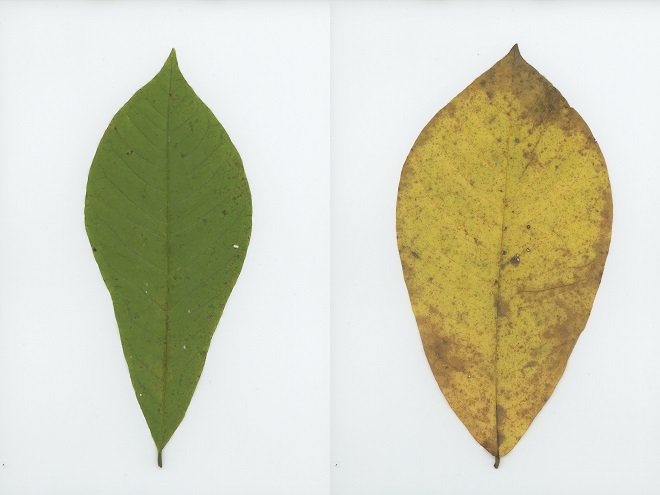
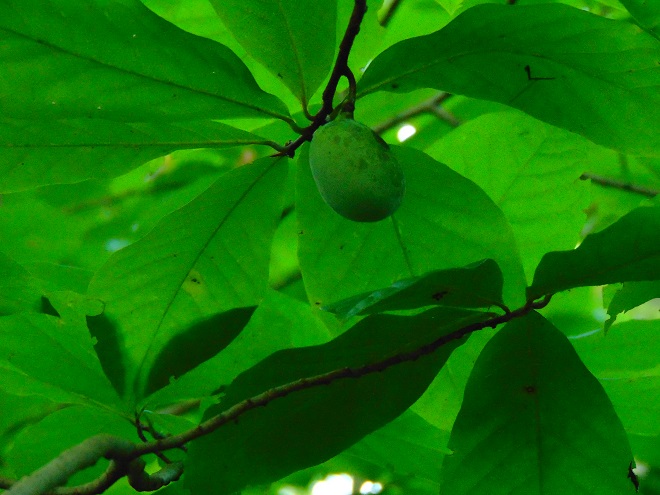
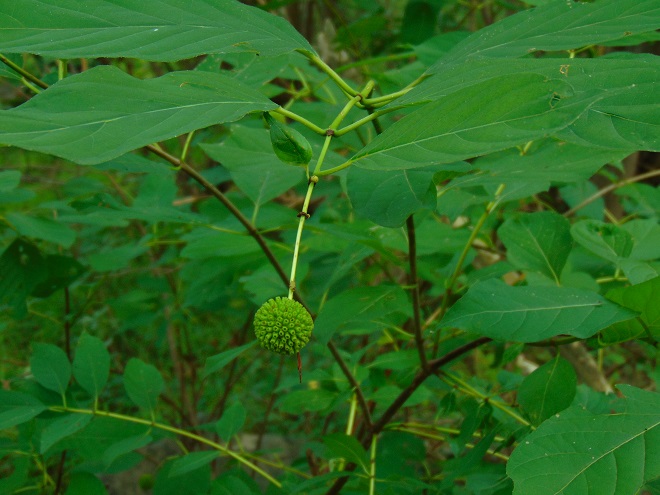
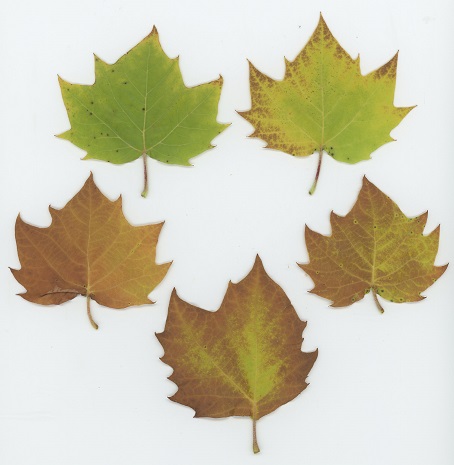
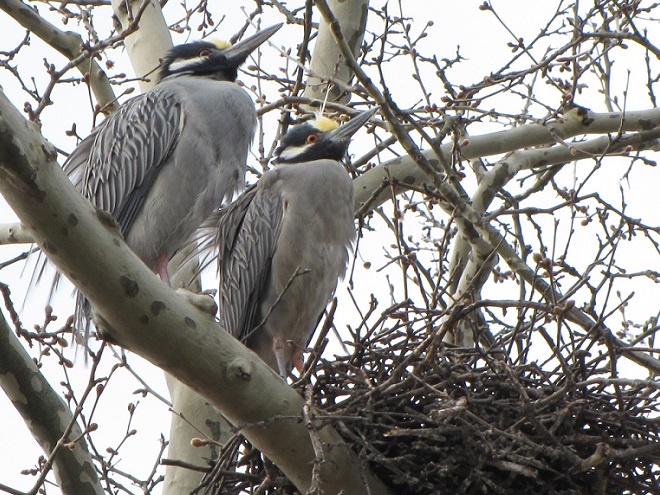
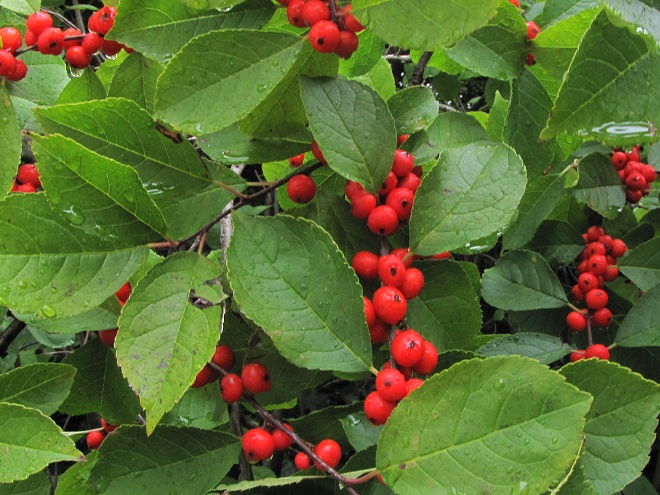
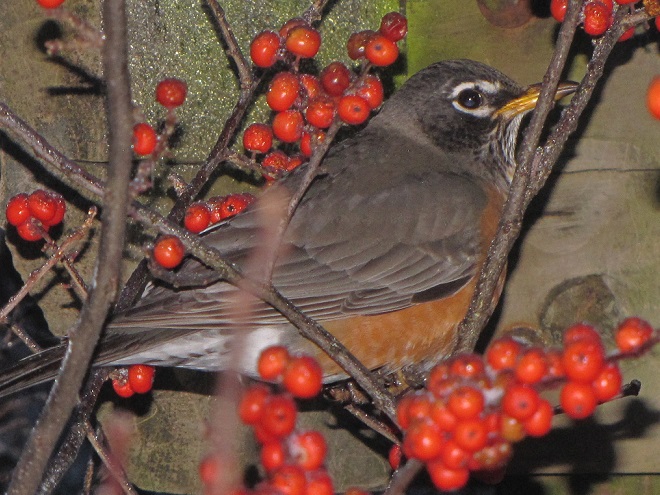
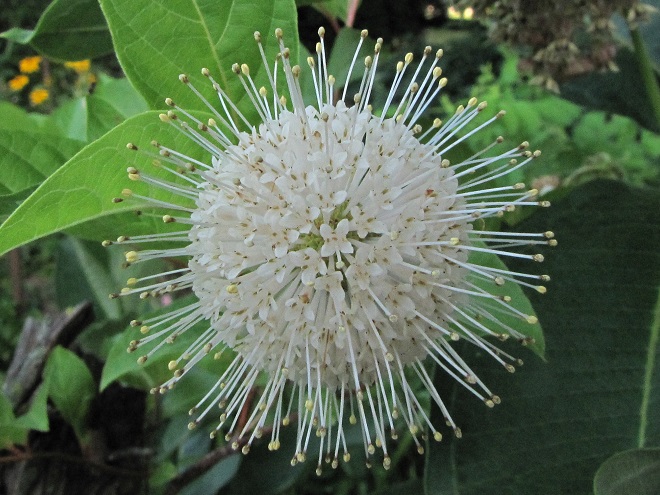
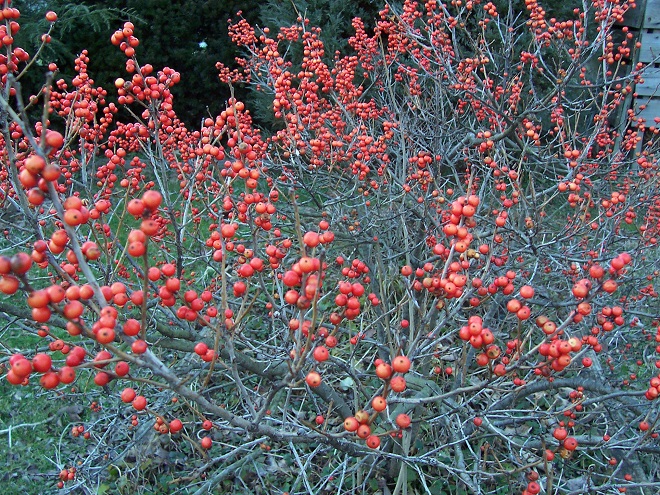
The Red Maple is an ideal tree for a stream buffer project. They do so well that you should limit them to 10% or less of the plants in your project so that they don’t overwhelm slower-growing species.The River Birch (Betula nigra) is a multi-trunked tree of lowlands. Large specimens with arching trunks help shade waterways and provide a source of falling insects for surface-feeding fish. Its peeling bark is a distinctive feature.The Common Winterberry with its showy red winter-time fruit is a slow-growing shrub of wet soils. Only female specimens of this deciduous holly produce berries, so you need to plant a bunch to make sure you have both genders for successful pollination.An American Robin feeding on Common Winterberry.Common Spicebush is a shrub of moist lowland soils. It is the host plant for the Spicebush Swallowtail butterfly and produces small red berries for birds and other wildlife. Plant it widely among taller trees to provide native vegetation in the understory of your forest.Common Spicebush foliage and berries in the shade beneath a canopy of tall trees.The Common Pawpaw a small shade-loving tree of the forest understory.Common Pawpaw is a colony-forming small tree which produces a fleshy fruit. It is the host plant for the caterpillars of the Zebra Swallowtail.The Buttonbush is a shrub of wet soils. It produces a round flower cluster, followed by this globular seed cluster.And don’t forget the Eastern Sycamore, the giant of the lowlands. At maturity, the white-and-tan-colored bark on massive specimens makes them a spectacular sight along stream courses and river shores. Birds ranging from owls, eagles, and herons to smaller species including the Yellow-throated Warbler rely upon them for nesting sites.Yellow-crowned Night Herons, an endangered species in Pennsylvania, nesting in an Eastern Sycamore.
So don’t mow, do something positive and plant a buffer!
Act now to order your plants because deadlines are approaching fast. For links to the County Conservation District Tree Sales in the Lower Susquehanna River Watershed, see our February 18th post.
County Conservation District Tree Sales are underway throughout the Lower Susquehanna River Watershed. Now is the time to order for pickup in April. The prices are a bargain and the selection is fabulous. For species descriptions and more details, visit each tree sale web page (click the sale name highlighted in blue). And don’t forget to order bundles of evergreens for planting in mixed clumps and groves to provide winter shelter and summertime nesting sites for our local birds. They’re only $12.00 for a bundle of 10—can’t beat that deal!
Pickup on: Thursday, April 20, 2023 or Friday, April 21, 2023
Don’t mow it. Plant a meadow or pollinator garden instead.Both Cumberland and Perry Counties are offering a native warm-season grass and wildflower seed mix for planting your own meadow or pollinator garden. Perry County is also taking orders for a seed mix specifically formulated to grow plants for attracting hummingbirds and butterflies.
Pickup on: Thursday, April 20, 2023 or Friday, April 21, 2023
The Eastern Hemlock, Pennsylvania’s official state tree, is an excellent choice for addition to your landscape or reforestation project. It tolerates rocky soils and its cones are an prime source of food for birds ranging from chickadees to finches.
The handsome yet underused Northern Red Oak is a sturdy long-lived native tree that is ideal for street-side, lawn, and reforestation plantings. In spring, it can be a magnet for migrating Neotropical birds when its flowers attract a wide variety of tiny insects to its upper reaches. Unlike many other oaks, this species is a relatively fast grower.
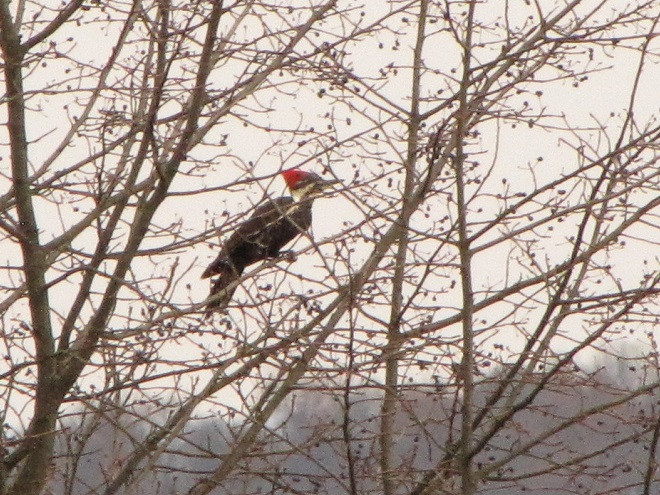
In autumn, even after the bright red foliage is gone, the berries of mature Black Gum (Nyssa sylvatica) trees attract a wide variety of birds like this Pileated Woodpecker. The Lebanon County Conservation District is offering Black Gum, also known as Black Tupelo, during their 2023 tree sale. Why not order and plant a half dozen or more?
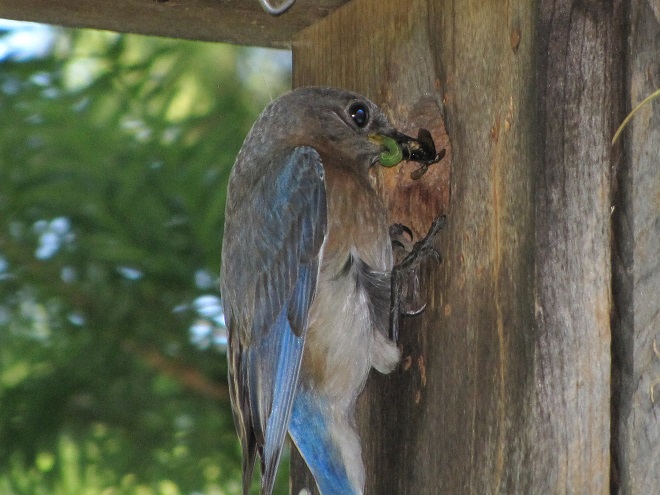
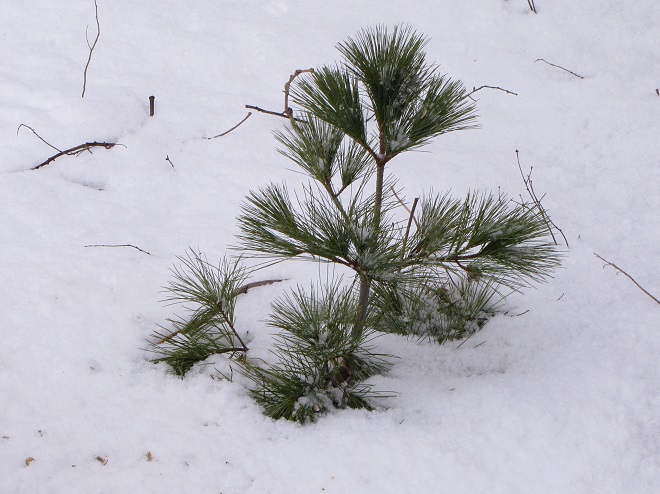
The Perry County Conservation District is not only offering plants during this year’s sale, you can also purchase bluebird nest boxes for just $12.00 each!For less than the cost of one year of mowing, this stream corridor in Conewago Township, Dauphin County was reforested by the owner with hundreds of native trees, the majority purchased through County Conservation District Tree Sale events spanning a period of several years. By replacing bare soil and mowed areas, the riparian buffer created by these plantings has significantly reduced the nutrient and sediment loads that were polluting the small stream therein known as Brill’s Run. With determination and not a lot of money, you can do it too.But don’t forget the Eastern White Pines!
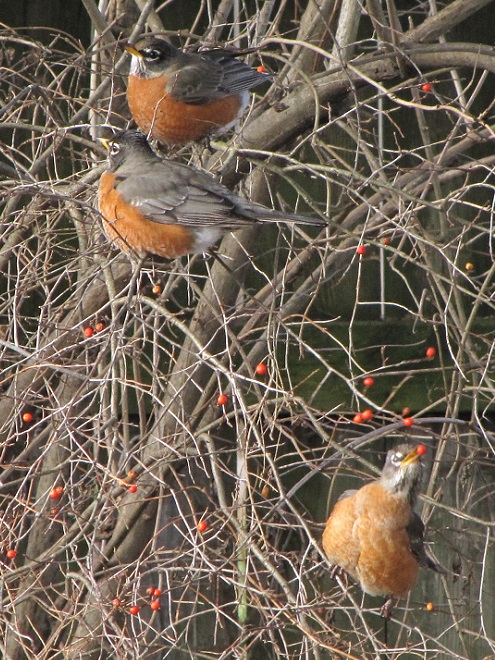
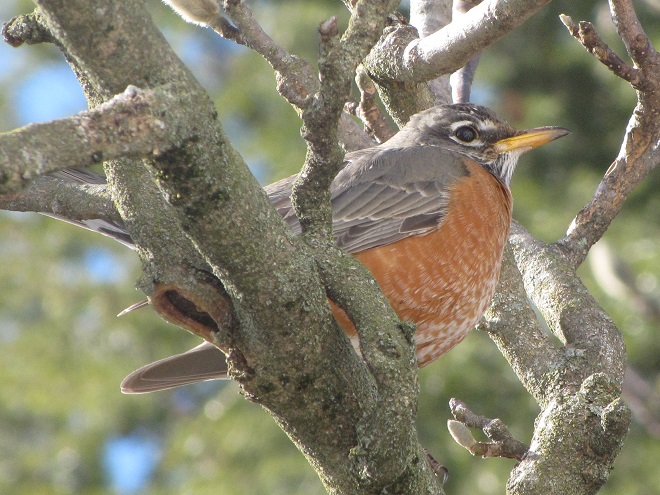
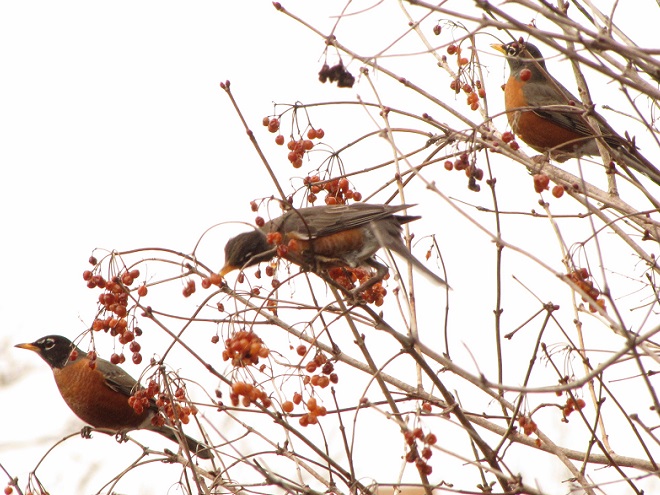
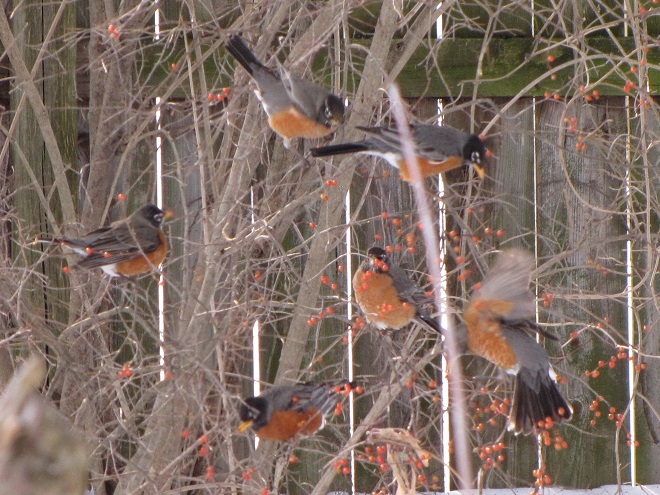
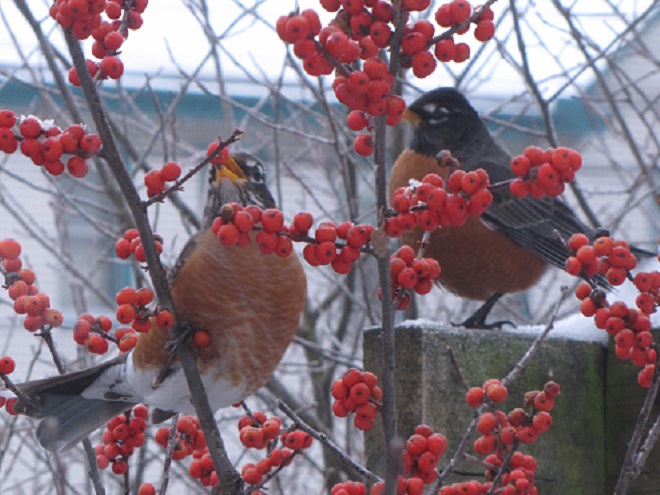
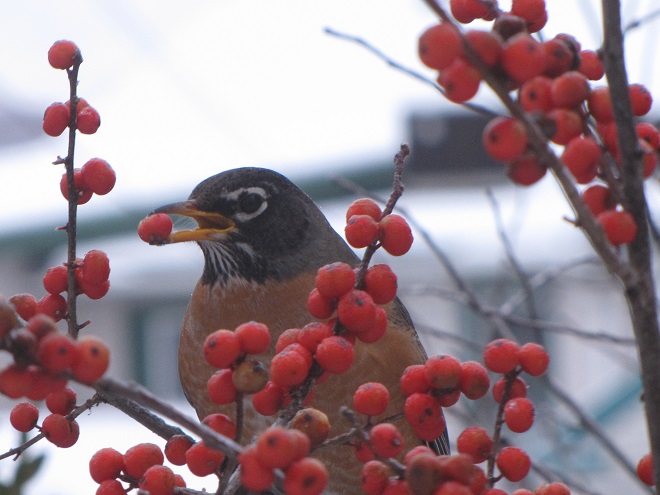
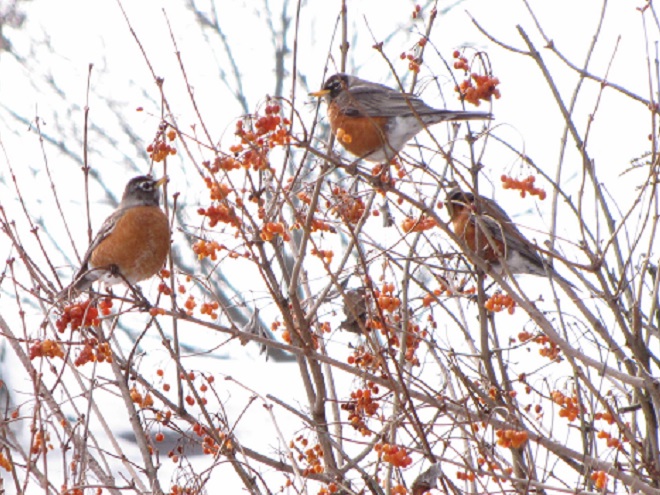
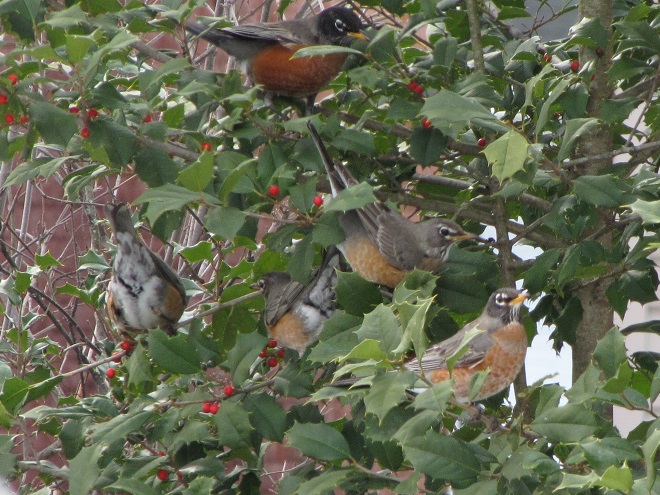
The annual arrival of hoards of American Robins to devour the fruits found on the various berry-producing shrubs and trees in the garden at susquehannawildlife.net headquarters happened to coincide with this morning’s bitter cold temperatures. Here are photos of some of those hungry robins—plus shots of the handful of other songbirds that joined them for a frosty feeding frenzy.
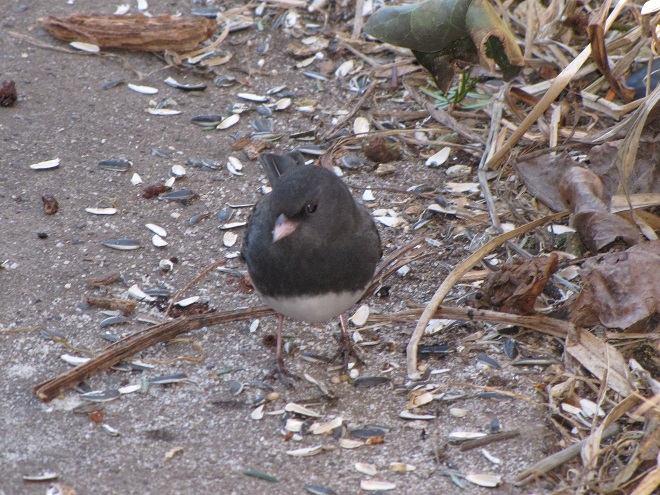
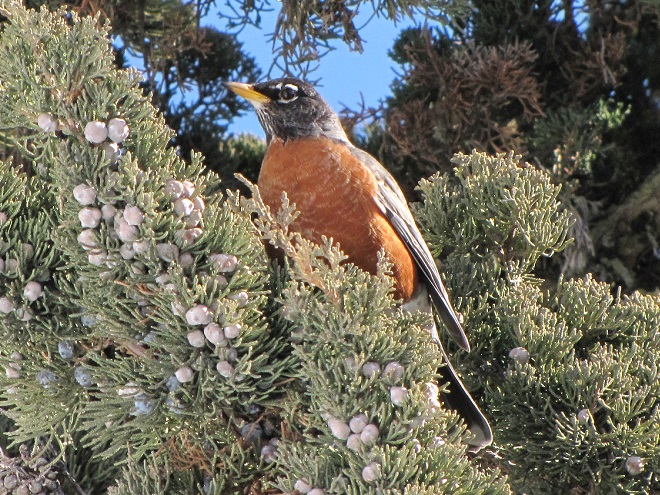
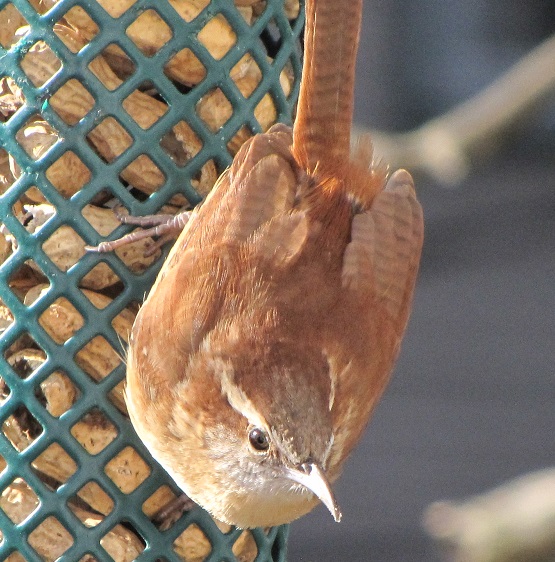
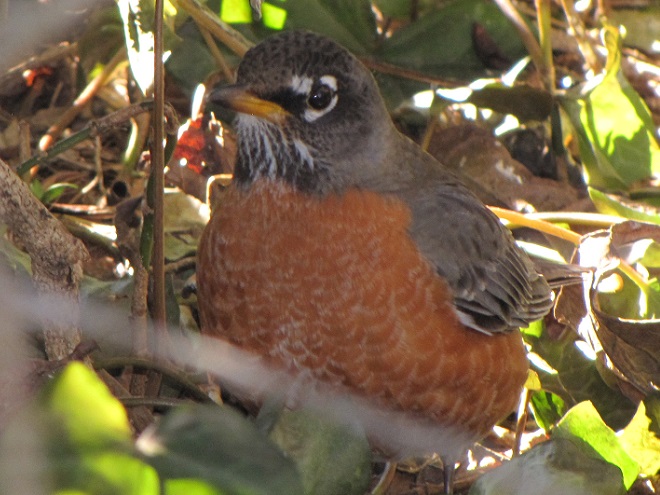
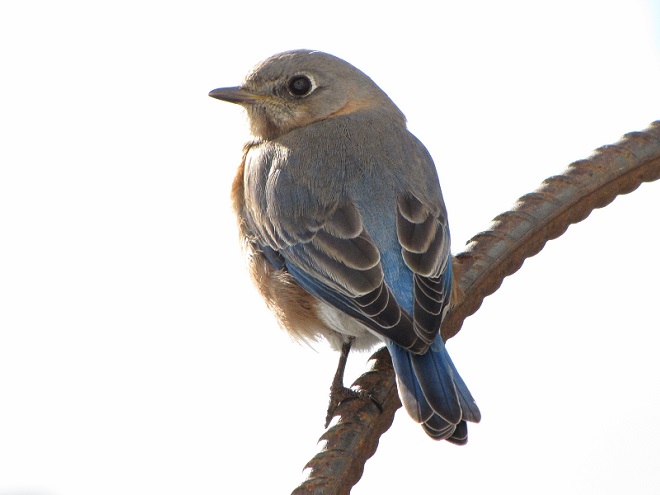
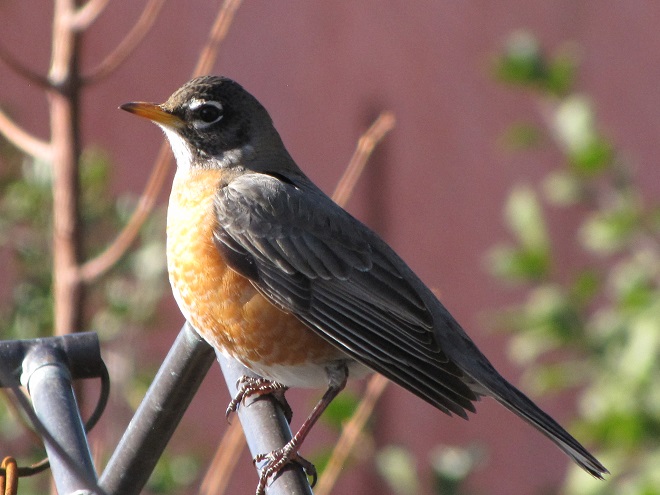
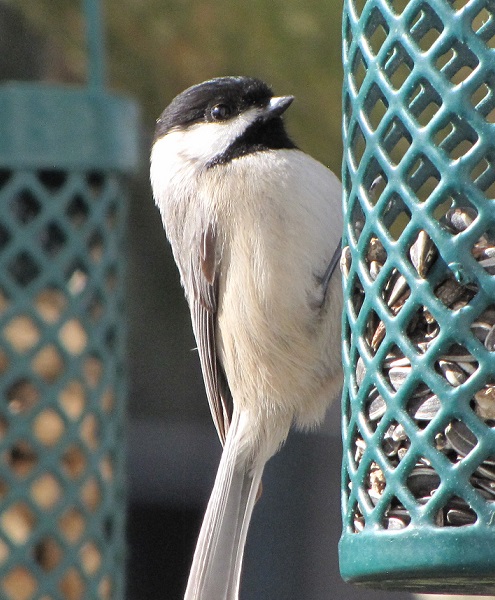
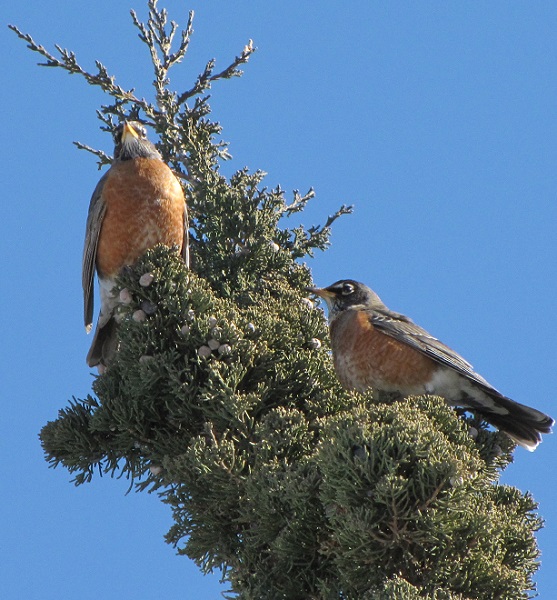
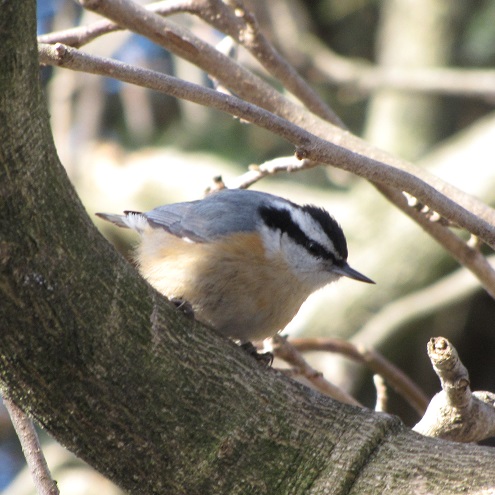
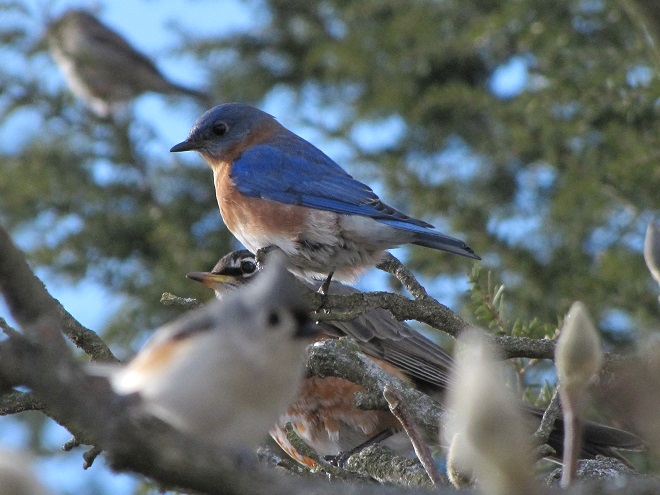
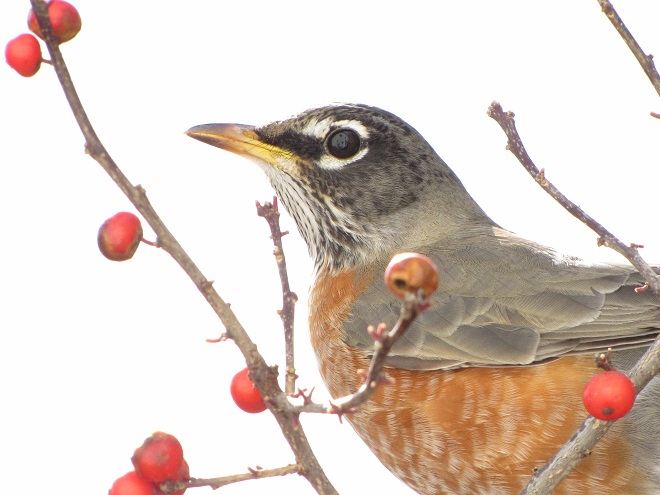
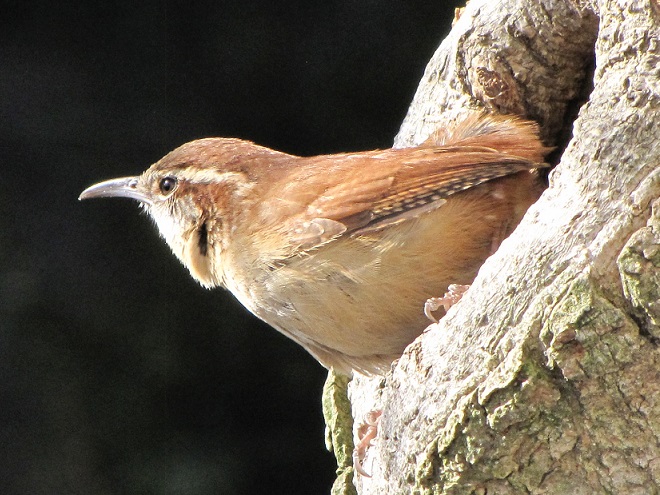
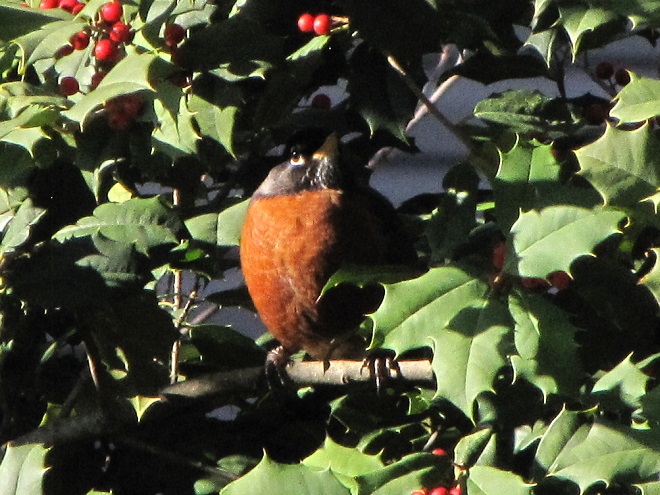
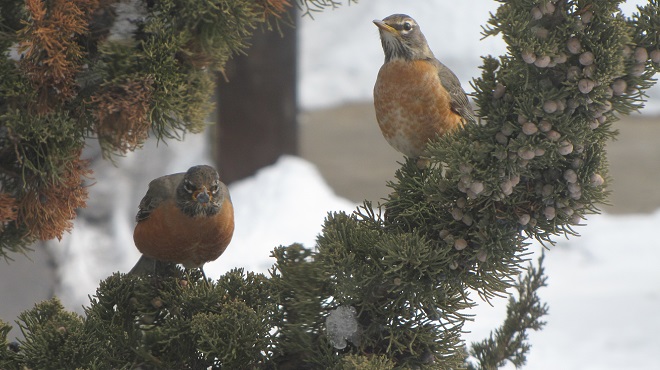
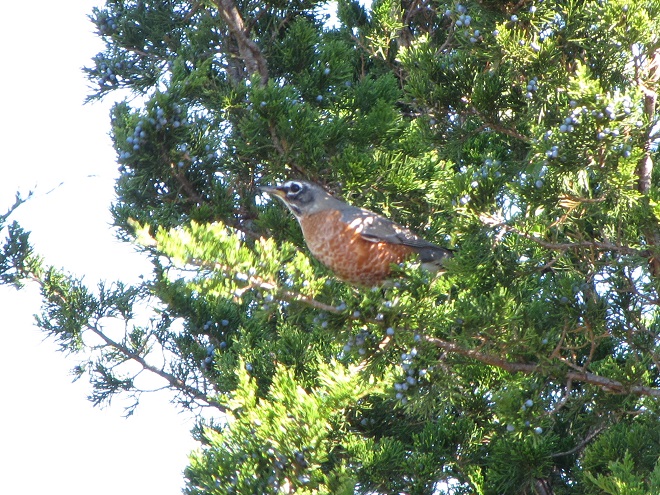
American Robins consuming Common Winterberry fruits.One of between one hundred and two hundred American Robins seen feeding on berries at susquehannawildife.net headquarters this morning.A Dark-eyed Junco searching the ground for seeds.An American Robin in the boughs of a “Hollywood Juniper”, a cultivar of the Chinese Juniper (Juniperus chinensis ‘Torulosa’, also known as J. c. ‘Kaizuka’).A Carolina Wren on the peanut feeder.An American Robin searching for fallen berries beneath a holly.A female Eastern Bluebird.An American Robin takes a break from the buffet.A Carolina Chickadee preparing to pluck a sunflower seed from a tube feeder.American Robins feeding on “Hollywood Juniper” berries.One of two Red-breasted Nuthatches spending the week at susquehannawildlife.net headquarters.A male Eastern Bluebird among the crowd in the garden’s trees.An American Robin and Common Winterberry, a native deciduous holly.A Carolina Wren investigates a tree cavity, a potential nest site in coming weeks.
We don’t have a resident groundhog at susquehannawildlife.net headquarters, but the arrival of an American Robin to begin cleaning the abundance of berries from our holly trees and shrubs gives us the idea that spring is just around the corner. We could hardly be happier.
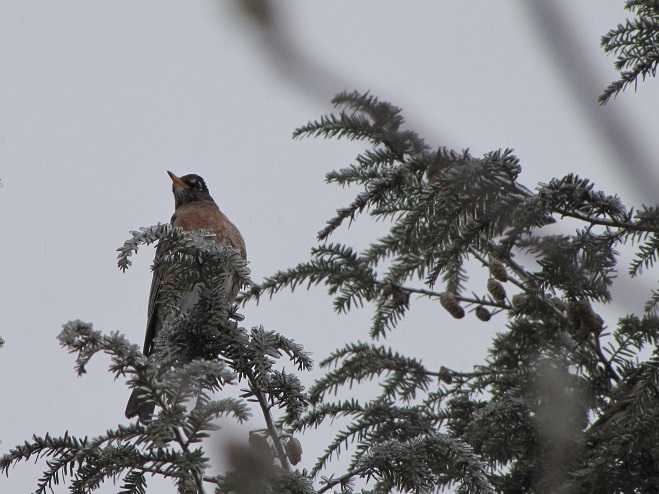
From a lookout atop an Eastern Hemlock, a Northern Mockingbird maintains a vigil over a garden full of berry-producing plants. To assure their survival during cold weather, these bold birds will vigorously defend winter food supplies on hollies, viburnums, poison-ivy, bittersweet, and other fruit-producing trees, shrubs, and vines, often swooping in to startle and flush birds and other animals that approach its stores too closely.
You probably know that fall is an excellent time for planting. Roots continue to grow in the warm soil even after the air becomes cool and leaves change color, setting the stage for your new trees and shrubs to sport splendid foliage and flowers in spring.
But did you know that autumn can be the best time to visit your local nursery/garden center to select the native trees and shrubs that produce berries for attracting and feeding overwintering birds and other wildlife? Here are three of our favorites. Each is looking its best from now through at least the first half of winter.
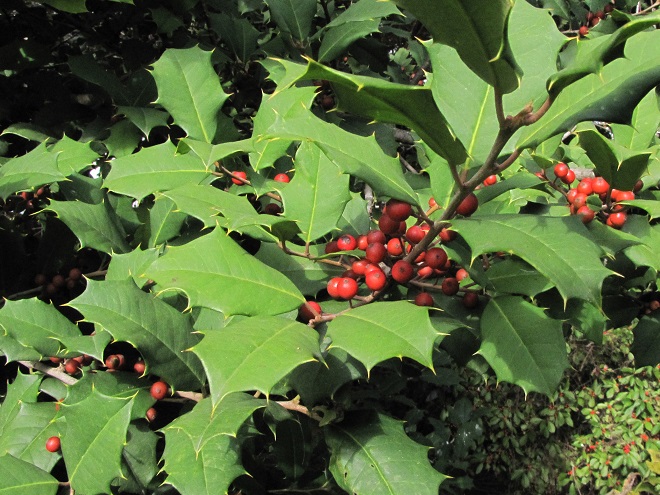
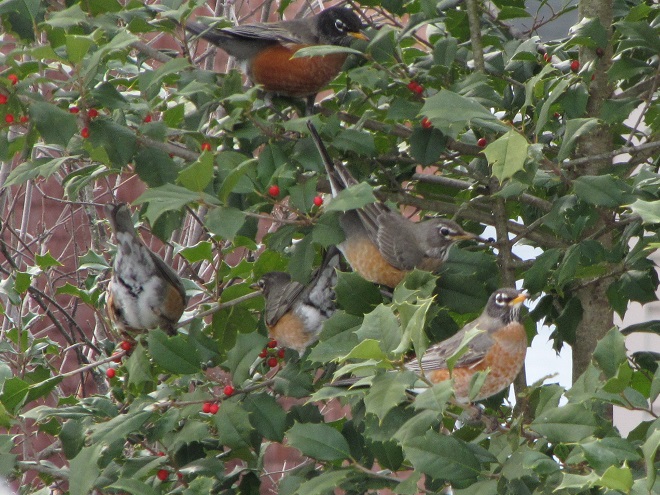
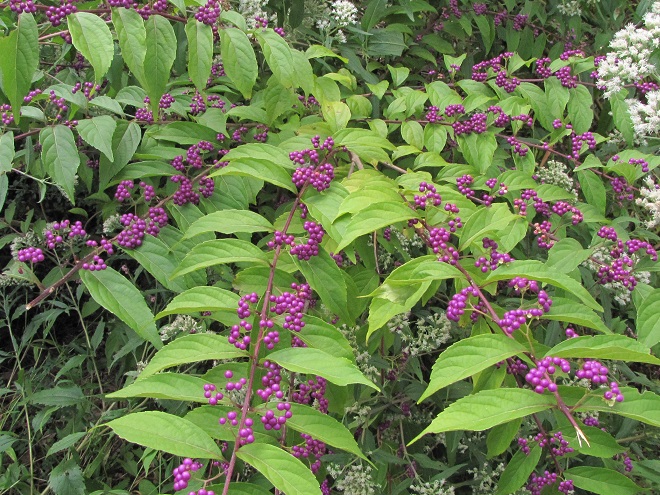
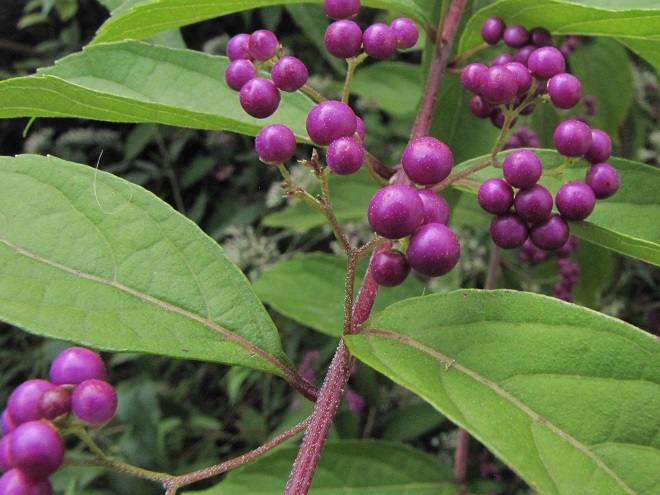
American Holly is a favorite small evergreen tree for winter beauty in the landscape. The showy red berries are produced only on female plants, so you’ll need to select at least one of each gender to grow fruit. They do best in acidic soils, responding well to a mulching of plenty of dead leaves each fall.American Robins eating American Holly berries in February.Common Winterberry is a slow-growing deciduous shrub and a member of the holly family; you’ll need both a male and a female plant to get a crop of berries. It just so happens that fall is the best time to visit the nursery for selecting a female that’s a good fruit producer. Winterberry is at its best under full sun in moist, acidic soils. These plants are very happy to receive the water from your downspouts and a mulching from the leaves in your garden.An American Robin feeds on Common Winterberry on a snowy February evening.American Beautyberry (Callicarpa americana) is a low-growing arching deciduous shrub of sunny locations in various well-drained soils. It is a plant of the southern United States that, given current temperature trends, will thrive in the Lower Susquehanna River Watershed, particularly on south-facing slopes. And yes, it does well in mass plantings on embankments.The fruits of American Beautyberry may be the most colorful of any native species.
There’s still time to get the shovel dirty, so visit your local native plant dealer this week and invest in some fruit-producing trees and shrubs. Fall is also a good time to plant pines, spruces, and hemlocks. Who knows, you might just get a good end-of-season deal.
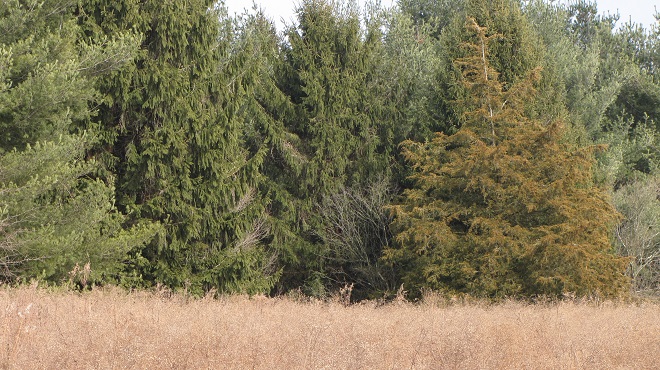
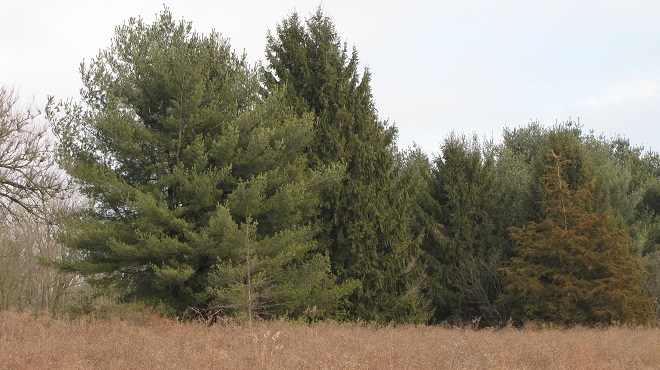
When planted in mixed clumps, conifers like these White Pines, Norway Spruces, and Eastern Red Cedar provide excellent winter food and cover for birds and other wildlife.
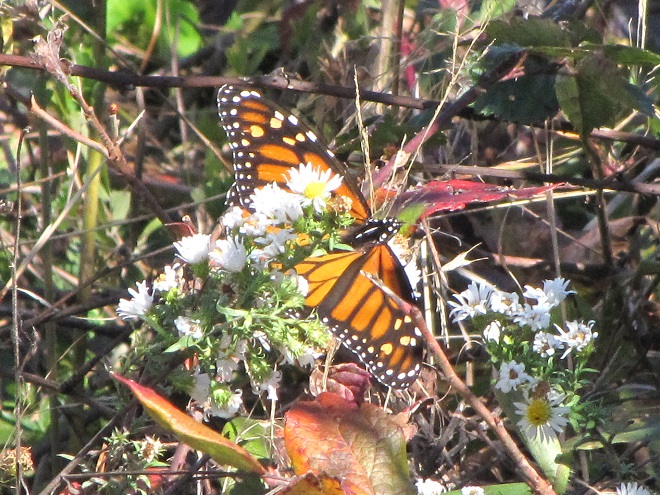
After somehow finding refuge from freezing temperatures during recent nights, Monarch butterflies were on the move in the Lower Susquehanna River Watershed this afternoon. This one was photographed taking a break to recharge on nectar from flowering Frost Aster, also known as Heath Aster.
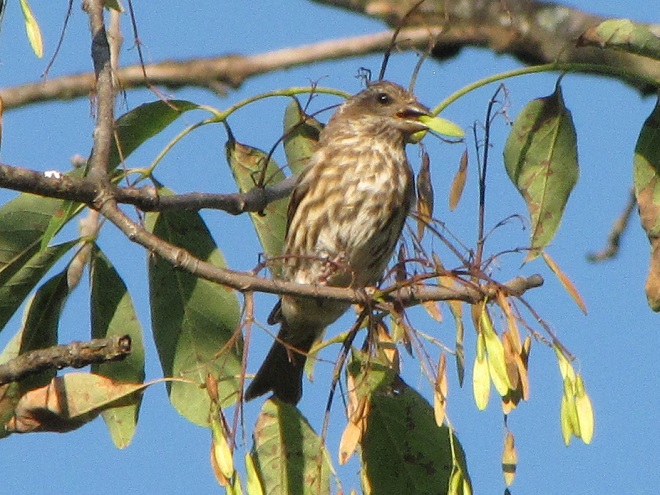
It seems a bit early, but Purple Finches are indeed beginning to transit the Lower Susquehanna River Watershed on their way south. This one is feeding on the abundance of seeds produced by a Green Ash that has, at least thus far, survived the Emerald Ash Borer invasion.
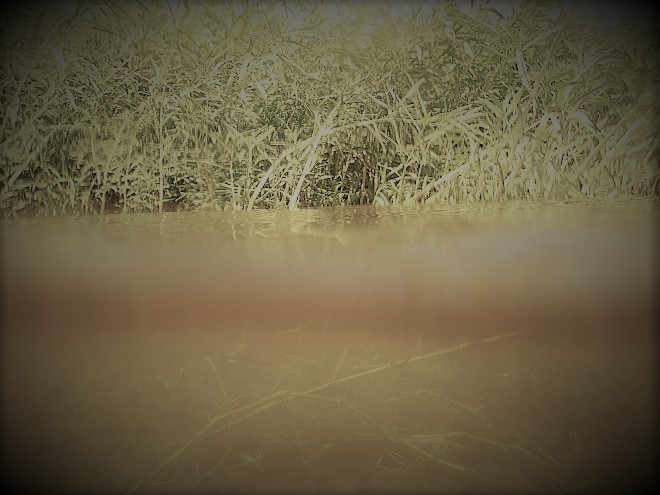
First there was the Nautilus. Then there was the Seaview. And who can forget the Yellow Submarine? Well, now there’s the S. S. Haldeman, and today we celebrated her shakedown cruise and maiden voyage. The Haldeman is powered by spent fuel that first saw light of day near Conewago Falls at a dismantled site that presently amounts to nothing more than an electrical substation. Though antique in appearance, the vessel discharges few emissions, provided there aren’t any burps or hiccups while underway. So, climb aboard as we take a cruise up the Susquehanna at periscope depth to have a quick look around!
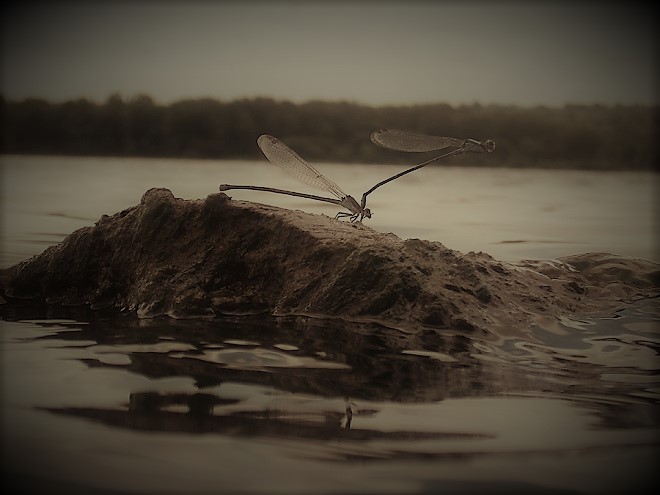
Brunner Island as seen from the east channel.Close-in approach to emergent Water Willow growing on an alluvial Island.The approach to York Haven Dam and Conewago Falls from the west channel.A pair of Powdered Dancers on a midriver log.
Watertight and working fine. Let’s flood the tanks and have a peek at the benthos. Dive, all dive!
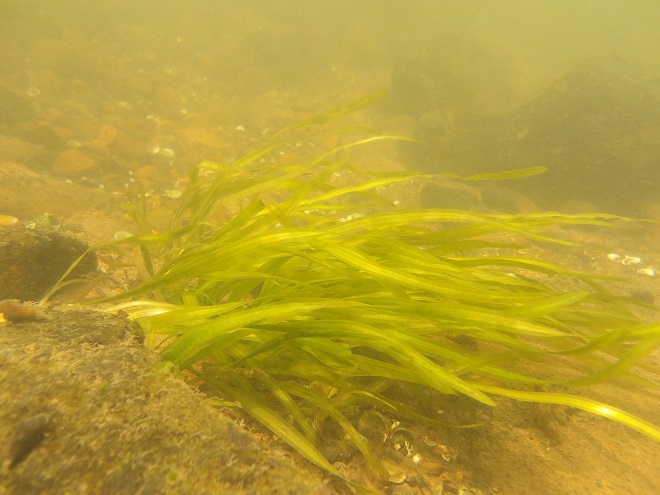
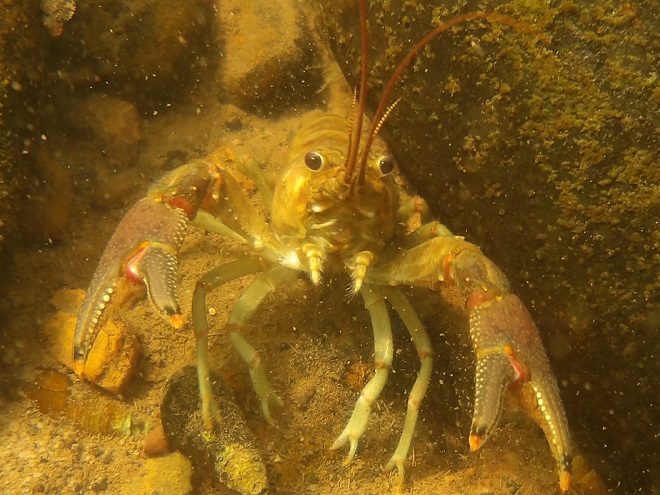
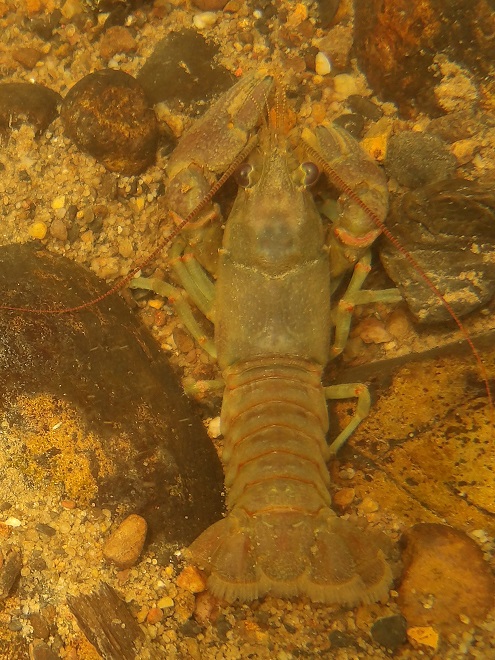
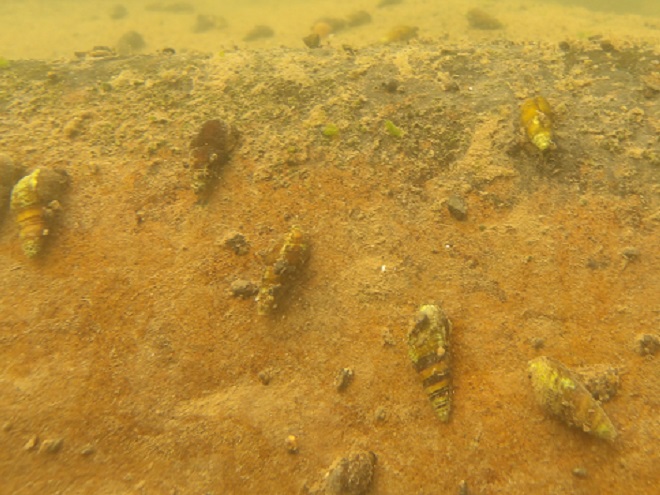
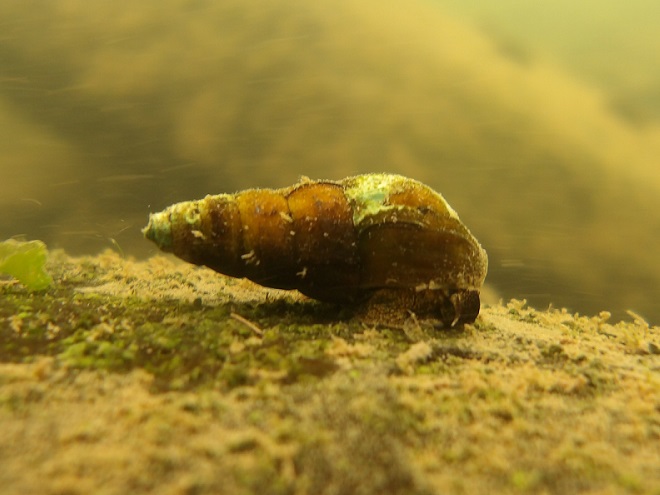
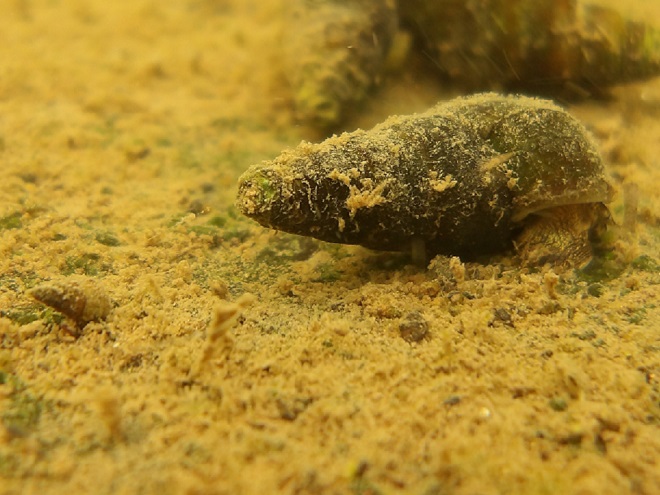
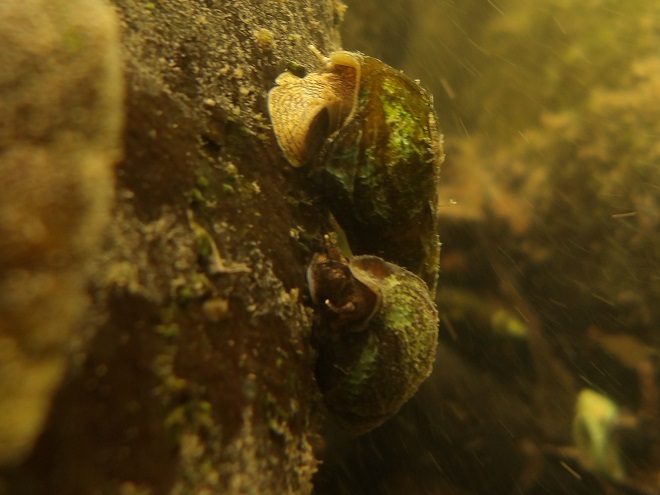
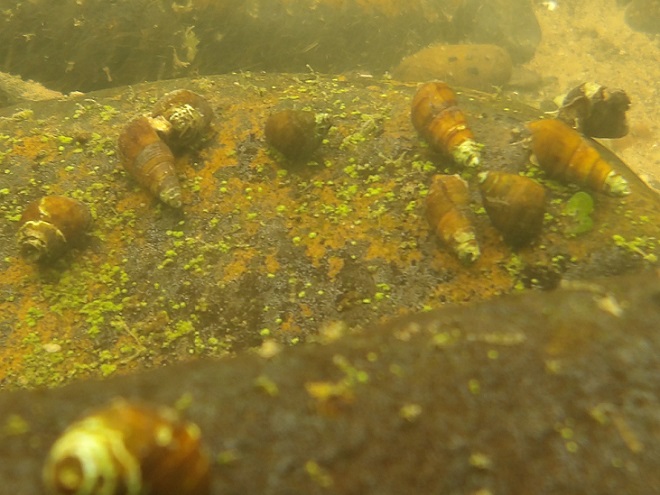
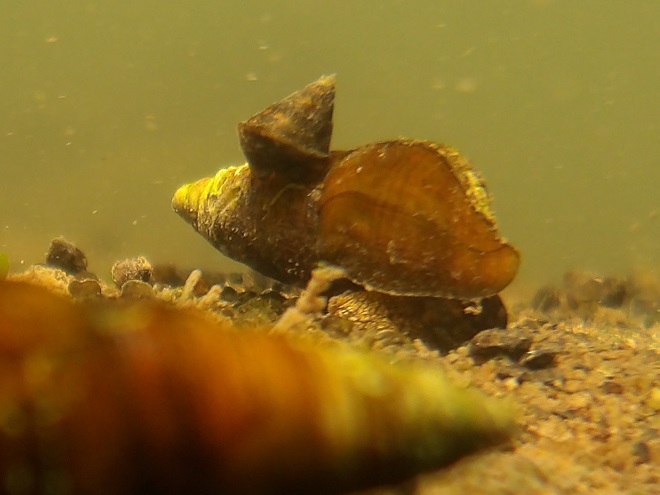
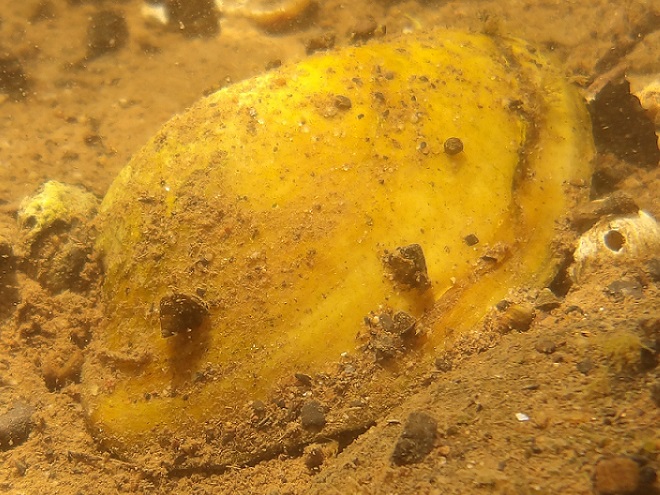
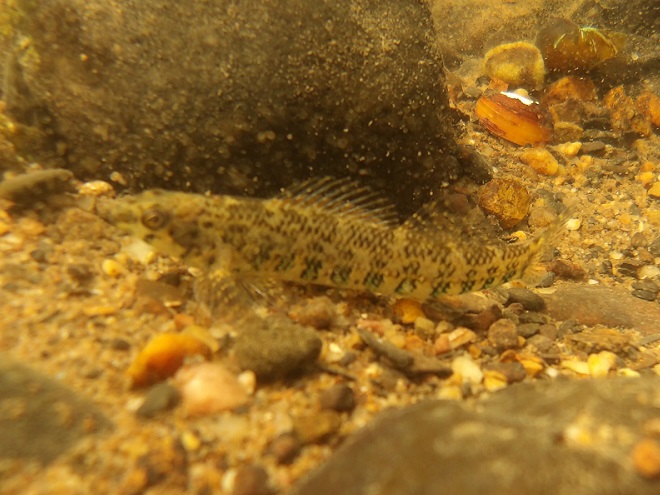
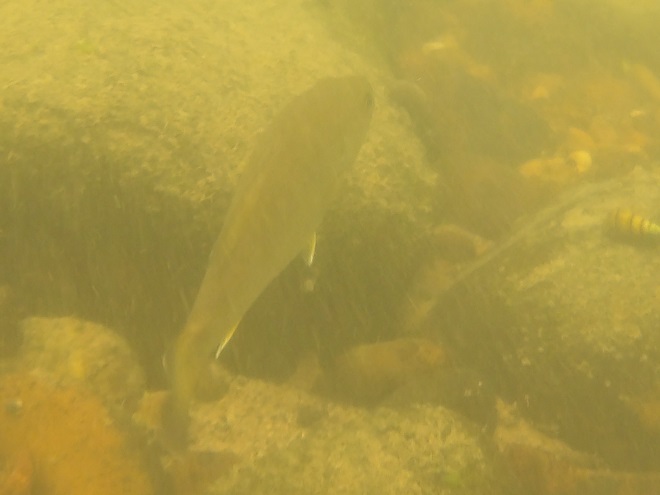
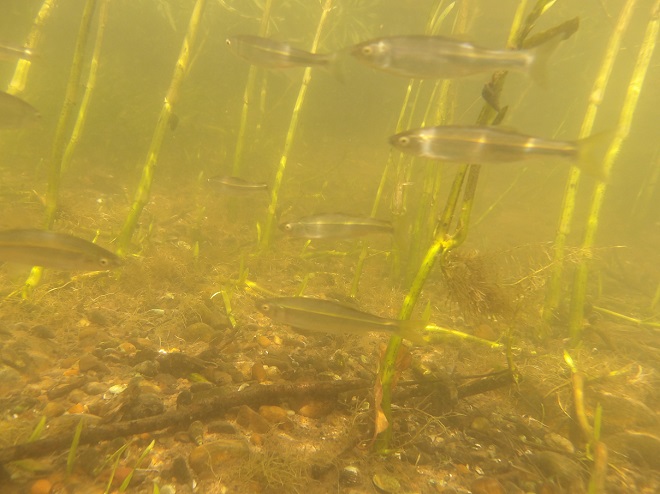
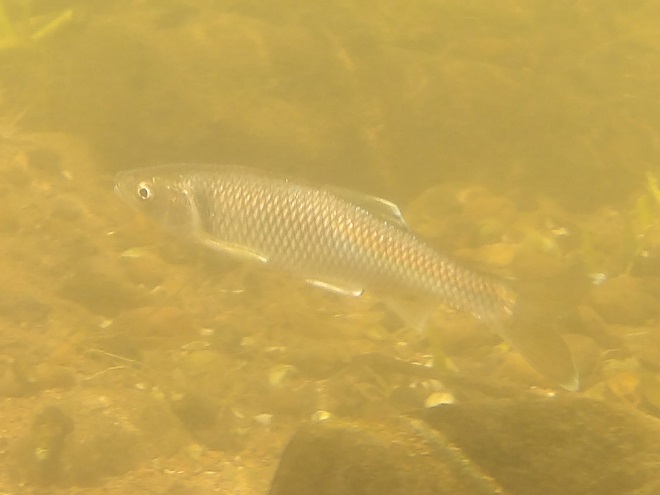
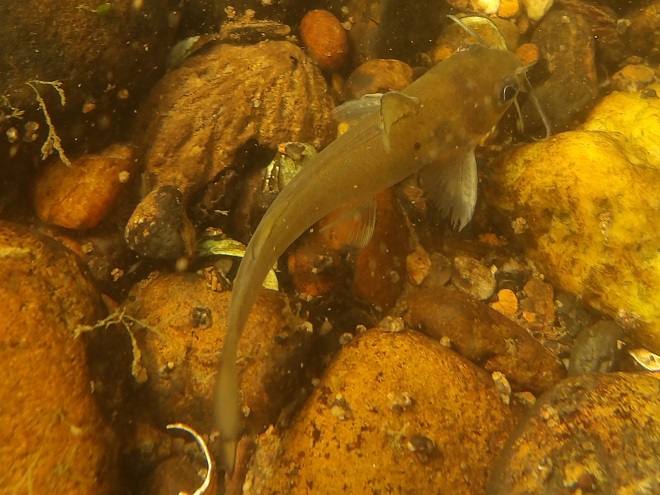
American Eelgrass, also known as Tapegrass, looks to be growing well in the channels. Historically, vast mats of this plant were the primary food source for the thousands of Canvasback ducks that once visited the lower Susquehanna each autumn.As is Water Stargrass (Heteranthera dubia). When mature, both of these native plants provide excellent cover for young fish. Note the abundance of shells from deceased Asiatic Clams (Corbicula fluminea) covering the substrate.A three-tailed mayfly (Ephemeroptera) nymph and a several exoskeletons cling to the downstream side of a rock.This hollowed-out stick may be a portable protective shelter belonging to a Comb-lipped Casemaker Caddisfly larva (Calamoceratidae). The larva itself appears to be extending from the end of the “case” in the upper right of the image. Heteroplectron americanum, a species known for such behavior, is a possibility. In the Susquehanna and its tributaries, the Rusty Crayfish (Faxonius rusticus) is an introduced invasive species. It has little difficulty displacing native species due to its size and aggressiveness.A Rusty Crayfish.Summers with conditions that promote eelgrass and stargrass growth tend to be big years for Virginian River Horn Snails (Elimia virginica). 2022 appears to be one of those years. They’re abundant and they’re everywhere on the rocks and gravel substrate in midriver. Feeding almost incessantly on algae and detritus, these snails are an essential component of the riverine ecosystem, breaking down organic matter for final decomposition by bacteria and fungi.Bits of debris suspended in the flowing water streak by this Virginian River Horn Snail. The spire-shaped shell is a streamlining adaptation for maneuvering and holding fast in the strong current.A young Virginian River Horn Snail following a mature adult. Note the green algae growing among the decaying plant and animal remains that blanket the river bottom.Two of a population that may presently include millions of Virginian River Horn Snails living downstream of Conewago Falls.Virginian River Horn Snails with Lesser Mystery Snails (Campeloma decisum), another native species commonly encountered at Conewago Falls and in surrounding waters.A River Snail (Leptoxis carinata), also known as a Crested Mudalia, hitching a ride on a Virginian River Horn Snail. The two species are frequently found together.A River Snail cleaning the shell of a native freshwater Unionidae mussel, Lampsilis cariosa, commonly called the Yellow Lampmussel or Carried Lampmussel. Because of their general decline in abundance and range, all Unionidae mussels are protected in Pennsylvania.The Banded Darter (Etheostoma zonale) is a member of the perch family (Percidae).A Smallmouth Bass in strong current.Along the edge of an alluvial island at midriver, Cyprinella (Spotfin or Satinfin) Shiners gather in the cover of an emergent stand of Water Willow. The closely related Spotfin Shiner (Cyprinella spiloptera) and Satinfin Shiner (Cyprinella analostanus) are nearly impossible to differentiate in the field.A breeding condition male Cyprinella (Spotfin or Satinfin) Shiner.A juvenile Channel Catfish.
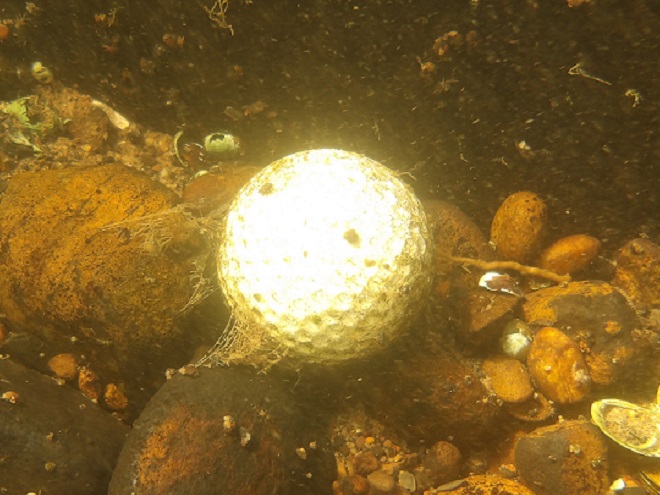
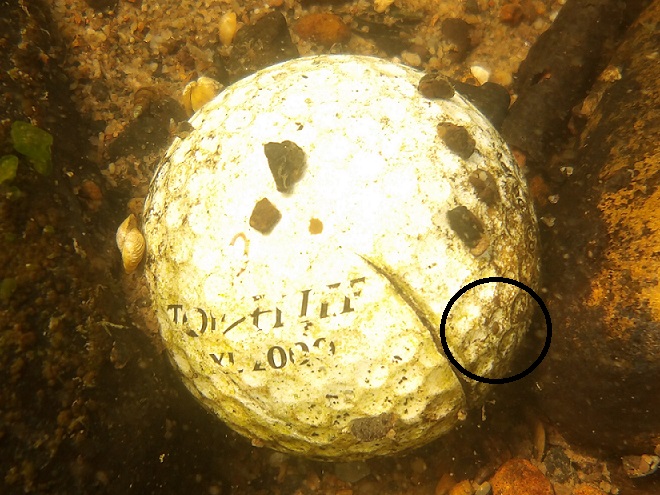
We’re finding that a sonar “pinger” isn’t very useful while running in shallow water. Instead, we should consider bringing along a set of Pings—for the more than a dozen golf balls seen on the river bottom. It appears they’ve been here for a while, having rolled in from the links upstream during the floods. Interestingly, several aquatic species were making use of them.
River Snail cleaning a golf ball.A golf ball used as an anchor point for silk cases woven by Net-spinning Caddisfly (Hydropsychidae) larvae to snare food from the water column.A Creeping Ancylid (Ferrissia species), a tiny gastropod also known as a Coolie Hat Snail, River Limpet, or Brook Freshwater Limpet, inhabits the dimple on a “Top Flight”.A closeup view of the Creeping Ancylid. The shell sits atop the snail’s body like a helmet.We now know why your golf balls always end up in the drink, it’s where they go to have their young.
Well, it looks like the skipper’s tired and grumpy, so that’s all for now. Until next time, bon voyage!
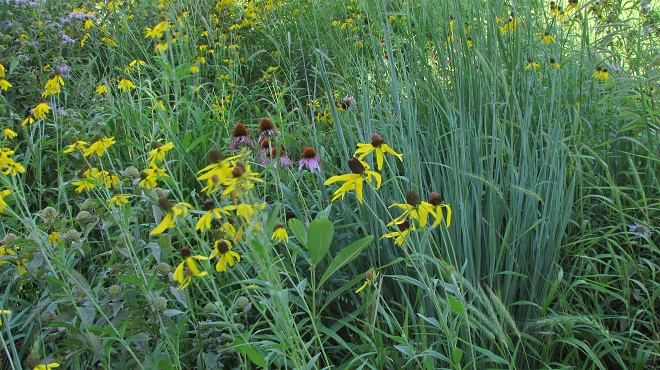
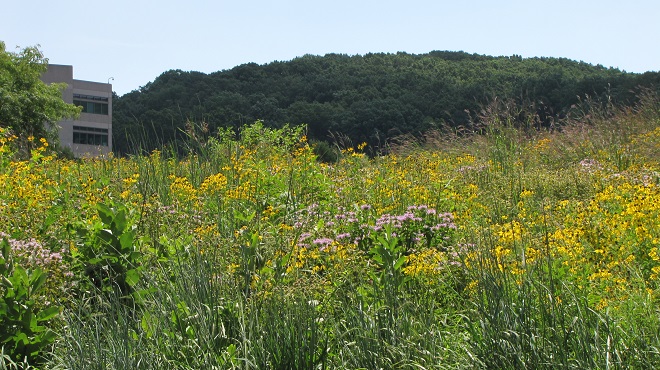
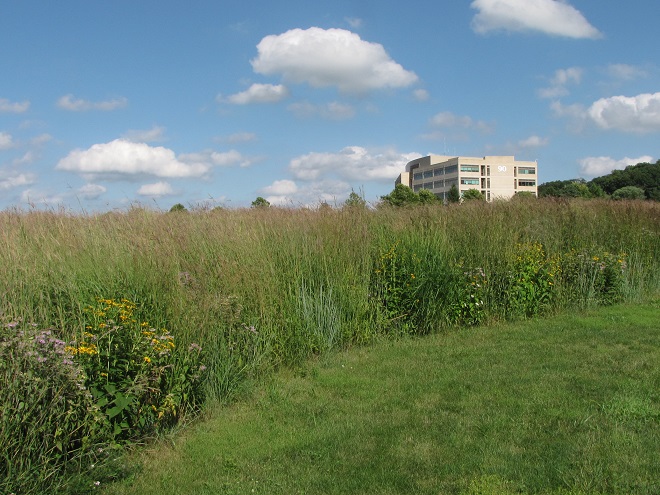
This tallgrass prairie wildflower planting on a health campus in Hershey, Pennsylvania, enhances stormwater management and benefits butterflies and other wildlife. Reducing the acreage maintained as manicured lawn has helped disperse the large flocks of resident Canada Geese (a population of invasive native transplants) that frequented the property and posed a serious hazard to medevac helicopters flying in and out of the facility.Big Bluestem, a warm-season grass, dominates the site and is complemented by Indiangrass and tall wildflowers including Common Milkweed, Wild Bergamot, Oxeye, Black-eyed Susan, Prairie Coneflower, and Purple Coneflower.
This month, the International Union for Conservation of Nature (I.U.C.N.) added the Migratory Monarch Butterfly (Danaus plexippus plexippus) to its “Red List of Threatened Species”, classifying it as endangered. Perhaps there is no better time than the present to have a look at the virtues of replacing areas of mowed and manicured grass with a wildflower garden or meadow that provides essential breeding and feeding habitat for Monarchs and hundreds of other species of animals.
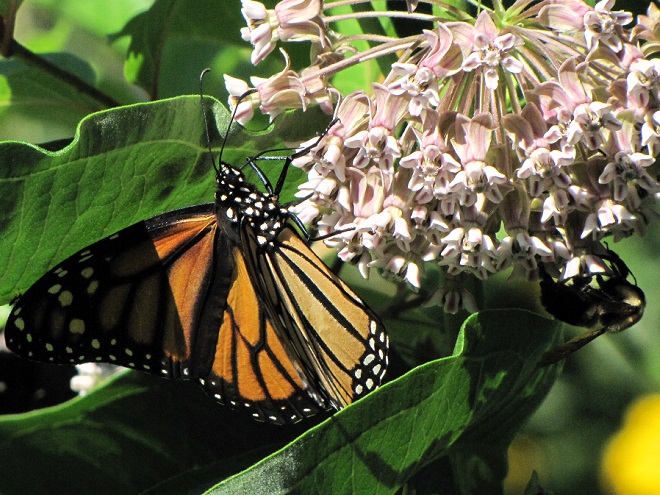
A recently arrived Monarch visits a cluster of fragrant Common Milkweed flowers in the garden at the susquehannawildlife.net headquarters. Milkweeds included among a wide variety of plants in a garden or meadow habitat can help local populations of Monarchs increase their numbers before the autumn flights to wintering grounds commence in the fall. Female Monarchs lay their eggs on milkweed leaves, then, after hatching, the larvae (caterpillars) feed on them before pupating.
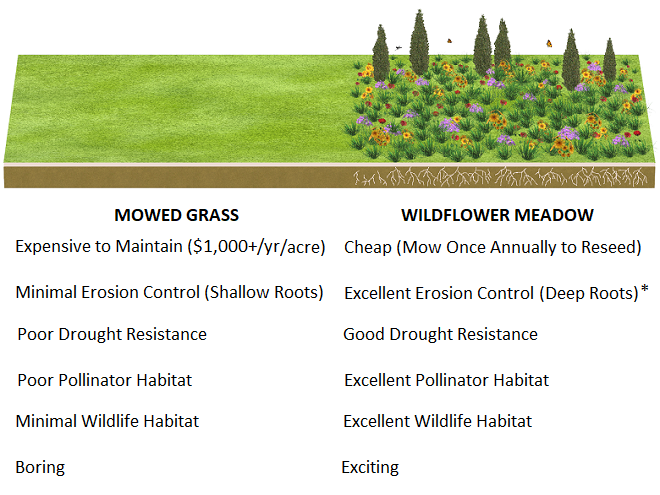
If you’re not quite sure about finally breaking the ties that bind you to the cult of lawn manicuring, then compare the attributes of a parcel maintained as mowed grass with those of a space planted as a wildflower garden or meadow. In our example we’ve mixed native warm season grasses with the wildflowers and thrown in a couple of Eastern Red Cedars to create a more authentic early successional habitat.
* Particularly when native warm-season grasses are included (root depth 6′-8′)
Still not ready to take the leap. Think about this: once established, the wildflower planting can be maintained without the use of herbicides or insecticides. There’ll be no pesticide residues leaching into the soil or running off during downpours. Yes friends, it doesn’t matter whether you’re using a private well or a community system, a wildflower meadow is an asset to your water supply. Not only is it free of man-made chemicals, but it also provides stormwater retention to recharge the aquifer by holding precipitation on site and guiding it into the ground. Mowed grass on the other hand, particularly when situated on steep slopes or when the ground is frozen or dry, does little to stop or slow the sheet runoff that floods and pollutes streams during heavy rains.
What if I told you that for less than fifty bucks, you could start a wildflower garden covering 1,000 square feet of space? That’s a nice plot 25′ x 40′ or a strip 10′ wide and 100′ long along a driveway, field margin, roadside, property line, swale, or stream. All you need to do is cast seed evenly across bare soil in a sunny location and you’ll soon have a spectacular wildflower garden. Here at the susquehannawildllife.net headquarters we don’t have that much space, so we just cast the seed along the margins of the driveway and around established trees and shrubs. Look what we get for pennies a plant…
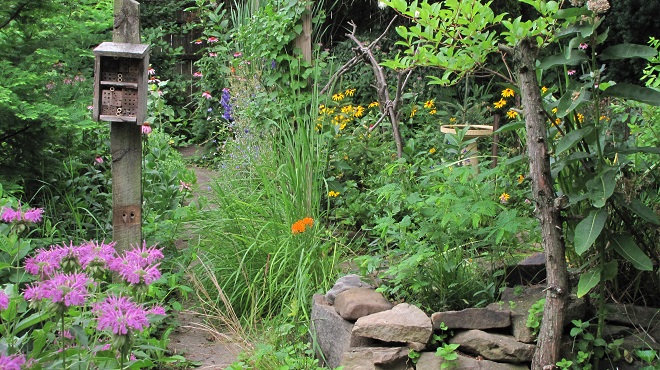
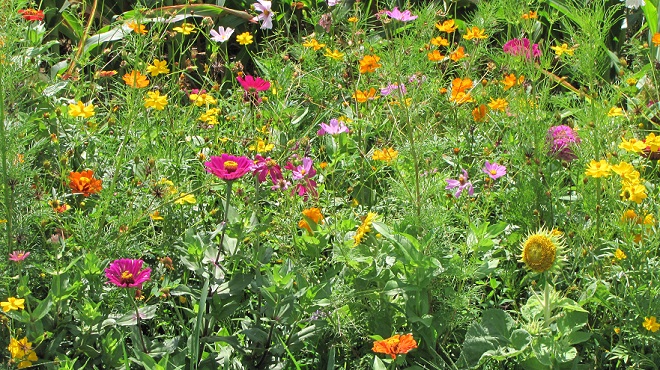
Some of the wildflowers and warm-season grasses grown from scattered seed in the susquehannawildlife.net headquarters garden.
Here’s a closer look…
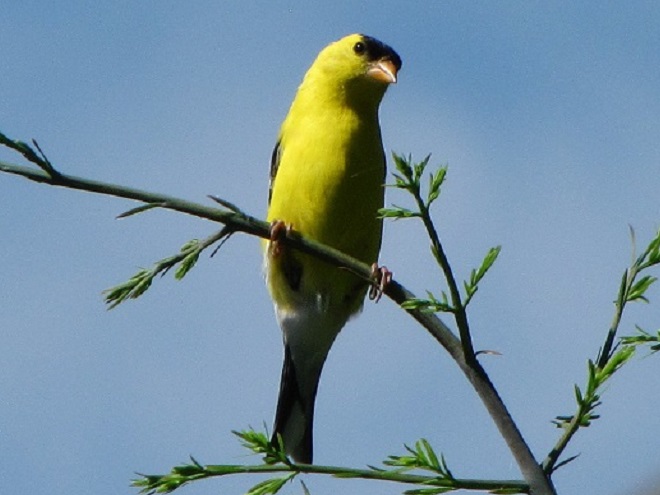
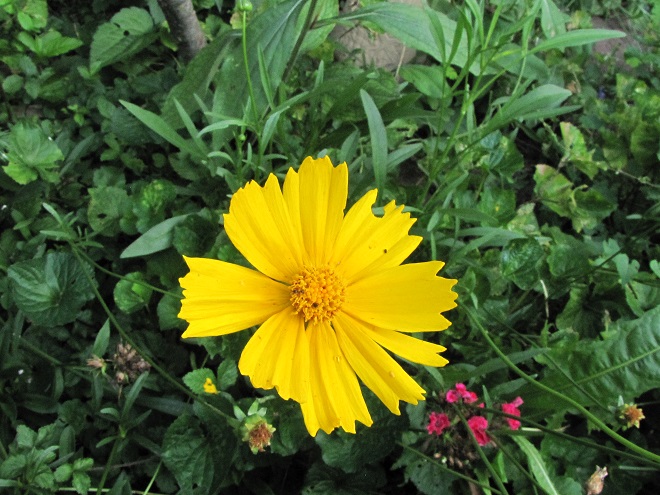
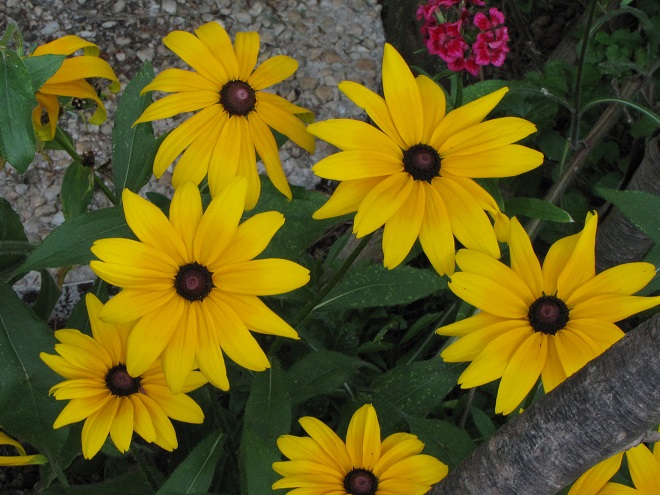
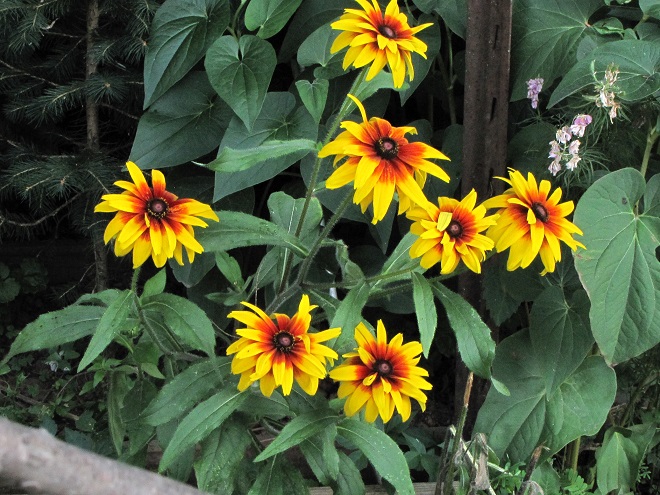
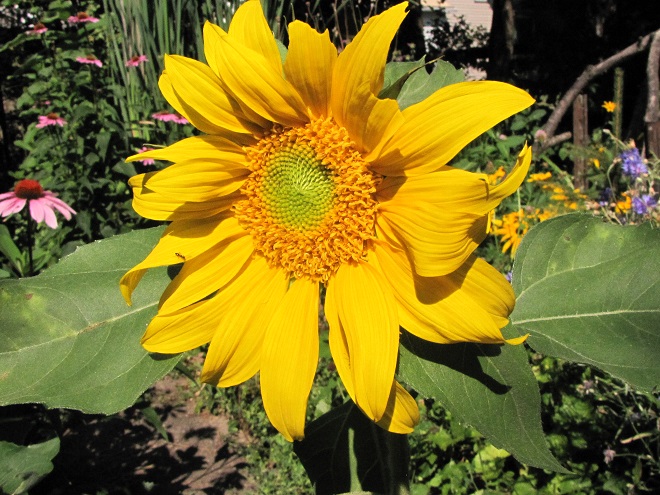
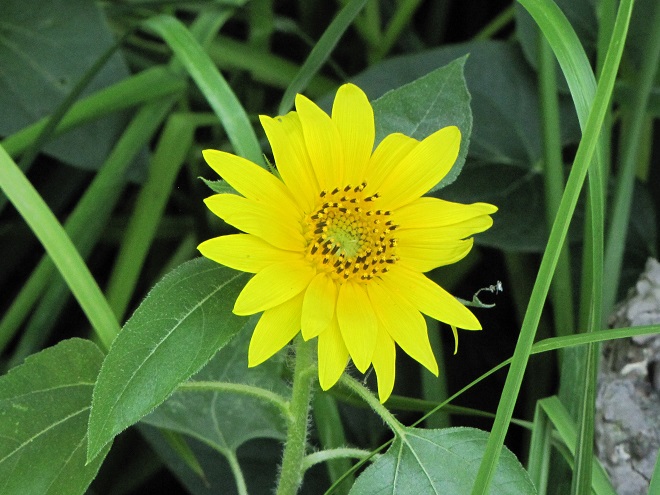
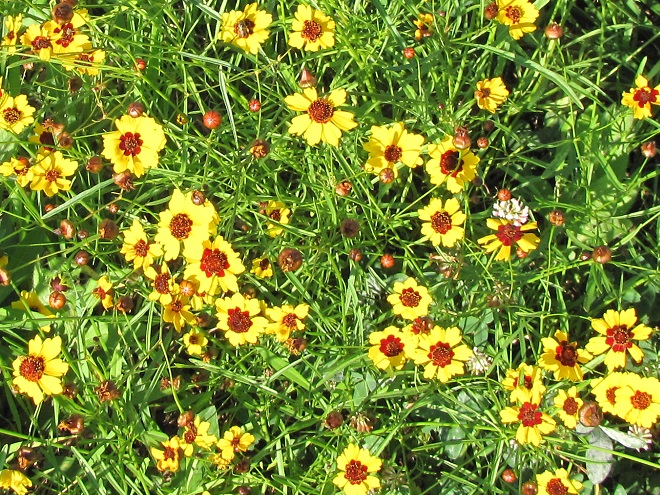
Lance-leaved Coreopsis (Coreopsis lanceolata), a perennial.Black-eyed Susan, a biennial or short-lived perennial.“Gloriosa Daisy”, a variety of Black-eyed Susan, a biennial or short-lived perennial.Purple Coneflower, an excellent perennial for pollinators. The ripe seeds provide food for American Goldfinches.A short variety of Common Sunflower, an annual and a source of free bird seed.Another short variety of Common Sunflower, an annual.
All this and best of all, we never need to mow.
Around the garden, we’ve used a northeast wildflower mix from American Meadows. It’s a blend of annuals and perennials that’s easy to grow. On their website, you’ll find seeds for individual species as well as mixes and instructions for planting and maintaining your wildflower garden. They even have a mix specifically formulated for hummingbirds and butterflies.
When planted in spring and early summer, annuals included in a wildflower mix will provide vibrant color during the first year. Many varieties will self-seed to supplement the display provided by biennials and perennials in subsequent years.A northeast wildflower mix from American Meadows. There are no fillers. One pound of pure live seed easily plants 1,000 square feet.
Nothing does more to promote the spread and abundance of non-native plants, including invasive species, than repetitive mowing. One of the big advantages of planting a wildflower garden or meadow is the opportunity to promote the growth of a community of diverse native plants on your property. A single mowing is done only during the dormant season to reseed annuals and to maintain the meadow in an early successional stage—preventing reversion to forest.
For wildflower mixes containing native species, including ecotypes from locations in and near the Lower Susquehanna River Watershed, nobody beats Ernst Conservation Seeds of Meadville, Pennsylvania. Their selection of grass and wildflower seed mixes could keep you planting new projects for a lifetime. They craft blends for specific regions, states, physiographic provinces, habitats, soils, and uses. Check out these examples of some of the scores of mixes offered at Ernst Conservation Seeds…
Pipeline Mixes
Pasture, Grazing, and Hay Mixes
Cover Crops
Pondside Mixes
Warm-season Grass Mixes
Retention Basin Mixes
Wildlife Mixes
Pollinator Mixes
Wetland Mixes
Floodplain and Riparian Buffer Mixes
Rain Garden Mixes
Steep Slope Mixes
Solar Farm Mixes
Strip Mine Reclamation Mixes
We’ve used their “Showy Northeast Native Wildflower and Grass Mix” on streambank renewal projects with great success. For Monarchs, we really recommend the “Butterfly and Hummingbird Garden Mix”. It includes many of the species pictured above plus “Fort Indiantown Gap” Little Bluestem, a warm-season grass native to Lebanon County, Pennsylvania, and milkweeds (Asclepias), which are not included in their northeast native wildflower blends. More than a dozen of the flowers and grasses currently included in this mix are derived from Pennsylvania ecotypes, so you can expect them to thrive in the Lower Susquehanna River Watershed.
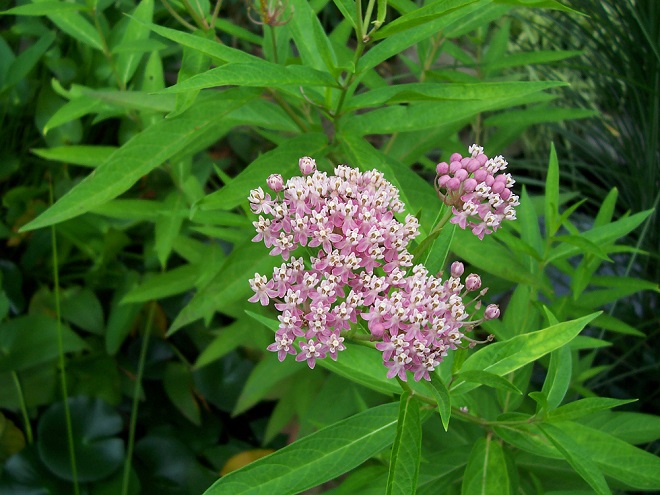
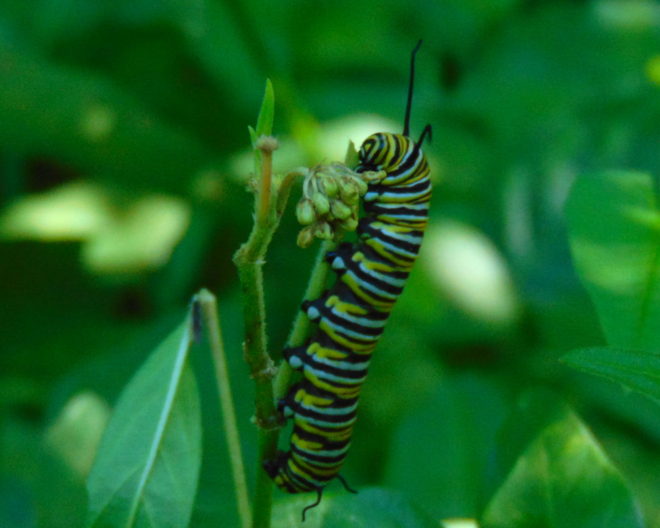
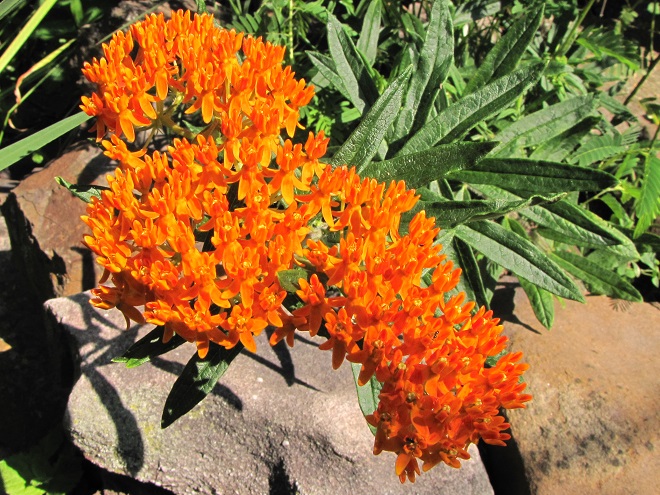
Swamp Milkweed, a perennial species, is included in the Ernst Seed “Butterfly and Hummingbird Garden Mix”. It is a favorite of female Monarchs seeking a location to deposit eggs.A Monarch larva (caterpillar) feeding on Swamp Milkweed.Butterfly Weed (Asclepias tuberosa) is included in the Ernst Seed “Butterfly and Hummingbird Garden Mix”. This perennial is also known as Butterfly Milkweed.Eastern Tiger Swallowtails are among the dozens of species of pollinators that will visit Butterfly Weed.
In addition to the milkweeds, you’ll find these attractive plants included in Ernst Conservation Seed’s “Butterfly and Hummingbird Garden Mix”, as well as in some of their other blends.
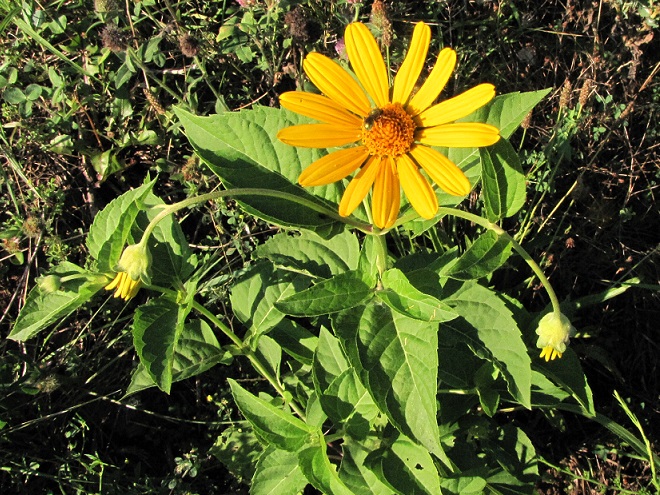
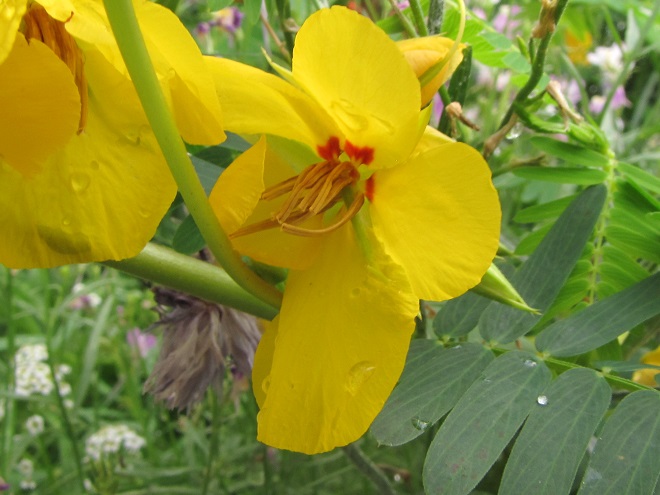
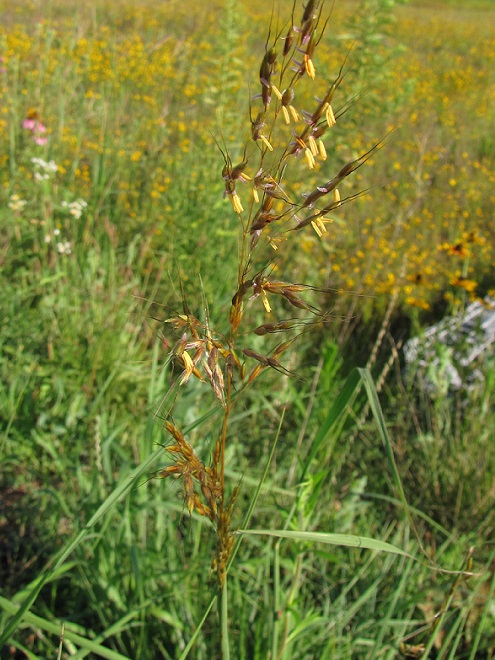
The perennial Wild Bergamot, also known as Bee Balm, is an excellent pollinator plant, and the tubular flowers are a favorite of hummingbirds.Oxeye is adorned with showy clusters of sunflower-like blooms in mid-summer. It is a perennial plant.Plains Coreopsis (Coreopsis tinctoria), also known as Plains Tickseed, is a versatile annual that can survive occasional flooding as well as drought.Gray-headed Coneflower (Ratibida pinnata), a tall perennial, is spectacular during its long flowering season.Goldenrods are a favorite nectar plant for migrating Monarchs in autumn. They seldom need to be sown into a wildflower garden; the seeds of local species usually arrive on the wind. They are included in the “Butterfly and Hummingbird Garden Mix” from Ernst Conservation Seeds in low dose, just in case the wind doesn’t bring anything your way.Is something missing from your seed mix? You can purchase individual species from the selections available at American Meadows and Ernst Conservation Seeds. Partridge Pea is a good native annual to add. It is a host plant for the Cloudless Sulphur butterfly and hummingbirds will often visit the flowers. It does really well in sandy soils.Indiangrass is a warm-season species that makes a great addition to any wildflower meadow mix. Its deep roots make it resistant to drought and ideal for preventing erosion.
Why not give the Monarchs and other wildlife living around you a little help? Plant a wildflower garden or meadow. It’s so easy, a child can do it.
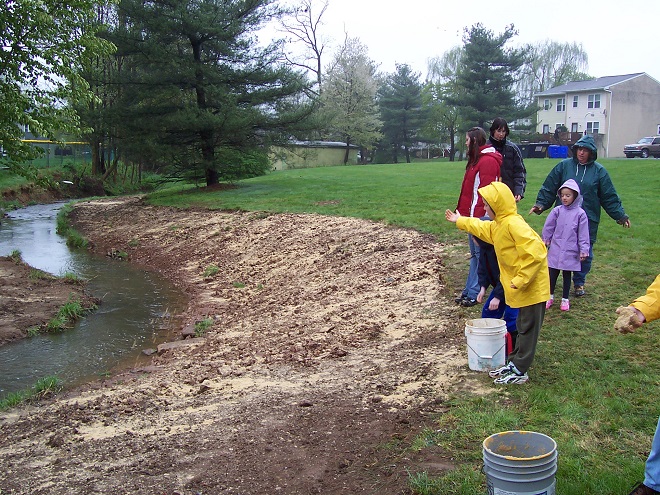
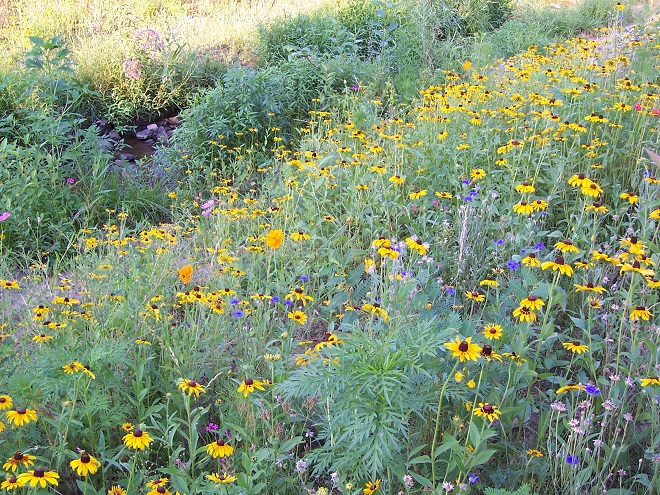
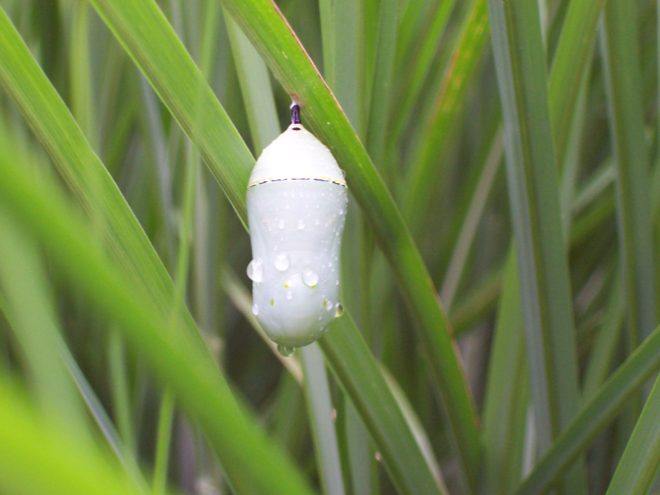
Volunteers sow a riparian buffer on a recontoured stream bank using wildflower and warm-season grass seed blended uniformly with sand. By casting the sand/seed mixture evenly over the planting site, participants can visually assure that seed has been distributed according to the space calculations.The same seeded site less than four months later.A Monarch pupa from which the adult butterfly will emerge.
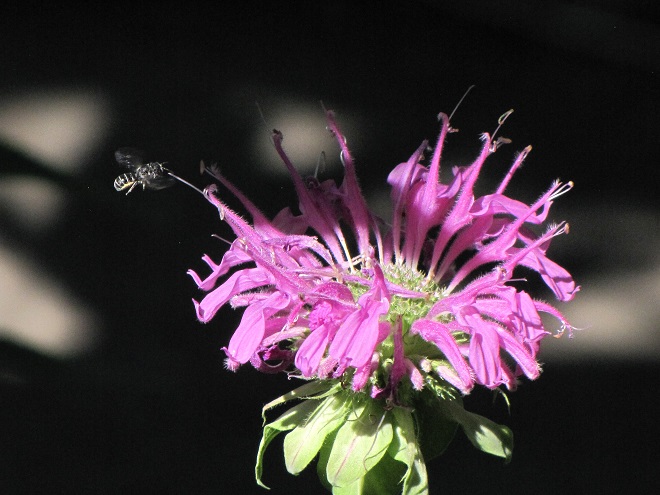
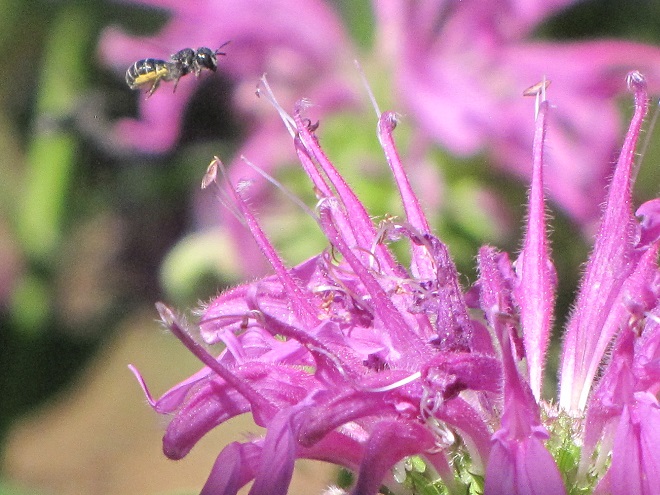
A Leafcutter Bee (Megachile species) visits the blossoms of a Wild Bergamot (Monarda fistulosa), a native wildflower also known as Bee Balm or Horsemint. Like Mason Bees (Osmia species), leafcutters will readily nest in the tubular cavities provided inside man-made bee houses. As their names suggest, Mason Bees use mud to construct and seal the cells for their eggs while leafcutters harvest leaves for the task. Female Leafcutter Bees, including this individual, can be recognized by the accumulation of pollen carried on the underside of their abdomen. Within each nest cell, a female will lay an egg atop a supply of pollen and nectar. These provisions will nourish the larva through development and transformation into an adult.
Is it the latest image from NASA’s new Webb Space Telescope? Nope, it’s the globular flower cluster of the Buttonbush, a native shrub species found throughout the Lower Susquehanna River Watershed. Buttonbush thrives in wet soil and seldom grows taller than 10 feet in height. Try it along stream banks, in stormwater retention basins, and in rain gardens fed by surface runoff or the outflow from your downspouts.
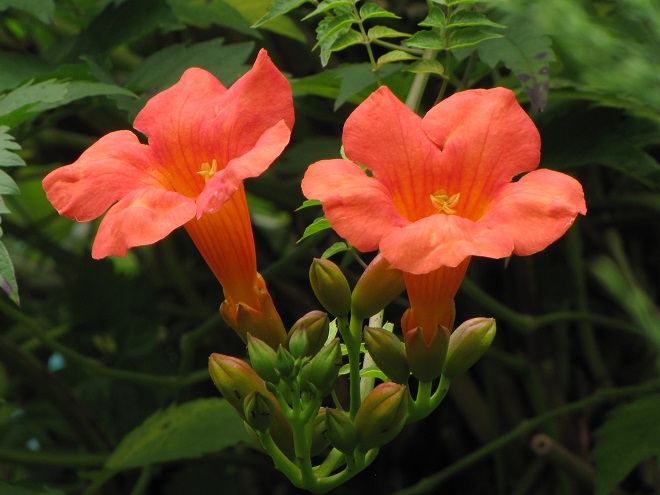
You’ve heard and read it before—native plants do the best job of providing sustenance for our indigenous wildlife. Let’s say you have a desire to attract hummingbirds to your property and you want to do it without putting up feeders. Well, you’ll need native plants that provide tubular flowers from which these hovering little birds can extract nectar. Place enough of them in conspicuous locations and you’ll eventually see hummingbirds visiting during the summer months. If you have a large trellis, pole, or fence, you might plant a Trumpet Vine, also known as Trumpet Creeper. They become adorned with an abundance of big red-orange tubular flowers that our Ruby-throated Hummingbirds just can’t resist. For consistently bringing hummingbirds to the garden, Trumpet Vine may be the best of the various plants native to the Mid-Atlantic States.
The showy bloom clusters of Trumpet Vine are irresistible to Ruby-throated Hummingbirds.
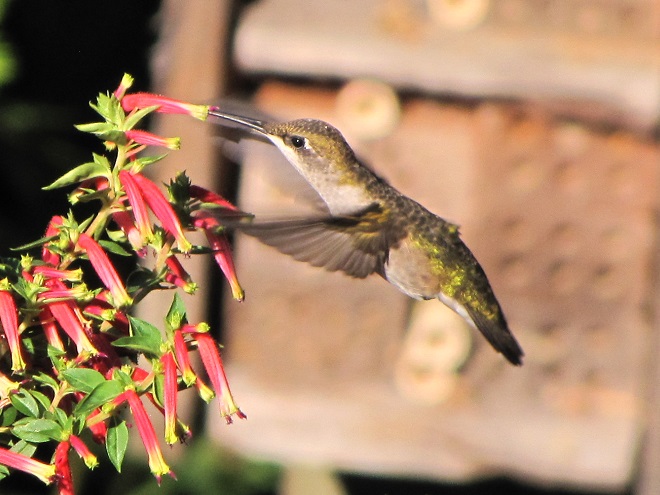
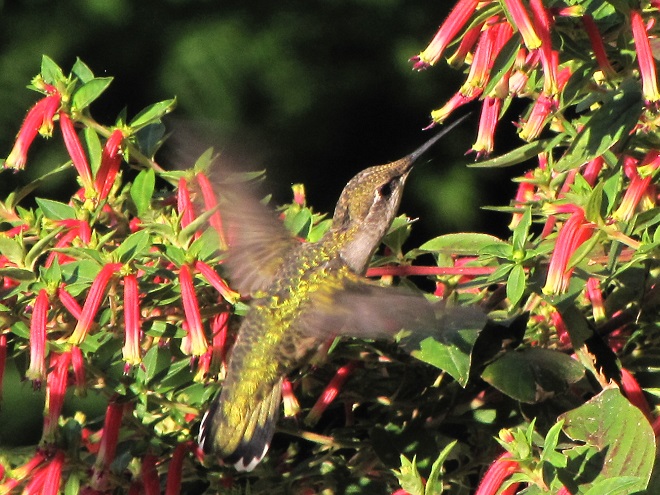
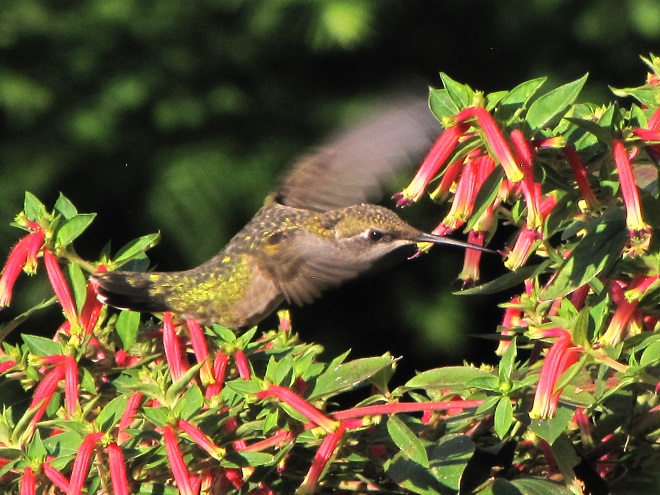
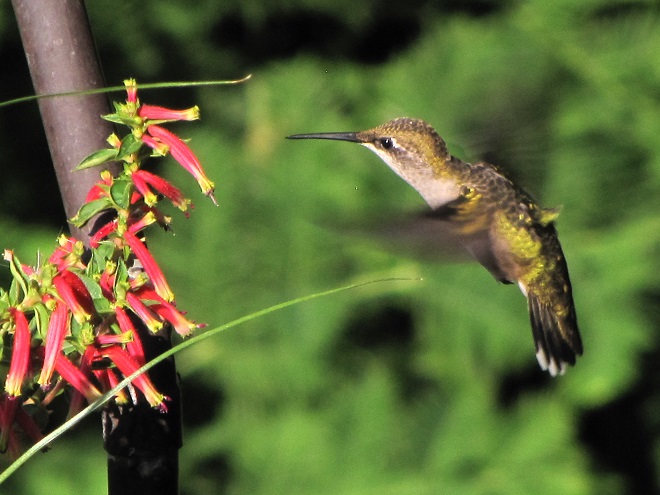
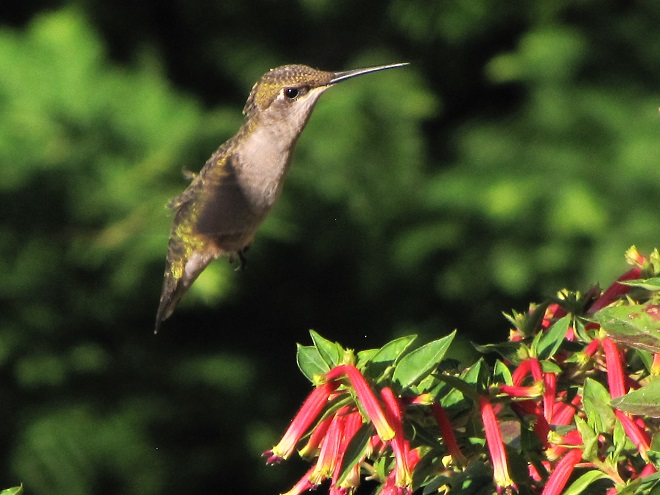
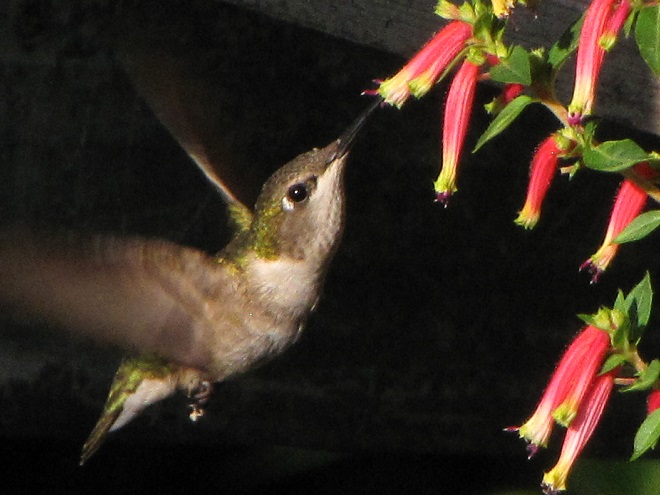
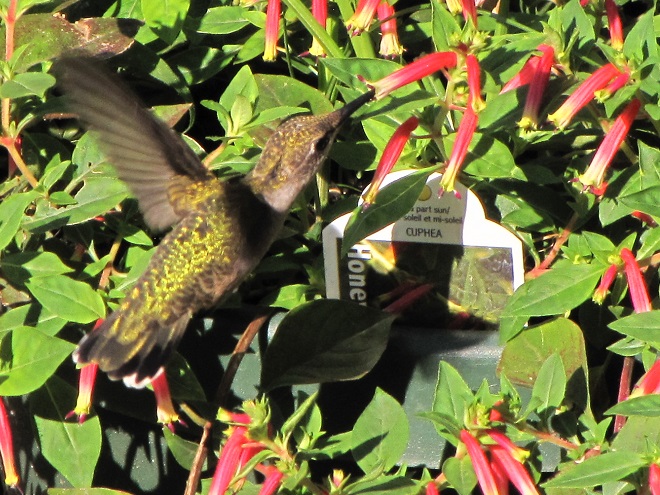
There is a plant, not particularly native to our area but native to the continent, that even in the presence of Trumpet Vine, Pickerelweed, Partridge Pea, and other reliable hummingbird lures will outperform them all. It’s called Mexican Cigar (Cuphea ignea) or Firecracker Plant. Its red and yellow tubular flowers look like a little cigar, often with a whitish ash at the tip. Its native range includes some of the Ruby-throated Hummingbird’s migration routes and wintering grounds in Mexico and the Caribbean Islands, where they certainly are familiar with it.
This morning in the susquehannawildlife.net headquarters garden, the Ruby-throated Hummingbird seen in the following set of images extracted nectar from the Mexican Cigar blossoms exclusively. It ignored the masses of showy Trumpet Vine blooms and other flowers nearby—as the hummers that stop by usually do when Cuphea is offered.
Some garden centers still have Mexican Cigar plants available. You can grow them in pots or baskets, then bring them inside before frost to treat them as a house plant through the winter. Give the plants a good trim sometime before placing them outside when the weather warms in May. You’ll soon have Ruby-throated Hummingbirds visiting again for the summer.
With the gasoline and gunpowder gang’s biggest holiday of the year now upon us, wouldn’t it be nice to get away from the noise and the enduring adolescence for just a little while to see something spectacular that isn’t exploding or on fire? Well, here’s a suggestion: head for the hills to check out the flowers of our native rhododendron, the Great Rhododendron (Rhododendronmaximum), also known as Rosebay.
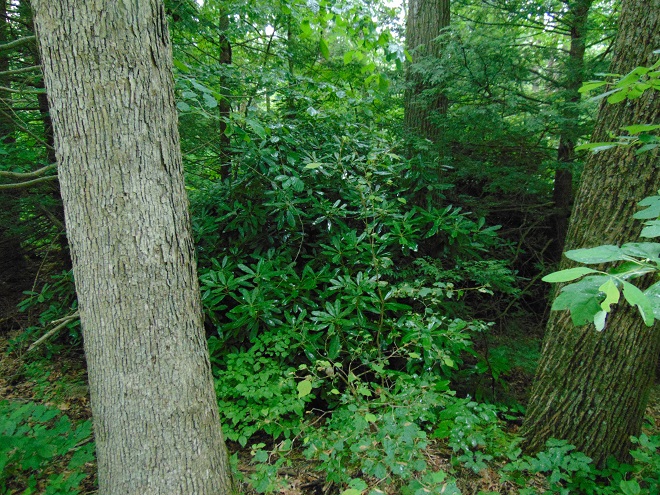
The Great Rhododendron is an evergreen shrub found growing in the forest understory on slopes with consistently moist (mesic) soils. The large, thick leaves make it easy to identify. During really cold weather, they may droop and curl, but they still remain green and attached to the plant.
Thickets composed of our native heathers/heaths (Ericaceae) including Great Rhododendron, Mountain Laurel, and Pinxter Flower (Rhododendron periclymenoides), particularly when growing in association with Eastern Hemlock and/or Eastern White Pine, provide critical winter shelter for forest wildlife. The flowers of native heathers/heaths attract bees and other pollinating insects and those of the deciduous Pinxter Flower, which blooms in May, are a favorite of butterflies and Ruby-throated Hummingbirds.
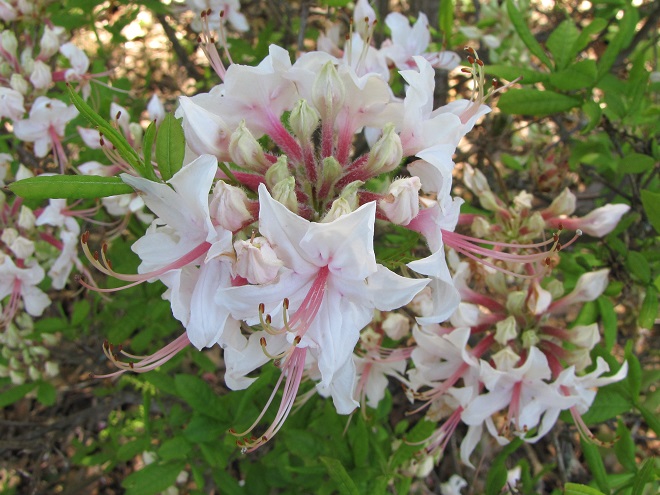
A close relative of the Great Rhododendron is the Pinxter Flower, also known as the Pink Azalea.
Forests with understories that include Great Rhododendrons do not respond well to logging. Although many Great Rhododendrons regenerate after cutting, the loss of consistent moisture levels in the soil due to the absence of a forest canopy during the sunny summertime can, over time, decimate an entire population of plants. In addition, few rhododendrons are produced by seed, even under optimal conditions. Great Rhododendron seeds and seedlings are very sensitive to the physical composition of forest substrate and its moisture content during both germination and growth. A lack of humus, the damp organic matter in soil, nullifies the chances of successful recolonization of a rhododendron understory by seed. In locations where moisture levels are adequate for their survival and regeneration after logging, impenetrable Great Rhododendron thickets will sometimes come to dominate a site. These monocultures can, at least in the short term, cause problems for foresters by interrupting the cycle of succession and excluding the reestablishment of native trees. In the case of forests harboring stands of Great Rhododendron, it can take a long time for a balanced ecological state to return following a disturbance as significant as logging.
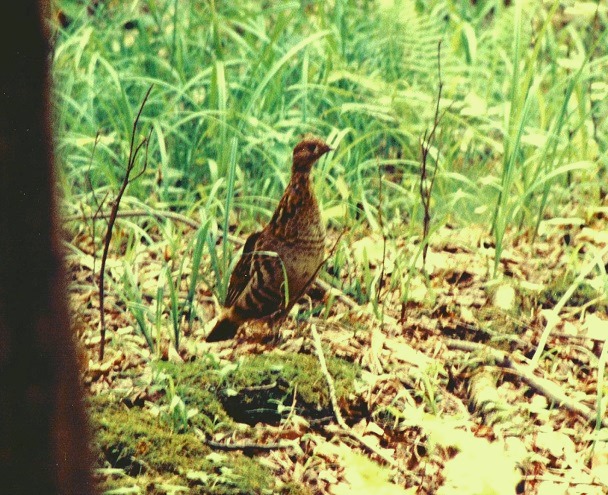
Ruffed Grouse (Bonasa umbellus) may be particularly sensitive to the loss of winter shelter and travel lanes provided by thickets of Great Rhododendron and other members of the heather/heath family. (Vintage 35 mm image)
In the lower Susquehanna region, the Great Rhododendron blooms from late June through the middle of July, much later than the ornamental rhododendrons and azaleas found in our gardens. Set against a backdrop of deep green foliage, the enormous clusters of white flowers are hard to miss.
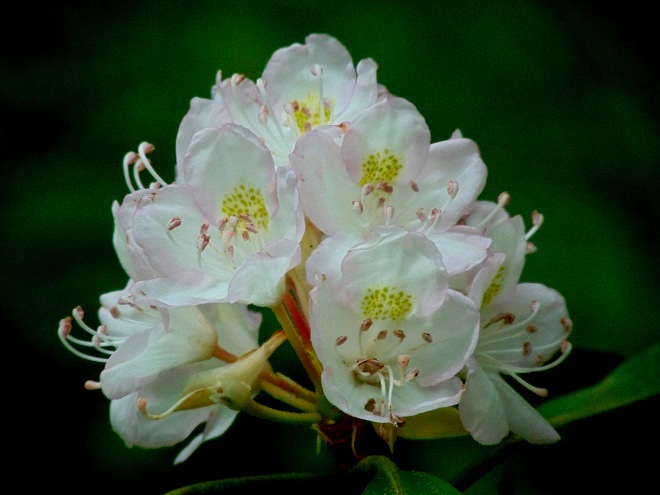
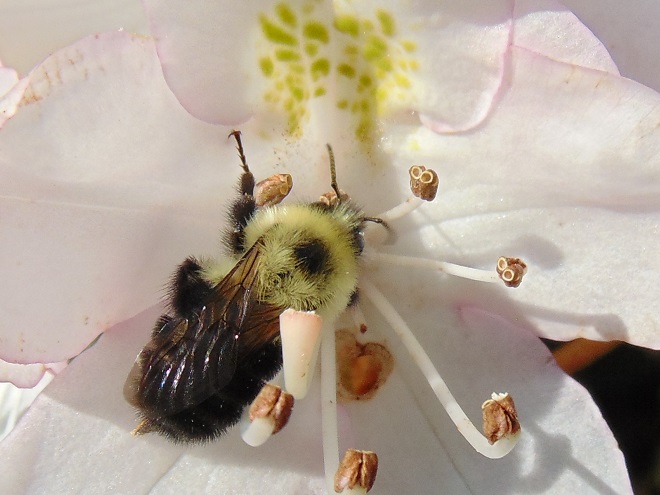
Great Rhododendrons sport an attractive blossom cluster. The colors of the flower, especially the markings found only on the uppermost petal, guide pollinators to the stamens (male organs) and pistil (female organ).To this Bumble Bee (Bombus species), the yellowish spots on the uppermost petal of the Great Rhododendron may appear to be clumps of pollen and are thus an irresistible lure.
In the Lower Susquehanna River Watershed, there are but a few remaining stands of Great Rhododendron. One of the most extensive populations is in the Ridge and Valley Province on the north side of Second Mountain along Swatara Creek near Ravine (just off Interstate 81) in Schuylkill County, Pennsylvania. Smaller groves are found in the Piedmont Province in the resort town of Mount Gretna in Lebanon County and in stream ravines along the lower river gorge at the Lancaster Conservancy’s Ferncliff and Wissler’s Run Preserves. Go have a look. You’ll be glad you did.
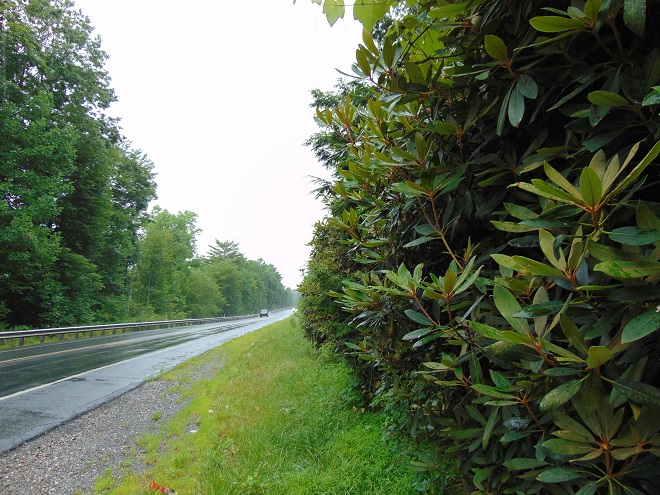
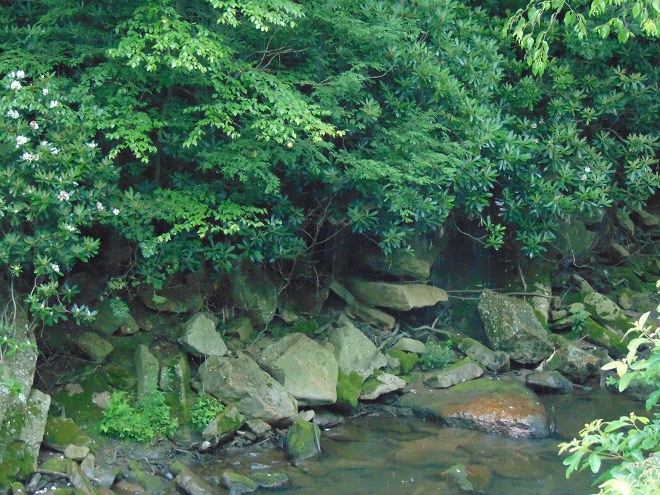
Great Rhododendron along Route 125 along the base of the north slope of Second Mountain north of Ravine, Schuylkill County, Pennsylvania.Great Rhododendrons beginning to bloom during the second week of July along Swatara Creek north of Ravine, Schuylkill County, Pennsylvania. Note how acid mine drainage has stained the rocks in the upper reaches of this tributary of the lower Susquehanna. Mitigation of leachate pollutants from legacy mines has facilitated the return of over two dozen species of fish to this waterway, but the telltale discoloration of the stream substrate will remain for some time.
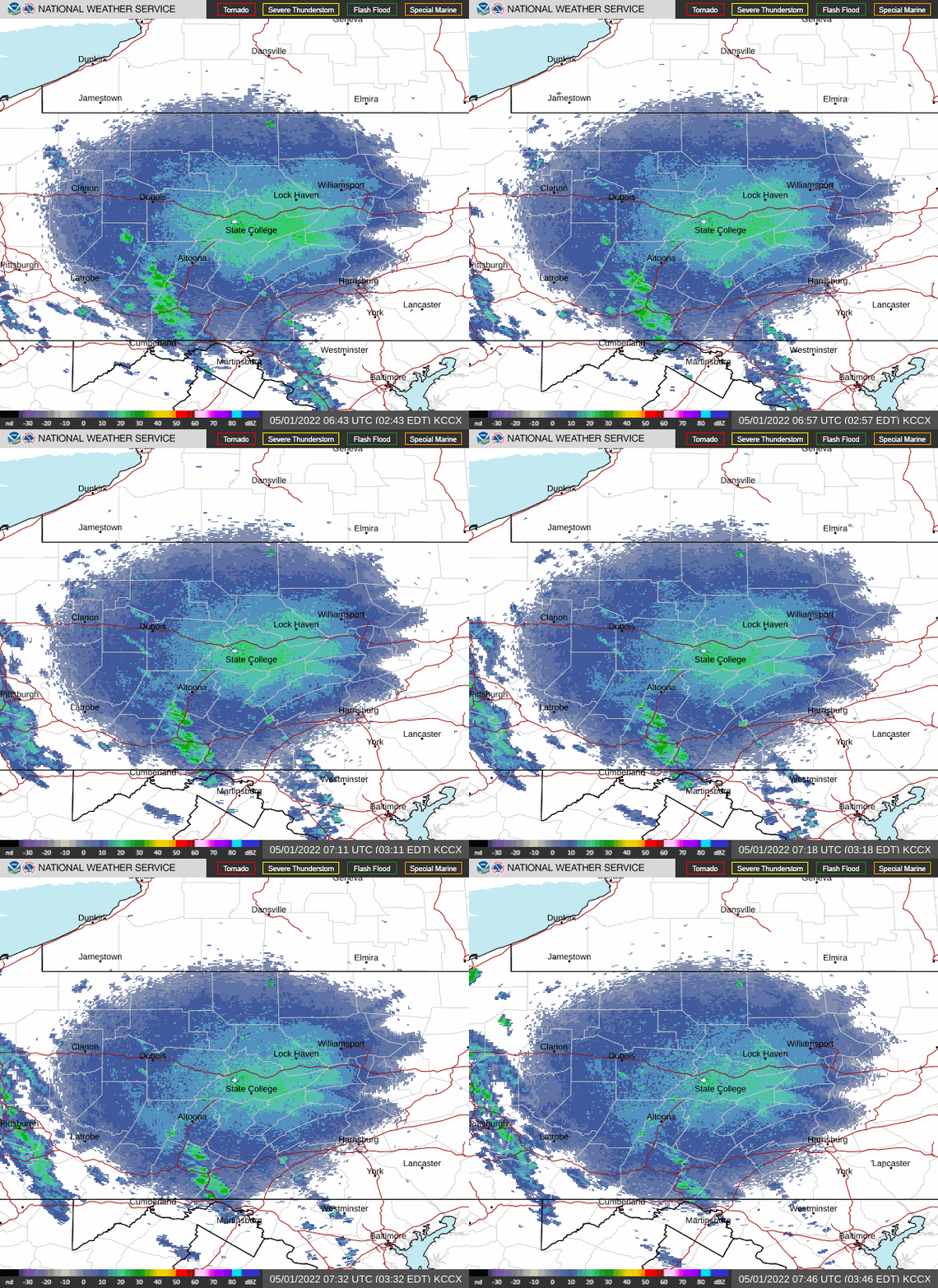
National Weather Service radar showed a sizeable nocturnal flight of migrating birds early this morning. Let’s go for a short stroll and see what’s around.
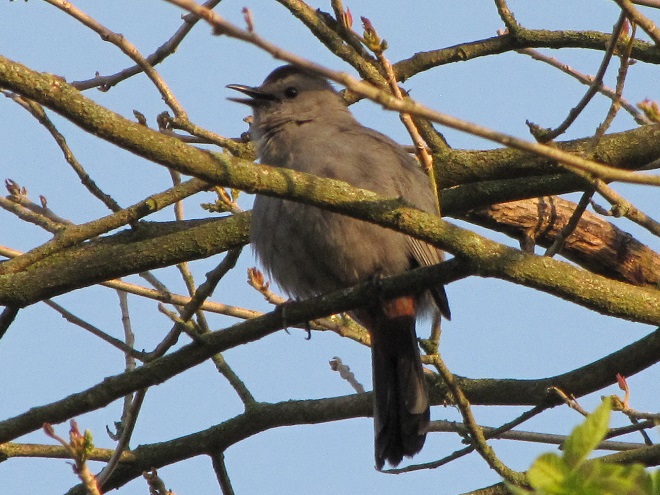
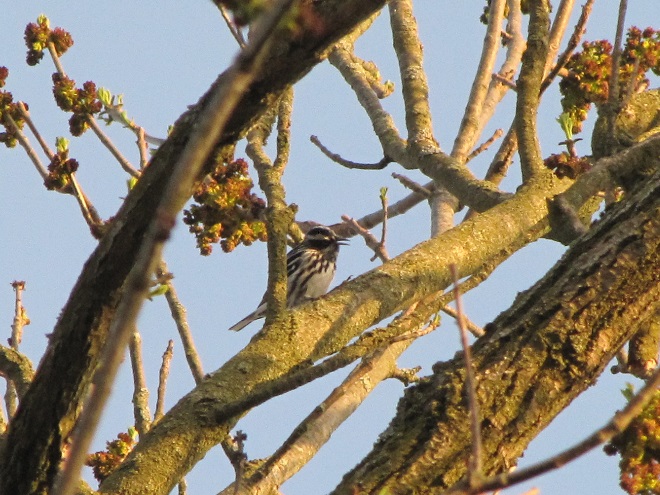
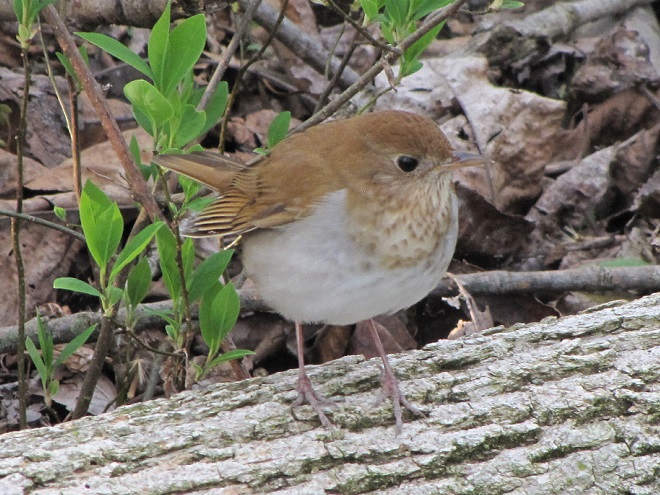
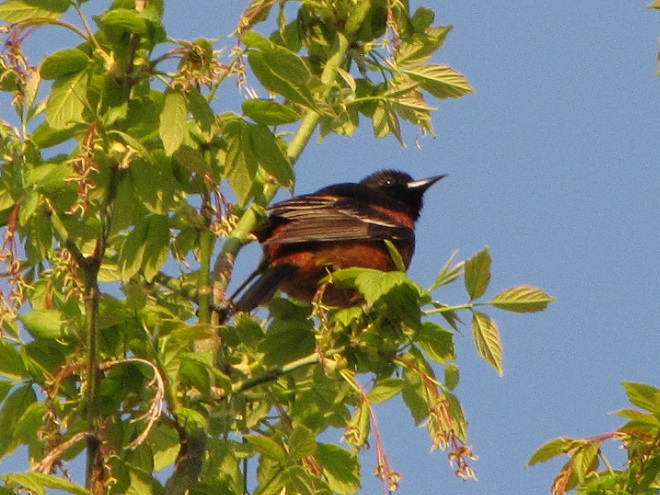
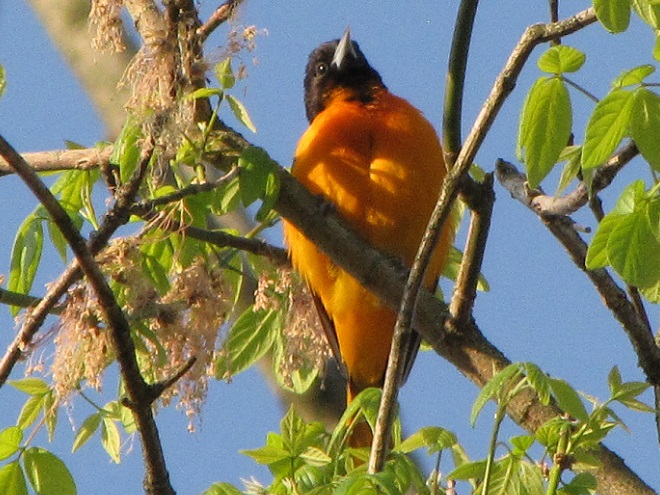
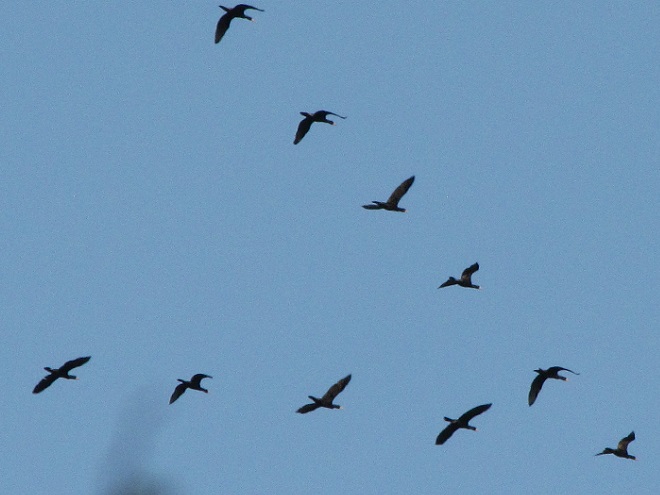
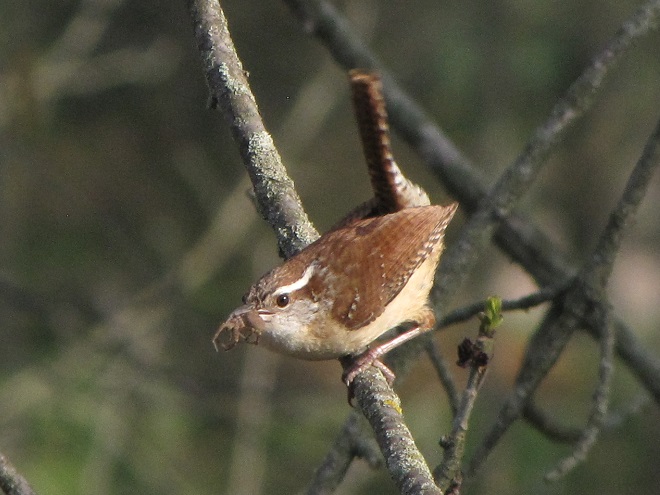
Radar returns from State College, Pennsylvania, display several bands of light rain and a massive flight of migrating birds. (NOAA/National Weather Service image)After coming in on an overnight flight, Gray Catbirds were numerous at dawn this morning.Masses of Neotropical migrants are just beginning to arrive. This Black-and-white Warbler was found feeding on insects in a Green Ash tree that, so far, has survived Emerald Ash Borer (Agrilus planipennis) infestation.The Veery is a Neotropical thrush that nests in understory vegetation on forested slopes in the Lower Susquehanna River Watershed.Orchard Orioles are here.And Baltimore Orioles are here too. Vibrant colors like these are what many observers find so wonderful about many of the Neotropical species.Not all migrants move at night. While you’re out and about, keep an eye on the sky for diurnal fliers like these migrating Double-crested Cormorants, seen this morning a full ten miles east of the river.While many birds are still working their way north to their breeding grounds, resident species like this Carolina Wren are already feeding young. This one has collected a spider for its nestlings.
Rising prices, an exhausted workforce, political polarization, and pandemic fatigue—times are tough. Product shortages have the consumer culture in a near panic. Some say the future just isn’t what it used to be.
Well, Uncle Tyler Dyer reminds us that things could be worse. He shares with us this observation, “Man, as long as people are spending money poisoning the weeds on their lawns instead of eating them, things aren’t that bad.”
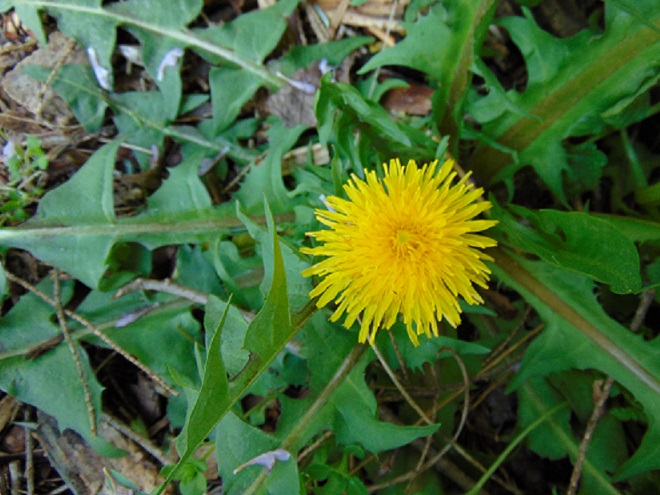
Uncle Ty is particularly fond of the Common Dandelion (Taraxacum officinale), “Check it out. Roasted dandelion roots can make a coffee substitute, the blossoms a wine, and the leaves used to create my favorites, nutrient-dense salads or green vegetable dishes.”
The Common Dandelion is despised by many as a “weed”. To others it is a beautiful flowering plant that happens to be quite edible. Native to Europe and Asia, North American varieties of Common Dandelion are an escape from cultivation, originally imported as a food crop. Uncle Ty’s great-grandparents never would have dreamed of killing them with herbicides instead of harvesting them.Uncle Ty Dyer’s lunch, fresh dandelion greens and hot bacon dressing.
So have a homegrown salad and remember, maybe things aren’t that bad after all.
Migrating American Robins feast on the juicy red fruits of a Guelder Rose (Viburnum opulus), a European shrub distributed for conservation plantings under the name Highbush Cranberry. The North American version of Highbush Cranberry (Viburnum trilobum), is very similar and is considered by some authorities to be a subspecies of V. opulus.
Despite being located in an urbanized downtown setting, blustery weather in recent days has inspired a wonderful variety of small birds to visit the garden here at the susquehannawildlife.net headquarters to feed and refresh. For those among you who may enjoy an opportunity to see an interesting variety of native birds living around your place, we’ve assembled a list of our five favorite foods for wild birds.
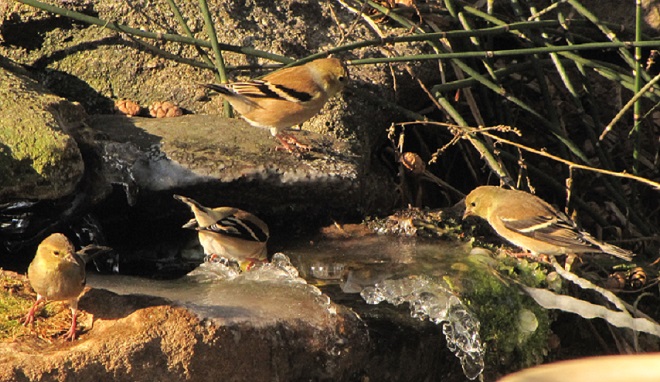
American Goldfinches in drab winter (basic) plumage visit the trickle of water entering the headquarters pond to bathe and drink. In addition to offering the foods animals need to survive, a source of clean water is an excellent way to attract wildlife to your property.
The selections on our list are foods that provide supplemental nutrition and/or energy for indigenous species, mostly songbirds, without sustaining your neighborhood’s non-native European Starlings and House Sparrows, mooching Eastern Gray Squirrels, or flock of ecologically destructive hand-fed waterfowl. We’ve included foods that aren’t necessarily the cheapest but are instead those that are the best value when offered properly.
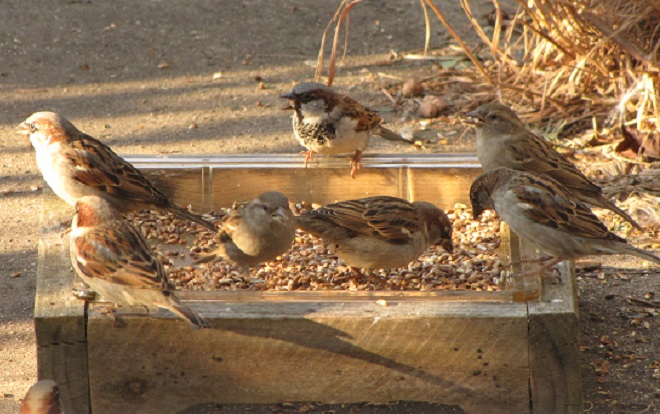
Bread, “bargain” seed mixes, and cracked corn can attract and sustain large numbers of House Sparrows and European Starlings. Both are non-native species that compete mercilessly with indigenous birds including bluebirds for food and nesting sites. Though found favorable for feeding Northern Cardinals without attracting squirrels, the expensive safflower seed seen here is another favorite of these aggressive House Sparrows. Ever wasteful, they “shovel” seed out of feeders while searching for the prime morsels from which they can easily remove the hulls. Trying not to feed them is an ongoing challenge, so we don’t offer these aforementioned foods to our avian guests.
Number 5
Raw Beef Suet
In addition to rendered beef suet, manufactured suet cakes usually contain seeds, cracked corn, peanuts, and other ingredients that attract European Starlings, House Sparrows, and squirrels to the feeder, often excluding woodpeckers and other native species from the fare. Instead, we provide raw beef suet.
Because it is unrendered and can turn rancid, raw beef suet is strictly a food to be offered in cold weather. It is a favorite of woodpeckers, nuthatches, and many other species. Ask for it at your local meat counter, where it is generally inexpensive.
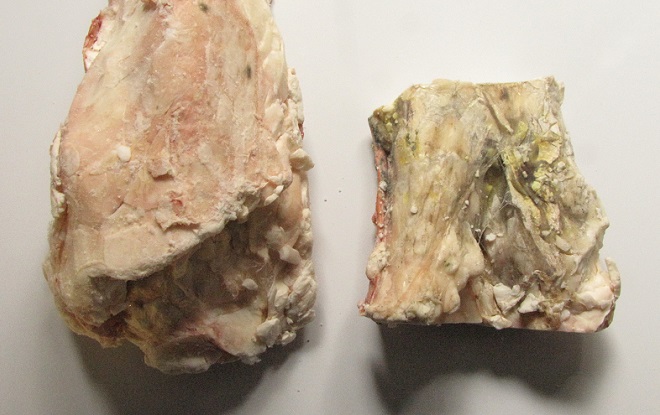
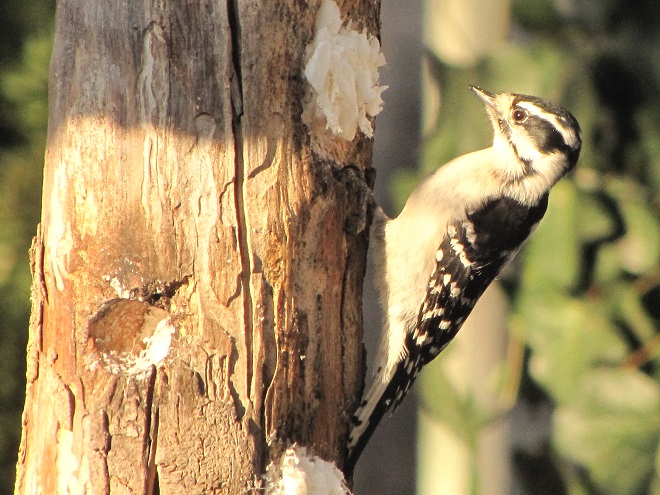
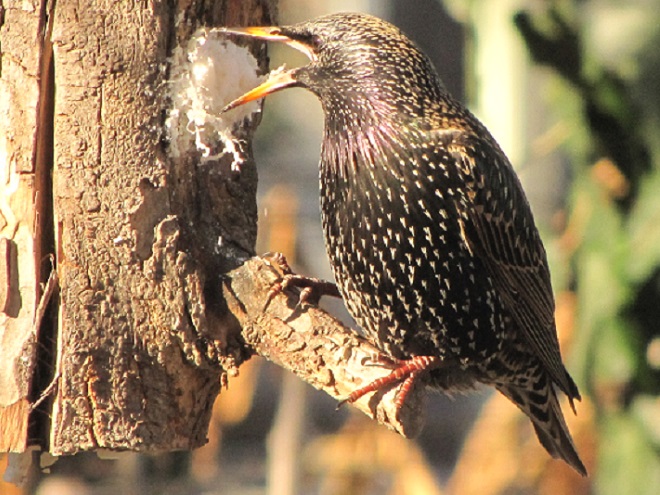
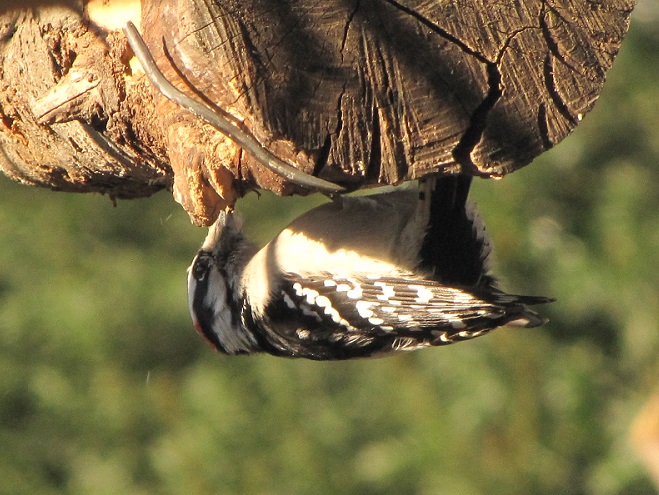
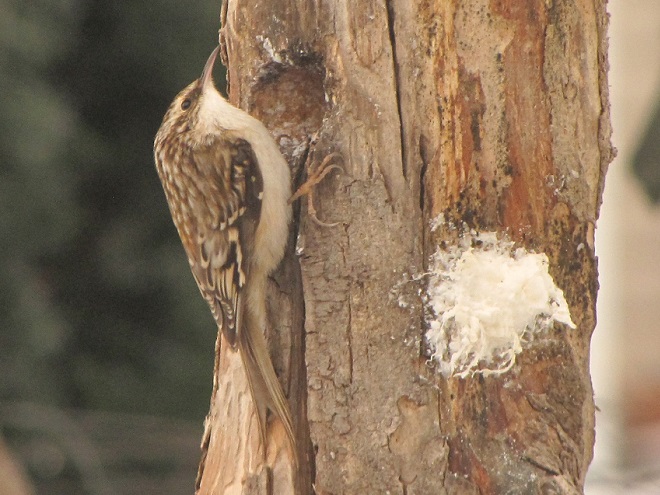
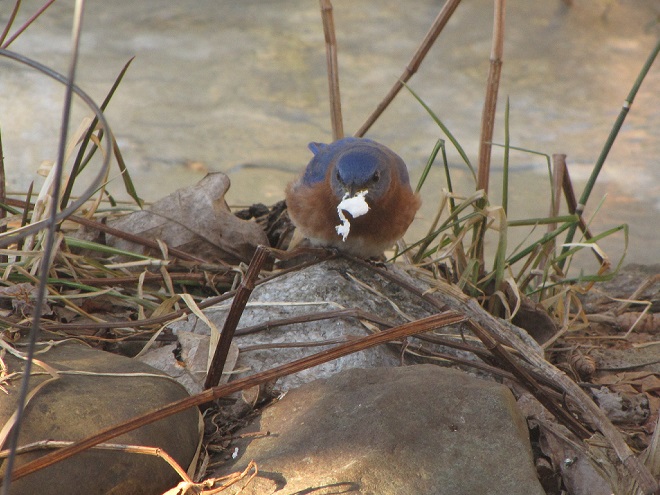
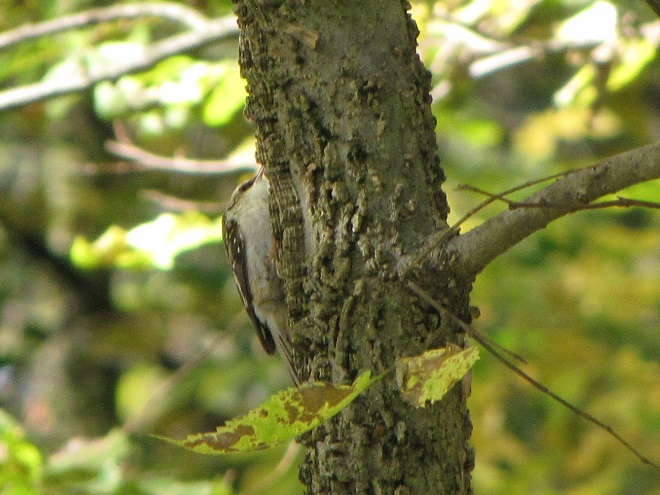
Raw beef suet is fat removed from areas surrounding the kidneys on a beef steer. To avoid spoiling, offer it only in the winter months, particularly if birds are slow to consume the amount placed for them. If temperatures are above freezing, it’s important to replace uneaten food frequently. The piece seen here on the left was stored in the freezer for almost a year while the rancid piece to the right was stored in a refrigerator at about 40 degrees Fahrenheit for just two months. You can render raw beef suet and make your own cakes by melting it down and pouring it into a form such as cupcake tin. But do it outdoors or you’ll be living alone for a while.A female Downy Woodpecker feeds on raw beef suet stuffed into holes drilled into a vertically hanging log. Because they can’t be cleaned, log feeders should be discarded after one season. Wire cage feeders though, can usually be scrubbed, disinfected, dried, and reused.Pesky European Starlings might visit a raw beef suet feeder but won’t usually linger unless other foods to their liking are available nearby.This male Downy Woodpecker has no trouble feeding on raw beef suet packed into holes drilled into the underside of this horizontally hanging log. Starlings don’t particularly care to feed this way.Unusual visitors like a Brown Creeper are more likely to stop by at a suet feeder when it isn’t crowded by raucous starlings, House Sparrows, and squirrels. This one surprised us just this morning.Below the feeders, scraps of suet that fall to the ground are readily picked up, usually by ground-feeding birds. In this instance, a male Eastern Bluebird saw a chunk break loose and pounced on it with haste.
Number 4
Niger (“Thistle”) Seed
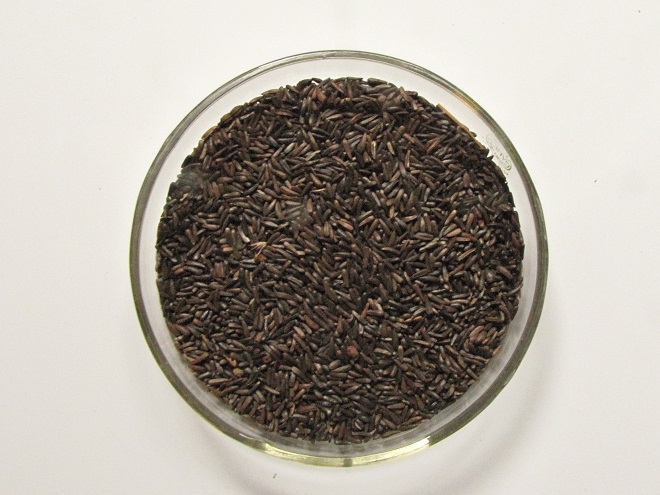
Niger seed, also known as nyjer or nyger, is derived from the sunflower-like plant Guizotia abyssinica, a native of Ethiopia. By the pound, niger seed is usually the most expensive of the bird seeds regularly sold in retail outlets. Nevertheless, it is a good value when offered in a tube or wire mesh feeder that prevents House Sparrows and other species from quickly “shoveling” it to the ground. European starlings and squirrels don’t bother with niger seed at all.
Niger seed must be kept dry. Mold will quickly make niger seed inedible if it gets wet, so avoid using “thistle socks” as feeders. A dome or other protective covering above a tube or wire mesh feeder reduces the frequency with which feeders must be cleaned and moist seed discarded. Remember, keep it fresh and keep it dry!
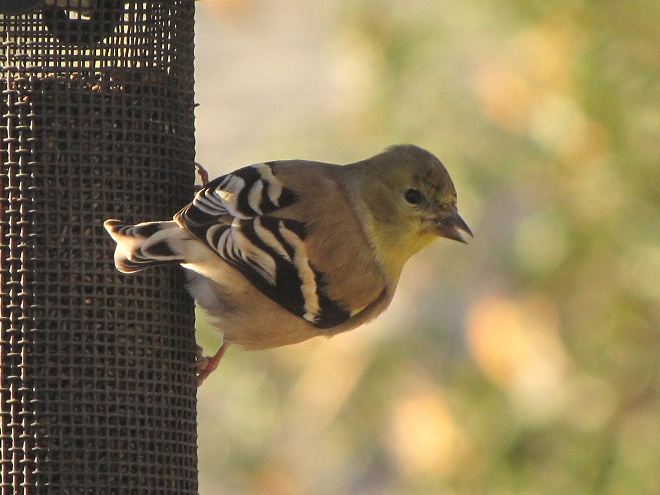
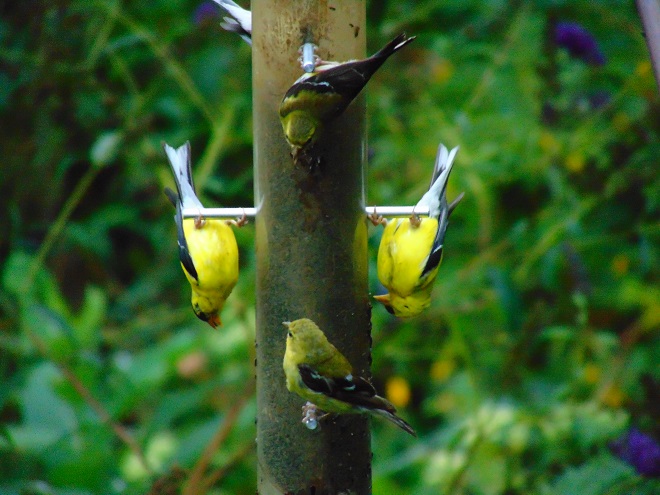
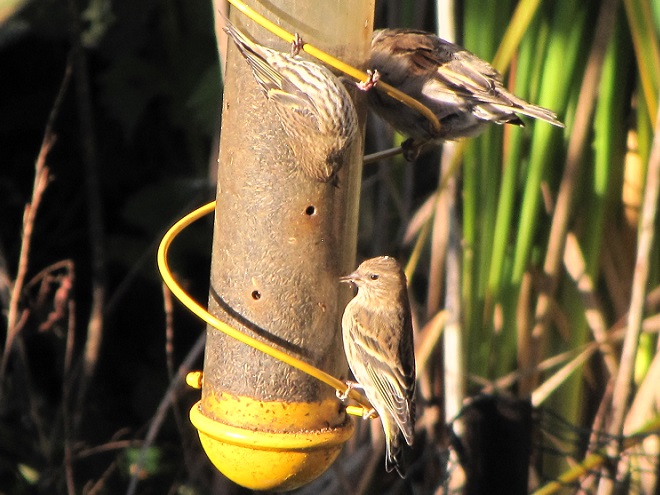
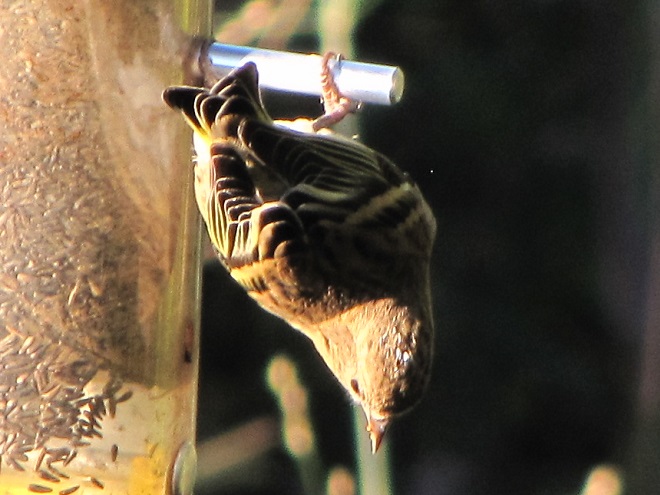
Niger (“thistle”) seed is very small, so it is offered in specialized feeders to prevent seed from spilling out of oversize holes as waste.An American Goldfinch in winter plumage feeding on niger seed from a wire mesh feeder. By April, goldfinches are molting into spectacular breeding feathers. Niger seed can be offered year-round to keep them visiting your garden while they are at maximum magnificence.American Goldfinches in August. This tube feeder is designed specifically for goldfinches, birds that have no difficulty hanging upside down to grab niger seed from small feeding ports.During invasion years, visiting Pine Siskins favor niger seed at feeding stations.Like goldfinches, Pine Siskins are quite comfortable feeding upside down on specialized tubes with perches positioned above the seed ports. Seeds dropped to the ground are readily picked up by ground-feeding birds including Mourning Doves and Dark-eyed Juncos. Periodically, uneaten niger seed should be swept up and discarded.
Number 3
Striped Sunflower Seed
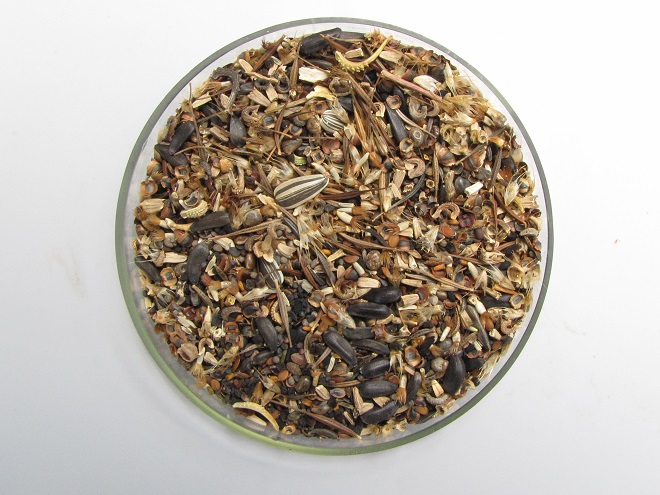
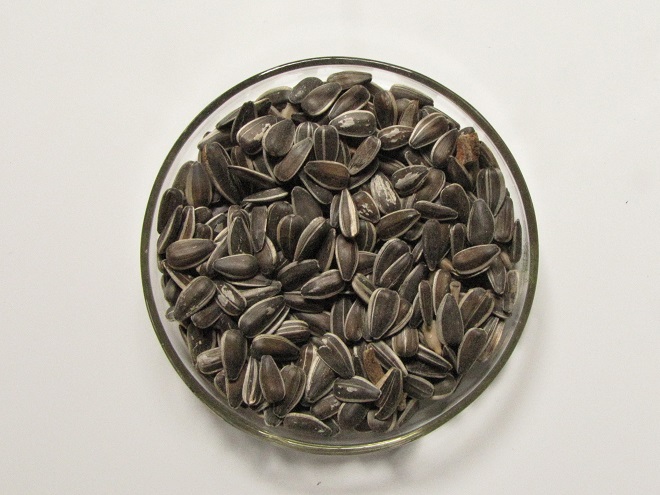
Striped sunflower seed, also known as grey-striped sunflower seed, is harvested from a cultivar of the Common Sunflower (Helianthus annuus), the same tall garden plant with a massive bloom that you grew as a kid. The Common Sunflower is indigenous to areas west of the Mississippi River and its seeds are readily eaten by many native species of birds including jays, finches, and grosbeaks. The husks are harder to crack than those of black oil sunflower seed, so House Sparrows consume less, particularly when it is offered in a feeder that prevents “shoveling”. For obvious reasons, a squirrel-proof or squirrel-resistant feeder should be used for striped sunflower seed.
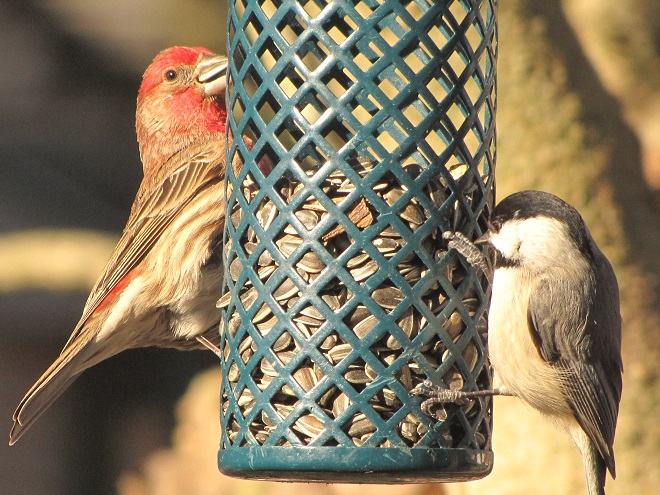
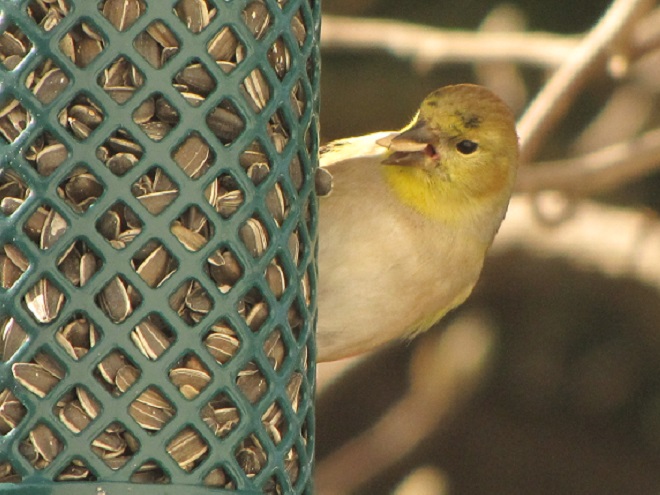
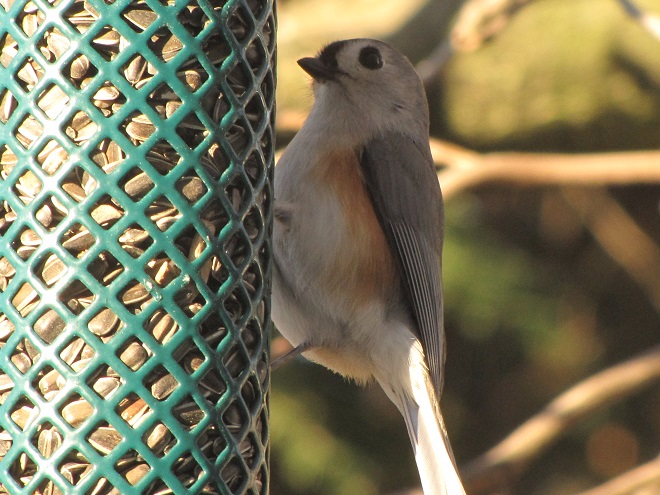
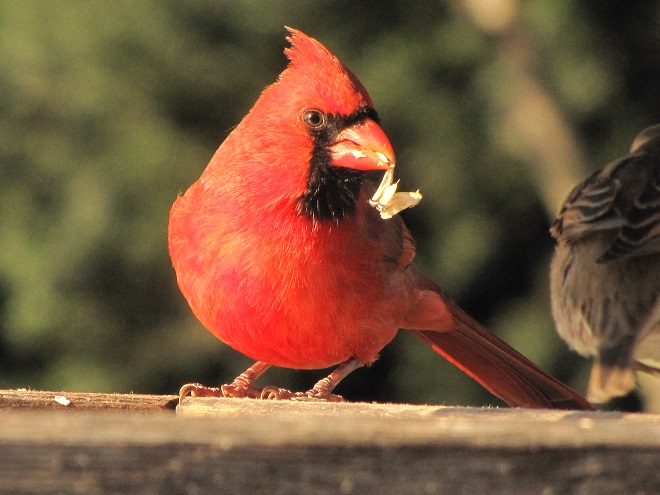
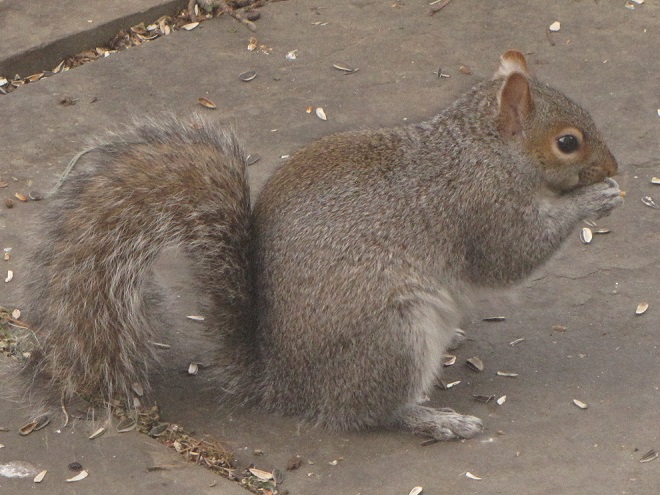
Striped sunflower seed.A male House Finch and a Carolina Chickadee pluck striped sunflower seeds from a squirrel-resistant powder-coated metal-mesh tube feeder.An American Goldfinch in winter plumage finds striped sunflower seeds irresistible, even with niger seed being offered in an adjacent feeder.A Tufted Titmouse visits a feeder stocked with striped sunflower seeds.Northern Cardinals readily feed on striped sunflower seeds, especially those that fall from our metal-mesh tube feeders.An Eastern Gray Squirrel (Sciurus carolinensis) has no choice but to be satisfied with striped sunflower seeds that spill from our wire-mesh tube feeders.
Number 2
Mealworms
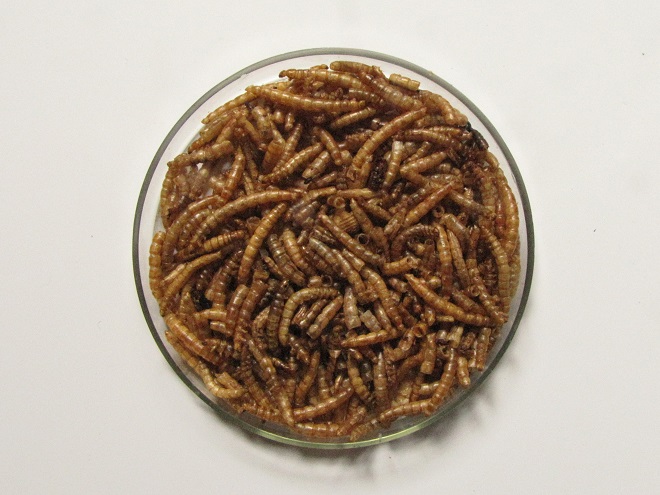
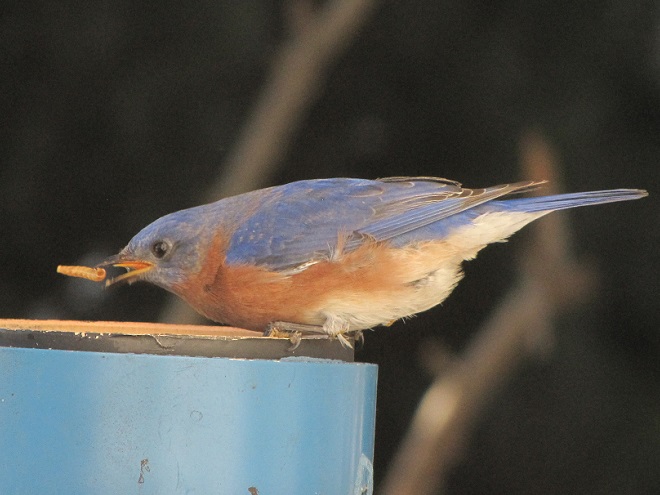
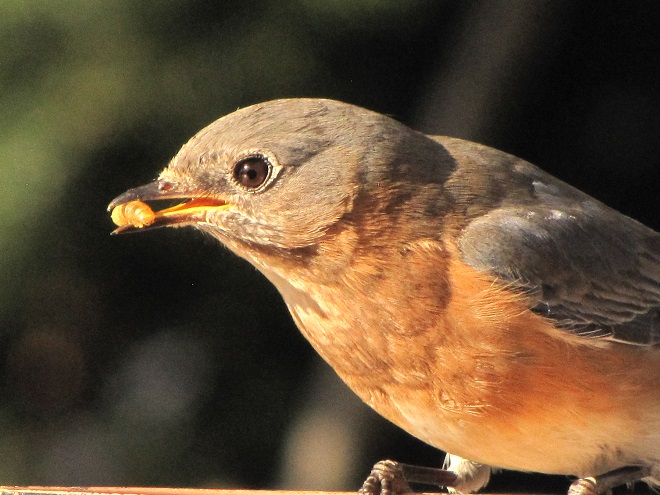
Mealworms are the commercially produced larvae of the beetle Tenebrio molitor. Dried or live mealworms are a marvelous supplement to the diets of numerous birds that might not otherwise visit your garden. Woodpeckers, titmice, wrens, mockingbirds, warblers, and bluebirds are among the species savoring protein-rich mealworms. The trick is to offer them without European Starlings noticing or having access to them because European Starlings you see, go crazy over a meal of mealworms.
Dried mealworms can be offered in a cup or on a tray feeder. Live mealworms need to be contained in a steep-sided dish, so they don’t crawl away. Unless you’re really lucky, you’ll probably have to place your serving vessel of mealworms inside some type of enclosure to exclude European Starlings.A male Eastern Bluebird tossing and grabbing a dried mealworm.A female Eastern Bluebird with a dried mealworm.A pair of Eastern Bluebirds. The value of mealworms is self-evident: you get to have bluebirds around.
To foil European Starlings, we assembled this homemade mealworm feeder from miscellaneous parts. The bluebirds took right to it.It frustrates the starlings enough to discourage them from sticking around for long.If you’re offering dried mealworms, a source of clean water must be available nearby so that the bluebirds and other guests at your feeder don’t become dehydrated.
Number 1
Food-producing Native Shrubs and Trees
The best value for feeding birds and other wildlife in your garden is to plant food-producing native plants, particularly shrubs and trees. After an initial investment, they can provide food, cover, and roosting sites year after year. In addition, you’ll have a more complete food chain on a property populated by native plants and all the associated life forms they support (insects, spiders, etc.).
In your garden, a Northern Mockingbird may defend a food supply like these Common Winterberry fruits as its sole means of sustenance for an entire winter season. Having an abundance of plantings assures that in your cache there’s plenty to eat for this and other species.The American Goldfinches currently spending the winter at our headquarters are visiting the feeders for niger and striped sunflower seeds, but the bulk of their diet consists of tiny seeds from the cones on our Eastern Hemlock trees. At night, birds obtain shelter from the weather by roosting in this clump of evergreens.While the Eastern Bluebirds visiting the susquehannawildlife.net headquarters are fond of mealworms, the bulk of their diet here consists of these Common Winterberry fruits and the berries on our American Holly trees.Cedar Waxwings are readily attracted to red berries including Common Winterberry fruit.Migrating American Robins visit the headquarters garden in late winter each year to devour berries before continuing their journey to the north.
Your local County Conservation District is having its annual spring tree sale soon. They have a wide selection to choose from each year and the plants are inexpensive. They offer everything from evergreens and oaks to grasses and flowers. You can afford to scrap the lawn and revegetate your whole property at these prices—no kidding, we did it. You need to preorder for pickup in the spring. To order, check their websites now or give them a call. These food-producing native shrubs and trees are by far the best bird feeding value that you’re likely to find, so don’t let this year’s sales pass you by!
A Pileated Woodpecker devours the dark blue berries of a Black Gum (Nyssa sylvatica). The Black Gum, also known as the Black Tupelo, Sour Gum, and Pepperidge, sports crimson leaves in the fall to attract birds to its fruit, thus assuring distribution of its seeds. In 2021, the fruit is so abundant that it has outlasted the foliage, much to the delight of resident and migrating birds.
A migrating Monarch butterfly takes a break to feed on nectar from the blooms of a Frost Aster (Symphyotrichum pilosum), a common autumn wildflower also known as Heath Aster.
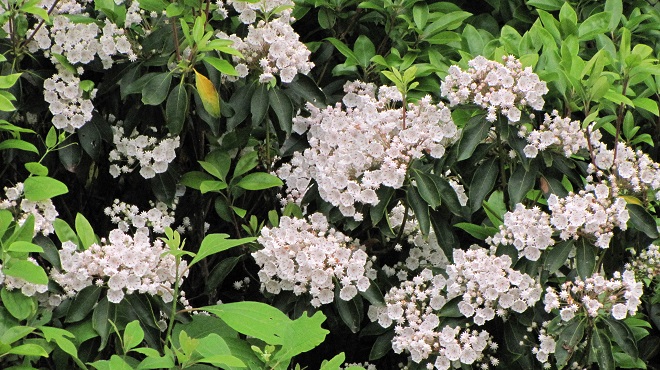
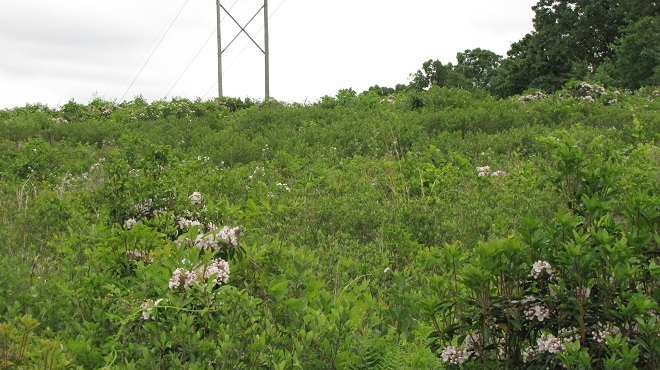
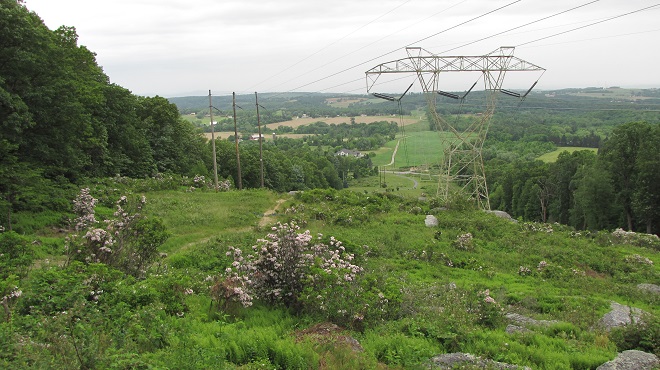
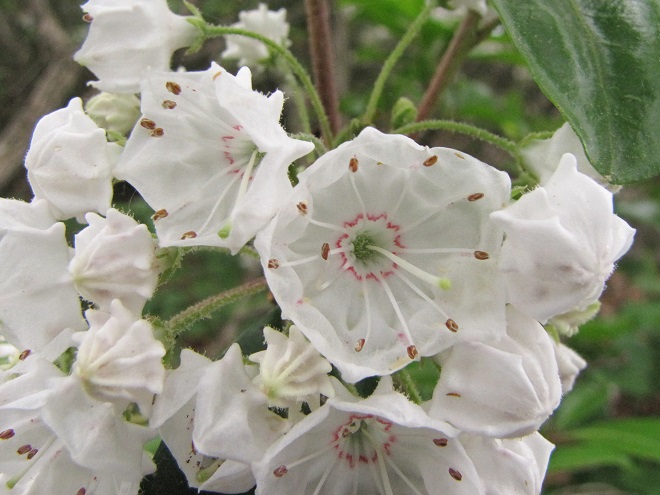
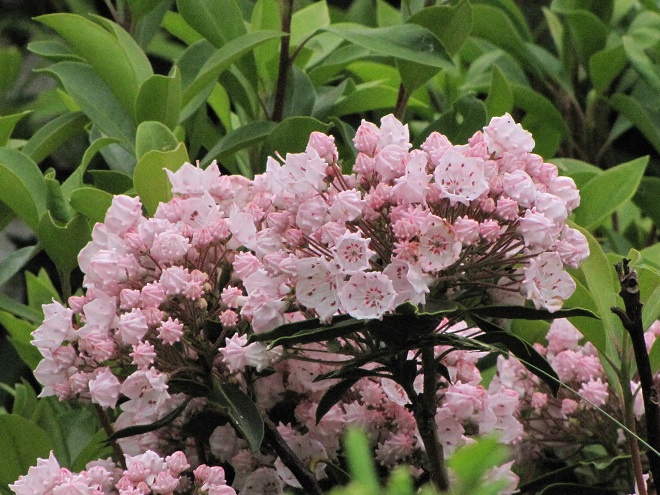
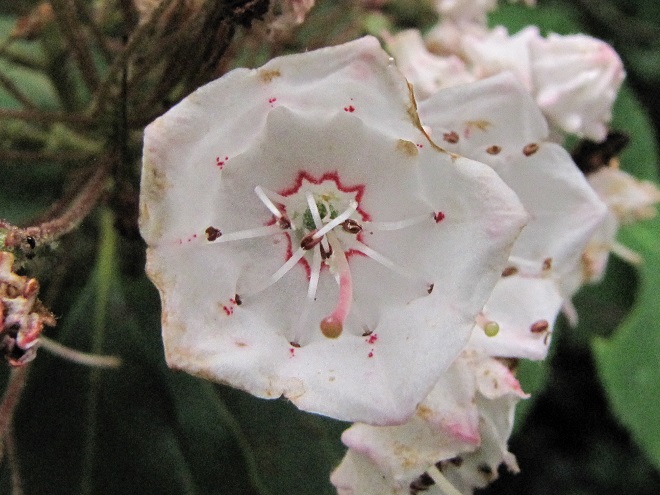
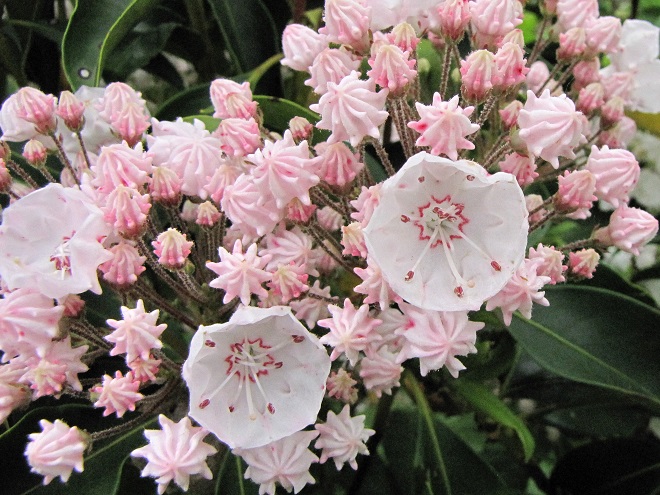
Mountain Laurel (Kalmia latifolia), designated as Pennsylvania’s state flower, is a native evergreen shrub of forests situated on dry rocky slopes with acidic soils. As the common name implies, we think of it mostly as a plant of the mountainous regions—those areas of the Susquehanna watershed north of Harrisburg. It is indeed symbolic of Appalachian forests. But Mountain Laurel can also be found to the south of the capital city in forested highlands of the Piedmont. There, currently, it happens to be in full bloom. Let’s put on a pair of sturdy shoes and take a walk in the Hellam Hills of eastern York County at Rocky Ridge County Park to have a look.
The showy flower clusters of blooming Mountain Laurel are conspicuous throughout Rocky Ridge County Park right now.Mountain Laurel flowering in the utility right-of-way south of the main parking area at Rocky Ridge……and to the north of the parking area at the hawk-watch platform.Strolling a forest trail, particularly west of the utility right-of-way, can take you on a path through a thicket of flowering Mountain Laurel.The majority of Mountain Laurels one might encounter will sport white flowers.Others vary, exhibiting shades of spectacular pink.Look closely and you’ll see flowers with curled filaments on some of the stamens. When a bee or other insect makes contact, they spring into an extended position to assure pollen transfer to the visiting pollinator.Absolutely spectacular.
Rain or shine, do get out and have a look at the blooming Mountain Laurel.
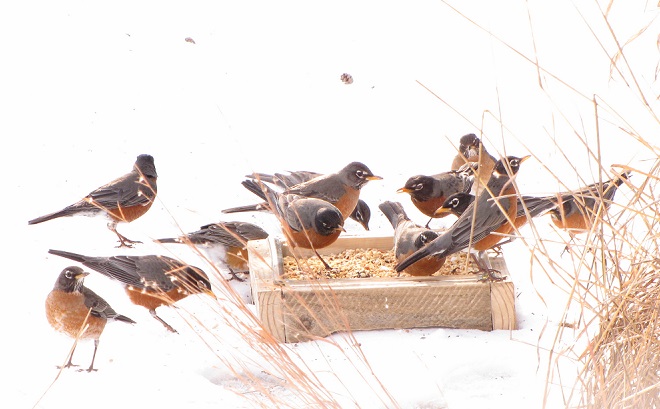
On a snowy winter day, it sure is nice to see some new visitors at a backyard feeding station. Here at the susquehannawildlife.net headquarters, American Robins have arrived to partake of the offerings.
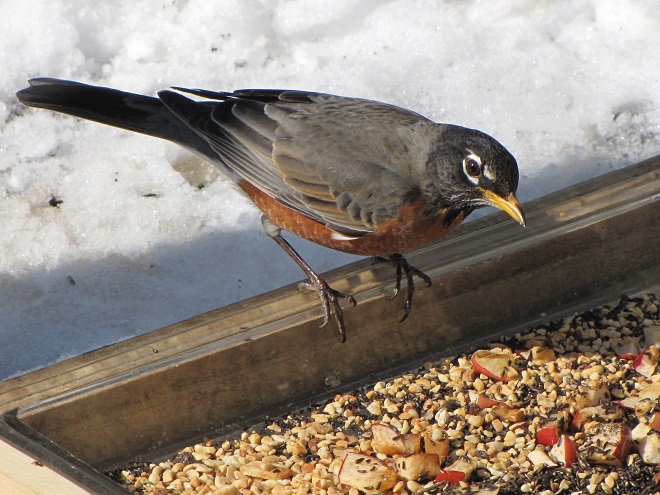
American Robins feed on peanut hearts and chopped apples.
For this flock of robins, which numbered in excess of 150 individuals, the contents of this tray were a mere garnish to the meal that would sustain them through 72 hours of stormy weather. The main course was the supply of ripe berries on shrubs and trees in the headquarters garden.
Their first choice—the bright red fruits of the Common Winterberry.
American Robins strip the fruits from a Common Winterberry.Eat fast or lose your turn.Irresistible crimson delights.Cedar Waxwings get their share too.Robins will linger until nightfall to feed on winterberries.
After cleaning off the winterberry shrubs, other fruits became part of the three-day-long feast.
Robins eating Guelder Rose (Viburnum opulus) fruits. This European shrub is often distributed for conservation plantings as Highbush Cranberry, a common name shared with the very similar native species Viburnum trilobum.The blue-gray berries of junipers are attractive to robins, waxwings, and bluebirds.The American Holly (Ilex opaca) is a favorite of berry-loving birds. Its evergreen foliage provides cover and roosting sites for wintering birds.
Wouldn’t it be great to see these colorful birds in your garden each winter? You can, you know. Won’t you consider adding plantings of native trees and shrubs to your property this spring? Here at the susquehannawildlife.com headquarters we mow no lawn; the lawn is gone. Mixing evergreens and fruit-producing shrubs with native warm-season grasses and flowering plants has created a wildlife oasis absent of that dirty habit of mowing and blowing.
You can find many of the plants seen here at your local garden center. Take a chunk out of your lawn by paying them a visit this spring.
Want a great deal? Many of the County Conservation District offices in the lower Susquehanna region are having their annual spring tree sales right now. Over the years, we obtained many of our evergreens and berry-producing shrubs from these sales for less than two dollars each. At that price you can blanket that stream bank or wet spot in the yard with winterberries and mow it no more! The deadlines for orders are quickly approaching, so act today—literally, act today. Visit your County Conservation District’s website for details including selections, prices, order deadlines, and pickup dates and locations.
Evergreens like this Eastern Hemlock (Tsuga canadensis) are essential to the survival of many species of wintering birds. Plant evergreens in clumps, the bigger the better, to provide birds with thermal protection against the cold winds of winter nights.County Conservation District Tree Sales offer bare root evergreens like this Eastern White Pine (Pinus strobus) in packs of five or ten. Buy a bunch. Spend this year’s lawn treatment money on them. Then, get them planted immediately after pickup in the spring and in a few years you’ll have a nice grove of evergreens for wildlife habitat, a wind break, or a privacy screen.Groves of mixed evergreens among deciduous woods, grasslands, farmlands, or suburbs are ideal cover for wintering wildlife. These stands attract many species of migrating and nesting birds as well. Seen here, left to right, are Eastern White Pine, Norway Spruce (Picea abies), and Eastern Red Cedar. Though not a native species, the Norway Spruce is frequently used for conservation and ornamental plantings in the northeastern United States due to its appealing attributes and lack of invasive characteristics.Feeding wildlife is great fun. But remember, if you’re running a hotel for animals, you’ve got to offer more than an after-dinner mint to your tired and hungry guests. Let’s get planting!
County Conservation District Tree Sales
Consult each County Conservation District’s Tree Sale web page for ordering info, pickup locations, and changes to these dates and times.
Cumberland County Conservation District Tree Seedling Sale—deadline for prepaid orders Tuesday, March 30, 2021. Pickup 1 P.M. to 5 P.M., Thursday, April 22, 2021, and 8 A.M. to 2 P.M., Friday, April 23, 2021. https://www.ccpa.net/4636/Tree-Seedling-Sale
Lancaster County Conservation District Tree Sale—deadline for prepaid orders (hand-delivered to drop box) 5 P.M., Friday, March 5, 2021. Pickup 8 A.M. to 5 P.M., Thursday, April 15, 2021. https://www.lancasterconservation.org/tree-sale/
Lebanon County Conservation District Tree Sale—deadline for prepaid orders Thursday, March 11, 2021. Pickup 9 A.M. to 6 P.M., Friday, May 7, 2021. https://www.lccd.org/2021-tree-sale/
Perry County Conservation District Tree Sale—deadline for prepaid orders Wednesday, March 24, 2021. Pickup 10 A.M. to 6 P.M., Thursday, April 8, 2021. www.perrycd.org/Documents/2021 Tree Sale Flyer LEGAL SIZE.pdf
York County Conservation District Seedling Sale—deadline for prepaid orders Monday, March 15, 2021. Pickup 10 A.M. to 6 P.M., Thursday, April 15, 2021. https://www.yorkccd.org/events/2021-seedling-sale
Thoughts of October in the Lower Susquehanna River Watershed bring to mind scenes of brilliant fall foliage adorning wooded hillsides and stream courses, frosty mornings bringing an end to the growing season, and geese and other birds flying south for the winter.
The autumn migration of birds spans a period equaling nearly half the calendar year. Shorebirds and Neotropical perching birds begin moving through as early as late July, just as daylight hours begin decreasing during the weeks following their peak at summer solstice in late June. During the darkest days of the year, those surrounding winter solstice in late December, the last of the southbound migrants, including some hawks, eagles, waterfowl, and gulls, may still be on the move.
The Rough-legged Hawk (Buteo lagopus), a rodent-eating raptor of tundra, grassland, and marsh, is rare as a migrant and winter resident in the lower Susquehanna valley. It may arrive as late as January, if at all.
During October, there is a distinct change in the list of species an observer might find migrating through the lower Susquehanna valley. Reduced hours of daylight and plunges in temperatures—particularly frost and freeze events—impact the food sources available to birds. It is during October that we say goodbye to the Neotropical migrants and hello to those more hardy species that spend their winters in temperate climates like ours.
During several of the first days of October, two hundred Chimney Swifts remained in this roost until temperatures warmed from the low forties at daybreak to the upper fifties at mid-morning; then, at last, the flock ventured out in search of flying insects. When a population of birds loses its food supply or is unable to access it, that population must relocate or perish. Like other insectivorous birds, these swifts must move to warmer climes to be assured a sustained supply of the flying bugs they need to survive. Due to their specialized food source, they can be considered “specialist” feeders in comparison to species with more varied diets, the “generalists”. After returning to this chimney every evening for nearly two months, the swifts departed this roost on October 5 and did not return.A Northern Parula lingers as an October migrant along the Susquehanna. This and other specialist feeders that survive almost entirely on insects found in the forest canopy are largely south of the Susquehanna watershed by the second week of October.The Blackpoll Warbler is among the last of the insectivorous Neotropical warblers to pass through the riparian forests of the lower Susquehanna valley each fall. Through at least mid-October, it is regularly seen searching for crawling insects and larvae among the foliage and bark of Northern Hackberry (Celtis occidentalis) trees near Conewago Falls. Most other warblers, particularly those that feed largely upon flying insects, are, by then, already gone.The Blue-headed Vireo, another insectivore, is the last of the vireo species to pass through the valley. They linger only as long as there are leaves on the trees in which they feed.Brown Creepers begin arriving in early October. They are specialist feeders, well-adapted to finding insect larvae and other invertebrates among the ridges and peeling bark of trees like this hackberry, even through the winter months.Ruby-crowned Kinglets can be abundant migrants in October. They will often behave like cute little flycatchers, but quickly transition to picking insects and other invertebrates from foliage and bark as the weather turns frosty. Some may spend the winter here, particularly in the vicinity of stands of pines, which provide cover and some thermal protection during storms and bitter cold.Beginning in early October, Golden-crowned Kinglets can be seen searching the forest wood for tiny invertebrates. They are the most commonly encountered kinglet in winter.The Yellow-bellied Sapsucker, a woodpecker, is an October migrant that specializes in attracting small insects to tiny seeps of sap it creates by punching horizontal rows of shallow holes through the tree bark. Some remain for winter.The Yellow-rumped Warbler arrives in force during October. It is the most likely of the warblers to be found here in winter. Yellow-rumped Warblers are generalists, feeding upon insects during the warmer months, but able to survive on berries and other foods in late fall and winter. Wild foods like these Poison Ivy berries are crucial for the survival of this and many other generalists.American Robins are most familiar as hunters of earthworms on the suburban lawn, but they are generalist feeders that rely upon fruits like these Eastern Red Cedar (Juniperus virginiana) berries during their southbound migration in late October and early November each year. Robins remain for the winter in areas of the lower Susquehanna valley with ample berries for food and groves of mature pines for roosting.Like other brown woodland thrushes, the Hermit Thrush (Catharus guttatus) is commonly seen scratching through organic matter on the moist forest floor in search of invertebrates. Unlike the other species, it is a cold-hardy generalist feeder, often seen eating berries during the southbound October migration. Small numbers of Hermit Thrushes spend the winter in the lower Susquehanna valley, particularly in habitats with a mix of wild foods.Due to their feeding behavior, Cedar Waxwings can easily be mistaken for flycatchers during the nesting season, but by October they’ve transitioned to voracious consumers of small wild fruits. During the remainder of the year, flocks of waxwings wander widely in search of foods like this Fox Grape (Vitis labrusca). An abundance of cedar, holly, Poison Ivy, hackberry, bittersweet , hawthorn, wild grape, and other berries is essential to their survival during the colder months.Red-breasted Nuthatches have moved south in large numbers during the fall of 2020. They were particularly common in the lower Susquehanna region during mid-October. Red-breasted Nuthatches can feed on invertebrates during warm weather, but get forced south from Canada in droves when the cone crops on coniferous trees fail to provide an adequate supply of seeds for the colder fall and winter seasons. In the absence of wild foods, these generalists will visit feeding stations stocked with suet and other provisions.Purple Finches (Haemorhous purpureus) were unusually common as October migrants in 2020. They are often considered seed eaters during cold weather, but will readily consume small fruits like these berries on an invasive Mile-a-minute Weed (Persicaria perfoliata) vine. Purple Finches are quite fond of sunflower seeds at feeding stations, but often shy away if aggressive House Sparrows or House Finches are present.
The need for food and cover is critical for the survival of wildlife during the colder months. If you are a property steward, think about providing places for wildlife in the landscape. Mow less. Plant trees, particularly evergreens. Thickets are good—plant or protect fruit-bearing vines and shrubs, and allow herbaceous native plants to flower and produce seed. And if you’re putting out provisions for songbirds, keep the feeders clean. Remember, even small yards and gardens can provide a life-saving oasis for migrating and wintering birds. With a larger parcel of land, you can do even more.
GOT BERRIES? Common Winterbery (Ilex verticillata) is a native deciduous holly that looks its best in the winter, especially with snow on the ground. It’s slow-growing, and never needs pruning. Birds including bluebirds love the berries and you can plant it in wet ground, even along a stream, in a stormwater basin, or in a rain garden where your downspouts discharge. Because it’s a holly, you’ll need to plant a male and a female to get the berries. Full sun produces the best crop. Fall is a great time to plant, and many garden centers that sell holiday greenery still have winterberry shrubs for sale in November and December. Put a clump of these beauties in your landscape. Gorgeous!