It’s surprising how many millions of people travel the busy coastal routes of Delaware each year to leave the traffic congestion and hectic life of the northeast corridor behind to visit congested hectic shore towns like Rehobeth Beach, Bethany Beach, and Ocean City, Maryland. They call it a vacation, or a holiday, or a weekend, and it’s exhausting. What’s amazing is how many of them drive right by a breathtaking national treasure located along Delaware Bay just east of the city of Dover—and never know it. A short detour on your route will take you there. It’s Bombay Hook National Wildlife Refuge, a quiet but spectacular place that draws few crowds of tourists, but lots of birds and other wildlife.
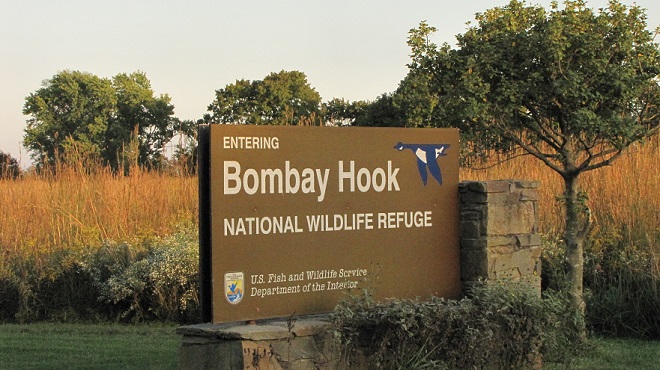
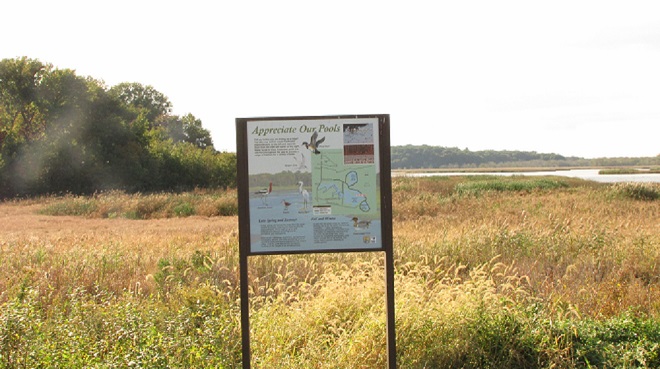
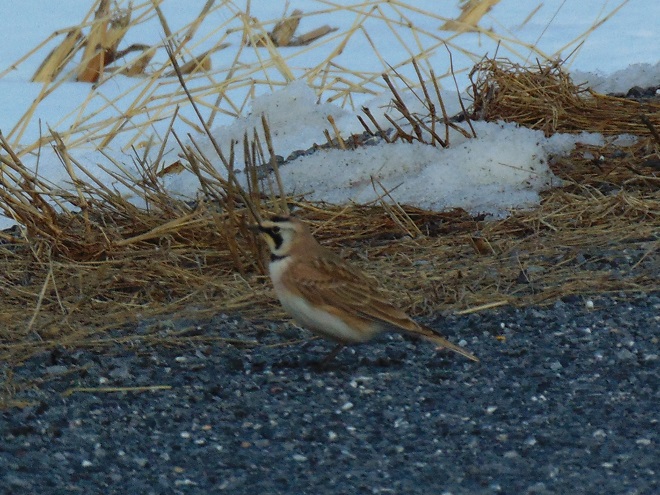
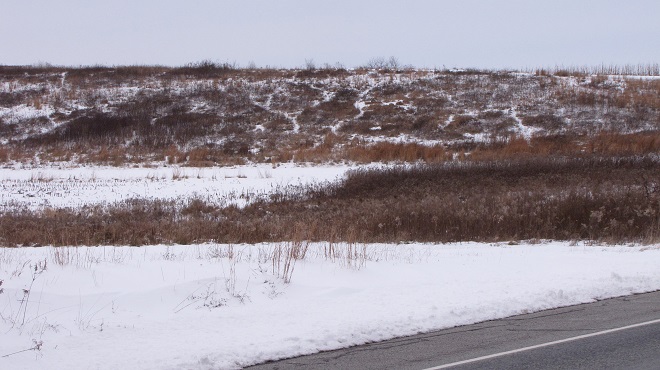
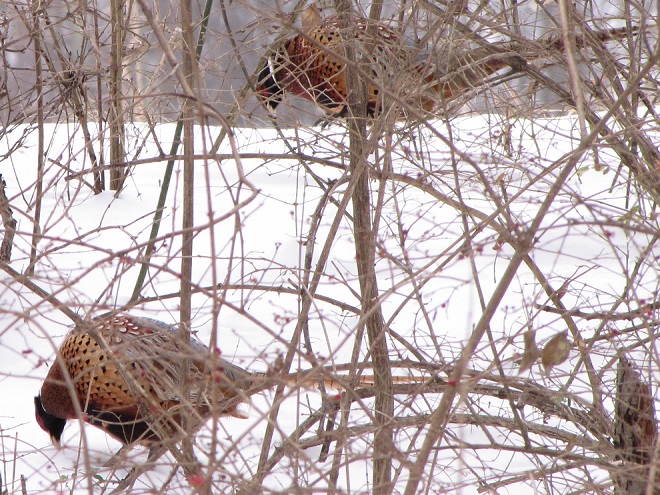
Bombay Hook National Wildlife Refuge is located just off Route 9, a lightly-traveled coastal road east of Dover, Delaware. Note the Big Bluestem and other warm season grasses in the background. Bombay Hook, like other refuges in the system, is managed for the benefit of the wildlife that relies upon it to survive. Within recent years, most of the mowed grass and tilled ground that once occurred here has been replaced by prairie grasses or successional growth, much to the delight of Northern Bobwhite (Colinus virginianus) and other species.
Let’s join Uncle Tyler Dyer and have a look around Bombay Hook. He’s got his duck stamp and he’s ready to go.
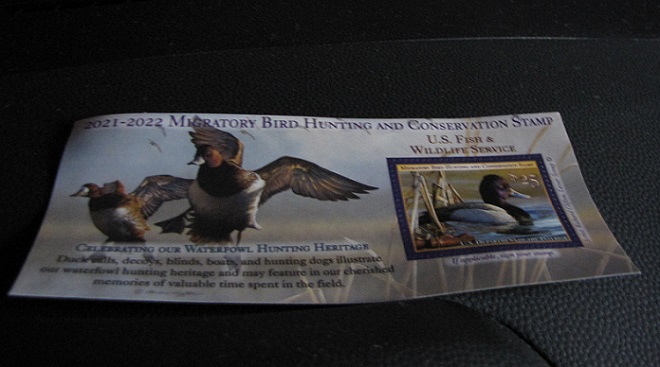
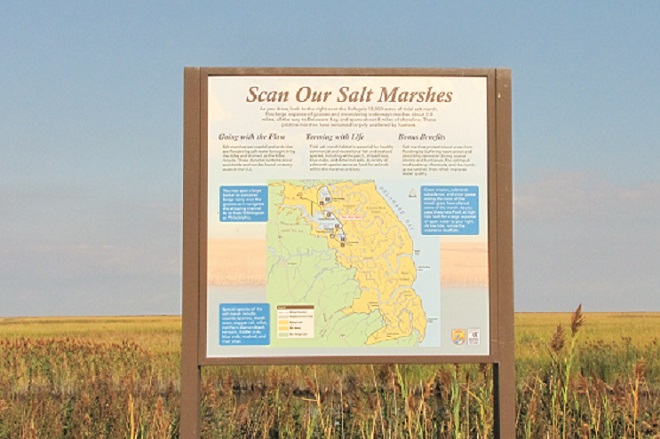
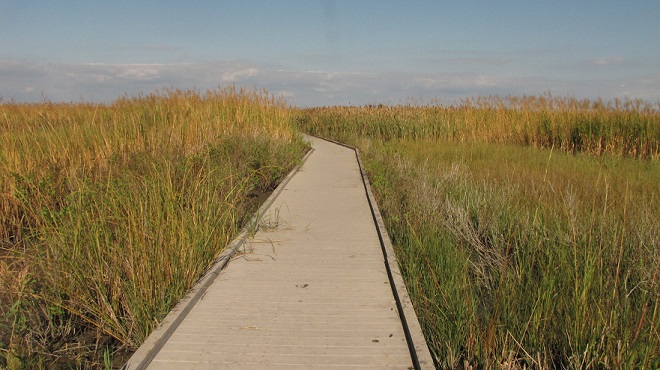
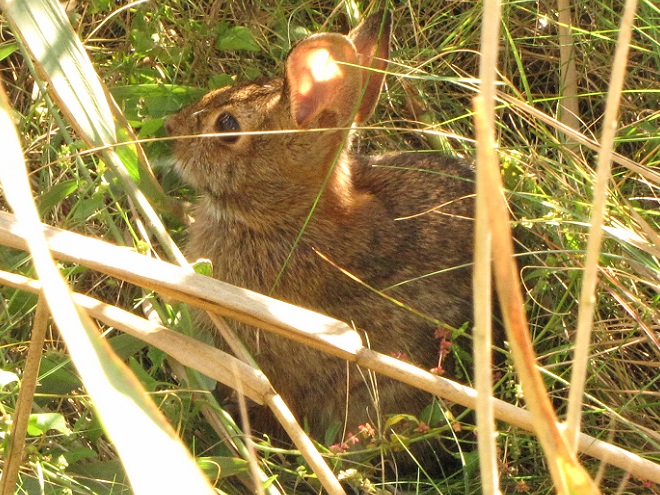
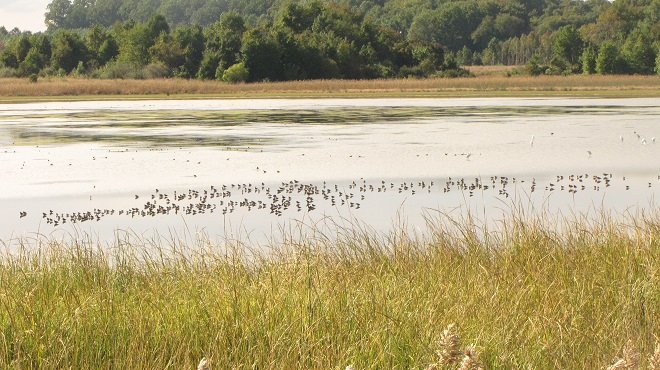
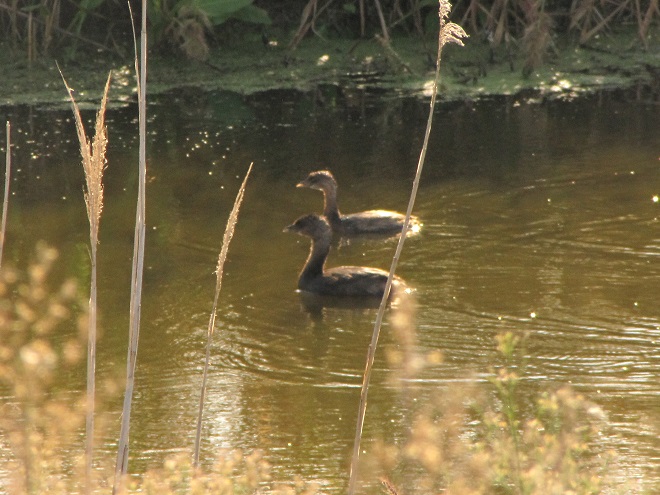
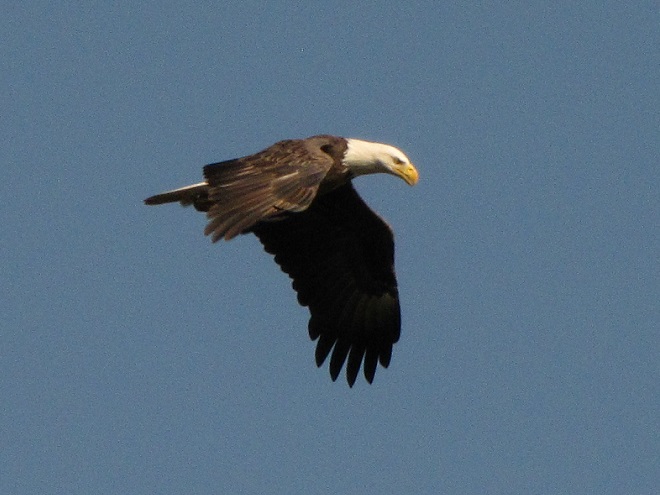
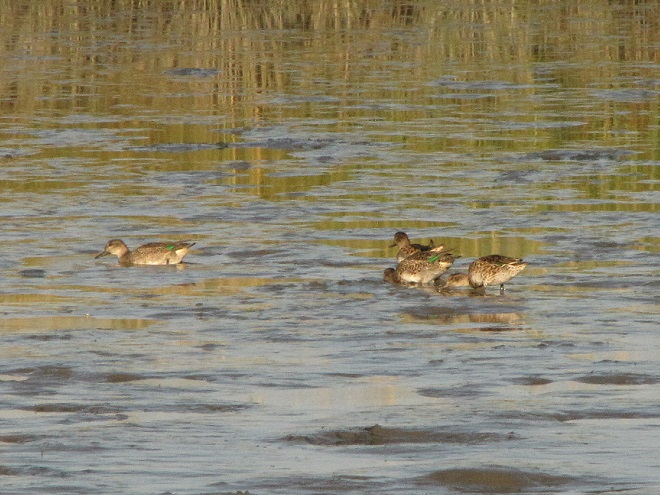
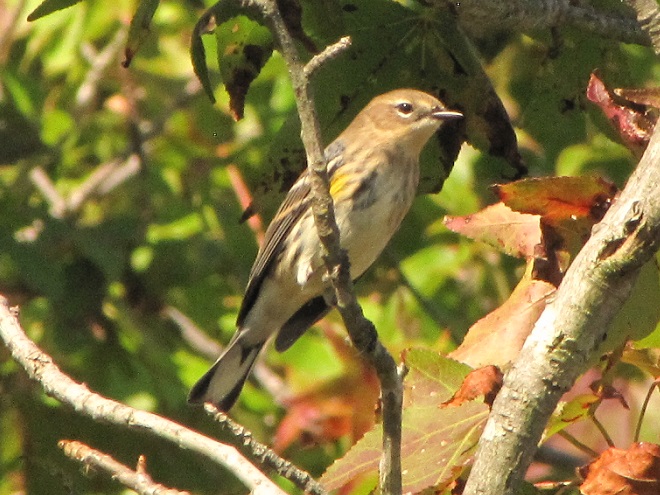
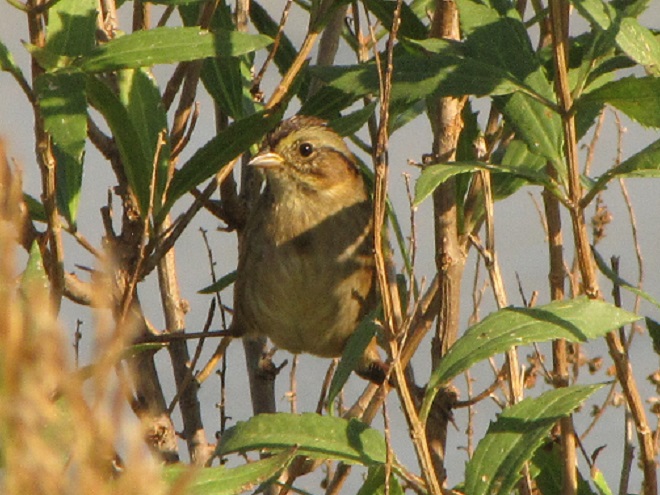
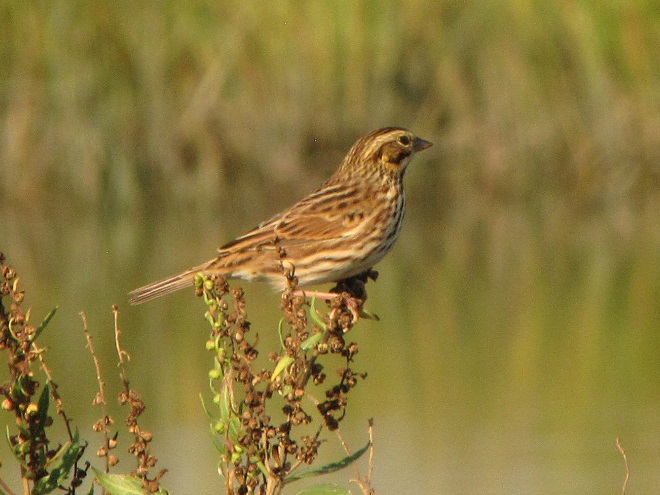
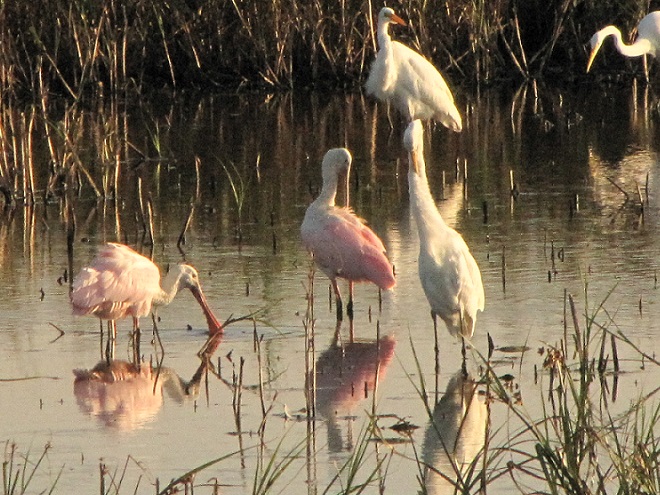
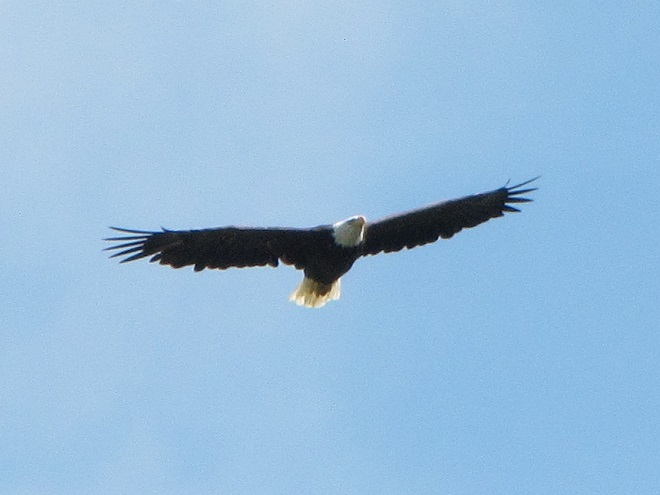
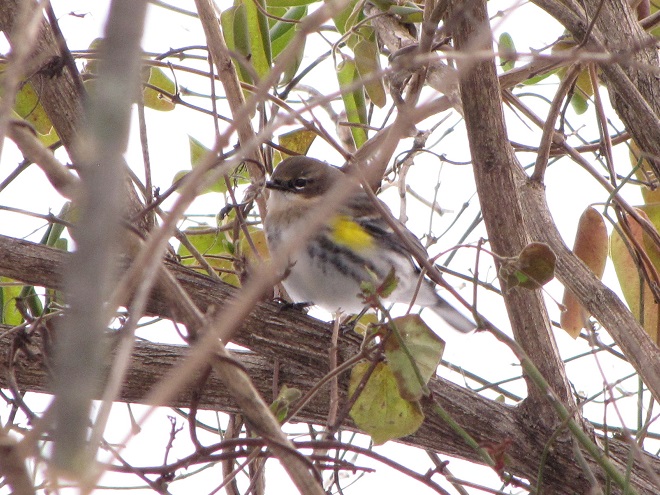
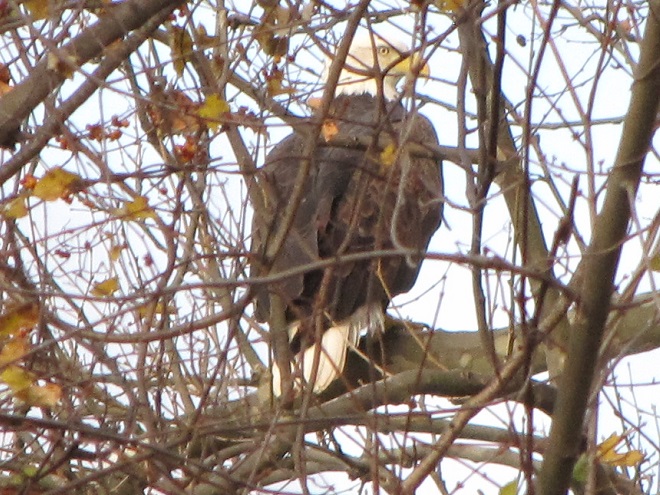
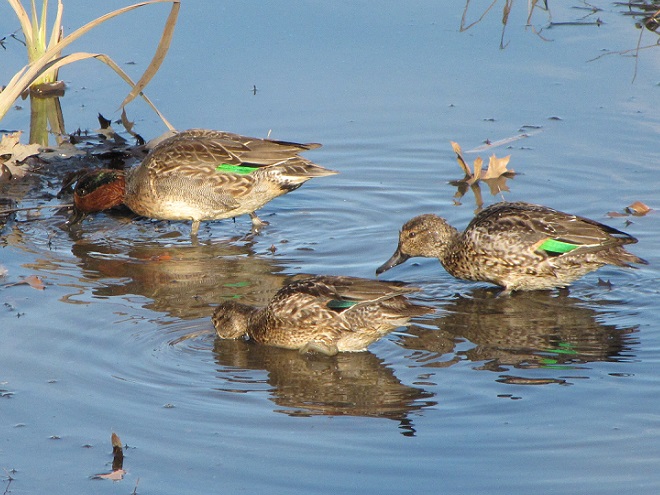
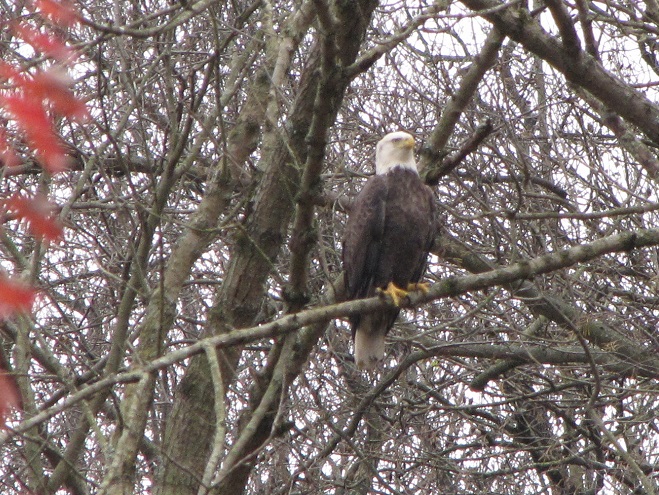
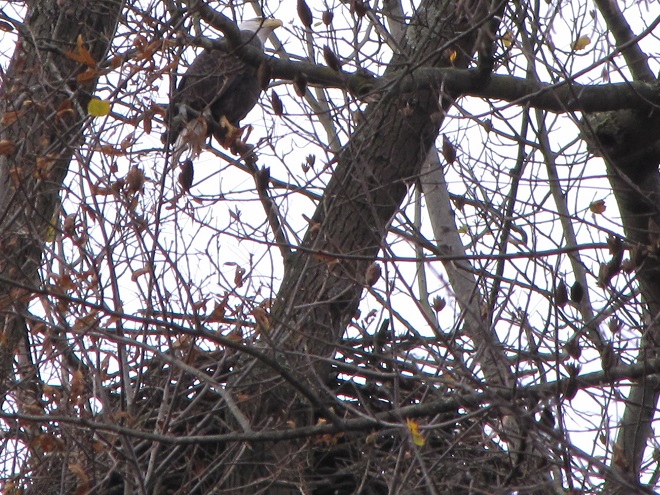
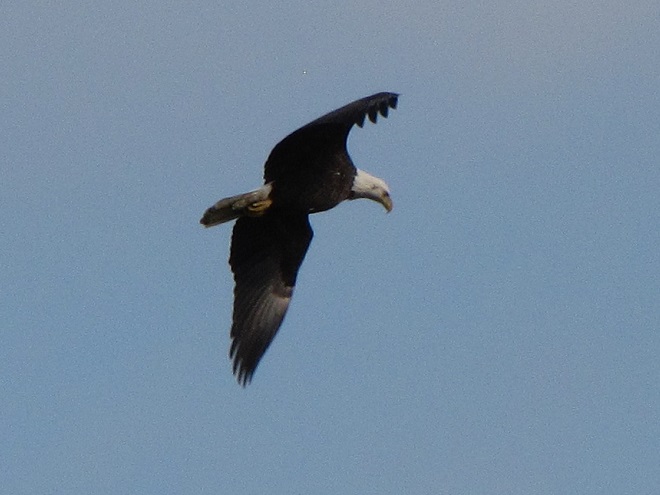
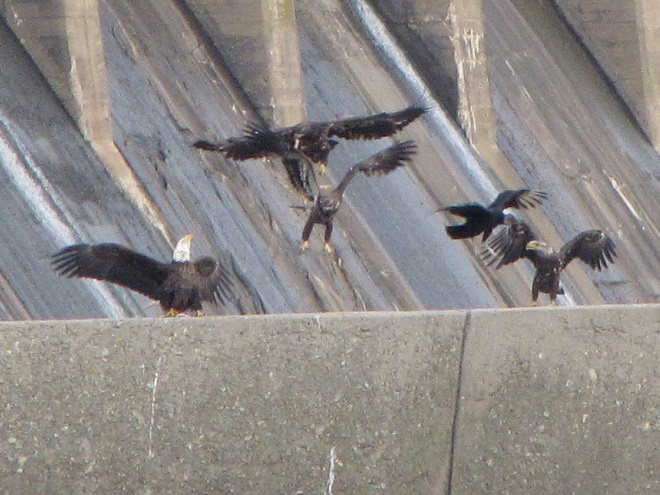
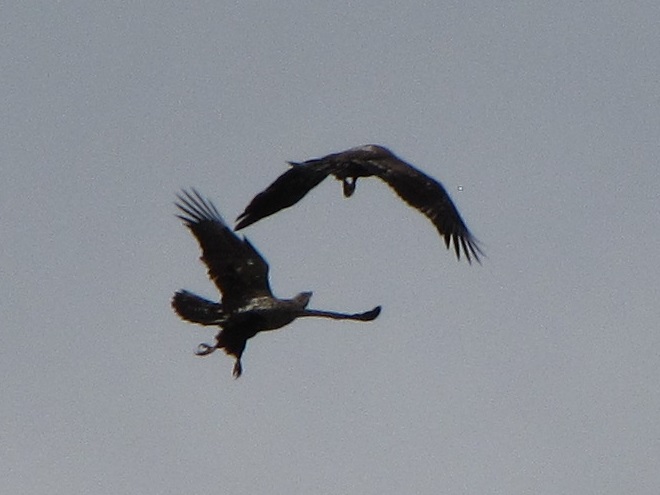
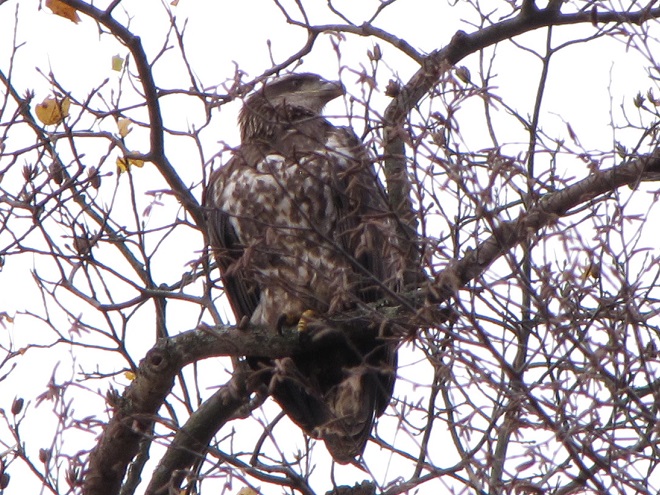
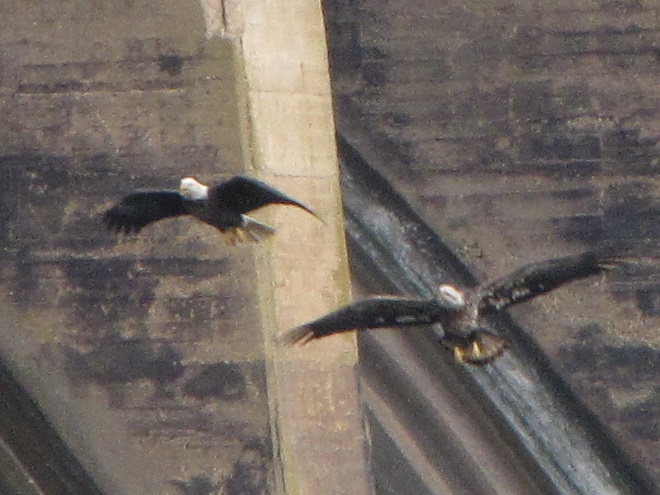
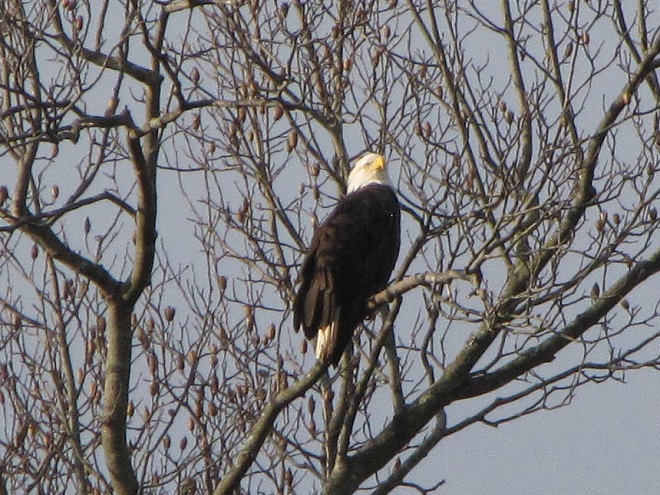
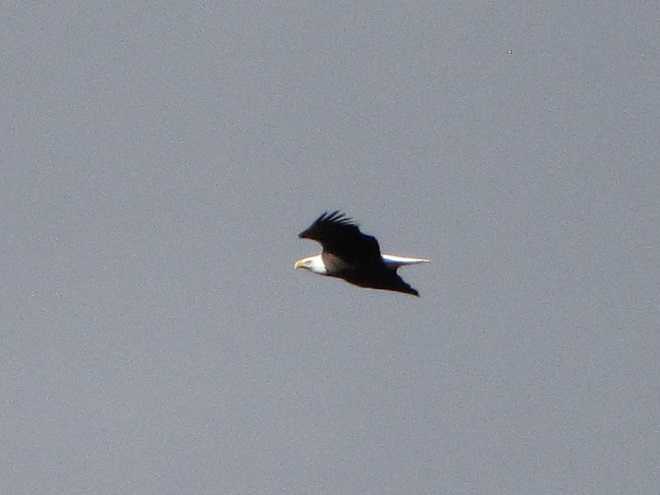
Uncle Ty’s current United States Fish and Wildlife Service Duck Stamp displayed on his dashboard is free admission to the tour road at Bombay Hook and other National Wildlife Refuges.The refuge at Bombay Hook includes woodlands, grasslands, and man-made freshwater pools, but it is predominately a protectorate of thousands of acres of tidal salt marsh bordering and purifying the waters of Delaware Bay. These marshes are renowned wintering areas for an Atlantic population of Snow Goose known as the “Greater Snow Goose” (Anser caerulescens atlanticus). Witnessing thousands of these birds rising over the marsh and glowing in the amber light of a setting sun is an unforgettable experience.Trails at various stops along the auto tour route lead to observation towers and other features. This boardwalk meanders into the salt marsh grasses and includes a viewing area alongside a tidal creek. Our visit coincided with a very high tide induced by east winds and a new moon.During high tide, an Eastern Cottontail (Sylvilagus floridanus) seeks higher ground near the boardwalk and the wooded edge of the salt marsh.As the tide rises, fast-flying shorebirds scramble from flooded mudflats in the salt marsh on the east side of the tour road.When high tide arrives in the salt marshes, shorebirds and waterfowl often concentrate in the man-made freshwater pools on the west side of the tour road. Glaring afternoon sun is not the best for viewing birds located west of the road. For ideal light conditions, time your visit for a day when high tide occurs in the morning and recedes to low tide in the afternoon.A view looking west into Shearness Pool, largest of the freshwater impoundments at Bombay Hook.Bombay Hook has many secretive birds hiding in its wetlands, but they can often be located by the patient observer. Here, two Pied-billed Grebes feed in an opening among the vegetation in a freshwater pool.One of Bombay Hook’s resident Bald Eagles patrols the wetlands.American Avocets (Recurvirostra americana) gather by the hundreds at Bombay Hook during the fall. A passing eagle will stir them into flight.An American Avocet, a delicate wader with a peculiar upturned bill.As soon as the tide begins receding, shorebirds and waterfowl like these Green-winged Teal begin dispersing into the salt marshes to feed on the exposed mudflats.The woodlands and forested areas of the refuge host resident songbirds and can be attractive to migrating species like this Yellow-rumped Warbler.For much of its course, the tour road at Bombay Hook is located atop the dike that creates the man-made freshwater pools on the western edge of the tidal salt marsh. If you drive slowly and make frequent stops to look and listen, you’ll notice an abundance of birds and other wildlife living along this border between two habitats. Here, a Swamp Sparrow has a look around.Savannah Sparrows are common along the tour road where native grasses grow wild.Bombay Hook is renowned for its rarities. One of the attractions during the late summer and autumn of 2021 was a group of Roseate Spoonbills (Platalea ajaja), vagrants from the southern states, seen here with Great Egrets and Snowy Egrets (Egretta thula).Roseate Spoonbills and Great Egrets at Bombay Hook.
Remember to go the Post Office and get your duck stamp. You’ll be supporting habitat acquisition and improvements for the wildlife we cherish. And if you get the chance, visit a National Wildlife Refuge. November can be a great time to go, it’s bug-free! Just take along your warmest clothing and plan to spend the day. You won’t regret it.
It’s been more than a year and a half since Uncle Tyler Dyer has been on one of our outings. He’s been laying low, keeping to himself—to protect his health. So he was quite excited when we made our way to the Delaware coast to have a look at some marine and beach life at Cape Henlopen State Park.
Uncle Ty hadn’t visited the Atlantic shoreline here for almost two decades, and he was more than a bit startled at what he saw…
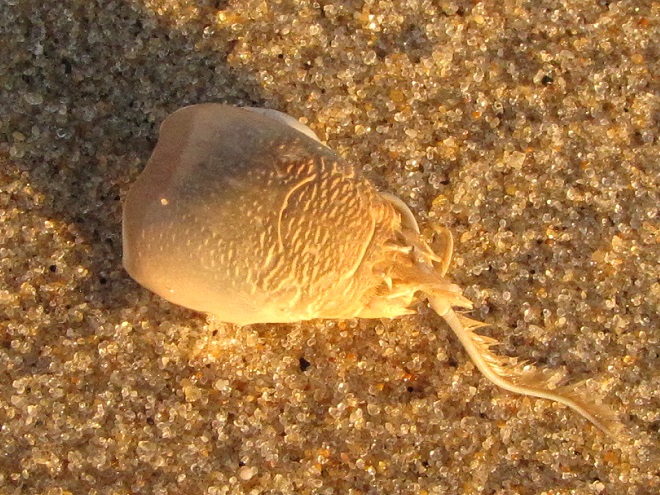
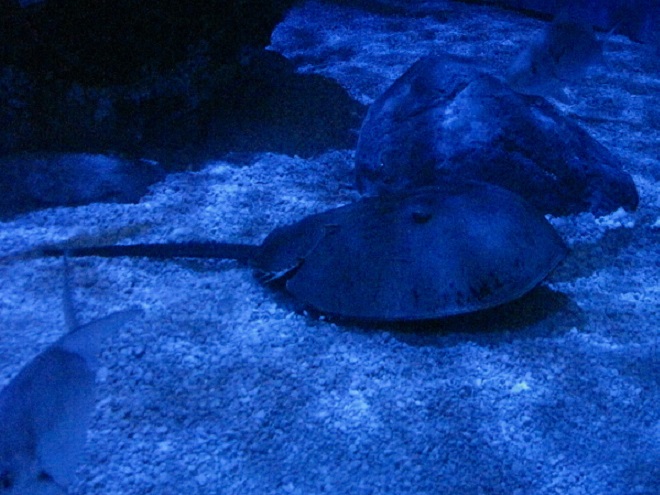
Cape Henlopen State Park has spectacular wild dunes and pine forests, but notice how clean the high-tide line is on the beach. This is not a good sign. During our walks, we found not one mollusk shell (clam, scallop, snail, etc.), skate egg case, whelk egg case, dead fish, or other sign of benthic life from the adjacent surf and sea.We found the remains of Mole Crabs (Emerita talpoida), also known as sand fleas, a crustacean that burrows into the surf-washed sands of the beach, but there were no signs of life from deeper waters.One of a dozen or so Lesser Black-backed Gulls (Larus fuscus) observed consuming Mole Crabs. There was little else for these birds to eat. Sanderlings (Calidris alba) and other shorebirds typically found foraging along the surf’s edge were totally absent.Atlantic Ghost Crabs (Ocypode quadrata) live in the predominantly dry sands of the beach, above the high tide line. Missing were the remains of aquatic crabs, including Atlantic Horseshoe Crabs (Limulus polyphemus), and other invertebrates that are often found washing in with the tide.If you want to see an Atlantic Horseshoe Crab, you may have no better option than to visit the aquariums at the state park’s nature center.
A nearly sterile beach might be delightful for barefoot sunbathers and the running of the dogs, but Uncle Ty isn’t the barefoot type. He likes his sandals and a slow peaceful stroll with plenty of flora and fauna to have a look at. We could tell he was getting bored. So we headed home.
Along the way, Uncle Ty asked to stop at the Post Office. He wanted to get a stamp. Thinking he was going to fire off a terse letter of protest to the powers that be about what he saw at the beach, we obliged.
Soon, Uncle Ty trotted down the steps of the Post Office with his stamp.
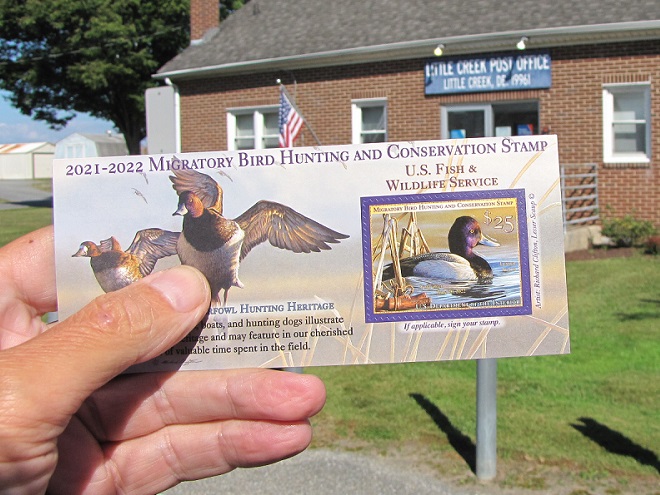
Uncle Tyler Dyer with his one stamp. The 2021-2022 Federal Duck Stamp is available at most local Post Offices. According to the United States Fish and Wildlife Service, ninety-eight percent of the $25 purchase price goes directly to acquiring and protecting wetland habitat.
Uncle Ty bought a duck stamp, so naturally we asked him when he decided to take up hunting. He explained, “Man, I gave that stuff up when I was thirteen. I’ve got the Thoreau/Walden mindset—hunting is something of an adolescent pursuit.”
It turns out Uncle Ty bought a duck stamp to support wetland acquisition and improvements, not only to benefit ducks and other wildlife living there, but to improve water quality. In Delaware, tidal estuary restoration work is underway at both the Prime Hook and Bombay Hook National Wildlife Refuges on Delaware Bay. These projects will certainly enhance the salt marsh’s filtration capabilities and just might improve the populations of benthic life in the bay and adjacent ocean at Cape Henlopen.
Uncle Ty tossed the stamp atop the dashboard and we were again on our way, but we weren’t going directly home. We made a stop along the way. A stop we’ll share with you next time.
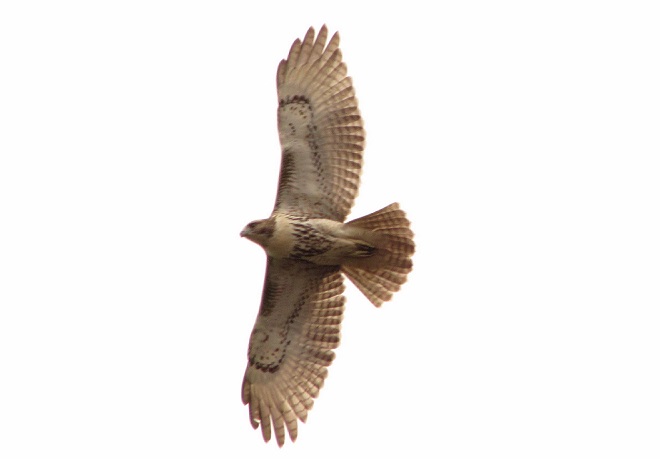
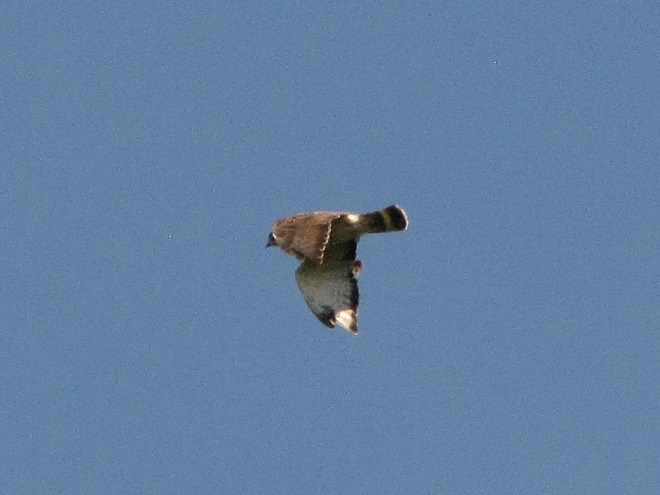
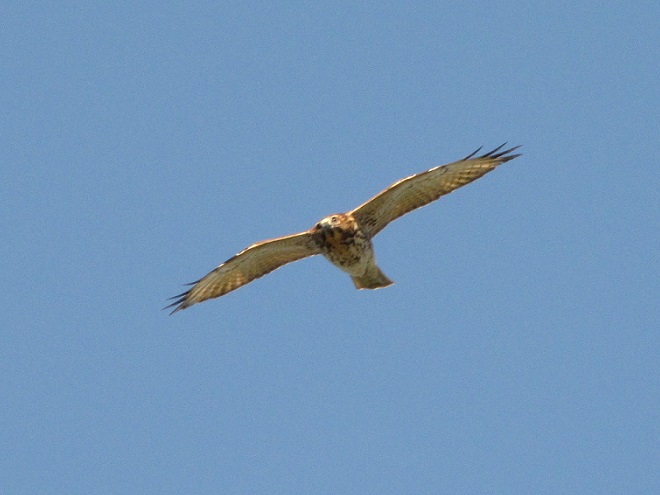
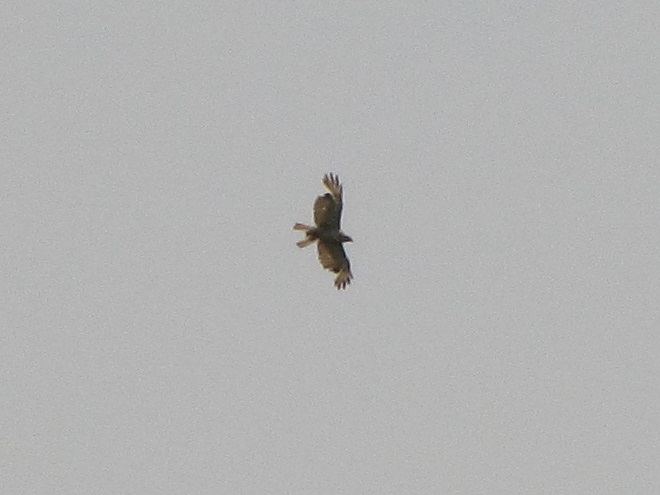
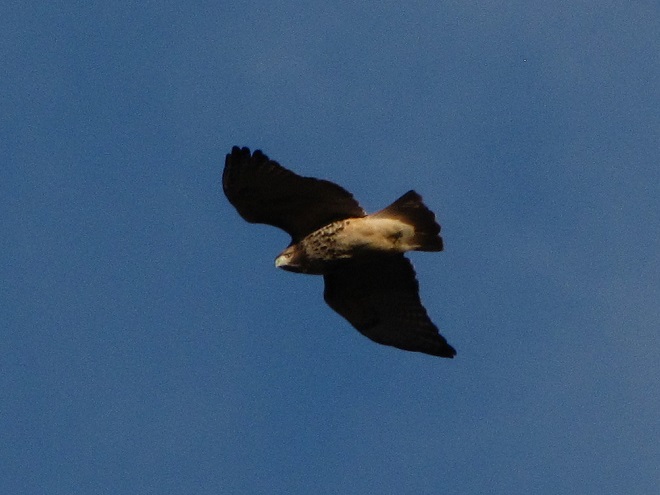
A hatch-year/juvenile Red-tailed Hawk on its first southbound migration glides on an updraft created as northwest winds strike the slope of a hillside in the Valley and Ridge Province. It’s a free ride, and this bird could easily cover one hundred miles or more in just one day of flying.
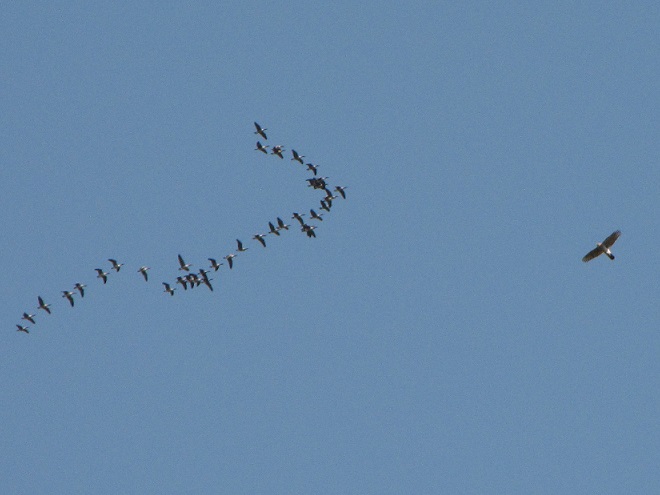
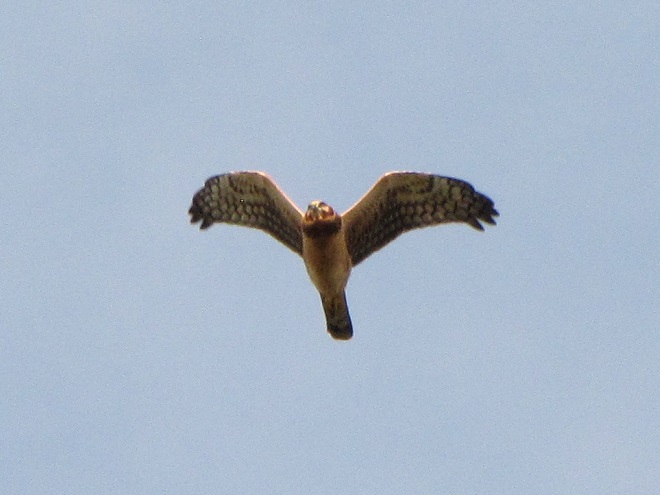
Those owl-faced Northern Harriers, formerly known as marsh hawks, are among the raptors and other migratory birds that will be rolling through the Lower Susquehanna River Watershed during the next couple of days. A cold front is presently passing through the region and gusty northwest winds will follow. This could be one of the best flights of the season, so make plans now to go to a hawk watch site atop a local ridge. Don’t forget your field glasses! And remember to click the “Hawkwatcher’s Helper: Identifying Bald Eagles and other Raptors” tab at the top of this page for a photo gallery of the vulture, hawk, eagle, and falcon species your likely to observe.
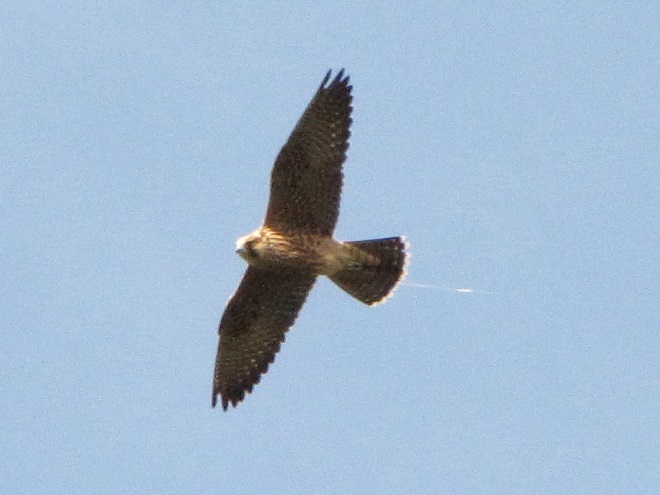
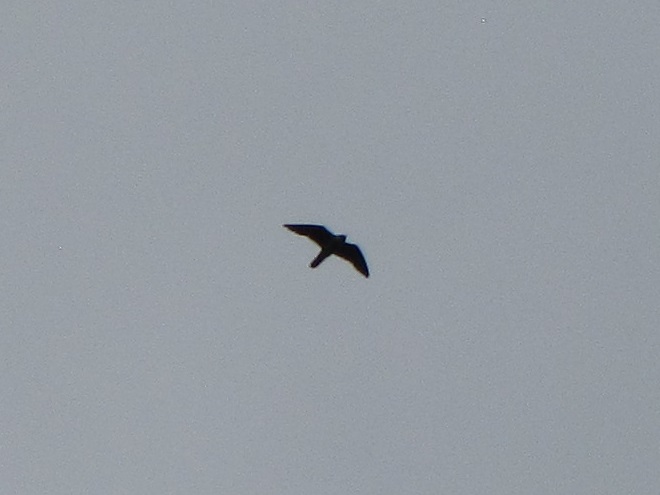
A Peregrine Falcon appearing to be equipped with a tracking transmitter passes the lookout at Second Mountain Hawk Watch in northern Lebanon County, Pennsylvania, today. Note the antenna trailing behind the tail. This individual appears to be a hatch-year/juvenile “Tundra Peregrine”. An effort is currently underway to try to find out more about the bird and its travels.
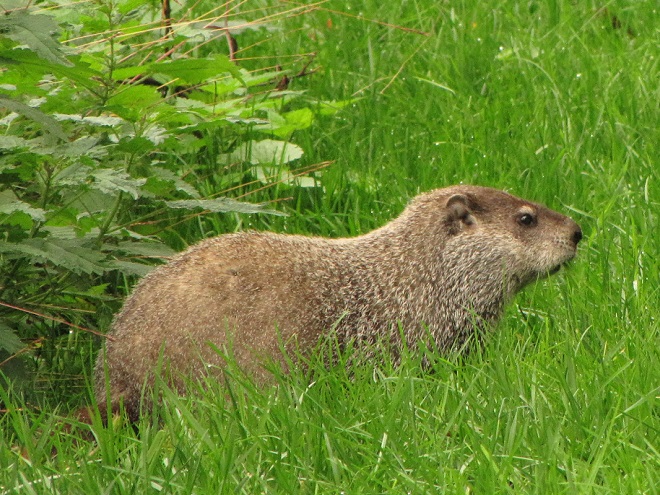
The Woodchuck (Marmota monax), also known as the groundhog, gets no respect. Shouldn’t it be the official state mammal of Pennsylvania? After all, a nationally recognized holiday centers on the prognostications of the state’s favorite son, “Punxsutawney Phil”. And think of all those state lottery tickets sold by that media groundhog, “Gus”. Yep, only Pennsylvania would have an animal often named for a different state as its official mammal: the Virginia White-tailed Deity.
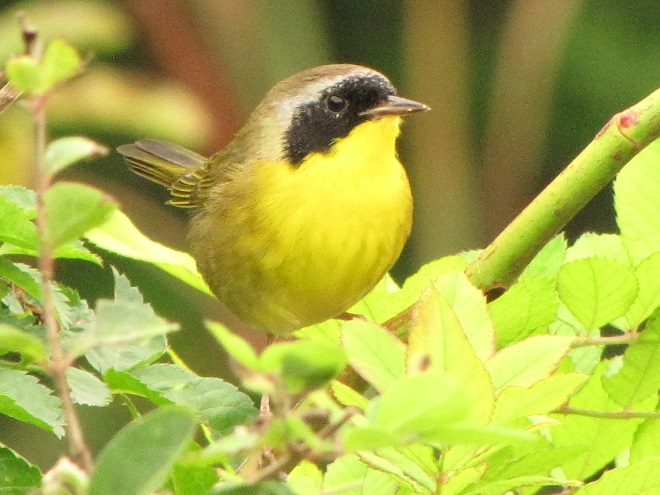
In the Lower Susquehanna River Watershed, the Common Yellowthroat is a summer resident that nests within brushy cover along stream courses and forest edges. It is particularly fond of dense thorny growth in utility right-of-ways. During spring and fall migrations, it is one of the most likely of the warbler species to be found visiting suburban shrubbery.
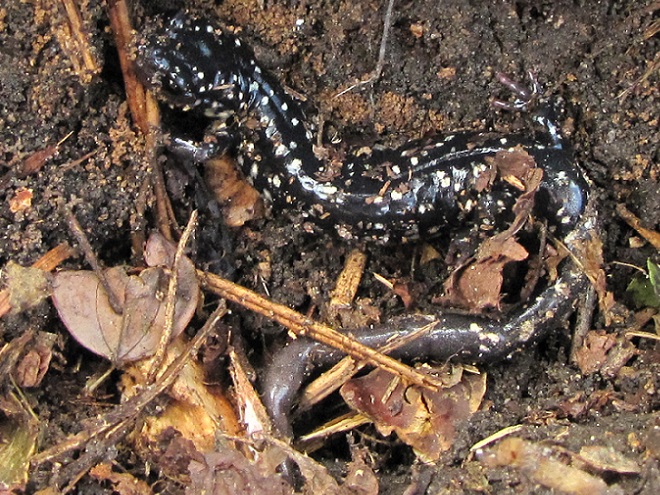
The Northern Slimy Salamander (Plethodon glutinosus) is a terrestrial denizen of steep forested slopes. These amphibians are lungless, “breathing” air through their skin, so don’t touch or handle them. In autumn, as freezing temperatures arrive in the lower Susquehanna region, Northern Slimy Salamanders seek a cozy subterranean shelter to pass the winter.
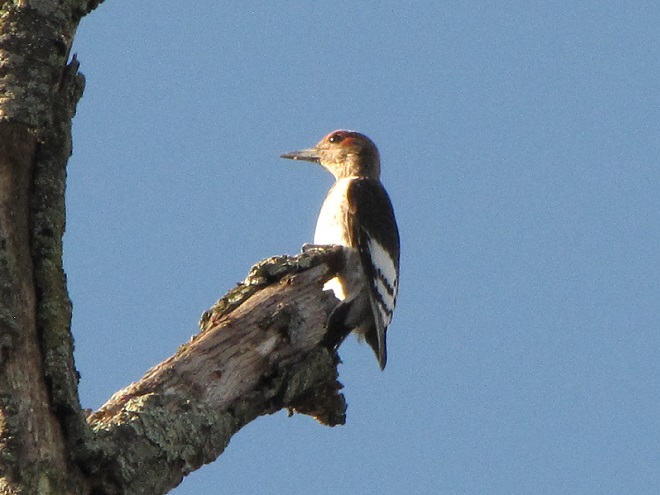
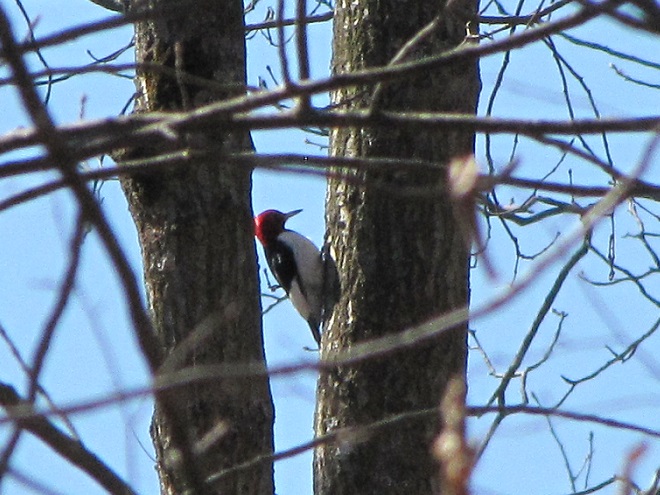
A juvenile Red-headed Woodpecker surveys the morning landscape. In the lower Susquehanna watershed, Red-headed Woodpeckers are an uncommon summer breeder requiring large dead oak trees in semi-open habitat for nesting. They can occasionally be found during winter in mature oak woods, appearing most frequently west of the river at places including Gifford Pinchot State Park. Fall migrants are seen along local ridges in September and October.
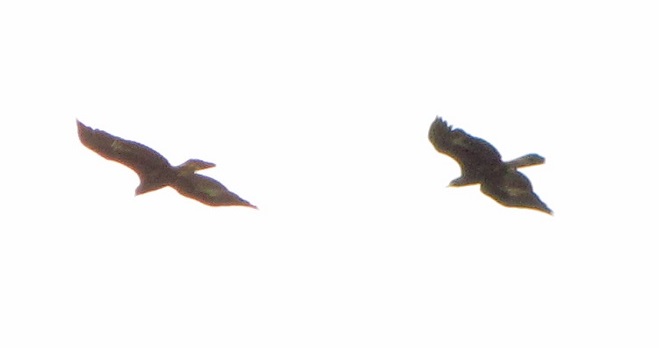
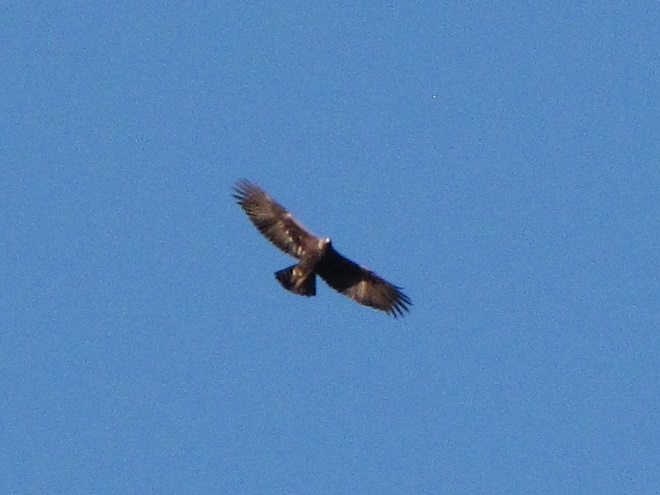
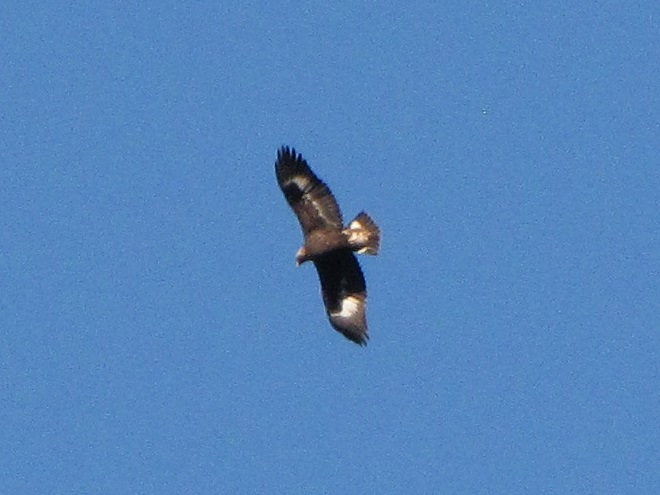
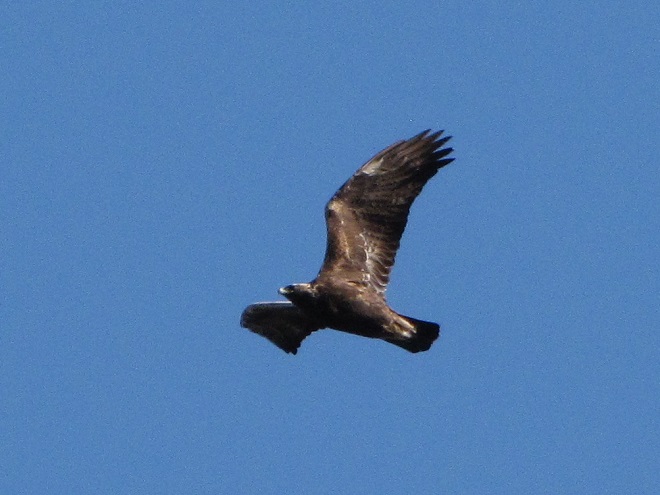
Each autumn, Eastern Golden Eagles transit the Lower Susquehanna River Watershed as they make their way from nesting sites in eastern Canada to wintering ranges in the mountains of the eastern United States. The majority of these birds make passage during late October and early November, so when a Golden Eagle is observed at a local hawk watch during the month of September, it is a notable event. So far in 2021, both Waggoner’s Gap Hawk Watch north of Carlisle and Second Mountain Hawk Watch at Fort Indiantown Gap have logged early-season Golden Eagles, the former on the seventeenth of September and the latter just yesterday.
Two images of a distant Golden Eagle seen passing Second Mountain Hawk Watch on September 29th. Plumage indicates it is a “before-third-year” bird. Adult birds and birds born this year, the latter known as hatch-year or juvenile Golden Eagles, are the least likely to have already completed the journey from northern breeding territories to south-central Pennsylvania. This individual is very likely an immature Golden Eagle in its second year, but a view of the topside of the wings would be necessary to eliminate a hatch-year/juvenile bird as a possibility. Immature Golden Eagles, those birds in their second through fourth years, are the ones most at leisure to wander and show up as unanticipated visitors at unexpected times.
To learn more about identifying Golden Eagles and other birds of prey, be certain to click the “Hawkwatchers Helper: Identifying Bald Eagles and other Raptors” tab at the top of this page.
And for more specific information on Golden Eagles and how to determine their age, click the “Golden Eagle Aging Chart” tab at the top of this page.
Can it be that time already? Most Neotropical birds have passed through the Lower Susquehanna River Watershed on their way south and the hardier species that will spend our winter in the more temperate climes of the eastern United States are beginning to arrive.
Here’s a gallery of sightings from recent days…
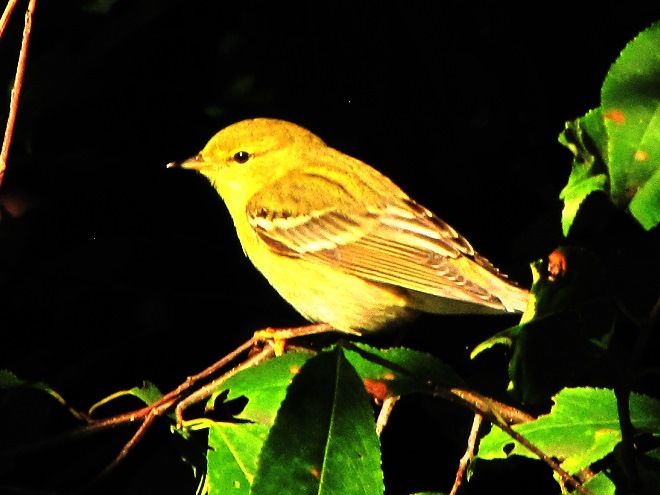
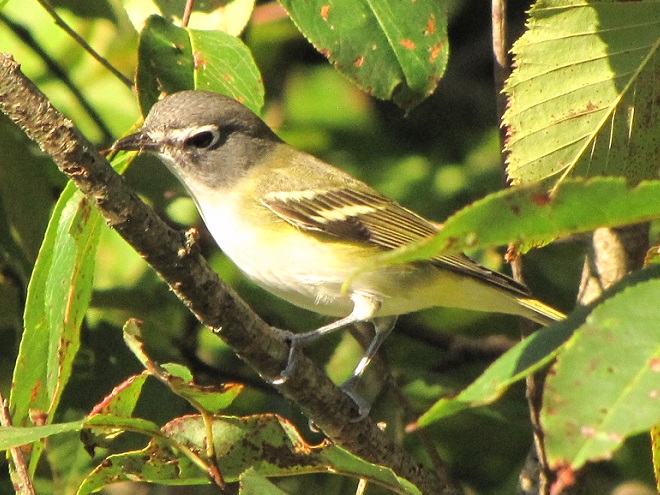
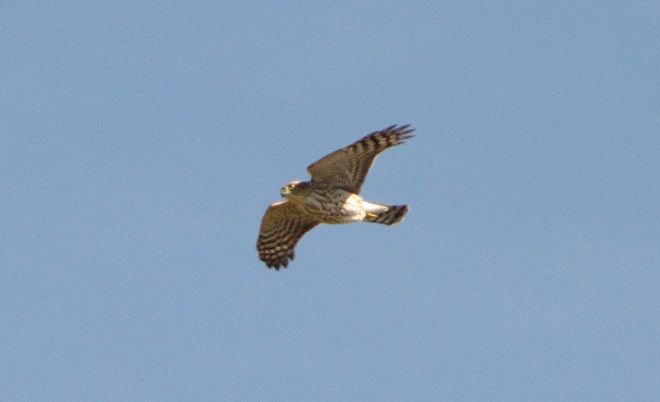
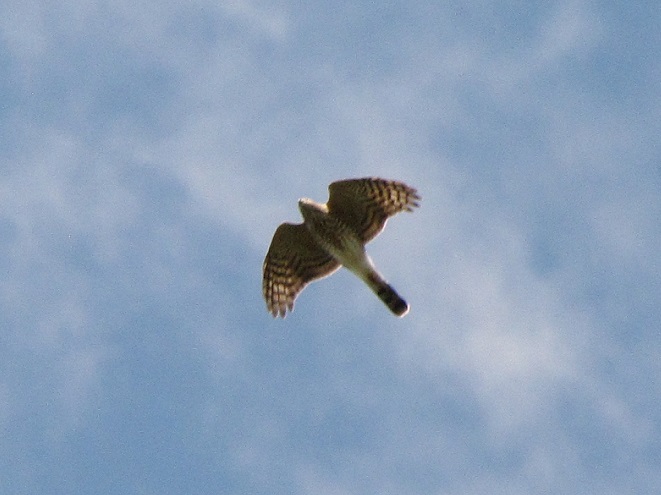
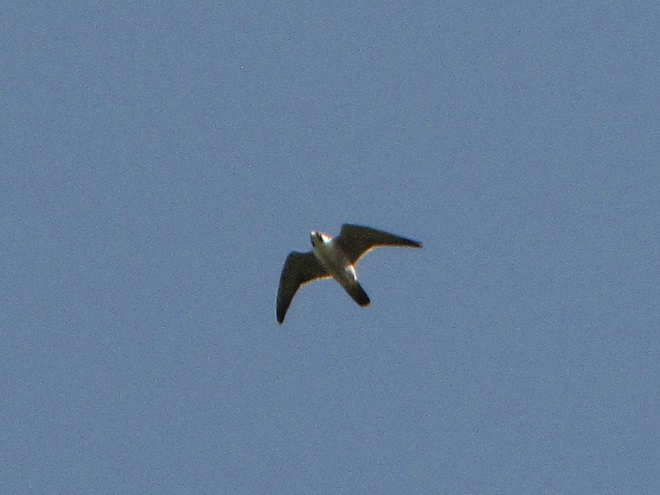
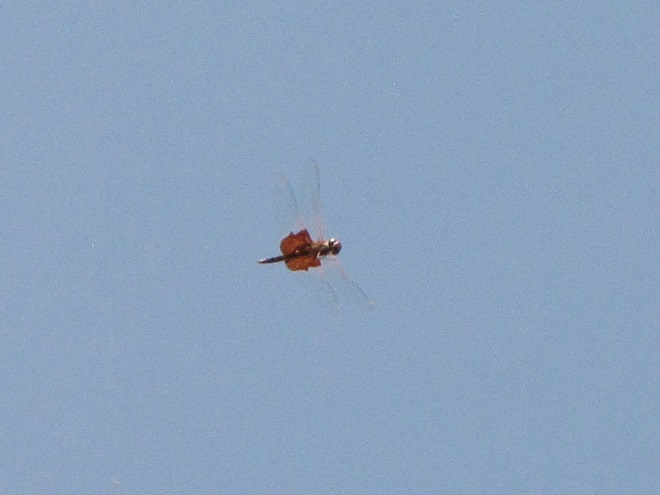
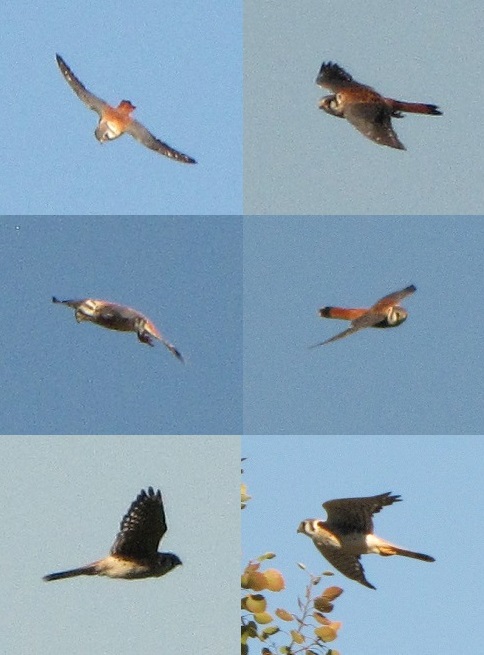
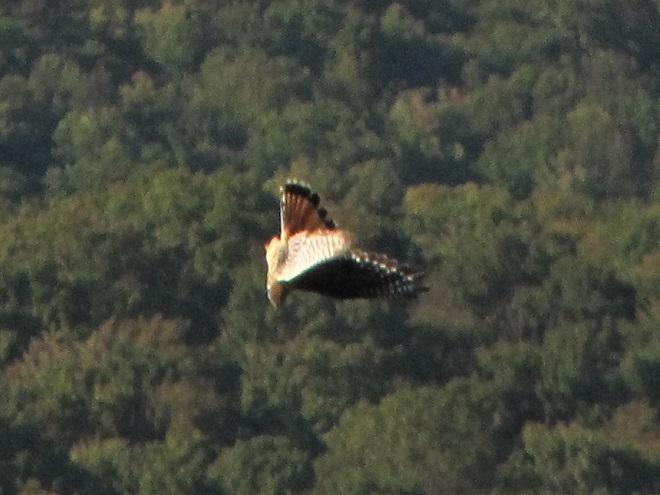
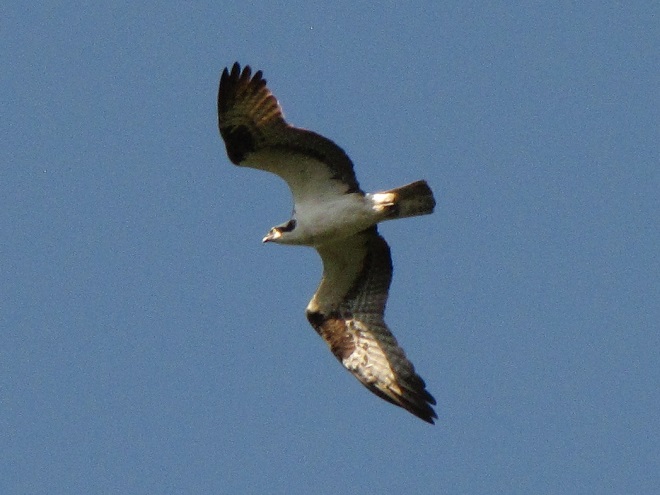
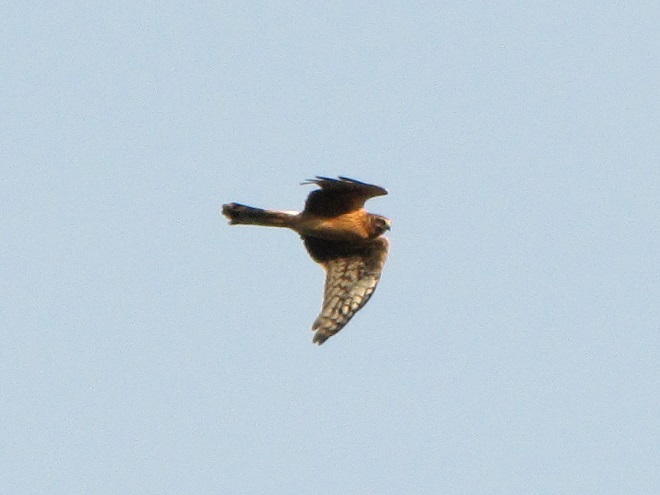
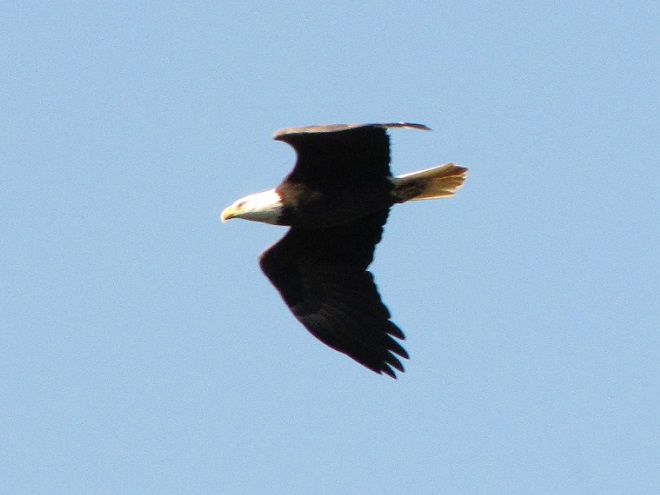
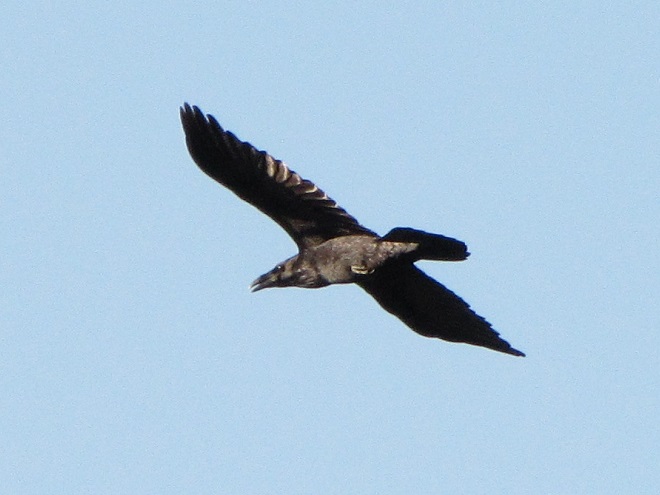
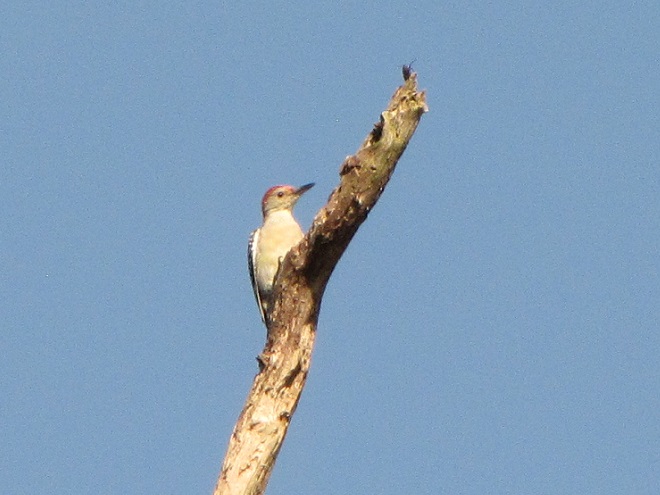
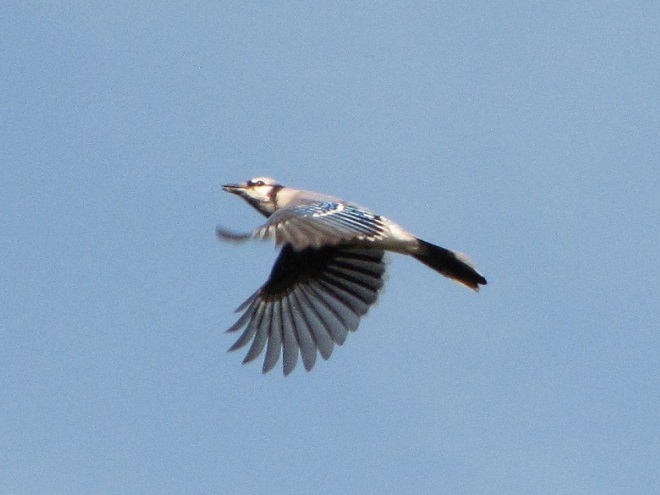
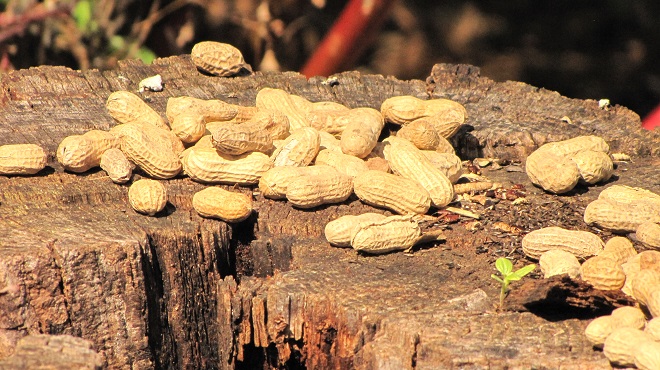
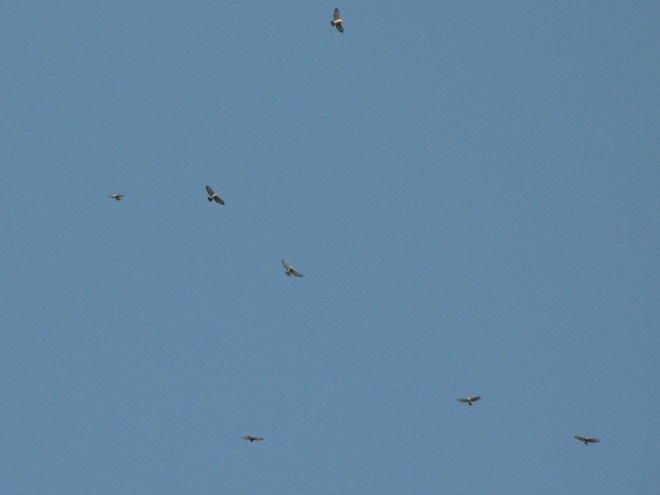
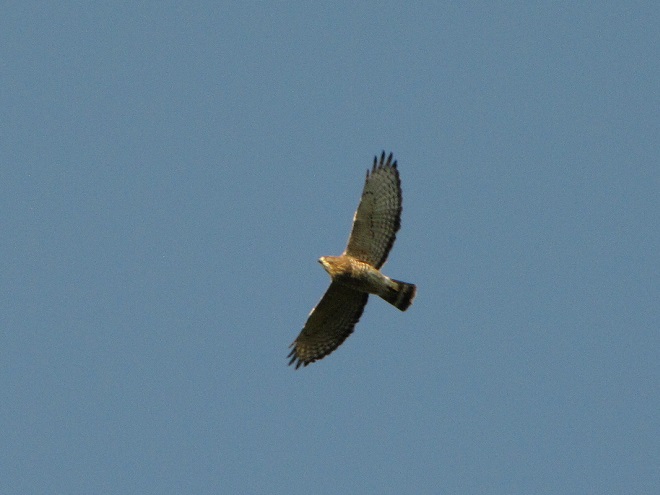
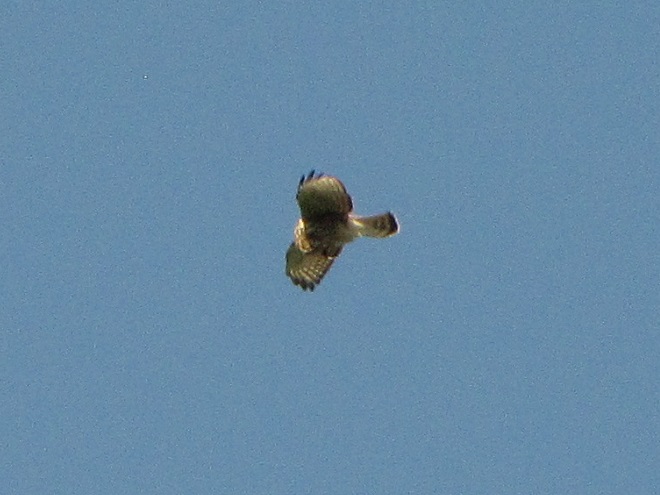
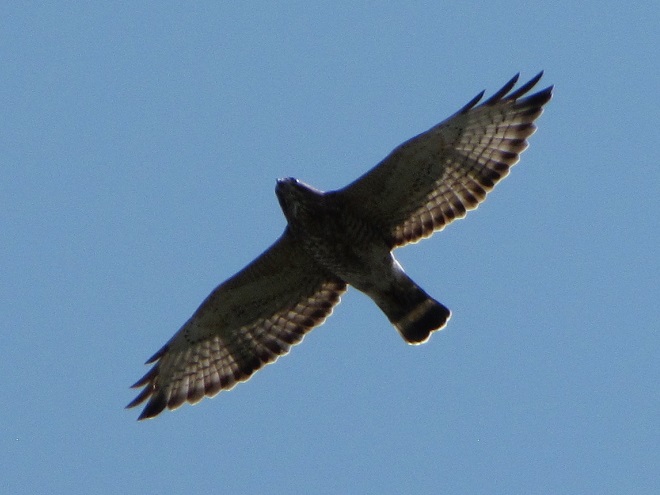
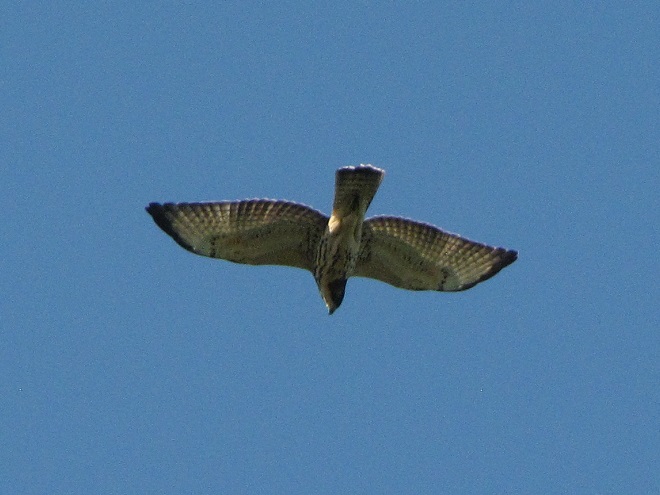
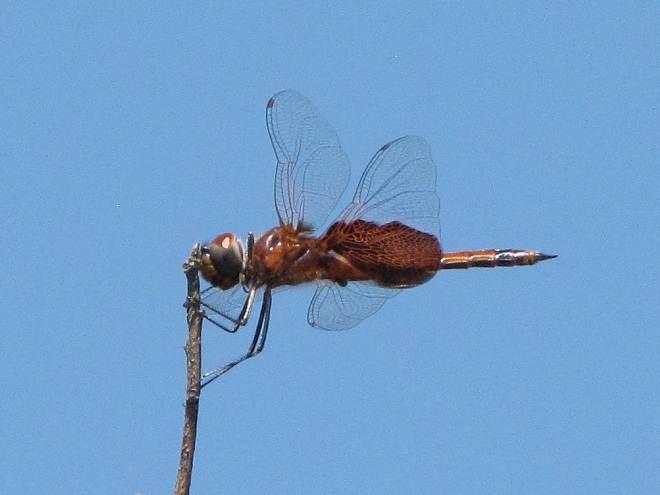
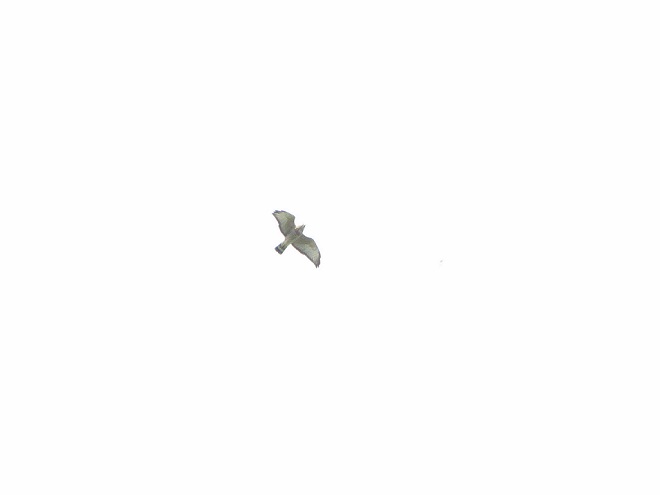
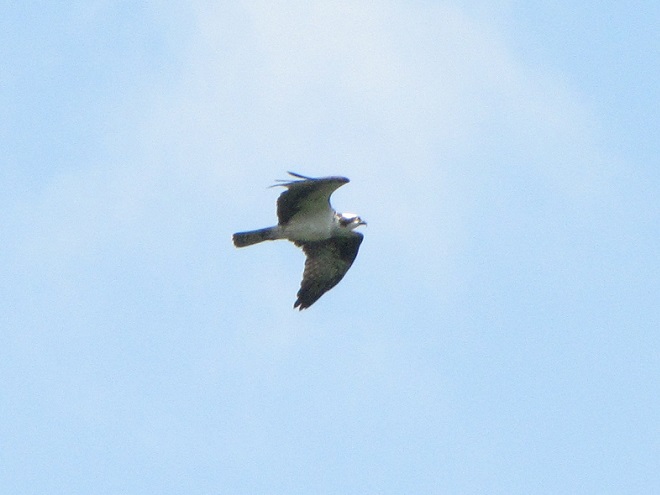
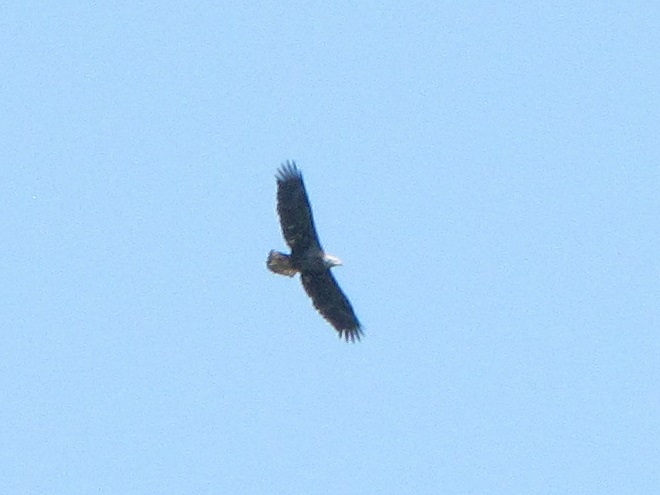
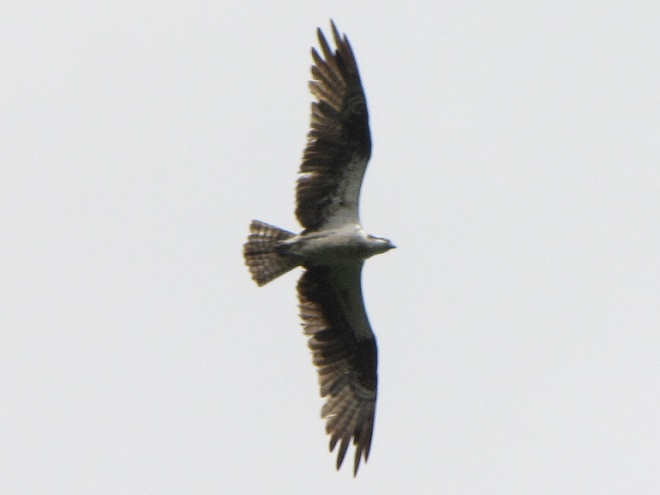
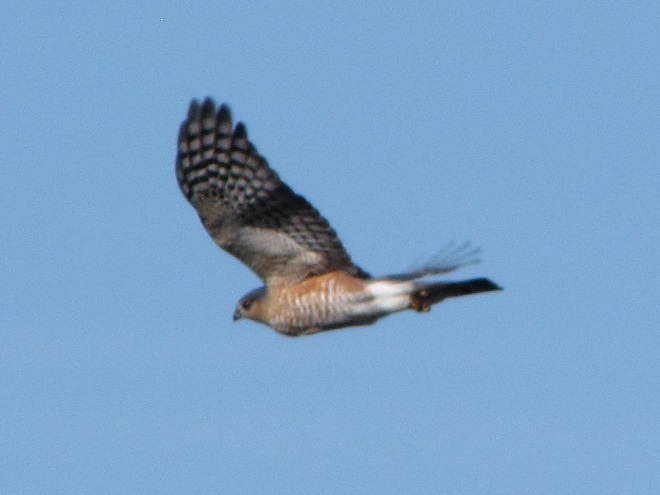
During the past two weeks, thousands of Broad-winged Hawks, including this adult bird, crossed the skies of the lower Susquehanna valley on their way to Central and South America for our winter.A juvenile Broad-winged Hawk passes into the sunset during its first autumn migration.Blackpoll Warblers are among the last of the Neotropical species to transit the region. They’ll continue to be seen locally through at least early October.Blue-headed Vireos are the October vireo during the fall, the other species having already continued toward tropical forests for a winter vacation.The lower Susquehanna region lies just on the northern edge of the wintering range of the Blue-gray Gnatcatcher, a species found nesting locally among treetops in deciduous woods. Look for their numbers to swell in coming days as birds from further north begin rolling through the region on their way south.Sharp-shinned Hawks delight visitors at ridgetop hawk watches during breezy late-September and early-October days. They allow closer observation than high-flying Broad-winged Hawks due to their habit of cruising just above the treetops while migrating.A Sharp-shinned Hawk glides over a lookout.Late September/early October is falcon time at area hawk-counting stations, the Peregrine Falcon often being the most anticipated species.Pale “Tundra Peregrines”, a subspecies that nests in the arctic, are strictly migratory birds in the Mid-Atlantic States. They are presently passing through on their way to South America. Like Neotropical songbirds, their long flights provide them with the luxury of never experiencing a winter season.This Carolina Saddlebags and other migratory dragonflies, which normally leave the area by mid-September, are still lingering in the lower Susquehanna region, much to the pleasure of the falcons that feed upon them.An male American Kestrel in pursuit of dragonflies found swarming around the lookout at Second Mountain Hawk Watch in Lebanon County, Pennsylvania.A male American Kestrel stooping on a dragonfly.Osprey will be among the birds of prey passing hawk watch sites during the coming two weeks. The first week of October often provides the best opportunity for seeing the maximum variety of raptors at a given site. On a good day, a dozen species are possible.Seeing cinnamon-colored juvenile Northern Harriers is symbolic of the October migration flights.Bald Eagles always thrill the crowd.In addition to raptors, resident Common Ravens are regularly sighted by observers at hawk watches and elsewhere during the fall season.Hawk-counting stations sometimes log movements of Red-bellied Woodpeckers during late September and early October. This species has extended its range into the Lower Susquehanna River Watershed only during the past one hundred years, making these seasonal migration movements a recent local phenomenon.Blue Jays are currently on the move with breeding birds from the forests of Canada and the northern United States moving south. Hundreds can be seen passing a given observation point during an ideal morning.Blue Jays find a pile of peanuts to be an irresistible treat. Provide the unsalted variety and watch the show!
Be sure to click on these tabs at the top of this page to find image guides to help you identify the dragonflies, birds, and raptors you see in the Lower Susquehanna River Watershed…
Damselflies and Dragonflies
Birds of Conewago Falls
Hawkwatcher’s Helper: Identifying Bald Eagles and other Raptors
The smoke has cleared—at least for now—and Broad-winged Hawks are being seen migrating across lower Susquehanna valley skies. Check out these daily counts from area hawk watches…
Rocky Ridge County Park Hawk Watch northeast of York, Pennsylvania: 475 Broad-winged Hawks on Saturday, September 18th—including 388 during the two hours between noon and 2 P.M.
Second Mountain Hawk Watch at Fort Indiantown Gap in Lebanon County, Pennsylvania: 300 Broad-winged Hawks on Wednesday, September 15th— one more than was tallied passing the site on the previous day.
Waggoner’s Gap Hawk Watch on Blue Mountain north of Carlisle, Pennsylvania: 1,211 Broad-winged Hawks on Tuesday, September 14th and 1,485 on Sunday, September 19th.
Broad-winged hawks in a “kettle” formation gaining altitude on a thermal updraft above Second Mountain Hawk Watch before continuing on their migratory journey. “Kettling” can occur above any heat-generating surface on a sunny day, even a parking lot.A migrating adult Broad-winged Hawk rising skyward.A juvenile Broad-winged Hawk “feeding on the wing” consuming a dragonfly.
Additional Broad-winged Hawks are still working their way through the Mid-Atlantic States as they continue toward tropical wintering grounds. And there’s more. Numbers for a dozen other migratory hawk, eagle, and falcon species will peak between now and mid-November. Days following passage of a cold front are generally best—so do get out there and have a look!
You can check the daily hawk count numbers and find detailed information for lookout sites all across North America at hawkcount.org
And don’t forget to click the “Hawkwatcher’s Helper” tab at the top of this page to see a gallery of photos that can help you to identify, and possibly determine the age of, the many species of raptors that occur in the Lower Susquehanna River Watershed.
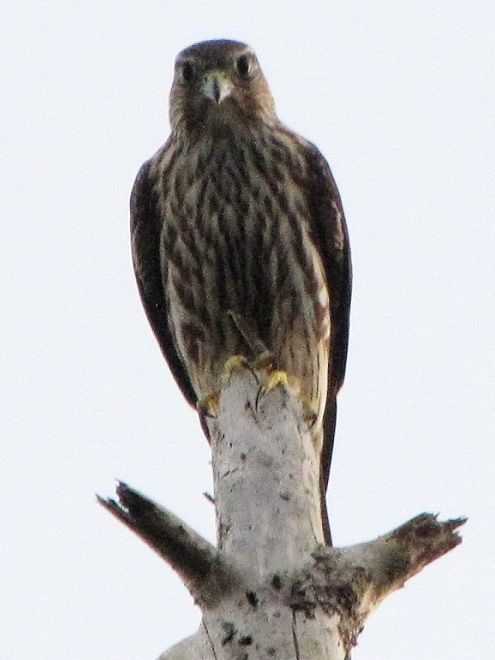
A juvenile Merlin clutching a dragonfly takes a late-afternoon break from its migration flight. Merlin numbers peak in early October.
During the coming two weeks, peak numbers of migrating Neotropical birds will be passing through the northeastern United States including the lower Susquehanna valley. Hawk watches are staffed and observers are awaiting big flights of Broad-winged Hawks—hoping to see a thousand birds or more in a single day.
During its passage through the Lower Susquehanna River Watershed, an adult Broad-winged Hawk sails over Second Mountain Hawk Watch in Lebanon County, Pennsylvania.A hatch-year/juvenile Broad-winged Hawk gazes toward hawk watchers on the ground.
Broad-winged hawks feed on rodents, amphibians, and a variety of large insects while on their breeding grounds in the forests of the northern United States and Canada. They depart early, journeying to wintering areas in Central and South America before frost robs them of a reliable food supply.
The Carolina Saddlebags (Tramea carolina), this one photographed at Second Mountain Hawk Watch on September 8th, is the rarest of the lower Susquehanna region’s migratory dragonflies. Autumn Broad-winged Hawk movements coincide with southbound flights of the Carolina Saddlebags and the more numerous migratory dragonfly species: Common Green Darner, Wandering Glider, Twelve-spotted Skimmer, and Black Saddlebags. “Broad-wings” will often eat these and other dragonflies during migration and can sometimes be seen catching and feeding upon them while still soaring high overhead.
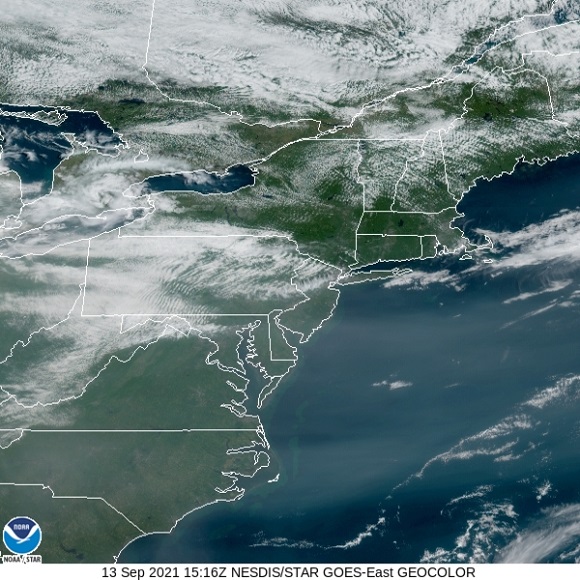
While migrating, Broad-winged Hawks climb to great altitudes on thermal updrafts and are notoriously difficult to see from ground level. Bright sunny skies with no clouds to serve as a backdrop further complicate a hawk counter’s ability to spot passing birds. Throughout the Lower Susquehanna River Watershed, the coming week promises to be especially challenging for those trying to observe and census the passage of high-flying Broad-winged Hawks. The forecast of hot and humid weather is not so unusual, but the addition of smoke from fires in the western states promises to intensify the haze and create an especially irritating glare for those searching the skies for raptors.
Smoke from fires along the California coast and in central Utah can be seen streaming east this morning. (NOAA/GOES image)Smoke from western fires and humid air creates a band of haze in Ohio, Pennsylvania, New Jersey, and states to the south this morning. (NOAA/GOES image)
A migrating Broad-winged Hawk in the glare of a hazy sky. In addition to visibility problems, swarms of Spotted Lanternflies above the treetops make distant hawks difficult to discern for hawk watchers scanning the horizon with binoculars.
It may seem gloomy for the mid-September flights in 2021, but hawk watchers are hardy types. They know that the birds won’t wait. So if you want to see migrating “Broad-wings” and other species, you’ve got to get out there and look up while they’re passing through.
Migrating Ospreys typically fly low enough and are large enough to be spotted even during the haziest of conditions.Bald Eagles like this fourth-year bird can ascend to great altitude, but their size usually prevents them from sneaking past a lookout unnoticed.Peregrines escape notice not due to hazy sky conditions, but because they pass by so quickly. They’re being seen at local hawk watches now through October.
These hawk watches in the Lower Susquehanna River Watershed are currently staffed by official counters and all welcome visitors:
Rocky Ridge County Park Hawk Watch—3699 Deininger Road off Mount Zion Road (Route 24) northeast of York, Pennsylvania.
Second Mountain Hawk Watch—off Cold Spring Road on the grounds of Fort Indiantown Gap in Lebanon County, Pennsylvania.
Waggoner’s Gap Hawk Watch—where Route 74 crosses Blue Mountain north of Carlisle, Pennsylvania.
—or you can just keep an eye on the sky from wherever you happen to be. And don’t forget to check the trees and shrubs because warbler numbers are peaking too! During recent days…
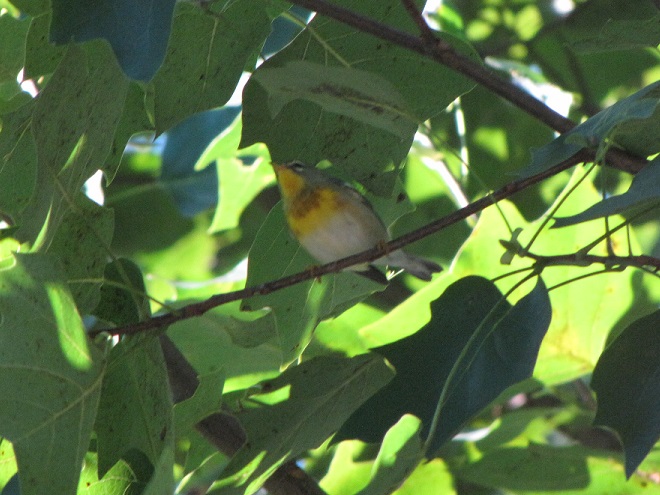
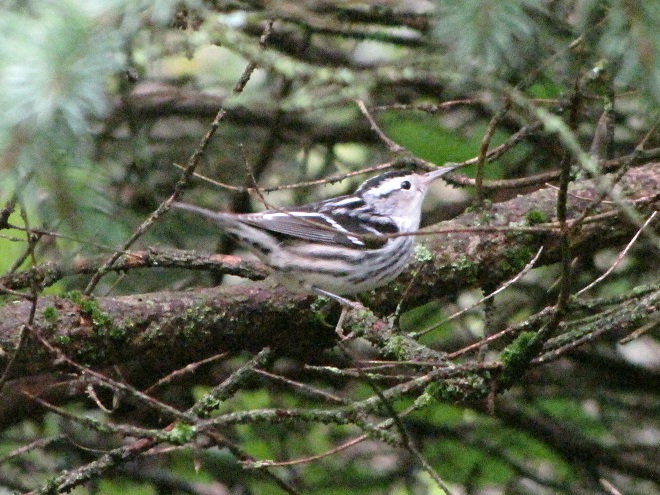
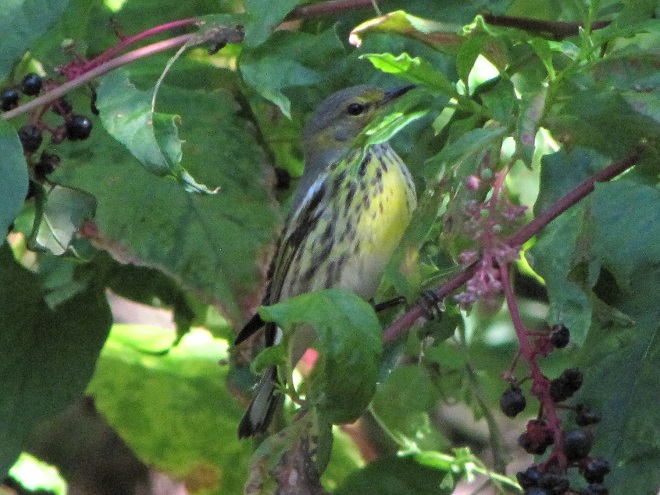
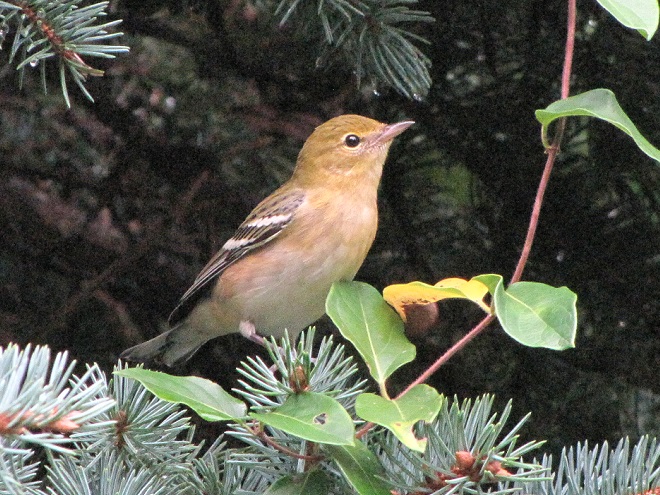
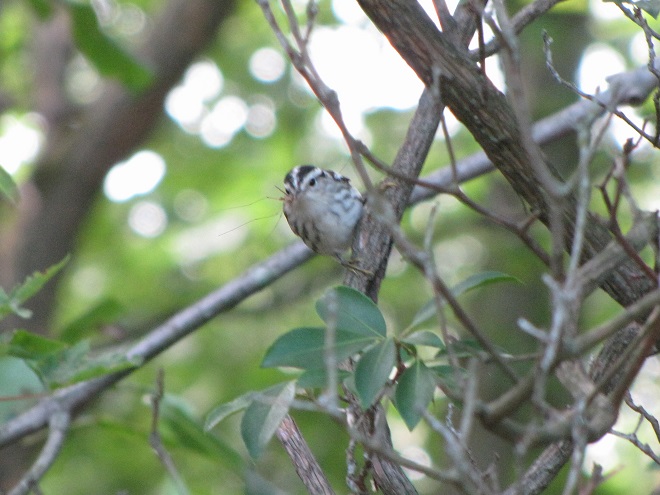
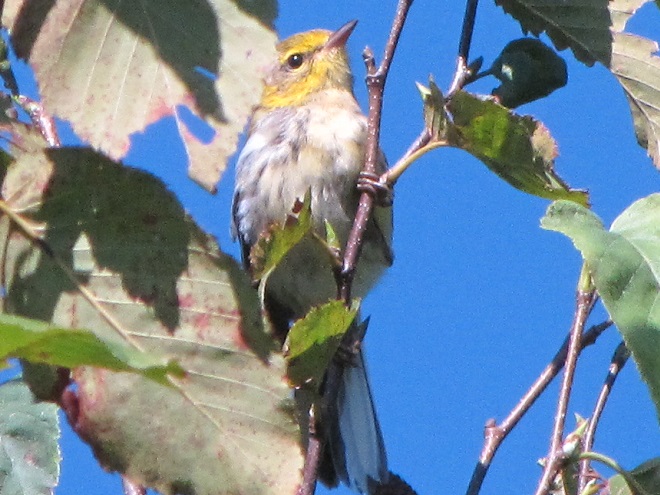
Northern Parula at Chiques Rock County Park in Lancaster County.Black-and-white Warbler at Rocky Ridge County Park in York County.Cape May Warbler at Chiques Rock County Park in Lancaster County.Bay-breasted Warbler at Rocky Ridge County Park in York County.
Neotropical birds are presently migrating south from breeding habitats in the United States and Canada to wintering grounds in Central and South America. Among them are more than two dozen species of warblers—colorful little passerines that can often be seen darting from branch to branch in the treetops as they feed on insects during stopovers in the Lower Susquehanna River Watershed.
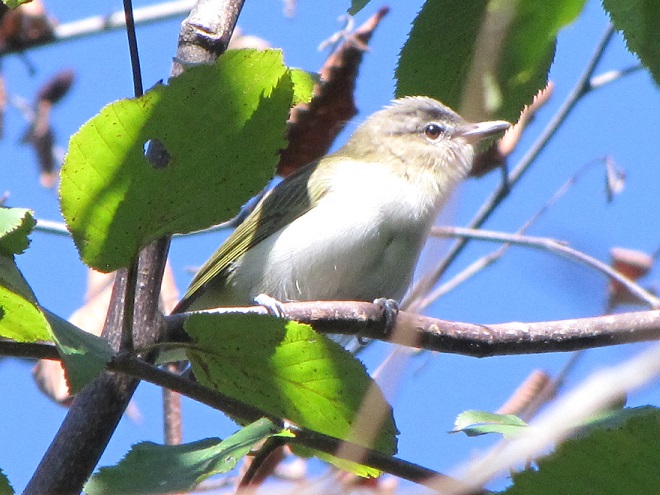
Being nocturnal migrants, warblers are best seen first thing in the morning among sunlit foliage, often high in the forest canopy. After a night of flying, they stop to feed and rest. Warblers frequently join resident chickadees, titmice, and nuthatches to form a foraging flock that can contain dozens of songbirds. Migratory flycatchers, vireos, tanagers, and grosbeaks often accompany southbound warblers during early morning “fallouts”. Usually, the best way to find these early fall migrants is to visit a forest edge or thicket, particularly along a stream, a utility right-of-way, or on a ridge top. Then too, warblers and other Neotropical migrants are notorious for showing up in groves of mature trees in urban parks and residential neighborhoods—so look up!
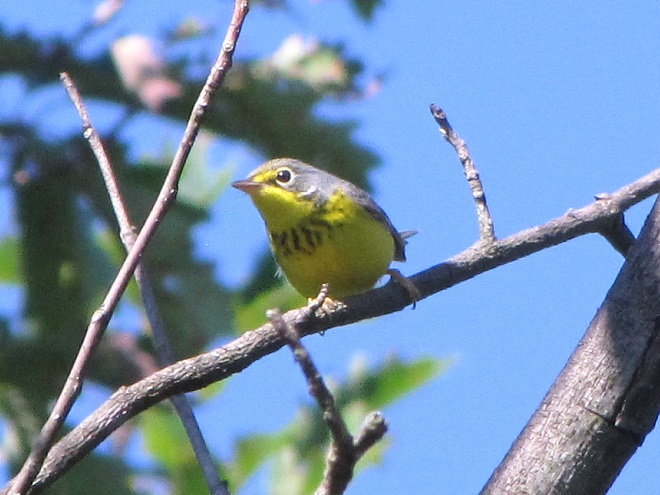
A Black-and-white Warbler descends into the tangles of the forest understory to search for a morning meal of insects or creepy-crawlies.Success! Looks like a cranefly (Tipulidae).A Black-throated Green Warbler high in the treetops.Warblers often travel and feed in the company of other Neotropical species like this Red-eyed Vireo.Get out and look for those Neotropical migrants now because, like this Canada Warbler, in just a few weeks they’ll be gone.
Be sure to visit the Birds of Conewago Falls page by clicking the “Birds” tab at the top of this page. There, you’ll find photographs of the birds, including warblers and other Neotropical migrants, that you’re likely to encounter at locations throughout the Lower Susquehanna River Watershed.
Late August and early September is prime time to see migrating shorebirds as they pass through the lower Susquehanna valley during their autumn migration, which, believe it or not, can begin as early as late June. These species that are often assumed to spend their lives only near the seashore are regular visitors each fall as they make their way from breeding grounds in the interior of Canada to wintering sites in seacoast wetlands—many traveling as far south as Central and South America.
Low water levels on the Susquehanna River often coincide with the shorebird migration each year, exposing gravel and sand bars as well as vast expanses of muddy shorelines as feeding and resting areas for these traveling birds. This week though, rain from the remnants of Tropical Storm Fred arrived to increase the flow in the Susquehanna and inundate most of the natural habitat for shorebirds. Those on the move must either continue through the area without stopping or find alternate locations to loaf and find food.
The draining and filling of wetlands along the river and elsewhere in the region has left few naturally-occurring options. The Conejohela Flats south of Columbia offer refuge to many migrating sandpipers and their allies, the river level there being controlled by releases from the Safe Harbor Dam during all but the severest of floods. Shorebirds will sometimes visit flooded fields, but wide-open puddles and farmland resembling mudflats is more of springtime occurrence—preceding the planting and growth of crops. Well-designed stormwater holding facilities can function as habitat for sandpipers and other wildlife. They are worth checking on a regular basis—you never know what might drop in.
Right now, there is a new shorebird hot spot in the Lower Susquehanna River Watershed—Middle Creek Wildlife Management Area. The water level in the main impoundment there has been drawn down during recent weeks to expose mudflats along the periphery of nearly the entire lake. Viewing from “Stop 1” (the roadside section of the lake in front of the refuge museum) is best. The variety of species and their numbers can change throughout the day as birds filter in and out—at times traveling to other mudflats around the lake where they are hidden from view. The birds at “Stop 1” are backlit in the morning with favorable illumination developing in the afternoon.
Have a look at a few of the shorebirds currently being seen at Middle Creek…
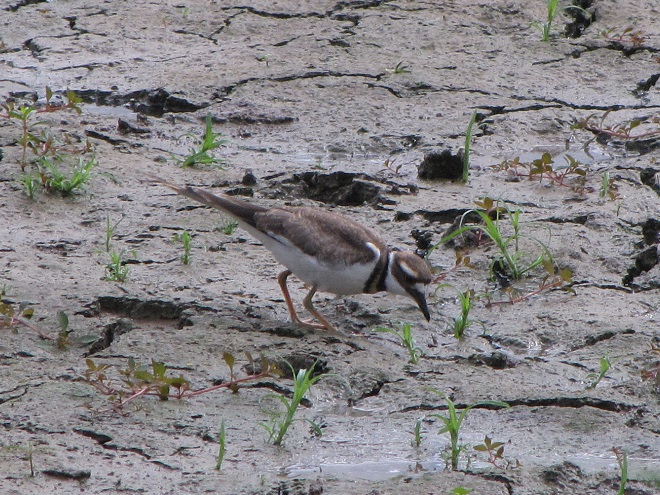
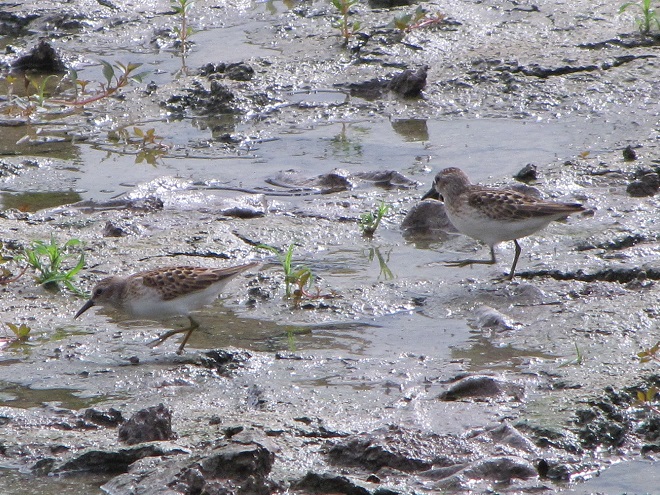
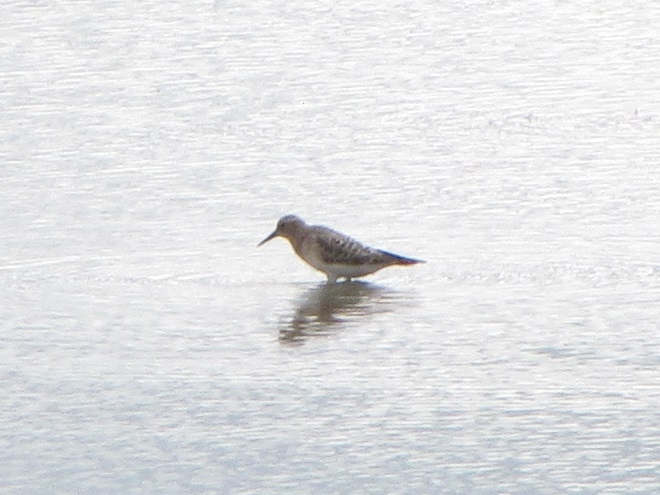
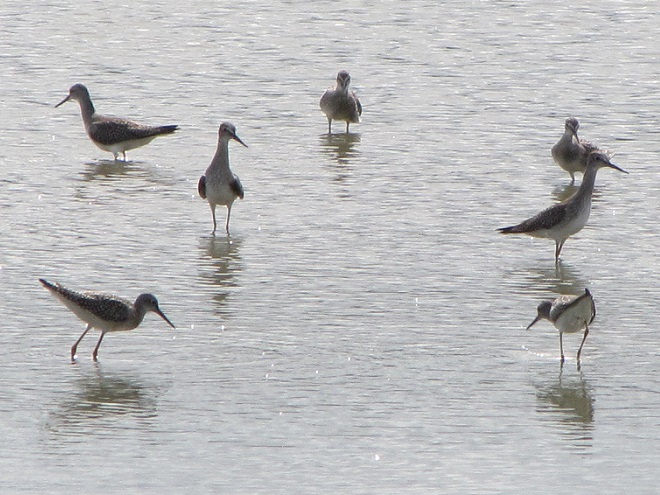
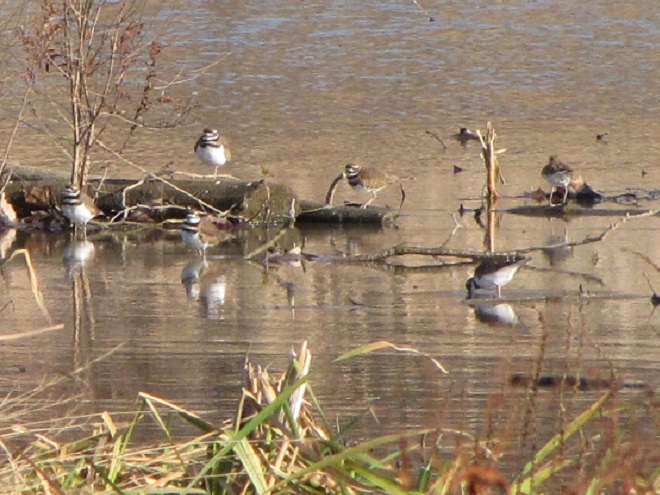
The Killdeer is familiar as a breeding bird in the lower Susquehanna region. Large numbers can congregate ahead of and during migration on mudflats and gravel bars.The Least Sandpiper is one of the “peeps”, a group of very small shorebirds. This species is quite common at Middle Creek right now. Note the plants beginning to grow in the mud. Later in the fall, after the shorebirds are gone, raising the water level in the lake will flood these newly vegetated areas to provide an abundance of food for migrating waterfowl. This cycle can be repeated annually to support transient birds during what is often the most vulnerable time of their lives…fall migration.The Baird’s Sandpiper (Calidris bairdii) is an uncommon “peep” along the east coast during autumn migration. On the lower Susquehanna it is most frequently encountered on the vegetated gravel bars in mid-river during the last days of August or first days of September each year. The mudflats and shallows at Middle Creek are providing a suitable alternative for this juvenile bird.Numbers of Lesser Yellowlegs are increasing as flocks drop by for a rest and refueling. Bring your binoculars and your spotting scope to see the oddities that may be hiding among these groups of newly-arriving migrants.
The aquatic environs at Middle Creek attract other species as well. Here are some of the most photogenic…
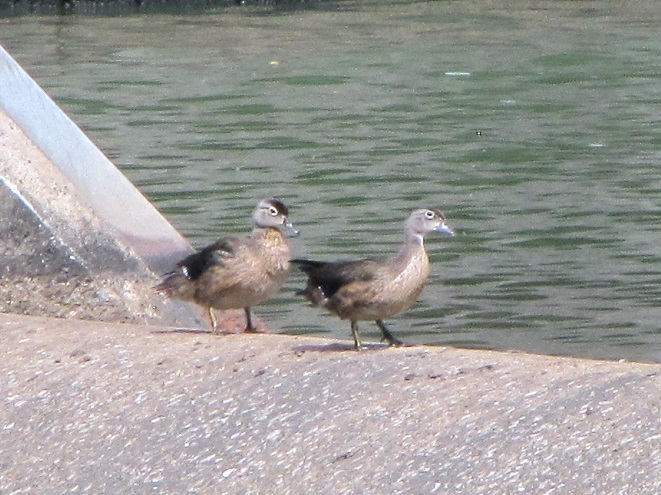
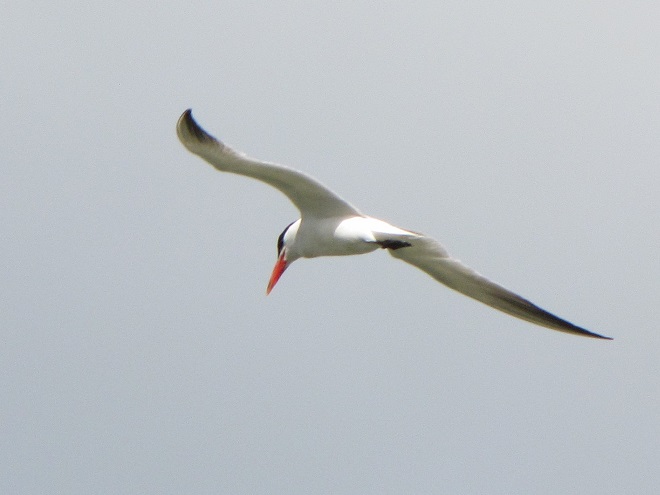
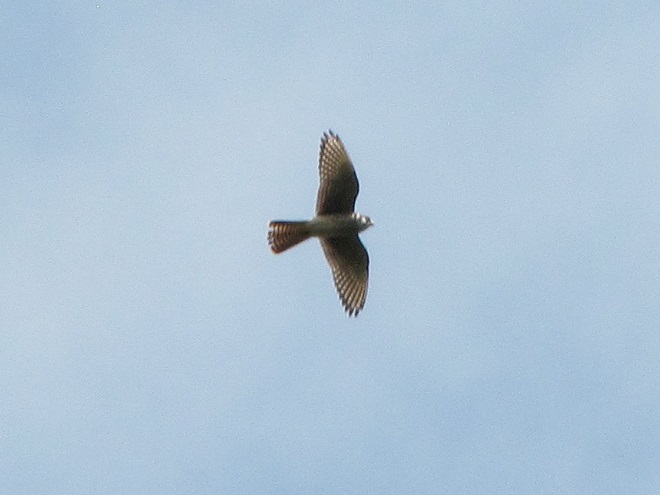
Wood Ducks atop the dam.The migration of Caspian Terns coincides with that of shorebirds. Just look at that blood-red bill; it’s unmistakable. Two of these big terns are currently patrolling Middle Creek’s lake and shoreline.A female American Kestrel creates a stir among the “peeps” as it passes by. The larger falcons (the Merlin and Peregrine) can be expected to more readily take advantage of concentrations of shorebirds as a food supply.Osprey migration is underway, and many will stop at Middle Creek while in transit.Even if shorebirds aren’t your thing, there are almost always Bald Eagles to be seen at Middle Creek. See you there!
Common sense tells us that Brood X Periodical Cicada emergence begins in the southern part of the population zone, where the ground temperatures reach 64° first, then progresses to the north as the weather warms. In the forested hills where the lower Piedmont falls away onto the flat landscape of the Atlantic Coastal Plain in Maryland’s Cecil and Harford Counties, the hum of seventeen-year-old insects saturates a listener’s ears from all directions—the climax nears.
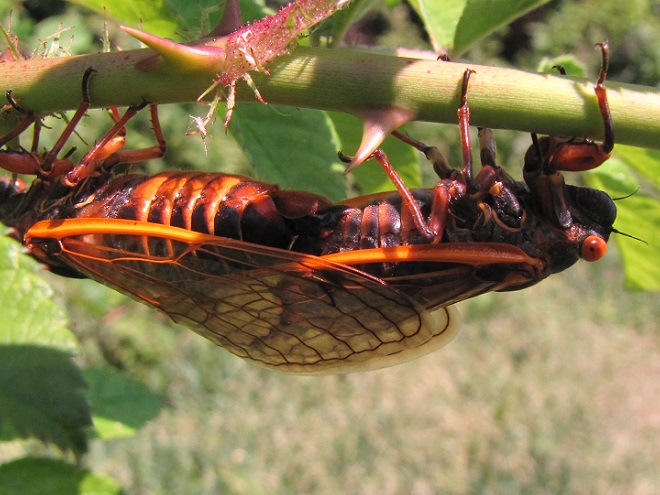
Periodical cicadas, mostly Magicicada septendecim, are well into their breeding cycle along the Piedmont-Atlantic Coastal Plain border right now. Love is in the air.
With all that food flying around, you just knew something unusual was going to show up to eat it. It’s a buffet. It’s a smorgasbord. It’s free, it’s all-you-can-eat, and it seems, at least for the moment, like it’s going to last forever. You know it’ll draw a crowd.
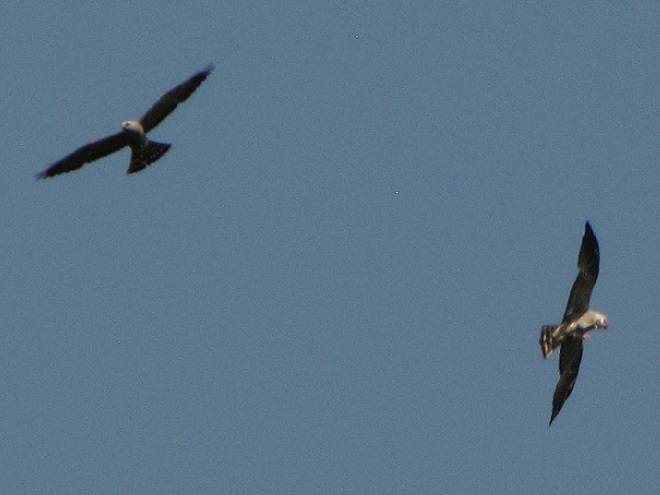
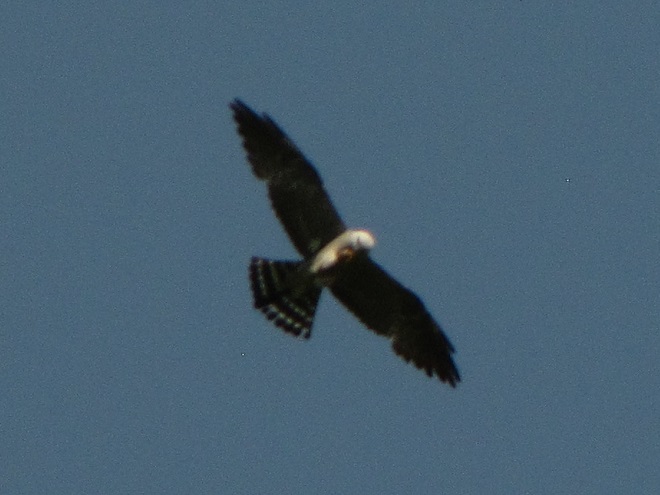
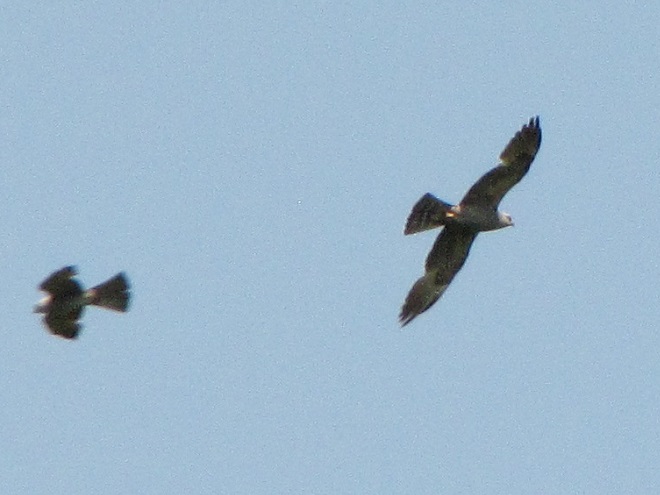
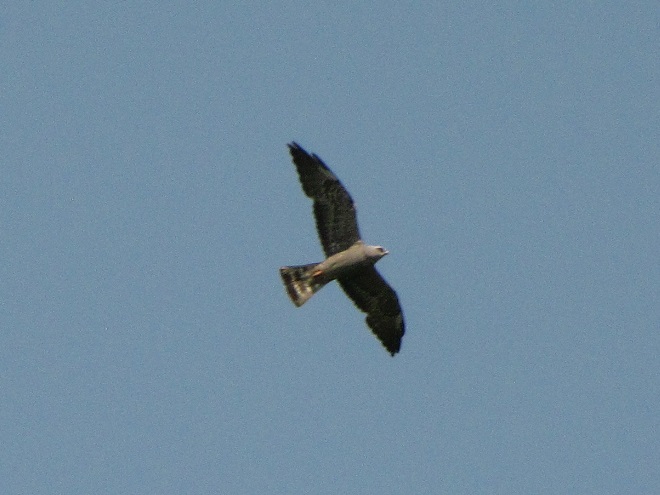
The Mississippi Kite (Ictiniamississippiensis), a trim long-winged bird of prey, is a Neotropical migrant, an insect-eating friend of the farmer, and, as the name “kite” suggests, a buoyant flier. It experiences no winter—breeding in the southern United States from April to July, then heading to South America for the remainder of the year. Its diet consists mostly of large flying insects including beetles, leafhoppers, grasshoppers, dragonflies, and, you guessed it, cicadas. Mississippi Kites frequently hunt in groups—usually catching and devouring their food while on the wing. Pairs nest in woodlands, swamps, and in urban areas with ample prey. They are well known for harmlessly swooping at people who happen to get too close to their nest.
Mississippi Kites nest regularly as far north as southernmost Virginia. For at least three decades now, non-breeding second-year birds known as immatures have been noted as wanderers in the Mid-Atlantic States, particularly in late May and early June. They are seen annually at Cape May, New Jersey. They are rare, but usually seen at least once every year, along the Piedmont-Atlantic Coastal Plain border in northern Delaware, northeastern Maryland, and/or southeastern Pennsylvania. Then came the Brood X Periodical Cicadas of 2021.
During the last week of May and these first days of June, there have been dozens of sightings of cicada-eating Mississippi Kites in locations along the lower Piedmont slope in Harford and Cecil Counties in Maryland, at “Bucktoe Creek Preserve” in southern Chester County, Pennsylvania, and in and near Newark in New Castle County, Delaware. They are being seen daily right on the lower Susquehanna watershed’s doorstep.
Today, we journeyed just south of Mason’s and Dixon’s Delaware-Maryland-Pennsylvania triangle to White Clay Creek State Park along Route 896 north of Newark, Delaware. Once there, we took a short bicycle ride into a wooded neighborhood across the street in Maryland to search for the Mississippi Kites that have been reported there in recent days.
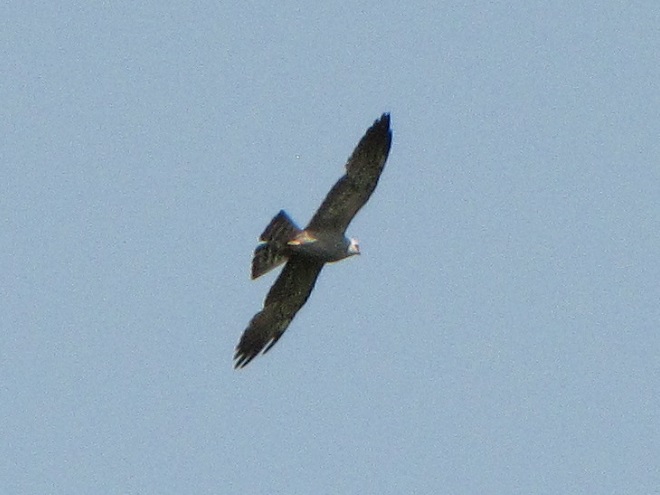
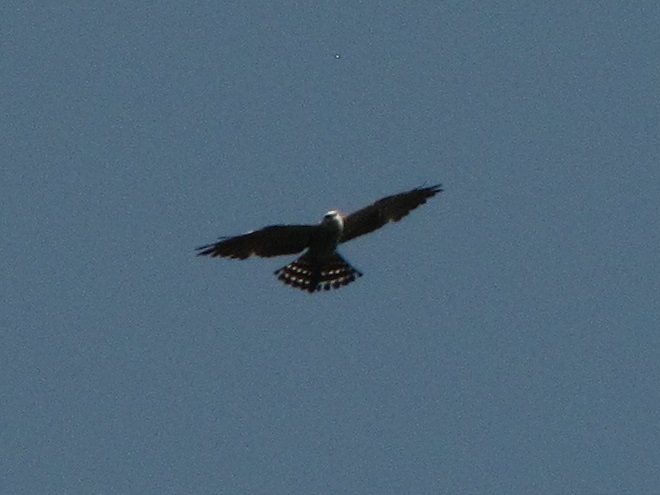
Periodical cicadas filled the treetops and the airspace just above them.It wasn’t long before Mississippi Kites appeared over the trees along a hilltop clearing to snatch up cicadas for a morning meal.This kite glides on autopilot as it holds a captured cicada in its talons and tears it apart with its hook-shaped bill.At least ten Mississippi Kites have been seen simultaneously at this site or in nearby Newark during recent days. This morning, we saw six.All the Mississippi Kites we saw today were second-year birds. The banded tail is characteristic of both hatch-year (juvenile) and second-year (immature) Mississippi Kites. Of course, at this time of year, hatch-year birds are still in the nest and not flying around pigging out on periodical cicadas.The banded tail, gray underside, and white head of a second-year Mississippi Kite. Though known as immature or subadult birds during their second year, there are records of Mississippi Kites successfully breeding at this age. Recent wanderings into the Mid-Atlantic States and New England have led to a spotty expansion of the nesting range there.Mississippi Kites in their second year undergo molt of their flight feathers. The timing can vary greatly among individual birds with diet among the factors affecting the process. This bird is just beginning the replacement of its juvenile remiges and rectrices.Tail molt beginning on this second-year Mississippi Kite. These banded juvenile tail feathers will be replaced by a set of all-dark adult rectrices.A second-year Mississippi Kite with an all-dark adult tail feather (rectrix). An abundance of protein-rich cicadas should provide ample nutrition to keep the molt process going for this maturing bird, at least for another couple of weeks. Relocating inland on the Piedmont could keep this and other kites well-nourished for even longer.
Will groups of Mississippi Kites develop a taste for our seventeen-year cicadas and move north into the Lower Susquehanna River Watershed? Ah, to be young and a nomad—that’s the life. Wandering on a whim with one goal in mind—food. It could very well be that now’s the time to be on the lookout for Mississippi Kites, especially where Brood X Periodical Cicadas are abundant.
Some consider them things of beauty. Others reckon them hideous—better kept out of sight and out of mind. They’re moles, and here’s how they’re removed in just five minutes.
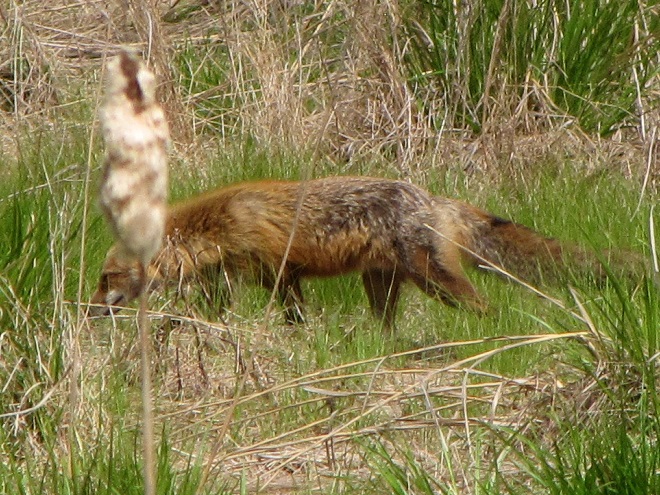
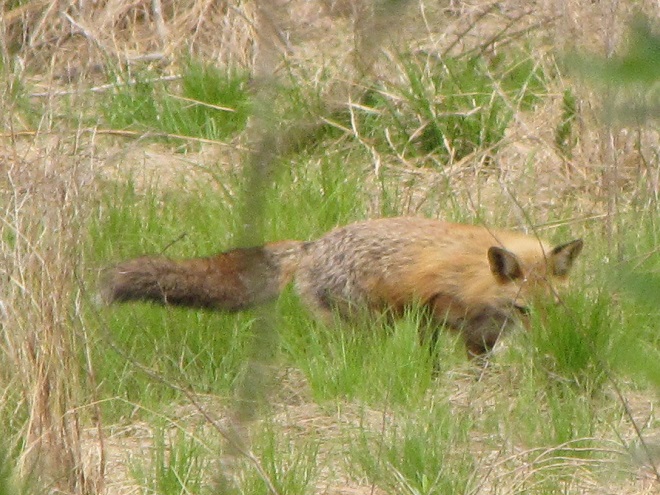
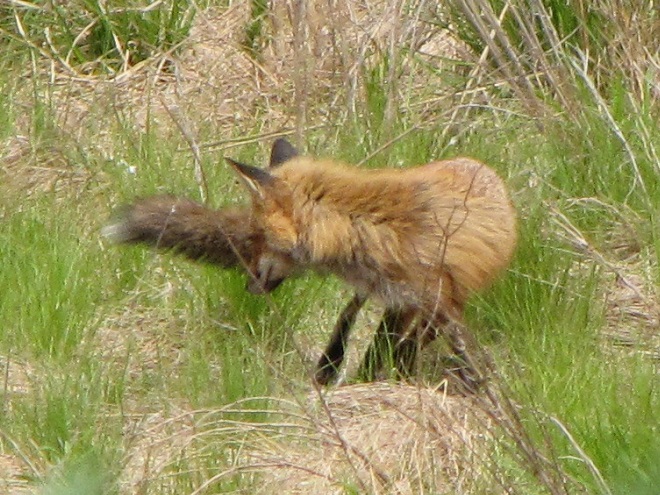
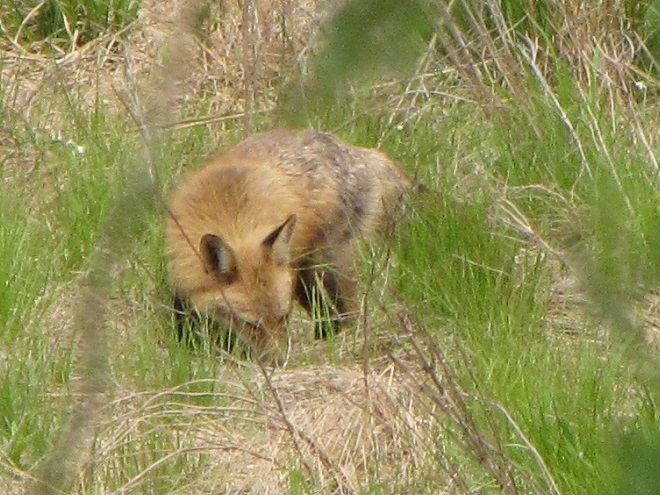
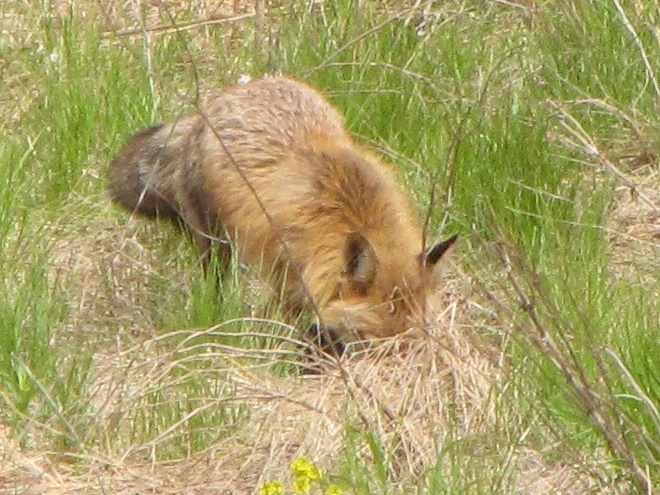
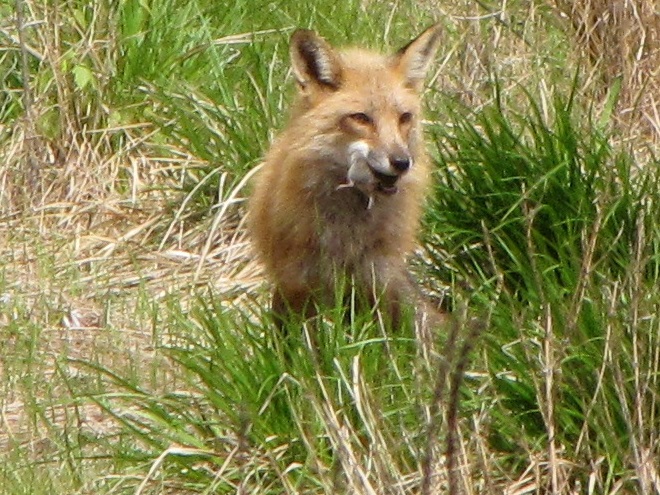
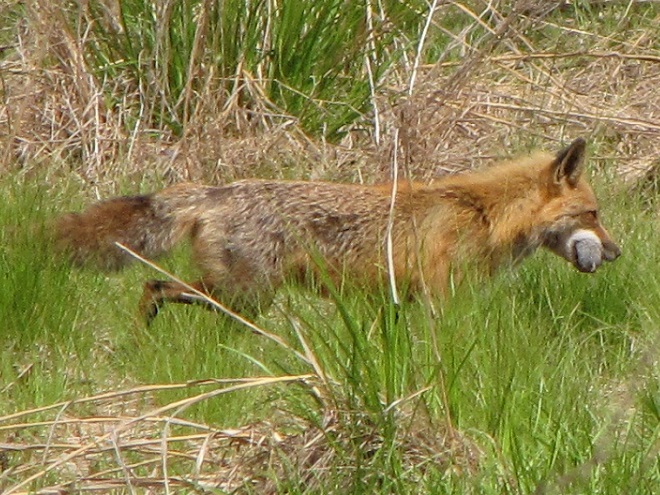
Let’s begin……First Minute……Second Minute……Third Minute……Fourth Minute……Fifth Minute…Red Fox (Vulpes vulpes) with an Eastern Mole (Scalopus aquaticus).
You’ll want to go for a walk this week. It’s prime time to see birds in all their spring splendor. Colorful Neotropical migrants are moving through in waves to supplement the numerous temperate species that arrived earlier this spring to begin their nesting cycle. Here’s a sample of what you might find this week along a rail-trail, park path, or quiet country road near you—even on a rainy or breezy day.
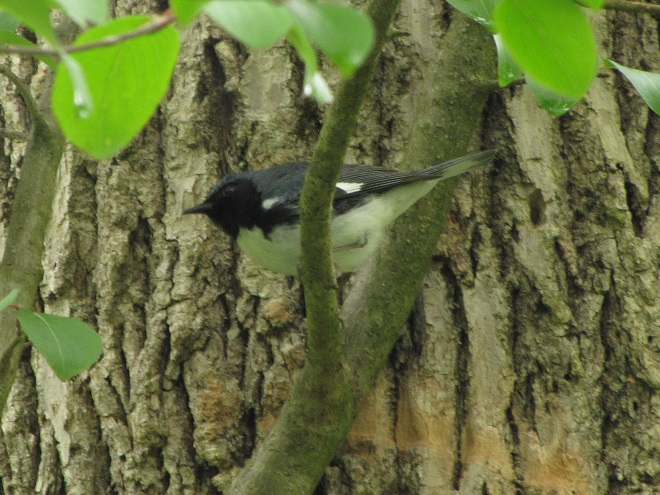
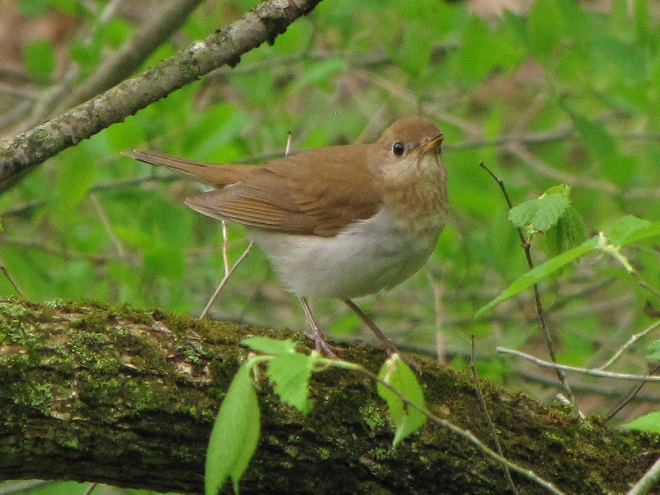
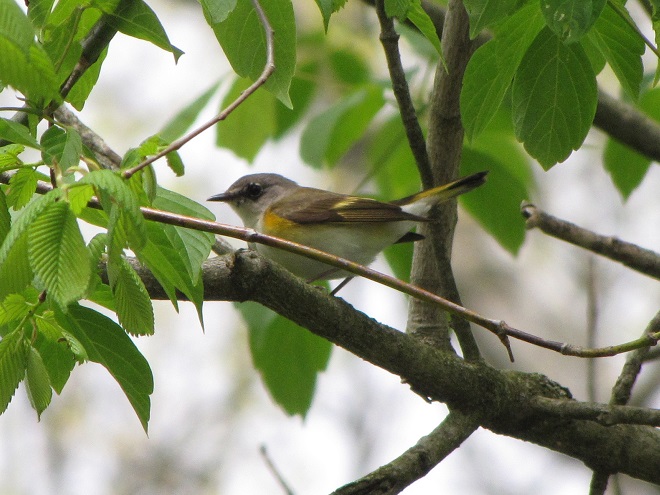
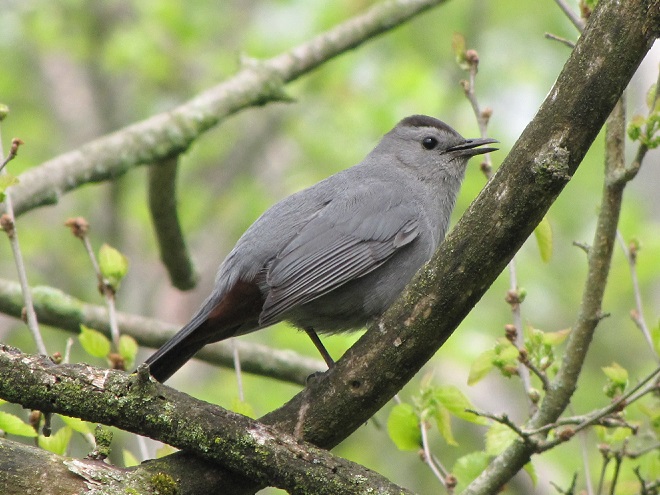
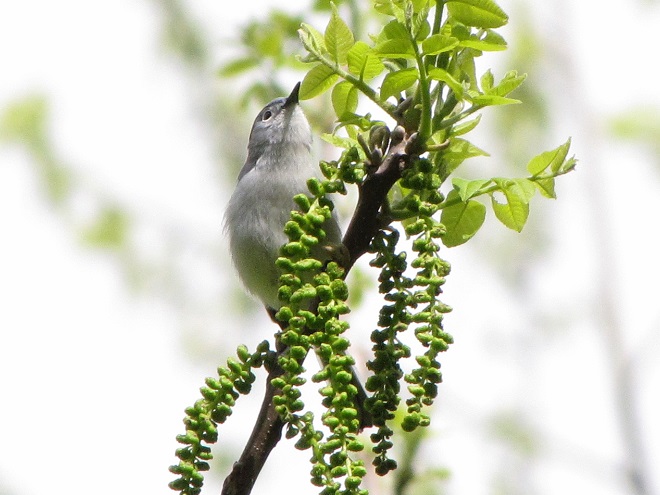
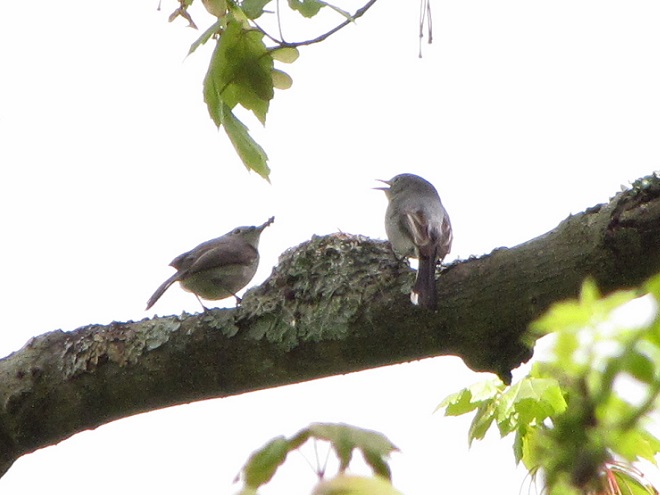
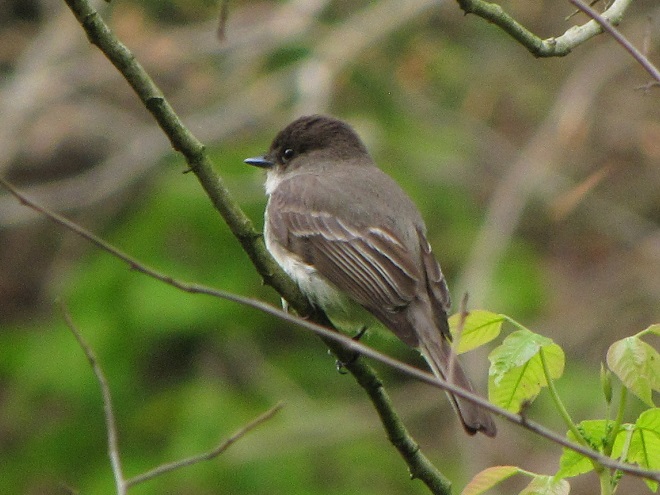
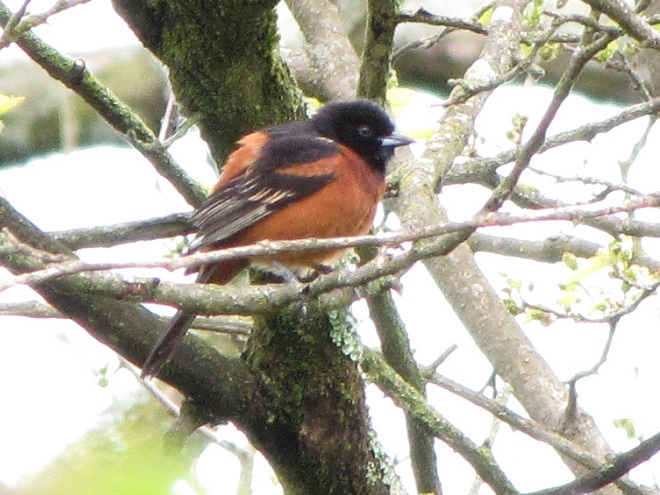
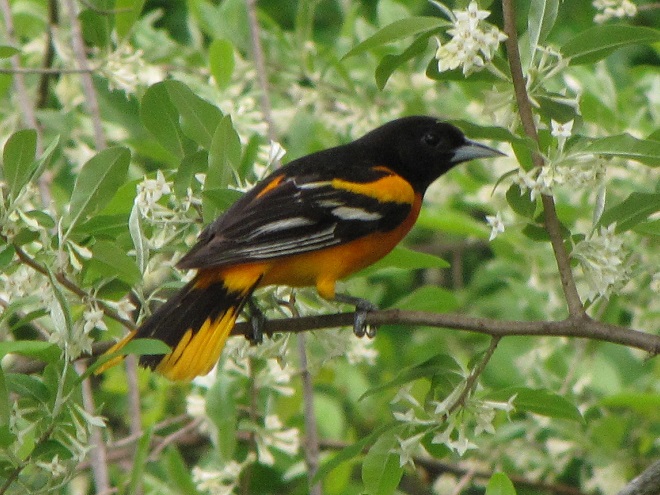
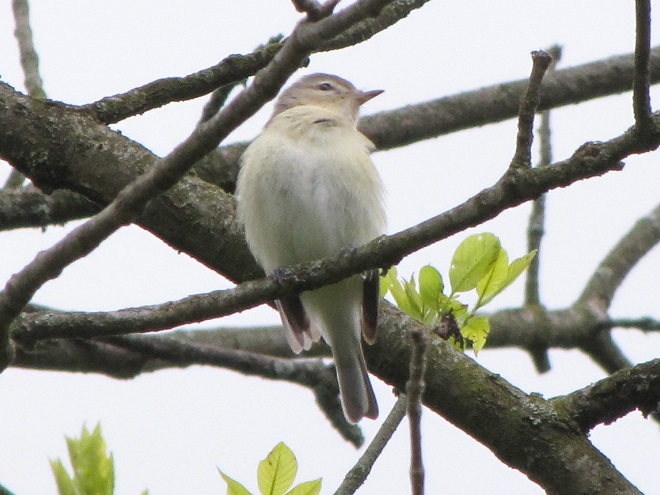
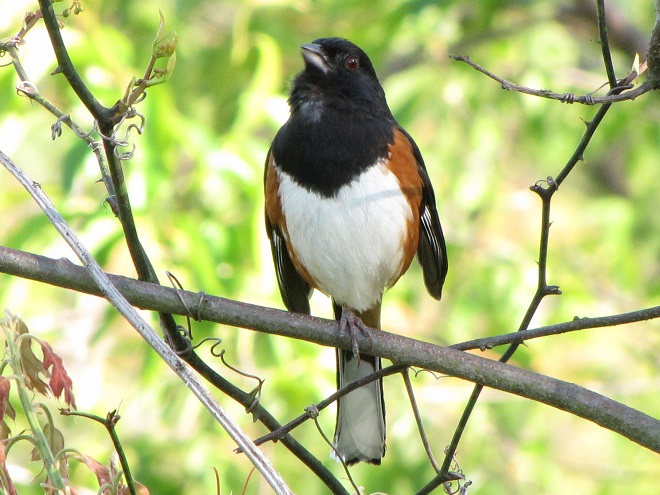
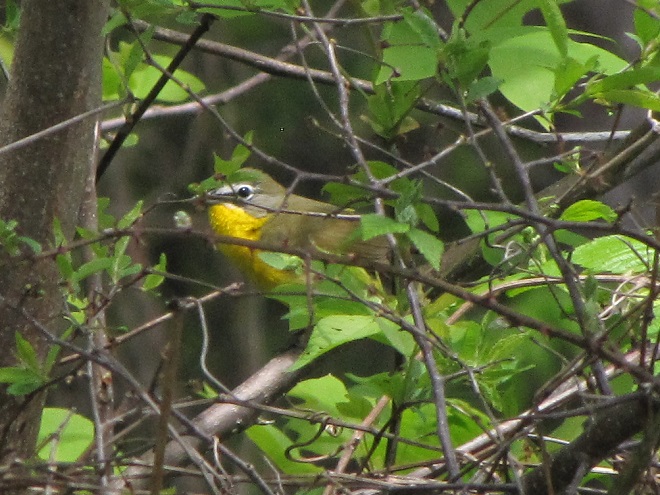
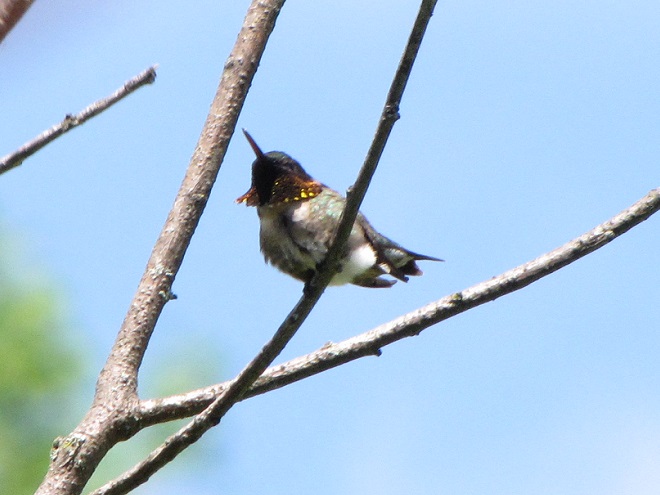
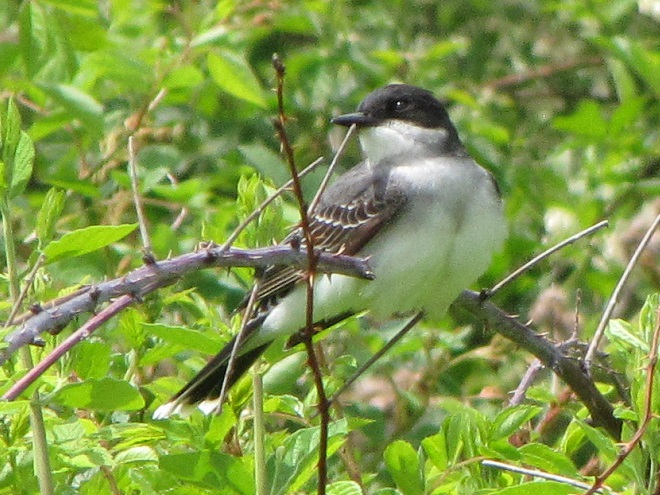
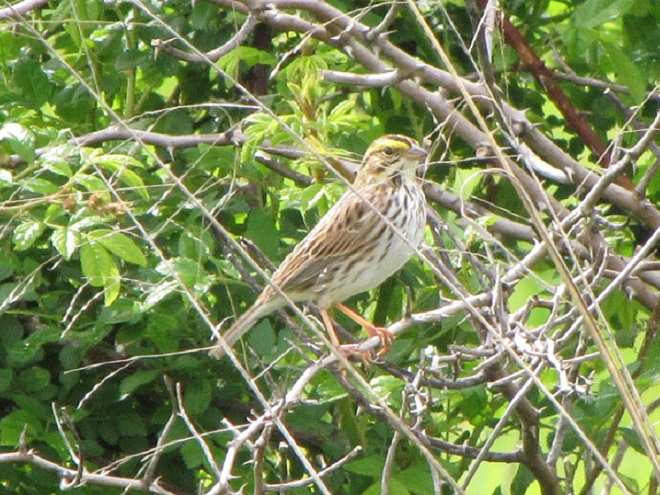
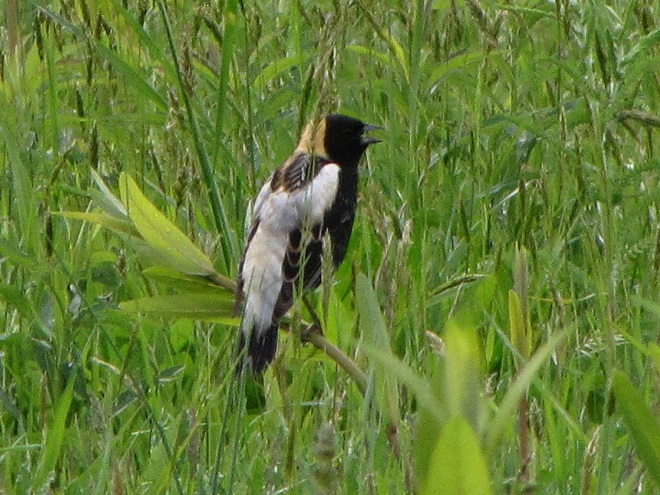
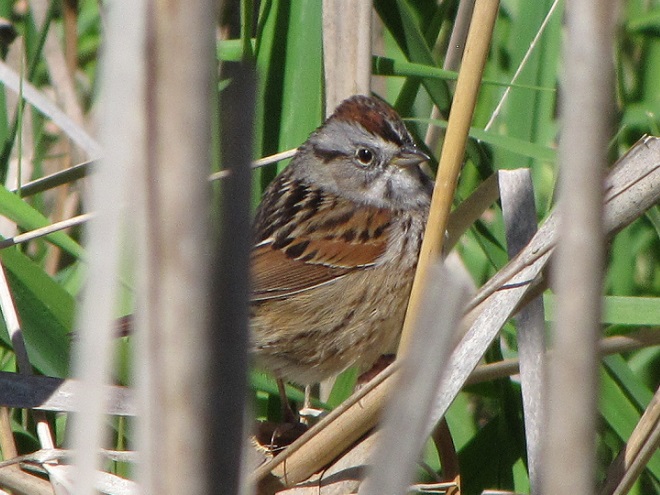
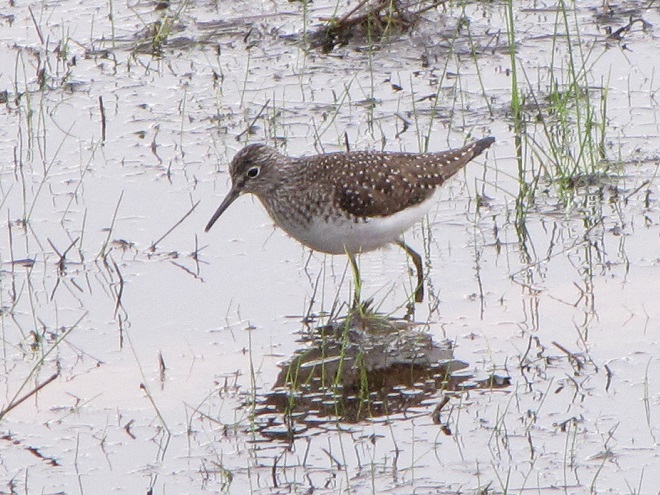
The Black-throated Blue Warbler is one of more than two dozen species of warblers passing through the Lower Susquehanna River Watershed right now. Look for it in the middle and bottom branches of deciduous forest growth.The Veery and other woodland thrushes sing a melodious song. Veerys remain through the summer to nest in damp mature deciduous forests.The American Redstart, this one a first-spring male, is another of the variety of warblers arriving now. Redstarts nest in deciduous forests with a dense understory.Adaptable inquisitive Gray Catbirds are here to nest in any shrubby habitat, whether in a forest or a suburban garden.Blue-gray Gnatcatchers (Polioptilia caerulea) arrive in April, so they’ve been here for a while. They spend most of their time foraging in the treetops. The gnatcatcher’s wheezy call alerts the observer to their presence.Look way up there, it’s a pair of Blue-gray Gnatcatchers building a nest.The Eastern Phoebe, a species of flycatcher, often arrives as early as mid-March. This particular bird and its mate are already nesting beneath a stone bridge that passes over a woodland stream.Orchard Orioles (Icturus spurius) are Neotropical migrants that nest locally in habitats with scattered large trees, especially in meadows and abandoned orchards.In the lower Susquehanna region, the Baltimore Oriole is a more widespread breeding species than the Orchard Oriole. In addition to the sites preferred by the latter, it will nest in groves of mature trees on farms and estates, in parks, and in forest margins where the canopy is broken.The Warbling Vireo (Vireo gilvus) nests in big trees along streams, often sharing habitat with our two species of orioles.Eastern Towhees arrive in numbers during April. They nest in thickets and hedgerows, where a few stragglers can sometimes be found throughout the winter.The Yellow-breasted Chat (Icteria virens) is a migrant from the tropics that sometimes nests locally in thorny thickets. Its song consists of a mixed variety of loud phrases, reminding the listener of mimics like catbirds, thrashers, and mockingbirds.Thickets with fragrant blooms of honeysuckle and olive attract migrating Ruby-throated Hummingbirds. Look for them taking a break on a dead branch where they can have a look around and hold on tight during gusts of wind.The Eastern Kingbird, a Neotropical flycatcher, may be found near fields and meadows with an abundance of insects. In recent years, high-intensity farming practices have reduced the occurrence of kingbirds as a nesting species in the lower Susquehanna valley. The loss of pasture acreage appears to have been particularly detrimental.Savannah Sparrows (Passerculus sandwichensis) can be found in grassy fields throughout the year. Large parcels that go uncut through at least early July offer them the opportunity to nest.Male Bobolinks have been here for just more than a week. Look for them in alfalfa fields and meadows. Like Savannah Sparrows, Bobolinks nest on the ground and will lose their eggs and/or young if fields are mowed during the breeding cycle.Cattail marshes are currently home to nesting Swamp Sparrows. Wetlands offer an opportunity to see a variety of unique species in coming weeks.Shorebirds like this Solitary Sandpiper will be transiting the lower Susquehanna basin through the end of May. They stop to rest in wetlands, flooded fields, and on mudflats and alluvial islets in the region’s larger streams. Many of these shorebirds nest in far northern Canada. So remember, they need to rest and recharge for the long trip ahead, so try not to disturb them.
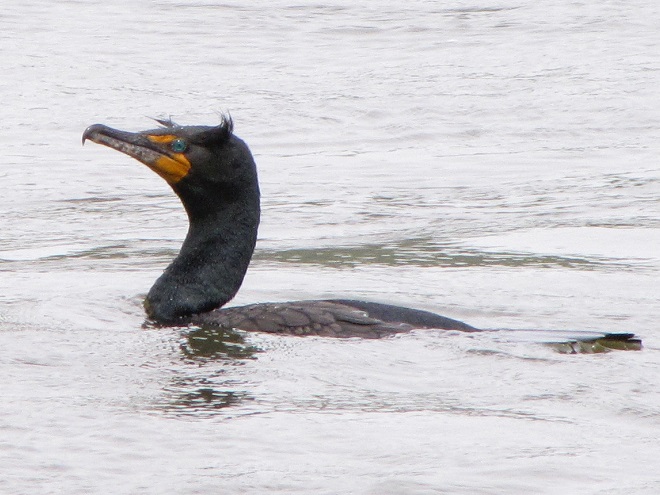
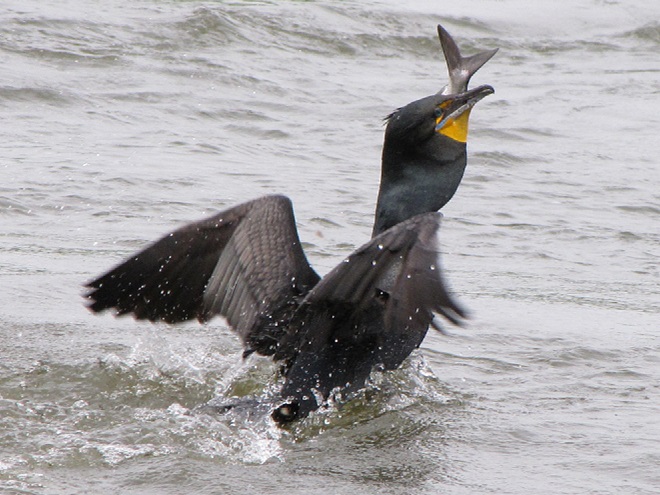
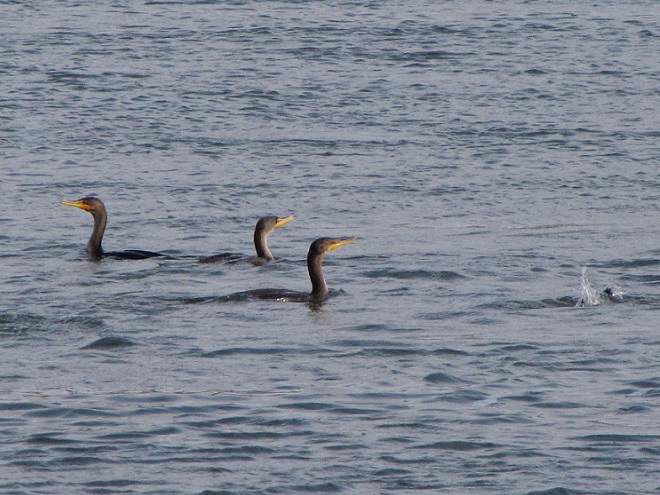
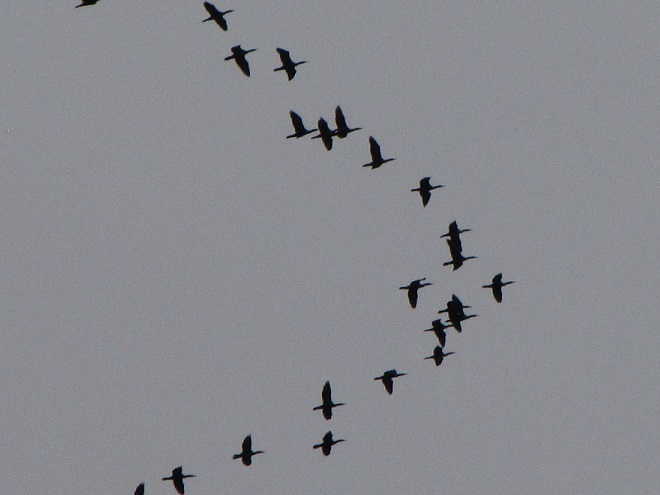
Meet the Double-crested Cormorant, a strangely handsome bird with a special talent for catching fish. You see, cormorants are superb swimmers when under water—using their webbed feet to propel and maneuver themselves with exceptional speed in pursuit of prey.
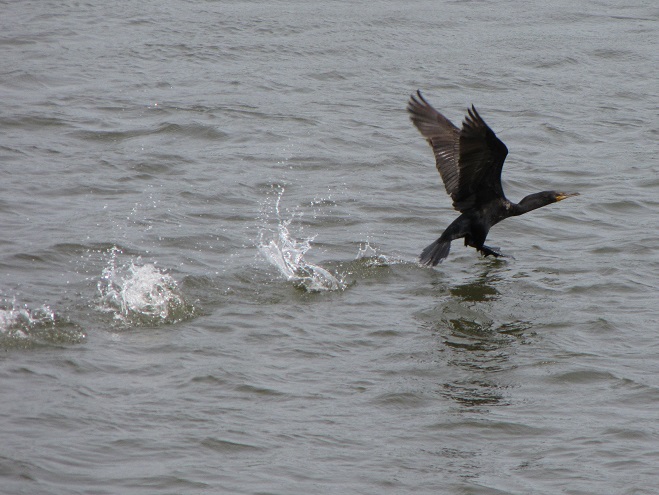
Like many species of birds that dive for their food, Double-crested Cormorants run across the surface of the water to gain speed for a takeoff. Smaller wings may make it more difficult to get airborne, but when folded, they provide improved streamlining for submerged swimming.
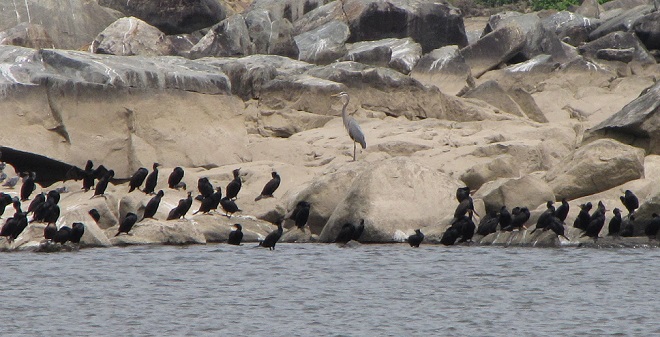
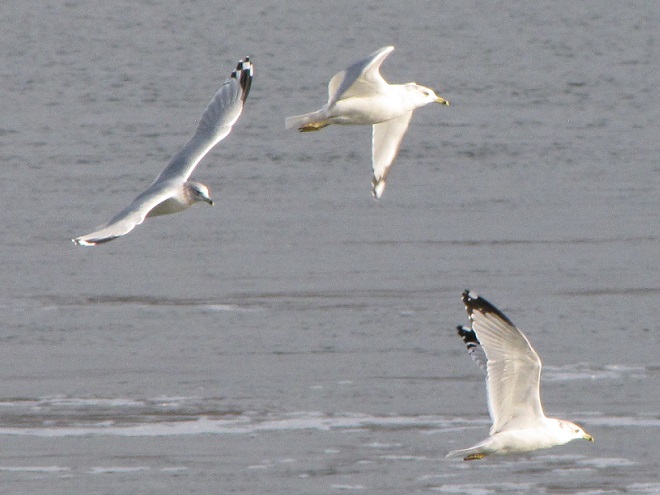
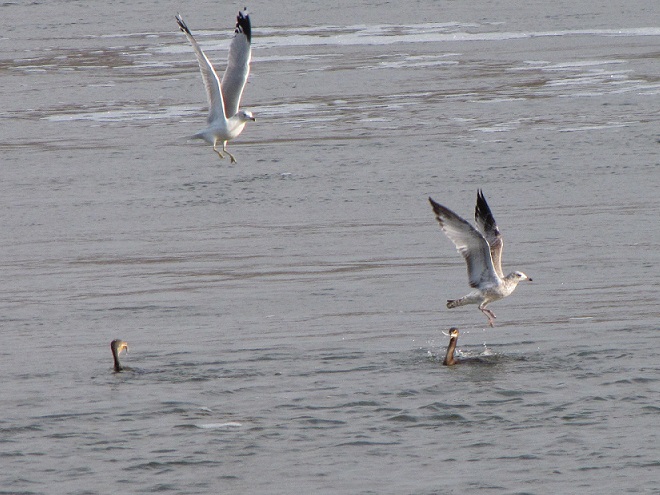
Double-crested Cormorants, hundreds of them, are presently gathered along with several other species of piscivorous (fish-eating) birds on the lower Susquehanna River below Conowingo Dam near Rising Sun, Maryland. Fish are coming up the river and these birds are taking advantage of their concentrations on the downstream side of the impoundment to provide food to fuel their migration or, in some cases, to feed their young.
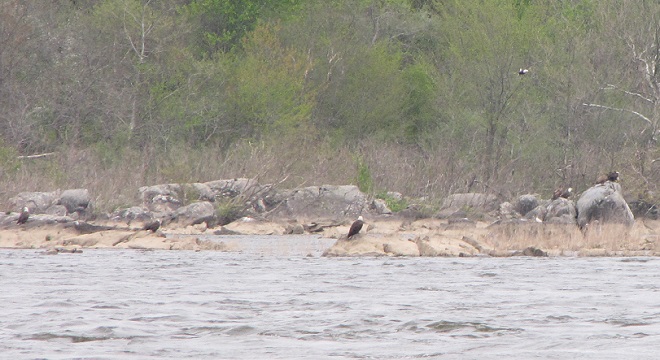
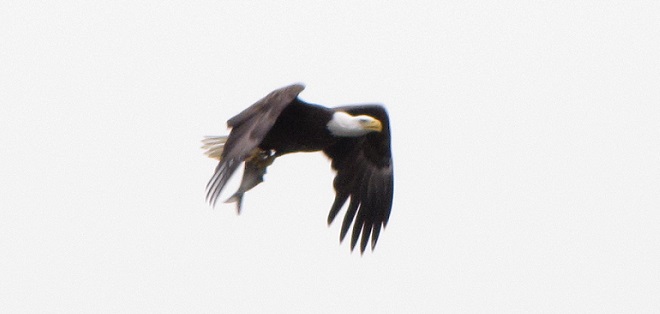
Double-crested Cormorants, mostly adult birds migrating toward breeding grounds to the north, are gathered on the rocks on the east side of the river channel below Conowingo Dam. A Great Blue Heron from a nearby rookery can be seen at the center of the image.Bald Eagles normally gather in large numbers at Conowingo Dam in the late fall and early winter. Presently there are more than 50 there, and the majority of them are breeding age adults. Presumably they are still on their way north to nest. Meanwhile, local pairs are already feeding young, so it seems these transient birds are running a bit late. Many of them can be seen on the rocks along the east side of the river channel,……on the powerline trestles on the island below the dam……in the trees along the east shore,……and in the trees surrounding Fisherman’s Park on the west shore.
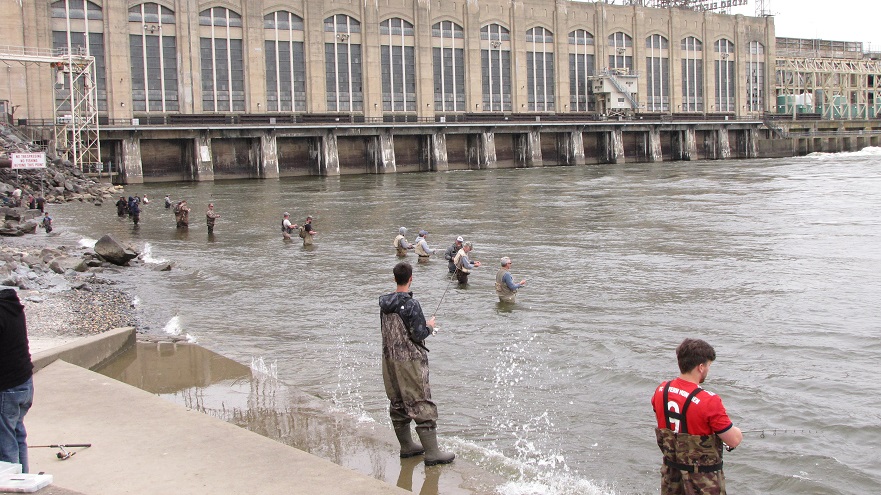
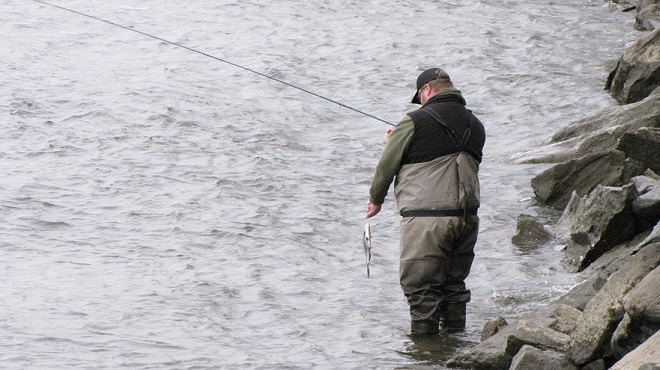
In addition to the birds, the movements of fish attract larger fish, and even larger fishermen.
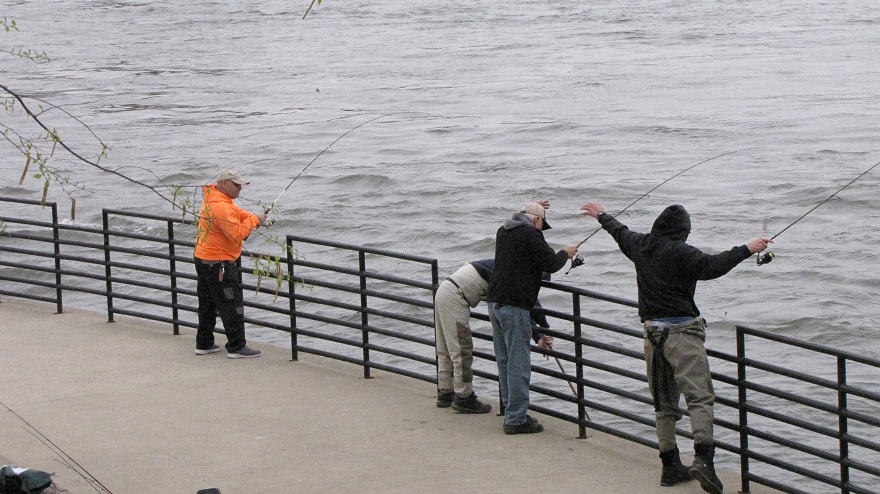
Anglers gather to fish the placid waters below the dam’s hydroelectric powerhouse . Only a few of the generating turbines are operating, so the flow through the dam is minimal.Some water is being released along the west shoreline to attract migratory river herring to the west fish lift for sorting and retention as breeding stock for a propagation program. The east lift, the passage that hoists American Shad (Alosa sapidissima) to a trough that allows them to swim over the top of the dam to waters upriver, will begin operating as soon as these larger migratory fish begin arriving.
The excitement starts when the sirens start to wail and the red lights begin flashing. Yes friends, it’s showtime.
Red lights and sirens are a warning that additional flow is about to be released from the dam. Boaters should anticipate rough water and persons in and along the river need to seek higher ground immediately.Gates are opened at mid-river to release a surge of water through the dam.The wake from the release quickly reaches the shoreline, raising the water level in moments.Experienced anglers know that the flow through the dam gets fish moving and can improve the catch significantly, especially in spring when many species are ascending the river.
Within minutes of the renewed flow, birds are catching fish.
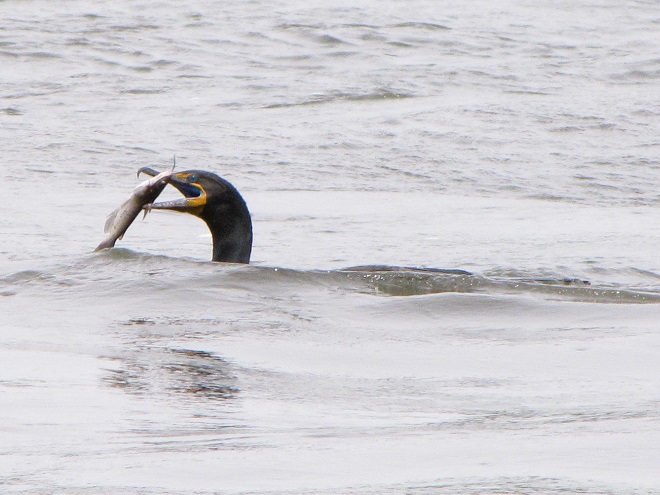
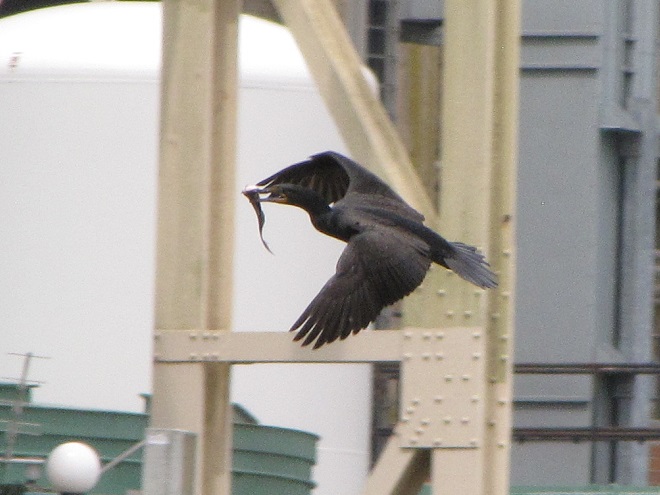
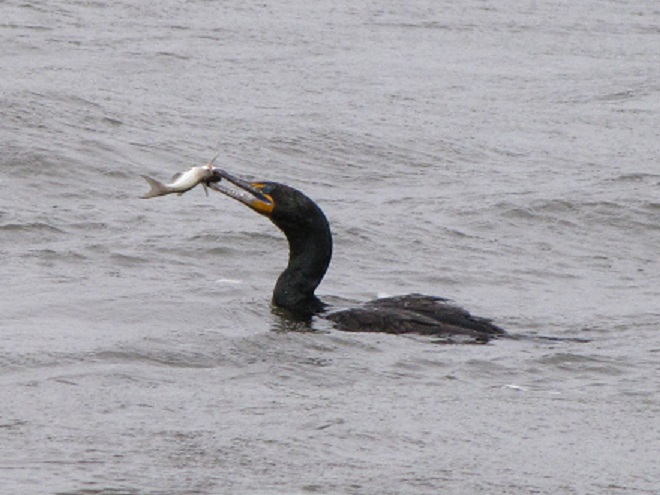
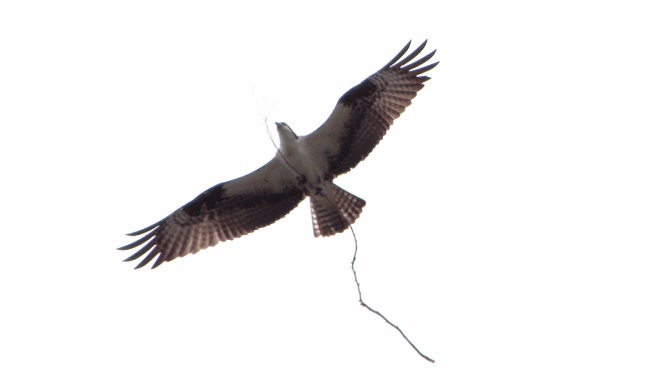
A Double-crested Cormorant with a young Channel Catfish (Ictalurus punctatus).A Double-crested Cormorant fleeing others trying to steal its Channel Catfish.Another Double-crested Cormorant eating a Channel Catfish. Did you realize that Channel Catfish were an introduced species in the Susquehanna River system?An Osprey with a stick, it’s too busy building a nest right now to fish.Great Blue Herons swallow their prey at the spot of capture, then fly back to the nest to regurgitate a sort of “minced congealed fish product” to their young.
Then the anglers along the wave-washed shoreline began catching fish too.
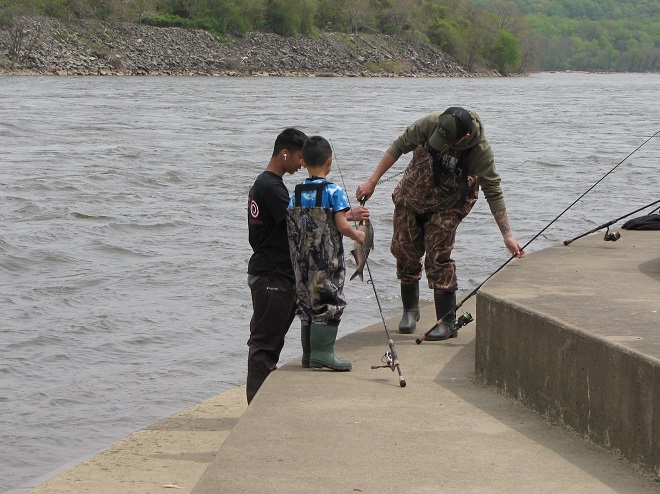
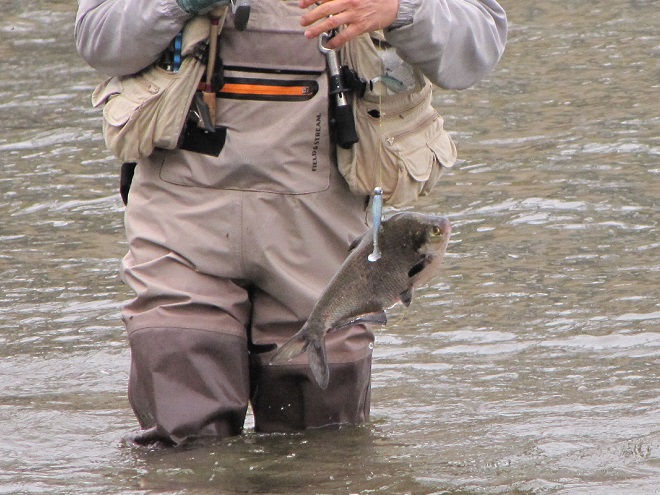
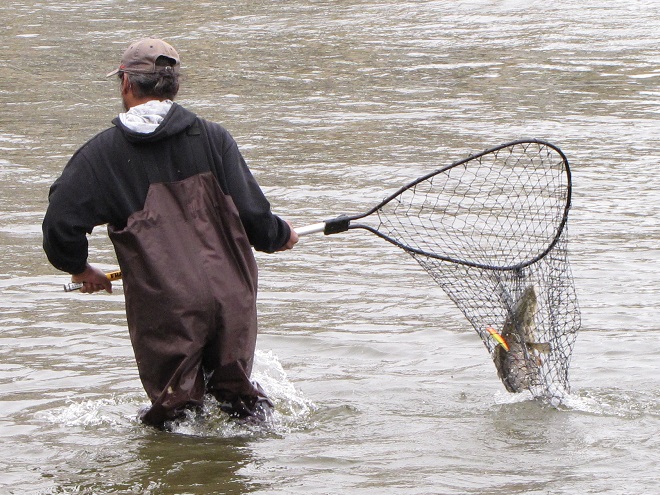
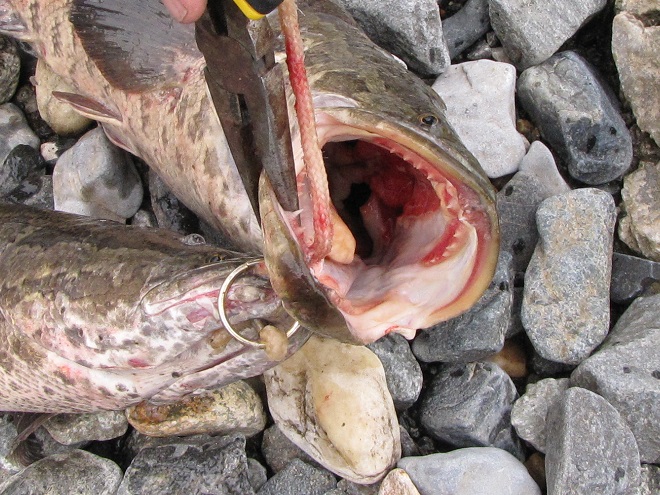
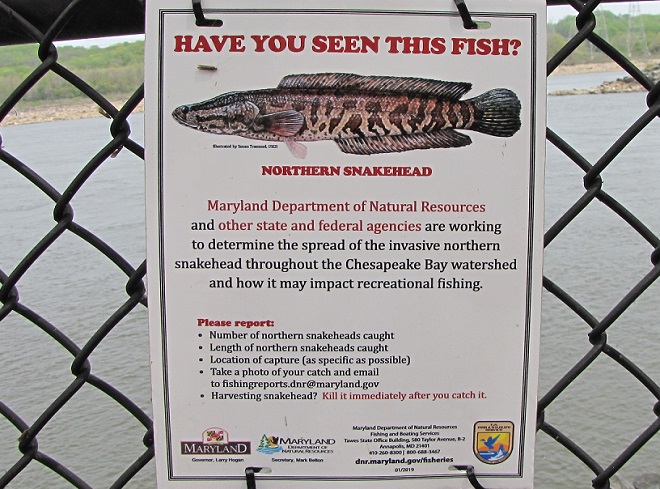
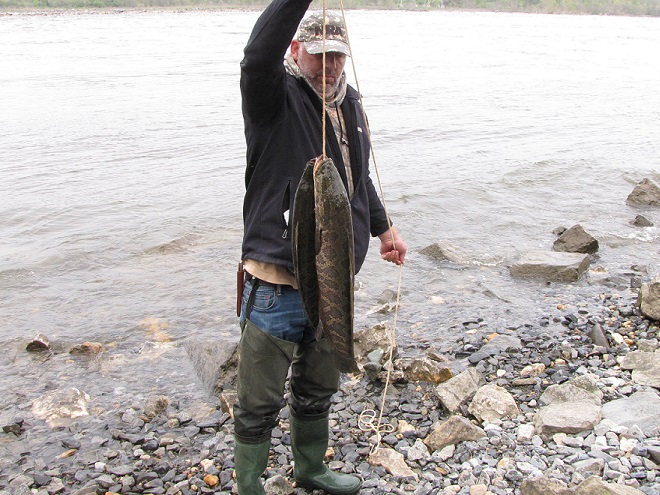
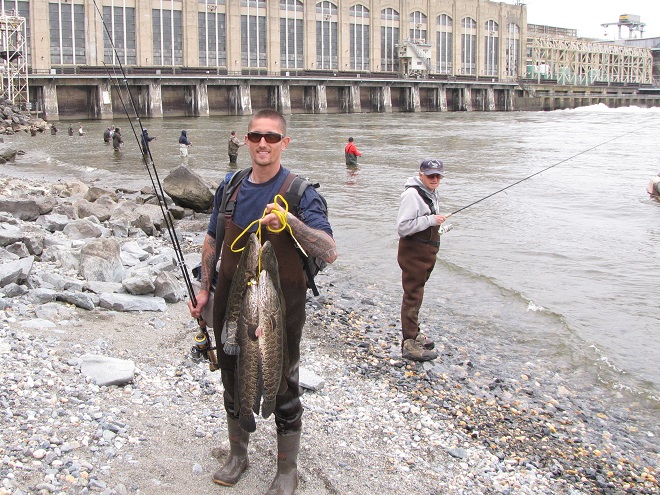
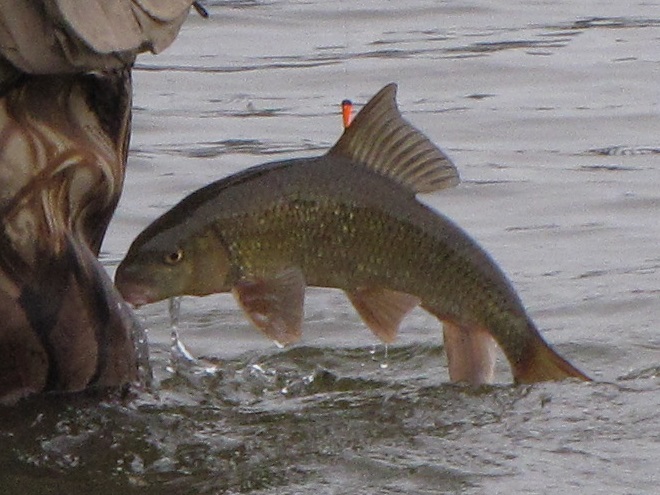
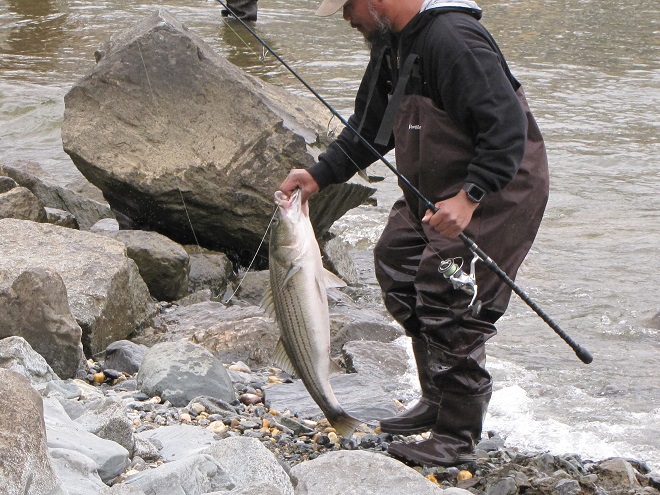
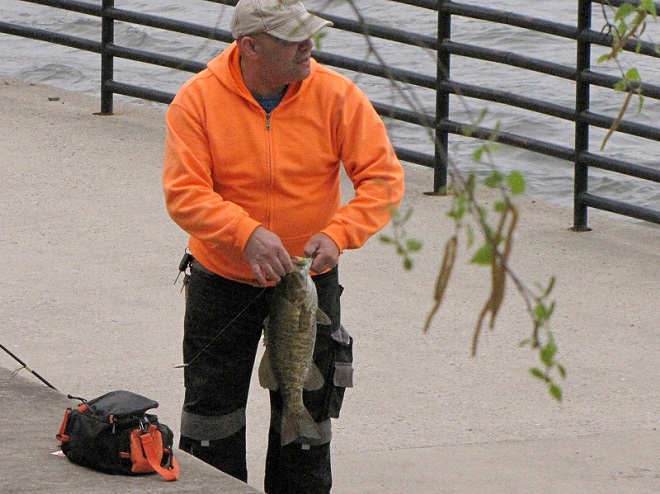
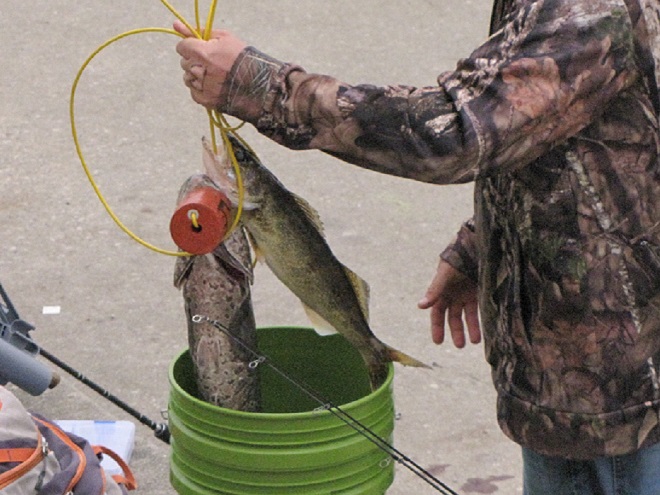
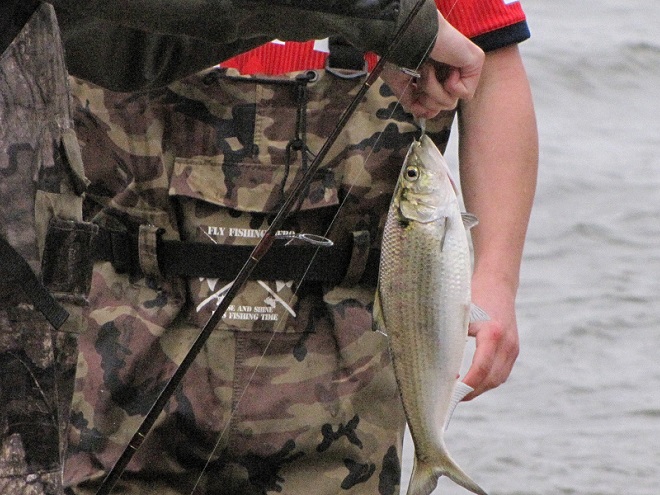
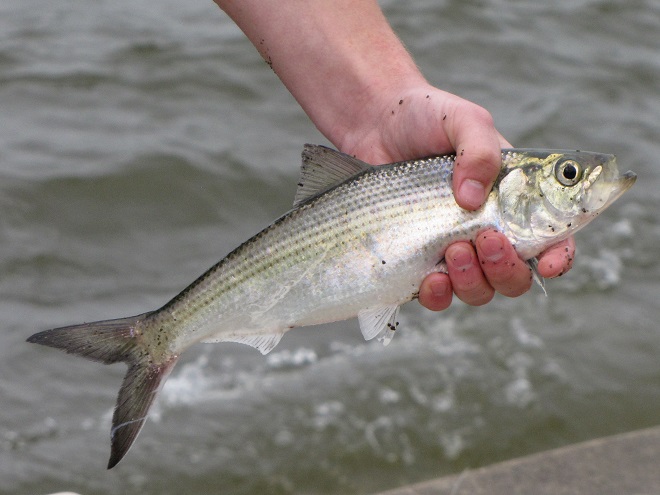
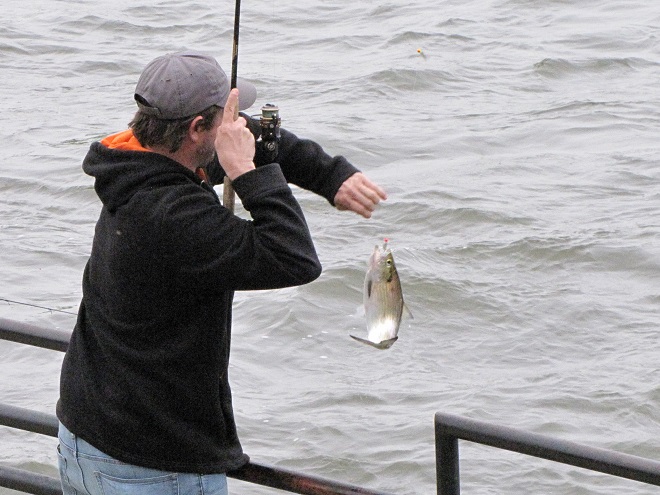
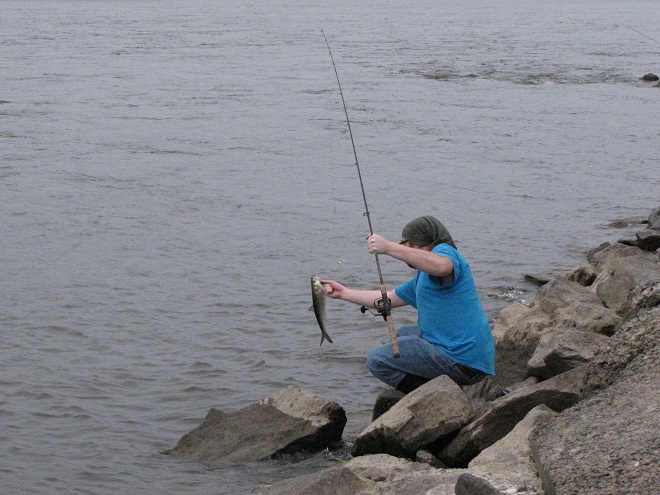
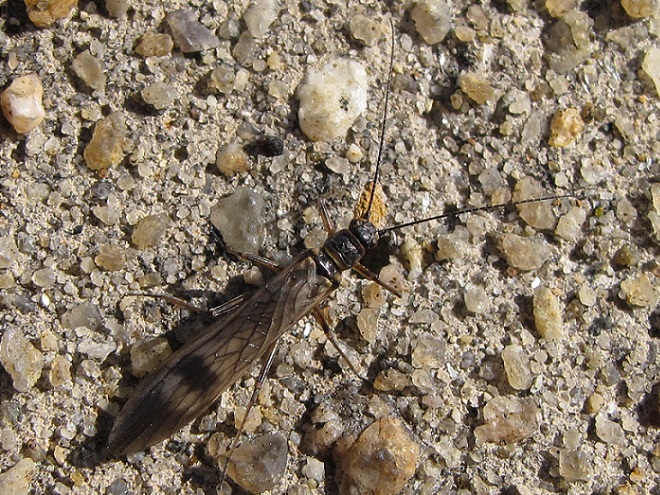
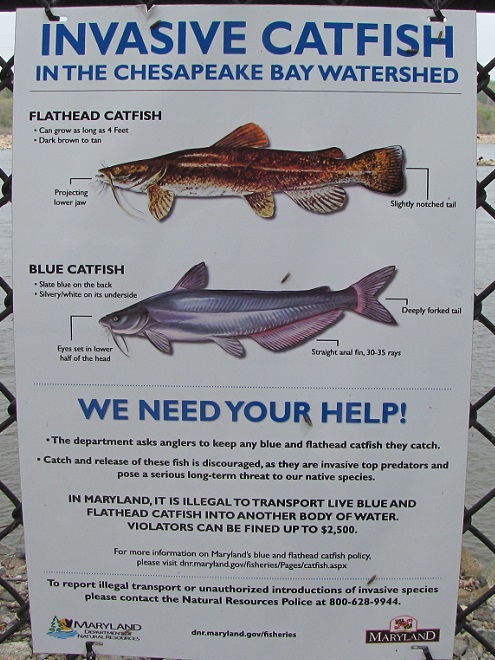
This young man led off a flurry of catches that would last for the remainder of the afternoon.Though Gizzard Shad are filter feeders that don’t readily take baits and lures, they are regularly foul-hooked and reeled in from the large schools that ascend the river in spring.Gizzard Shad are very abundant in the lower Susquehanna, providing year-round forage for many species of predatory animals including Bald Eagles.A Double-crested Cormorant swallowing a Gizzard Shad.This angler soon helped another fisherman by landing his large catch, a Northern Snakehead (Channa argus).The teeth of a Northern Snakehead are razor sharp. It is an aggressive non-native invasive species currently overtaking much of the Lower Susquehanna River Watershed. Anglers are encouraged to fish for them, catch them, keep them, and kill them at the site of capture. Never transport a live Northern Snakehead anywhere at any time. It is illegal in both Maryland and Pennsylvania to possess a live snakehead. Northern Snakehead advisory sign posted at Exelon Energy’s Conowingo Fishermen’s Park.A stringer of Northern Snakeheads. This species was imported from Asia as a food fish, so it has excellent culinary possibilities. It’s better suited for a broiler or frying pan than a river or stream.Another stringer of Northern Snakeheads. It’s pretty safe to say that they have quickly become one of the most abundant predatory fish in the river. Their impact on native species won’t be good, so catch and eat as many as you can. Remember, snakeheads swim better in butter and garlic than in waters with native fish.This foul-hooked Shorthead Redhorse (Moxostoma macrolepidotum), a native species of sucker, was promptly released.Striped Bass are anadromous fish that leave the sea in spring to spawn in fresh water. They ascend the Susquehanna in small numbers, relying upon the operation of the fish passages at the Conowingo, Holtwood, Safe Harbor, and York Haven Dams to continue their journey upstream. During spring spawning, Striped Bass in the Susquehanna River and on the Susquehanna Flats portion of the upper Chesapeake Bay are not in season and may not be targeted, even for catch-and-release. This accidental catch was immediately turned loose.After removal from the hook, this hefty Smallmouth Bass was returned to the river. Many anglers are surprised to learn that Smallmouth Bass are not native to the Susquehanna basin.This angler’s creel contains a Northern Snakehead (left) and a Walleye (right). Did you know that the Walleye (Sander vitreus) is an introduced species in the Susquehanna watershed?By late afternoon, anglers using shad darts began hooking into migrating Hickory Shad (Alosa mediocris), a catch-and-release species in Maryland.Hickory Shad are recognized by their lengthy lower jaw. They are anadromous herring that leave the sea to spawn in freshwater streams. Hickory Shad ascend the Susquehanna as far as Conowingo Dam each year, but shy away from the fish lifts. Downriver from the dam, they do ascend Deer Creek along the river’s west shore and Octoraro Creek on the east side. In Pennsylvania, the Hickory Shad is an endangered species.A Hickory Shad angled on a dual shad dart rig. During the spring spawning run, they feed mostly on small fish, and are the most likely of the Susquehanna’s herring to take the hook.Simultaneous hook-ups became common after fours hours worth of release water from the dam worked its way toward the mouth of the river and got the schools moving. Water temperatures in the mid-to-upper-fifties trigger the ascent of Hickory Shad. On the Susquehanna, those temperatures were slow to materialize in the spring of 2021, so the Hickory Shad migration is a bit late.Catch-and-release fishing for Hickory Shad appears to be in full swing not only at the dam, but along the downstream shoreline to at least the mouth of Deer Creek at Susquehanna State Park too.Many Hickory Shad could be seen feeding on some of the millions of caddisflies (Trichoptera) swarming on the river. These insects, along with earlier hatches of Winter Stoneflies (Taeniopterygidae), not only provide forage for many species of fish, but are a vital source of natural food for birds that migrate up the river in March and April each year. Swallows, Ring-billed Gulls, and Bonaparte’s Gulls are particularly fond of snatching them from the surface of the water.A Winter Stonefly (Taeniopterygidae) from an early-season hatch on the Susquehanna River at the Veteran’s Memorial Bridge at Columbia/Wrightsville, Pennsylvania. (March 3, 2021)Just below Conowingo Dam, a lone fly fisherman was doing a good job mimicking the late-April caddisfly hatch, successfully reeling in numerous surface-feeding Hickory Shad.You may have noticed the extraordinary number of introduced fish species listed in this account of a visit to Conowingo Dam. Sorry to say that there are two more: the Flathead Catfish (Pylodictis olivaris) and the Blue Catfish (Ictalurus furcatus). Like the Northern Snakehead, each has become a plentiful invasive species during recent years. Unlike the Northern Snakehead, these catfish are “native transplants”, species introduced from populations in the Mississippi River and Gulf Slope drainages of the United States. So if you visit the area, consider getting a fishing license and catching a few. Like the snakeheads, they too are quite palatable.
The arrival of migrating Hickory Shad heralds the start of a movement that will soon include White Perch, anadromous American Shad, and dozens of other fish species that swim upstream during the springtime. Do visit Fisherman’s Park at Conowingo Dam to see this spectacle before it’s gone. The fish and birds have no time to waste, they’ll soon be moving on.
To reach Exelon’s Conowingo Fisherman’s Park from Rising Sun, Maryland, follow U.S. Route 1 south across the Conowingo Dam, then turn left onto Shuresville Road, then make a sharp left onto Shureslanding Road. Drive down the hill to the parking area along the river. The park’s address is 2569 Shureslanding Road, Darlington, Maryland.
A water release schedule for the Conowingo Dam can be obtained by calling Exelon Energy’s Conowingo Generation Hotline at 888-457-4076. The recording is updated daily at 5 P.M. to provide information for the following day.
And remember, the park can get crowded during the weekends, so consider a weekday visit.
Yesterday, a hike through a peaceful ridgetop woods in the Furnace Hills of southern Lebanon County resulted in an interesting discovery. It was extraordinarily quiet for a mid-April afternoon. Bird life was sparse—just a pair of nesting White-breasted Nuthatches and a drumming Hairy Woodpecker. A few deer scurried down the hillside. There was little else to see or hear. But if one were to have a look below the forest floor, they’d find out where the action is.
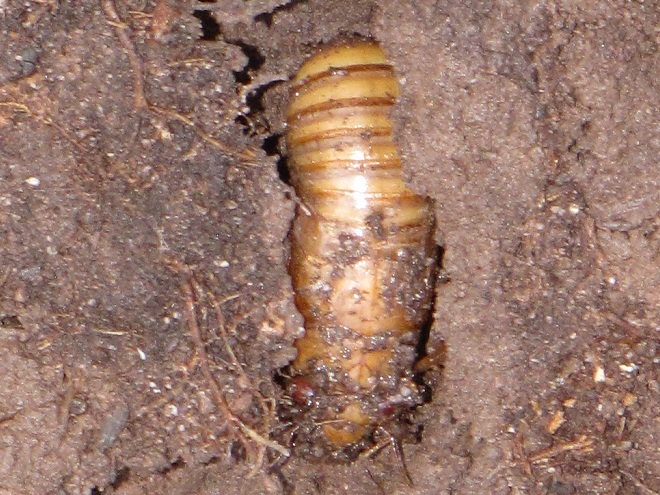
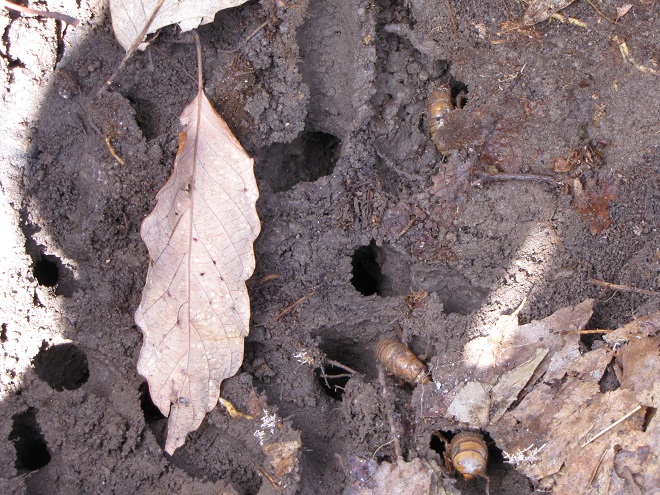
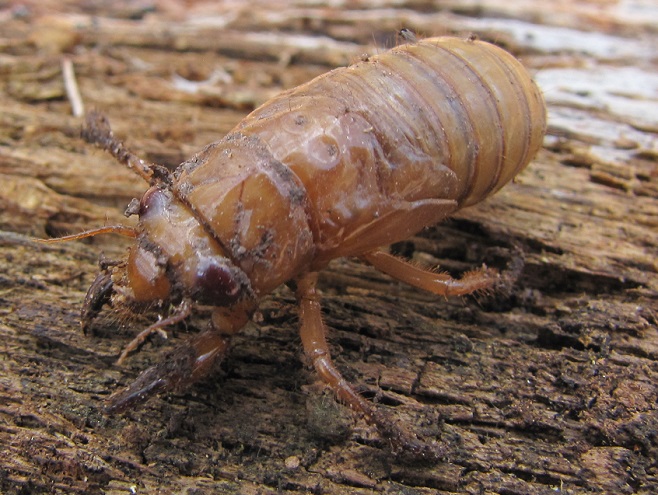
Not much action in the deer-browsed understory of this stand of hardwoods.Upon discovery beneath a rock, this invertebrate quickly backed its way down the burrow, promptly seeking shelter in the underground section of the excavation.A closeup of the same image reveals the red eyes of this periodical cicada (Magicicada species) nymph. It has reached the end of seventeen years of slowly feeding upon the sap from a tree root to nourish its five instars (stages) of larval development.
2021 is an emergence year for Brood X, the “Great Eastern Brood”—the largest of the 15 surviving broods of periodical cicadas. After seventeen years as subterranean larvae, the nymphs are presently positioned just below ground level, and they’re ready to see sunlight. After tunneling upward from the deciduous tree roots from which they fed on small amounts of sap since 2004, they’re awaiting a steady ground temperature of about 64 degrees Fahrenheit before surfacing to climb a tree, shrub, or other object and undergo one last molt into an imago—a flying adult.
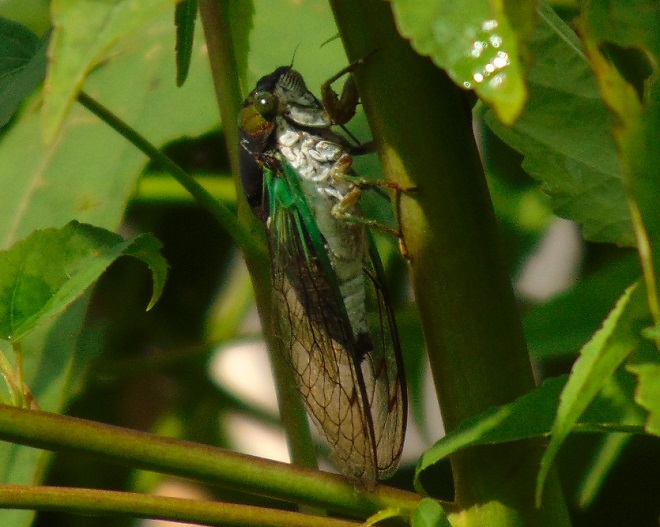
Here, approximately one dozen periodical cicada nymphs have tunneled into pre-emergence positions beneath a rock. Seventeen-year Periodical Cicadas, sometimes mistakenly called “seventeen-year locusts”, are the longest-lived of our insects.Note the wings and red eyes beneath the exoskeleton of this periodical cicada nymph. Within weeks it will join billions of others in a brief emergence to molt, dry, fly, mate, and die.Adult (imago) periodical cicadas. Brood X includes all three species of seventeen-year Periodical Cicadas: Magicicada septendecim, M. cassini, and M. septendecula. All periodical cicadas in the United States are found east of the Great Plains, the lack of trees there prohibiting the expansion of their range further west. Seventeen-year life cycles account for twelve of the fifteen broods of periodical cicadas; the balance live for thirteen years. The range of Brood X includes the lower Susquehanna basin and parts of Delaware, Georgia, Illinois, Indiana, Kentucky, Maryland, Michigan, New Jersey, Ohio, Tennessee, Virginia, West Virginia, and the District of Columbia. (United States Department of Agriculture/Agricultural Research Service image)The flight of periodical cicadas peaks in late-May and June. Shown here is the Swamp Cicada (Neotibicen tibicen), an “annual cicada” that emerges later in the season, peaking yearly during July and August.
The woodlots of the Lower Susquehanna River Watershed won’t be quiet for long. Loud choruses of male periodical cicadas will soon roar through forest and verdant suburbia. They’re looking for love, and they’re gonna die trying to find it. And dozens and dozens of animal species will take advantage of the swarms to feed themselves and their young. Yep, the woods are gonna be a lively place real soon.
Did you say periodical cicadas? We can hardly wait!
Except for a few injured stragglers, Snow Geese have departed Middle Creek Wildlife Management Area in Lancaster and Lebanon Counties to continue their journey north to breeding grounds in Canada. The crowds of observers are gone too. So if you’re looking for a reason to pay a visit to a much quieter refuge, here it is—especially if you’re a devoted deer worshiper.
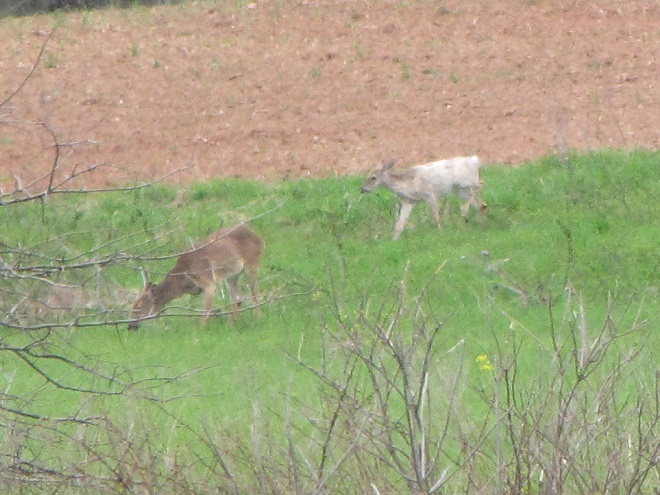
There is at least one white deer being seen on the refuge. That’s right, a white deer. Its unusual color is really becoming conspicuous as the landscape begins turning from shades of gray to various hues of bright green.
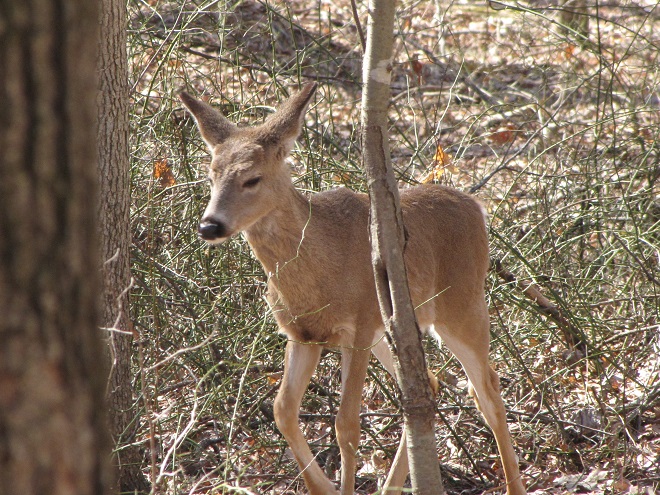
No, it’s not a reindeer. This piebald White-tailed Deity was seen this afternoon on the west side of Kleinfeltersville Road north of the Middle Creek W.M.A. visitor’s center opposite the Willow Point Trail parking lot. Those of you who are regular deer-watchers at Middle Creek are familiar with the location, and maybe this particular white-tail too.Because it has brown eyes and a brown snout, we known this is not an albino deer. A piebald deer possesses white pelage as the result of genetic inheritance of an uncommon recessive allele possessed by both parents. Other anatomical mutations can accompany the receipt of the piebald variation, some of them crippling. The pale young deer entering the picture from the right bears some resemblance to the piebald on the left. We may be seeing ten-month-old twins foraging with their brown-coated mother.
If you go, you’ll need binoculars to pick out these uncommon deer. And remember to be very careful when parking and observing along Kleinfeltersville Road. The speeding cars and trucks there can be wickedly dangerous, so give them lots of room.
Let’s take a quiet stroll through the forest to have a look around. The spring awakening is underway and it’s a marvelous thing to behold. You may think it a bit odd, but during this walk we’re not going to spend all of our time gazing up into the trees. Instead, we’re going to investigate the happenings at ground level—life on the forest floor.
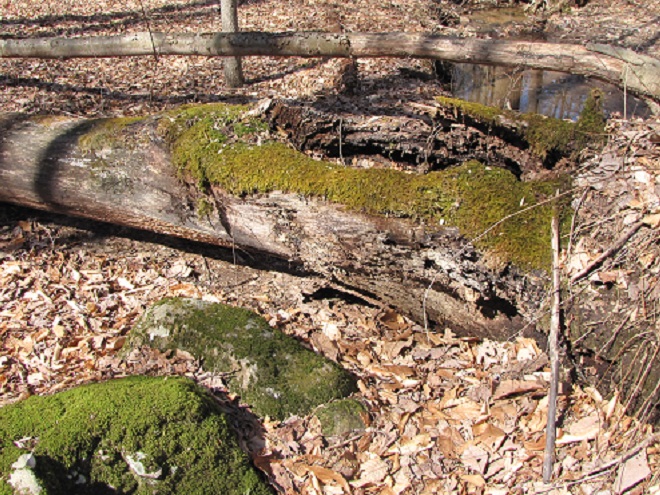
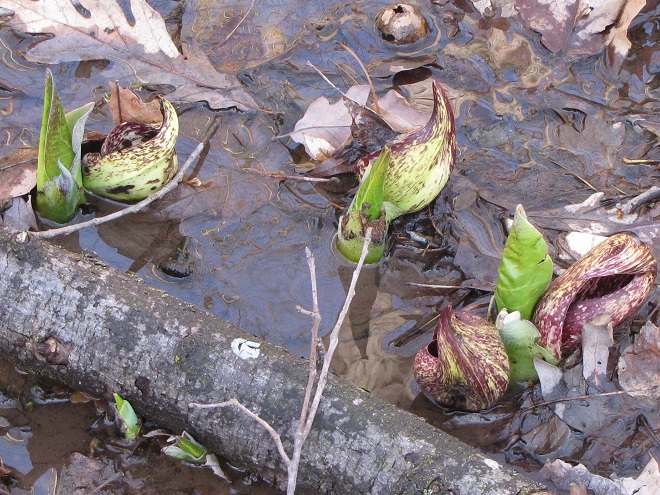
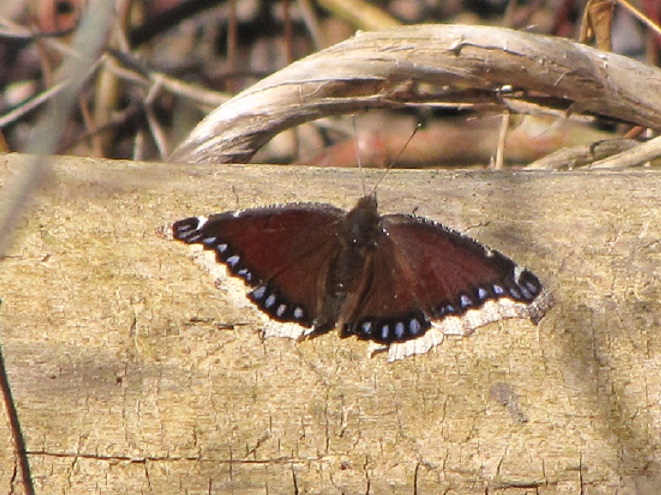
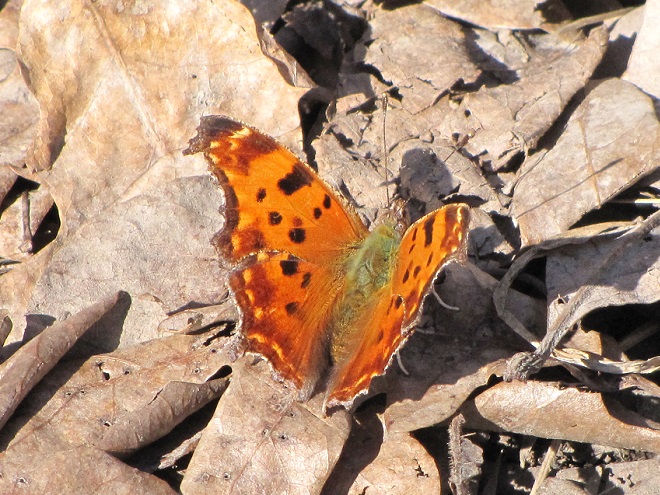
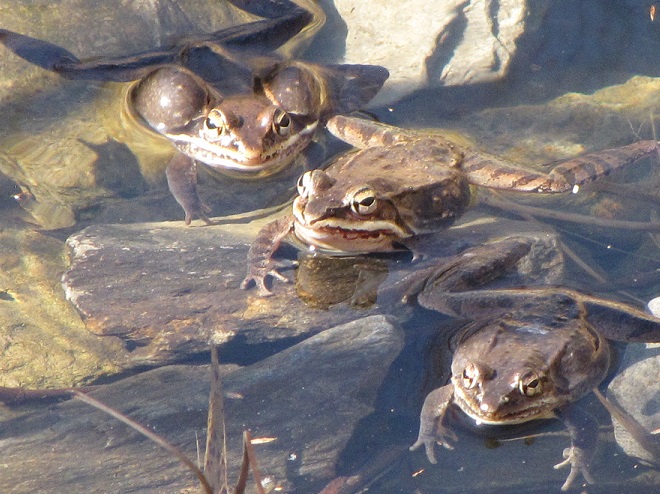
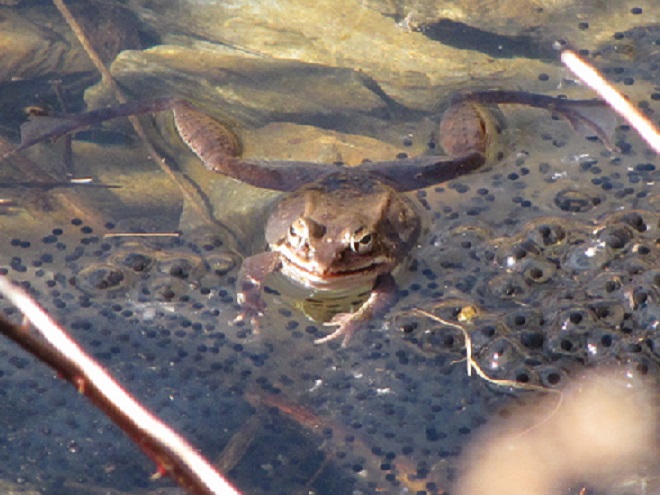
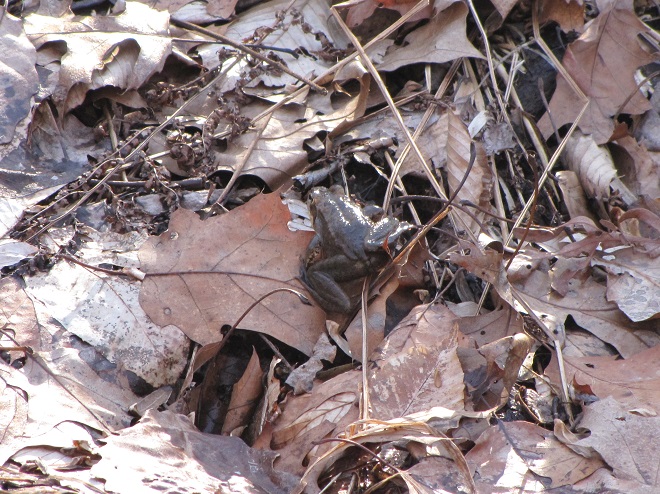
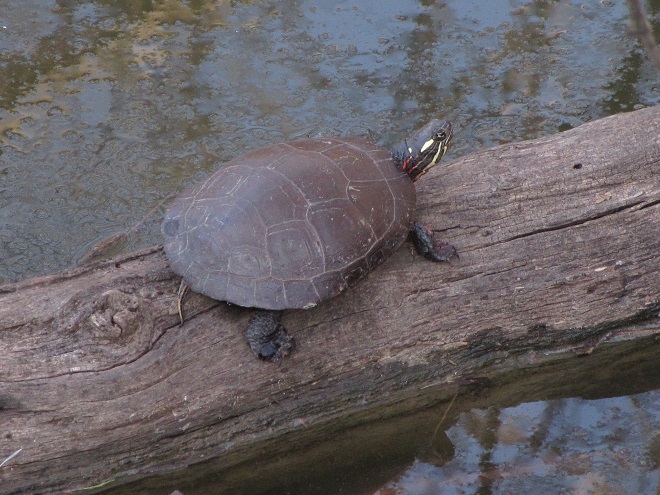
Rotting logs and leaf litter create the moisture retaining detritus in which mesic forest plants grow and thrive. Note the presence of mosses and a vernal pool in this damp section of forest.The earliest green leaves in the forest are often those of the Skunk Cabbage (Simplocarpus foetidus). This member of the arum family gets a head start by growing in the warm waters of a spring seep or in a stream-fed wetland. Like many native wildflowers of the forest, Skunk Cabbage takes advantage of early-springtime sun to flower and grow prior to the time in late April when deciduous trees grow foliage and cast shade beneath their canopy.Among the bark of dead and downed trees, the Mourning Cloak butterfly (Nymphalis antiopa) hibernates for the winter. It emerges to alight on sun-drenched surfaces in late winter and early spring.Another hibernating forest butterfly that emerges on sunny early-spring days is the Eastern Comma (Polygonia comma), also known as the Hop Merchant.In a small forest brook, a water strider (Gerridae) chases its shadow using the surface tension of the water to provide buoyancy. Forests are essential for the protection of headwaters areas where our streams get their start.Often flooded only in the springtime, fish-free pools of water known as vernal ponds are essential breeding habitat for many forest-dwelling amphibians. Unfortunately, these ephemeral wetland sites often fall prey to collecting, dumping, filling, and vandalism by motorized and non-motorized off-roaders, sometimes resulting in the elimination of the populations of frogs, toads, and salamanders that use them.Wood Frogs (Lithobates sylvaticus) emerge from hiding places among downed timber and leaf litter to journey to a nearby vernal pond where they begin calling still more Wood Frogs to the breeding site.Wood Frog eggs must hatch and tadpoles must transform into terrestrial frogs before the pond dries up in the summertime. It’s a risky means of reproduction, but it effectively evades the enormous appetites of fish.When the egg laying is complete, adult Wood Frogs return to the forest and are seldom seen during the rest of the year.In early spring, Painted Turtles emerge from hideouts in larger forest pools, particularly those in wooded swamps, to bask in sunny locations.Dead standing trees, often called snags, are essential habitats for many species of forest wildlife. There is an entire biological process, a micro-ecosystem, involved in the decay of a dead tree. It includes fungi, bacteria, and various invertebrate animals that reduce wood into the detritus that nourishes and hydrates new forest growth.Birds like this Red-headed Woodpecker feed on insects found in large snags and nest almost exclusively in them. Many species of wildlife rely on dead trees, both standing and fallen, during all or part of their lives.
There certainly is more to a forest than the living trees. If you’re hiking through a grove of timber getting snared in a maze of prickly Multiflora Rose (Rosa multiflora) and seeing little else but maybe a wild ungulate or two, then you’re in a has-been forest. Logging, firewood collection, fragmentation, and other man-made disturbances inside and near forests take a collective toll on their composition, eventually turning them to mere woodlots. Go enjoy the forests of the lower Susquehanna valley while you still can. And remember to do it gently; we’re losing quality as well as quantity right now—so tread softly.
The White-tailed Deity in a woodlot infested by invasive tangles of Multiflora Rose.
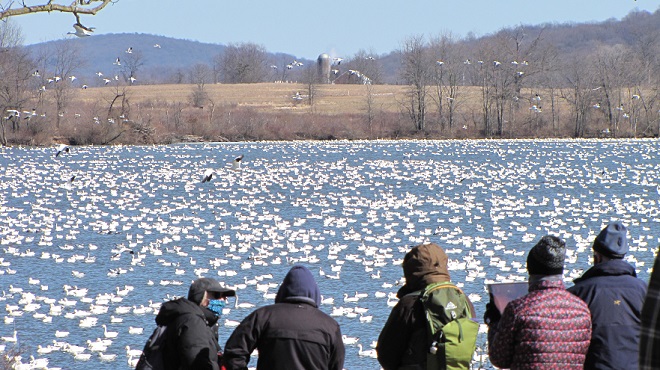
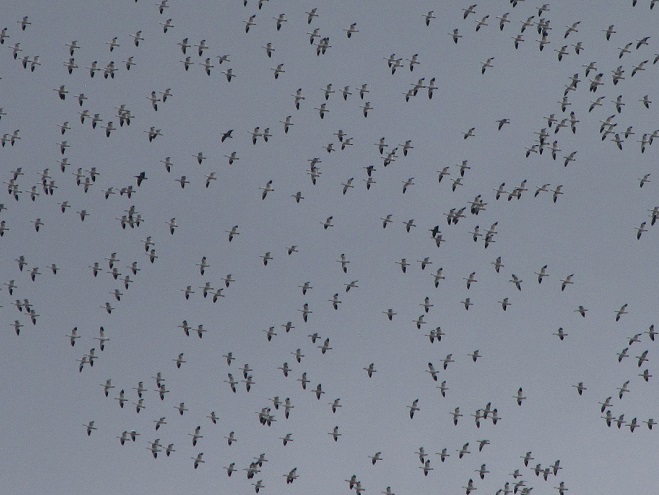
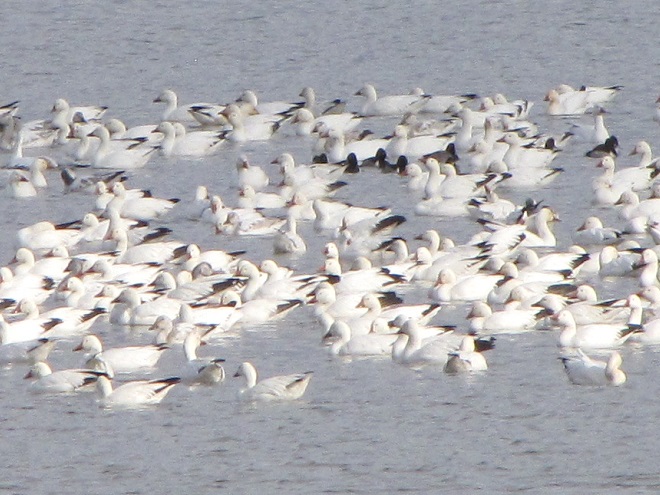
It’s that time—Snow Goose numbers are peaking at Middle Creek Wildlife Management Area in Lancaster/Lebanon Counties.
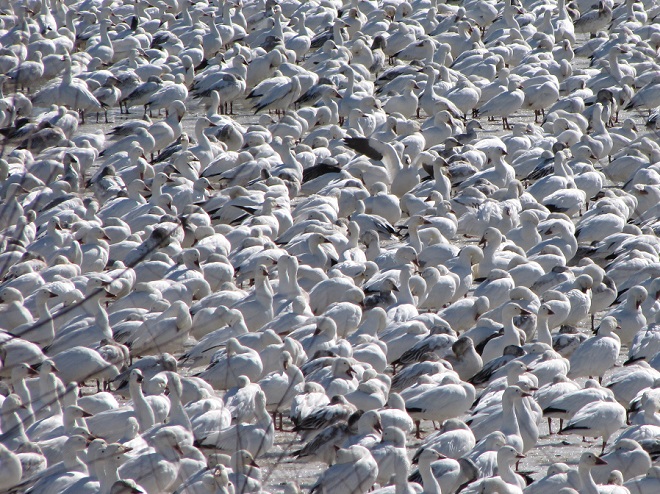
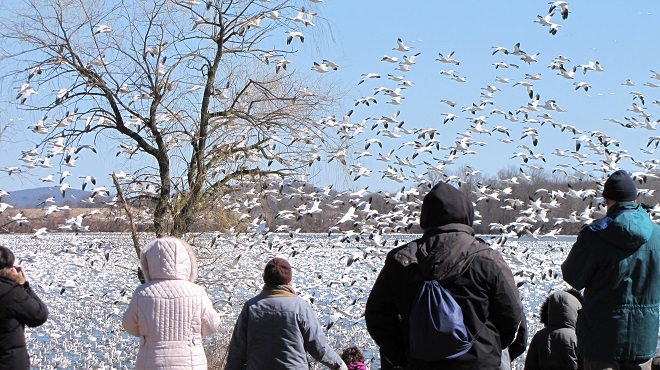
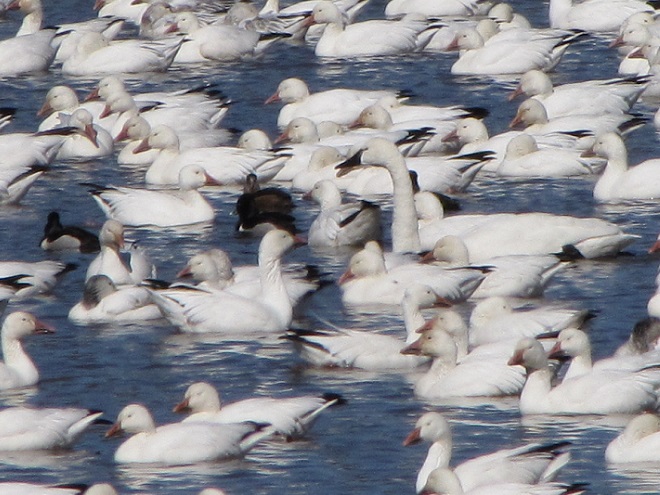
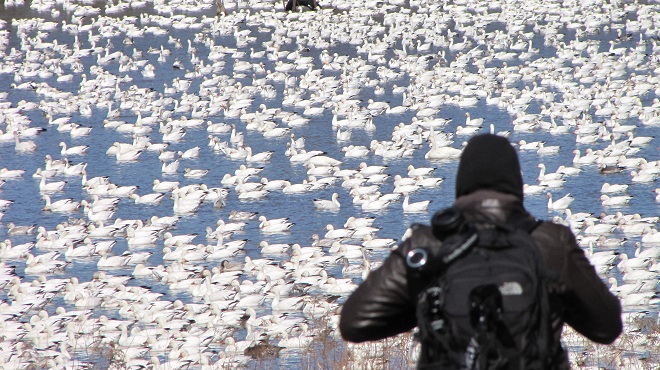
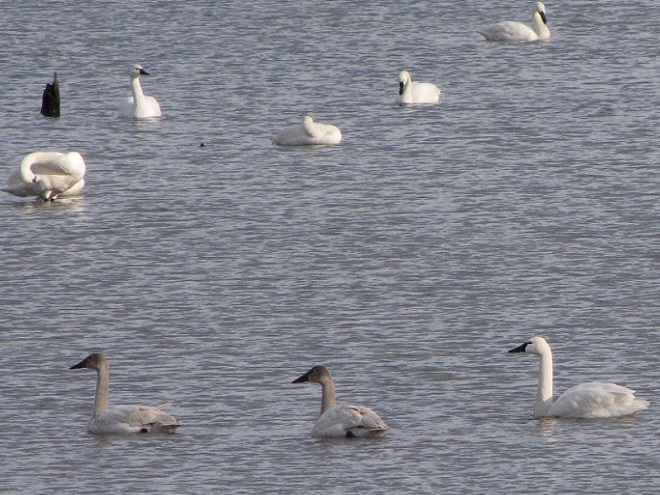
Today, migrating Snow Geese arriving from wintering areas on the Atlantic Coastal Plain blanketed the ice-free half of the lake at Middle Creek. There are probably in excess of 100,000 birds at the refuge right now.The density on the lake is relieved as geese filter out to a nearby field to graze.Periodically throughout the day, observers are thrilled by the sight of Snow Geese rising into the air in unison as a thunderously loud cloud of birds.Open water is at a premium right now, so these Ring-necked Ducks and a Tundra Swan have to squeeze in where they can.If you’re going to Middle Creek to see the Snow Geese, be certain to bring your camera and viewing optics. If you want to miss the largest crowds, the Pennsylvania Game Commission recommends visiting during the morning or on a weekday. For everyone’s safety, please remember to slow down and follow the posted parking directives. And so that the wildlife isn’t disturbed by your visit, please heed the signs designating the no-entry and propagation zones.
Spring migration is underway and waterfowl are on the move along the lower Susquehanna River. Here is a sample of sightings collected during a walk across the Veteran’s Memorial Bridge at Columbia-Wrightsville this morning.
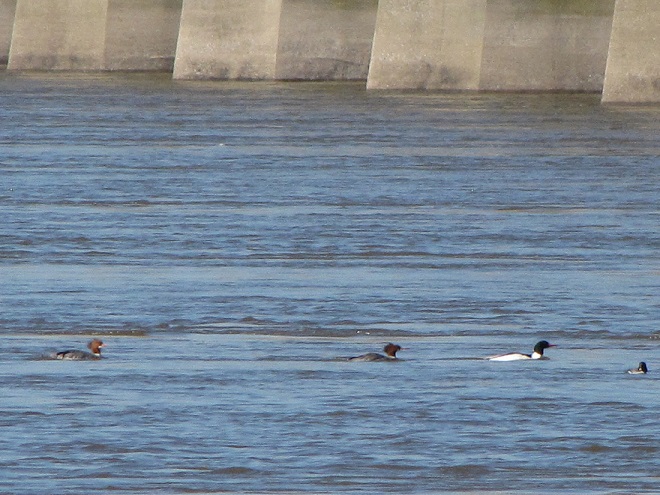
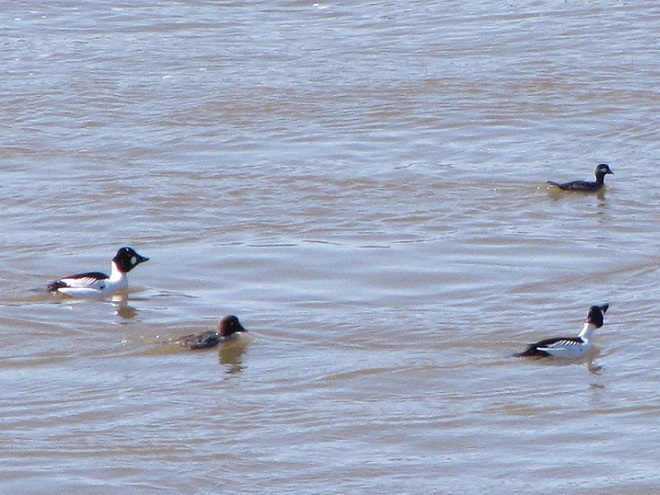
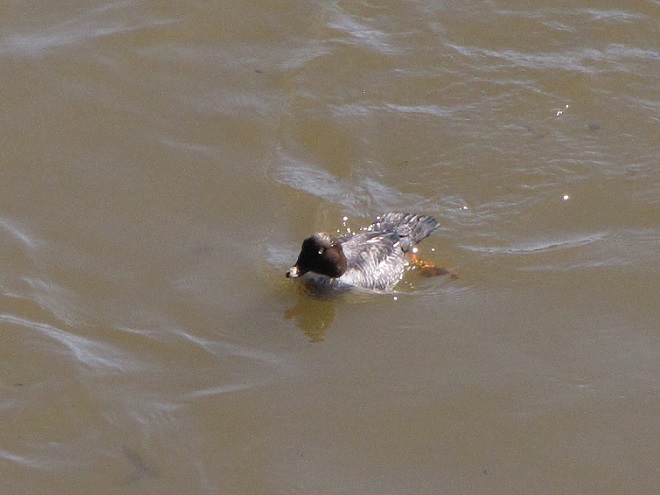
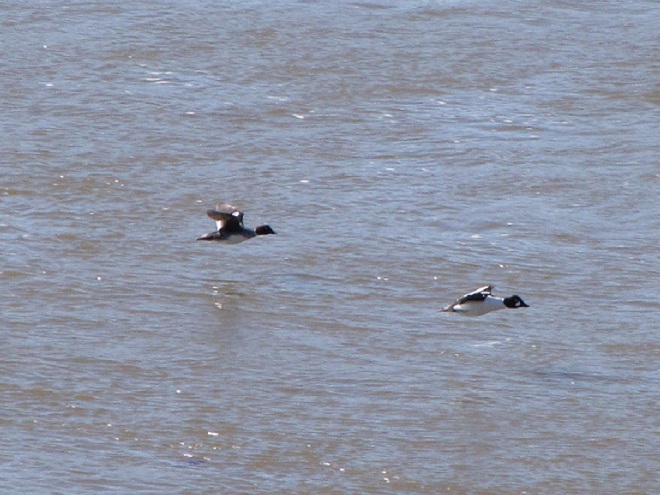
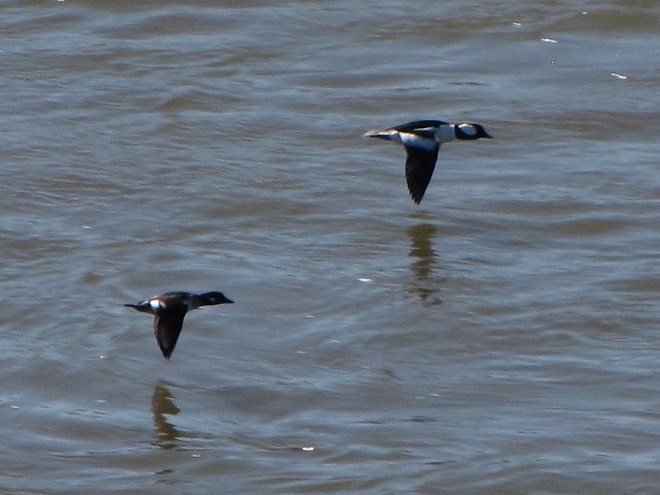
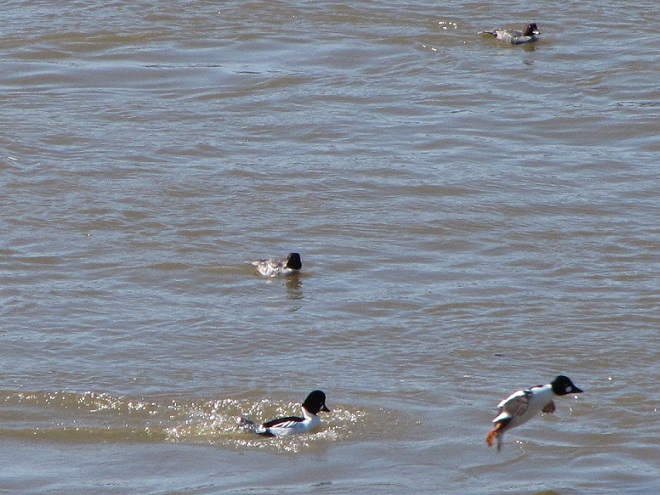
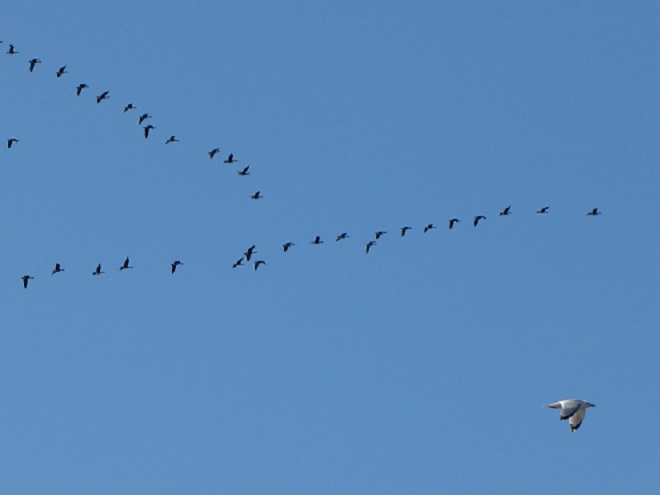
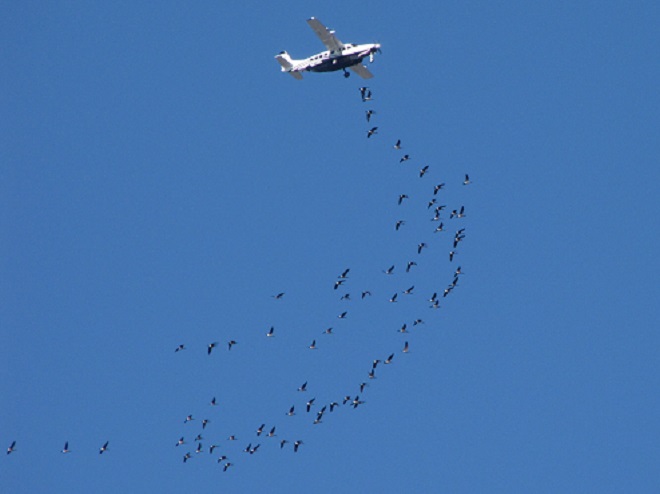
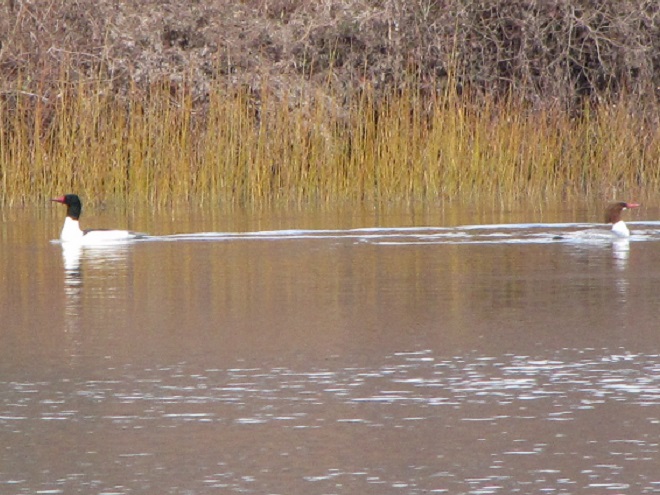
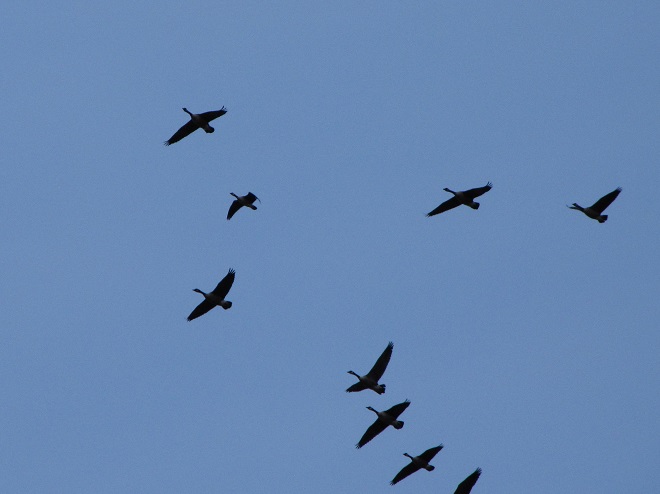
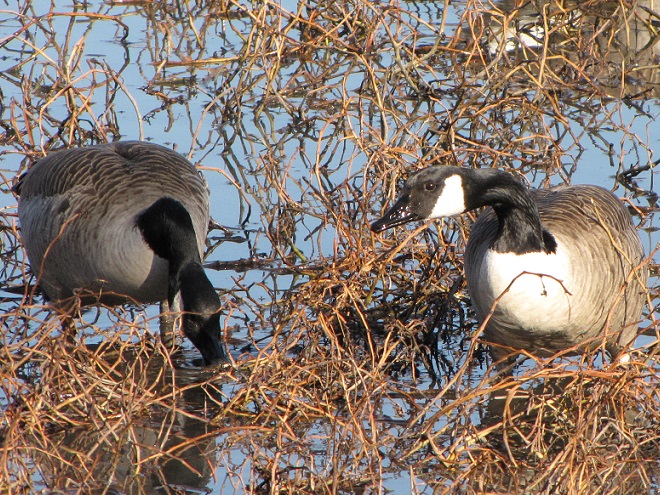
At the Veteran’s Memorial Bridge, the Susquehanna was cresting this morning after recent rains and accompanying snow melt.An overnight breeze from the southwest and calm winds during the morning hours created ideal conditions for flocks of Canada Geese to begin migrating north from Chesapeake Bay through the lower Susquehanna valley.These three Common Mergansers and a Common Goldeneye (right) are some of the hundreds of diving ducks presently gathered on the river in the vicinity of the Veteran’s Memorial Bridge.Common Goldeneyes and a first-winter male Bufflehead (upper right). All of the ducks seen today in the waters surrounding the bridge are benthic feeders, diving to the river bottom to pluck invertebrates from the substrate.A male Common Goldeneye (Bucephala clangula).A female Common Goldeneye.A pair of Common Goldeneyes in flight.A pair of Buffleheads in flight.Common Goldeneyes repositioning for another series of feeding dives.During the morning flight, thousands of Canada Geese were seen moving north in flocks numbering about 50 to 100 birds each. The bird in the lower right was one of thousands of Ring-billed Gulls seen headed upriver as well.As they pass over the lower Susquehanna region, migrating Canada Geese are typically observed flying much higher than flocks from the local resident populations, often reaching the cruising altitudes of aircraft. Aviators are always alert for flights of resident geese around airfields. But to prevent bird strikes during days like today when thousands of migratory geese traverse the airspace, air traffic controllers can become extra busy relaying the location and altitude of potential targets to pilots flying aircraft entering areas where birds have been reported.
This is, of course, just the beginning of the great spring migration. Do make a point of getting out to observe the spectacle. And remember, keep looking up—you wouldn’t want to miss anything.
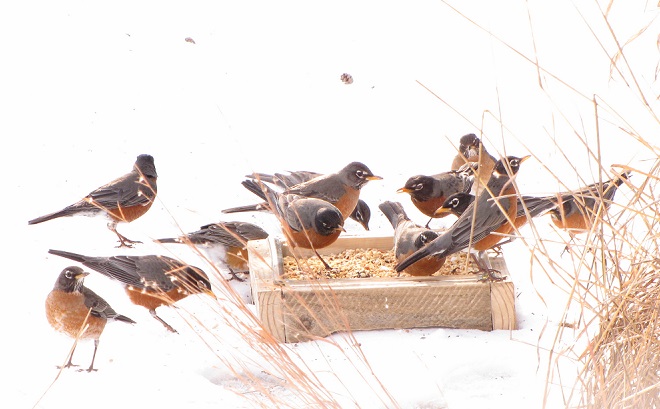
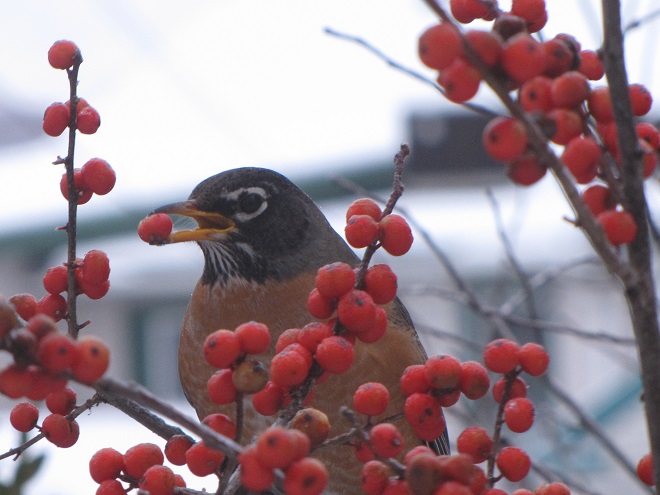
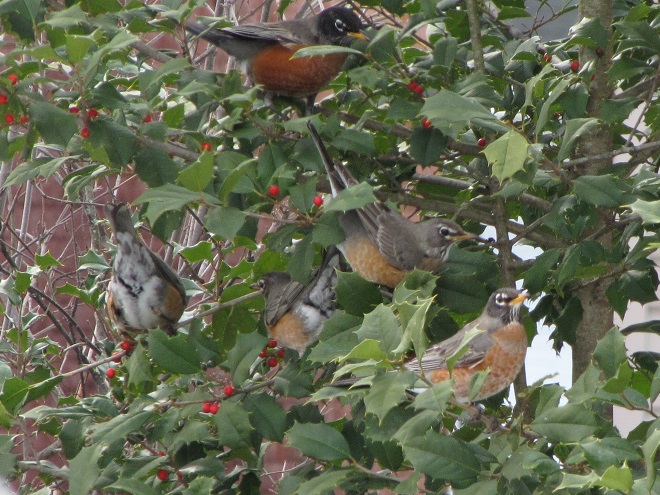
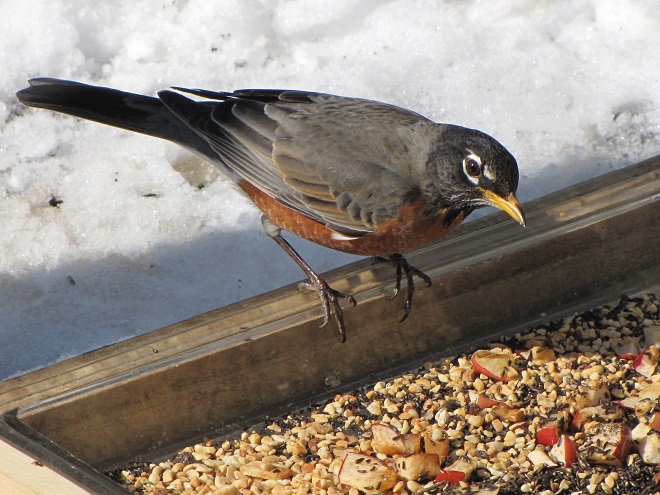
On a snowy winter day, it sure is nice to see some new visitors at a backyard feeding station. Here at the susquehannawildlife.net headquarters, American Robins have arrived to partake of the offerings.
American Robins feed on peanut hearts and chopped apples.
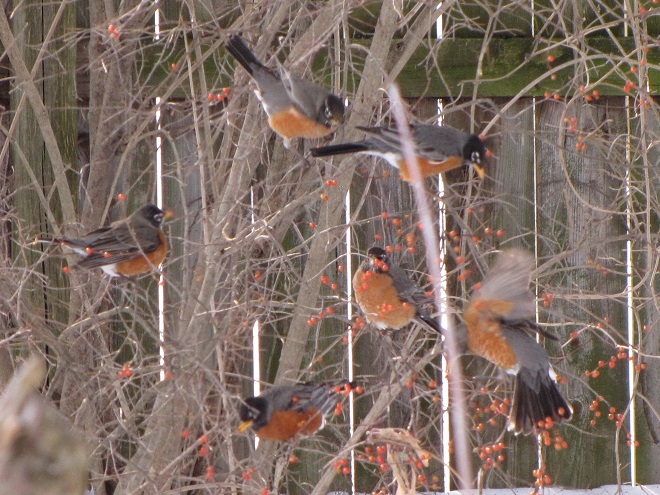
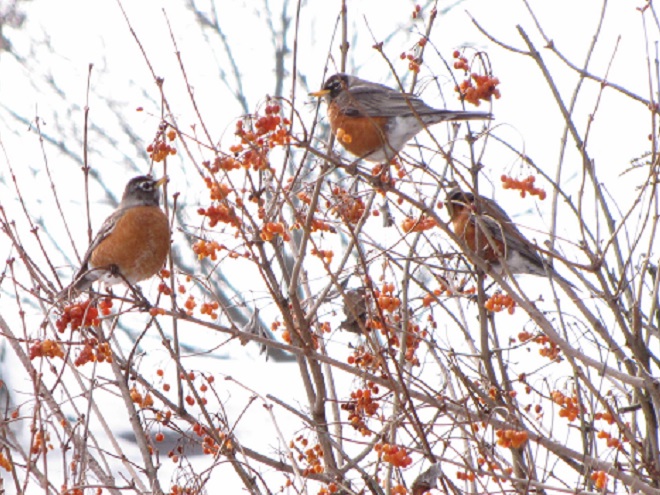
For this flock of robins, which numbered in excess of 150 individuals, the contents of this tray were a mere garnish to the meal that would sustain them through 72 hours of stormy weather. The main course was the supply of ripe berries on shrubs and trees in the headquarters garden.
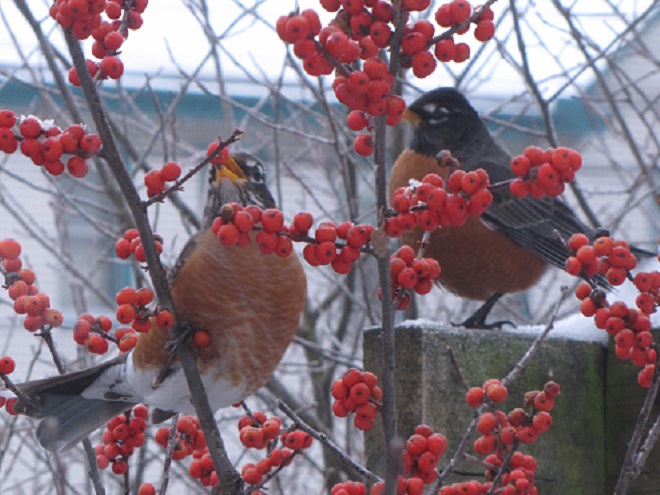
Their first choice—the bright red fruits of the Common Winterberry.
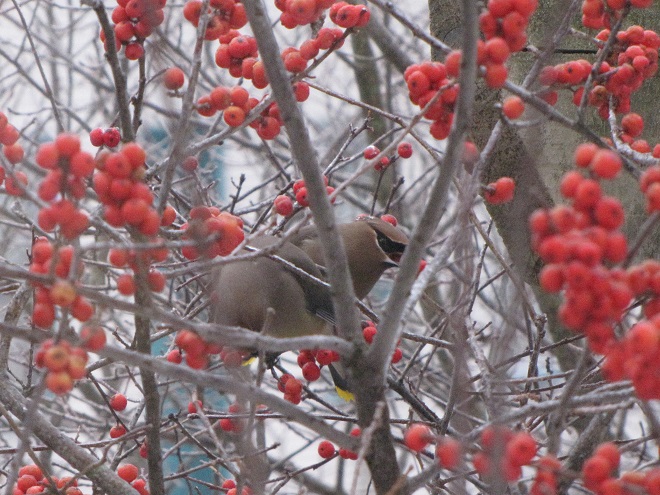
American Robins strip the fruits from a Common Winterberry.Eat fast or lose your turn.Irresistible crimson delights.Cedar Waxwings get their share too.Robins will linger until nightfall to feed on winterberries.
After cleaning off the winterberry shrubs, other fruits became part of the three-day-long feast.
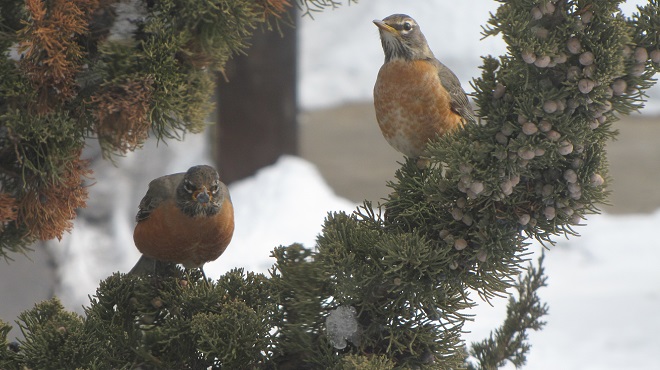
Robins eating Guelder Rose (Viburnum opulus) fruits. This European shrub is often distributed for conservation plantings as Highbush Cranberry, a common name shared with the very similar native species Viburnum trilobum.The blue-gray berries of junipers are attractive to robins, waxwings, and bluebirds.The American Holly (Ilex opaca) is a favorite of berry-loving birds. Its evergreen foliage provides cover and roosting sites for wintering birds.
Wouldn’t it be great to see these colorful birds in your garden each winter? You can, you know. Won’t you consider adding plantings of native trees and shrubs to your property this spring? Here at the susquehannawildlife.com headquarters we mow no lawn; the lawn is gone. Mixing evergreens and fruit-producing shrubs with native warm-season grasses and flowering plants has created a wildlife oasis absent of that dirty habit of mowing and blowing.
You can find many of the plants seen here at your local garden center. Take a chunk out of your lawn by paying them a visit this spring.
Want a great deal? Many of the County Conservation District offices in the lower Susquehanna region are having their annual spring tree sales right now. Over the years, we obtained many of our evergreens and berry-producing shrubs from these sales for less than two dollars each. At that price you can blanket that stream bank or wet spot in the yard with winterberries and mow it no more! The deadlines for orders are quickly approaching, so act today—literally, act today. Visit your County Conservation District’s website for details including selections, prices, order deadlines, and pickup dates and locations.
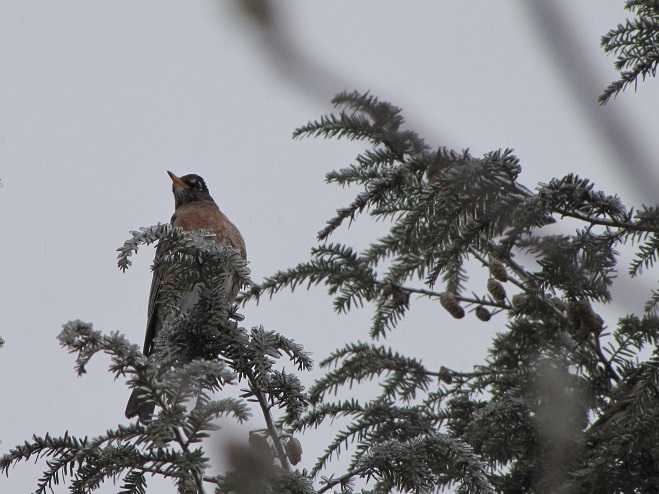
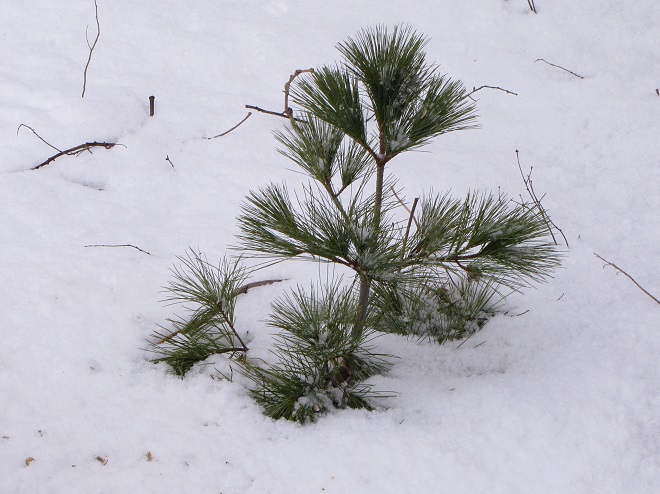
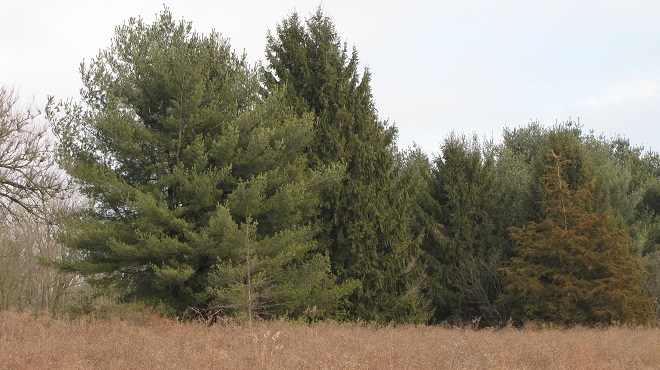
Evergreens like this Eastern Hemlock (Tsuga canadensis) are essential to the survival of many species of wintering birds. Plant evergreens in clumps, the bigger the better, to provide birds with thermal protection against the cold winds of winter nights.County Conservation District Tree Sales offer bare root evergreens like this Eastern White Pine (Pinus strobus) in packs of five or ten. Buy a bunch. Spend this year’s lawn treatment money on them. Then, get them planted immediately after pickup in the spring and in a few years you’ll have a nice grove of evergreens for wildlife habitat, a wind break, or a privacy screen.Groves of mixed evergreens among deciduous woods, grasslands, farmlands, or suburbs are ideal cover for wintering wildlife. These stands attract many species of migrating and nesting birds as well. Seen here, left to right, are Eastern White Pine, Norway Spruce (Picea abies), and Eastern Red Cedar. Though not a native species, the Norway Spruce is frequently used for conservation and ornamental plantings in the northeastern United States due to its appealing attributes and lack of invasive characteristics.Feeding wildlife is great fun. But remember, if you’re running a hotel for animals, you’ve got to offer more than an after-dinner mint to your tired and hungry guests. Let’s get planting!
County Conservation District Tree Sales
Consult each County Conservation District’s Tree Sale web page for ordering info, pickup locations, and changes to these dates and times.
Cumberland County Conservation District Tree Seedling Sale—deadline for prepaid orders Tuesday, March 30, 2021. Pickup 1 P.M. to 5 P.M., Thursday, April 22, 2021, and 8 A.M. to 2 P.M., Friday, April 23, 2021. https://www.ccpa.net/4636/Tree-Seedling-Sale
Lancaster County Conservation District Tree Sale—deadline for prepaid orders (hand-delivered to drop box) 5 P.M., Friday, March 5, 2021. Pickup 8 A.M. to 5 P.M., Thursday, April 15, 2021. https://www.lancasterconservation.org/tree-sale/
Lebanon County Conservation District Tree Sale—deadline for prepaid orders Thursday, March 11, 2021. Pickup 9 A.M. to 6 P.M., Friday, May 7, 2021. https://www.lccd.org/2021-tree-sale/
Perry County Conservation District Tree Sale—deadline for prepaid orders Wednesday, March 24, 2021. Pickup 10 A.M. to 6 P.M., Thursday, April 8, 2021. www.perrycd.org/Documents/2021 Tree Sale Flyer LEGAL SIZE.pdf
York County Conservation District Seedling Sale—deadline for prepaid orders Monday, March 15, 2021. Pickup 10 A.M. to 6 P.M., Thursday, April 15, 2021. https://www.yorkccd.org/events/2021-seedling-sale
With plenty of open water on the main lake and no snow cover on the fields where they graze, Snow Geese have begun arriving at Middle Creek Wildlife Management Area in Lancaster/Lebanon Counties. As long as our mild winter weather continues, more can be expected to begin moving inland from coastal areas to prepare for their spring migration and a return to arctic breeding grounds.
You probably need a break from being indoors all month, so why not get out and have a look?
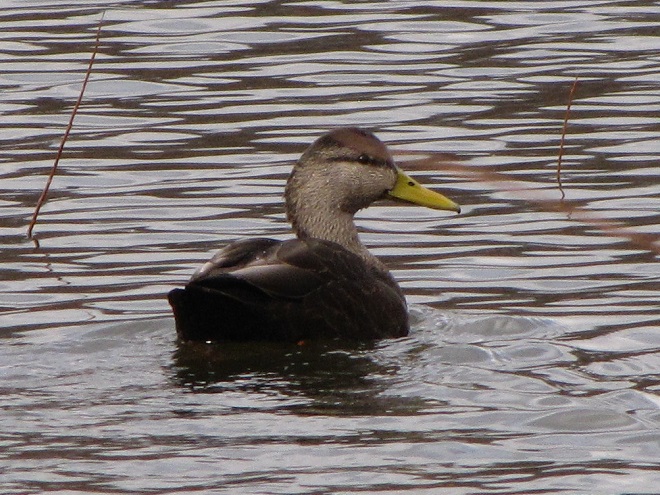
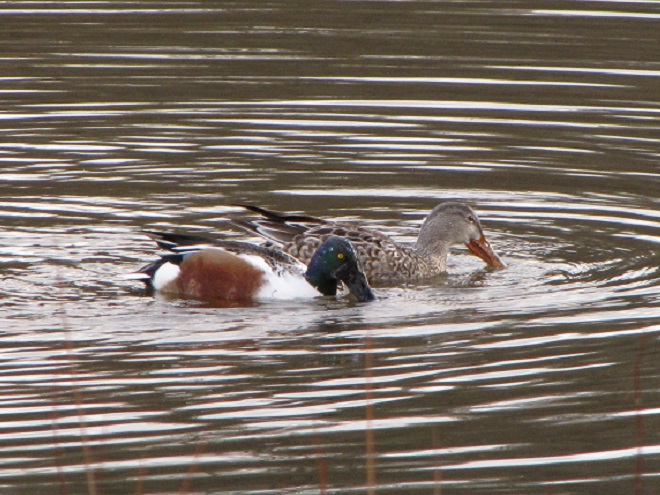
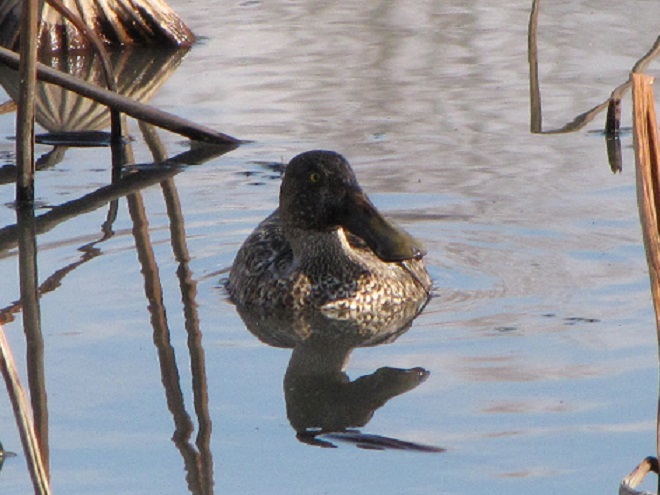
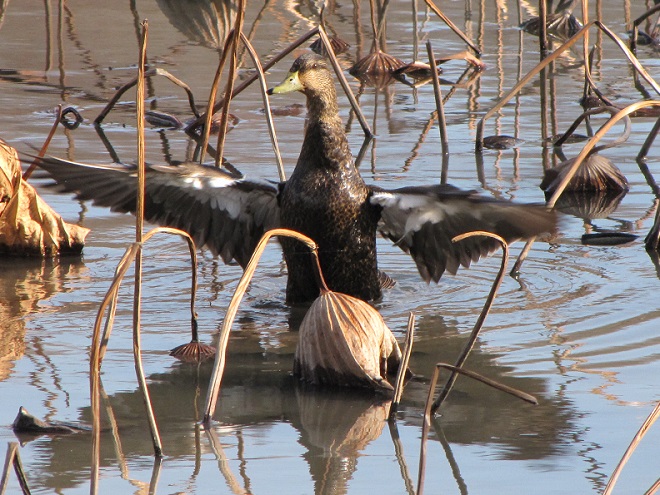
Hundreds of high-flying Snow Geese descended onto the main lake at Middle Creek Wildlife Management Area this afternoon.Snow Geese and a few Ring-necked Ducks as seen from the Willow Point observation area at Middle Creek this afternoon.The sound of calling Tundra Swans is music to the ears on an otherwise quiet winter day.Dozens of Common Mergansers are at Middle Creek W.M.A. right now.Look carefully and you might see American Black Ducks among the waterfowl in the refuge’s impoundments.Northern Shovelers have been at Middle Creek since late fall. If they can continue to access the muddy bottom of the refuge’s lake for food, they’ll stay until the spring migration.Check those flocks of Canada Geese carefully, sometimes you’ll find something different among them,……like this noticeably smaller bird, possibly either a Lesser Canada Goose (Branta canadensis parvipes) or a Richardson’s Cackling Goose (Branta hutchinsii hutchinsii), the latter being more likely.
Don’t just sit there—don your coat, grab a pair of binoculars, and get out and have a gander!
You say you really don’t want to take a look back at 2020? Okay, we understand. But here’s something you may find interesting, and it has to do with the Susquehanna River in 2020.
As you may know, the National Weather Service has calculated the mean temperature for the year 2020 as monitored just upriver from Conewago Falls at Harrisburg International Airport. The 56.7° Fahrenheit value was the highest in nearly 130 years of monitoring at the various stations used to register official climate statistics for the capital city. The previous high, 56.6°, was set in 1998.
Though not a prerequisite for its occurrence, record-breaking heat was accompanied by a drought in 2020. Most of the Susquehanna River drainage basin experienced drought conditions during the second half of the year, particularly areas of the watershed upstream of Conewago Falls. A lack of significant rainfall resulted in low river flows throughout late summer and much of the autumn. Lacking water from the northern reaches, we see mid-river rocks and experience minimal readings on flow gauges along the lower Susquehanna, even if our local precipitation happens to be about average.
Back in October, when the river was about as low as it was going to get, we took a walk across the Susquehanna at Columbia-Wrightsville atop the Route 462/Veteran’s Memorial Bridge to have a look at the benthos—the life on the river’s bottom.
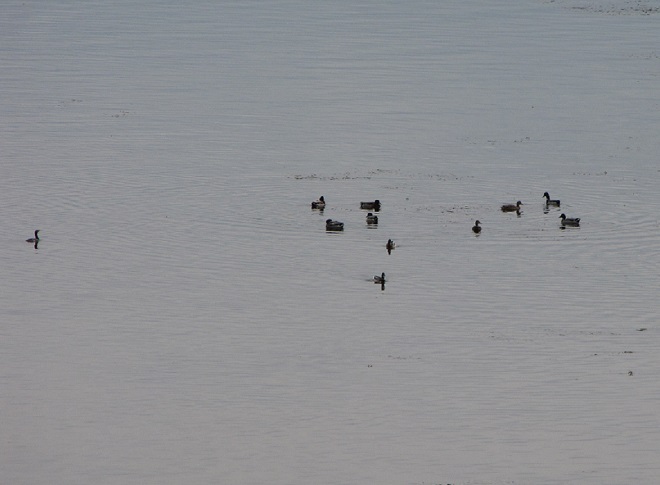
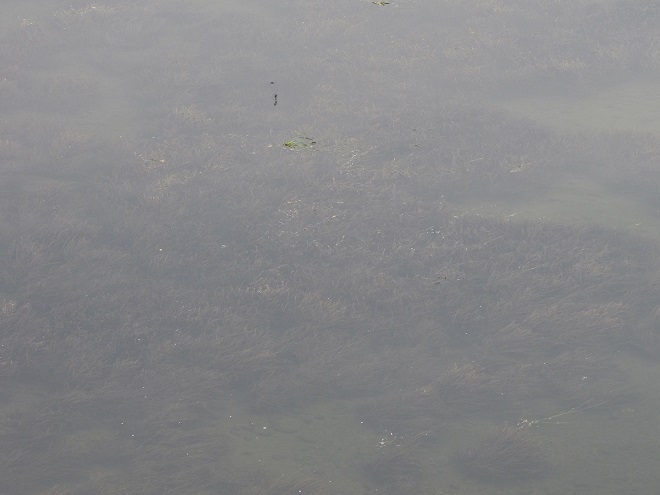
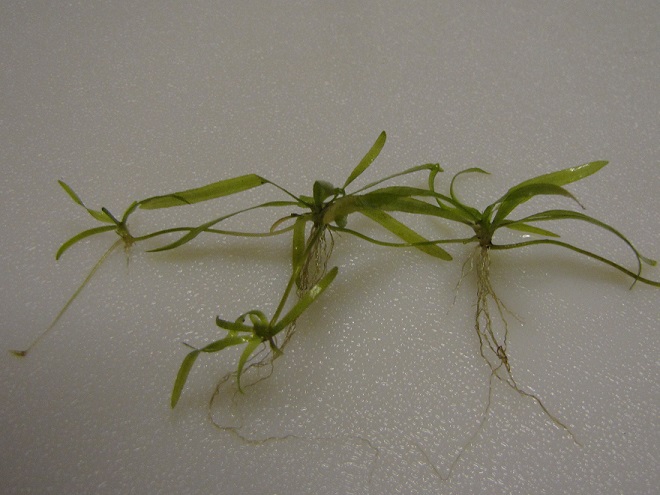
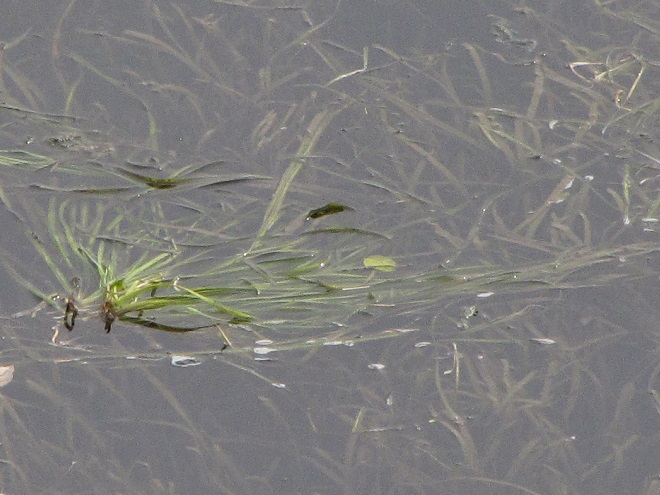
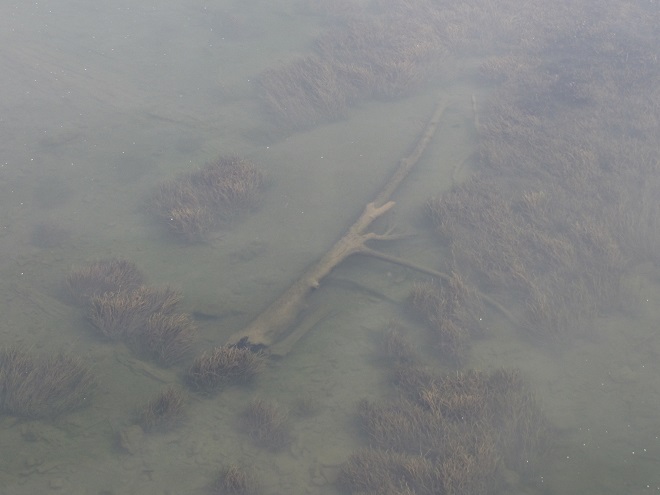
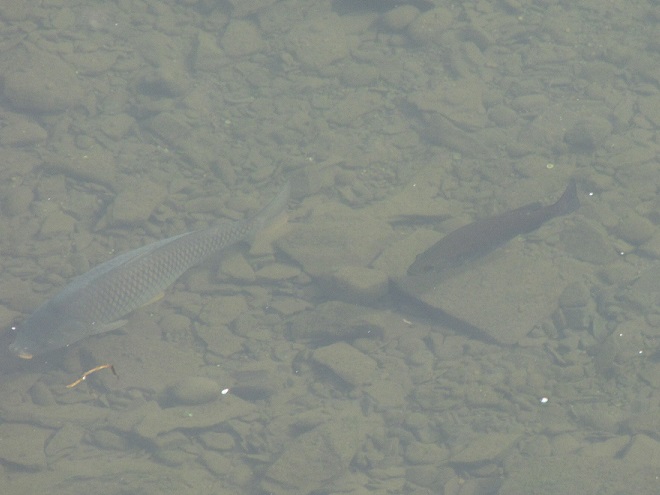
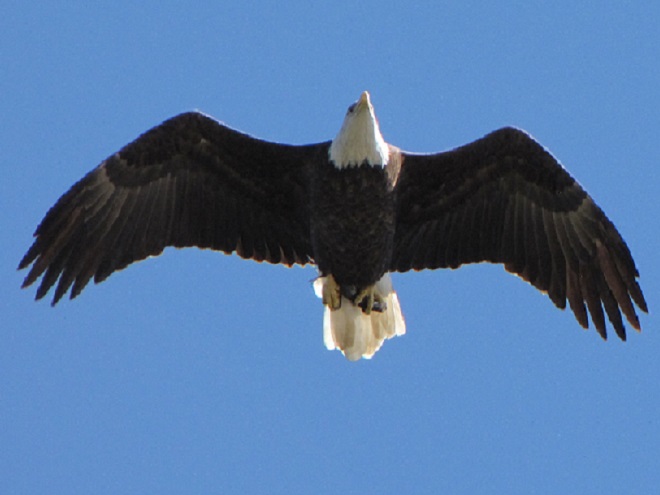
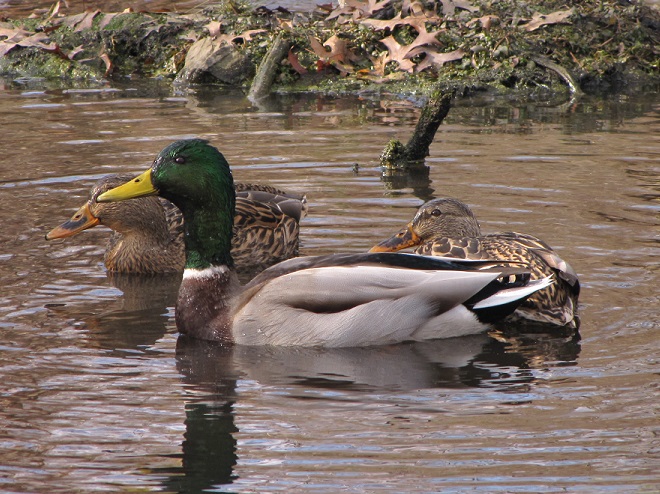
As we begin our stroll across the river, we quickly notice Mallards and a Double-crested Cormorant (far left) feeding among aquatic plants. You can see the leaves of the vegetation just breaking the water’s surface, particularly behind the feeding waterfowl. Let’s have a closer look.An underwater meadow of American Eelgrass (Vallisneria americana) as seen from atop the Veteran’s Memorial Bridge at Columbia-Wrightsville. Also known as Freshwater Eelgrass, Tapegrass, and Wild Celery, it is without a doubt the Susquehanna’s most important submerged aquatic plant. It grows in alluvial substrate (gravel, sand, mud, etc.) in river segments with moderate to slow current. Water three to six feet deep in bright sunshine is ideal for its growth, so an absence of flooding and the sun-blocking turbidity of muddy silt-laden water is favorable.Plants in the genus Vallisneria have ribbon-like leaves up to three feet in length that grow from nodes rooted along the creeping stems called runners. A single plant can, over a period of years, spread by runners to create a sizable clump or intertwine with other individual plants to establish dense meadows and an essential wildlife habitat.An uprooted segment of eelgrass floats over a thick bed of what may be parts of the same plant. Eelgrass meadows on the lower Susquehanna River were decimated by several events: deposition of anthracite coal sediments (culm) in the late-nineteenth and early-twentieth centuries, dredging of the same anthracite coal sediments during the mid-twentieth century, and the ongoing deposition of sediments from erosion occurring in farm fields, logged forests, abandoned mill ponds, and along denuded streambanks. Not only has each of these events impacted the plants physically by either burying them or ripping them out by the roots, each has also contributed to the increase in water turbidity (cloudiness) that blocks sunlight and impairs their growth and recovery.A submerged log surrounded by beds of eelgrass forms a haven for fishes in sections of the river lacking the structure found in rock-rich places like Conewago Falls. A period absent of high water and sediment runoff extended through the growing season in 2020 to allow lush clumps of eelgrass like these to thrive and further improve water quality by taking up nutrients, particularly nitrogen and phosphorus. Nutrients used by vascular plants including eelgrass become unavailable for feeding detrimental algal blooms in downstream waters including Chesapeake Bay.Small fishes and invertebrates attract predatory fishes to eelgrass beds. We watched this Smallmouth Bass leave an ambush site among eelgrass’s lush growth to shadow a Common Carp as it rummaged through the substrate for small bits of food. The bass would snatch up crayfish that darted away from the cover of stones disturbed by the foraging carp.Sunfishes are among the species taking advantage of eelgrass beds for spawning. They’ll build a nest scrape in the margins between clumps of plants allowing their young quick access to dense cover upon hatching. The abundance of invertebrate life among the leaves of eelgrass nourishes feeding fishes, and in turn provides food for predators including Bald Eagles, this one carrying a freshly-caught Bluegill.
These improvements in water quality and wildlife habitat can have a ripple effect. In 2020, the reduction in nutrient loads entering Chesapeake Bay from the low-flowing Susquehanna may have combined with better-than-average flows from some of the bay’s lesser-polluted smaller tributaries to yield a reduction in the size of the bay’s oxygen-deprived “dead zones”. These dead zones typically occur in late summer when water temperatures are at their warmest, dissolved oxygen levels are at their lowest, and nutrient-fed algal blooms have peaked and died. Algal blooms can self-enhance their severity by clouding water, which blocks sunlight from reaching submerged aquatic plants and stunts their growth—making quantities of unconsumed nutrients available to make more algae. When a huge biomass of algae dies in a susceptible part of the bay, its decay can consume enough of the remaining dissolved oxygen to kill aquatic organisms and create a “dead zone”. The Chesapeake Bay Program reports that the average size of this year’s dead zone was 1.0 cubic miles, just below the 35-year average of 1.2 cubic miles.
Back on a stormy day in mid-November, 2020, we took a look at the tidal freshwater section of Chesapeake Bay, the area known as Susquehanna Flats, located just to the southwest of the river’s mouth at Havre de Grace, Maryland. We wanted to see how the restored American Eelgrass beds there might have fared during a growing season with below average loads of nutrients and life-choking sediments spilling out of the nearby Susquehanna River. Here’s what we saw.
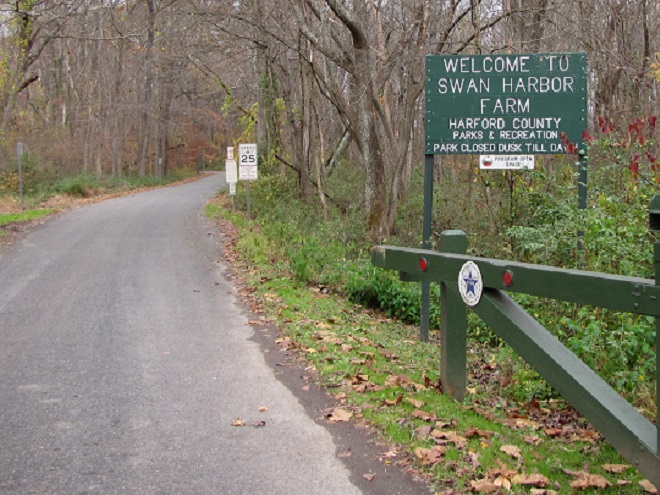
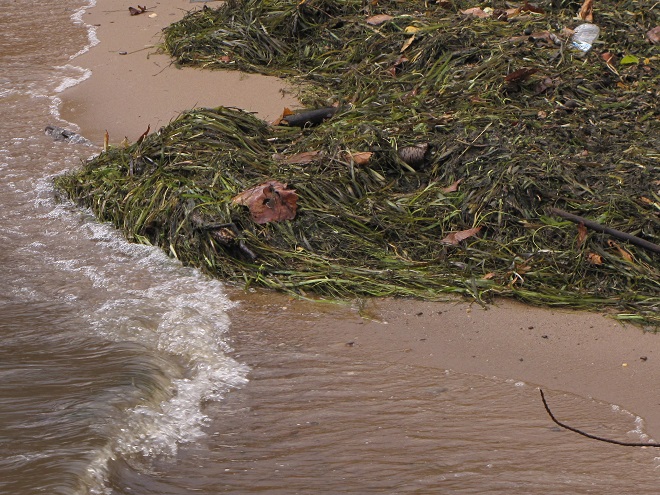
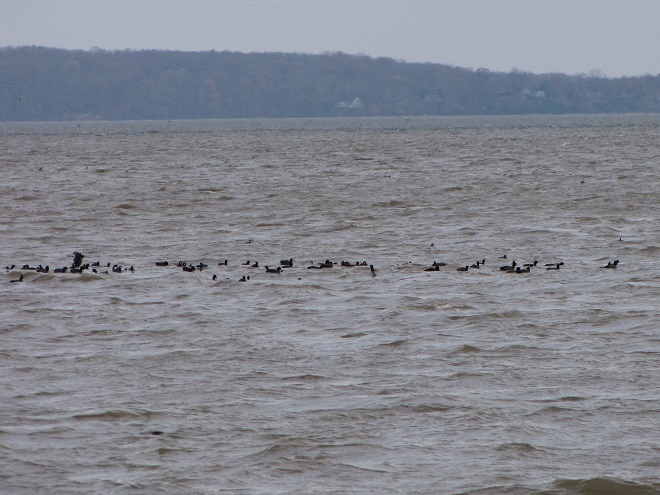
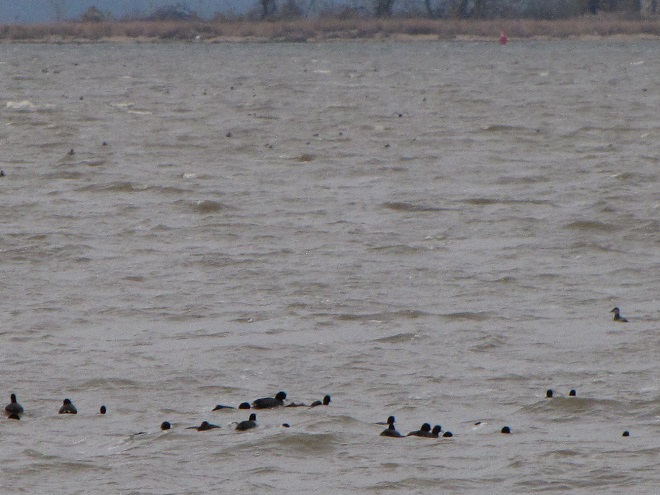
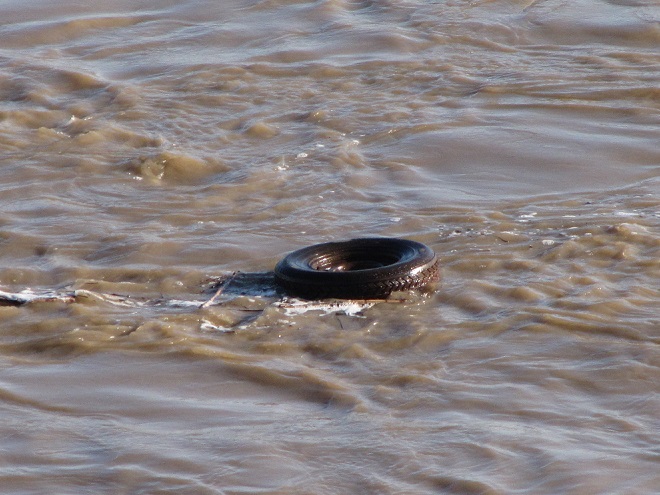
We followed the signs from Havre de Grace to Swan Harbor Farm Park.Harford County Parks and Recreation’s Swan Harbor Farm Park consists of a recently-acquired farming estate overlooking the tidal freshwater of Susquehanna Flats.Along the bay shore, a gazebo and a fishing pier have been added. Both provide excellent observation points.The shoreline looked the way it should look on upper Chesapeake Bay, a vegetated buffer and piles of trees and other organic matter at the high-water line. There was less man-made garbage than we might find following a summer that experienced an outflow from river flooding, but there was still more than we should be seeing.Judging by the piles of fresh American Eelgrass on the beach, it looks like it’s been a good year. Though considered a freshwater plant, eelgrass will tolerate some brackish water, which typically invades upper Chesapeake Bay each autumn due to a seasonal reduction in freshwater inflow from the Susquehanna and other tributaries. Saltwater can creep still further north when the freshwater input falls below seasonal norms during years of severe drought. The Susquehanna Flats portion of the upper bay very rarely experiences an invasion by brackish water; there was none in 2020.As we scanned the area with binoculars and a spotting scope, a raft of over one thousand ducks and American Coots (foreground) could be seen bobbing among floating eelgrass leaves and clumps of the plants that had broken away from their mooring in the mud. Waterfowl feed on eelgrass leaves and on the isopods and other invertebrates that make this plant community their home.While coots and grebes seemed to favor the shallower water near shore, a wide variety of both diving and dabbling ducks were widespread in the eelgrass beds more distant. Discernable were Ring-necked Ducks, scaup, scoters, Long-tailed Ducks, Redheads, American Wigeons, Gadwall, Ruddy Ducks, American Black Ducks, and Buffleheads.
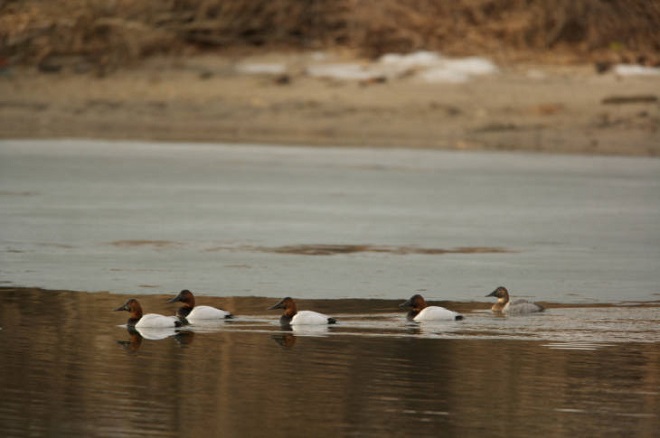
We noticed a few Canvasbacks (Aythya valisineria) on the Susquehanna Flats during our visit. Canvasbacks are renowned as benthic feeders, preferring the tubers and other parts of submerged aquatic plants (a.k.a. submersed aquatic vegetation or S.A.V.) including eelgrass, but also feeding on invertebrates including bivalves. The association between Canvasbacks and eelgrass is reflected in the former’s scientific species name valisineria, a derivitive of the genus name of the latter, Vallisneria.
Canvasbacks on Chesapeake Bay. (United States Fish and Wildlife Service image by Ryan Hagerty)
The plight of the Canvasback and of American Eelgrass on the Susquehanna River was described by Herbert H. Beck in his account of the birds found in Lancaster County, Pennsylvania, published in 1924:
“Like all ducks, however, it stops to feed within the county less frequently than formerly, principally because the vast beds of wild celery which existed earlier on broads of the Susquehanna, as at Marietta and Washington Borough, have now been almost entirely wiped out by sedimentation of culm (anthracite coal waste). Prior to 1875 the four or five square miles of quiet water off Marietta were often as abundantly spread with wild fowl as the Susquehanna Flats are now.”
Beck quotes old Marietta resident and gunner Henry Zink:
“Sometimes there were as many as 500,000 ducks of various kinds on the Marietta broad at one time.”
The abundance of Canvasbacks and other ducks on the Susquehanna Flats would eventually plummet too. In the 1950s, there were an estimated 250, 000 Canvasbacks wintering on Chesapeake Bay, primarily in the area of the American Eelgrass, a.k.a. Wild Celery, beds on the Susquehanna Flats. When those eelgrass beds started disappearing during the second half of the twentieth century, the numbers of Canvasbacks wintering on the bay took a nosedive. As a population, the birds moved elsewhere to feed on different sources of food, often in saltier estuarine waters.
Canvasbacks were able to eat other foods and change their winter range to adapt to the loss of habitat on the Susquehanna River and Chesapeake Bay. But not all species are the omnivores that Canvasbacks happen to be, so they can’t just change their diet and/or fly away to a better place. And every time a habitat like the American Eelgrass plant community is eliminated from a region, it fragments the range for each species that relied upon it for all or part of its life cycle. Wildlife species get compacted into smaller and smaller suitable spaces and eventually their abundance and diversity are impacted. We sometimes marvel at large concentrations of birds and other wildlife without seeing the whole picture—that man has compressed them into ever-shrinking pieces of habitat that are but a fraction of the widespread environs they once utilized for survival. Then we sometimes harass and persecute them on the little pieces of refuge that remain. It’s not very nice, is it?
By the end of 2020, things on the Susquehanna were getting back to normal. Near normal rainfall over much of the watershed during the final three months of the year was supplemented by a mid-December snowstorm, then heavy downpours on Christmas Eve melted it all away. Several days later, the Susquehanna River was bank full and dishing out some minor flooding for the first time since early May. Isn’t it great to get back to normal?
The rain-and-snow-melt-swollen Susquehanna from Chickies Rock looking upriver toward Marietta during the high-water crest on December 27th.Cresting at Columbia as seen from the Route 462/Veteran’s Memorial Bridge. A Great Black-backed Gull monitors the waters for edibles.All back to normal on the Susquehanna to end 2020.Yep, back to normal on the Susquehanna. Maybe 2021 will turn out to be another good year, or maybe it’ll just be a Michelin or Firestone.
SOURCES
Beck, Herbert H. 1924. A Chapter on the Ornithology of Lancaster County, Pennsylvania. The Lewis Historical Publishing Company. New York, NY.
White, Christopher P. 1989. Chesapeake Bay, Nature of the Estuary: A Field Guide. Tidewater Publishers. Centreville, MD.
It’s just common sense to take it easy and drive carefully when snow covers streets and highways. Everyone knows that. But did you know that slowing down when the landscape is blanketed in white can save lives even after the roadways have been cleared?
Following significant snowfalls such as the one earlier this week, birds and other wildlife are attracted to bare ground along the edges of plowed pavement. They are often so preoccupied with the search for food that they ignore approaching cars and trucks until it is too late.
Take a look at the species found today along a one mile stretch of plowed rural roadway in the lower Susquehanna valley.
Following snow storms, birds that normally feed among leaf litter on the forest floor or in thickets and fields are attracted to plowed roads. During their urgent search for food, many are struck and killed by motor vehicles.White-throated Sparrows commonly congregate along roads passing through woodlands and thickets.A juvenile White-crowned Sparrow looks for food among leaves along the edge of snow-free pavement.Adult White-crowned Sparrows take cover in roadside shrubs until traffic passes. Within moments they’ll return to a patch of bare ground along the road’s narrow shoulder.Dark-eyed Juncos are commonly encountered along roads through snow-covered weedy fields and suburbia.Song Sparrows gather along roads traversing brushy areas.Juvenile White-crowned Sparrows and, to the upper right, an American Tree Sparrow (Spizella arborea) take refuge in a small roadside sapling after fleeing a passing automobile.This Yellow-rumped Warbler was attracted to berry-laden shrubs and vines in a road cut with a southern exposure and patches of bare ground.Following a snowfall, Eastern Bluebirds are regularly seen feeding along the edges of rural roads.Horned Larks gather along the snow-free margins of roads through tundra-like farmland.
For many species of wildlife in the Lower Susquehanna River Watershed, the fragmented and impaired state of habitat already challenges their chances of surviving the winter. Snow cover can isolate them from their limited food supplies and force them to roadsides and other dangerous locations to forage. Mauling them with motor vehicles just adds to the escalating tragedy, so do wildlife and yourself a favor—please slow down.
Even in areas with ideal habitat, snow cover will cause birds and other wildlife to explore bare ground along highways while seeking food.Ring-necked Pheasants frequently become traffic casualties. These birds feeding at roadside due to the snow cover are in increased peril.
So you aren’t particularly interested in a stroll through the Pennsylvania woods during the gasoline and gunpowder gang’s second-biggest holiday of the year—the annual sacrifice-of-the-White-tailed-Deity ritual. I get it. Two weeks and nothing to do. Well, why not try a hike through the city instead? I’m not kidding. You might be surprised at what you see. Here are some photographs taken today during several strolls in Harrisburg, Pennsylvania.
First stop was City Island in the Susquehanna River—accessible from downtown Harrisburg or the river’s west shore by way of the Market Street Bridge.
From the middle of the Susquehanna River, City Island offers a spectacular view of the downtown Harrisburg skyline. In summer, it’s the capital city’s playground. During the colder months, it’s a great place to take a quiet walk and find unusual birds.This Bald Eagle was in mature trees along the river shoreline near the Harrisburg Senator’s baseball stadium.Ring-billed Gulls gather on the “cement beach” at the north end of City Island.One of a dozen or so American Herring Gulls seen from the island’s north end. This particular bird is a juvenile.A Ring-billed Gull and some petite Bonaparte’s Gulls. Really good birders will tell you to always check through flocks of these smaller gulls carefully. It turns out they’re onto something. Look closely at the gull to the right.A bright red bill and more of a crescent shape to the black spot behind the eye, that’s an adult Black-headed Gull (Chroicocephalus ridibundus) in winter plumage, a rare bird on the Susquehanna. Black-headed Gulls have colonized North America from Europe, breeding in Iceland, southernmost Greenland, and rarely Newfoundland.
Okay, City Island was worth the effort. Next stop is Wildwood Park, located along Industrial Road just north of the Pennsylvania Farm Show complex and the Harrisburg Area Community College (HACC) campus. There are six miles of trails surrounding mile-long Wildwood Lake within this marvelous Dauphin County Parks Department property.
A flock of Killdeer at the south end of Wildwood Lake. From November through February, a walk along the south and west sides of the impoundment can be a photographer’s dream. The light is suitable in the morning, then just keeps getting better as the day wears on.Is this probable Carolina/Black-capped Chickadee hybrid a resident at Wildwood or just a visitor from a few miles to the north? Currently, pure Black-capped Chickadees (Poecile atricapillus) nest in the mountains well to the north of Harrisburg, and pure Carolina Chickadees nest south of the city. Harrisburg possibly remains within the intergrade/hybrid zone, an area where the ranges of the two species overlap, but probably not for long. During recent decades, this zone has been creeping north, at times by as much as a half mile or more each year. So if the capital city isn’t Carolina Chickadee territory yet, it soon will be.Another chickadee likely to be a hybrid, this one with some white in the greater wing coverts like a Black-capped, but with a call even more rapid than that of the typical Carolina, the species known for uttering the faster “chick-a-dee-dee-dee”. It sounded wired, like it had visited a Starbucks all morning.In the lower Susquehanna valley, Carolina Chickadees have already replaced hybrids and pure Black-capped Chickadees as nesting birds in the Piedmont hills south of Harrisburg and the Great Valley. This Carolina Chickadee was photographed recently in the Furnace Hills at Middle Creek Wildlife Management Area in northern Lancaster County. The transition there was probably complete by the end of the twentieth century. Note the characteristic overall grayish appearance of the wings and the neat lower border of the black bib on this bird,For comparison, a bird presumed to be a pure Black-capped Chickadee photographed earlier this month in Lebanon County, Pennsylvania. This fall, “Black-caps”, like many other northern perching birds, are moving south to invade the lower elevations and milder climes of the Piedmont and Atlantic Coastal Plain Provinces. Note the extensive areas of white in the wings, the long tail, the buffy flanks, and the jagged edge of the black bib.Along Wildwood Lake’s west shore, an adult male Sharp-shinned Hawk was soon attracted to the commotion created by bantering chickadees and other songbirds.Yellow during the first year, the eyes of the Sharp-shinned Hawk get redder as the bird ages.Also along the west border of Wildwood Lake, temperatures were warm enough to inspire Painted Turtles (Chrysemys picta) to seek a sun bath atop logs in the flooded portions of the abandoned Pennsylvania Canal.
And now, without further ado, it’s time for the waterfowl of Wildwood Lake—in order of their occurrence.
A pair of Wood Ducks (hen left, drake right) with American Black Ducks and Canada Geese.A pair of Northern Pintails.A pair of American Wigeons (Mareca americana).A hen (left) and drake (right) Gadwall.Mallards.A female Northern Shoveler.An American Black Duck.Canada Geese.You just knew there had to be a booby prize, a “Blue Suede” (a.k.a. Blue Swede), a domestic variety of Mallard.It’s a Green-winged Teal (Anas crecca) sampler. Clockwise from left: a juvenile male, a female, and an adult male.A drake and two hen Green-winged Teal. Isn’t that great light by late afternoon?
See, you don’t have to cloak yourself in bright orange ceremonial garments just to go for a hike. Go put on your walking shoes and a warm coat, grab your binoculars and/or camera, and have a look at wildlife in a city near you. You never know what you might find.
SOURCES
Taylor, Scott A., Thomas A. White, Wesley M. Hochachka, Valentina Ferretti, Robert L. Curry, and Irby Lovette. 2014. “Climate-Mediated Movement of an Avian Hybrid Zone”. Current Biology. 24:6 pp.671-676.
You need to see this to believe it—dozens, sometimes hundreds, of Bald Eagles doing their thing and you can stand or sit in just one place to take it all in.
Conowingo Dam on the Susquehanna River near Darlington, Maryland, attracts piscivores galore. Young Gizzard Shad (Dorosoma cepedianum) and other small fishes are temporarily stunned as they pass through the turbines and gated discharges at the hydroelectric facility’s power house. Waiting for them in the rapids below are predatory fishes including Striped Bass (Moronesaxatilis), White Perch (Moroneamericana), several species of catfishes, and more. From above, fish-eating birds are on the alert for a disoriented turbine-traveler they can easily seize for a quick meal.
U.S. Route 1 crosses the Susquehanna River atop the Conowingo Dam. Conowingo Fisherman’s Park, the observation site for the dam’s Bald Eagles and other birds, is located downstream of the turbine building along the river’s west (south) shore. As the name implies, the park is a superb location for angling.Heed this warning. Close your windows and sunroof or the vultures will subject your vehicle’s contents to a thorough search for food. Then they’ll deposit a little consolation prize on your paint.Scavenging Black Vultures congregate by the hundreds at Conowingo Dam to clean up the scraps left behind by people and predators. They’ll greet you right in the parking lot.Photographers line up downstream of the turbine building for an opportunity to get the perfect shot of a Bald Eagle.The operator of the Conowingo Hydroelectric Generating Station, Exelon Energy, provides clean comfortable facilities for fishing, sightseeing, and wildlife observation.There’s almost always a Peregrine Falcon zooming around the dam to keep the pigeons on their toes.Double-crested Cormorants on the boulders that line the channel below the dam. Hundreds are there right now.Double-crested Cormorants dive for fish near the power house discharge, which, while just one small generator is operating, seems nearly placid. The feeding frenzy really gets going when Conowingo begins generating with multiple large turbines and these gently flowing waters become torrential rapids filled with disoriented fishes.Ring-billed Gulls seek to snag a small fish from the water’s surface.After successfully nabbing shad or perch, these Double-crested Cormorants need to swallow their catch fast or risk losing it. Stealing food is a common means of survival for the gulls, eagles, and other birds found here.Where do migrating eagles go? There are, right now, at least 50 Bald Eagles at Conowingo Dam, with more arriving daily. Numbers are likely to peak during the coming weeks.Eagles can be seen perched in the woods along both river shorelines, even in the trees adjacent to the Conowingo Fisherman’s Park car lot. Others take stand-by positions on the boulders below the dam.To remind visiting eagles that they are merely guests at Conowingo, a resident Bald Eagle maintains a presence at its nest on the wooded slope above Fisherman’s Park. Along the lower Susquehanna, female Bald Eagles lay eggs and begin incubation in January.When an eagle decides to venture out and attempt a dive at a fish, that’s when the photographers rush to their cameras for a chance at a perfect shot.The extraordinary concentrations of Bald Eagles at Conowingo make it an excellent place to study the plumage differences between birds of various ages.Here’s a first-year Bald Eagle, also known as a hatch-year or juvenile bird.A second-year or Basic I immature Bald Eagle. Note the long juvenile secondaries giving the wings a ragged-looking trailing edge.A third-year or Basic II immature Bald Eagle.A second-year/Basic I immature Bald Eagle (top) and a third-year/Basic II immature Bald Eagle (bottom).A second-year/Basic I immature Bald Eagle (bottom) and a third-year/Basic II immature Bald Eagle (top). Note the white feathers on the backs of eagles in these age classes.A third-year/Basic II immature Bald Eagle perched in a tree alongside the parking area. Note the Osprey-like head plumage.A sixth-year or older adult Bald Eagle in definitive plumage (left) and a fourth-year or Basic III immature Bald Eagle (right).If you want to see the Bald Eagles at Conowingo Dam, don’t wait. While many birds are usually present throughout the winter, the large concentrations may start dispersing as early as December when eagles begin wandering in search of other food sources, particularly if the river freezes.A pair of Bald Eagles is already working on a nest atop this powerline trestle downstream of Conowingo Dam. By late December, most adult eagles will depart Conowingo to begin spending their days establishing and defending breeding territories elsewhere. Any non-adult eagles still loitering around the dam will certainly begin receiving encouragement from the local nesting pair(s) to move along as well.
To reach Exelon’s Conowingo Fisherman’s Park from Rising Sun, Maryland, follow U.S. Route 1 south across the Conowingo Dam, then turn left onto Shuresville Road, then make a sharp left onto Shureslanding Road. Drive down the hill to the parking area along the river. The park’s address is 2569 Shureslanding Road, Darlington, Maryland.
As Bald Eagle numbers continue to increase, expect the parking lot to become full during weekends and over the Thanksgiving holiday. To avoid the crowds, plan to visit during a weekday.
You can get the generating schedule for the Conowingo Dam by calling the Conowingo Generation Hotline at 888-457-4076. The recording is updated daily at 5 P.M. to provide information for the following day.
Why would otherwise sensible people perch themselves atop a rocky outcrop on a Pennsylvania mountaintop for ten hours on a windy bone-numbing bitter cold and sometimes snowy November day? To watch migrating raptors of course.
November is the time when big hawks and eagles migrate through and into the lower Susquehanna valley. And big birds rely on big wind to create updrafts and an easy ride along the region’s many ridges. The most observable flights often accompany the arrival of cold air surging across the Appalachian Mountains from the northwest. These conditions can propel season-high numbers of several of the largest species of raptors past hawk-counting sites.
Observers brave howling winds on the Waggoner’s Gap lookout to census migrating late-season raptors.
Earlier this week, two windy days followed the passage of a cold front to usher-in spectacular hawk and eagle flights at the the Waggoner’s Gap Hawk Watch station on Blue Mountain north of Carlisle, Pennsylvania. Steady 30 M.P.H. winds from the northwest on Monday, November 2, gusted to 50 M.P.H. at times. Early that morning, two Rough-legged Hawks, rarities at eastern hawk watches, were seen. They and two American Goshawks (Astur atricapillus) provided a preview of the memorable sightings to come. Two dozen Golden Eagles migrated past the lookout that day. Then on November 3, thirty Golden Eagles were tallied, despite west winds at speeds not exceeding half those of the day before.
Here are some of the late-season raptors seen by hardy observers at Waggoner’s Gap on Monday and Tuesday, November 2 & 3.
In November, Red-tailed Hawks are the most common migratory raptor counted at hawk watch stations in the Susquehanna region.An uncommon bird, a juvenile American Goshawk, passes the Waggoner’s Gap lookout.An adult Golden Eagle circles on an updraft along the north face of Blue Mountain to gain altitude before continuing on its journey.The plumage of juvenile and immature Golden Eagles often creates a sensation among crowds at a lookout. Golden Eagles don’t attain a full set of adult feathers until their sixth year. This individual is probably a juvenile, also known as a hatch-year or first-year bird. At most, it could be in its second year. Click the “Golden Eagle Aging Chart” tab on this page to learn more about these uncommon migrants and their molt sequences as they mature.The gilded head feathers of a Golden Eagle glisten in the afternoon sun.An adult Golden Eagle passing Waggoner’s Gap. The population known as “Eastern Golden Eagles” winters in the Appalachian Mountains and, with increasing frequency, on the Piedmont and Atlantic Coastal Plain Provinces of the eastern United States, where it often subsists as a scavenger.Another first-year (juvenile) or second-year Golden Eagle.A local Red-tailed Hawk (top left) trying to bully a migrating Golden Eagle. A dangerous business indeed.Through December, Bald Eagles, presently the more common of our eagle species, are regular migrants at Waggoner’s Gap and other Susquehanna valley hawk watch sites.Red-shouldered Hawks are reliable early November migrants.An adult Red-shouldered Hawk from above.And an adult Red-shouldered Hawk from below.Though their numbers peak in early October, Sharp-shinned Hawks, particularly adults like this one, continue to be seen through early November.A Northern Harrier on the glide path overhead.Merlins, like other falcons, are more apt to be seen in late September and October, but a few trickle through in November.
While visiting a hawk watch, one will certainly have the opportunity to see other birds too.
Common Ravens are fascinating birds and regular visitors to the airspace around hawk watches. Most are residents, but there appears to be some seasonal movement, particularly among younger birds.Most people think of Common Loons as birds of northern lakes. But loons spend their winters in the ocean surf, and to get there they fly in loose flocks over the Lower Susquehanna River Watershed each spring and fall. They are regularly seen by observers at hawk watches.Like ducks, geese, and swans, migrating Double-crested Cormorants assemble into aerodynamic V-shaped flocks to conserve energy.Pine Siskins continue their invasion from the north. Dozens of small flocks numbering 10 to 20 birds each continue to be seen and/or heard daily at Waggoner’s Gap. A flock of Evening Grosbeaks (Coccothraustes vesperitinus), another irruptive species of “winter finch”, was seen there on November 3.
As a finale of sorts, near the close of the day on November 3, two Golden Eagles sailed past the north side of the Waggoner’s Gap lookout, one possessing what appeared to be a tracking transmitter on its back. An effort was commenced by the official count staff to report the sighting to the entity monitoring the bird—to track down the tracker, so to speak.
A Golden Eagle with a backpack transmitter passing Waggoner’s Gap Hawk Watch at 3:39 P.M. Eastern Standard Time on November 3, 2020.
To see the count reports from Waggoner’s Gap and other hawk watches throughout North America, be certain to visit hawkcount.org