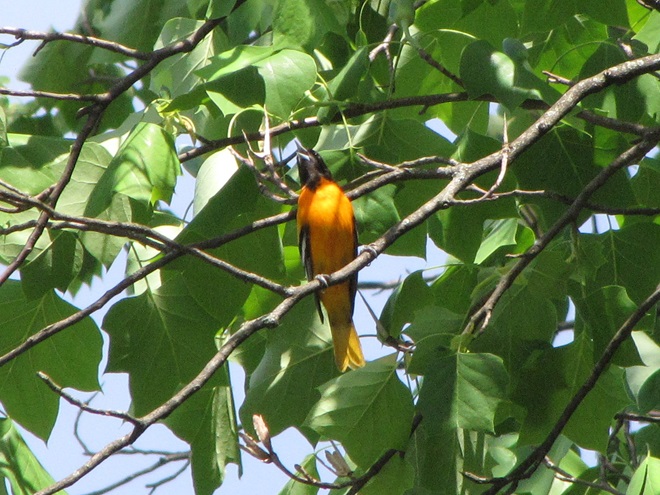
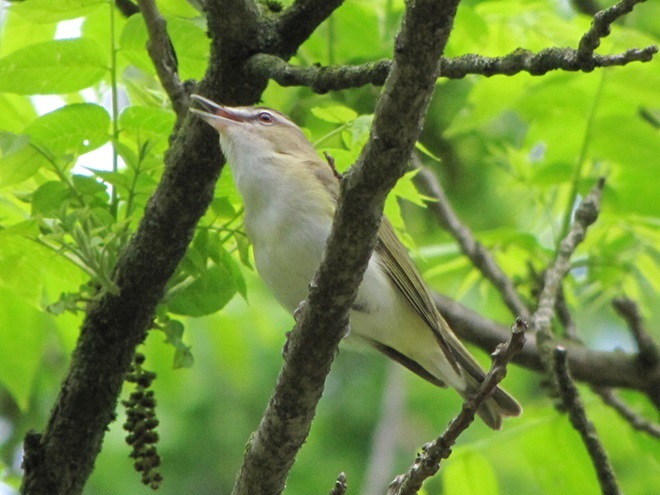
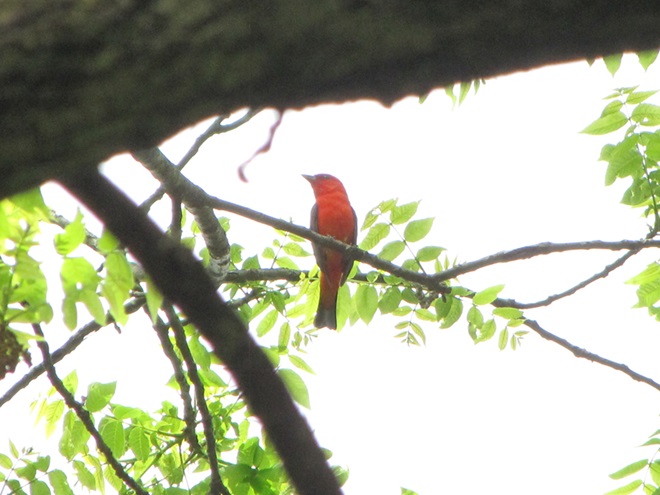
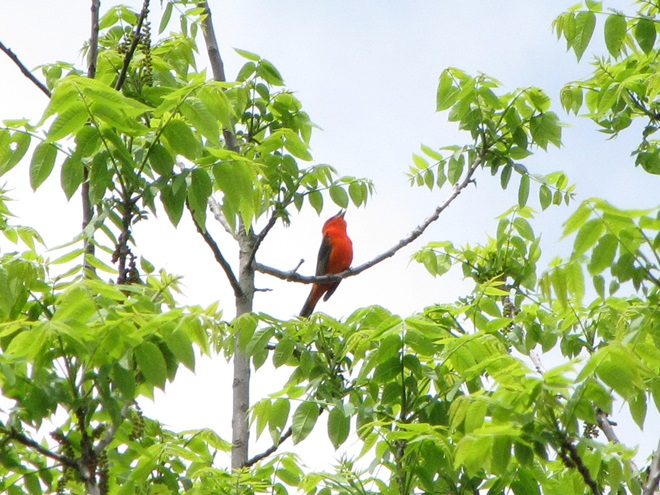
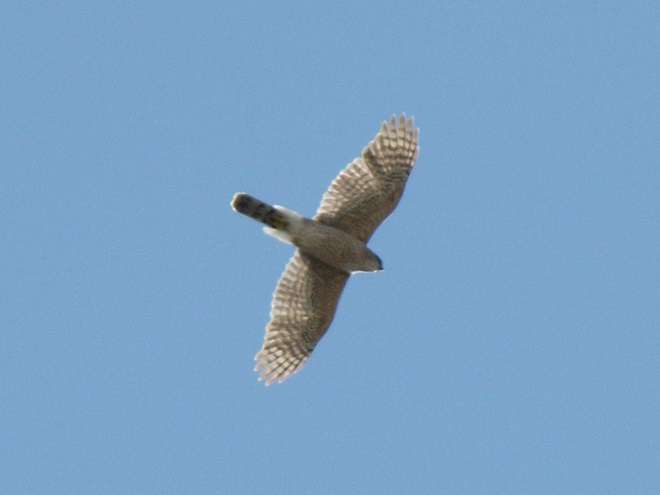
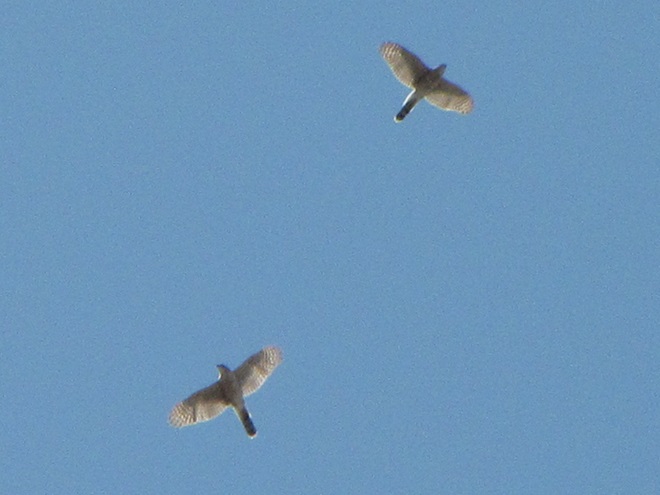
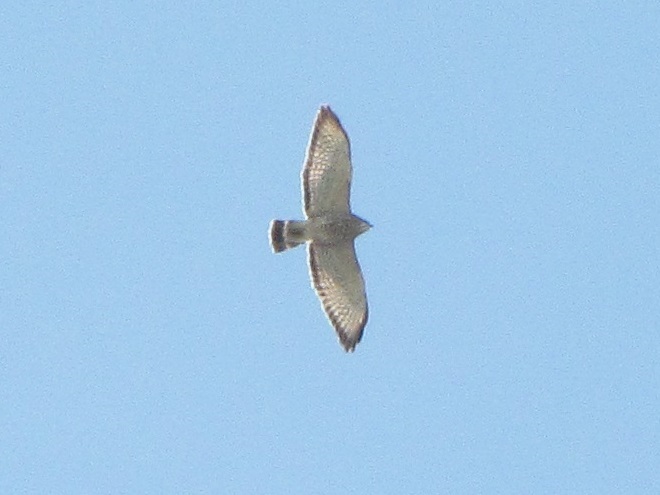
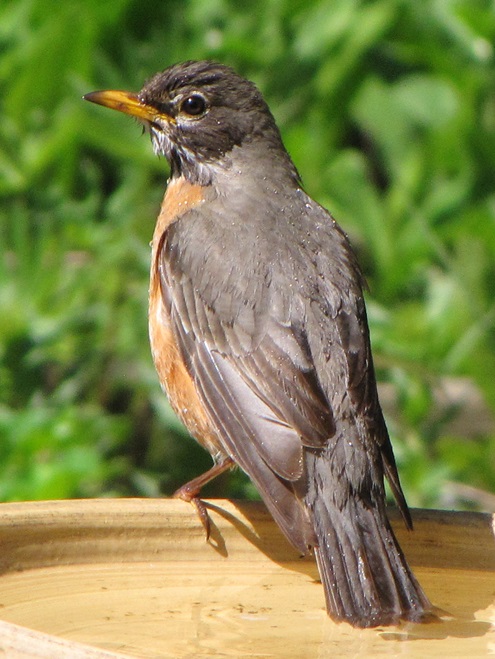
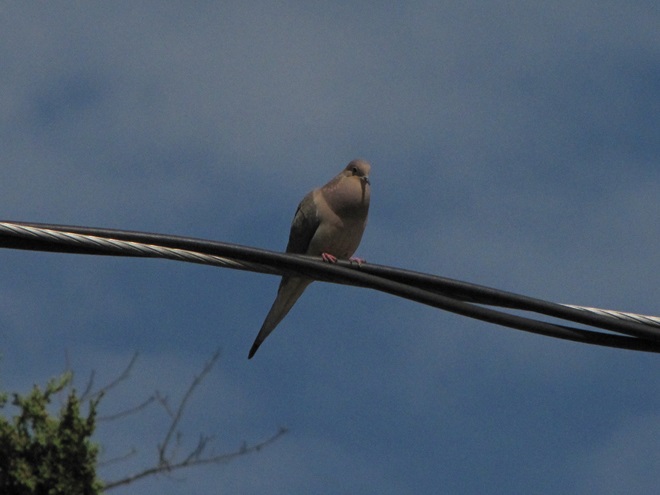
It’s hard to believe, but for almost two months now, sandpipers, plovers, and terns have been filtering south through the Lower Susquehanna River Watershed on their way to the Atlantic coastline as they complete the first leg of their long autumn migration—a journey that will take some species all the way to the far reaches of the South American continent for winter.
Migrating Caspian Terns and an Osprey take a break on a lower Susquehanna valley gravel bar.
As August draws to a close, these early birds are being joined by widespread nocturnal flights of Neotropical migrants—those species, primarily songbirds, on their way to wintering grounds which lie exclusively south of the continental United States.
To catch a glimpse of these night-flying avians, your best bet may be to position yourself on the crest of a ridge or along a linear break in the forest such as a utility right-of-way where waves of warblers, vireos, flycatchers, and other Neotropical passerines sometimes feed on invertebrates after making landfall at daybreak. Pick a place where the trees are bathed in the warm light of the rising sun and be there by 7 A.M. E.D.T. The activity can be tremendous, but it usually ends between 8 and 9.
One of more than half a dozen Red-eyed Vireos seen during a daybreak fallout at Second Mountain Hawkwatch in Lebanon County earlier this week.During sunrise, a just-arrived Blackburnian Warbler checks the foliage of a ridgetop Red Maple for insects.A Least Flycatcher quietly searches the shrubby growth along the forest edge for a morning meal.A Black-and-white Warbler in the first hour of sunlight after a big nocturnal flight.A Scarlet Tanager having a look around. This individual and other migrating birds may be here for a few days before moving on.A Black-throated Green Warbler in a treetop glowing with the light of sunrise.A hungry Chestnut-sided Warbler inspects limbs, leaves, and twigs looking for nourishment after an all-night flight.
Diurnal migrants, birds that make their movements during the daylight hours, are ramping up their flights now as well. Broad-winged Hawks, Bald Eagles, and falcons are currently being tallied at hawk-counting stations throughout the northeast. Many of those lookouts are seeing Ruby-throated Hummingbirds, swallows, and other daytime migrants too.
While many diurnal migrants gather in flocks as a method of defense against predators, Broad-winged Hawks congregate as a reconnaissance measure. Not waiting around for strong autumn winds to be deflected upwards by the region’s numerous ridges, these Neotropical birds migrate early enough in the season to rely upon thermal updrafts from sun-heated surfaces to provide lift, gain altitude, and save energy during their long trip. By traveling in groups, there are collectively able to better locate and utilize rising air columns as they progress southwesterly along their route. Broad-winged Hawks travel to Central and South America for winter. Their numbers in the Lower Susquehanna River Watershed will peak during the third week of September.Many American Kestrels transit our area in August and early September, a time coinciding with flights of migratory dragonflies, insects upon which they and another falcon, the Merlin, frequently prey.Chimney Swifts are fast-flying diurnal migrants. They are beginning to congregate into larger groups in preparation for their departure. Some are already on the move.Cedar Waxwings are currently being seen in roving flocks throughout the region. Their migration is less of a point-to-point flight and more of a continuous wandering in search of berries and other wild foods.Not everyone is yet ready to go. American Goldfinches are still in the midst of their nesting cycle and won’t begin leaving until the young are on their own and colorful adult males like this one are beginning to molt into their drab winter plumage.
Autumn migration flights are an ever-changing process, with different species peaking at different times throughout the season. In these months just after the nesting season, each of these species is more numerous than at any other time of the year. And of course, the more often we as observers get out and have a look, the more of them we’ll see.
Be certain to click the “Birds” tab at the top of this page for a photo guide to the species you’re likely to see passing through the lower Susquehanna valley this fall. Nearly four months of autumn hawk migration flights lie ahead, so don’t forget to click the “Hawkwatcher’s Helper: Identifying Bald Eagles and other Diurnal Raptors” tab to find a hawk-counting station near you, then stop by for a visit or two. See you there!
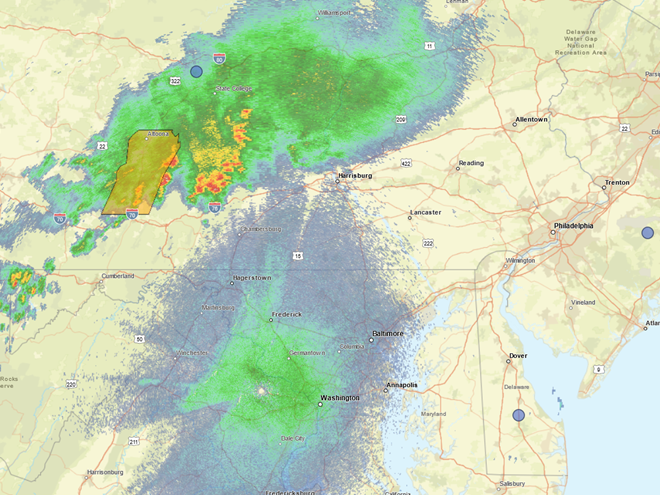
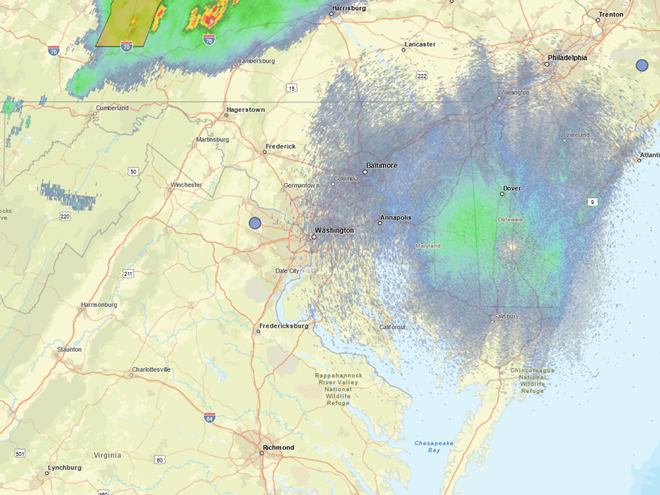
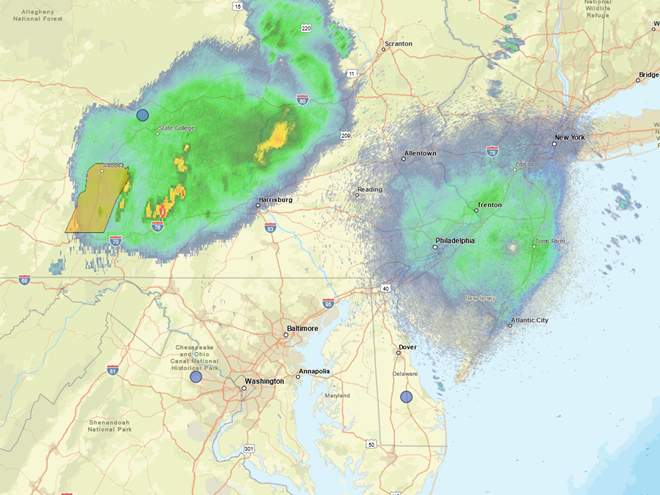
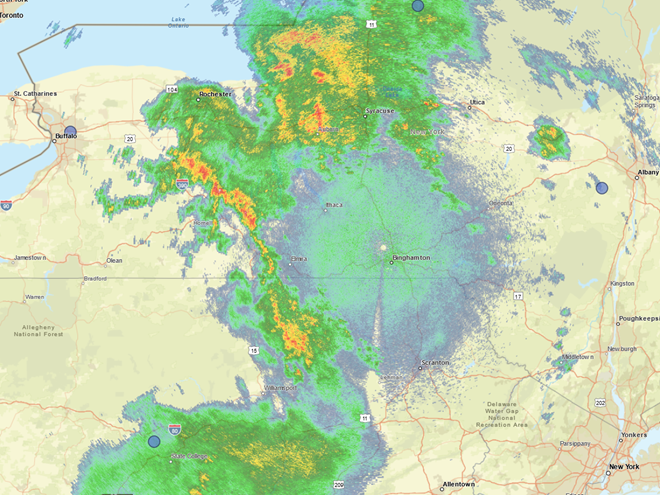
A large nightfall liftoff of nocturnal migrating birds is shown here on this evening’s State College, Pennsylvania, Doppler Radar base velocity loop. Returns indicating birds moving toward the radar site (the white dot in the center of the color mass) are shown in green, and those indicating birds moving away are indicated in red. This is a big flight headed generally in a south-southwest direction. (NOAA/National Weather Service Doppler Radar image)
The deluge of rain that soaked the lower Susquehanna watershed during last week is now just a memory. Streams to the west of the river, where the flooding courtesy of the remnants of Hurricane Debby was most severe, have reached their crest and receded. Sliding away toward the Chesapeake and Atlantic is all that runoff, laden with a brew of pollutants including but not limited to: agricultural nutrients, sediment, petroleum products, sewage, lawn chemicals, tires, dog poop, and all that litter—paper, plastics, glass, Styrofoam, and more. For aquatic organisms including our freshwater fish, these floods, particularly when they occur in summer, can compound the effects of the numerous stressors that already limit their ability to live, thrive, and reproduce.
(Environmental Protection Agency image)
One of those preexisting stressors, high water temperature, can be either intensified or relieved by summertime precipitation. Runoff from forested or other densely vegetated ground normally has little impact on stream temperature. But segments of waterways receiving significant volumes of runoff from areas of sun-exposed impervious ground will usually see increases during at least the early stages of a rain event. Fortunately, projects implemented to address the negative impacts of stormwater flow and stream impairment can often have the additional benefit of helping to attenuate sudden rises in stream temperature.
While a row of trees along a creek can help provide protection from the thermal impact of the sun, a vegetative riparian buffer must be much wider to be effective for absorbing, cooling, and treating runoff from fields, lawns, and paved surfaces. This buffer is too narrow to prevent surface runoff from polluting the water.
Of the fishes inhabiting the Lower Susquehanna River Watershed’s temperate streams, the least tolerant of summer warming are the trouts and sculpins—species often described as “coldwater fishes”. Coldwater fishes require water temperatures below 70° Fahrenheit to thrive and reproduce. The optimal temperature range is 50° to 65° F. In the lower Susquehanna valley, few streams are able to sustain trouts and sculpins through the summer months—largely due to the effects of warm stormwater runoff and other forms of impairment.
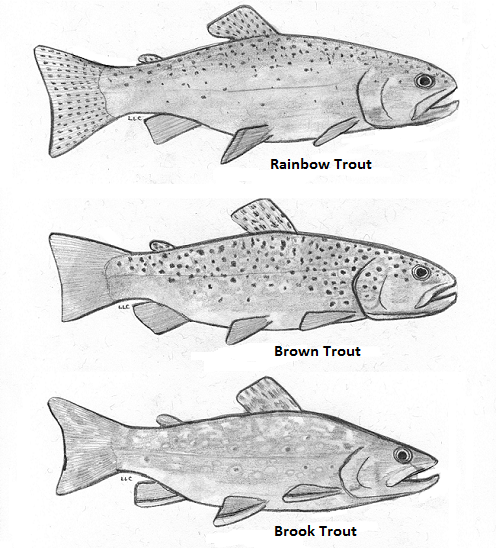
Sculpins, including the Blue Ridge Sculpin (Cottus caeruleomentum) seen here, are native coldwater fishes which, during the 11,000 years since the last glacial maximum, have had the availability of their favored habitat sharply reduced by warming water temperatures and a rising Atlantic. During this interval, seawater has inundated the path of the “Late” Pleistocene lower Susquehanna which passed through the section of flooded river watershed we now call Chesapeake Bay and continued across the continental shelf to what was, during the glacial maximum, the river’s mouth at Norfolk Canyon. Today, cut off from neighboring drainage basins, sculpins survive exclusively in cold headwaters, and only in those where human alterations including pollution, dams, channelization, and reduced base flow haven’t yet eliminated their isolated populations. Formerly believed to be composed of two widespread North American species, the Slimy Sculpin (Cottus cognatus) and the Mottled Sculpin (Cottus bairdii), study in recent decades is discovering that sculpin populations in the present-day lower Susquehanna and neighboring Potomac headwaters consist of at least three newly delineated species: Blue Ridge Sculpin, Potomac Sculpin (Cottus gerardi), and Checkered Sculpin (Cottus sp.), the latter an as yet undescribed species found only in the refugium of limestone springs in the Potomac drainage in West Virginia; Frederick and Washington Counties, Maryland; and Franklin County, Pennsylvania. (United States Geological Survey image)Stare at this for a little while, you’ll figure it out…………More than 11,000 years ago, during the last glacial maximum, when sea level was about 275 feet lower than it is today, there was no Chesapeake Bay, just a great Susquehanna River that flowed to the edge of the continental shelf and its mouth at Norfolk Canyon. It was a river draining taiga forests of pine, spruce , and fir, and it carried along the waters of all the present-day bay’s tributaries and more. The section of the river’s watershed we presently call the lower Susquehanna was, at the time, the upper Susquehanna watershed. Brook Trout and sculpins had the run of the river and its tributaries back then. And the entire watershed was a coldwater fishery, with limestone and other groundwater springs providing not refuge from summer heat, but a place to escape freezing water. (United States Geological Survey base image)Norfolk Canyon, the mouth of the Susquehanna River during the most recent glacial maximum, now lies more than 275 feet below the surface of the ocean and plunges to more than a mile in depth along the finger of out wash from the gorge. (United States Geological Survey image)Tens of thousands of trout are raised in state-operated and cooperative nurseries for stocking throughout the lower Susquehanna valley. These rearing facilities are located on spring-fed headwaters with sufficient flow to assure cold temperatures year round. While the Rainbow Trout and Brown Trout (Salmo trutta) are the most commonly stocked species, the Brook Trout (Salvelinus fontinalis) is the only one native to American waters. It is the least tolerant of stream warming and still reproduces in the wild only in a few pristine headwaters streams in the region. During spring, all three of these species have been observed on rare occasions entering the fish lift facilities at the hydroelectric dams on the river, presumably returning to the Susquehanna as sea-run trout.
Coldwater fishes are generally found in small spring-fed creeks and headwaters runs. Where stream gradient, substrate, dissolved oxygen, and other parameters are favorable, some species may be tolerant of water warmer than the optimal values. In other words, these temperature classifications are not set in stone and nobody ever explained ichthyology to a fish, so there are exceptions. The Brown Trout for example is sometimes listed as a “coldwater transition fish”, able to survive and reproduce in waters where stream quality is exceptionally good but the temperature may periodically reach the mid-seventies.
The Eastern Blacknose Dace is sometimes classified as a “coldwater transition fish”. It can be found in headwaters runs as well as in creeks with good water quality.The Longnose Dace is another “coldwater transition fish” known only from clear, clean, flowing waters.
More tolerant of summer heat than the trouts, sculpins, and daces are the “coolwater fishes”—species able to feed, grow, and reproduce in streams with a temperature of less than 80° F, but higher than 60° F. Coolwater fishes thrive in creeks and rivers that hover in the 65° to 70° F range during summer.
The Creek Chub is a familiar species of “coolwater fish” seldom found remaining in waters exceeding 80 degrees Fahrenheit.The Yellow Perch (Perca flavescens) was perhaps the most frequently targeted coolwater “gamefish” in the Lower Susquehanna River Watershed prior to the introduction of the Northern Pike (Esox lucius) and Muskellunge (Esox masquinongy). Today’s prevalence of warmwater streams and the dozens of species of non-native predatory fishes now naturalized within them have left the Yellow Perch populations greatly reduced and all but forgotten by anglers. Out of sight, out of mind. (National Park Service image)
What are the causes of modern-day reductions in coldwater and coolwater fish habitats in the lower Susquehanna River and its hundreds of miles of tributaries? To answer that, let’s take a look at the atmospheric, cosmic, and hydrologic processes that impact water temperature. Technically, these processes could be measured as heat flux—the rate of heat energy transfer per unit area per unit time, frequently expressed as watts per meter squared (W/m²). Without getting too technical, we’ll just take a look at the practical impact these processes have on stream temperatures.
HEAT FLUX PROCESSES IN A SEGMENT OF STREAM
Heat Flux Processes on Stream and River Segments. These processes could be measured as heat flux—the rate of heat energy transfer per unit area per unit time. (Environmental Protection Agency image)
INCOMING TEMPERATURE AND FLOW—The baseline temperature of stream water entering a given segment of waterway is obviously the chief factor determining its temperature when exiting that segment. Incoming temperature and flow also determine the water’s susceptibility to heat absorption or loss while transiting the segment. Lower flows may subject the given volume of water to a greater loss or gain of heat energy during the time needed to pass through the segment than the same volume at a higher flow. Lower flows may also reduce stream velocity and extend a given volume of water’s exposure time to the exchange of heat energy while moving through the segment. Generally speaking…
…the higher the stream flow, the less a given volume of that stream’s water may be impacted by the effects of the heat flux processes within the segment.
…the lower the stream flow, the more a given volume of that stream’s water may be impacted by the effects of the heat flux processes within that segment.
…the temperature and flow rate of precipitation entering the segment are factors that determine the impact of its heat energy transfer to or from a given volume of the stream’s waters.
…the temperature and flow rate of runoff and point-source discharges entering the segment are factors that determine the impact of their heat energy transfer to or from a given volume of the stream’s waters.
Stormwater from impervious surfaces including roads, parking lots, roofs, and lawns quickly impacts temperatures in small creeks. Channelized streams are availed few of the positive attributes provided by many of the heat flux processes we’re about to see. They therefore suffer from severe impairment and are exposed to temperature extremes that few aquatic organisms can survive. Runoff from sun-heated pavement during a summer thunderstorm can often exceed 100 degrees Fahrenheit and can, at sufficient flow rate, quickly raise the temperature of a small stream to well over 90 degrees.Stormwater runoff not only poses a thermal threat to waterways, its a significant source of a wide variety of pollutants.
GROUNDWATER INPUT—In streams connected to the aquifer, the temperature in a flowing segment can be impacted by the influx of cold groundwater. With temperatures ranging from about 52° to 60° Fahrenheit, groundwater will absorb heat from the stream in summer, and warm it in the winter. In warmwater streams, coldwater and coolwater fishes will often seek areas of the substrate where groundwater is entering for use as refugium from the summer heat. Yellow Perch in the lower Susquehanna are known to exhibit this behavior.
Creeks and rivers connected to the aquifer and receiving supplemental flow from it are known as “gaining streams”. These streams frequently feed water into the aquifer as well. (United States Geological Survey image)When flowing through an area experiencing drought or an excessive removal of groundwater (lots of wells, etc.), a waterway can become a “losing stream”, one that surrenders a portion of its flow to recharge the aquifer. Further downstream, the reduced flow can make such a creek or river more susceptible to the effects of heat flux processes. (United States Geological Survey image)Seriously depleted aquifers can lead to a “disconnected stream”. Smaller waterways subjected to these conditions will sometimes lose all their flow to the ground, often causing a catastrophic failure of the aquatic ecosystem supported therein. (United States Geological Survey image)Urban runoff overwhelms this small stream with polluted water than can reach temperatures of 100 degrees or more (left), then lets it high and dry with no baseflow during periods of dry weather (right) as the waterway becomes disconnected from the much-depleted aquifer.Well-designed and properly constructed stormwater retention basins not only recharge groundwater supplies for wells and streams, they can also help prevent thermal pollution in waterways. Planted with native wetland species and allowed to thrive, they can become treasured wildlife islands in otherwise inhospitable environs. The benefits don’t stop there; plants also help sequester nutrients contained in the runoff.
HYPORHEIC EXCHANGE—Related to groundwater input, hyporheic exchange is the slow movement of water through the rock, sand, gravel, and soils composing the streambed, saturated shoreline, shallow aquifer, and connected floodplain of a creek or river. As a heat flux process, hyporheic exchange helps moderate extremes in seasonal water temperatures by conducting energy between the solid materials in the zone and the flowing water. Hyporheic zones are important habitats for many species of aquatic invertebrates and spawning fish. Natural chemical processes within these zones convert ammonia-producing wastes into nitrite, then nitrate, allowing it to be absorbed as food by plants growing in the stream or in the alluvium within the zone. Vegetation removal, channelization, legacy sediments, silt deposits, and man-made walls and dams can negate the benefits of hyporheic exchange.
Exchange of surface and ground water within the hyporheic zone is most directly associated with high-gradient (left) and meandering (right) segments of streams. (United States Geological Survey image)Very common on streams in the lower Susquehanna valley are these accumulations of legacy sediments at the sites of former mill ponds. After the dams were removed, the creeks began eroding their way down through the mire as they tried to reestablish their floodplains and find their native substrate. These trapped waterways are not only cut off from their hyporheic zones, they’re now a major source of nutrient and sediment pollution. Misguided landowners like this one frequently dump fill into these sites to “save their land” and “control flooding”. The fill and materials added to “shore up the banks” do nothing to fix what ails the creek, but instead displace more water to make the impact of flooding even more widespread.Rehabilitation projects that remove legacy sediments help restore hyporheic exchange by reconnecting the stream to its underlying geology, its floodplain, and its wetlands. Rising waters remain in the floodplain where they get a good bio-scrubbing and help replenish the creek and groundwater supply. As the experts say, “floodplains are for flooding.”
ATMOSPHERIC EXCHANGE (CONVECTION, EVAPORATION)—Primarily a process by which a stream loses heat energy and cools its waters, atmospheric exchange is also a means by which a warm air mass can relinquish heat to cooler waters and thus increase their temperature. This phenomenon can be dramatically enhanced when a stream passes through a so-called urban heat island where air temperatures remain warm through the night. Convection, the movement of heat energy through a fluid (liquid or gas), causes warmer, less-dense water to rise to the surface of a stream, particularly where there is minimal turbulence. When the air above is cooler than the water’s surface layer, the stream will conduct heat energy across the water/atmosphere interface causing the warmed air molecules to rise in a convection column. If the atmospheric relative humidity is less than 100%, some surface water will vaporize—a process that expends more of the stream’s heat energy. The rate of convective and evaporative cooling in a given stream segment is directly related to the degree of difference between the water temperature and air temperature, and to the relative humidity in the air mass above the lake, creek, or river. The mechanical action of stream turbulence including rapids, riffles, and falls increases the contact area between air and water to maximize the atmospheric exchange of heat energy. The convective air current we call surface wind has a turbulent wave-producing effect on water that can also maximize atmospheric exchange; think of a cold autumn wind robbing heat energy from a warm lake or river or a hot summer wind imparting its heat to a cooler creek. These exchanges are both conductive in nature (air-to-water/water-to-air) and evaporative, the latter being expedited by the movement of dry air over warm water.
Usually classified as one of the coolwater fishes, the bottom-dwelling Tessellated Darter can thrive in the warmer creeks and in the main stem of the Susquehanna by inhabiting riffles where atmospheric exchange in the form of increased evaporation helps reduce temperatures and convective currents carry the cooler, well-oxygenated water to the streambed.Humans utilize the concept of atmospheric exchange, adopting the phenomena of evaporation and convection to cool the hot waters produced during electric generation and other industrial processes before discharge into a lake or river.
STREAMBED CONDUCTIVE EXCHANGE—In the lower Susquehanna watershed, there may be no better natural example of streambed conductive exchange than the Triassic-Jurassic diabase pothole bedrocks of Conewago Falls on the river at the south end of Three Mile Island.
During sunny days, the massive diabase pothole rocks at Conewago Falls absorb solar (shortwave) radiation, then conduct that heat energy into the flowing water, often continuing to pass the accumulated warmth into the river during the night. On cloudy days, the riverbed collects longwave atmospheric radiation, a heat flux process that yields significantly less energy for conduction into the rapids, riffles, and pools of the falls. During periods of low river flow, the heating effect of streambed conductive exchange can become magnified. Compared to conditions that prevail when torrents of turbid water are rushing through the falls, partially exposed bedrock surrounded by clear water collects radiated energy much more efficiently, then conducts the heat to a greatly reduced volume of passing water. During summer and autumn, this process can create a mix of temperature zones within the falls with warmer water lingering in slow-moving pools and cooler water flowing in the deeper fast-moving channels. Along the falls’ mile-long course, a haven is created for aquatic organisms including warmwater and some coolwater fishes, oft times attracting anglers and a variety of hungry migrating birds as well.Classified as one of our coolwater fishes, the Fallfish finds favorable conditions for feeding, growing, and spawning in the well-oxygenated waters of Conewago Falls.Though the lower Susquehanna River is classified as a warmwater fishery, the Northern Hog Sucker (Hypentelium nigricans), another of our native coolwater fishes, finds the fast-moving waters of Conewago Falls to its liking. Northern Hog Suckers are known to inhabit streams cold enough to host trout. They exhibit remarkable home range fidelity, sometimes spending their entire lives occupying the same several hundred feet of waterway. Northern Hog Suckers are often designated an indicator of good water quality, intolerant of many stream impairment parameters. Their presence in Conewago Falls provides testament to the quality of the warmwater fishery there.An unnatural example. The reduced base flow in this channelized and severely impaired creek has been rendered vulnerable to the negative impacts of several heat flux processes including streambed conductive exchange. Urban stormwater/surfacewater inflow, solar (shortwave) radiation, and heat conducted into the stream from the masonry walls, curbs, and raceway can all conspire to cook aquatic organisms with life-quenching summer water temperatures exceeding 90 degrees Fahrenheit.
SOLAR (SHORTWAVE) RADIATION—The sun provides the energy that fuels the earth’s complex climate. The primary heat flux process that heats our planet is the absorption of solar radiation in the shortwave spectrum, which includes ultraviolet, visible, and infrared frequencies at the upper end of the longwave spectrum. Streams and other bodies of water absorb the greatest amounts of solar (shortwave) radiation during the weeks around summer solstice when the sun at mid-day is closer to zenith than at any other time of the year. However, the heating impact of the radiation may be greatest when the volume of water in the creek, river, or lake is at its minimum for the year—often during early fall.
The rate, measured in watts per square meter, at which solar (shortwave) energy is directly radiated to a given area on the earth’s surface (including streams and other waters) is determined by: solar activity, the angle of the sun in the sky, aspect (slope) of the receiving surface, the opacity of the overlying atmosphere, and the distance of the earth from the sun. The former varies with the year’s seasons, the time of day, and the latitude of a given area. The latter is currently at its annual minimum when earth is at perihelion during the early days of January, thus providing the northern hemisphere with a little bump in radiation during the shortest days of the year when the sun is at its lowest angle in the sky. (NASA image)A varying portion of the solar (shortwave) radiation reaching the earth is reflected back into space by clouds. A smaller share is absorbed by the atmosphere, thus heating it. An even lesser quantity is reflected back into space by water and land. The remainder of the energy is absorbed by the planet’s surfaces, its water and land. (NASA image)
INCIDENT SHORTWAVE RADIATION—Also known as insolation (incoming solar radiation), incident shortwave radiation is the sum total energy of both the direct solar radiation that travels to the earth’s surface unaffected by the atmosphere and the diffuse radiation, waves that have been weakened and scattered by constituents of the atmosphere before reaching the planet’s surface. On a cloudy day, the warming of terrestrial surfaces including streams and other bodies of water is the result of diffuse radiation. On days with any amount of sunshine at all, both direct and diffuse radiation heat our waters and lands.
Warmwater fishes such as the native Pumpkinseed (Lepomis gibbosus) thrive in sun-drenched 70-to-85-degree waters as long as other heat flux processes prevent sudden temperature increases and oxygen depletion.Mowed stream banks offer a waterway no protection from incoming solar (shortwave) radiation, nor terrestrial forms of impairment including nutrient-rich stormwater runoff and silt.
REFLECTED SHORTWAVE RADIATION—known as albedo, reflected solar (shortwave) radiation is energy directed away from the earth’s surface before being absorbed. A surface’s albedo value is basically determined by its color, black having little reflective value, white and silvery surfaces reflecting nearly all solar (shortwave) radiation away. A surface with no reflective properties has an albedo value of 0, while a totally reflective surface has a value of 1. Clean snow with a value of about 0.85 to 0.9 (85% to 90%) is a highly reflective surface; yellow snow isn’t as good. A stream, river, or lake blanketed with ice and snow will absorb very little solar energy and will rely upon other heat flux processes to trigger a melt and thaw. The surface of open water has a varying albedo value determined mostly by the angle of the sun. Solar radiation striking the water’s surface at a low angle is mostly reflected away, while that originating at an angle closer to zenith is more readily absorbed.
To avoid the heating effects of solar (shortwave) and atmospheric longwave radiation, coldwater and coolwater fishes require streams offering protection from full exposure to direct sunlight and cloud cover. Runs and creeks flowing beneath a closed canopy of forest trees are shielded from 25% or more of incoming radiation and are thus able to better maintain thermal stability during the most vulnerable period of the year for temperature-sensitive fishes, May through October.
LONGWAVE RADIATION—Radiation in the longwave spectrum is composed of infrared waves at frequencies lower than those of the shortwave spectrum. Longwave radiation, sometimes just called infrared radiation, is produced by the earth and its atmosphere and is propagated in all directions, day and night. It warms mostly the lower atmosphere which in turn warms the earth’s surface including its waters. Some longwave energy can even be radiated into the waterway from its own streambed—and the stream can return the favor. Other forms of mass surrounding a stream such as a rocky shoreline or a man-made structure such as bridge pier can trade longwave radiation with a waterway. The effect of these latter exchanges is largely trivial and never rivals the heat flux transfer of warm to cold provided by conduction.
Longwave radiation emissions slow as the temperature of the emitting mass decreases, just as they also increase with temperature of the mass. Longwave radiation emissions therefore decrease with altitude along with the temperature of the water vapor, carbon dioxide, methane, and other gases that produce them. As such, the highest reaches of the atmosphere have a greatly reduced capability of shedding longwave radiation into space. At ground level, lakes, creeks, and streams receive their greatest dose of longwave radiation while beneath the cover of low-lying clouds or fog. (NASA image)
CANOPY RADIATION—Trees emit longwave radiation that may have a limited heat flux impact on waterway temperature. This radiation is diffuse, of scattered effect, and scarcely detectable, particularly beneath multilayered dense canopies. Some of the infrared energy transmitted by the tree canopy is radiated skyward as well.
WATER RADIATION—Water, like all earthly matter composed of vibrating molecules, emits longwave radiation. This heat flux process provides an ongoing cooling effect to streams, rivers, lakes, and oceans—warmer ones shedding infrared energy at a faster rate than those that are cold.
Now that we have a basic understanding of the heat flux processes responsible for determining the water temperatures of our creeks and rivers, let’s venture a look at a few graphics from gauge stations on some of the lower Susquehanna’s tributaries equipped with appropriate United States Geological Survey monitoring devices. While the data from each of these stations is clearly noted to be provisional, it can still be used to generate comparative graphics showing basic trends in easy-to-monitor parameters like temperature and stream flow.
Each image is self-labeled and plots stream temperature in degrees Fahrenheit (bold blue) and stream discharge in cubic feet per second (thin blue).
The West Conewago Creek drains much of the Gettysburg Basin’s Triassic redbeds in Adams and northern York Counties in Pennsylvania and includes a small headwaters area in northern Maryland. The gauge station is located just a over a mile upstream from the waterway’s mouth on the Susquehanna just below Conewago Falls. Right through the summer heatwave, this 90-day graph shows a consistent daily pattern of daytime rises in temperature and nighttime cooling. To the right, a rapid cool down can be seen coinciding with two periods of high water, the first from a series of heavy thundershowers, the second from flooding caused by the remnants of Hurricane Debby. Notice that the early August downpours were so heavy that they cooled the hot surface runoff and waterway quickly, without creating a rise in stream temperature at the gauging station. Had this monitoring device been located on a small tributary in an area with an abundance of impervious surfaces, there would probably have been a brief rise in stream temperature prior to the cooldown. (United States Geological Survey image)
The daily oscillations in temperature reflect the influence of several heat flux processes. During the day, solar (shortwave) radiation and convection from summer air, especially those hot south winds, are largely responsible for the daily rises of about 5° F. Longwave radiation has a round-the-clock influence—adding heat to the stream during the day and mostly shedding it at night. Atmospheric exchange including evaporative cooling may help moderate the rise in stream temperatures during the day, and certainly plays a role in bringing them back down after sunset. Along its course this summer, the West Conewago Creek absorbed enough heat to render it a warmwater fishery in the area of the gauging station. The West Conewago is a shallow, low gradient stream over almost its entire course. Its waters move very slowly, thus extending their exposure time to radiated heat flux and reducing the benefit of cooling by atmospheric exchange. Fortunately for bass, catfish, and sunfish, these temperatures are in the ideal range for warmwater fishes to feed, grow, and reproduce—generally over 80° F, and ideally in the 70° to 85° F range. Coolwater fishes though, would not find this stream segment favorable. It was consistently above the 80° F maximum and the 60° to 70° F range preferred by these species. And coldwater fishes, well, they wouldn’t be caught dead in this stream segment. Wait, scratch that—the only way they would be caught in this segment is dead. No trouts or sculpins here.
The Codorus Creek drains primarily the carbonate valleys of York County to the south of the West Conewago watershed. This gauge station is located about a mile upstream from the creek’s mouth on the Susquehanna just below Haldeman Riffles. The graphic pattern is very similar to that of the West Conewago’s: daily heating and cooling cycles and a noticeable drop in stream temperature in early August caused by a day of thundershowers followed by the remnants of Hurricane Debby. (United States Geological Survey image)
Look closely and you’ll notice that although the temperature pattern on this chart closely resembles that of the West Conewago’s, the readings average about 5 degrees cooler. This may seem surprising when one realizes that the Codorus follows a channelized path through the heart of York City and its urbanized suburbs—a heat island of significance to a stream this size. Before that it passes through numerous impoundments where its waters are exposed to the full energy of the sun. The tempering factor for the Codorus is its baseflow. Despite draining a smaller watershed than its neighbor to the north, the Codorus’s baseflow (low flow between periods of rain) was 96 cubic feet per second on August 5th, nearly twice that of the West Conewago (51.1 cubic feet per second on August 5th). Thus, the incoming heat energy was distributed over a greater mass in the Codorus and had a reduced impact on its temperature. Though the Codorus is certainly a warmwater fishery in its lower reaches, coolwater and transitional fishes could probably inhabit its tributaries in segments located closer to groundwater sources without stress. Several streams in its upper reaches are in fact classified as trout-stocked fisheries.
This is a zoomed-in look at the previous graph showing the impact of a rainfall event on the water temperatures in Codorus Creek. Unlike the sharp declines accompanying the deluge of flood waters during the two events in early August, these lesser storms in late June generated just enough runoff to capture heat energy from impervious surfaces and warm the creek, temporarily breaking the daily heating/cooling cycle. Upstream in the immediate area of the runoff, the impact on the stream and/or its tributaries was probably much more dramatic, certainly raising temperatures into the nineties or above. (United States Geological Survey image)Kreutz Creek drains a carbonate bedrock area of York County and flows parallel to the Lincoln Highway (US 30) to enter the Susquehanna at Wrightsville. The gauging station is about one mile upstream from the creek’s mouth. (United States Geological Survey image)
The Kreutz Creek gauge shows temperature patterns similar to those in the West Conewago and Codorus data sets, but notice the lower overall temperature trend and the flow. Kreutz Creek is a much smaller stream than the other two, with a flow averaging less than one tenth that of the West Conewago and about one twentieth of that in the Codorus. And most of the watershed is cropland or urban/suburban space. Yet, the stream remains below 80° F through most of the summer. The saving graces in Kreutz Creek are reduced exposure time and gradient. The waters of Kreutz Creek tumble their way through a small watershed to enter the Susquehanna within twenty-four hours, barely time to go through a single daily heating and cooling cycle. As a result, their is no chance for water to accumulate radiant and convective heat over multiple summer days. The daily oscillations in temperature are less amplified than we find in the previous streams—a swing of about three degrees compared to five. This indicates a better balance between heat flux processes that raise temperature and those that reduce it. Atmospheric exchange in the stream’s riffles, forest cover, and good hyporheic exchange along its course could all be tempering factors in Kreutz Creek. From a temperature perspective, Kreutz Creek provides suitable waters for coolwater fishes.
Muddy Creek drains portions of southern York County through rolling farmland and woodlots. There are no large impoundments or widespread urban impacts in the watershed, which may help explain its slightly lower temperature trends. (United States Geological Survey image)
Muddy Creek is a trout-stocked fishery, but it cannot sustain coldwater species through the summer heat. Though temperatures in Muddy Creek may be suitable for coolwater fishes, silt, nutrients, low dissolved oxygen, and other factors could easily render it strictly a warmwater fishery, inhabited by species tolerant of significant stream impairment.
Chiques Creek drains mostly limestone farmland in northwestern Lancaster County. The gauging station is located near the stream’s mouth on the Susquehanna at Chiques (Chickies) Rock. Oscillations in temperature again resemble the other waterways, but daily highs remain almost entirely below 80 degrees. (United States Geological Survey image)
A significant number of stream segments in the Chiques watershed have been rehabilitated to eliminate intrusion by grazing livestock, cropland runoff, and other sources of impairment. Through partnerships between a local group of watershed volunteers and landowners, one tributary, Donegal Creek, has seen riparian buffers, exclusion fencing, and other water quality and habitat improvements installed along nearly ever inch of its run from Donegal Springs through high-intensity farmland to its mouth on the main stem of the Chiques just above its confluence with the Susquehanna. The improved water quality parameters in the Donegal support native coldwater sculpins and an introduced population of reproducing Brown Trout. While coldwater habitat is limited to the Donegal, the main stem of the Chiques and its largest tributary, the Little Chiques Creek, both provide suitable temperatures for coolwater fishes.
Streams in the Chiques Creek and similar limestone watersheds often pass through areas with significant bedrock formations. Heat flux processes including groundwater input, hyporheic exchange, and streambed conductive exchange can have a greater influence on water temperature along these segments.A breeding condition Eastern Balcknose Dace, one of the coldwater transition fishes found in the Chiques and its tributaries.The Common Shiner (Luxilus cornutus), a fish tolerant of warmwater streams, prefers cool, clear waters for spawning. For protection from late-spring and summer heat, breeding males may seek a section of creek with a streambed inflow of limestone groundwater to defend as their nesting territory.A closeup of the Chiques Creek graph showing what appears to be a little bump in temperature caused by surface runoff during a couple of late-May showers. Stream rehabilitation is an ongoing process and the pressures of land disturbances both old and new present challenges to those who make it their passion to fix the wrongs that have been inflicted upon our local waters. Even the exemplary Donegal Creek faces new threats from urbanization in one of its headwater areas several miles to the northwest of the historic springs. (United States Geological Survey image)Conewago Creek (East) drains primarily Triassic redbed farmlands in Dauphin, Lancaster, and Lebanon Counties. Much of the headwaters area is forested but is experiencing an increasing rate of encroachment by housing and some commercial development. Conewago Creek (East) enters the Susquehanna on the east side of Conewago Falls at Three Mile Island. The watershed is equipped with three U.S.G.S. gauge stations capable of providing temperature data. This first one is located just over a mile upstream of the creek’s mouth. (United States Geological Survey image)
Despite its meander through and receipt of water from high-intensity farmland, the temperature of the lower Conewago (East) maxes out at about 85° F, making it ideal for warmwater fishes and even those species that are often considered coolwater transition fishes like introduced Smallmouth Bass, Rock Bass, Walleye, and native Margined Madtom. This survivable temperature is a testament to the naturally occurring and planted forest buffers along much of the stream’s course, particularly on its main stem. But the Conewago suffers serious baseflow problems compared to other streams we’ve looked at so far. Just prior to the early August storms, flow was well below 10 cubic feet per second for a drainage area of more than fifty square miles. While some of this reduced flow is the result of evaporation, much of it is anthropogenic in origin as the rate of groundwater removal continues to increase and a recent surge in stream withdraws for irrigation reaches its peak during the hottest days of summer.
A juvenile Rock Bass.A juvenile Margined Madtom.A closer look at the Conewago Creek (East) graphic shows the temperature drop associated with a series of thundershowers and the remnants of Hurricane Debby in early August. Despite the baseflow being below five cubic feet per second, the cooling effect of the downpours as measured in the area of the gauge was significant enough to overwhelm any heating of runoff that may have occurred as precipitation drained across hardened soils or man-made impervious surfaces. (United States Geological Survey image)
A little side note—the flow rate on the Conewago at the Falmouth gauge climbed to about 160 cubic feet per second as a result of the remnants of Hurricane Debby while the gauge on the West Conewago at Manchester skyrocketed to about 20,000 cubic feet per second. Although the West Conewago’s watershed (drainage area) is larger than that of the Conewago on the east shore, it’s larger only by a multiple of two or three, not 125. That’s a dramatic difference in rainfall!
The Bellaire monitoring station on Conewago Creek (East) is located on the stream’s main stem just downstream from the mouth of Little Conewago Creek, a tributary with its origins in farmland and woodlots. (United States Geological Survey image)
The temperatures at the Bellaire monitoring station, which is located upstream of the Conewago’s halfway point between its headwaters in Mount Gretna and its mouth, are quite comparable to those at the Falmouth gauge. Although a comparison between these two sets of data indicate a low net increase in heat absorption along the stream’s course between the two points, it also suggests sources of significant warming upstream in the areas between the Bellaire gauge and the headwaters.
Data from the gauge site on the Little Conewago Creek shows a temperature averaging about five degrees cooler than the gauge several miles downstream on the main stem of the Conewago at Bellaire. (United States Geological Survey image)
The waters of the Little Conewago are protected within planted riparian buffers and mature woodland along much of their course to the confluence with the Conewago’s main stem just upstream of Bellaire. This tributary certainly isn’t responsible for raising the temperature of the creek, but is instead probably helping to cool it with what little flow it has.
A stream like the Little Conewago Creek with daily temperatures that remain mostly below 80 degrees and retreat to 75 degrees or less during the night can be suitable for coldwater transition fishes like these juvenile Eastern Blacknose Dace (top) and Longnose Dace.
Though mostly passing through natural and planted forest buffers above its confluence with the Little Conewago, the main stem’s critically low baseflow makes it particularly susceptible to heat flux processes that raise stream temperatures in segments within the two or three large agricultural properties where owners have opted not to participate in partnerships to rehabilitate the waterway. The headwaters area, while largely within Pennsylvania State Game Lands, is interspersed with growing residential communities where potable water is sourced from hundreds of private and community wells—every one of them removing groundwater and contributing to the diminishing baseflow of the creek. Some of that water is discharged into the stream after treatment at the two municipal sewer plants in the upper Conewago. This effluent can become quite warm during processing and may have significant thermal impact when the stream is at a reduced rate of flow. A sizeable headwaters lake is seasonally flooded for recreation in Mount Gretna. Such lakes can function as effective mid-day collectors of solar (shortwave) radiation that both warms the water and expedites atmospheric exchange.
The Conewago Creek (East) Watershed from the Bellaire U.S.G.S. Gauging Station (lower left) upstream to the headwaters in Mount Gretna. (United States Geological Survey image)
Though Conewago Creek (East) is classified as a trout-stocked fishery in its upper reaches in Lebanon County, its low baseflow and susceptibility to warming render it inhospitable to these coldwater fishes by late-spring/early summer.
Despite being considered a warmwater fish, the River Chub (Nocomis micropogon) will ascend streams like the Conewago to seek cooler, gravel-bottomed waters for spawning. Reduced baseflow has probably rendered the stream currently too small for this species on Pennsylvania State Game Lands in Colebrook where this specimen was photographed in 2018.The Golden Shiner, another warmwater fish, often ascends streams to enter cooler water. Juvenile Golden Shiners like this one will move into shallower headwaters not only to seek reduced temperatures, but to escape large predatory fishes as well.Irrigation of agricultural fields using a large portion of the already diminished baseflow in the Conewago Creek (East) just downstream of the Bellaire gauging station. Despite millions of dollars in investment to rehabilitate this Susquehanna valley stream, the riparian buffers and other practices can have little effect when the creek gets sucked down to just a trickle. Low baseflow is a hard nut to crack. It’s best prevented, not corrected.Hammer Creek, a trout-stocked fishery, originates, in part, within Triassic conglomerate in the Furnace Hills of Lebanon County, then flows north into the limestone Lebanon Valley where it picks up significant flow from other tributaries before working its way south back through the Furnace Hills into the limestone farmlands of Lancaster County. From there the stream merges with the Cocalico Creek, then the Conestoga River, and at last the Susquehanna. Note the tremendous daily temperature oscillations on this headwaters stream as it surges about 15 degrees each day before recovering back close to groundwater temperature by sunrise the next day. (United States Geological Survey image)Headwaters of Hammer Creek including Buffalo Springs, a significant source of cold groundwater feeding the western leg of the stream. The large dams on this section that created the Lebanon and Rexmont Reservoirs have been removed. (United States Geological Survey base image)
The removal of two water supply dams on the headwaters of Hammer Creek at Rexmont eliminated a large source of temperature fluctuation on the waterway, but did little to address the stream’s exposure to radiant and convective heat flux processes as it meanders largely unprotected out of the forest cover of Pennsylvania State Game Lands and through high-intensity farmlands in the Lebanon Valley. Moderating the temperature to a large degree is the influx of karst water from Buffalo Springs, located about two miles upstream from this gauging station, and other limestone springs that feed tributaries which enter the Hammer from the east and north. Despite the cold water, the impact of the stream’s nearly total exposure to radiative and other warming heat flux processes can readily be seen in the graphic. Though still a coldwater fishery by temperature standards, it is rather obvious that rapid heating and other forms of impairment await these waters as they continue flowing through segments with few best management practices in place for mitigating pollutants. By the time Hammer Creek passes back through the Furnace Hills and Pennsylvania State Game Lands, it is leaning toward classification as a coolwater fishery with significant accumulations of sediment and nutrients. But this creek has a lot going for it—mainly, sources of cold water. A core group of enthusiastic landowners could begin implementing the best management practices and undertaking the necessary water quality improvement projects that could turn this stream around and make it a coldwater treasure. An organized effort is currently underway to do just that. Visit Trout Unlimited’s Don Fritchey Chapter and Donegal Chapter to learn more. Better yet, join them as a volunteer or cooperating landowner!
The male Creek Chub, one of our coolwater fishes, develops head tubercles and becomes flushed with color during spawning season. Hammer Creek not only provides a home for the Creek Chub, its cold headwaters provide refuge for a population of native Brook Trout too.Like no other example we’ve looked at so far, this closeup of the Hammer Creek graphic shows temperature bumps correlating with the stormwater runoff from early August’s rains. Because the stream flow is small and the precipitation rate was not as great at this location, the effect of heat flux from runoff is more readily apparent. (United States Geological Survey image)Brook Trout adult and juvenile. (United States Fish and Wildlife Service image by Ryan Hagerty)
For coldwater fishes, the thousands of years since the most recent glacial maximum have seen their range slowly contract from nearly the entirety of the once much larger Susquehanna watershed to the headwaters of only our most pristine streams. Through no fault of their own, they had the misfortune of bad timing—humans arrived and found coldwater streams and the groundwater that feeds them to their liking. Some of the later arrivals even built their houses right on top of the best-flowing springs. Today, populations of these fishes in the region we presently call the Lower Susquehanna River Watershed are seriously disconnected and the prospect for survival of these species here is not good. Stream rehabilitation, groundwater management, and better civil planning and land/water stewardship are the only way coldwater fishes, and very possibly coolwater fishes as well, will survive. For some streams like Hammer Creek, it’s not too late to make spectacular things happen. It mostly requires a cadre of citizens, local government, project specialists, and especially stakeholders to step up and be willing to remain focused upon project goals so that the many years of work required to turn a failing stream around can lead to success.
Riparian buffers with fences to exclude livestock can immediately begin improving water quality. With establishment of such vegetative buffers, the effects of stressors that otherwise eliminate coldwater and coolwater fishes from these segments will begin to diminish.Within five to ten years, a riparian buffer planted with native trees is not only helping to reduce nutrient and sediment loads in the stream, it is also shielding the waters from heat flux processes including the solar (shortwave) radiation that raises water temperatures to levels not tolerated by coldwater and coolwater fishes.A well-established riparian buffer.A forested stream.
You’re probably glad this look at heat flux processes in streams has at last come to an end. That’s good, because we’ve got a lot of work to do.
Add one more benefit to the wildflower meadow, it infiltrates stormwater to recharge the aquifer much better than mowed grass. And another related plus, it reduces runoff and its thermal pollution. Besides, you don’t have time to mow grass, because we have work to do!Our native coldwater fishes including the Potomac Sculpin will survive only if we protect and expand the scattered few habitats where they have taken refuge. They have no choice but to live in these seriously threatened places, but we do. So let’s give ’em some space. How ’bout it? (United States Fish and Wildlife Service image by Ryan Hagerty)
In the forests and woodlots of the lower Susquehanna watershed, the Black Gum, also known as the Black Tupelo, is always the first of our native trees to pop with autumn color. Its crimson leaves glow in an otherwise green landscape to help lure hungry birds including waxwings, American Robins, and Pileated Woodpeckers to its soon-to-be-ripe berries. The seeds contained in the fruit are thus well-distributed as a by-product of this avian feast. While not among the most massive of our trees, the Black Gum can live for over five hundred years, an age not exceeded by any other non-clonal indigenous flowering plant.
Do you recall our “Photo of the Day” from seven months ago…
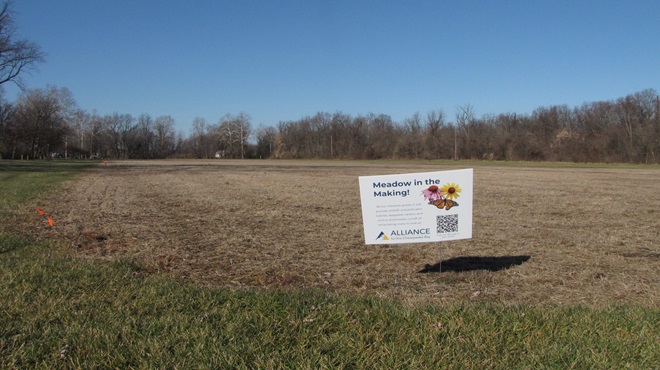
Here’s something to look forward to in the new year. The good citizens of East Donegal Township in Lancaster County have partnered with Alliance for the Chesapeake Bay to establish an extensive wildflower meadow on what had been a mowed field of turf grass at Riverside Park in the Susquehanna floodplain near Marietta. As the photo shows, the lawn plants have been eliminated in preparation for seeding with a diverse assortment of native grasses and wildflowers to provide habitat for birds and pollinators including butterflies, bees, and other insects. Once established, the meadow’s extensive vegetative growth will help reduce stormwater runoff by better infiltrating rainfall to recharge the aquifer. During flood events, the plantings will provide soil stabilization and increase the ability of the acreage to uptake nutrients, thus reducing the negative impact of major storms on the quality of water in the river and in Chesapeake Bay. Check the project’s progress by stopping by from time to time in 2024!
Well, here’s what that site looks like today…
The wildflowers, thousands of them, are now in bloom!Black-eyed Susan and Blue Vervain (Verbena hastata) dominate the assortment currently in flower.
And there are pollinating insects galore, most notably butterflies…
A Cabbage White collecting nectar on Blue Vervain.A Clouded or Orange Sulphur among the grasses in the meadow.A Silver-spotted Skipper.The Least Skipper is our tiniest butterfly.The Little Glassywing (Vernia verna), this one feeding on vervain nectar, deposits its eggs on Purpletop grass, which then functions as the host plant for this butterfly’s larvae.A Summer Azure (Celastrina neglecta) feeding on the nectar of a Black-eyed Susan.A Common Buckeye on a “Gloriosa Daisy”, a showy, large-flowered cultivar of Black-eyed Susan.A Red-winged Blackbird with a caterpillar found among the meadow’s lush growth.An Eastern Tiger Swallowtail on Blue Vervain. Nearby Yellow (Tulip) Poplars and other trees serve as host plants for this butterfly’s larvae.The black morph of the Eastern Tiger Swallowtail shows subdued shading in the wings that closely resembles the brilliant color patterns of the more familiar yellow form.The Sachem, this one visiting a Black-eyed Susan, is a variable species with a range that normally lies south of the 40th parallel, the line of latitude that intersects the Susquehanna in the area of the Conejohela Flats at Washington Boro.A Sachem visiting the blooms of Oxeye sunflower. During recent weeks, scorching winds from the south and southwest have transported an abundance of these vagrant skippers into the lower Susquehanna valley and beyond.A male Sachem approaching the bloom of a “Gloriosa Daisy”. Miles north of the 40th parallel, wandering Sachems are currently the most numerous of the butterflies at the Riverfront Park wildflower meadow.Here and there among the meadow’s plantings we noticed one of our favorites starting to flower, the Partridge Pea.Partridge Pea happens to be a host plant for another vagrant from the south, the big, lime-yellow Cloudless Sulphur. We saw at least half a dozen patrolling the meadow.The stars of the show are the Zebra Swallowtails, gorgeous butterflies that rely on stands of native Common Paw-paw trees in the river floodplain to host their eggs and larvae.The red-white-and-blue underside of a Zebra Swallowtail.WOW!
Why on earth would anyone waste their time, energy, and money mowing grass when they could have this? Won’t you please consider committing graminicide this fall? That’s right, kill that lawn—at least the majority of it. Then visit the Ernst Seed website, buy some “Native Northeast Wildlflower Mix” and/or other blends, and get your meadow planted in time for the 2025 growing season. Just think of all the new kinds of native plants and animals you’ll be seeing. It could change your life as well as theirs.
A Snowberry Clearwing (Hemaris diffinis), more commonly known as a hummingbird moth, visits the flowers of Blue Vervain in the Riverfront Park wildflower meadow.
By mid-summer, many birds exhibit less-than-stellar appearance. Juveniles have just left the nest and although their plumage is completely fresh, it may look drab compared to the feathers the bird will sport upon reaching adulthood. Their parents, having completed the stressful tasks of building nests and raising a new generation, now enter a state of molt to replace all or some of their adornment. Now is a fortuitous time for these mature birds to exchange old feathers for new—food is plentiful and the need to keep warm and fly long distances is at a minimum. Besides, they really don’t have to impress anyone with their beauty during summer vacation.
Following the break in the heat wave during recent days, activity at the headquarters feeders has increased significantly. We took notice that many of our guests are looking a little rough around the edges.
Having started their nesting cycle in February, most Mourning Doves including this adult male are nearly done molting by mid-summer. They are the exception.This juvenile American Robin has acquired its first full set of flight feathers and will, in coming weeks, begin replacing the spotted plumage to more closely resemble an adult bird.This adult male Northern Cardinal in worn plumage is still tending to the needs of fledged young, but is nevertheless in the early stages of molt.This juvenile Northern Cardinal will not only acquire brighter red feathers as an adult, but its bill will turn red as well.This actively molting Carolina Chickadee shows pin feathers in the wings and is balding rather profusely.This Blue Jay has gone beyond having its feathers ruffled, but it’ll be good as new by the time autumn migration rolls around in September.This drab brown bird is a juvenile European Starling. While its first set of feathers looks complete, it has a big problem. It lost its left eye and has trouble keeping up with a flock of its peers that have been roaming the area. A predator will quickly notice this young bird’s vulnerabilities.A juvenile Downy Woodpecker in a dull, streaky, almost dirty-looking, first plumage. Unlike the adult male which has a red patch on the back of its head, the juvenile Downy Woodpecker has a mottled red crown.An adult female Downy Woodpecker beginning to molt its heavily worn, year-old feathers.Mid-summer is prime time for discovering post-breeding wanders. These are birds that spend the time between the end of nesting season and the fall migration roaming the countryside and sometimes visiting areas outside their more traditional habitats and/or native ranges. For the past two days, this bird, a Hairy Woodpecker, has strayed from a mature woodland into urban environs to visit the garden at susquehannawildlife.net headquarters. It’s our first record of one here.Not yet a lot of molt among the American Goldfinches. Why? Well, they’re late-season breeders and are only now in the midst of their nesting cycle. They begin shedding feathers and losing that brilliant color sometime in late August, just as the last of this year’s young are being fledged.
Think of all the opportunities mid-summer offers. It’s a good time to get outdoors to have a look at all the young animals that are exploring their world for the first time. Birds and other wildlife are at their greatest abundance of the year right now, so your chance to see new things is at its peak. And the phenomenon of post-breeding wandering always raises the possibility of a surprise or two—maybe even a rarity. Be cool and good luck!
Similar in appearance to the invasive Brown Marmorated Stink Bug, the Western Conifer Seed Bug (Leptoglossus occidentalis) is a seldom-noticed denizen of pines. During the 1950s, their range started expanding from the American west into the eastern states. Like the stink bug, the Western Conifer Seed Bug emits a buzzing sound in flight and is capable of releasing a nasty-smelling compound from scent glands when harassed. They feed on sap from developing pine cones, often causing deformities to the seeds, but posing no real harm to the trees. The Western Conifer Seed Bug causes greatest consternation during the fall when, like the invasive stink bugs, it gathers in numbers and attempts to enter homes to spend the winter. Those that get inside are mostly just an annoyance, but there have been reports of plumbing leaks caused by individual insects piercing PEX plastic water tubing with their mouths.
Where does all the time go? Already in 2024, half the calendar is in the trash and the gasoline and gunpowder gang’s biggest holiday of the year is upon us. Instead of bringing you the memory-making odors of quick-burning sulfur or the noise and multi-faceted irritations that revved-up combustion engines bring, we thought it best to provide our readers with a taste of history for this Fourth of July. Join us, won’t you, for a look back at one of the many events that shaped the landscape of our present-day world.
The early morning’s sun had just begun bathing the verdant gardens of the olde towne centre with a warm glowing light. Birds were singing and the local folk were beginning to stir in preparation for their day’s chores. Then, suddenly, something was stirring afoot.
The great battle had commenced. Within minutes, thousands of colonists spilled onto the pavement to join the melee and defend their homes.
There’s no towne crier spreading the word on horseback. Sensing aggression from a neighboring colony, a worker Pavement Ant (Tetramorium immigrans) functioning as a sentry issues the alert. The aroma of pheromones produced by the sentry warns of danger and calls other workers to drop what their doing and instead respond to defend the nest.Engaged in a dispute over territory, two colonies of Pavement Ants clash. Though native to Europe, there is no evidence of Napoleonic tactics in their warfare. All maneuver seems to be by chance.The workers doing the fighting are the sterile daughters of the one queen in each colony. In addition to defending the nest, they do all the foraging and care for the queen’s eggs and young. The young in each nest are its workers’ sisters and will include one or more new fertile queens. These new queens, along with fertile males (brothers of the workers), develop wings and fly away to mate. After mating, a young queen begins a new colony, excavating her own nest wherein she raises a first brood of workers to tend her forthcoming generation of eggs and young. As the new colony grows, the queen’s workers expand the size of the underground nest by carrying particles of soil to the surface, depositing them around the entrance as telltale mounds.A winged male Pavement Ant gets caught in the fury of combat. His primary role in life is to make a nuptial flight and mate with a queen to start a new colony.
The fighting was at close quarters—face to face with dominant soldiers sparing no effort to prevail in the struggle.
Worker Pavement Ants, all females, assume the role of soldiers to defend their nest, their colony, and their queen.
After about an hour had passed, the tide had turned and the fighting mass drifted to the south of the battle’s starting point. The aggressors had been repelled. The dispute was resolved—at least for a little while.
Thousands of Pavement Ants at the high-water mark of their desperate struggle. It was a fierce, jaw-to-jaw contest to tear one’s opponent to pieces.A winged Pavement Ant, probably a male and not a queen, falls victim to the fighting (upper right). This casualty will not take part in a nuptial flight and will not contribute its colony’s DNA to a new population of ants.The tide turns and the invaders from the south are pushed back in the direction from whence they came. Within minutes, the soldiers transitioned back to being workers. No visual signs of the fight remained; casualties were carried away.
It wasn’t a struggle for independence. And it wasn’t a fight for liberty. For the sterile Pavement Ant worker, all the exertion and all the hazard of assuming the role of a soldier had but one purpose—to raise her sisters and become an aunt. Long live the queen.
Resilient to the pressures of flooding, ice scour, drought, and oft times really poor water quality, Water Willow (Dianthera americana, formerly Justicia americana) is the most common herbaceous plant on the Susquehanna’s non-forested alluvial islands. Yet, few know this native wildflower by name or reputation.
Pure stands of emergent Water Willow endure at times brutal conditions on non-forested islands in the Susquenanna.Alluvial deposits of sand, clay, gravel, and silt create ideal substrate for mats of Water Willow along shorelines of the Susquehanna and its larger tributaries. Provided the loose substrate remains moist, this emergent thrives even when water levels retreat during periods of dry weather. The woody plant in the background, the native Black Willow (Salix nigra), shares similar soil preferences but is found growing on slightly higher ground as a non-emergent tree or shrub. It is a member of the willow family (Salicaceae).In bloom now, the orchid-like flower of the Water Willow is a quick giveaway that it is not a close relative of the willow trees but is instead a member of the acanthus family (Acanthaceae) and is allied with the genus Ruellia, the wild petunias.
The spring of 2024 has been very kind to our beds of Water Willow. Rainfall in the Susquehanna watershed has been frequent enough to maintain river levels just high enough to keep the roots of the plants wet. During the interludes in storm activity, dry spells have rolled back any threat of flooding on the river’s main stem, thus eliminating chances of submerging the plants in muddy water and preventing the sun from keeping them warm, happy, and flowering early. Thundershowers throughout the basin earlier this week have now raised the river a few inches to inundate the base of the plants and make mats of Water Willow favorable places for newly hatched fry and other young fish to take refuge while they grow. Here’s a look…
The Spottail Shiner (Notropis hudsonius) is a common native minnow of the Susquehanna. This juvenile was found among several dozen small fish taking refuge in the cover of Water Willow below Conewago Falls.The Mimic Shiner (Notropis volucellus) is generally regarded to be a native transplant from the Mississippi drainage that has become established in the Susquehanna and many of its tributaries, possibly after introduction by way of bait buckets. However, the fish tends to be very fragile and dies quickly upon handling, so its use and transport as a bait species may be impractical. The Mimic Shiner is very common in around Conewago Falls.A juvenile Mimic Shiner less than one inch in length found among flooded Water Willow below Conewago Falls earlier this week.One of about a dozen juvenile Quillbacks (Carpiodes cyprinus) found in Water Willow just below Conewago Falls. For spawning, local populations of this compact native species of carpsucker favor the gravel-bottomed pools among the Jurassic-Triassic boulders of the falls’ pothole rocks. Probably hatched within the last eight weeks, this specimen was just one inch long.As summer progresses, stands of emergent Water Willow begin to expand their size by sending out rhizomes. Increasing numbers of small fish like this Spotfin/Satinfin Shiner (Cyprinella species) concentrate in the cover of the thickening vegetation.The importance of these patches of emergent wildflowers (sounds weird, doesn’t it?) is demonstrated by the numbers of fish gathered within their underwater forest of stems and leaves by summertime.To protect them from burial by silt and to prevent them from being swept away by current, spawning Spotfin/Satinfin Shiners deposit their eggs in crevices of submerged rocks and wood, often in or near mats of Water Willow. Males guard the eggs until hatching. The fry must then take shelter among boulders, cobble, and plant cover. Note the breeding-condition male in the upper right.Panfish like this non-native Green Sunfish (Lepomis cyanellus) will often choose nesting sites in deeper water adjacent to beds of Water Willow, particularly if submerged growth like this Water Stargrass adds to the availability of cover for their young after hatching.Smallmouth Bass gather in a pool adjacent to a Water Willow-covered island. These non-native predators rely on beds of these indigenous plants to provide habitat for their young, then, after spawning, lurk in the waters surrounding them to ambush less-than-vigilant minnows and other victims.
By now you’ve come to appreciate the importance of Water Willow to the sustainability of our populations of fish and other aquatic life. Like similar habitat features that reduce sediment runoff and nutrient pollution, undisturbed stands of terrestrial, emergent, and submerged native plant species are essential to the viability of our freshwater food webs.
Love is in the Air- The conspicuously large Clubbed Mydas Fly (Mydas clavatus) is a harmless mimic of the spider wasps (Pompilidae). They carry their masquerade to the extreme with bold behavior that includes pumping of their abdomen to simulate an ability to sting. Adults visit flowers to feed on pollen and nectar while the larvae are predatory, relying on a diet of scarab beetles (Scarabaeidae) which they find crawling within the dead and rotting wood where they reside. When mating, adults fly around in copula, reminding one of “love bugs” and other members of the fly family Bibionidae, the march flies. This mating pair was photographed along the Susquehanna at Conewago Falls.
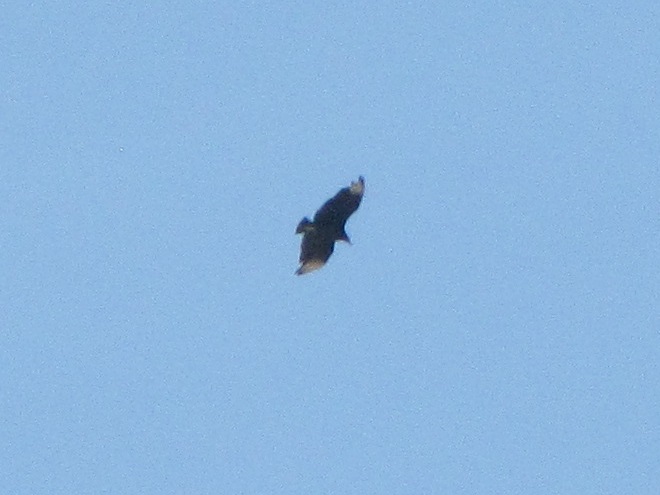
…but the stench would have been a lot worse without our friendly neighborhood scavengers around to clean up our mess. Turkey Vultures thrive in scorching temperatures, riding thermal updrafts to patrol the countryside for roadkill victims like this unfortunate Woodchuck.
Check out these glistening gems—mating damselflies on a late spring afternoon.
It’s two pairs of Powdered Dancers, males clasping ovipositing females, a striped blue form female on the left and a brown form female on the right.A male Stream Bluet (Enallagma exsulans) perched on a grass stem in a vegetated buffer along a rehabilitated creek.A pair of Stream Bluets, male clasping female.A male Ebony Jewelwing (Calopteryx maculata) looking for a mate.There she is, the shy female Ebony Jewelwing among the shelter of some streamside foliage.A male Variable Dancer (Argia fumipennis).A mating pair of Variable Dancers, male clasping female.Two mating pairs of Variable Dancers, males clasping ovipositing females.Two pairs of mating damselflies, Powdered Dancers (left) and Variable Dancers (right), with both females ovipositing.A male Double-striped Bluet (Enallagma basidens) showing his stuff.A female Fragile Forktail.Mating Powdered Dancers, male clasping female, and an ovipositing female Fragile Forktail.A pair of mating Orange Bluets (Enallagma signatum) in wheel position, male above and female below.
Aren’t they precious? You bet they are.
To see these and other damselflies, as well as their larger cousins the dragonflies, be certain to visit your favorite vegetated lake, pond, stream, or wetland on a sunny afternoon. You might be surprised by the variety of colorful species you can find.
And to help identify your sightings, don’t forget to visit our “Damselflies and Dragonflies” page by clicking the tab bearing that name at the top of this page.
How ’bout a Two-for-the-Price-of-One Father’s Day Special? You got it!
Woodrow the Pileated Woodpecker (left) sure has collected a throat-load of tasty morsels, but he wouldn’t dare keep them all to himself;……he’s forced to share his meal with Little Woody, otherwise the begging will never stop.
The minuscule Long-legged Fly (Condylostylus species) is a predatory consumer of soft-bodied invertebrates. In the headquarters garden, we found this individual and others scurrying around on the leaves of Common Milkweed where they may be seeking to gobble up infesting aphids.
Yesterday, while photographing damselflies on a rehabilitated segment of a warmwater lower Susquehanna valley stream, we noticed some oddly chunky small fish gathered on the surface of a pool along the shoreline.
Perched damselflies and some sort of robust little fish feeding nearby.
Upon further inspection, they appeared to be fingerlings of some type of sunfish or bass. Time for a closer look.
At just one inch in length, these juvenile Largemouth Bass (Micropterus salmoides) are already showing signs of the dark lateral stripe that so easily identifies the adult fish.Adult Largemouth Bass began spawning among nearby beds of Spatterdock and other emergent and submerged aquatic vegetation about one month ago, just as water temperatures stabilized to a minimum of the low sixties for several days and nights. Each female can lay thousands of eggs. Only those that are successfully fertilized by the attending male have a chance to hatch.Largemouth Bass eggs can hatch as soon as ten days after being deposited in the nest by the female and fertilized by the male. The fry linger in the nest for another week consuming the nutrition contained in their attached yolk sac.The juvenile fish are then ready to leave the nest and begin feeding on zooplankton.Young largemouths often gather in schools to feed in waters near their birthplace. As they grow, they soon begin consuming small invertebrates and tiny fish. But for young bass, the hazards are many. These juveniles can become victims of a host of predatory insects, crayfish, piscivorous birds, and bigger fish. Then too, Largemouth Bass, like most other species of fishes, are cannibalistic and will consume others of their own kind. Of the thousands of eggs produced by a mating pair, natural selection determines which, if any, of their progeny will survive to reproduce and sustain their genetic line.
In the Lower Susquehanna River Watershed, the Largemouth Bass is an introduced species, a native transplant from the Mississippi watershed and Atlantic Slope drainages south of the Chesapeake.
You’ve probably never noticed the Acadian Flycatcher (Empidonax virescens). This small Neotropical songbird arrives in the Lower Susquehanna River Watershed during mid-May to breed in the dense shade of mature forests, often along steep slopes adjacent to a brook or creek. It’s quick, sneezy song—“pit-see” or “wee-seet”—heard emanating from the shadows of the woodland understory is often the first and only sign of their presence.
Of the five species of similar-looking Empidonax flycatchers that regularly occur in our region, the Acadian is the only one to nest in the forest interior. These insectivores shy away from edge habitat and clearings that disturb the closed canopy of mature trees.
One of the more fascinating habits of the Acadian Flycatcher is their selection of a nesting location. While many species try to conceal their nests in tree cavities, dense foliage, or some other form of cover, this clever songbird constructs a cup using tiny twigs and leaves and places it near the end of a small branch on a small tree. The nest is sometimes very easily seen, but for climbing scroungers looking to plunder eggs or helpless young birds, it’s practically out of reach.
A female Acadian Flycatcher on its nest incubating eggs.The white arrow points to the Acadian Flycatcher nest seen in the previous image. The dark-colored limb appears close, but this nest is perched precariously close to the end of a leafy branch and is hanging free and clear above the stream. When leaving the nest, the young birds that are destined to survive must avoid a tumble into the waterway.
To guard against airborne threats, Acadian Flycatcher parents are vigilant defenders of the space around their nest.
When this curious juvenile Carolina Chickadee wandered into the flycatcher’s nest tree……mom came out fighting! It may be an overreaction, but nesting birds often have a zero-tolerance policy for invaders within their “zone”.
Moments later, things settle down and the waiting continues…
Back on the nest, mom, the eggs, and eventually the young will spend the next several weeks riding the wind atop this flimsy branch in their shady forest home.
The bright-red flower buds of the Ninebark (Physocarpus opulifolius) precede clusters of white blooms that will, in coming weeks, attract a variety of butterflies and other pollinators to this indigenous shrub. Its peeling bark and colorful deciduous leaves attract interest throughout the year. In the lower Susquehanna watershed, Ninebark is most frequently found growing along stream banks. It will often thrive on steep slopes with moist soils, so is useful as an erosion control species as well. To add it to your refuge’s landscape, look for it at nurseries that stock native plants. Once there, you’ll find a variety of cultivars that are sure to satisfy even the fussiest of gardeners.
Even in flight, the Twelve-spotted Skimmer is easily identified by the conspicuous color pattern in its wings. Look for it now around vegetated ponds and lakes. Later, during late summer and early fall, this widespread species can often be seen among southbound movements of other migratory dragonflies.
Once a widespread breeding bird in the lower Susquehanna River basin, the Black-crowned Night Heron (Nycticorax nycticorax) is today listed as an endangered species in Pennsylvania. Along many of the region’s creeks where they formerly nested, pollution and year-round populations of hand-fed waterfowl have eliminated or severely reduced numbers of the night heron’s prey species including amphibians, aquatic invertebrates (particularly crayfish), and a variety of minnows and other fishes.
As the month of June gets underway, we spotted this male March Fly (Bibio species) visiting the susquehannawildlife.net headquarters garden.And we found this Great Brown Drake (Hexagenia bilineata), a large species of burrowing mayfly, clinging to our building’s masonry wall after last night’s early June nuptial flight.So when can we expect to see Green June Bugs (Cotinis nitida) devouring our discarded watermelon rinds? Probably not until July.
For migrating birds, the spring season is drawing to a close. The last of the Neotropical songbirds are now trickling through while the final waves of sandpipers and other shorebirds may have already cleared our region to continue their long journey north to breeding grounds in Canada and Alaska. From earlier this week…
A northbound Semipalmated Plover during a stopover in the Lower Susquehanna River Watershed. These smaller cousins of our local double-banded Killdeer are a tundra nesting species.A Semipalmated Plover and a small flock of Least Sandpipers feed and recharge on a mudflat.A Semipalmated Sandpiper (left) and a Least Sandpiper during a migration break. The latter species is on its way to taiga wetlands in Canada and Alaska to breed. Like the Semipalmated Plover, the Semipalmated Sandpiper continues beyond the taiga regions to nest in the tundra of the far north.This Greater Yellowlegs needs to hustle if it’s going to reach the species’ nesting grounds in the taiga of Canada in time to participate in this year’s breeding cycle. Otherwise, it may be among the early birds we see coming back south through our area as soon as late June, during the start of the fall migration.
You read it right. “Fall migration” often gets going by the first day of summer—southbound birds, less than a month away!
During one of the interludes between yesterday’s series of thunderstorms and rain showers, we had a chance to visit a wooded picnic spot to devour a little snack. Having packed lite fare, there wasn’t enough to share. Fortunately, pest control wasn’t a concern. It was handled for us…
This young American Toad (Anaxyrus americanus) patrolled the grounds of the grove gobbling up any creepy crawlies it happened to encounter.Though spotted nearby, none of these traditional picnic crashers, possibly Big-headed Ants (Pheidole species), made it through the toad’s dragnet.What had this Eastern Black Carpenter Ant (Camponotus pennsylvanicus) so frustrated during its attempt to spoil our affair?The recycled plastic lumber picnic table left this party pooper with nothing to chew……so it’s back to gnawing on this rotting stump for you!We spied this curious little Crab Spider (Tmarus species) searching the benches for tiny invertebrates.Then, at the corner of the table, we found this Running Crab Spider (Philodromus species) clutching what appeared to be two ofttimes pesky, but harmless, flying insects called non-biting midges (Chironomidae).Down the hatch! Though smaller than your pinky fingernail, the Running Crab Spider is still an accomplished predator.
After enjoying our little luncheon and watching all the sideshows, it was time to cautiously make our way home,…
…halting briefly to allow this Snapping Turtle a chance to cross the road.
During recent weeks, as temperatures have warmed into the 70s and 80s, early season odonates—damselflies and dragonflies—have taken to the wing along our watercourses and wetlands to prey upon small flying insects.
In addition to wetlands, many vegetated streams, ponds, lakes, and rivers are prime locations to find a variety of damselflies and dragonflies.A male Common Whitetail (top) and some Eastern Amberwings (Perithemis tenera) patrol the edge of a verdant pond in search of small flying insects. In addition to defending territories for hunting, many males will begin chasing off potential rivals as the breeding season gets underway. Both of these dragonflies are tolerant of mud-bottomed waters during their aquatic larval stages of life and may be the only species found at places like farm ponds.The Fragile Forktail is common throughout the Lower Susquehanna River Watershed. It is the most likely damselfly to colonize garden ponds, wet ditches, and other small bodies of water.Having just mated with the male seen in the previous image, this female Fragile Forktail prepares to oviposit (lay her eggs) among the submerged plant matter in the shallows of this pond. After hatching, the larval damselflies will spend an entire year as aquatic predators before taking flight as adults next spring.The Blue Dasher is a common dragonfly around streams, ponds, and wetlands. It can frequently be found perched in sunny woodland clearings, even those quite a distance from their breeding area.The Eastern Forktail (Ischnura verticalis) is a common damselfly around almost any calm, vegetated waters. They frequently perch on emergent plant leaves and stems.The Common Baskettail (Epitheca cynosura) is currently numerous around tree-lined pond and lake shores. They spend nearly all of their time on the wing and frequently dart in and out of the shade while hunting and defending their territory from other dragonflies. Unless you happen to catch a quick glimpse of them in good sunlight, these hyperactive insects will appear completely black in color.Another Common Baskettail, this one mostly lacking any black coloration on the base section of the hindwings.The Lancet Clubtail is a handsome early season dragonfly of slow clear streams, ponds, and wetlands. They spend much of their time perched, watching for prey.We found this Lancet Clubtail about 100 yards from a mountain stream perched on the ground atop some debris on a seldom-traveled forest road,……and this one clinging to some shrubs along the shore of a clear woodland pond.
If you’re out and about in coming days, you’ll find that flights of Common Green Darners, Black Saddlebags, and other species are underway as well. As the waters of the lower Susquehanna valley continue to warm, an even greater variety of these insects will take to the wing. To help with the identification of those you see, be certain to click the “Damselflies and Dragonflies” tab at the top of this page.
A nesting Grasshopper Sparrow surveys the warm-season grasslands at Middle Creek Wildlife Management Area. Minutes later, this evening’s thundershower sent everyone and everything seeking cover.
During the past week, we’ve been exploring wooded slopes around the lower Susquehanna region in search of recently arrived Neotropical birds—particularly those migrants that are singing on breeding territories and will stay to nest. Coincidentally, we noticed a good diversity of species in areas where tent caterpillar nests were apparent.
The conspicuous nest of the Eastern Tent Caterpillar (Malacosoma americanum), a native species of moth. The first instar of the larval caterpillars hatch in early spring from egg masses laid on the limbs of the host tree by an adult female moth during the previous spring. Soon after they begin feeding on the host tree’s first tender shoots, these tiny, seldom-noticed larvae start communal construction of a silk tent to act as a shelter and greenhouse-like solar collector that will both provide protection from the elements and expedite their growth.The familiar last instar of the Eastern Tent Caterpillar is the most consumptive stage of the animal’s life. After feeding in the treetops, they will descend to the ground and seek a sheltered location to pupate. Adult moths emerge in several weeks to take to the air, mate, and produce eggs to be deposited on a host tree for hatching next year. The favorite host tree in forests of the Lower Susquehanna River Watershed: native Black Cherry.
Here’s a sample of the variety of Neotropical migrants we found in areas impacted by Eastern Tent Caterpillars. All are arboreal insectivores, birds that feed among the foliage of trees and shrubs searching mostly for insects, their larvae, and their eggs.
The Yellow-throated Vireo nests, feeds, and spends the majority of its time feeding among canopy foliage.The Eastern Wood-Pewee is a flycatcher found in mature woodlands. It feeds not only among the limbs and leaves, but is an aerial predator as well.The Northern Parula nests in mature forests along rivers and on mountainsides, particularly where mature trees are draped with thick vines.The Hooded Warbler (Setophaga citrina) is found among thick understory growth on forested slopes.The Ovenbird builds a domed, oven-like nest on the ground and forages in the canopy.The Kentucky Warbler (Geothlypis formosa) nests in woodland undergrowth, often near steep, forested slopes.The Worm-eating Warbler (Helmitheros vermivorum) nests among woody understory growth on forested hillsides.The Scarlet Tanager is often difficult to observe because of its affinity for the canopy of mature forest trees.
In the locations where these photographs were taken, ground-feeding birds, including those species that would normally be common in these habitats, were absent. There were no Gray Catbirds, Carolina Wrens, American Robins or other thrushes seen or heard. One might infer that the arboreal insectivorous birds chose to establish nesting territories where they did largely due to the presence of an abundance of tent caterpillars as a potential food source for their young. That could very well be true—but consider timing.
Already Gone- By the time Neotropical migrants arrive in our area, the larval stages of the Eastern Tent Caterpillar’s life cycle are already coming to an end. The nests that these native insects constructed to capture the energy of the springtime sun have allowed the larvae to exit and browse foliage when conditions were suitable, then return for shelter when they were not. While inside, the larvae could move among the chambers of their structure to find locations with a temperature that best suited their needs. Therein the solar heating and communal warmth sped up digestion and growth.Eastern Tent Caterpillar larvae are now in their bristly final-instar stage and the majority have already moved to the ground to each seek a place to pupate and metamorphose into an adult moth. Arboreal Neotropical birds have scarcely had a chance to feed upon them, and ground-feeding species seem to lack any temptation. As for the adult moths, they fly only at night and live for just one day, offering little in the way of food for aerial, arboreal, or ground-feeding birds.Having left arboreal environs, Eastern Tent Caterpillar larvae are now food for ground-feeding birds like our resident Wild Turkeys. They need only get past the bristly hairs on the caterpillar’s back and the foul taste that may result from its limited diet of cyanogenic Black Cherry leaves.The arboreal Yellow-billed Cuckoo (seen here) and its close relative the Black-billed Cuckoo (Coccyzus erythropthalmus) are the two species of birds in our area known to regularly feed on bristly tent caterpillars. But having just arrived from the tropics to nest, they’ll need to rely on other insects and their larvae as sources of food for their young.Final-instar Eastern Tent Caterpillars often defoliate Black Cherry trees before moving to the ground to pupate. Their timing allows them to feed on the fresh foliage while it is still young and tender, and to largely avoid becoming food for the waves of Neotropical birds that arrive in the lower Susquehanna basin in May.
So why do we find this admirable variety of Neotropical bird species nesting in locations with tent caterpillars? Perhaps it’s a matter of suitable topography, an appropriate variety of native trees and shrubs, and an attractive opening in the forest.
An American Redstart singing in a Black Cherry. Unlike others in the vicinity, this tree nestled among several very large Eastern White Pines showed no signs of tent caterpillar activity. It may be that for one reason or another, no adult female moth deposited her eggs on this particular tree. During our visits, Black Cherry was but one of the diverse variety of native trees and shrubs found growing on the sloping topography that created attractive habitat for the nesting birds we found. We happened to notice that a majority, but not all, of those Black Cherry trees were impacted by Eastern Tent Caterpillars.The end of the Eastern Tent Caterpillar’s larval surge may spell the end of their nests for the year, but it’s not the end for the Black Cherry and other host trees in the Prunus (cherry) and Malus (apple) genera. Because it’s still early in the season, they have plenty of time to re-leaf and many will still flower and produce fruit. Those flowers and foliage will attract numerous other insects (including pollinators) that benefit breeding birds.The Blue-winged Warbler inhabits shrubby breaks in the forest such as this utility right-of-way where Black Cherry trees have sprouted after their seeds arrived in waste deposited by fruit-eating (frugivorous) birds. Already attractive to a variety of insectivores, these openings soon lure egg-laying Eastern Tent Caterpillar moths to the cherry trees growing therein. Even in dense forest, a small clearing created by a cluster of dead trees makes good bird habitat and will sooner or later be visited by fruit-eating species that will inadvertently sow seeds of Black Cherry, starting yet another stand of host trees for Eastern Tent Caterpillars. It’s the gap in the forest that often attracts the birds, some of which plant the host trees, which sometimes entice Eastern Tent Caterpillar moths to lay their eggs.Adapt and Reuse- A Red-eyed Vireo visits an Eastern Tent Caterpillar nest……and ignores the few remaining occupants that could easily be seized to instead collect silk to reinforce its own nest.
Here in the Lower Susquehanna River Watershed, the presence of Eastern Tent Caterpillar nests can often be an indicator of a woodland opening, natural or man-made, that is being reforested by Black Cherry and other plants which improve the botanical richness of the site. For numerous migratory Neotropical species seeking favorable places to nest and raise young, these regenerative areas and the forests surrounding them can be ideal habitat. For us, they can be great places to see and hear colorful birds.
Our Lucky Break- This Scarlet Tanager descended from the treetops to feed on spiders in a small forest clearing.
While in flower, this extensive stand of Princess Trees (Paulownia tomentosa) straddling Second Mountain north of Harrisburg might be mistaken for a series of boulder outcrops. Native to eastern Asia, the fast-growing Princess Tree has escaped cultivation to become naturalized in many parts of eastern North America. You’ll currently notice the showy purple blooms on many forested ridges and hilltops throughout the Lower Susquehanna River Watershed. Paulownia tomentosa is also known as the Phoenix Tree, a name derived from its ability, due to its extensive root system, to regenerate following fire. This fast-growing invasive therefore calls for measures in addition to prescribed burns for control within infected forests. Mechanical and/or chemical methods of removal are frequently required.
The rain and clouds have at last departed. With blue skies and sunshine to remind us just how wonderful a spring afternoon can be, we took a stroll at Memorial Lake State Park in Lebanon County, Pennsylvania, to look for some migratory birds.
Though running just a few days later than usual, Indigo Buntings have arrived to begin nesting.This Common Loon dropped by Memorial Lake during a storm several days ago and decided to stay awhile. It’s a species that winters in oceanic waters along the Atlantic seaboard and nests on glacial lakes to our north.Because of the low level of turbidity in Memorial Lake, visibility is good enough to allow this benthic feeder an opportunity to see food before expending energy to dive down and retrieve it. Favorable foraging conditions might be part of the reason this bird is hanging around.Clear Water- Memorial Lake is one of the few man-made lakes in the Lower Susquehanna River Watershed to be appropriately vegetated with an abundance of submerged, floating, and emergent plants. As a result, the water from Indiantown Run that passes through the impoundment is minimally impacted by nutrient loads and the algal blooms they can cause. Buffers of woody and herbaceous growth along the lake’s shorelines provide additional nutrient sequestering and help prevent soil erosion and siltation.The breeding season has begun for Neotropical migrants including this Baltimore Oriole, which we found defending a nesting territory in a stand of Black Walnut trees.Along the edge of the lake, this Orchard Oriole and its mate were in yet another stand of tall walnut trees.Early in the season and early in the day, we started seeing Common Nighthawks flying above wooded areas north of the lake at 4 o’clock this afternoon. After all the raw and inclement weather they’ve experienced in recent days, the warm afternoon was probably their first opportunity to feed on flying insects in quite a while.Early birds, Common Nighthawks feeding at 4 P.M.
What? You thought we were gonna drop in on Maryland’s largest city for a couple of ball games and some oysters, clams, and crab cakes—not likely.
As waves of wet weather persistently roll through the Lower Susquehanna River Watershed, the tide of northbound migrants continues. Here are few of today’s highlights…
Though few in number several days ago, flycatchers are now quite common. Many of the Eastern Kingbirds we’re now seeing will stay to nest in trees bordering grasslands and pastures.Willow Flycatchers nest along streams and other bodies of water where herbaceous growth and scattered shrubs are plentiful. Lacking favorable habitat, many will continue moving north in coming days.The seldom seen Lincoln’s Sparrow likes wet thickets for layovers during its passage through the lower Susquehanna valley. They are often the last of the migratory sparrows to transit the area in May. These elusive birds nest primarily in boggy thickets far to the north of our region, mostly in Canada.Colorful warblers are still arriving. Remember to watch for them in unusual places due to stormy weather. Earlier today, we spotted this Northern Parula prowling a lakeside willow instead of spending its time among the crown foliage and vines adorning mature forest trees. Breezy conditions ahead of an afternoon shower may have prompted this bird to seek caterpillars and other grub in this protected location.As May churns on, more and more shorebirds will be moving through on their way to nesting grounds in the interior of Canada. This flock of Least and Solitary Sandpipers was found on the muddy margins of a man-made pond. Flooded portions of farm fields and stormwater basins are also good places to see these migrants as they trek north.
In recent days, the peak northbound push of migratory birds that includes the majority of our colorful Neotropical species has been slowed to a trickle by the presence of rain, fog, and low overcast throughout the Mid-Atlantic States. Following sunset last evening, the nocturnal flight resumed—only to be grounded this morning during the pre-dawn hours by the west-to-east passage of a fast-moving line of strong thundershowers. The NOAA/National Weather Service images that follow show the thunderstorms as well as returns created by thousands of migrating birds as they pass through the Doppler Radar coverage areas that surround the lower Susquehanna valley.
Sterling, Virginia, Doppler Radar west of Washington, D.C., at 4:00 A.M. E.D.T. indicates a dense flight of northbound migrating birds located just to the south of the approaching line of rain and thunderstorms over the State College, Pennsylvania, radar coverage area. (NOAA/National Weather Service image)More northbound birds are indicated at 4 A.M. by the radar station located at Dover, Delaware… (NOAA/National Weather Service image)…and by the Mount Holly, New Jersey, radar site. (NOAA/National Weather Service image)Many of the migrating birds shown here over the Binghamton, New York, radar station at 4 A.M. probably overflew the lower Susquehanna region earlier in the night. (NOAA/National Weather Service image)And these birds over Albany, New York’s, radar station at 4 A.M. are mostly migrants that passed north over New Jersey and easternmost Pennsylvania last evening and during the wee hours of this morning. (NOAA/National Weather Service image)
Just after 4 A.M., flashes of lightning in rapid succession repeatedly illuminated the sky over susquehannawildlife.net headquarters. Despite the rumbles of thunder and the din of noises typical for our urban setting, the call notes of nocturnal migrants could be heard as these birds descended in search of a suitable place to make landfall and seek shelter from the storm. At least one Wood Thrush and a Swainson’s Thrush (Catharus ustulatus) were in the mix of species passing overhead. A short time later at daybreak, a Great Crested Flycatcher was heard calling from a stand of nearby trees and a White-crowned Sparrow was seen in the garden searching for food. None of these aforementioned birds is regular here at our little oasis, so it appears that a significant and abrupt fallout has occurred.
A White-crowned Sparrow in the headquarters garden at daybreak. It’s the first visit by this species in a decade or more.
Looks like a good day to take the camera for a walk. Away we go!
Along woodland edges, in thickets, and in gardens, Gray Catbirds were everywhere today. We heard and/or saw hundreds of them.During our travels, American Redstarts were the most frequently encountered warbler. Look for them in low-lying forested habitats.Many early-arriving Baltimore Orioles have already begun building nests. But widespread territorial fighting today may be an indication that some latecomer orioles became trespassers after dropping in on existing territories during the morning fallout.Red-eyed Vireos are difficult to see but easily heard in forested areas throughout the Lower Susquehanna River Watershed.If the oriole isn’t the showiest of the Neotropical migrants, then the Scarlet Tanager is certainly a contender…Listen for their burry, robin-like song in the treetops of mature upland forests.No woodland chorus is complete without the flute-like harmony of the Wood Thrush. Look and listen for them in rich forests with dense understory vegetation.The Eastern Wood-Pewee, another forest denizen, has an easy song to learn…a series of ascending “pee-a-wee” phrases interspersed with an occasional descending “pee-urr”. It was one of the few flycatchers we found today, but more are certainly on the way. Their numbers should peak in coming days.Yellow-rumped Warblers can be especially numerous during migration but tend to peak prior to the arrival of the bulk of the Neotropical species. This was the only “yellow-rump” we encountered today. The majority have already passed through on their way to breeding grounds to our north.If today you were to visit a streamside thicket or any type of early successional habitat, you would probably find this perky little warbler there, the Common Yellowthroat.The Yellow Warbler likes streamside thickets too. You can also find them along lakes, ponds, and wetlands, especially among shrubby willows and alders.While nowhere near the headquarters garden, we ran into another White-crowned Sparrow in less-than-ideal habitat. This one was in a row of trees in a paved parking lot.Not all songbirds migrate at night. The Bobolink is an example of a diurnal (day-flying) migrant. They’re currently arriving in hay fields that are spared the mower until after nesting season.While looking for Neotropical species and other late-season migrants, we also found numerous early arrivals that had already begun their breeding cycles. We discovered this Blue-gray Gnatcatcher on its nest in a Black Walnut tree……then, later in the day, we found this one in its nest, again in a Black Walnut tree. Note the freshly emerging set of leaves and flower clusters. With many tree species already adorned in a full set of foliage, open canopies in stands of walnuts we found growing in reforested areas seemed to be good places to see lots of migrants and other birds today. It’s hard to say whether birds were more numerous in these sections of woods or were just easier to observe among the sparse leaf cover. In either case, the nut-burying squirrels that planted these groves did us and the birds a favor.
There’s obviously more spring migration to come, so do make an effort to visit an array of habitats during the coming weeks to see and hear the wide variety of birds, including the spectacular Neotropical species, that visit the Lower Susquehanna River Watershed each May. You won’t regret it!
Wood Ducks arrived in February and March to breed in the lower Susquehanna valley. Soon after hatching in April or May, the young leave the nest cavity to travel under the watchful gaze of their ever-vigilant mother as they search for food along our local waterways. If you’re fortunate, you might catch a glimpse of a brood and hen while you’re out looking at the more than one hundred species of birds that occur in our region during the first half of May. Good luck!
Following a frosty night, sunny skies and a south breeze brought lots of action to the headquarters garden this morning. Take a look…
Mason Bees are quickly depositing their eggs and a mixture of pollen and nectar called a “pollen loaf” within holes we drilled into blocks of wood in our bee houses. Each egg is laid in its own chamber within which the larva will hatch, feed on “pollen loaf”, and mature. The individual cells, including the outermost one in the hole, are sealed with partitions made of mud. It’s just like a mason using mortar. Early next spring, the new generation of adults will emerge to begin the process once again.This morning’s south wind helped propel some northbound raptors. This Black Vulture was the first we’ve seen from the headquarters garden since last fall. While Turkey Vultures remain common and roost nearby, Black Vulture are noticeably less numerous since being impacted by avian flu one year ago.This Cooper’s Hawk is one of pair nesting somewhere nearby. It was quickly gaining altitude on a thermal……to intercept a transient Cooper’s Hawk (upper right) which it promptly escorted away to the north.Back from their winter holiday in the tropics, migrating Broad-winged Hawks are returning to breed in the forests of the north. Watch for them either singly or in small groups as they “kettle” in thermal updrafts above south-facing slopes and sun-drenched paved surfaces.Many birds including this American Robin have been frequenting our water features. Remember to keep your fixture clean and change the water at least daily. Watch the temperature too. A late season freeze can leave you with a shattered bird bath.
While generally common along forest edges throughout the lower Susquehanna valley from mid-autumn through mid-spring, we seldom see White-throated Sparrows in the urban oasis that is the susquehannawildlife.net headquarters garden. Our greatest hope for spotting one comes during the peak times of seasonal migration. Alas, gloomy weather grounded this handsome northbound chap for the past several days and at last gave us a chance to repeatedly hear his cheery “old sam peabody-peabody-peabody” song.
It was dubbed the “Great Solar Eclipse”, the Great North American Eclipse”, and several other lofty names, but in the lower Susquehanna valley, where about 92% of totality was anticipated, the big show was nearly eclipsed by cloud cover. With last week’s rains raising the waters of the river and inundating the moonscape of the Pothole Rocks at Conewago Falls, we didn’t have the option of repeating our eclipse observations of August, 2017, by going there to view this year’s event, so we settled for the next best thing—setting up in the susquehannawildlife.net headquarters garden. So here it is, yesterday’s eclipse…
Here’s one of our first views through a break in the clouds as photographed using a number 12 welder’s glass to shield the camera.A shot through the welder’s glass with minimal cloud cover reveals a sunspot (AR3628) visible at between ten and eleven o’clock on the solar surface.Clouds aren’t necessarily a bad thing during a solar eclipse. Putting the welding filter aside, we were able to photograph the sun directly, without risk of damage to the camera. Again, sunspot AR3628 can be seen just off the limb of the moon at between ten and eleven o’clock.It’s 3:21 P.M. E.D.T., and it’s about as good as it’s going to get. Fortunately for us, the clouds are maximizing the effect.The sky darkened dramatically as the moon obscured more than 90% of the sun’s disk. Looking toward the northwest, where observers in locations including Erie, Pennsylvania, were experiencing a total solar eclipse, the sky appeared almost night-like.Here in the lower Susquehanna region, the clouds made our partial solar eclipse an eerie one.Our home-brew solar-powered radio shut down.Our male Mourning Dove perched above its nests site and began a premature evening chorus of sorrowful coos.The flock of Fish Crows that has been lingering in the area for several weeks was seen making their way to a small grove of nearby evergreens where they often spend the night.Since early winter, Turkey Vultures have been roosting at a site about a half mile from our headquarters. Each evening, they can be seen leisurely riding the late afternoon thermals as they glide in to pass the night at their favored resting spot. During the height of the eclipse, as clouds co-conspired to quickly darken the sky and diminish the thermal updrafts, our local vultures were making a hurried scramble, flapping madly to get back to their roost.Within fifteen minutes, the cloud cover thinned and the moon started to slide away. Rays of sunshine quickly renewed the pace of an early spring afternoon. Soon, the bees were buzzing around, the crows were out looking for trash, and the vultures were piloting the skies in search of deadbeats.The Great Eclipse of 2024 left us with a sunny smile.