
As part of an update to our “Hawkwatcher’s Helper: Identifying Bald Eagles and other Diurnal Raptors” page, we’ve just added this chart for determining the age of the Bald Eagles you might observe on the lower Susquehanna River and elsewhere in coming weeks.
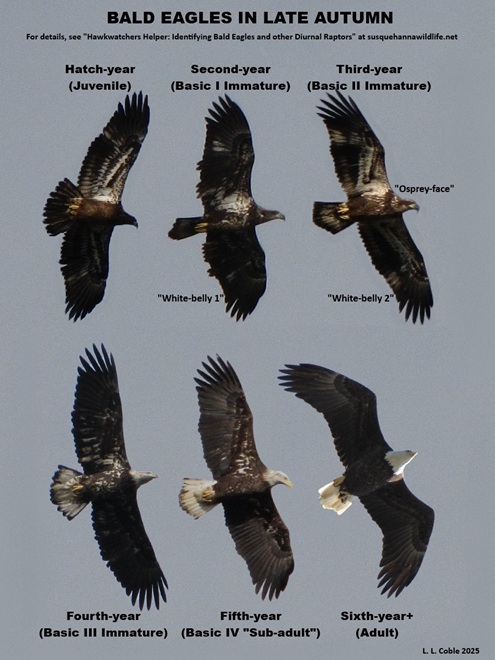
Bald Eagles in each age class often retain their fall appearance through much of the winter. However, beginning January 1st, each bird is reclassified into the next in the series of chronological plumage designations. Consequently, during the early part of the new year until a new generation of eagles is hatched in late winter and spring, there are no birds in our area designated “hatch-year/juvenile”. After fledging, these youngest eagles, the new generation of juveniles, often show little change in appearance until after their first birthday, by which time they are already classified as second-year/Basic I immature birds. For birds other than the new generation of hatch-year/juvenile eagles, the majority of the molt that produces their new autumnal appearance each year occurs during spring and especially summer, when food is abundant and the bird’s energy needs for purposes other than growing feathers are at a minimum. Hence, by the time fall migration rolls around, the next in the successive progression of plumage changes is evident. For more details and year-round images of Bald Eagles, check out our “Hawkwatcher’s Helper: Identifying Bald Eagles and other Diurnal Raptors” page by clicking the tab at the top of this page.