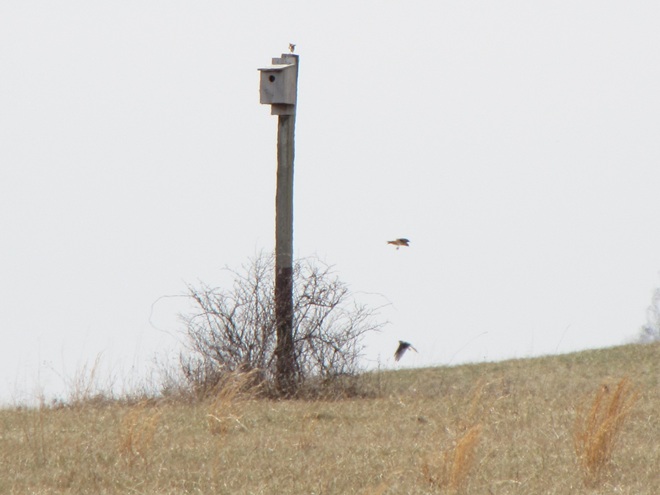
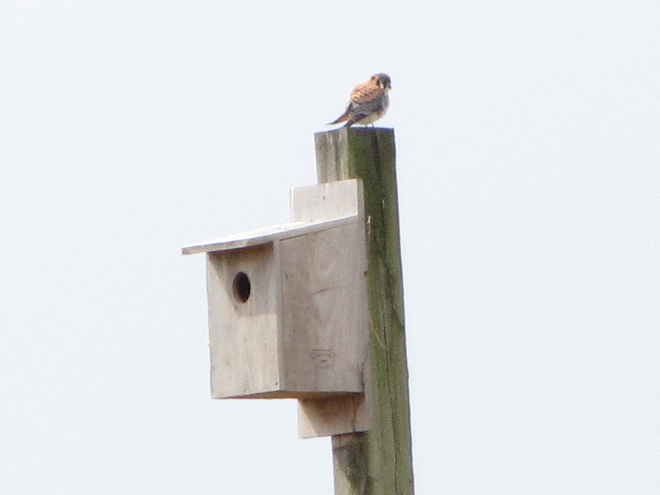
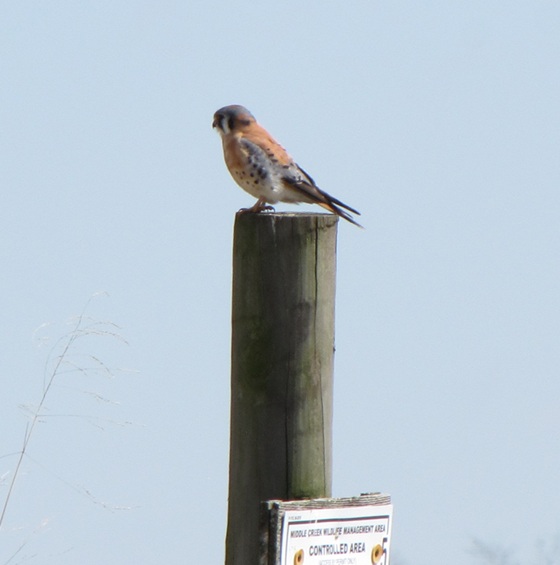
If you’ve visited Middle Creek Wildlife Management Area anytime during the past month, you may have noticed quite a bit of activity around the large pole-mounted nest boxes placed out in the open fields.
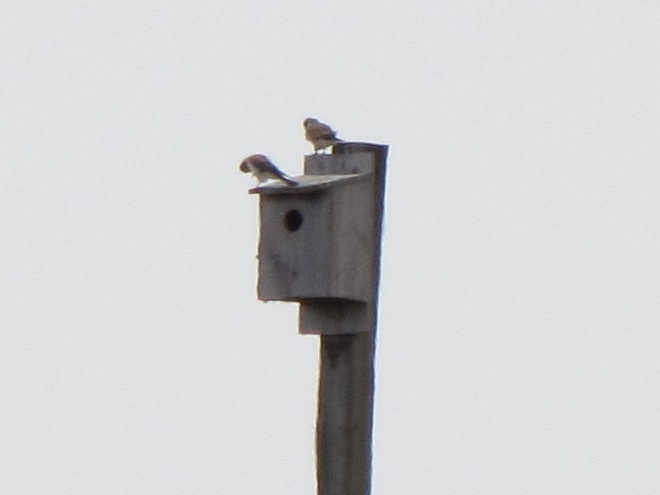
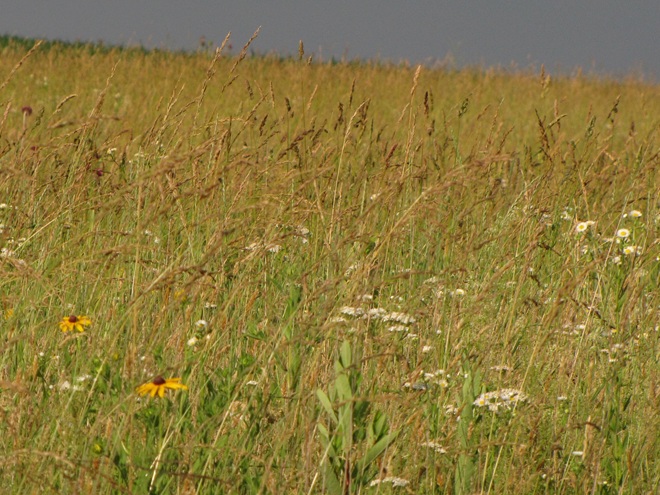
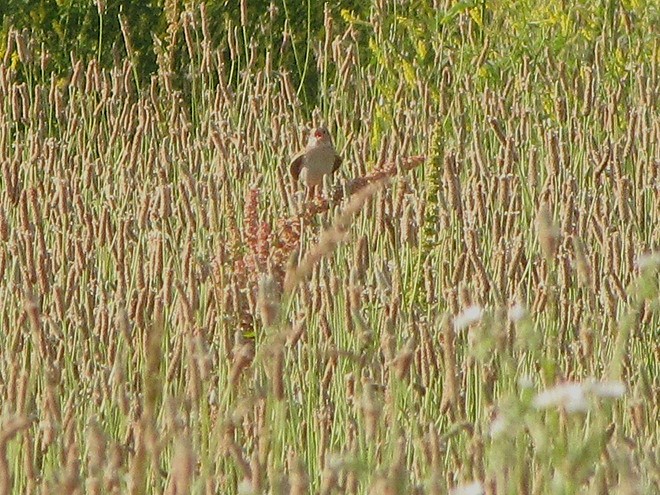
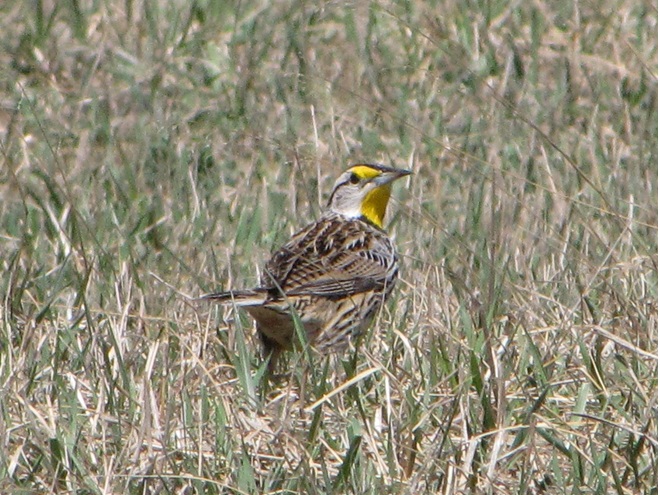
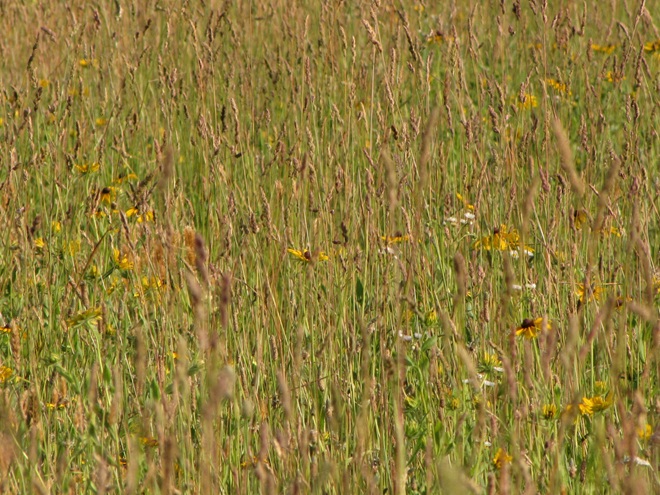
American Kestrels, a male and female, at a nest box at Middle Creek Wildlife Management Area.Within the past week, we noticed that kestrels are still competing for nesting sites and territory, driving away unwanted trespassers. A pair of kestrels seemed to be occupying each of the four box sites we observed. That’s good news, but the presence of these man-made nest cavities is in no way wholly responsible for this positive response from these declining birds. It’s a matter of habitat, much needed grassland habitat.Cool-season grasses including fescue (Lolium species) and non-native Orchard Grass (Dactylis glomerata) mature by late spring. If left standing, they continue to provide indispensable habitat for grassland wildlife through the summer. Mowing early and often for hay harvest has rendered most cool-season meadows death traps for nesting birds. By delaying cuttings until at least early August, ground-nesting birds are given adequate time to fledge their young and get the juvenile birds strong enough to fly away from a set of spinning blades.A male Grasshopper Sparrow sings to demarcate its nesting territory in a stand of Timothy, an introduced species cultivated for harvest as hay. An insectivore during the breeding season, he and his mate will attempt to raise their brood exclusively within the cover of these cool-season grasses.Eastern Meadowlarks arrive in cool-season grasslands by late-winter to begin their breeding cycle which typically extends into the hot summer days of July.Prior to being mowed, Orchard Grass provides the short, dense cover meadowlarks and other ground-nesting grassland birds need to successfully reproduce. Growing a cool season grassland can be as easy as delaying the mowing of a pasture, field, or oversize lawn until August, then have a farmer friend come and take off a cutting or two of hay or straw to prevent woody plants from becoming established.More durable stands of native warm-season grasses including Big Bluestem, Indiangrass, Switchgrass, and Little Bluestem thrive in the summer heat and provide wildlife habitat throughout the year. These perennial “prairie grasses”, fed by root systems five to eight feet deep, are especially drought tolerant . From these entrenched anchors, the plants would quickly bounce back after the once great herds of hungry bison had grazed the landscape bare of surface vegetation before moving on. This adaptation also assured “prairie grass” regeneration following naturally occurring seasonal fires, events mimicked in eastern North America by its pre-Columbian human residents. They used recurrent fire to perpetuate early successional habitat for wildlife propagation, foraging, and agriculture. Today in the lower Susquehanna watershed, establishing warm-season grassland meadows requires soil prep and seeding to get things going again.To prevent succession, warm-season grassland parcels are most commonly maintained using applications of prescribed fire every 3 to 5 years. Among their benefits, these burns invigorate native vegetation while inhibiting the invasive tendencies of many non-native plants. Well-planned periodic fire can significantly reduce fuel accumulations, particularly in tinderbox woodland tracts managed as fire-free zones for the past century or more. Many forest trees including oaks rely on sporadic fire events for regeneration.
LEARN HOW LAND MANAGERS UTILIZE PRESCRIBED FIRE
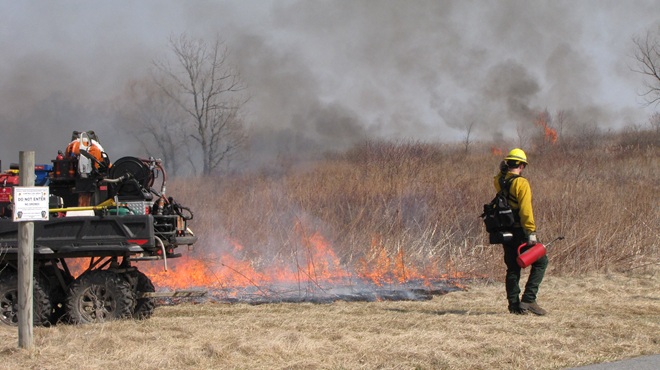
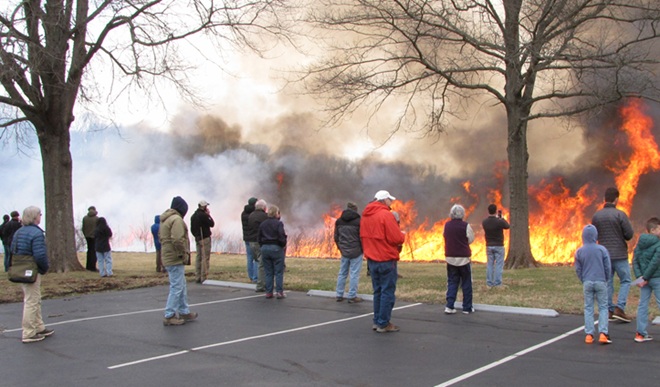
This coming Saturday, April 18, 2026, beginning at 10 A.M. (rain date April 25), the Pennsylvania Game Commission is hosting a “Prescribed Fire Festival” at Middle Creek Wildlife Management Area. Be certain to come out to the visitor’s center at 100 Museum Road, Stevens, PA, for this event. Land managers will be there to answer questions and to explain the planning and preparations involved in overseeing a prescribed burn. There will be guided walks of habitats preserved using fire of varying intensities. You’ll see the equipment and protective clothing used by certified personnel to administer a live prescribed fire burn right before your eyes. Then you can have lunch—food trucks will be available on site.
Visitors witness a prescribed fire demonstration at the Pennsylvania Game Commission’s Middle Creek Wildlife Management Area in 2025.
After the burn demonstration, why not go for a walk or drive around the refuge. You can take note of how grassland and early successional plant communities are responding to previous doses of prescribed fire…
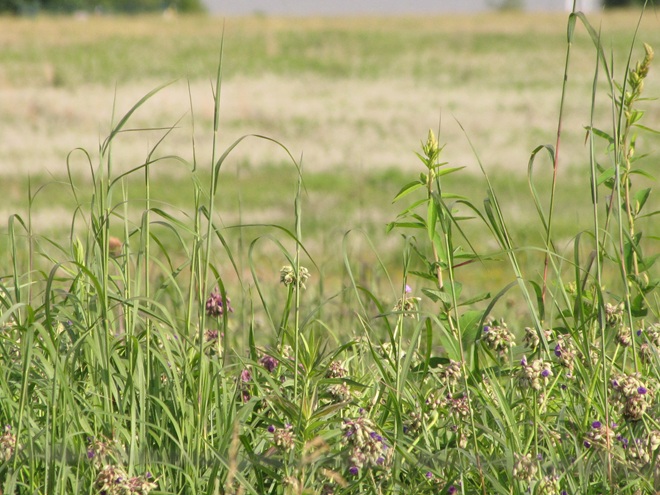
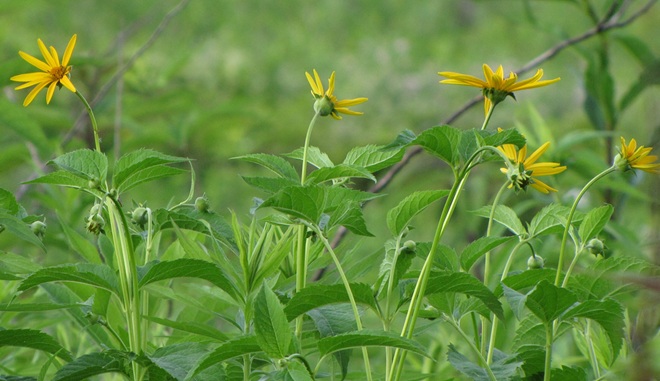
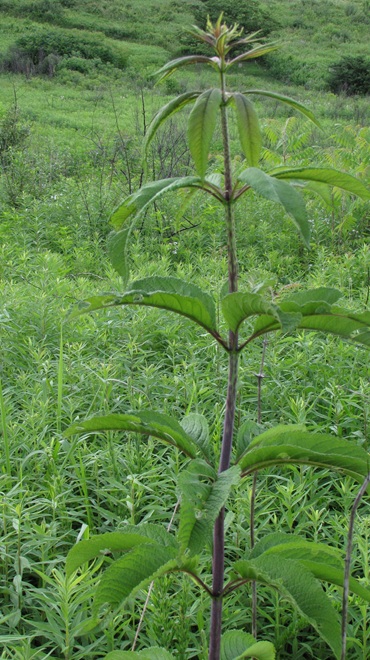
Greening up a week or two after the burn, Wingstem is blooming by June in areas treated using prescribed fire earlier in the spring.Another scene from June: Four-foot-tall Joe-Pye-Weed amidst lush growth of goldenrod in early successional habitat where a prescribed burn eliminated accumulating wildfire fuel and turned back the growth of invasive plant species in March.
And how the grassland animals respond as well…
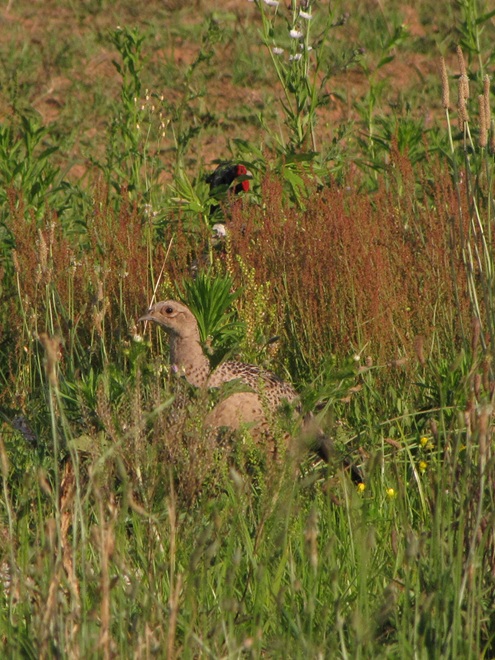
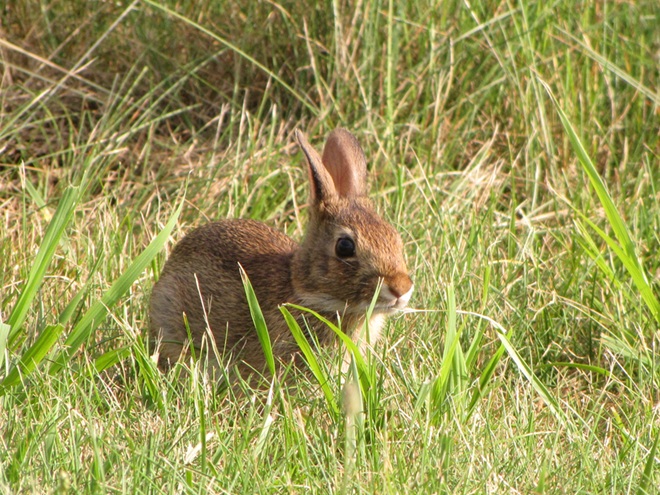
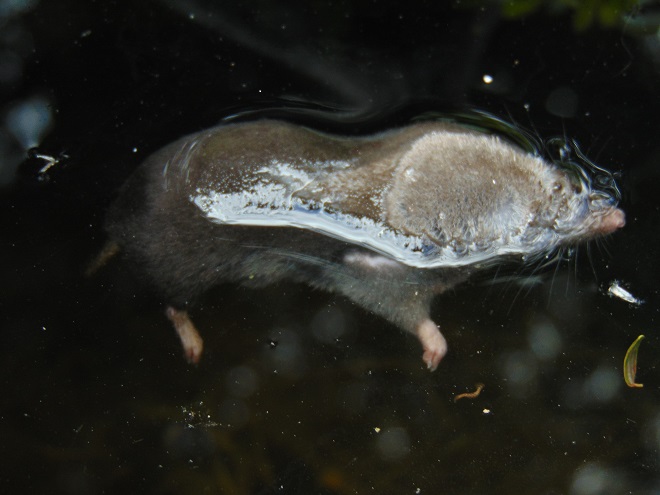
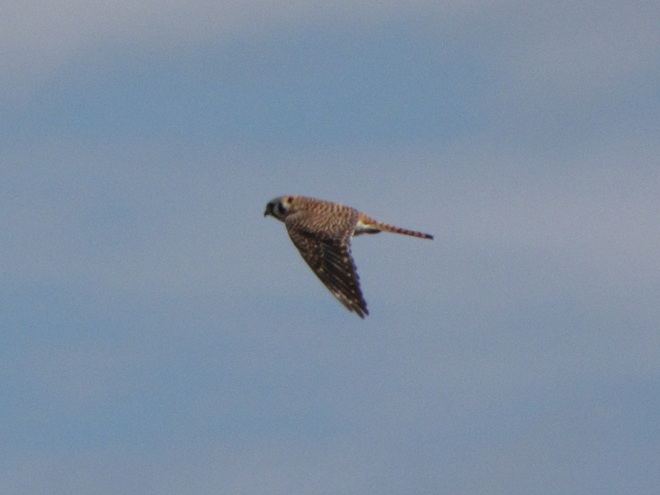
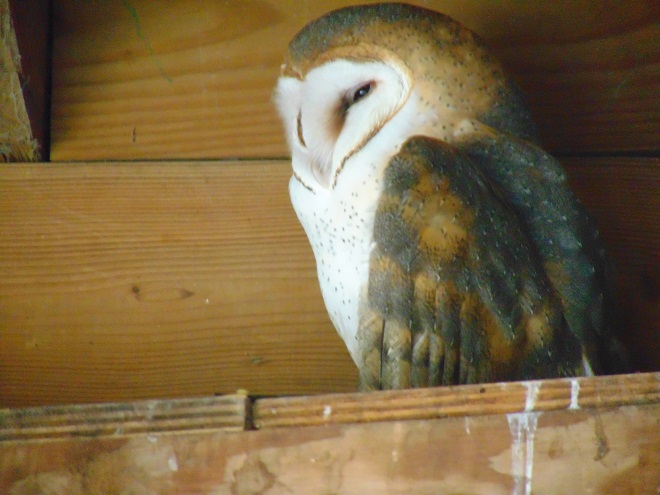
Ring-necked Pheasants in early successional habitat maintained by the periodic application of prescribed fire.Eastern Cottontails prosper in the mosaic of warm-season grasses and early successional thickets on lands sustained using prescribed fire. Rabbits are herbivores, primary consumers eating mostly legumes and other plants, the producers that through the process of photosynthesis convert the energy of the the sun into food energy.Other small vegetation-eating rodents including mice and voles thrive in managed grasslands. Similar in appearance are the shrews. Though seldom noticed, Northern Short-tailed Shrews spend day and night foraging for food, even in the shallow waters of wet meadows and thickets. Unlike the aforementioned herbivorous rodents, shrews are insectivores, secondary consumers feeding mostly on primary consumers including a variety of insects and other arthropods.Some years ago, we found this tiny Masked Shrew (Sorex cinereus) in a grassland area being preserved using prescribed fire. Like other shrews, Masked Shrews are secretive, but always on the go. They feed constantly to fuel their vast energy requirements, sometimes consuming three times their body weight in a single day. But their voracious appetite can get them into trouble, causing these incessant eaters to encounter numerous potentially infective parasites during their non-stop foraging missions.Patrolling the grasslands is the female American Kestrel, a secondary consumer. She’s on the lookout for primary consumers including large insects like grasshoppers or crickets. But perhaps more likely is a small rodent whose less-than-ideal vigor may cause it to slip up, creating an easy target. If she selects a careless shrew as her prey, she may be assuming the role of a tertiary consumer, eating a secondary consumer (the shrew) that fed on insects (the primary consumers) that derived their energy from photosynthesized plant matter.The strictly nocturnal American Barn Owl (Tyto furcata), another secondary and sometimes tertiary consumer, takes the night shift, hunting unwary voles, mice, and shrews, often by sensing the sounds they make among runways in the grass. As a native predator in its favored habitat, the owl’s selection of each victim actually helps to keep the prey species’ population healthy, eliminating the weak and vulnerable to provide a qualitative service to the surviving wildlife of the grasslands. While we may not think of the barn owl as a direct consumer of insects, its positive influence on insectivorous shrew populations makes it an important functionary in maintaining balance in the ecosystems it calls home.As food becomes increasing plentiful in the grasslands, a female kestrel will remain mostly out of sight, performing the majority of the egg incubation duties while her colorful mate stands guard nearby.The male not only keeps watch, but also continues the hunt for insects, small mammals, and other prey to feed not only the newborn nestlings, but also his mate while she tends the nest. As the young grow and no longer need brooding to stay warm, the female will join the male in a joint effort to snatch up enough food to keep their three to seven offspring nourished. Like other raptors, populations of these predators are abruptly regulated in the nest. The first hatched of these falcon’s young will receive the most food, giving them, particularly the oldest individual, the best chances of survival. The later-hatched and thus smaller offspring may have trouble competing for the available provisions brought to the nest. If food is plentiful, there may be enough for all of the birds to grow and survive. If food is scarce, only the oldest (which also happen to be the biggest, strongest, and most aggressive) baby falcon(s) will live to fledge and leave the nest. If hunting becomes really poor, the adults will sustain themselves at the expense of their young.
The fate of an avian predator such as a kestrel lies at the mercy of the fate of its quarry. Because, you see, the sun’s energy, after being converted to chemical energy by photosynthesizing plants, flows upward through the trophic levels of the food chain—herbivores (primary consumers) such as rodents and insects to carnivores (secondary and tertiary consumers) including kestrels. Grasslands, when abundant and diverse, are correspondingly abundant and diverse with small mammals and insects and will therefore support thriving populations of American Kestrels and other predators. These secondary and sometimes tertiary consumers fulfill a role in cultivating healthier populations of their prey—the primary and secondary consumers in the food web—as a balanced component of a flourishing grassland ecosystem. Sparse and fragmented grasslands, on the other hand, beget negligible small mammal and insect populations, are stricken with broken food webs, and champion few if any American Kestrels or other predators. If the land it occupies is neat, tidy, manicured, exploited, or sprayed sterile and dead, the energy flow cycle of the ecosystem is dead as well. There’s nothing animal introductions, reintroductions, rescues, culling, stocking, or harvesting can do about it, because in the end, it’s all about the habitat.