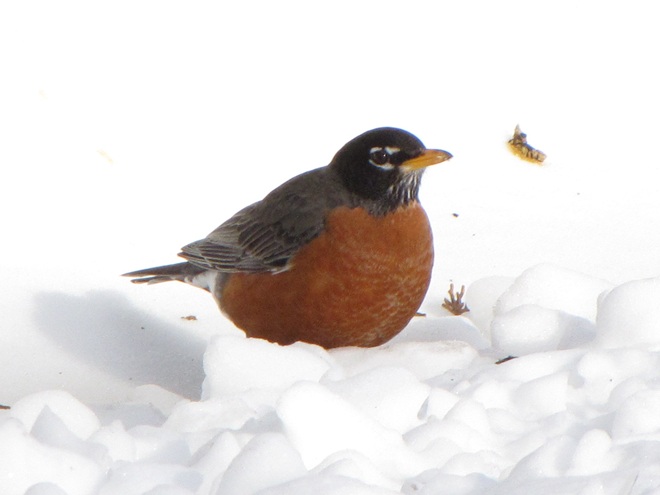
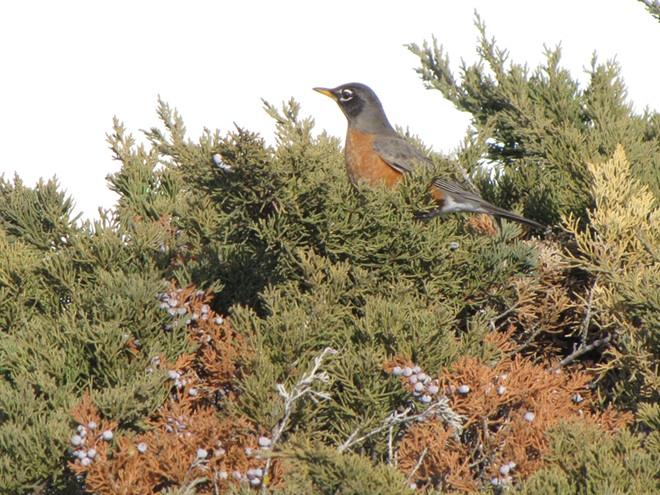
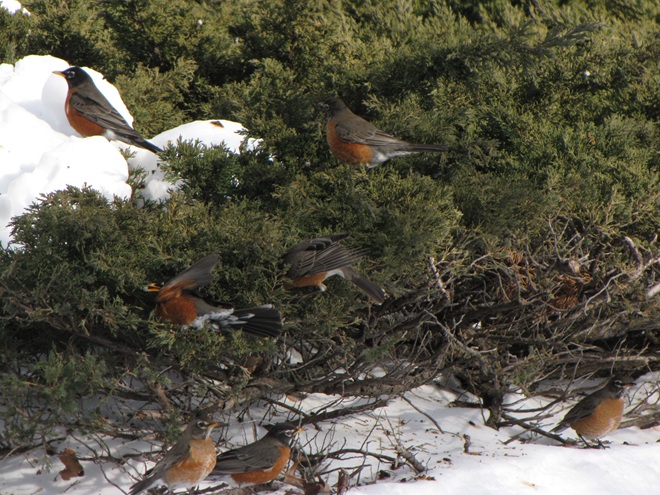
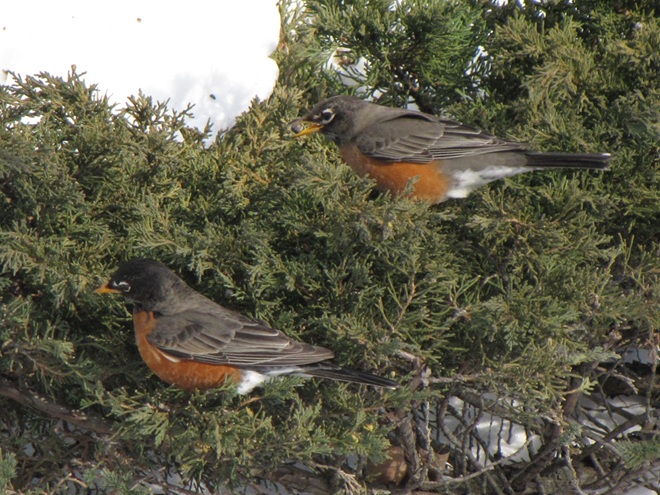
For overwintering birds and other animals, finding enough food is especially difficult when there’s snow on the ground. And nighttime temperatures in the single digits make critical the need to replenish energy during the daylight hours. Earlier this afternoon, we found these American Robins seizing the berry-like cones from ornamental junipers in a grocery store parking lot. It was an urgent effort in their struggle for survival.
A hungry American Robin at the local Weis Market.Though seldom considered ideal wildlife plants, low-growing ornamental junipers often produce an abundance of seed-containing cones that resemble berries.In a pinch, they’ll attract dozens of robins and other fruit-eating birds as a quick source of nourishment on a windy, bitter-cold day.After all, these landscape shrubs are often derived from native species including the Creeping Juniper (Juniperus horizontalis) of Canada and the northernmost United States, a plant resembling a recumbent version of the local Eastern Red Cedar (Juniperus virginiana) with which these birds are quite familiar.
County conservation district offices will soon be taking orders for their spring tree sales. Be sure to load up on plenty of the species that offer food, cover, and nesting sites for birds and other wildlife. These sales are an economical way of adding dense-growing clusters or temperature-moderating groves of evergreens to your landscape. Plus, selecting four or five shrubs for every tree you plant can help establish a shelter-providing understory or hedgerow on your refuge. Nearly all of the varieties included in these sales produce some form of wildlife food, whether it be seeds, nuts, cones, berries, or nectar. Many are host plants for butterflies too. Acquiring plants from your county conservation district is a great opportunity to reduce the amount of ground you’re mowing and thus exposing to runoff and erosion as well!
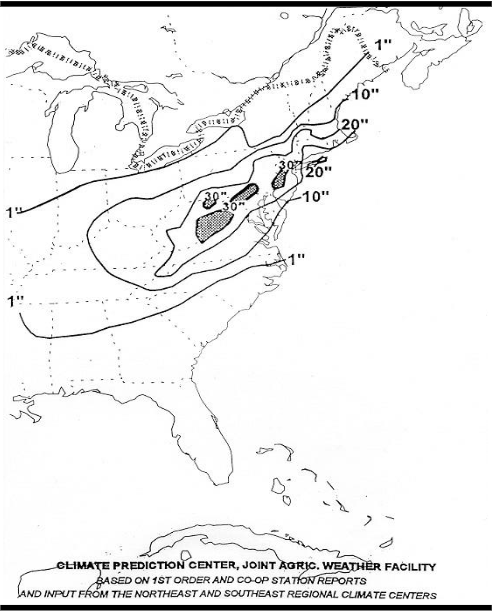
It all started rather innocently as a typically cold early January with sheets of ice covering the river and with soils on the lands in the remainder of the lower Susquehanna watershed frozen solid. Then came the “Blizzard of ’96”, blanketing much of the valley with between 20 and 30 inches of wind-driven snow.
Snowfall totals for the “Blizzard of ’96”, January 6-8, 1996. (NOAA/National Weather Service image)
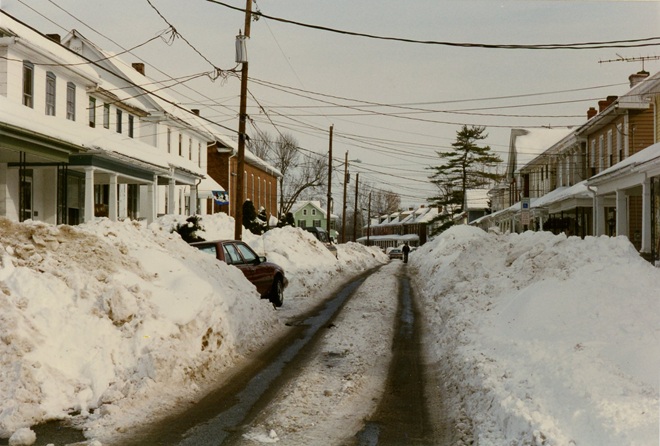
In affected areas of Pennsylvania, Governor Tom Ridge closed all state roads for the duration of the snowfall event. Many would remain closed for much of the following week as drifting hampered exhaustive efforts to get impassable routes open.
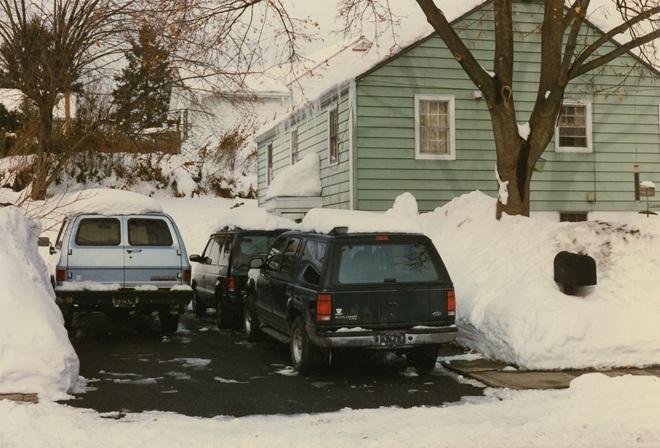
In congested, high-density neighborhoods, cars remained buried for lack of anywhere to go with the snow. (Vintage 35 mm image)In more suburban areas, it was often a day-long chore to excavate a path to the street. (Vintage 35 mm image)
Just as the recovery entered its second week, a change in the weather pattern took hold as milder air and spring-like rains hastened the melt. Clogged by snow often several feet in depth, storm sewer inlets and other drainage features failed to collect the runoff. Street and urban flooding became widespread. Some buildings, particular those with large flat roofs, experienced structural damage due to any remaining snow soaking up the additional weight of the rain. As local creeks swelled to stain snowy meadows brown, attention shifted to the icy river.
On the Susquehanna, rising waters started moving ice into accumulating piles of car-sized chunks behind dams and at choke points along the river’s course. During warmer weather, stream gauges provide a depth of water reference known as a stage (measured in feet) that corresponds to a rate of flow passing the gauge site (measured in cubic feet per second). On occasions when ice and debris block river channels during winter, these readings can fluctuate wildly and the relationship between stage and flow can become dubious. When the water is running ice-free at Harrisburg for example, a gauge reading of about 11.1 feet is indicated when the river flow rate is approximately 162,000 cubic feet per second. But due to its impact on the capability of the river channels to pass water, the presence of slow-moving and jammed ice can cause rapid and sometimes unpredictable variations in gauge readings, even when the flow rate remains steady. Impaired by an ice jam at the gauging station or just downriver, a flow of 162,000 cubic feet per second could lead to a stage measurement significantly higher than 11.1 feet, and the area of adjacent floodplain inundated by rising waters will increase to a corresponding degree. Conversely, a jam upstream of the gauging station could cause the reading to drop below 11.1 feet—at least temporarily—then look out, a dangerous surge could be forthcoming!
At Harrisburg, the ice jam behind the Dock Street Dam in January, 1996, caused devastating flooding in the city’s Shipoke neighborhood, on City Island, and in low-lying areas along the river’s west shore.
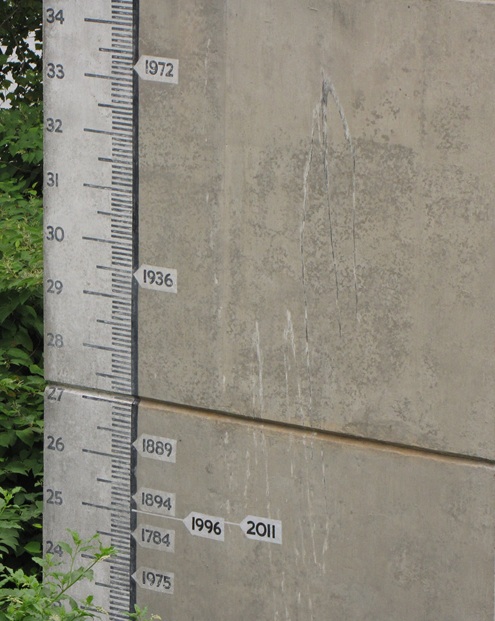
Just upriver from the Dock Street Dam at Harrisburg, the Susquehanna at the United States Geological Survey gauging station on the east side of City Island crested at 25.08 feet on January 20, 1996. As the rising waters finally began heaving the jammed ice up and over the dam, the scouring energy of the departing glacier-like mounds would carry away two spans of the truss-construction Walnut Street Bridge on the west side of the island, and eventually collapse a third. After receding during the remainder of the day and through the night, yet another aggregation of chunked ice would cause the river to crest again on January 21st, this time at 24.66 feet. Under free-flowing conditions, these readings would correspond to a river flow of just under 600,000 cubic feet per second; that’s more than 250 million gallons per minute!
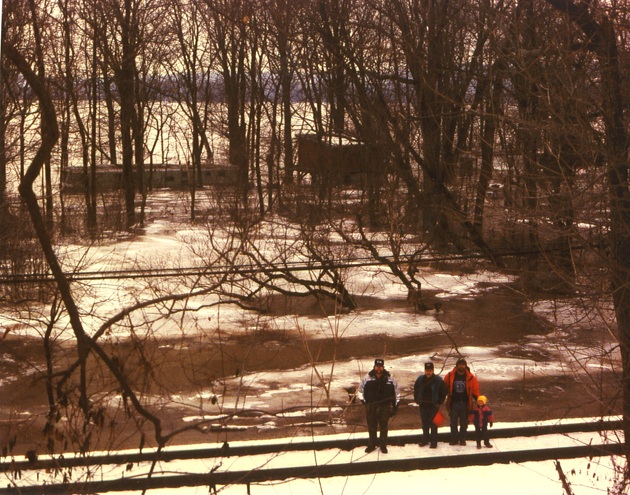
Downriver at Conewago Falls, ice jams behind the York Haven Dam and at several choke points within the riverine archipelago that extends from Haldeman Island to Haldeman Riffles in Lancaster County would be relieved as the river crested there during the afternoon of January 21st. The following photograph accurately relates the scene, minus the stench of mammalian feces and petroleum emanating from the polluted water of course.
Our friends (L to R) Rick Morton, Bob Zeager, Dan Seitz and his daughter Sierra witness the ice-choked Susquehanna River cresting below Conewago Falls on January 21, 1996. Bob awoke the previous morning inside his mobile home (left rear) to discover he was rapidly being surrounded by fast-rising water. With the ice-covered road now submerged in over three feet of river, he had no hope of getting out with his van, so he started removing clothing and a few other essentials by canoe. Dan soon arrived to move a few of his things to higher ground and de-energize both properties. We did our best to lend a hand, then we all got out of the floodplain. A short time after we had departed, Rick arrived and became concerned when he saw Bob’s van, now in almost four feet of water alongside his home. Rick parked his conveyance, also a van, on a rise in the lowland terrain, then made his way back the old Pennsylvania Canal towpath to make sure Bob wasn’t stranded. After concluding that he had already evacuated, Rick returned via the towpath to his van. He then discovered that yet another surge of quickly rising water had inundated the ice-covered section of access road by which he had arrived, so he was forced to wade out, leaving his vehicle behind. A short time later, he reached us by telephone proclaiming, “I’m out!”, and filled us in on the details. As the flood receded, Rick was able to retrieve his van on January 22nd. Bob’s van was totally destroyed and both his and Dan’s mobile homes were left uninhabitable. Though by no means their first experience with river flooding, this event proved particularly costly and stressful for Bob and Dan…the effects life-altering. The moral of the story: floodplains are for flooding, not filling, not building, and certainly not dwelling. Floodplains happen to make outstanding wildlife preserves, and that’s what this water-purifying alluvial terrace wetland is today. (Vintage 35 mm image)
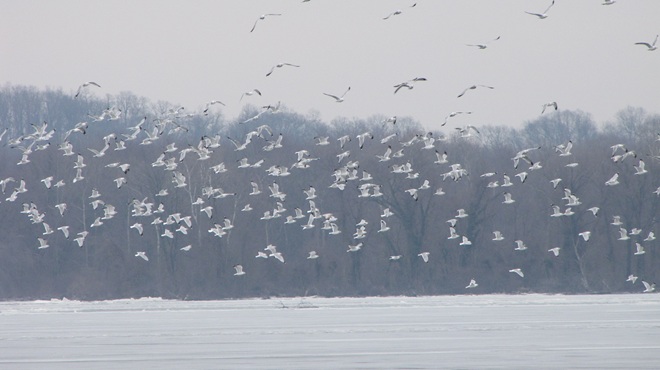
You may find this hard to believe, but during the colder months in the lower Susquehanna valley, gulls aren’t as numerous as they used to be. In the years since their heyday in the late twentieth century, many of these birds have chosen to congregate in other areas of the Mid-Atlantic region where the foods they crave are more readily available.
As you may have guessed, the population boom of the 1980s and 1990s was largely predicated on human activities. These four factors were particularly beneficial for wintering gulls…
Disposal of food-bearing waste in open landfills
High-intensity agriculture with disc plowing
Gizzard Shad population boom in nutrient-impaired river/Hydroelectric power generation
Fumbled Fast Food
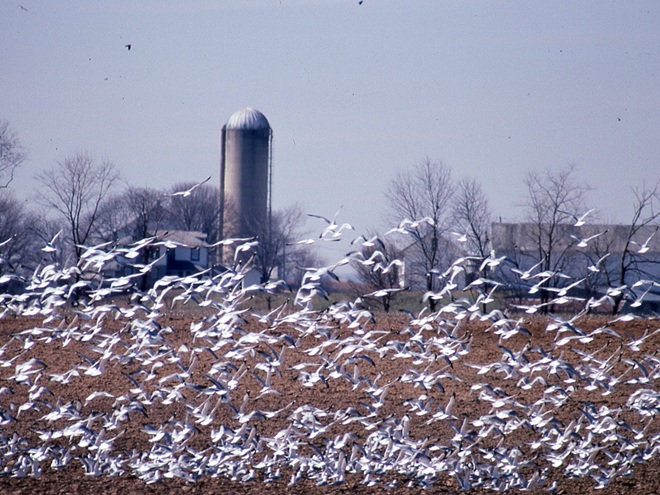
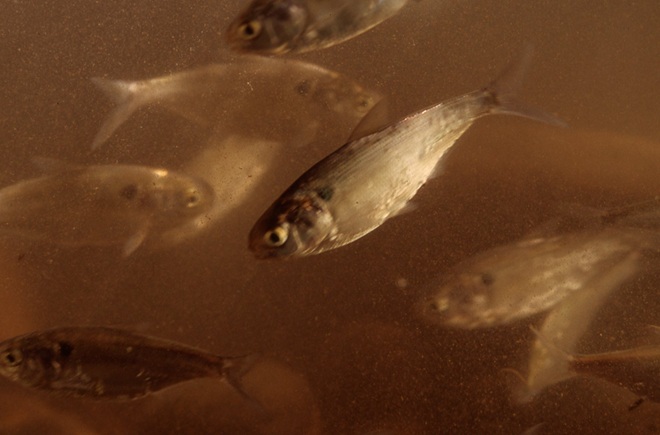
Earthworms lifted to the soil’s surface by plowing attracted Ring-billed Gulls by the thousands to Susquehanna Valley farmlands during the late twentieth century. (Vintage 35 mm image)Filter-feeding Gizzard Shad populations thrive in nutrient-rich waters like the Susquehanna. Their rambunctious feeding style stirs up benthic sediment deposits to release more nutrients into the water column and promote the algal blooms that often lead to detrimental eutrophic conditions. Decades ago, hundreds and sometimes thousands of gulls gathered below the river’s hydroelectric dams to feed on the seemingly endless supply of small Gizzard Shad disoriented by their passage through the turbines during electric generation. (Vintage 35 mm image)
So what happened? Why are wintering gulls going elsewhere and no longer concentrating on the Susquehanna? Well, let’s look at what has changed with our four man-made factors…
A larger percentage of the lower Susquehanna basin’s household and food industry waste is now incinerated/Landfills practice “cover as you go” waste burial.
Implementation of “no-till” farming has practically eliminated availability of earthworms and other sub-surface foods for gulls.
The population explosion of invasive Asiatic Clams has reduced the Gizzard Shad’s relative abundance and biomass among filter feeders.
Hold on tight! Fast food has become too expensive to waste.
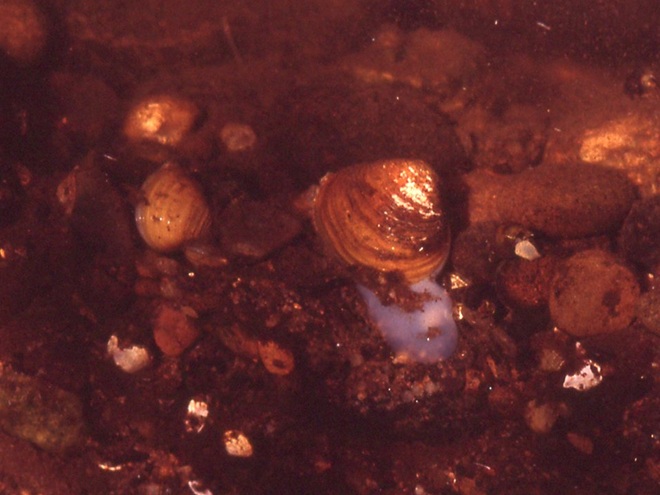
The non-native population of Asiatic Clams in the Susquehanna and most of its larger tributaries exploded during the last two decades of the twentieth century. Its present-day biomass in the river is exceeded by no other macroinvertebrate species. The share of plankton and other tiny foods that the Asiatic Clam harvests from the water column is no longer available to native filter-feeders including Gizzard Shad. Hence, Gizzard Shad biomass has been reduced and far fewer are available to attract amazingly enormous flocks of hungry gulls to hydroelectric dams. (Vintage 35 mm image)
GULLS THIS WINTER
Despite larid abundance on the lower Susquehanna not being the spectacle it was during the man-made boom days, an observer can still find a variety of medium and large-sized gulls wintering in the region. We ventured out to catch a glimpse of some of the species being seen both within the watershed and very nearby.
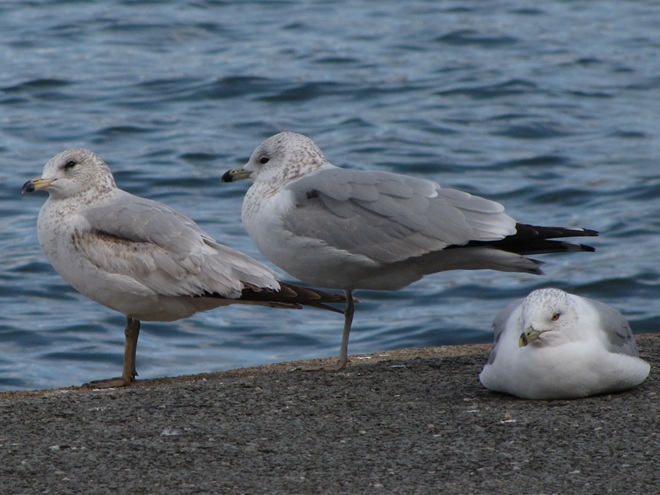
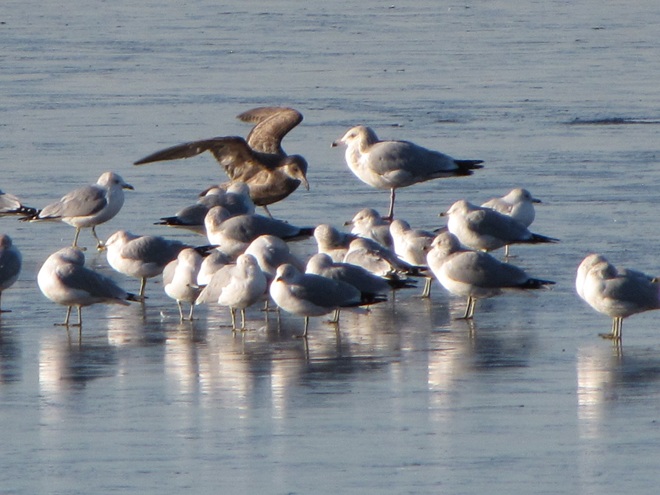
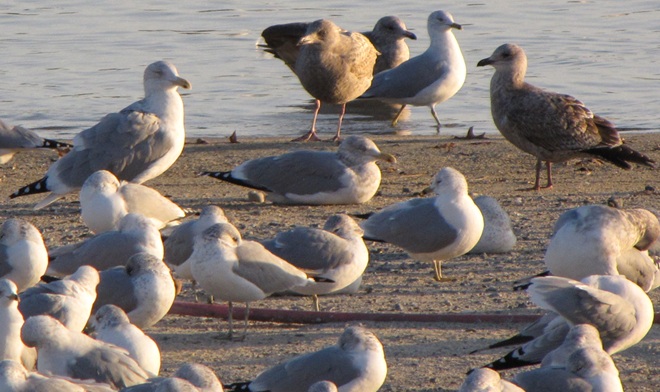
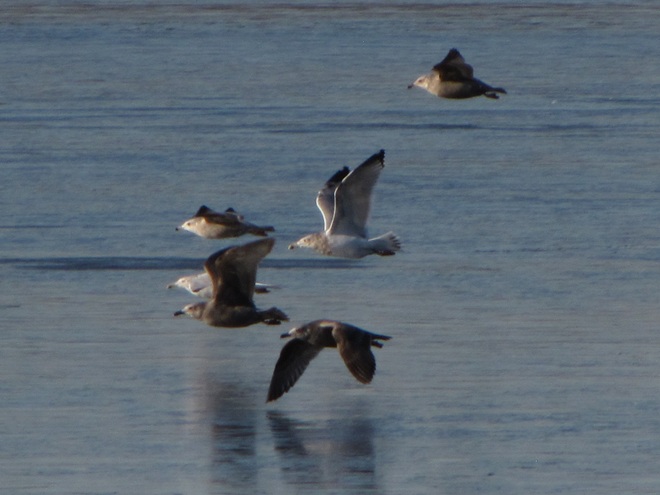
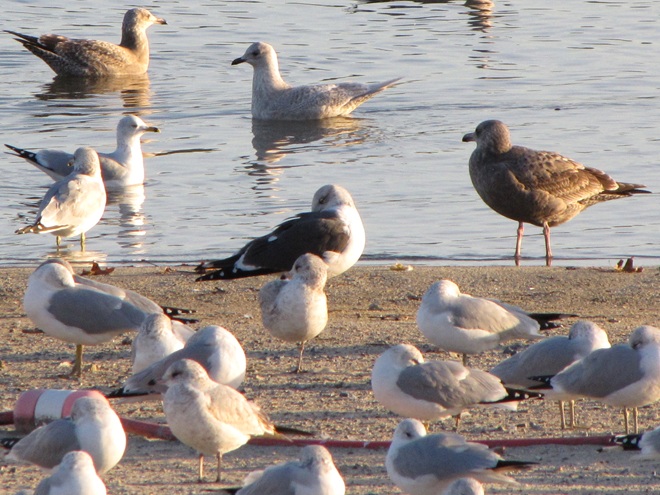
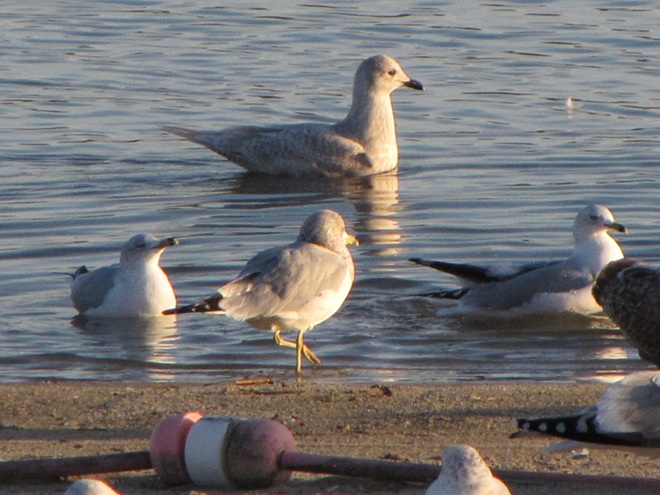
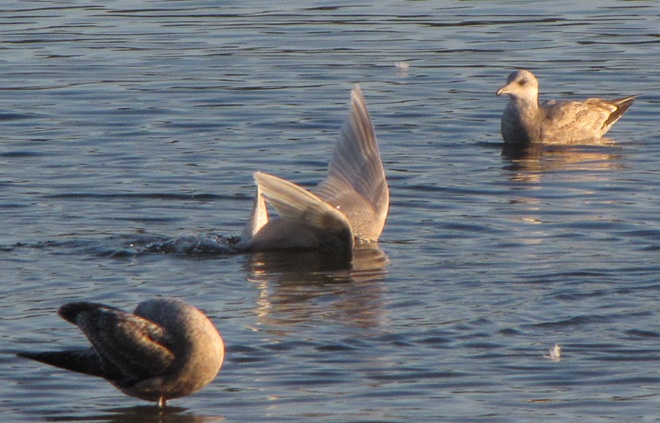
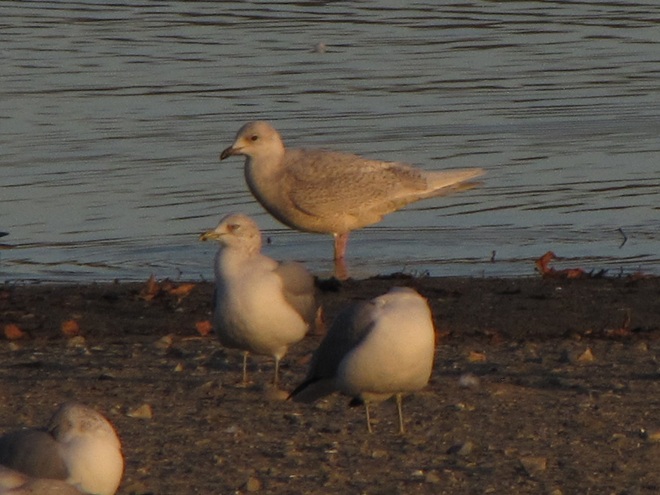
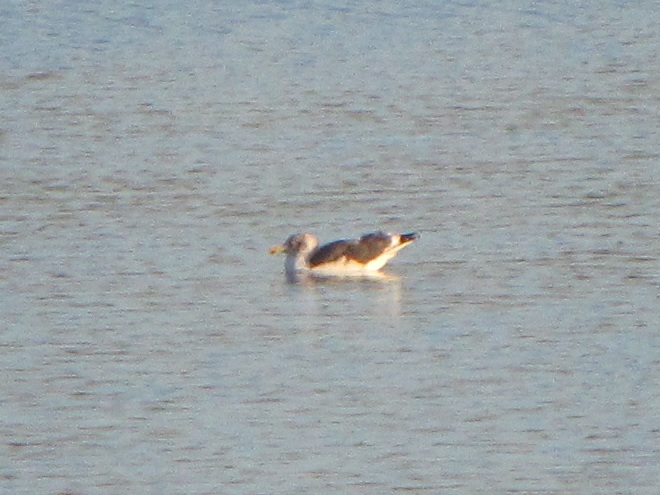
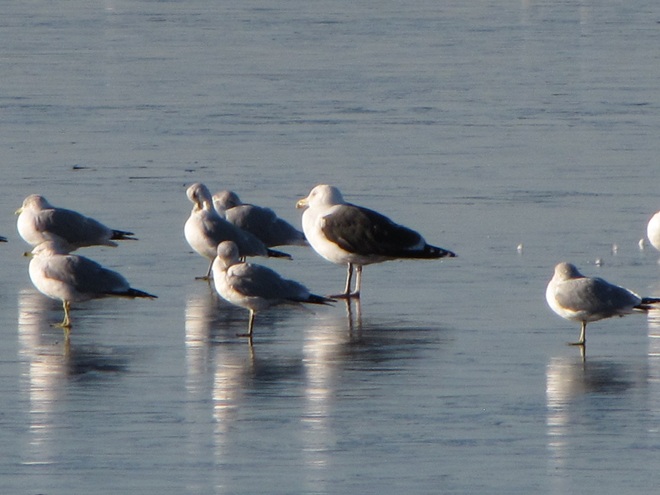
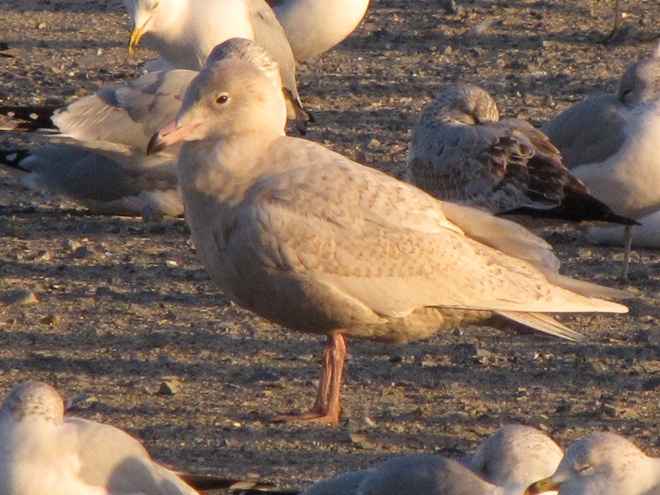
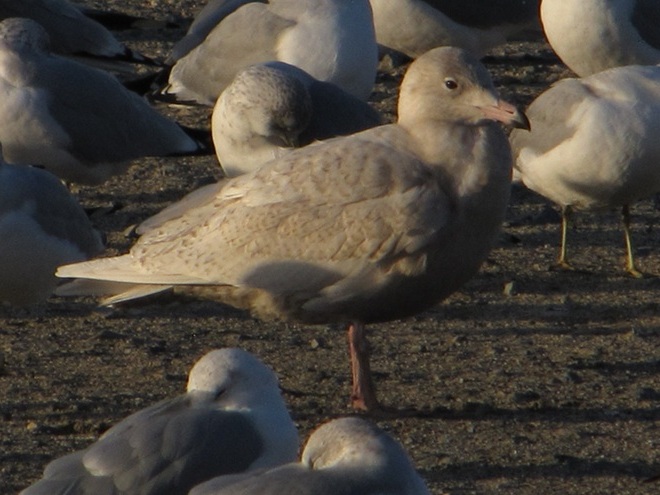
By far, most of the gulls you’ll encounter in the Lower Susquehanna River Watershed right now are Ring-billed Gulls. Some of them still drop by at the business end of the drive-thru lane looking for a lost order of fries and maybe a cheeseburger in paradise.First-winter (left), second-winter (center), and adult Ring-billed Gulls on the Susquehanna.Nearly every flock of gulls found in our area right now is composed exclusively of Ring-billed Gulls. The trick to finding other species, particularly rarities, is to look for slightly larger birds mixed among them, particularly American Herring Gulls like the first-winter (back row left) and third-winter (back row right) birds seen here. Herring and other species of similar-sized gulls seem to prefer each other’s company while on the wintering grounds.Five American Herring Gulls with smaller Ring-billed Gulls. The bird to the upper left and the bird hunkered down to its right are adult American Herring Gulls, the three brownish birds are in their first winter.Non-adult American Herring Gulls in flight. Always look for birds with all-pale wing tips when encountering herring gulls in flight.Midway in size between the Ring-billed Gulls in the foreground and the first-winter American Herring Gulls in the upper left and middle right of this image is a Lesser Black-backed Gull (dark-mantled bird resting at center). The similar-sized bird in the water behind it is a first-winter Iceland Gull (Larus glaucoides), a rare visitor from the arctic.Another look at the first-winter Iceland Gull from the previous image. Did you notice the all-white primary feathers and compare them to the dark wing tips on the Ring-billed Gulls seen here in its company?The conspicuously pale wings of the first-winter Iceland Gull, seen here bathing in the presence of two first-winter American Herring Gulls.Both this first-winter Iceland Gull and the bird from the previous three images are currently being seen just east of the Susquehanna watershed at Blue Marsh Lake in Berks County, Pennsylvania. Additional Iceland Gulls are currently being reported in Maryland on the Susquehanna at Conowingo Dam; on upper Chesapeake Bay in Baltimore County, Maryland; and in southeastern-most Bucks County, near Tullytown, Pennsylvania, at a busy landfill site that attracts tens of thousands of gulls each winter. Double-digit numbers of Iceland Gulls have been reported at this latter site during recent weeks.Lesser Black-backed Gulls like this one observed at Blue Marsh Lake are uncommon in the Lower Susquehanna River Watershed. They are progressively more likely as you travel east toward the aforementioned Bucks County landfills where hundreds of these birds make up a core Atlantic seaboard population.Great Black-backed Gulls are the most frequently encountered large gull on the Susquehanna. They’re easily identified by their enormous size and, as adults, their dark mantle.Rivaling the Great Black-backed Gull in size is the Glaucous Gull (Larus hyperboreus), another rare arctic visitor with pale wing tips. There are numerous reports of these unusual winter visitors from sites on Delaware Bay north to the Tullytown landfills on Delaware River where half a dozen or more have been occurring. Seen near the mouth of the Susquehanna on Chesapeake Bay at North East, Maryland, has been a first-winter bird similar to this one that we photographed at Blue Marsh Lake in Berks County, Pennsylvania.
For us, seeing a Glaucous Gull brought back memories of the last time we saw the species. It was forty-five years ago on New Year’s Day 1981 that we discovered two first-winter birds feeding on Gizzard Shad in open water on an otherwise ice-choked Susquehanna below the York Haven Dam powerhouse at Conewago Falls. Hey Doc Robert, do you remember that day?