If maybe you would like to order trees but you’re not quite ready to put them in the ground, why not pot them up and start your own plant nursery. It’s a great way to build an inventory of hardy stock for planting around your own property or for use in community or civic conservation projects.
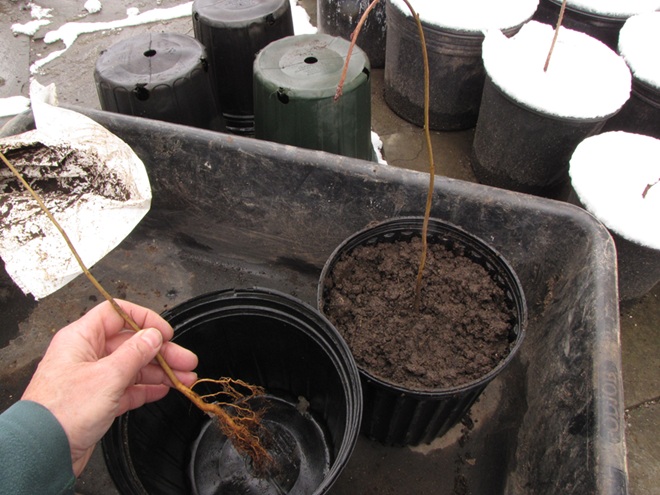
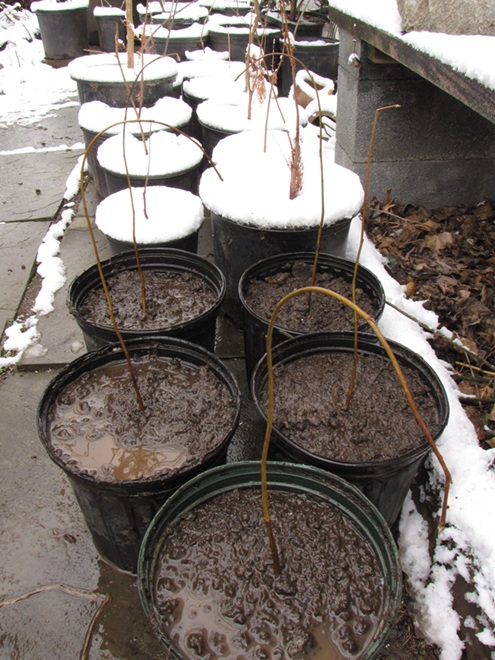
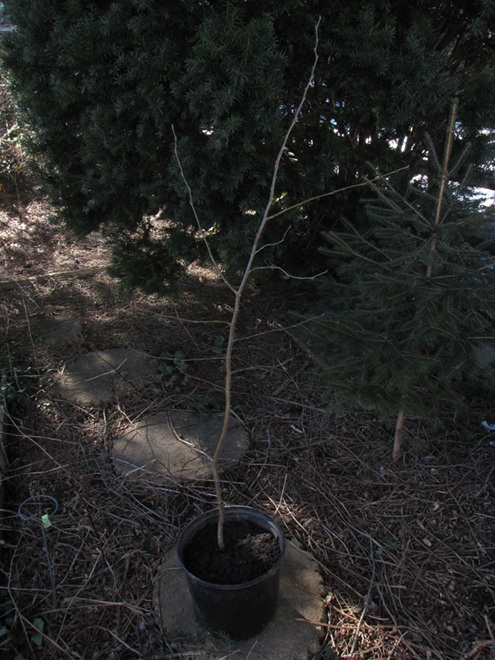
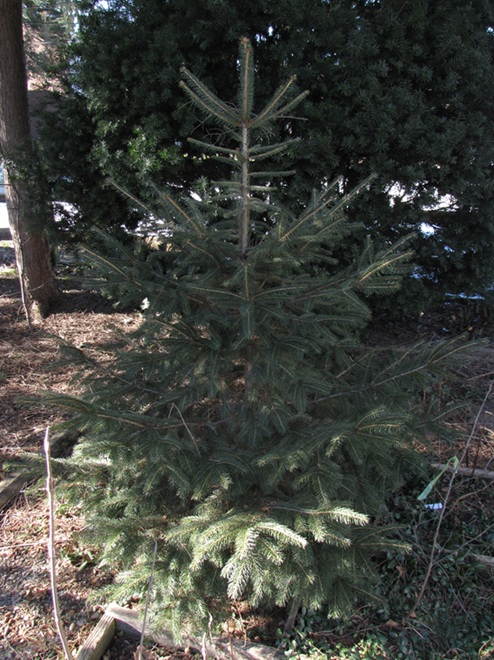
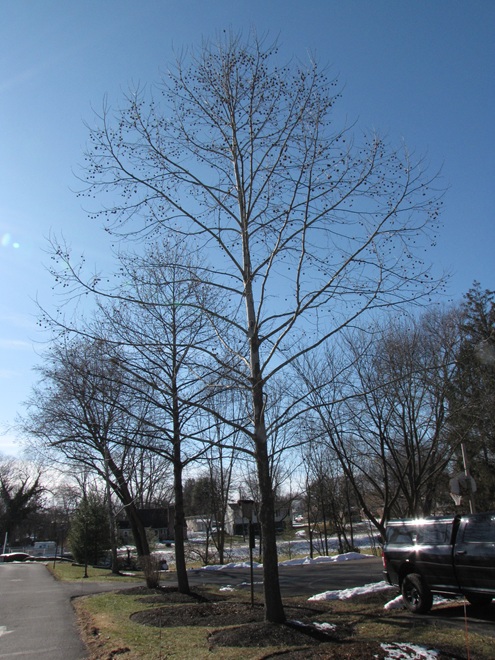
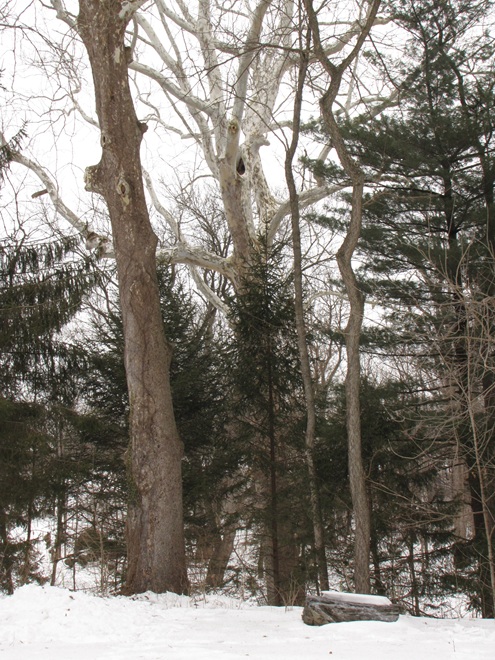
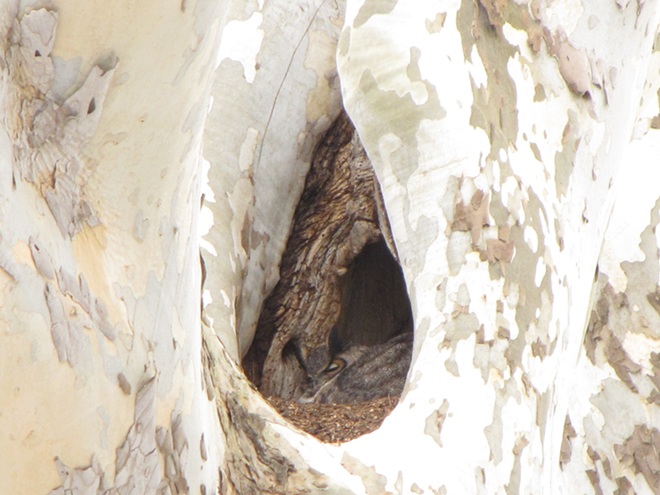
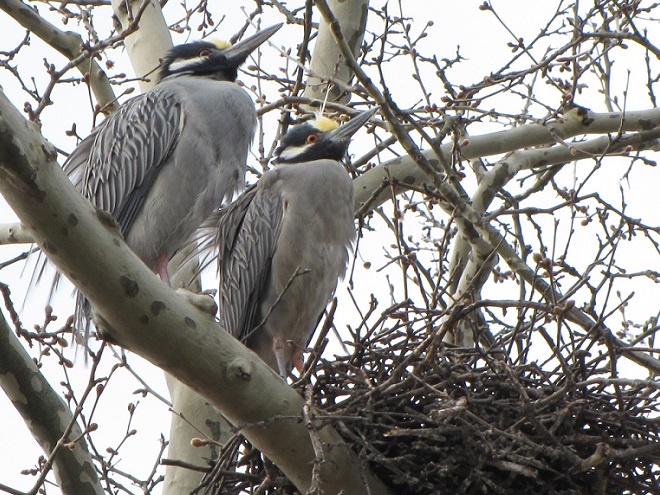
Earlier this week we potted up some bare-root seedlings in a mix of compost and sand to give them a head start before planting them in the ground either during the coming fall or in years to come. These happen to be some young American Sweetgum trees we purchased from a nursery in Perkasie, Bucks County, Pennsylvania.After watering them in, we added our new trees to the inventory we have available for stream buffers, rain gardens, reforestation, and other rewilding projects. We’ll either stake or trim them to remedy the curved stems.In just a season or two, we have nice robust saplings ready to install in a project or in the headquarters garden. Starting plants in the nursery gives them the size they need to improve their chances of survival.This is one of ten Norway Spruce trees we purchased in a pack from a local conservation district sale almost ten years ago. We started each two-year-old seedling in a pot, then transplanted them into the ground a year later. All have been thriving ever since.Since being installed as a potted sapling reared in the headquarters nursery about fifteen years ago, this sturdy Eastern Sycamore has matured and is producing seeds relished by American Goldfinches and other birds.Growing in a streamside woodland, a really massive sycamore that got its start in your nursery could continue to provide valuable wildlife habitat over a lifespan extending one hundred, two hundred, maybe even three hundred years or more. These long-lived denizens of the floodplain provide homes for such beloved breeding birds as Baltimore Orioles, Bald Eagles, Warbling Vireos, Yellow-throated Warblers, and several species of owls,……including this Great Horned Owl, seen currently incubating eggs inside a legacy sycamore that has been an active nest site among its neighboring Norway Spruces and Eastern White Pines for decades.Yellow-crowned Night Herons, an endangered species in Pennsylvania, nesting in an Eastern Sycamore planted during the early twentieth century as a street tree very near the Susquehanna in mid-town Harrisburg. Ordering and planting trees today is essential for their tomorrow.
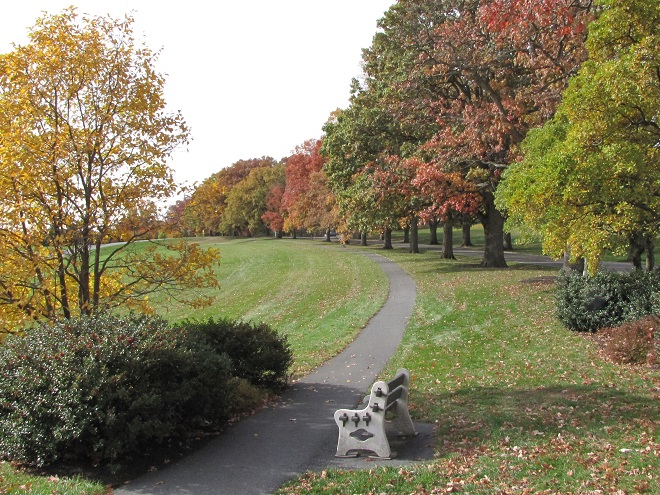
This linear grove of mature trees, many of them nearly one hundred years old, is a planting of native White Oaks (Quercus alba) and Swamp White Oaks (Quercus bicolor).
Imagine the benefit of trees like this along that section of stream you’re mowing or grazing right now. The Swamp White Oak in particular thrives in wet soils and is available now for just a couple of bucks per tree from several of the lower Susquehanna’s County Conservation District Tree Sales. These and other trees and shrubs planted along creeks and rivers to create a riparian buffer help reduce sediment and nutrient pollution. In addition, these vegetated borders protect against soil erosion, they provide shade to otherwise sun-scorched waters, and they provide essential wildlife habitat. What’s not to love?
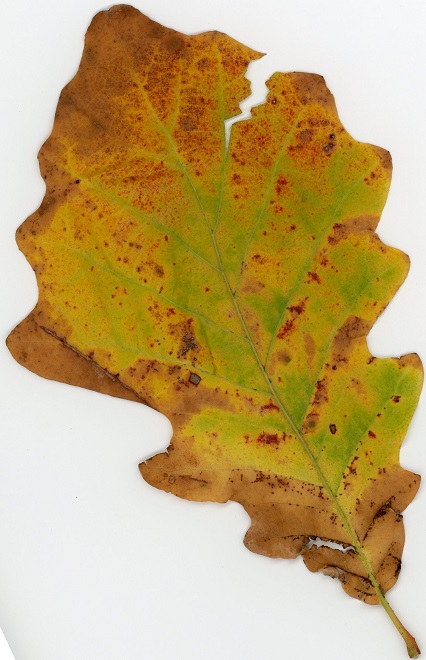
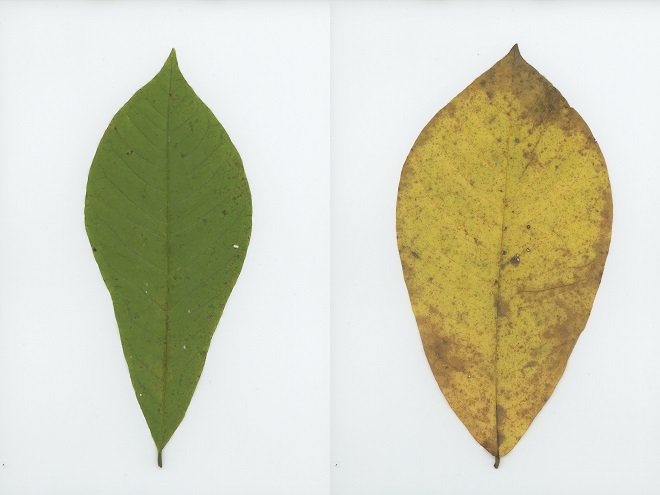
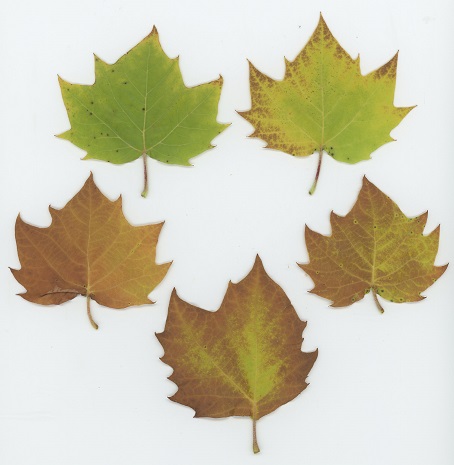
Autumn leaf of a Swamp White Oak
The following native species make great companions for Swamp White Oaks in a lowland setting and are available at bargain prices from one or more of the County Conservation District Tree Sales now underway…
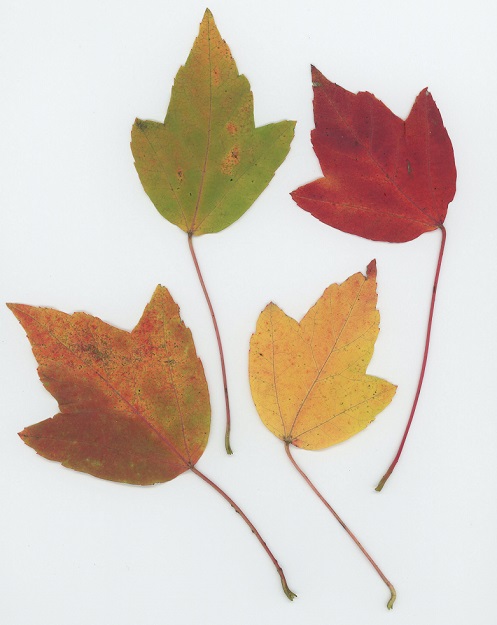
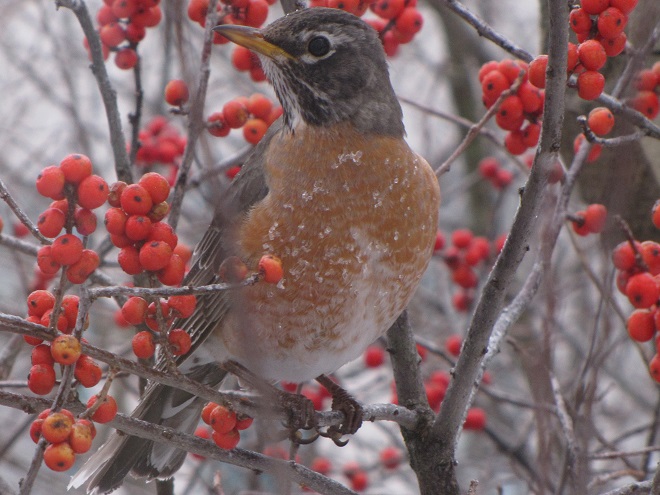
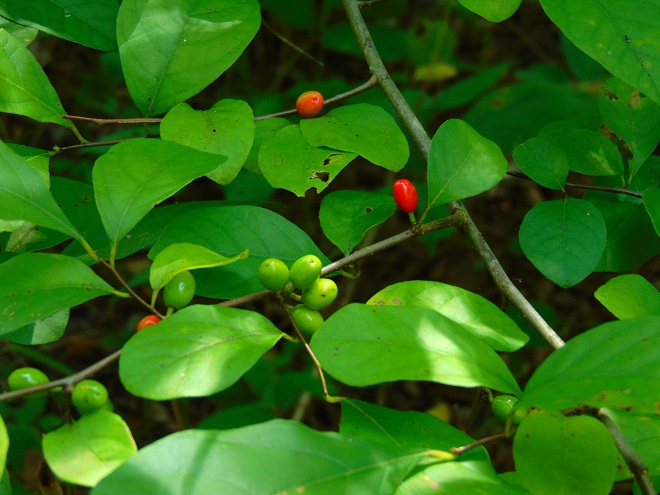
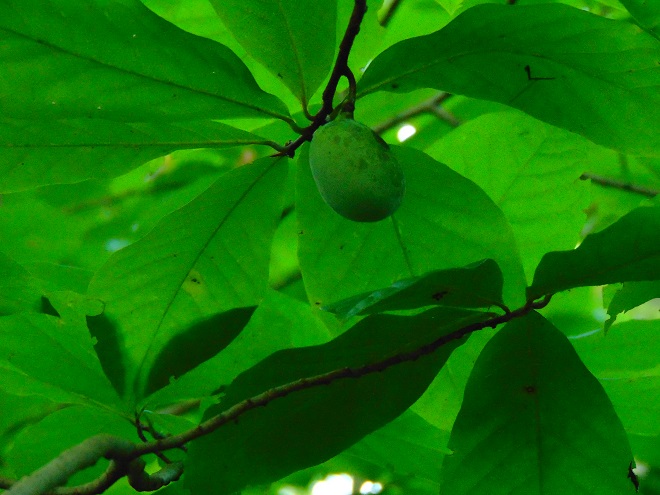
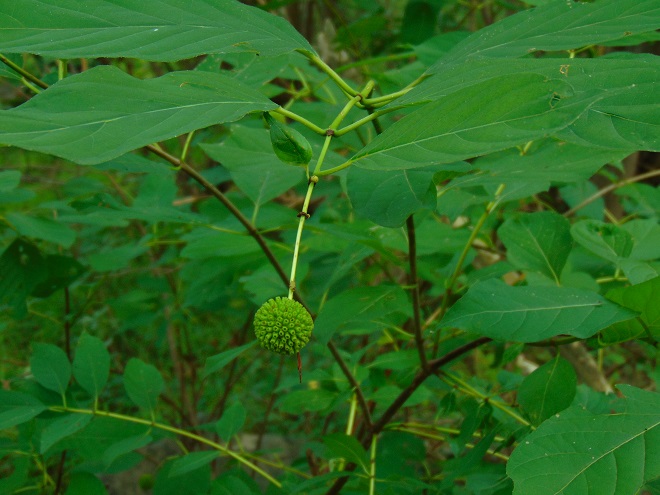
The Red Maple is an ideal tree for a stream buffer project. They do so well that you should limit them to 10% or less of the plants in your project so that they don’t overwhelm slower-growing species.The River Birch (Betula nigra) is a multi-trunked tree of lowlands. Large specimens with arching trunks help shade waterways and provide a source of falling insects for surface-feeding fish. Its peeling bark is a distinctive feature.The Common Winterberry with its showy red winter-time fruit is a slow-growing shrub of wet soils. Only female specimens of this deciduous holly produce berries, so you need to plant a bunch to make sure you have both genders for successful pollination.An American Robin feeding on Common Winterberry.Common Spicebush is a shrub of moist lowland soils. It is the host plant for the Spicebush Swallowtail butterfly and produces small red berries for birds and other wildlife. Plant it widely among taller trees to provide native vegetation in the understory of your forest.Common Spicebush foliage and berries in the shade beneath a canopy of tall trees.The Common Pawpaw a small shade-loving tree of the forest understory.Common Pawpaw is a colony-forming small tree which produces a fleshy fruit. It is the host plant for the caterpillars of the Zebra Swallowtail.The Buttonbush is a shrub of wet soils. It produces a round flower cluster, followed by this globular seed cluster.And don’t forget the Eastern Sycamore, the giant of the lowlands. At maturity, the white-and-tan-colored bark on massive specimens makes them a spectacular sight along stream courses and river shores. Birds ranging from owls, eagles, and herons to smaller species including the Yellow-throated Warbler rely upon them for nesting sites.Yellow-crowned Night Herons, an endangered species in Pennsylvania, nesting in an Eastern Sycamore.
So don’t mow, do something positive and plant a buffer!
Act now to order your plants because deadlines are approaching fast. For links to the County Conservation District Tree Sales in the Lower Susquehanna River Watershed, see our February 18th post.
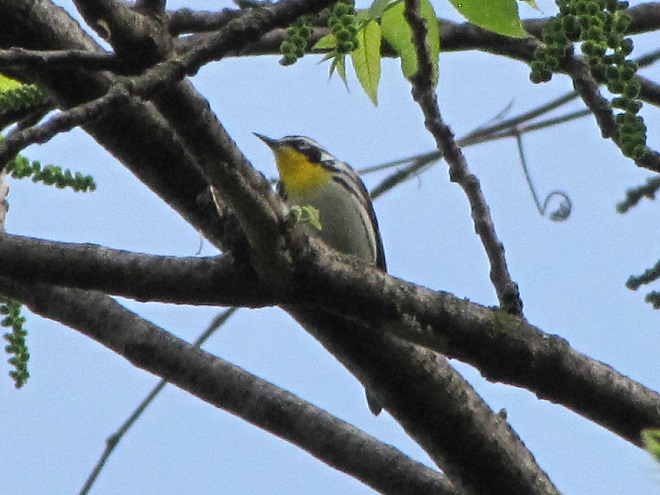
A Yellow-throated Warbler (Setophaga dominica) searches for insects among the branches of a flowering Black Walnut (Juglans nigra). In river bottomlands, they nest almost exclusively in the canopy of massive Eastern Sycamores trees. In mature mountain forests, they also use pines. The Lower Susquehanna River Watershed is located along the northern extreme of the Yellow-throated Warbler’s regular breeding range.
In the urban landscape, massive old trees like this Eastern Sycamore not only provide shade and beauty, but they can also be essential nesting sites for birds like these Yellow-crowned Night Herons, a species listed as endangered in Pennsylvania. This pair is part of a small colony located in the stylish midtown section of the state’s capital city, Harrisburg.
A very light fog lifted quickly at sunrise. Afterward, there was a minor movement of migrants: forty-nine Ring-billed Gulls, a few American Herring Gulls, a Red-shouldered Hawk following the river to the southeast, and small flocks totaling nine Cedar Waxwings and twenty-eight Red-winged Blackbirds.
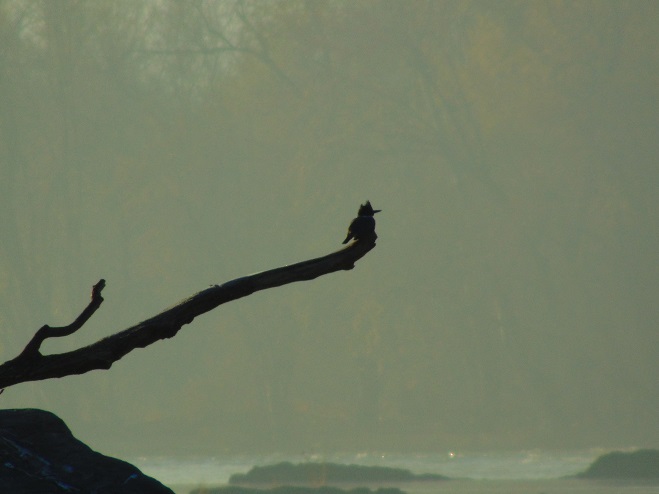
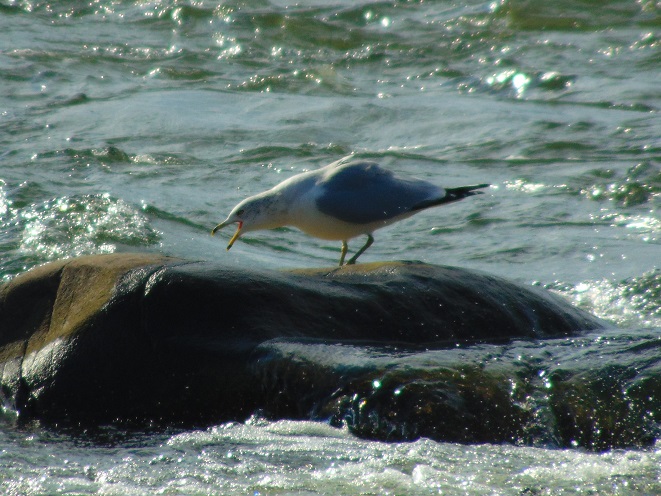
A Belted Kingfisher in the morning fog.A Ring-billed Gull calls as active migrants pass overhead on their way downriver.CLICK ON THE LOGO FOR TODAY’S MIGRATION COUNT TOTALS
In the Riparian Woodland, small mixed flocks of winter resident and year-round resident birds were actively feeding. They must build and maintain a layer of body fat to survive blustery cold nights and the possible lack of access to food during snowstorms. There’s no time to waste; nasty weather could bring fatal hardship to these birds soon.
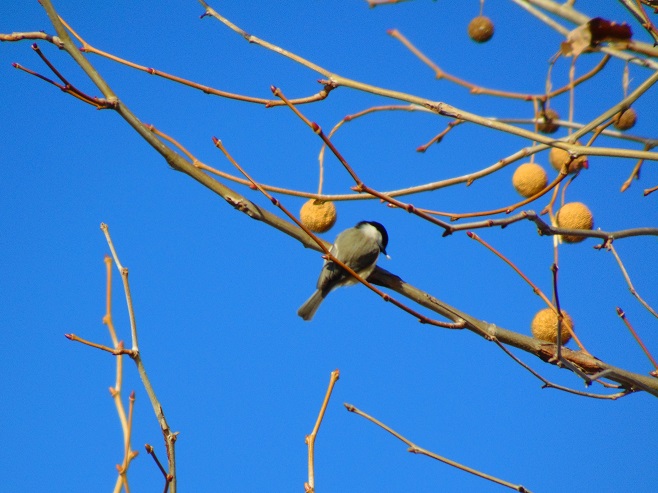
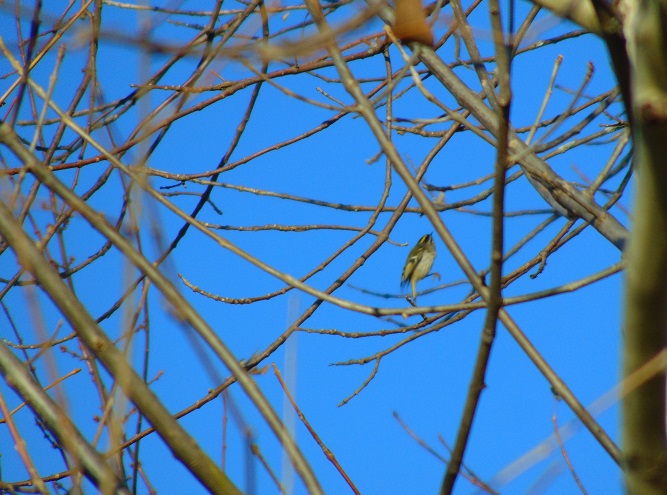
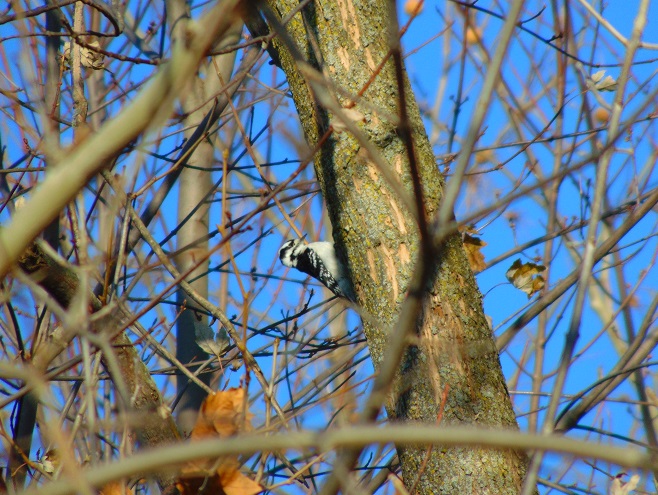
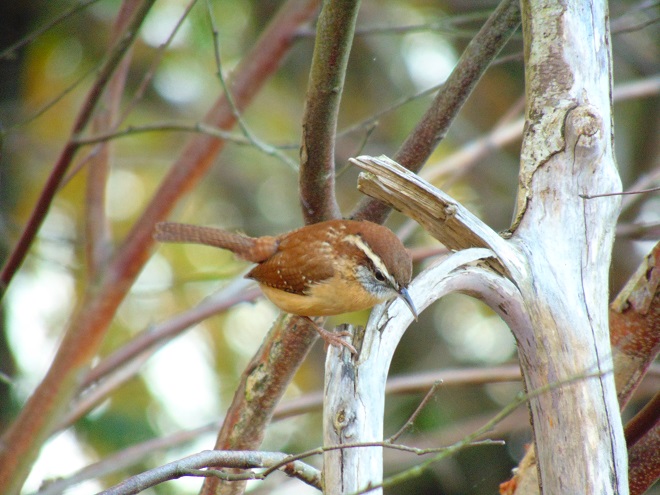
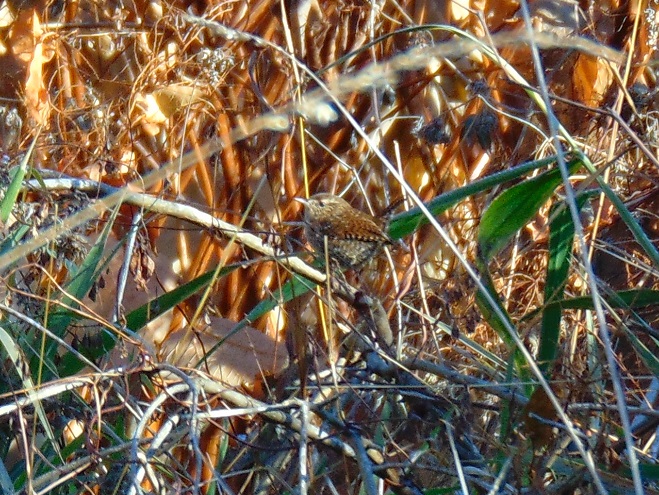
A Carolina Chickadee (Poecile carolinensis) feeds on the seeds of an Eastern Sycamore (Platanus occidentalis), also known as American Sycamore. Chickadees are generalist feeders, eating invertebrates and suet at feeding stations in addition to the seeds of many plants. Carolina Chickadees are year-round residents at Conewago Falls.A fast-moving Golden-crowned Kinglet zips from limb to limb to grab tiny insects and other invertebrates. During the winter, these petite birds will carefully probe the bark and crevices of trees to glean enough food to survive. Golden-crowned Kinglets are winter residents at Conewago Falls. In spring, they will depart to nest in coniferous forests.A Downy Woodpecker (Picoides pubescens) searches an infected tree for insects. They are year-round residents.Carolina Wrens (Thryothorus ludovicianus) are considered year-round residents at Conewago Falls, though they may withdraw to the south during severe winters. Carolina Wrens sing year-round. Today, their loud melody echoed through the Riparian Woodland all morning.The tiny bob-tailed Winter Wren is an elusive ground-dwelling winter resident at the falls. You may hear their scolding chatter from rocky areas and tree logs where they climb around mouse-like in search of small invertebrates. Their song is a fast jumble of dainty musical trills that can sometimes be heard echoing through the Riparian Woodland in winter. In spring, they’ll depart to nest in damp coniferous forests.