Despite being located in an urbanized downtown setting, blustery weather in recent days has inspired a wonderful variety of small birds to visit the garden here at the susquehannawildlife.net headquarters to feed and refresh. For those among you who may enjoy an opportunity to see an interesting variety of native birds living around your place, we’ve assembled a list of our five favorite foods for wild birds.
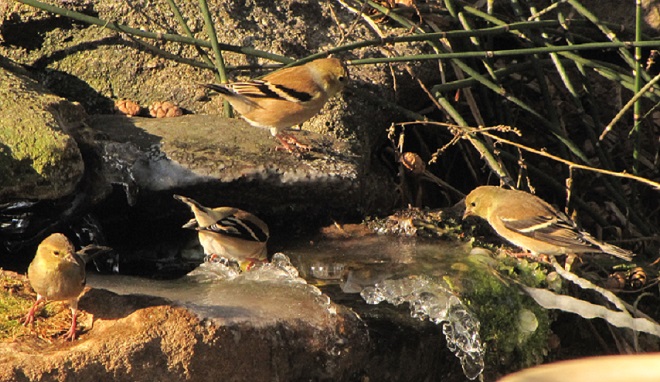
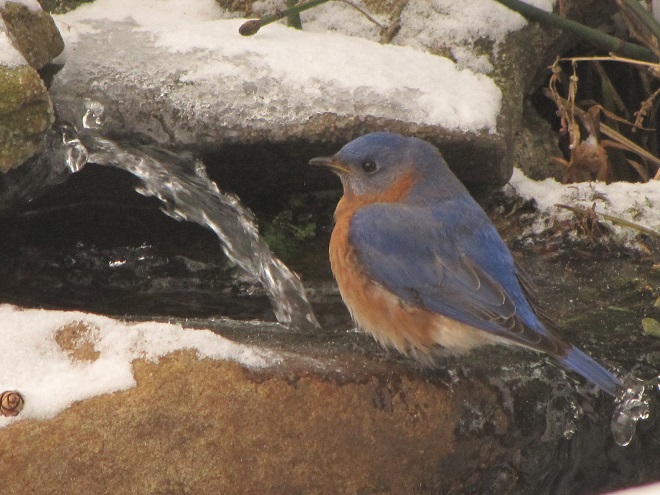
American Goldfinches in drab winter (basic) plumage visit the trickle of water entering the headquarters pond to bathe and drink. In addition to offering the foods animals need to survive, a source of clean water is an excellent way to attract wildlife to your property.
The selections on our list are foods that provide supplemental nutrition and/or energy for indigenous species, mostly songbirds, without sustaining your neighborhood’s non-native European Starlings and House Sparrows, mooching Eastern Gray Squirrels, or flock of ecologically destructive hand-fed waterfowl. We’ve included foods that aren’t necessarily the cheapest but are instead those that are the best value when offered properly.
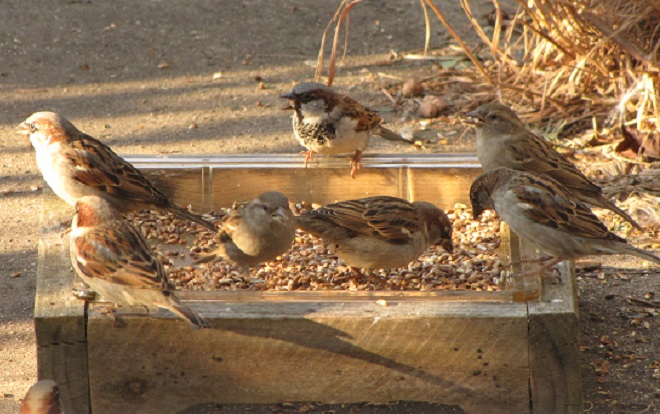
Bread, “bargain” seed mixes, and cracked corn can attract and sustain large numbers of House Sparrows and European Starlings. Both are non-native species that compete mercilessly with indigenous birds including bluebirds for food and nesting sites. Though found favorable for feeding Northern Cardinals without attracting squirrels, the expensive safflower seed seen here is another favorite of these aggressive House Sparrows. Ever wasteful, they “shovel” seed out of feeders while searching for the prime morsels from which they can easily remove the hulls. Trying not to feed them is an ongoing challenge, so we don’t offer these aforementioned foods to our avian guests.
Number 5
Raw Beef Suet
In addition to rendered beef suet, manufactured suet cakes usually contain seeds, cracked corn, peanuts, and other ingredients that attract European Starlings, House Sparrows, and squirrels to the feeder, often excluding woodpeckers and other native species from the fare. Instead, we provide raw beef suet.
Because it is unrendered and can turn rancid, raw beef suet is strictly a food to be offered in cold weather. It is a favorite of woodpeckers, nuthatches, and many other species. Ask for it at your local meat counter, where it is generally inexpensive.
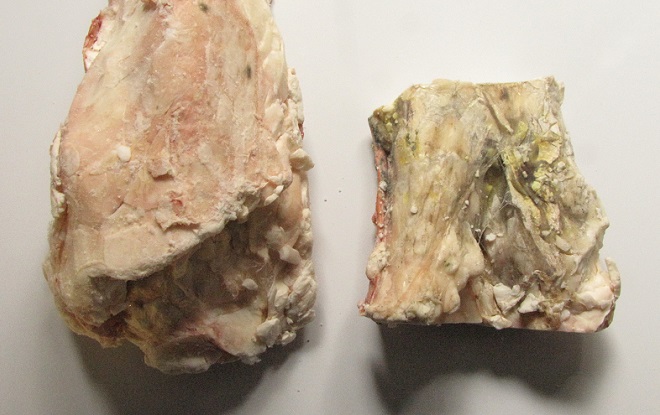
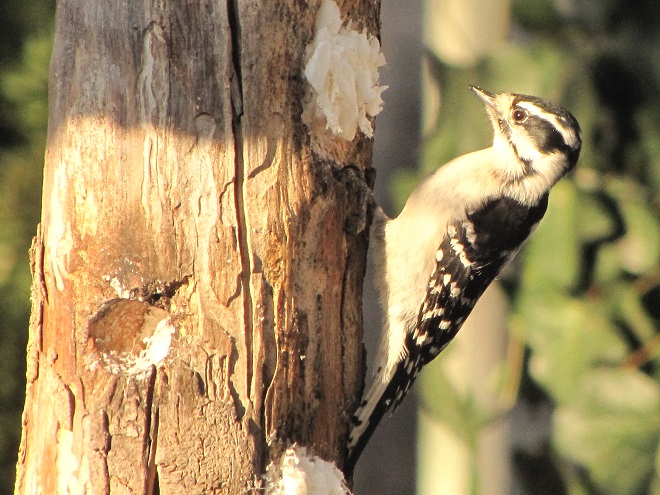
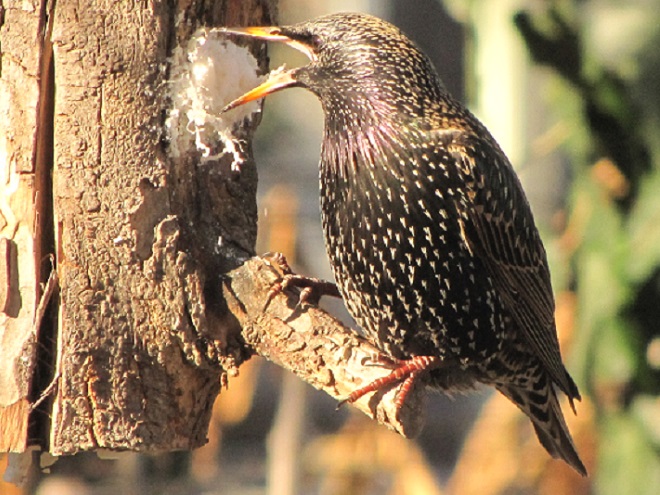
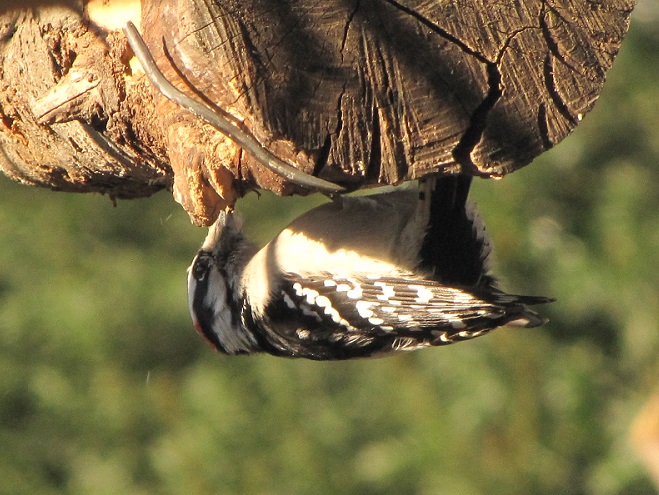
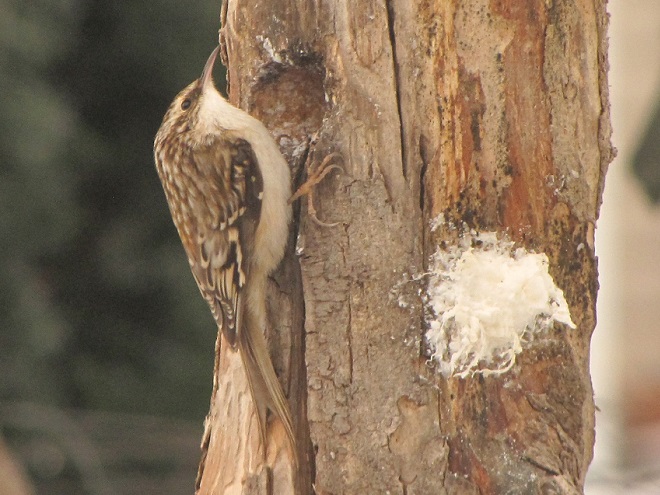
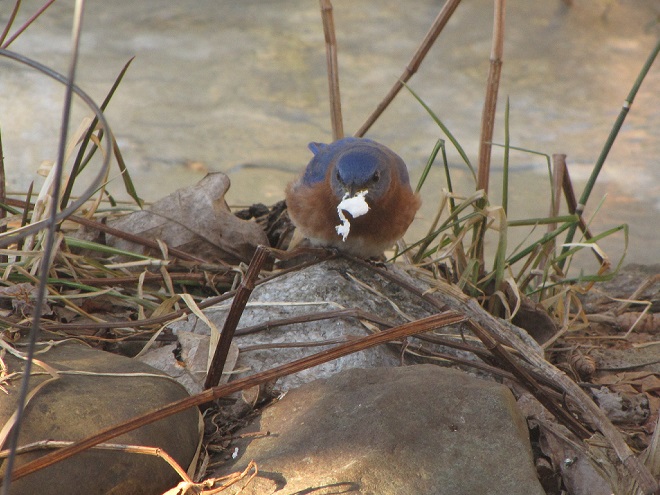
Raw beef suet is fat removed from areas surrounding the kidneys on a beef steer. To avoid spoiling, offer it only in the winter months, particularly if birds are slow to consume the amount placed for them. If temperatures are above freezing, it’s important to replace uneaten food frequently. The piece seen here on the left was stored in the freezer for almost a year while the rancid piece to the right was stored in a refrigerator at about 40 degrees Fahrenheit for just two months. You can render raw beef suet and make your own cakes by melting it down and pouring it into a form such as cupcake tin. But do it outdoors or you’ll be living alone for a while.A female Downy Woodpecker feeds on raw beef suet stuffed into holes drilled into a vertically hanging log. Because they can’t be cleaned, log feeders should be discarded after one season. Wire cage feeders though, can usually be scrubbed, disinfected, dried, and reused.Pesky European Starlings might visit a raw beef suet feeder but won’t usually linger unless other foods to their liking are available nearby.This male Downy Woodpecker has no trouble feeding on raw beef suet packed into holes drilled into the underside of this horizontally hanging log. Starlings don’t particularly care to feed this way.Unusual visitors like a Brown Creeper are more likely to stop by at a suet feeder when it isn’t crowded by raucous starlings, House Sparrows, and squirrels. This one surprised us just this morning.Below the feeders, scraps of suet that fall to the ground are readily picked up, usually by ground-feeding birds. In this instance, a male Eastern Bluebird saw a chunk break loose and pounced on it with haste.
Number 4
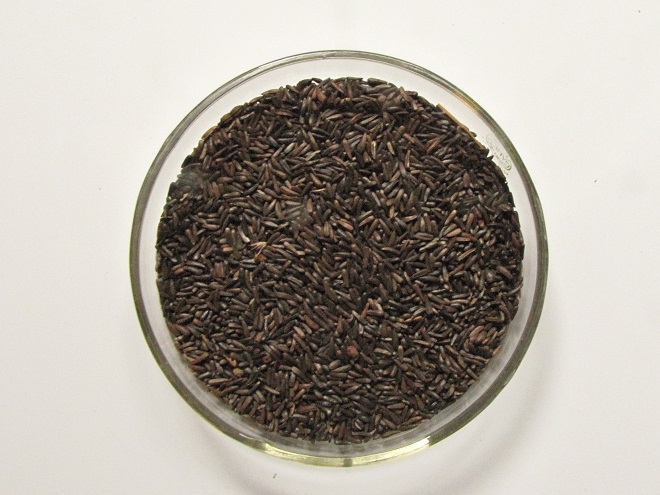
Niger (“Thistle”) Seed
Niger seed, also known as nyjer or nyger, is derived from the sunflower-like plant Guizotia abyssinica, a native of Ethiopia. By the pound, niger seed is usually the most expensive of the bird seeds regularly sold in retail outlets. Nevertheless, it is a good value when offered in a tube or wire mesh feeder that prevents House Sparrows and other species from quickly “shoveling” it to the ground. European starlings and squirrels don’t bother with niger seed at all.
Niger seed must be kept dry. Mold will quickly make niger seed inedible if it gets wet, so avoid using “thistle socks” as feeders. A dome or other protective covering above a tube or wire mesh feeder reduces the frequency with which feeders must be cleaned and moist seed discarded. Remember, keep it fresh and keep it dry!
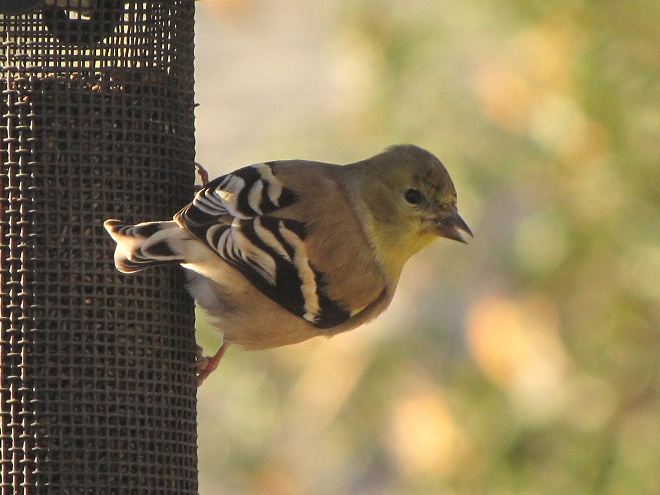
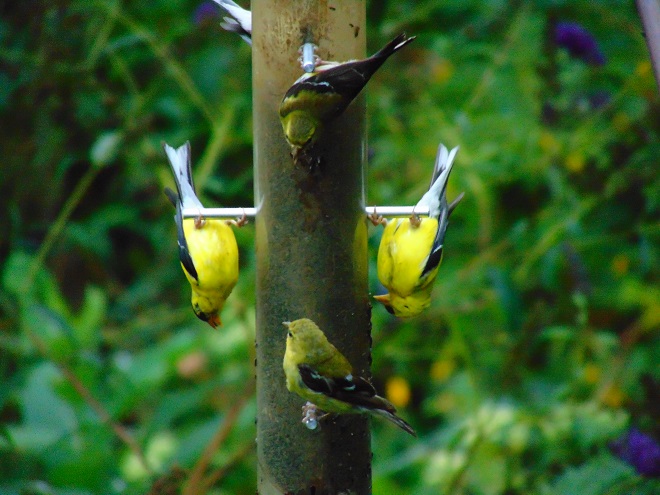
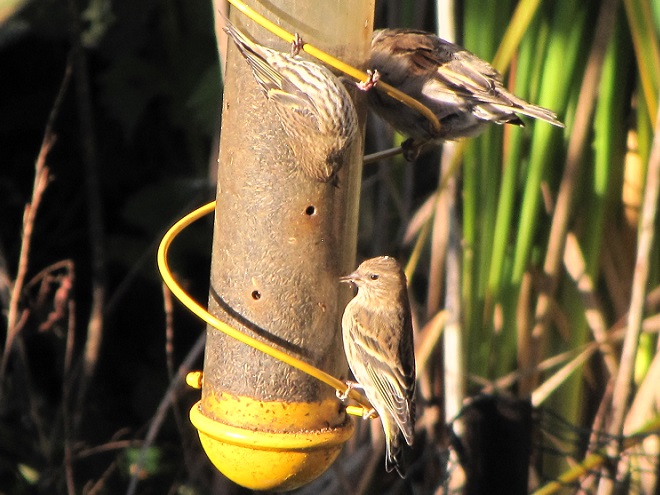
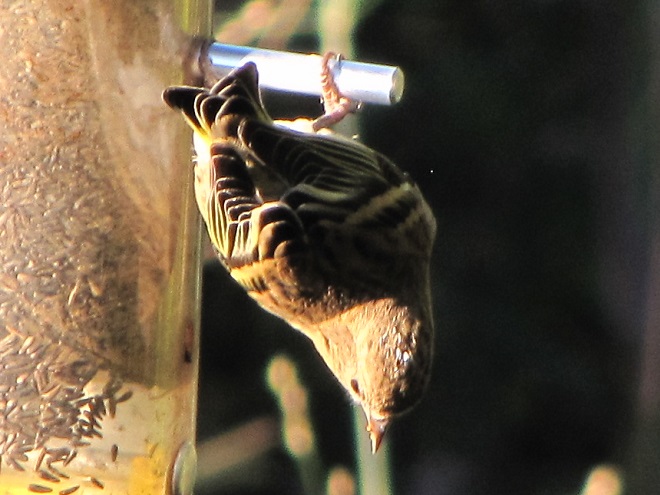
Niger (“thistle”) seed is very small, so it is offered in specialized feeders to prevent seed from spilling out of oversize holes as waste.An American Goldfinch in winter plumage feeding on niger seed from a wire mesh feeder. By April, goldfinches are molting into spectacular breeding feathers. Niger seed can be offered year-round to keep them visiting your garden while they are at maximum magnificence.American Goldfinches in August. This tube feeder is designed specifically for goldfinches, birds that have no difficulty hanging upside down to grab niger seed from small feeding ports.During invasion years, visiting Pine Siskins favor niger seed at feeding stations.Like goldfinches, Pine Siskins are quite comfortable feeding upside down on specialized tubes with perches positioned above the seed ports. Seeds dropped to the ground are readily picked up by ground-feeding birds including Mourning Doves and Dark-eyed Juncos. Periodically, uneaten niger seed should be swept up and discarded.
Number 3
Striped Sunflower Seed
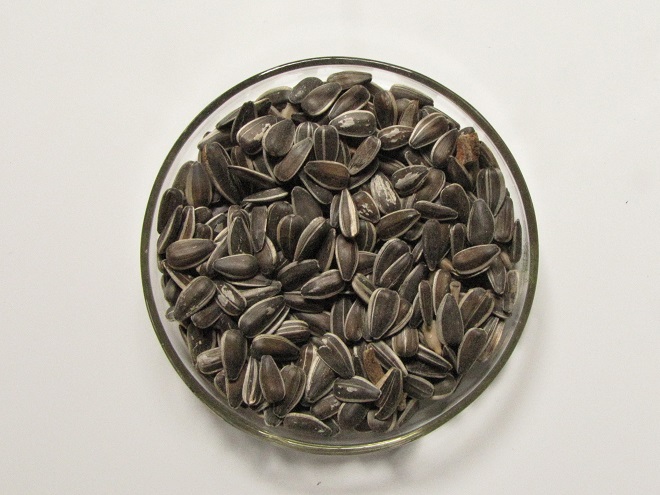
Striped sunflower seed, also known as grey-striped sunflower seed, is harvested from a cultivar of the Common Sunflower (Helianthus annuus), the same tall garden plant with a massive bloom that you grew as a kid. The Common Sunflower is indigenous to areas west of the Mississippi River and its seeds are readily eaten by many native species of birds including jays, finches, and grosbeaks. The husks are harder to crack than those of black oil sunflower seed, so House Sparrows consume less, particularly when it is offered in a feeder that prevents “shoveling”. For obvious reasons, a squirrel-proof or squirrel-resistant feeder should be used for striped sunflower seed.
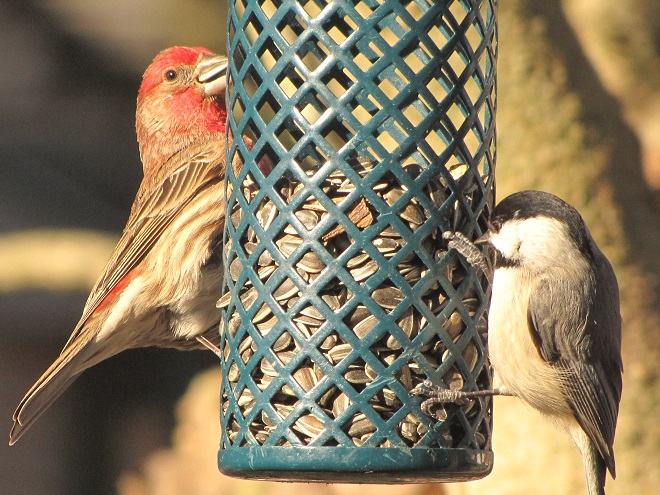
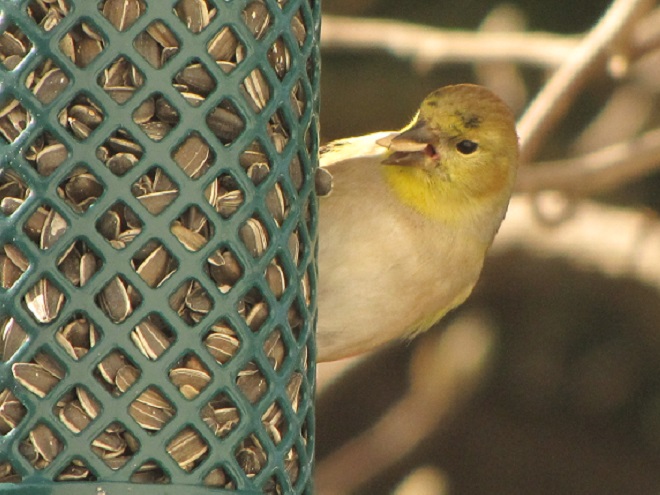
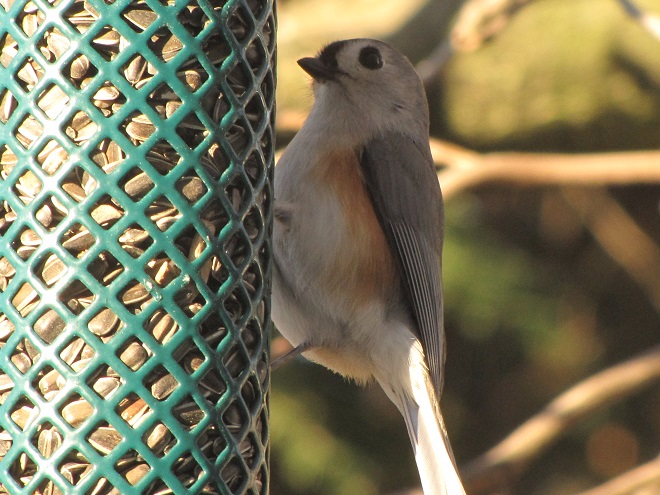
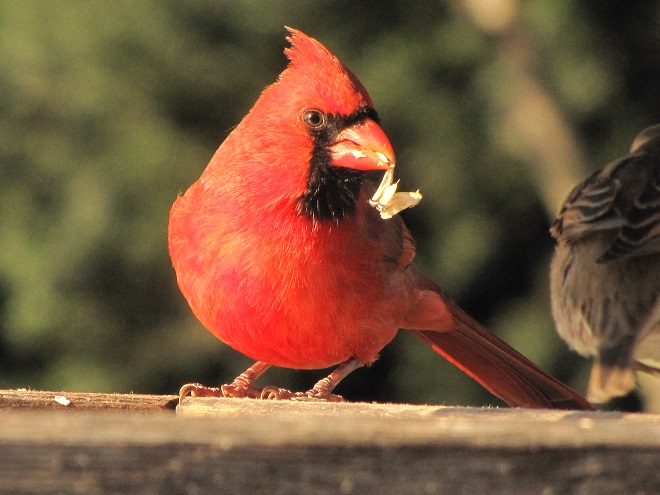
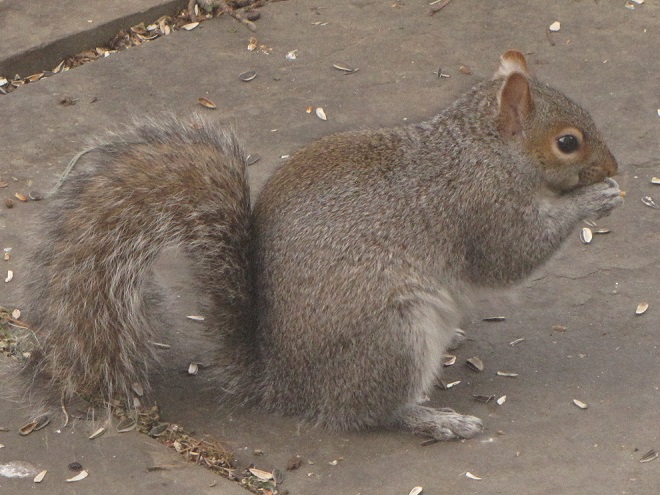
Striped sunflower seed.A male House Finch and a Carolina Chickadee pluck striped sunflower seeds from a squirrel-resistant powder-coated metal-mesh tube feeder.An American Goldfinch in winter plumage finds striped sunflower seeds irresistible, even with niger seed being offered in an adjacent feeder.A Tufted Titmouse visits a feeder stocked with striped sunflower seeds.Northern Cardinals readily feed on striped sunflower seeds, especially those that fall from our metal-mesh tube feeders.An Eastern Gray Squirrel (Sciurus carolinensis) has no choice but to be satisfied with striped sunflower seeds that spill from our wire-mesh tube feeders.
Number 2
Mealworms
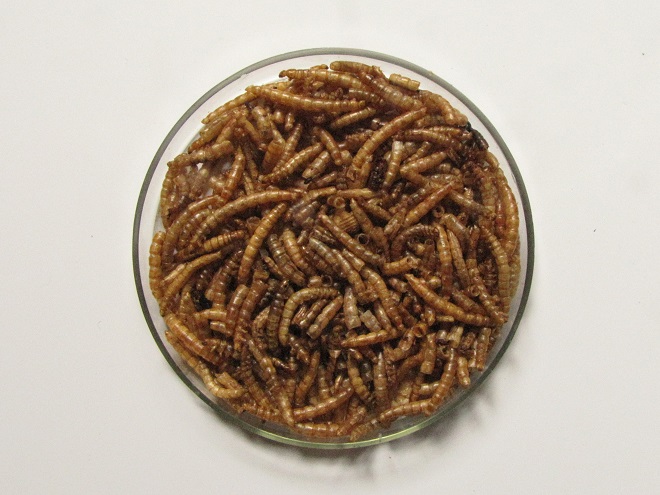
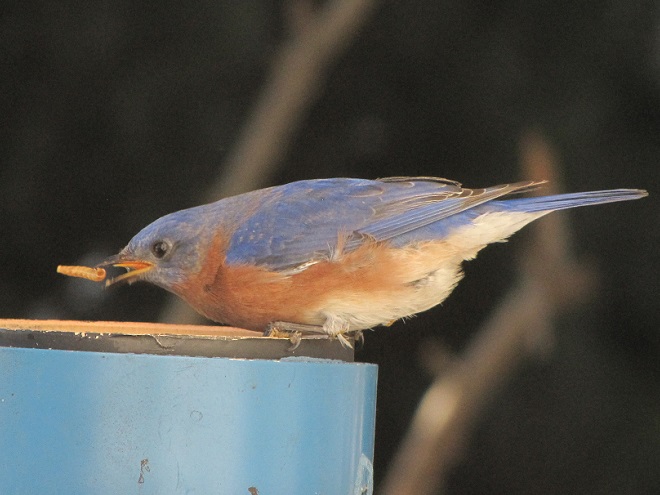
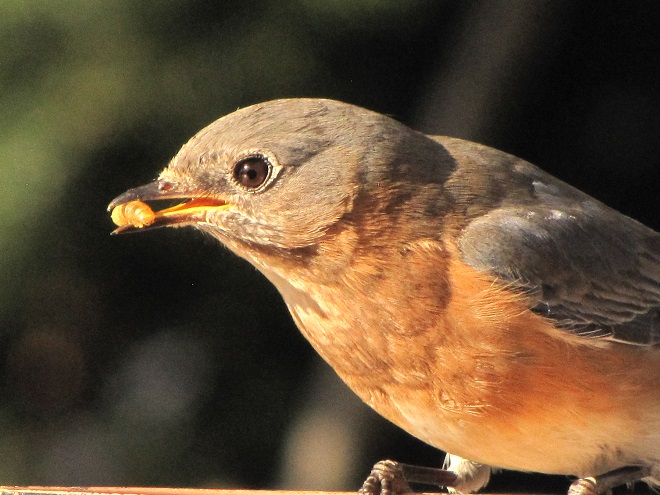
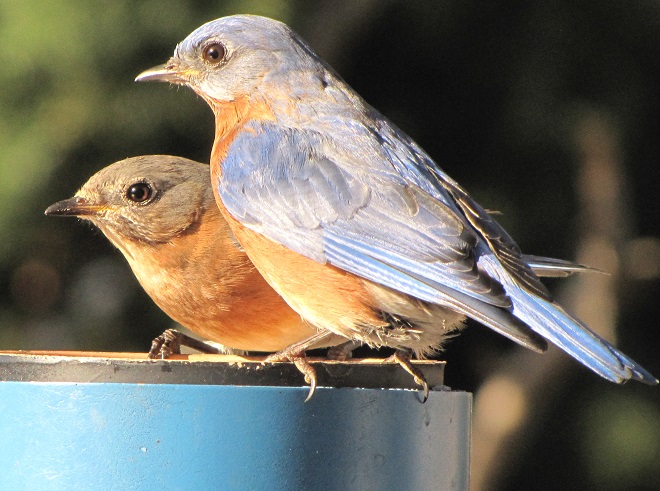
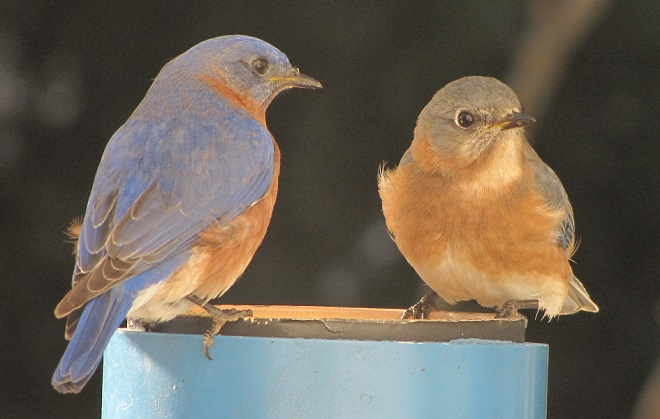
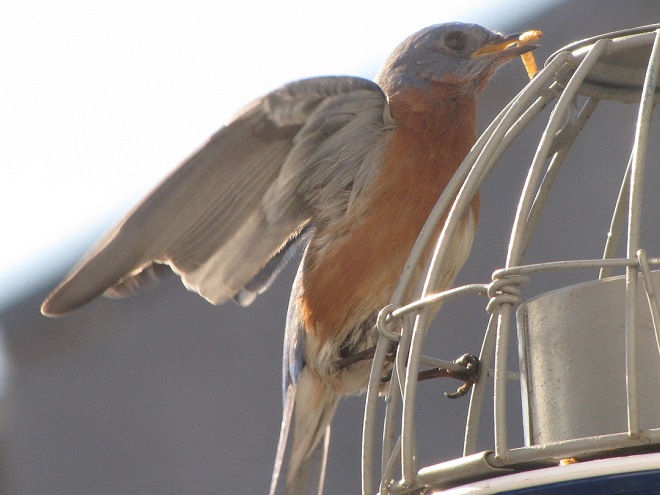
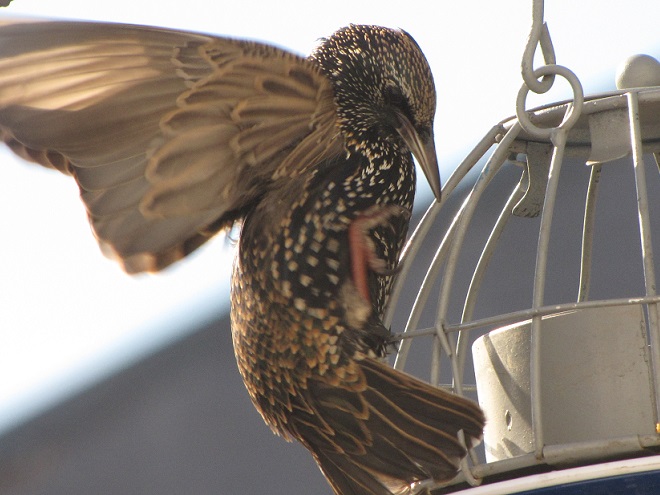
Mealworms are the commercially produced larvae of the beetle Tenebrio molitor. Dried or live mealworms are a marvelous supplement to the diets of numerous birds that might not otherwise visit your garden. Woodpeckers, titmice, wrens, mockingbirds, warblers, and bluebirds are among the species savoring protein-rich mealworms. The trick is to offer them without European Starlings noticing or having access to them because European Starlings you see, go crazy over a meal of mealworms.
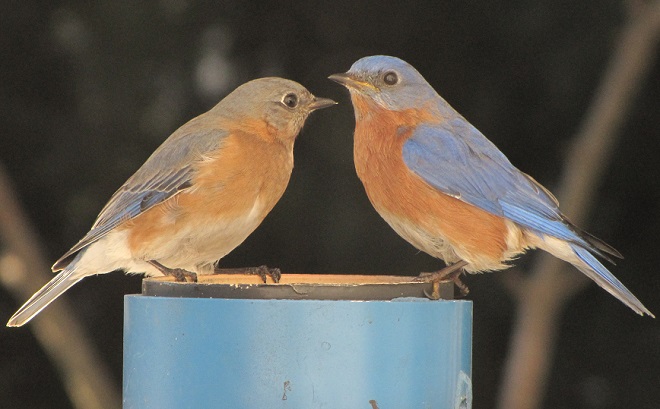
Dried mealworms can be offered in a cup or on a tray feeder. Live mealworms need to be contained in a steep-sided dish, so they don’t crawl away. Unless you’re really lucky, you’ll probably have to place your serving vessel of mealworms inside some type of enclosure to exclude European Starlings.A male Eastern Bluebird tossing and grabbing a dried mealworm.A female Eastern Bluebird with a dried mealworm.A pair of Eastern Bluebirds. The value of mealworms is self-evident: you get to have bluebirds around.
To foil European Starlings, we assembled this homemade mealworm feeder from miscellaneous parts. The bluebirds took right to it.It frustrates the starlings enough to discourage them from sticking around for long.If you’re offering dried mealworms, a source of clean water must be available nearby so that the bluebirds and other guests at your feeder don’t become dehydrated.
Number 1
Food-producing Native Shrubs and Trees
The best value for feeding birds and other wildlife in your garden is to plant food-producing native plants, particularly shrubs and trees. After an initial investment, they can provide food, cover, and roosting sites year after year. In addition, you’ll have a more complete food chain on a property populated by native plants and all the associated life forms they support (insects, spiders, etc.).
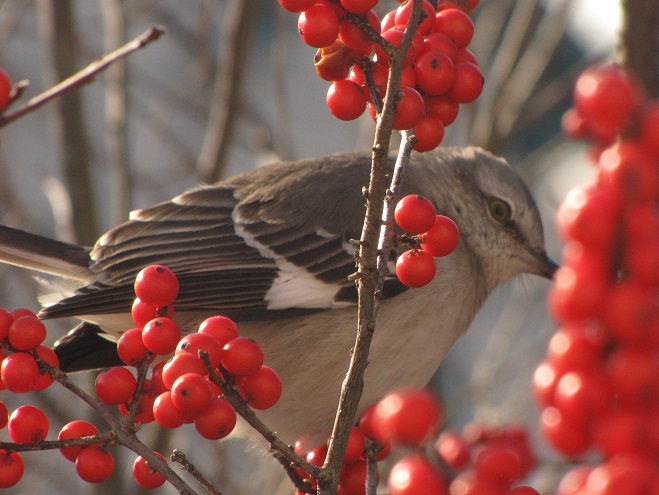
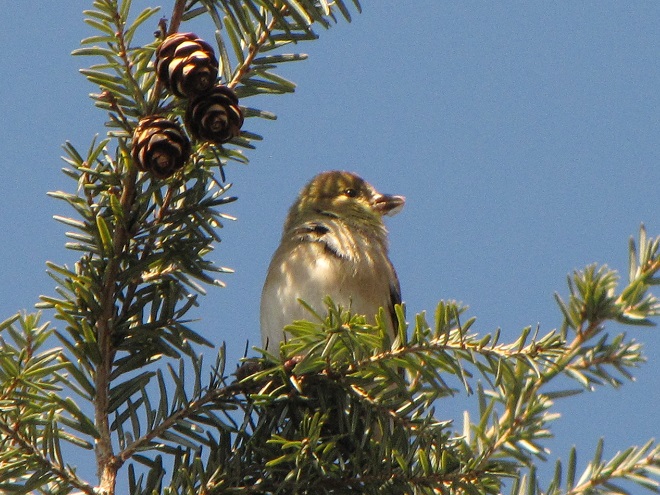
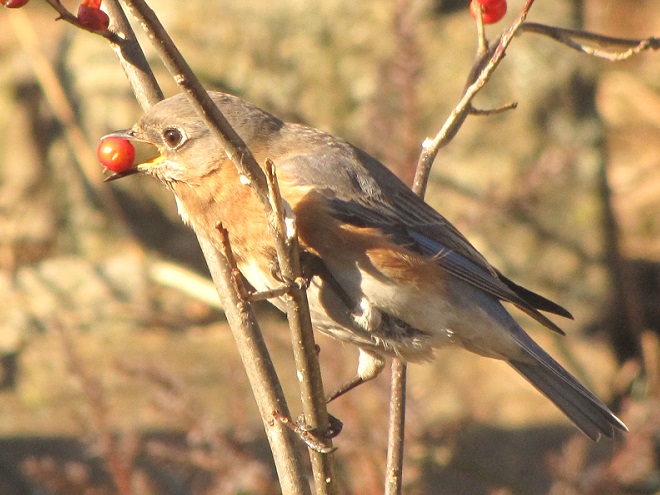
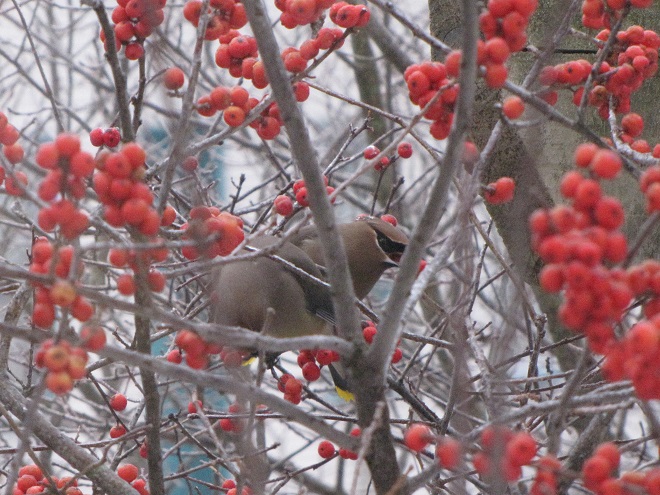
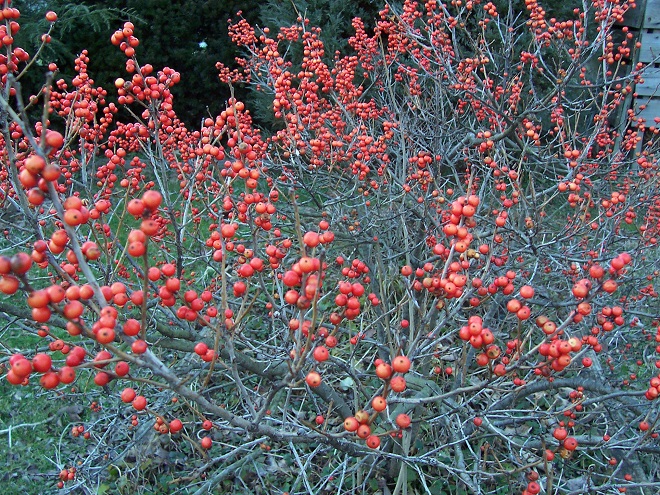
In your garden, a Northern Mockingbird may defend a food supply like these Common Winterberry fruits as its sole means of sustenance for an entire winter season. Having an abundance of plantings assures that in your cache there’s plenty to eat for this and other species.The American Goldfinches currently spending the winter at our headquarters are visiting the feeders for niger and striped sunflower seeds, but the bulk of their diet consists of tiny seeds from the cones on our Eastern Hemlock trees. At night, birds obtain shelter from the weather by roosting in this clump of evergreens.While the Eastern Bluebirds visiting the susquehannawildlife.net headquarters are fond of mealworms, the bulk of their diet here consists of these Common Winterberry fruits and the berries on our American Holly trees.Cedar Waxwings are readily attracted to red berries including Common Winterberry fruit.Migrating American Robins visit the headquarters garden in late winter each year to devour berries before continuing their journey to the north.
Your local County Conservation District is having its annual spring tree sale soon. They have a wide selection to choose from each year and the plants are inexpensive. They offer everything from evergreens and oaks to grasses and flowers. You can afford to scrap the lawn and revegetate your whole property at these prices—no kidding, we did it. You need to preorder for pickup in the spring. To order, check their websites now or give them a call. These food-producing native shrubs and trees are by far the best bird feeding value that you’re likely to find, so don’t let this year’s sales pass you by!
The emergence of Brood X Periodical Cicadas is now in full swing. If you visit a forested area, you may hear the distant drone of very large concentrations of one or more of the three species that make up the Brood X event. The increasing volume of a chorus tends to attract exponentially greater numbers of male cicadas from within an expanding radius, causing a swarm to grow larger and louder—attracting more and more females to the breeding site.
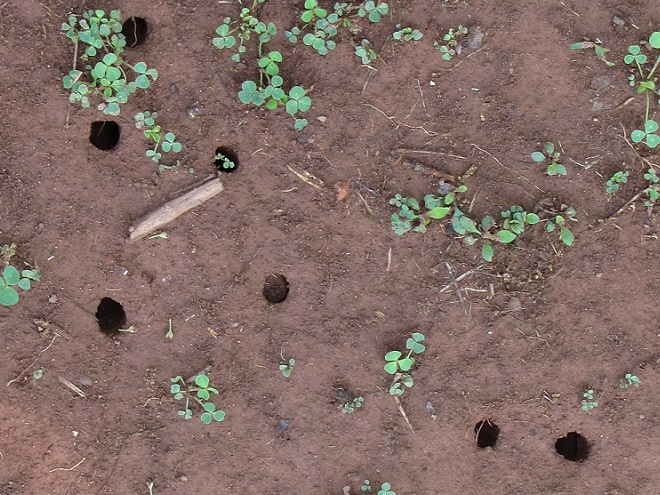
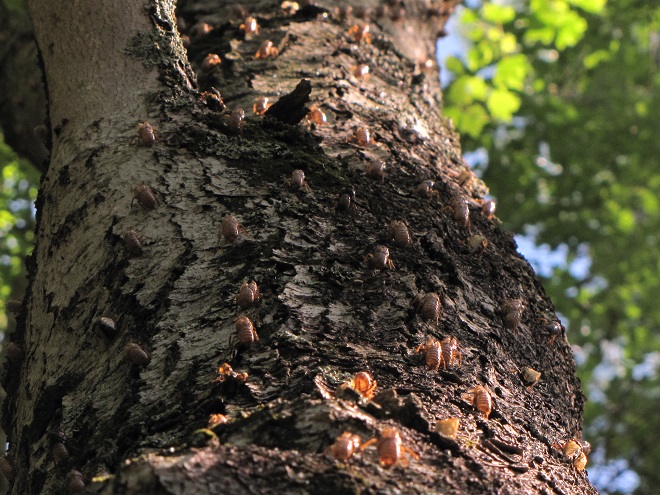
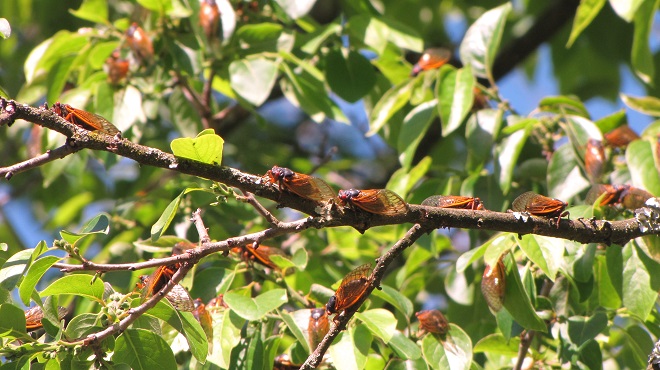
Holes in the ground where emerging Brood X Periodical Cicadas have come to the surface.Having ascended the trunk of this Eastern White Pine after emerging from the soil, massive numbers of periodical cicadas have left behind hundreds of opaque exuviae. The exuvia is the exoskeletal remains of the cicada’s final molt from a nymph into a flying adult.A freshly molted Magicicada cassini periodical cicada.
Each periodical cicada species has a distinctive song. This song concentrates males of the same species at breeding sites—then draws in an abundance of females of the same species to complete the mating process. Large gatherings of periodical cicadas can include all three species, but a close look at swarms on State Game Lands 145 in Lebanon County and State Game Lands 46 (Middle Creek Wildlife Management Area) in Lancaster County during recent days found marked separation by two of the three. Most swarms were dominated by Magicicada septendecim, the largest, most widespread, and most common species. However, nearly mono-specific swarms of M. cassini, the second most numerous species, were found as well. An exceptionally large one was northwest of the village of Colebrook on State Game Lands 145. It was isolated by a tenth of a mile or more from numerous large gatherings of M. septendecim cicadas in the vicinity. These M. cassini cicadas, with a chorus so loud that it outdistanced the songs made by the nearby swarms of M. septendecim, seized the opportunity to separate both audibly and physically from the more dominant species, thus providing better likelihood of maximizing their breeding success.
Some of the tens of thousands of M. cassini periodical cicadas in a concentration on State Game Lands 145 northwest of Colebrook in Lebanon County, Pennsylvania. This swarm occupied deciduous and evergreen trees on several acres of a south-facing hillside. To provide protection from predators and assure the chance of finding a mate “in the crowd”, lesser numbers of this and the rarer species, Magicicada septendecula, would need to merge into the swarms of the abundant M. septendecim periodical cicadas to breed.
The process of identifying periodical cicadas is best begun by listening to their choruses, songs, and calls. After all, the sounds of cicadas will lead one to the locations where they are most abundant. The two most common species, M. septendecim and M. cassini, produce a buzzy chorus that, when consisting of hundreds or thousands of cicadas “singing” in unison, creates a droning wail that can carry for a quarter of a mile or more. It’s a surreal humming sound that may remind one of a space ship from a science fiction film.
Listen to the songs of individual cicadas at close range and you’ll hear a difference between the widespread M. septendecim “Pharaoh Periodical Cicada” and the other two species. M. septendecim‘s song is often characterized as a drawn out version of the word “Pharaoh”, hence one of the species’ common names (another is “Seventeen-year Locust”). As part of their courtship ritual, “Pharaoh Periodical Cicadas” sometimes make a purring or cooing sound, which is often extended to sound like kee-ow, then sometimes revved up further to pha-raoh. M. cassini, often known as “Cassin’s Periodical Cicada” or “Dwarf Periodical Cicada”, and the least common species, M. septendecula, often make scratchy clicking or rattling calls as a lead-in to their song. Most observers will find little difficulty locating the widespread M. septendecim “Pharaoh Periodical Cicada” by sound, so listening for something different—the clicking call—is an easy way to zero in on the two less common species.
To penetrate the droning choruses of large numbers of “Pharaoh” and/or “Cassin’s Periodical Cicadas”, sparingly distributed M. septendecula cicadas have a noise-penetrating song consisting of a series of quick raspy notes with a staccato rhythm reminiscent of a pulsating lawn sprinkler. It can often be differentiated by a listener even in the presence of a roaring chorus of one or both of the commoner species. However, a word of caution is due. To call in others of their kind, “Cassin’s Periodical Cicadas” can produce a courtship song similar to that of M. septendecula so that they too can penetrate the choruses of the enormous numbers of “Pharaoh Periodical Cicadas” that concentrate in many areas. To play it safe, it’s best to have a good look at the cicadas you’re trying to identify.
M. cassini periodical cicadas “singing” from a treetop at Colebrook, Lebanon County, Pennsylvania. Clicking phrases are sure sign of the presence of this species and/or M. septendecula, the least likely of the three species to be encountered. When in close proximity to a swarm, a listener will often notice the rising and falling volume of a chorus in a cycle that repeats every few seconds, an effect caused by cicadas attempting to synchronize their songs in a harmony with others in the group. When courtship and mating is complete, female periodical cicadas will begin laying eggs in slits made in fresh new growth at the ends of branches on deciduous trees like the one seen here.
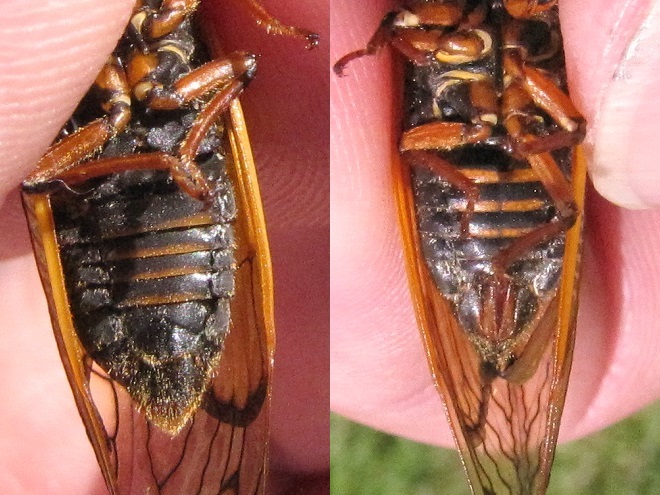
Visually identifying Brood X Periodical Cicadas to the species level is best done by looking for two key field marks—first, the presence or absence of orange between the eye and the root of the wings, and second, the presence or absence of orange bands on the underside of the abdomen. Seeing these field marks clearly requires in-hand examination of the cicada in question.
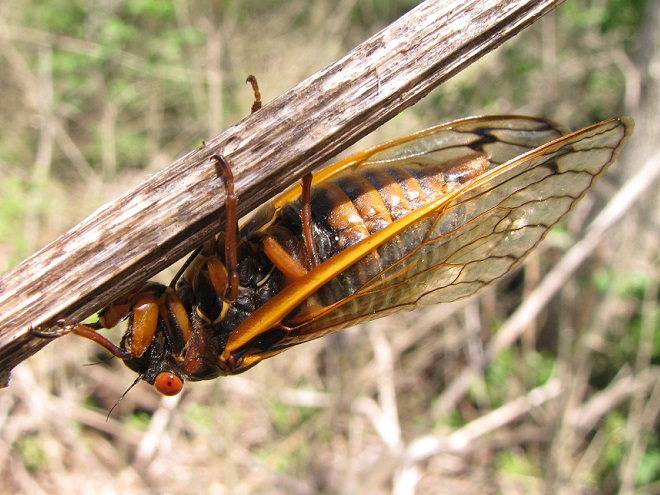
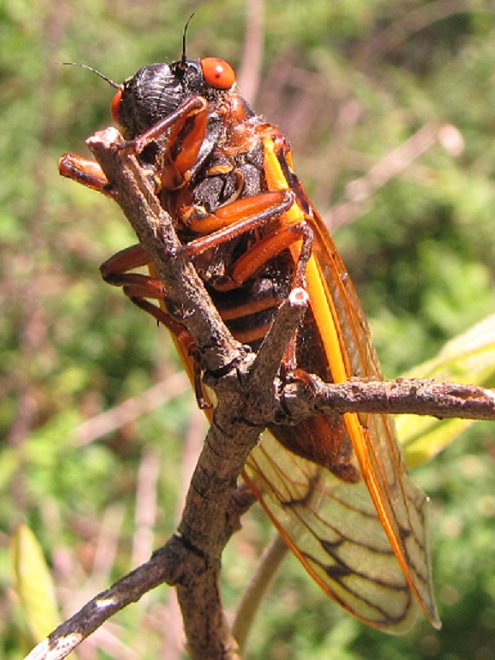
Observing a perched Brood X Periodical Cicada can sometimes provide a view of the key field marks needed for identification of the species. On the M. septendecim “Pharaoh Periodical Cicada” seen here, the orange patch between the eye and wing root and the orange bands on the underside of the abdomen are visible.The abdomen of this perched M. cassini “Cassin’s Periodical Cicada” appears, when viewed through the wings, to have orange bands. But, examination in hand would show an all-black abdomen with glossy surfaces shining in the sunlight. For accuracy, the up-close-and-personal look is necessary.In the hand, cicadas can be better studied for key field marks. M. septendecim (top) is larger than M. cassini (bottom) and M. septendecula, but the difference is not always apparent, particularly when a direct comparison cannot be made.
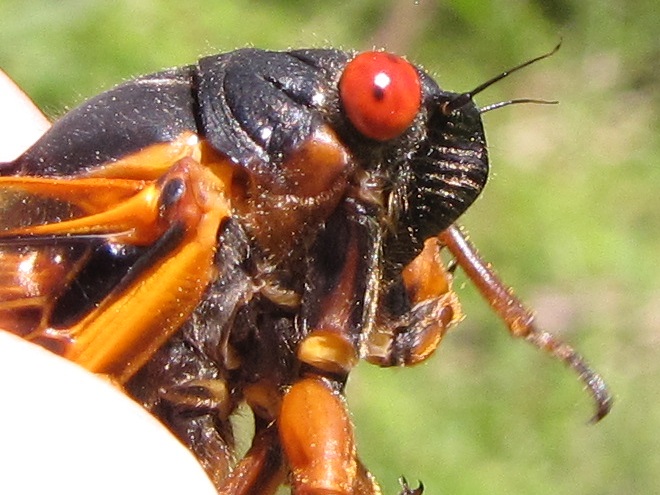
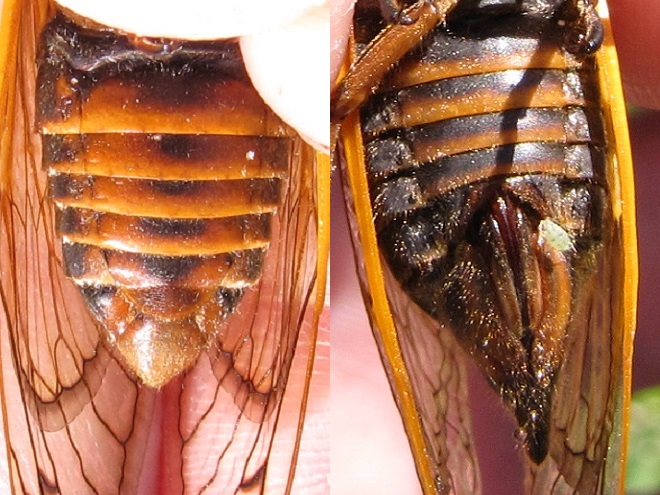
To reliably separate Brood X Periodical Cicadas by species, it is necessary to get a closeup view of the section of the thorax between the eye and the root (insertion) of the wings, plus a look at the underside of the abdomen. Here’s what you’ll see…
M. septendecim has an orange patch between the eye and the root of the wings.The underside of M. septendecim’s abdomen has orange bands or stripes along the trailing edge of each segment. The width of the bands can vary, but is typically wider on males (left) than on females (right).
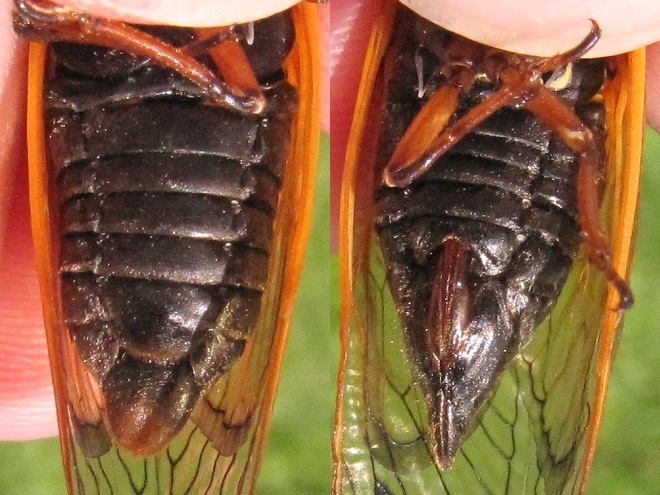
Magicicada cassini—“Cassin’s Periodical Cicada”
The thorax of M. cassini is black between the eye and the wing insertion.In both the male (left) and female (right), the underside of M. cassini’s abdomen is all black without orange bands or stripes.
Magicicada septendecula
M. septendecula’s thorax is black between the eye and root of the wings.The underside of M. septendecula’s abdomen has narrow orange bands or stripes along the trailing edge of each segment. The width of the bands can differ. Those of this male (left) are minimal and the bands on this female (right) are near the maximum for the species.
There you have it. Get out and take a closer look at the Brood X Periodical Cicadas near you.
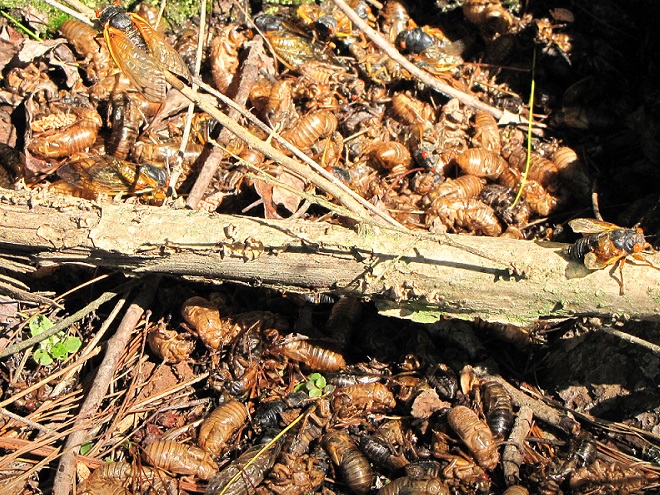
The abundant and widespread “Pharaoh Periodical Cicada” (M. septendecim).It’ll all be over before long. Accumulating remains of M. cassini “Cassin’s Periodical Cicadas” beneath an Eastern White Pine at the site of the Colebrook State Game Lands swarm.
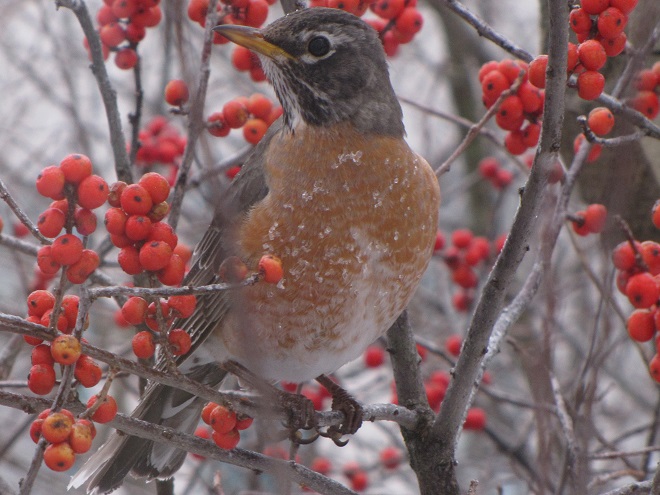
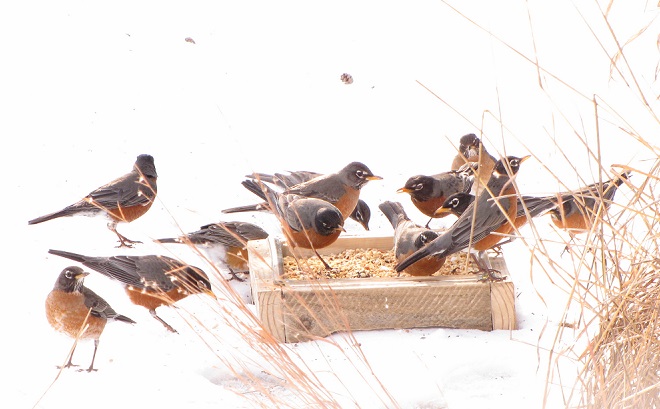
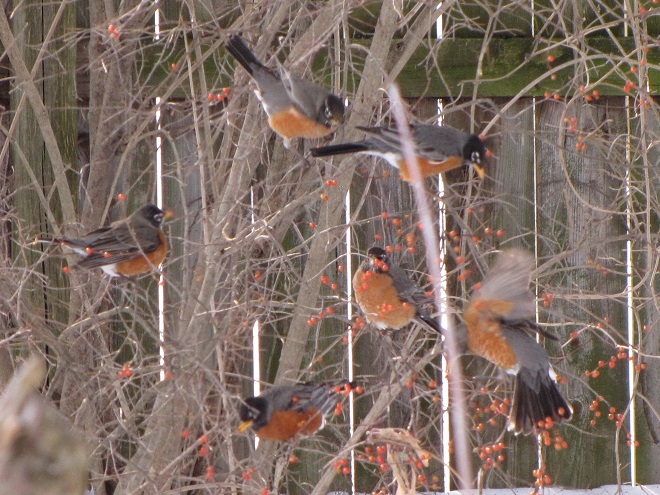
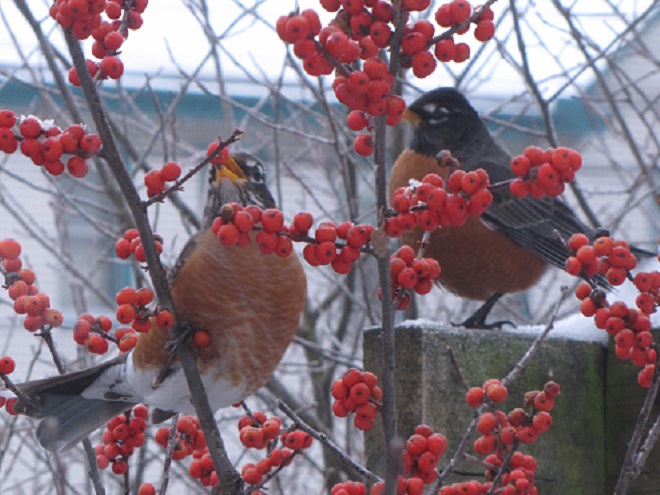
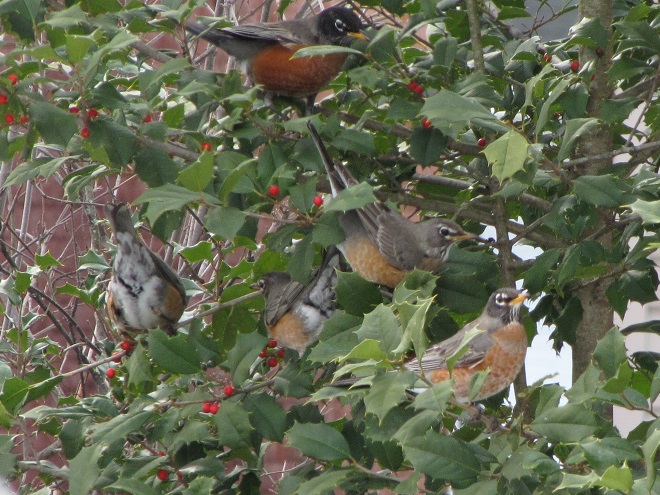
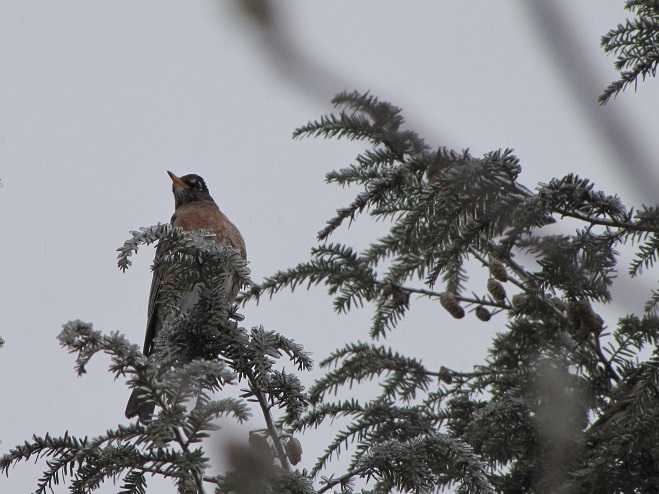
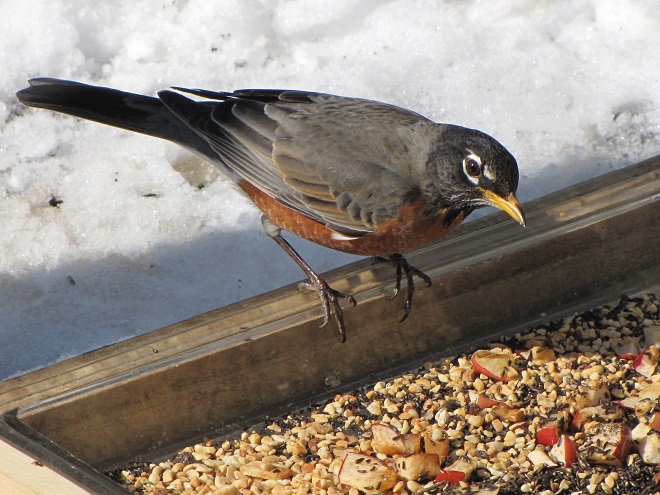
On a snowy winter day, it sure is nice to see some new visitors at a backyard feeding station. Here at the susquehannawildlife.net headquarters, American Robins have arrived to partake of the offerings.
American Robins feed on peanut hearts and chopped apples.
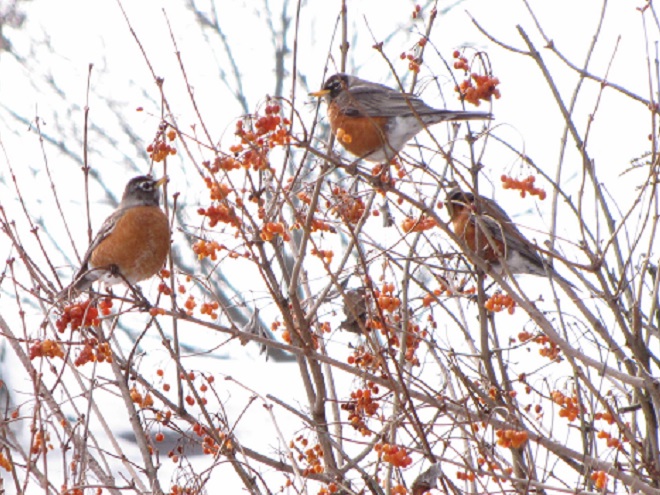
For this flock of robins, which numbered in excess of 150 individuals, the contents of this tray were a mere garnish to the meal that would sustain them through 72 hours of stormy weather. The main course was the supply of ripe berries on shrubs and trees in the headquarters garden.
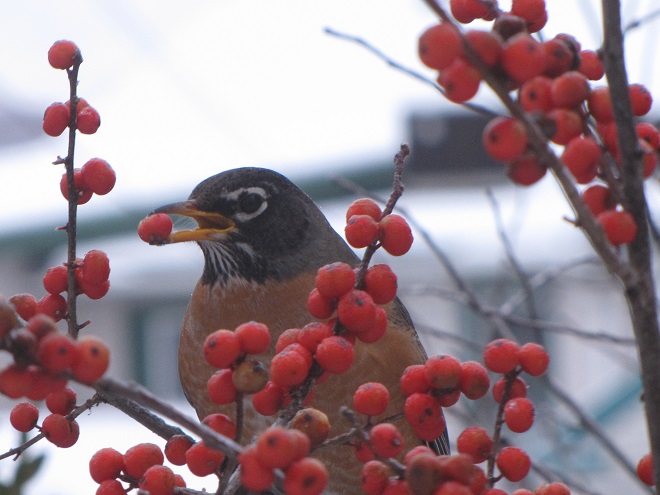
Their first choice—the bright red fruits of the Common Winterberry.
American Robins strip the fruits from a Common Winterberry.Eat fast or lose your turn.Irresistible crimson delights.Cedar Waxwings get their share too.Robins will linger until nightfall to feed on winterberries.
After cleaning off the winterberry shrubs, other fruits became part of the three-day-long feast.
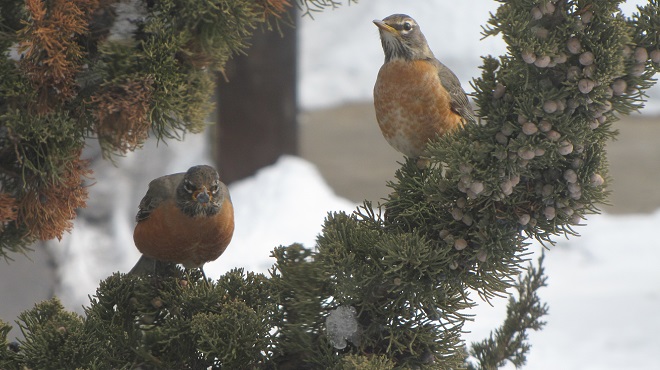
Robins eating Guelder Rose (Viburnum opulus) fruits. This European shrub is often distributed for conservation plantings as Highbush Cranberry, a common name shared with the very similar native species Viburnum trilobum.The blue-gray berries of junipers are attractive to robins, waxwings, and bluebirds.The American Holly (Ilex opaca) is a favorite of berry-loving birds. Its evergreen foliage provides cover and roosting sites for wintering birds.
Wouldn’t it be great to see these colorful birds in your garden each winter? You can, you know. Won’t you consider adding plantings of native trees and shrubs to your property this spring? Here at the susquehannawildlife.com headquarters we mow no lawn; the lawn is gone. Mixing evergreens and fruit-producing shrubs with native warm-season grasses and flowering plants has created a wildlife oasis absent of that dirty habit of mowing and blowing.
You can find many of the plants seen here at your local garden center. Take a chunk out of your lawn by paying them a visit this spring.
Want a great deal? Many of the County Conservation District offices in the lower Susquehanna region are having their annual spring tree sales right now. Over the years, we obtained many of our evergreens and berry-producing shrubs from these sales for less than two dollars each. At that price you can blanket that stream bank or wet spot in the yard with winterberries and mow it no more! The deadlines for orders are quickly approaching, so act today—literally, act today. Visit your County Conservation District’s website for details including selections, prices, order deadlines, and pickup dates and locations.
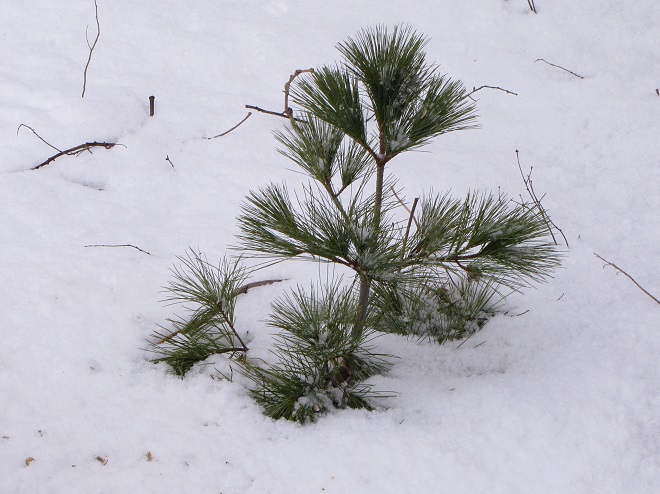
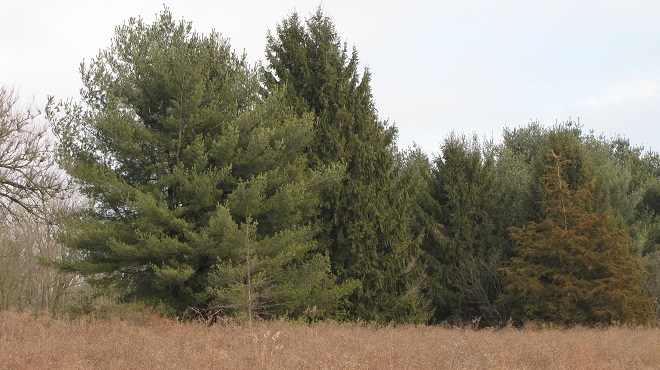
Evergreens like this Eastern Hemlock (Tsuga canadensis) are essential to the survival of many species of wintering birds. Plant evergreens in clumps, the bigger the better, to provide birds with thermal protection against the cold winds of winter nights.County Conservation District Tree Sales offer bare root evergreens like this Eastern White Pine (Pinus strobus) in packs of five or ten. Buy a bunch. Spend this year’s lawn treatment money on them. Then, get them planted immediately after pickup in the spring and in a few years you’ll have a nice grove of evergreens for wildlife habitat, a wind break, or a privacy screen.Groves of mixed evergreens among deciduous woods, grasslands, farmlands, or suburbs are ideal cover for wintering wildlife. These stands attract many species of migrating and nesting birds as well. Seen here, left to right, are Eastern White Pine, Norway Spruce (Picea abies), and Eastern Red Cedar. Though not a native species, the Norway Spruce is frequently used for conservation and ornamental plantings in the northeastern United States due to its appealing attributes and lack of invasive characteristics.Feeding wildlife is great fun. But remember, if you’re running a hotel for animals, you’ve got to offer more than an after-dinner mint to your tired and hungry guests. Let’s get planting!
County Conservation District Tree Sales
Consult each County Conservation District’s Tree Sale web page for ordering info, pickup locations, and changes to these dates and times.
Cumberland County Conservation District Tree Seedling Sale—deadline for prepaid orders Tuesday, March 30, 2021. Pickup 1 P.M. to 5 P.M., Thursday, April 22, 2021, and 8 A.M. to 2 P.M., Friday, April 23, 2021. https://www.ccpa.net/4636/Tree-Seedling-Sale
Lancaster County Conservation District Tree Sale—deadline for prepaid orders (hand-delivered to drop box) 5 P.M., Friday, March 5, 2021. Pickup 8 A.M. to 5 P.M., Thursday, April 15, 2021. https://www.lancasterconservation.org/tree-sale/
Lebanon County Conservation District Tree Sale—deadline for prepaid orders Thursday, March 11, 2021. Pickup 9 A.M. to 6 P.M., Friday, May 7, 2021. https://www.lccd.org/2021-tree-sale/
Perry County Conservation District Tree Sale—deadline for prepaid orders Wednesday, March 24, 2021. Pickup 10 A.M. to 6 P.M., Thursday, April 8, 2021. www.perrycd.org/Documents/2021 Tree Sale Flyer LEGAL SIZE.pdf
York County Conservation District Seedling Sale—deadline for prepaid orders Monday, March 15, 2021. Pickup 10 A.M. to 6 P.M., Thursday, April 15, 2021. https://www.yorkccd.org/events/2021-seedling-sale
Thoughts of October in the Lower Susquehanna River Watershed bring to mind scenes of brilliant fall foliage adorning wooded hillsides and stream courses, frosty mornings bringing an end to the growing season, and geese and other birds flying south for the winter.
The autumn migration of birds spans a period equaling nearly half the calendar year. Shorebirds and Neotropical perching birds begin moving through as early as late July, just as daylight hours begin decreasing during the weeks following their peak at summer solstice in late June. During the darkest days of the year, those surrounding winter solstice in late December, the last of the southbound migrants, including some hawks, eagles, waterfowl, and gulls, may still be on the move.
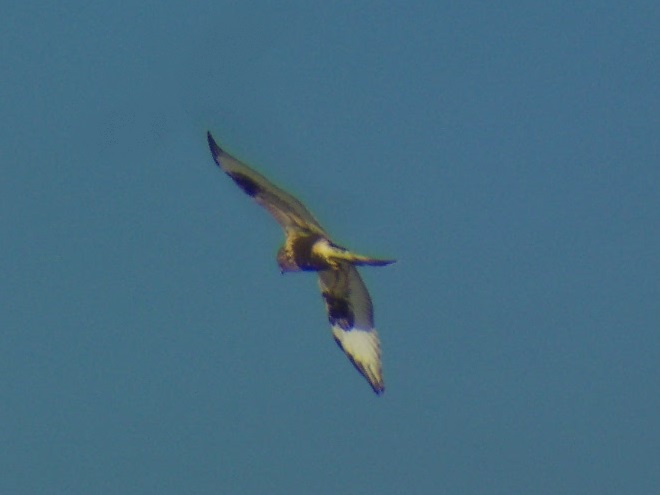
The Rough-legged Hawk (Buteo lagopus), a rodent-eating raptor of tundra, grassland, and marsh, is rare as a migrant and winter resident in the lower Susquehanna valley. It may arrive as late as January, if at all.
During October, there is a distinct change in the list of species an observer might find migrating through the lower Susquehanna valley. Reduced hours of daylight and plunges in temperatures—particularly frost and freeze events—impact the food sources available to birds. It is during October that we say goodbye to the Neotropical migrants and hello to those more hardy species that spend their winters in temperate climates like ours.
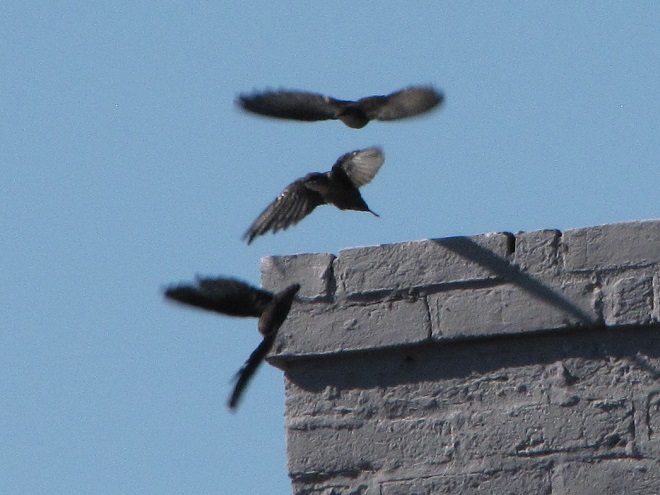
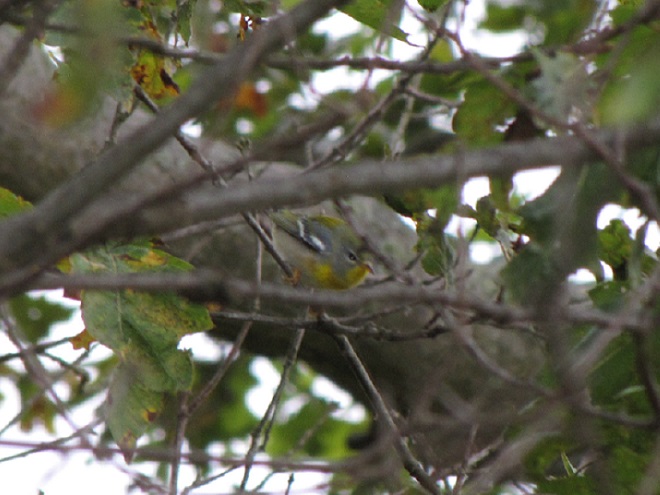
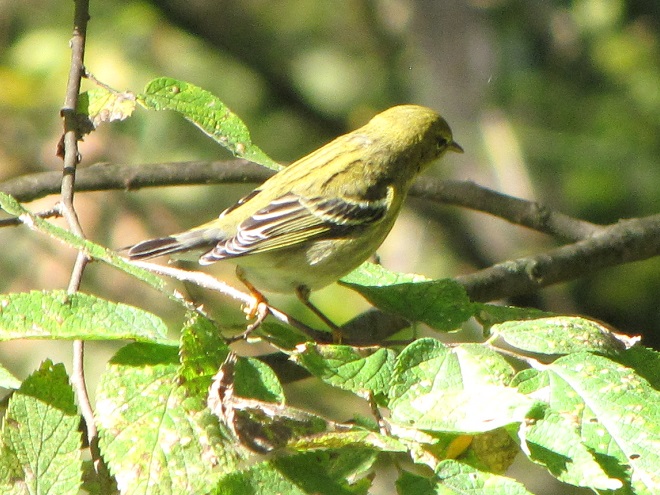
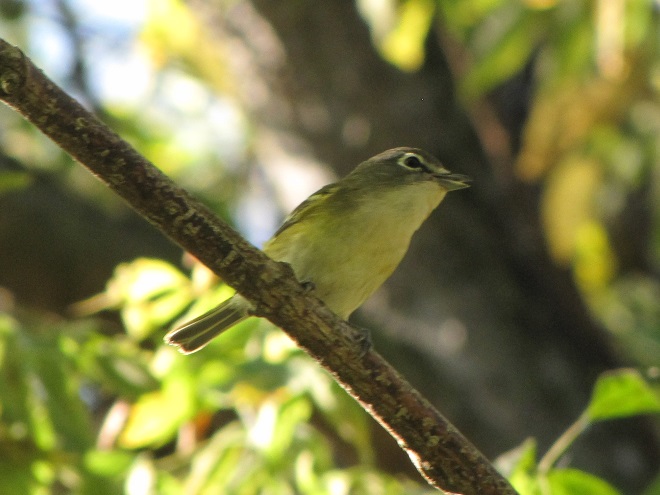
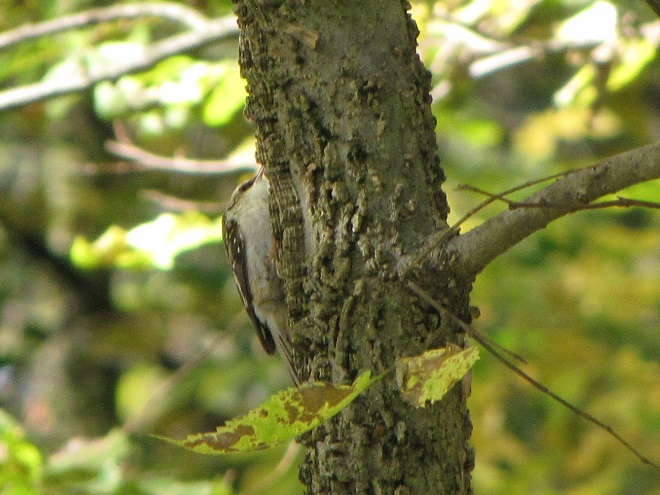
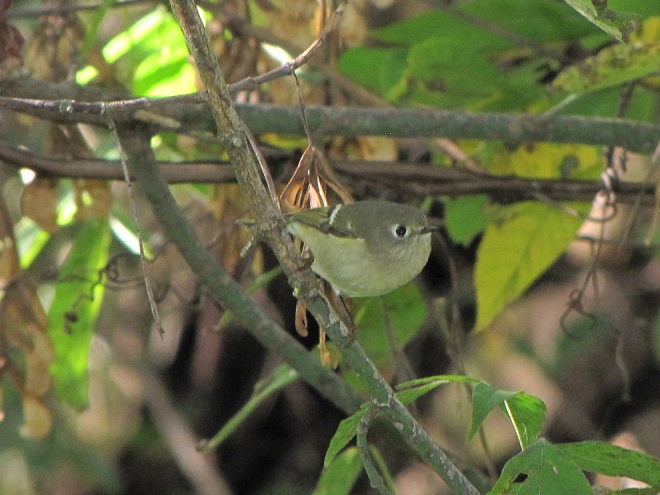
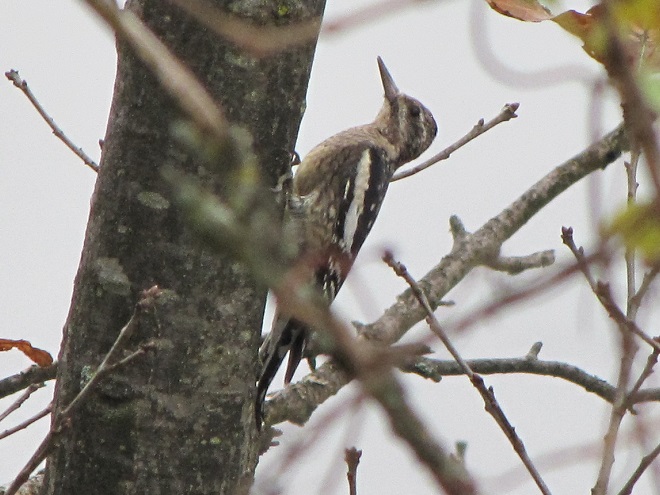
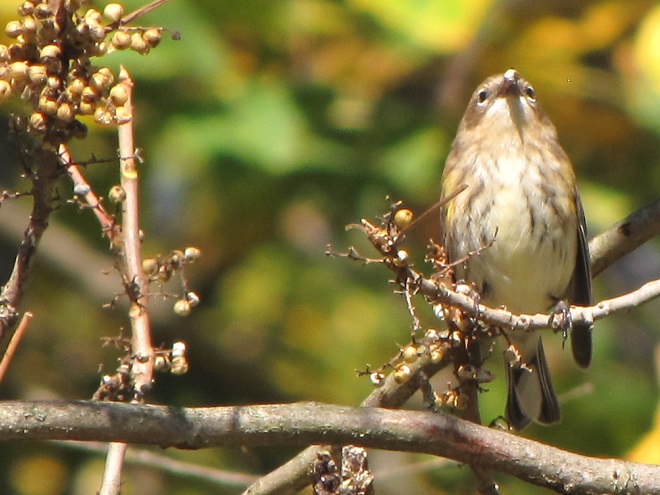
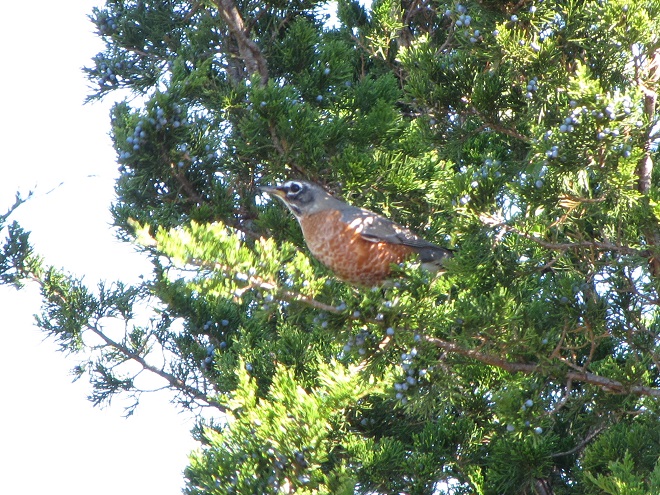
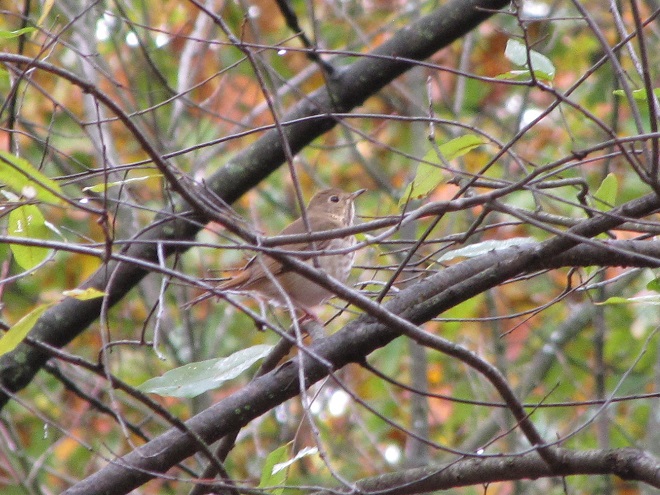
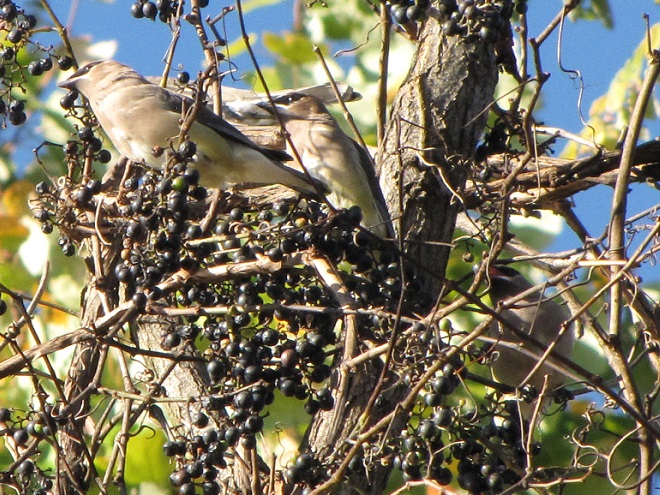
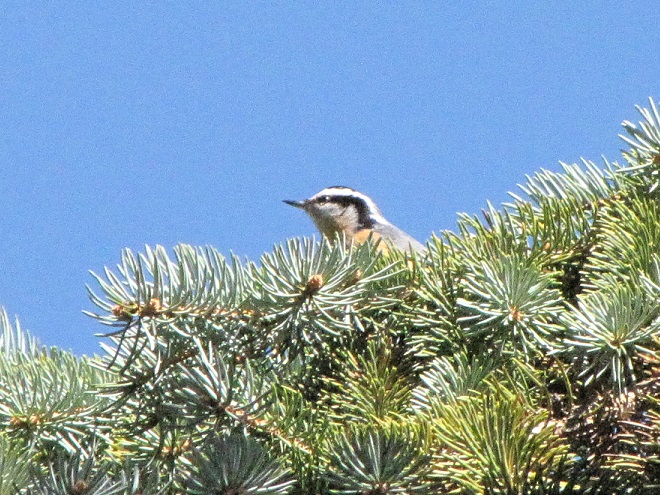
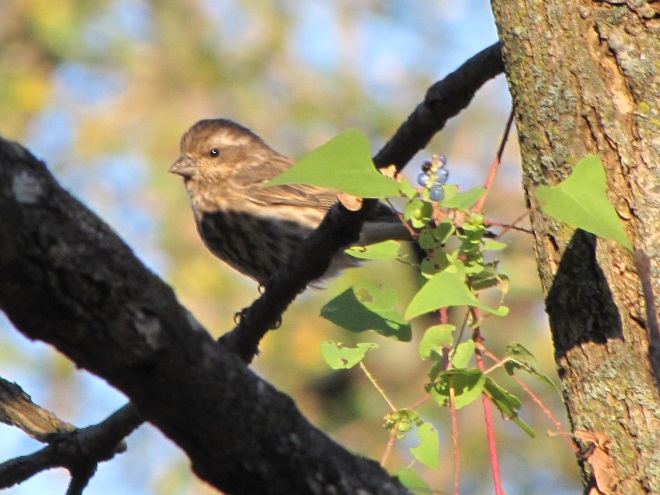
During several of the first days of October, two hundred Chimney Swifts remained in this roost until temperatures warmed from the low forties at daybreak to the upper fifties at mid-morning; then, at last, the flock ventured out in search of flying insects. When a population of birds loses its food supply or is unable to access it, that population must relocate or perish. Like other insectivorous birds, these swifts must move to warmer climes to be assured a sustained supply of the flying bugs they need to survive. Due to their specialized food source, they can be considered “specialist” feeders in comparison to species with more varied diets, the “generalists”. After returning to this chimney every evening for nearly two months, the swifts departed this roost on October 5 and did not return.A Northern Parula lingers as an October migrant along the Susquehanna. This and other specialist feeders that survive almost entirely on insects found in the forest canopy are largely south of the Susquehanna watershed by the second week of October.The Blackpoll Warbler is among the last of the insectivorous Neotropical warblers to pass through the riparian forests of the lower Susquehanna valley each fall. Through at least mid-October, it is regularly seen searching for crawling insects and larvae among the foliage and bark of Northern Hackberry (Celtis occidentalis) trees near Conewago Falls. Most other warblers, particularly those that feed largely upon flying insects, are, by then, already gone.The Blue-headed Vireo, another insectivore, is the last of the vireo species to pass through the valley. They linger only as long as there are leaves on the trees in which they feed.Brown Creepers begin arriving in early October. They are specialist feeders, well-adapted to finding insect larvae and other invertebrates among the ridges and peeling bark of trees like this hackberry, even through the winter months.Ruby-crowned Kinglets can be abundant migrants in October. They will often behave like cute little flycatchers, but quickly transition to picking insects and other invertebrates from foliage and bark as the weather turns frosty. Some may spend the winter here, particularly in the vicinity of stands of pines, which provide cover and some thermal protection during storms and bitter cold.Beginning in early October, Golden-crowned Kinglets can be seen searching the forest wood for tiny invertebrates. They are the most commonly encountered kinglet in winter.The Yellow-bellied Sapsucker, a woodpecker, is an October migrant that specializes in attracting small insects to tiny seeps of sap it creates by punching horizontal rows of shallow holes through the tree bark. Some remain for winter.The Yellow-rumped Warbler arrives in force during October. It is the most likely of the warblers to be found here in winter. Yellow-rumped Warblers are generalists, feeding upon insects during the warmer months, but able to survive on berries and other foods in late fall and winter. Wild foods like these Poison Ivy berries are crucial for the survival of this and many other generalists.American Robins are most familiar as hunters of earthworms on the suburban lawn, but they are generalist feeders that rely upon fruits like these Eastern Red Cedar (Juniperus virginiana) berries during their southbound migration in late October and early November each year. Robins remain for the winter in areas of the lower Susquehanna valley with ample berries for food and groves of mature pines for roosting.Like other brown woodland thrushes, the Hermit Thrush (Catharus guttatus) is commonly seen scratching through organic matter on the moist forest floor in search of invertebrates. Unlike the other species, it is a cold-hardy generalist feeder, often seen eating berries during the southbound October migration. Small numbers of Hermit Thrushes spend the winter in the lower Susquehanna valley, particularly in habitats with a mix of wild foods.Due to their feeding behavior, Cedar Waxwings can easily be mistaken for flycatchers during the nesting season, but by October they’ve transitioned to voracious consumers of small wild fruits. During the remainder of the year, flocks of waxwings wander widely in search of foods like this Fox Grape (Vitis labrusca). An abundance of cedar, holly, Poison Ivy, hackberry, bittersweet , hawthorn, wild grape, and other berries is essential to their survival during the colder months.Red-breasted Nuthatches have moved south in large numbers during the fall of 2020. They were particularly common in the lower Susquehanna region during mid-October. Red-breasted Nuthatches can feed on invertebrates during warm weather, but get forced south from Canada in droves when the cone crops on coniferous trees fail to provide an adequate supply of seeds for the colder fall and winter seasons. In the absence of wild foods, these generalists will visit feeding stations stocked with suet and other provisions.Purple Finches (Haemorhous purpureus) were unusually common as October migrants in 2020. They are often considered seed eaters during cold weather, but will readily consume small fruits like these berries on an invasive Mile-a-minute Weed (Persicaria perfoliata) vine. Purple Finches are quite fond of sunflower seeds at feeding stations, but often shy away if aggressive House Sparrows or House Finches are present.
The need for food and cover is critical for the survival of wildlife during the colder months. If you are a property steward, think about providing places for wildlife in the landscape. Mow less. Plant trees, particularly evergreens. Thickets are good—plant or protect fruit-bearing vines and shrubs, and allow herbaceous native plants to flower and produce seed. And if you’re putting out provisions for songbirds, keep the feeders clean. Remember, even small yards and gardens can provide a life-saving oasis for migrating and wintering birds. With a larger parcel of land, you can do even more.
GOT BERRIES? Common Winterbery (Ilex verticillata) is a native deciduous holly that looks its best in the winter, especially with snow on the ground. It’s slow-growing, and never needs pruning. Birds including bluebirds love the berries and you can plant it in wet ground, even along a stream, in a stormwater basin, or in a rain garden where your downspouts discharge. Because it’s a holly, you’ll need to plant a male and a female to get the berries. Full sun produces the best crop. Fall is a great time to plant, and many garden centers that sell holiday greenery still have winterberry shrubs for sale in November and December. Put a clump of these beauties in your landscape. Gorgeous!