The Variety of Medium and Large-size Gulls Visiting for the Winter

You may find this hard to believe, but during the colder months in the lower Susquehanna valley, gulls aren’t as numerous as they used to be.  In the years since their heyday in the late twentieth century, many of these birds have chosen to congregate in other areas of the Mid-Atlantic region where the foods they crave are more readily available.

As you may have guessed, the population boom of the 1980s and 1990s was largely predicated on human activities.  These four factors were particularly beneficial for wintering gulls…

      1. Disposal of food-bearing waste in open landfills
      2. High-intensity agriculture with disc plowing
      3. Gizzard Shad population boom in nutrient-impaired river/Hydroelectric power generation
      4. Fumbled Fast Food
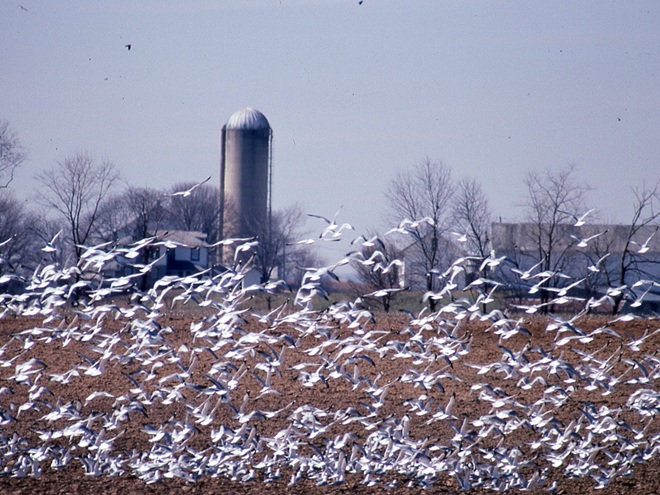
Earthworms lifted to the soil's surface by plowing attracted Ring-billed Gulls by the thousands to Susquehanna Valley farmlands during the late twentieth century.
Earthworms lifted to the soil’s surface by plowing attracted Ring-billed Gulls by the thousands to Susquehanna Valley farmlands during the late twentieth century.  (Vintage 35 mm image)
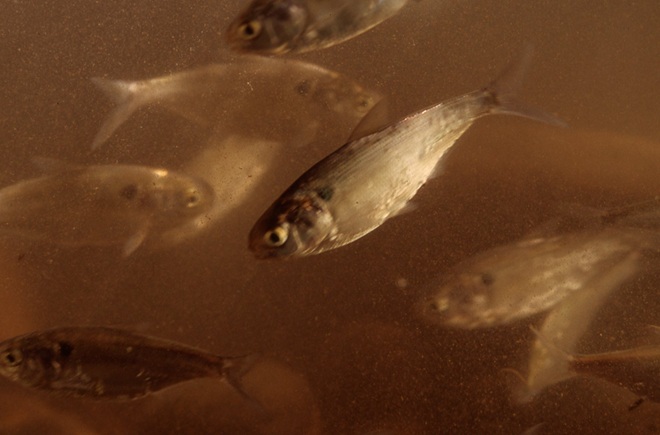
Young Gizzard Shad
Filter-feeding Gizzard Shad populations thrive in nutrient-rich waters like the Susquehanna.  Their rambunctious feeding style stirs up benthic sediment deposits to release more nutrients into the water column and promote the algal blooms that often lead to detrimental eutrophic conditions.  Decades ago, hundreds and sometimes thousands of gulls gathered below the river’s hydroelectric dams to feed on the seemingly endless supply of small Gizzard Shad disoriented by their passage through the turbines during electric generation.  (Vintage 35 mm image)

So what happened?  Why are wintering gulls going elsewhere and no longer concentrating on the Susquehanna?  Well, let’s look at what has changed with our four man-made factors…

      1. A larger percentage of the lower Susquehanna basin’s household and food industry waste is now incinerated/Landfills practice “cover as you go” waste burial.
      2. Implementation of “no-till” farming has practically eliminated availability of earthworms and other sub-surface foods for gulls.
      3. The population explosion of invasive Asiatic Clams has reduced the Gizzard Shad’s relative abundance and biomass among filter feeders.
      4. Hold on tight!  Fast food has become too expensive to waste.
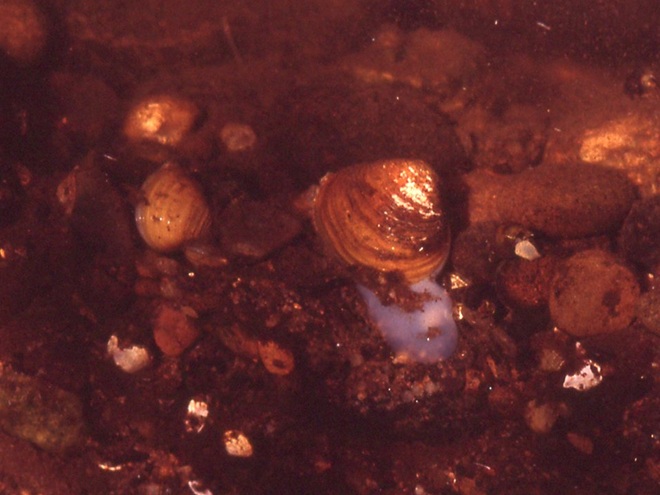
Asiatic Clam
The non-native population of Asiatic Clams in the Susquehanna and most of its larger tributaries exploded during the last two decades of the twentieth century.  Its present-day biomass in the river is exceeded by no other macroinvertebrate species.  The share of plankton and other tiny foods that the Asiatic Clam harvests from the water column is no longer available to native filter-feeders including Gizzard Shad.  Hence, Gizzard Shad biomass has been reduced and far fewer are available to attract amazingly enormous flocks of hungry gulls to hydroelectric dams.  (Vintage 35 mm image)

GULLS THIS WINTER

Despite larid abundance on the lower Susquehanna not being the spectacle it was during the man-made boom days, an observer can still find a variety of medium and large-sized gulls wintering in the region.  We ventured out to catch a glimpse of some of the species being seen both within the watershed and very nearby.
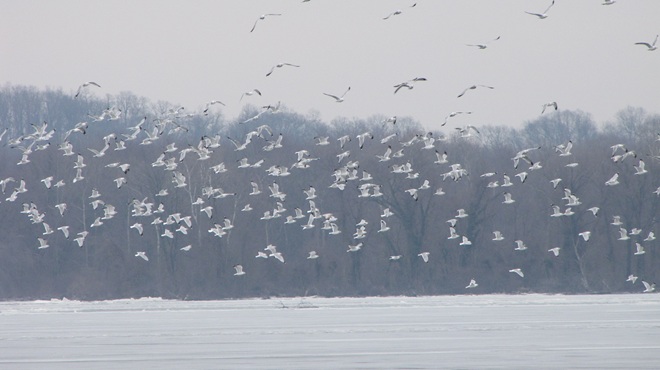
Ring-billed Gulls on Lake Clarke
By far, most of the gulls you’ll encounter in the Lower Susquehanna River Watershed right now are Ring-billed Gulls.  Some of them still drop by at the business end of the drive thru lane looking for a lost order of fries and maybe a cheeseburger in paradise.
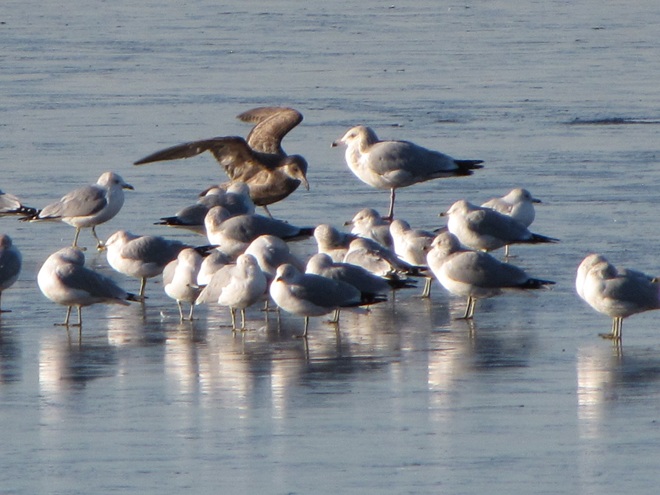
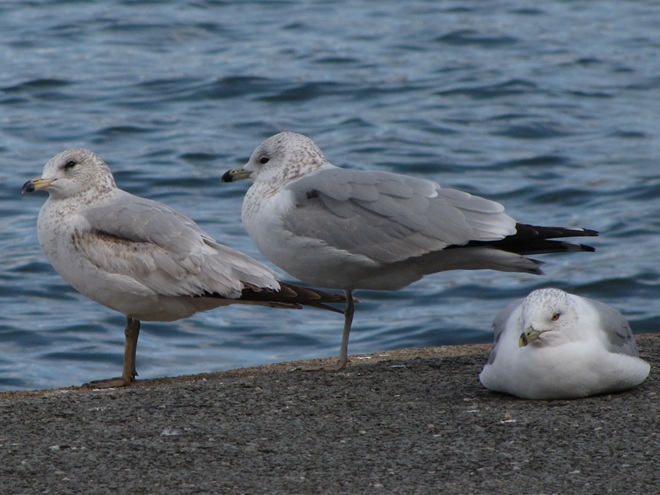
Ring-billed Gulls in winter plumage.
First-winter (left), second-winter (center), and adult Ring-billed Gulls on the Susquehanna.
Ring-billed and American Herring Gulls
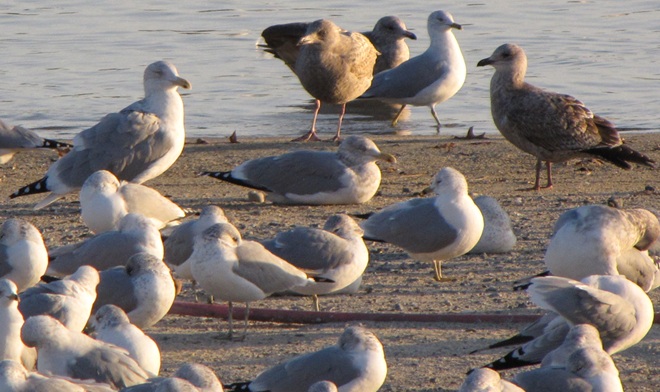
Nearly every flock of gulls found in our area right now is composed exclusively of Ring-billed Gulls.  The trick to finding other species, particularly rarities, is to look for slightly larger birds mixed among them, particularly American Herring Gulls like the first-winter (back row left) and third-winter (back row right) birds seen here.  Herring and other species of similar-sized gulls seem to prefer each other’s company while on the wintering grounds.
American Herring Gulls with Ring-billed Gulls
Five American Herring Gulls with smaller Ring-billed Gulls. The bird to the upper left and the bird hunkered down to its right are adult American Herring Gulls, the three brownish birds are in their first winter.
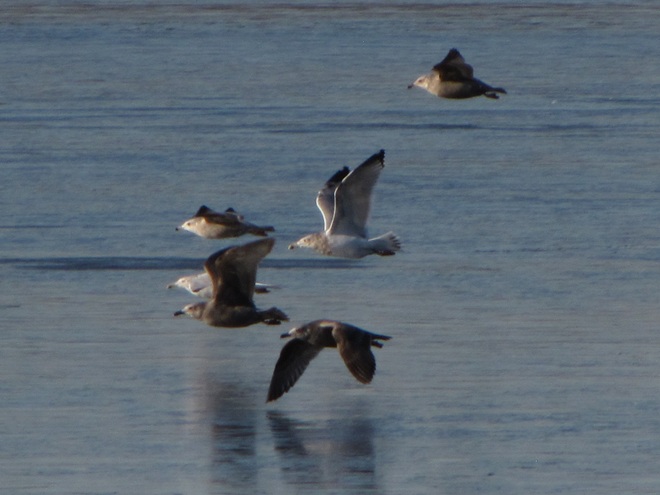
Non-adult American Herring Gulls
Non-adult American Herring Gulls in flight.  Always look for birds with all-pale wing tips when encountering herring gulls in flight.
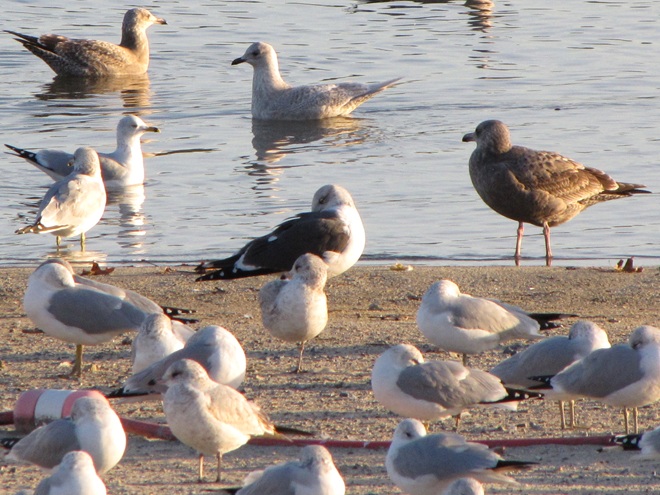
Four Species of Medium-sized Gulls
Midway in size between the Ring-billed Gulls in the foreground and the first-winter American Herring Gulls in the upper left and middle right of this image is a Lesser Black-backed Gull (dark-mantled bird resting at center).  The similar-sized bird in the water behind it is a first-winter Iceland Gull (Larus glaucoides), a rare visitor from the arctic.
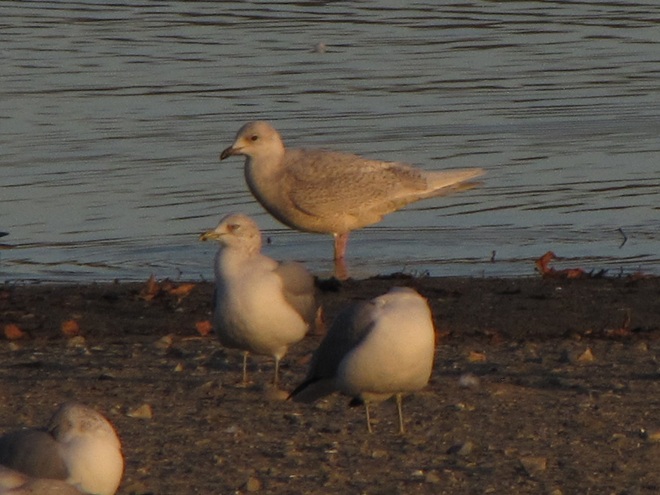
First-winter Iceland Gull
Another look at the first-winter Iceland Gull from the previous image.  Did you notice the all-white primary feathers and compare them to the dark wing tips on the Ring-billed Gulls seen here in its company?
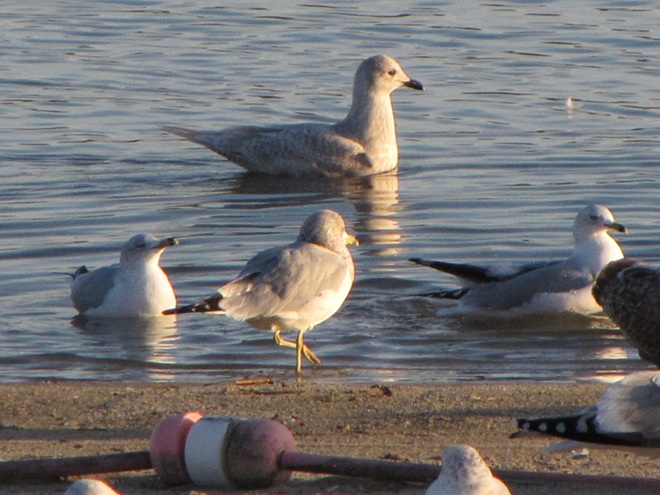
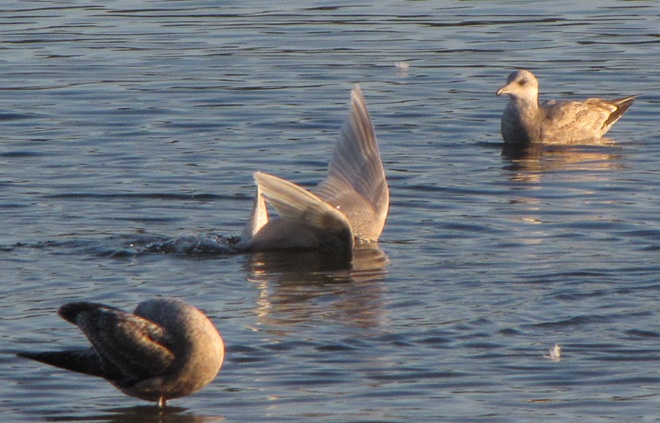
Iceland Gull Bathing
The conspicuously pale wings of the first-winter Iceland Gull, seen here bathing in the presence of two first-winter American Herring Gulls.
First-winter Iceland Gull
Both this first-winter Iceland Gull and the bird from the previous three images are currently being seen just east of the Susquehanna watershed at Blue Marsh Lake in Berks County, Pennsylvania.  Additional Iceland Gulls are currently being reported in Maryland on the Susquehanna at Conowingo Dam; on upper Chesapeake Bay in Baltimore County, Maryland; and in southeastern-most Bucks County, near Tullytown, Pennsylvania, at a busy landfill site that attracts tens of thousands of gulls each winter.  Double-digit numbers of Iceland Gulls have been reported at this latter site during recent weeks.
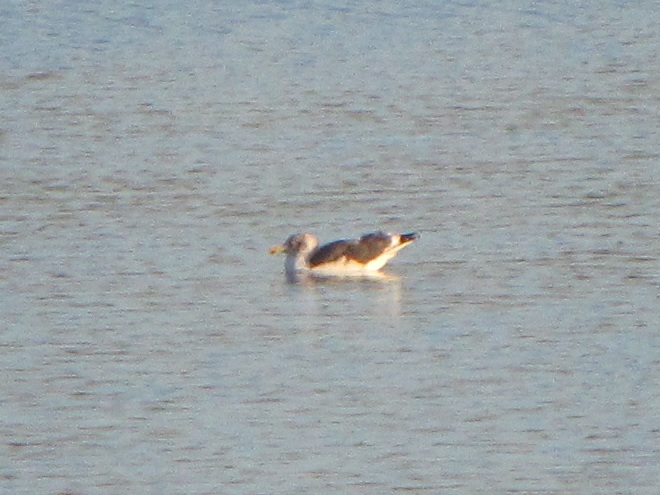
Lesser Black-backed Gull
Lesser Black-backed Gulls like this one observed at Blue Marsh Lake are uncommon in the Lower Susquehanna River Watershed.  They are progressively more likely as you travel east toward the aforementioned Bucks County landfills where hundreds of these birds make up a core Atlantic seaboard population.
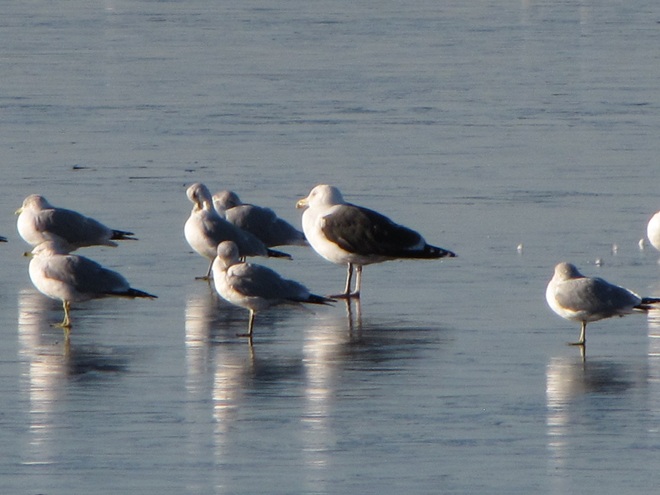
Great-black-backed Gull with Ring-billed Gulls
Great Black-backed Gulls are the most frequently encountered large gull on the Susquehanna.  They’re easily identified by their enormous size and, as adults, their dark mantle.
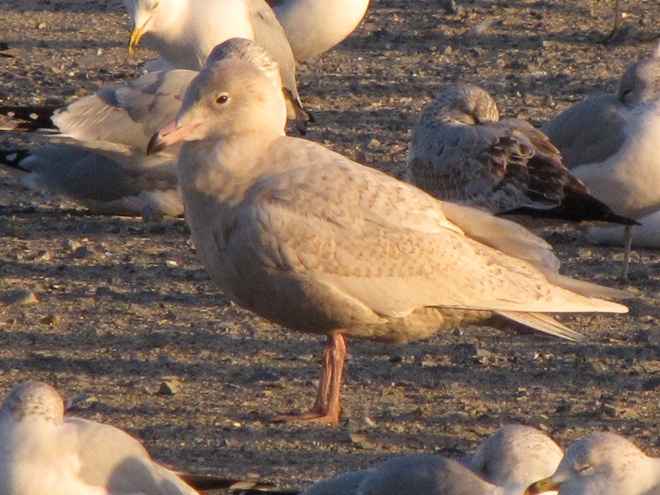
First-winter Glaucous Gull
Rivaling the Great Black-backed Gull in size is the Glaucous Gull (Larus hyperboreus), another rare arctic visitor with pale wing tips.  There are numerous reports of these unusual winter visitors from sites on Delaware Bay north to the Tullytown landfills on Delaware River where half a dozen or more have been occurring.  Seen near the mouth of the Susquehanna on Chesapeake Bay at North East, Maryland, has been a first-winter bird similar to this one that we photographed at Blue Marsh Lake in Berks County, Pennsylvania.

For us, seeing a Glaucous Gull brought back memories of the last time we saw the species.  It was forty-five years ago on New Year’s Day 1981 that we discovered two first-winter birds feeding on Gizzard Shad in open water on an otherwise ice-choked Susquehanna below the York Haven Dam powerhouse at Conewago Falls.  Hey Doc Robert, do you remember that day?
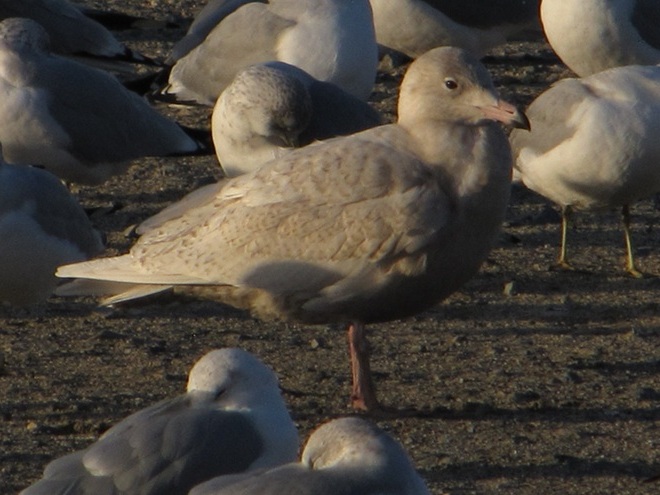
First-winter Glaucous Gull.

A Visit to the Post Office, for Just One Stamp

It’s been more than a year and a half since Uncle Tyler Dyer has been on one of our outings.  He’s been laying low, keeping to himself—to protect his health.  So he was quite excited when we made our way to the Delaware coast to have a look at some marine and beach life at Cape Henlopen State Park.

Uncle Ty hadn’t visited the Atlantic shoreline here for almost two decades, and he was more than a bit startled at what he saw…

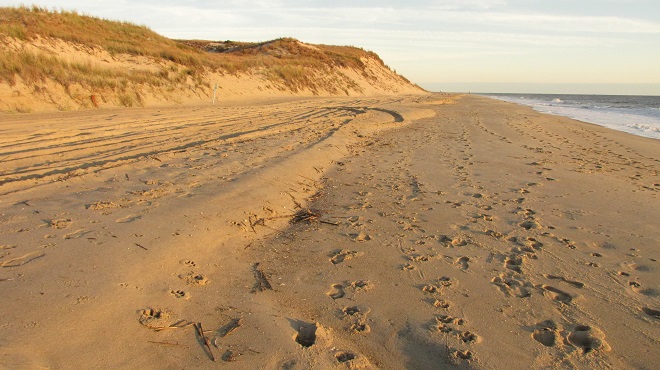
Cape Henlopen State Park has spectacular wild dunes and pine forests, but notice how clean the high-tide line is on the beach.  This is not a good sign.  During our walks, we found not one mollusk shell (clam, scallop, snail, etc.), skate egg case, whelk egg case, dead fish, or other sign of benthic life from the adjacent surf and sea.
We found the remains of Mole Crabs (Emerita talpoida), also known as sand fleas, a crustacean that burrows into the surf-washed sands of the beach, but there were no signs of life from deeper waters.
One of a dozen or so Lesser Black-backed Gulls (Larus fuscus) observed consuming Mole Crabs. There was little else for these birds to eat.  Sanderlings (Calidris alba) and other shorebirds typically found foraging along the surf’s edge were totally absent.
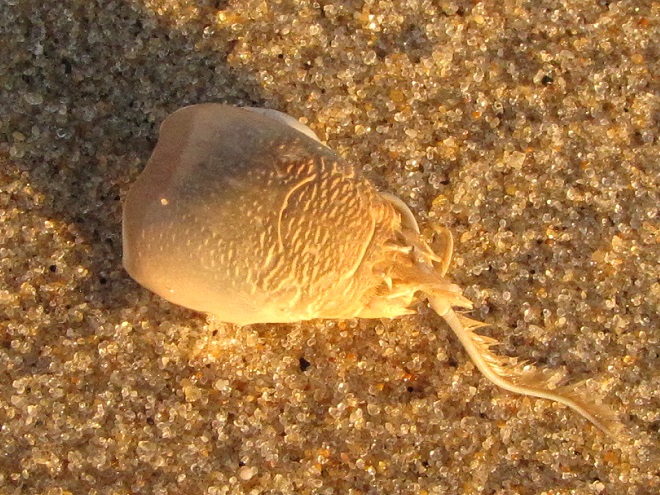
Atlantic Ghost Crabs (Ocypode quadrata) live in the predominantly dry sands of the beach, above the high tide line.  Missing were the remains of aquatic crabs, including Atlantic Horseshoe Crabs (Limulus polyphemus), and other invertebrates that are often found washing in with the tide.
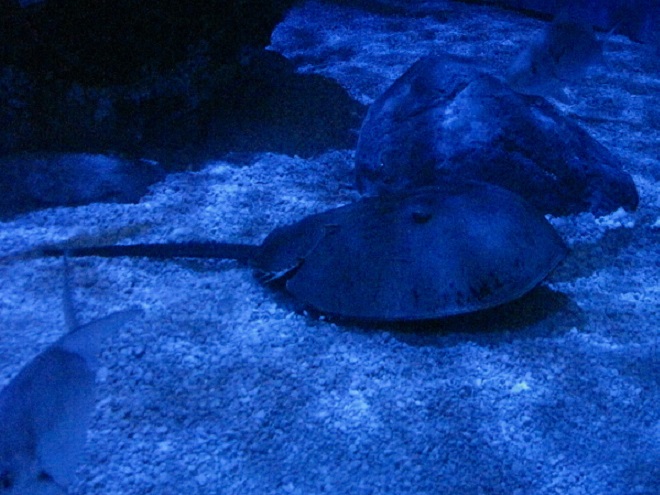
If you want to see an Atlantic Horseshoe Crab, you may have no better option than to visit the aquariums at the state park’s nature center.

A nearly sterile beach might be delightful for barefoot sunbathers and the running of the dogs, but Uncle Ty isn’t the barefoot type.  He likes his sandals and a slow peaceful stroll with plenty of flora and fauna to have a look at.  We could tell he was getting bored.  So we headed home.

Along the way, Uncle Ty asked to stop at the Post Office.  He wanted to get a stamp.  Thinking he was going to fire off a terse letter of protest to the powers that be about what he saw at the beach, we obliged.

Soon, Uncle Ty trotted down the steps of the Post Office with his stamp.

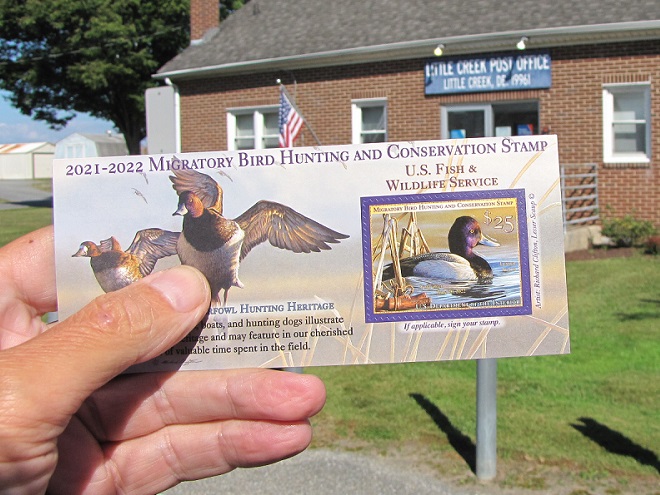
Uncle Tyler Dyer with his one stamp.  The 2021-2022 Federal Duck Stamp is available at most local Post Offices.  According to the United States Fish and Wildlife Service, ninety-eight percent of the $25 purchase price goes directly to acquiring and protecting wetland habitat.

Uncle Ty bought a duck stamp, so naturally we asked him when he decided to take up hunting.  He explained, “Man, I gave that stuff up when I was thirteen.  I’ve got the Thoreau/Walden mindset—hunting is something of an adolescent pursuit.”

It turns out Uncle Ty bought a duck stamp to support wetland acquisition and improvements, not only to benefit ducks and other wildlife living there, but to improve water quality.  In Delaware, tidal estuary restoration work is underway at both the Prime Hook and Bombay Hook National Wildlife Refuges on Delaware Bay.  These projects will certainly enhance the salt marsh’s filtration capabilities and just might improve the populations of benthic life in the bay and adjacent ocean at Cape Henlopen.

Uncle Ty tossed the stamp atop the dashboard and we were again on our way, but we weren’t going directly home.  We made a stop along the way.  A stop we’ll share with you next time.