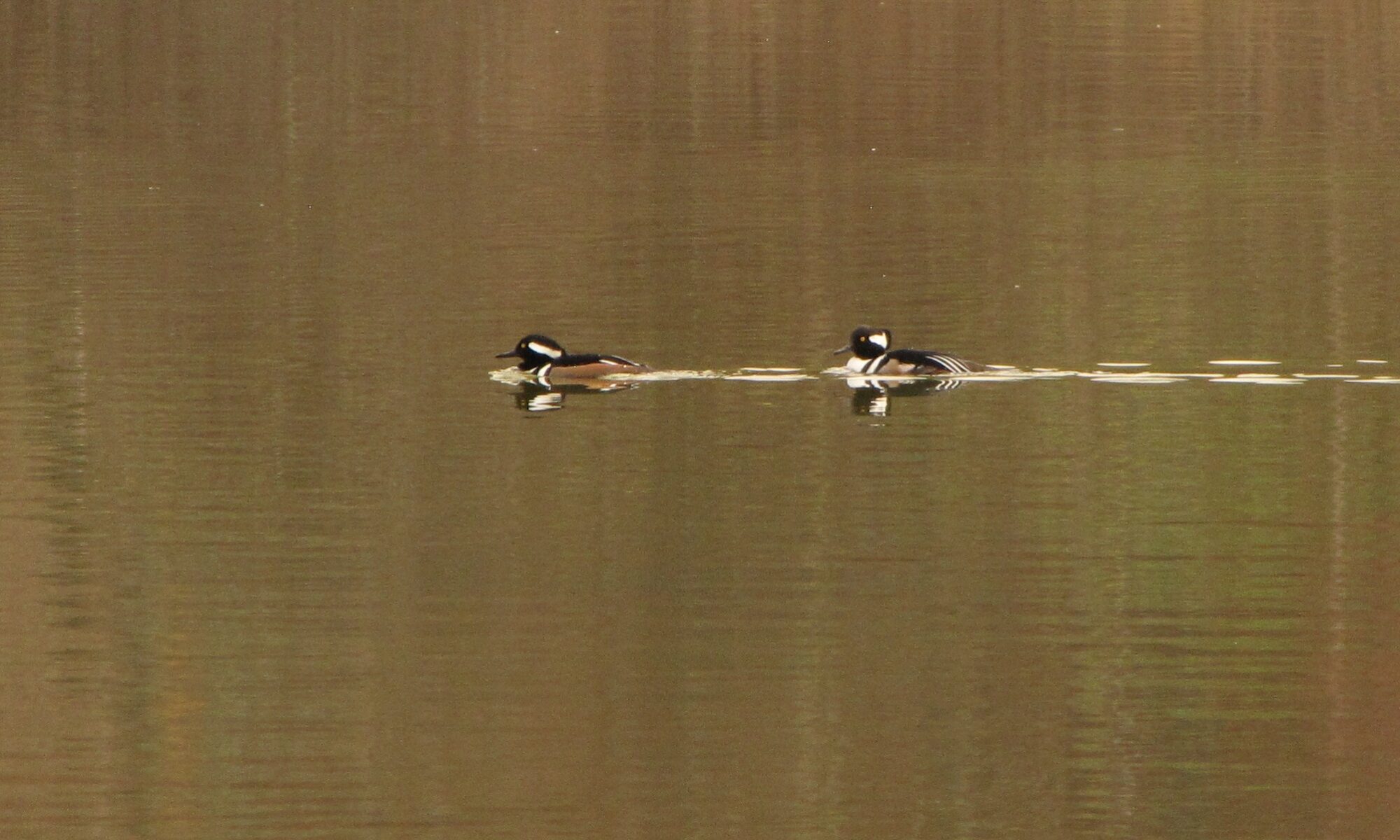
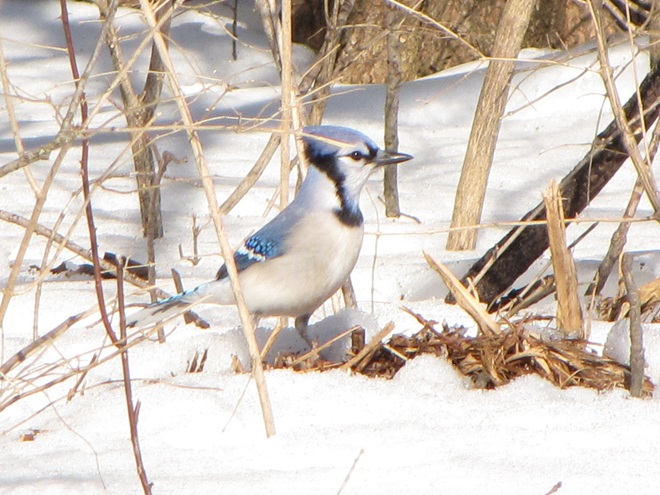
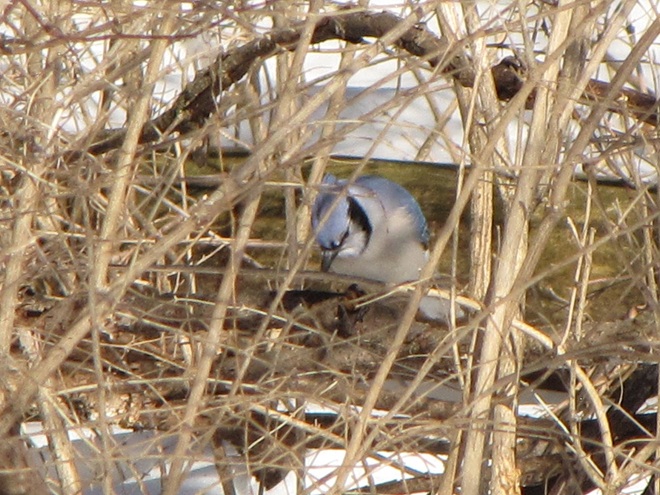
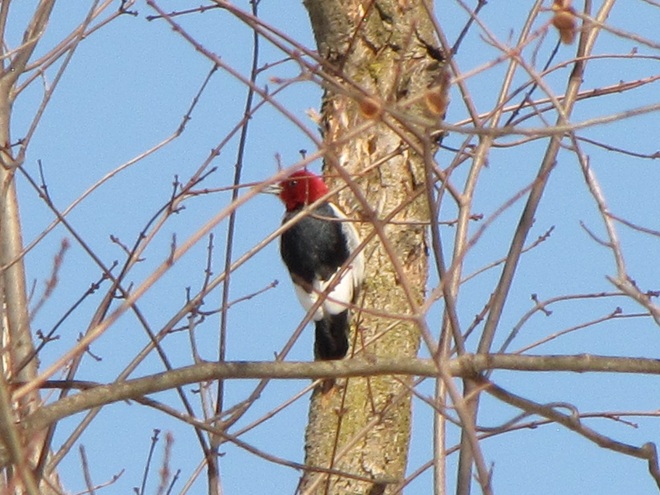
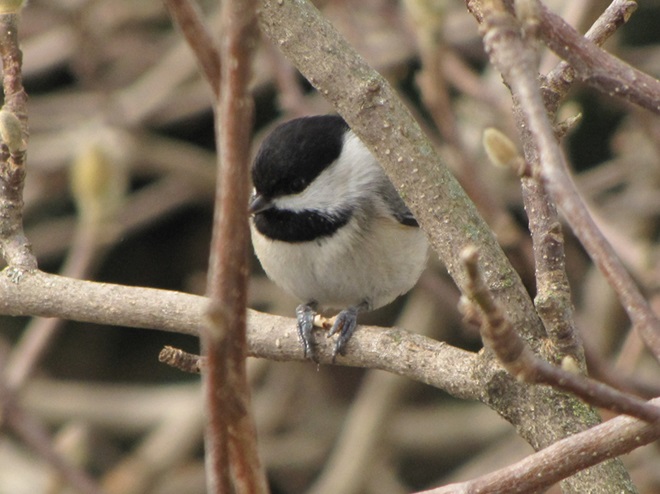
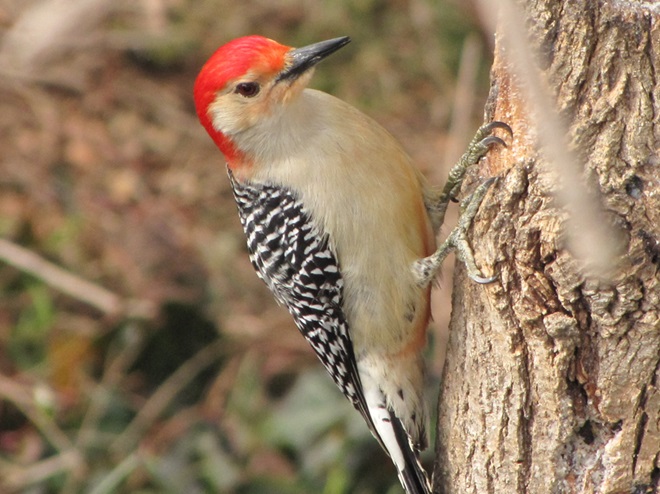
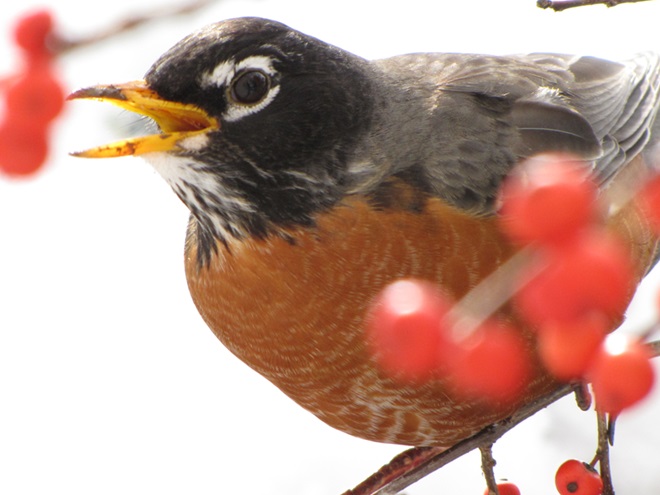
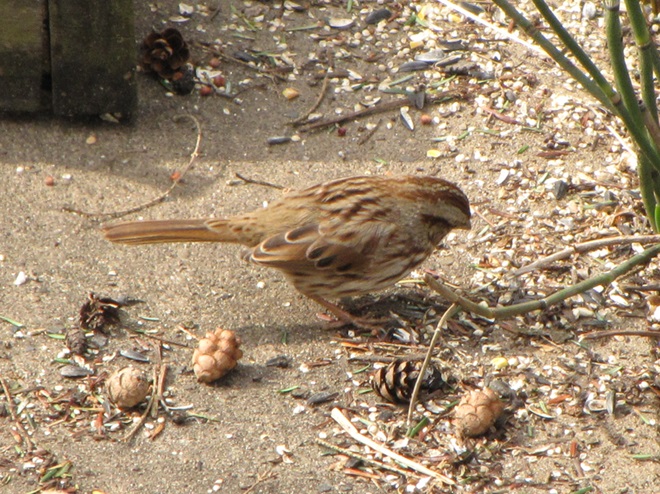
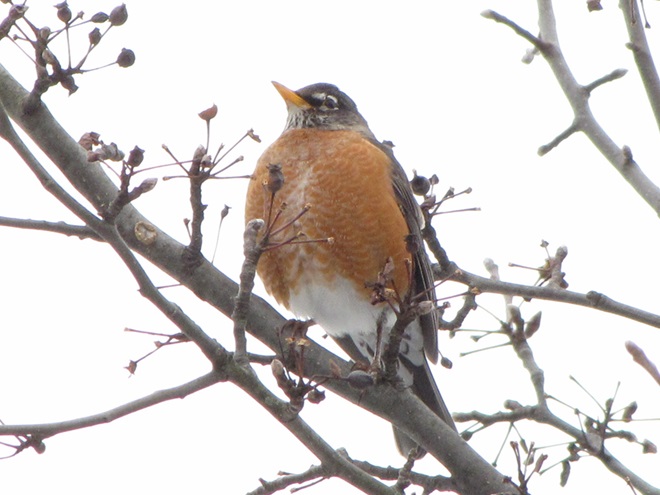
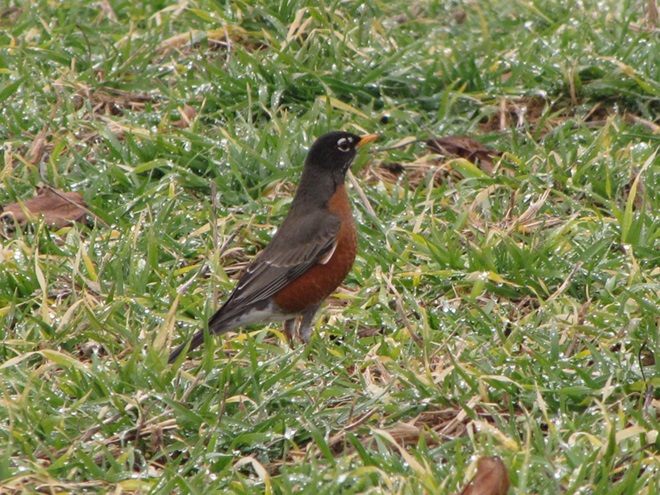
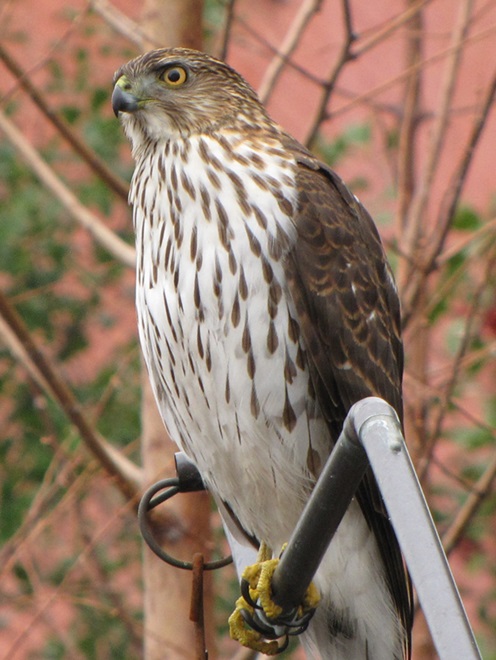
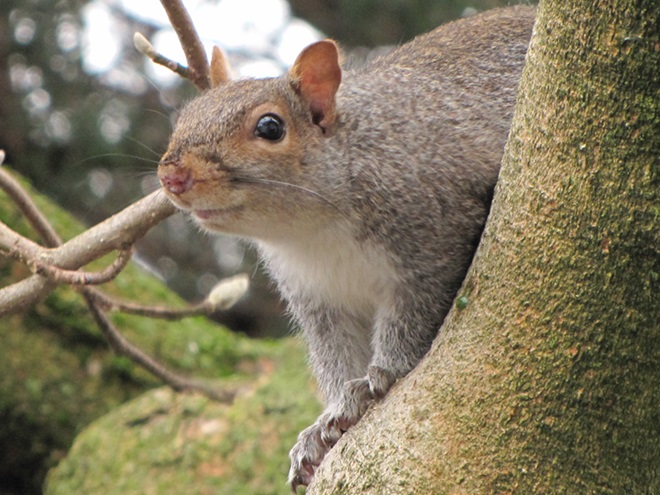
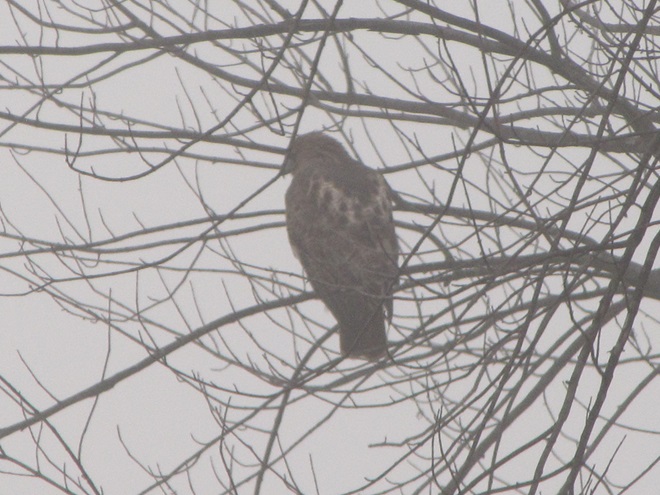
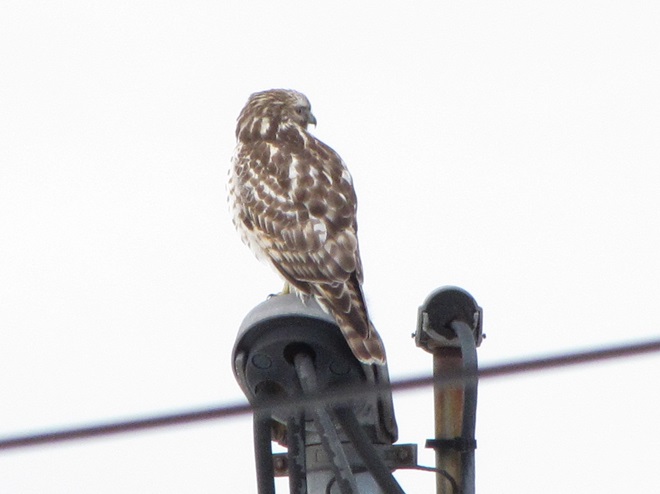
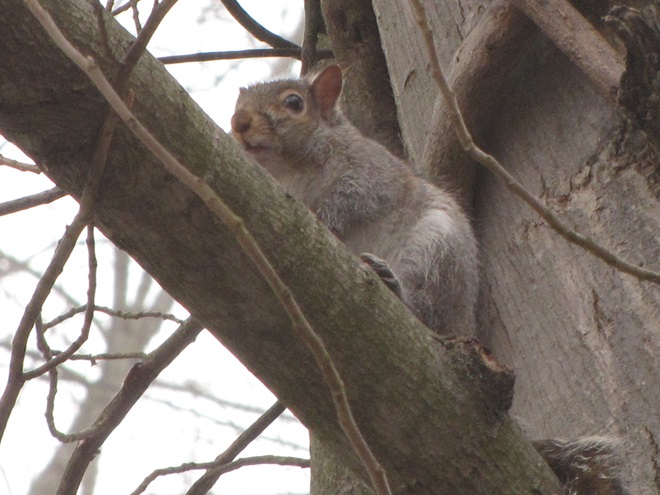
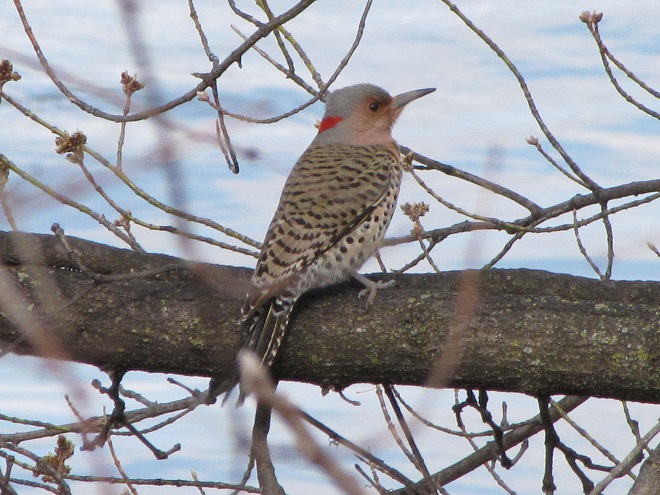
During winter’s harshest conditions, one must frequently marvel at the methods various forms of wildlife have to survive. Take a look at some of the animals we found using their life-sustaining adaptations to find food amidst the snow-covered landscape and bitter cold air.
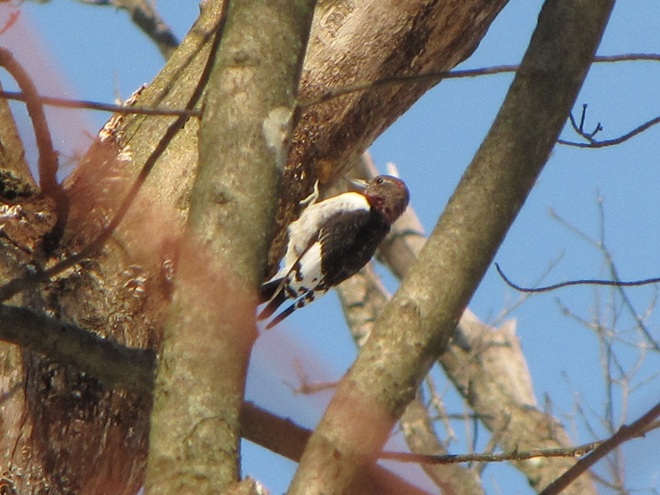
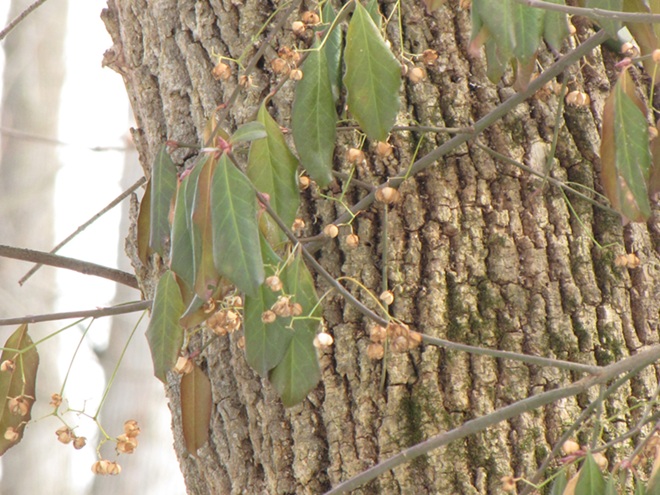
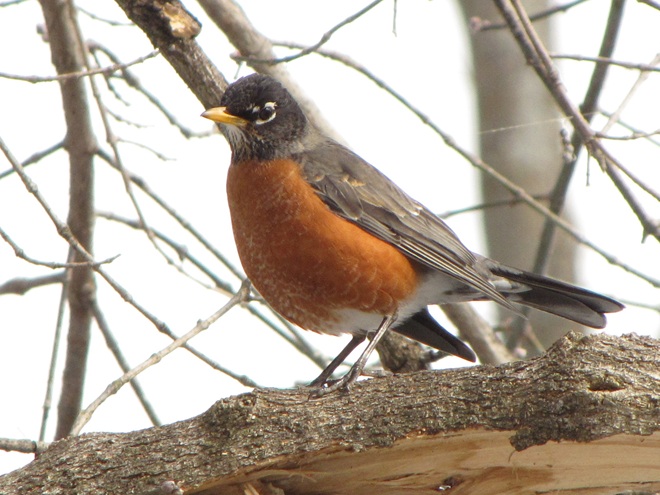
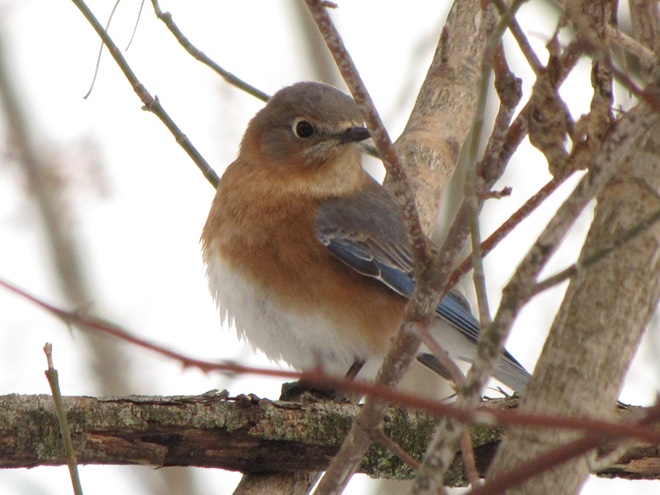
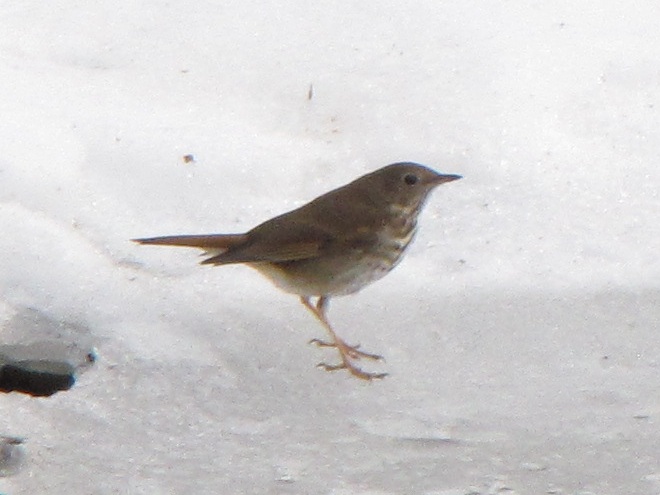
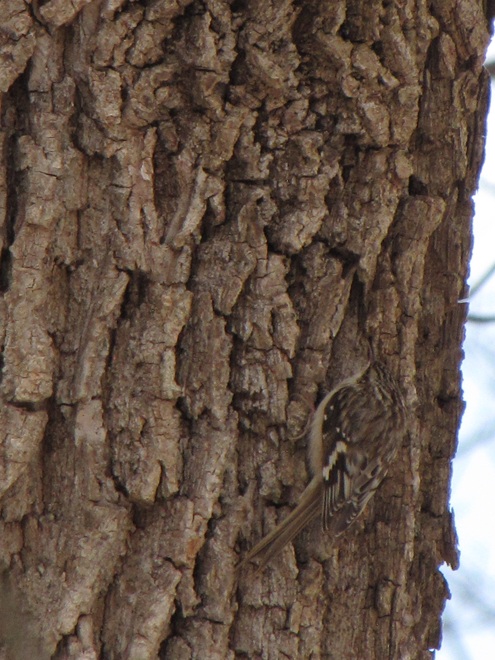
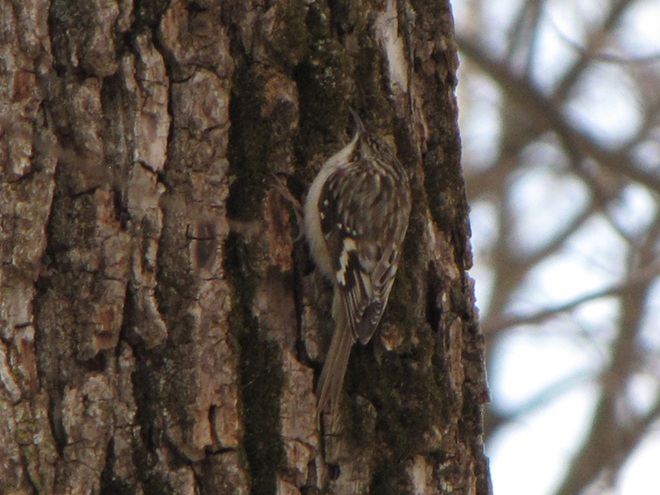
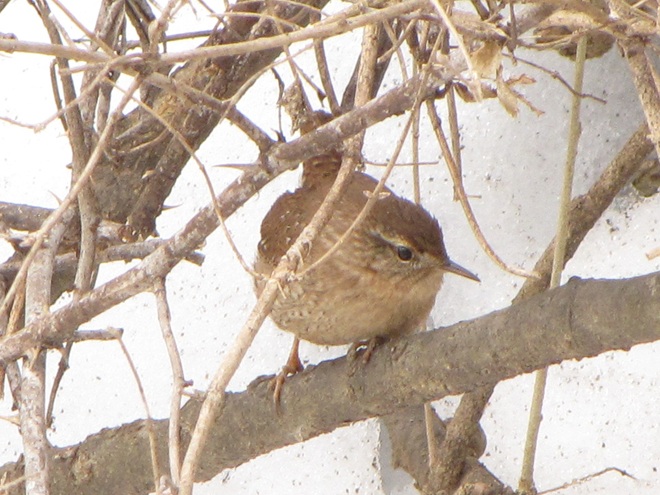
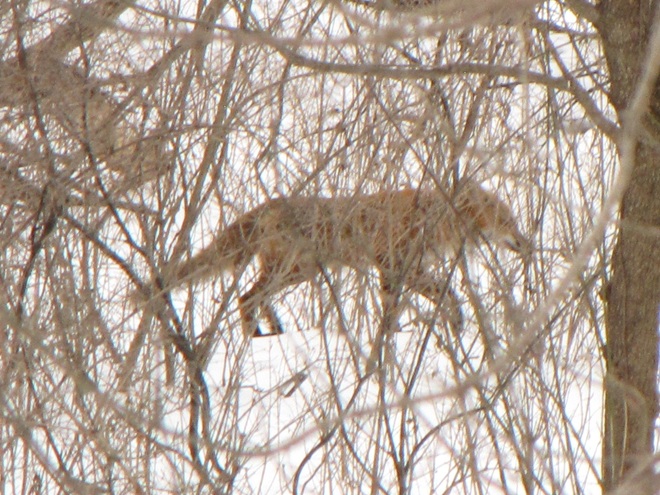
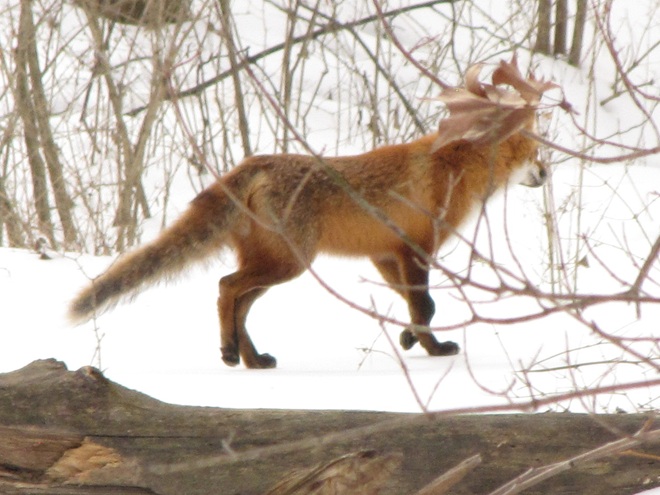
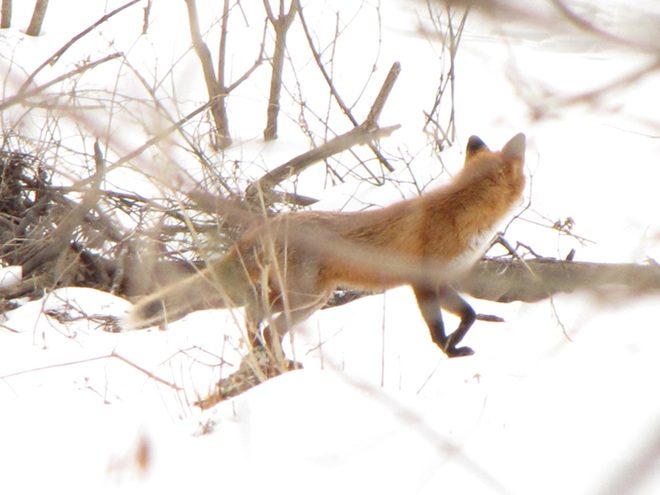
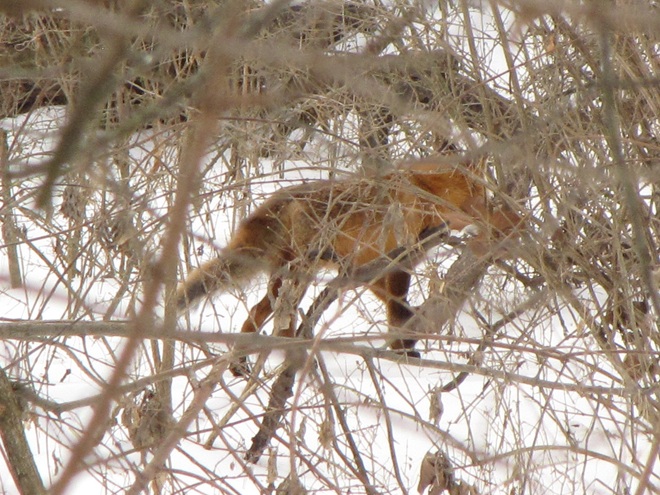
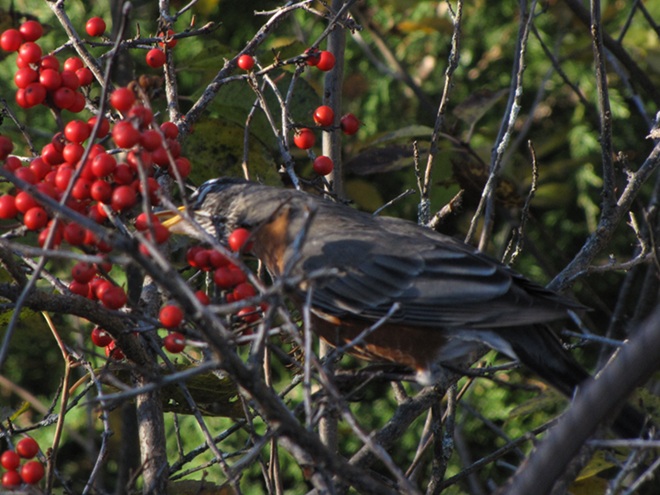
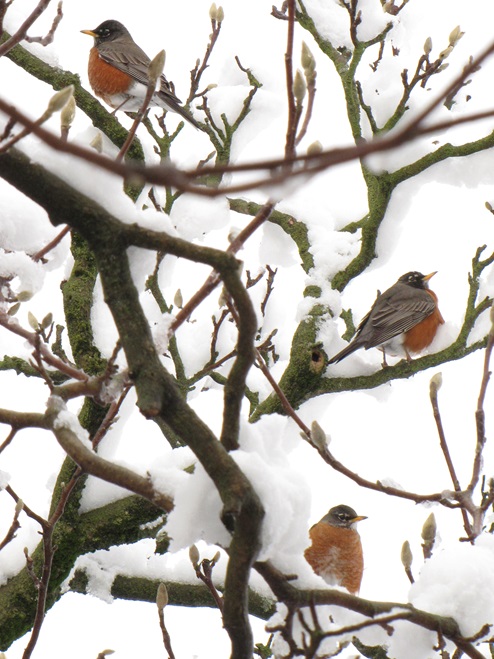
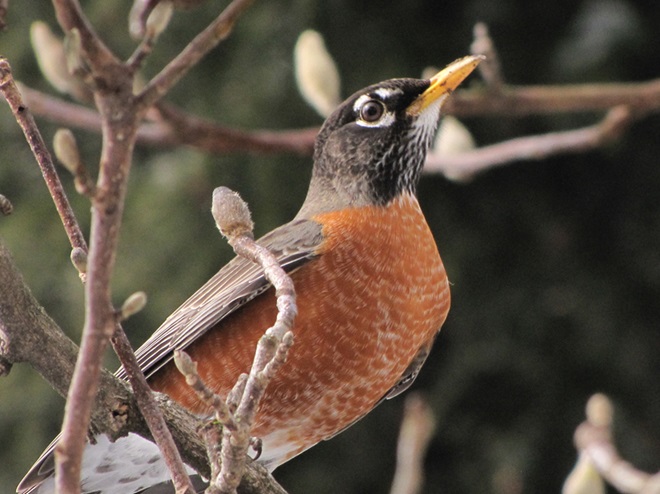
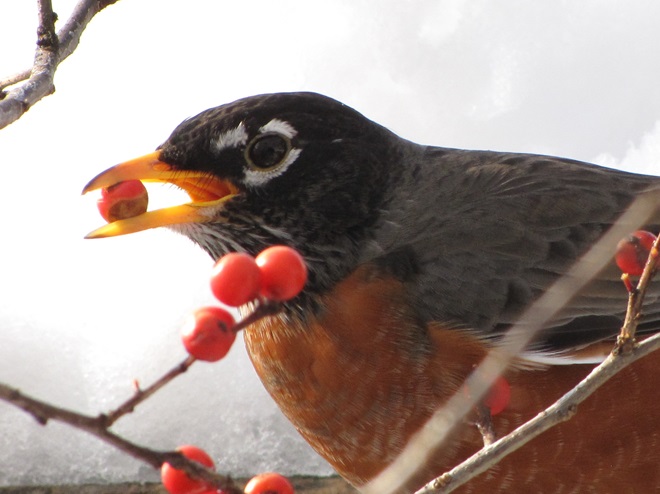
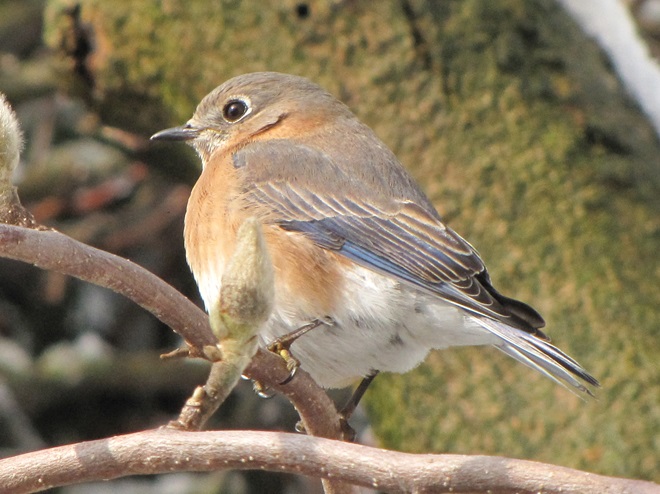
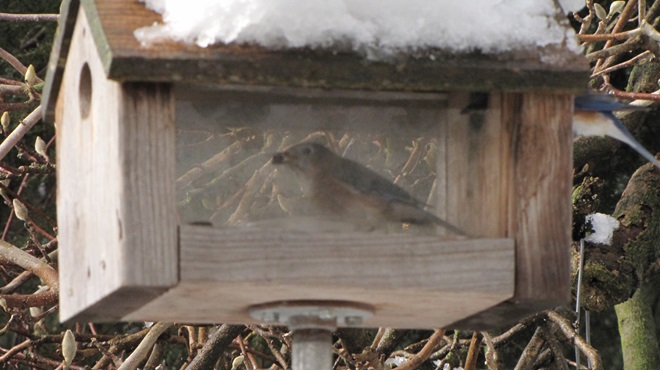
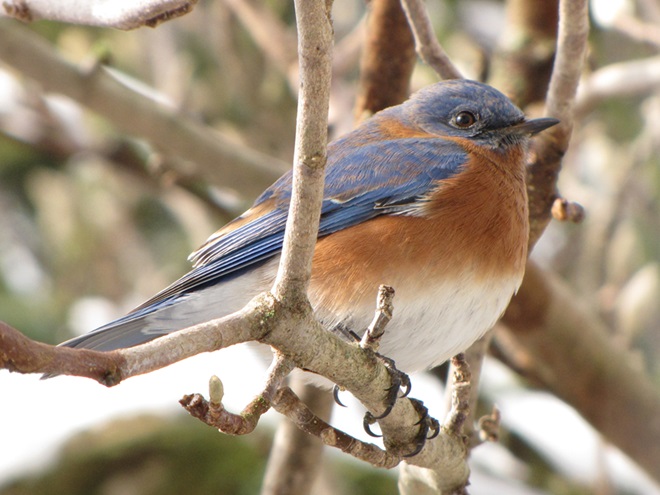
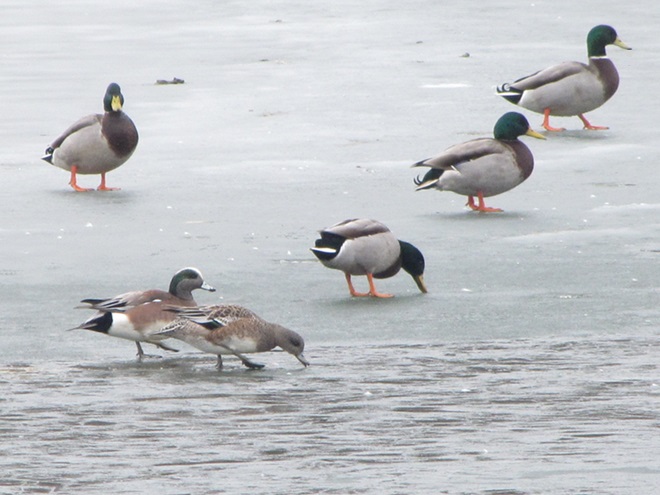
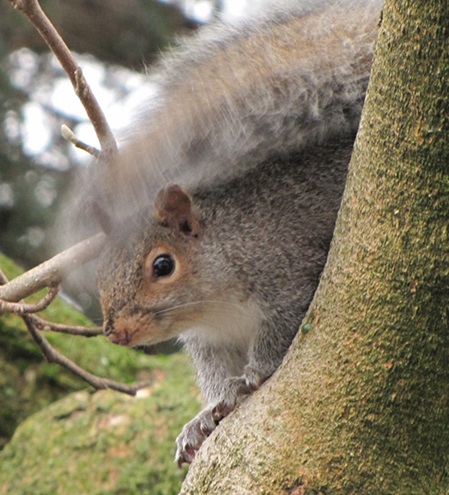
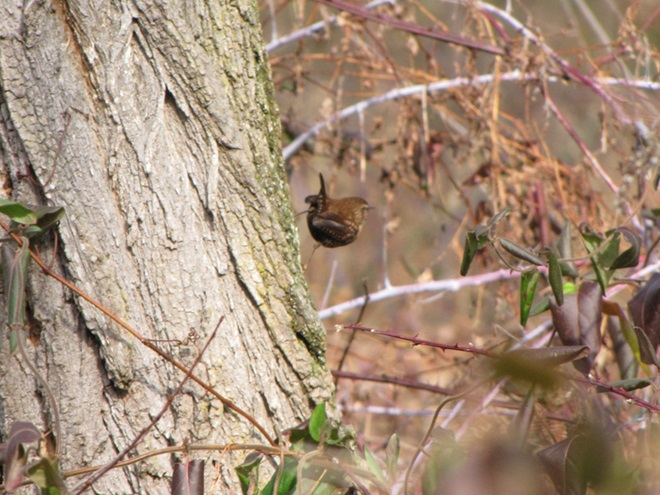
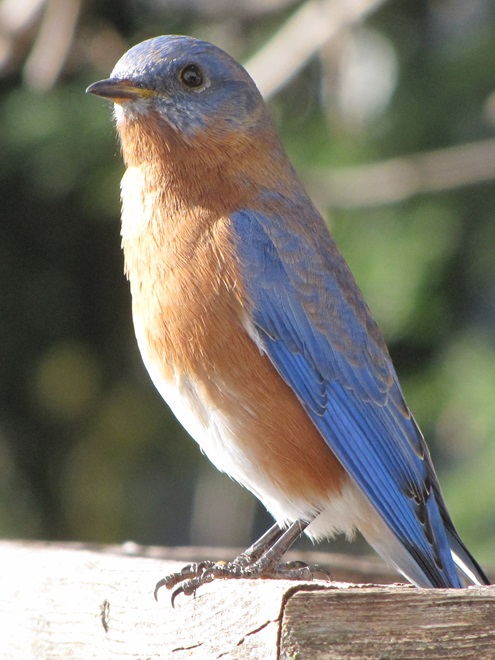
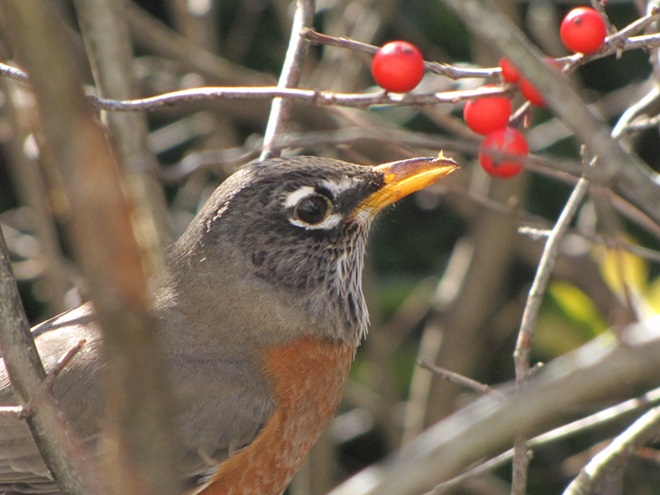
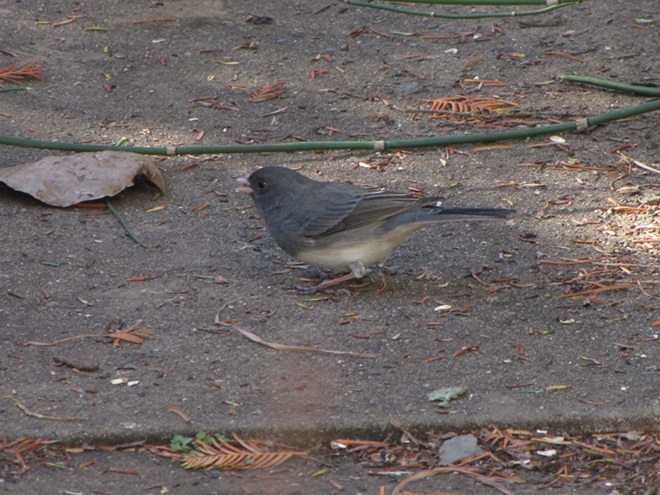
We watched this Blue Jay digging to retrieve an acorn from beneath the tuft of leaves and dried grasses where it had apparently concealed it earlier in the season.It then carried it to a nearby limb and chiseled away the husk to devour the nutritious contents. Blue Jays are known to cache hundreds or even thousands of seeds, nuts, and acorns for winter consumption. Want to see it for yourself? Just put out some unshelled no-salt peanuts and watch the jays haul them away, that is if the hoarding squirrels don’t get them first!Like other members of the Picidae family, Red-headed Woodpeckers pry and chisel away at decaying and insect-infested trees to find food during the winter.Like jays, Red-headed Woodpeckers including this first-winter bird are very fond of acorns and will often collect them from the ground. And like jays, they’ll cache acorns for use as a backup supply when a blanket of snow may prevent them from gathering those that remain beneath the oaks.Native to eastern Asia, Wintercreeper (Euonymus fortunei) has escaped from mostly urban cultivation to become naturalized and often invasive in some wooded areas of the lower Susquehanna River watershed. It can be quite aggressive, usually found growing as a climbing vine or less frequently as a shrub. In the absence of native and more palatable foods, the berries are an attractive survival fare for members of the Turidae (thrush) family and other birds.We found this and several hundred more American Robins surviving the current winter weather while feeding on Wintercreeper in a suburban woods with a heavy growth of the invasive plant.Several Eastern Bluebirds were seen among the Wintercreeper tangles as well. They too are relying upon this non-native plant to provide at least a portion of the energy they need to make through blustery February nights.The Hermit Thrush, a species that nests in the coniferous and mixed forests of the northern United States and Canada, winters sparingly in the lower Susquehanna valley. We found this one among the robins and bluebirds of the Wintercreeper thicket where it too was probably attracted by the supply of berries.Frequently escaping notice in the winter woods is the Brown Creeper, another species that nests primarily in coniferous and mixed forests to our north, though it does breed in our area at scattered locations, primarily in mountainous or swampy terrain.As their name suggests, Brown Creepers spend nearly all of their time creeping along the bark of mature trees searching for small insects, spiders, and other arthropods and their eggs. The creeper’s diet changes little with the seasons, but you may occasionally see them visit your bird feeders in winter for a nip of suet.The petite Winter Wren exhibits mouse-like behavior as it hops and crawls among logs, rocks, and brush along the banks of wooded waterways. Like the creeper, it is primarily an insectivore, spending much of its time escaping notice searching beneath streamside structure for its daily nourishment. In summer, Winter Wrens nest in damp coniferous forests.Seeing a Red Fox repeatedly during daylight hours is typically considered to be a sign that one may be observing a diseased animal, but we soon determined that there was nothing at all wrong with this vulpid we found patrolling a large woodland lying along the outskirts of a lower Susquehanna city.Typically when the ground is covered with snow, a Red Fox will hunt for voles or mice by listening for their movements in the runways below, then leaping and pouncing to plunge snout first into the fluff to grab the pinpointed prey. But the recent rain-soaked snow which is now frozen rock hard prohibits the usual hunting tactic, so this canine has adapted to current conditions.It has switched from its habitually nocturnal schedule to a day shift in pursuit of a diurnal species of prey rodent which can currently be found in abundance at ground level. After about forty minutes of watching this fox dart back and forth through the understory growth without ever paying much attention to us, we became certain of its target when the alarm chatter turned to a series of screams as one of the numerous Eastern Gray Squirrels that had been scurrying around fell into the fox’s grip.Just as suddenly as it had begun, our Red Fox encounter ended as our visitor opted to carry away its quarry and dine in peace. From all appearances, this particular fox’s only ailment was hunger. By adapting to prevailing conditions, it was able to fully utilize its opportunistic feeding traits and may thus survive to pass on these qualities to the next generation of Red Foxes. As for the squirrel, it exhibited a vulnerability that led to its demise. This vulnerability will not be passed on to a future generation of squirrels. Though it may run counter to public perception and understanding, the event strengthens local populations of both native species. And so it goes.
Here are a few more late-season migrants you might currently see passing through the lower Susquehanna valley. Where adequate food and cover are available, some may remain into part or all of the winter…
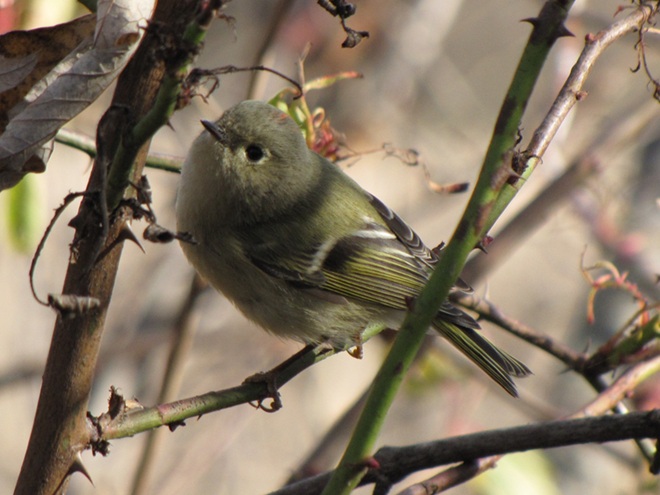
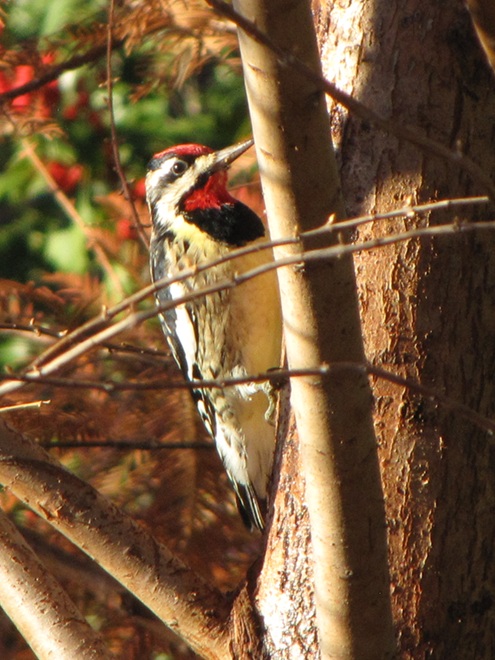
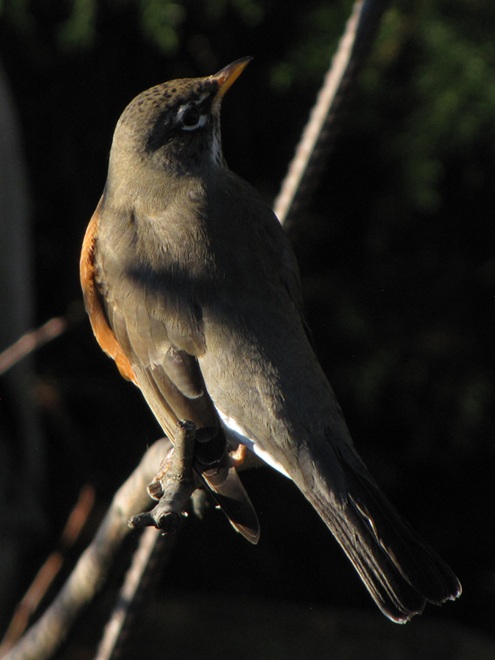
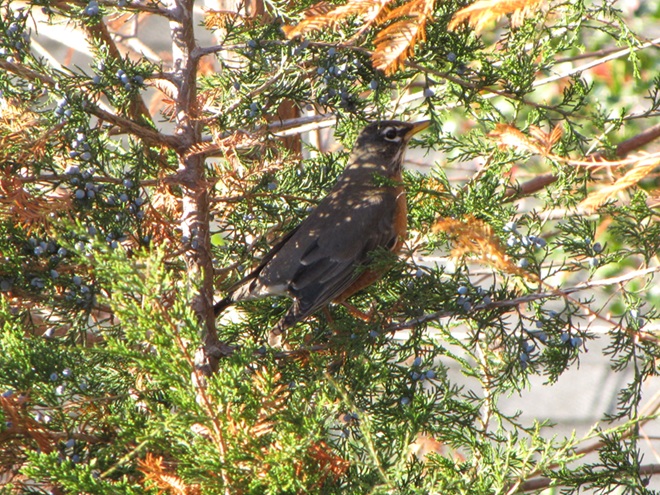
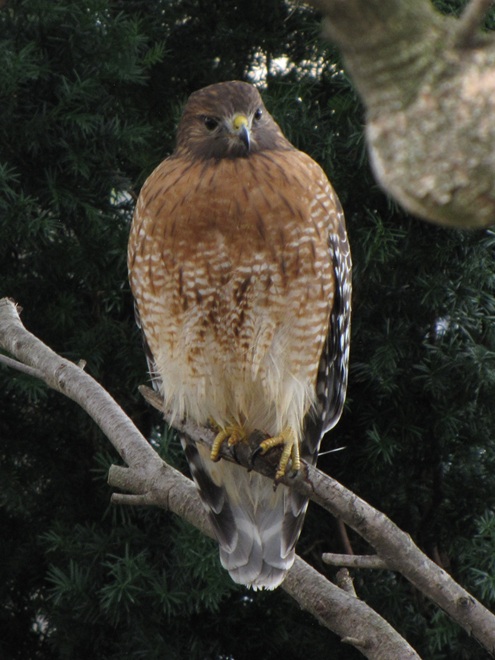
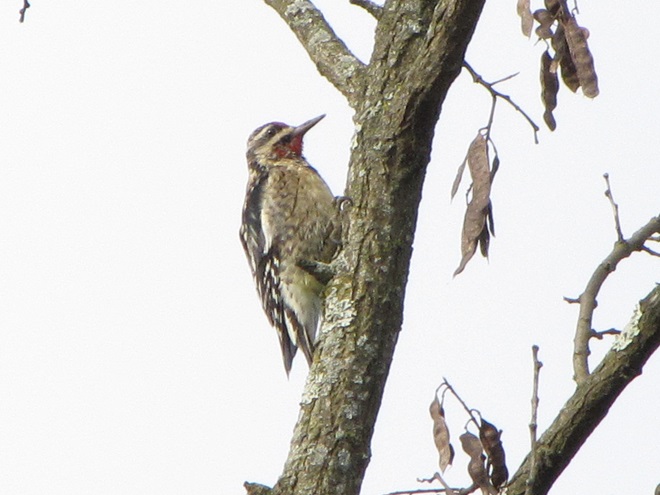
During the summer, Ruby-crowned Kinglets nest in northern coniferous forests. Through the colder months, these petite songbirds can often subsist on tiny insects and other invertebrates found among the bark, limbs, and buds of leafless deciduous trees and shrubs. In our region, look for wintering kinglets in woodlands that include at least a small percentage of evergreens to provide protection from frigid nighttime temperatures.The Yellow-bellied Sapsucker is our shiest of woodpeckers. These migrants are still quite common among stands of deciduous and mixed woods, but local numbers will soon decrease as the majority of the population continues moving along to the forests of the southeastern United States for winter.Migrating American Robins are still transiting region, but an abundance of wild fruits can prompt hundreds to linger through winter. Look for them near supplies of wild grape, Poison Ivy, dogwood, Virginia Creeper, hackberry, hawthorn, American Holly,……Eastern Red Cedar,……and Common Winterberry.In case you were wondering…Yes, the adult Red-shouldered Hawk continues to visit the garden pond at susquehannawildlife.net headquarters. Earlier today, we watched it plunge into the shallows after a Green Frog. We’re enjoying the privilege of having it around, so we hope it decides to remain for as long as the food supply is accessible.
For many animals, an adequate shelter is paramount for their successful reproduction. Here’s a sample of some of the lower Susquehanna valley’s nest builders in action…
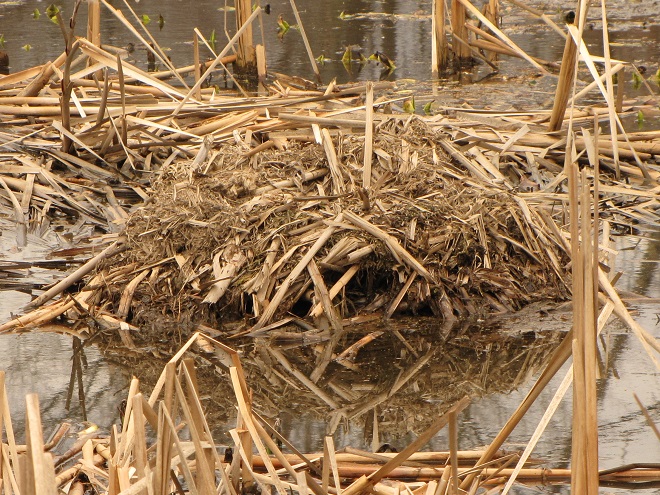
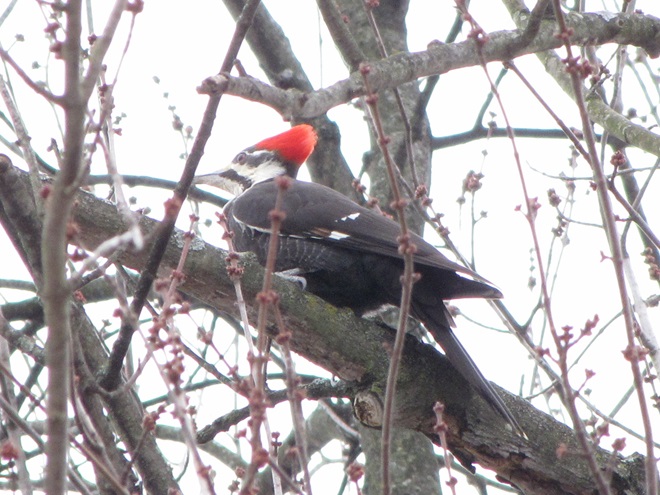
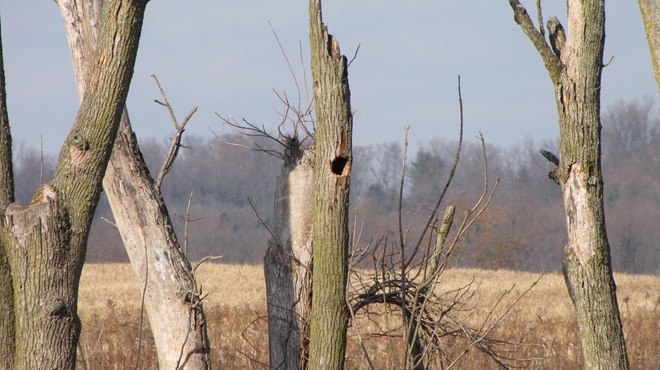
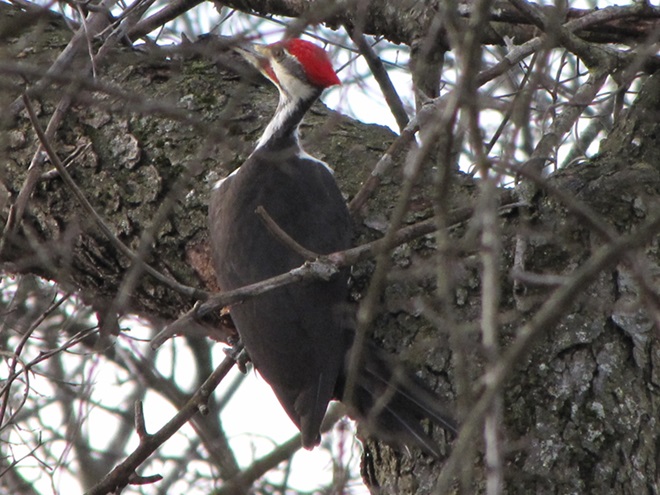
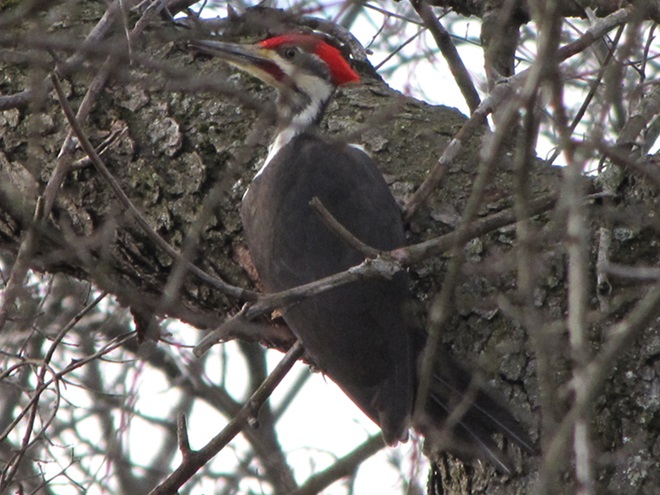
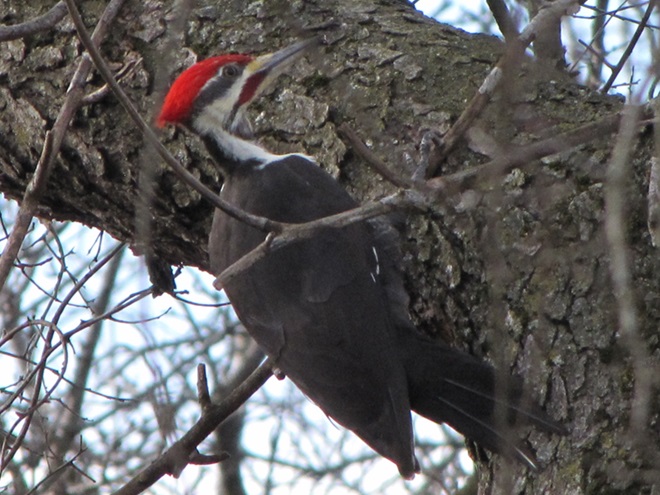
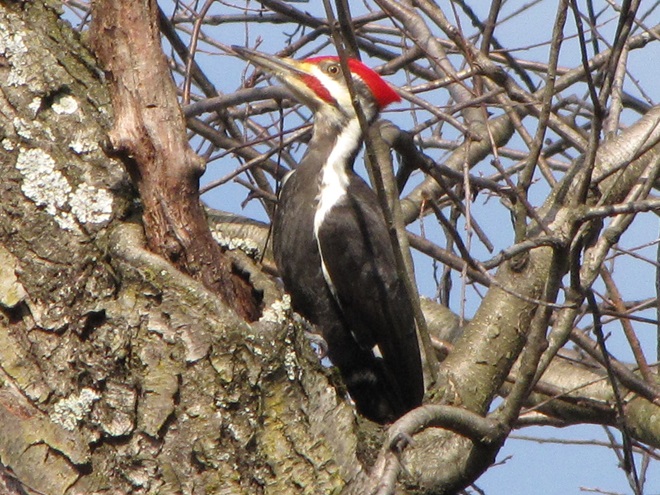
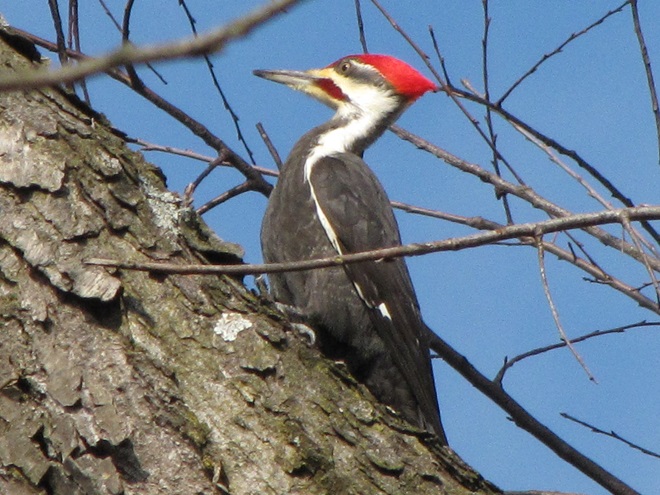
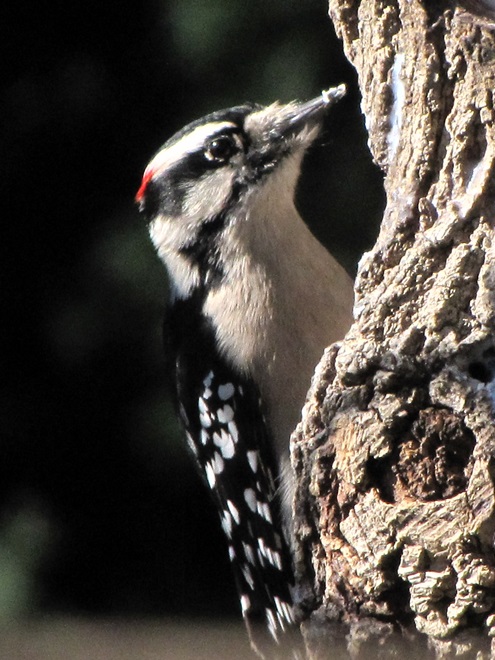
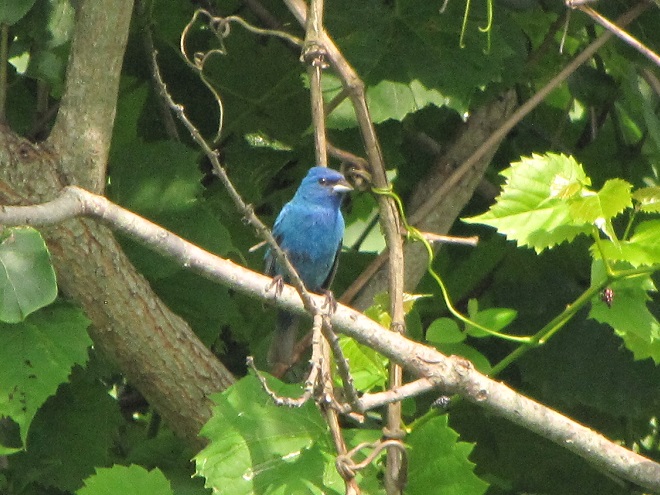
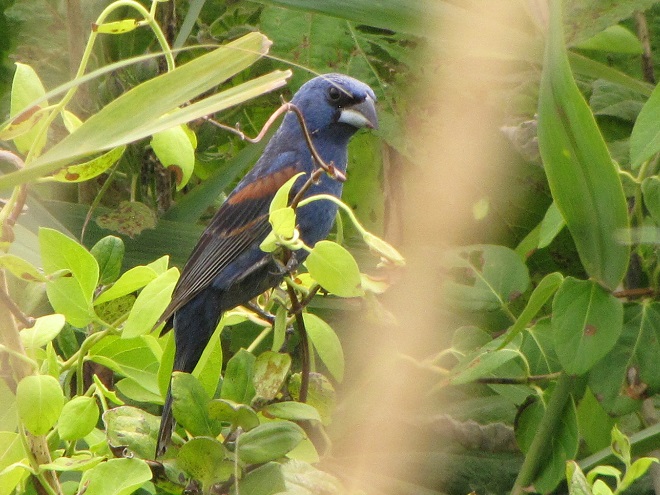
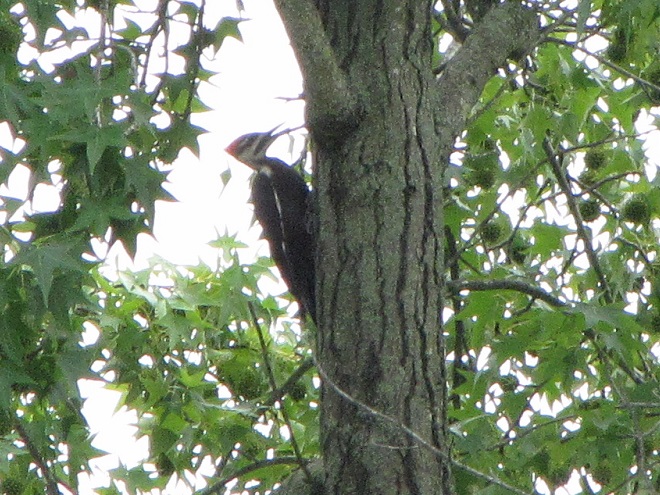
Many of our year-round resident bird species get a head start on the breeding season as cavity nesters. Some of these mated pairs use naturally occurring hollows, while still others take advantage of the voids left vacant by the more industrious previous occupants. Woodpeckers in particular are responsible for excavating many of the cavities that are later used as homes by a variety of birds and mammals to both rear their young and provide winter shelter. Pileated Woodpeckers, like other members of the family Picidae, have an almost mystic ability to locate diseased or insect-infested trees for selection as feeding and nesting sites. In this composite image, a pair is seen already working on a potential nursery during mid-January. After use by the woodpeckers, abandoned cavities of this size can become nesting sites for a variety of animals including bees, small owls, Great Crested Flycatchers, Wood Ducks, Hooded Mergansers, and squirrels.After use as a nesting site, a void excavated by Downy Woodpeckers can be occupied in subsequent years by chickadees, titmice, nuthatches, wrens, and other cavity-dwelling species.This Muskrat (Ondatra zibethicus) with a leafy twig in tow takes advantage of spring’s new growth to construct or repair its house,……a process that can be repeated or renewed as necessary throughout the year.A Muskrat house in March. In the absence of leafy twigs, dried cattail stems will suffice. As it ages and decays, the house’s organic matter generates heat and makes an ideal location for turtles to deposit and hatch their eggs.Soon after Neotropical migrants begin arriving in the forests of the lower Susquehanna watershed, they begin constructing their nests. The majority of these species build “outdoors”, not within the confines of a tree cavity. Here we see a Wood Thrush with its bill full of dried leaves and other materials……ready to line the cup of its nest in the fork of a small understory tree.Though it often arrives during early April after spending the winter in sub-tropical and even some temperate climes, the Blue-gray Gnatcatcher must wait to start construction of its nest until many of the Neotropical migrants arrive in early May.You see, the Blue-gray Gnatcatcher relies on plenty of web-spinning spider activity to supply the construction materials it needs.A Blue-gray Gnatcatcher pulling apart a spider’s web on a warm May morning.Back at the nest site……the sticky spider webs bind together lichens and small bits of bark……to form a perfect little cup for the nesting Blue-gray Gnatcatchers.Baltimore Orioles weave one the most unique nests of any species occurring in eastern North America.Unfortunately for them, man-made litter can often seem to be the ideal material for binding the nest together. In an area only sporadically visited by anglers, this oriole had no trouble finding lots of monofilament fishing line, trash that can fatally entangle both adult and young birds of any species. If you see any fishing line at all, please pick it up and dispose of it properly.Always keep an eye open for fishing line and get it before the birds do!Like many other avians, male Brown-headed Cowbirds are now relentlessly pursuing females of their kind.All his effort is expended in an attempt to impress her and thus have a chance to mate.This male can indeed put all his energy into the courtship ritual because Brown-headed Cowbirds toil not to build a nest. They instead locate and “parasitize” the nests of a variety of other songbirds. After mating, the female will lay an egg in a host’s abode, often selecting a slightly smaller species like a Yellow Warbler or native sparrow as a suitable victim. If undetected, the egg will be incubated by the host species. Upon hatching, the larger cowbird nestling will dominate the brood, often ejecting the host’s young and/or eggs from the nest. The host parents then concentrate all their efforts to feed and fledge only the young cowbird.Watching and waiting. The Indigo Bunting evades cowbird parasitism by first recognizing the invader’s egg. They then either add a new layer of nest lining over it or they abandon the nest completely and construct a new one. Some patient buntings may delay their breeding cycle until after cowbird courting behavior ceases in coming weeks.
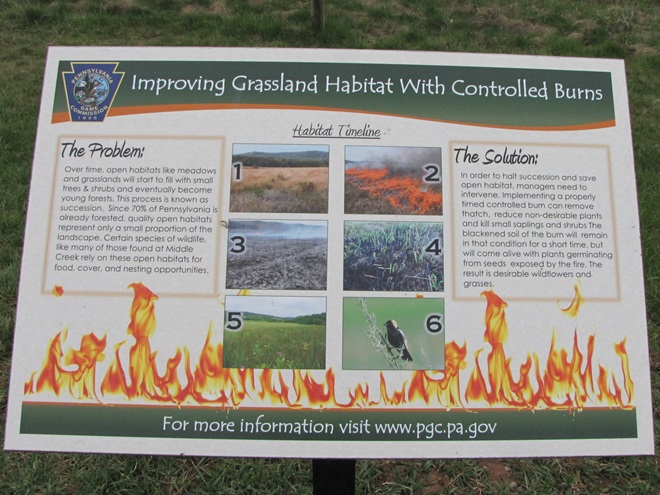
During Saturday’s Prescribed Fire Demonstration at the Pennsylvania Game Commission’s Middle Creek Wildlife Management Area, we noticed just how fast some species of wildlife return to areas subjected to burns administered to maintain grassland habitat and reduce the risk of high-intensity blazes.
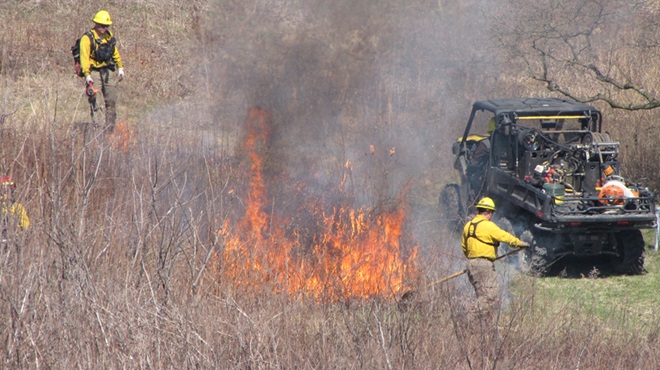
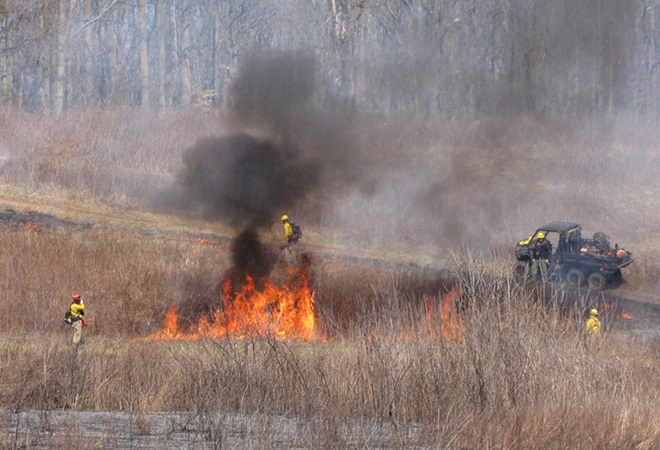
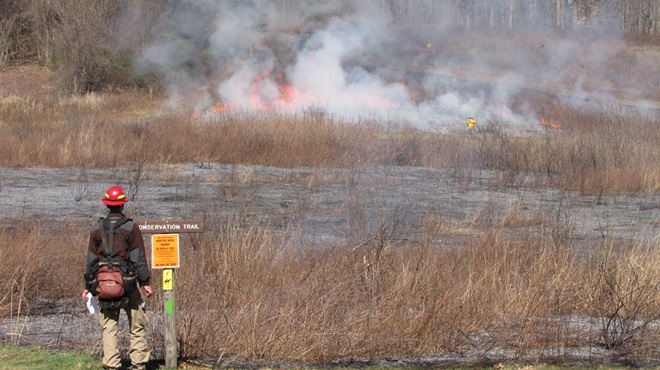
Pennsylvania Game Commission crews ignite a back fire to contain a prescribed burn along its downwind/upslope perimeter during a demonstration at Middle Creek Wildlife Management Area on Saturday.Visitors observe a fire planned to maintain this section of the refuge as warm-season grassland. A species with roots several feet deep, the light-colored vegetation is Indiangrass, a plant adapted to thrive following periodic episodes of wildfire. Prescribed fire can be used to replace naturally occurring infernos with much safer controlled burns that eliminate successional and invasive plants to promote the establishment of Indiangrass and other native warm-season species including Big Bluestem, Little Bluestem, Switchgrass, and a variety of wildflowers as well.Even as the fire reached its brief peak of intensity, we noticed birds already attracted to the site…Dozens of recently arrived Tree Swallows swept in to patrol for flying insects as the burn was in progress.One even stopped by to have a look inside the kestrel nest box as fire approached the dry stand of goldenrod on the slope behind.Red-tailed Hawks and other raptors, including nocturnal owls, are frequently the first visitors attracted to the scene of a prescribed burn or wildfire. In grassland and successional habitats, they come looking for any vulnerable voles or mice that may be moving about looking for cover.
These three Eastern Meadowlarks spent the morning in the grassland areas adjacent to the prescribed fire site, mostly where a burn had been conducted one week prior. During the demonstration, one even perched and sang from the oak trees in the museum/visitor’s center parking lot.
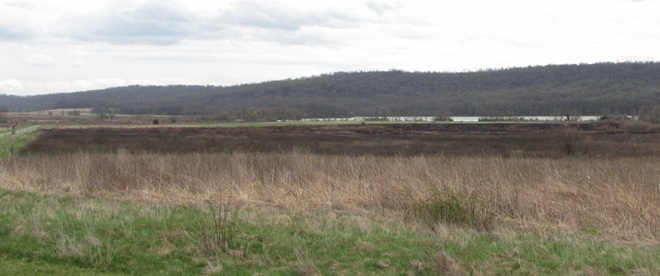
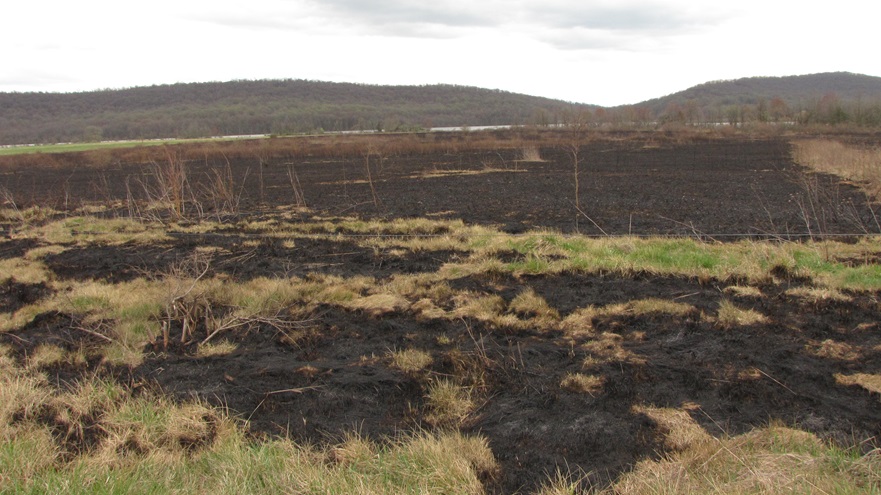
Following the Prescribed Fire Demonstration, we decided to pay a visit to some of the parcels where burns had been administered one week earlier on the north side of Middle Creek’s main impoundment. We found a surprising amount of activity.
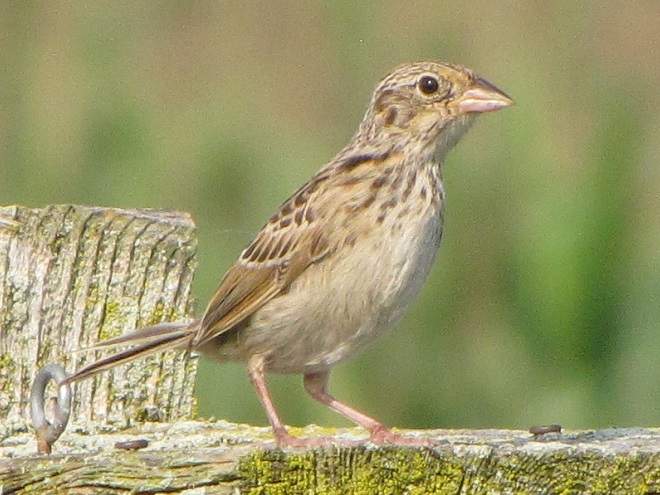
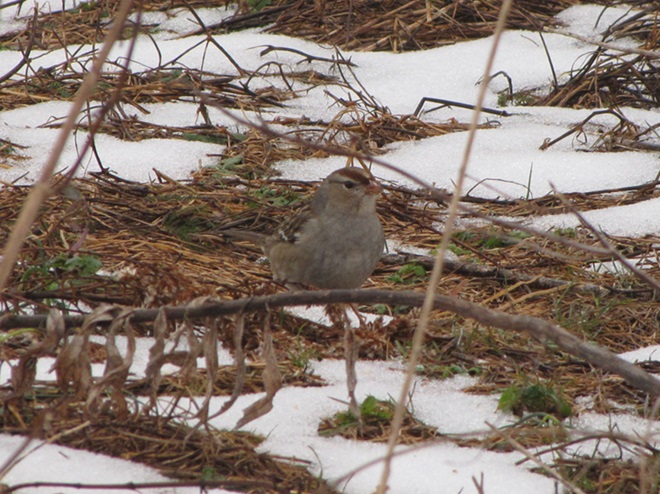
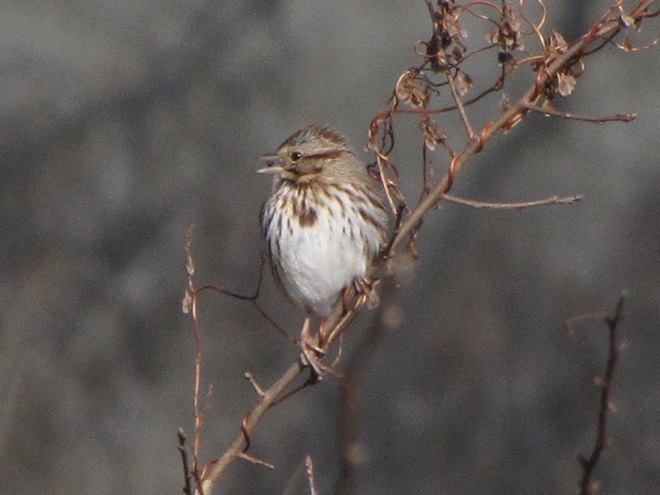
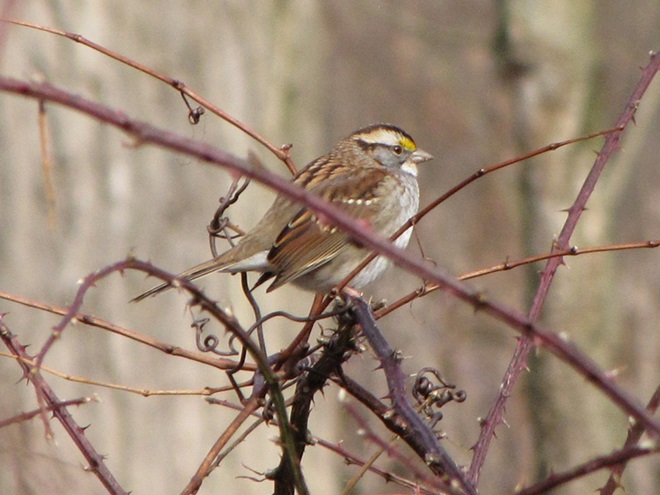
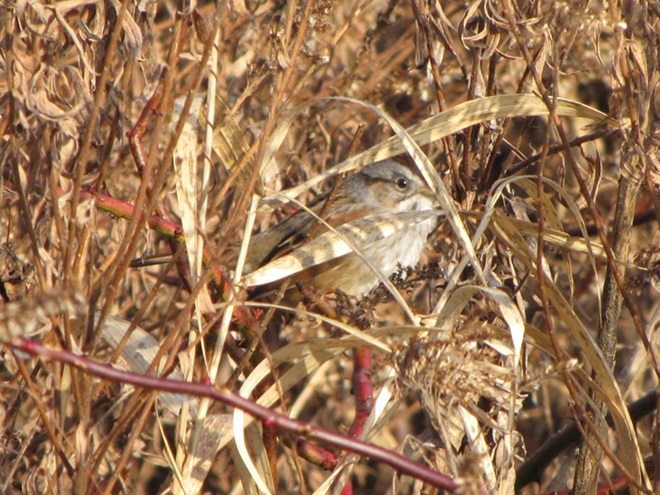
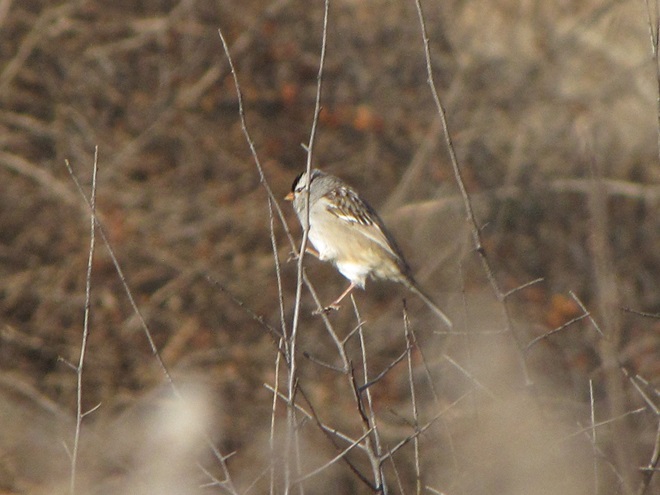
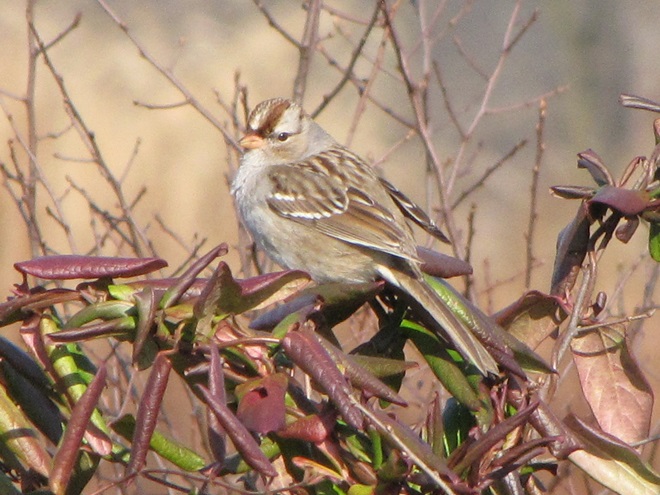
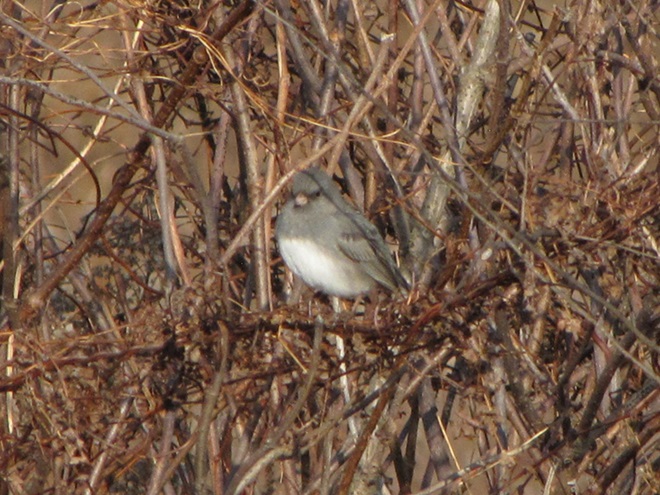
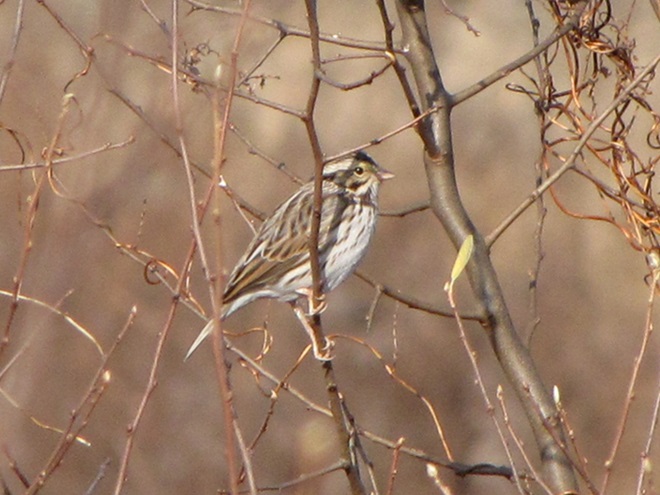
Apparently feeding upon slightly heat-treated seeds, sparrows were found by the dozens. White-crowned (left), White-throated (right), Song, and Savannah Sparrows were identified.This Downy Woodpecker was finding something to its liking among the scorched leaves, stems, and twigs.American Robins seem to find areas with lightly burnt vegetation and ash-dusted soil advantageous for finding invertebrates following a fire.We found this flock of Red-winged Blackbirds, Browned-headed Cowbirds, and a few European Starlings feeding throughout a grassland field cleared of early-successional growth by a prescribed fire administered one week ago.They seemed to favor gleaning seeds from among the lightly burned areas of the plot.Nearby, in an island of unburned grass in the same field, we found yet another Eastern Meadowlark, our fourth of the day. High-intensity agriculture, particularly early hay mowing and pesticide treatments, have mostly eliminated this and other grassland species from modern farms. Management practices like prescribed fire and delayed mowing (no spinning blades until at least early August) can maintain ideal grassland habitat for stunningly colorful blackbirds including nesting Eastern Meadowlarks, Bobolinks, and many other species as well.A male American Kestrel at a nest box located among Middle Creek’s warm-season and cool-season grassland habitats, the former maintained by prescribed fire, the latter by delayed mowing.
We’ve seen worse, but this winter has been particularly tough for birds and mammals in the Lower Susquehanna River Watershed. Due to the dry conditions of late summer and fall in 2024, the wild food crop of seeds, nuts, berries, and other fare has been less than average. The cold temperatures make insects hard to come by. Let’s have a look at how some of our local generalist and specialist species are faring this winter.
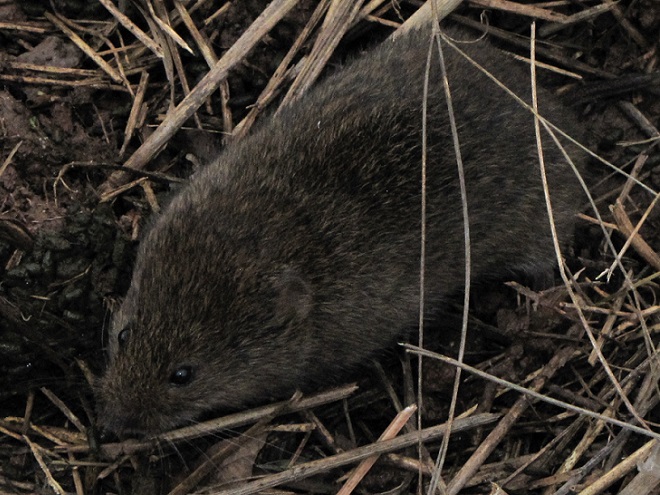
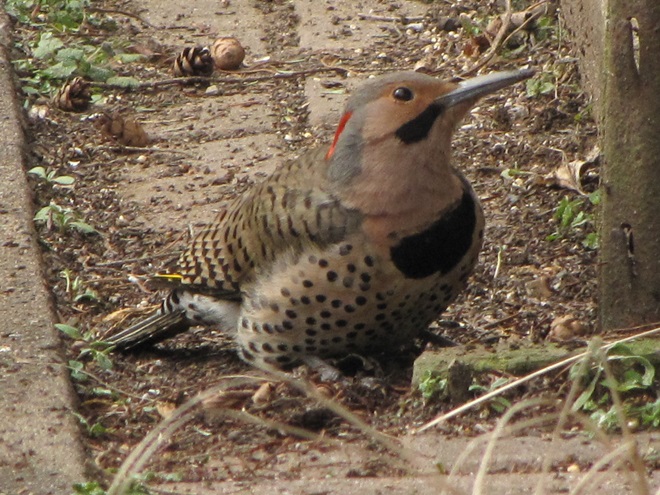
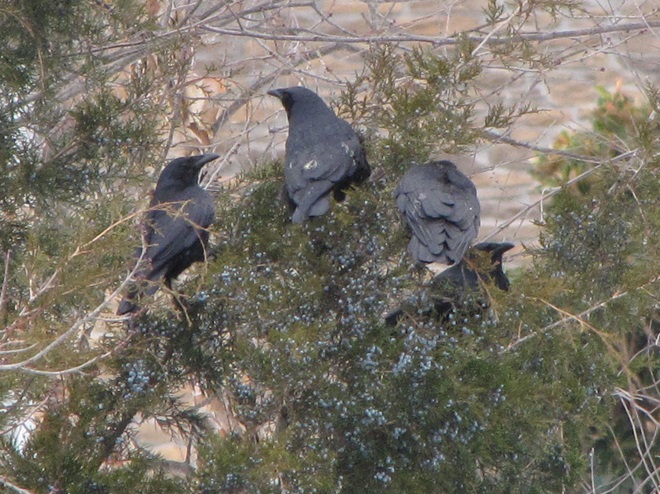
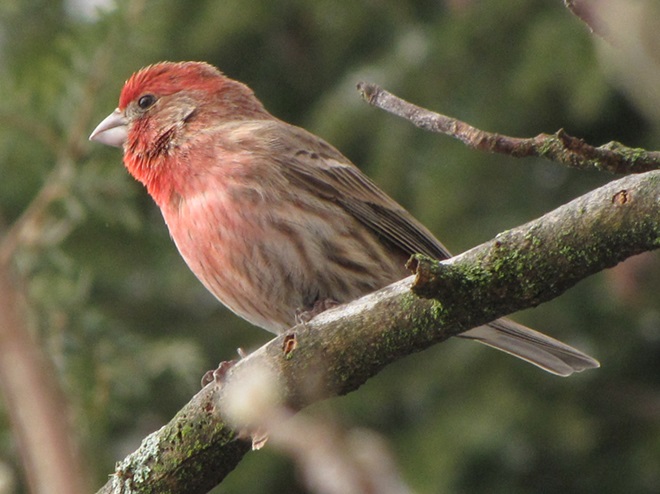
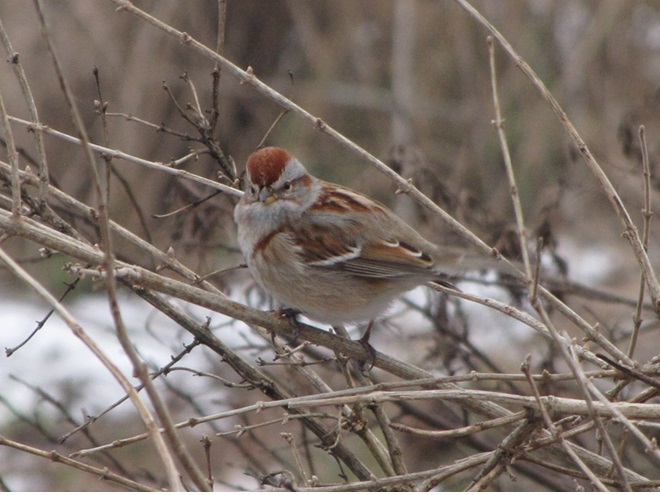
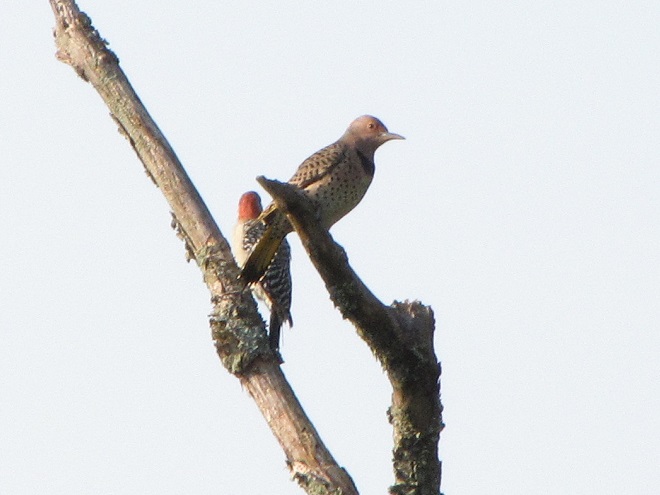
House Sparrows (bottom) and House Finches (top) are generalists. To survive and thrive, they are adapted to a variety of habitats and types of food. House Sparrows live almost anywhere man-made structures are found. They are true omnivores and will eat almost anything, especially if they see something else try to eat it first. The House Sparrow’s close association with humans has allowed it to become the most widespread and successful living avian dinosaur. On a cold night, they’ll take shelter either within dense vegetation alongside a building or within the structure itself. Though not nearly as cosmopolitan, the House Finch has successfully colonized much of the eastern United States after escaping from captivity as a cage bird in New York during the middle of the twentieth century. Upon being trans-located here from the arid southwest, they adapted to suburbs and farmlands consuming primarily a granivore diet of seeds supplemented with seasonally available berries. They quickly became accustomed to offerings at bird-feeding stations as well. To survive the harsh winters in the northern sections of their range, eastern populations of House Finches are developing a pattern of migration. These movements are most evident in late fall when dozens or sometimes hundreds can be seen heading south over regional hawk-counting stations.Though they require dead trees for nesting and as places to find the grubs and adult insects upon which they primarily feed, woodpeckers including the Northern Flicker are generalists, seldom passing by a supply of fruits like these Poison Ivy berries as a source of winter food. Flickers regularly visit suburban areas where they’ll drop by at bird-feeding stations for suet. During the warmer months, they are the woodpecker most frequently seen on the ground where swarms of ants garner their full attention.The Pileated Woodpecker is seldom found outside of mature forests where it digs relentlessly to remove grubs and other infestations from dead wood. But it is not a true specialist……it too finds a supply of Poison Ivy berries to be indispensable during a cold winter day.The Ruby-crowned Kinglet is a generalist, feeding mostly on insects, but also consuming small seeds and some berries, including those of Poison Ivy. It nests well to our north in tall spruces and other evergreens. During migration and in winter, the Ruby-crowned Kinglet may be found in deciduous trees, brush, and tall grass in habitats ranging from forests to parks and suburbia. This male is displaying its seldom-seen red crown.The Golden-crowned Kinglet, seen here on a Poison Ivy vine, is more of a specialist than the Ruby-crowned species, though the two will often occur in mixed groups during the winter. The Golden-crowned Kinglet nests in Spruce-Fir forests and in conifers within mixed woodlands. Even during migration, and particularly in winter, these birds are seldom found far from a stand of large evergreens within which they find shelter for the night.The Hermit Thrush’s generalist lifestyle allows it to survive cold season weather in the Lower Susquehanna River Watershed. During summer, it breeds in coniferous and mixed woods from the northern parts of our valley north into Canada and feeds primarily on worms, insects, and other arthropods. During migration and in winter, the Hermit Thrush becomes a regular visitor to deciduous forests, woody parks and suburbs, particularly where a supply of wild berries is available to supplement its diet.Iconic as it pulls earthworms from lawns during the warmer months, the generalist American Robin is fully dependent upon a crop of berries to survive winter conditions in the lower Susquehanna valley. The drought afflicted wild food crop of 2024 has led to fewer robins spending the season here and has delayed the northward push of migrating birds until the ground thaws and the earthworms make the ground rumble once again.It’s insects for the nestlings during spring and summer, then berries through the winter for the cheerful Eastern Bluebirds, another generalist species.American Crows are an excellent example of a generalist species. They’ll go anywhere to find food and they’ll eat almost anything. Like the House Sparrow and several other generalists, they adapt very well to human activity and actually thrive on it. Garbage anyone?Another career generalist is the widely worshiped White-tailed Deity, a species adapted to nearly all man-made landscapes with adequate vegetation upon which to browse. Pushed to the limit during severe weather, some individuals will consume carrion and even resort to cannibalism.You might think the Great Blue Heron is a specialist. Nope, it’s an accomplished generalist. Great blues will live, feed, and breed on almost any body of fresh or brackish water. And their diet includes almost anything that swims. In winter, you’ll even see them in fields hunting mice and voles.The Red-shouldered Hawk is a generalist with a diet ranging from amphibians and reptiles to small rodents and large insects. Mostly regarded as a species of bottomlands, they’ll frequent woodland edges, roadsides, and suburbia during the winter months.During its periodic winter visits to the region, the American Tree Sparrow feeds on seeds among the grasses and forbs of semi-open country with scattered short shrubs and trees. A generalist species, it will show up at backyard bird-feeding stations, particularly during periods of inclement weather. In summer, the American Tree Sparrow nests in tundra with growths of stunted willows and spruce and their diet includes insects as a source of protein for themselves and their young.The White-crowned Sparrow has similar winter habitat preferences to the tree sparrows……it becomes adaptable and something of a generalist when searching for food during bad winter storms.The Savannah Sparrow is an omnivore favoring insects in summer and seeds in winter. Though very closely tied to its grassland habitat year-round, snow cover can push these birds to enter woodier environs to consume fruits like these rose hips.Dusk and dawn during the short days of winter are the prime hunting times of a mammal specialist, the Short-eared Owl. Its presence in the lower Susquehanna valley is dependent on two dominant factors: extensive grassland habitat and an adequate population of the owl’s favored food, the Meadow Vole (Microtus pennsylvanicus). The Short-eared Owl’s requirements as a specialist species make finding a suitable place to live difficult. Unlike the generalist birds and mammals that often adapt to the widespread man-made disturbances in the region, populations of specialists frequently become fragmented, reduced in abundance, and subject to extirpation.The Meadow Vole is a generalist rodent that can be abundant in grasslands, early successional growth, fallow fields, marshlands, and, of course, meadows. They are primarily herbivores, but will occasionally consume insects and other arthropods. Usually nocturnal, some individuals venture out along their surface runways during daylight hours becoming vulnerable to diurnal raptors including kestrels, harriers, and buteos.A Short-eared Owl in near darkness patrolling a grassland for Meadow Voles.The eastward expansion of the Coyote (Canis latrans), a species of western North America’s grasslands and scrublands, and its progressive mixing with the Wolf (Canis lupus) in these eastern extensions of its range, has produced an expanding population of very adaptable generalists we call Eastern Coyotes (Canis latrans var.). These omnivorous canines colonized the Lower Susquehanna River Watershed during the last four decades to replace extirpated wolves as the top-tier natural predator in the region. Their primary diet includes Meadow Voles in grasslands and other small mammals along woodland edges and in successional habitats. Seasonally, they consume the berries of numerous wild plants. Slightly larger than their western ancestors, Eastern Coyotes with the admixture of Wolf genetics can subdue small ungulates. Like other apex predators, they are attracted to vulnerable prey and thus play a crucial role in culling the weak and diseased among their potential quarry species to assure the health and potential of populations of these species as long-term sources of food energy. The benefit to the prey species is however largely diluted in populous areas of the northeast; most venison consumed by Eastern Coyotes here is in the form of road kill. During periods of extended snow cover when small rodents and other foods become inaccessible, Eastern Coyotes, particularly young individuals, will wander into new areas seeking sustenance. Sometimes they venture into cities and suburbs where they explore the neighborhoods in search of garbage and pet foods placed outside the home. (Video clip courtesy of Tyler and Grace Good. Click image to view.)
Wildlife certainly has a tough time making it through the winter in the lower Susquehanna valley. Establishing and/or protecting habitat that includes plenty of year-round cover and sources of food and water can really give generalist species a better chance of survival. But remember, the goal isn’t to create unnatural concentrations of wildlife, it is instead to return the landscape surrounding us into more of a natural state. That’s why we try to use native plants as much as possible. And that’s why we try to attract not only a certain bird, mammal, or other creature, but we try to promote the development of a naturally functioning ecosystem with a food web, a diversity of pollinating plants, pollinating insects, and so on. Through this experience, we stand a better chance of understanding what it takes to graduate to the bigger job at hand—protecting, enhancing, and restoring habitats needed by specialist species. These are efforts worthy of the great resources that are sometimes needed to make them a success. It takes a mindset that goes beyond a focus upon the welfare of each individual animal to instead achieve the discipline to concentrate long-term on the projects and processes necessary to promote the health of the ecosystems within which specialist species live and breed. It sounds easier than it is—the majority of us frequently become distracted.
Being an individual from a population of a very successful generalist species is no guarantee of survival. This Eastern Gray Squirrel fell from a tall tree when the limbs became ice covered during a storm earlier this month. Just a freak accident? Maybe, but mistakes like this are often fatal in the natural world. This squirrel’s passing may seem brutal, but it provides a better opportunity for other squirrels and animals that share its food and cover requirements to make it through the winter. And those survivors that didn’t suffer such a fatal mistake or, more importantly, don’t possess a vulnerability that may have contributed to such a mishap will have a chance to pass those traits on to a new generation. This squirrel as an individual is gone, its species lives on, and may be stronger for its passing.Pennsylvania Game Commission crews maintain a grassland ecosystem for Short-eared Owls and other specialists using prescribed fire to prevent succession beyond its earliest stages. Among the additional specialist species benefiting from this management tool are Monarchs and other butterflies whose host plants survive early-season fire, but not competition with woody vines, shrubs, trees, and invasive herbaceous growth.
On the wider scale, it’s of great importance to identify and protect the existing and potential future habitats necessary for the survival of specialist species. And we’re not saying that solely for their benefit. These protection measures should probably include setting aside areas on higher ground that may become the beach intertidal zone or tidal marsh when the existing ones become inundated. And it may mean finally getting out of the wetlands, floodplains, and gullies to let them be the rain-absorbing, storm-buffering, water purifiers they spent millennia becoming. And it may mean it’s time to give up on building stick structures on tinderbox lands, especially hillsides and rocky outcrops with shallow, eroding soils that dry to dust every few years. We need to think ahead and stop living for the view. If you want to enjoy the view from these places, go visit and take plenty of pictures, or a video, that’s always nice—then live somewhere else. Each of these areas includes ecosystems that meet the narrow habitat requirements of many of our specialist species, and we’re building like fools in them. Then we feign victimhood and solicit pity when the calamity strikes: fires, floods, landslides, and washouts—again and again. Wouldn’t it be a whole lot smarter to build somewhere else? It may seem like a lot to do for some specialist animals, but it’s not. Because, you see, we should and can live somewhere else—they can’t.
The Allegheny Woodrat (Neotoma magister), a threatened species in Pennsylvania and a critically imperiled species in Maryland, is a habitat specialist requiring the forested rocky slopes, talus-flanked ridgetops, and caves of the Ridge and Valley Province for its nest sites and survival. Isolated populations survived within similar environs in the lower Susquehanna River valley’s Piedmont Province and on South Mountain through at least the first half of the twentieth century, but have since been extirpated. Human encroachment that fragments their habitat and promotes exposure to parasite-hosting mammals including the Raccoon (Procyon lotor), carrier of the Raccoon Roundworm (Baylisascarius procyonis), could prove fatal to remaining populations of this native mammal. (National Park Service image by Rick Olsen)The American Oystercatcher (Haematopus palliatus) is a specialist species that uses its highly adapted bill to feed on marine invertebrates including mollusks, few of which are actually oysters. Reliant upon tidal ecosystems for its survival, many of the seashore animals that make up this wader’s diet are themselves specialist species. Oystercatchers spend nearly their entire lives in tidal marshes or within the intertidal zone on beaches. They also frequent rocky jetties, particularly during high tide. This individual was photographed near the mouth of Chesapeake Bay in Northhampton County, Virginia, a location that, when the waters of the Atlantic started rising over 10,000 years ago, was the lower Susquehanna valley about 60 miles from the river’s mouth at present-day Norfolk Canyon along the edge of the continental shelf. Get the drift?
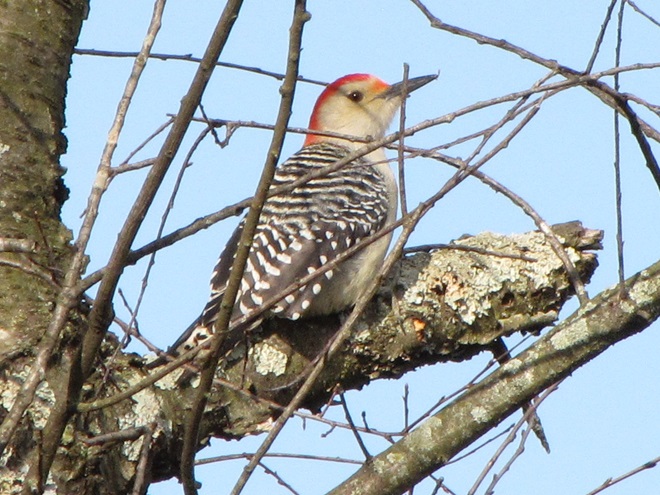
You may be on the verge of satisfying your appetite with chestnuts from an open fire, but this Red-bellied Woodpecker is just as pleased to retrieve a Shagbark Hickory nut from a hiding place among the tree’s cracks and crevices where it was stashed away earlier in the fall.
Here are 7 reasons why you, during the coming week or so, should consider spending some time at Willow Point overlooking the lake at the Pennsylvania Game Commission’s Middle Creek Wildlife Management Area.
REASON NUMBER ONE— Wildlife is at close quarters along the trail leading from the parking lot to Willow Point…
Eastern Gray Squirrels are common and easily seen along the edge of the woods.Eastern Bluebirds are investigating nest boxes and may presently be using them as communal roost sites during cold, windy nights.A Hermit Thrush was just one of the songbirds we found foraging along the edge of Willow Point Trail.Look carefully and you may see one or more species of woodpeckers in the mature trees. We found this Yellow-bellied Sapsucker in a maple near the trail’s terminus at the Willow Point viewing area.
REASON NUMBER TWO— A variety of waterfowl species are lingering on ice-free sections of the lake surrounding Willow Point…
Noisy flocks of Tundra Swans and Canada Geese on open water at Willow Point.American Black Ducks on a fly by.Mallard drakes near the point.A small flock of Green-winged Teal feeding among the Mallards.A flock of Northern Shovelers has been frequenting the shallows along the south side of Willow Point for at least two weeks.Common Mergansers diving for benthic fare.
REASON NUMBER THREE— Bald Eagles are conspicuous, easily seen and heard…
Bald Eagles on tree stumps in the lake.A hatch-year/juvenile Bald Eagle on a glide over Willow Point.
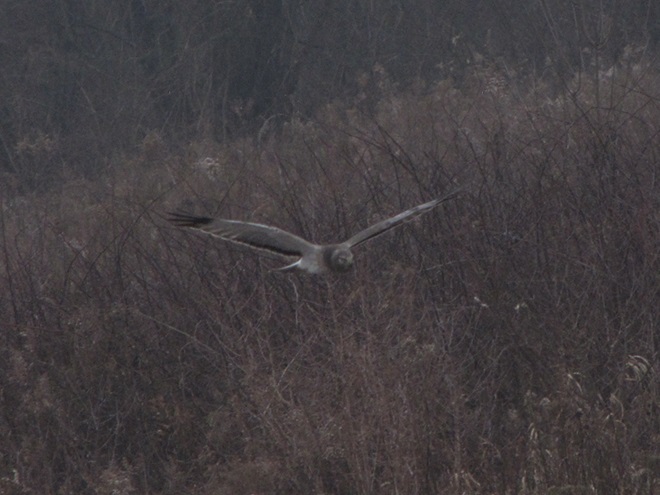
REASON NUMBER FOUR— Northern Harriers have been making close passes over Willow Point as they patrol Middle Creek’s grasslands while hunting voles…
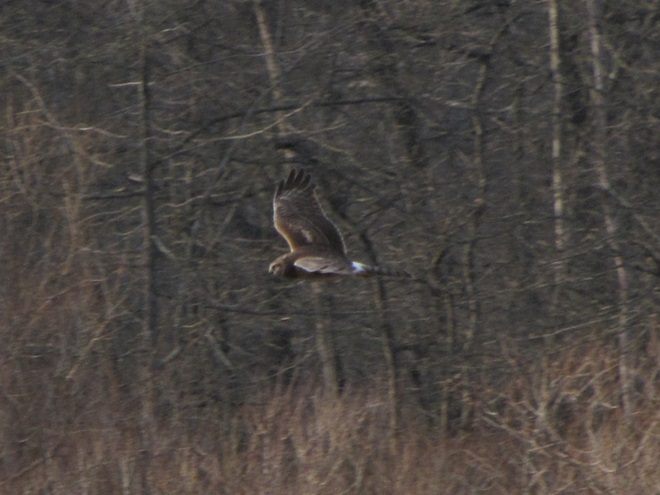
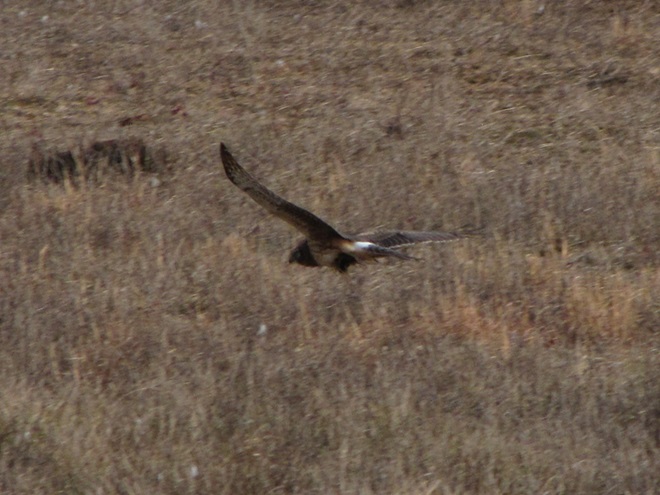
A female Northern Harrier over Willow Point.A hatch-year/juvenile Northern Harrier gazing over a field of goldenrod adjacent to Willow Point.Hatch-year/juvenile Northern Harrier patrolling a field of goldenrod and preparing to pounce.A Northern Harrier buoyantly flying past Willow Point just prior to sunset.
REASON NUMBER FIVE— The annual observance of the White-tailed Deity holidays may be drawing to a close for the gasoline and gunpowder gang, but for the supreme ungulates, the rituals that lead to consummation of their unions are still ongoing…
Mystical White-tailed Deities hiding in plain sight near Willow Point.Having so far survived the ceremonies of sacrifice practiced by worshipers clad in vibrant orange attire, these divine idols agree to a more civilized ritual, a gentlemanly duel.
…then it’s off to find the fair maidens.
REASON NUMBER SIX— Sandhill Cranes are still being seen from Willow Point…
Sandhill Cranes have been spending time on dry portions of the lake bed and in grasslands and croplands to the north.
These Sandhill Cranes could depart from Middle Creek’s refuge at any time, particularly if the deep freeze returns to make feeding more difficult. You’ll want to visit soon if you want to see them.
REASON NUMBER SEVEN— The crowds that will accompany the arrival of thousands of Snow Geese in early 2025 can make visiting Willow Point a stressful experience. Visit now to see these birds and mammals at Willow Point and you might just have the place all to yourself. Then you can spend your time looking through the flocks of waterfowl and other birds for unusual new arrivals instead of wading through a sea of humanity.
White-crowned Sparrows at Middle Creek Wildlife Management Area’s Willow Point.
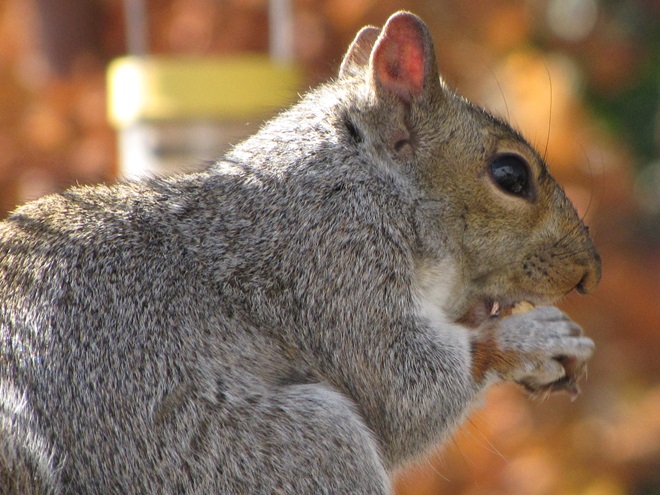
If you provide supplemental foods for the birds visiting your garden sanctuary, we don’t need to tell you how expensive those provisions have become. It can be quite frustrating when the majority of these pricey supplies get gobbled up by the chunky squirrels that dominate your feeding station and leave hungry birds with nothing but the tiny little scraps.
Here at susquehannawildlife.net headquarters, we like to feed whole peanuts in the shell to the resident and migratory native birds. But placed out in the open on a stump or a tray, or even within a hopper feeder, peanuts are quickly carried away and cached for latter use by squirrels and jays. The chickadees, titmice, nuthatches, wrens, and woodpeckers that could really use the extra food to maintain their body fat through the winter get nothing but leftovers.
It’s not unusual for squirrels and jays to scarf up and carry away 90% or more of the expensive peanuts placed at your feeding station. The dozen or more other species of native birds that will partake of this offering get the leftovers or nothing at all.
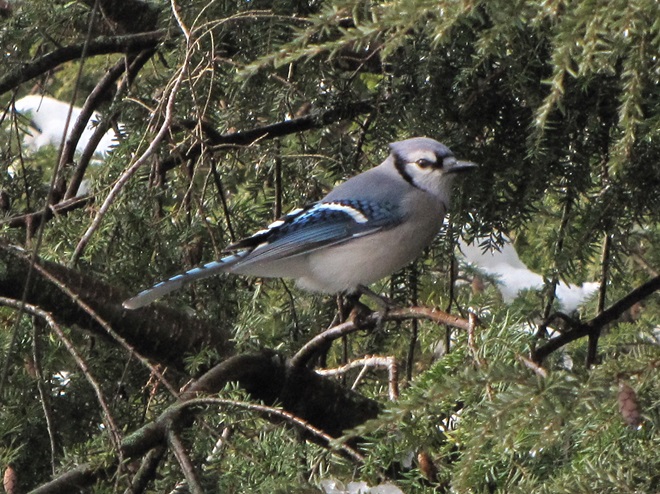
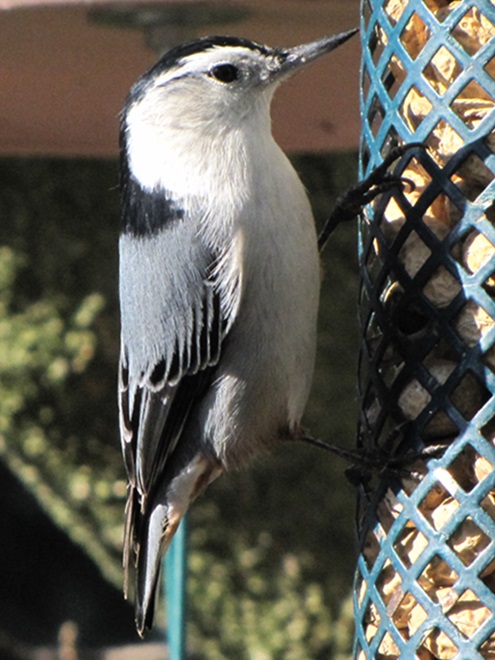
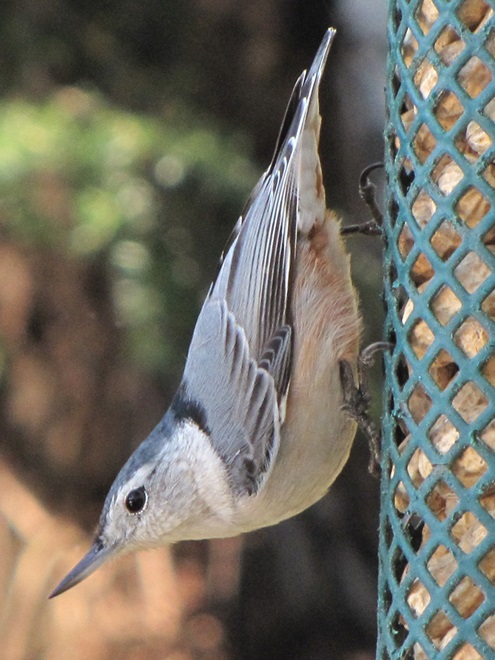
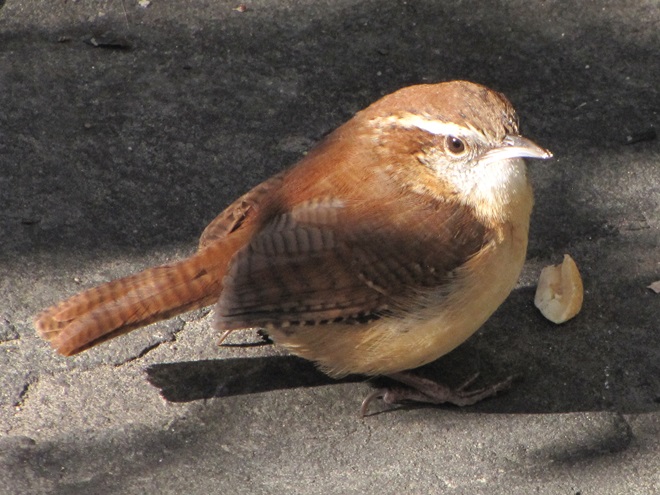
We’ve discovered a solution that, for us, saves money and more efficiently feeds the native species of birds that stop by our oasis. We’ve been using inexpensive ($6-$8) wire mesh tube feeders intended for suet nuggets to serve whole peanuts in the shell to our guests. As long as they can’t knock the feeders to the ground, squirrels have failed to raid the contents. Like other birds, Blue Jays can still peck away to remove the peanuts from their shells and eat them on the spot, but they can no longer haul off a whole feeder load at a time. Each must carefully crack the shell and remove an individual peanut or portion thereof for immediate consumption. The empty shells remain mostly in the tubes and don’t make a mess. Pesky hoards of non-native European Starlings sometimes visit, but soon become frustrated because their bills aren’t adapted for cracking the hardened peanut husks; they grab any loose morsels they can get, then move along.
We assemble these suet nugget feeders without installing the included perches. We fill them with UNSALTED peanuts in the shell, then hang them from stiff wire hooks beneath the larger horizontal limbs on some of our trees. About every 5 to 10 days, we take them down to remove empty shells, clean the feeder, and add peanuts. A 2-pound bag that would disappear within hours if freely accessible to squirrels now fills 3 feeders or more and nourishes our native birds for a week or longer.
The list of native birds visiting our peanut feeders includes:
Downy Woodpecker
Hairy Woodpecker
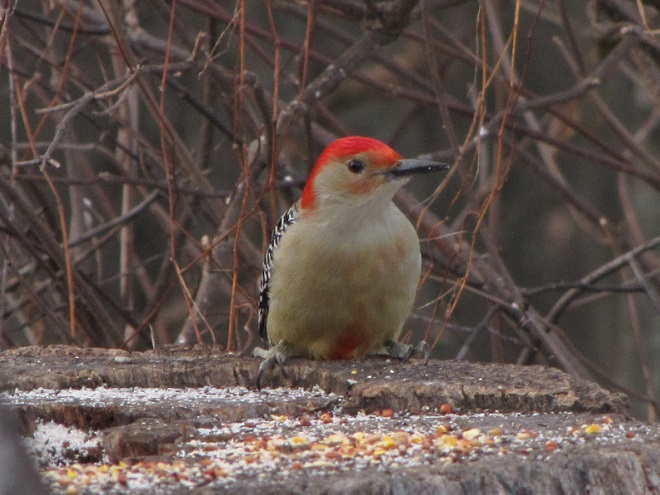
Red-bellied Woodpecker
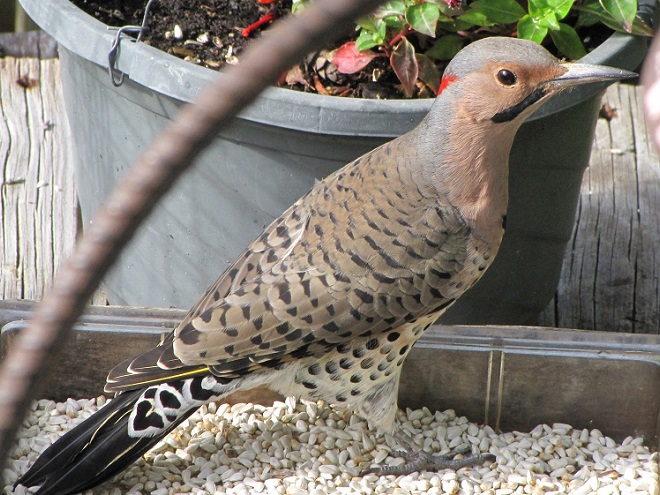
Northern Flicker
Yellow-bellied Sapsucker
Blue Jay
Carolina Chickadee
Black-capped Chickadee
Tufted Titmouse
White-breasted Nuthatch
Red-breasted Nuthatch
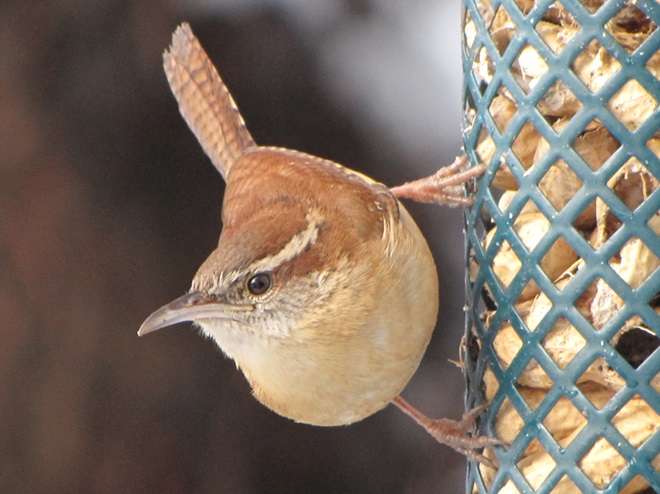
Carolina Wren
The most recent addition to the list of birds feasting on peanuts from our wire mesh tube feeders was this Yellow-bellied Sapsucker that visited yesterday.
So don’t pay hard-earned cash to feed nothing but leftovers to your intended guests, give wire mesh tube feeders and whole peanuts in the shell a try. The colorful native birds will thank you with their presence.
A welcome visitor, a Yellow-bellied Sapsucker stopping by for dinner……and varying its diet by finding small insects among the bark of some of our larger trees.
As the autumn bird migration draws to a close for 2024, we’re delighted to be finding five of our favorite visitors from the coniferous and mixed forests of Canada and the northernmost continental United States.
Yellow-bellied Sapsuckers drill evenly spaced holes which they repeatedly visit to harvest “sap” and the insects that become trapped therein. These surgically small excavations penetrate only the bark and the phloem, a shallow, spongy layer of the trunk that carries sugars from the leaves to other parts of the tree. Seldom do they puncture the thin, underlying cambium layer which protects the true sapwood. After healing, sapsucker holes leave linear rows of small scars which are sometimes still discernible decades after a bird’s final visit. This adult male will probably linger in the Lower Susquehanna River Watershed until colder weather renders the tree totally dormant, the flow of “sap” ebbs, and small insects become harder to find. Then he’ll make his way off toward southern forests of oak and pine for the remainder of the winter. Sapsuckers work their way north as sugary “sap” begins flowing again in the spring.The Hermit Thrush is another denizen of coniferous and mixed forests. In habitats with dense cover and sufficient food sources like fruit-bearing shrubs and vines, some will remain through the winter. The Hermit Thrush is the only spot-breasted thrush regularly seen in our region from November through March.Almost the size of a thrush, the largest of our native sparrows, the Fox Sparrow, is currently at the peak of its southbound migration. While taking a break from their nocturnal flights, some may stray from forest edges to visit suburban feeding stations. Most leave our area by mid-December, then begin returning north as early as mid-February.Not present every year, flocks of Pine Siskins are beginning to arrive in the lower Susquehanna region. They are currently most common along the mountain tops of the Ridge and Valley Province where they are feeding on the seeds of the Sweet Birch, a tree also known as Black Birch. Look for them around niger seed feeders and on the prickly seed balls of cultivated American Sweetgum, but don’t be surprised if they quickly pass us by to spend the winter on the Atlantic Coastal Plain to our south where this native tree grows in abundance.Since late October, Purple Finches have been widespread throughout the region. These female/juvenile male types are frequently being seen at feeders, particularly near woodlands and other areas with stands of conifers.Less frequently seen are the adult male Purple Finches in their raspberry-colored plumage. What a dandy.
While right now is the best time to get out and look for these species from the northern forests, any or all of them could linger into the winter months, particularly where the food supply is sufficient and conifers and other evergreens provide cover from the blustery weather.
During your foray to view the colorful foliage of the autumn landscape, a little effort will reveal much more than meets the eye of the casual observer.
Don’t just stand there like a bump on a log, go for a stroll, watch your step, and have a look around. There’s a lot to see out there!The dense understory of this forest on Blue Mountain consists almost exclusively of Witch-hazel (Hamamelis virginiana).Witch-hazel is unique among our native flowering shrubs; it blooms in autumn.Until we experience a heavy frost, some of our most beautiful butterflies, including this Common Buckeye, remain active along forest edges.An Eastern Tailed Blue.A Pearl Crescent.A Variegated Fritillary.A Painted Lady.The arrival of large numbers of Yellow-rumped Warblers heralds the transition to movements of migrants that will spend the colder months in temperate climates like ours instead of continuing on to the tropics. In winter, small numbers of “yellow-rumps” sometimes linger in the Lower Susquehanna River Watershed, as long as a supply of wild berries is readily available.The Palm Warbler, a persistent “tail wagger”, is another late-season migrant that occasionally spends the winter. The migration of these drab “Western Palm Warblers” will be followed in coming weeks by the more yellowish “Eastern Palm Warblers” of the eastern third of the species’ breeding range in Canada.White-throated Sparrows are southbound and easily observed right now. Many will remain along our brushy forest edges for winter.Another native sparrow, the familiar Dark-eyed Junco, is now arriving.The Yellow-bellied Sapsucker is a secretive migratory woodpecker that is currently moving through the region on its way to southern pine forests for the winter. Juveniles like this one in the lower right remain close to their parents during migration and continue to beg for food.The Pileated Woodpecker is a resident species in our mature forests and woodlands. We were showered by “sawdust” as we watched this one dismantling a rotted dead tree while searching for beetle grubs and other invertebrates.You may see Eastern Bluebirds year-round in the lower Susquehanna valley, but many are migratory. A southbound push is currently transiting our area.Mix your leaf watching with hawk watching by visiting a ridgetop vista like this one at Boyd Big Tree Preserve Conservation Area on Blue Mountain north of Harrisburg and you can double your pleasure.In addition to spectacular foliage, you stand a good chance of seeing an inquisitive Common Raven……or a migrating Red-tailed Hawk that gives you a good scream as it passes by……or a majestic Bald Eagle.You may even double your fun by seeing two Common Ravens……or a couple of migrating Red-tailed Hawks……or a pair of Bald Eagles passing thru.
You too can experience the joys of walking and chewing gum at the same time, so grab your field glasses, your camera, and your jacket, then spend lots of time outdoors this fall. You can see all of this and much more.
Don’t forget to click the “Hawkwatcher’s Helper: Identifying Bald Eagles and other Diurnal Raptors” tab at the top of this page to help you find a place to see both fall foliage and migrating birds of prey in coming weeks. And click the “Trees, Shrubs, and Woody Vines” tab to find a photo guide that can help you identify the autumn leaves you encounter during your outings.
At last, the bird migration is picking up where it left off after the third week of September when rain, fog, and gloom arrived for a two week stay in the lower Susquehanna valley. Now that this persistent meteorological interluder has departed the stage, our stalled avians can resume the autumn spectacle.
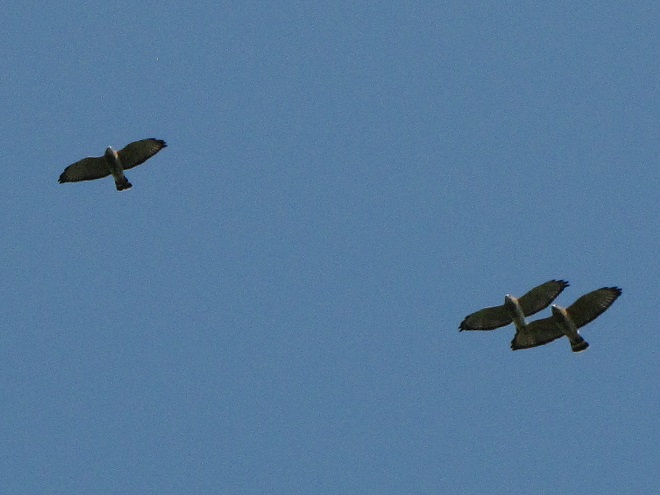
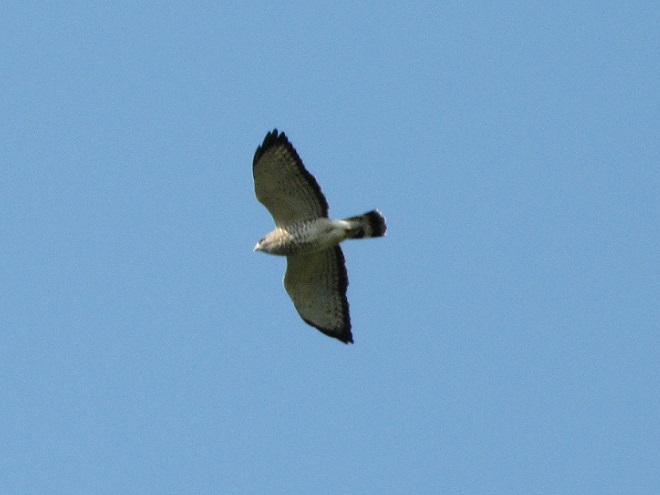
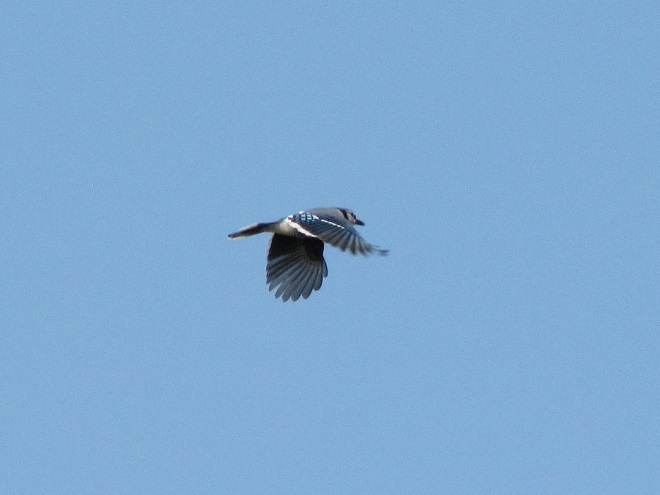
There are still a few Barn Swallows around. By October, they’ve usually departed for more southern climes. Our more common late-season species are the Tree and Northern Rough-winged Swallows, both of which tend to be found close to water and are thus able to still grab flying insects on mornings when the air temperature over land is too cold for their favored prey. We found this Barn Swallow following the lead of its cool-weather counterparts, hawking up its breakfast over a warm sun-drenched pond.While the vast majority of the Neotropical flycatchers are now gone for the year, Eastern Phoebes are currently moving through in large numbers. Like the late-season swallows, these insectivores are a temperate species with an affinity for habitats near water.Though getting harder to find, there are still some Neotropical warblers moving through. This Black-throated Green Warbler was strongly outnumbered by the Ruby-crowned Kinglets in a mixed flock of woodland songbirds.A Northern Parula in the mixed flock of migrants.One of dozens of Ruby-crowned Kinglets encountered this morning.Despite the inclement weather, diurnal flights of southbound Blue Jays have continued throughout the past week.Migrating Blue Jays are best seen during the first few hours after sunrise.Red-bellied Woodpeckers, after extending their range north through the Susquehanna watershed and beyond during the past century, have now become a regular fall migrant as they withdraw from the northernmost periphery of their breeding grounds. This individual was photographed while taking a break from its diurnal flight and was one of more than three dozen seen at Second Mountain Hawk Watch on Thursday, October 3.After a significant delay, especially for the Neotropical Broad-winged Hawks, diurnal raptor flights have resumed. Now is the time to see the widest variety of species, including migrants like this Osprey, at any one of the regional hawk-counting stations.Numbers of migrating Sharp-shinned Hawks are now reaching their seasonal peak. Be certain to check out “Hawkwatchers Helper: Identifying Bald Eagles and Other Diurnal Raptors” by clicking the tab at the top of this page. There you’ll find a listing of regional lookouts and a photo guide to help you identify the species you see.
Clear, cool nights have provided ideal flight conditions for nocturnal Neotropical migrants and other southbound birds throughout the week. Fix yourself a drink and a little snack, then sit down and enjoy this set of photographs that includes just some of the species we found during sunrise feeding frenzies atop several of the Lower Susquehanna River Watershed’s ridges. Hurry up, because here they come…
A Black-throated Green Warbler.The Black-throated Green Warbler was perhaps the most frequently identified treetop warbler during the most recent four mornings.A Black-throated Green Warbler with a unique variation in the crown plumage.The Blackburnian Warbler was another plentiful species.Cape May Warblers have an affinity for conifers like this Eastern White Pine.But when traveling in mixed flocks with other migrants, Cape May Warblers can also be found feeding in the crown foliage of deciduous trees.This adult Tennessee Warbler appears to be adorned in a very worn set of plumage……and its traveling companion looks like it’s overdue for a new set of feathers as well.Like the Tennessee Warbler, the Nashville Warbler was common among mixed flocks.A Nashville Warbler atop a Black Cherry.This Chestnut-sided Warbler was one of several found among the more common species of migrants.A Chestnut-sided Warbler.We were lucky enough to spot this male Chestnut-sided Warbler sporting his namesake flank feathers.A Black-and-white Warbler uses its nuthatch-like feeding behavior to search the tree bark for edible invertebrates.To see the Common Yellowthroat, one must cease looking upward into the high canopy and instead give the aching neck a rest by peering into the low vegetation at the forest edge.While checking the low growth, keep an eye open for other migrants among the shrubs and tangles. This Magnolia Warbler glows in the rays of a rising sun as it searches for a meal after a long night of travel.Here we found a perky little House Wren.Back in the middle and upper reaches of the trees, we find what has been by far the most numerous of the flycatchers seen during our visits to fallout sunrises. Eastern Wood-Pewees are appearing in very good numbers and can be seen quarreling and battling for hunting perches from which they are ambushing flying insects.An Eastern Wood-Pewee fiercely defending its hunting perch.An Eastern Wood-Pewee.The numbers of migrating Least Flycatchers and other members of the genus Empidonax may be reaching their seasonal peak this week.Scarlet Tanagers are currently a common find following nocturnal flights.A Scarlet Tanager peers down from the top of a Red Maple.Did you hear a loud squeak in the treetops? It could be a southbound Rose-breasted Grosbeak stopping by for the day.A Rose-breasted Grosbeak in a dead tree snag.The Neotropical thrushes are beginning to move south now as well. We found this newly arrived Swainson’s Thrush at Rocky Ridge County Park in York County during sunrise this morning.Not surprisingly, the Red-eyed Vireo is one of the most numerous of the migrants seen feeding in the deciduous canopy following a nocturnal flight event. It’s not at all unusual to see dozens filing the trees around a ridgetop overlook or along a forest edge. Be certain to check these congregations carefully, especially the groups of birds feeding in the lower branches of tall timber or in the tops of smaller trees. This week we found……several hungry Yellow-throated Vireos arriving after nocturnal flights,……and a Philadelphia Vireo (Vireo philadelphicus) at the hawkwatch at Rocky Ridge County Park in York County.Though not a Neotropical migrant, the easier-heard-than-seen Red-breasted Nuthatch is beginning to wander south into the lower Susquehanna region. Most of these birds will eventually continue on to the pine forests of the southern United States for winter, but a few could remain to become seasonal visitors at feeding stations.Ruby-throated Hummingbirds are on the move; their migration to the tropics is well underway and nearing its peak. Ruby-throats are diurnal migrants that do a majority of their flying during the hours of daylight. The notable exception: the nighttime portion of the long southbound flight some of the birds make to cross the Gulf of Mexico.The Red-headed Woodpecker is another diurnal migrant. This denizen of temperate climates is currently beginning to move to its wintering grounds, an area that extends from the latitudes of the lower Susquehanna south to the Gulf of Mexico and central Texas.A juvenile Red-headed Woodpecker during a brief pit stop.The flights of roving bands of masked Cedar Waxwings continue. Their numbers appear to be an improvement over those of 2023.At regional hawk-counting stations, observers are seeing more Broad-winged Hawks and other species beginning to move through.The frequency of Broad-winged Hawks passing the lookouts one at a time is giving way to the occurrence of larger and larger “kettling” groups that search out thermal updrafts to save energy while migrating. By mid-September each of these “kettles” can include one hundred birds or more. On the peak days, the daily Broad-winged Hawk totals can reach one thousand or more.A Broad-winged Hawk soaring to gain lift from a thermal updraft above a hawkwatch lookout.
The migration is by no means over; it has only just begun. So plan to visit a local hawkwatch or other suitable ridgetop in coming weeks. Arrive early (between 7 and 8 AM) to catch a glimpse of a nocturnal migrant fallout, then stay through the day to see the hundreds, maybe even thousands, of Broad-winged Hawks and other diurnal raptors that will pass by. It’s an experience you won’t forget.
A Broad-winged Hawk gliding away to the southwest.
Be certain to click the “Birds” tab at the top of this page for a photo guide to the species you’re likely to see passing south through the lower Susquehanna valley in coming months. And don’t forget to click the “Hawkwatcher’s Helper: Identifying Bald Eagles and other Diurnal Raptors” tab to find a hawk-counting station near you.
More birds are on the way. Here’s a look at this evening’s liftoff of nocturnal migrants detected by National Weather Service Radar in State College, Pennsylvania. (NOAA/National Weather Service Doppler Radar image)
In the forests and woodlots of the lower Susquehanna watershed, the Black Gum, also known as the Black Tupelo, is always the first of our native trees to pop with autumn color. Its crimson leaves glow in an otherwise green landscape to help lure hungry birds including waxwings, American Robins, and Pileated Woodpeckers to its soon-to-be-ripe berries. The seeds contained in the fruit are thus well-distributed as a by-product of this avian feast. While not among the most massive of our trees, the Black Gum can live for over five hundred years, an age not exceeded by any other non-clonal indigenous flowering plant.
By mid-summer, many birds exhibit less-than-stellar appearance. Juveniles have just left the nest and although their plumage is completely fresh, it may look drab compared to the feathers the bird will sport upon reaching adulthood. Their parents, having completed the stressful tasks of building nests and raising a new generation, now enter a state of molt to replace all or some of their adornment. Now is a fortuitous time for these mature birds to exchange old feathers for new—food is plentiful and the need to keep warm and fly long distances is at a minimum. Besides, they really don’t have to impress anyone with their beauty during summer vacation.
Following the break in the heat wave during recent days, activity at the headquarters feeders has increased significantly. We took notice that many of our guests are looking a little rough around the edges.
Having started their nesting cycle in February, most Mourning Doves including this adult male are nearly done molting by mid-summer. They are the exception.This juvenile American Robin has acquired its first full set of flight feathers and will, in coming weeks, begin replacing the spotted plumage to more closely resemble an adult bird.This adult male Northern Cardinal in worn plumage is still tending to the needs of fledged young, but is nevertheless in the early stages of molt.This juvenile Northern Cardinal will not only acquire brighter red feathers as an adult, but its bill will turn red as well.This actively molting Carolina Chickadee shows pin feathers in the wings and is balding rather profusely.This Blue Jay has gone beyond having its feathers ruffled, but it’ll be good as new by the time autumn migration rolls around in September.This drab brown bird is a juvenile European Starling. While its first set of feathers looks complete, it has a big problem. It lost its left eye and has trouble keeping up with a flock of its peers that have been roaming the area. A predator will quickly notice this young bird’s vulnerabilities.A juvenile Downy Woodpecker in a dull, streaky, almost dirty-looking, first plumage. Unlike the adult male which has a red patch on the back of its head, the juvenile Downy Woodpecker has a mottled red crown.An adult female Downy Woodpecker beginning to molt its heavily worn, year-old feathers.Mid-summer is prime time for discovering post-breeding wanders. These are birds that spend the time between the end of nesting season and the fall migration roaming the countryside and sometimes visiting areas outside their more traditional habitats and/or native ranges. For the past two days, this bird, a Hairy Woodpecker, has strayed from a mature woodland into urban environs to visit the garden at susquehannawildlife.net headquarters. It’s our first record of one here.Not yet a lot of molt among the American Goldfinches. Why? Well, they’re late-season breeders and are only now in the midst of their nesting cycle. They begin shedding feathers and losing that brilliant color sometime in late August, just as the last of this year’s young are being fledged.
Think of all the opportunities mid-summer offers. It’s a good time to get outdoors to have a look at all the young animals that are exploring their world for the first time. Birds and other wildlife are at their greatest abundance of the year right now, so your chance to see new things is at its peak. And the phenomenon of post-breeding wandering always raises the possibility of a surprise or two—maybe even a rarity. Be cool and good luck!
How ’bout a Two-for-the-Price-of-One Father’s Day Special? You got it!
Woodrow the Pileated Woodpecker (left) sure has collected a throat-load of tasty morsels, but he wouldn’t dare keep them all to himself;……he’s forced to share his meal with Little Woody, otherwise the begging will never stop.
Homo sapiens owes much of its success as a species to an acquired knowledge of how to make, control, and utilize fire. Using fire to convert the energy stored in combustible materials into light and heat has enabled humankind to expand its range throughout the globe. Indeed, humans in their furless incomplete mammalian state may have never been able to expand their populations outside of tropical latitudes without mastery of fire. It is fire that has enabled man to exploit more of the earth’s resources than any other species. From cooking otherwise unpalatable foods to powering the modern industrial society, fire has set man apart from the rest of the natural world.
In our modern civilizations, we generally look at the unplanned outbreak of fire as a catastrophe requiring our immediate intercession. A building fire, for example, is extinguished as quickly as possible to save lives and property. And fires detected in fields, brush, and woodlands are promptly controlled to prevent their exponential growth. But has fire gone to our heads? Do we have an anthropocentric view of fire? Aren’t there naturally occurring fires that are essential to the health of some of the world’s ecosystems? And to our own safety? Indeed there are. And many species and the ecosystems they inhabit rely on the periodic occurrence of fire to maintain their health and vigor.
For the war effort- The campaign to reduce the frequency of forest fires got its start during World War II with distribution of this poster in 1942. The goal was to protect the nation’s timber resources from accidental or malicious loss due to fire caused by man-made ignition sources. The release of the Walt Disney film “Bambi” during the same year and the adoption of the Smokey the Bear mascot in 1944 softened the message’s delivery, but the public relations outreach continued to be a key element of a no-fire policy to save trees for lumber. Protection and management of healthy forest ecosystems in their entirety has only recently become a priority. (National Archives image)
Man has been availed of the direct benefits of fire for possibly 40,000 years or more. Here in the Lower Susquehanna River Watershed, the earliest humans arrived as early as 12,000 years ago—already possessing skills for using fire. Native plants and animals on the other hand, have been part of the ever-changing mix of ecosystems found here for a much longer period of time—millions to tens of millions of years. Many terrestrial native species are adapted to the periodic occurrence of fire. Some, in fact, require it. Most upland ecosystems need an occasional dose of fire, usually ignited by lightning (though volcanism and incoming cosmic projectiles are rare possibilities), to regenerate vegetation, release nutrients, and maintain certain non-climax habitat types.
But much of our region has been deprived of natural-type fires since the time of the clearcutting of the virgin forests during the eighteenth and nineteenth centuries. This absence of a natural fire cycle has contributed to degradation and/or elimination of many forest and non-forest habitats. Without fire, a dangerous stockpile of combustible debris has been collecting, season after season, in some areas for a hundred years or more. Lacking periodic fires or sufficient moisture to sustain prompt decomposition of dead material, wildlands can accumulate enough leaf litter, thatch, dry brush, tinder, and fallen wood to fuel monumentally large forest fires—fires similar to those recently engulfing some areas of the American west. So elimination of natural fire isn’t just a problem for native plants and animals, its a potential problem for humans as well.
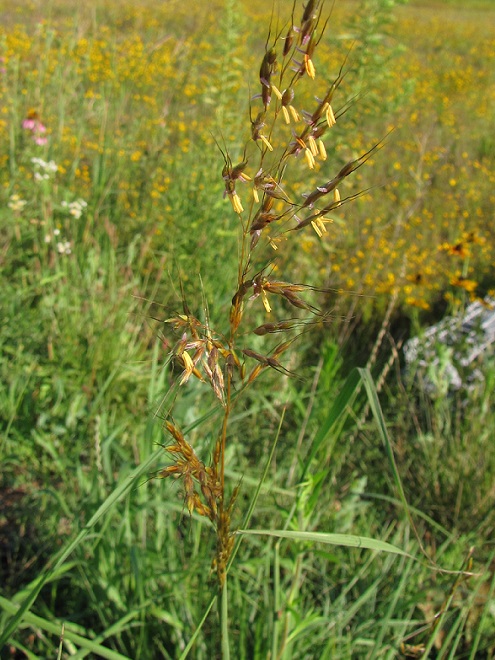
Indiangrass (seen here), Switchgrass, Big Bluestem, and Little Bluestem are native species requiring periodic forms of disturbance to eliminate competition by woody plants. These warm-season grasses develop roots that penetrate deep into the soil, sometimes to depths of six feet or more, allowing them to survive severe drought and flash fire events. In the tall grass prairies, these extensive root systems allow these grasses to return following heavy grazing by roaming herds of American Bison (Bison bison). Without these habitat disturbances, warm season grasslands succumb to succession in about seven years. With their periodic occurrence, the plants thrive and provide excellent wildlife habitat, erosion control, and grazing forage.
To address the habitat ailments caused by a lack of natural fires, federal, state, and local conservation agencies are adopting the practice of “prescribed fire” as a treatment to restore ecosystem health. A prescribed fire is a controlled burn specifically planned to correct one or more vegetative management problems on a given parcel of land. In the Lower Susquehanna River Watershed, prescribed fire is used to…
Eliminate dangerous accumulations of combustible fuels in woodlands.
Reduce accumulations of dead plant material that may harbor disease.
Provide top kill to promote oak regeneration.
Regenerate other targeted species of trees, wildflowers, grasses, and vegetation.
Kill non-native plants and promote growth of native plants.
Prevent succession.
Remove woody growth and thatch from grasslands.
Promote fire tolerant species of plants and animals.
Improve habitat for rare species (Regal Fritillary, etc.)
Recycle nutrients and minerals contained in dead plant material.
Let’s look at some examples of prescribed fire being implemented right here in our own neighborhood…
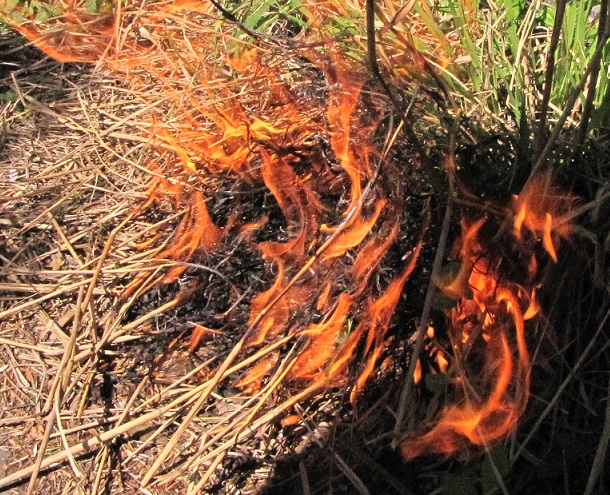
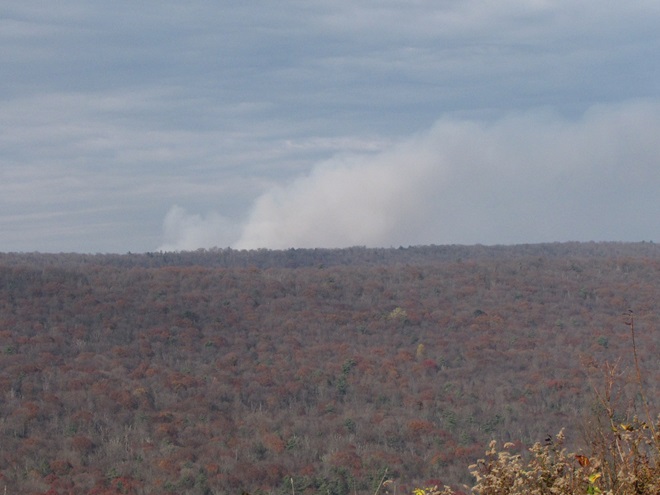
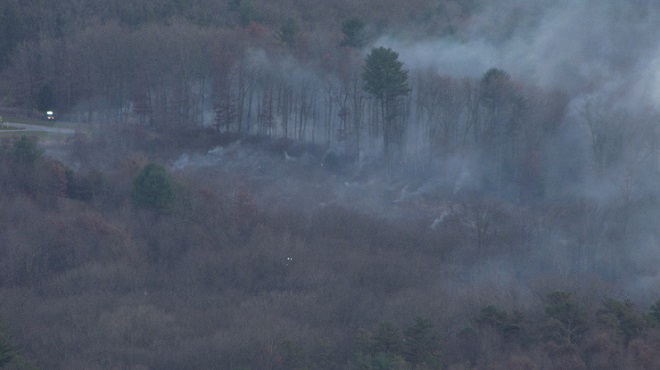
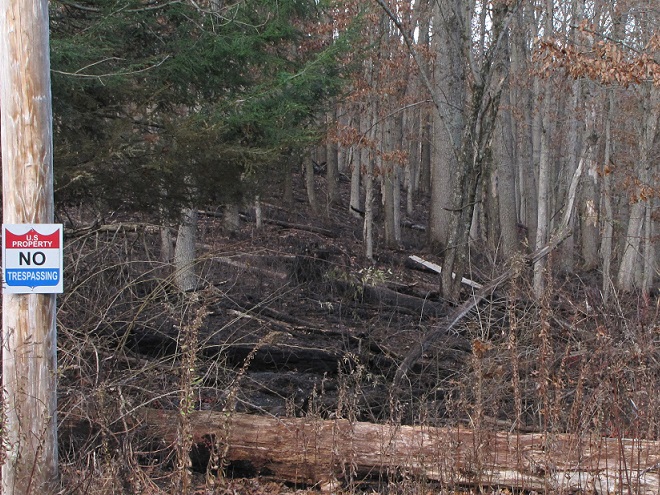
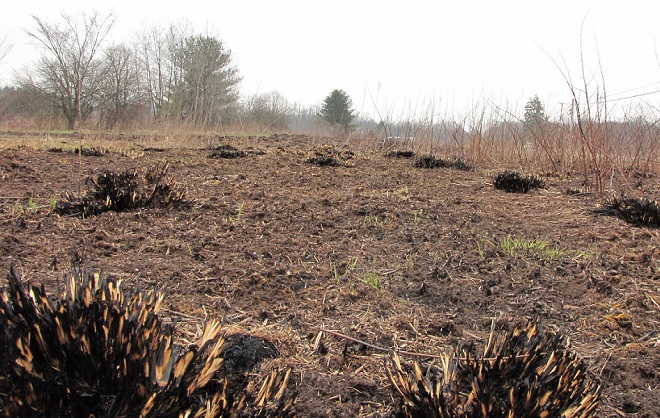
Prescribed fires are typically planned for the dormant season extending from late fall into early spring with burns best conducted on days when the relative humidity is low.Prescribed fire is used regularly at Fort Indiantown Gap Military Reservation in Lebanon County, Pennsylvania, to keep accumulations of woody and herbaceous fuels from accumulating on and around the training range areas where live ordinance and other sources of ignition could otherwise spark large, hard-to-control wildfires.Prescribed fires replace the periodic natural burns that would normally reduce the fuel load in forested areas. Where these fuels are allowed to accumulate, south-facing slopes are particularly susceptible to extreme fires due to their exposure to the drying effects of intense sunlight for much of the year. The majority of small oaks subjected to treatment by the prescribed fire shown here will have the chance to regenerate without immediate competition from other species including invasive plants. The larger trees are mostly unaffected by the quick exposure to the flames. Note too that these fires don’t completely burn everything on the forest floor, they burn that which is most combustible. There are still plenty of fallen logs for salamanders, skinks, and other animals to live beneath and within.
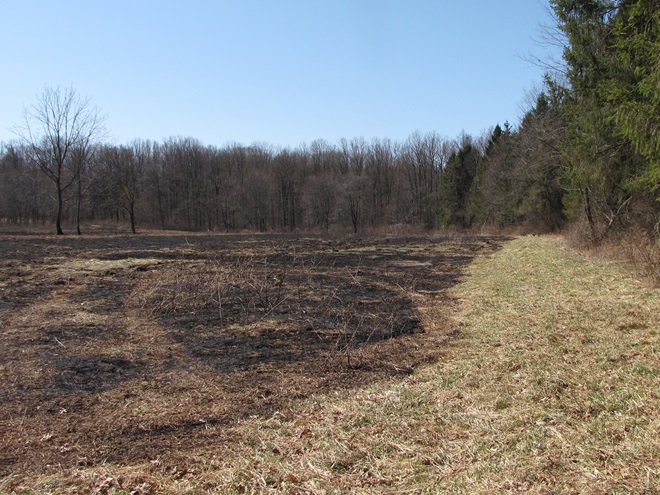
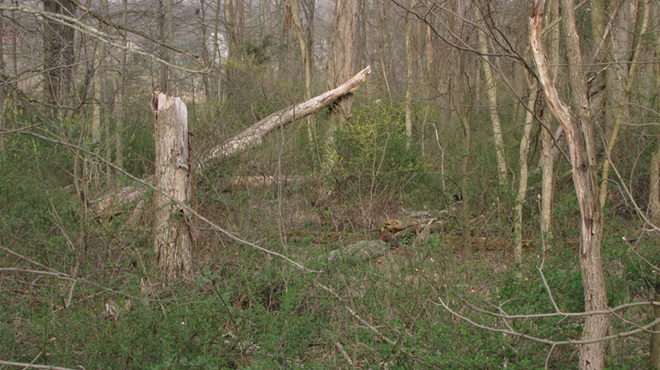
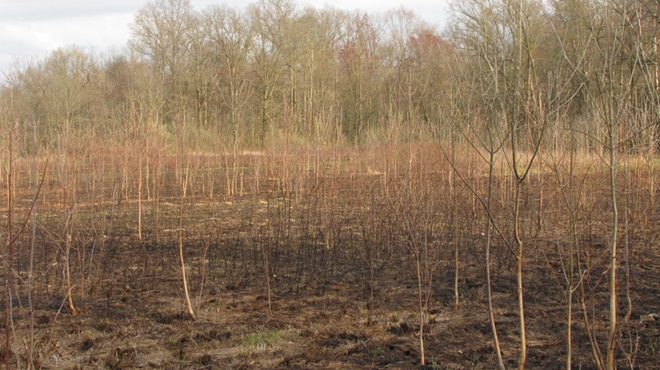
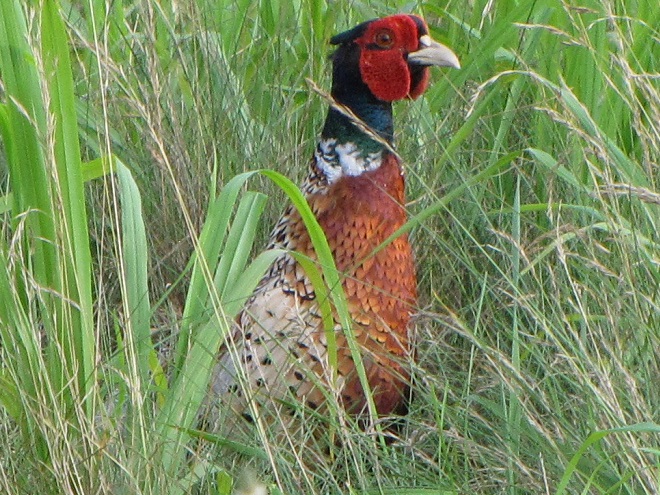
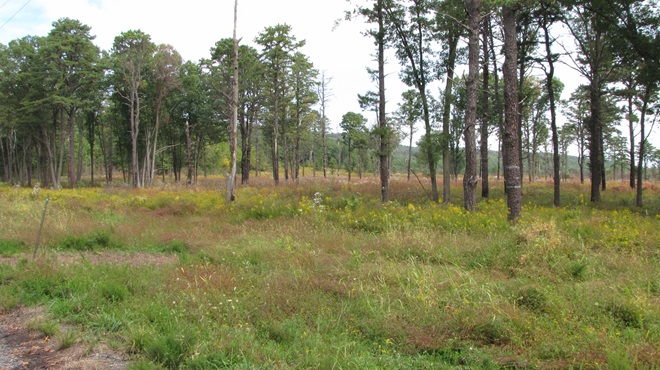
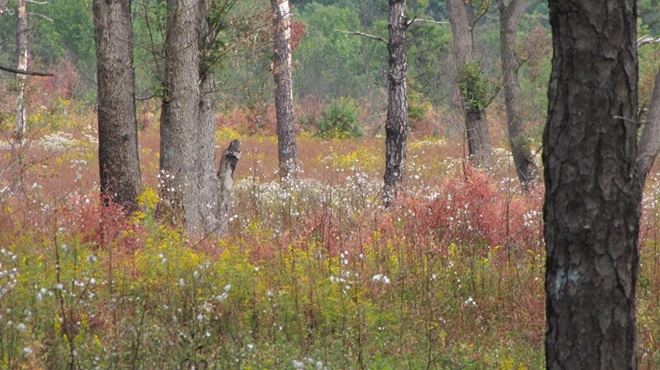
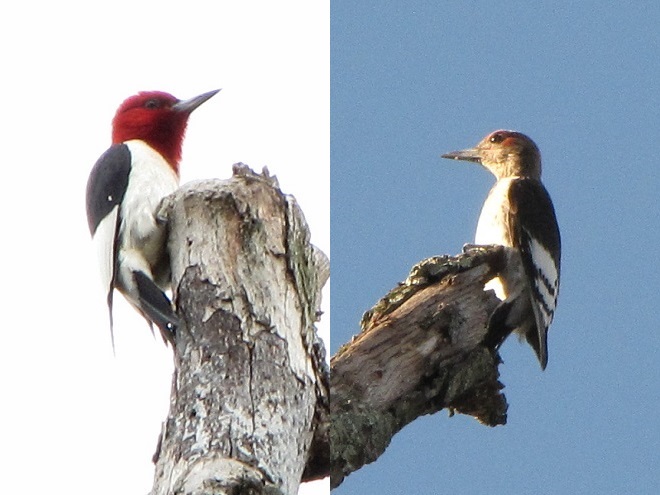
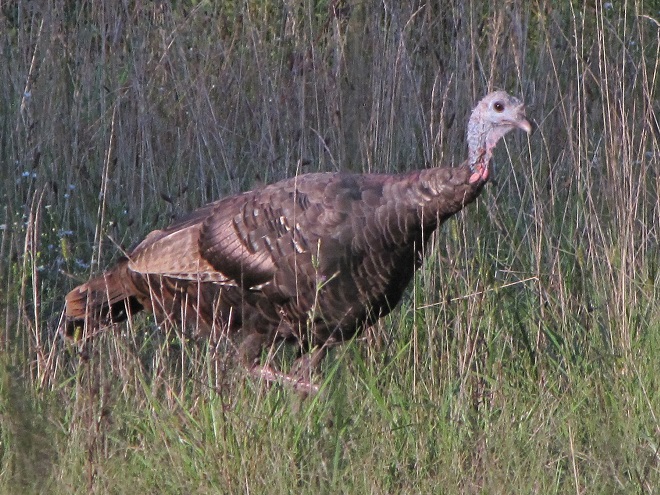
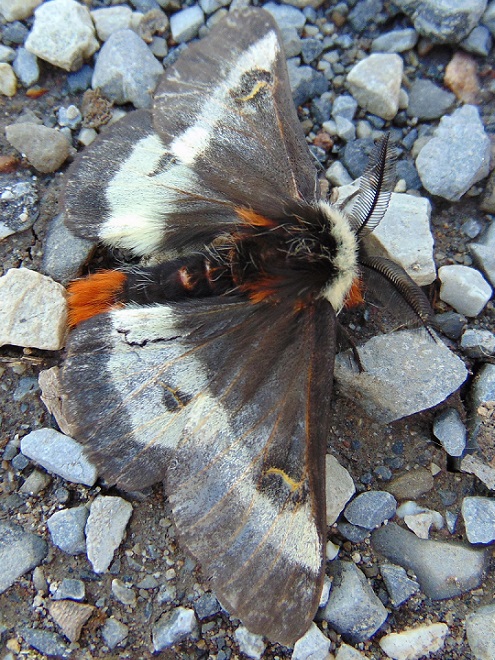
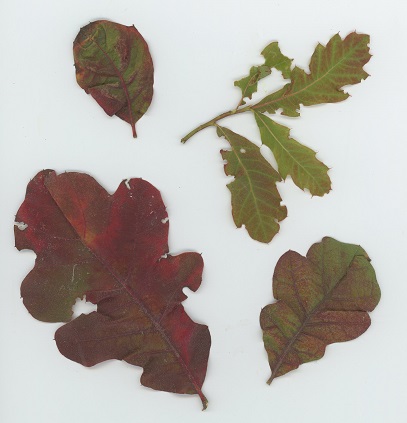
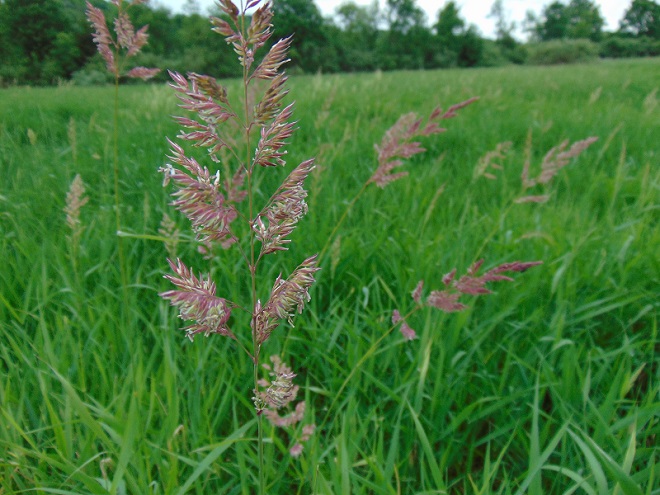
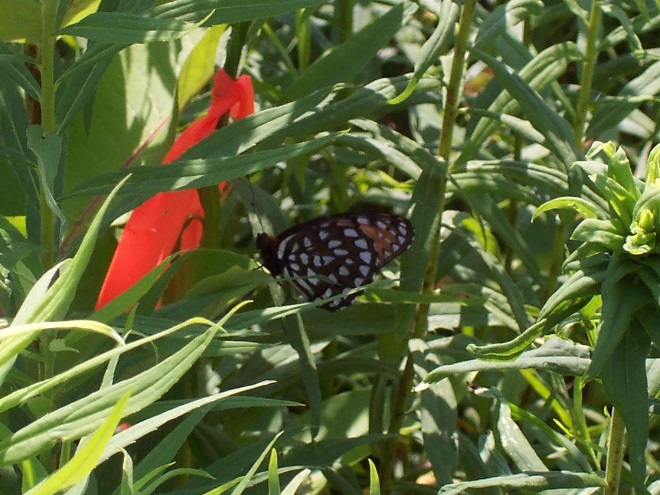
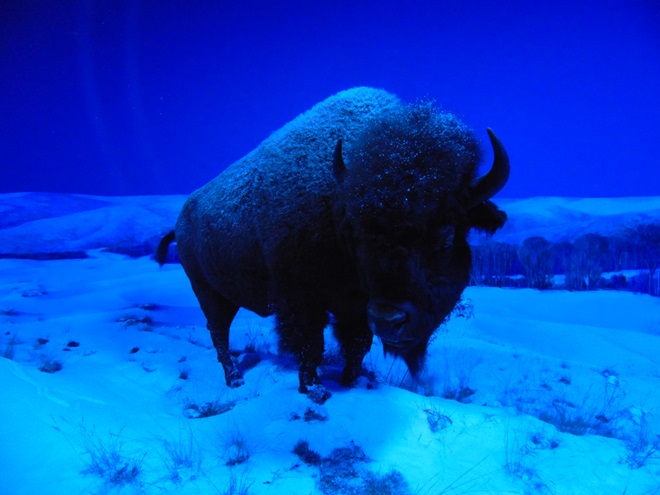
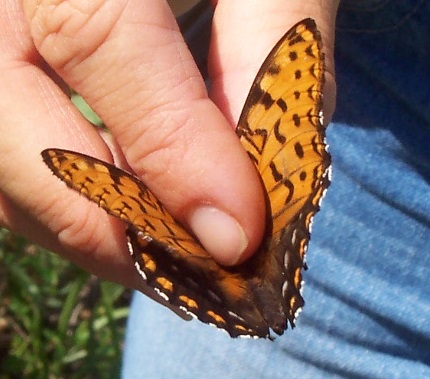
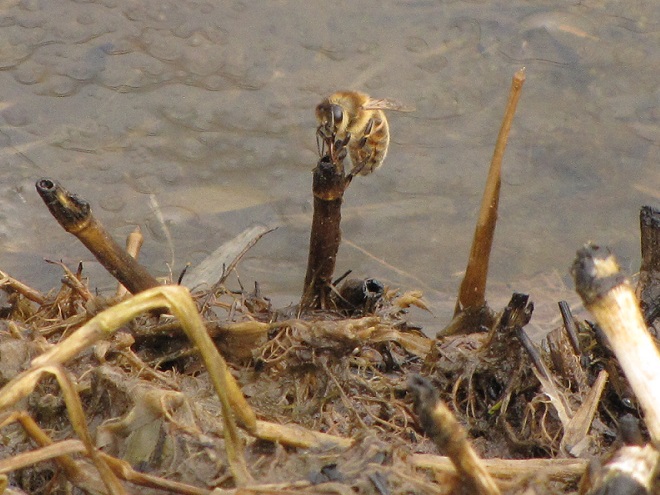
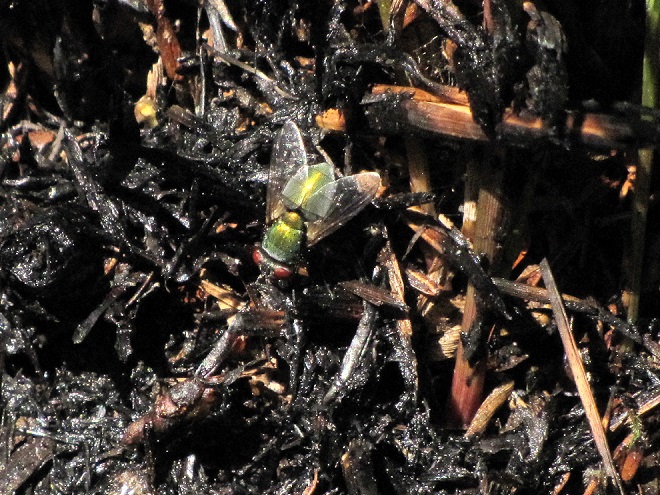
A prescribed fire in late winter prevents this grassland consisting of Big Bluestem and native wildflowers from being overtaken by woody growth and invasive species. Fires such as this that are intended to interrupt the process of succession are repeated at least every three to five years.In its wildlife food plots, prescribed fire is used by the Pennsylvania Game Commission to prevent succession and control invasive species such as Multiflora Rose, instead promoting the growth of native plants.An example of a woodlot understory choked with combustible fuels and dense tangles of invasive Multiflora Rose. A forester has the option of prescribing a dose of dormant-season fire for a site like this to reduce the fuel load, top kill non-native vegetation, and regenerate native plants.A dose of prescribed fire was administered on this grassland to kill the woody growth of small trees beginning to overtake the habitat by succession.The Pennsylvania Game Commission employs prescribed fire at Middle Creek Wildlife Management Area and on many of their other holdings to maintain grasslands.Prescribed fire is used to eliminate invasive species including Multiflora Rose from grasslands at Middle Creek W.M.A. Annual burns on the property are conducted in a mosaic pattern so that each individual area of the grassland is exposed to the effects of fire only once every two to five years. Without fire or some type of mechanical or chemical intervention, succession by woody trees and shrubs would take hold after about seven years.Prescribed fire is planned for a fraction of total grassland acreage at Middle Creek W.M.A. each year. Another section of the mosaic is targeted in the following year and yet another in the year that follows that. Because burns are conducted in the spring, grassland cover is available for wildlife throughout the winter. And because each year’s fire burns only a portion of the total grassland acreage, wildlife still has plenty of standing grass in which to take shelter during and after the prescribed fire.Prescribed fire at Middle Creek W.M.A. provides grassland habitat for dozens of species of birds and mammals including the not-so-common Grasshopper Sparrow……and stocked Ring-necked Pheasants that do nest and raise young there.On a few sites in the Lower Susquehanna River Watershed , prescribed fire is being used to establish and maintain savanna-like grasslands. This one, located on a dry, south-facing slope near numerous man-made sources of ignition, can easily be dosed with periodic prescribed burns to both prevent succession and reduce fuel accumulations that may lead to a devastating extreme fire.One year following a prescribed burn, this is the autumn appearance of a savanna-like habitat with fire-tolerant Pitch Pine (Pinus rigida), Bear Oak, warm-season grasses, and a variety of nectar-producing wildflowers for pollinators. These ecosystems are magnets for wildlife and may prove to be a manageable fit on sun-drenched sites adjacent to man-made land disturbances and their sources of ignition.Savanna-like grasslands with oaks and other scattered large trees, some of them dead, make attractive nesting habitat for the uncommon Red-headed Woodpecker.Prescribed fire can benefit hungry Wild Turkeys by maintaining savanna-like grasslands for an abundance of grasshoppers and other insects in summer and improving the success of mast-producing oaks for winter.In the Lower Susquehanna River Watershed, the caterpillar of the rare Eastern Buck Moth feeds on the foliage of the Bear Oak, also known as the Scrub Oak, a shrubby species that relies upon periodic fire to eliminate competition from larger trees in its early successional habitat.Leaves of the Bear Oak in fall. The Bear Oak regenerates readily from top kill caused by fire.Reed Canary Grass (Phalaris arundinacea) is a native cool-season grass with a colorful inflorescence in spring. But given the right situation, it can aggressively overtake other species to create a pure stand lacking biodiversity. It is one of the few native species which is sometimes labelled “invasive”.Prescribed fire can be used to reduce an overabundance of Reed Canary Grass and its thatch in wetlands. Periodic burning can help restore species diversity in these habitats for plants and animals including rare species such as the endangered Bog Turtle (Glyptemys muhlenbergii).On the range areas at Fort Indiantown Gap in Lebanon County, Pennsylvania, disturbances by armored vehicles mimic the effects of large mammals such as the American Bison which periodically trampled grasses to prevent succession and the establishment of woody plants on its prairie habitat. To supplement the activity of the heavy vehicles and to provide suitable habitat for the very rare Regal Fritillary (Speyeria idalia) butterflies found there, prescribed fire is periodically employed to maintain the grasslands on the range. These burns are planned to encourage the growth of “Fort Indiantown Gap Little Bluestem” grass as well as the violets used as host plants by the Regal Fritillary caterpillars. These fires also promote growth of a variety of native summer-blooming wildflowers to provide nectar for the adults butterflies.A last record of a wild American Bison killed in Pennsylvania was an animal taken in the Susquehanna watershed in Union County in 1801. The species is thereafter considered extirpated from the state. Since that time, natural disturbances needed to regenerate warm-season grasses have been limited primarily to fires and riverine ice scour. The waning occurrence of both has reduced the range of these grasses and their prairie-like ecosystems in the commonwealth. (Exhibit: State Museum of Pennsylvania, Harrisburg)A male Regal Fritillary on the range at Fort Indiantown Gap, where armored vehicles and prescribed fire provide suitable prairie-like habitat for this vulnerable species.Prescribed fires return the nutrients and minerals contained in dead plant material to the soil. Following these controlled burns, insects like this Honey Bee can often be seen collecting minerals from the ashes.A Greenbottle Fly gathering minerals from the ash following a prescribed burn.
In Pennsylvania, state law provides landowners and crews conducting prescribed fire burns with reduced legal liability when the latter meet certain educational, planning, and operational requirements. This law may help encourage more widespread application of prescribed fire in the state’s forests and other ecosystems where essential periodic fire has been absent for so very long. Currently in the Lower Susquehanna River Watershed, prescribed fire is most frequently being employed by state agencies on state lands—in particular, the Department of Conservation and Natural Resources on State Forests and the Pennsylvania Game Commission on State Game Lands. Prescribed fire is also part of the vegetation management plan at Fort Indiantown Gap Military Reservation and on the land holdings of the Hershey Trust. Visitors to the nearby Gettysburg National Military Park will also notice prescribed fire being used to maintain the grassland restorations there.
For crews administering prescribed fire burns, late March and early April are a busy time. The relative humidity is often at its lowest level of the year, so the probability of ignition of previous years’ growth is generally at its best. We visited with a crew administering a prescribed fire at Middle Creek Wildlife Management Area last week. Have a look…
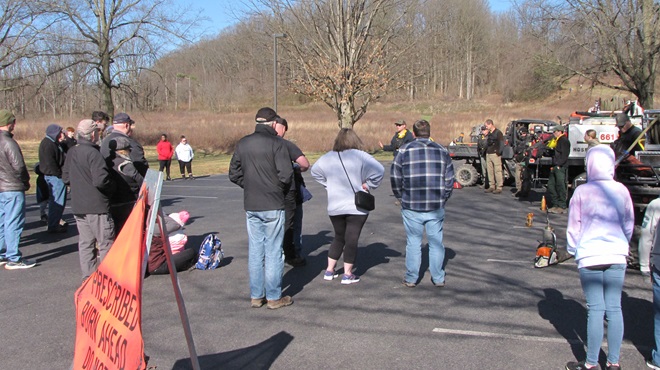
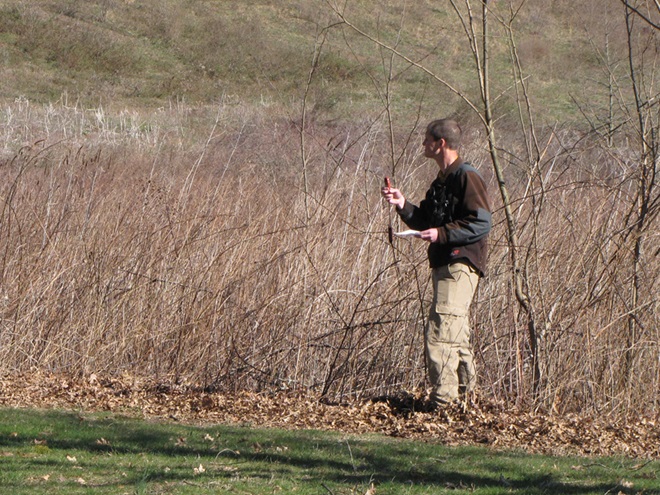
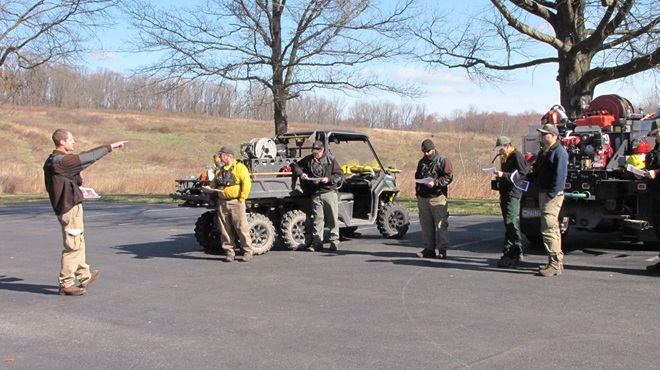
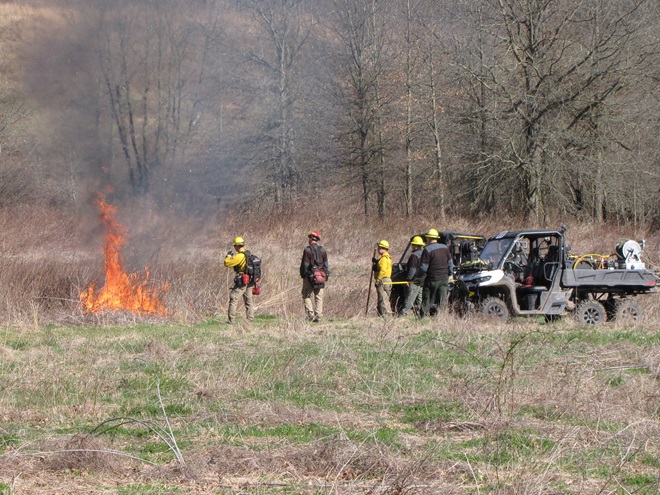
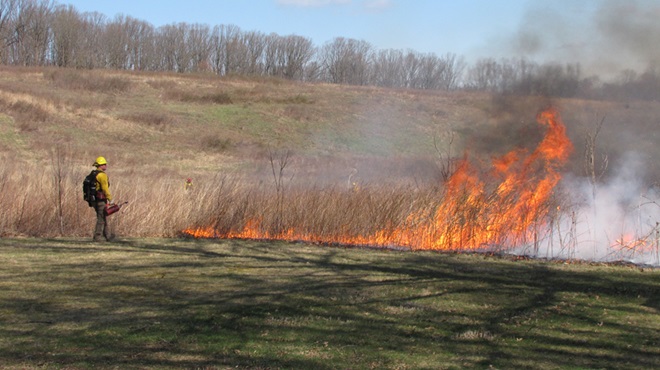
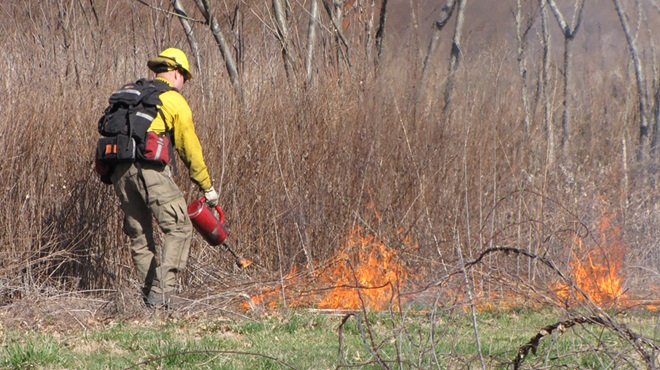
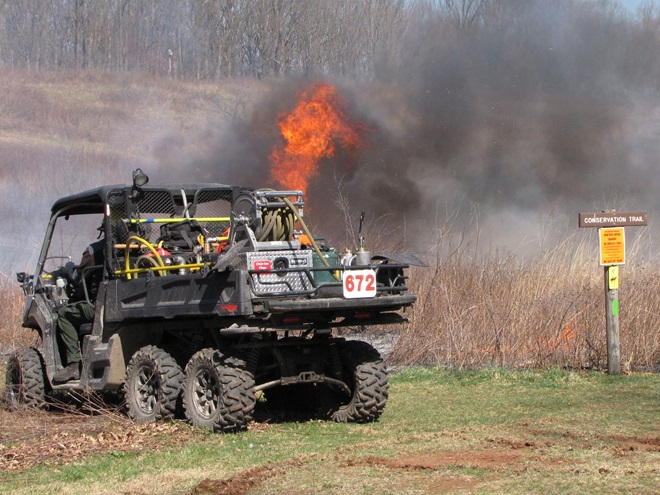
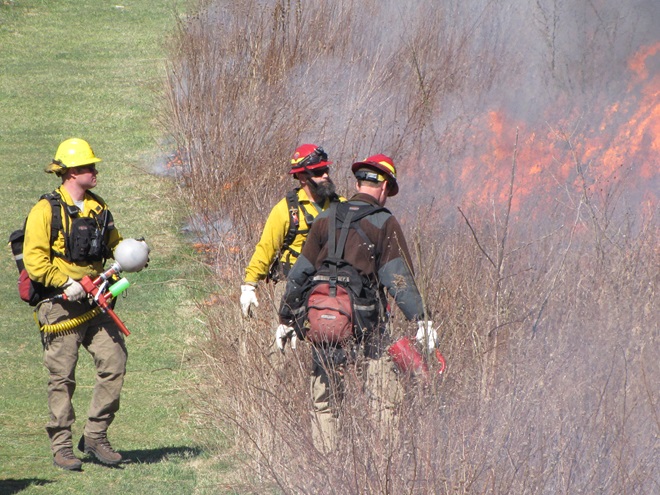
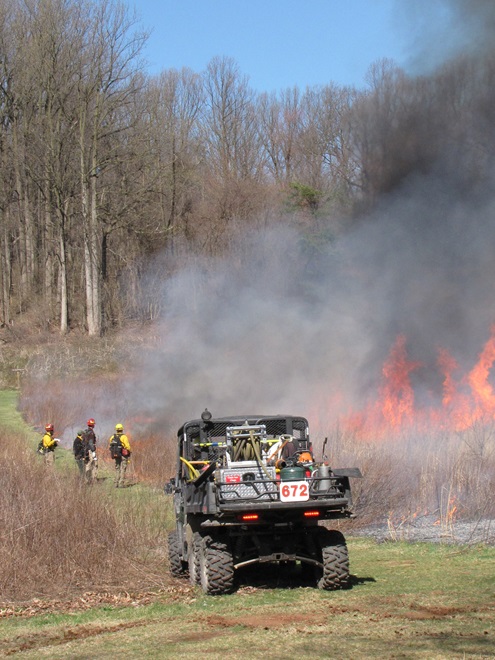
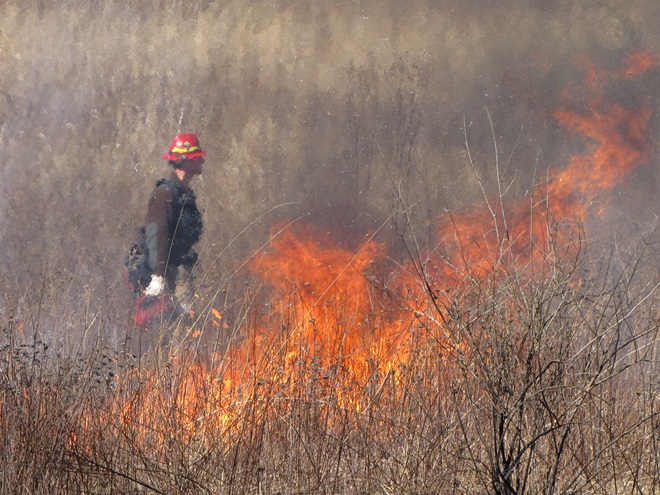
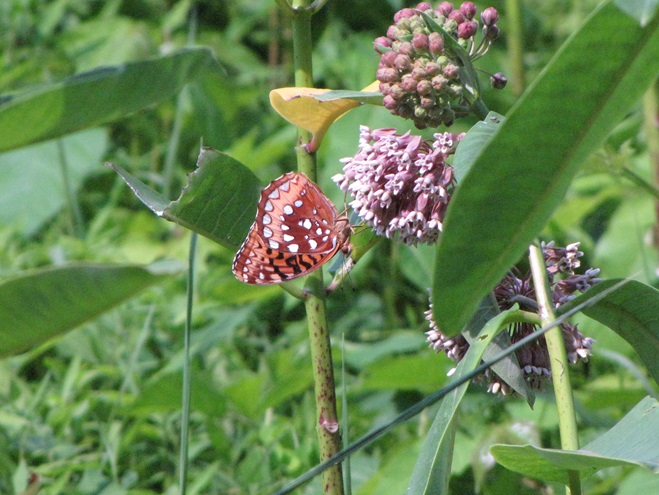
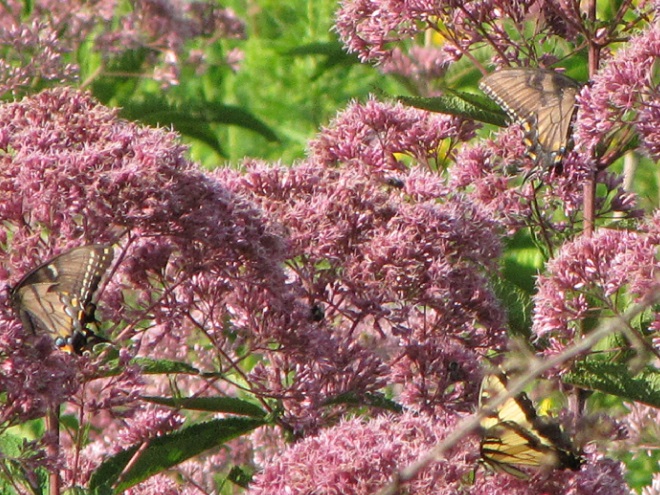
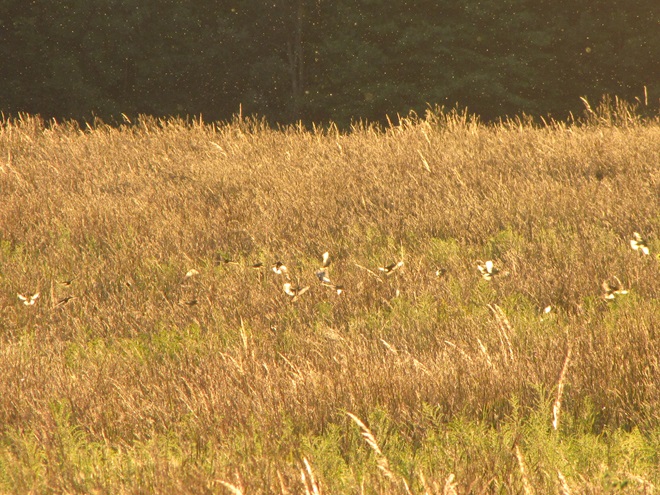
Members of a Pennsylvania Game Commission burn crew provide visitors to Middle Creek Wildlife Management Area with an overview of prescribed fire and the equipment and techniques they use to conduct a burn.Pennsylvania Game Commission Southeast Region Forester Andy Weaver will fulfill the role of Burn Boss for administering this day’s dose of fire. His responsibilities include assessing the weather before the burn and calculating a probability of ignition.The Burn Boss briefs personnel with information on site layout, water supply location(s), places of refuge, emergency procedures, the event’s goals and plan of action, crew assignments, and the results of the weather check: wind from the northwest at 5 miles per hour, temperature 48 degrees, and the relative humidity 63%. Today’s patient is a parcel of warm-season grasses receiving a dose of fire to eliminate invasive non-native plants, woody growth, and thatch. The probability of ignition is 20%, but improving by the minute.To begin the burn, a test fire is started in the downwind corner of the parcel, which also happens to be the bottom of the slope. Fuel ignition is good. The burn can proceed.Crews proceed uphill from the location of the test fire while igniting combustibles along both flanks of the area being treated.A drip torch is used to ignite the dried stems and leaves of warm-season grasses and wildflowers. Each member of the burn crew wears Nomex fire-resistant clothing and carries safety equipment including a two-way radio, a hydration pack, and a cocoon-like emergency fire shelter.An all-terrain vehicle equipped with various tools, a fire pump, hose, and a small water tank accompanies the crew on each flank of the fire.A mowed strip of cool-season grasses along the perimeter of the burn area is already green and functions as an ideal fire break. While the drip torch is perfect for lighting combustibles along the fire’s perimeter, the paintball gun-looking device is an effective tool used to lob incendiaries into the center areas of the burn zone for ignition.With green cool-season grasses already growing on the trails surrounding the burn zone, very little water was used to contain this prescribed fire. Where such convenient fire breaks don’t already exist, crews carry tools including chain saws, shovels, and leaf blowers to create their own. They also carry flame swatters, backpack water pumps, shovels, and other tools to extinguish fires if necessary. None of these items were needed to control this particular fire.This fast-burning fire provides enough heat to damage the cambium layer of the woody tree and shrub saplings in this parcel being maintained as a grassland/wildflower plot, thus the process of succession is forestalled. Burns conducted during previous years on this and adjacent fields have also controlled aggressive growth of invasive Multiflora Rose and Olives (Elaeagnus species).Crews proceed up the slope while maintaining the perimeter by igniting dry plant material along the flanks of the burn zone.Ignition complete, the crews monitor the fire.The Burn Boss surveys the final stages of a safe and successful prescribed fire. The fire has left behind a mosaic of burned and unburned areas, just as a naturally occurring event may have done. Wildlife dodging the flames may be taking refuge in the standing grasses, so there is no remedial attempt to go back and ignite these areas. They’ll be burned during prescribed fires in coming years.By June, this grassland will again be lush and green with warm-season grasses and blooming wildflowers like this Common Milkweed being visited by a Great Spangled Fritillary.And later in the summer, Eastern Tiger Swallowtails on Joe-pye Weed.Indiangrass in flower in mid-summer.Bobolinks glow in the late August sun while taking flight from a stand of warm-season grasses maintained using springtime prescribed fire. The small dots on the dark background at the top of the image are multitudes of flying insects, many of them pollinators. The vegetation is predominately Indiangrass, excellent winter cover for birds, mammals, and other wildlife.
Prescribed burns aren’t a cure-all for what ails a troubled forest or other ecosystem, but they can be an effective remedy for deficiencies caused by a lack of periodic episodes of naturally occurring fire. They are an important option for modern foresters, wildlife managers, and other conservationists.
Since Tuesday’s snow storm, the susquehannawiildlife.net headquarters garden continues to bustle with bird activity.
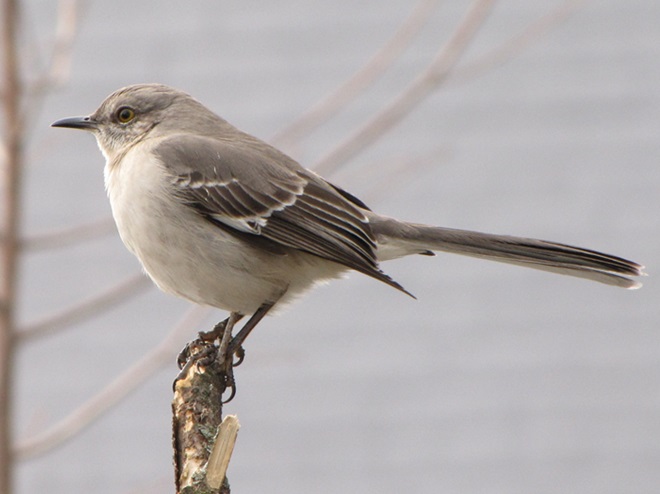
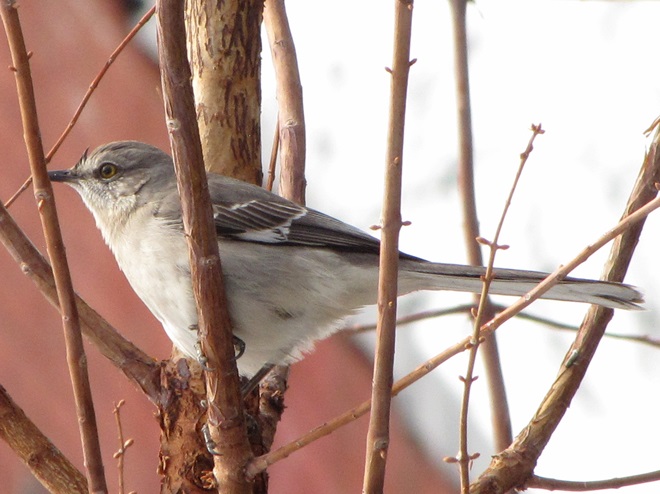
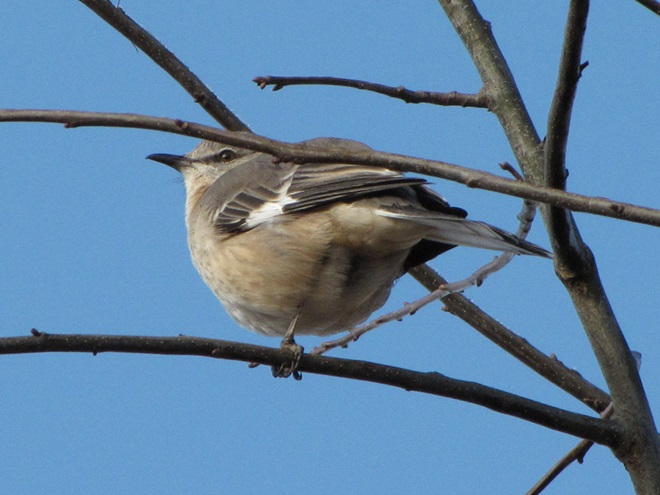
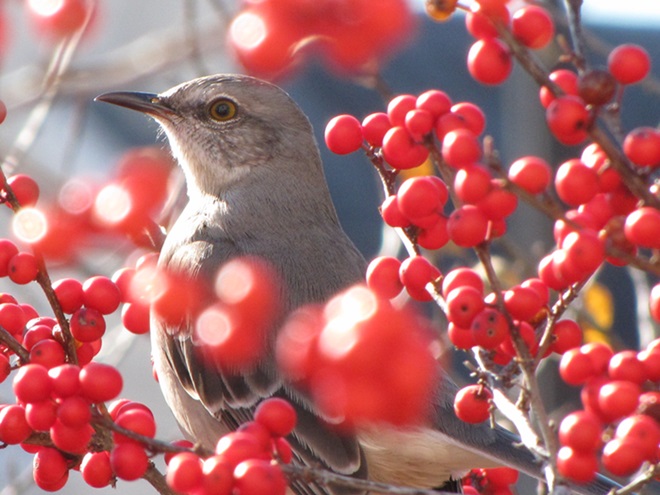
Our Northern Mockingbird remains ever vigilant in its attempts to discourage American Robins and Eastern Bluebirds from feeding on the berry crop. Slowly, the latter species are winning the contest.A Carolina Chickadee carefully dissects a sunflower seed to snack on the nutritious kernel.This beauty shows us that yes, Red-bellied Woodpeckers do indeed have red bellies.Getting energized for a big move north, the robins keep on gulping berries.
Today, there arrived three species of birds we haven’t seen here since autumn. These birds are, at the very least, beginning to wander in search of food. Then too, these may be individuals creeping slowly north to secure an advantage over later migrants by being the first to establish territories on the most favorable nesting grounds.
This Song Sparrow is the first we’ve seen in the garden since sometime last fall. Is it working its way north or did it just come to town in search of food?Northern Flickers regularly spend the winter in small numbers in the Lower Susquehanna River Watershed. This is the first one we’ve had visit the garden since late last autumn.Fish Crows, seen here feeding on the fruits adorning an Eastern Red Cedar, have returned after being absent in our neighborhood since November. In coming weeks, both they and the more numerous American Crows that remained through winter will begin constructing nests in nearby trees.
They say the early bird gets the worm. More importantly, it gets the most favorable nesting spot. What does the early birder get? He or she gets out of the house and enjoys the action as winter dissolves into the miracle of spring. Do make time to go afield and marvel a bit, won’t you? See you there!
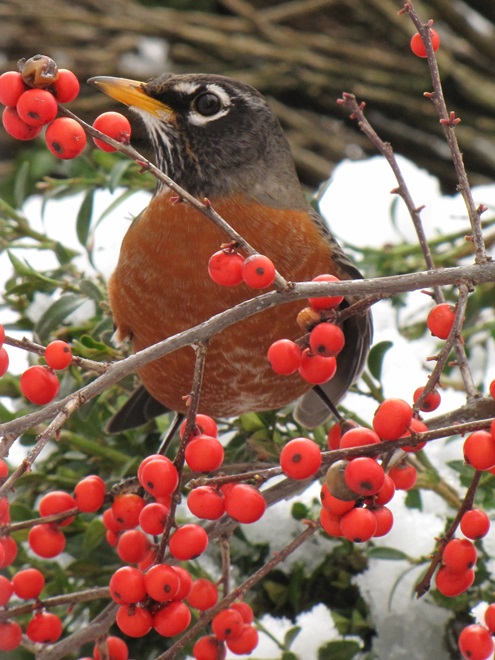
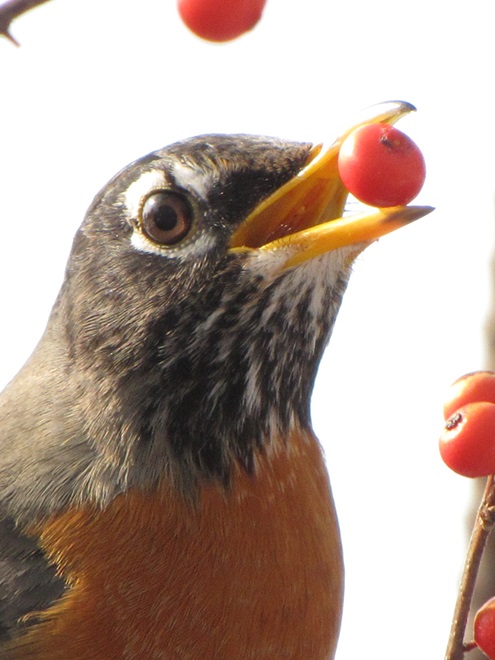
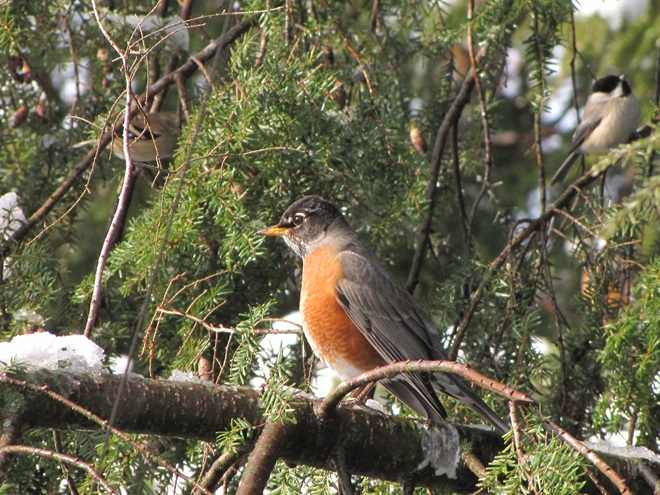
In mid-February each year, large numbers of American Robins descend upon the susquehannawildlife.net headquarters garden to feast on the ripe fruits that adorn several species of our native shrubs and trees. This morning’s wet snowfall provided the needed motivation for these birds and others to make today the big day for the annual feeding frenzy.
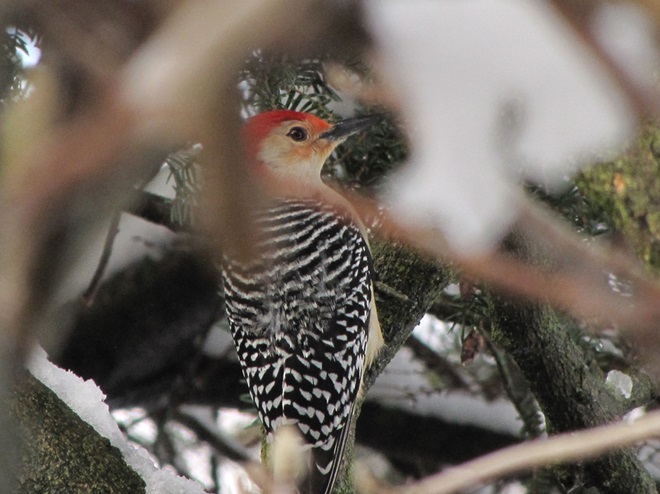
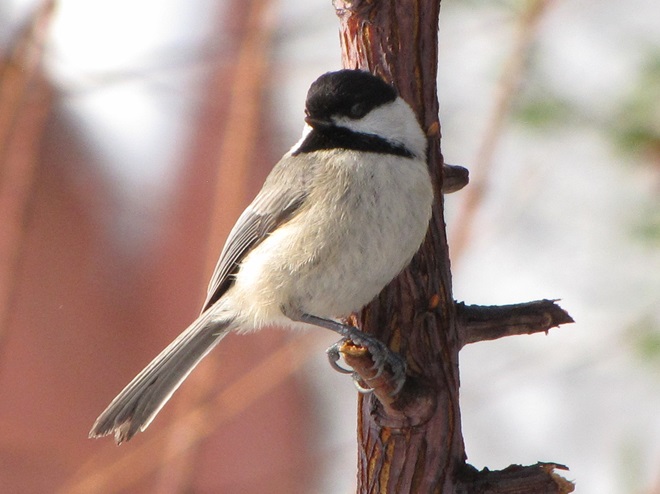
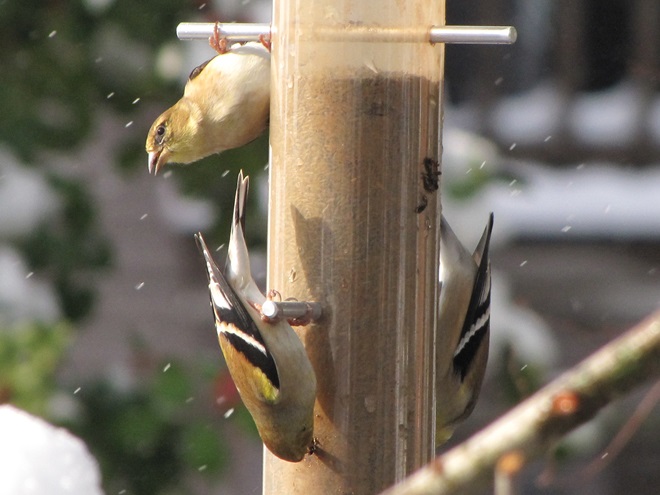
Early this morning, branches and limbs in the headquarters garden were loaded with clinging snow and more than one hundred American Robins.To have first grabs at suitable nesting sites, early American Robins are currently beginning to edge their way north. Spring migration is underway.The fruits of Common Winterberry are always a favorite of visiting robins.After selfishly guarding the garden’s berries through the entire season, our Northern Mockingbird finds chasing more than one hundred robins away from its food supply an impossible task.This and other visiting robins will strip the winterberry, cedar, American Holly, and other fruit-producing shrubs and trees within a day or two. To survive what remains of the season, our resident mockingbird will have to look elsewhere for provisions.Another American Robin devouring winterberry fruit.In addition to robins, there were, of course, other guests in the garden refuge on this snowy day.This Red-bellied Woodpecker tries to make sense of all the commotion.A pair of Carolina Chickadees established a family in the garden during the spring of 2023. At least five of the birds still stop by on a daily basis.As spring nears, our American Goldfinches are beginning to show a hint of their bright breeding colors.A Blue Jay peeks out from the cover of the Eastern Hemlocks.Our Carolina Wrens sing throughout the winter,……but today we noticed that this Mourning Dove has begun softly cooing to charm a mate……and the male House Finches are warbling away with the sounds of spring.With the local mockingbird busily harassing robins, our Eastern Bluebirds went unmolested long enough to stop by……for some raisins from their enclosed feeder.A showy male Eastern Bluebird on a snowy day in the garden. Spring must be just around the corner!
As week-old snow and ice slowly disappears from the Lower Susquehanna River Watershed landscape, we ventured out to see what might be lurking in the dense clouds of fog that for more than two days now have accompanied a mid-winter warm spell.
After freezing to a slushy consistency earlier this week, the Susquehanna is already beginning to thaw. Below the York Haven Dam at Conewago Falls, the water is open and ice-free.On frozen man-made lakes and ponds, geese and ducks like these Mallards and American Wigeon are presently concentrated around small pockets of open water.During the past ten days, American Robin numbers have exploded throughout the lower Susquehanna valley. The majority of these birds may be a mix of both those coming south to escape the late onset of wintry conditions to our north and those inching north into our region as early spring migrants.The January thaw has melted the snow from lawns and fields to provide thousands of visiting robins with a chance to forage for earthworms.A visit by this young Cooper’s Hawk to the susquehannnawildlife.net headquarters garden sent songbirds scrambling……but did nothing to unnerve our resident Eastern Gray Squirrels,……which promptly went into tail-waving mode to advertise their presence.But earlier in the week, when heavy snow cover in the rural areas surrounding our urbanized neighborhood made it difficult for rodent-eating raptors to find food, we received brief visits from both a Red-tailed Hawk……and this young Red-shouldered Hawk, an uncommon bird of prey most often found in wet woods and other lowlands.To escape notice during visits by these larger raptors, our squirrels remained motionless and commenced performance of their best bump-on-a-log impressions.Unimpressed, each of our visiting buteos remained for just a few minutes before moving on in search of more favorable hunting grounds and prey.As snow melted and exposed bare ground in fields of early successional growth, we encountered……a flock of White-crowned Sparrows, most in first-winter plumage……and at least a dozen American Tree Sparrows. During the twentieth century, these handsome songbirds were regular winter visitors to the lower Susquehanna region. During recent decades, they’ve become increasingly more difficult to find. Currently, moderate numbers appear to be arriving to escape harsher weather to our north.What could be more appropriate on a foggy, gray evening than finding a “gray ghost” (adult male Northern Harrier) patrolling the fields in search of mice and voles.
If scenes of a January thaw begin to awaken your hopes and aspirations for all things spring, then you’ll appreciate this pair of closing photographs…
The maroon-red flower buds of Silver Maples are beginning to swell. And woodpeckers including Pileated Woodpeckers are beginning to drum, a timber-pounding behavior they use to establish breeding territories in habitats with suitable sites for cavity nesting.In wet soil surrounding spring seeps and streams, Skunk Cabbage is rising through the leaf litter to herald the coming of a new season. Spring must surely be just around the corner.
With the earth at perihelion (its closest approach to the sun) and with our home star just 27 degrees above the horizon at midday, bright low-angle light offered the perfect opportunity for doing some wildlife photography today. We visited a couple of grasslands managed by the Pennsylvania Game Commission to see what we could find…
On this State Game Lands parcel, prescribed fire is used to maintain a mix of grasslands and brushy early successional growth. In nearby areas, both controlled fire and mechanical cutting are used to remove invasive species from hedgerows and the understory of woodlots. Fire tolerant native species then have an opportunity to recolonize the forest and improve wildlife habitat. This management method also reduces the fuel load in areas with the potential for uncontrolled wildfires.The sun-dried fruits of a native Common Persimmon tree found growing in a hedgerow.Just one year ago, mechanical removal of invasive trees and shrubs (including Multiflora Rose) on this State Game Land was followed by a prescribed fire to create this savanna-like grassland.Hundreds of Song Sparrows were found in the grasses and thickets at both locations.White-throated Sparrows were also abundant, but prefer the tangles and shrubs of the thickets.Northern Mockingbirds were vigilantly guarding winter supplies of berries in the woodlots and hedgerows.In grasses and tangles on wetter ground, about a dozen Swamp Sparrows were discovered.The adult White-crowned Sparrow is always a welcome find.And seeing plenty of juvenile White-crowned Sparrows provides some assurance that there will be a steady stream of handsome adult birds arriving to spend the winter during the years to come.Dark-eyed Juncos were encountered only in the vicinity of trees and large shrubs.Several Savannah Sparrows were observed. Though they’re mostly found in treeless country, this particular one happened to pose atop a clump of shrubs located within, you guessed it, the new savanna-like grasslands.A tiny bird, even when compared to a sparrow, the Winter Wren often provides the observer with just a brief glimpse before darting away into the cover of a thicket.Within grasslands, scattered stands of live and dead timber can provide valuable habitat for many species of animals.Woodpeckers and other cavity-nesting birds rely upon an abundance of “snags” (standing dead trees) for breeding sites.This Red-bellied Woodpecker and about a dozen others were found in trees left standing in the project areas.A Yellow-bellied Sapsucker soaks up some sun.This very cooperative Pileated Woodpecker seemed to be preoccupied by insect activity on the sun-drenched bark of the trees. This denizen of mature forests will oft times wander into open country where larger lumber is left intact.
Just as things were really getting fun, some late afternoon clouds arrived to dim the already fading daylight. Just then, this Northern Harrier made a couple of low passes in search of mice and voles hidden in the grasses.It was a fitting end to a very short, but marvelously sunny, early winter day.
A glimpse of the rowdy guests crowding the Thanksgiving Day dinner table at susquehannawildlife.net headquarters…
A male White-breasted Nuthatch visits a peanut feeder……soon to be joined by a female White-breasted Nuthatch.A male Downy Woodpecker gets a bill full of suet.A Carolina Wren nibbles at a peanut.An Eastern Gray Squirrel stuffs itself on peanuts dropped by the birds.A territorial Northern Mockingbird stands guard over its supply of Common Winterberry fruit.To avoid the mockingbird’s aggression, the Eastern Bluebirds opted out of fresh fruit in favor of raisins offered at the feeders.This persistent American Robin has made an art of repeatedly sneaking in to quickly devour a few berries before being chased away by the vigilant mockingbird.After everyone has had their fill, Dark-eyed Juncos clean up the leftovers.
Have you purchased your 2023-2024 Federal Duck Stamp? Nearly every penny of the 25 dollars you spend for a duck stamp goes toward habitat acquisition and improvements for waterfowl and the hundreds of other animal species that use wetlands for breeding, feeding, and as migration stopover points. Duck stamps aren’t just for hunters, purchasers get free admission to National Wildlife Refuges all over the United States. So do something good for conservation—stop by your local post office and get your Federal Duck Stamp.
Your Federal Duck Stamp is your admission ticket for entry into many of the country’s National Wildlife Refuges including Bombay Hook National Wildlife Refuge on Delaware Bay near Smyrna, Delaware.
Still not convinced that a Federal Duck Stamp is worth the money? Well then, follow along as we take a photo tour of Bombay Hook National Wildlife Refuge. Numbers of southbound shorebirds are on the rise in the refuge’s saltwater marshes and freshwater pools, so we timed a visit earlier this week to coincide with a late-morning high tide.
This pair of Northern Bobwhite, a species now extirpated from the Lower Susquehanna River Watershed and the rest of Pennsylvania, escorted us into the refuge. At Bombay Hook, they don’t waste your money mowing grass. Instead, a mosaic of warm-season grasses and early successional growth creates ideal habitat for Northern Bobwhite and other wildlife.Twice each day, high tide inundates mudflats in the saltwater tidal marshes at Bombay Hook prompting shorebirds to move into the four man-made freshwater pools. Birds there can often be observed at close range. The auto tour route through the refuge primarily follows a path atop the dikes that create these freshwater pools. Morning light is best when viewing birds on the freshwater side of the road, late-afternoon light is best for observing birds on the tidal saltwater side.A Great Blue Heron at high tide on the edge of a tidal creek that borders Bombay Hook’s tour route at Raymond Pool.Semipalmated Sandpipers stream into Raymond Pool to escape the rising tide in the salt marsh.More Semipalmated Sandpipers and a single Short-billed Dowitcher (Limnodromus griseus) arrive at Raymond Pool.Two more Short-billed Dowitchers on the way in.Recent rains have flooded some of the mudflats in Bombay Hook’s freshwater pools. During our visit, birds were often clustered in areas where bare ground was exposed or where water was shallow enough to feed. Here, Short-billed Dowitchers in the foreground wade in deeper water to probe the bottom while Semipalmated Sandpipers arrive to feed along the pool’s edge. Mallards, American Avocets, and egrets are gathered on the shore.More Short-billed Dowitchers arriving to feed in Raymond Pool.Hundreds of Semipalmated Sandpipers gathered in shallow water where mudflats are usually exposed during mid-summer in Raymond Pool.Hundreds of Semipalmated Sandpipers, several Short-billed Dowitchers, and some Forster’s Terns (Sterna forsteri) crowd onto a mud bar at Bear Swamp Pool.A zoomed-in view of the previous image showing a tightly packed crowd of Semipalmated Sandpipers, Forster’s Terns, and a Short-billed Dowitcher (upper left).Short-billed Dowitchers wading to feed in the unusually high waters of Raymond Pool.Short-billed Dowitchers, American Avocets, and a Snowy Egret in Raymond Pool. A single Stilt Sandpiper (Calidris himantopus) can been seen flying near the top of the flock of dowitchers just below the egret.Zoomed-in view of a Stilt Sandpiper (Calidris himantopus), the bird with white wing linings.American Avocets probe the muddy bottom of Raymond Pool.Among these Short-billed Dowitchers, the second bird from the bottom is a Dunlin. This sandpiper, still in breeding plumage, is a little bit early. Many migrating Dunlin linger at Bombay Hook into October and even November.This Least Sandpiper found a nice little feeding area all to itself at Bear Swamp Pool.Lesser Yellowlegs at Bear Swamp Pool.Lesser Yellowlegs at Bear Swamp PoolA Greater Yellowlegs at Bear Swamp Pool.A Caspian Tern patrolling Raymond Pool.The chattering notes of the Marsh Wren’s (Cistothorus palustris) song can be heard along the tour road wherever it borders tidal waters.This dome-shaped Marsh Wren nest is supported by the stems of Saltwater Cordgrass (Sporobolus alterniflorus), a plant also known as Smooth Cordgrass. High tide licks at the roots of the cordgrass supporting the temporary domicile.By far the most common dragonfly at Bombay Hook is the Seaside Dragonlet (Erythrodiplax berenice). It is our only dragonfly able to breed in saltwater. Seaside Dragonlets are in constant view along the impoundment dikes in the refuge.Red-winged Blackbirds are still nesting at Bombay Hook, probably tending a second brood.Look up! A migrating Bobolink passes over the dike at Shearness Pool.Non-native Mute Swans and resident-type Canada Geese in the rain-swollen Shearness Pool.A pair of Trumpeter Swans (Cygnus buccinator) as seen from the observation tower at Shearness Pool. Unlike gregarious Tundra and Mute Swans, pairs of Trumpeter Swans prefer to nest alone, one pair to a pond, lake, or sluggish stretch of river. The range of these enormous birds was restricted to western North America and their numbers were believed to be as low as 70 birds during the early twentieth century. An isolated population consisting of several thousand birds was discovered in a remote area of Alaska during the 1930s allowing conservation practices to protect and restore their numbers. Trumpeter Swans are slowly repopulating scattered east coast locations following recent re-introduction into suitable habitats in the Great Lakes region.A Great Egret prowling Shearness Pool.A Snowy Egret in Bear Swamp Pool.Wood Ducks in Bear Swamp Pool.A Bombay Hook N.W.R. specialty, a Black-necked Stilt and young at Bear Swamp Pool.
As the tide recedes, shorebirds leave the freshwater pools to begin feeding on the vast mudflats exposed within the saltwater marshes. Most birds are far from view, but that won’t stop a dedicated observer from finding other spectacular creatures on the bay side of the tour route road.
Bombay Hook National Wildlife Refuge protects a vast parcel of tidal salt marsh and an extensive network of tidal creeks. These areas are not only essential wildlife habitat, but are critical components for maintaining water quality in Delaware Bay and the Atlantic.The shells of expired Atlantic Horseshoe Crabs were formerly widespread and common among the naturally occurring flotsam along the high tide line on Delaware Bay. We found just this one during our visit to Bombay Hook. Man has certainly decimated populations of this ancient crustacean during recent decades.As the tide goes out, it’s a good time for a quick walk into the salt marsh on the boardwalk trail opposite Raymond Pool.Among the Saltmarsh Cordgrass along the trail and on the banks of the tidal creek there, a visitor will find thousands and thousands of Atlantic Marsh Fiddler Crabs (Minuca pugnax).Atlantic Marsh Fiddler Crabs and their extensive system of burrows help prevent the compaction of tidal soils and thus help maintain ideal conditions for the pure stands of Saltwater Cordgrass that trap sediments and sequester nutrients in coastal wetlands.A male Atlantic Marsh Fiddler Crab peers from its den.Herons and egrets including this Great Egret are quite fond of fiddler crabs. As the tide goes out, many will venture away from the freshwater pools into the salt marshes to find them.A Green Heron seen just before descending into the cordgrass to find fiddler crabs for dinner.A juvenile Clapper Rail (Rallus crepitans crepitans) emerges from the cover of the cordgrass along a tidal creek to search for a meal.Glossy Ibis leave their high-tide hiding place in Shearness Pool to head out into the tidal marshes for the afternoon.Great Black-backed Gulls, Herring Gulls, and possibly other species feed on the mudflats exposed by low tide in the marshes opposite Shearness Pool.An Osprey patrols the vast tidal areas opposite Shearness Pool.
No visit to Bombay Hook is complete without at least a quick loop through the upland habitats at the far end of the tour route.
Indigo Buntings nest in areas of successional growth and yes, that is a Spotted Lanternfly on the grape vine at the far right side of the image.Blue Grosbeaks (Passerina caerulea) are common nesting birds at Bombay Hook. This one was in shrubby growth along the dike at the north end of Shearness Pool.These two native vines are widespread at Bombay Hook and are an excellent source of food for birds. The orange flowers of the Trumpet Vine are a hummingbird favorite and the Poison Ivy provides berries for numerous species of wintering birds.The Pileated Woodpecker is one of the numerous birds that supplements its diet with Poison Ivy berries. The tree this individual is visiting is an American Sweetgum (Liquidambar styraciflua), a species native to the Atlantic Coastal Plain in Delaware. The seed balls are a favorite winter food of goldfinches and siskins.Finis Pool has no frontage on the tidal marsh but is still worth a visit. It lies along a spur road on the tour route and is located within a deciduous coastal plain forest. Check the waters there for basking turtles like this giant Northern Red-bellied Cooter (Pseudemys rubiventris) and much smaller Painted Turtle.The White-tailed Deity is common along the road to Finis Pool.Fowler’s Toads (Anaxyrus fowleri) breed in the vernal ponds found in the vicinity of Finis Pool and elsewhere throughout the refuge.The National Wildlife Refuge System not only protects animal species, it sustains rare and unusual plants as well. This beauty is a Turk’s Cap Lily (Lilium superbum), a native wildflower of wet woods and swamps.Just as quail led us into the refuge this morning, this Wild Turkey did us the courtesy of leading us to the way out in the afternoon.
We hope you’ve been convinced to visit Bombay Hook National Wildlife Refuge sometime soon. And we hope too that you’ll help fund additional conservation acquisitions and improvements by visiting your local post office and buying a Federal Duck Stamp.
Don’t want to feed suet to the birds around your home during the blazing heat of summer? Well, you might be glad to know that peanuts offered in one of these expanded metal tube feeders make a great substitute. They provide a nutritious supplement to naturally occurring foods for nuthatches, chickadees, Tufted Titmice, Carolina Wrens, Blue Jays, finches, and woodpeckers including this Red-bellied Woodpecker. Secured to a vertical length of wire hung from a horizontal tree limb, these feeders have proven so puzzling to the squirrels at susquehannawildlife.net headquarters that they no longer make any effort to raid them. Though marketed primarily to dispense suet nuggets, powder-coated metal mesh feeders can be used for sunflower seeds too. This juvenile House Finch plucks the black oil variety from one of the tubes in our garden. Seeds that fall are quickly scarfed up by ground-feeding species including Northern Cardinals, Eastern Chipmunks (Tamias striatus), and frustrated squirrels. Fewer seeds are lost if the larger varieties of sunflower such as “grey stripe” are used.
Back in late May of 1983, four members of the Lancaster County Bird Club—Russ Markert, Harold Morrrin, Steve Santner, and your editor—embarked on an energetic trip to find, observe, and photograph birds in the Lower Rio Grande Valley of Texas. What follows is a daily account of that two-week-long expedition. Notes logged by Markert some four decades ago are quoted in italics. The images are scans of 35 mm color slide photographs taken along the way by your editor.
DAY FIVE—May 25, 1983
Bentsen State Park, Texas
Went to bed last nite about 11:30. Did not set the alarm. Very hot — Awoke at 7:30 A.M. We circled the campground and then drove to the river trail. We walked to the river, getting more lifers for Larry — Couch’s Kingbird, Olive Sparrow, and Groove-billed Ani. The Couch’s Kingbird is my first lifer of the trip. The Olive Sparrow has the same cadence as the Tennessee Warbler. We then checked the resaca and found a Least Bittern.
While checking out the cattails at the resaca, we failed to catch a glimpse of a Coues’ Rice Rat (Oryzomys couesi), a semi-aquatic mammal that lives only in the Rio Grande Valley and areas south into Central America. Instead we found an Eastern Fox Squirrel (Sciurus niger), a giant compared to the gray squirrels in Pennsylvania. Things really are bigger in Texas.
This Couch’s Kingbird (Tyrannus couchii) was a “lifer” for both Russ and your editor; neither of us had ever seen one before. (Vintage 35 mm image)
Back to our camp site for lunch, after paying for our stay at the office. P.M. — Put out corn and sunflower seeds and loafed all P.M. trying to get pictures. Larry had a lot of luck. I did not do so good.
Plain Chachalacas, White-winged Doves, White-tipped Doves, Great-tailed Grackles, and a Bronzed Cowbird stopped by to sample the seed offerings. The chachalacas and grackles created quite a racket. It’s a good thing we didn’t have any neighbors close by!
Great-tailed Grackles visit Russ’ makeshift feeding station. These giants are 50% larger than the Common Grackles with which I was familiar. Yes, even the blackbirds are bigger in Texas. (Vintage 35 mm image)A Bronzed Cowbird picks up some seed morsels. (Vintage 35 mm image)
In nearby areas of the campground there were many species—Black-bellied Whistling Duck, Anhinga, Great Egret, Common Gallinule, Turkey Vulture, Yellow-billed Cuckoo, Golden-fronted Woodpecker, Ladder-backed Woodpecker, Eastern Kingbird, Brown-crested Flycatcher, Curve-billed Thrasher, Long-billed Thrasher (Toxostoma longirostre), Altamira Oriole, and Northern Cardinal.
A Golden-fronted Woodpecker peers from its nest cavity. (Vintage 35 mm image)The two thrasher species found in the campground highlighted the mix of two unique habitats. The Curve-billed Thrasher is a species of scrubland while this Long-billed Thrasher is more typically an inhabitant of bottomlands. (Vintage 35 mm image)
Rain is rare here — The rainy season produced no rain. Now a light rain is falling. The temperature dropped to 90° in the camper. One couple wanted to see anis. Larry picked one out 50 ft. from their campsite.
The Groove-billed Ani (Crotophaga sulcirostris) is a large-billed relative of the cuckoos. Because it is totally black in color, it can be very difficult to spot among the dense foliage where it typically feeds. It ranges north from Mexico only into south Texas. (Vintage 35 mm image)
The rain cooled the air to make the evening tolerable, but we would pay for it tomorrow with an increase in the humidity.
A Green Jay during the evening rain. (Vintage 35 mm image)
We paid for another nite and at dusk went to the Elf Owl tree where eventually 4 young came out and tried their wings and crawled around. The two adults flew in and Larry was ecstatic taking pictures with his strobe light. We met some people. One couple never saw Eastern Bluebirds. I gave him my card. Another couple pinpointed the owl tree.
This evening was certainly highlighted by the emergence of the young Elf Owls (Micrathene whitneyi) from their nest cavity. But in addition, we again heard the sounds of some of the other nocturnal birds found in the park—Common Nighthawk, Common Pauraque, and Eastern Screech Owl.
The Elf Owl is a species of desert bottomlands and canyons throughout southwestern portions of the United States and northwestern Mexico. Bentsen-Rio Grande State Park and the adjacent areas of Hidalgo County, Texas, are about as far east as they get. Look closely and you may discern two juveniles emerging from their nest cavity in a large tree. (Vintage 35 mm image)Juvenile Elf Owls checking out the visitors. (Vintage 35 mm image)Juvenile Elf Owls having a look around. (Vintage 35 mm image)One of the adult Elf Owls arrives. In the desert, these tiny owls often nest and roost in a hollow portion of a standing cactus. (Vintage 35 mm image)One of four juvenile Elf Owls seen at the Bentsen-Rio Grande Valley State Park nest site. (Vintage 35 mm image)
Back in late May of 1983, four members of the Lancaster County Bird Club—Russ Markert, Harold Morrrin, Steve Santner, and your editor—embarked on an energetic trip to find, observe, and photograph birds in the Lower Rio Grande Valley of Texas. What follows is a daily account of that two-week-long expedition. Notes logged by Markert some four decades ago are quoted in italics. The images are scans of 35 mm color slide photographs taken along the way by your editor.
DAY TWO—May 22, 1983
Our goal today was to continue traveling and reach western Louisiana.
“We were on our way at 6:08. Stopped for a quick lunch in the camper and drove to Vinton, Louisiana, KOA. Lots of hard rain through Tennessee, Georgia, and Alabama.
Day Two: Sweetwater, Tennessee, to Vinton, Louisiana, a distance of 786 miles. (United States Geological Survey base image)
As we crossed Mississippi and entered Louisiana, we left the rain and the Appalachians behind. Upon crossing the Mississippi River, we had arrived in the West Gulf Coastal Plain, the physiographic province that extends all the way south along the Texas coast to Mexico and includes the Lower Rio Grande Valley. West of Baton Rouge, we began seeing waders in the picturesque Bald Cypress swamps—Great Egrets, Green Herons (Butorides virescens), Little Blue Herons (Egretta caerulea), and Glossy Ibis (Plegadis falcinellus) were identified. A Pileated Woodpecker was observed as it flew above the roadside treetops.
The rains we endured earlier in the trip had left there mark in much of Louisiana and Texas. Flooding in agricultural fields was widespread and the flat landscape often appeared inundated as far as the eye could see. Along the highway near Vinton, we spotted the first two of the many southern specialties we would find on the trip, a Loggerhead Shrike (Lanius ludovicianus) and a Scissor-tailed Flycatcher (Tyrannus forficatus), both perched on utility wires and searching for a meal.
Near Vinton, Louisiana, a Loggerhead Shrike was on the lookout for either a large insect or small bird upon which it could prey. (Vintage 35 mm image)
Visible in the background of this image, an infestation of invasive Emerald Ash Borer larvae has killed the trees in a woodlot comprised exclusively of Green Ash. Left standing, the dead snags provide excellent habitat for a number of animal species including cavity-nesting birds like woodpeckers, known consumers of these destructive larvae. To reforest the mowed field in the foreground, a variety of native deciduous trees have been planted. In areas where a diversity of trees are not present to furnish a source of seeds for natural succession, manually planting an array of seedlings provides some insurance against the risk of allowing establishment of a single pioneer species such as the vulnerable Green Ash. The white plastic tubes on the young trees offer protection from the ever-browsing White-tailed Deity.
So that colorful birds like the Red-bellied Woodpecker have places to feed, nest, and roost eighty years from now, we need to plant large-growing native trees today. Your local County Conservation District Tree Sale is presently underway and there’s still time to make your selections and place an order. See the post from February 18th for details!
County Conservation District Tree Sales are underway throughout the Lower Susquehanna River Watershed. Now is the time to order for pickup in April. The prices are a bargain and the selection is fabulous. For species descriptions and more details, visit each tree sale web page (click the sale name highlighted in blue). And don’t forget to order bundles of evergreens for planting in mixed clumps and groves to provide winter shelter and summertime nesting sites for our local birds. They’re only $12.00 for a bundle of 10—can’t beat that deal!
Pickup on: Thursday, April 20, 2023 or Friday, April 21, 2023
Don’t mow it. Plant a meadow or pollinator garden instead.Both Cumberland and Perry Counties are offering a native warm-season grass and wildflower seed mix for planting your own meadow or pollinator garden. Perry County is also taking orders for a seed mix specifically formulated to grow plants for attracting hummingbirds and butterflies.
Pickup on: Thursday, April 20, 2023 or Friday, April 21, 2023
The Eastern Hemlock, Pennsylvania’s official state tree, is an excellent choice for addition to your landscape or reforestation project. It tolerates rocky soils and its cones are an prime source of food for birds ranging from chickadees to finches.
The handsome yet underused Northern Red Oak is a sturdy long-lived native tree that is ideal for street-side, lawn, and reforestation plantings. In spring, it can be a magnet for migrating Neotropical birds when its flowers attract a wide variety of tiny insects to its upper reaches. Unlike many other oaks, this species is a relatively fast grower.
In autumn, even after the bright red foliage is gone, the berries of mature Black Gum (Nyssa sylvatica) trees attract a wide variety of birds like this Pileated Woodpecker. The Lebanon County Conservation District is offering Black Gum, also known as Black Tupelo, during their 2023 tree sale. Why not order and plant a half dozen or more?
The Perry County Conservation District is not only offering plants during this year’s sale, you can also purchase bluebird nest boxes for just $12.00 each!For less than the cost of one year of mowing, this stream corridor in Conewago Township, Dauphin County was reforested by the owner with hundreds of native trees, the majority purchased through County Conservation District Tree Sale events spanning a period of several years. By replacing bare soil and mowed areas, the riparian buffer created by these plantings has significantly reduced the nutrient and sediment loads that were polluting the small stream therein known as Brill’s Run. With determination and not a lot of money, you can do it too.But don’t forget the Eastern White Pines!
The Northern Flicker is one of four migratory woodpeckers currently working their way south through the Lower Susquehanna River Watershed. Flickers, Red-headed Woodpeckers, Red-bellied Woodpeckers, and Yellow-bellied Sapsuckers, not only transit the area each spring and fall, but remain in lesser numbers for the winter. And while a population of each of the first three are regular breeders in our region, thus allowing observers to see these species year-round, the sapsucker nests only to our north.
Flights of southbound Broad-winged Hawks have joined those of other Neotropical migrants to thrill observers with spectacular numbers. In recent days, thousands have been seen and counted at many of the regions hawkwatching stations. Now is the time to check it out!
A “kettle” of Broad-winged Hawks gaining altitude by soaring on a thermal updraft.Broad-winged Hawks gliding away to the southwest after climbing in a column of rising warm air.A migrating Broad-winged Hawk enroute to the tropics for winter.
Other diurnal migrants are on the move as well…
The Red-bellied Woodpecker (left) and the Northern Flicker (right) are migratory species of woodpeckers that begin heading south during the last half of September each year.Running a bit early, large numbers of Blue Jays having been moving through the area for several weeks now.Flocks of Cedar Waxwings roam widely as they creep ever southward for winter.
Adding to the diversity of sightings, there are these diurnal raptors arriving in the area right now…
Numbers of migrating Sharp-shinned Hawks are building and will peak during the coming weeks.As will numbers of Cooper’s Hawks.The Merlin and other falcons peak in late September and early October.And Bald Eagles are moving throughout the fall season.
For more information and directions to places where you can observe migrating hawks and other birds, be certain to click the “Hawkwatcher’s Helper” tab at the top of this page.
In late March and early April, a rainy night and fog at daybreak can lead to an ideal morning for spotting migratory waterfowl and seabirds during their layover on the lower Susquehanna. Visibility was just good enough to spot these birds at Harrisburg, Pennsylvania, most of them feeding at midriver.
Northern Shovelers are regular migrants, more often seen on ponds and in wetlands than on the river.A pair of American Wigeons head upriver.A Horned Grebe.A small flock of northbound Buffleheads.Ring-necked Ducks.Lesser Scaup, eight of the more than 100 seen along Front Street in Harrisburg at the Pennsylvania Governor’s Residence. Note how the white bar on the wing’s secondaries becomes diffused and dusky in the primaries.Lesser Scaup spend the winter on bays and lakes to our south.More Scaup, the lead bird with bright white extending through the secondaries into the primaries is possibly a Greater Scaup (Aythya marila).Long-tailed Ducks, formerly known as Oldsquaw, are a diving duck that winters on the Great Lakes and on bays along the Atlantic Coast. They nest on freshwater ponds and lakes in the tundra of Canada and Alaska.A male Common Merganser.This pair of Hooded Mergansers may be nesting in a tree cavity nearby.The local Peregrine Falcon grabbed a passing Common Grackle……prompting the more than 100 Bonaparte’s Gulls in the vicinity to quickly depart and fly upstream.It pays to keep an eye on the trees along the shoreline too. Migrants like this Northern Flicker are beginning to come through in numbers.