State of Confusion

The humid rainy remains of Hurricane Nate have long since passed by Pennsylvania, yet mild wet weather lingers to confuse one’s sense of the seasons.  This gloomy misty day was less than spectacular for watching migrating birds and insects, but some did pass by.  Many resident animals of the falls are availing themselves of the opportunity to continue active behavior before the cold winds of autumn and winter force a change of lifestyle.

Warm drizzle at daybreak prompted several Northern Spring Peepers (Pseudacris crucifer crucifer) to begin calling from the wetlands in the Riparian Woodlands of Conewago Falls.  An enormous chorus of these calls normally begins with the first warm rains of early spring to usher in this tiny frog’s mating season.  Today, it was just a few “peeps” among anxious friends.
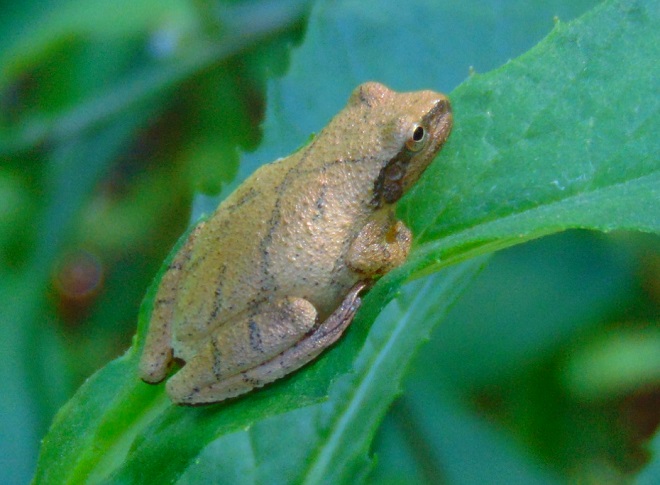
The tiny Northern Spring Peeper is recognized by the dark “X” across its back.  Soon, shelter must be found among loose bark and fallen logs to commence hibernation.  Emergence, often prompted by warm spring rains, will quickly be followed by a growing chorus of breeding calls as sometimes hundreds of these frogs assemble in vernal pools where mating will then occur.

Any additional river flow that resulted from the rains of the previous week is scarcely noticeable among the Pothole Rocks.  The water level remains low, the water column is fairly clear, and the water temperatures are in the 60s Fahrenheit.

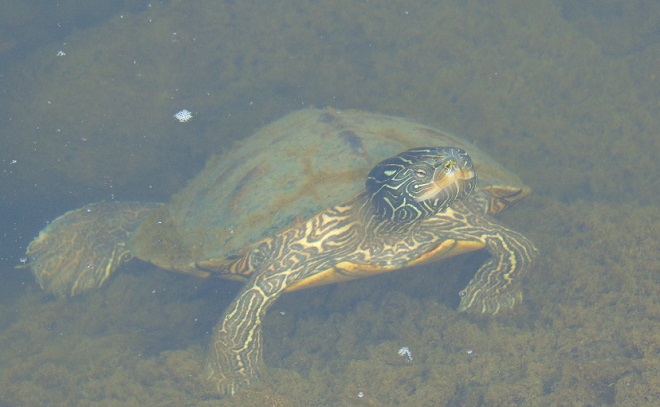
It’s no real surprise then to see aquatic turtles climbing onto the boulders in the falls to enjoy a little warmth, if not from the sun, then from the stored heat in the rocks.  As usual, they’re quick to slide into the depths soon after sensing someone approaching or moving nearby.  Seldom found anywhere but on the river, these skilled divers are Common Map Turtles (Graptemys geographica), also known as Northern Map Turtles.  Their paddle-like feet are well adapted to swimming in strong current.  They are benthic feeders, feasting upon a wide variety of invertebrates found among the stone and substrate of the river bottom.

Adult Common Map Turtles hibernate communally on the river bottom in a location protected from ice scour and turbulent flow, often using boulders, logs, or other structures as shelter from strong current.  The oxygenation of waters tumbling through Conewago Falls may be critical to the survival of the turtles overwintering downstream.  Dissolved oxygen in the water is absorbed by the nearly inactive turtles as they remain submerged at their hideout through the winter.  Though Common Map Turtles, particularly males, may occasionally move about in their hibernation location, they are not seen coming to the surface to breathe.

The Common Map Turtles in the Susquehanna River basin are a population disconnected from that found in the main range of the species in the Great Lakes and upper Mississippi basin.  Another isolated population exists in the Delaware River.
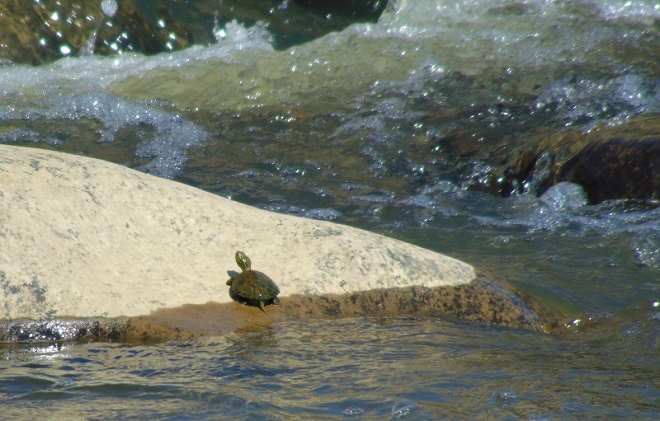
Common Map Turtles, including this recently hatched young seen in August, are often observed climbing onto rocks in the river.
Note the oversize swimming fin adaptations of the feet on this adult Common Map Turtle found among the Pothole Rocks in Conewago Falls.  Young and adults are capable of navigating some strong current to feed and escape danger.
CLICK ON THE LOGO FOR TODAY’S MIGRATION COUNT TOTALS

SOURCES

Committee on the Status of Endangered Wildlife in Canada.  2002.  Status Report of the Northern Map Turtle.  Canadian Wildlife Service.  Ottawa, Ontario.
Summer Breeze

A moderate breeze from the south placed a headwind into the face of migrants trying to wing their way to winter quarters.  The urge to reach their destination overwhelmed any inclination a bird or insect may have had to stay put and try again another day.

Blue Jays were joined by increasing numbers of American Robins crossing the river in small groups to continue their migratory voyages.  Killdeer (Charadrius vociferous) and a handful of sandpipers headed down the river route.  Other migrants today included a Cooper’s Hawk (Astur cooperii), Eastern Bluebirds (Sialia sialis), and a few Common Mergansers (Mergus merganser), House Finches (Haemorhous mexicanus), and Common Grackles (Quiscalus quiscula).

The afternoon belonged to the insects.  The warm wind blew scores of Monarchs toward the north as they persistently flapped on a southwest heading.  Many may have actually lost ground today.  Painted Lady (Vanessa cardui) and Cloudless Sulphur butterflies were observed battling their way south as well.  All three of the common migrating dragonflies were seen: Common Green Darner (Anax junius), Wandering Glider (Pantala flavescens), and Black Saddlebags (Tramea lacerata).

The warm weather and summer breeze are expected to continue as the rain and wind from Hurricane Nate, today striking coastal Alabama and Mississippi, progresses toward the Susquehanna River watershed during the coming forty-eight hours.

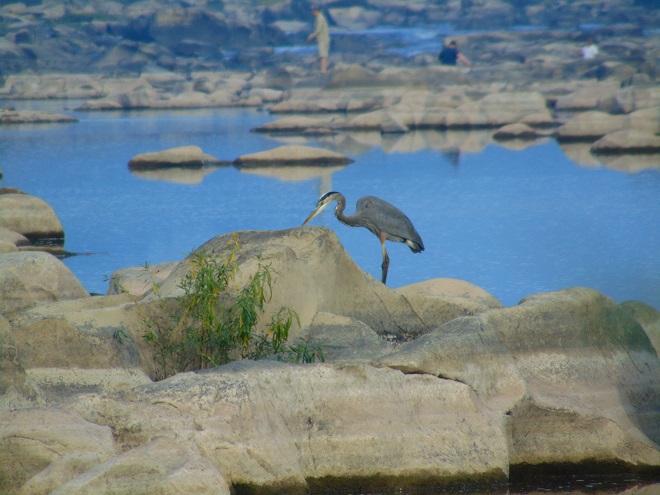
This Great Blue Heron was joined by numerous other fishermen and a good number of sightseers in the falls today.
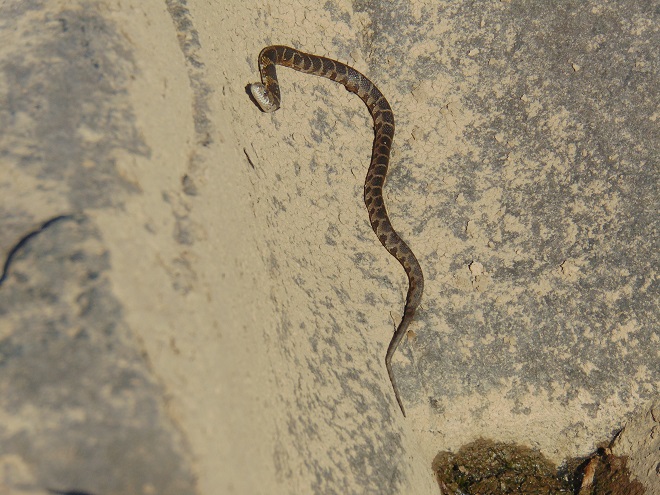
A colorful young Northern Water Snake (Nerodia sipedon) takes advantage of the sun-heated surface of a Pothole Rock to remain nimble and active.  Cooler weather will soon compel this and other reptiles to find shelter for winter hibernation.
CLICK ON THE LOGO FOR TODAY’S MIGRATION COUNT TOTALS

Swallows by the Thousands

A fresh breeze from the north brought cooler air and a reminder that summer is gone and autumn has arrived.

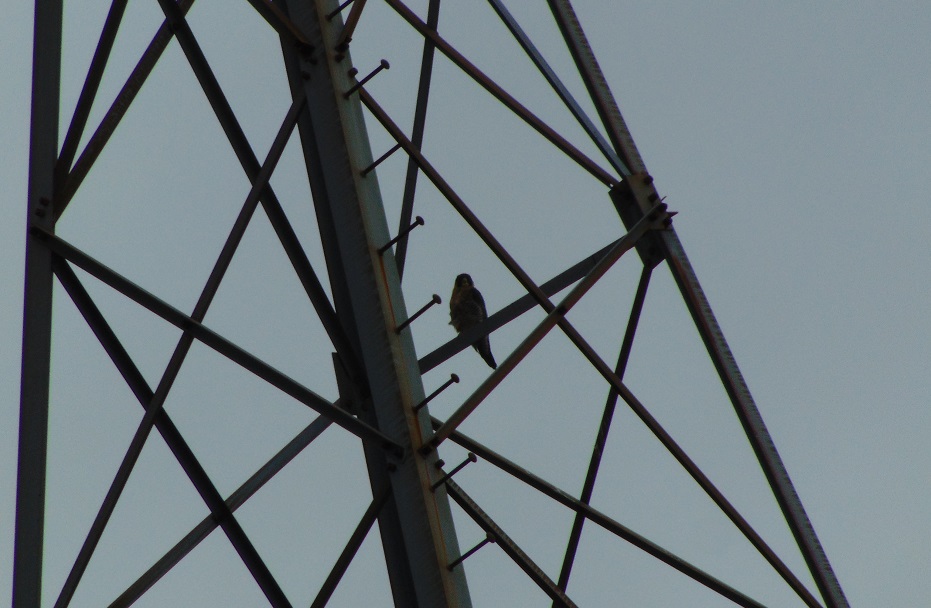
Fast-moving dark clouds provided a perfect backdrop for viewing passing diurnal migrants.  Bald Eagles utilized the tail wind to cruise down the Susquehanna toward Chesapeake Bay and points further south.  A migrating Merlin began a chase from which a Northern Flicker narrowly escaped by finding shelter among Pothole Rocks and a few small trees.  The season’s first American Black Duck (Anas rubripes), Common Loon (Gavia immer), Yellow-bellied Sapsucker (Sphyrapicus varia), and American Pipits (Anthus rubescens) moved through.

Blue Jays continued their hesitant crossings of the river at Conewago Falls.  The majority completed the journey by forming groups of a dozen or more birds and following the lead of a lone American Robin, a Northern Flicker, or, odd as it appeared, a small warbler.

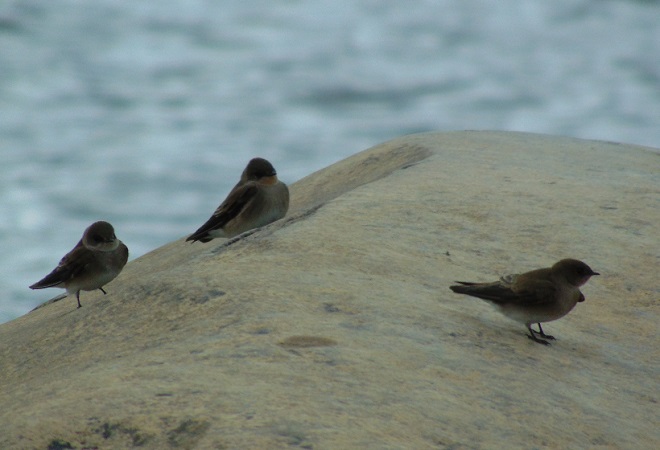
By far the most numerous migrants today were swallows.  Thousands of Northern Rough-winged Swallows and hundreds of Tree Swallows were on the wing in search of what was suddenly a sparse flying insect supply.  To get out of the brisk wind, some of the more resourceful birds landed on the warm rocks.  To satisfy their appetite, many were able to pick crawling arthropods from the surface of the boulders.  They swallow them whole.

A few of the thousands of swallows seen at Conewago Falls today.
CLICK ON THE LOGO FOR TODAY’S MIGRATION COUNT TOTALS

Blue Jay Way

The Neotropical birds that raised their young in Canada and in the northern United States have now logged many miles on their journey to warmer climates for the coming winter.  As their density decreases among the masses of migrating birds, a shift to species with a tolerance for the cooler winter weather of the temperate regions will be evident.

Though it is unusually warm for this late in September, the movement of diurnal migrants continues.  This morning at Conewago Falls, five Broad-winged Hawks (Buteo platypterus) lifted from the forested hills to the east, then crossed the river to continue a excursion to the southwest which will eventually lead them and thousands of others that passed through Pennsylvania this week to wintering habitat in South America.  Broad-winged Hawks often gather in large migrating groups which swarm in the rising air of thermal updrafts, then, after gaining substantial altitude, glide away to continue their trip.  These ever-growing assemblages from all over eastern North America funnel into coastal Texas where they make a turn to south around the Gulf of Mexico, then continue on toward the tropics.  In the coming weeks, a migration count at Corpus Christi in Texas could tally 100,000 or more Broad-winged Hawks in a single day as a large portion of the continental population passes by.  You can track their movement and that of other diurnal raptors as recorded at sites located all over North America by visiting hawkcount.org on the internet.  Check it out.  You’ll be glad you did.

Nearly all of the other migrants seen today have a much shorter flight ahead of them.  Red-bellied Woodpeckers (Melanerpes carolinus), Red-headed Woodpeckers (Melanerpes erythrocephalus), and Northern Flickers (Colaptes auratus) were on the move.  Migrating American Robins (Turdus migratorius) crossed the river early in the day, possibly leftovers from an overnight flight of this primarily nocturnal migrant.  The season’s first Great Black-backed Gulls (Larus marinus) arrived.  American Goldfinches are easily detected by their calls as they pass overhead.  Look carefully at the goldfinches visiting your feeder, the birds of summer are probably gone and are being replaced by migrants currently passing through.

By far, the most conspicuous migrant today was the Blue Jay.  Hundreds were seen as they filtered out of the hardwood forests of the diabase ridge to cautiously cross the river and continue to the southwest.  Groups of five to fifty birds would noisily congregate in trees along the river’s edge, then begin flying across the falls.  Many wary jays abandoned their small crossing parties and turned back.  Soon, they would try the trip again in a larger flock.

Sensing that they are being watched, Blue Jays are hesitant to fly across the narrow Susquehanna at Conewago Falls without first assembling into a flock.  The local constabulary often penalizes those who freelance and do not move in orderly groups.

A look at this morning’s count reveals few Neotropical migrants.  With the exception of the Broad-winged Hawks and warblers, the migratory species seen today will winter in a sub-tropical temperate climate, primarily in the southern United States, but often as far north as the lower Susquehanna River valley.  The individual birds observed today will mostly continue to a winter home a bit further south.  Those that will winter in the area of Conewago Falls will arrive in October and later.

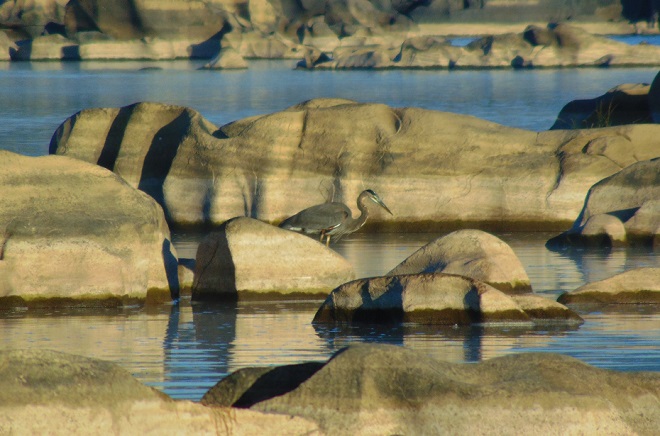
The Great Blue Heron (Ardea herodius) can be found year-round at Conewago Falls, provided there is open water and adequate food.  Migrants from breeding colonies to the north will soon supplement the local population.
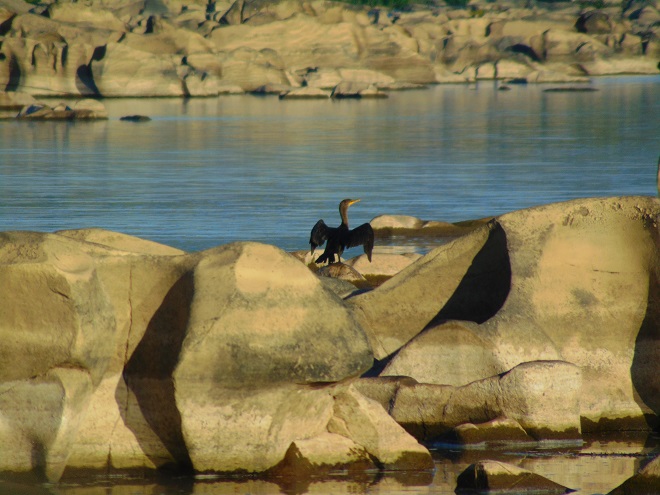
The Double-crested Cormorant (Phalacrocorax auritus) is a summer resident at Conewago Falls.  Migration of the local population and of those from further north will soon begin.  All will be gone by the time ice forms on the river.  Cormorants are often seen drying their feathers in sunlight following a series of feeding dives.

The long-distance migrating insect so beloved among butterfly enthusiasts shows signs of improving numbers.  Today, more than two dozen Monarchs were seen crossing the falls and slowly flapping and gliding their way to Mexico.

CLICK ON THE LOGO FOR TODAY’S MIGRATION COUNT TOTALS

Yellowlegs for Breakfast

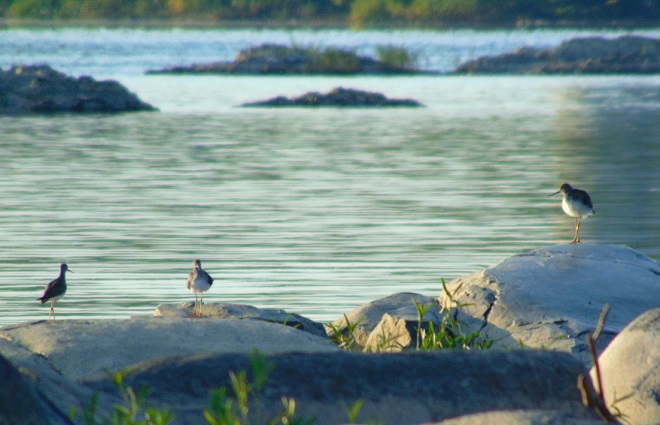
A few nocturnal migrants flew through the moonlit night to arrive at Conewago Falls for a sunrise showing this morning.  A dozen warblers were in the treetops and a Wood Thrush (Hylocichla mustelina) chattered away in the understory of the Riparian Woodlands.  Three species of shorebirds were in the falls and on the Pothole Rocks: Least Sandpiper (Calidris minutilla), Lesser Yellowlegs (Tringa flavipes), and Greater Yellowlegs (Tringa melanoleuca).

A Greater Yellowlegs (right) and two Lesser Yellowlegs sandpipers dropped by for breakfast.

The diurnal migration was highlighted by a Merlin (Falco columbarius), an Osprey, and a Bald Eagle, each flying down the river.  Most of the other birds in the falls seemed content to linger and feed.  There’s no need to hurry folks, only trouble lurks down there in paradise at the moment.

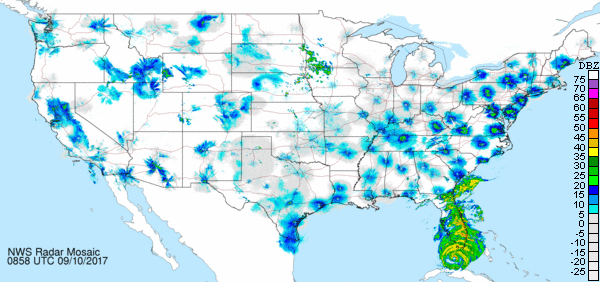
A light to moderate flight of nocturnal migrants in the eastern United States is displayed on NOAA National Weather Service NEXRAD radar at 4:58 AM EDT.  The eye of Hurricane Irma can be seen approaching the Florida Keys.  (NOAA/National Weather Service image)
CLICK ON THE LOGO FOR TODAY’S MIGRATION COUNT TOTALS