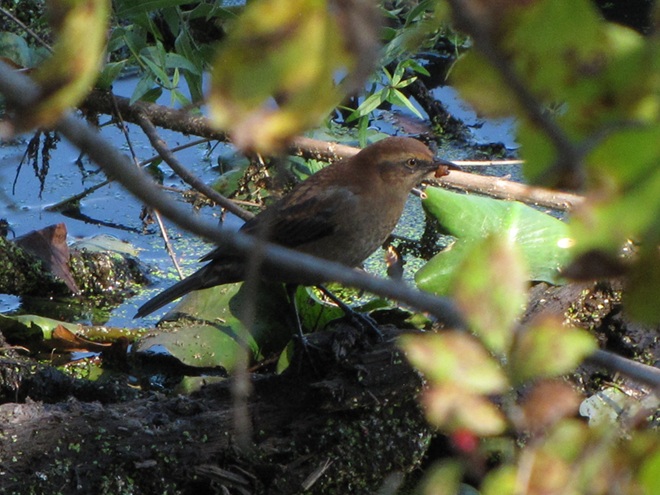
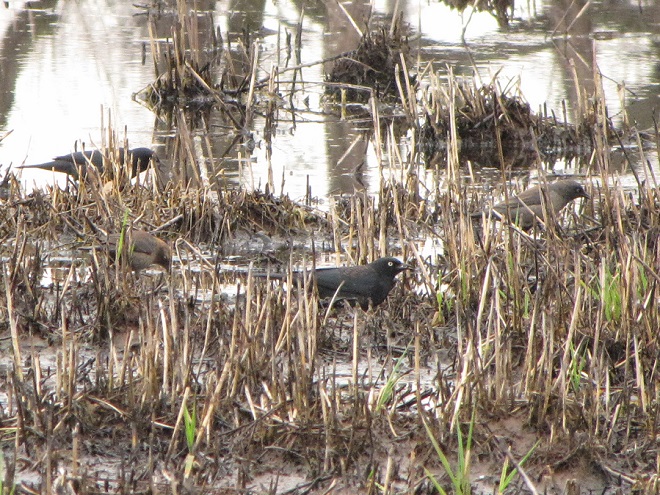
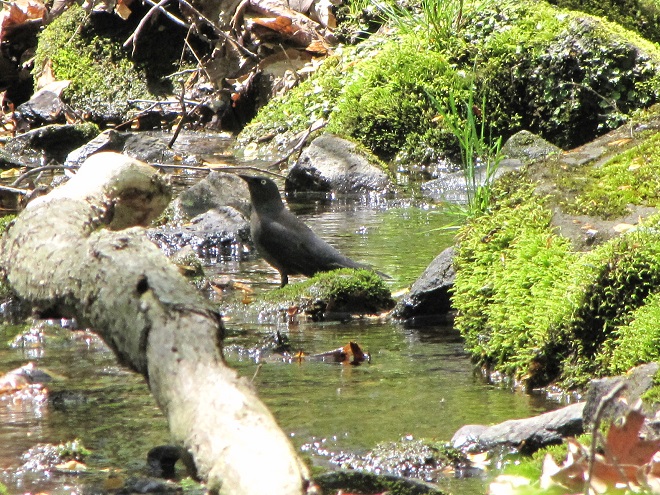
Small numbers of Rusty Blackbirds are currently moving south through the Lower Susquehanna River Watershed. Look for individuals and small flocks feeding in damp woods and along lake and river shorelines. These uncommon birds nest far to our north in wet coniferous and mixed forests as well as willow thickets, often in muskeg or beaver pond-created habitat. Rusty Blackbirds spend the colder months in the wooded swamps of the southeastern and south-central United States. Loss of habitat has reduced their numbers dramatically, as has their misfortune to occasionally join flocks of foraging Red-winged Blackbirds and Common Grackles on the wintering grounds where all of these species fall victim to avicide poisons placed on feedlots to eradicate European Starlings.
Though uncommon, Rusty Blackbirds are regular spring migrants from late March into early May each year. As they make their way north through the Lower Susquehanna River Watershed, floodplain wetlands are their favored habitat. Rusty Blackbirds get their common name not only from the color of their winter plumage, but from their call note as well. It closely resembles the squeaky sound made by a rusty gate hinge.
In spring, the majority of migrating Rusty Blackbirds move north through the lower Susquehanna basin in late March and April. Some, like this female seen yesterday along a forested tributary of Conewago Creek east of Conewago Falls, linger into May. Because it is almost exclusively a denizen of wet bottomlands, the Rusty Blackbird is the least numerous of the regularly occurring blackbirds in our region.
For those of you who dare to shed that filthy contaminated rag you’ve been told to breathe through so that you might instead get out and enjoy some clean air in a cherished place of solitude, here’s what’s around—go have a look.
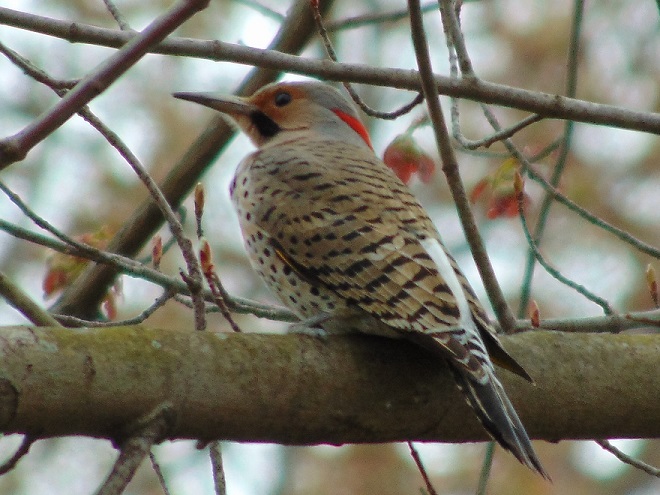
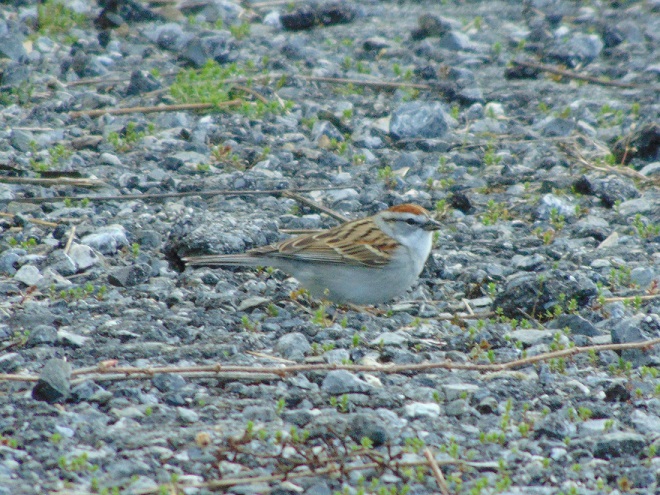
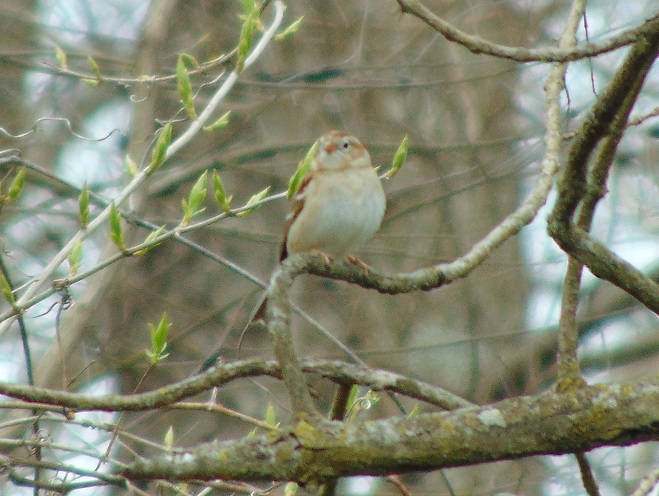
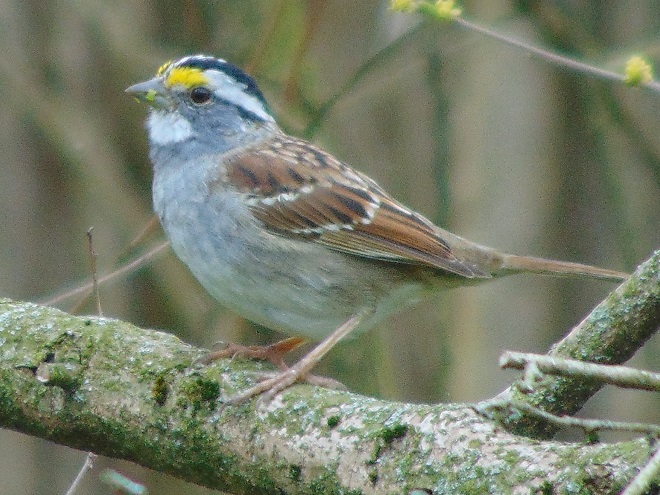
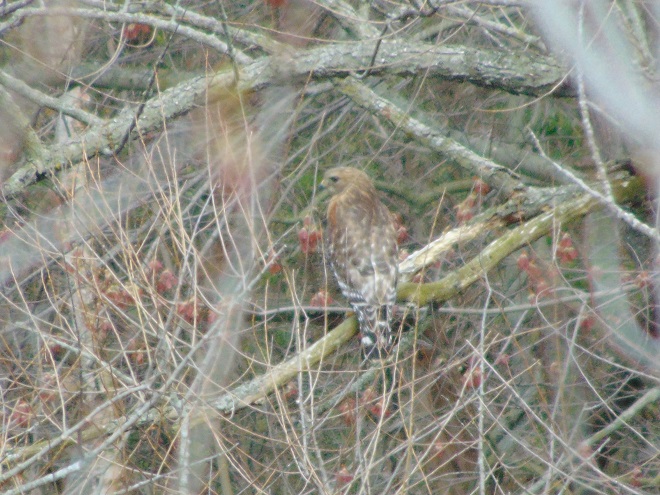
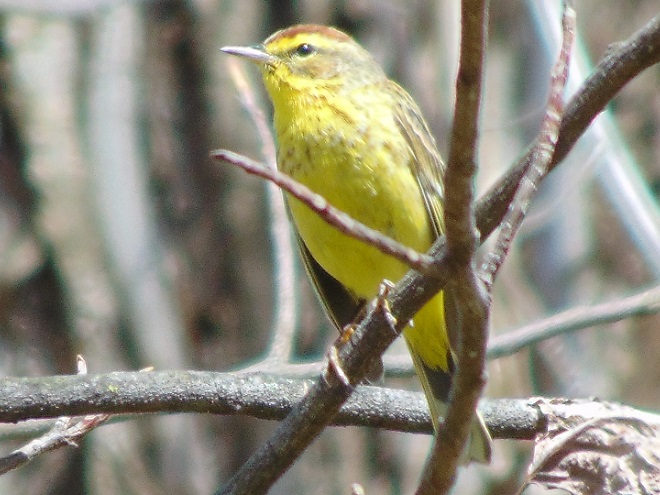
Northern Flickers have arrived. Look for them anywhere there are mature trees. Despite the fact that flickers are woodpeckers, they often feed on the ground. You’ll notice the white rump and yellow wing linings when they fly away.The tiny Chipping Sparrow frequently nests in small trees in suburban gardens. Lay off the lawn treatments to assure their success.Field Sparrows (Spizella fusilla) are a breeding species in abandoned fields where successional growth is underway.White-throated Sparrows spend the winter in the lower Susquehanna valley. Their numbers are increasing now as waves of migrants pass through on their way north.Northbound flocks of Rusty Blackbirds (Euphagus carolinus) are currently found feeding in forest swamps along the Susquehanna. Their noisy calls sound like a chorus of squeaking hinges.Migratory Red-shouldered Hawks are also making feeding stops at area wetlands.The Palm Warbler (Setophaga palmarum) is easily identified by its tail pumping behavior. Look for it in shrubs along the river shoreline or near lakes and streams. Palm Warblers are among the earliest of the warblers to move through in the spring.
The springtime show on the water continues…
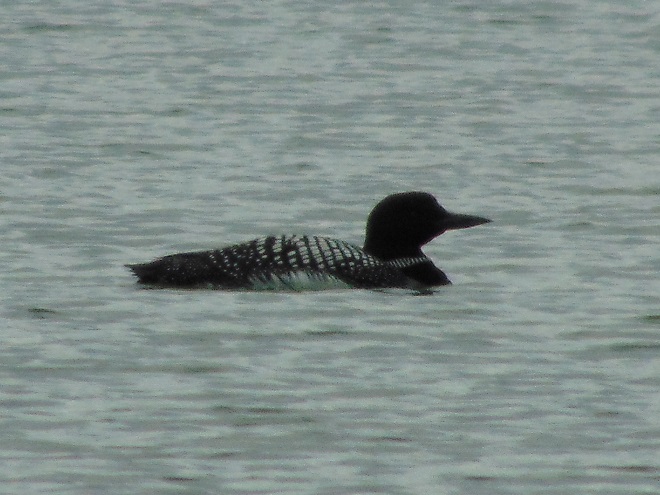
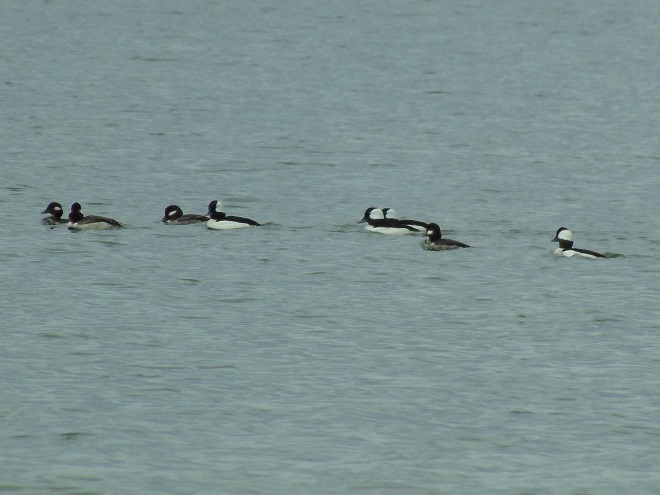
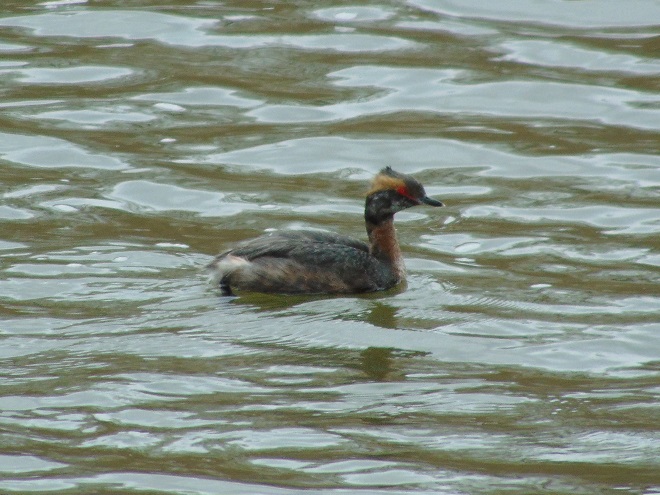
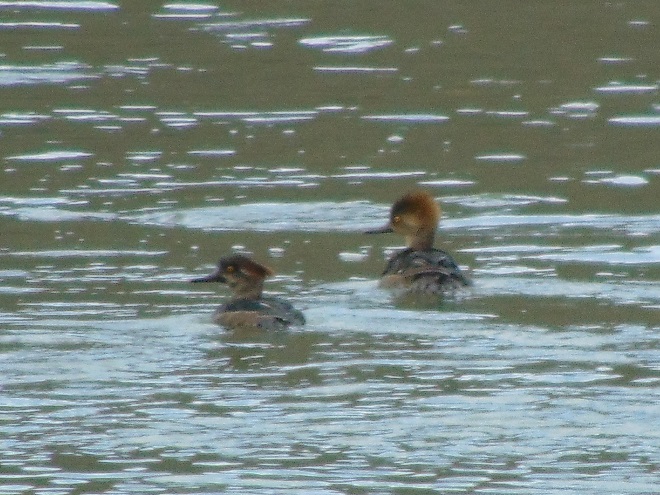
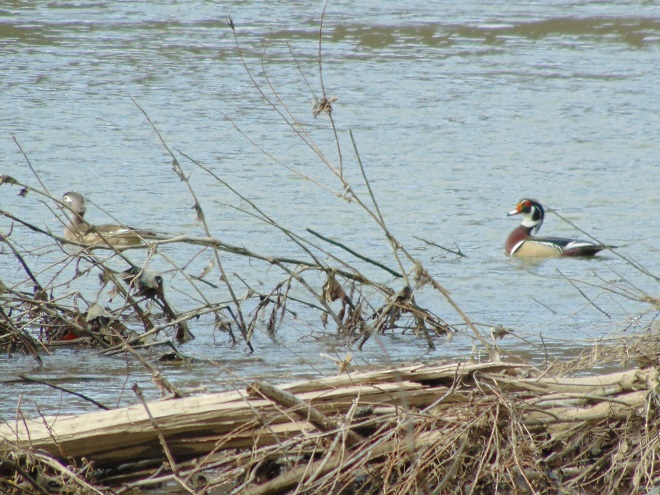
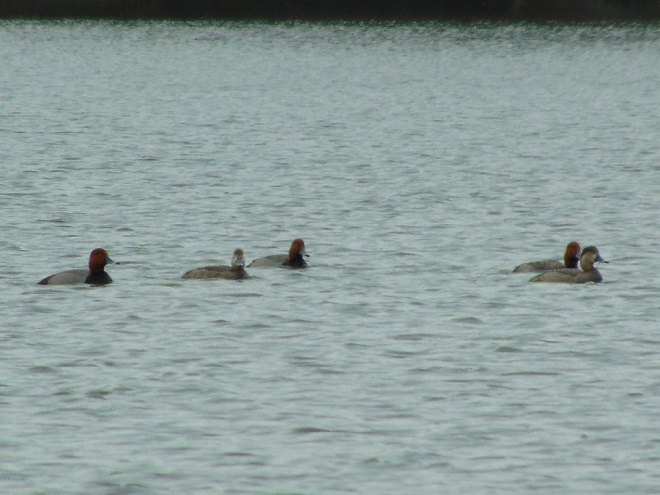
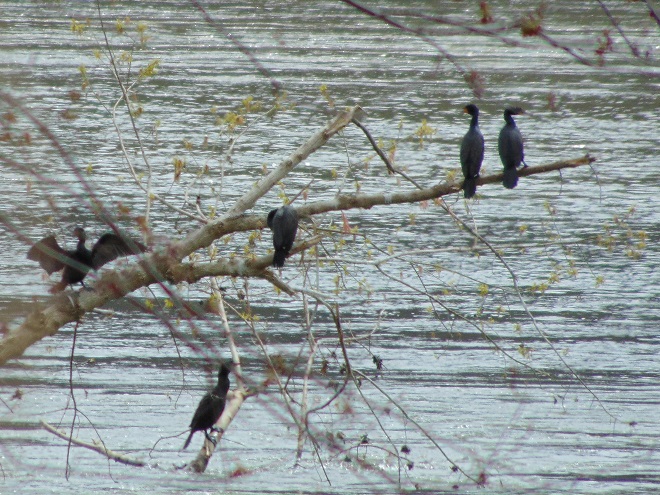
Common Loons will continue migrating through the area during the upcoming month.Buffleheads are still transiting the watershed.Horned Grebes are occurring on the river and on local lakes.Seeing these one-year-old male Hooded Mergansers, the bachelors, wandering around without any adult males or females is a good sign. The adults should have moved on to the breeding grounds and local pairs should be well into a nesting cycle by now. Hatching could occur any day.Like Hooded Mergansers, Wood Ducks are cavity nesters, but their egg laying, incubation, and hatching often occurs a month or more later than that of the hoodies. Judging by the attentiveness of the drake, this pair of woodies is probably in the egg-laying stage of its breeding cycle right now.Redheads (Aythya americana) are stopping for a rest on their way north.In spring, Double-crested Cormorants proceed up the river in goose-like flocks with adult birds like these leading the way.
Hey, what are those showy flowers?
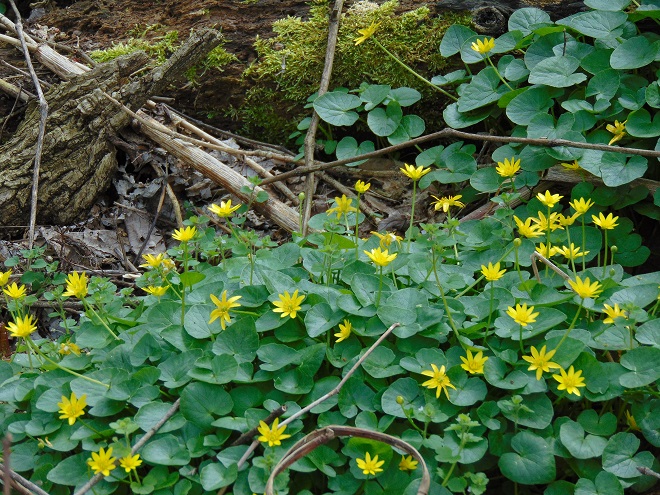
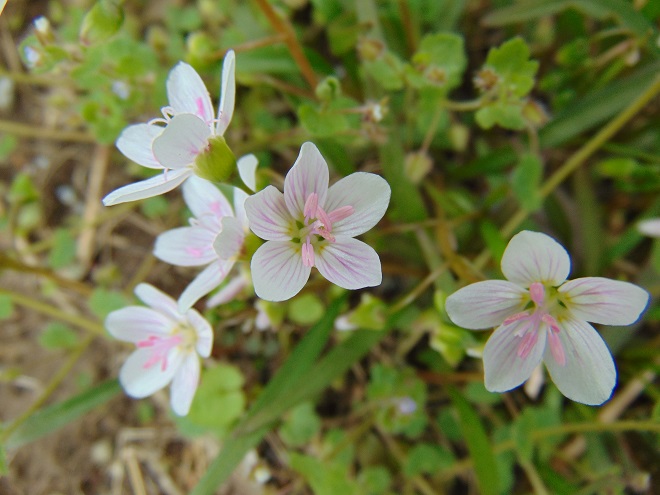
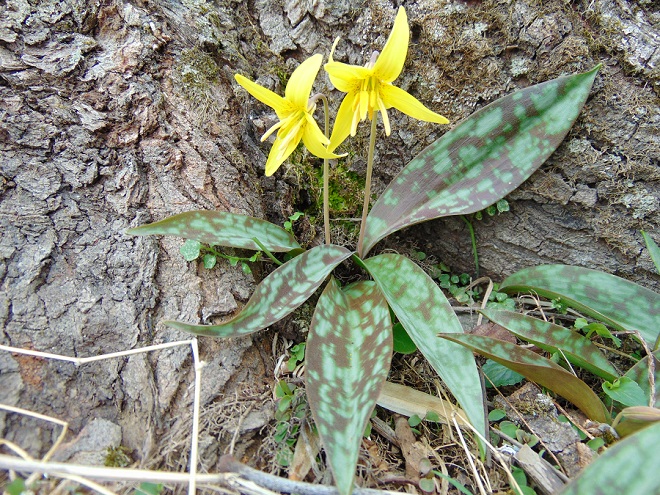
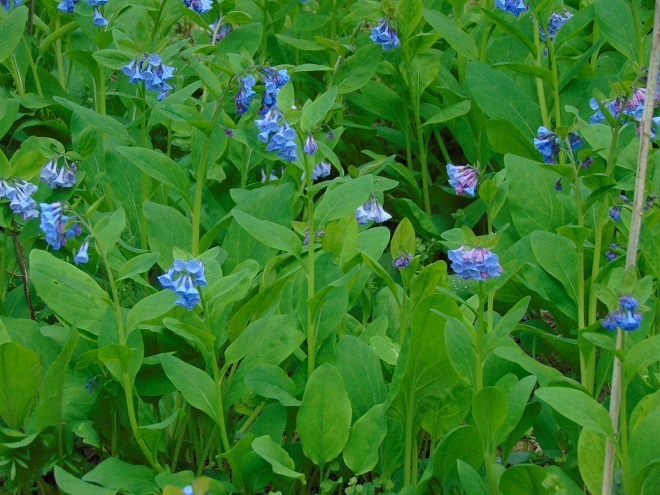
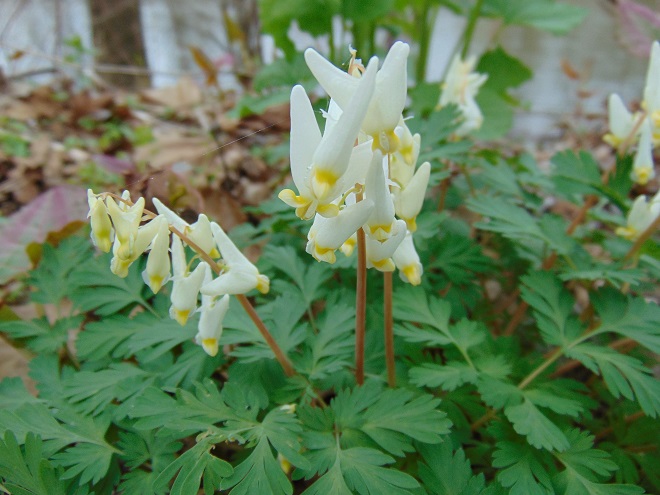
That’s Lesser Celandine (Ficaria verna). It’s often called Fig Buttercup. In early April it blankets stream banks throughout the lower Susquehanna region. If you don’t remember seeing it growing like that when you were younger, there’s a reason. Lesser Celandine is an escape from cultivation that has become invasive. While the appearance is tolerable; it’s the palatability that ruins everything. It’s poisonous if eaten by people or livestock.The Eastern Spring Beauty (Claytonia virginica) is a dainty native wildflower of riparian forests and other woodlands throughout the lower Susquehanna valley.The Trout Lily (Erythronium americanum) is beginning to bloom now. It’s a native of the region’s damp forests.Virginia Bluebells (Mertensia virginica) is not native to the Susquehanna watershed, but neither is it considered invasive. It creates colorful patches in riparian forests.Dutchman’s Breeches (Dicentra cucullaria) is a strikingly beautiful native wildflower that grows on undisturbed forested slopes throughout the Susquehanna valley.