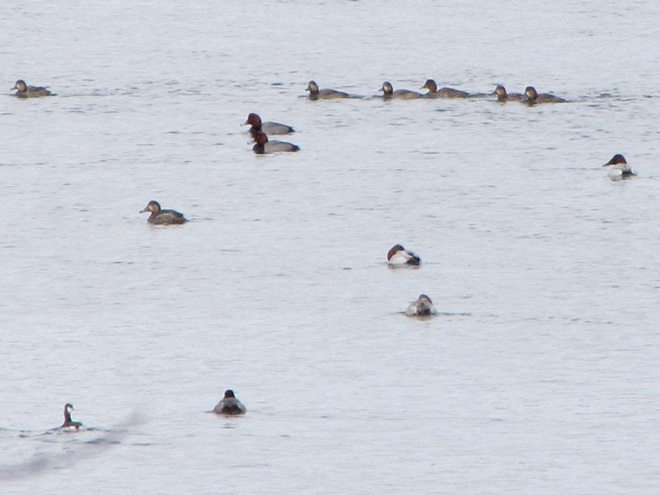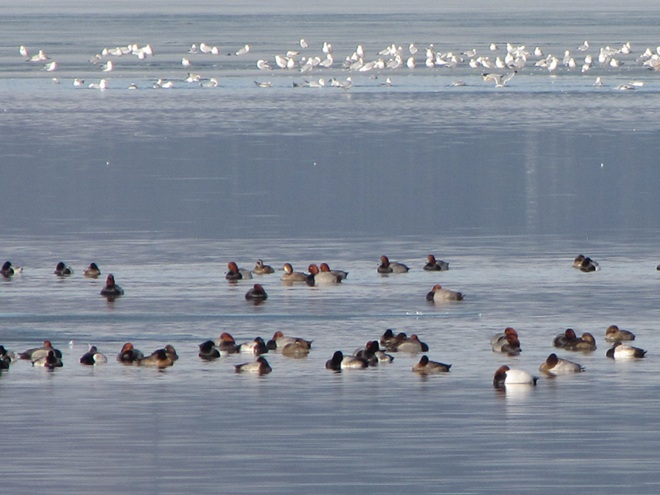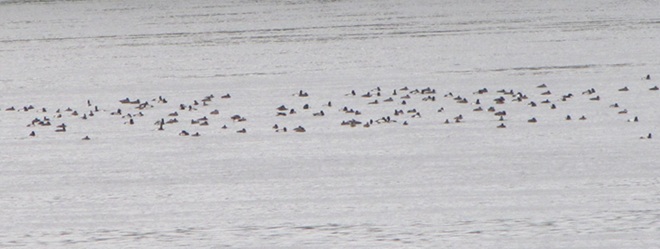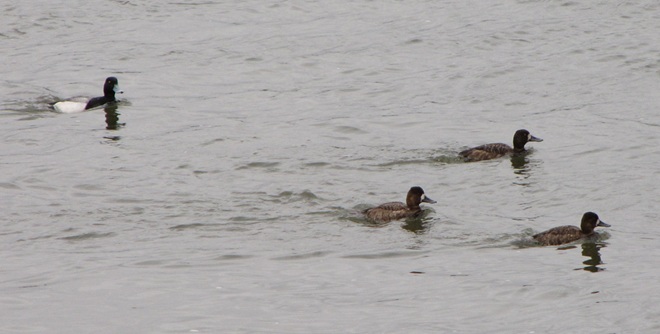
Migrating Waterfowl on Lotic Fresh Waters

Lotic vs. Lentic Freshwater Ecosystems
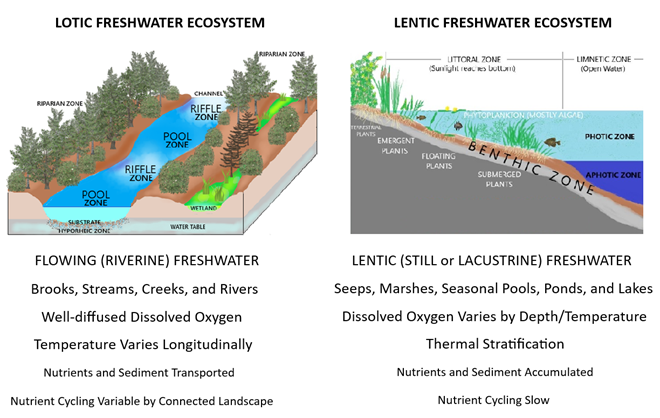
Some comparative attributes of unspoiled lotic vs. lentic freshwater ecosystems.  Low-gradient (slow-moving) lotic waters often create, and remain connected to, accompanying riverine wetlands (a lentic freshwater ecosystem).  These swamps, marshes, and ditches absorb, purify, and infiltrate flood waters while supporting a diverse number of plant and animal species.

We frequently perceive all waterfowl migration to be synchronized with the conspicuous movements of familiar species like Snow Geese, Tundra Swans, and Canada Geese—big flights coming south in October and November, then a return to the north in late February and March.  And we’re all quite aware of the occurrence of large gatherings of some of these migrants while they make stopovers on some of our largest lentic (still) waters—the man-made lakes and reservoirs created by damming local streams.  But did you know that there are populations of colorful waterfowl with dynamic migrations that extend throughout the winter and early spring with movements that are often continuous.  Under favorable conditions, these birds favor the lotic (flowing) waters of the river and its larger tributaries as they transit the lower Susquehanna valley.  That’s because unpolluted lotic freshwater ecosystems support a greater diversity of plants and animals than lentic waters, and therefore offer more opportunities for hungry migrating waterfowl to find food.  Let’s have a look at some of the species that visit the river during their seasonal journeys…
Ice on the Susquehanna
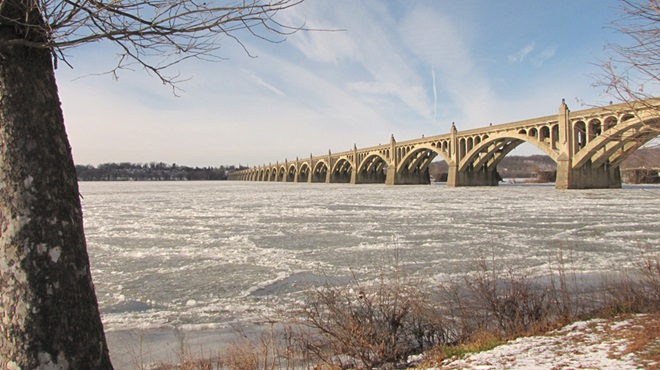
While the urge to head south in the autumn is largely stimulated by the shortening of the photoperiod, it is the presence of ice, particularly on glacial lakes throughout the lands to the north of the lower Susquehanna River basin, that pushes many diving ducks to finally make their way south toward the guarantee of open-water feeding areas along the coast.  This movement may occur at anytime between November and late February or, as we have seen during some of the mild winters of recent decades, it may scarcely be noticed at all.
Common Mergansers
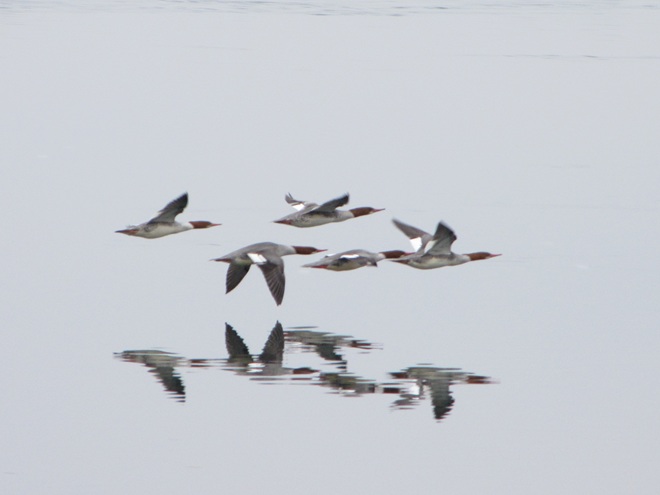
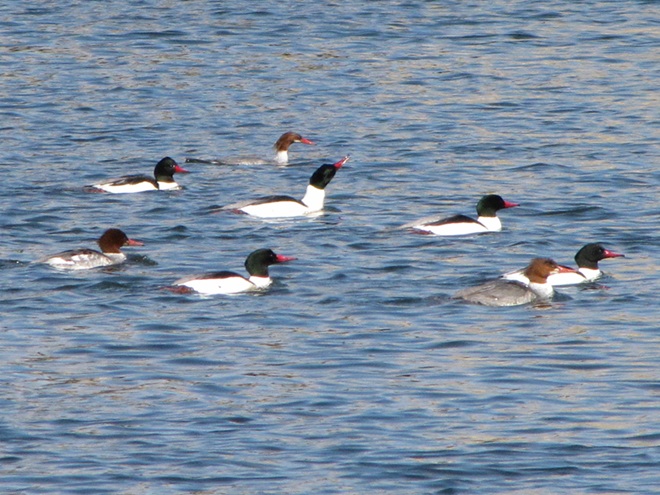
Common Mergansers often lead they way when it comes to migratory diving ducks.  They regularly move south in conspicuous numbers by late November and December and are regularly pushing north as soon as the ice begins to melt.  During a typical year, it is not unusual for some populations of these large diving birds to remain north of us during the winter.  Then, in the days after a sudden rush of frigid polar air, an appreciable increase in ice cover will force a mid-winter movement of birds down the Susquehanna.
Heat Flux Sources Impacting Temperature in Lotic Fresh Waters
Temperatures in lotic fresh waters vary over the length of the stream or river.  They are largely determined by the collective impact of the numerous sources of heat flux depicted in this graphic.  (Environmental Protection Agency image)
Buffleheads
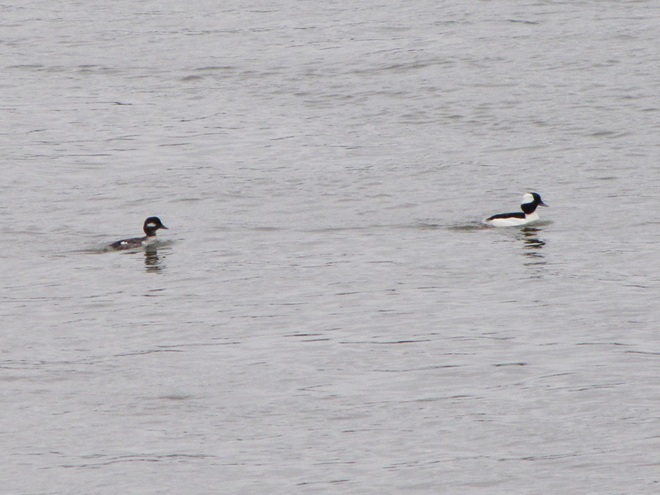
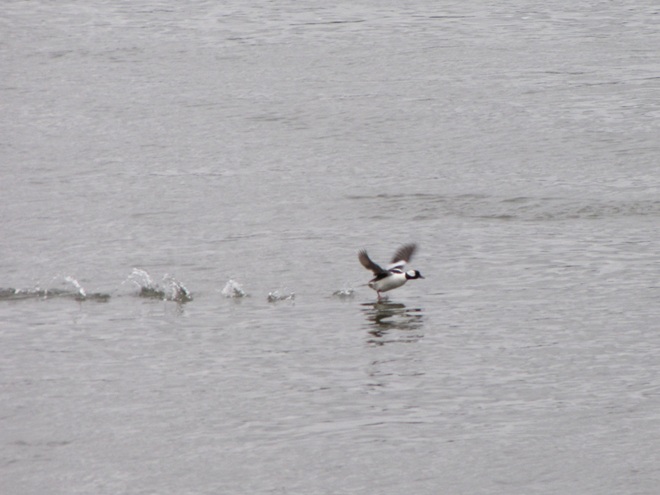
Buffleheads begin passing through the lower Susquehanna region in Novemeber on their way to coastal saltwater bays for the winter.  Lingering populations feed by diving in the river’s pools and riffles for benthic invertebrates including snails and insect larvae.  Lesser quantities of aquatic plant matter supplement their diet.
Common Goldeneye
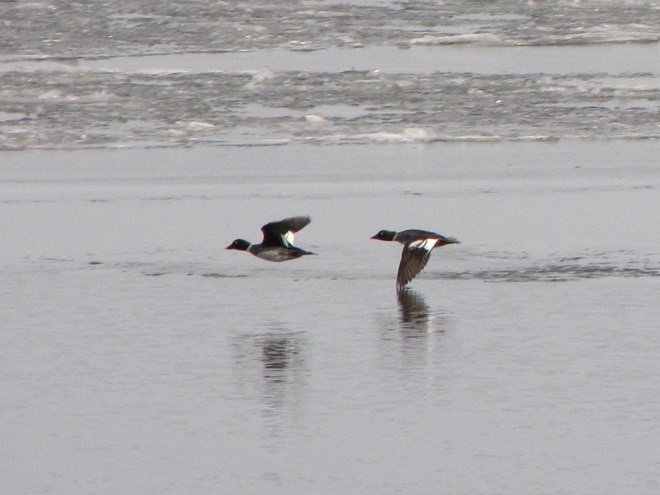
Many Common Goldeneyes will remain on shallow, ice-free waters of the northern lakes and rivers sculpted by the most recent glacial event, but only until they are forced south into and through the lower Susquehanna valley by the encroachment of freezing conditions.  On the river, they are among the dozen or so species of diving ducks we see visiting or passing through during the typical late fall and early river.


Geomorphological Zonation of a Stream or River
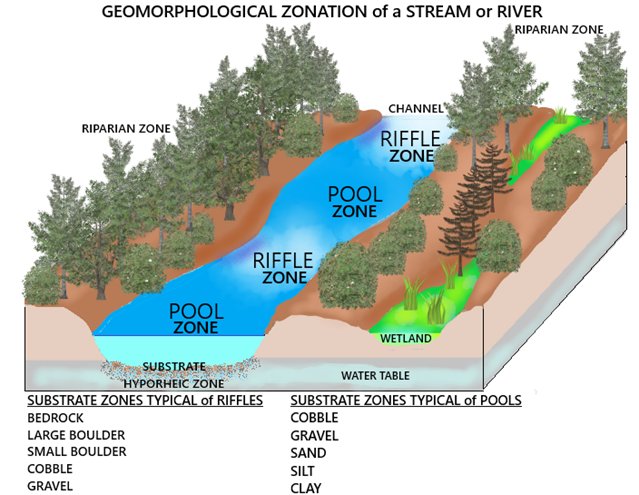
During their visits to the lotic (also known as riverine) fresh waters of the Susquehanna and its largest tributaries, benthic-feeding waterfowl make short dives to take advantage of the plants, small fish, invertebrates, and other food sources inhabiting the stream bottom in the riffles and pools of the free-flowing waterway.  Substrates, listed here by size (in descending order), along with other parameters influenced by this zonation determine the variety and abundance of the forage available to migrating waterfowl and other consumers.  Ice or high water and poor visibility due to flooding can render the riffles and pools of the channel unusable for feeding.  The birds must then choose to either linger and rest without feeding or leave the lotic freshwater habitat to seek sustenance.  During a flood, this may require relocation to a nearby lentic (still) body of fresh water such as a lake or reservoir.  The presence of ice will almost invariably force the birds to fly on to the Atlantic Coastal Plain and the tidal waters of its bays and estuaries.
Hooded Mergansers
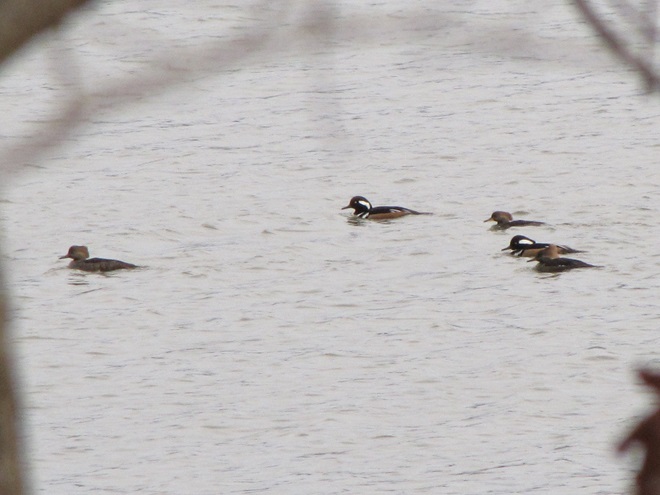
Hooded Mergansers are one of the few species of diving ducks likely to utilize flooded shoreline timber and riverine (fluvial) wetlands as refuge from high water on Susquehanna.
Pied-billed Grebe and Canvasbacks
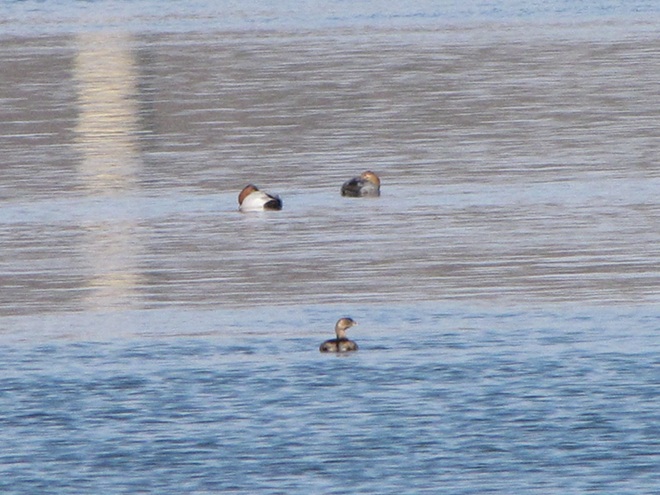
A Pied-billed Grebe and a pair of Canvasbacks on an ice-free stretch of the lower Susquehanna in mid-winter feed and loaf in a riffle-flanked pool where a large mat of American Eelgrass, a submerged aquatic plant also known as Tapegrass or Wild Celery, grows during the summer.  The vast mosaic of riffles and pools in a river this size offers tremendous opportunities for a diverse array of aquatic species to find their niche wherein they can survive and flourish.
Bufflehead
The presence of ice forces Buffleheads and other diving ducks to gather in turbulent open water, often below a riffle or dam.  Another alternative is to continue on toward the salty bays and estuaries of the coast.  High water may push these birds into the shallows among the flooded woods to feed, but they seldom utilize heavily forested riparian wetlands as a refuge due to their need for a running start to get airborne.


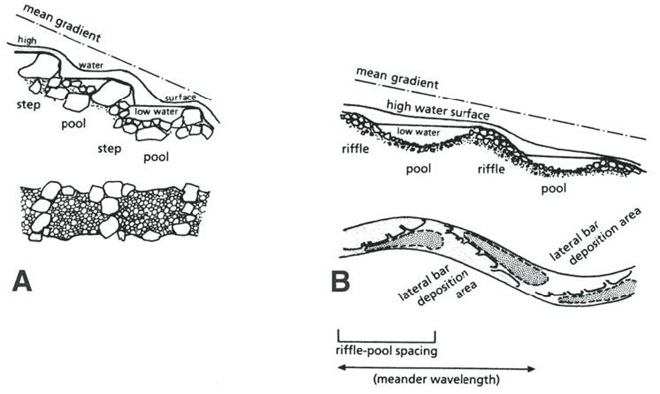
Riffle and Pool Characteristics of High Gradient (A) and Low Gradient (B) Streams.  This graphic illustrates the change in deposition characteristics of a stream or river as its gradient decreases.  A high-gradient stream (A) has a rapid velocity, often forms falls, and tends to carry away a high volume of all but the largest of particles of potential substrates as they erode from the surrounding landscape.  On a low-gradient stream, the loss in water velocity reduces the water column’s ability to transport even the smallest of substrate particles.  Deposition of this gravel, sand, silt, and clay forms lateral bars that over time create the familiar meandering path of a naturally flowing lowland stream.  (National Park Service image)
Benthic Life in Lotic Freshwaters
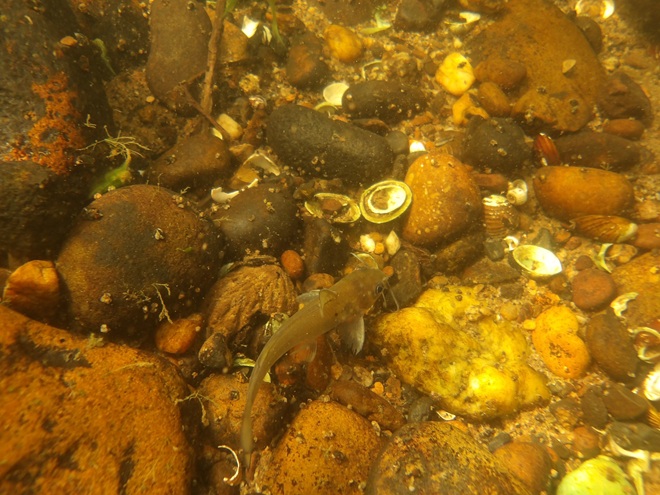
Benthic substrates in lotic freshwater pools and riffles support an abundance of life forms ranging from colorful diatoms on rocks and cobble, to invertebrates including snails and insect larvae, to fishes like this young Channel Catfish.  Free of accumulations of sediment, this river bottom not only provides habitat for a healthy fishery, it facilitates the bidirectional exchange of water between the Susquehanna and its underlying aquifer.
Quillback
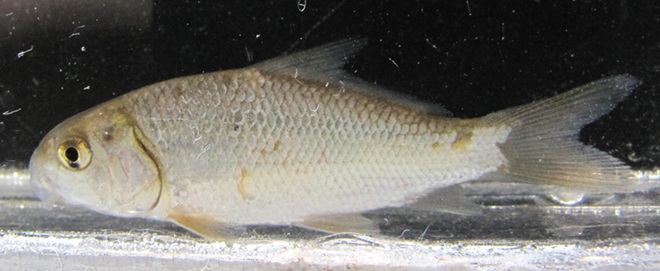
On the lower Susquehanna, populations of young Quillback suckers are found almost exclusively in clear, high-gradient pools.
Harlequin Duck
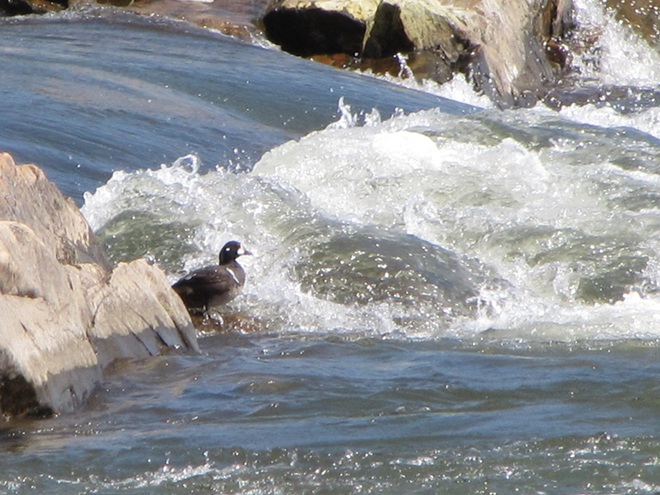
The Harlequin Duck winters along the rocky shores and man-made jetties of the Atlantic coast.  In summer, they nest on fast-moving, headwater streams well to our north.  Very rare on the Susquehanna, this is the first of two individuals found during March and April of 2025.  It was observed feeding in the swift waters of the high-gradient riffles and pools where the river cuts through Blue Mountain north of Harrisburg.  During previous weeks, Harlequin Ducks were being seen along the coast as far south as the mouth of the Chesapeake at Cape Charles, Virginia.  It’s very possible that some of these birds traveled north through the bay area and up the Susquehanna on their way north.


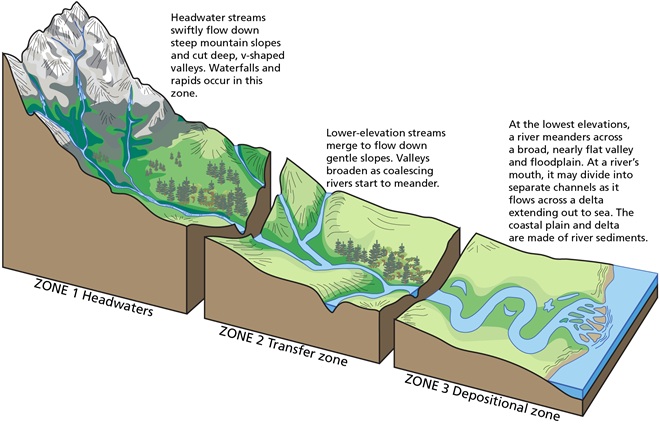
Fluvial Geomorphology of a Stream.  Many of the Susquehanna’s tributaries pass through each of these three erosional zones.  Along the way, they carry out the process of breaking down the mountains formed by the Allegheny orogeny, the collision of North America and Africa that created the supercontinent Pangea about 325 to 260 million years ago (during portions of both the Carboniferous and Permian periods).  Today’s main stem of the lower Susquehanna passes through a transfer zone (Zone 2), carrying eroded materials to a depositional  zone (Zone 3) located within the ancient Susquehanna canyon stretching from Havre de Grace, Maryland, to Norfolk Canyon on the edge of the continental shelf.  Within this zone, more than a 10,000-year accumulation of post-glacial sediments lies submerged by the rising waters of the Atlantic Ocean and Chesapeake Bay.  Although the present-day lower Susquehanna is largely a transfer zone, some deposition occurs along low-gradient segments of the river, particularly where its course parallels the watershed’s ridges both above and below the high-gradient rapids where its path has eroded passage through the highlands.  (National Park Service image)
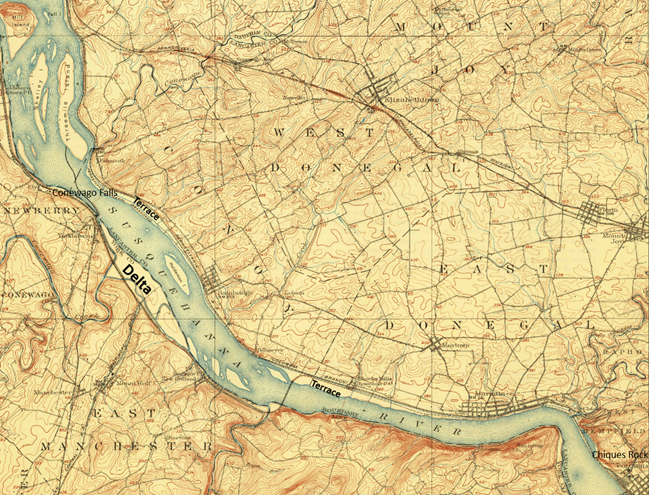
Although the present-day lower Susquehanna is largely a transfer zone, some deposition occurs along low-gradient segments of the river, particularly where its course parallels the watershed’s ridges both above and below the high-gradient rapids where its path continues to erode passage through the bedrock.  On this 1908 map of the Susquehanna at Conewago Falls, alluvial terraces of gravel, sand, silt, and clay can readily been seen as pale areas nearly lacking brown contour lines along the shorelines and islands of the river.  Deposits within most of these terraces date back to the melt period following the most recent glacial event and beyond.  The delta shown at the mouth of Conewago Creek (west) includes massive volumes of material deposited by both the creek and the river.  This delta is currently known as Brunner Island, much of it developed as the site of a coal/gas-fired electric generating station.  Terrace deposits along the Susquehanna’s shorelines created extensive perched marshes and swamps (wooded marshes) fed by rains, high river water, small streams, and springs, the latter often seeping from the base of the rocky escarpments carved by the ancient Susquehanna and defining the present-day inland border of the floodplain.  We call these sites “Alluvial Terrace Wetlands”.  Few of these critical components of river morphology survive.  Those not drained for farmland were obliterated by urbanization and canal, railroad, and highway construction.  (United States Geological Survey base image: Middletown, PA, quadrangle, 1908)
Water Willow
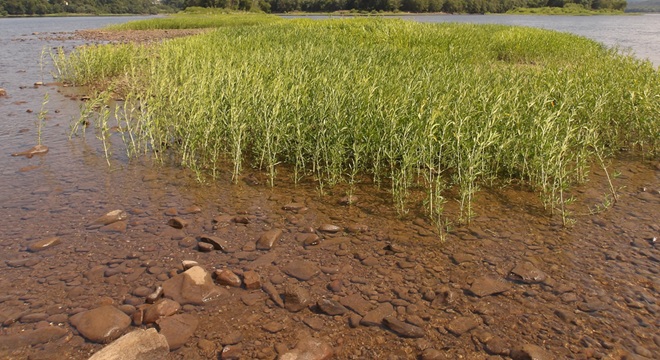
Water Willow is a familiar emergent plant that colonizes lateral bars and other alluvial deposits in low-gradient segments of the Susquehanna.
Water Willow Roots
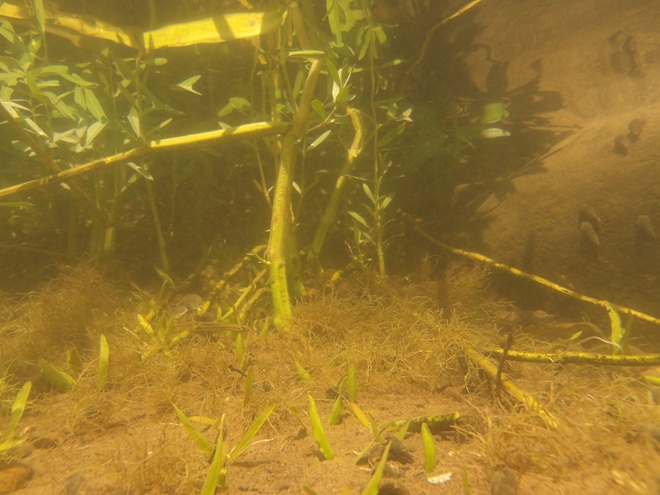
The fine roots of Water Willow collect sediment and absorb nutrients while creating dense cover for young fish and numerous species of invertebrates including the Virginian River Horn Snails seen here.

Prior to the nineteenth century, the low-gradient flow regime of the river both above and below the riffles at Chiques Rock (lower right on map) created prime wildlife habitat.  The natural accumulations of nutrients and substrates carried into and through the lotic waterway’s pools and riffles were cycled into an ideal growing medium for extensive mats of American Eelgrass and other aquatic plants.  This underwater forest hosted a seemingly endless abundance of invertebrates and fishes (both resident and migratory)—supporting a variety of consumer species including various populations of humans.  But soon after the mass clearing of much of the watershed’s land for farming and lumber, the mill ponds created by dams constructed on streams to power saw and grain mills became brimful with sediments eroded from the unprotected ground.  During storm events, torrents of these sediments then flowed full bore toward the Susquehanna, and began accumulating in the low-gradient segments of the river.
Legacy Sediments
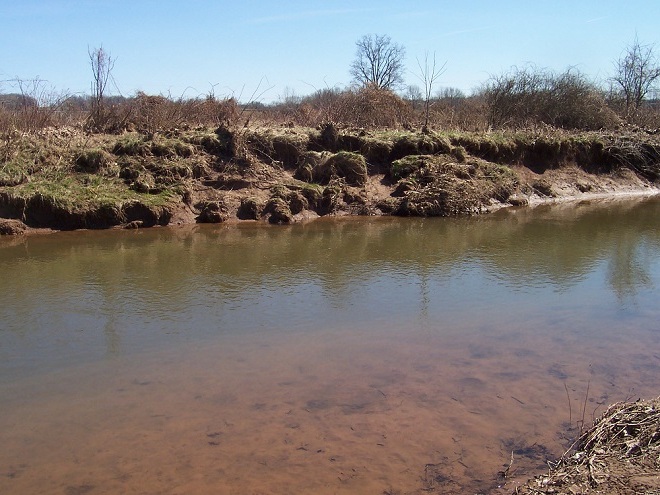
Sediments left behind after the removal of mill dams are known as legacy sediments. They disconnect the stream from its historic floodplain and riverine (fluvial) wetlands, thus intensifying the impact of high water in the surrounding landscape.  As these nutrient-charged deposits wash away, they become a source of pollution in the waters of the Susquehanna and Chesapeake.
American Eelgrass
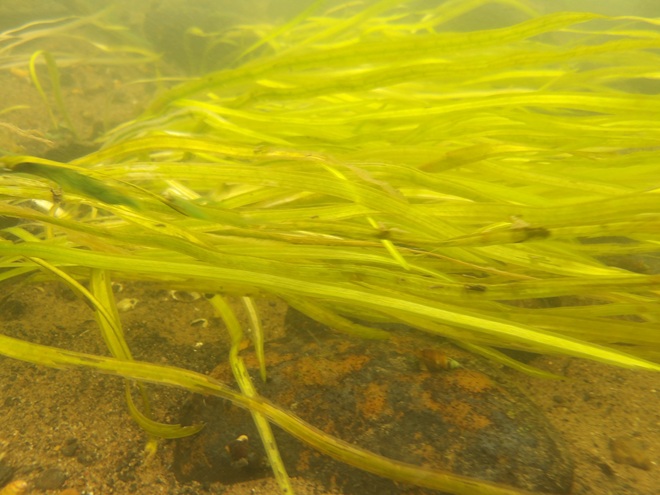
A mat of American Eelgrass growing in the flowing waters of the Susquehanna below Conewago Falls.  Eelgrass and other submerged aquatic plants provide essential habitat for a wide variety of small fish and invertebrates while also consuming nutrients deposited in the cobble, gravel, and sand substrate of the river’s pools.  Excess quantities of smaller particles of silt and clay can clog the substrate and thus inhibit the hyporheic exchange of water between the stream channel and the underlying aquifer, often diminishing the biomass and diversity of organisms inhabiting this benthic habitat.  Buried in these life-choking sediments, the river bottom becomes inhospitable to growth of submerged aquatics including eelgrass.
Susquehanna at Marietta
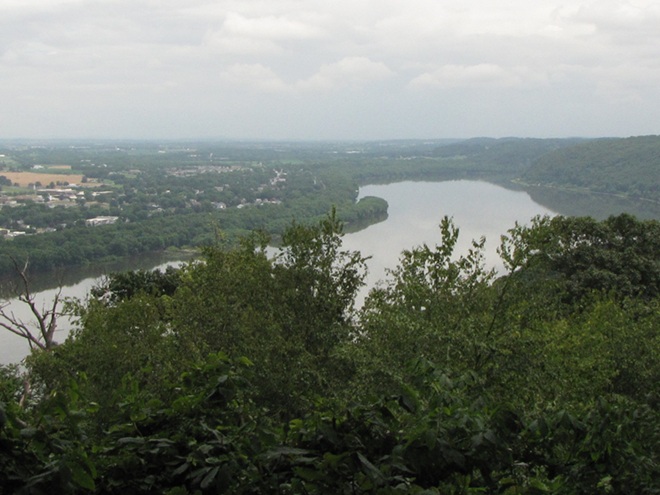
This low-gradient stretch of the Susquehanna at Marietta flows parallel to the Chickies Quartzite “Hellam Hills” before making a sharp right turn to punch through the ridge as a series of rapids at Chiques Rock.  Formerly a fully functional lotic ecosystem and a paradise for migrating waterfowl, this river segment is now impaired by accumulations of nutrient-laden sediments from agricultural and urban runoff.
Conewago Falls Flood Waters
Nutrient and sediment-loaded flood waters roar across the diabase boulders at the York Haven Dam and Conewago Falls, a high-gradient segment of the Susquehanna.
Flood Waters at Haldeman Riffles
They continue past Brunner Island (left power plant stacks) and through Haldeman Riffles and the Shocks Mills Railroad Bridge…
Flooding on the Marietta Broads
…into the stretch of river known as the “Marietta broads” along the base of the Chickies Quartzite “Hellam Hills”.  The low stream gradient here produces a slower current and increased deposition of sediments.
Susquehanna Flooding at Chiques Rock
As the flood surges through the riffle and pool complex at Chiques Rock, the high stream gradient maintains a velocity in the water column sufficient to keep additional sediments in suspension until they reach the low-gradient river segment just downstream at Washington Boro, site of a naturally occurring lateral bar area known as the Conejohela Flats.  These bars now lie within the man-made depositional zone known as “Lake Clarke”.  Created nearly a century ago by construction of the Safe Harbor Dam, this impoundment is accumulating astounding volumes of nutrient-loaded sediments that continue to encapsulate the flats within a stream-impairing delta.
Redheads, Canvasbacks, and a Horned Grebe
Anytime from November to April on the lower Susquehanna, a group of Redheads, Canvasbacks (3 birds to right of the middle of the picture), and a Horned Grebe (lower left) is a welcome sight in a riverine pool known to have a summertime growth of American Eelgrass.  Noted Dr. Herbert Beck in 1924 when describing the Canvasback, “Like all ducks, …, it stops to feed within the county (Lancaster) less frequently than formerly, principally because the vast beds of wild celery which existed earlier on broads of the Susquehanna, as at Marietta and Washington Borough, have now been almost entirely wiped out by sedimentation of culm.  Prior to 1875 the four or five square miles of quiet water off Marietta were often as abundantly spread with wild fowl as the Susquehanna Flats are now.  Sometimes there were as many as 500,000 ducks of various kinds on the Marietta broad at one time.”
Aythya genus ducks.
Today, seeing just dozens of Aythya genus ducks (Redheads, Canvasbacks, scaup) on the lower Susquehanna is a notable event.  If they happen to be forced down by inclement weather while migrating through, you might get lucky enough to see several hundred.
Aythya Genus Ducks
While the recovery of eelgrass/wild celery beds on the Susquehanna is trivial in scale and offers little support for numbers of waterfowl to return to historic levels, restorations on the upper Chesapeake in the vicinity of the Susquehanna Flats between Havre de Grace and Aberdeen Proving Grounds may have helped refuel a gathering of mostly Aythya genus ducks during the final days of February.  This mass of ducks, many of which were forced south from the frozen Great Lakes during the previous weeks (some by way of the ice-choked Susquehanna) were apparently making an abrupt turn to make their way back north.  Their stay was brief, but estimates by local birders put their numbers as high as one half million.  The vast majority of the concentration consisted of Aythya species: Redheads, Canvasbacks, Ring-necked Ducks, and both Lesser and Greater Scaup.  It probably included a mix of birds including both northbound migrants from further down the coast and the aforementioned refugees that had just arrived to pay a quick visit while escaping the late-season ice before turning around.
Lesser Scaup
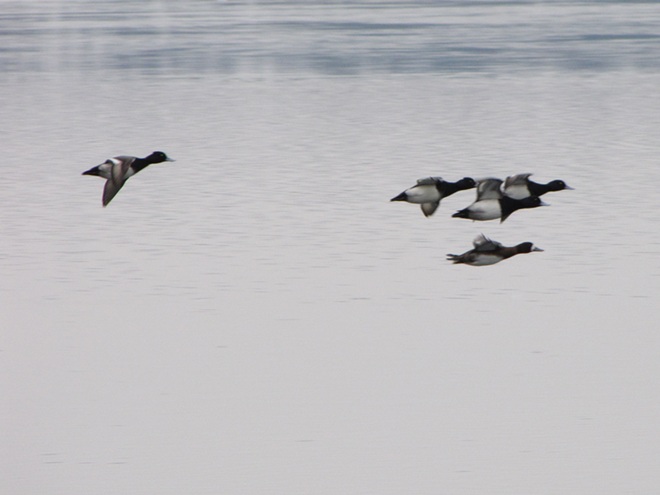
During the past two centuries, as food supplies in the Susquehanna grew increasingly compromised for benthic feeders like these Lesser Scaup and other diving ducks, a change in distribution was necessary for survival.
Lesser Scaup in flight.
As individual species, Lesser Scaup and other waterfowl that fail to adapt to natural or man-made changes in their habitats and food supplies may see their overall global numbers falter.

Despite being located in the transfer zone, the lower Susquehanna has become a significant depositional zone along much of its length, mostly courtesy of the placement of sediment-trapping man-made dams.

Following construction of the mill dams and ponds on nearly every mile of the lower Susquehanna’s low-gradient tributary streams, enterprising parties moved on to the river.  The first significant spans were constructed using wide timber cribs filled with large rock.  They were placed to create water deep enough to allow canal boats to cross the Susquehanna at both Clark’s Ferry at the mouth of the Juniata River in Dauphin County and at Columbia/Wrightsville.  These dams also diverted water into the newly excavated canals—the Pennsylvania Eastern Division Canal (completed in 1833) which followed the river’s east shore from Clark’s Ferry to Columbia, and the Susquehanna and Tidewater Canal (completed in 1840) along the west shore from Wrightsville to Havre de Grace, Maryland.  Placement of these sediment-trapping man-made dams began a process of converting vast mileage of the lower Susquehanna from a transfer zone into a deposition zone.  In addition, layout of the canals and locks followed the contours along the base of the riverside ridges, seriously altering most of the alluvial terrace wetlands that the river had created as a feature of its floodplain during the post-glacial period.

Construction of the canal dams was just the beginning.  During the twentieth century, more massive dams would be added to the main stem of the river for hydroelectric energy production at York Haven, Safe Harbor, Holtwood, and Conowingo.  Upon their completion, the days of unassisted anadromous fish migrations were over.  On both the river and its tributaries, smaller dams including dangerous low-head dams maintain water levels for boating and recreation.  They too create current-diminishing, pseudo-lentic waters that blanket the lotic riffle and pool substrates with polluted sediments.

MAN-MADE DAMS TURN LOTIC WATERS INTO UNFLUSHED TOILETS
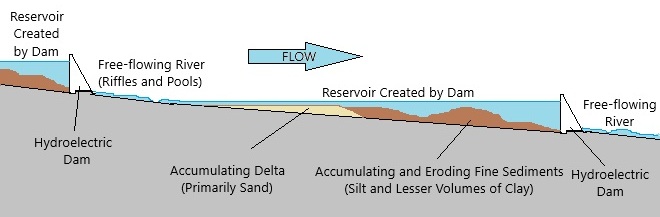
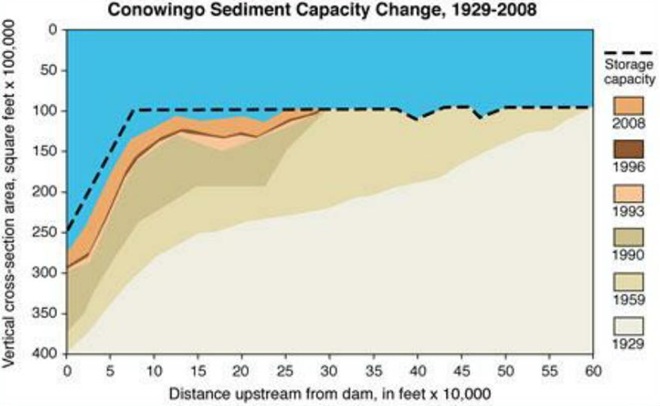
Sediment Deposition Behind Lower Susquehanna Dams
The construction of dams on the lower Susquehanna has converted vast mileage of the river from a lotic freshwater system into a series of man-made lentic freshwater lakes.  These areas have lost their function as a lotic transfer zone and are now a sort of dysfunctional series of depositional zones collecting vast volumes of sediment containing nutrients and other pollutants.  Within each impoundment, the reduced velocity of the river causes it to drop suspended sand first, then the finer particles of silt and clay closer to the dam.  The flow regime of riffles and pools is lost and the hyporheic zone that exchanges water between the river and the underlying aquifer is clogged.  These impaired segments of river become ripe for eutrophication: algal blooms followed by die offs that can lead to a fatal reduction of dissolved oxygen in the water column.
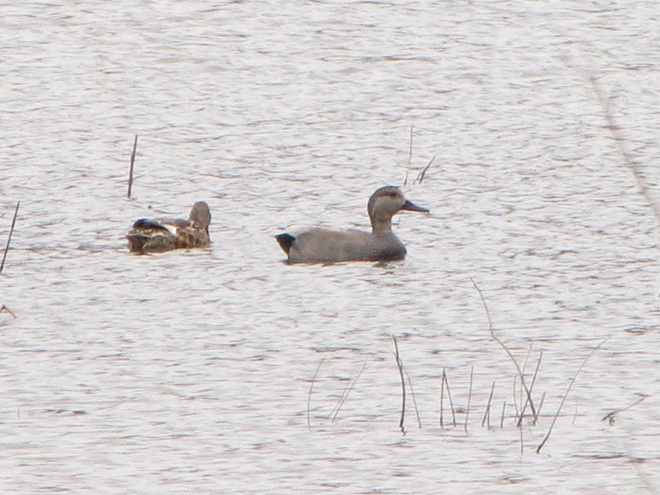
Gadwall
Deposits of lateral bars of sediment in low-gradient segments of the Susquehanna can create shallow water feeding habitat for puddle/dabbling ducks like these Gadwall.  Where sediment pollution is severe, benthic foods in these areas often consist mostly of invertebrates and plant matter deposited by the current, the buried substrates devoid of a functioning ecosystem and the waters subject to eutrophication.
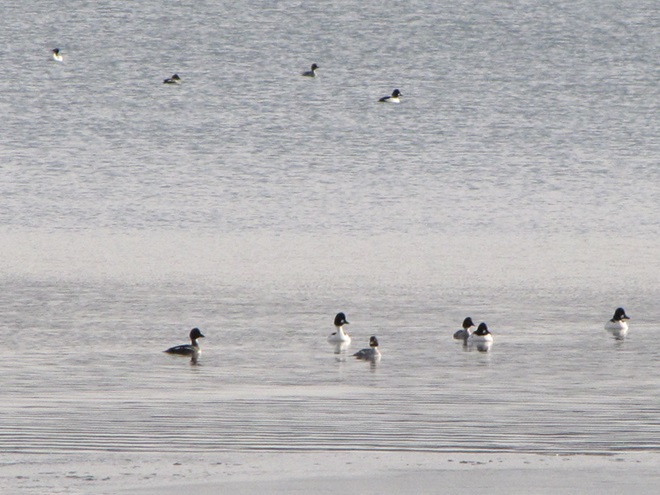
Common Goldeneyes
Common Goldeneyes on a patch of open water on an otherwise ice-covered “Lake Clarke”, the impoundment created by Safe Harbor Dam.  While they may find this spot advantageous for loafing, the food supply over the sediment-buried substrate will be limited.
By the end of the twentieth century, accumulations of polluted sediments behind lower Susquehanna dams were nearing capacity.  There is no working plan to attenuate the massive release of these pollutants that may be triggered by a catastrophic flood.  The effort to reduce nutrient and sediment runoff remains the focus so that new loading is kept to a minimum and won’t add to the capacity problems at the dams or continue downriver to the Chesapeake at full strength when the dams are full.  Alleviating the sediment aggregation problem within the river’s impoundments is a tall order and a dilemma not easily solved.  (United States Geological Survey image)
Common Mergansers
Common Mergansers will feed where benthic substrate supports the small fish and invertebrates they prefer. They will, however, gather in extraordinary numbers on the “lakes” created by riverine dams.  Though they can only feed on what floats in with the current, hundreds or sometimes thousands of Common Mergansers will concentrate on “Conowingo Pond” during the late fall or early winter.  There, safety in numbers gives them some guarantee of protection against the multitudes of eagles that simultaneously frequent the vicinity.  Another advantage of staging on “Conowingo Pond” is its close proximity to favorable feeding areas on upper Chesapeake Bay and stretches of the Susquehanna where lotic riffles and pools offer abundant opportunities below the river’s dams.
Rusty Crayfish
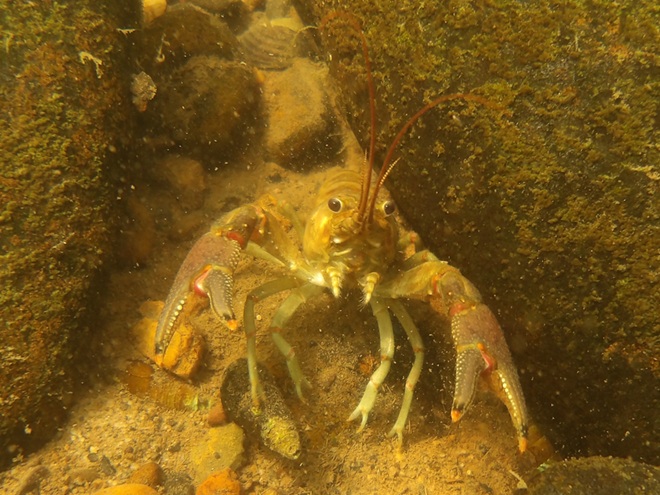
Fortunately for everything else living in the benthos, Common Mergansers are big enough to devour invasive, non-native Rusty Crayfish when they find them in our lotic waterways.

TIME TO CLEAN UP OUR ACT

WHERE DOES YOUR STORMWATER GO?
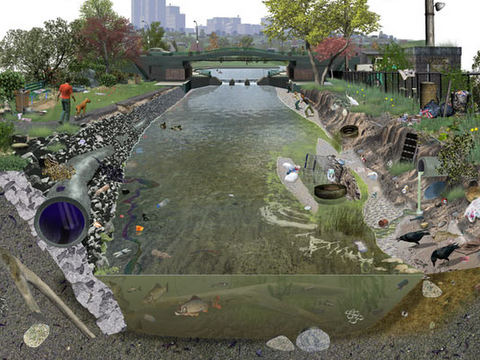
 

Channelized Urban/Suburban Streams Function as Sewers. They have no attached lowlands or floodplains to absorb, purify, and infiltrate runoff from rain events.  Pollutants including litter, pet waste, lawn chemicals, tire-wear particles, hazardous fluids, and sometimes untreated human excrement flush unchecked from the municipal storm drainage system into the waterway.  Thermal shock from summer downpours washing across sun-heated pavements can kill temperature sensitive fishes and other aquatic life.  Nutrient and sediment loads from these impaired tributaries later accumulate downstream in low-gradient segments of the Susquehanna, turning the river into an open-air cesspool.  Aggressively working to implement projects that eliminate these sources of pollution are the only effective way to keep the problem from getting worse.  Making things better requires a lot more dedication and effort.  (United States Geological Survey image by Frank Ippolito)

RIPARIAN BUFFERS MAKE A DIFFERENCE…WIDER IS BETTER
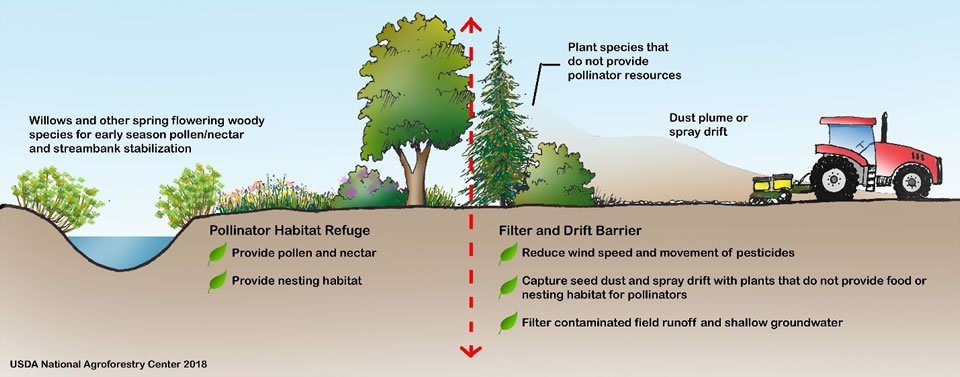
Riparian Buffer
To sequester sediment and cycle nutrients (primarily nitrogen and phosphorus) contained in farm runoff, the U.S.D.A. recommends installing riparian buffers between streams and lands used for grazing and raising crops.  To protect pollinating species including bees and butterflies from pesticide drift and eroding soils rich in fertilizers, they further recommend installing a stand of wind-pollinating plants such as conifers, oaks, and birches between the field and streamside plantings.  These same conservation practices improve water quality and wildlife habitat on waterways located in residential and commercial areas as well.  (United States Department of Agriculture image, click to enlarge)

FLOODPLAIN RESTORATION

Regardless OF HOW LONG YOU’VE BEEN CONDITIONED TO THINK OTHERWISE, THIS IS A DYSFUNCTIONAL, POLLUTED CREEK—AND IT NEEDS HELP
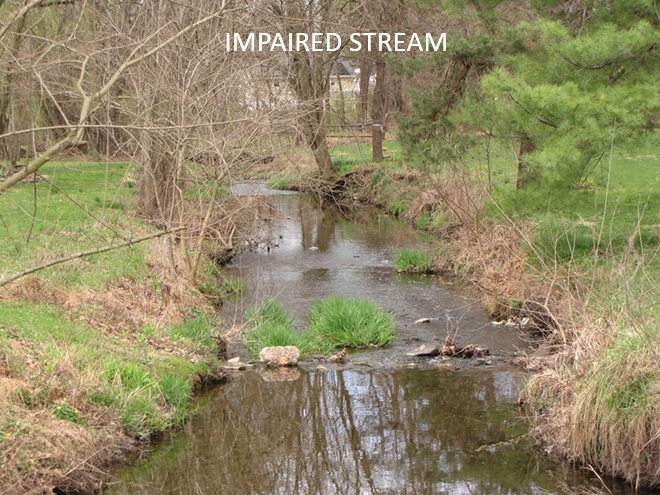
Legacy Sediments
A channelized low-gradient stream eroding a path through deposits of legacy sediments displaces flood waters into previously unaffected areas and provides a continuing source of nutrient and sediment pollution during storm events.  These impaired waters have a diminished capacity for supporting aquatic life including fishes.
RESTORED TO ITS HISTORIC FUNCTIONS
Floodplain and Stream Restoration
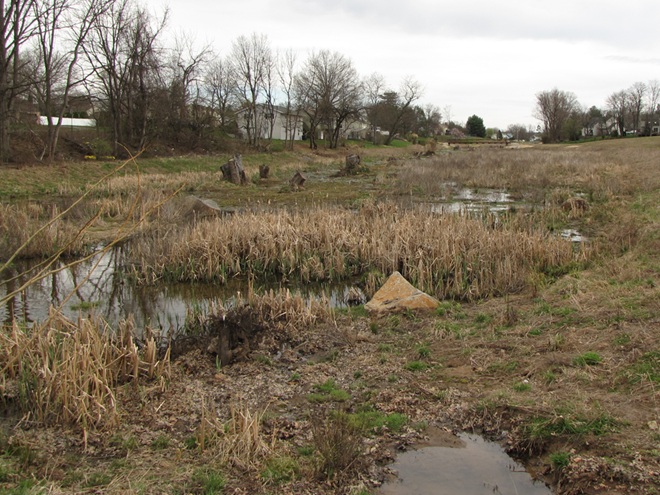
On an adjacent segment of the same creek, this legacy sediment removal project restored a braided meandering channel and connected it to its newly liberated, historic floodplain.  In just their second year, the fluvial wetlands are effectively absorbing stormwater and sequestering nutrients as an attached component of the stream’s riffle and pool complex.  During our visit earlier this week, we found American Toads, Northern Leopard Frogs (Lithobates pipiens), and Northern Spring Peepers breeding here.  It’s just as Castor canadensis would have it!

“STOP HEMMING AND HAWING AROUND ALREADY”

“HEY COWBOY, HOW ‘BOUT GETTIN’ THEM FILTHY LITTLE DOGIES OUTTA DAT CRICK?”
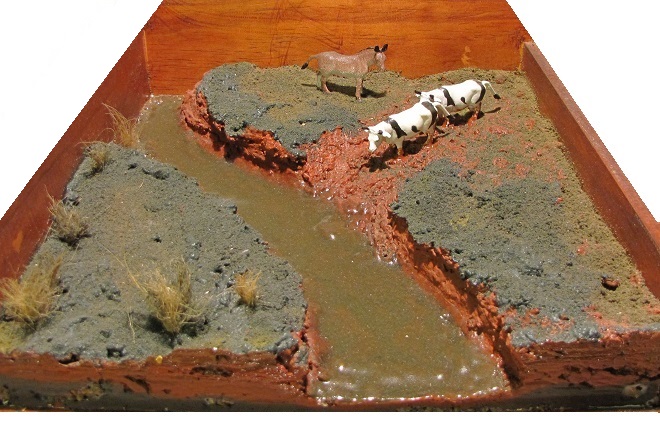
Impaired Stream
Here’s a polluted stream in a pasture with grazing livestock.  The site is a former mill pond within which the creek eroded a channel following removal of the dam.  The animals defecate and urinate where access to water is gained at a broken down embankment of the nutrient-loaded legacy sediments deposited in the pond more than a century ago.  It’s a haphazard form of animal husbandry and a reminder that all it takes is just one stubborn jackass to foul up the whole waterway.
DIRECT SOURCES OF NITROGEN (AMMONIA) POLLUTION IN STREAMS

DID YOU KNOW that a dairy cow produces about 80 pounds of waste (excrement and urine) every day?

DID YOU KNOW that a horse produces about 50 pounds of waste (excrement and urine) every day?
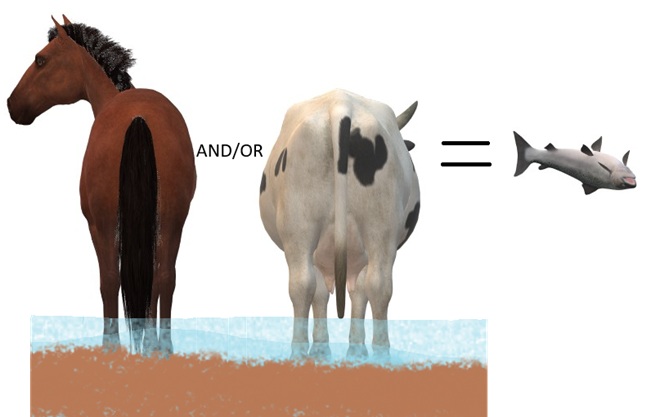
DID YOU KNOW that a human produces about 3 to 4 pounds of waste (excrement and urine) every day?  The exceptions, of course, are those who continue to insist that raising farm animals in and alongside a body of water is okey-doke—a harmless practice.  These individuals tend to retain the former constituent of human waste and are thus full of it.

“ATTABOY TEX, THAT’S MORE LIKE IT!”
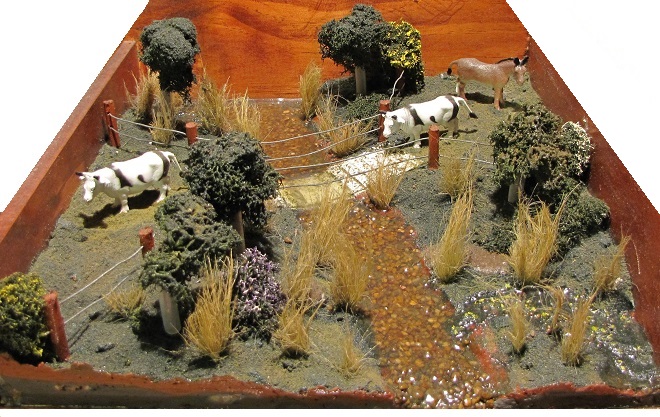
Stream Fencing and Livestock Crossing
Now that’s better.  Legacy sediments have been removed to reconnect the stream to its floodplain.  A livestock crossing and exclusion fencing has been installed, and a nutrient-consuming riparian buffer has been planted.  This creek segment’s pollution woes have been mitigated.  Do you have a neighbor needing this type of remedial work on their farm?  Have them call your local conservation district office for advice.  Some programs include financial assistance covering the costs of installation as well as monetary incentives for helping to clean up the water.

AND FINALLY

WHEN IT COMES TO BUILDING DAMS ON LOTIC FRESH WATERS…
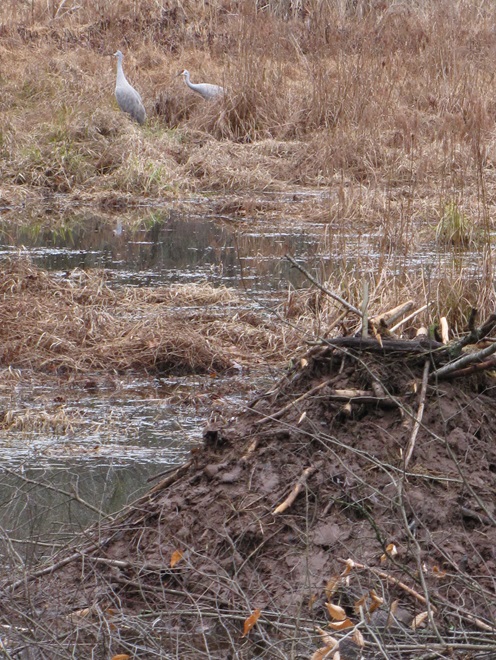
Sandhill Cranes in Beaver Pond

…LEAVE IT TO THE BEAVERS
North American Beavers
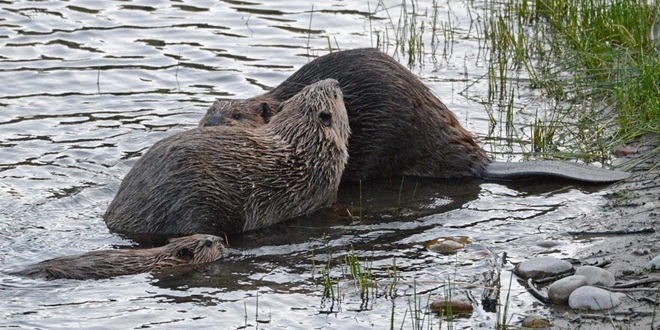
North American Beavers (Castor canadensis) create habitats that connect the riffle and pool regime of a low-gradient stream to a surrounding fluvial wetland that retains sediments, cycles nutrients, and provides essential habitat for hundreds of plant and animal species.  Floodplains are for flooding.  And if a beaver floods an area, you can be guaranteed that it was already part of a floodplain.  You see, beavers don’t encroach upon humans, it’s humans doing the encroaching upon beavers.  (National Park Service image)
MAD HATTERS

DID YOU KNOW that even before the landscape was cleared for farms and a supply of timber, and before mill dams on local creeks began accumulating soil runoff from the consequently barren hillsides, all the North American Beavers, the keystone species of lower Susquehanna stream ecology, were killed and sold to make hats?  It’s no wonder things are fubar!

COMING SOON…
Horned Grebe
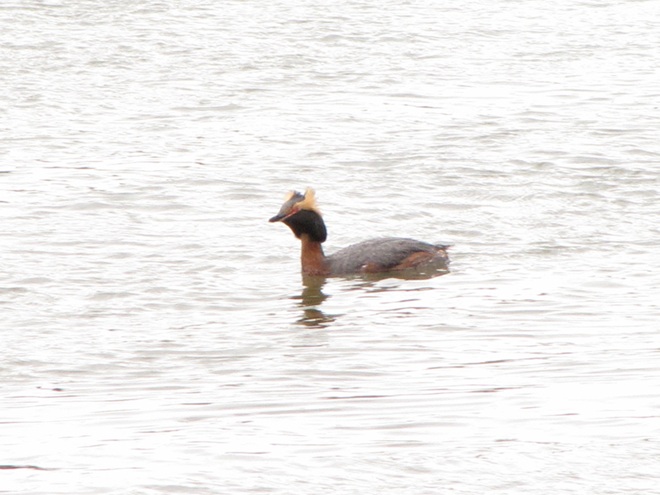
Horned Grebes are regular migrants and sometimes winter residents on ice-free stretches of the lower Susquehanna.  They spend their time plying the benthic substrate of the river’s clear riffles and pools for a variety of invertebrates and small fish.  Look for them moving north in coming days sporting this beautiful breeding plumage.
Common Loon
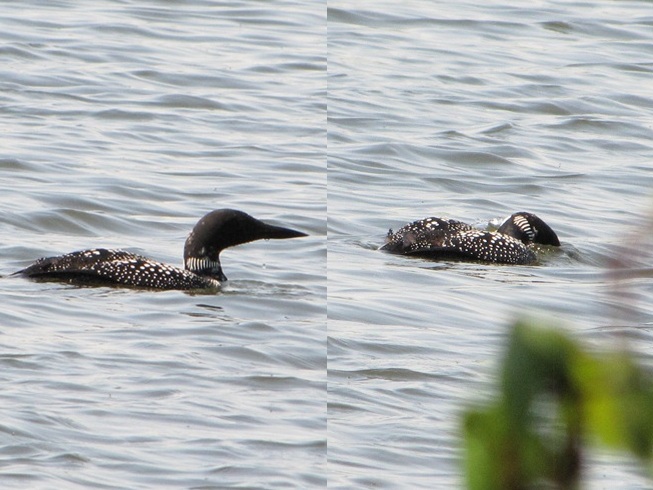
April and early May are prime time for observing Common Loons on the Susquehanna as they undertake a journey from the Atlantic surf where they spent the winter to nesting sites on northern lakes.  For this migrant in breeding plumage, clear water for sighting plenty of benthic life in the river’s riffles and pools assures a successful dive in search of energy-replenishing forage.

A Ross’s Goose the Easy Way

The Ross’s Goose (Anser rossii) is a rare but regular transient in the Lower Susquehanna River Watershed.  This species nests in the arctic tundra of northernmost central Canada and winters in the valleys of California and in parts of Texas, Louisiana, and Arkansas, primarily near the northwestern rim of the Gulf of Mexico.  A population also spends the colder months in western Texas, New Mexico, and an adjacent portion of north-central Mexico.  The Ross’s Goose looks like a tiny version of a Snow Goose and is most often detected among flocks of these latter birds during their late winter visits to our area.  Finding a single Ross’s Goose among thousands of Snow Geese can oft times be an insurmountable challenge, so it’s nice when one decides to drop by in a crowd within which it is much more discernible.

Snow Geese and Canada Geese
A couple of Snow Geese along with Canada Geese and other waterfowl seen this afternoon from the Willow Point overlook at Middle Creek Wildlife Management Area.
Ross's Goose with Canada Geese
A petite little Ross’s Goose seen late this afternoon among several hundred Canada Geese north of Willow Point.
Ross's Goose and Canada Geese
The Ross’s Goose was last seen walking across the ice to the distant northern shoreline of the lake where it and the Canada Geese were later flushed skyward by several Bald Eagles.

In case you were wondering—yes, despite the ice on Middle Creek’s lake, the Sandhill Cranes are still being seen in the vicinity of Willow Point.

Sandhill Cranes
Sandhill Cranes returning from a short foray into the grasslands north of the lake at Middle Creek Wildlife Management Area.
Sandhill Cranes
On approach to the flats north of Willow Point.
Sandhill Cranes
Coming in for a landing.
Sandhill Cranes
Touchdown!

Seven Reasons to Visit Middle Creek’s Willow Point Right Now

Here are 7 reasons why you, during the coming week or so, should consider spending some time at Willow Point overlooking the lake at the Pennsylvania Game Commission’s Middle Creek Wildlife Management Area.

REASON NUMBER ONE— Wildlife is at close quarters along the trail leading from the parking lot to Willow Point…

Eastern Gray Squirrel
Eastern Gray Squirrels are common and easily seen along the edge of the woods.
Eastern Bluebirds
Eastern Bluebirds are investigating nest boxes and may presently be using them as communal roost sites during cold, windy nights.
Hermit Thrush
A Hermit Thrush was just one of the songbirds we found foraging along the edge of Willow Point Trail.
Yellow-bellied Sapsucker
Look carefully and you may see one or more species of woodpeckers in the mature trees.  We found this Yellow-bellied Sapsucker in a maple near the trail’s terminus at the Willow Point viewing area.

REASON NUMBER TWO— A variety of waterfowl species are lingering on ice-free sections of the lake surrounding Willow Point…

Tundra Swans and Canada Geese
Noisy flocks of Tundra Swans and Canada Geese on open water at Willow Point.
American Black Ducks
American Black Ducks on a fly by.
Mallards
Mallard drakes near the point.
Green-winged Teal
A small flock of Green-winged Teal feeding among the Mallards.
Northern Shovelers
A flock of Northern Shovelers has been frequenting the shallows along the south side of Willow Point for at least two weeks.
Common Mergansers
Common Mergansers diving for benthic fare.

REASON NUMBER THREE— Bald Eagles are conspicuous, easily seen and heard…

Bald Eagles
Bald Eagles on tree stumps in the lake.
Bald Eagle
A hatch-year/juvenile Bald Eagle on a glide over Willow Point.

REASON NUMBER FOUR— Northern Harriers have been making close passes over Willow Point as they patrol Middle Creek’s grasslands while hunting voles…

Northern Harrier
A female Northern Harrier over Willow Point.
Northern Harrier
A hatch-year/juvenile Northern Harrier gazing over a field of goldenrod adjacent to Willow Point.
Northern Harrier
Hatch-year/juvenile Northern Harrier patrolling a field of goldenrod and preparing to pounce.
Northern Harrier
A Northern Harrier buoyantly flying past Willow Point just prior to sunset.

REASON NUMBER FIVE— The annual observance of the White-tailed Deity holidays may be drawing to a close for the gasoline and gunpowder gang, but for the supreme ungulates, the rituals that lead to consummation of their unions are still ongoing…

White-tailed Deity
Mystical White-tailed Deities hiding in plain sight near Willow Point.
White-tailed Deity
Having so far survived the ceremonies of sacrifice practiced by worshipers clad in vibrant orange attire, these divine idols agree to a more civilized ritual, a gentlemanly duel.

White-tailed Deity

White-tailed Deity

White-tailed Deity

White-tailed Deity

White-tailed Deity

White-tailed Deity
…then it’s off to find the fair maidens.

REASON NUMBER SIX— Sandhill Cranes are still being seen from Willow Point…

Sandhill Cranes
Sandhill Cranes have been spending time on dry portions of the lake bed and in grasslands and croplands to the north.

Sandhill Cranes

Sandhill Cranes

Sandhill Cranes
These Sandhill Cranes could depart from Middle Creek’s refuge at any time, particularly if the deep freeze returns to make feeding more difficult.  You’ll want to visit soon if you want to see them.

REASON NUMBER SEVEN— The crowds that will accompany the arrival of thousands of Snow Geese in early 2025 can make visiting Willow Point a stressful experience.  Visit now to see these birds and mammals at Willow Point and you might just have the place all to yourself.  Then you can spend your time looking through the flocks of waterfowl and other birds for unusual new arrivals instead of wading through a sea of humanity.

White-crowned Sparrows
White-crowned Sparrows at Middle Creek Wildlife Management Area’s Willow Point.

Photo of the Day

Sandhill Cranes
Sandhill Cranes sometimes stray east from their primary autumn migration routes that take them from marshland breeding grounds in the western Great Lakes and central Canada to wintering areas in and near Florida.  These birds, 4 of 19 seen at Middle Creek Wildlife Management Area over the weekend, may have been blown into the lower Susquehanna valley last week by the strong northwest winds that brought sub-freezing temperatures to the eastern states and lake-effect snows to counties bordering Lake Erie and Lake Ontario.  Migrating Sandhill Cranes can fly at altitudes that make them imperceptible to us on the ground, and can easily get redirected by atmospheric jets with speeds of 60 miles per hour or more.  Then again, limited numbers of Sandhill Cranes have, in recent years, been expanding their nesting range east into bogs and other wetlands at scattered locations in northern Pennsylvania, New York, New England, and eastern Canada.  Ice and snow cover could have prompted some of these birds to finally move south to pay us a visit.  Incidentally, a separate flock of 38 Sandhill Cranes were seen over the weekend just south of the Susquehanna watershed on backwaters of upper Chesapeake Bay at Gunpowder Falls State Park in Harford County, Maryland.  These cranes have been present since at least November 25th and may, like birds in previous years, spend the winter.

Want Healthy Floodplains and Streams? Want Clean Water? Then Make Room for the Beaver

I’m worried about the beaver.  Here’s why.

Imagine a network of brooks and rivulets meandering through a mosaic of shrubby, sometimes boggy, marshland, purifying water and absorbing high volumes of flow during storm events.  This was a typical low-gradient stream in the valleys of the Lower Susquehanna River Watershed in the days prior to the arrival of the waves of trans-Atlantic human migrants that started to inundate the area during the seventeenth century.  Then, a frenzy of trapping, tree chopping, mill building, and stream channelization accompanied the east to west surge of settlement across the region.  The first casualty: the indispensable lowlands manager, the North American Beaver (Castor canadensis).

Beaver Traps
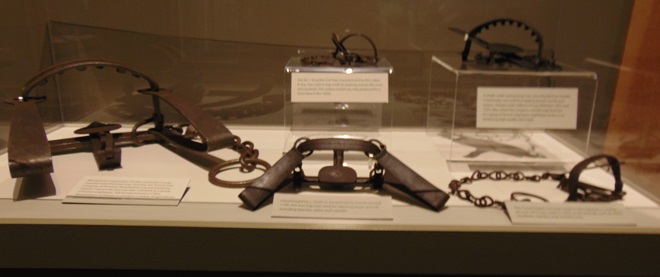
Nineteenth-century beaver traps on display in the collection of the State Museum of Pennsylvania in Harrisburg.  Soon after their arrival, trans-Atlantic migrants (Europeans) established trade ties to the “trans-Beringia”/”Pacific-rim” migrants (“Indians”) already living in the lower Susquehanna valley and recruited them to cull the then-abundant North American Beavers.  By the early 1700s, beaver populations (as well as numbers of other “game” animals) were seriously depleted, prompting the Conoy, the last of the Indian peoples to reside on the lower Susquehanna, to disperse to the north.  The traps pictured here are samples of the types which were subsequently used by the European settlers to eventually extirpate the North American Beaver from the Lower Susquehanna River Watershed during the 1800s.

Without the widespread presence of beavers, stream ecology quickly collapsed.  Pristine waterways were all at once gone, as were many of their floral and faunal inhabitants.  It was a streams-to-sewers saga completed in just one generation.  So, if we really want to restore our creeks and rivers, maybe we need to give the North American Beaver some space and respect.  After all, we as a species have yet to build an environmentally friendly dam and have yet to fully restore a wetland to its natural state.  The beaver is nature’s irreplaceable silt deposition engineer and could be called the 007 of wetland construction—doomed upon discovery, it must do its work without being noticed, but nobody does it better.

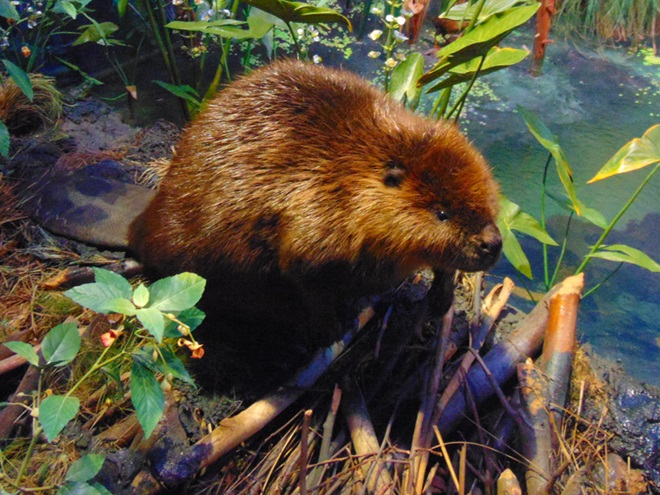
North American Beaver diorama on display in the State Museum of Pennsylvania in Harrisburg.
North American Beaver diorama on display in the State Museum of Pennsylvania in Harrisburg.  Beavers were reintroduced to the Susquehanna watershed during the second half of the twentieth century.
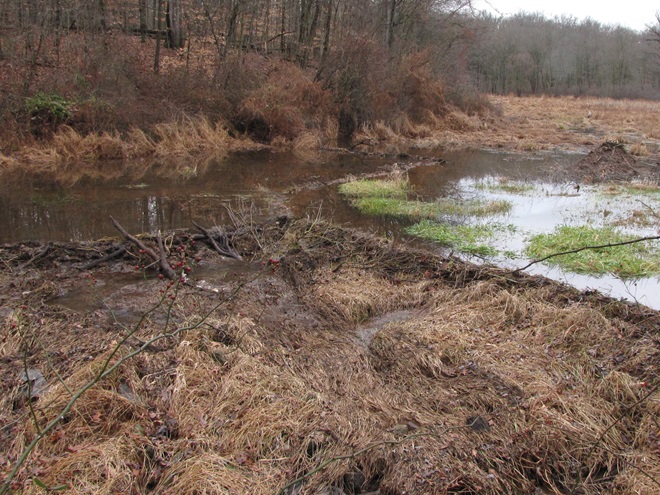
A beaver dam on a small stream in the Lower Susquehanna River Watershed.
A beaver dam and pond on a small stream in the Lower Susquehanna River Watershed.
Floodplain Wetlands Managed by North American Beavers
Beaver dams not only create ponds, they also maintain shallow water levels in adjacent areas of the floodplain creating highly-functional wetlands that grow the native plants used by the beaver for food.  These ecosystems absorb nutrients and sediments.  Prior to the arrival of humans, they created some of the only openings in the vast forests and maintained essential habitat for hundreds of species of plants as well as animals including fish, amphibians, reptiles, and birds.  Without the beaver, many of these species could not, and in their absence did not, exist here.
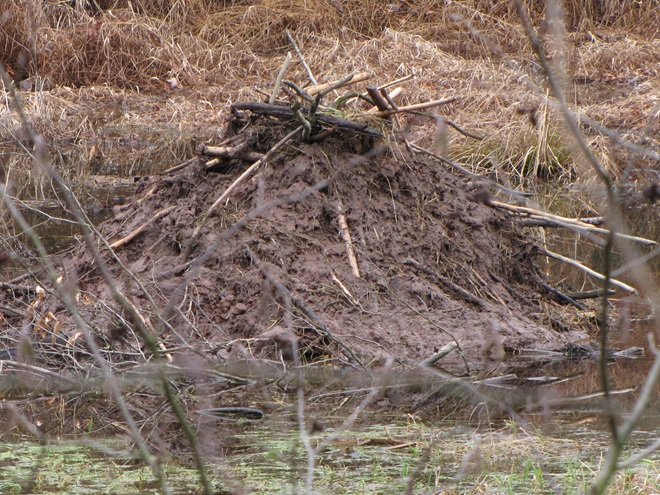
The beaver lodge provides shelter from the elements and predators for a family of North American Beavers.
Their newly constructed lodge provides shelter from the elements and from predators for a family of North American Beavers.
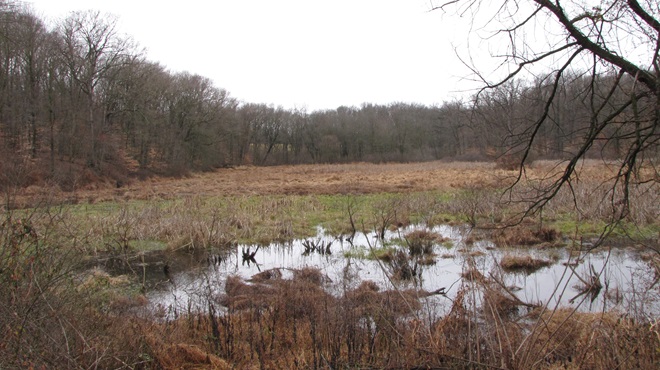
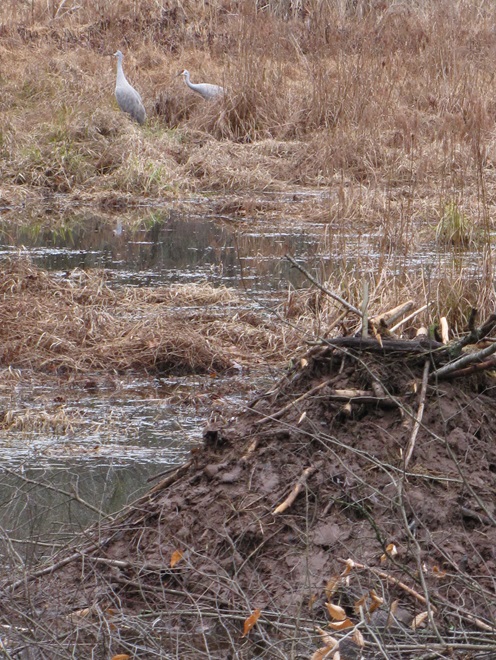
Sandhill Cranes Visit a Beaver-managed Floodplain in the lower Susquehanna valley
Floodplains managed by North American Beavers can provide opportunities for the recovery of the uncommon, rare, and extirpated species that once inhabited the network of streamside wetlands that stretched for hundreds of miles along the waterways of the Lower Susquehanna River Watershed.
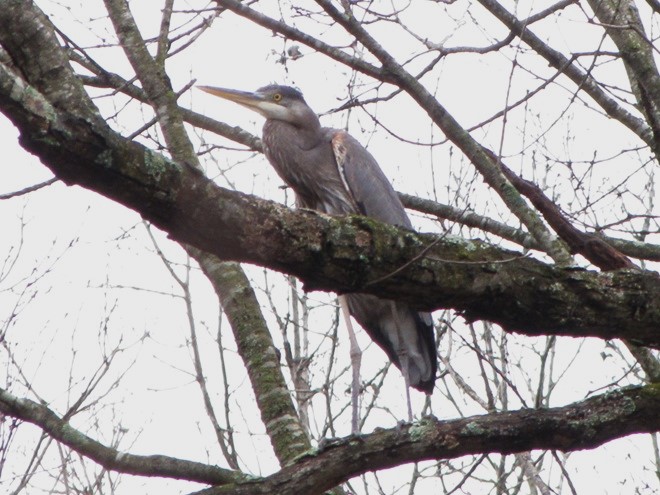
Great Blue Heron
A wintering Great Blue Heron is attracted to a beaver pond by the abundance of fish in the rivulets that meander through its attached wetlands.
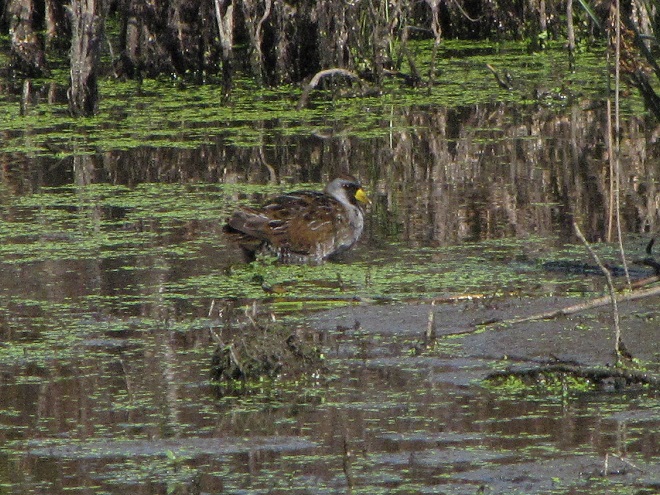
Sora Rail in Beaver Pond
Beaver Ponds and their attached wetlands provide nesting habitat for uncommon birds like this Sora rail.
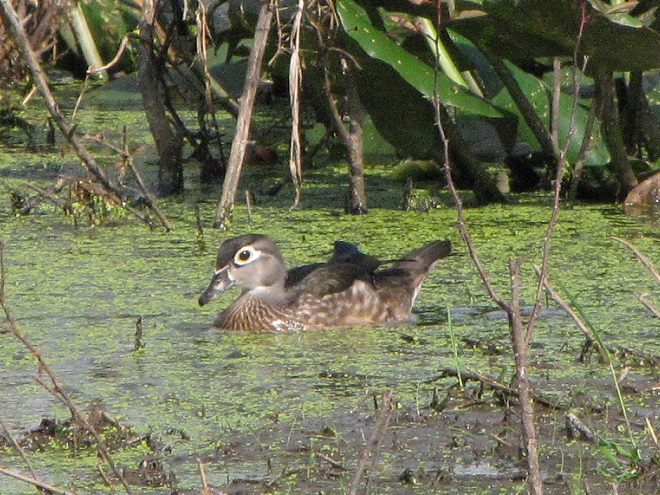
Wood Duck feeding on Lesser Duckweed in Beaver Pond
Lesser Duckweed grows in abundance in beaver ponds and Wood Ducks are particularly fond of it during their nesting cycle.
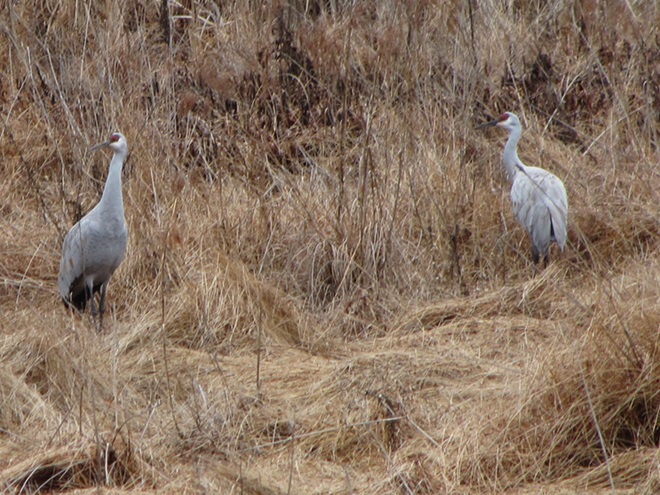
Sandhill Cranes feeding among Woolgrass in a Beaver Pond
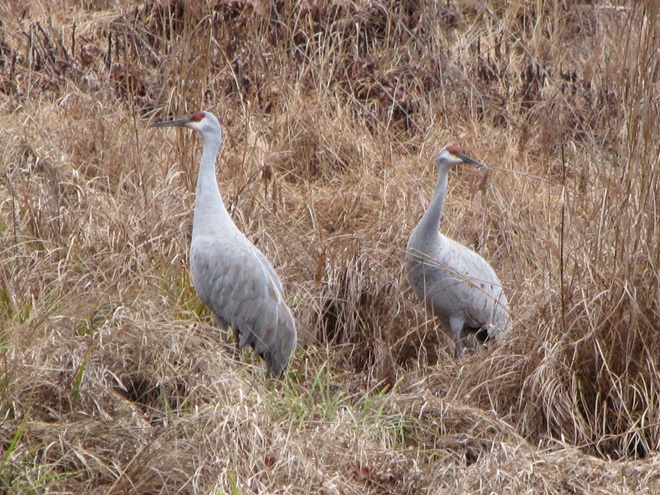
Beaver dams maintain areas of wet soil along the margins of the pond where plants like Woolgrass sequester nutrients and contain runoff while providing habitat for animals ranging in size from tiny insects to these rare visitors, a pair of Sandhill Cranes (Antigone canadensis).
Sandhill Cranes feeding among Woolgrass in a floodplain maintained by North American Beavers.

Few landowners are receptive to the arrival of North American Beavers as guests or neighbors.  This is indeed unfortunate.  Upon discovery, beavers, like wolves, coyotes, sharks, spiders, snakes, and so many other animals, evoke an irrational negative response from the majority of people.  This too is quite unfortunate, and foolish.

North American Beavers spend their lives and construct their dams, ponds, and lodges exclusively within floodplains—lands that are going to flood.  Their existence should create no conflict with the day to day business of human beings.  But humans can’t resist encroachment into beaver territory.  Because they lack any basic understanding of floodplain function, people look at these indispensable lowlands as something that must be eliminated in the name of progress.  They’ll fill them with soil, stone, rock, asphalt, concrete, and all kinds of debris.  You name it, they’ll dump it.  It’s an ill-fated effort to eliminate these vital areas and the high waters that occasionally inundate them.  Having the audacity to believe that the threat of flooding has been mitigated, buildings and poorly engineered roads and bridges are constructed in these “reclaimed lands”.  Much of the Lower Susquehanna River Watershed has now been subjected to over three hundred years-worth of these “improvements” within spaces that are and will remain—floodplains.  Face it folks, they’re going to flood, no matter what we do to try to stop it.  And as a matter of fact, the more junk we put into them, the more we displace flood waters into areas that otherwise would not have been impacted!  It’s absolute madness.

By now we should know that floodplains are going to flood.  And by now we should know that the impacts of flooding are costly where poor municipal planning and negligent civil engineering have been the norm for decades and decades.  So aren’t we tired of hearing the endless squawking that goes on every time we get more than an inch of rain?  Imagine the difference it would make if we backed out and turned over just one quarter or, better yet, one half of the mileage along streams in the Lower Susquehanna River Watershed to North American Beavers.  No more mowing, plowing, grazing, dumping, paving, spraying, or building—just leave it to the beavers.  Think of the improvements they would make to floodplain function, water quality, and much-needed wildlife habitat.  Could you do it?  Could you overcome the typical emotional response to beavers arriving on your property and instead of issuing a death warrant, welcome them as the talented engineers they are?  I’ll bet you could.