Do Chipmunks Really Eat All That Food They Stash Away in the Fall?
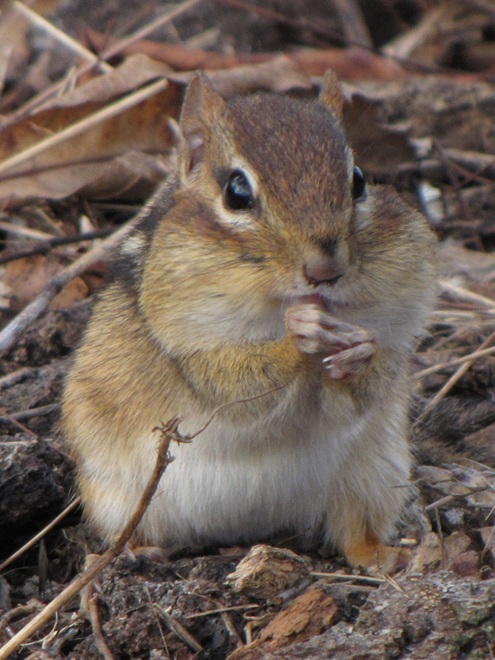
Eastern Chipmunks are familiar mammals of our deciduous forests and wooded neighborhoods. They are surprisingly solitary and territorial, defending their well-concealed underground excavations vigorously to protect them from would-be intruders—including other chipmunks. Their individual effort to stockpile a cache of seeds, nuts, and other non-perishable foods during the autumn will largely determine whether or not they survive winter’s worst.
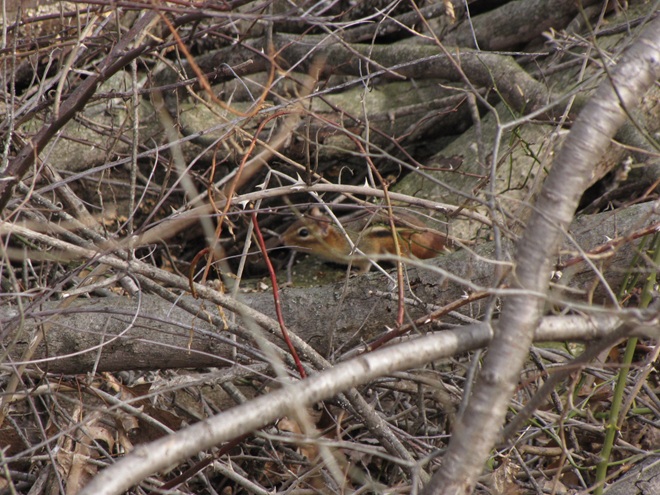
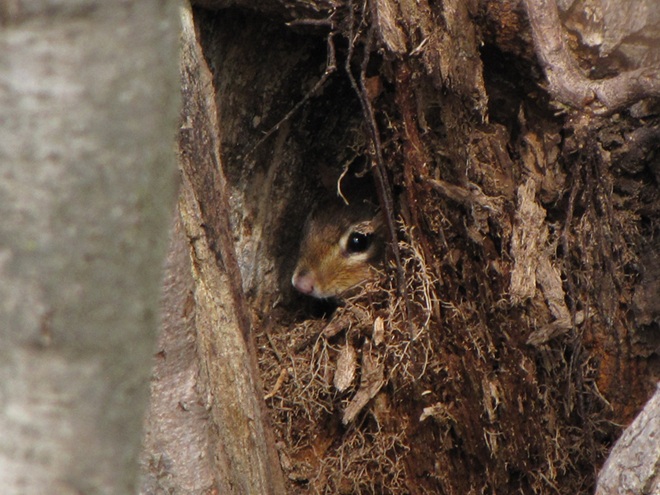
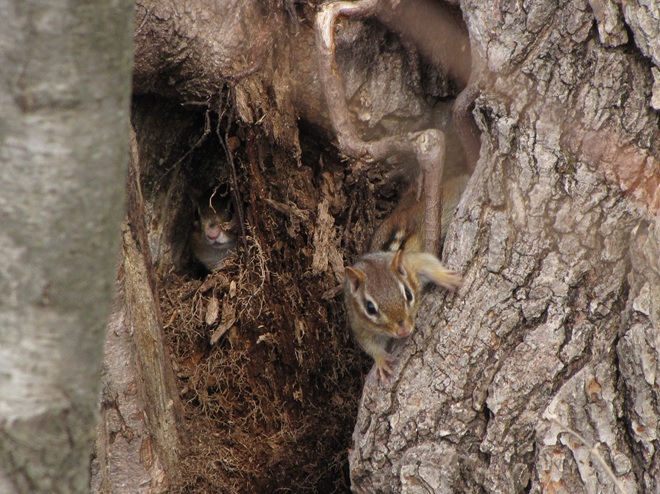
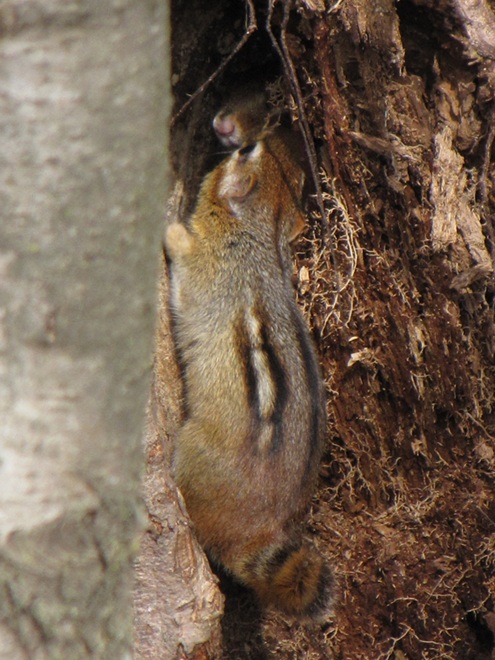
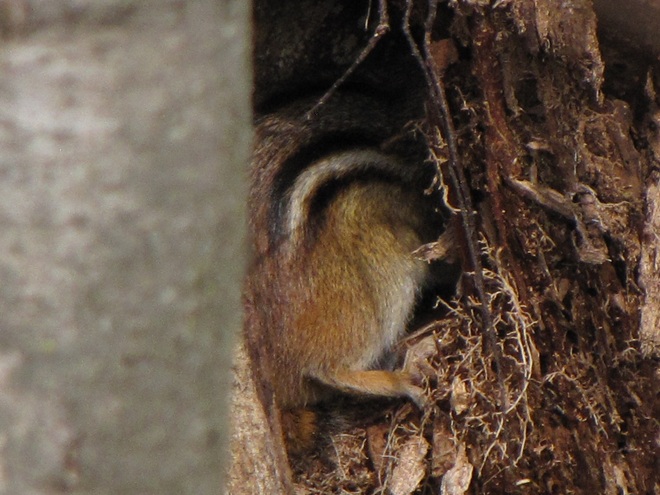
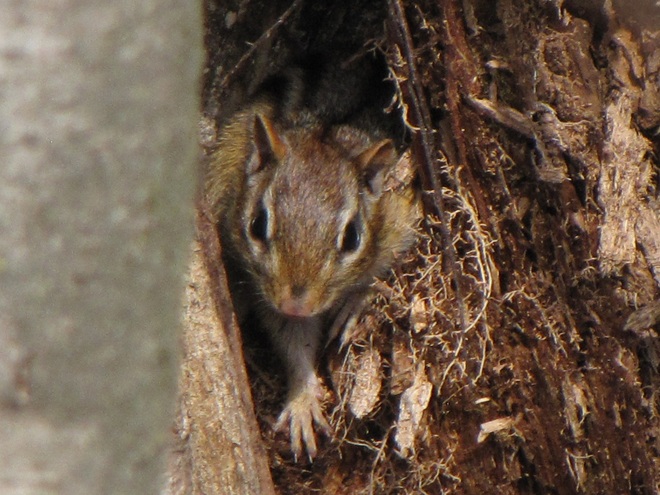
Everyone knows that Eastern Chipmunks spend much of the fall storing provisions for consumption as snacks during breaks in their winter slumbers, but did you realize that those chipmunks with the best inventory will have a pronounced advantage over less successful neighbors come late winter and spring?Upon exiting their subterranean shelters earlier this week, Eastern Chipmunks commenced the courting ritual which includes males like this one chasing other males away from both their dens……and prospective mates like this female trying to escape notice by hiding in a hollow stump.Being well-nourished throughout the winter has adequately prepared this male (right) for the strenuous activity of securing both his territory and his mate against other males.Once certain that their will be no interruptions, the male approaches the timid female. Finding him fit and acceptable,……she becomes receptive to his advances. A well-fed pair of chipmunks can complete courtship and mating within hours of emerging from their winter abodes.Following copulation, the male exits the female’s hideout. The two part ways and after about 31 days the female will give birth to up to six young. She will rely, at least in part, upon her inventory of stored food to get her through her pregnancy and the nursing of the offspring. The more success she had last fall while collecting edibles, the more success she’ll have getting an early start on the spring breeding season, a time of year when venturing out to forage can be marginally productive and especially risky for a small diurnal rodent. Later, while wild foods are plentiful during the summer, many Eastern Chipmunks will mate again and the female will raise a second brood. Then, as summer comes to an end, its time to start taking advantage of the abundance to replenish the winter pantry all over again.