
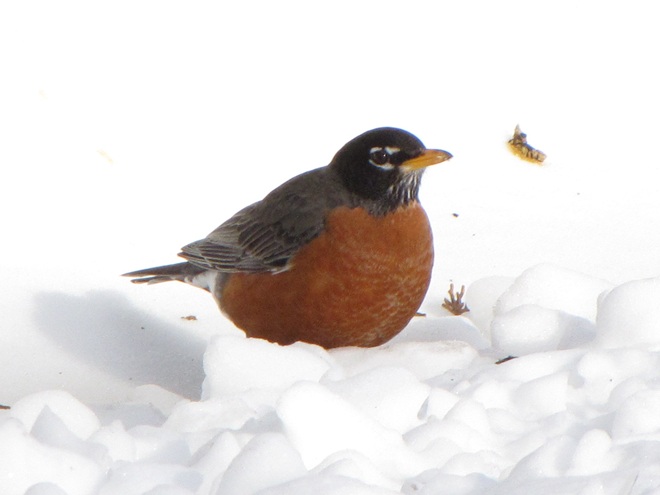
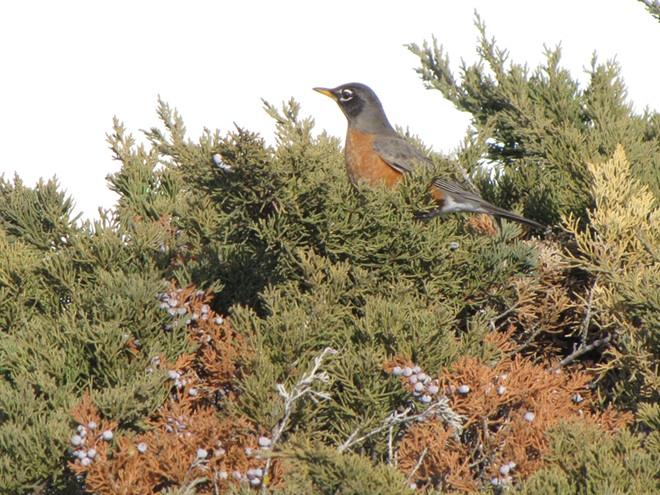
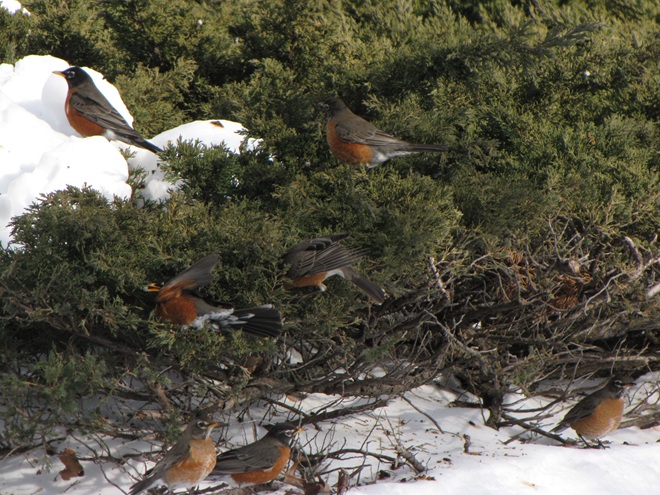
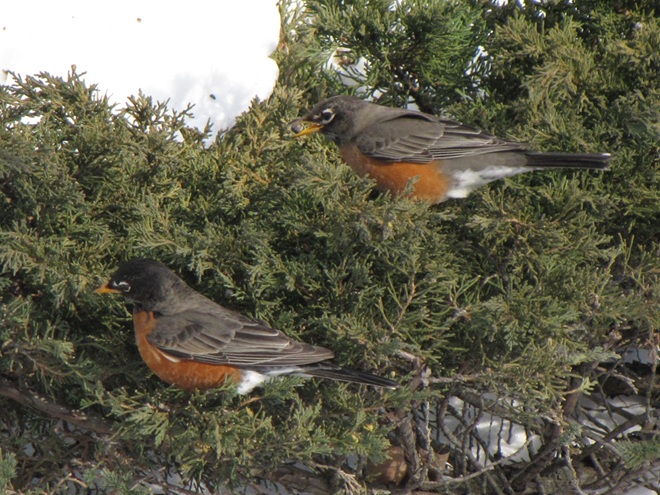
For overwintering birds and other animals, finding enough food is especially difficult when there’s snow on the ground. And nighttime temperatures in the single digits make critical the need to replenish energy during the daylight hours. Earlier this afternoon, we found these American Robins seizing the berry-like cones from ornamental junipers in a grocery store parking lot. It was an urgent effort in their struggle for survival.
County conservation district offices will soon be taking orders for their spring tree sales. Be sure to load up on plenty of the species that offer food, cover, and nesting sites for birds and other wildlife. These sales are an economical way of adding dense-growing clusters or temperature-moderating groves of evergreens to your landscape. Plus, selecting four or five shrubs for every tree you plant can help establish a shelter-providing understory or hedgerow on your refuge. Nearly all of the varieties included in these sales produce some form of wildlife food, whether it be seeds, nuts, cones, berries, or nectar. Many are host plants for butterflies too. Acquiring plants from your county conservation district is a great opportunity to reduce the amount of ground you’re mowing and thus exposing to runoff and erosion as well!