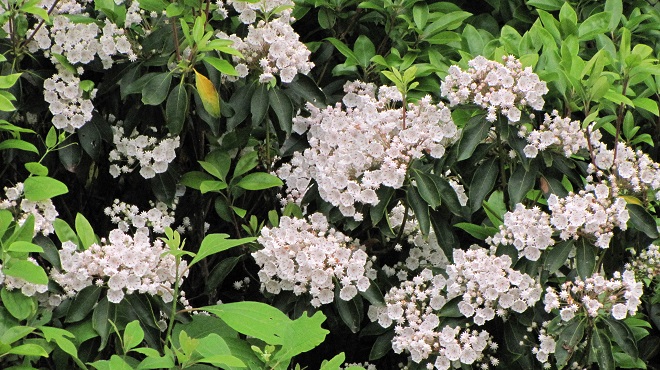
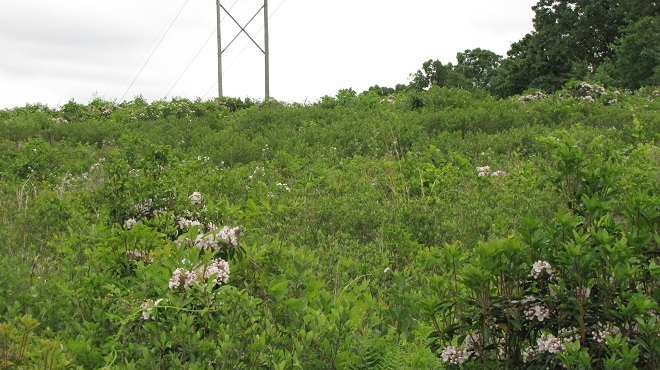
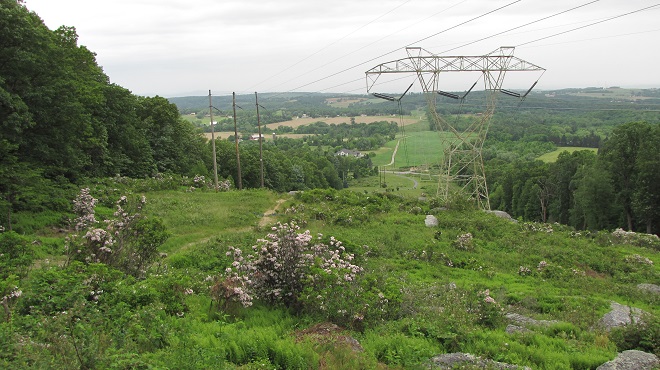
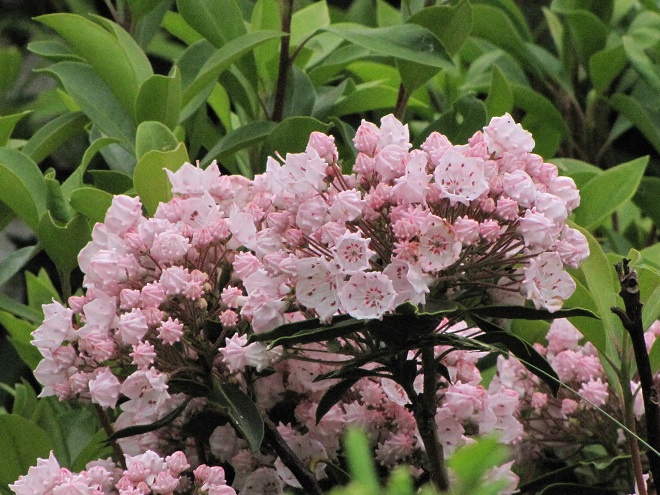
Mountain Laurel (Kalmia latifolia), designated as Pennsylvania’s state flower, is a native evergreen shrub of forests situated on dry rocky slopes with acidic soils. As the common name implies, we think of it mostly as a plant of the mountainous regions—those areas of the Susquehanna watershed north of Harrisburg. It is indeed symbolic of Appalachian forests. But Mountain Laurel can also be found to the south of the capital city in forested highlands of the Piedmont. There, currently, it happens to be in full bloom. Let’s put on a pair of sturdy shoes and take a walk in the Hellam Hills of eastern York County at Rocky Ridge County Park to have a look.
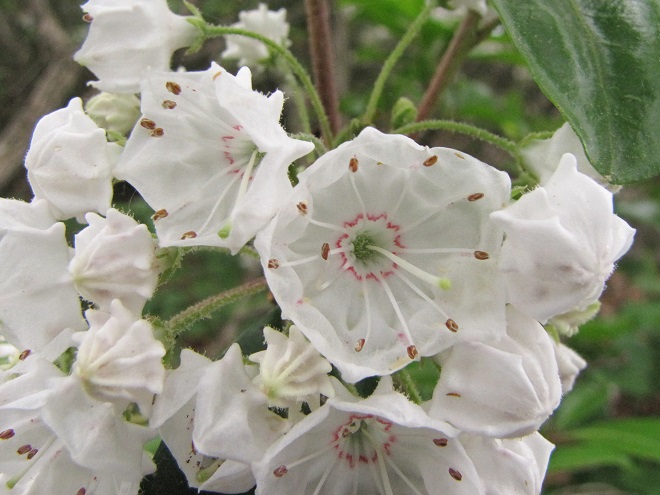
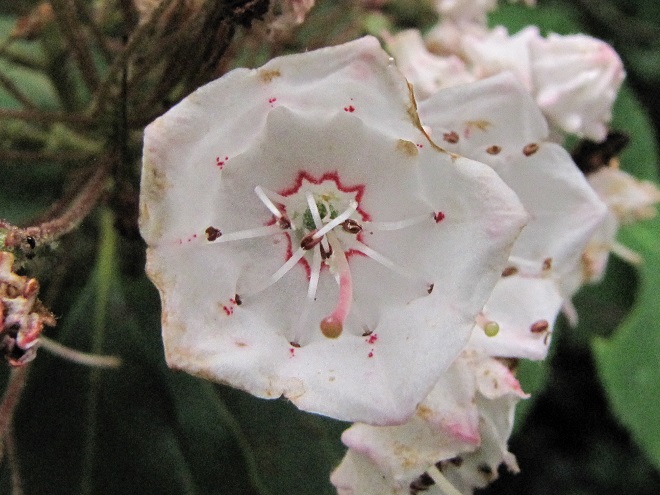
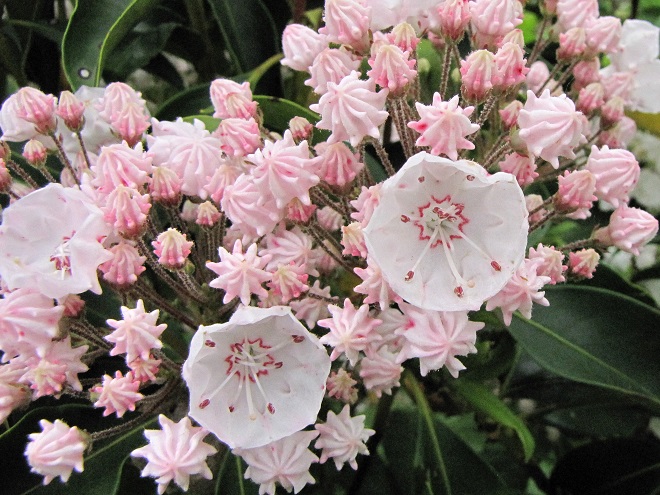
The showy flower clusters of blooming Mountain Laurel are conspicuous throughout Rocky Ridge County Park right now.Mountain Laurel flowering in the utility right-of-way south of the main parking area at Rocky Ridge……and to the north of the parking area at the hawk-watch platform.Strolling a forest trail, particularly west of the utility right-of-way, can take you on a path through a thicket of flowering Mountain Laurel.The majority of Mountain Laurels one might encounter will sport white flowers.Others vary, exhibiting shades of spectacular pink.Look closely and you’ll see flowers with curled filaments on some of the stamens. When a bee or other insect makes contact, they spring into an extended position to assure pollen transfer to the visiting pollinator.Absolutely spectacular.
Rain or shine, do get out and have a look at the blooming Mountain Laurel.
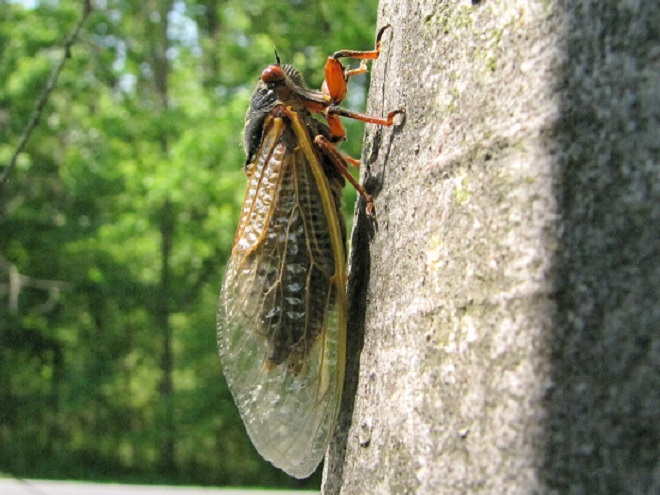
The Magi have arrived. Emanating from the shadows of a nearby forest, you may hear the endless drone of what sounds like an extraterrestrial craft. Then you get your first look at those beady red eyes set against a full suit of black armor—out of this world. The Magicicada are here at last.
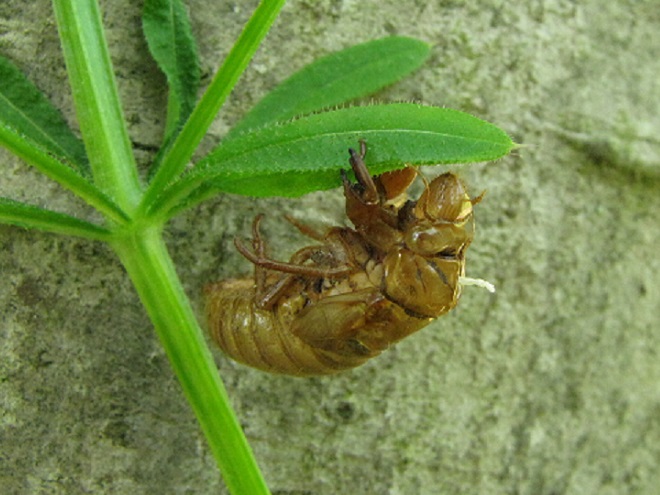
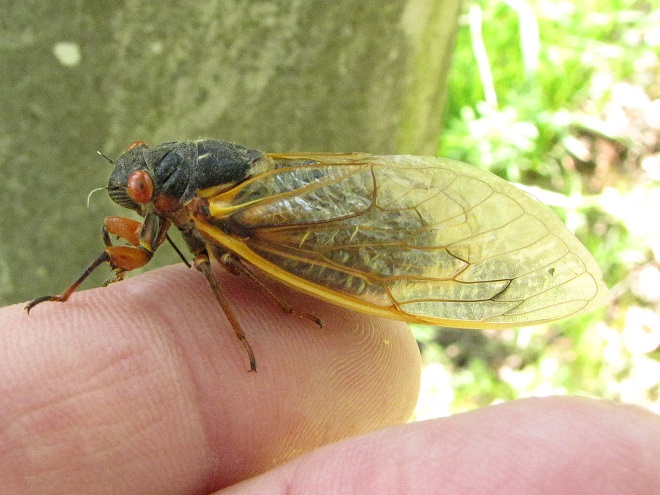
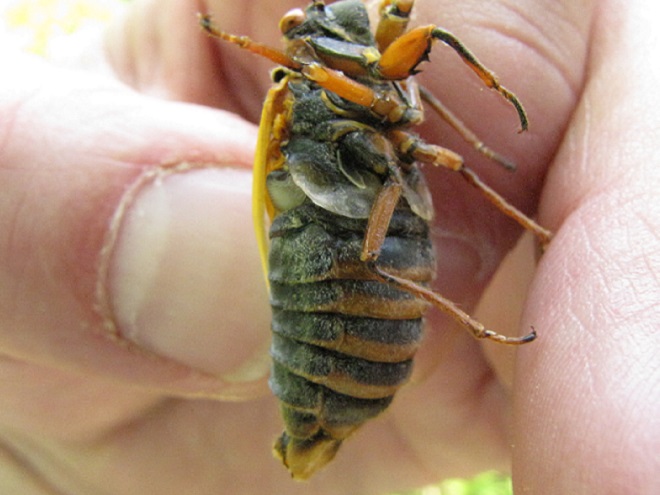
This exuvia, the leftover from a cicada’s final molt, tells us they are here.A Brood X Periodical Cicada soon after emergence and final molt.Not to worry, cicadas are harmless and docile when handled. This is Magicicada septendecim, the largest and most common of our three species of Brood X seventeen-year cicadas. They are currently emerging along south-facing borders of forests and wooded parks and lawns.Magicicada septendecim can be recognized by the orange on the thorax behind each eye and in front of the wing insertions. The smaller M. cassini and M. septendecula have no orange coloration between the eye and wing.Magicicada septendecim (seen here) has broad orange stripes on the abdomen. M. cassini has an all black abdomen and M. septendecula, the rarest species, has narrow well-defined orange stripes.
If you go out and about to observe periodical cicadas, keep an eye open for these species too…
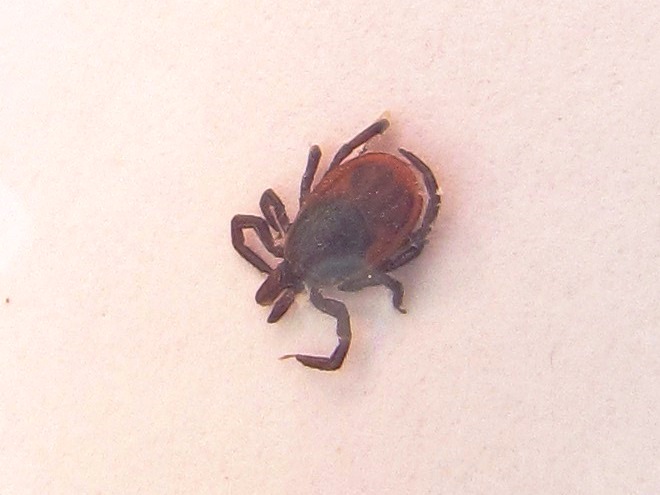
Spotted Lanternflies, one of our most dreaded invasive species, have hatched. These tiny nymphs about 5 millimetres in length were found feeding on a Virginia Creeper (Parthenocissus quinquefolia), a native vine in the grape family (Vitaceae).Deer Ticks, also known as Black-legged Ticks, are hanging around on vegetation of all kinds looking to hitch a ride on a suitable host. Don’t let it be you. This adult female, less than 5 millimetres in length, was washed loose during an after-hike shower.
Some consider them things of beauty. Others reckon them hideous—better kept out of sight and out of mind. They’re moles, and here’s how they’re removed in just five minutes.
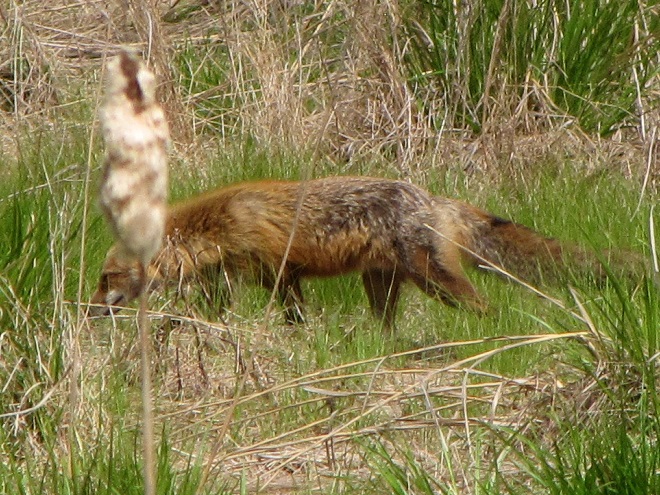
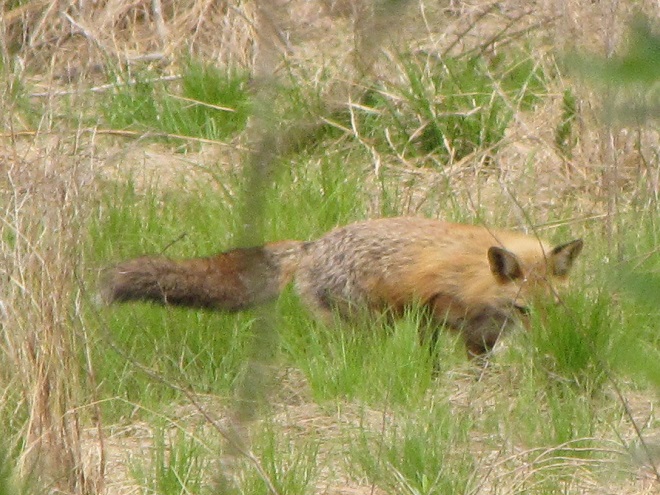
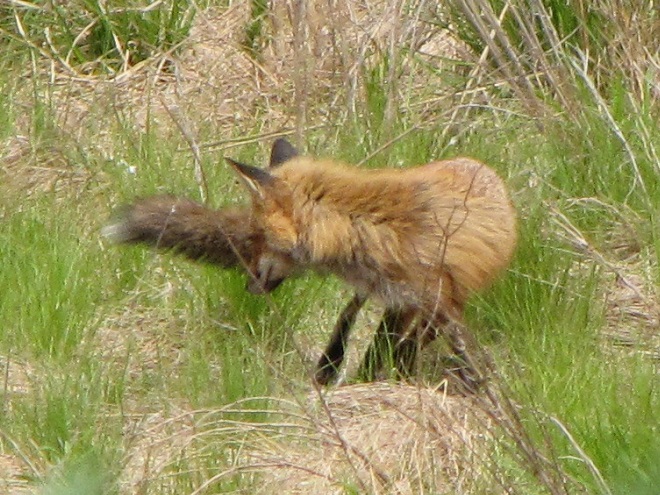
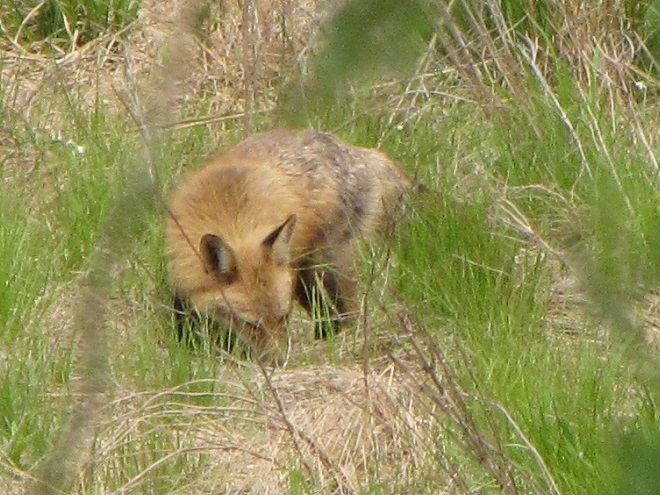
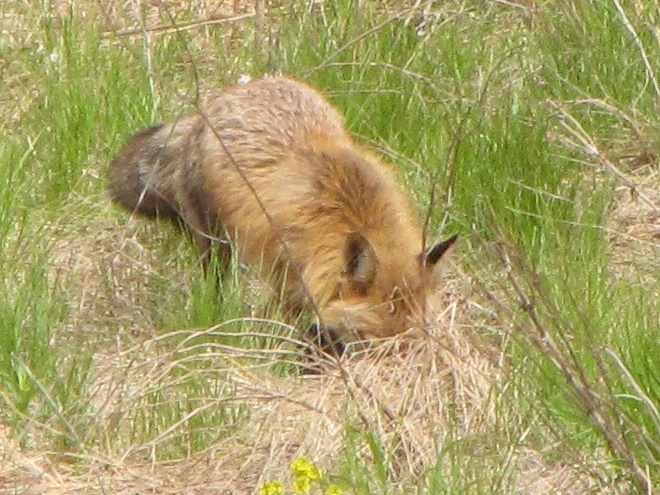
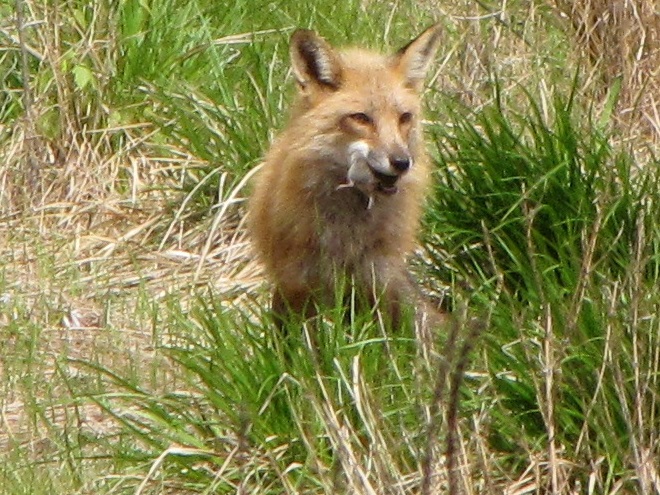
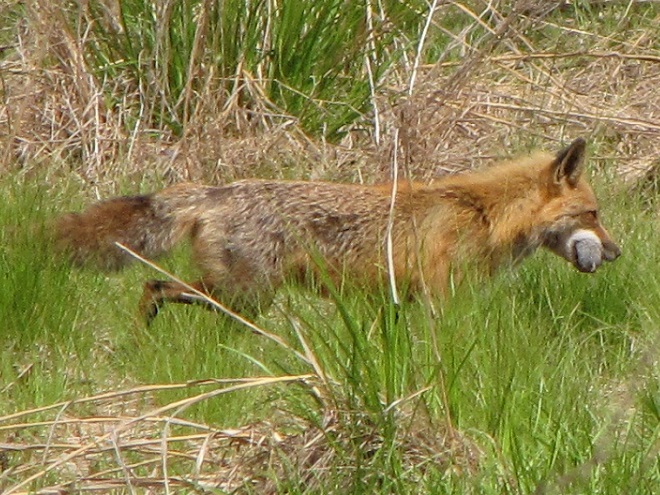
Let’s begin……First Minute……Second Minute……Third Minute……Fourth Minute……Fifth Minute…Red Fox (Vulpes vulpes) with an Eastern Mole (Scalopus aquaticus).
Back in the spring of 2004, members of the Tri-County Conewago Creek Association (T.C.C.C.A.), a non-profit conservation group founded to improve water quality in Conewago Creek and its tributaries in Dauphin, Lancaster, and Lebanon Counties in Pennsylvania, were, in order to better understand the status of the flora and fauna in the watershed, frequently spending their weekends surveying the animal and plant life found in the drainage basin’s forests, streams, and farmlands. This effort identified populations of several species of concern and helped supplement the more formal assessment that was used to determine the placement, scale, and scope of projects needed to reduce nutrient and erosion impairment in the Conewago’s waterways.
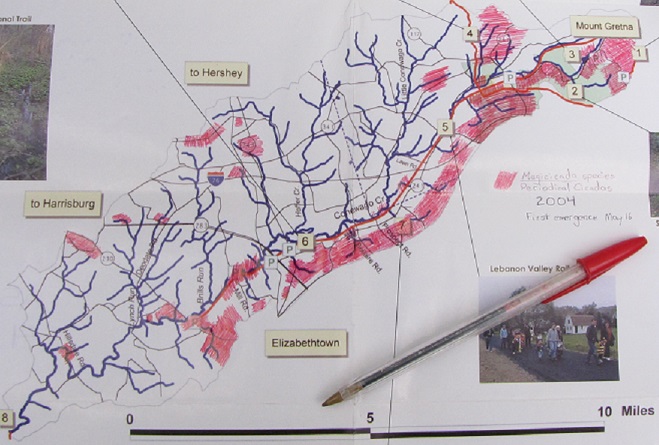
These regular outings happened to coincide with the Brood X Periodical Cicada emergence of 2004. Back then, as the record keeper for the T.C.C.C.A.’s weekly survey forays, your editor decided to shade a map of the Conewago Creek Watershed showing where the group’s volunteers encountered choruses of the Brood X cicadas. Fortunately, the map is still in the editor’s pile of stuff, and is reproduced here for you.
T.C.C.C.A.’s brochure map of the Conewago Creek Watershed (the Conewago east of the Susquehanna River), shaded with red ink in 2004 indicating locations where noisy choruses of Brood X Periodical Cicadas were found. The range of the insects closely mirrors the forested areas of the watershed. The nearly contiguous range along the southeast border includes the heavily wooded areas of Mount Gretna, State Game Lands 145, and the northwest slope of the diabase ridge that separates the Conewago from neighboring watersheds in Lancaster County.
A notation on the map (visible just above the cap on the pen) indicates May 16 as the emergence date for the cicadas in 2004—seventeen years ago today.
So why no seventeen-year cicadas yet in 2021? The answer is ground temperature. This year, by mid-April, Brood X Periodical Cicadas were just below the leaves and rocks, ready to break the surface. But a cold month since then has stalled their emergence. A thermometer pushed into the forest soil today showed readings of 60 degrees and less—at least four degrees below the temperature needed to get the nymphs crawling out of the dirt to climb rocks and vegetation where they’ll molt, dry, and take flight.
In the forested hills east of Conewago Falls, in the Conewago Creek Watershed, soil temperatures were as low as 54 degrees Fahrenheit today.
A warm week ahead with daytime temperatures in the eighties and nighttime lows in the fifties and sixties, instead of in the forties, should get the woodland soils warming. Brood X Periodical Cicadas will be out and about in a jiffy—and you’ll hear all about it.
You’ll want to go for a walk this week. It’s prime time to see birds in all their spring splendor. Colorful Neotropical migrants are moving through in waves to supplement the numerous temperate species that arrived earlier this spring to begin their nesting cycle. Here’s a sample of what you might find this week along a rail-trail, park path, or quiet country road near you—even on a rainy or breezy day.
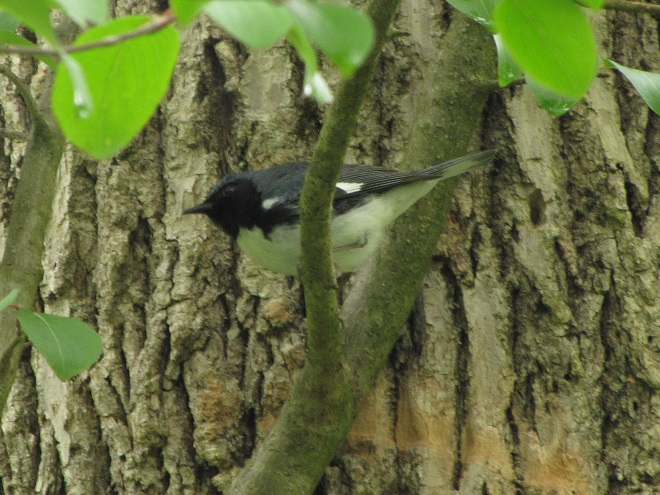
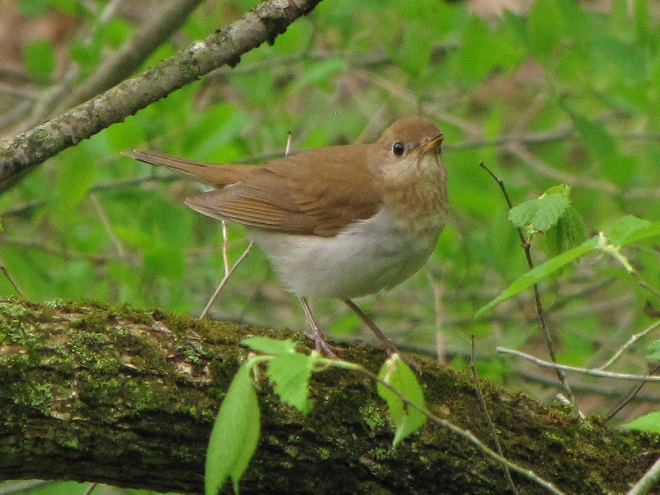
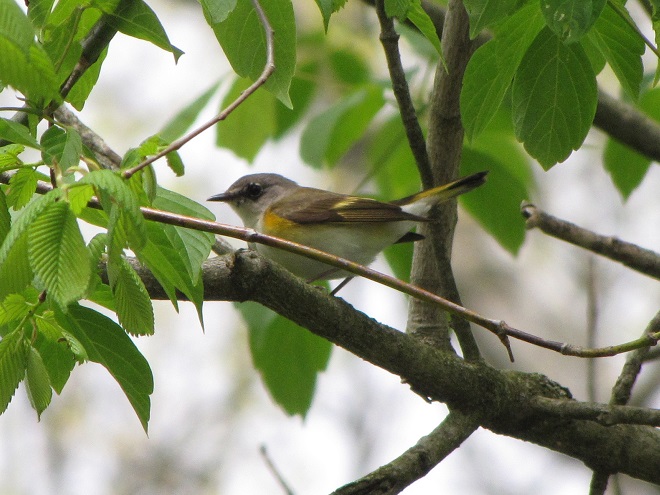
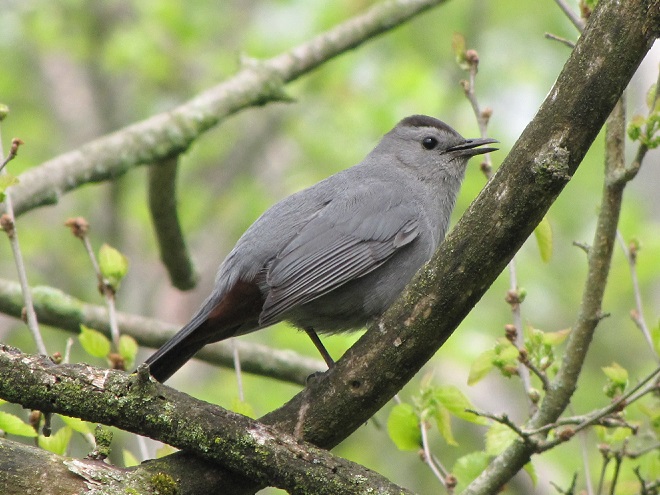
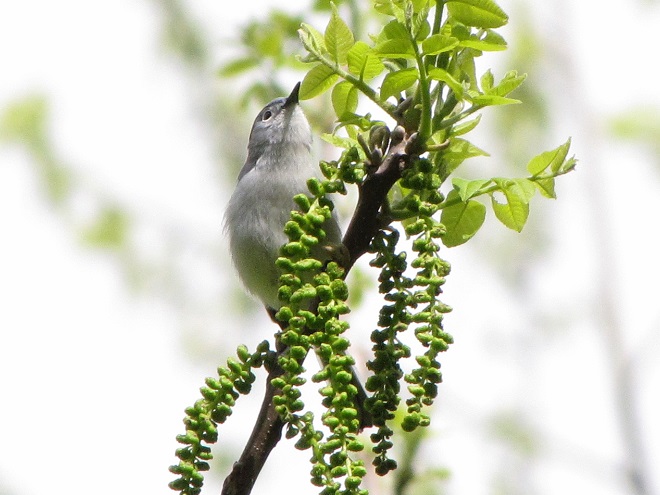
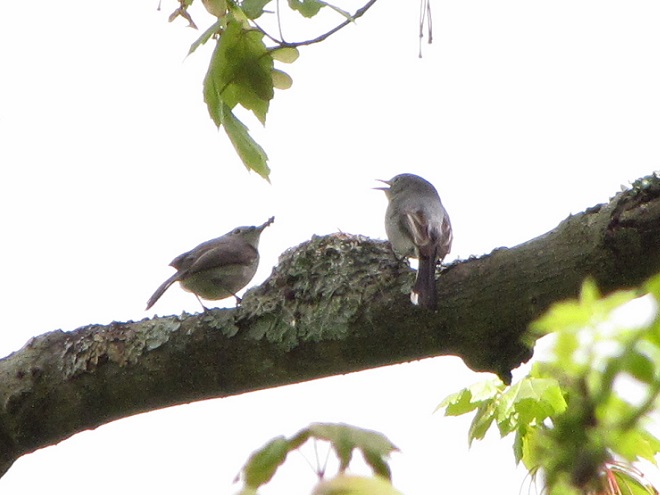
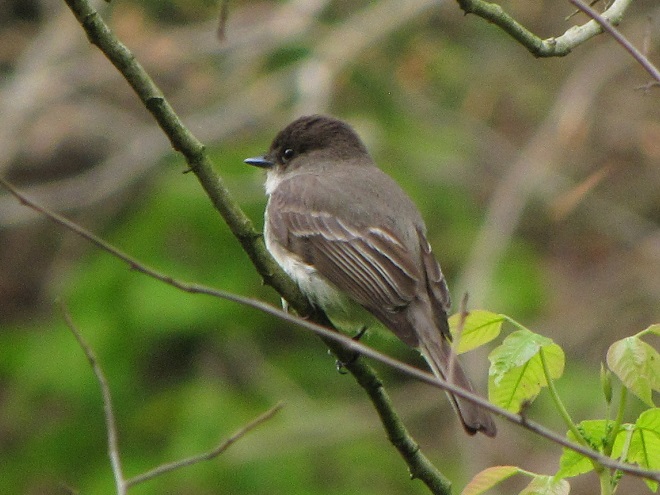
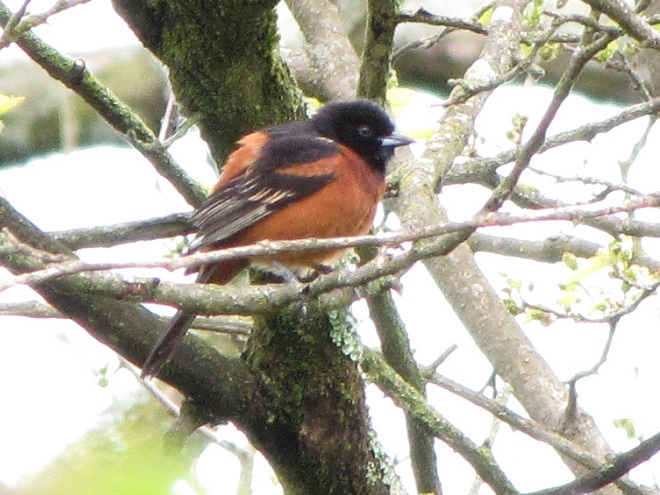
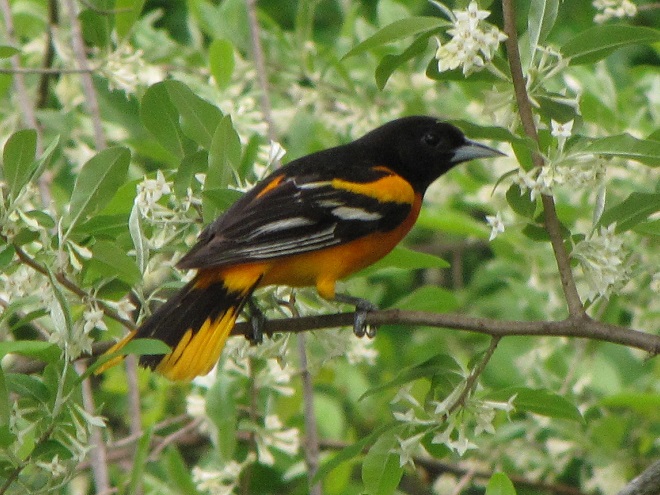
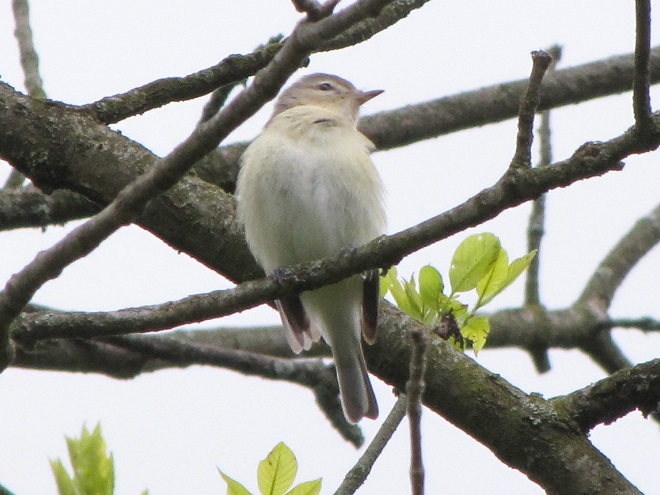
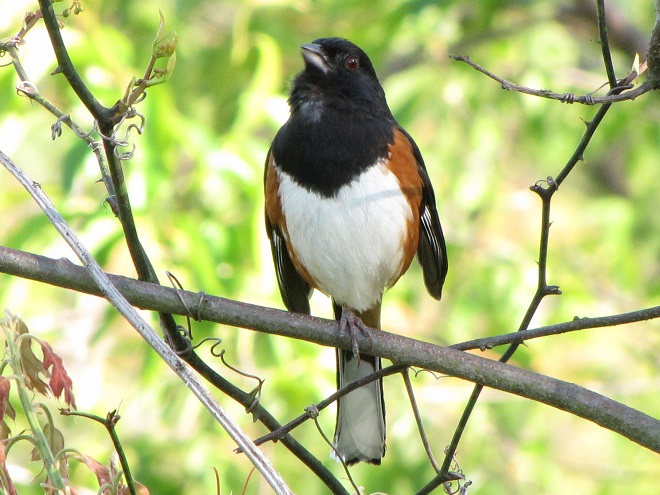
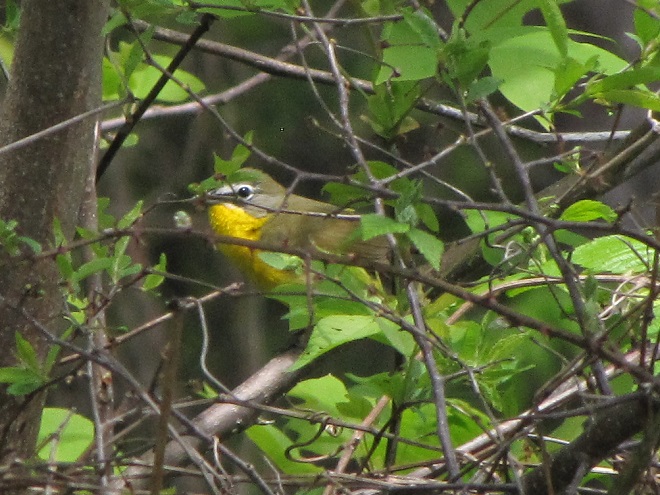
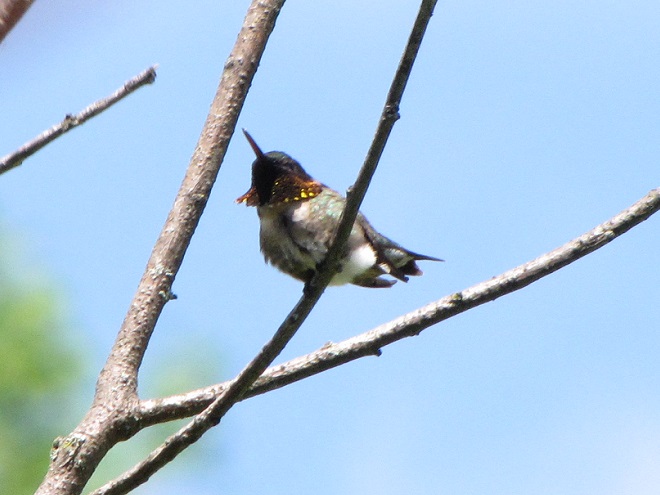
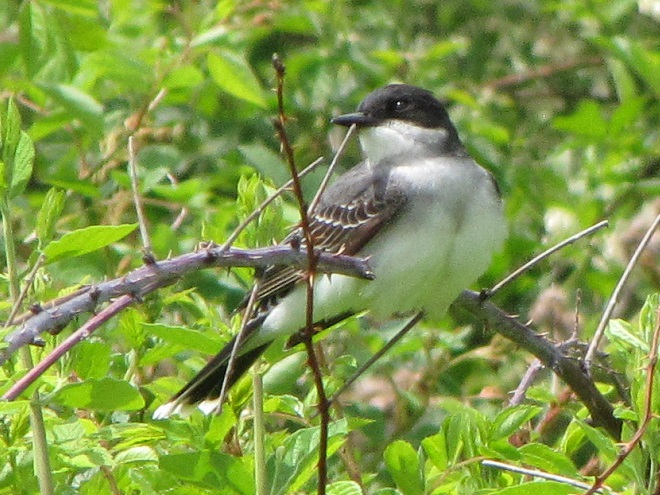
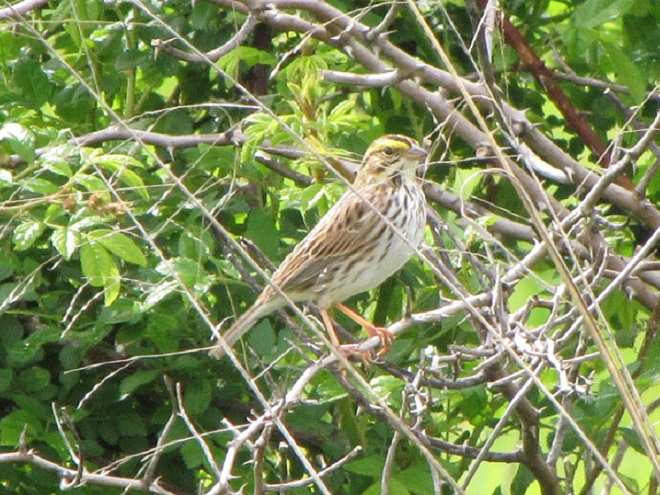
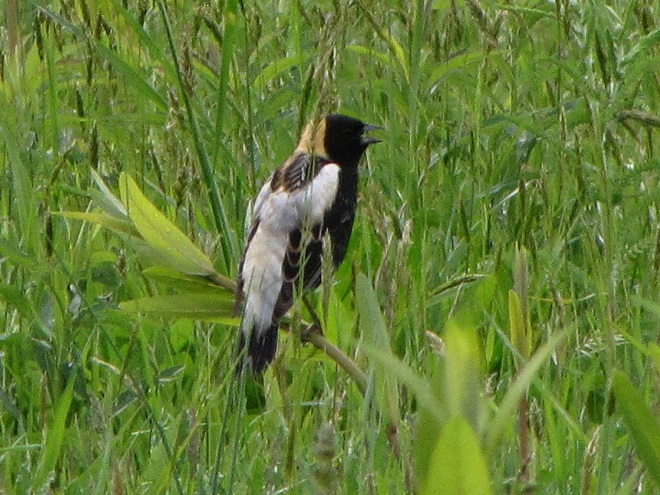
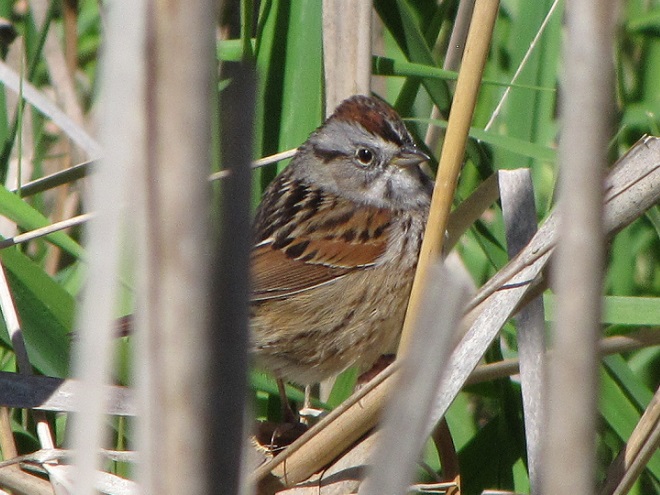
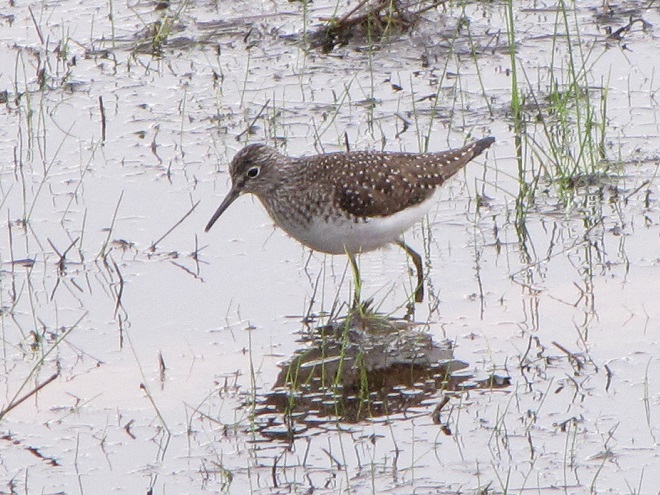
The Black-throated Blue Warbler is one of more than two dozen species of warblers passing through the Lower Susquehanna River Watershed right now. Look for it in the middle and bottom branches of deciduous forest growth.The Veery and other woodland thrushes sing a melodious song. Veerys remain through the summer to nest in damp mature deciduous forests.The American Redstart, this one a first-spring male, is another of the variety of warblers arriving now. Redstarts nest in deciduous forests with a dense understory.Adaptable inquisitive Gray Catbirds are here to nest in any shrubby habitat, whether in a forest or a suburban garden.Blue-gray Gnatcatchers (Polioptilia caerulea) arrive in April, so they’ve been here for a while. They spend most of their time foraging in the treetops. The gnatcatcher’s wheezy call alerts the observer to their presence.Look way up there, it’s a pair of Blue-gray Gnatcatchers building a nest.The Eastern Phoebe, a species of flycatcher, often arrives as early as mid-March. This particular bird and its mate are already nesting beneath a stone bridge that passes over a woodland stream.Orchard Orioles (Icturus spurius) are Neotropical migrants that nest locally in habitats with scattered large trees, especially in meadows and abandoned orchards.In the lower Susquehanna region, the Baltimore Oriole is a more widespread breeding species than the Orchard Oriole. In addition to the sites preferred by the latter, it will nest in groves of mature trees on farms and estates, in parks, and in forest margins where the canopy is broken.The Warbling Vireo (Vireo gilvus) nests in big trees along streams, often sharing habitat with our two species of orioles.Eastern Towhees arrive in numbers during April. They nest in thickets and hedgerows, where a few stragglers can sometimes be found throughout the winter.The Yellow-breasted Chat (Icteria virens) is a migrant from the tropics that sometimes nests locally in thorny thickets. Its song consists of a mixed variety of loud phrases, reminding the listener of mimics like catbirds, thrashers, and mockingbirds.Thickets with fragrant blooms of honeysuckle and olive attract migrating Ruby-throated Hummingbirds. Look for them taking a break on a dead branch where they can have a look around and hold on tight during gusts of wind.The Eastern Kingbird, a Neotropical flycatcher, may be found near fields and meadows with an abundance of insects. In recent years, high-intensity farming practices have reduced the occurrence of kingbirds as a nesting species in the lower Susquehanna valley. The loss of pasture acreage appears to have been particularly detrimental.Savannah Sparrows (Passerculus sandwichensis) can be found in grassy fields throughout the year. Large parcels that go uncut through at least early July offer them the opportunity to nest.Male Bobolinks have been here for just more than a week. Look for them in alfalfa fields and meadows. Like Savannah Sparrows, Bobolinks nest on the ground and will lose their eggs and/or young if fields are mowed during the breeding cycle.Cattail marshes are currently home to nesting Swamp Sparrows. Wetlands offer an opportunity to see a variety of unique species in coming weeks.Shorebirds like this Solitary Sandpiper will be transiting the lower Susquehanna basin through the end of May. They stop to rest in wetlands, flooded fields, and on mudflats and alluvial islets in the region’s larger streams. Many of these shorebirds nest in far northern Canada. So remember, they need to rest and recharge for the long trip ahead, so try not to disturb them.