It looks like the worst of the cold may be behind us. With temperatures trending upwards during the coming days and weeks, some species of wildlife will soon find their search for food made a whole lot easier.
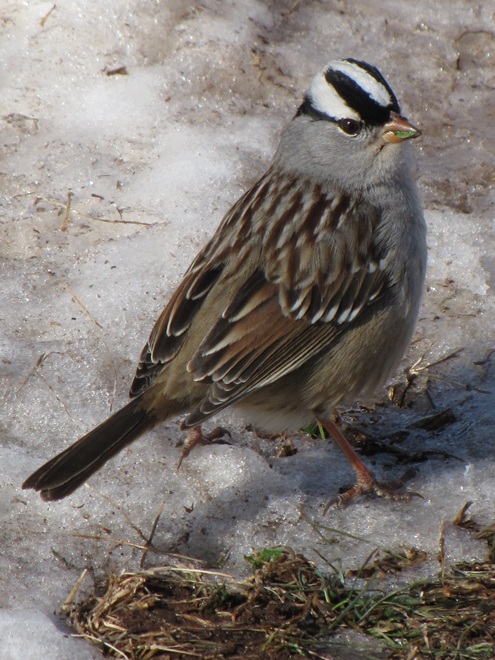
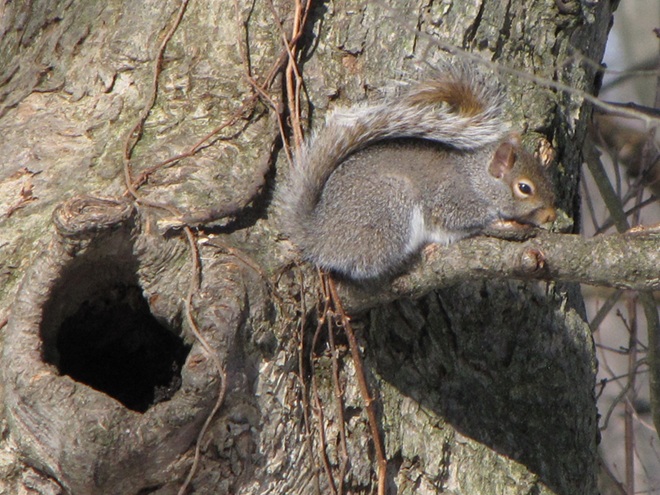
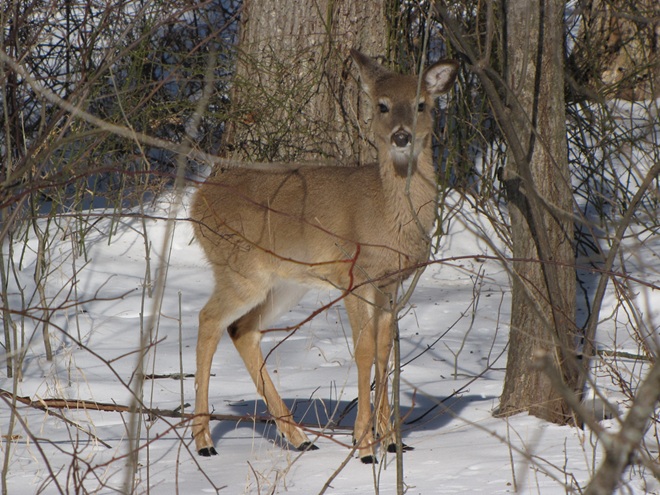
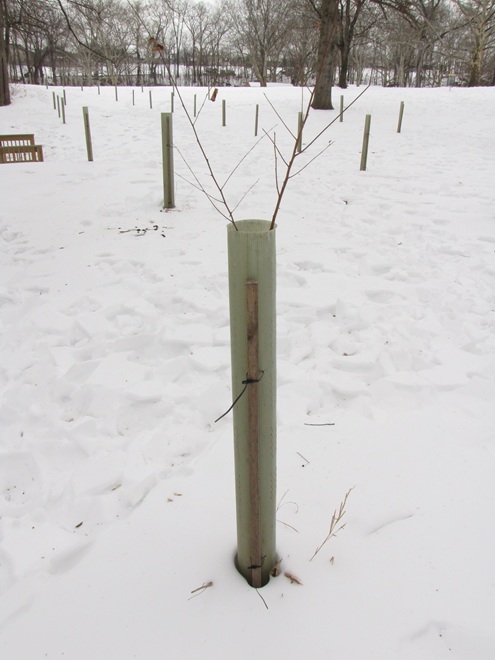
White-crowned Sparrows spend the winter seeking shelter in dense tangles of early successional growth, particularly among thorny shrubs and vines. Extended periods with snow cover can make their search for food a real challenge, but we spotted this one hitting the jackpot on a bare patch of sun-drenched ground along the edge of a thicket of briars. It has found the earliest green buds of a clover or other herbaceous plant. Many songbirds in the finch, cardinal, and sparrow families turn to buds in late winter and early spring as a source of energy-rich sugars.In woodlands, sweet sap will soon swell the buds of maples, much to the delight of Eastern Gray Squirrels whose favorite dining spot will suddenly become the treetops instead of the leaf litter. Often selected by property owners for their colorful autumn foliage and fast growth, the prevalence of both native and non-native maples in the suburban landscape helps more squirrels survive the winter to expand their numbers in the spring.Nibbling late-winter buds is a daylong pastime for the hungry White-tailed Deity. While high-intensity twig browsing can alter forest ecology and practically eliminate understory growth and regeneration, bud snacking only tends to make some of the trees more stout than others. It’s similar to the trimming and snipping a bonsai artist may do to maintain a prized specimen.Those of you installing stream buffers or reforesting all or part of your property may not want your newly planted trees turned into bonsai or lost entirely to hungry ungulates. If you’re seeking some relief from a browsing problem, you’ve got to nip it in the bud. Tree shelters offer protection during the first half a decade or more of your sapling’s new life. You can find these tubes for sale from many online sources including some of the local county conservation districts during their annual spring tree sales (which happen to be underway right now, hint-hint). Installing these plastic protectors may not only relieve you from the frustration of worrying about your new trees, it might also excuse you from risking involvement in the sometimes heated quarrel between the worshipers of the White-tailed Deity who practice sacrifice and those who religiously oppose it.