Clean rainwater flowing from the roofs of our homes and other buildings is a precious resource that is more often than not directed as quickly as possible into streets and storm drains to become contaminated runoff capable of polluting streams and aggravating flooding conditions. The prudent property steward will manage rainfall as the treasured commodity that it is—retaining on site as much of it as possible.
Whether you happen to be obtaining your domestic water from a community distribution system or from a private well, infiltrating the rain that falls on your roof directly into the soil is a good way to make sure it helps recharge the groundwater stored in the aquifer—banking it for future use.
Better yet, rain barrels provide a means of intercepting, storing, and dispensing a share of the precipitation from your downspouts before it is discharged into the ground. Water from rain barrels can be drained to hydrate garden plants, rinse the patio, wash the dog, or, in the event of an emergency, fill the need for non-potable uses that include bathing and flushing toilets. For potable applications such as cooking, drinking, and brushing teeth, roof water must first be filtered and disinfected.
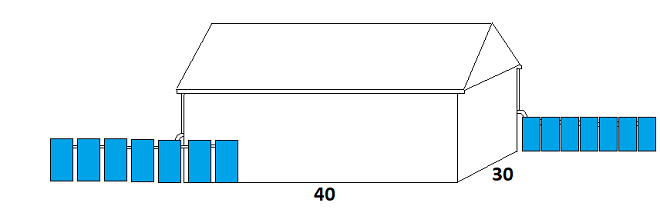
Rain barrels collect and save clean roof water for later use. For every one inch of precipitation, the roof on a house or other building with a footprint of just 1,200 square feet sheds enough to fill about fourteen 55-gallon drums. Live in a home supplied by a well? That’s over 700 gallons of soft water available as you need it, such as during a power outage when the pump won’t operate.
Here at susquehannawildlife.net headquarters, our goal is “no net runoff” from our little urban parcel. We use three rain barrels to catch discharge from the spouting system, then direct the overflow into three different management configurations.
RAIN GARDEN
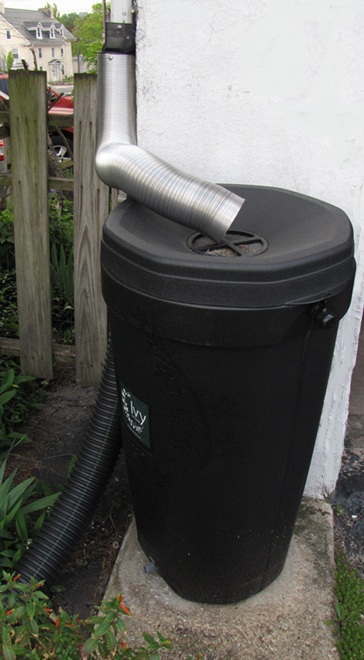
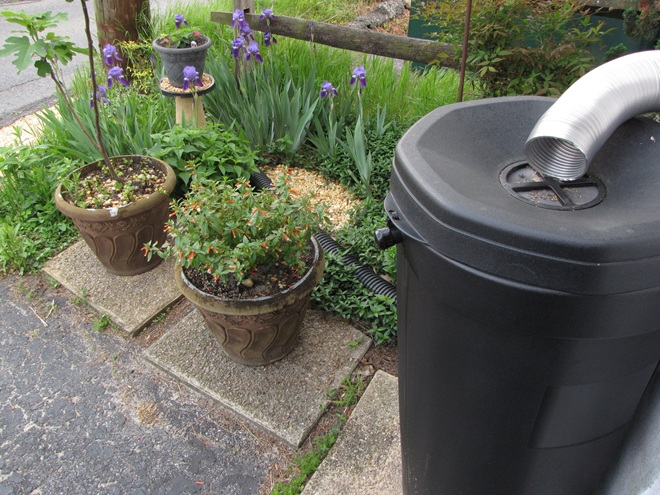
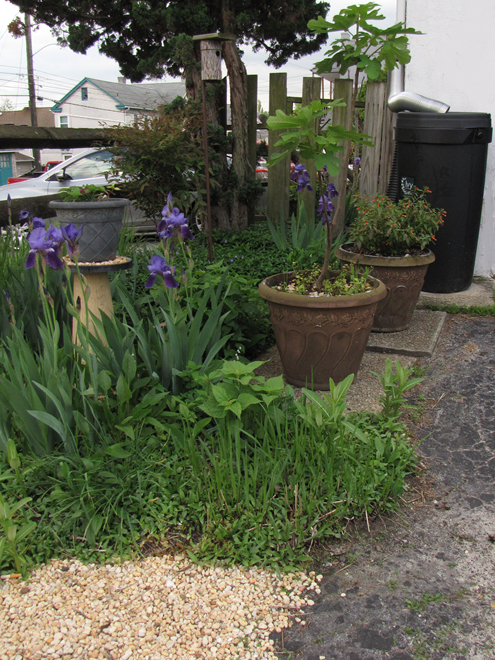
Precipitation from the downspout is captured in this commercially produced rain barrel. The overflow is directed into the black corrugated pipe……and spilled into the gravel bed in the rain garden to both water the plants and infiltrate into the ground to recharge our local aquifer.The gravel beds diffuse energy produced not only by water rushing from the barrel’s overflow, but from sheet runoff entering the garden from the driveway and neighboring street.
STOCK TANK PLANTER
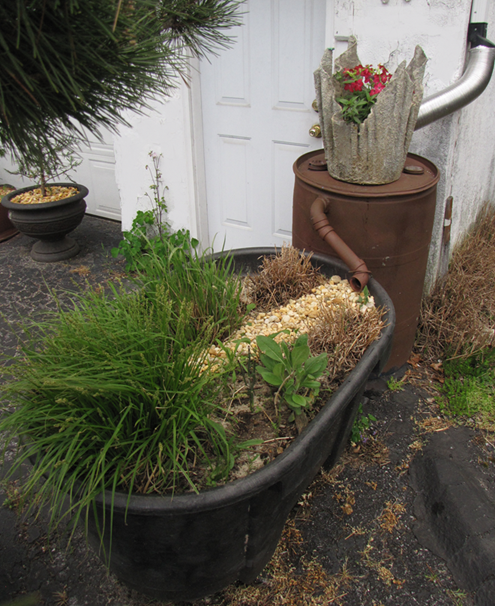
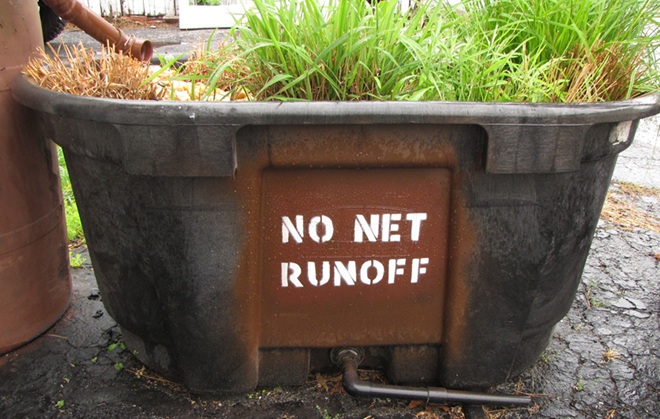
This home-brew rain barrel was fabricated from a 55-gallon drum originally used to ship and store car wash soap. We scrubbed it out, then plumbed it up with the overflow feeding a 100-gallon stock tank fashioned into a planter. The drain from the planter sometimes discharges a trickle of water into a porous area of the pavement where it soon percolates into the ground. In this “container rain garden”, we grow wildflowers, sedges, rushes, and warm-season grasses.
THE GARDEN POND/POOLS
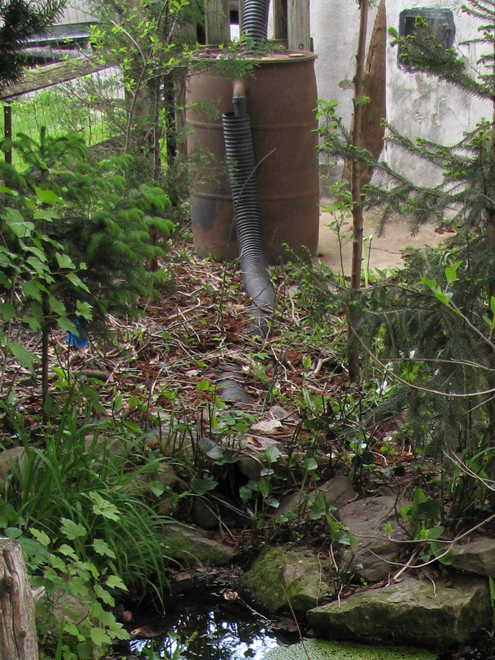
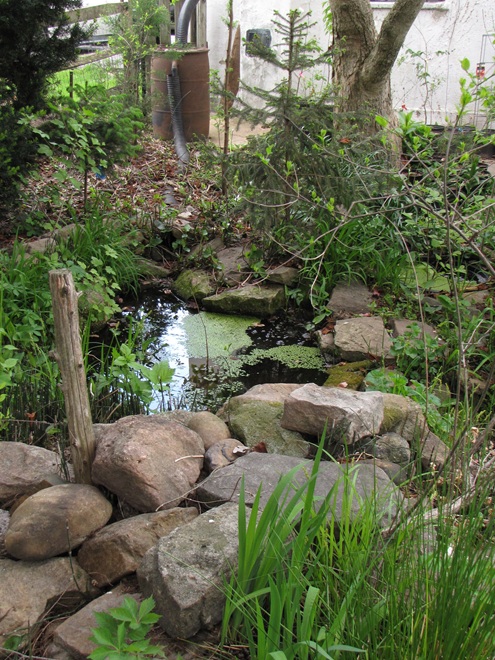
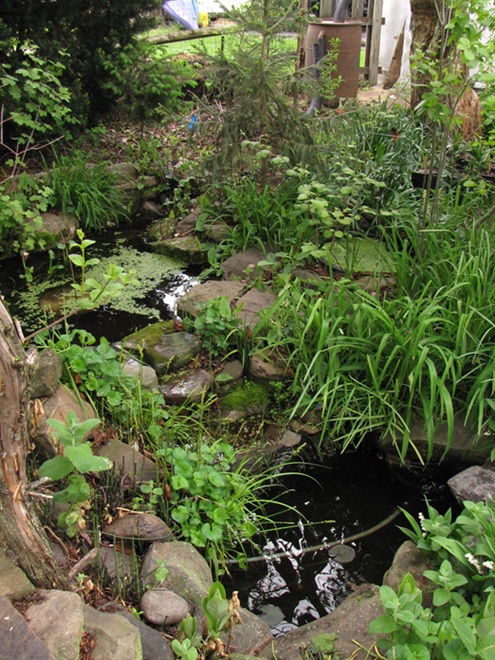
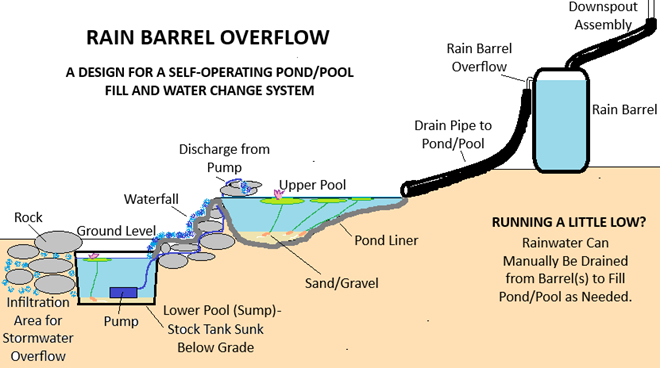
Here’s another rain barrel made from a soap drum. This one discharges its overflow into the upper pool of our garden pond.Upon topping off the barrel, clean roof water spills into the corrugated pipe and tumbles into the upper pool. Outflow from the upper pool cascades through the the riffles/falls……into the lower pool (bottom right). The lower pool consists of a 100-gallon stock tank sunk below grade level and surrounded by rock. Throughout the summer, a pump located in this “sump” circulates water to a spring-like feature in the upper pool. During a downpour, the lower pool will overflow into the encircling boulders, the level often rising half a foot or more above the top rim of the stock tank flooding the cap stones before receding as the excess water slowly infiltrates down through the gravelly soils. It’s a self-automated, hassle-free water change that helps keep our pools and their inhabitants healthy.Our garden pond stormwater management system keeps the pools topped off and the aquatic ecosystem thriving.
Why not give roof water management a try on your property? It’s a great project for exercising your ingenuity and creativity while doing something truly beneficial for the watershed within which you reside. Best of all, it’s really not that expensive to get started.