
Photo of the Day

LIFE IN THE LOWER SUSQUEHANNA RIVER WATERSHED
A Natural History of Conewago Falls—The Waters of Three Mile Island
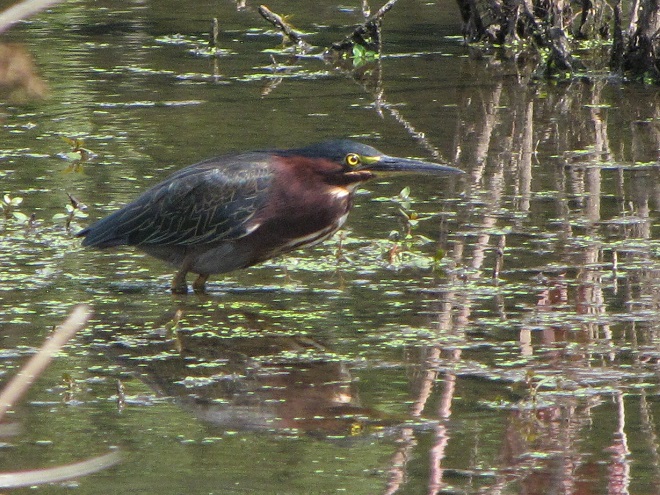
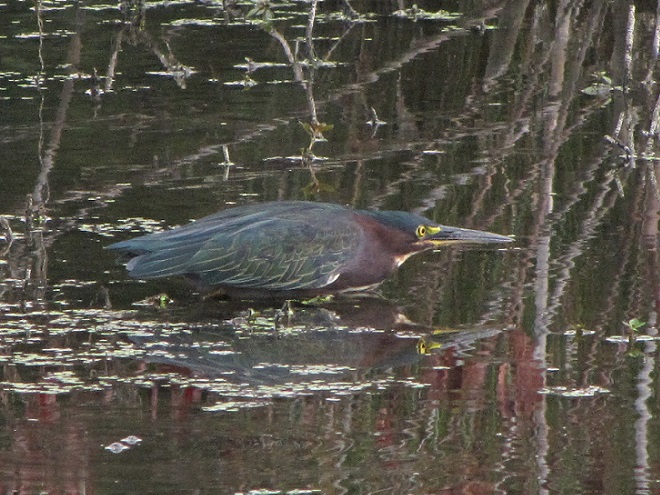
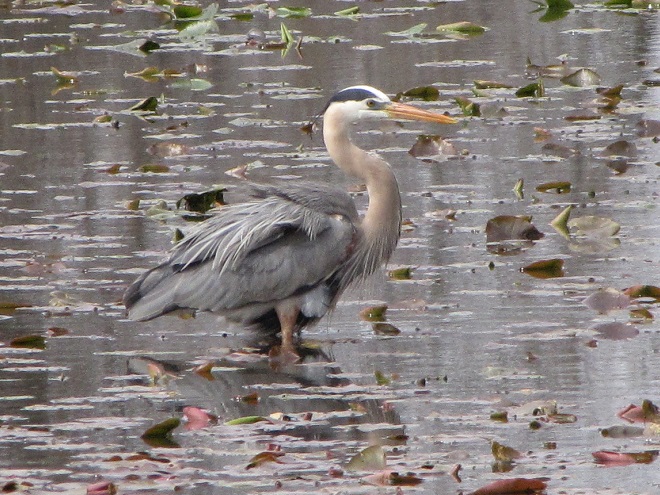
The rain and clouds have at last departed. With blue skies and sunshine to remind us just how wonderful a spring afternoon can be, we took a stroll at Memorial Lake State Park in Lebanon County, Pennsylvania, to look for some migratory birds.


What? You thought we were gonna drop in on Maryland’s largest city for a couple of ball games and some oysters, clams, and crab cakes—not likely.
Homo sapiens owes much of its success as a species to an acquired knowledge of how to make, control, and utilize fire. Using fire to convert the energy stored in combustible materials into light and heat has enabled humankind to expand its range throughout the globe. Indeed, humans in their furless incomplete mammalian state may have never been able to expand their populations outside of tropical latitudes without mastery of fire. It is fire that has enabled man to exploit more of the earth’s resources than any other species. From cooking otherwise unpalatable foods to powering the modern industrial society, fire has set man apart from the rest of the natural world.
In our modern civilizations, we generally look at the unplanned outbreak of fire as a catastrophe requiring our immediate intercession. A building fire, for example, is extinguished as quickly as possible to save lives and property. And fires detected in fields, brush, and woodlands are promptly controlled to prevent their exponential growth. But has fire gone to our heads? Do we have an anthropocentric view of fire? Aren’t there naturally occurring fires that are essential to the health of some of the world’s ecosystems? And to our own safety? Indeed there are. And many species and the ecosystems they inhabit rely on the periodic occurrence of fire to maintain their health and vigor.
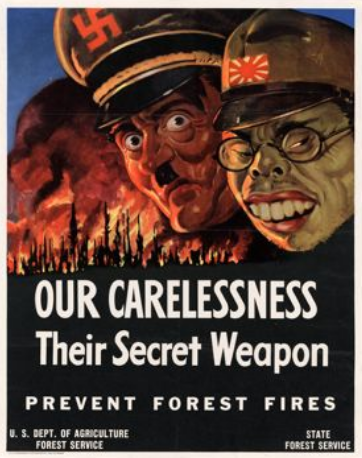
Man has been availed of the direct benefits of fire for possibly 40,000 years or more. Here in the Lower Susquehanna River Watershed, the earliest humans arrived as early as 12,000 years ago—already possessing skills for using fire. Native plants and animals on the other hand, have been part of the ever-changing mix of ecosystems found here for a much longer period of time—millions to tens of millions of years. Many terrestrial native species are adapted to the periodic occurrence of fire. Some, in fact, require it. Most upland ecosystems need an occasional dose of fire, usually ignited by lightning (though volcanism and incoming cosmic projectiles are rare possibilities), to regenerate vegetation, release nutrients, and maintain certain non-climax habitat types.
But much of our region has been deprived of natural-type fires since the time of the clearcutting of the virgin forests during the eighteenth and nineteenth centuries. This absence of a natural fire cycle has contributed to degradation and/or elimination of many forest and non-forest habitats. Without fire, a dangerous stockpile of combustible debris has been collecting, season after season, in some areas for a hundred years or more. Lacking periodic fires or sufficient moisture to sustain prompt decomposition of dead material, wildlands can accumulate enough leaf litter, thatch, dry brush, tinder, and fallen wood to fuel monumentally large forest fires—fires similar to those recently engulfing some areas of the American west. So elimination of natural fire isn’t just a problem for native plants and animals, its a potential problem for humans as well.
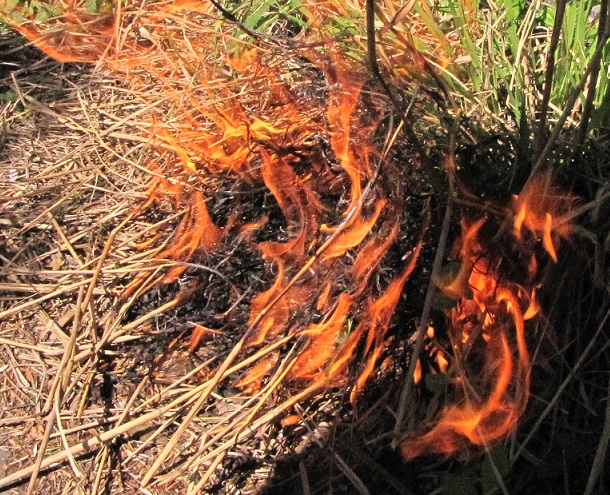
To address the habitat ailments caused by a lack of natural fires, federal, state, and local conservation agencies are adopting the practice of “prescribed fire” as a treatment to restore ecosystem health. A prescribed fire is a controlled burn specifically planned to correct one or more vegetative management problems on a given parcel of land. In the Lower Susquehanna River Watershed, prescribed fire is used to…
Let’s look at some examples of prescribed fire being implemented right here in our own neighborhood…
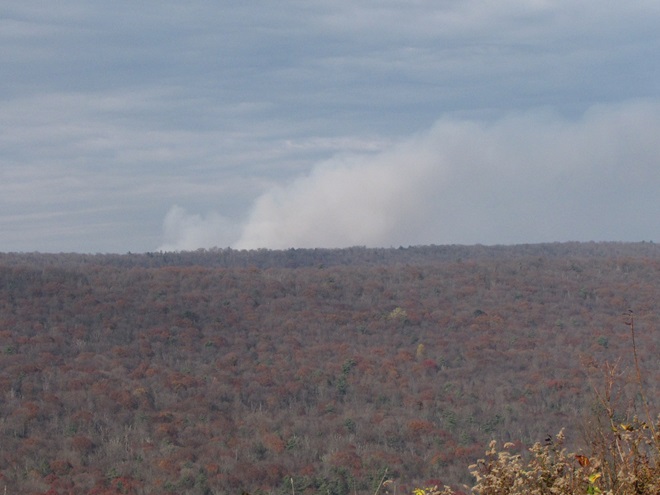
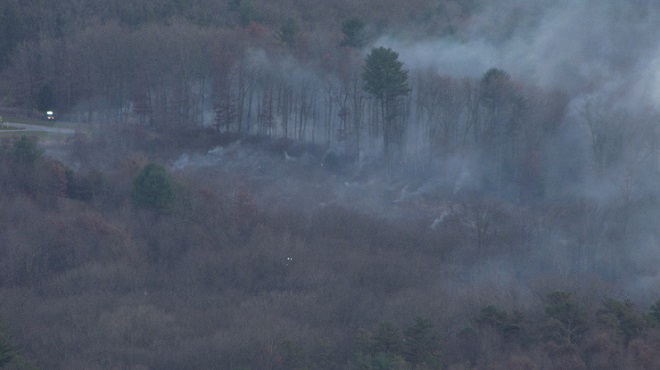
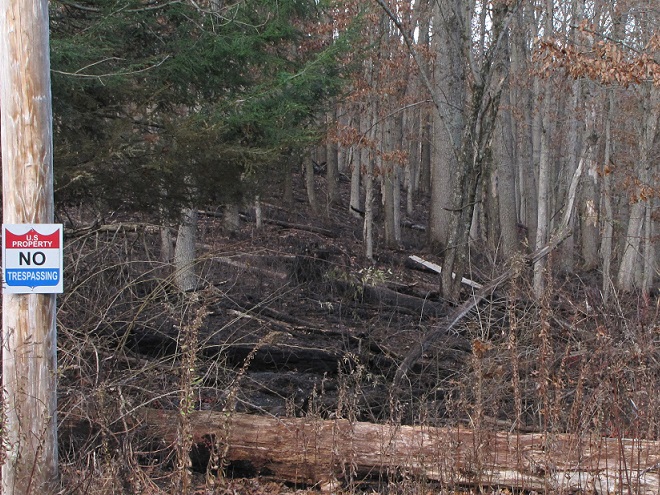
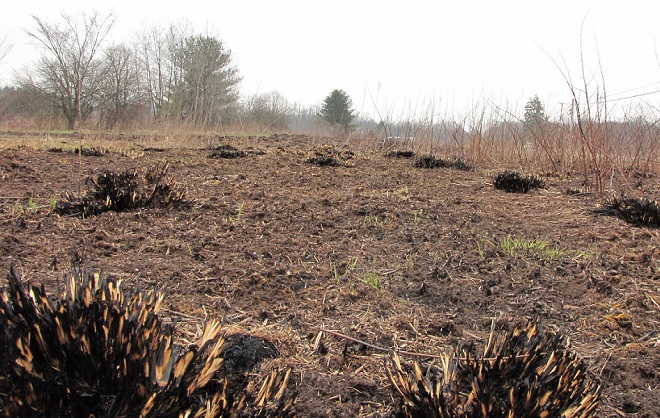
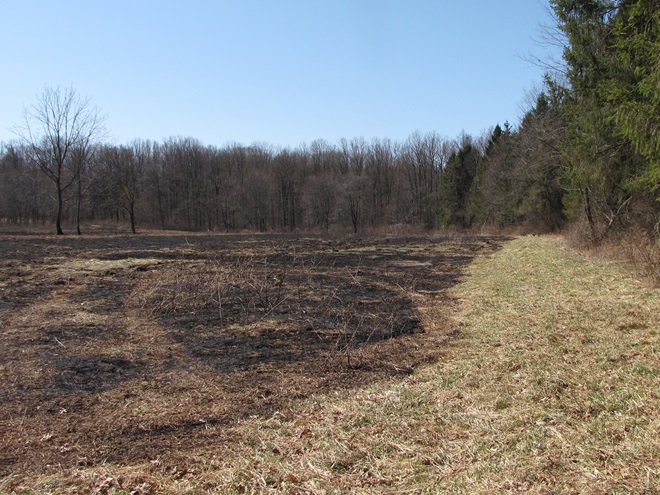
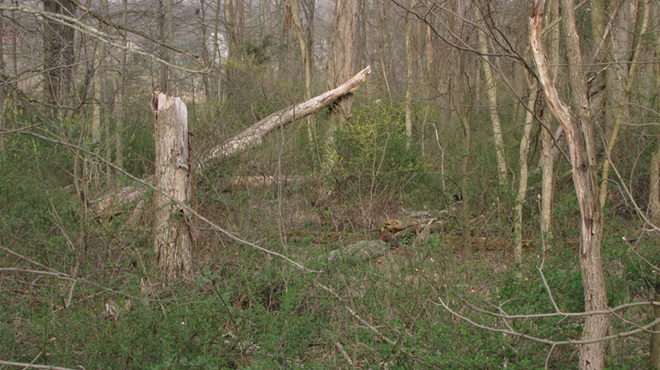
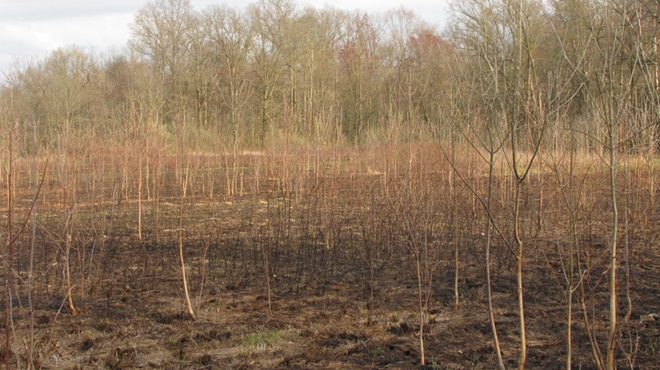
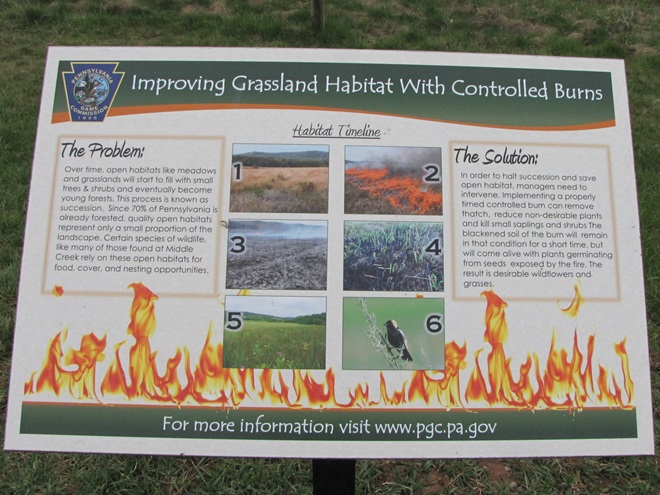
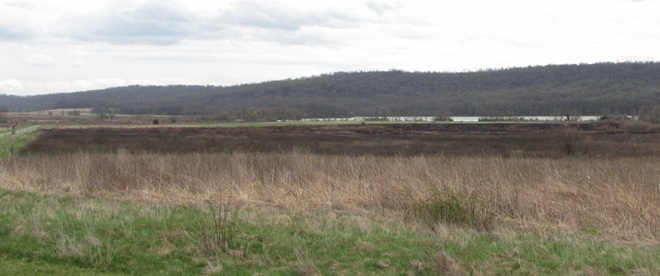
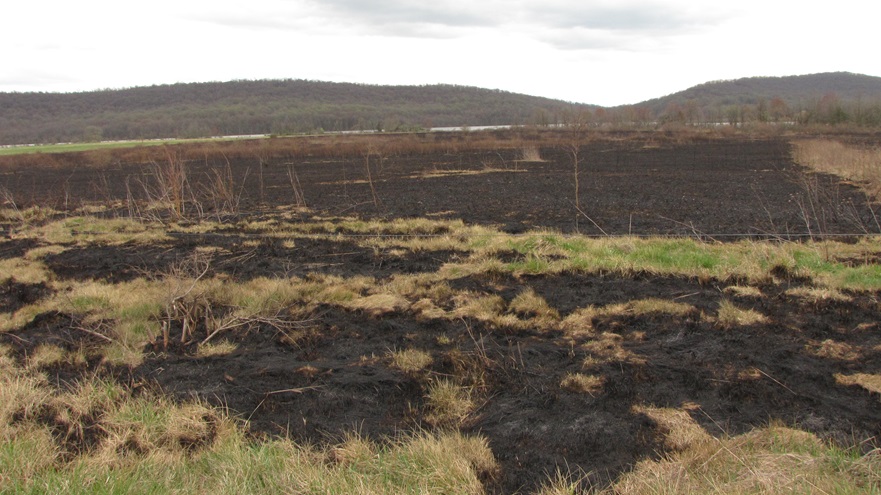
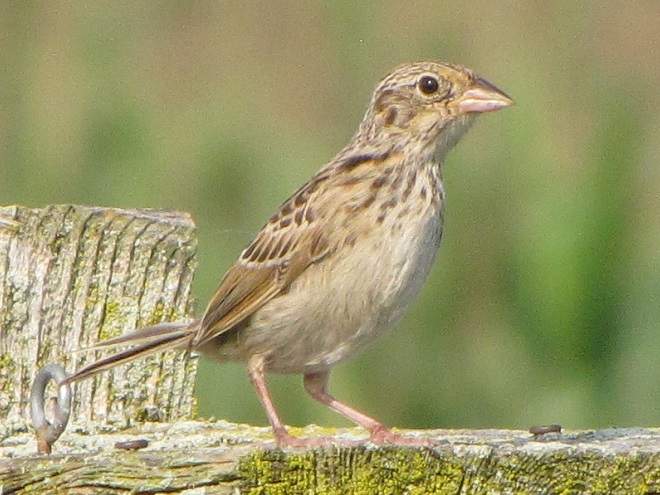
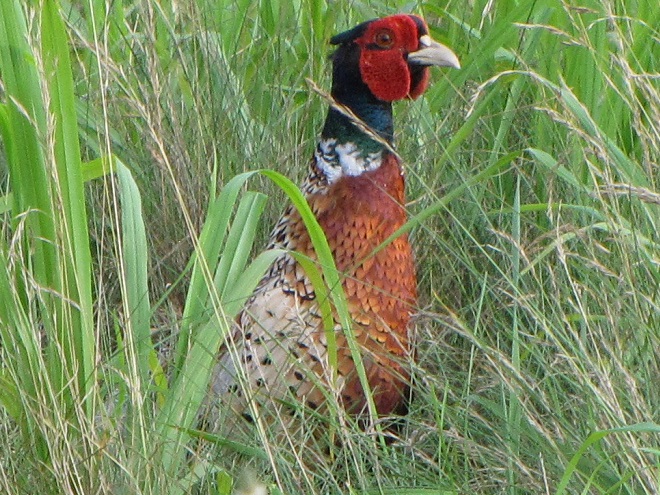
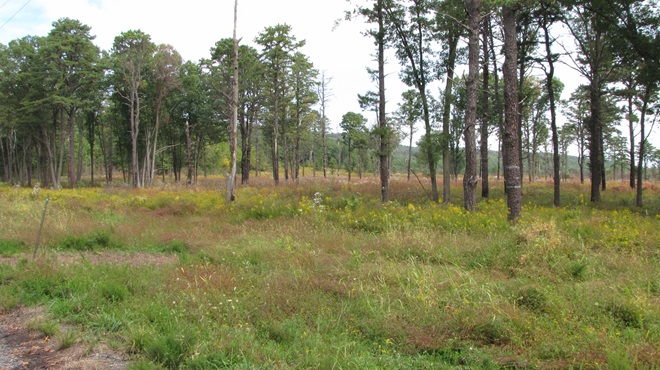
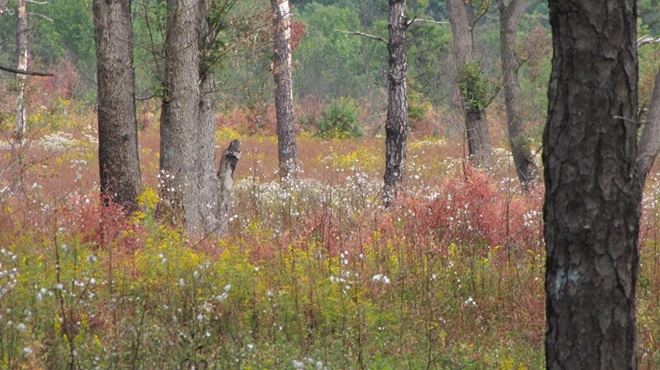
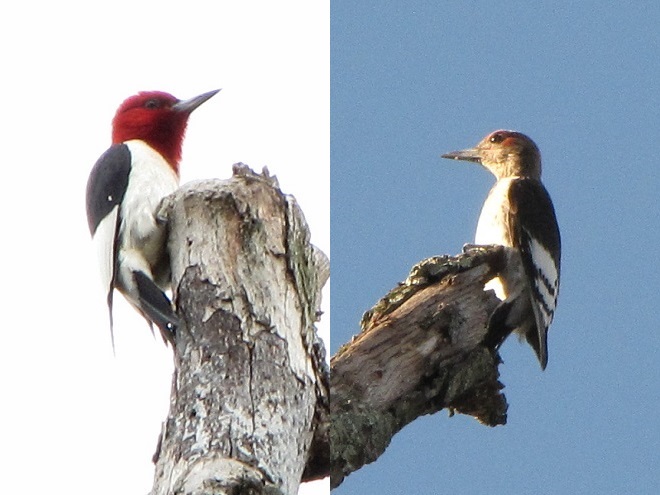
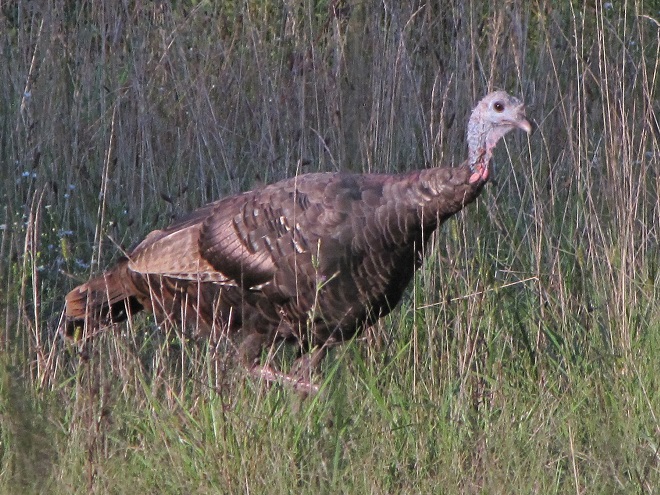
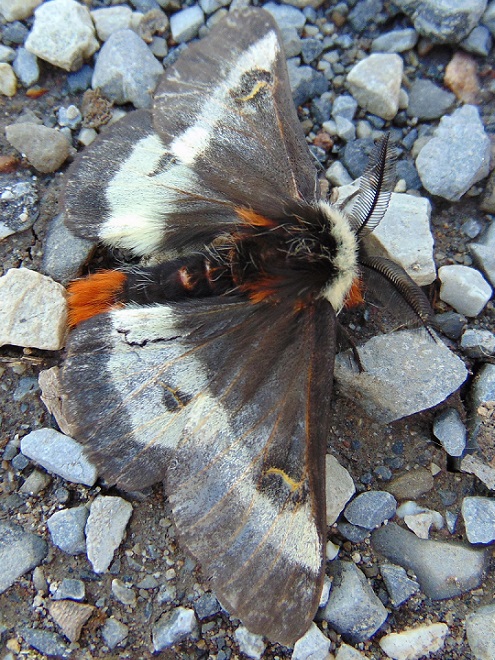
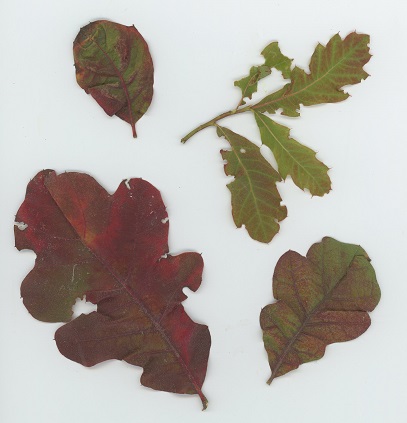
In Pennsylvania, state law provides landowners and crews conducting prescribed fire burns with reduced legal liability when the latter meet certain educational, planning, and operational requirements. This law may help encourage more widespread application of prescribed fire in the state’s forests and other ecosystems where essential periodic fire has been absent for so very long. Currently in the Lower Susquehanna River Watershed, prescribed fire is most frequently being employed by state agencies on state lands—in particular, the Department of Conservation and Natural Resources on State Forests and the Pennsylvania Game Commission on State Game Lands. Prescribed fire is also part of the vegetation management plan at Fort Indiantown Gap Military Reservation and on the land holdings of the Hershey Trust. Visitors to the nearby Gettysburg National Military Park will also notice prescribed fire being used to maintain the grassland restorations there.
For crews administering prescribed fire burns, late March and early April are a busy time. The relative humidity is often at its lowest level of the year, so the probability of ignition of previous years’ growth is generally at its best. We visited with a crew administering a prescribed fire at Middle Creek Wildlife Management Area last week. Have a look…
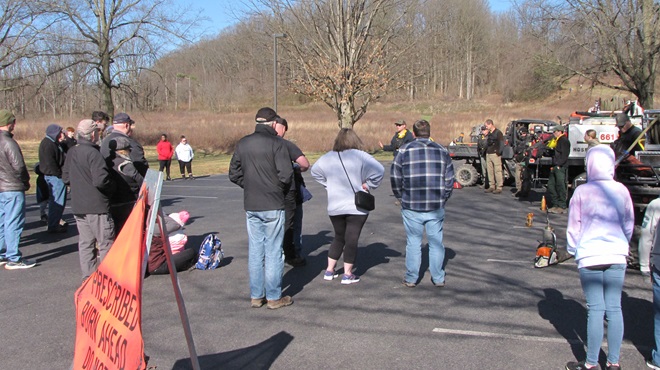
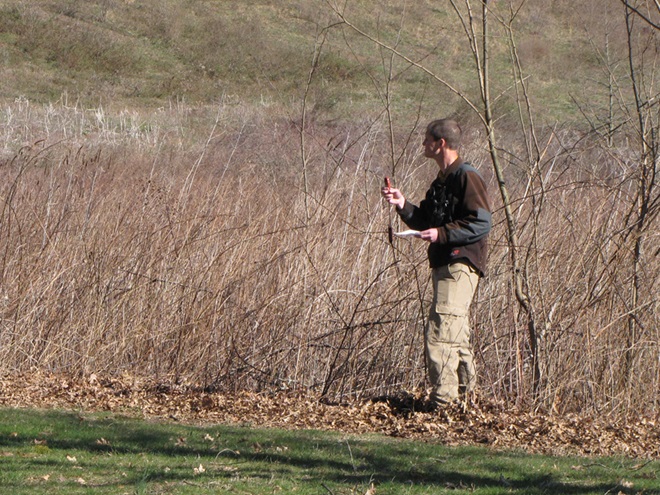
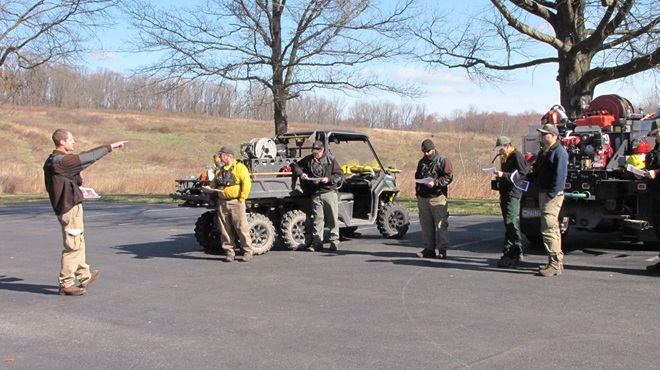
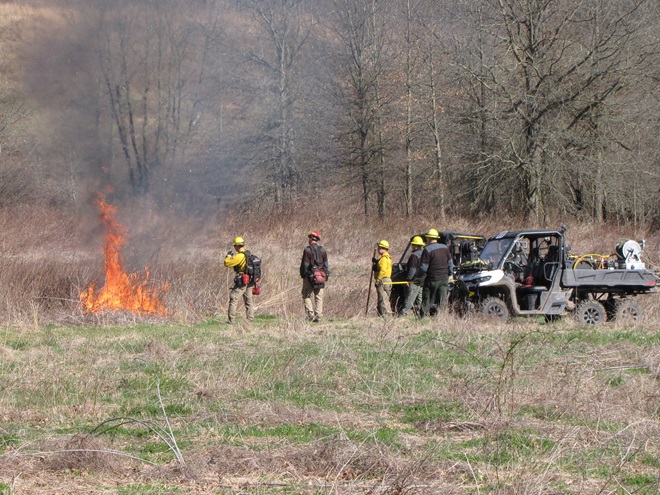
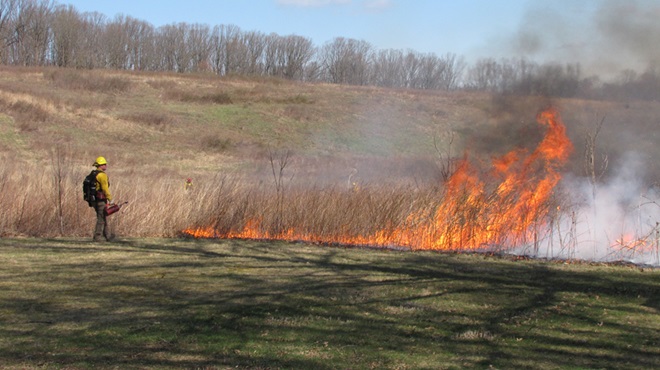
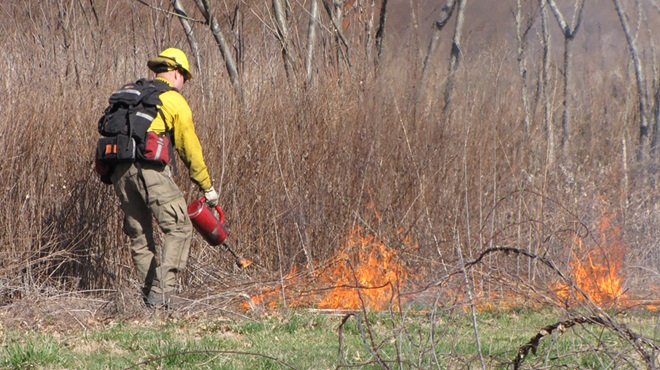
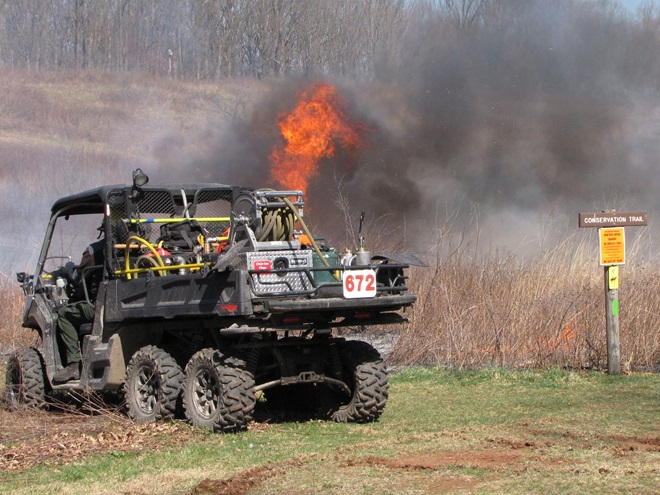
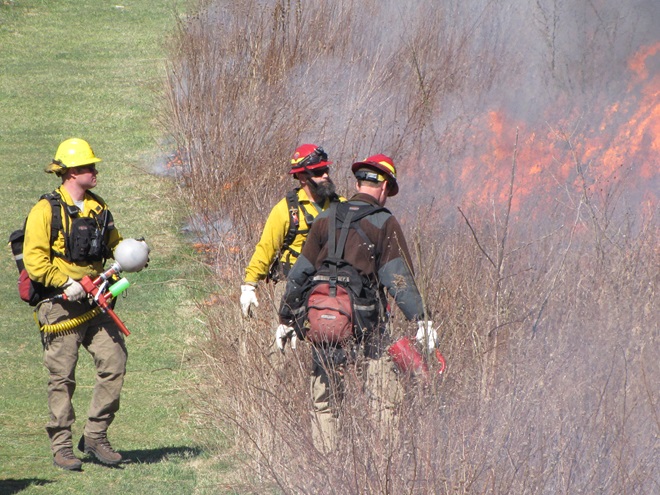
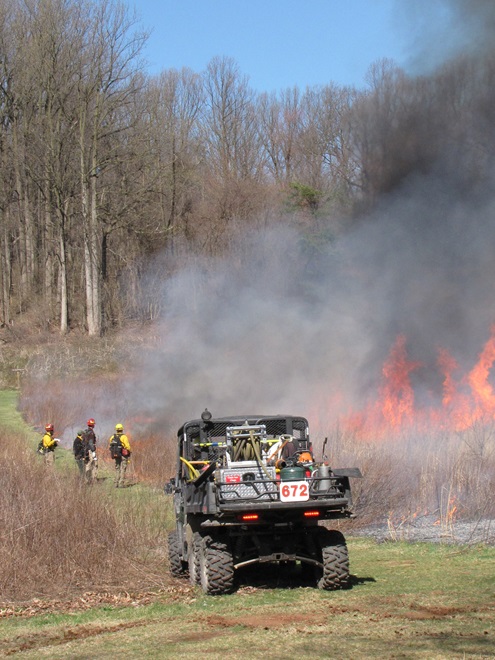
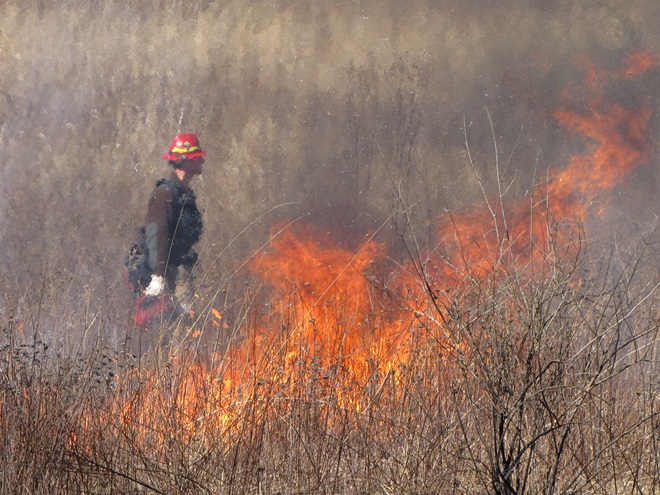
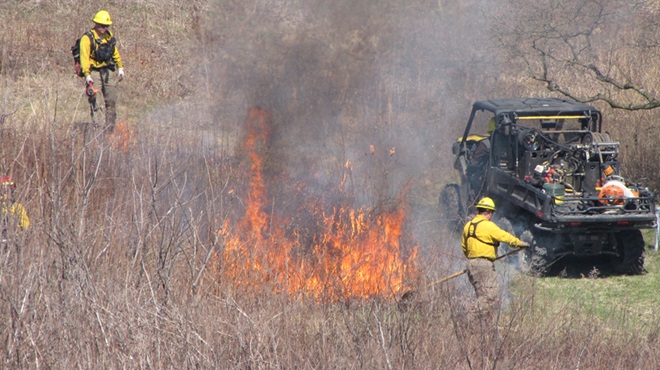
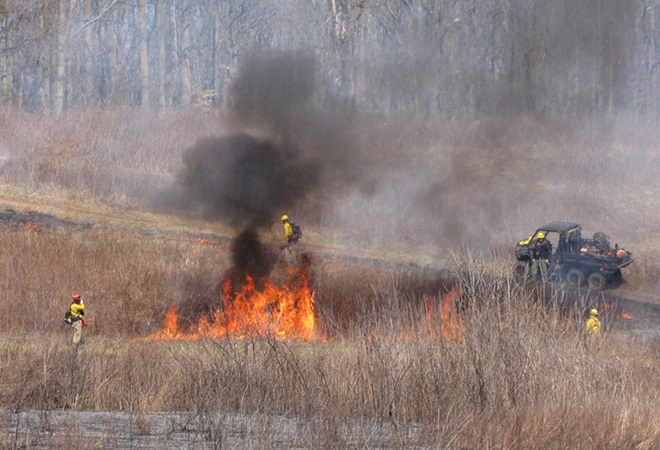
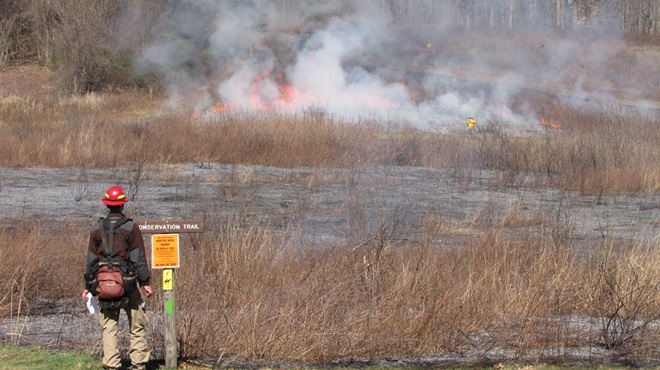
Prescribed burns aren’t a cure-all for what ails a troubled forest or other ecosystem, but they can be an effective remedy for deficiencies caused by a lack of periodic episodes of naturally occurring fire. They are an important option for modern foresters, wildlife managers, and other conservationists.
It’s that time of year. Your local county conservation district is taking orders for their annual tree sale and it’s a deal that can’t be beat. Order now for pickup in April.
The prices are a bargain and the selection includes the varieties you need to improve wildlife habitat and water quality on your property. For species descriptions and more details, visit each tree sale web page (click the sale name highlighted in blue). And don’t forget to order packs of evergreens for planting in mixed clumps and groves to provide winter shelter and summertime nesting sites for our local native birds. They’re only $12.00 for a bundle of 10.
Cumberland County Conservation District Annual Tree Seedling Sale—
Orders due by: Friday, March 22, 2024
Pickup on: Thursday, April 18, 2024 or Friday, April 19, 2024
Dauphin County Conservation District Seedling Sale—
Orders due by: Monday, March 18, 2024
Pickup on: Thursday, April 18, 2024 or Friday, April 19, 2024
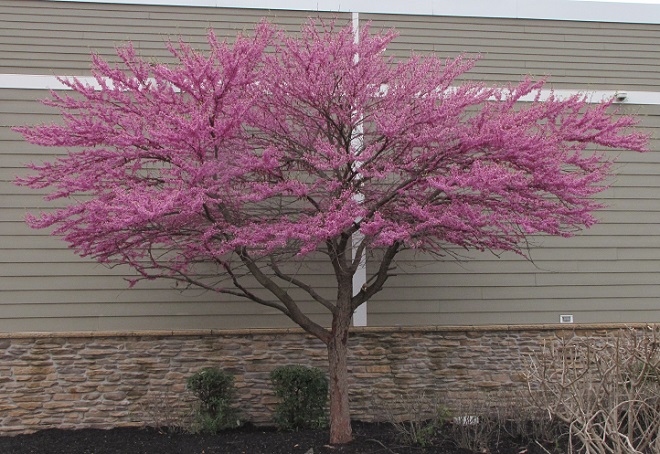
Lancaster County Annual Tree Seedling Sale—
Orders due by: Friday, March 8, 2024
Pickup on: Friday, April 12, 2024
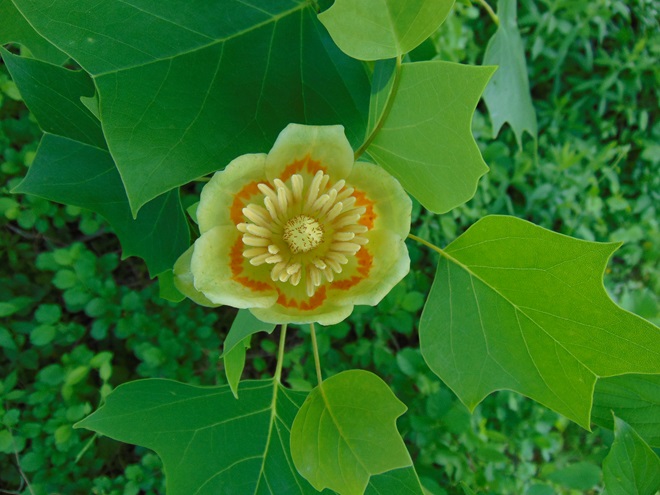
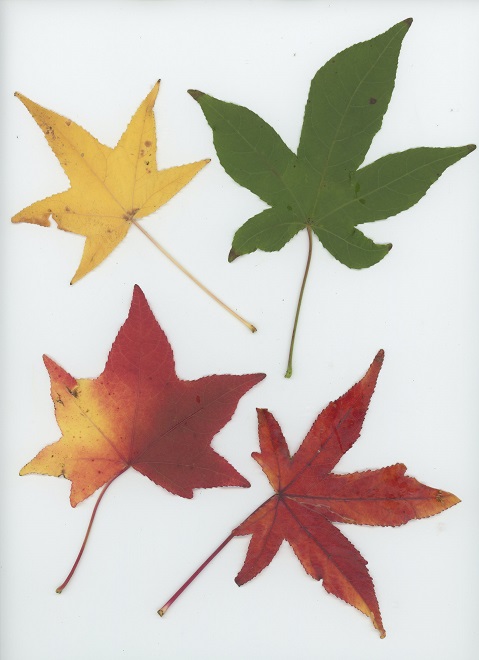
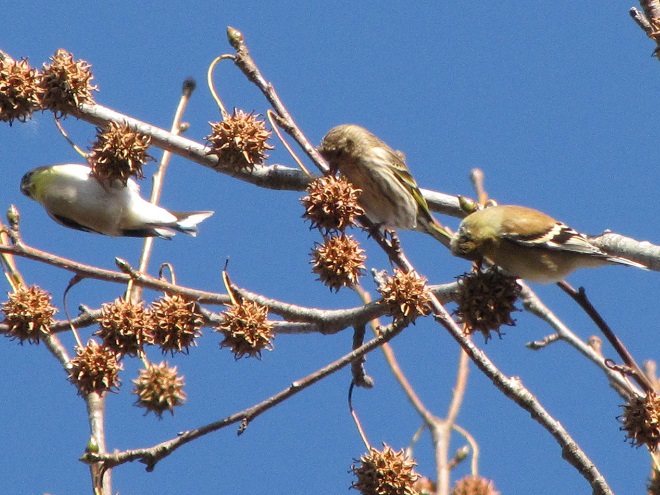
Lebanon County Conservation District Tree and Plant Sale—
Orders due by: Friday, March 8, 2024
Pickup on: Friday, April 19, 2024
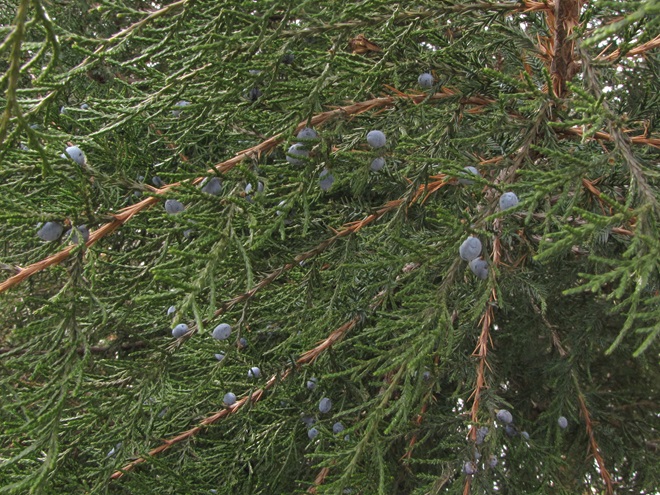
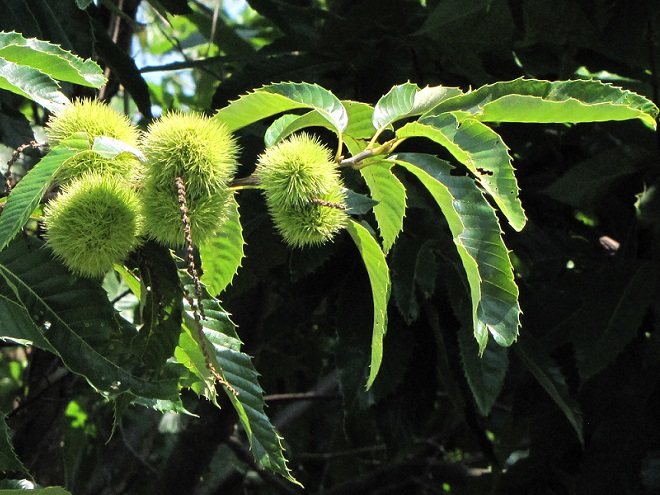
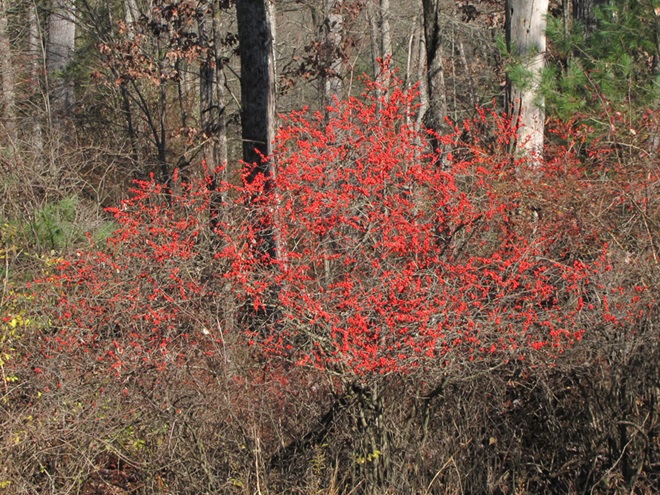
Perry County Conservation District Tree Sale—
Orders due by: Sunday, March 24, 2024
Pickup on: Thursday, April 11, 2024
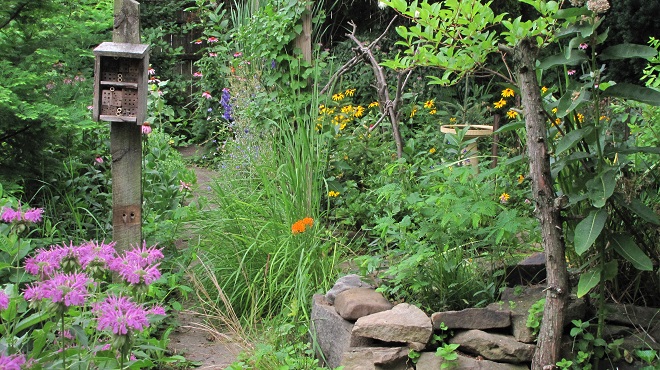
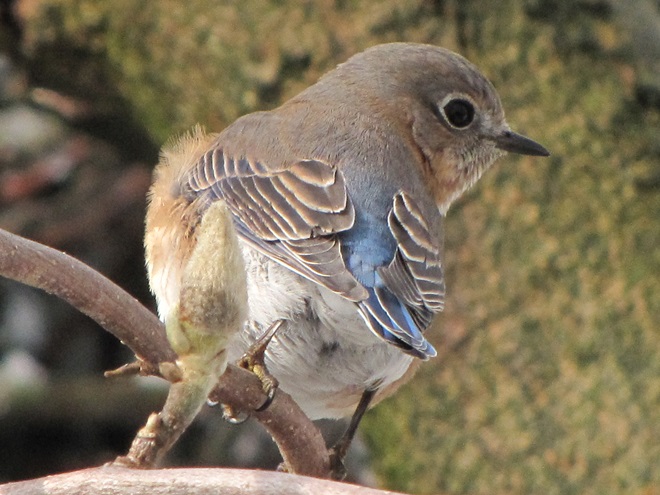
Again this year, Perry County is offering bluebird nest boxes for sale. The price?—just $12.00.
York County Conservation District Seedling Sale—
Orders due by: Friday, March 15, 2024
Pickup on: Thursday, April 11, 2024
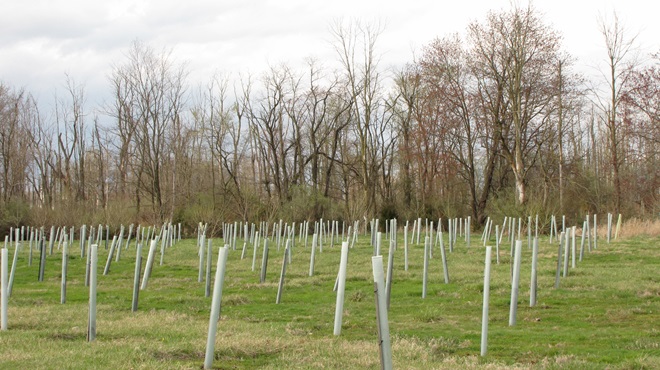
To get your deciduous trees like gums, maples, oaks, birches, and poplars off to a safe start, conservation district tree sales in Cumberland, Dauphin, Lancaster, and Perry Counties are offering protective tree shelters. Consider purchasing these plastic tubes and supporting stakes for each of your hardwoods, especially if you have hungry deer in your neighborhood.
There you have it. Be sure to check out each tree sale’s web page to find the selections you like, then get your order placed. The deadlines will be here before you know it and you wouldn’t want to miss values like these!
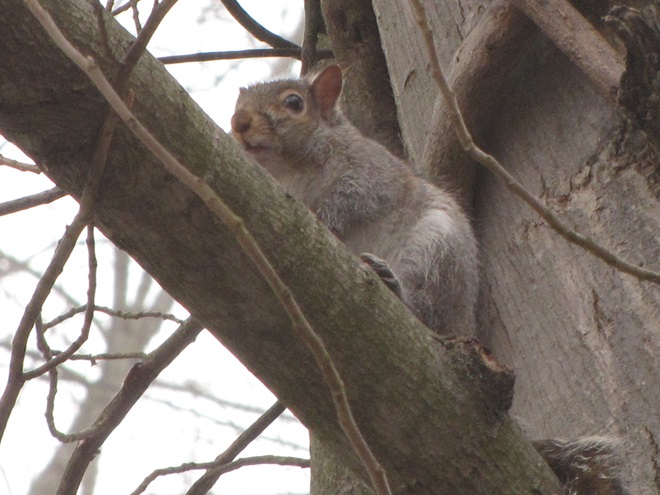
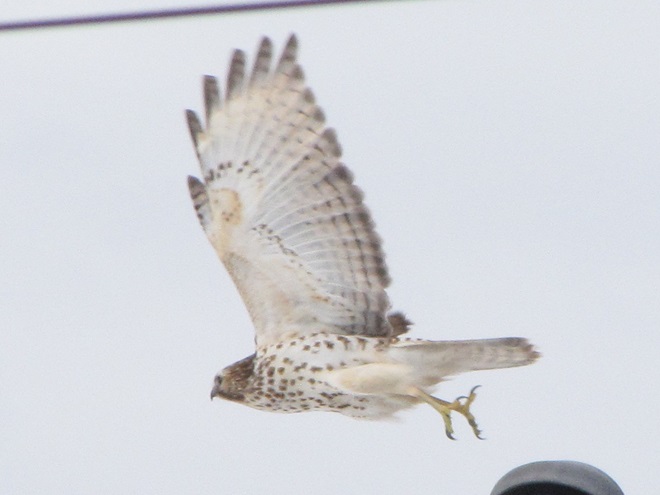
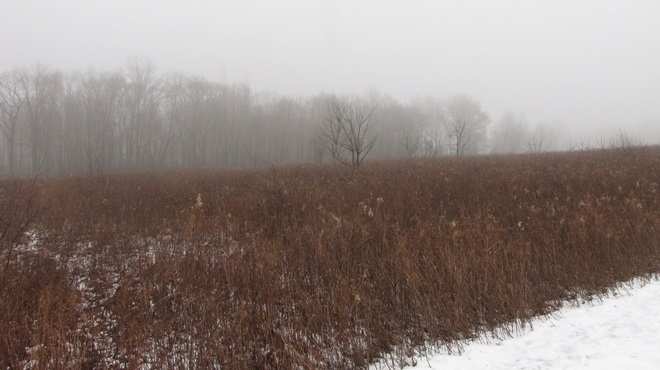
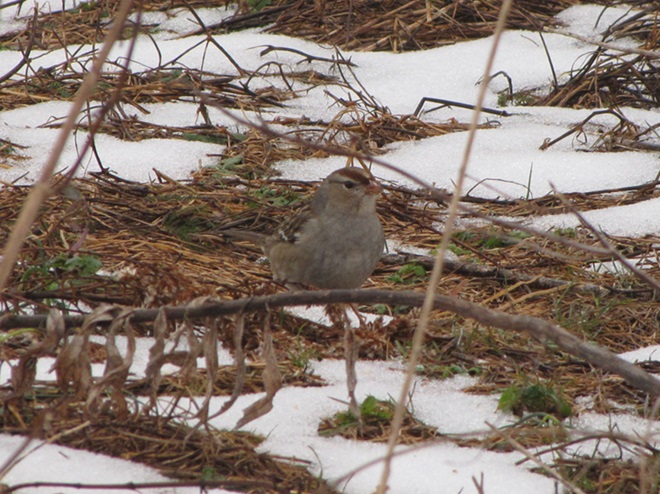
As week-old snow and ice slowly disappears from the Lower Susquehanna River Watershed landscape, we ventured out to see what might be lurking in the dense clouds of fog that for more than two days now have accompanied a mid-winter warm spell.
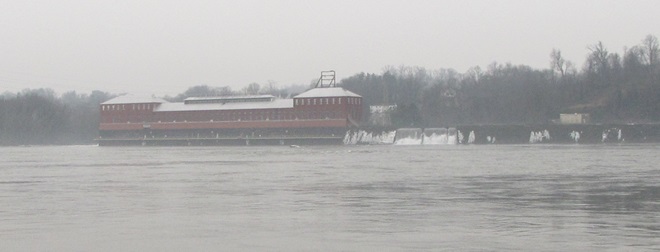
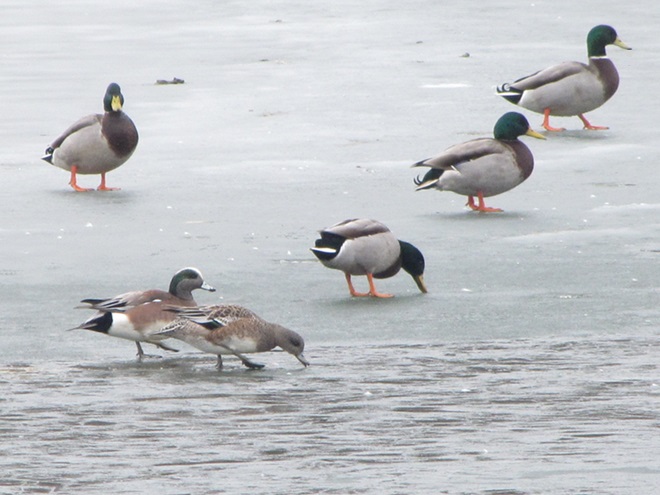
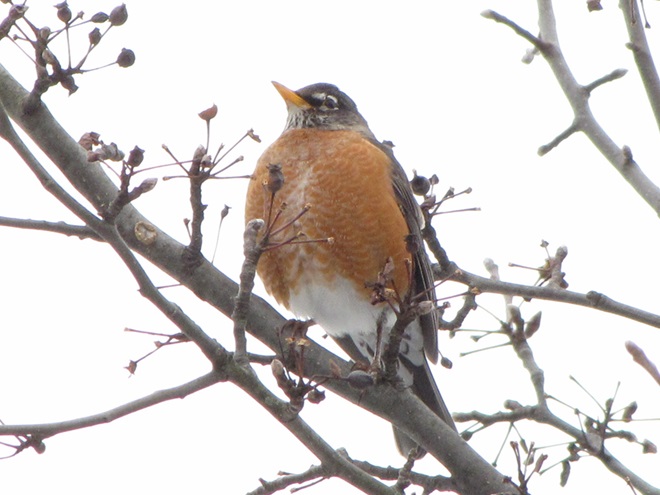
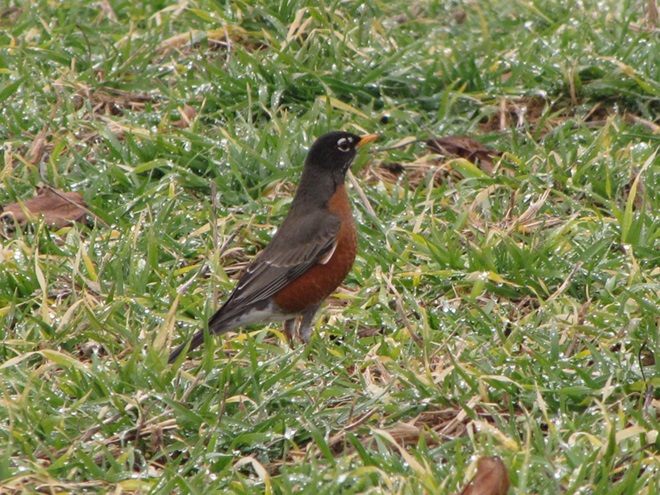
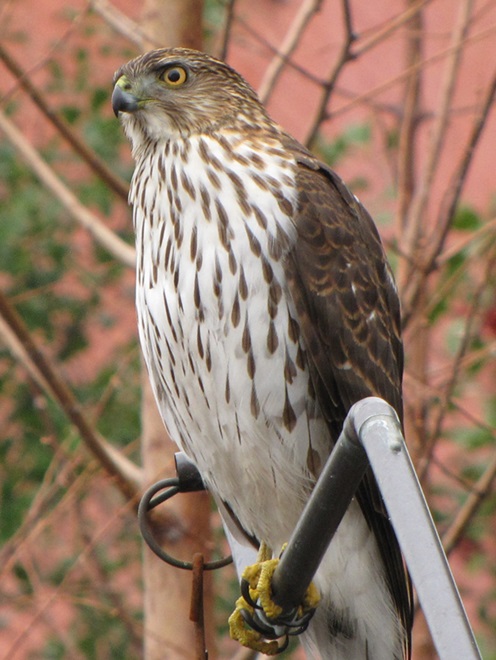
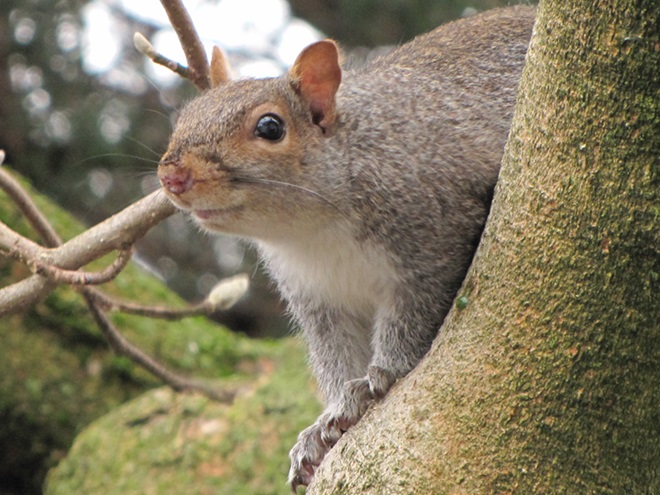
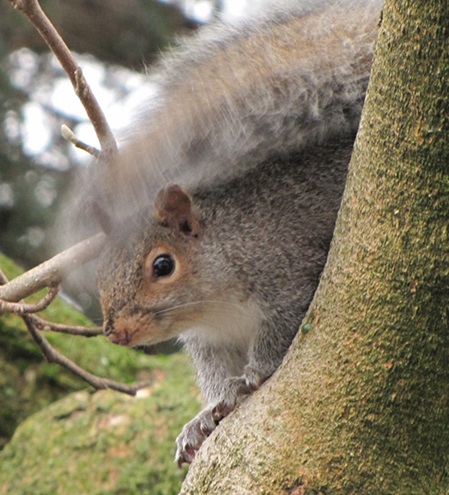
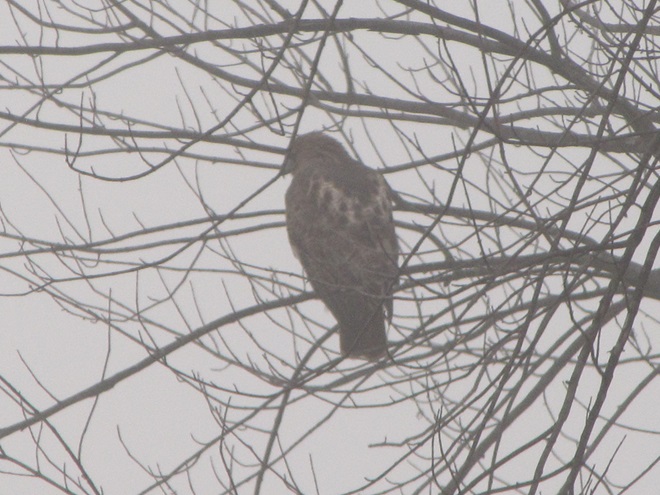
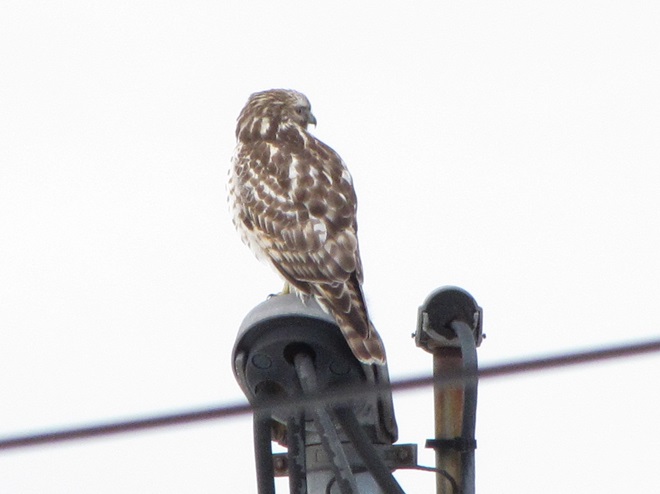
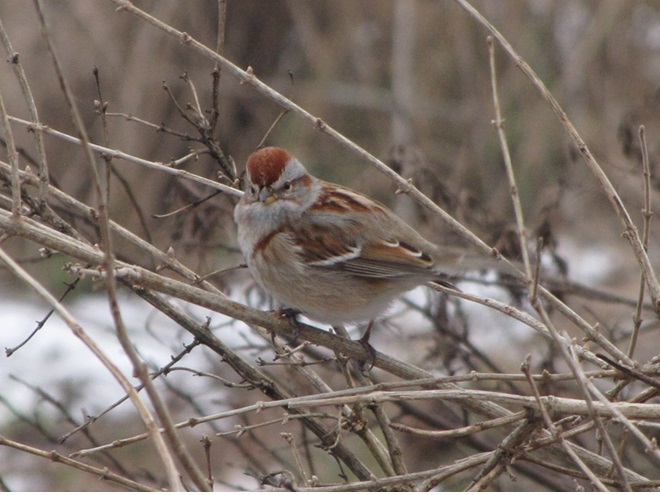
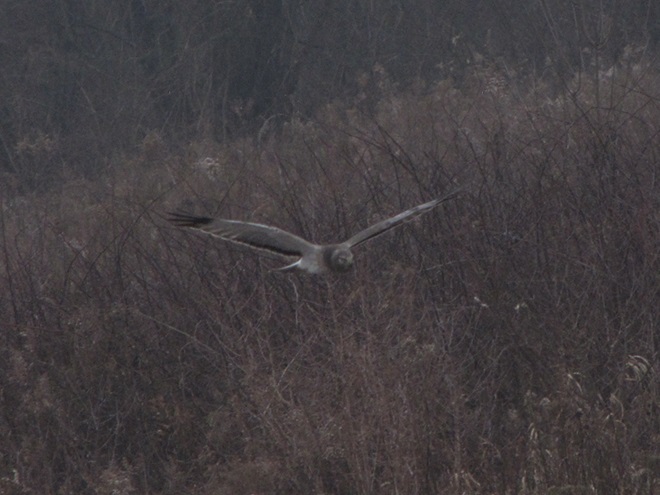
If scenes of a January thaw begin to awaken your hopes and aspirations for all things spring, then you’ll appreciate this pair of closing photographs…
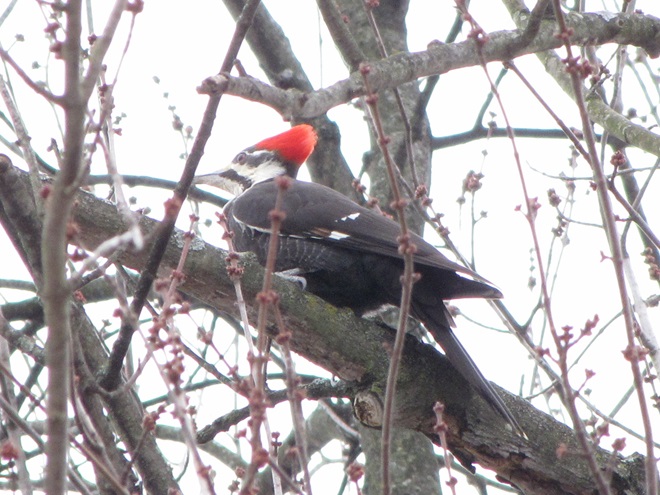
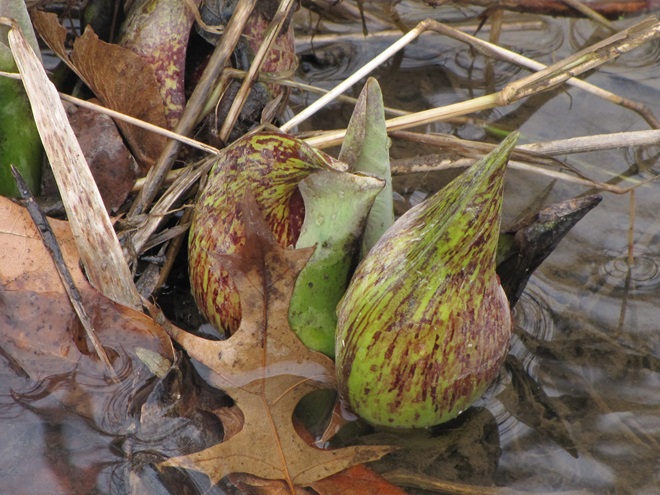
Just as bare ground along a plowed road attracts birds in an otherwise snow-covered landscape, a receding river or large stream can provide the same benefit to hungry avians looking for food following a winter storm.
Here is a small sample of some of the species seen during a brief stop along the Susquehanna earlier this week.
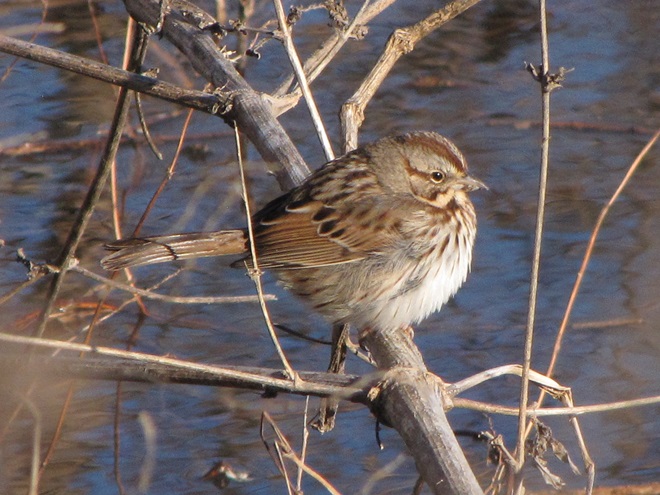
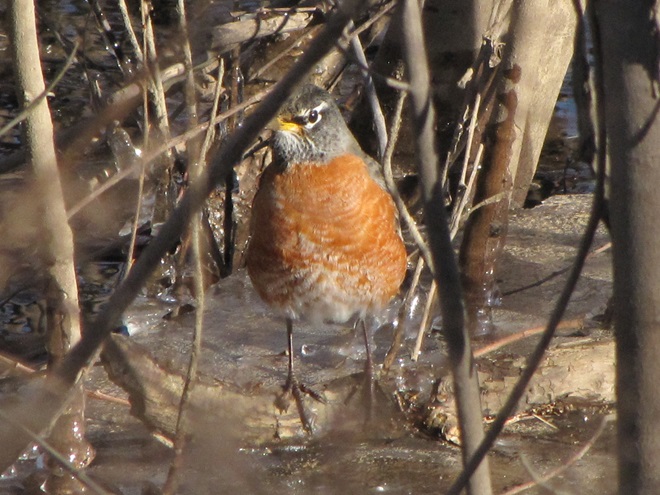
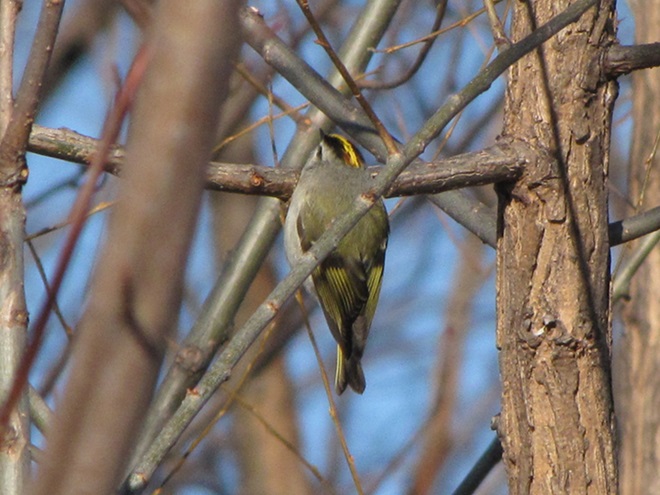
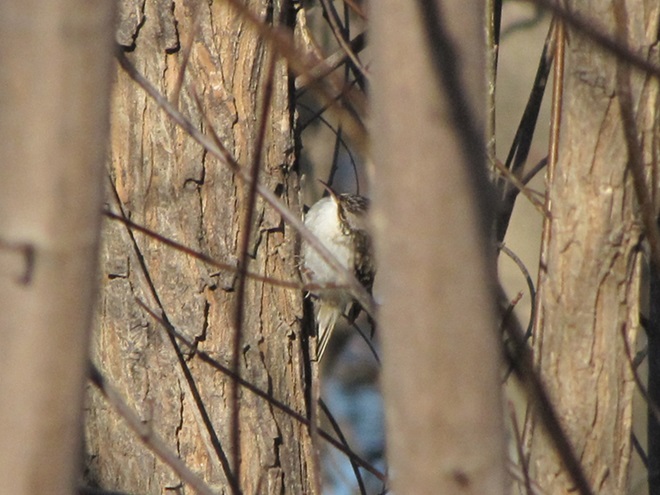
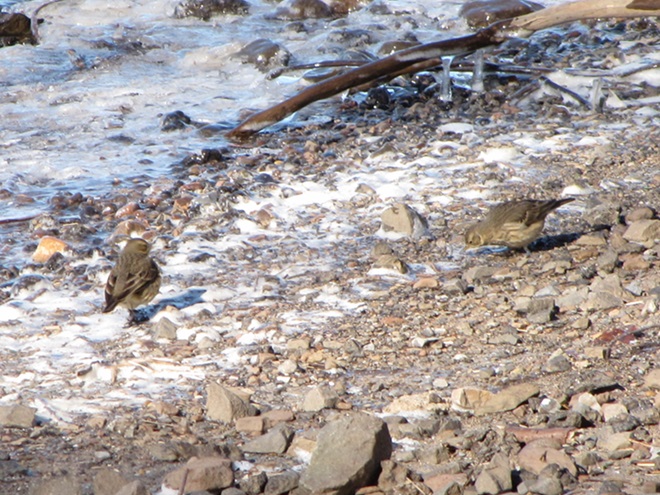
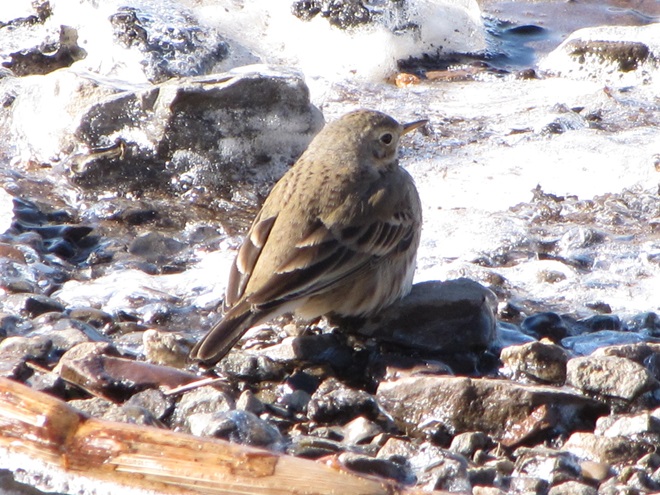
Heavy rains and snow melt have turned the main stem of the Susquehanna and its larger tributaries into a muddy torrent. For fish-eating (piscivorous) ducks, the poor visibility in fast-flowing turbid waters forces them to seek better places to dive for food. With man-made lakes and ponds throughout most of the region still ice-free, waterfowl are taking to these sources of open water until the rivers and streams recede and clear.
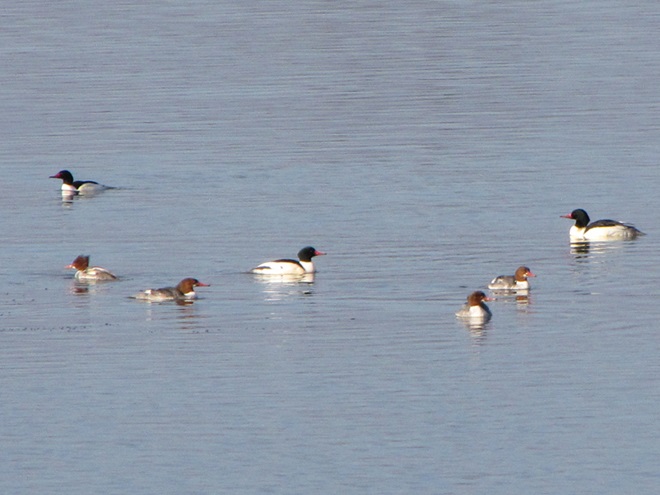
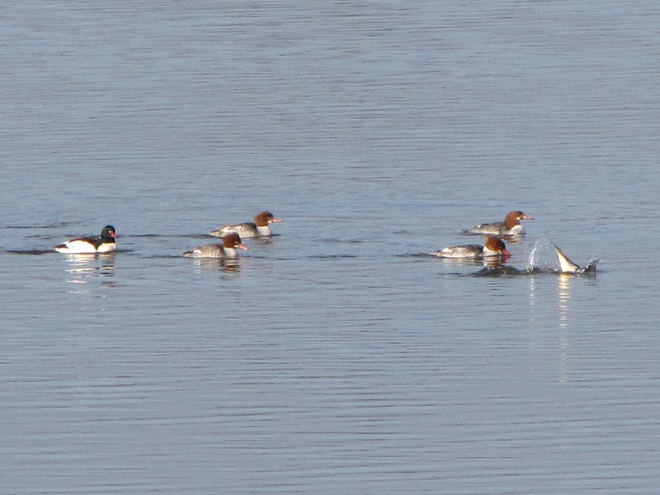
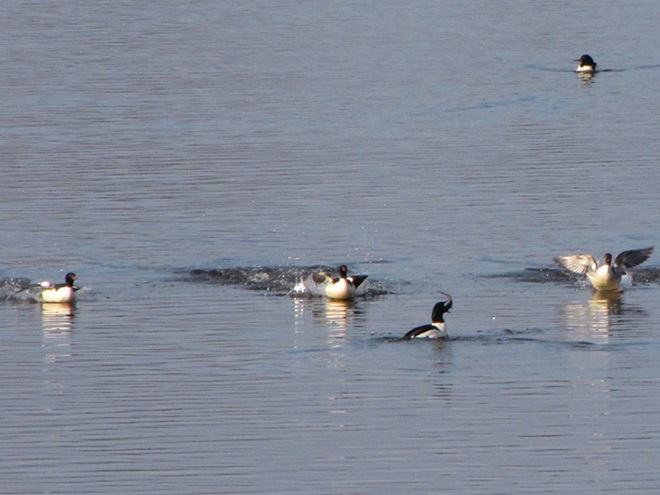
With a hard freeze on the way, the fight for life will get even more desperate in the coming weeks. Lakes will ice over and the struggle for food will intensify. Fortunately for mergansers and other piscivorous waterfowl, high water on the Susquehanna is expected to recede and clarify, allowing them to return to their traditional environs. Those with the most suitable skills and adaptations to survive until spring will have a chance to breed and pass their vigor on to a new generation of these amazing birds.
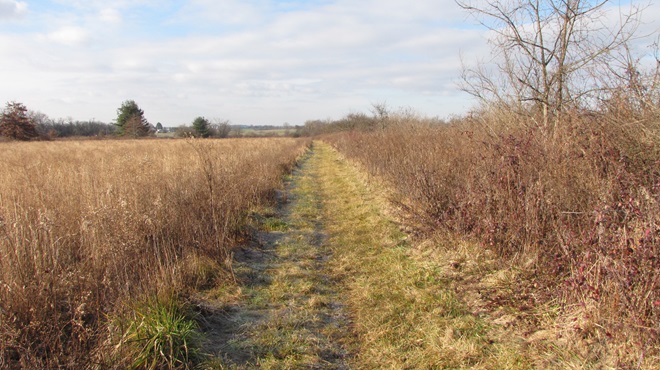
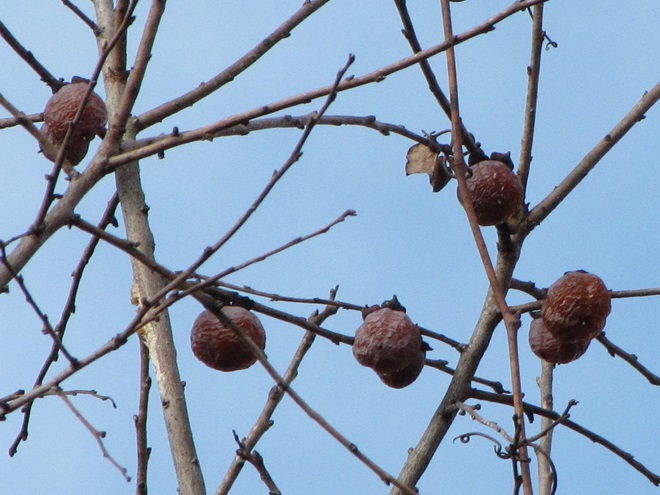
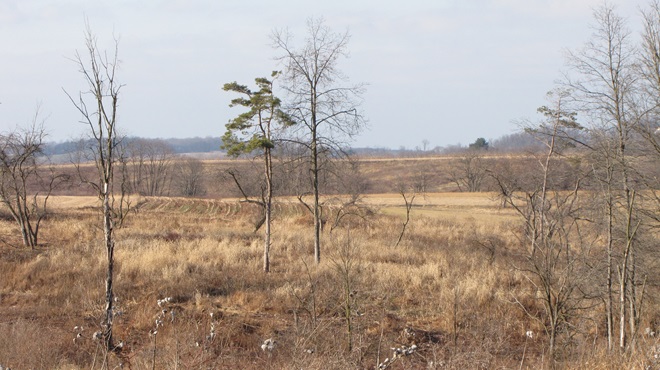
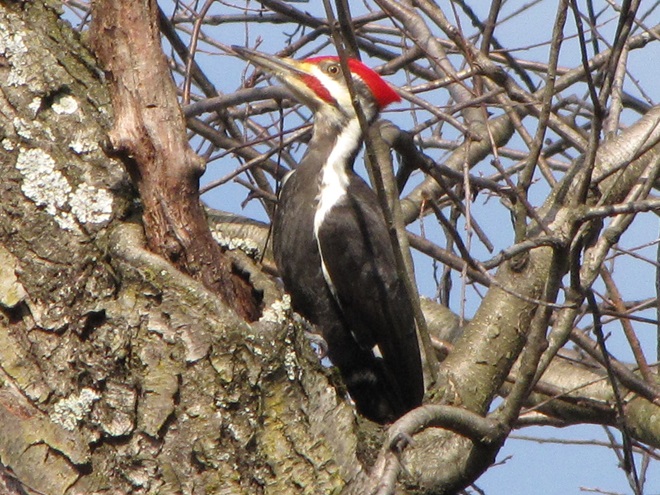
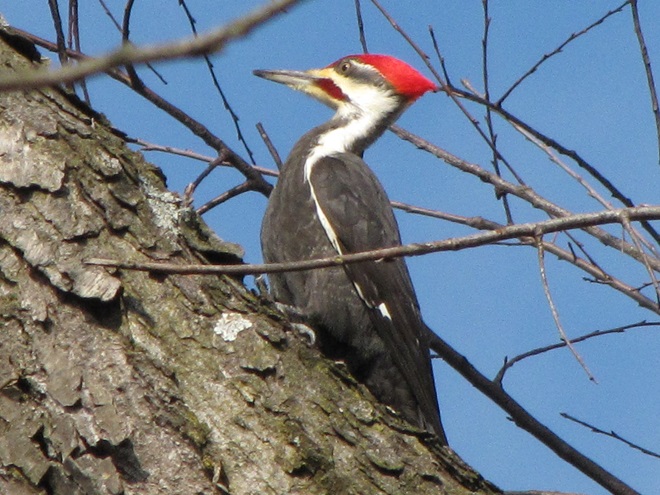
With the earth at perihelion (its closest approach to the sun) and with our home star just 27 degrees above the horizon at midday, bright low-angle light offered the perfect opportunity for doing some wildlife photography today. We visited a couple of grasslands managed by the Pennsylvania Game Commission to see what we could find…
I’m worried about the beaver. Here’s why.
Imagine a network of brooks and rivulets meandering through a mosaic of shrubby, sometimes boggy, marshland, purifying water and absorbing high volumes of flow during storm events. This was a typical low-gradient stream in the valleys of the Lower Susquehanna River Watershed in the days prior to the arrival of the waves of trans-Atlantic human migrants that started to inundate the area during the seventeenth century. Then, a frenzy of trapping, tree chopping, mill building, and stream channelization accompanied the east to west surge of settlement across the region. The first casualty: the indispensable lowlands manager, the North American Beaver (Castor canadensis).
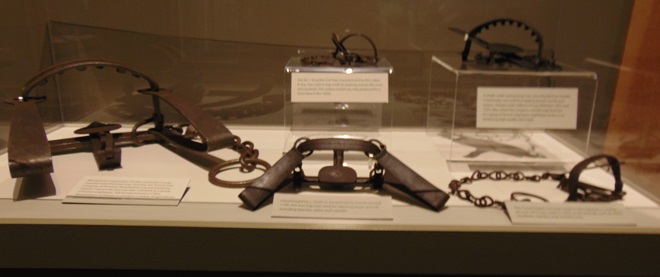
Without the widespread presence of beavers, stream ecology quickly collapsed. Pristine waterways were all at once gone, as were many of their floral and faunal inhabitants. It was a streams-to-sewers saga completed in just one generation. So, if we really want to restore our creeks and rivers, maybe we need to give the North American Beaver some space and respect. After all, we as a species have yet to build an environmentally friendly dam and have yet to fully restore a wetland to its natural state. The beaver is nature’s irreplaceable silt deposition engineer and could be called the 007 of wetland construction—doomed upon discovery, it must do its work without being noticed, but nobody does it better.
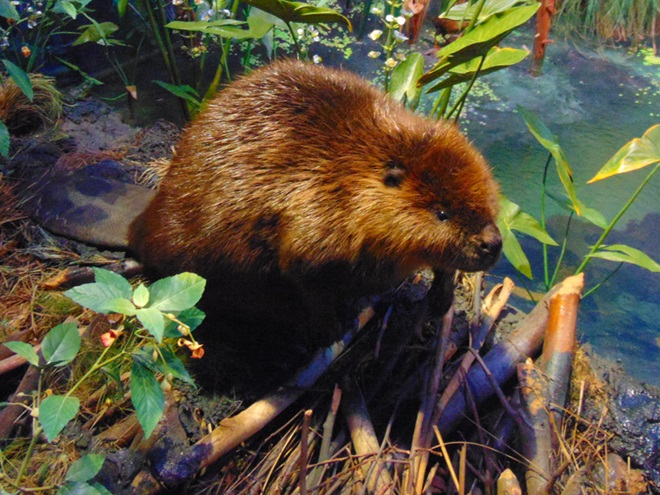
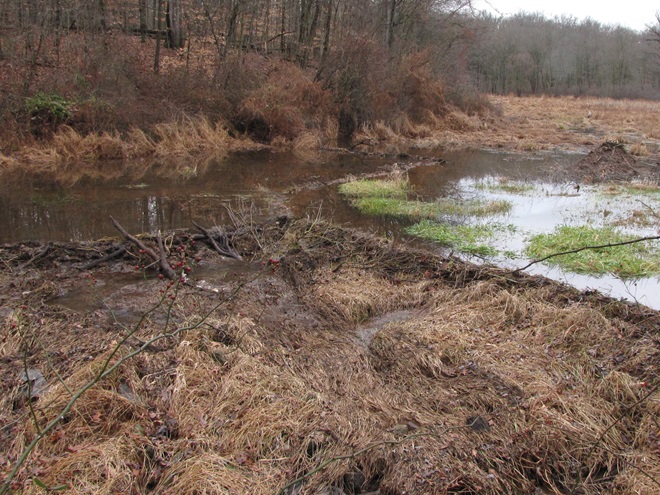
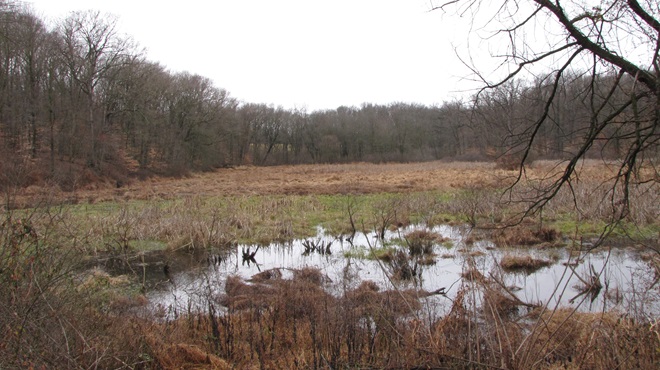
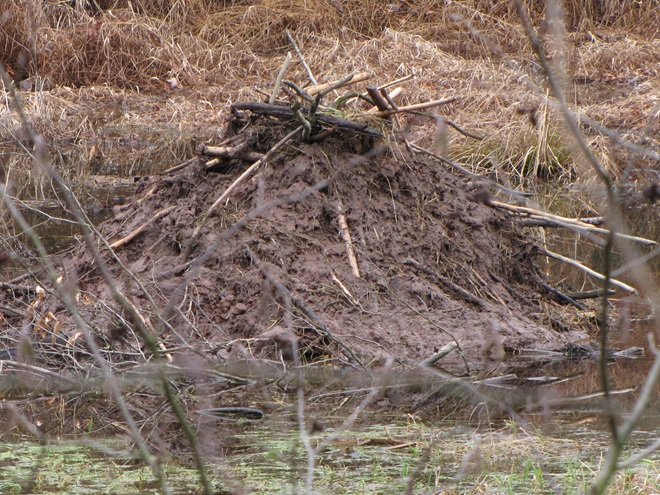
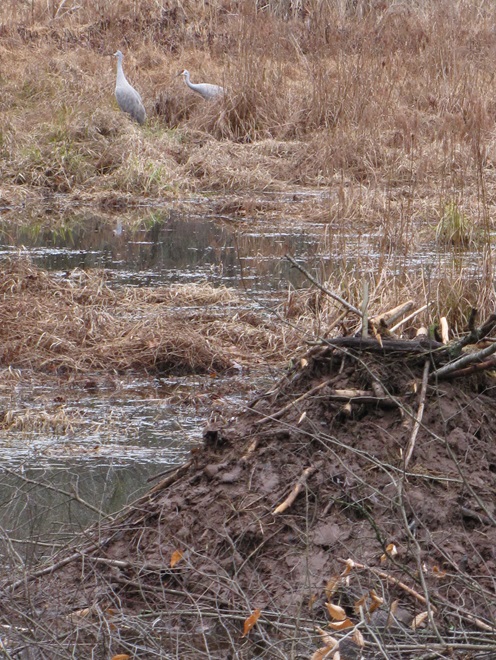
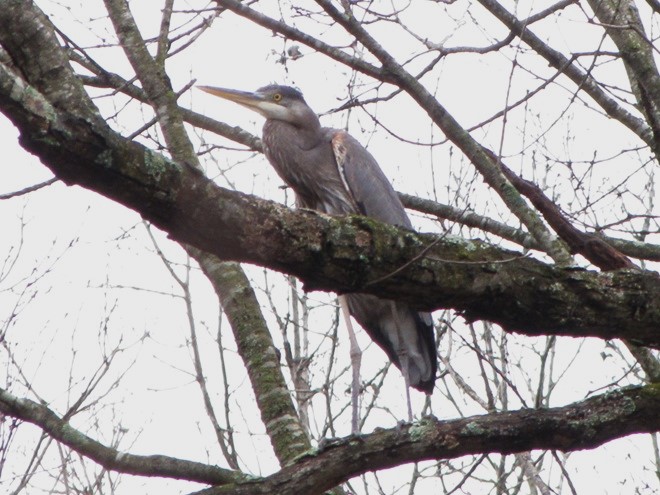
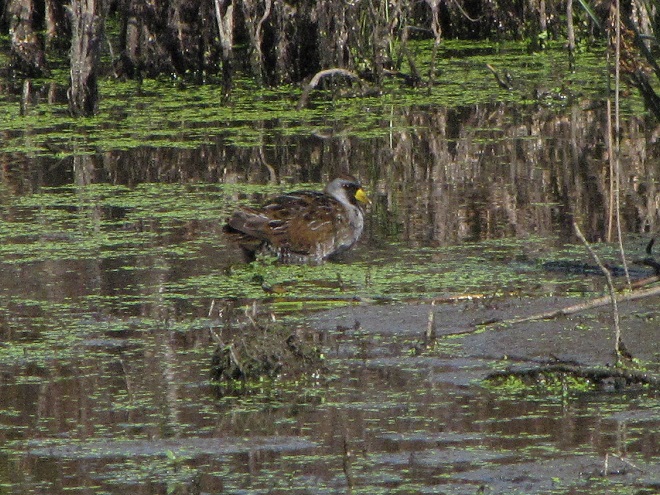
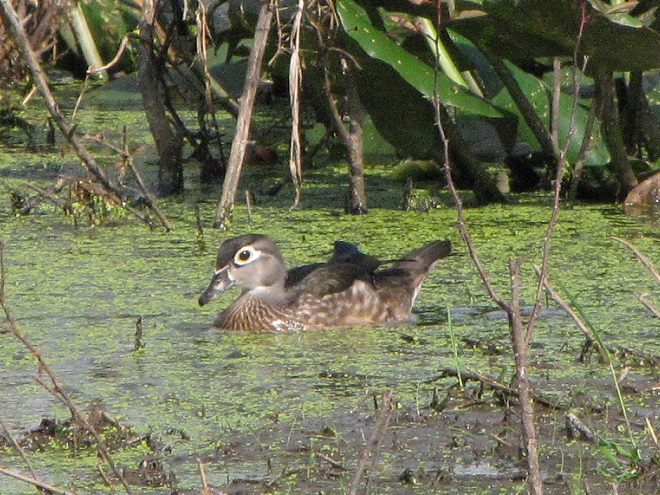
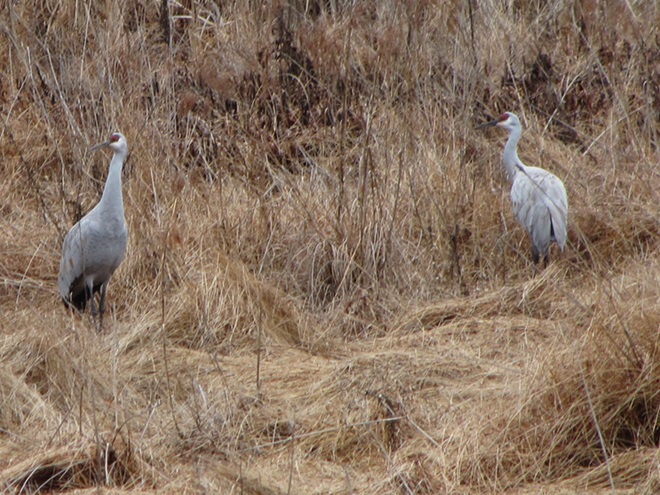
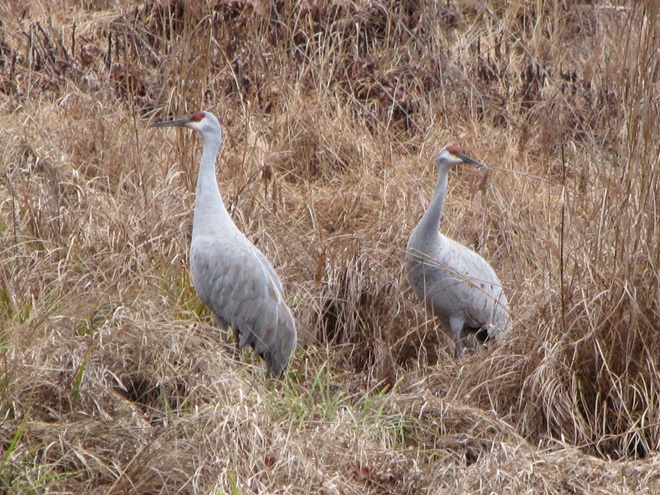
Few landowners are receptive to the arrival of North American Beavers as guests or neighbors. This is indeed unfortunate. Upon discovery, beavers, like wolves, coyotes, sharks, spiders, snakes, and so many other animals, evoke an irrational negative response from the majority of people. This too is quite unfortunate, and foolish.
North American Beavers spend their lives and construct their dams, pools, and lodges exclusively within floodplains—lands that are going to flood. Their existence should create no conflict with the day to day business of human beings. But humans can’t resist encroachment into beaver territory. Because they lack any basic understanding of floodplain function, people look at these indispensable lowlands as something that must be eliminated in the name of progress. They’ll fill them with soil, stone, rock, asphalt, concrete, and all kinds of debris. You name it, they’ll dump it. It’s an ill-fated effort to eliminate these vital areas and the high waters that occasionally inundate them. Having the audacity to believe that the threat of flooding has been mitigated, buildings and poorly engineered roads and bridges are constructed in these “reclaimed lands”. Much of the Lower Susquehanna River Watershed has now been subjected to over three hundred years-worth of these “improvements” within spaces that are and will remain—floodplains. Face it folks, they’re going to flood, no matter what we do to try to stop it. And as a matter of fact, the more junk we put into them, the more we displace flood waters into areas that otherwise would not have been impacted! It’s absolute madness.
By now we should know that floodplains are going to flood. And by now we should know that the impacts of flooding are costly where poor municipal planning and negligent civil engineering have been the norm for decades and decades. So aren’t we tired of hearing the endless squawking that goes on every time we get more than an inch of rain? Imagine the difference it would make if we backed out and turned over just one quarter or, better yet, one half of the mileage along streams in the Lower Susquehanna River Watershed to North American Beavers. No more mowing, plowing, grazing, dumping, paving, spraying, or building—just leave it to the beavers. Think of the improvements they would make to floodplain function, water quality, and much-needed wildlife habitat. Could you do it? Could you overcome the typical emotional response to beavers arriving on your property and instead of issuing a death warrant, welcome them as the talented engineers they are? I’ll bet you could.
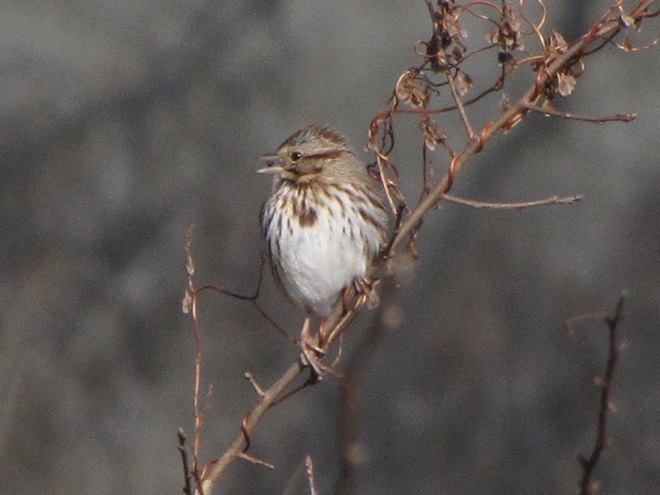
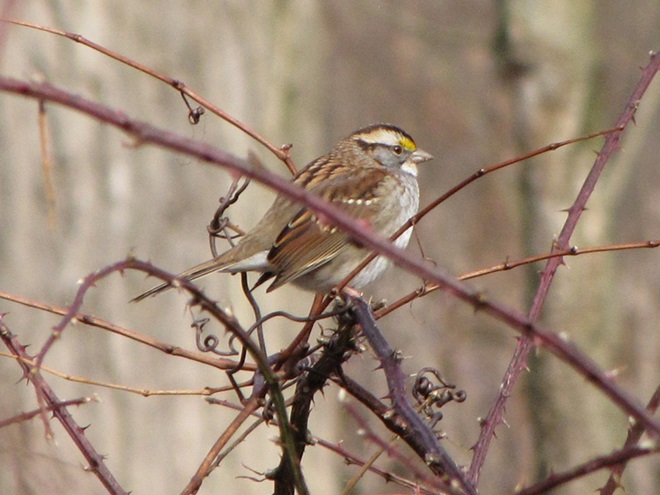
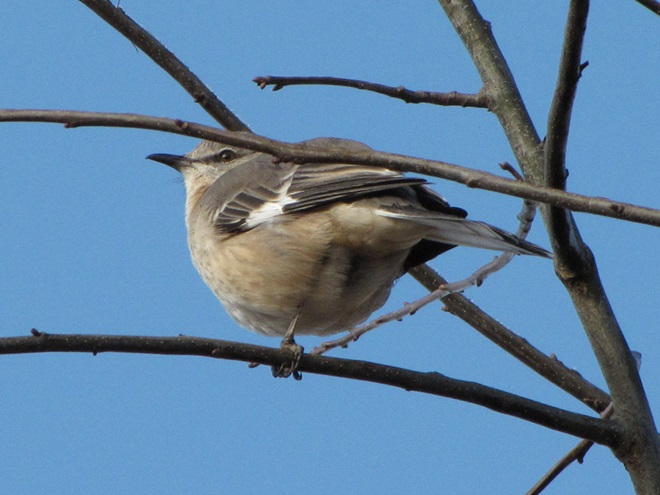
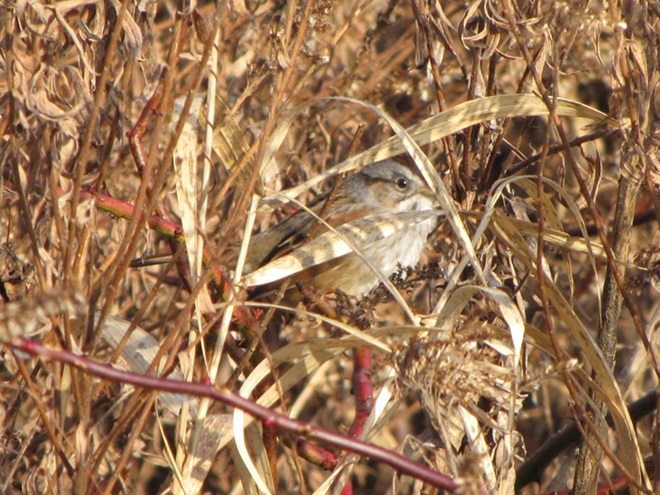
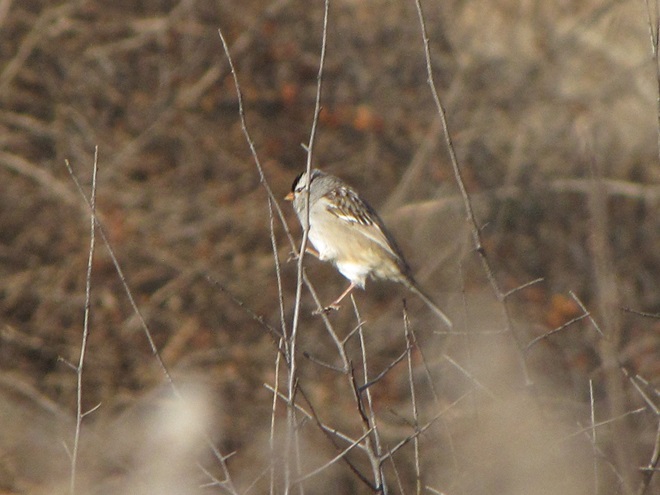
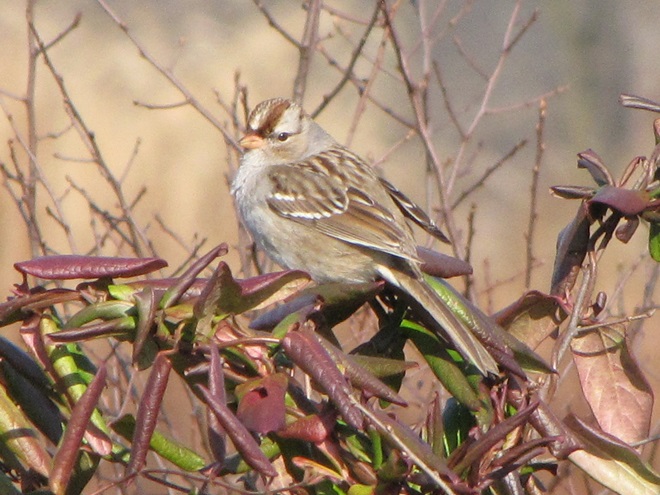
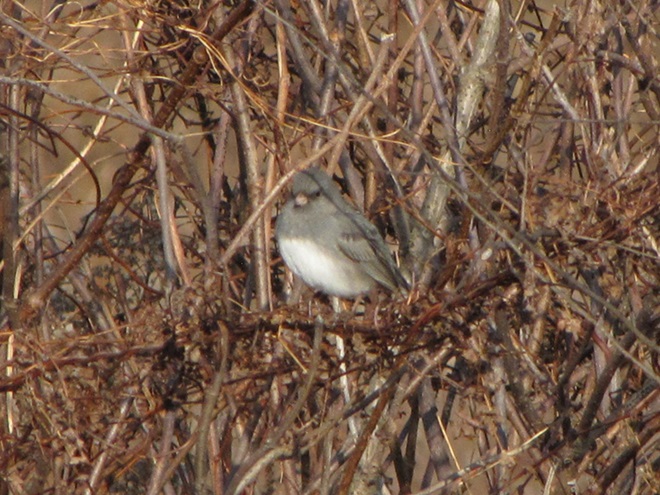
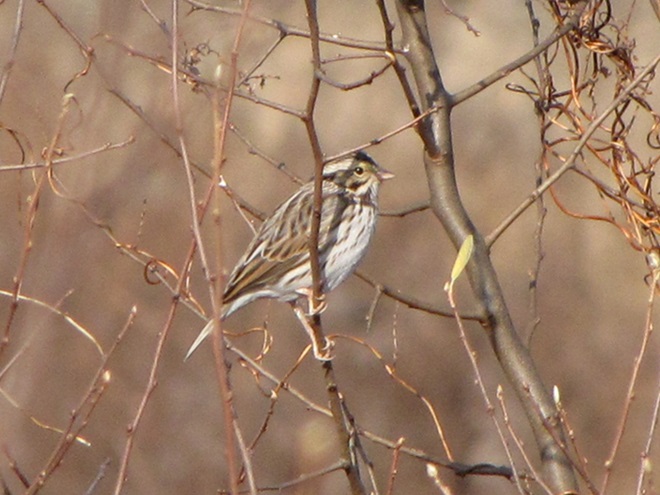
As the annual autumn songbird migration begins to reach its end, native sparrows can be found concentrating in fallow fields, early successional thickets, and brushy margins along forest edges throughout the Lower Susquehanna River Watershed.
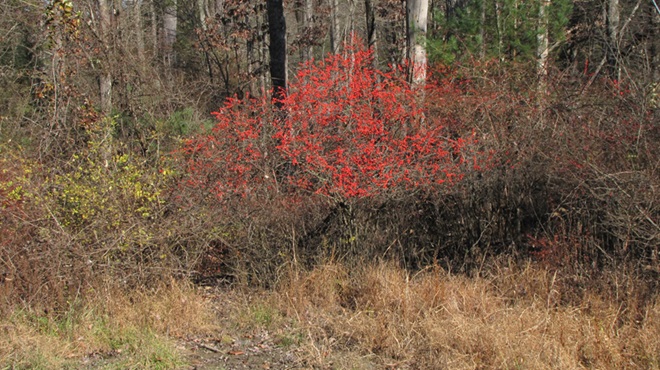
Visit native sparrow habitat during mid-to-late November and you have a good chance of seeing these species and more…
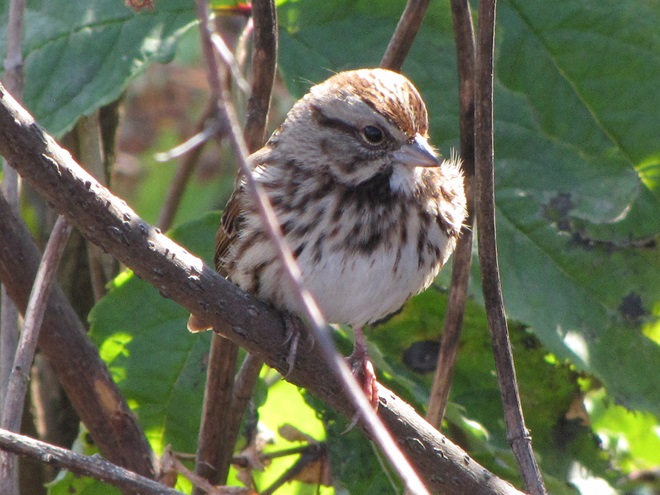
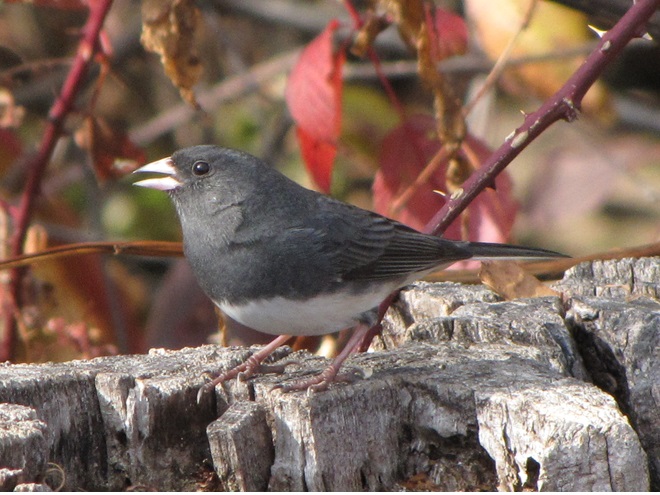
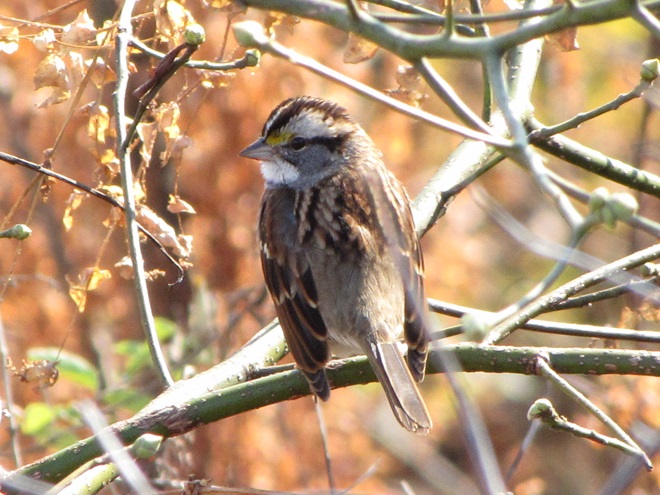
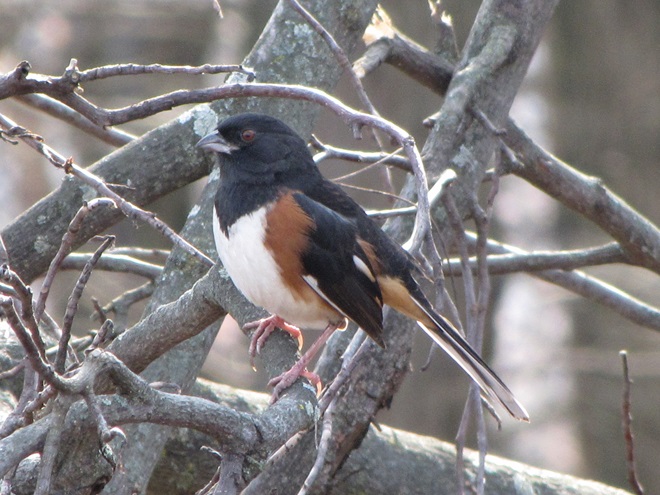
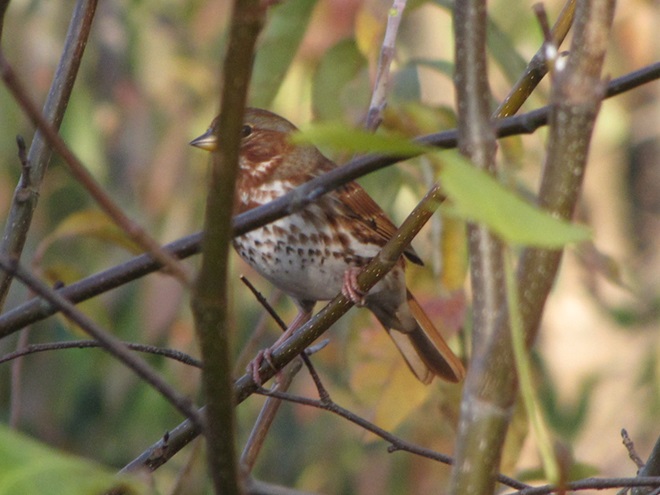
If you’re lucky enough to live where non-native House Sparrows won’t overrun your bird feeders, you can offer white millet as a supplement to the wild foods these beautiful sparrows might find in your garden sanctuary. Give it a try!
What’s all this buzz about bees? And what’s a hymanopteran? Well, let’s see.
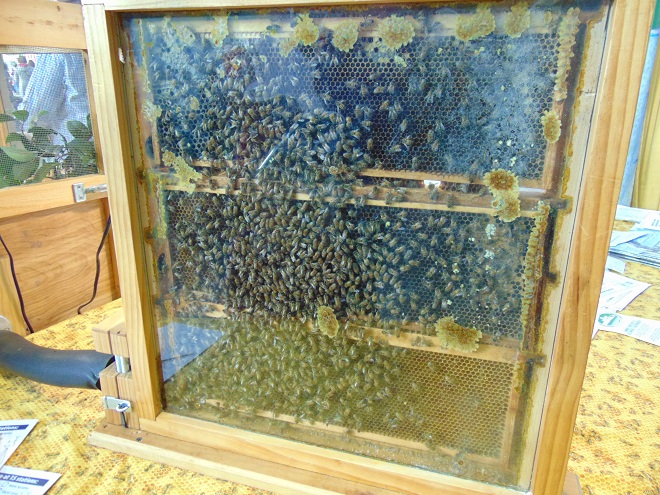
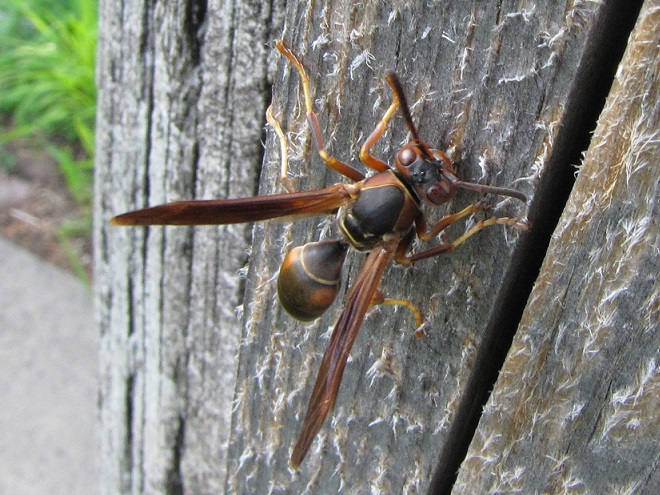
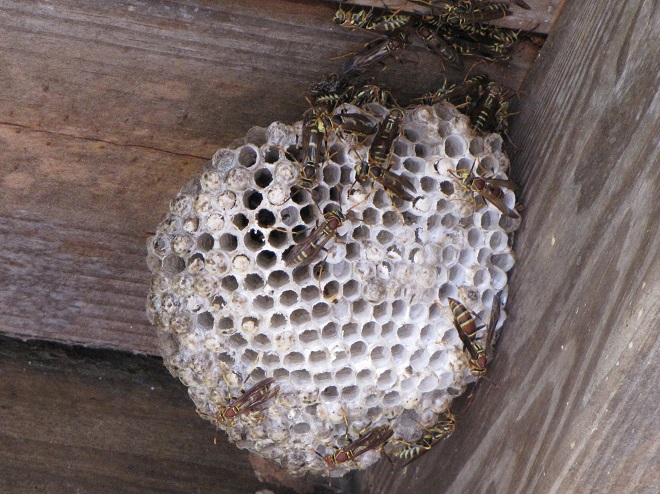
Hymanoptera—our bees, wasps, hornets and ants—are generally considered to be our most evolved insects. Some form complex social colonies. Others lead solitary lives. Many are essential pollinators of flowering plants, including cultivars that provide food for people around the world. There are those with stingers for disabling prey and defending themselves and their nests. And then there are those without stingers. The predatory species are frequently regarded to be the most significant biological controls of the insects that might otherwise become destructive pests. The vast majority of the Hymanoptera show no aggression toward humans, a demeanor that is seldom reciprocated.
Late summer and early autumn is a critical time for the Hymanoptera. Most species are at their peak of abundance during this time of year, but many of the adult insects face certain death with the coming of freezing weather. Those that will perish are busy, either individually or as members of a colony, creating shelter and gathering food to nourish the larvae that will repopulate the environs with a new generation of adults next year. Without abundant sources of protein and carbohydrates, these efforts can quickly fail. Protein is stored for use by the larval insects upon hatching from their eggs. Because the eggs are typically deposited in a cell directly upon the cache of protein, the larvae can begin feeding and growing immediately. To provide energy for collecting protein and nesting materials, and in some cases excavating nest chambers, Hymanoptera seek out sources of carbohydrates. Species that remain active during cold weather must store up enough of a carbohydrate reserve to make it through the winter. Honey Bees make honey for this purpose. As you are about to see, members of this suborder rely predominately upon pollen or insect prey for protein, and upon nectar and/or honeydew for carbohydrates.
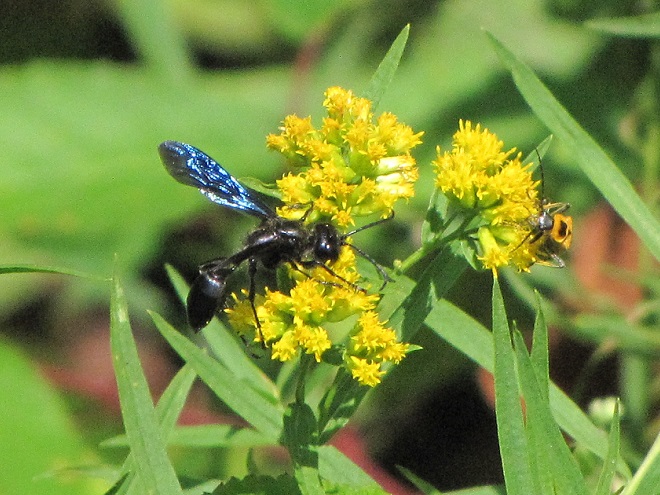
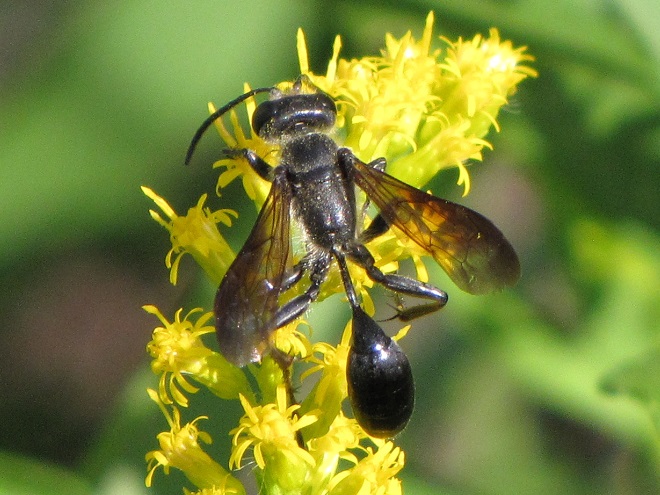
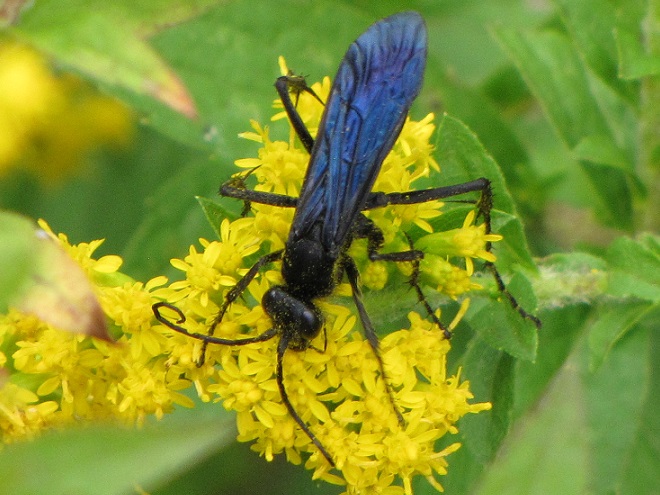
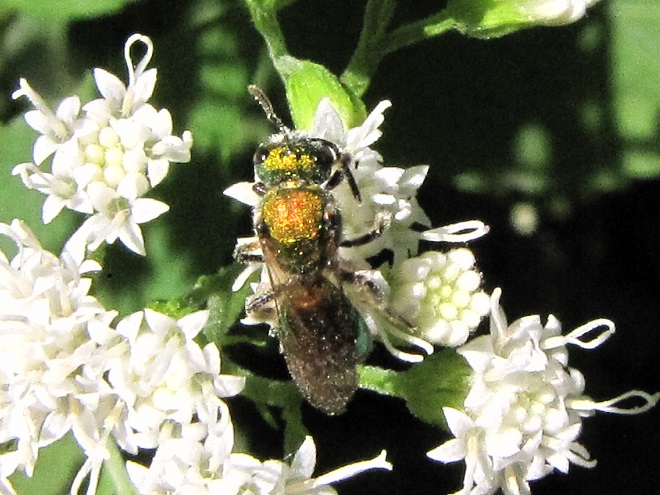
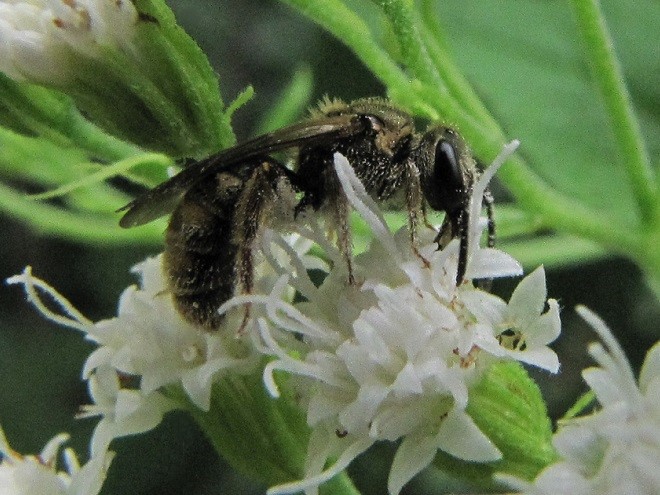
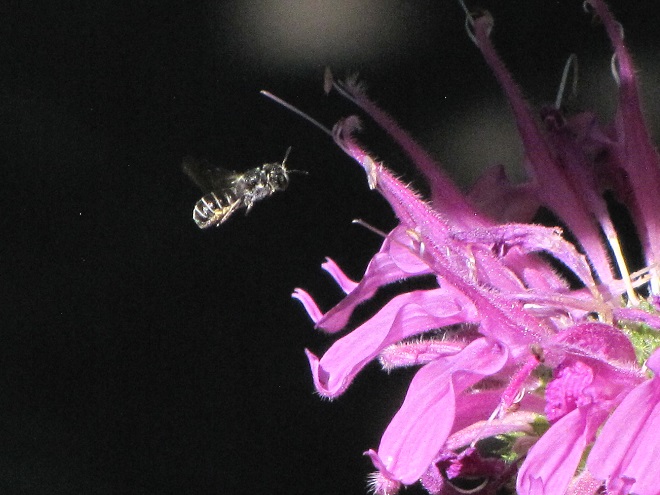
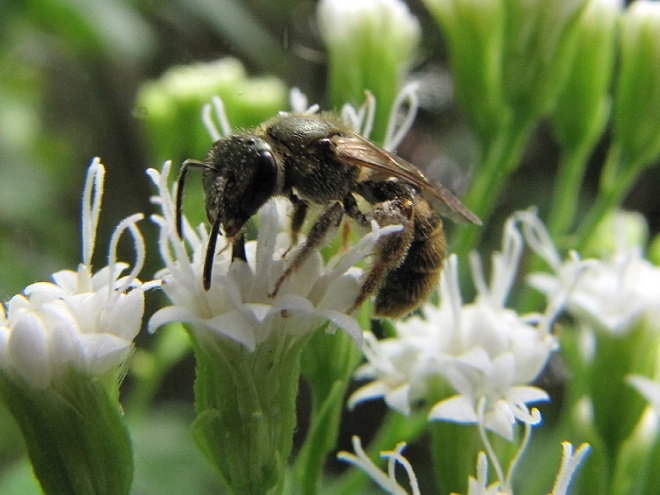
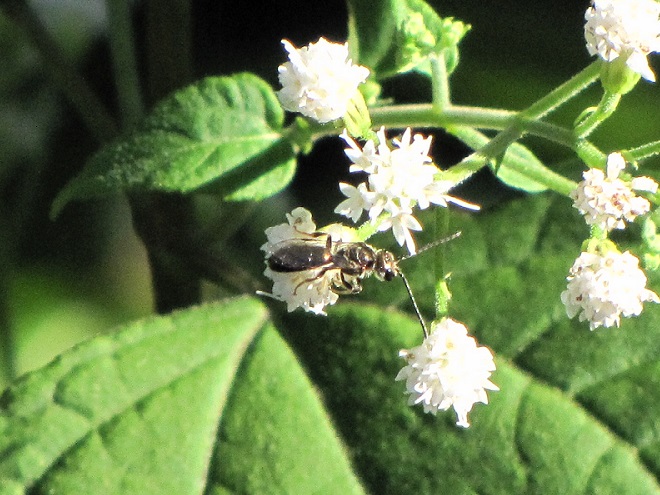
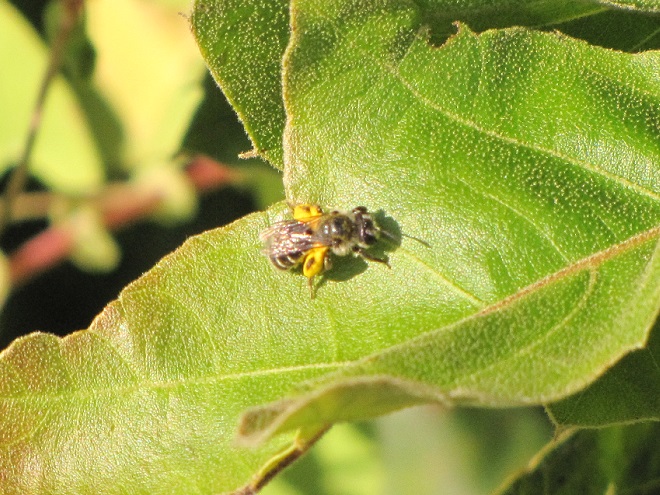
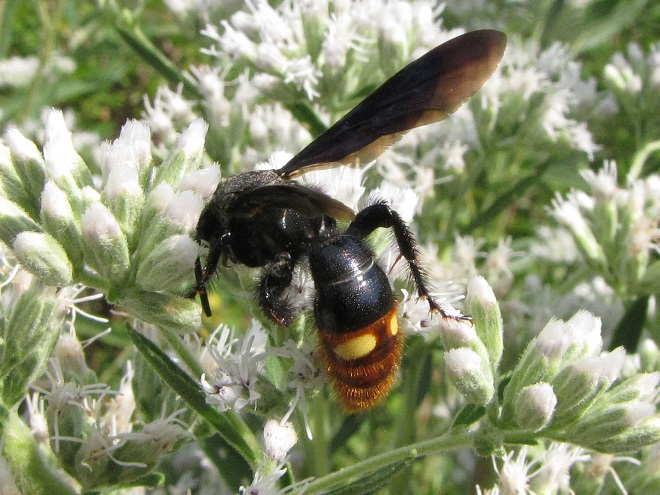
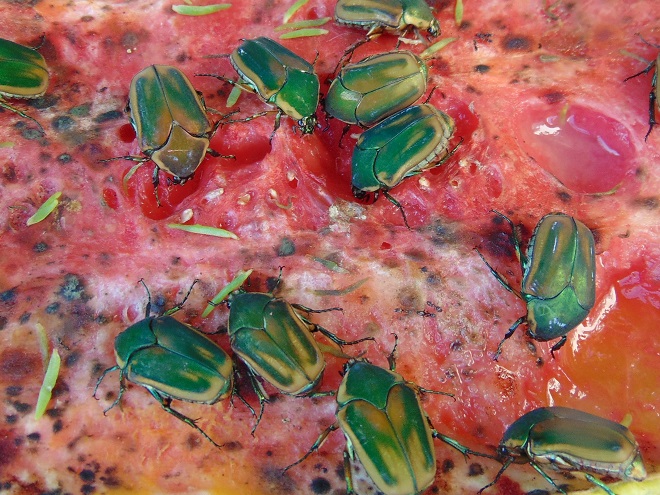
We’ve assembled here a collection of images and some short commentary describing nearly two dozen kinds of Hymanoptera found in the Lower Susquehanna River Watershed, the majority photographed as they busily collected provisions during recent weeks. Let’s see what some of these fascinating hymanopterans are up to…
SOLITARY WASPS
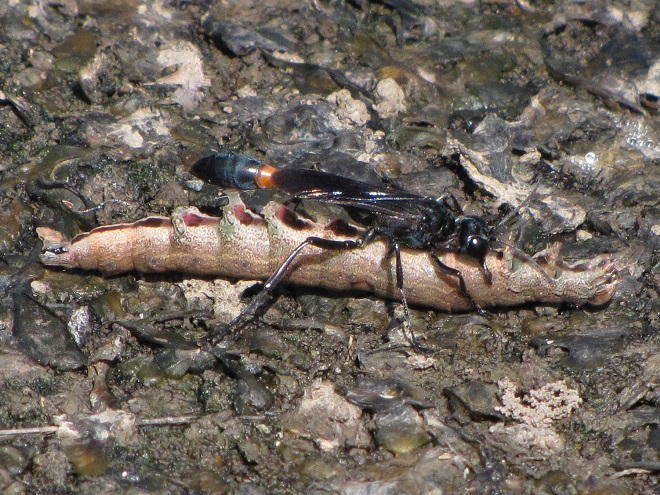
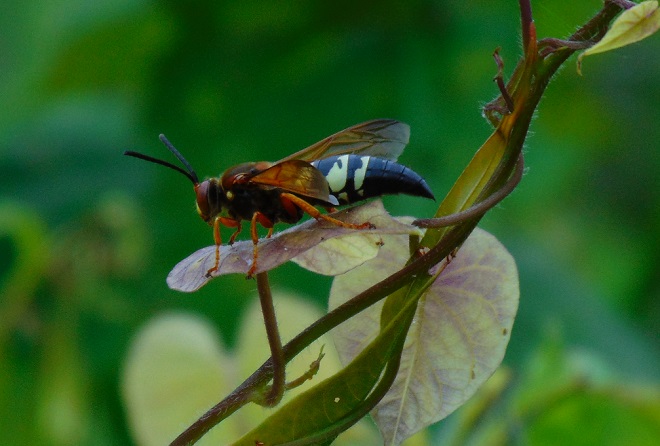
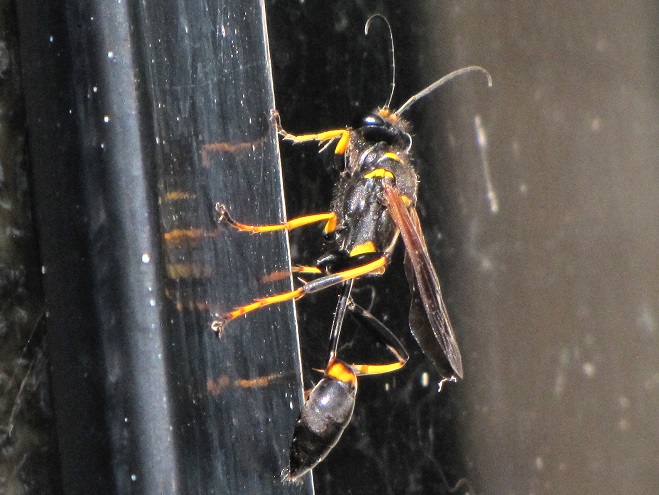
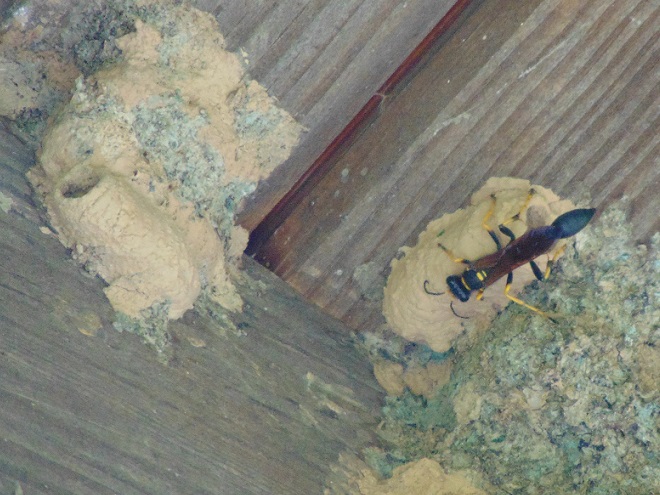
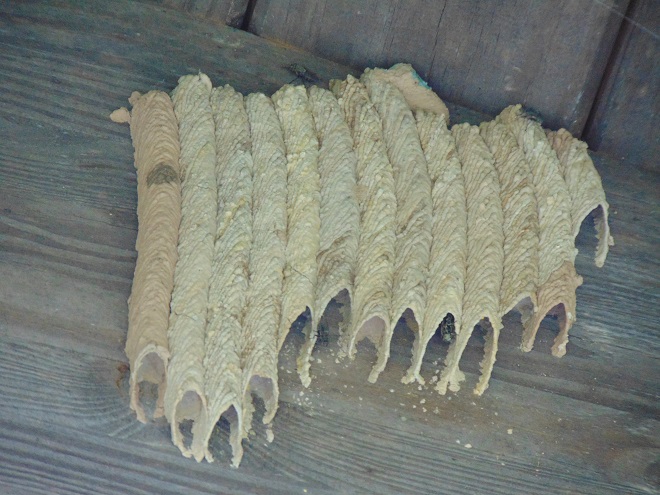
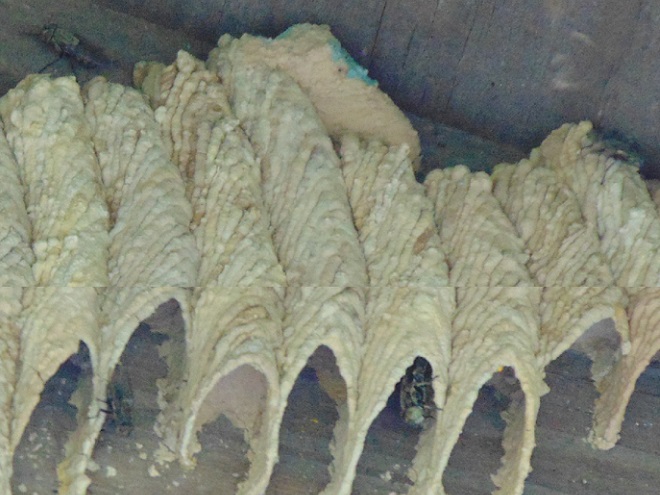
CUCKOO WASPS
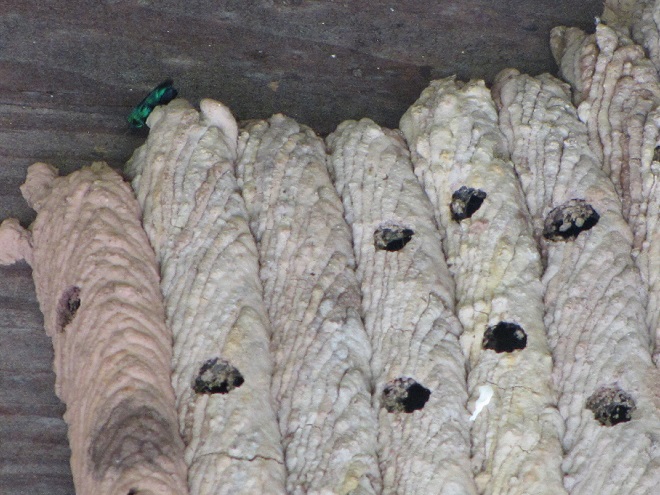
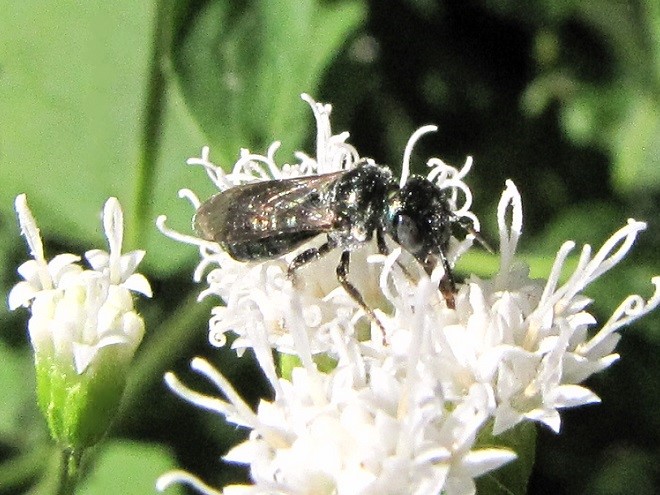
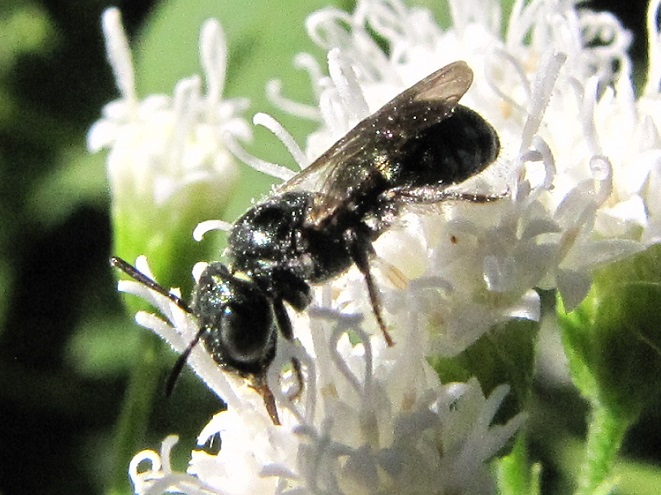
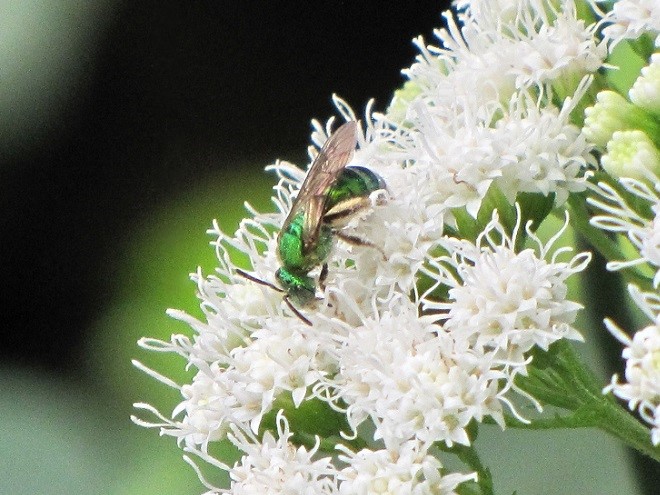
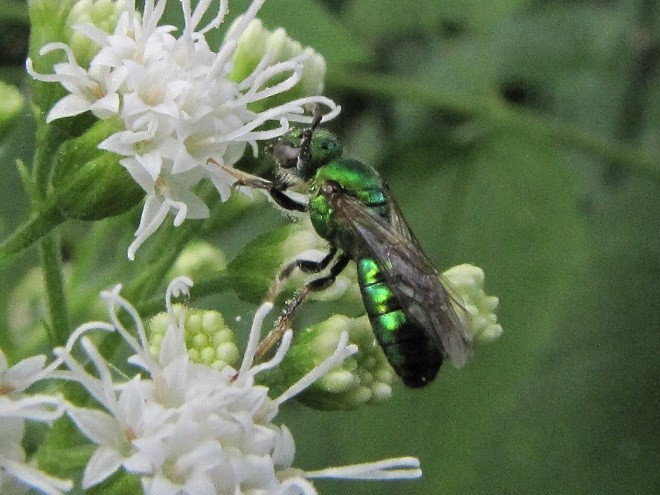
SWEAT BEES
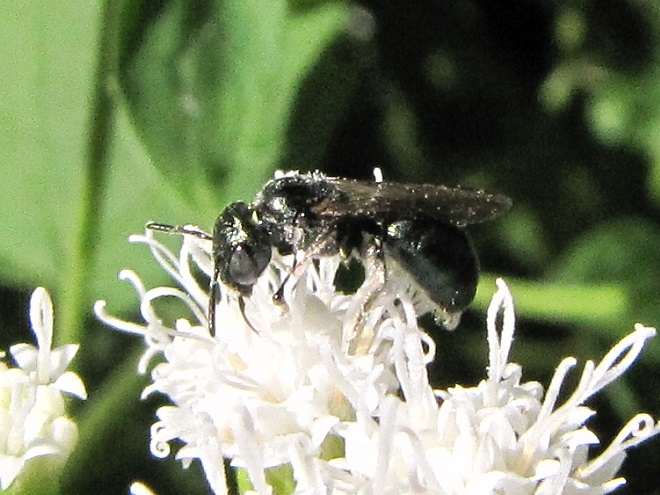
LEAFCUTTER AND MASON BEES
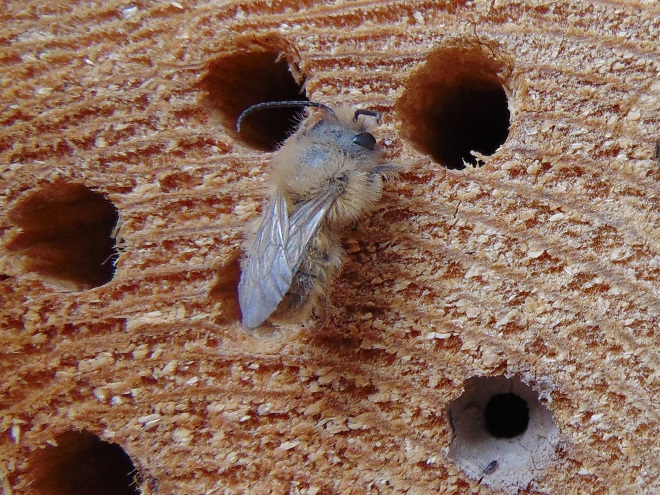
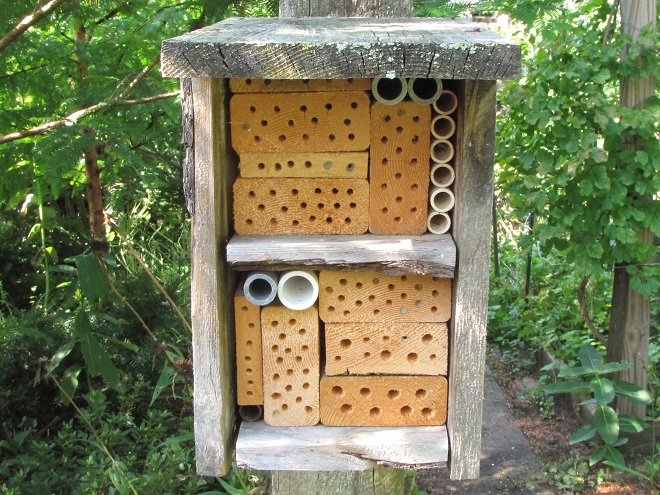
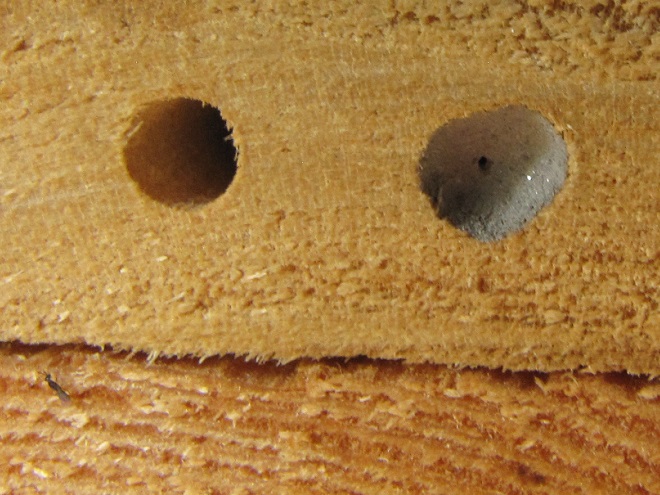
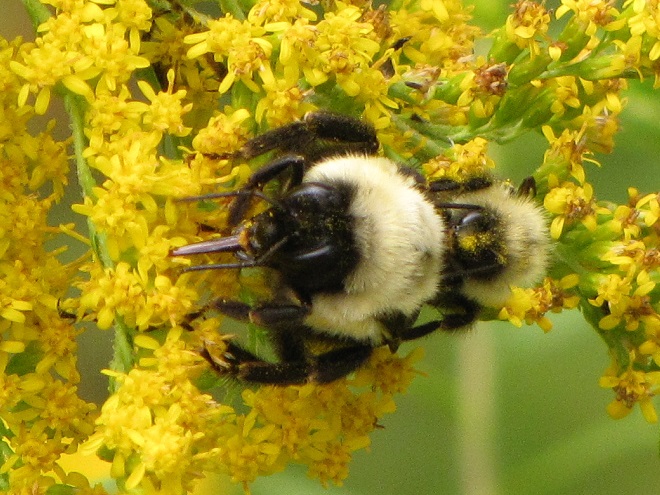
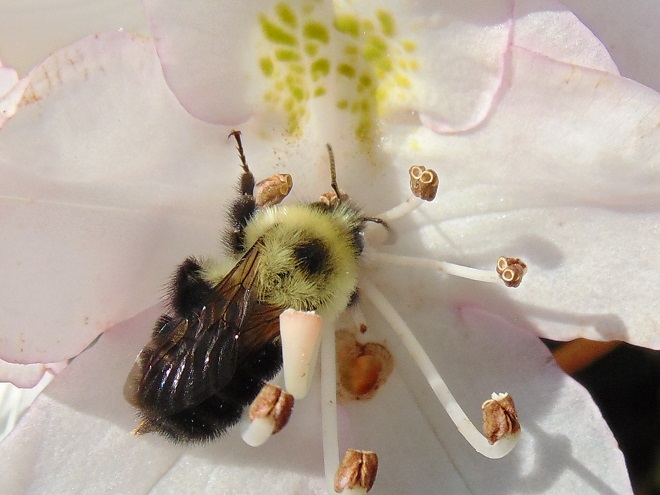
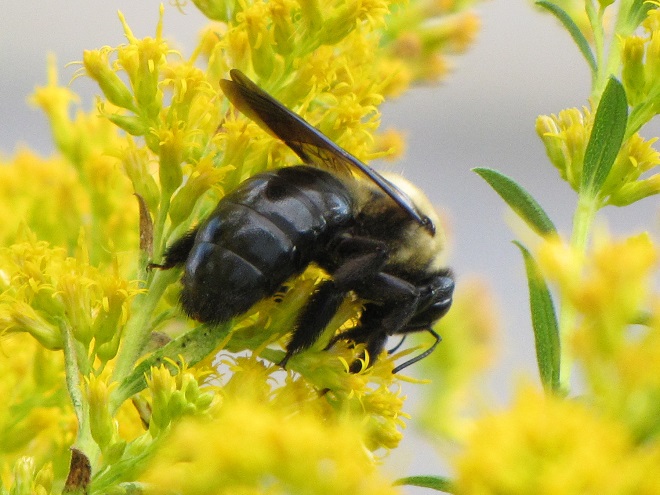
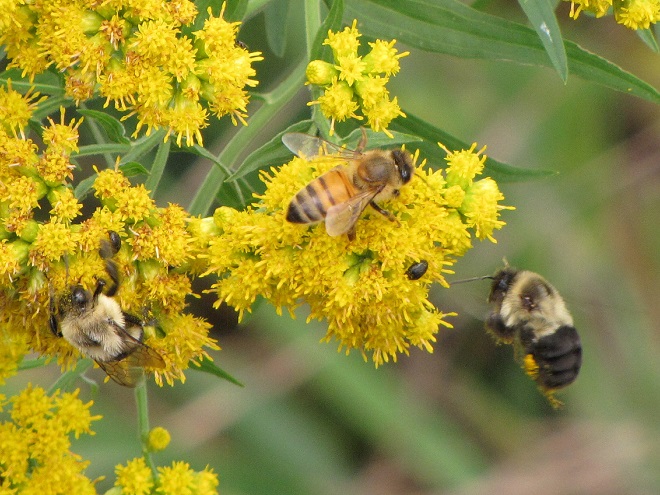
BUMBLE BEES, CARPENTER BEES, HONEY BEES, AND DIGGER BEES
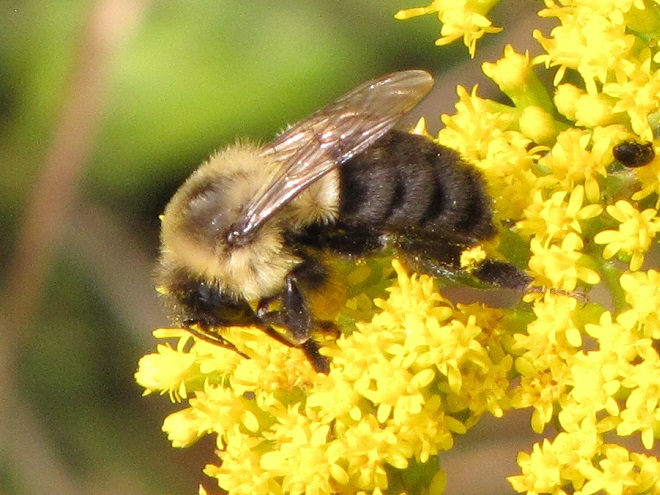

SCOLIID WASPS
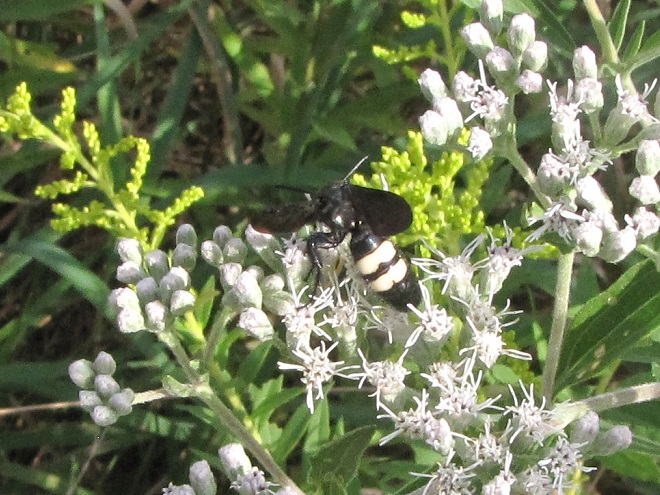
PAPER WASPS
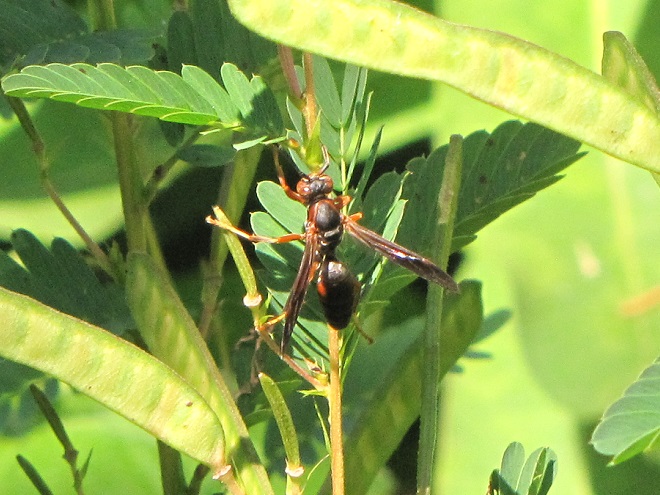
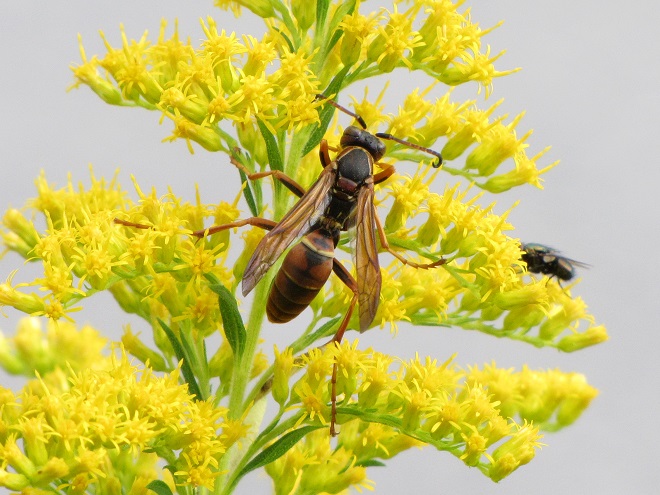
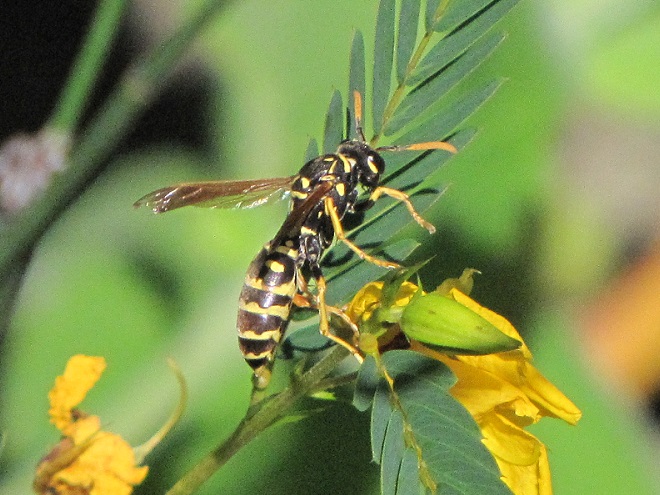
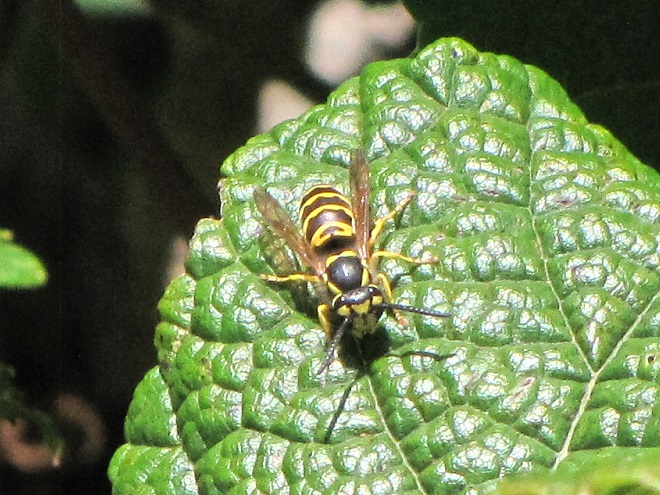
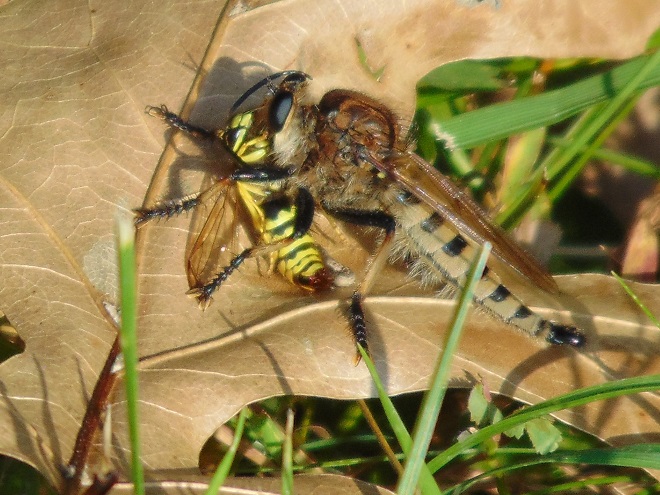
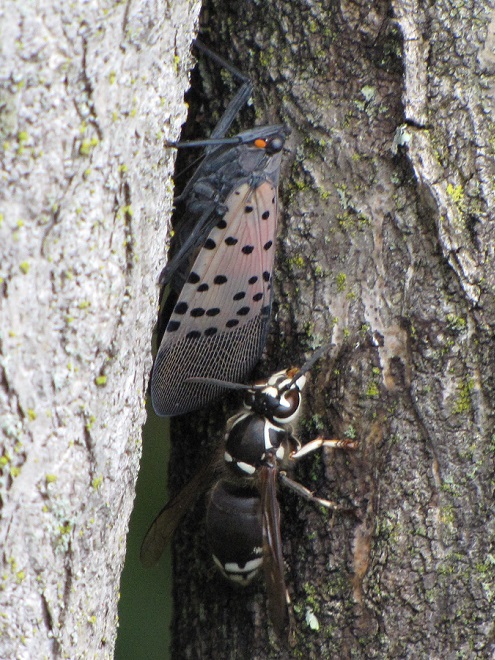
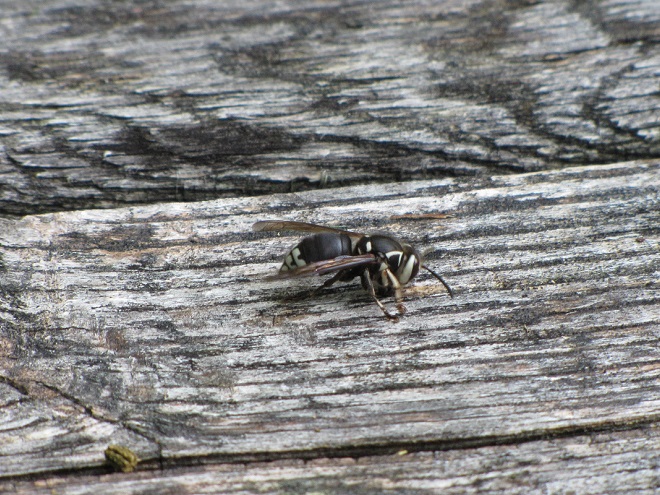
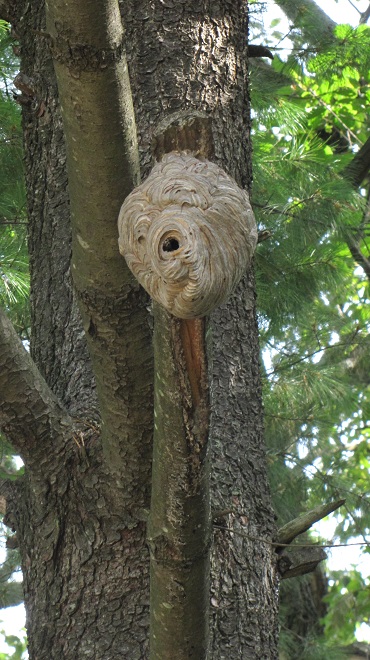
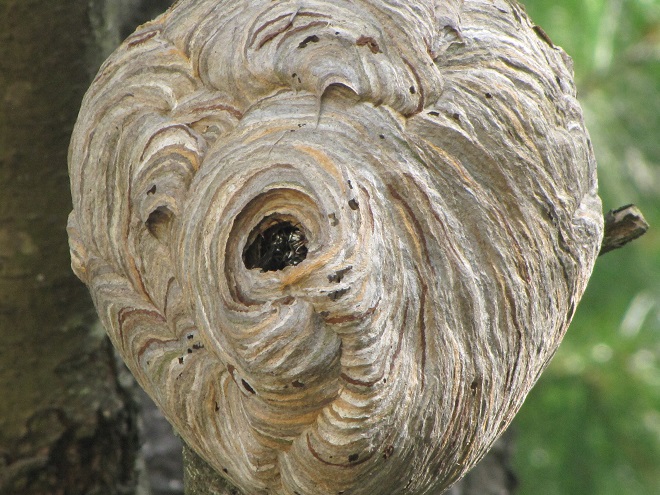
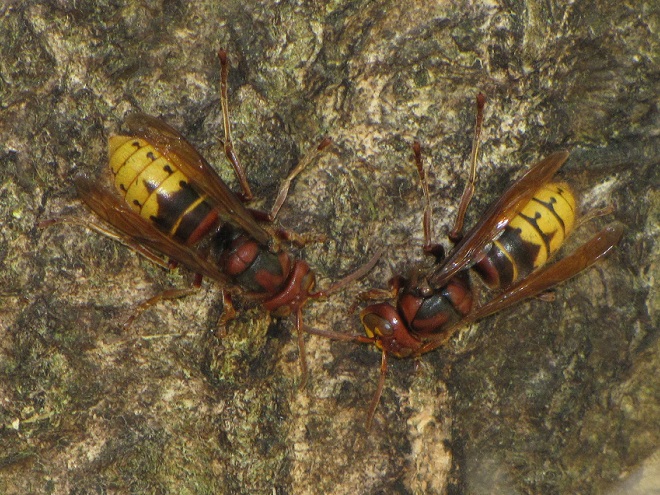
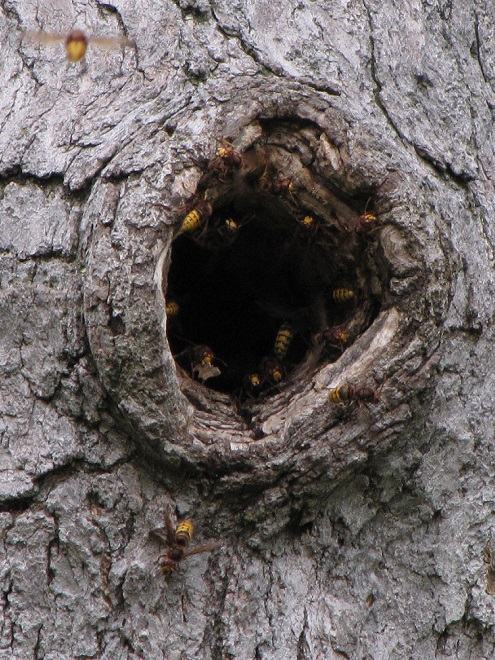
YELLOWJACKETS AND HORNETS
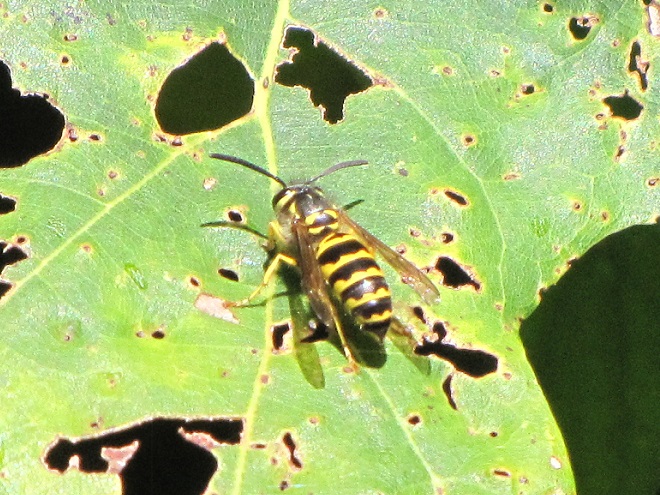
POTTER WASPS
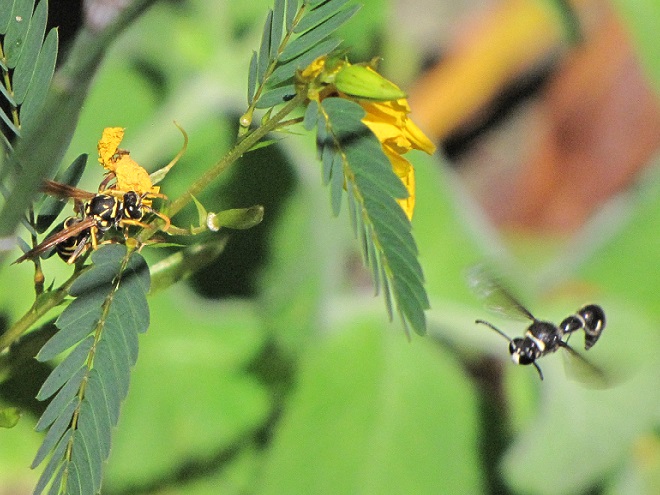
ANTS
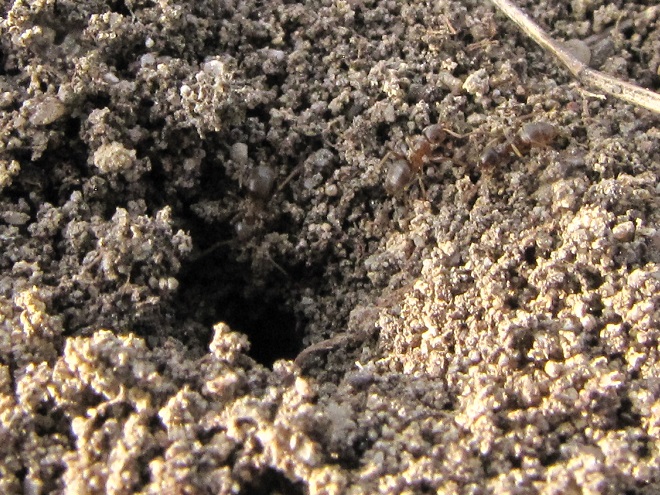
We hope this brief but fascinating look at some of our more common bees, wasps, hornets, and ants has provided the reader with an appreciation for the complexity with which their food webs and ecology have developed over time. It should be no great mystery why bees and other insects, particularly native species, are becoming scarce or absent in areas of the Lower Susquehanna River Watershed where the landscape is paved, hyper-cultivated, sprayed, mowed, and devoid of native vegetation, particularly nectar-producing plants. Late-summer and autumn can be an especially difficult time for hymanopterans seeking the sources of proteins and carbohydrates needed to complete preparations for next year’s generations of these valuable insects. An absence of these staples during this critical time of year quickly diminishes the diversity of species and begins to tear at the fabric of the food web. This degradation of a regional ecosystem can have unforeseen impacts that become increasingly widespread and in many cases permanent.
Editor’s Note: No bees, wasp, hornets, or ants were harmed during this production. Neither was the editor swarmed, attacked, or stung. Remember, don’t panic, just observe.
SOURCES
Eaton, Eric R., and Kenn Kaufman. 2007. Kaufman Field Guide to Insects of North America. Houghton Mifflin Company. New York, NY.
(If you’re interested in insects, get this book!)
Grasshoppers are perhaps best known for the occasions throughout history when an enormous congregation of these insects—a “plague of locusts”—would assemble and rove a region to feed. These swarms, which sometimes covered tens of thousands of square miles or more, often decimated crops, darkened the sky, and, on occasion, resulted in catastrophic famine among human settlements in various parts of the world.
The largest “plague of locusts” in the United States occurred during the mid-1870s in the Great Plains. The Rocky Mountain Locust (Melanoplus spretus), a grasshopper of prairies in the American west, had a range that extended east into New England, possibly settling there on lands cleared for farming. Rocky Mountain Locusts, aside from their native habitat on grasslands, apparently thrived on fields planted with warm-season crops. Like most grasshoppers, they fed and developed most vigorously during periods of dry, hot weather. With plenty of vegetative matter to consume during periods of scorching temperatures, the stage was set for populations of these insects to explode in agricultural areas, then take wing in search of more forage. Plagues struck parts of northern New England as early as the mid-1700s and were numerous in various states in the Great Plains through the middle of the 1800s. The big ones hit between 1873 and 1877 when swarms numbering as many as trillions of grasshoppers did $200 million in crop damage and caused a famine so severe that many farmers abandoned the westward migration. To prevent recurrent outbreaks of locust plagues and famine, experts suggested planting more cool-season grains like winter wheat, a crop which could mature and be harvested before the grasshoppers had a chance to cause any significant damage. In the years that followed, and as prairies gave way to the expansive agricultural lands that presently cover most of the Rocky Mountain Locust’s former range, the grasshopper began to disappear. By the early years of the twentieth century, the species was extinct. No one was quite certain why, and the precise cause is still a topic of debate to this day. Conversion of nearly all of its native habitat to cropland and grazing acreage seems to be the most likely culprit.
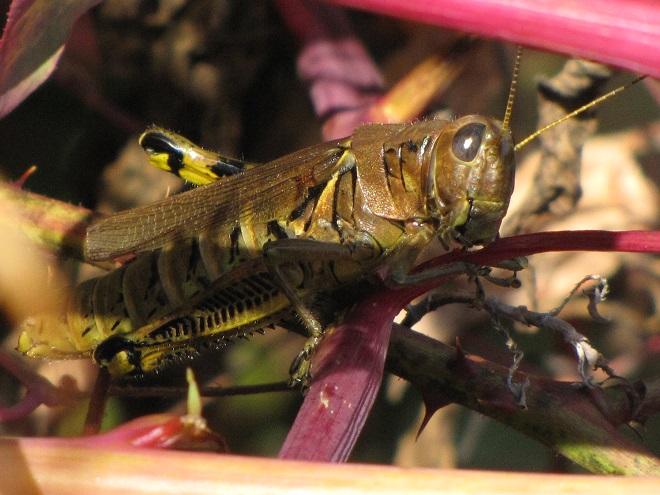
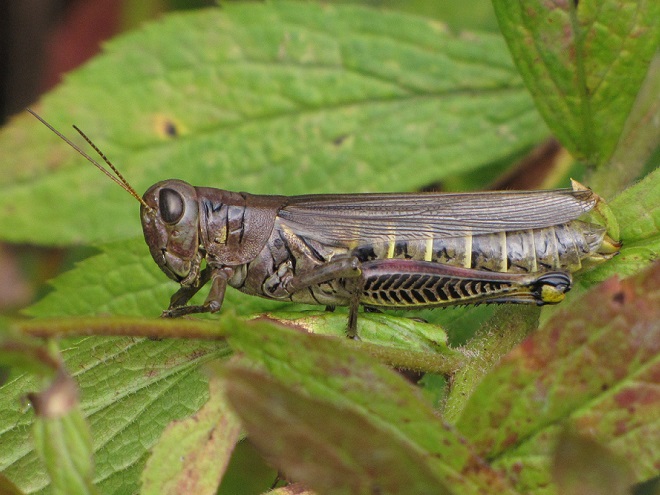
In the Mid-Atlantic States, the mosaic of the landscape—farmland interspersed with a mix of forest and disturbed urban/suburban lots—prevents grasshoppers from reaching the densities from which swarms arise. In the years since the implementation of “Green Revolution” farming practices, numbers of grasshoppers in our region have declined. Systemic insecticides including neonicotinoids keep grasshoppers and other insects from munching on warm-season crops like corn and soybeans. And herbicides including 2,4-D (2,4-Dichlorophenoxyacetic acid) have, in effect, become the equivalent of insecticides, eliminating broadleaf food plants from the pasturelands and hayfields where grasshoppers once fed and reproduced in abundance. As a result, few of the approximately three dozen species of grasshoppers with ranges that include the Lower Susquehanna River Watershed are common here. Those that still thrive are largely adapted to roadsides, waste ground, and small clearings where native and some non-native plants make up their diet.
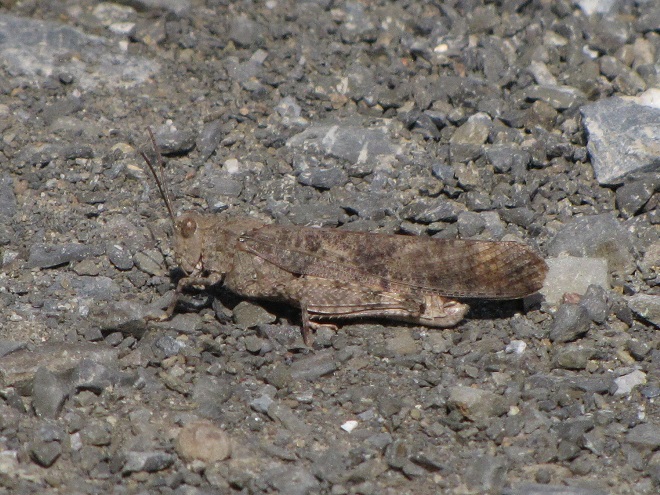
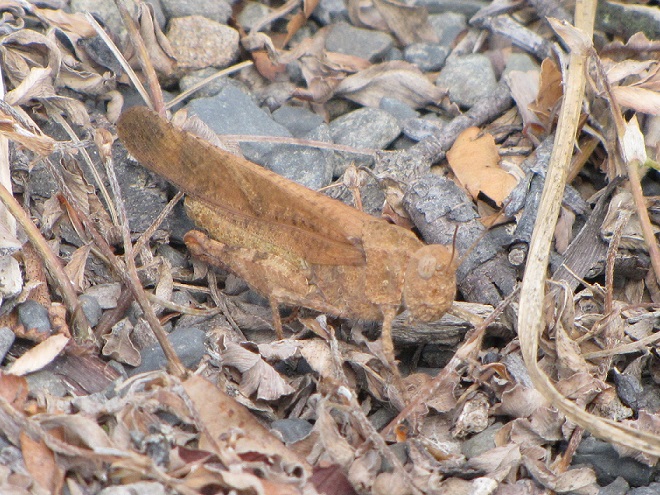
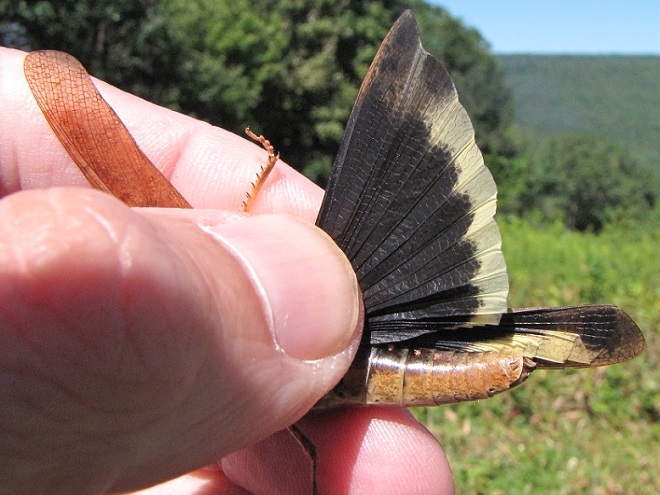
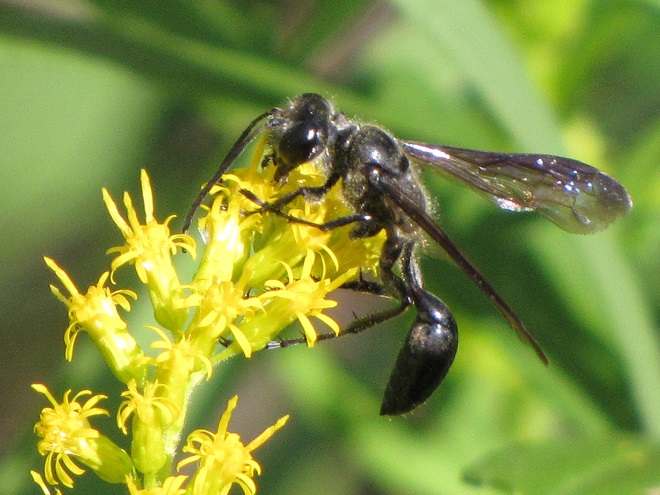
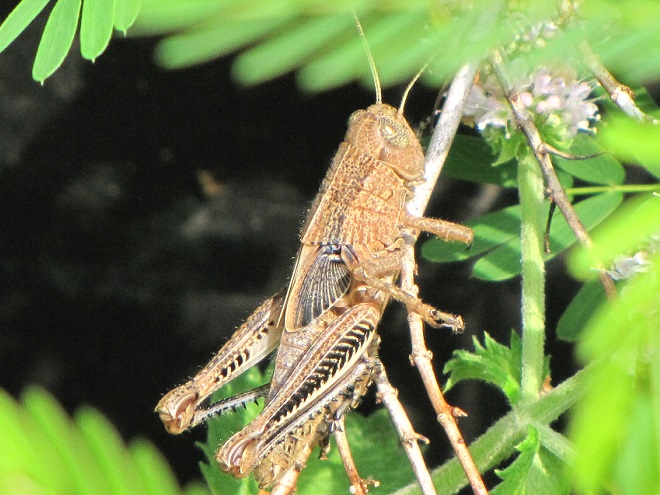
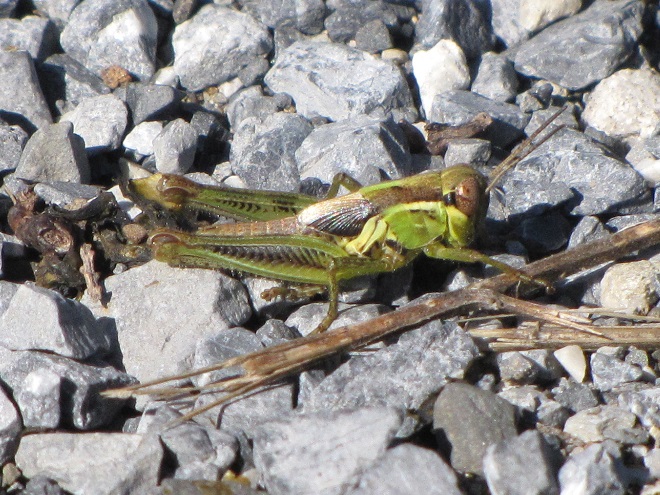
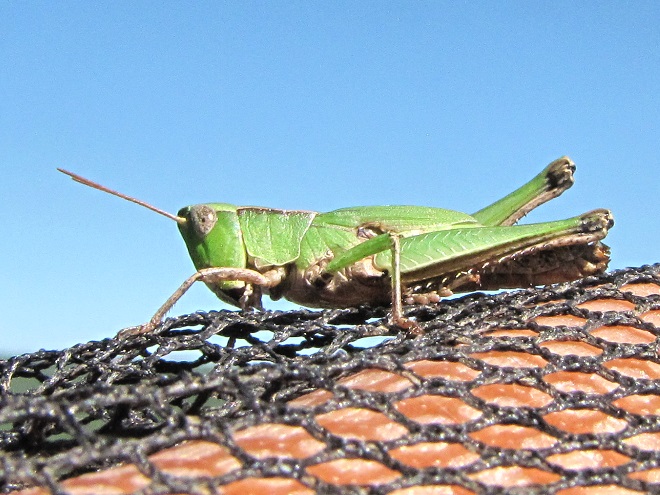
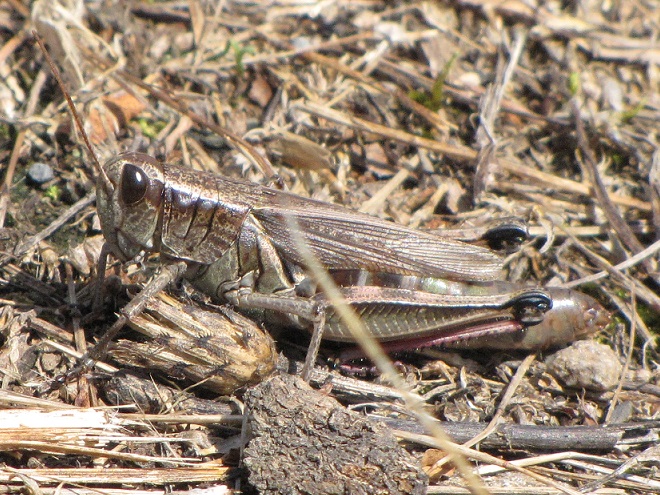
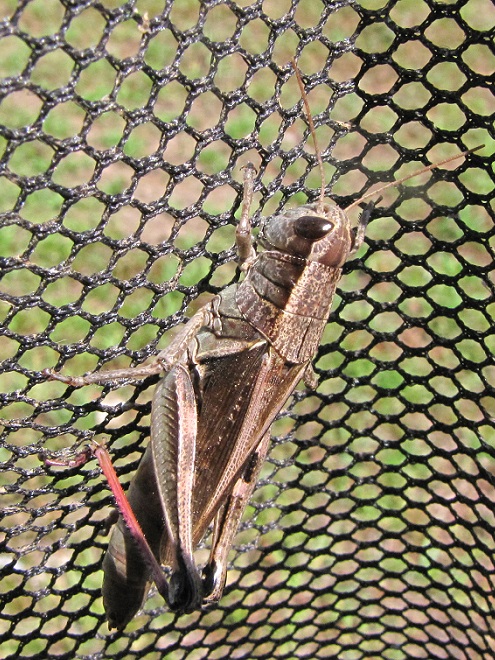
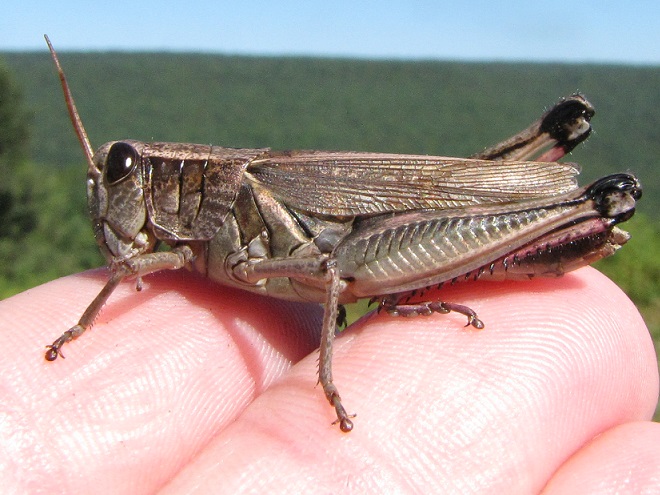
Here’s a look at four species of grasshoppers you’re likely to find in disturbed habitats throughout our region. Each remains common in relatively pesticide-free spaces with stands of dense grasses and broadleaf plants nearby.
CAROLINA GRASSHOPPER
Dissosteira carolina
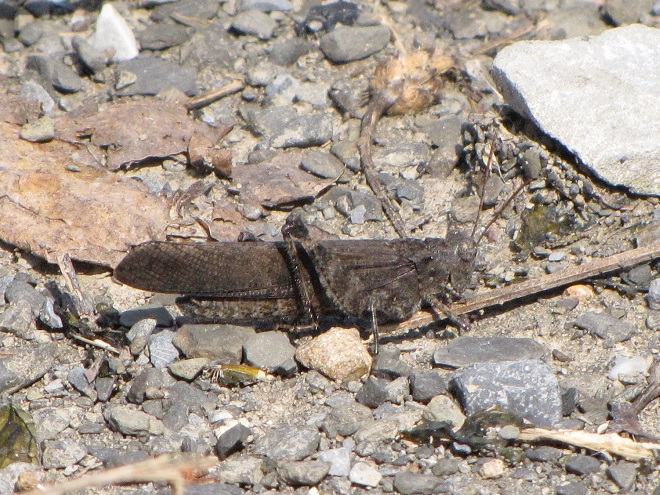
DIFFERENTIAL GRASSHOPPER
Melanoplus differentialis
TWO-STRIPED GRASSHOPPER
Melanoplus bivittatus
RED-LEGGED GRASSHOPPER
Melanoplus femurrubrum
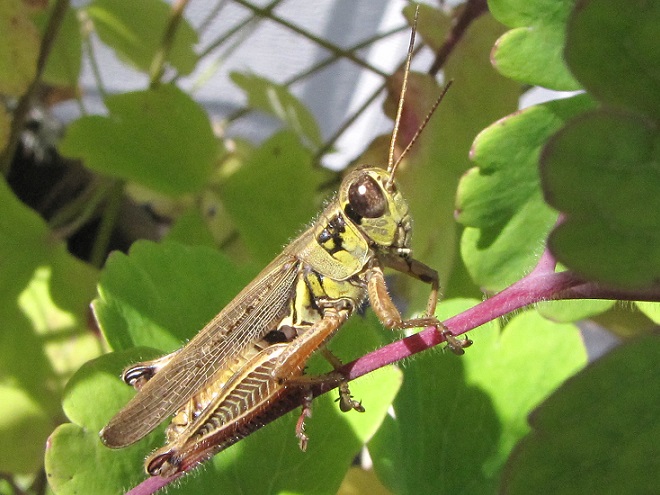
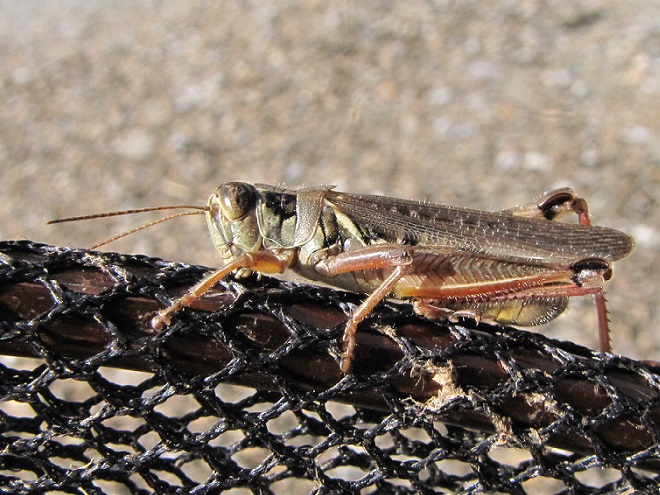
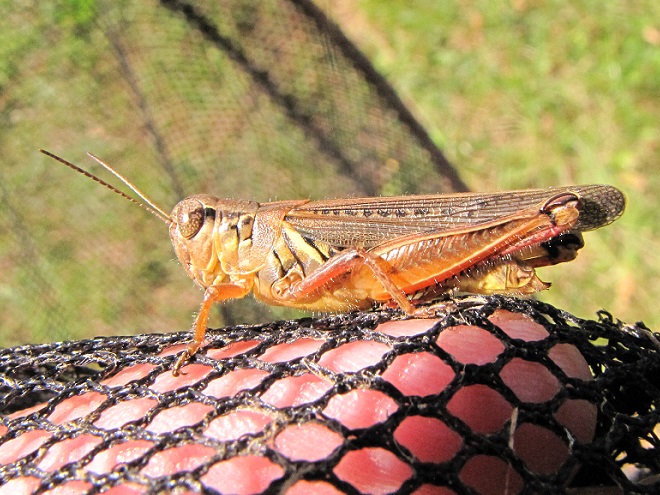
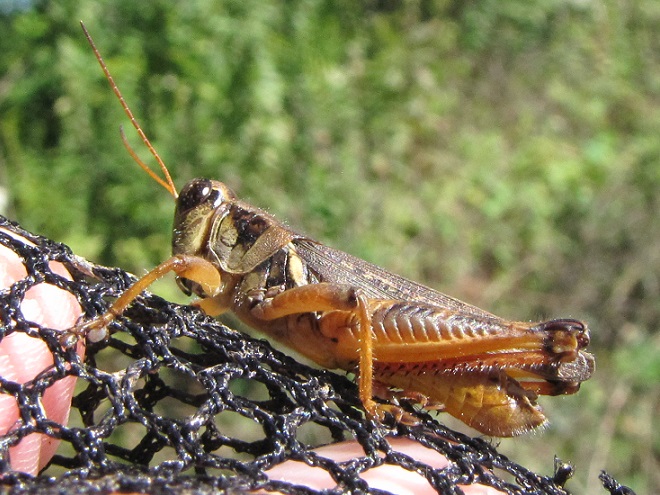
Protein-rich grasshoppers are an important late-summer, early-fall food source for birds. The absence of these insects has forced many species of breeding birds to abandon farmland or, in some cases, disappear altogether.
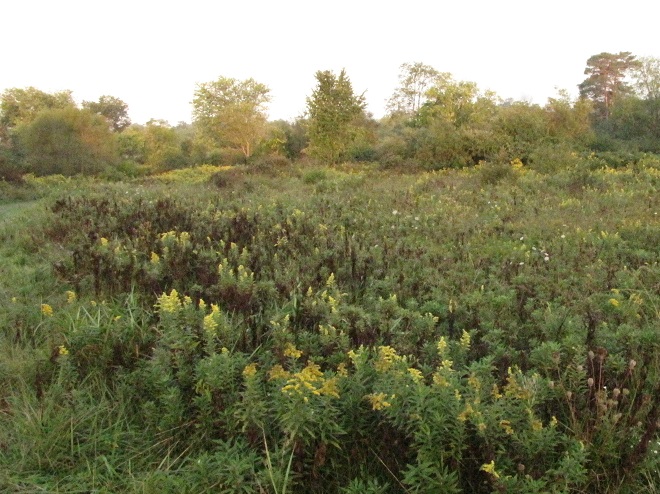
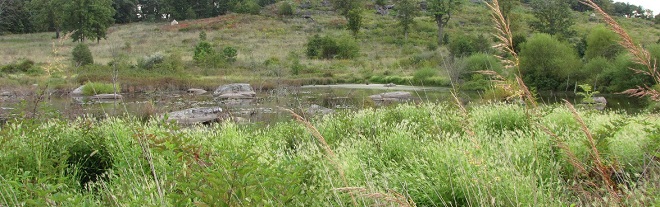
To pass the afternoon, we sat quietly along the edge of a pond, or more accurately a pool, created recently by North American Beavers (Castor canadensis). They first constructed their dam on this small stream about five years ago. Since then, a flourishing wetland has become established. Have a look.
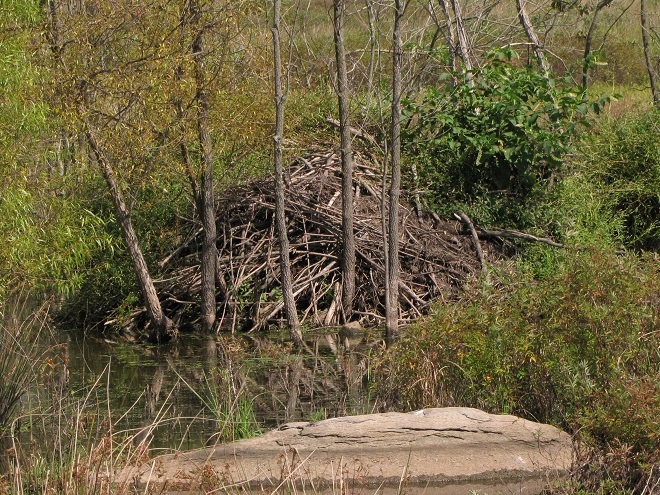
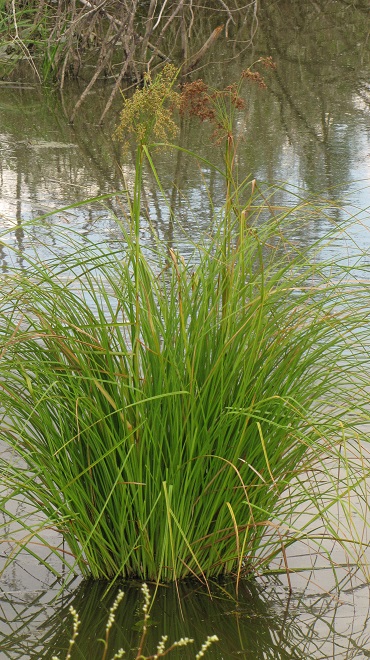
Isn’t that amazing? North American Beavers build and maintain what human engineers struggle to master—dams and pools that reduce pollution, allow fish passage, and support self-sustaining ecosystems. Want to clean up the streams and floodplains of your local watershed? Let the beavers do the job!
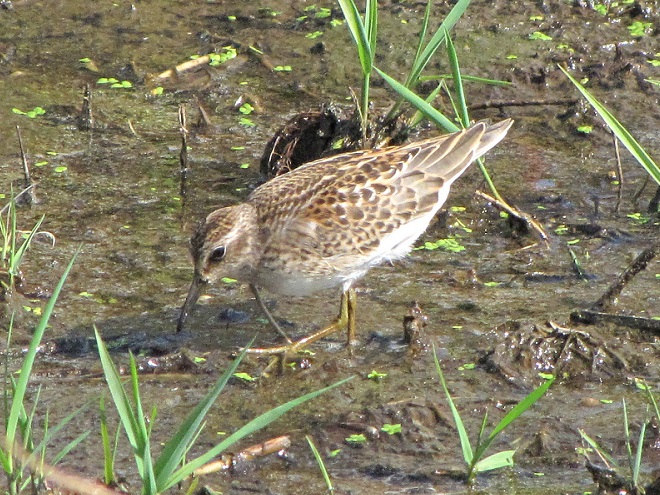
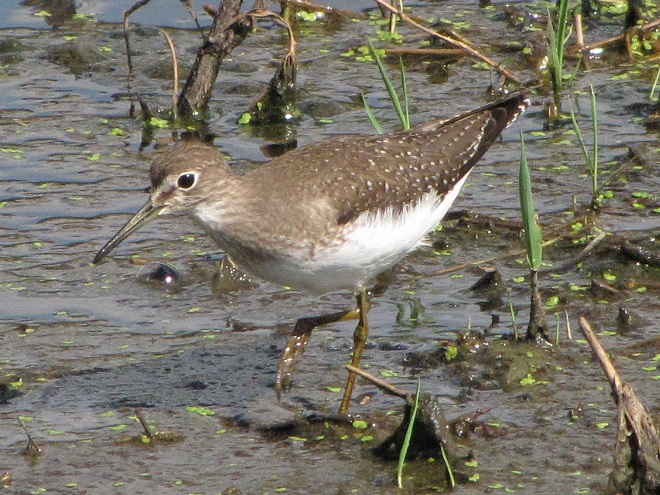
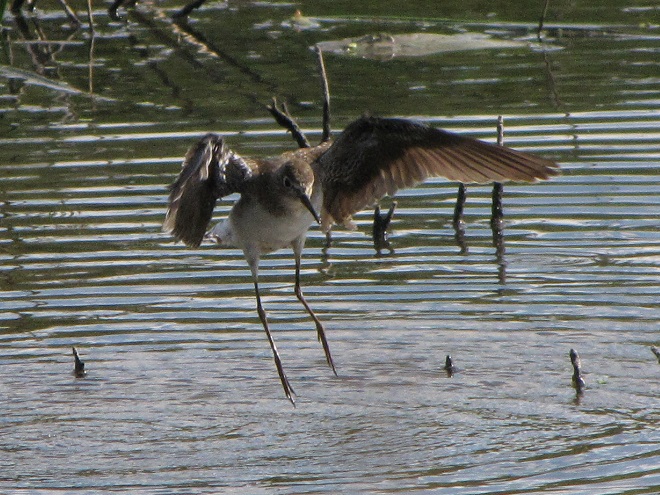
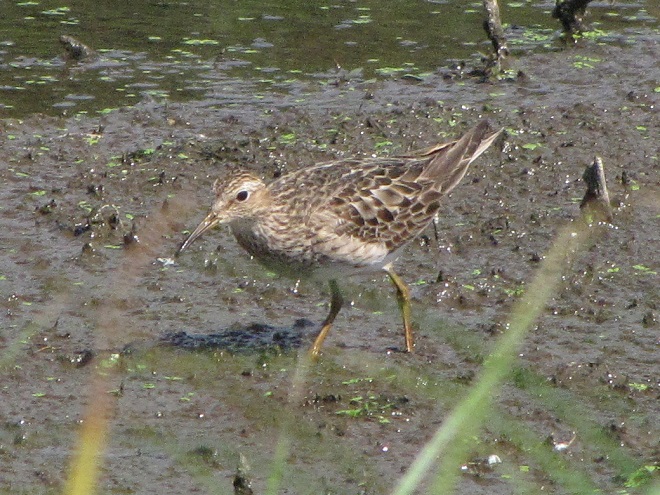
At Lake Redman just to the south of York, Pennsylvania, a draw down to provide drinking water to the city while maintenance is being performed on the dam at neighboring Lake Williams, York’s primary water source, has fortuitously coincided with autumn shorebird migration. Here’s a sample of the numerous sandpipers and plovers seen today on the mudflats that have been exposed at the southeast end of the lake…
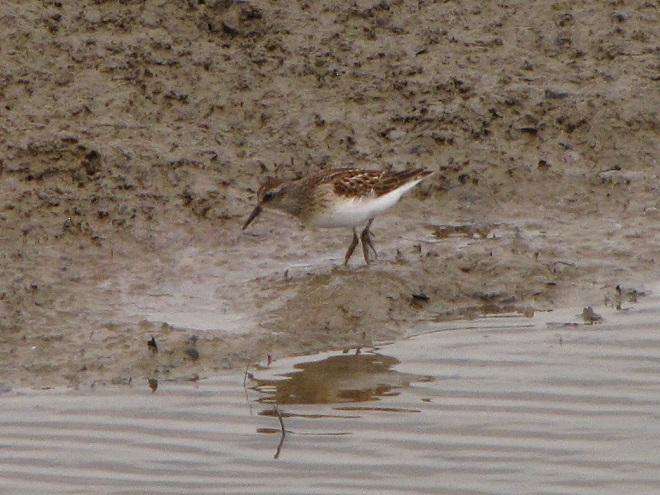
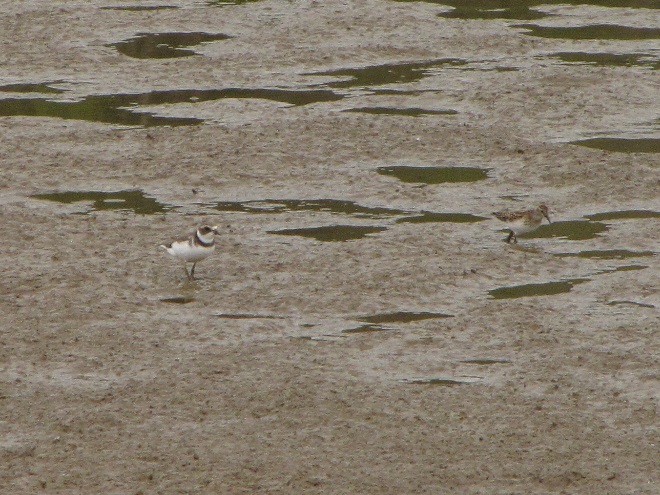
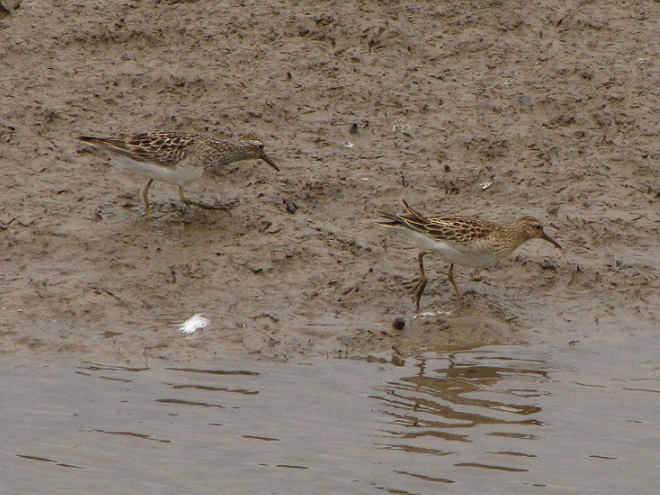
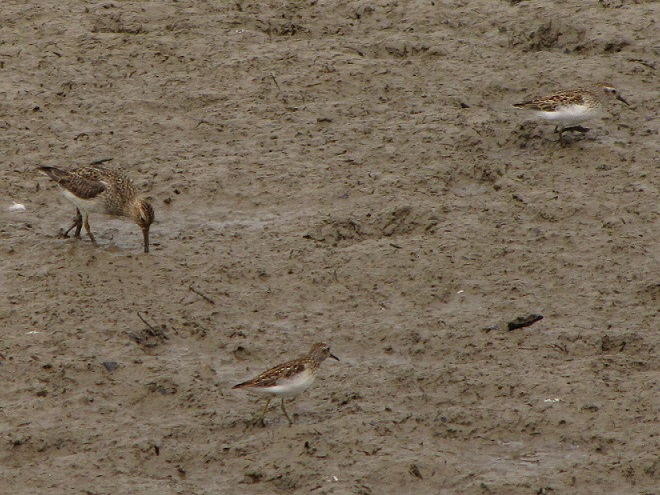
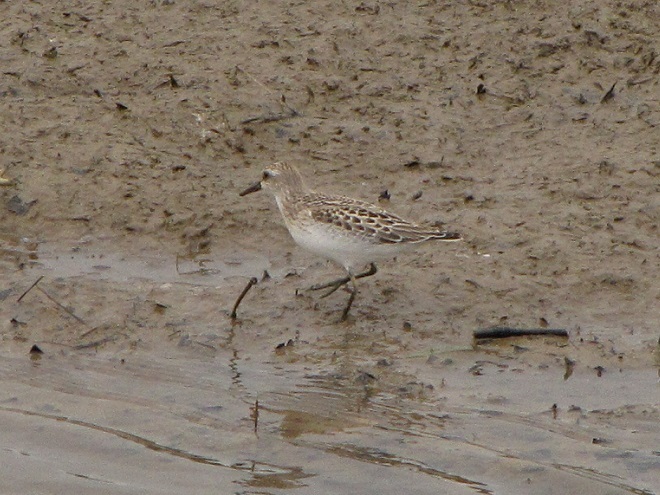
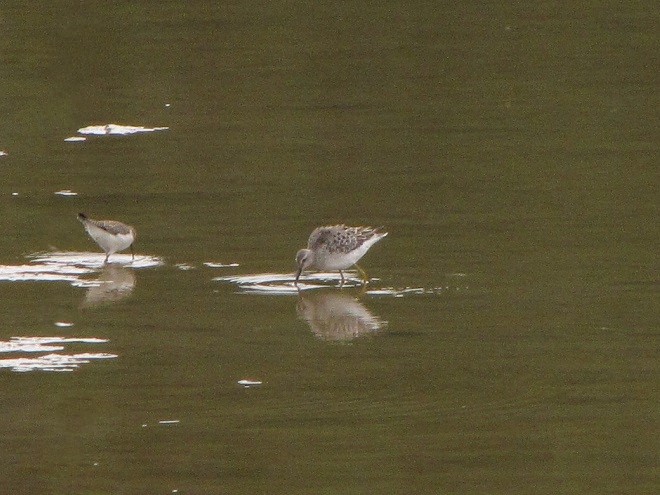
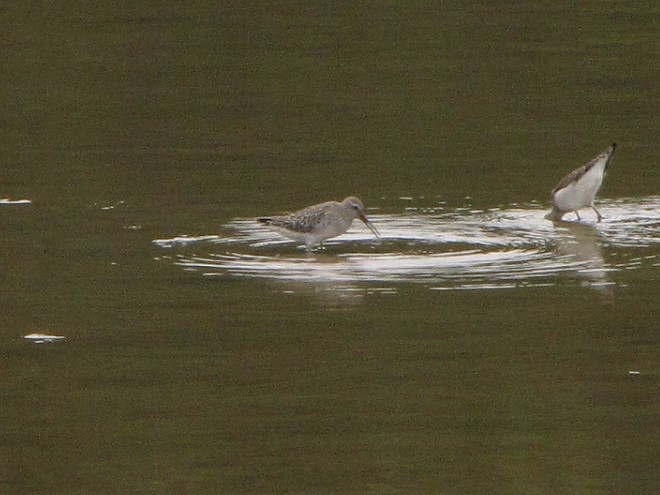
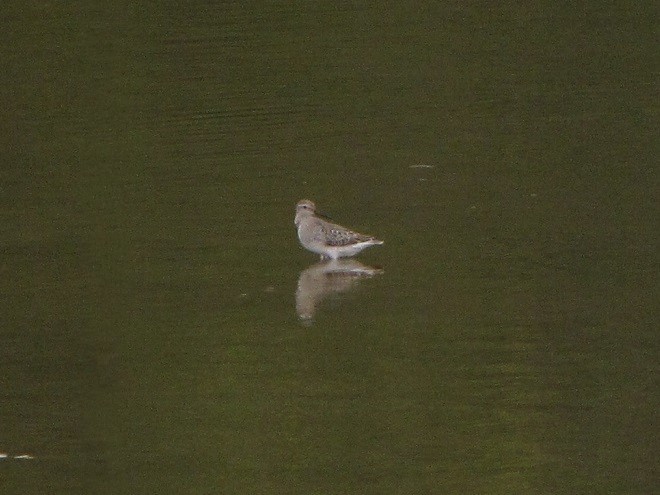
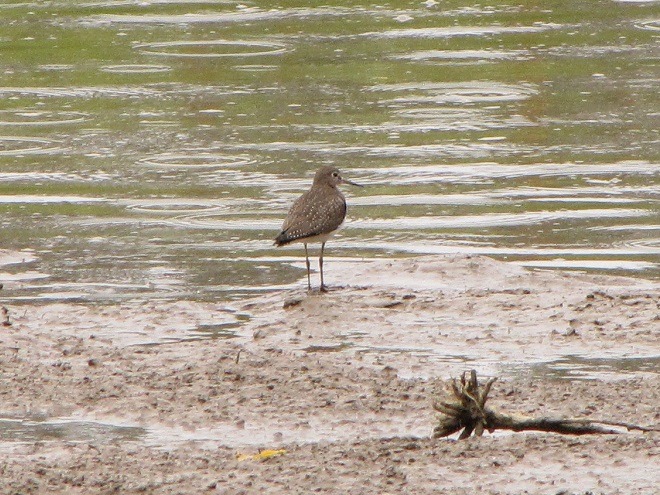
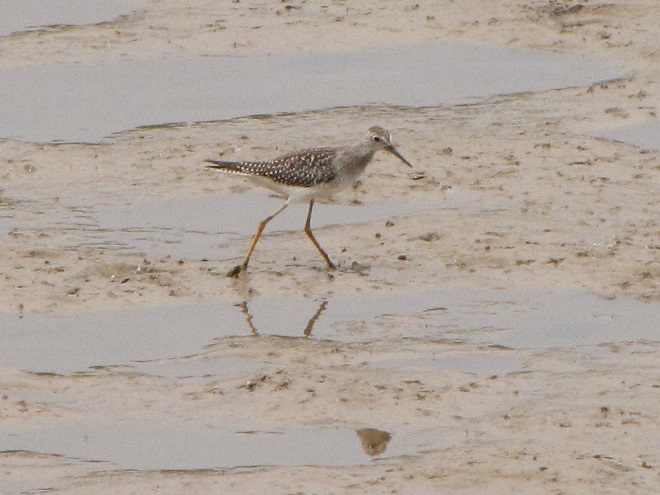
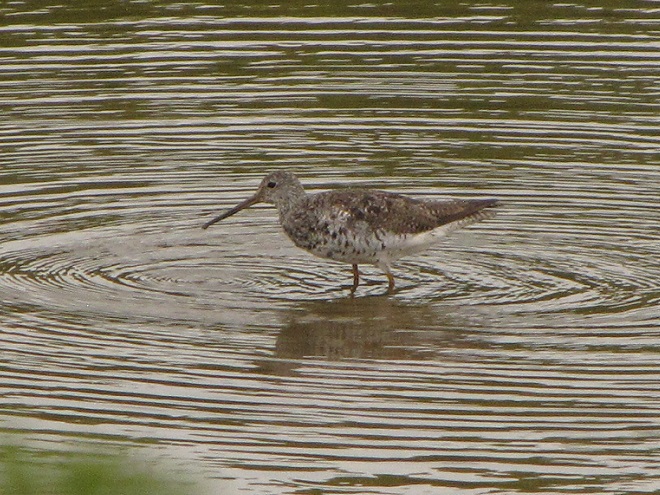
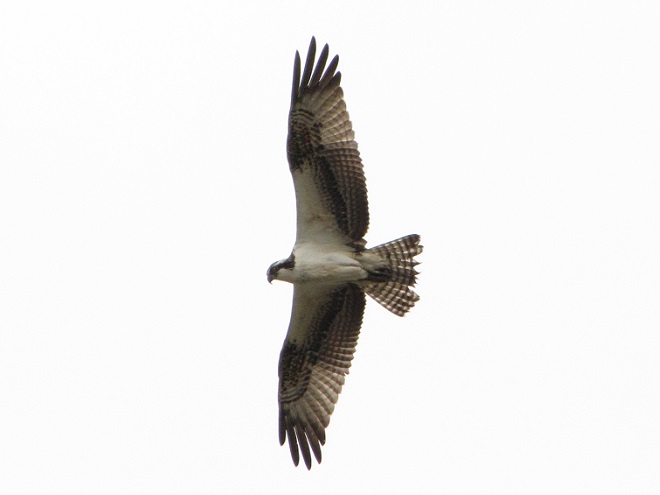
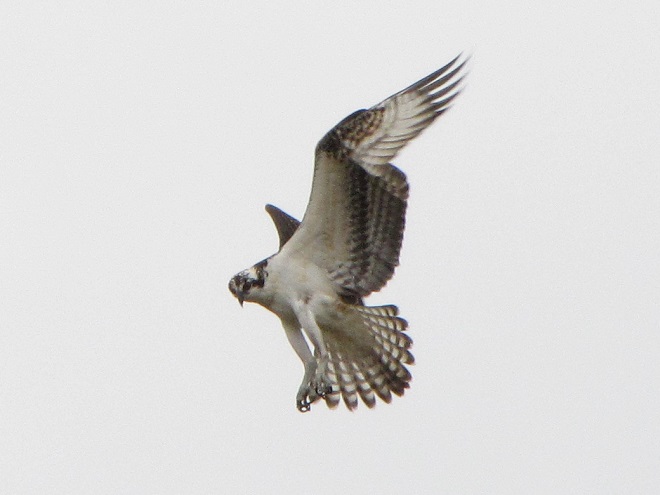
Not photographed but present at Lake Redman were at least two additional species of shorebirds, Killdeer and Spotted Sandpiper—bringing the day’s tally to ten. Not bad for an inland location! It’s clearly evident that these waders overfly the lower Susquehanna valley in great numbers during migration and are in urgent need of undisturbed habitat for making stopovers to feed and rest so that they might improve their chances of surviving the long journey ahead of them. Mud is indeed a much needed refuge.
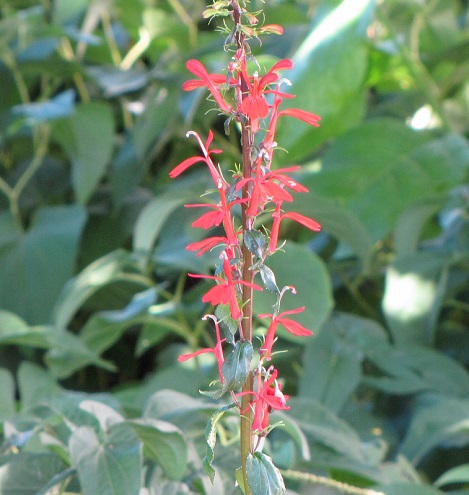
It may be one of the most treasured plants among native landscape gardeners. The Cardinal Flower (Lobelia cardinalis) blooms in August each year with a startling blaze of red color that, believe it or not, will sometimes be overlooked in the wild.
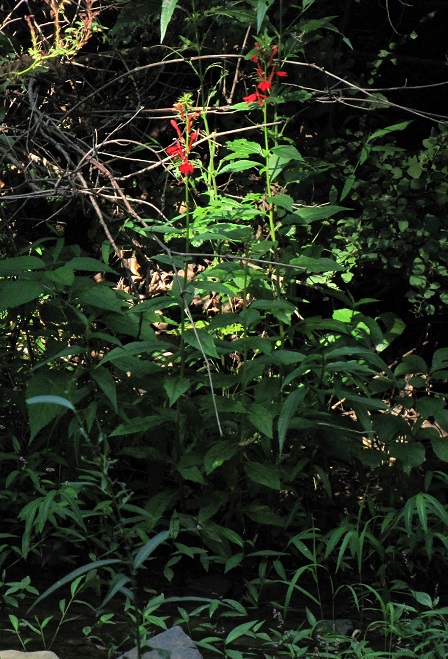
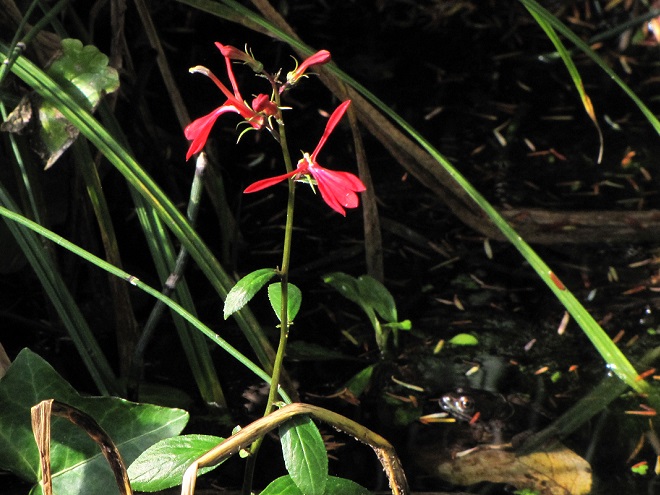
The Cardinal Flower grows in wetlands as well as in a variety of moist soils along streams, rivers, lakes, and ponds. Shady locations with short periods of bright sun each day seem to be favored for an abundance of color.
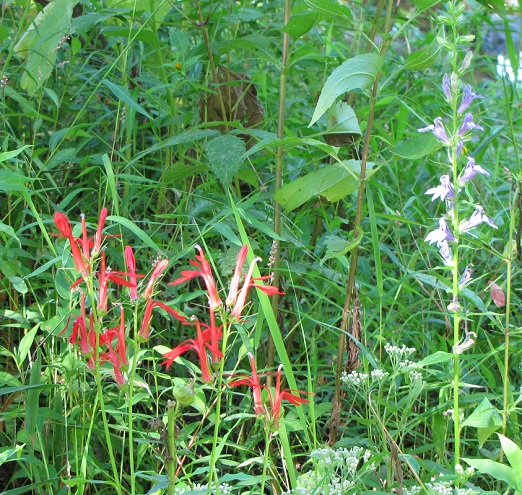
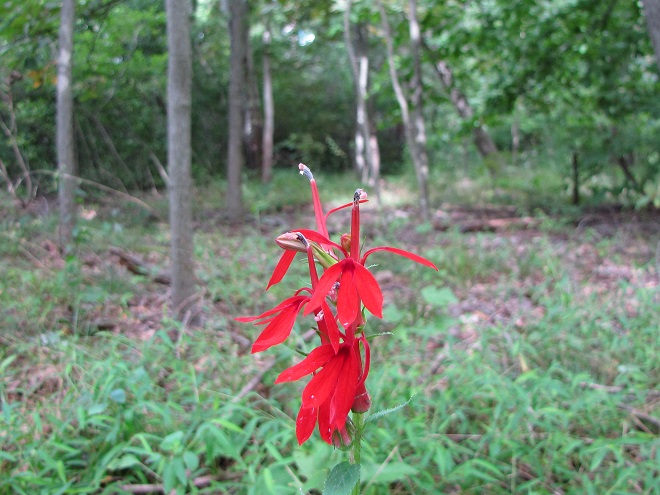
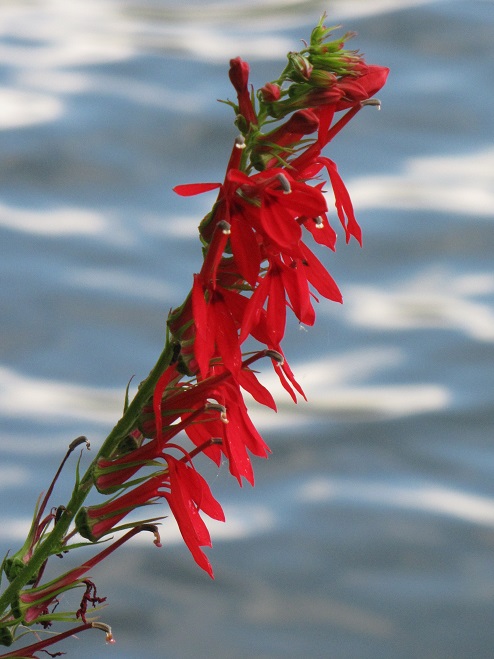
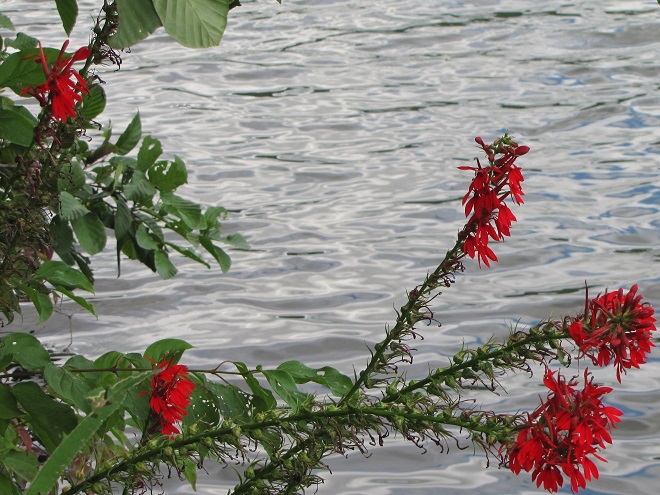
The Cardinal Flower can be an ideal plant for attracting hummingbirds, bees, butterflies, and other late-summer pollinators. It grows well in damp ground, especially in rain gardens and along the edges streams, garden ponds, and stormwater retention pools. If you’re looking to add Cardinal Flower to your landscape, you need first to…

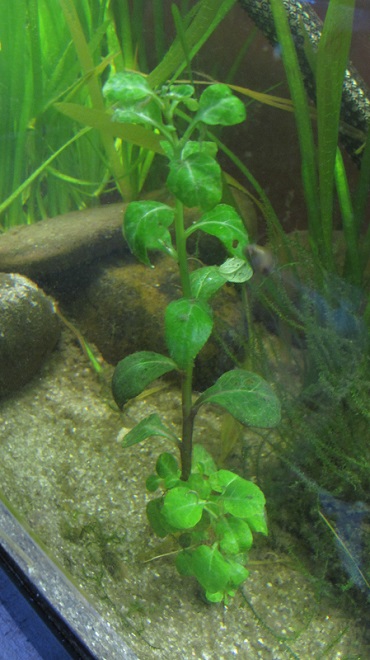
Cardinal Flower plants are available at many nurseries that carry native species of garden and/or pond plants. Numerous online suppliers offer seed for growing your own Cardinal Flowers. Some sell potted plants as well. A new option is to grow Cardinal Flowers from tissue cultures. Tissue-cultured plants are raised in laboratory media, so the pitfalls of disease and hitchhikers like invasive insects and snails are eliminated. These plants are available through the aquarium trade from most chain pet stores. Though meant to be planted as submerged aquatics in fish tank substrate, we’ve reared the tissue-cultured stock indoors as emergent plants in sandy soil and shallow water through the winter and early spring. When it warms up, we transplant them into the edges of the outdoor ponds to naturalize. As a habit, we always grow some Cardinal Flower plants in the fish tanks to take up the nitrates in the water and to provide a continuous supply of cuttings for starting more emergent stock for outdoor use.
If you’re feeling the need to see summertime butterflies and their numbers just don’t seem to be what they used to be in your garden, then plan an afternoon visit to the Boyd Big Tree Preserve along Fishing Creek Valley Road (PA 443) just east of U.S. 22/322 and the Susquehanna River north of Harrisburg. The Pennsylvania Department of Conservation and Natural Resources manages the park’s 1,025 acres mostly as forested land with more than ten miles of trails. While located predominately on the north slope of Blue Mountain, a portion of the preserve straddles the crest of the ridge to include the upper reaches of the southern exposure.
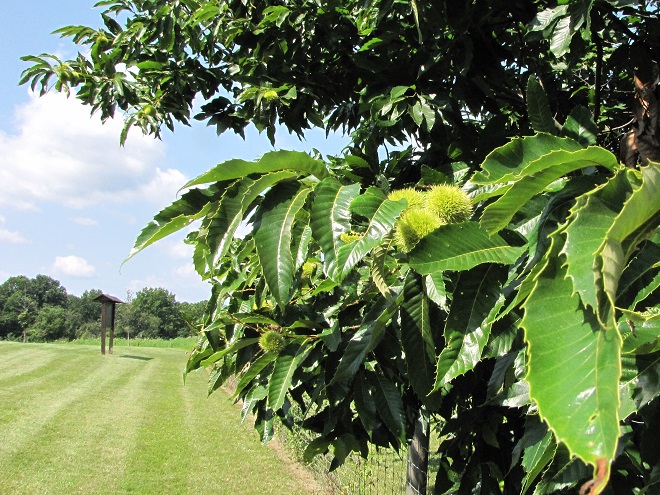
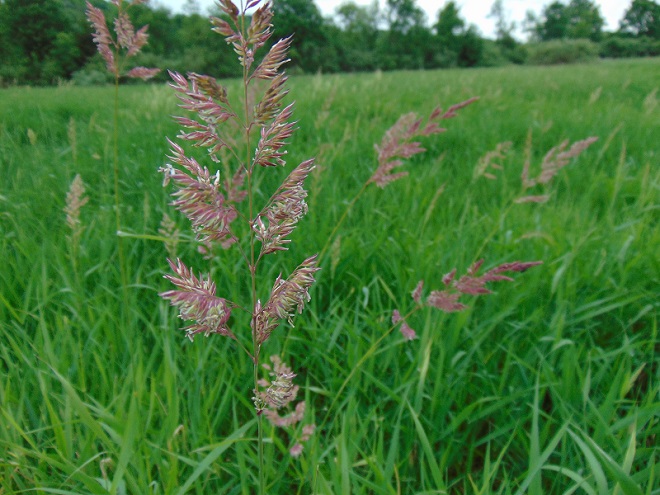
Fortunately, one need not take a strenuous hike up Blue Mountain to observe butterflies. Open space along the park’s quarter-mile-long entrance road is maintained as a rolling meadow of wildflowers and cool-season grasses that provide nectar for adult butterflies and host plants for their larvae.
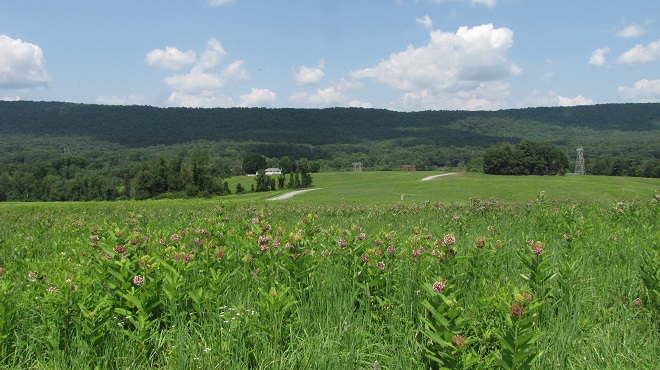
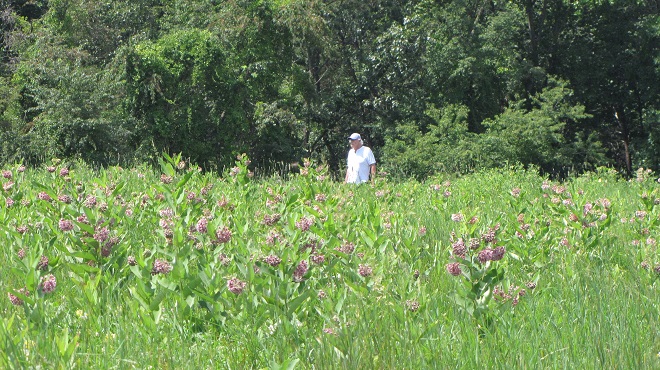
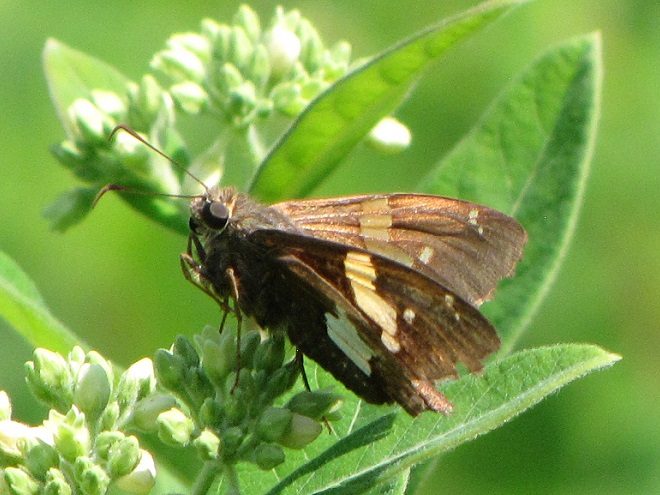
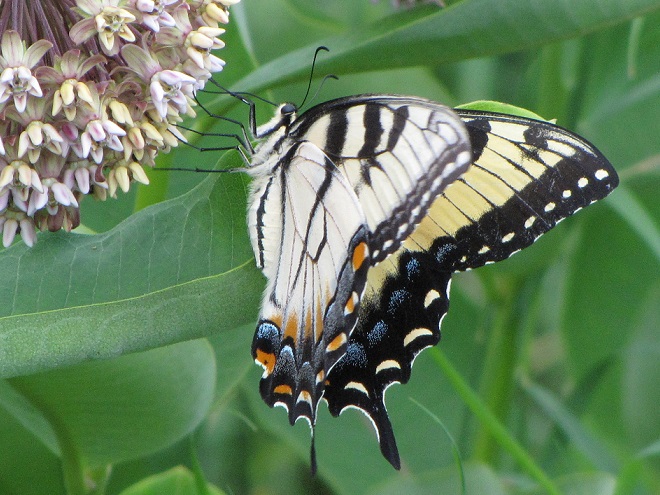
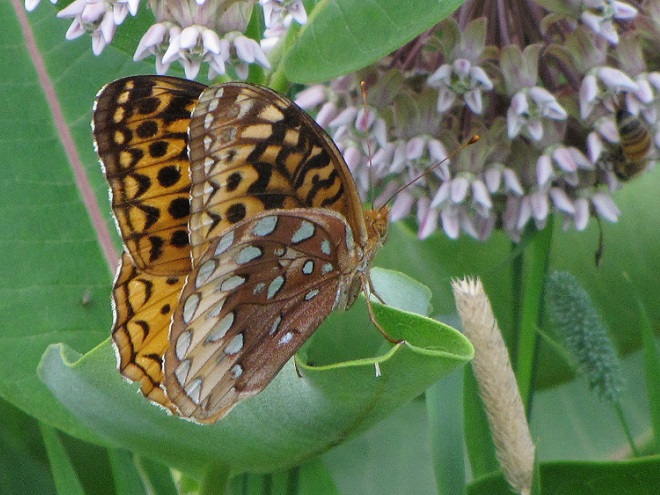
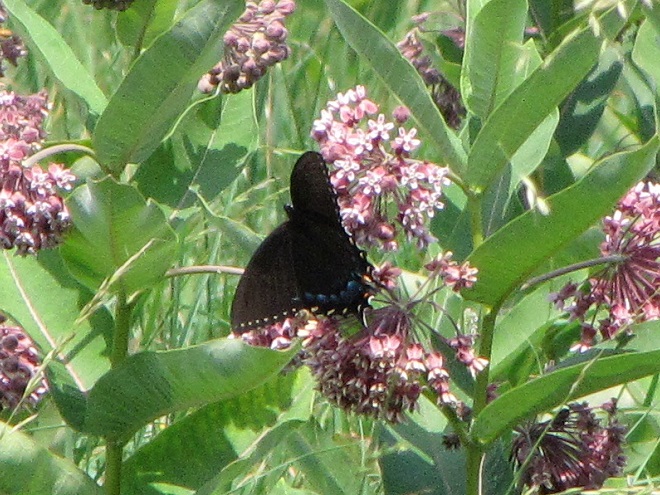
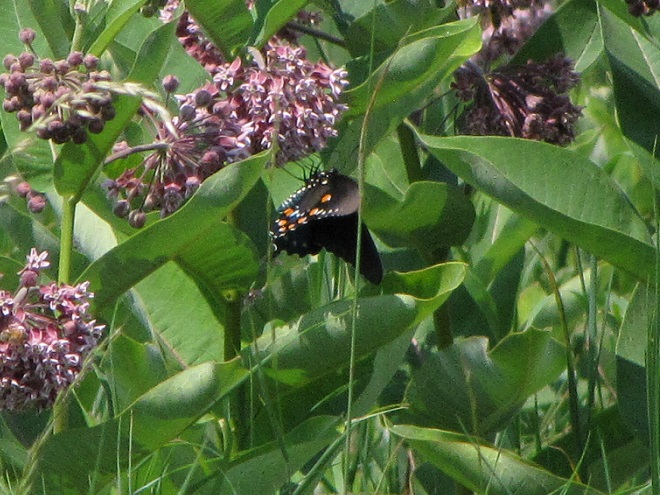
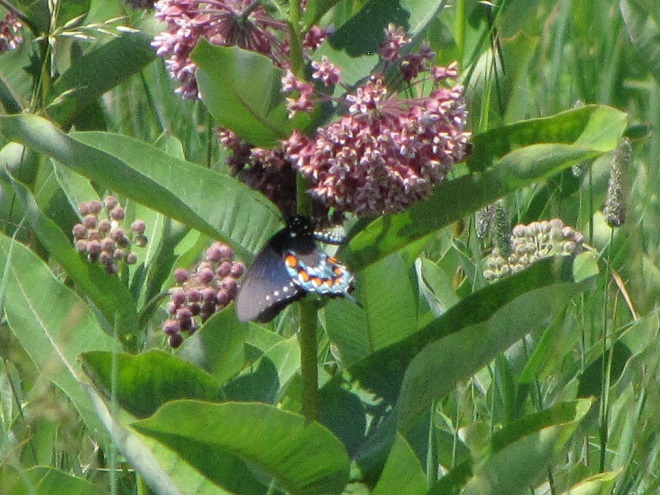
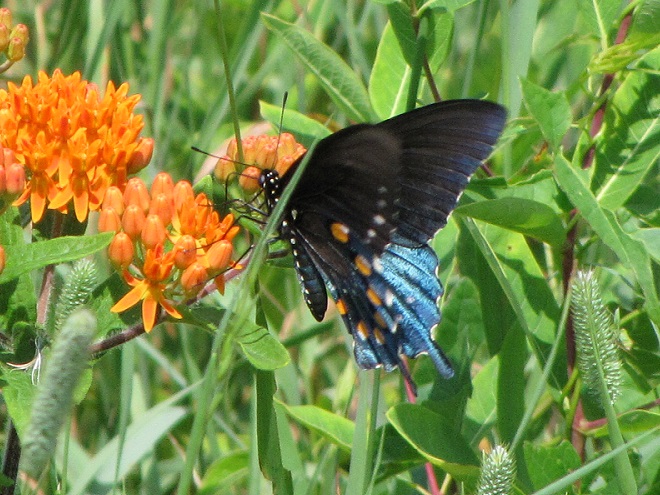
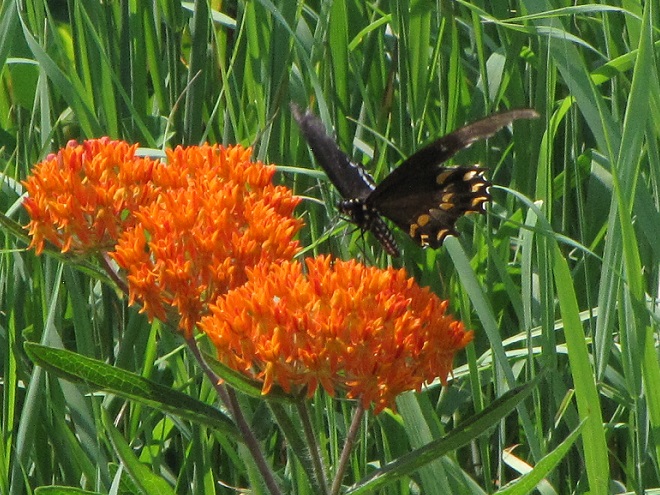
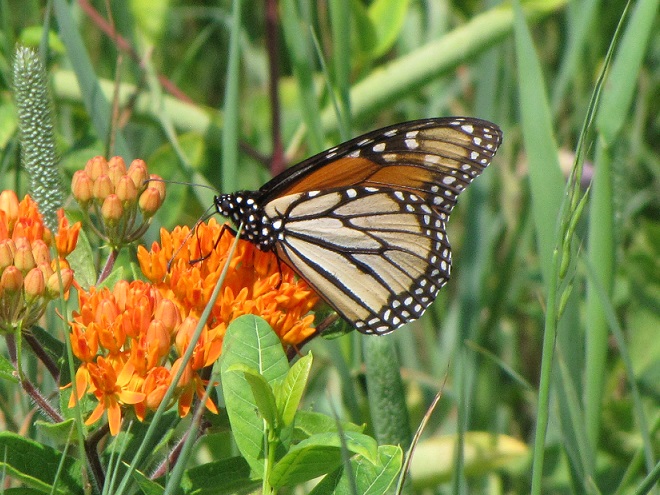
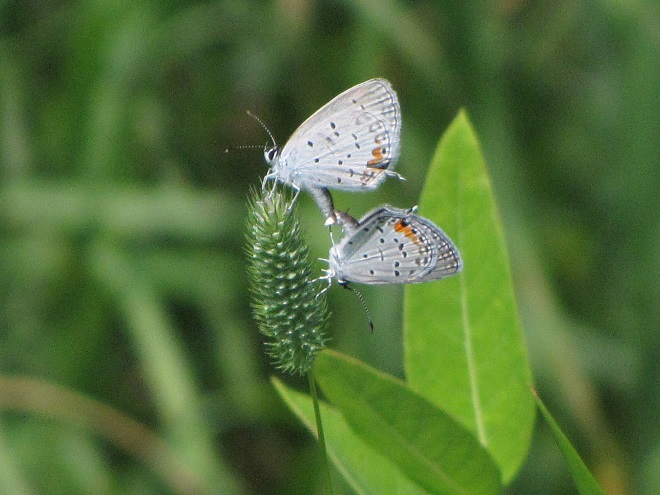
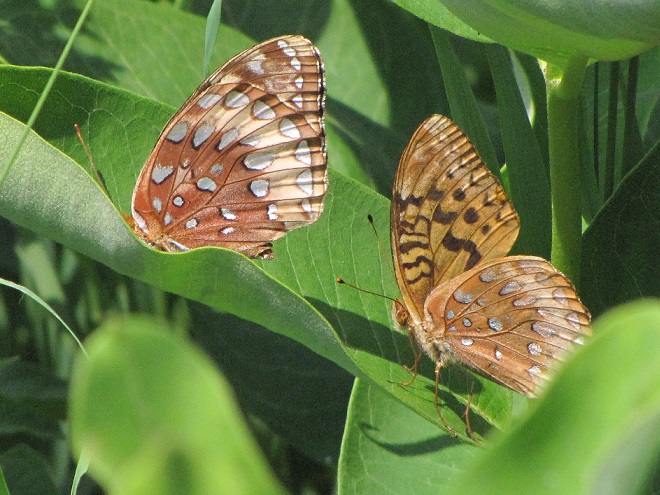
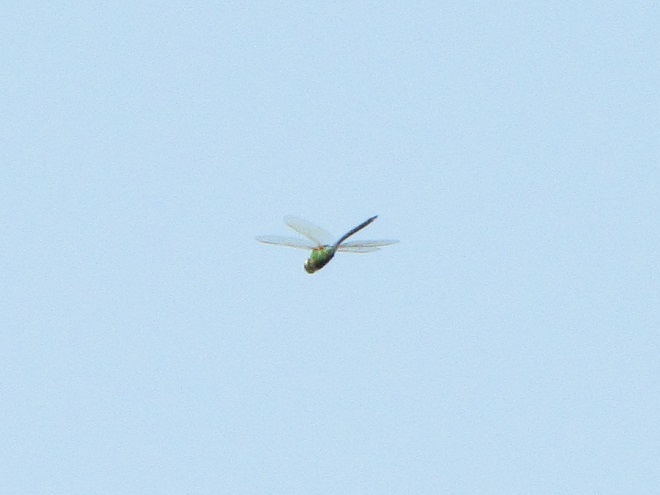
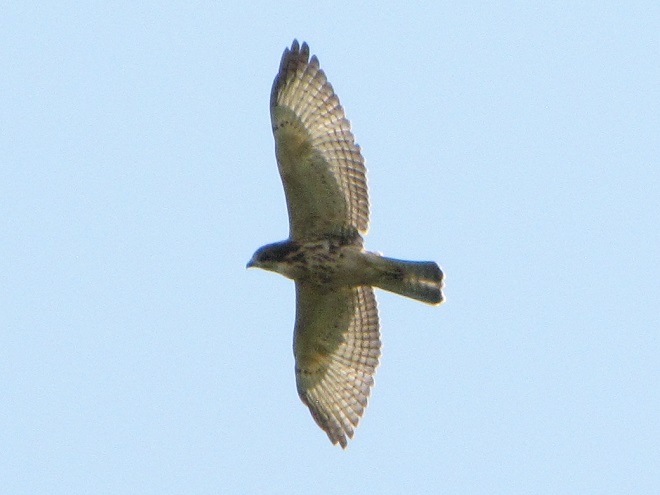
Do yourself a favor and take a trip to the Boyd Big Tree Preserve Conservation Area. Who knows? It might actually inspire you to convert that lawn or other mowed space into much-needed butterfly/pollinator habitat.
While you’re out, you can identify your sightings using our photographic guide—Butterflies of the Lower Susquehanna River Watershed—by clicking the “Butterflies” tab at the top this page. And while you’re at it, you can brush up on your hawk identification skills ahead of the upcoming migration by clicking the “Hawkwatcher’s Helper: Identifying Bald Eagles and other Diurnal Raptors” tab. Therein you’ll find a listing and descriptions of hawk watch locations in and around the lower Susquehanna region. Plan to visit one or more this autumn!
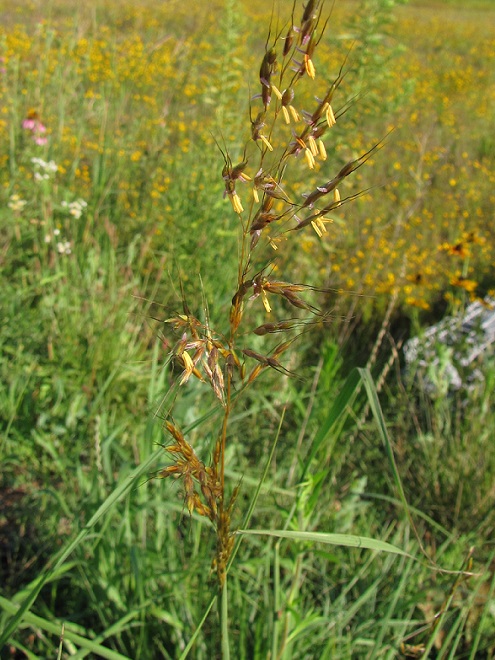
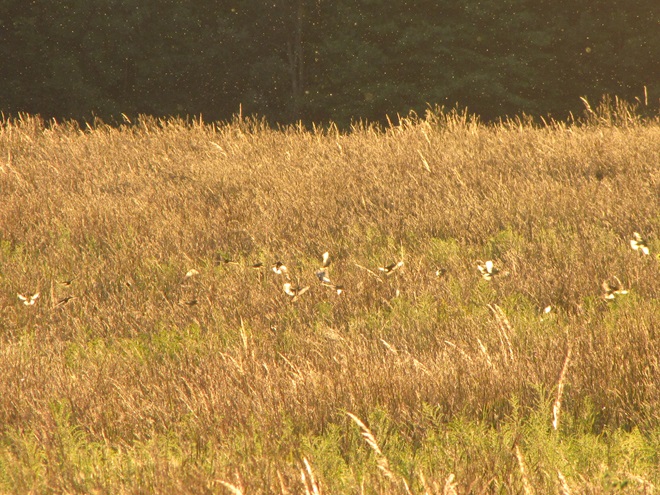
Here in a series of photographs are just a handful of the reasons why the land stewards at Middle Creek Wildlife Management Area and other properties where conservation and propagation practices are employed delay the mowing of fields composed of cool-season grasses until after August 15 each year.
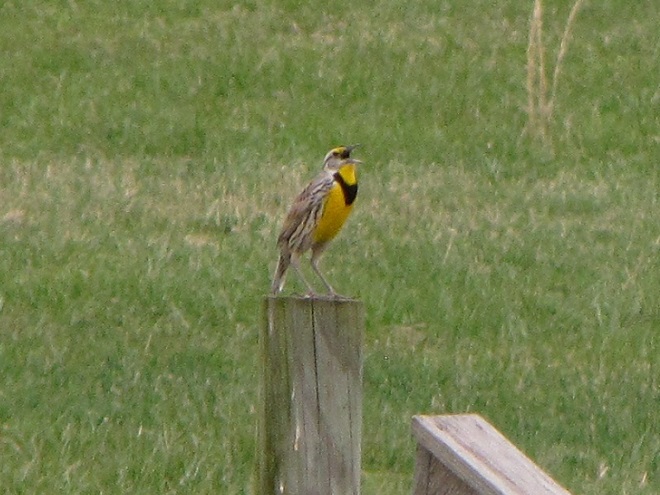
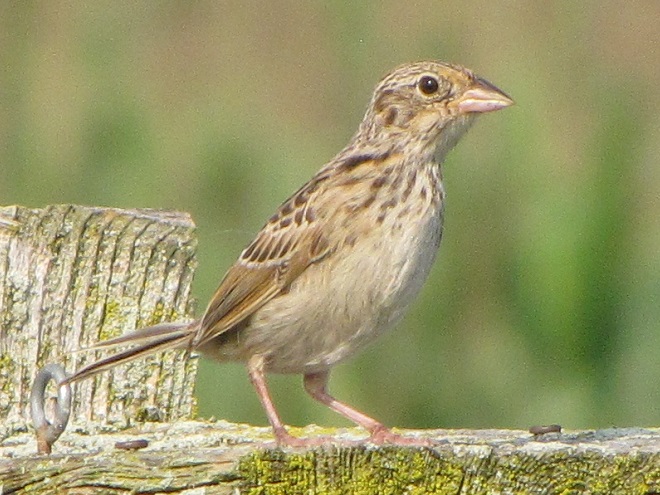
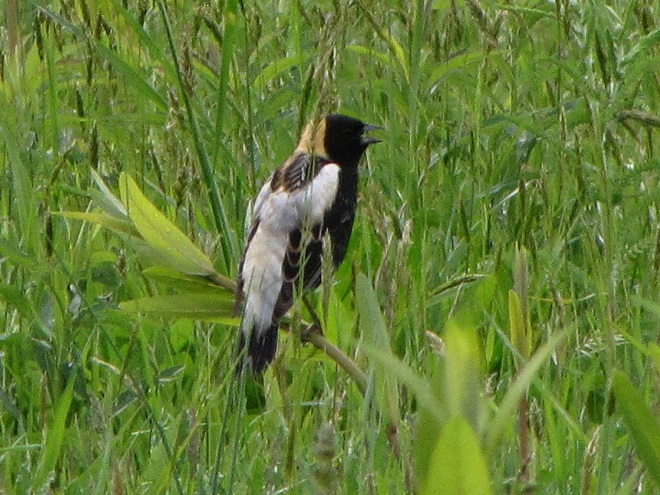
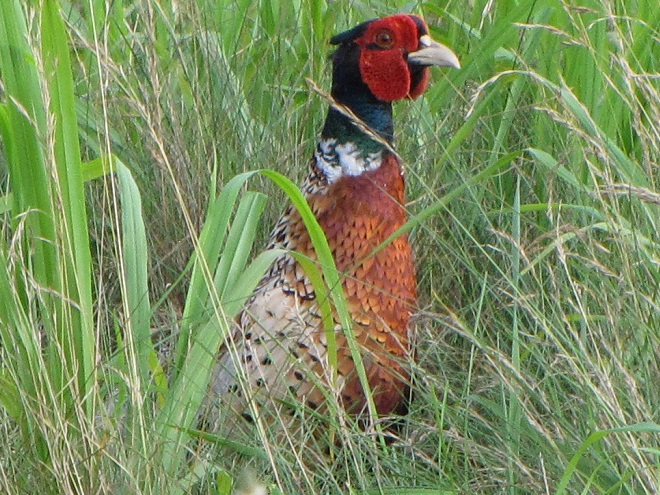
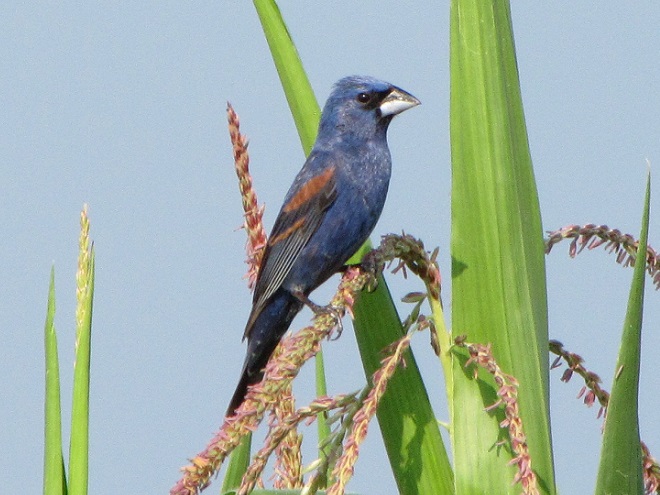
Right now is a good time to visit Middle Creek Wildlife Management Area to see the effectiveness a delayed mowing schedule can have when applied to fields of cool-season grasses. If you slowly drive, walk, or bicycle the auto tour route on the north side of the lake, you’ll pass through vast areas maintained as cool-season and warm-season grasses and early successional growth—and you’ll have a chance to see these and other grassland birds raising their young. It’s like a trip back in time to see farmlands they way they were during the middle years of the twentieth century.
Have you purchased your 2023-2024 Federal Duck Stamp? Nearly every penny of the 25 dollars you spend for a duck stamp goes toward habitat acquisition and improvements for waterfowl and the hundreds of other animal species that use wetlands for breeding, feeding, and as migration stopover points. Duck stamps aren’t just for hunters, purchasers get free admission to National Wildlife Refuges all over the United States. So do something good for conservation—stop by your local post office and get your Federal Duck Stamp.
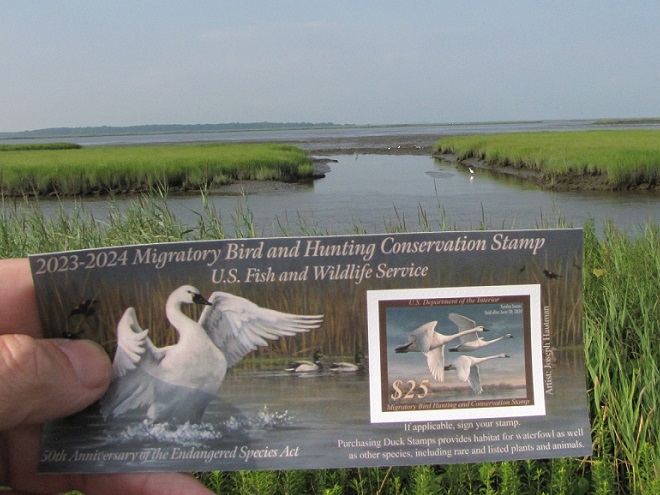
Still not convinced that a Federal Duck Stamp is worth the money? Well then, follow along as we take a photo tour of Bombay Hook National Wildlife Refuge. Numbers of southbound shorebirds are on the rise in the refuge’s saltwater marshes and freshwater pools, so we timed a visit earlier this week to coincide with a late-morning high tide.
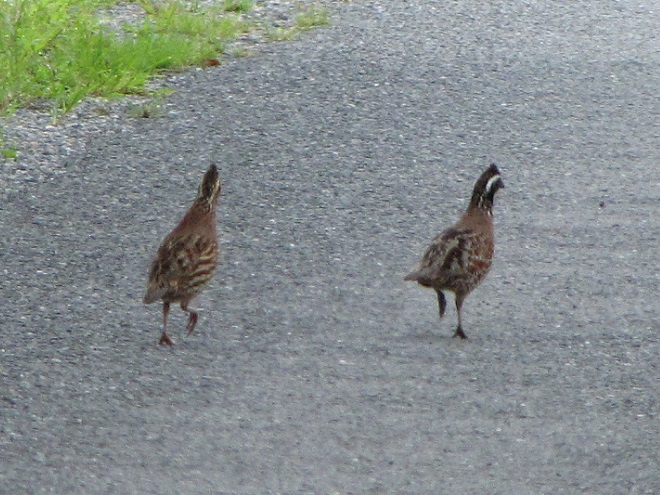
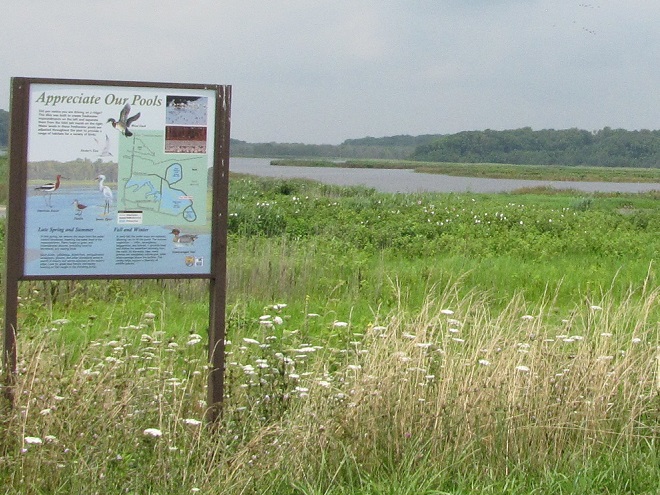
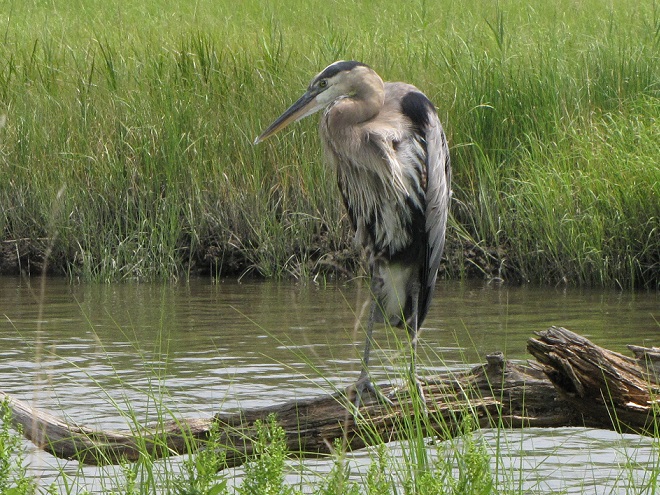
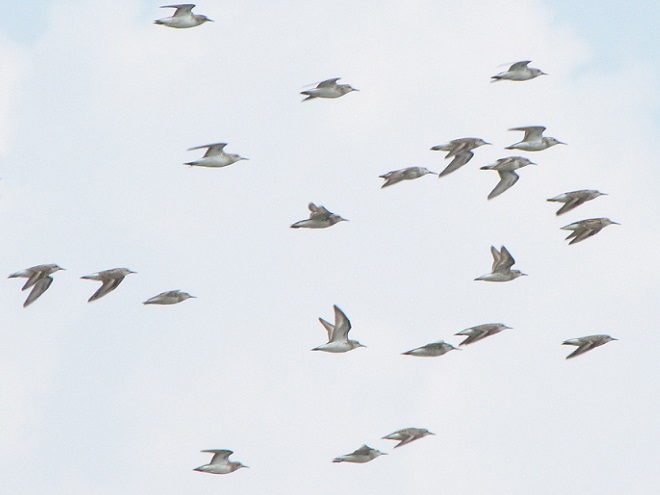
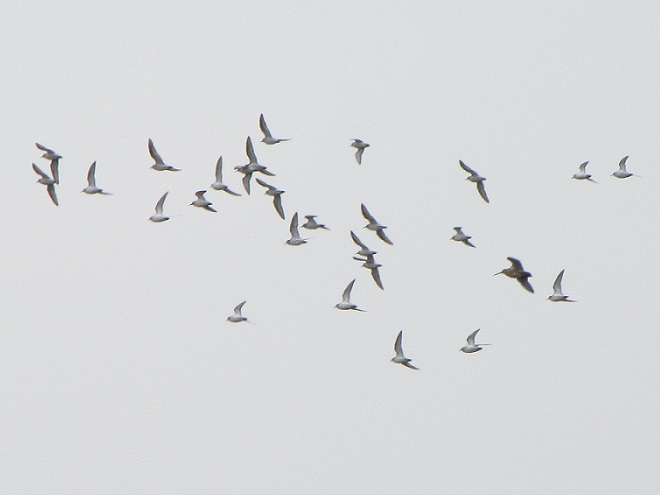
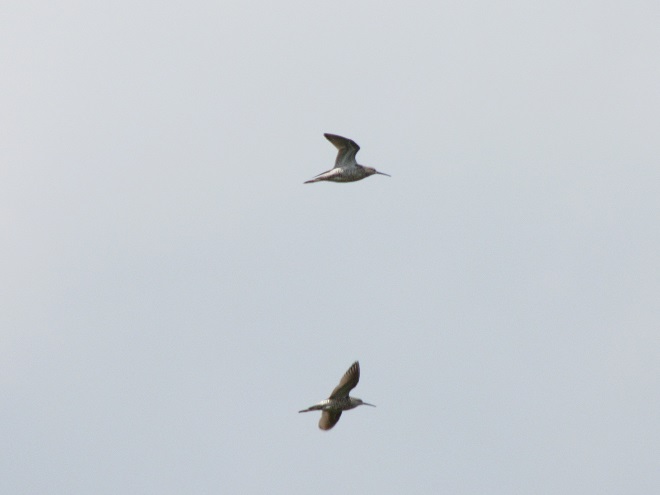
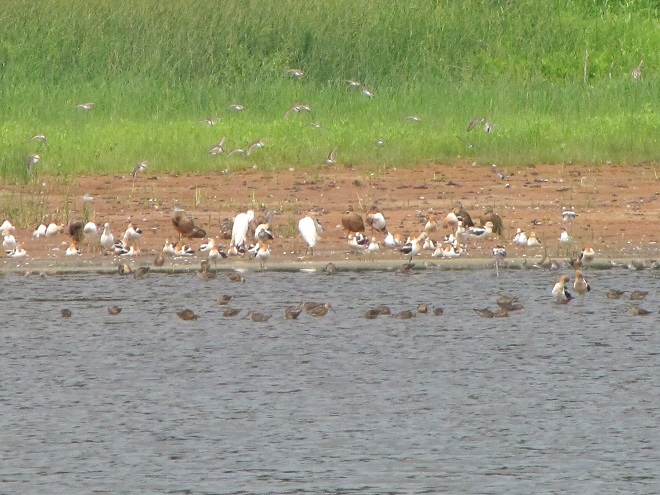
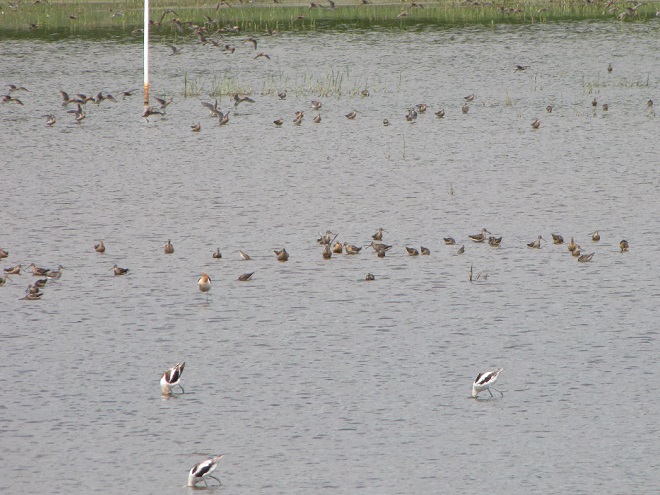
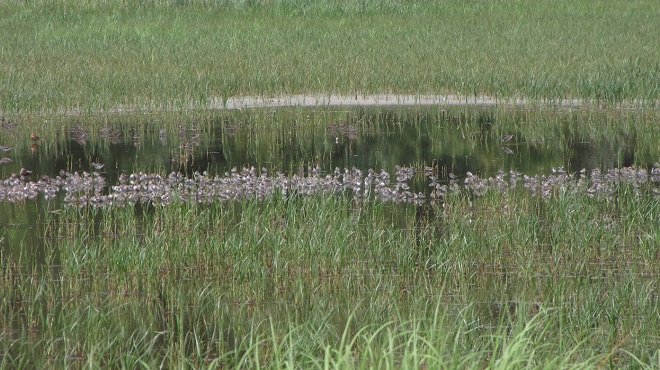
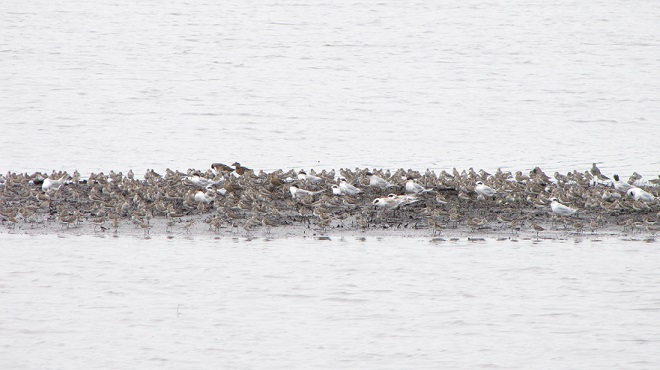
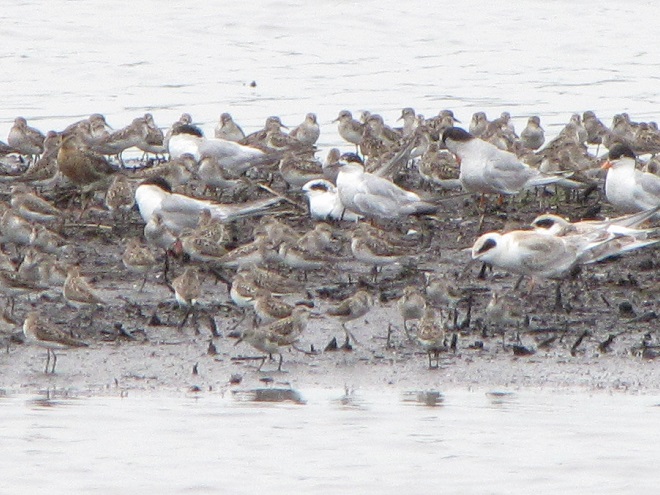
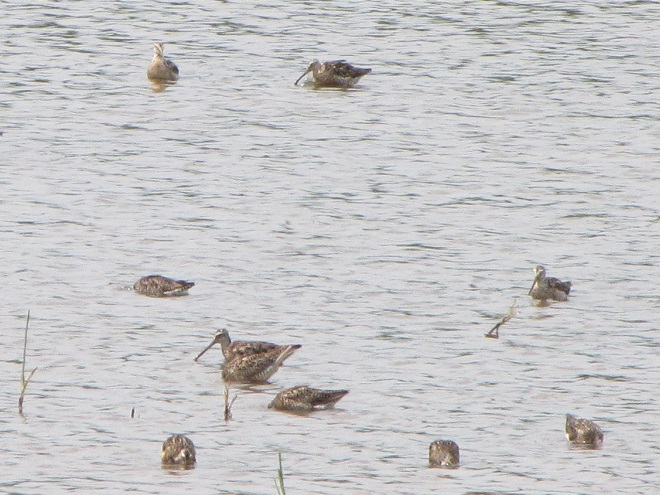
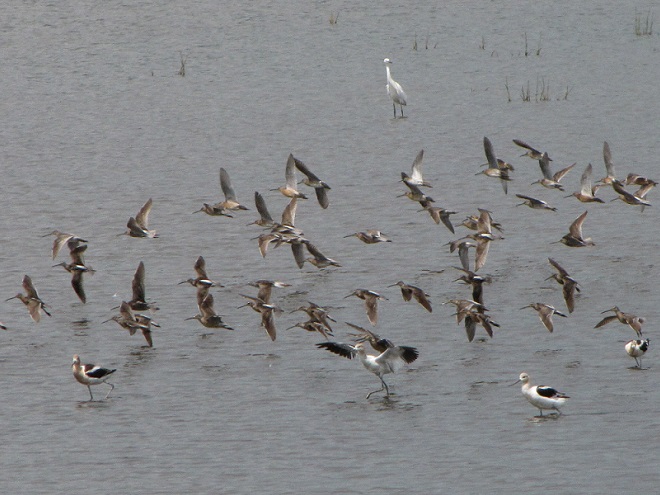
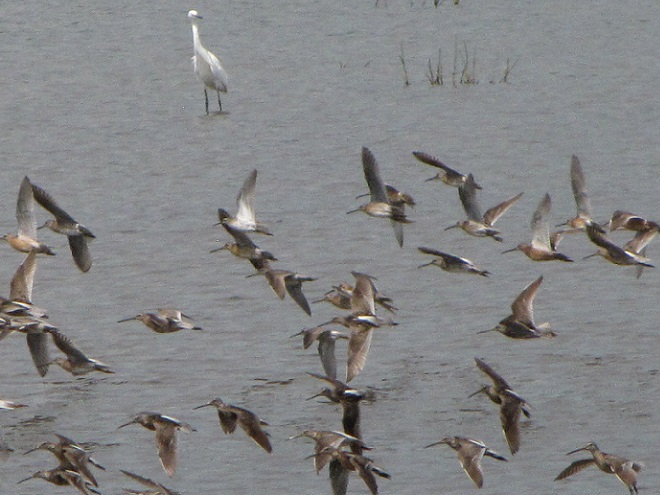
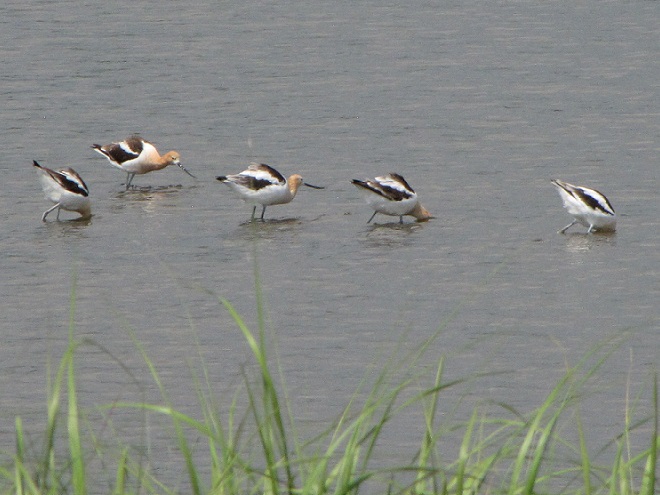
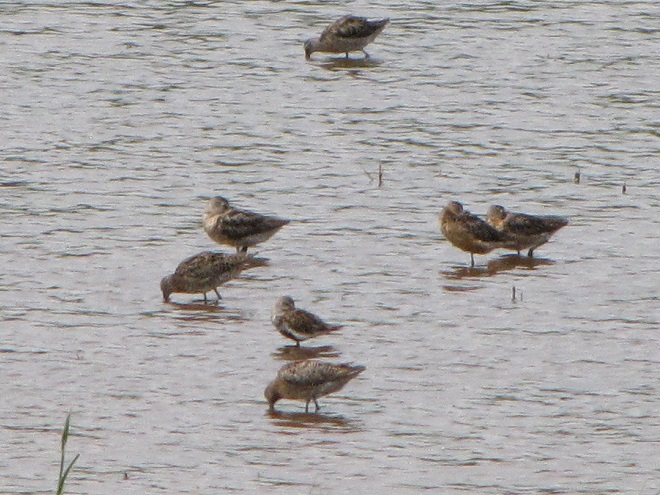
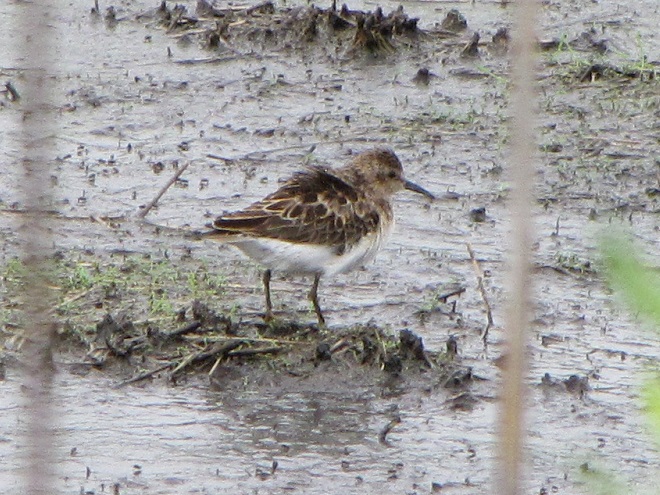
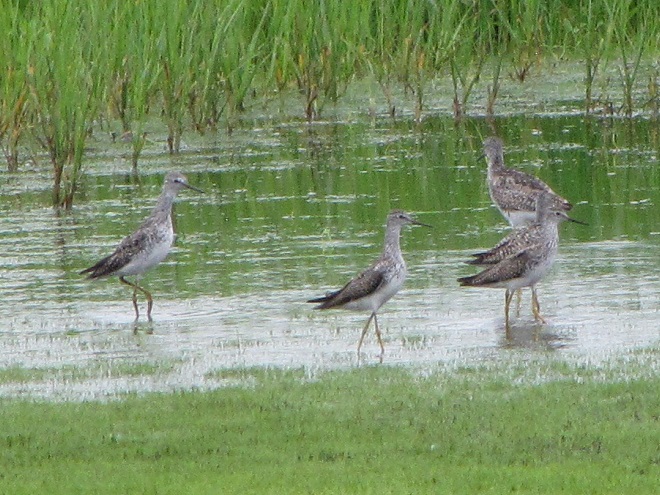
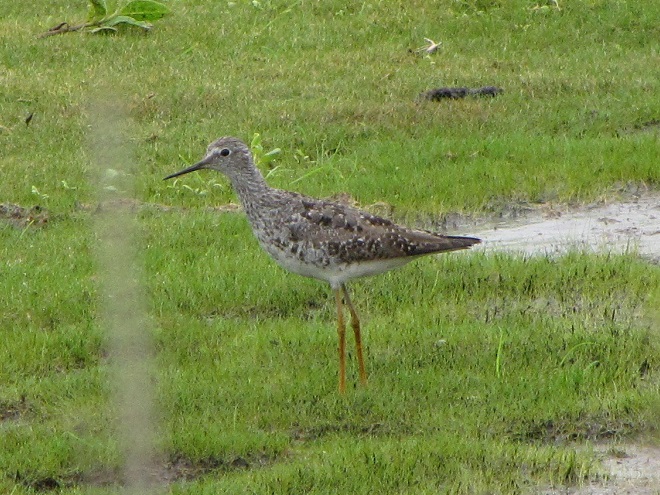
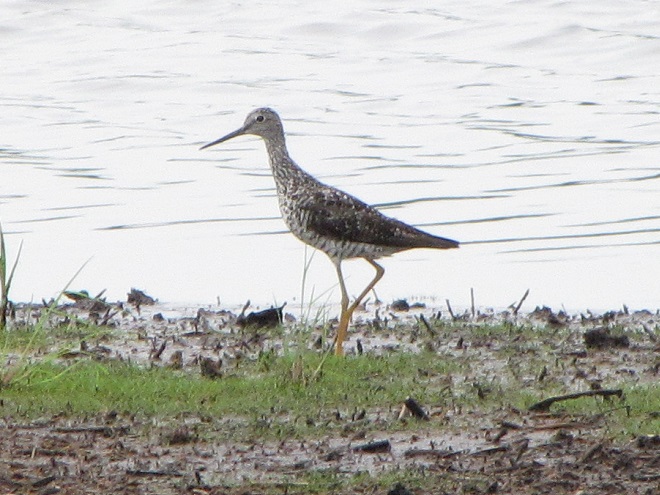
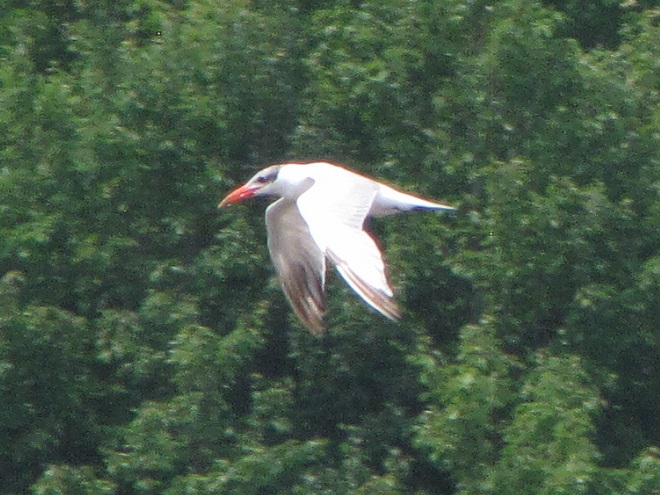
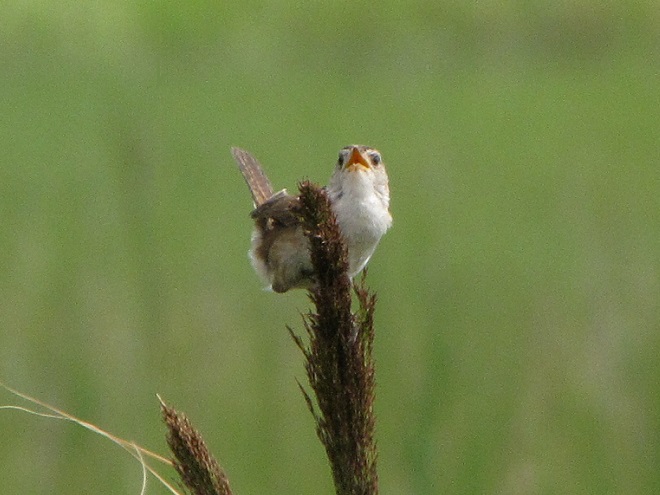
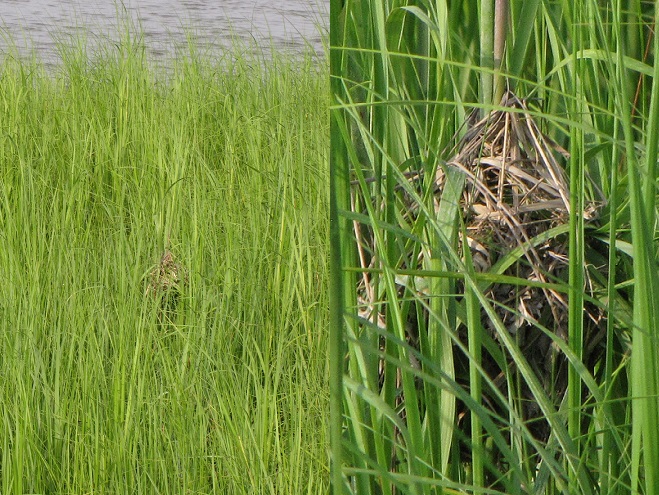
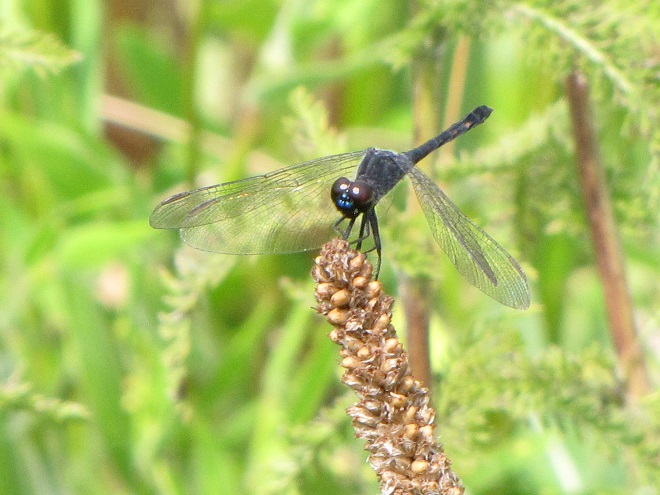
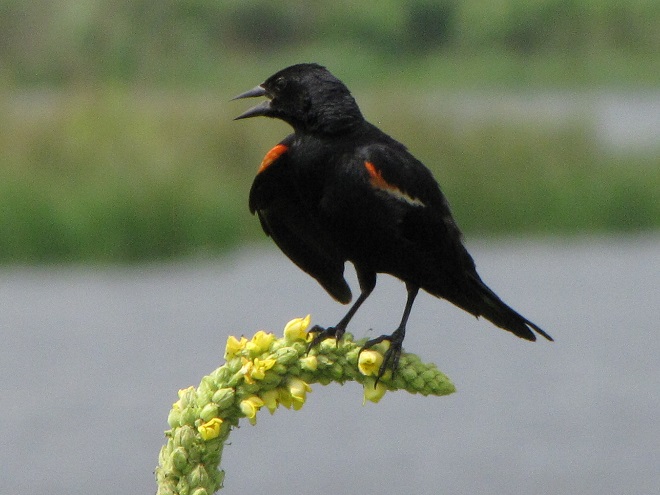
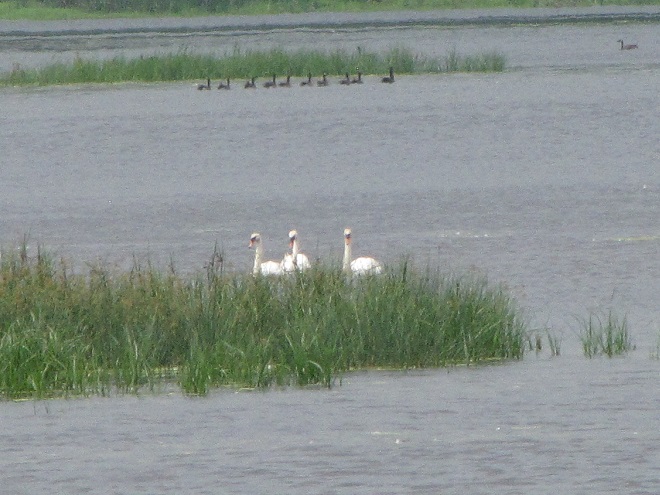
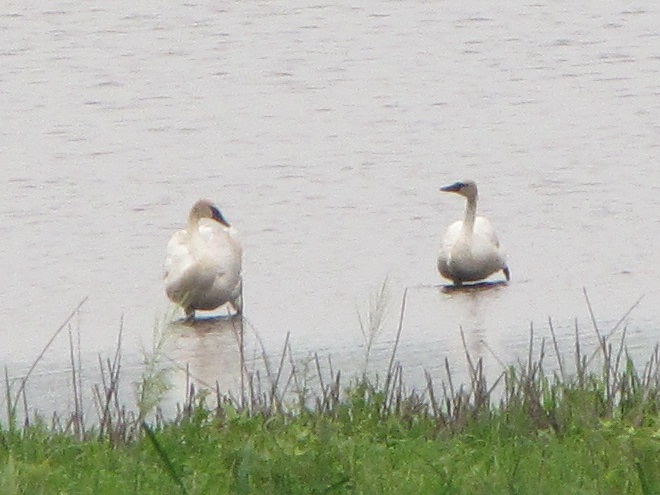
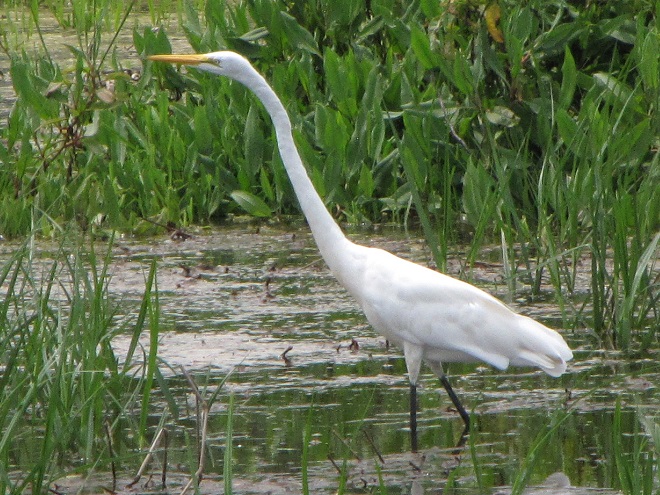
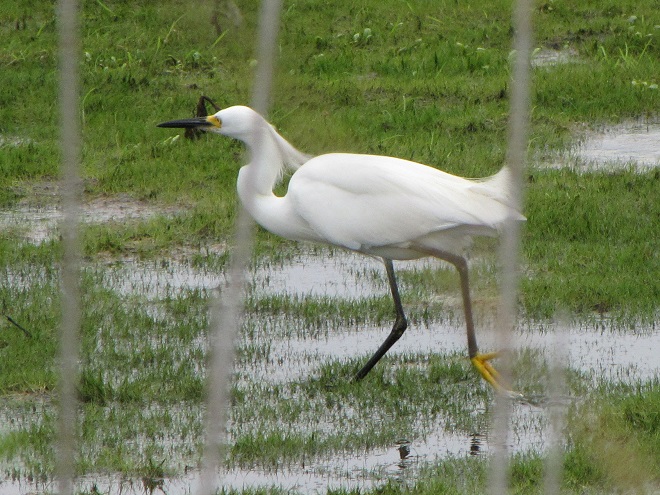
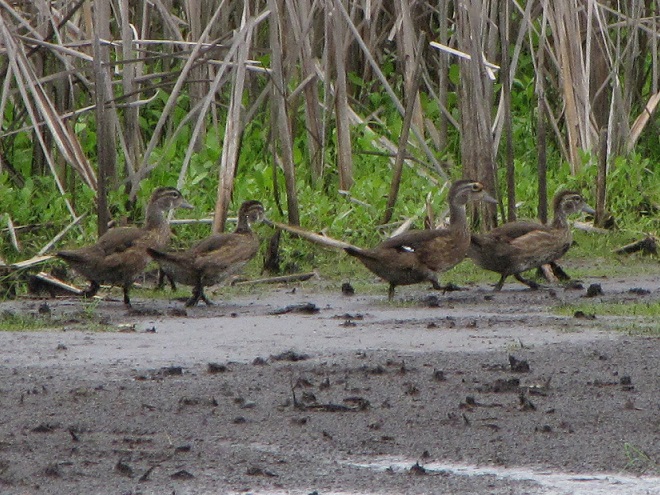
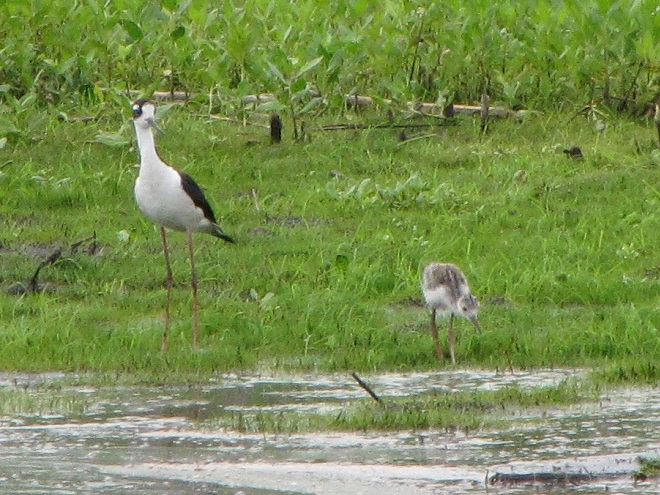
As the tide recedes, shorebirds leave the freshwater pools to begin feeding on the vast mudflats exposed within the saltwater marshes. Most birds are far from view, but that won’t stop a dedicated observer from finding other spectacular creatures on the bay side of the tour route road.
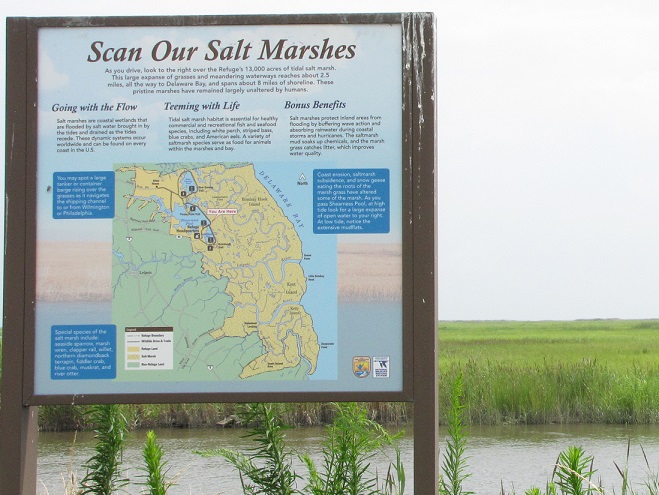
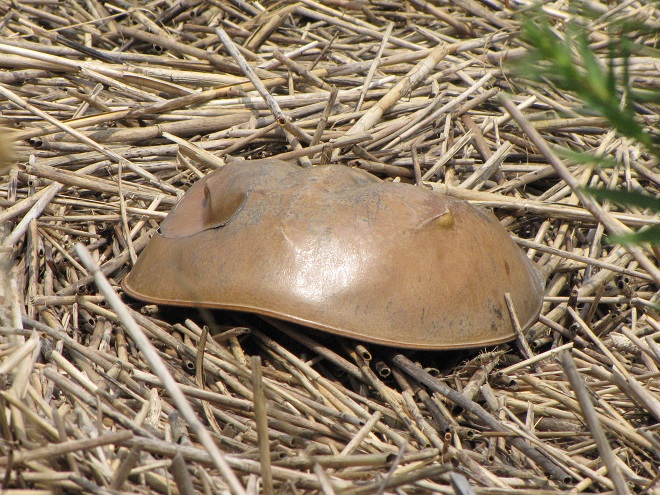
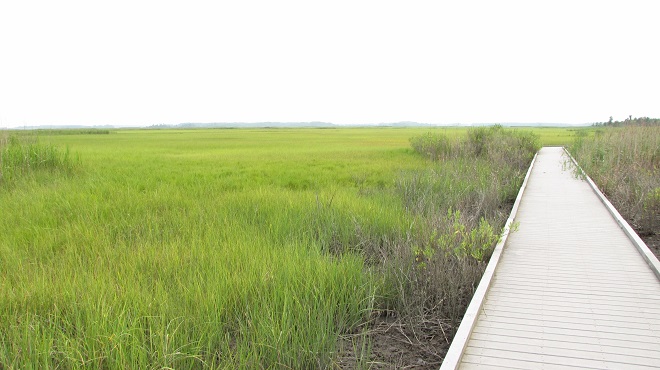
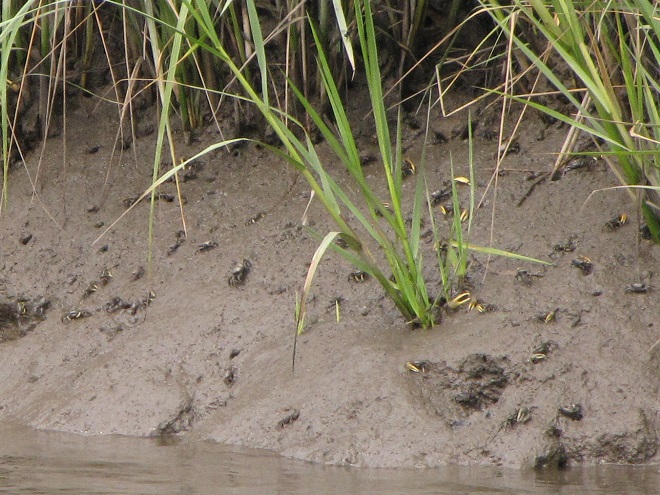
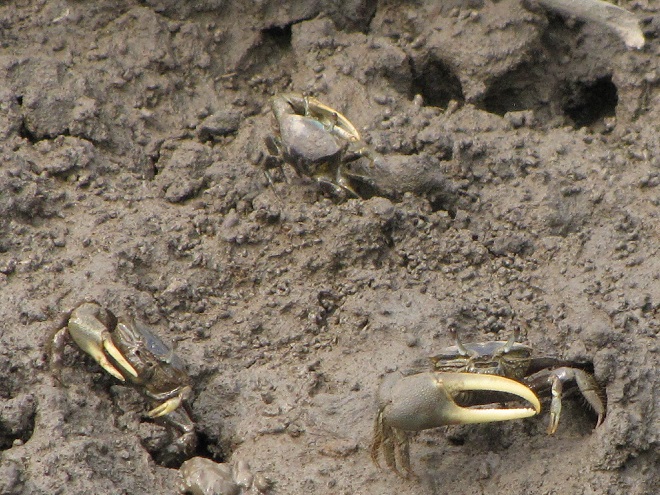
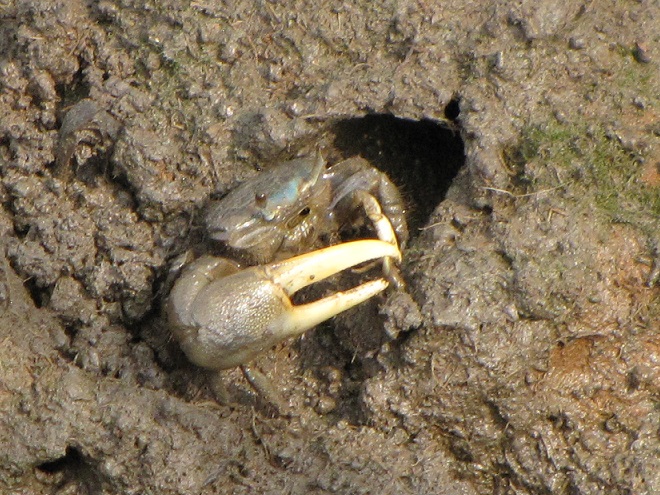

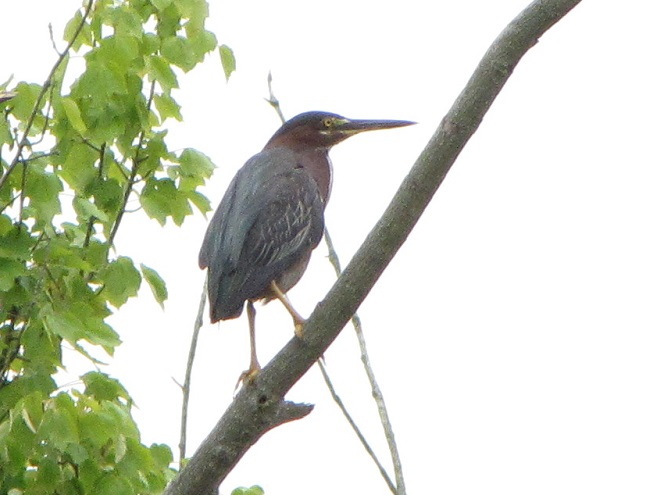
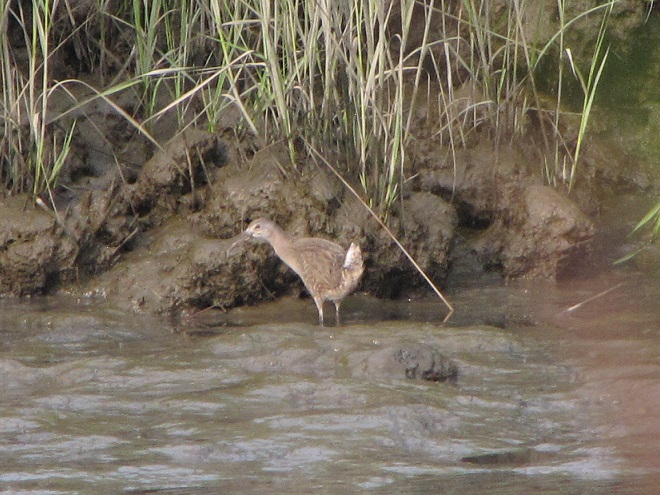
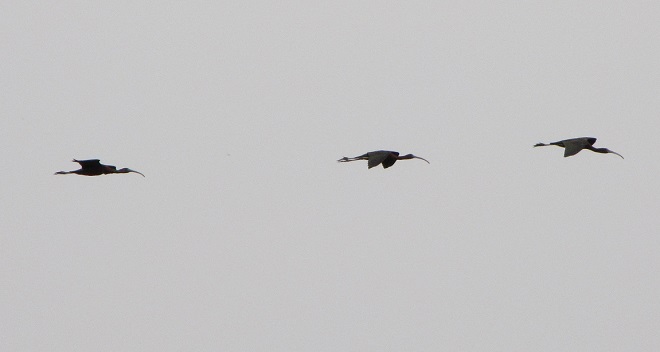
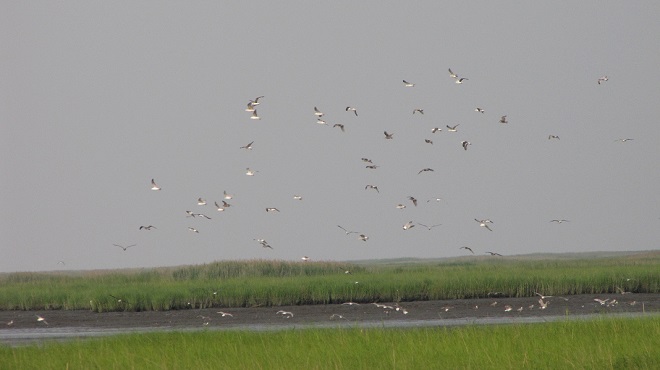
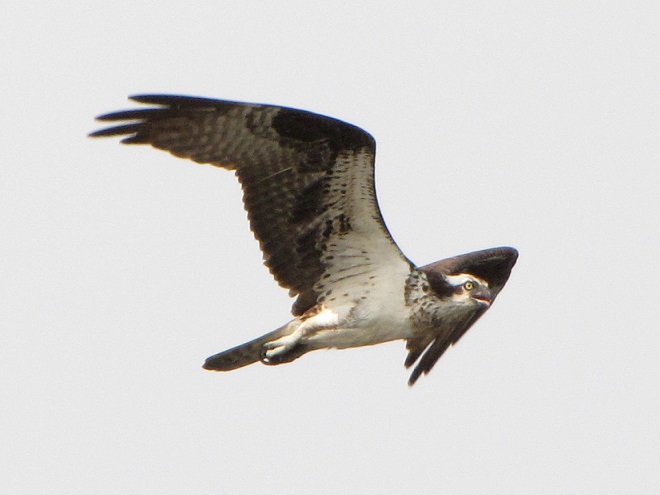
No visit to Bombay Hook is complete without at least a quick loop through the upland habitats at the far end of the tour route.
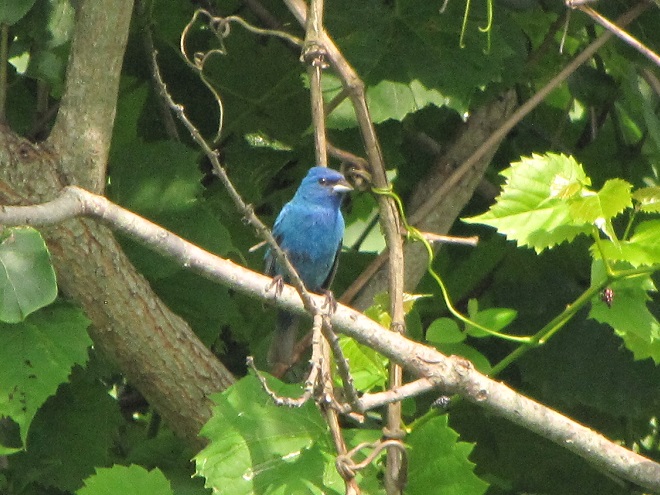
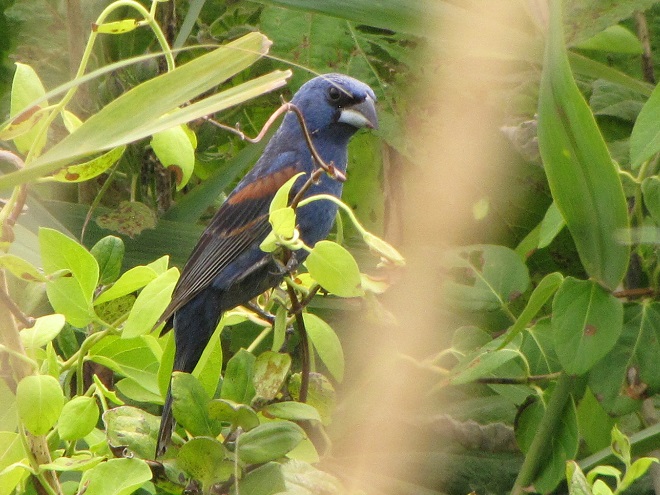
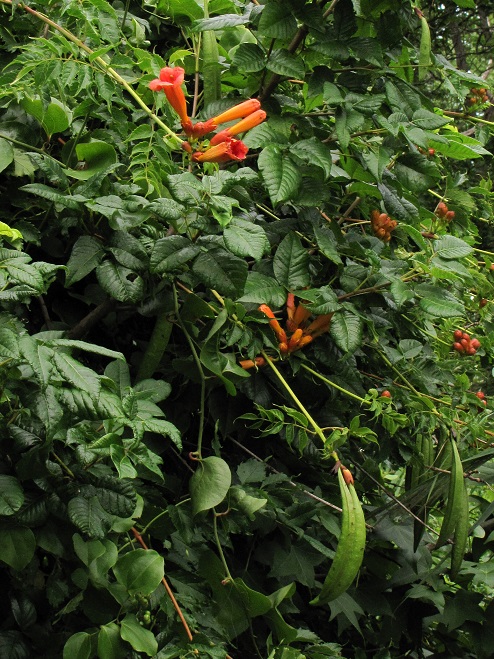
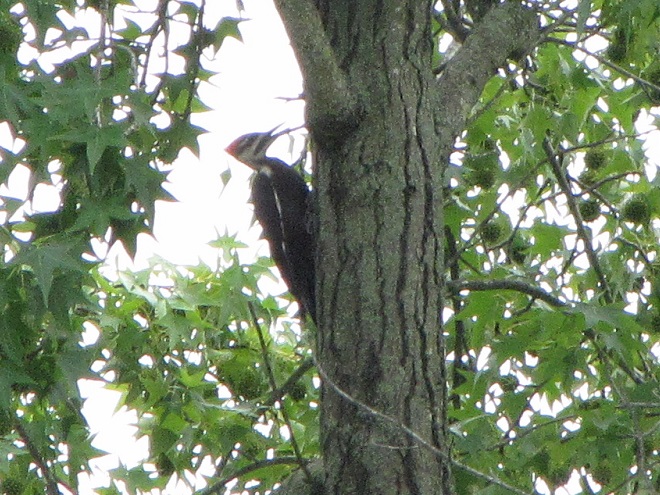
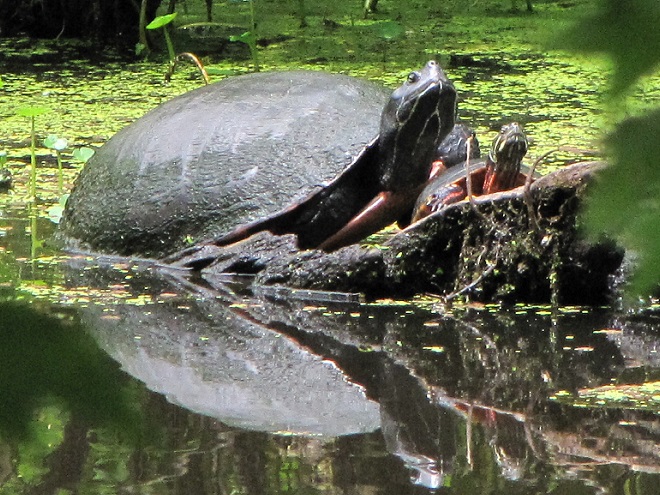
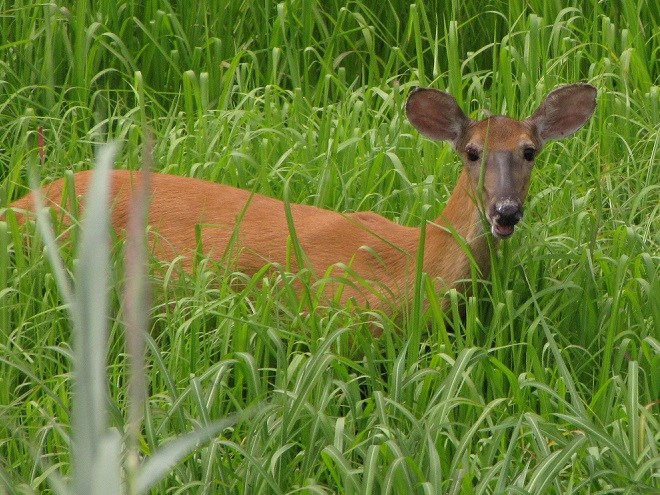
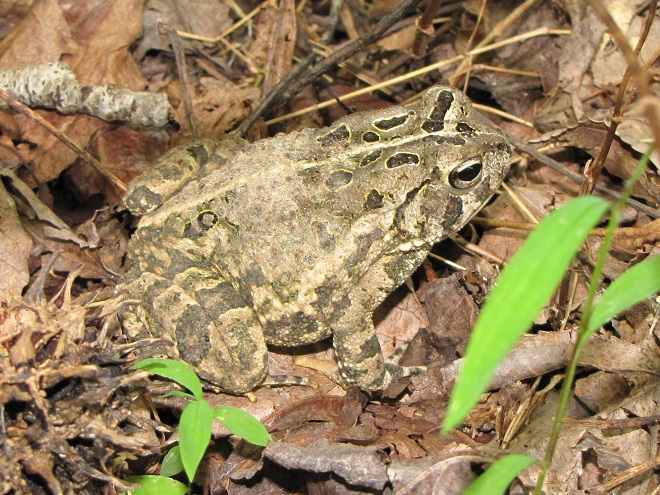
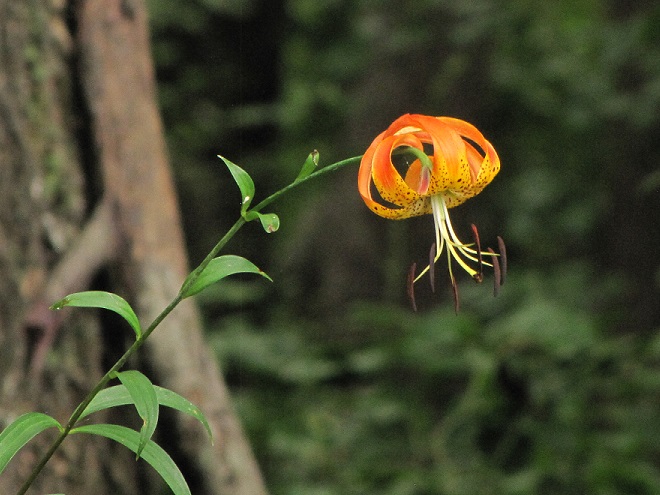
We hope you’ve been convinced to visit Bombay Hook National Wildlife Refuge sometime soon. And we hope too that you’ll help fund additional conservation acquisitions and improvements by visiting your local post office and buying a Federal Duck Stamp.
Are you worried about your well running dry this summer? Are you wondering if your public water supply is going to implement use restrictions in coming months? If we do suddenly enter a wet spell again, are you concerned about losing valuable rainfall to flooding? A sensible person should be curious about these issues, but here in the Lower Susquehanna River Watershed, we tend to take for granted the water we use on a daily basis.
This Wednesday, June 7, you can learn more about the numerous measures we can take, both individually and as a community, to recharge our aquifers while at the same time improving water quality and wildlife habitat in and around our streams and rivers. From 5:30 to 8:00 P.M., the Chiques Creek Watershed Alliance will be hosting its annual Watershed Expo at the Manheim Farm Show grounds adjacent to the Manheim Central High School in Lancaster County. According to the organization’s web page, more than twenty organizations will be there with displays featuring conservation, aquatic wildlife, stream restoration, Honey Bees, and much more. There will be games and custom-made fish-print t-shirts for the youngsters, plus music to relax by for those a little older. Look for rain barrel painting and a rain barrel giveaway. And you’ll like this—admission and ice cream are free. Vendors including food trucks will be onsite preparing fare for sale.
And there’s much more.
To help recharge groundwater supplies, you can learn how to infiltrate stormwater from your downspouts, parking area, or driveway…
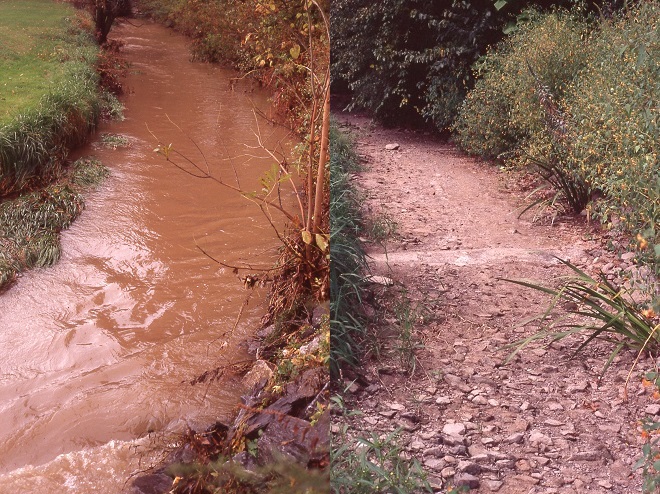
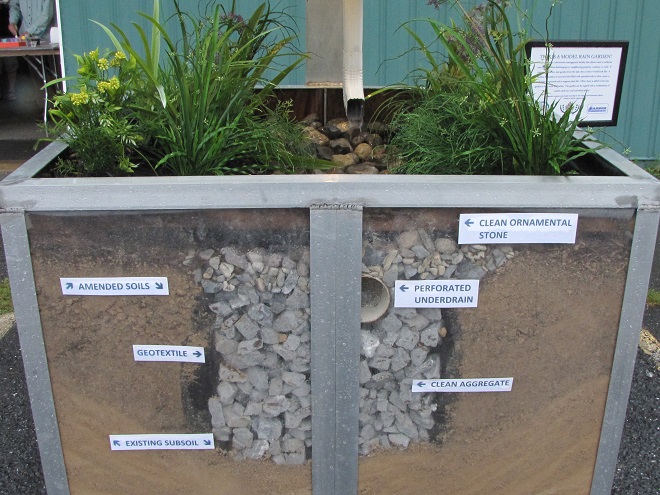
…there will be a tour of a comprehensive stream and floodplain rehabilitation project in Manheim Memorial Park adjacent to the fair grounds…

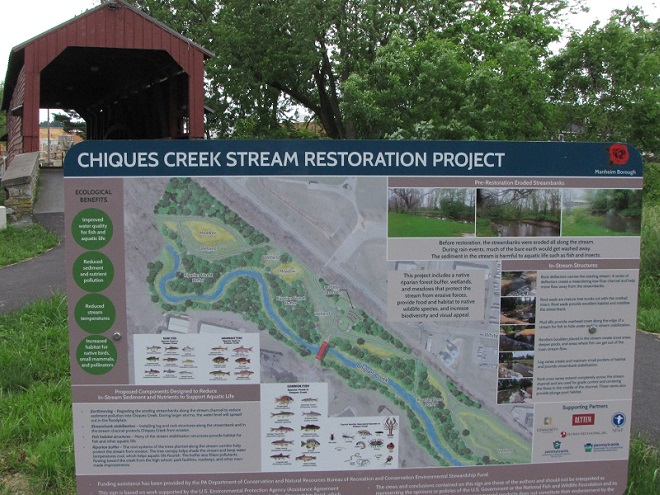
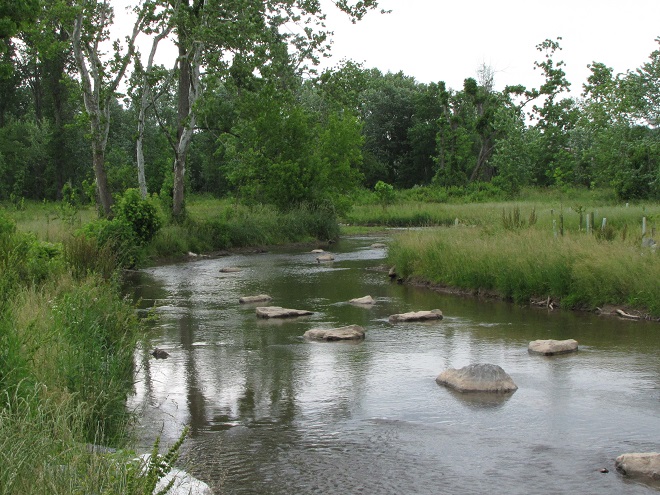
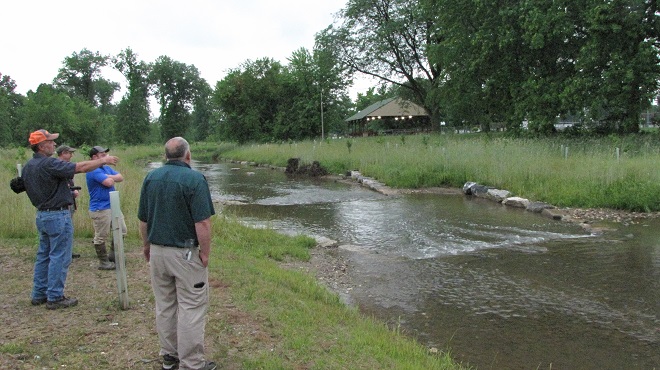
…and a highlight of the evening will be using an electrofishing apparatus to collect a sample of the fish now populating the rehabilitated segment of stream…
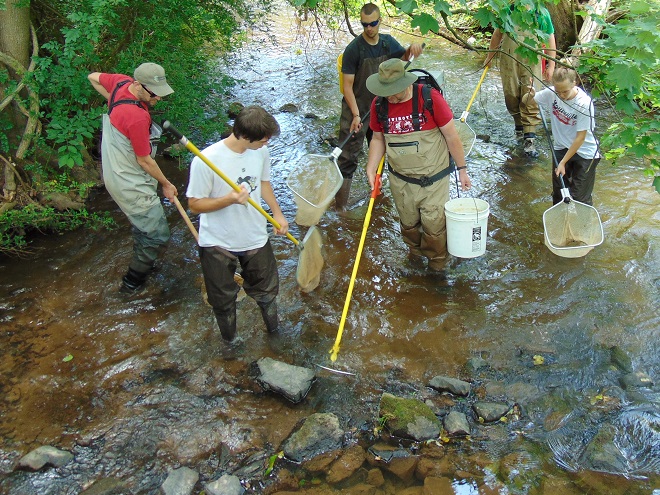
…so don’t miss it. We can hardly wait to see you there!
The 2023 Watershed Expo is part of Lancaster Conservancy Water Week.
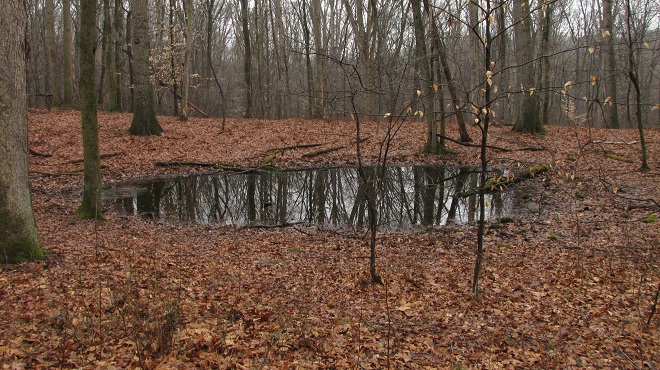
It may look like just a puddle in the woods, but this is a very specialized wetland habitat, a habitat that is quickly disappearing from the Lower Susquehanna River Watershed. It’s a vernal pool—also known as a vernal pond or an ephemeral (lasting a short time) pool or pond.
Viable vernal pools have several traits in common…
To have a closer look at what is presently living in this “black leaf” vernal pool, we’re calling on the crew of the S. S. Haldeman to go down under and investigate.
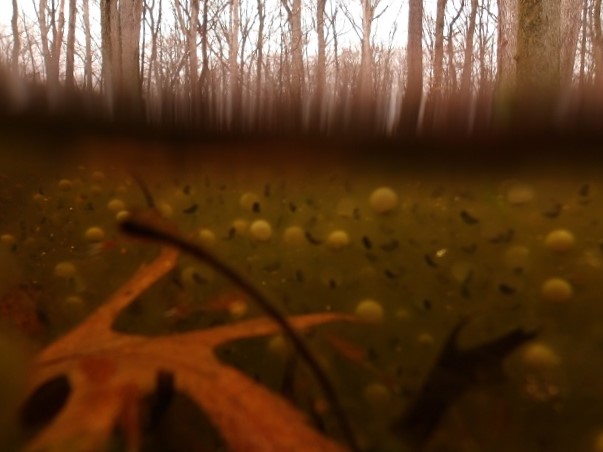

Let’s take it down for a better look. Dive, all dive!
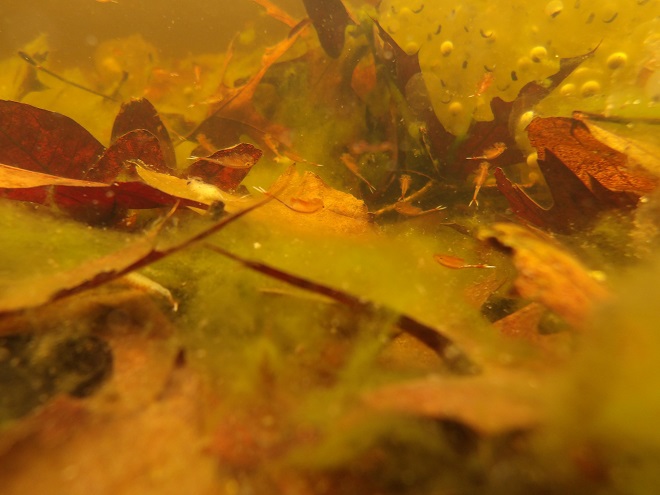
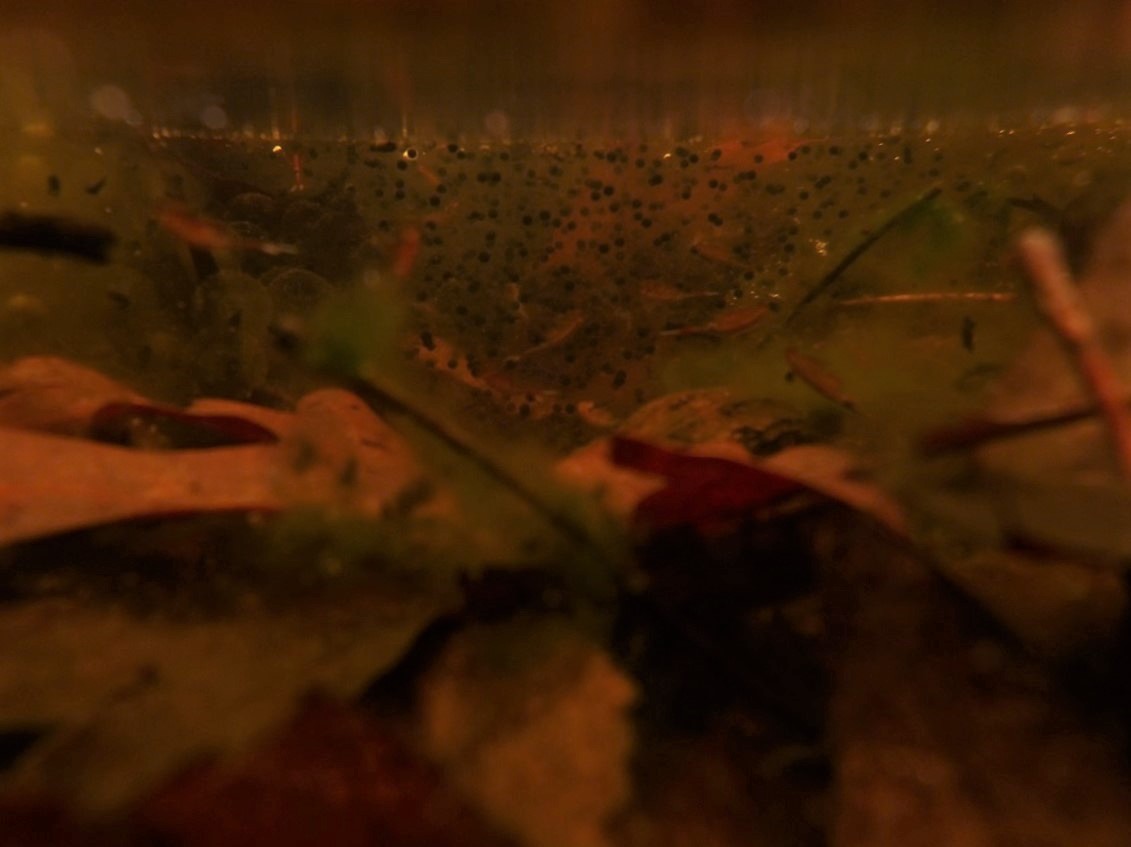
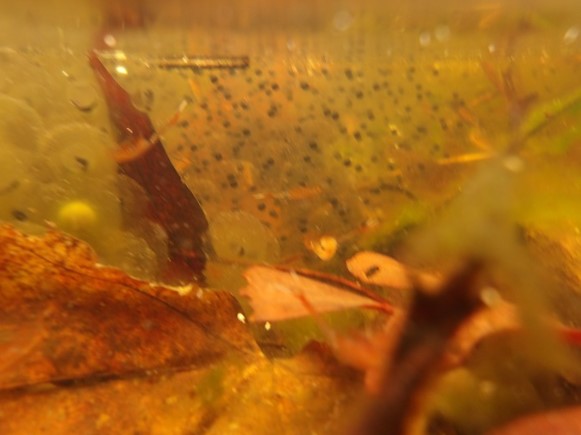
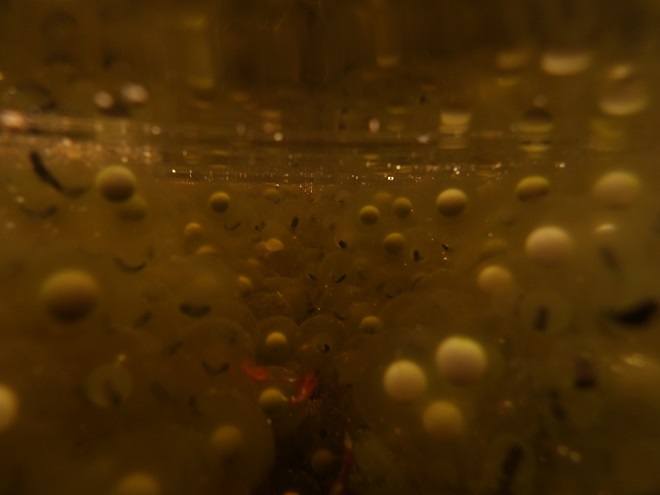
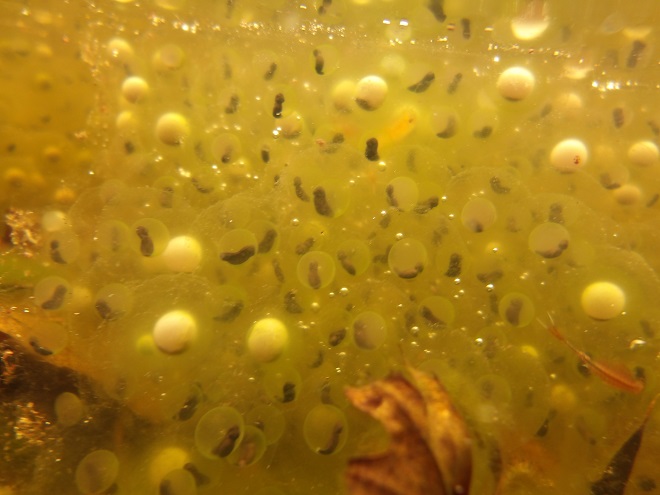
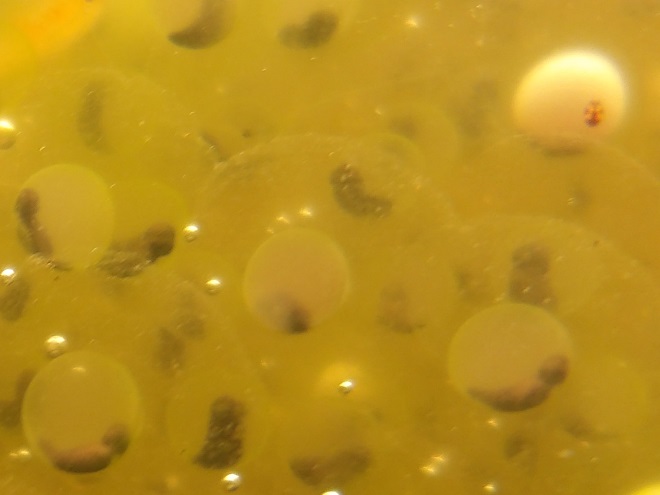
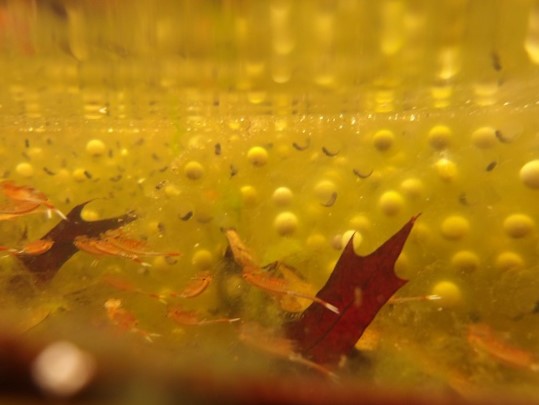
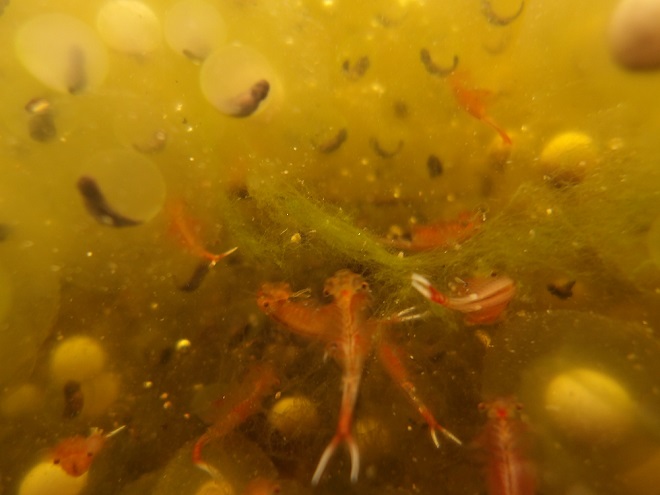
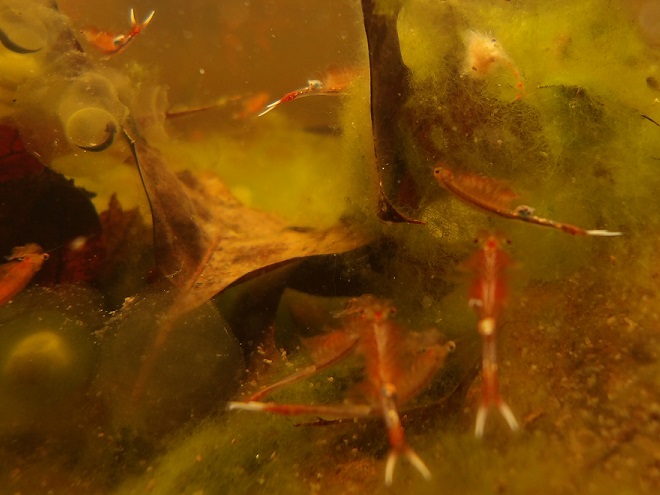


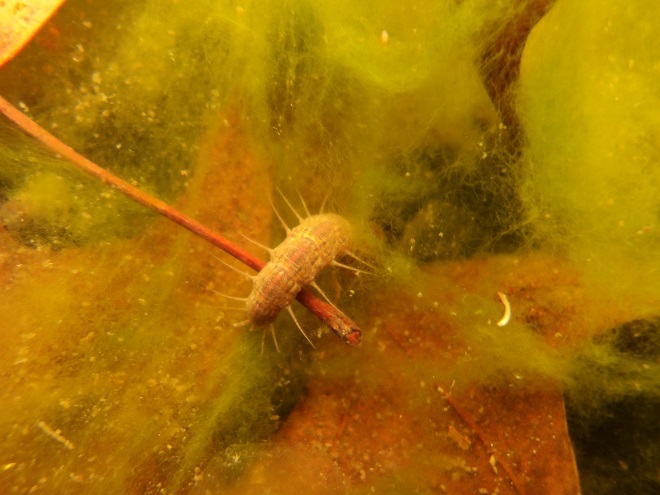

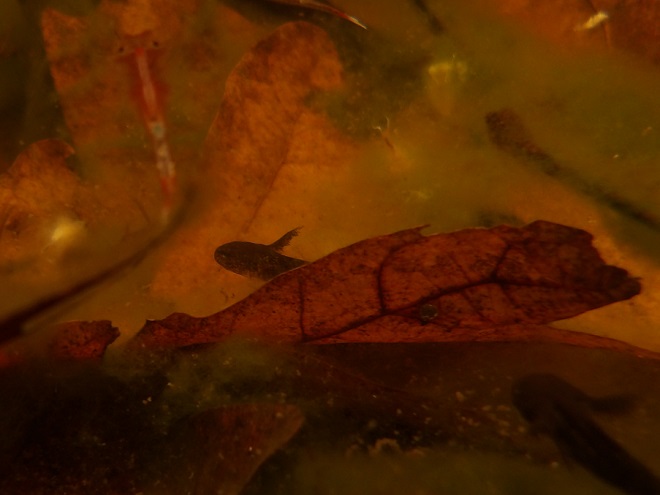

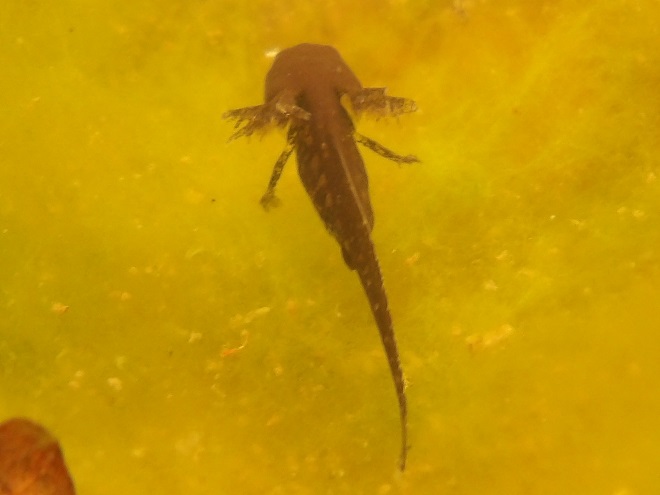
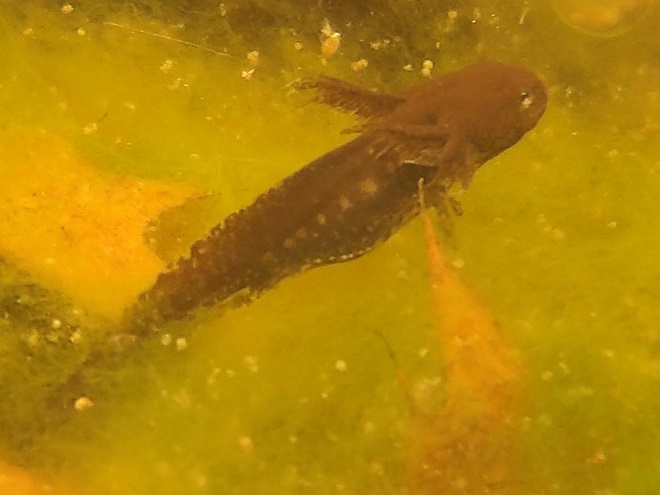
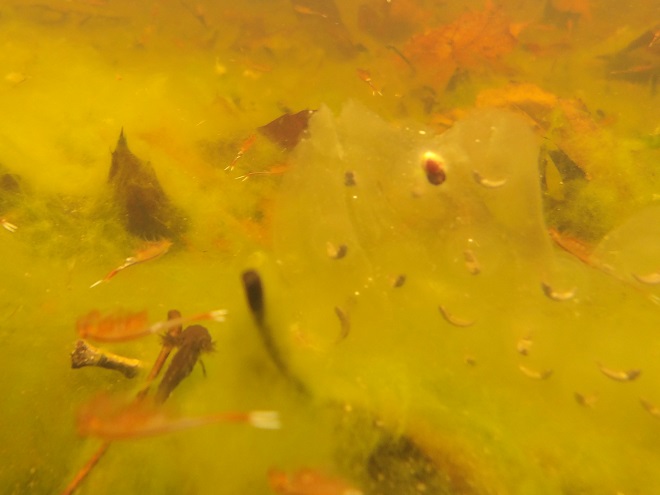
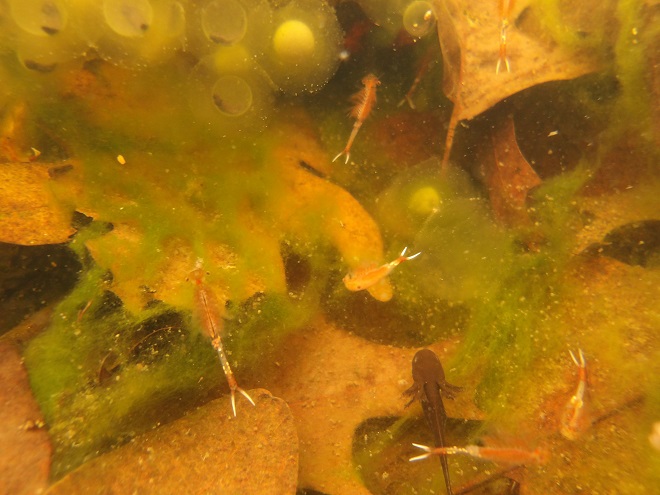
We hope you enjoyed this quick look at life in a vernal pool. While the crew of the S. S. Haldeman decontaminates the vessel (we always scrub and disinfect the ship before moving between bodies of water) and prepares for its next voyage, you can learn more about vernal pools and the forest ecosystems of which they are such a vital component. Be sure to check out…
If you are a landowner or a land manager, you can find materials specifically providing guidance for protecting, restoring, and re-establishing vernal pool habitats at…
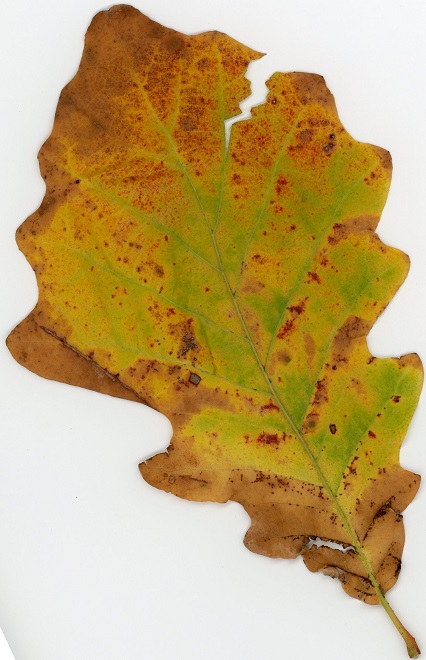
This linear grove of mature trees, many of them nearly one hundred years old, is a planting of native White Oaks (Quercus alba) and Swamp White Oaks (Quercus bicolor).
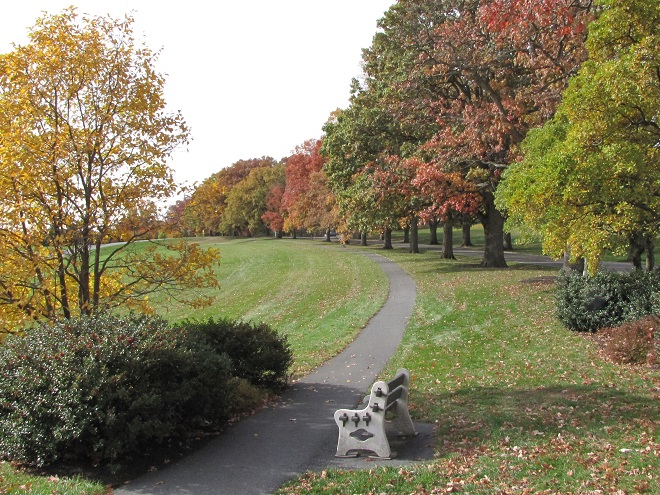
Imagine the benefit of trees like this along that section of stream you’re mowing or grazing right now. The Swamp White Oak in particular thrives in wet soils and is available now for just a couple of bucks per tree from several of the lower Susquehanna’s County Conservation District Tree Sales. These and other trees and shrubs planted along creeks and rivers to create a riparian buffer help reduce sediment and nutrient pollution. In addition, these vegetated borders protect against soil erosion, they provide shade to otherwise sun-scorched waters, and they provide essential wildlife habitat. What’s not to love?
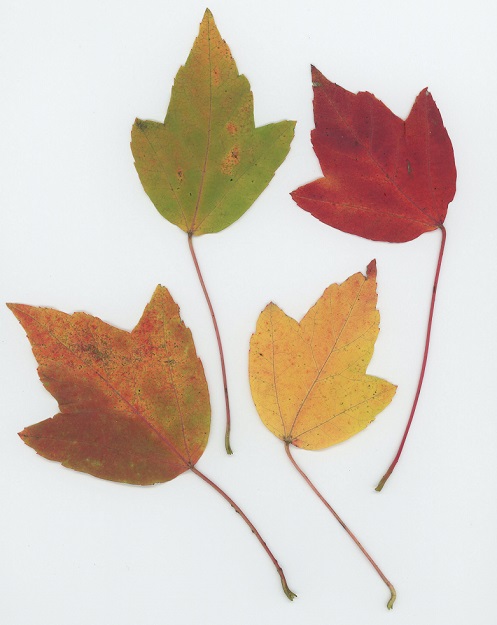
The following native species make great companions for Swamp White Oaks in a lowland setting and are available at bargain prices from one or more of the County Conservation District Tree Sales now underway…
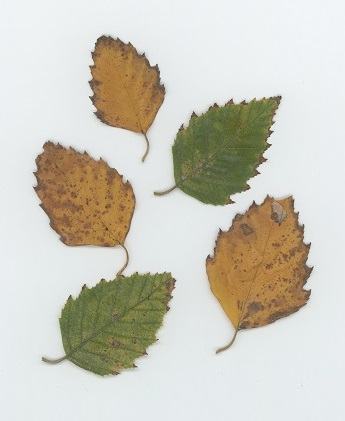
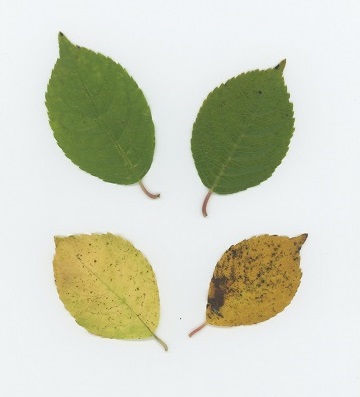
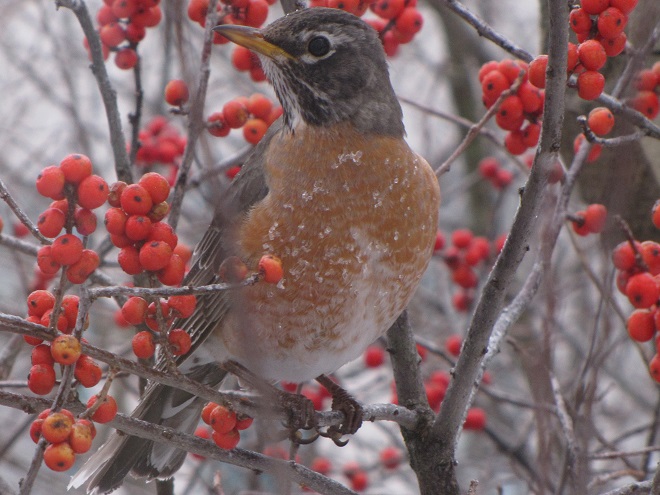
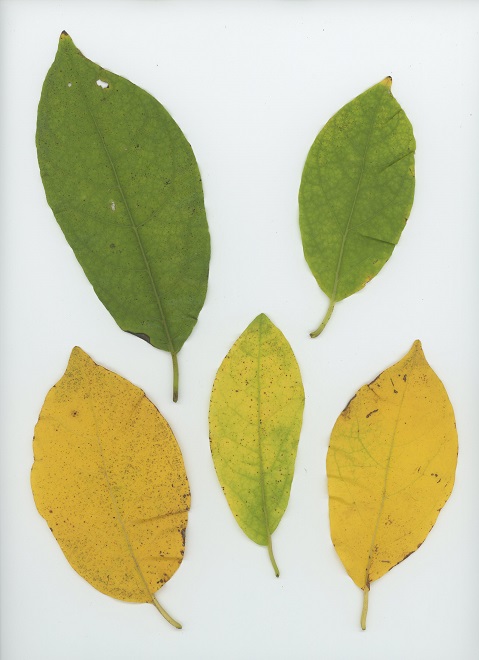
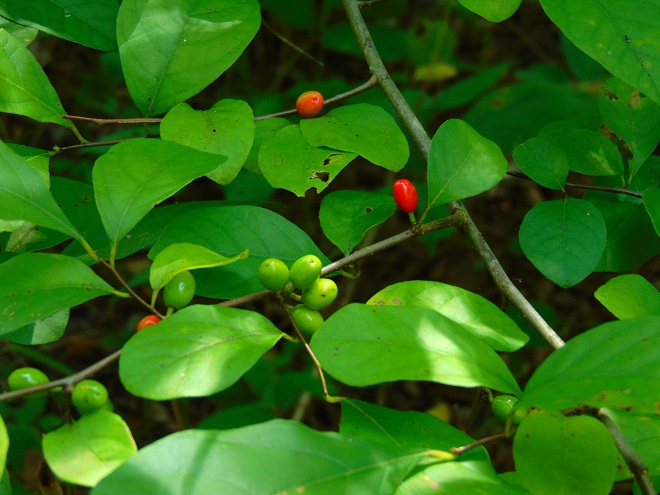
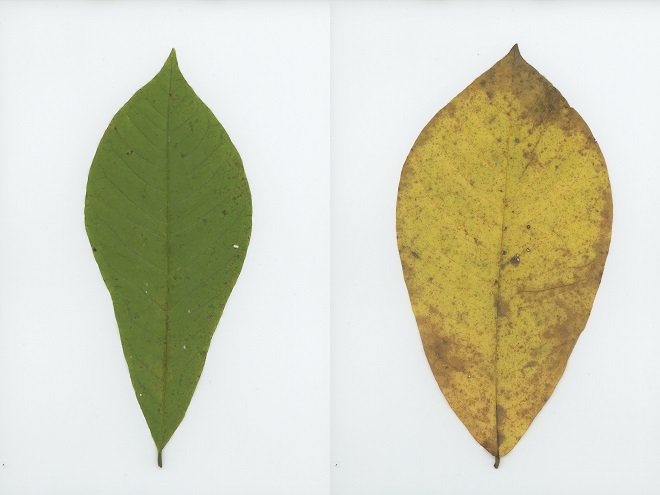
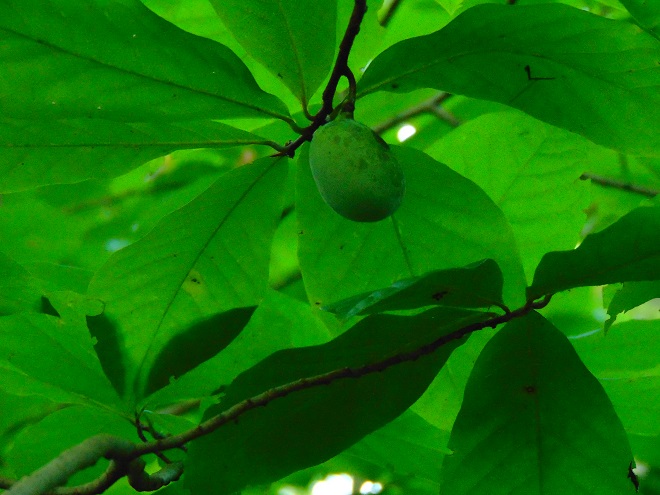
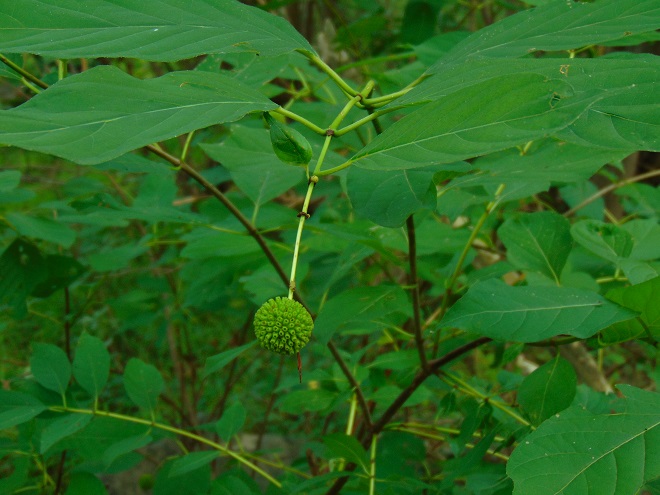
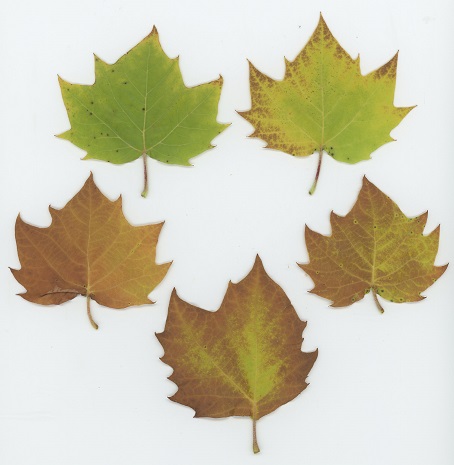
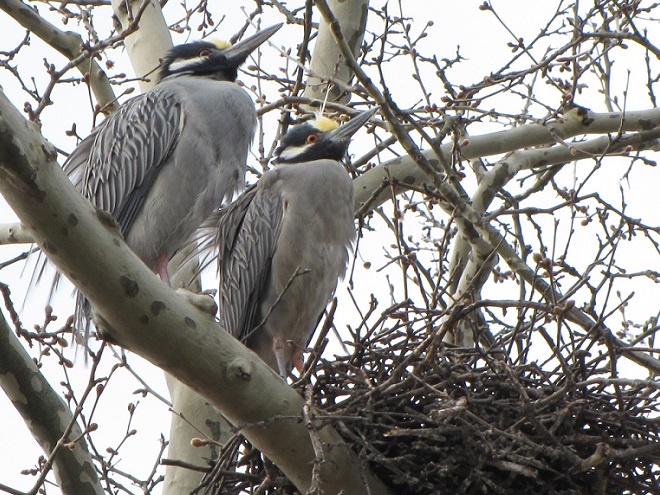
So don’t mow, do something positive and plant a buffer!
Act now to order your plants because deadlines are approaching fast. For links to the County Conservation District Tree Sales in the Lower Susquehanna River Watershed, see our February 18th post.
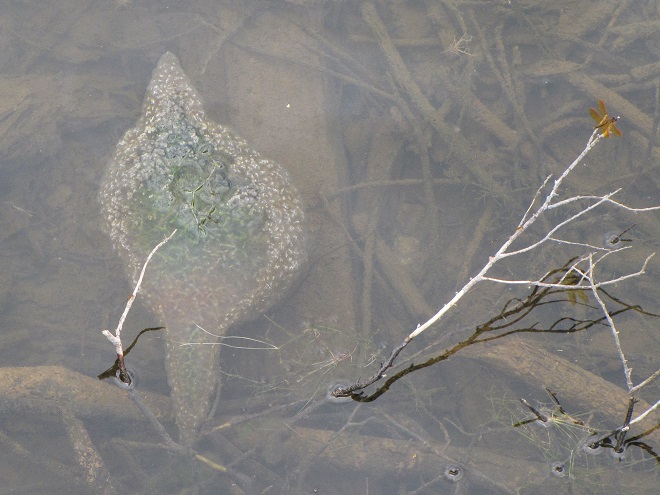
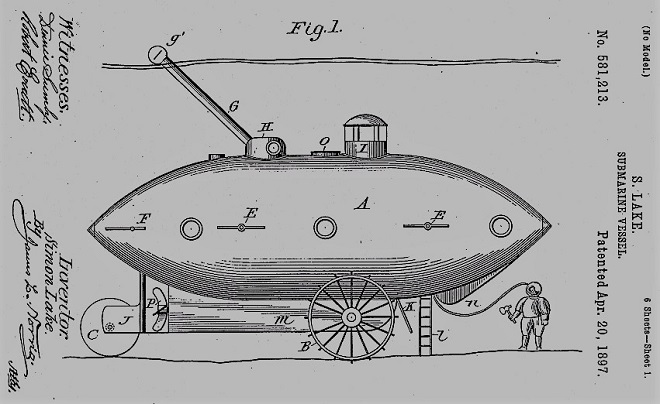
First there was the Nautilus. Then there was the Seaview. And who can forget the Yellow Submarine? Well, now there’s the S. S. Haldeman, and today we celebrated her shakedown cruise and maiden voyage. The Haldeman is powered by spent fuel that first saw light of day near Conewago Falls at a dismantled site that presently amounts to nothing more than an electrical substation. Though antique in appearance, the vessel discharges few emissions, provided there aren’t any burps or hiccups while underway. So, climb aboard as we take a cruise up the Susquehanna at periscope depth to have a quick look around!

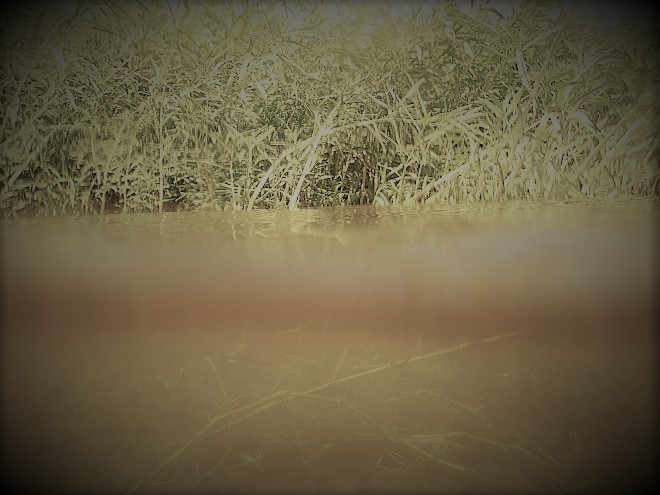

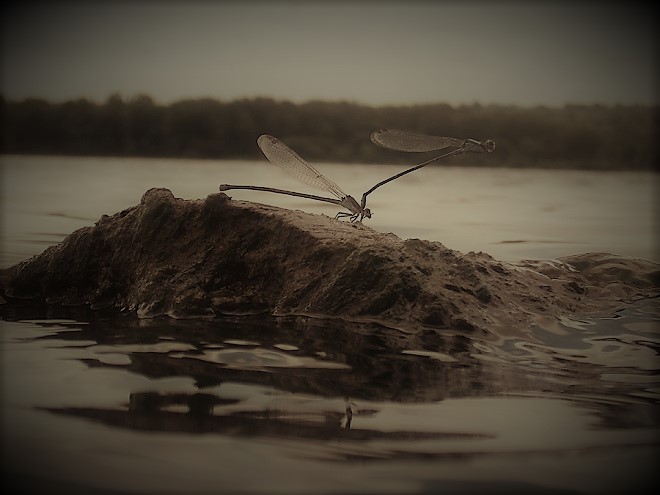
Watertight and working fine. Let’s flood the tanks and have a peek at the benthos. Dive, all dive!
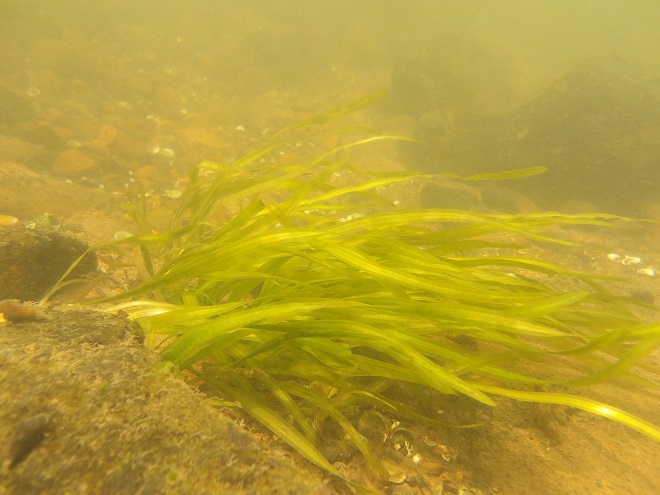


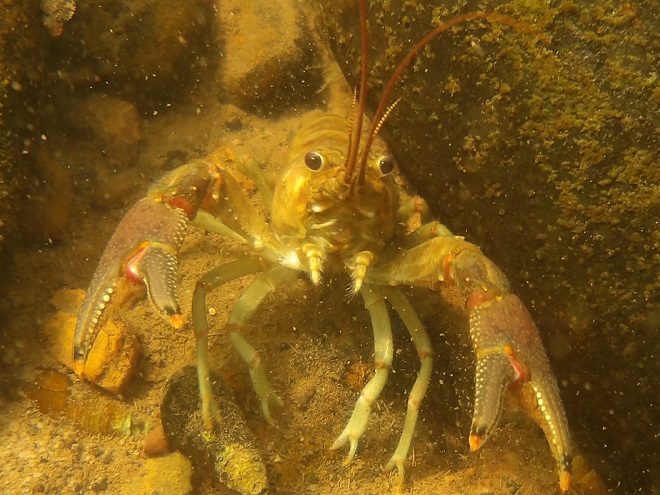
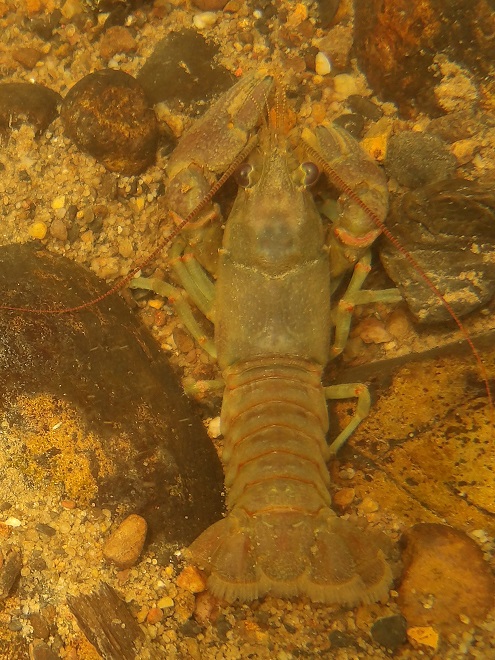
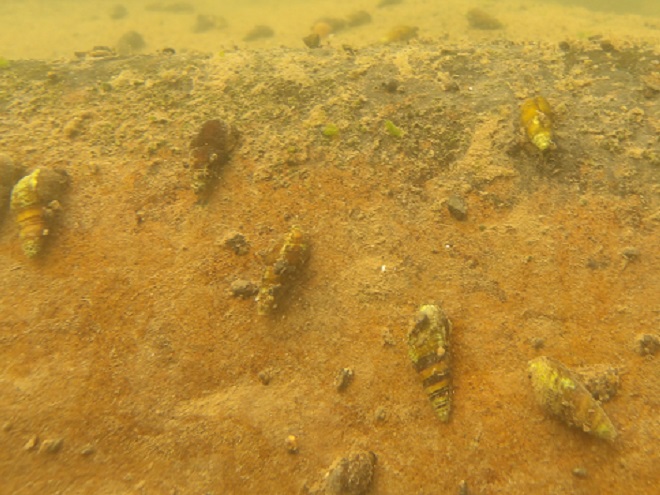
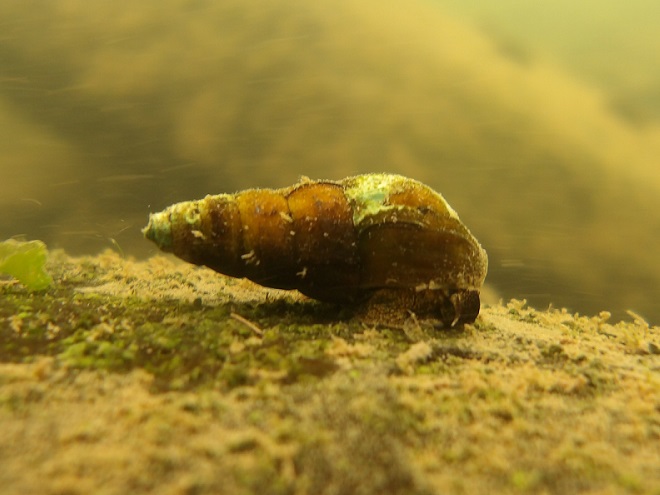
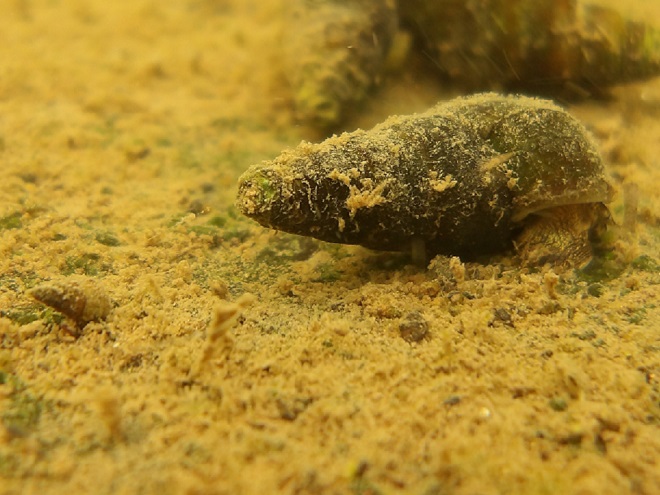
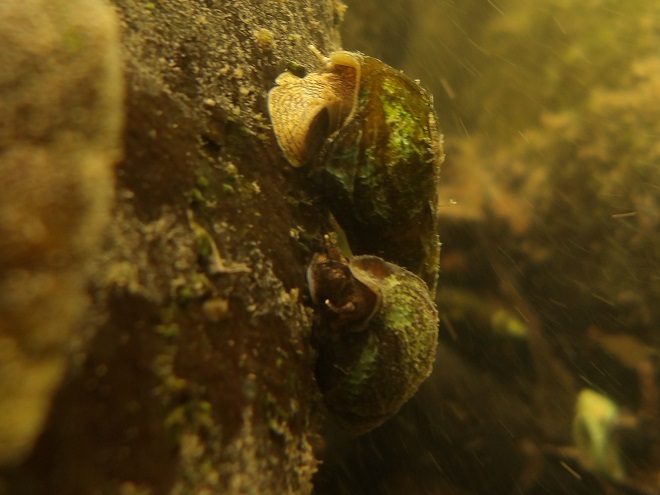
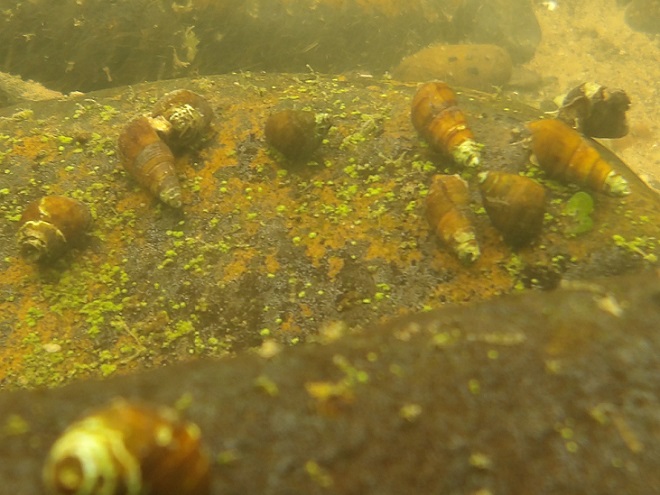
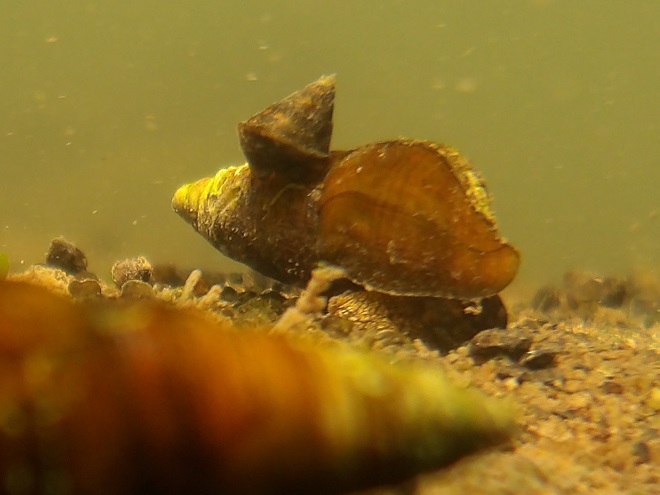
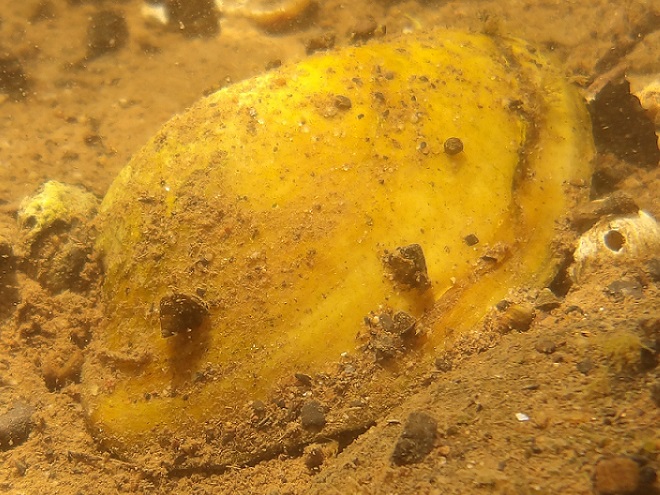
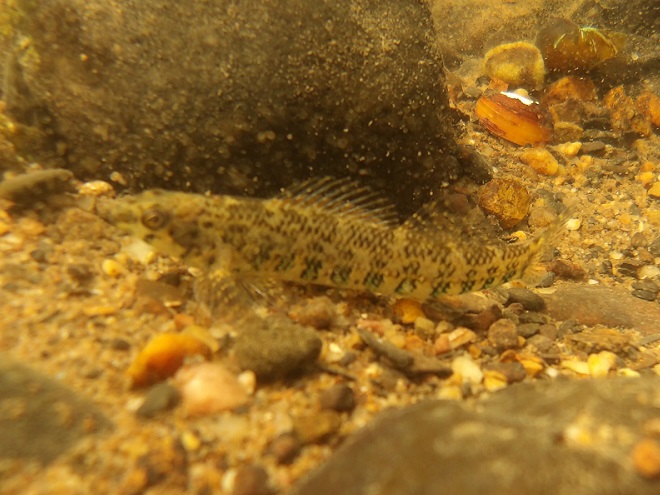
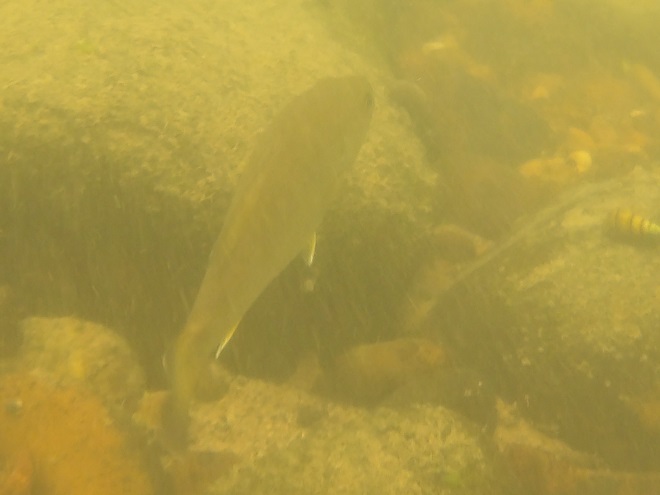
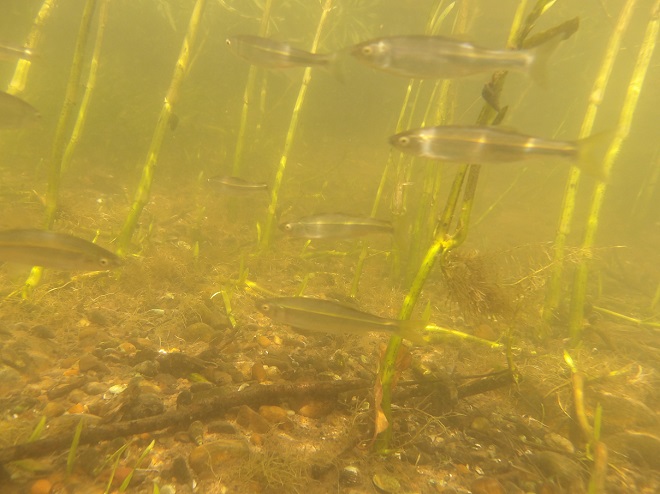
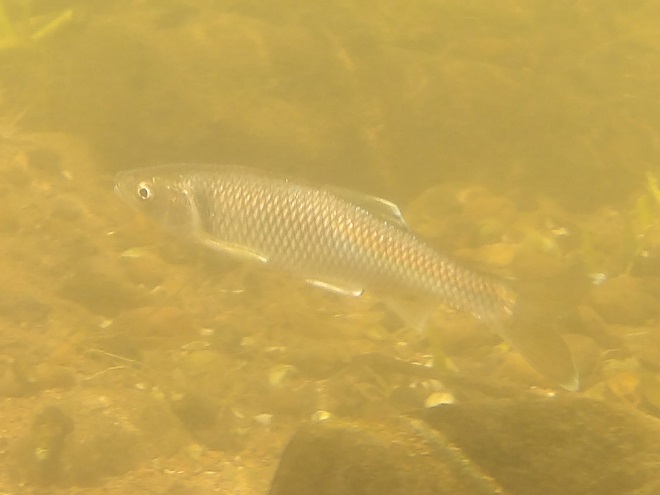
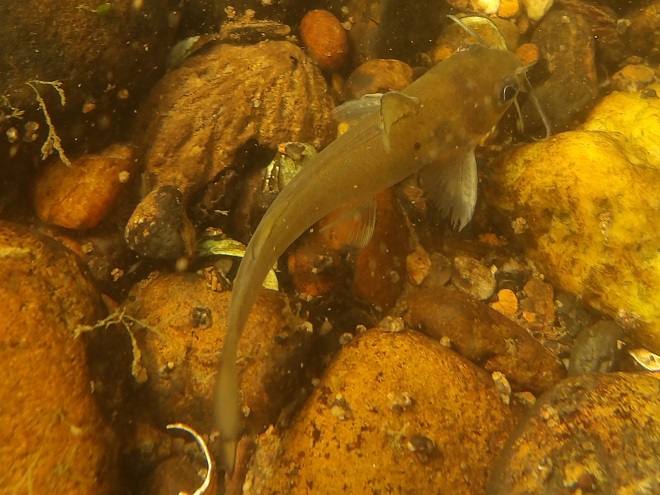
We’re finding that a sonar “pinger” isn’t very useful while running in shallow water. Instead, we should consider bringing along a set of Pings—for the more than a dozen golf balls seen on the river bottom. It appears they’ve been here for a while, having rolled in from the links upstream during the floods. Interestingly, several aquatic species were making use of them.

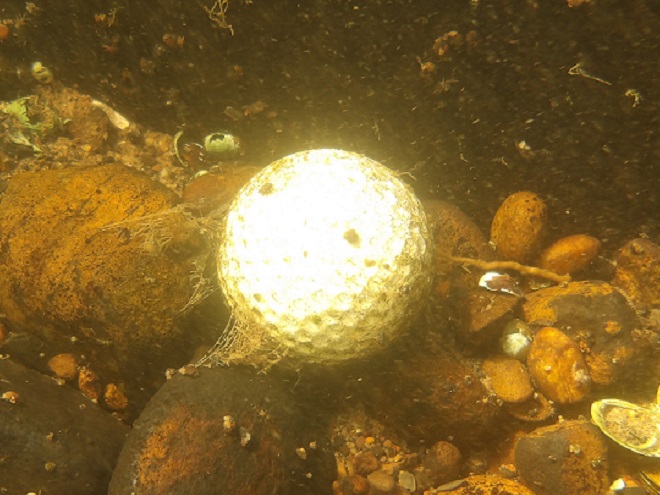
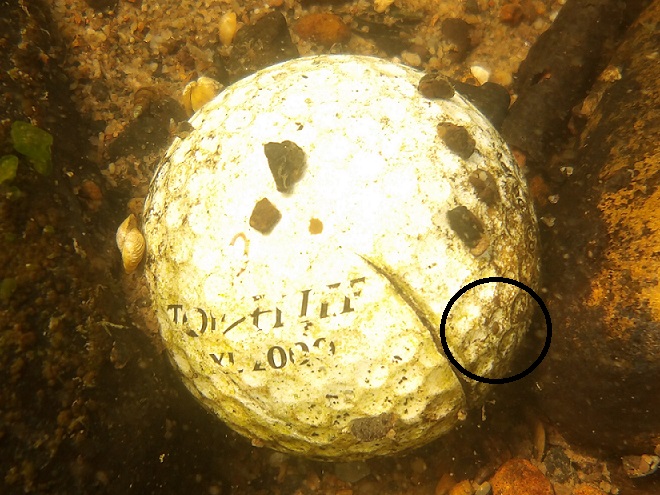
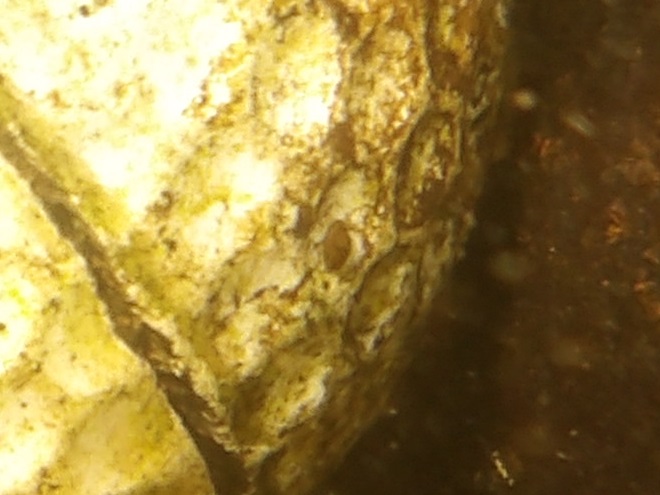

Well, it looks like the skipper’s tired and grumpy, so that’s all for now. Until next time, bon voyage!
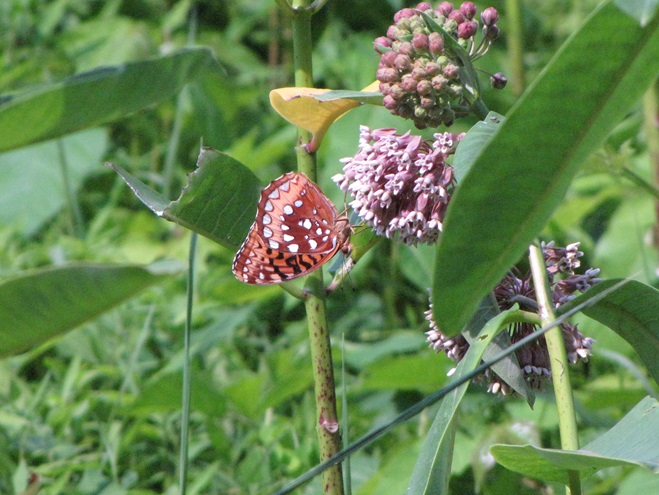
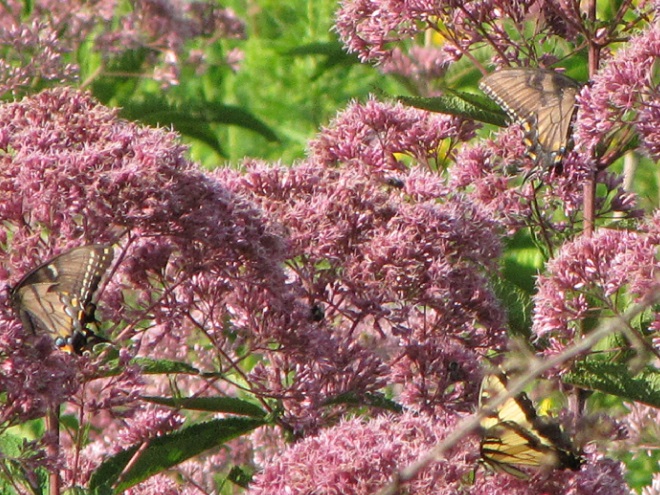
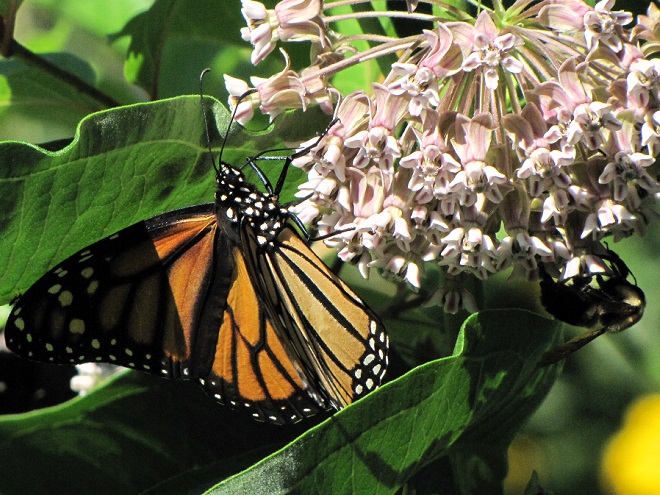
This month, the International Union for Conservation of Nature (I.U.C.N.) added the Migratory Monarch Butterfly (Danaus plexippus plexippus) to its “Red List of Threatened Species”, classifying it as endangered. Perhaps there is no better time than the present to have a look at the virtues of replacing areas of mowed and manicured grass with a wildflower garden or meadow that provides essential breeding and feeding habitat for Monarchs and hundreds of other species of animals.
If you’re not quite sure about finally breaking the ties that bind you to the cult of lawn manicuring, then compare the attributes of a parcel maintained as mowed grass with those of a space planted as a wildflower garden or meadow. In our example we’ve mixed native warm season grasses with the wildflowers and thrown in a couple of Eastern Red Cedars to create a more authentic early successional habitat.
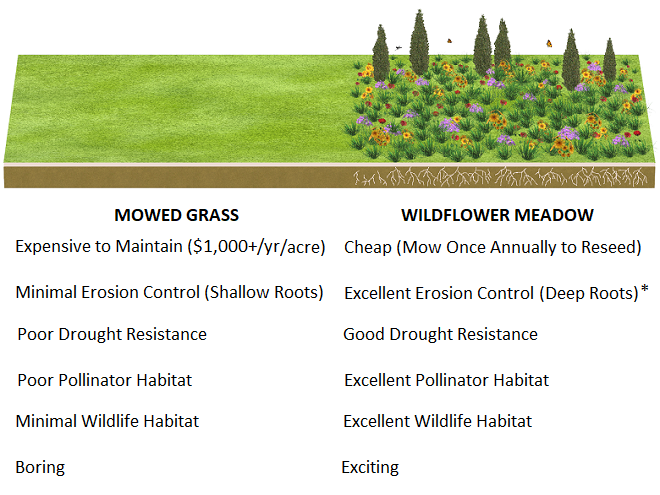
Still not ready to take the leap. Think about this: once established, the wildflower planting can be maintained without the use of herbicides or insecticides. There’ll be no pesticide residues leaching into the soil or running off during downpours. Yes friends, it doesn’t matter whether you’re using a private well or a community system, a wildflower meadow is an asset to your water supply. Not only is it free of man-made chemicals, but it also provides stormwater retention to recharge the aquifer by holding precipitation on site and guiding it into the ground. Mowed grass on the other hand, particularly when situated on steep slopes or when the ground is frozen or dry, does little to stop or slow the sheet runoff that floods and pollutes streams during heavy rains.
What if I told you that for less than fifty bucks, you could start a wildflower garden covering 1,000 square feet of space? That’s a nice plot 25′ x 40′ or a strip 10′ wide and 100′ long along a driveway, field margin, roadside, property line, swale, or stream. All you need to do is cast seed evenly across bare soil in a sunny location and you’ll soon have a spectacular wildflower garden. Here at the susquehannawildllife.net headquarters we don’t have that much space, so we just cast the seed along the margins of the driveway and around established trees and shrubs. Look what we get for pennies a plant…
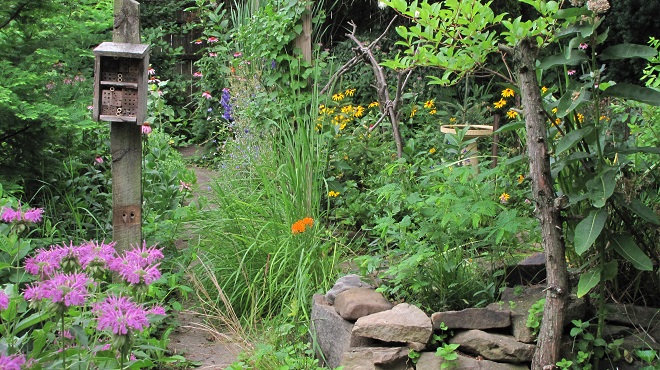
Here’s a closer look…
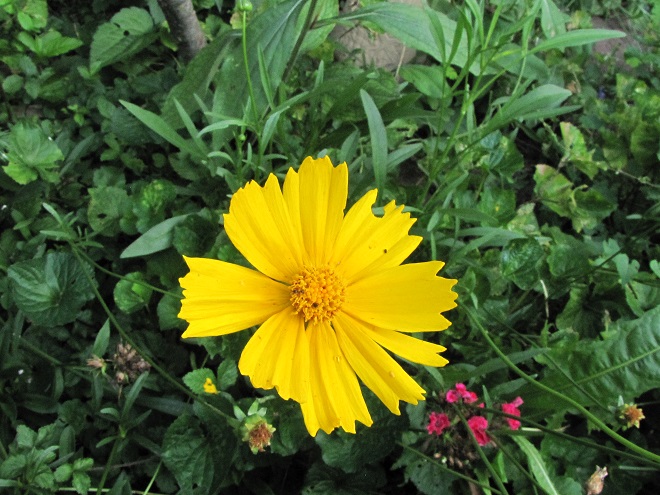

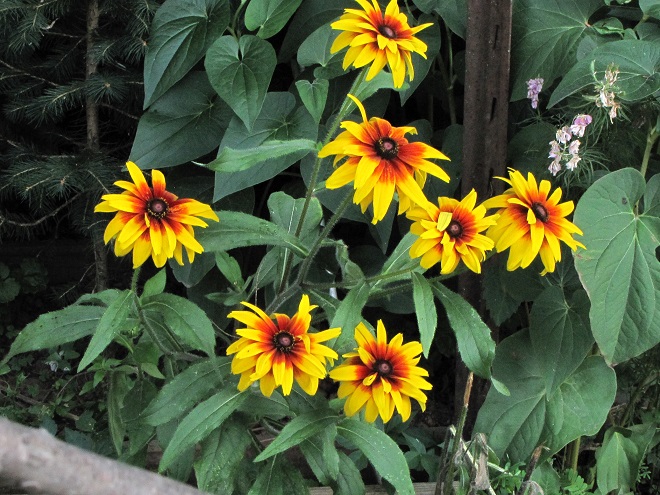
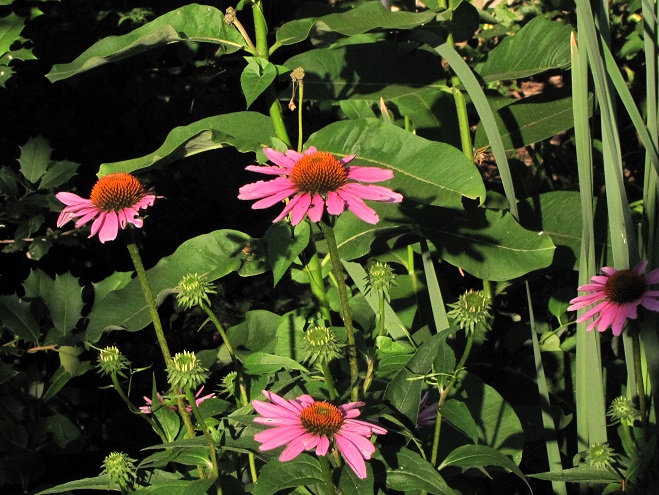
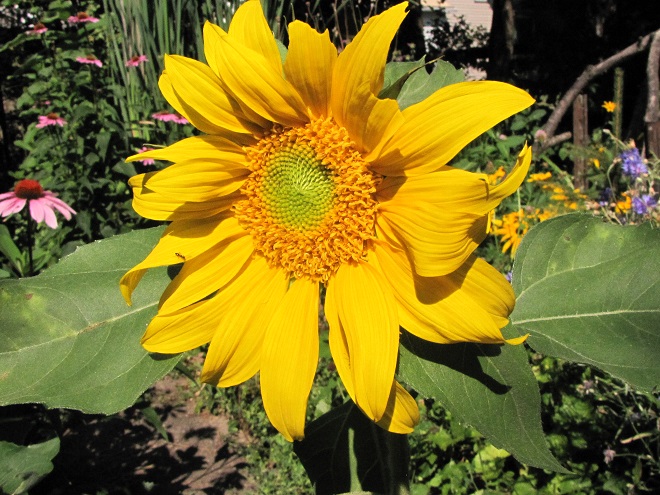
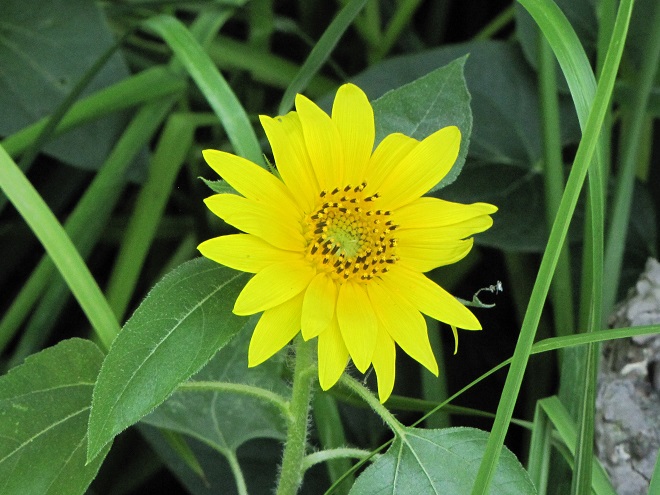
All this and best of all, we never need to mow.
Around the garden, we’ve used a northeast wildflower mix from American Meadows. It’s a blend of annuals and perennials that’s easy to grow. On their website, you’ll find seeds for individual species as well as mixes and instructions for planting and maintaining your wildflower garden. They even have a mix specifically formulated for hummingbirds and butterflies.
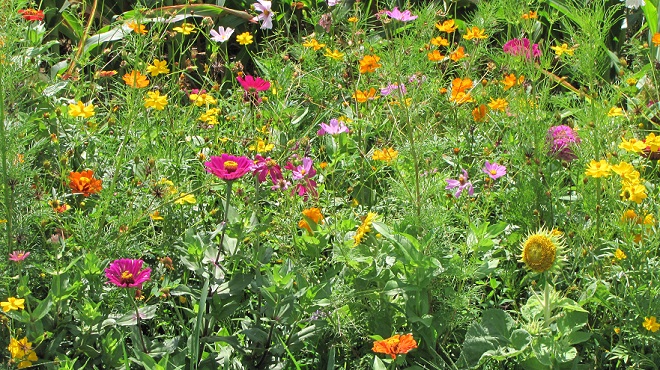
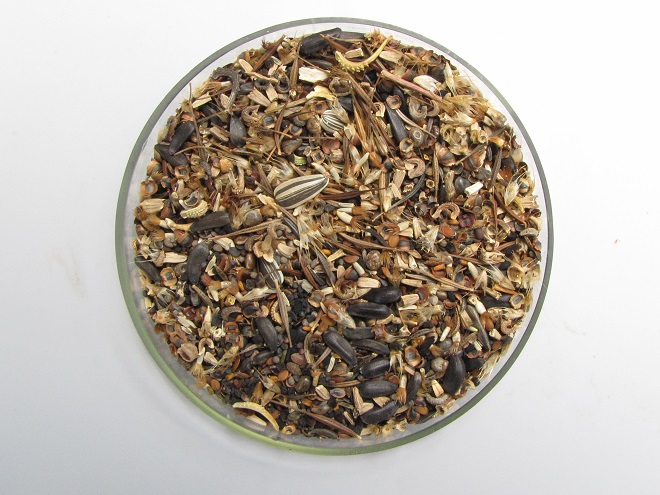
Nothing does more to promote the spread and abundance of non-native plants, including invasive species, than repetitive mowing. One of the big advantages of planting a wildflower garden or meadow is the opportunity to promote the growth of a community of diverse native plants on your property. A single mowing is done only during the dormant season to reseed annuals and to maintain the meadow in an early successional stage—preventing reversion to forest.
For wildflower mixes containing native species, including ecotypes from locations in and near the Lower Susquehanna River Watershed, nobody beats Ernst Conservation Seeds of Meadville, Pennsylvania. Their selection of grass and wildflower seed mixes could keep you planting new projects for a lifetime. They craft blends for specific regions, states, physiographic provinces, habitats, soils, and uses. Check out these examples of some of the scores of mixes offered at Ernst Conservation Seeds…
We’ve used their “Showy Northeast Native Wildflower and Grass Mix” on streambank renewal projects with great success. For Monarchs, we really recommend the “Butterfly and Hummingbird Garden Mix”. It includes many of the species pictured above plus “Fort Indiantown Gap” Little Bluestem, a warm-season grass native to Lebanon County, Pennsylvania, and milkweeds (Asclepias), which are not included in their northeast native wildflower blends. More than a dozen of the flowers and grasses currently included in this mix are derived from Pennsylvania ecotypes, so you can expect them to thrive in the Lower Susquehanna River Watershed.
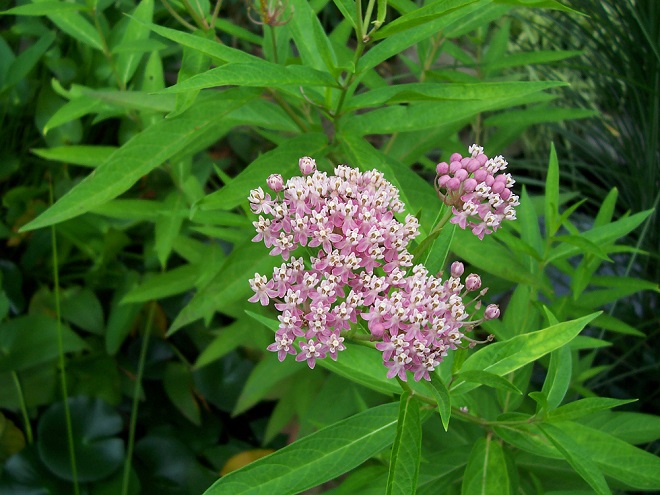
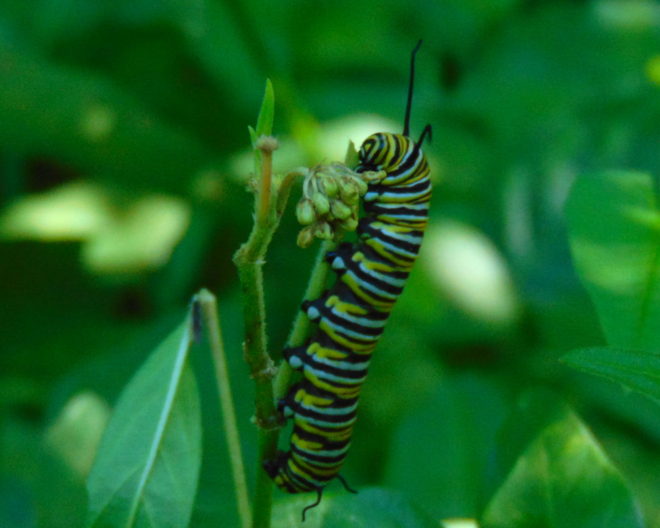
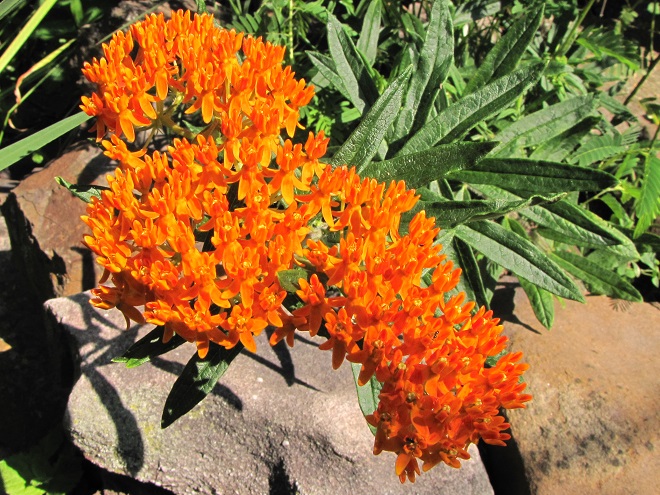
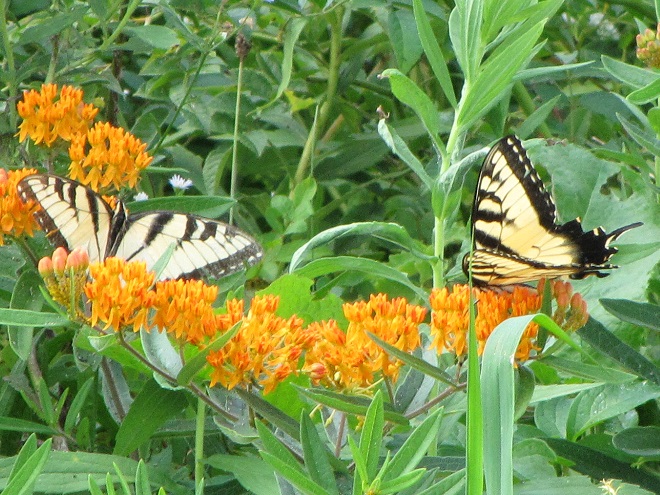
In addition to the milkweeds, you’ll find these attractive plants included in Ernst Conservation Seed’s “Butterfly and Hummingbird Garden Mix”, as well as in some of their other blends.
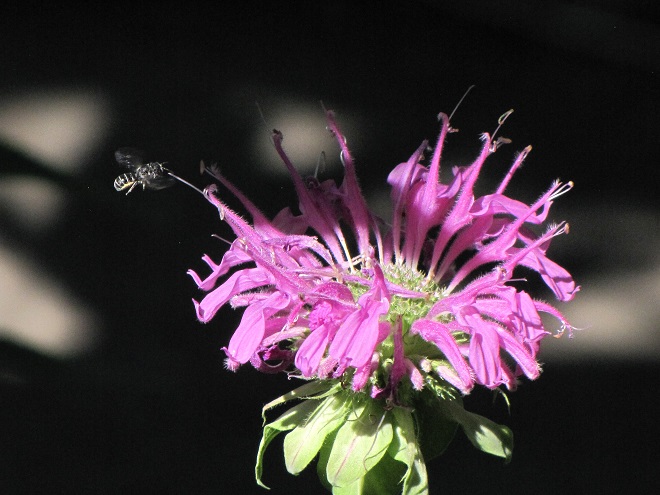
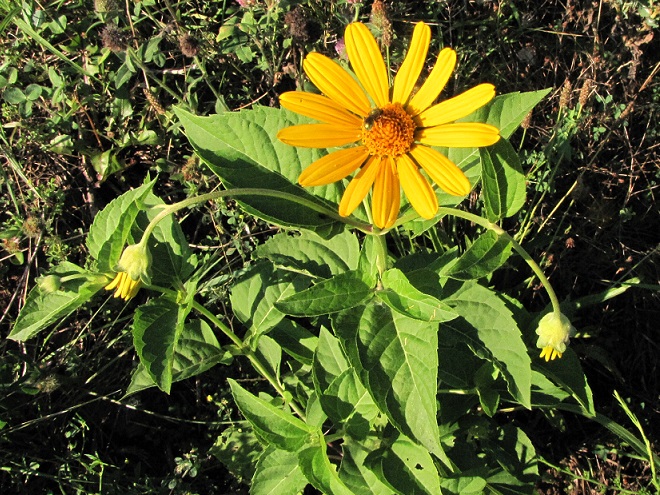
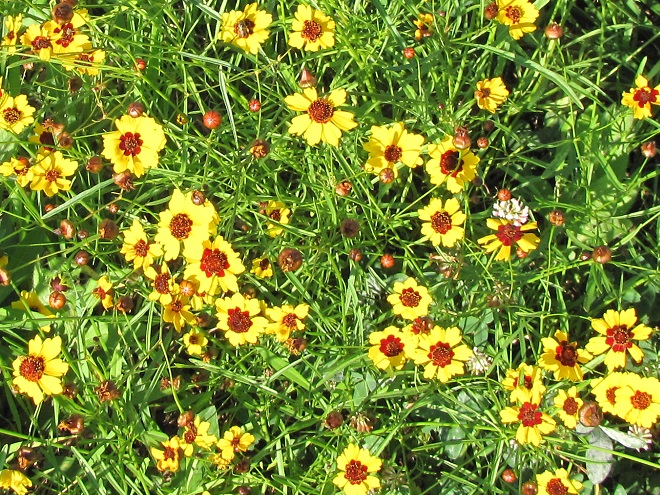
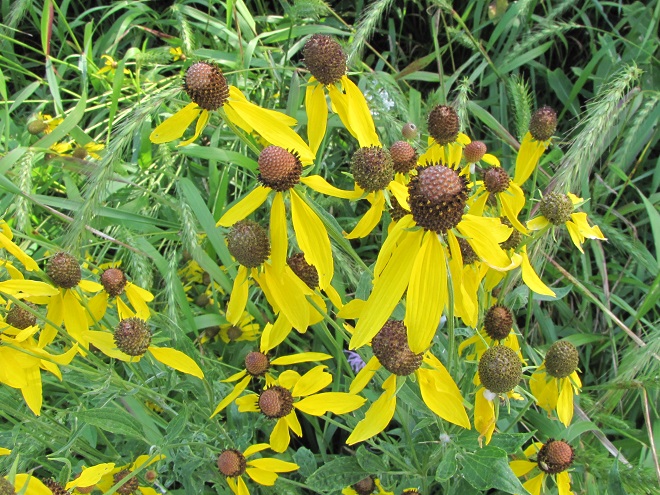
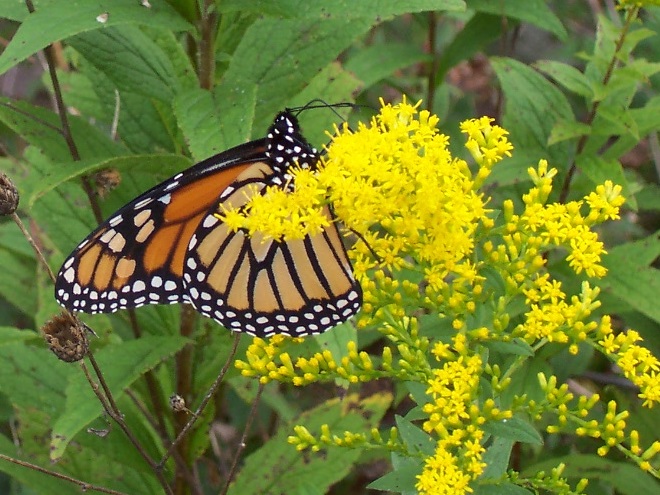
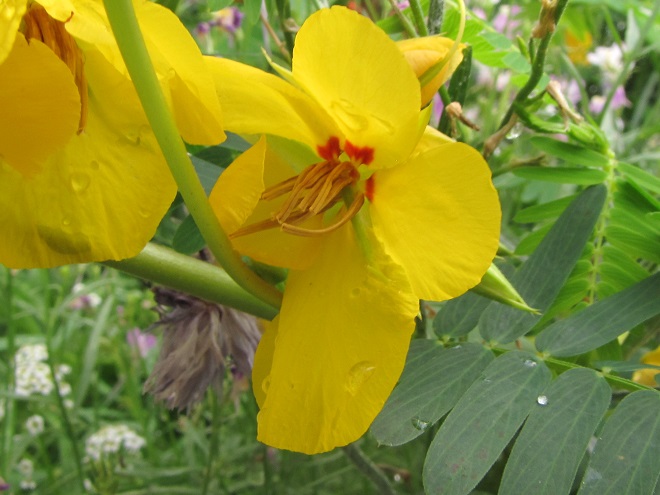
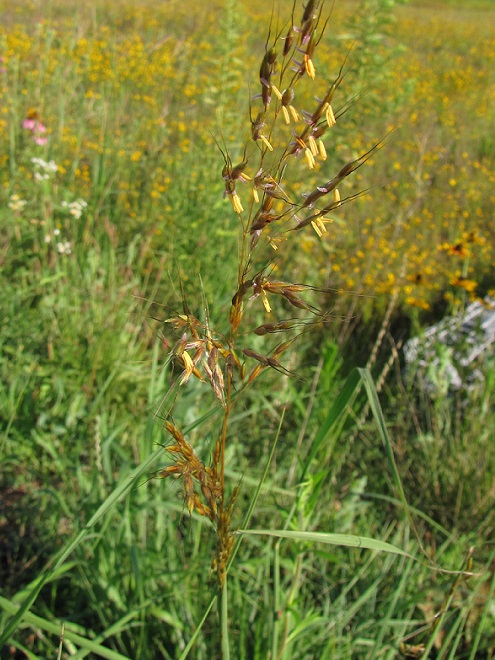
Why not give the Monarchs and other wildlife living around you a little help? Plant a wildflower garden or meadow. It’s so easy, a child can do it.
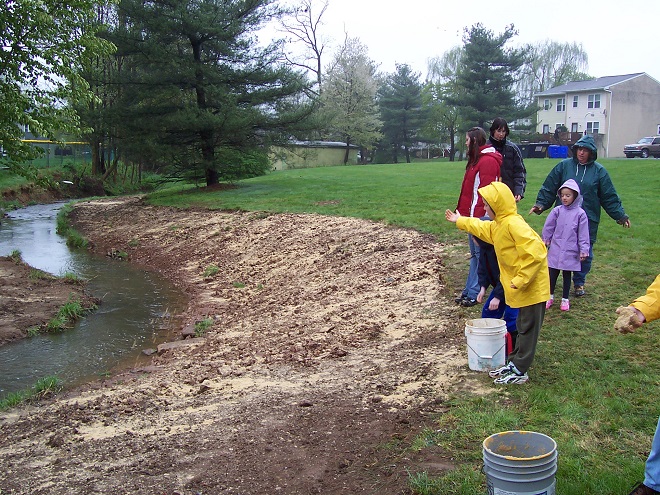
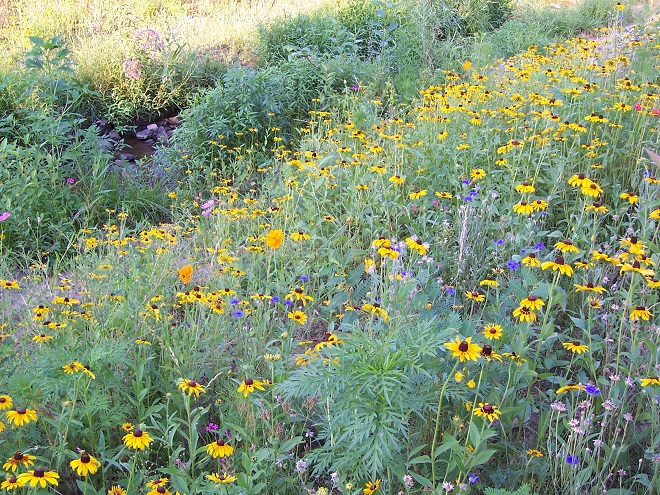
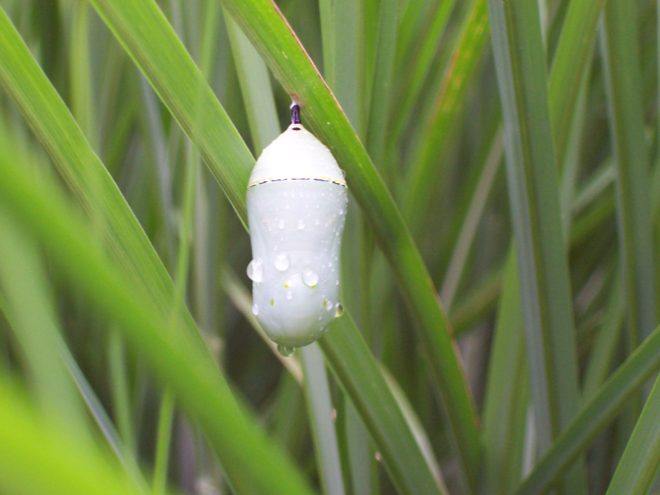
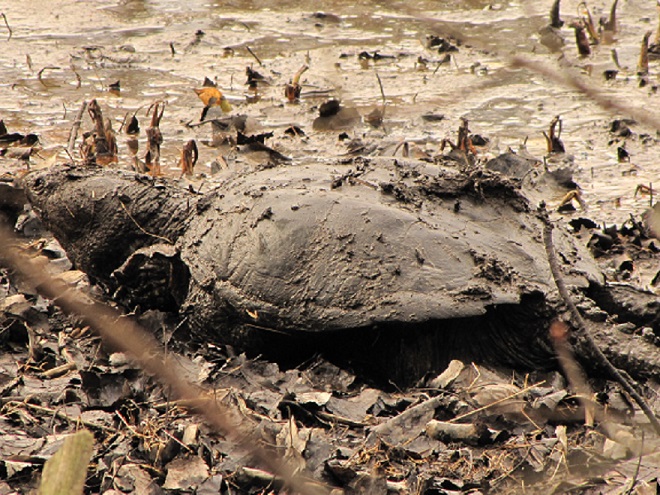
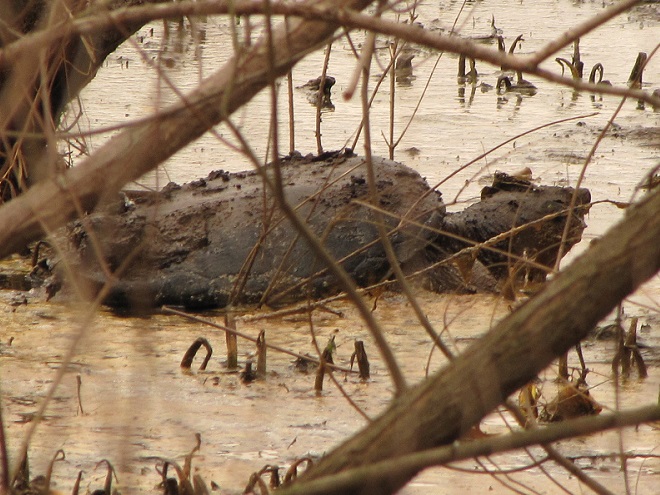
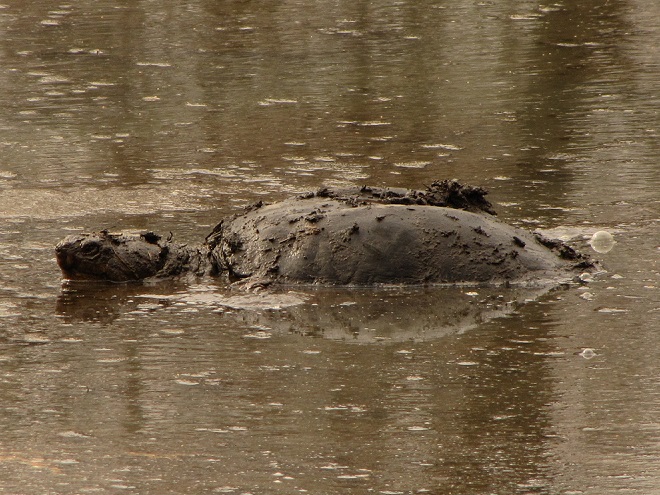
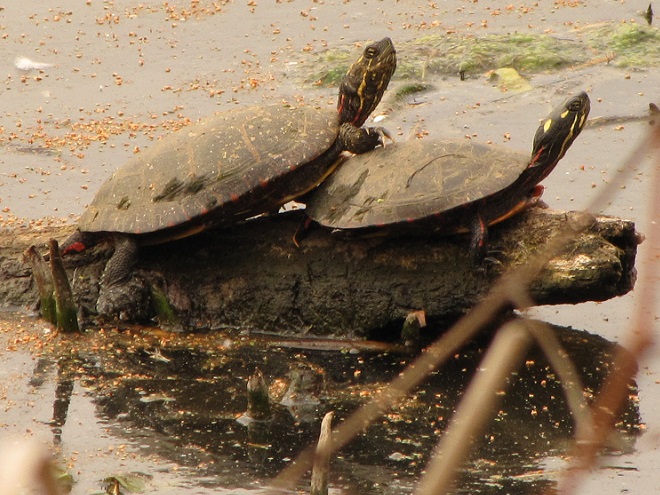
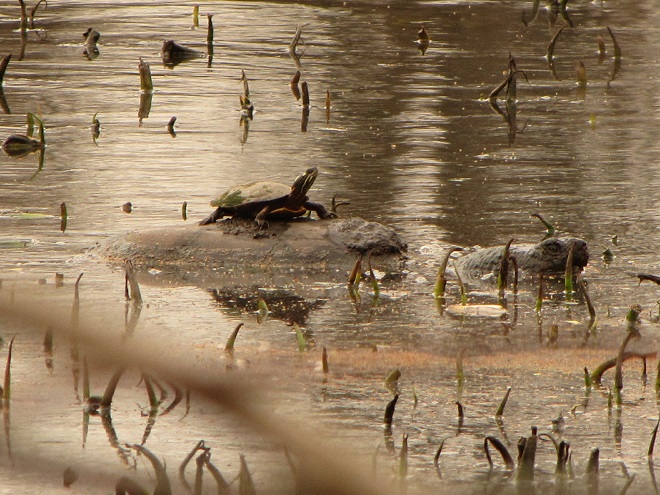
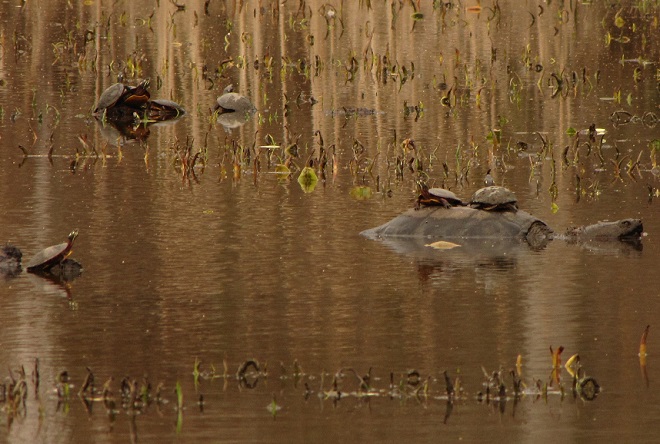
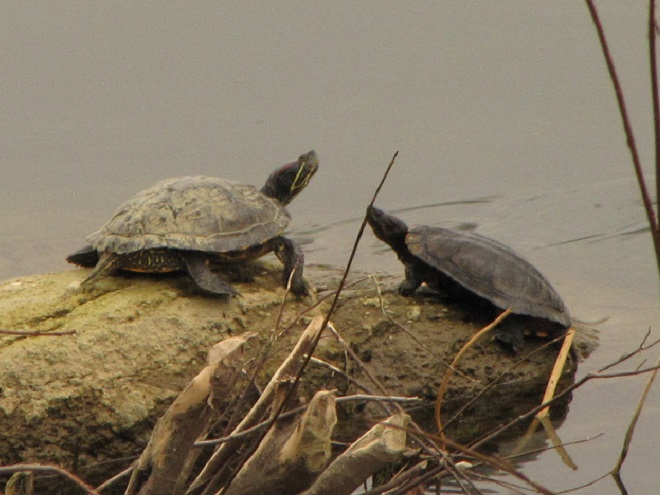
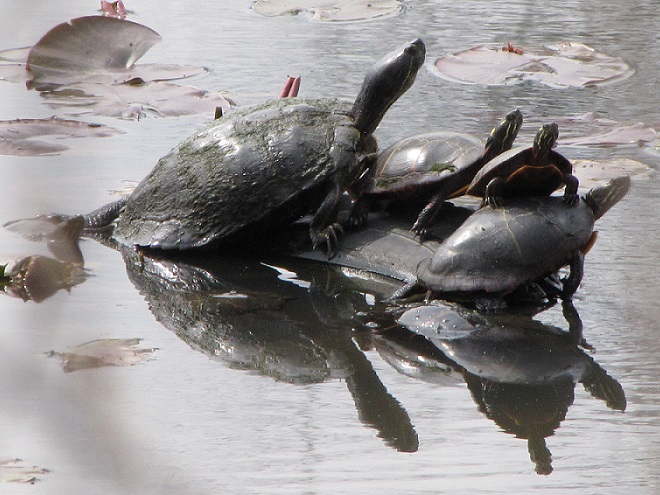
Along the lower Susquehanna, an unseasonably mild day in early spring can provide an observer with the opportunity to witness an annual spectacle seldom seen by the average visitor to the river—concentrations of dozens, sometimes hundreds, of turtles as they emerge from their winter slumber to bathe in the year’s first surge of warm air and sunshine.
Let’s take a quiet stroll through the forest to have a look around. The spring awakening is underway and it’s a marvelous thing to behold. You may think it a bit odd, but during this walk we’re not going to spend all of our time gazing up into the trees. Instead, we’re going to investigate the happenings at ground level—life on the forest floor.
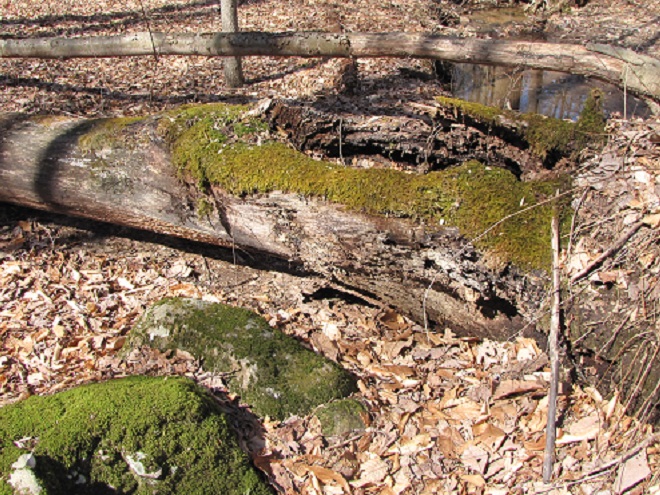
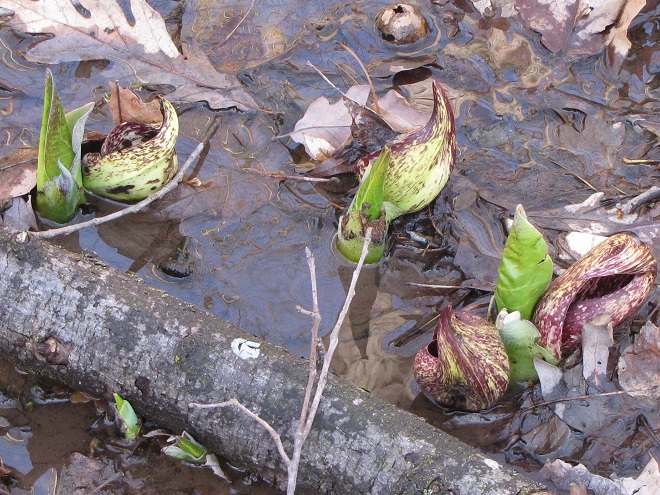
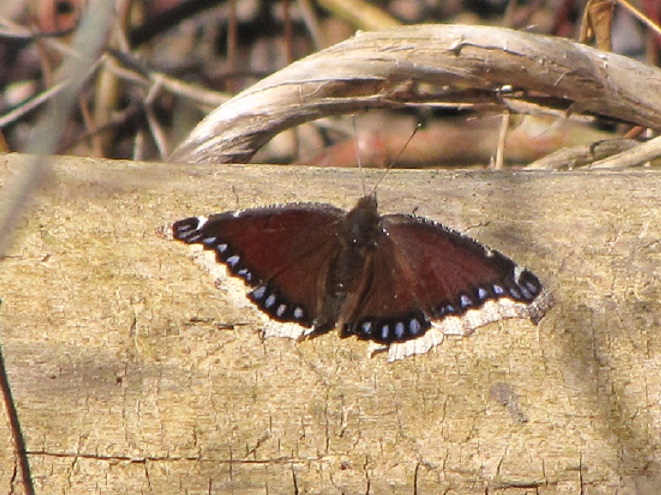
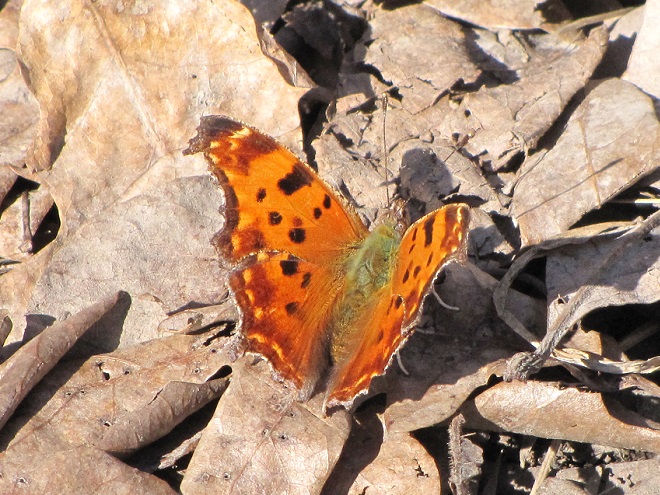


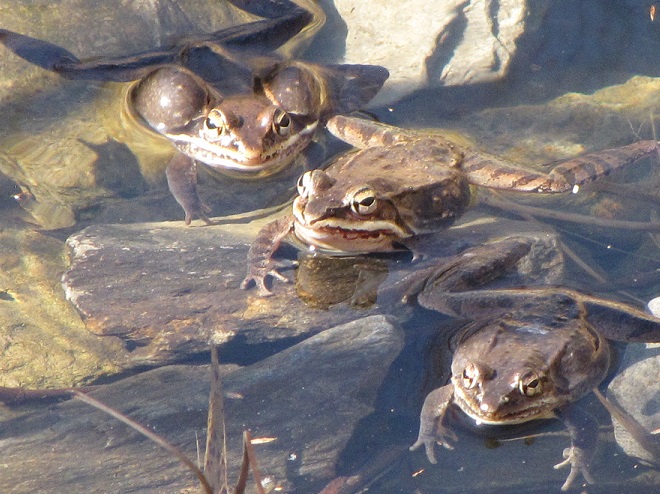
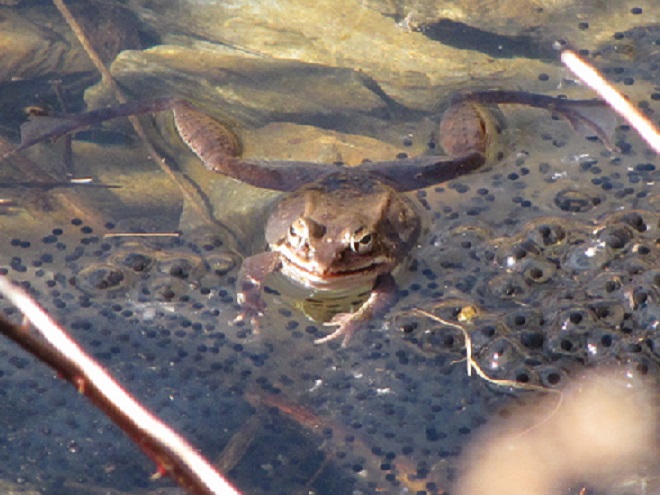
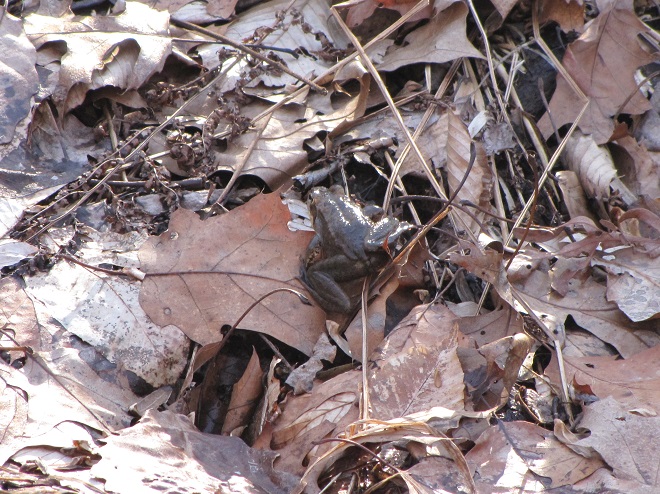
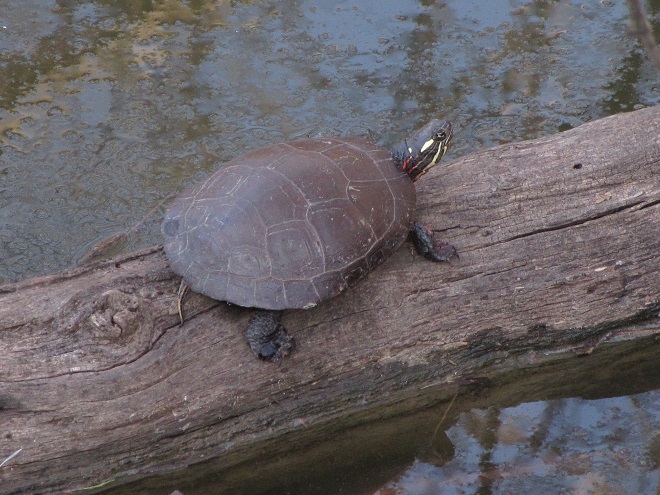

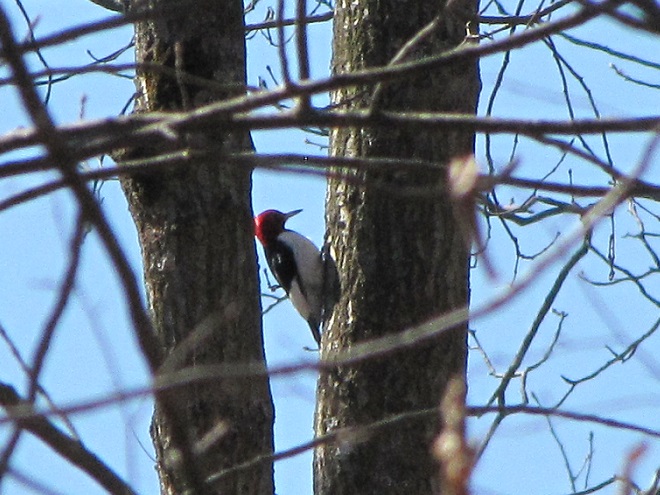
There certainly is more to a forest than the living trees. If you’re hiking through a grove of timber getting snared in a maze of prickly Multiflora Rose (Rosa multiflora) and seeing little else but maybe a wild ungulate or two, then you’re in a has-been forest. Logging, firewood collection, fragmentation, and other man-made disturbances inside and near forests take a collective toll on their composition, eventually turning them to mere woodlots. Go enjoy the forests of the lower Susquehanna valley while you still can. And remember to do it gently; we’re losing quality as well as quantity right now—so tread softly.
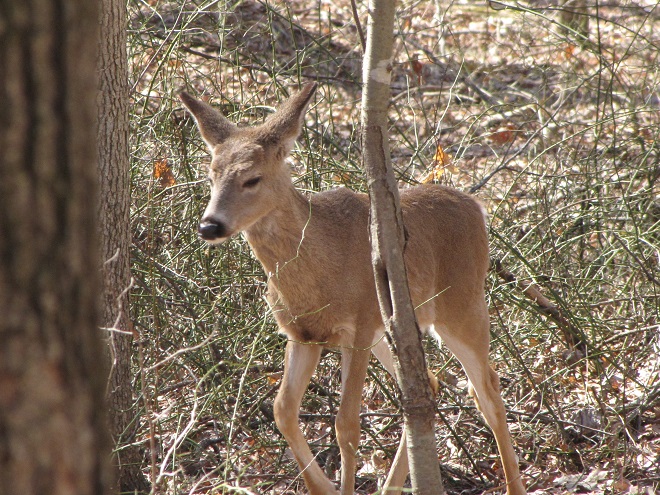
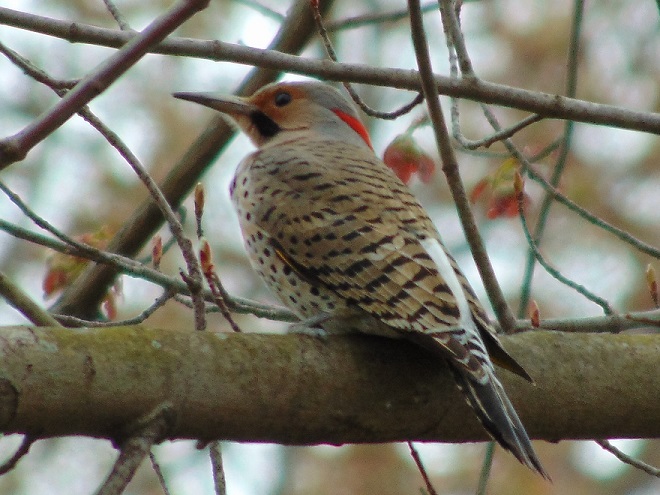
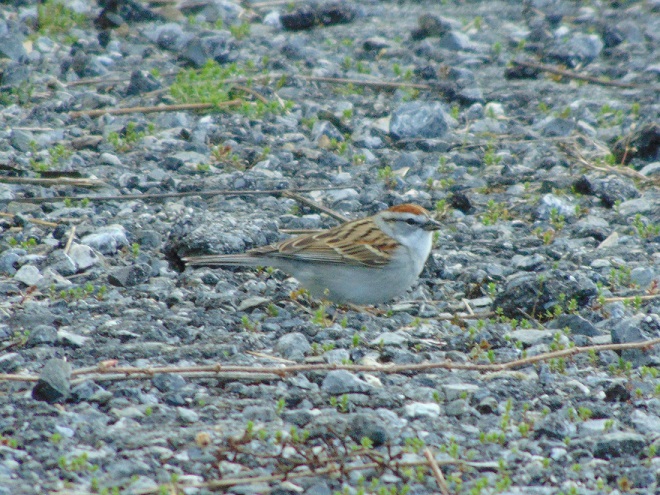
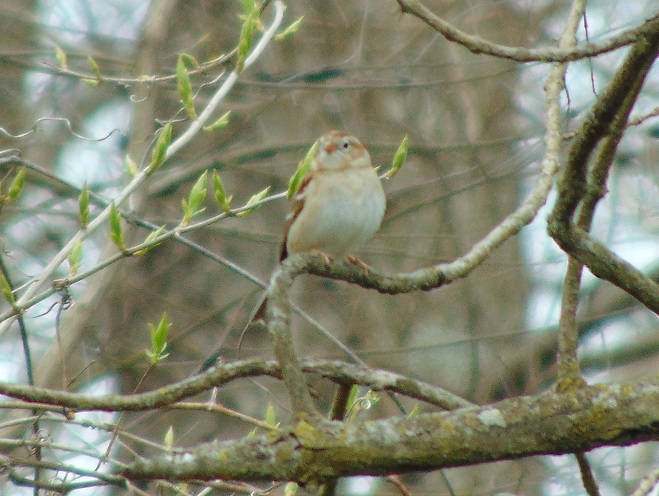
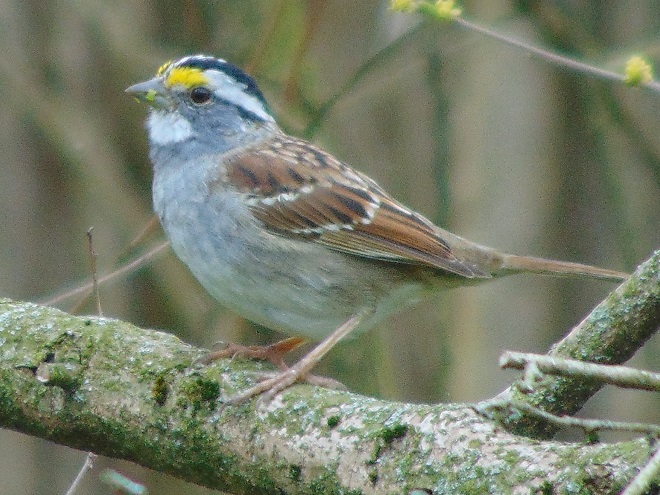
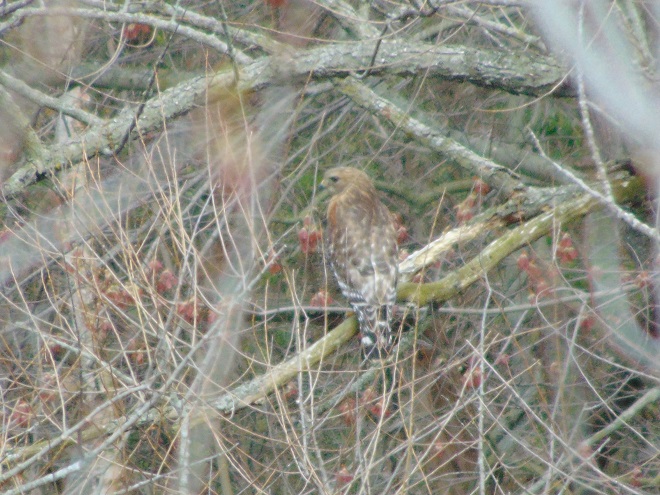
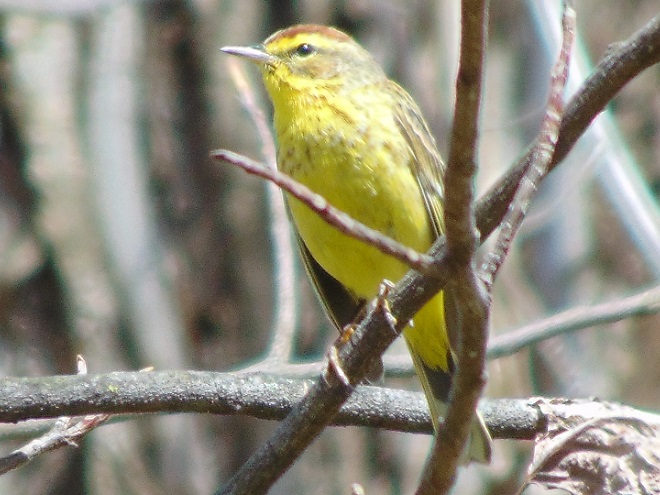
For those of you who dare to shed that filthy contaminated rag you’ve been told to breathe through so that you might instead get out and enjoy some clean air in a cherished place of solitude, here’s what’s around—go have a look.

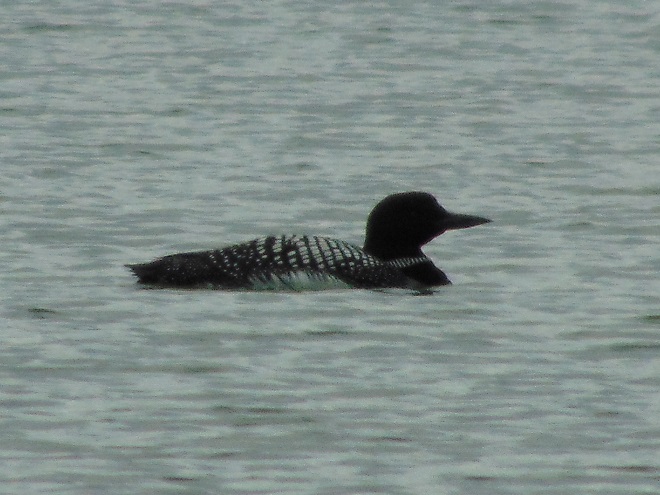
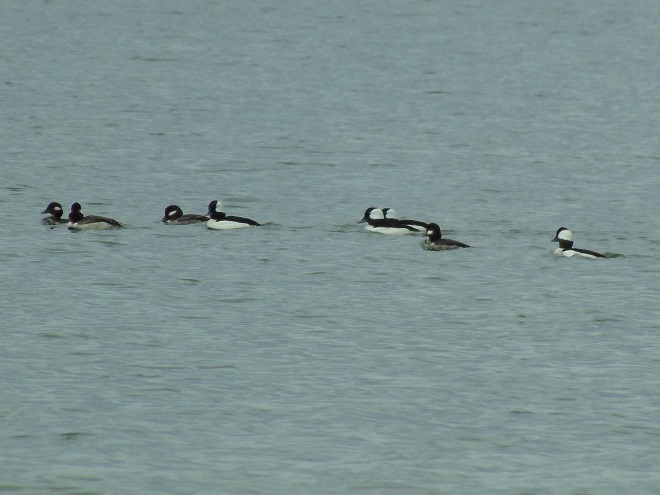
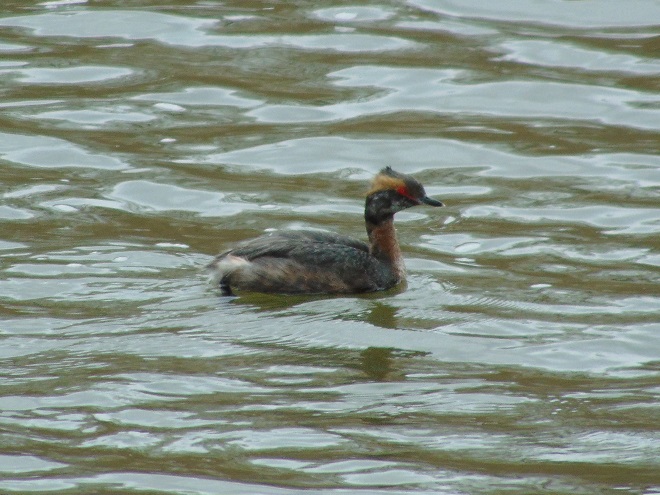
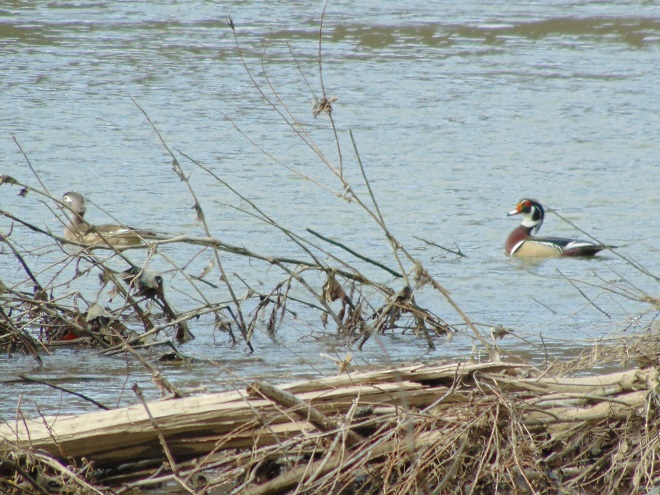
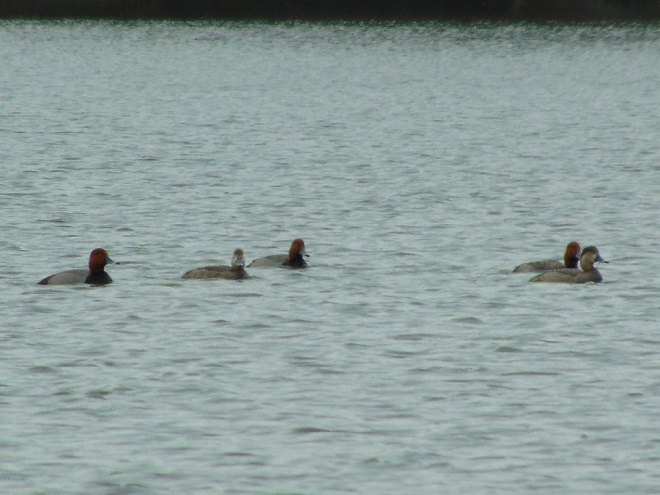
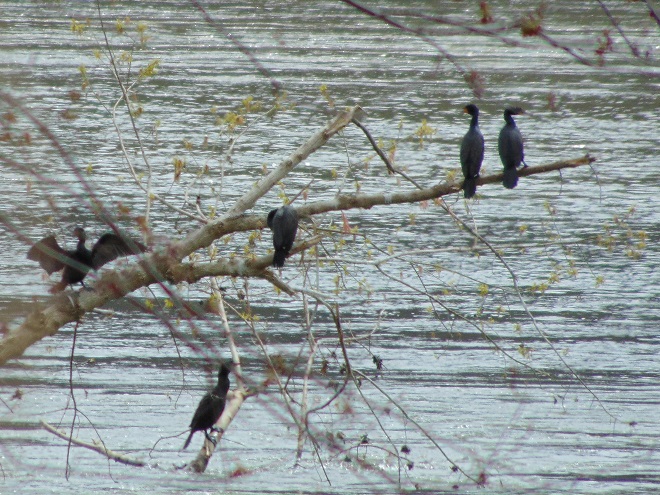
The springtime show on the water continues…
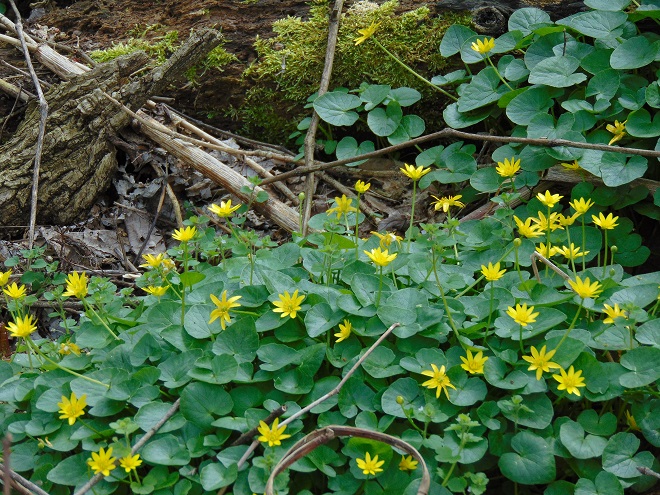
Hey, what are those showy flowers?
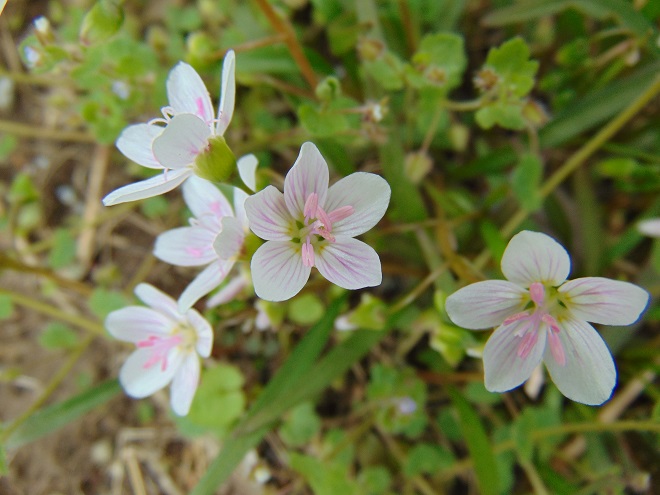
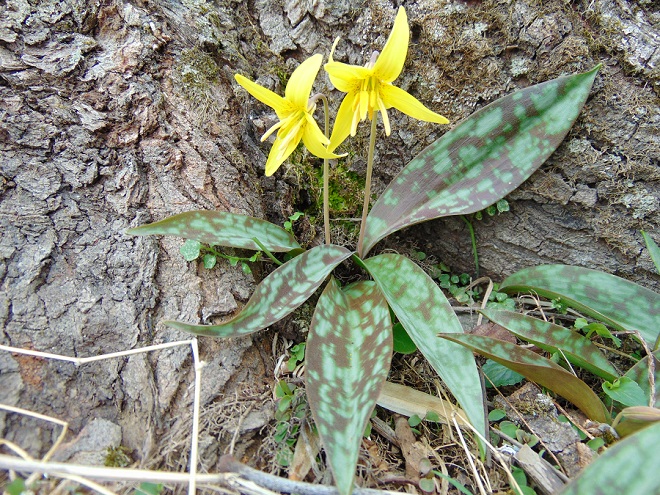
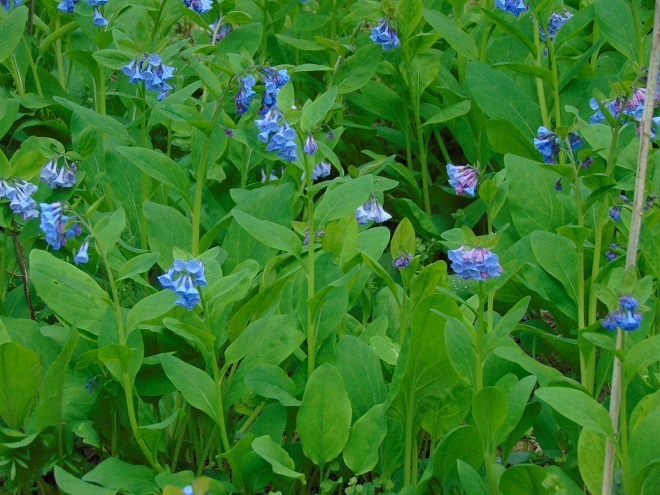
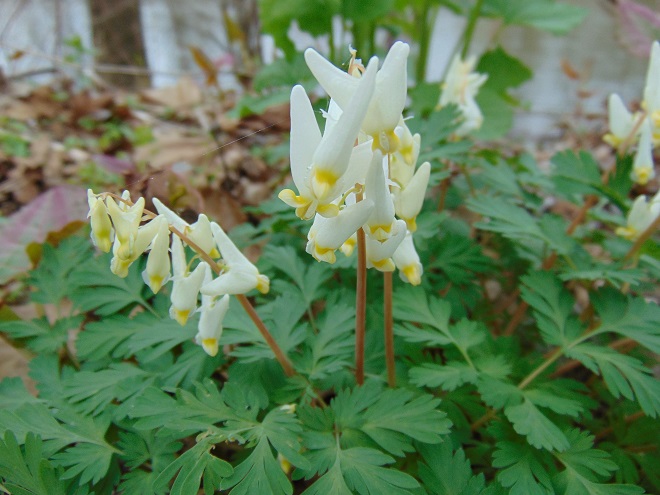
Wasn’t that refreshing? Now go take a walk.
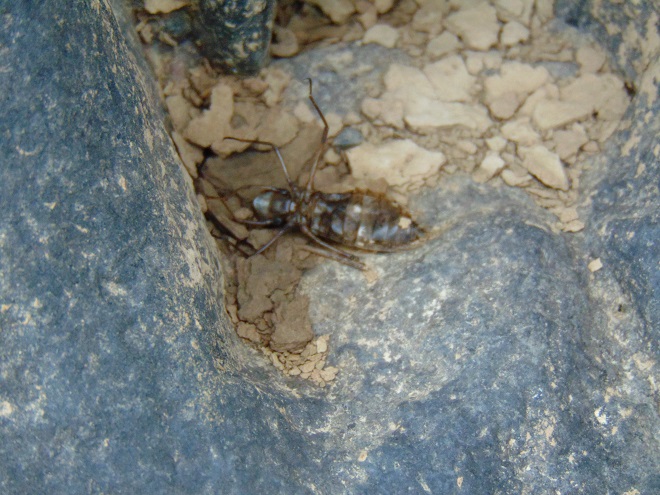
It’s been an atypical summer. The lower Susquehanna River valley has been in a cycle of heavy rains for over a month and stream flooding has been a recurring event. At Conewago Falls, the Pothole Rocks have been inundated for weeks. The location used as a lookout for the Autumn Migration Count last fall is at the moment submerged in ten feet of roaring water. Any attempt to tally the migrants which are passing thru in 2018 will thus be delayed indefinitely. Of greater import, the flooding at Conewago Falls is impacting many of the animals and plants there at a critical time in their annual life cycle. Having been displaced from its usual breeding sites on the river, one insect species in particular seems to be omnipresent in upland areas right now, and few people have ever heard of it.
So, you take a cruise in the motorcar to your favorite store and arrive at the sprawling parking lot. Not wishing to have your doors dented or paint chipped because you settled for a space tightly packed among other shopper’s conveyances, you park out there in the “boondocks”. You know the place, the lightly-used portion of the lot where sometimes brush grows from cracks in the asphalt and you must be on alert for impatient consumers who throttle-up to high speeds and dash diagonally across the carefully painted grids on the pavement to reach their favorite parking destination in the front row. Coming to a stop, you take the car out of gear, set the brake, disengage the safety belt, and gather your shopping list. You grasp the door handle and, not wanting to be flattened by one of the aforementioned motorists, you have a look around before exiting.
It was then that you saw the thing, hovering above your shiny bright hood. For a brief moment, it seemed to be peering right through the windshield at you with big reddish-brown eyes. In just a second or two, it turned its whole bronze body ninety degrees to the left and darted away on its cellophane wings. Maybe you didn’t really get a good look at it. It was so fast. But it certainly was odd. Oh well, time to walk inside a grab a few provisions. Away you go.
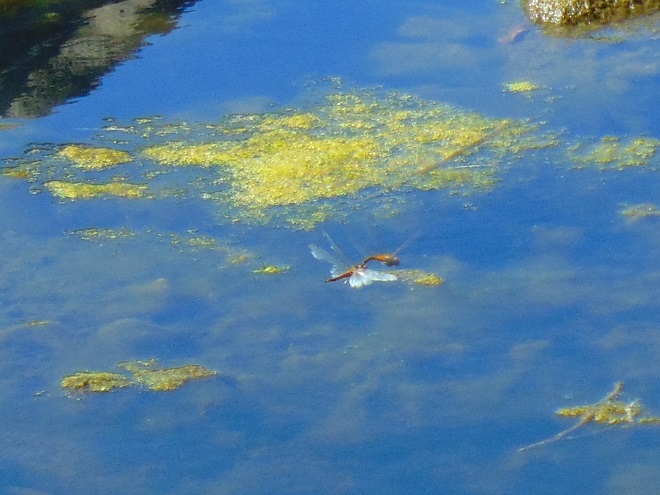
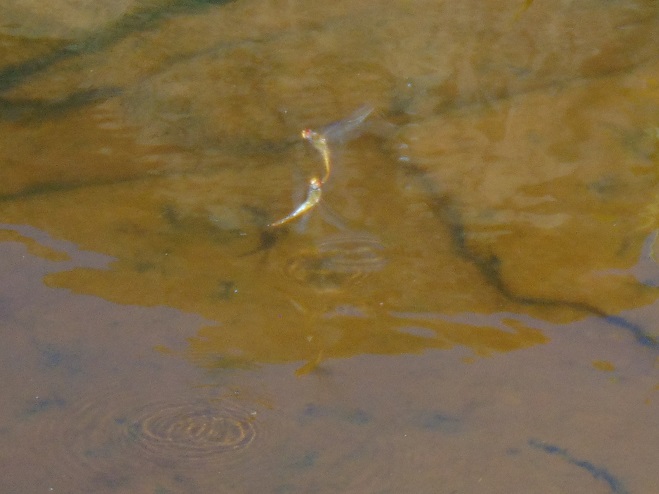
Upon completion of your shopping, you’re taking the long stroll back to your car and you notice more of these peculiar creatures. Two are coupled together and are hovering above someone’s automobile hood, then they drop down, and the lower of the two taps its abdomen on the paint. You ask yourself, “What are these bizarre things?”
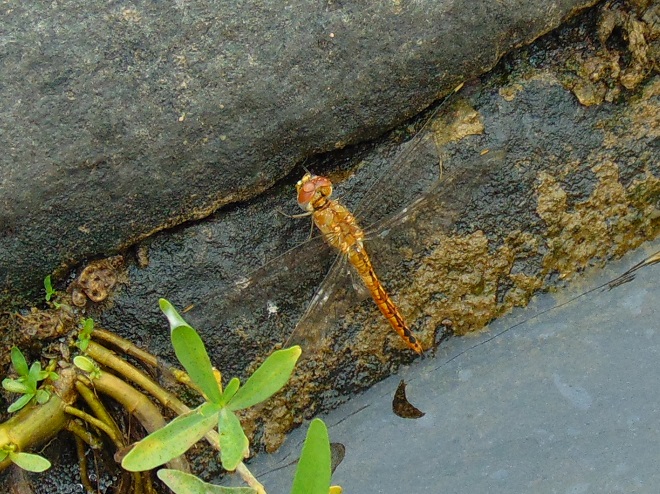
Meet the Wandering Glider (Pantala flavescens), also known as the Globe Wanderer or Globe Skimmer, a wide-ranging dragonfly known to occur on every continent with the exception of Antarctica.
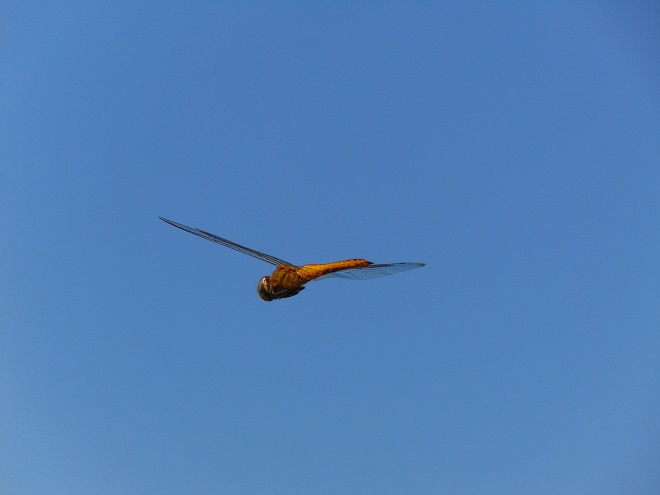
Wandering Gliders travel the globe, and as such are accomplished fliers. Adults spend most of the day on the wing, feeding upon a variety of flying insects. Days ago, I watched several intercepting a swarm of flying ants. As fast as ants left the ground they were grabbed and devoured by the gliders. Wandering Gliders are adept at taking day-flying mosquitos, often zipping stealthily past a person’s head or shoulders to grab one of the little pests—the would-be skeeter victim usually unaware of the whole affair.
Due to their nomadic life history, Wandering Gliders are opportunists when breeding and will lay eggs in most any body of freshwater. Their larvae do not overwinter prior to maturity; adults can be expected in a little more than one to two months. Repetitive flooding in the Lower Susquehanna River Watershed this summer may be reducing the availability of the best local breeding sites for this species—riverine, stream, and floodplain pools of standing water with prey. This may explain why thousands of Wandering Gliders are patrolling parking lots, farmlands, and urban areas this summer. And it’s the likely reason for their use of puddles on asphalt pavement, on rubber roofs, and in fields as places to try to deposit eggs. Unfortunately, they may be as likely to succeed there as they are on your motor vehicle hood.
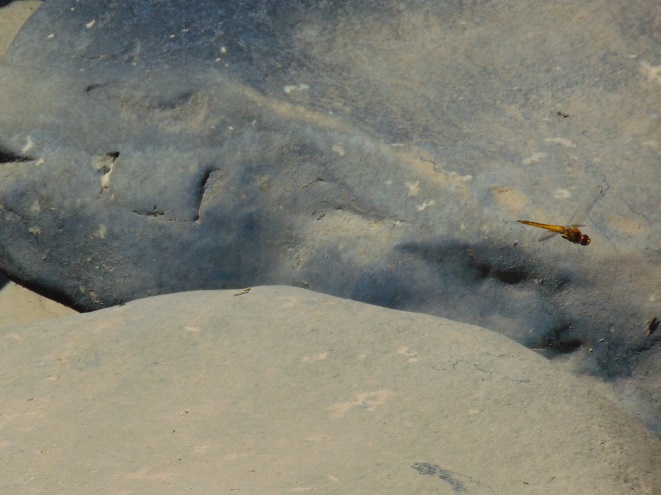
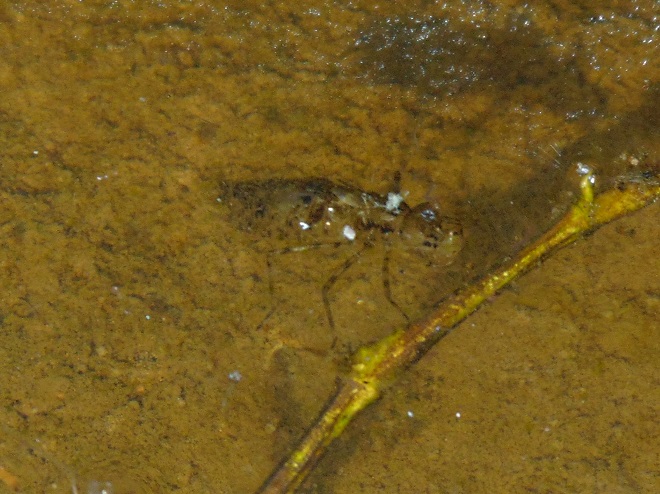
At this time a year ago, the airspace above the Diabase Pothole Rocks at Conewago Falls was jammed with territorial male Wandering Gliders. Each male hovered at various locations around his breeding territory consisting of pools and water-filled potholes. Intruders would quickly be dispatched from the area, then the male would resume his patrols from a set of repetitively-used hovering positions about six feet above the rocks. Mating and egg-laying continued into late September. The larvae, also called nymphs or naiads, were readily observed in many pools and potholes in early October and the emergence of juveniles was noted in mid-October. The absence of flooding, the mild autumn weather, and the moderation of water temperatures in the pools and potholes courtesy of the sun-drenched diabase boulders helped to extend the 2017 breeding season for Wandering Gliders in Conewago Falls. They aren’t likely to experience the same favor this year, but their great ability to travel and adapt should overcome this momentary misfortune.
There are two Conewago Creek systems in the Lower Susquehanna River Watershed. One drains the Gettysburg Basin west of the river, mostly in Adams and York Counties, then flows into the Susquehanna at the base of Conewago Falls. The other drains the Gettysburg Basin east of the river, flowing through Triassic redbeds of the Gettysburg Formation and York Haven Diabase before entering Conewago Falls near the south tip of Three Mile Island. Both Conewago Creeks flow through suburbia, farm, and forest. Both have their capacity to support aquatic life impaired and diminished by nutrient and sediment pollution.
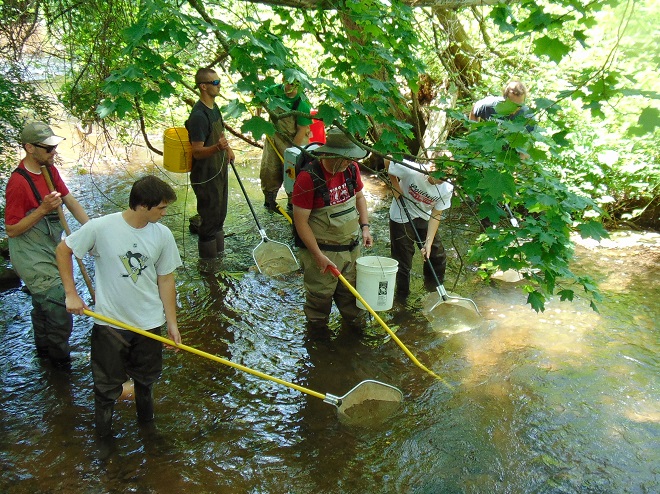
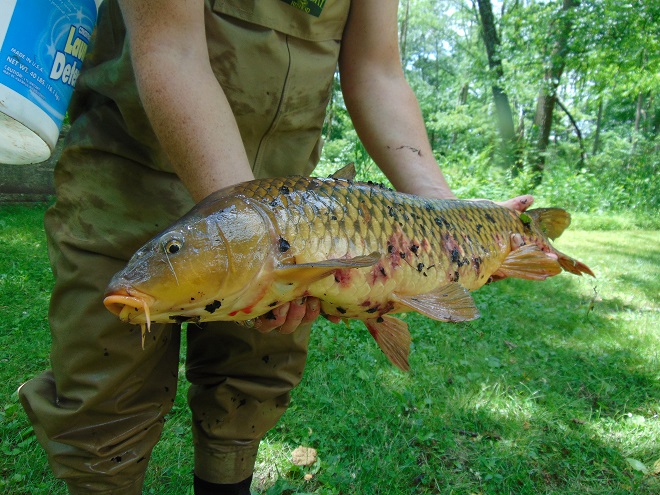
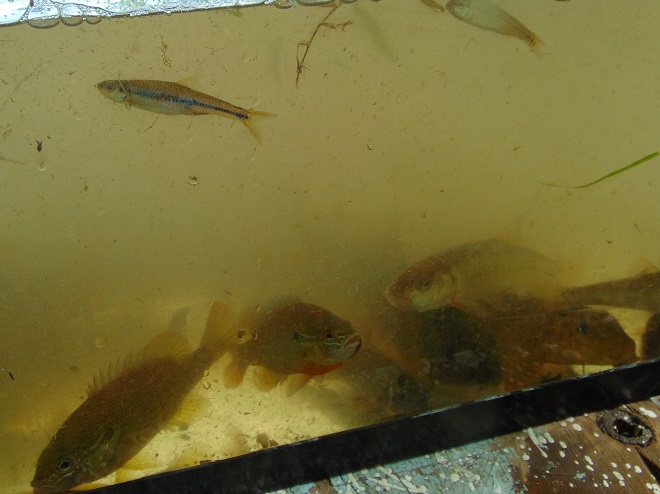
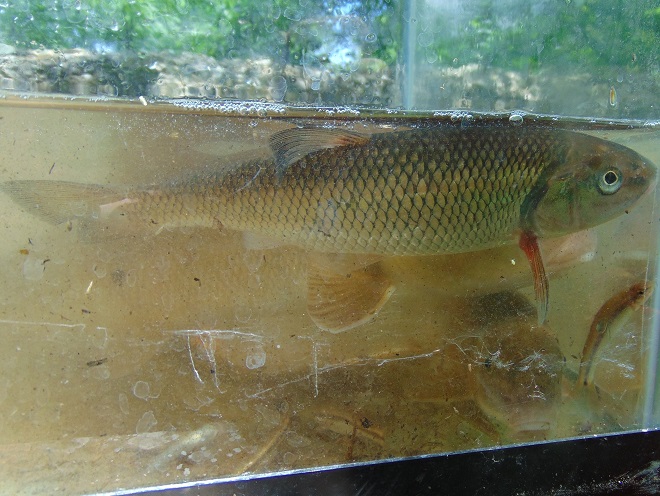
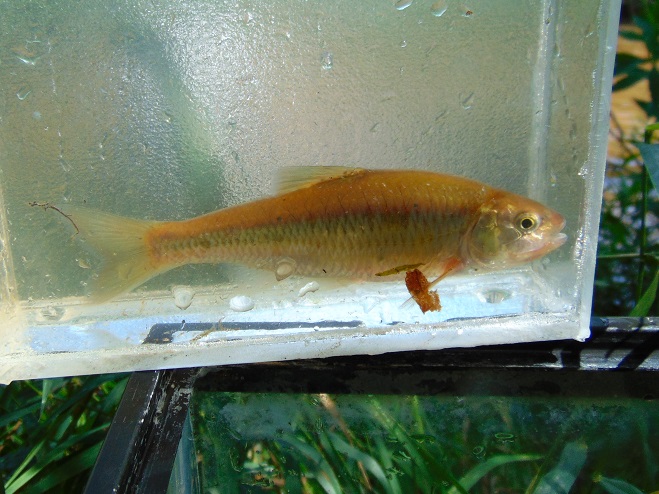
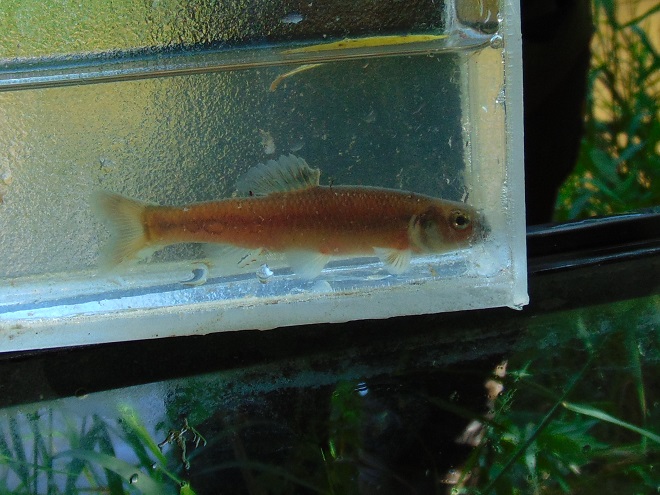
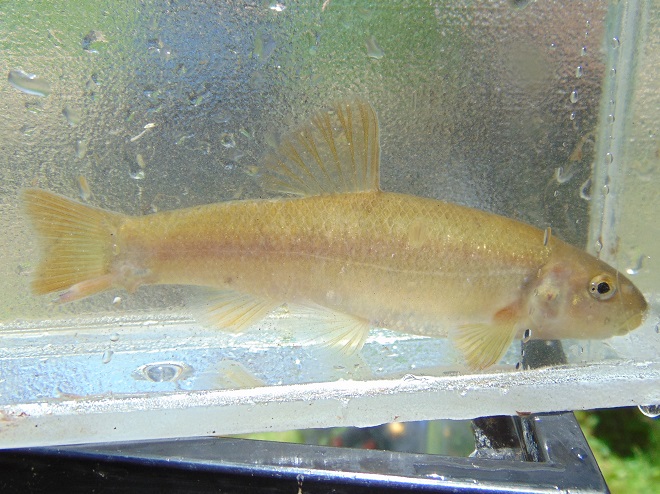
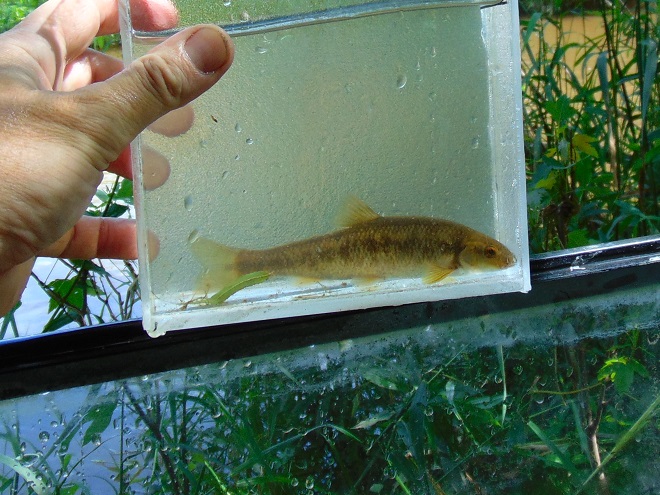
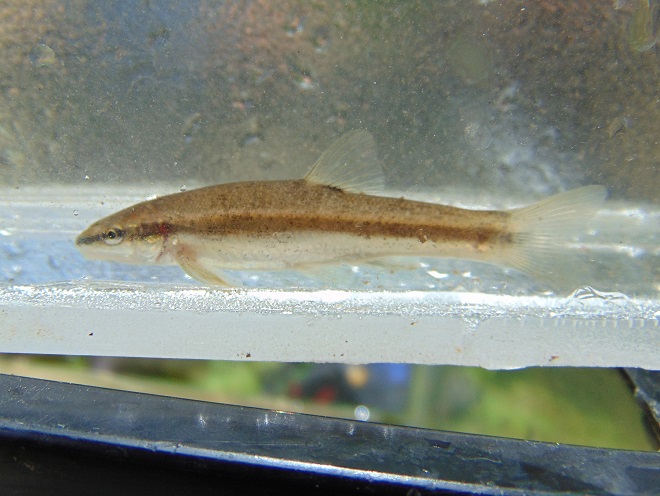
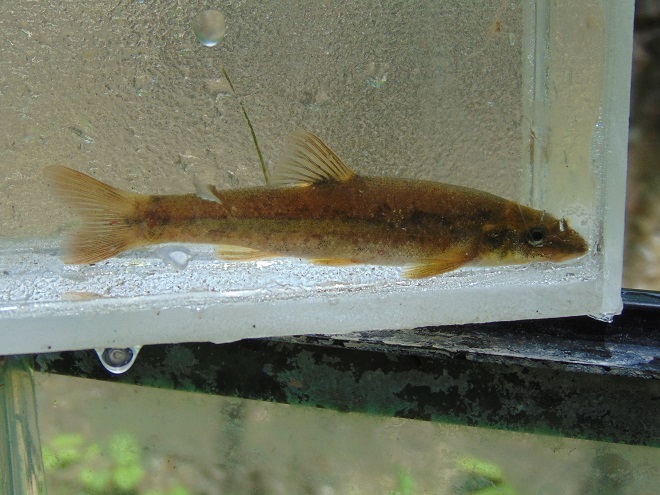
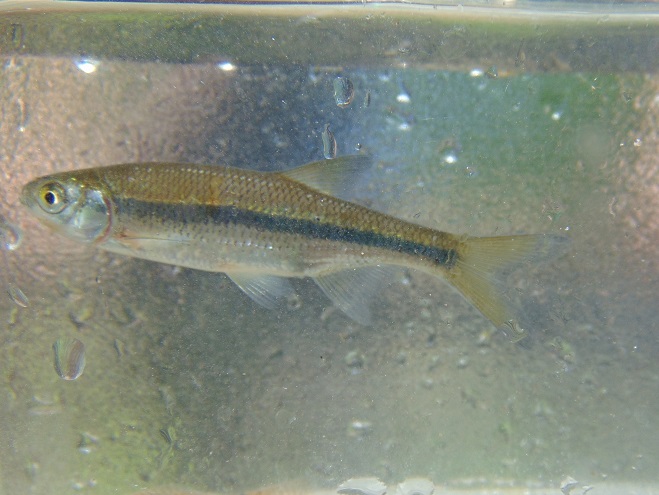
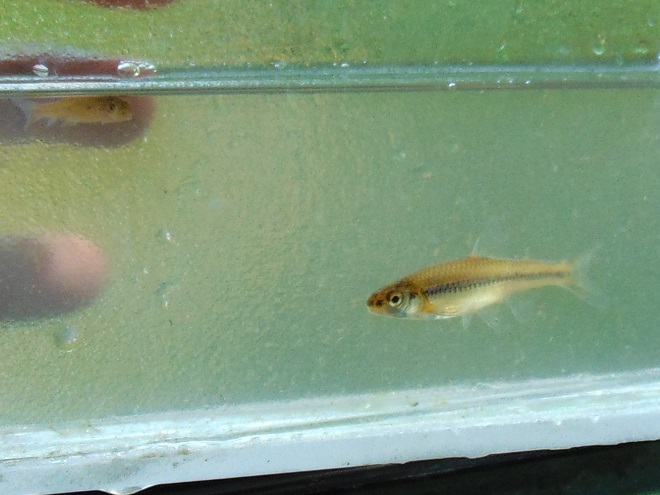
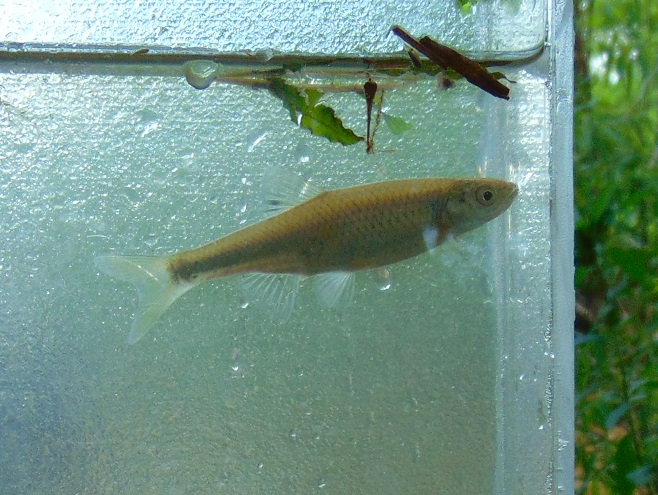
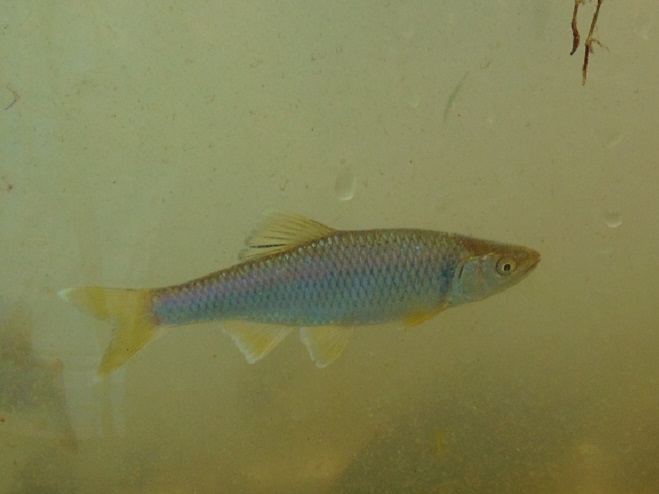
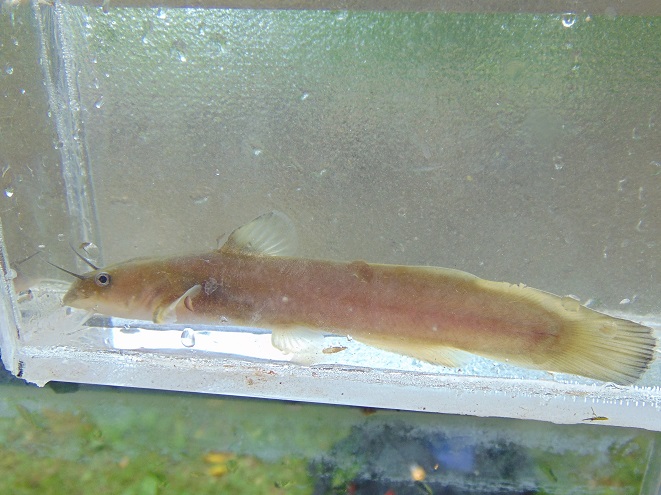
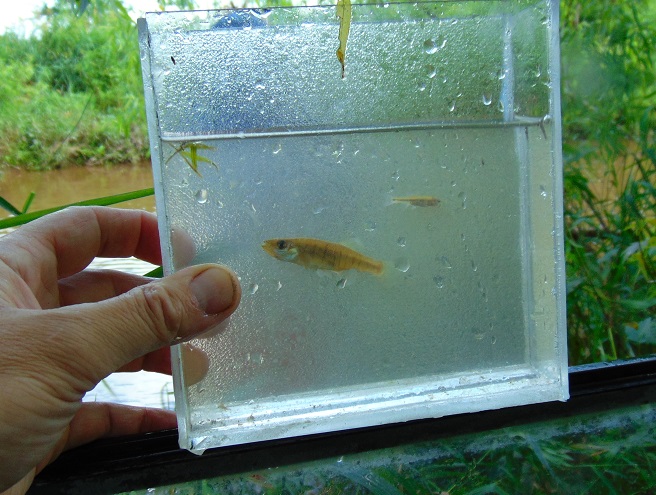
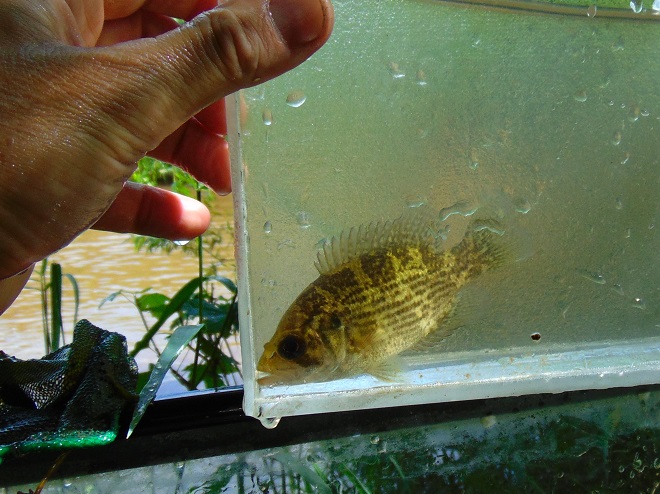
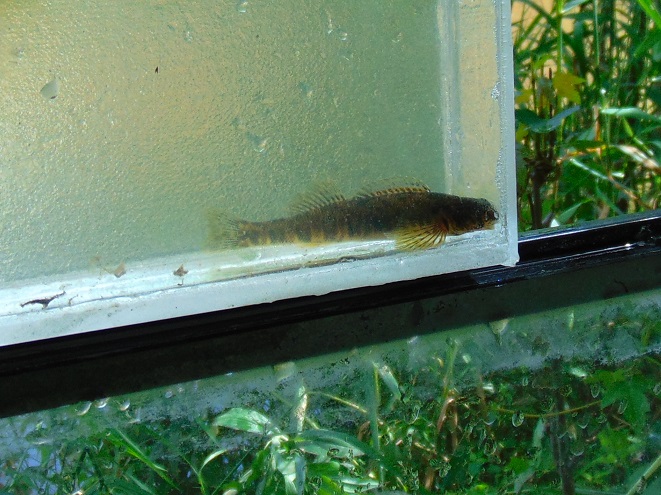
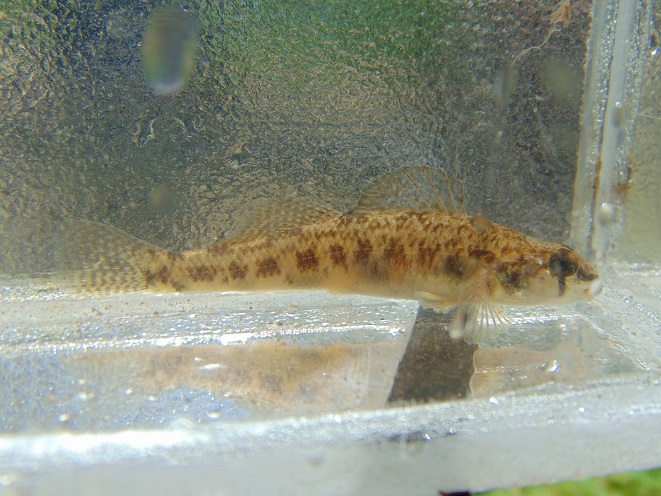
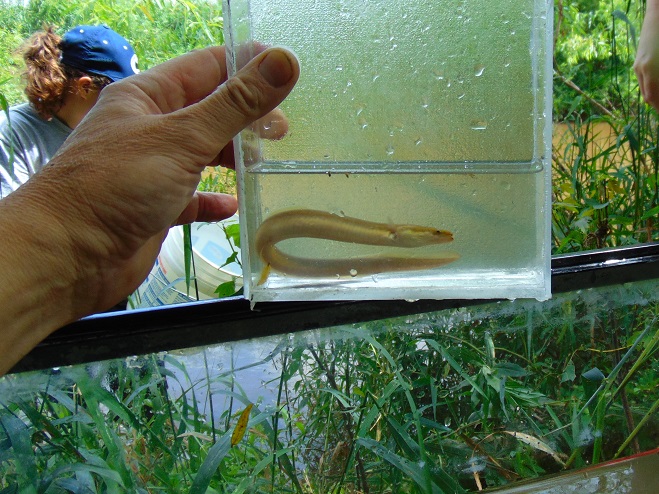
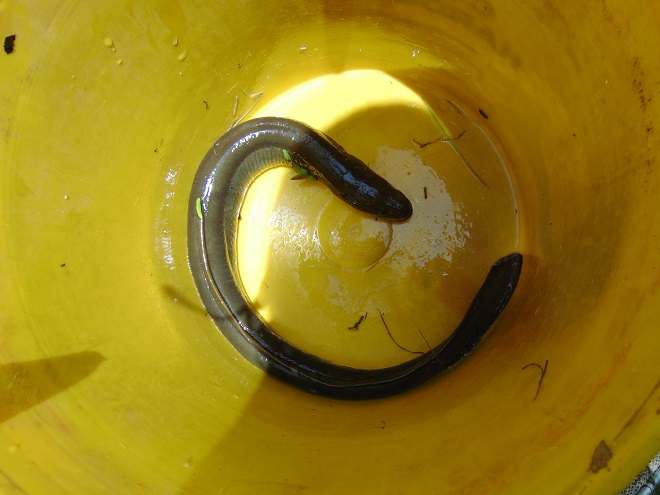
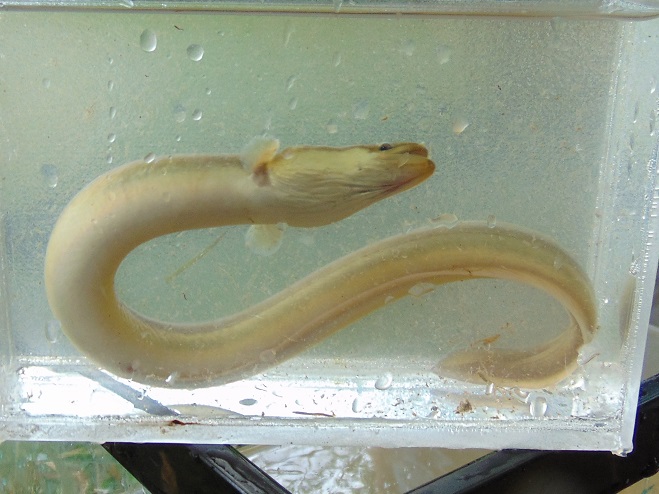
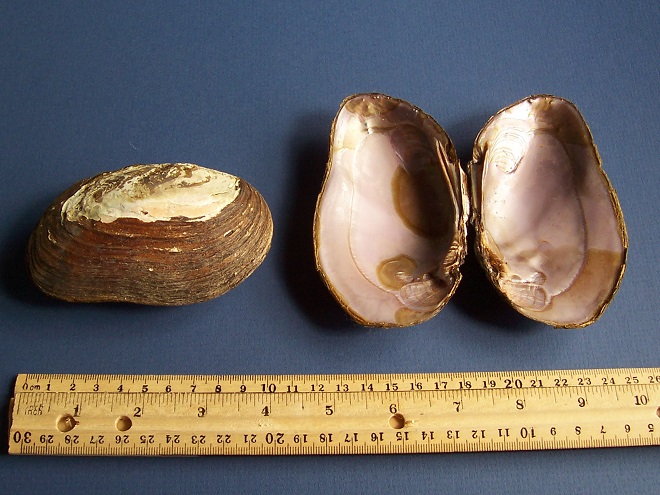
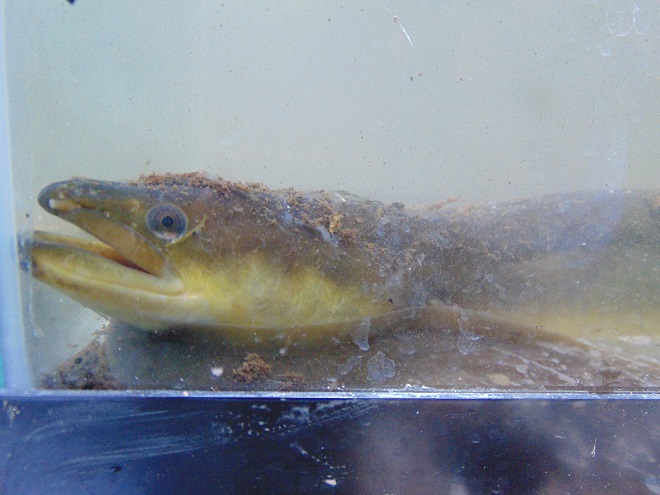
This week, some of the many partners engaged in a long-term collaboration to restore the east shore’s Conewago Creek met to have a look at one of the prime indicators of overall stream habitat health—the fishes. Kristen Kyler of the Lower Susquehanna Initiative organized the effort. Portable backpack-mounted electrofishing units and nets were used by crews to capture, identify, and count the native and non-native fishes at sampling locations which have remained constant since prior to the numerous stream improvement projects which began more than ten years ago. Some of the present-day sample sites were first used following Hurricane Agnes in 1972 by Stambaugh and Denoncourt and pre-date any implementation of sediment and nutrient mitigation practices like cover crops, no-till farming, field terracing, stormwater control, nutrient management, wetland restoration, streambank fencing, renewed forested stream buffers, or modernized wastewater treatment plants. By comparing more recent surveys with this baseline data, it may be possible to discern trends in fish populations resulting not only from conservation practices, but from many other variables which may impact the Conewago Creek Warmwater Stream ecosystem in Dauphin, Lancaster, and Lebanon Counties.
So here they are. Enjoy these shocking fish photos.
SOURCES
Normandeau Associates, Inc. and Gomez and Sullivan. 2018. Muddy Run Pumped Storage Project Conowingo Eel Collection Facility FERC Project 2355. Prepared for Exelon.
Stambaugh, Jr., John W., and Robert P. Denoncourt. 1974. A Preliminary Report on the Conewago Creek Faunal Survey, Lancaster County, Pennsylvania. Proceedings of the Pennsylvania Academy of Sciences. 48: 55-60.
One can get a stiff neck looking up at the flurry of bird activity in the treetops at this time of year. Many of the Neotropical migrants favor rich forests as daytime resting sites after flying through the night. For others, these forests are a destination where they will nest and raise their young.
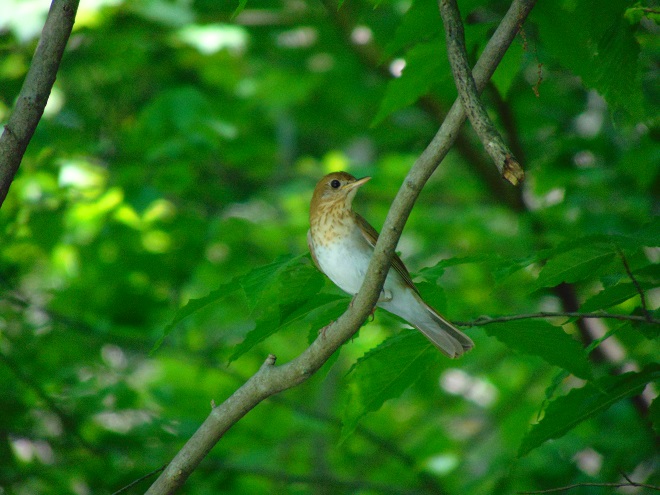

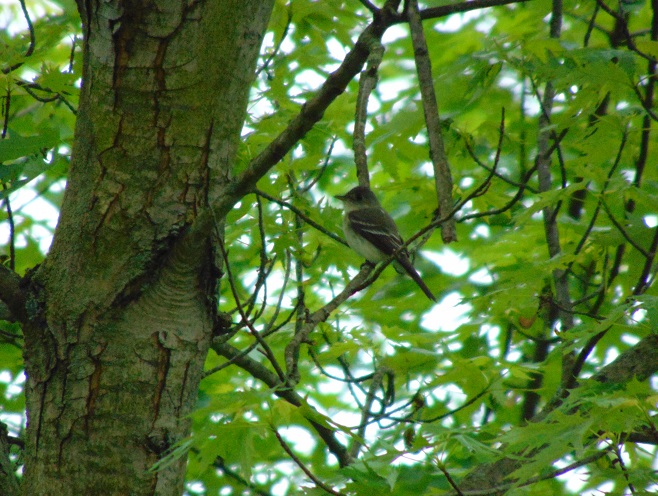
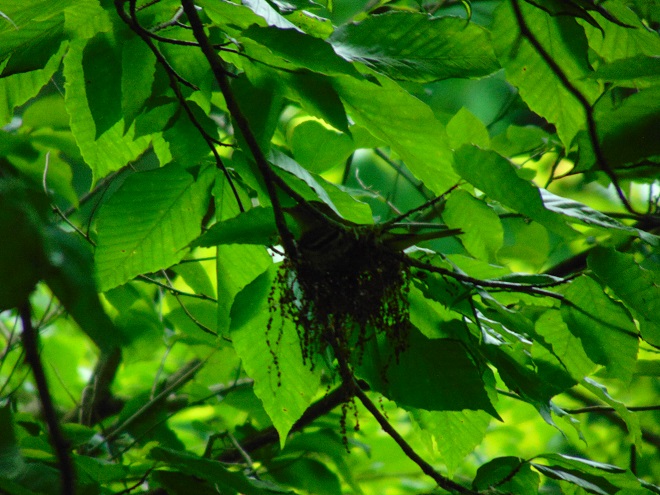
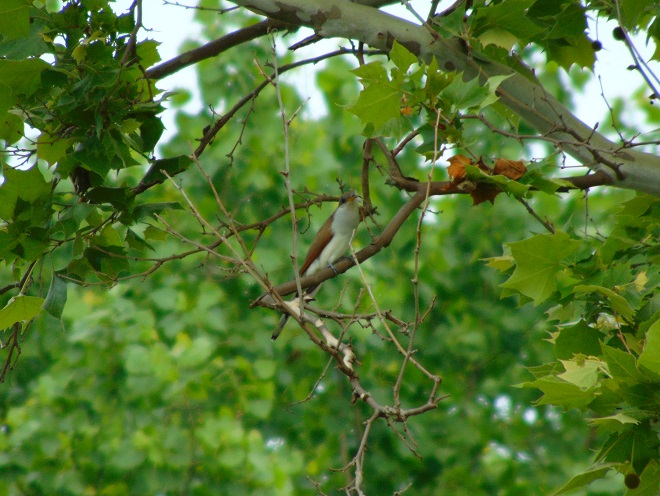
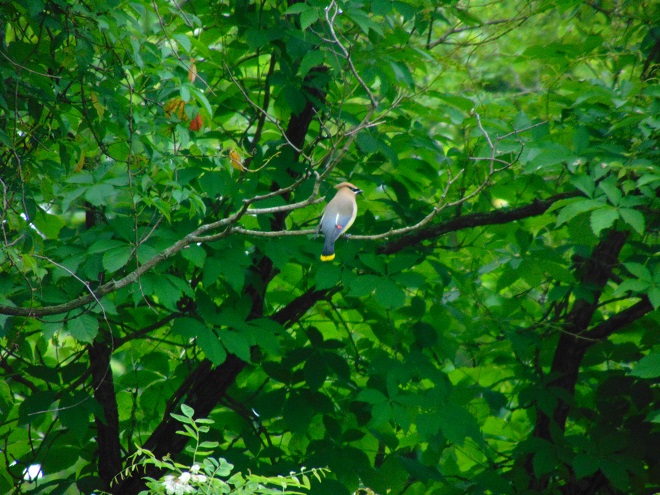
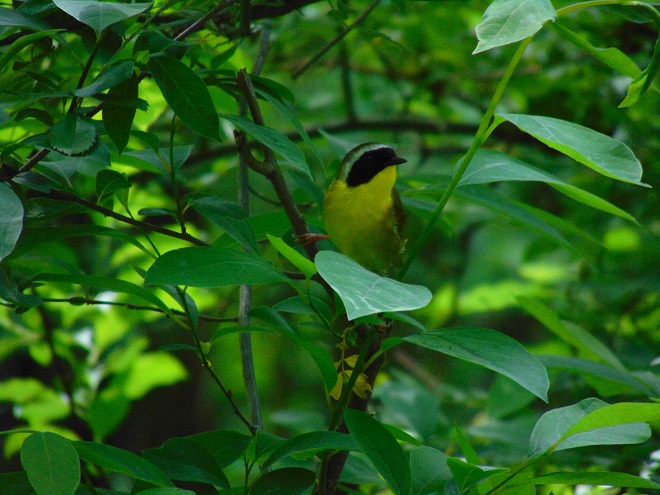
For the birds that arrive earlier in spring than the Neotropical migrants, the breeding season is well underway. The wet weather may be impacting the success of the early nests.
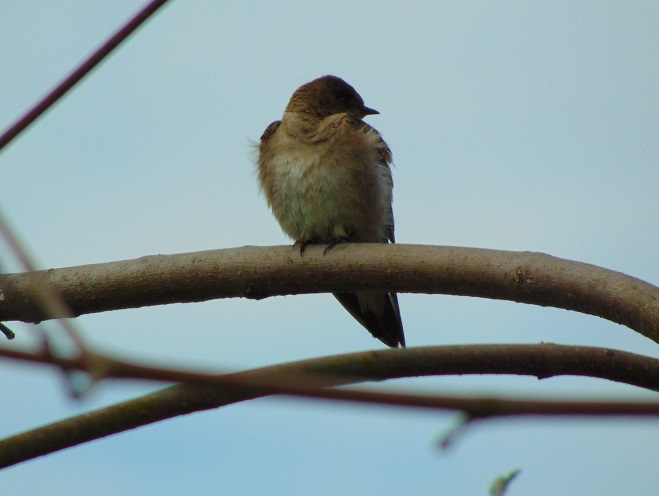
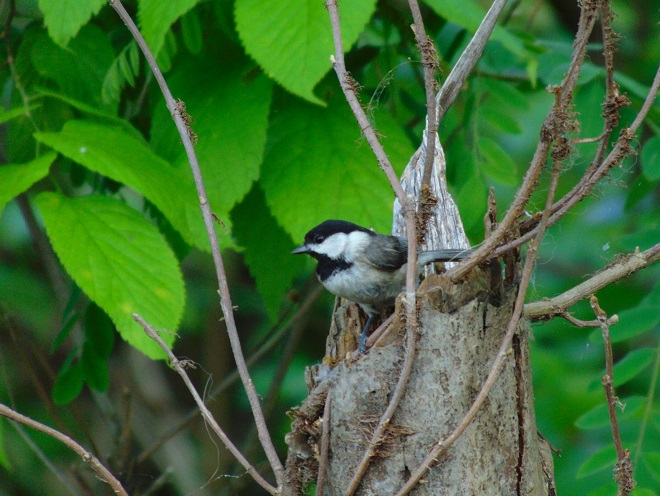
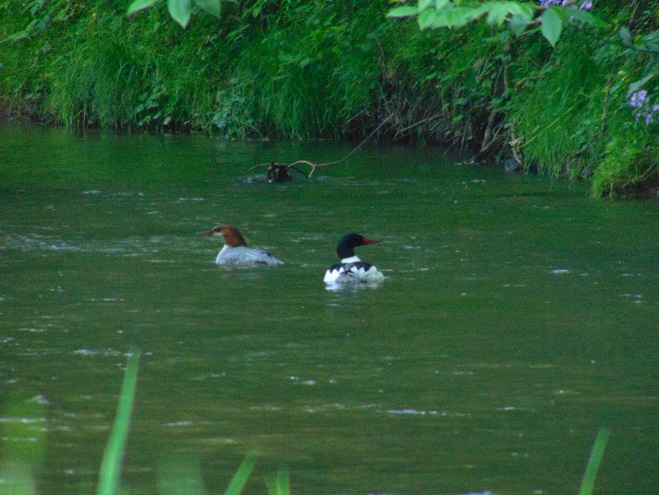
So long for now, if you’ll excuse me please, I have a sore neck to tend to.
At the moment there is a heavy snow falling, not an unusual occurrence for mid-February, nevertheless, it is a change in weather. Forty-eight hours ago we were in the midst of a steady rain and temperatures were in the sixties. The snow and ice had melted away and a touch of spring was in the air.
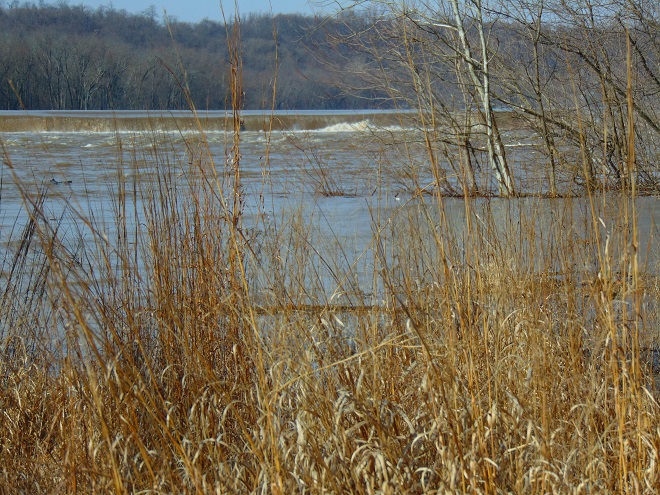
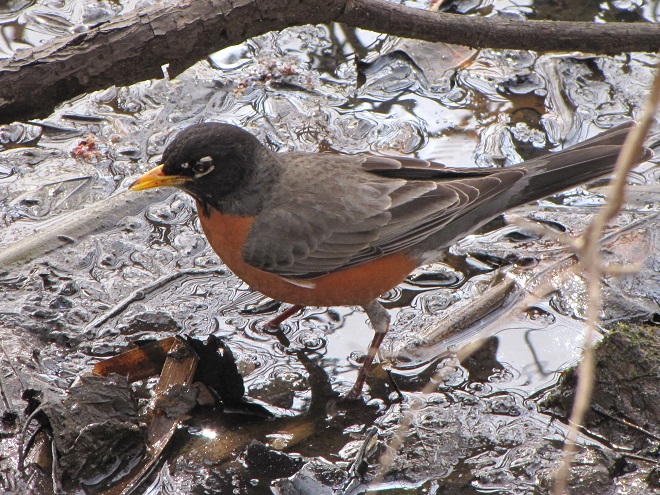
Anyone casually looking about while outdoors during these last several days may have noticed that birds are indeed beginning to migrate north in the lower Susquehanna valley. Killdeer, American Robins, Eastern Bluebirds, Red-winged Blackbirds, and Common Grackles are easily seen or heard in most of the area now.
Just hours ago, between nine o’clock this morning and one o’clock this afternoon, there was a spectacular flight of birds following the river north, their spring migration well underway. In the blue skies above Conewago Falls, a steady parade of Ring-billed Gulls was utilizing thermals and riding a tailwind from the south-southeast to cruise high overhead on a course toward their breeding range.
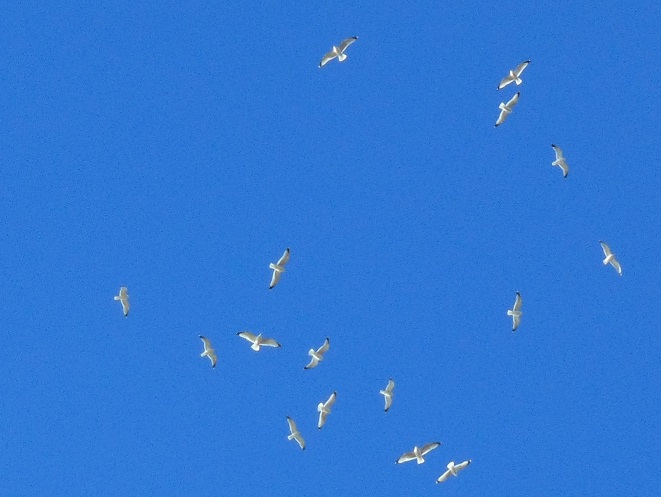
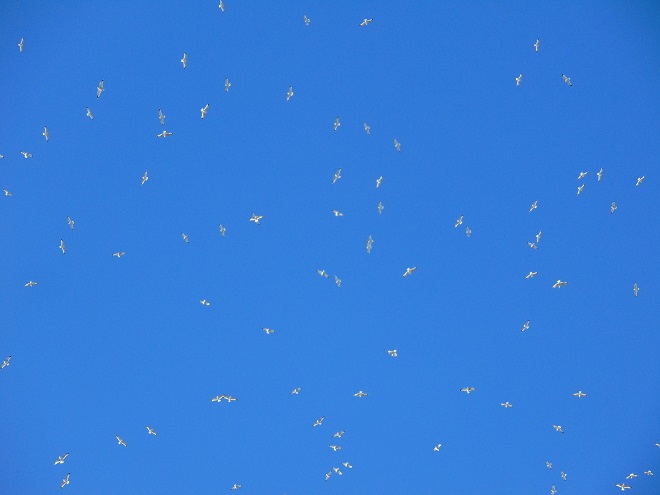
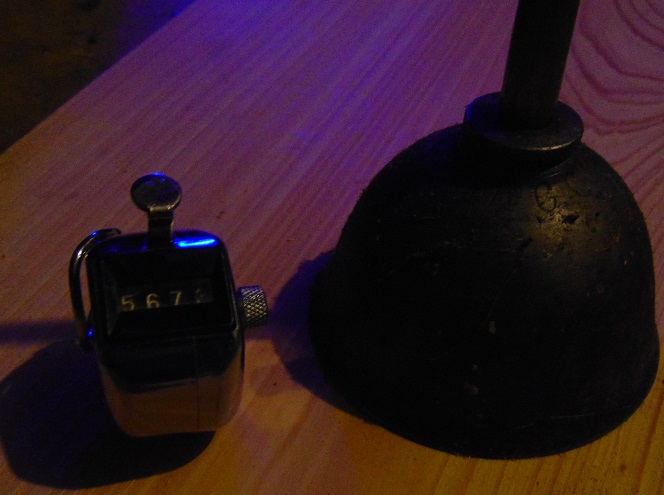
The swirling hoards of Ring-billed Gulls attracted other migrants to take advantage of the thermals and glide paths on the breeze. Right among them were 44 American Herring Gulls, 3 Great Black-backed Gulls, 12 Tundra Swans (Cygnus columbianus), 10 Canada Geese, 3 Northern Pintails (Anas acuta), 6 Common Mergansers, 3 Red-tailed Hawks, a Red-shouldered Hawk, 6 Bald Eagles (non-adults), 8 Black Vultures, and 5 Turkey Vultures.
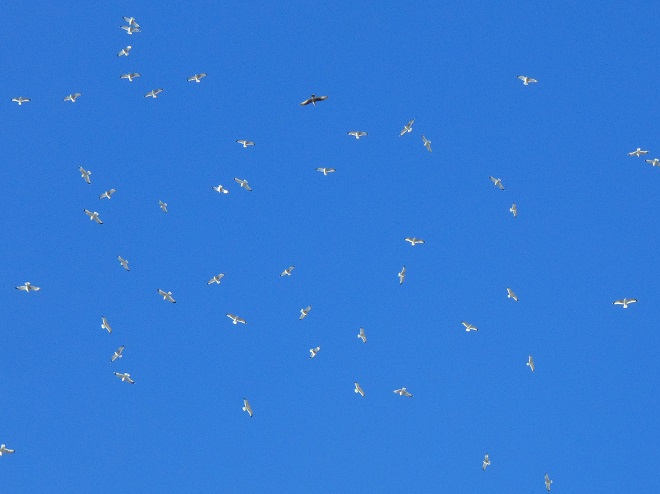
In the afternoon, the clouds closed in quickly, the flight ended, and by dusk more than an inch of snow was on the ground. Looks like spring to me.